Category Archives: Publishing

Mandela’s Stitch in Time

Nelson Mandela – we think of him as superman, an inspirational leader. Surrounded by packs of admirers. A global icon, larger than life. After all, he changed the world.

Nelson_Mandela__2305222a

What I find affecting is another Mandela, the one sewing prison clothes in 1966 in a prison yard. Yes, sewing.

T287512_01

The picture was taken at Robben Island Prison, near Cape Town, in 1966. Mandela wrote in his memoir:

“I was assigned a cell at the head of the corridor. It overlooked the courtyard and had a small eye-level window. I could walk the length of my cell in three paces. When I lay down, I could feel the wall with my feet and my head grazed the concrete at the other side. The width was about six feet, and the walls were at least two feet thick. Each cell had a white card posted outside of it with our name and our prison service number. Mine read, “N Mandela 466/64,” which meant I was the 466th prisoner admitted to the island in 1964. I was forty-six years old, a political prisoner with a life sentence, and that small cramped space was to be my home for I knew not how long.”

Mandela spent most of his 27 years in jail imprisoned on Robben Island along with other ANC activists. A bout of tuberculosis and recurring lung infections were probably due to the work he was forced to do in the prison’s lime quarry. Other aspects of his stay: crushing stones to gravel, food strikes, smuggling out messages on toilet paper. Horrendous conditions survived by a superman.

I like the image of Mandela in the prison yard because it shows him as just a man. There is super strength in a man nurturing himself through sewing.

5 Comments

Filed under Culture, History, Jean Zimmerman, Photography, Publishing, Writing

Witch-Healers and Bonesetters

Returning home with my foot in a plaster cast–yes, the time arrived for further surgery, the other foot dropped, so to speak, but now I’m an old pro–all I could think was what if I injured that limb a couple of hundred years ago? What if I didn’t have Dr. Voellmicke, the finest doctor in the land, to set my metatarsal bones with metal screws? What would happen to my life? Would I be consigned to a rocker by the fire–or, worse, a harsh straight-backed colonial chair– an endless ball of wool and a pair of wooden sticks in my lap? Lots of mittens, but a pretty limited life for a formerly active woman.

1764 John Singleton Copley (American colonial era artist, 1738-1815)  Mrs_ Samuel Hill, nee Miriam Kilby Thyssen Bornemisza Mus Spain

Instant crone-ness. Not too happy.

I took another look though at medicine back before men got hold of “physick” in the nineteenth century to see if I was correct.

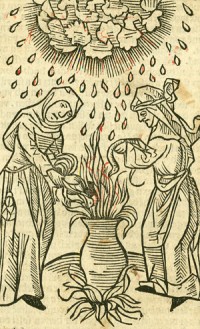
Women were the healers, you know, for thousands of years. Back to the Middle Ages, witch-healers produced incantations and charms that were broadly sanctioned, like prayer, adding in remedies and painkillers, digestive aids and anti-inflammatories.

medieval_witches

People relied on these women’s preparations. Sanctioned, yes, until they weren’t. The witches who were lay healers were hunted down in the thousands and roasted or otherwise tortured and killed. These were the doctors of their day!

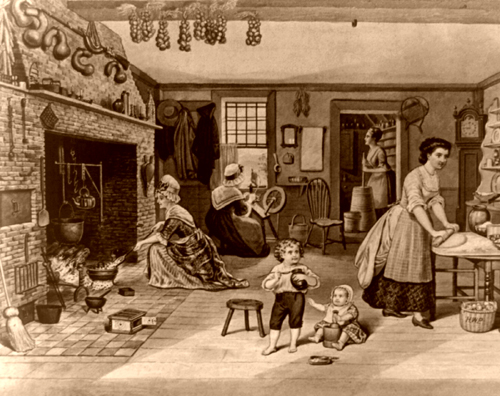
In America by the eighteenth century, the period that interests me because I’m researching the Revolution for a novel, the situation for healers was a little more respectful. (Yes, I know, Salem, but that was aberrant.) Sometimes a couple would go into medical practice together, the husband handling the surgery and the wife, the gynecology and midwifery, eveything else shared. Hang out a shingle, man and woman laboring in the same field (much as they might in an actual field). That’s a familiar idea, and I can tell you from the vantage of a writer-writer household that it can be the bomb.

Colonial Women, 1876, H. W. Pierce-500

In the 1700s, sometimes a young woman would go into the healing business on her own after apprenticeship with a husband/wife team. A good idea for a character in a novel, don’t you think? One real person, Harriet Hunt, one of our country’s first female doctors, got her start caring for a sick sister, then worked for a husband-wife practice, then treated patients on her own.

doctors

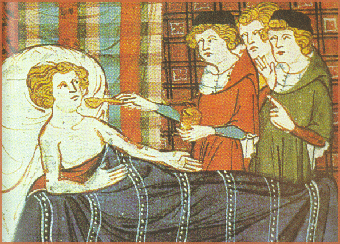
These independent women favored herbal medications, dietary changes and a fantastic bedside manner. As opposed to the book-learned doctors who received their certification in London in the 1800s — they laid on “heroic” measures. Huge doses of laxatives, for example. Calomel, which caused patients to bleed from the gums, salivate uncontrollably, and evacuate without restraint. Opium. Massive bleeding–George Washington died in 1799 of a throat infection after his three physicians drained his body of nine pints of blood in twenty-four hours. Or the now forgotten “tractors,” a pair of metal instruments, one gold, one silver, that were supposed to draw off the electrical fluid at the root of suffering. These guys killed their patients.

quack_tractor

But could a woman or a man in those times fix a fracture? Yale University’s Rebecca Tannenbaum published a  book on the subject of women and medicine in early New England titled The Healer’s Calling. She describes a 1760 case in which one Ebenezer Parkman got caught under a load of falling firewood. According to the injured man’s diary, the neighbors sent for Mrs. Parker, the local “doctoress” who was known as a bonesetter. She arrived with her apparatus for putting bones back in place, her splints and bandages. Bedside manner, check: a week later she returned to the Parkman household to see the patient and change his leg bandages.

Parents in New England were no doubt inordinately proud not only of “my son the doctor” but “my daughter the doctoress.”

2 Comments

Filed under Culture, History, Home, Jean Zimmerman, Knitting, Nature, Publishing, Writers, Writing

Making Book

Frank Stella’s splashy, enormous constructions line the walls of the lobby where my book publisher has its offices. Three collages, to be precise, of mixed media on a base of etched magnesium. Standing in front of one, you have to crane your neck to see the top of the piece. Standing there, I try to imagine creating something so large as the exploding Stella’s, so imposing. My mind wanders – outside is a dumpling truck with the snazzy legend: “Who’s Your Edamame?” It’s a New York morning, and art and food and commerce jostle for attention.

stella

Books, books, time to think about books. Or one book: my book. Stella’s work depicts the inside of my head as I take the elevator to the fourth floor. We’re going to talk about how to introduce Savage Girl to the world. How can I describe the feeling? Heart-pounding excitement. Trepidation. All shades in between.

Savage Girl comes out March 6th. And all the people at our meeting, editor, publicist, social media pro, literary agent – all of them are invested in making sure that my novel reaches a wide reading public.

So we talk about strategies. Bound gallleys, called ARCs in the business (for Advance Reading Copies) – who has received them so far, who gets them next? Print is no long king when it comes to reviewers – we want people to blab online about the book, on Goodreads, “where bookworms congregate,” as someone at the meeting says, on blogs, everywhere. We want the twitter-sphere to sing its praises. We want the people who read this blog – yes, you! – to get ahold of a copy and make their friend read it too. We want it to be consumed and consumed some more. Come up for air! Someone will say. It’s time to do the dishes. To go to the dentist!  But I can’t possibly, you say, I am too immersed in the adventures of Hugo and Bronwyn.

Savage Girl cover-final

Booksellers who received their early copy are liking Savage Girl, it seems. (Some Hollywood producers are too – shush, don’t jinx it by talking about it.) Authors have weighed in with comments that will appear on the back of the dust jacket. I like this one from Da Chen, the lyrical novelist:

The best historical fiction brings the reader back to a bygone era and  the depth of humanity then.  Jean Zimmerman does all that and more in her elegantly written new novel.  I simply could not put down this this tale of sweet and painful love, of a savage girl and her encounter with modernity.

All I have to do between now and March is a hundred things. Suffice it to say I’ll be writing more here and elsewhere about the Gilded Age, sharing what I learned in the process of researching Savage Girl. Debutante rituals, fashion, feasting, feral children, nineteenth century medical practices, mansions that are architectural marvels… I hope that people who don’t know much about the period will find out something new, and that I’ll satisfy Gilded Age aficionados’  yearning for more on the subject.

Photograph1880

Say you enter your favorite independent bookstore, where the management has carefully curated its collection. You inspect the table when you come in the door and find scads of titles that tantalize you, that beg to be picked up and perused. It may seem that they found their way there by some kind of magic. Not so. Behind every glossy jacket is a team of geniuses who have pondered and sleuthed and brainstormed a way to bring that wonderful volume to you. Like an explosion, like the mixed-media Stella on the wall, the planning all comes together to unveil a bound book.

Riding the subway uptown, I notice a man standing next to me with headphones. Dancing, and not so demurely, either. He is rocking and rolling. He is happy. So am I. I remember a couplet by one of my favorite poets, another Frank, Frank O’Hara, who made New York City the star of many of his poems in the ‘50s and ‘60s.

How funny you are today New York

like Ginger Rogers in Swingtime

Sometimes, when you’re in Manhattan, everything can seem so right. I get off the train at my stop and look from one side to the other, not sure which direction to head on the platform. A woman in black-framed glasses and long black hair touches me on the arm. I don’t even have to ask. She points with her finger and softly, kindly says, This way. This way.

6 Comments

Filed under Culture, Dance, Fashion, Fiction, Film, History, Jean Zimmerman, Poetry, Publishing, Savage Girl, Writers, Writing

Victorians Striking a Maternal Pose

The photos published in The Guardian today haunt me.

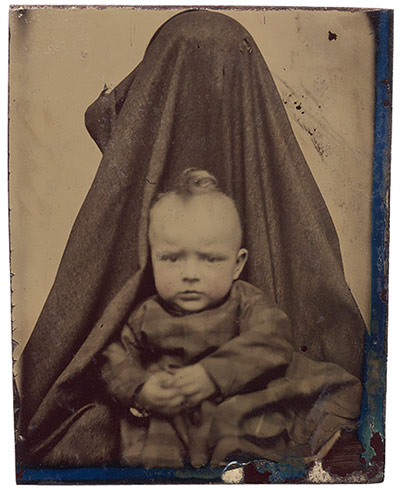
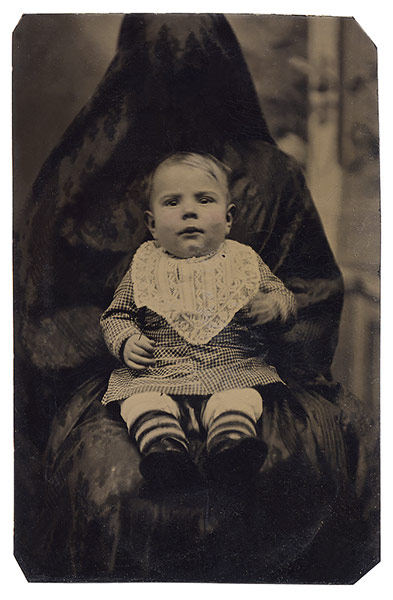
A series of Victorian babies, each one posed against a fabric-draped… mother. They’re from a new book called The Hidden Mother by Linda Fregni Nagler, which archives 1,002 photographs, daguerreotypes and tintypes, cartes de visite and cabinet cards.

Mother and baby portrait

As a reporter describes it, the requirements of primitive photography mandated extra care in posing children: “A 19th-century parent would have to dress the baby in a starchy gown, transport it and perhaps its siblings to the nearest photographer’s studio as early in the morning as possible, climb several flights of stairs to the skylit attic, arrange the family group against the studio backdrop, get everyone to remain completely still for 30 seconds or so, part with a large chunk of money, and then wait several days for the copies to be finished, before sending them round to family and friends as calling cards, or pasting them into albums.”

Mother and baby portrait

Sound difficult? With long exposure times, the only way to get the baby to hold still was for the mother to grip it in her hands.

Mother and baby portrait

Apparently photography was becoming an acceptable profession for women in the second half of the nineteenth century. The pictures captured by female photographers were no cheerier than those taken by men. Laughing messed with the shutter speed. A dose of opium often did the trick in keeping the subject still if dulled.

You have to wonder about the woman concealed beneath the textile. Was the mother shushing her baby, cooing to it, singing lullabyes? It must have been stuffy in her confinement, and she had no idea what the outcome would be. But she was fierce in her dedication to getting an image of her infant, a keepsake, the face and form of her beloved. Miraculously two dimensional. And always quiet and still.

1 Comment

Filed under Art, Culture, History, Home, Photography, Publishing

Thank You for Reading

I am thankful.

This is a post about this blog.

At Thanksgiving, in a lot of families, a blessing is performed before the turkey comes on in its golden, crispy glory. The blessing consists of going around the table with every guest sharing some thing they are especially grateful for. On the occasions I’ve taken part in this ritual, I’ve sometimes had to squelch the urge to say something slightly comical or snarky. I don’t know why, perhaps because the whole thing seemed so self serious. Real thanks seem quieter, more internal, perhaps.

Now, with a few days before us until we’ll be stuffed with stuffing, with a clear head, I want to be serious.

I am grateful, deeply grateful, to those of you who read this blog.

When people ask what my site is all about, I say different things. It’s called Blog Cabin, and it’s about living in a circa 1800 home in a thoroughly modern world, and the time travel that allows for. Sometimes I call it a personal magazine. A diary. A cultural commentary. It’s about the past as a living, breathing entity. All about history and art and nature and literature… An author blog, as I have one novel about to come out and one just in the rearview.

What it really is, is playtime. Writing books, of course, is hard work. (If you’re doing it right.) Writing this blog has given me a chance to dabble in the things that absorb me in my book writing life, but on a more finite scale, with pleasure at the foremost – yes, history and art and nature and literature and… a pogo stick championship?

jack-cu

It was hot July and the contestants soared. You could taste the adrenaline.

Writing for you has given me a reason to go on adventures that you might not take, even if you had the chance. Or perhaps you would, like my search for an infant saguaro cactus at a botanical garden in Scottsdale, Arizona, with a beaming guide, but you couldn’t get there that day.

desert-gardener

I’ve taken myself to a Victorian waltz class and tea.

jz-tea

To a Broadway disco-play, and to a euphoria-inducing Brahms recital. And to a dramatic dance performance en plein air, at Manhattan’s Lincoln Center.

bum-blur

I’ve plumbed the depths of the 20-something psyche, because I have a young adult close to my heart. Instagramming is their life.

serendipity-picture

They’re fascinating animals, as are husbands, and mine hitchhikes along with me from time to time.

As are dogs. Mine is inscrutable, but adds flavor to the mix.

oliver-about-to

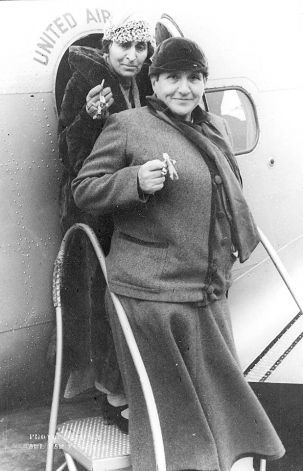
And writers.  I’ve loved writing about Gertrude Stein.

steintoklas-plane

I’ve shared many favorite recipes, like the one for Marcella Hazan’s braised pork in milk.

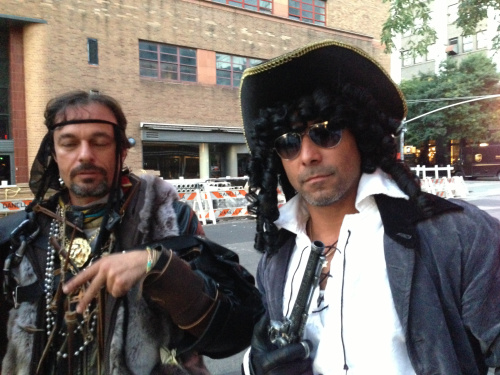
Observed motorcycle pirates on the loose in NYC. With some history about pirates intertwined, of course.

two-pirates

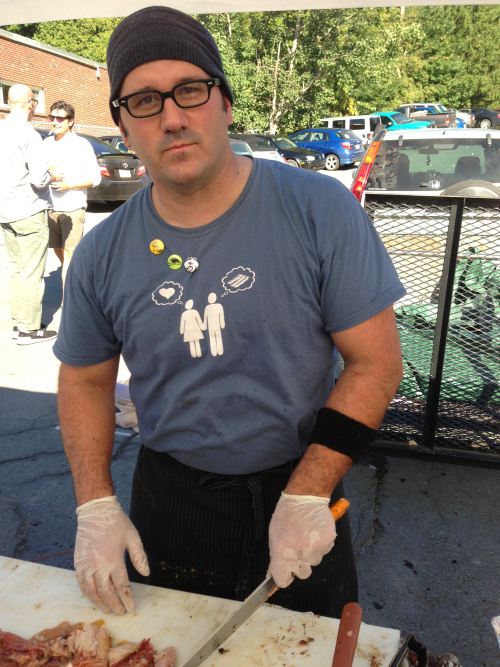
A rowdy pig festival in upstate New York.

michael

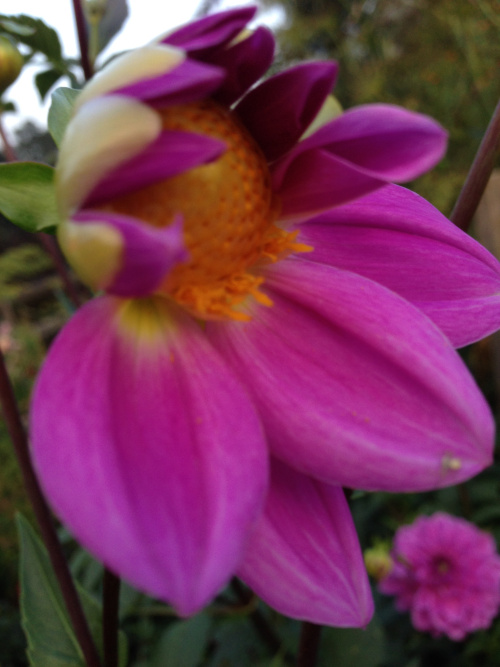
Explored a local farm on an enchanted evening, just as dusk fell.

fuschia-flower

Learned about the power of graffiti at the late, great 5Pointz. Got my leg cast tagged there, too.

colorful-paint

And witnessed the unlikely beauties of slime mold in a pristine nature preserve.

slime

It’s been my pleasure to gather these treasures and offer them to you, and your great generosity has been receiving them from me. So thank you. I’m looking forward to many more adventures.

11 Comments

Filed under Art, Cooking, Culture, Dance, Dogs, Fashion, Fiction, History, Home, Jean Zimmerman, Music, Nature, Photography, Poetry, Publishing, Savage Girl, The Orphanmaster, Writers, Writing

Starring Gertrude Stein

“If you enjoy my work you understand it… if you don’t enjoy it, why do you make a fuss about it?

These were Gertrude Stein’s slightly sharp-elbowed words pronounced sixty-nine years ago to an interviewer at at New York’s Algonquin Hotel upon her arrival in America to record The Making of Americans and some of her other works. The lecture tour had bestseller wind beneath its sails, as The Autobiography of Alice B. Toklas had been published to raves in 1933. The opera she created with Virgil Thomson, Four Saints in Three Acts, was opening on Broadway. Suddenly Stein had become rich, a condition she’d never before known.

stein:toklas plane

On October 24, 1934, Stein and Toklas arrived in New York aboard the S.S. Champlain. The crowds and the press went wild. One newspaper headline read: Gerty Gerty Stein is Back Home Home Back. Tickertape lights flashed across The New York Times building announced her arrival.

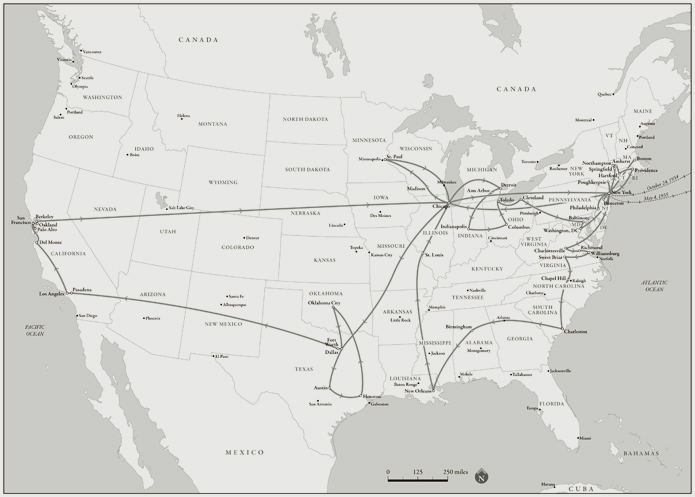
Stein had not been in the United States in nearly thirty years. Now, for seven months, with Toklas at her side, she crisscrossed America, speaking to campuses, arts groups and museum audiences about her writing and love of modern painting.

lecture route

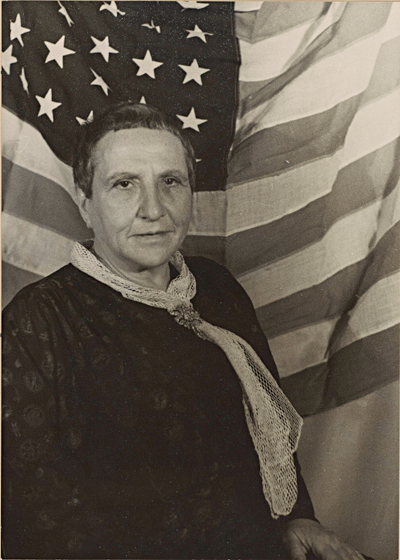
Early in 1935 she published Lectures in America, with a patriotic picture tucked inside the front cover.

stein:flag

Seventy appearances later, her celebrityhood held strong. An observer described the two travelers: “a large lady firmly dressed in a shirt-waist and skirt and jacket, and a smaller lady in something dark with a gray astrakhan toque…slightly suggestive of a battleship and a cruiser.” A headline in the New York Sun read: Miss Stein a Wow; Her Lectures a Sellout She’s Such a Hit.

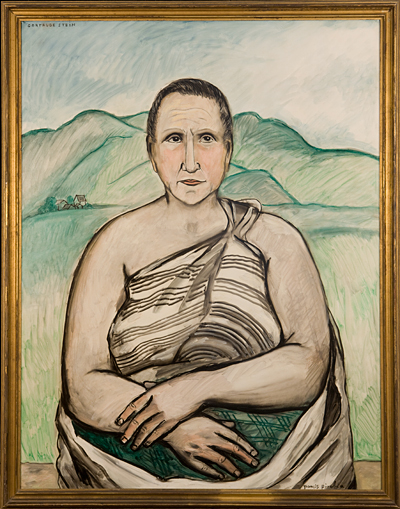
Francis Picabia did her in oils in 1933. Stein was a star!

picabia 33

1 Comment

Filed under Culture, Fiction, History, Photography, Poetry, Publishing

A Goodreads Vote

Sometimes I don’t know what I’ll do with myself waiting for Savage Girl to hit the stands March 6th. We’re finalizing flap copy, rounding up quotes from other fiction writers for the cover, talking about where I’ll go to spread the word about the book. Still, it seems like a long time away.

If you’d like to know what you can do until Savage Girl comes out…

Goodreads has posted a list of the most anticipated historical fiction reads for 2014. What upcoming historical fiction are you most excited for, asks the site. Pay a visit and click on Savage Girl to place your vote! And then, please, ask your book club cronies to do the same.

Savage Girl cover-final

Leave a comment

Filed under Culture, Fiction, Jean Zimmerman, Publishing, Savage Girl, Writers, Writing

The Things We Carry

What heirloom would you bring?

I’m reading about refugees and the things that they carry (remembering the Tim O’Brien tale The Things They Carried, about the impedimenta Vietnam soldiers take with them into battle.) BBC News Magazine profiles refugees during the Nazi menace of the 1940s, asking that question.

Isabelle Rozenbaumas’s mother escaped  Nazi-overrun Lithuania, barely, with her carriage-driver father, and snuck out three class photographs from that time.

refugee photo

Julian Glowinski’s grandmother was deported from Poland to Siberia in 1940. Amazingly, she packed a sewing machine onto a cattle truck, and converted gowns into wedding dresses in her concentration camp in exchange for food.

Elke Duffy and her family fled East Prussia in January 1945. With her she took an amber necklace her mother had strung from amber she and her sister found on a Baltic beach.

 _71135868_464_amber

Ian Carr-de Avelon’s wife’s grandfather was forced onto a train in Lwow (then Poland, now Ukraine) with his wife. Rather than cherished photos he took a camp stove. A camp stove? But of course ultimately it made perfect sense.

So what to take in a hurry, with the monsters breathing down your throat?

Photos. But today they mostly stay trapped in the computer. You can’t just lift them out of an album, with yellowed tape stains on their backs. So print some, fast.

Maybe I’d take this one, if I had to take one.

Gil and Maud Hug

I’d have to take another. Mark it on the back with a Sharpie, April 1987. The engagement party.

April 1987

If I could, I’d grab more. My parents. My extended family. Gil would take this burst of joy.

el 1

Or, he says, an oilcloth Santa he remembers making when he was six.

What object would I choose? Not a sewing machine. Not an iPhone. I looked around my house, and I thought about storage. At least three dusty cardboard boxes are marked Heirlooms, mostly from a family bow-windowed breakfront now residing in a home with more space. How do you choose among the loved objects of the past?

I might take my paternal grandmother’s copy of Ulysses, by James Joyce, its cover broken off, which she bravely purchased at a time when the novel was still censored in the U.S.

Joyce Ulysses 750 wraps 1000

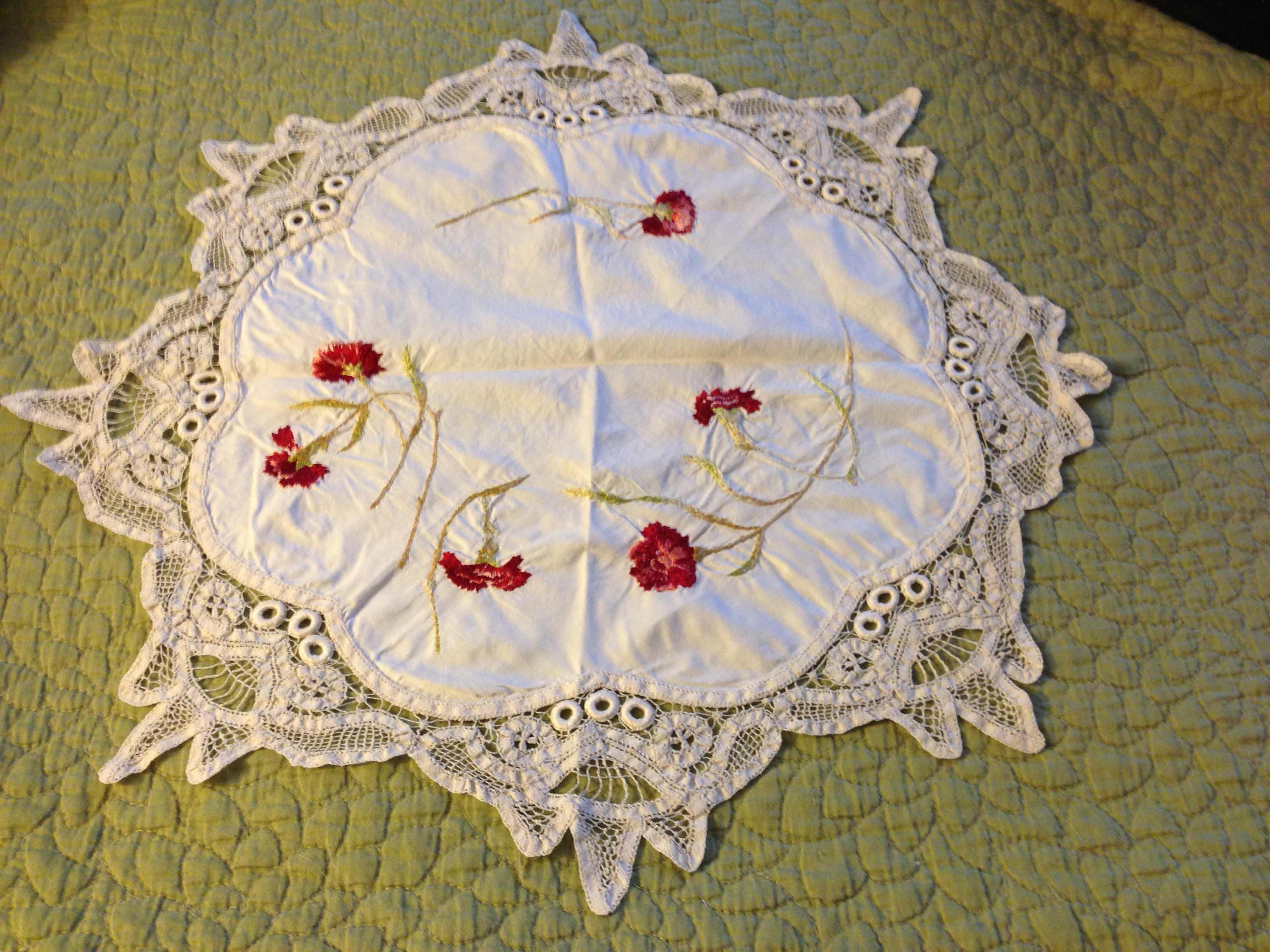
Or a scrap tatted by my ancestors, embroidered with carnations, the cloth handled by their fingers.

carnations

I could tuck that into my sock.

But if I was going to bring some bigger object – what?

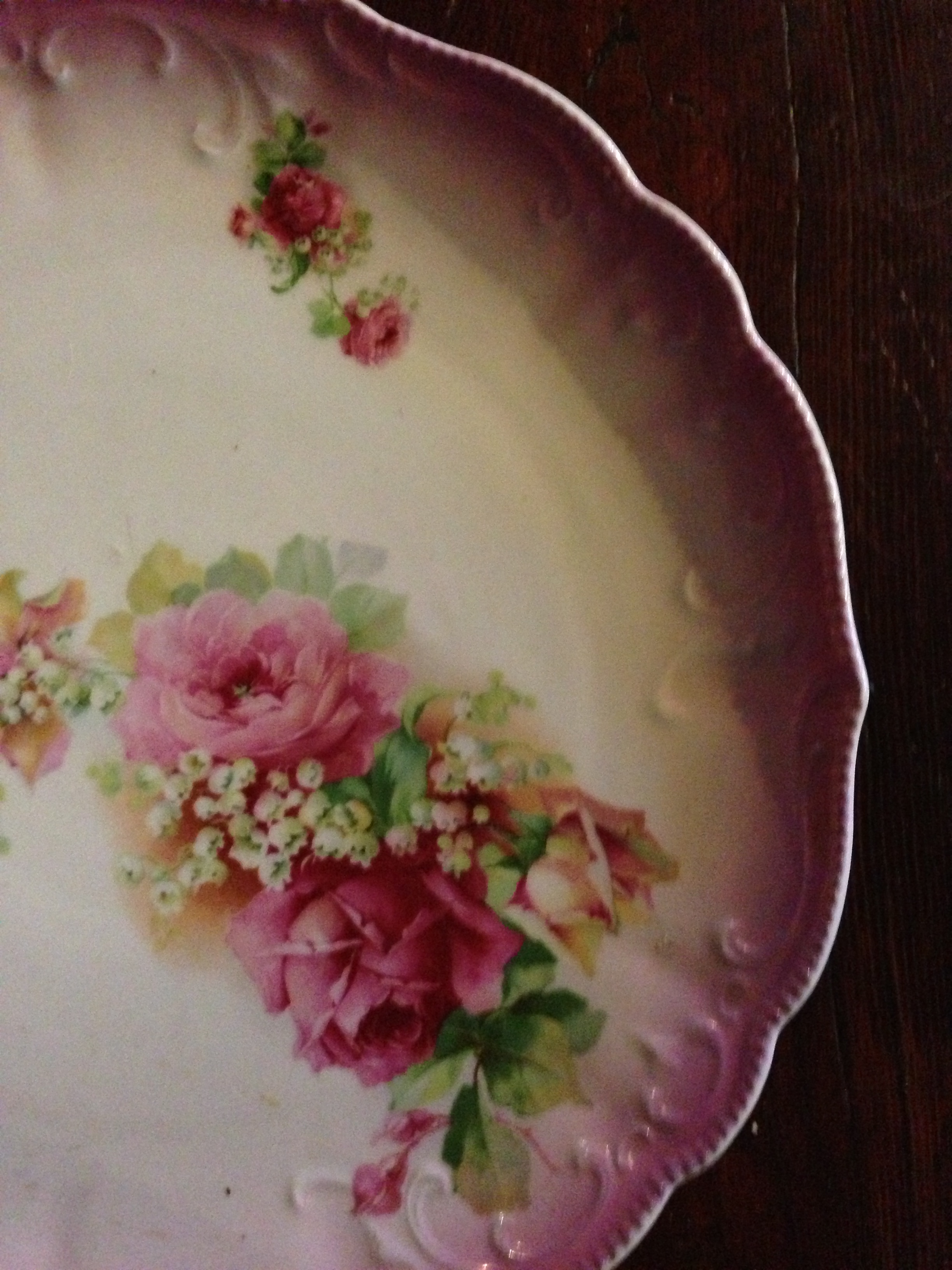
How about a china plate. A cake plate, a foot across, strewn with pink roses and lilies of the family. Utilitarian as well as cherished.

cake-plate

Just a plate. But a plate belonging to my great-great-grandmother, a woman with the interesting name of Brown Coats. A deep souvenir of family, embodying the optimistic conviction that sometime in the future, there will be cake.

Will the plate make it through the mud, the rutted roads, the mountain passes? Despite its apparent fragility, I am certain it is strong.

6 Comments

Filed under Art, Cooking, Culture, Fashion, Fiction, History, Home, Jean Zimmerman, Photography, Publishing

Transcription Soup

A keyboard has no scent.

keyboard

And yet manipulating the keys brings forth aromas, incredible sights, acoustical marvels. The sounds of conversation.

I promised Gil that I would do a fair amount of transcribing for him. He’s conducted many interviews as part of a book collaboration he’s involved in. None of this background is accessible without a keyboard to yield up the brilliant things that get said.

So I listen to the tape. I screw up my forehead and try to make out the words that are muddled – some of the interviews took place in a noisy restaurant. I shake my hands out, massage my fingers when they get sore.

And then I take a break. I make soup.

big spoon

The ideal recipe, with a gigantic spoon, a spoon out of a Grimm story cottage.

Soup is the antidote, of course, for many ailments. But it’s also a good balance for tasks like transcribing, where you’re using your keyboard and your fingers and there’s a wee of drudgery.

I use a whole soup fowl if I have one, though disjointed pieces will do. Bring them to a simmer in your biggest pot and skim off the scum. Add carrots and celery. I use the last of the celery from my garden, which never stalked up but is fresh and good.

carrots:celery

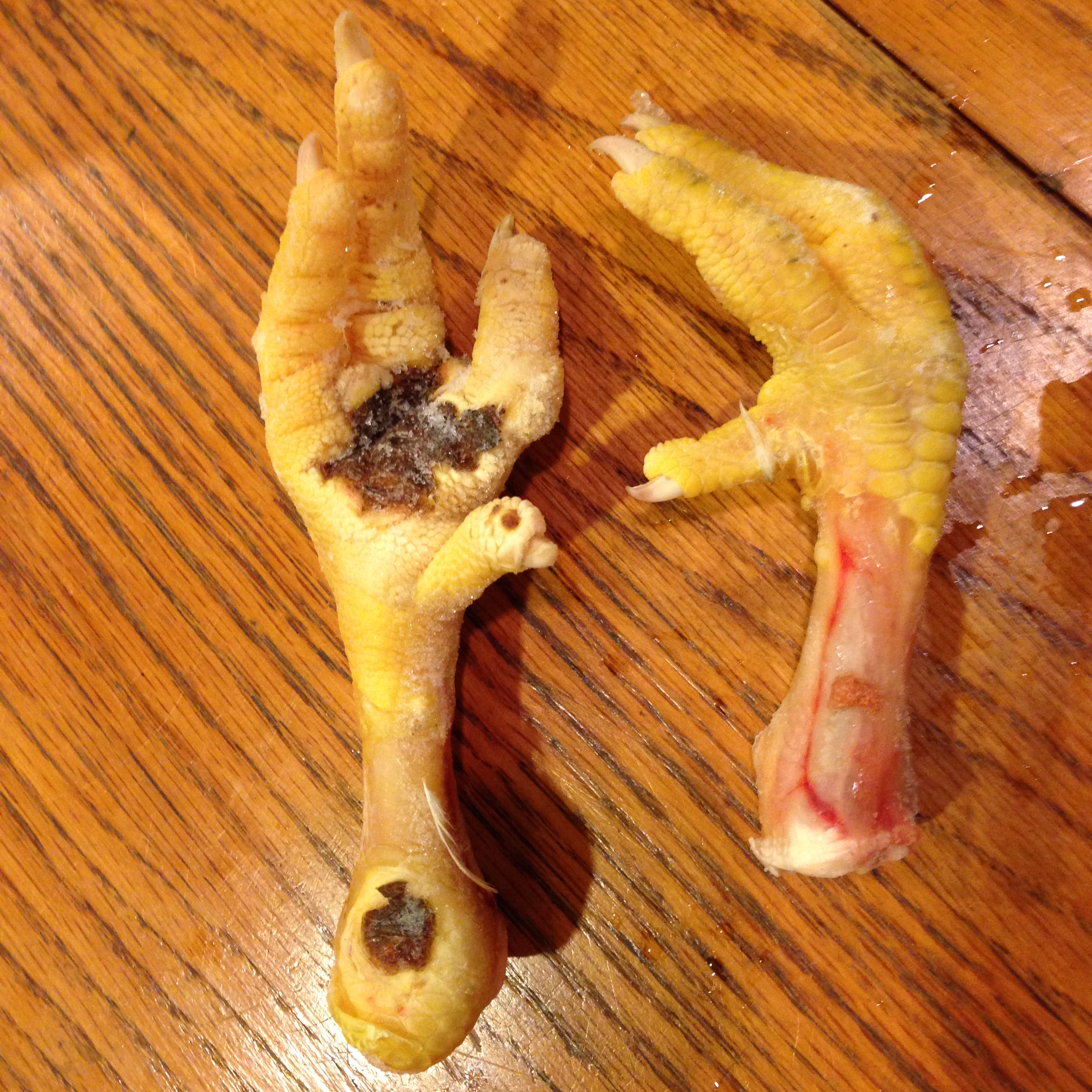
The piece de resistance: chicken feet I bought from a farmer.

chicken legs

Not pretty, these gams, but they really boost the broth’s flavor.

Turnips, parsnips, parsley, leeks. So simple. Salt, in the palm of my hand.

Julia Child says to bring the stock just to a “smile,” and to simmer for three hours or so.

In which time I will have tip-tapped each key hundreds of times, to deliver a three-hour back-and-forth conversation.

1 Comment

Filed under Cooking, Culture, Home, Jean Zimmerman, Publishing, Writers, Writing

Victorian Waltz and Tea

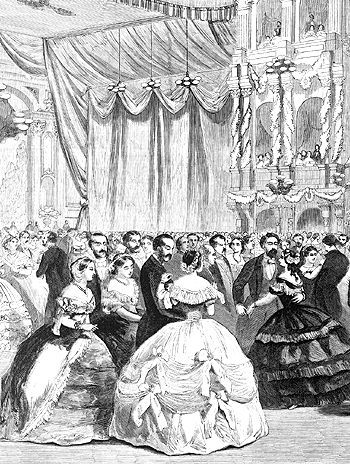
Writing a novel in which Gilded Age debutantes dance with their swains in the gaslit ballrooms of fashionable New York made me want to get some nineteenth century dance moves under my belt. Or, rather, under my crinolines. So I brought my best Tigger kicks in to Manhattan for an afternoon of 1-2-3, 1-2-3.

Tigger kicks

Susan de Guardiola, our elegant yet earthy instructor, came down from Connecticut. She generally teaches what she calls Jane Austen classes – picture Keira Knightley in Pride and Prejudice, sashaying down the line, all aglow.

keira

I always preferred Matthew Macfadyen in that movie. Does he show up at any of Susan’s classes? She teaches not only English country dancing but about 12 other kinds and is a true authority in her field, with a website called Capering& Kickery  that gives all kinds of background on Victorian and Regency-era dance.

“If everyone’s good enough,” she told us at the start, “we’ll progress to jumping.” Such, I will tell you now, was not to be. It was baby steps for many of us, even as we behaved very well and tried very hard.
class

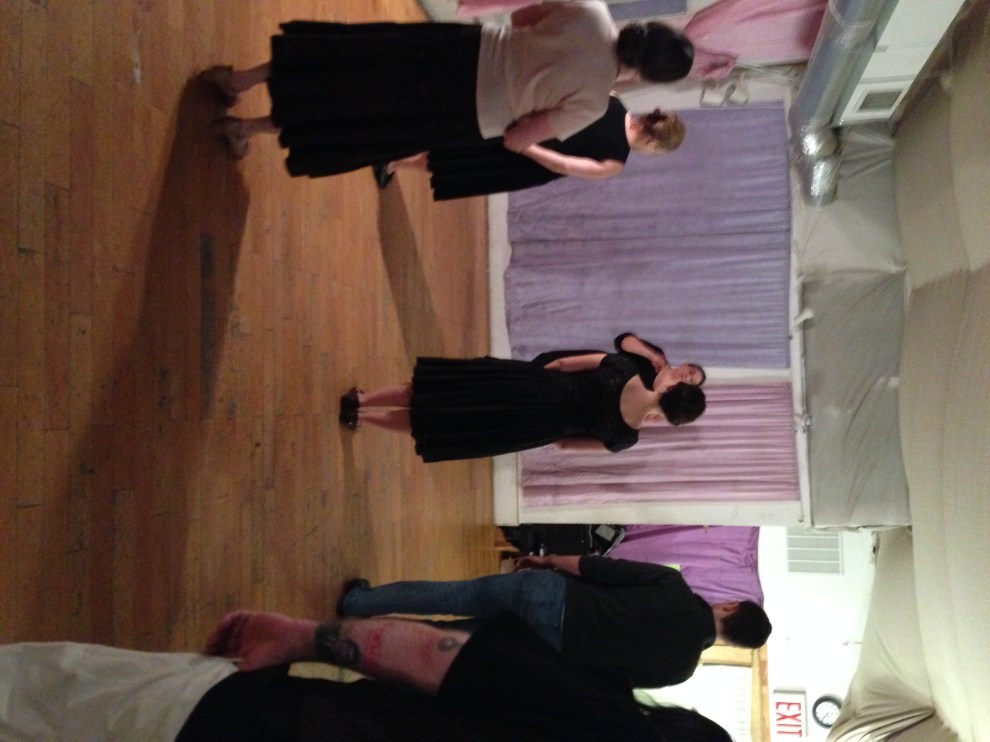
The last time I waltzed was in seventh grade cotillion, wearing a micro-mini dress and short white gloves. I loved it. But that was a long time ago. And a far cry from a tiny dance floor in the back room of a tile shop, in the Chelsea neighborhood of Manhattan.

ballroom

Today, some women wore black dance shoes and a man came in wearing a steampunk-style leather top hat. You don’t see that every day on the streets of New York. “Shall I put my hair up because I’ll get all hot and sweaty?” asked a curly-haired woman. “I usually do,” said Susan.

This class was offered under the auspices of the New York Nineteenth Century Society, an outfit that takes seriously its mission: it  “unites historians, scholars, artists, philosophers, dreamers, and impresarios inspired by the 19th century.” Recently they had a Nineteenth Century Extravaganza, for which everyone put on their full Victorian regalia. Next up is an archery event. Yes! Perhaps I’ll attend. Savage Girl is an expert archer, as were many young ladies of the late 1800s.
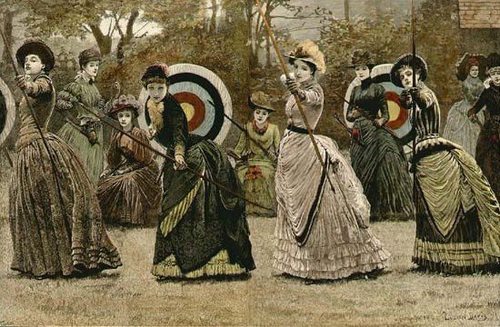
archers

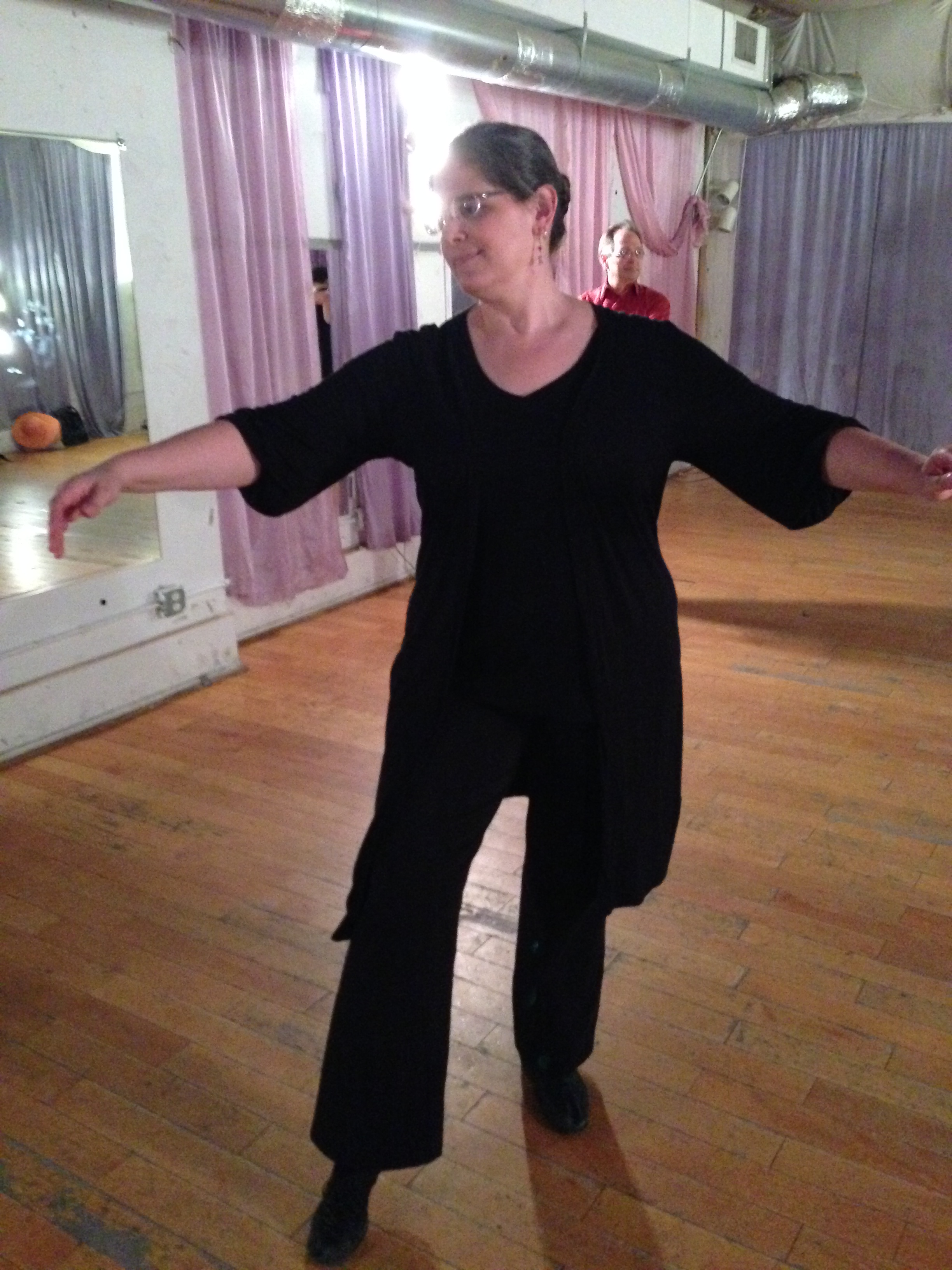
“The 1880s, 1890s were the root of modern ballroom dance,” said Susan. It turns out that the waltz changed seven or eight times in the course of its development, becoming faster, closer, more stylized. The dip back we expect from the female partner now didn’t used to exist.
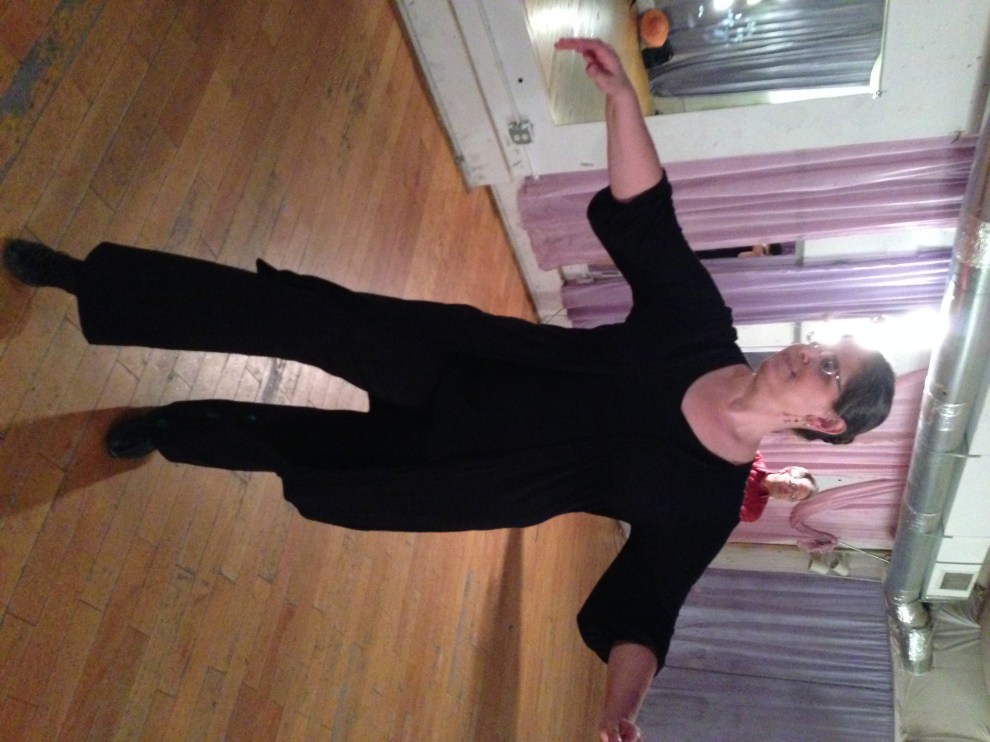
susan

“I’ll tell you the secret of this kind of dancing,” said Susan. “It works if you do it on the balls of your feet.”
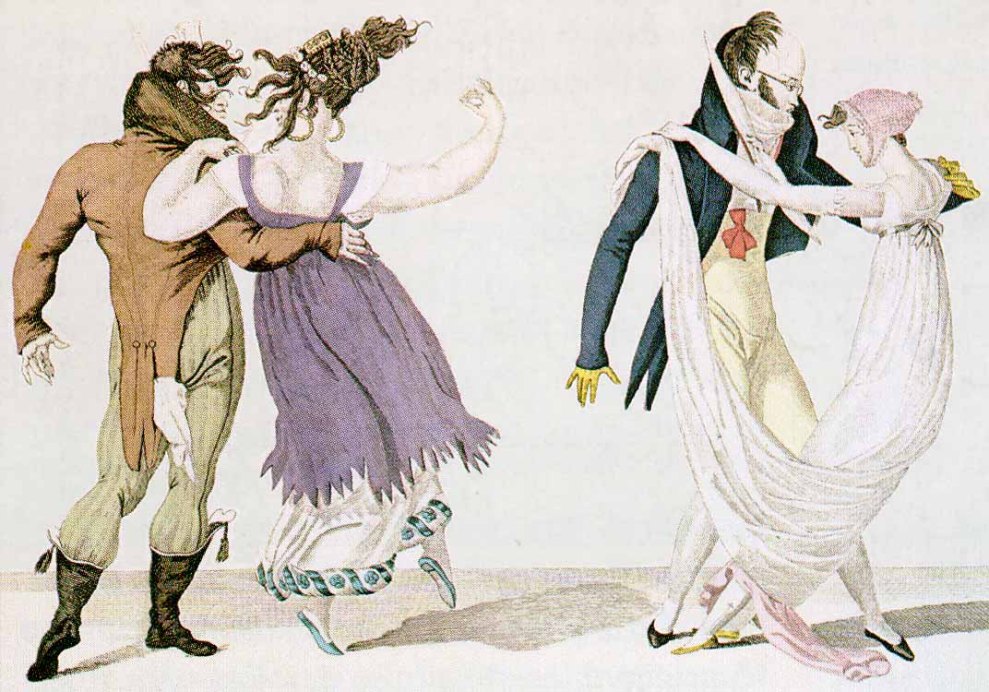
1801wals

“When this waltz gets going,” she said, “it flies around the room.” She might have been a tad optimistic.

This was a lesson in shoulder blades. The man should place his hand on the woman’s left shoulder blade (“that’s the sharp thing sticking out of her back,” said Susan) though in Victorian times when everyone wore corsets and your posture was therefore better, your partner could put his hand farther down your back. The woman holds her left hand against the man’s right shoulder, above his chest, to help push him around during the turns.

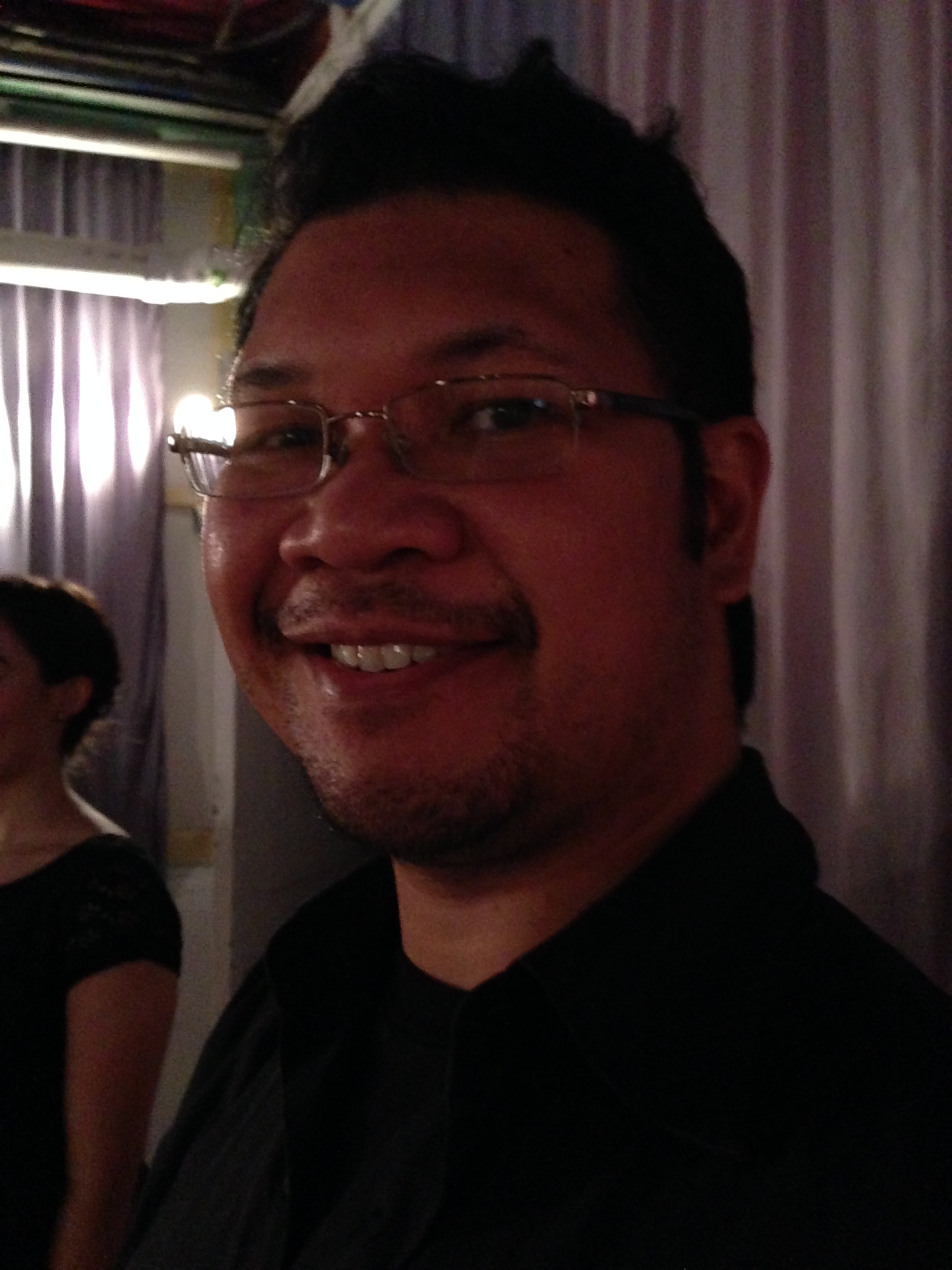
We learned the gavotte glide, a slide to the right followed by a turn, and we learned the importance of leading with your toe, Victorian style. Susan suggested we lean in and not worry about the various “bits” of us that might touch. We passed partners around the circle, dancing with utter and complete strangers, experiencing waves of cologne, perspiration, different kinds of breath, good and not-so-good manners. Everyone tried hard. I got one partner, Jake, a couple of times, and we shared laughs over each other’s clumsiness. He suggested we hold a hand behind us, as I might do holding a bunch of petticoats.

hands cocked

Jake high fived me when we came to a halt semi-successfully. Very Victorian.

jake

Lesson over, Gil and I proceeded outside, where a young dancer waiting for a tango class advised me that rubber soles such as the ones I had on might cost me an ankle. “I hope you keep it up,” she told me and Gil kindly. “Maybe I’ll see you on Dancing with the Stars.”

On the street, I asked Susan how to improve. “Practice five minutes every day,” she said. “Go to a supermarket and practice down all those wide aisles.” You don’t need to do it all at once. “Sleep on your lesson,” she said, “and you will do better the next day.”

We hadn’t had enough Victorian flavor so we went afterward for high tea at a place called Lady Mendl’s Tea Salon. It was on the first floor of a Gramercy Park hotel, The Inn at Irving Place, carved out of two adjoining brownstones that date back to 1834. Washington Irving was said to have spent some time in a house down the street, enhancing the old-fashioned aura of the neighborhood. The online reviews I read said a man would not be welcome at the establishment, so of course Gil wanted to go.

jz tea

Lights were turned down low and the whole effect was gracious and mellow and ladylike, even if there were a few male interlopers.
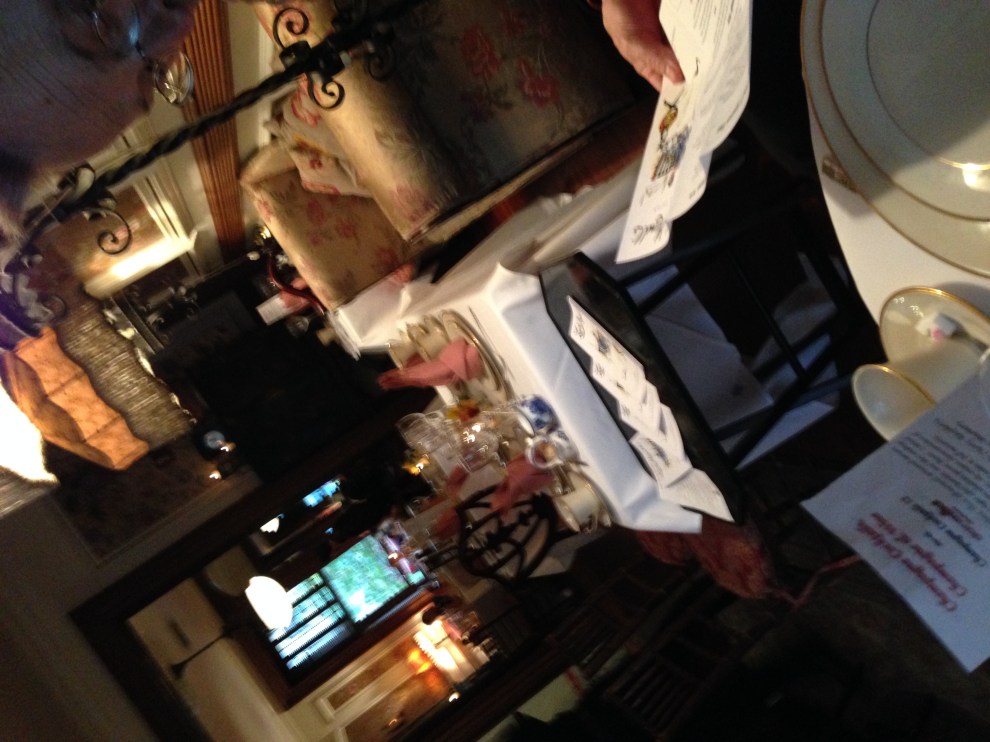
tea room

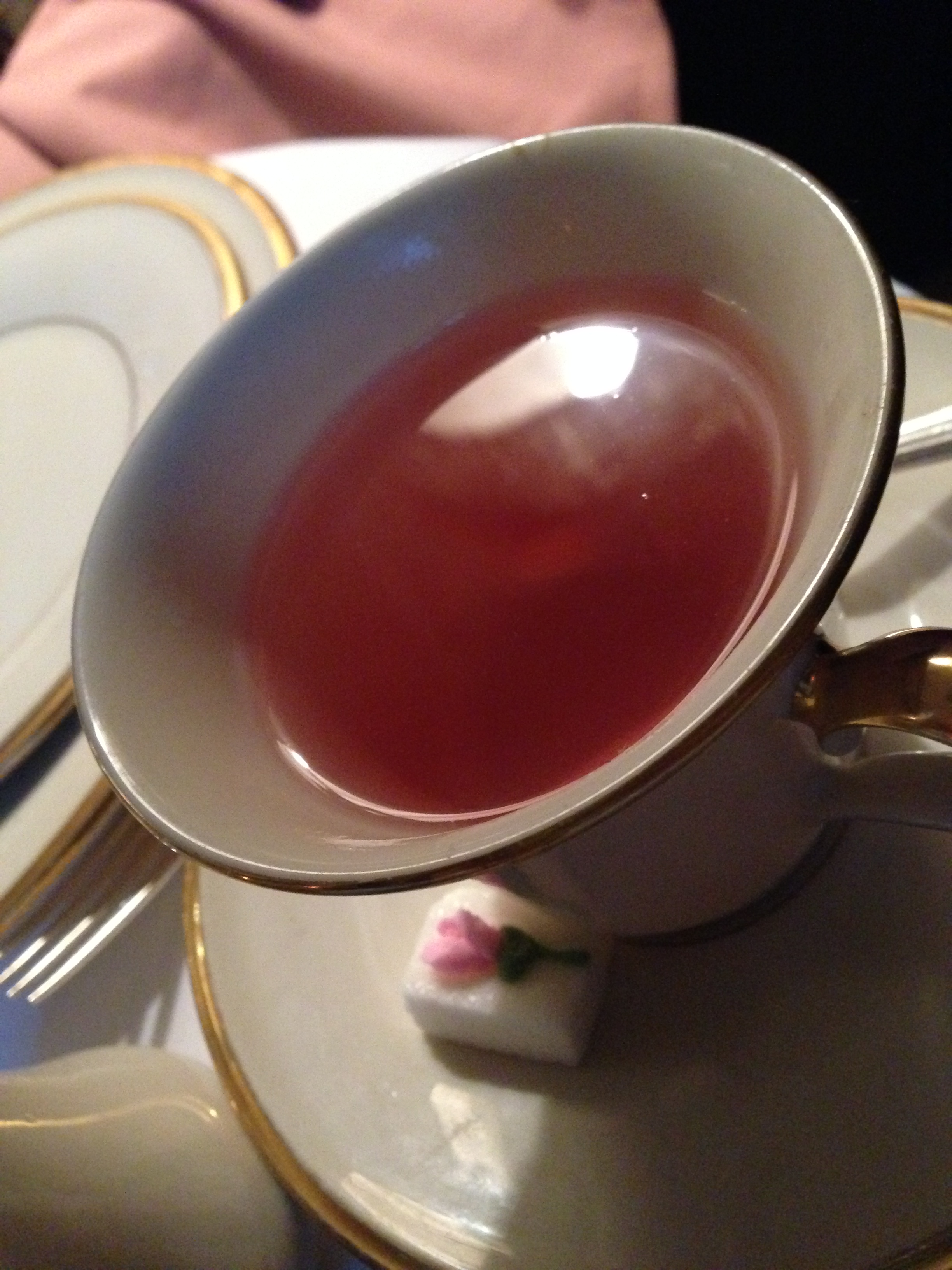
We chose our freshly steeped tea from a menu of 27 varieties. The “Lady Mendl,” which I selected, was hot and heavenly, especially after waltzing for two hours.
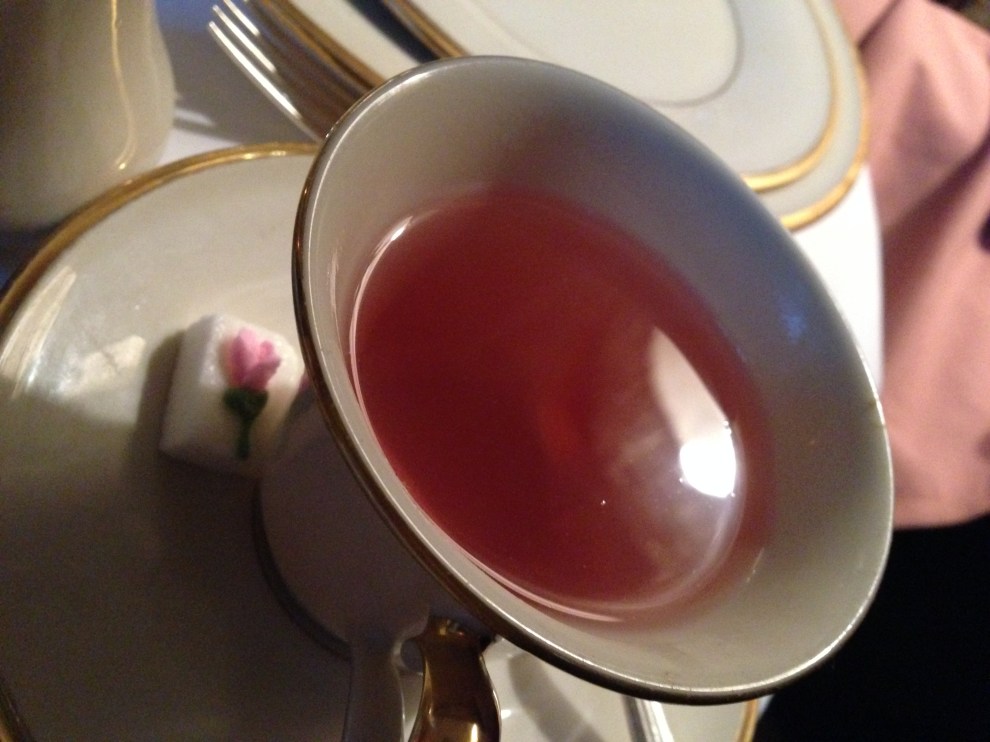
teacup

Darjeeling scented with bergamot, it was named after Lady Mendl herself – none other than the society woman Elsie de Wolfe, one of the first people to make her fame as an interior decorator. It’s said she had the expression “never complain, never explain” stitched on her throw pillows.

Elsiedewolfe

There was an amuse bouche consisting of a butternut squash tart with crème fraiche. Tea sandwiches. We were rolling. Everyone in the room appeared happy, or rather, high. High on hot, fragrant tea.

We reminisced about the banyan I made Gil one Christmas. Banyans are the “exotic” silk robes colonial men wore when they were at home at leisure, with their temporarily unperiwigged pates covered in caps.

banyan

There were, of course, scones and clotted cream. I ate some of the cream on a spoon to make sure it was property clotted.

scones

As if that wasn’t sweet enough we had millefeuille cake with more cream, and chocolate-covered strawberries. In my opinion the strawberries are a specious addition, since a century ago you couldn’t get the kind of giant fruit they dip now. Not that I’m complaining.
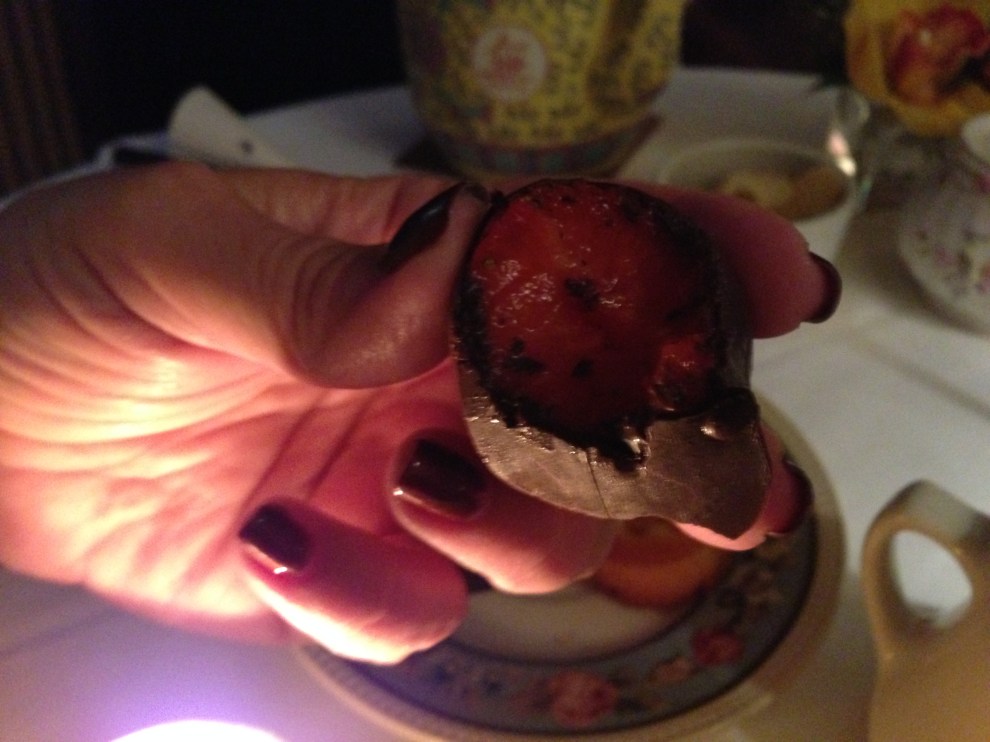
choc strawberry

“It’s good to do something you don’t ordinarily do,” I opined with Victorian superciliousness. “It makes you grow.”

“It makes you groan,” said Gil, ready to go back to the Cabin, put his feet up and his banyan on.
3 Comments

Filed under Culture, Dance, Fashion, Fiction, Film, History, Jean Zimmerman, Music, Publishing, Savage Girl, Writers, Writing

Author Page Debut

I wanted to let everyone know that I have set up an author’s page on Facebook, where you are welcome to go to discover news about my books both forthcoming and previously published, and also bits and pieces about the literary life, book goings on, tweets, interesting historical phenomena and other things that pertain to my life as a writer.

Please do stop by and “like” the page, and leave a comment – I’d love to see you there.

For the Facebook page, and just because I  hadn’t done so in a while, I came up with a new author photo. I wanted the picture to be less posed, more natural than my past ones, and to have some kind of a natural context.

IMG_8745 revised

Maud Reavill was prevailed upon to record her mother’s image for posterity. I stood in front of Columbia University’s St. Paul’s Chapel, designed in 1907 by I.N. Phelps Stokes, he who I profiled in my book  Love, Fiercely: A Gilded Age Romance. It’s an exquisite Italianate structure, one of Stokes’ finest accomplishments, and the first non-McKim, Mead and White building erected on campus. It’s just as beautiful inside as it is on the exterior, but the light inside didn’t favor a shot. I wrote about the chapel and getting my picture taken earlier this year.

The bricks are old. I am not.

Leave a comment

Filed under Art, Culture, Fiction, History, Jean Zimmerman, Love, Fiercely, Photography, Publishing, Writers, Writing

Children’s Books That Make Us Us

Most of the elegant exhibition vitrines at the New York Public Library’s show The ABC of It: Why Children’s Books Matter stand at a height conducive to adult viewing. And wonderful as the show is, it’s really not a place for children – with the exception of a few nooks along the way offering copies of Goodnight Moon for young ones to handle – but a place for us well above knee height to get sucked back into our literary pasts.

The winding display was chock full of books and objects from the Library’s massive collection, and it ranged over the history of juvenile literature. There were picture books from China. There were vintage, quirky numbers, like The Cries of New-York, detailing children selling “various kinds of cherries” on Manhattan in 1816.

cherries

Another book, from 1727, represented the oldest known copy of the most important English-language primer, with an array of four-syllable words, fornication surprisingly found alongside exhortation.

primer

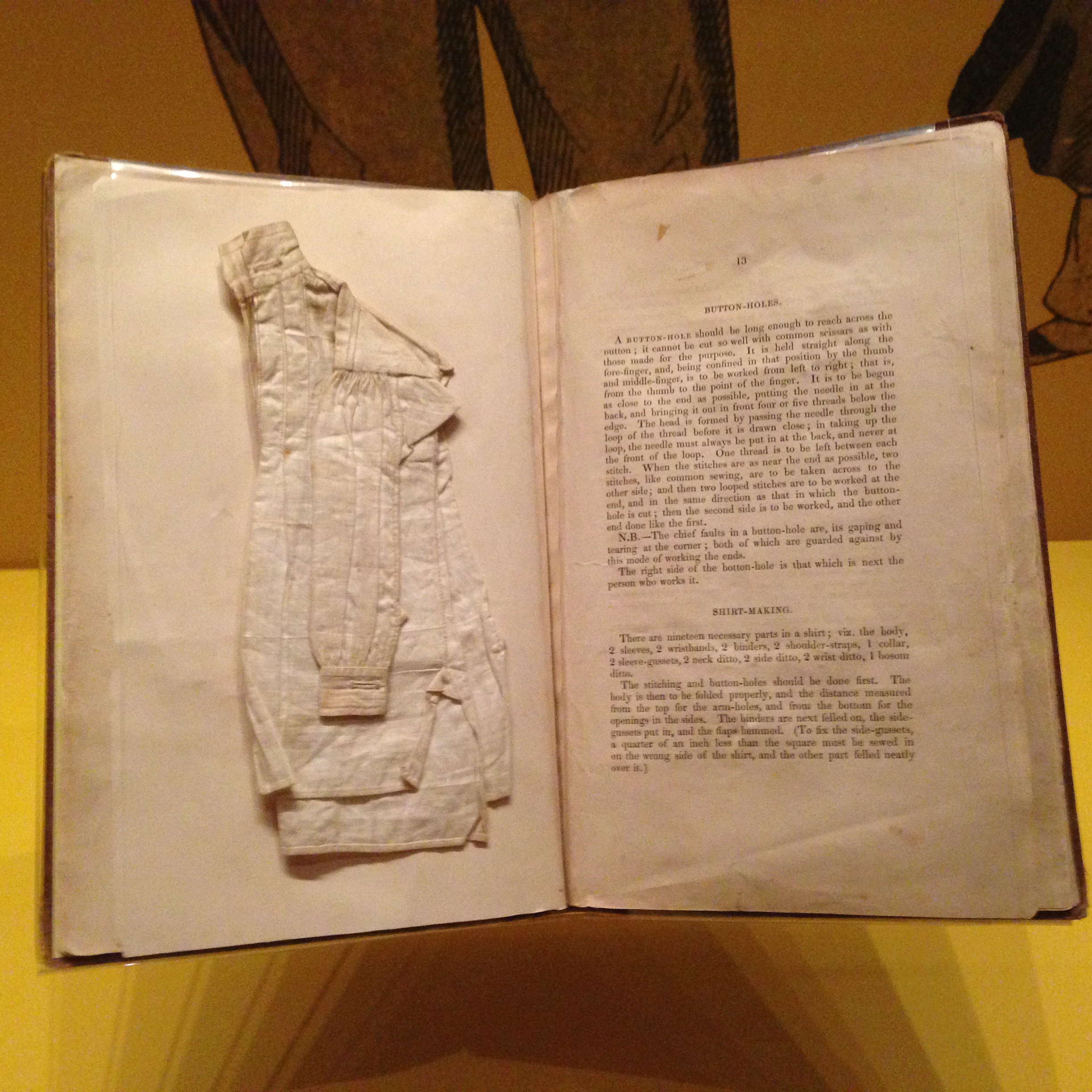
I was interested in Instructions on Needlework and Knitting, from 1847, published in London, whose valuable pages had an actual doll’s dress sewn into the book.

doll clothes

But I found myself gravitating to my tried and true, the darling books of my own important and valuable childhood, when caring people made sure my library was stocked with the perfect pages to make my imagination fly.

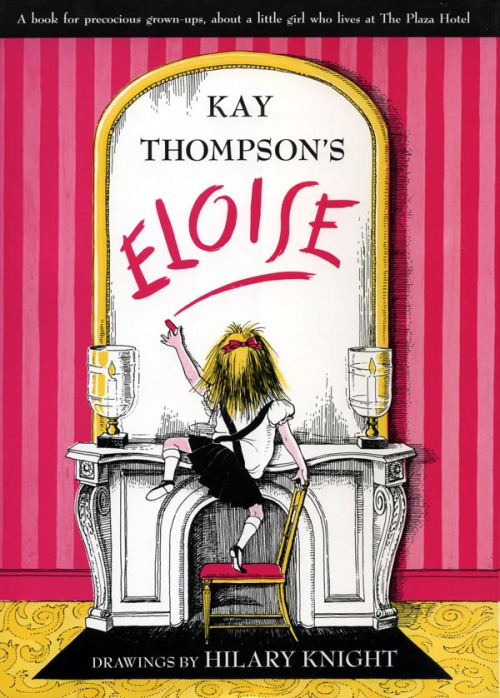
All my old favorites were here in some form or another. I saw sketches by Hilary Knight as he worked up to a published Eloise, with the scamp lying on her stomach facing  her turtle Skipperdee or making an island in the “bawth”. The collaboration between Knight and Kay Thompson was “intense, exhilarating,” I learned.

eloise-cover

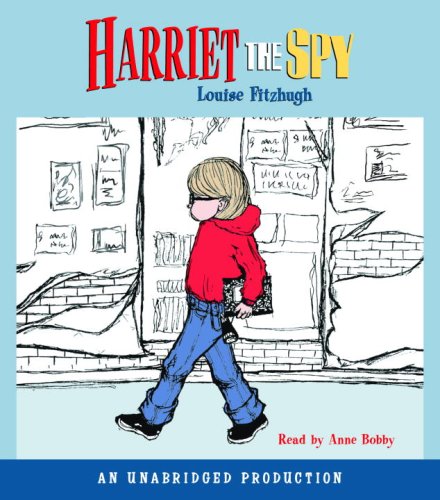
Harriet the Spy, 11-year-old brilliant tomboy, was represented along one wall with a pleasantly tattered copy of the book that could have been my own. That book taught me a lot about what it would take to grow up smart and sly in the world of adults.
harrietspy

The Phantom Tollbooth depicted a land I felt transported to when I was about ten, and going back farther, the Dick and Jane readers drew me in and gave me the creeps simulaneously.

I had forgotten about Ruth Krauss and Maurice Sendak’s A Hole Is to Dig, and the pages on display at the Library touched my heart.

sendak

Harold and the Purple Crayon. Timeless. Ferdinand. Charlotte’s Web: “Some pig.” “Terrific.” E.B. White wrote it while reporting on the founding of the U.N. for Harper’s Magazine, and it was no doubt shaped by a concern about who would save the world. The world he created was of course much more real than a big room full of serious old men.

terrific

I walked about adrift in nostalgia for my books, my bookcases, my bed where I read my books, my family’s club chair where I slouched with my summer pile from the library. “Libraries raised me,” said Ray Bradbury. I remember poring over tales of the creepy Loch Ness monster and the equally terrifying but also funny abominable snowman. I can  relate to Eudora Welty’s memory:

I read library books as fast as I could go, rushing them home in the basket of my bicycle. From the minute I reached our house, I started to read. Every book I seized on, from “Bunny Brown and His Sister Sue at Camp Rest-a-While” to “Twenty Thousand Leagues Under the Sea,” stood for the devouring wish to read being instantly granted. I knew this was bliss, knew it at the time. Taste isn’t nearly so important; it comes in its own time.

I think that when reading I imagined myself to be Mary Poppins in another life (not the children who were her charges) and so I was fascinated to see P.L. Travers’s very Mary-like green-cloth umbrella with a parrot-head handle, and the Dutch wooden doll that served as the model for the magical nanny, which her American editor gave the library in 1972. “My favorite of all!” exclaimed the mom of two girls, who commenced to sing A Spoonful of Sugar.

Mary doll

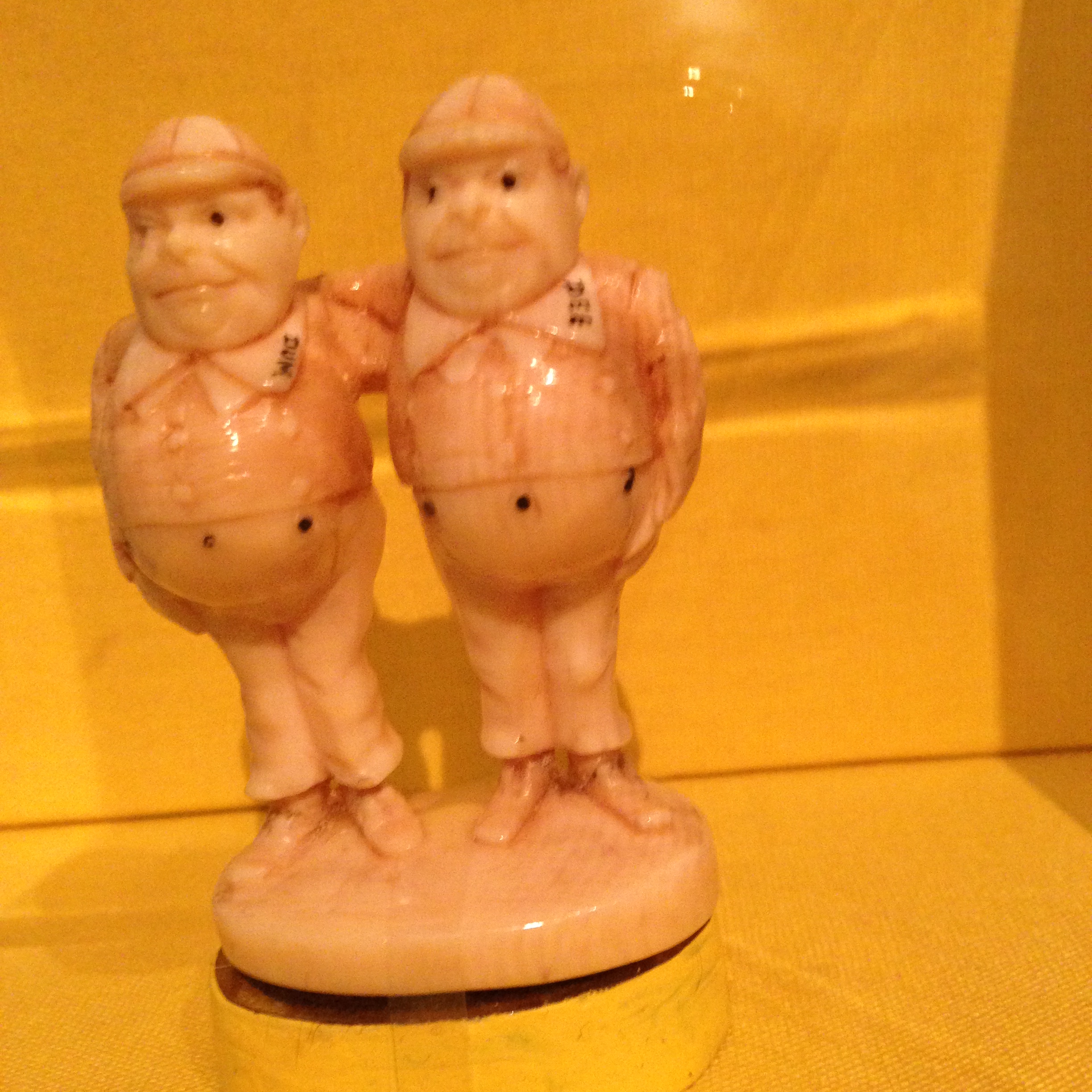
I turned the corner and bumped into another historical nugget, the Tweedledum and Tweedledee parasol handle that Lewis Carroll bequeathed upon the former Alice Liddell, now “Mrs. Hargreaves,” in 1891. The original Alice. She held that ivory in her hand.

tweedles

More heirlooms, including all the original Pooh dolls from the Milne family, which have resided at NYPL since 1987.

I was invited to craft an original story in a Mad Libs vein, with a digital setup on the wall. After I plugged in words, the narration involved a witchy persimmon and an oak turned into a sorrowful seed, reinvented from Hans Christian Anderson’s The Snow Queen. Anderson said, “Life itself is the most wonderful fairy tale.” All fun, but where are the fairy tales? Where are MY fairy tales? The ones I read and reread until the paper book jackets tore.

Oh, there, finally. The Blue Fairy Book. A first edition of the Andrew Lang collection, which had something like a dozen volumes.

blue fairy

Mom, Dad, Grandma—and I think it might have been Grandma—thank you for giving me The Blue Fairy Book, the Red, the Green, and the others, volumes I would crack open to release their dreams, their mystery and passion. Beauty and the Beast, which I read in The Blue Fairy Book, still gives me a shiver.

3 Comments

Filed under Art, Culture, Fiction, History, Home, Jean Zimmerman, Poetry, Publishing, Writers, Writing

Tweet or Not to Tweet

The gloaming is coming earlier these days. The Cabin, cozy as it is, can be small.

Halloween Cabin

Our winter is heated by wood more than sun.

wood

Fewer outdoor adventures, unless you want to really bundle up. A dive instead back into a small pink knitting project.

pink knitting

Oliver wants to lay down on the already-cold grass. I don’t.

oliver cold grass

What to do? Something new.

First I asked an intern to escort me through the twisted corridors of Twitterdom. Why do this at all? was my first thought, my eye wandering over the overwhelming Twitter feed. Well, said Carlos, my intern, you might find something interesting.

Carlos

Ahhh, that.

I went to the Metropolitan Museum’s profile to see who the greatest art institution in America was wont to follow, and discovered a thousand crazy, creative persons and places I didn’t know existed, that I want to know more about.

met

Only connect, as Forster said. Easy for him to say. He didn’t have FB, Twitter, Tumblr, etc., etc.

Catch me at @jeanczimmerman and we’ll tweet.

2 Comments

Filed under Art, Culture, History, Home, Jean Zimmerman, Knitting, Publishing, Writers, Writing

To Be a Ghost

Gil is an animal of many and variegated stripes. He writes nonfiction (Aftermath, Inc.Mafia Summit) and fiction (Mockman).

Gil signing

He is also expert at articulating the stories of others as their collaborator. I asked Gil some questions about the process.

Why ghostwrite?

I like to collaborate, because otherwise you’re alone in a room with a computer keyboard. Collaboration relieves that.

How do you help someone tell their story?

I ask them questions, get them to talk about themselves, record the results, transcribe it, and that’s the raw fodder for the book. Sometimes they offer other material, past interviews, diaries, historical records, all of which are good.

You’ve written for athletes, record producers, polar adventurers, and the husband of Susan Smith, the woman who drove her kids into the drink many years ago. Which one was your favorite coauthor?

My favorite is always the one I’m doing now. But I have to say Robert Swan, the adventurer, the only man who walked to both the north pole and the south pole. I like him very much. An incredible environmentalist. That book was called 2041: My Quest to Save the Earth’s Last Wilderness.

robert-swan-4

Are there any tricks of the trade?

I consider myself a success if I disappear in the prose.

Tiki Barber BookWhat determines if you get credit for your work?

I don’t think it’s important. I always believe that the people who should know I have written the book will wind up knowing, i.e. editors and agents. I’m proud of my “with”s, that’s the terminology you use when as a ghost you get a “with Gil Reavill” credit. And I’m also proud of my uncredited ghostwriting.

ruthless

What are you working on now?

I’m not at liberty to say.

Will it be a big book?

It is a big book.

I’ve written books for angry black men and I’m a timid white boy. I’ve written books for egocentric women and I’m a zelig male. To reach across the membranes of self to enter into another person’s reality is an enjoyable novelty.  The metaphor I use to talk about my ghostwriting work is a lawyer and his client. I’m there to give somebody the language that they might not have otherwise. Or I’m perhaps in some cases there to speed up the process, to allow someone to write a book in one year what it would take them ten years to do without me.

What do you think that ghosting has done for your own creative work?

Ventriloquism is always part of the creative process, even in nonfiction. What did Kafka say? We need an ax to break the ice between us. Creativity is the ax.

Franz-Kafka

What does that have to do with the question?

What is the question?

We’re all separate souls and creativity builds the bridge, whether it’s between two real people or an author and a created character. There are still bridges to be built.

3 Comments

Filed under Culture, Fiction, History, Jean Zimmerman, Publishing, Writers, Writing

Making Change

It’s a good day for working. I just finished proofing the third pass Savage Girl galleys. Found some periods and commas that persisted perversely in the manuscript despite everyone’s best efforts. A few tiny, tiny changes make all the difference. If. You. Ask. Me.

Yes, it’s a good day for scrunching your forehead and working. Especially if your work is being on the lookout for deer.

scrunch

But isn’t it a better day for rolling in the grass? Those fallen leaves add a toasty texture to a run-of-the-mill back scratch.

O rolling

Closer to waist level, the sun warms the fall berries. Where do they come from? The landscape has changed. All of the sudden they’re there.

red berries

Then there are the last of the morning glories, though they don’t know it. The deer have already had at most of their leaves. Soon the blooms will fold up their tent.

glories

They mirror the arching sky. Contrails: someone’s going someplace.

blue sky

The morning glories unfurl for just a single day. Their only work is being beautiful.

This morning I revamped the front page of this site, and I invite you to visit. To improve is to change, said Churchill. To be perfect is to change often. I don’t know that I change often enough or dramatically enough, but I’d like to try something new.

For one thing, I’m settling on an up-to-date author photo. Not quite sure, but this one’s a strong possibility.  I like it because I seem bemused. Which I often am.

IMG_8745 revised

2 Comments

Filed under Dogs, Fiction, Jean Zimmerman, Nature, Photography, Publishing, Savage Girl, Writers, Writing