Category Archives: Fashion

The Algorithm of Curvy Passion

Whale bone doll. Greyhound vs. great dane.

dane pup

WTF?

I get a regular report from WordPress, the outfit that hosts this blog, which tells me the search terms used every day to find my site.

I love to read these oddly linked words and imagine the people that typed them into a search box and, even more, wonder about how those phrases got to me. It’s a little of what’s Hecuba to him, or he to Hecuba, as Hamlet says (and you haven’t heard the plaintive, flummoxed quality of these lines unless you’ve experienced Paul Giametti’s turn with Hamlet at Yale Repertory Theater, as I did recently). What is the algorithm? Where do they come from,  these disjointed, nonsensical idioms, and what do they have to do with yours truly?

Curvy passion. Another search that landed someone on my site.

Anna karenina dresses.
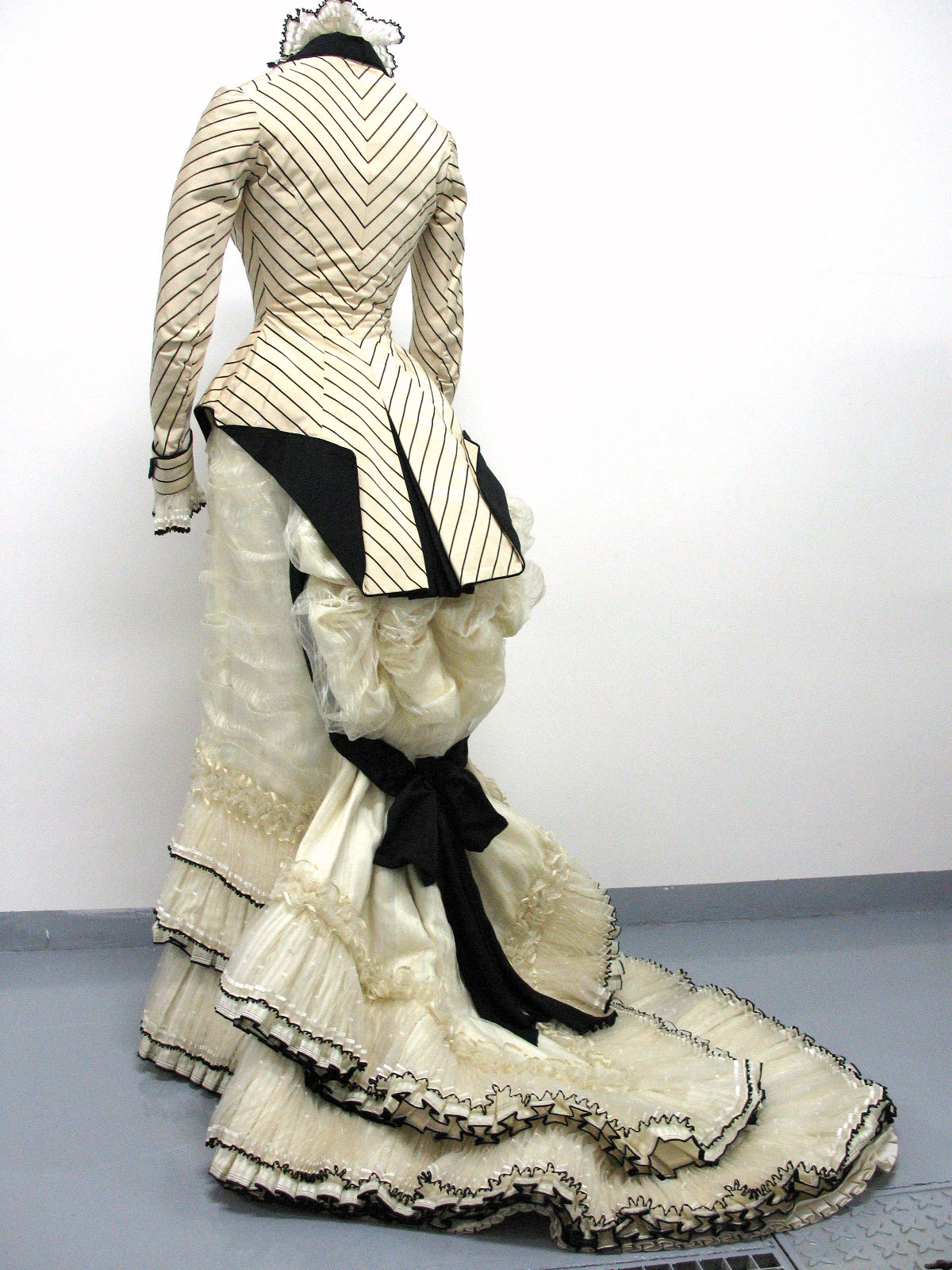
Anna Karenina  Race Dress 2


Well, okay, that is conceivably something you’d find in my blog. But:

Alligator tails?

Knock knock. I’m at your door. Do you have anything on your site that can respond to that?

Horse gilding furry porn.

Embroidery on plywood.

ColonialBoston

Kids in grass winter.

They’re interesting, but as far as I know, I haven’t yet filed a post related to these phrases.

Peacock one to one correspondence.

Sorry.

Now, there are some crazy-sounding terms that beat an understandable trail to jeanzimmerman.com.

Wooden cowboy roadside, for instance. Recently, from Arizona, I described a series of handmade wooden signs posted mysteriously along a highway in Scottsdale, one of them featuring, yes, a cowboy. I like hand-painted signs, and this was one of the finest.

Cowboy sign

Sweet old world meaning. Last month, I tried to get at the feeling Lucinda William’s rhapsodic song gave me, when Gil’s mother lay in the cocoon of her dying, and it struck a chord in some readers.

More music. Sweet milk and peaches tuning. I’m no musician, I barely even sing in the car, but I watched a fiddler play country songs from the rural south circa the beginning of the 20th century, and it carried me off in a square dance time machine.

I want to do to you what spring does to the cherry trees. Someone actually typed that in a search box. The achingly erotic verse of Pablo Neruda, who I profiled the other day when word emerged that his remains were being disinterred (to the strains of a string quartet) so the authorities could check if he had been poisoned.

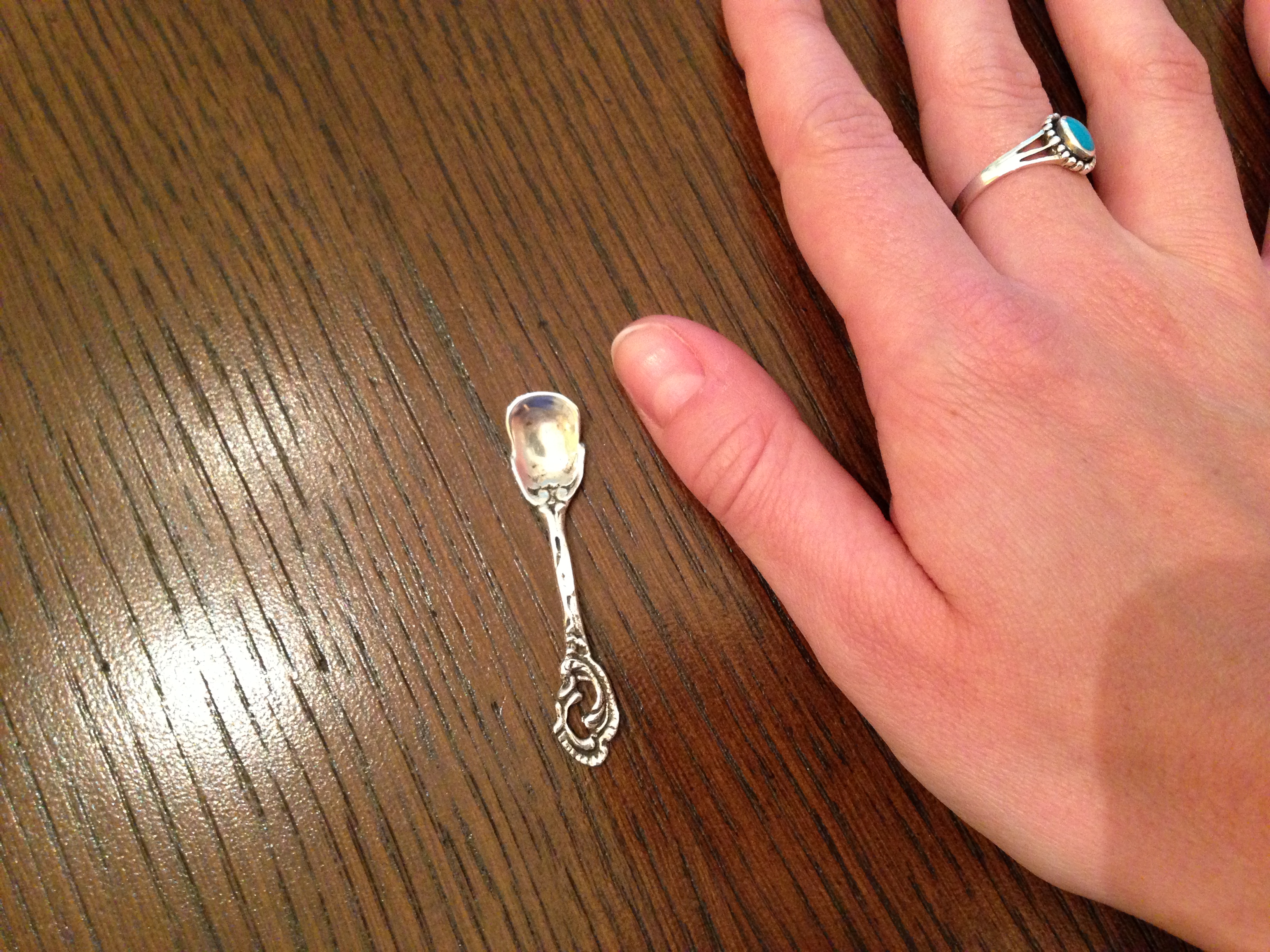
Tiny silver spoons. Well, yes, that would be my mother’s collection of family cutlery.

Prickly pear babies. My quest to find the infant spawn of the saguaro.

desert gardener

Mark Wyse 17 parked cars. I talked about Wyse’s book 17 Parked Cars in my review of Ed Ruscha’s exhibit at the Gagosian Gallery in Manhattan.

Faviken. A rave-up of the brilliant Scandinavian chef/restauranteur Magnus Nilsson, who likes more than anything to cook with lichen.

But perhaps the searches I get most of all have to do with witika or wendigo or native american monsters, which all point to the beast in The Orphanmaster, nine feet tall with putrid green skin, razor-sharp fangs and claws good for slashing.

wendigo

P.S. The witika finds human beings pretty tasty. Apparently there’s a healthy coterie of witika enthusiasts out there, and on this site I have an essay with some fantastic pictures about the monster.

So I’m not seeing any searches for Lindsay Lohan here. Nor anyone leaning in to find Sheryl Sandberg. Nor to find the dope on Louis CK,  though I plan to write something about the genius comic one of these days.

One of these days…Some of these days… Sophie Tucker, my favorite jazz era nightclub singer, known to her fans as The Last of the Red Hot Mamas, did a hit song called “Some of these days.” I wrote about her and Etta James in the same post – two singers who wow me.
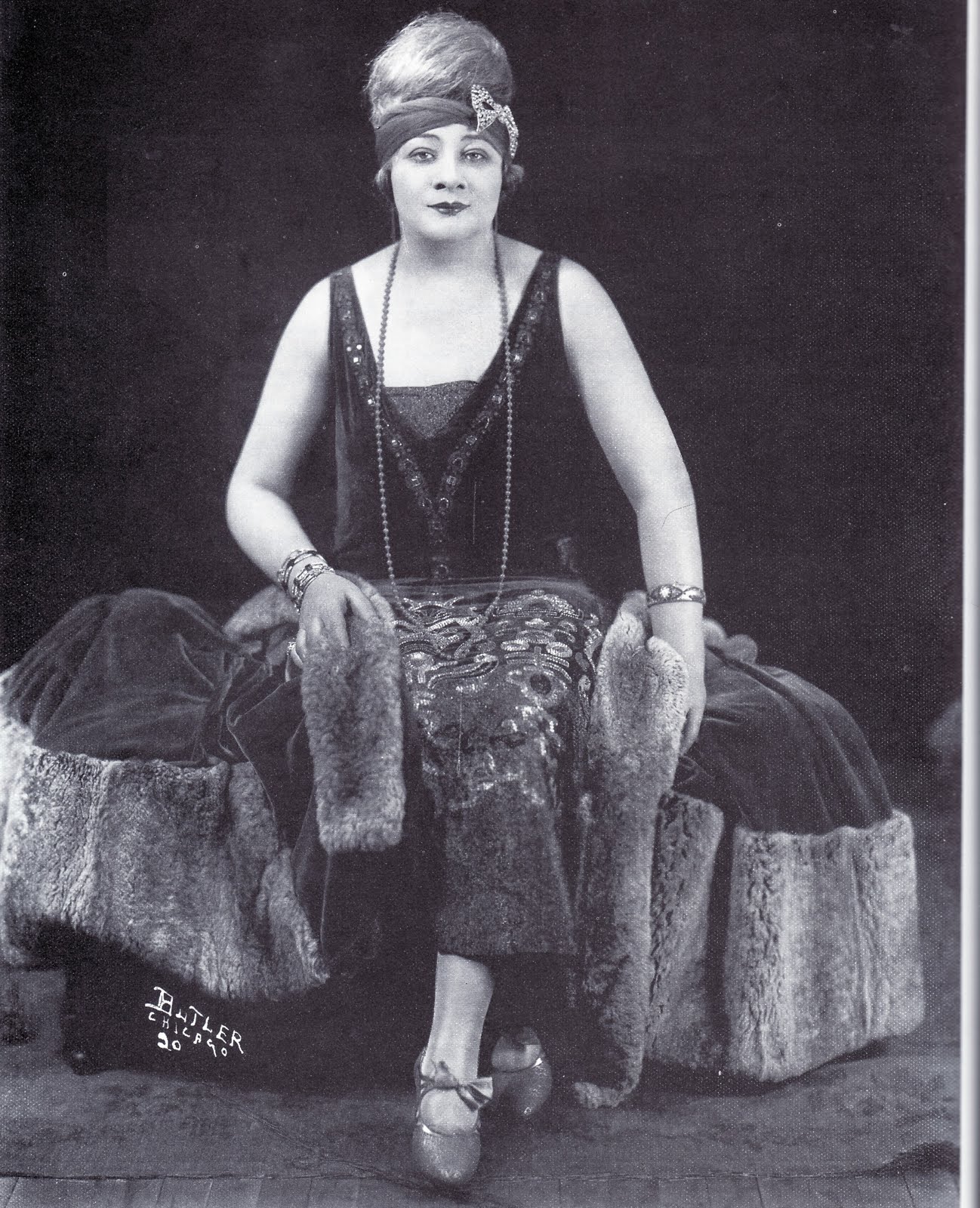
sophie-tuckerNow go do some searching, and we’ll see if you circle back my way. And if there’s something you’d like to see me write about that I haven’t already — or even if I have — just leave me a comment and let me know. We aim to please.
 

Leave a comment

Filed under Art, Cooking, Dogs, Fashion, Fiction, Music, Poetry

Pruning Links

Damn. My cup runneth over with links. My computer wouldn’t let me save another bookmark, it was so stopped up, so I had to prune. Throw out and organize. Floss. Figure out what I really needed to save, what I might need – need being a relative term – and what could be relegated to the virtual trash heap. So I’d have room for new, extra important links!

It was enlightening, actually. In embarking on this task, I found that there were three big categories that had held special importance for me in the past few years.

One was wonderful me and my wonderful work . My log cabin got its due . Even a movie (just a glimmer, but a Hollywood glimmer) had found its way into my bookmark file.

When I was a middle schooler making covers for my little hand-crafted books by binding pages into cardboard and calico with ironed wax paper, I think I would have been amazed that some day someone in the world would be interested in what I had to say. I still remember the smell of the hot wax paper as it was pressed, and the excitement that Miss Henny Penny’s Travels was going to be “published.”

young Jean

Edith Wharton tells a story in her autobiography, A Backward Glance, about going in to a book store in London when her first book, The Greater Inclination, came out in 1899 and asking the manager innocently if there was any new and interesting book she could look at. “In reply Mr. Bain handed me my own little volume, with the remark: ‘This is what everybody in London is talking about just now.’” He had no ideas who he was talking to.

Then, second, I have the category of Gertrude and Sylvia  and Simone   and the rest of the ladies who launch. And more of Stein.

U1889231

I couldn’t believe how many iterations I had of critiques, praise, profiles, pictures of the women who inspired me over the years and still fascinate me.

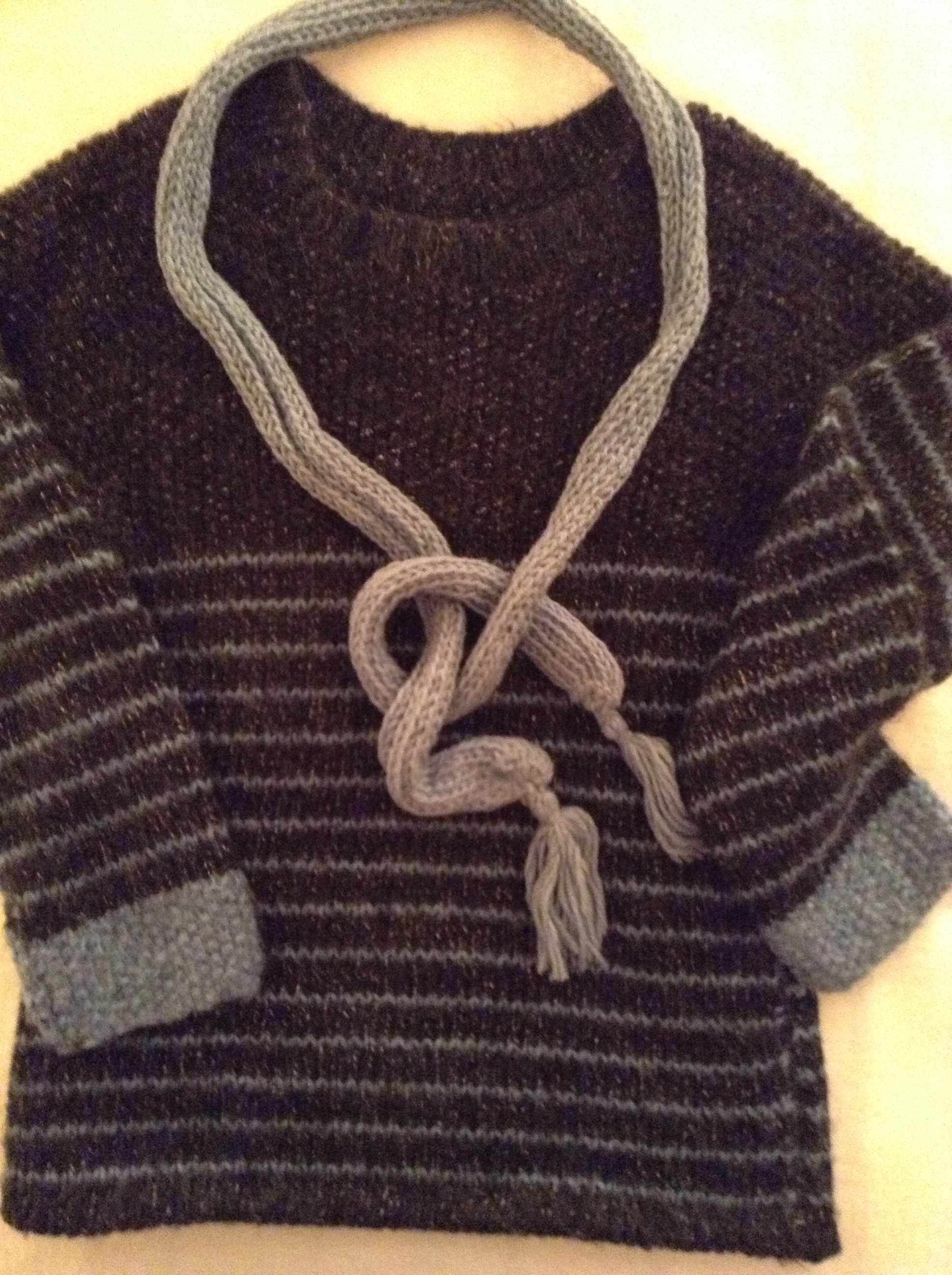
The third whopper of a group: scarves. Knit patterns for scarves. Especially circle scarves. Yes, cooking and knitting do take up some of my time, I admit it, unintellectual as that might make me. I’m itching to make Paula Deen’s gooey butter cake. But the scarves have it. I made seven this winter. Plus a sock.

knit

Then there is everything else. Before they go into the Older Bookmarks file, I’ll highlight a few that have grabbed my interest along the way. A self audit, as it were. And a little gift to anyone looking for something new to chew up their time.

I obviously made a serious trip into Victorian America in recent months. Many times over DanceDressGetting aroundMansions, mansions, mansions. Does my time machine have an exit onto Manhattan’s Fifth Avenue in the 1870s? You bet.

James Tissot 1836-1902 - French Plein Air painter - Tutt'Art@ (8) copy

Even (or especially?) Victorian headless portraits interest me. So much of this nineteenth century arcana found its way into Savage Girl, my new novel that will be published in early 2014, which officially made it work, but it still felt like a guilty pleasure.

More research, this time for The Orphanmaster, unearthed this incredibly absorbing digital redraft of the Castello Plan. You can hover over the first street plan of New York, a drawn-to-scale view of seventeenth century New Amsterdam, and investigate what it was actually like.

I had the idea at one point that we should explore Oliver’s genetic background and see what part of him was actually pit and which part was hound. So I looked into DNA testing for dogs.

Oliver

I wondered what you’d see if you opened the refrigerator door in Bangkok or Jerusalem. I found out at Fridgewatcher.

I always find it useful to keep a library on file in case my disheveled bookshelves won’t yield it up. And so, here they are, minding their own business, various books in their entirety, like George Orwell’s Down and Out in Paris and London, one of my favorites,  and the Diary of Samuel Pepys. And it’s always good to be able to access an exhibit based on Whitman’s Leaves of Grass.

iwhitmw001p1

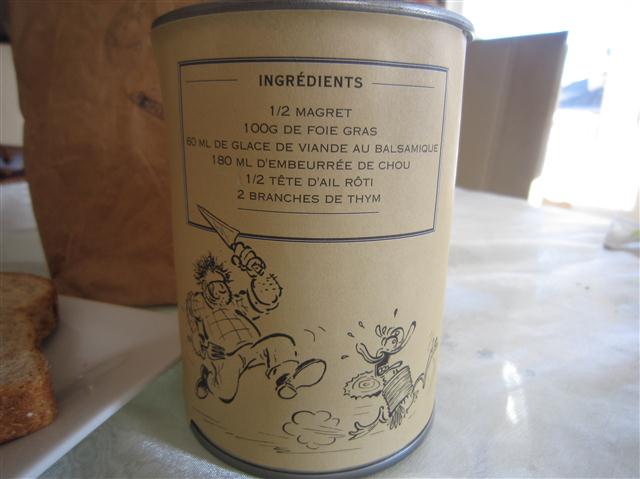
Gil and I ventured to Au Pied de Cochon in Montreal. For a while afterward we didn’t get our cholesterol levels checked. The menu  includes such delicacies as Tarragon Bison Tongue and Foie Gras Poutine (foie gras is their speciality, along with everything pig-related), all of it drenched in butter. It was here that I had the famous “duck in a can,” consisting of a duck breast, a lobe of foie gras, half a head of garlic and some kind of spectacular gravy packed into a metal can, like a soup can, and boiled.

duck in a can

Afterwards, when you’ve been sitting at your table for a while marveling at the number of trendy people there are in Montreal, the waiter opens the can at the table and dumps the whole stew onto your plate. Fabulous.

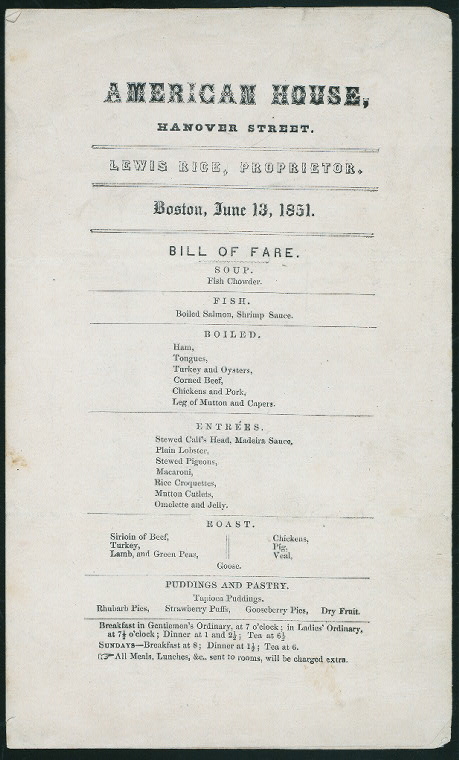
If you like menus as much as I do, you’ll go to The New York Public Library’s historic menu collection.

American House

Something I don’t want to file too far way is The Top Ten Relationship Words That Aren’t Translatable into English, assembled by a serious linguist, and including such gems as Cafuné (Brazilian Portuguese): The act of tenderly running your fingers through someone’s hair.

Probably the most delightful site I’m back-burnering. For now. Or, on the other hand, I think I’ll leave it out for a while in case I want to take it with me as a reference when I next tour the Metropolitan Museum of Art: Nipples at the Met(“updated regularly”).

nipples

All links welcome; leave them in a comment.

4 Comments

Filed under Art, Cooking, Dogs, Fashion, Fiction, History, Home, Jean Zimmerman, Knitting, Poetry, Savage Girl, The Orphanmaster, Writing

Apron Strings

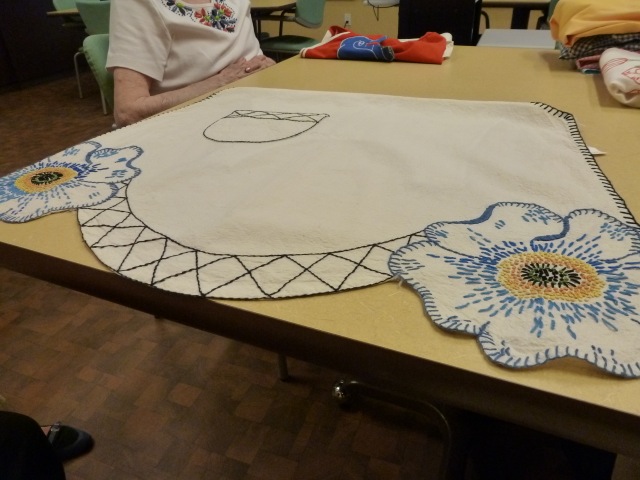
My mother Betty has been good enough to pitch in with a guest post today. She attended a presentation at the residential community were she lives by a traveling apron-enthusiast.

sunflowers

I would have liked to see and touch these beautiful heirlooms but I’m 2,000 miles away.

sunflower cu

Bobbie Schafer’s medicine show includes a slide presentation and a wicker chest bursting with vintage aprons. Betty brought a Christmas apron embroidered for her by my great aunt in the late 40s early 50s, topped with a round of plastic.

Auntie's apron

Yes, her waist was that small.

All the photos to follow are my mother’s. Hit it, Betty!

The original style of apron was called a “butcher” apron.  It had a bib top, and covered the dress  almost completely, to keep the garment from getting soiled. Washing dresses was not easy then.  The homesteaders brought aprons (and rifles) into use.

In Victorian times, matrons created their aprons with silk, often with lace.  Obviously, the lady of the house used them for adornment, not real use.

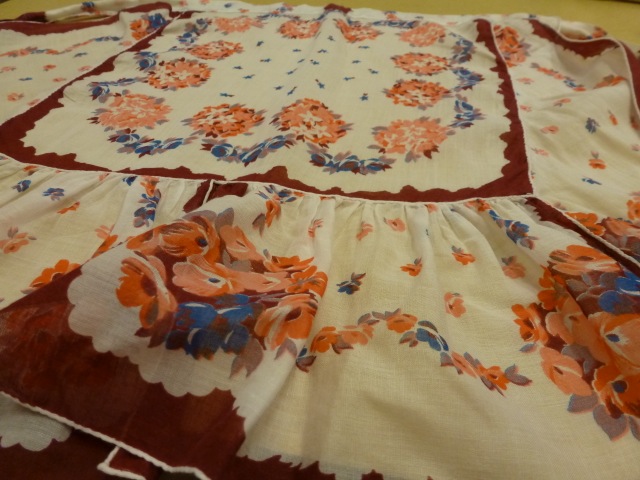
Matching handkerchiefs were sewn together in the 1920s to make hankie aprons.

hankie apron

In the ’30s the apron still covered the whole dress.  The painting by Grant Wood, “American Gothic,” is an example, also including the use of rickrack, new in the ’30s.  Some women wore two aprons, so that when you answered the door, you could quickly shed the outer one and appear in a fresh one.

rick rack

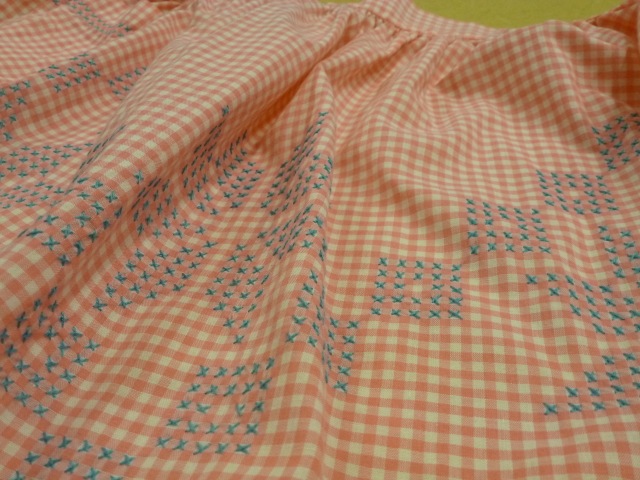
The ’40s brought shorter dresses. The government told you how long a dress could be. [Note: You’ve got to be kidding!]  The amount of material used was less, and because of wartime, it was less easily available.  The aprons were accordingly shorter and smaller — often made of only one yard.  They were still the full, or bibbed style, sometimes pinafore style. “Victory” aprons appeared during the war, with red, white and blue designs.  Polka-dots, plaids and rickrack became very popular.  (An interesting side story. During wartime, ladies alway wore hose, and because nylons weren’t available, they used an eye pencil to paint the seam down the backs of their legs.)

cross stitch

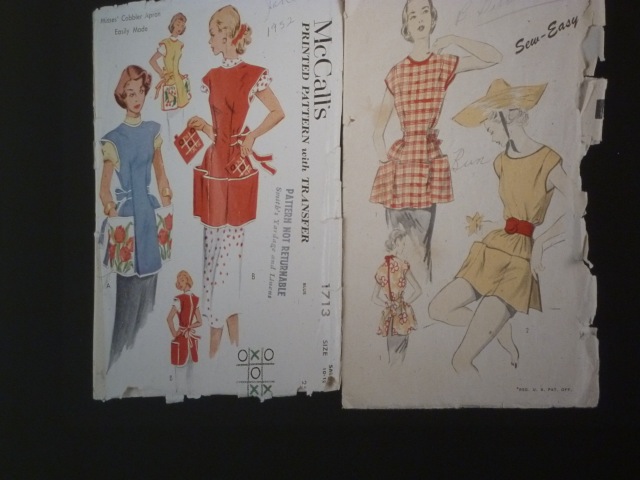
Also in the ’40s, the first patterns for aprons became available, from companies like McCall’s and Simplicity.

apron patterns

There were iron-on transfer patterns with designs for embroidery and appliqués.

girl apron pattern

In the ’50s hostess aprons were popular, often made of taffeta.  These were party or cocktail aprons.  Often they had hearts, spades, clubs appliquéd on them, for use at ladies’ card parties.  Sometimes women wore holiday aprons, and some had aprons for each holiday.

mexican apron

There were also cobbler aprons, or hobby aprons, with lots of pockets for holding tools, etc.  And for the first time, aprons for MEN!  (These were back to butcher-style.)  Real aprons for women went out of favor, as TV dinners had been invented, and women didn’t cook as much.

mexican apron cu

In the ’60s, The washing machine meant aprons didn’t need to cover the dress.  Women started wearing pants and with the women’s movement, women decided to throw away their aprons, anyway!

In the ’70s, the pinafore style became popular again.  Now the apron is back.  There are more patterns available than there were 10 years ago.  They are popular, even on college campuses, and in stores like Target.

cross stitch:applique

9 Comments

Filed under Cooking, Fashion, History, Home, Jean Zimmerman

Ghosts of Garments Past

I visited my parents in the  desert. My mother shared her wisdom on various things.

The efflorescing flora all around.

Mexican Golden Poppies

Family history, seen through a series of silver demitasse spoons.

silver spoon

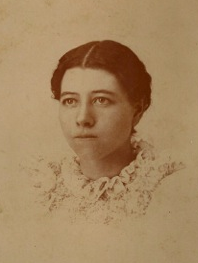
They belonged to Lockie Hilllis Coats, my great grandmother, shown here in 1894.

Lottie

The personalities of various seniors my mother lives with, who mingle and gossip like kids in a college dorm. She and my father have a charmed life at their retirement community. Though that sounds like almost too technical a name for a place with stretching gardens, a comfortable, well-thumbed library and big open doors onto a sun-flooded patio. They adore it.

Silverstone-Arches-Toward-Mountains

I began to miss them even before I stepped on the plane back.

My mother shared something else with me. Her collection of hand-knitted sweaters. Some are the cherished work of matriarchs on both sides of my family. Each branch seems to have had a gene for needlework, or perhaps it was just in the water of their generation. To an avid novice knitter like me they gave great inspiration.

sweater 1

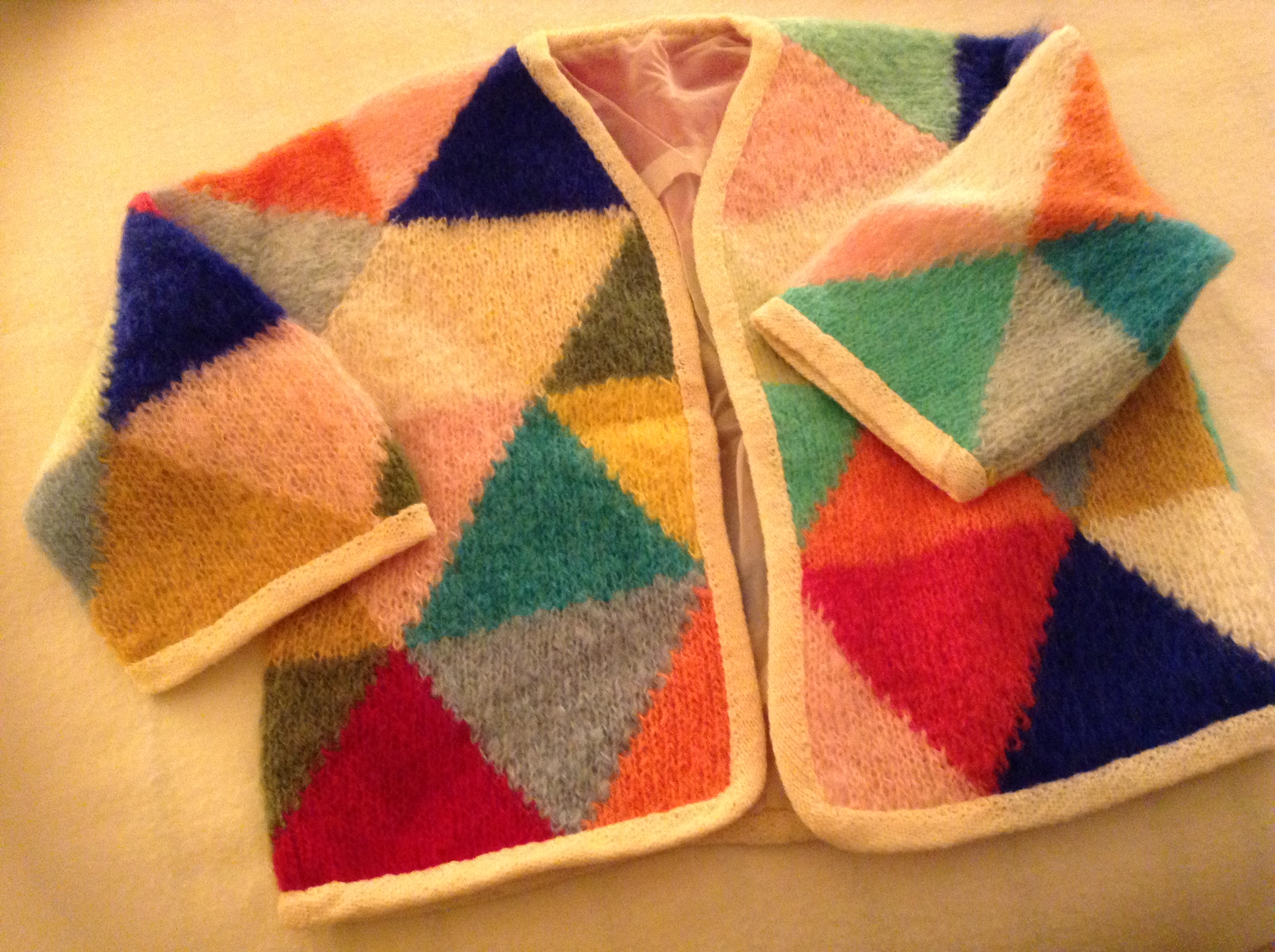
My great aunt, known to me as Auntie, produced a color blast of a harlequin-patterned cardigan for my mother. Auntie became a renowned home ec teacher in rural Tennessee and was the kind of adept who could knit and purl in a pitch-black movie theater without dropping a stitch. Tatting was her main thing, and carefully put away in storage I have the openwork pieces she wrought – in the dozens, if not hundreds.

Auntie

For the triangle-themed sweater my mother laid out on her bed, Auntie took a different approach.

auntie's sweater

There was not only this one, it seems, but identical garments for two other women, my mother’s sister Sandra and her mother Virginia. Were they intended to wear them all at once? My mother pronounced the pattern gaudy if beautiful. Good for the circus, not for her.

On the other side of the family, the delicate crochet-work stole of my Aunt Gus, my grandfather’s sister, posed prettily here with Jack.

Gus and Jack

Yellowed now but preserved in one of my mother’s sensible moth-guarding plastic bags.

sweater 6 cu

And a knitted short-sleeved sweater decorated with appliqued circles like suns and tiny pearls. Perfect size and retro styling for Maud, who has it now at school.

gus sweater

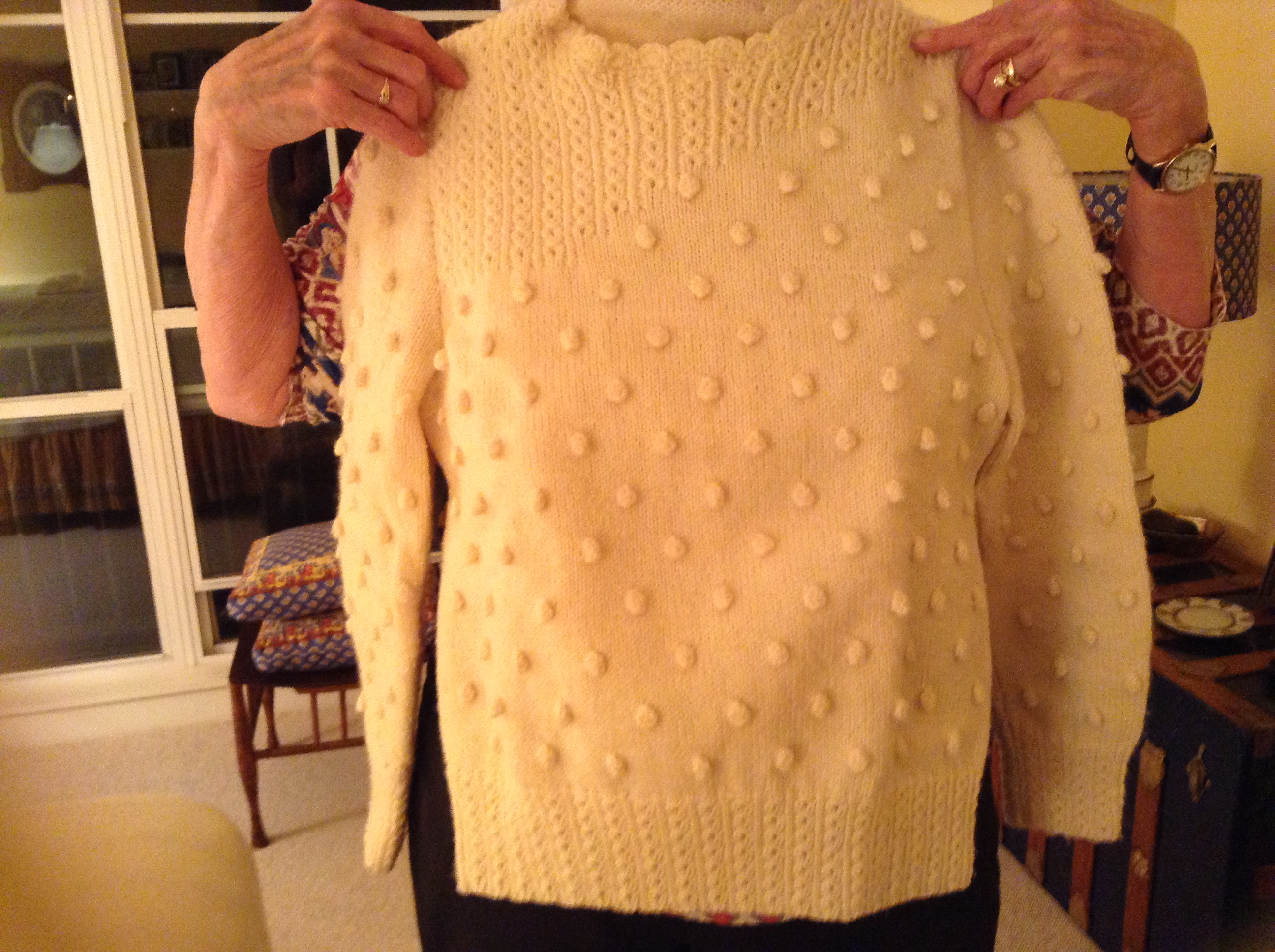
Then, moving away from family, came the popcorn sweater from New Zealand.

popcorn 2

Each wool bubble intricately worked out of the body of the sweater.

popcorn 1

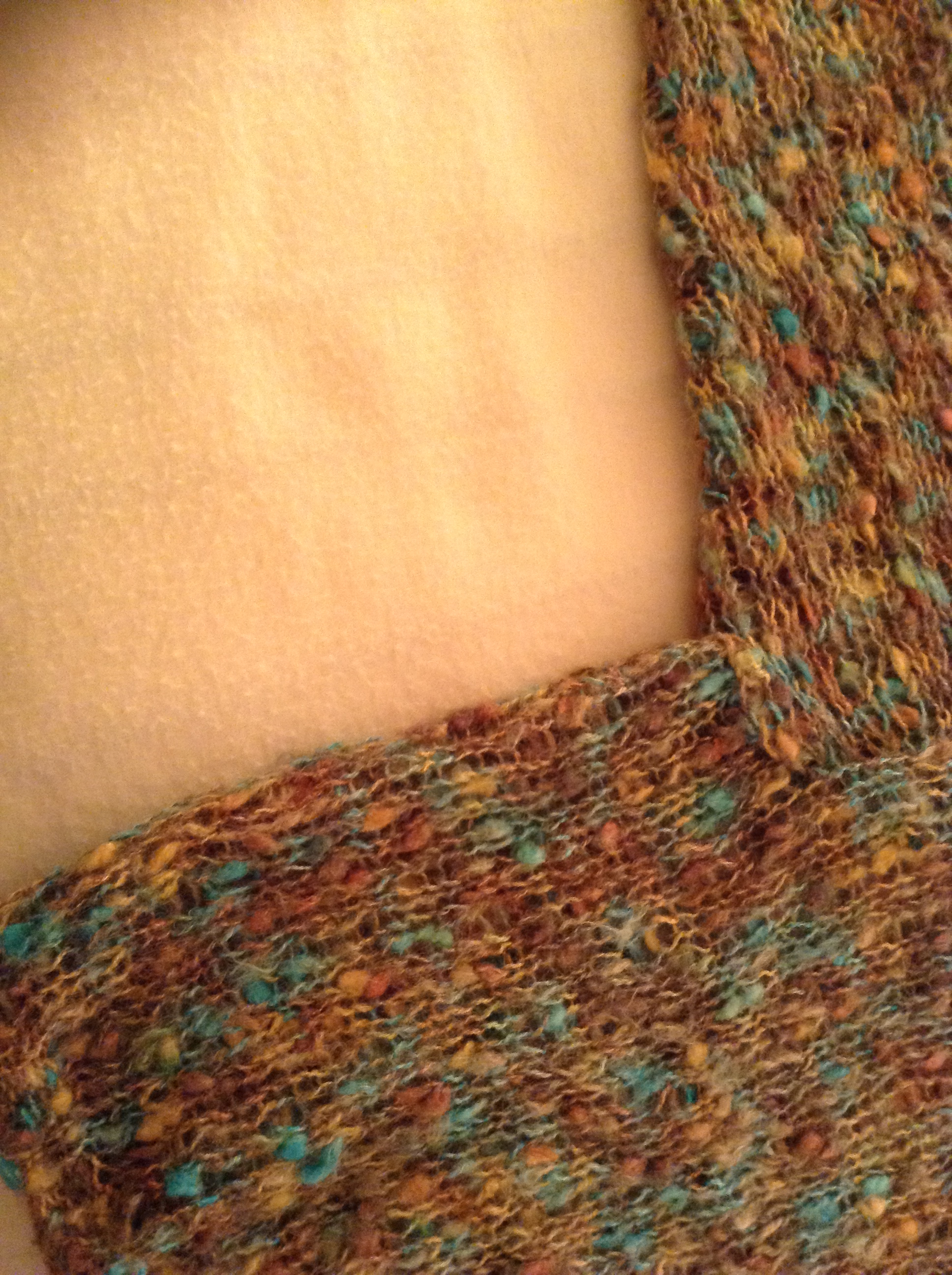
Also from New Zealand, this blue and brown beauty.

sweater 4

And a lacy pink number with ballooning sleeves that has appeared at various special occasions.

sweater 5 cu

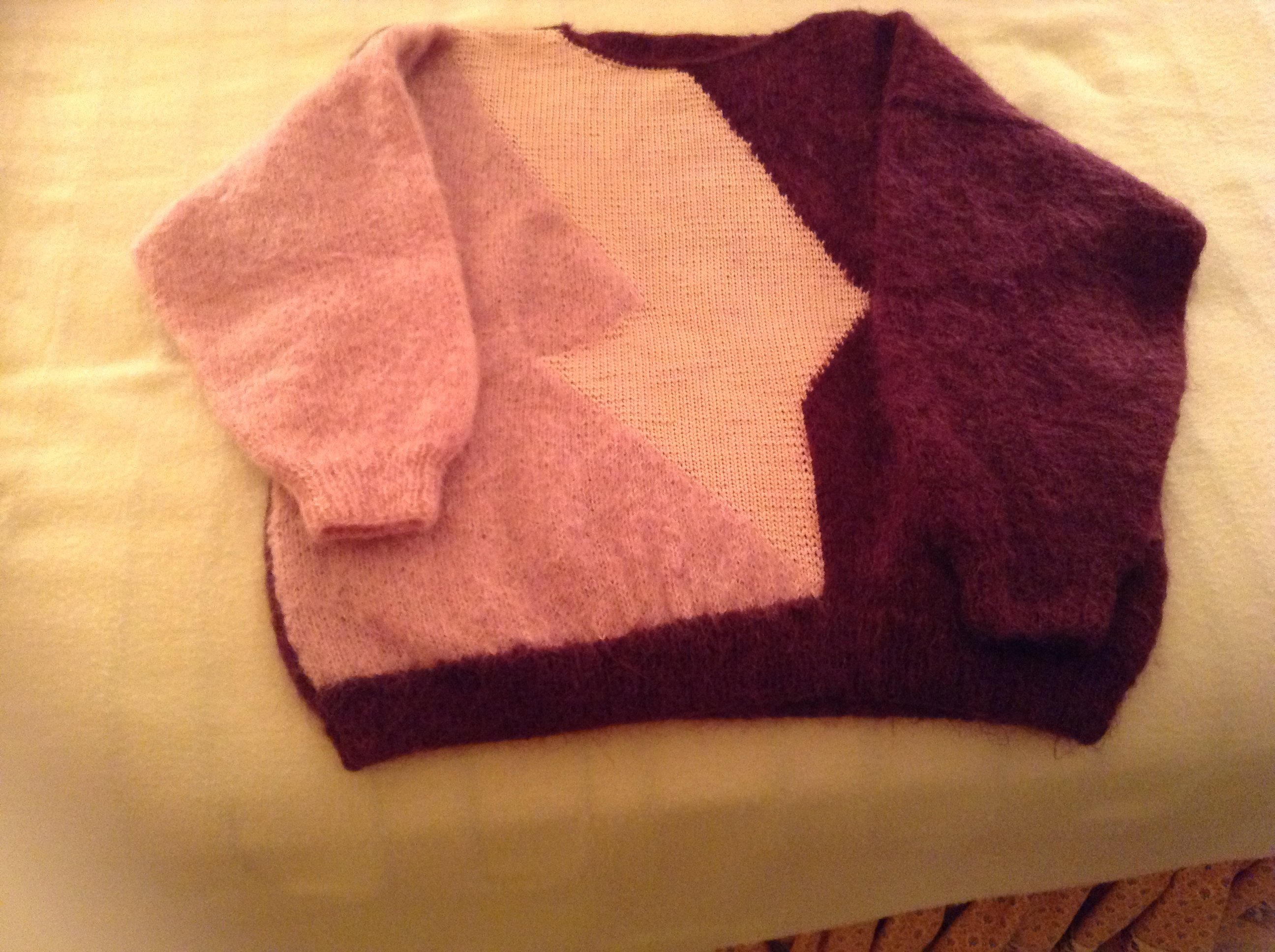
Pink, also, but kind of crazy, the zig zags hailing from Holland, where my mother tells me she saw all the women sit out on their stoeps and ply their needles.

sweater 3

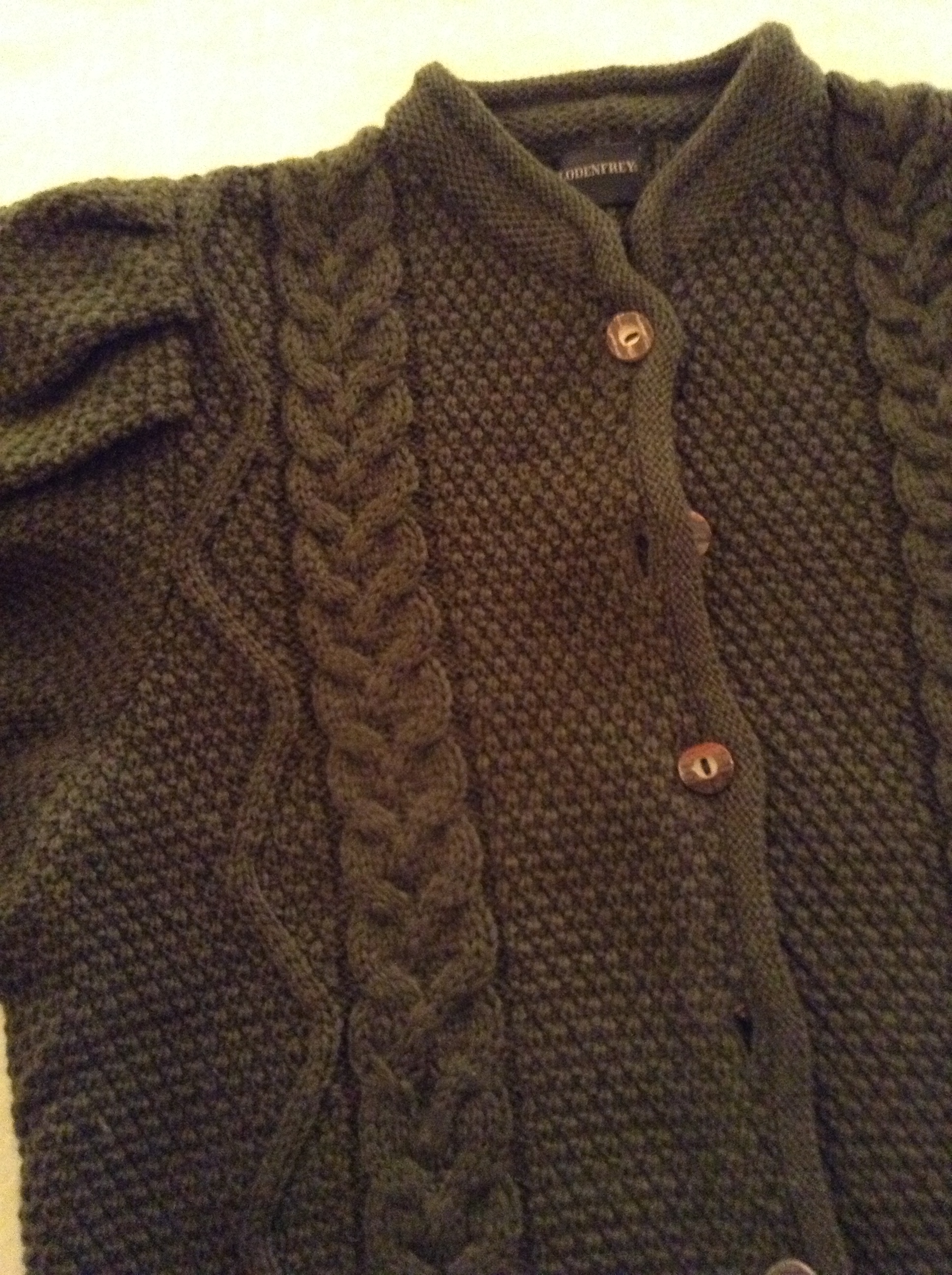
A loden from Germany with the kind of cables I long to make.

sweater 8

And the oldest one, from Italy, darkest blue and fuzzy yet almost scratchy.

sweater 7

Touching the handiwork of women from around the world, created so many years ago, is a rich experience, shared in a bedroom in the desert.

Then my mother brought out a wrap, teal ribs, with not-well-hidden knots where the yarn was joined. Amateur hour.

You made this for me, she said. In college or maybe in high school.

teal stole

Big question mark. I’ve only just learned to knit, in my 50s, I’m as sure of that as I am of anything in the world. When I was that young the notion of wielding pointy sticks was unfathomable. I was also too silly and distracted to sit still to knit.

Jean-High School

But my mother insisted. You did this, she said. You.

So was this actually knit? Was it crochet? Which I did have the patience for back then. Or woven out from some other material, or done in some secret life I have no memory of, or something that my mother in her wisdom invented? Or imagined?

It is teal, it is made by hand, and she has worn it many times. That’s what matters.

9 Comments

Filed under Fashion, History, Home, Knitting

A La Mode at the Met

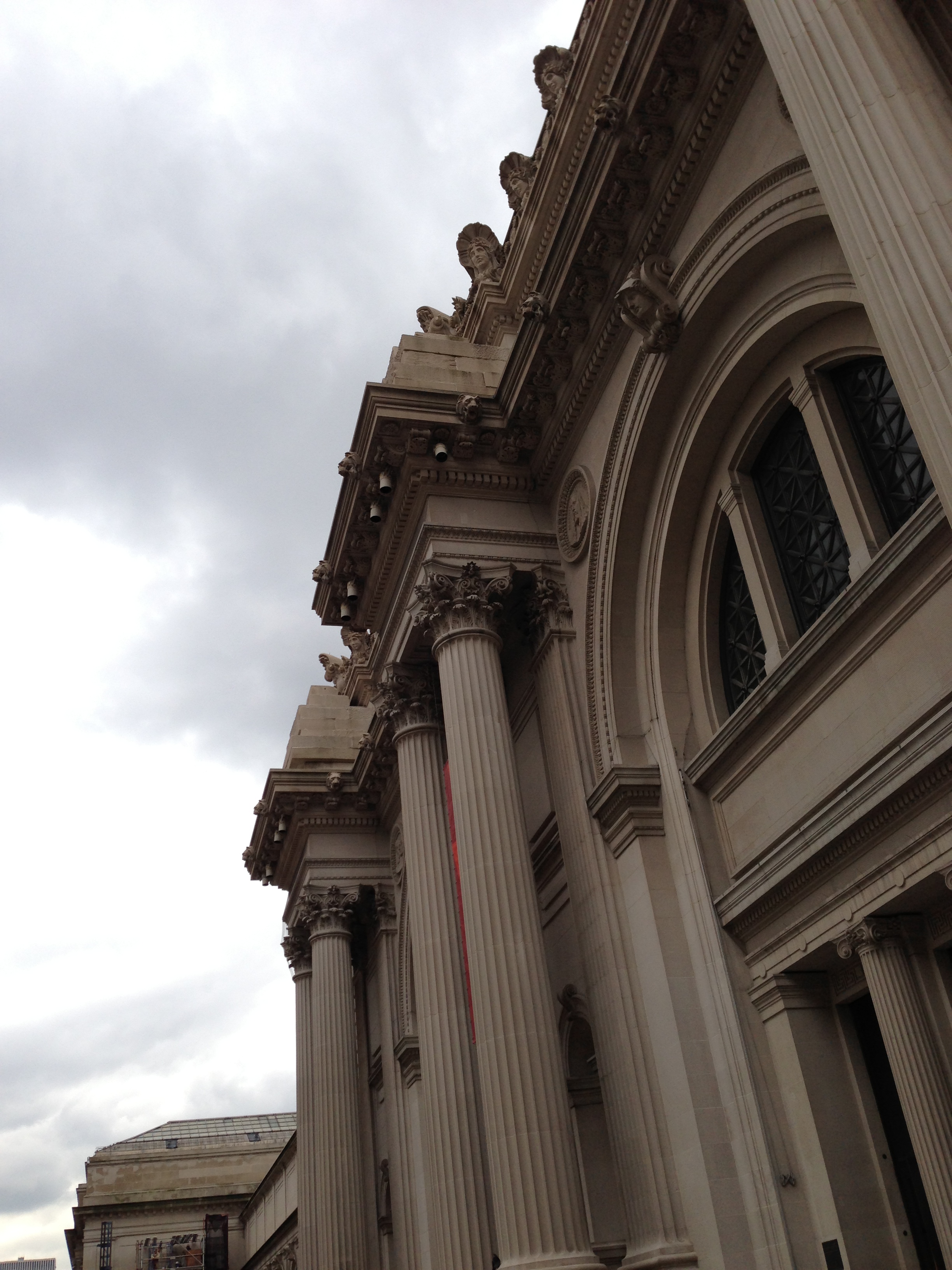
I’m at the Met.

met

Doo wop’ers belting out, “Words could never explain/I just wish it would rain!” What did the Temptations mean with that song?

doo wop

On my way to a stunning exhibit, to a series of rooms where I will swoon, I get clobbered by various objects I see. The Metropolitan Museum of Art really does have it all. There is no reason to ever go anywhere else.

A yellowed, carved ivory tusk, Byzantine 810. Jesus in your pocket.

carved tusk

Elsewhere, cloissone garnets glow in whorling brooches, made in the year 500 by mad German jewelers. I’m taking a scattershot approach to beauty this afternoon, ranging over continents in every hallway to find the loveliest things.

A golden girdle from Cyprus, hammered around the same time as the cloissone. Down the hall, skipping through an exhibit called “Plain and Fancy,” I stumble upon the designer whose work I encountered earlier this year: Christopher Dresser, urbane and brilliant Englishman who introduced a lovely angularity to objects in the second half of the 19th century. Here he has an 1880 tureen and ladle formed of electroplate and ivory, and a pronged letter rack of silver plate. Down the way, a taste of something completely different: a sugary pink and white Sevres tea service crafted in 1855 for some extravaganza of a tea party.

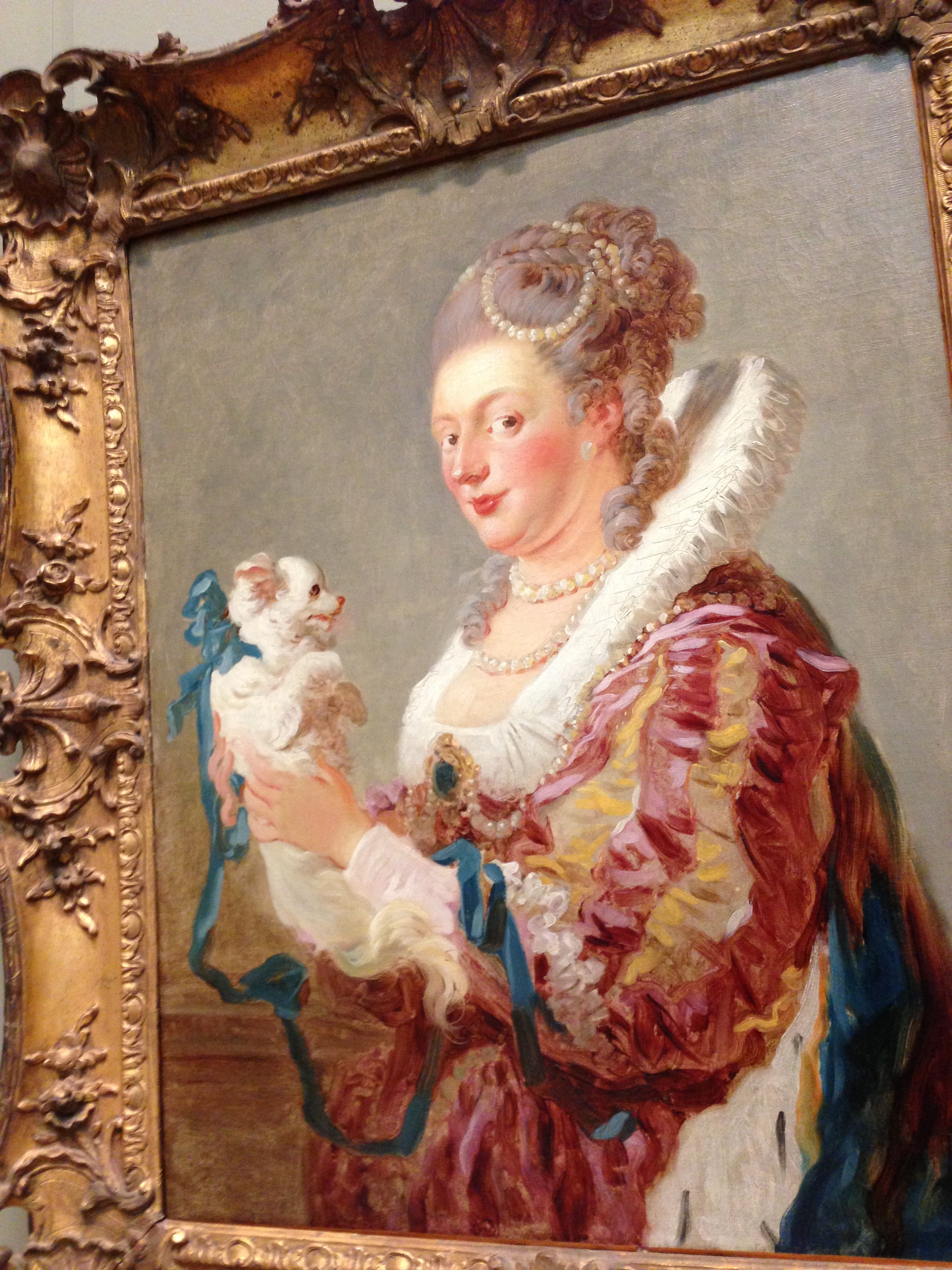
More fragments of created beauty on the way to the exhibit. Jean-Honore Fragonard, Monsier Rococo, one of my favorites for syrupy, cheeky pictures, and his “A Woman with a Dog,” from 1769. What an expression.

Fragonard

Then I reach the prize, “Impressionism, Fashion and Modernity” a new exhibit that has me under its spell before I reach the middle of the first room.

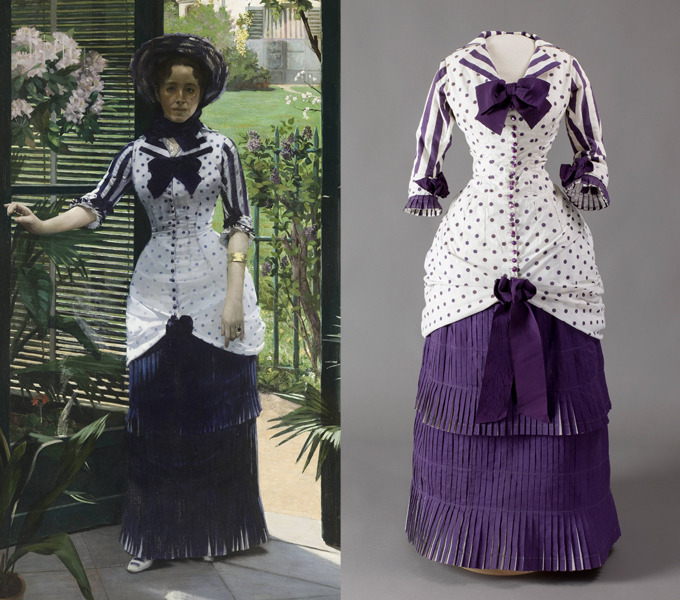
This is a show that displays paintings by the French greats of the late 19th century, Manet, Monet, etc., and then showcases the clothing worn in the paintings. Showcased in prismatic vitrines set up in the middle of the room. So there is Albert Bartholome’s “In the Conservatory,” for example, where he treats his wife coming in from the garden – and right there is her costume itself, all purple polka dots, stripes and pleats, with about a 24 inch waist, miraculously preserved by the family.

Albert Bartholome

I come upon a crisp photo of a woman posed in a spreading black dress, knock-out elegant, holding up a black and white fan, and displayed alongside, the actual intricate fan.

There are some paintings that have not been matched to the exact garment, but they are splendid even in two dimensions – like James Tissot’s portrait of Marquis de Miromon in 1866, her outrageous bubblegum-colored ruffle cascading to the floor.

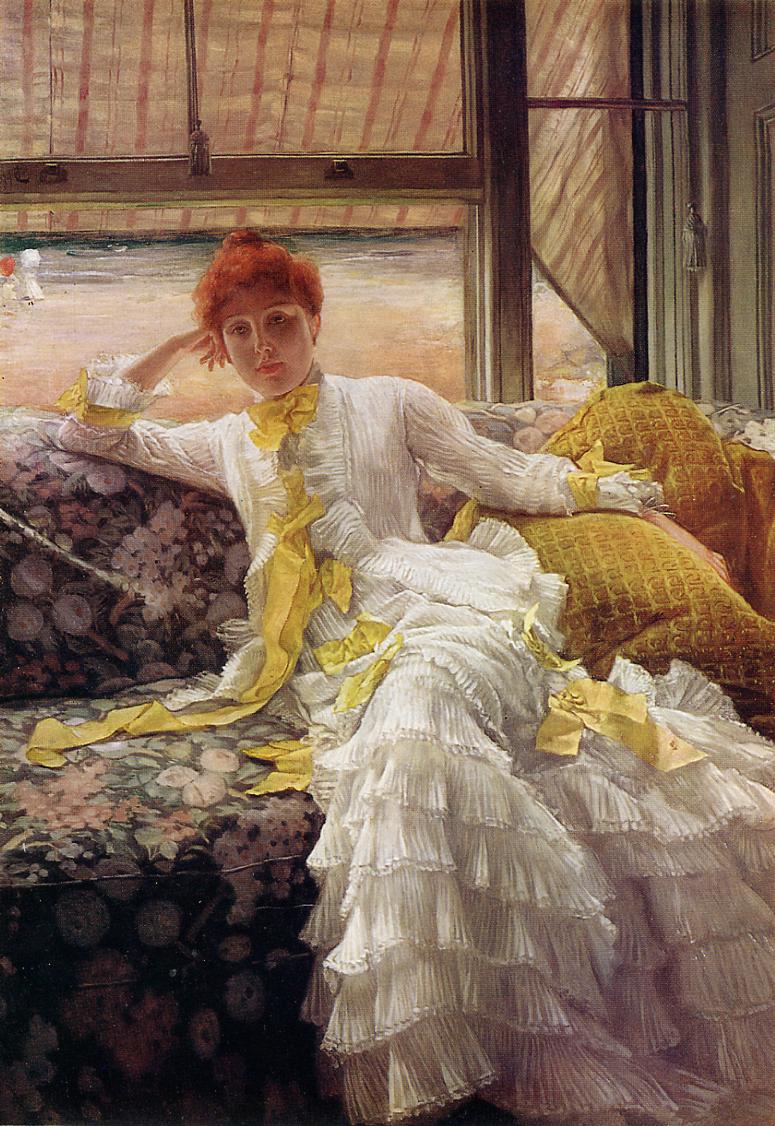
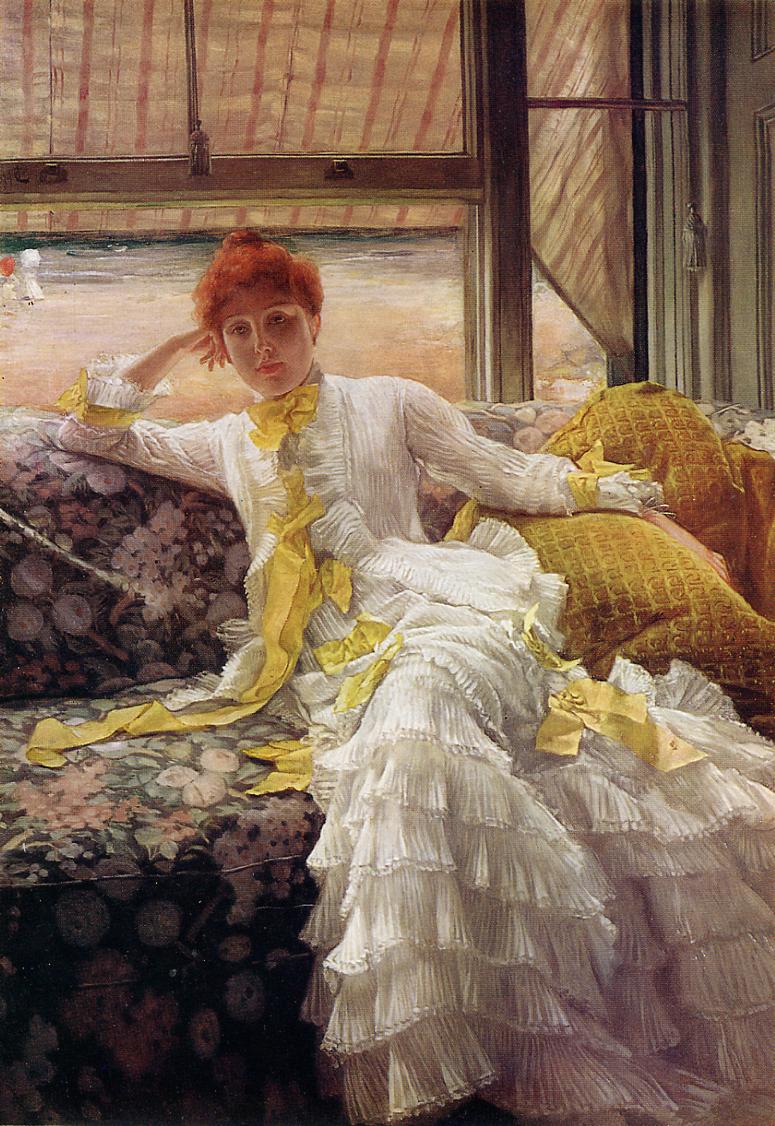
But Tissot also painted a redhead by a window opening onto the sea, lounging in white flounces, with a pale yellow ribbon down her front, and the Met somehow found two specimens that are not this dress but quite close to it.

James Tissot 1836-1902 - French Plein Air painter - Tutt'Art@ (8)

Berthe Morisot’s paintings are on display, but she is also here as a subject, painted in white by Manet. She married his brother–and was also Fragonard’s grand niece!

Le Repose by Manet

A critic at the time wrote that she “grinds flower petals onto her palette in order to spread them later on her canvas, with airy, witty touches.”

Lady at her Toilette


Small gestures predominate, as in Carolus Duran, a woman in elegant black (black being greatly a la mode, suddenly) delicately pulling off her dove grey gloves.

duran_450

The Met’s analysis of all this lusciousness: “The novelty, vibrancy, and fleeting allure of the latest trends in fashion proved seductive for a generation of artists and writers who sought to give expression to the pulse of modern life in all its nuanced richness.”

But I wouldn’t overthink it. Purple polka dots, the painted and the genuine. It gave me the shivery feeling that I could somehow walk right in to the paintings and live there.

1 Comment

Filed under Art, Fashion, History

The Proper Get-Up to Meet Your God

I was irritated by the story in today’s Times about the 10 women carted away from the Wailing Wall because they were wearing “men’s” ritual duds, prayer shawls. It’s not the first time this has happened. Then I turned the page and came upon the Pope in long white gown and a red velvet stole trimmed with gold. I believe that anybody should be able to wear anything they want to worship, be it a prayer shawl, a gown, six-inch mules or a shower curtain.

12pope_1-popup

5 Comments

Filed under Fashion, History, Jean Zimmerman

Call Me Axamit

I visited a clothing shop today that was holding a sale on velvet. Long, flowy dresses with a thick wine nap, inky, blousy trousers, tunics in burnt umber that made your neck feel cossetted. Velvet draws me. I have a long, coat-like jacket in royal blue with garniture around the wrists and covered velvet buttons – I rarely wear it but I would never bid it goodbye. You don’t part with velvet, you prize it.

My New York grandmother was a Levy, one of the commonest names I could imagine. Her parents, I always thought, had brought the name with them from Poland when they arrived in this country at the turn of the 20th century.

Or not.

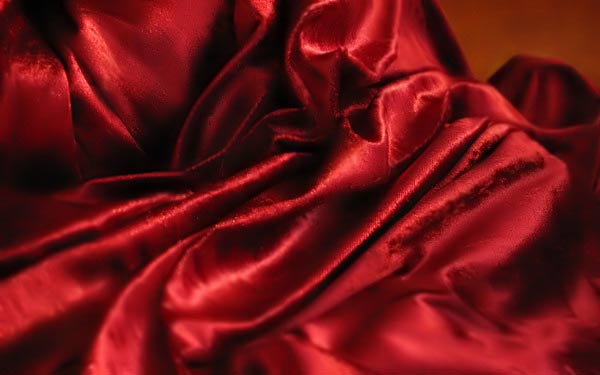
I discovered through my brother’s sleuthing a few years ago that the family name, the name that came over the sea from the shtetls of Europe, was actually Axamit. The word means velvet.

VelvetMainBottoms600x375

Somewhere along the line my family were textile workers, velvet makers, perhaps somewhere around Lodz, where the family hailed from.

I love to think about the velvet in my background. The fabric has a long tenure – it’s been manufactured for almost 4,000 years in one form or another. It  requires more thread to manufacture than other fabrics, as well as multiple steps. And it’s traditionally made with silk thread. So it’s always been a luxury material, from the Ottoman Dynasty on. Of course, velvet came about rather late in the game of cloth-making – sewing needles have been discovered dating to 40,000 years ago in France, and fertility figures famously wear girdles of thread.

Ottoman Dynasty gold thread embroidery on velvet

Turkey is thought to be the site of the oldest known woven cloth, just a piece of linen found wrapped around an antler, dating to around 7,000 BC.

But velvet. That’s different. An inventory list from 809 AD, of treasures belonging to one Caliph Haroun al-Rashid in Persia, includes five hundred bolts of velvet.

The ancient Turks learned to produce the fabric on looms that had a raised series of loops. When you cut them, that produced the rich, deep pile that distinguishes the stuff.

Antique Turkish velvet with silver thread ca 1453-1922

The Italians took up the craft during the Rennaisance and all of Europe coveted what they produced. They took their patterns seriously, embellishing with ripe pomegranate fruits, artichokes, or thistle blossoms. It was all done by hand, of the finest silk. Methods were top secret. Affordable only by the very wealthiest noblemen and women.

16th century Italian Velvet

I imagine the men (and women?) of my family bent over their looms, cutting the fibers with razor-sharp shears, experts in their domain.

The Industral Revolution made all that drape and sheen available to mere mortals.

1880 women's red velvet jacket

Did the new era drive my hand-crafting ancestors out of the velvet business? As far as I know they didn’t bring their textile ingenuity to these shores. And they left the name, the velvet signifier, Axamit, behind when they stepped onto Ellis Island.

When I touch the scarf I brought home today, blush-pink and soft as thick rose petals, I connect to the warp and weft of my ancestors.

blush scarf

3 Comments

Filed under Fashion, History, Jean Zimmerman

Dress Yourself in Dresses

“Elegance does not consist in putting on a new dress,”  said Coco Chanel, somewhat surprisingly.

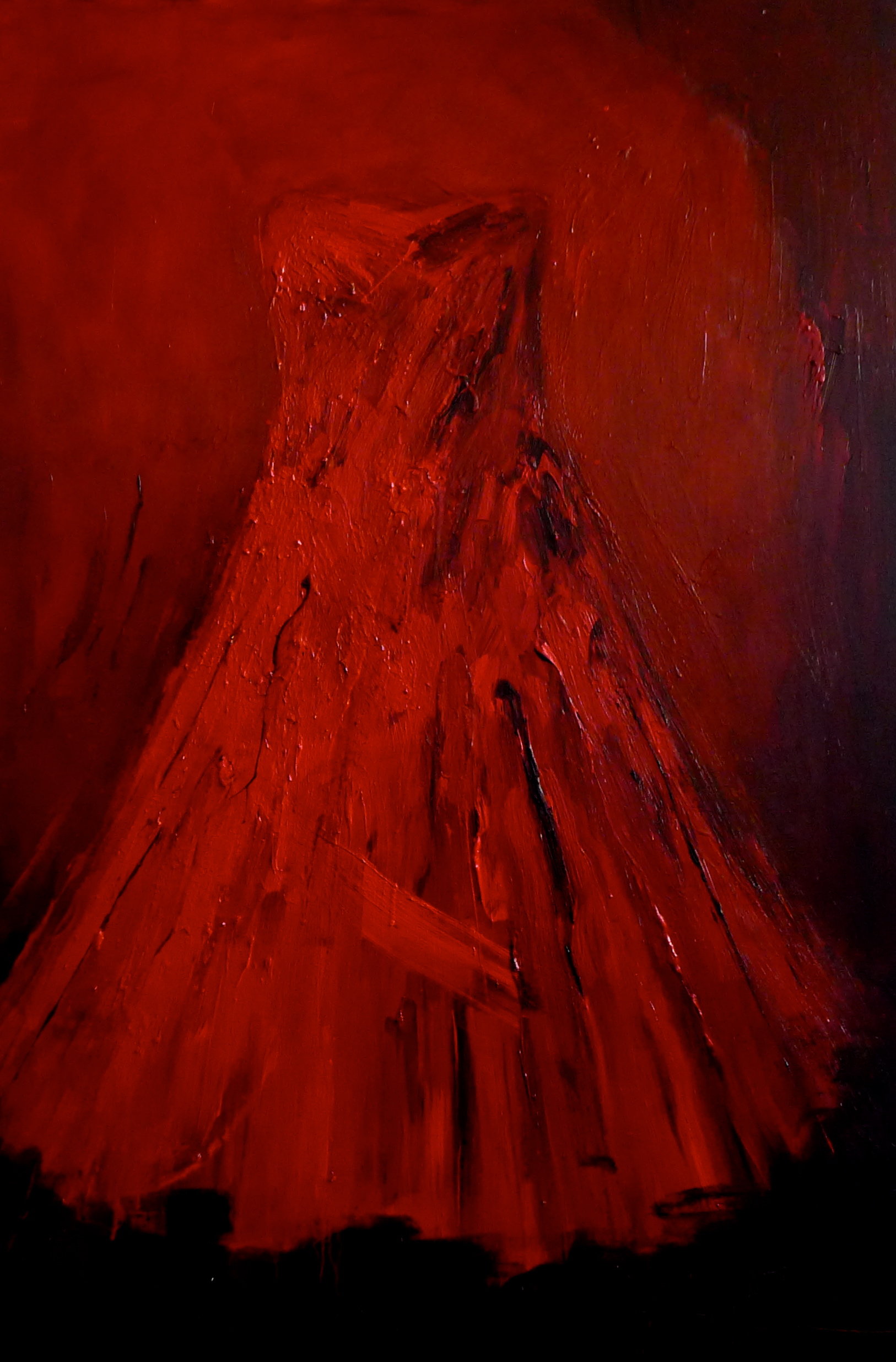
laura schiff bean dress

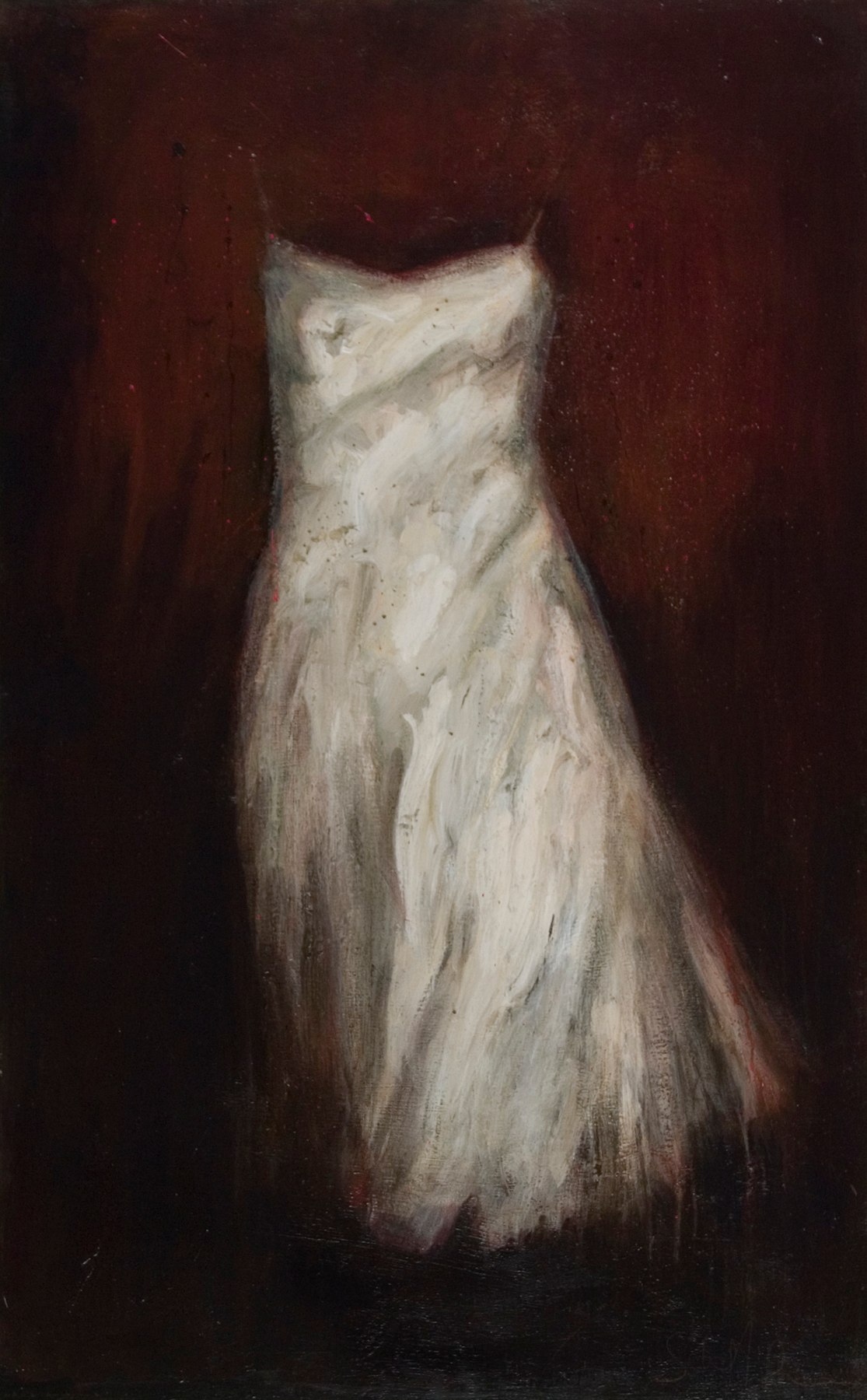
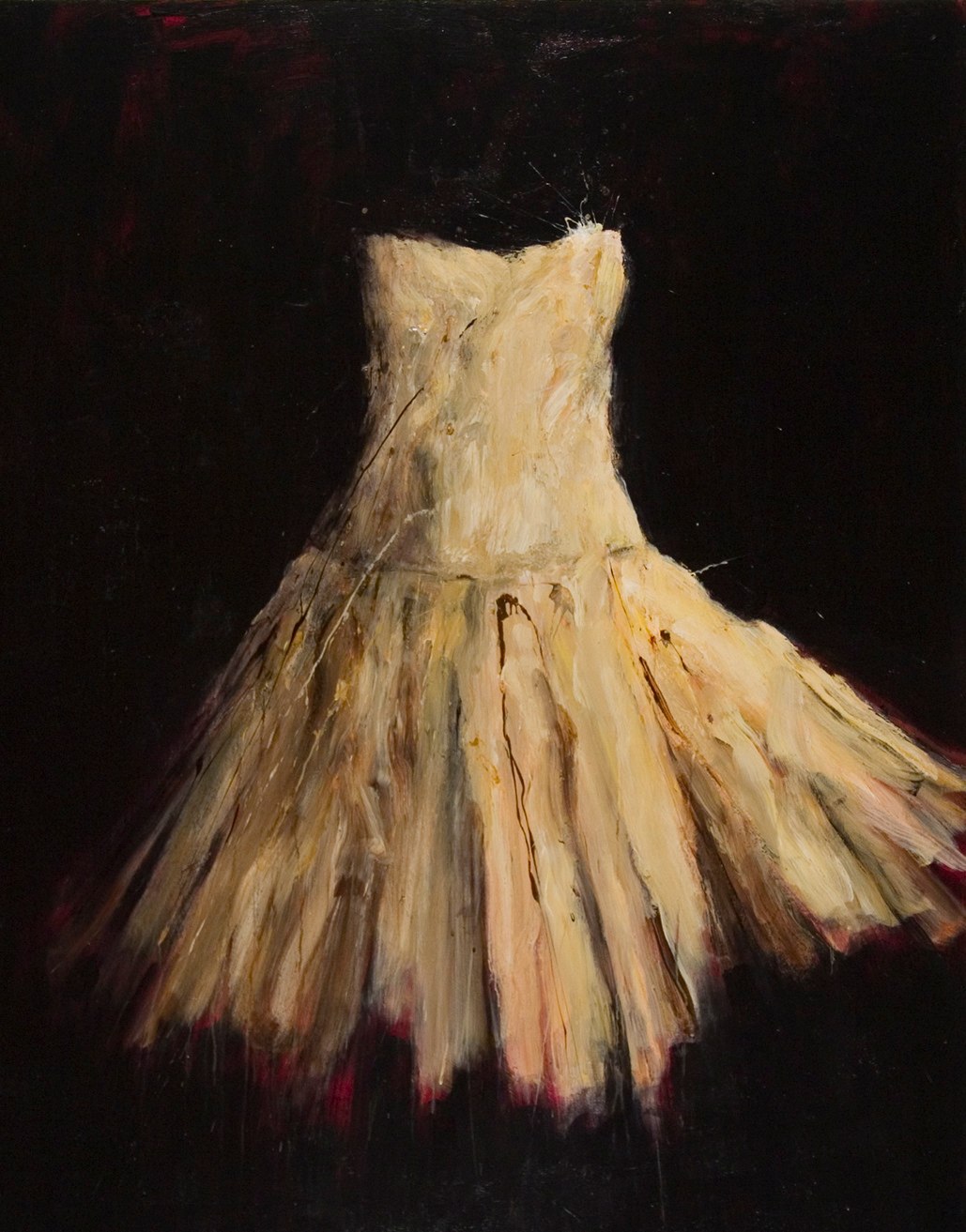
She might approve of the artist Laura Schiff Bean, who renders nearly the same dress over and over again from canvas to canvas with exquisite results. I picked up a flier for her work when I visited rural Connecticut recently and find myself drawn to the images in her work.

Something about her paintings of glowing, disembodied gowns draws me. What do they speak of?

The mysteries of the wedding dress. I bucked fashion when I married and wore an ankle-length, ballerina-hem dress.  I’ve kept the gown a quarter of a century, entombed in a long yellowed cardboard box, for what I don’t know, since it would never appeal to my daughter. But I can’t toss it out. I totally understand the wedding gown obsession of reality TV, I am chagrined to say.

Bean blue background

Or the ball gown, calling me to the ball I’ve never been to, aside from in my imagination. Henry James described the life of New York’s fashionables in the gilded age:  “The rooms were filling up and the spectacle had become brilliant. [The ball] borrowed its splendor chiefly from the shining shoulders and profuse jewels of the women, and from the voluminous elegance of their dresses.”

Bean slim dress

In Savage Girl, the new novel of mine that Viking will publish in a year or so, which takes place in 1875 Manhattan, you can trace the trajectory of the central figure’s development by her clothing, from rags and bare feet to a demure, plaid day dresse to trailing gowns in luscious tones of cherry red and tangerine, to a cream-colored, low-cut diamond-encrusted gown for her society debut. With a stubborn foray into thoroughly modern bloomers. She has to give society a little kick in the pants.

When I was little, I was required by my grandmother to take a nap in my petticoat on her bed on the afternoons I spent at her apartment. Floaty white underclothes, the archetype of innocence.

Bean Ballerina

Coco Chanel again, cryptically: “Look for the woman in the dress. If there is no woman, there is no dress.” Probably because I am almost exclusively a woman of trousers, I don’t think this quite makes sense. What rings more true to me is Thoreau’s admonition in Walden to beware of all enterprises that require new clothes. I wear shirts twenty years.

But I do keep dresses, new dresses, in my closet. I’m a closet dress wearer. A lavender cocktail dress. A summery long red linen, in particular, which has never found exactly the proper occasion for its display. I need an urgent opportunity, like Anna Karenina.

Laura Schiff Bean red dress

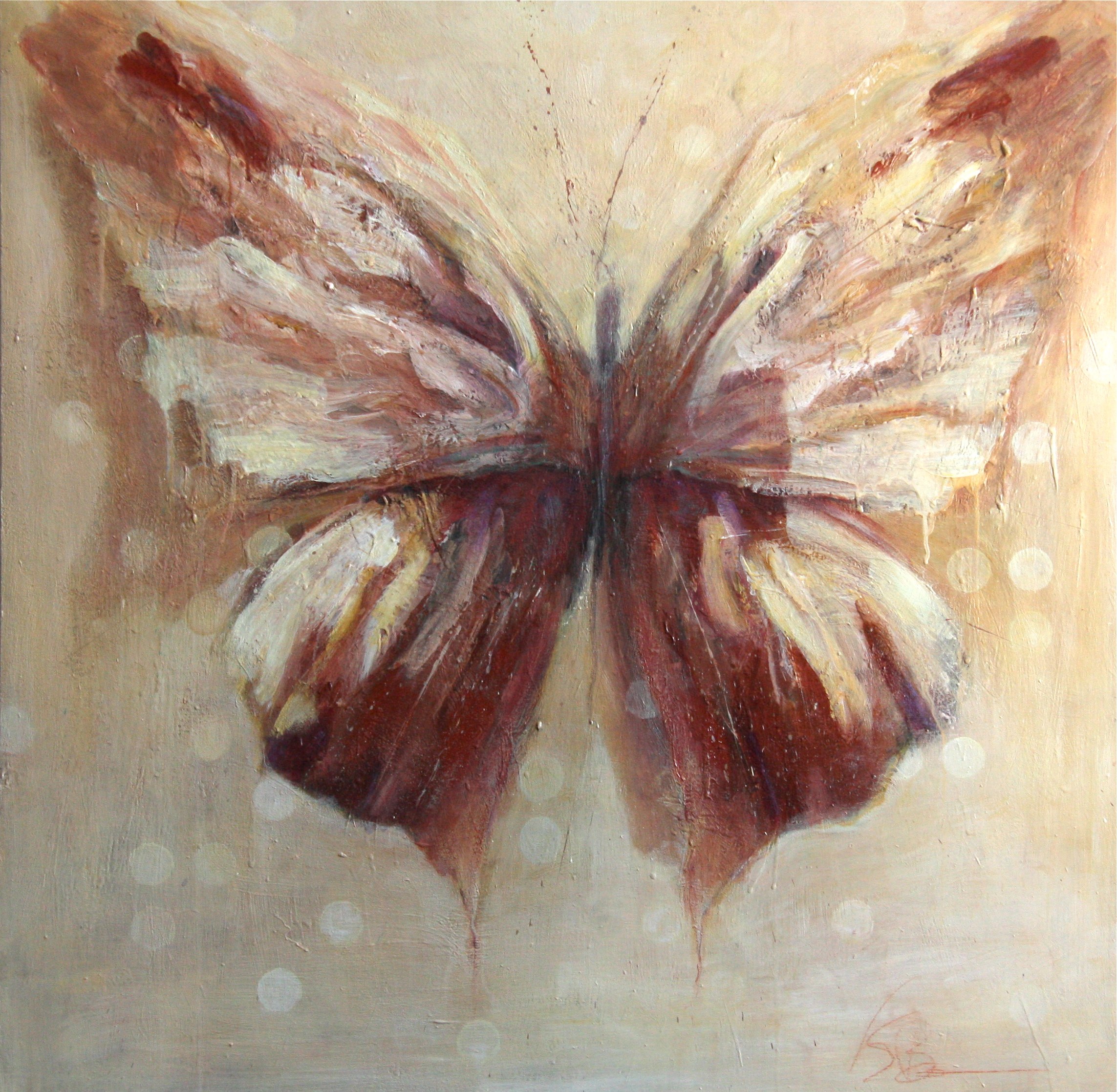
Something else Laura Schiff Bean occasionally integrates into her work. Butterflies.

bean butterfly

A tad sentimental, no doubt, considering most contemporary art, but I am perhaps no less sentimental, reaching an age when I know I will never again wear a flouncy, delicate white gown, and dreaming about them in stories and in art.

Longfellow:

“For age is opportunity no less

Than youth itself, though in another dress,

And as the evening twilight fades away

The sky is filled with stars, invisible by day.”

2 Comments

Filed under Art, Fashion, Jean Zimmerman

Stitching Christmas

‘Twas Christmastime, 1934.

B & W Family  Xmas

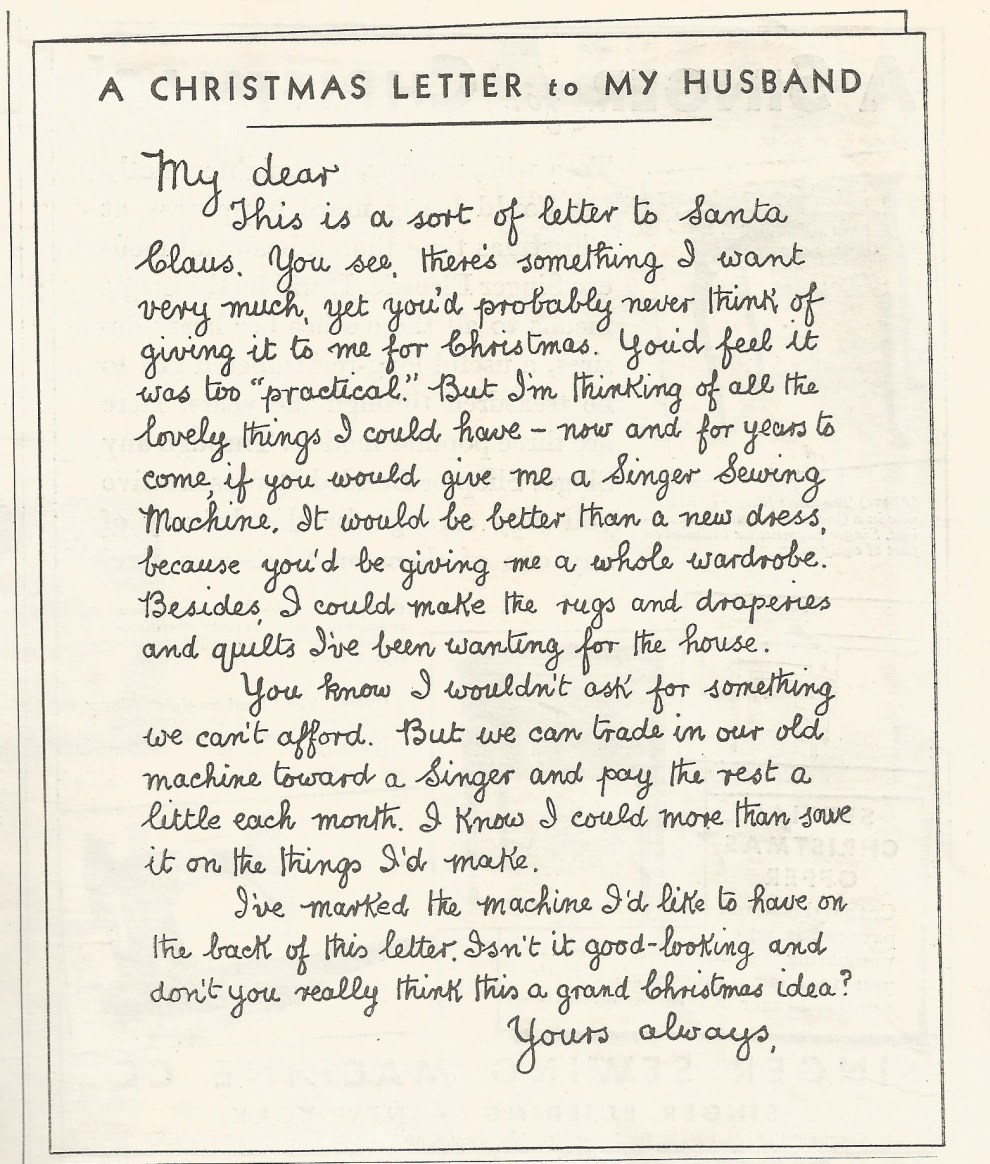
The little lady ambled out to the drug store to pick up a copy of Needlecraft: The Home Arts Magazine. Turning the pages, flipping by the ads for Listerine and Royal Baking Powder (“I’m a Widow… with 5 Children… and I can’t afford to take chances with cheap, doubtful baking powder”, for French’s Bird Seed and Biscuit, next to menu ideas for grand yet frugal holiday dinners, she read a letter that she could have written herself.

Letter to My Husband

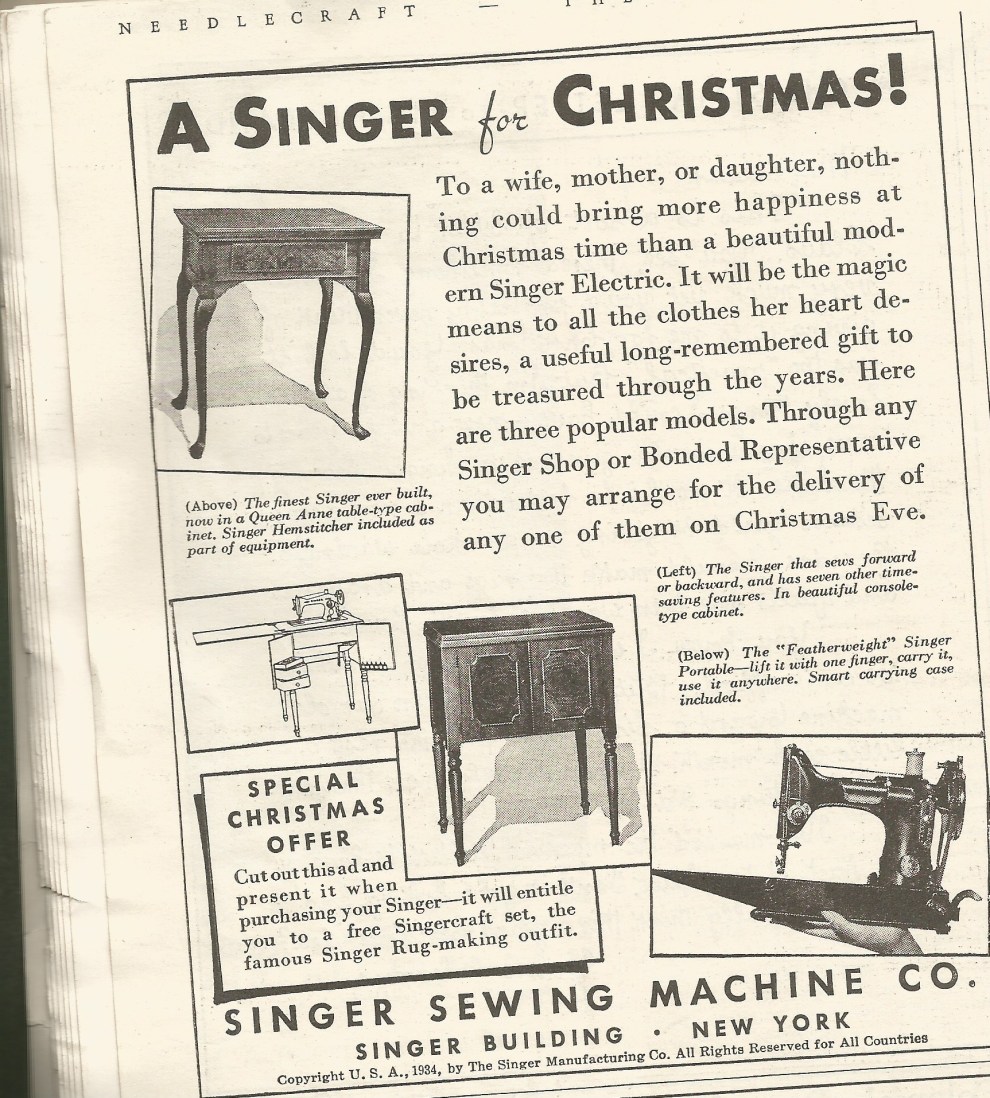
And, when she turned the page, there was the Singer itself.

A Singer for Xmas

“The magic means to all the clothes her heart desires!”A few pages further, the latest fashions.

Sketch of Three Women

Truly, anything was possible, frills and furbelows and cute red slippers to match a swirling red hem.

I inherited my grandmother’s machine, not a Singer but a Domestic, the name stamped in gilt on its wooden cabinet, a couple of bobbins still in the drawers. She sewed voraciously, making all the clothes for my mother and her sisters. At Christmastime 1934, was she mulling over her paper patterns, thinking about that material she had seen on sale recently in her little Tennessee town?

Sewing was a way of dreaming, of making your way psychically out of the deprivations and difficulties of the time. Sewing made what was hard, soft. It still works for people who remember how to thread a needle.

1 Comment

Filed under Fashion, History, Home, Jean Zimmerman

Wilde Child

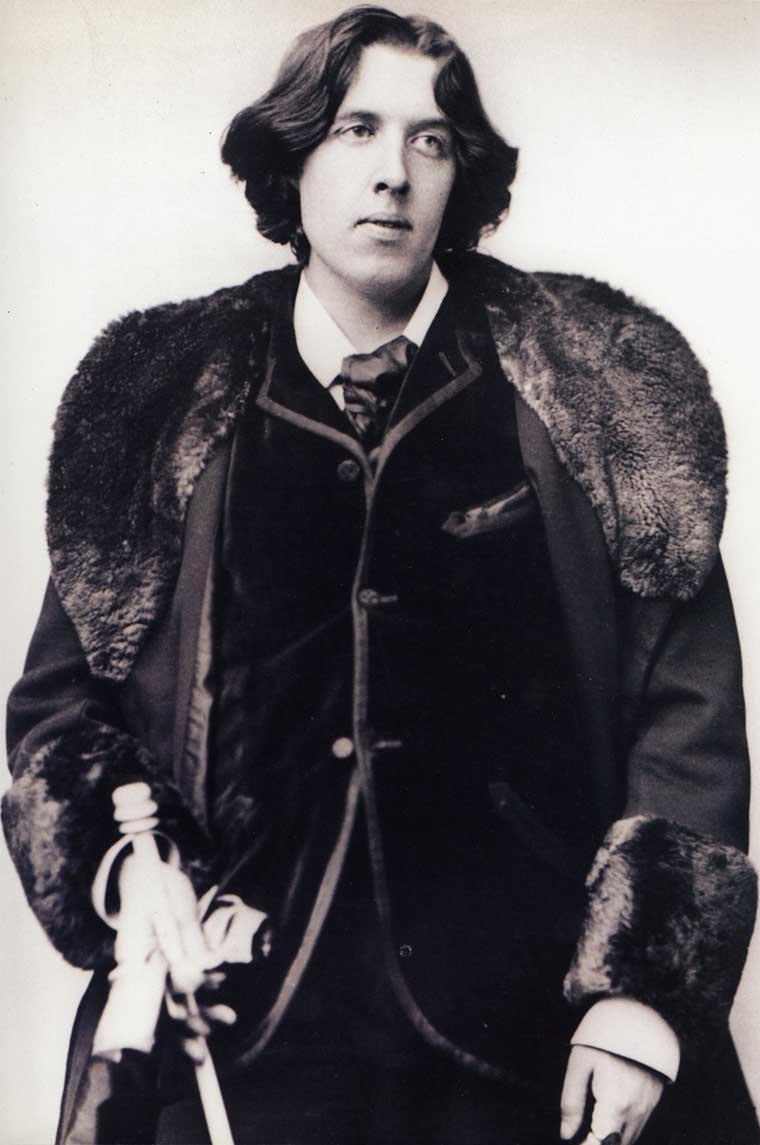
Late summer: sunflowers hanging their tiger cub heads, cicadas in full throat, ripe tomatoes slumping to the ground. And I just finished the article I’ve been working on for the Times, so I’m happy. It’s about a brownstone on the upper east side whose owners worked for seven years to restore it to its high Aesthetic era appearance — that’s the 1880s to those of you who are not Oscar Wilde devotees. Wilde himself toured the U.S. in 1882 promoting the Aesthetic Movement and shocked people with his sunflower-boutonniere. The interior of the house I wrote about is actually pretty shocking as well, so stuffed with an elegant chaos of wallpapers and gothic furniture, portieres and floor urns that it is hard for the eye to even take in. I’ve never seen a house like it. But wonderful in its own way. I’ll give a link when the article runs.

“We are all in the gutter, but some of us are looking at the stars.”  Wilde

Oscar Wilde

Leave a comment

Filed under Art, Fashion, History, Home, Jean Zimmerman, Photography, Writing

Give a Hollar

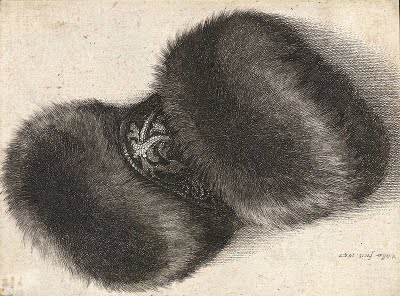
Hollar Hand Muff

Wenceslas Hollar has been called the finest engraver of the seventeenth century. He was certainly an amazing depicter of fur hand muffs.

A Cap and a Muff

These are his images. Hollar came to London early in his career and basically never left, intent as he was upon documenting all he saw around him, including the Great Fire of London.

A muff could not have been essential in those days — people did wear gloves, after all, fine hand-stitched leather gloves — but they seemed to be necessary as a fashion statement. I don’t know if you ever had one, but I fondly remember the white rabbit fur muff I was given as a child. The seventeenth century became the heyday of fur, much of which came from America (with pelts traded avidly  by Blandine van Couvering of The Orphanmaster), and a hand muff could be mink or bear or even muskrat, but the softer and smoother  the better.

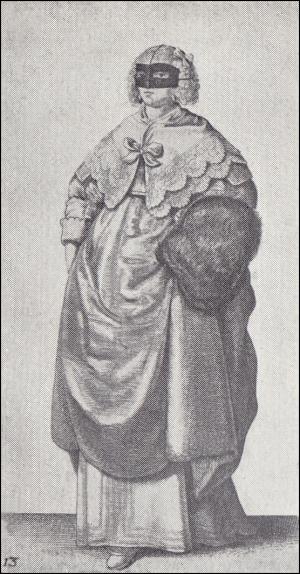
Mask and Muff

It’s not trick or treat. This finely attired woman wears a face mask, what was in the mid-1700s called a sun-expelling mask, in order to protect her delicate complexion. The muff looks almost too heavy to carry.

Another thing: men of the period wore hand muffs also. Only theirs were bigger. At one point in The Orphanmaster, when Blandine and Drummond are beginning to dig into the mystery of the orphan disappearances, they meet on the New Bridge that arches over the Canal, overlooking the hills of Brooklyn. It’s a cold Winter morning, and both of them carry handsome fur muffs (Blandine’s is silver fox). Fashion forward, and ready to track down a murderer.

Leave a comment

Filed under Fashion, History, Jean Zimmerman, The Orphanmaster

Fur Frenzy

I posted an article on the 17th century fur trade in America under the Orphanmaster tab, so check it out. Ours was a country erected on a hat, specifically a hat made of a beaver pelt deconstructed into the finest felt money could buy. We wouldn’t be here today if it wasn’t for the European fashion sense.

Leave a comment

Filed under Fashion, Jean Zimmerman

Don’t Try This at Home

An Australian dance manual of 1875, the year I’m currently writing about:

“This step in the promenade is executed only with the left foot–in describing a circle it is made with both feet. The position is the same for the mazurka as for the Valse a deux temps; the foot should neither be too much bent nor turned out, but left in its natural position., The heel strokes which are interspersed with the various steps of the mazurka, and which are even amongst the necessary accompaniments of the dance must be given in time, and with a certain energy, but without exaggeration. Such stroke, when too noisy, will always be considered in a drawing-room or ball-room as a mark of very bad taste. By the aid of the four elementary steps, which I have described, a pupil may be enabled to execute what is called in the mazurka a Promenade. The Promenade is performed by holding the lady with the right hand and making her accomplish a fanciful course, according to the space allowed.”

Leave a comment

Filed under Fashion, History, Jean Zimmerman

Bustles and Busts

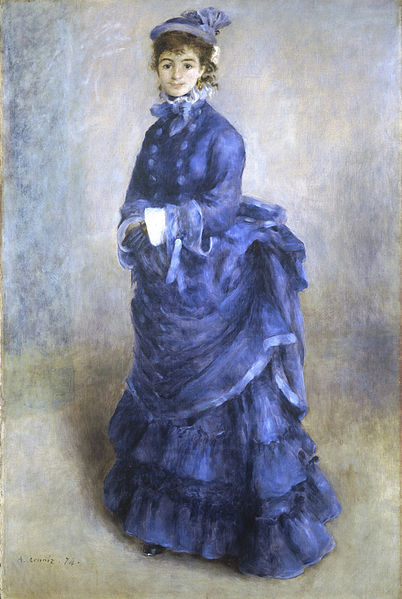
I researched women’s fashions of the 1870s today and I am trying to imagine what it would feel like to wear all that fabric — to be swathed in pleats, flounces, ruching and frills, all draped over a hassock-sized bustle and dragging behind in the street.

I think I’d love it. I know, everyone says what about the corset, you’d be suffocated by its whalebone or strips of stiff leather. But the corset gives you a perfect bust!

Renoir, 1874

Leave a comment

Filed under Fashion, Fiction, Jean Zimmerman

The Keys to Everything

I recently watched a strange, little-seen movie by Alfred Hitchcock called Under Capricorn, a melodramatic costume drama which places Ingrid Bergman and Joseph Cotton in 1830’s Sidney, Australia. One plot point comes to a head when a servant in Bergman’s mansion has to hand over the keys to the household linen closets and other locked cabinets.

Antique Chatelaine

In a tradition that goes back to the seventeenth century, the lady of the house wears a chatelaine at her waist: a gold or silver clasp from which are suspended various items she needs to keep the household running smoothly, with keys of all sizes but also including such items as a small pair of scissors, a pencil, a coin ball or a mirror.

I sometimes wish I could wear a chatelaine to hold all the stuff I need in a day around the cabin. A tiny tube of hand cream, my Blackberry, tweezers. I have always wanted to employ clanky old-fashioned keys in the course of my day.

1 Comment

Filed under Fashion, Jean Zimmerman