Category Archives: Fashion

The Flash Mob in My Mind

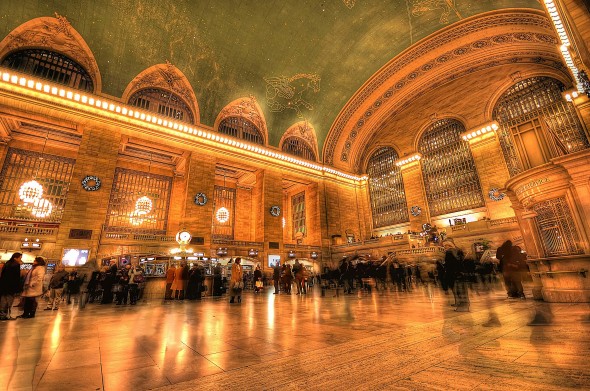
To and fro they go, all the busy, self-involved commuters. A long day at work, the usual stresses, rushing home to other responsibilities. Set faces, hurrying through Grand Central Station with barely a glance at the reaches of fluid, majestic marble, the astronomical ceiling, the hundred-year-old intricate architectural features of the main concourse.

grand centrl

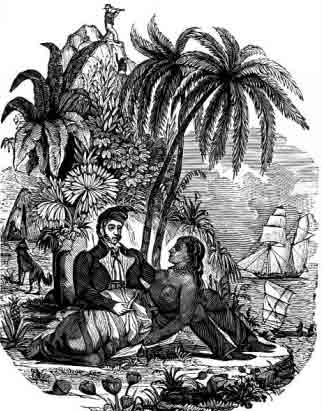
Then along the slick stone floor skitters something – what is it? – a human form, not walking upright but rushing through on all fours.

harry-b-neilson-feral-child-drinking-with-wolf-cubs-3-of-5

People stand back. The human animal races pell mell all around the place, knocking into briefcases, brushing peoples’ knees. It becomes clear gradually that underneath the tangled hair and plain white shift this is a wild girl of some kind.

Voices pipe up throughout the concourse, first a few, than a chorus, and people begin stepping through the crowd, toward the center of the space, in high Victorian dress. The men have top hats and frock coats, the women wear sweeping gowns.

victorian-dresses-3

They are harmonizing a strange, old fashioned tune, a dance-hall melody with unfamiliar lyrics.

Grand Central commuters halt in the path to their gates and listen. The music swells. A cello flight emerges out of nowhere.

The savage girl skitters out of sight.

As the song continues, the throng of singers parts. Suddenly, just under the constellation of Pisces we see the savage girl, now transformed into a young woman, gliding forward,  fully upright. She is dressed spectacularly in a pearlescent floor-length dress with a train, long cream-colored gloves, glossy hair, décolletage.

victorian-era-dress

The Victorian assemblage turn to her and she joins in their melody for the final verse.

Then, as quickly as they appeared, the players vanish. Savage Girl is perhaps the last to go, and gazes one final time out at the crowd with a beautiful but remote expression on her now civilized face.

I had a conversation with my literary agent about ways of introducing Savage Girl to the world come March. I got off the phone and fantasized about a Victorian flash mob starring our girl. It might never come to be, since Grand Central is full of armed homeland security folks and german shepherds, but wouldn’t it be fantastic?

4 Comments

Filed under Art, Culture, Fashion, Fiction, History, Jean Zimmerman, Music, Publishing, Savage Girl

Silk Thread on Cotton

The Metropolitan Museum on a Saturday afternoon in fall: everything seems very still, but perhaps that’s because I am moving fast, whisked along in a wheelchair to save my aching foot, the cool gallery breeze in my face, going to see a show I’ve been hungering to experience. On the way we pass the spectacle of so many different works, in diverse media, all amounting to a taste-whetter for what is to come. First, in the great hall, the five monumental displays of flowers on all sides, hydrangeas something of a blur as we roll past. The arrangements, fresh weekly, have been bankrolled since1969 by a fund established by Reader’s Digest co-founder Lila Acheson Wallace, and each one is more fabulous than the last.

hydrangeas

We zoom past Lorenzo Lotto’s Cupid and Virgin, the somewhat silly canvas from the 1520s that shows the mischievous creature urinating on Venus, a symbol of fertility.

Lotto

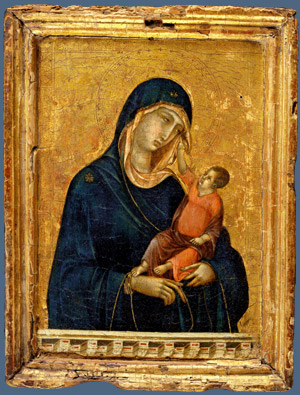
Another Virgin, one that came to the museum with a thirteen-million-dollar price tag, is shown in the Madonna and Child painted by Duccio di Buonisegna in the fourteenth century.
duccio.L

We whiz by the effigy of one Elizabeth Duvenick, sculpted by her husband, Frank Duvenick – Henry James called him “the unsuspected genius” — dripping with gold leaf, in the courtyard at the front of the American Wing.
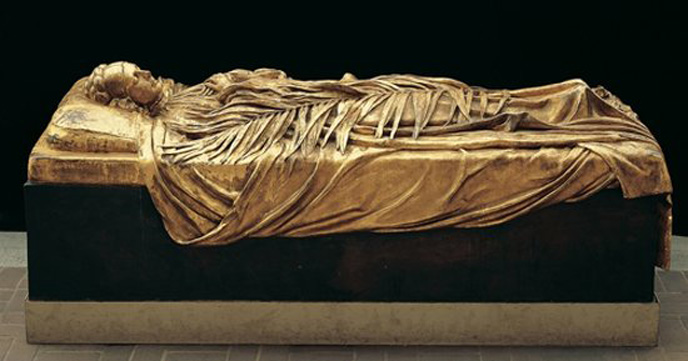
Tomb_Effigy_of_Elizabeth_Boott_Duveneck_1891

“A zombie,” says a young boy passing by. Good point. Then we’re off through the hall of Rodins – a sculptor I recall loving as a teenager, then thinking was impossibly tacky, though now I’ve come around again.

Blink as you ride along and you’ll miss the medieval bronze baptismal font held aloft by kneeling pilgrims.

And through it all there is the sense that Zorn is here, someplace. John Zorn, that is, mister avant composer and saxophonist, whose work is being celebrated at the Met in over a dozen performances today throughout the galleries in honor of the musician’s 60th.

zornfeat

We can’t squeeze into the one performance of the man himself, so we are forlorn, Zorn-less, but over the heads of a crowd as we make our way along we hear the noise of string instruments breathing.

music

There should be a special genre of art in New York City called Over-People’s-Heads.

The Metropolitan tears you in all directions, in a happy way, a way that jazzes up your senses and makes your mind feel more alive. The show we are here to see, Interwoven Globe: The Worldwide Textile Trade, 1500-1800, does the same thing in a more focused way. Now, I have to say from the start that although this exhibit has been touted as the Met’s blockbuster of the season, I wasn’t expecting to have to fight my way through the crowds to get at the items being displayed. And I was correct. This is a haven principally for textile lovers, and there is plenty of space to stretch your limbs and be dazzled by the bed covers and kimonos on display. This is not an Over-People’s-Heads show.

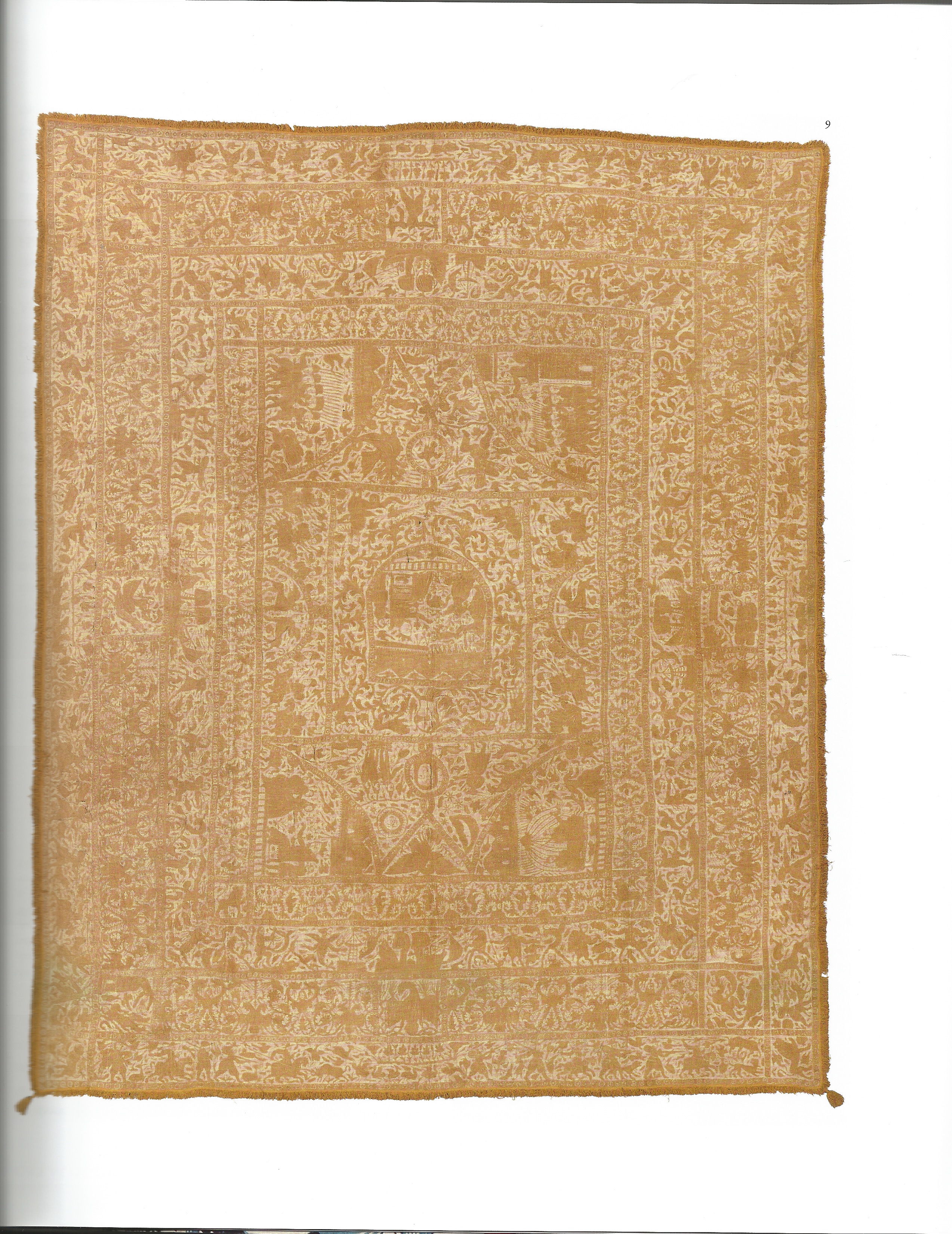
Did someone say bed covers? This coverlet, called a colcha, originated in India for the Portugese market in the early seventeenth century. It was embroidered of yellow tussah silk, also called wild silk, on a cotton background, showing images that included a hunt, the adventures of Hercules, the Judgment of Solomon and Phaeton driving his chariot too close to the sun. Among many other things.

cov

People used to embellish their mattresses with textiles almost unimaginable to those of us who have spent too much time over the years at Bed, Bath and Beyond. Interwoven Globe takes as its premise the interconnectedness of cultures around the world in producing objects that were both intrinsically beautiful and historically fascinating. Japan, China, Turkey, Iran, Europe and the Americas all played a part. The fashion for the “exotic” bloomed in trade.

From the first glide into the opening room, I’m sort of oozing, mentally, into the fabric, wondering about the lucky few who get to take the stuff down from the wall and actually handle it, when I see another gem. A damask woven in China of silk satin for the Iberian market.
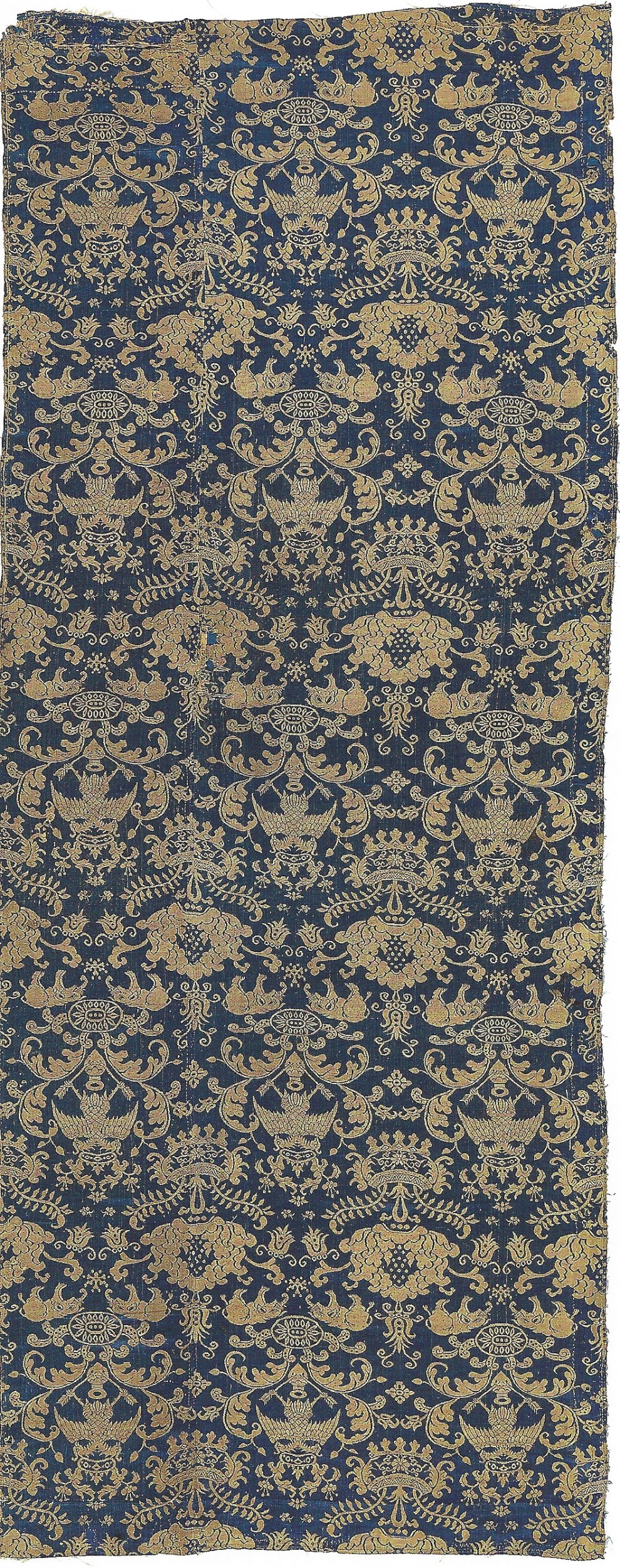
text

Elephants such as the ones depicted were customarily given as tribute to Chinese emporers and imported by Portugese kings to be used as diplomatic gifts to the courts of Spain, Austria, France and England. The ones marching along on the textiles were Asian, I learned – you can tell by the diminutive ears. On this piece the elephants have multiple tusks – of course the weavers couldn’t access an actual image of one! Instead, they drew on the Buddist six-tusked elephant described in a fifth century Chinese translation of a sutra as being sparkling and resplendent.

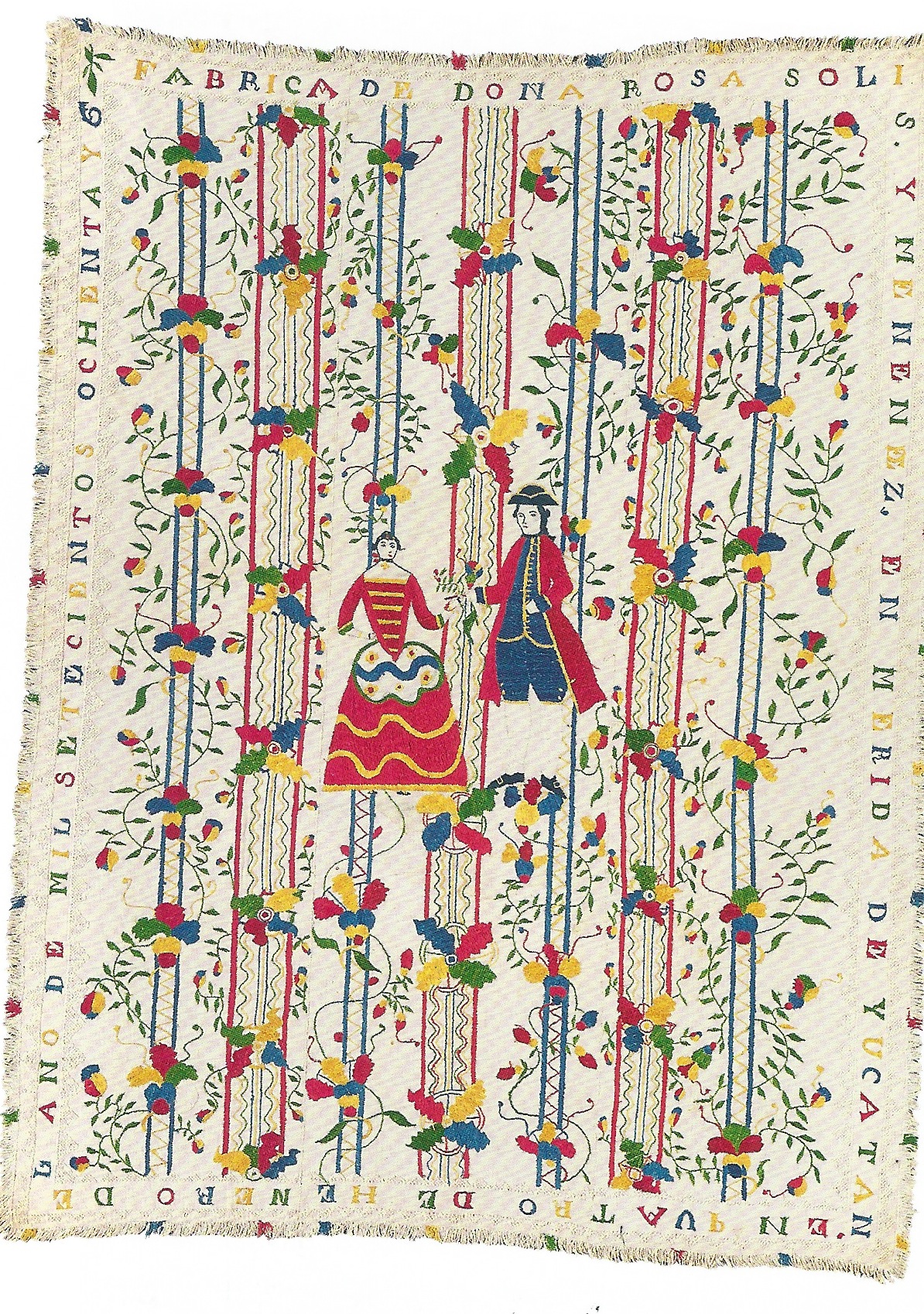
Another coverlet, this one produced in Mexico, was made to celebrate the wedding of the couple shown in the center.

mex

Trellises surround them.They wear Europen style clothes, embroidered of silk dyed red with the insect cochineal and yellow with a plant known as weld, which was probably grown in Spain. The silk itself was imported from China. Again, a crisscrossing of cultures went into a flawless product, which happens to be signed by its maker, Dona Rosa Solis y Menendez, with a date of January 4, 1786 and a place, Merida, the Yucatan.

I see dresses, not just coverlets and bolts of fabric. This one was sewn in France of “bizarre” Chinese silk in 1710.

bizarre

Bizarre being a term twentieth century textile historians came up with to describe silk designs at the junction of the Baroque and Rococo periods, usually heavily brocaded and beaded, with glittering metallic threads.

More women’s dresses. Gowns you could rest your elbows on, they had such wide panniers, a variation on the hoop. The robe a la francaise, here sewn in Germany of Chinese-painted silk moire, which definitely would have been my choice in the 1740s if my door frames were wide enough to allow me access.

robe

And men’s dresses. The banyan, or informal morning gown that well-dressed men wore over their clothes, is represented. Sewn in France from Indian fabric that had been stamped with wooden blocks.
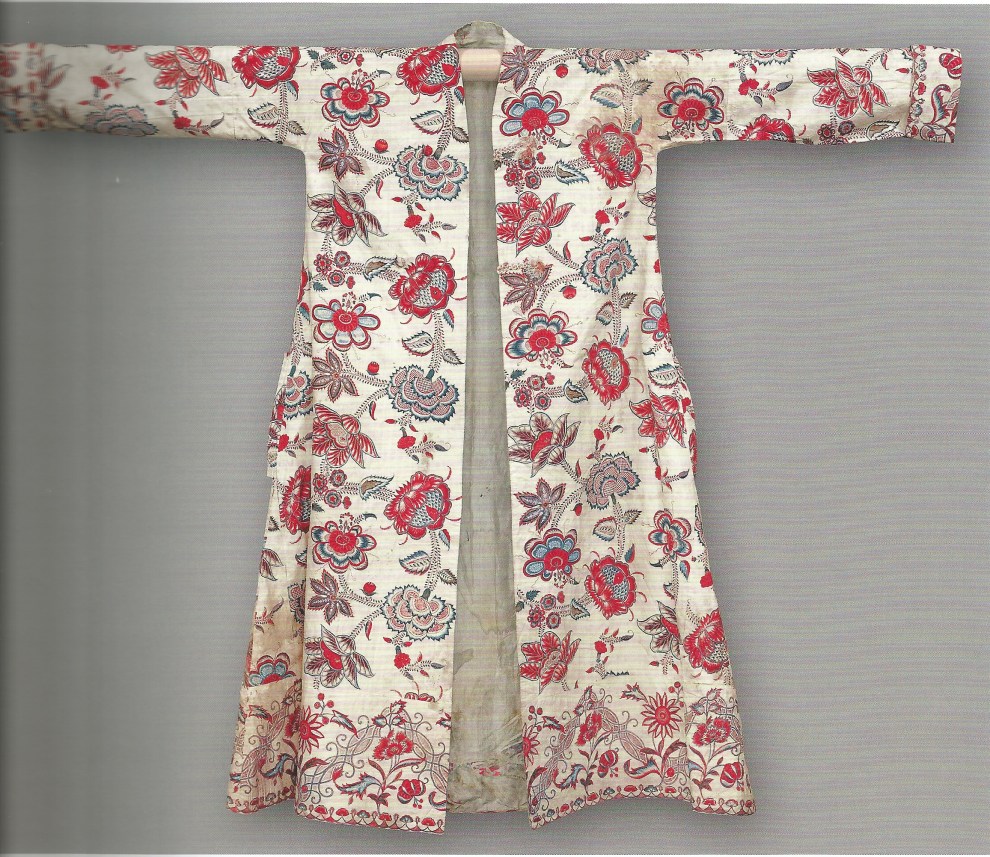
banyan

The inimitable John Singleton Copley caught Joseph Sherburne lounging in his banyan in 1767, wearing a cap to cover his shaved, not at the moment bewigged pate.

sherburne

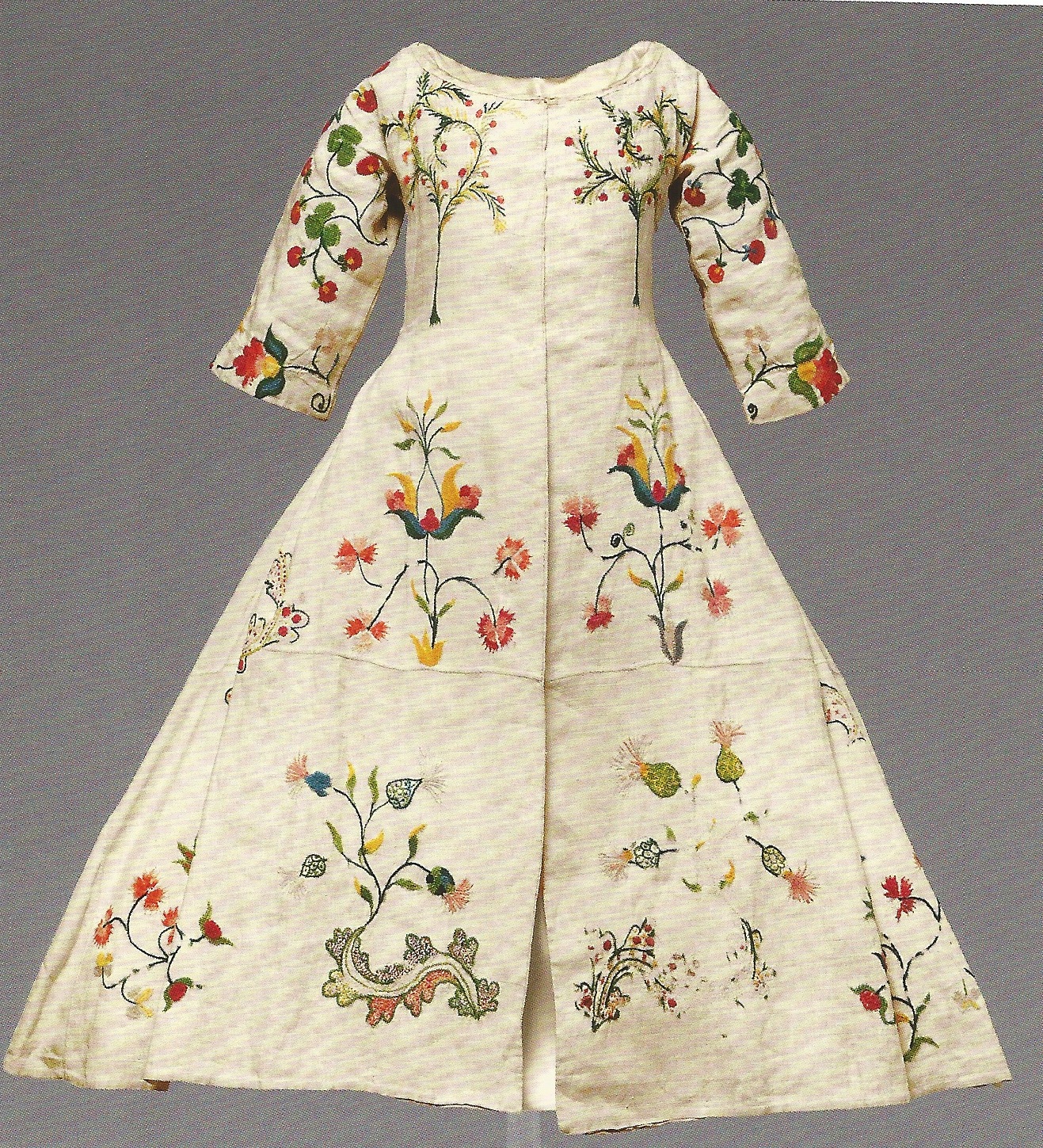
Charmingly, then, a dress also for a very lucky little boy. Linen embroidered with tulips, roses, carnations and fruit trees. Yes, a boy. Male children wore frocks alongside their sisters until they were around five years old.

boy dress

Something I really like, that brings this luxurious trip to the past down to earth: a textile sample book, dogeared by English merchants’ hands, with 500 swatches of ordinary cloth, no fancy silks or embroideries here, that would have been worn by sailors, artisans or enslaved people in North America.

sample

And I haven’t even started on chintz. Suffice it to say there is a tutorial that totally satisfies my long-term desire to understand the mechanics of chintz production. It’s incredibly elaborate, and if you pay me enough money I might try to explain it to you someday.

After this flood of textile experience, sitting with some restorative strong coffee in the courtyard, I notice the air smells like roses, and the fabrics we all wear appeared simple, streamlined. There are some stripes, yes, but no elephants, no carnations, no trees of life, no metallic threads glinting in the pale sunlight. I see a woman in a plain pink sweater. I see denim. I see a young man in a simple, blue-checked shirt, his foot in a boot, sitting in a wheelchair like me, running his hand through his hair. He seems weary, now that women no longer dress themselves in the robe a la francaise, now that all the flash has gone out of coverlets.
9 Comments

Filed under Art, Culture, Fashion, History, Home, Jean Zimmerman, Nature

Nuggets From Afar

When the fall chill hits and you wrap yourself in a shawl and feel like drifting off to other times and places, these links might inspire you.

The Evolution of Love Songs. In case you ever forget the words to Let Me Call You Sweetheart, here rendered by the Peerless Quartet in 1911.

peerless

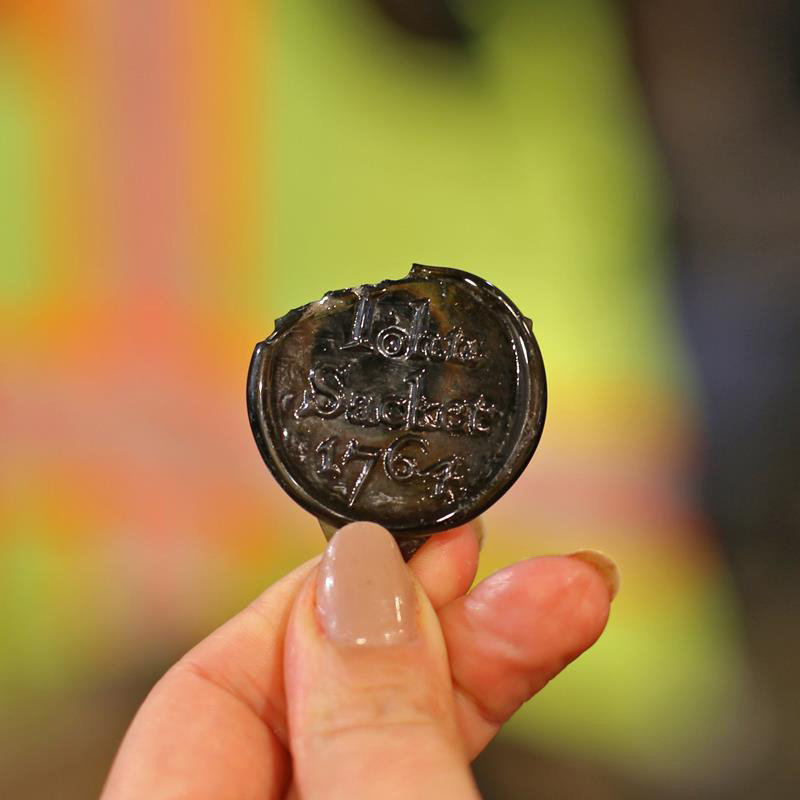
Chrysalis is a firm of archaeological consultants that specializes in the history of New York. They’ve recently pursued excavations in the South Street Seaport Historic District that recovered two intact nineteenth-century wooden water mains. Other treasures: eighteenth-century toddlers’ slippers crafted of leather, and British Revolutionary soldiers’ buttons, which turned up along the original shoreline of Manhattan. A liquor bottle seal circa 1764 brings that time alive.

fultonstreet_archaeology01

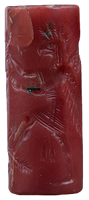
Between 1885 and 1908, a collector named William Hayes Ward amassed a bounty of 1,157 cylindrical seals dating as far back as the beginning of the fifth millenium. If you like tiny images on semiprecious carved stones from Mespotamia – gods, bulls, antelopes galore — you will want to take a look at these enchanting objects, which formed the core of J.P. Morgan’s collection.

seal-rotate-intro

Living With Herds: A Visualization Dictionary is a short film by a research fellow at an Australian university that shows how Mongolian herders communicate with their animals.

living-with-herds-vocalisation-dictionary-natasha-fijn-2

Women’s bodies were never meant to be squeezed into corsets, which is immediately apparent when you check out x-ray images from 1908.

woman xray

Linguistic fossils offer a glimpse of times gone by.

fossil

And finally, secret, tiny fairy doors began materializing all over Ann Arbor. This was in 2005. Perhaps not surprisingly, the carpenter turns out to be a children’s book author. Doors have appeared at the library, the pet store, the children’s hospital. Anyplace they’d be sure to raise an eyebrow and the corners of your mouth.

tiny door

4 Comments

Filed under Art, Culture, Fashion, History, Home, Jean Zimmerman, Music, Nature, Writing

In a New Light at the Guggenheim

I finally went, on the next to last day of the exhibition. The James Turrell installation, that is, called Aten Reign, at the Solomon R. Guggenheim Museum in New York City.

gugg bldg

It’s been up since June, and everyone said You’ve got to go, you’ve got to go.

Now I understand why.

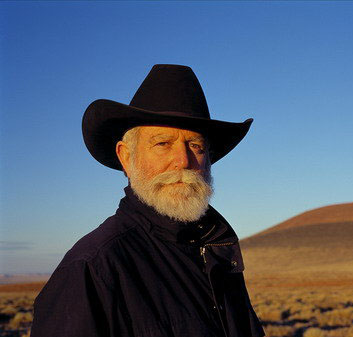
Turrell is a conceptual artist who manipulates natural and artificial light on a grand scale. He’s been practicing his craft since the 1960s. “My art deals with light itself,” he has said. “It’s not the bearer of the revelation. It is the revelation.”

JamesTurrell_landscape

Sounds lofty. But when you enter the rotunda of the Guggenheim and look up to see the deep magic of colored orbs, eggs really, egg after egg after egg, created by lights projected on the concentric rings of the museum’s famous spiral, you see what he means. As you watch, the colors begin to shift, from pale silver to violet to tangerine to raspberry  to acid lime. A fruit-sweetened flow of light.

red eggs

My mind entered a waking dream state. I have to admit that I was equally fascinated by the 200 or so human animals on display beneath the well of light. Tourists. Natives. Suits and shorts, stripes and leggings and boots. Fifteen, twenty languages, who knew? It was one of those afternoons when people look especially beautiful. We were all in a cave filled with liquid light, all creatures awestruck, bemused, interested in the same phenomenon. Turrell is a Quaker, a faith he characterizes as having a “straightforward, strict presentation of the sublime.” Patient contemplation is a tenet of his work. It’s not a particular feature of life in New York City, usually, yet here it was.

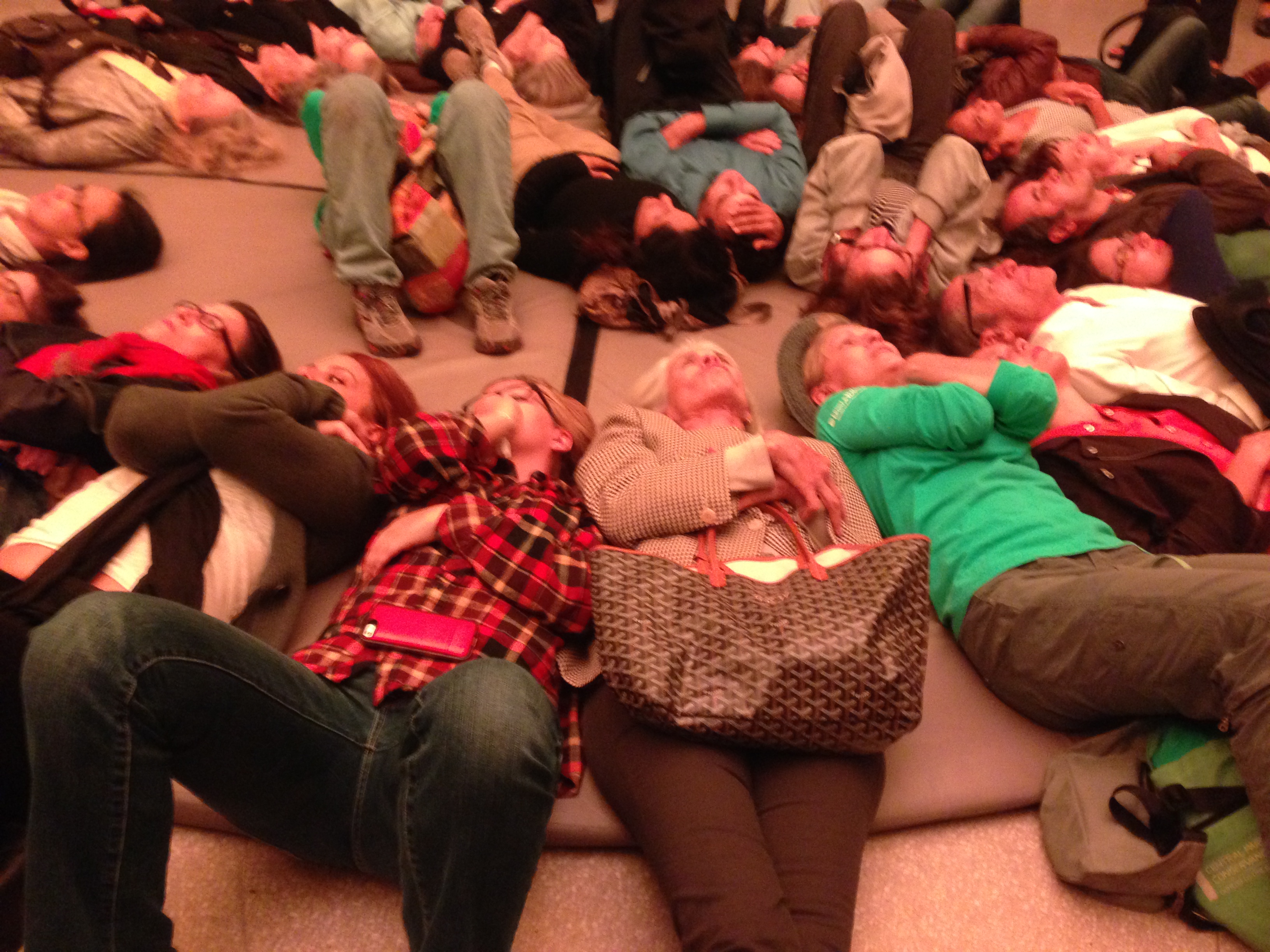
A circular mat lay in the center of the space. People sprawled on the pad like participants at an old-fashioned happening, gaping upward at the magnificent spaces of Frank Lloyd Wright’s genius structure, now transformed to a Turrell Skyspace.

red room

Museum goers waited calmly for a chance at the mat – it was easier to find a parking spot outside than a supine position on the Guggenheim’s floor. They tried to take pictures of the lights but were checked by guards. But Aten Reign begged for pictures. It reminded me of that experiment with toddlers and marshmallows, where a lady gives a kid a marshmallow and says if he holds off for x minutes without eating it, he’ll be given two. What kid can exert that much self control?  Likewise, what adult at this luscious light show could resist clicking a phone upward even if it meant sneaking to do it?

purple eggs

I was reminded of Oscar Wilde’s famous line, We are all in the gutter, but some of us are looking at the stars. Gil waded into the scrum, pretty spry for a nearly-sixty-year-old man – you had to move fast to claim a spot – and lay himself down, spellbound. “It was like a wrestling mat,” he told me afterward, “one where people have been pinned too many times.” The funk of the thousands of bodies since the show opened somehow added to the appeal.

The sky above went from ultraviolet to dark as a storm. Tranquillity descended. Was this what my sometime cynic of a husband liked to call the “theater of faint effect” – something that’s not necessarily going to change your life?  Still, “I felt like I needed a lamaze coach” was what he told me later about the near birth experience he’d had. This would seem to partake of E.M. Forster’s “only connect,” with all of us touching this spiritual lozenge above us, this gleaming cough drop of a god, and at the same time touching each other.

blue room

A friend once told me about her experience walking on burning coals, that there was no rational reason for it but she was transformed by a mystical joy. No one knows exactly why, but it happens.

pink eggs

I sat on the bench that ran around the circular walls. Behind me I realized I was listening to the plash of a fountain. This is the first time I’ve ever employed that word. Later, at lunch in the museum’s somewhat pretentiously named restaurant, The Wright, I ate something I had never tried before, in a frisee salad: a skinned cherry tomato, poached or braised somehow to bring out its pulpy flavor. In the corner, Isaac Mizrahi with his doo-rag held forth in some kind of ecstatic state.

Everything appeared fresh after the Turrell show. September 25, the exhibit closes. There is only tomorrow. Go.

6 Comments

Filed under Art, Culture, Fashion, Jean Zimmerman, Photography, Writers, Writing

Arrr, Matey

Biker-pirate crazies rumbling through Times Square, tossing eyeballs into the tourist throngs?

I admit, that’s a concept. One, once I heard about it, that got me out of my house and into Manhattan.

It was the annual Talk Like a Pirate Day, which I first heard existed when we received an amusing card in the mail marking the occasion. It sounded like a joke, but the holiday is celebrated on September 19th by wannabe Johnny Depps the world over.

depp

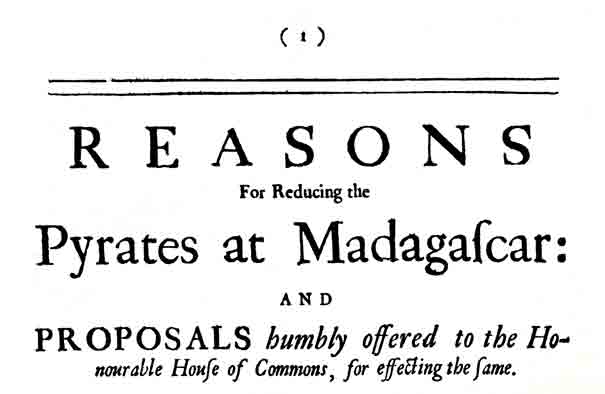
I did some research into seventeenth century pirating when I wrote about New York’s Philipse family for my book The Women of the House a few years back. Merchant Frederick Philipse was one of the richest gentlemen in Manhattan. He had a cellar full of wampum in barrels and a 52,000-acre estate that comprised much of today’s Westchester County. For years he pursued trade with corsairs off the coast of Madagascar, a place only a little bit wilder than New York City in that day.

First of all, there were some crazy animal species there that didn’t exist anywhere else in the world.

Elephant birds, artwork

The elephant bird, a flightless giantess, always intrigued me, and I looked around for evidence of historic human encounters with the beady-eyed long-extinct creature, but all we have today are fossil eggs like cement volleyballs.

Then there was the indri, a still-thriving lemur with lemon drop eyes, whose wail carried across the nighttime countryside, and a pygmy hippo and a panther-hunting cat-dog.

indri-jw

Pirates, yes, I was discussing pirates. Sheltered coves around the Madagascar coast offered private places to careen an ocean-damaged hull, to harvest scurvy-preventing lemons, to provision a ship with oxen, sheep and poultry.

Pyle_pirates_treasfight

A charismatic buccaneer named Adam Baldridge came to Madagascar in 1691 and transformed an island off its coast called Sainte–Marie into a pirate paradise inhabited by as many as 1,500 sailors at a time. A trading post/resort, Sainte-Marie offered up Malagasy “brides” and a locus for business between merchants and pirates.

PIRATE&MAID

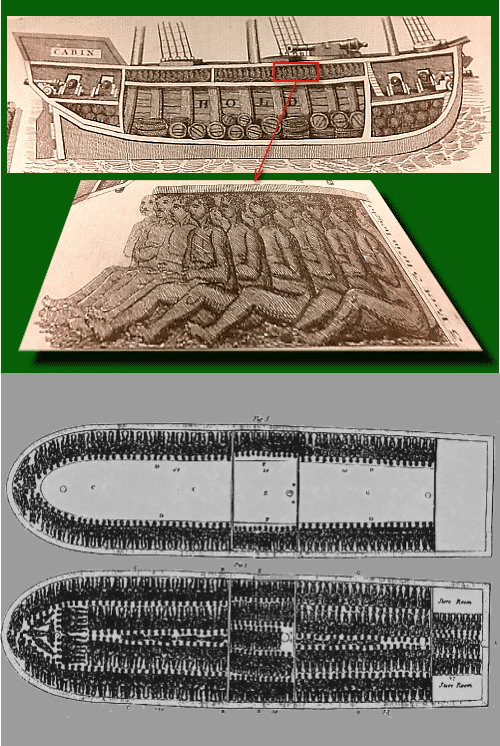
This is where Frederick Philipse saw his opportunity. Baldridge proposed a transaction that would furnish Philipse with two hundred premium Malagasy captives at thirty shillings a head, well below the going rate for African Gold Coast slaves. Also, Philipse was welcome to unload merchandise on Sainte-Marie in exchange for pieces of eight, India goods, or whatever currency best suited the ship merchant. This was all quite nice for Philipse, who was just starting to trade in human flesh but was finding it hard to break into the Africa market, which favored English men. “It is by negroes that I finde my cheivest Proffitt,” wrote Philipse in a letter to Baldridge. “All other trade I look upon as by the by.”

NavioNegreiro

Ships went back and forth, and Philipse’s reputation didn’t suffer through the nature of his Madagascar business—his cohorts in Manhattan welcomed the cargo. Enslaved Africans were bought and sold on wharves along the New York waterfront, at the foot of Wall Street, and out of taverns. But finally, Britain put the kabosh on the activities of pirates around Madagascar and those who interacted with them in Manhattan.

reducing

Philipse brokered one last deal, to bring a load of seventy Malagasy slaves into New York Harbor, whereupon he got spanked. He had a ship impounded and was forced to resign from a post with the governor’s council.

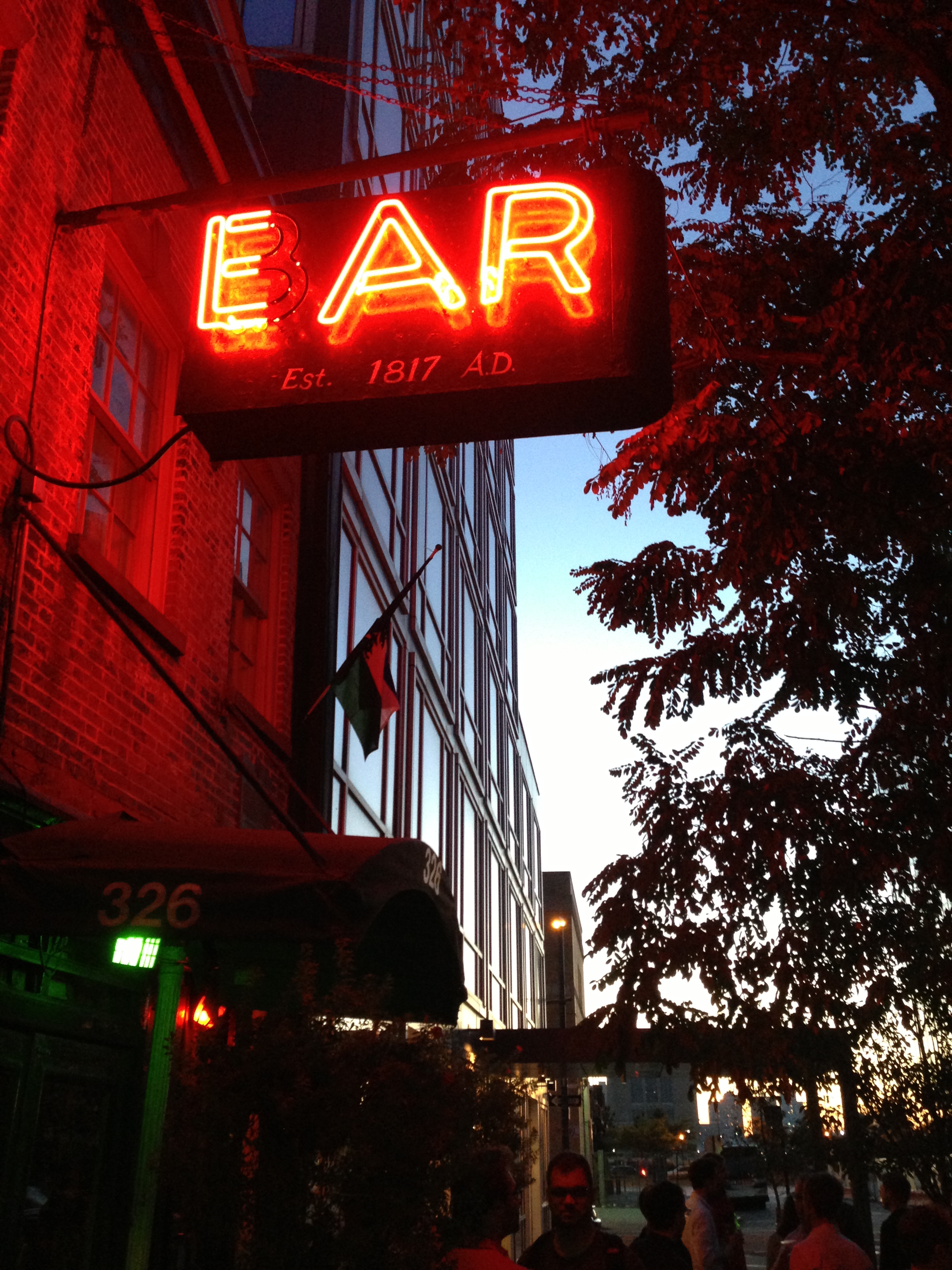
So pirating was not quite so charming as they make it out to be in the movies. Still, Thursday’s Talk Like a Pirate motor escapade was to have its beginning at the historic tavern the Ear Inn, one of my favorites, so I thought I might go check it out.

ear inn outdoor sign

The Ear Inn began its life long after Frederick Philipse’s heyday, though in the mists of time for us: it was built as a residence in 1817 for an affluent African-American tobacco trader named James Brown, who had been an aide to George Washington. If you look close you can see him in the famous painting of Washington crossing the Delaware.

washington_crossing_the_delaware

The house stood on Spring Street, in present-day SoHo, and when it was constructed the waters of the Hudson River lapped at its door.

Marks outside show that Hurricane Sandy brought the shoreline back to what it was centuries ago.

hudson river

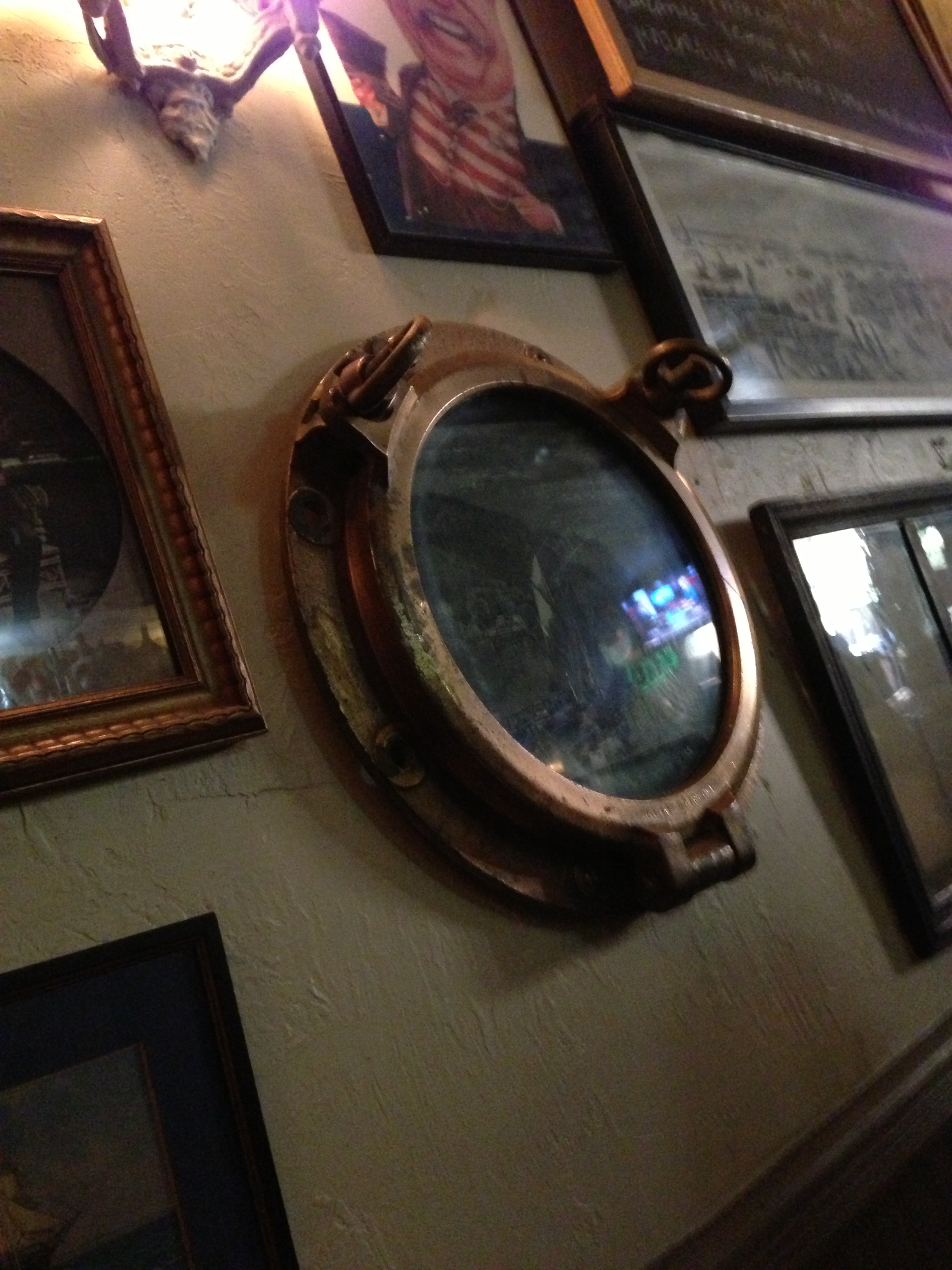
Later the building became a sailors’ tavern, then a speakeasy. There’s still a flavor of the nautical in the place, with brass portholes here and there.

porthole

It’s dark and a bit dusty.

ear inn indoors sign

You don’t go there for the food, but for the flavor of history. When new owners wanted to avoid a drawn-out landmarks review of their BAR sign in 1977, they changed the name to the EAR – but old-timers still call the place the Green Door. It’s the oldest working bar in New York City.

It was a logical old-timey place to begin a pirate romp, sponsored by  a gonzo motorcycle group called Biker Entourage, one that would assemble at the old bar, make its way up the West Side Highway to Times Square, toss those eyeballs, conduct some kind of crazy mock-swordfight in front of the no-longer-existing house of Captain Kidd on Wall Street and wind up at South Street Seaport. The perfectly logical premise: “Had these wheeled dragons been invented say 400 years ago, pirates’d be roarin through the streets with these wheeled dragons between their legs ‘n pegs sure as a shark loves a chumbucket.”

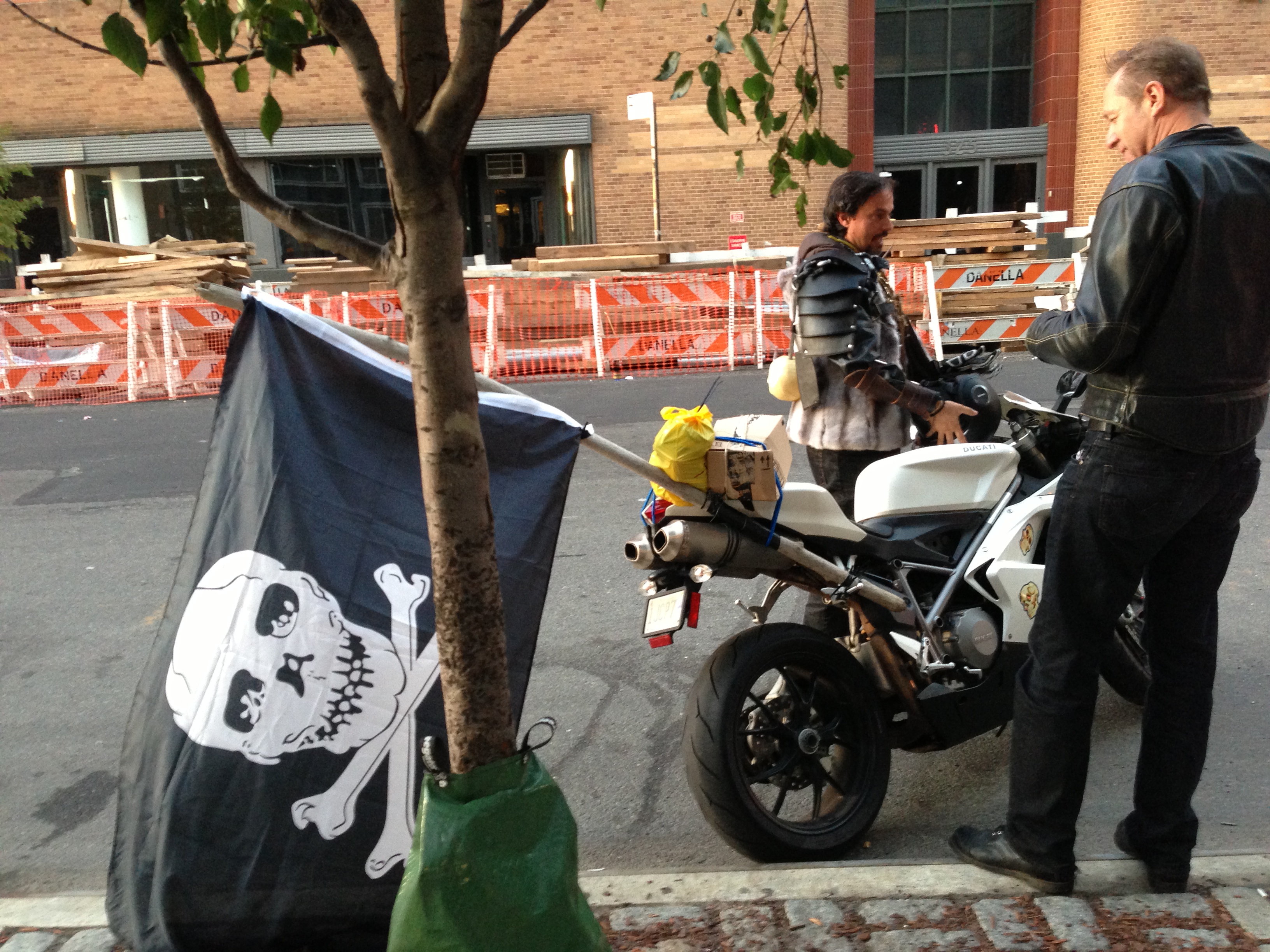
The only thing was, we found at the Ear Inn, the ranks of contemporary pirates were sparse. If dramatic.

pirate bike

There were a few individuals in leathers and pirate garb. Most of the patrons out on the sidewalk preferred the uniform of SoHo skinny chic.

two pirates

We saw a few cutlasses and some Halloweeny dangling skulls.

But no one threw an eyeball our way. The real New York pirates were, as always, down in the financial district. Everyone here was too busy lifting a brew to do much pirating, anyway. Much as it probably was back on the island of Sainte-Marie.

4 Comments

Filed under Art, Culture, Fashion, Film, History, Jean Zimmerman, Nature

Pop Up Rules of the Game

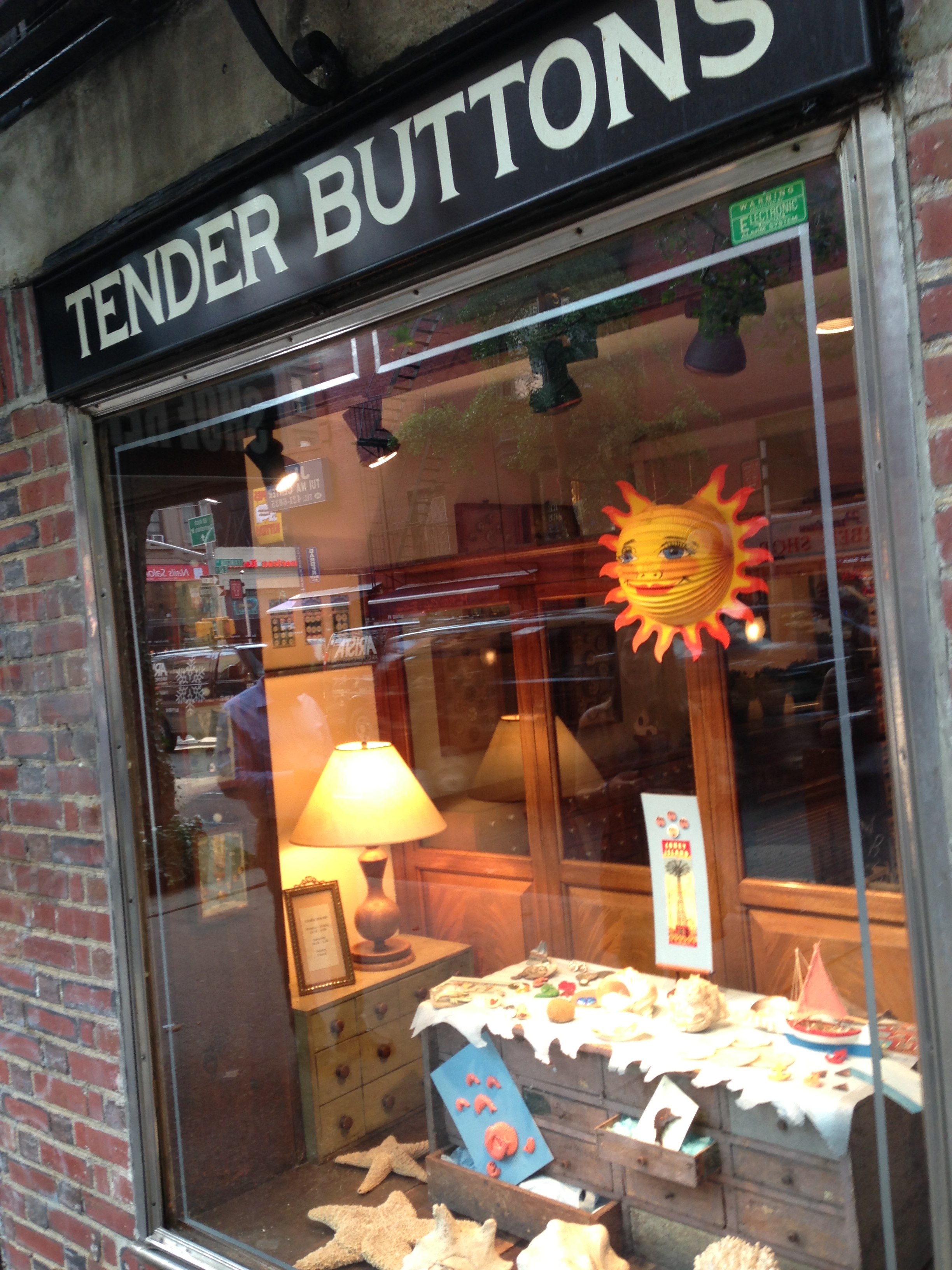
I wore my jacket for so many years the buttons started to blow. There was only one thing for it: pay a visit to Tender Buttons, just around the corner from Bloomingdale’s on New York’s Upper East Side.

tender buttons

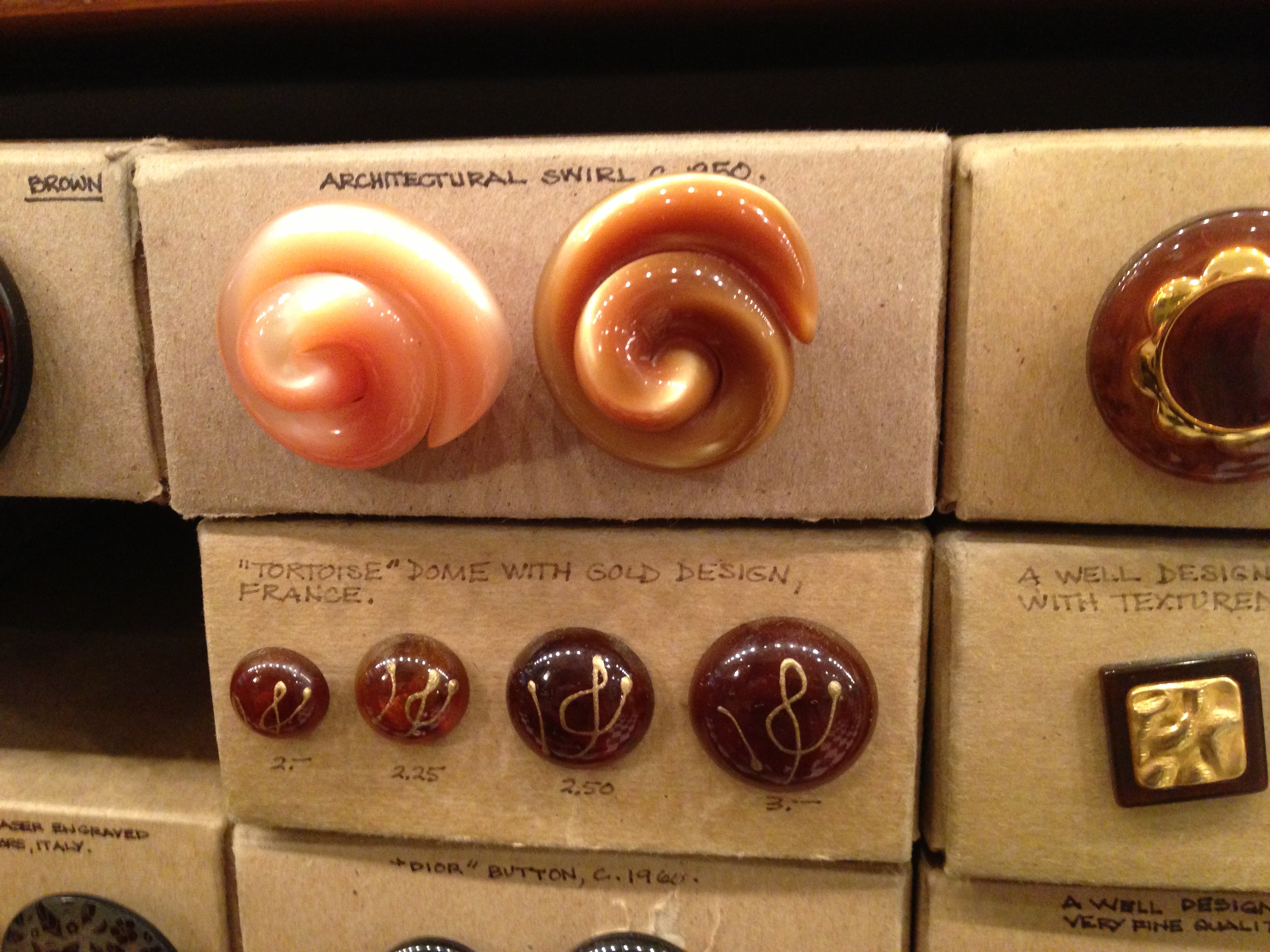
I collect buttons myself, the kind you happen upon at tag sales. None suited my jacket. Tender Buttons, named after an obscure volume by Gertrude Stein, stocks fancy buttons – something of an oxymoron, wouldn’t you say?

architectural swirl

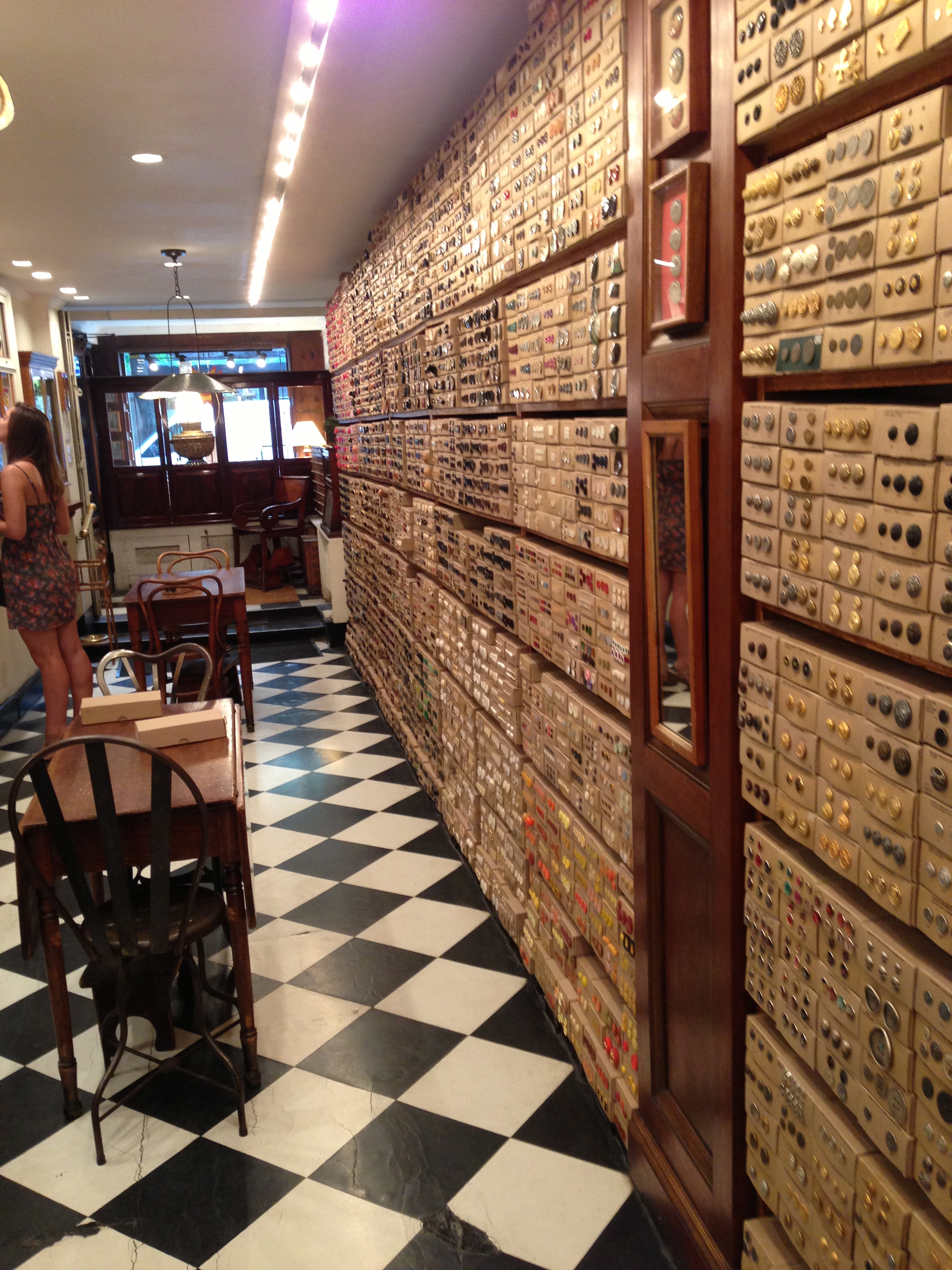
You may browse as long as you like.

pink buttons

Until you are bewitched, bothered and bewildered.

yellow buttons

There are too many choices. You may be tempted to take some of the children’s beauties home even if you don’t have a child.

child buttons

Bone, horn, leather, plastic, wood. Maud and I tried to take it all in. What is the fanciest button you sell? I asked. That would be the Swarovski crystal, said the sales clerk a little primly.

store interior

I loved the scrimshaw, carved scenes on aged walrus tusk. Price point out of range for me however. And who wouldn’t like the limited-edition artist-painted scenes from Alice in Wonderland, one to a button. You’d be telling a fantastic story as you walked down the street.

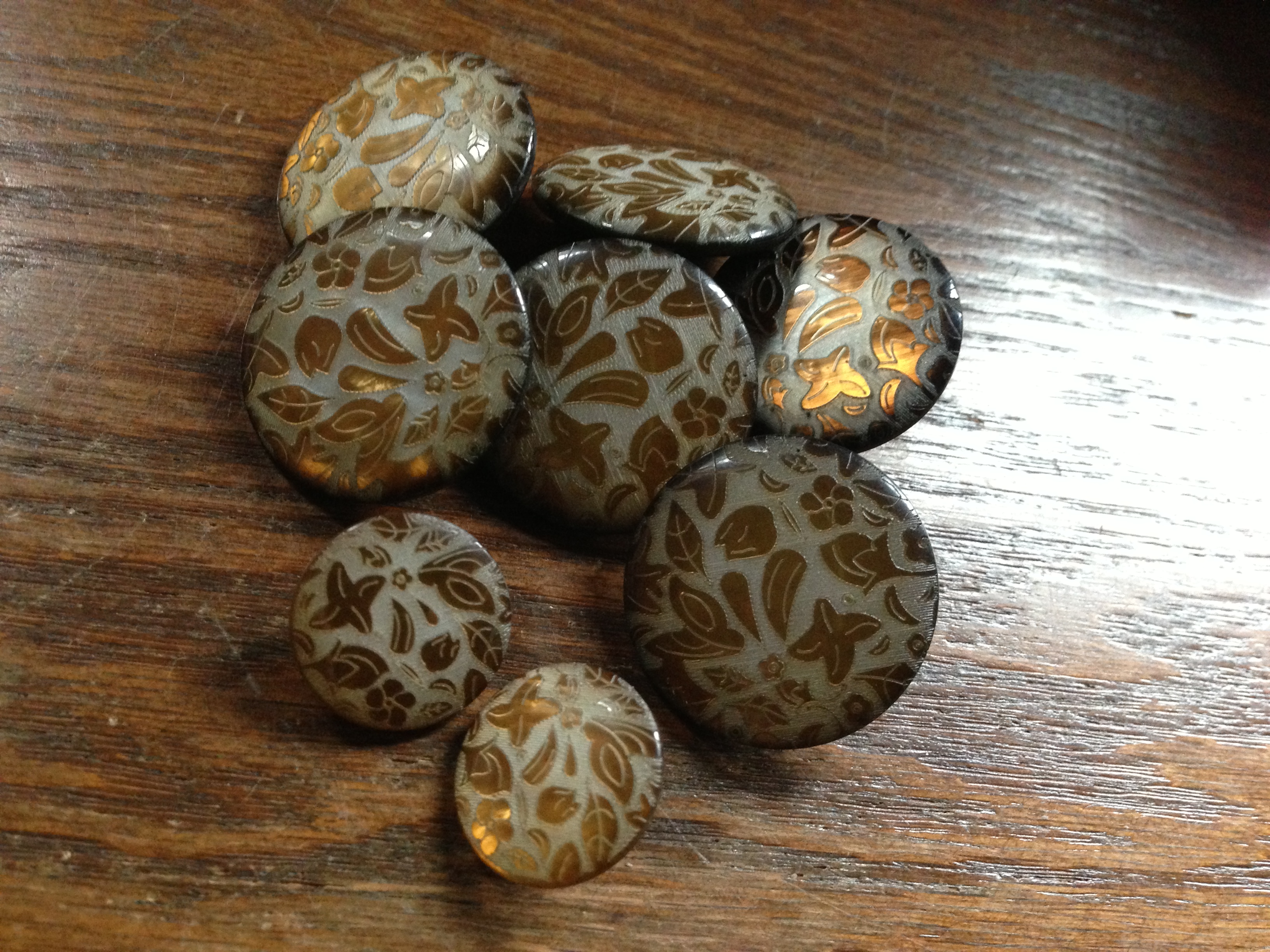
I settled on the finest buttons in the store, fortunately less fancy than some but French, crafted of glass.

jean buttons

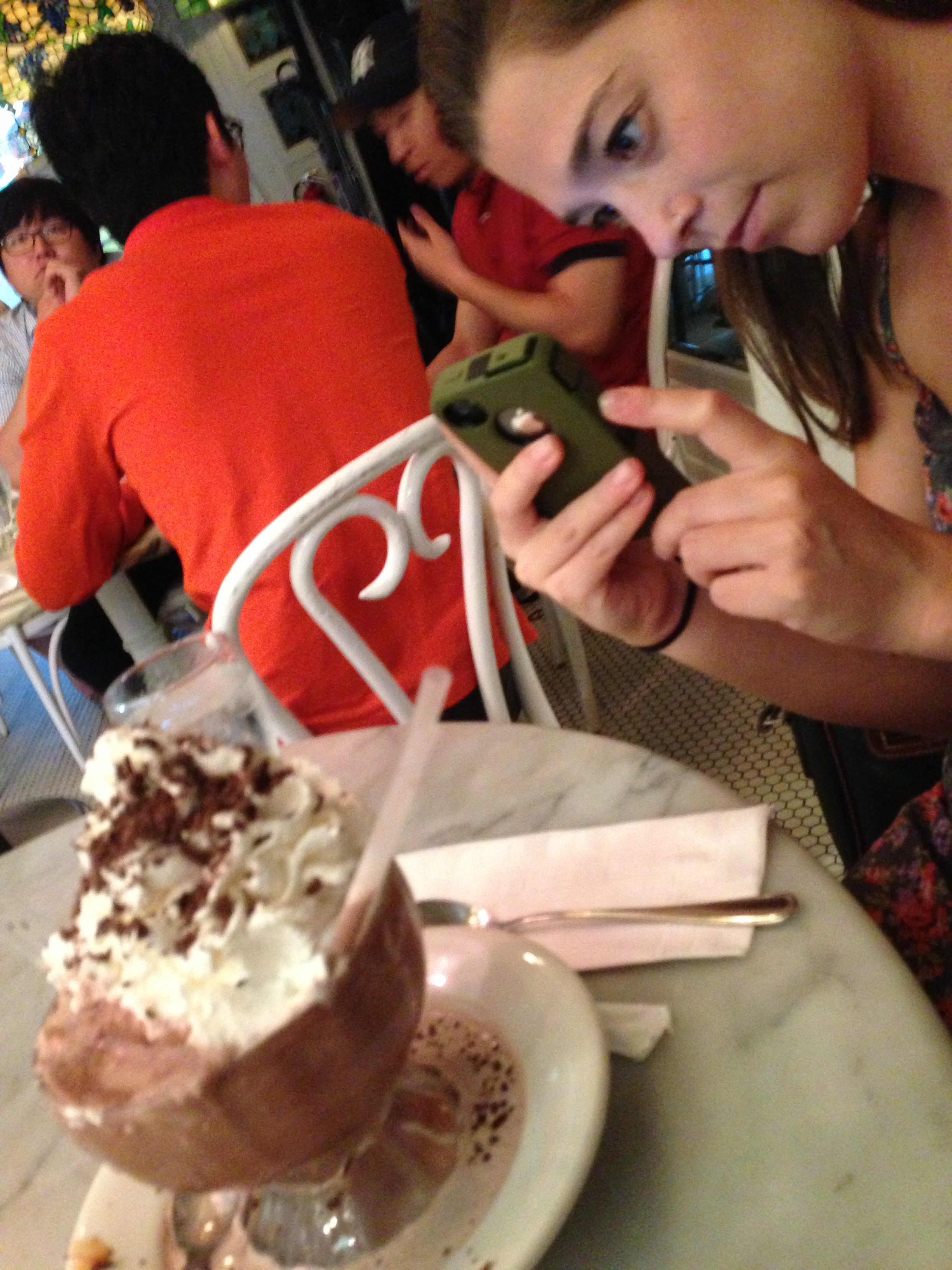
We had fortified ourselves for this venture, Maud and I, with a stop at Serendipity 3 just down the street, which was serving up frozen hot chocolate in giant goblets. Worthy of many photos.

serendipity picture

We shared the over-the-top, whipped cream crowned confection over laughs and confidences.

Then stole away for a treat, lipstick from the people who know how to make lipstick, carefully chosen with our particular lips in mind by a greenly eye-shadowed Bloomingdale’s salesperson.

lipstick

A woman needs a French lipstick in her arsenal. Maud’s made her look more mature, mine made me look less mature. Perfect.

Dinner was a celebration at a pop up steak restaurant that had been relocated while its premises were renovated.

redfarm blackboard

To a laundromat downstairs.

laundry

Gil has a new project, a collaboration. So we toasted him with hot crunchy egg rolls stuffed with pastrami from Katz’s. Chicken-fried chicken stuffed with shrimp. Baby shitake mushrooms, nude and slathered in a slick garlic cream sauce. And a blazing red shellfish casserole roasted in a banana leaf tureen.

banana leaf

I don’t eat crawfish.

crawfish

So there was plenty for Gil and Maud

gil maud redfarm

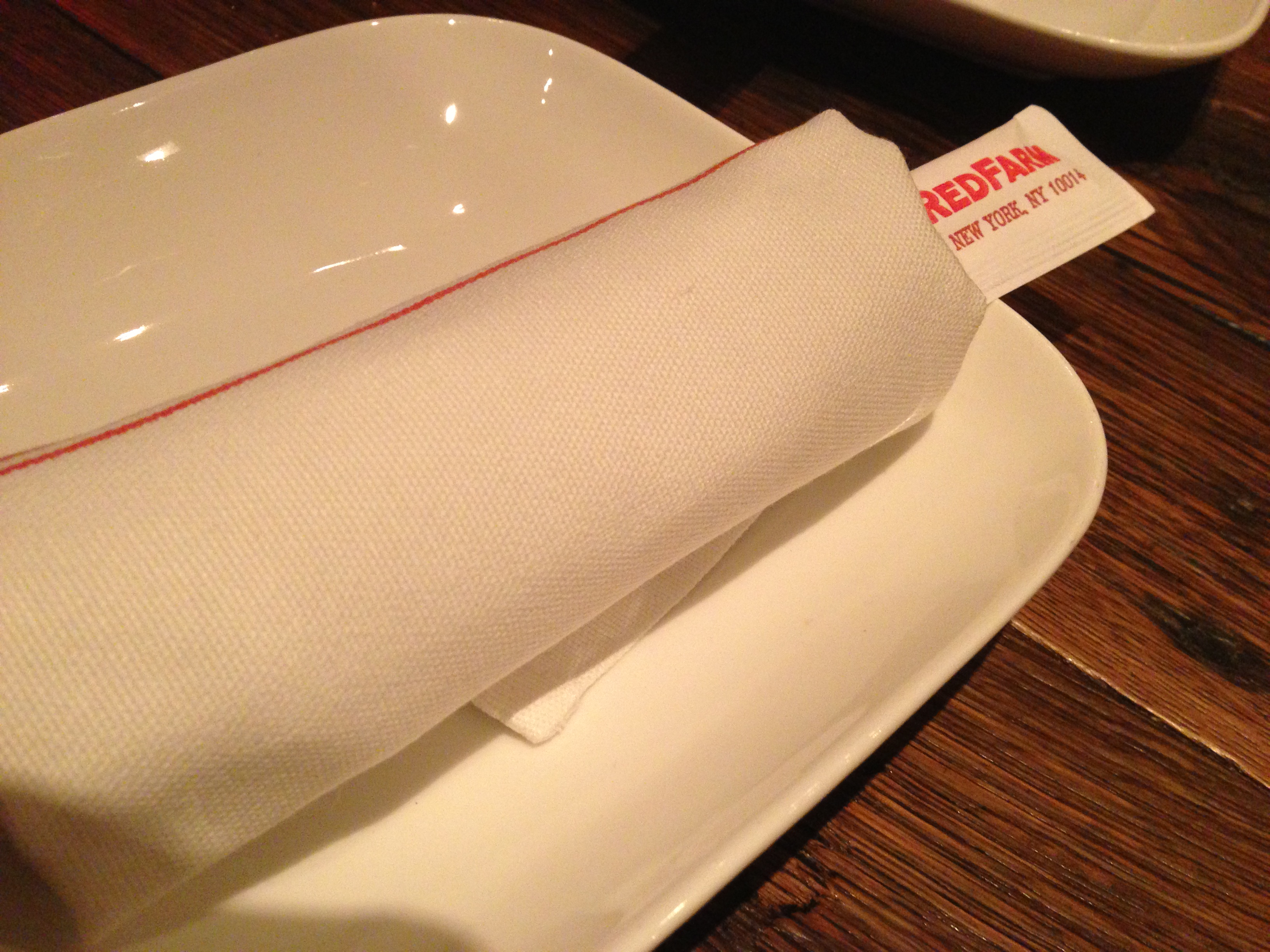
And perfect steak, of course, all served around a farm table with dish towel napkins that were quite well used by the end of the meal. If the place reverts to a laundry they’ll have their hands full.

napkin

We had cooked up a plan to go try “spaghetti ice cream” at a place down the street – ice cream forced through a culinary fun factory, with ice cream  meatballs.

enhanced-buzz-16071-1378422061-10But a downpour hit as we stepped out the door at Redfarm. We quickstepped by the illumination of lightning flashes to the car. Oh my aching foot.

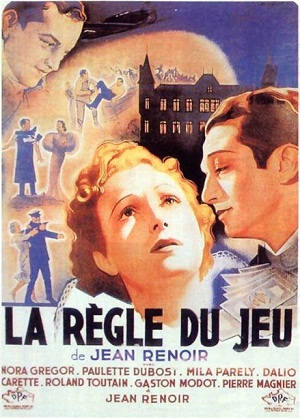
Later, sunk on the couch at home with my leg up, I watched Renoir’s Rules of the Game, the story of rich Parisian twits and their foibles in a country house one fateful fall weekend, putting on amateur theatricals, falling in and out of love, shooting rabbits as well as each other.

La_regle_du_jeu

Elegant buttons, luscious ice creams, lobster, premium lipstick… these are all things Christine, the protagonist, would be well acquainted with as often as she pleased. Run of the mill, ho hum. For us, a one-day treat was extravagant… and enough.

3 Comments

Filed under Art, Cooking, Culture, Fashion, Film, Jean Zimmerman, Photography

Beautiful Typologies

Though I still don’t quite understand what a typology is, the form fascinates me nonetheless. Diana Zlatonovski makes typologies fascinating. This, for example, is a collection of sunsets she amassed on Flickr, drawn from the work of Penelope Umbrico.

sunsets on Flickr:Penelope Umbrico

A curator of interesting objects and images, Zlatonovski compiles them into organized entities for our admiration/edification. She is a photographer. She photographs objects herself. And she distills other work into the essence of their parts (giving proper credit, of course, where credit is due, like these pools of Franck Bohbot).

swimming pools:photos by Franck Bohbot

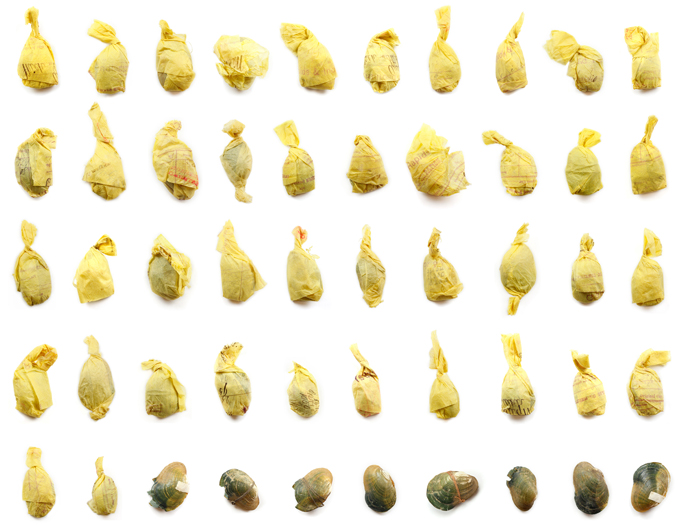
Her own photos tend to the more delicate. This image she calls “Bundles,” comprised of seashells from a  museum collection, wrapped up like bon bons.

Bundles

I asked Diana, who works at the Museum of Fine Arts in Boston, when she started working with groups of objects. “I started my typology project about a year and a half ago,” she told me. “The first series I photographed was the Wrenches.”

WrenchHer work seems to derive its inspiration from that of a famous pair of typologists, Bernhard and Hilla Becher, German artists who worked as a collaborative duo until early in this century.

Bechers

They photographed mainly  industrial buildings and structures.

bernd-hilla-becher-water-towers

Diana told me she has been working a lot with collections at the Harvard Museum of Natural History. She also does some photography in her own studio and travels to collectors’ homes.  “The up side of  doing that is that I am able to spend more time with the collector and hearing the stories behind the objects and how they brought them together.”
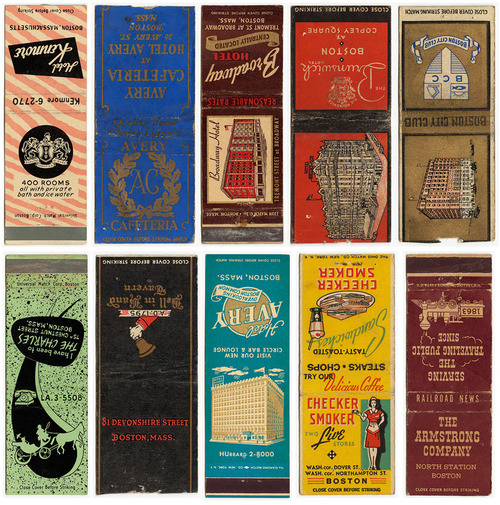
Why are arrangements of like objects so arresting? We are invited, perhaps, to entertain the idea of their seeming permanence… these matchbooks will go on forever in whatever permutation.

vintage Boston matchbook covers from the Boston Public Library

Except when they don’t. My parents had a typology of sorts — mid-50s Tokyo matchbooks enshrined under the glass top of a dining table, and those graphics are now far, far in the tail lights. You can’t even get a matchbook in a restaurant anymore. Yet the power of once-ubiquitous objects that have been replaced by other things is also fascinating.

Duncan Yo-Yos:Smithsonian Collection

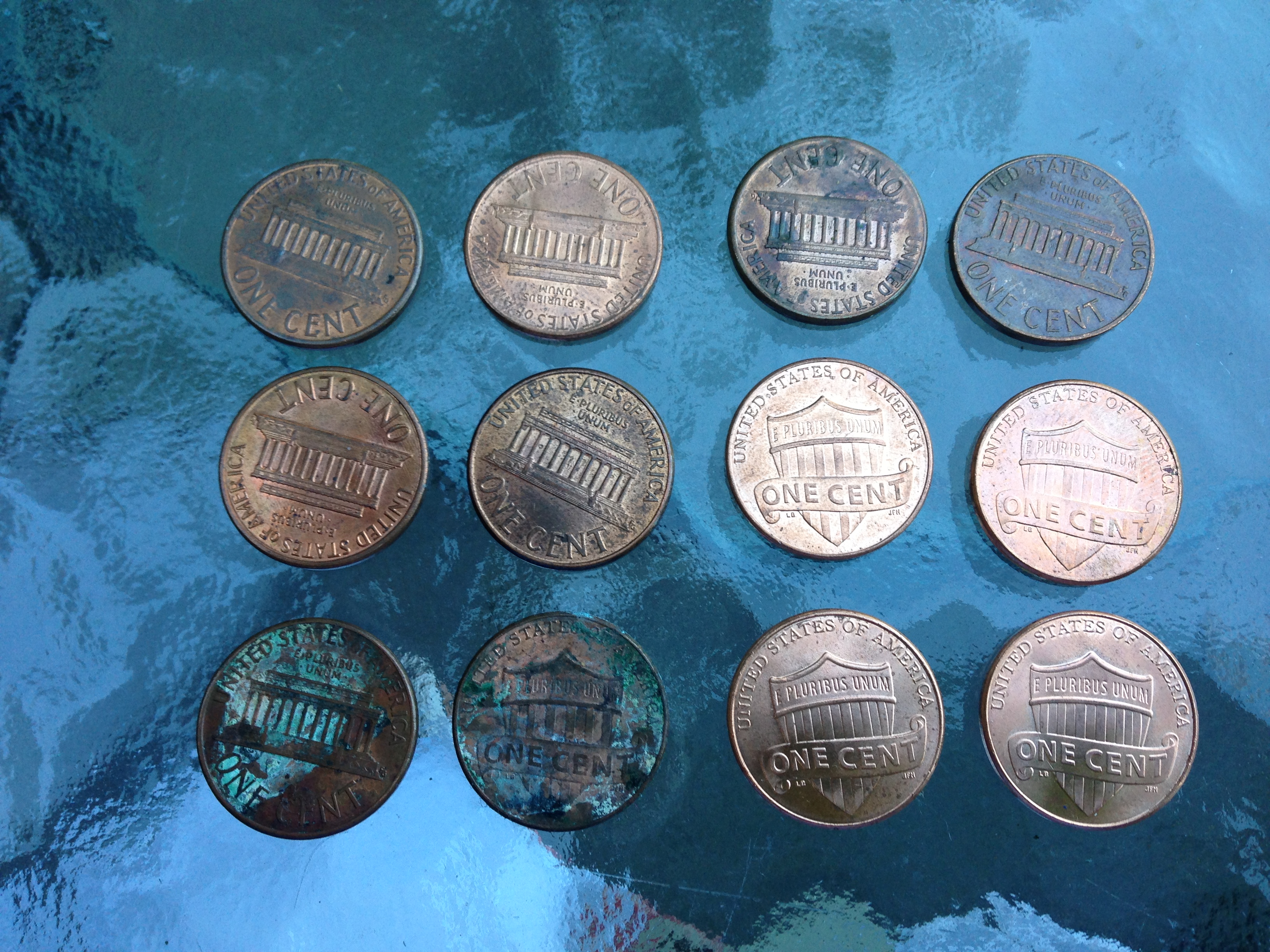
I like Diana’s work so much because the collections she documents, unlike others, are made up of seemingly not valuable items. Collections too insignificant to interest real collectors. What is worthy of keeping, of arranging, of caring about? We take pennies in a jar for granted, for example. What if they were arranged mindfully and given pride of place in a well-lit photo? This is my typology, not Diana’s.
pennies

Does the artist have collections of her own?

“It’s hard not to!  I am always finding interesting things. Luckily, I am usually most interested in small objects…much easier to store.” I love her typology of forks.

vintage forks

Which objects do you find the most fascinating or beautiful, I asked.

“It really varies,” she said. “There is always an emotional response that brings me to selecting objects, it can be aesthetic, nostalgic, or any number of things. But I definitely am drawn to the form and color of an object as well as to its story, where it came from, what it represents.”

I don’t know about you, but I’d like to know everything about these vintage, wacky, glamorous cigarette-holders.

Cigarette-HoldersYou can find Diana’s original photographs on her web site.

Her blog, The Typologist consists mostly of artist submissions or images she has compiled from digital collections.

2 Comments

Filed under Art, Cooking, Culture, Fashion, History, Home, Jean Zimmerman, Photography

Digging

I made a list. The things I’d do if I were going out and about this weekend. The free-of-leg-cast things.

There’s the NYC Unicycle Festival, which kicks off with a 13-mile single-wheeled parade across the Brooklyn Bridge to Coney Island and which includes a bout of unicycle sumo wrestling.

UniFest2012 photo creditKeithNelsoniphone_1654

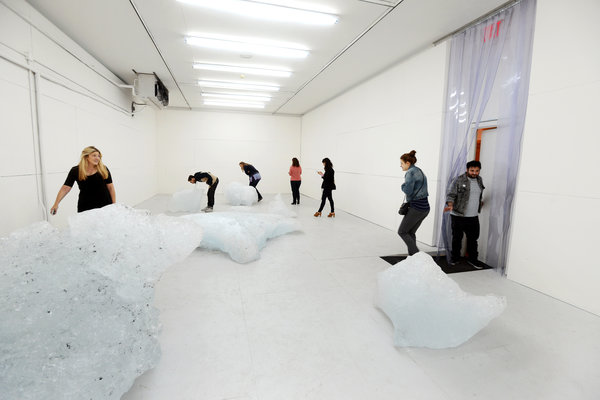
Then, the art installlation by Olaf Eliasson, called “Your Waste of Time,” in Long Island City, at MOMA PS1, with chunks of Icelandic ice in a refrigerated room.

31EXPO-articleLarge

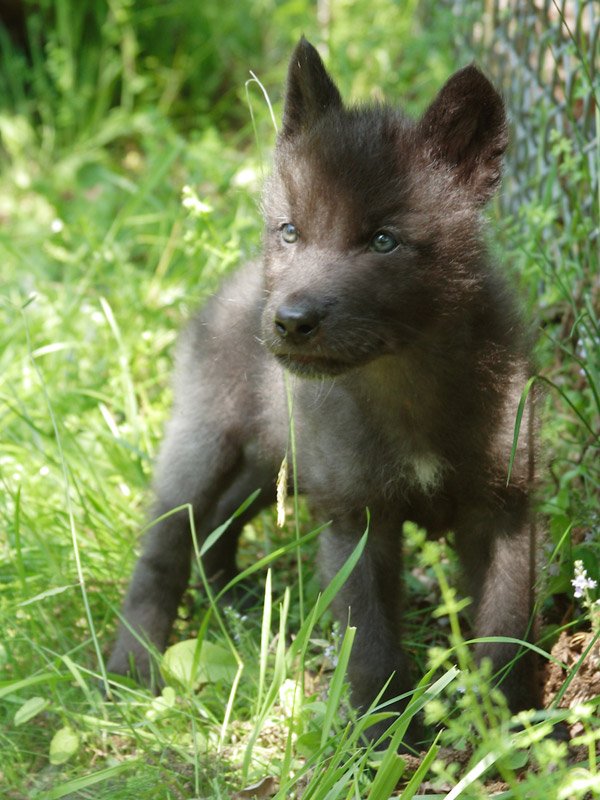
I could visit the Wolf Conservation Center north of the Cabin. Sit behind protective glass and watch a pack howl. They even offer overnights in a tent. The Center has babies, like Zephyr, born April 20th.

zephyr

There’s a tug boat armada on the Hudson, more accurately the Great North River Tugboat Race & Competition, complete with a Popeye-themed contest for spinach eaters.

Jones Beach, its tawny sands burning hot in August, its crashing waves filled with quarter-size quivering jellyfish. We don’t care about jellyfish, though. It’s the last swim before fall. But no room on that crowded strand for a fiberglass leg cast.

ocean

The Breaking Bad exhibit at Museum of the Moving Image in Queens that displays the costumes, props and other accoutrements of everyone’s latest streamed addiction, one that has smoothed the way through these mellow weeks post-foot-surgery. The arc of the show was contrived as carefully as Walt crafts his blue rocks, not surprisingly, and “From Mr. Chips to Scarface: Walter White’s Transformation in Breaking Bad.” will show you how. The stuffed animal that splashes down into the Whites’ swimming pool was specially commissioned, it turns out.

BreBa-Pink-teddy-640x415-300x194

Do you care to see the tighty-whities that Walt wore in season one, episode one? For some reason I do, but I don’t know if the terrain is maneuverable for me and my scooter.

I missed the Battle of Brooklyn last weekend – reenactors assembled in what later becamethe famous Green-Wood Cemetery – out of a dread of uneven grass and pebbly stretches.

green-wood-cemetery-battle-brooklyn-reenactment-redcoats

There was supposed to be cannon fire and I know people were boiling pots over smoky campfires.

I must eschew places that wouldn’t easily accommodate what Gil calls “Jean’s crutches, sons of butches, or the Bloke, no joke.” What the ladies at the nail salon called my “motorcycle.” One was so nice she gave me an upper arm massage. I never knew that crutches kill your triceps.

Jean on crutches

But it’s all in the name of pampering that tiny metatarsal in my right foot, the one that needs some extra help to mend so that I can go on ever greater adventures. Who knows, next year a pair of hiking boots that actually fit. Kilimanjaro.

I am most definitely emerging today for a time to “help” cart Maud’s things for the year to her new dorm. She makes up in leggy activity, just back from sunny Spain, what I currently lack. Out catching drinks with friends, seeing music, buying notebooks, all new things, looking to the future.

maud spain

I am also looking to the future, though a ripple of boredom is creeping through me like a sweet rot. Day to day, I dive down into the Revolutionary New York research for my next novel and come up with gorgeous crumbs. And you need crumbs to make the rich loaf that is a historical novel. But that’s just a start.

I’m going to need a new couch after this recuperation, the indentation in the current one might not plump back up.

A walk down to the garden to dig potatoes would be great. Fingers — toes! — in the dirt. I remember the loam of mid-summer fondly.

potatoes soil copy

Oh, forking over potatoes today… would be amazing. The just-deceased Nobel-winning poet Seamus Heaney’s poem on the subject, “Digging,” is one of the great works of modern literature. Have a seat on my couch. Take a listen.

Between my finger and my thumb   

The squat pen rests; snug as a gun.


Under my window, a clean rasping sound   

When the spade sinks into gravelly ground:   

My father, digging. I look down


Till his straining rump among the flowerbeds   

Bends low, comes up twenty years away   

Stooping in rhythm through potato drills   

Where he was digging.


The coarse boot nestled on the lug, the shaft   

Against the inside knee was levered firmly.

He rooted out tall tops, buried the bright edge deep

To scatter new potatoes that we picked,

Loving their cool hardness in our hands.


By God, the old man could handle a spade.   

Just like his old man.


My grandfather cut more turf in a day

Than any other man on Toner’s bog.

Once I carried him milk in a bottle

Corked sloppily with paper. He straightened up

To drink it, then fell to right away

Nicking and slicing neatly, heaving sods

Over his shoulder, going down and down

For the good turf. Digging.


The cold smell of potato mould, the squelch and slap

Of soggy peat, the curt cuts of an edge

Through living roots awaken in my head.

But I’ve no spade to follow men like them.


Between my finger and my thumb

The squat pen rests.

I’ll dig with it.

4 Comments

Filed under Culture, Fashion, Film, History, Home, Jean Zimmerman, Nature, Poetry, Publishing, Writers, Writing

Blurbs for The Asylum

Blue Rider Press has come out with a book trailer featuring fashion insider Simon Doonan talking about getting blurbs for his his forthcoming book The Asylum.

the asylum

There is actually a series of very brief videos, including the blurb one but also one about designer Thom Browne and one about Michael Kors and one featuring “career advice for young people,” among others. An original approach to promoting a book through a video, well suited to such an original guy.

Simon_Doonan_photo-credit-Albert-Sanchez

The one about blurbs, “those wonderful little comments on the back of the book,” is pretty honest and funny enough, and hits home as I am wading into the waters of asking people to read and comment upon Savage Girl. Publication isn’t until March 2014, but quotes are needed long before that to be printed on the book jacket. And publishing pros say they are critical to getting a book noticed.

Savage Girl cover 3

Doonan says that when he is asking for blurbs “I am in a permanent pretzel of cringing, shame and self loathing.” Then he reels off some of the glowing comments he got from Marc Jacobs, Alexander Wang and others.  “Don’t even think about becoming an author,” he warns, “unless you’re prepared to go through the torture, the torment, the challenges of getting some blurbs.” The Asylum: A collage of couture reminiscences…and hysteria is out Sept. 3.

1 Comment

Filed under Culture, Fashion, Fiction, History, Jean Zimmerman, Publishing, The Orphanmaster, Writers, Writing

Knowing How to Swing

Revisited some of Cat on a Hot Tin Roof with Liz Taylor and Paul Newman.

poster

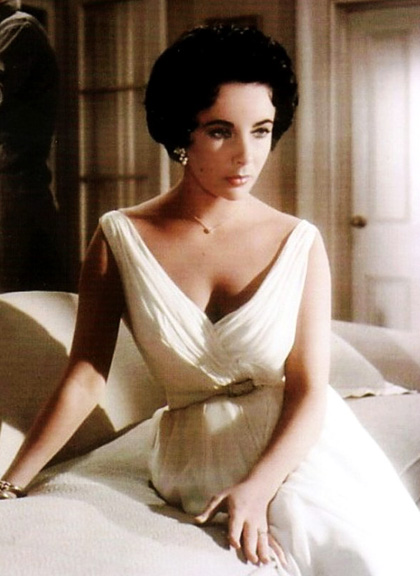
How gorgeous and weird a production it is, and what a knockout she is in her silken white dress with its deep vee.

taylor

And, something I’d totally forgotten, what an amazing crutch walker is Newman’s Brick.

Cat on a Hot Tin Roof blouse skirt

It’s not a real broken ankle, Gil reminds me. But still, to be able to swing around the room like that, spilling nary a drop of his whiskey, a single wooden crutch under one arm?

newman crutches

His real crutch of course his his addiction to alcohol.

Or what about the incredible gymnastics that occur when Newman takes a swing at Taylor’s Maggie with the crutch, ending up on the rug, the both of them smiling ruefully. Why is Uncle Brick on the floor? asks one of the little no-neck monsters. Because I tried to kill your Aunt Maggie, says Brick. But I failed. And I fell. Eyes of blue, achilles heel.

newman floor

I wonder if Tennessee Williams ever had to go around on crutches.

tenness

2 Comments

Filed under Culture, Fashion, Film, Home, Jean Zimmerman

Maine Woods Ramblin’

My world-rambling brother Peter has sent a bulletin from the northern Maine forest, where he is catching his breath in the middle of a book project and, as always, exploring the local history. Peter published Podunk: Ramblin’ to America’s Small Places in a Delapidated Delta 88, which remains the definitive portrait of locales far off the beaten track, and a perfect reflection of his restless, questing mind.

Pete

What you can’t get enough of in Podunk are Pete’s vivid photographs, and his pictures of Moosehead Lake in Maine are definitely worth sharing. He’s been spending time around Mount Kineo.

mt kineo cliffs

Mount Kineo’s wild beauty has long been celebrated, but few know it abuts a piece of land called Misery Gore, an “untrampled” place Pete investigated for Podunk. Gores are highly unusual geographical features, Pete’s research shows, limited to Vermont and Maine, “largely forgotten anachronisms that don’t much impact most peoples’ lives in any profound way.”

He says that the source of Misery Gore’s name might be its preponderance of black flies, or it being “a miserable place to survey, log, hunt, and birdwatch,” or that it’s overgrown with briars and brambles, or that “a French-Canadian logger from Miseree once passed through this neck of the woods.” The parcel is wedge-shaped, crisscrossed with nothing but dirt roads.

It is, however, Penobscot country – the tribe has a reservation near Bangor known as Old Town — and on this trip Peter reacquainted himself with some of his Podunk contacts, three generations worth, including 50-year-old Andrew Tomer, his 12- year-old nephew and his father, Penobscot elder Francis.

Francis Tomer

Penobscot, Peter told me, means “where the stream runs by the mossy rock that is white when dry.”

Mount Kineo’s 800-foot cliffs of rhyolite were carved by the Indians into arrowheads. “Thoreau cut himself on this flint-like rock,” Peter writes, “which he called ‘hornstone.’”

arrow heads

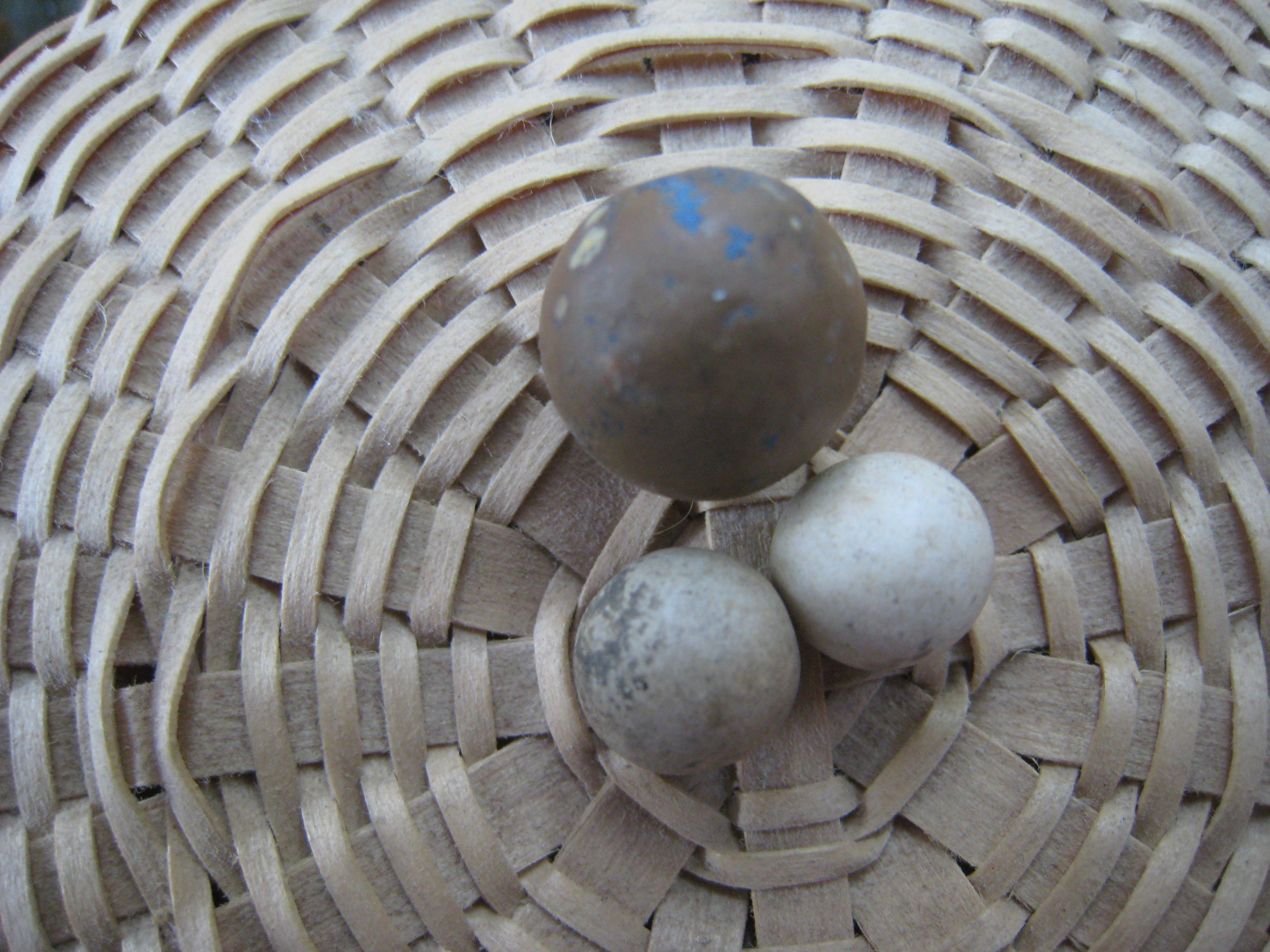
“Some Native Americans believed that the cliffs under water were bottomless” Peter told me. He took a ferry to the Tomers’ dock. “After a dinner of well-grilled steak, corn on the cob, green beans from the garden and small spanish olives with pimentos, Francis took out a cigar box with all the arrowheads, marbles, stone tools, etc., and told me about them,” said Peter. Andrew, he reported, was very quiet. “He wanted to remember the stories for future generations.”

clay marbles

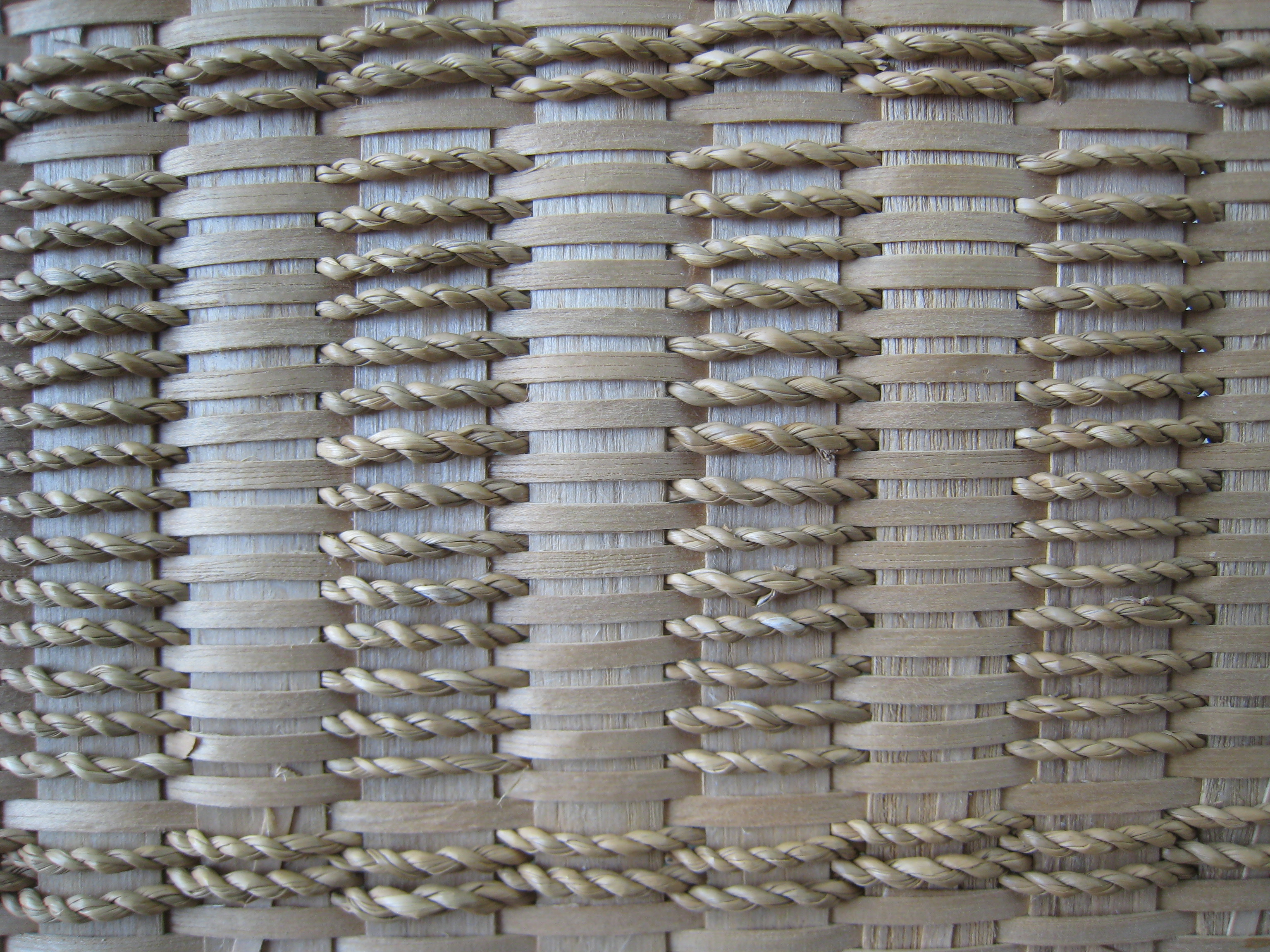
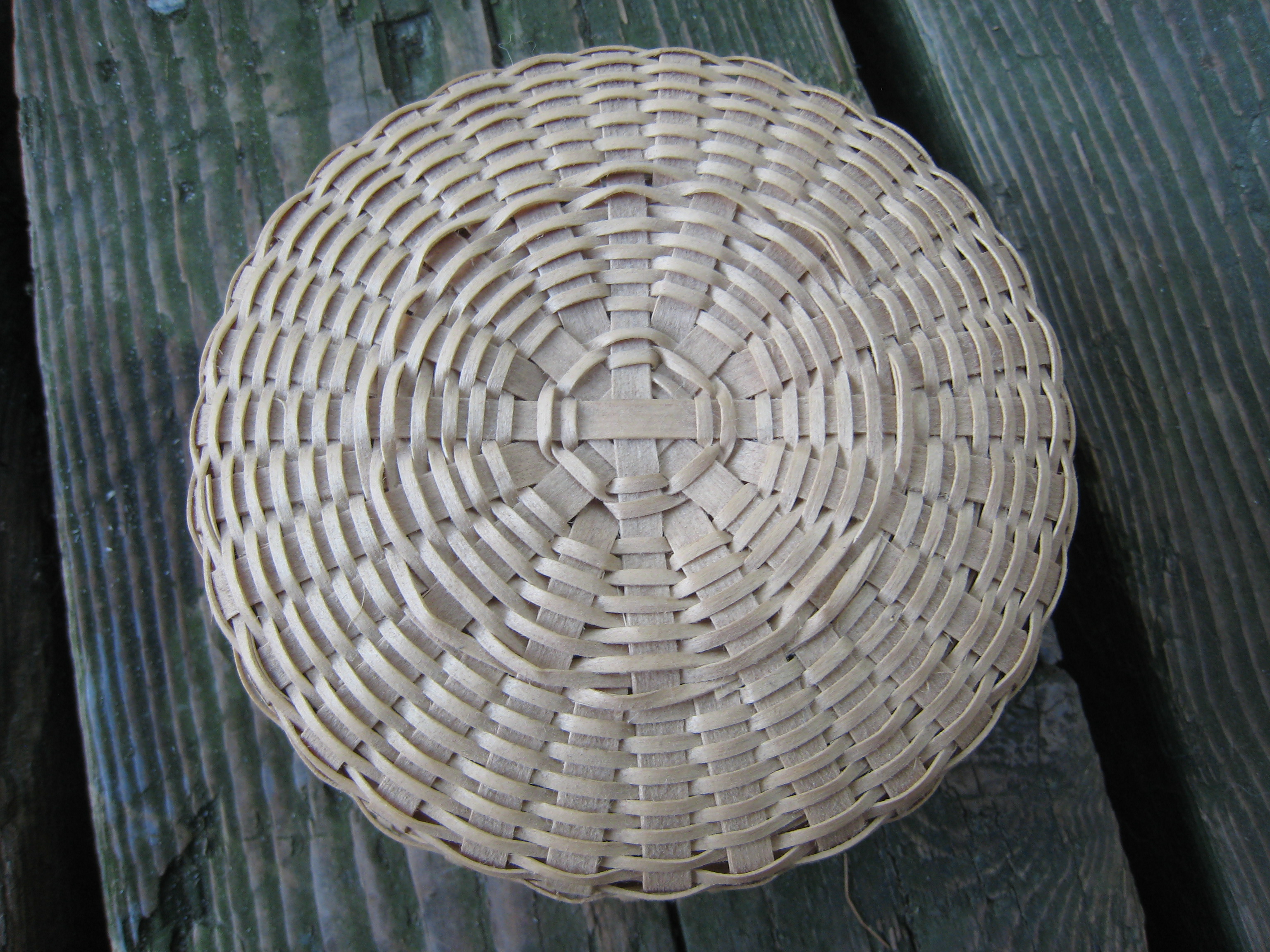
“Basket weaving by the Penobscot can be quite intricate,” says Pete.

basket 1

“First, pieces of ash are soaked in water. Then each one must be individually sanded down.”

basket 2

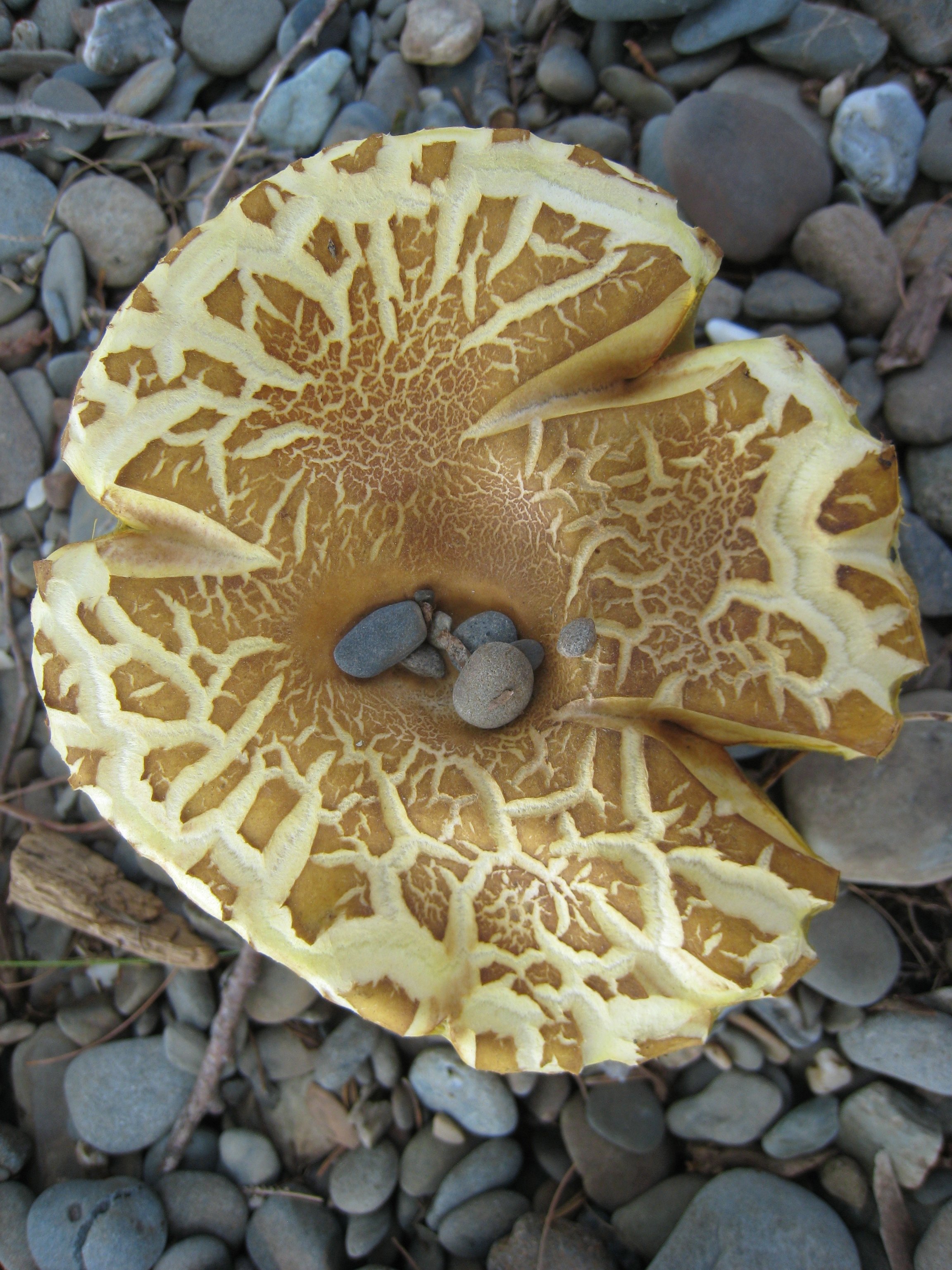
These baskets were made by a woman who lives in Rockwood, Maine, on the shore of Moosehead Lake. There Peter saw mushrooms. Fresh, with a garnish of smooth stones.

mushroom

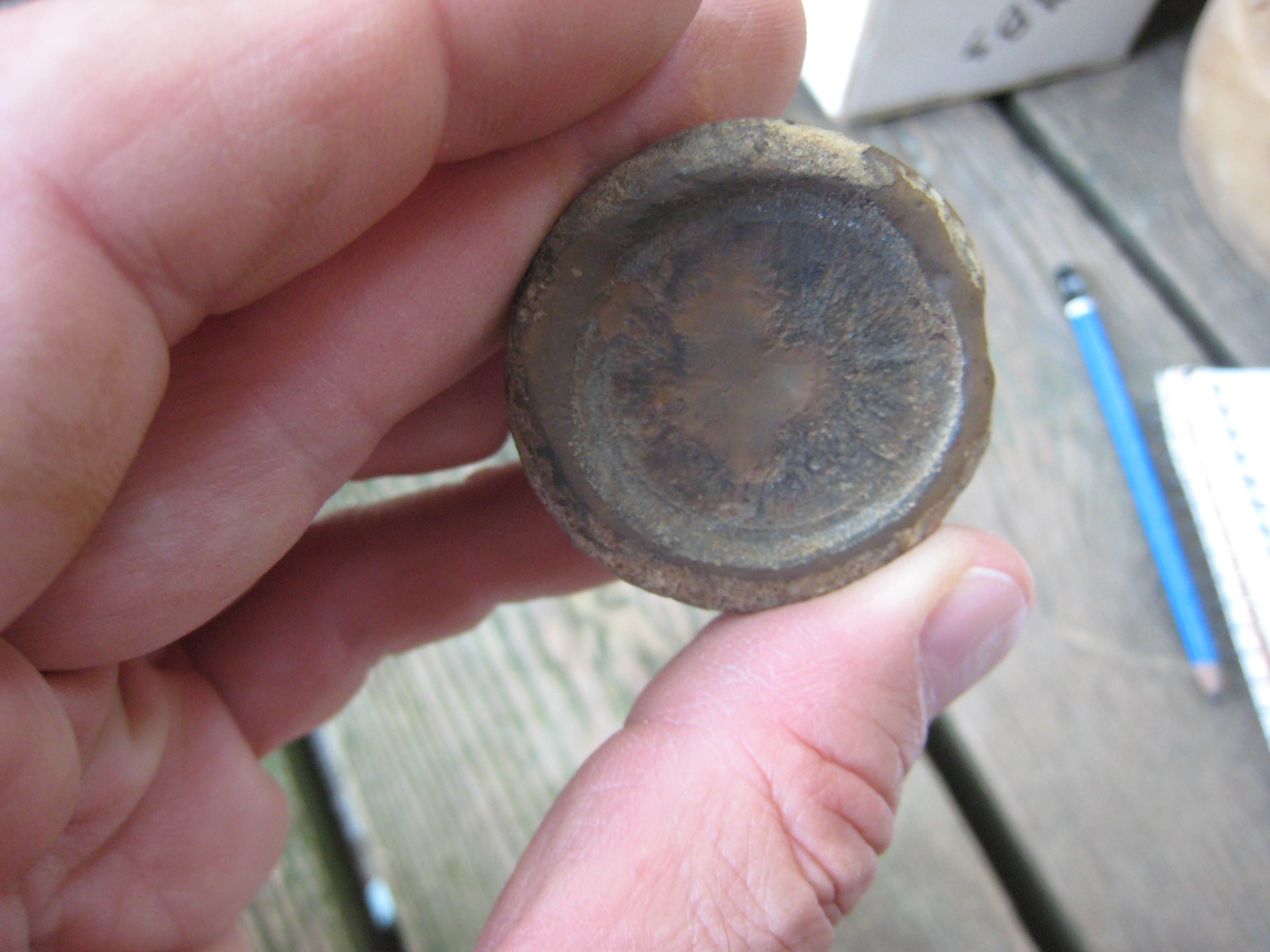
And fossilized.

fossil mushroom

A sculpture of some kind.

stone sculpture

A piece of the rhyolite from which arrowheads are carved.

piece of rhyolite

Wampum.

wampum

An ancient knife used to carve walking sticks.

old knife used tomake canes

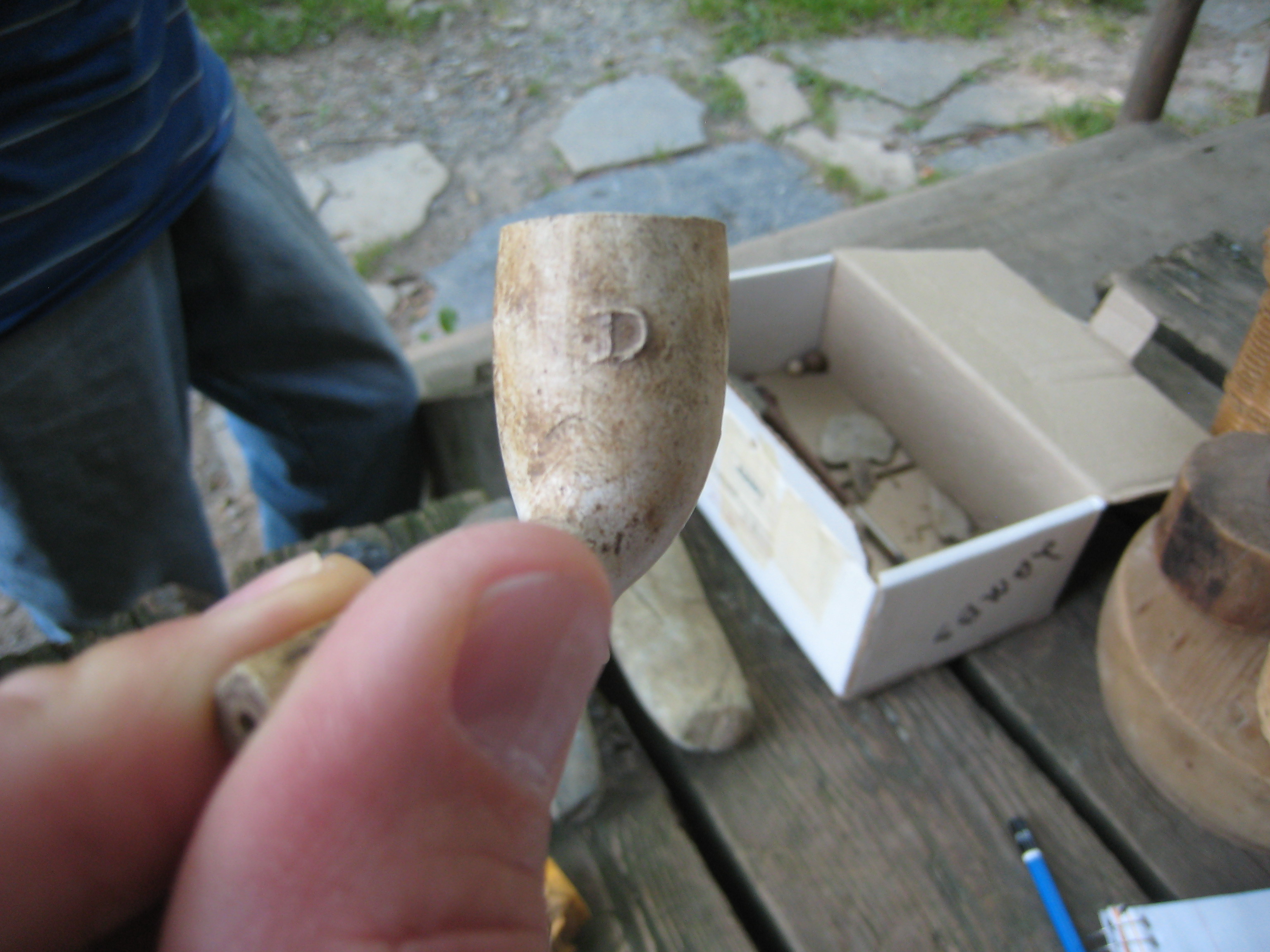
An initialed pipe left by an early settler.

pipe

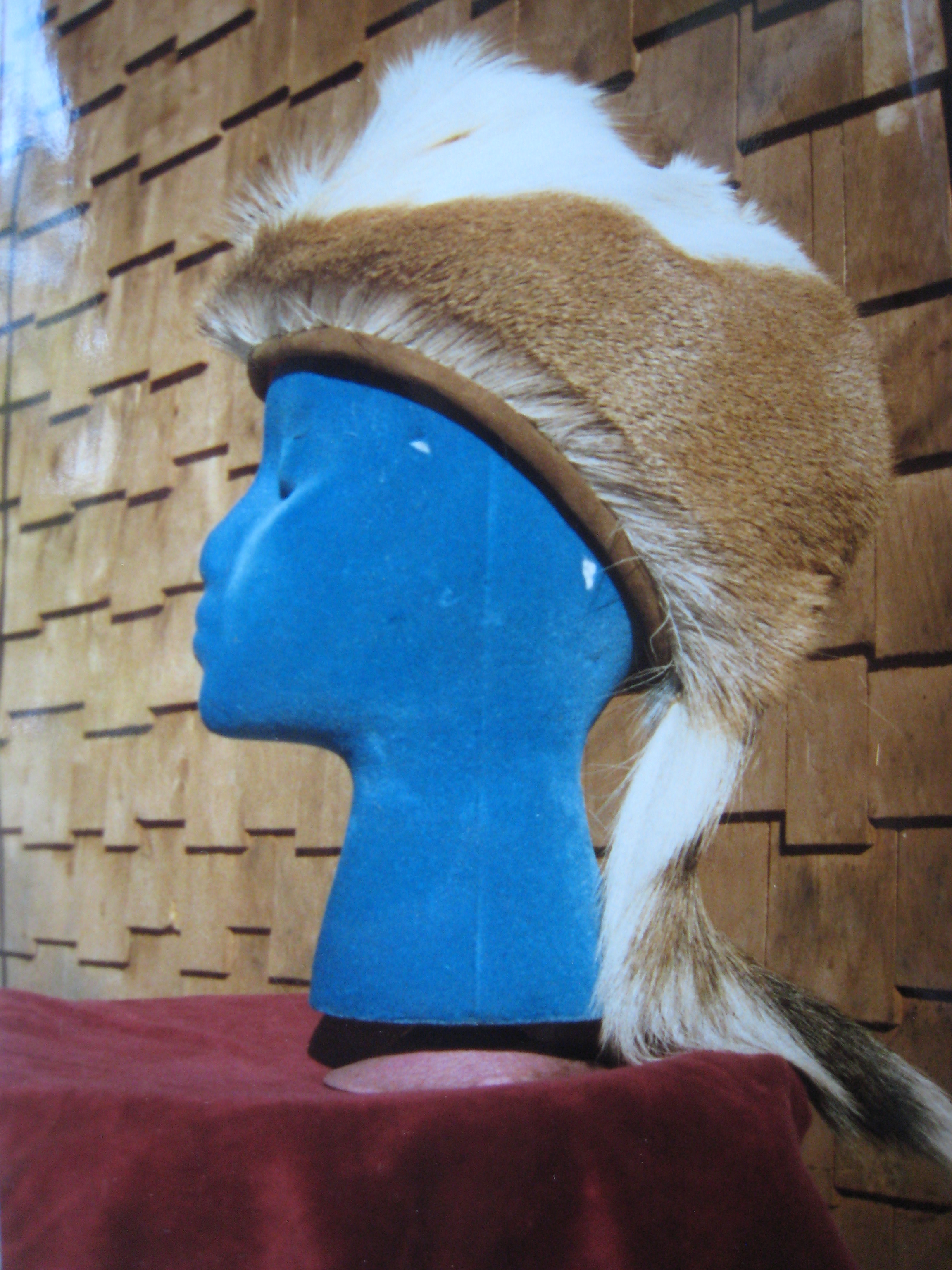
A deerskin cap.

deerskin copy

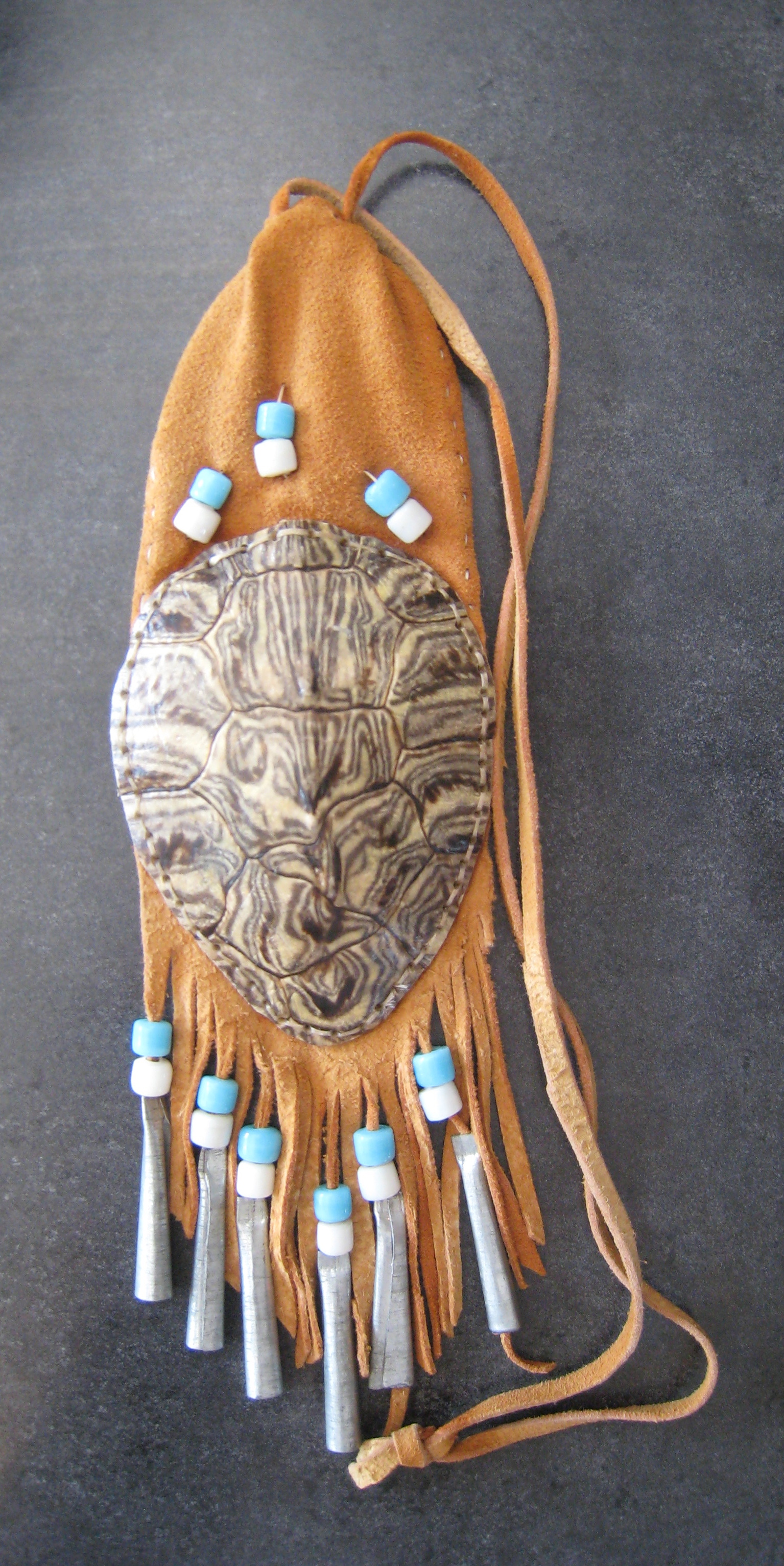
A deerskin pouch adorned with a baby snapping turtle shell that Peter plans to bring with him when he leaves.

pouch

A celebration of all that is old and new and precious in these cool, mysterious Maine Woods.

7 Comments

Filed under Art, Cooking, Culture, Fashion, History, Home, Jean Zimmerman, Nature, Photography, Publishing, Writers, Writing

Crushes on Crutches

At the movies I saw a woman on crutches. A young, pretty woman in a color-block sundress. As I watched, she hopped around the serve-yourself beverage kiosk, assembling her ice, her soda and her straw, putting the whole drink together before her boyfriend politely carried it away for her.

I saw her next swinging her way into the ladies’ room. Into a regular stall! Not the one with the wheelchair icon I was struggling to enter with my kneeling scooter The Bloke. I washed my hands, she washed her hands, the difference being that she was cool as a cuke, graceful and weightless, not perspiring and puffing like me. Probably about 24 years old.

At the film line she was waiting, as was I, to go in. We shared war stories. A motorcyle accident, she said.

anime

A little piece of the bike flew off into her ankle. The doctor had her in her cast for six weeks. It was a little difficult, she told me, because she lives up four floors and the laundry’s in the basement. But she’s making do okay. Her bike? Came out of the accident perfectly fine. She couldn’t wait to get back on it.

By the next morning my conversation with motorcycle girl had begun to percolate. I had been proud of myself for managing The Bloke so well. But now I had crutches envy. How do you make the best of this particular situation, a bum foot, and do it with some measure of equanimity and grace? It helps if you are an athletically gifted person of 24, of course. I wondered, how do you take your lumps and move forward, albeit with a cast on your foot that feels like a stiff leather ice skate with no sock? A little sand drizzled in for good measure.

Recently I asked my brother Peter for blog ideas since I knew I’d be less able than usual to go on gallivants and cover eclectic cultural happenings like I usually do. Why don’t you just catalogue all the stuff in your house, he suggested.

I feel, though, that I have already catalogued some of the things I like best. My vintage cookbook-pamphlet collection, for example.

salad book

The heirloom lace created by my foremothers.

lace cu 2

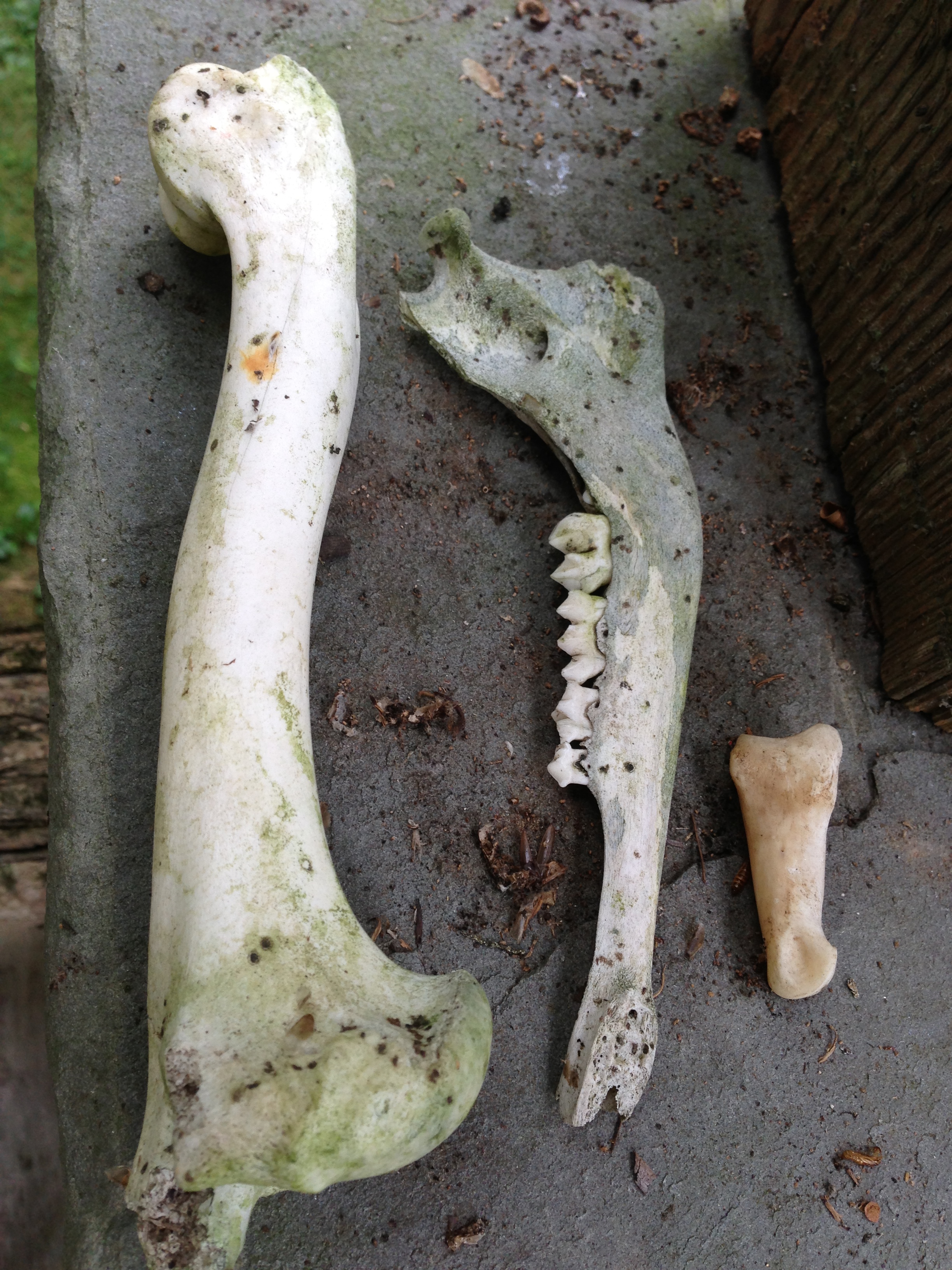
I don’t know that I’ve ever indexed the bones that have surfaced from the marsh in front of the Cabin, mainly carried helpfully to us in Oliver’s mouth. We joke that he is trying to assemble to assemble a full deer skeleton.

bones

Or the skins that have been sloughed off by so many snakes just to the south of the house.

snakeskin

But, like motorcycle girl, probably I do get to a few things every day, even now, move my constrained life ahead bit by bit. Take some action, even if I’m not swinging effortlessly on my axilla mobility aids. Thus, a catalogue of 10 actions taken today.

1. A shower bath, my leg encased in a plastic bag, with streaming hot water and a worn-down bar of soap a revelation.

2. A knitted row of  angora, hopefully without a slipped stitch.

angora

3. Perused some passages in Travels in North America, a volume published by Swedish naturalist Peter Kalm in the 1760s. In it he expounds on such scientific matters as the way bears kill livestock in Philadelphia: by biting a hole in a cow’s hide and inflating it until it dies.

racoon1

4. Stumbled upon a recipe for Warm, Cheesy Swiss Chard and Roasted Garlic Dip. As soon as I’m up and around the kitchen again!

5. Checked out the Thanksgiving episode of Orange Is the New Black.

o-ORANGE-IS-THE-NEW-BLACK-facebook

How many programs have a cast that is 99 percent female, let along with a heavy lesbian slant? Mindblowing.

6. Pushed The Bloke to the sushi bar at the back of a Japanese restaurant and had the treat of watching the chef halve a bright pink, yard-long salmon with finesse, season it with rock salt and layer it in a tub with its perfect filet brothers.

7. Scootered through a supermarket I usually despise as being too plastic but which today looked cheerily kaleidoscopic after two weeks of grocery deprivation.

market

8. Brought home the beer in The Bloke’s handy basket.

kaliber

9. Visited my garden for the first time since the surgery. The collards were begging for a simmer with a pork hock.

collards

10. Visited with Oliver on his turf, the front yard, for a change, rather than him visiting with me on the couch.

oliver rolling

I’m getting back onto that couch now and elevating my aching foot. Ahhhh. But… I wonder what motorcycle girl is up to. On her anime-sparkle-titanium-neon crutches. Rocking the lead vocals with her hip hop crew? Bottle-feeding a new litter of rottweiler-lab pups? Baking a dozen loaves of vegan meatloaf for her closest friends? Or just getting ready to fly down those four flights and go out to the movies again? Because she can do just about anything she wants. As can I.

3 Comments

Filed under Cooking, Culture, Dogs, Fashion, Film, History, Home, Jean Zimmerman, Knitting, Music, Writers, Writing

I Am the Walrus

I’m about a foot shorter and slightly less blubbery, and my tusks have not come in, but my habit of lolling on the couch is pronounced.

walrus face

I could be lying atop a Greenland ice floe. A tooth-walking seahorse (Odonus rosmarus) through and through, cast-footed variety. Basically sedentary. Shellfish savoring. Laughable? Don’t people sort of snicker at walruses?

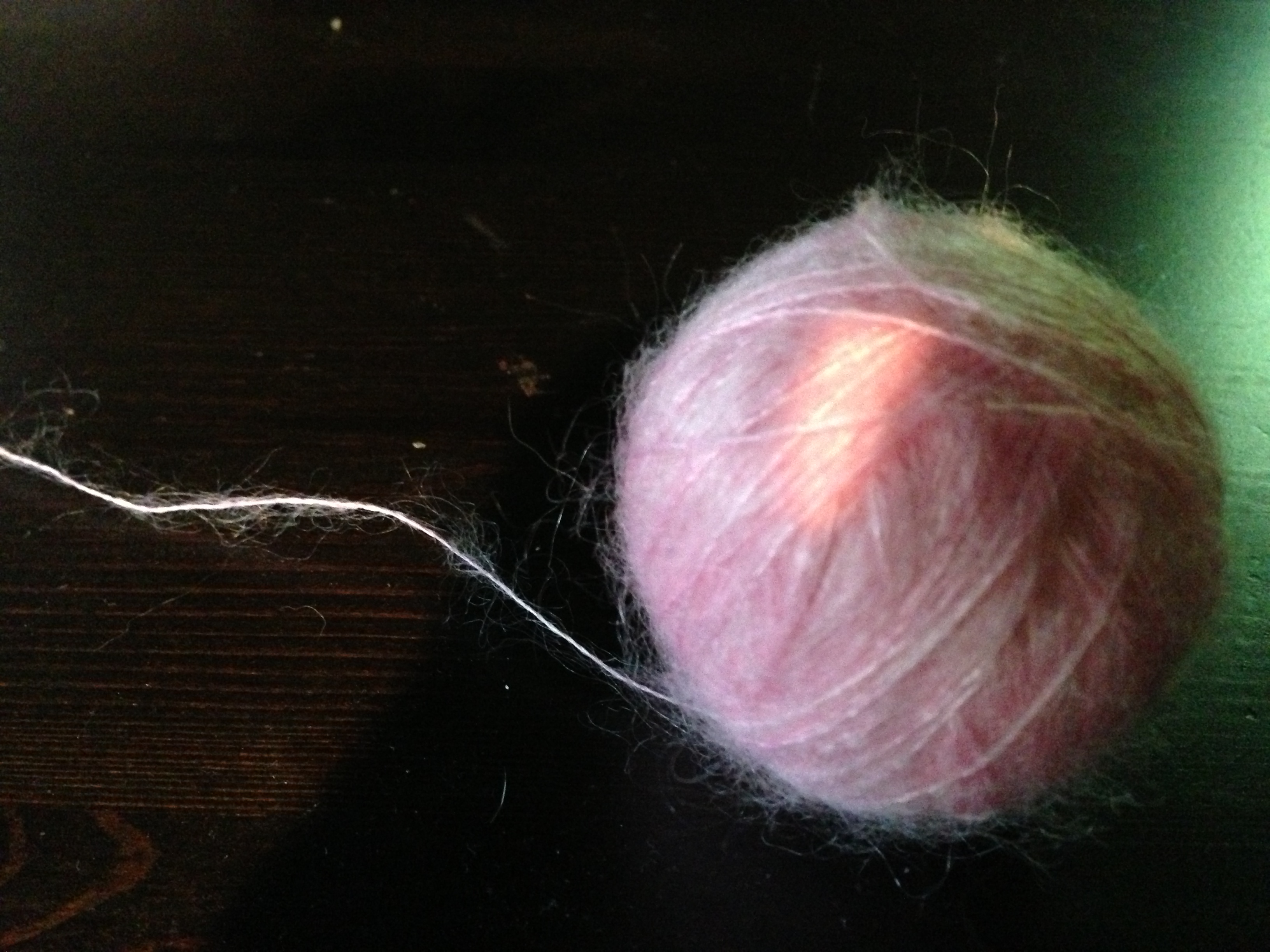
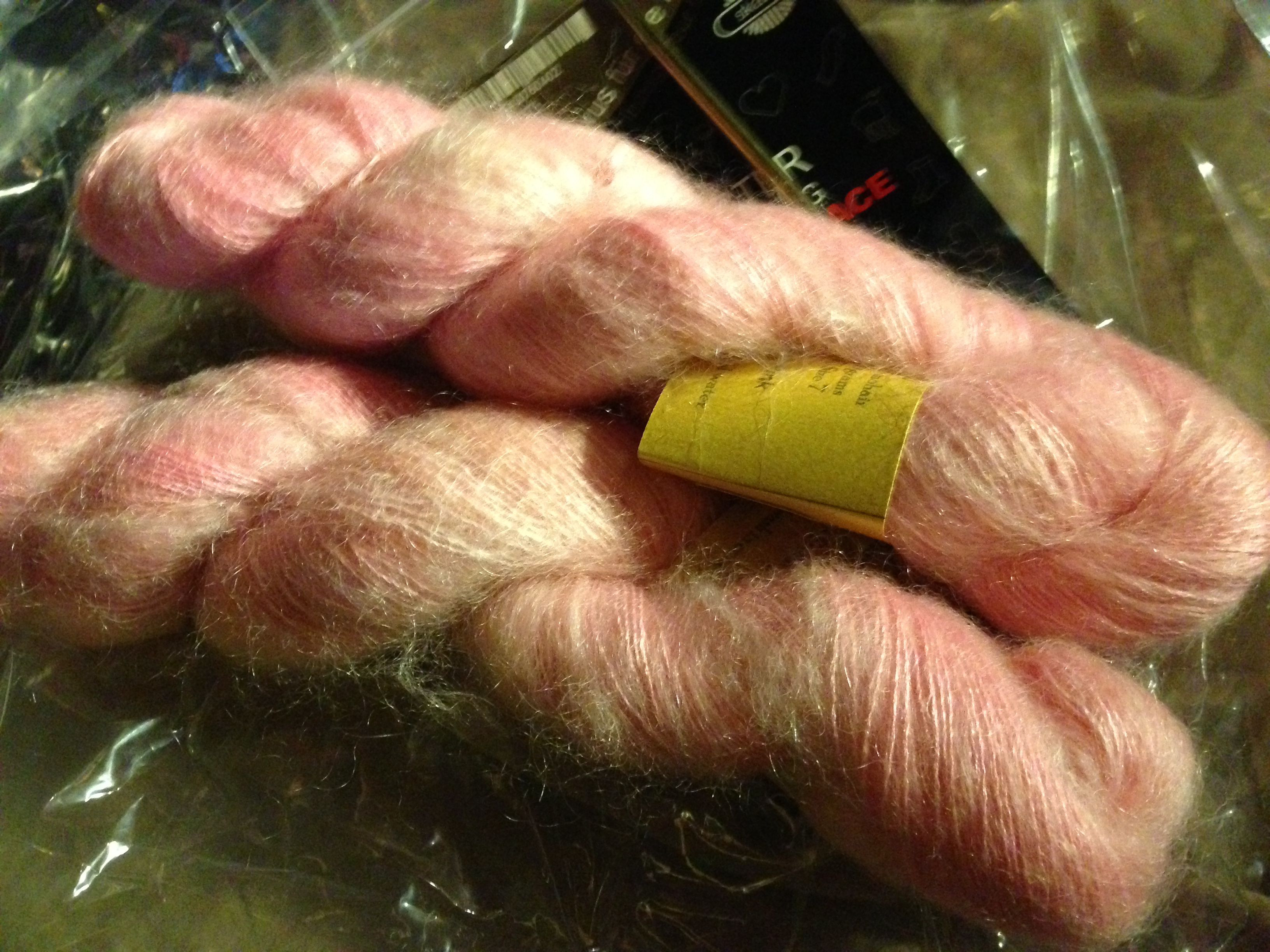
My main function these days, when I’m resisting the urge to watch past episodes of Orange Is the New Black, is to absorb information. That and try to knit a mohair bandana with a pair of metal toothpicks, willing Oliver not to drag the tiny wound-up ball of pink fluff under the coffeetable.

oliver snout

(Not successful, and I nearly rebroke the bones in my foot retrieving it.)

mohair

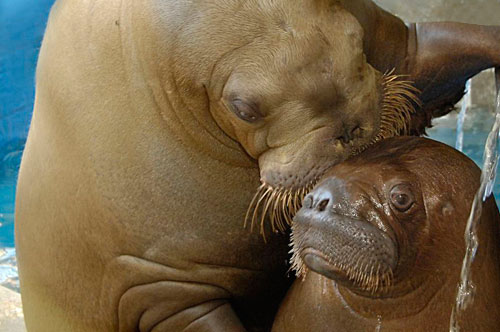
Walruses show affection.

baby-walrus-kissed-by-mother

There’s more where that one came from, walrus fetishists.

Aside from walrus kiss-bombs, I sourced a few more of life’s interesting details today.

1. A California man named Jerry Gretzinger has spent 50 years drawing an enormous map of a world he invented.  Hmnh, you say, don’t people do this every day? Well, maybe brainy 3rd graders do something similar on a sheet of oaktag.  But his is just so much more carefully delineated than others, did I mention 2,000 feet long, and he uses a weird deck of cards he pasted up to determine next steps he will take on the thing. Including which neighborhoods get what he calls “voided,” or just suddenly blasted out of existance.

gretzinger1

There is a great mini doc about him, and you might want to bring home some colored pencils when you’re out today. (Note the envy in that: when you’re out today.) For more great stuff on do it yourself cartography (and moving gigantic maps) try Making Maps.

2. I never knew what was in O magazine – lists upon lists of Oprah’s fave books that were going to earn more than my books ever would? But today I checked out the September issue because we got a subscription in error. And it turned out the issue was all about hair. Here is something so inutterably weird I reread it a few times. A timeline of how glamorous hair extensions come to be. It begins with Hindu pilgrims shaving their heads at the temple Tirumala in Tiraputi, India. (I did a little further research. As many as 10,000 pilgrims get their hair shaved by 500 temple barbers every single day.) The hair is fumigated and wrapped in bundles in Bangladore, then shipped by private courier to Rome to be bleached and dyed. Six weeks later it goes to U.S. salons. After 3 to 6 months use the repurposed locks get tossed in the trash. Footnote from the same O: 90 percent of celebrities at the Academy Awards are wearing extensions – everyone except, according to one expert, children and women with pixie cuts. I guess men, too, go unextended. But who knows.

3. A lot of people consider the Hudson to be “my river.” Me too. That’s why I was surprised not to have known before that the actual start of the estuary, the southern terminus that is, is deemed by scientists to occur precisely at Manhattan’s Battery.

stock-footage-aerial-panorama-downtown-manhattan-wtc-financial-district-east-river-hudson-rivers-battery

I knew it began down there in the Harbor someplace, but everything seemed pretty watery and diffuse to me. Now I realize that you have Hudson River Mile 0 at the Battery, the George Washington Bridge at HRM 12, the Tappan Zee at 28, Bear Mountain at 47, Beacon-Newburgh Bridge at 62, the Mid-Hudson Bridge at 75, the Kingston-Rhinecliff Bridge at 95, the Rip Van Winkle 114, and the Federal Dam at Troy, the head of tidewater, at 153. The tidal section of the Hudson constitutes a bit less than half the total distance – 315 miles – from Lake Tear of the Clouds to the Battery. I learned this scrap and so many other things from the State Department of Environmental Conservation’s weekly easy–to subscribe to e-newsletter, Hudson River Almanac. If you want to know how many hummingbirds appeared in someone’s yard this May, and how that compared with last year’s count, or the story of a kingfisher riding the back of a hawk, or that Atlantic blue crabs are known to rivermen as “Jimmys,”(mature males) “Sooks,” (mature females) and “Sallys (immature females), this is the place for you. I find I want to know these things.

Hummingbird-Wallpaper

It’s amazing what you’re ignorant of as a walrus.

3 Comments

Filed under Art, Culture, Dogs, Fashion, History, Home, Jean Zimmerman, Knitting, Nature, Photography, Publishing, Writers, Writing

A Hut of Candy Floss

Magical, feel good potions of the day: a tall iced coffee, a small pain smoother, a delicate skein of candy floss.

coffee

There’s a lot you don’t know about crutches before they come into your life. Like what good yarn-winders they make in a pinch.

crutch winders

This silk-angora begs to be knitted into a Barbie evening wrap.

candy floss

I seem to be rendered all thumbs by the work on my toes.

floss knit

Don’t you love it when you come across an actress just casually knitting in the movies?

Audrey Hepburn in Breakfast at Tiffany’s makes a famous attempt, looking fetching while botching her pattern.

audrey

Or Myrna Loy in the Thin Man movies. She makes knitting snazzy.

Myrna Loy

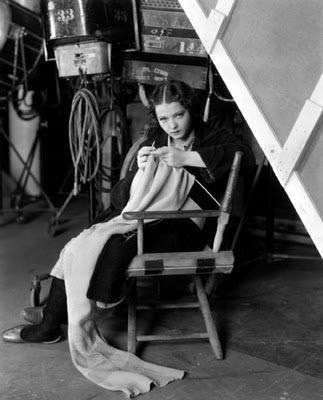
Sylvia Sidney appears in a fantastic shot on set, needles in hand.

Sylvia Sidney A

That last comes from one of my favorite blogs, One More Stitch, whose author researches and recreates garments of the past.

All these glamour pusses make it look so easy.

When I feel like tossing my needles, I think about entering the knit world another way — through  the example of this guy in France who soaked sweaters in milk and lime, threw them over a frame of branches and covered them with black soap and linseed oil. He padded the inside with earth and, for some reason, horse manure. He lives there now.

Hepburn would probably even look more cool knitting her sweater in this knit hut.

1 Comment

Filed under Culture, Dogs, Fashion, Film, Home, Jean Zimmerman, Knitting, Nature

Day 1-In Which I Learn to Hobble

It was a success, the surgery, though I awoke from the anesthesia blubbering like a baby. It’s normal, said the orthopedic surgeon, come to check on me. A lot of people cry. Then it was hip, hop, on to the wheelchair, on to the crutches, off to my new full-time lair, my living room, my foot on pillows above the couch.

cast

My snouted nursemaid wedged beside me.

ollie nurse

My other nursemaids scurry to my orders. My computer, please! My muffin! My book! Put it close, I’ve got to get an NPR review done this week. Could you please turn that light off? Or on?

I have a good view of Maud’s metallic blue fighter fish, Brussels, making his small way around the bowl.

brussels

Somehow, thinking about the immediate future, though I never had much patience for that fish, I now feel kindly toward it. Brussels reminds me of myself in my own little living room bowl. Except I hobble, can’t float at all, when I want to go brush my teeth.

Trying to stretch myself outside this world, adventuring via pictures of the past to the motor adventure taken in 1918 by John Burroughs, Thomas Edison, Henry Ford and Harvey Firestone.

This brilliant crew took a 12-day car camping trip in Burroughs’ automobile when he was 81.

NoondayRestFinal.jpg.CROP.article920-large

John Burroughs, less well known today than the others, was ragingly popular by that time in his life. Gil and I used to visit his country retreat, a tiny cabin called Slabsides that stood beside a celery marsh in West Park, New York.

slabsides

Burroughs’ fans have kept it intact, so you can see it as he did. Being there always made me want to inhabit a cabin, and now  mine is virtually like his.

burroughs-at-slabsides

… I was offered a tract of wild land, barely a mile from home, that contained a secluded nook and a few acres of level, fertile land shut off from the vain and noisy world by a wooded precipitous mountain… and built me a rustic house there, which I call ‘Slabsides’, because its outer walls are covered with slabs. I might have given it a prettier name, but not one more fit, of more in keeping with the mood that brought me thither … Life has a different flavor here. It is reduced to simpler terms; its complex equations all disappear.

Young college women used to travel in hordes by train to Slabsides to pay homage to the great man, a pioneer of nature writing who published some 25 volumes, of which a million and a half volumes were sold during his lifetime.

In 1918, a convoy of eight vehicles accompanying the brainy colleagues toured Pennsylvania, West Virginia, Tennessee, and Virginia, stopping to camp on farms, examine old industrial sites, take hikes along rivers, and measure farming implements for fun, documenting as they went.

Some shooting entertained Ford and Firestone.

ford and firestone shooting

At night around the campfire the two industrialists, the naturalist and the inventor wound down by chewing over Shakespeare, Thoreau, chemistry. Don’t you wish you could have been there? In a way, you can, because photos from the trip are stored at Harvard’s Widener Library, with a smaller portfolio at my favorite website, Slate’s The Vault.

Closer to home yet exotic in its own way, the wool I am sending away for to keep my hands busy during this nonambulatory period.

What is mohair, anyway, I wonder, as I fawn over the silk and mohair skein available from the chicest yarn store I know, Purl in Soho, New York City.

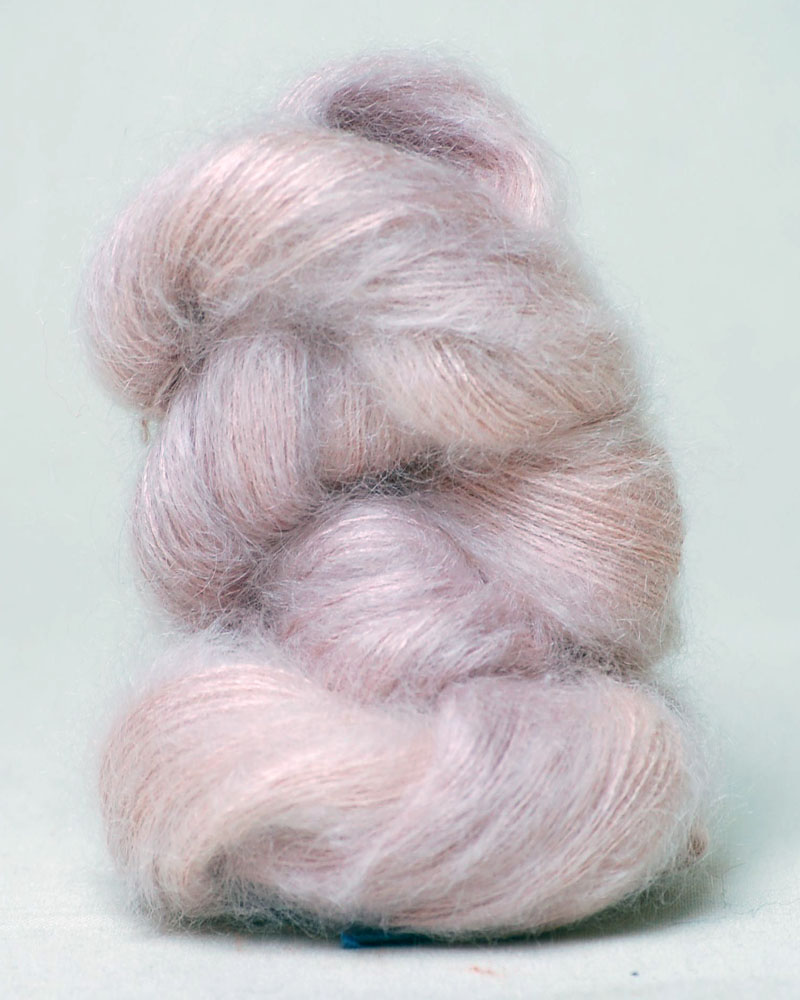
It’s from a line called Haiku made by a company called Alchemy. The shade is called Teardrop. Is that not irrisistable?

Alchem's Haiku-Teardrop

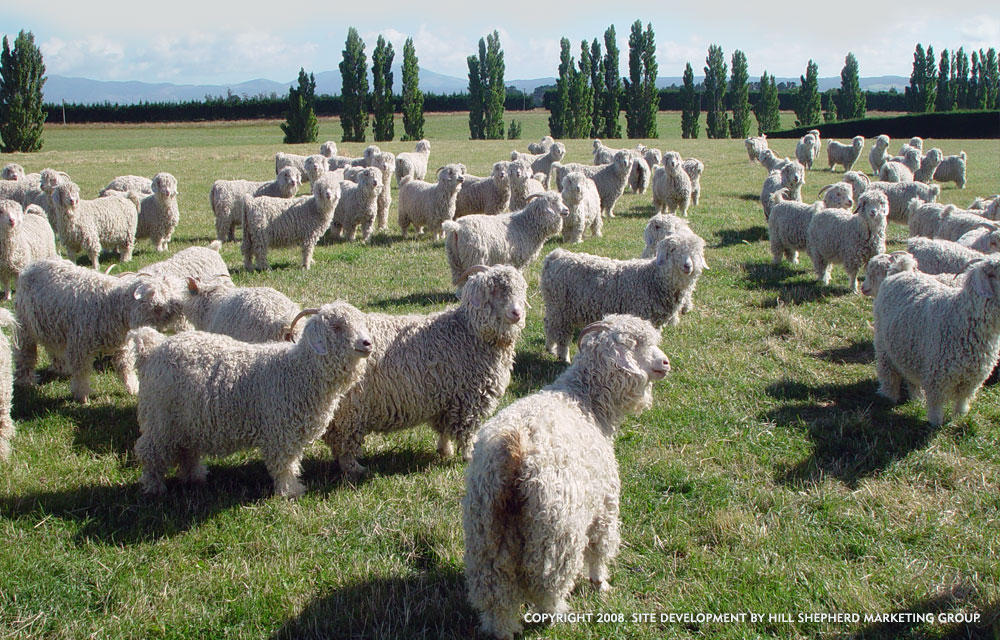
The yarn comes not from a sheep but a goat, the Angora, which emigrated from Tibet to Turkey in the 16th century, and it’s one of the oldest textile materials in use. It’s made of keratin, like hair, wool, horns and skin. Mohair is warm in winter, while remaining cool in summer. It is flame resistant, crease resistant, and does not felt. The goats are mainly bred in South Africa now.

angora_goat_11_12

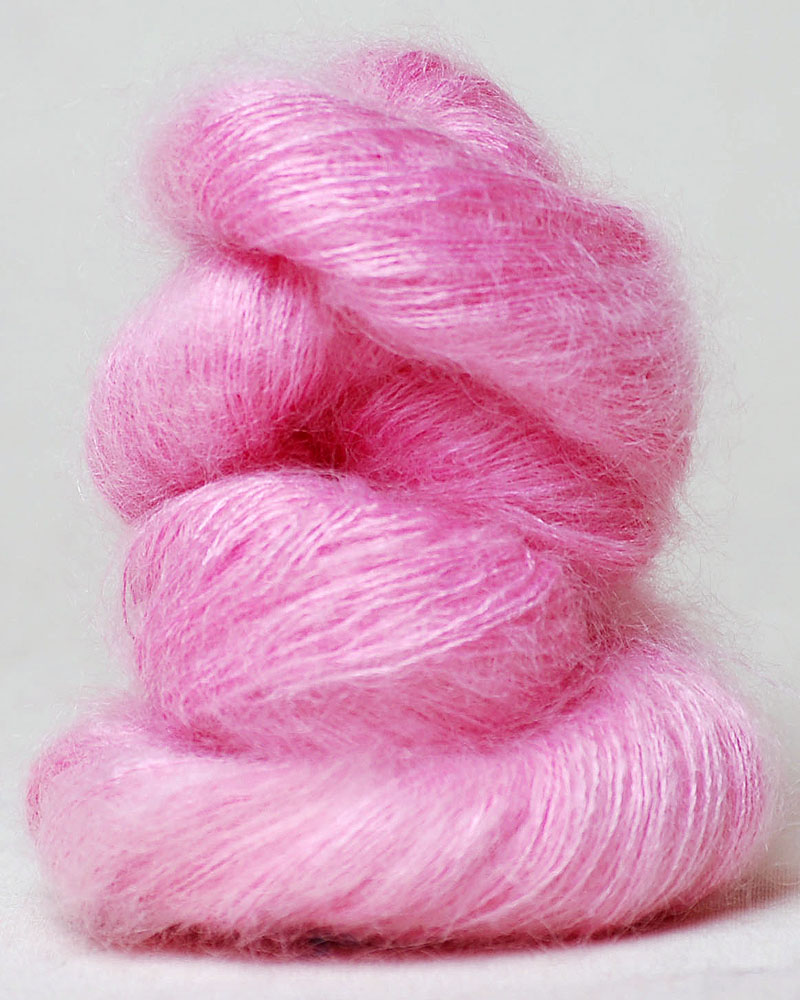
And it is of course beautifully luxurious. Makes your fingers sing. Should I choose this color instead? It’s for a slip of an elegant bandana, not the kind you’d wear around a Slabsides campfire. Evening Pink.

Haiku-Evening Pink

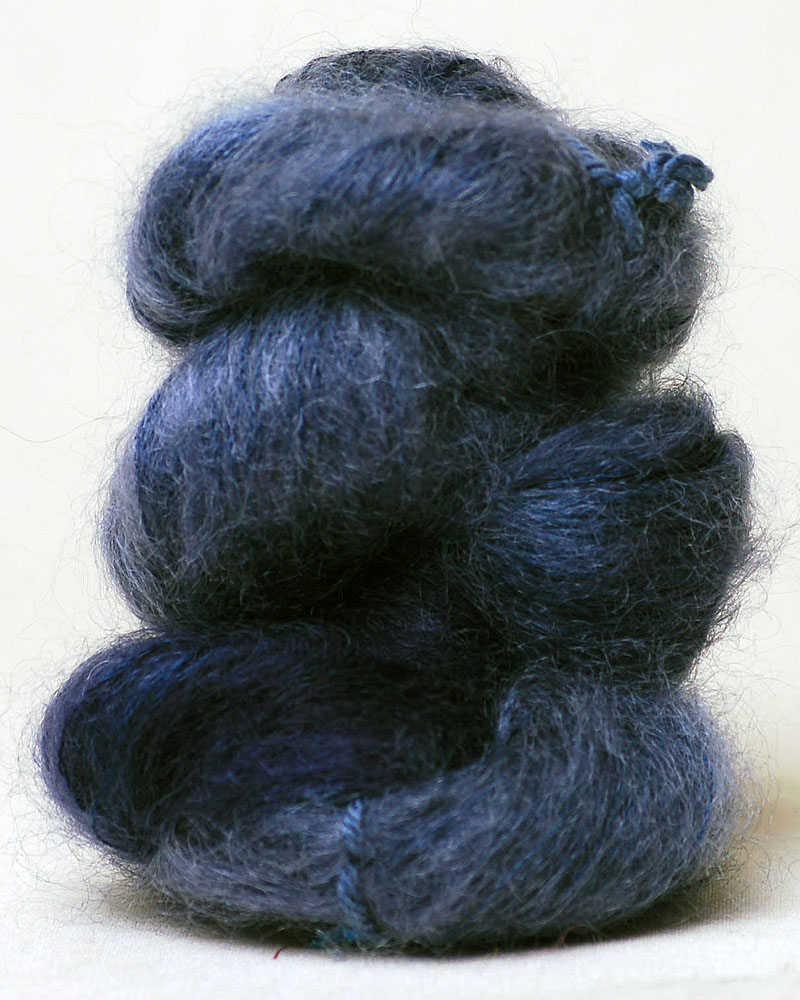
If Firestone and Ford and Edison were on their way over to roast weenies, maybe a scarf in this hue would be more refined: Blue Jay Way.

Haiku-Blue Jay Way

So many choices when your leg is up and all you’ve got to do is dream.

2 Comments

Filed under Art, Culture, Dogs, Fashion, History, Home, Jean Zimmerman, Knitting, Nature, Photography, Publishing, Writers, Writing