Category Archives: Culture

Swedish Farm

My friend Sarah Hollister, an American who has lived in Sweden for some years now, agreed to do a guest post for me. Her perspective and her pictures are lovely. Here she is:

We’re soon leaving the Henning Mankell Gård (translated farm) up here in Härjedalen in the northwestern part of Sweden. Just one more day. One of the great things about this writing residence is that family is welcome (there’s even a sweet baby crib in one of the bedrooms) so my partner Gunnar has been here with me which has been good. This house is too big for one person.

IMG_1634

I spent the first day roaming the roominess of the house, up and down the stairs, examining the books in the library, checking out the huge laundry room, washer, dryer, and a drying closet for heavy rugs. Just enjoying the space before I settled down in my workroom on the first floor.

Gunnar and I took some day trips on the two cycles provided and discovered a number of deserted houses up here, people who had given up. Though we also saw some very prosperous looking farms.

IMG_1486

You can’t be in this part of Sweden without encountering a fäbod, (translated mountain pasture). But a fäbod is more than grass, it’s a concept, now lost, a way of living. Fäbods consist of a cluster of small weathered log houses built on a site where there was plenty of green grass for cows to graze to their heart’s content.

We visited  one just up the road from the Mankell Gård, climbing up the narrow path that led to the high pasture. I thought of cows, of many cows navigating these paths covered in roots and rocks, mooing and balking.

IMG_1536

The log houses are fairly small, no bigger than a large farm shed, with low ceilings, dispelling the myth of the towering Vikings. It’s easy to bump your head if you don’t duck. Most of the buildings were built for storage, hay and wheat, milk and butter products.

IMG_1523

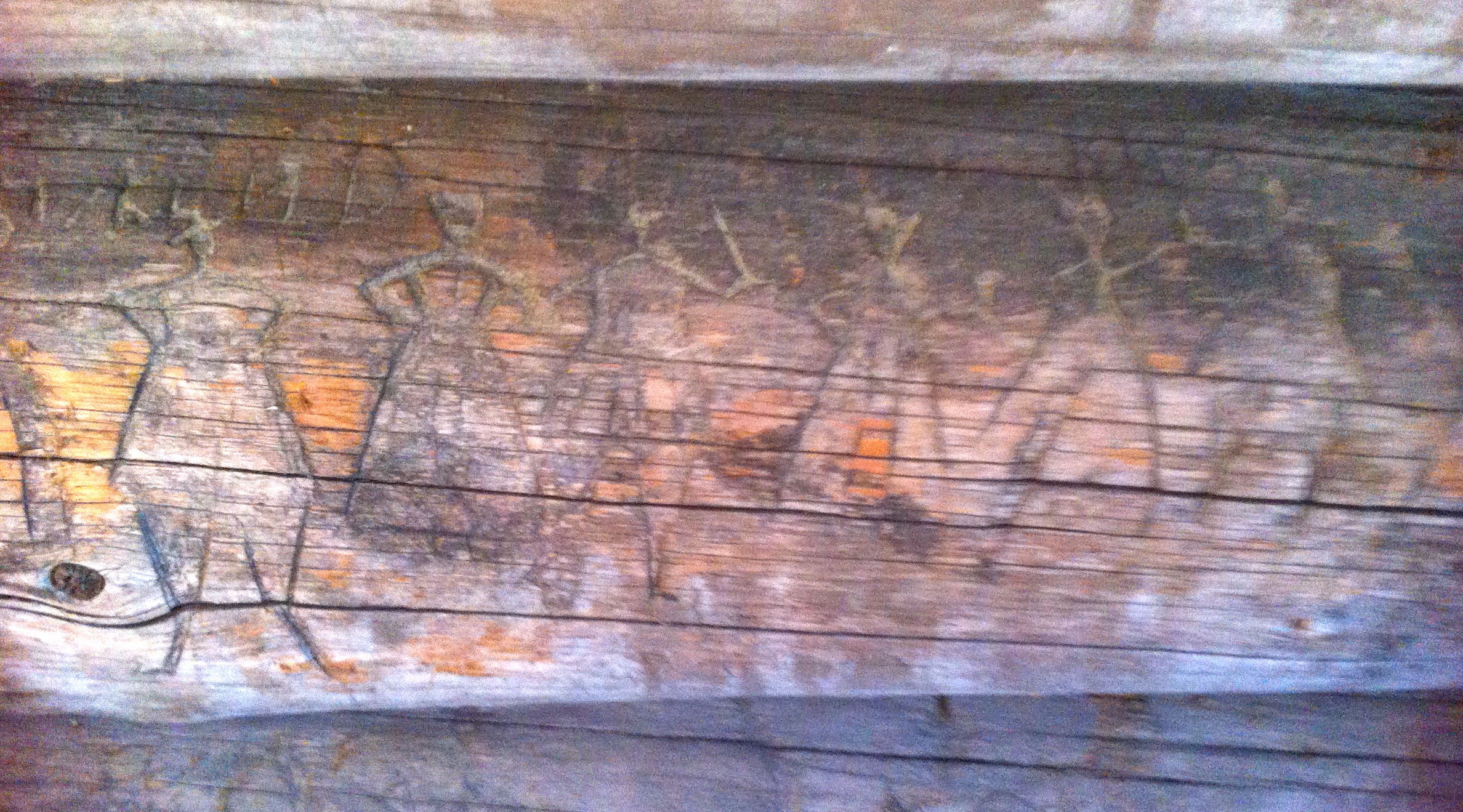
In one of the buildings, we found pictures carved into the beam logs. There was a written explanation on the door that explained the pictures were representations of the wars between Norway and Sweden, border skirmishes that took place up here in this part of Sweden. It was hard to tell though. The small figures looked like ordinary men and women to me. Someone had an interest in art.
IMG_1532There is one log house (as in every fäbod) specifically to house a young girl, the fäbodjäntan. It’s difficult to find an English translation for this word —  let’s say cow tender. She helped drive the cows up the mountain, then stayed on alone tending the cows over the long summer days.

What do we know about these girls, the fäbodjäntans? They had a song they used to call out to the cows, their voices echoing up and down the hills and mountains. I like the romance of it, I admit. They slept in small beds in the small wooden houses of the fäbod. They were kept warm by a fireplace should the need arise, cooked their meals there as well and at times were allowed a visit from their fiancé if they had one. A larger bed with a curtain was available for those visits.

IMG_1518

Gunnar pointed out that morality was not so strict in those days, at least for farm girls.

IMG_1517

I’ve grown used the quiet of the mountains, the sunlight glinting off the birch leaves, shimmering, silvery. I wouldn’t mind living in a fäbod myself. They’re for sale if someone has a knack (and the money to spend) for renovation. It would be nice though to spend a whole summer in one, dreaming and writing.

IMG_1520

3 Comments

Filed under Art, Culture, History, Home, Jean Zimmerman, Nature, Photography, Writers, Writing

Blues Chicken

With every last i dotted in the proofread Savage Girl galleys, I raced to my reward, a sultry New York City where everyone, it seemed, was perambulating, doing something exciting and interesting. Gil and I would go among them, we would do something exciting and interesting, too.

Eat chicken, for one.

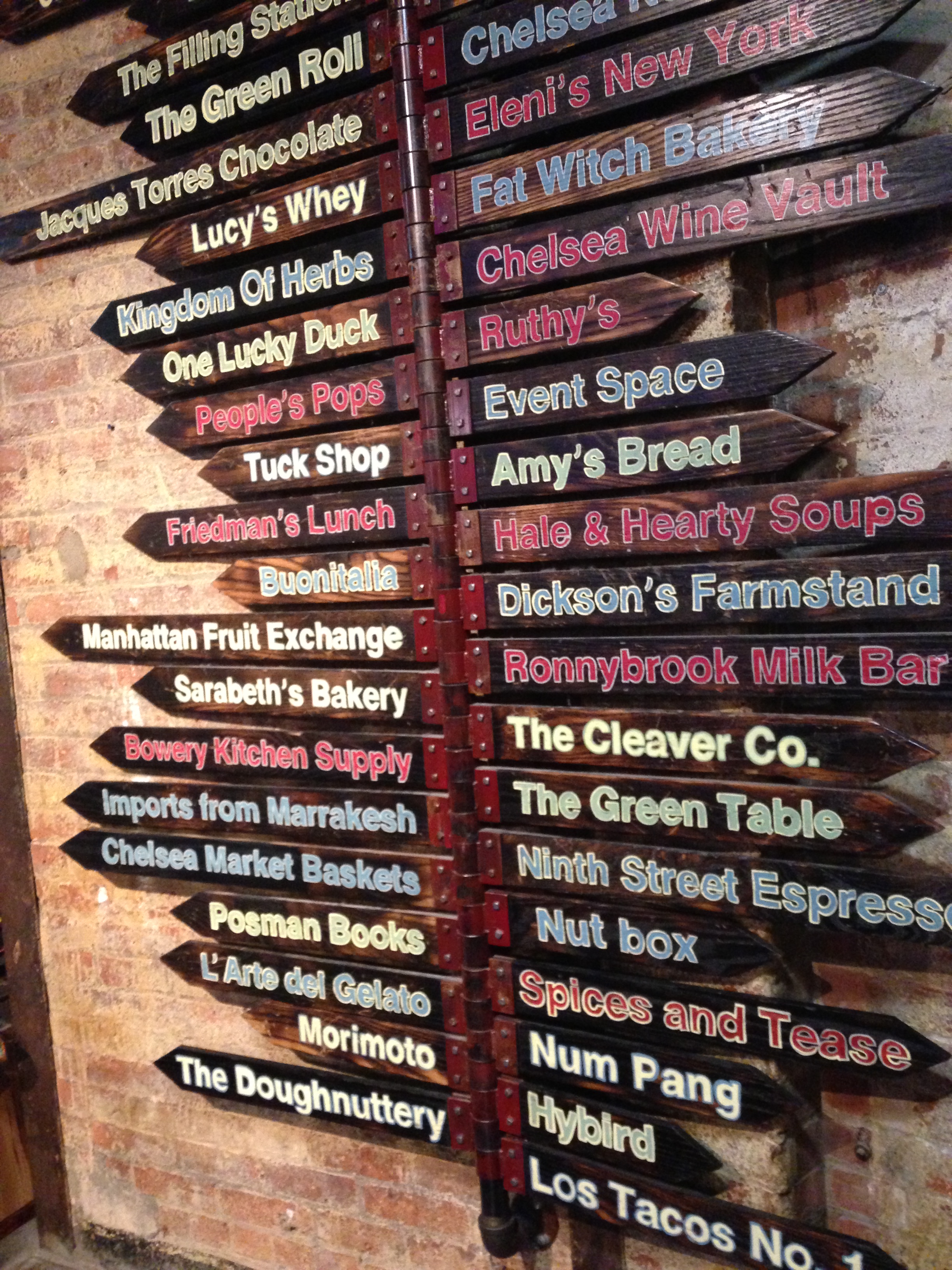
Questlove, the drummer and frontman for the band the Roots, has got so deep into the fried poultry business that he had some kind of a late night throwdown with Momofuko head honcho and chicken man David Chang on Late Night with Jimmy Fallon. Now the musician has opened a counter joint in New York’s Chelsea Market called Hybird that serves exclusively drumsticks, fried dumplings, biscuits and cupcakes. All the essentials for a balanced diet.

hybird

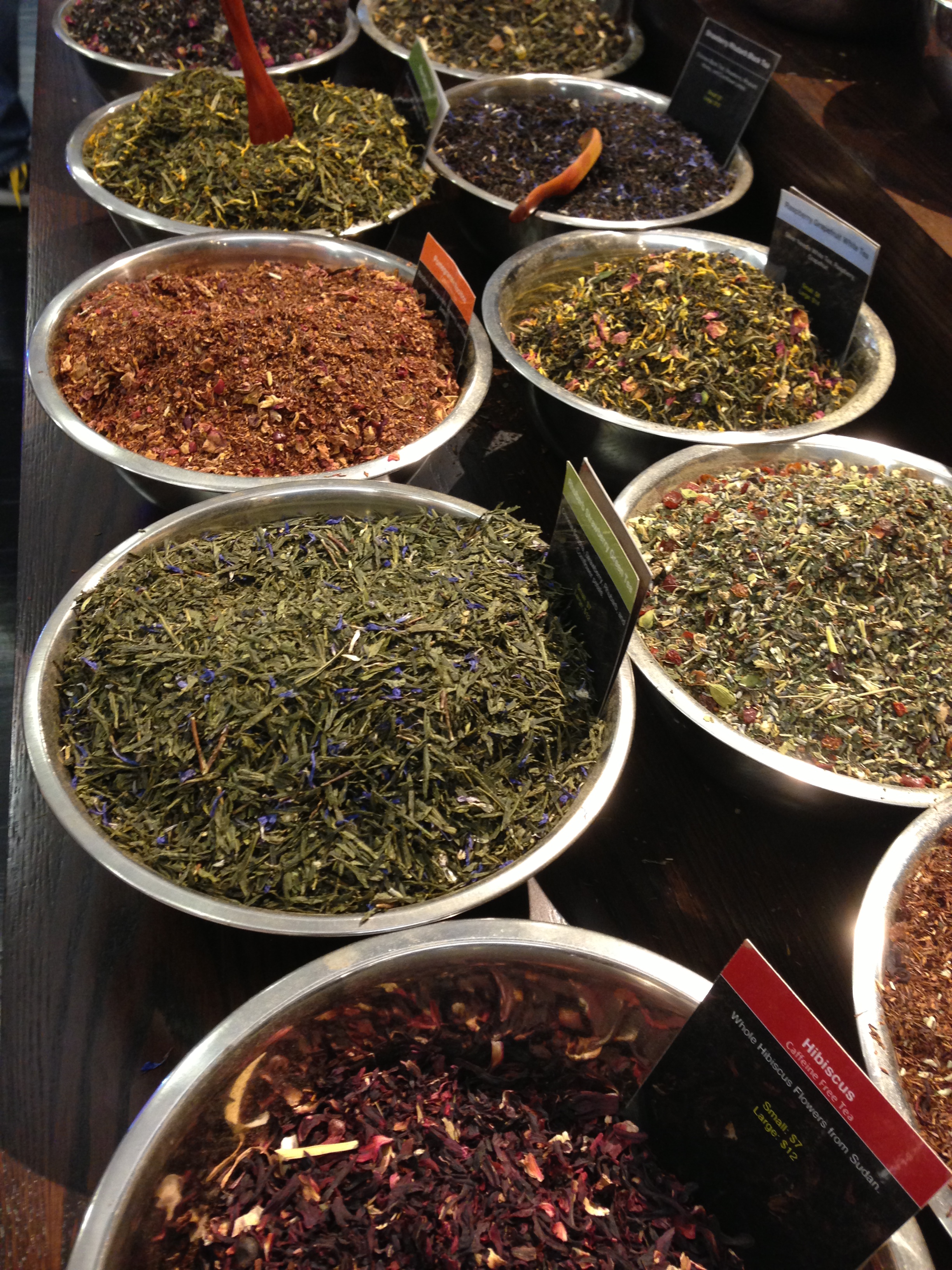
We got to the labyrinthine food concourse in midafternoon, ahead of the crowds, snaking through a corridor lined with dozens of teas, our stomachs rumbling.

tea

The enormous Chelsea Market complex is located on the premises where the Oreo was developed and perfected, lending an air of sanctity to our excursion.

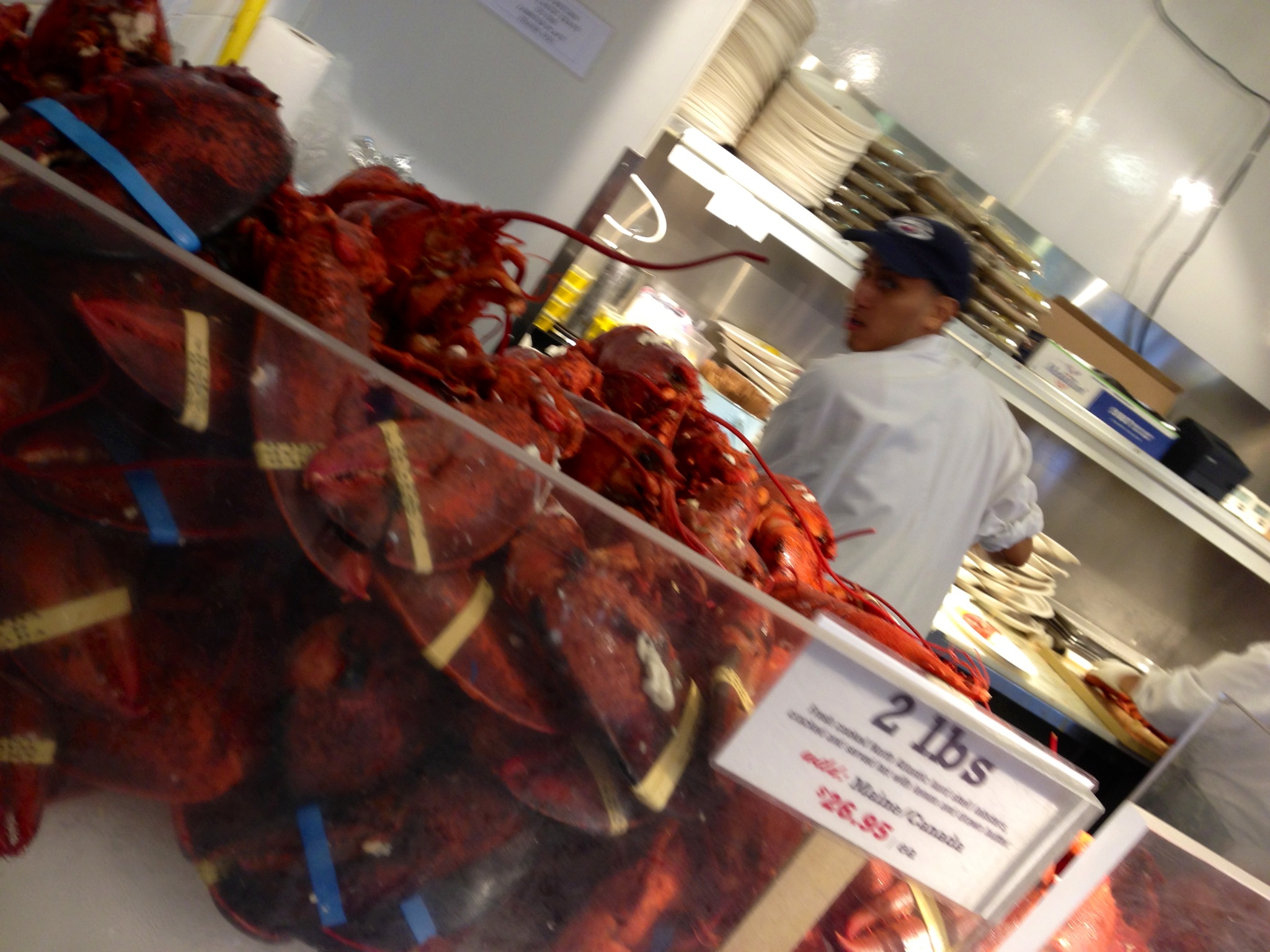
Chelsea Market features a lot of exciting things. Chilled, hefty lobsters.

lobsters

Falling water.

chelsea waterfall

Food venues. Outrageously good smells swirled around us.

bounty

What it didn’t have before is this particular chicken.

chix box

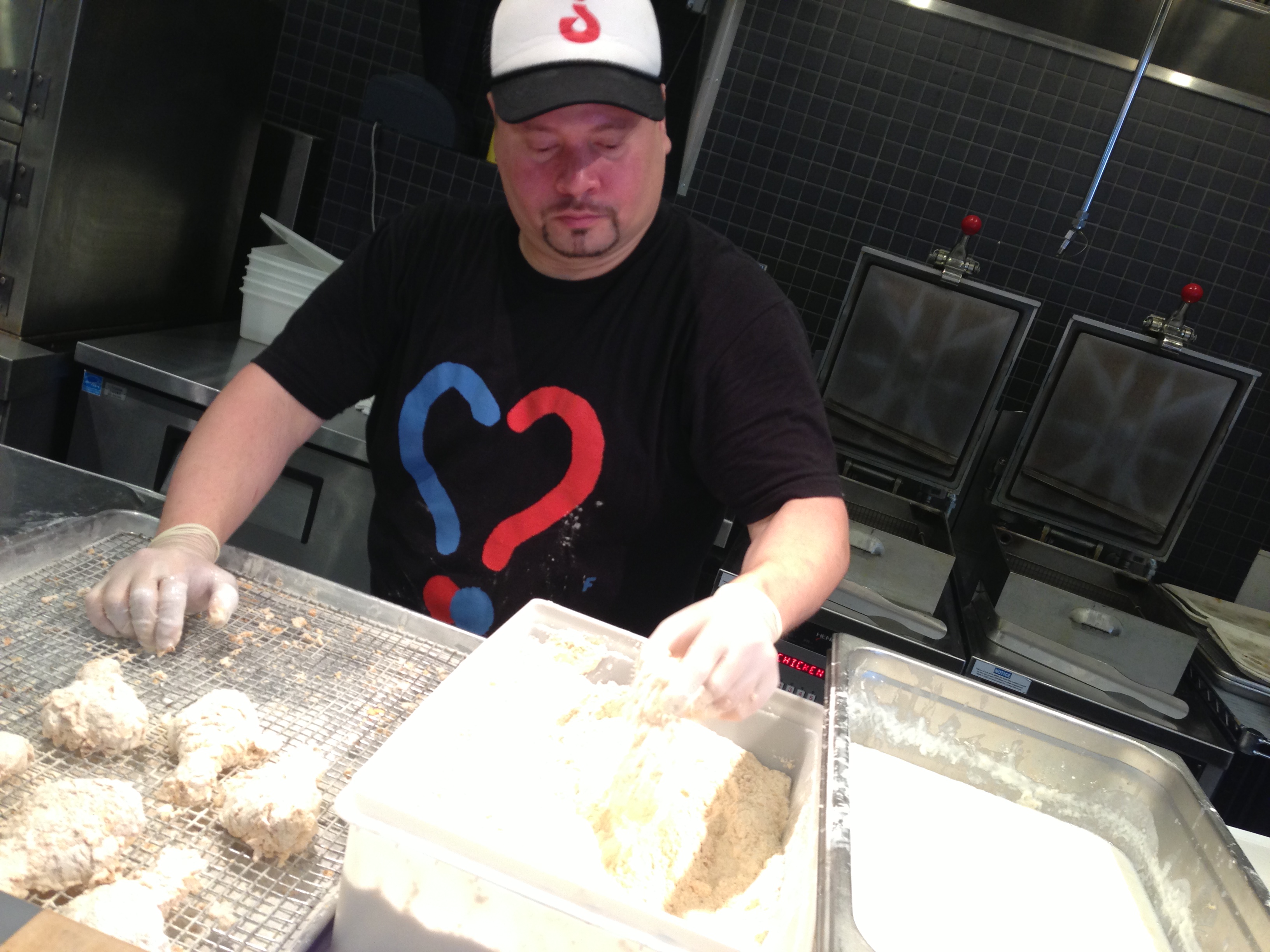
What is the seasoning, I asked Sammy, the guy double dipping chicken parts in a creamy paste behind the counter, when I managed to unstuff my mouth with chicken.

sammy

It’s a secret, Sammy said. A lady from Philadelphia comes in and mixes it up for us. She brings all the spices but she doesn’t tell us what they are.

I love a secret, especially when it tastes as good as this. The biscuit too was perfectly crumbly, smeared with honey butter, and we piled on further with crunchy dumplings that oozed out their sweet-savory crab filling when bitten.

Stencilled footsteps seemed to indicate where you should stand at Hybird, and naturally Gil was outside the lines.

feet

I saved the cupcake, whose flavor was described as “Sexual Chocolate,” for the car, a sexier environment than Chelsea Commons.

A bookstore.

books

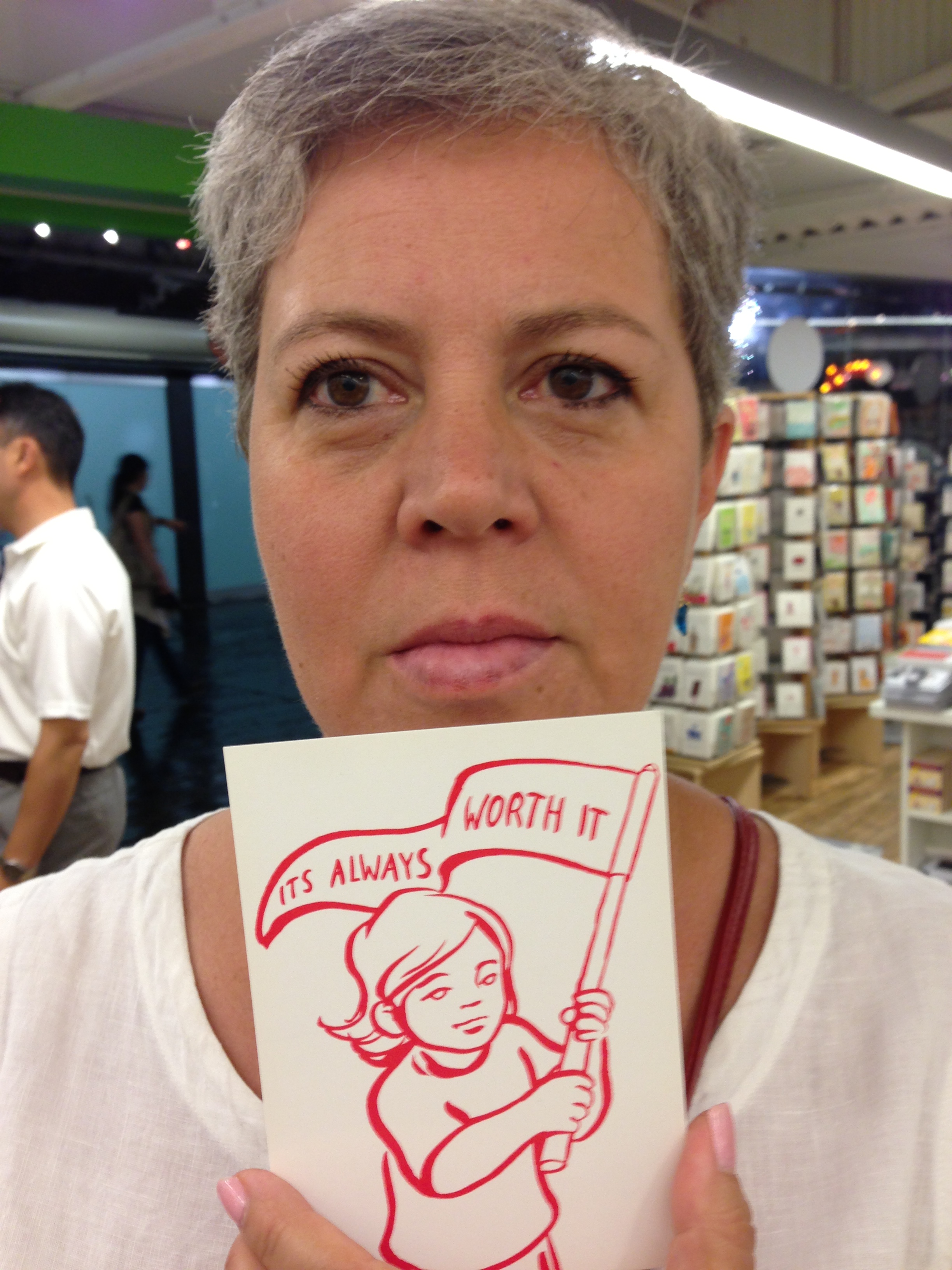
Nary a copy of The Orphanmaster in sight. It happens. I fell back on my motto, handily available on a postcard.

it's always worth it

You never know who you will meet on a summer afternoon ramble around New York. In this case a young woman wearing a pair of the new Google glasses.

google glasses

Wilma told me she’d just picked them up upstairs, in the Google offices, having won them in a contest. She said she was recording a video of me as we spoke.

Sated, Gil and I continued to the World Financial Center, in Battery Park City, directly across the Hudson from Jersey City. We were looking forward to a triple bill of bluesy rockers, or rockin’ blues players, depending on your perspective, on a public terrace that sits in the shadow of the Freedom Tower.

freedom day

The sun shone so bright and hot that half the waiting crowd put up their rain umbrellas, a spectrum of colored and patterned domes across the concrete. New Yorkers are always more slovenly than they are expected to be, and serious exhibitionists. Women flaunted the briefest sundresses up to their backsides and sweat-slicked men ran shirtless through the crowd. In the harbor a stroll away, sailboats and yachts docked, and motor boats cruised in to check out the action.

harbor

Alejandro Escovedo hit the stage with his sweet blasts of melody, punk rock in its roots. His song Sensitive Boys could make you cry, or was that the sun glare in your eyes. He brought on David Hidalgo to do a searing You Are Like a Hurricane. Alejandro called it the Canadian national anthem.

We met up with friends and family at the venue. My touselled buddy Sandra the artist-environmentalist noticed that the masts of the little boats were themselves rocking, pushed by the wind, in line with the beat of the tunes.

touseled Sandra

Los Lonely Boys, the Chicano rock band out of San Angelo, Texas, were tight. A trio of brothers, they call their music Texican Rock ‘n’ Roll. How can three guys make so much noise? marveled Gil.

Los Lonely Boys

The lead singer and guitarist Henry shouted above the applause, We appreciate it! We know you can be anywhere else!

And it was true of course, on this summer night, with this breeze and the salmon streaks of sunset glowing, in this fantastic city. We could be doing anything but we chose to be here because Heaven, their hit debut single from a decade ago, was so exciting.

How far is heaven? Los Lonely Boys sang. You know it’s right here, right now, shouted Henry, in New York City!

Los Lobos followed, another American Chicano group, this one from California, with considerable chops that they took no time in putting out on the stage. They’d been around since the ‘80s, after all. The sun set, the klieg lights glowed, people wrapped their arms around each other and danced.

By the time we gathered our things, the skinny minx beside me who’d been flipping her skirt in time to the beat was sweetly reunited with her man.

couple

Love and music in sun-stunned, summertime New York City. A treat as scrumptious as fried chicken.

1 Comment

Filed under Cooking, Culture, Dance, Jean Zimmerman, Music, Nature, Publishing, Savage Girl, Writers, Writing

Across the Hudson

We went walking down by the Hudson River in the town where I grew up. Hadn’t been there in a while. The beach curved around, clean and bright.

Hudson beach

When I was young the sand here was covered in beer cans and gnarled driftwood logs, strewn with broken glass and tires. The view was always great, as it is today, even in the murk of mid-July. The majestic Palisades stood proud before the kids who hung out here at the beach, kids called the river rats, who colonized this place.

pilings

Since my childhood the village has taken back its little cove, renamed it, given it a wheelchair-friendly wooden walkway. Gulls and cormorants still post themselves atop the picturesque ruins of old docks. A park next door has a friendly playground, benches, green lawn. It’s all tidied up so that everyone can enjoy the shoreline, not just river rats.

What’s that, says Maud.

We look, out just beyond the beach, where the water gets deep.

I see it, I say.

cross

A large wooden cross, fastened to a piling, the tide lapping up against its neck.

A descanso, says Maud. She knows about descansos, the southwestern side-of-the-road memorials, crosses usually, that show where a person has died in a highway wreck. She’s been researching them for school.

A water descanso.

I remember now… some kind of boating accident, Maud says. She grew up here too, in this town, has seen the changes in the park over the years, the improvements, the things that go on under the radar, too.

The beach is pretty, the tall stone cliffs ever-beautiful, but you can’t tidy up death.

3 Comments

Filed under Culture, History, Home, Jean Zimmerman, Nature

Tuber or Not Tuber

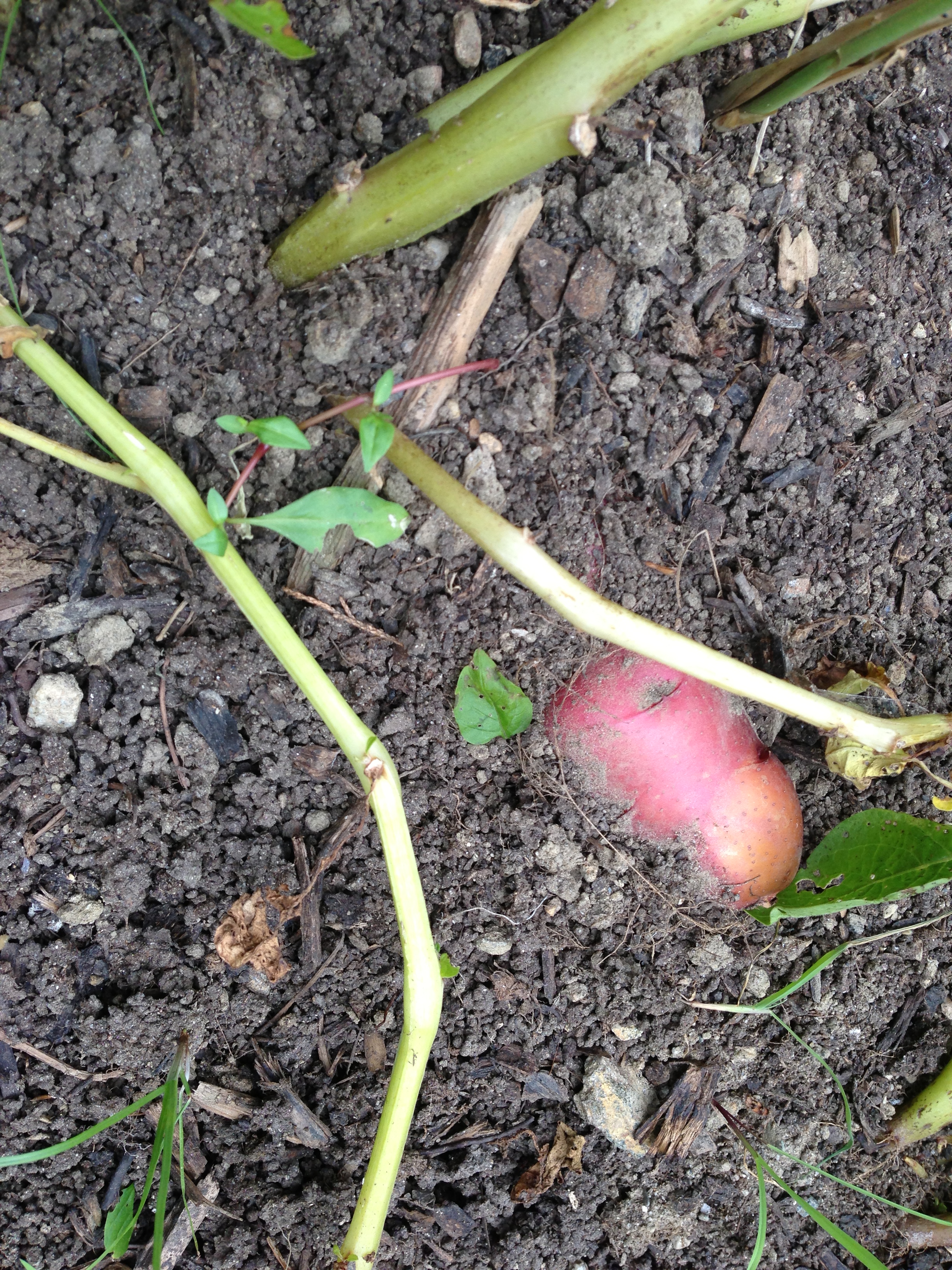
My potatoes are ready to harvest. Knuckling up from under the crumbly soil, red, firm, practically begging to be dug.

potatoes stalks

The tops of the plants have collapsed and faded, letting me know the tubers have reached their point of ripeness.

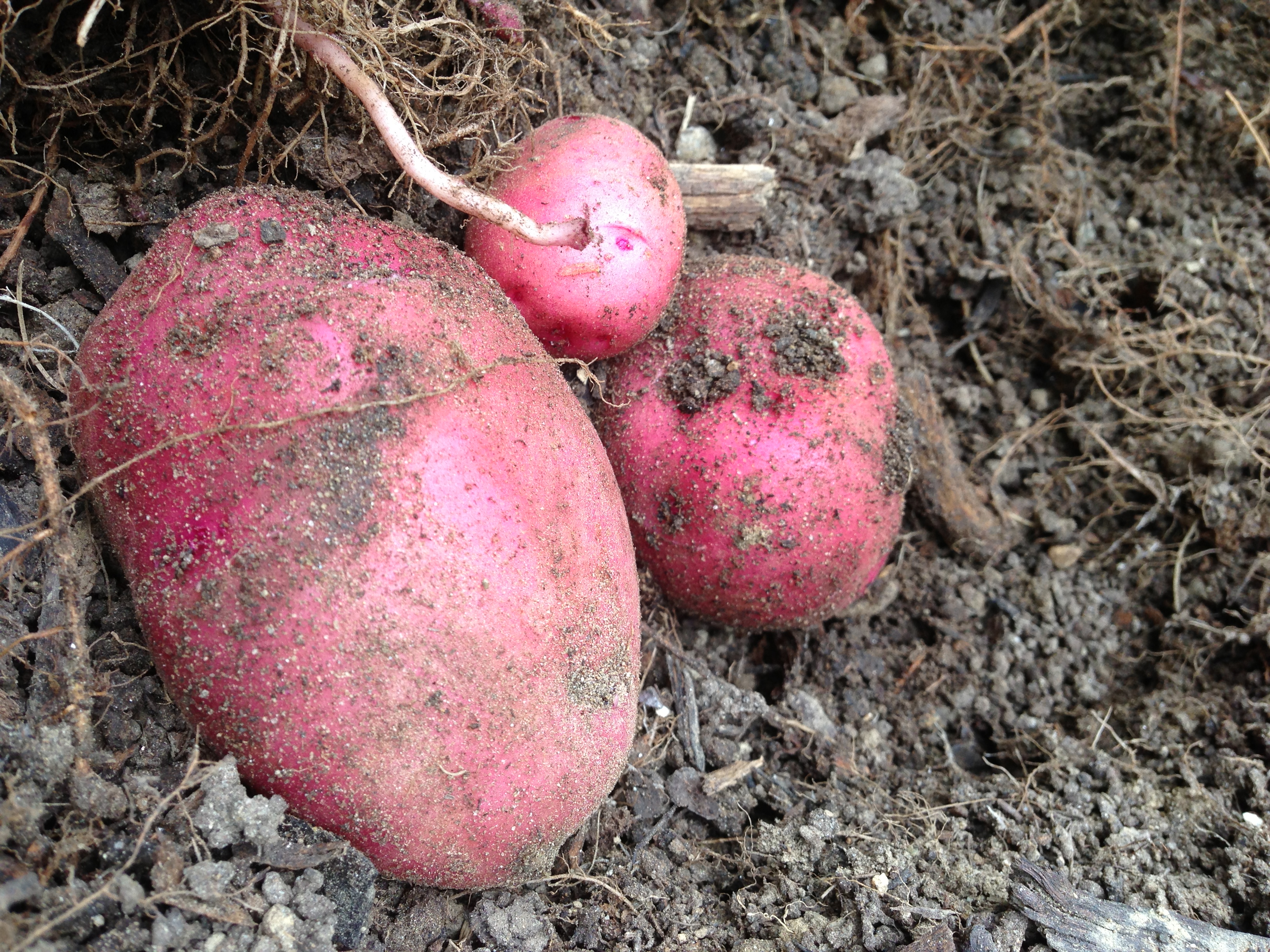
And I’m on my knees (on my gardening pad, protecting my getting-to-be-arthritic knees) thinking about things that grow under the soil.

potatoes soil

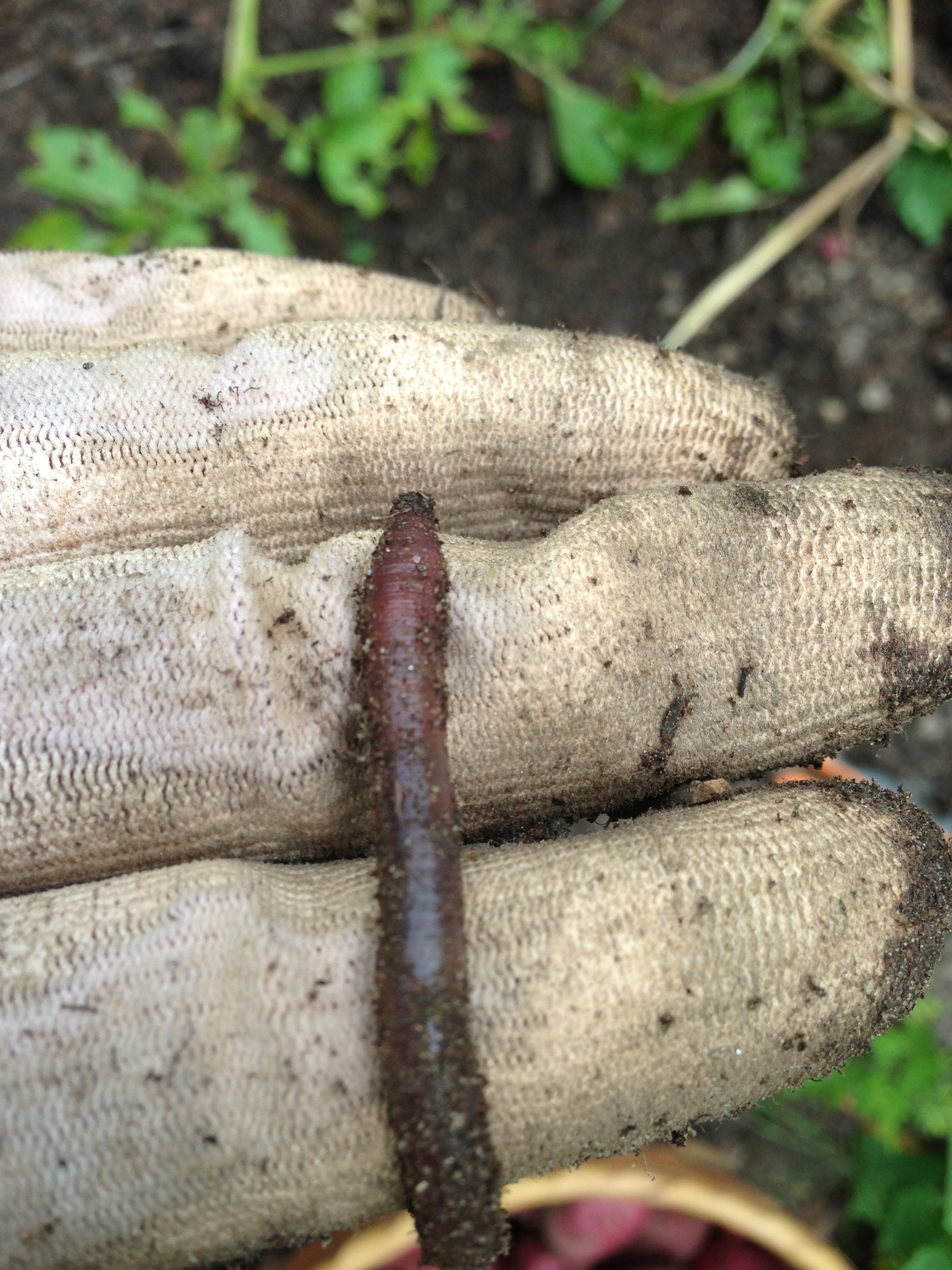
Earthworms, like the one strutting across my gloved fingers, surprised in its wanderings around the potato neighborhood. Gil tells me that earthworms are actually an invasive species and have disrupted the ecology of the forest floor.

worm

I’ve always liked earthworms, admired their digestive capabilities, and wanted them to multiply in my garden. At the same time, being a little squeamish, I’m anxious about coming across them writhing in my path.

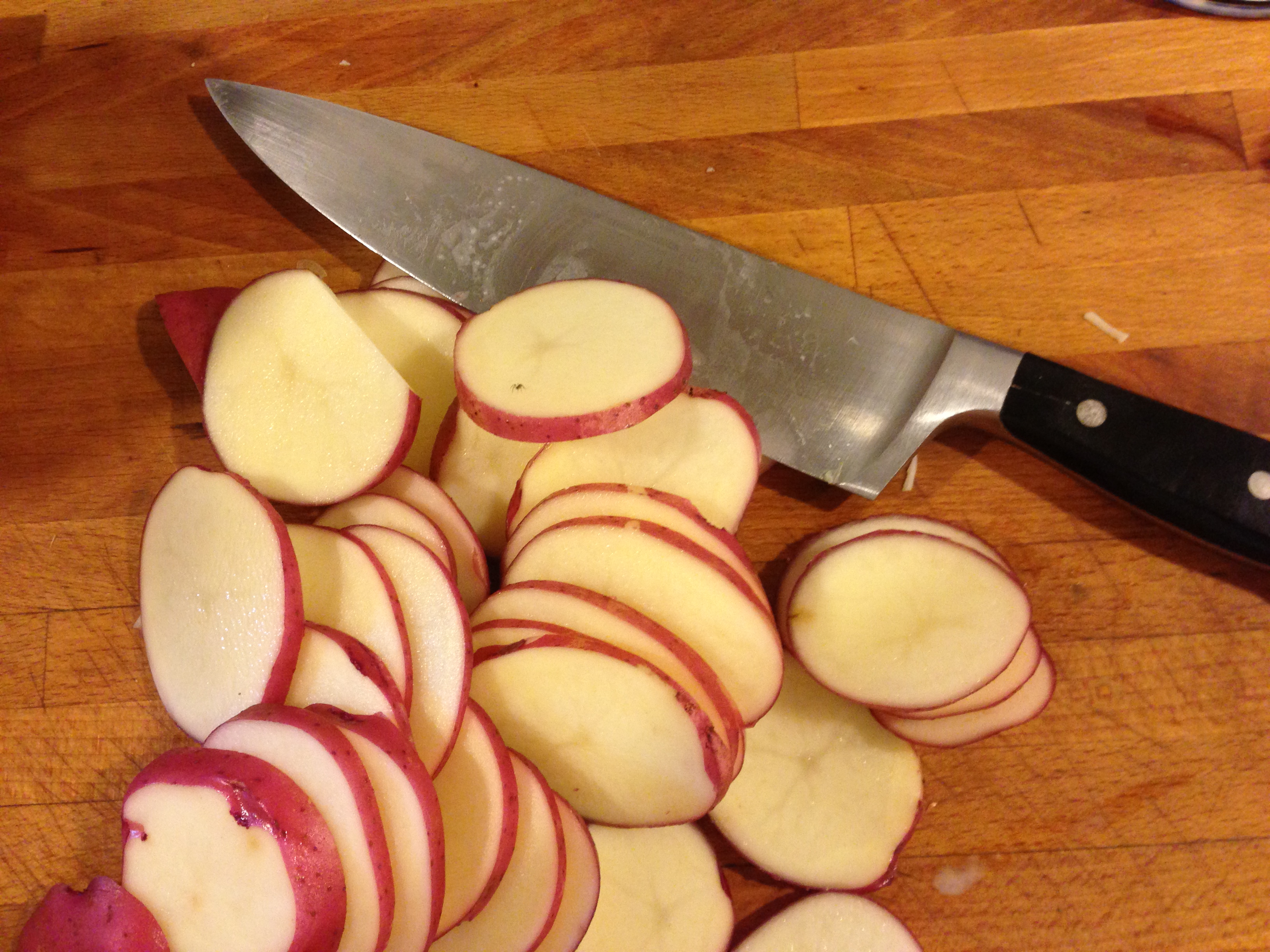
Here are potatoes, washed and sliced, for a summer gratin.

potatoes raw

So fresh they slice more like cukes or squash. Moist like just-picked tomatoes.

tomatoes

I’m thinking about anxiety, another thing that, like a potato, grows underground. You can put them aside, the things that worry you, by day. The yet-to-be-paid bills, the yet-to-be-written article, the yet-to-be-published book, the yet-to-be-proofread galleys, the yet-to-be-folded laundry. But roundabout 11pm, lying between the sheets, the air conditioner blotting out all distractions, those anxieties come back for their nightly haunting. Herbal tea, you say? Hot milk? Meds? All you can do is dig yourself out of the dirt by the next day’s sunlight.

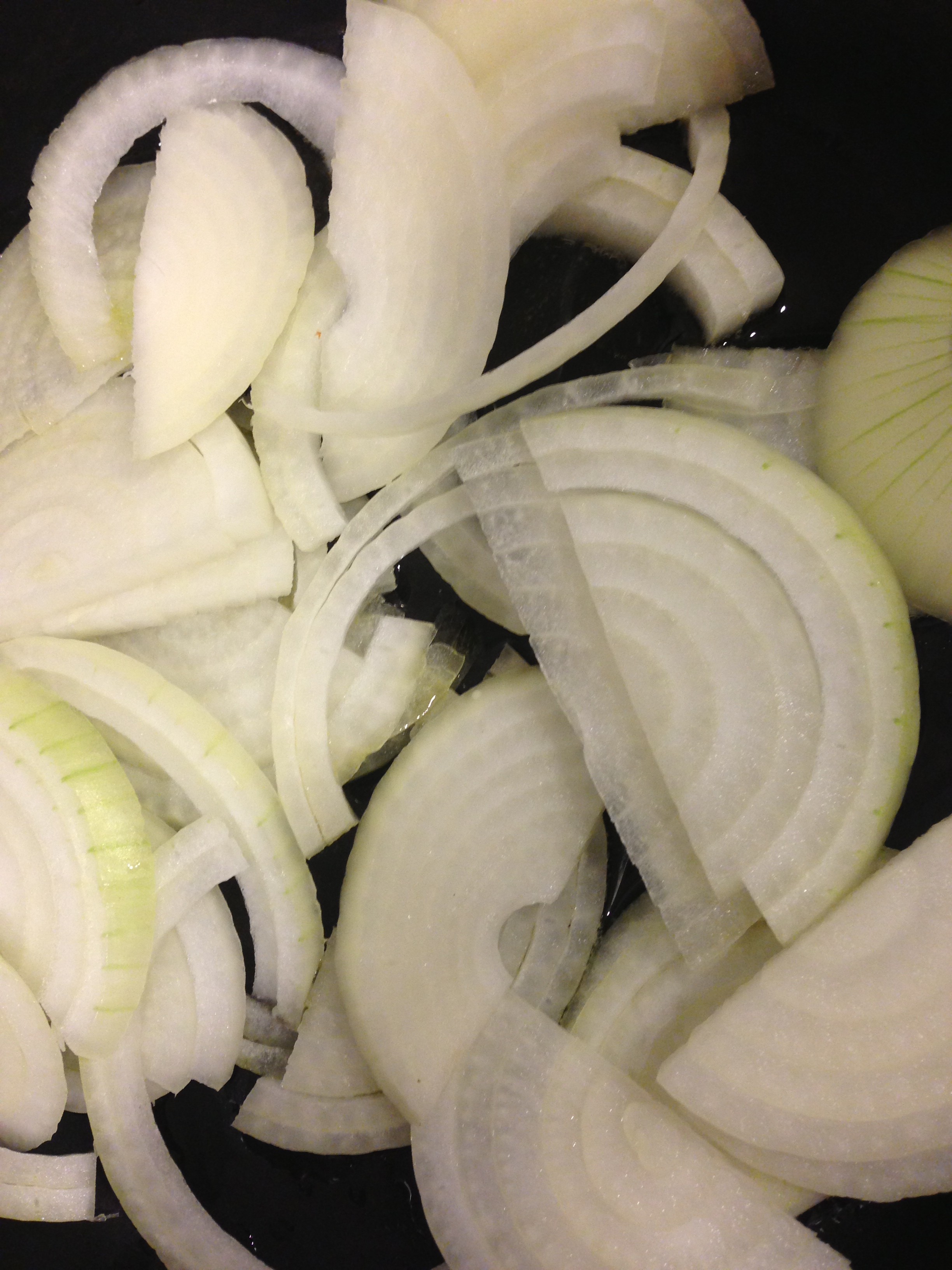
Onions swell beneath the dirt. Onions to fry in olive oil for the gratin.

onions raw

Creativity also grows underground. Say I have an idea for a new story. An idea about the way a certain neighborhood looks in a New York of a different age. A thought about a character the other characters call simply the Turk. A whaleboat loaded with cabbages. Ideas percolate under the surface and peep up occasionally. You’d better write them down in a notebook or they’ll descend back down again.

Layer the potatoes in a casserole dish. This gratin is simple. Place the rounds, spoon the onions over and then the shredded gruyere. One, two, three layers. Extra cheese on top (no anxiety about its cost or its cholesterol!).

Give anyone deserving a shred.

oliver cheese

Take a break from proofreading your galleys. Pour a pint of cream over the layers. A pinch of salt, a few grinds of pepper.

gratin

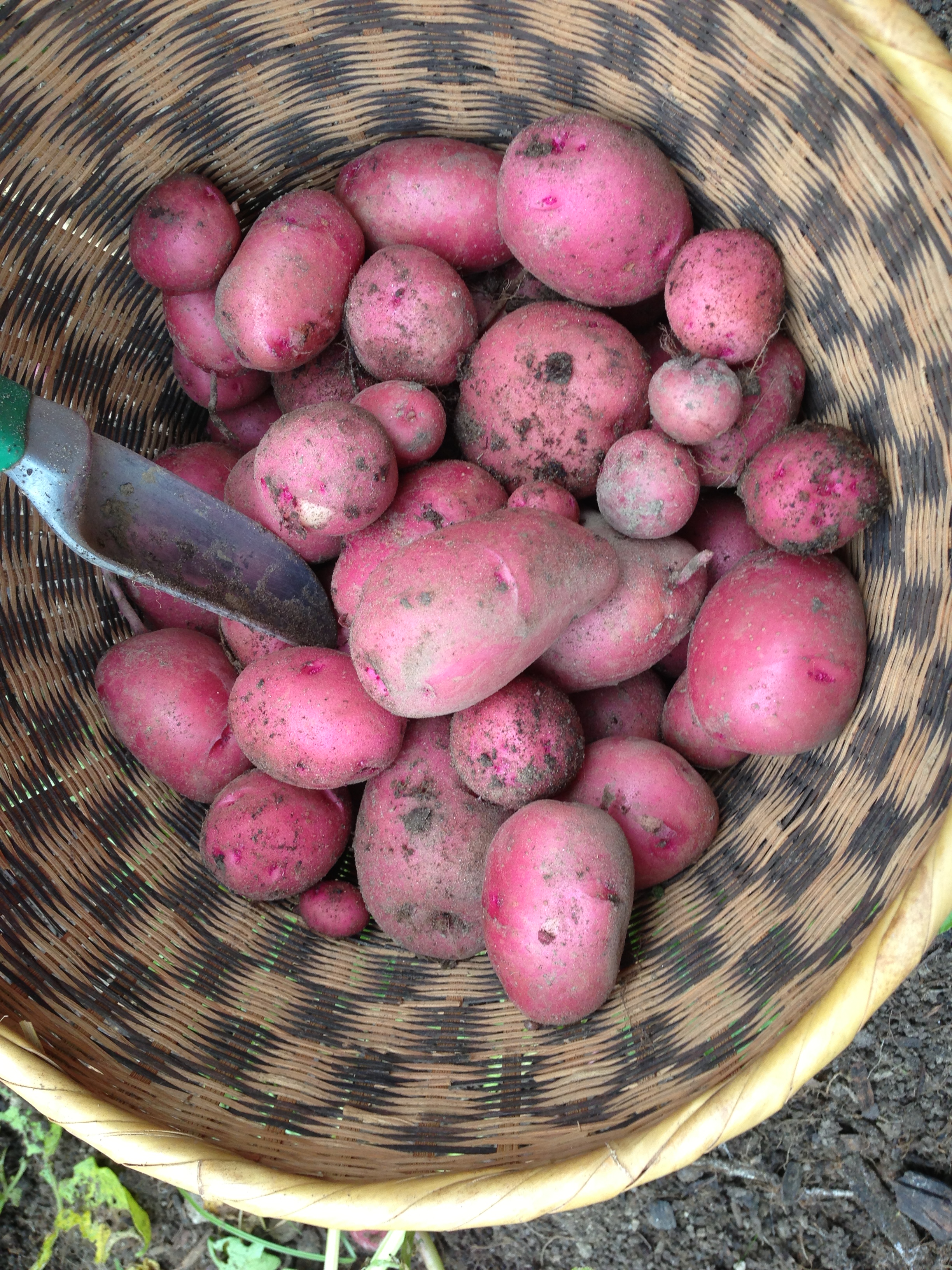
Crank the oven to 425 degrees. It’s hot in here, isn’t it? The rest of the ten pounds of  potatoes, homely and crumbly, await their cold bath. They’re dug up now, won’t ever go back. Anxiety, creativity, things to bring into the light of day. It’s their turn in the sun.

potatoes basket

4 Comments

Filed under Cooking, Culture, Dogs, Fiction, Home, Jean Zimmerman, Nature, Publishing, Writers, Writing

Piquant Spoonfuls of the Past

At a bric a brac shop in Wisconsin I came away with some new treasures for my recipe pamphlet collection.

macaroni magic

What is bric a brac, anyway? Something you love and nobody else gives a fig for. The phrase originated with the French in the early 1830s, and it literally means at random or without rhyme or reason.

Well, my affection for vintage cookery pamphlets is certainly that.

ground beef

My collection of over a hundred booklets spans the 1930s to the 1980s, but these simple illustrated bound-paper time machines were already being produced in the late 19th century, when food companies began to lure women into the kitchen with recipes that delicately enticed them to use their products. As time went on, companies like Spry (a competitor of Crisco) produced fantastic, clever efforts. Home Economics institutions also stepped in to help sort out culinary complexities, particularly during the years of the second world war, when shortages affected almost all households.

eggs

300 Ways to Serve Eggs came out  in 1940 under the auspices of the Culinary Arts Institute, “One of America’s foremost organizations devoted to the science of Better Cookery.” I love the optimistic bounty of that egg basket, and the idea embodied in the introduction to the pamphlet that this humble food can change our lives.

We know now, that they carry in their golden hearts every food element the human body needs and especially vitamin D which occurs so rarely in our everyday foods. Our only problem is to eat enough of them.

Of course the kitsch of the illustrations is great, and the nostalgia of such fare as egg frizzle (incorporating chipped beef) and noodle oyster loaf with creamed eggs, served with the ubiquitous white sauce of the age. They sound dated, but I remember growing up with the simple baked eggs found in this pamphlet, and they were delicious.

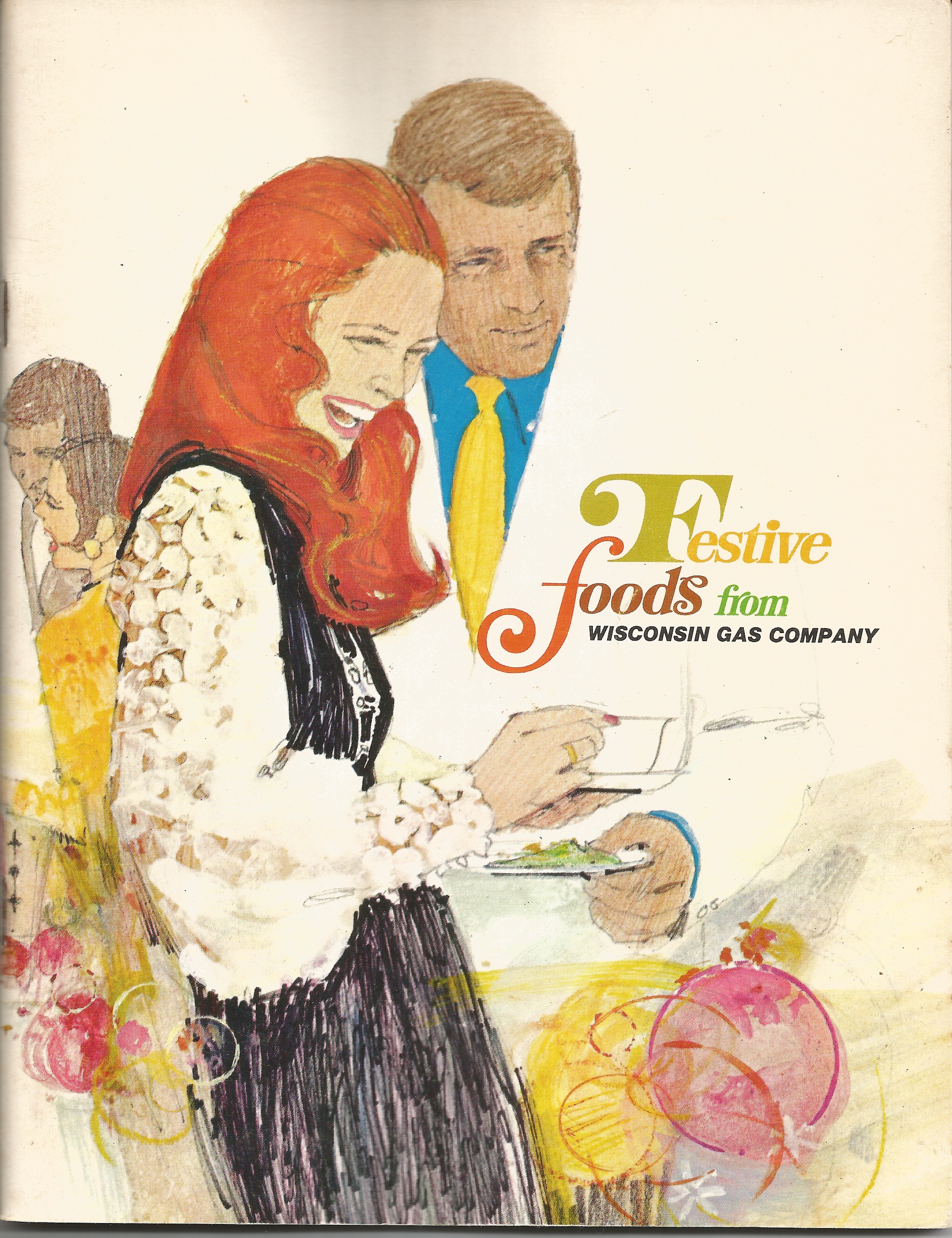
Eventually all sorts of corporate types realized that recipe books made good giveaways, and so you got pamphlets like the one produced by Wisconsin Gas Company in 1969.

gas

Now foodstuffs like wheat germ nut bread were being touted, along with the more Midwest-typical batter-dipped wieners and the promising shrimp divan supreme, which included frozen asparagus, canned shrimp, canned shrimp soup and processed American cheese. I don’t know about you, but the prospect of that dish fills me with a warm, cozy feeling.

gas 2

I couldn’t resist, so I went a little outside my collecting focus and picked up some petite cookbooks, each with its own charm. I admire the vintage men’s cookbooks that appeared at the middle of the century, like The Terrace Chef.

richard rosen

In this two by four inch self-published book, Rosen actually tells you in detail how to build a barbecue pit — this is 1952 — itemizing how many bags of portland cement and how many flagstones you will need. He gives equal time to recipes (steaks, clambakes and shaashlick) and to the principles of the good life.

From décolleté to dungarees, from double-damask to picnic plaids, from sterling to raffia wrapped stainless steel to the tune of brass and copper cooking ware. Away from stuffy formalities to refreshing camaraderie.

It’s somehow reassuring that the foodie culture of today had a precedent in this culinary gusto of an earlier age.

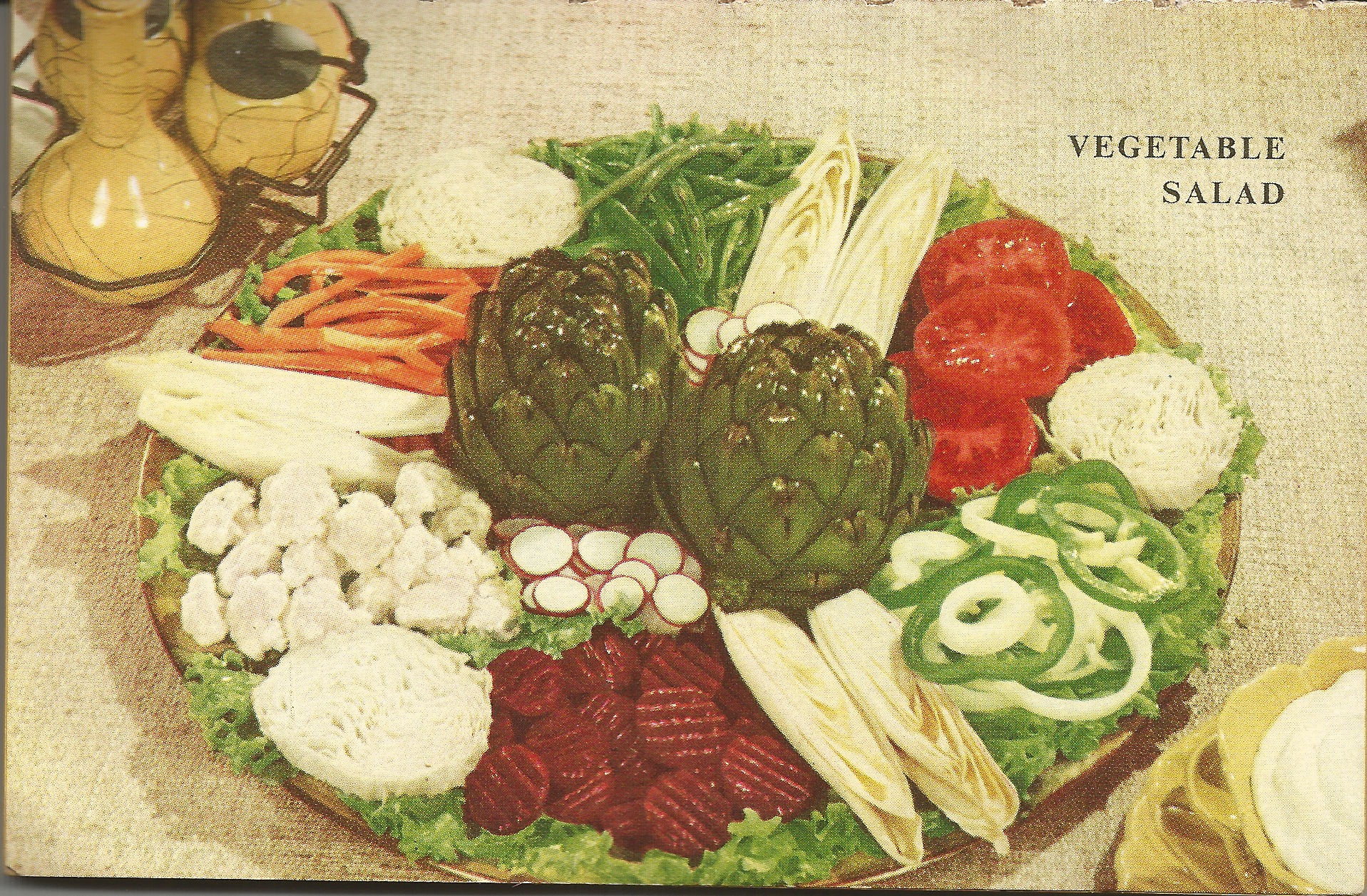
And health. Marye Dahnke’s Salad Book, published in 1954 and “tested in Marye Dahnke’s own Kraft kitchens,” is a compilation I might not just put away with my collection but dip into, now that I’m thinking plant-based.

salad book

Even if what stirs me most about it is the collection of technicolor illustrations, not the chicken-cauliflower salad or the lime light salad with molded Jello.

salad 2

Mrs. Ivere Nelson wrote her name in script on the cover of Dahnke’s comprehensive guide to salads. The least I can do, half a century later, is pick up the reins.

After all, ground beef still rules.

ground beef 2

1 Comment

Filed under Art, Cooking, Culture, History, Home, Jean Zimmerman

The Middle of the Donut

There are certain things that make it a good day in the Midwest, in Wausau. A stop at Kreger’s.

kregers


Best donuts hands down.

donuts


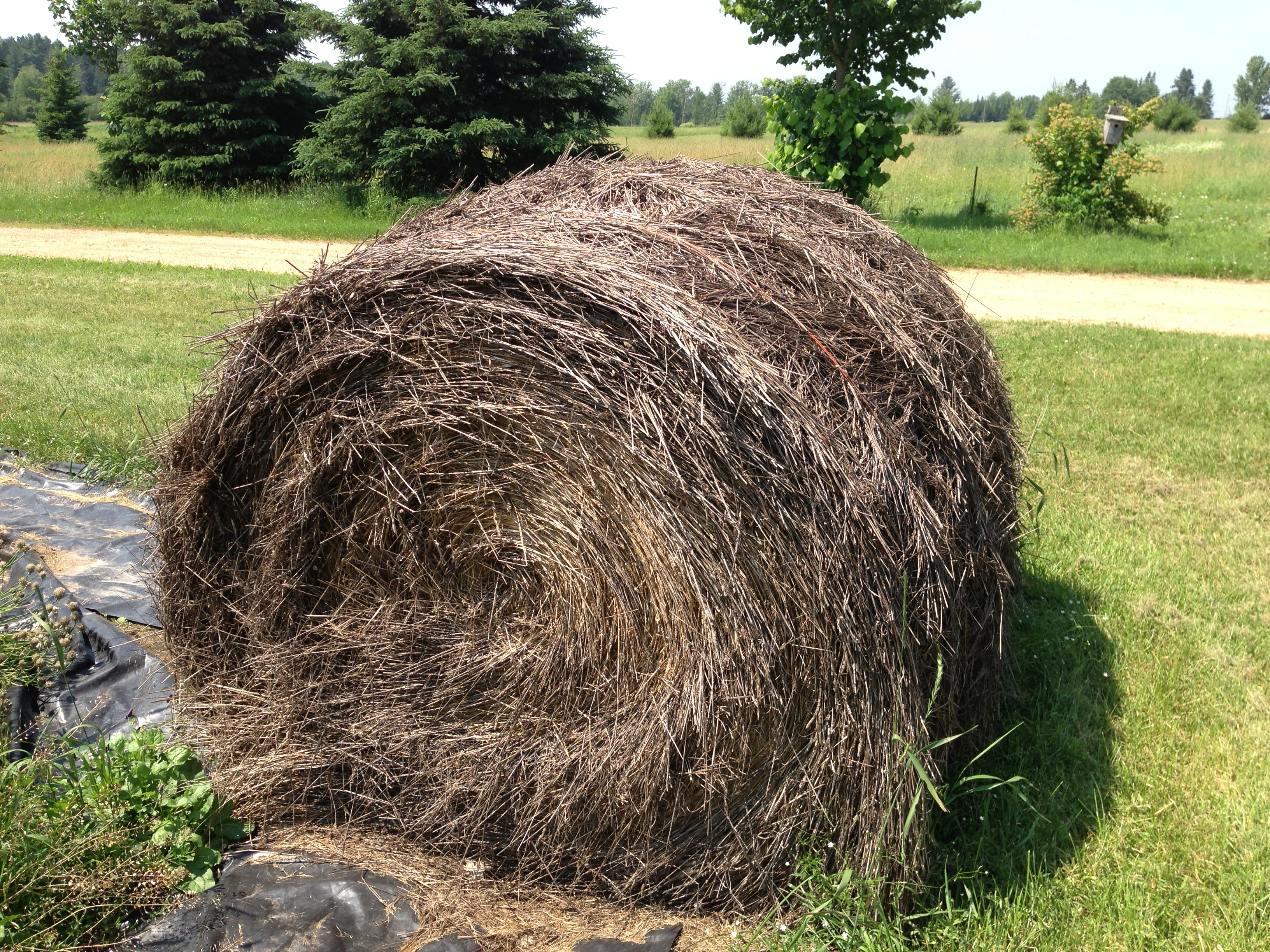
A stop at the farm. Hay for mulching the tomatoes.

hay bale


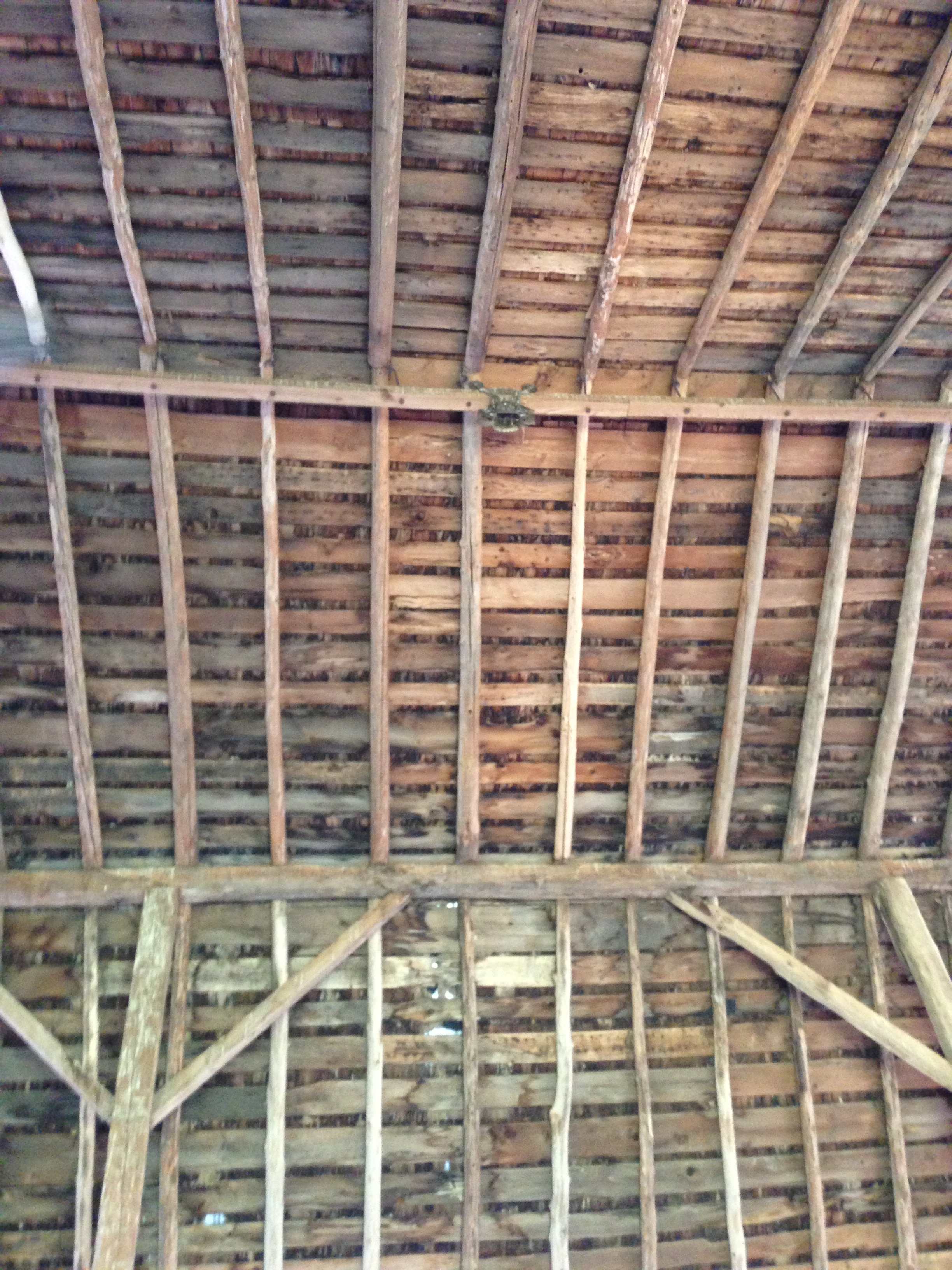
A big old barn with towering rafters.

barn interior


A big old solemn dog.

farquar


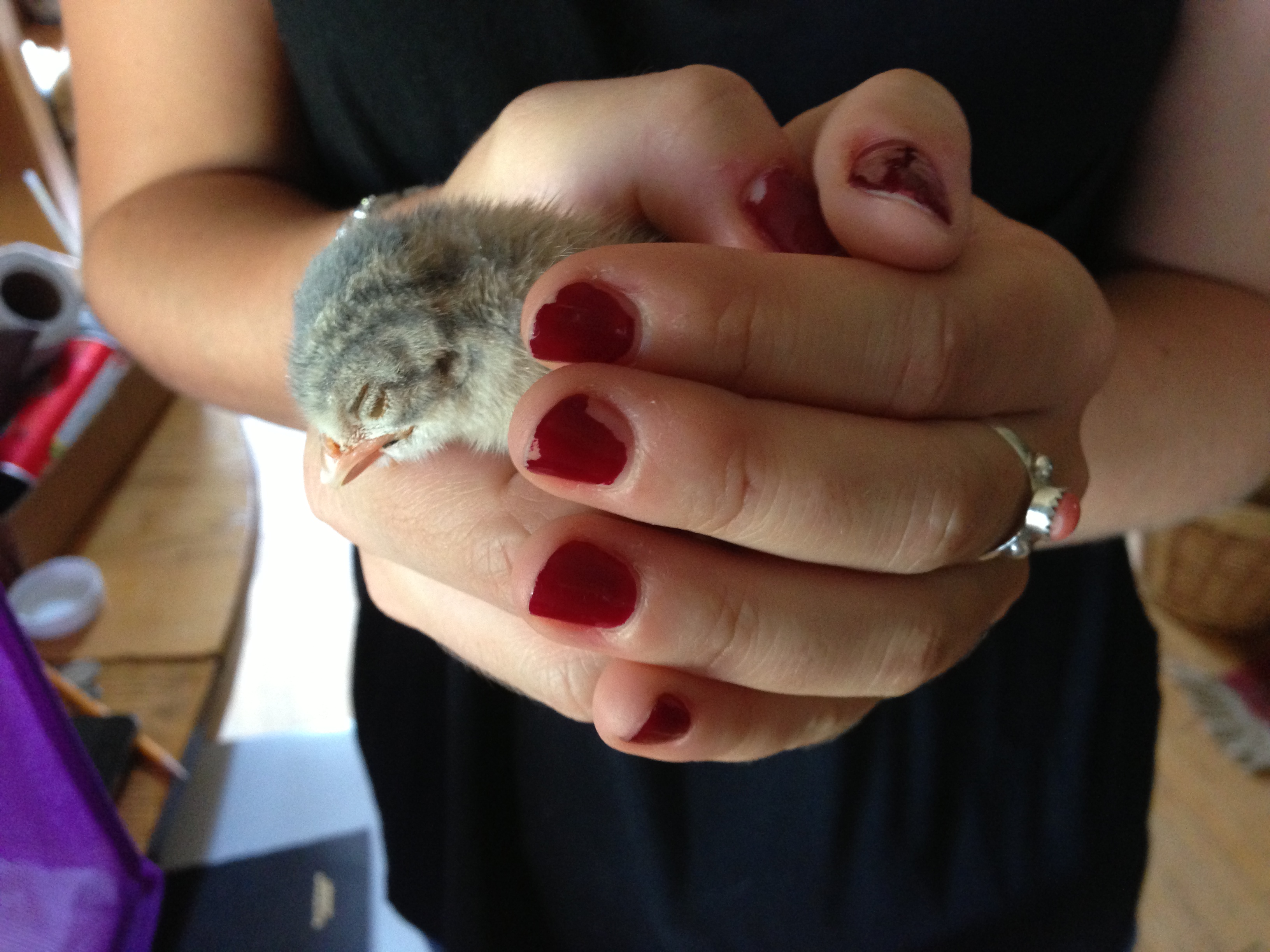
A guinea hen chick that needs special care.

chick


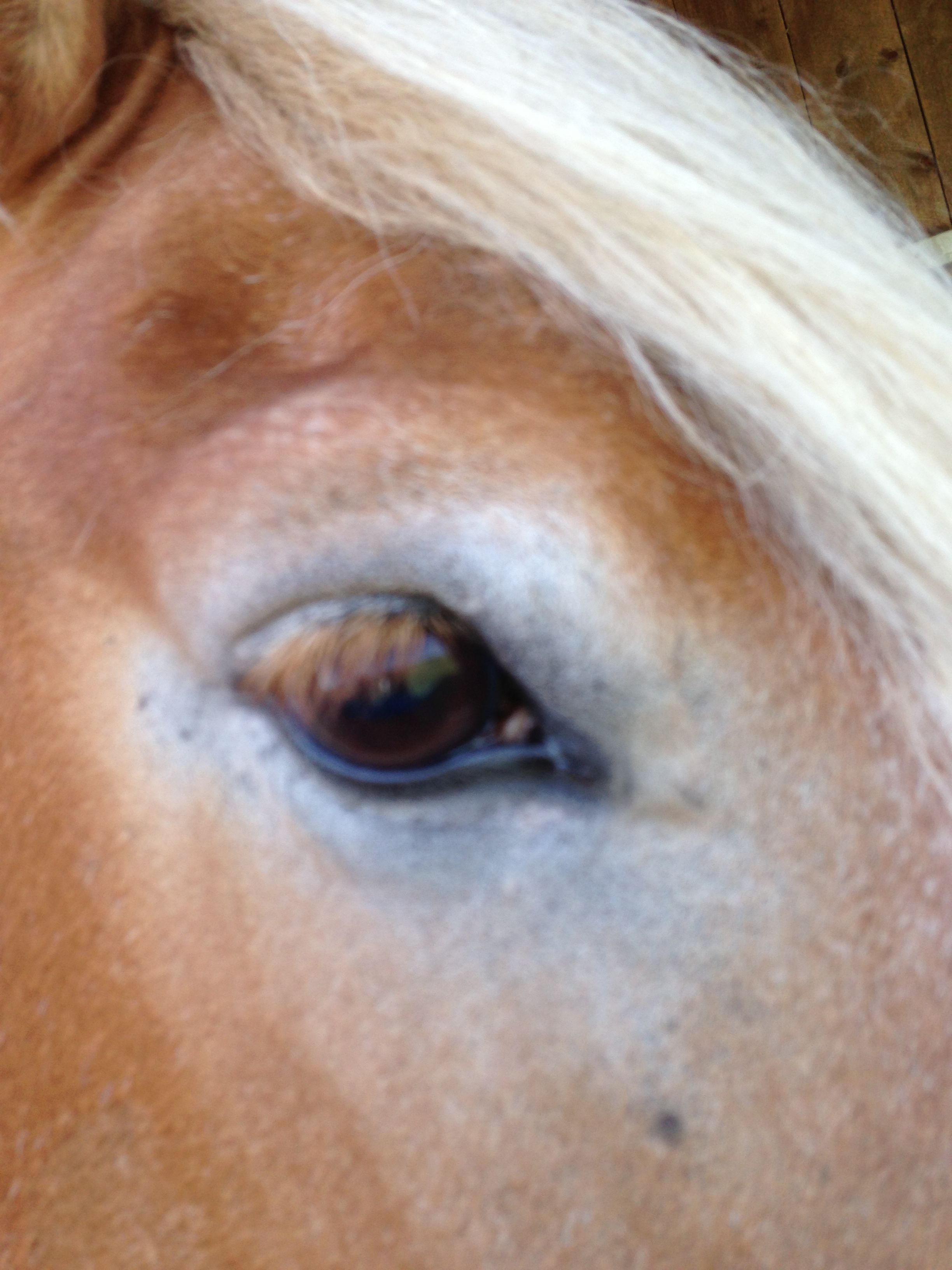
The horse with the velvety schnozz, always wanting an apple, wanting an apple, wanting an apple.

horsey


That apple will have to wait ’til next year, ma’m. New York is beckoning.
horse eye

2 Comments

Filed under Culture, Dogs, Home, Jean Zimmerman, Nature

Deep Purple

No better place to be on a mild summer night in Wausau, Wisconsin.

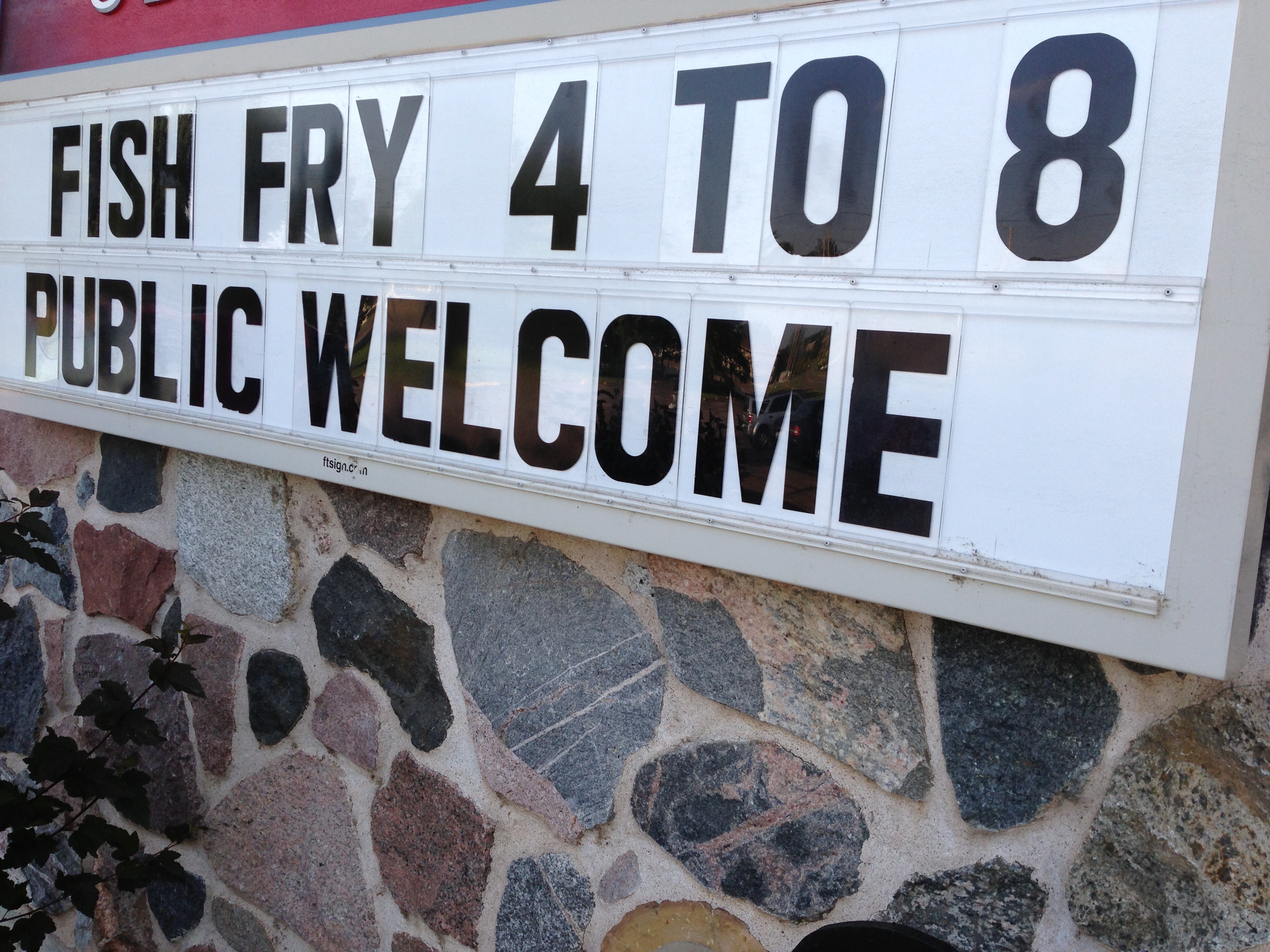
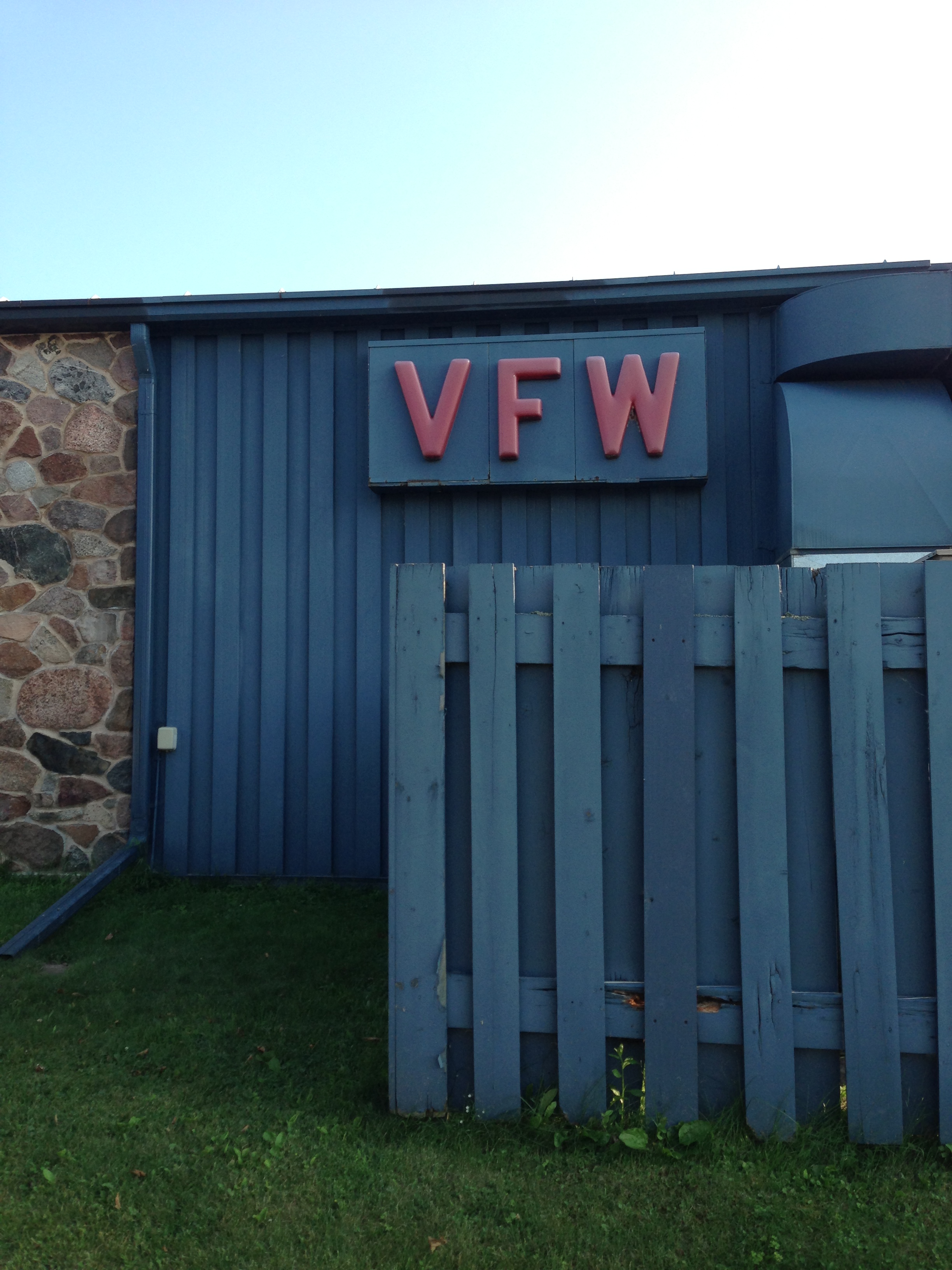
fish fry signOne place allows you to do more than chow down on walleye.

vfw


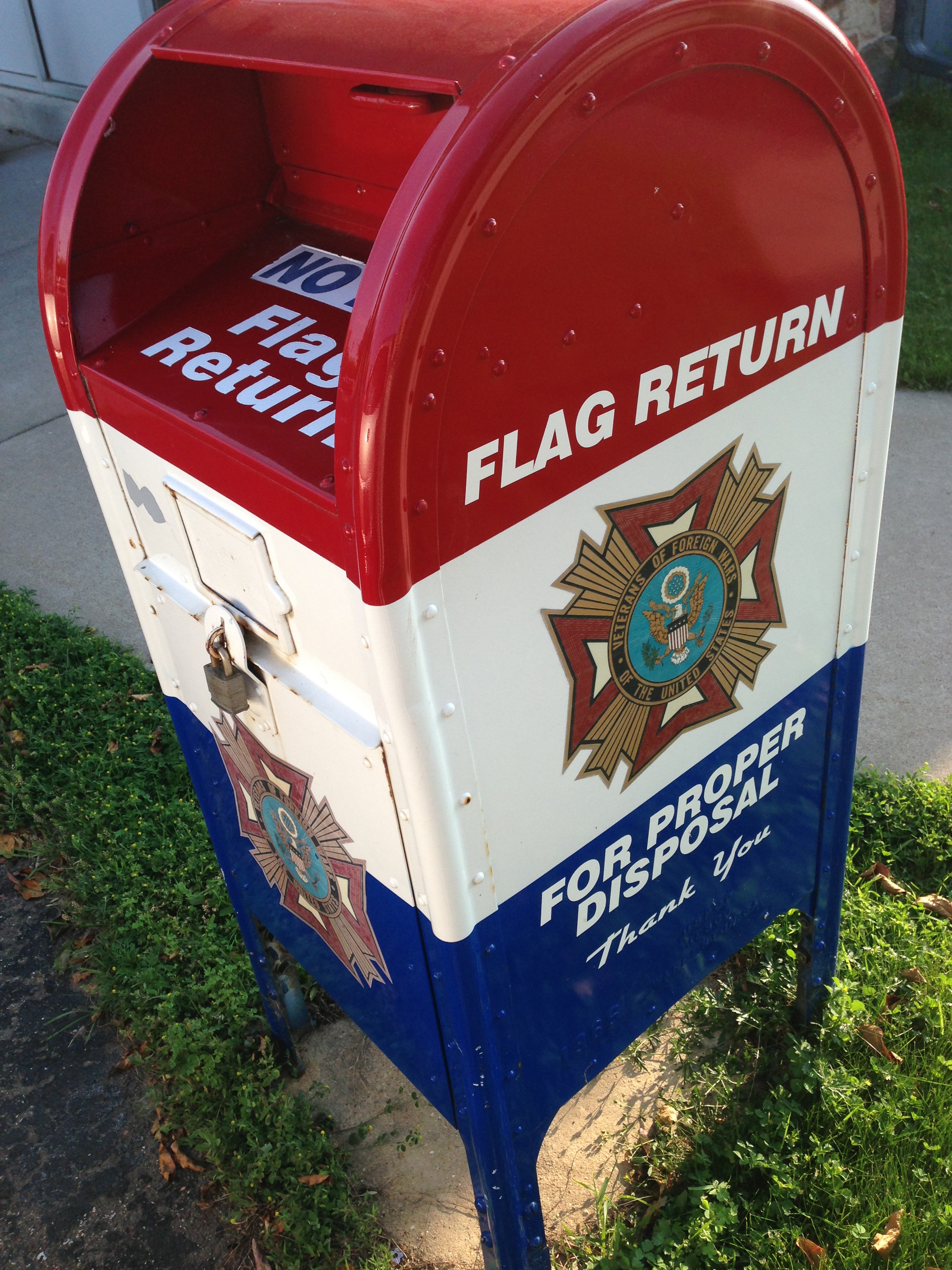
Return a flag.
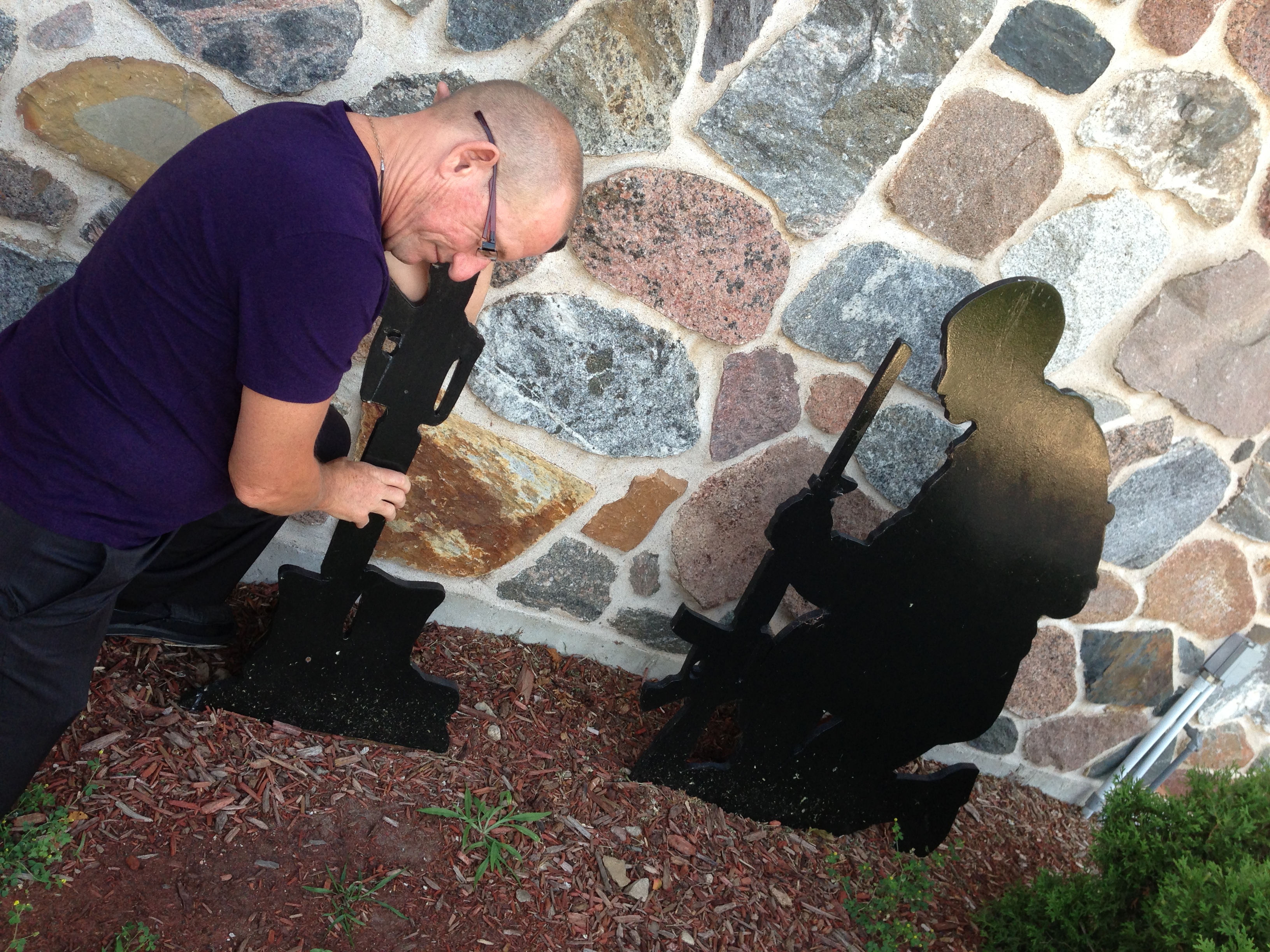
flag returnHug a military sculpture.

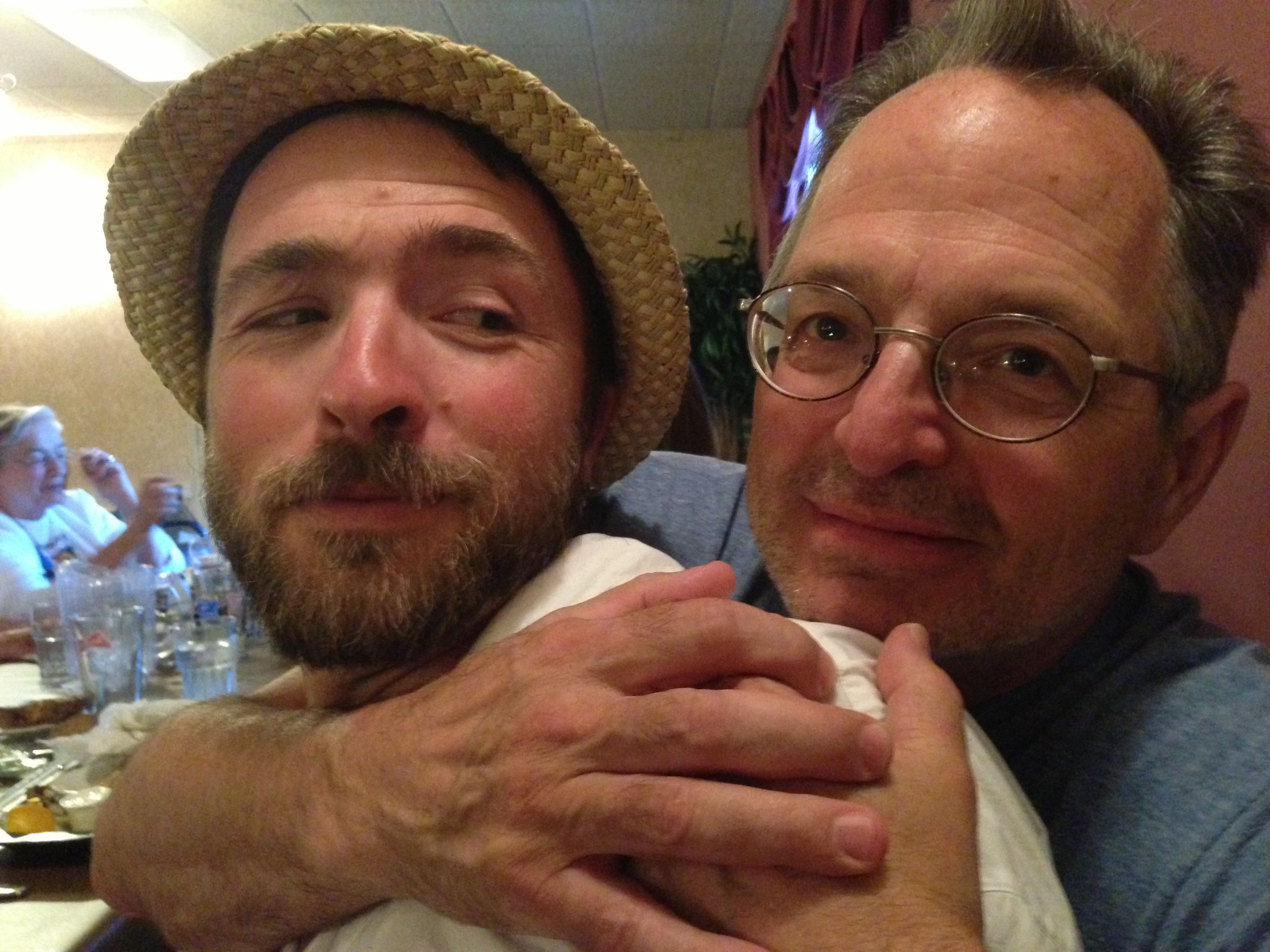
Rick

Make like a pinup girl in front of a valuable Air Force Corsair II that made its bones in Southeast Asia 40 years ago.

plane

There is fellowship over fish. Sisters who trekked here for their cousin Eloise’s memorial service tomorrow.

lois:janetEloise loved purple. Some people wear purple.

quinn

The Old Fashioned cocktail is analyzed, quaffed. Don Draper’s choice. You can drink one sweet, with cherries, or sour, with mushrooms. Let’s order a round.

tom collins


Bet you can’t drink just one.

lydia


Reunions.

jesse:gil


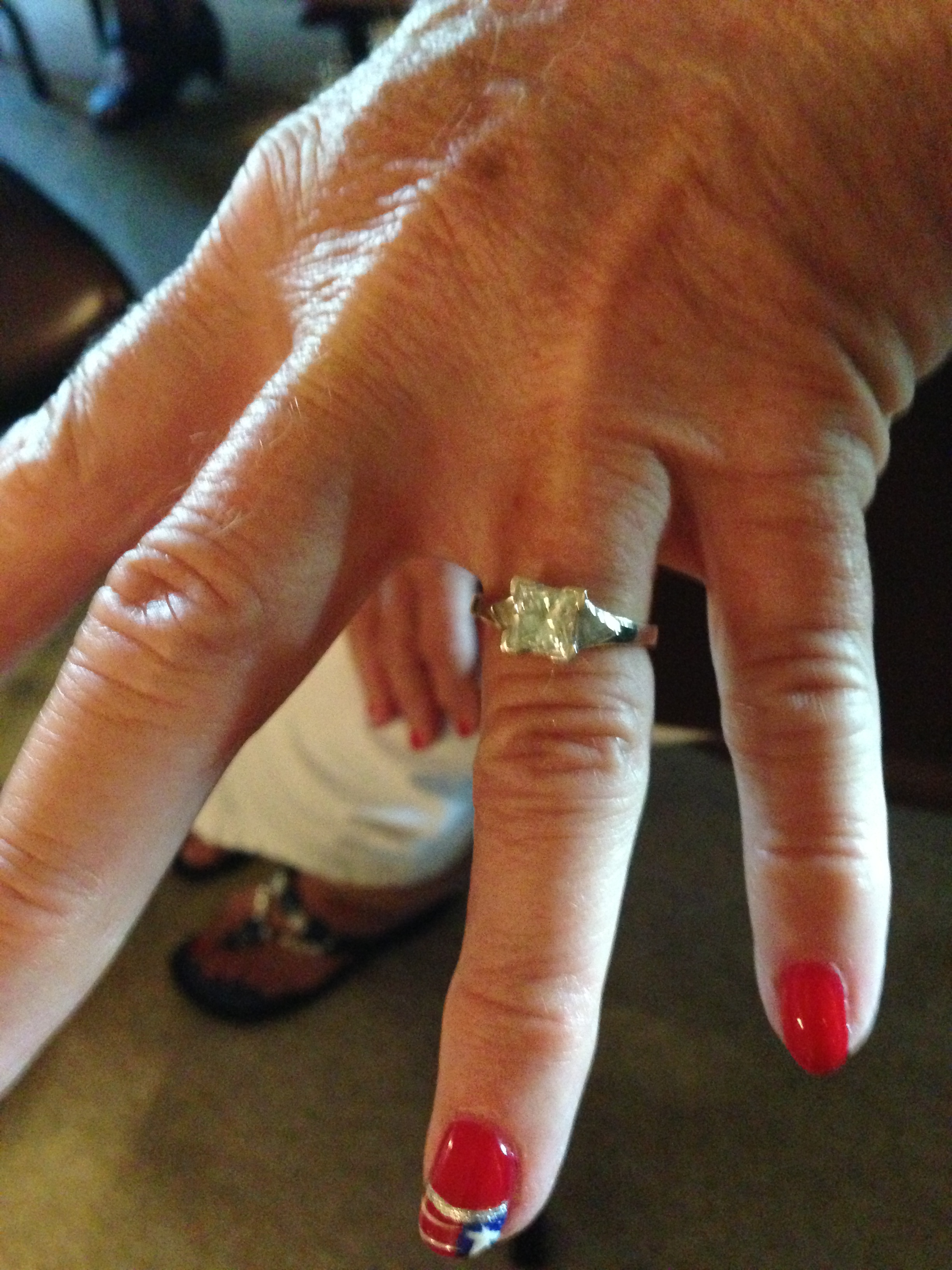
Mid-life romance, second marriage engagement bling.

bling


A couple of accordion players who will perform Deep Purple at the church.

accordion


More sisters, more gab.

sisters


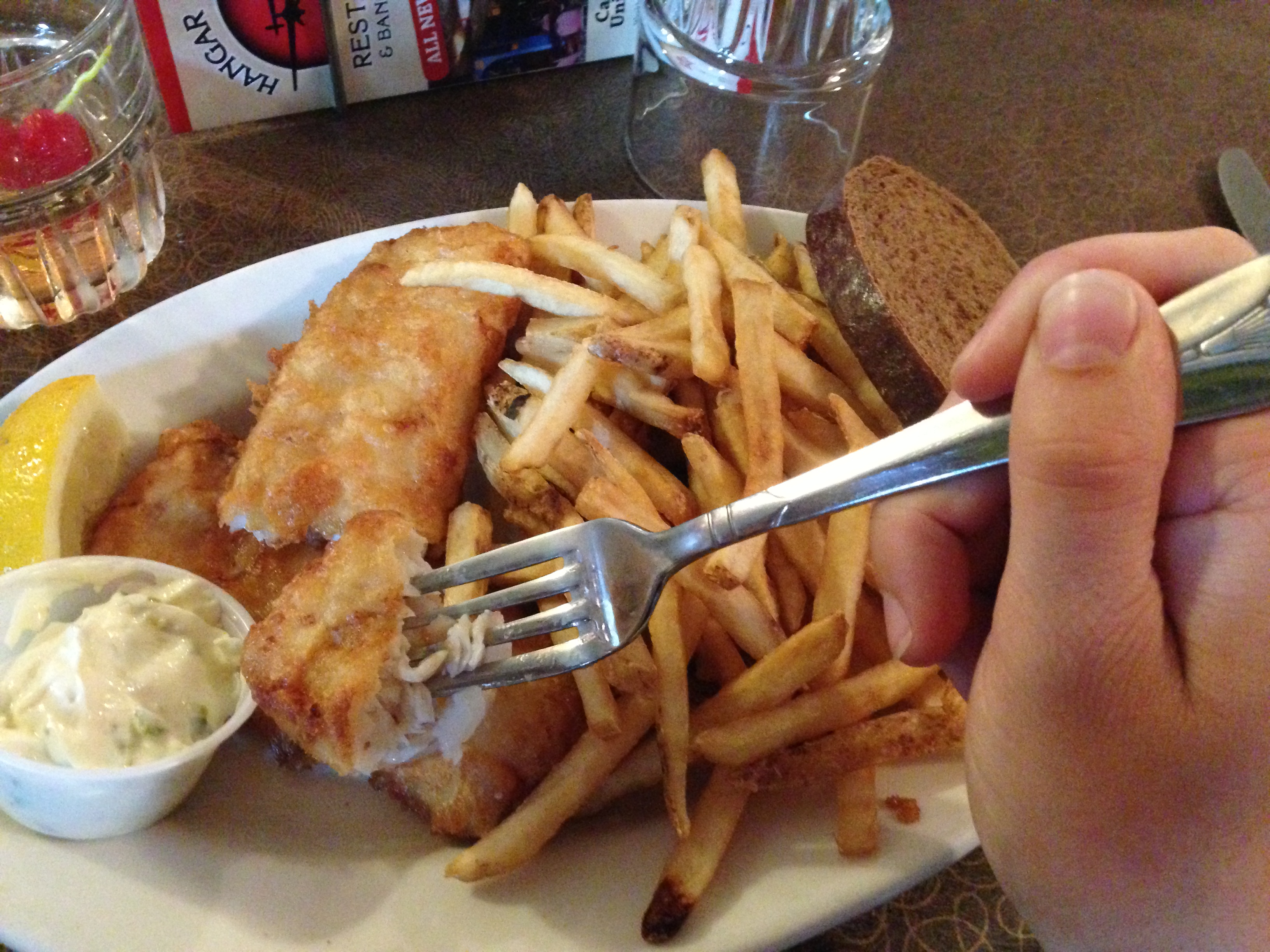
And finally the fish.

fish plate


A mellow night.

thomas


A memorable lady who is missed tonight.


If you want to stay longer, says the waitress, you can go drink in the lounge.

lounge


2 Comments

Filed under Art, Cooking, Culture, Fashion, History, Home, Jean Zimmerman, Music

Rockets Glare

Hastening toward Wisconsin. Can it be a true road trip if you only drive one road? On the other hand, it’s a massive road, Interstate 80. And it’s the glorious Fourth.We begin at the GW bridge.

flagOliver has already finessed the jump from the  cargo hold to the back seat, next to Maud.

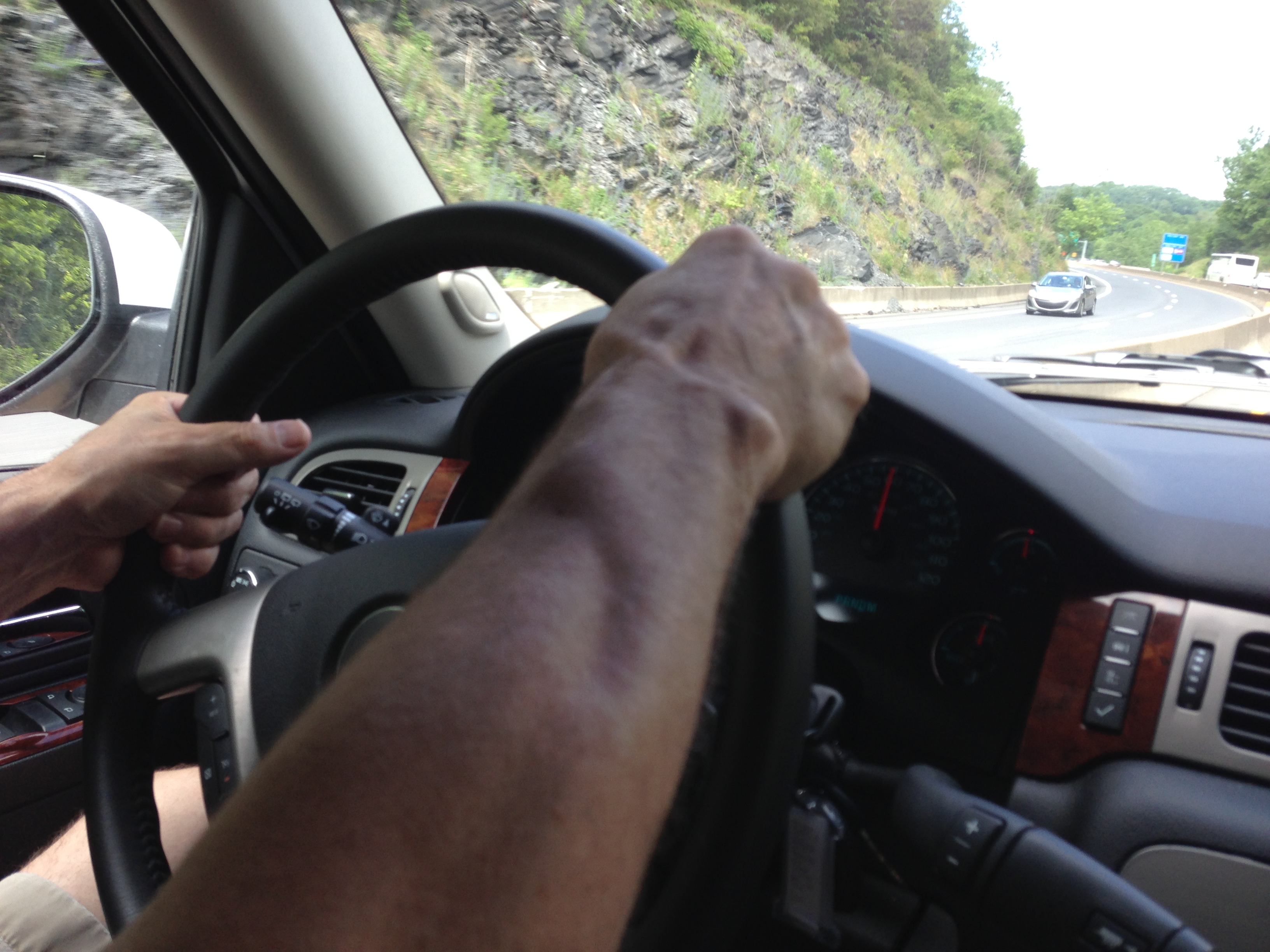
oliver back seatGil is principal road man.

gil's armsJohn Lennon’s Dig a Pony plays repeatedly on the console.

Well, you can celebrate anything you want

Yes, you can celebrate anything you want

The land rolls by.

cloud shadow

The trucks roll  by.

truck

I do a road hog

Well, you can penetrate any place you go

Yes, you can penetrate any place you go

I told you so

Rain hits as I drive. Maud sweet talks her beau long distance.

windshield washer

Well, you can radiate everything you are

Yes, you can radiate everything you are

midwest sunset w carEyes drift over my book as the sun sets, superlative driver Maud in the driver’s seat.

I feel the wind blow

Well, you can indicate everything you see

Yes, you can indicate anything you see

Lennon later said he thought the song was garbage. Can you imagine?

dancers bookOn to the Chicago Skyway at Dusk.

chicago skyway


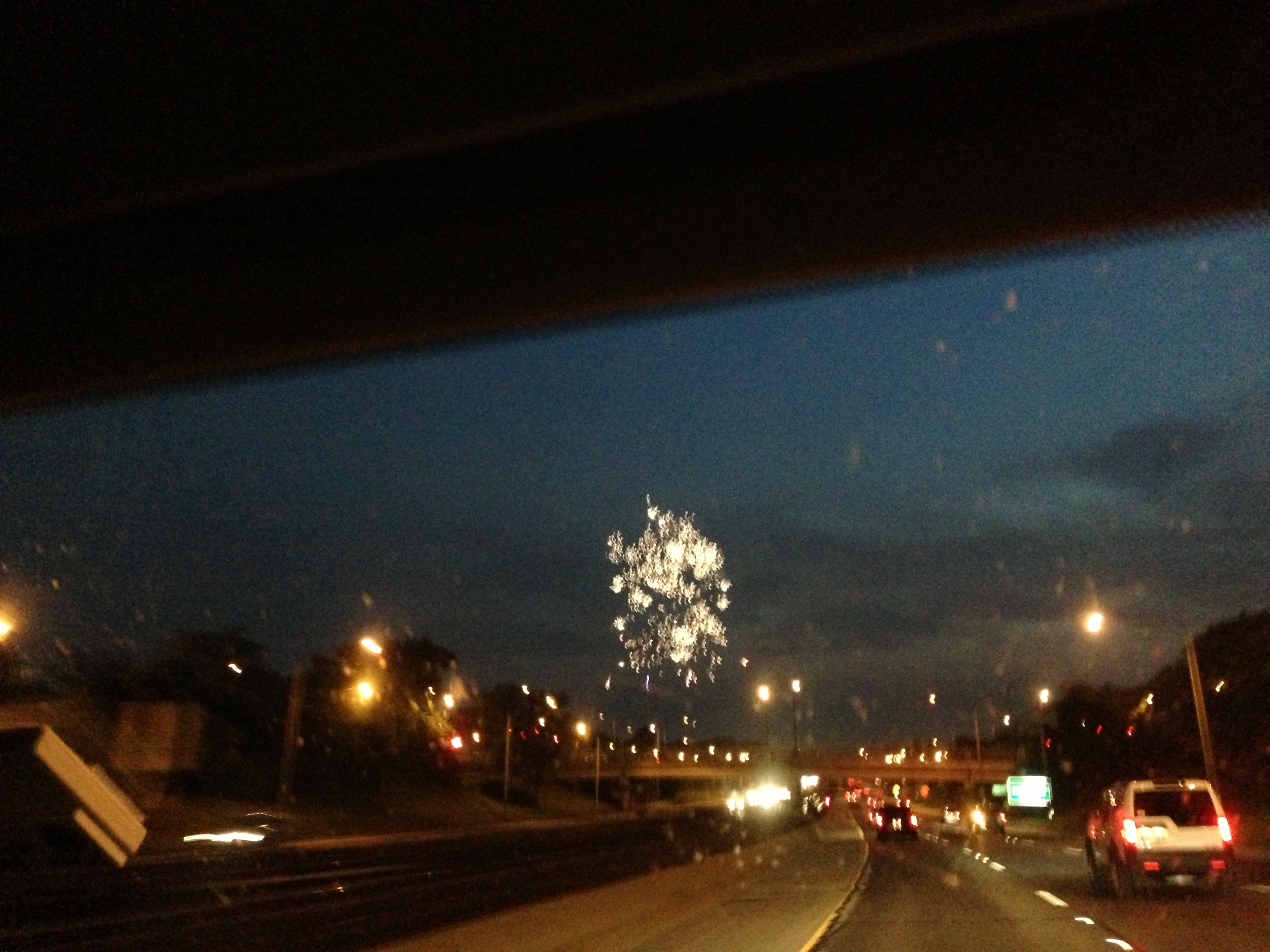
And then, all up the corridor through the great city of Chicago, starting at nine o’clock, splashes of fireworks go up from all the little communities along the way, on every side, red, pink, green, blue and silvery-white, some cascading right over our heads on the highway. Pop! Pop!

Chicago fireworks

All I want is you

Everything has got to be just like you want it to

Because

Fifteen hours, forty minutes, over 1,000 miles. I’d do this again, says Gil. Maud says, Me too.


2 Comments

Filed under Culture, Dogs, Fiction, Music, Photography

A Stitch in Time

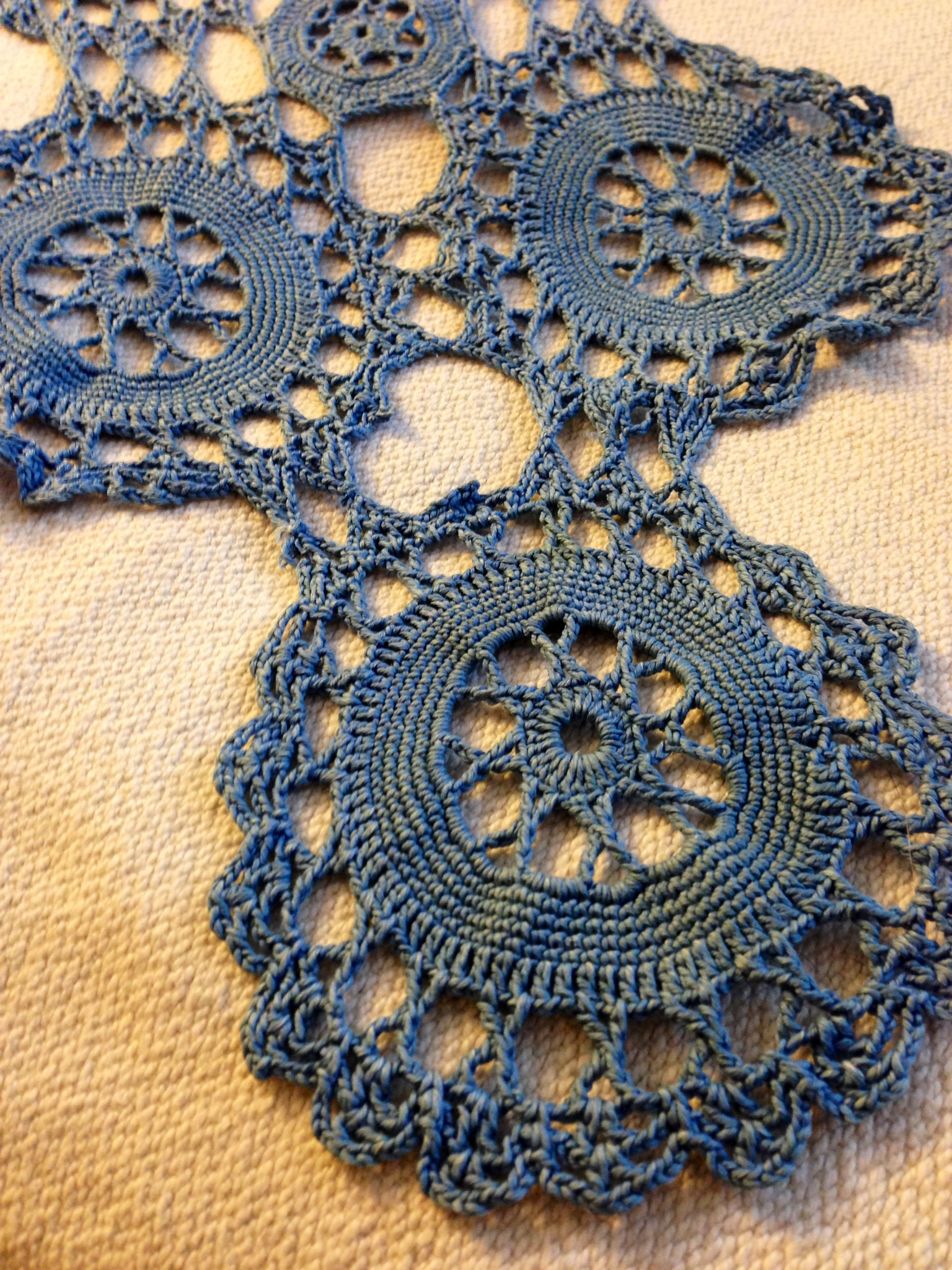
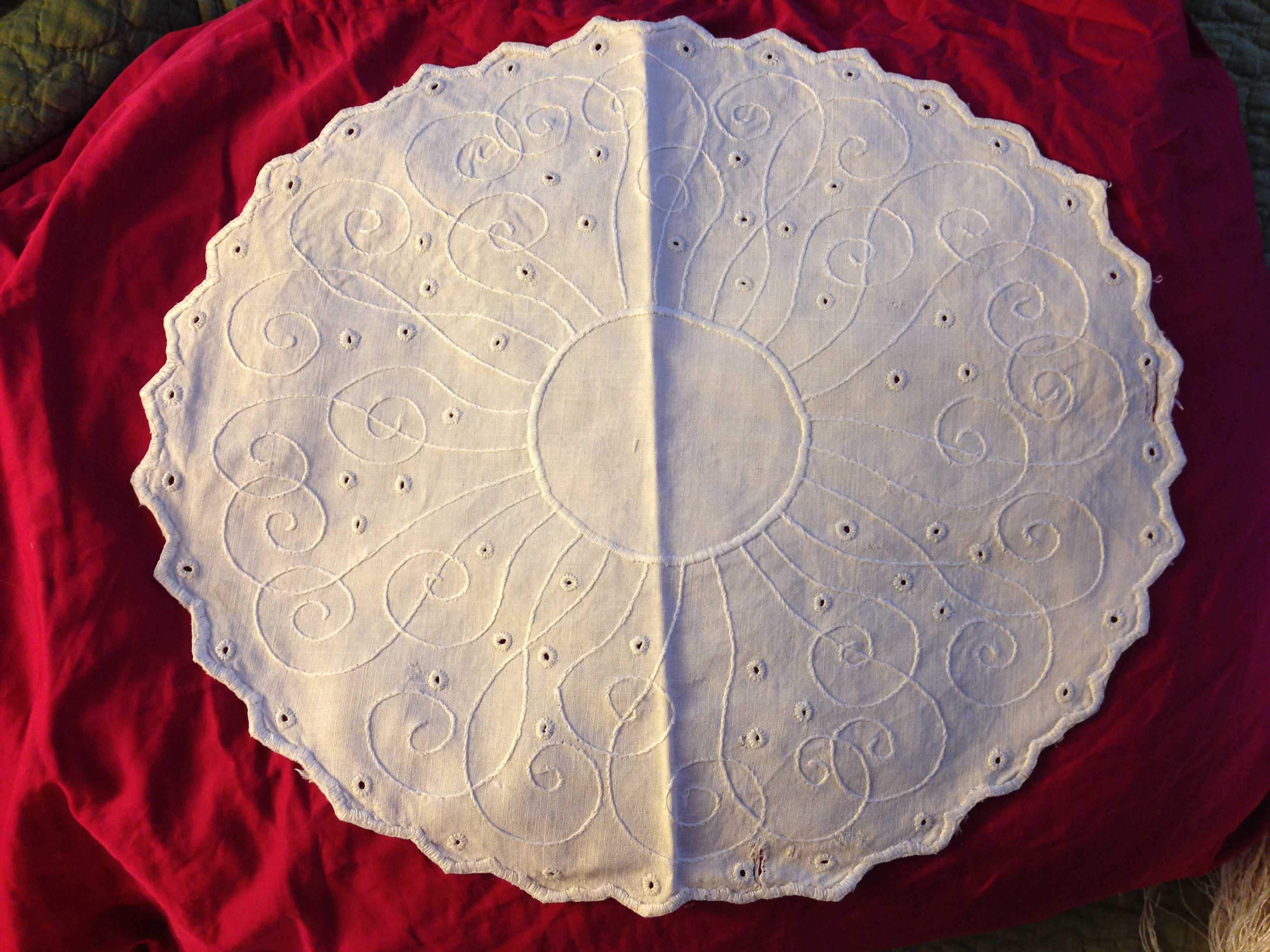
I keep in storage a box filled with 94 vintage pieces of linen and lace, and an antique silk flowered shawl with long, swaying fringes.

shawl

All heirlooms, all worked by the matriarchs of the White and Coats families, small-town Tennessee residents. Artists.

circle lace on green

The women of my family. Who specifically made these creations we can’t be sure, though my great aunt is a good bet. She was known as an adept with textiles. A tatting shuttle and a crochet hook were surely in her arsenal.

circle lace cu

I take them out these pieces now and again. Take a moment from my contemporary concerns. Pause. Lay them out on the bed.

lace cu 2

Stand back to admire them.

three

How intricate.

lace cu

The colors. Pink.

pink lace

Blue.

blue lace

Run my fingers over the bumps of the embroidery, the open work of the tatting. I think I am in love with this lace and its delicate carnations. Do you like the fragrance of a carnation as much as I do?

carnations

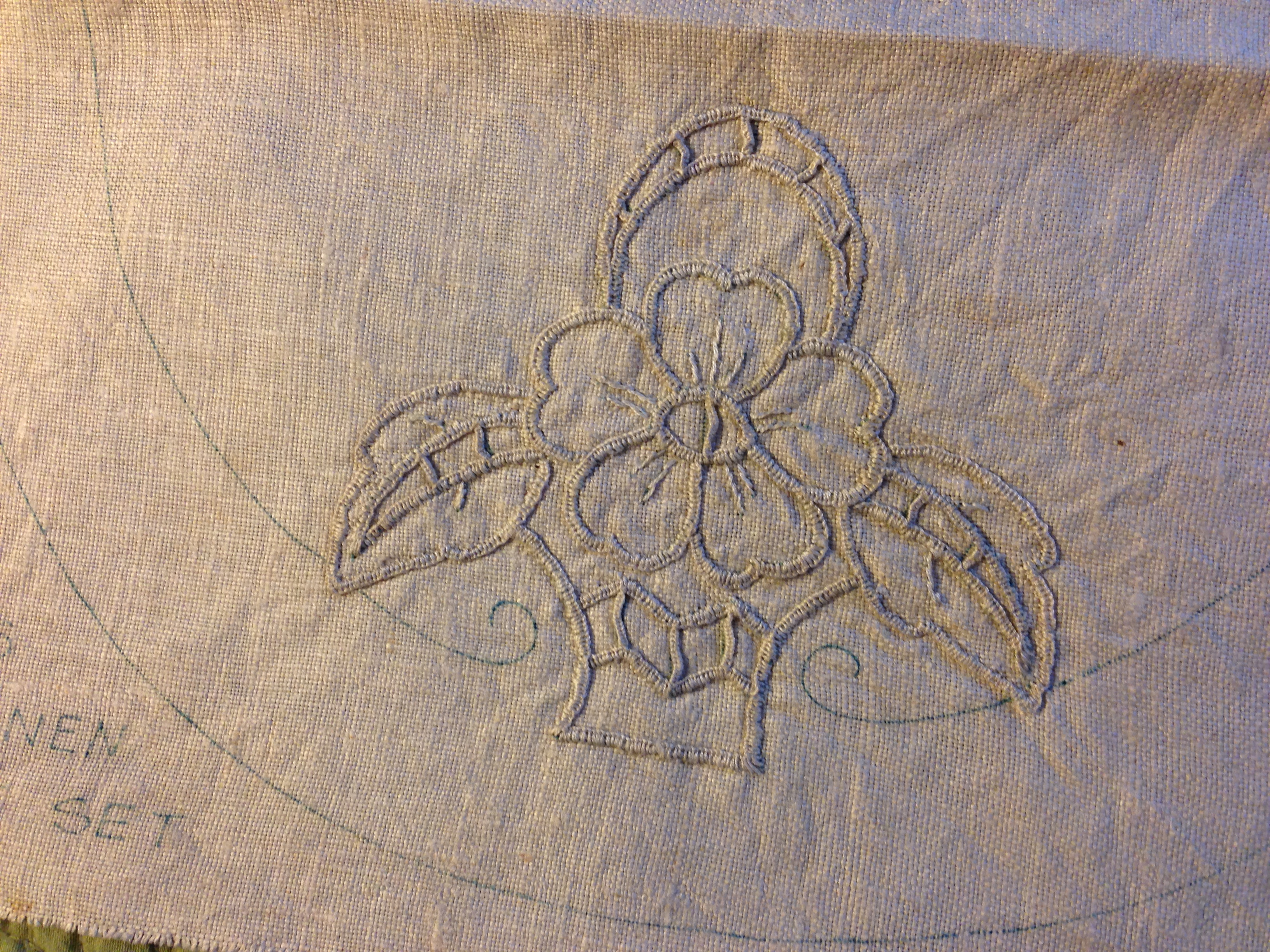
Someone, sometimes, followed a ready-made pattern – you can see the ink on half-finished fabric.

kit 2

I wonder, what inspiration drove the women who came before me to make these brilliant textile works? Because it surely wasn’t necessity. No one could use this many antimacassars or table runners, this many doilies.

lace on green

Although I do see something occasionally that bespeaks everyday life, and these pieces leave me utterly moved. A woven brassiere. (A training bra? So small!)

brassiere

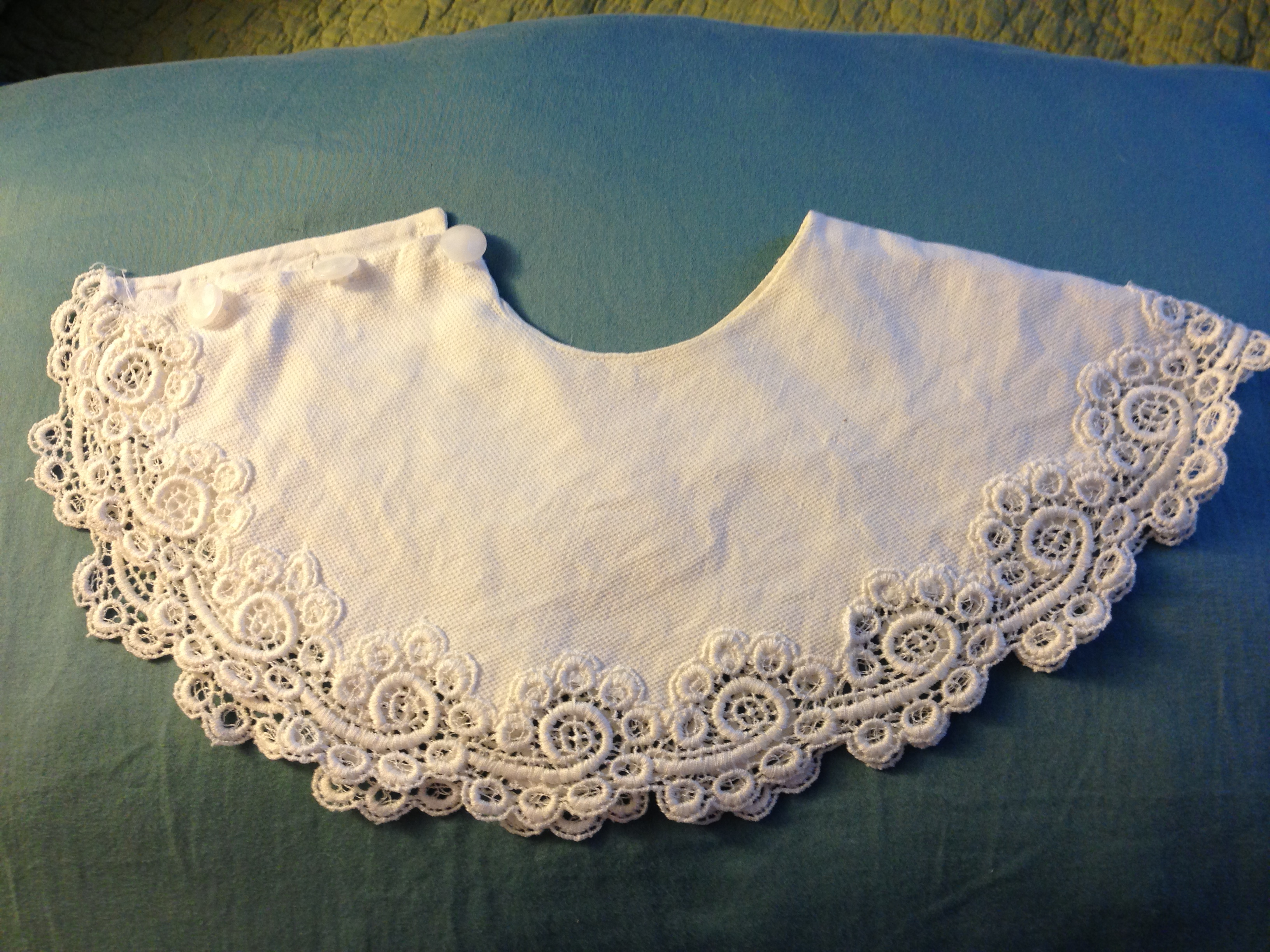
A linen collar with mother-of-pearl buttons.

collar

In the rural America of the early twentieth century, there were beans to be snapped, pickles to be put up, floors to be mopped, and even chickens to be wrung by the neck. Yet these people took time, so much time, to make beauty with flash out of plain thread and cloth.

circle

10 Comments

Filed under Art, Culture, Fashion, History, Home, Jean Zimmerman

Plant Based Pesto

I’ve been hearing the expression plant based ringing in my ears a lot lately.

beets

My doc saw my “bad” cholesterol ticking up (Bad, cholesterol! Bad!) and we decided it was time for a change. Get used to quinoa, she said. I had never tried it. Cut out the red meat you love, or at least cut it down to one or two times a month. Chicken or fish, okay, once in a while. But mainly, think plant based. Salads. Beans. Rice. Greens.

Plant based.

collards

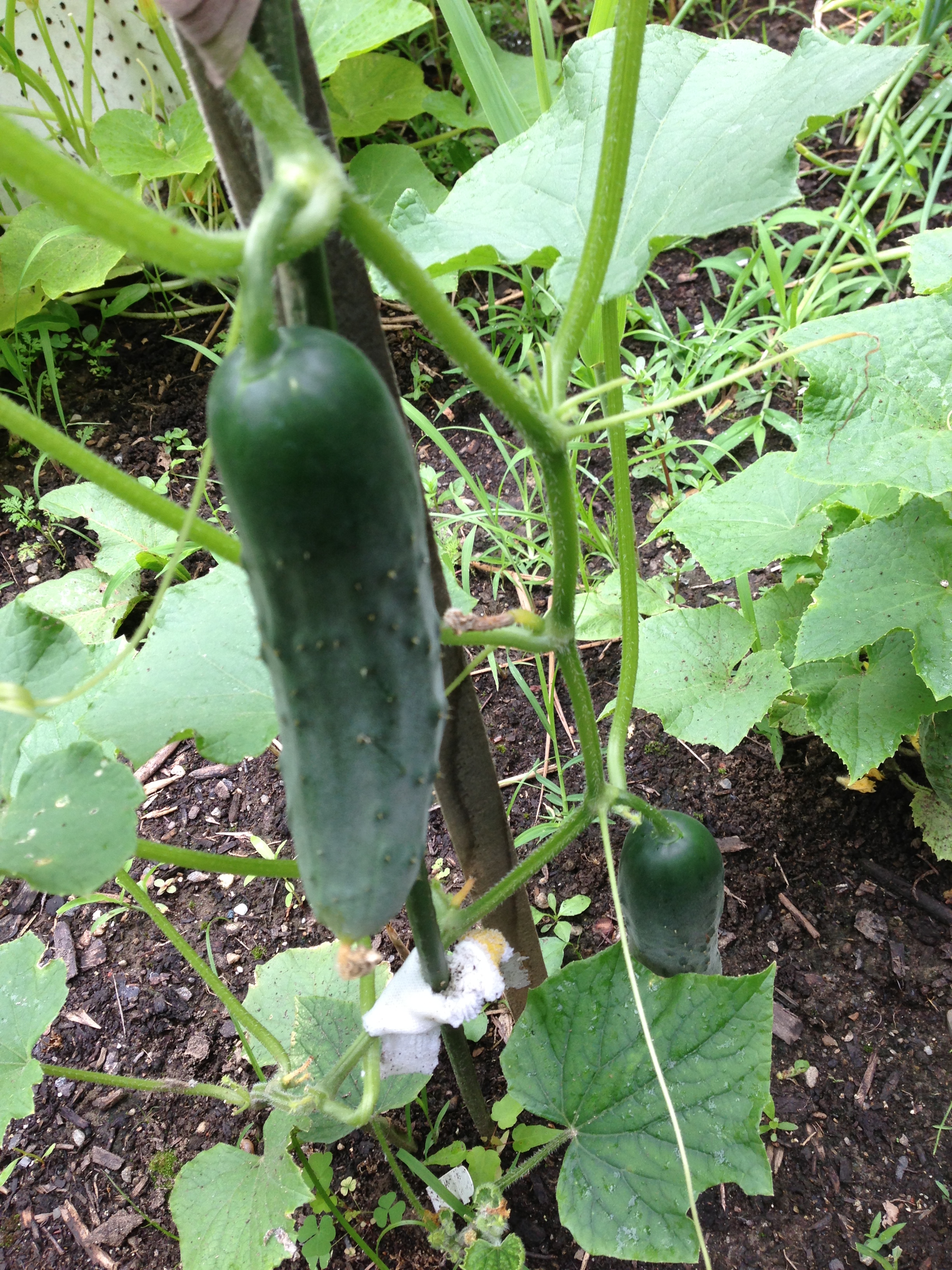
I love vegetables. (So does the yellowjacket I caught on those collard greens.) I’m so excited that my cukes are almost ready to be harvested.

cuke

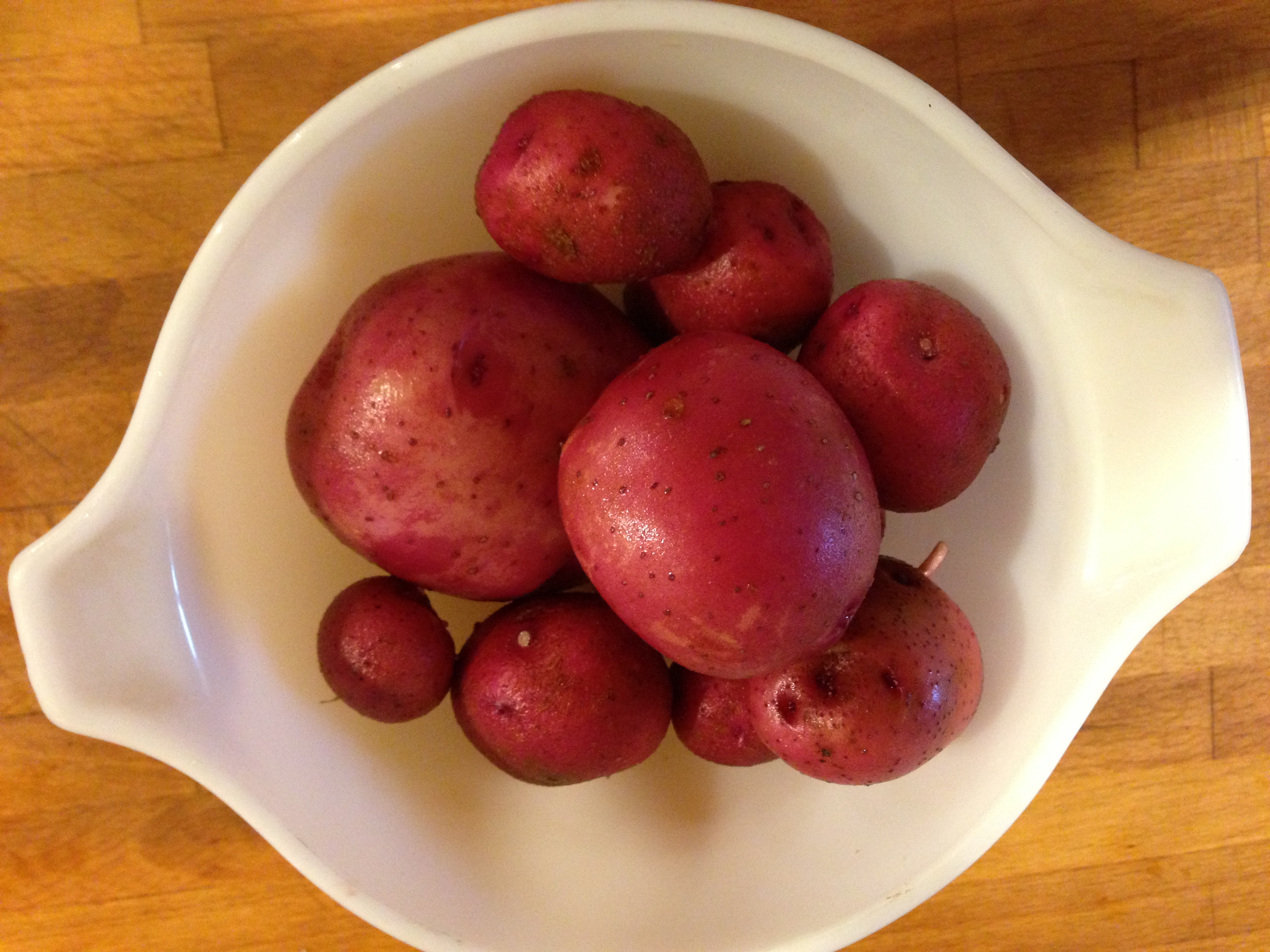
My new potatoes are such babes they cry when you pull them out of the ground.

potatoes

I couldn’t be a prouder mama.

But changing my diet, all but eliminating pork ribs, beef brisket, skirt steak, this is a big change. I know it’s for the best, but I have to find savory ways to make myself eat the right way happily. (Not to mention a somewhat recalcitrant husband.)

I have always loved pesto. The recipe originated in Liguria, the region of Italy that borders France. Its mineral-rich seaside soil and climate produce exceptionally sweet, sweet basil. The name comes from the mortar and pestle that are used to delicately squeeze the tender leaves rather than coarsely crush them. A similar sauce called battuto d’aglio (beaten garlic) appeared in the 1600s in the city archives of Genoa, the region’s capital city.

I’ve never been to Liguria, and I use a blender to make my sauce (yes, crushing it coarsely), but I think my pesto is mouth-watering. Anyway, we gobble it up. And it’s plant based.

It has a plant, the basil.

basil

Olive oil, derived from a tree.

Nuts, also harvested from trees.

A teensy bit of cheese, parmigiano reggiano, nice and salty, which I think my doctor would forgive if she knew I was foregoing the Italian sausage I used to add to this dish.

cheese

And we all know how beneficial garlic is. Lazy me, I often use chopped garlic from a jar. It only slightly diminishes the flavor. But my favorite garlic is from my sister-in-law Noreen’s farm. She gives us a string that lasts all year.

Marcella Hazan, the doyenne of Italian cooking, has the classic recipe.

cookbook

It takes 15 minutes from start to finish, during which time you can get the water boiling.

What do I do with this fresh-out-of-the-garden pesto? Throw it together with some pasta (imported, preferably).

Then use your imagination. Tonight I’m  spicing up our pasta al pesto with cut-up chicken breast, new potatoes and sweet-hot peppers from the garden. If only I had some really delicious plant-based sausage.

Plant Based Pesto

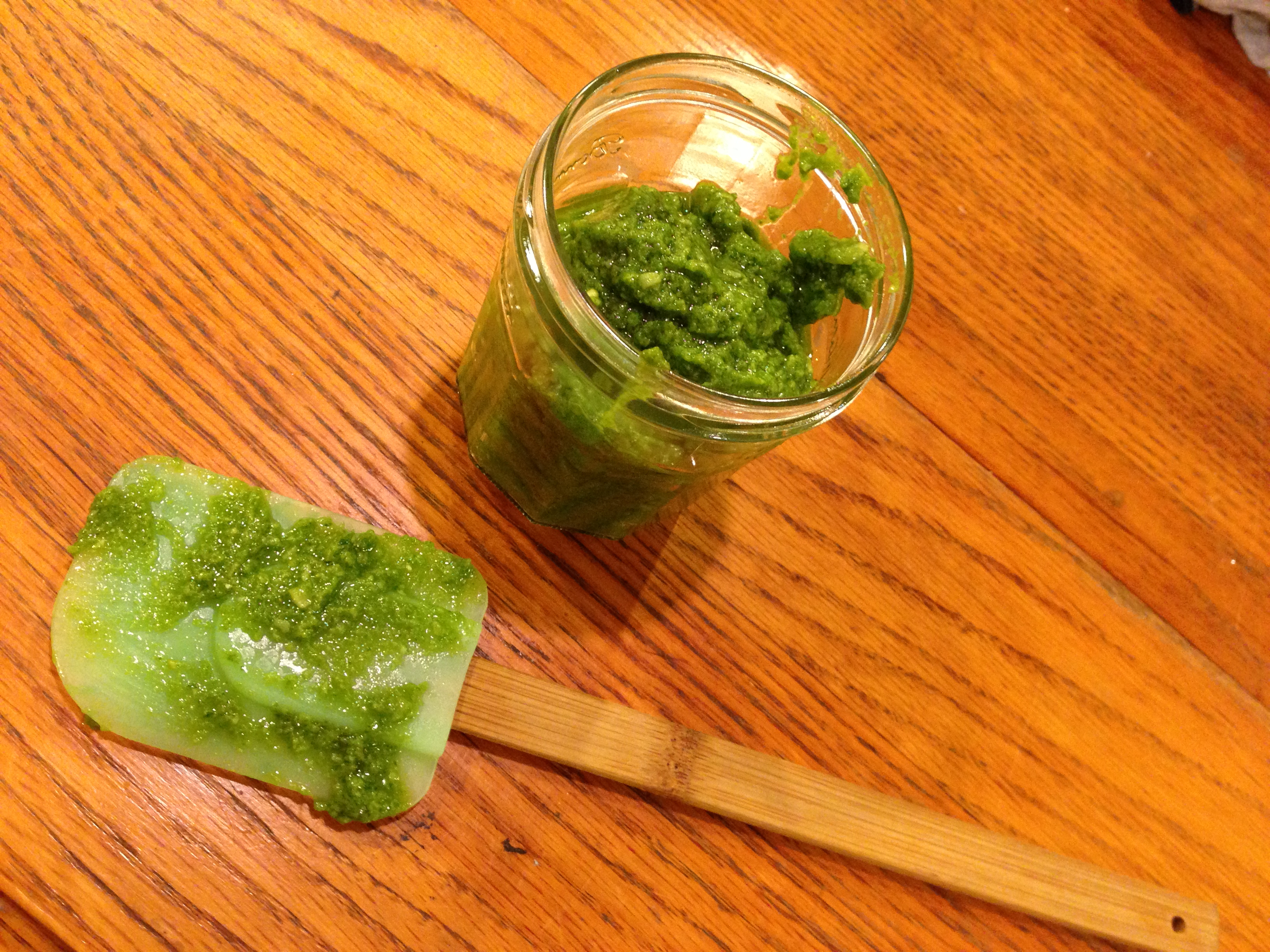
Place 2 well packed cups rinsed basil leaves, ½ cup extra-virgin olive oil, 3 T pine nuts (or walnuts or almonds), 1 T chopped garlic (more if you are a garlic fiend like me) and a pinch of salt and a grind of pepper in the blender. Blend ’til just smooth and then add a healthy ½ cup grated parmesan and blend again briefly.

pesto


4 Comments

Filed under Cooking, Culture, History, Home, Jean Zimmerman

Il Rituale dei Bambini Perduti

Italy has weighed in.

anteprima-il-rituale-dei-bambini-perduti-L-fp4Qio

My Italian publisher’s visual interpretation of the drama of The Orphanmaster is not perhaps what I would have expected. It’s baroque. It’s scary.

It’s amazing to think of people sitting down with a copy of Il Rituale dei Bambini Perduti, so far from the island of Manhattan in 1664.

If you can read the language, check out a book blog.

13 Comments

Filed under Culture, Fiction, Jean Zimmerman, Publishing, The Orphanmaster, Writing

Float Upstream

We take the canoe upriver.

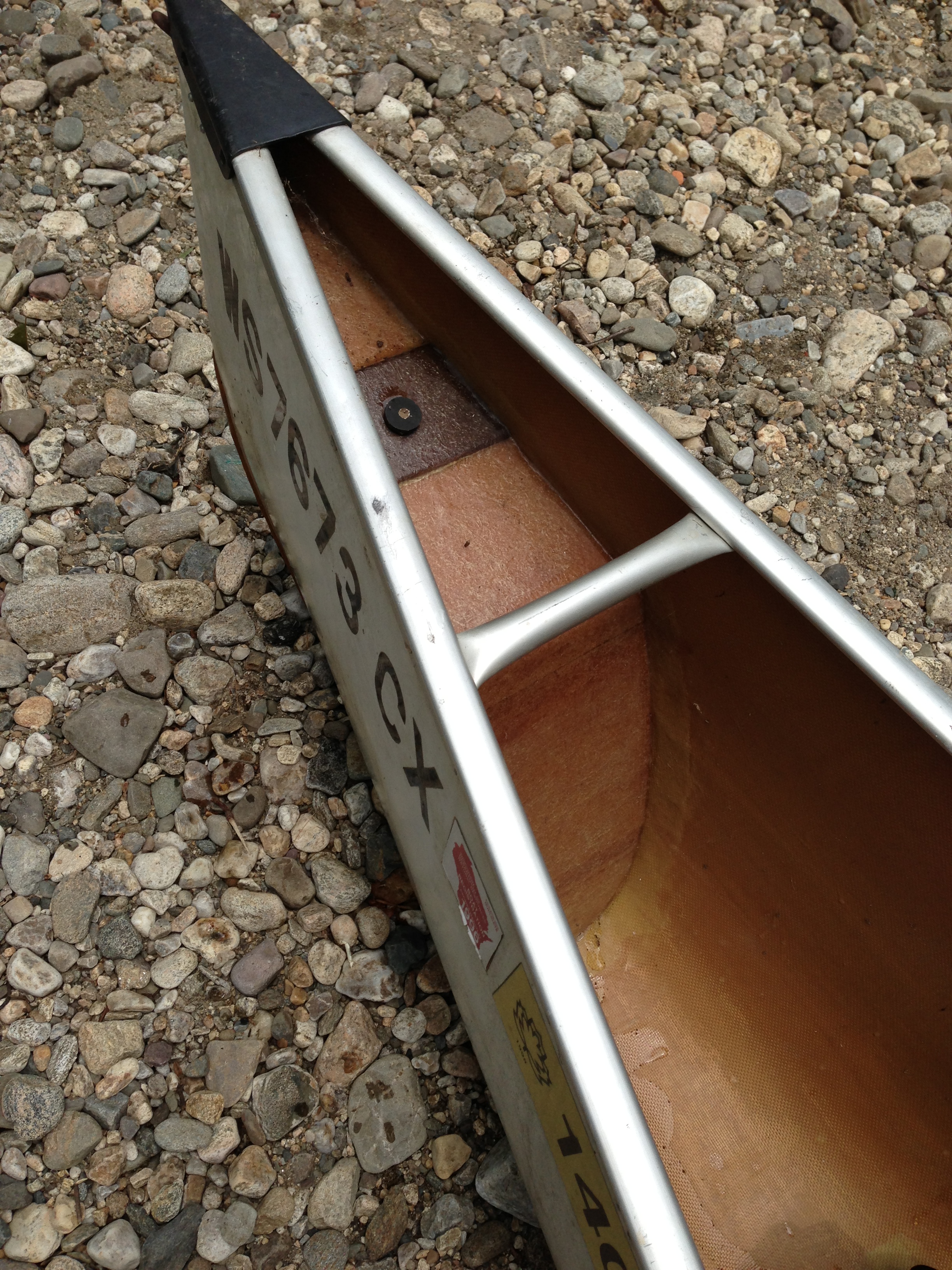
canoe bow

Not just any river. The Croton River.

Head upstream from its junction with the Hudson, next to a railroad trestle.

croton river

To our north is the venerable Van Cortlandt homestead, nearly hidden by trees. The family came to New Amsterdam in 1638. They lived on Stone Street – so called because it was the first paved thoroughfare in the settlement – where Oloff ran a very profitable brewery. Eighty-six thousand acres of land here on the Croton River were granted his son Stephanus by the Crown in 1697.

Dip your paddle. No, really lean into it. The tide and current are against us here.

Over our heads flies a cormorant, sleek and fast. A fish flops. A kingfisher appears on a limb, then another in flight.

Around the bend, a heartstopping moment with a wading blue heron. It bends down its serpentine neck and jabs, then gulps, gulps, gulps. It spots us. And barrels away ten feet from us, croaking all the way downriver. (All About Birds gives the precise acoustics.)

Along the way, houses perch atop steep cliffs and water craft wait on shore.

canoes

The Croton River travels through the Croton Reservoir, which has supplied water to New York City for a century, so technically it should be clean enough to drink, but the feathering algae under your paddles doesn’t look too appetizing. The Croton Dam was an engineering marvel. For 14 years 1,500 men plied over 500 pieces of heavy machinery, using 745,000 barrels of cement, 100,000 tons of coal and a gigantic amount of locally quarried stone to build what was called the most massive hand-hewn masonry structure since the pyramids.

CrotonDam

I wonder how fast this water flowed before the Dam.

A small rapids, but too much for the canoe to manage, so we portage across the big slippery stones.

croton river stones

I bushwack through the shore’s thorns and poison ivy. At the climb-down point, plenty of coyote scat.

bushwack

Up in the trees, a hawk lights on a bare limb. Light head, light breast. Without binocs its identity remains a mystery.

Then a beach, unpeopled, a desert island.

canoe:stones

The water is perfectly cold.

gil swims

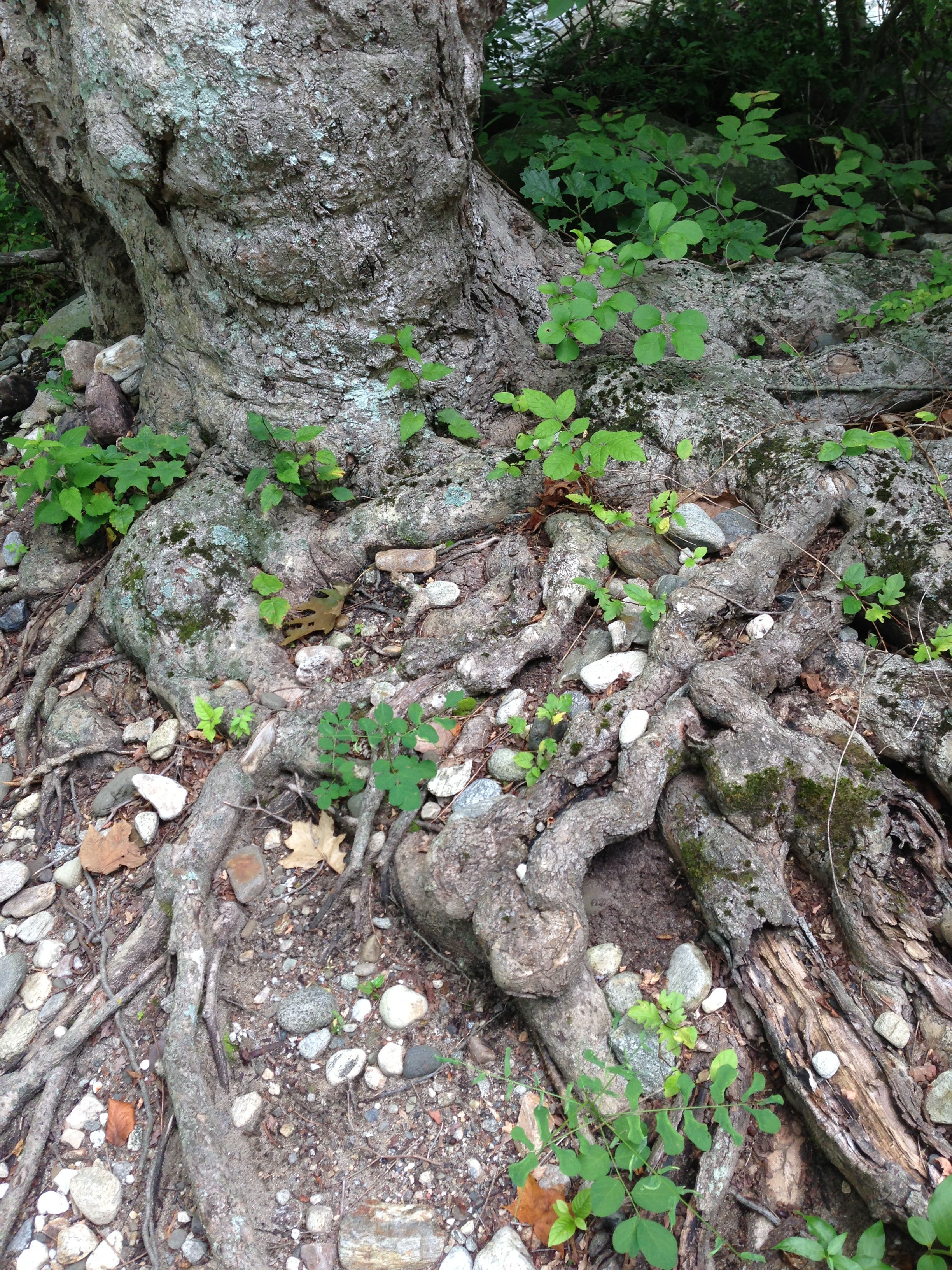
A druid tree displays its magical tangle of roots.

druid roots

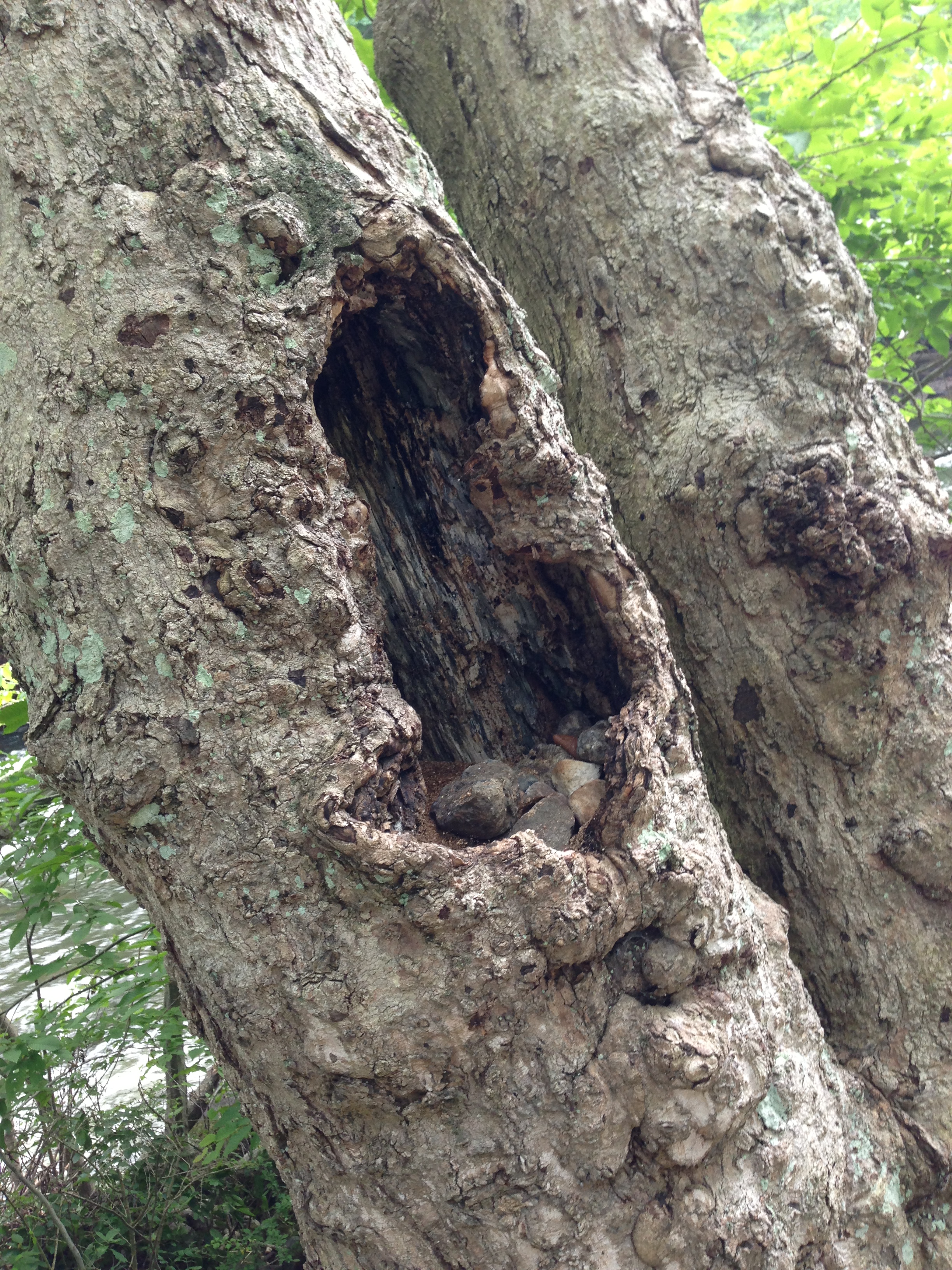
A home for critters over many years.

druid tree

It’s an old tree. Probably was a sprout during the American Revolution, when there was no way to cross this river aside from the ferry. No plastic kayaks, recreational canoes. It was closely guarded by the Westchester partisans, who held the land north of the river, while south of the water was the hotly contested “neutral zone.”

A busy set of rapids guides us back.

tree:water

I think I can’t do it. It would be so easy to tumble over, take a cold bath among the slick rocks. But I take a deep breath. Dip my paddle. Go.

2 Comments

Filed under Culture, History, Jean Zimmerman, Nature

At the End of Their Bloom

The end of the rose season and the end of the day. Glinting sweeps of sun, still, but deep shadows starting to fall across the lawn.

You take what you can get.

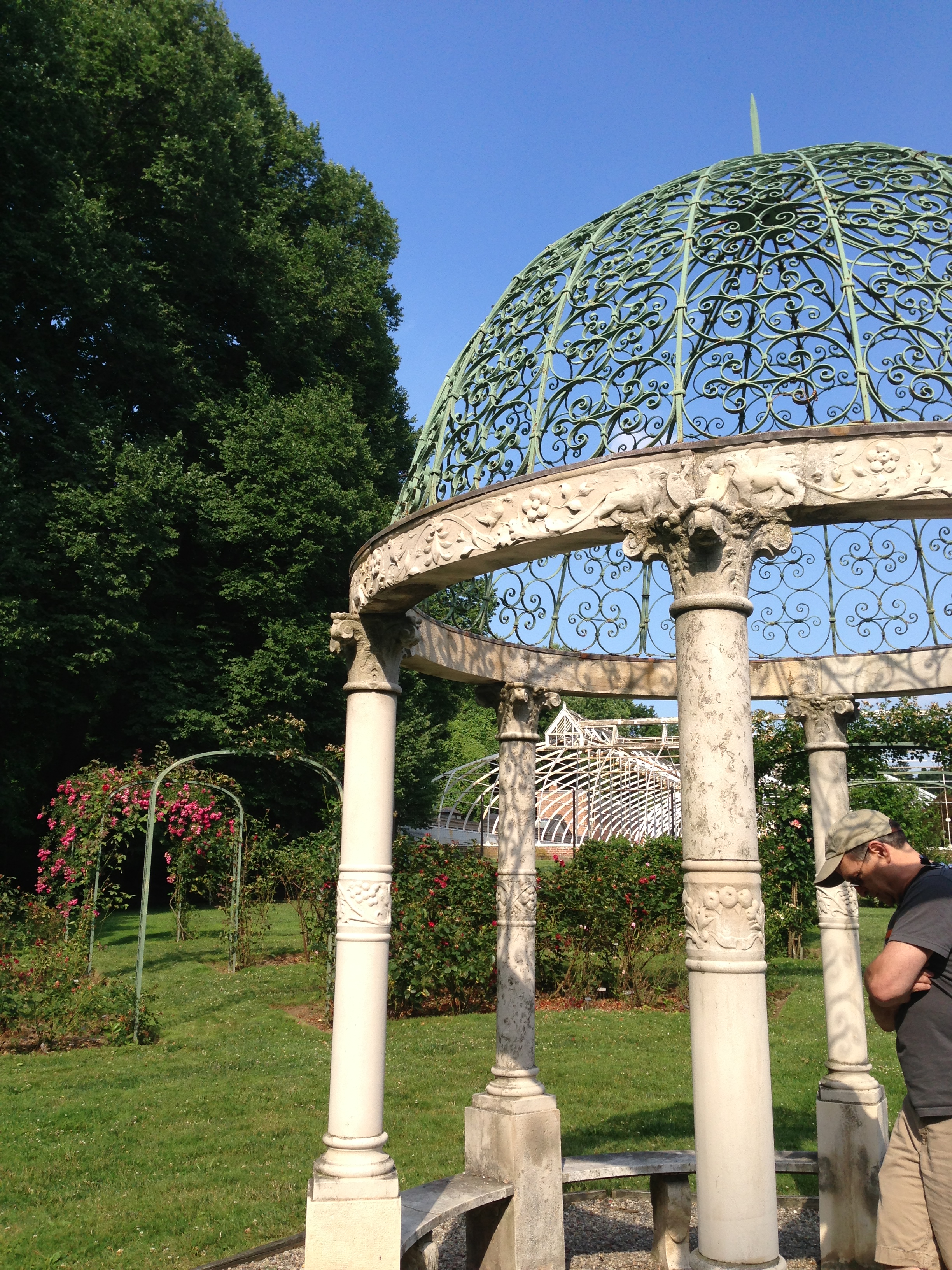
Q yellowThe roses that remain are as lovely as the roses that came before them. At Lyndhurst, the historic property in Tarrytown that used to be the domain of robber-baron Jay Gould, that’s a lot of roses. There are 400 varieties arranged in 24 crescent shaped beds in three circles, a color wheel that moves around a central gazebo from white to yellow to red to pink and back to white.

gazebo


The colors are spectacular at the flowers’ height. Not so much now, late in the season, when you see more bare stalks than blooms. But there is something about loving the last rose. Mr. Lincoln, say, bred by Swim & Weeks in the United States in 1964. The fragrance is massive. I want to wear it on my 60th birthday — five years away, but good to plan.

mr. lincoln

There are only a few buds left on Belle Poitevine, but I love knowing that this hybrid rugosa originated with Francois-Georges-Leon Bruant in 1894. The Swedish Rose Society recommends the plant for northern Sweden.

belle poitevine


Gene Boener, ragged as it is so late in June, reminds me of a rose that had escaped someone’s garden and found its way to my house when I lived in an apple orchard years ago, with the sweetest, spiciest perfume imaginable.

gene boenerThis profusion of flowers is perched on a hill that slopes down to the Hudson River. Jay Gould’s Shangri-La. “I do not believe that since man was in the habit of living on this planet anyone who has ever lived possessed of the impudence of Jay Gould,” said nineteenth-century radical Robert Ingersoll.

lynhurst view


Even Gould, who bragged that “I can hire one half of the working class to kill the other half,” couldn’t keep roses alive beyond their season. His daughter founded this garden, putting in old garden roses like Red Dorothy Perkins, bred in 1908, to climb one of the 24 trellises.

dorothy perkins trellisDorothy unfortunately has no scent. And what is a rose without her scent? A later rose is John S. Armstrong, a grandiflora bred by Herbert C. Swim in 1961.

john S. Armstrong

By the time John S. Armstrong got a place in the loam, the rose garden’s upkeep had been passed to Anna Gould, Duchess de Talleyrand-Perigord, in 1938, and then to the Garden Club of Irvington.

A robin hops briskly through the clover and shade moves over half the beds. One fuchsia bloom called Chrysler Imperial, a hybrid tea, has the vague aroma of leather. When you put your face down to smell, watch out that a beetle doesn’t mistake your nose for a flower.

newdawn


The roses are flaming out.

granadaIt’s time to go home. Duck under the trellis covered with  Kathleen Hybrid Musk, bred in the U.K. in 1922 by Rev. Joseph Hardwick Pemberton. A cross between Daphne, 1912, and Perle des Jardins. Gil’s Lao Tzu tee shirt was a gift from me.

Kathleen hybrid muskNot much left on those stalks climbing the old wooden trellis. But if you love roses, you’ve got to love them when they’re naked aside from their sepals.

kathleenOne of Lao Tzu’s greatest hits, from the Tao Te Ching:

Let there be a small country with few people,

Who, even having much machinery, don’t use it.

Who take death seriously and don’t wander far away.

Even though they have boats and carriages, they never ride in them.

Having armor and weapons, they never go to war.

Let them return to measurement by tying knots in rope.

Sweeten their food, give them nice clothes, a peaceful abode and a relaxed life.

Even though the next country can be seen and its dogs and chickens can be heard,

The people will grow old and die without visiting each others land.


1 Comment

Filed under Culture, History, Home, Jean Zimmerman, Nature

The Taksim Square Book Club

In  Turkey, people are reading books. In public.

Which is amazing, considering the country’s recent history.

Taksim Square Book Club

People are afraid of losing freedoms. And they’re finding a clever way to meet in public when demonstrations have been banned. Book clubs as free speech.

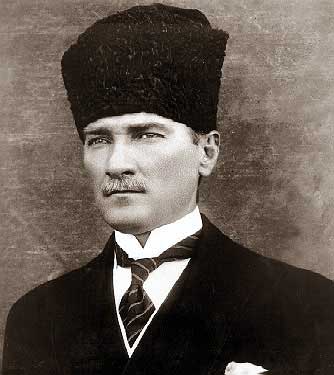
From Ataturk – which means Father of the Turks – who founded the Republic in 1922, all the way up to the present day, the country has had strong secular leadership.

ataturk3

Now the hardliners have come in. In Tacsim square the prime minister wanted to destroy part of a park for “redevelopment.” Somehow that struck a chord with the public and hundreds of thousands of people took to the streets.

The complexities of this story are better left for a political writer, but the numbers have already reached these totals, according to one source: 4,500,000 people provided their support for the Gezi Park Resistance; there were 603 protests in 77 provinces; at least 75 people were arrested; at least 1,750  injured; 3 people including one police officer died. There is an excellent visual timeline of the “ten days of resistance.” New developments are not promising.

Taksim Square Book Club

As an alternative to the violence, the Turkish performance artist Erdem Gunduz chose to stand with his hands in his pockets, facing the Ataturk Cultural Centre in Taksim Square for eight hours.

erdem-gunduz-kimdir-gezi-parki-duran-adam-4746497_1628_o

Gunduz become the symbol of the resistance movement. Thousands of people emulated his action, standing still for minutes or hours around the country. “The Taksim Square Book Club” dovetailed with the still postures, and the books people are choosing form a reflection of their thoughtfulness in the face of this tremendous cultural upheaval. Albert Camus, The Myth of Sisyphus, about God and meaning. Gabriel Garcia Marquez’s Leaf Storm. Nineteen eighty-four. Turkish writer Tezer Oslu’s short story collection Old Garden-Old Love. When Nietzche Wept, a historical novel by Irvin David Yalom. Again, Nineteen eighty-four.

Taksim Square Book Club

What would you hold?

8 Comments

Filed under Culture, Fiction, History, Jean Zimmerman, Photography, Publishing, Writers, Writing

The Handsomest Dog in the World

I write frequently about my dog Oliver.

Image

He is loyal. Intelligent. A good eater (lately into ripe strawberries from my garden). Brave. Well, loud and aggressive, anyway, and I think  he’s secretly a bit of a chicken.

We got Oliver as a baby from a dog rescue family that was fostering his ma, a seemingly unadoptable, classic yellow cur. Father: unknown. In a White Plains kitchen squirmed eight chubby balls of fur, attached to eight wagging stumps of tails. It was January. We had run out of time to find adolescent Maud a puppy birthday present. Ollie was it. He might be a beagle, from his coloring. Who knew?

Image

We found everything he did delicious even though he smelled bad and was so snaggletoothed he needed a lot of dental work. His lip was partly cleft. He waddled. Most of all he didn’t play well with others. All he did in obedience class was bark at his classmates. He once found a warren of rabbits and killed them all. His genetic origins, it seemed clear, spanned the basset hound and the pit bull.

Image

Still. Ferocious as he is, he can be the picture of docility. Smiles over the shoes he brings when we come in the door, earning his nickname the Jolly Rancher. He can be mellow, even soulful.

Image

Loving.

Image

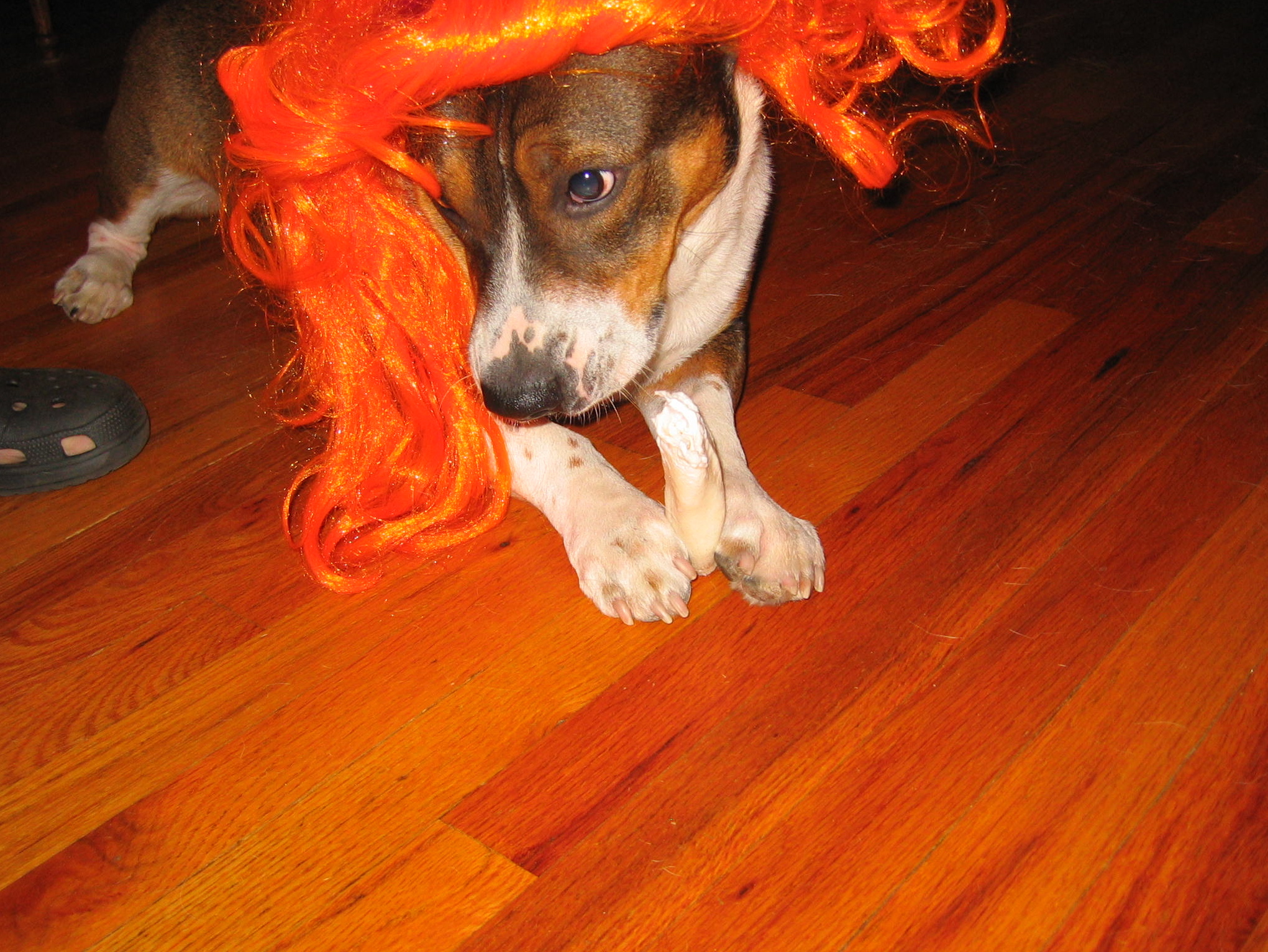
He’s was a flaming redhead for Halloween when he was about a year old.

Image

Clownface, I call him.

Image

Whatever else he is, he’s unique.

And so it is that I became shocked and miffed to see this year’s Ugliest Dog in the World paraded across a stage in California and then making the talk show circuit in New York. The contest has taken place for 25 years, and the Chinese Crested breed, which is hairless, usually triumphs. Not this time.

Image

Walle came from Chico, and they were calling him a cross between a basset hound and a boxer. One judge said that Walle looked like “he’s been Photoshopped with pieces from various dogs and maybe a few other animals.”

Image

Walle didn’t look like any other dog, everyone said, with his pudgy gait, chunky paws, large head, lowrise posture, oversize nose.

Image

Well, you tell me. Is Walle unique? Or did we finally locate one of Oliver’s vanished siblings? More to the point, is the dog who won the laurels ugly?

Because Oliver is beautiful.

Image

10 Comments

Filed under Culture, Dogs, Home, Jean Zimmerman, Nature