Tiny Houses

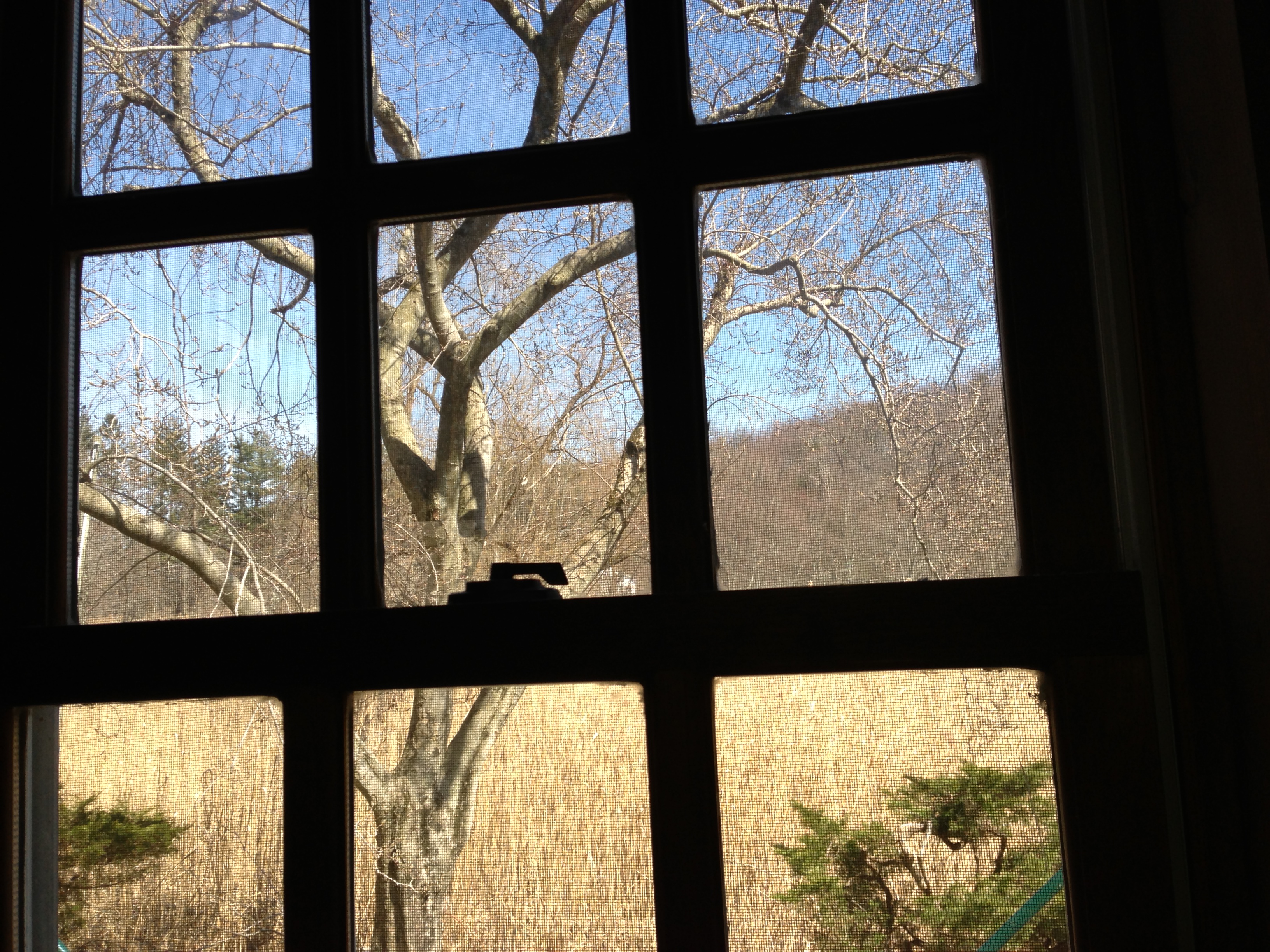
Walled with dark wood logs, topped off with dark wood rafters, with dark wood planks underfoot, the Cabin can be a shadowy place sometimes. Especially when all outside is calling crazily that spring is here. I look out the window over my desk and see the bright glow of the marsh reeds, the heady blue of the sky, the sunlight cast over everything, and I can’t help but feel that the house I live in is… small.
spring indoor cabin

Magical, yes. But dainty.

We have about a thousand square feet. Some of that number, I have to say, is stairs. I know people whose total window area measures larger. My friend Josefa tells me that how to live in so small a space is the way they do on ships, stowing everything when it’s not in use.

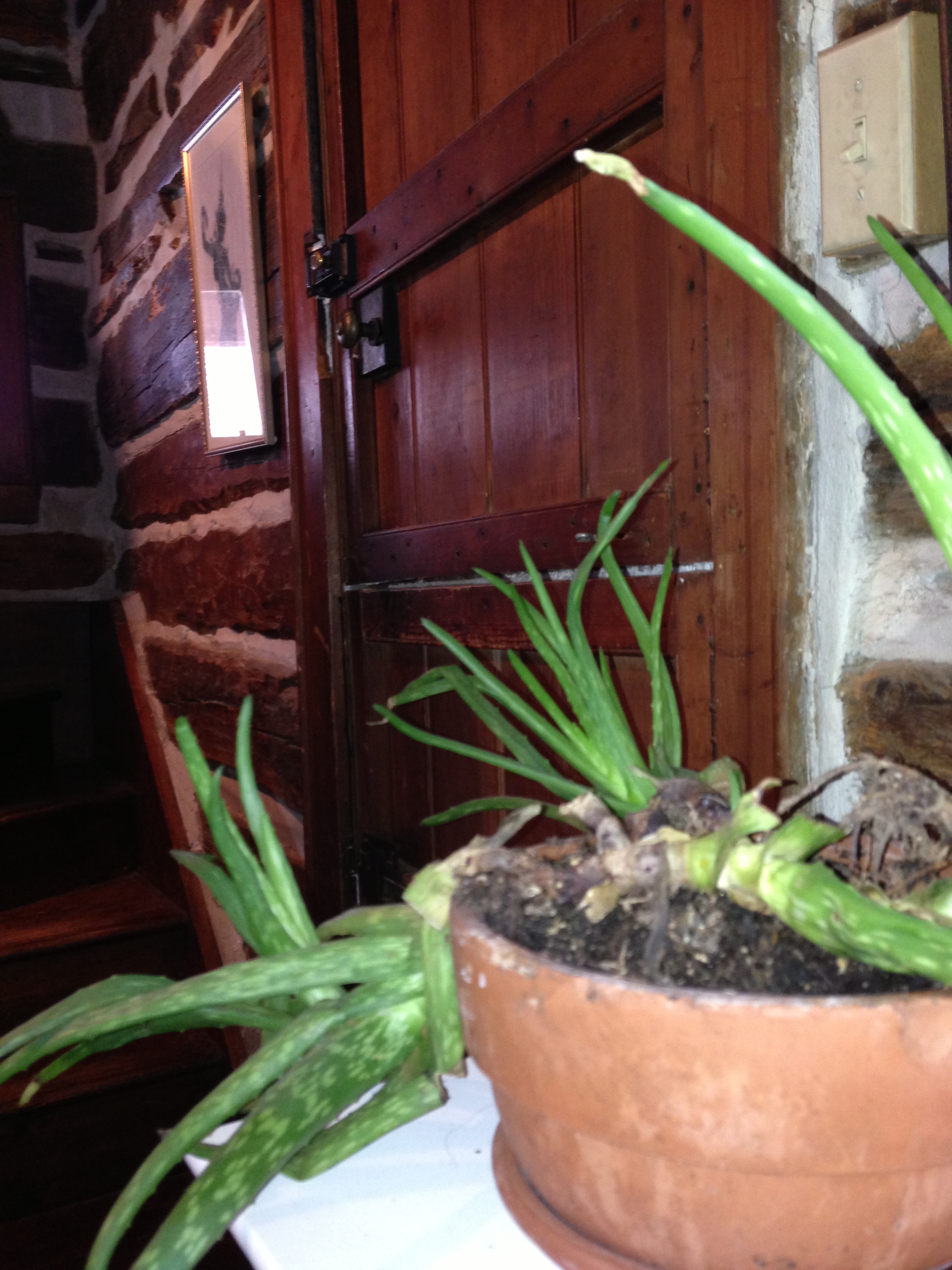
I never liked shipboard life. All our cubbies are full to bursting, plus we have out and available all the things we’re interested in at any one time. We scoot in between pieces of furniture, and sometimes have to tuck in our feet so they don’t get stepped on. Books clutter every surface. (Don’t say clutter though, that’s a negative, suggesting untidy or disordered – try “a wealth of books” instead.) I can barely see the surface of my narrow desk, covered as it is with slips of paper, notebooks, folders and stacks of books. Pots live out in the open in the kitchen, the cupboards won’t fit them. I just realized the aloe plant I proudly acquired and nurtured this winter has to be moved so the dutch door will open this summer.
aloe

I like to write about peoples’ houses, and some of them have been big enough to fit the Cabin into many times over. Shadow Brook, for example, which the Stokes family built in 1893 in Stockbridge, Massachusetts. The rambling stone castle cost one million dollars to construct, and had an acre of floor space on each of four floors.

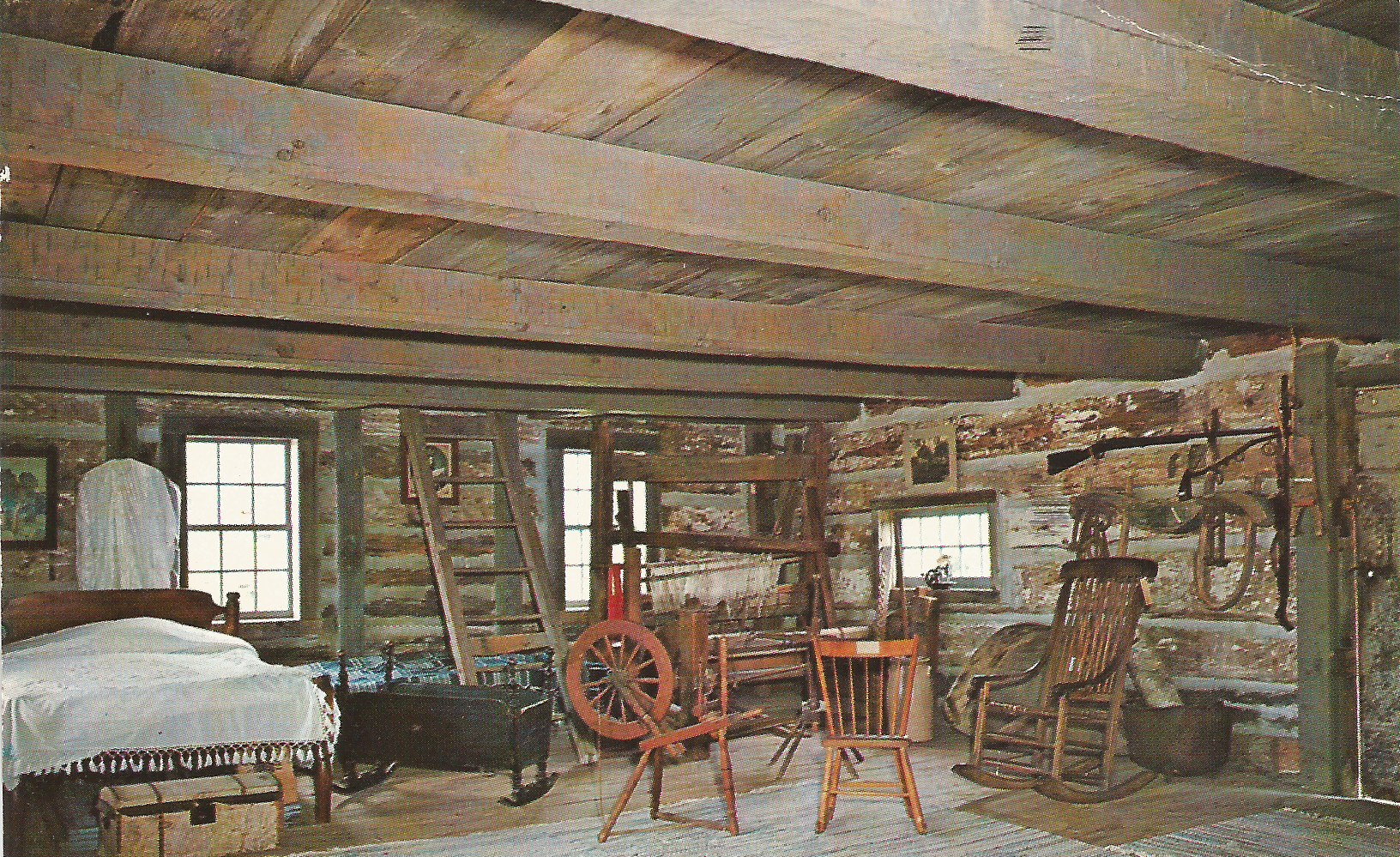
In Vermont a cabin built by a family named Hyde has stood since 1783. It’s a twin to ours, built during the same era, with similar materials in a near identical layout.
Hyde cabin

We do have another floor, also tiny, and a kitchen in the basement, neither of which was there when the Cabin first went up. It must have felt like such a haven when you came in with wet boots around 1800 to the fire roaring in the hearth and maybe a chicken on the spit.

Ours isn’t quite the tiniest home. I know because I’ve done a little sleuthing.
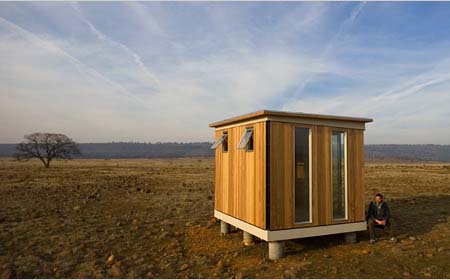
tiny home outside

Last spring I visited a publishing convention in southern California, where I manned a table with advance copies of The Orphanmaster to be signed and given away. Just across from me, I noticed in between conversations, was a constant throng of people. When they cleared momentarily I saw that the author at that table was signing copies of Tiny Homes: Simple Shelter, a large-format book that was beautifully illustrated with pictures of places that some might say were suitable only for Tom Thumb.

At the book conference, every time I looked across the way there was the Tiny Homes author, replenishing the stacks that towered on his table from the cardboard boxes behind his chair.

Lloyd_Kahn

Lloyd Kahn, the author, was once upon a time the shelter editor of the Whole Earth Catalog and has spent his life building green structures out of interesting materials (sod roofs, poured concrete walls, plywood and aluminum geodesic domes), when he wasn’t surfing. At the convention, he also had adorable palm-sized souvenirs of his book, tiny books about tiny homes, one of which I took back to my own home.


Cover

It made me wonder. The fantasy of a tiny home. All these people lining up for a glimpse into the peanut world presented to them by Lloyd Kahn. Who actually wants to live the tiny life? Besides Gil and me?
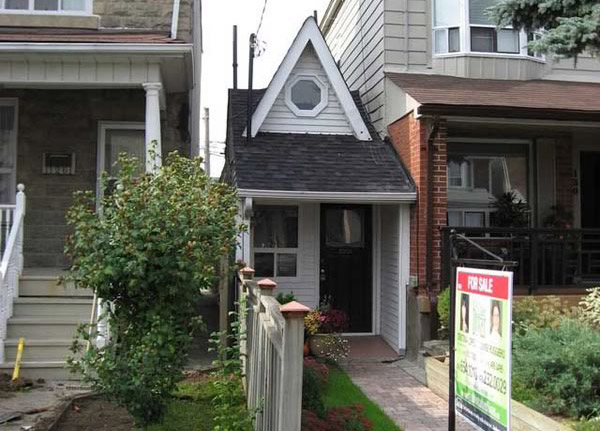
house between two

People who live in tiny homes see life as an adventure.
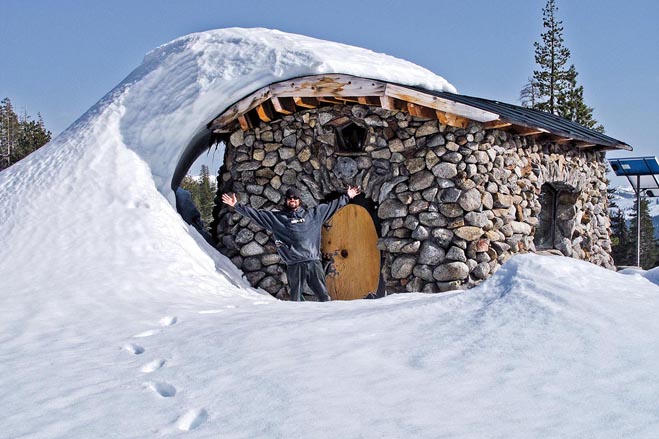
tiny homes simple shelter 1

Edna St. Vincent Millay lived at 75.5 Bedford Street, in Greenwich Village, which was then and now Manhattan’s skinniest house. “Please give me some good advice in your next letter,” wrote the poet. “I promise not to follow it.” Her narrow domicile had only 999 square feet and was 9.5 feet across in the front. Last I heard it was on the market for 3.95 million dollars.
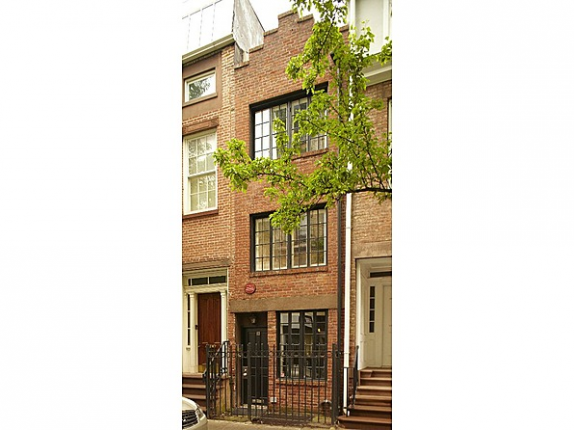
75.5-Bedford-Skinny-Front-574x430

I checked out a web site for people who want to buy, sell and rent tiny structures. Tiny House Listings offers homes of 1,000 square feet or less.

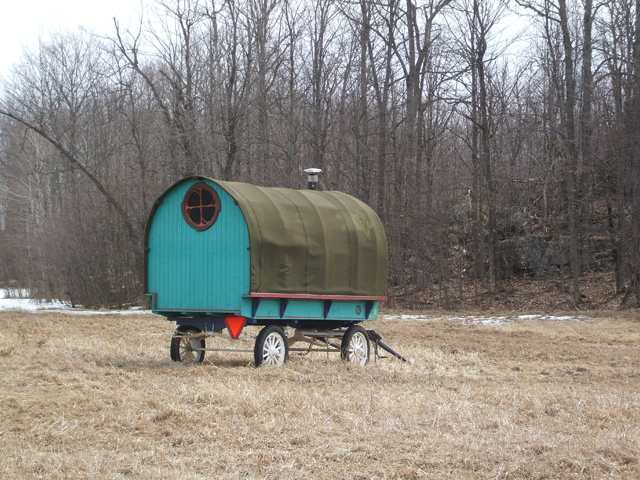
Could anyone not love this caravan? A kind of giant beer barrel on wheels.
Bears Caravan

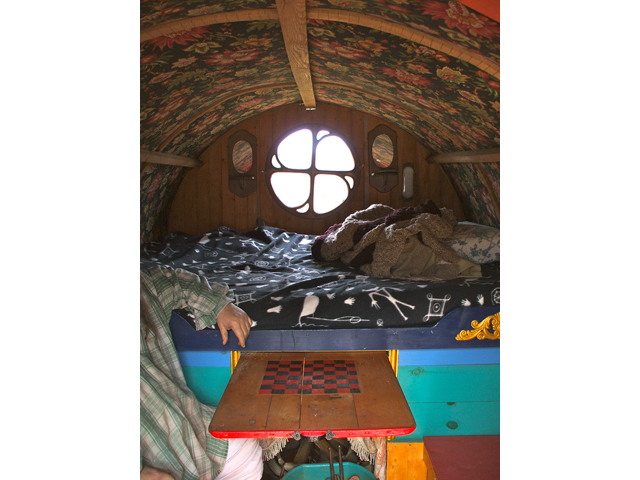
Five hundred square feet. Yours for $29,000. Siloam Springs, Arkansas. Checkers included.
Bears Interior

For a bit more you could have this hobbit house, an A-frame in Granite Falls, Washington.

A Frame

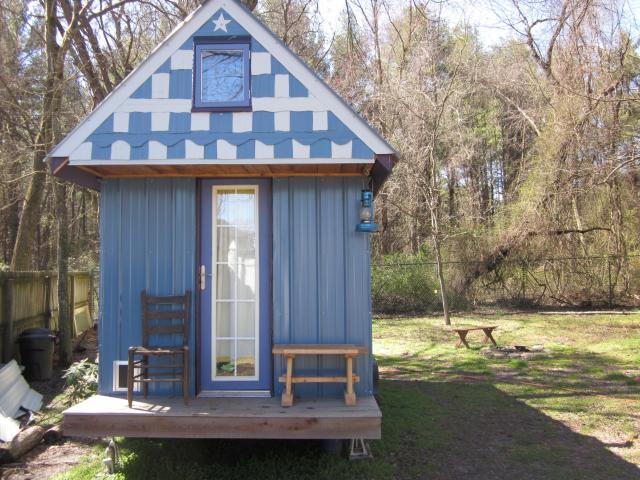
Or rent. For 400 a month you can stash your stuff in this green house’s cubbies.
Or rent

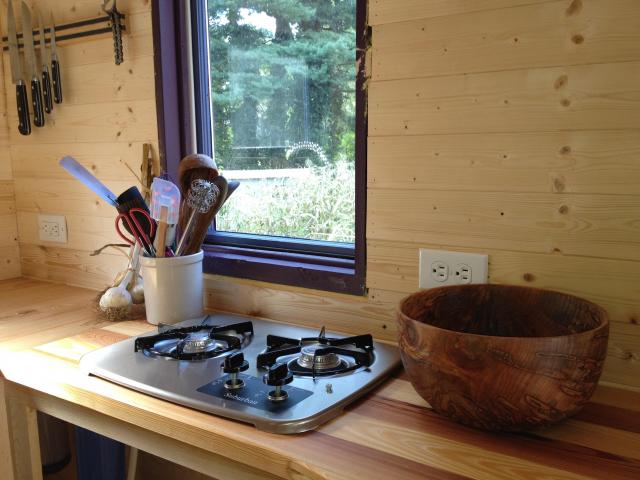
The web site allows you to dip inside and get the big picture, so to speak, before you commit to the Tom Thumb lifestyle.
interior rental

For a galley, it looks more spacious than the Cabin. Maybe it’s all that clean, smooth, un-lived-in pine.
1 Comment

Filed under History, Home, Jean Zimmerman, Publishing, The Orphanmaster

Blandine in Hollywood

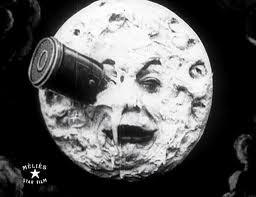
I’m over the moon, even though I know it’s made of cheese.

Man in Moon

Today, this happened.

A man walks into his office. He sits at his desk – no, not a desk, that would be too quotidian. He settles himself into a Biedermeir chair behind a slab of onyx held up by columns of piled film scripts. Hollywood golden sunlight floods through the windows. A woman follows, with perfect hair and an expression that is intelligent and ambitious in equal proportions.

They are partners in a company so impossibly famous that when you go into tiny villages of squatters in the four corners of the world, they have heard of their movies.

I have something to show you, says the woman.

He holds the novel in his hands, glances down at the title.

What does it mean? he says.

There’s an American woman, and a man who’s an English spy, she says. Bad guys, good guys, accusations of witchcraft, child abductions, supernatural demons. She’s hot shit, says the woman. And it all takes place 300 years ago, in Manhattan. It was virgin forest then, she says.

I know that, he says.

A beat.

So, the mogul says, for the heroine, that blonde from Thrones, what’s her name, Kahleeza something… and the hunk… we’ll get Depp. Or maybe that guy Fassbender…

For a moment, he muses, while she goes over and adjusts the blinds so they’re no longer fucking blinded.

He opens the book. Reads the first line:

On the same day, two murders.

hollywood-sign

7 Comments

Filed under The Orphanmaster, Writing

The Bite-In-the-Ass Detail

I just finished a work of history that I found as interesting for what it was not as for what it was. In Jefferson’s Pillow: The Founding Fathers and the Dilemma of Black Patriotism, Roger Wilkins explores the disconnect between the egalitarianism of the founding fathers and the fact of their slaveholding. It delves into the experiences of black and white Americans during the Revolutionary era.  My book group loved the book. It has a personal cast as well as an academic focus, showing how the author as a black American came to respect and value the contribution of the early patriots despite their hypocrisy, which so harmed his African and American ancestors. “To be human,” he insists, “is to live with moral complexity and existential ambiguity.”

Roger Wilkens

I read the book wanting to be drawn in by the author’s careful parsing of racism then and now, and I felt moved by the telling of it. Yet I found myself wanting more. More details, more original sources. More of the bits where the author painted a picture. More crunch. Wilkins cites the fact of Thomas Jefferson, for example, being carried on a pillow as a child by slaves belonging to his wealthy family – the trope that gives the book its title. It’s a gripping image. Yet I wanted the participants’ names, the type of carriage, the destination of the procession, the fabric of the pillow.

Thomas Jefferson

We have a term in my house that gets at the fabric of the pillow. Once, Betsy Lerner, she of the keenest mind and editorial ability (she’s also my literary agent) made a comment in passing. I want more bite-in-the-ass details, she said. That’s what good writing called for.

From that day on, Gil and I knew it when we saw it. “BITADs,” as he abbreviated her counsel. Bite-in-the-ass details.

BITADs are the key to good writing. Or at least the writing I like and aspire to. I want the detail that sings, that is irresistable, unassailable.

Take hummingbirds, for example. Okay. Adriaen van der Donck was a Dutch lawyer who helped settle New Amsterdam in the mid-seventeenth century. For a book, I borrowed his thoughts from his journal on the subject of these beautiful creatures, that they were too “tender,” as he wrote, to make good pets: “We … prepare and preserve them between paper,” he explained, “and dry them in the sun, and send them as presents to our friends.” Russell Shorto, in his insightful work The Island at the Center of the World, relied heavily on Adriaen van der Donck, but left his ass unbitten by the hummingbird.

hummingbird

But the bird’s a BITAD, one that helped me show Europeans’ awed reaction to the New World when I was writing The Women of the House: How a Colonial She-Merchant Built a Mansion, a Fortune, and a Dynasty. (It was such a fine BITAD I repurposed the poor dessicated hummingbird for The Orphanmaster as a gift that a smitten suitor gives Blandine, the novel’s heroine.) Scouring the texts of seventeenth century America I have found a surfeit of BITADs, from wild grapes “as large as the joints of the fingers” to winter weather cold enough to freeze eels in a bucket of water, to six-foot lobsters harvested from the floor of the East River off Manhattan.

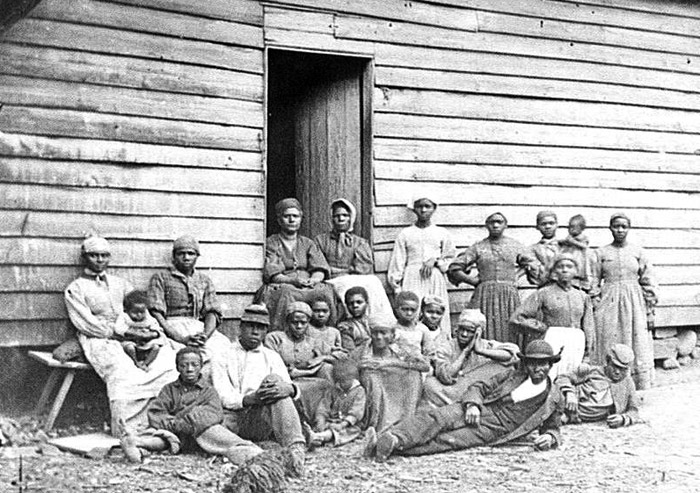
The details I sought out in describing early New York in The Women of House went beyond the wonders of nature. Like Wilkins, I discussed slavery, which was more prevalent on Manhattan and its environs than many people are aware of. I found myself fascinated, too, by slave rebellions of the colonial era. There were many and they were gruesome affairs. Wilkins mentions the Stono Rebellion of 1739, but somehow neglects the details that make it so arresting, a car wreck from which you cannot avert your eyes.

slaves

Stono took place in South Carolina, just outside Charleston. King Philip of Spain, who had colonized Florida, offered freedom to any English-owned slave who could flee to St. Augustine. Then he proposed a settlement to be founded by and for escaped slaves. It would be called Fort Moosa. All residents would be armed against their former masters.

What happened next is something that has been pretty much erased from our collective memory. Twenty Stono slaves raided a weapons depot and left the heads of two hostages on display before crossing the river to George en route to the promised land of Fort Moosa. Slaying whites and appropriating weapons at every house they passed, the crew gained ecstatic adherents along the way. Slaves joined in with shouts of “Liberty!” as the freedom fighters moved south. Then, in an open field where slaves were celebrating their new freedom with rum and dancing, government troops descended. After the killing stopped, dozens of pikes topped with rebel heads lined the main road at one-mile intervals. (That’s a BITAD.)

stono_rebellion

Stono was only one of dozens of slave rebellions during the colonial period. Some conspiracies took place in New York, where it was said that slaves poisoned the water supply or set conflagrations. The so-called Great Negro plot of 1741 involved both black and white insurgents, who congregated in a tavern nicknamed Oswego after an English trading post on the shore of Lake Ontario where the riches of Europe were bartered for those of the northern frontier. (BITAD!)

Now you get it. As a young writer I assisted a woman who was brilliant but not a professional writer, helping her get her ideas down in a book. Her idea of guiding my work was a simple phrase that frustrated me no end: “Make it compelling,” was all she would say.

There are many strategies writers use to make their work compelling. The BITAD stands at the forefront. But is slavery too somber a subject to be enlivened by writerly strategies? I think not. Every subject benefits when you find the strange and particular attributes that distinguish it.

Not just big-picture history, either. Consider how you might tell a story of your own experience. Say I want to convey my time in middle school. I’d start with the strains of Windy, by the Association, sung in chorus, kids standing on rickety wooden bleachers… Who’s peekin’ out from under a stairway, calling a name that’s lighter than air…

Windy

I’d tell about the chorus teacher, a woman with flame-orange hair in a flip. I’d tell about her bust, twin torpedos encased in a tight wool sweater. But the BITAD, I think, would be the gold watch she wore on a pendant, which dangled over the shelf of her bosom, to our endless middle-school hilarity. The detail that sings, so to speak. Above the clouds (above the clouds) Above the clouds!

4 Comments

Filed under Jean Zimmerman, The Orphanmaster, Writers, Writing

A Pretty Good Biscuit Recipe

She made a pretty good biscuit.

2 biscuits

A kerfuffle over an obit has me thinking about how I would want my character to be rendered in print once I die.

What happened is this. Yesterday The New York Times ran an obituary for a jet propulsion scientist with a title that read, “Yvonne Brill, a Pioneering Rocket Scientist, Dies at 88.”

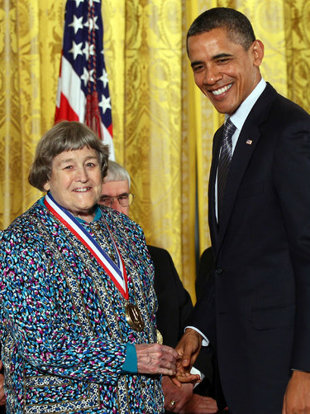
The long, laudatory article, written by veteran Times reporter Douglas Martin, honored Brill’s achievements, noting that in the 1970s, she “invented a propulsion system to help keep communications satellites from slipping out of their orbits.” She received the National Medal of Technology and Innovation from President Obama at the White House in 2011.

brill-obama-getty

The problem was the lead of the obit. It went like this: “She made a mean beef stroganoff, followed her husband from job to job and took eight years off from work to raise three children. ‘The world’s best mom,’ her son Matthew said.”

Only then did the story commence with Brill’s amazing career accomplishments: “But Yvonne Brill, who died on Wednesday at 88 in Princeton, N.J., was also a brilliant rocket scientist…”

The Twittersphere went crazy with critiques. How could “world’s best mom” precede “only woman doing rocket science in the 1940s”? A mean beef stroganoff? Really?!

In response to all the excitement, the Times edited the online version of the article to begin this way: “She was a brilliant rocket scientist who followed her husband from job to job and took eight years off from work to raise three children. ‘The world’s best mom,’ her son Matthew said.” No more stroganoff.

So consider… would you want your domestic life and achievements to take the lead in how the Times explained you at your death?

I make a pretty good biscuit. I think that sounds like a pretty good lead. And she wrote some decent books too…

It took me a long while to master biscuits. They came out too brown, too crisp. Too flat. That was the main thing. And how can you serve a flat biscuit? They were only serviceable as dog biscuits. How could I get them to rise?

Learn to bake 1 copy

I so envied my friend Christine, who could turn out a fluffy, towering batch like she was walking down Broadway.  I began to think I lacked the biscuit gene.
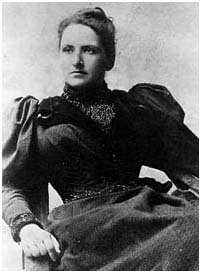
Well, there is no gene for biscuit making, it turns out. It’s just trying and failing until you succeed, like with anything (writing included).

Jean:biscuit 3

Although you do have to put in, corny as it may seem, a dollop of love. As with so many homecooked specialties. Meat loaf. Macaroni and cheese. Beef stroganoff, rocket scientist’s Yvonne Brill’s specialty.

Love, and the right recipe. Here is mine.

A Pretty Good Biscuit

Preheat oven to 450.

Sift together 4 cups flour, 8 tsp baking powder, 2 T sugar and 1 and a half tsp salt. Cut in 6 T butter and 6 T shortning (best if you use lard, especially leaf lard). Stir in 1 and a half c. milk with a fork until the dough mostly hangs together. (Here’s where you add that love.) Turn it out on a floured board and knead gently for 30 seconds. Roll dough half an inch thick and cut with a glass for the size biscuits you want. Bake 10-15 minutes. Invite over some friends. Throw a pig roast. Serve biscuits with sweet butter, jam, honey or ham.

Then go invent your space-wang-doodle and take it round the sun.

7 Comments

Filed under Cooking, Jean Zimmerman

The Widening Day

Springtime. Easter. Our days stretch. The song of frogs mating fills all of the night and most of the day.

Annie Dillard writes:

The day widened, pulled from both ends by the shrinking dark, as if darkness itself were a pair of hands and daylight a skein between them, a flexible membrane, and the hands that had pressed together all winter—praying, paralyzed with foreboding—now flung wide open.

It’s not, probably, that the first of the daffodils bloomed at the Cabin today, but that today, Easter, is when I first saw them.

daffs

Despite my intention of having a nonEaster this year, rebirth fills my head.

Eggs. Shatter the shells.

shells

Pull apart the whites and the yolks.

eggs

Devil those eggs. Place them in crystal. We will feast.

1 Comment

Filed under Cooking, Home, Writers

Some Neruda for Now

Today I stood by a graveside and listened to a priest speaking over his heavy book, watched the people carefully place their cut roses and carnations atop the casket, and wondered. Why do the words we say when someone dies seem so slight, so irrelevant to the task at hand. Why is there so little inspiration, usually, in the ceremonies of death? The one who dies, whatever happens to their body, wherever their soul flies, surely deserves more poetry.

To me these lines of Neruda’s, from the poem “Too Many Names,” would fit the bill, somehow, perfectly. It doesn’t precisely talk about death, but I think the awareness of our finite lives informs it.

This means that we have barely

disembarked into life,

that we’ve only just now been born,

let’s not fill our mouths 
with so many uncertain names,

with so many sad labels,

with so many pompous letters,

with so much yours and mine,

with so much signing of papers.


I intend to confuse things,

to unite them, make them new-born

intermingle them, undress them,

until the light of the world

has the unity of the ocean,

a generous wholeness,

a fragrance alive and crackling.

3 Comments

Filed under Jean Zimmerman, Poetry

Life and Taxes

I had an errand to do and nothing could put it off. My accountant, based in lower Broadway in Manhattan, was waiting, and up Broadway we walked.

The financial district remains trapped in a purgatory between winter and spring. Mufflers and gloves abounded. The buildings themselves seemed frozen. The sound of traffic in those narrow streets formed itself into a cartoon thought-balloon above my head.

The graveyard at Trinity Church on the corner of Wall Street and Broadway had nothing like what Walt Whitman called the “beautiful uncut hair of graves.” All the grass lay shorn and grayish-brown beneath the eroded ancient stones.

trinity gravestone

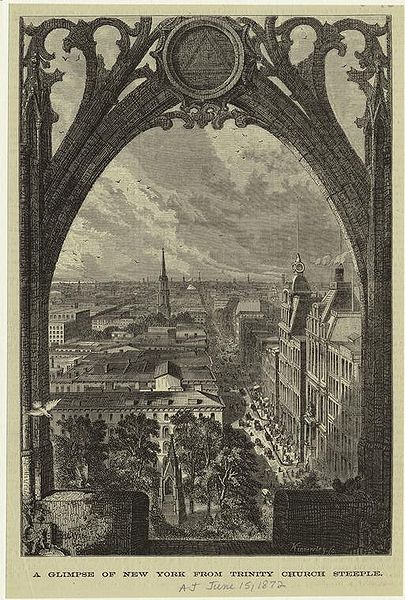
This isn’t the first Trinity Church. The original was destroyed by a fire that consumed a quarter of New York City during the Revolutionary War, leaving the steeple fallen and smoldering on the ground. The second, consecrated in 1790, was buffeted by severe snowstorms and deemed too risky to stand. The third went up in 1846. It boasted a spire that was magnificent, the tallest structure in Manhattan. The view from the church steeple became a fantastic tourist attraction and a romantic place to date.

view from trinity 1872

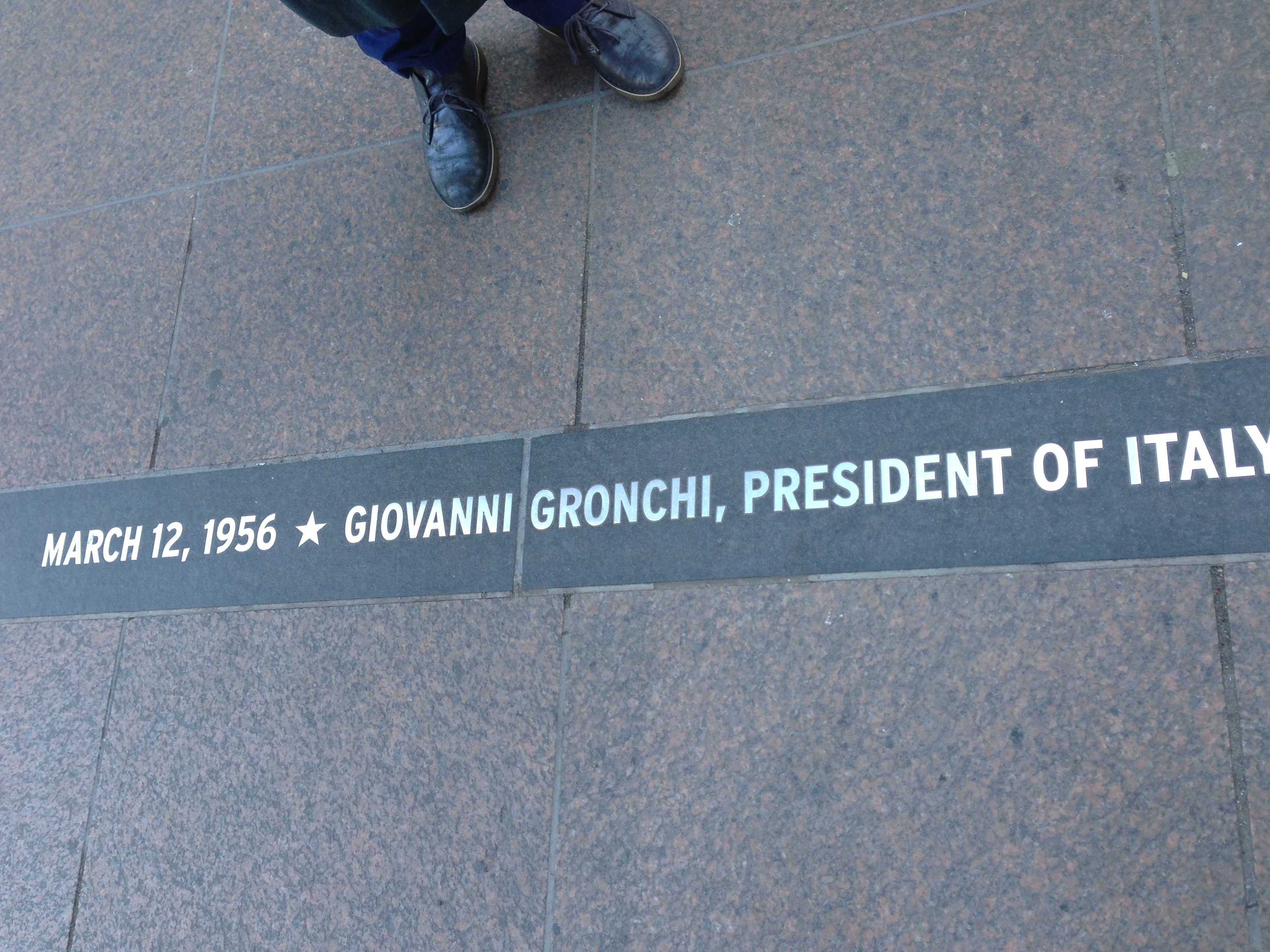
This was the Canyon of Heroes. The most recent ticker tape parade on lower Broadway celebrated  the New York Giants in honor of their Super Bowl XLVI championship in 2012, with 50 tons of confetti. And embedded in the sidewalk at regular intervals are the names of previous parade honorees.

canyon of heros

Most of them date to the 1950s, it would seem. Were we more celebratory then?

Thames Street exists. I saw it with my own eyes for the first time today. Pronounced Thaymz. A band called All Time Low did a song about it.

Thames Street,
I’ll take you out though I’m hardly worth your time,
In the cold you look so fierce, but I’m warm enough,
Because the tension’s like a fire.
We’ll head South Broadway in a matter of minutes,
And like a bad movie, I’ll drop a line,
Fall in the grave I’ve been digging myself,
But there’s room for two,
Six feet under the stars.

My accountant Sue’s office lets in the light of the harbor, though without the views. Positioned around the office were baby jade plants and elongated poinsettias left over from the holidays, depictions of angels and lollipop easter eggs. On a file cabinet, her pictured pugs, including the wiry one who kept Sue’s ill mother’s feet warm.

In front of Gil and me, untouched, a plastic bowl of peppermints. Sue can play the calculator blindfolded, one hand tied behind her back.

Sue Reda

Gil and I engaged in some chest thumping, some head hanging, some soul searching, as we always do when we review our year’s finances. What does it mean to try to make it as a professional writer in America, in New York, in mid life? Is it worth it?

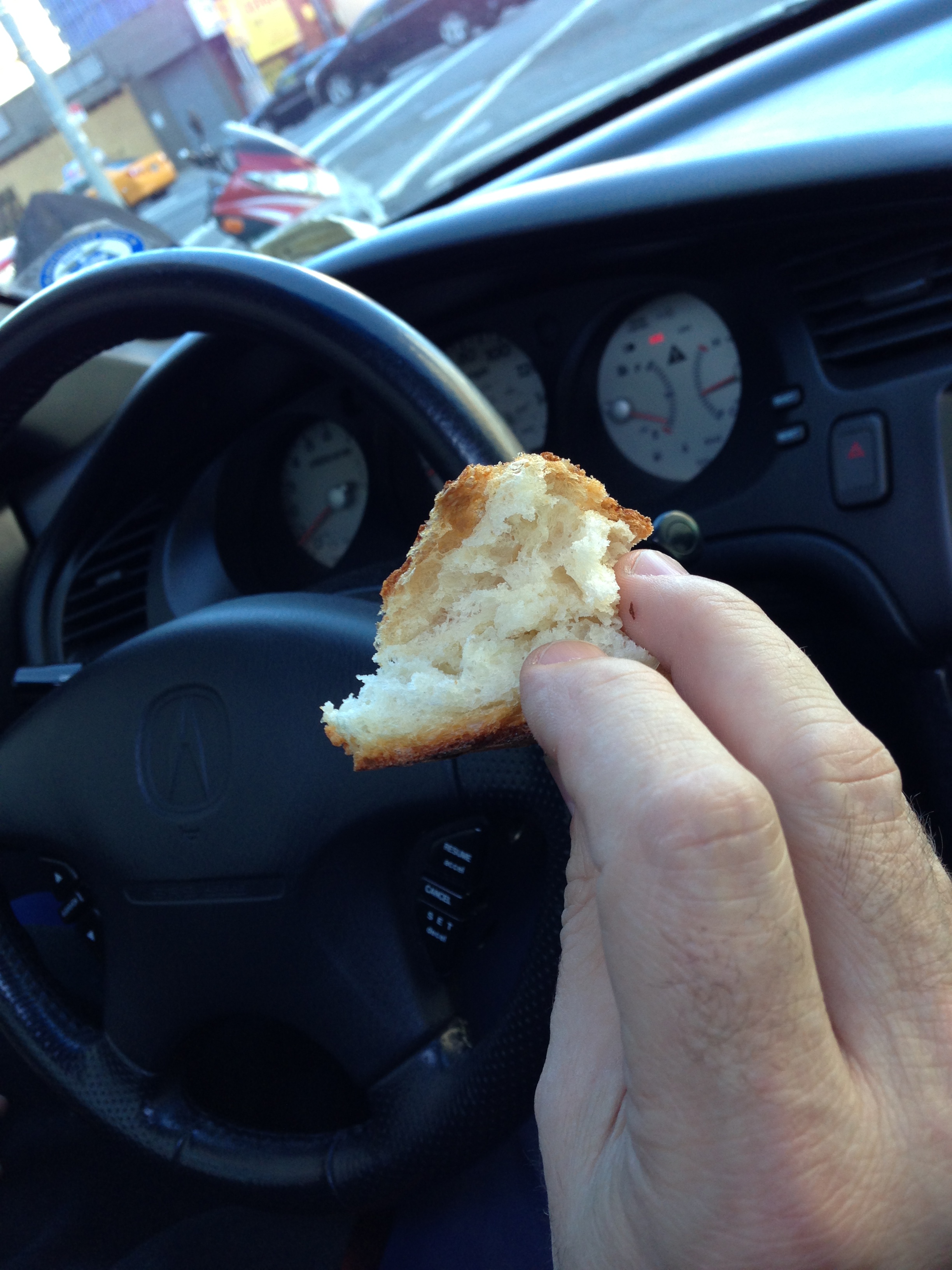
Sprung from there and resolved to keep better accounts in 2013, we stopped at Sullivan Street Bakery (located not on Sullivan Street but an industrial block in midtown). The loaf Gil brought out to the car was hot from the oven, crusty and chewy.

hot bread

We tore off the top and gulped it down, finances (nearly) forgotten.

One more errand before picking up Maud in Morningside Heights on this surprisingly good Friday. My favorite store, Fairway, where the fishmonger asked if I preferred the male or female flounder filets. The female flesh, he explained, was paler, sweeter. I think he was serious.

The fishmonger would get in trouble, he said, if he allowed me to photograph his face in the store, and he turned his back toward the sink so that management wouldn’t abuse him.

fairway

His face was beautiful.

1 Comment

Filed under History, Jean Zimmerman, Writing

100 Books About Books

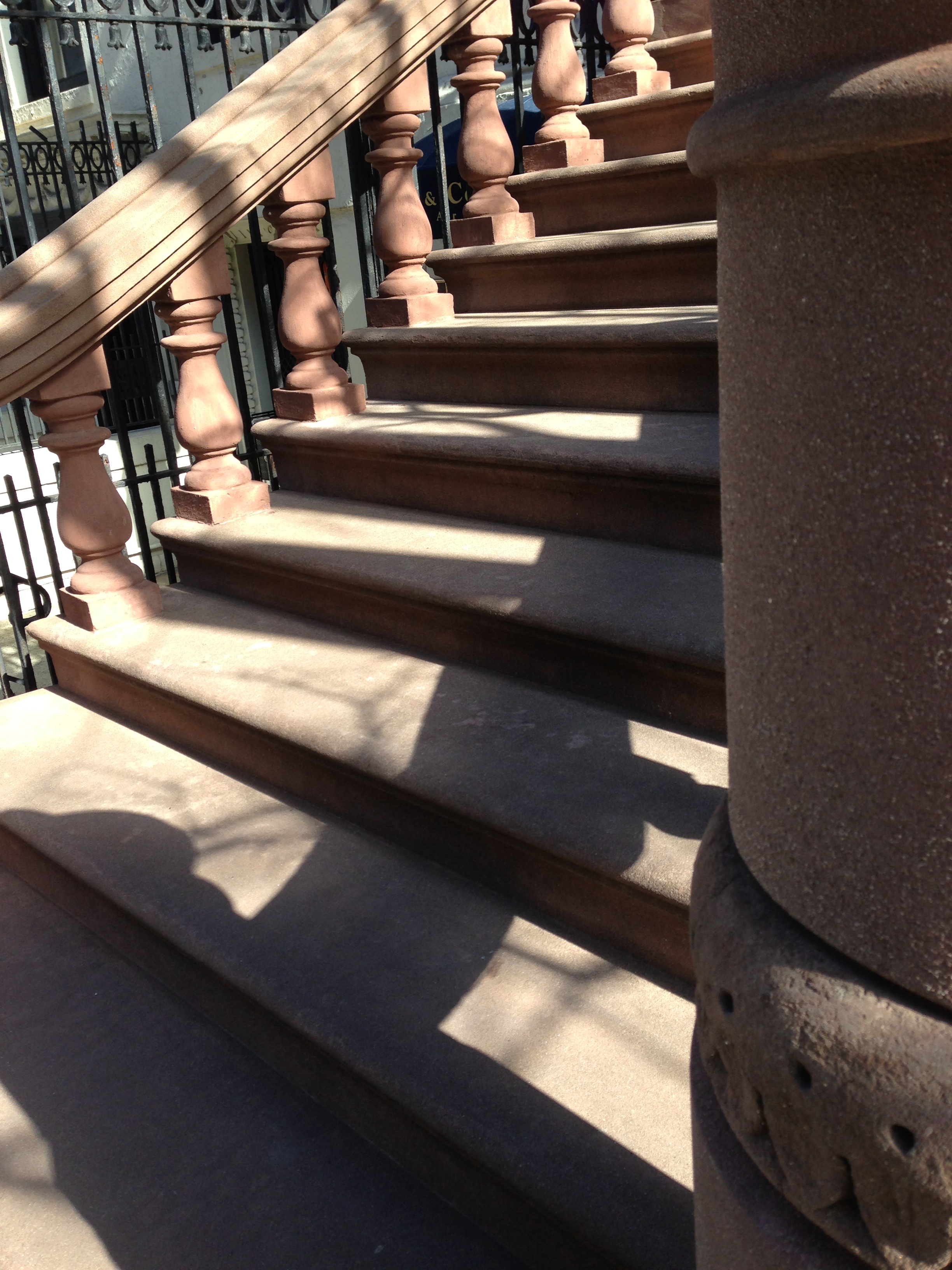
I climbed the stairs of the brownstone at 72nd Street and Madison thinking about what it was like when the house was new, in the 1880s, and surrounded but nothing but cow meadows and truck gardens.

brownstone steps

Once inside, I noted that the interior was as fabulous as it had been when I was first introduced to it and wrote an article on it for The New York Times some months back. It hadn’t been a figment of my imagination. It was all there, the gleaming mahogany, the sumptuous velvet portierres, the sparkling sunflowers spread across the wallpaper. The gold and cranberry crystal remained perfectly organized in its tall glass cabinet, ready for punch, just as it was when the Mayer family had the place in the Victorian era.

cranberry crystal

Now how to put all this fabulousness in book form? That was the agenda of the meeting, attended by architect David Parker and an independent publisher of illlustrated books who just might be interested in showcasing the brownstone so the world can admire it. How would a book look, what size should it be, how many photographs should it include? Durston Saylor, who shot the photos for the Times, might play the same role with an illustrated book. What kind of cover? What sort of endpapers? Should they resemble embossed leather – or peacock feathers (an emblem of the Aesthetic Movement)?

peacock

Still mulling over books, I left the townhouse and checked out the Edward Ruscha show at the Gagosian Gallery. There I encountered published works that were about as far from the 1880s as they could possibly be.

ruscha and his books

Ruscha is the conceptual artist who created his first book in 1962, inspired by the humble volumes he found on street stalls during a trip to Europe.

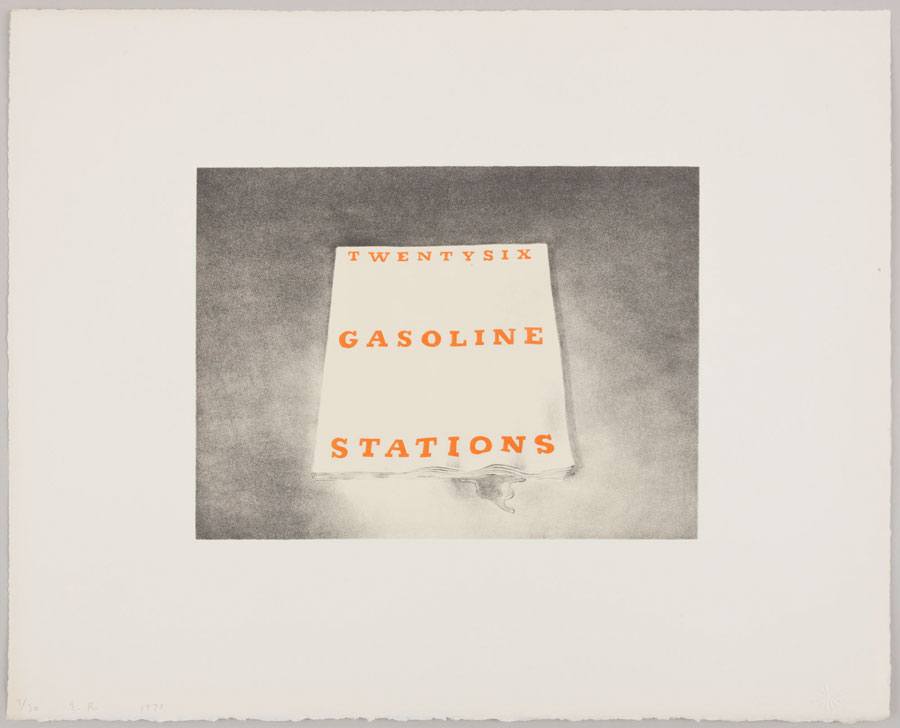
26 gasoline stations

Twentysix Gasoline Stations featured 26 photos of gas stations with simple captions denoting their brand and location. A common denominator: they were all on Route 66.

In the decades since he has published many more of these short, photographic monographs, unintimidated by the Library of Congress’ refusal to copyright Twentysix Gas Stations, due to its “unorthodox form and supposed lack of information.” His greatest hits include Some Los Angeles Apartments (1965), Nine Swimming Pools and a Broken Glass (1968), Real Estate Opportunities (1970), Various Small Fires and Milk (1964), and Thirty-four Parking Lots (1967), all minimalist, all deadpan, all brilliant.

He did something a little different but that I love in 1969 with Stains, a copy of which is in the collection of the Museum of Modern Art. Here you have a portfolio of diverse smeared substances, from L.A. tap water to sulfuric acid to egg white to parsley to cinnamon oil. All carefully listed.

stains

The art world eventually took notice of Ruscha’s mischief, and the exhibit at Gagosian displays dozens of homages to his works, many of them dangling from chains on the walls so that you can hold them and flip the pages.

gagosian

Here are some: 149 Business Cards, by John Trembley. Every Letter in ‘The Sunset Strip,’ by Derek Sullivan in 2008, which features anagrams like Enthuses Script and Persistent Huts. Mark Wyse, in 2002, assembled 17 Parked Cars in Various Parking Lots Along Pacific Coast Highway Between My House and Ed Ruscha’s. It was a small edition, only 10 printed. John Waters made his contribution in 1999 with 12 Assholes and a Dirty Foot. The exhibit goes on. There are Ten Convenience Stores, Fifteen Pornography Companies,  Nineteen Potted Palms, Twenty-six Abandoned Jackrabbit Homesteads and Every Coffee I Drank in January 2010. (The photos feature only the dripped-on take-out lids.)

Ruscha once said, “Good art should elicit a response of ‘Huh? Wow!’ as opposed to ‘Wow! Huh?'”

Also on view is Jerry McMillan’s Photographs of Ed Ruscha 1958-1972, including one of the artist as a cowboy and one wearing a bunny suit.

ruscha as cowboy

Taking the train home, my head was filled with books. Across from me, a guy wearing a crewcut, reading a thick copy of Debt: the First 10,000 Years and devouring a sloppy sub. If this were a car of Ruscha-ites, we’d all be eating a variety of hoagie and reading things like Furry Animals: The First Quarter Century and Cranberry Crystal: The First 120 years.

Ruscha

4 Comments

Filed under Art, Jean Zimmerman, Photography, Publishing, Writing

Spring, Sprang, Sprung

Finally, full-blown crocuses.

crocuses

Pine cones, scales open, strewn about, at the last stage of their life cycle.

pine cones 2

The sun, hot beams through the still-cold air.

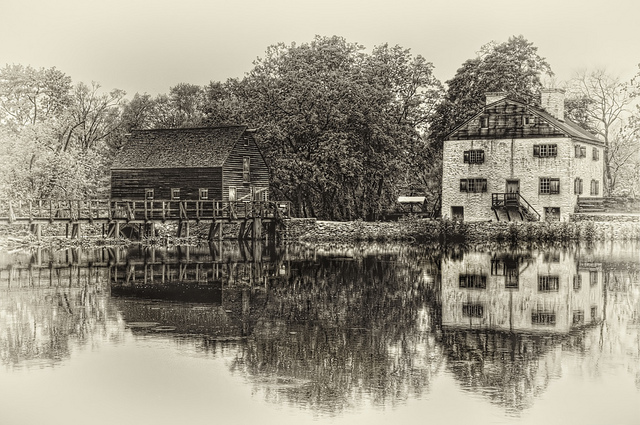
We pulled around to the back of Phillipsburg Manor, a historical restoration in Sleepy Hollow with a mill pond and a still-working farm, and got out of the car to look over the fence. A dozen sheep grazed, several of them fatly pregnant, while one tiny white lamb hid behind the herd. The first of the new babies.

philipsburg manor

I was very familiar with this place, this scene. A library stands on the property, housed in a white clapboard, colonial-style home. It contains the archive where I researched The Women of the House, where I went to investigate the lives of one New York family, the Philipse clan, and its wonderfully headstrong matriarch, Margaret Hardenbroeck Philipse. I remember that I would lift up my face from the heady dust of crumbling manuscript pages to take a break, and go to look out the window, where the early spring lambs bleated and raced around on their still clumsy legs, the white flags of their uncut tails flopping in the breeze.
It made a wonderful juxtaposition, the ancient and the new.

As a longtime nonfiction writer, and now historical fiction, I have spent, cumulatively, I think, whole years of my life in libraries, and I know that some of the best days in my life have been in libraries. I’ve not only dug in to books and manuscripts, taken thousands of pages of notes, and written many chapters, but even eaten and drank within different libraries’ hallowed halls.

I’ve also taken some great naps, with fantastic dreams.

Libraries are in my blood. Some of my favorites over the years: my hometown library, overlooking the Hudson River, which had a conservative collection but the perfect books I needed growing up, the Virginia Woolf and Lawrence Stern and Melville that made me the writer and person I am today.

hastings library view

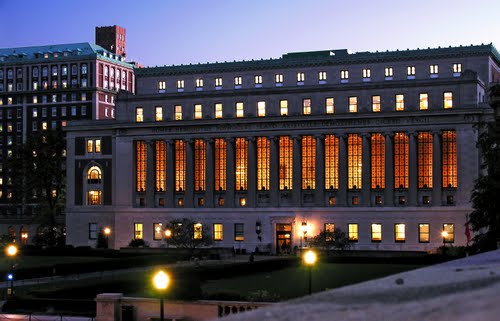
Then there were the stacks at Columbia University’s Butler Library when I was an undergraduate– what a thrill it was to step through that heavy portal and prowl among the tiers of volumes with their sweetly musty aroma of aged book paper.

butler

I have to mention the New York Public Library, where for 30 years I have made pilgrimmages to the Rose Reading Room, to the Manuscripts Collection and most recently to the Allen Room, which allows authors with book contracts the privacy and quiet to make progress on their projects. The NYPL – all that chunky Vermont marble and golden oak can’t help but inspire a writer.

rose

But I digress. It is spring, still brisk, but time to think about spending afternoons outside, not inside even the most magical library’s walls. I know I’ve told this story of Gertrude Stein before but it bears repeating.

When Stein was an undergraduate at Radcliffe, in the 1890s, studying under psychologist William James — she was a young woman, conventional at least on the outside, not the close-cropped Amazon she would some day become —  the day came to take the course’s final exam. Here is how she tells the story in The Autobiography of Alice B. Toklas:

“It was a very lovely spring day, Gertrude Stein had been going to the opera every night and going also to the opera in the afternoon and had been otherwise engrossed and it was the period of the final examinations, and there was the examination in William James’ course. She sat down with the examination paper before her and she just could not. Dear Professor James, she wrote at the top of her paper. I am so sorry but really I do not feel a bit like an examination paper in philosophy to-day, and left.

young

“The next day she had a postal card from William James saying, Dear Miss Stein, I understand perfectly how you feel I often feel like that myself. And underneath it he gave her work the highest mark in his course.”

It’s spring. Let’s cut school. Let’s cut work. Let’s get out there and smell the crocuses.

1 Comment

Filed under Jean Zimmerman, Writers, Writing

Softcover Orphanmaster – First Copies

I was grumping around the Cabin in my chenille socks. I had a couple of bad things troubling my mind, ranging from awful (my close friend’s mother’s demise) to just stupid (bills overdue) and issues in between. It occurred to me, too, that I was no longer on vacation. Poor me.

Oliver began to sound his bassett-style bellow, smearing his nose against the little window overlooking the driveway as though he saw the four horsemen of the apocalypse charging his way.

O at Window

But with him, you never know. It could be a sadistic chipmunk or just a change in the direction of the wind.

Anyway, the UPS truck dumped off its cargo. Inside the padded envelope, an agreeable surprise: the first two copies of The Orphanmaster’s paperback edition had rolled off the printing press and into my hands.

O-Master P-Back Cover

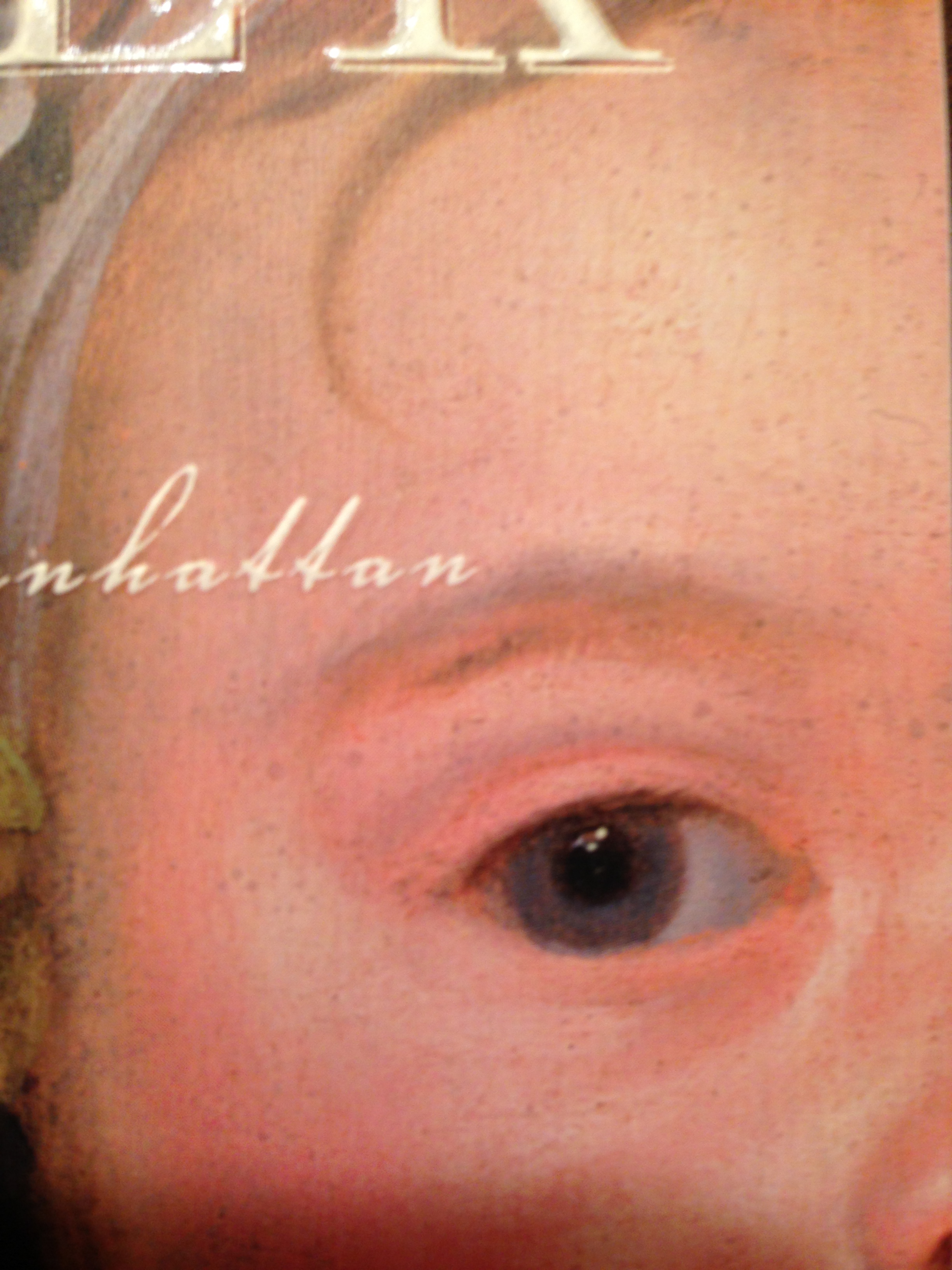
I had seen the jacket before, of course, in correspondence, but I had never run my fingers across the white raised type of the title. I hadn’t met the gray, gleaming, innocent eye of the little girl who stares out from the cover, seen her flushed cheek close up.

eye

Never seen the validating pull quote across the top of the cover:

“The ideal historical mystery for readers who value the history as much as the mystery.” – The New York Times

I hadn’t taken note of the other quotes Penguin put in to entice readers as soon as they opened the book. The words raced now through my still somewhat sluggish-from-grumpiness mind:

“Immersive first novel.” – USA Today

“A rip-roaring read.” – National Public Radio

“Teems with enough intrigue, lust, and madness to give our twenty-first-century Big Apple a run for its money.” –Sheri Holman

“A breathtaking achievement.” – Joanna Scott

“As riveting and nightmare–inducing as any Grimm’s fairy tale.” – curledup.com

And my personal favorite:

“Compulsively readable.”—Booklist

Etc., etc.

“Poetry makes nothing happen,” wrote Auden, in “In Memory of W.B. Yeats,” likely the most mournfully beautiful poem in the English language. Getting this wonderful version of my book in the mail can’t push back the shadows, pay the bills, restore life. I’m still trudging around in my socks.

But it’s a good thing. April 30th, the pub date, is not far away. Then we’ll celebrate.

8 Comments

Filed under Home, Jean Zimmerman, Poetry, Publishing, The Orphanmaster

Mapping Amusement and Despair on Manhattan

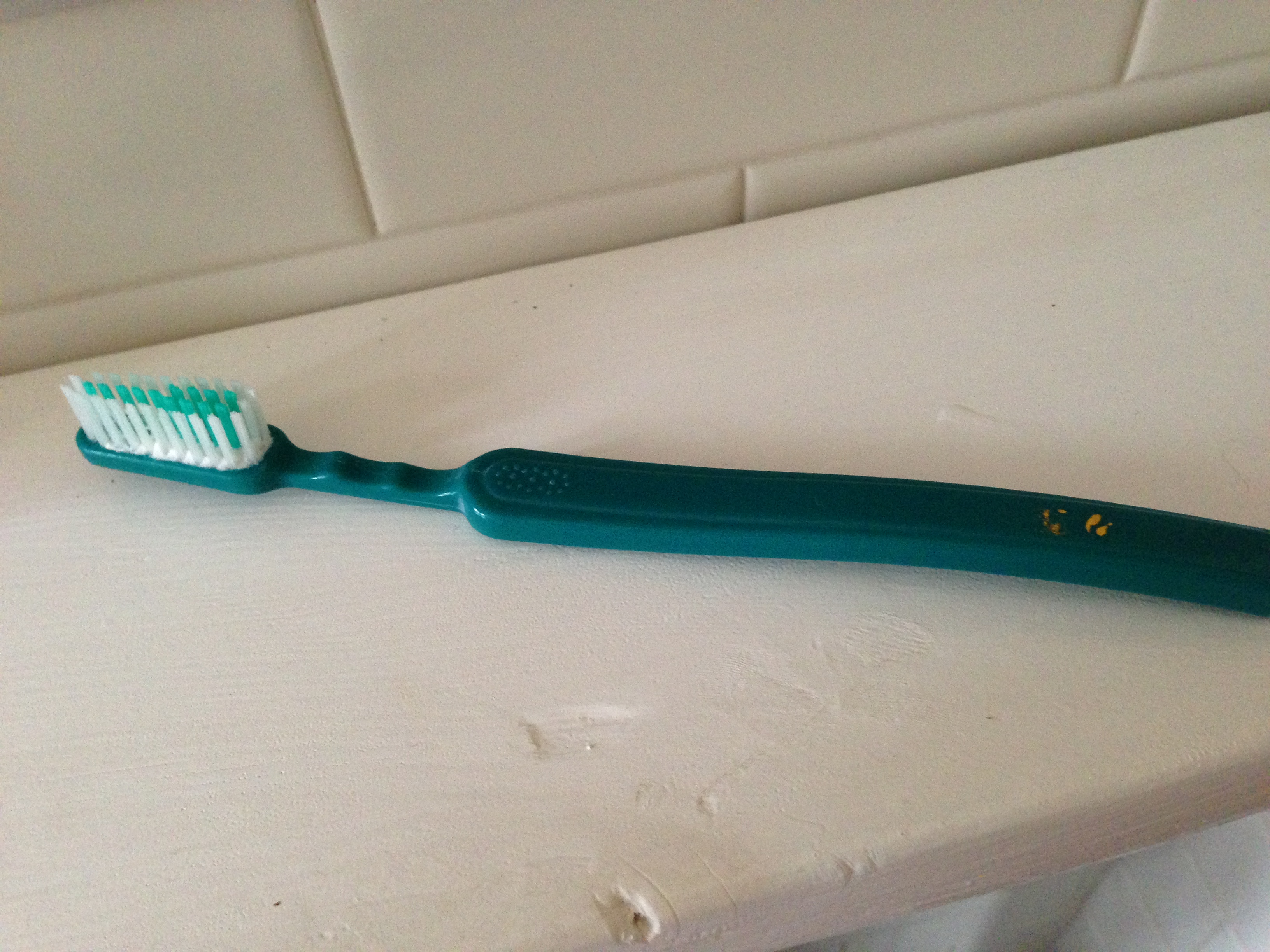
I like handmade maps. Of course. (I do like machine-made products too. Like toothbrushes. My current one resembles part of a kit stowed aboard a cold-war Russian submarine, wielded by a rough hand.)

toothbrush

But do I fancy maps drawn with a human touch. Especially maps of New York.

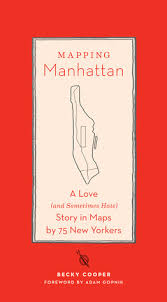
Now comes a new book whose author, a young cartographer named Becky Cooper, distributed nearly 3,000 outlines of Manhattan Island to New Yorkers and asked them to fill in the geographic details. The results, compiled in Mapping Manhattan: A Love (and Sometimes Hate) Story in Manhattan by 75 New Yorkers,“reveal more about their makers than the places they describe.” So says the author. The book will be published in April by Abrams Image.

mapping manhattan

When you ask New Yorkers on the street for directions they never mislead you. These maps, likewise, reveal all.

Cooper map

One map chronicles a man’s four-decade love affair with his wife, including her death. Another shows where the person got a crush, got drunk, got chased. One shows the coffeehouses of the city in linear detail.

Cooper map 2

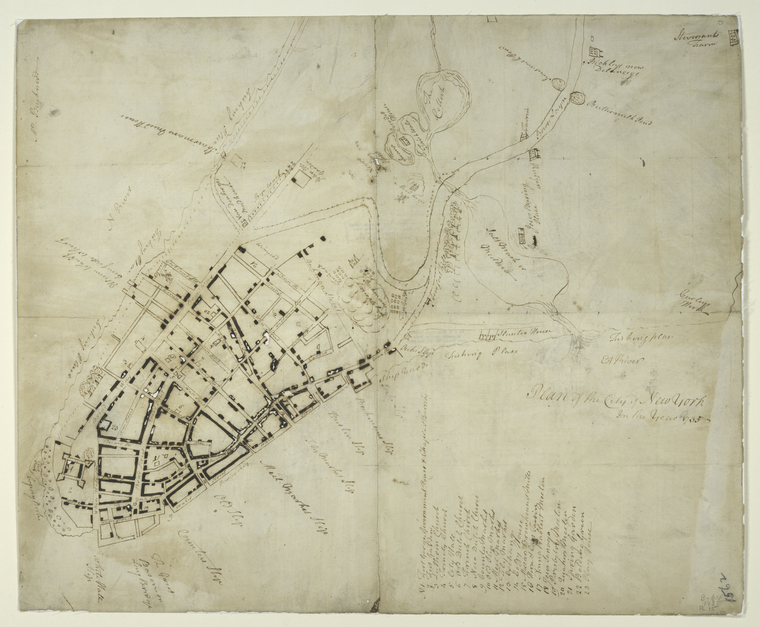
A woman in a different era, who signed her map simply Mrs Buchnerd, also showed a “Coffy House,” near Dock Street. She detailed the amusements of Manhattan in 1735. The paper she used to draw her map – in a spidery hand, its ink now faded to brown – reveals traces of folds that suggest it was designed to fit a pocket. It appears to have been a key to the city a lady might have given a visiting friend to navigate its many amusements. It is the first known plan of the city to be executed by a woman.

Mrs. Buchnerd's Map

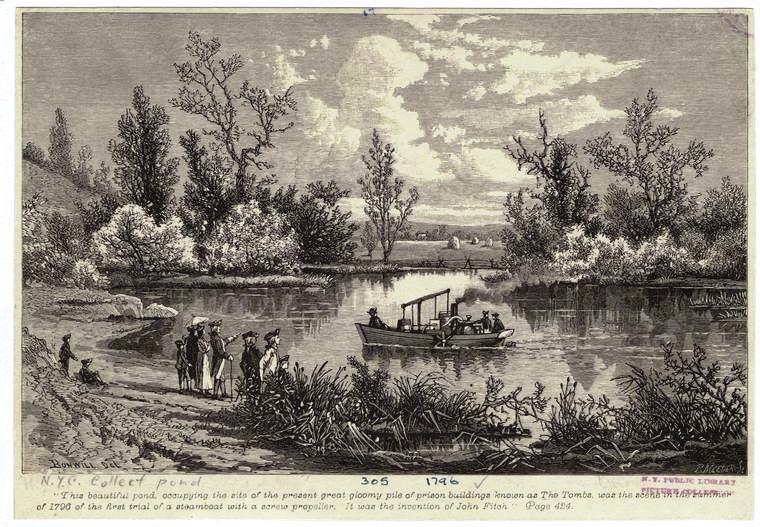
Close examination reveals “resorts” where genteel residents could take the air – a famous pleasure garden named “Vauxhall,” for example, on Greenwich Street between Warren and Chambers, the future site of Soho – a good place to dine and dance and stroll through sylvan landscapes. There was a similar hot spot called “Spring Garden,” and one she labelled simply “the winyerd.” She rendered the pools where romantic idylls might take place, Buttermilk Pond and Sweetmilk Pond, as well as the major source of clean drinking water, the Collect, later submerged under Canal Street.

Collect_pond

As mesmerized by the lives of the rich and famous as a gossipy tour guide would be today, she noted the country estates of the elite, Stuyvesant, De Lancey and others. She designated a theater at the base of Broadway, just above Beaver Street. And she drew the four major markets where an out-of town-friend might want to shop: the Fly Market, the Meal Market, Coenties and Old Slip.

I especially like Mrs. Buchnerd’s notations on the east and west shores of the island that read “Fishing Place.” You get the sense from her plan of a town in love with itself, with its attractions and its amusements, no different than today’s Manhattan. Except then a central social scene might be a turtle feast at a “house” along the East River. Reverand Andrew Burnaby from England kept a diary of his travels through North America.

burnaby

He chortled over these flirtation marathons, where “thirty to forty gentlemen and ladies meet to dine together, drink tea in the afternoon, fish, and amuse themselves till evening, then return home in Italian chaises – a gentleman and lady in each chaise.” Shocking! En route, couples passed atop a Kissing Bridge, which arced over a millstream just about where the chamfered crown of the Citicorp Tower later would stand in midtown Manhattan. Who knew what might happen.

The Buchnerd map is elegantly elucidated in Manhattan in Maps: 1527-1995, by Robert T. Augustyn and Paul E. Cohen.

I. N. Phelps Stokes, the obsessive map collector I profiled in Love Fiercely: A Gilded Age Romance, originally published the Buchnerd creation in his Iconography of Manhattan Island.

Stokes

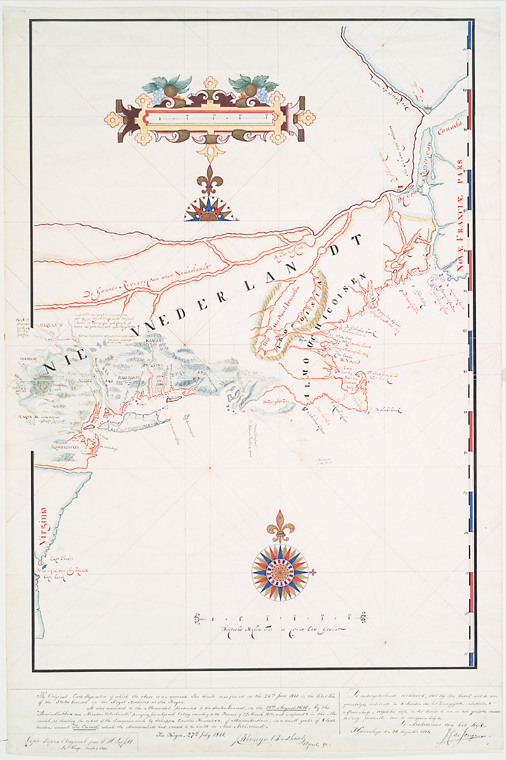
Stokes concerned himself especially with renderings that showed Manhattan’s “insularity,” a cherished concept for him, in other words depictions showing that the island was in fact an island. The first of these was a 1614 production  by Adrian Block, a trader and navigator who had the interesting status of being the first European to take up lodgings in Manhattan, when his ship burned to its hull and he had to rebuild it, with the help of local Algonquins, spending the cold season on the great Bay of New York. The remains of that ship, the Tyger, were uncovered in 1916 during the construction of the New York City subway system.

Adriaen Block's map

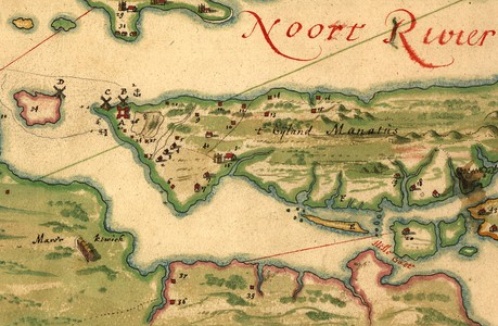
More intimate, and more resonant for me, with a sweet hand-drawn feel, is the 1639 creation known as the Manatus Map, inked in Holland, which highlights the red-roofed farmhouses of the island and flags the names of their owners, along with delineating windmills and hayricks. The background forms a green field against a coastline of soft blue, the whole comprising a somehow idyllic picture of Manhattan at its first settlement by Europeans. It looks, appropriately, like there were only about 25 people living there.

manatus cu

The drawing evokes the flavor of one of the most famous early geographical renderings, the Gough Map of Great Britain, dating to about 1355.  Its name derives from an early collector.

Gough Map Settlements

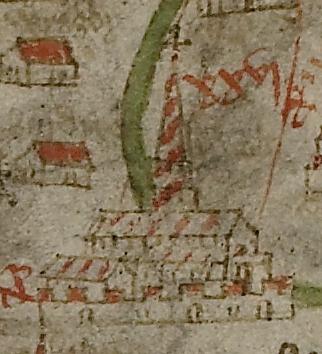
Across the Gough Map’s weathered face, pictographs of tiny towns and roads, along with place denotations.

Gough Map

London is one of two settlements whose names are rendered in gold.

Gough Map London

No one knows who penned the Gough Map, or why. And no one knows who kissed its maker, or where he got his coffee. But the map allows us to imagine.

Leave a comment

Filed under History

Ghosts of Garments Past

I visited my parents in the  desert. My mother shared her wisdom on various things.

The efflorescing flora all around.

Mexican Golden Poppies

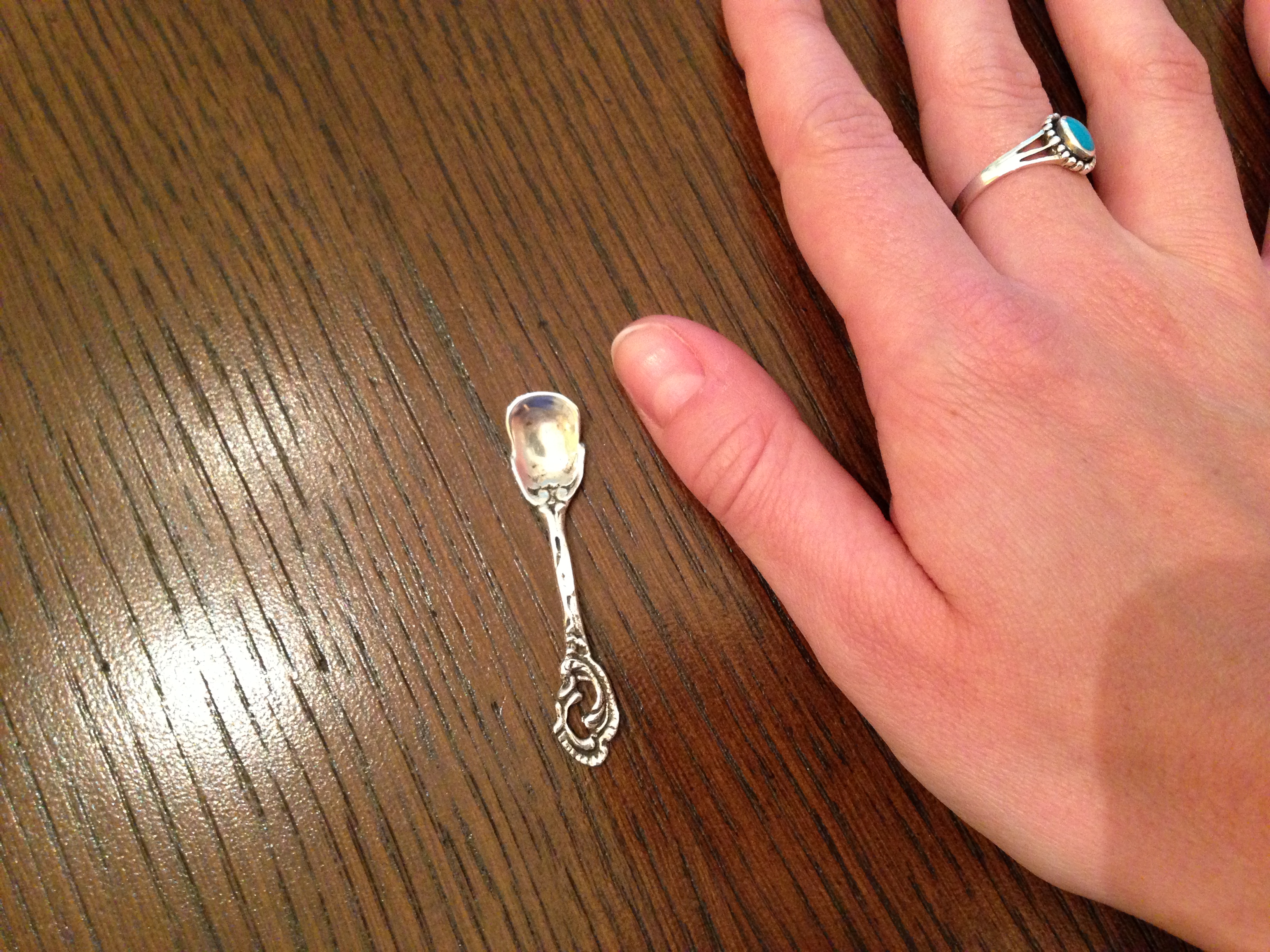
Family history, seen through a series of silver demitasse spoons.

silver spoon

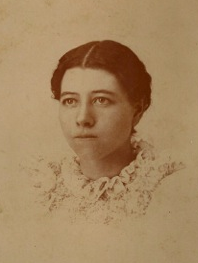
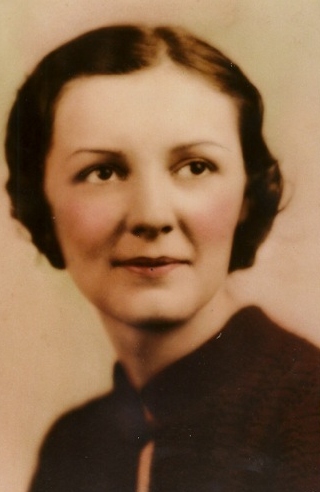
They belonged to Lockie Hilllis Coats, my great grandmother, shown here in 1894.

Lottie

The personalities of various seniors my mother lives with, who mingle and gossip like kids in a college dorm. She and my father have a charmed life at their retirement community. Though that sounds like almost too technical a name for a place with stretching gardens, a comfortable, well-thumbed library and big open doors onto a sun-flooded patio. They adore it.

Silverstone-Arches-Toward-Mountains

I began to miss them even before I stepped on the plane back.

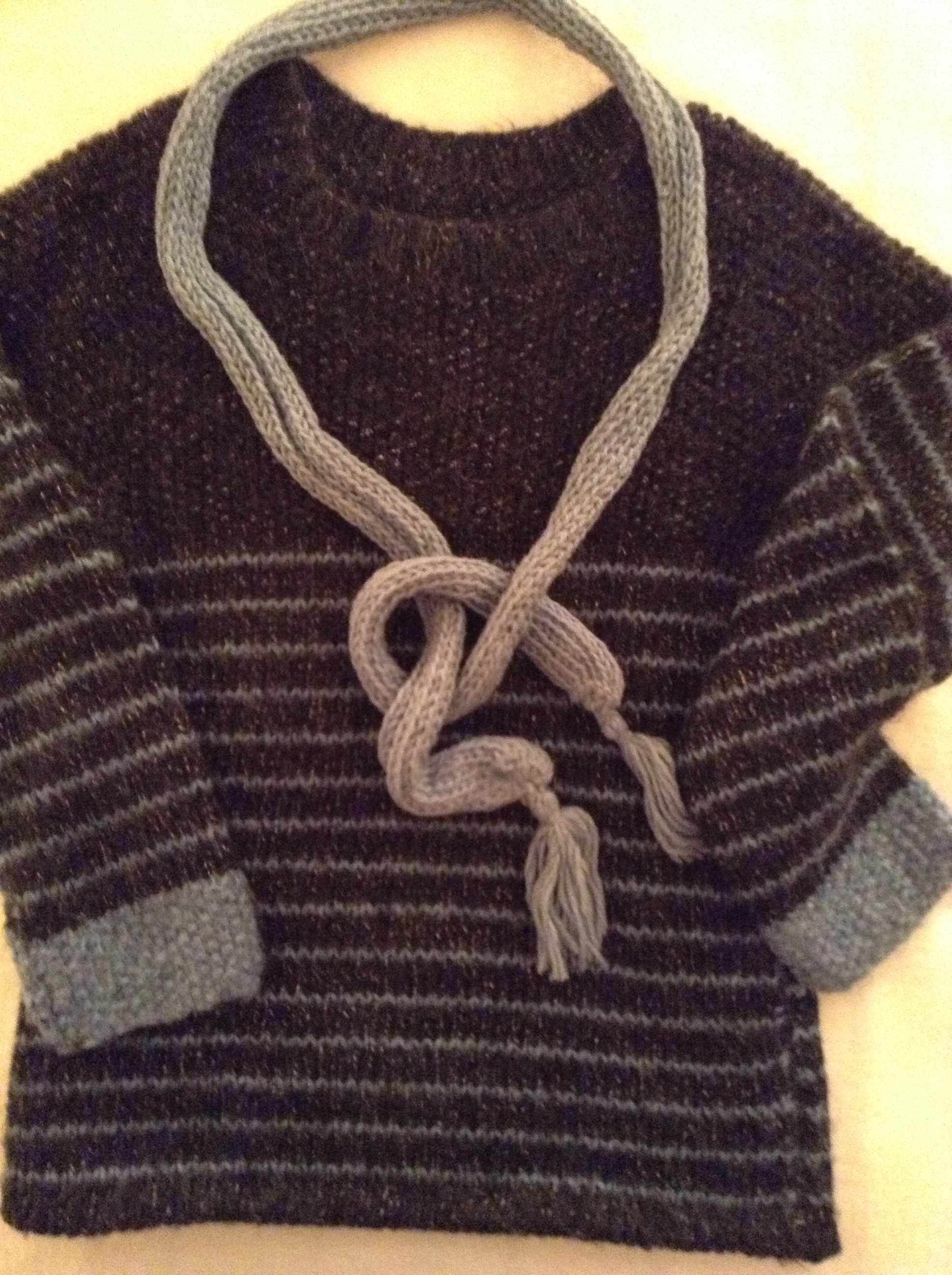
My mother shared something else with me. Her collection of hand-knitted sweaters. Some are the cherished work of matriarchs on both sides of my family. Each branch seems to have had a gene for needlework, or perhaps it was just in the water of their generation. To an avid novice knitter like me they gave great inspiration.

sweater 1

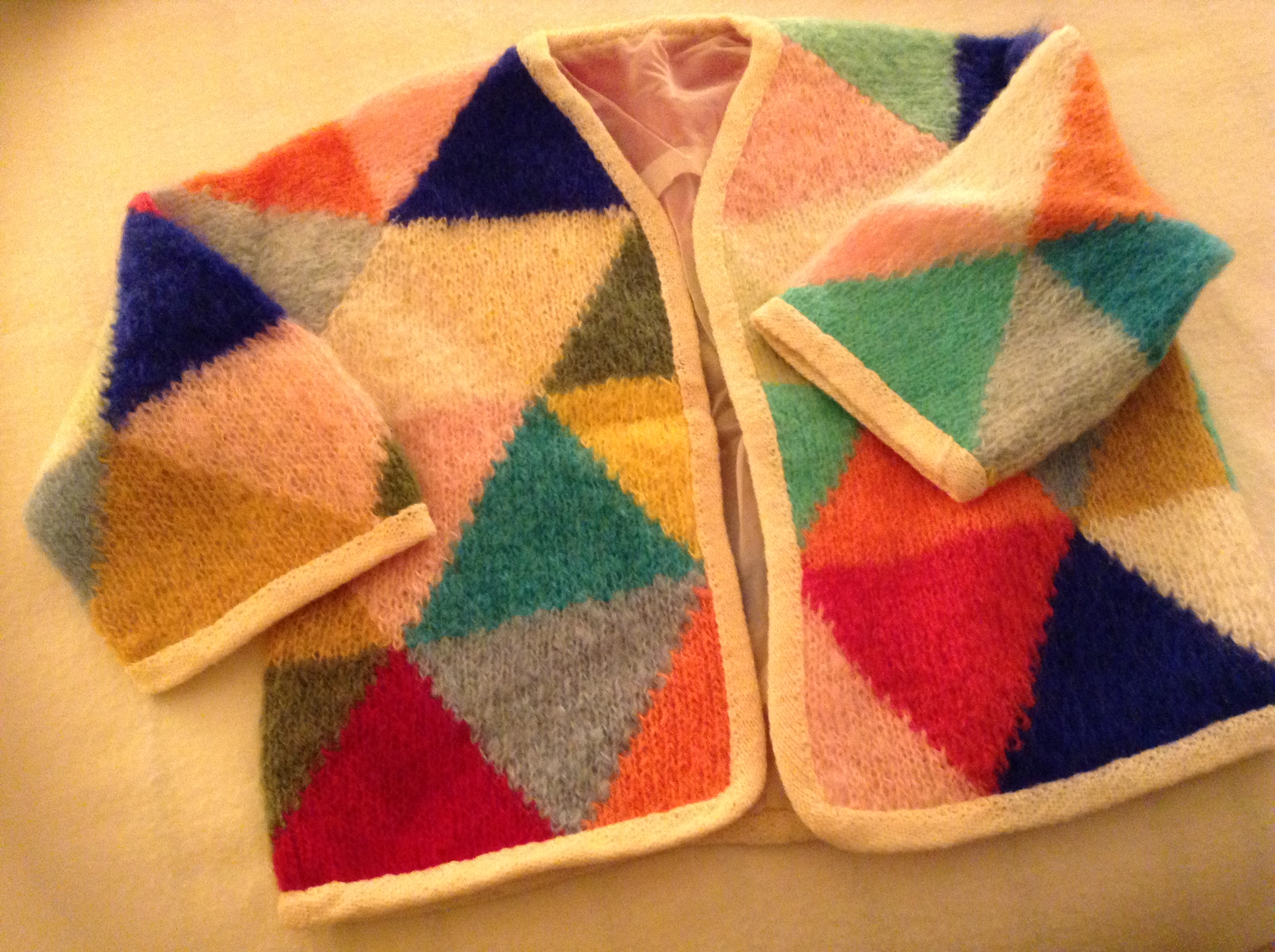
My great aunt, known to me as Auntie, produced a color blast of a harlequin-patterned cardigan for my mother. Auntie became a renowned home ec teacher in rural Tennessee and was the kind of adept who could knit and purl in a pitch-black movie theater without dropping a stitch. Tatting was her main thing, and carefully put away in storage I have the openwork pieces she wrought – in the dozens, if not hundreds.

Auntie

For the triangle-themed sweater my mother laid out on her bed, Auntie took a different approach.

auntie's sweater

There was not only this one, it seems, but identical garments for two other women, my mother’s sister Sandra and her mother Virginia. Were they intended to wear them all at once? My mother pronounced the pattern gaudy if beautiful. Good for the circus, not for her.

On the other side of the family, the delicate crochet-work stole of my Aunt Gus, my grandfather’s sister, posed prettily here with Jack.

Gus and Jack

Yellowed now but preserved in one of my mother’s sensible moth-guarding plastic bags.

sweater 6 cu

And a knitted short-sleeved sweater decorated with appliqued circles like suns and tiny pearls. Perfect size and retro styling for Maud, who has it now at school.

gus sweater

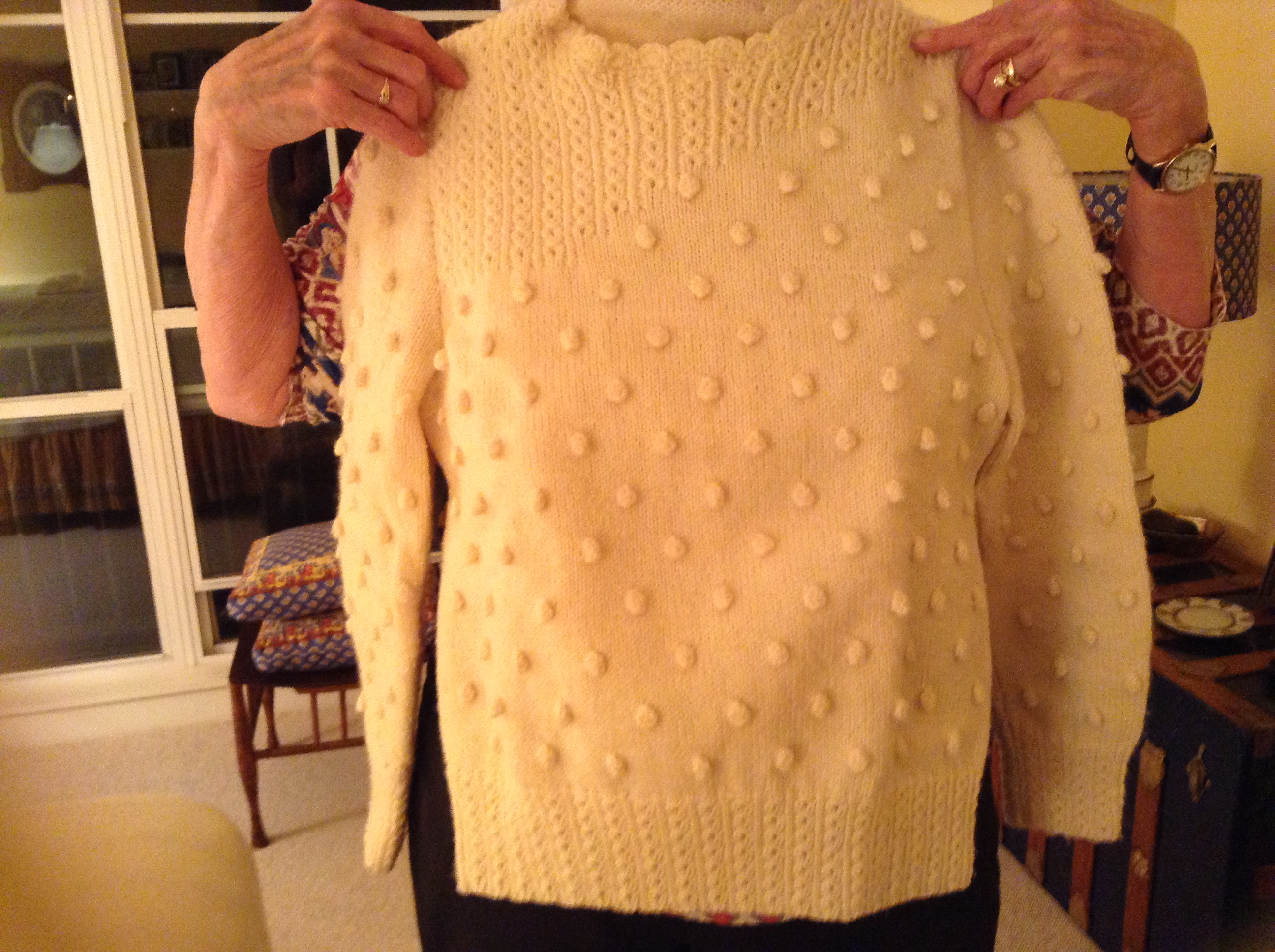
Then, moving away from family, came the popcorn sweater from New Zealand.

popcorn 2

Each wool bubble intricately worked out of the body of the sweater.

popcorn 1

Also from New Zealand, this blue and brown beauty.

sweater 4

And a lacy pink number with ballooning sleeves that has appeared at various special occasions.

sweater 5 cu

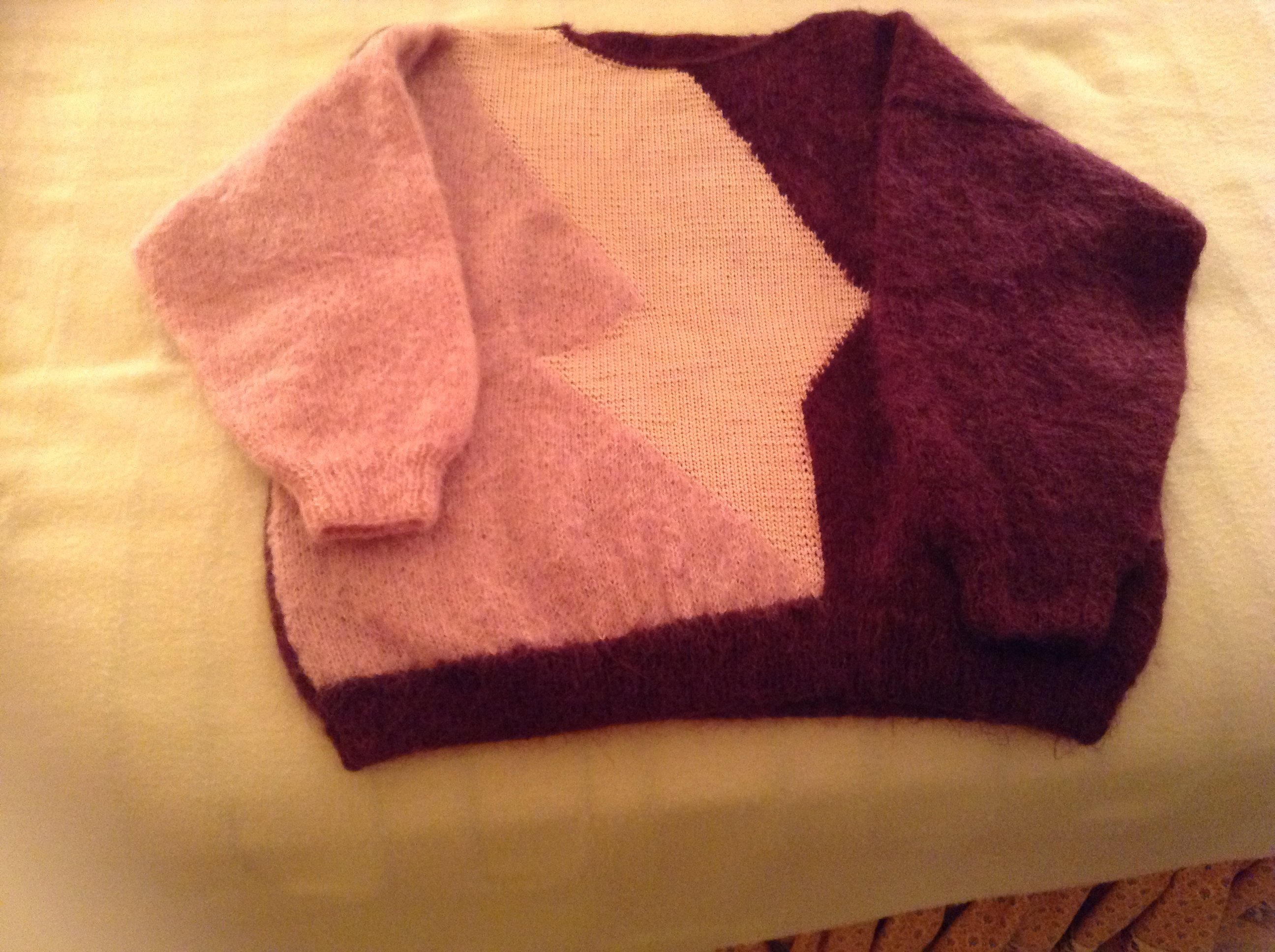
Pink, also, but kind of crazy, the zig zags hailing from Holland, where my mother tells me she saw all the women sit out on their stoeps and ply their needles.

sweater 3

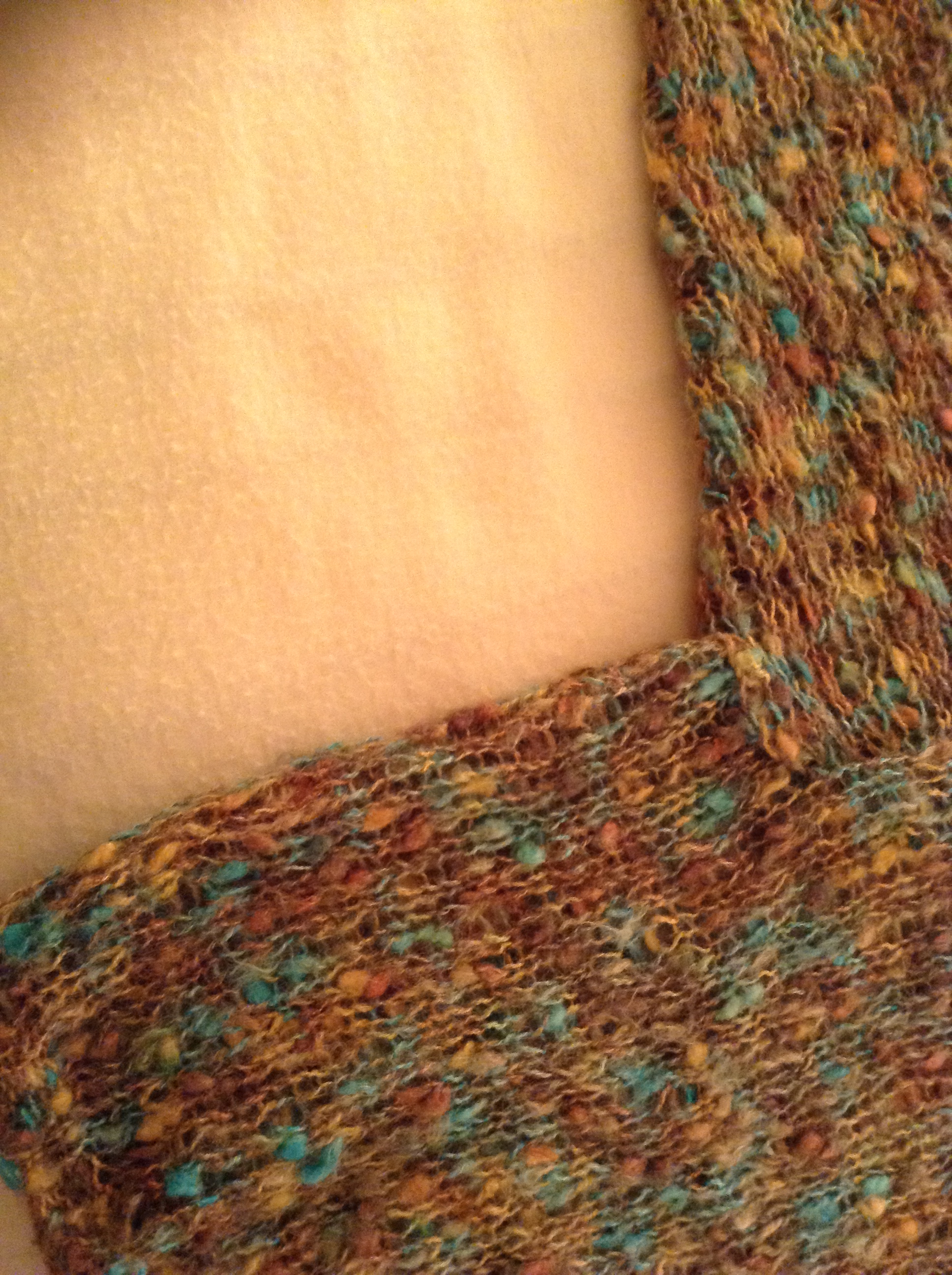
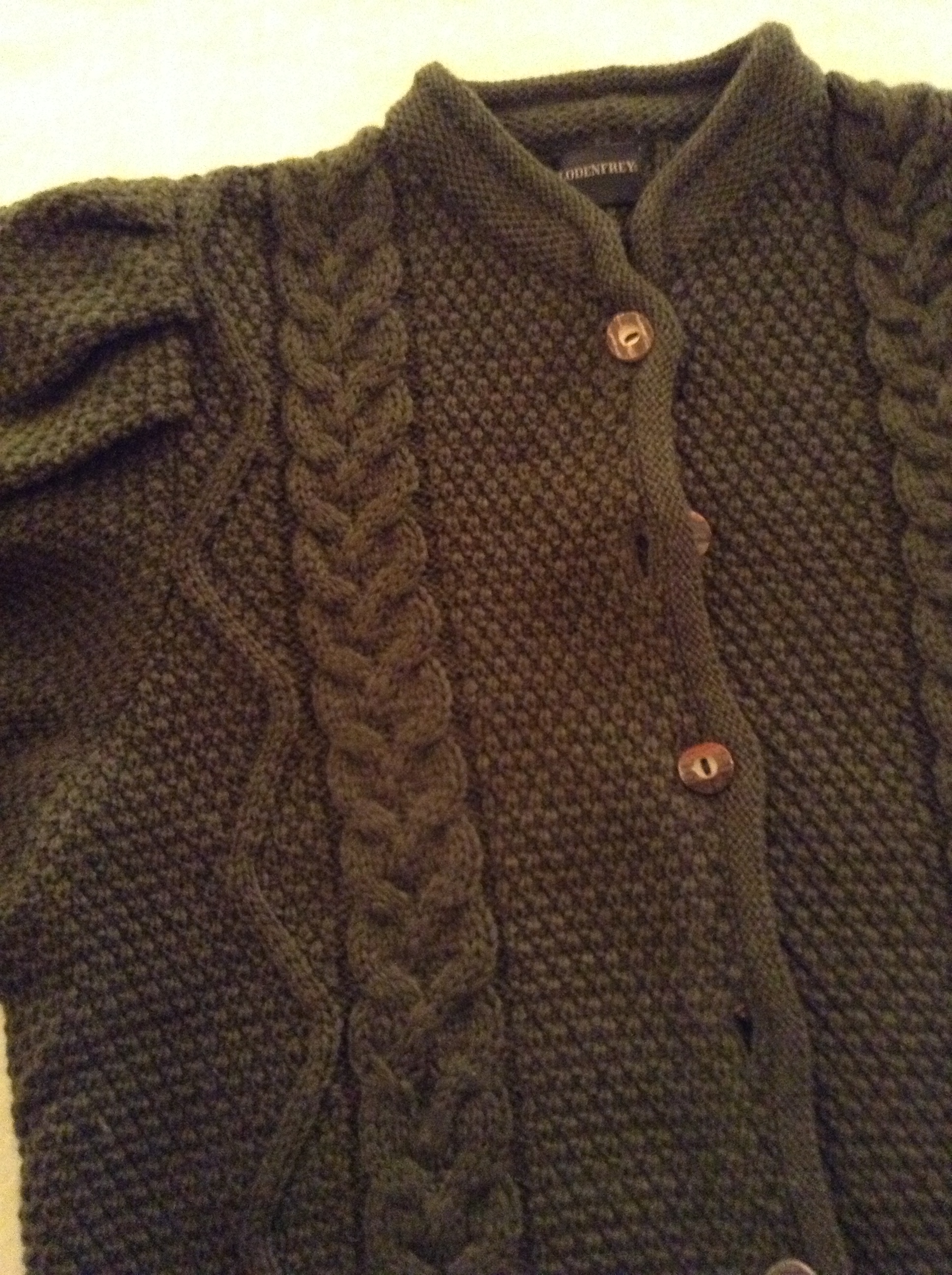
A loden from Germany with the kind of cables I long to make.

sweater 8

And the oldest one, from Italy, darkest blue and fuzzy yet almost scratchy.

sweater 7

Touching the handiwork of women from around the world, created so many years ago, is a rich experience, shared in a bedroom in the desert.

Then my mother brought out a wrap, teal ribs, with not-well-hidden knots where the yarn was joined. Amateur hour.

You made this for me, she said. In college or maybe in high school.

teal stole

Big question mark. I’ve only just learned to knit, in my 50s, I’m as sure of that as I am of anything in the world. When I was that young the notion of wielding pointy sticks was unfathomable. I was also too silly and distracted to sit still to knit.

Jean-High School

But my mother insisted. You did this, she said. You.

So was this actually knit? Was it crochet? Which I did have the patience for back then. Or woven out from some other material, or done in some secret life I have no memory of, or something that my mother in her wisdom invented? Or imagined?

It is teal, it is made by hand, and she has worn it many times. That’s what matters.

9 Comments

Filed under Fashion, History, Home, Knitting

Toothpick Time

So long to the West.

slow sign

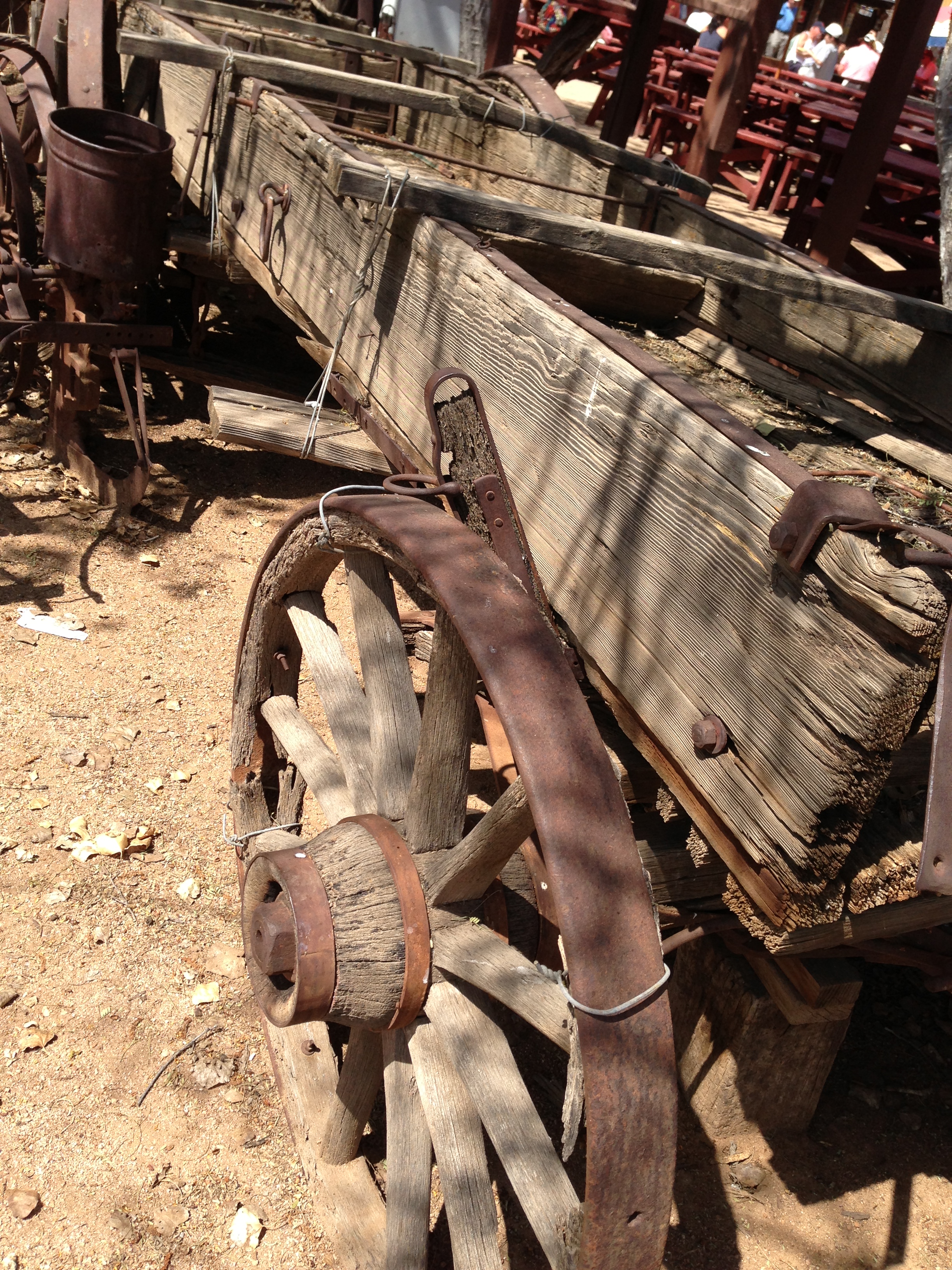
The conestoga wagons are long gone.

conestoga

Bikes rule.

bikes

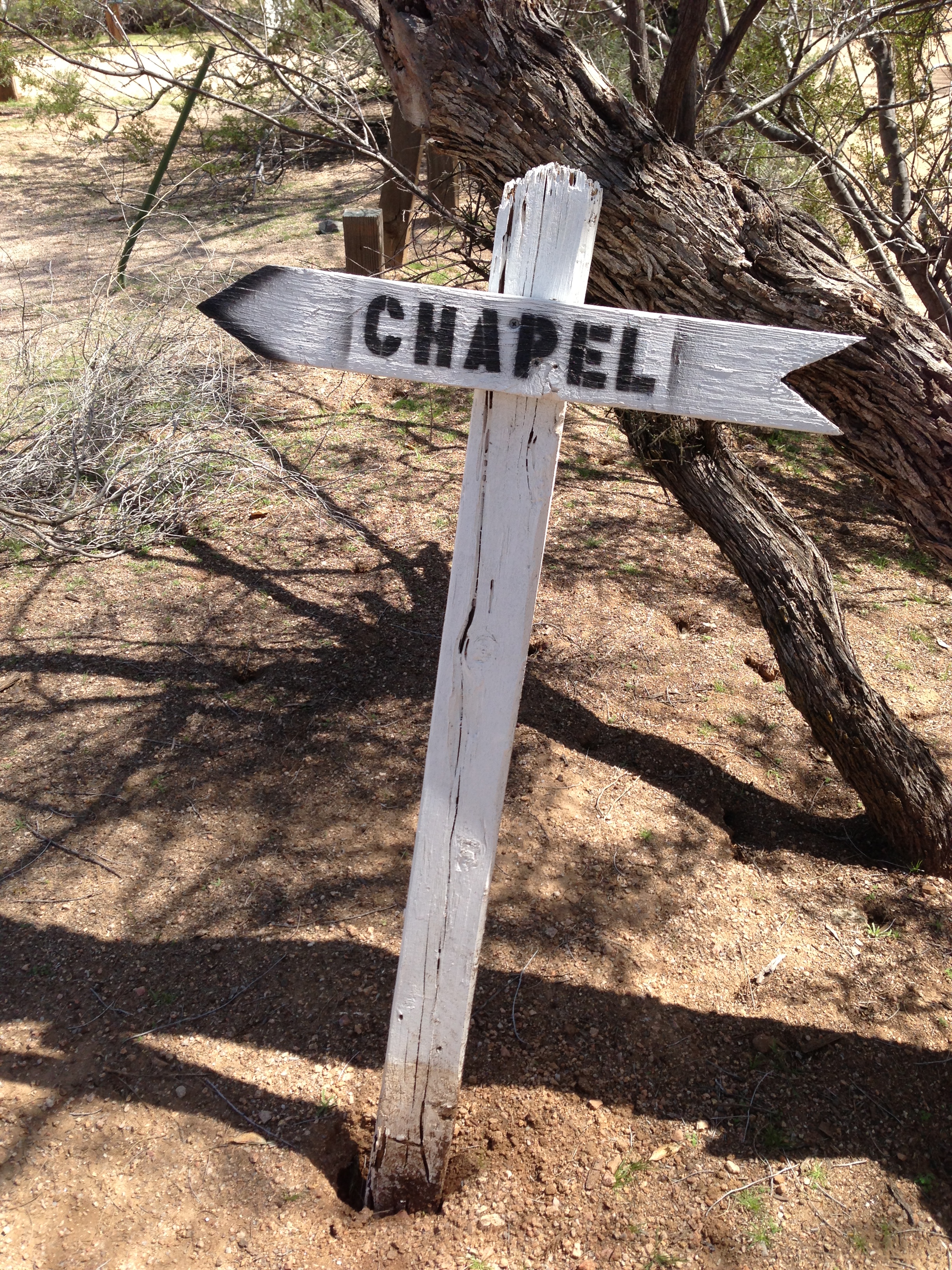
It’s a spiritual place, still.

chapel sign cu

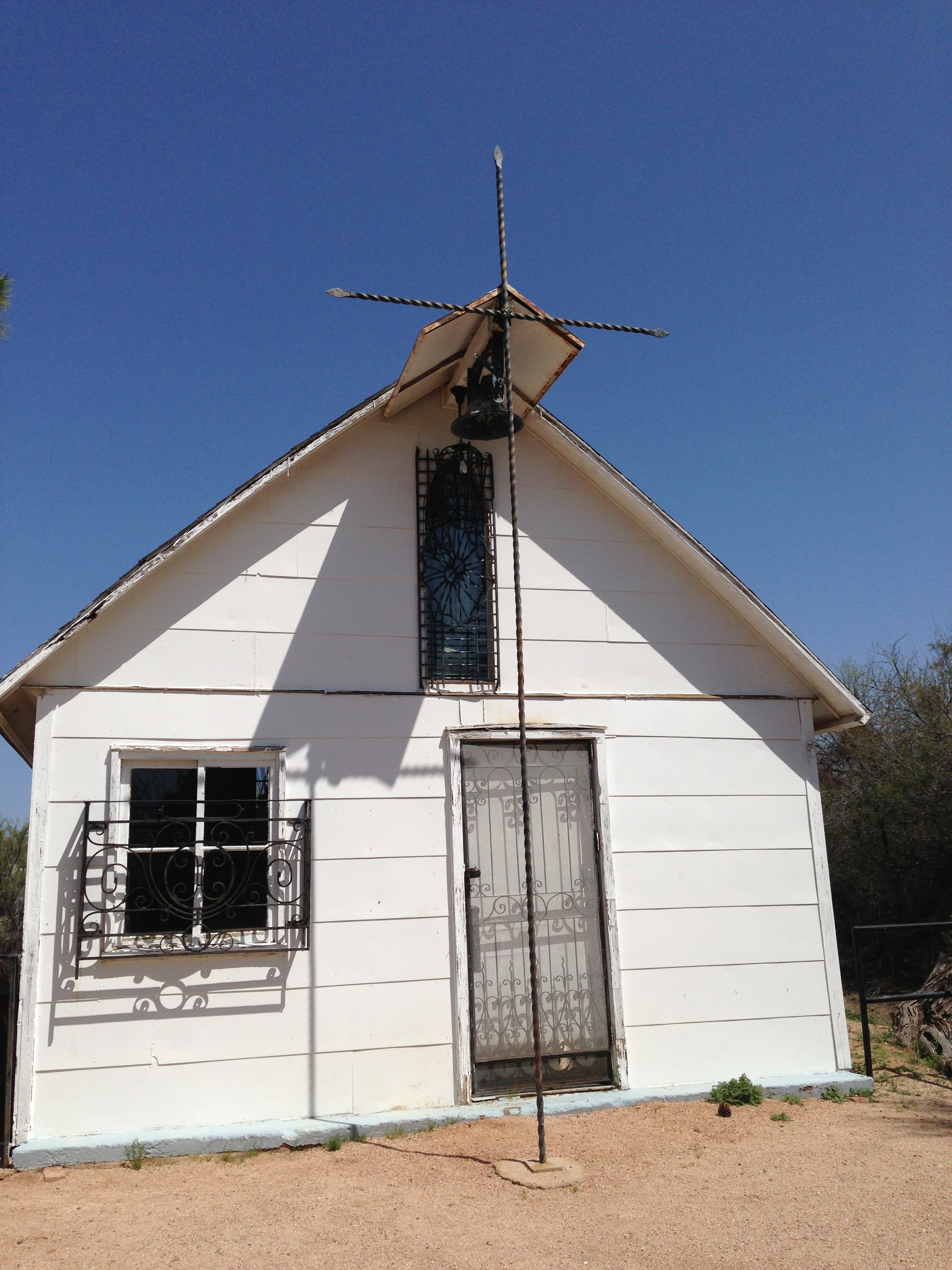
I pray as I please.

chapel bldg

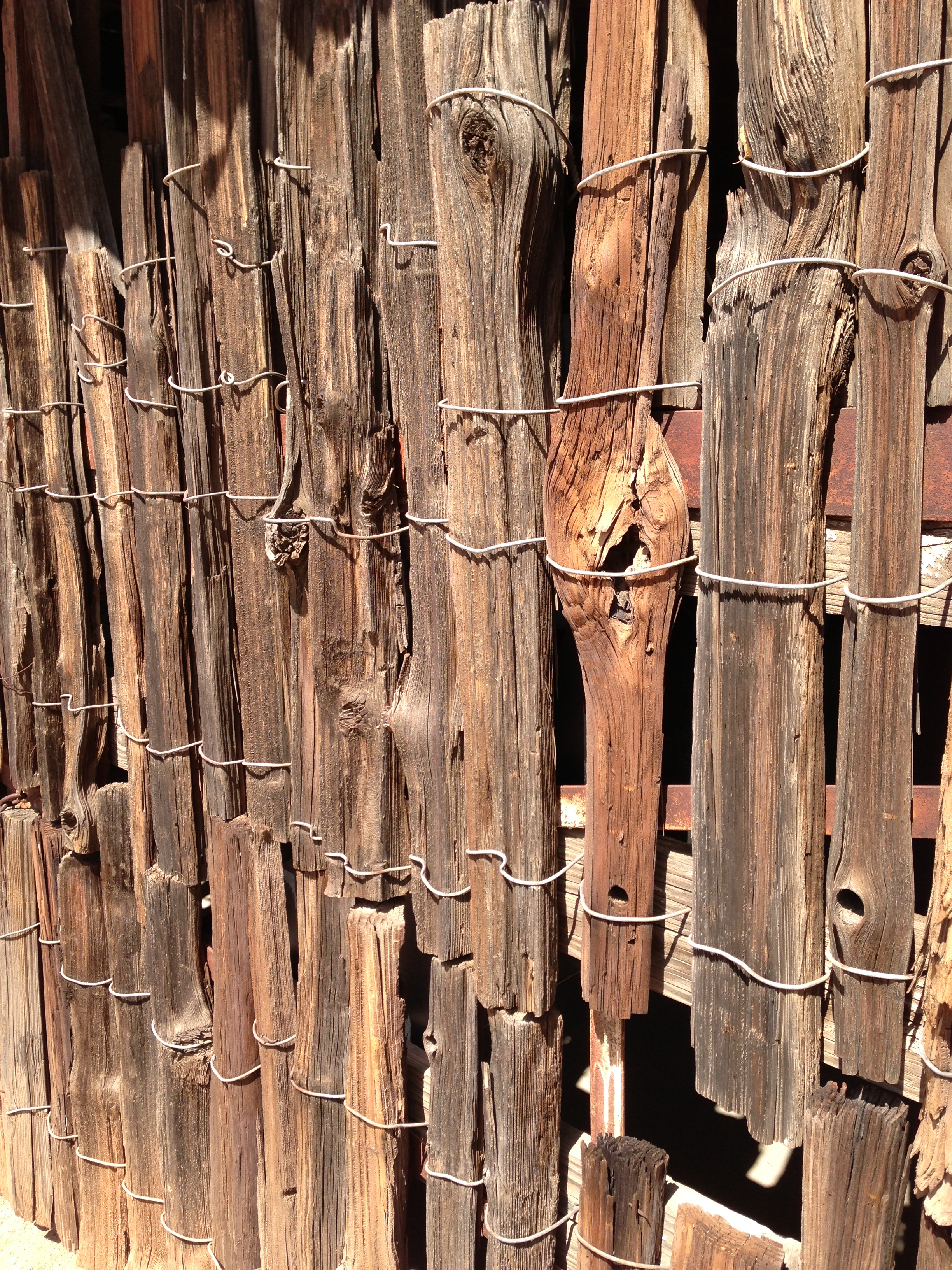
Don’t fence me in.

rough wood fences

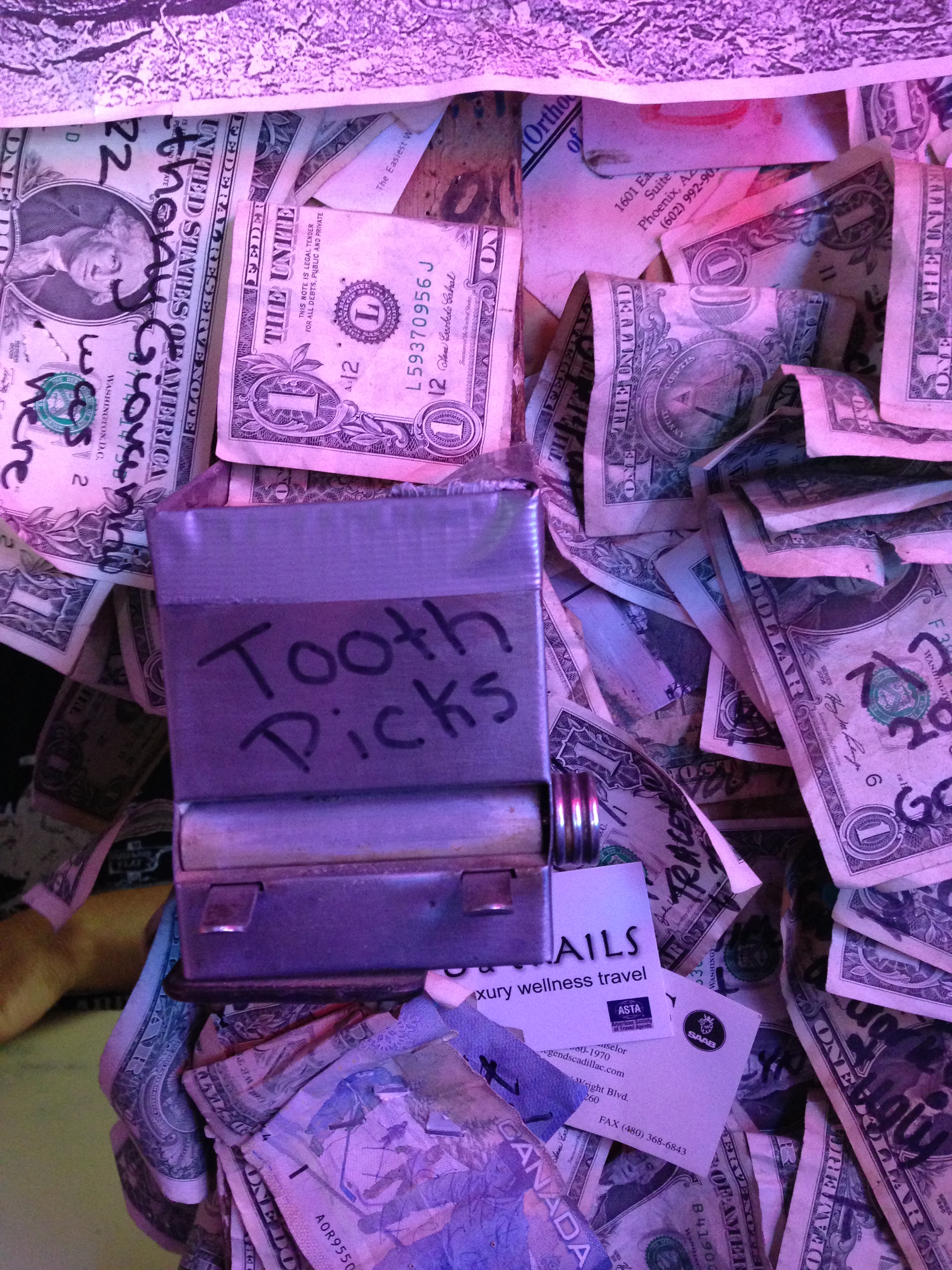
Be sure to take a toothpick for the road. Especially one from Greasewood Flat.

toothpicksand…

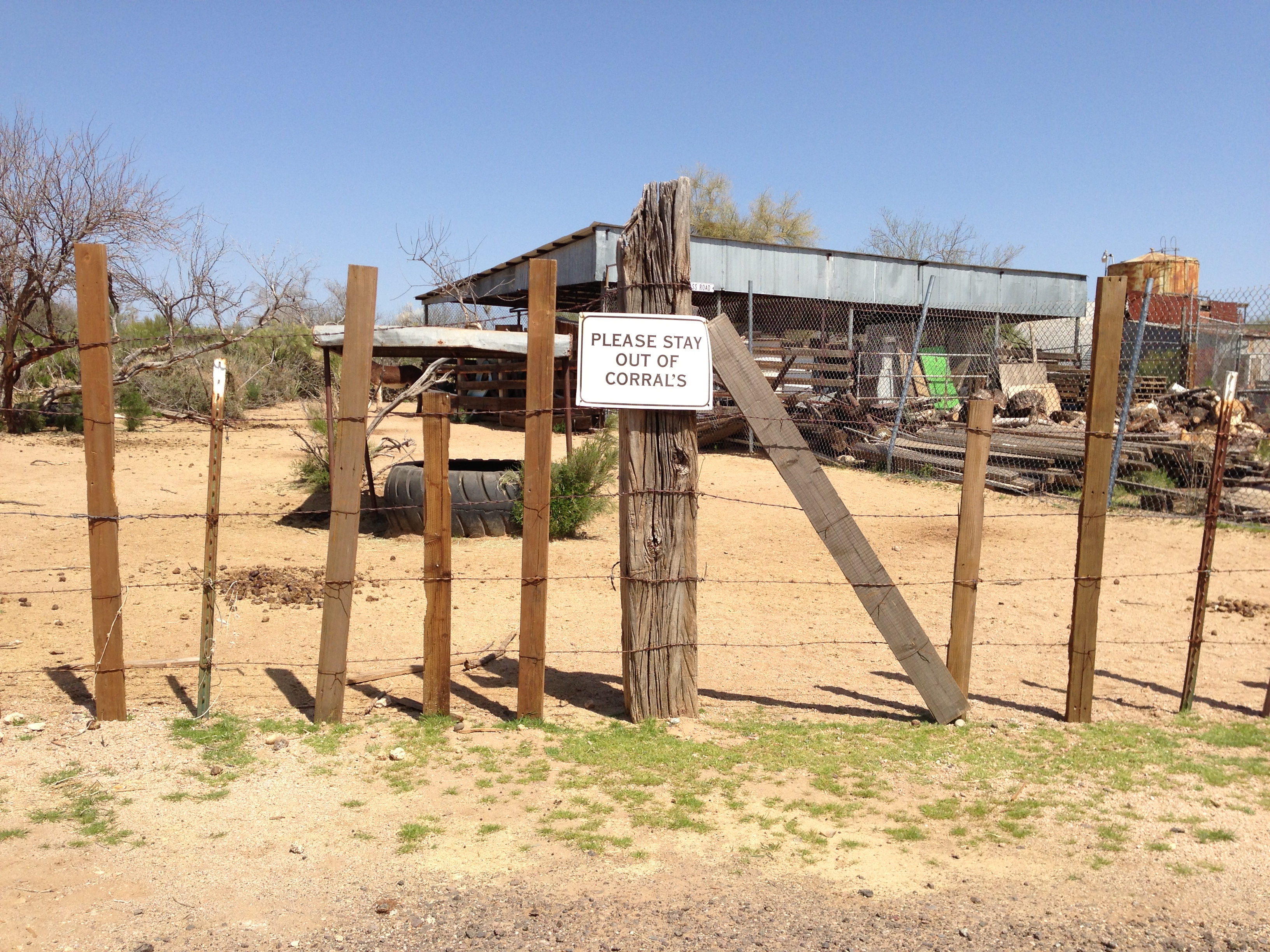
please stay out ofDonkeys bite.


3 Comments

Filed under History, Photography

Monsters in the Garden

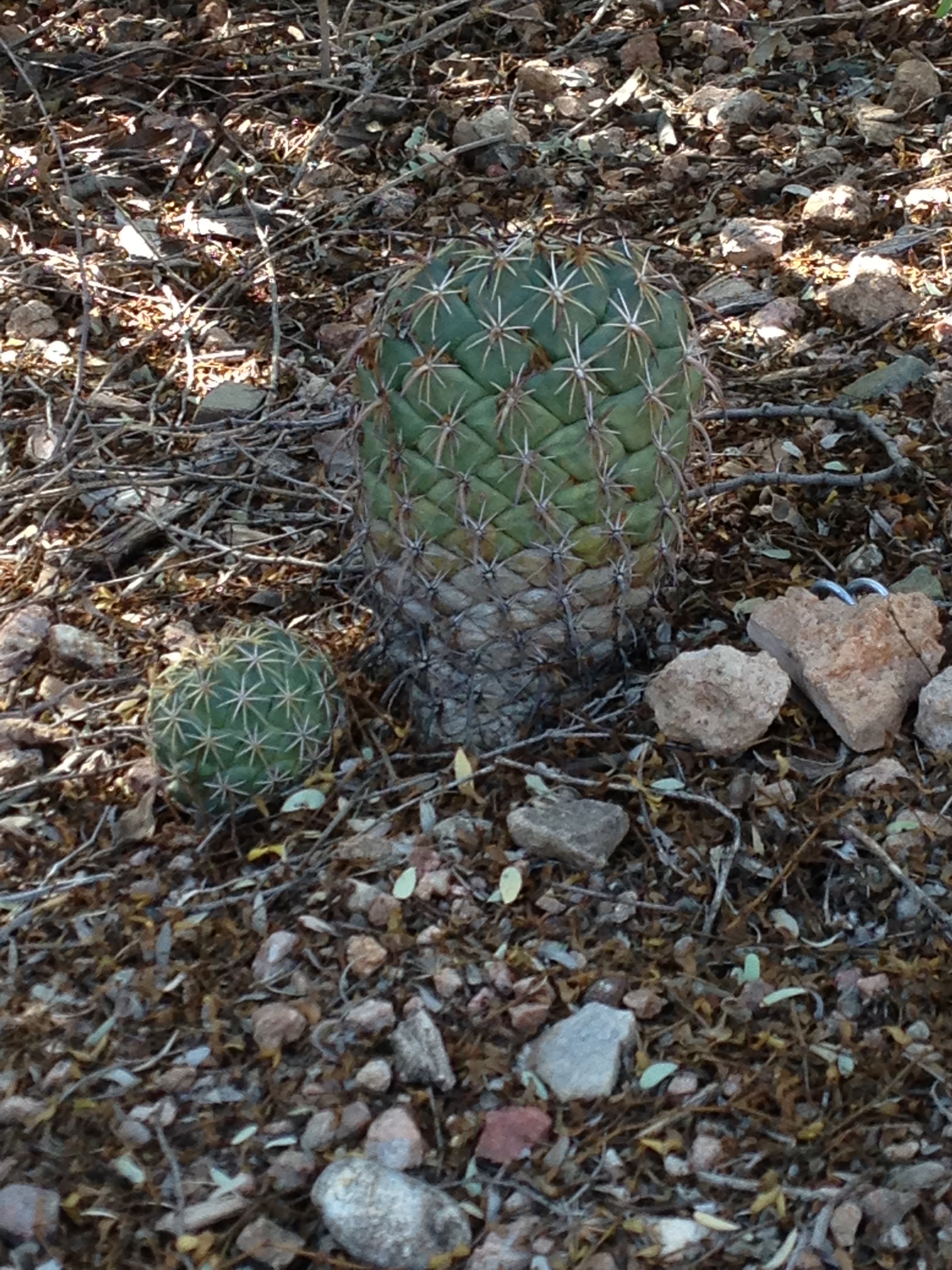
I had been looking for days for an infant saguaro, knowing that they began tiny, nested under bigger, more mature, spreading nurse plants like mesquite trees. Not a one.

I found other babies.

other baby cactus

But not those of the saguaro. It was almost as if the giant cactii sprang full grown from the body of the earth. But I was determined. At the Desert Botanical Garden in Phoenix, I buttonholed a gardener who looked like a dashing, red-scarfed gent I once knew named Jorge.

desert gardener

He had silver duct tape holding together the crown of his straw hat,and when I first saw him he was supervising the planting of a smallish saguaro in a bed near the parking lot. In replanting, says my mother, you need to position them so that they face in precisely the same direction they did in the first part of their lives, or else they wither and die. Saguaros have to have the same relationship to the sun, always.

I knew this gardener knew saguaros. Could he point me in the direction of a baby? I asked. He led me through the winding walkways of the Garden. I wanted to find one that was no more than a nub growing out of the ground, just starting out. Jorge seemed to know exactly where it was.

We went through the grove of barrel cactus with its yellow fruit.

barrel cactus with fruit

Past the blushing prickly pear.

red prickly pear

Past the half-hidden nest of an absent bird.

Nest

There it is, Jorge said. He pointed beneath a sheltering shrub, which protected the saguaro like a baby Jesus in a creche.

baby saguaro

Not quite an infant, he said. About five years old. It would take ten years to grow that big in the wild, he added with a touch of  pride. The Garden waters their plants so assiduously that they shoot up tall and bright, a technicolor green compared with the black and white of the desert that stretches all around.

Now that I had found my toddler saguaro, I could pay attention to the other fascinations of the Garden. An ebony-colored wood beetle chased us down the path, buzzing furiously. Art was everywhere.

woman plant sculpture

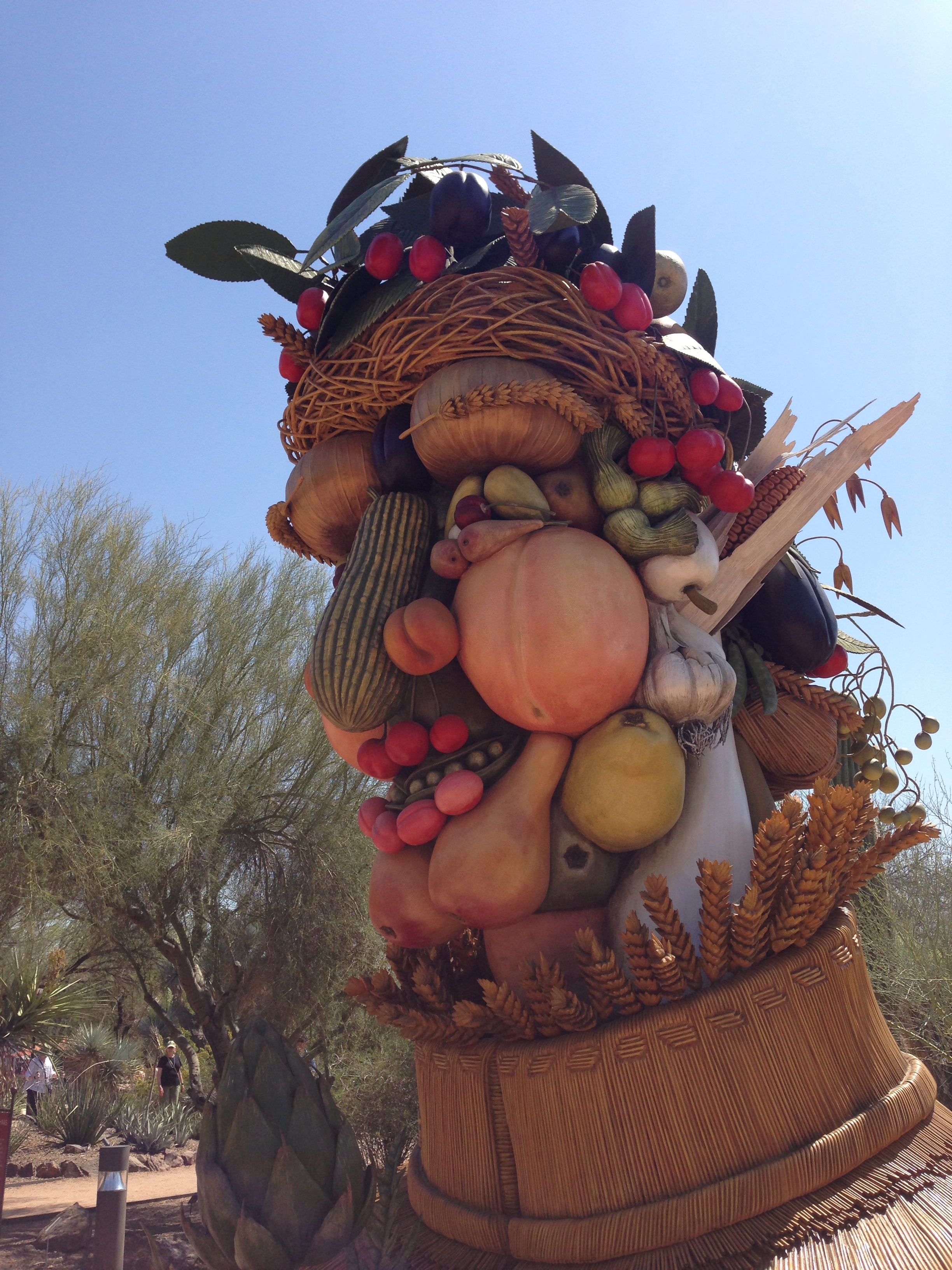
This piece, of course, suggests the Renaissance produce painter Arcimboldo.

arcimboldo

And Jeff Koons in his puppy flower phase.

Jeff koons puppy

My eyes were dazzled with not only organic but plenty of nonorganic growth, furnished by major sculptors.

pink sculpture

The soft green and hard metal played off each other.

sculpture:cactus

No, said my mother, I don’t like it. She was looking up at the Dale Chihuly forest of glass that welcome visitors to the place. It’s gilding the lily, she said.

Chihuly glass

I liked all that green glass. But maybe because the work was, first of all, monstrous, as were so many of the large-scale works scattered about.

I like monstrous.

Secondly, I was acquainted with Chihuly back in the early ’80s, when I visited his Pilchuck hot shop outside Seattle as a lowly member of a film production team, about the time he returned from the East Coast and blew up into a  legend. I was impressed with his pirate demeanor. And also with my experience of blowing a little glass, anything but monstrous, assisted by another dashing fellow, a tall long-haired Chihuly-ite gaffer who stood behind me and steadied my hands on the pipe. I thought that the keepsake I created would be mine forever. The thick-walled cup I made held exactly the right amount of vodka on the rocks, before it fell and smashed at about the same time I quit drinking a decade or so ago.

But maybe the natural vegetation was extreme enough. Lipstick cactus.

lipstick cactus

Dazzling enough in its nude simplicity. Agave.

agave

Some specimens remained from the opening of the garden more than 70 years ago.

historical desert garden

We had to go see how the butterflies responded, now that springtime had revealed its face to Arizona.

orange butterflies

Who doesn’t like butterflies? As we waited to enter their enclosure, I felt I could hear the throb of wings.

They kind of make me nervous, said Maud.

Good for you, the docent told my mother, in her white t shirt. They like white shirts. And they’re very partial to redheads.

None of us had red hair, but I hoped in my peacock-feather-painted blouse to be a landing strip.

The netted area had been planted, surprisingly, with swiss chard, which appeared to be uninteresting to the butterfly population as a food source. The butterflies drank instead from the cups of flowers. They seemed to be half in the process of coming alive and half in the process of dying.

black butterfly

Leaving them behind rather sooner than I thought we would – They make some people uncomfortable, they’re insects after all! said a staff person – we progressed toward the Garden exit through the gray-green fleshy fields of cactii.

Three more butterflies hovered ahead of us.

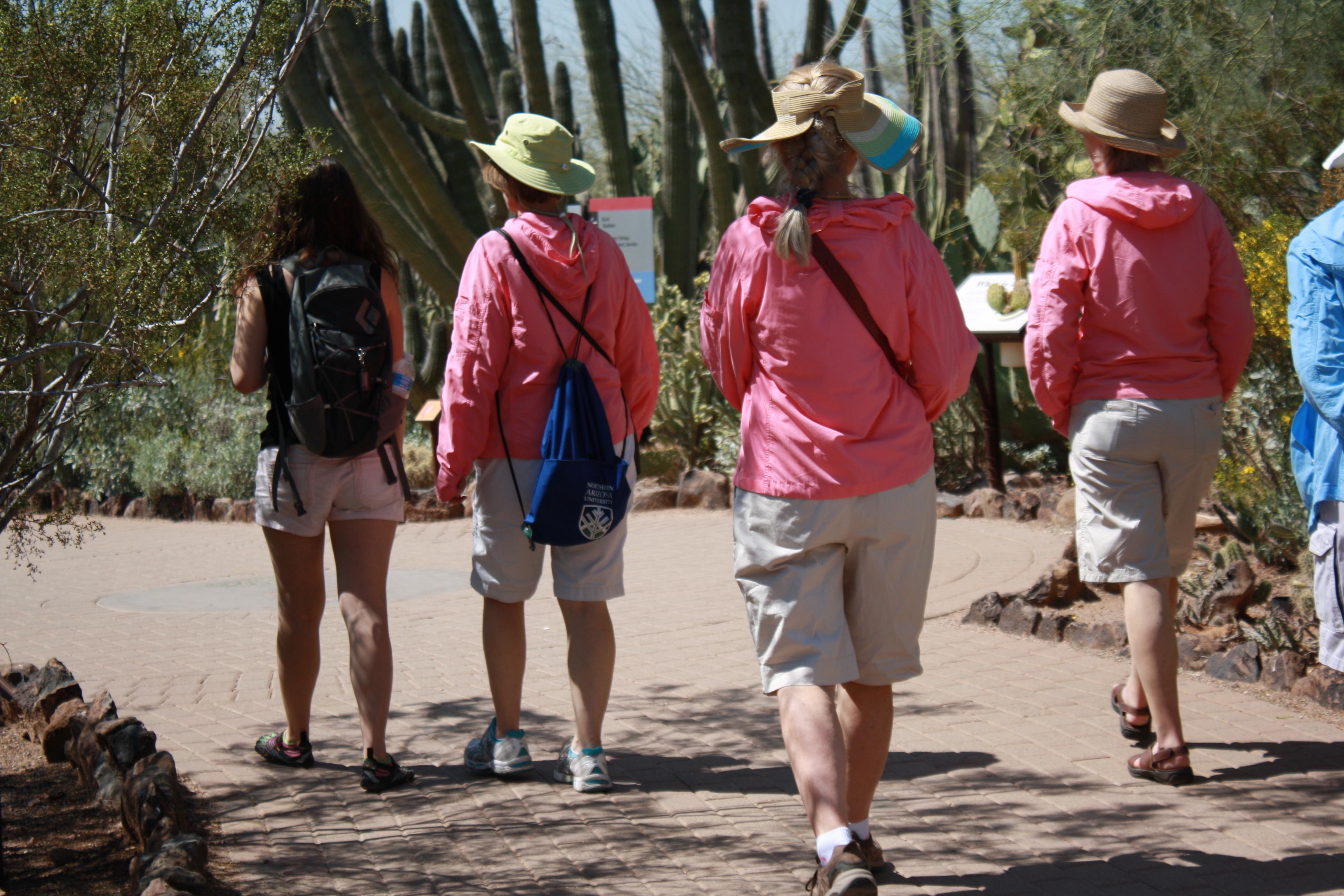
pink ladies

Triplets, middleaged, each attired in a powder-pink windbreaker, cargo shorts and a floppy sun hat. I always wonder about multiples who dress alike above the age when their mothers outfit them. A matched pair of senior citizens used to roam Manhattan’s upper west side, mirror images in couture, nylons and cat-frame glasses. Related in spirit, the married couple who used to bike the streets to forage for horse manure for a Garden of Eden they planted on Eldridge Street, in the 1980s, when New York City was a simpler place.

Purple garden

Their names were Adam and Eve Purple. Their garden seemed to come out of nowhere. They dressed themselves, the two of them, in … purple.

17 Comments

Filed under Art, History, Jean Zimmerman, Nature, Photography

No Horse

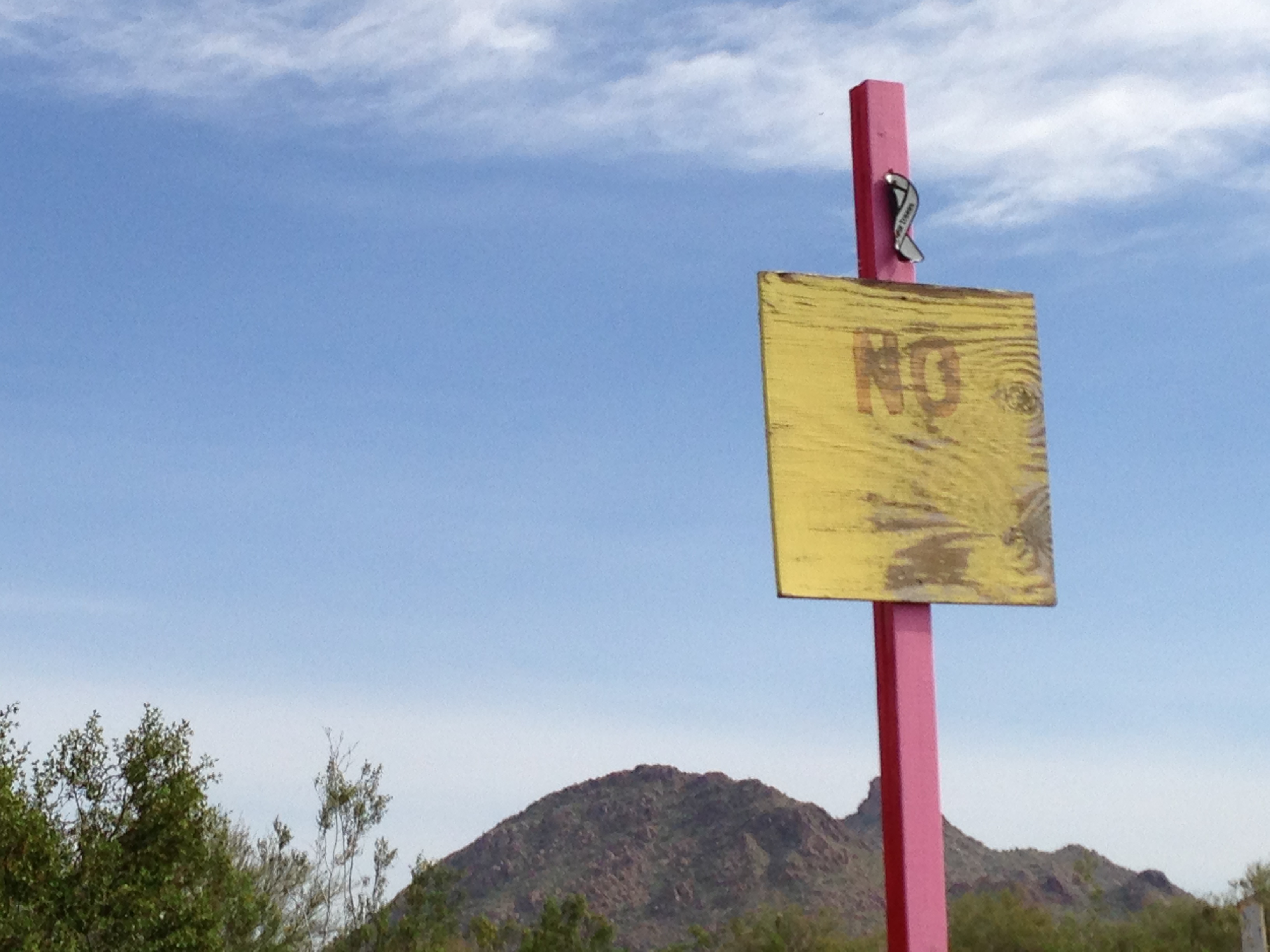
Sweet hand-painted signage in southern Arizona.

No Sign

The guy who owns the 95-acre lot at Pima and Happy Valley Roads in North Scottsdale, Henry Valentine Becker, has been on a longstanding rampage against the Coalition of Pinnacle Peak, which seeks to prevent him from commercially developing his property. He’s been there since 1995, putting up signs and making himself a nuisance.

No what? you may ask. The message has been lost to time, and now suggests, at least to me, a kind of quintessentially Arizonan plywood sentiment … no to gun control, no to “illegals,” no to same-sex marriage, etc. etc. But I like the mysterious No on its own. The signs rim the lot and insist upon their own importance.

Becker has put up other painted signs as well.

Cowboy sign

Wranglers. Kachinas. Lizards. I collect painted signs as long as they’re free. Brought one home off a telephone pole in a Midwest cornfield one time years ago. It reads Cherish.

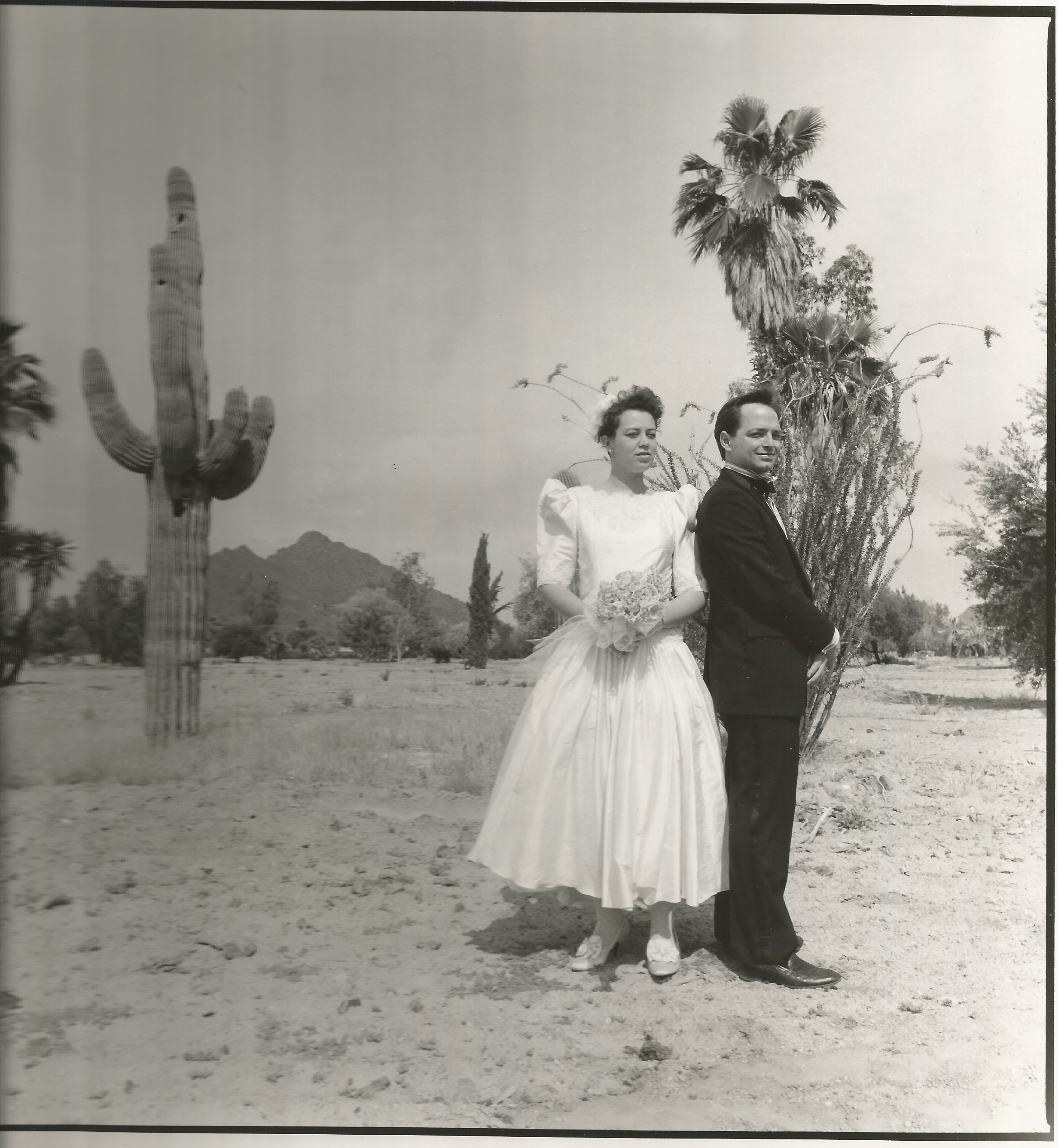
Becker’s property, within the insistent boundary of signs, remains pristine. It reminds me of nothing so much as the as-yet-undeveloped lot across town where Gil land I took our wedding photos 25 years ago.

J & G in April

Among the saguaros, in a time when Scottsdale was more known for horse farms than tacky shopping centers.

pristine

Becker lives in comfort, fairly near the property in question, in a conventional home, if ideosyncratically littered with yellow Post-It notes. The weatherbeaten signs call attention to his plight, get his story across to the millions of cars that jam Pima.

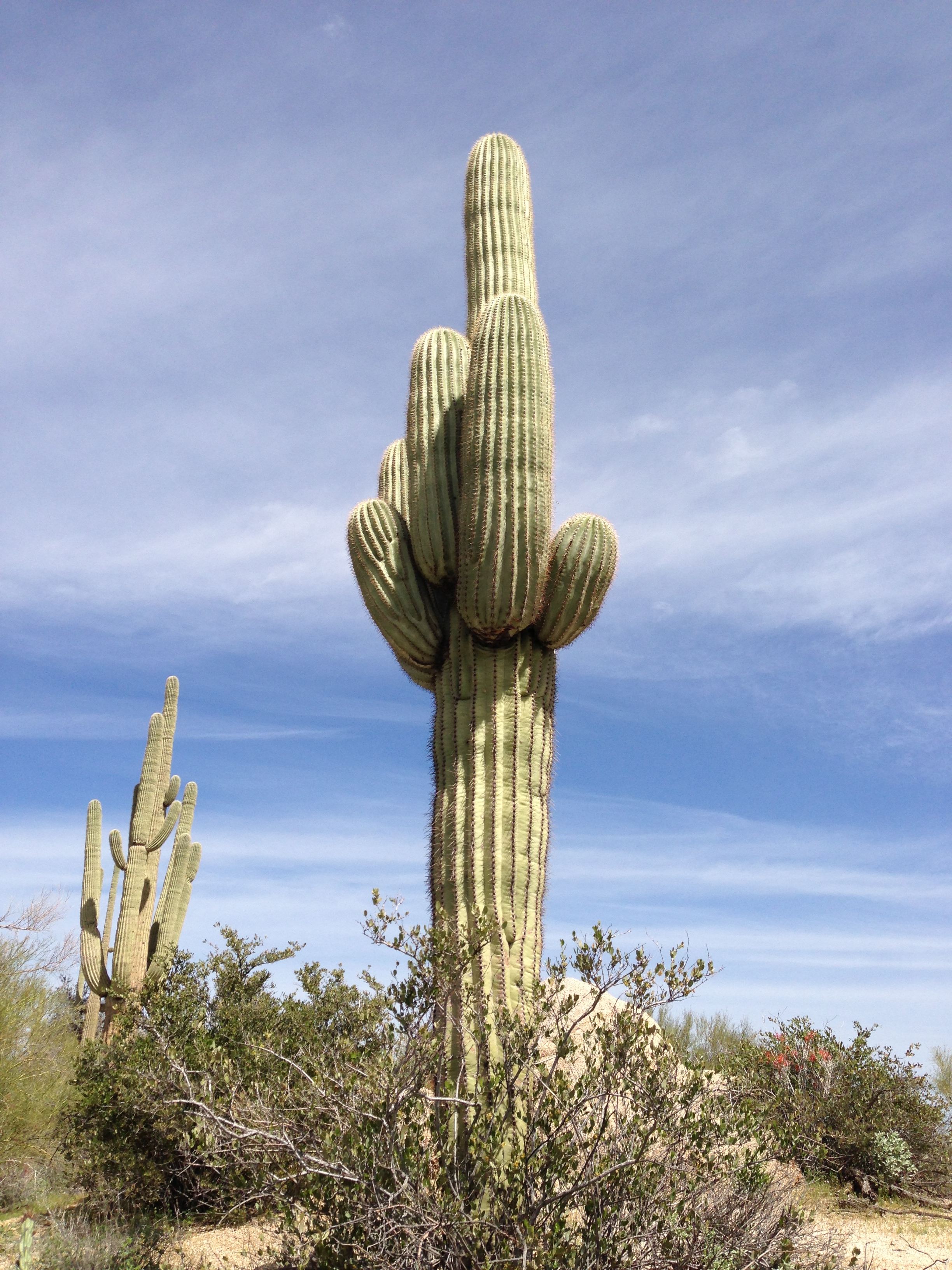
Everything weathers here, even the proud-standing saguaros, the ones giving the finger to the sky.

finger saquaro

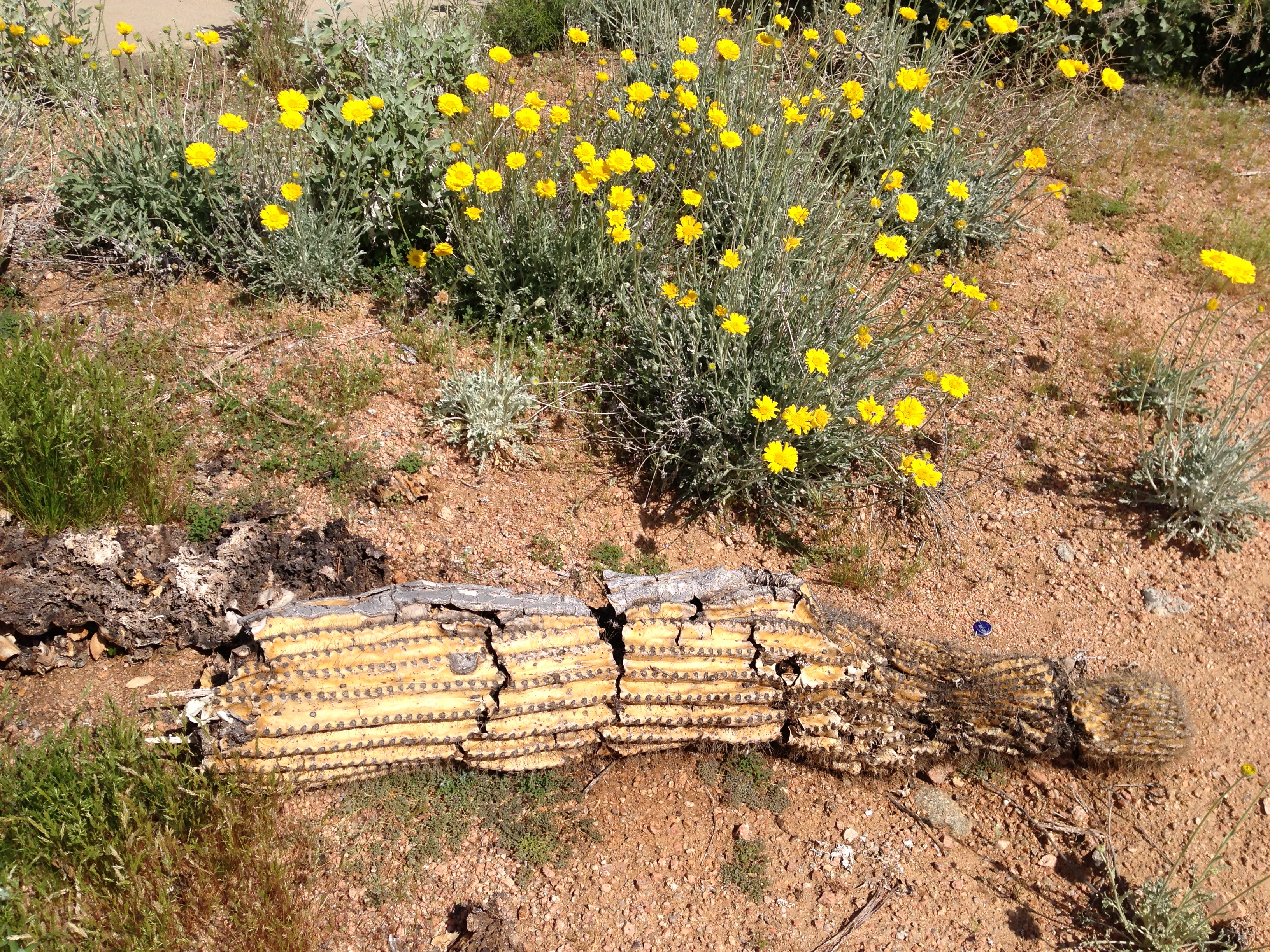
You see their skeletons everywhere littering the ground.

weathered saguaro

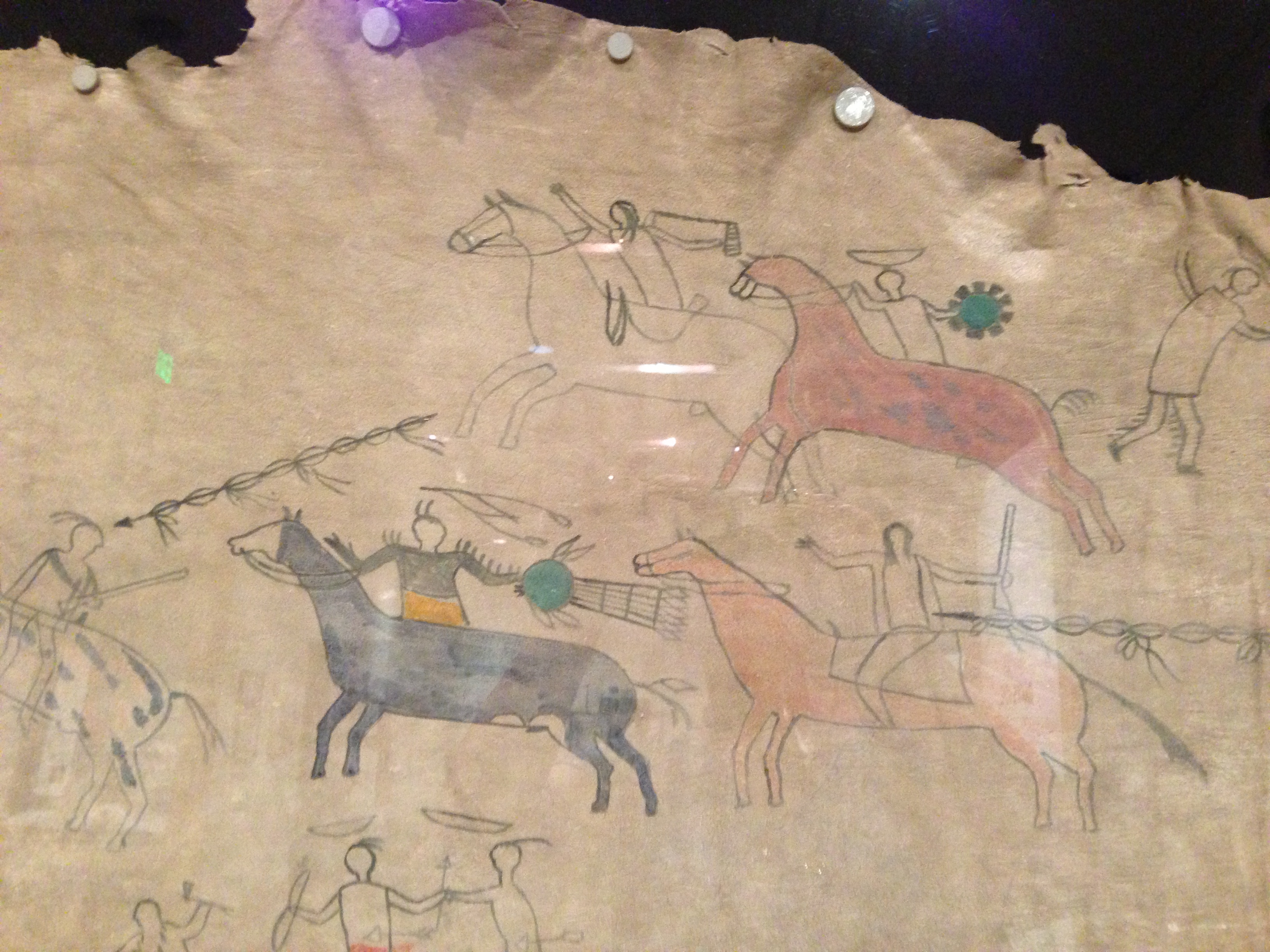
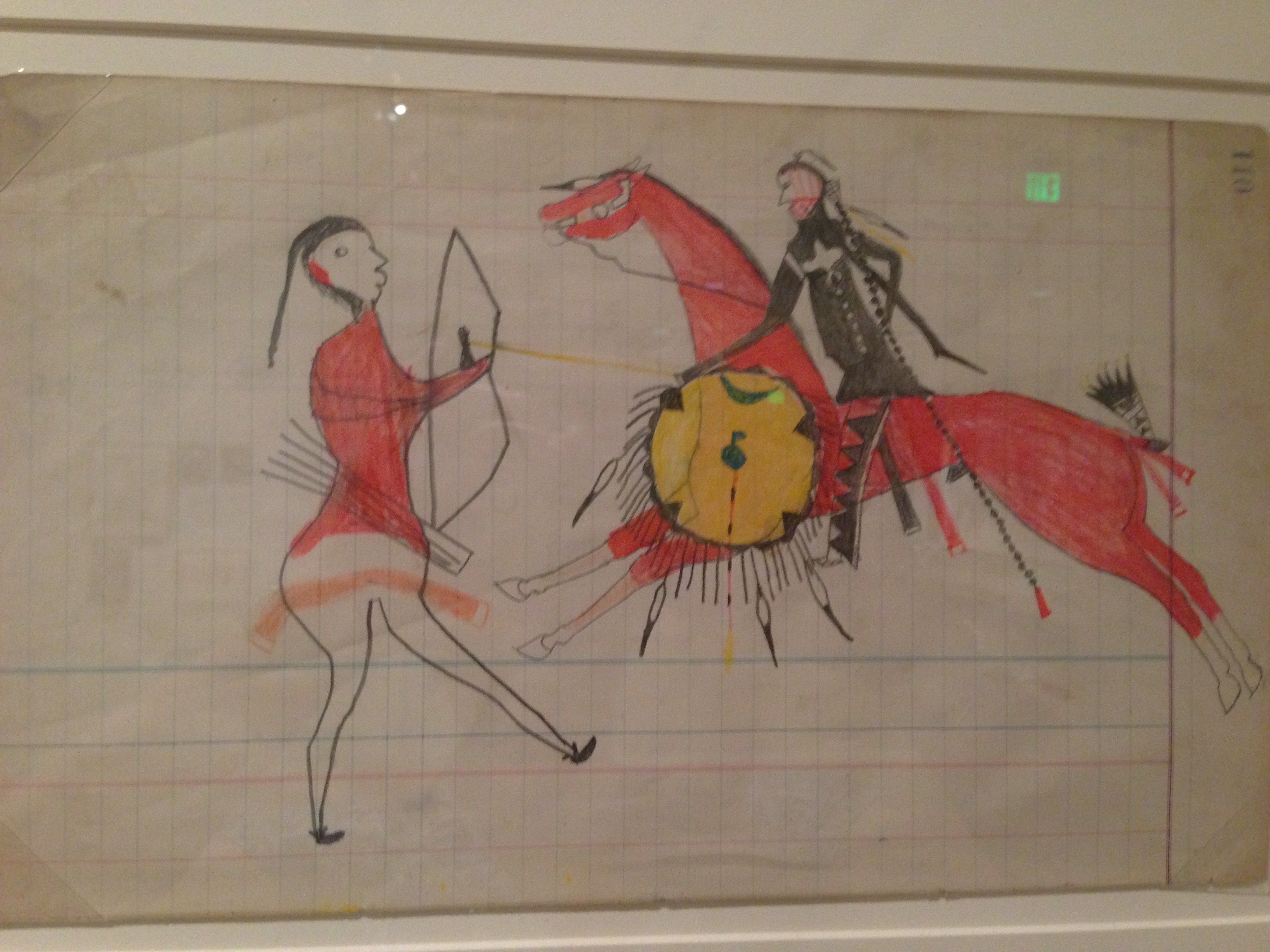
Different, of course, yet similar to Becker’s faded attempts, the ledger art of the Plains Indians, a phenomenon through which artists got their story out between about 1865 and 1935. Originally, the tanned skins of bison were used for painting individual scenes or narratives, using natural pigments. This one dates from 1880, and shows a battle between the Cheyenne and the Pawnee.

hide

The U.S. government initiated a mass slaughter of the bison in order to reduce the central food source of the Plains people. So no more natural canvas. Artists transferred their pictogram paintings to either muslin, woven canvas or, most interestingly, paper ledger books, the ordinary kind businesses used to keep their accounts.

They had to get their story across.

ledger sheet

I love the transgressive nature of these illlustrations, which explode off the pages of the staid, “civilized” lined paper.

ledger 2

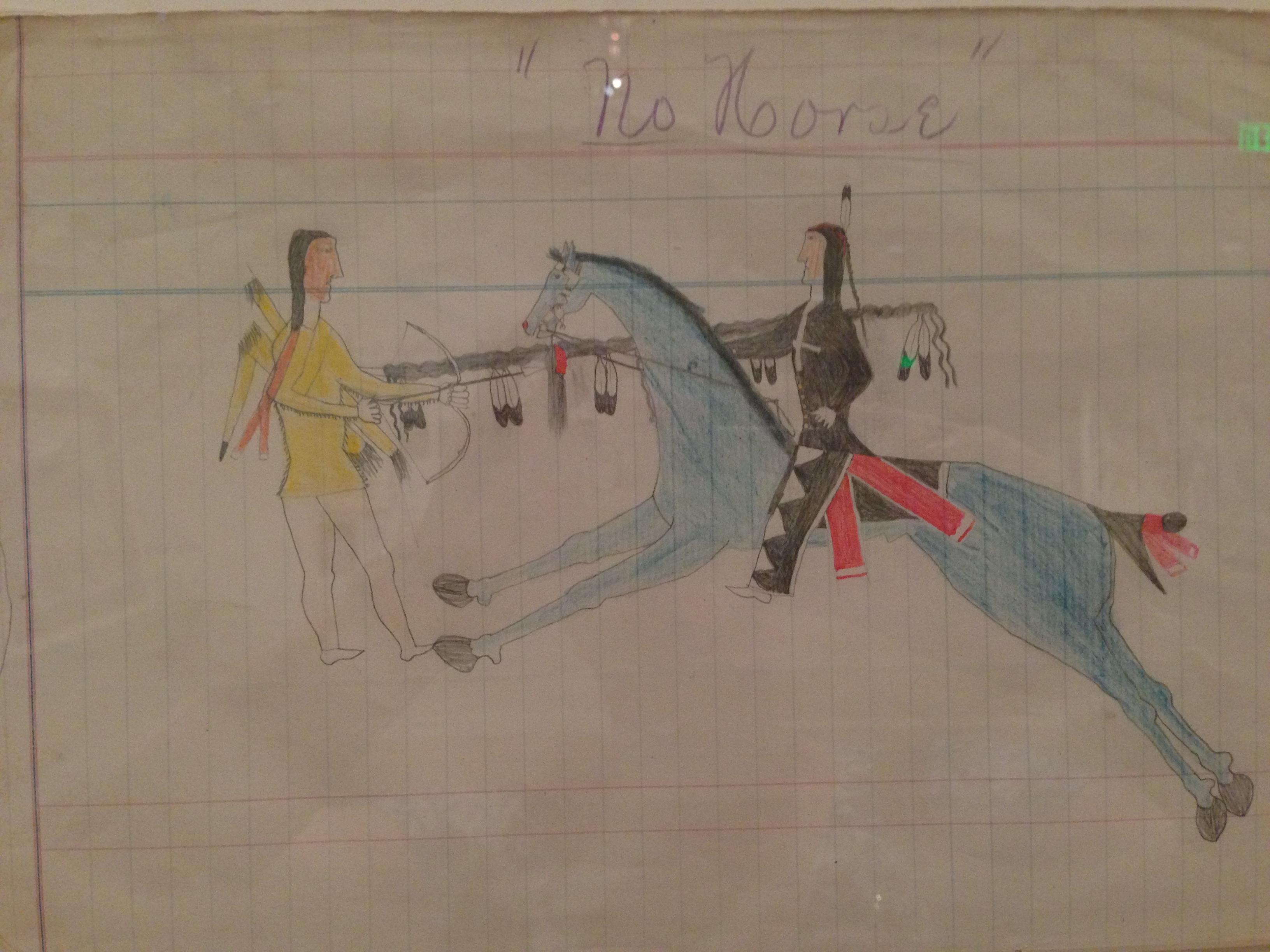
Chief Chief Killer distinguished himself among ledger-book artists.

chief killer

Educated at the Carlisle Indian School in Pennsylvania, the Cheyenne went back to the reservation in Oklahoma as a farmer, butcher, policeman and teamster.

He excelled at scenes of ceremonial life, landscapes and cityscapes. Collected in a ledger book cryptically titled No Horse are a series of accounts or heroism in battle.

no horse

According to his last will and testament, when Chief Chief Killer died in 1923 he left one grandson a spring wagon, one a bay horse, his granddaughter a set of light harness, but neither he nor his descendents had the funds for his burial, which the government covered to the tune of one hundred bare-bones dollars.

The new Heard Museum offshoot in North Scottsdale has a beautiful exhibit of ledger books.

One of my favorite pieces of research for The Women of the House years ago was the 18th century ledger book of the Albany fur trader Everett Wendell, which I felt privileged to handle at the New-York Historical Society, wearing white cotton gloves. Wendell indicated the furry merchandise to be exchanged with pictograms that he and the non-English speaking Alquonquin trappers would both understand: three little beavers, for example, or two bears.

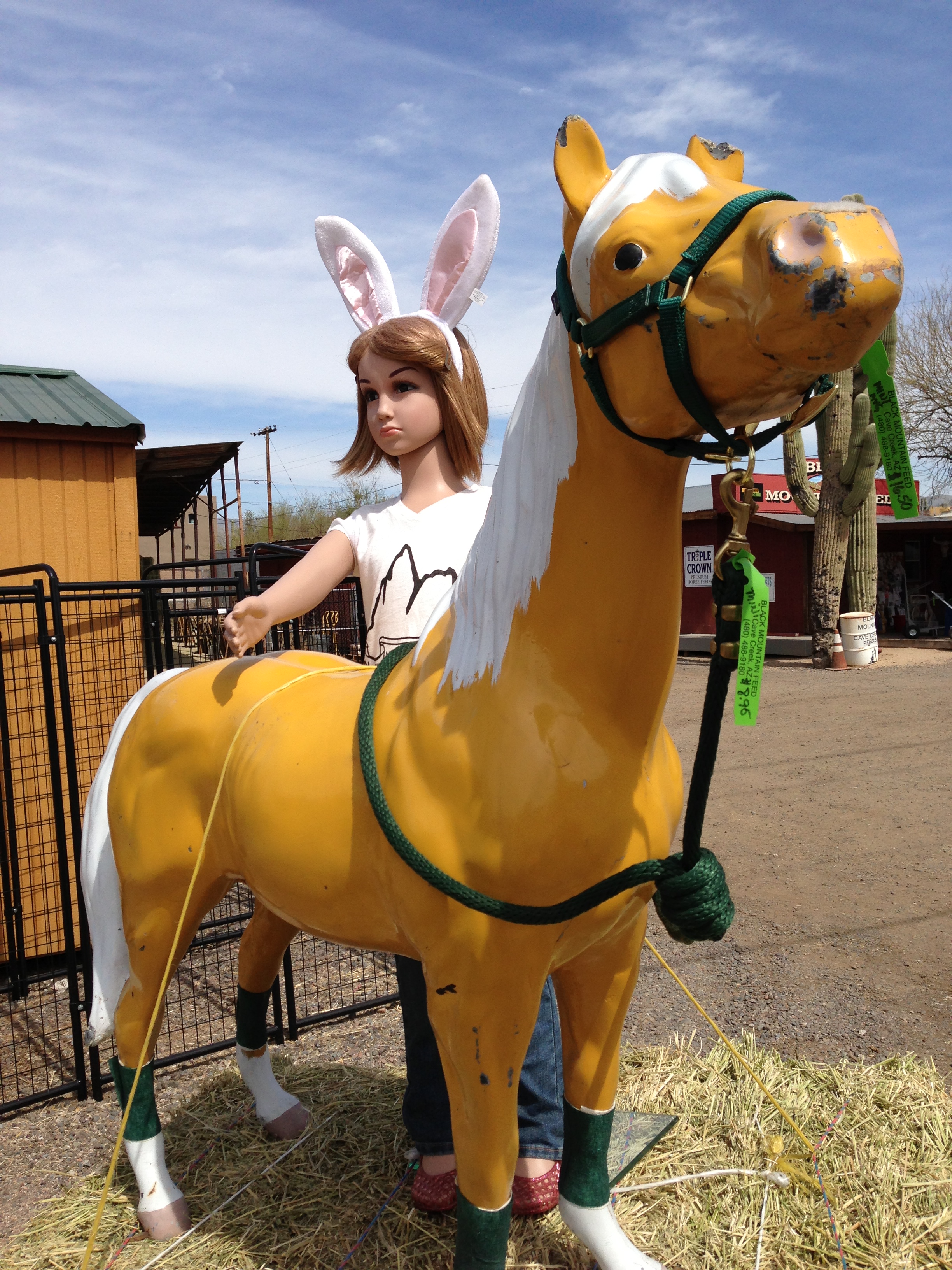
Big hand-lettered signs  or pictures on ledger paper make a clear statement. What statement does this figure make?

feed store

The life-size mannequin stands outside a feed store in Cave Creek, sporting her Easter finery, advising motorists that they better come in and make hay while the sun shines.

Maybe all those No signs could be reconfigured… No Horse.

no horse sheet

5 Comments

Filed under Art, History, Jean Zimmerman, Nature