A Room of One’s Own-Thank You Virginia

A belated happy birthday to Virginia Woolf (born January 25th), a writer whose fiction I idolized when I was around sixteen. I had the firm conviction that her novels To the Lighthouse and Mrs. Dalloway, innovative, modernist, poetic, were about as good as literature got.

Virginia Woolf cu

When I discovered Woolf’s book-length essay A Room of One’s Own, in college, I was thunderstruck. And I’ve never lost that feeling. I re-read Woolf’s arch 1929 critique of a sexist world, a discriminatory educational system, the need to nurture female talent, and I’m still pumping my fist in the air.

“A woman must have money and a room of her own if she is to write fiction.” A Room of One’s Own

Adeline Virginia Stephen was born on January 25, 1882, to Julia Stephen, a model for Pre-Raphaelite painters, and Leslie Stephen, a well-known biographer. She had seven siblings and half-siblings, and was brought up in an upper-middle-class Kensington household. That she suffered some sort of mental disorder (she was probably bipolar) was clear from her first breakdown at the time of her mother’s death in 1895. She collapsed again when her father died in 1904. In 1912 she married Leonard Woolf and in 1915 she published her first novel. Despite her recurring “madness,” she was able to publish and run Hogarth Press with Leonard and be active in the Bloomsbury literary group for the rest of her life.
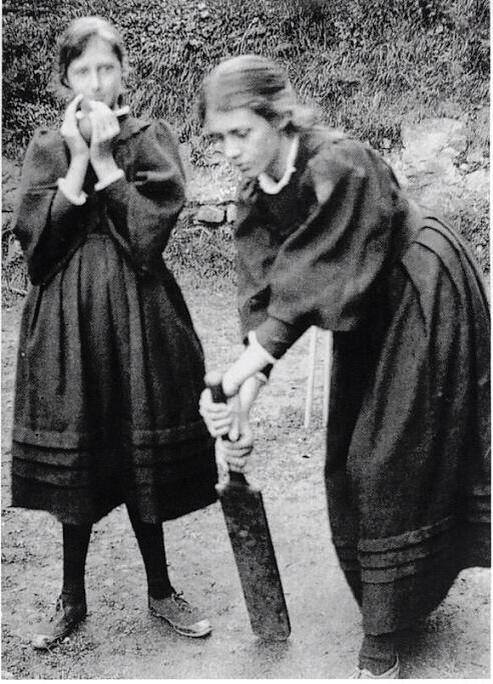
Virginia and her sister Vanessa playing cricket

That’s Virginia and her sister Vanessa playing cricket, proving that she had a lighter side.

“One cannot think well, love well, sleep well, if one has not dined well.” A Room of One’s Own

On March 28, 1941, Woolf filled the pockets of her overcoat with stones and walked into the River Ouse, near her house, to drown. An object that moved me beyond words was the simple wooden walking stick she took with her into the river, found floating near where she went in, preserved in the collection of The New York Public Library and shown in an exhibit of the library’s treasures a few years back.

woolf's walking stick

“When, however, one reads of a witch being ducked, of a woman possessed by devils, of a wise woman selling herbs, or even of a very remarkable man who had a mother, then I think we are on the track of a lost novelist, a suppressed poet, of some mute and inglorious Jane Austen, some Emily Bronte who dashed her brains out on the moor or mopped and mowed about the highways crazed with the torture that her gift had put her to. Indeed, I would venture to guess that Anon, who wrote so many poems without signing them, was often a woman.A Room of One’s Own

There is one surviving recording of Virginia Woolf’s voice. She delivered a talk called “Craftsmanship,” part of a 1937 BBC radio broadcast.

VIRGINIA WOOLF

Here is Woolf’s take on Judith, Shakespeare’s erstwhile sister, also from A Room of One’s Own. Tell me if after reading this you are not also pumping your fist in the air.

“I told you in the course of this paper that Shakespeare had a sister; but do not look for her in Sir Sidney Lee’s life of the poet. She died young—alas, she never wrote a word. She lies buried where the omnibuses now stop, opposite the Elephant and Castle. Now my belief is that this poet who never wrote a word and was buried at the cross–roads still lives. She lives in you and in me, and in many other women who are not here to–night, for they are washing up the dishes and putting the children to bed. But she lives; for great poets do not die; they are continuing presences; they need only the opportunity to walk among us in the flesh. This opportunity, as I think, it is now coming within your power to give her. For my belief is that if we live another century or so—I am talking of the common life which is the real life and not of the little separate lives which we live as individuals—and have five hundred a year each of us and rooms of our own; if we have the habit of freedom and the courage to write exactly what we think; if we escape a little from the common sitting–room and see human beings not always in their relation to each other but in relation to reality; and the sky. too, and the trees or whatever it may be in themselves; if we look past Milton’s bogey, for no human being should shut out the view; if we face the fact, for it is a fact, that there is no arm to cling to, but that we go alone and that our relation is to the world of reality and not only to the world of men and women, then the opportunity will come and the dead poet who was Shakespeare’s sister will put on the body which she has so often laid down. Drawing her life from the lives of the unknown who were her forerunners, as her brother did before her, she will be born. As for her coming without that preparation, without that effort on our part, without that determination that when she is born again she shall find it possible to live and write her poetry, that we cannot expect, for that would he impossible. But I maintain that she would come if we worked for her, and that so to work, even in poverty and obscurity, is worth while.”

4 Comments

Filed under Cooking, Culture, Fiction, History, Home, Jean Zimmerman, Photography, Poetry, Publishing, Writers, Writing

Wild Peter

What is it that fascinates people about feral children? As far back as the 1700s men and women went crazy over the idea of an individual who was raised in the wild and then drops in to civilization only later in life.

A mute, naked adolescent was discovered by a party of hunters in the German forest in 1726 – near Hamelin, of Pied Piper legend —  and Wild Peter soon became the talk of Europe. His background was unknown. King George I brought him from Hanover to his court in London, where the child liked to play with acorns and grew excited over hearing a clock strike. King George himself hailed from Germany and spoke little English; perhaps that explains his sense of kinship with the boy.

NPG D3895; Peter the Wild Boy by John Simon, after  William Kent

Anthropology had lately come in vogue, with people bringing back accounts from foreign lands about monsters, Hottentots, unfamiliar animals. Was Peter truly human or was he more along the lines of an orangutang? He walked on all fours, after all. The press went wild, commenting on his primitive demeanor, wondering at his forest upbringing, marveling that he had become a kind of court pet.

This mysterious creature inspired satiric commentary by Swift and a pamphlet by Daniel Defoe, who proclaimed him the only truly sensible person alive. The painter William Kent included Peter in a mural of the royal court that even today hangs beside a staircase at Kensington Palace, with the wild child modeling a civilized green coat, grasping a bunch of oak leaves and acorns. His likeness also graced a celebrated wax museum. Wild Peter never spoke, but he became an expert pick-pocket.

4 Comments

Filed under Art, Culture, History, Jean Zimmerman, Nature, Savage Girl

“First to Read” at Penguin

Please note that the art people at Viking have helped me with a facelift for the site, posting a new Savage Girl banner with a matching background pattern of gleaming orangey rust. Publishing a book is anything but a one-person job. I so appreciate all the help I’ve gotten bringing this novel to the state it’s at today.

The state it’s at… well, you’re going to have to wait to find Savage Girl at your corner bookstore for another six weeks, so here’s some good news. The folks at Penguin (Viking’s parent company) have a special program through which you can request a digital version of the book. If you love paper pages and a luscious new jacket, wait. If you want, though, you can jump in now, through Penguin’s “First to Read” program, and get the novel on your e-reader. Then please leave a comment and let me know your reactions.

penguinlogo_60w

1 Comment

Filed under Art, Culture, Fiction, Jean Zimmerman, Publishing, Savage Girl, Writers, Writing

The Body Parts of Vesalius

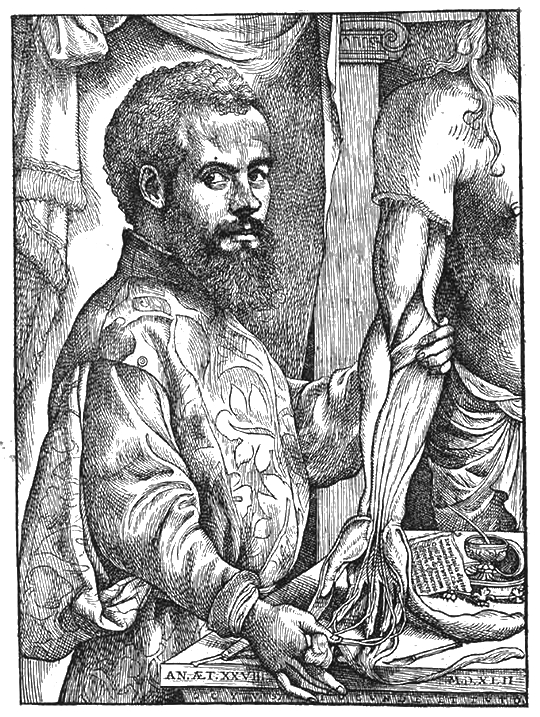
In Savage Girl, the Harvard student and aspiring anatomist Hugo Delegate spends untold hours over his drawing table, making pictures of whatever body parts he is lucky enough to get ahold of: human bones, hearts, hands, the cerebellum of a child killed tragically in a streetcar accident. The body is a mystery to him, one he wants earnestly to plumb. Aiding him in his self education is the work of a sixteenth-century anatomist named Andreas Vesalius, a Flemish physician based in Brussels who published a book called De Humani Corporis Fabrica in which the human body was for the first time demystified.

vesalius portrait

The fruit of untold hours of dissection and learning, the Fabrica went against the scholarly approach heretofore used to teach medical students. It exposed the body to the light with an exactitude that shocked and dismayed the day’s scientists.

vesalius 1

Vesalius performed the dissections but did not execute the illustrations. Those he supervised closely at his own expense in the Venice studio of Titian. In the text, he used metaphor to describe parts of the body, some of which did not yet have names. To talk about muscles, he used such images as a fish, a pyramid, a cleaver. Other parts were described as pumpkin vines and pigeon coops. It might seem odd, this combination of metaphor with so graphic visuals, but he was trying to discover a language that didn’t exist yet. After the work’s publication he took a position in the court of Emperor Charles V, where he had to put up with the jibes of other physicians calling him a barber (in fact, barbers were usually surgeons in those days, termed chirurgeons in English).

vesalius 2

The circumstances of Vesalius’ death have been debated over the years. Scholars once thought he died after performing an autopsy on a nobleman whose heart was still beating and was sentenced to death. Now it is believed that In 1564 Vesalius went on pilgrimage to the Holy Land. Returning, he died when his ship wrecked on the island of Zakynthos. He was just 50 years old, and so broke that a benefactor came forward to pay for his burial, somewhere on the island of Korfu. Recently Vesalius’ own personal copy of the Fabrica has been discovered, complete with the scientist’s marginal annotations, which prove that he went on exploring long after his great work had been published.

3 Comments

Filed under Art, Culture, History, Jean Zimmerman, Nature, Publishing, Savage Girl, Writers, Writing

Publishers Weekly Interview w/Jean Zimmerman

PW 1

PW 2

2 Comments

Filed under Culture, Fiction, Jean Zimmerman, Publishing, Savage Girl, Writers, Writing

The Power of Words

Martin Luther King, Jr. Day is an occasion that celebrates among other things the power of words.

martin-luther-king-2

The man was a Shakespeare for our day.

And so I really like this post by someone who talks about how some good novels lead us, as Wordsworth once put it, “toward obliterating the vulgarity of exclusiveness.” I urge you to check it out. There is a list of 19 books that speak truth to prejudice. The recommendations are far ranging. They include Julie, or the New Heloise by Jean Jacques Rousseau.

rousseau

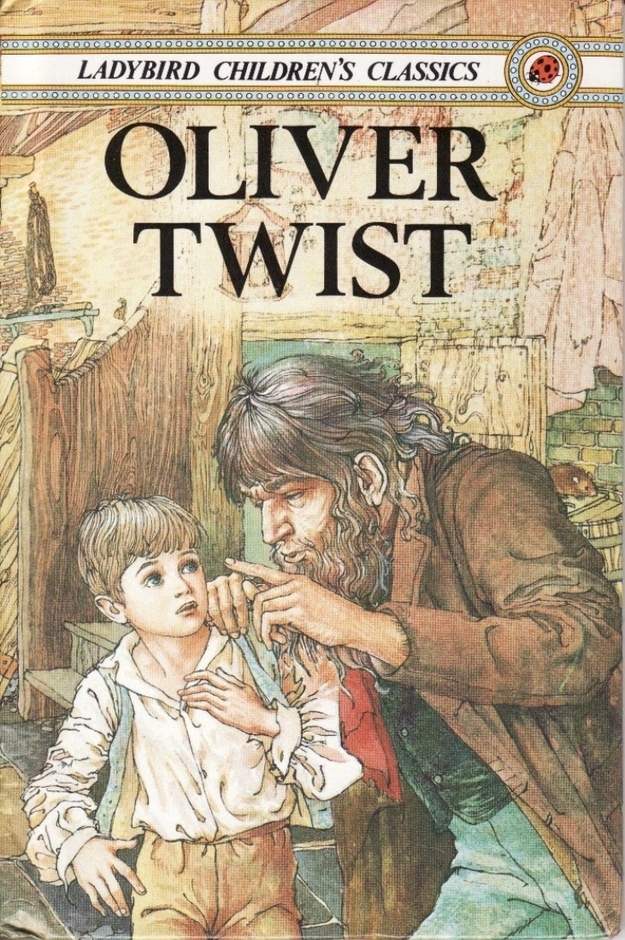
Dickens’ Oliver Twist.

twist

Uncle Tom’s Cabin.

stowe

Ralph Ellison’s Invisible Man.

ellison

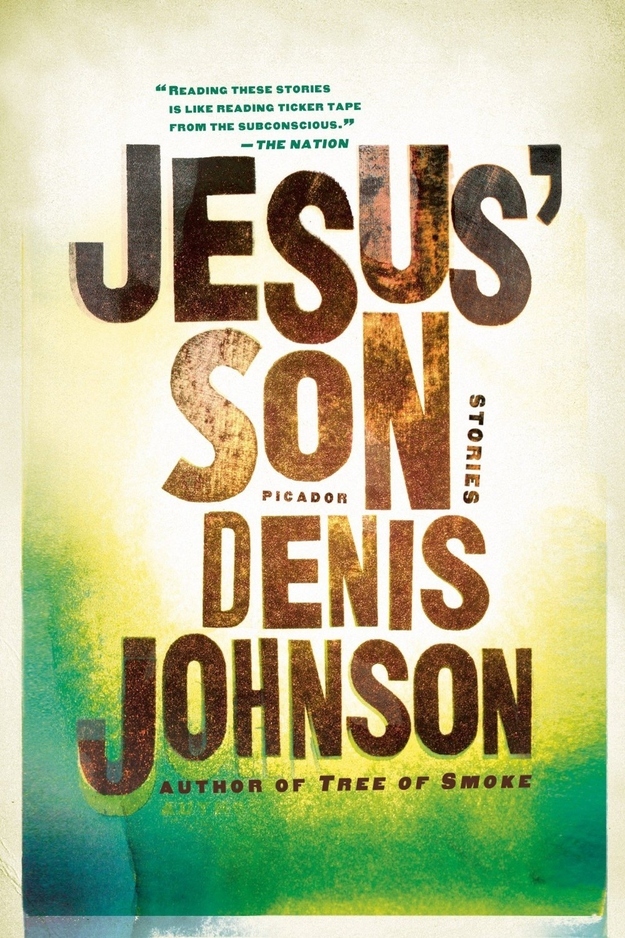
And, interestingly, Jesus’ Son by Denis Johnson.

jesus son

You may have read one or two of these selections before. Let’s read them again, for their politics as well as their poetry.

1 Comment

Filed under Culture, History, Jean Zimmerman, Poetry, Publishing, Writers, Writing

Helicopter Meat Loaf

I always hear people complain about memory loss. Do you forget where you put your keys? That’s how the problem is often phrased. There is an idea that age itself muddies the waters of the brain, causing the things we need to sink. Or maybe it’s your meds, another villain. I always go with the theory that faulty memory is a function of having just too important stuff to keep track of. When you’re younger, you don’t have as much going on, daily or in the bigger picture, so finding your mascara or coming up with words is easier. Think about how much your day-to-day has in it, mid lifers – is it any wonder that you can’t find things when you need them, that a familiar face lacks a ready name, that the perfect word remains at the tip of your tongue but stubbornly refuses to come out of your mouth?

little guy

A few years back, concerned about the occasional memory glitch when I was speaking in front of people, I came up with a solution. When I came to a place in my remarks when I simply could not come up with the word I wanted, I would utter a different word: Helicopter. And then I would continue with my remarks. Helicopter was my go-to utterance, my transition from one known figure of speech to the next. To me, it was better than umn. I trusted that no one would be listening closely enough to note the absurdity. And I’d be free of the anxiety that hits you: oh, no, what was it I wanted to say, I can’t think of it, it was like something that I can almost put my finger on, duh!

When you write there is a brilliant way to hold your place while you come up with the correct word or phrase, the one you really want to use. TK means “to come,” and is a printing and journalism reference used to signify that additional material will be added at a later date. The reason: very few words use this combination of letters, and so you can easily search for TK when the time comes to put in the proper locution. If you were to write out  “to come” the words might be mistaken at some point as a deliberate part of the text. That would be weird. So in writing this paragraph, for example, I might say that the useful term TK was invented in TK, and then come back later to fill in the missing date. I use this trick more often than I can say, because it allows me to push straight through with a thought and not be caught in a frustrating wordless moment. It only doesn’t work if you’re writing about latkes or catkins. (Gil says he wants TK to be his epitaph.)

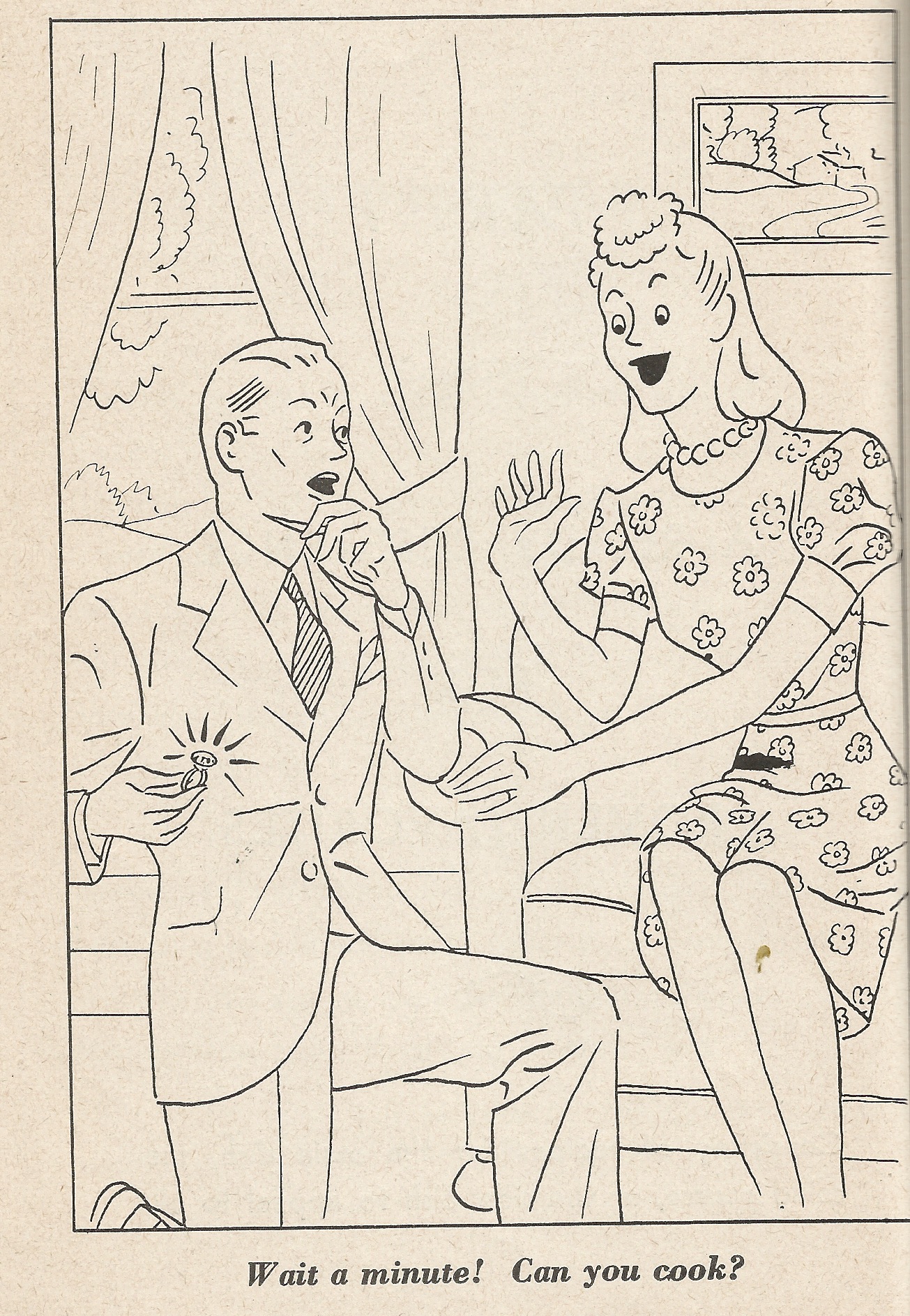
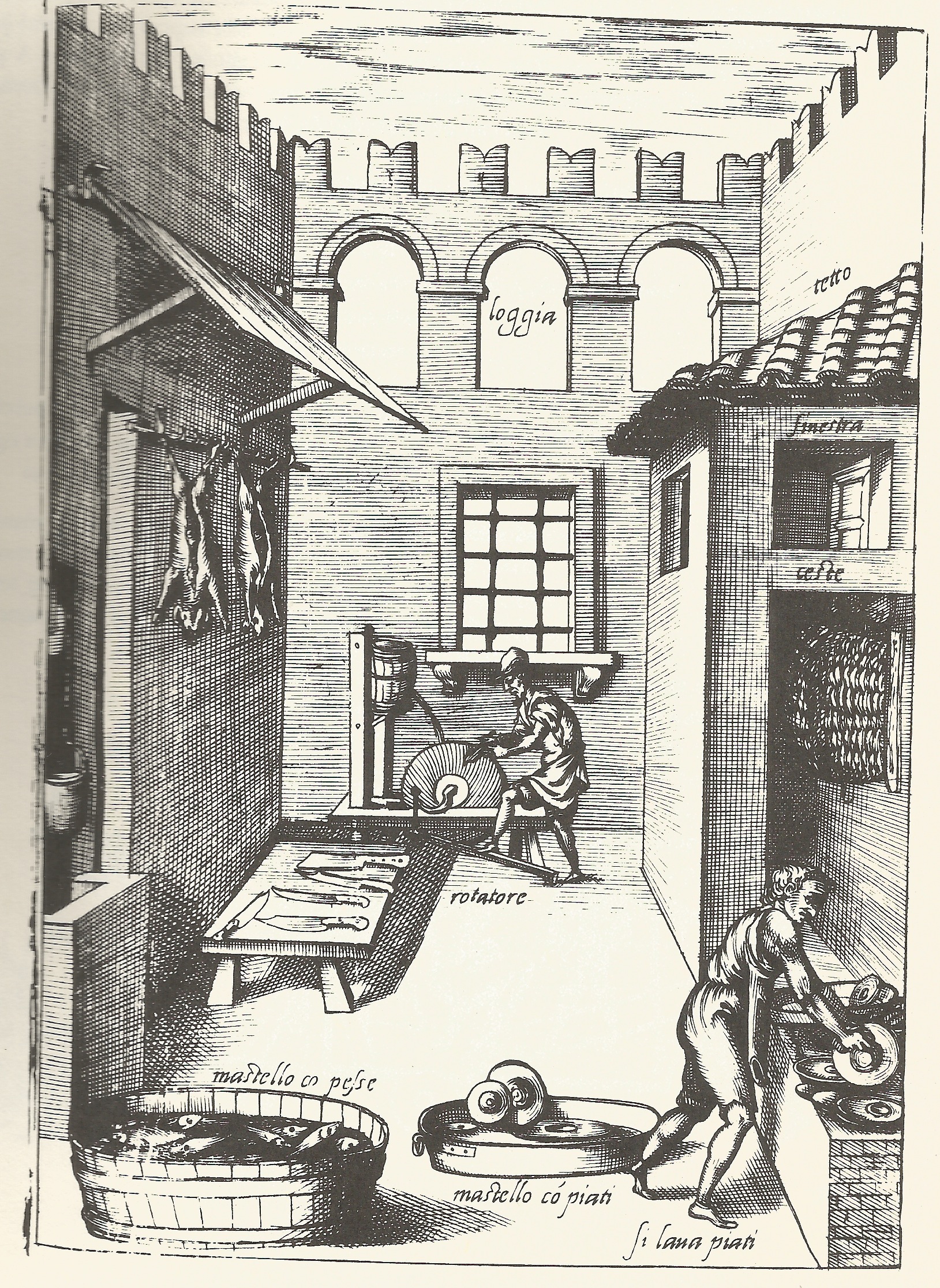
Helicopter was sort of a verbal TK, an admission that my fishing line was not going to come up with a trout in the immediate future. There are some foods that lend themselves to a helicopter strategy, too, culinary specialties for which you can put in a TK and scramble for the right term a little later. A recipe for meat loaf, for example, doesn’t have to be perfect. There are a thousand, maybe a million ways of preparing it, and probably most of them taste fine. Good Housekeeping did a study in 2007 and found that meat loaf was the seventh-favorite dish in the U.S., but I think it probably really ranks higher as comfort food enjoys its usual resurgence.

can you cook

The Romans made it as early as the fifth century. In his cookbook, De Re Coquinaria, Apicius cited a patty formed of chopped meat combined with spices, wine-soaked bread and pine nuts. Cooks of the Middle Ages continued to fruit-ify it, as was their wont.

Meatloaf 9

All over Europe people have come up with different preparation methods. In America, food scholars date it to the Southern dish of scrapple, mixing ground pork – including lungs, liver, and heart– and cornmeal. During the Great Depression some bread crumbs, broken crackers or oatmeal stretched the meat dollar.

take over

In the 1890s the mechanical meat grinder was invented. Shortly thereafter meatloaf was first mentioned in print in the U.S.  Then the recipes began to flood. I looked through my collection of community cookbooks and historical cooking pamphlets to find a wealth of options for meat loaf mavens looking to fill a TK in their approach.

Meatloaf 3

In Old Timey Recipes, a handwritten “collection from some of the best cooks of The Carolinas, The Virginias, Tennessee, and Kentucky” that was published in 1969, we find a version that incorporates corn flakes and tomato juice. From the 1967 Talk About Good!, put together in Lafayette, Louisiana, there’s Hattie’s Meat Loaf, a plain-jane variety with ground beef, eggs and bell pepper. The Search Light Recipe Book, published by The Household Magazine in Topeka, Kansas, includes both crackers and milk (those might also be nice alongside the entree). The pamphlet produced by the Ladies’ Village Improvement Society in East Hampton, New York in 1948 adds tapioca.

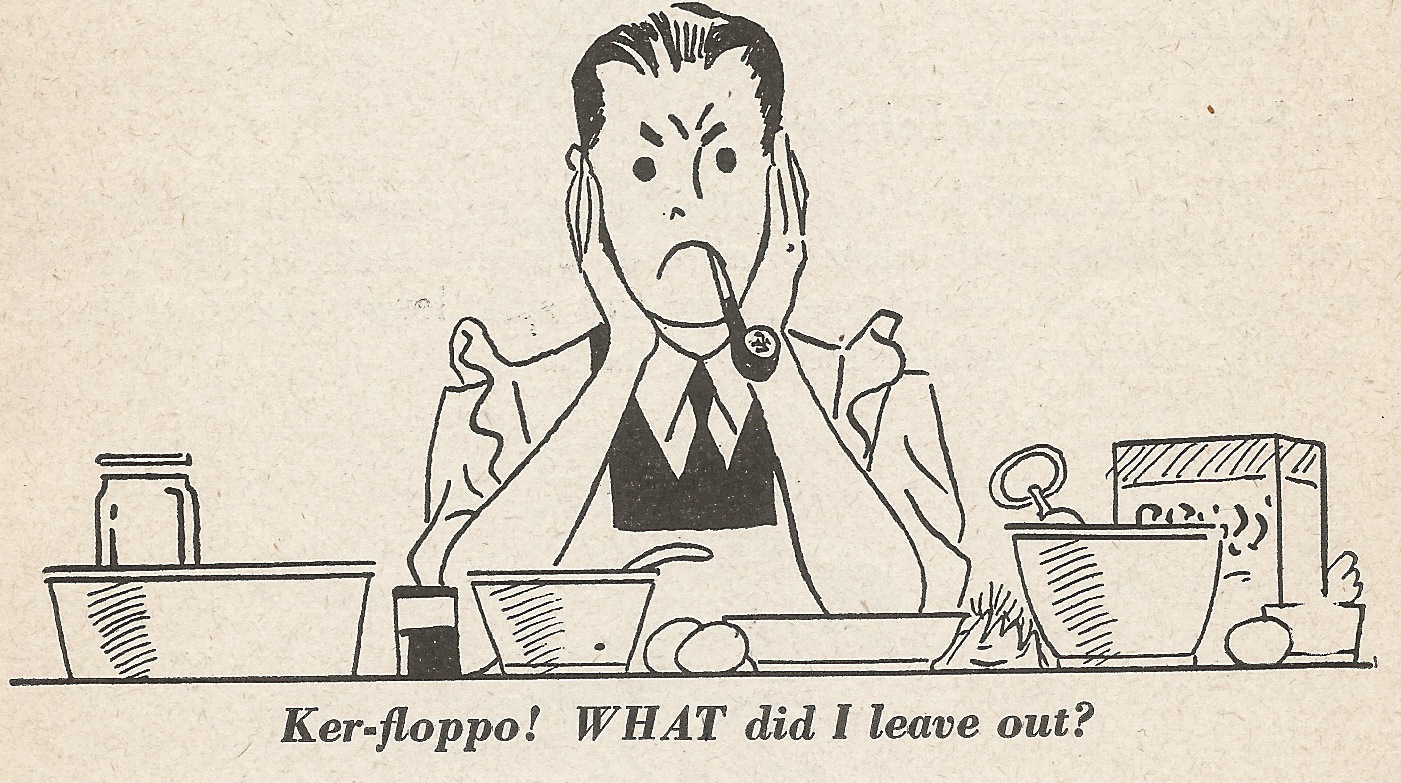
A Man’s Cook Book: For Outdoors and Kitchen (1950) dresses up the usual beef with Karo syrup and a can of Carnation milk.

what did i leave out

Another favorite of mine, Mrs. Rasmussen’s Book of One-Arm Cookery, explains how to insert cooked eggs into the raw meat mixture so that “the slices of meat loaf will have a perfect slice of hard-boiled egg in the middle.” The author adds, “This dish keeps well—if you got a padlock!” A self-published spiral-bound Hilltop Housewife Cookbook by Hazel B. Corliss offers not one but seven recipes for the dish, including Hidden Treasure Meat Loaf that cunningly conceals “little squares of cheese.” One bare-bones book came out in 1929, when the first recipe instruction was to “Chop the steak.” That task would flummox probably 99 percent of American cooks today.

face

Even the Metropolitan Museum got in on the home cooking racket in 1973, with A Culinary Collection: Recipes from Members of the Board of Trustees and Staff, one that includes a sophisticated Bloody Mary Meat Loaf. The timeless Ground Beef Cookbook, of course, runneth over with meat loaf ideas. In fact, there is a whole section on “Loaves.” It’s a good place to go when you crave a recipe for banana meat loaf or cranberry meat loaf or meat loaf with applesauce folded in. Very complex, tastewise. By comparison, in the Porter Church Cook Book of 1904, between the beefsteak omelette and the roast heart, I discovered a simple veal loaf, one accented delicately with nutmeg.
I actually have one cookbook named specifically for the subject: Padre Kino’s Favorite Meatloaf: And other recipes from Baja, Arizona. Incorporating chorizo and cheddar, Kino proves that you can add a TK somewhere along the process of mixing your meat and come up with something rather tasty.

platter

When I make meat loaf I start with the same essential ingredients, then I revert to helicopter mode, substituting what I can vaguely remember from the last time I concocted the recipe and also what seems like the best strategy given the constraints of my fridge or pantry. I’ll combine a couple of pounds of meat – beef, pork, chicken, veal or turkey, whatever’s available– then add some eggs and bread crumbs. And then… what else? Can’t remember? Try onions, red pepper, shredded cabbage. Anything but applesauce. Believe me, whatever you add, when it comes out of the oven you will need a padlock.

Helicopter Meat Loaf

2 lbs. mixed ground beef, veal and pork

2 lbs. ground turkey

2 chopped onions, sauteed slightly

1 red onion, chopped and sauteed with onion

¼ head cabbage, shredded, sauteed with onion

4 eggs

2 cups bread crumbs

1 c. ketchup

½ c. mustard

salt and pepper to taste

Combine all ingredients. Shape into a loaf in a jellyroll pan. Bake at 375, 20 minutes/lb.

4 Comments

Filed under Cooking, Culture, History, Home, Jean Zimmerman, Publishing

Bound vs E-Books Revisited

How many books do you have stacked on your nightstand? Or piled on the bedroom floor, or scattered across the coverlet? Does your coffee table hold bound books or yesterday’s papers or riffled copies of Vanity Fair? Do you tuck a paperback into your bag when you go to wait in the doctor’s office, or do you slip in your IPad? When you go out to power walk, are you also power listening to a wonderful story?

stack

If you absorbed a book in some form you are in the majority – so did 76 percent of American adults last year. That surprises me, actually. Fully 24 percent of us read no book at all? Who are those people? I guess the ones poring over Vanity Fair. The new Pew Study that identified the 76 percent also found that the “typical American adult” read or listened to five books in a year’s time and that the average for all adults was 12 books. Not bad. A figure that hasn’t changed recently.

Something that will gratify both the hearts of Luddites and of independent book store sellers is that print is still the medium of choice. Even people who read e-books (28 percent) also often read the paper variety. Just four percent of readers confessed themselves to be exclusively e-book.

I like my several-years-old Kindle, now slightly weather-battered. I like that I’m carrying around a library of 100 volumes and can dip into any of them at will, at any time.  I love that I can send an electronic file of a book I’m working on to my Kindle and read it in one hand, rather than printing out clumsy manuscript pages. Or having ready access to the draft of her novel a friend wants me to read. So easy. The prose sings with the Kindle’s light behind it. And I love ordering stuff to read on it with just a click and feel cool that I can do so on a whim. Sometimes I get junk food, like the Central Park murder mystery Death Angel by Linda Fairstein. It’s like a box of New York chocolates I might not pick up in a store.

death angel

If someone at a dinner or over coffee mentions a more obscure or older title, say The Alligators of Abraham, by Robert Kloss, or The Dinner, a novel by Herman Koch, or Eat the Document by Dana Spiotta, I’m off and running.

EatTheDocument

These are works I wouldn’t necessarily find browsing at my local shop, The Village Bookstore in Pleasantville, New York. Though I know they would always be helpful about ordering them. More lucrative for the proprietors that I go in and order stacks of new hardcovers. Which I have been known to do.

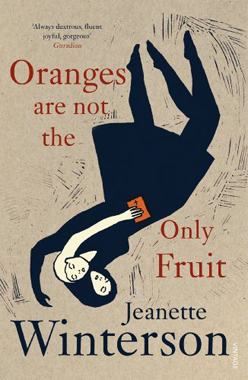
An example of a lesser-known item in my digital library: Jeanette Winterson’s Oranges Are Not the Only Fruit. People had been mentioning this book to me for a long time and it won all kinds of prizes when it came out in 1985.

oranges-1

The British author also wrote the novel Sexing the Cherry. The book begins:

Like most people I  lived for a long time with my mother and father. My father liked to watch the wrestling, my mother liked to wrestle; it didn’t matter what. She was in the white corner and that was that.

White corner?Alright, I’m in. And Winterson goes on, portraying a world I have never imagined that that if it wasn’t for an electronic device I would never experience.

But then sometimes I dip into a book I’ve downloaded to my device and say, Why? What in a million years possessed me to gather this title into my library? The novel I’m trying to read is kind of hiding within the cold glass front of this machine and therefore I can’t access it mentally. A book like Cloud Atlas by David Mitchell (I know, everyone loves this one) begs to have its secrets revealed in a stack of actual pages. Not being able to touch paper numbed me to its charms.

Real books, I find, tomes of paper and ink, with beautifully designed jackets or with soft covers whose spine you feel okay about breaking when you plow through with vehemence – real books tend to hold my interest much more. And I find that when I’m reading a book on my Kindle that I really like, my strong impulse is to rush out to a store and buy a print copy. The phenomenal  Book of Ages: The Life and Opinions of Jane Franklin, say, by Jill Lepore. Or Per Petterson’s pitch-perfect I Curse the River of Time. The whole time I was reading I wished I held paper.

august_patterson_riveroftime

Or The Glass Castle by Jeanette Walls. I want to hold the book in my hands, flip the pages back and forth, cradle it on my chest when I read it in bed. I read in bed a lot and I bet if Pew studied the phenomenon they would find that of the 76 percent of Americans who read any kind of books in the past year, 75 percent of them did so comfily and cozily in their beds.

4 Comments

Filed under Culture, Fiction, Home, Jean Zimmerman, Publishing, Writers, Writing

Savage Girl Review in Library Journal

Woo hoo! This just in, from Library Journal, its Feb. 1 issue:

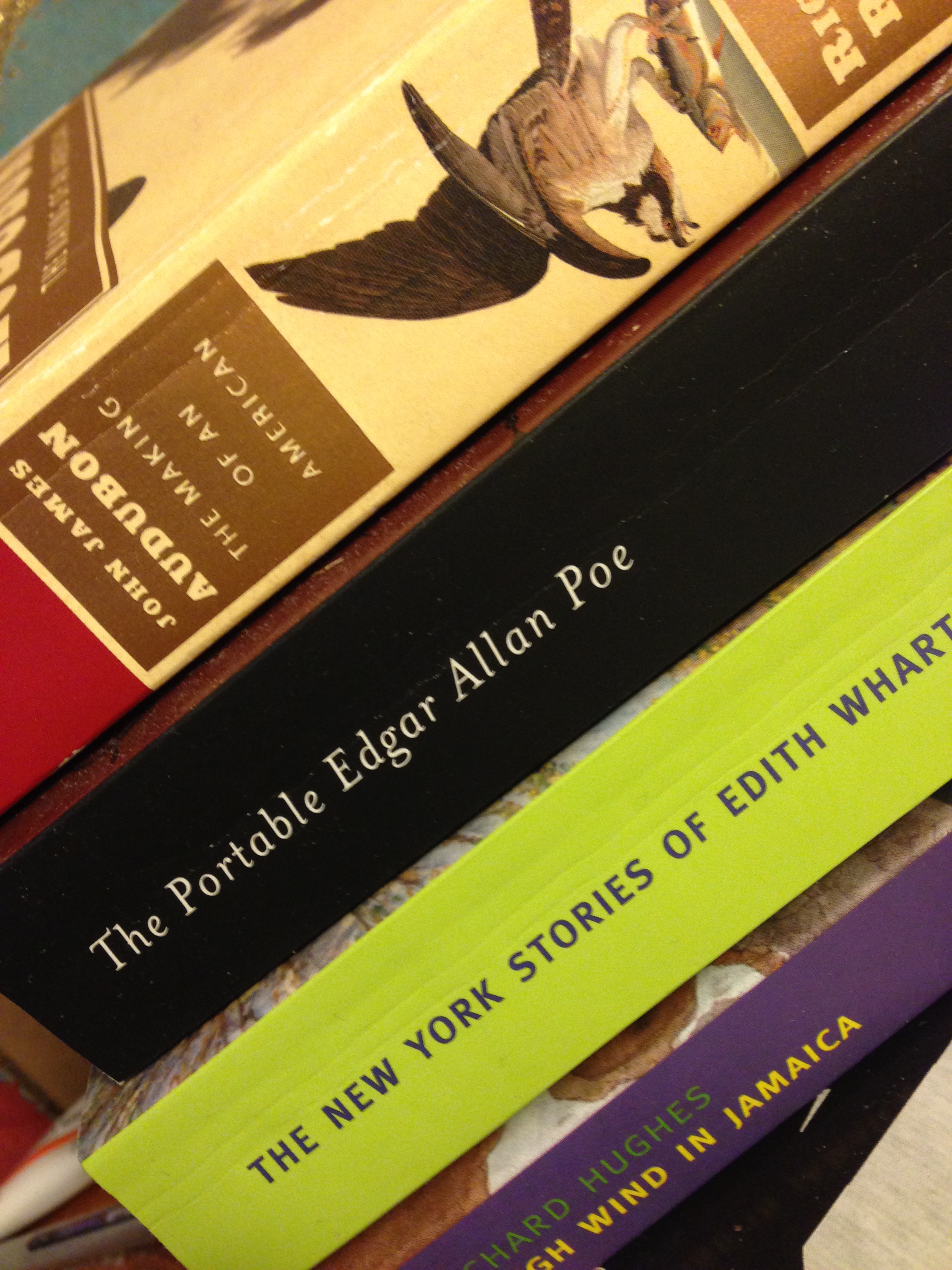
Wealthy socialite Hugo Delegate and his family rescue the “Savage Girl” from a carnival sideshow and bring her back to their mansion in 1870s New York. Reportedly captured as a child and raised by a Comanche tribe, she instantly captivates Hugo with her boldness and energy. The Delegates undergo a campaign to socialize Savage Girl with limited success. Meanwhile, violence follows this young woman across the country, as men she flirts with end up mutilated and dead. In this follow-up to her acclaimed debut, The Orphanmaster, Zimmerman offers a fanciful and occasionally surreal take on a Gilded Age New York that is reminiscent of Caleb Carr’s The Alienist or even Edgar Allan Poe. Most of the novel is narrated by Hugo recounting events in an extended flashback, which feels jarring and out of place. More successful are the action-packed final chapters. VERDICT This is best for fans of Zimmerman’s first novel and readers who like their historical novels tinged with darkness.

Savage Girl cover

Leave a comment

Filed under Culture, Fiction, Jean Zimmerman, Publishing, Savage Girl, The Orphanmaster, Writers, Writing

Shorpy Higginbotham’s Buckets

A day before getting my cast cut off my foot (aahhhh…) my cabin fever got the best of me and I made for NYC, to navigate midtown perched on my scooter. The train into town went okay – I watched the gap more zealously than I ever had before – and Maud and I got some laughs out of trying to make my cockeyed vehicle go the way it should on Manhattan’s rough and pitted sidewalks, and there was even salad in a white-tablecloth restaurant overlooking Bryant Park. But the day’s high point came at the International Center of Photography, which was exhibiting Lewis Hine’s photographs from the early 20th century. I knew the show was closing in two days and I just had to see it.

I started paying attention to Hine’s work when I became aware of his Shorpy photographs – a piercingly eloquent series of four images that portrays a child worker in an Alabama coal mine circa 1910. Hine wrote this note: “Shorpy Higginbotham, a ‘greaser’ on the tipple at Bessie Mine, Alabama, of the Sloss-Sheffield Steel and Iron Co. Said he was 14 years old, but it is doubtful. Carries two heavy pails of grease, and is often in danger of being run over by the coal cars.”

shorpy

Shorpy, of course, is the little scrapper in front. He lived a hard life and died young, apparently, brained by a rock, but his proud demeanor is ageless.

buckets

A pioneering documentarian whose work portrays factory workers, families in tenements, men building skyscrapers — Americans of all walks of life, as well as some Europeans — Lewis Hine had both tremendous skill and heart. His depictions of child laborers are incredible. This little girl worked in a textile mill.

spinner

The exhibit unveiled a different, difficult world so powerfully it gave me a lump in my throat.

ny tenement

I did not see a picture of Shorpy included among the prints, but these were Shorpy’s people.

women

Seeing Hine’s subjects rendered a foot cast and a wobbly scooter the first world problems they truly are. I made my way to Grand Central Station, past the New York Public Library muscling its way up toward the grey sky above, proud to be a human alongside Lewis Hine.

skyscraper

4 Comments

Filed under Art, Culture, History, Jean Zimmerman, Photography

R.H. Macy’s Tattoo

We’ve arrived at Macy’s Herald Square to test out the mattresses. Outside in the rain, some typical New Yorkers loiter, including a beautiful bald woman in a gold lame miniskirt with scarification marks across her cheek. The aisles are thronged; New Yorkers love bargains and today is a big January sale day. Elevator up to the ninth floor, hike all the way down the way to the proper department, and beneath our feet the floor changes to deep, wide, richly varnished old boards. We have the space to ourselves, it seems, and the space around us here under the roof is high-ceilinged and grand.

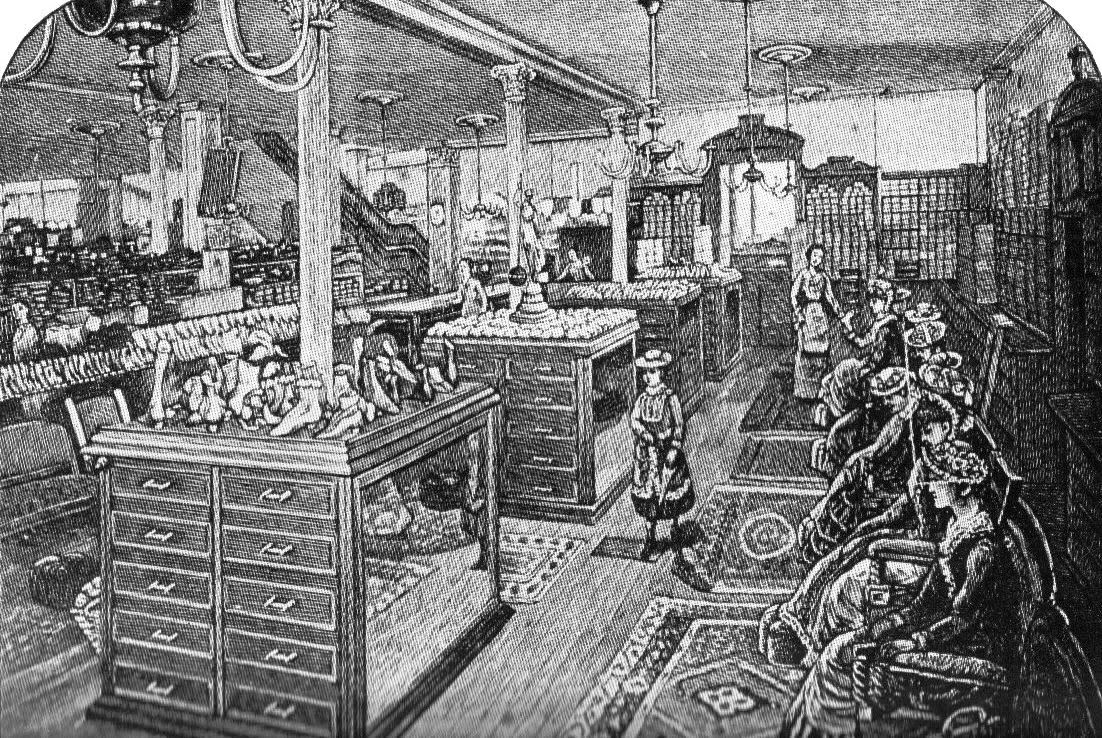
The bed salesman deftly sells us on a Sealy at the same time as he clues us in to some Macy’s history. The founder, he tells us, Rowland H. Macy, was run out of Boston after a series of failed stores, then set up shop in 1858 in Manhattan in a brownstone on 14th Street and 6th Avenue with a dry goods store selling stockings, shoes and gloves, necessities of the time in New York City.

macy's shoes

No gold lame skirts at that point. First-day sales totaled $11.06. The eventual retail giant grew, in 1902 opening up at 34th Street and spreading to the full block it still occupies. The polished wood I hiked along was thronged with the ghosts of that time, when the flagship was so far uptown that it had to import downtown ladies and gentlemen via steam wagonette to get there. (Customers also rode the wooden escalators, vestigial early technology that appears unaccountably elegant to me today.) This picture dates to 1907.

Macy's 1907

That red star you see in all the store’s merchandising? That’s been in use from the beginning, a replica of R.H. Macy’s tattoo, a souvenir between the thumb and forefinger of his right hand from when he worked on a Nantucket whaling ship at the age of 15. A faded Harlem wall sign more than a hundred years old shows it still.

macys.redstar

We came away from 34th Street with a little history and a decent bed for a young woman who is about to move into her first New York City apartment.

2 Comments

Filed under Art, Culture, Fashion, History, Home, Jean Zimmerman, Photography

Starred Review for Savage Girl

Publishers Weekly has come out with a starred review for Savage Girl. The reviewer says:

The prologue of Zimmerman’s superior historical thriller will suck most readers in instantly. On the night of May 19, 1876, 22-year-old Hugo Delegate awaits the arrival of the police at a house overlooking Manhattan’s Gramercy Park, the site of a savage murder committed by either him or a “girl murderess.” Hugo soon reveals that the victim, a “longtime acquaintance and sometime friend,” is but the latest in a series, and after his arrest, he presents the complex backstory to his defense attorney. Flashback to June 1875. Hugo, a Harvard student recently released from a sanatorium, accompanies his family on a cross-country trip. In Virginia City, Nev., he becomes fascinated with a sideshow freak, the so-called Savage Girl, allegedly raised by wolves. Hugo’s parents decide to civilize the girl, and introduce her into society on their return to New York. Zimmerman (The Orphanmaster) keeps the truth hidden until the end, combining suspense with an unsettling look into a tormented mind. Agent: Betsy Lerner, Dunow, Carlson, and Lerner. (Mar.)

Savage Girl cover

8 Comments

Filed under Culture, Fiction, Jean Zimmerman, Publishing, Savage Girl, Writers, Writing

Doppelgänger Photos

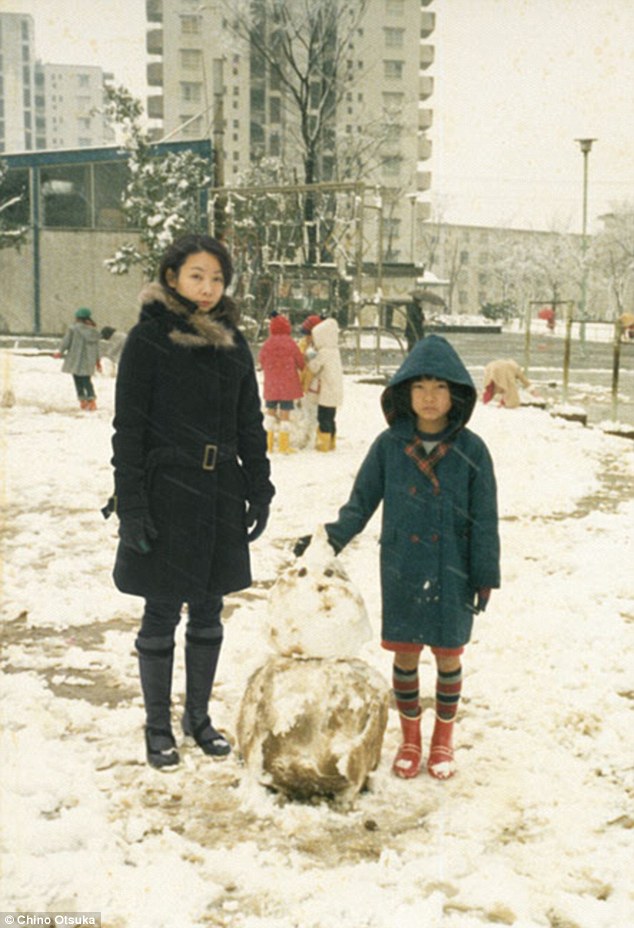
“The digital process becomes a tool, almost like a time machine as I’m embarking on the journey to where I once belonged and at the same time becoming a tourist in my own history.” So says Tokyo-born, London-based photographer Chino Otsuka. She created an evocative series of images called Imagine Finding Me in which she digitally inserted the grown-up version of herself into scenes of her childhood. I find the work eerie, dreamlike, and immensely affecting. I can only imagine creating some form of this with my own image. It might be like they say about a doppelganger – your meet yours and you both explode. More of Otsuka’s photos can be seen here; what follows are just a few.

Paris

1982 and 2005, Paris, France.

Beach 2

1976 and 2005, Kamakura, Japan.

Spain

1975 and 2005, Spain.

Japan snowman

1980 and 2009, Nagayama, Japan.

Leave a comment

Filed under Art, Culture, History, Home, Jean Zimmerman, Photography

Edward Lear in Flight

The nonsense poet and artist Edward Lear has always been one of my favorites. I remember when I was growing up being fascinated and mystified by The Pobble Who Has No Toes:

The Pobble who has no toes

    Had once as many as we;

When they said, ‘Some day you may lose them all;’—

    He replied, — ‘Fish fiddle de-dee!’

And his Aunt Jobiska made him drink,

Lavender water tinged with pink,

For she said, ‘The World in general knows

There’s nothing so good for a Pobble’s toes!’

And its zesty illustration:

pobble

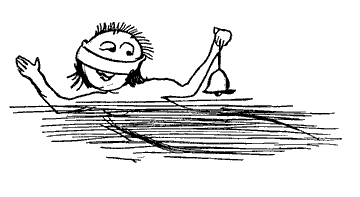
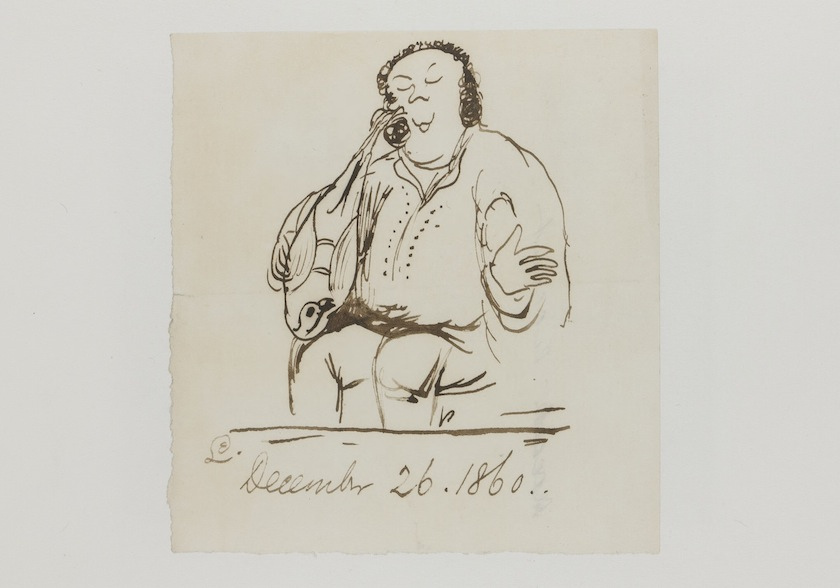
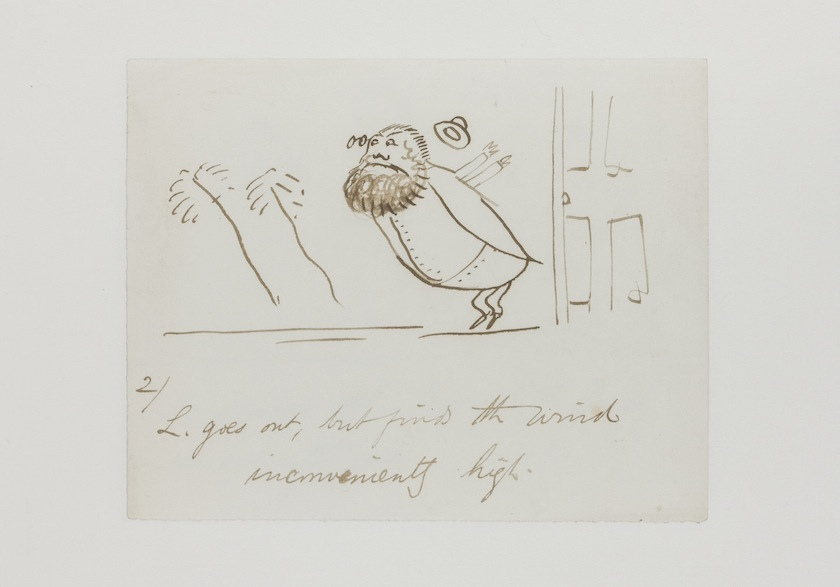
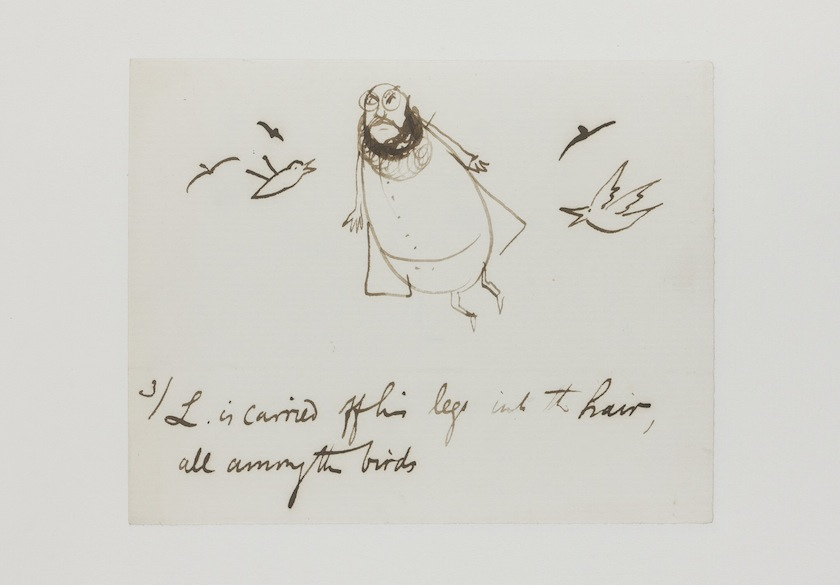
Now I come across 10 rare sketches from 1860 in which Lear portrays himself getting blown about on a gusty day, from the Frederick R. Koch Collection at the Beinecke Rare Book and Manuscript Library in Yale University. The drawings are so charming. Here are 5 of the 10; click the link to see the whole portfolio.

Lear 1

December 26, 1860.

Lear 2

B.H.H. remonstrates with E.L.on his determination to get out of doors on a windy day.

Lear 3

L. goes out, but finds the wind inconveniently high.

Lear 4

L. is carried off his legs into the hair [sic] all among the birds.

Lear 5

L. continues to fly straight forward.

2 Comments

Filed under Art, Culture, Jean Zimmerman, Poetry

Bread and Circuses

In the summer of 1977 I ran away to join the circus. I didn’t have to run too far–it was located in New York City, my back yard, where I went to college. The Big Apple Circus was just being born, and I served as a lowly gal friday for the new entity, first in its office in SoHo and later, when the tent went up, at the circus itself, at Battery Park, the lower west side of Manhattan, on a desolate, gritty stretch of landfill in the shadow of the World Trade Towers. Not a circus person, not an acrobat or a performer of any kind – an aspiring writer who did more dreaming than writing – I found myself in awe of the charismatic, enterprising young men who ran the enterprise, Paul Binder and Michael Christensen, street performers just back from doing their ultracool juggling act in Paris.

Paul Binder:Michael Christensen

That July 18, we opened the one-ring, European-style circus with its old-fashioned green canvas big top. No animals, just clowns and tumblers, people I watched balance and jump and stretch as they rehearsed, sweating in the hot early summer weather, some of them street kids seemingly made out of elastic, recruited from some of the less tony precincts of New York.

first tent

I would turn twenty the day after the circus opened. I remember selling tickets out of the office/trailer a stone’s throw from the tent alongside an intense, frizzy-haired kid who taught me the meaning of the term Ashkenazi. Funny the things you recall learning at odd times in your life. The Battery was a magical place to be. Dusk would fall, the hazy sun setting red over New Jersey, shadows would stretch across the landfill, and we would be waiting there, just hoping for an audience for the evening performance.

Earlier, a peak experience came when I somehow got assigned to hop into the cab of the rig that drove into town to deliver the gigantic tent. As I tried to guide the truck around the curve of the Battery to the circus entrance we bumped up over the median with a lurch, and I’m not sure that we didn’t crush it. Oops, don’t send the writer out to get technical with an 18-wheeler.

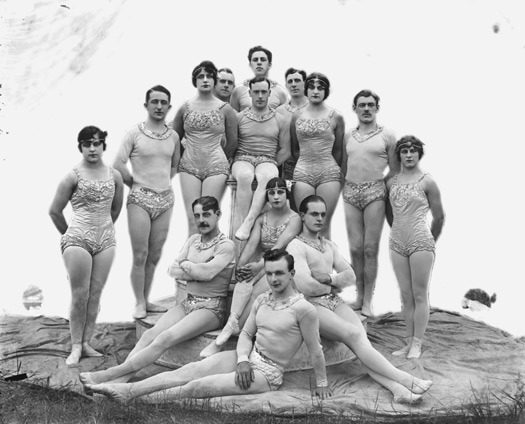
I came upon these turn of the century circus photos by F.W. Glasier, a commercial photographer in Brockton, Mass., who shot promotional photos of the various circuses that came through town over the years, and I was reminded of that time in the late 1970s when one small-town circus was in its infancy.

Here are strongwomen from 1904.

strongwoman1904

A troupe of performers in 1906.

troupe 1906

1907 trapeze work.

Trapeze 1907

A snake handler working it in 1901.

snake1901

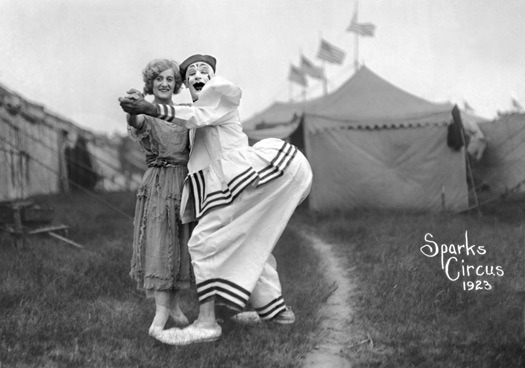
The raw energy of clowning.

sparks

A mistress of the wire.

wire 1908

And, from the 1920s, circus twins who look to me like they have the world on a string.

twins 1920s1

Leave a comment

Filed under Culture, History, Home, Jean Zimmerman, Photography, Writers, Writing