Category Archives: Publishing

Savage Girl Talk-Twain House

For anyone wondering when I am venturing forth to speak about Savage Girl, one such event is coming up on March 14, a Friday, at the Mark Twain House and Museum in Hartford, Connecticut. I am extremely happy to speak at Twain’s genteel abode because some of his early work informed Savage Girl. Specifically, the great writer penned Roughing It about his days in Virginia City, Nevada as a cub reporter in the 1860s.

This is how he looked at that time.

young twain 1867

I drew on the rollicking material in Roughing It for the first part of Savage Girl, which takes place in 1875 Virginia City at the height of the silver boom.

If you can make it to Hartford on March 14th, I’d love to have you there. I plan to read a bit from the novel and also talk about some wonderful images I’ll bring to flesh out the history behind the fiction.

1 Comment

Filed under Culture, Fiction, History, Jean Zimmerman, Publishing, Savage Girl, Writers, Writing

Wild Music for a Savage Girl

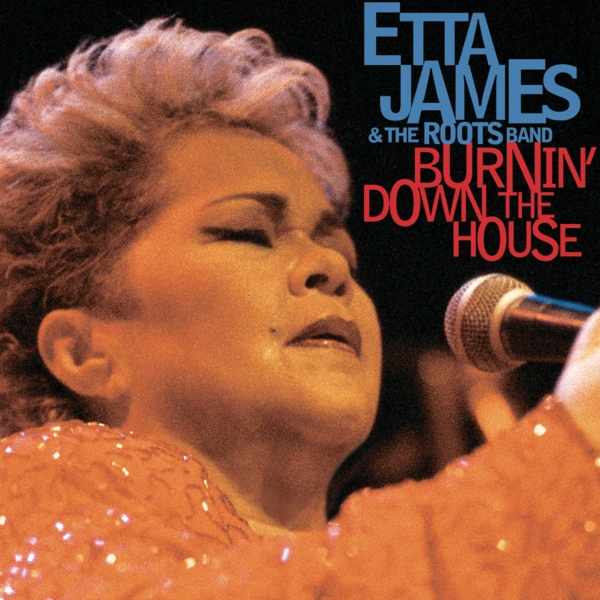
What wild child anthem gets your juices flowing? Curtis Mayfield’s Little Child Running Wild? Wild Thing by the Troggs? Or perhaps an oldie like Bessie Smith’s I’m Wild About that Thing? My personal favorite:  Born to Be Wild as rendered by the immortal Etta James.

etta

Whatever your taste, you can get a bunch of hits in one place when you check out the Spotify playlist I’ve put together with the help of Viking for  Savage Girl’s release in… 11 days (really? is that possible?).

Of course, these selections all appeal to our contemporary taste and would probably appall the characters in Savage Girl, who would have been more entertained by music that was quite different in a pre-Victrola, pre-modern age. To enjoy popular music in the late nineteenth century people might sing around the piano in their homes, enjoying such numbers as My Grandfather’s Clock (1876), Clementine (1863), or Home on the Range (1873). They would also enjoy some of the great composer Stephen Foster’s work, tunes such as Beautiful Dreamer (1864) or Jeannie With the Light Brown Hair (1854), which were popular throughout the second half of the 1800s.

foster1

If they attended a ball, they would in all likelihood waltz – the most popular dance step of the nineteenth century — to compositions by Johann Strauss, Jr, who wrote the famous Blue Danube among over 400 waltzes.

I don’t think you’ll ever waltz to the Troggs. But you can try. Just click on my Spotify playlist.

3 Comments

Filed under Culture, Dance, History, Home, Jean Zimmerman, Music, Publishing, Savage Girl, Writers, Writing

Savage Girl Events-Spring 2014

This spring I am looking forward to speaking about Savage Girl at various venues. Here are the firm dates so far. Further details to come closer to the date.

When I talk about Savage Girl I’ll likely show some pictures in a powerpoint to give the context for the novel, as well as talk and read from the book. It should be enjoyable! I hope that some of you will be able to attend one of these events.

I’ll continually update my speaking engagements on the sidebar to the right-hand side of this site.

If you live someplace not on my schedule but you’d like me to visit, please drop me a comment here or on my Facebook page, and I’ll get right back to you. (While you’re at it, please like my FB page!)

Savage Girl Events-Spring 2014

March 14   The Mark Twain House and Museum, Hartford, CT

March 26   Ossining Public Library, Ossining, NY

April 3   The Poisoned Pen, Scottsdale, AZ

April 16   The National Arts Club, NY, NY

May 24   Musehouse: A Center for the Literary Arts, Philadelphia, PA

June 21   Millbrook Literary Festival, Millbrook, NY

2 Comments

Filed under Culture, Fiction, Jean Zimmerman, Publishing, Savage Girl, Writers, Writing

Savage Girl Book Club Kit

My book club has an interestingly intellectual way of approaching literature — with lots of research materials, dozens of post-it notes on the book pages, and nary a glass of Chardonnay in sight. However, I have not seen them use information direct from the publisher. It can be really useful in directing a discussion and, in the case of the materials for Savage Girl, extraordinary beautiful (thanks to the  brilliance of the Viking design team). We also offer recipes for cocktails in the Gilded Age spirit and a terrific playlist that you can access on Spotify. And of course I answered some questions. So check out Viking’s on-line book club kit — whether or not you have a reading group of your own. Or maybe you’ll be inspired to start one up. (Warning: there might be spoilers in some of the questions.)

Leave a comment

Filed under Culture, Jean Zimmerman, Publishing, Savage Girl, Writers, Writing

Review-A Burnable Book

Hot off the presses today, my review for NPR Books of a new novel that taught me something about what historical fiction can be, and what to watch out for in writing the historical novel.

burnable book

Bruce Holsinger’s medieval London, teeming with interesting personages such as Geoffrey Chaucer and Richard II, gets you in the gut. But is the writer’s story overwhelmed by fact? Read my take on it and find out.

4 Comments

Filed under Fiction, History, Jean Zimmerman, Publishing, Writers, Writing

The Burger of My Dreams

I am finally enough recovered from roiling bloat to write about the hamburger I consumed the other night.

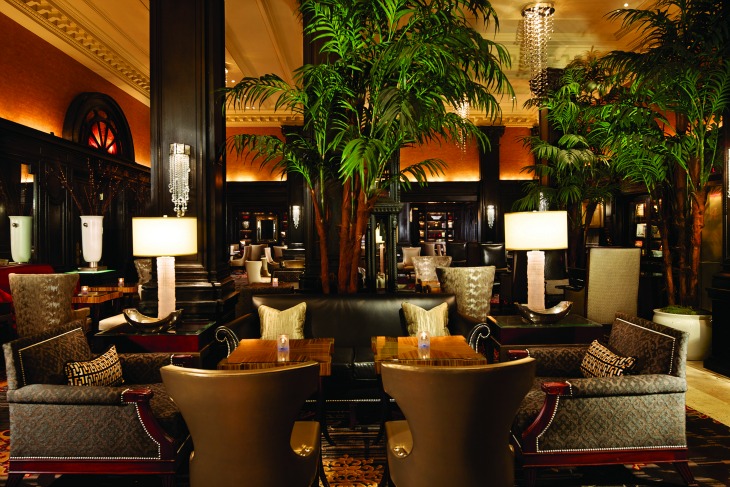
DB Bistro Moderne stands on 44th Street in Times Square, on a block that is distinguished by the Harvard Club, the New York Yacht Club and the swanky hostelry attached to the restaurant called the City Club Hotel. The Algonquin, with its always-crowded, ever-literary lobby and comfy cocktail chairs, one of my very favorite places in New York, is right next door.

The-Algonquin-Hotel-NYC-3

We were celebrating Valentine’s Day early, knowing we were up for a snow pounding that might keep us in the day itself.

For years, we’d heard about a burger. A mythic burger, a burger for those of hearty appetites and gourmet tastebuds. In 2001 Daniel Boulud introduced the thing for an unseemly 27 dollars, but that only made people want it more.

Daniel-Boulud.jpg?q=100

Now the price has risen to $32, roughly twice what we pay for dinner at our favorite ramen joint.

hot and delish

What the hey, it was faux Valentine’s Day. We arrived, we settled in among the blonde New York princesses with gaudy Chanel necklaces and thousand-dollar leather jackets, we ordered a non-alcoholic beer. The bread, studded with olives, went down fine. An arugula and frisee salad with a lemony dressing and lots of almonds tasted better than it sounded.

But what about the burger?

retro_vintage_kitsch_kids_eating_hamburgers_burger_sticker-r5733afe1d44b4938bfeb118e16c8bbd6_v9waf_8byvr_512How would that be? This burger, you see, is no ordinary burger, but a giant softball of ground sirloin embedded with strips of brisket, a chunk of foie gras and a soupcon of black truffle.

DB-Burger-Vancouver-by-E-Kheraj

It’s a long way way from the simple but tasty culinary icon that Wimpy loved.

wimpy

How did we get from there to here?

I have learned that the Mongol Army under Genghis Kahn would stuff filets of meat (sometimes beef, sometimes lamb) under their saddles as they rode so that it would crumble and cook in time for lunch.

genghis-khan-soldiers-images

America’s own Hannah Glasse gave a recipe in her 1770 Art of Cookery that paired minced meat (cooked) and toast. Other cultures have long dined on meatballs, kissing cousins in a smaller ball of beef.

So the claim of the United States to inventing the burger has only a partial foundation in truth. Emigrants from Hamburg brought versions of minced steak to New York in the late nineteenth century, where they were served raw or lightly cooked in exclusive restaurants such as Delmonico’s, sometimes accompanied by a raw egg, and sometimes for breakfast.

delmonico's kitchen

The mechanical meat grinder, invented in the mid-1800s – mincing had earlier been done with a chisel – made mass production of ground beef possible. It’s thought that the hamburger in its present form originated as cheap eats at a county fair in Wisconsin, or Ohio – somewhere in the land where people needed sustenance to traverse the games, exhibits and rides. A slick of Heinz ketchup, patented in 1888, soon tagged along.

burger sign

On this night, our DB burgers landed in front of us with a thud, encased in a polished Parmesan bun, stuck through with wooden sticks and cut neatly in half. On full display were the slices of short rib and diseased goose liver, in lush cross section. A bite through the red of the beef released the flavors of fresh red onion, tomato jam and mustard. No Heinz 44 for this baby.

We could have eaten half but managed the whole. It was juicy, meaty, greasy, messy as a burger should be. But was it the best? Was it $32 worth of hamburger? When the bill arrived we told them that we’d gladly pay them Tuesday for a hamburger today.

8 Comments

Filed under Cooking, Culture, Fashion, History, Home, Jean Zimmerman, Publishing, Writers, Writing

Booklist Reviews Savage Girl

Booklist (March 1, 2014)

Savage Girl.

Mar 2014. 402 p. Viking, hardcover, $27.95. (9780670014859).

Debutante or demon? The title character of Zimmerman’s gripping historical novel seems to be a little bit of both. Discovered in a Nevada mining town by a wealthy couple determined to overcome the “savage” girl’s apparent feral upbringing, Bronwyn is introduced by them to Gilded Age Manhattan’s high society. But as the couple’s son, the novel’s narrator, can attest, she is perhaps not as innocent as she seems. All revolves around the central question of whether Bronwyn or the captivated narrator is responsible for the trail of bloody crimes left in their wake. Suffused with a gothic aura of dark suspense, this is a finely wrought psychological work from the author of The Orphanmaster (2012), rich with historical detail. The mystery stretches from society’s heights to its absolute depths and touches everything between, always increasing in dramatic tension. Zimmerman’s settings spring off the page, from the stinging dust of the American desert to the dank despair of the Tombs prison in New York. Immensely readable, Savage Girl takes the reader by the throat and doesn’t let go.

— Bridget Thoreson

3 Comments

Filed under Culture, Fiction, Jean Zimmerman, Publishing, Savage Girl, Writers, Writing

Good Housekeeping Seal of Approval

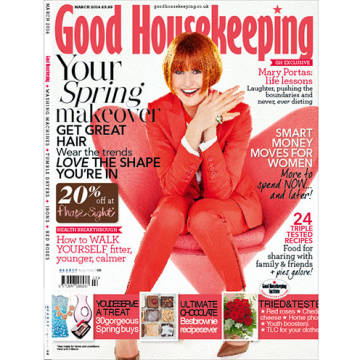
I’m so pleased to see Savage Girl among Good Housekeeping‘s recommended books for March.

March-cover-230114-de-lg

Here is the magazine’s thumbnail review, which manages to distill the essence of the story quite well, I think.

Good Housekeeping, March 2014

New Book Picks: No matter what mood you’re in, we have a page-turner to tempt you

FOR INTRIGUE

Savage Girl

A wealthy couple touring the American West in 1875 “rescue” a young woman who’s said to have been raised by wolves, then attempt to introduce her into society back East. Bronwyn cleans up nicely, but her suitors keep ending up dead. A wild ride.


5 Comments

Filed under Culture, Fiction, Home, Jean Zimmerman, Publishing, Savage Girl, Writers, Writing

Big Ol’ Brick of Books

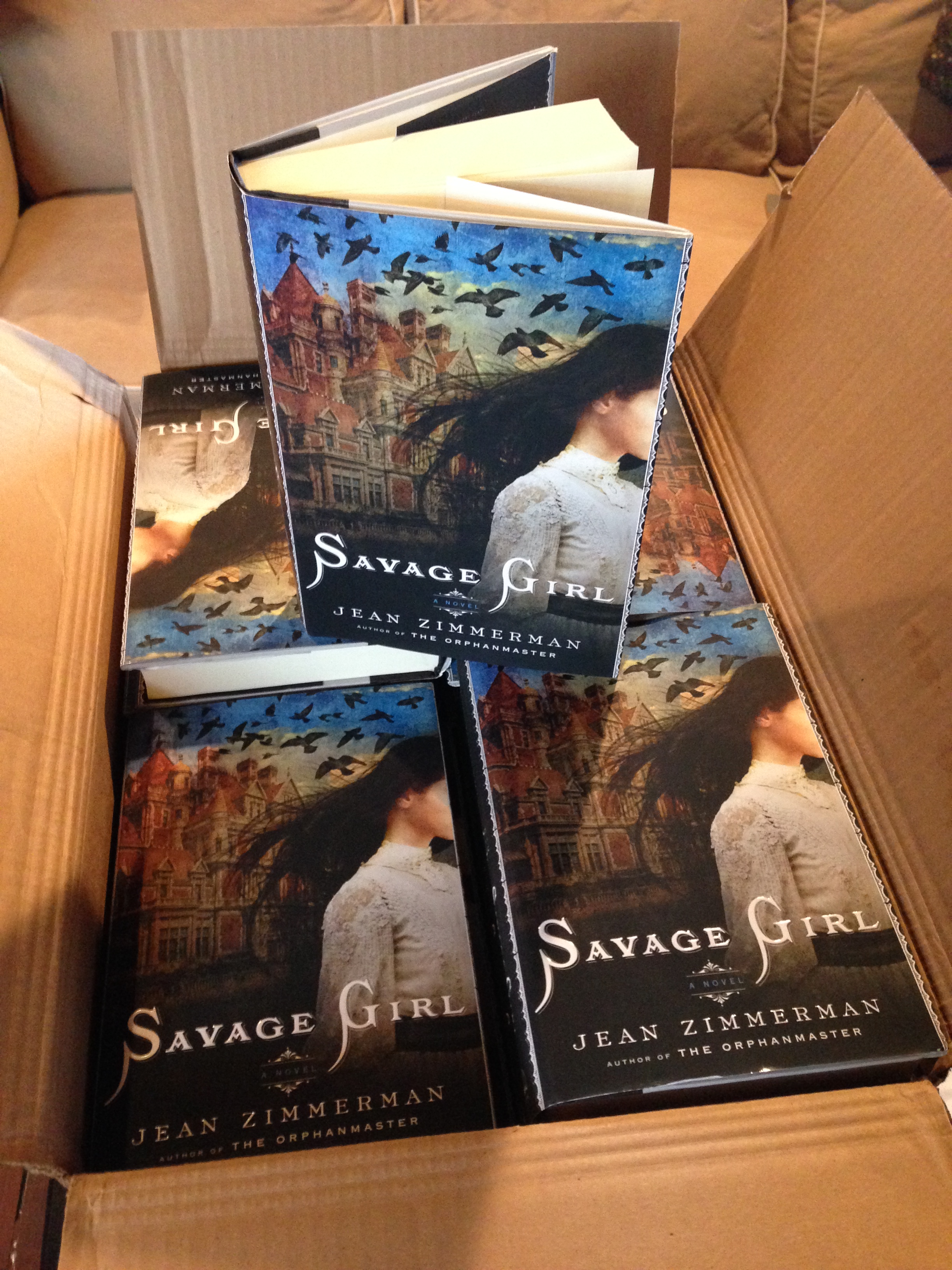
A brick of books. Author copies. Twenty-eight, to be exact, sitting where UPS dumped the box, in the fresh, deep pile of snow at the head of the driveway. The cardboard was soaked around the edges.

But the books were dry, miraculously. That novel is watertight.

open

2 Comments

Filed under Art, Culture, Fiction, Home, Jean Zimmerman, Nature, Publishing, Savage Girl, Writers, Writing

Kirkus Reviews Savage Girl

Kirkus Reviews Savage Girl (pub. Feb. 15, 2014):

A formal, measured tempo only heightens the tension in Zimmerman’s second historical fiction–cum-thriller (The Orphanmaster, 2012), this one set in the 1870s and concerning a serial killer whose rampage ranges from a rough mining community in Nevada to upper-class Manhattan.

The novel opens in 1876 with narrator Hugo Delegate, Harvard-educated scion of one of New York’s wealthiest and most socially connected families, locked up for the gruesome murder of another New York dandy. He willingly claims his guilt—though that guilt is far from certain—but his expensive lawyers demand he tell them the true story from the beginning. Hugo starts with his family’s visit to Virginia City, Nev., home of his father Freddy’s silver mine. Soon, Hugo’s parents, eccentric liberals interested in the nurture/nature debate raised by Darwin, are eager to adopt a young girl they have discovered in a Virginia City freak show, the owner of which claims she was raised by wolves. Of unknown origins, she speaks Comanche as well as a smattering of English, and her performance involves a set of mechanical claws and a swimming tank. The girl, whose name turns out to be Bronwyn, travels on the Delegates’ private train to New York, where the Delegates plan to put one over on their friends My Fair Lady–style by having her debut as a fashionable young lady. But one grisly murder after another seems to follow in Bronwyn’s wake, the victim always a man who has shown his attraction to Bronwyn’s considerable charms. Is Bronwyn, with her animallike instincts, the killer? Or is it Hugo, with his past mental problems, his capacity to black out and his love for Bronwyn that borders on jealous insanity? Neither Hugo nor the reader is sure right up to the satisfying if melodramatic end.

Zimmerman’s dark comedy of manners is an obvious homage to Edith Wharton, a rip-roaring murder mystery more Robert Louis Stevenson than Conan Doyle and a wonderfully detailed portrait of the political, economic and philosophical issues driving post–Civil War America.

4 Comments

Filed under Culture, Fiction, History, Jean Zimmerman, Publishing, Savage Girl, The Orphanmaster, Writers, Writing

Sweetly Wild

Animal Planet produced a popular program Raised Wild that profiles people who have been nurtured by monkeys, by a pack of dogs, by a flock of chickens. In researching Savage Girl I came across parental bears and goats and even a girl raised by rats. The mythology goes back to Romulus and Remus, boys suckled by the same she-wolf. The two man-cubs eventually went on to rule Rome. Nothing that takes place in my novel should shock anybody who has viewed Raised Wild. But it might surprise the Savage Girl herself to come across a box of Valentine’s-packaged Wild Child candy hearts.

wild child hearts

3 Comments

Filed under Art, Cooking, Culture, Fiction, History, Jean Zimmerman, Nature, Publishing, Savage Girl, Writing

A Fresh and Juicy Book

The dog woke up. It was mid-afternoon.

sleepy oliver

He barked. I looked out the window. A UPS truck. More important, snow.

snow cabin

I didn’t want to go outside to get a package. I wasn’t expecting anything. I’d stay in my socks.

Do the trees feel cold? On this day they would have.

trees

The UPS guy whistled a tune as he headed from the Cabin back to the truck, winding his way through the snow banks.

Have you ever handled The First Book, fresh from the package? No?

When Gil came home he told me something had come for me, out on the porch. He slit open the plastic.

A hardcover of Savage Girl fell out, fresh and juicy as a ripe apple and cold as though it had been plucked from a tree in fall. The jacket, of course, was no surprise, as my publisher had involved me in the design process. But so many little details seemed different, the exact shade of blue on the back cover, the smidgen of lace along the edge. The spine, with my book’s title and my name and “A NOVEL” all perfectly proportioned.

jean book

There are a number of peak moments when you write books. The day you jot down a note and think about all it might be. The first page you write. Getting halfway done. Turning it in. Turning it in again after you revise it. Seeing the typeface. Paging through a galley.

No matter how many milestones you’ve passed, nothing can prepare you for the heft of the hardcover, holding this object in your hand, the ephemeral idea you had so long ago transformed into a tactile reality.

2 Comments

Filed under Art, Fiction, Jean Zimmerman, Nature, Publishing, Savage Girl, Writers, Writing

Stop by My Author Page and Say Hi

My Facebook author page has a brand new cover – it quotes Library Journal saying that Savage Girl is “A fanciful and occasionally surreal take on Gilded Age New York.”

And hey, I just reached 100 likes, a figure I’m a little proud of. But I’d like more likes, more! And more visitors. Come see reviews and interviews as they come in, as well as offers for galley giveaways. Savage Girl doesn’t hit stores until March 6 but there’s a lot going on before then.

I’m always trying to put up something fresh, not only about my books (Savage Girl, The Orphanmaster, Love Fiercely and others) but about writing, reading, and living in such a way as to make those things possible. How do you water an idea to make a book come up? Always trying to figure that out.

watering-can

Something else: please post on my page! I would love to hear what you’re thinking about.

2 Comments

Filed under Culture, Fiction, Jean Zimmerman, Love, Fiercely, Poetry, Publishing, Savage Girl, The Orphanmaster, Writers, Writing

A Room of One’s Own-Thank You Virginia

A belated happy birthday to Virginia Woolf (born January 25th), a writer whose fiction I idolized when I was around sixteen. I had the firm conviction that her novels To the Lighthouse and Mrs. Dalloway, innovative, modernist, poetic, were about as good as literature got.

Virginia Woolf cu

When I discovered Woolf’s book-length essay A Room of One’s Own, in college, I was thunderstruck. And I’ve never lost that feeling. I re-read Woolf’s arch 1929 critique of a sexist world, a discriminatory educational system, the need to nurture female talent, and I’m still pumping my fist in the air.

“A woman must have money and a room of her own if she is to write fiction.” A Room of One’s Own

Adeline Virginia Stephen was born on January 25, 1882, to Julia Stephen, a model for Pre-Raphaelite painters, and Leslie Stephen, a well-known biographer. She had seven siblings and half-siblings, and was brought up in an upper-middle-class Kensington household. That she suffered some sort of mental disorder (she was probably bipolar) was clear from her first breakdown at the time of her mother’s death in 1895. She collapsed again when her father died in 1904. In 1912 she married Leonard Woolf and in 1915 she published her first novel. Despite her recurring “madness,” she was able to publish and run Hogarth Press with Leonard and be active in the Bloomsbury literary group for the rest of her life.
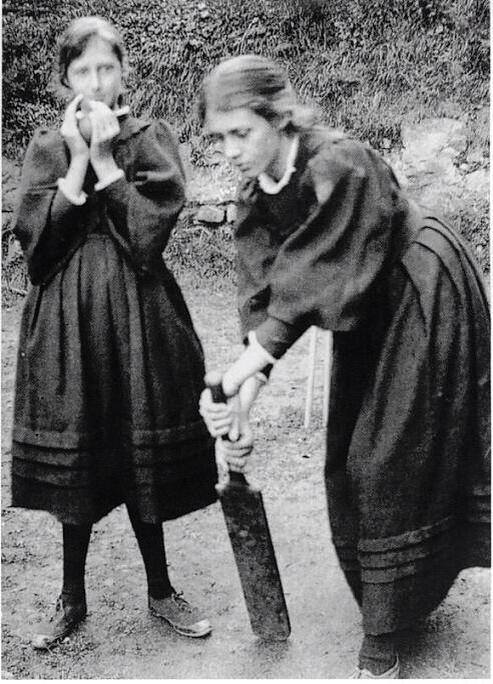
Virginia and her sister Vanessa playing cricket

That’s Virginia and her sister Vanessa playing cricket, proving that she had a lighter side.

“One cannot think well, love well, sleep well, if one has not dined well.” A Room of One’s Own

On March 28, 1941, Woolf filled the pockets of her overcoat with stones and walked into the River Ouse, near her house, to drown. An object that moved me beyond words was the simple wooden walking stick she took with her into the river, found floating near where she went in, preserved in the collection of The New York Public Library and shown in an exhibit of the library’s treasures a few years back.

woolf's walking stick

“When, however, one reads of a witch being ducked, of a woman possessed by devils, of a wise woman selling herbs, or even of a very remarkable man who had a mother, then I think we are on the track of a lost novelist, a suppressed poet, of some mute and inglorious Jane Austen, some Emily Bronte who dashed her brains out on the moor or mopped and mowed about the highways crazed with the torture that her gift had put her to. Indeed, I would venture to guess that Anon, who wrote so many poems without signing them, was often a woman.A Room of One’s Own

There is one surviving recording of Virginia Woolf’s voice. She delivered a talk called “Craftsmanship,” part of a 1937 BBC radio broadcast.

VIRGINIA WOOLF

Here is Woolf’s take on Judith, Shakespeare’s erstwhile sister, also from A Room of One’s Own. Tell me if after reading this you are not also pumping your fist in the air.

“I told you in the course of this paper that Shakespeare had a sister; but do not look for her in Sir Sidney Lee’s life of the poet. She died young—alas, she never wrote a word. She lies buried where the omnibuses now stop, opposite the Elephant and Castle. Now my belief is that this poet who never wrote a word and was buried at the cross–roads still lives. She lives in you and in me, and in many other women who are not here to–night, for they are washing up the dishes and putting the children to bed. But she lives; for great poets do not die; they are continuing presences; they need only the opportunity to walk among us in the flesh. This opportunity, as I think, it is now coming within your power to give her. For my belief is that if we live another century or so—I am talking of the common life which is the real life and not of the little separate lives which we live as individuals—and have five hundred a year each of us and rooms of our own; if we have the habit of freedom and the courage to write exactly what we think; if we escape a little from the common sitting–room and see human beings not always in their relation to each other but in relation to reality; and the sky. too, and the trees or whatever it may be in themselves; if we look past Milton’s bogey, for no human being should shut out the view; if we face the fact, for it is a fact, that there is no arm to cling to, but that we go alone and that our relation is to the world of reality and not only to the world of men and women, then the opportunity will come and the dead poet who was Shakespeare’s sister will put on the body which she has so often laid down. Drawing her life from the lives of the unknown who were her forerunners, as her brother did before her, she will be born. As for her coming without that preparation, without that effort on our part, without that determination that when she is born again she shall find it possible to live and write her poetry, that we cannot expect, for that would he impossible. But I maintain that she would come if we worked for her, and that so to work, even in poverty and obscurity, is worth while.”
4 Comments

Filed under Cooking, Culture, Fiction, History, Home, Jean Zimmerman, Photography, Poetry, Publishing, Writers, Writing

“First to Read” at Penguin

Please note that the art people at Viking have helped me with a facelift for the site, posting a new Savage Girl banner with a matching background pattern of gleaming orangey rust. Publishing a book is anything but a one-person job. I so appreciate all the help I’ve gotten bringing this novel to the state it’s at today.

The state it’s at… well, you’re going to have to wait to find Savage Girl at your corner bookstore for another six weeks, so here’s some good news. The folks at Penguin (Viking’s parent company) have a special program through which you can request a digital version of the book. If you love paper pages and a luscious new jacket, wait. If you want, though, you can jump in now, through Penguin’s “First to Read” program, and get the novel on your e-reader. Then please leave a comment and let me know your reactions.

penguinlogo_60w

1 Comment

Filed under Art, Culture, Fiction, Jean Zimmerman, Publishing, Savage Girl, Writers, Writing