Category Archives: Nature

A Manhattan Birthday Boat

Today was my birthday. I decided to take the two adventurers closest to me and go on the high seas. An oceanographic architectural tour of Manhattan launches most days from Pier 62, on the island’s west side, and the fact that it was the hottest day of the year made a liquid frolic all the more appealing.

Pier 62, part of the Chelsea Piers sports complex, has some offerings for while you’re waiting for your boat to launch. You can watch hundreds of elementary-age gymnasts and soccer buffs perform in the air-conditioned splendor of a huge indoor gym. Watch deckhands spiff up the many yachts tied to the dock. Check out the picturesque marine ropes stashed at the end of the pier.
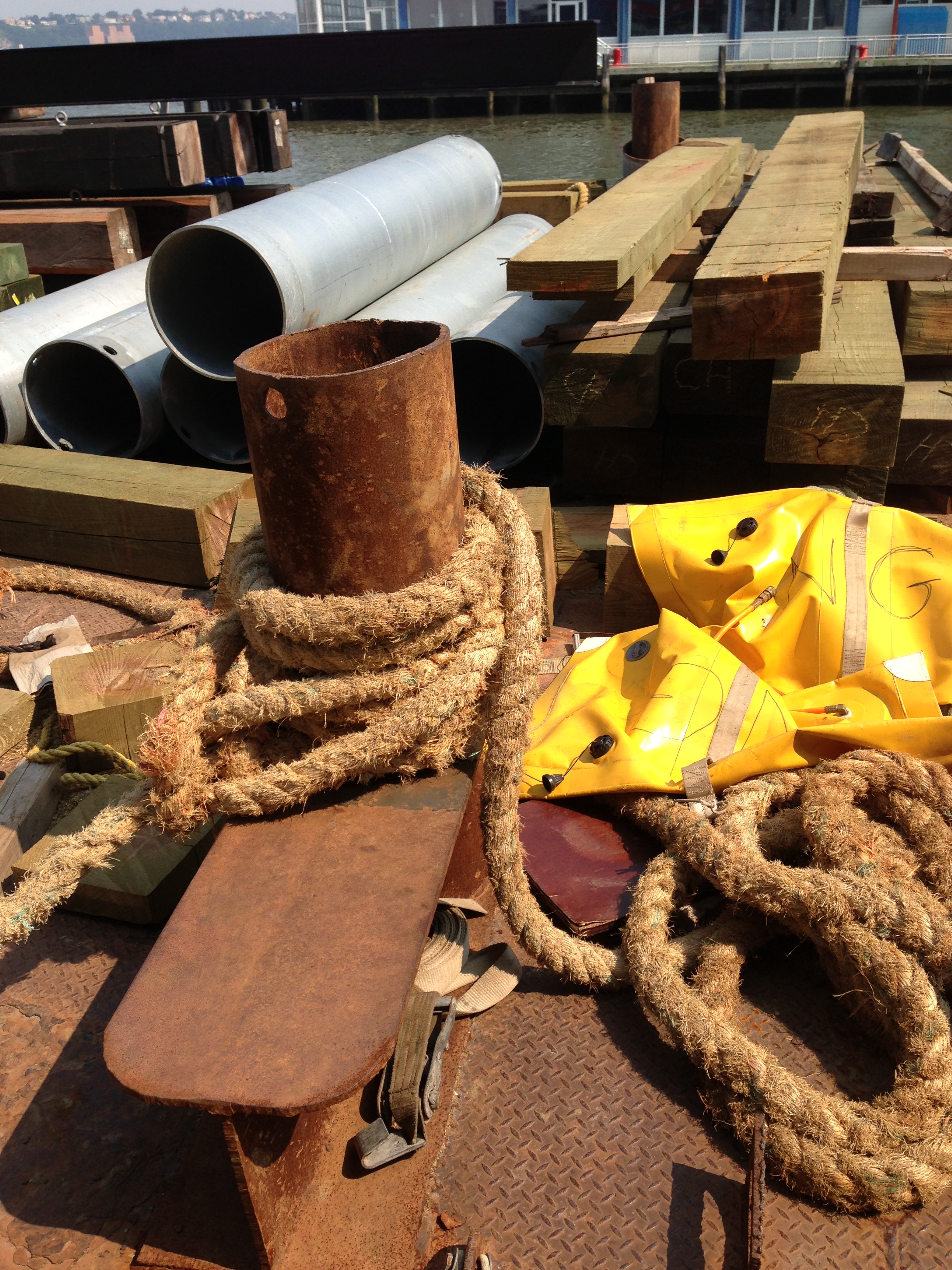
ship rope

Wonder about a Marcel du Champs-style composition of dining fork and some kind of bulbous ship hitch.

ship thing

Note the gallery of oversize photographs celebrating Chelsea Piers, including one of the Lusitania sailing out on its final, doomed voyage, with horse carriages stacked up watching it depart.

lusitania

Our boat was Manhattan, built in 2006 to resemble a 1920s riverboat, all light and gleaming wood panelling.

the manhattan

The cruise traveled south on the Hudson River to the Upper Bay, curtseyed to the Statue of Liberty, continued down around the Battery, up the East River, then retraced its steps, west again, all the way up to 125th Street, where it circled back to the starting point.

Austin, the captain, introduced the incredibly savvy architects Arthur Platt and Scott Cook, who would be narrating our journey. We wouldn’t be able to tour the very top of the island, said Austin, because of the heat: the steel of the swing bridge at Spuyten Duyvil had reached 95 degrees. If they swung it open, its expansion would make it impossible to close. On a brighter note, Hannah and Heather would be manning the bar, serving up ice-cold beverages for the next three hours, even champagne.

Maud, please, will you have some champagne for my birthday, I implored my daughter, since I myself refrain from alcohol and someone should raise a toast.

No, Mom, she said, the breeze ruffling her hair as we pulled out past Battered Bull of Georgetown, motoring into the channel. Water, she said. I want water.

Good thought. You could sit inside on this trip, in the climate-controlled saloon, and see the sights through glass. Or you could sit at the bow, on a bench outside in the red-hot sun, the New York harbor wind whipping your face. Where do you think we sat?

I learned. I learned so much. And then I forgot so much. The architects knew everything in the world about New York. And something about New Jersey too.

Like that the Erie Lackawanna rail terminal in Hoboken, for example, was built in 1909, and its dull brown color represents the hue of copper before it oxidizes – like the color of the Statue of Liberty originally. I never knew that.

That was a refrain that ran through my sunburned skull all day: I never knew that.
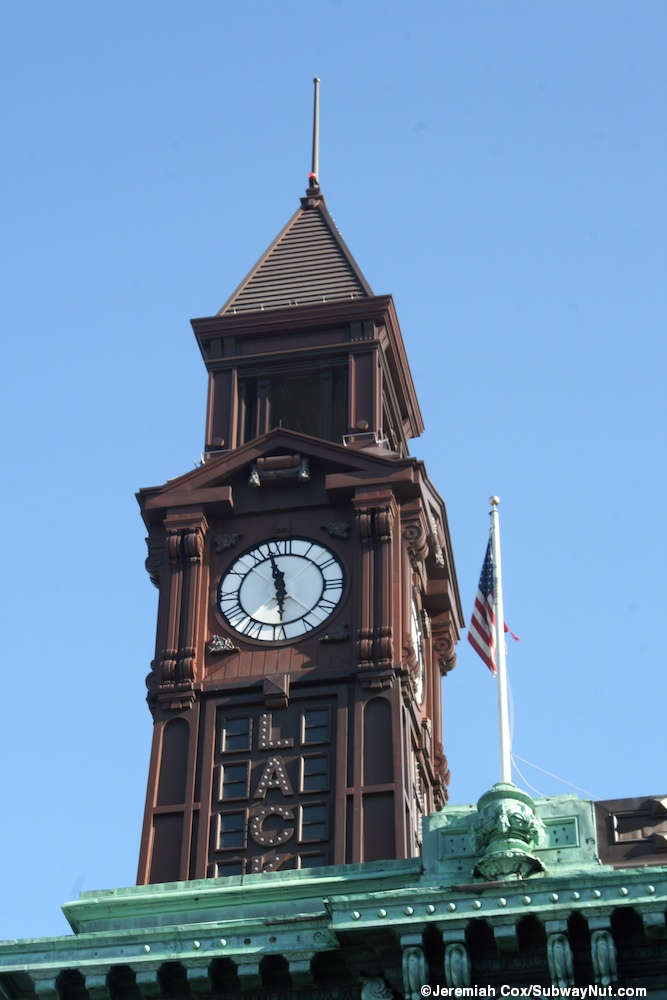
hoboken_terminal32

Or the fact that Ellis Island sits on the site of one of the harbor’s four original “oyster islands,” barely visible at high tide, and that Ellis Island, where so many American immigrants were “processed” was built first of wood and burned in 1897.

Ellis_Island_First_Bldg_Burnt_15-June-1897

That the Statue of Liberty’s skin is two pennies thin, and the torch is covered in 24 carat gold. Her sandals are upturned because Liberty is “always on the move.”

statue-of-liberty-torch1

I never knew that either.

Or the following interesting things, absorbed between cooling draughts of water.

On Governor’s Island – we talked a lot about the future of New York, not only the past — the biggest demolition project ever planned in New York, of old Coast Guard buildings, will create hills eighty feet high from which to view the Statue and Manhattan.

On the Brooklyn Waterfront, the site of Wallabout Bay, you can now take a bike tour of the Navy Yard.

We passed Williamsburg, Greenpoint – it’s “your last opportunity to look at this industrial waterfront,” said the architectural commentary. Brooklyn is developing so fast. “Bloomberg’s administration has upzoned more acreage in the history of New York than any other.” But even Bloomberg might be stymied by what was described as the “black mayonnaise” sediment of the oil-contaminated Newtown Creek.

newtown

On Roosevelt Island stands a monument, a shrine to FDR, designed by the architect Louis Kahn, who passed away in Pennsylvania Station and  “it took a while to identify him.” I certainly never knew that about Louis Kahn. In fact, I could barely believe it.

In Harlem you find the concept of “the tower in the park”, when public housing units stand solo, without a connection to the larger community.

It was 1790 when Archibald Gracie built a house in what was then the countryside outside of New York City, never dreaming that his domicile would one day be the home of mayors (current mayor excluded, as he already has eleven homes).
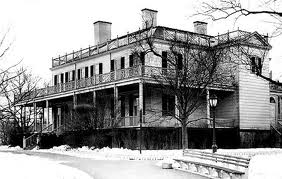
gracie

And it was at this point that I put aside some of my adventuring spirit and stumbled inside to an air-conditioned seat. I was having fun — yet I wondered if the seasickness that has plagued me throughout my life had come back to haunt me. Then the music of fact revived me. That and the fizz of a diet Coke.

In 1909 the Metropolitan Life building with its elegant cupola was the highest in the world.

metropolitan

One difference between public and private high rises is that the private ones have balconies.

The Woolworth Building is just now having its centennial.

Gulp. Water. Is this boat rocking or is it me?

There is a very famous, ultra-cool architectural firm called SHoP. Never knew it.

One of the newer fancy buildings, of the many, many fancy buildings in New York, features an indoor dog walking court and built in nanny-cams.

Goldman Sachs employees take a private ferry every day from Manhattan to the firm’s offices in Jersey City.

The “exploded Malibu Barbie house” of artist Julian Schnabel was built on top of a stable.

NYT2008031214231288C

Fireboat 343, docked at Pier 40, was named for the 343 firefighters killed on 9/11.

343

Maybe if I were to go outside, get a breeze? Another Coke? Would my queasiness subside?

Frank Gehry’s sumptuous IAC building of smoky glass was made by “cold warping” the panels on site.

Gehry-IAC-building

There is now such a thing as a permanent window washing crane stationed atop several skyscrapers. It’s controversial, if that matters to you.

We passed a trio of kayakers at Pier 76, bobbing, no doubt very hot, but feeling very chill there in the waters of Manhattan.

And finally what the architect Scott called his favorite structure – his favorite, after all these hundreds? – the Lehigh Building. The “architects held back vertical elements at the façade,” he said, praising its “no nonsense” lines, its wraparound windows.

favorite bldg

We stumbled off the gangplank, our brains sunstruck, saturated and several pounds heavier. We collapsed.

gr after

Even youth faded in the heat.

mr after

But we revived with some time in a restaurant in an old boat called the Frying Pan.

frying pan

And taking the place of birthday cake, an ice cream sandwich with red velvet wafers and cream cheese ice cream.

red velvet

Home to dry land and cool, fragrant birthday flowers, from Maud.
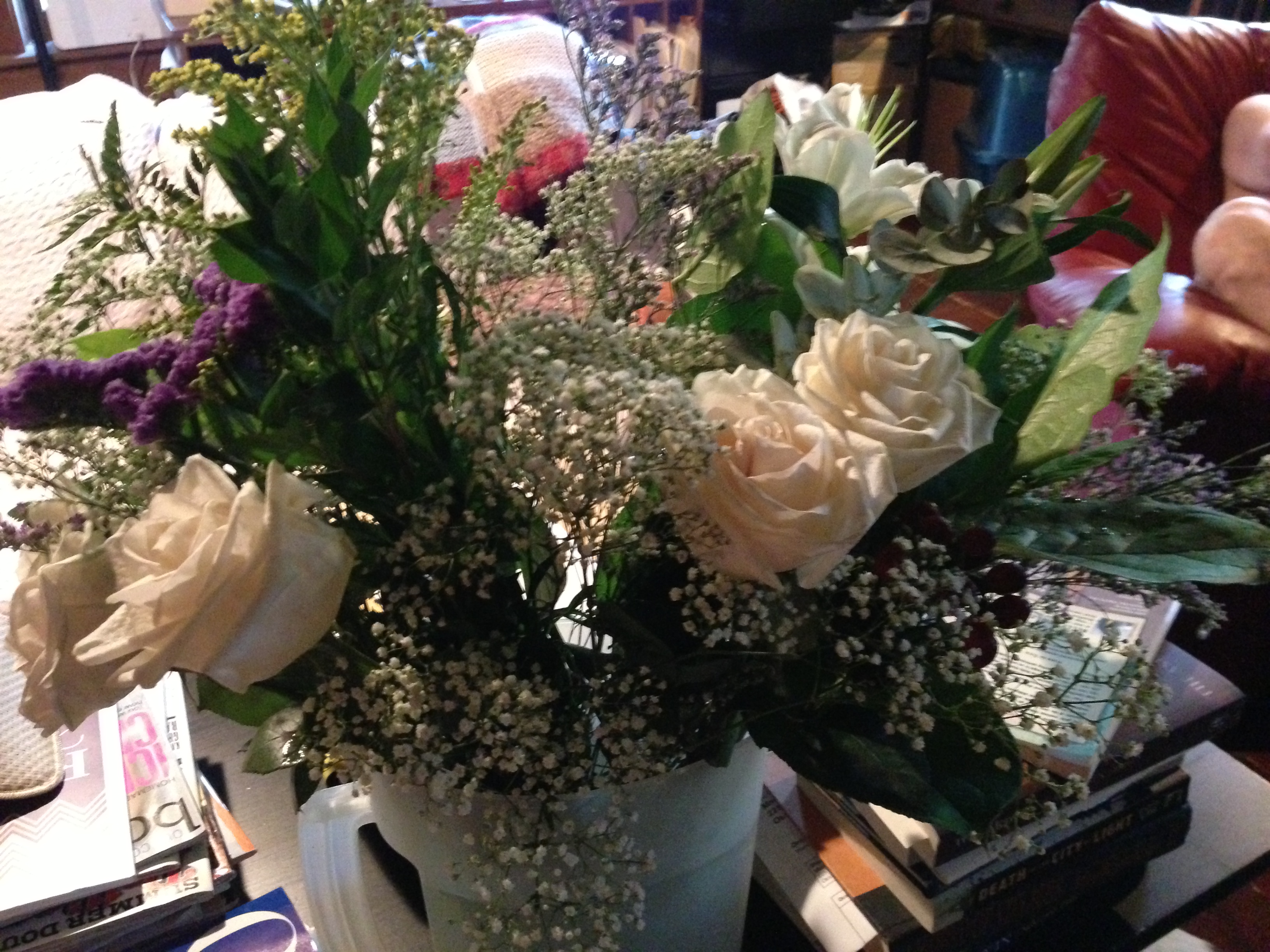
birthday flowers

4 Comments

Filed under Cooking, Culture, History, Home, Jean Zimmerman, Nature, Photography

Something to Cry Over

I like to go adventuring. Small adventures or large, I’m happy if I see something new and arresting. If I have a frisson of … something… delight, wonder, whatever you want to call it. With a companion, adventuring’s the best.

So today I was a little down. Finished my work for the day, marking up an ancient, earnest screed of colonial history with a dull Sharpie, no adventure in sight. No companion either, with Gil bearing down on his writing, Maud gallivanting with a friend, other people at jobs or vacations. Only me and Oliver, and I’m not customarily invited on his adventures.

There were always the onions. I had already withdrawn to my cool underground kitchen lair to make a batch of pesto for dinner.

pesto

But now, no adventures to the fore, the onions presented themselves as a project.

onion basket

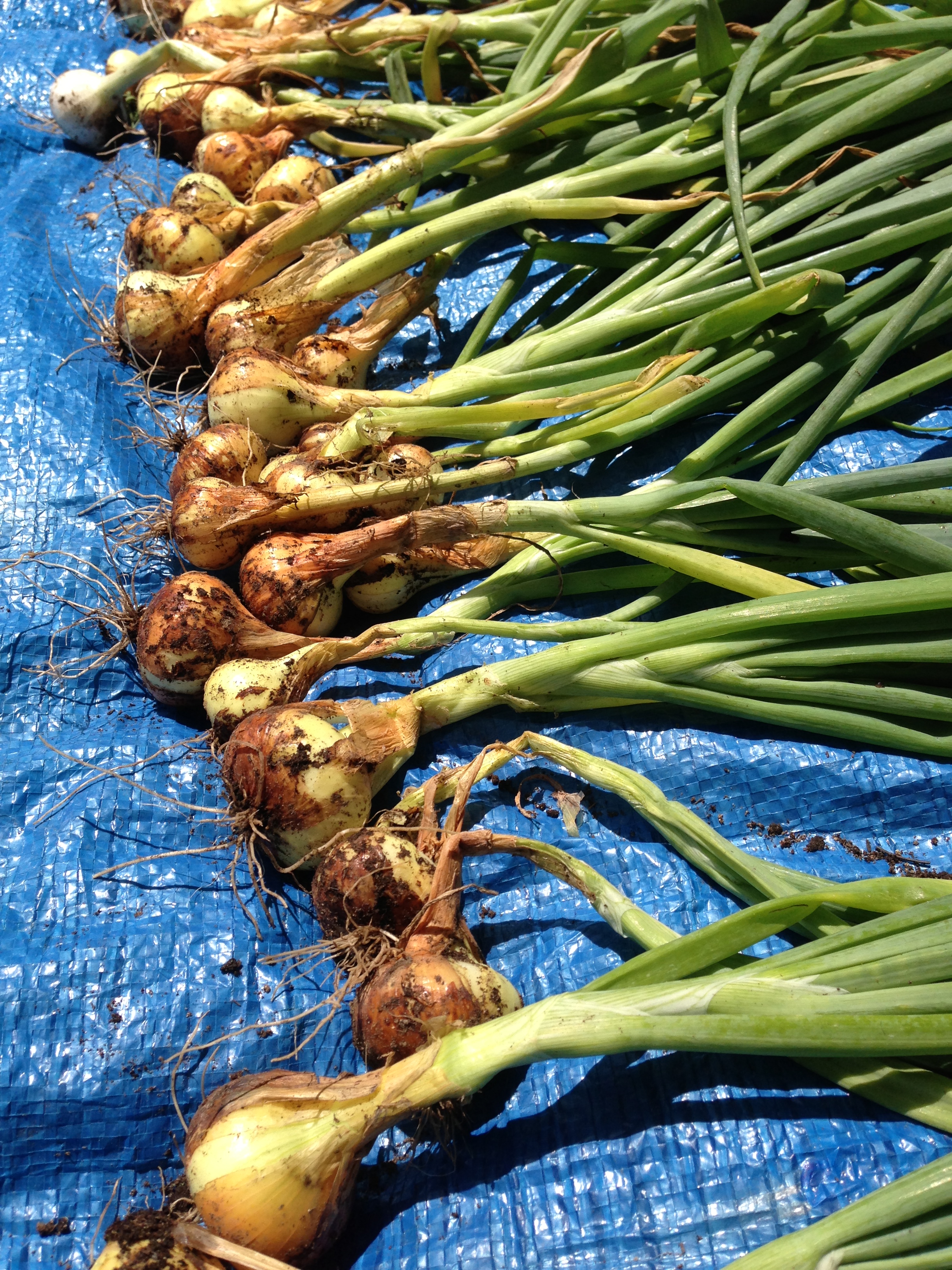
I’d never grown onions before. This summer, they grew incredibly fast. I put them out to harden on a plastic tarp under the brutal sun because I thought that’s what you do with them.

drying onions

Now to pickle them.

I had a recipe, from The Savory Way by veggie-genius Deborah Madison, that I’d made before, calling for red onions, but mine are white and from my taste test much tarter and tangier than the recipe’s onions, which turn a delicate ballet-worthy shade of pink.

Much more of a crying-over onion.

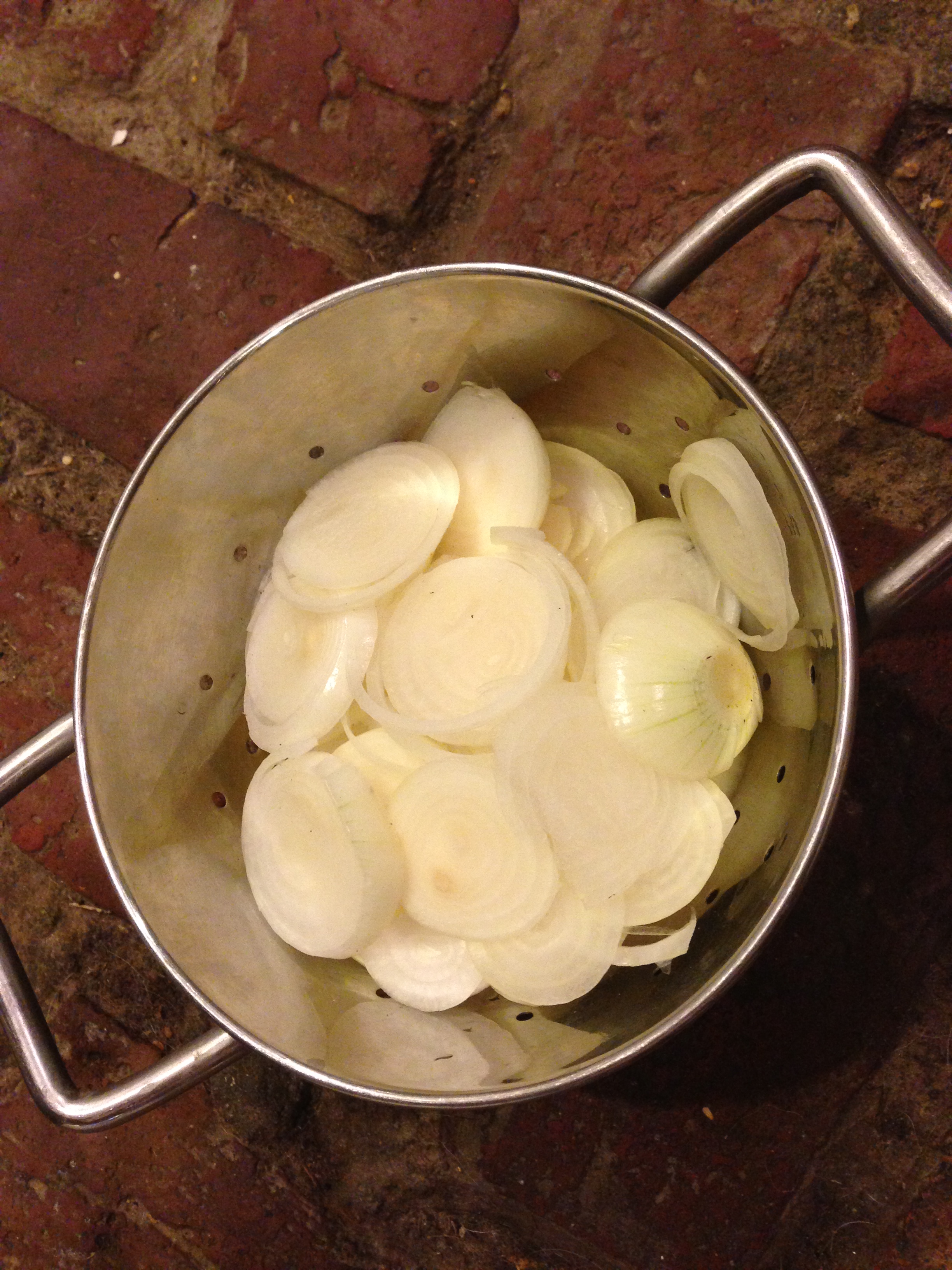
I trimmed them up, brushed the dirt from their whiskered bottoms. Sliced them in crisp rounds. Listened to Alejandro Escovado’s Castanets on the radio, a song so good it could make you cry.

The recipe calls for boiling water splashed over the onions in a colander, after which you pack the rings  in jars and douse them in a vinegar solution.

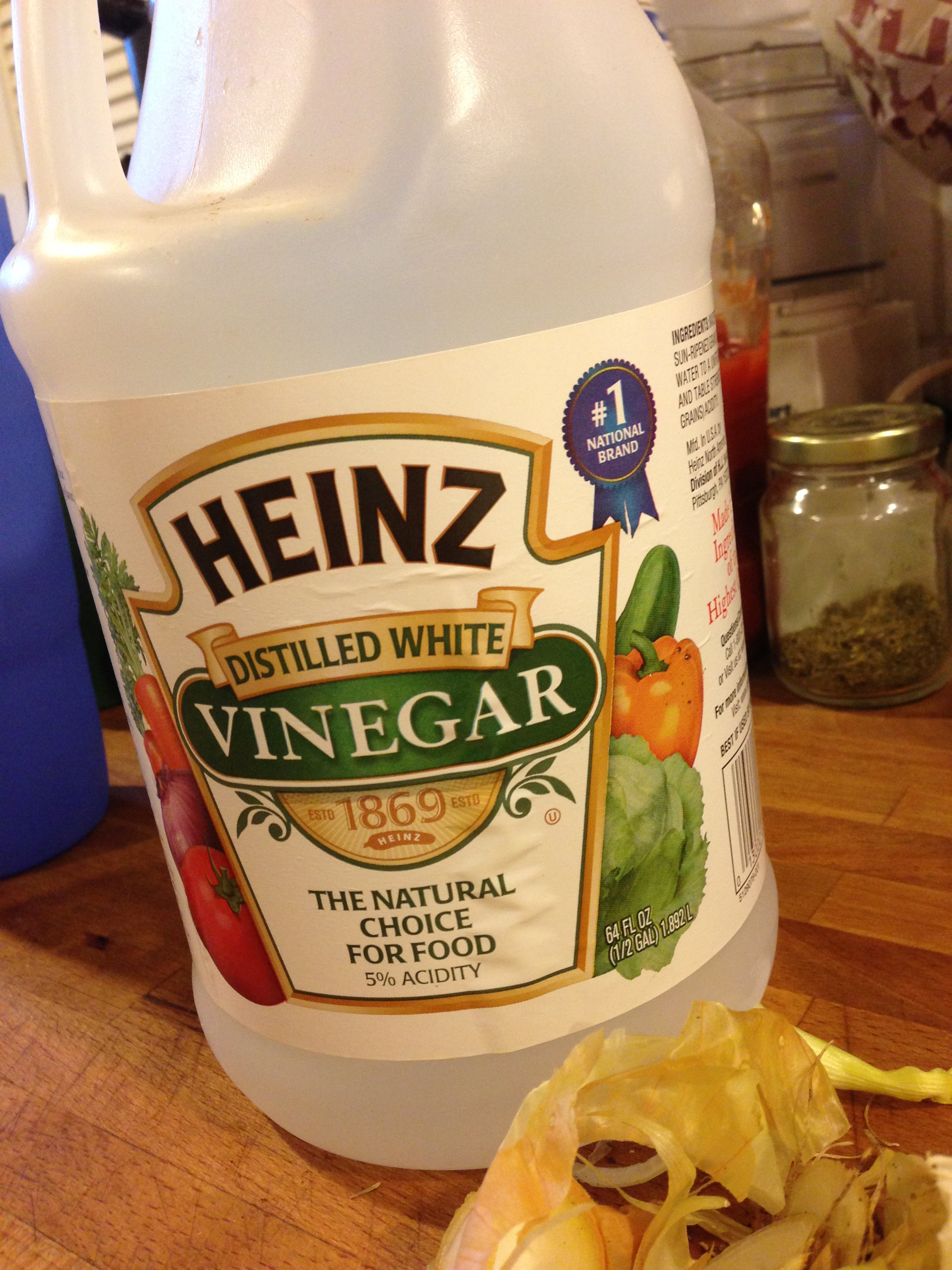
heinz

Who is not filled with a sense of well being upon viewing a fresh gallon jug of Heinz white vinegar?

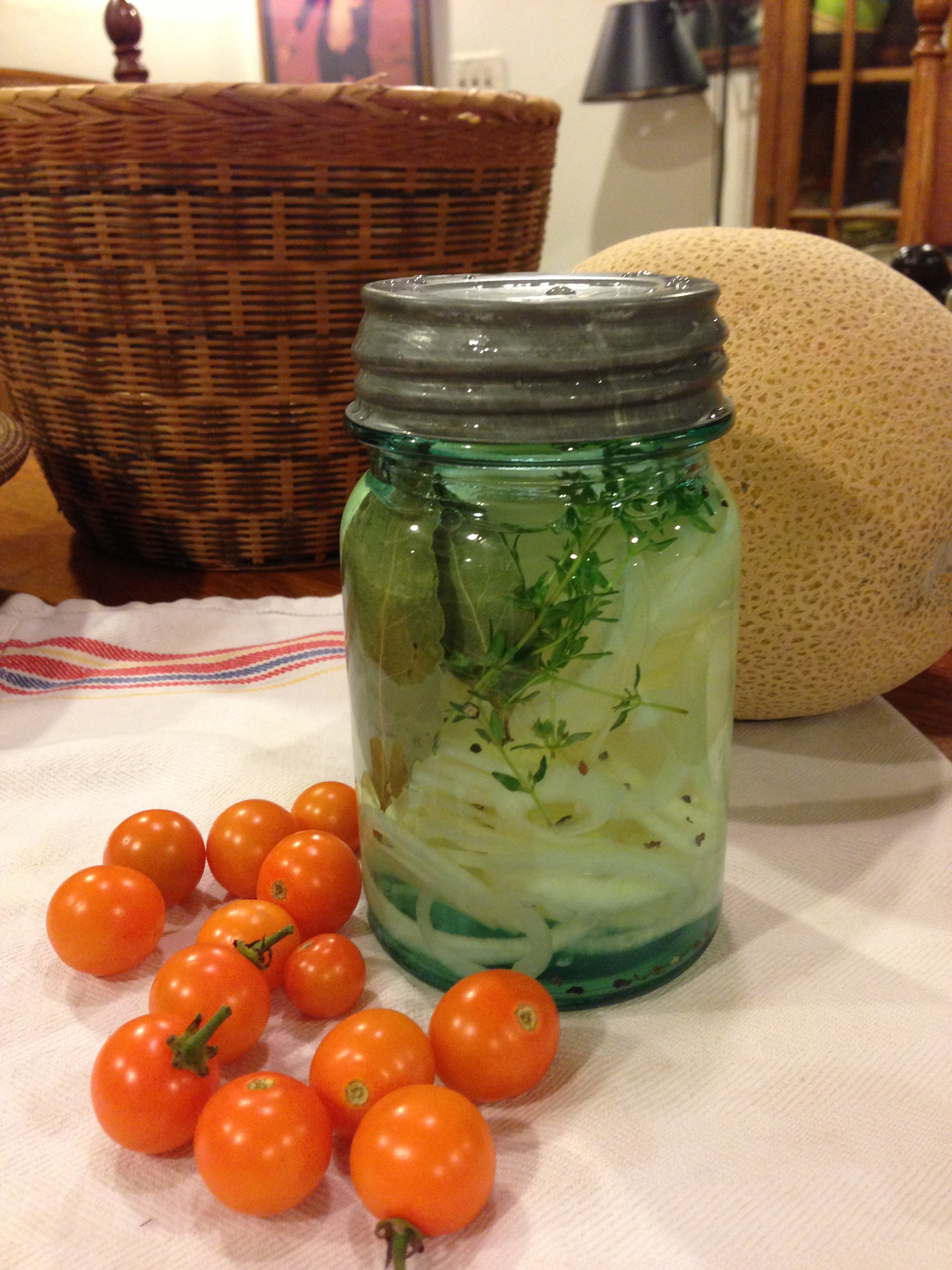
Of course the success of the enterprise lies largely in the containers — all preserving being an opportunity to show off your beautiful canning jars. I picked up these pint-size blue Mason beauties in Wisconsin this summer, together with their matte zinc lids.

jars

Reviewed the recipe thus far with Oliver. Placed the onions on the brick floor, just under his snout. He has been known to sample vegetables.

onions on brick

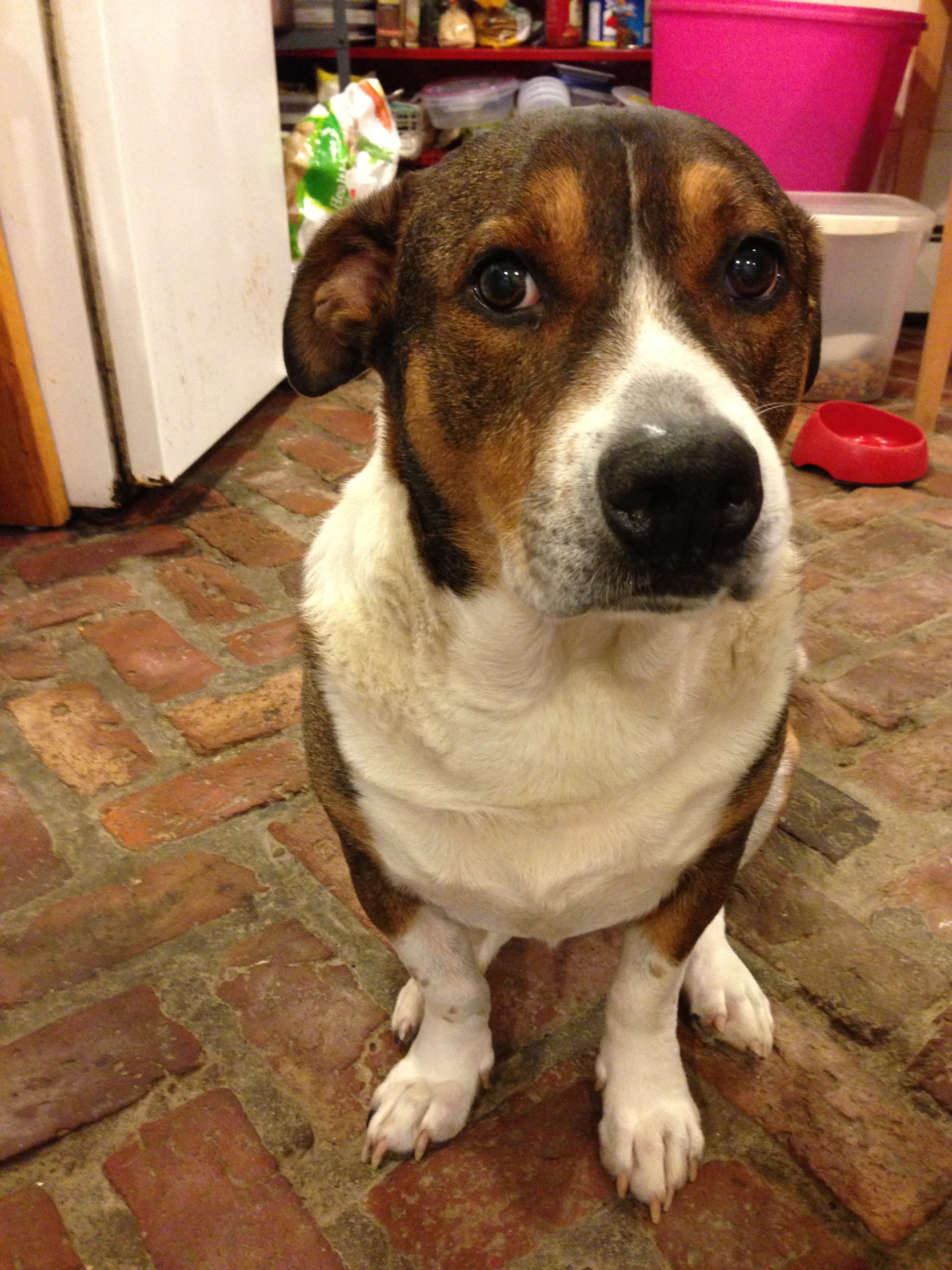
I think impassive  is the word for his expression.

oliver 1

When I politely suggested he take another look, his reaction was subtle but firm. Ears now aloft. Are you kidding me?

oliver 2

The recipe includes accoutrements that it seems have nothing to do with flavor and everything with appearance. The perfect bay leaves.

bay

The thyme I rescued from my garden, burning my bare feet to get there, wading through the weeds and getting dive bombed by a purple dragonfly. An adventure of sorts.

Traces of onions have been found in Bronze Age archaeological sites alongside date stones and the remains of figs. Workers who built the pyramids may have been fed radishes along with onions, a bitter repast for bitter work. Roman gladiators got onion juice rubdowns. In the Middle Ages wise men prescribed onions  to facilitate both bowel movements and erections — one stop shopping.

But I’ve got to get back to my kitchen adventure and pour the vinegar elixir over the slices.

final

Not the adventure I’d hoped for today, but perfect nonetheless.

5 Comments

Filed under Cooking, Culture, History, Home, Jean Zimmerman, Nature

Legless and Liking It

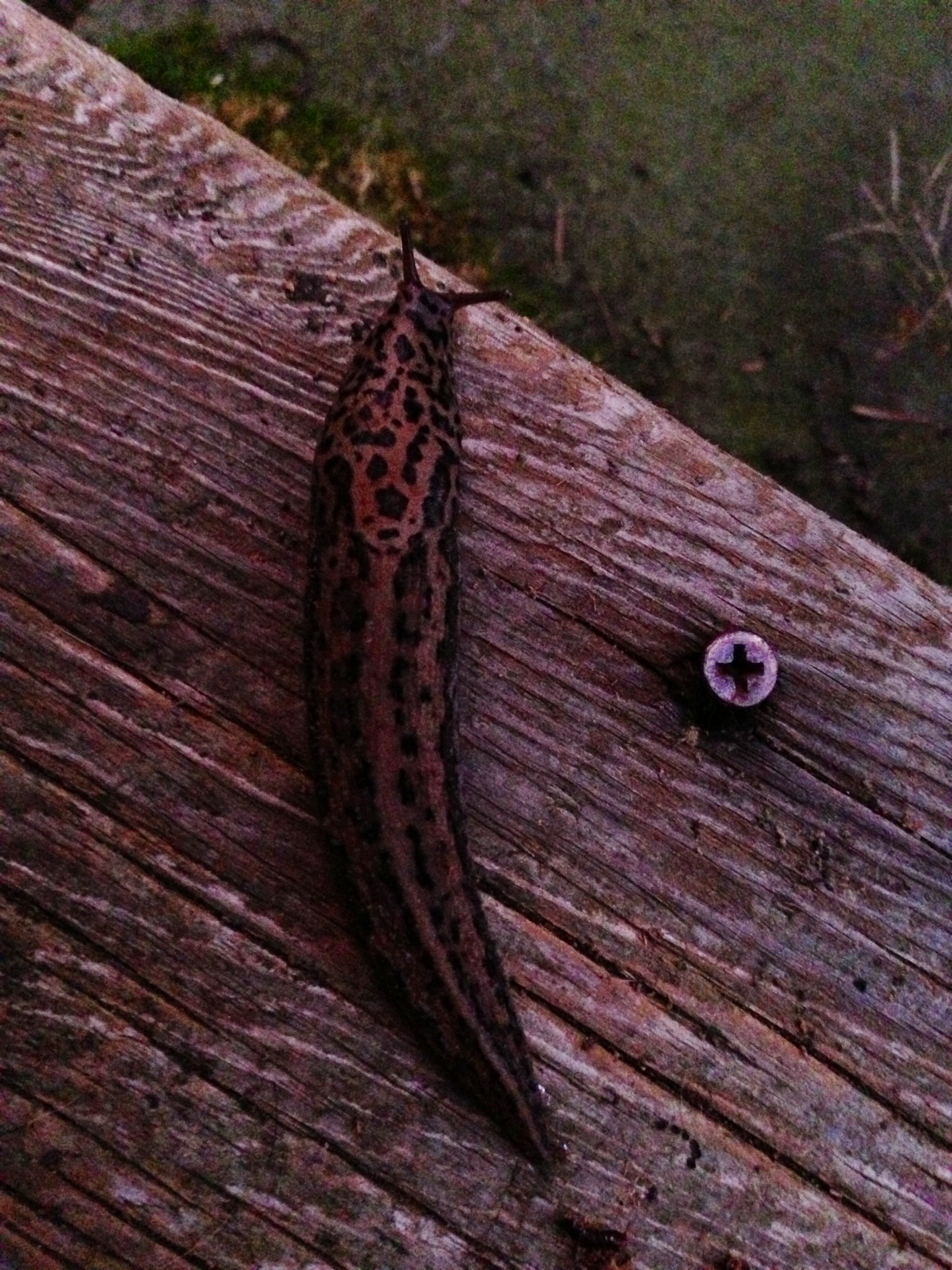
I thought the leopard slug I discovered on the porch yesterday at dusk was the worst thing I’d seen this summer.

leopard slug

Almost the length of my hand, it trailed its silvery sap behind it, creeping along the boards as though it hadn’t a care in the world. I could easily have smushed it with my bare foot, on my way to watch the fireflies.

These creatures, genus Limax, live beneath the weathered floor boards in some comfortable arrangement I imagine as including a cigar box bed out of  Mary Norton’s The Borrowers. But ookier. Hermaphrodites, the slugs have an unusual style of mating, using a thick thread of mucus to hang suspended in the air from a tree branch or other structure, an intense balcony scene to beat Shakespeare’s. The leopard slug was first spotted in the New World relatively recently, in a Philadelphia basement, in 1867.

How’d it get up to my house?

This morning, another discovery, when Gil was mowing the grass.

full length snakeskin

He laid it out on the porch. The shed skin of a snake, long and dry.

I saw this very snake not so long ago, out a window, as it travelled across the back forty towards the Cabin. Jet black and thick as my wrist. Moving in a straight shot towards me. Purposeful. We know they hole up under the clapboards at the back wall of the house because we’ve found their skins there before, left behind like a tossed-aside, too-tight jacket.

A black rat snake such as this one consumes mice and rats and sometimes even chipmunks (I noticed a decline in the chipmunk population around the cabin). It exudes an unpleasant musk as a deterrent to predators, but is known to be shy and will freeze, supposedly, if it spots you close by. It’s not poisonous, but if provoked further it will snap.

It’s sometimes identified, according to Wiki,  as:  Alleghany black snake, black chicken snake, black coluber, chicken snake, mountain black snake, mountain pilot snake, pilot, rat snake, rusty black snake, scaly black snake, cow snake, schwartze Schlange, sleepy John, and white-throated racer…

This particular schwartze Schlange was six-and-a-half feet long, from the reptile’s head — you can see its eyeholes —

snake head

to its tail.

snake tail

Perhaps the rat snake will find the leopard slug appetizing. But what will eat the rat snake?

snake sign

4 Comments

Filed under History, Home, Jean Zimmerman, Nature

Phriends of Phragmites

Today I befriended my inner phragmite.

tulips and dogwood


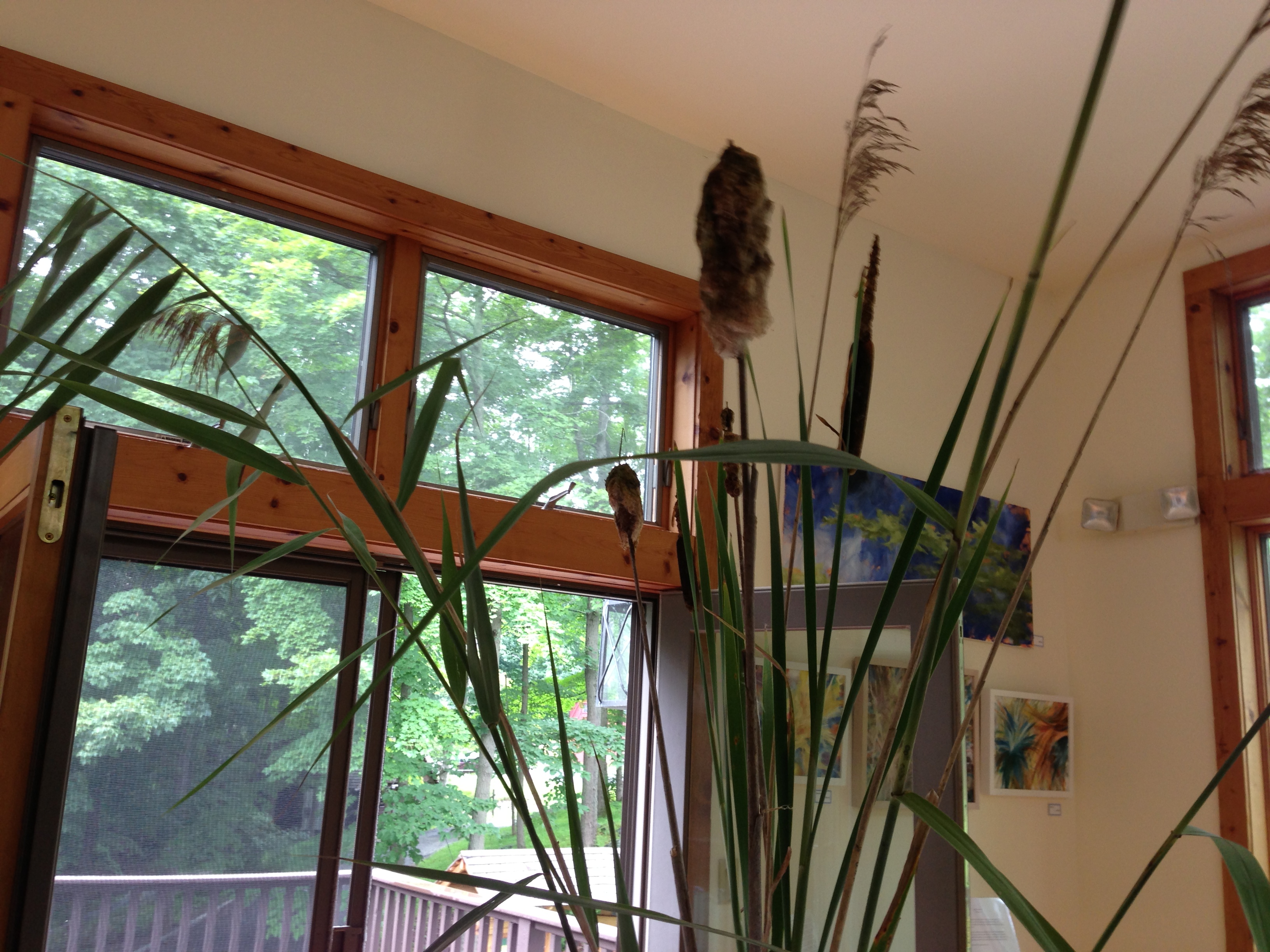
You’ve probably seen the reeds that form the backdrop for these merry tulips hundreds of times without knowing their Latin name. Marsh grass, aka phragmites. I’ve been thinking about the reeds for a while now, since a landscape-architect friend of mine came to the Cabin and explained that they characteristically grow in “degraded” environments. It hurt a little to know that my beautiful grassy friends have some kind of noxious, invasive taint.

So I was glad to attend a class today that was set up to make art with phragmites and their more distinguished relative, the cattail.

phrags:cattails


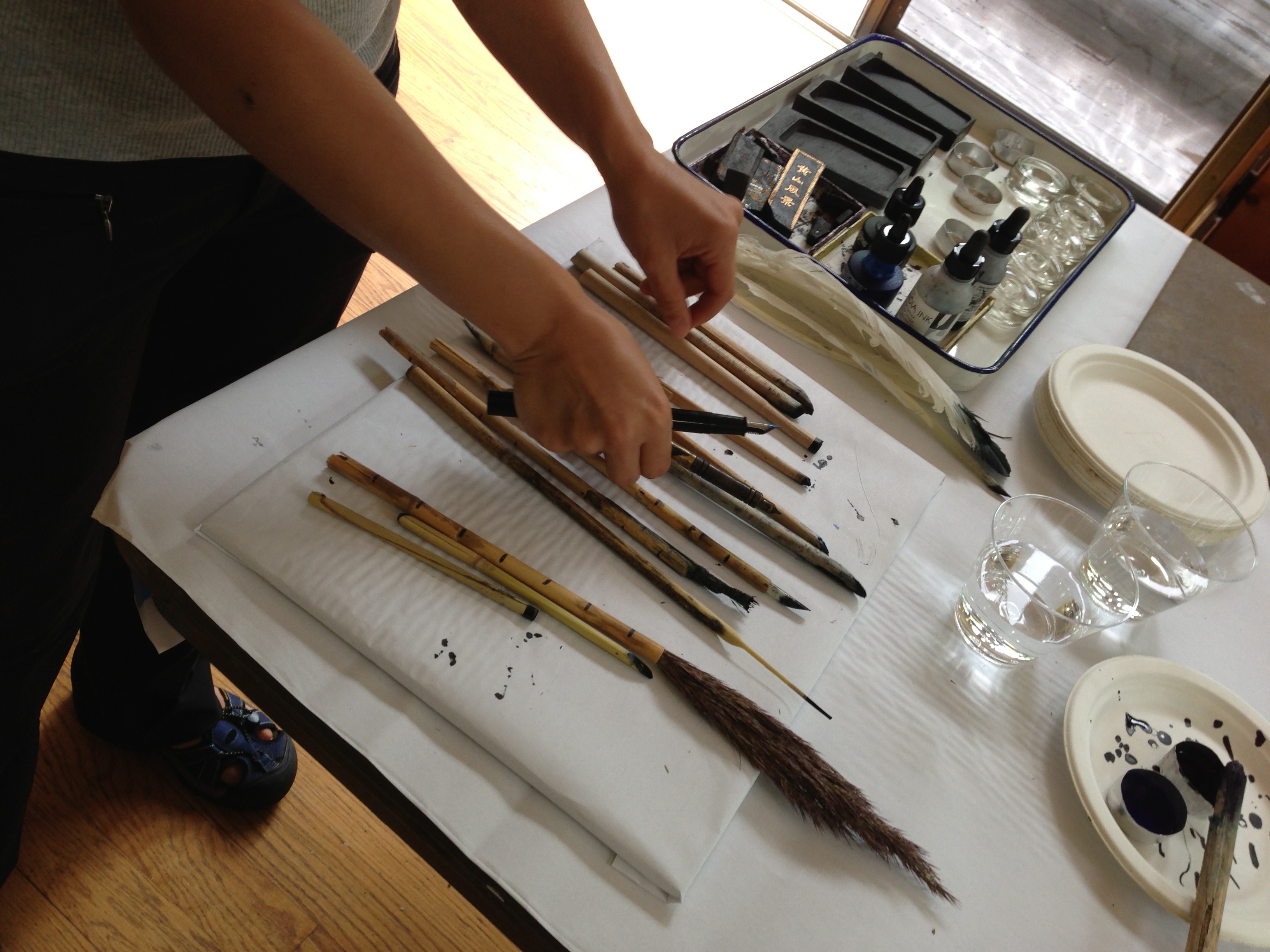
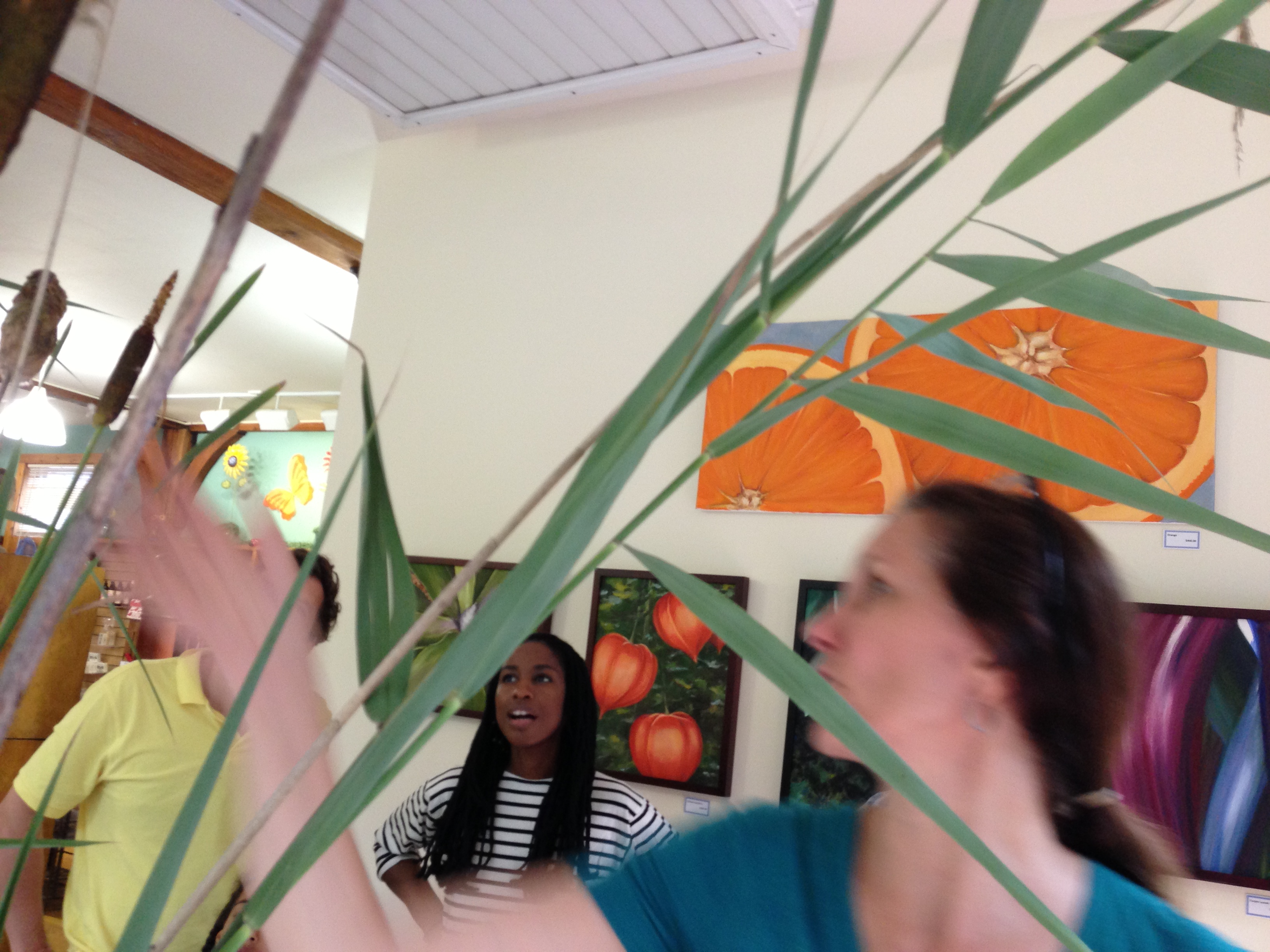
An airy display greeted my eyes upon entering the classroom, at the Teatown Lake Reservation just down the road from the Cabin. Paper and pens and brushes of all different sorts lay ready and waiting.

laying out the brushes


Laurie Seeman and Joanna Dickey were there from Strawtown Art & Garden Studio, ready to explain the differences between and the politics surrounding the different marsh grasses. Yes, there are politics surrounding marsh grasses. The two women are good at teaching about wetlands, that’s what they do at Strawtown for kids and community groups.

While phragmites are used around the world to weave mats and roof thatch, Laurie told me, she didn’t see a use for them in the art studio until she recognized them as “painting partners.” They’d been “demonized,” she said, “by the science people, but as artists we try to look upon them with the most open mind possible.”

laurie in action

What’ s the beef with the phrags? Laurie: “They’re pollution tolerant whereas cattails need cleaner water to thrive.  Certain species need the cattails, and when the phragmites take over there’s no room for them.” Said Joanna, “The phragmites grow closer together and it’s the understory that doesn’t allow the shorter plants to grow.”

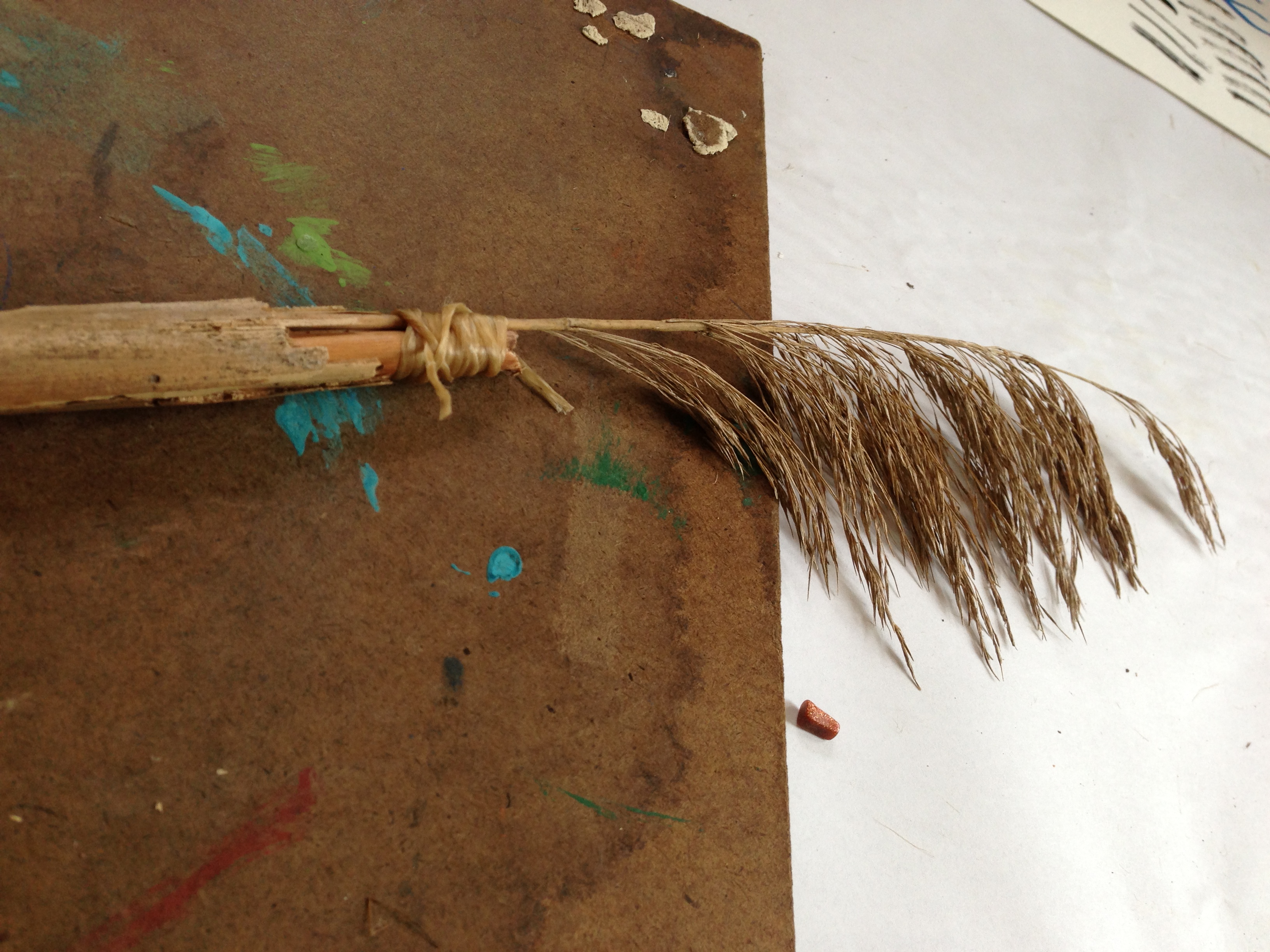
The artist-teachers discovered that for their purposes, the phragmites has a hollow stem like a traditional quill pen whereas the cattail has a spongy interior “much like a magic marker,” as Laurie said. Both work for painting.

interiors


Some say the phrags  came over from China in ship holds long ago, but have proliferated in the last few decades. Some say they clean metals out of sediments — a good thing, maybe. Don’t get Laurie going about research scientists, conservation scientists, corporate scientists, biological scientists, plant scientists, marine scientists. “It’s old-school thinking that phragmites are all bad,” she said. “They have a relationship with places that have been invaded.”

Today we’re going to appreciate them, stems and plumes alike. Gerard Manley Hopkins says, Long live the weeds, and I say, Long live the phragmites.

phrag brush


We dipped the reeds in ink.

ink


We made our own brushes if we wanted. (I wanted.) We took our time, something Joanna advocated.

joanna


Now, cattails are indigenous, and have a plump appeal. They make “comforting places for a bird to sit,” said Joanna.

cattail cu


Their roots are tubers. They’re amazing. Yes, yes, everyone loves a cattail, I know that. It would be un-American not to. But let’s not leave the phrags in the lurch.

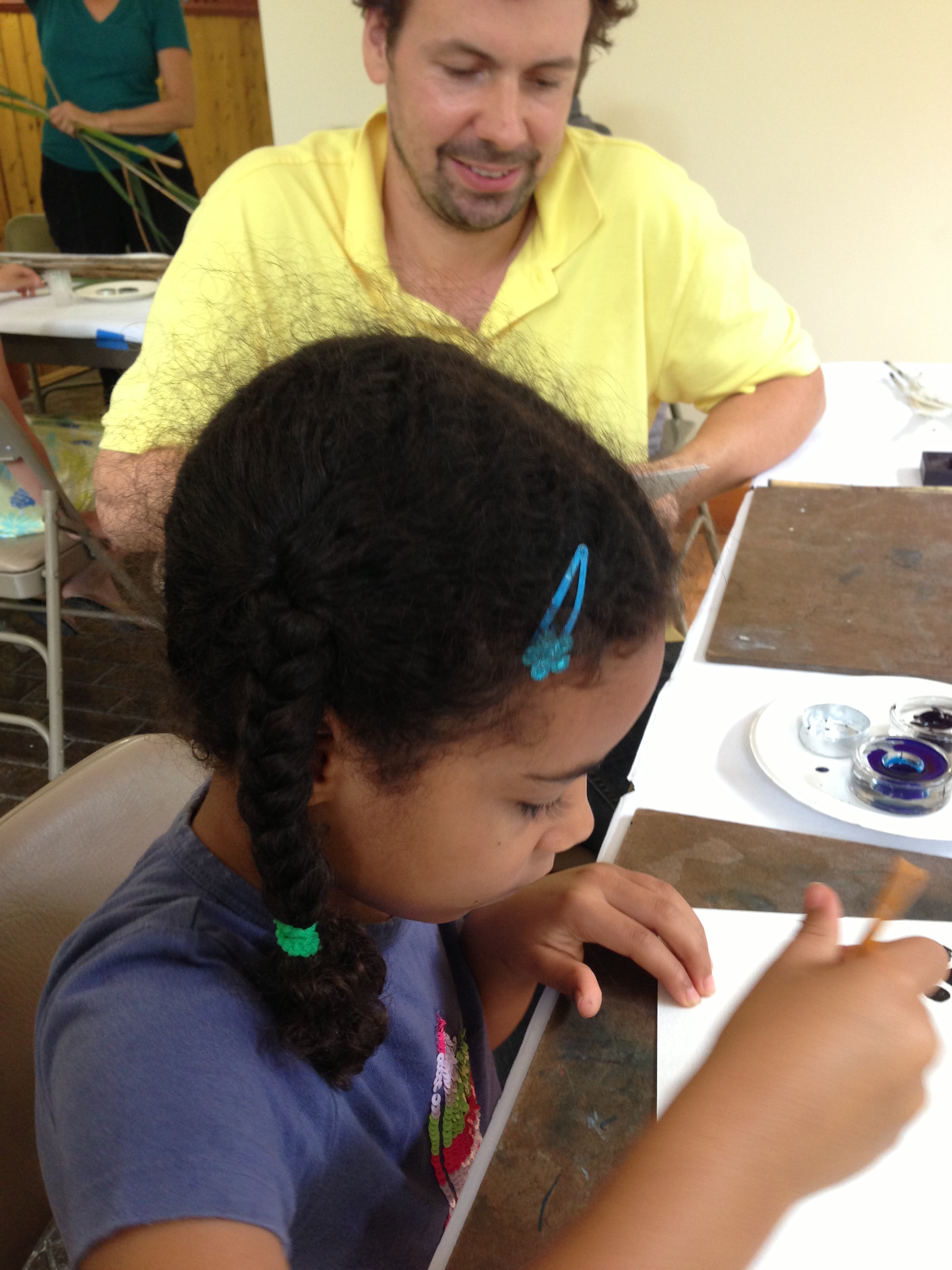
People of all ages were pressing them into service today for art.

father:daughter


In the meantime, there are well-meaning authorities who are trying to destroy parts of venerable Piermont Marsh, just across the Hudson River, with what they’re calling an “enhancement project.” I’ve canoed there many times, and know it as a mystical place with its towering grasses. Good bye, 200 plus acres of phragmites, which have been a stable presence there for 2,500 years. The reeds protected the riverbank during Sandy.

But let’s digress for a discussion of ink. In Japan, the soot that accumulates in the eaves from a pine wood fire makes good calligraphy ink, while whale fat smoke is better for imagery. I’ve left politics behind, lost in my painting, shaking loose drops of ink from my phragmite feather like a marsh-y Jackson Pollack. Laurie introduced something she’d brought along, water in a dark bowl, what she called “water as first mirror.” She said that in ancient times dark liquid was the only source for a person’s reflection.

Laurie and Joanna had gathered branches to make frames, and as I was twisting sinew around sticks I noticed someone I knew, Marguerite, coming over to create her own frame. She was positioning four graceful, delicate boughs before even beginning on the painting it will contain.

Marguerite


Doing it her way.

Something some entities simply have to do. Even the phragmites.

jz w painting

7 Comments

Filed under Art, Culture, History, Home, Jean Zimmerman, Nature

Swedish Farm

My friend Sarah Hollister, an American who has lived in Sweden for some years now, agreed to do a guest post for me. Her perspective and her pictures are lovely. Here she is:

We’re soon leaving the Henning Mankell Gård (translated farm) up here in Härjedalen in the northwestern part of Sweden. Just one more day. One of the great things about this writing residence is that family is welcome (there’s even a sweet baby crib in one of the bedrooms) so my partner Gunnar has been here with me which has been good. This house is too big for one person.

IMG_1634

I spent the first day roaming the roominess of the house, up and down the stairs, examining the books in the library, checking out the huge laundry room, washer, dryer, and a drying closet for heavy rugs. Just enjoying the space before I settled down in my workroom on the first floor.

Gunnar and I took some day trips on the two cycles provided and discovered a number of deserted houses up here, people who had given up. Though we also saw some very prosperous looking farms.

IMG_1486

You can’t be in this part of Sweden without encountering a fäbod, (translated mountain pasture). But a fäbod is more than grass, it’s a concept, now lost, a way of living. Fäbods consist of a cluster of small weathered log houses built on a site where there was plenty of green grass for cows to graze to their heart’s content.

We visited  one just up the road from the Mankell Gård, climbing up the narrow path that led to the high pasture. I thought of cows, of many cows navigating these paths covered in roots and rocks, mooing and balking.

IMG_1536

The log houses are fairly small, no bigger than a large farm shed, with low ceilings, dispelling the myth of the towering Vikings. It’s easy to bump your head if you don’t duck. Most of the buildings were built for storage, hay and wheat, milk and butter products.

IMG_1523

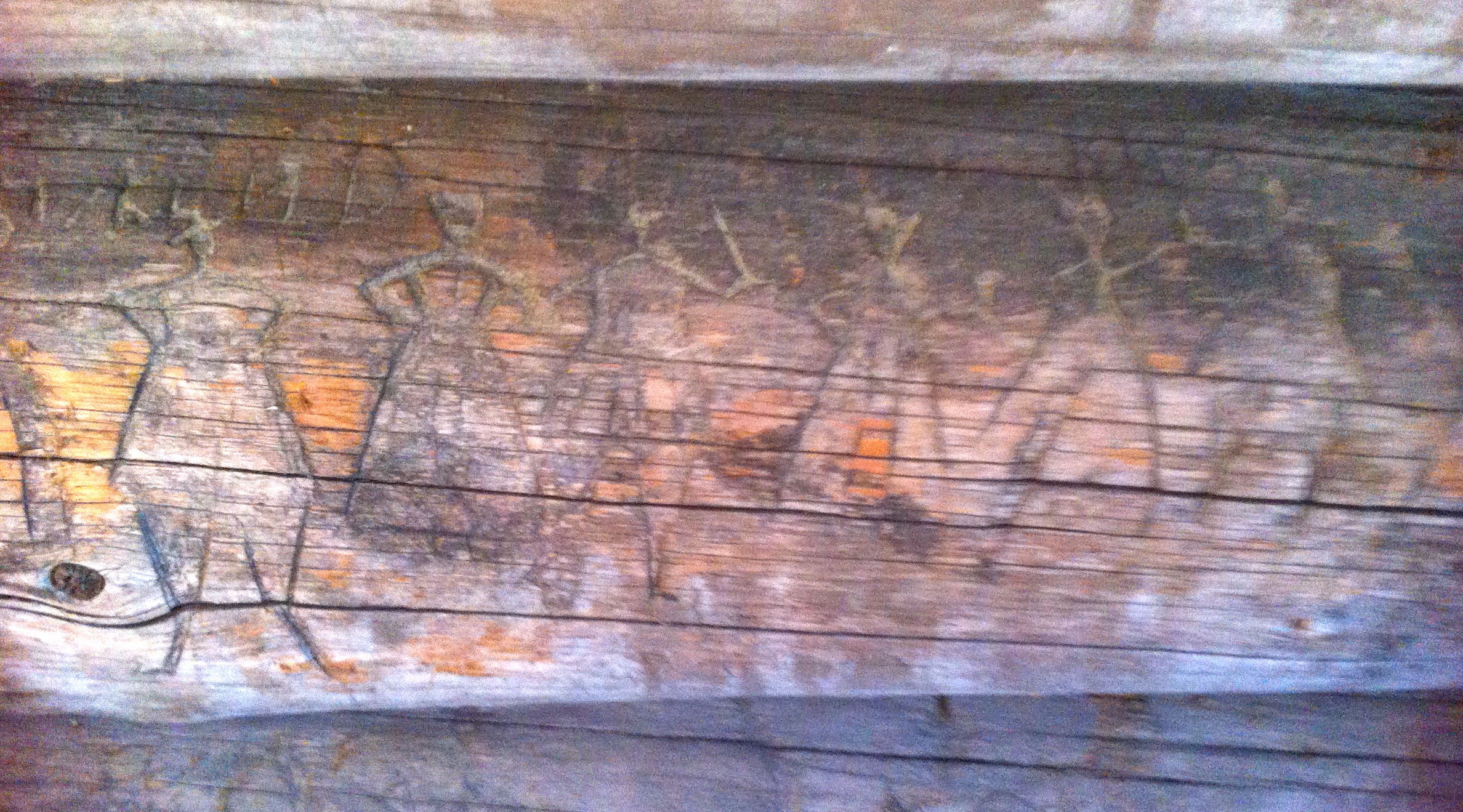
In one of the buildings, we found pictures carved into the beam logs. There was a written explanation on the door that explained the pictures were representations of the wars between Norway and Sweden, border skirmishes that took place up here in this part of Sweden. It was hard to tell though. The small figures looked like ordinary men and women to me. Someone had an interest in art.

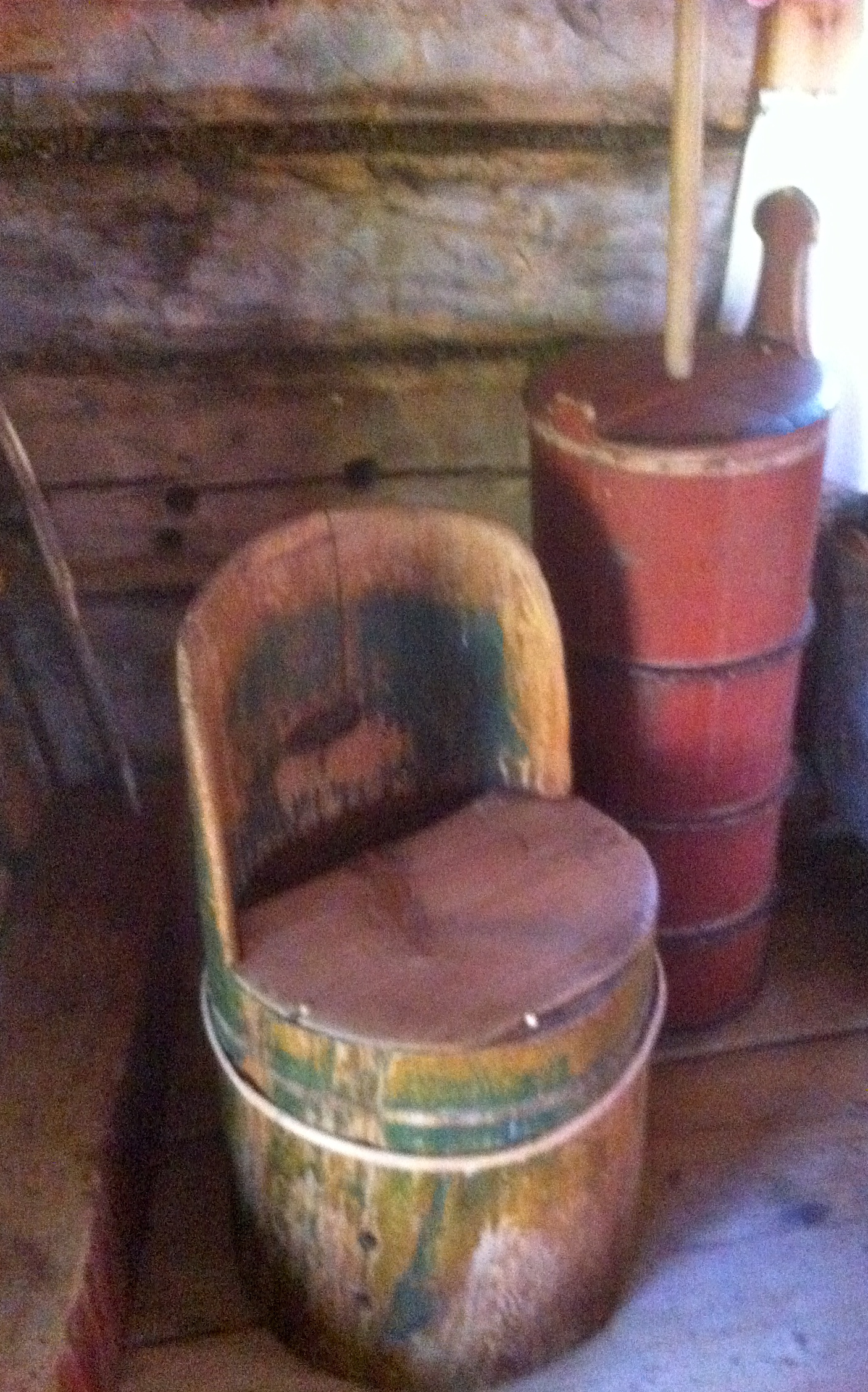
IMG_1532There is one log house (as in every fäbod) specifically to house a young girl, the fäbodjäntan. It’s difficult to find an English translation for this word —  let’s say cow tender. She helped drive the cows up the mountain, then stayed on alone tending the cows over the long summer days.

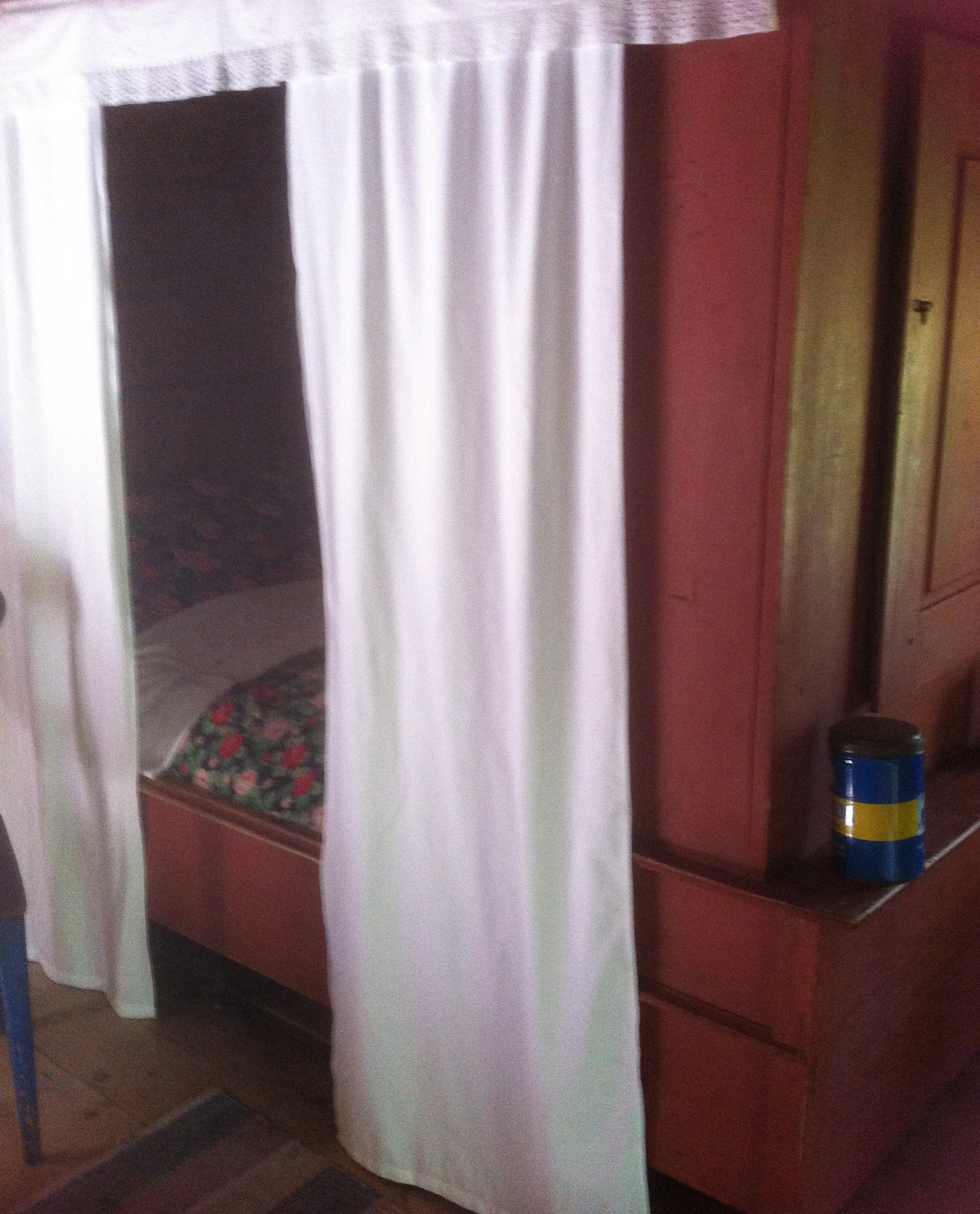
What do we know about these girls, the fäbodjäntans? They had a song they used to call out to the cows, their voices echoing up and down the hills and mountains. I like the romance of it, I admit. They slept in small beds in the small wooden houses of the fäbod. They were kept warm by a fireplace should the need arise, cooked their meals there as well and at times were allowed a visit from their fiancé if they had one. A larger bed with a curtain was available for those visits.

IMG_1518

Gunnar pointed out that morality was not so strict in those days, at least for farm girls.

IMG_1517

I’ve grown used the quiet of the mountains, the sunlight glinting off the birch leaves, shimmering, silvery. I wouldn’t mind living in a fäbod myself. They’re for sale if someone has a knack (and the money to spend) for renovation. It would be nice though to spend a whole summer in one, dreaming and writing.

IMG_1520

3 Comments

Filed under Art, Culture, History, Home, Jean Zimmerman, Nature, Photography, Writers, Writing

Blues Chicken

With every last i dotted in the proofread Savage Girl galleys, I raced to my reward, a sultry New York City where everyone, it seemed, was perambulating, doing something exciting and interesting. Gil and I would go among them, we would do something exciting and interesting, too.

Eat chicken, for one.

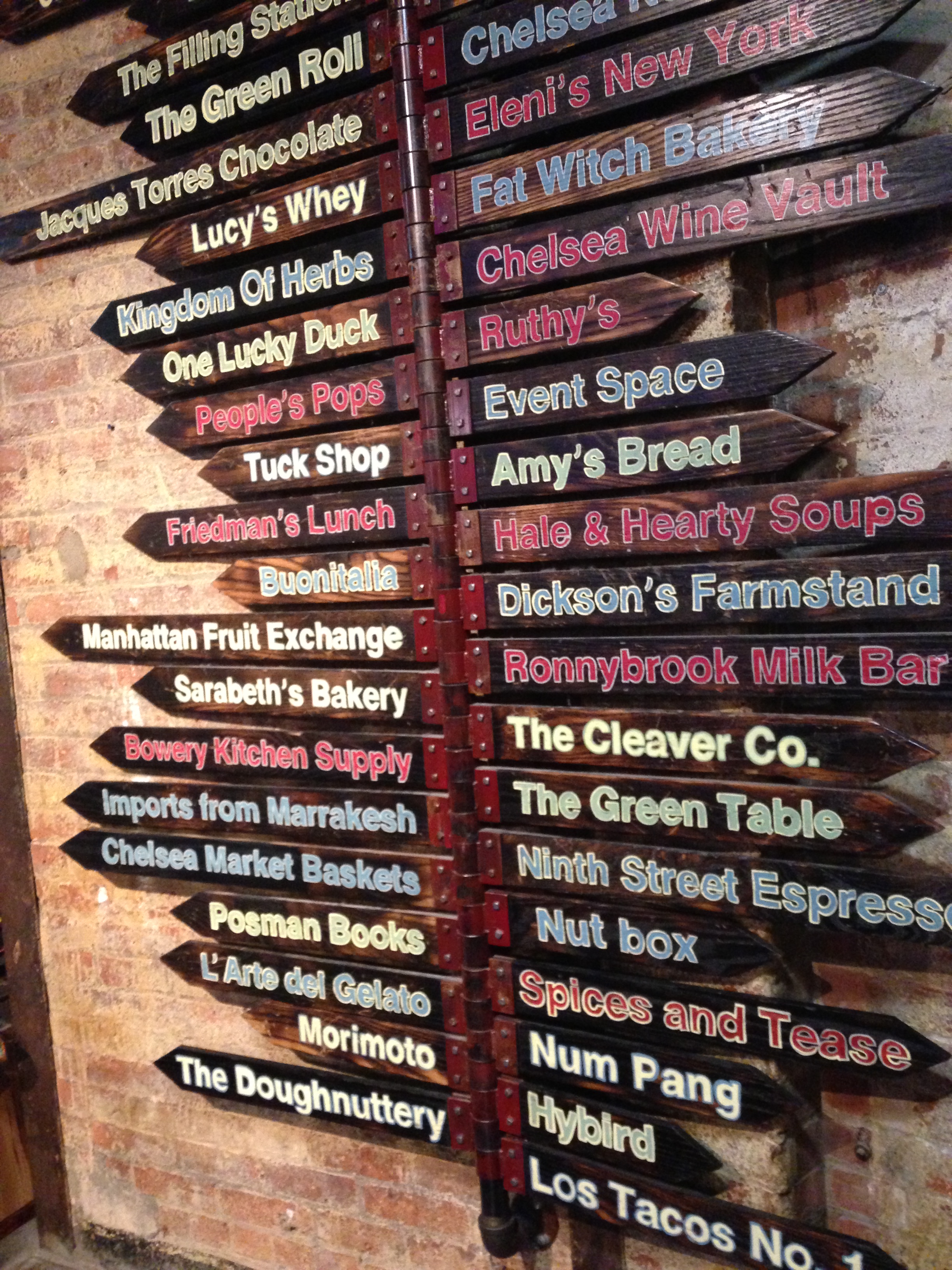
Questlove, the drummer and frontman for the band the Roots, has got so deep into the fried poultry business that he had some kind of a late night throwdown with Momofuko head honcho and chicken man David Chang on Late Night with Jimmy Fallon. Now the musician has opened a counter joint in New York’s Chelsea Market called Hybird that serves exclusively drumsticks, fried dumplings, biscuits and cupcakes. All the essentials for a balanced diet.

hybird

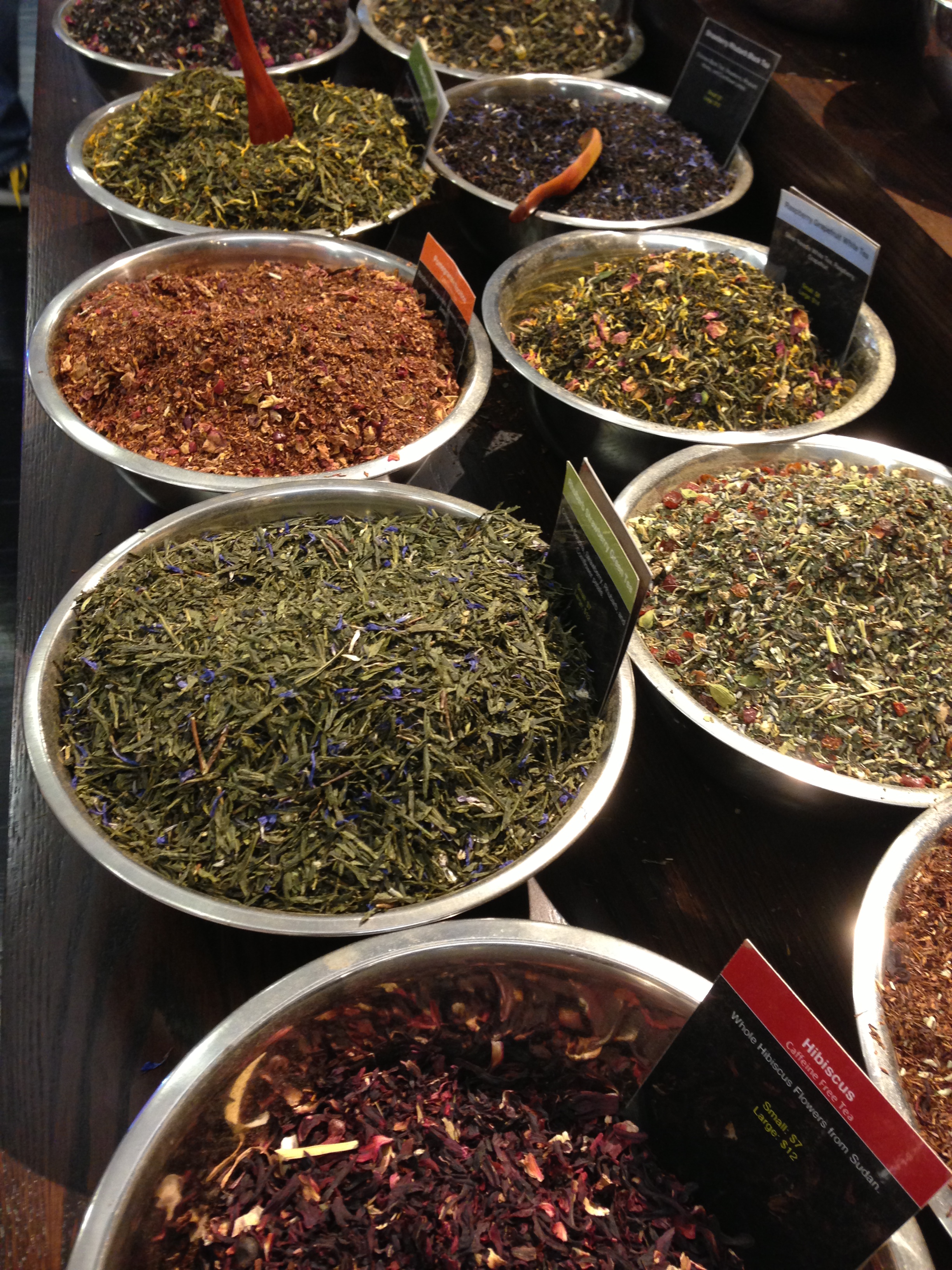
We got to the labyrinthine food concourse in midafternoon, ahead of the crowds, snaking through a corridor lined with dozens of teas, our stomachs rumbling.

tea

The enormous Chelsea Market complex is located on the premises where the Oreo was developed and perfected, lending an air of sanctity to our excursion.

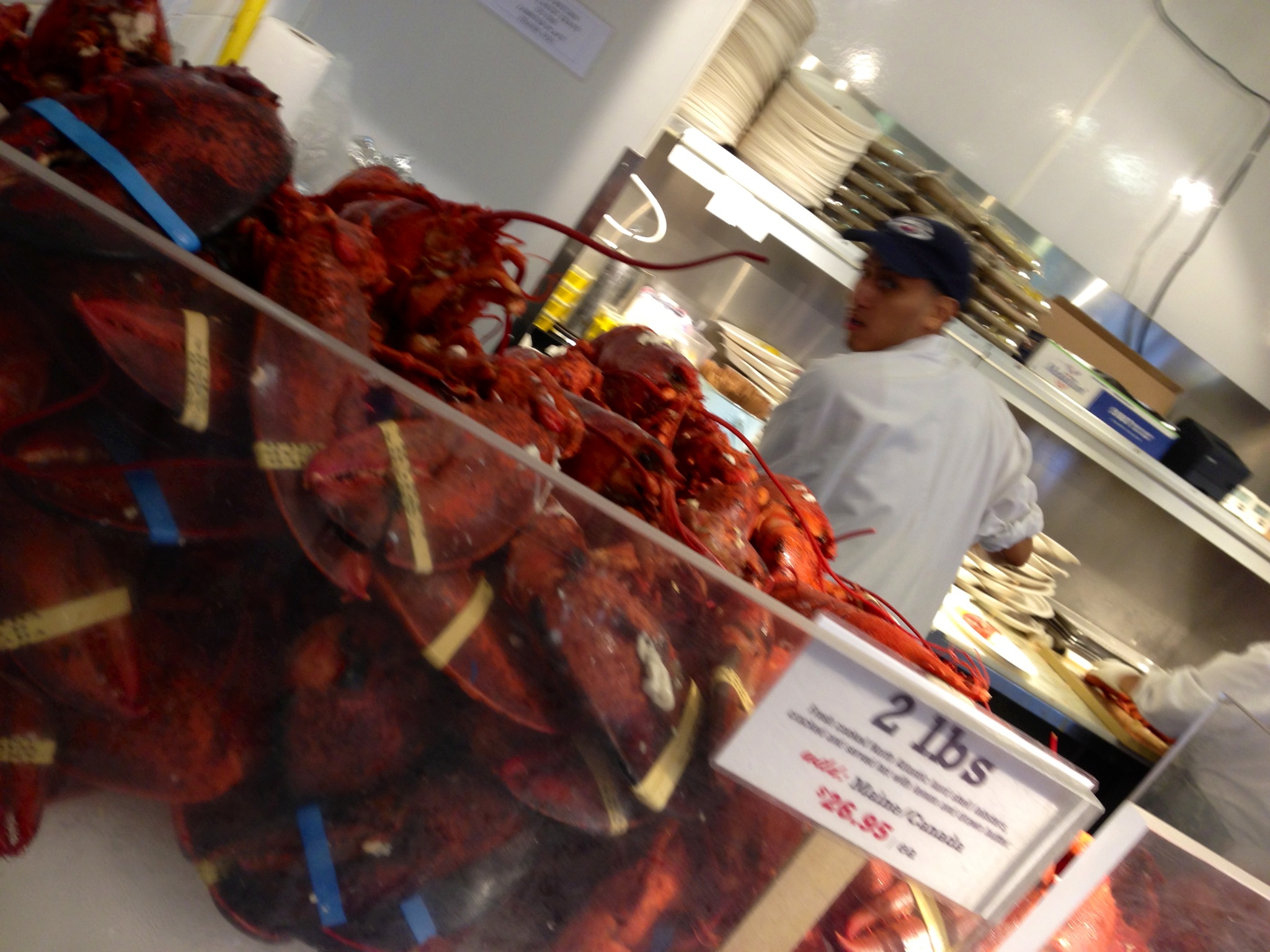
Chelsea Market features a lot of exciting things. Chilled, hefty lobsters.

lobsters

Falling water.

chelsea waterfall

Food venues. Outrageously good smells swirled around us.

bounty

What it didn’t have before is this particular chicken.

chix box

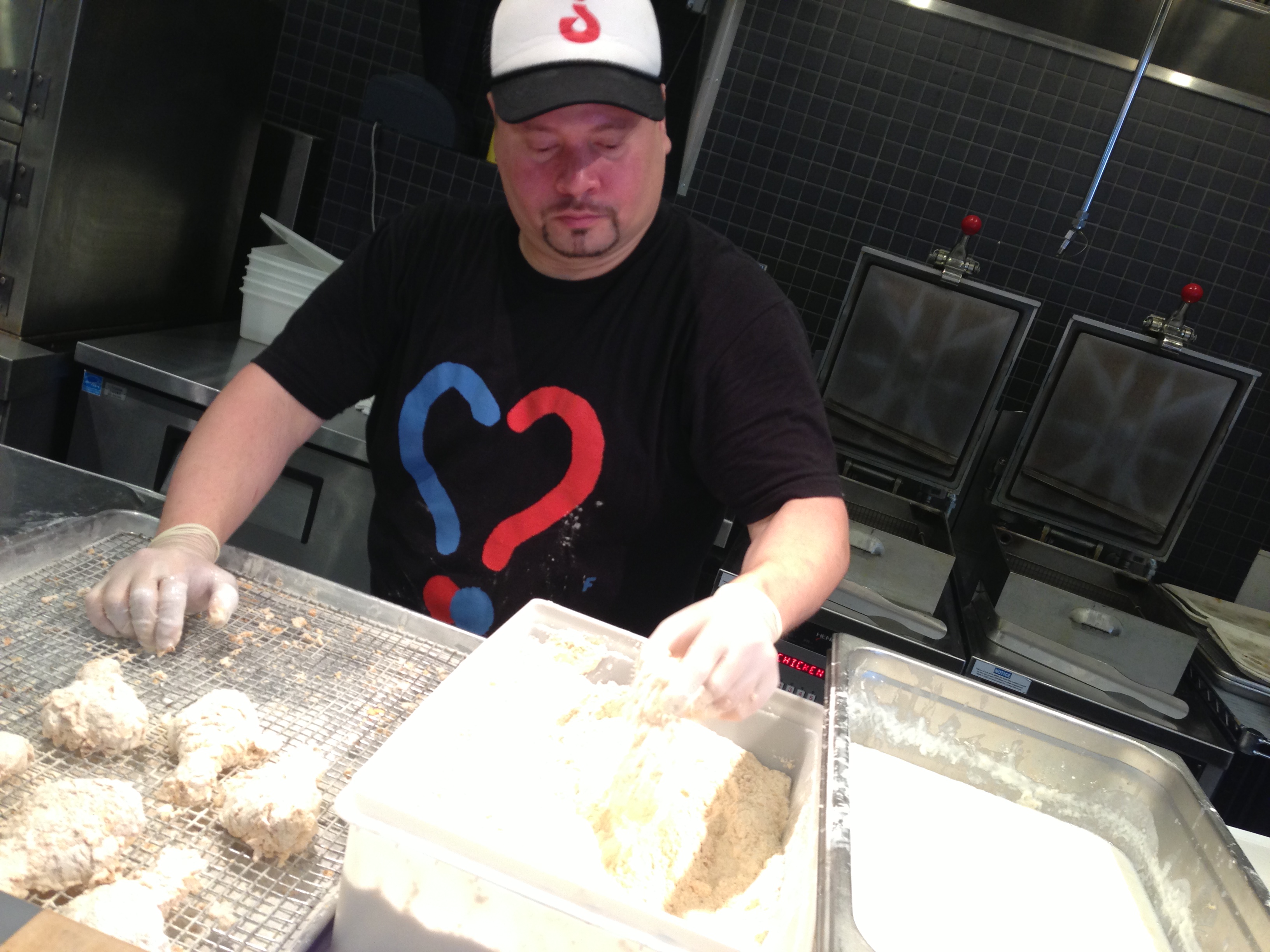
What is the seasoning, I asked Sammy, the guy double dipping chicken parts in a creamy paste behind the counter, when I managed to unstuff my mouth with chicken.

sammy

It’s a secret, Sammy said. A lady from Philadelphia comes in and mixes it up for us. She brings all the spices but she doesn’t tell us what they are.

I love a secret, especially when it tastes as good as this. The biscuit too was perfectly crumbly, smeared with honey butter, and we piled on further with crunchy dumplings that oozed out their sweet-savory crab filling when bitten.

Stencilled footsteps seemed to indicate where you should stand at Hybird, and naturally Gil was outside the lines.

feet

I saved the cupcake, whose flavor was described as “Sexual Chocolate,” for the car, a sexier environment than Chelsea Commons.

A bookstore.

books

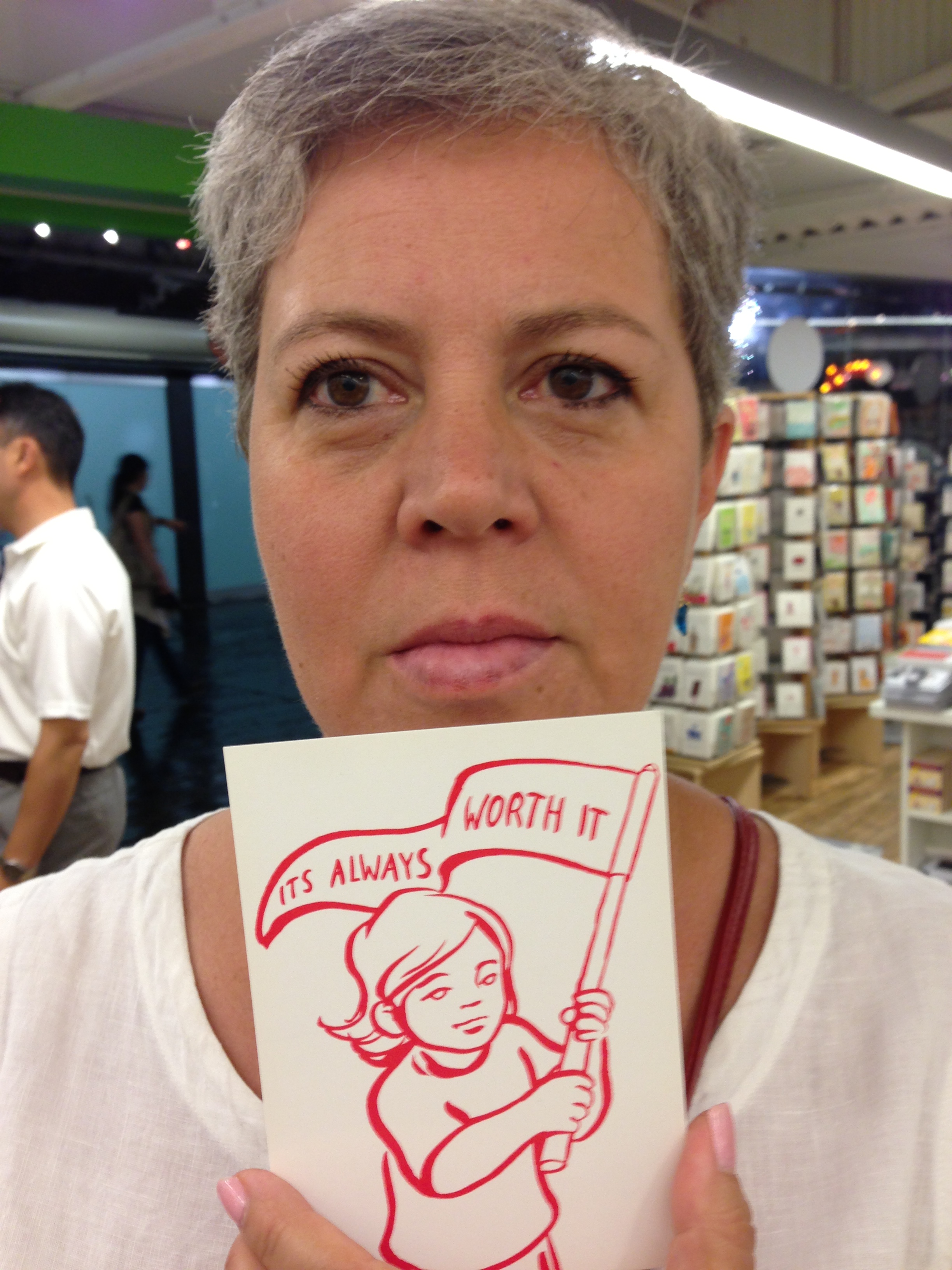
Nary a copy of The Orphanmaster in sight. It happens. I fell back on my motto, handily available on a postcard.

it's always worth it

You never know who you will meet on a summer afternoon ramble around New York. In this case a young woman wearing a pair of the new Google glasses.

google glasses

Wilma told me she’d just picked them up upstairs, in the Google offices, having won them in a contest. She said she was recording a video of me as we spoke.

Sated, Gil and I continued to the World Financial Center, in Battery Park City, directly across the Hudson from Jersey City. We were looking forward to a triple bill of bluesy rockers, or rockin’ blues players, depending on your perspective, on a public terrace that sits in the shadow of the Freedom Tower.

freedom day

The sun shone so bright and hot that half the waiting crowd put up their rain umbrellas, a spectrum of colored and patterned domes across the concrete. New Yorkers are always more slovenly than they are expected to be, and serious exhibitionists. Women flaunted the briefest sundresses up to their backsides and sweat-slicked men ran shirtless through the crowd. In the harbor a stroll away, sailboats and yachts docked, and motor boats cruised in to check out the action.

harbor

Alejandro Escovedo hit the stage with his sweet blasts of melody, punk rock in its roots. His song Sensitive Boys could make you cry, or was that the sun glare in your eyes. He brought on David Hidalgo to do a searing You Are Like a Hurricane. Alejandro called it the Canadian national anthem.

We met up with friends and family at the venue. My touselled buddy Sandra the artist-environmentalist noticed that the masts of the little boats were themselves rocking, pushed by the wind, in line with the beat of the tunes.

touseled Sandra

Los Lonely Boys, the Chicano rock band out of San Angelo, Texas, were tight. A trio of brothers, they call their music Texican Rock ‘n’ Roll. How can three guys make so much noise? marveled Gil.

Los Lonely Boys

The lead singer and guitarist Henry shouted above the applause, We appreciate it! We know you can be anywhere else!

And it was true of course, on this summer night, with this breeze and the salmon streaks of sunset glowing, in this fantastic city. We could be doing anything but we chose to be here because Heaven, their hit debut single from a decade ago, was so exciting.

How far is heaven? Los Lonely Boys sang. You know it’s right here, right now, shouted Henry, in New York City!

Los Lobos followed, another American Chicano group, this one from California, with considerable chops that they took no time in putting out on the stage. They’d been around since the ‘80s, after all. The sun set, the klieg lights glowed, people wrapped their arms around each other and danced.

By the time we gathered our things, the skinny minx beside me who’d been flipping her skirt in time to the beat was sweetly reunited with her man.

couple

Love and music in sun-stunned, summertime New York City. A treat as scrumptious as fried chicken.

1 Comment

Filed under Cooking, Culture, Dance, Jean Zimmerman, Music, Nature, Publishing, Savage Girl, Writers, Writing

Across the Hudson

We went walking down by the Hudson River in the town where I grew up. Hadn’t been there in a while. The beach curved around, clean and bright.

Hudson beach

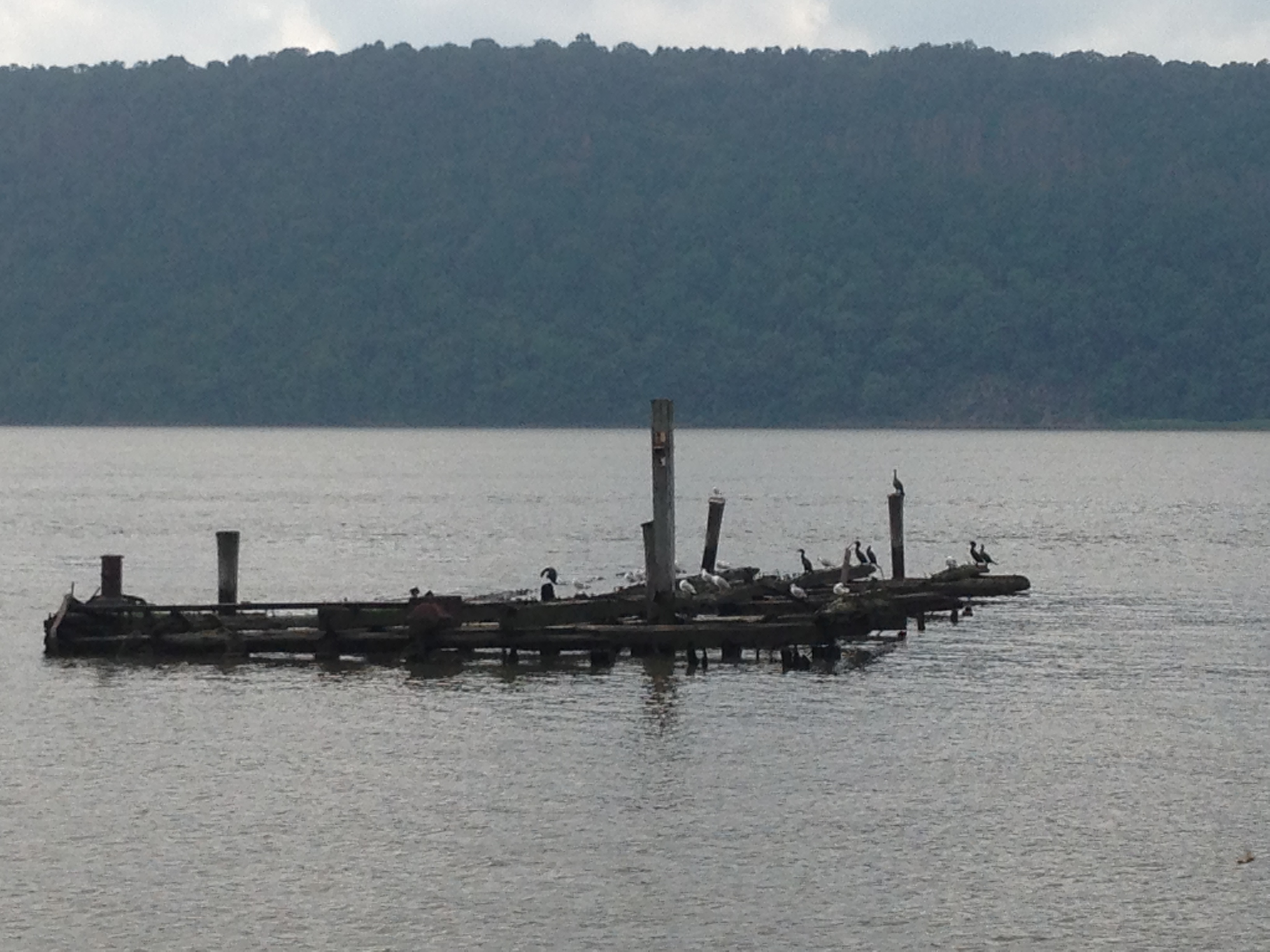
When I was young the sand here was covered in beer cans and gnarled driftwood logs, strewn with broken glass and tires. The view was always great, as it is today, even in the murk of mid-July. The majestic Palisades stood proud before the kids who hung out here at the beach, kids called the river rats, who colonized this place.

pilings

Since my childhood the village has taken back its little cove, renamed it, given it a wheelchair-friendly wooden walkway. Gulls and cormorants still post themselves atop the picturesque ruins of old docks. A park next door has a friendly playground, benches, green lawn. It’s all tidied up so that everyone can enjoy the shoreline, not just river rats.

What’s that, says Maud.
We look, out just beyond the beach, where the water gets deep.

I see it, I say.

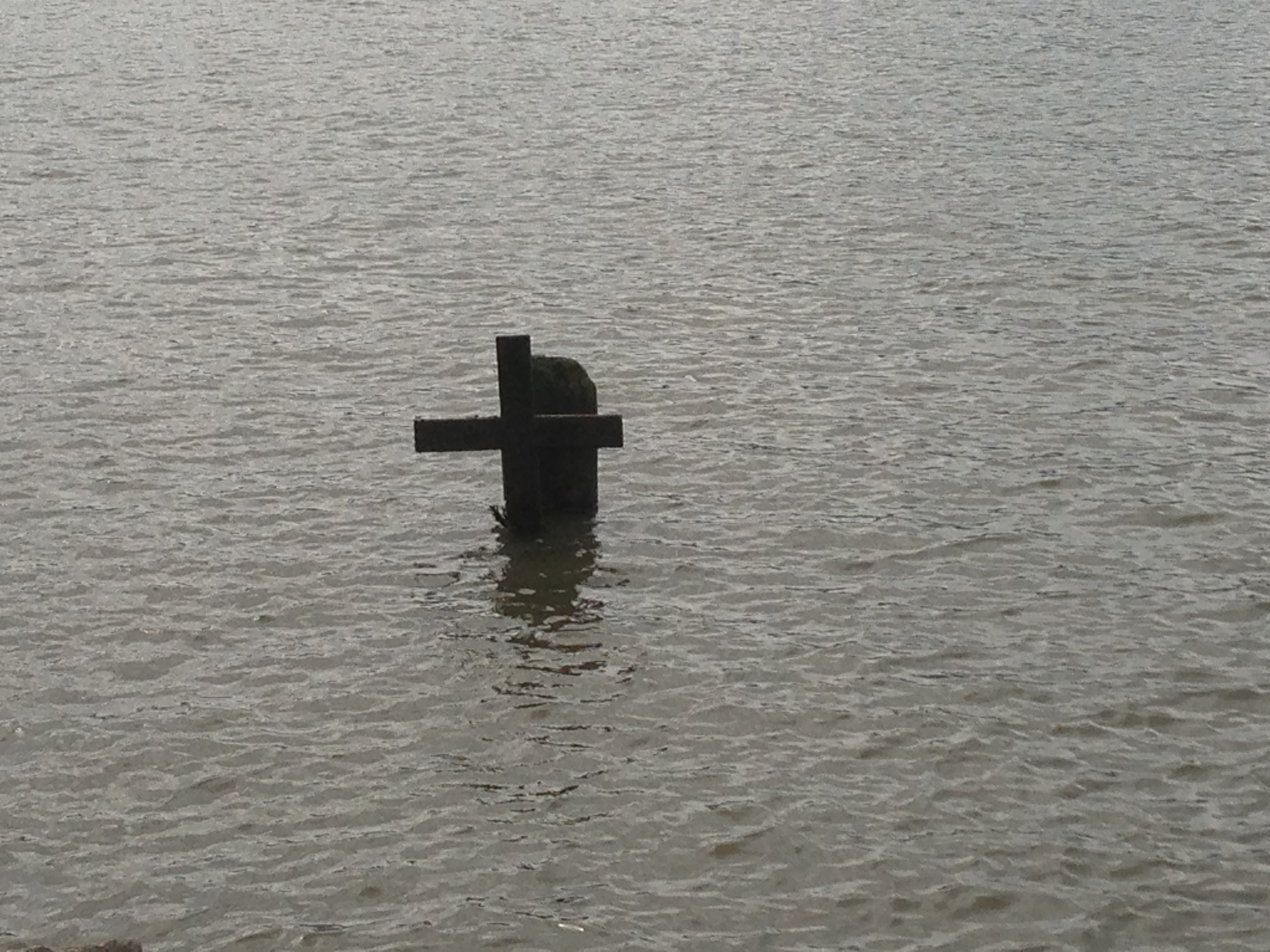
cross

A large wooden cross, fastened to a piling, the tide lapping up against its neck.

A descanso, says Maud. She knows about descansos, the southwestern side-of-the-road memorials, crosses usually, that show where a person has died in a highway wreck. She’s been researching them for school.
A water descanso.

I remember now… some kind of boating accident, Maud says. She grew up here too, in this town, has seen the changes in the park over the years, the improvements, the things that go on under the radar, too.

The beach is pretty, the tall stone cliffs ever-beautiful, but you can’t tidy up death.

3 Comments

Filed under Culture, History, Home, Jean Zimmerman, Nature

Tuber or Not Tuber

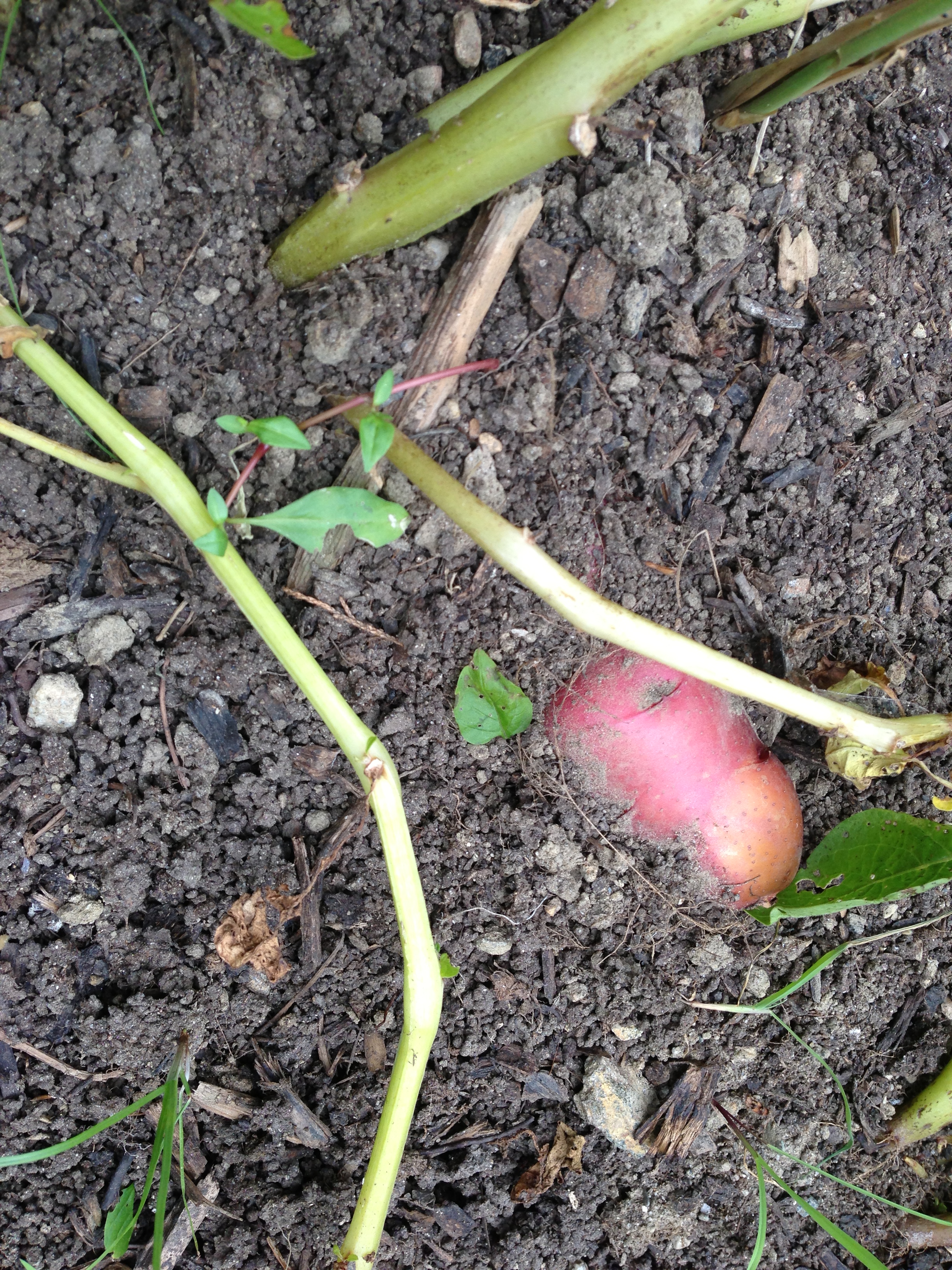
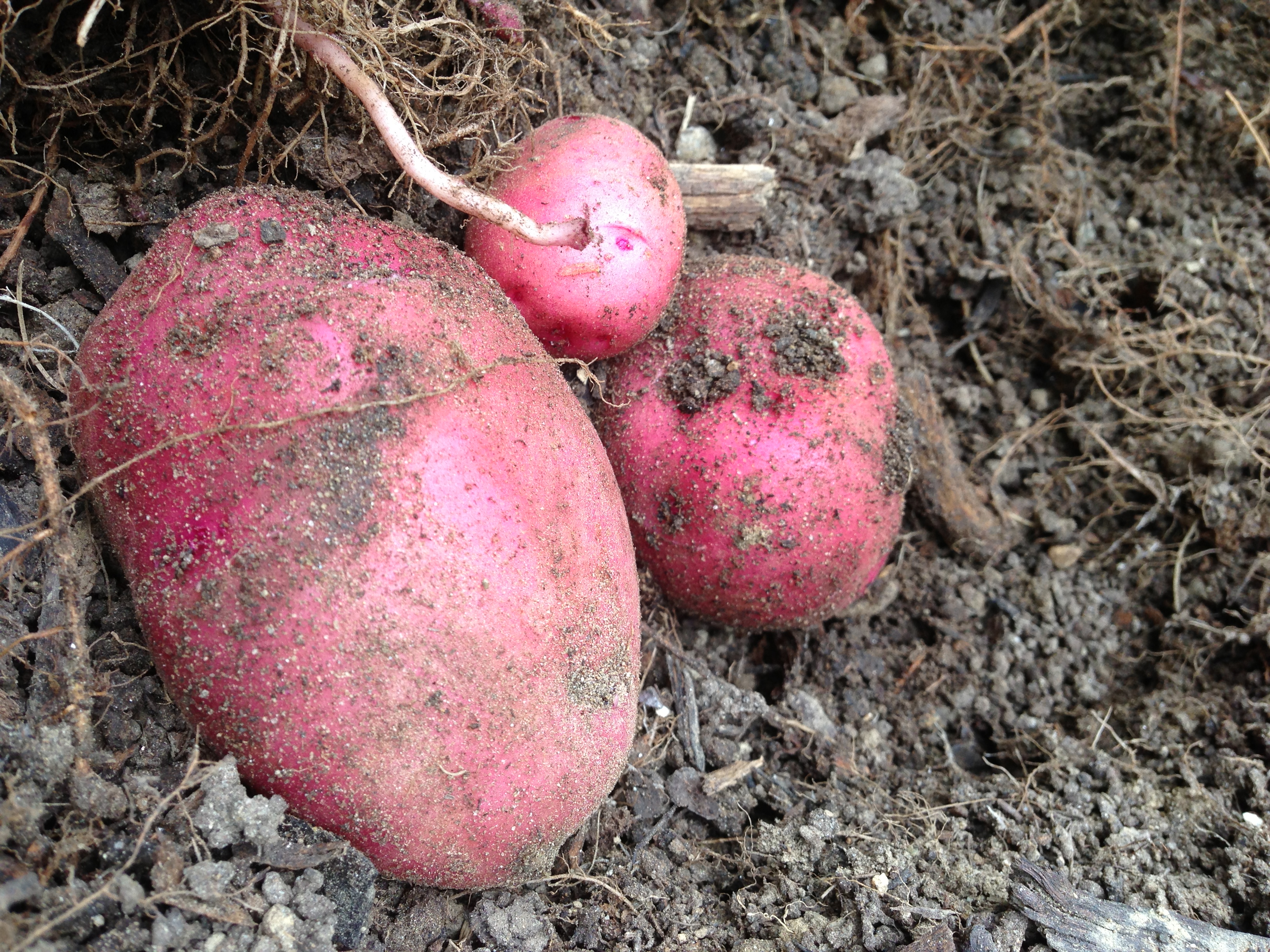
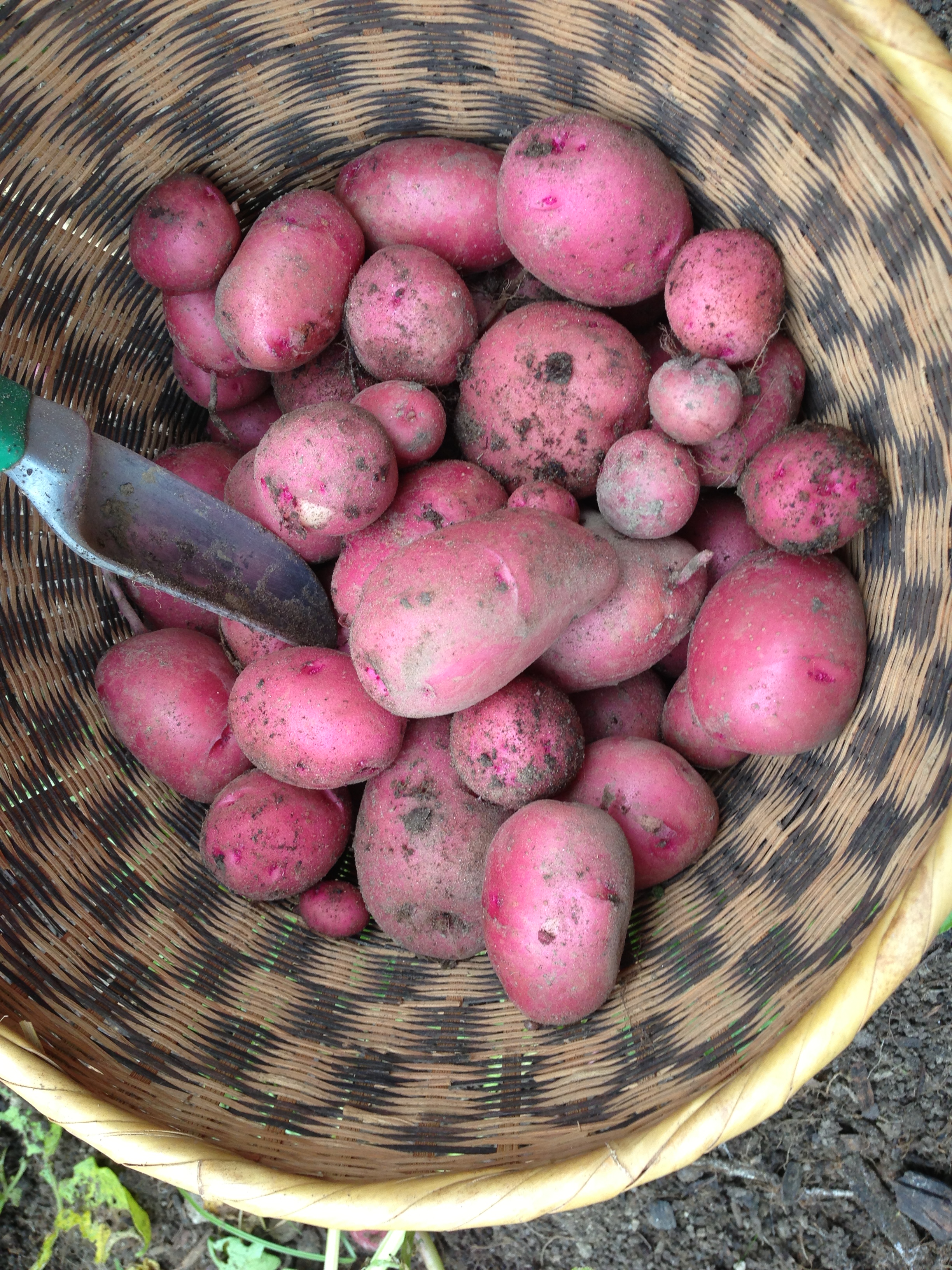
My potatoes are ready to harvest. Knuckling up from under the crumbly soil, red, firm, practically begging to be dug.

potatoes stalks

The tops of the plants have collapsed and faded, letting me know the tubers have reached their point of ripeness.

And I’m on my knees (on my gardening pad, protecting my getting-to-be-arthritic knees) thinking about things that grow under the soil.

potatoes soil

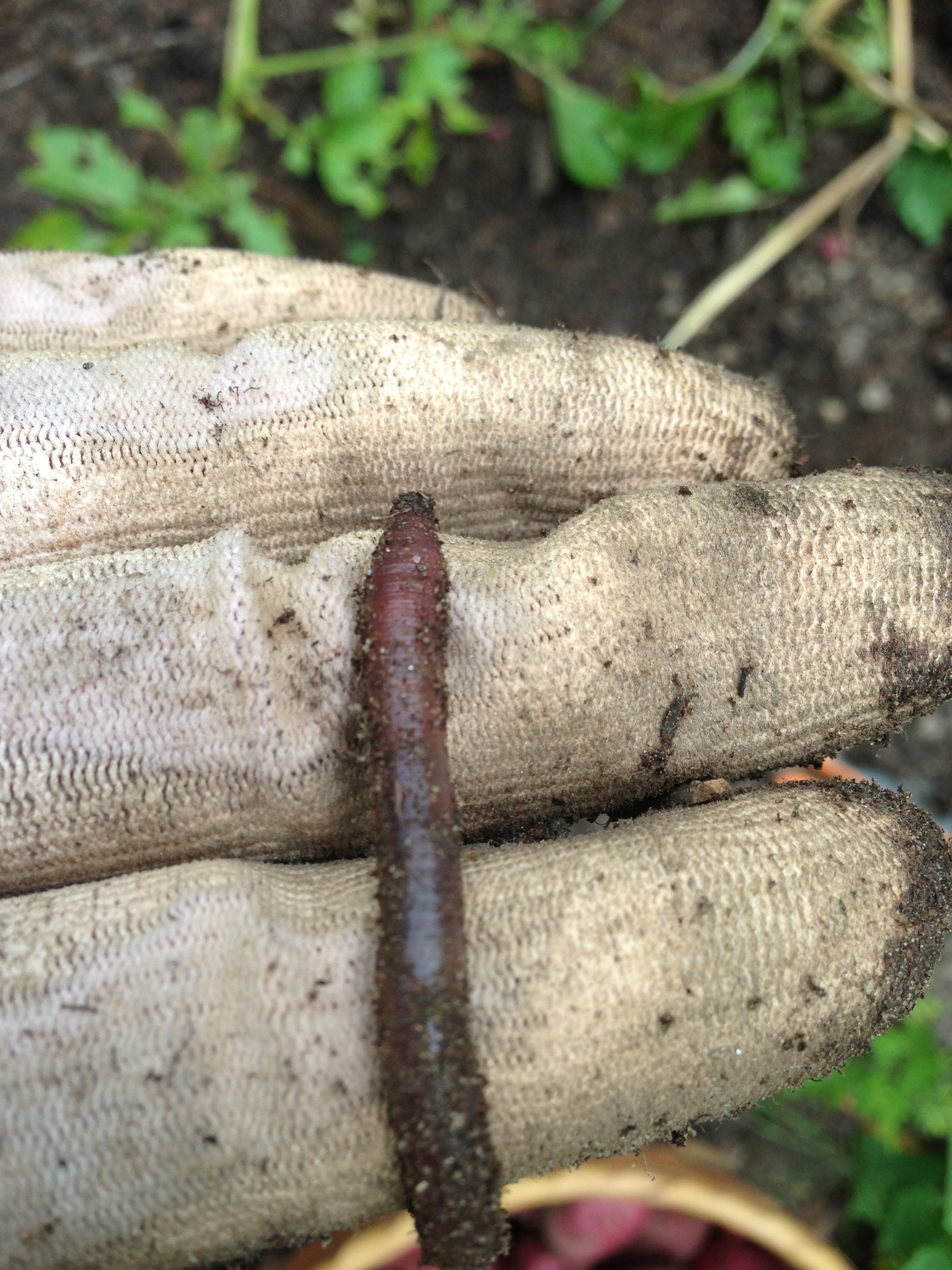
Earthworms, like the one strutting across my gloved fingers, surprised in its wanderings around the potato neighborhood. Gil tells me that earthworms are actually an invasive species and have disrupted the ecology of the forest floor.
worm

I’ve always liked earthworms, admired their digestive capabilities, and wanted them to multiply in my garden. At the same time, being a little squeamish, I’m anxious about coming across them writhing in my path.

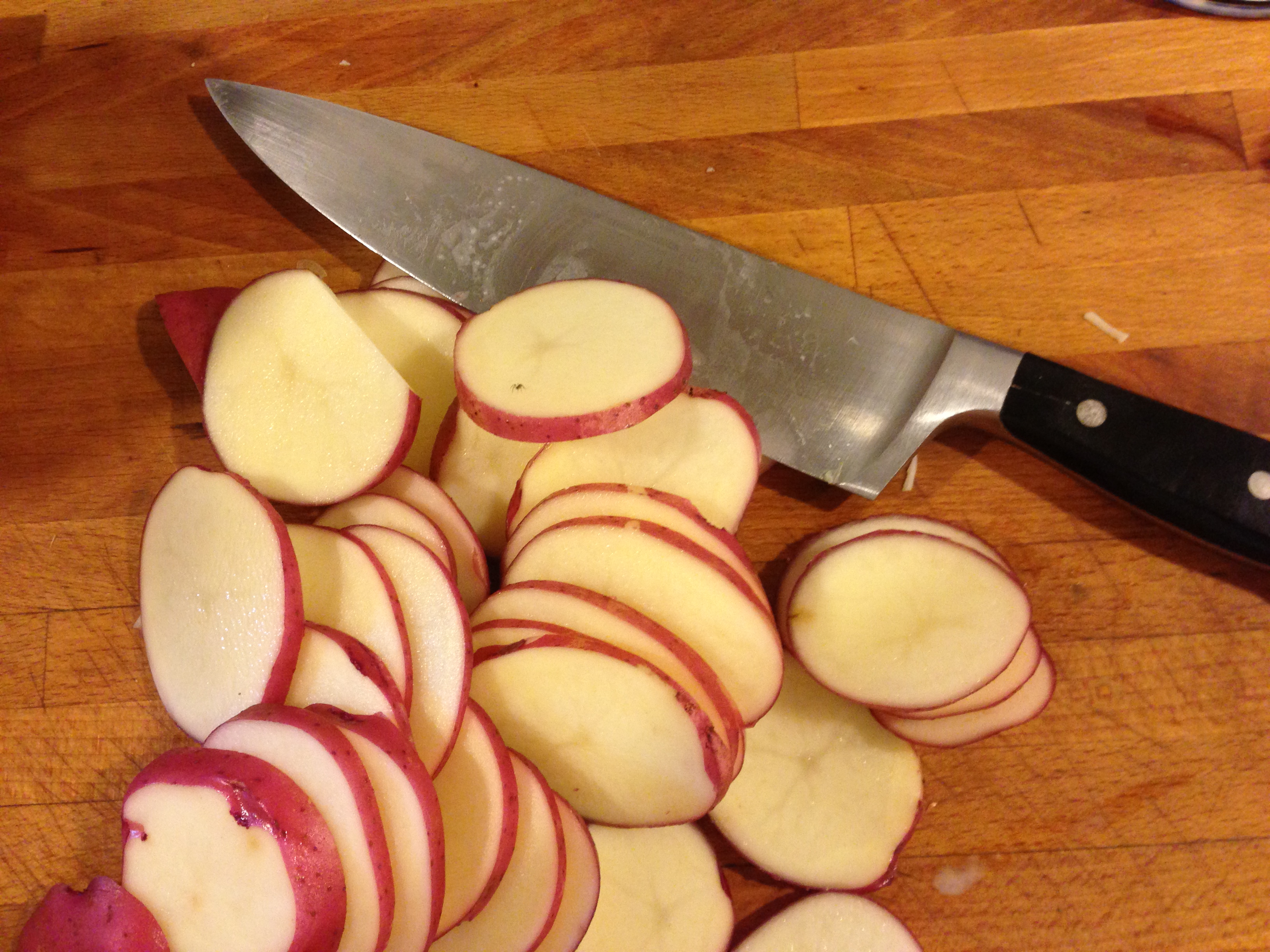
Here are potatoes, washed and sliced, for a summer gratin.

potatoes raw

So fresh they slice more like cukes or squash. Moist like just-picked tomatoes.

tomatoes

I’m thinking about anxiety, another thing that, like a potato, grows underground. You can put them aside, the things that worry you, by day. The yet-to-be-paid bills, the yet-to-be-written article, the yet-to-be-published book, the yet-to-be-proofread galleys, the yet-to-be-folded laundry. But roundabout 11pm, lying between the sheets, the air conditioner blotting out all distractions, those anxieties come back for their nightly haunting. Herbal tea, you say? Hot milk? Meds? All you can do is dig yourself out of the dirt by the next day’s sunlight.
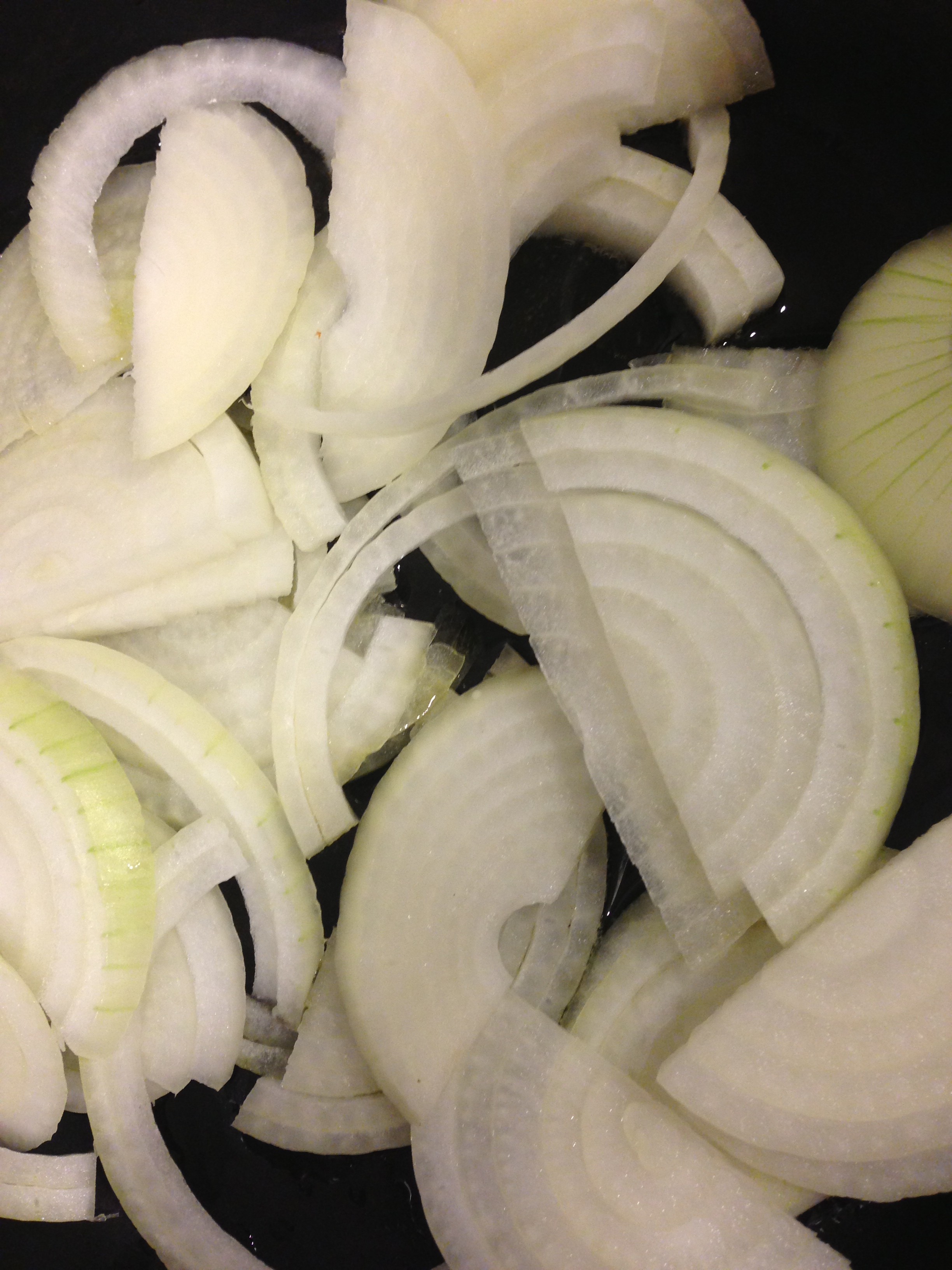
Onions swell beneath the dirt. Onions to fry in olive oil for the gratin.

onions raw

Creativity also grows underground. Say I have an idea for a new story. An idea about the way a certain neighborhood looks in a New York of a different age. A thought about a character the other characters call simply the Turk. A whaleboat loaded with cabbages. Ideas percolate under the surface and peep up occasionally. You’d better write them down in a notebook or they’ll descend back down again.

Layer the potatoes in a casserole dish. This gratin is simple. Place the rounds, spoon the onions over and then the shredded gruyere. One, two, three layers. Extra cheese on top (no anxiety about its cost or its cholesterol!).

Give anyone deserving a shred.

oliver cheese

Take a break from proofreading your galleys. Pour a pint of cream over the layers. A pinch of salt, a few grinds of pepper.

gratin

Crank the oven to 425 degrees. It’s hot in here, isn’t it? The rest of the ten pounds of  potatoes, homely and crumbly, await their cold bath. They’re dug up now, won’t ever go back. Anxiety, creativity, things to bring into the light of day. It’s their turn in the sun.

potatoes basket

4 Comments

Filed under Cooking, Culture, Dogs, Fiction, Home, Jean Zimmerman, Nature, Publishing, Writers, Writing

The Middle of the Donut

There are certain things that make it a good day in the Midwest, in Wausau. A stop at Kreger’s.

kregers


Best donuts hands down.

donuts


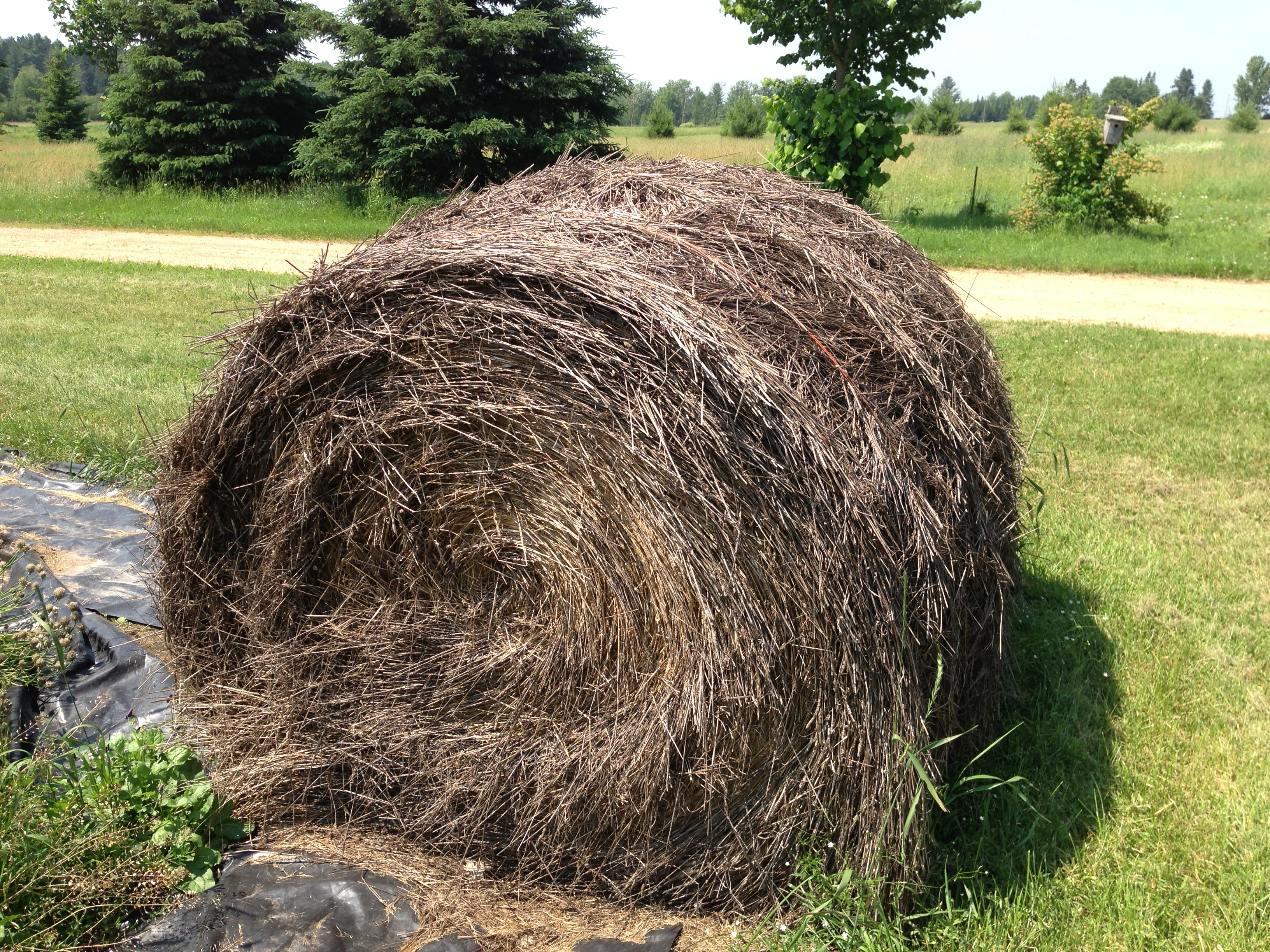
A stop at the farm. Hay for mulching the tomatoes.

hay bale


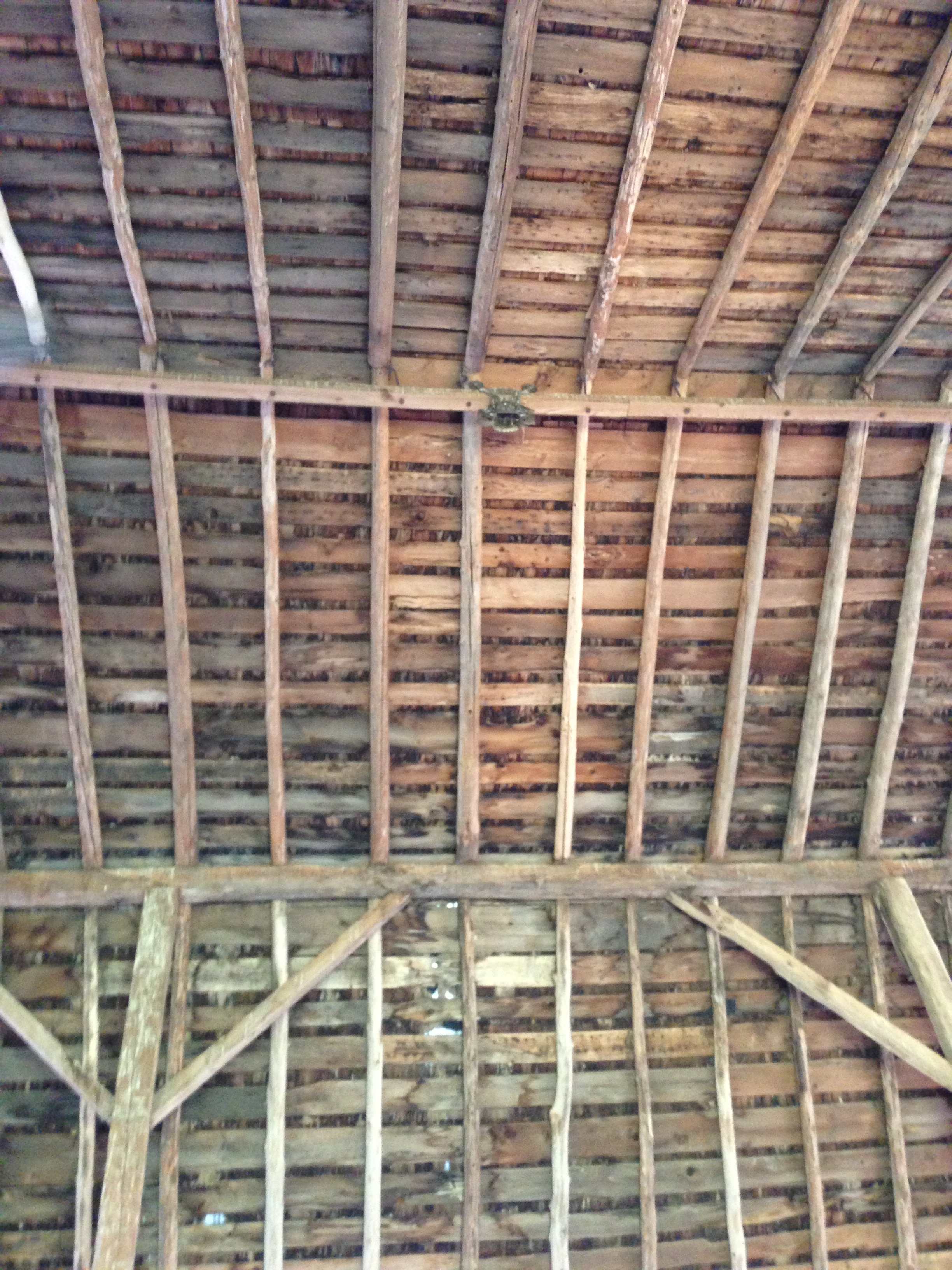
A big old barn with towering rafters.

barn interior


A big old solemn dog.

farquar


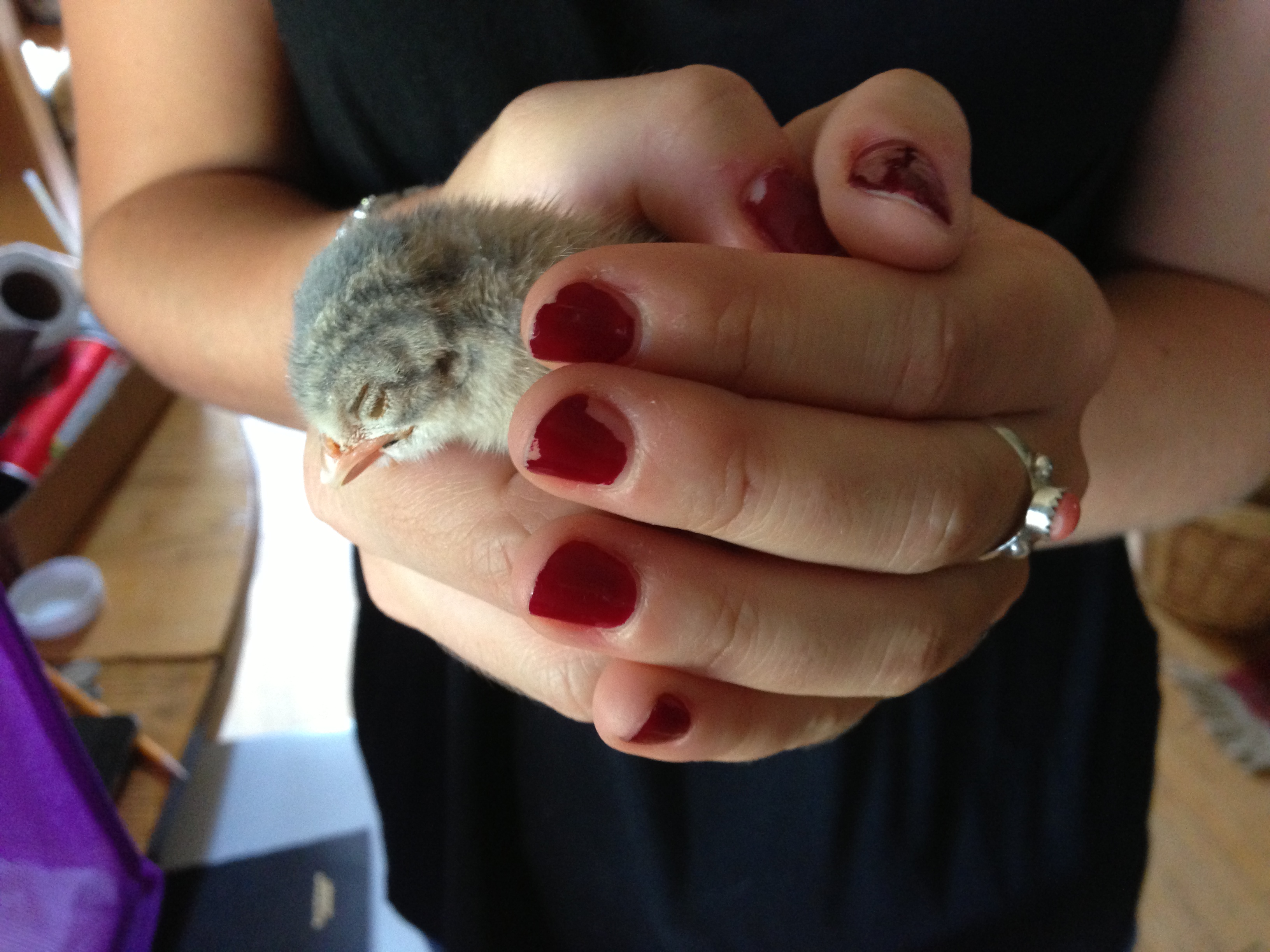
A guinea hen chick that needs special care.

chick


The horse with the velvety schnozz, always wanting an apple, wanting an apple, wanting an apple.

horsey


That apple will have to wait ’til next year, ma’m. New York is beckoning.

horse eye

2 Comments

Filed under Culture, Dogs, Home, Jean Zimmerman, Nature

Float Upstream

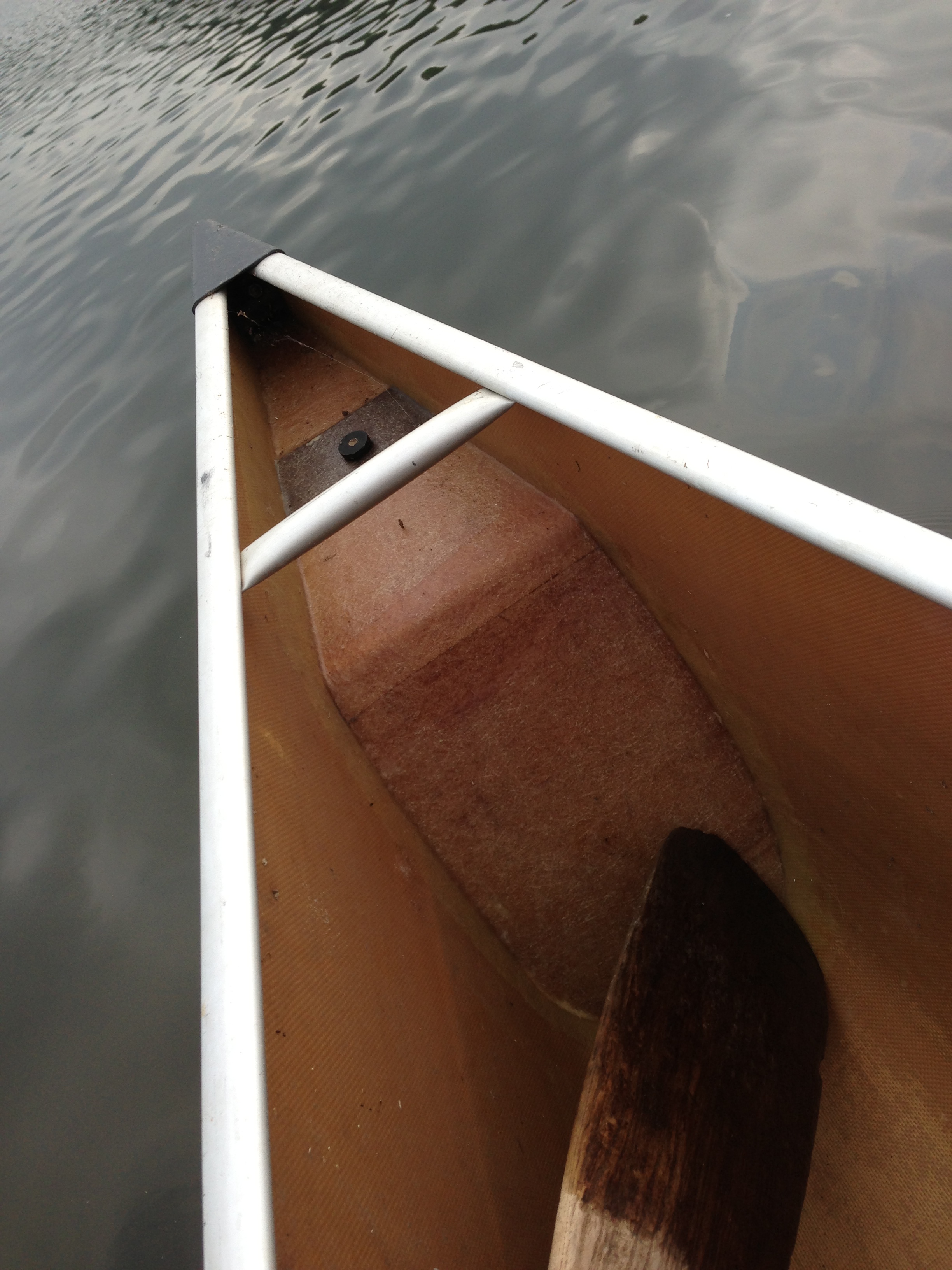
We take the canoe upriver.

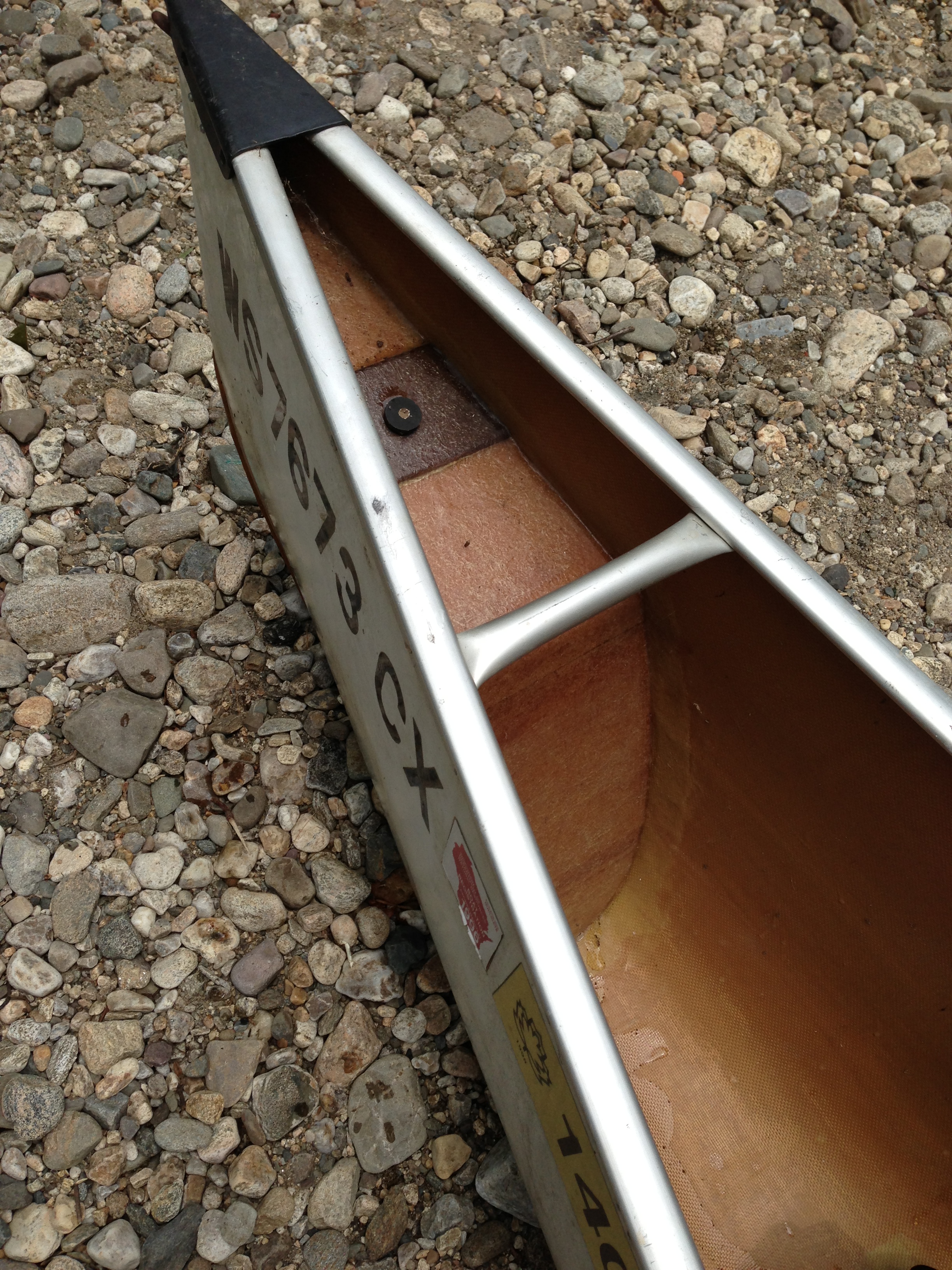
canoe bow

Not just any river. The Croton River.

Head upstream from its junction with the Hudson, next to a railroad trestle.

croton river

To our north is the venerable Van Cortlandt homestead, nearly hidden by trees. The family came to New Amsterdam in 1638. They lived on Stone Street – so called because it was the first paved thoroughfare in the settlement – where Oloff ran a very profitable brewery. Eighty-six thousand acres of land here on the Croton River were granted his son Stephanus by the Crown in 1697.

Dip your paddle. No, really lean into it. The tide and current are against us here.

Over our heads flies a cormorant, sleek and fast. A fish flops. A kingfisher appears on a limb, then another in flight.

Around the bend, a heartstopping moment with a wading blue heron. It bends down its serpentine neck and jabs, then gulps, gulps, gulps. It spots us. And barrels away ten feet from us, croaking all the way downriver. (All About Birds gives the precise acoustics.)

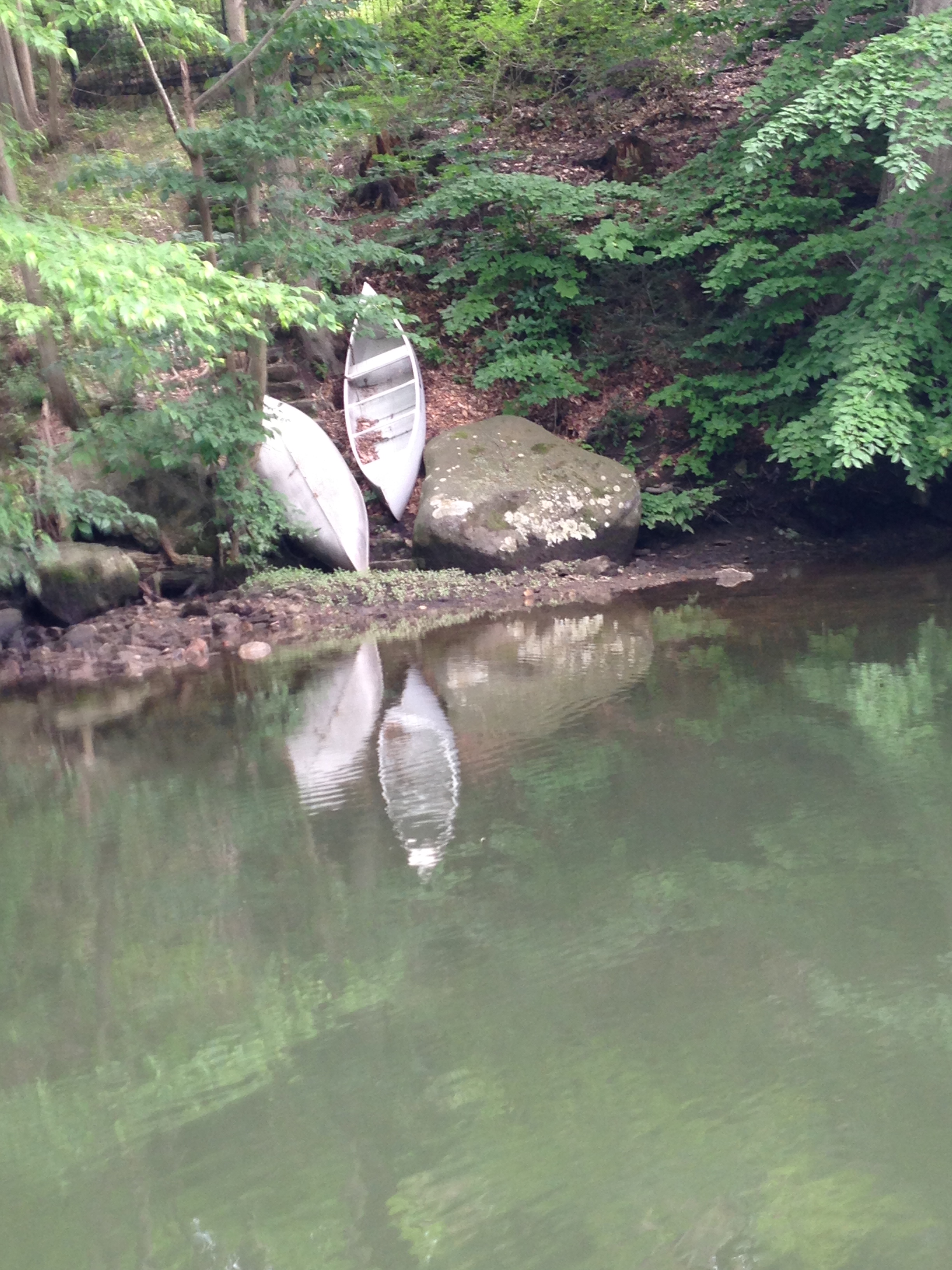
Along the way, houses perch atop steep cliffs and water craft wait on shore.

canoes

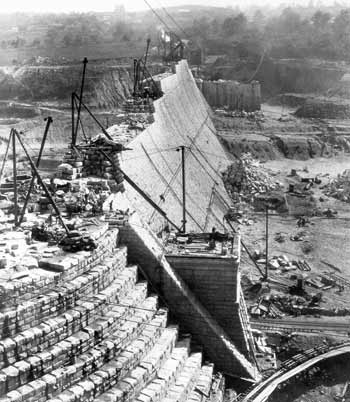
The Croton River travels through the Croton Reservoir, which has supplied water to New York City for a century, so technically it should be clean enough to drink, but the feathering algae under your paddles doesn’t look too appetizing. The Croton Dam was an engineering marvel. For 14 years 1,500 men plied over 500 pieces of heavy machinery, using 745,000 barrels of cement, 100,000 tons of coal and a gigantic amount of locally quarried stone to build what was called the most massive hand-hewn masonry structure since the pyramids.

CrotonDam

I wonder how fast this water flowed before the Dam.

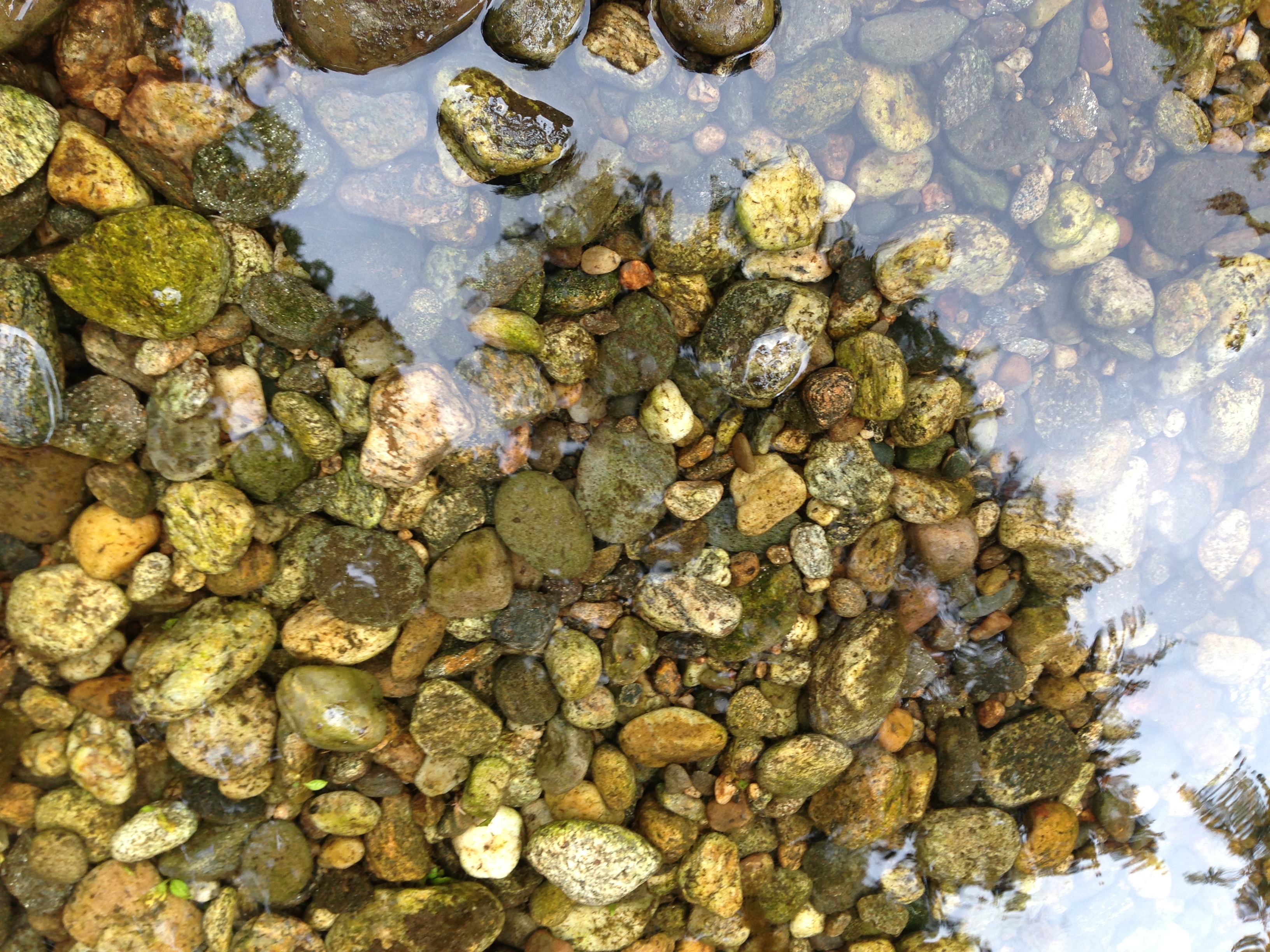
A small rapids, but too much for the canoe to manage, so we portage across the big slippery stones.

croton river stones

I bushwack through the shore’s thorns and poison ivy. At the climb-down point, plenty of coyote scat.

bushwack

Up in the trees, a hawk lights on a bare limb. Light head, light breast. Without binocs its identity remains a mystery.

Then a beach, unpeopled, a desert island.

canoe:stones

The water is perfectly cold.

gil swims

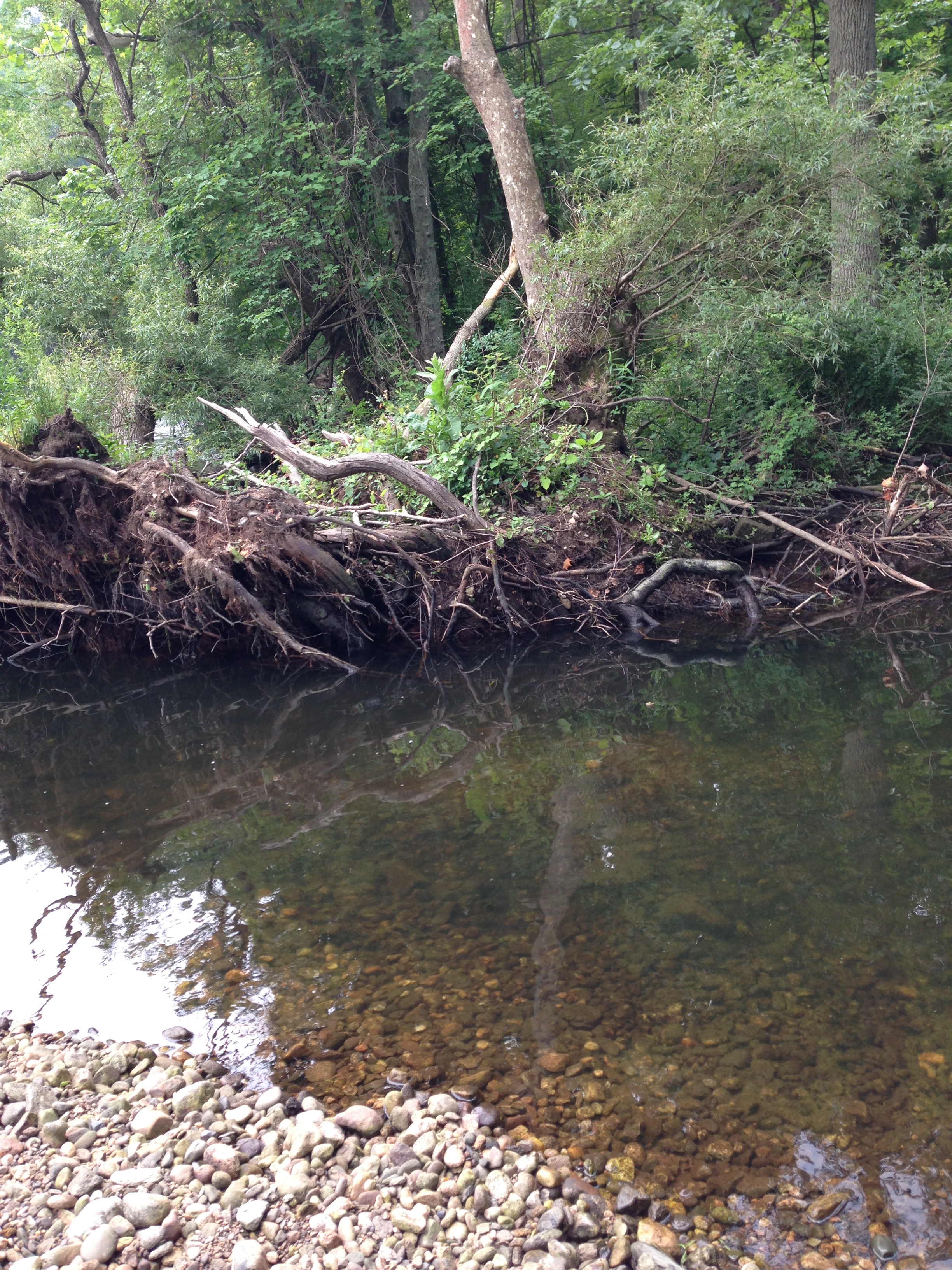
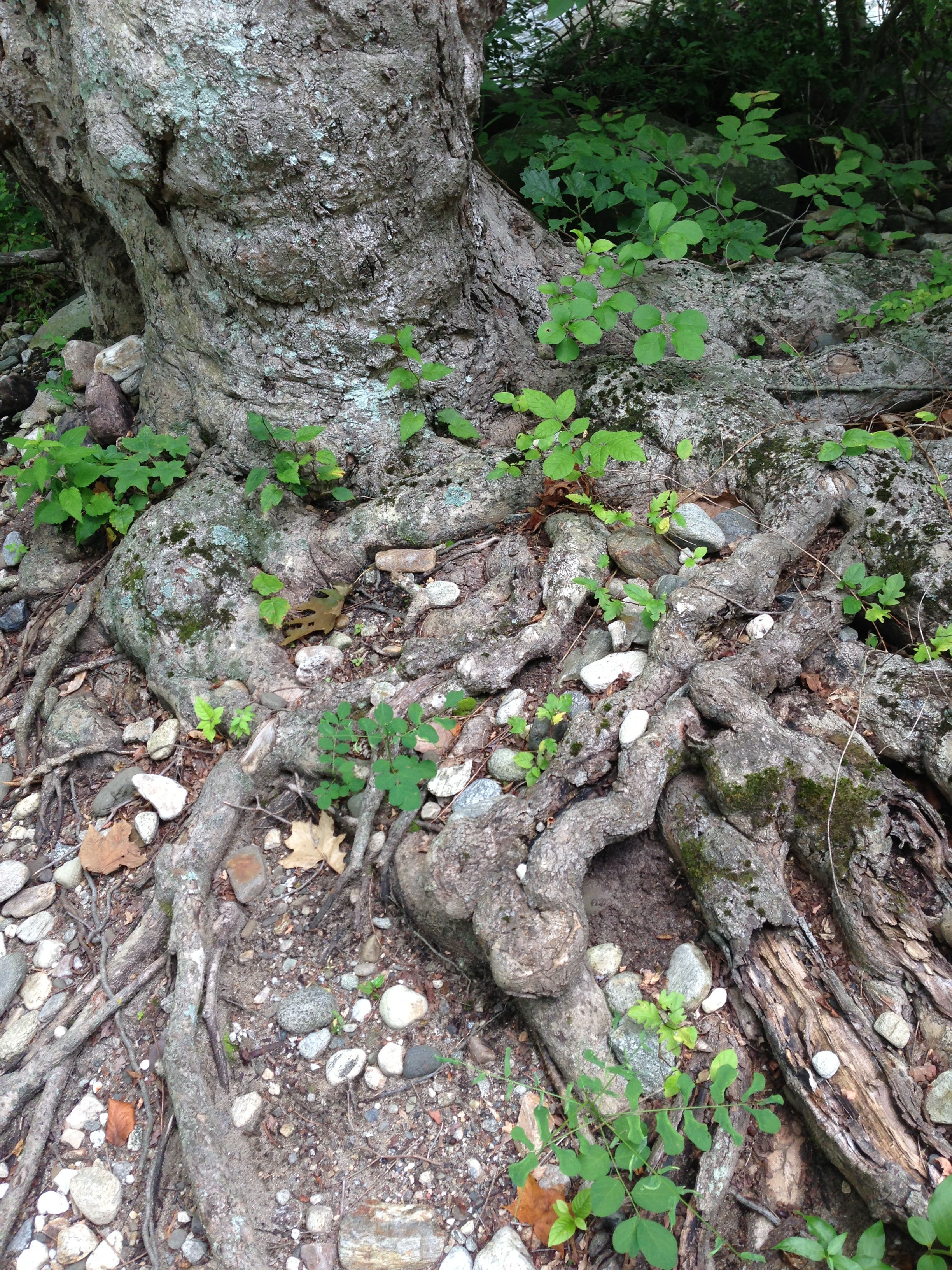
A druid tree displays its magical tangle of roots.

druid roots

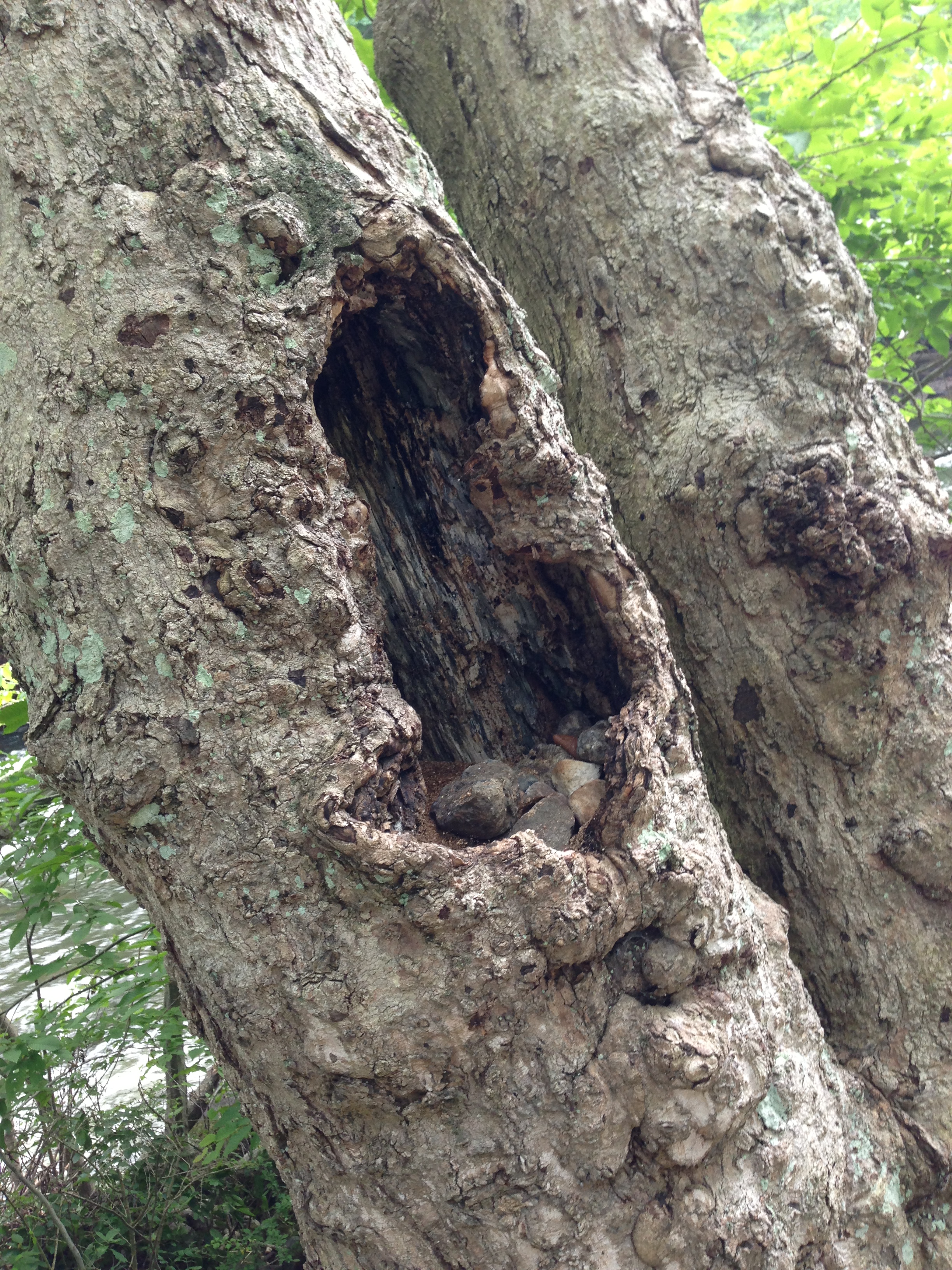
A home for critters over many years.

druid tree

It’s an old tree. Probably was a sprout during the American Revolution, when there was no way to cross this river aside from the ferry. No plastic kayaks, recreational canoes. It was closely guarded by the Westchester partisans, who held the land north of the river, while south of the water was the hotly contested “neutral zone.”

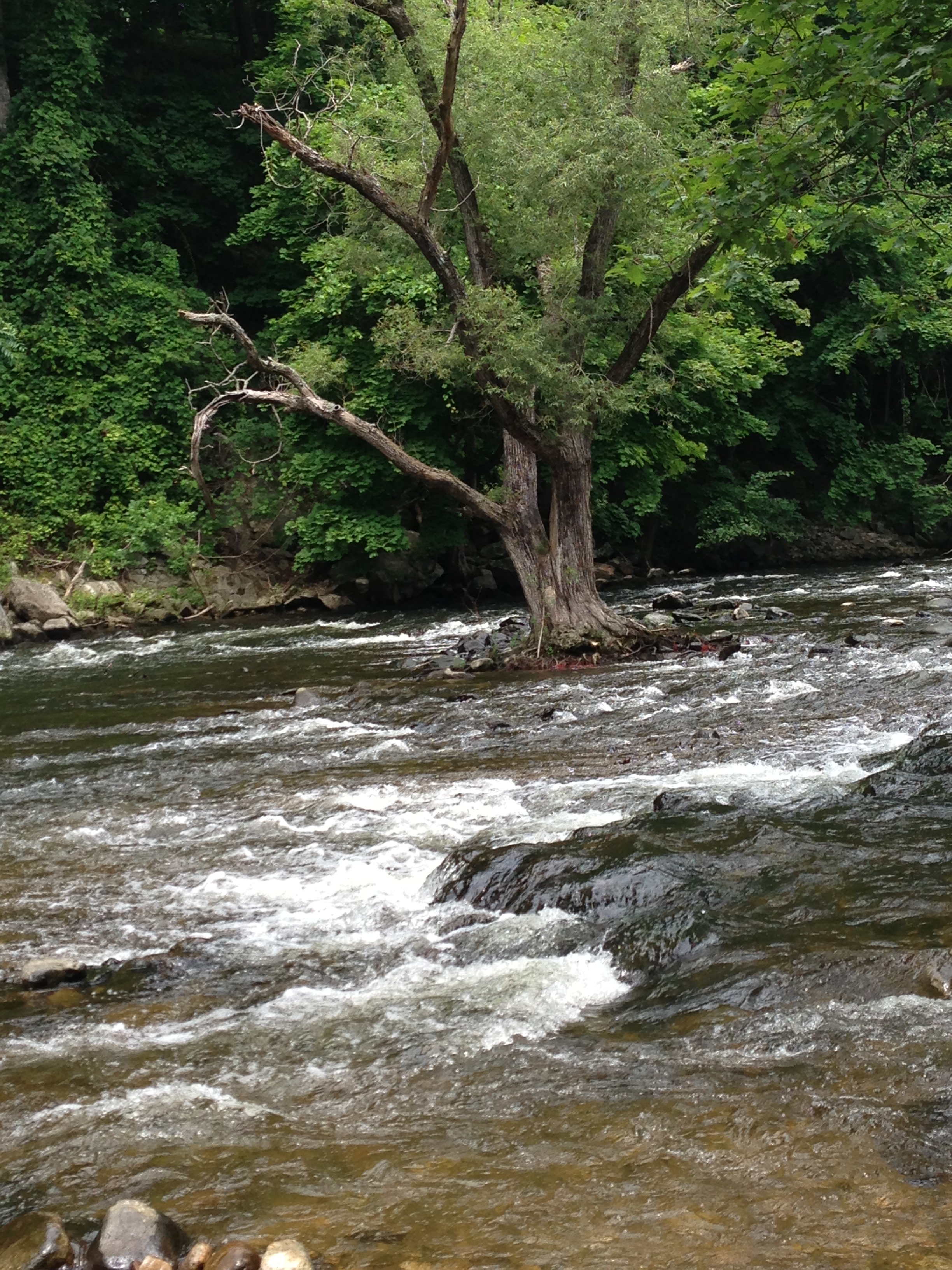
A busy set of rapids guides us back.

tree:water

I think I can’t do it. It would be so easy to tumble over, take a cold bath among the slick rocks. But I take a deep breath. Dip my paddle. Go.

2 Comments

Filed under Culture, History, Jean Zimmerman, Nature

At the End of Their Bloom

The end of the rose season and the end of the day. Glinting sweeps of sun, still, but deep shadows starting to fall across the lawn.

You take what you can get.

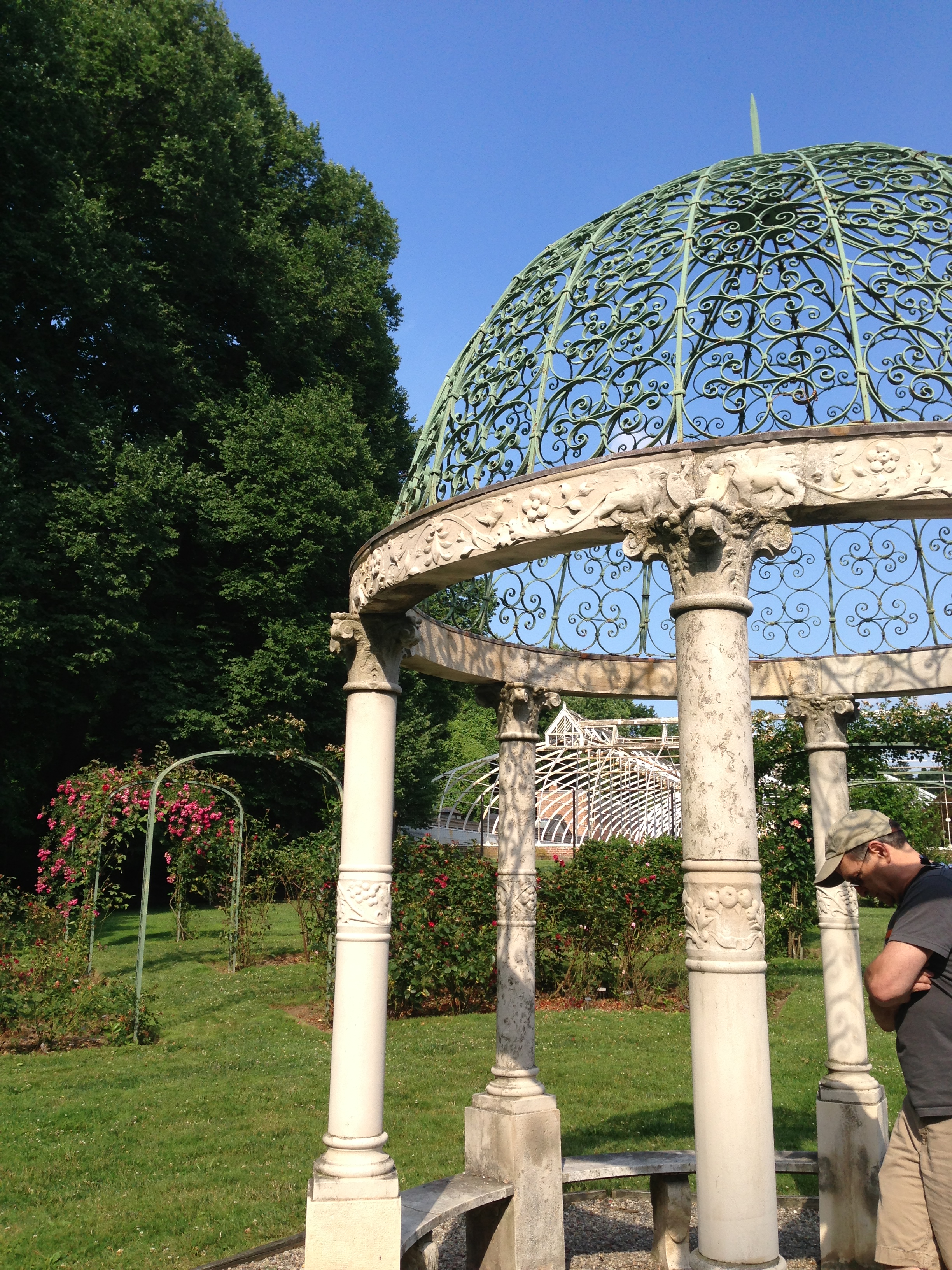
Q yellowThe roses that remain are as lovely as the roses that came before them. At Lyndhurst, the historic property in Tarrytown that used to be the domain of robber-baron Jay Gould, that’s a lot of roses. There are 400 varieties arranged in 24 crescent shaped beds in three circles, a color wheel that moves around a central gazebo from white to yellow to red to pink and back to white.

gazebo


The colors are spectacular at the flowers’ height. Not so much now, late in the season, when you see more bare stalks than blooms. But there is something about loving the last rose. Mr. Lincoln, say, bred by Swim & Weeks in the United States in 1964. The fragrance is massive. I want to wear it on my 60th birthday — five years away, but good to plan.

mr. lincoln

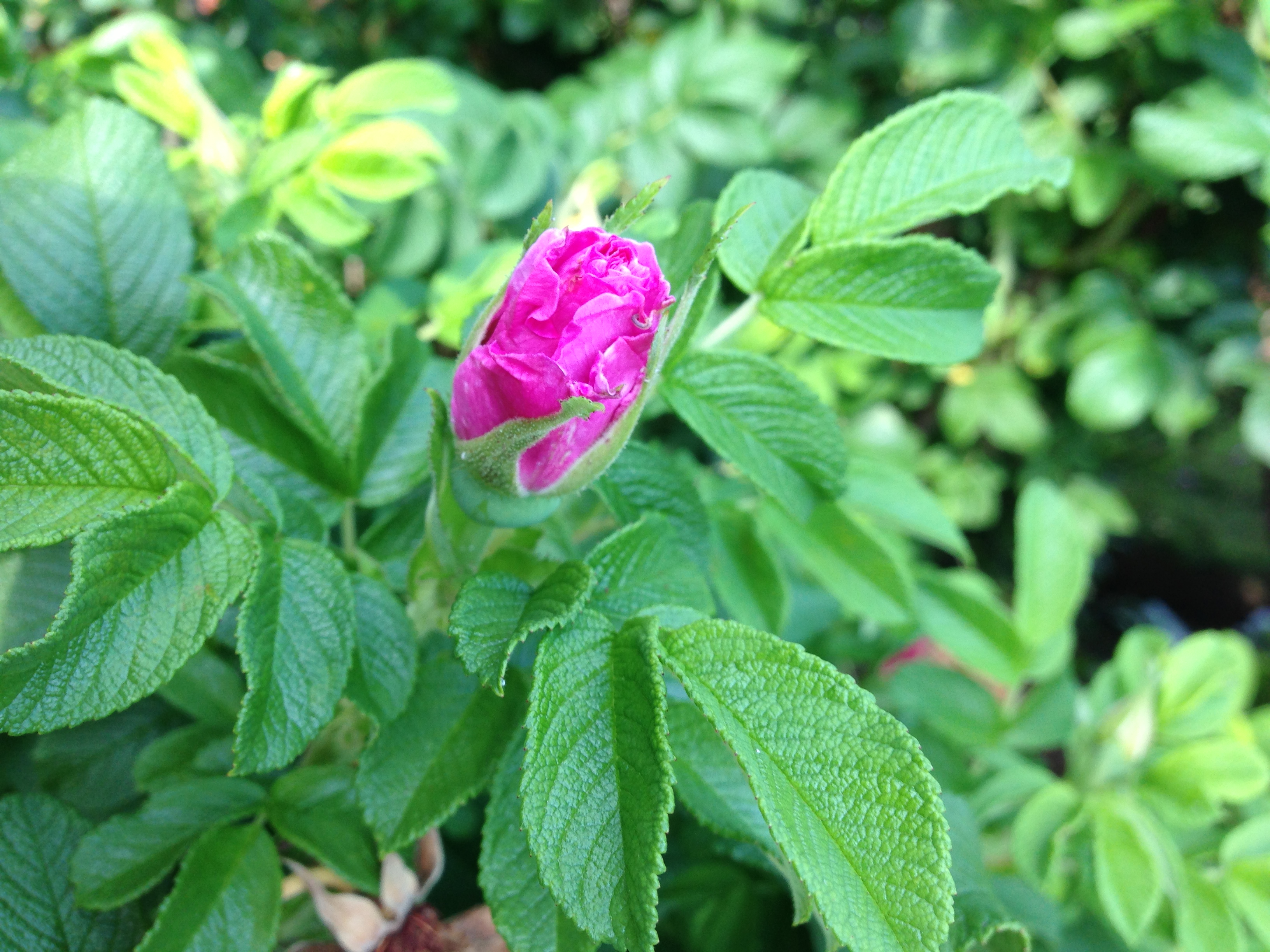
There are only a few buds left on Belle Poitevine, but I love knowing that this hybrid rugosa originated with Francois-Georges-Leon Bruant in 1894. The Swedish Rose Society recommends the plant for northern Sweden.

belle poitevine


Gene Boener, ragged as it is so late in June, reminds me of a rose that had escaped someone’s garden and found its way to my house when I lived in an apple orchard years ago, with the sweetest, spiciest perfume imaginable.

gene boenerThis profusion of flowers is perched on a hill that slopes down to the Hudson River. Jay Gould’s Shangri-La. “I do not believe that since man was in the habit of living on this planet anyone who has ever lived possessed of the impudence of Jay Gould,” said nineteenth-century radical Robert Ingersoll.

lynhurst view


Even Gould, who bragged that “I can hire one half of the working class to kill the other half,” couldn’t keep roses alive beyond their season. His daughter founded this garden, putting in old garden roses like Red Dorothy Perkins, bred in 1908, to climb one of the 24 trellises.

dorothy perkins trellisDorothy unfortunately has no scent. And what is a rose without her scent? A later rose is John S. Armstrong, a grandiflora bred by Herbert C. Swim in 1961.

john S. Armstrong

By the time John S. Armstrong got a place in the loam, the rose garden’s upkeep had been passed to Anna Gould, Duchess de Talleyrand-Perigord, in 1938, and then to the Garden Club of Irvington.

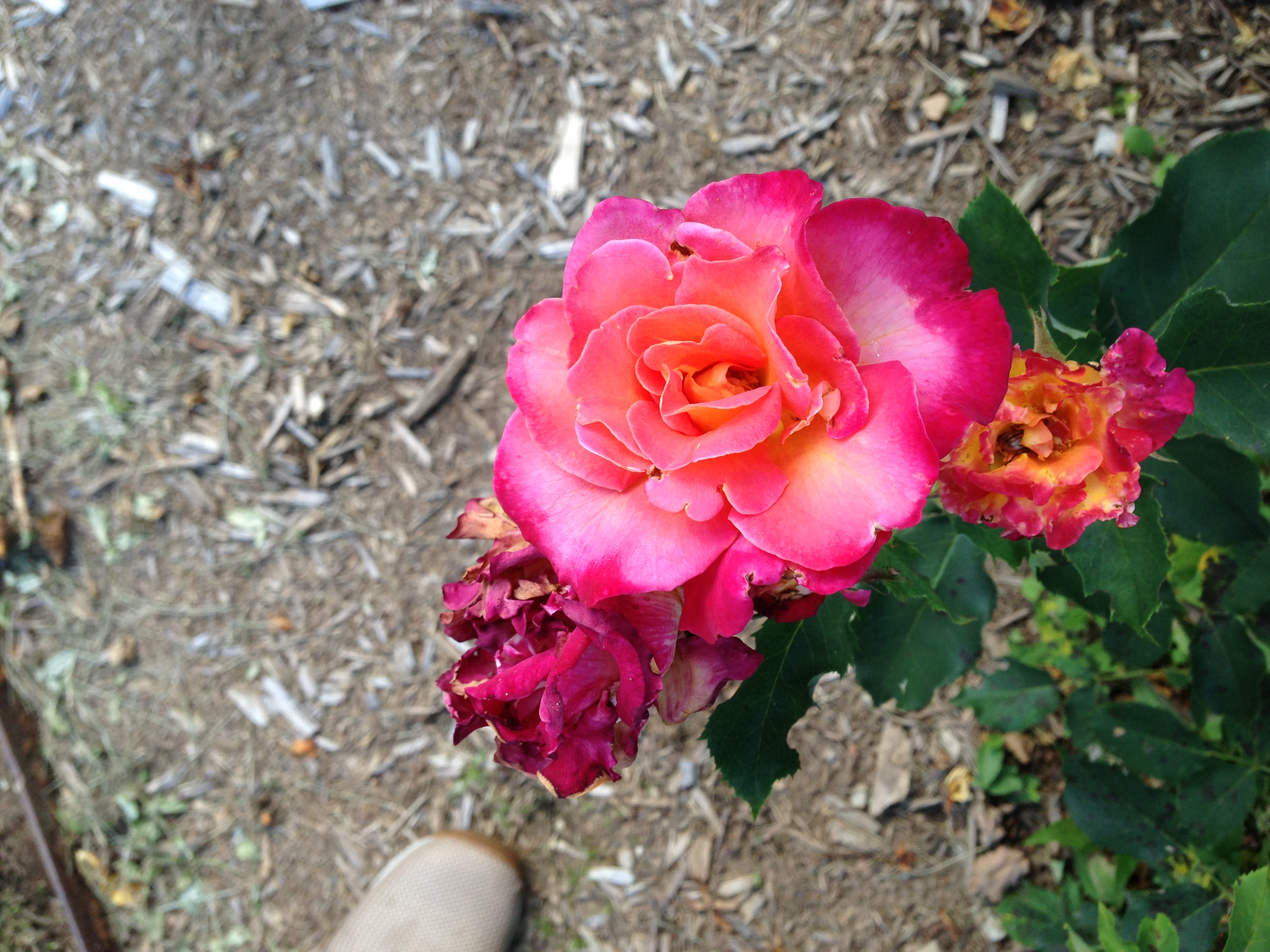
A robin hops briskly through the clover and shade moves over half the beds. One fuchsia bloom called Chrysler Imperial, a hybrid tea, has the vague aroma of leather. When you put your face down to smell, watch out that a beetle doesn’t mistake your nose for a flower.

newdawn


The roses are flaming out.

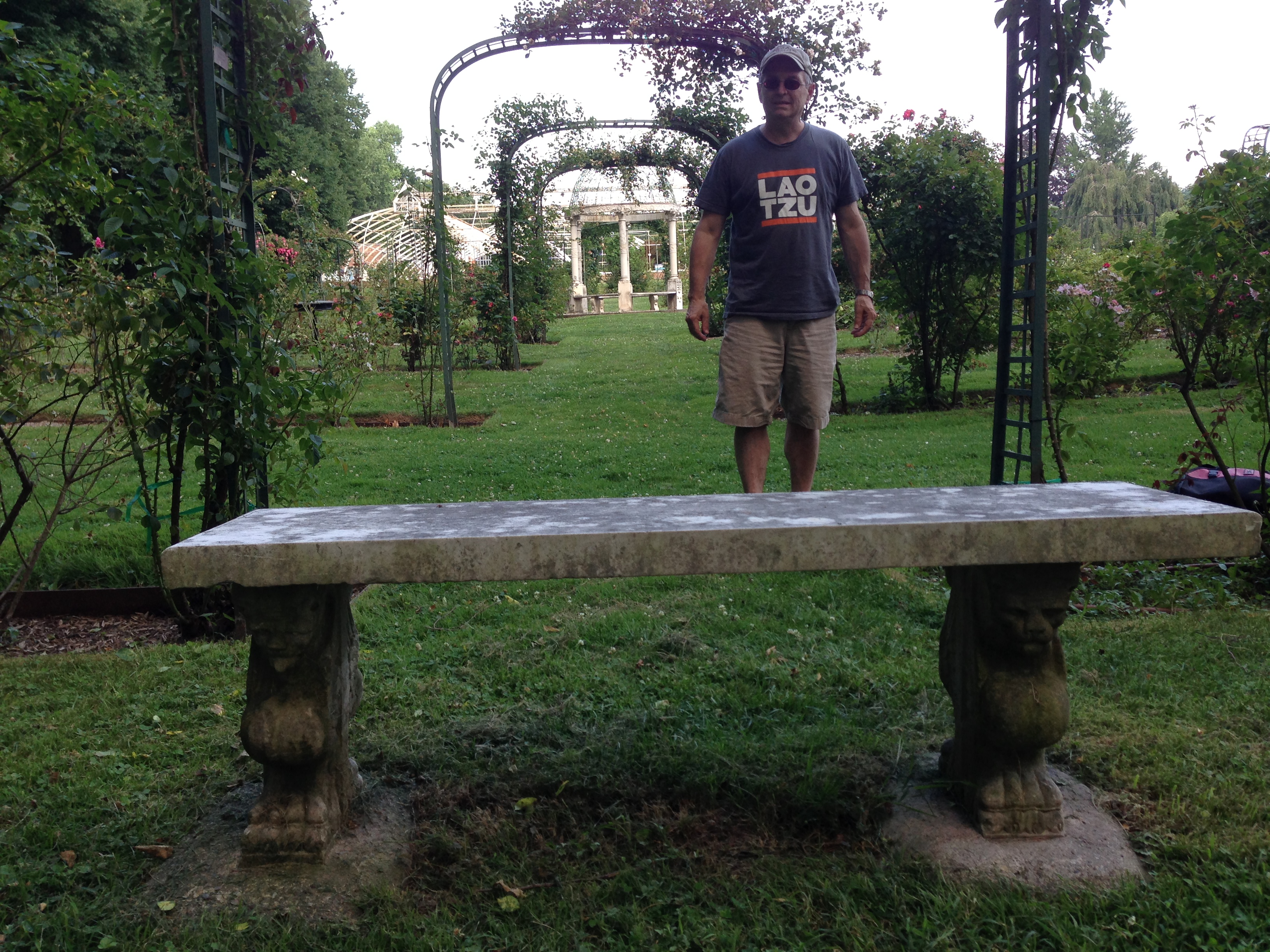
granadaIt’s time to go home. Duck under the trellis covered with  Kathleen Hybrid Musk, bred in the U.K. in 1922 by Rev. Joseph Hardwick Pemberton. A cross between Daphne, 1912, and Perle des Jardins. Gil’s Lao Tzu tee shirt was a gift from me.

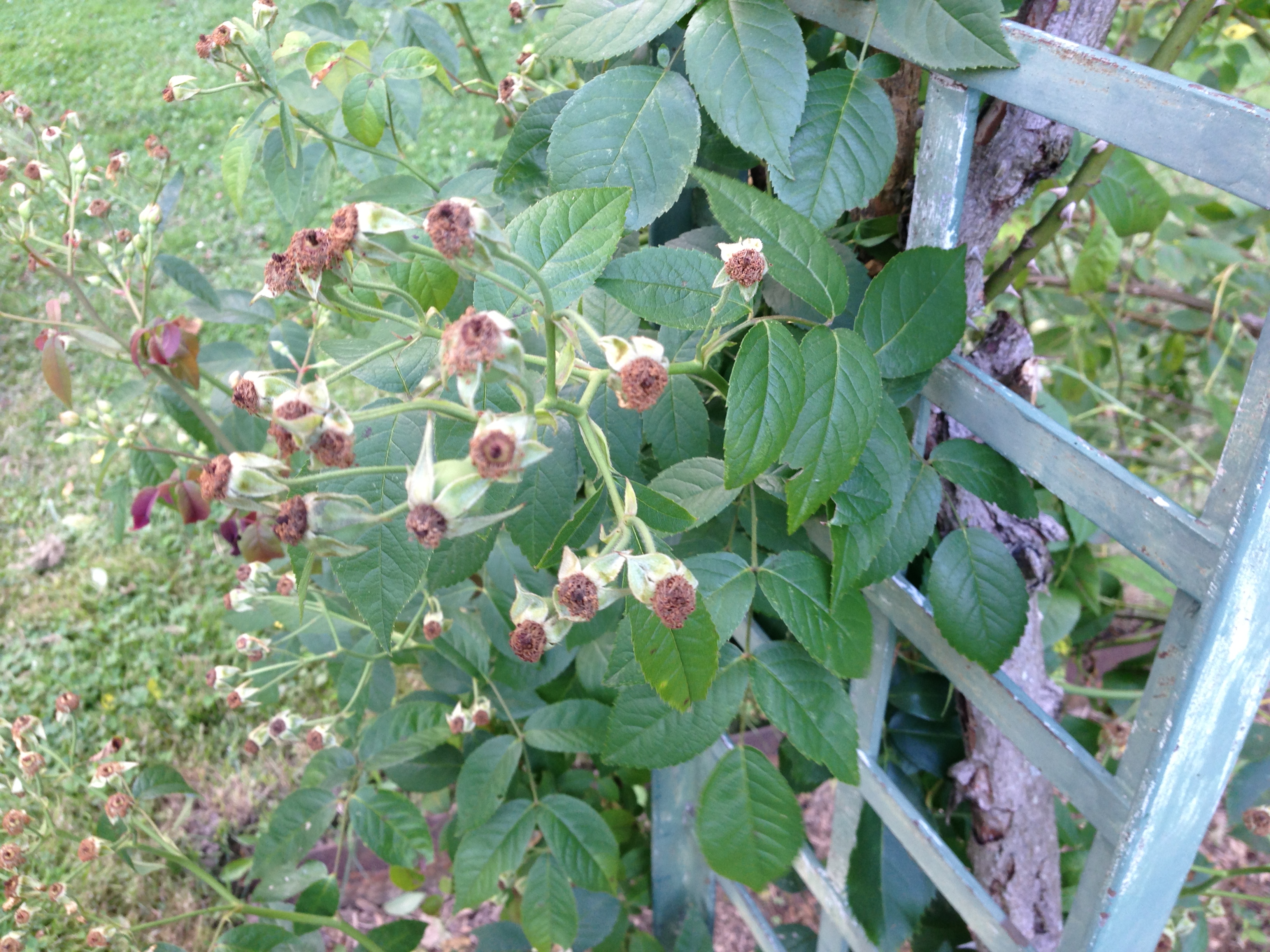
Kathleen hybrid muskNot much left on those stalks climbing the old wooden trellis. But if you love roses, you’ve got to love them when they’re naked aside from their sepals.

kathleenOne of Lao Tzu’s greatest hits, from the Tao Te Ching:

Let there be a small country with few people,

Who, even having much machinery, don’t use it.

Who take death seriously and don’t wander far away.

Even though they have boats and carriages, they never ride in them.

Having armor and weapons, they never go to war.

Let them return to measurement by tying knots in rope.

Sweeten their food, give them nice clothes, a peaceful abode and a relaxed life.

Even though the next country can be seen and its dogs and chickens can be heard,

The people will grow old and die without visiting each others land.


1 Comment

Filed under Culture, History, Home, Jean Zimmerman, Nature

The Handsomest Dog in the World

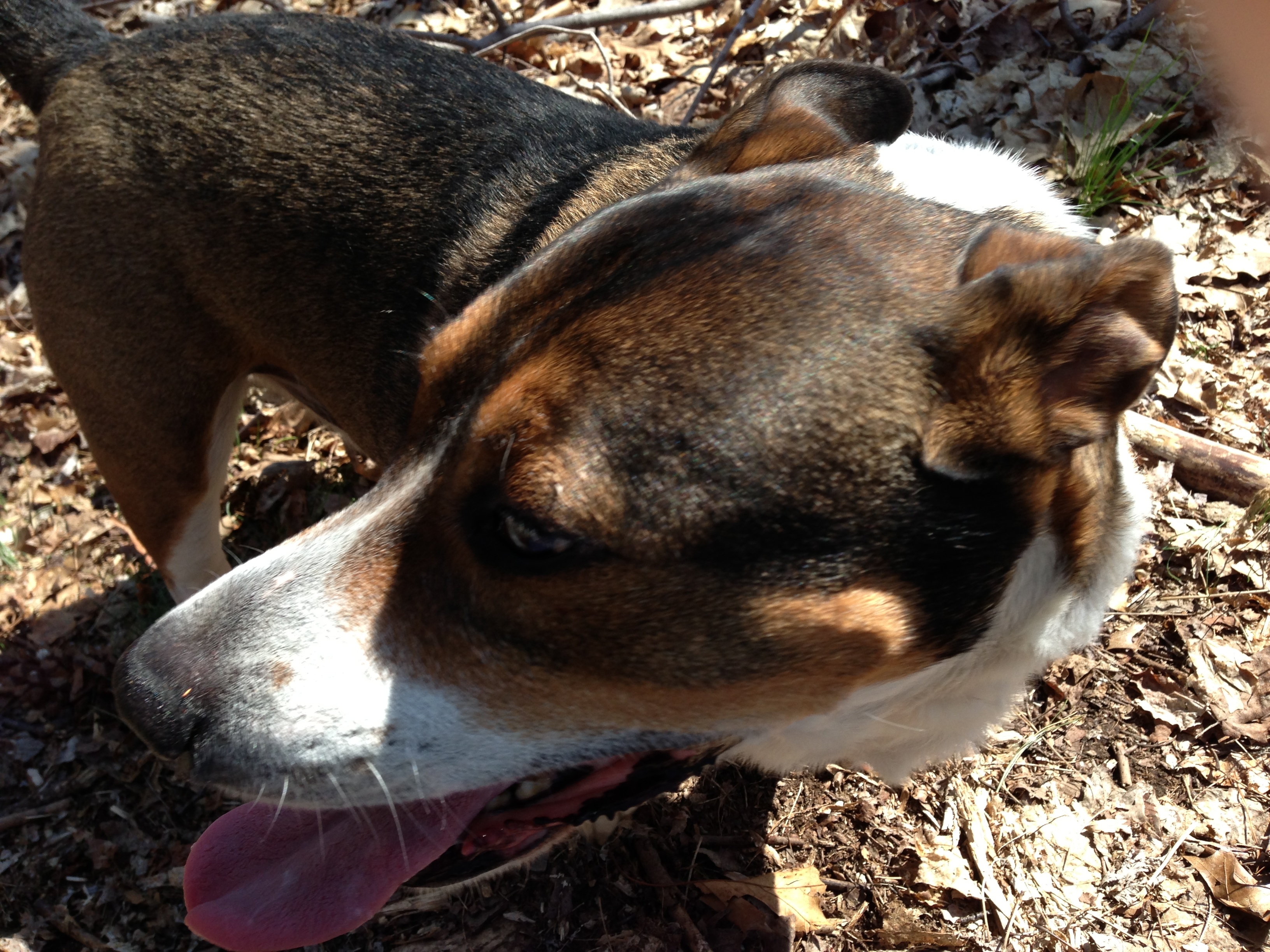
I write frequently about my dog Oliver.

Image

He is loyal. Intelligent. A good eater (lately into ripe strawberries from my garden). Brave. Well, loud and aggressive, anyway, and I think  he’s secretly a bit of a chicken.

We got Oliver as a baby from a dog rescue family that was fostering his ma, a seemingly unadoptable, classic yellow cur. Father: unknown. In a White Plains kitchen squirmed eight chubby balls of fur, attached to eight wagging stumps of tails. It was January. We had run out of time to find adolescent Maud a puppy birthday present. Ollie was it. He might be a beagle, from his coloring. Who knew?

Image

We found everything he did delicious even though he smelled bad and was so snaggletoothed he needed a lot of dental work. His lip was partly cleft. He waddled. Most of all he didn’t play well with others. All he did in obedience class was bark at his classmates. He once found a warren of rabbits and killed them all. His genetic origins, it seemed clear, spanned the basset hound and the pit bull.

Image

Still. Ferocious as he is, he can be the picture of docility. Smiles over the shoes he brings when we come in the door, earning his nickname the Jolly Rancher. He can be mellow, even soulful.

Image

Loving.

Image

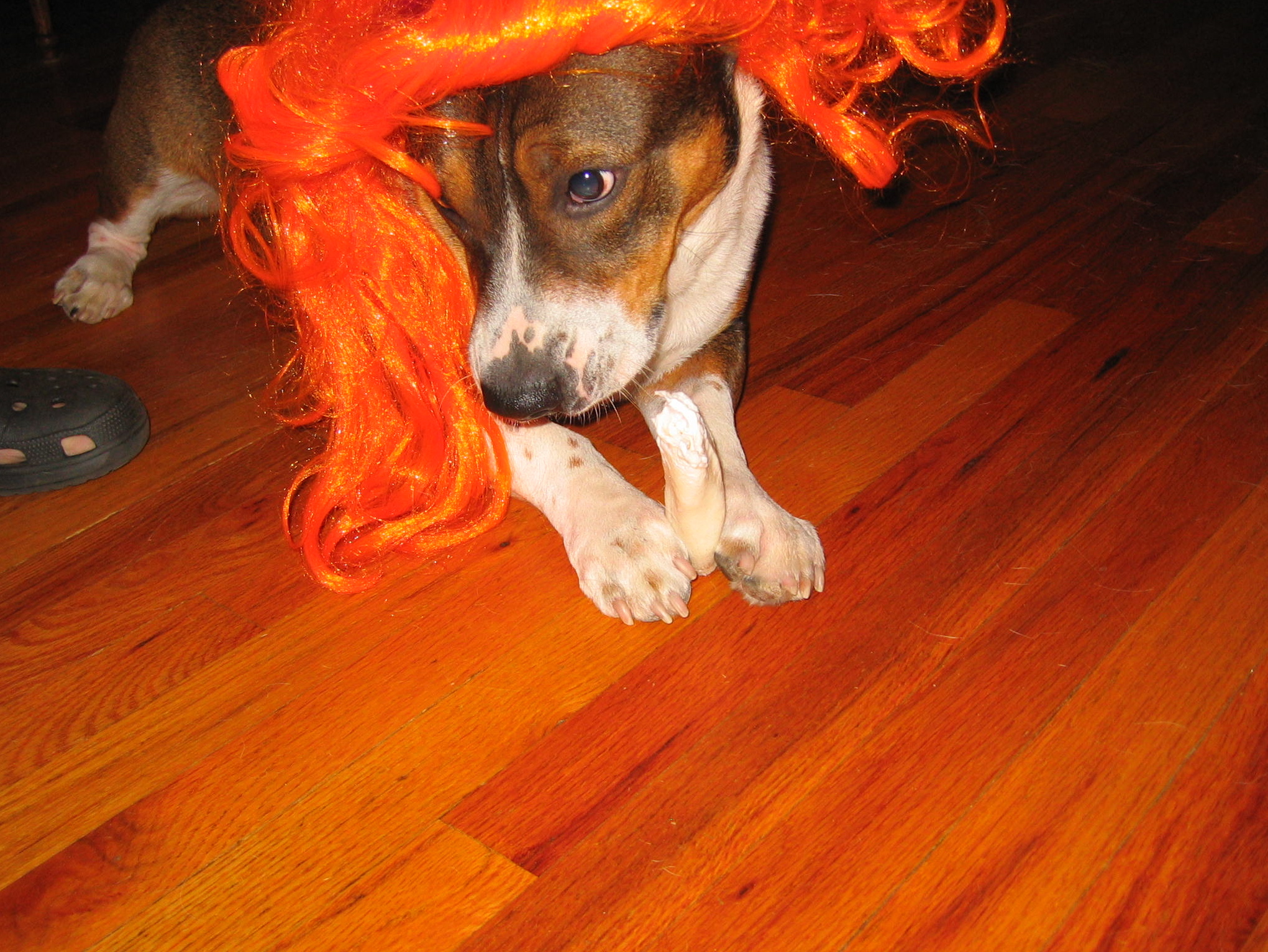
He’s was a flaming redhead for Halloween when he was about a year old.

Image

Clownface, I call him.

Image

Whatever else he is, he’s unique.

And so it is that I became shocked and miffed to see this year’s Ugliest Dog in the World paraded across a stage in California and then making the talk show circuit in New York. The contest has taken place for 25 years, and the Chinese Crested breed, which is hairless, usually triumphs. Not this time.

Image

Walle came from Chico, and they were calling him a cross between a basset hound and a boxer. One judge said that Walle looked like “he’s been Photoshopped with pieces from various dogs and maybe a few other animals.”

Image

Walle didn’t look like any other dog, everyone said, with his pudgy gait, chunky paws, large head, lowrise posture, oversize nose.

Image

Well, you tell me. Is Walle unique? Or did we finally locate one of Oliver’s vanished siblings? More to the point, is the dog who won the laurels ugly?

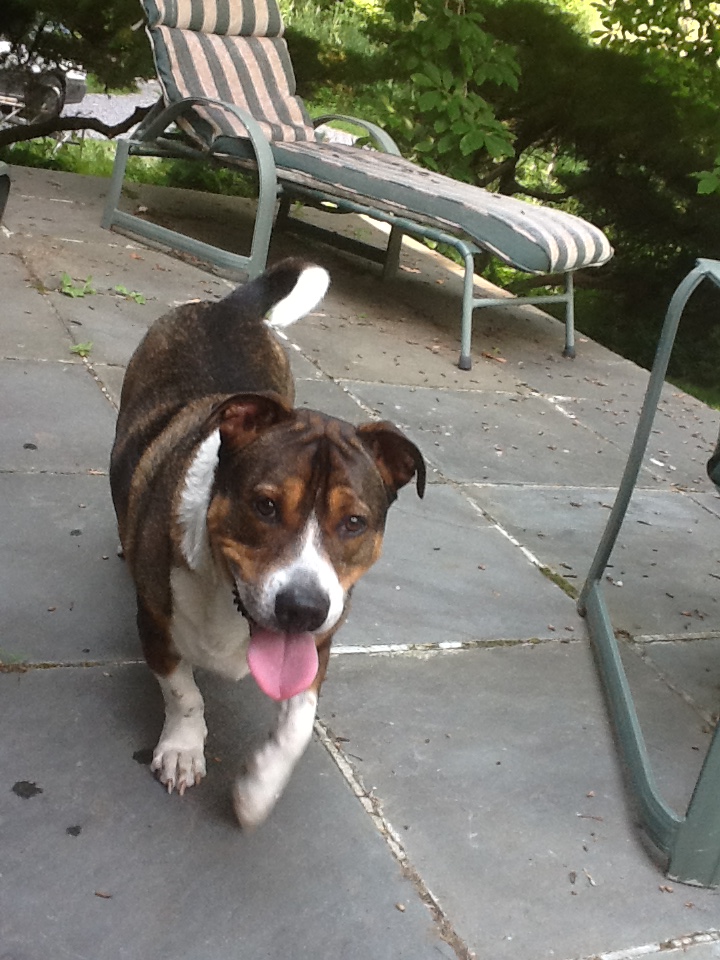
Because Oliver is beautiful.

Image

10 Comments

Filed under Culture, Dogs, Home, Jean Zimmerman, Nature

A Crash, Then Silence

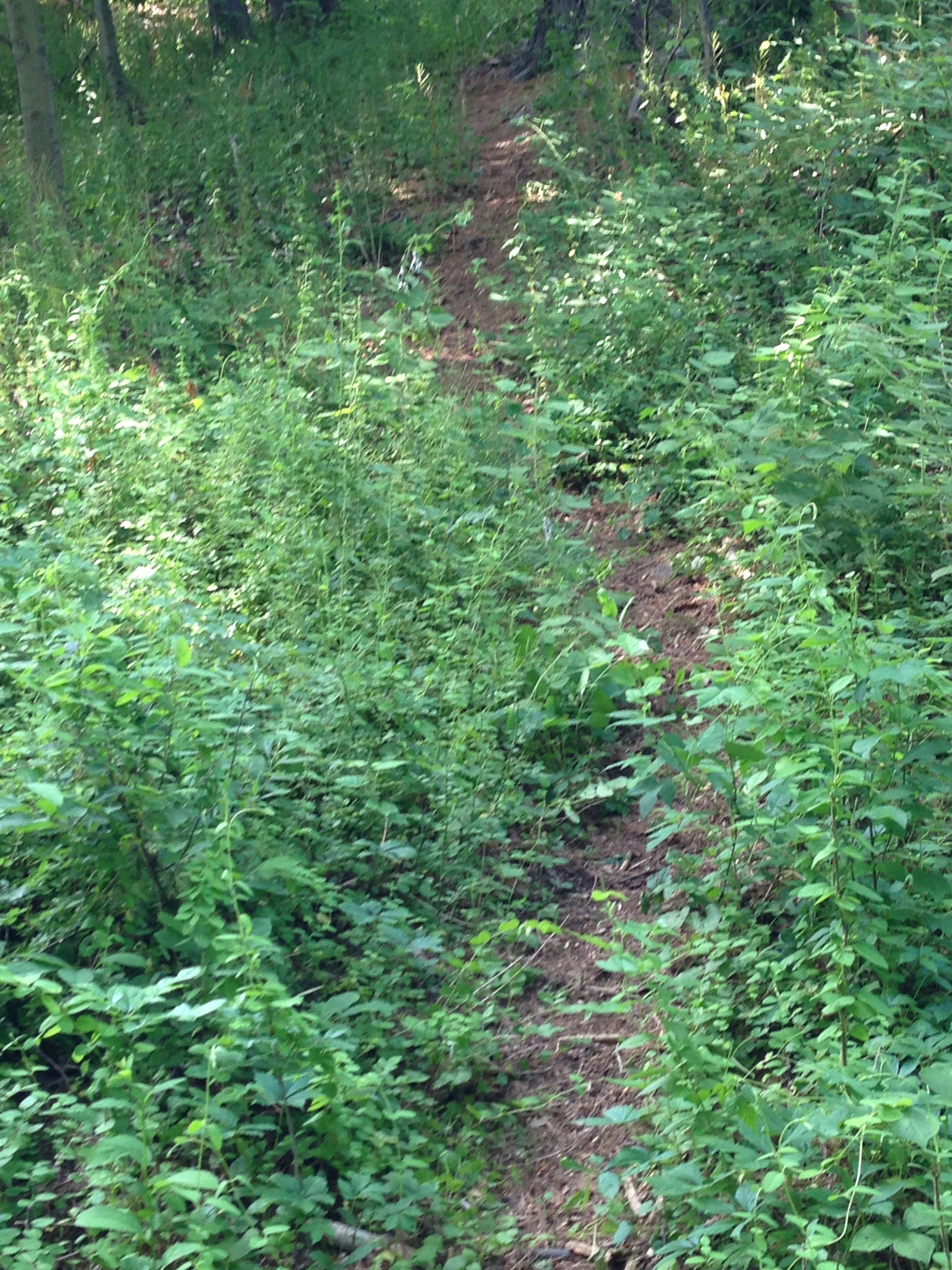
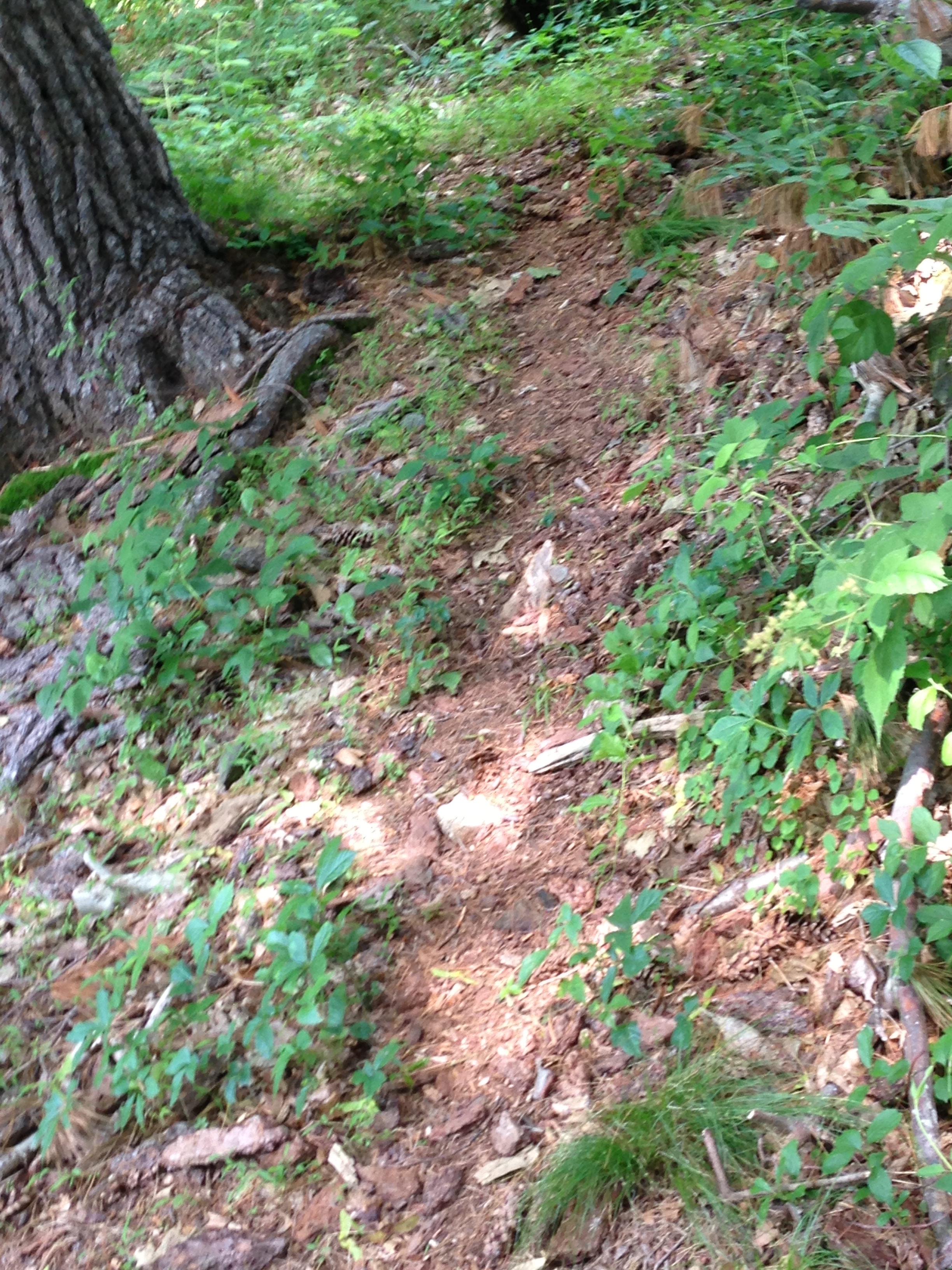
Last fall I created a trail.

path 1

It started at the curve of the Cabin’s driveway and led uphill to a ridge, winding and turning past trees along the way.

path 2

A beautiful mat of bark I’d step across on my way up suggested the drama of a tree’s life cycle. It was as if the bare, dead red pine had shaken the pieces off all at once in a kind of frenzy.

fallen bark

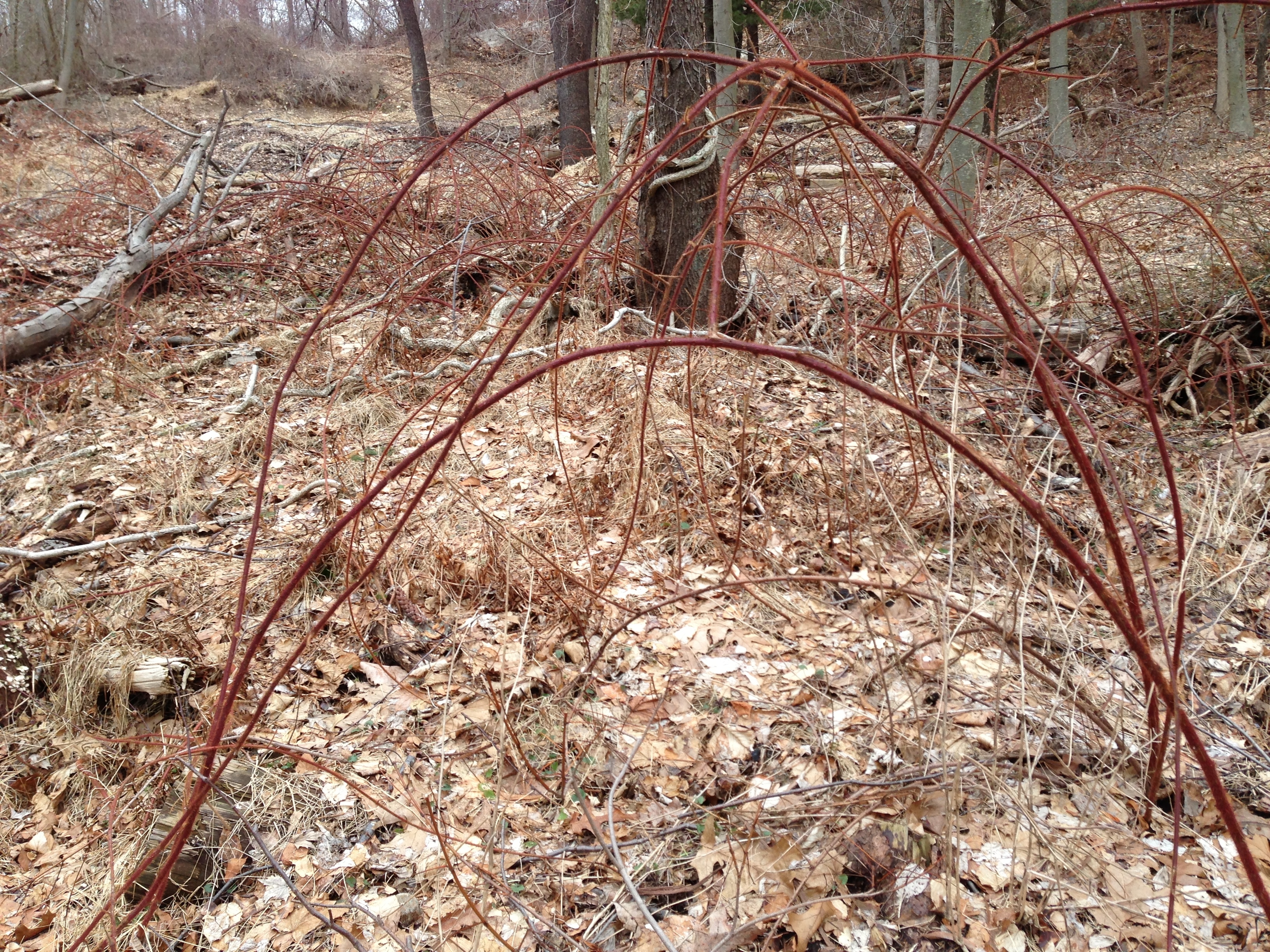
When I brought Oliver for walks in the clearing beyond the ridge, it always stuck me as a threshold to a fairytale world, parklike, denuded of underbrush, just a beautiful blanket of brown leaves amid tall old trees, with some tenacious raspberry canes. Oliver gives chase to deer here, animals invisible to our eyes.

red canes in clearing

Today my access to that fairytale world was denied.

Gil told me that while I was out this morning and he was sitting at his desk, he heard a crash “that went on for five minutes.” It was sequential, he said, an explosion, then a crack, then another explosion.

A tree fell in the forest, and he heard it.

gil uphill

When we went up to investigate – amid swarms of excited mosquitos – we found half a dozen downed trees, all in a tangle.

crashed trees

And all across my path.

Gil’s theory: “the cherry fell on top of the maple. Now the maple’s all bent over, strung like a bow.” I could see the fresh split in its bark.

cracked tree

Oliver was exuberant, racing around, using the fallen limbs as a steeplechase. “The poetical character…lives in gusto,” said Keats. The dog just wouldn’t stand still.

deer chaser

And then, coming home, at the bottom of the hill I find a phenomenon that is the opposite of loud and crashing. A painted turtle had come to lay her eggs, stretching out her strong hind legs and silently clawing up the mud beneath our grass. We saw her as we left for the trail.

All she left was a hole the size of a silver dollar. No white, jellybean eggs.

turtle hole

I wonder if she heard the trees?

5 Comments

Filed under Dogs, Home, Jean Zimmerman, Nature, Poetry, Writers

Lowdown on the High Line

New York City’s High Line park is totally overexposed. I’m going to expose it further.

walking

I walk with three menfolk from the top to the bottom of this new icon of the Manhattan landscape, stunned by the native plantings that seem to find city soil the best fertilizer in the world.

yellow flowers

I spent a day in the country looking at wildflowers and saw no profusion like this.

cone

Superflowers.

purple flowers

And a planting of bamboo, which has to be tightly constrained by a metal guard to keep it happy in its place. Kind of the opposite of Jesse, who isn’t happy unless he’s on the open seas or in some other free environment.

jess:bamboo

The High Line was  built between 1929 and 1934 from Gansevoort to 34th Streets to lift dangerous freight trains above the traffic. For years, meat, produce and dairy products were shipped to town and arrived at the third floor level of plants. That might have been a little inconvenient, but the situation previous was insupportable. In the nineteenth century, people actually called Tenth Avenue “Death Avenue” because the street-level railroad caused so many accidents. Men in an outfit called the “West Side Cowboys” were hired to ride in front of trains and wave red flags to warn traffic off.

cowboy

In 1980 the last train came through with a load of frozen turkeys. Then the rail bed deteriorated. Gil, who lived in the city then, says, “It was the high line, alright, everyone was getting high.” What grew there was what the High Line people now politely call a “self sown landscape.” In other words, weeds. Weeds, condoms, syringes.

Now there are trees, grasses and flowers, and I think even Larry, who lives on a farm surrounded by midwestern forest, is impressed.

larry

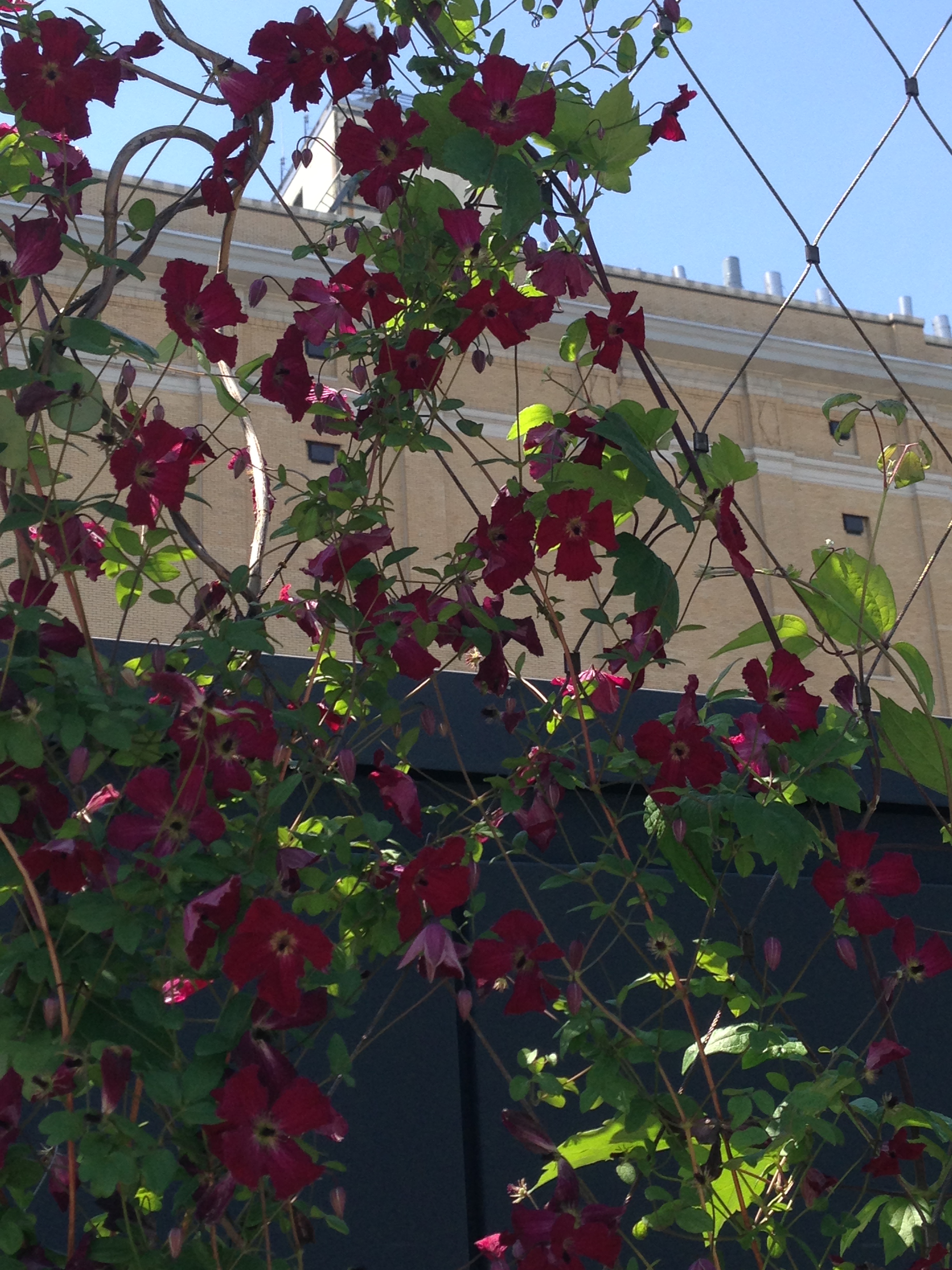
The gardeners of the High Line transformed the place, beginning in 1999. It’s a classic urban place to stop and smell the roses.

climbing roses

Wild roses are fairest, said Louise May Alcott, and nature a better gardener than art. The High Line has nature, art and a third thing, a deep industrial past.

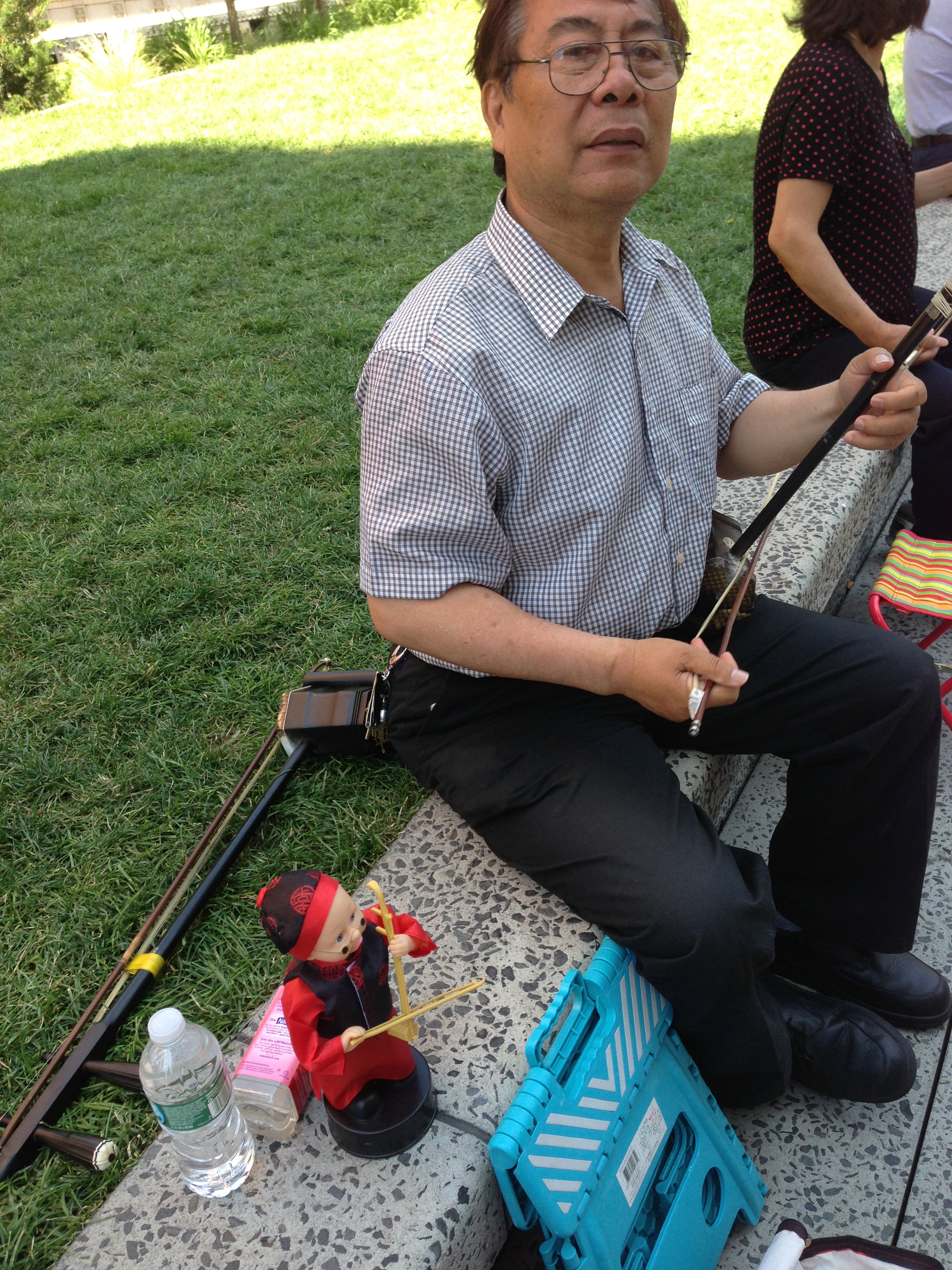
There are musicians.

asian musician

Painters.

painter

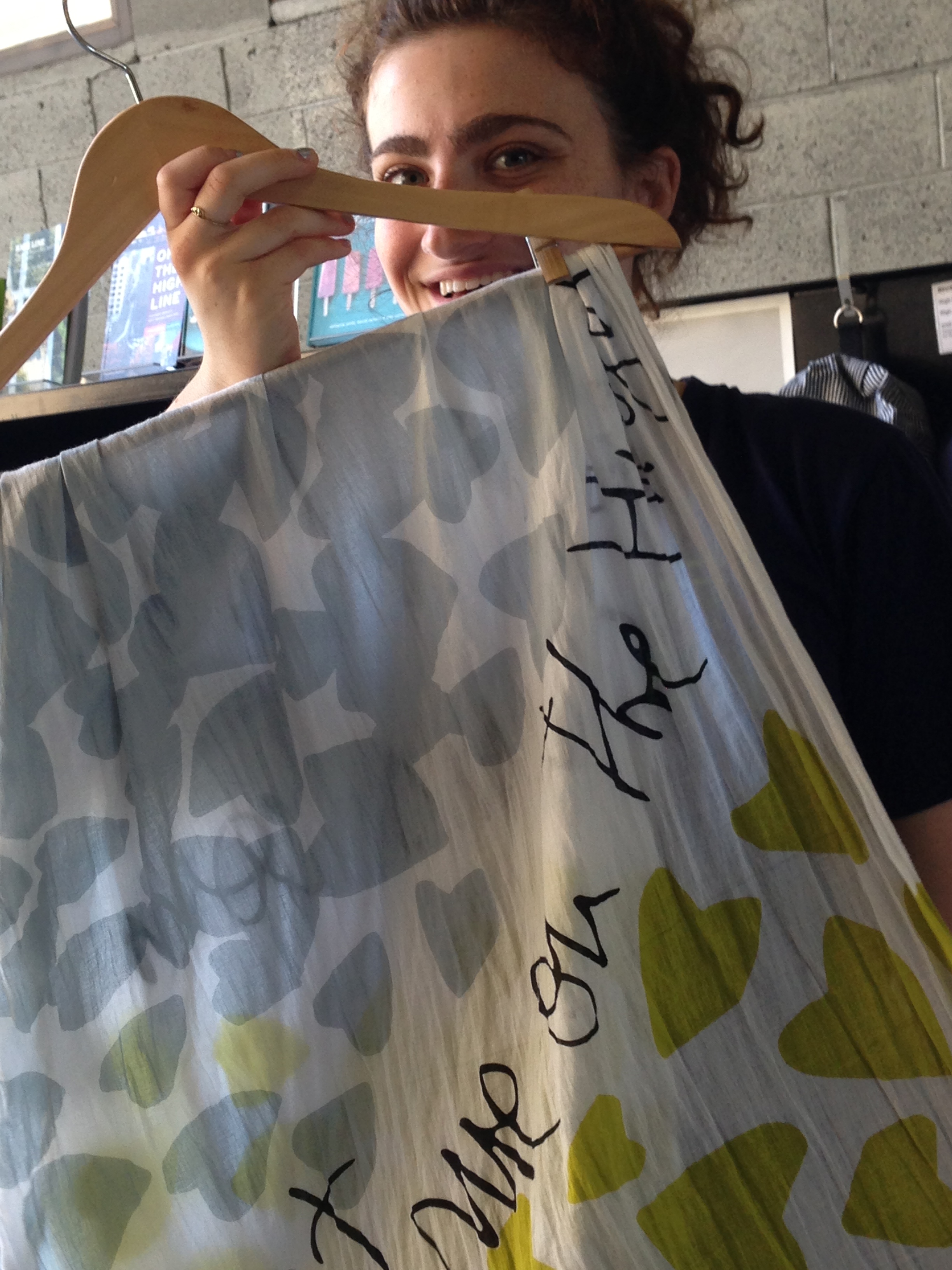
It even has its own clothing franchise, with sarongs that read “Dreams Come True on the High Line.”

sarong

Sculpture rises up along the walkway.

funny sculpture

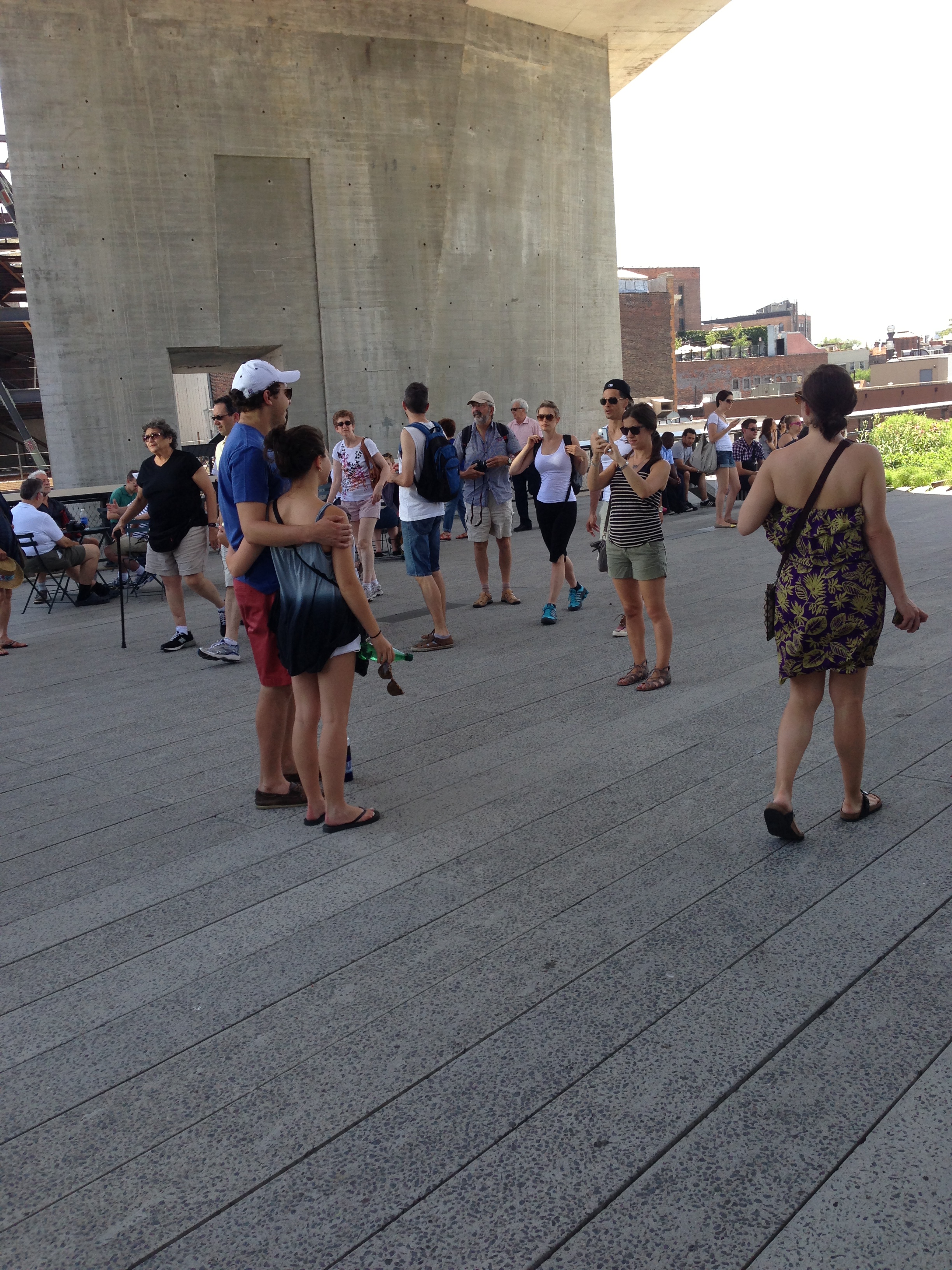
And human sculpture, as people freeze for pictures. What the High Line should have next to the fresh fruit ice pops stand is a camera kiosk. Someone would get rich. Tourists throng — you can walk a long way down the path and not hear a word of English.

taking pictures

With the new, there’s the old – a mysterious pattern of bricks.

bricks

And a towering old painted sign: BONDED. Across it a tag reads REVS, shortened from REVLON, a famous graffitti artist. “It’s got to be on the edge, where it’s not allowed,” REV has said. There’s room on the High Line for all vintages.

old sign

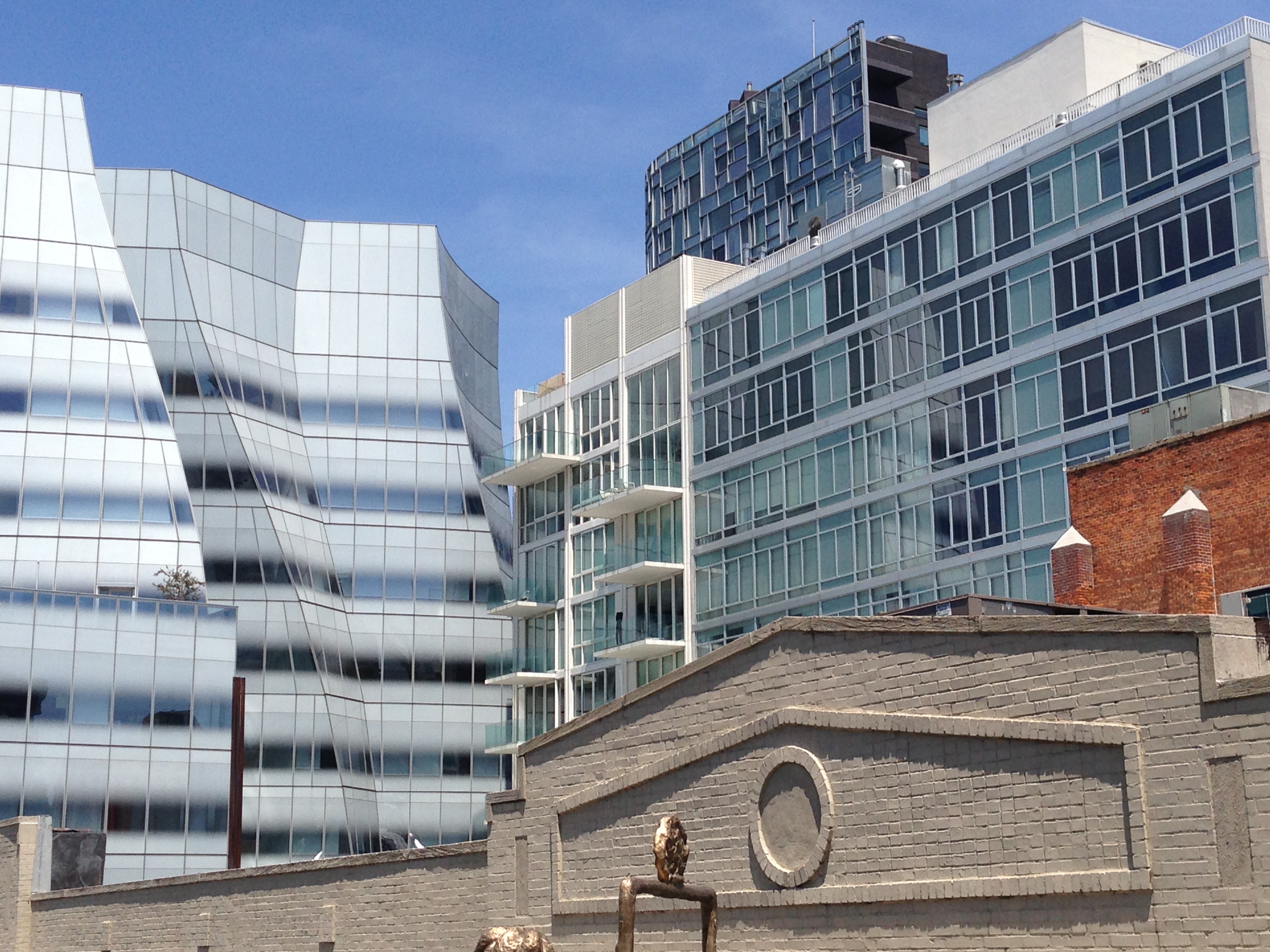
The Gehry-designed IAC Building, at 555 West 18th Street, with its milky, origami exterior, has been open since 2007. Vanity Fair called it the world’s most attractive office building. It’s especially great to see it in tandem with structures of other vintages, including the old-fashioned piedmont of a lower one whose top is flush with the park.

Gehry

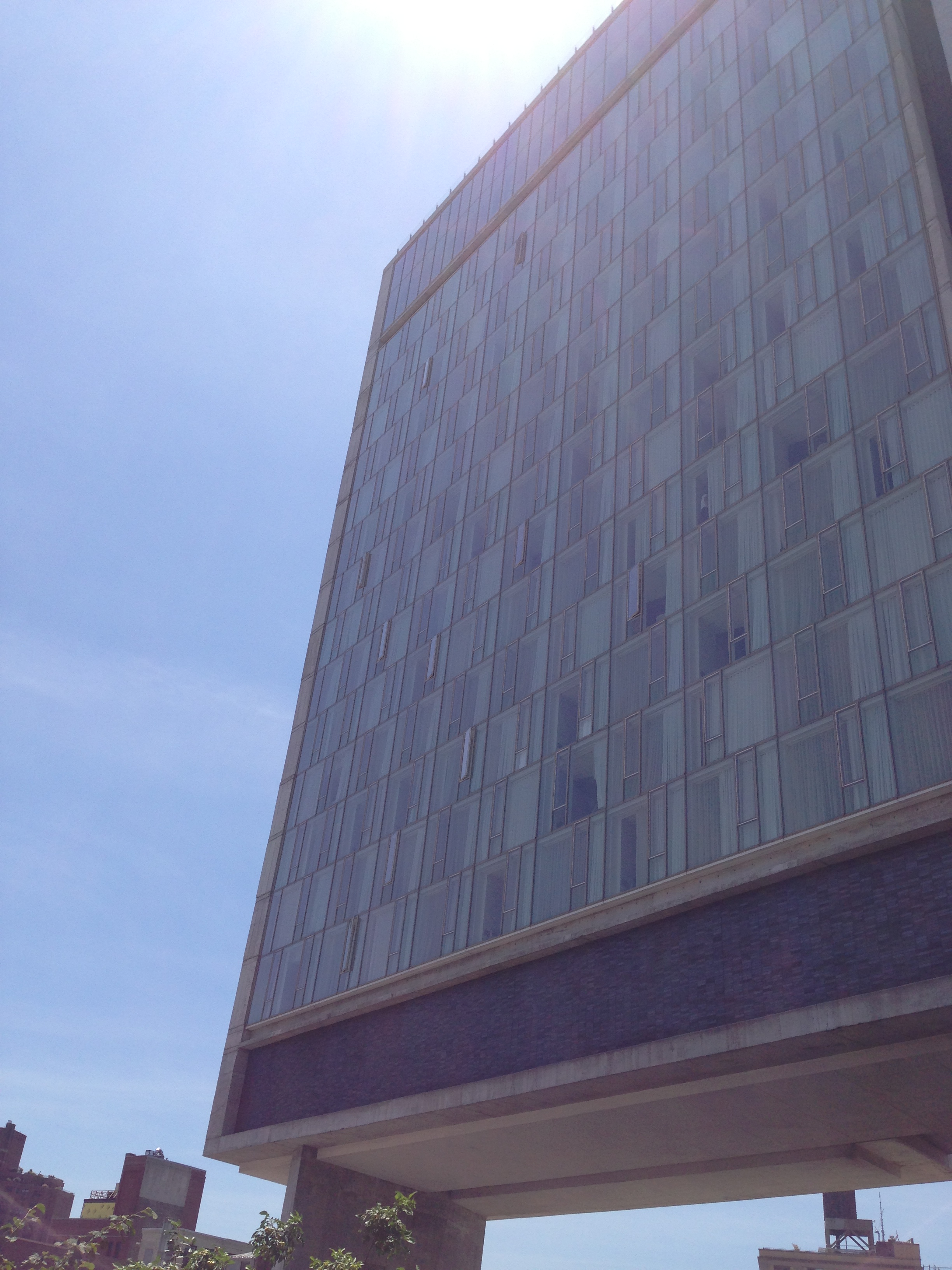
The Standard Hotel soars above. It gained some notoriety when High Line strollers realized they could look up and see happy exhibitionists making whoopee in the floor-to-ceiling windows.

the standard

(When Chuck Barris was looking for a word to meet the network censors’ standards on the Newlywed Game, the term ultimately settled upon was whoopee.) Meat trolleys for hanging beeves still exist if you look closely. Right along the Standard, in the shadows, a rusted remnant of the  district’s sanguinary past.

beeves

But one essential thing about the High Line is the views.

cityview

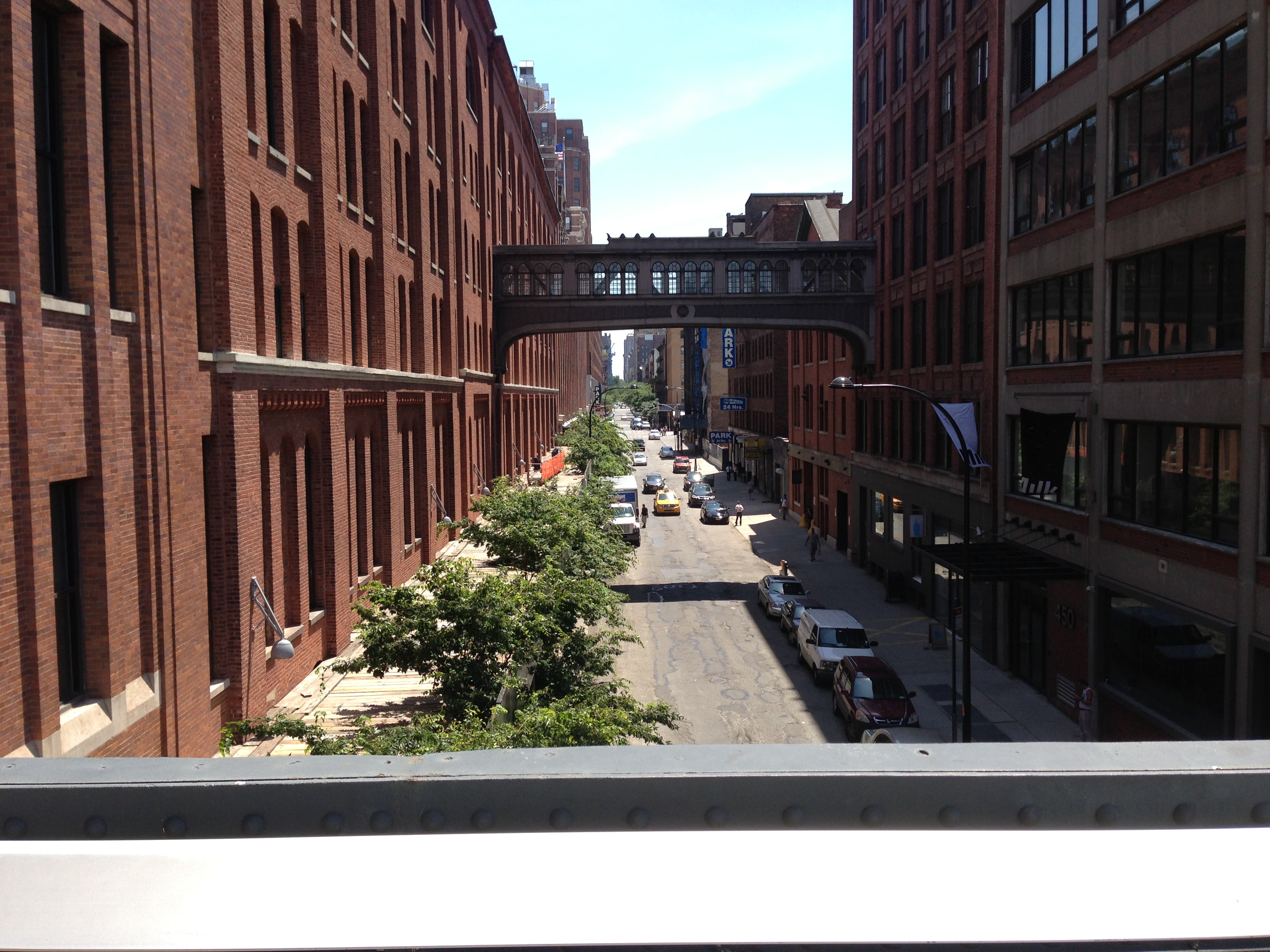
In the nineteenth century, landscape architects carved out pastoral views on grand country estates, cropping trees advantageously to accentuate vistas of rivers, mountains, or other natural elements. The High Line is the 21st century equivalent, with quirky street perspectives all around, framed from this tall iron structure.

bridge

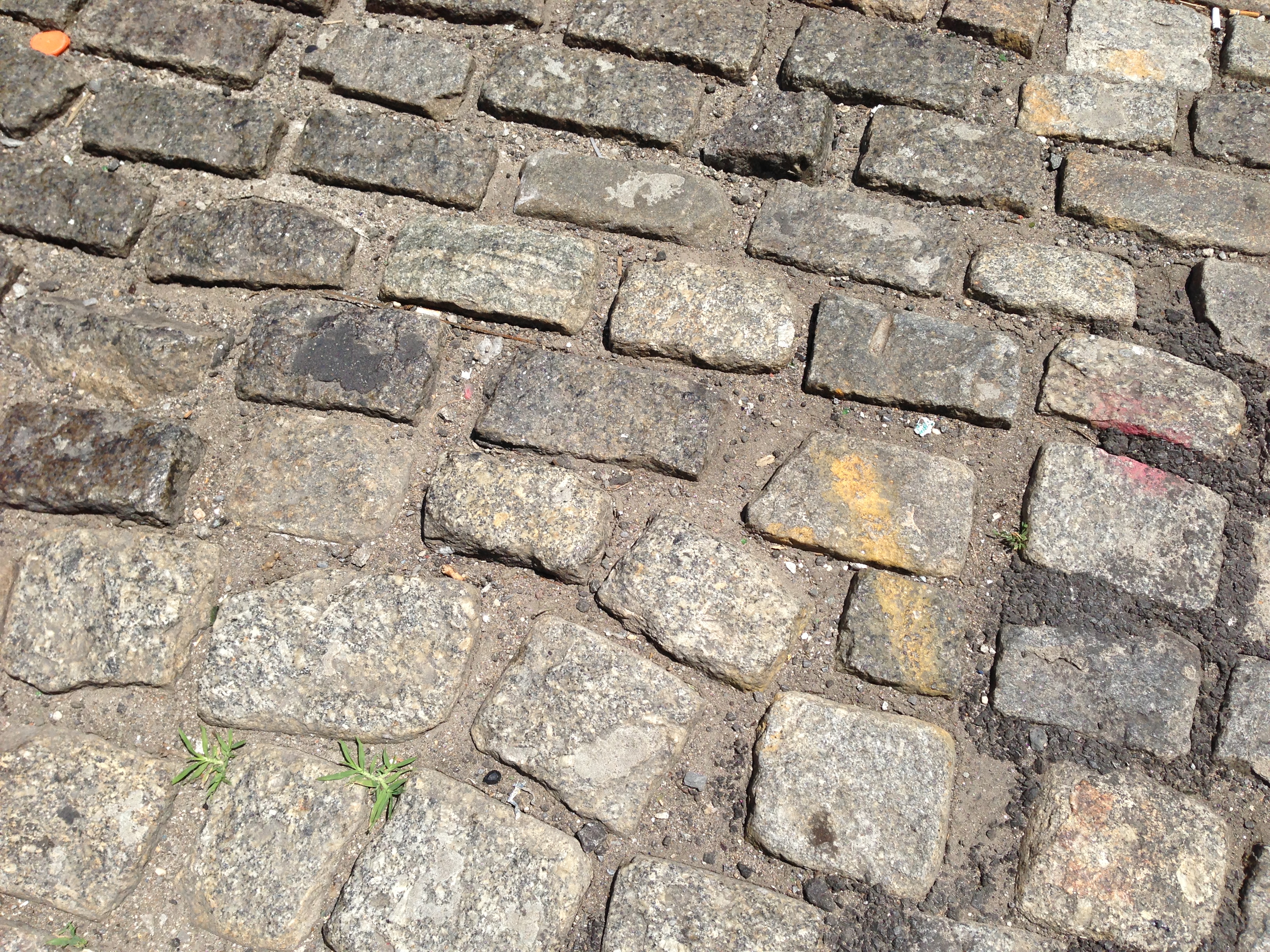
After our promenade, we descend to vintage New York cobbles. A remnant of the lost city.

cobbles

We refuel at a restaurant called The Spotted Pig.

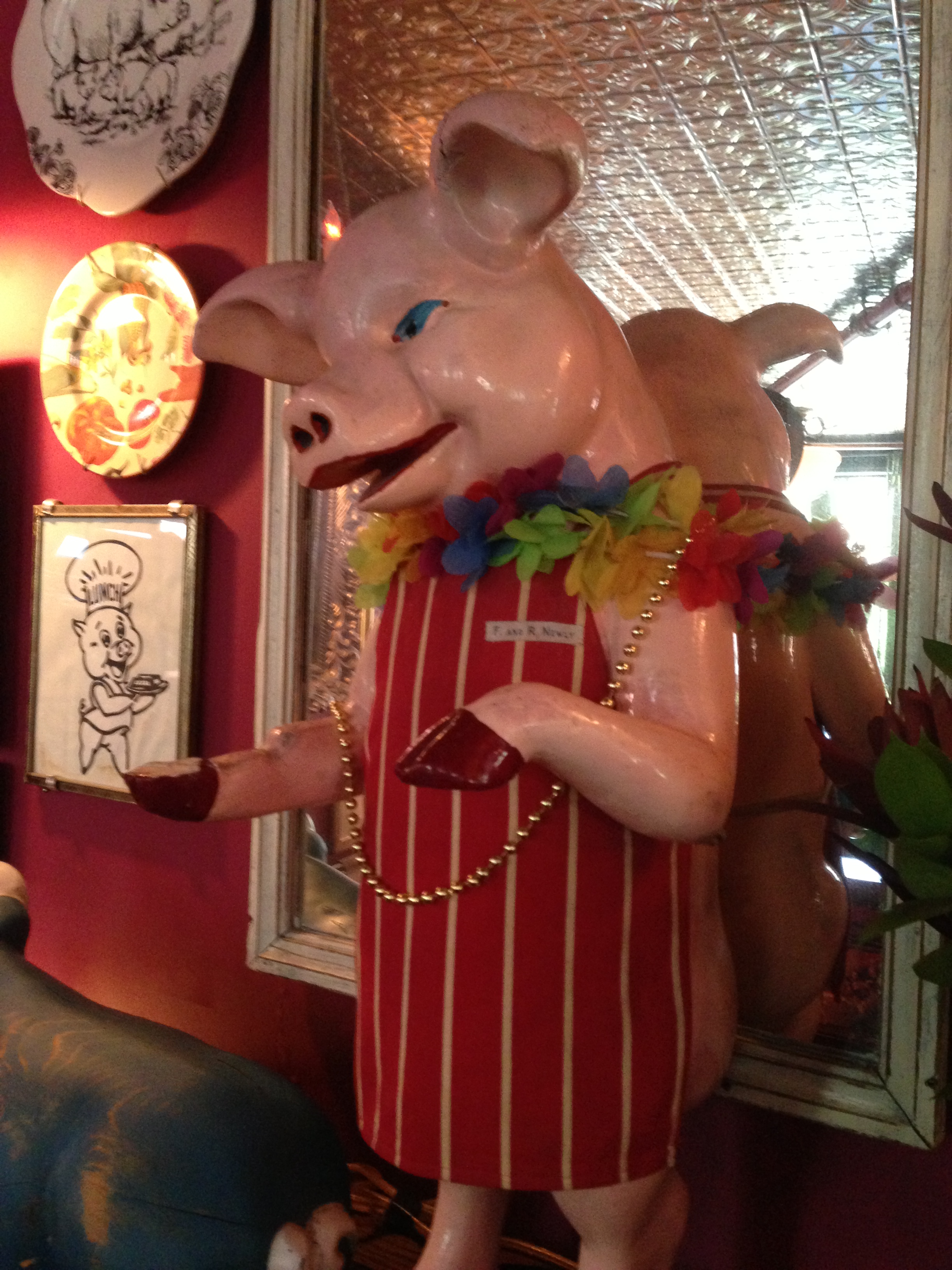
pig

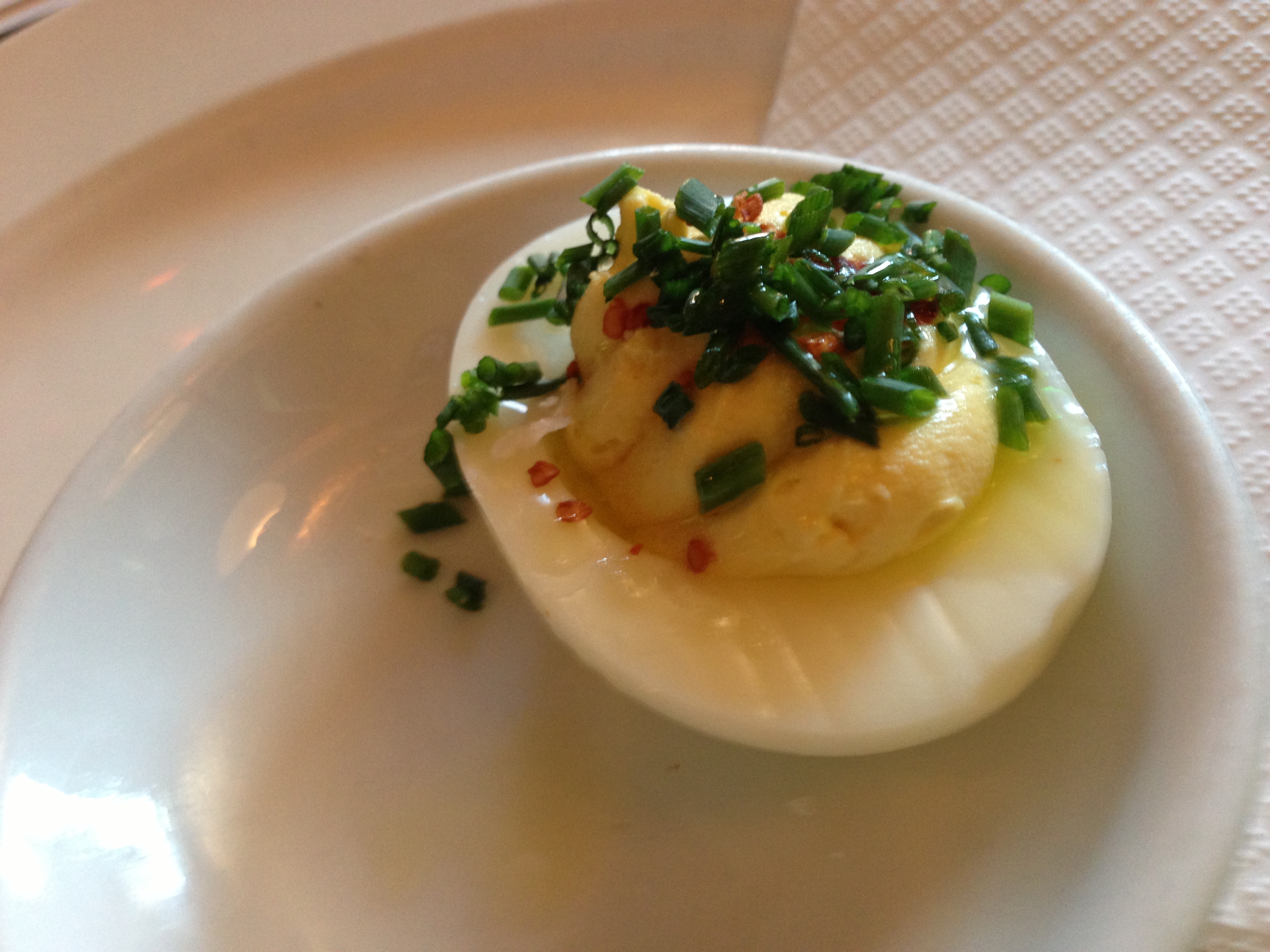
The eggs it serves are divine, with crunchy flecks of sea salt.

egg

I am tired after our sun-blasted walk of a two miles. Jesse is wide awake, which he always is, except when he’s asleep.

jess eyes

And the french fries… well, it is hard to shovel them in fast enough.

fries

The chef strews the shoestrings here with shreds of rosemary. Everything tastes better after the High Line. An ordinary pinapple smoothie from a new perspective.

smoothie

A fantastic church frieze overhead. Had it always been there? I can’t recall. The galleries of Chelsea are closed on Sunday, but that doesn’t mean the great sidewalks of New York are closed for business.

girl graffiti

Too much graffiti has been scrubbed off in recent years. Manhattan is the new Minneapolis. Now we have clean, healthy biking all over town. In Greenpoint, Brooklyn,  where I visited a week ago, it’s a different – and more colorful – story, as it hasn’t quite shed its industrial past and makes a fine canvas for folks who do outdoor outsider art.

slut tribe

Here in the Meatpacking District we find a few worthy efforts.

boy graffitti

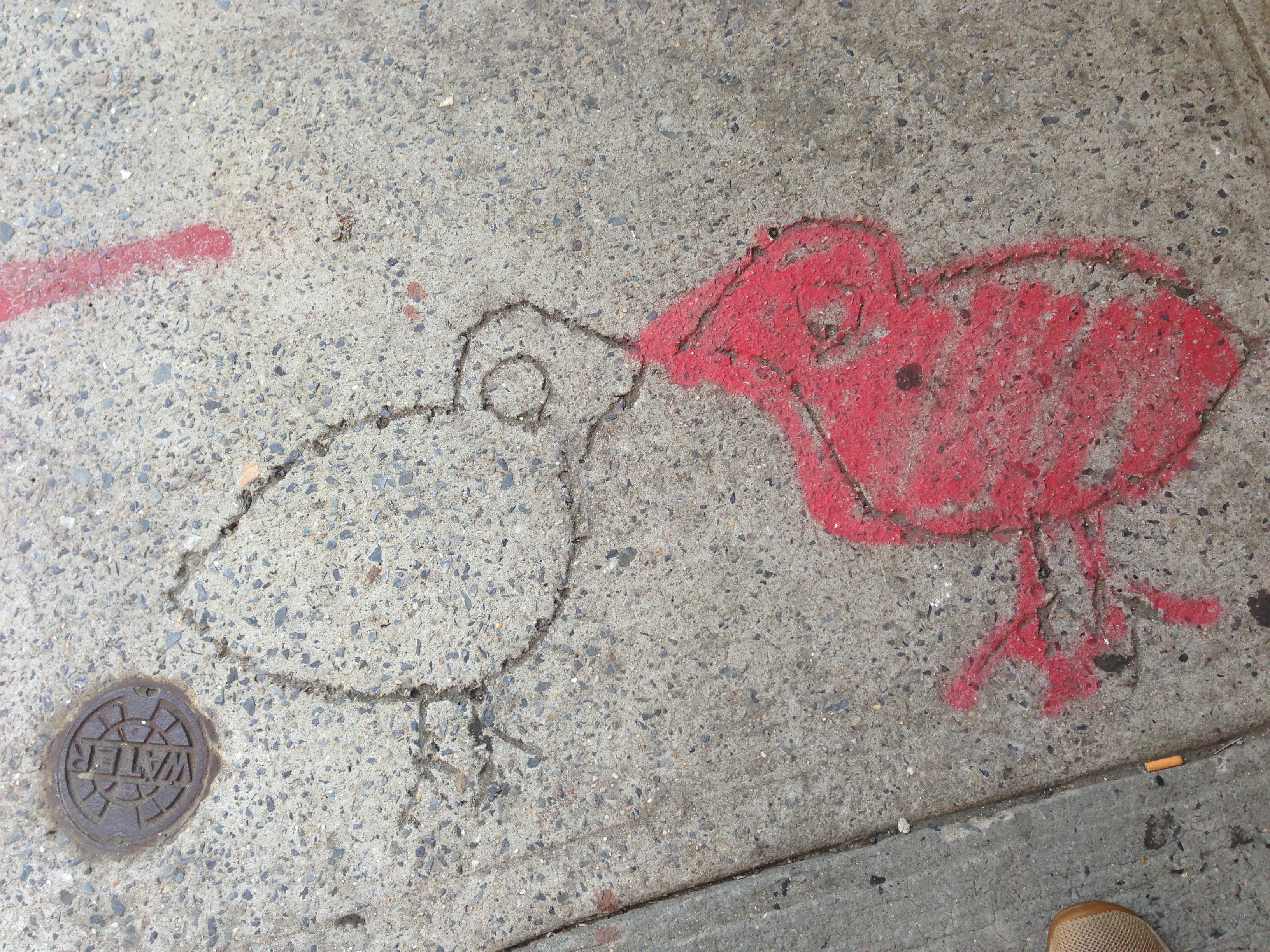
Two chicks etched on the sidewalk beneath our feet.

chick sidewalk art

For some reason I like these simple birds, making kissy next to their little water fountain.

The all-seeing eye. The Eye of Providence.

evil eye

On the island of Manhattan, if you let your vision wander up, you see some marvelous things. A blue horizon chockablock with architects’ freshest concoctions. Pieces of old New York, dusty red bricks that have miraculously been saved from the wrecking ball. Climbing roses, if you’re walking the High Line. From that same pathway, a glimpse of a well-to-do fanny in a chic hotel window. And there are still wooden water towers.

water tower

Just two companies, Rosenwach Tank Company and Isseks Bros., manufacture the tanks, which are unpainted and made with untreated wood. A new water tower is a leaky water tower, as it takes time for the material to become saturated and watertight. Chelsea has one, completely dry of course, that has recently been transformed into an exclusive club called Night Heron. You can see it from the High Line.

1 Comment

Filed under Art, Cooking, Culture, Fashion, History, Jean Zimmerman, Nature, Photography, Writers, Writing

A Farm Grows in Brooklyn

Or sometimes Queens.

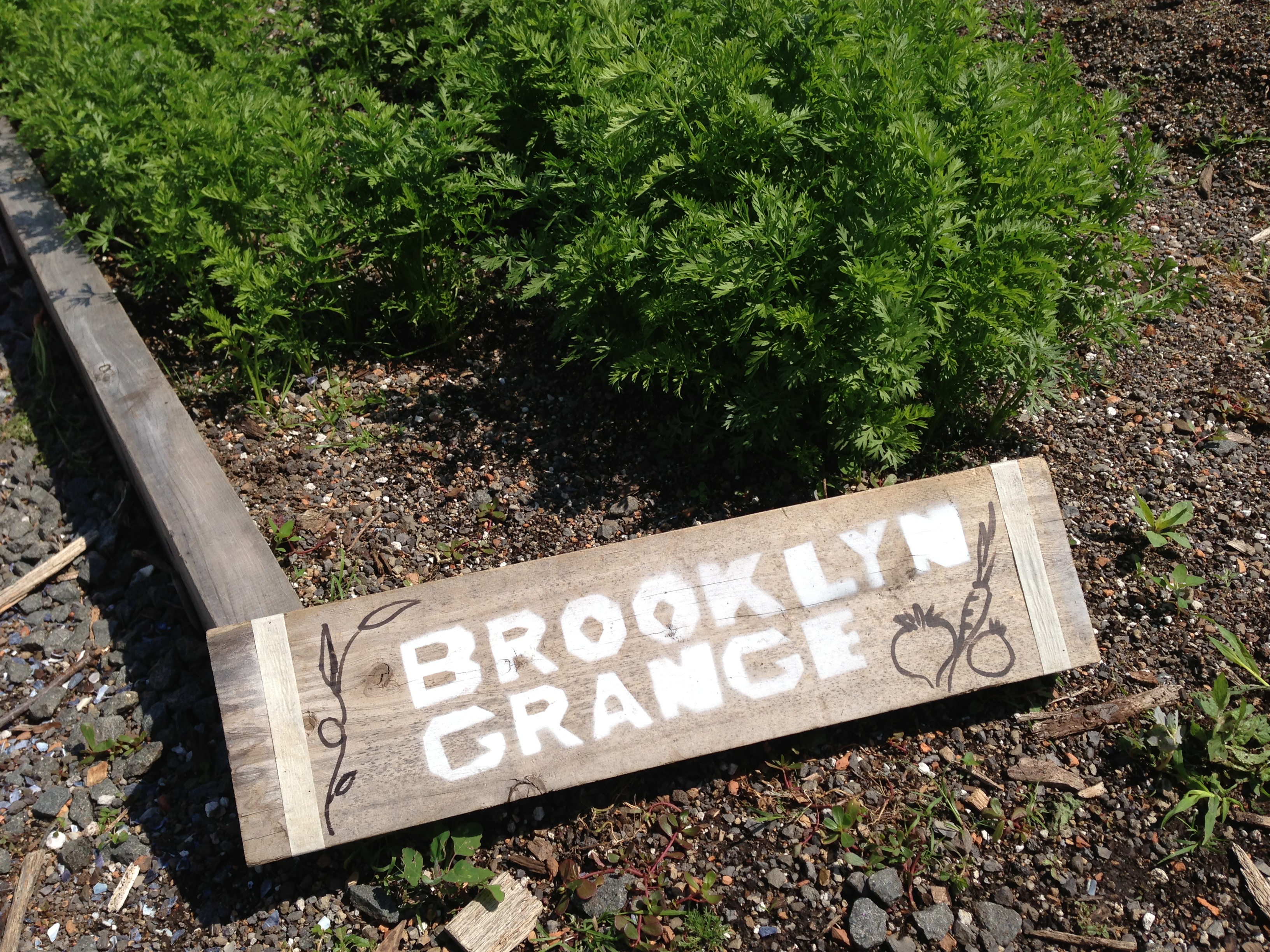
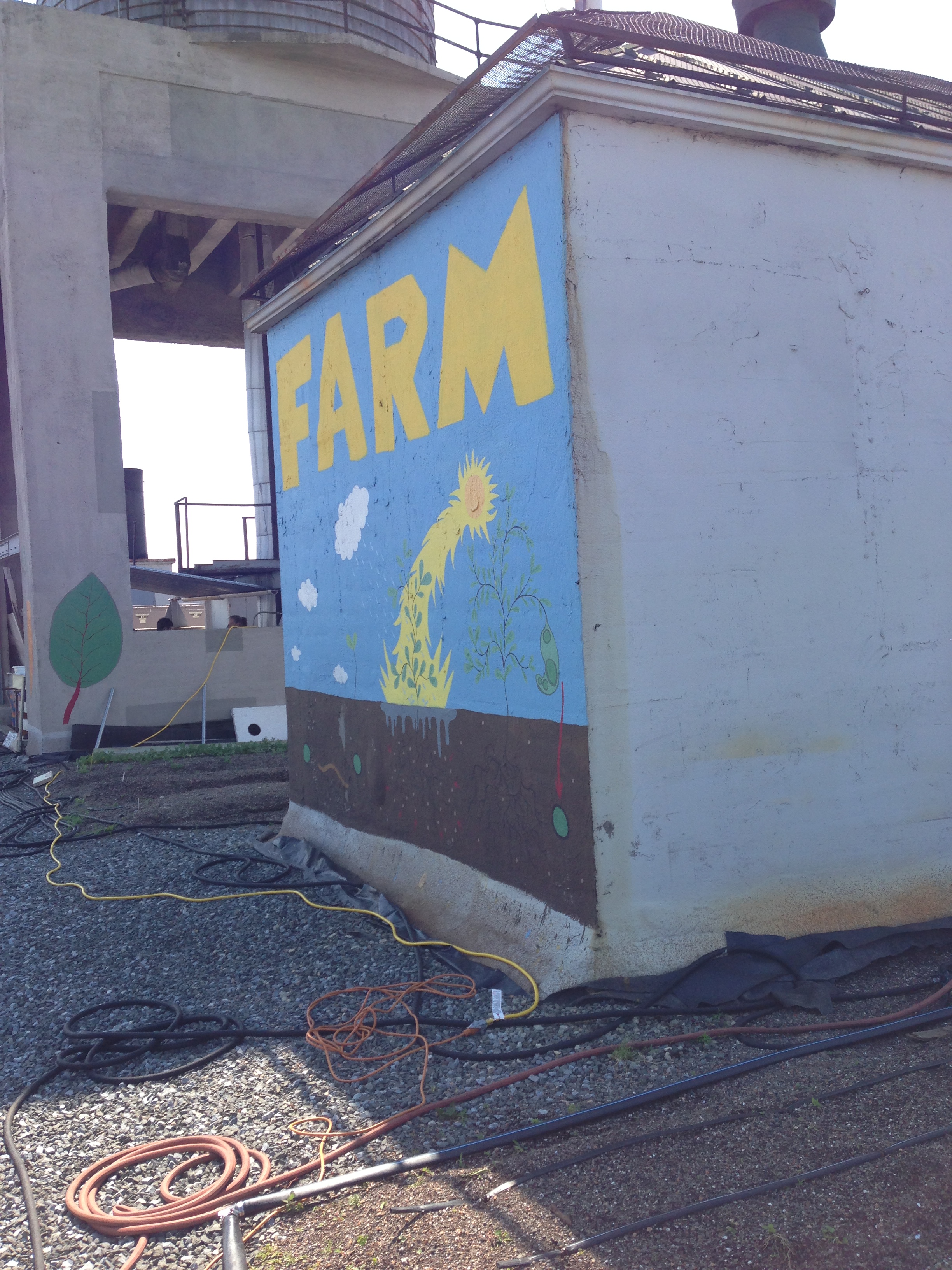
brooklyn grange sign

We had to find our way through a coffeehouse and the winding corridor of a building before getting to the unmarked elevator that led to the roof. Then we knew we had hit pay dirt, so to speak.

farm sign aslant

Brooklyn Grange is the largest rooftop farm in the country and perhaps the world. Sited atop a building that originated as a furniture factory, it has the space to produce at least three dozen different vegetables and herbs in the course of a season. You would never know it’s there, looking up from Northern Boulevard, a car-choked  thoroughfare that muscles its way through Queens, New York.

farm bldg

We were a little early. The volunteers were still bagging up the greens for the CSA as Gwen, a busy farm worker, applied sunscreen to her arms. This is great weather for kale, said Gwen. All the rain makes it really spring up. The farm stand also displayed beautifully fresh carrots, mesclun, scallions.

greens in rows

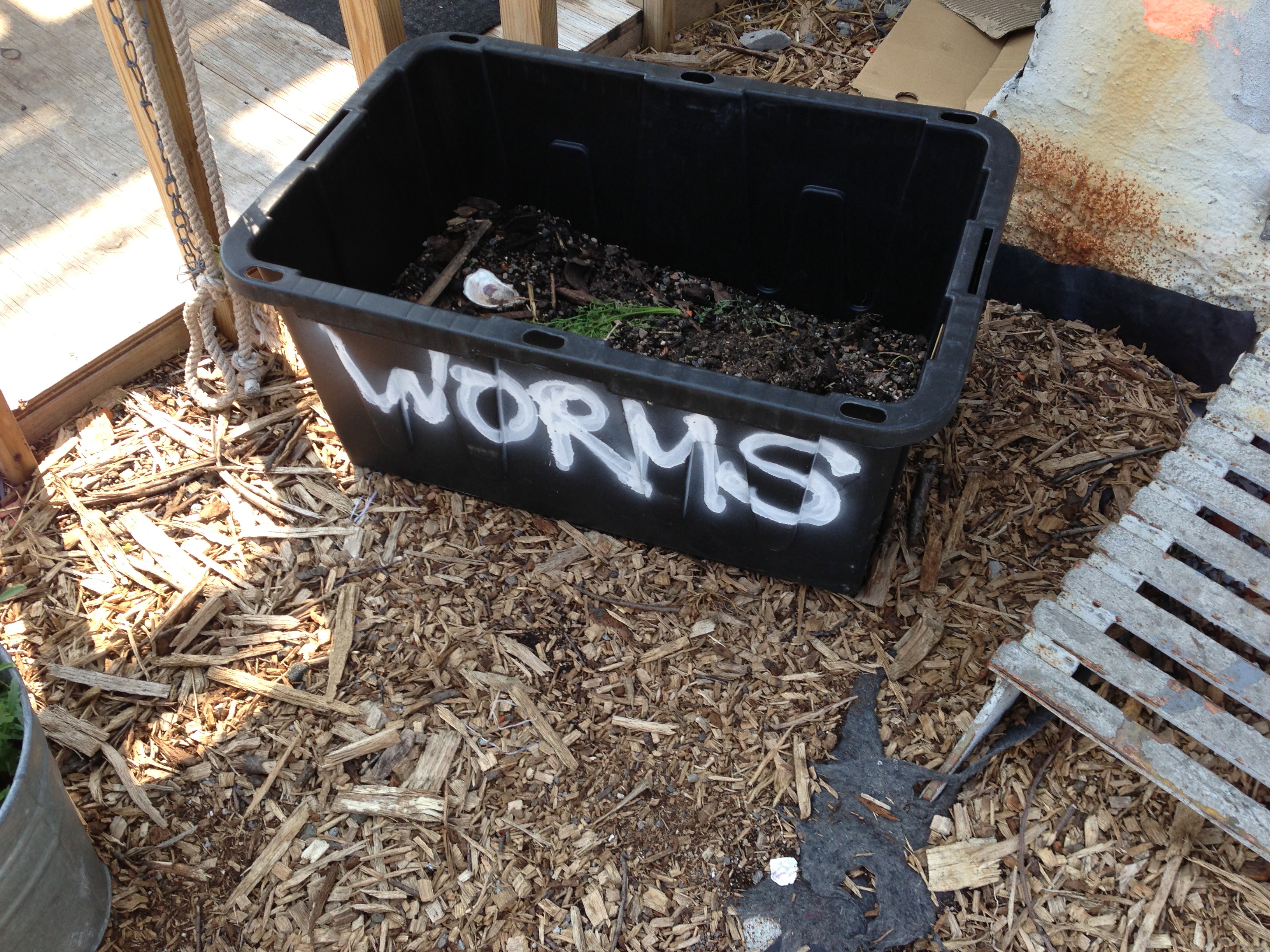
A farm on a roof has to have all the things a farm has on the ground. Worms.

worms

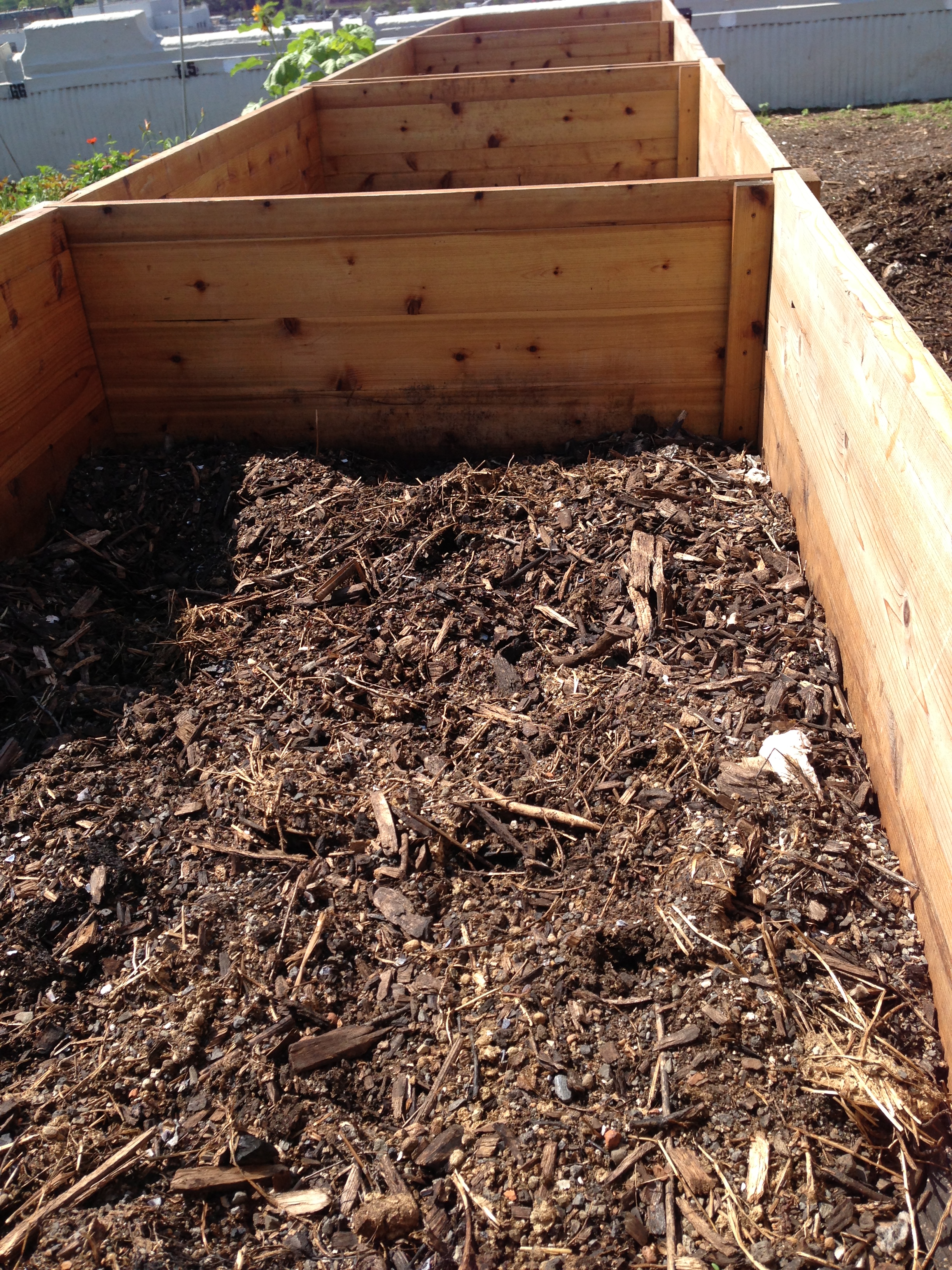
Compost.

compost bins

The farm manager, Bradley, wearing a bright green tee shirt whose back was emblazoned with the words, “This is what a feminist looks like,” told me a little about the chickens.

chickens

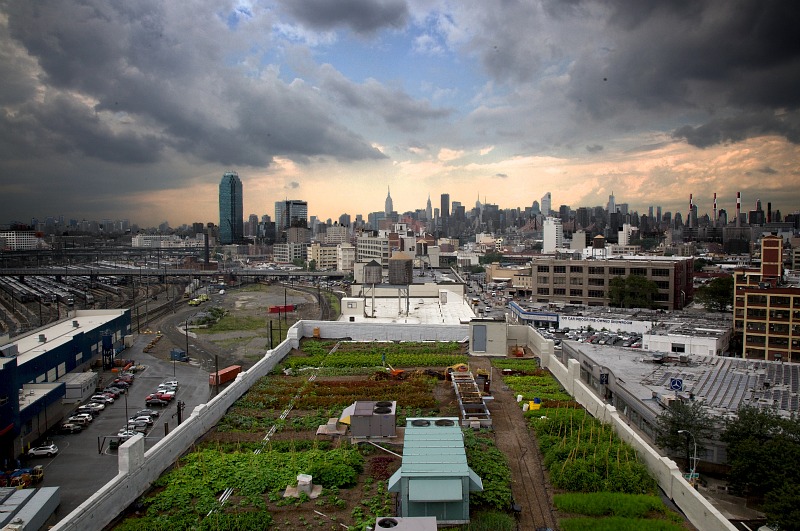
The dramatic white one, he said, was a Japanese silky. I asked him about the manure, so great for vegetables. They have about a dozen birds. They give what they can, said Bradley. He directed the volunteers out among the rows to harvest thyme and flowers. Tourists and photographers were beginning to show up, most with the kind of equipment that views like the Farm’s deserve. This one, taken on another day, is by a photographer named Cyrus Dowlatshahi.

Brooklyn-Grange-by-Cyrus-Dowlatshahi2

You feel you could leap the distance from the pepper plants to the Empire State Building in one stride – or at least that Philip Petit could make a project of the crossing.

Photographer Rob Stephenson has made some striking pictures of New York’s farms and gardens.

Hells Kitchen

Not just rooftops but the kind of small, intimate plots that can in found in Harlem and the Bronx, and nurture peoples’ souls as well as their stomachs.

community garden

Close up at Brooklyn Grange you can see the serious thought behind the endeavor.

lettuce w sign

The rows of stakes waiting for the tomato’s slow and steady climb.

tomato stakes

There are roughly 1.2 million pounds of soil in this one-acre plot.  Could the concrete slab roof  give way? Absolutely not. All these details and more are readily available on line.

You can book an event at the rooftop, even a wedding. Perhaps guests could weed between glasses of champagne.

Brooklyn Grange is joined by other urban farms in New York: Added Value, Tenth Acre Farms, Battery Urban Farm, Gotham Greens and and Eagle Farm are just a few of these enterprises. One researcher was quoted in The New York Times last year: “In terms of rooftop commercial agriculture, New York is definitely a leader at this moment.”

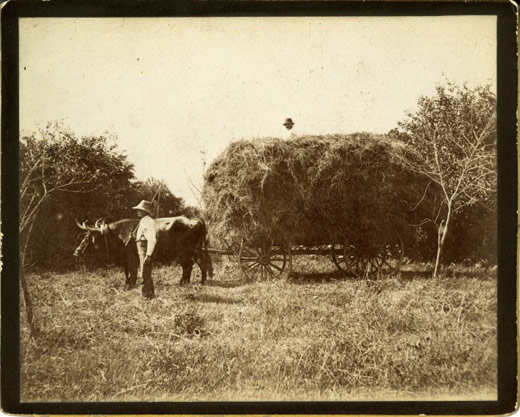
There is a long history of agriculture in the boroughs of Brooklyn and Queens.

Farming-Scene

According toRobin Shulman in her lively and informative book Eat the City: A Tale of the Fishers, Foragers, Butchers, Farmers, Poultry Minders, Sugar Refiners, Cane Cutters, Beekeepers, Winemakers, and Brewers Who Built New York, “As late as 1880, Brooklyn and Queens were the two biggest vegetable-producing counties in the entire country.” She cites one observer as saying, “The finest farmlands in America, in full view of the Atlantic Ocean.” Farmers in the boroughs used the manure of city horses to fertilize their crops, which they brought to the Manhattan market by boat.

I’m thinking about farming as I coax my tiny vegetable plot to maturity. My new strawberries have come in.

new strawberries

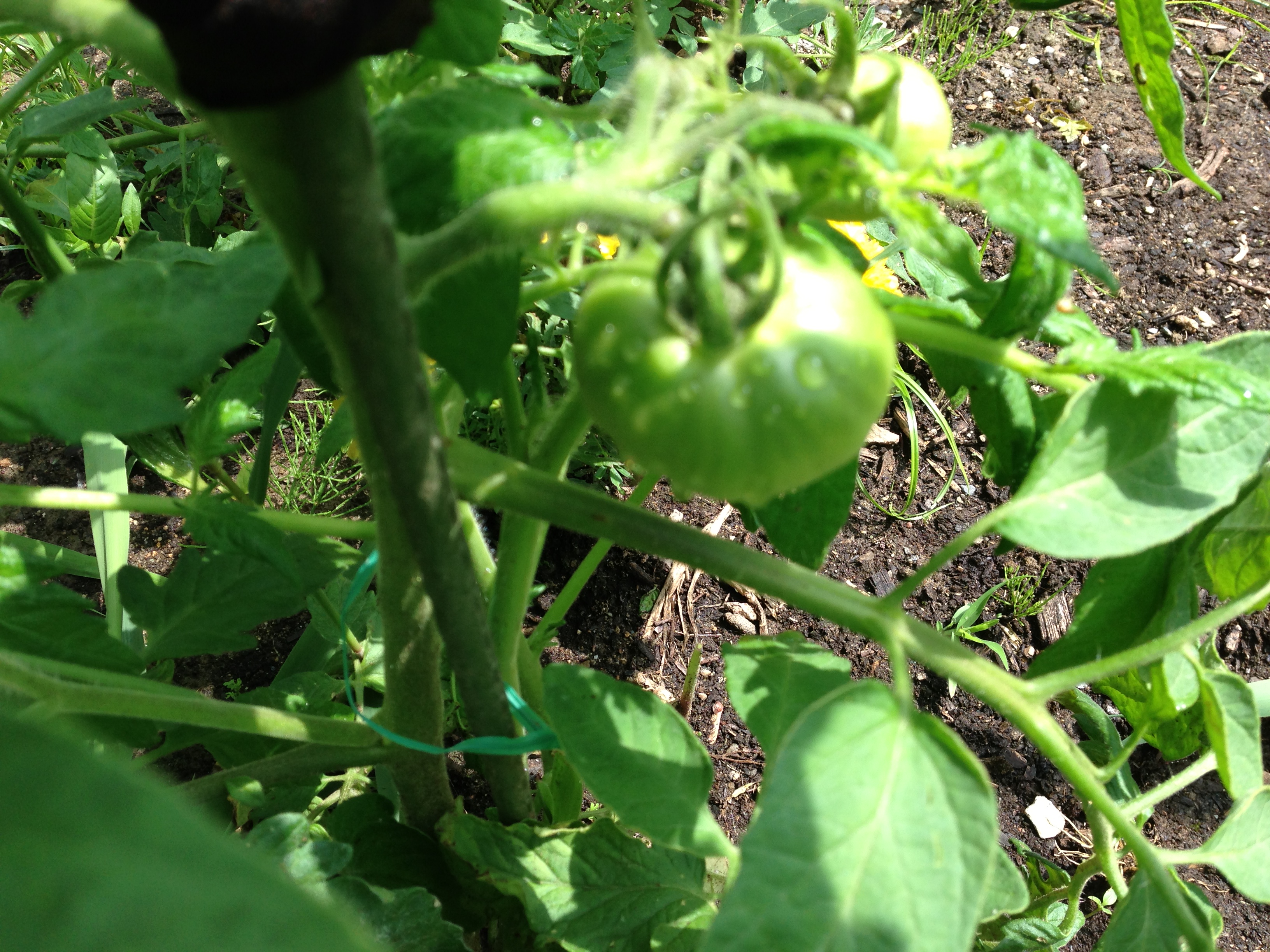
And some tomatos, the size and texture of an Atomic Fireball – remember those? – though not the color, yet.

fourth of july

But I’m tired of all this just looking at good stuff growing. Where’s the table in the fashionable farm-to-table equation?

One was set for us at The Farm on Adderley, in the neighborhood of Ditmas Park, Brooklyn. There is nothing like a restaurant with a mission statement: it “has evolved to pursue the principles of supporting local farmers, artisans, entrepreneurs as much as possible, making delicious food from that, and serving it in a completely honest way.”

pastured poultry

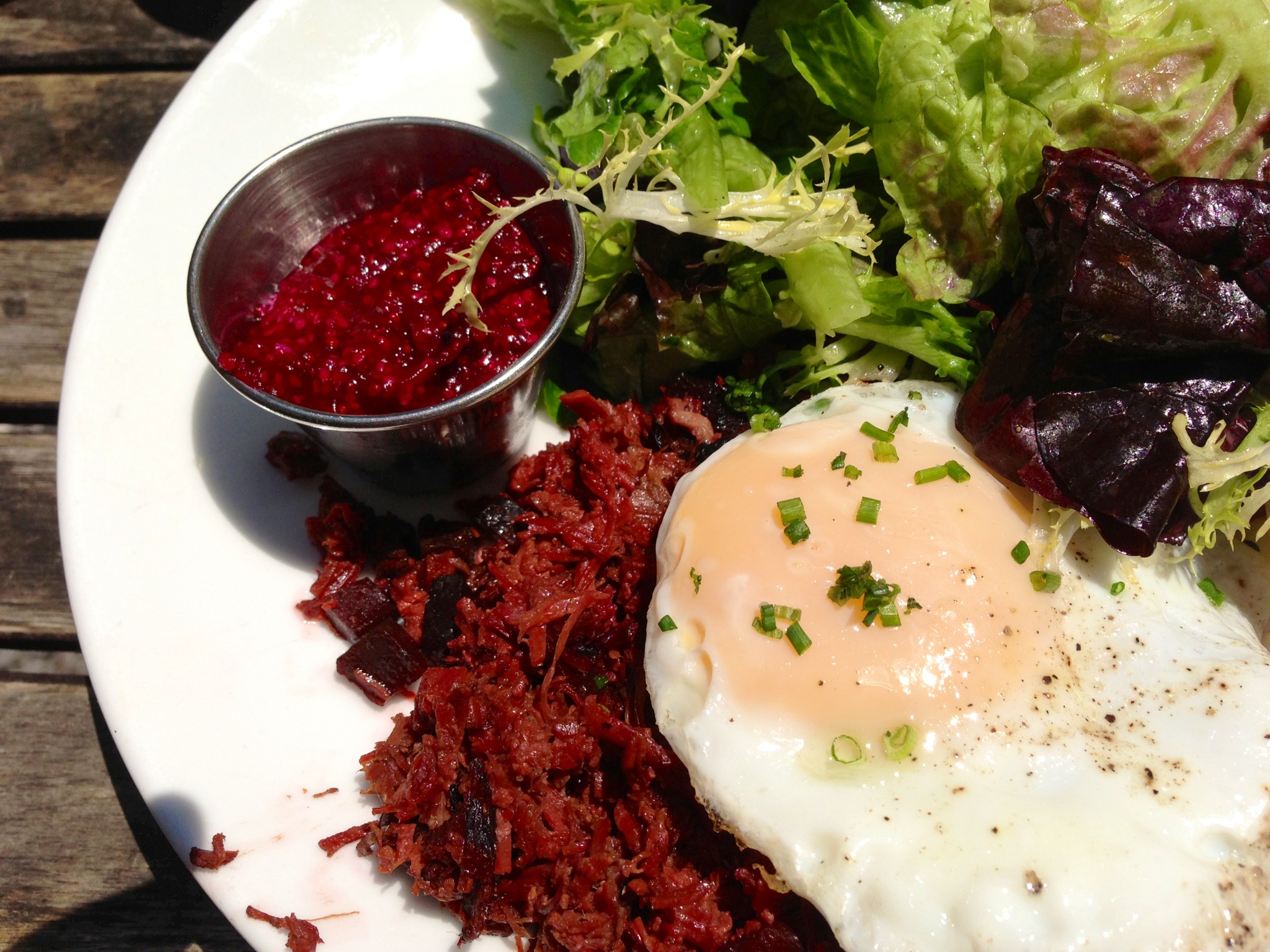
You can get a list of the local farmers who provide the kitchen’s ingredients. But that doesn’t mean anything to me unless I get a plate of food that’s good – as was my red flannel hash, its corned beef colored deeply with beets, and an even deeper burgundy horseradish served alongside. Did it taste better because the beef that was corned had roamed freely? Yes, I believe it did.

hash

The hostess brought to mind a farm girl in her friendliness, and she seated us in the garden, between a towering fir tree and a luxuriant grape vine, next to a wooden crate planted with chard and mint. The sun shone down, and we could have been out in the country. The place hosts events, like a New Amsterdam dinner “curated” by food historian Sarah Lohman, who is an educator at the Lower East Side Tenement Museum and author of a blog called Four Pounds Flour, devoted to “historic gastronomy,”

We were lost in the perfectly crisp, chewy, salty french fries, served with a sultry curry dip.

french fries

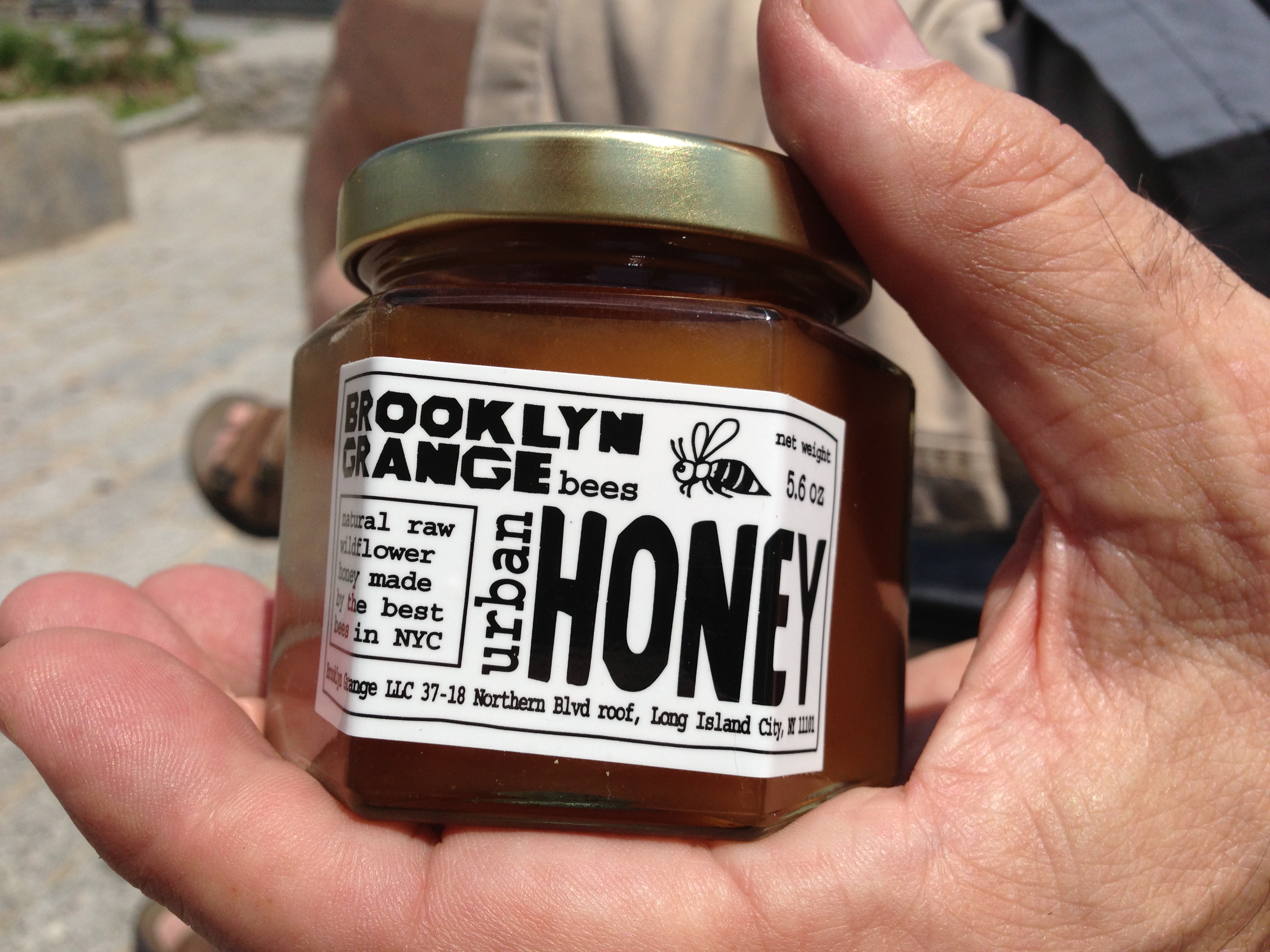
Couldn’t help, though, but overhear the young couple next to us planning their nuptials. Should we let them know about Brooklyn Grange? There could be worse places to grow your relationship.

honey


4 Comments

Filed under Cooking, Culture, History, Home, Jean Zimmerman, Nature