Category Archives: Jean Zimmerman

What’s the Story Morning Glory?

As some things in the garden wither, others go full tilt.

purple berries cu

A friend of mine came over with a shovel and a Beautyberry plant earlier in the summer. I didn’t know how Callicarpa Americana would take to the Cabin. Now its purple berries are practically fluorescent, a perfect complement to the orange leaves that have begun to carpet the grass around the bush.

leaves

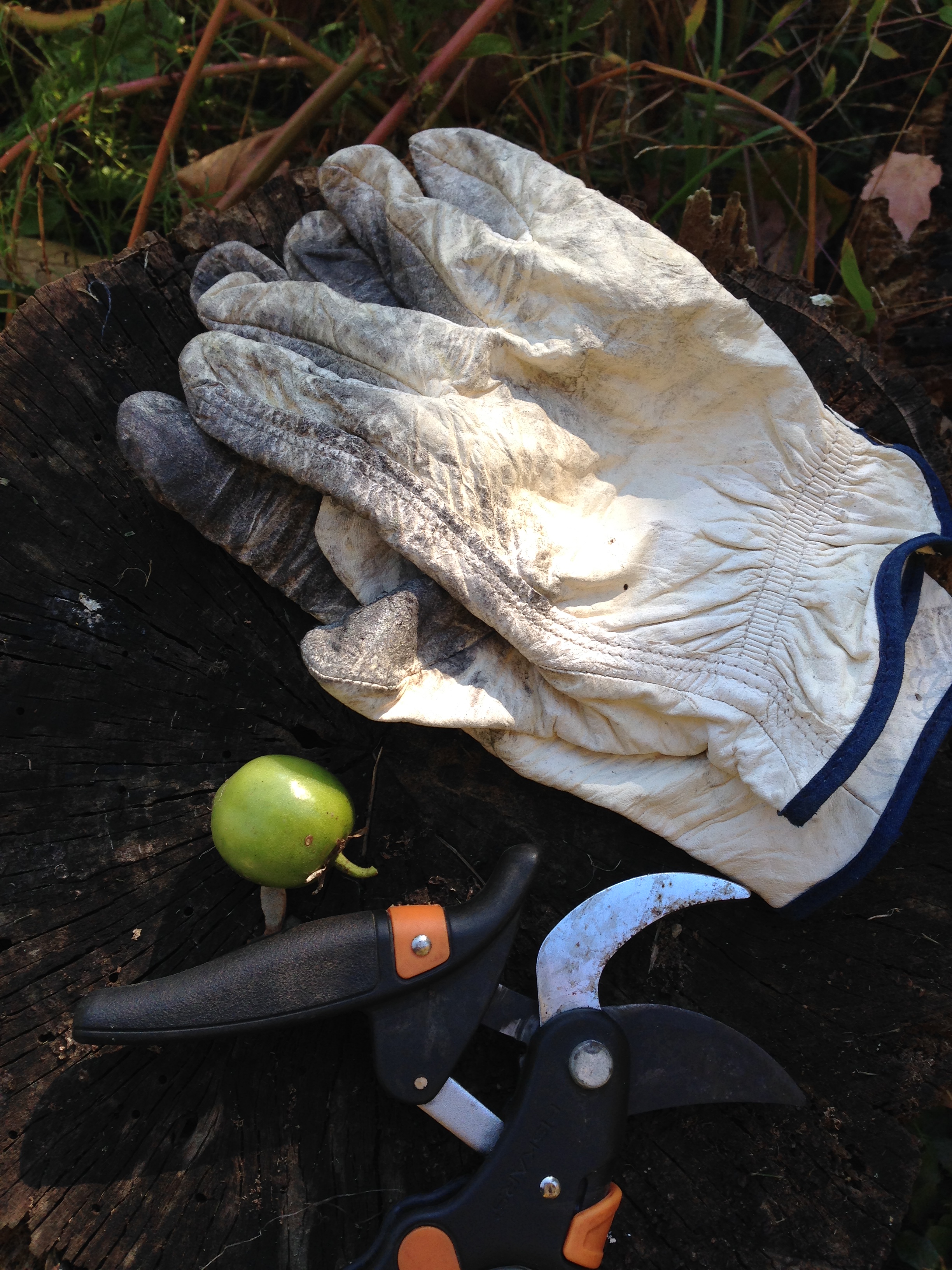
I hauled out the brown tomato plants in the sun today, the wind whoosing through the tops of the phragmites. Sorted out the tall stakes for next year. One lone green tomato dangled from a shriveled branch.
last tomato

Yet the purple cosmos are raging. And the bees are storming them.

cosmos bee

I’m cutting them by the armful and bringing them into the living room, a bit of summer still in front of a roaring fall woodfire.

The rosemary in the garden stands tall, waiting for its time in the stew pot with a leg of lamb.

rosemary

My celery is insane, a veritable hedge of the stuff. It never headed up but it still would be a great bed for a whole sea bass. I’ll have to go out and get me a fish.

celery

Most impressive, though, are the morning glories. Dozens of blossoms open every day, their petals scrunched until they unfurl in the morning sun.

morning glory opening

They don’t seem to understand that it’s fall, the time to fold up their tents. Well, they do fold up their tents, every day, since it’s the of the flower to bloom for a single day. “A morning-glory at my window satisfies me more than the metaphysics of books,” said Whitman. The Japanese have led the world historically in cultivating varieties of the morning glory, and as of this count there are 1,000 odd species.

morning glory openThe ones going crazy in my garden are Heavenly Blue. As for their hallucinogenic properties, Aztec priests started that practice, though we’re perhaps more familiar with love generation baby boomers who ingested the seeds to open themselves to new experiences, as the blossom does the bee.

1 Comment

Filed under Culture, History, Home, Jean Zimmerman, Nature, Poetry, Writers

A Pear Tree at Ground Zero

I waited a long time to go.

9:11 sign

I had all sorts of excuses. The 9/11Memorial stood behind too many fences. The lines were too long. It was filled with gawking out-of-town sightseers. But then some sightseers of my own came to visit. And off we went, to the Memorial, a broad plaza studded with small trees under the shadow of skyscrapers. It was one of a few things my sister-in-law knew she wanted to do when she hit town.

lisa

There were in fact probably a thousand people at the site on a Friday morning, including some incongruously attired tourists – incongruous for a place of mourning, not for being tourists in New York. They’re always wacky.

wtc tourists

Guards ushered us through an endless line. You could see a scrap of the Freedom Tower along the way.

freedom tower fence

Then we were there, in the open plaza with its great, deep South Pool, whose waters seem to flow down into an abyss.

pool 3

An abyss of longing, of sorrow, of wonderment? Of absence? Of wordless pain? Everyone decides for themselves. You can read about the 9/11 Memorial, you can read what I’m writing now, but you’ll only understand the power of it if you’re standing there.

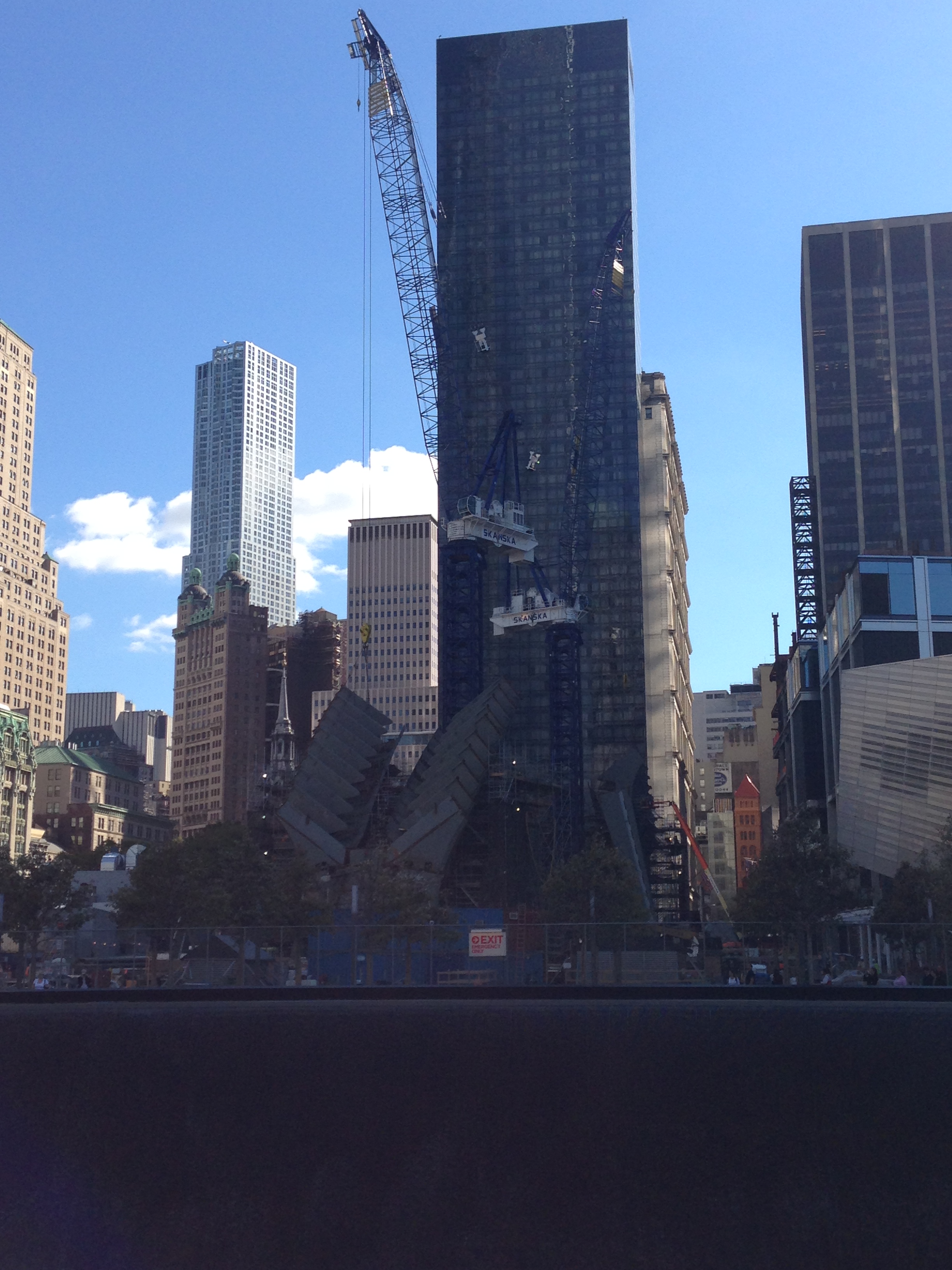
We could see the Freedom Tower clearly now, still unfinished, seemingly created as a photo op.

freedom tower construction

Cameras, of course, proliferated.

bronze camera

All around were construction sites. Various projects are energetically  in progress. As is the memorial itself.

construction

And at the pool, there are the names.

bronze and rose

Taking a picture is a way of touching the nearly 3,000 names of the dead inscribed in bronze around the pools.

bomb squad

The deeply carved letters, cut out with a laser to symbolize absence, invited touching with the fingers. Touching. Wrenching, some especially.

unborn child

The names are not rendered alphabetically but instead arranged based on layers of “meaningful adjacencies,” where the deceased had been that day and the relationships they had with each other, taking into account the wishes of kinfolk.

It must have been hell to figure out. Visitors access the location of their loved ones’ names through kiosks to the side of the pools.

But powerful as the pools were, as the names were, they paled slightly for me alongside what is being called the “survivor tree.” All but one of the trees planted on the plaza are young white oaks. One, though, is different. A Callery pear tree dating to the World Trade Center plaza of the 1970s, it stood on the eastern edge of the site, near Church Street. It lived through the 9/11 devastation, though reduced to a stump of eight feet, then was nursed back to health in a city park, was uprooted by spring storms in March of 2010, but came back once again. New branches, buds, flowers, everything. Life, amazingly.

wtc pear

Now the pear tree stands beside the South Pool, braced by guide wires as it takes root, and visitors migrate across the plaza to stand beneath its thick branches, to absorb its legend, its poetry.

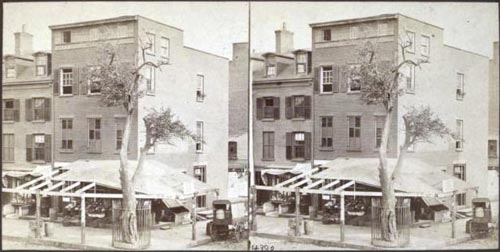
The parable of the pear tree that would not perish has its bookend in another historic Manhattan pear tree. Peter Stuyvesant, the legendary governor of New Amsterdam, planted one on his bowerie in the late 1600s. Way out in the country then, the location eventually became 10th Street and Third Avenue.

stuyvesant-tree-01

That pear tree survived the creation of the New York street grid plan in the early 1800s, and everything else the developing city had to throw at it. The tree lived over two hundred years, only giving it up when a dray mowed into it in 1867.
2513096754_5f8140c23a

The people of the city mourned the loss, as they celebrate the life of the Ground Zero pear tree today. A tree that stands, gnarled, unbowed.

3 Comments

Filed under Culture, History, Home, Jean Zimmerman, Nature, Photography

I Like Your Steamed Buns

There might be better places to get soup dumplings in New York City, but Joe’s Shanghai is irresistably close to LaGuardia if you’re carting people in from the airport around lunchtime.

dumplings

We had Gil’s sister and her husband coming in from the Midwest for Gil’s birthday. Time for some steamed buns.

We went to the Queens Chinatown, to a quiet street off Northern Boulevard.

street scene

Joe’s Shanghai hasn’t changed in years. The only difference is they have a flat-screen on the wall now.

green neon

No big crab for us today, egg or no egg.

sign

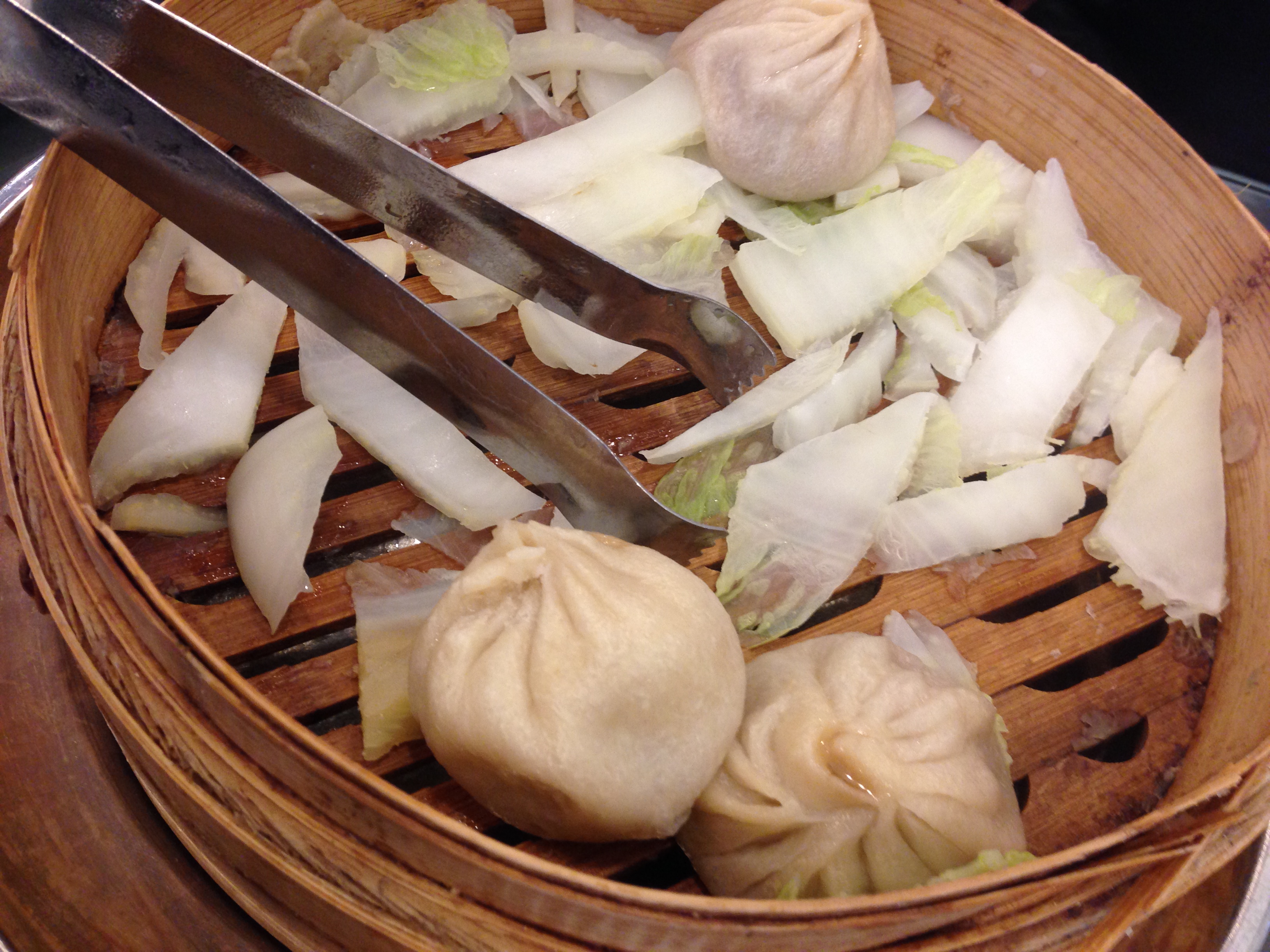
The xiaolongbao is a type of steamed bun from Shanghai and neighboring regions of China. It is traditionally steamed in a bamboo basket, hence the name (xiaolong is literally small steaming basket), and served atop shreds of napa cabbage. Xiaolongbao are often referred to as soup dumplings in English, but they are actually not considered dumplings in China. They are buns, pinched at the top before steaming, creating a dough cascade of ripples around the crown.

one dumpling

There is a science to eating them. You place one on a spoon with a pair of tongs, then bite a tiny hole in the dough to let out some of the heat. Slurp carefully and when you can stand it no longer pop the whole thing in your greedy mouth.

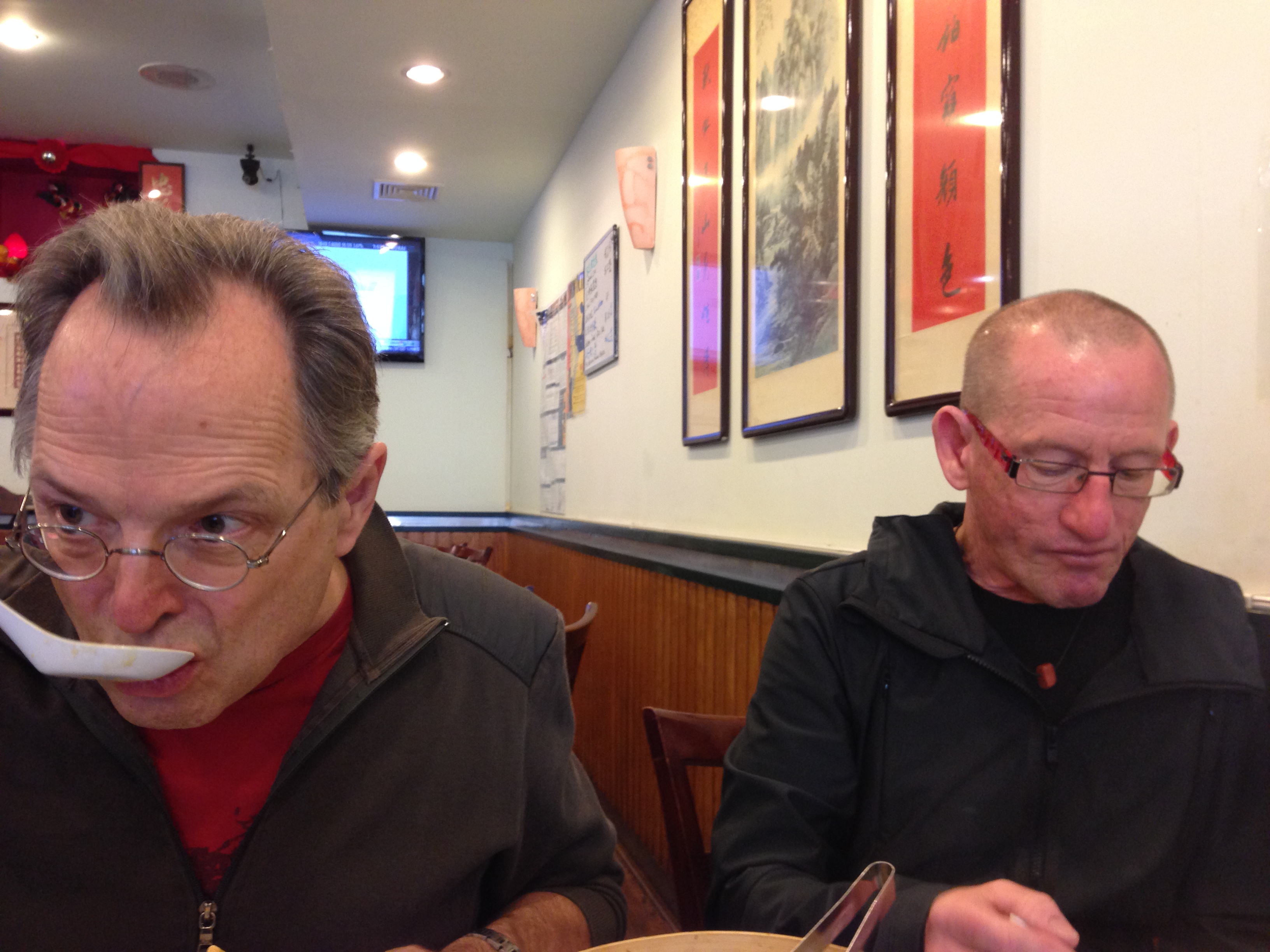
gil:rick

“They remind me of testicles,” said Rick. “There is a sexual quality about them that is definitely appealing.” He’d recommend the pork rather than the crab, if you have to make a decision between the two.

Or choose the crispy salt and pepper shrimp, amazing in the shell but not so much with the heads on. That’s okay, Gil pulled them off.

shrimp heads

But how does the boiling hot soup get into the little parcels? You can probably guess. The cook puts gelled aspic inside the bun along with a little pork or pork/crab mixture, and it melts deliciously as it steams. A dish of vinegar with ginger slivers is served alongside, but we ripped into the buns too fast to pay any attention to them.

1

2

3

4

Leave a comment

Filed under Art, Cooking, Culture, History, Jean Zimmerman

What a Wonderful House

The walls can talk in Satchmo’s house. Literally. Standing in Louis Armstrong’s den in his longtime residence in Corona, New York, we heard his perfect rumbling tones describing his inspiration for What a Wonderful World – the children of his neighborhood in Queens. The docent had pressed a button. The effect was magic.

Louis kids

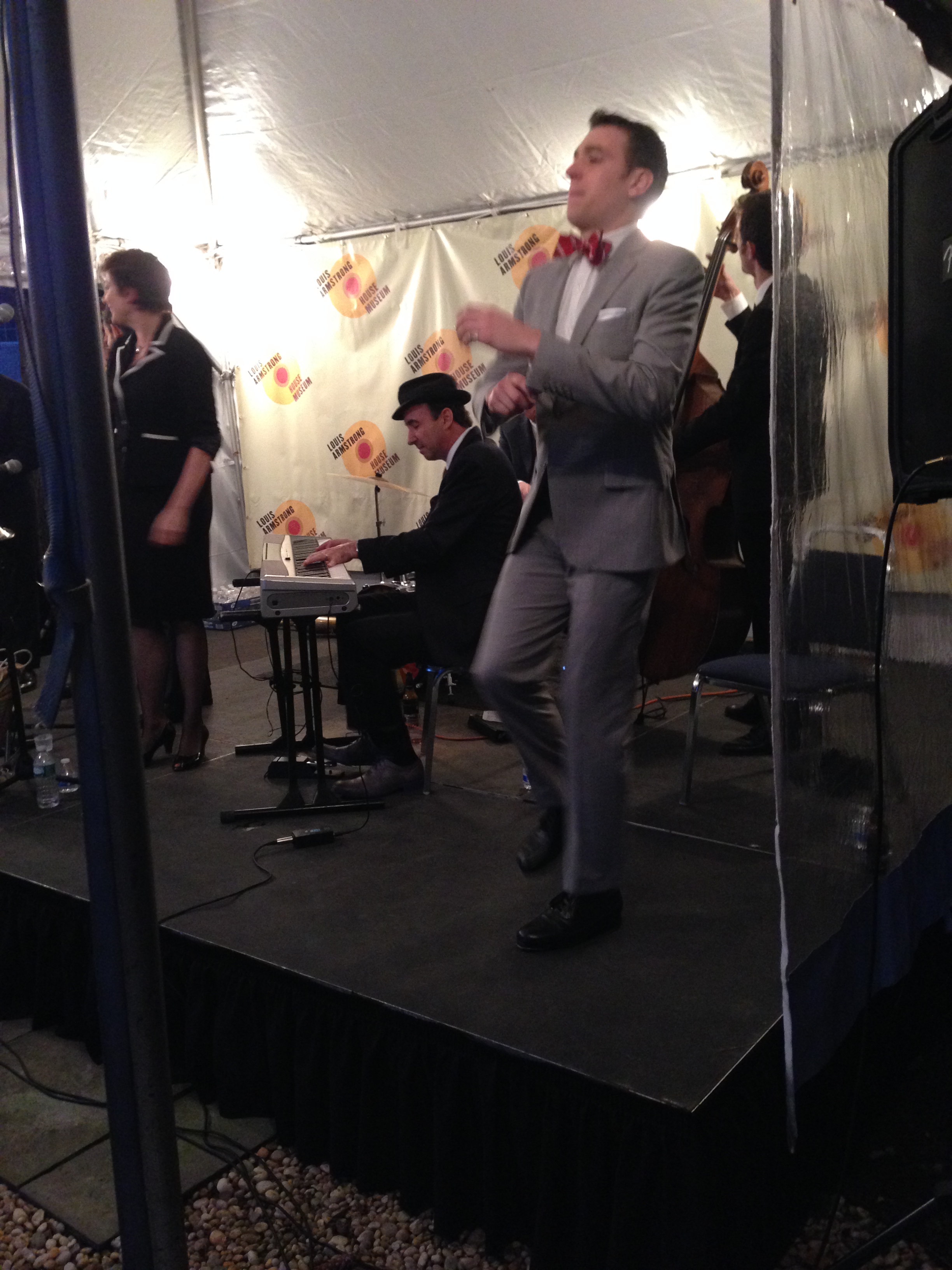
We were visiting the Louis Armstrong House Museum, where the atmosphere created by Pops and his wife Lucille has been impeccably preserved. It was the house’s tenth anniversary as a public destination. A celebration was underway. A group called The Hot Sardines had a throwback style and even a peppy tap dancer, dressed in the current men’s fashion of skinny, tight suits.

tap dancer

There was a powerful trumpet player who might have felt a bit under Armstrong’s shadow.

trumpet player

The singer called herself Miz Elizabeth and the dancer was Fast Eddy. Basin Street Blues and Ain’t Nobody’s Business mingled nicely with the jingle of the Mister Softee truck making its way through the neighborhood.

Waiters came around bearing paper bowls of gumbo — “based on Louis’s own recipe” according to the museum — prepared by The Cooking Channel’s Tamara Reynolds and her company, Van Alst Kitchen.

gumbo queen

The cornbread squares were properly crumbly-chewy. We went back for thirds on the gumbo.

“There are some people that if they don’t know, you can’t tell them,” Armstrong said. Anyone that couldn’t feel the swing in the air of this little Japanese-inflected garden in Queens would have to be unconscious.

After Miz Elizabeth delivered a soulful rendition of Sophie Tucker’s great signature tune, One of These Days, we ventured inside.

living room

A time capsule. Everything was exactly as it had always been, down to the knick knacks and the vacuum cleaner.

vacuum

Lucille, a Cotton Club dancer, made this a showplace,  a glitzy but cozy habitat. She had found the house while Armstrong was out touring, she bought it, fixed it up, and gave him the address, so when he came back from the airport in a taxi he drove up and didn’t believe it – That’s not my house! he said. Or so a docent told us.

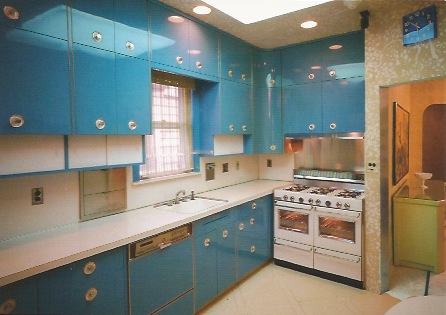
Everything is from another age. The kitchen has glossy turquoise cabinets.

Louis kitchen

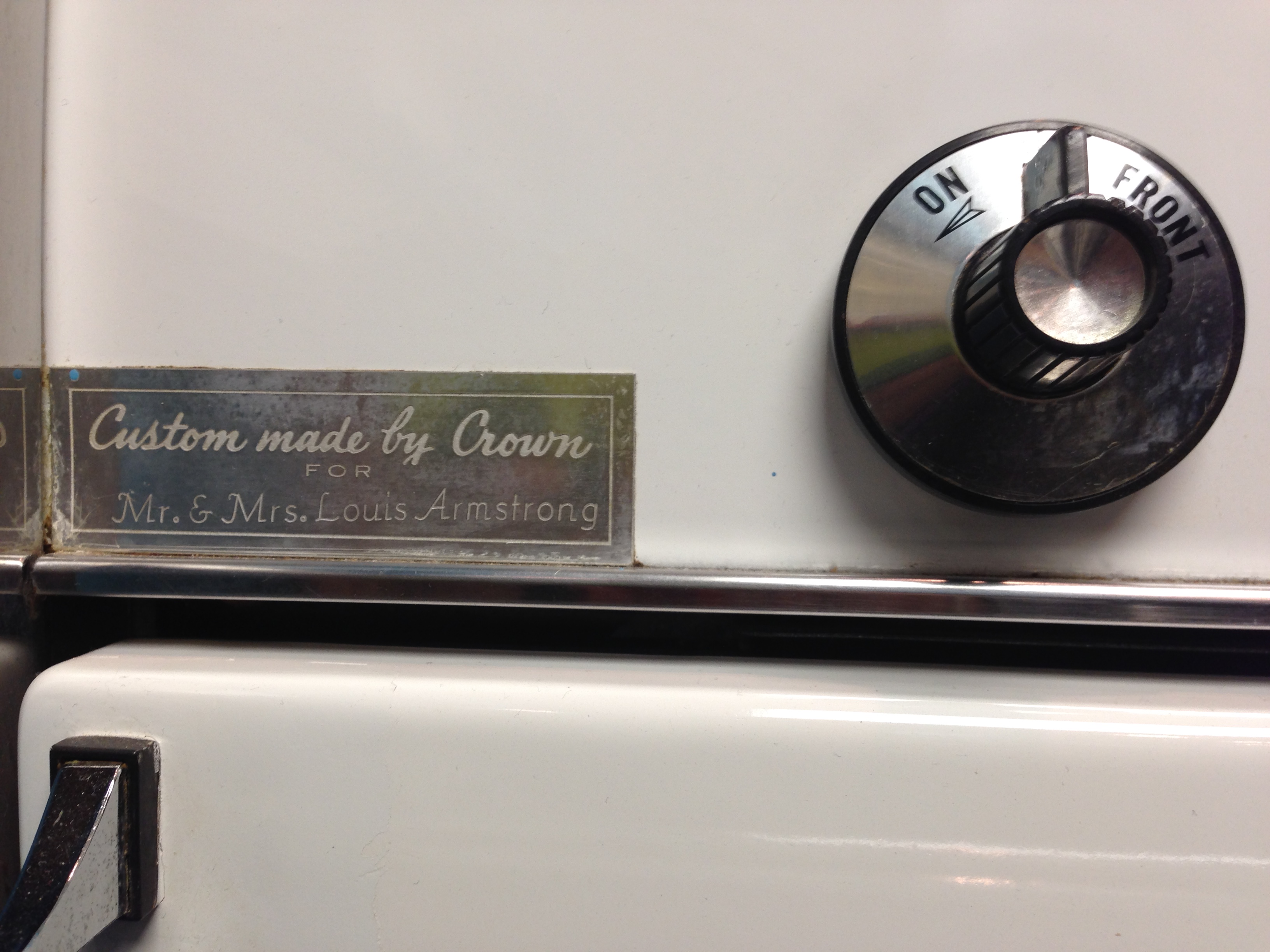
And a stove to which a personalized nameplate was affixed.

Louis stove

You could see the Armstrongs’ recipe box.

Louis recipe

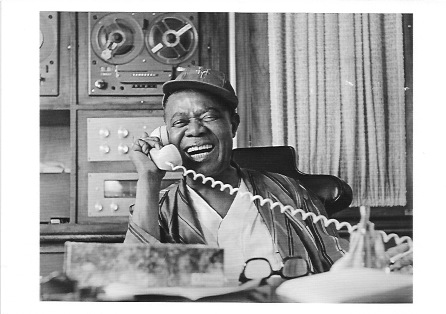
Duke Ellington called Armstrong “an American original.” Pops liked all types of music, not just jazz, and kept a well-used reel-to-reel tape deck with a collection of 750 tapes. He once made a country album and among his first recordings was a duet with Jimmie Rodgers.

Louis phone

His den was his sanctuary, the only place in the house he could smoke weed. Pot, he said, insulated him from racism.

What about that 14-carat-gold-plated bathroom? High style for Corona, Queens.

gold bathroom

A young woman with cat eye glasses was giving a guided tour to her boyfriend as we passed through the upstairs rooms. She had been there many times before. Look at the wallpaper, she said. I just love the decor, she told me, it has so much of them.

So many things change. This hasn’t. The telephone number for the museum is the original for the Armstrongs’ house.


1 Comment

Filed under Cooking, Culture, Fashion, History, Home, Jean Zimmerman, Music, Photography

A Recipe for Meatballs and Longevity

I told Gil I’d make him meatballs for his birthday. His 60th.  I assembled the beef, the pork, the eggs, the breadcrumbs. Plenty of cheese.

raw

I was making the same meatballs I always make, from the delectable recipe served at Patsy’s restaurant on 56th Street in Manhattan. Frank Sinatra’s favorite joint.

frank-sinatra460_1399108c

That was a man who knew how to age gracefully. (Maybe eating Patsy’s meatballs helped?)

So does Gil. He said he’d take part in the meatballs’ production, though he had other things he could have been doing this afternoon. I showed him how you roll the meat in a pile of breadcrumbs. Good breadcrumbs. The better the quality, the better anything you make with them.

crumbs

I asked Gil how it felt to be almost 60.  “Quoting Danny Aiello in Once Around,” he said, “just when you feel like putting a gun in your mouth everybody wants to come over and celebrate.”

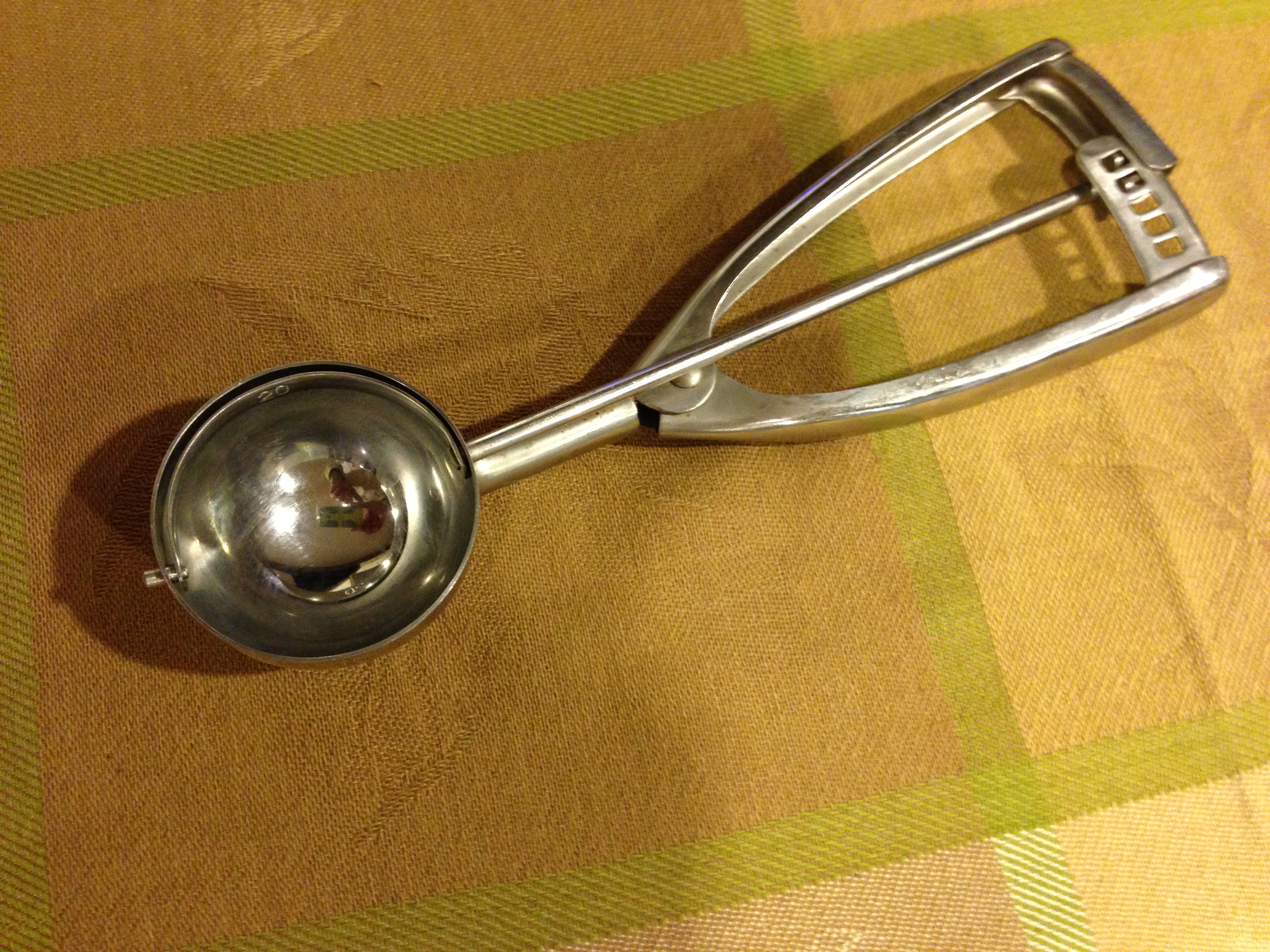
Mortality on your mind? I went on scooping meat. An ice cream scoop cures a myriad of cooking ills. The right size works for cookies and meatballs alike.

scoop

“No,” he said, “I don’t really feel like putting a gun in my mouth. But I do feel like quoting Danny Aiello.”

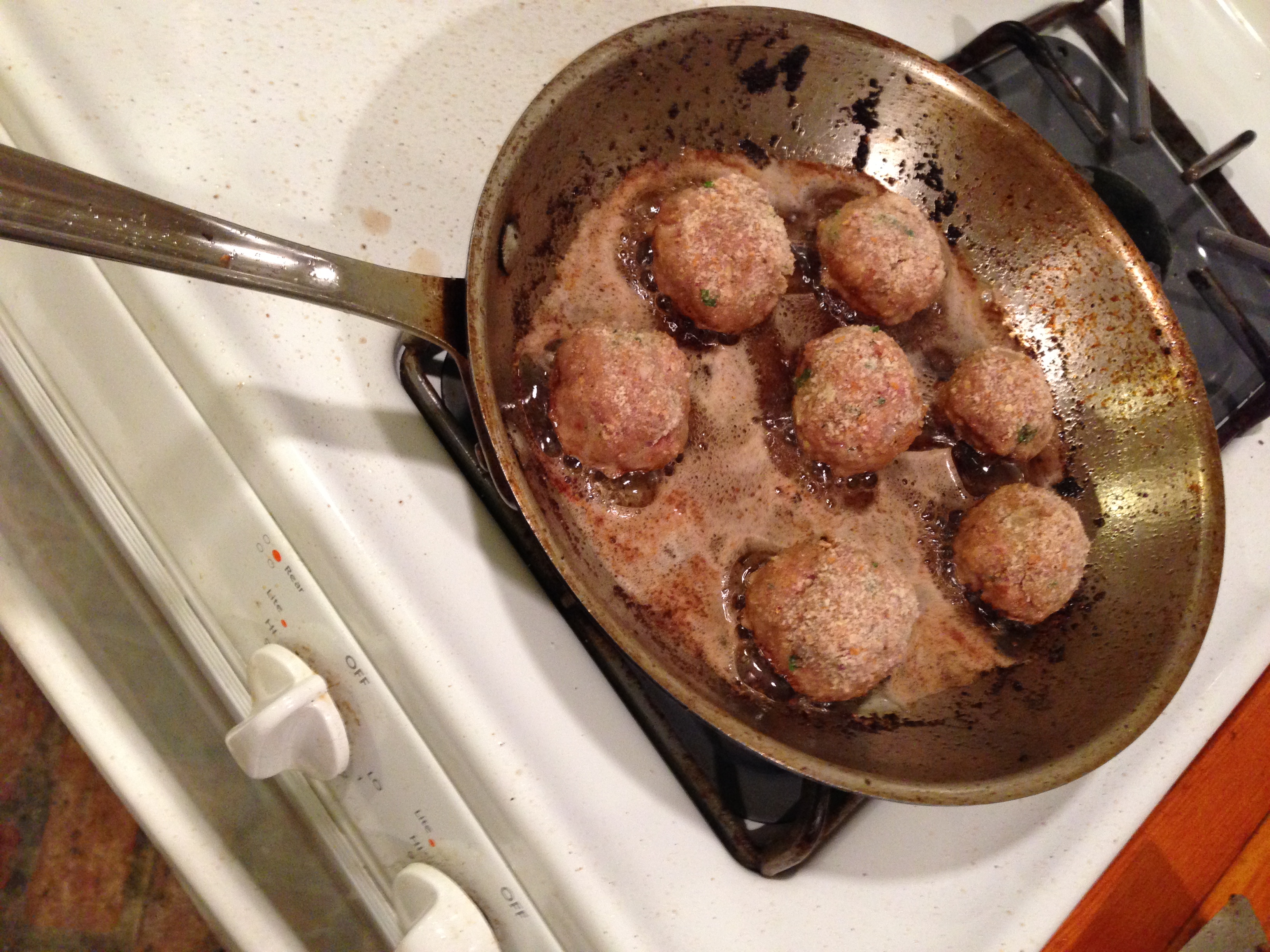
The meatballs sizzled in hot oil. We split a few open and almost burnt our mouths stealing a savory bite.

frying

“How does it really feel,” I persisted.

“It feels great,” he said. “Everyone’s telling me I look 50.”

Gil’s had a habit, ever since I’ve known him (that’s about 20 hundred years now) of doing kitchen work with a towel slung over his shoulder. “No woman ever shot a man who was doing dishes,” Gil says. Now he’s of a certain age, he could give husband-ing lessons to the younger generation. Love and marriage, love and marriage…

dishtowel

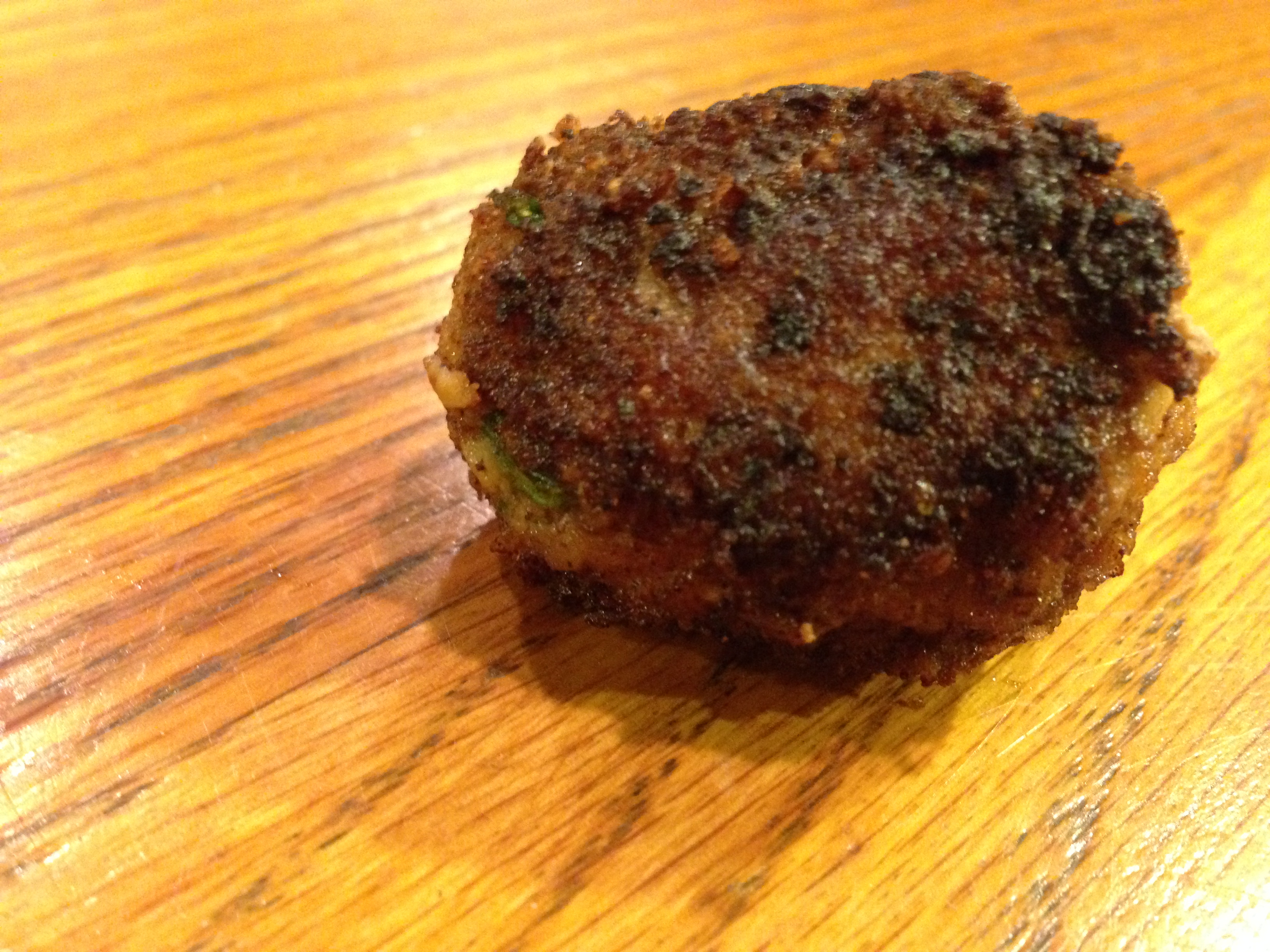
We play Ry Cooder’s One Meatball — he couldn’t afford but one meatball — and toast the perfect specimen with cider.

meatball

Gil’s someday epitaph: He chopped the onions for his own birthday meatballs.

Patsy’s Meatballs Recipe

Combine ¾ c. breadcrumbs and 6 T. whole milk in a small bowl.

Heat 2 T. oil in a skillet; fry 2 medium onions chopped fine and 6 cloves garlic chopped fine.

In a large bowl, combine 1 ½ lb. ground beef, 1 ½ lb. ground pork, 3 large eggs and 3 egg yolks, slightly beaten, 3 T. chopped parsley, 3 T. chopped oregano, 1 ½ c. grated Parmesan. Salt and pepper. Combine well.

[Now, Patsy’s recipe entails an elaborate method of rolling out the meat mixture, cutting it, rolling it, etc., which I find too burdensome. I take a simpler route, which gets the meatballs to the finish line faster.]

Roll small balls of meat mixture in bread crumbs and fry them well in oil. Invite all your friends over, as this makes around six dozen meatballs.

8 Comments

Filed under Cooking, Culture, Home, Jean Zimmerman, Music, Writers

Making Change

It’s a good day for working. I just finished proofing the third pass Savage Girl galleys. Found some periods and commas that persisted perversely in the manuscript despite everyone’s best efforts. A few tiny, tiny changes make all the difference. If. You. Ask. Me.

Yes, it’s a good day for scrunching your forehead and working. Especially if your work is being on the lookout for deer.

scrunch

But isn’t it a better day for rolling in the grass? Those fallen leaves add a toasty texture to a run-of-the-mill back scratch.

O rolling

Closer to waist level, the sun warms the fall berries. Where do they come from? The landscape has changed. All of the sudden they’re there.

red berries

Then there are the last of the morning glories, though they don’t know it. The deer have already had at most of their leaves. Soon the blooms will fold up their tent.

glories

They mirror the arching sky. Contrails: someone’s going someplace.

blue sky

The morning glories unfurl for just a single day. Their only work is being beautiful.

This morning I revamped the front page of this site, and I invite you to visit. To improve is to change, said Churchill. To be perfect is to change often. I don’t know that I change often enough or dramatically enough, but I’d like to try something new.

For one thing, I’m settling on an up-to-date author photo. Not quite sure, but this one’s a strong possibility.  I like it because I seem bemused. Which I often am.

IMG_8745 revised

2 Comments

Filed under Dogs, Fiction, Jean Zimmerman, Nature, Photography, Publishing, Savage Girl, Writers, Writing

The Golden Notebook in Golden Fall

Tomorrow will be a perfect day to take in the leaves upstate as they color up. If so much natural beauty wears thin and if you happen to be near Woodstock, New York, consider coming to The Golden Notebook for my 2:00 talk on The Orphanmaster. Signing copies, too. I know there are excellent lattes down the street and I’m pretty sure the nice people in the store will allow you to nurse one in in a  paper cup while you sit back and enjoy my slide show — lots of nuggets about the way people, places and things looked in 1660s Manhattan. The raging beaver trade. The fashion of men in red-heeled pumps. What was it actually like, anyway? New York before it became New York. Imagine.

visscherDetail2k

Please do come. I’ll be up on the second floor.

4 Comments

Filed under Art, Culture, Fashion, Fiction, History, Jean Zimmerman, Nature, Publishing, The Orphanmaster, Writers, Writing

Truck Garden

125th and Broadway, 9pm on a Tuesday night. The hush of dusk is just behind us as we pull up to a red light at the intersection.

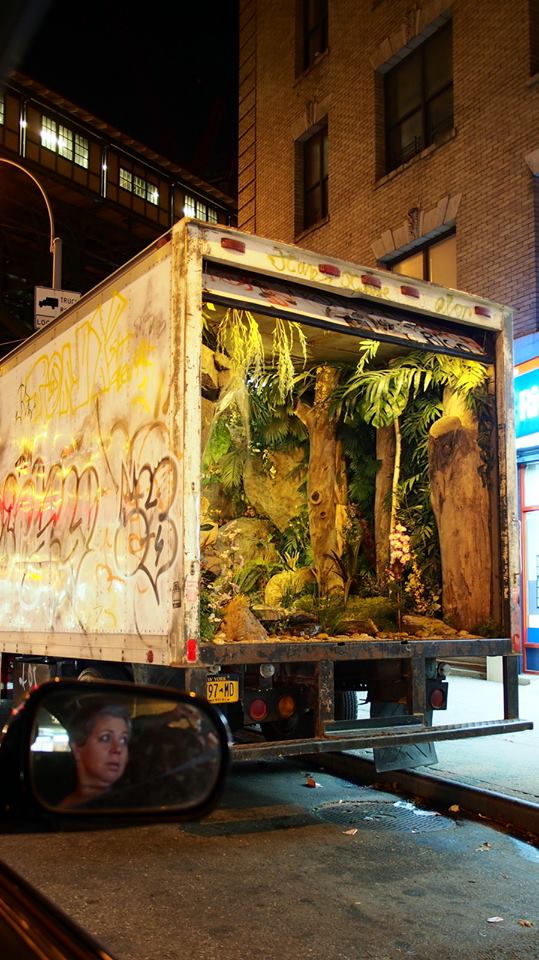
To our right, a dilapidated box truck covered with hieroglyphics of graffiti. Dirty and timeworn. The back is open, but nothing is being loaded or unloaded. Inside, we suddenly register, is a magical forest, a glistening waterfall. We can’t believe our eyes. The crack photographer Suzanne Levine, tucked in the back sea, takes out her camera.

Banksy

Gil says, Get out, you’ll get a better picture. It’s okay, she says. It’s fine this way.

And it is. (Check out my mug in the rear view.) A drive-by photo shoot in the New York City night is the perfect way to capture an artwork by, it turns out, one of the greatest creative minds and pranksters of the age.

Banksy was here.

Banksy has been turning up all over New York recently, though he’s headquartered elsewhere, with his mysterious stencilled message graffiti and now… this. A grungy delivery truck complete with a motorized waterfall and plastic butterflies. He was quoted today as saying, I should probably be somewhere more happening like Moscow or Beijing, but the pizza is better here.

The truck will make a stop at dusk each evening, but no one knows exactly where, or for how long, just as no one knows just about anything for real about Banksy. But if you want to listen to a story about the Garden of Eden in a box truck, you can call 1-800-656-4271 and press 3# at the prompt.

Manhattan comes through, just something we rolled up on in the gloaming.

2 Comments

Filed under Art, Culture, Jean Zimmerman, Nature, Photography

Going to the Chapel

I needed to get a new author photo and I wanted to pose against the neat red bricks of St. Paul’s Chapel on the campus of Columbia University. It was not difficult to set up, since Maud was the photographer and this is where she went to school.

St. Paul's

When I.N. Phelps Stokes designed St. Pauls, it was the first non-McKim, Mead and White structure erected on campus. This was 1907. A photo from the time shows it looking new and bare. It would prove to be Stokes’ greatest architectural achievement.

1905

Over a century later, the diminutive chapel’s Renaissance design still wins acclaim for its beacon-like green dome, its Italianate authenticity, its salmon-brick Guastavino vaults and its splendid acoustics. A schedule of magnificent music was posted outside the doors. People love to get hitched here.

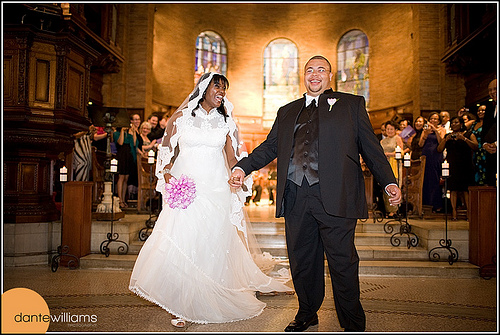
hitched

Waiting for our photo session, I took a seat–as I had many times, many years ago, when I was studying writing and this was my school–on the curving stone bench across from the Chapel.

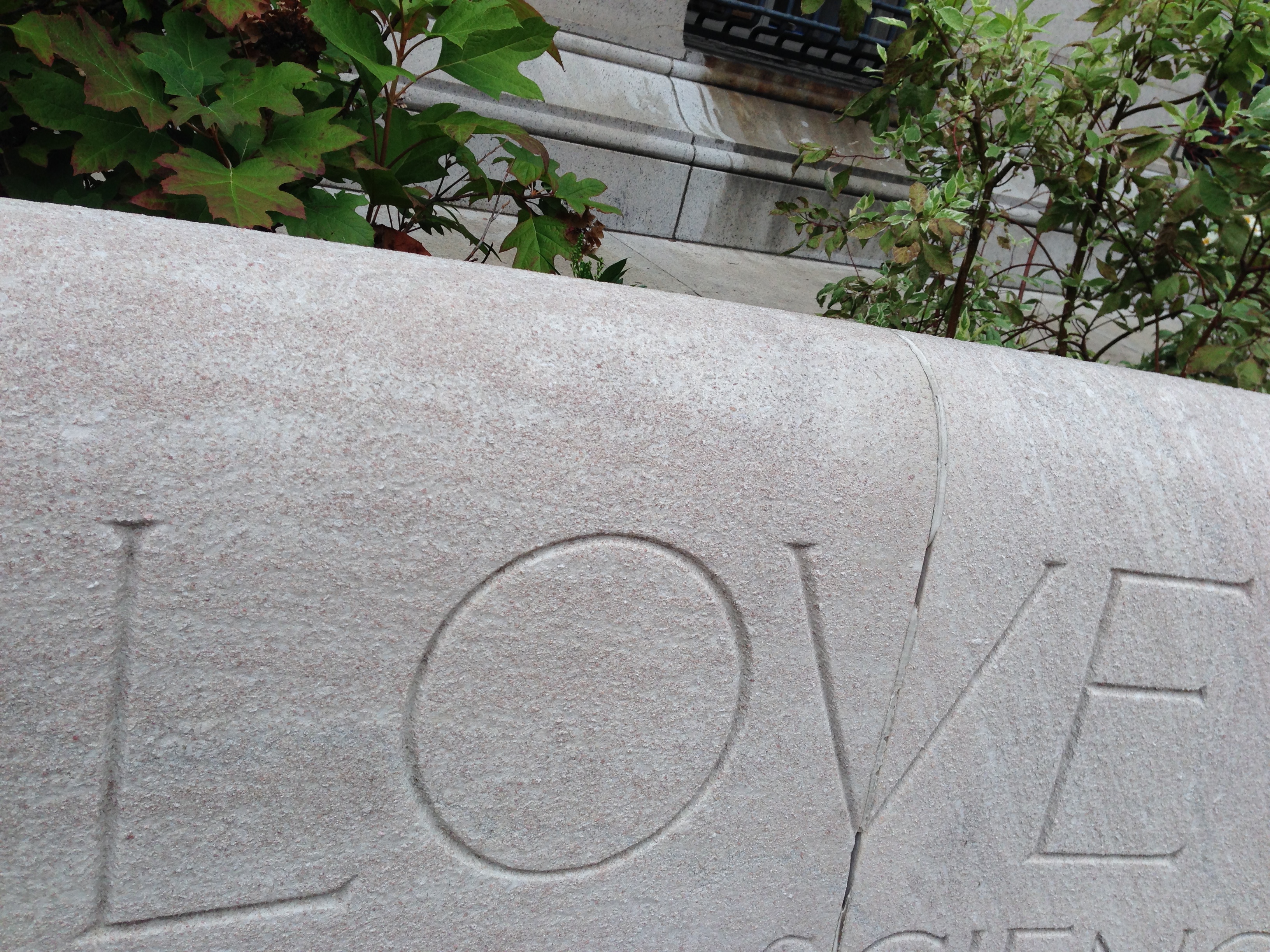
love

It actually spells out Love Your Alma Mater, but I like the more elemental, bare-bones message.

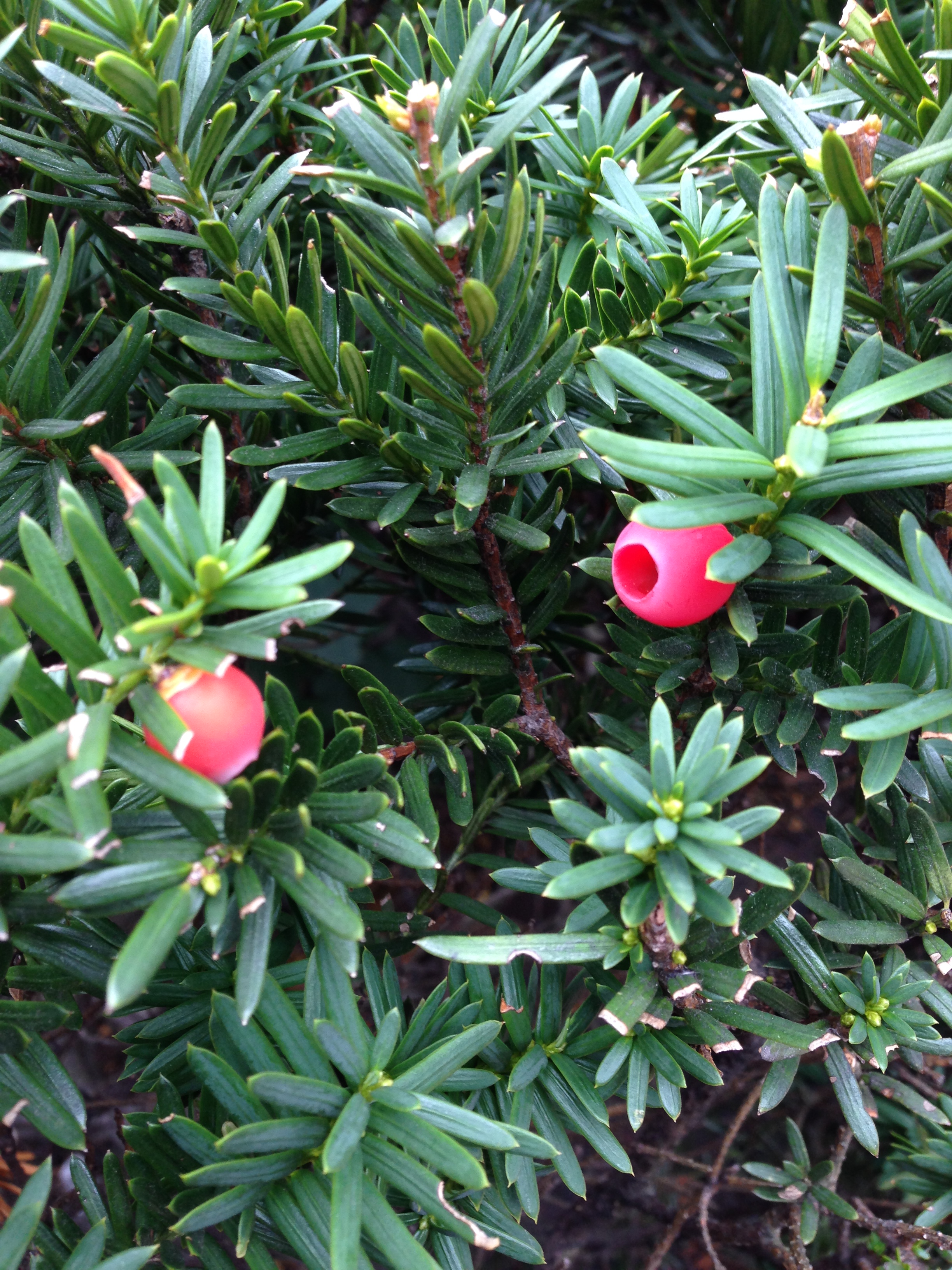
All around, the autumn hedges were producing moist red berries.

berries

They looked like pieces of candy stuck there for the taking.

I ducked inside to check out Stokes’ inspired efforts. (Not pictured here, because no pictures allowed.) He created the glossy floors of marble fragments in intricate patterns resembling those you find in Italian churches, but these patterns are purely decorative, with no symbolic meaning. Sturdy wood chairs were preferable to pews, he decided. He and Edith had toured Italy in the winter and spring of 1905 as preparation for working on St. Pauls. During the trip he decided to bring back some wine – not just a few jugs of Chianti but 50 liters of red in casks that he then had decanted into half-pint bottles.

Stokes was a meticulous man, and a driven one. He wanted the job of designing St. Paul’s. His passion for the project was shared by his altruistic aunts, immensely wealthy sisters who refused to provided the funding unless their nephew was hired on.

I hovered in the back of the Chapel while mass was conducted in the nave. Short and sweet, body, wine, done.

My pictures also came about pronto. In the background the bricks, yes, to the side of the columned portico – at the top of each of those columns is a cherub carved by Gutzon Borglum, who was responsible for Mount Rushmore.

columns

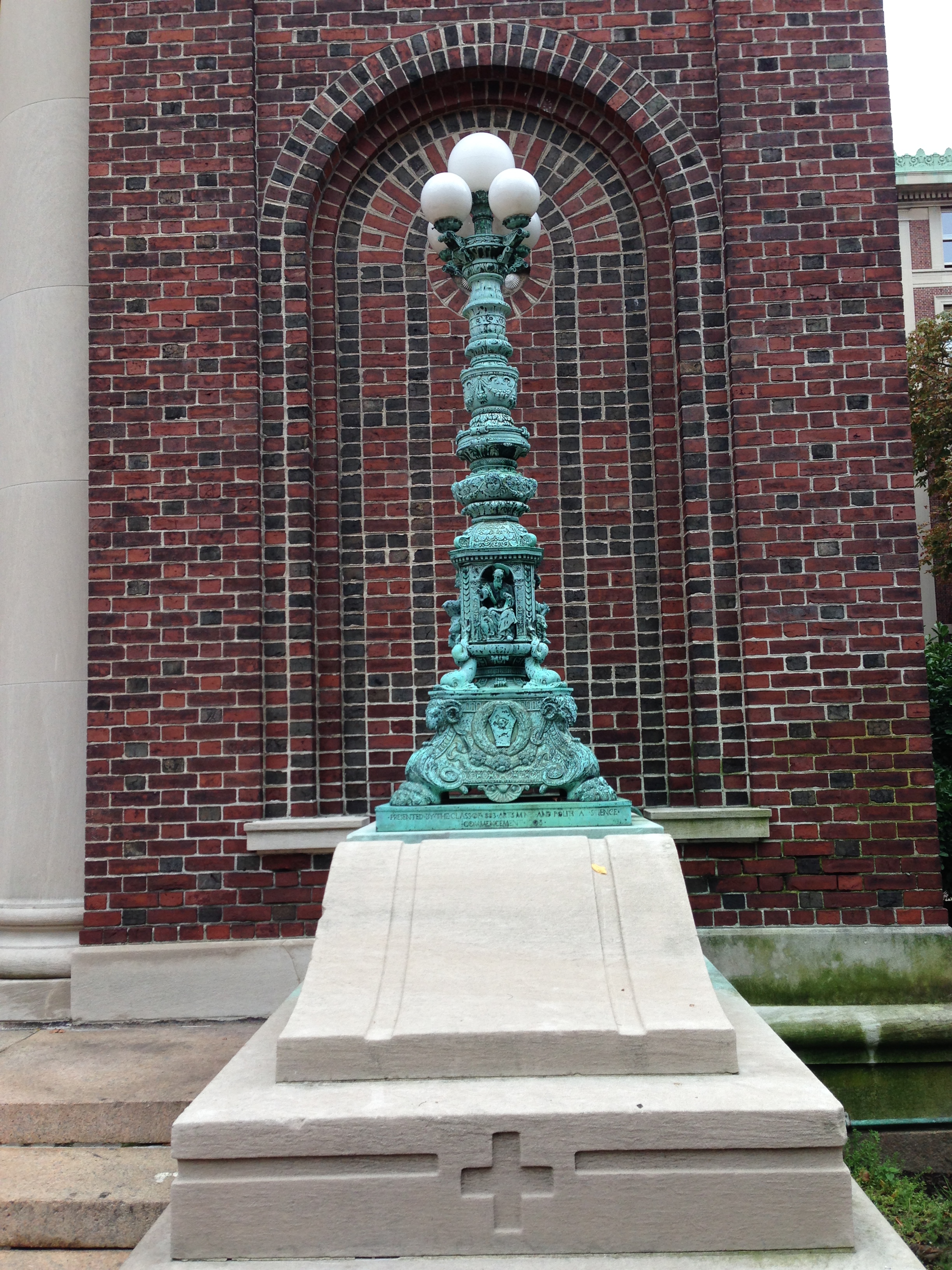
In the background of the photos stands a Quattrocento-style bronze lamp, pickled green by time, designed by sculptor Arturo Bianchini to show the four apostles of the Old Testament but also a pod of swimming dolphins.

lumiere

Of course what you’ll see most of all in Maud’s pictures is not the bricks, not the dolphins, but my smile, beaming, because it is my daughter behind the camera and we are connecting through the medium of photography.

dolphins

3 Comments

Filed under Art, Culture, History, Jean Zimmerman, Love, Fiercely, Music, Nature, Photography, Writers, Writing

A Victorian Evening

There were not enough chairs. Victorian Society guests who came in late had to huddle by the door rather than join the hundred or so in the room. I was only a little distracted by all those wide eyes in the audience, drinking in the images on the screen behind me, so entranced were they by the Gilded Age. It was a marvelous evening.

The Victorian Society New York members are a lovely bunch, very serious about their history and dedicated to preserving the built past of the nineteenth century. Talking about I.N. Phelps Stokes and his passion for Old New York, I could see that that strong interest of his resonated personally with so many of this group. That Edith “Fiercely” Minturn’s old-fashioned beauty touched them.

Minturn Girls Portrait jpeg

There were some great minds and delicate sensibilities in the crowd. The master horologist John Metcalfe – clock expert, to you — with public school English diction and an L.L. Bean bag, informed me that when Newton and Edith Stokes packed up a sixteenth-century British house in 688 boxes to export and reassemble on the coast of Connecticut, they were not the only ones.

John Metcalfe - DAY TWO

It was, apparently, a vogue at the time for those who could afford it. I knew that those of tremendous wealth paid people like Stanford White to cull the monasteries of Europe for great rooms that would be installed intact in their country houses. But I didn’t realize the wholesale shipping over of houses was a fashion for the fashionables until Mr. Metcalfe told me so.

There was the great preservationaist and historian Joyce Mendelsohn, who introduced me with the gracious admonition that listeners buy “two or three books “ and to give the extras to friends. Music to a writer’s ears.

mendelsohn-lower-author

An author herself, most recently of The Lower East Side Remembered and Revisited: A History and Guide to a Legendary New York Neighborhood, Joyce has been a pivotal presence in Victorian Society New York.

Then there was the architect-scholar David Parker, who first introduced me to the dripping-with-history Loeb house at 41 East 72 Street. David knows pretty much everything about buildings and interiors of the late nineteenth century, all of which he applied to the renovation of that brownstone, with its Herter furniture, Tiffany glass, Minton ceramics, swags of velvet and fantastically patterned wallpapers.

Loeb_01

There was a woman from Fraunces Tavern that had me sign copies of all my books at the request of her boss there. Fraunces Tavern is one of the oldest structures in Manhattan – it was first opened by Samuel Fraunces in 1767 — and I was proud to give a talk there once before.

samuel-fraunces-small

I hope I do so again soon.

One scholar present had completed a doctoral thesis called “Psychosexual Dynamics in the Ghost Stories of Henry James.”

henry james

If she had had a copy with her I would have bought it and asked her to sign it.

book signing pic

5 Comments

Filed under Art, Culture, Fashion, History, Home, Jean Zimmerman, Love, Fiercely, Photography, Publishing, Writers, Writing

Sargent and the Newlywed Stokeses

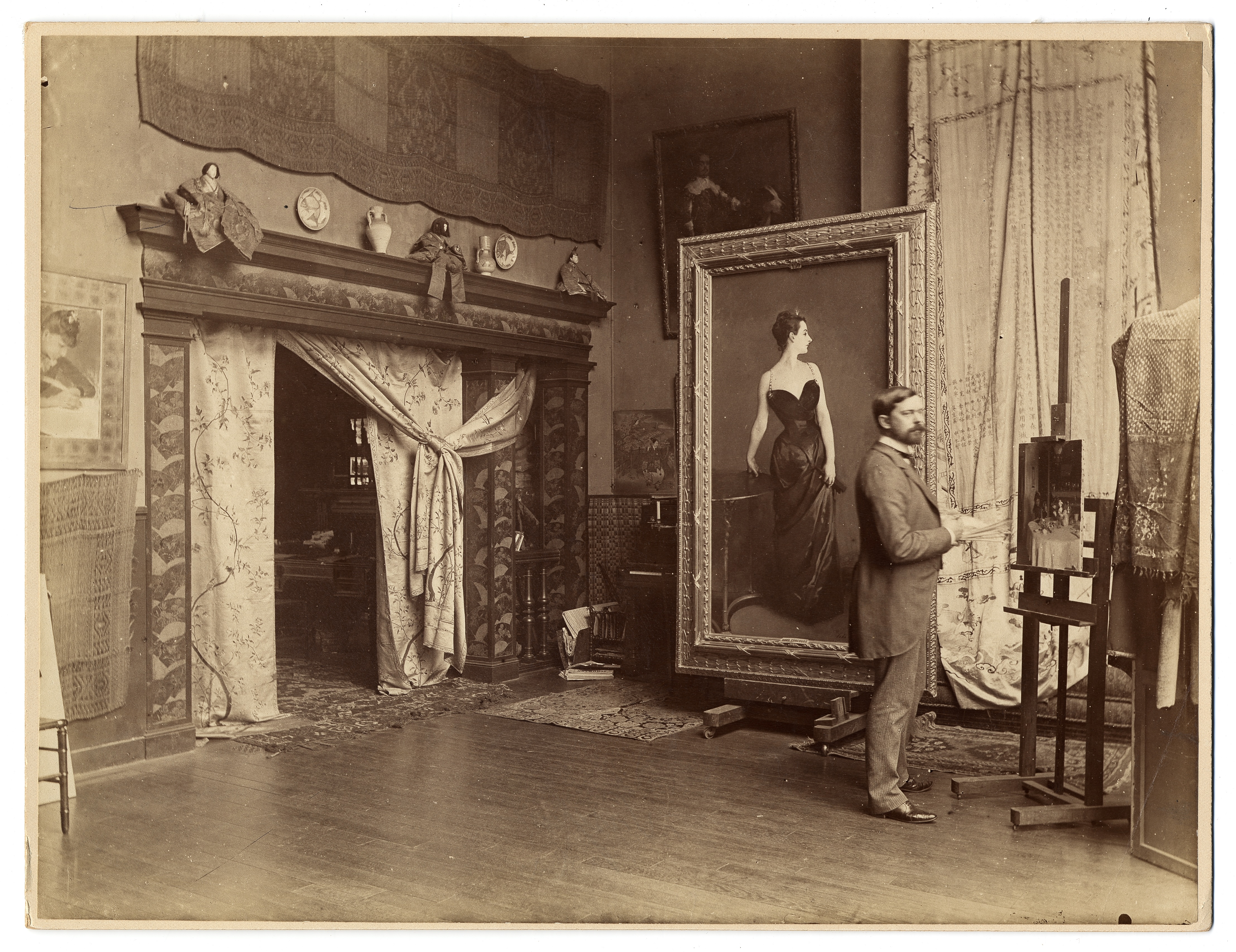
John Singer Sargent painted Mr. and Mrs. I. N. Phelps Stokes in 1897, during the couple’s honeymoon – a classic portrait and an icon of the time. The three of them spent weeks in his studio, with Sargent occasionally taking breaks to pound out tunes on his grand piano. The great painter was at the height of his career and almost too busy to make time for them, but an influential family friend had commissioned the work as a wedding gift.

Sargent in Studio

Not everyone liked  it. One critic called the painting “too clever for its own good.”

Mr_and_Mrs_John_Phelps_Stokes

Bringing the portrait into existence had been a challenge for Sargent. According to I.N. Phelps Stokes, newlywed Edith “sat to” Sargent 25 times, posing over and over agin in a blue silk gown. Sargent finally got fed up with the formality and said “I want to paint you as you are.” Edith had come in from the hot London streets that day wearing informal attire, clothes drastically different than the diaphanous gowns the painter’s models typically posed in, and she had a fresh, dewy look about her cheeks.

In other words, she was sweating.

Edith

Come tonight to see more pictures and hear more nuggets about the Newton and Edith Stokes, their portrait, and their remarkable lives – Dominican Academy, 44 East 68th Street, bet. Park and Madison, at 6pm, sponsored by the Victorian Society of New York. Free.

1 Comment

Filed under Art, Culture, Fashion, History, Jean Zimmerman, Love, Fiercely, Writers, Writing

Victorian Society Oct. 8 Talk

Please join me tomorrow evening, Tuesday October 8th, at 6 pm, to hear a free talk I’m giving for the Victorian Society of New York on Love, Fiercely: A Gilded Age Romance. The evening will take place at a school called the Dominican Academy that is housed in a historic mansion at 44 East 68th Street, bet. Park and Madison, in NYC. Get there early for a seat!

Edith & Isaac

For a little more info — according to the organization’s lecture schedule, my presentation:

“will discuss the life, times and passion of two remarkable individuals living in a remarkable age. Her book Love Fiercely: A Gilded Age Romance is both a cultural history of America on the cusp of modernity and a biography of two of the era’s most interesting characters, Isaac Newton Phelps Stokes and his wife, Edith Minturn Stokes, whose double portrait by John Singer Sargent hangs in the Metropolitan Museum’s American Wing. Love, Fiercely immerses readers in the world of the Astors and Vanderbilts, the “uppertens” and the “fashionables” in New York City and its satellite resorts. Zimmerman will also tell the parallel story of the couple’s reform work and of Mr. Stokes’s monumental tome, The Iconography of Manhattan Island.

Mr_and_Mrs_John_Phelps_Stokes

I’ll show lots of great pictures and probably digress quite a bit from these topics, I hope enjoyably. And I’ll sign books after my talk, of course. So come if you can.

4 Comments

Filed under Art, Culture, History, Jean Zimmerman, Love, Fiercely, Photography, Publishing, Writers, Writing

The Virtue of Patience

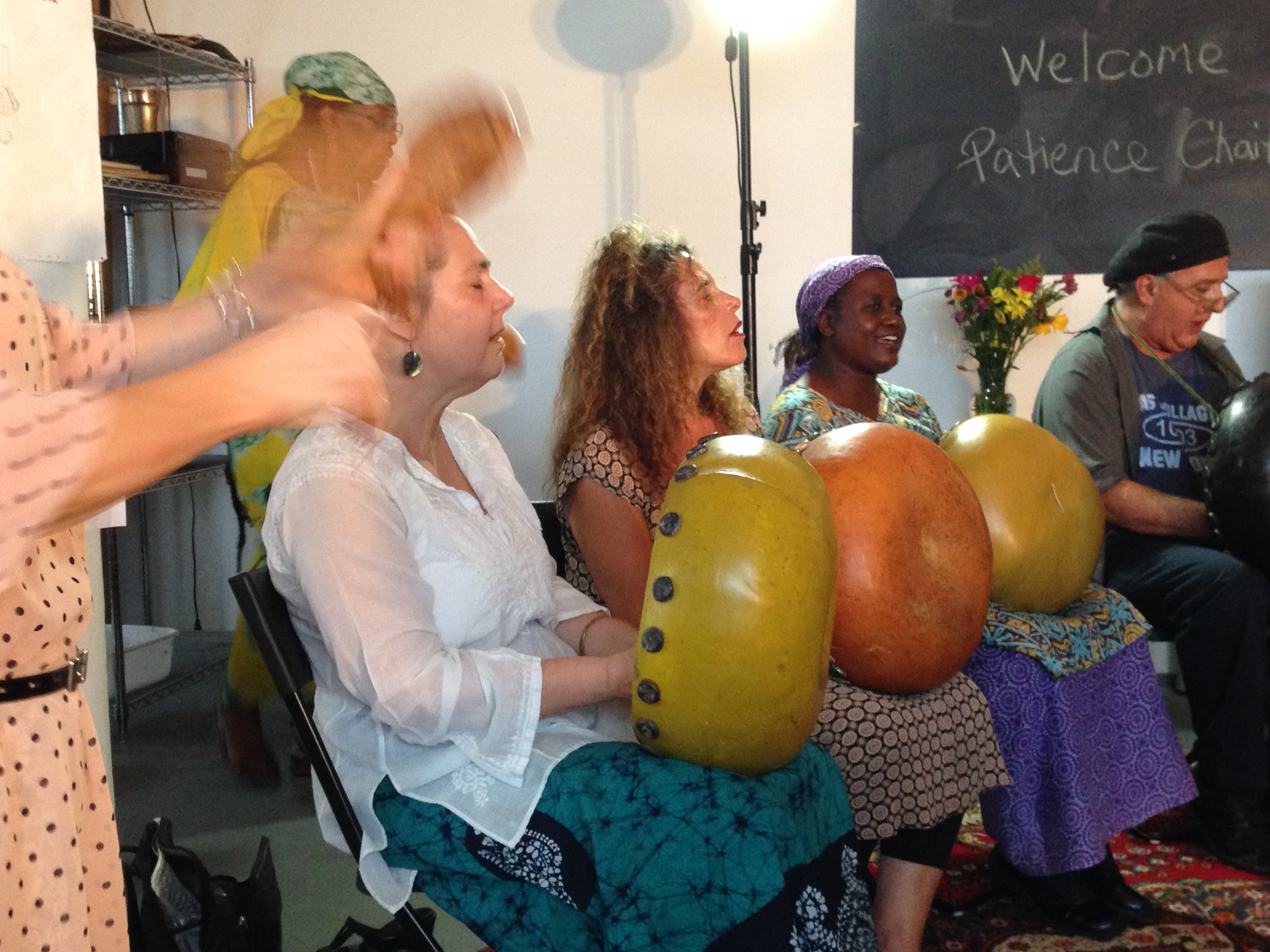
I arrive nice and early,  just like I like it, to see Patience Chaitezvi. Grey light is wafting in the Sunday afternoon windows of the old converted brewery, framing the mysterious-looking stone Palisades in the distance. Curious-on-Hudson, which describes its mission as “crowd sourced education in the Rivertowns,” is hosting the musical performance that is about to start.

palisades windows

Folding chairs are lined up just so, and in the hush it feels as though I am waiting with a crowd of ghosts. There is only the faint sound of a piano sonata being played in a studio on the floor below.

chairs

Patience, a master mbira player, dancer, and Zimbabwe cultural expert, is visiting New York for the fourth time. She is teaching her instrument and teaching about her culture. Most of all she is proving that to be a genius on the mbira you don’t have to be a man.

patience

In Zimbabwe, where Patience grew up, Shona culture doesn’t readily admit women to the ranks of the important ceremonial musicians. “Mbira music is a cell phone to call the ancestral spirits,” she explains affably in a break from the music. She learned the iron-pronged thumb piano from a brother when she was 11 and was soon recruited to play with the big boys. She was good enough to overturn the conventional proprieties — to have a woman seated among men is seen as unequivocably wrong, she said. But she was exceptional – she also has a BA in divinity and teaches high school history. (Playing during ceremonies is still not allowed during menses.) She knows all about Shona traditions, and tells us about ceremonies where wise people beckon mermaid spirits with buckets of salt water.

mbira

On this day in America, she harmonizes with the members of mbiraNYC, my friend Nora’s ensemble. Mbira is a sacred instrument but it is also healing. And it is played for entertainment. As the foursome play, they sing, and Patience begins to softly ululate, smiling as she does it. I pretty much love it when anybody ululates.

As Renee Zellwegger would say, She had me at ululate.

hosho shot

“Sometimes you listen to mbira and find your worries gone,” says Patience. “How? The spirits…” She wants us to get up out of our chairs. We’re New Yorkers, weary from our lives, our obligations, weary of feeling weary. We hang back in those black folding chairs as thought we’re the ghosts I thought I saw before.

“If you can talk, you can sing,” says Patience. “If you can walk, you can dance.”

Patience rises from her chair and moves into the center of the room. The song is called Meat From the Forest. I beckon to my old friend Amy, sitting under the windows, and we hit the floor. Stomping alongside Patience, swaying, clapping. The room rises, 40 or so of us, and moves, led by Patience. By the time I sit down I am perspiring and my toe is sore, but that mbira music must indeed be healing, because being on my feet feels better than it’s felt in months.

5 Comments

Filed under Culture, Dance, Jean Zimmerman, Music

Crystal Palace Visions

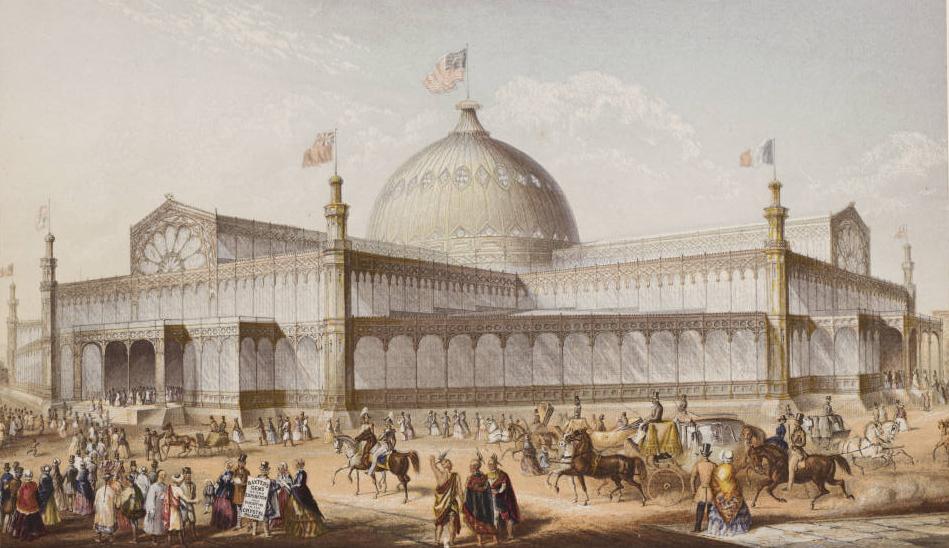
One thing on the island of Manhattan that I’ve always wished I could have seen is the Crystal Palace, built to house the World’s Fair of 1853, “The Exhibition of the Industry of All Nations.” Walt Whitman called the glass and iron complex “Earth’s modern wonder.”

New_York_Crystal_Palace

On 42nd Street between Fifth and Sixth Avenues, where Bryant Park now stands, the Crystal Palace welcomed its thousands of awe-struck visitors. Believed impervious to fire, it burned to the ground 155 years ago, on Oct. 5 1858. The conflagration started in a lumber room and within 15 minutes the huge dome had collapsed. I wonder whether any of the exhibitors were able to salvage their goods in time – Samuel Morse had his telegraph there on view, and Isaac Singer was showing his new invention, the sewing machine, which would transform our world in ways that couldn’t have been imagined.

Oct 5, 1858 crystal palace burns

Across the street stood the tallest structure in New York, the Latting Observatory, 315 feet high. Warren Latting erected a wooden tower resembling a scaled-down oil derrick as a tourist attraction in conjunction with the fair. Sightseers could take a steam-powered “safety hoister” elevator up 315 feet in a tiny, ornately decorated cab to the pinnacle of the tower. There they would admire the marvels of Manhattan through a battery of telescopes.

latting_view-scaled1000

A meticulously detailed engraving, drawn in 1855 by B.F. Smith and engraved by William Wellstood, documented the bird’s eye view of the city south of 42nd Street. It revealed the sheen of the Crystal Palace and the bulk of its neighbor, the brick-walled Croton Distributing Reservoir, which had supplied the city with pure drinking water from upstate since its completion in 1842, when the neighborhood was largely fields and cows. To the south you could just see the neo-Gothic spire of Trinity Church, a geographic talisman of New York the way first the Woolworth building and then the Empire State Building would be for future generations. People would go courting up in the steeple.

The Reservoir had 50-foot-high Egyptian-style parapets, 25 feet wide, upon which the fashionables of the day had grown to favor promenading.

olphot

Later, the 42nd Street Public Library would come, with its 20,000 blocks of marble, its Beaux-Arts edifice, its lions cleverly named (in the 1930s by, of all people, Mayor Fiorello LaGuardia) Patience and Fortitude, the two traits absolutely required of any writer. The site would be excavated by 500 workers over the course of two years before construction could begin in 1902, and the library wouldn’t open for business until 1911.

1907-Exterior-marble-work-Fifth-Avenue-facade.

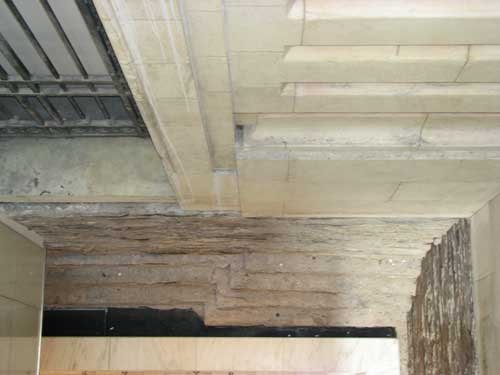
You can still see a chunk of the old reservoir if you know where to look inside the library.

nypl_20060822_15

Carrere and Hastings delivered a grand design. The grandest structure in the city to this day, I think, with its sweeps of stone, its vaulted arches, its treasure trove of seven floors of books.

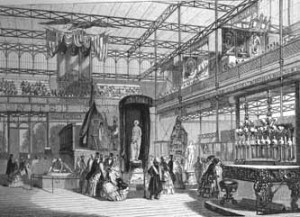
Still, it’s no Crystal Palace. Imagine the wonders you would have seen strolling through those light-flooded rooms?

usdeptn-300x217

4 Comments

Filed under Art, Culture, Fashion, History, Jean Zimmerman, Photography

Adding Savage Girl to the Mix

I opened a new page on this site for Savage Girl yesterday… for now you can click on the tab for a description of the book, but more will come so stay tuned. The novel will be out in March 2014.

Savage Girl cover 3


I’m going to do some refreshing, refurbishing and rejiggering of the site also in the near future. As always, I welcome comments as well as suggestions for what you’d like me to cover in this personal magazine!

5 Comments

Filed under Culture, Fiction, Jean Zimmerman, Publishing, Savage Girl, Writing