Category Archives: Jean Zimmerman

The Spirit of Sinterklass

The Orphanmaster offers a glimpse into Christmas on Manhattan,1660s-style. Or, since the preponderance of colonists hail from the Netherlands, a glimpse into Sinterklass, the Dutch festival of St. Nicholas, which arrives on December 6th. Because we’re talking about The Orphanmaster, everything in this particular holiday season is not all sugar cookies.

Here is a passage from the novel:

Sinterklass—Santa Claus or Saint Nicholas—came to New Amsterdam in early December, arriving with a ship that sailed all the way from Patria laden with toys and other gifts. Children laid out their shoes on the hearth the night of December 5th. The next morning, they would find them filled with nuts, sweets and, for a fortunate few, gold coins.

Sinterklass himself rode slowly down the Broad Way and along Pearl Street on a stolid white mare, fairly gleaming in his long, draping robe, pearly beard and tall red bishop’s hat and mitre, brandishing a golden crosier with a curled top. He had apples for everyone, hard candy, frosted nuts.

Sint op het paard

But these treats were only a precursor to the grand feast celebrated the following day, December sixth, when wealthier colonists served roast goose and potatoes and kool slaw drenched in vinegar and melted butter. Sinterklass was the patron saint of children, doling out gifts to the well-behaved, though everyone got their fair share regardless of how naughty they had been.

Each child knew the story of the three little orphans during a terrible famine, how a malicious butcher lured them into his house, slaughtered and carved them up, then placed their remains in a barrel to cure, planning to sell them off as ham. Saint Nicholas resurrected the three boys from the barrel by his prayers, bringing the orphans magically back alive through the power of faith.

The spirit of the season ruled New Amsterdam between the Feast of Sinterklass on the sixth and Kerstydt, Christmas, on the twenty-fifth. Director general Peter Stuyvesant, who made clear his disgust with any drunken carousing during the holidays, yet made his Great House ablaze with candles and invited colonists in to dance in the entry hall.

But the mood this year was on the whole muted. Murder dampens the spirit…

2 Comments

Filed under Cooking, Culture, Fashion, Fiction, History, Home, Jean Zimmerman, The Orphanmaster, Writing

The Spirit of Electricity

I finally saw “The Spirit of Electricity,” the costume worn by Mrs. Cornelius Vanderbilt II at an outrageous fancy dress party she gave with her railroad tycoon husband that was one of the highlights of the Gilded Age in New York City. Textiles perish, and you don’t often get to see the famous gowns of the past. Mrs. Vanderbilt was always going to be a static image on a photo card, fetching but more than a little cracked.

Mrs. Cornelius Vanderbilt II

Born Alva Erskine Smith, Mrs. Vanderbilt orchestrated the ball in 1883 to christen the new lodgings erected for the couple at 1 West 57th Street. Theirs was the largest house ever built in Manhattan. In staging one of the most elaborate balls of the time, Alva assured the Vanderbilt family a perpetual place on Mrs. Astor’s 400, the list of New York’s social elite.

The New York Times covered the party perhaps less objectively than it would today. “The Vanderbilt ball has agitated New-York society more than any social event that has occurred here in many years,” read the article that ran the day after, on March 27th. “Since the announcement that it would take place…scarcely anything else has been talked about. It has been on every tongue and a fixed idea in every head. It has disturbed the sleep and occupied the waking hours of social butterflies, both male and female, for over six weeks, and has even, perhaps, interfered to some extent with that rigid observance of Lenten devotions which the Church exacts.”

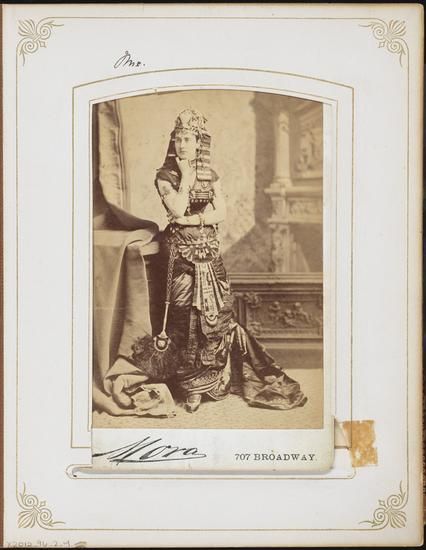
In advance of the evening, quadrilles were relentlessly practiced, costumes were tailored, quantities of hair powder were  laid in. The party was a showstopper. The Times reporter exclaimed about the “garden in the forest” where guests took their supper, and the phalanx of cops that kept gawkers at bay outside the mansion as carriages began to arrive after 10:30 or so. We have no pictures of the hordes with their noses pressed up against the windows, but the fashionables inside had their images captured for posterity by society photographers.

Mrs. Elliot F. Shepard

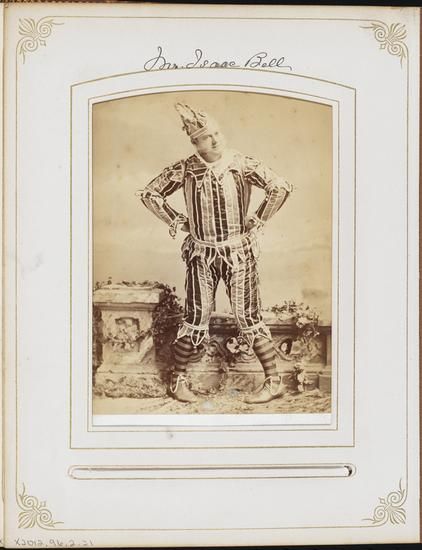
Each guest’s getup was wilder than the next.

Mr. Isaac Bell

Jesters, Romams, Mary Antoinette, the Four Seasons – it was a motley group.

Mrs. Arthur Paget

I thought that the souvenir photos were all that remained of the event.

Then I visited Gilded New York, an exhibit that is currently on display at the Museum of the City of New York. The show includes the decorative arts, some paintings and some fashion. Yes, the end of the nineteenth century is big in Manhattan at the moment, with this enterprise and Beauty’s Legacy: Gilded Age Portraits in America at the New-York Historical Society. If you are a fan of ostentation, now is the time to put aside workaday worries and immerse yourself in a level of excess that is hard to fathom today.

The items on display were those that would have figured big in ball culture. Images of the grand Fifth Avenue houses set the stage, most long torn down, commissioned for the new industrial elites. By 1892, 27% of the nation’s millionaires lived in New York City, more than 1,100 of them.

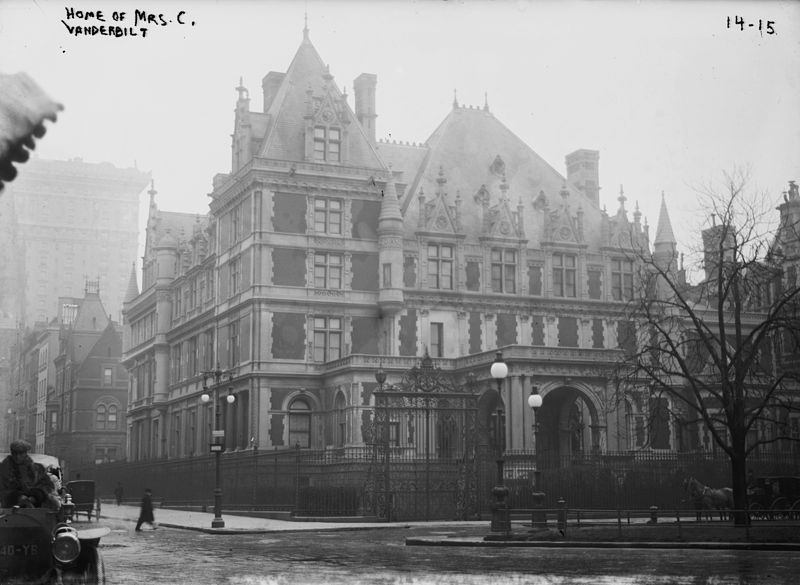
Many of their mansions, like the Vanderbilt house, had a castle-like, European flavor. The structure where the 1883 ball took place was a model for the immense confection inhabited by the Delegate family in Savage Girl.

Vanderbilt home

With their newfound wealth, the millionaires bought jewelry at Tiffany, gold, enamel, diamonds, emeralds and sapphires. But they also went to Tiffany for other accessories, like this card case made of frog leather in 1900.

frog case

They had a taste for the over the top, like a decanter and cup fabricated of Murano Glass.

Murano glass

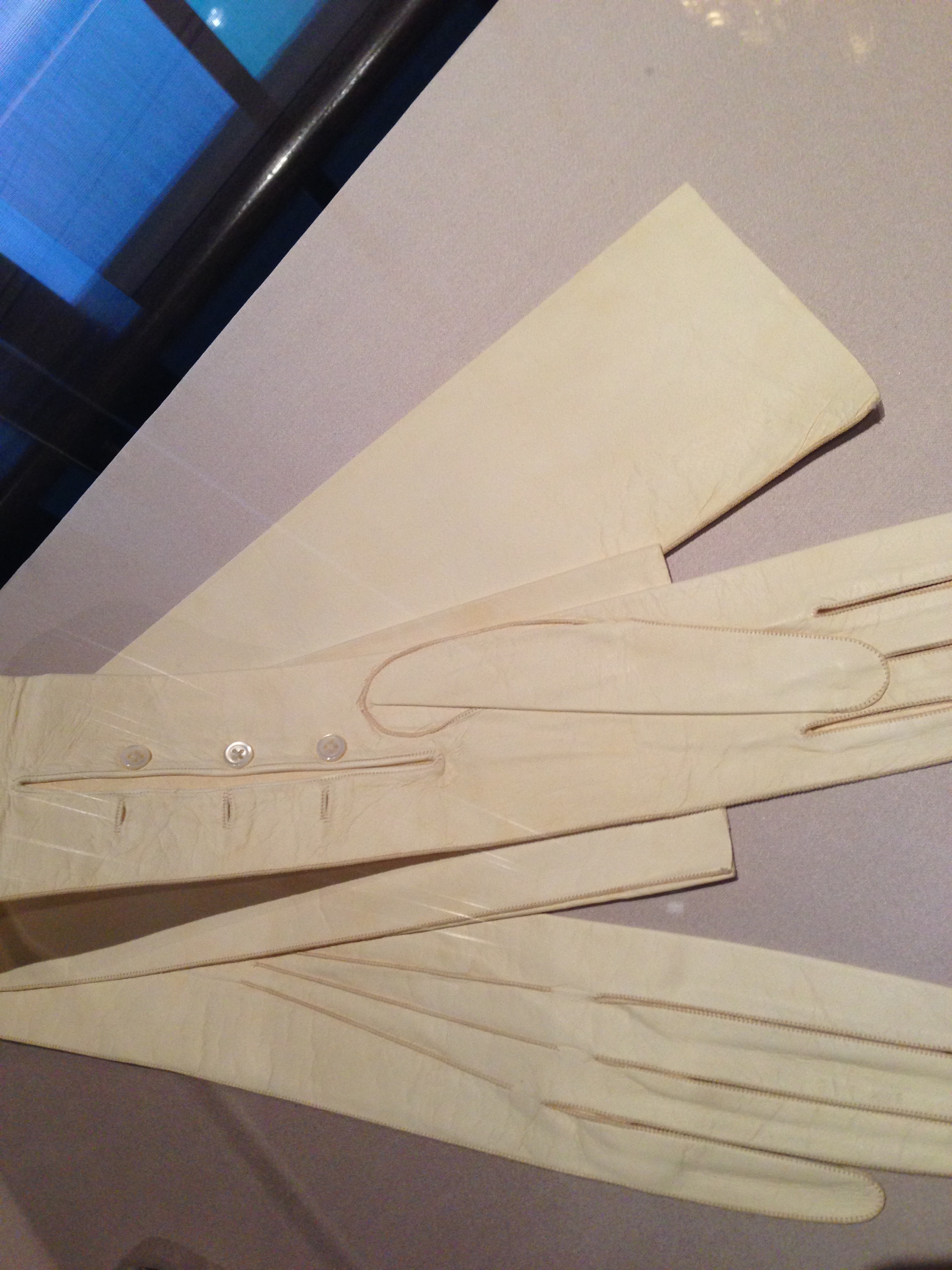
Long kid gloves were a necessity for a ball-going lady.

kid gloves

When they were feeling rustic they might show off a different style of ware, say the one decorated with an alligator, snake and lizard – this one belonged to Montana copper baron William Clark, one of the Fifth Avenue denizens.

platter

All, it seemed, was glossy, elegant, costly. You can read the plush lifestyle in the portraiture, like the depiction of Helen Virginia Sands at age 19, shortly before her marriage to a successful Wall Street trader.

de la mar pic

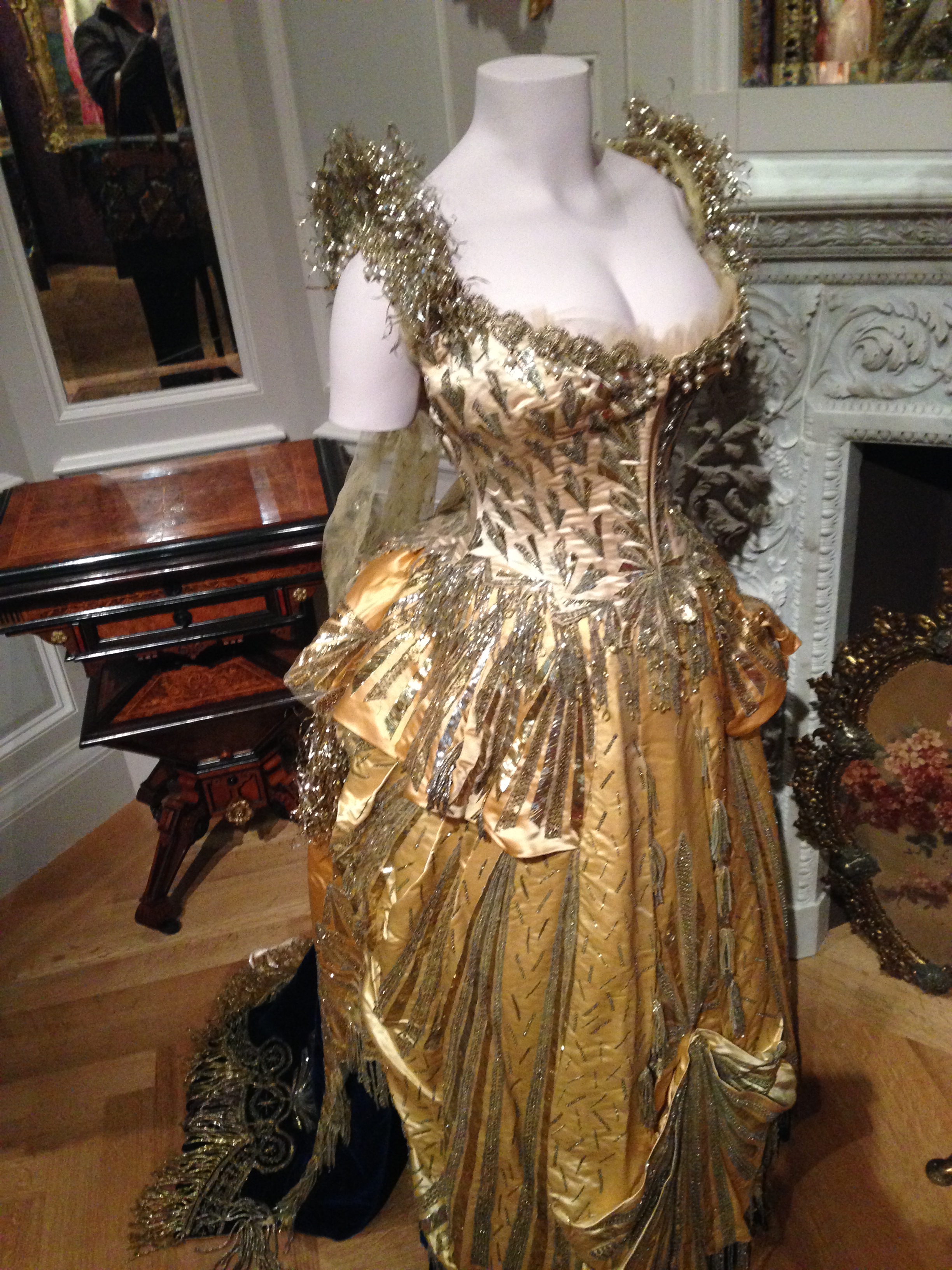
What I found most affecting, though, was the golden silk gown, “The Spirit of Electricity,” here in front of me, for real. It had emerged from the black-and-white photo card. Heavily embroidered in beaten gilt, it had silver tinsel filaments that lifted like small wings above the shoulders. Imported, of course, from Worth in Paris.

light gown

That’s a Herter Company jewelry cabinet in the background, for you Herter furniture fans. The dress survived because it was gifted to the Metropolitan Museum by Mrs. Vanderbilt’s daughter Countess Laszlo Szechenyi (neé Gladys Vanderbilt).

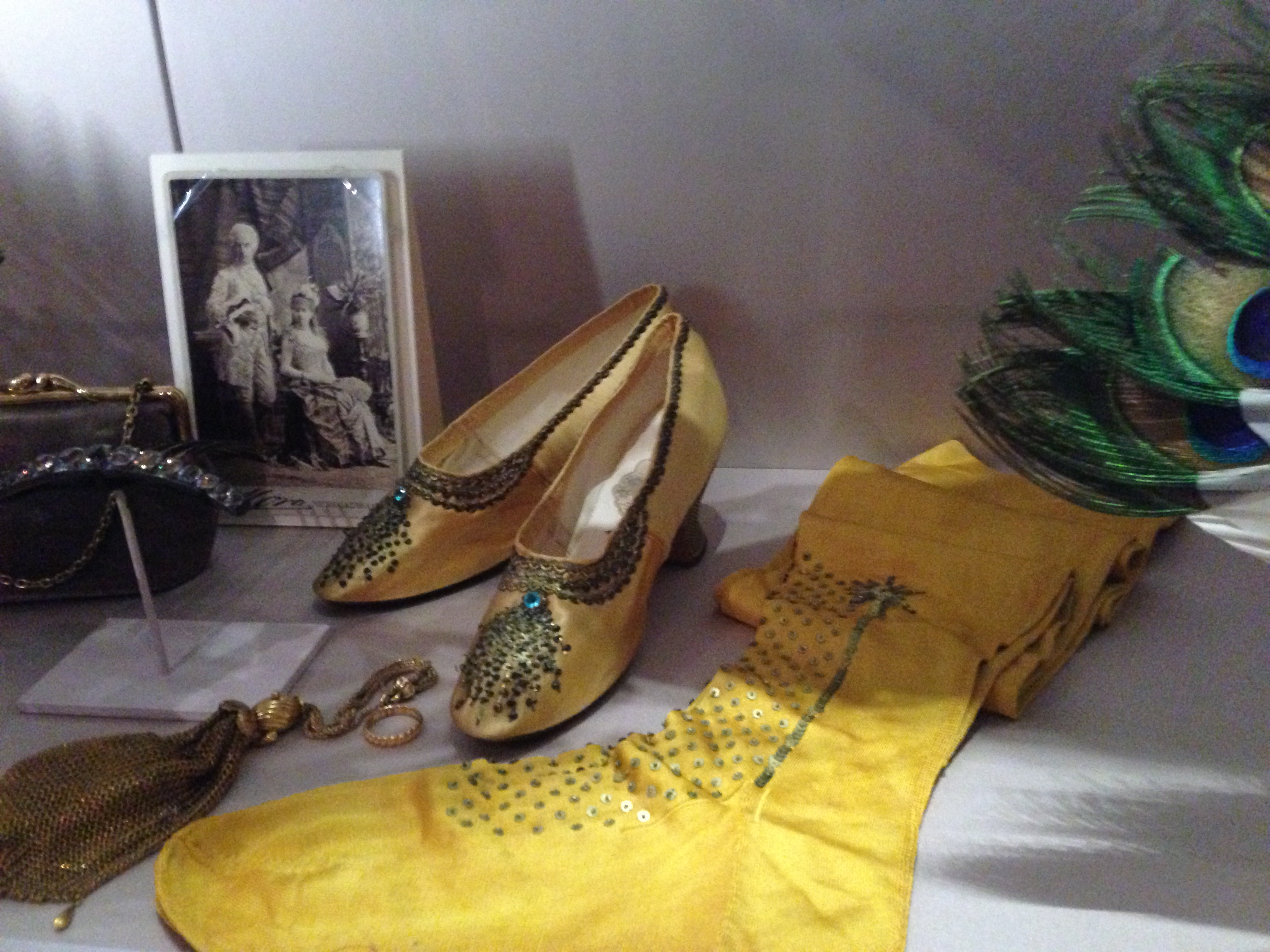
More affecting, even, the yellow silk stockings and pumps that Alva wore with the fancy gown.

pumps

This opulence of the distant past was real, something I could almost touch.

3 Comments

Filed under Art, Cooking, Culture, Dance, Fashion, Fiction, History, Home, Jean Zimmerman, Photography, Savage Girl, Writers, Writing

Making Book

Frank Stella’s splashy, enormous constructions line the walls of the lobby where my book publisher has its offices. Three collages, to be precise, of mixed media on a base of etched magnesium. Standing in front of one, you have to crane your neck to see the top of the piece. Standing there, I try to imagine creating something so large as the exploding Stella’s, so imposing. My mind wanders – outside is a dumpling truck with the snazzy legend: “Who’s Your Edamame?” It’s a New York morning, and art and food and commerce jostle for attention.

stella

Books, books, time to think about books. Or one book: my book. Stella’s work depicts the inside of my head as I take the elevator to the fourth floor. We’re going to talk about how to introduce Savage Girl to the world. How can I describe the feeling? Heart-pounding excitement. Trepidation. All shades in between.

Savage Girl comes out March 6th. And all the people at our meeting, editor, publicist, social media pro, literary agent – all of them are invested in making sure that my novel reaches a wide reading public.

So we talk about strategies. Bound gallleys, called ARCs in the business (for Advance Reading Copies) – who has received them so far, who gets them next? Print is no long king when it comes to reviewers – we want people to blab online about the book, on Goodreads, “where bookworms congregate,” as someone at the meeting says, on blogs, everywhere. We want the twitter-sphere to sing its praises. We want the people who read this blog – yes, you! – to get ahold of a copy and make their friend read it too. We want it to be consumed and consumed some more. Come up for air! Someone will say. It’s time to do the dishes. To go to the dentist!  But I can’t possibly, you say, I am too immersed in the adventures of Hugo and Bronwyn.

Savage Girl cover-final

Booksellers who received their early copy are liking Savage Girl, it seems. (Some Hollywood producers are too – shush, don’t jinx it by talking about it.) Authors have weighed in with comments that will appear on the back of the dust jacket. I like this one from Da Chen, the lyrical novelist:

The best historical fiction brings the reader back to a bygone era and  the depth of humanity then.  Jean Zimmerman does all that and more in her elegantly written new novel.  I simply could not put down this this tale of sweet and painful love, of a savage girl and her encounter with modernity.

All I have to do between now and March is a hundred things. Suffice it to say I’ll be writing more here and elsewhere about the Gilded Age, sharing what I learned in the process of researching Savage Girl. Debutante rituals, fashion, feasting, feral children, nineteenth century medical practices, mansions that are architectural marvels… I hope that people who don’t know much about the period will find out something new, and that I’ll satisfy Gilded Age aficionados’  yearning for more on the subject.

Photograph1880

Say you enter your favorite independent bookstore, where the management has carefully curated its collection. You inspect the table when you come in the door and find scads of titles that tantalize you, that beg to be picked up and perused. It may seem that they found their way there by some kind of magic. Not so. Behind every glossy jacket is a team of geniuses who have pondered and sleuthed and brainstormed a way to bring that wonderful volume to you. Like an explosion, like the mixed-media Stella on the wall, the planning all comes together to unveil a bound book.

Riding the subway uptown, I notice a man standing next to me with headphones. Dancing, and not so demurely, either. He is rocking and rolling. He is happy. So am I. I remember a couplet by one of my favorite poets, another Frank, Frank O’Hara, who made New York City the star of many of his poems in the ‘50s and ‘60s.

How funny you are today New York

like Ginger Rogers in Swingtime

Sometimes, when you’re in Manhattan, everything can seem so right. I get off the train at my stop and look from one side to the other, not sure which direction to head on the platform. A woman in black-framed glasses and long black hair touches me on the arm. I don’t even have to ask. She points with her finger and softly, kindly says, This way. This way.

6 Comments

Filed under Culture, Dance, Fashion, Fiction, Film, History, Jean Zimmerman, Poetry, Publishing, Savage Girl, Writers, Writing

Happy as Pie

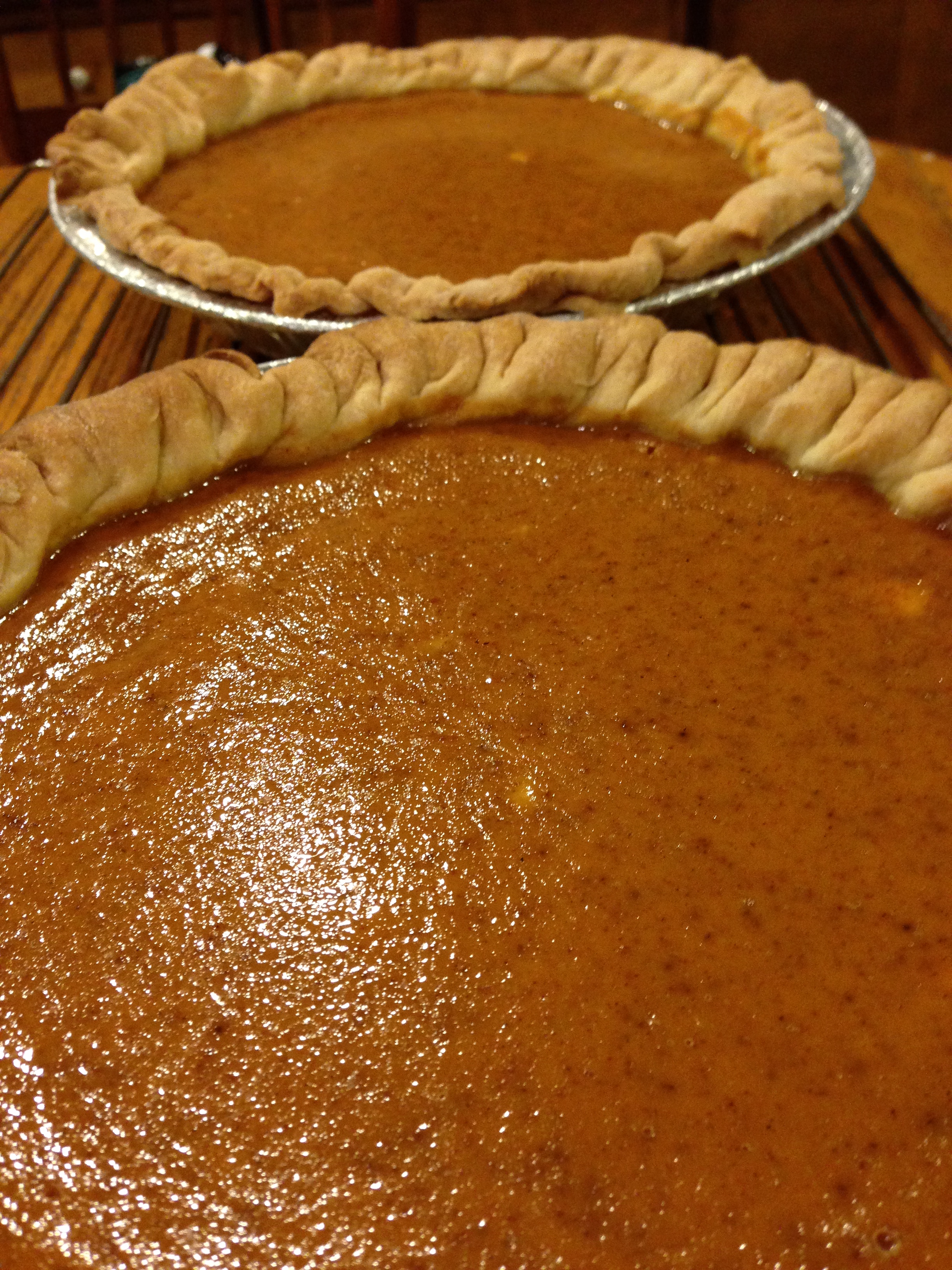
I wanted to make some pies. Five pies, because that’s what could fit in my oven plus the one I’m bringing for my family.The Presbyterian Church soup kitchen in Ossining was having a dinner. They said they could use some. Ingredients were cheap. Baking them was easy. Now there will be a few more pie-happy people at Thanksgiving.

pie pic good

Best wishes to everyone this weekend. Keep warm and safe. I’ll be writing again when the leftovers are gone.

2 Comments

Filed under Cooking, Culture, Home, Jean Zimmerman

Thank You for Reading

I am thankful.

This is a post about this blog.

At Thanksgiving, in a lot of families, a blessing is performed before the turkey comes on in its golden, crispy glory. The blessing consists of going around the table with every guest sharing some thing they are especially grateful for. On the occasions I’ve taken part in this ritual, I’ve sometimes had to squelch the urge to say something slightly comical or snarky. I don’t know why, perhaps because the whole thing seemed so self serious. Real thanks seem quieter, more internal, perhaps.

Now, with a few days before us until we’ll be stuffed with stuffing, with a clear head, I want to be serious.

I am grateful, deeply grateful, to those of you who read this blog.

When people ask what my site is all about, I say different things. It’s called Blog Cabin, and it’s about living in a circa 1800 home in a thoroughly modern world, and the time travel that allows for. Sometimes I call it a personal magazine. A diary. A cultural commentary. It’s about the past as a living, breathing entity. All about history and art and nature and literature… An author blog, as I have one novel about to come out and one just in the rearview.

What it really is, is playtime. Writing books, of course, is hard work. (If you’re doing it right.) Writing this blog has given me a chance to dabble in the things that absorb me in my book writing life, but on a more finite scale, with pleasure at the foremost – yes, history and art and nature and literature and… a pogo stick championship?

jack-cu

It was hot July and the contestants soared. You could taste the adrenaline.

Writing for you has given me a reason to go on adventures that you might not take, even if you had the chance. Or perhaps you would, like my search for an infant saguaro cactus at a botanical garden in Scottsdale, Arizona, with a beaming guide, but you couldn’t get there that day.

desert-gardener

I’ve taken myself to a Victorian waltz class and tea.

jz-tea

To a Broadway disco-play, and to a euphoria-inducing Brahms recital. And to a dramatic dance performance en plein air, at Manhattan’s Lincoln Center.

bum-blur

I’ve plumbed the depths of the 20-something psyche, because I have a young adult close to my heart. Instagramming is their life.

serendipity-picture

They’re fascinating animals, as are husbands, and mine hitchhikes along with me from time to time.

As are dogs. Mine is inscrutable, but adds flavor to the mix.

oliver-about-to

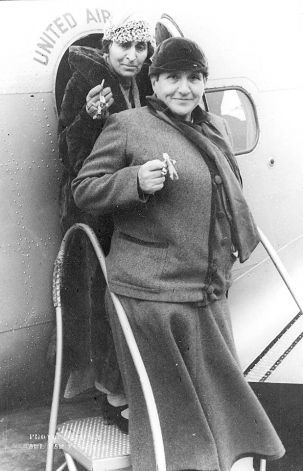
And writers.  I’ve loved writing about Gertrude Stein.

steintoklas-plane

I’ve shared many favorite recipes, like the one for Marcella Hazan’s braised pork in milk.

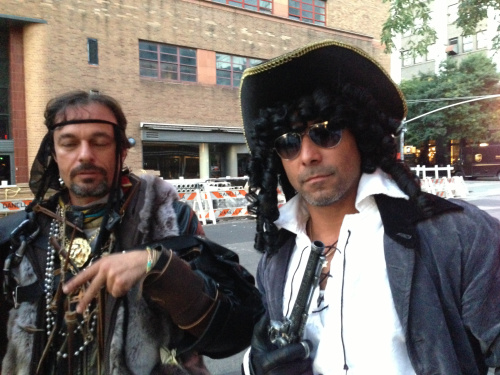
Observed motorcycle pirates on the loose in NYC. With some history about pirates intertwined, of course.

two-pirates

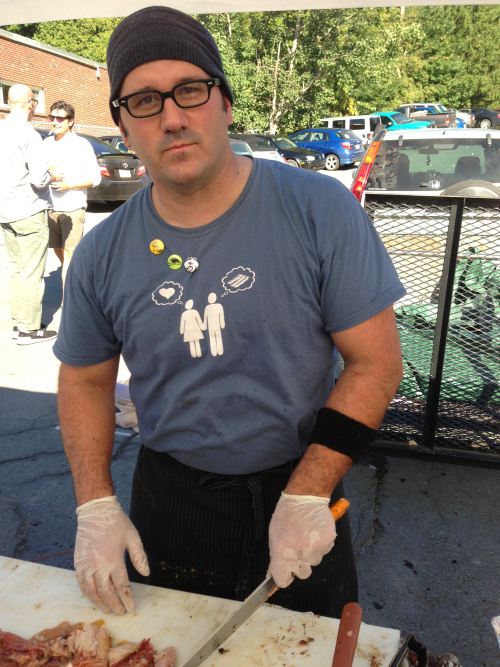
A rowdy pig festival in upstate New York.

michael

Explored a local farm on an enchanted evening, just as dusk fell.

fuschia-flower

Learned about the power of graffiti at the late, great 5Pointz. Got my leg cast tagged there, too.

colorful-paint

And witnessed the unlikely beauties of slime mold in a pristine nature preserve.

slime

It’s been my pleasure to gather these treasures and offer them to you, and your great generosity has been receiving them from me. So thank you. I’m looking forward to many more adventures.

11 Comments

Filed under Art, Cooking, Culture, Dance, Dogs, Fashion, Fiction, History, Home, Jean Zimmerman, Music, Nature, Photography, Poetry, Publishing, Savage Girl, The Orphanmaster, Writers, Writing

Portrait of a Lady Descending a Staircase

Visiting the exhibit of Gilded Age Portraits at the New-York Historical Society, I simply had to let myself go into a cloud of chiffon, of gleaming satins, of deep-pile velvet. And, on the masculine side, really good wool. I fortified myself beforehand, consuming a dish of pappardelle with duck ragu and chocolate shavings, the kind of meal they serve in museum restaurants in New York City. I felt that eating something rich and rare would prepare me for a glimpse into the lives of people whose dinners were usually revealed by servants lifting silver tops off of Sevres dinnerware.

h2_37.175.1

At the entrance, outside the gallery itself, there happened to hang a portrait from quite a different time — a star of the Society’s collection, depicting Edward Hyde, Lord Cornbury, appointed governor of the province of New York and New Jersey by Queen Anne in 1702. In some ways this painting was a perfect New York introduction, as so many of these Gilded Age models were New Yorkers. Though in this case there is definitely a hint of the weird, since Lord Cornbury was known for strolling up Broadway wearing women’s clothes.

Lord Cornbury

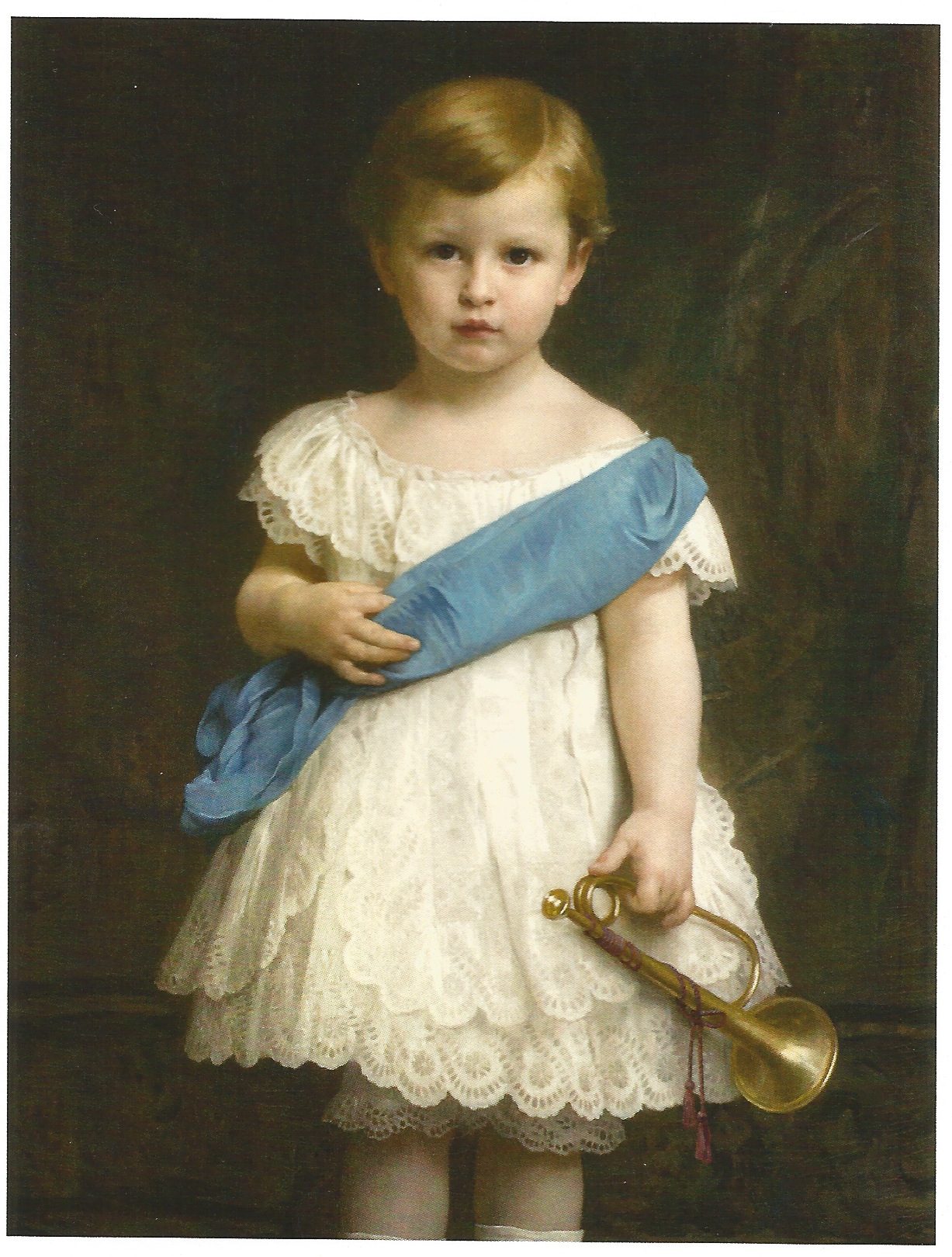
No, the people portrayed in the exhibit, people who lived in the late nineteenth and early twentieth century, were aristocrats whose likenesses were proper, proud and a little mysterious. The little boy with the big name, Cortlandt Field Bishop, was painted by Bouguereau in 1873. A sky blue sash and a trumpet – did he choose the trumpet prop, I wonder – and his baby-fine hair make him seem the perfect lace-swaddled little lord fauntleroy. But he was descended from mighty Van Cortlandts and DePeysters.

Bouguereau

The exhibit is based on portrait shows sponsored by the elites of that era, and so we find Martha Washington on the wall, although she seems almost out of place here as Lord Cornbury, with her country mouse, Revolutionary-era bonnet.

mrs. washington

But Rembrandt Peale’s 1853 portrait was displayed at a famous 1895 portrait exhibition, presumably because “Lady Washington” had by then earned the status of domestic goddess.

When elite families wanted their Portrait of a Lady (the novel published first by James in 1880, and then extensively revised for a 1908 reprint) they demanded the tried and true. They wanted a painter to reliably render the jewels and flounces and creamed skin of a well-to-do woman.

Impressive Woman

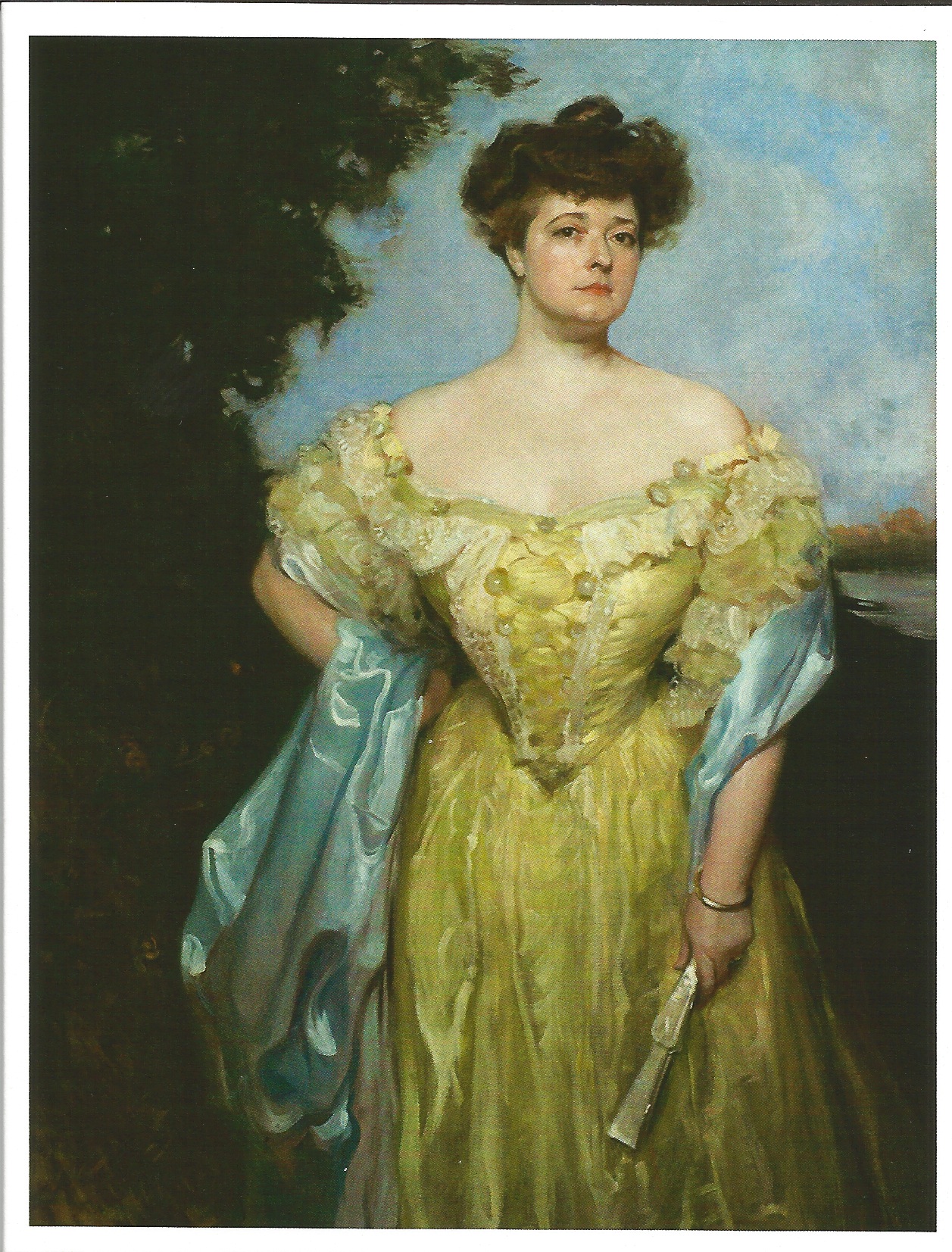
The woman shown here in 1906 is Saint Louis socialite Nellie McCormick Flagg, painted by her husband James Montgomery Flagg. He described his conception of female beauty.

She should be tall, with wide shoulders; a face as symmetrical as a Greek vase; thick, wavy hair… long lashes; straight nose tipped up a bit at the end; her eyes so full of feminine allure that your heart skips a beat when you gaze into them.

Looks like he got her.

On display was an image of the infamous Ward McAllister. I’d always wondered what he looked like. He played God when he deemed himself the arbiter of social acceptability in Gilded Age Manhattan, creating the concept of the Four Hundred – the number of fashionables who could fit in Mrs. Caroline Astor’s ballroom. He was the master of exclusivity.

Ward mcallister

But despite his power, he was only a man with a drooping mustache who depended on his wife’s wealth for his social standing.

I think my favorite piece in the show was the picture of James Hazen Hyde, rendered in 1901 by Frenchman Theobald Chartran.

Brooding guy

Soon after Hyde’s likeness was painted he removed himself from New York to Paris. Why? He was accused of mismanagement of the Equitable Life Assurance Society, a company his papa left to him. He looks like a guy who’s getting ready to drink your milkshake (as turn-of-the-century oil tycoon Daniel Plainview puts it in Paul Thomas Anderson’s There Will Be Blood).

And meanwhile… not decades away, the traditional art of beautifully modelled heirs and heiresses was about to explode. I walked up a flight from the portraiture show at the Historical Society to an exhibit of works from the 1913 Armory show, which scandalized New Yorkers.

2013-09-25-Adjusted2_OverviewArmoryAAASmithso_

There were chunky Matisse nudes, symbolic Redons, shockingly sauvage Gauguins – on another planet from the Gilded Age canvases. The world was changing. Thomas Edison was shooting movies of men building Manhattan skyscrapers.  The lobby for “woman suffrage” had racheted up and would soon make a revolution. There was no rigid dividing line between the Gilded Age sensibility and the modern; a collector might hang examples of both in his drawing room. John Singer Sargent, the sultan of sumptuousness, had caught Edith Minturn and I.N. Phelps Stokes in a thoroughly modern moment in 1893.

h2_38.104

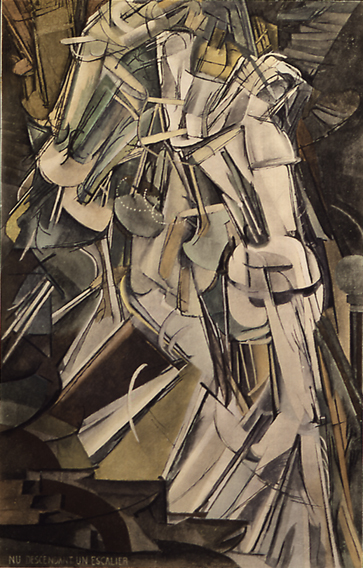
Still, it’s no wonder that the people who loved statuesque Nellie McCormick Flagg flung insults at Duchamp’s brazen Nude Descending a Staircase.

Nude_Descending_a_Staircase

It was painted in 1912, a thousand years after Nellie’s 1906 portrait.

2 Comments

Filed under Art, Culture, Fashion, History, Jean Zimmerman, Love, Fiercely

Savage Girl Music Mix

What, I thought, would be a modern-day playlist to match a Victorian savage girl’s temperament? If that makes sense. Here are some ideas, and I welcome more if you’d care to leave a comment. I plan to pass out CD’s when Savage Girl comes out in March, for anyone who likes to blast tunes in the car with the windows down. There’s a complete list of songs posted on my facebook author page; give it a like while you’re there and add to the list.

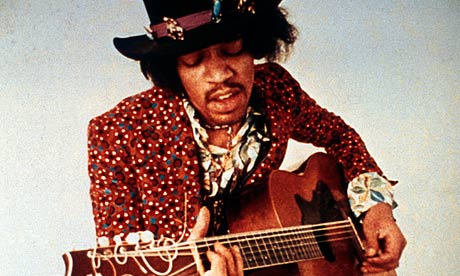
Got to lead off with Hendrix, his version of Wild Thing by the Troggs.

Jimi-Hendrix-in-1970-006

I also like this one that came out earlier this fall, Wild Child, sung by folk/pop boy-child Brett Dennen.

brettdennen1

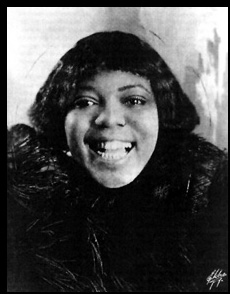
But why not jump back a little, to Bessie Smith, who sang I’m Wild About that Thing in 1929.

bessie

I think Savage Girl might quite like Etta James’ version of Born to be Wild. Anyway, it’s one of my favorite renditions of the song.

articlehero_etta_james

Lou Reed had a contemporary version of savagery in mind with Walk on the Wild Side. But when you read Savage Girl you’ll see that there’s plenty of cross-dressing in the novel, nineteenth-century style.

1383164932000-LouReed

One more. Because the heroine of my book climbs the social ladder and actually reaches its pinnacle for a moment or two, let’s listen to Queen of the Savages, by the Magnetic Fields.

magnetic-fields-front

It’s the least we can do for a mysterious girl who escapes the wild West only to wind up in wilder Manhattan.

Leave a comment

Filed under Culture, Fiction, Jean Zimmerman, Music, Savage Girl, Writers, Writing

Another Fine Dress You’ve Got Me Into

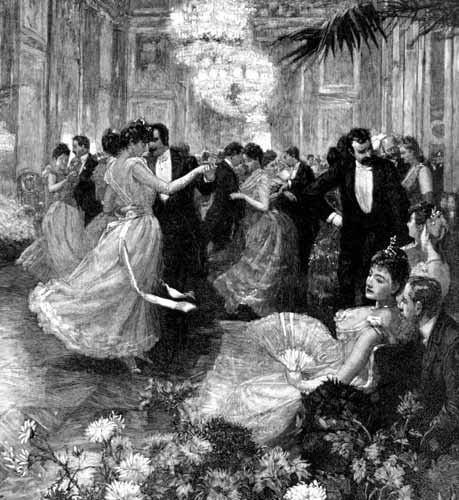
I always wondered by what means people got up their getups for fancy dress balls during the Gilded Age. A fancy dress ball didn’t mean, as it sounds, elegant gowns for the ladies and stiff black tails for the gents. They were actually masquerades, opportunities for the well-heeled to escape their own trials and tribulations – there were, in fact, economic downturns and “reversals” throughout the last decades of the 1800s – with a lot of very pricey role-playing. And to prove just how boss they were.

ball

Balls were splendid on their own. Edith Wharton described a typical scene.

Couples were already gliding over the floor beyond: the light of the wax candles fell on revolving tulle skirts, on girlish heads wreathed with modest blossoms, on the dashing aigrettes and ornaments of the young married women’s coiffures, and on the glitter of highly glazed shirt-fronts and fresh glace gloves.

For Savage Girl I looked into debutante balls, when 18-year-olds got their first taste of all the splendour that money could buy.

I first got interested in fancy-dress shenanigans, though, when I wrote about I.N. Phelps Stokes as a young man studying architecture in Paris in 1894.

Edith & Isaac

Most of the people he knew attended the spectacular Bal des Quat’z’Arts, where artists and architects partied hearty in the name of everything aesthetic and bohemian. Revelers could expect gold and silver paint slapped on bare flesh along with displays like the last days of Babylon, complete with “blackamoors,” camels and nearly naked women. Excess reigned every year.

quatzarts2

Stokes, I  learned from his generally no-nonsense memoir, wrote home to his mother demanding she ship over the black velvet dress he’d worn for a costume ball at his home the previous winter.

What, I wondered, trying to imagine Stokes be-gowned in velvet, was this slightly stiff, shy young gentleman doing cross-dressing at a balls-out ball?

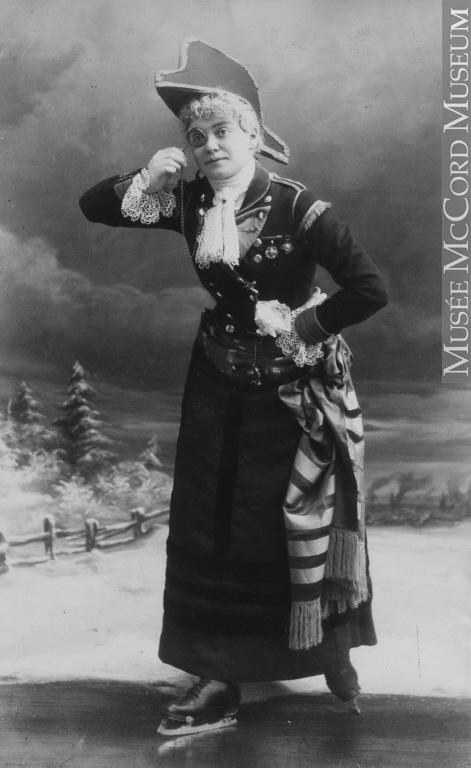
It was the thing to do, though. Fancy dress celebrations were prevalent in Victorian England and Canada as welll as Paris and New York. One Canadian scholar who has studied archival material puts it this way:

The sheer number of archival photographs of people in fancy dress, as it was known, attests to the popularity of this phenomenon, as well as its importance to those who took part. These portraits reveal a great deal about Victorian morals, values, taboos and tastes regarding clothing, bodies and social behaviour. While the basic appeal of fancy dress lay in its semblance of permissiveness and escapism, this sort of amusement was controlled by a complex set of moral restrictions.

Few costumes survive, but these people were photo-obsessed and made sure to document the fancy ball madness.

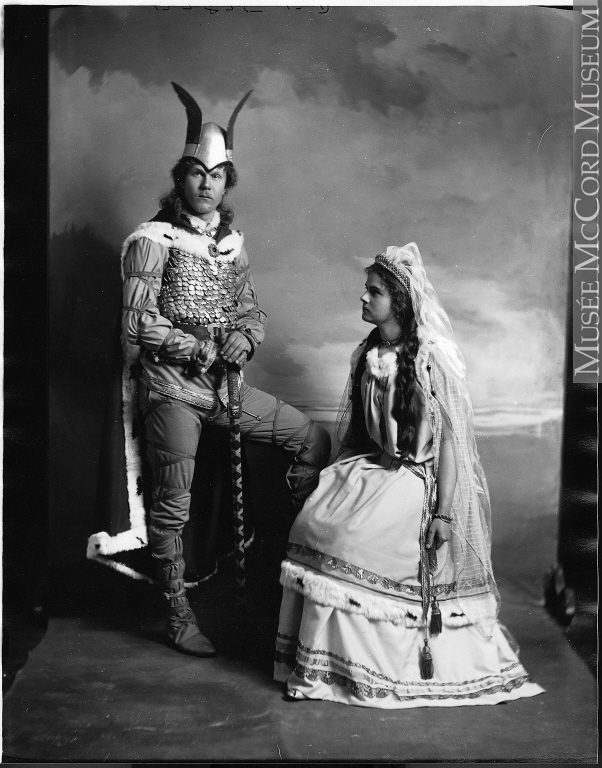
On the website of Montreal’s McCord Museum you can find startling images of partygoers dressed to the nines, such as Herbert Molson and his sister Naomi  as “Vikings,” costumed in 1898 for the Chateau de Ramezay Ball in Montreal.

Vikings

And Miss Bethune as “An Incroyable,” in Montreal, in 1881.
incroyab.e

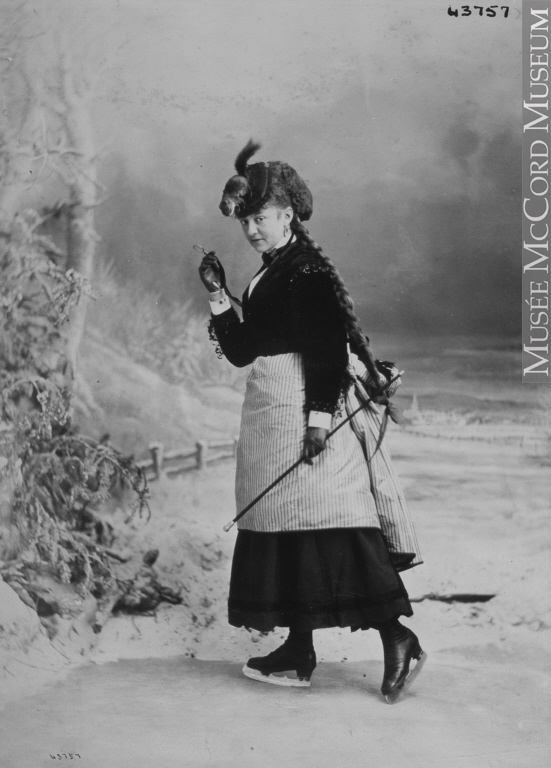
There was also the “Girl of the Period,” shot in 1870. The Victorians could really break loose on ice skates with a swinging braid and a cigarillo.
1870 photo like painting

The image was spookily familiar, and I realized it was the embodiment of a Currier and Ives print I have hanging on my wall.

currier

You can see some of these photos as a video. 

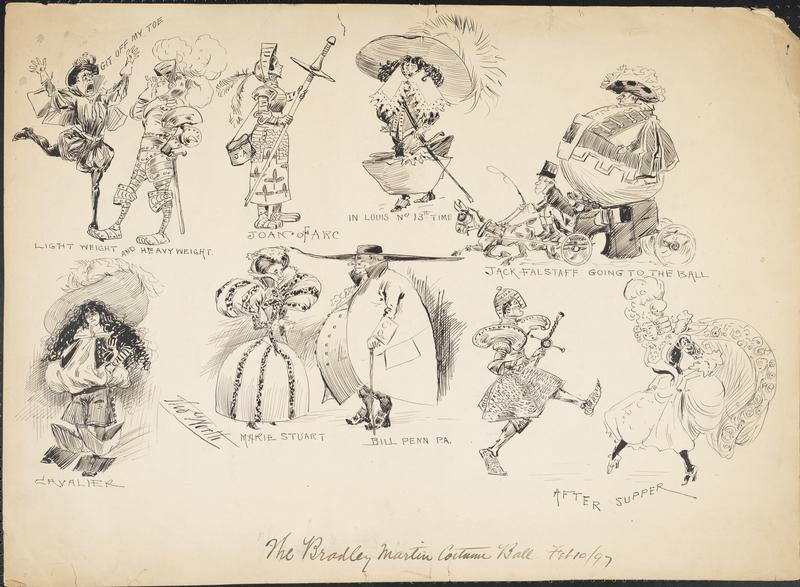
 At the end of the century,New York City could always put on the biggest fancy show. One of the most famous costume extravaganzas was the Bradley-Martin Ball, which took place at the Waldorf in February 1897. Cornelia Bradley-Martin vowed that it would be “the greatest party in the history of the city”.

bradley martin ball

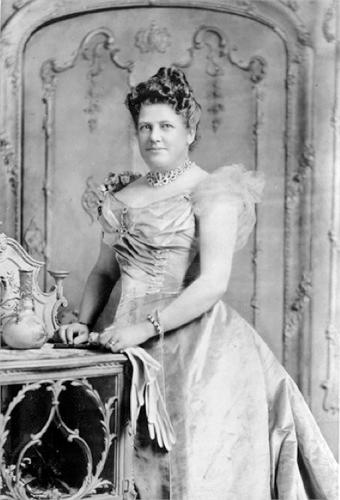
She and her husband spent nearly nine-million dollars in current money hosting eight hundred of the city’s leading lights, Astors, Schermerhorns, Morgans and Posts included. Cornelia doesn’t look like a party animal, but the fact that she is smiling slightly suggests something to me. Most people still did not smile when posing for a portrait.

Mrs.-Bradley-Martin

The ballroom was a replica of Versailles, wigmakers stood at the ready, and guests arrived as Mary, Queen of Scots, a Spanish toreador, Henry the IV. The hostess appeared with a gold, pearl and precious stone embroidered gown.

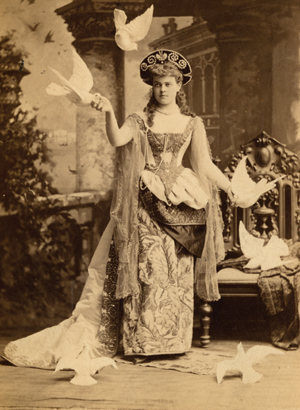
She might have managed to best the Vanderbilts’ legendary ball of 1883, thrown by Cornelius Vanderbilt II and his wife Alva to christen their new Fifth Avenue chateau. Alva sure looked good in doves.

alva vanderbilt

The Museum of the City of New York has a extensive collection of photos of people posed with all seriousness at the ball. Including Mrs. Henry T. Sloane as, I think, a witch. Probably a good witch.

Mrs. Henry T. Sloane

If you’d like to get up a Gilded Age costume there are resources at your disposal.

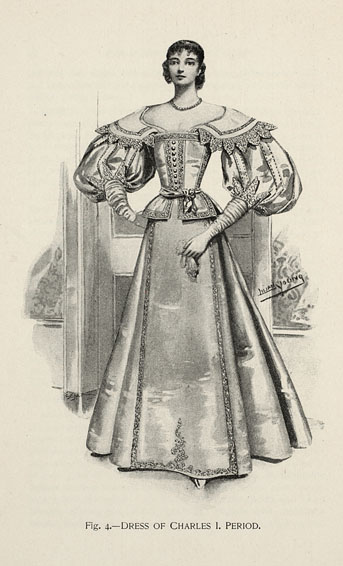
But, what are we to wear? asks a manual from 1896, accessible on line in its entirety. This is the first exclamation on receipt of an invitation to a Fancy Ball, and it is to assist in answering such questions that this volume has been compiled.

Several hundred costumes are described with every incidental novelty introduced of late, including Autumn, Bee, Gipsies, Carmen, Dominos, Esmerelda, Fire, etc.
0070

Henry James wrote:

The rooms were filling up and the spectacle had become brilliant. The ball borrowed its splendor chiefly from the shining shoulders and profuse jewels of the women, and from the voluminous elegance of their dresses.

You’ll have to invite 1,000 or so people to really get the fancy ball experience. And make sure to call your wigmaker. Everything will be rosy.
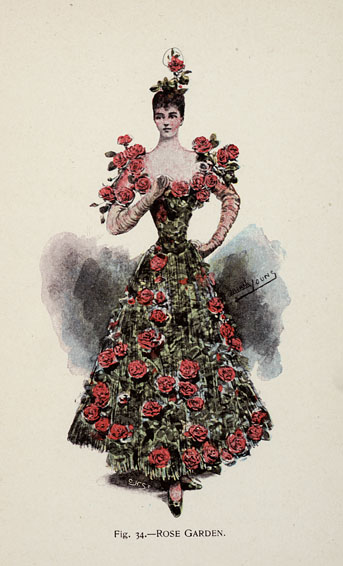
Rose Garden

2 Comments

Filed under Art, Culture, Dance, Fashion, Fiction, History, Jean Zimmerman, Love, Fiercely, Music, Photography, Savage Girl, Writers, Writing

A Goodreads Vote

Sometimes I don’t know what I’ll do with myself waiting for Savage Girl to hit the stands March 6th. We’re finalizing flap copy, rounding up quotes from other fiction writers for the cover, talking about where I’ll go to spread the word about the book. Still, it seems like a long time away.

If you’d like to know what you can do until Savage Girl comes out…

Goodreads has posted a list of the most anticipated historical fiction reads for 2014. What upcoming historical fiction are you most excited for, asks the site. Pay a visit and click on Savage Girl to place your vote! And then, please, ask your book club cronies to do the same.

Savage Girl cover-final

Leave a comment

Filed under Culture, Fiction, Jean Zimmerman, Publishing, Savage Girl, Writers, Writing

The Things We Carry

What heirloom would you bring?

I’m reading about refugees and the things that they carry (remembering the Tim O’Brien tale The Things They Carried, about the impedimenta Vietnam soldiers take with them into battle.) BBC News Magazine profiles refugees during the Nazi menace of the 1940s, asking that question.

Isabelle Rozenbaumas’s mother escaped  Nazi-overrun Lithuania, barely, with her carriage-driver father, and snuck out three class photographs from that time.

refugee photo

Julian Glowinski’s grandmother was deported from Poland to Siberia in 1940. Amazingly, she packed a sewing machine onto a cattle truck, and converted gowns into wedding dresses in her concentration camp in exchange for food.

Elke Duffy and her family fled East Prussia in January 1945. With her she took an amber necklace her mother had strung from amber she and her sister found on a Baltic beach.

 _71135868_464_amber

Ian Carr-de Avelon’s wife’s grandfather was forced onto a train in Lwow (then Poland, now Ukraine) with his wife. Rather than cherished photos he took a camp stove. A camp stove? But of course ultimately it made perfect sense.

So what to take in a hurry, with the monsters breathing down your throat?

Photos. But today they mostly stay trapped in the computer. You can’t just lift them out of an album, with yellowed tape stains on their backs. So print some, fast.

Maybe I’d take this one, if I had to take one.

Gil and Maud Hug

I’d have to take another. Mark it on the back with a Sharpie, April 1987. The engagement party.

April 1987

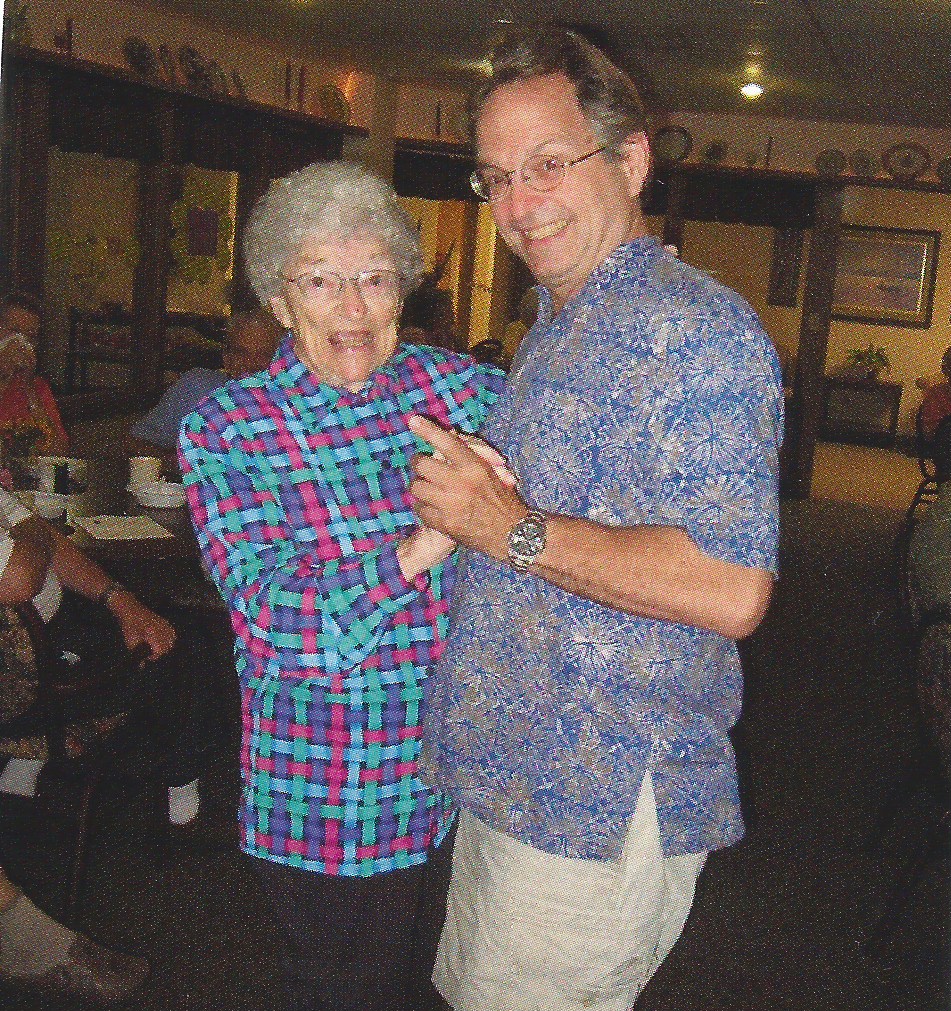
If I could, I’d grab more. My parents. My extended family. Gil would take this burst of joy.

el 1

Or, he says, an oilcloth Santa he remembers making when he was six.

What object would I choose? Not a sewing machine. Not an iPhone. I looked around my house, and I thought about storage. At least three dusty cardboard boxes are marked Heirlooms, mostly from a family bow-windowed breakfront now residing in a home with more space. How do you choose among the loved objects of the past?

I might take my paternal grandmother’s copy of Ulysses, by James Joyce, its cover broken off, which she bravely purchased at a time when the novel was still censored in the U.S.

Joyce Ulysses 750 wraps 1000

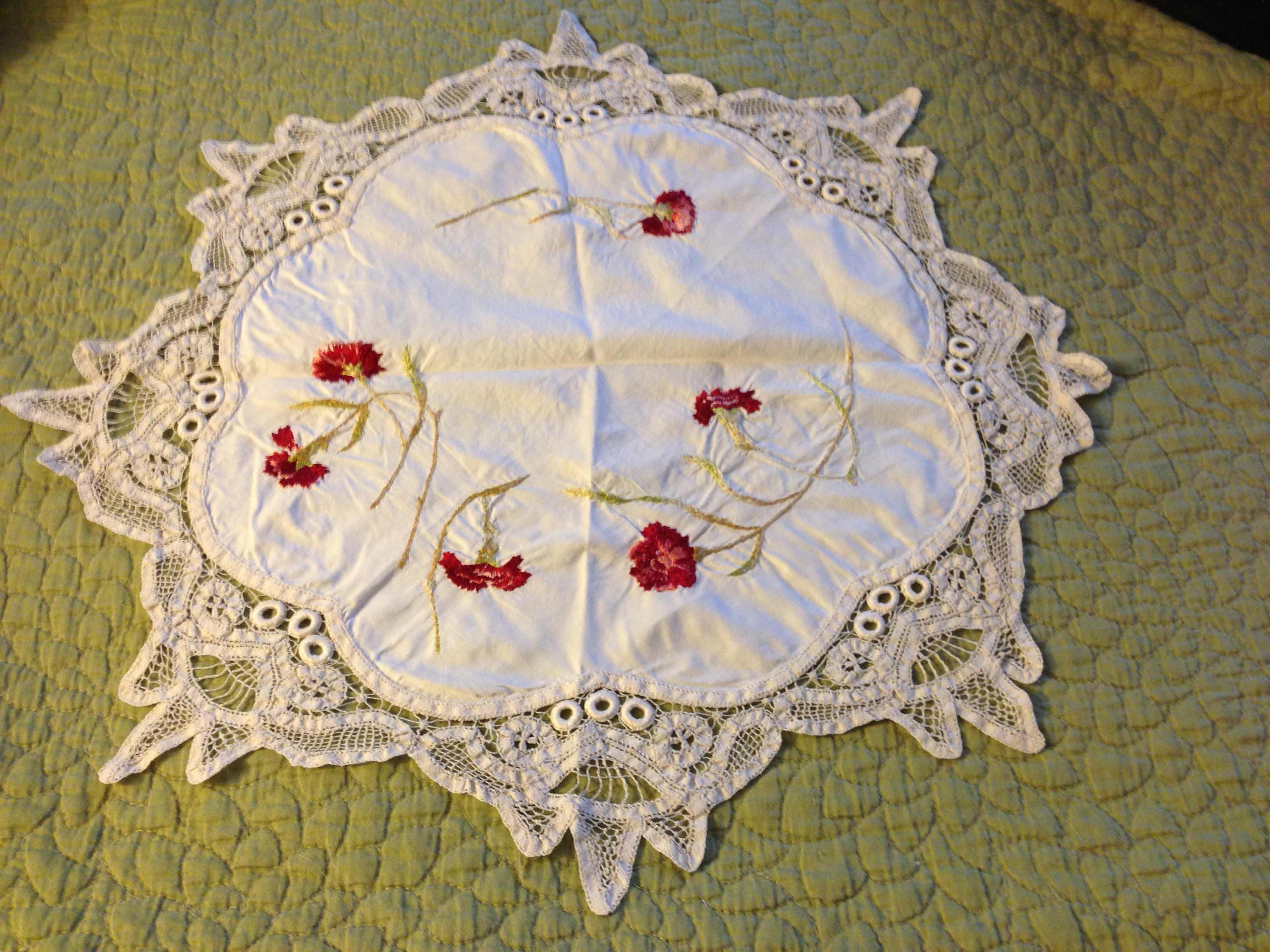
Or a scrap tatted by my ancestors, embroidered with carnations, the cloth handled by their fingers.

carnations

I could tuck that into my sock.

But if I was going to bring some bigger object – what?

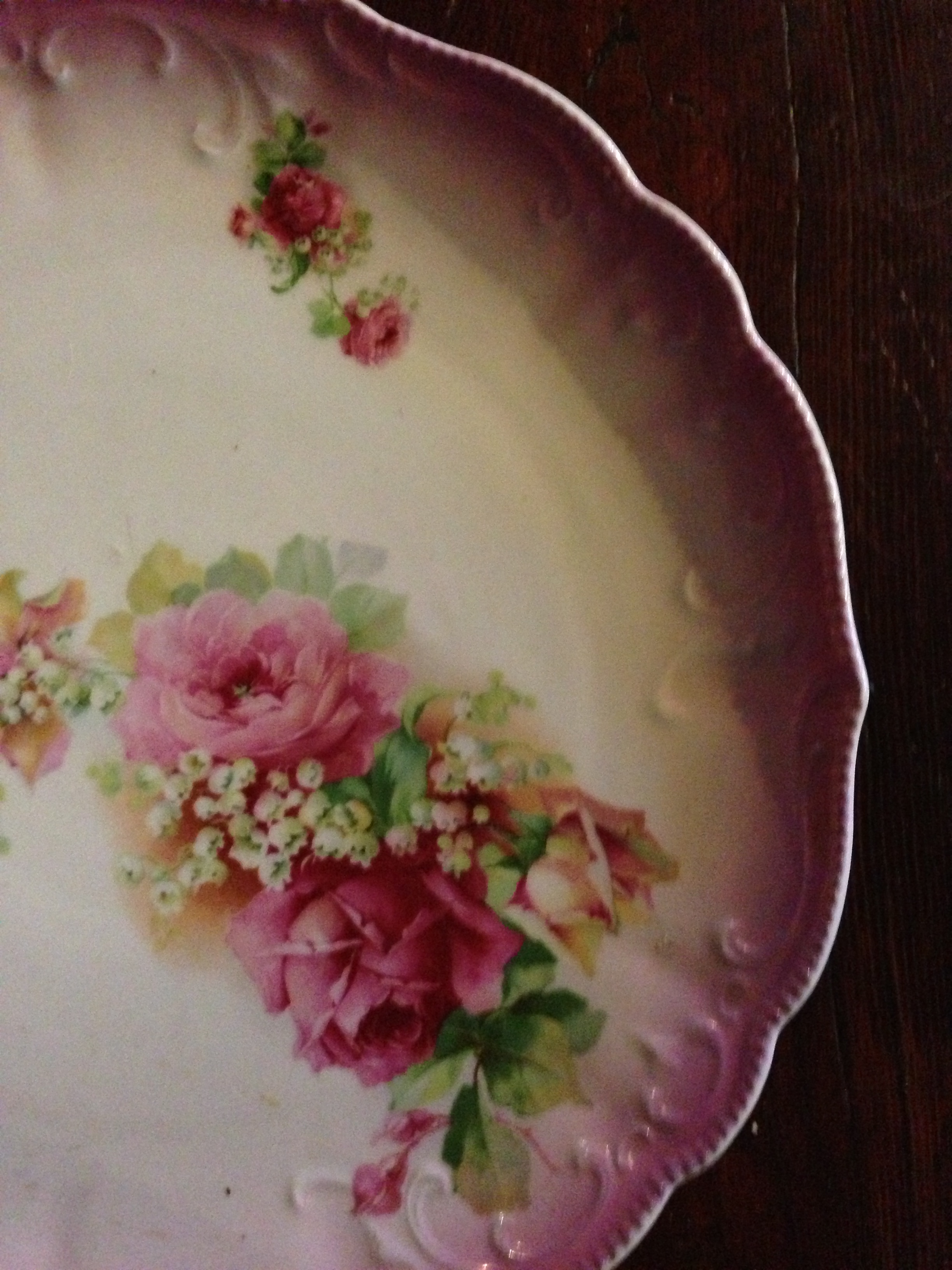
How about a china plate. A cake plate, a foot across, strewn with pink roses and lilies of the family. Utilitarian as well as cherished.

cake-plate

Just a plate. But a plate belonging to my great-great-grandmother, a woman with the interesting name of Brown Coats. A deep souvenir of family, embodying the optimistic conviction that sometime in the future, there will be cake.

Will the plate make it through the mud, the rutted roads, the mountain passes? Despite its apparent fragility, I am certain it is strong.

6 Comments

Filed under Art, Cooking, Culture, Fashion, Fiction, History, Home, Jean Zimmerman, Photography, Publishing

The Myths of Time

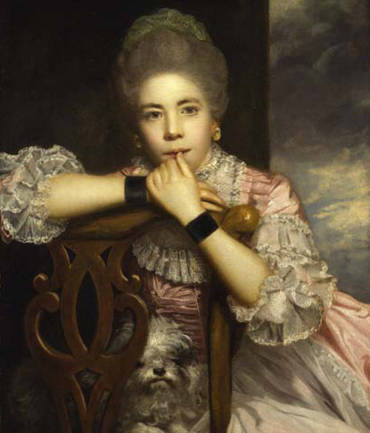
I love that building, said my friend John, a publisher with a reliably elegant sense of taste. It was designed by Louis Kahn. The Yale Center for British Art, in New Haven, Connecticut, is housed in a sleek shell of matte steel on Chapel Street, the bustling main drag of the town. It was the architect’s last major commission, completed after his death in 1974. It’s an interestingly modern container for the almost exclusively older works of art within, lovely canvases of fetching ladies, bewigged lords, and big-eyed colonial children with their colonial pets. Mrs. Abington as Miss Prue in Congreve’s Love for Love, completed by Sir Joshua Reynolds in 1771, is a good example.

mellonEG.v-final2

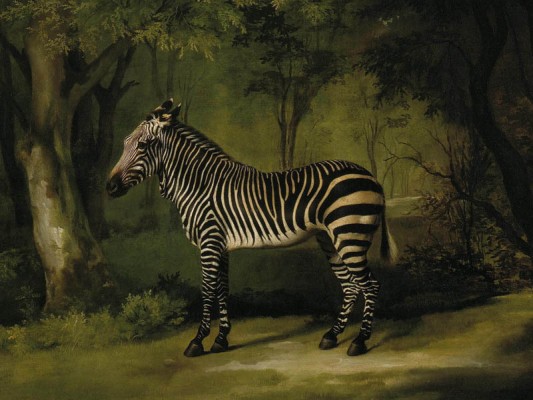
You’ll also find lots of animals, horses and dogs mainly. My old friend Betsy, who lives nearby, told me she has spent serious time sunk in an overstuffed leather chair in the high-ceilinged gallery admiring the zebra painting. A rather famous zebra painting, made by George Stubbs in 1763, when a zebra would have seemed about as exotic to Europeans as a unicorn.

stubbs-zebra

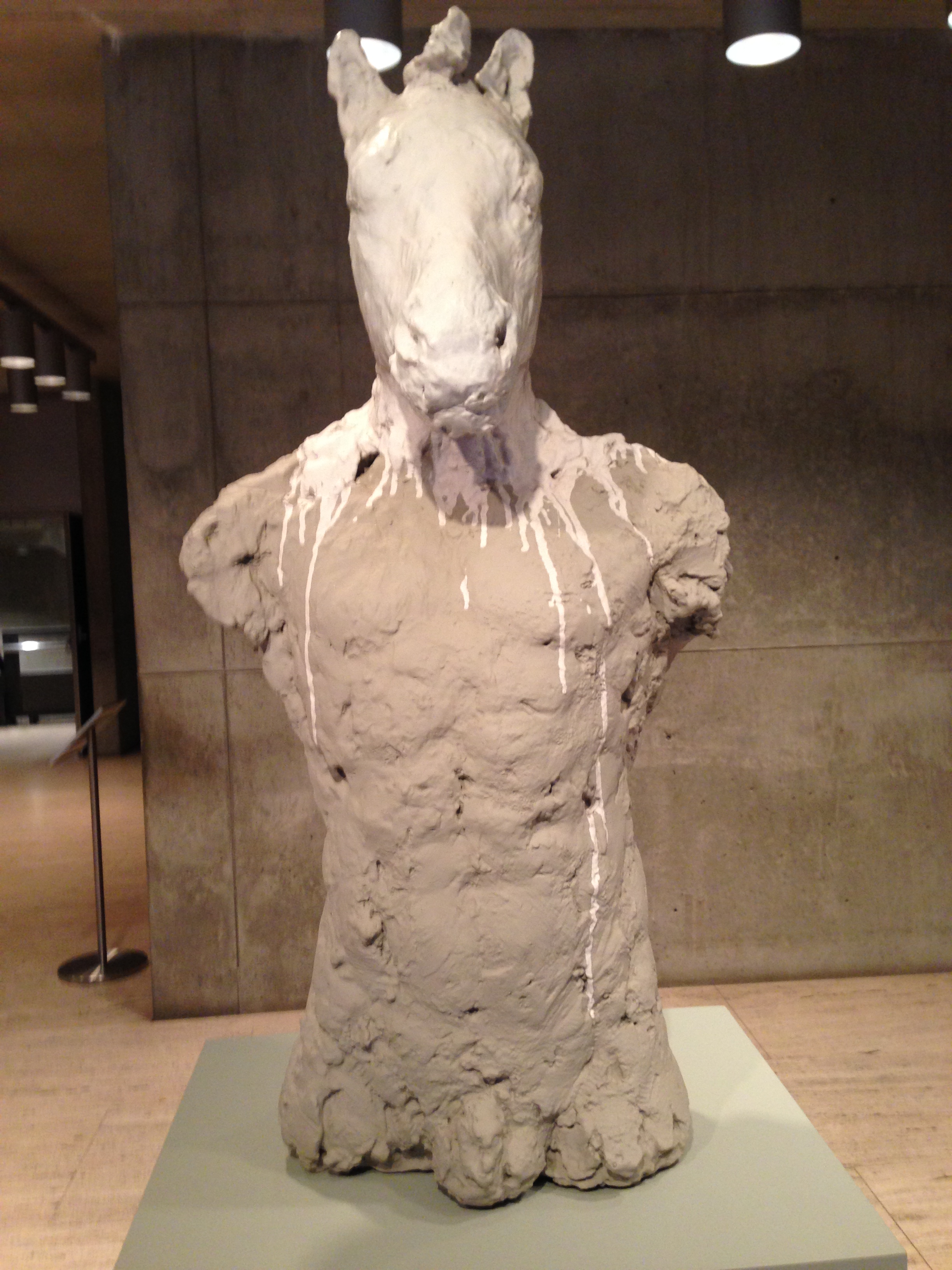
We couldn’t help but be stopped just inside the glass doors as we were coming in by a much more modern work. What is that? I said to Wendy, puzzling it out. A minotaur? A centaur?

centaur

No, she corrected  me, a centaur is a man on top, horse on the bottom. This was a horse on top. I liked it a lot, it was so rough and raw, like something you’d see in a dream.

Turned out that Foal, sculpted of painted bronze, was one of seven works by the British artist Nicola Hicks which had been installed as a special exhibit in the Yale Center. The mythic is central to her work. As part of the show Hicks selected pieces from the museum’s collection to serve as counterpoints to her own. The British tradition of animal imagery intertwined with the contemporary creatures in a dynamic, charged way.

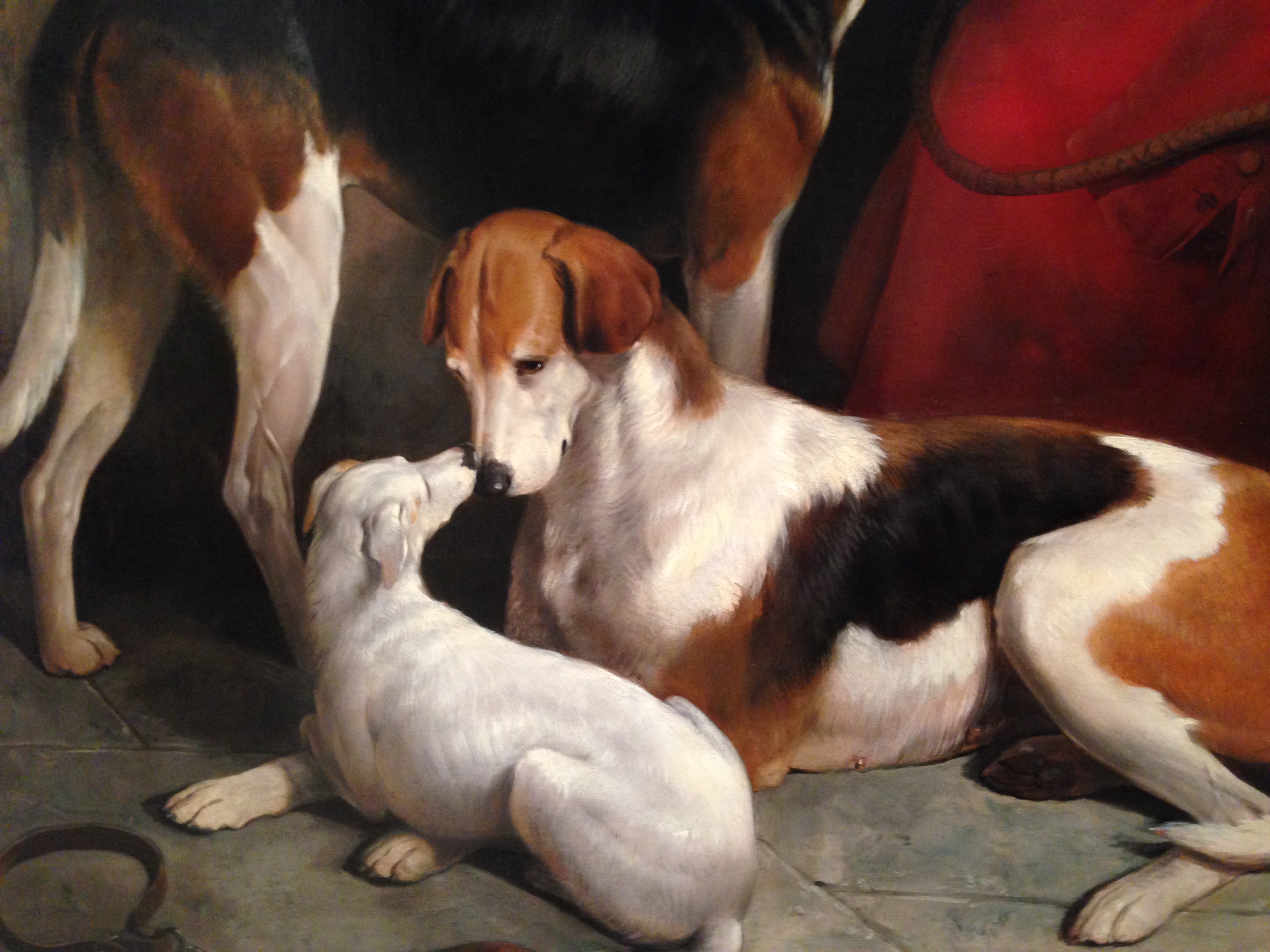
The painting chosen for the display that I found most affecting was William Barraud’s A Couple of Foxhounds with a Terrier, the Property of Lord Henry Bentinck. Hicks has said she recognizes Baraud’s profound understanding of how the “social structure” unites the animals depicted. It’s about the independent dogness of dogs, despite the humans that may believe they own them lock stock and kibble.

dog painting

One sculpture reflected on Aesop’s fable about a donkey found in the forest wearing a lion’s skin, which ultimately results in the donkey being exposed as a fool.

donkey

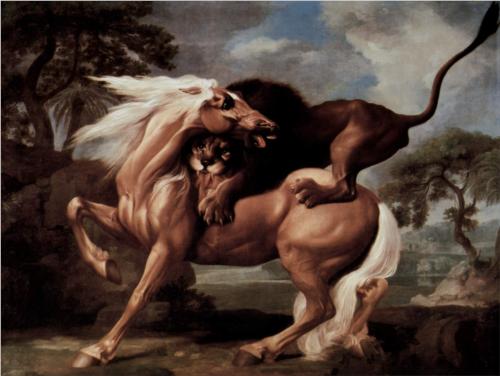
Nicks’ Who was I Kidding, created of plaster and straw, shows the poor donkey with the skin thrown across its back. It bears some resemblance to another Stubbs canvas in the museum, A Lion Attacking a Horse. The horse in that conception feels not shame but blind fury.

horse-attacked-by-a-lion.jpg!Blog

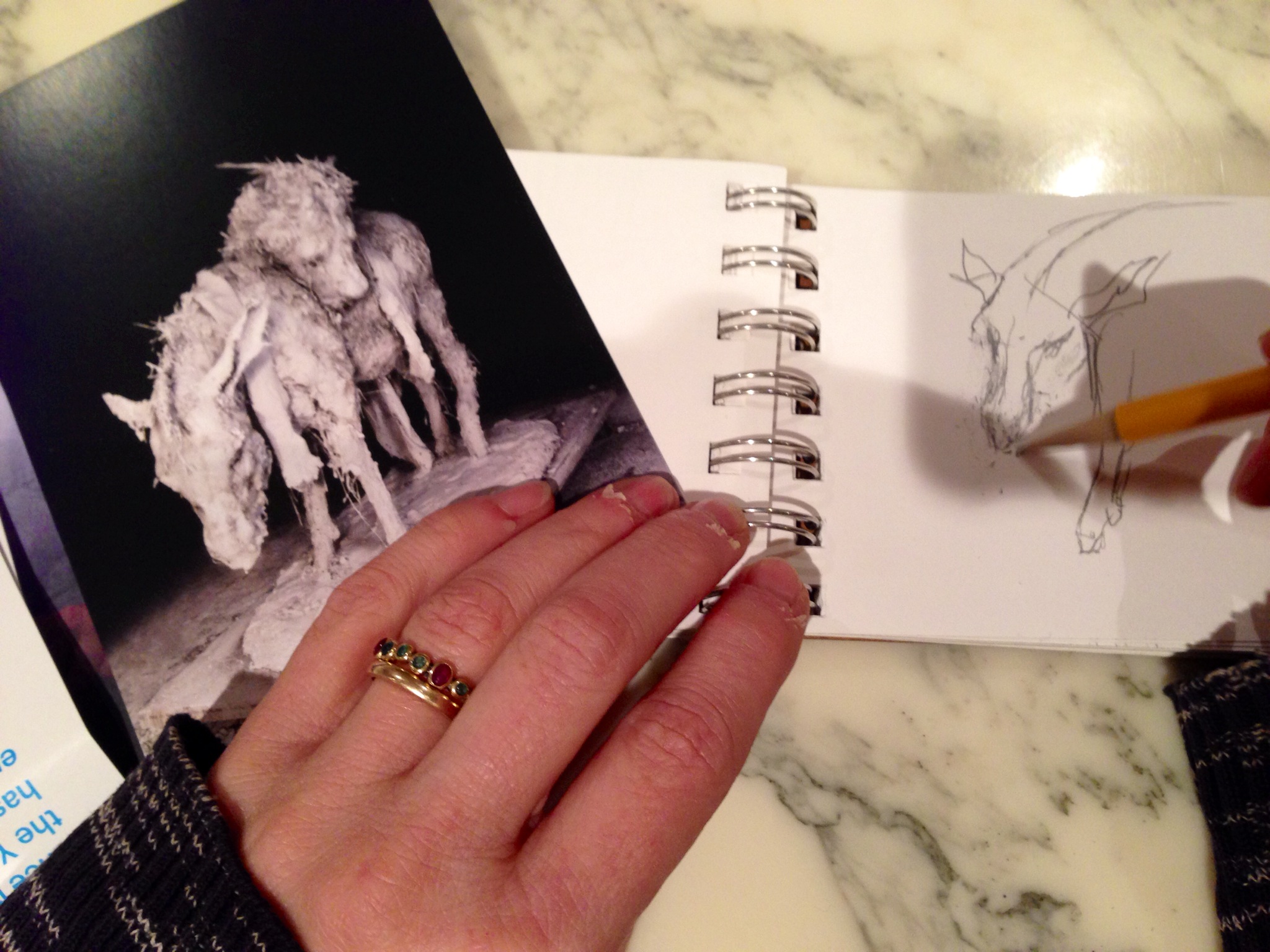
Later, over tea, I noticed that Wendy had bought a postcard at the gift shop. She had out her small, purse-size sketchbook and a pencil.

wendy drawing

Wendy’s a musician, an actress, an astute psychotherapist. She was drawing the donkey, tracing the gentle lines of its hanging, shamed head. She had taken the experience with her, as we do all myths that have power.

3 Comments

Filed under Art, Culture, Dogs, Fashion, History, Jean Zimmerman

Transcription Soup

A keyboard has no scent.

keyboard

And yet manipulating the keys brings forth aromas, incredible sights, acoustical marvels. The sounds of conversation.

I promised Gil that I would do a fair amount of transcribing for him. He’s conducted many interviews as part of a book collaboration he’s involved in. None of this background is accessible without a keyboard to yield up the brilliant things that get said.

So I listen to the tape. I screw up my forehead and try to make out the words that are muddled – some of the interviews took place in a noisy restaurant. I shake my hands out, massage my fingers when they get sore.

And then I take a break. I make soup.

big spoon

The ideal recipe, with a gigantic spoon, a spoon out of a Grimm story cottage.

Soup is the antidote, of course, for many ailments. But it’s also a good balance for tasks like transcribing, where you’re using your keyboard and your fingers and there’s a wee of drudgery.

I use a whole soup fowl if I have one, though disjointed pieces will do. Bring them to a simmer in your biggest pot and skim off the scum. Add carrots and celery. I use the last of the celery from my garden, which never stalked up but is fresh and good.

carrots:celery

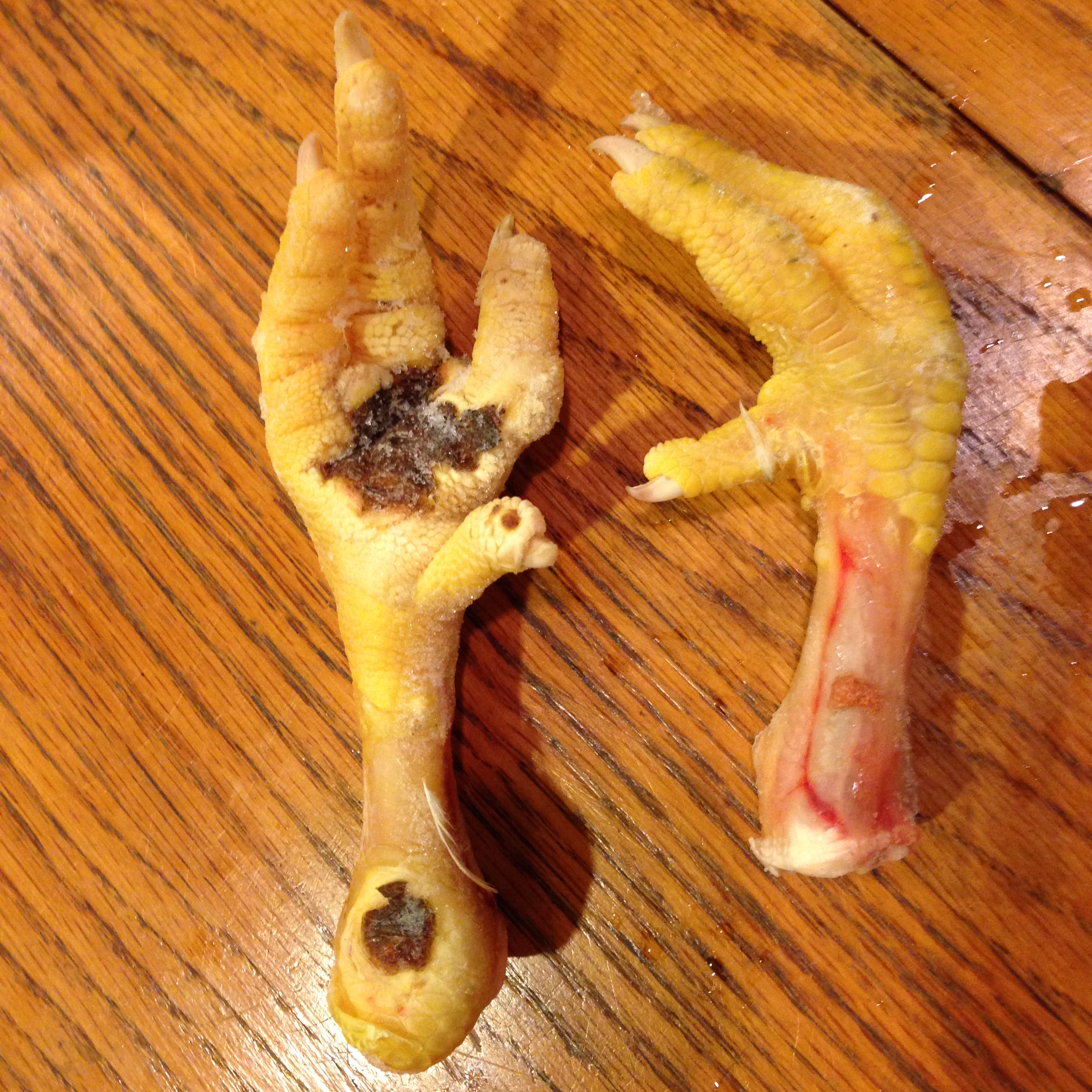
The piece de resistance: chicken feet I bought from a farmer.

chicken legs

Not pretty, these gams, but they really boost the broth’s flavor.

Turnips, parsnips, parsley, leeks. So simple. Salt, in the palm of my hand.

Julia Child says to bring the stock just to a “smile,” and to simmer for three hours or so.

In which time I will have tip-tapped each key hundreds of times, to deliver a three-hour back-and-forth conversation.

1 Comment

Filed under Cooking, Culture, Home, Jean Zimmerman, Publishing, Writers, Writing

Forever Twenty-One

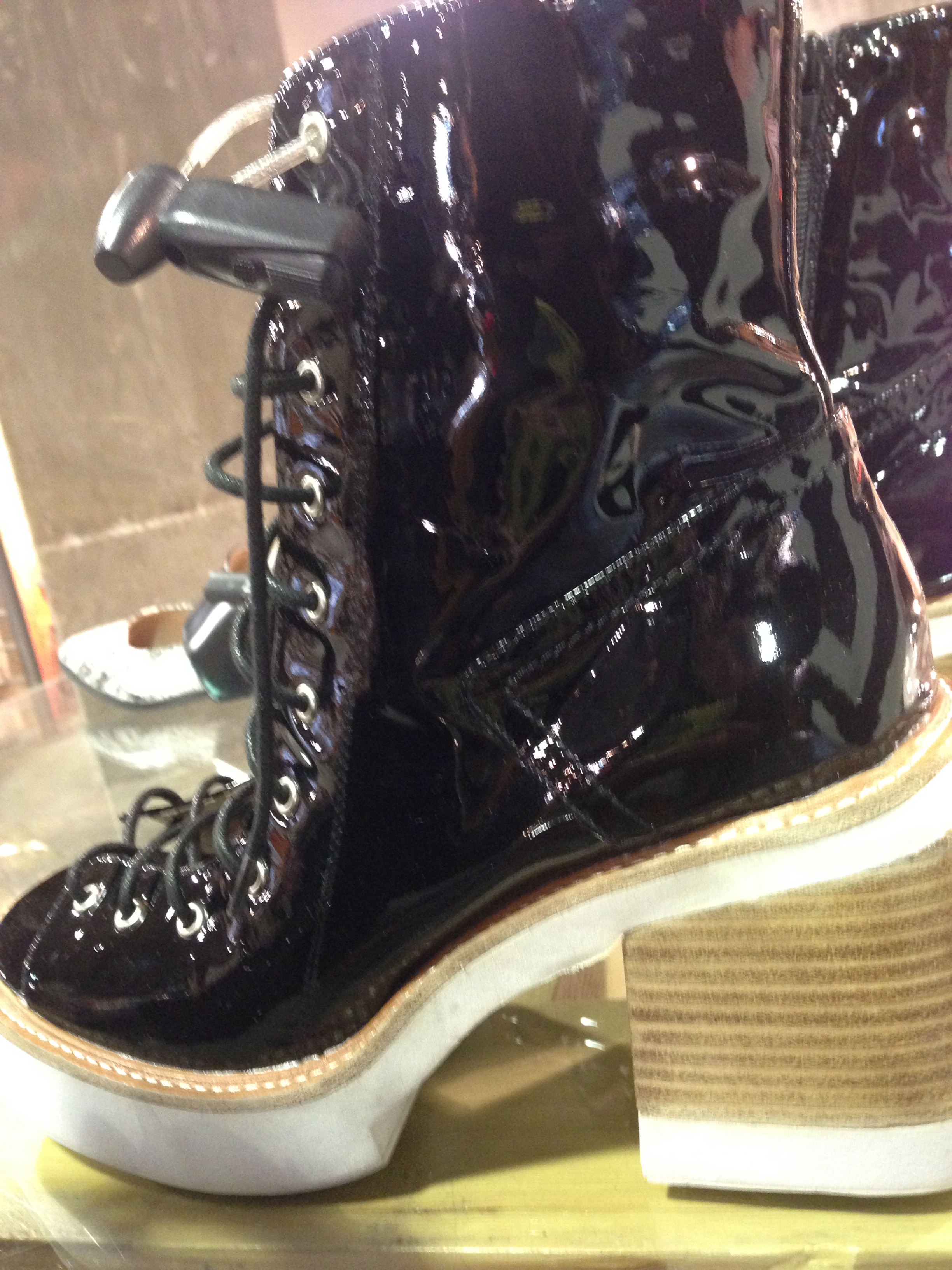
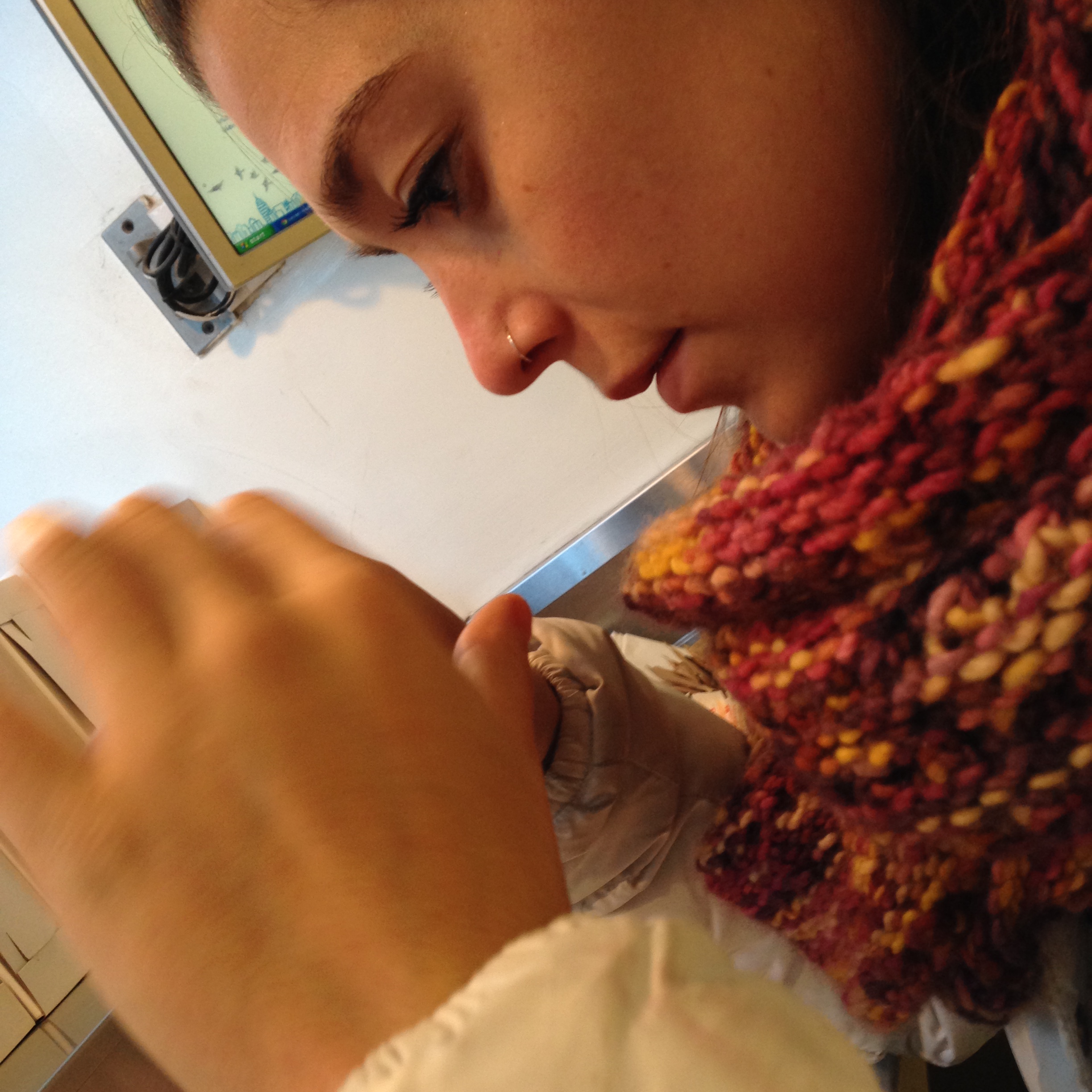
Icy New York City, hot colors, textures, tastes – drinking it all in with a 21-year-old, on break from scholarly endeavors, who needs a pair of boots.

shiny boot

Not those boots.

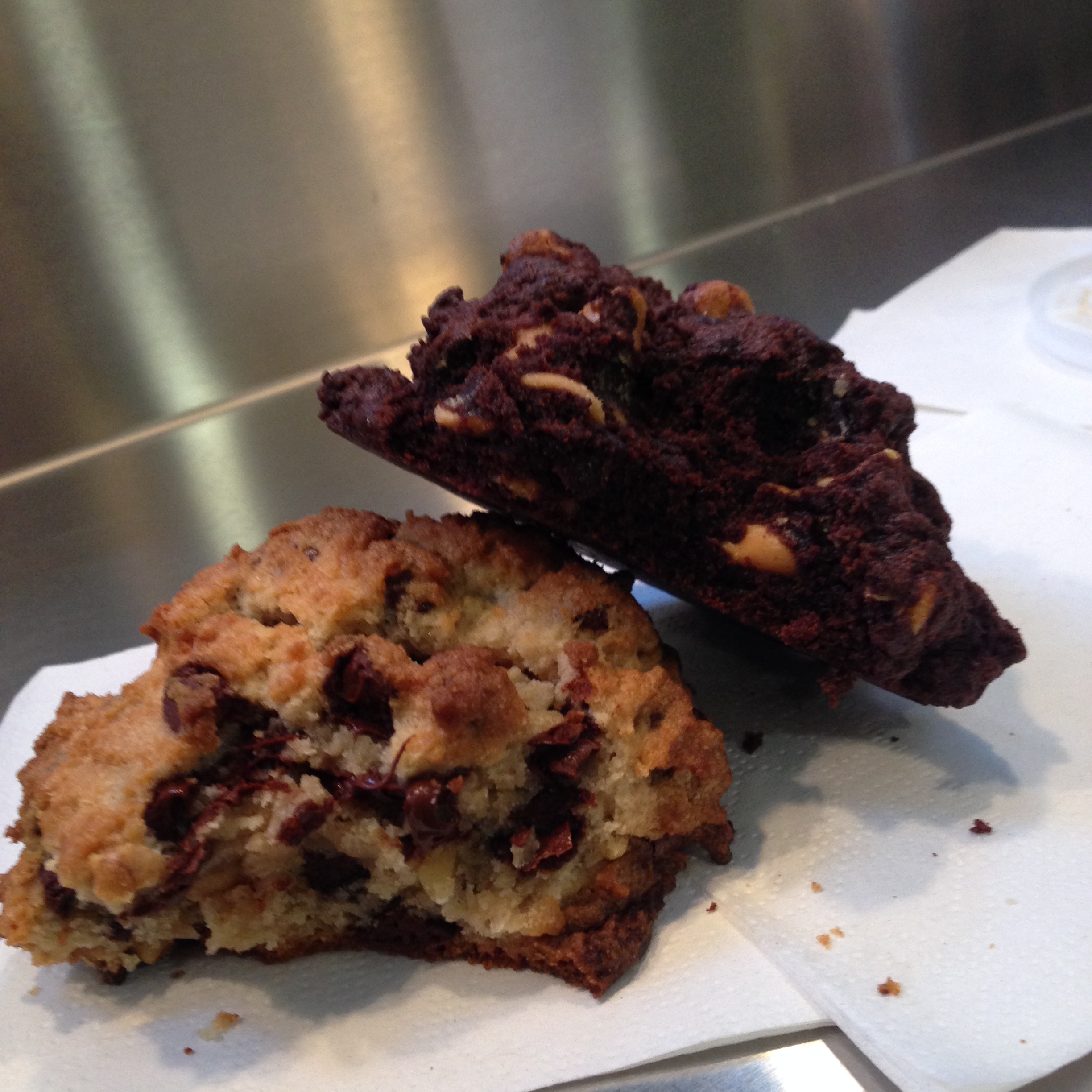
Who needs a cookie.

cookies

The crumbliest, crunchiest, richest cookie in Manhattan, from Levain bakery on West 74th Street. Chocolate, a zillion calories. Would make a good lunch. Highly photogenic, too.

shooting cookies

What she doesn’t need: forced bulbs from a fancy shop.

narcissus

She creates blossoms of her own in her mind.

Needs no silly store slogans.

boy problems

A suit of clothes suitable for a different girl.

And no other body than her own, please.

mannikin

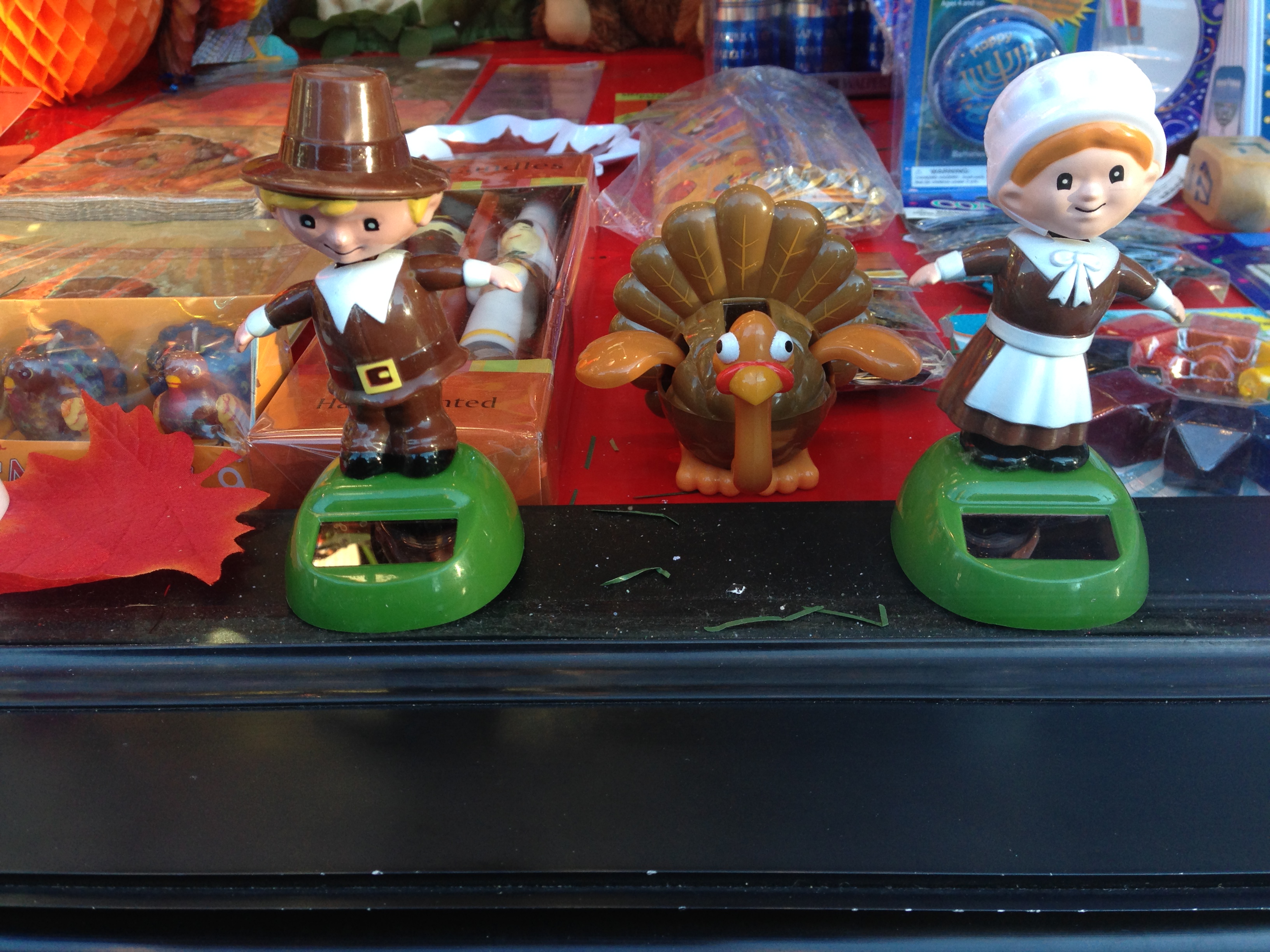
No plastic toys, either, no matter how quirky. These flap!

toys

Life itself is a sweet, quirky game.

1 Comment

Filed under Culture, Fashion, Jean Zimmerman, Photography

An Evening of Stand-Up Tragedy

The art of complaint never sounded so un-peevish. Almost noble, actually. We went to hear Tony Drazan perform his variety of standup, a part scripted, part improvised monologue, at Nuyorican Poets Café on East 3rd Street. Known for its poetry slams, the institution has been there since buying the rundown building for $10,000 multiple decades ago. It can accommodate all kinds of talents, and Tony is one of them. No matter that it was the coldest night yet this fall – that wouldn’t hold back New Yorkers. A motorcycle roared past us down Avenue B, and a guy walked by with a surfboard perched on his shoulder. Comedy should be easy. Or would this be comedy? Time would tell.

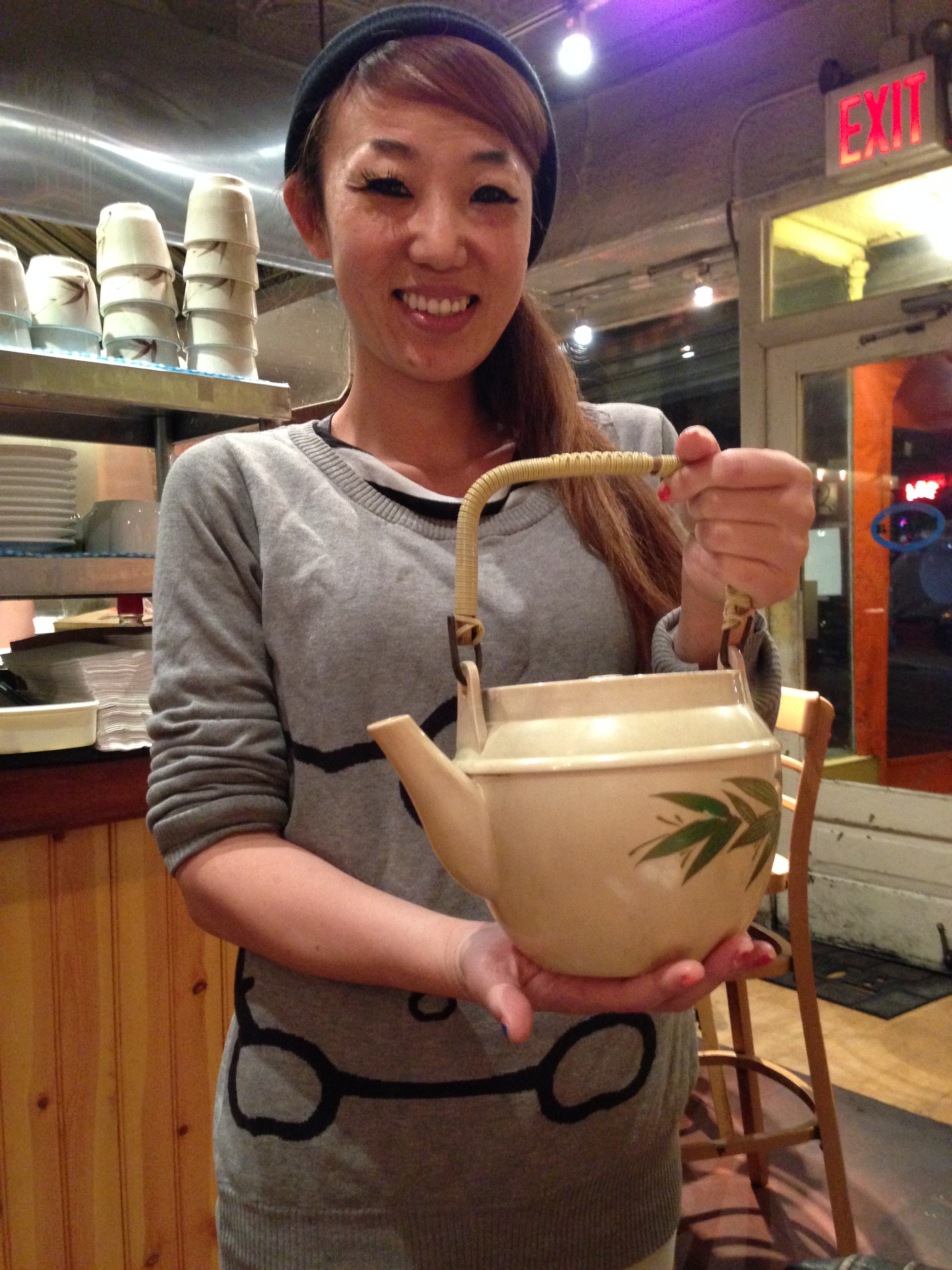
We started out at a ramen joint around the corner, Minca, on East 5th Street. A waitress named Kyoko in a Hello Kitty sweatshirt served us steaming bowls of pork broth with all the fixings.

kyoto

What makes me happy in this world? A bowl of soup with charshu. Slow-roasted pork, to you. I am a hungry simpleton when confronted with ramen, and I also like hot plain tea.

minca ramen

Tony sat down for a pre-show cup and laid out some of his strategy for these stand-up routines. He performs once a month. It’s not his “real” job, he’s a screenwriter and film director with lots of credits. He’s a hockey dad, with a nine-year-old son, Leo.

He told us some of the things that had happened at past gigs.

“I used to stop and apologize and say I don’t know what I’m doing here. It would relax me.”

tony tea

Around us, the young men have van dyke beards and deep black eyes, the girls have long black hair, and it looks as though everyone’s related. Above us on the wall, some intriguing artwork. We’re looked down upon by kings.

minca kings

At Nuyorican Café, people started showing up. A cognitive scientist named Amol Sarba fixed a black contraption called a halo around Tony’s head. Its low-level electrical charge is supposed to boost brain function, and the process recently had a write up in The New York Times. Sarba told us he himself wasn’t convinced until he tried a video game he’d never played before after wearing the device and “absolutely crushed it.” Tony got interested when he heard that traffic controllers and jet jocks were trying out the device. “Don’t let this discourage you,” he offered to audience members as they settled themselves.

headgear

Bare bones, this was, ancient brick and a graphite-colored curtain, with a mike stand in the center of a faded oval rug. That was the space. Two dozen people trickled in, some all the way from L.A. Many of them knew the performer. It was intimate. You could almost forget Tony was  wearing jumper cables.

He commenced. Talking about good intentions gone bad. He wandered. Circled around to the point. To another point. “This is about survivor envy,” he said. Not survivor guilt. A friend, a music composer, got sick with cancer, fell into a coma from November to March. Woke! Rapidly regained his strength. And as strange as it sounds, “I was envious that my friend had survived brain cancer.”

tony piece

Sarba stepped up to remove the headgear. “I’m trying to be more game in my life,” Tony deadpanned. Lenny Bruce was brave, but Lenny Bruce never wore a rig like that on his head during a performance.

More meandering. Probing. Tony’s father, before he died, “had primary progressive aphasia – he couldn’t find the word. It wasn’t Alzheimer’s – he could always recognize me as his asshole eldest son up until the end.” Back to the recovered friend: “He woke up and started pulling out the tubes. He felt renewal in his life and that’s when I began to feel jealous. Somehow he was the better for it. He came out stronger than me.”

In the audience, there was a shift. I was thinking of a phenomenon from a number of years back called the Apology Line, open for business 24-7, which allowed callers to leave a message in which they detailed all they were sorry for. You could also call and listen to other peoples’ woes.

Tony spoke, a stand-up, sit-down tragedian, about having always believed that bad experiences shape you. He lost his mother when he was ten, he said, and that loss always gave him the sense  that “any special achievement I had was because I had survived her death, was honoring her death.” He picked up women by confessing his tragedy.
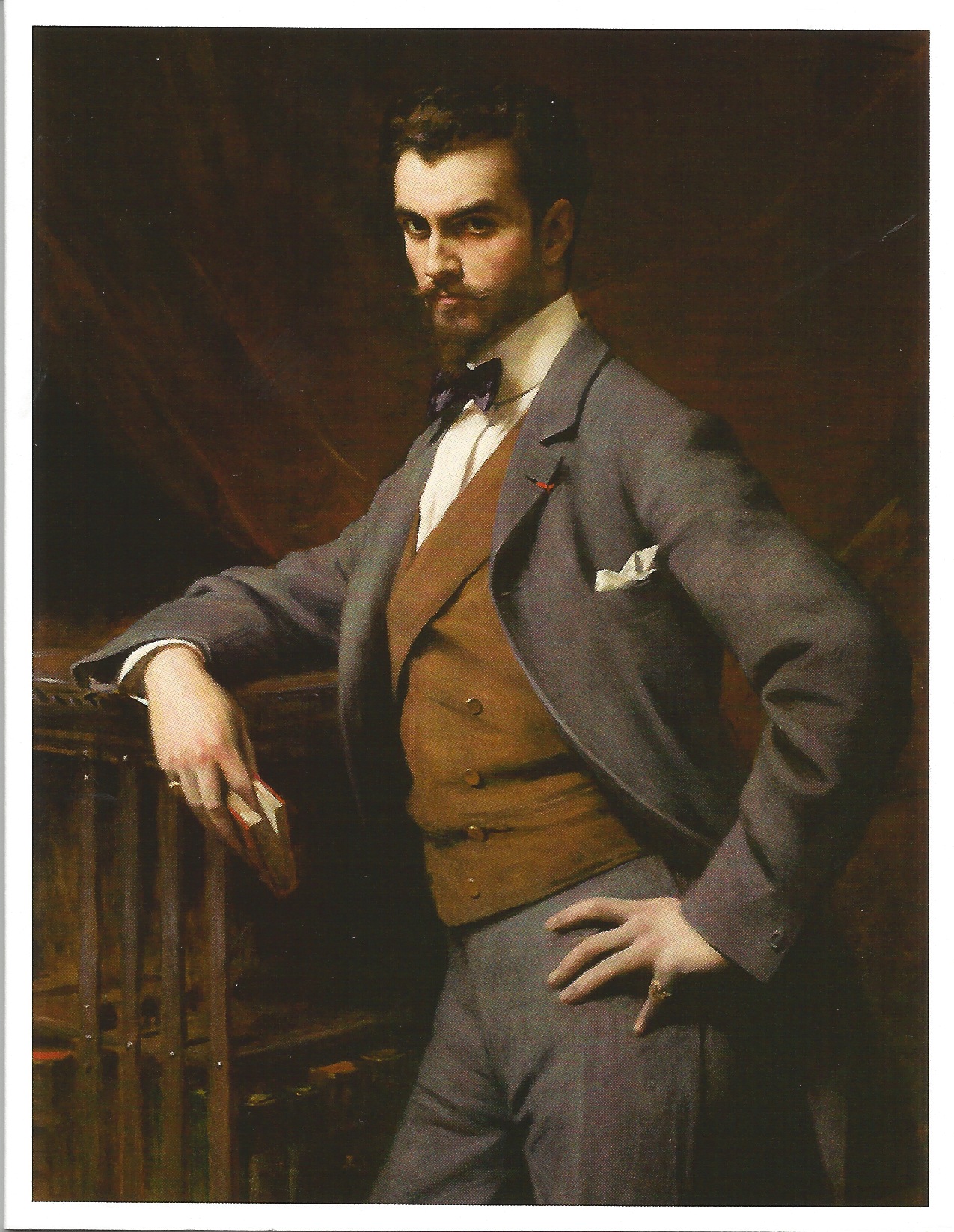
tony standing

“Does this make any sense?” he asked us. The anecdotes twined around, curled, unfurled, from Long Island to Beverly Hills to Manhattan. Dark. Funny. To now, when he admitted to feeling paralysis and sadness even as he was performing. He stood, moved the chairs around from place to place, sat in one, sat in another one. He picked up an enormous piece of paper with scribbled notes, folded and refolded it and consulted it now and then – part performance, part origami. Told us about a Barney’s Warehouse Sale in Santa Monica where he had his first of many panic attacks. The thread… it was so loose, so elastic, but might it not break? The audience roots for the performer to tell his story as he needs to tell it.

Looking for answers, he visited a sikh internist, a cardio guy, a homeopath, an autoimmune specialist. Most recently came Tai Chi, the horse stance, internal energy training. More loss. More venting. Not everyone can make a complaint emerge this fresh. Make it not just a run of the mill kvetch. And, at the end, something new:

“We’re all vulnerable. It occurred to me that my old way of being was misplaced. I didn’t need to be a champion for any of it.”

Silence. In the end there was only the sound the heat made in the metal ducts.

2 Comments

Filed under Culture, Film, Jean Zimmerman, Poetry, Writers, Writing

The Natural Loveliness of Brahms

“It’s relaxing but it’s also uplifting,” I heard a woman say to her companion after the music ended.

I’d just emerged from a chamber performance at the Brooklyn Public Library, that Art Deco masterpiece on Grand Army Plaza which dates back to 1941.

brooklyn-public-library

The sense I think I shared with the mass of humanity swirling around me in the lobby was that we felt a whole lot better coming out of the concert than we had going in. Music as magical curative.

Vista Lirica is a New York-based chamber ensemble with an environmental focus, which means they play fantastic compositions by nineteenth-century Romantic composers in which nature’s power and emotionality take center stage. Mankind is a small though crucial part of the spectacle of the whole natural universe.

I knew Beth Levin, the pianist, but this was the first time I’d seen her perform with her cohort in Vista Lirica – Frank Foerster (viola), Eric Grossman (violin/viola), Neil Rynston (clarinet) and Lawrence Zoernig (cello).

Odd things happened on the way to hear this beautiful music. The Brooklyn Bridge, under repair for at last another year to the tune of five hundred million dollars, wore a diaper to protect motorists from tools and other falling debris. You’d think it was a baby, but it was born in 1883.

bridge diaper

Then, as the concert started at the library, there was a commotion in the back of the house. “Tell them to stop playing!” someone shouted. No one knew what to do. It was midway through Mozart’s Trio in E flat major. Turned out later there was a group of developmentally disabled adults in the audience. The musicians continued playing. All was well.

And then there was the piano tuner. A man was seated just down the way from me in the front row, with a pink bush of a beard and gnarly bare feet.

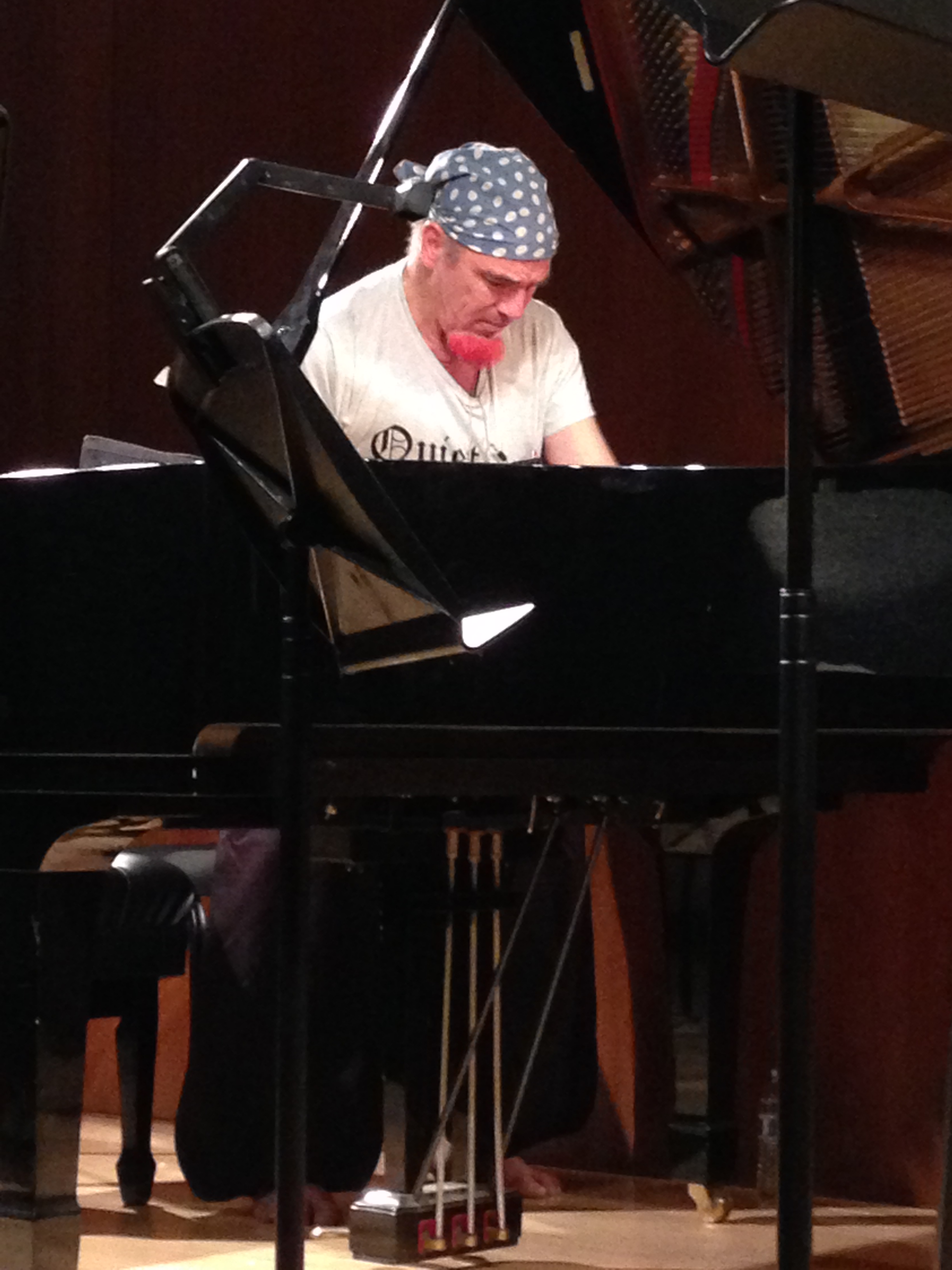
Ben

One side of his baggy tee read “Quiet Please.” The reverse: “Piano Tuning in Process.” He looked as if he wasn’t unfamiliar with a cardboard box for a domicile. He caused some alarm at intermission by jumping up on stage, removing the top of the instrument to get at the action and attacking the job with a furious intensity, all the while muttering under his breath.

The concert spanned four centuries. There was the Mozart trio. A Bernstein sonata.  “La Danza Implacable” by Jorge Lopez Marin. And lastly, what I found irresistable, Johannes Brahms’ Quartet in g-minor for piano, violin, viola and cello. Clara Schumann was the pianist for the very first performance of the piece, back in 1861.

Musicians play music with their faces. Beth played vigorously, rapturously, looking somewhat stricken for most of the Brahms. The violinist appeared to be grappling with the secrets of the universe. The cello player was soulful, the viola player looked as if he had finally accepted his fate.

I might have been overinterpreting, remembering my cello fail in middle school, when I mounted the stage to find I had absolutely no idea what notes to play.

Or maybe I myself felt stricken by the romanticism of the Brahms. Owing to the natural bent of Vista Lirica, I felt myself muse on environmental themes as they played. Storms. Falling snow. Green hillsides.

What was that movie about the chamber ensemble? My mind drifted. A Late Quartet. The one with Catherine Keenan, Christopher Walken, Philip Seymour Hoffman. I am fascinated by the way musicians signal each other with a slight tip of the chin or significant glance when they are ready to go into the next bit. Movement? Perhaps that’s the word for it. Anyway, I wish I could communicate so deftly.

The Brahms Andante con moto in particular held me in its sway.

Shadows, spider webs, a rainbow.

Later, I asked Beth about the Andante, what makes it so special. “Well, the Andante is usually moving,” she said, “often minor key. The composer goes so deep. But in this one the middle section gets jubilant, like a dance.”

Beth

Still attired in the fuschia top she wore on stage, the perfect garment for a Romantic pianist, Beth was surprisingly shy-seeming after her thunderous stage presence. She’s somewhat reserved, she told me, both before and after she performs. Was it hard to go on playing after that noisy interruption today? “Once I played and hailstorms came down on the roof – it was Schumann! Keep playing, I always heard, so I did.” And what about that colorful piano tuner? “Oh, that’s Ben,” she said, adding that she’d been startled when she first met him and he tossed his sandals aside before getting down to business. “When Ben shows up at a concert,” she told me, “I know he’s going to want to tune my piano.”

A concert soloist when she is not with the chamber group, Beth spent two weeks recently in Germany – two recitals and sightseeing. She payed homage to Bach at his grave in Leipzig.

And the music that was mesmerizing me with its spider webs and rainbows, how did that happen, I wondered. Approaching the Brahms, she said, she and the other performers “talked about nature, not in rehearsals but afterward, when we were sitting around.” She smiled. “Brahms was probably walking through the forest half the time when he was writing.”

3 Comments

Filed under Culture, History, Jean Zimmerman, Music, Nature