Category Archives: Cooking

Bringing Home the Bacon

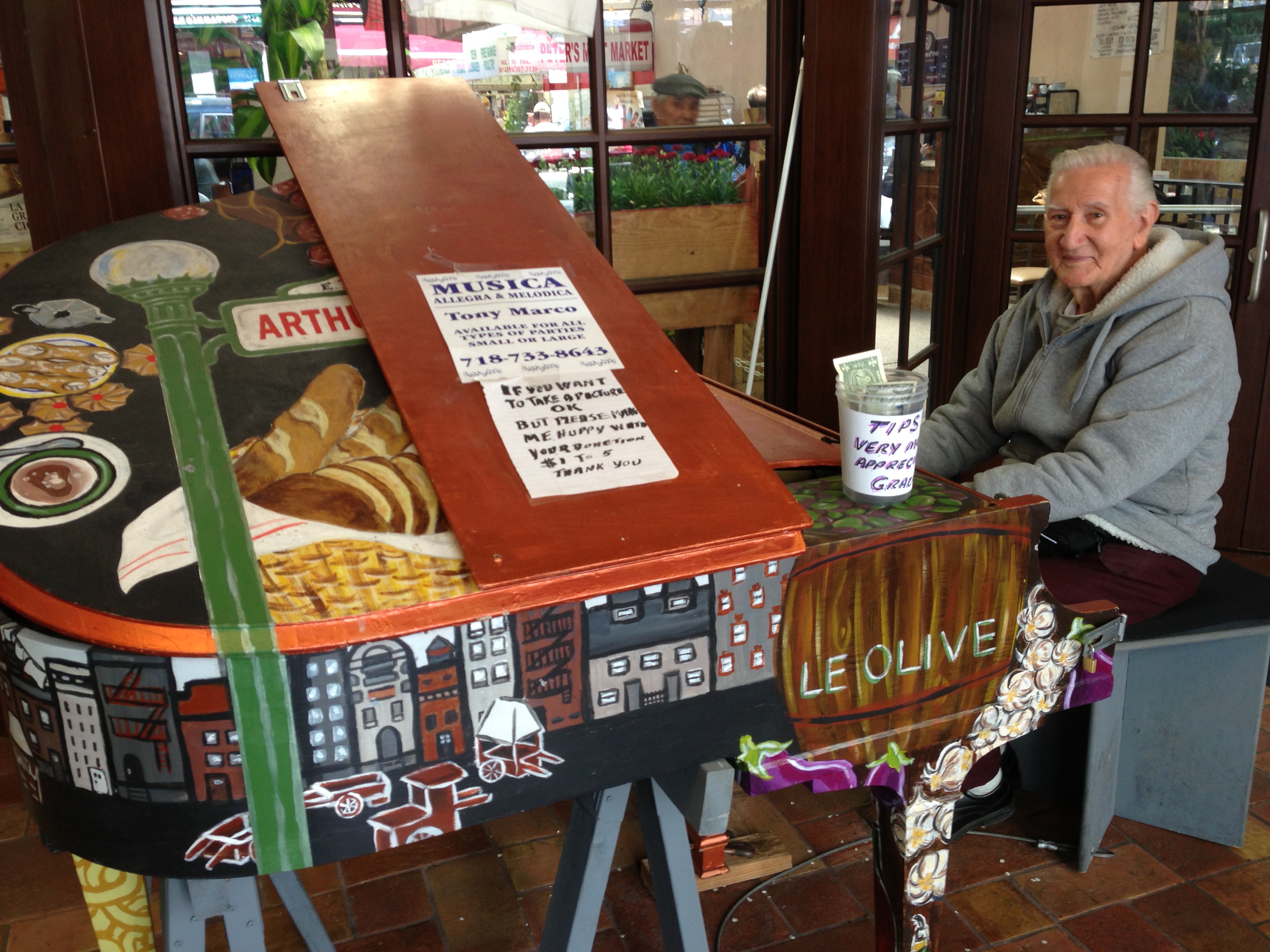
O happy day… on Arthur Avenue, the Little Italy of the Bronx. Where a gentleman at a piano entertained us with Danny Boy, asking only a dollar (we gave him two).

piano

And where an Italian Mickey outside a grocery store had a few hours of peace and quiet, since all the children were still in school.

mickey

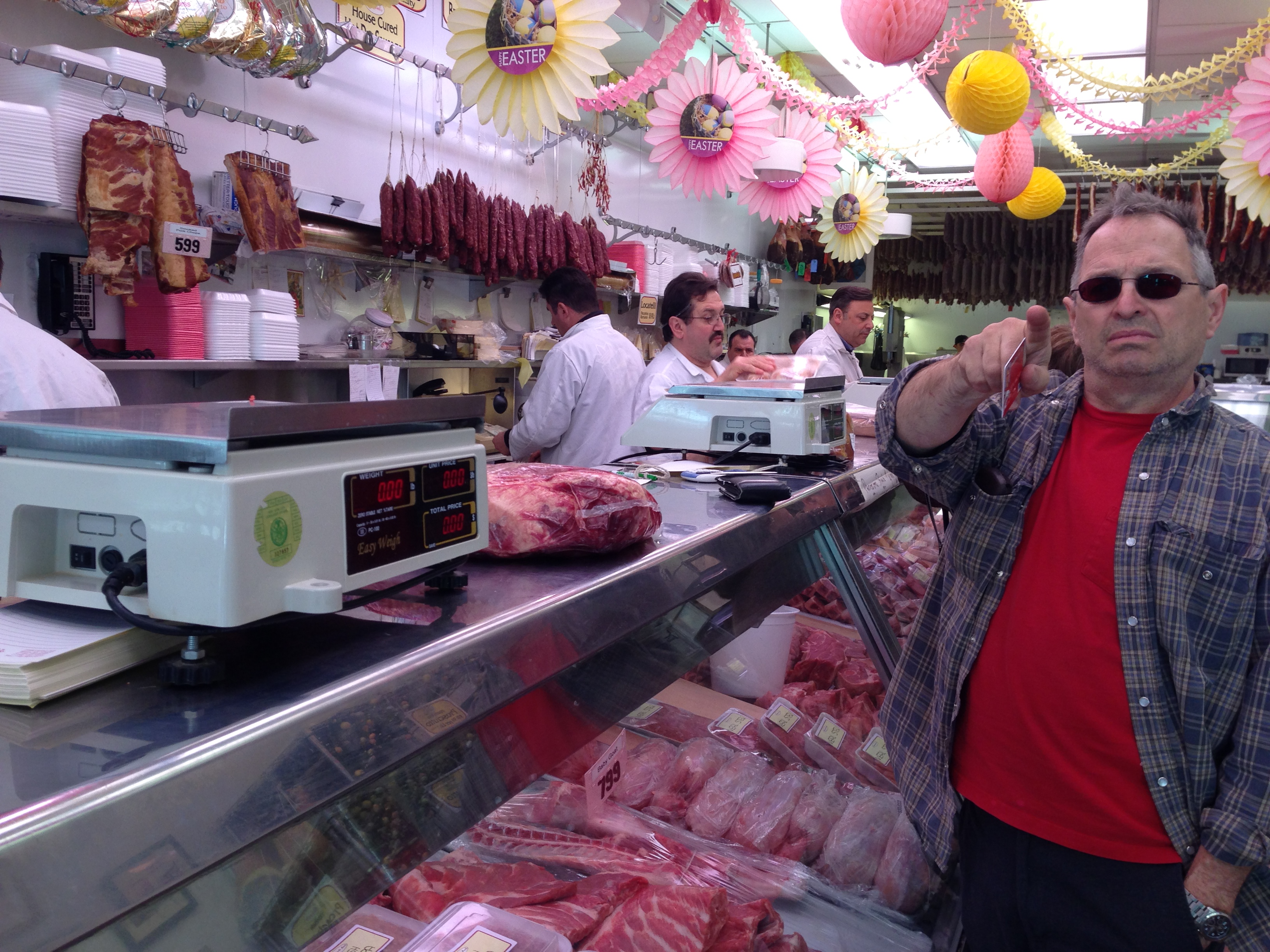
Everyone is a connoisseur on Arthur Avenue. In the butcher shop, where they also stock some cheese, the main man walked around to the display with me to explain that the Pecorino the store had was made from sheep’s milk, yes, but the peppercorns with which it was studded made it unacceptable for use in a salad of fava beans. In other words, he dissuaded me from buying something at his store.

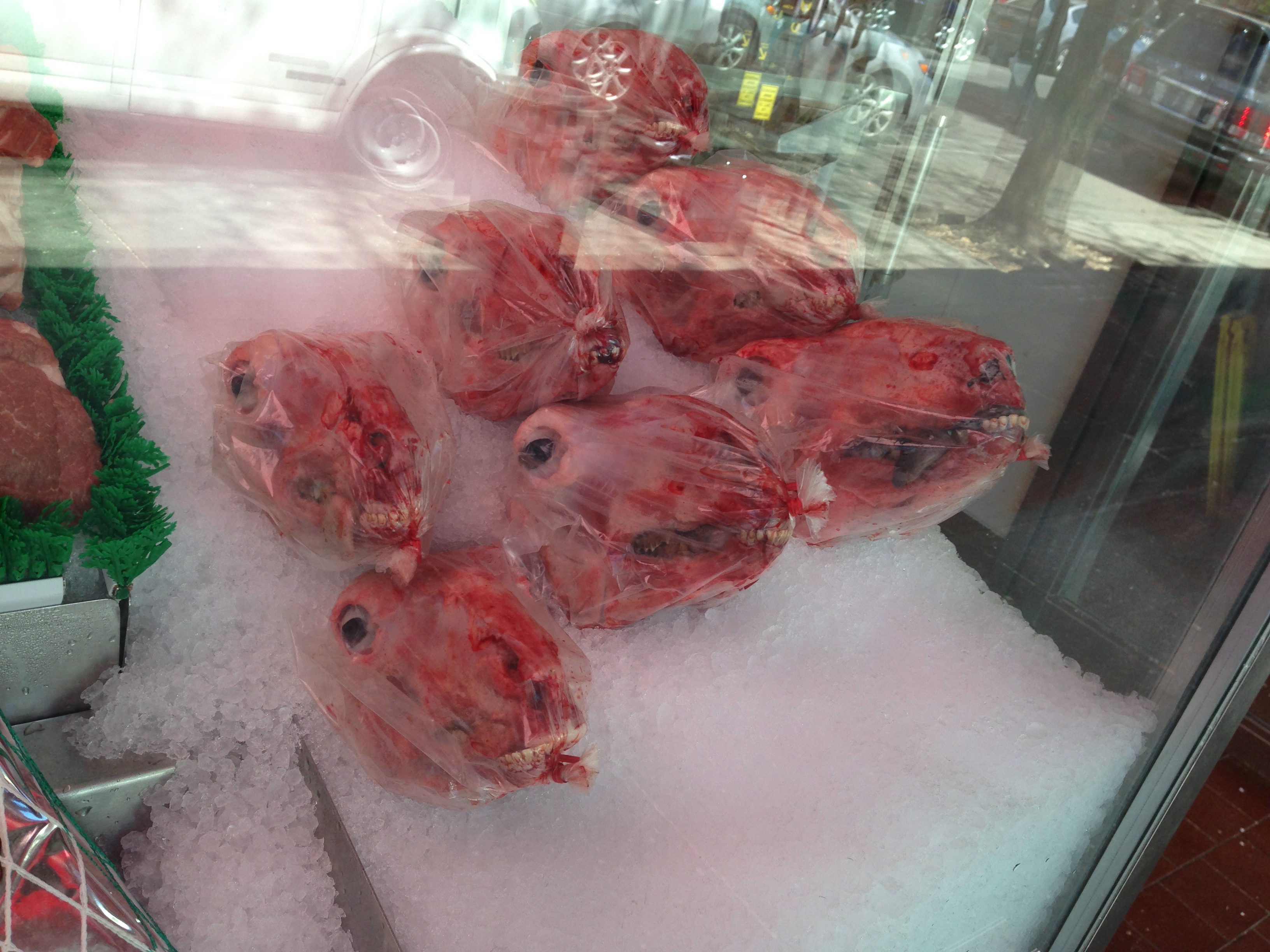
I didn’t ask him about the heads in the window.

sheep heads

Whether they belonged to sheep or goats. He will put the sheep on his right and the goats on his left, will the Son of the Lord — at least so it says in Matthew. But here, it didn’t matter. We were there for a pig. Gil explained exactly how he planned to roast it.

gil:butcher

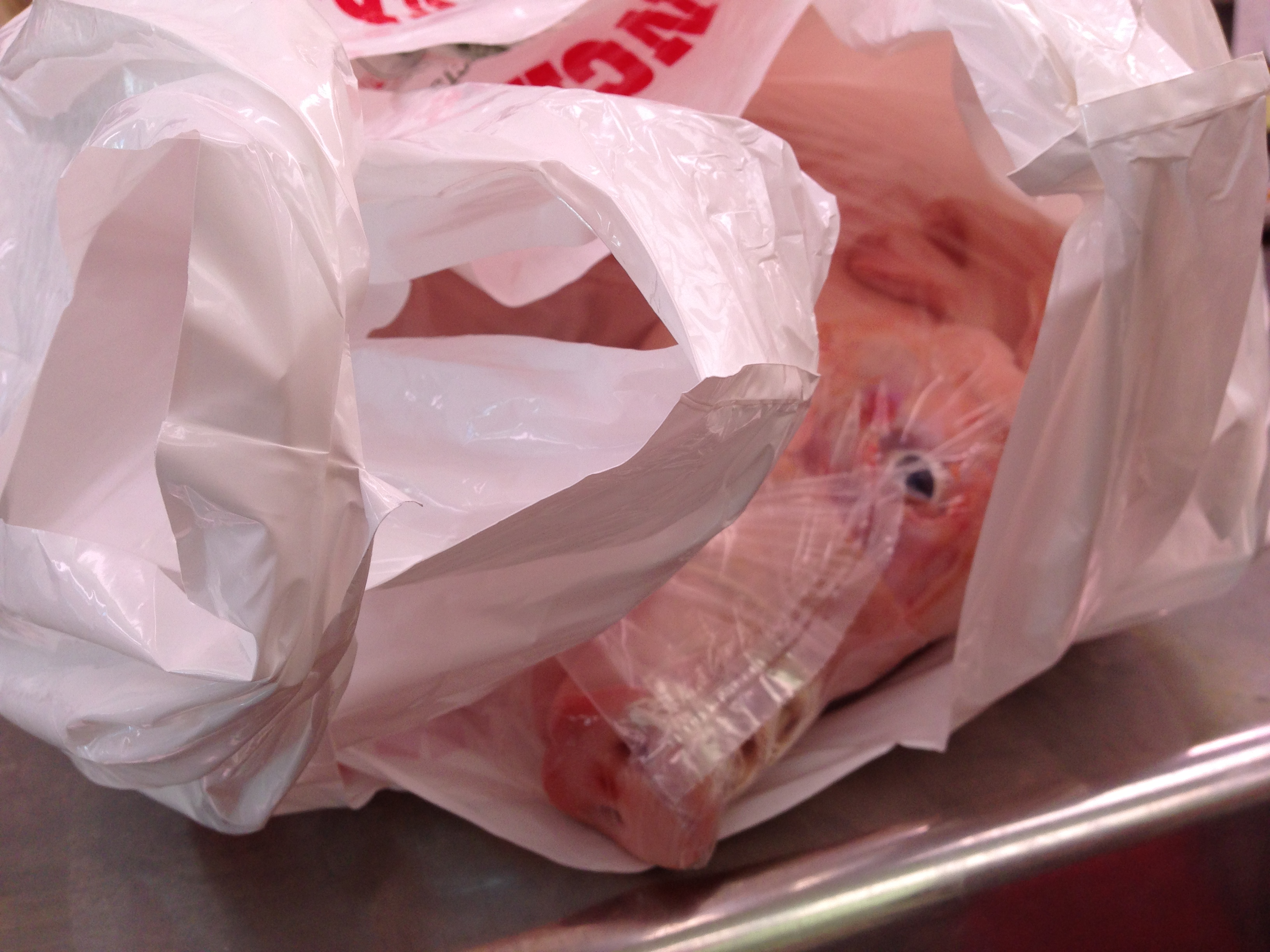
And the butcher acceded to our request to buy it.

pig

Hey, you like bacon, don’t you? Say hello.

Down the street, at Teitel Bros., in business since 1915, where the butcher recommended we go for cheese, we found a Star of David in mosaic at the entrance. Austrian, Yiddish-speaking immigrants Jacob and Morris Teitel opened the place, which is now an institution.

star

The latest generation of Teitels wanted every detail about the pig roast. On the Weber grill? No kidding. Just turn it over, said Gil. Hmn, you don’t say. He took out the Pecorina Toscano. No problem. He knew everything about everything already.

In the nearby arcade, many of the businesses have been around forever, and they too know exactly what they’re doing. Fantastic, Old-World vegetable vendors.

artichokes

Everything larger than life. The Romano cheese. The picture can’t do justice to its girth.

cheese

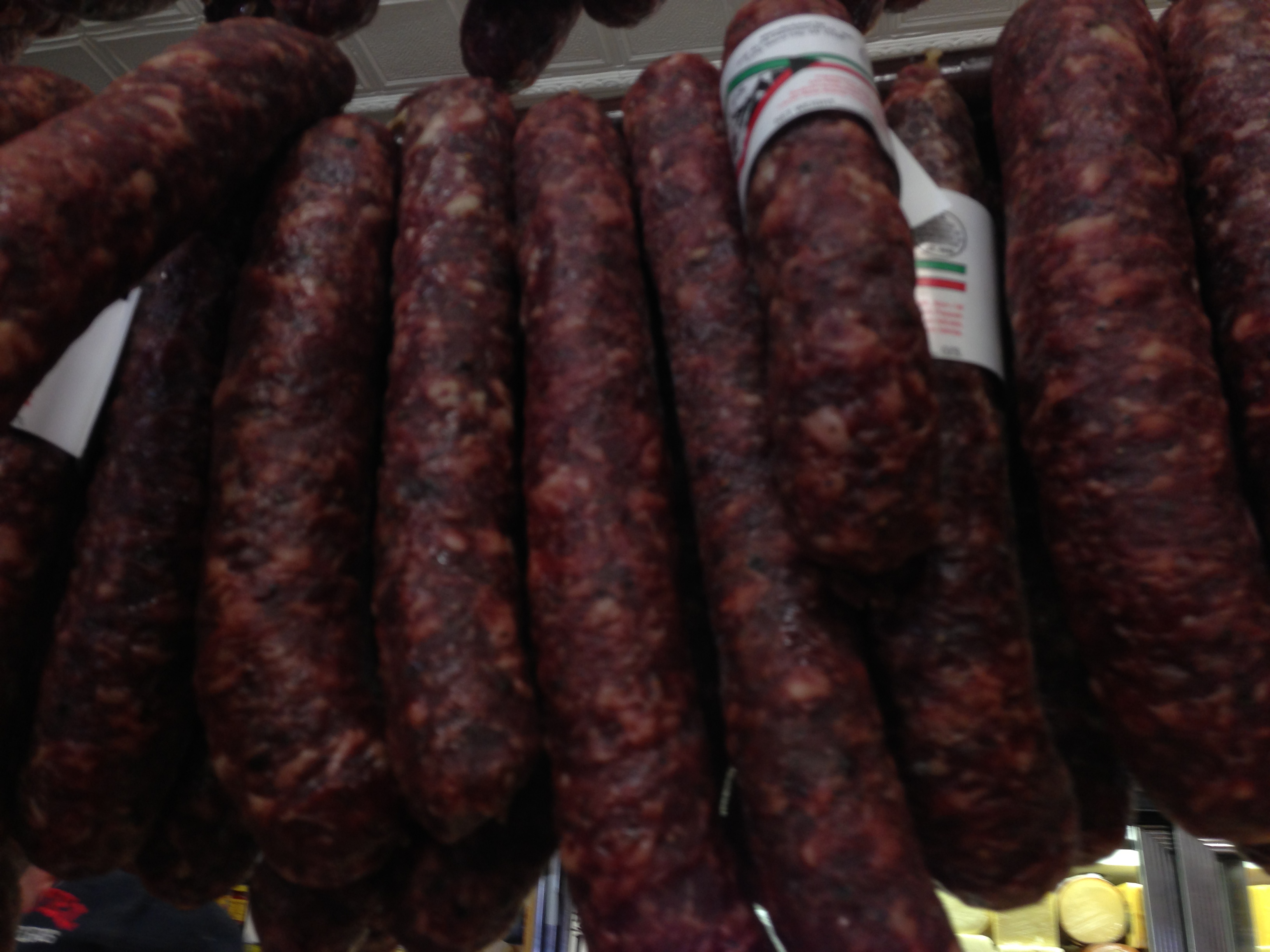
The pepperonis.

pepperoni

Extra, extra long pasta. Really, only Gargantua could wind these around a fork.

pasta

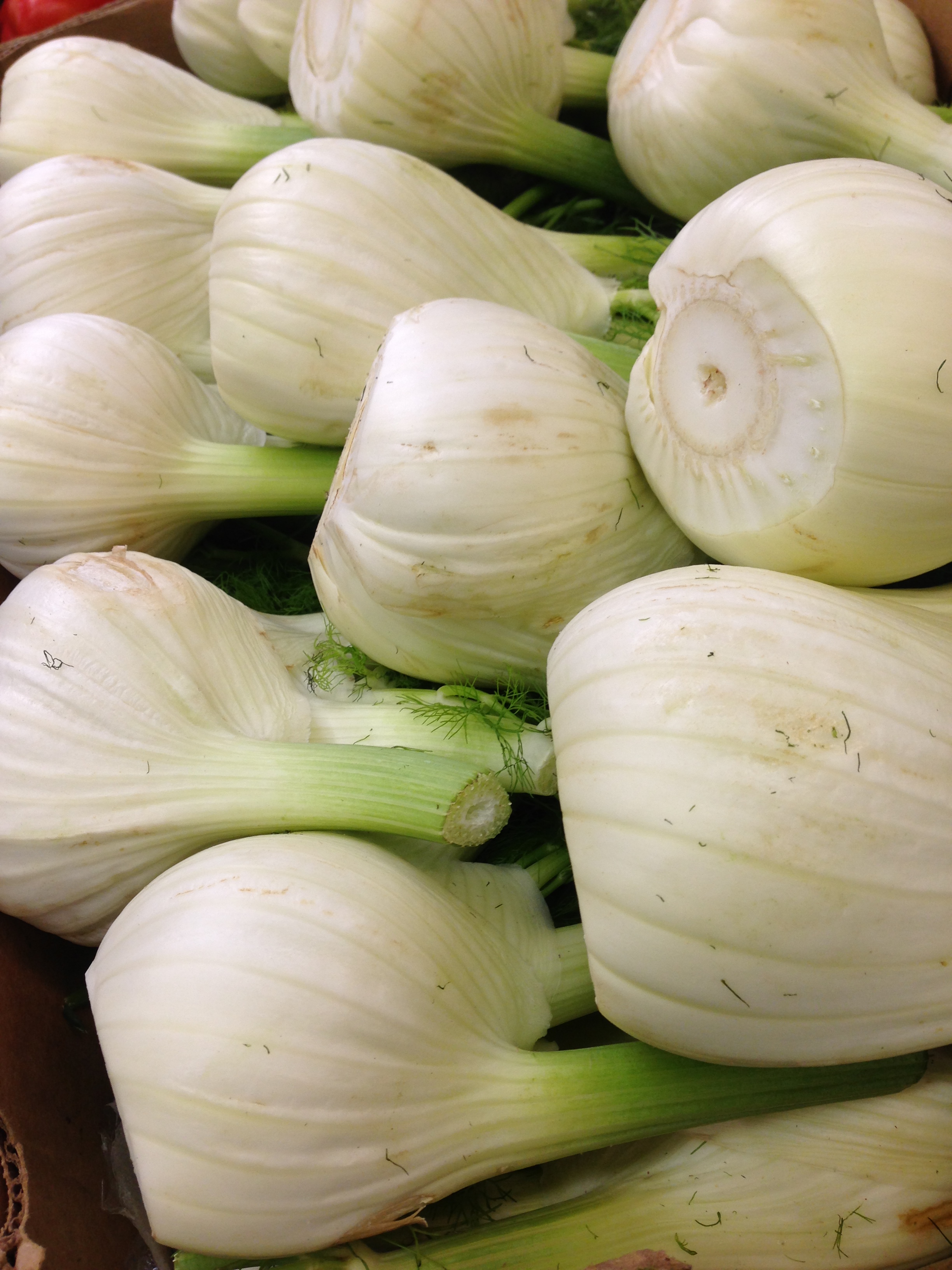
Especially the bulbous fennel.

fennel

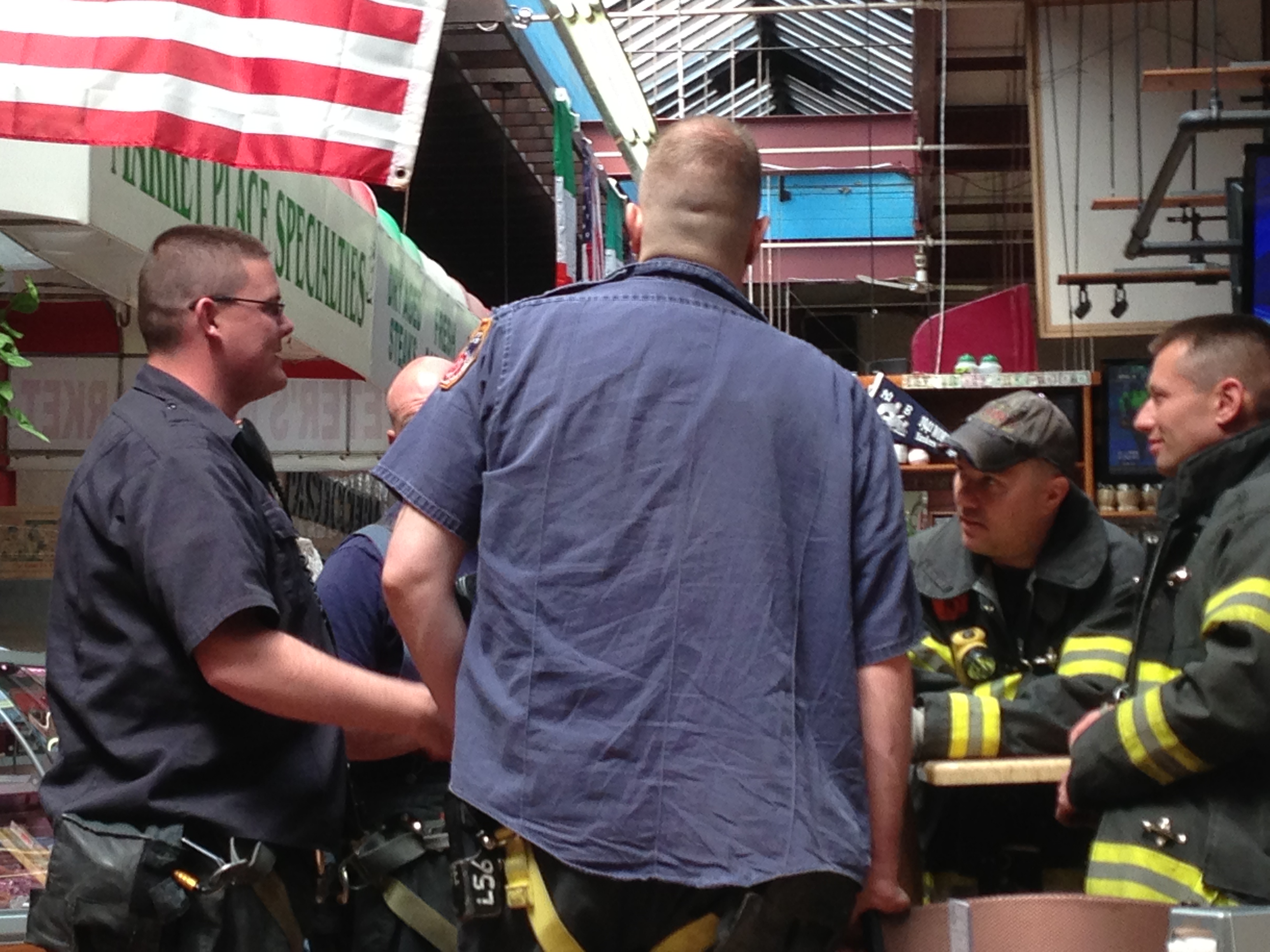
All the guys, the uniformed guys, the ones with badges, pick up their food there. They’ve got our backs. But here I’ve got at least one of theirs.

guys

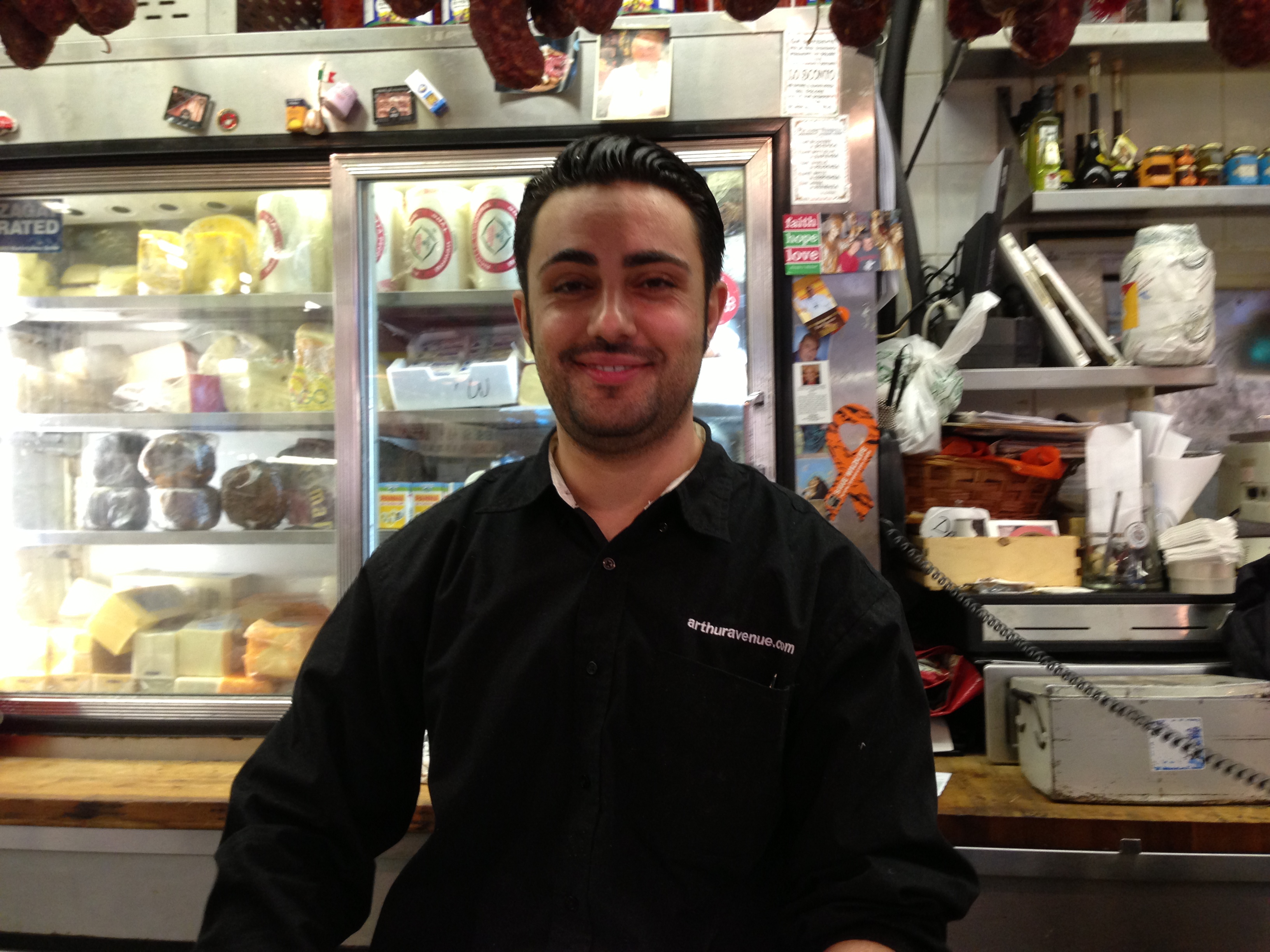
At Mike’s Deli, which sounds like the ordinary place on the corner but is anything but, we got a sandwich of aged provolone, soppressatta, sweet and hot peppers. A little bit of olive oil and balsamic vinegar. An angel made it for us. An angel connoisseur. Sicilian olive oil, the best for salads, he said, with certainty.

angel

We took our paper plate to a wooden table nearby where we had a good view of people buying lamb shanks and two-inch thick steaks.

Good, I said, my mouth full.

I don’t think that quite describes it, said Gil. Thirty seconds and the sandwich was gone.

Time to go roast a pig.


3 Comments

Filed under Cooking, History, Home, Jean Zimmerman

Marsh Mellow

Anticipating guests, Gil goes into superhero mode. Building a spa in the swamp.

gil swamp

Or maybe it’ll be a time machine. I don’t know.

gil swamp cu

Making handcrafted marshmallows.

gil marshmallow

Hanging hammocks.

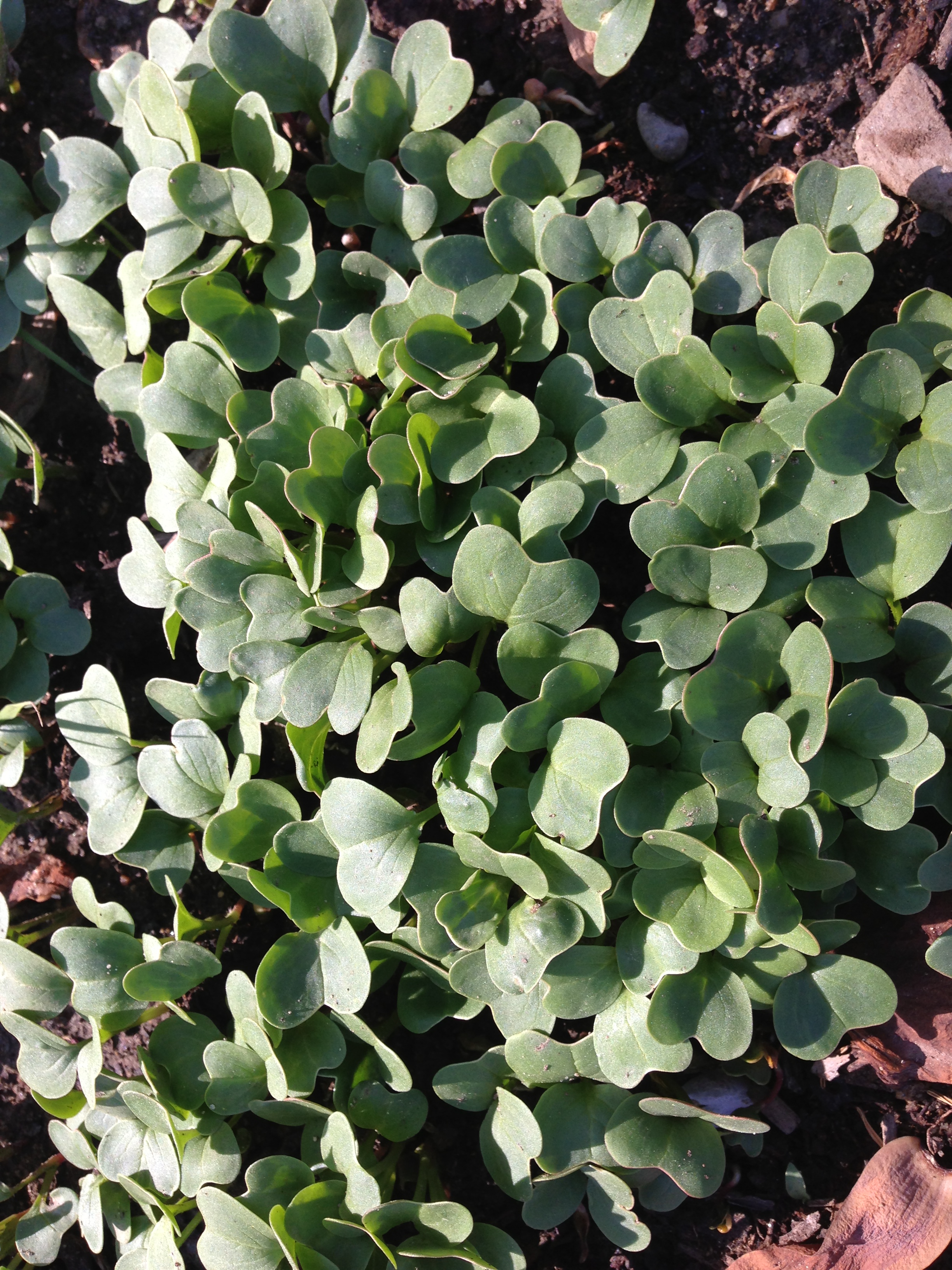
While I rake leaves, water johnny-jump-ups, inspect sprouting radishes.

radishes

Bake a carrot cake. Write a haiku.

Magnolia petals

Fall from the blossoming tree

Even as I sweep

Gil can write a mean haiku, too.

Admit it, we have
Life down pat at the moment
The hummingbird feeds

Oliver stays on the lookout for rascally animals.

oliver swamp

Or a stinky place to roll around. One or the other.

Finally I wind up drinking strong coffee with my old friend Barbara.

coffee beans

This place roasts its own beans and welcomes dogs — not mine though, he’d menace the others.

Sundown, the most beautiful day of the spring, a little cool with warmth threaded through it. Inspiring enough for a haiku. You try.

reeds swamp

11 Comments

Filed under Cooking, Dogs, Home, Jean Zimmerman, Nature

A Swirl of Indies

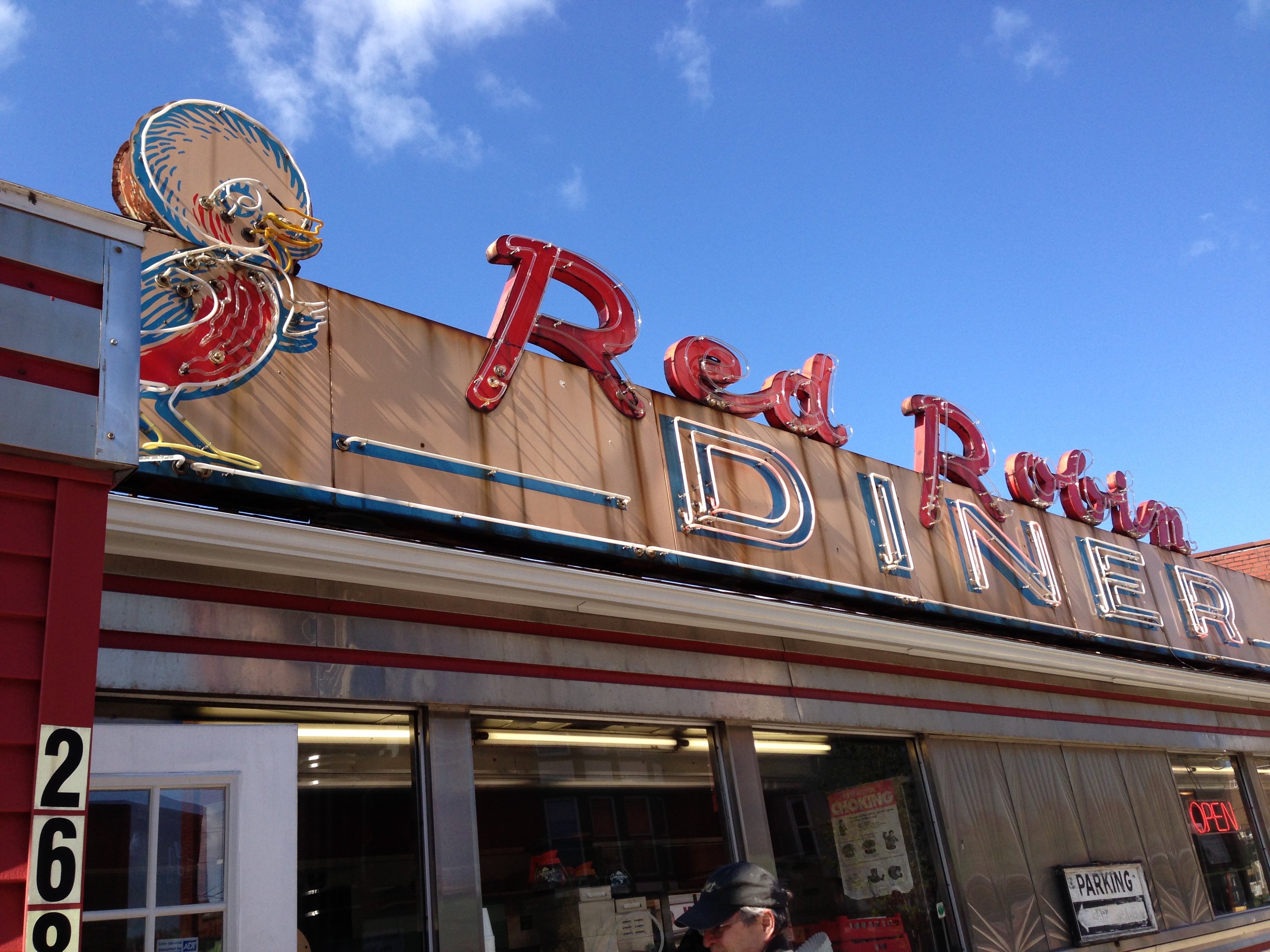
Still on the trail of indies – indigenous landscape elements – in the Binghamton area of New York, we  came to this classic diner for a classic diner breakfast.

red robin

With its fetching signage. The eggs not-so-bad, not-so-good, but a totally intact red leatherette interior, chrome that wouldn’t quit, and self-knowledge in the form of that Norman Rockwell Saturday Evening Post image “Runaway” pasted up on the wall.

runaway

A cop and a little boy on the run trade secrets while sitting atop a diner’s spinning stools, as if it was painted from life in this very diner.

It’s spring, didn’t you know? Time to get your lawn in gear.

mower

Crappy motels have the best signs.

endwell

Endwell is actually the name of a town, not just the end of a famous saying, and not just how you hope it’s gonna go when you check in. Endwell, along with Endicott and Johnson City, were three communities renamed by shoe-leather magnate George F. Johnson when he took the area over in the 1920s. Endwell was a brand of shoes. Universally known as George F., the irrepressible mogul came up through the ranks of local shoe workers and, when he made it to the top, did things like build churches and schools in his effort to provide what he called the “square deal” for his workers. He installed five elaborate carousels within a 20-mile radius.

This one’s not open until Memorial Day and they keep it locked up tight.

carousel house

We wanted so badly to get in, we pressed our noses up against the windows like a couple of Norman Rockwell kids.

last ride

The carousel was built in C. Fred Johnson Park in 1923 (the Johnson name proliferated with his success) and has 72 figures four abreast, with all the carving, bevelled mirrors and scenic panels intact. We’ll have to return some time for a ride. There’s no admission, but you’re supposed to contribute a piece of litter.

best carousel

George F. wanted to keep his workers happy so they wouldn’t think of unionizing, and it seems he was successful.

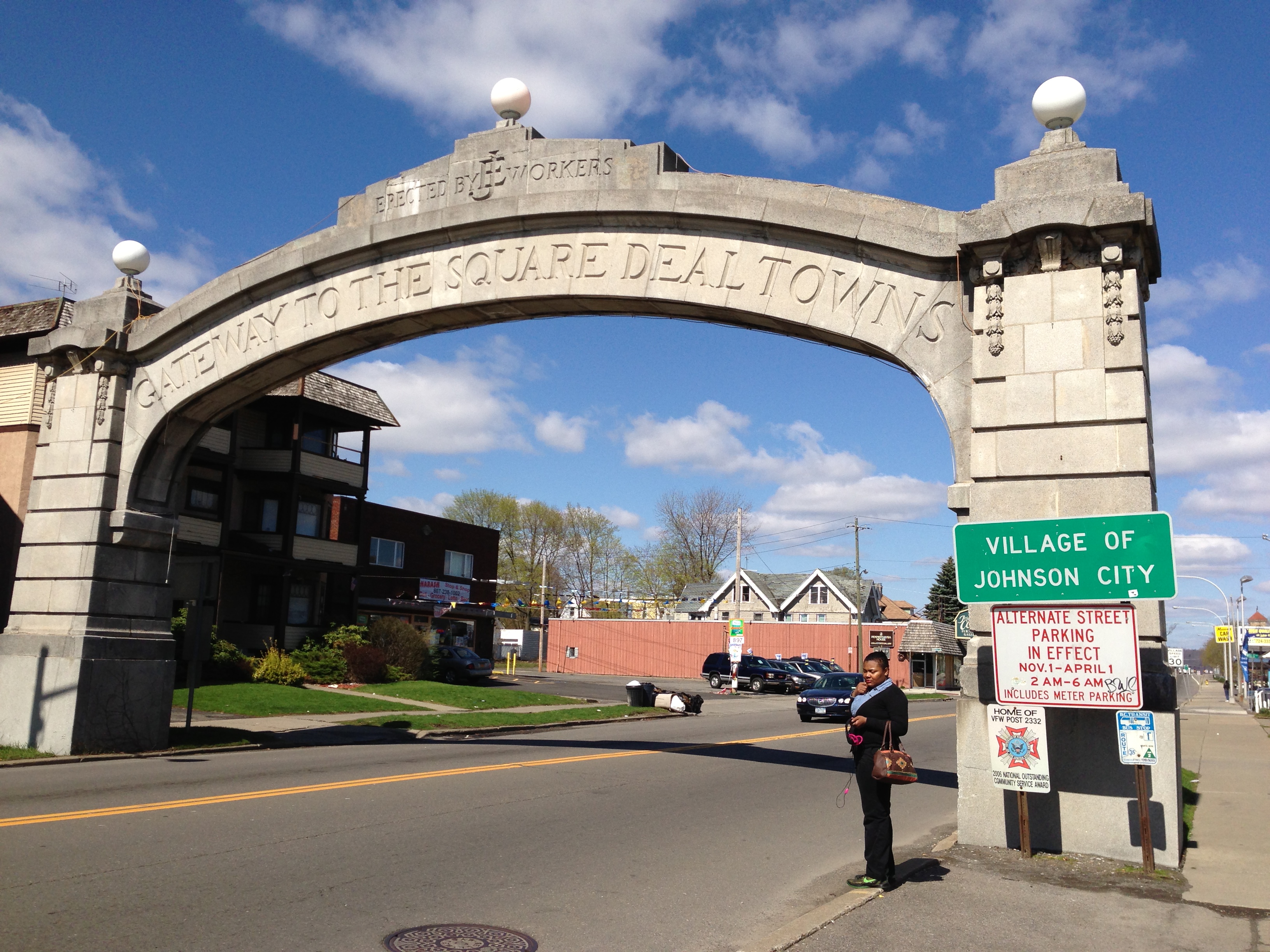
gateway

“Gateway to the Square Deal Towns” reads the welcome to Johnson City.

We stopped at this bold and blocky indie sign.

library

Could this actually be the name of a small town library or was it more in the line of an exhortation? A bit of both, it turns out. Inside, there was more about the George F. era and legacy in a series of glass cabinets.

johnson

An original shoebox, from the glory days long gone.

shoebox

Your Home Library was originally built as a residence by Elijah Bridgham in 1885 with bricks from his own brickyard. Harry L., the younger brother of George F., made it an institution in 1917. Soon there were dining rooms, children’s rooms, sewing rooms. “Your Home Library was his conception of a home atmosphere and home freedom for the community,” said Rev. William MacAlpine at the dedication of the Harry L. monument in 1922. Home freedom?

All kinds of indies, everywhere you looked.

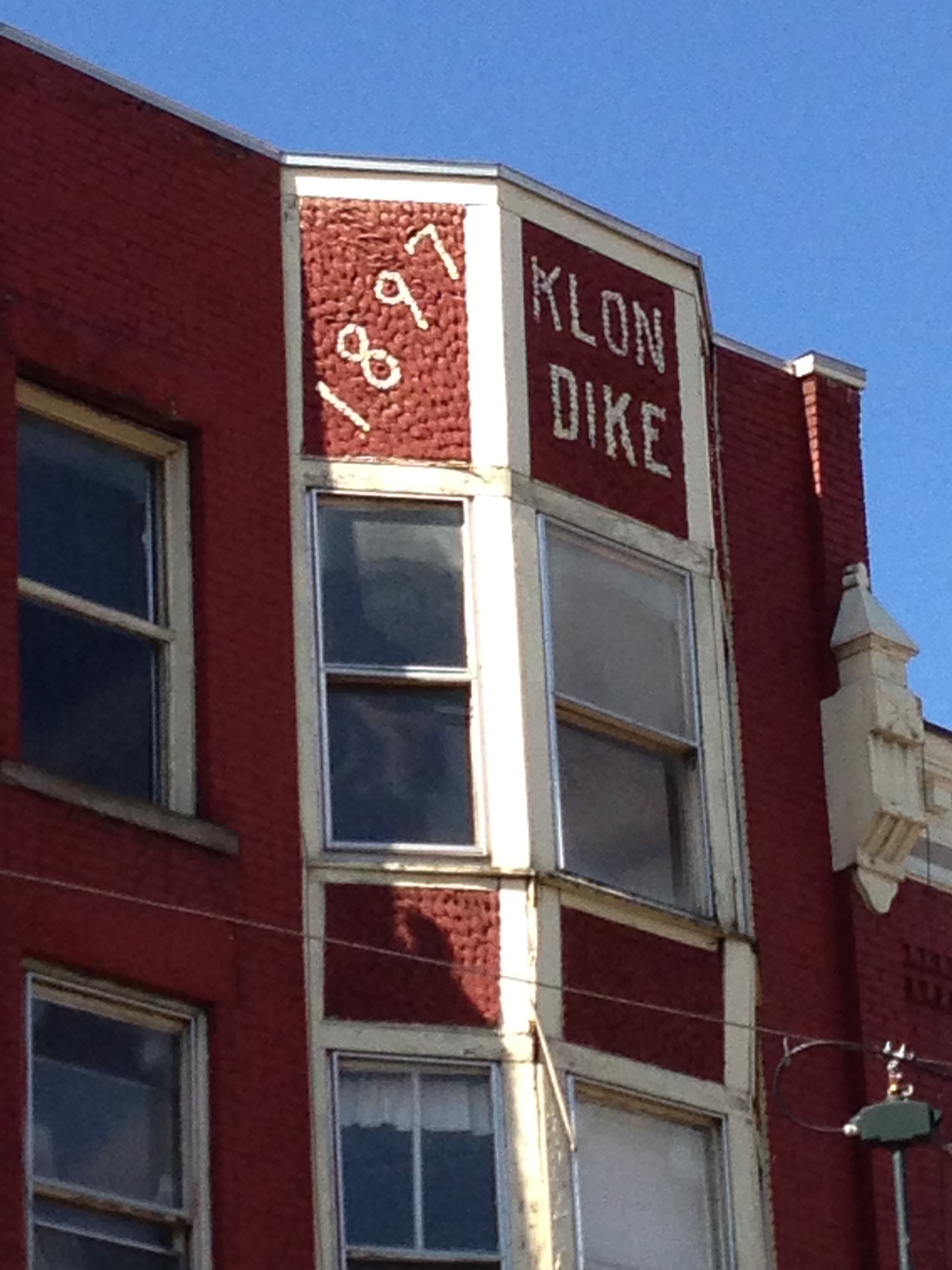
Klondike

Perhaps a building endowed by the Klondike Bar magnate? You never known in these parts.

We passed several examples of the ice cream school of signage, which often presents a tasty homemade effort.

swirl

Fortunately, this was one of the soft ice cream joints that has survived intact beneath its sign. It even offers a peanut butter dip.

peanut butter cone

Vanilla shake in hand (no yellow cake or panda tracks for me) it was time to head for home. We have indigenous creations there too.

cherish


5 Comments

Filed under Art, Cooking, History, Home, Jean Zimmerman, Photography, Writing

Mob-fest at Apalachin

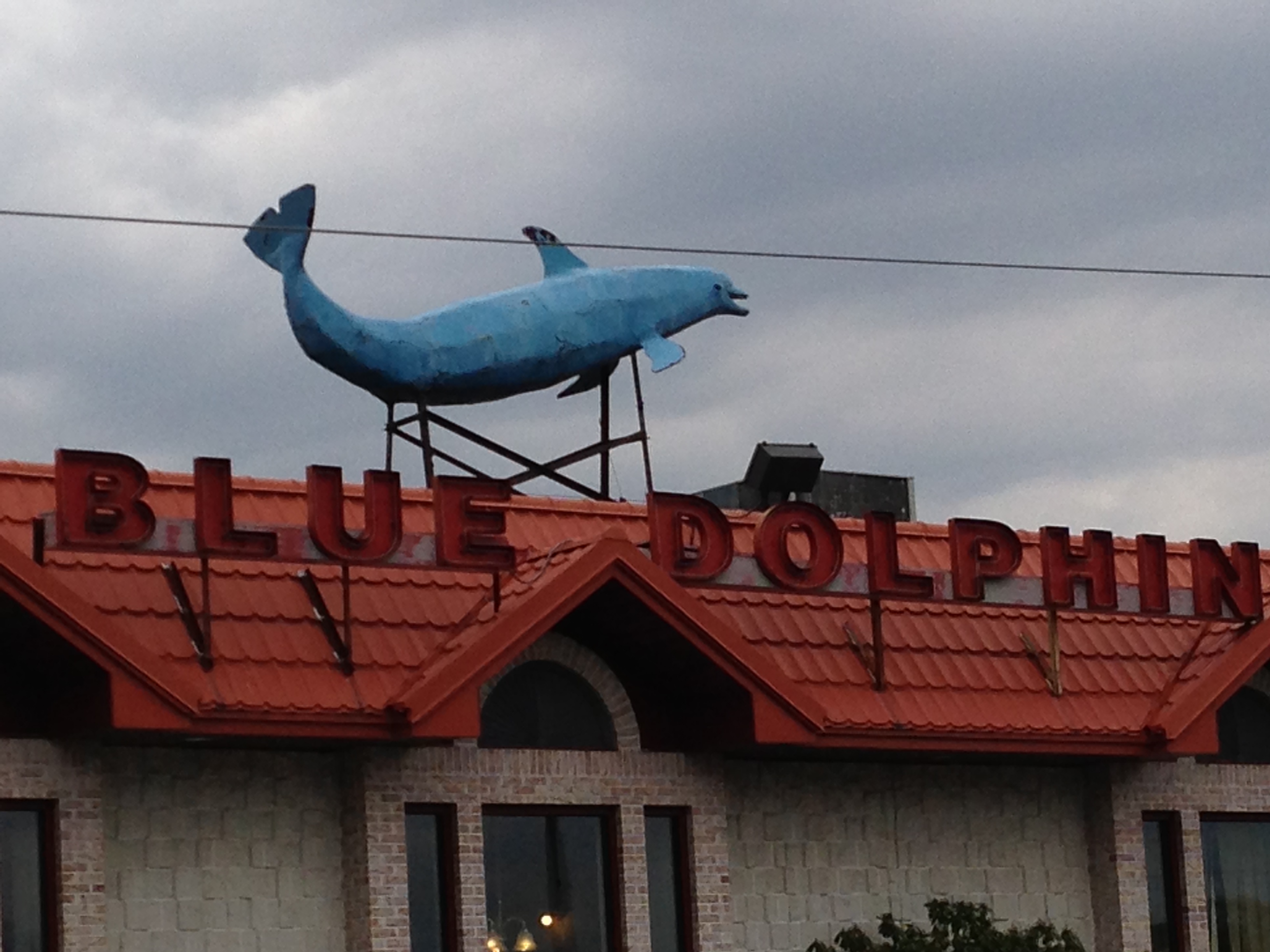
There were so many people who wanted to attend Gil’s talk on his book Mafia Summit: J.Edgar Hoover, the Kennedy Brothers, and the Meeting That Unmasked the Mob that the location had to change. From the Apalachin Library, it would now take place in the cavernous party room at a local landmark, the Blue Dolphin diner.

blue dolphin

The book had strong local interest. Gil tells the rollicking story of the 1957 mobster meeting in Tioga county, New York, the assembly parodied in the Billy Crystal/Robert de Niro movie Analyze This, where the bad guys skulk off into the muddy woods. The book’s also about the mob wars that led up to the meeting, and the drama that followed between Hoover and the Kennedy boys. People here knew the Barbara’s, the family whose paterfamilias hosted the meeting, they socialized with them, worked for them. For them, it’s not only a national saga but an intensely personal story.

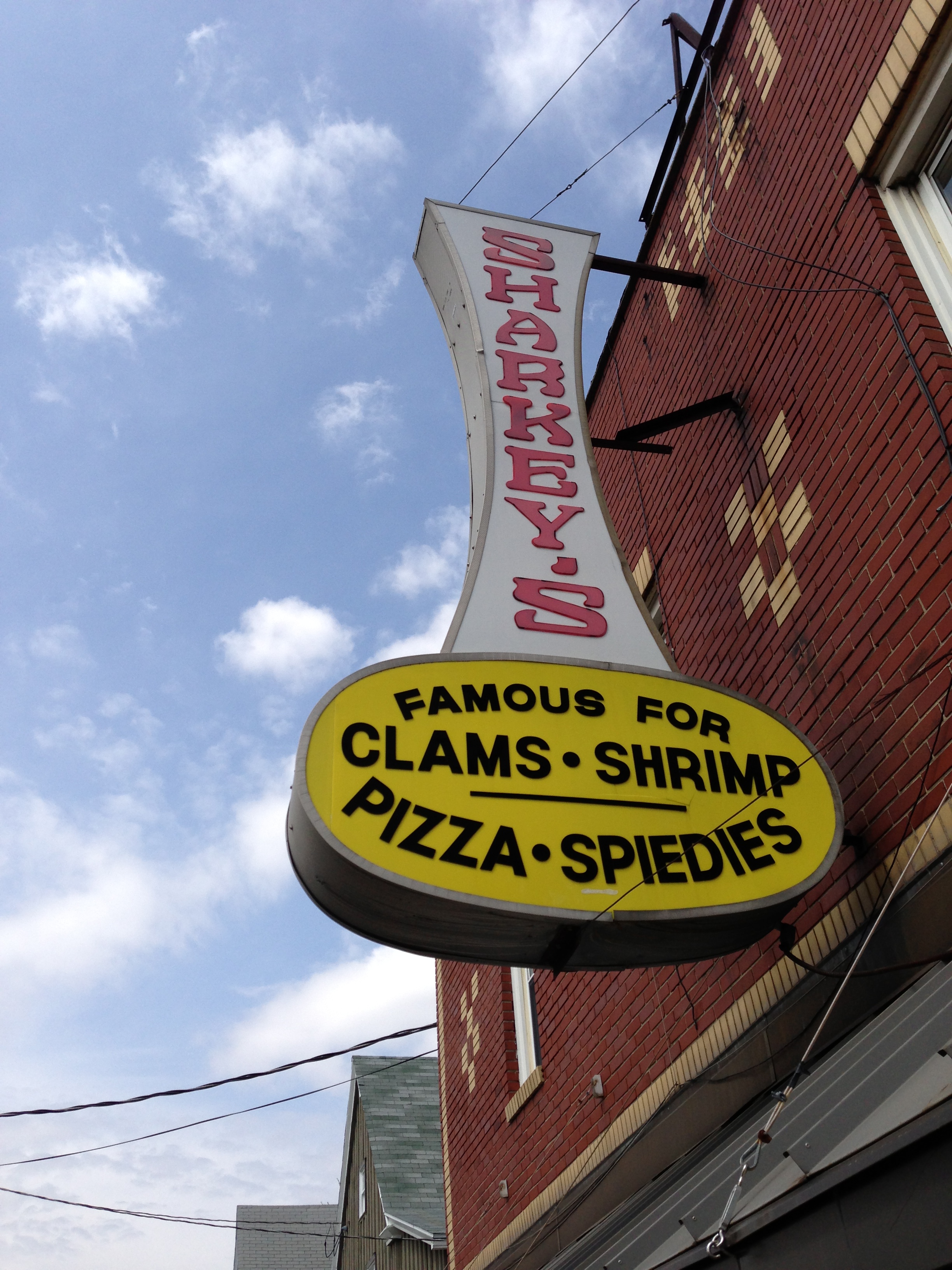
We got to Binghamton – Apalachin’s big-city neighbor – and hungrily headed for a spiedie joint.

sharkey's

Spiedies are a kind of marinated pork kebab that you squeeze between pieces of cheap, soft white bread. For some reason Sharkey’s also specializes in clams “available to go by the dozens, hundreds and bags,” boasting on its menu that, “The clams you eat today slept in the bay last night.” Since the only water nearby is the muddy, meandering Susquenna River, that gave us pause.

clams

But didn’t stop us from ingesting a dozen coarse, prehistoric-seeming steamed clams.

Just as we got ready to go, I noticed a button to the side of our old, scarred booth, a relic of another time.

button

Some kind of a magic button, maybe capable of summoning a mobster’s ghost. The place dates back to 1947, and it was probably old Joe Barbara’s cigarette smoke that stained its walls a coffee brown.

We stayed at a highway motel. Not just any highway motel, but the one where Detective Ed Croswell, the hero of Gil’s book, first intuited that something was rotten in the state of Apalachin.

motel

Croswell, there on another police matter, saw a guy in a sharkskin suit making reservations for a group attending a “convention” and hung back observing the situation until he got the information he needed.

moody motel

The motel needs a bit of a spitshine but it definitely gets you in the mood for a mob-fest, like the one at the Blue Dolphin tonight that packed the room with people who drove an hour to get there.

Gil  has some serious hand cramps in its wake.

Gil signing

5 Comments

Filed under Cooking, History, Photography, Publishing, Writers, Writing

Gil’s Best French Fry Recipe

Today I planted my potatoes.

planting potatoes

Their eyes are all sprouted, ready to go.

Unearthing them at the end of the season – and here in the northeast, it’s a long season – is one of my favorite things. You get to reach into the dark, crumbly loam and pull out the hard little orbs, detaching them delicately from the stem. You get dirt under your nails.

You get to say loam.

It’s of a kin to reaching under a hen, feeling around through the softest feathers imaginable to pull out her just laid, still-warm, golden eggs.

Once, around thirty years ago, I wrote a play called One Potato. The things I recall about it: there was a protagonist named Esmerelda, it took place in Europe during the Middle Ages, and it was actually about the invention of the dinner fork. I loved the fact that it was hard to find information on my subject (pre-web!), I had to dig (like digging potatoes) and even embroider on what I found to create a story. Barbara Tuchman, the great historian of the middle ages in A Distant Mirror, once said, “The unrecorded past is none other than our old friend, the tree in the primeval forest which fell without being heard.”

This was when I was young and poetical.

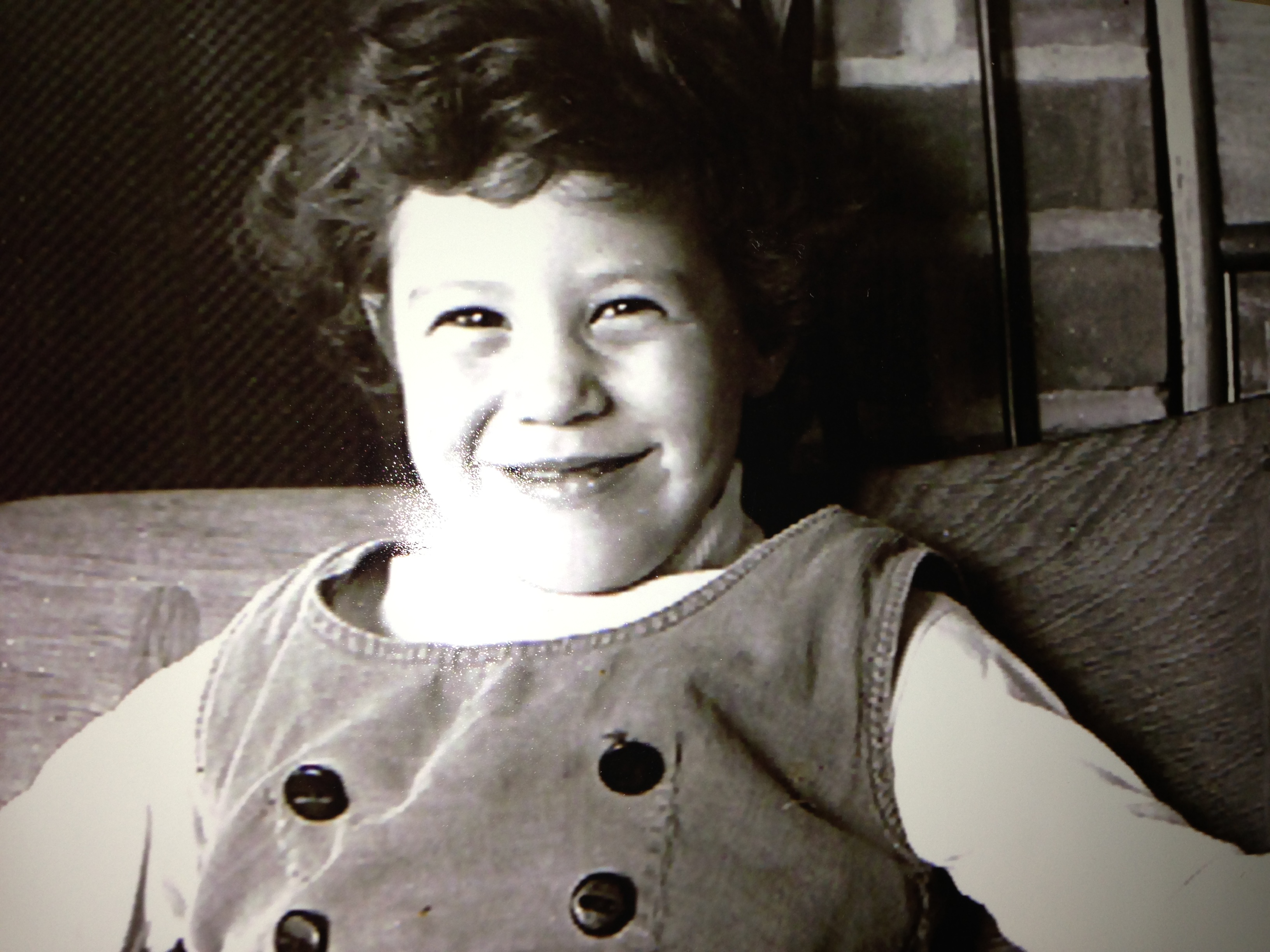
jz young

The pic was taken about that time, on a downtown rooftop in the meatpacking district, when Manhattan still had a thriving meat market that  left a slick of blood across the cobblestones  every morning. My photographer friend Jonathan Pite produced my likeness for the American Poetry Review.

I always thought he captured the yearning inside me and the grit of 1980s Manhattan in the air. It was a strange place, but great.

potato-23242

You are lucky to be invited to our house nowadays if Gil is making french fries – he takes the potato to a new level.

Gil’s Best French Fry Recipe

Take a bunch of spuds. No need to peel. “I like russet potatoes, myself.”

Wash thoroughly.

Cut in half the long way. Cut into thin strips. Cut crosswise three times. Should yield long thin french fries.

Soak in a big bowl of water with 3 T salt and ¼ tsp sugar. Make sure salt and sugar dissolve.

“Soak for as long as you have…5 minutes, 10…”

What to listen to as you work? “Always the blues, all the Slim blues players, Magic Slim…”

slim-bio

Spin potatoes dry in a salad spinner.

Heat a large pot of canola oil to smoking, enough to cover the potatoes. Fry until brown. Lift out with a wok ladle or slotted spoon.

Drain fries on brown paper bags.

Dust with salt, and/or cumin, chili powder, whatever you like.

Serve with malt vinegar, aeoli or tomato ketchup.

Says Gil: “There are five levels of how to judge the fanciness of a restaurant.

Level One: They give you ketchup in packets.

Level Two: The ketchup is in a bottle on the table.

Level Three: You ask for ketchup and they bring it in a bottle.

Level Four: You ask for ketchup and they bring in in a little silver bowl.

Level Five: You ask and they come to the tableside and make the ketchup for you.”

We generally do the Heinz. Oh, and if you’re on a diet, this year we’ll be offering spinach, too.

young spinach

3 Comments

Filed under Cooking, History, Jean Zimmerman, Photography, Poetry, Writing

Water, Dirty and Clean

Today’s is a two–part post, all about water.
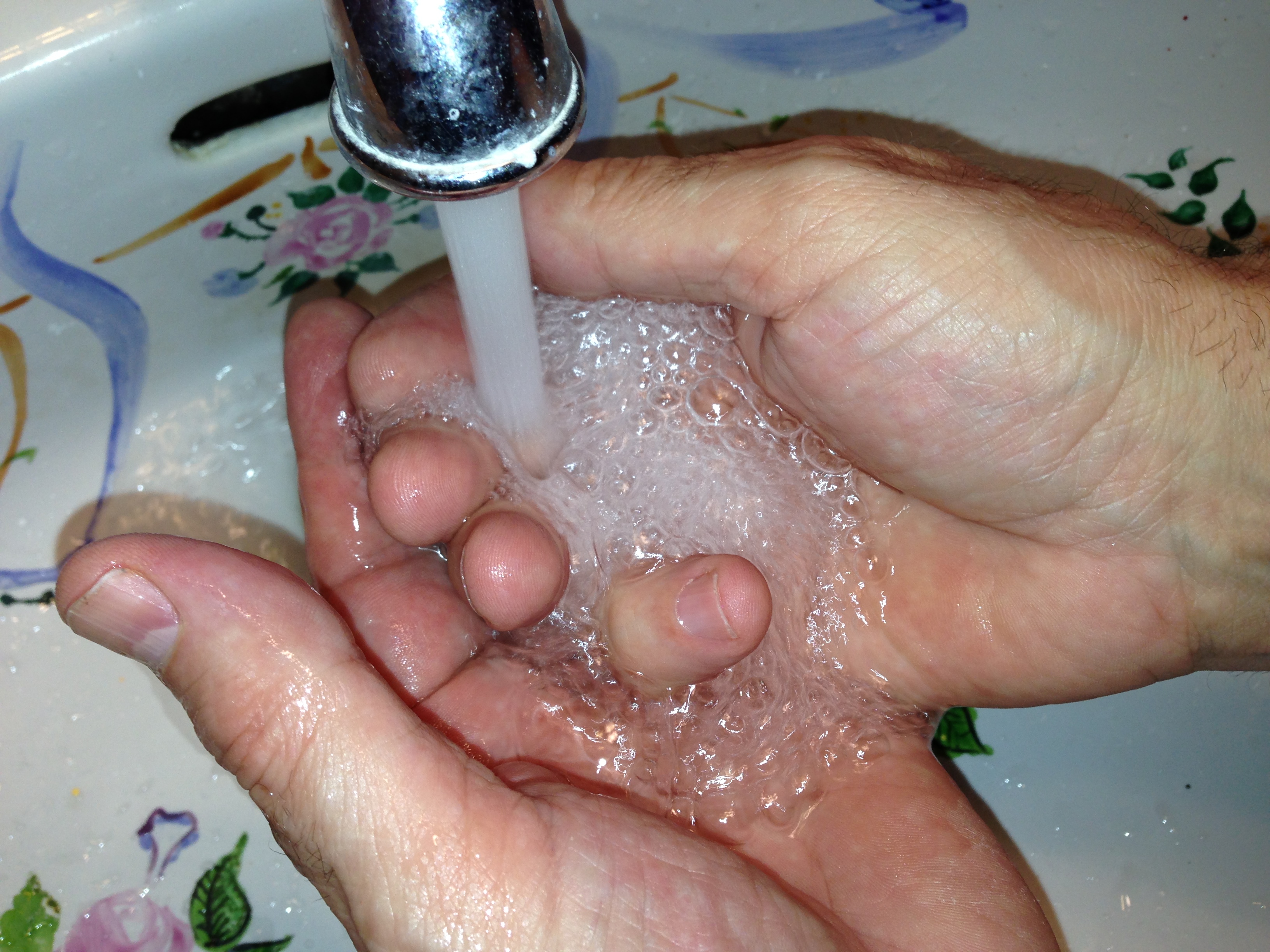
water

Number One: Man puts junk in water.

No man is an island. But out in the middle of the Pacific Ocean, man has created an island. An island of trash.

I heard of this phenomenon some time ago, and I found my mind circling back to it occasionally. It sounded farfetched, incredible, too disgusting to be true. But I finally decided to learn what was what.

It’s easy to put something out of your mind that takes place a thousand miles off the coast of California, in the middle of a stretch of sea that is an oceanic desert of sorts, filled mainly with plankton. Fishermen or recreational sailors rarely come through the central North Pacific Ocean. Currents there rotate in a ceaseless gyre.

That is where you find the Great Pacific Garbage Patch, as it is technically known. Enormous gross plastic sludge, to the less scientific-minded.

North Pacific Gyre

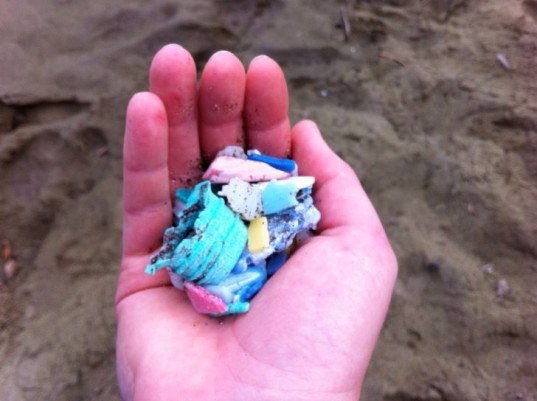
It’s a floating mass of plastics, chemicals, and astronomical numbers of disintegrated  grocery bags – the largest landfill in the world. The mess has been trapped in the pervasive currents, which pull garbage into their vortex from households far away.

The size of the Patch has been put at twice the area of Texas. Yes, that’s what I said.

San Diego’s Scripps Institution of Oceanography found recently that plastic in the Great Pacific Garbage Patch had increased by 100 times the amount of what was found in the region 40 years ago.

In 1997, a sailor named Charles Moore was returning home from a race when he came upon a stretch of debris of monstrous dimensions, most of it suspended below the surface, in a configuration that’s been called “confetti-like”.

confetti

It’s been estimated that 80 percent of the stuff comes from North America and Japan, while another 20 comes from cruise ships – your typical 3,000-passenger cruise ship dumps up to eight tons of solid waste weekly. But fishing nets find their way into the gyre too. Turning and turning in the widening gyre, wrote Yeats in his apocalyptic poem “The Second Coming.”

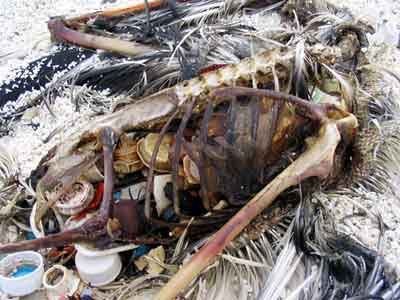
One hundred million tons of trash. That’s what it is. Broken down into small-enough pieces to be ingested by marine critters like the sea turtle and the black-footed albatross, when the current brings garbage from the gyre to the Midway Atoll.

albatross

Captain Moore, who can be heard giving a TED talk, now heads a foundation to clean up all the plastic.

Moore w plastic tray

In America, we use two million plastic beverage bottles every five minutes – but what’s worse than bottles is bottle caps. That’s what albatross moms feed their chicks, thinking they’re food.

Part Two: Man cleans up water.

Or rather woman cleans up water. Young genius woman. With the help of oysters. In New York City.

Isn’t this great: a landscape architect named Kate Orff had an idea that respects history and the environment all at once.

Kate_Orff

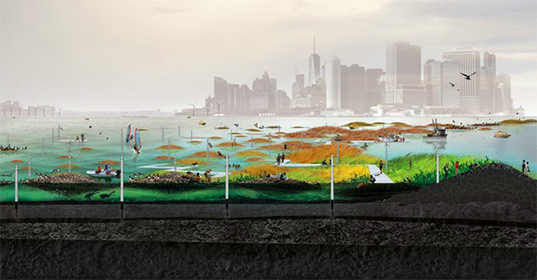
Under the auspices of a project called Oyster-texture, she and her team at Scape/Landscape Architecture P.L.L.C. are attempting to reinstall oyster archipelagos in Gowanus Canal, Brooklyn, currently a toxic Superfund site. It’s an effort to blend urbanism and ecology in a new and exciting way, on a working pier, in the middle of the polluted harbor.

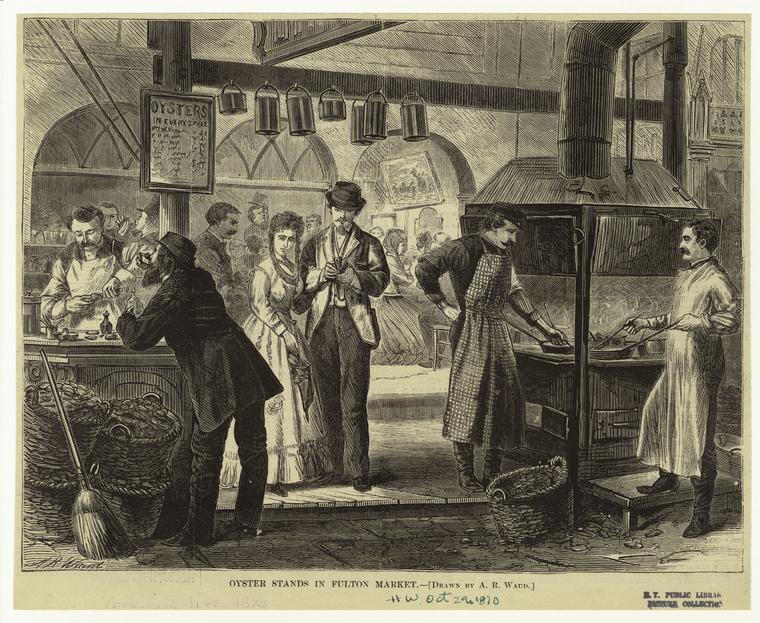
Up until 100 years ago, the palm-size bivalves were a mainstay of New York’s gastronomy, its economy, and, it turns out, its ecology.

Fulton Market, 1870

You’d get oysters from a street peddlar the way you get a hot dog now.
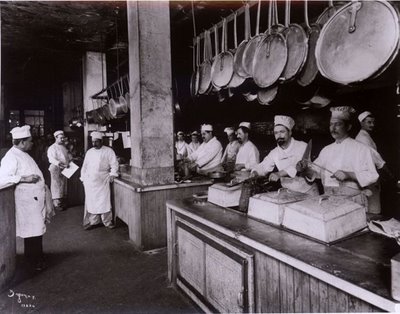
oyster houses-bowery boys

Oysters were so healthy, back when New Amsterdam was first settled, they could be found as big as a dinner plate. Manhattan’s indians consumed them in such quantitites, you’d find huge middens of shells all over the island. The Gowanus Creek in particular was a harvesting place for the succulent shellfish – they were so good, they were harvested by the Dutch and shipped back to Europe.

Then, of course, the waterways surrounding New York got dirty. In 1927 the last oyster bed  closed. As Thomas Wolfe wrote  in You Can’t Go Home Again, in 1940, “It is the old Gowanus Canal, and that aroma you speak of is nothing but the huge symphonic stink of it, cunningly compacted of unnumbered separate putrefactions.”

Oysters died off. No more local oysters at the Oyster Bar in Grand Central Station, one of my favorite haunts. Oyster reefs used to cover a quarter of New York harbor. Now, none of it.
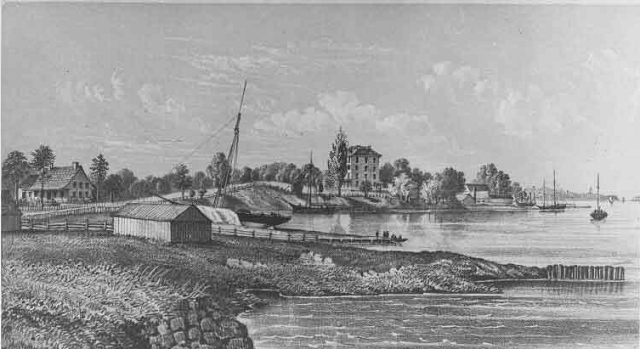
ships in gowanus bay-1867-Brooklyn Public Library

But the thing about that was – and this is where Kate Orff comes in – it was the oysters themselves in large part that were cleaning the water! So the thing to do, as she sees it, is reinstall them, carefully, so they’ll survive and build reefs. (The babies are called spats.) The oyster has a natural, what Orff calls a “beautiful, glamorous set of stomach organs” that take in algae and contaminants on one end and filter out clean water. She wants to “harness the biological power of the creatures that live in the harbor and the people who live in the city to make change now.”

oyster_diagram

She decided to use a cheap marine mainstay she refers to as “fuzzy rope” and build nets for the shellfish to cling to. (They brought knitters in to weave prototypes in the studio rather than drawing them.) Ultimately the reefs will serve as storm surge protectors and habitat for sea birds.

oyster-tecture-mollusk-park-for-nyc

Orff has big plans. She did a project for the Museum of Modern Art that laid out what could happen in Brooklyn if the oysters took hold. Ultimately there would be a floating raft with oyster nurseries below and recreational opportunities above. You can hear all about it in, yes, her TED lecture .

Clean water, local oyster slurping (far from now, probably).
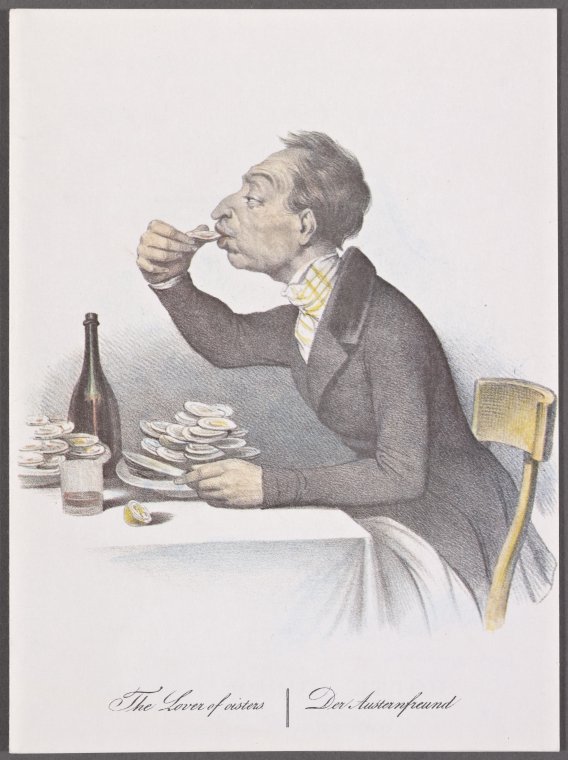
the love of oysters

Scuba diving. A watery jog-park. But, mainly, clean water.
7 Comments

Filed under Cooking, History, Jean Zimmerman, Knitting, Nature

Turning It Around

I  can’t believe it, I said to Gil. I cannot believe I’m 55 years old and don’t know the proper time to plant a sunflower seed.

Well, he said, it’s no big deal. I’m 59 years old and I don’t know either.

It got me to thinking, how many new things, simple things, nothing earthshaking, come into my life every day, even at my advanced age.

It’s a question of noticing.

Today I prowled around the boonies upstate, in Dutchess County, with my brother Peter – these photos include his — seeing some small things I hadn’t seen before.

Pete

We spent most of our time in Tivoli, a tiny village near the Hudson River that dates back to 1872 but avoids all dustiness, with its free-thinking, artistic, intellectual inhabitants.  Nearby Bard College sends over a constant scruffy stream of  students, not to mention professors.

Pete introduced me to a monument in the cemetery of St. Paul’s Episcopal Church in Tivoli, where the stones seem dominated by the Hudson  Valley families DePeyster and Livingston.

statuary

An exquisite stone carving to represent the soul of a remarkable woman, Estelle Elizabeth de Peyster Toler, who was born in 1844 in Red Hook and died 45 years later in Manhattan. Descended from the cream of New York society — De Lanceys, Van Cortlandts and Coldens — she was known for her piety and philanthropy. Her husband died the day after her death of a broken heart. Estelle’s marker reads, from the Proverbs, “A perfect example in life of the ideal virtuous woman.”

dePester

But I found the inscription on the base of the praying girl more moving.

sister baby

With its sweet embellishments of lichen and moss: SISTER–BABY.

Another grave, more modest, this one in a field of grass off a country highway.

Molly

Was this Molly also a virtuous woman? A virtuous pet? It’s an odd place for a burial but oddly peaceful.

Coffee break.

I’ve had plenty of fancy cappuccinos, like this one at Tivoli’s Murray’s café, designed by stylish barrista Michelle.

cap

Pretty good, she said under her breath, checking her work, deadpan. Not the best I’ve done.

But I’ve never before had borscht made with garbanzos rather than beef to complement its beet chunks. Topped with a spoonful of organic sour cream, it was scrumptious.

And before today I never had a perfectly-designed, shot-silk carryall for knitting needles such as I brought home from  the yarn shop on the tiny stretch of Broadway that is the heart of Tivoli. Fabulous Yarn offers luscious skeins (“fibers for fanatics”).

yarn

And whimsical taste. Under one cheery roof.

yarn store

Down the street, a tavern called the Black Swan, currently under repair.

black sway

Attitude will remain unchanged.

all our visitors

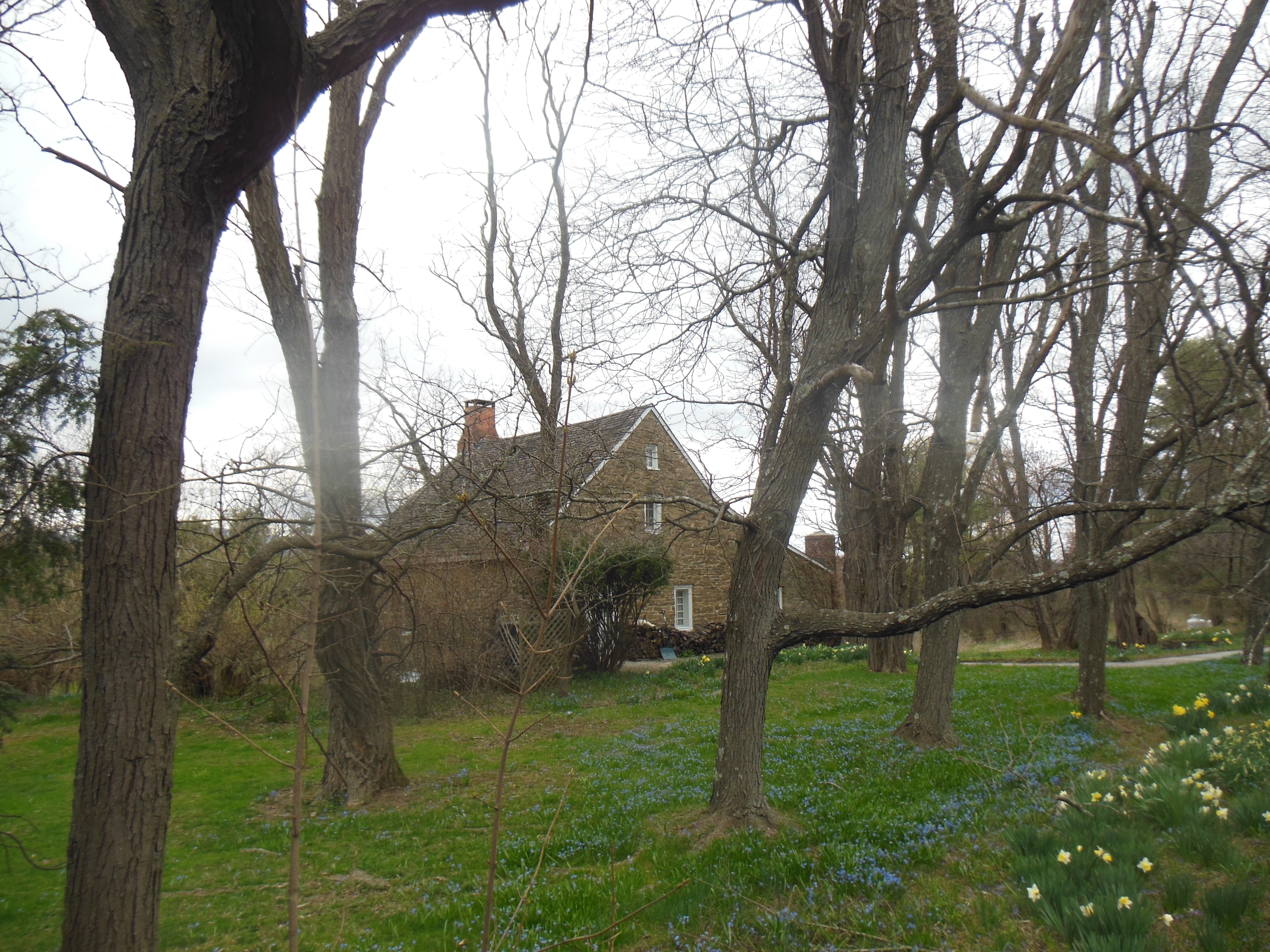
Before today, I had never laid eyes on the brick-and-stone construct of architectural genius that is the historic Stone Jug House in Clermont, housing families since 1752. Local stone, I knew. Weathered brick, sure. Together, gorgeous.

jug

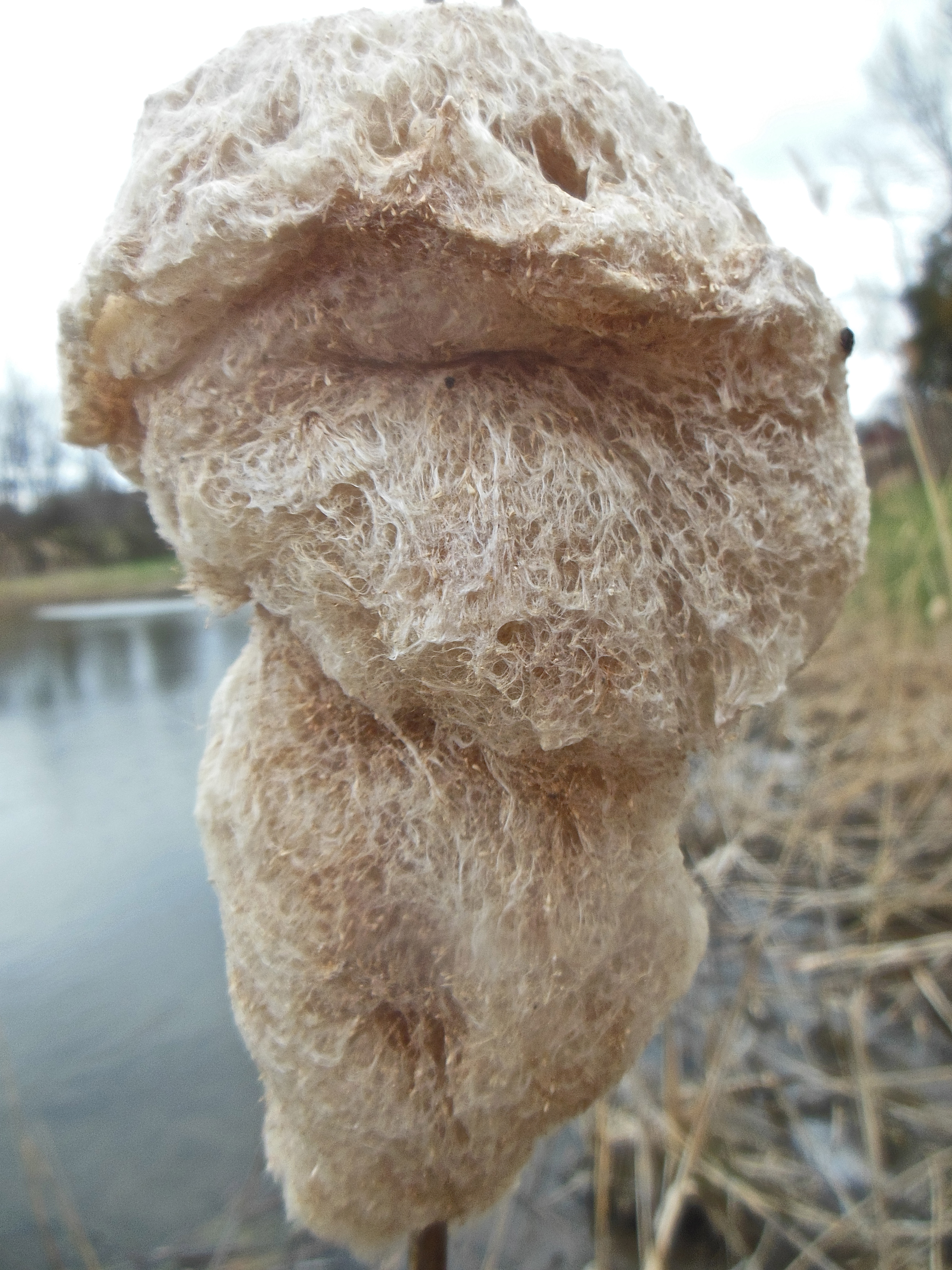
I looked around today for something I’d seen a hundred times, but always loved: a painted turtle. But the large one Peter knew of refused to show his face at the pond, the weather being cloudy. Still, there was something to see, an exploded cattail.

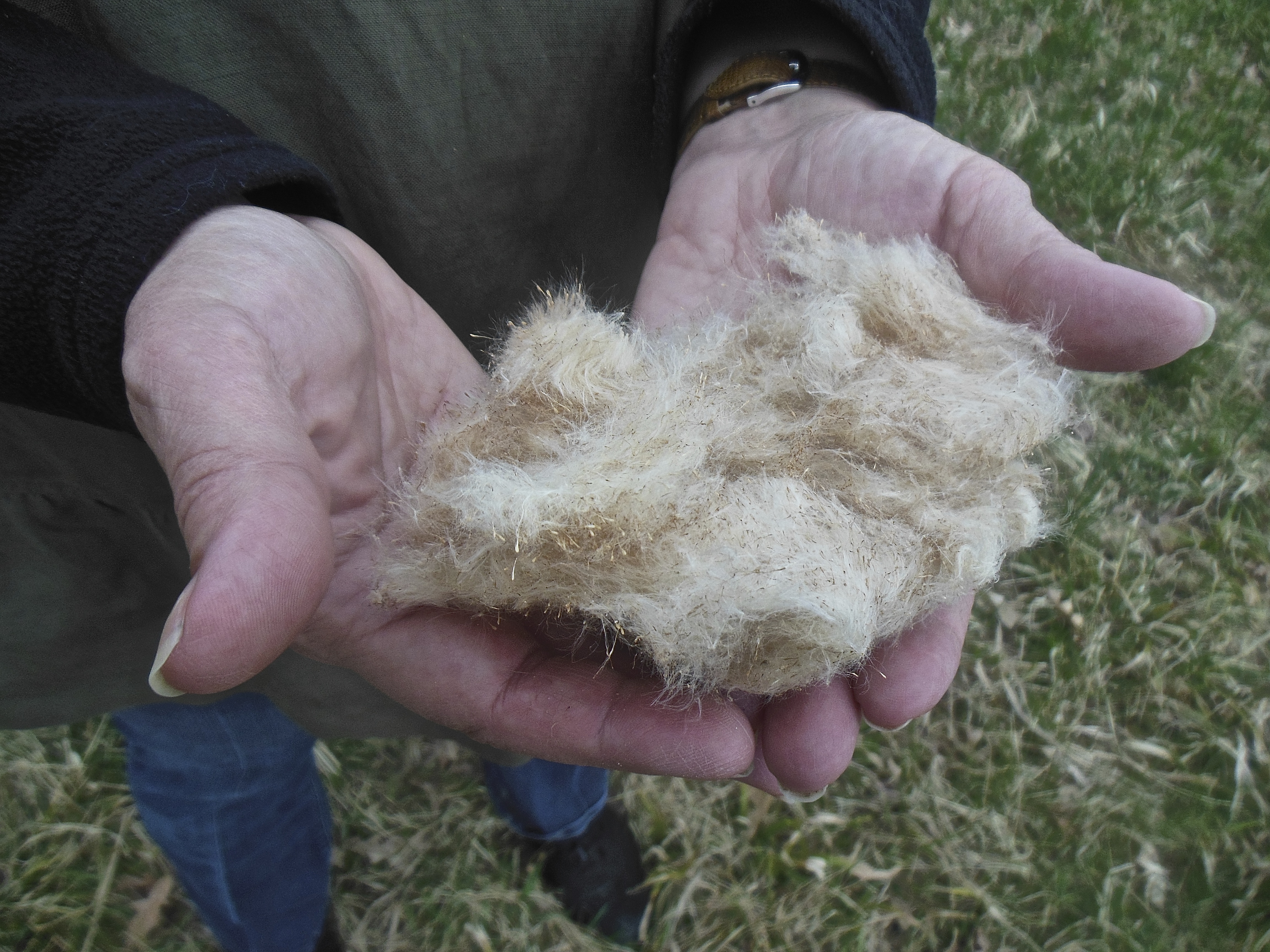
cattail

Like cotton wool laced with cornmeal. It was something I’d never touched before.

cattail cu

Sometimes if you simply turn something around, it’s totally new.

lovewisdomgracepeace

Love.

4 Comments

Filed under Art, Cooking, History, Jean Zimmerman, Knitting, Nature, Photography

Start Spreading Manure

What’s in that, anyway, I asked.

Chris

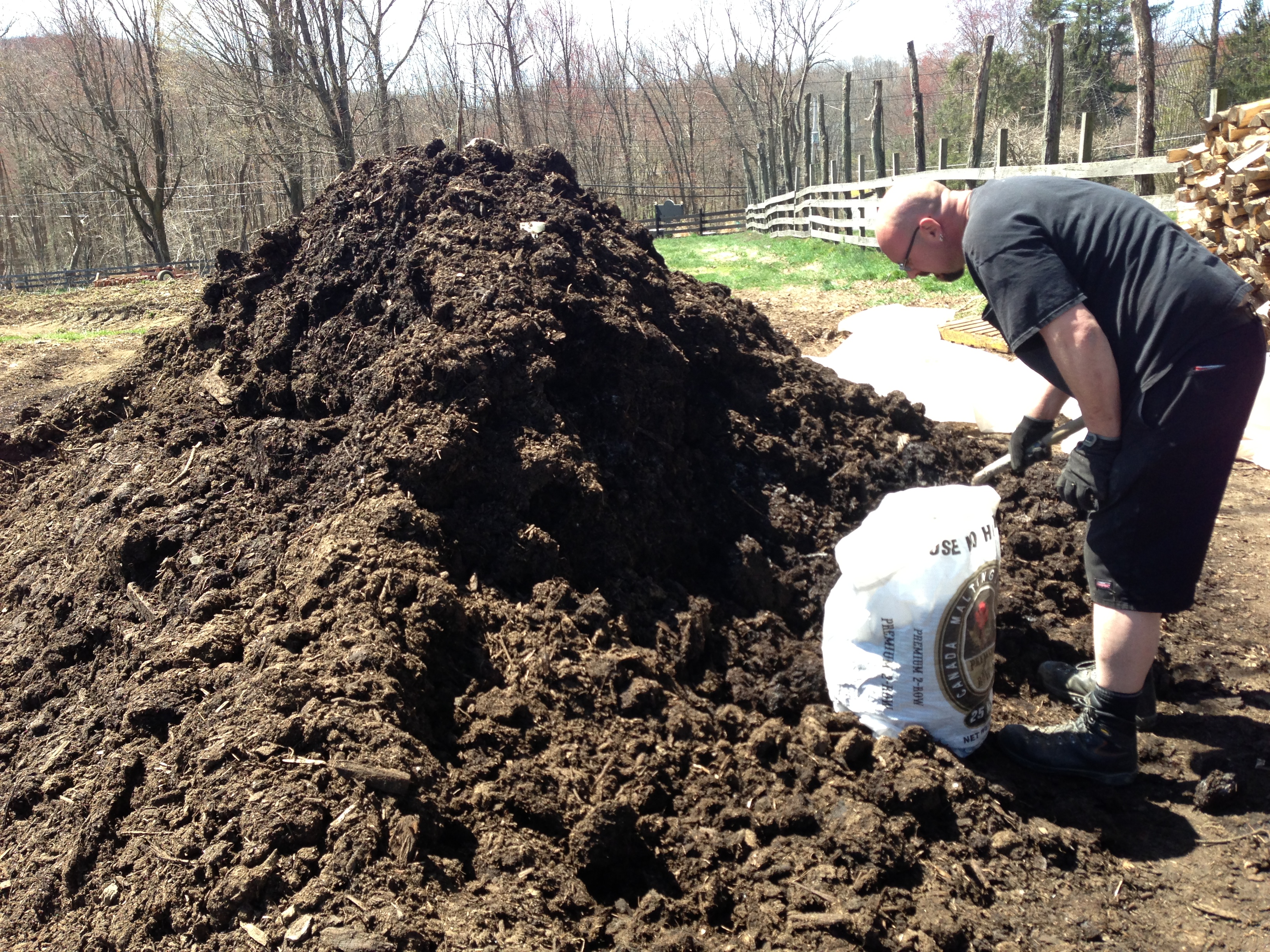
You mean what kinds? said Chris, who was busy shoveling a big brown pile of composted manure into 50 lb. bags for us to drive home. Oh, he said. Cattle. Chicken. Pig. And other stuff too. Innards.

He told me he once found a jawbone in the compost.

Last year our garden at the Cabin was, truth be told, kind of weeny. Sallow tomatos hung off spindly vines. This will be the macha season of vegetables, helped along by plenty of fertilizer and more diligent weeding. I’m determined.

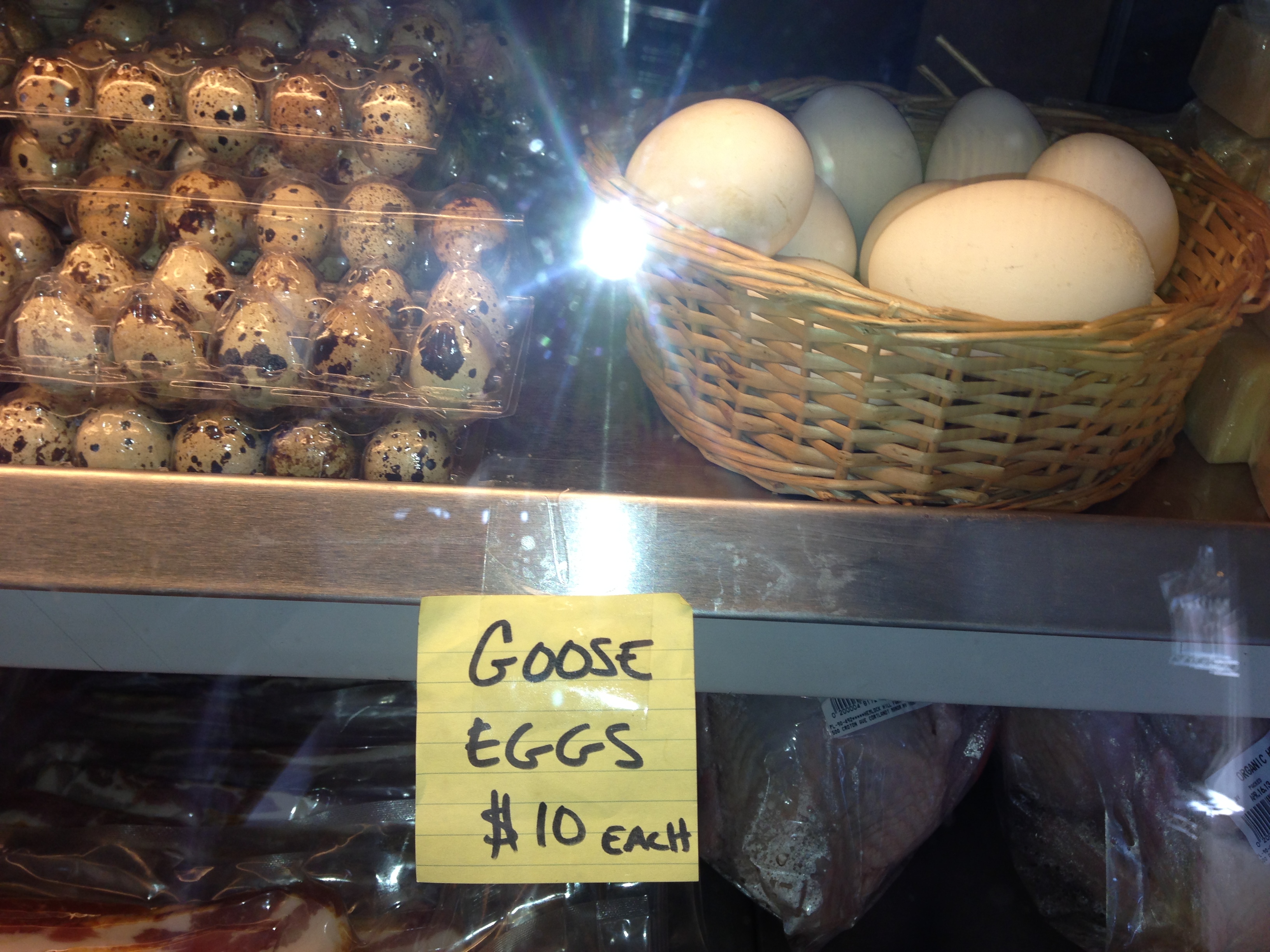
Hemlock Hill Farm  stocks seasoned manure as well as lots of other fortifying things. A variety of eggs, chicken, duck, quail and goose.

goose eggs

Fresh chickens (the bird we brought home today for dinner was running around yesterday). Johnny Jump Ups, with their little lion faces. “There’s pansies, that’s for thoughts,” said Ophelia. In her day, pansies were wild and small, and sometimes known as heart’s ease or love-in-idleness.

johnny jump ups

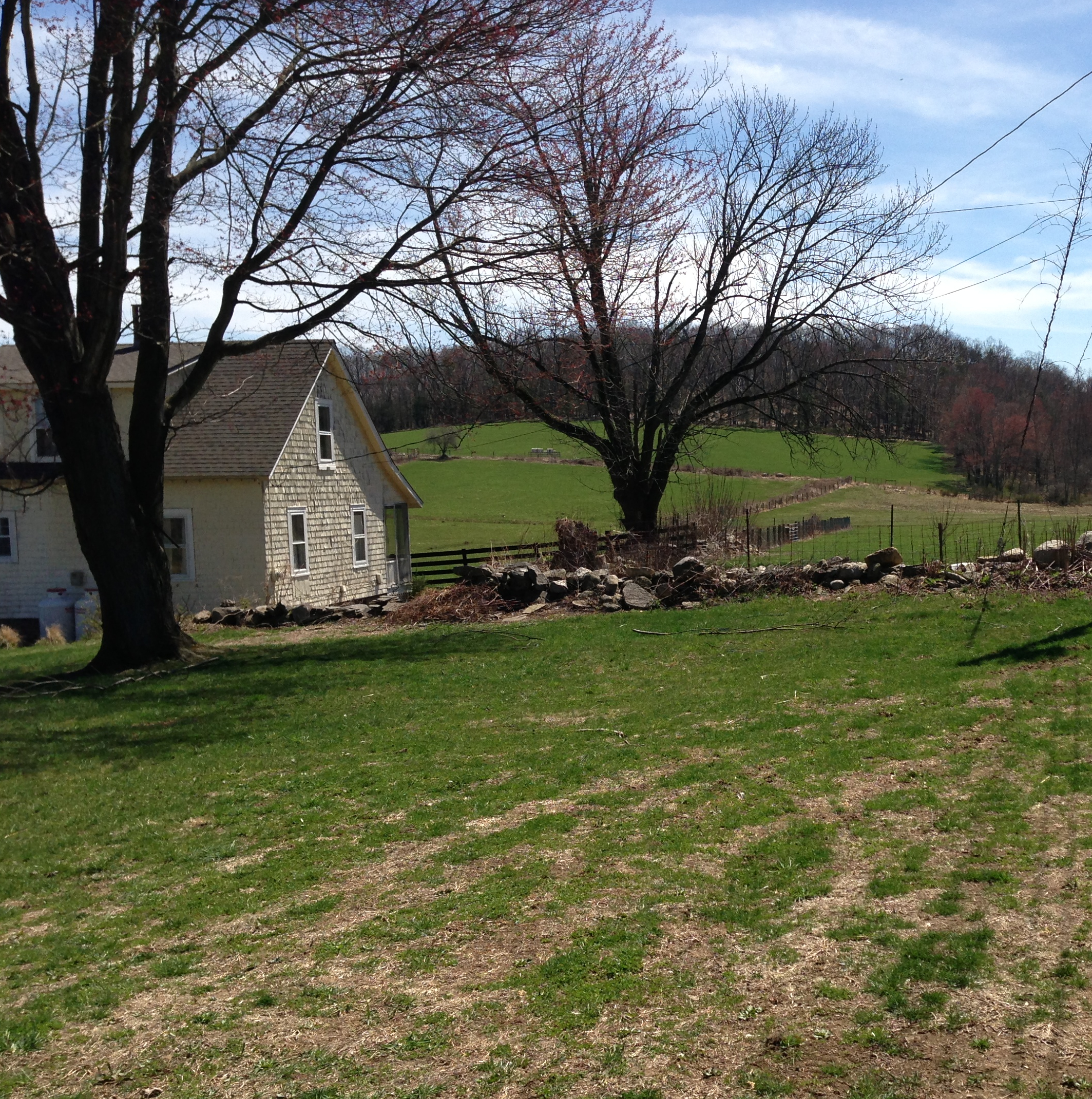
The farm, on 120 acres in Cortlandt Manor, New York, has been owned by the De Maria family since 1939. There is a beautiful hillside to its south, near a spa of sorts for its chickens, which recline on clean straw underneath a shady quonset. It’s good to have an organic farm you can trust in your neighborhood.

Hemlock Farm

We visited the pigs.

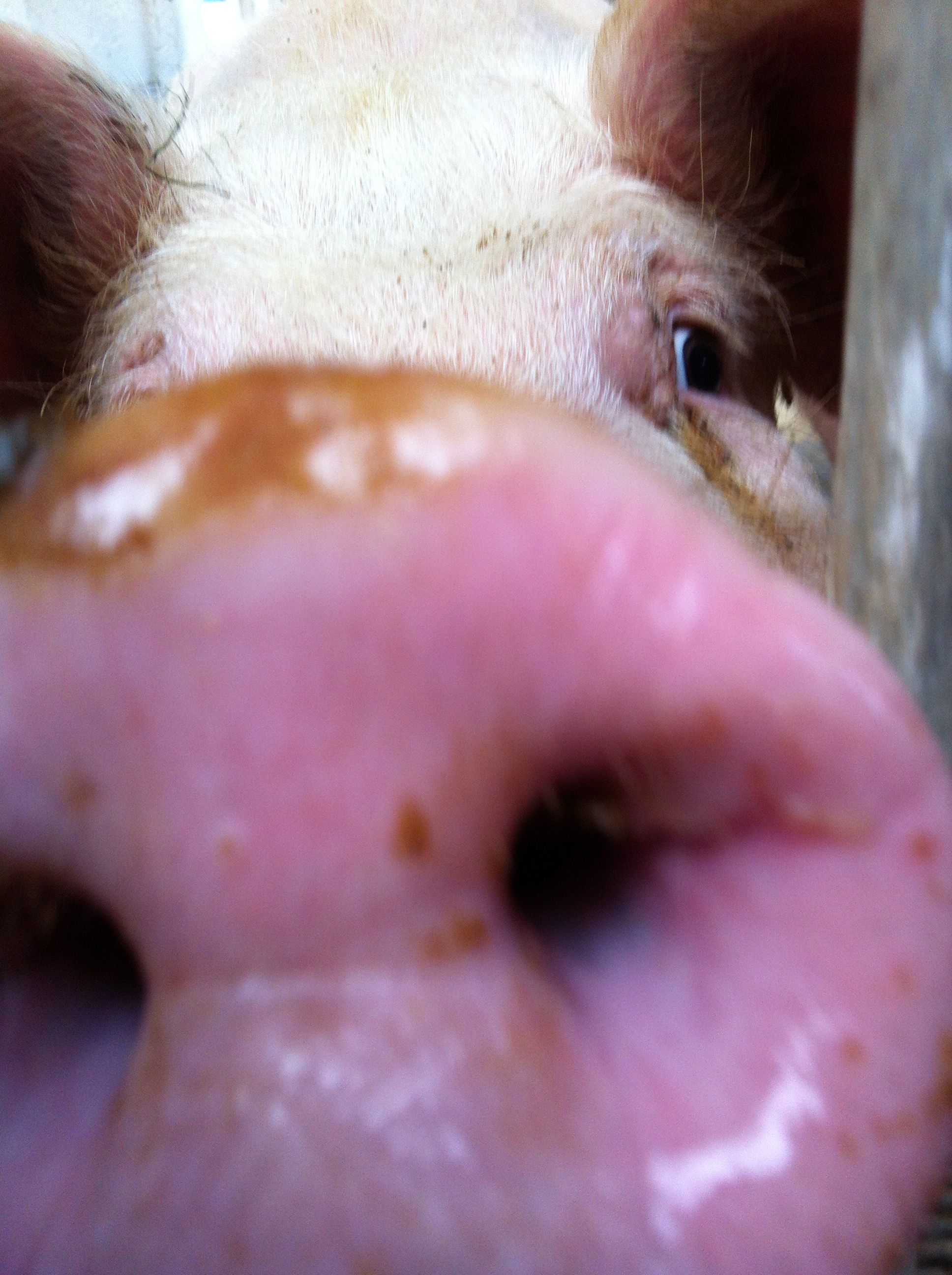
Pig Snout

I’ll admit to mixed emotions, seeing the spring piglets scamper up to the fence, knowing that we have a pig roast planned in our near future. They’re such magnificent animals. Didn’t one of them write Animal Farm?

Wary Pig

Our 300 pounds of Hemlock manure laid the foundation for this year’s vegetable patch. A garden store near us, Sprainbrook Nursery,  has fallen on hard times, but the owner, Al Krautter, is making a go of it despite financial strictures, sending an inspiring e-newsletter and cultivating  a variety of spring plants when he could not afford water or heat in the greenhouses all winter. Krautter is the guru of organic fertilizer. We were advised.
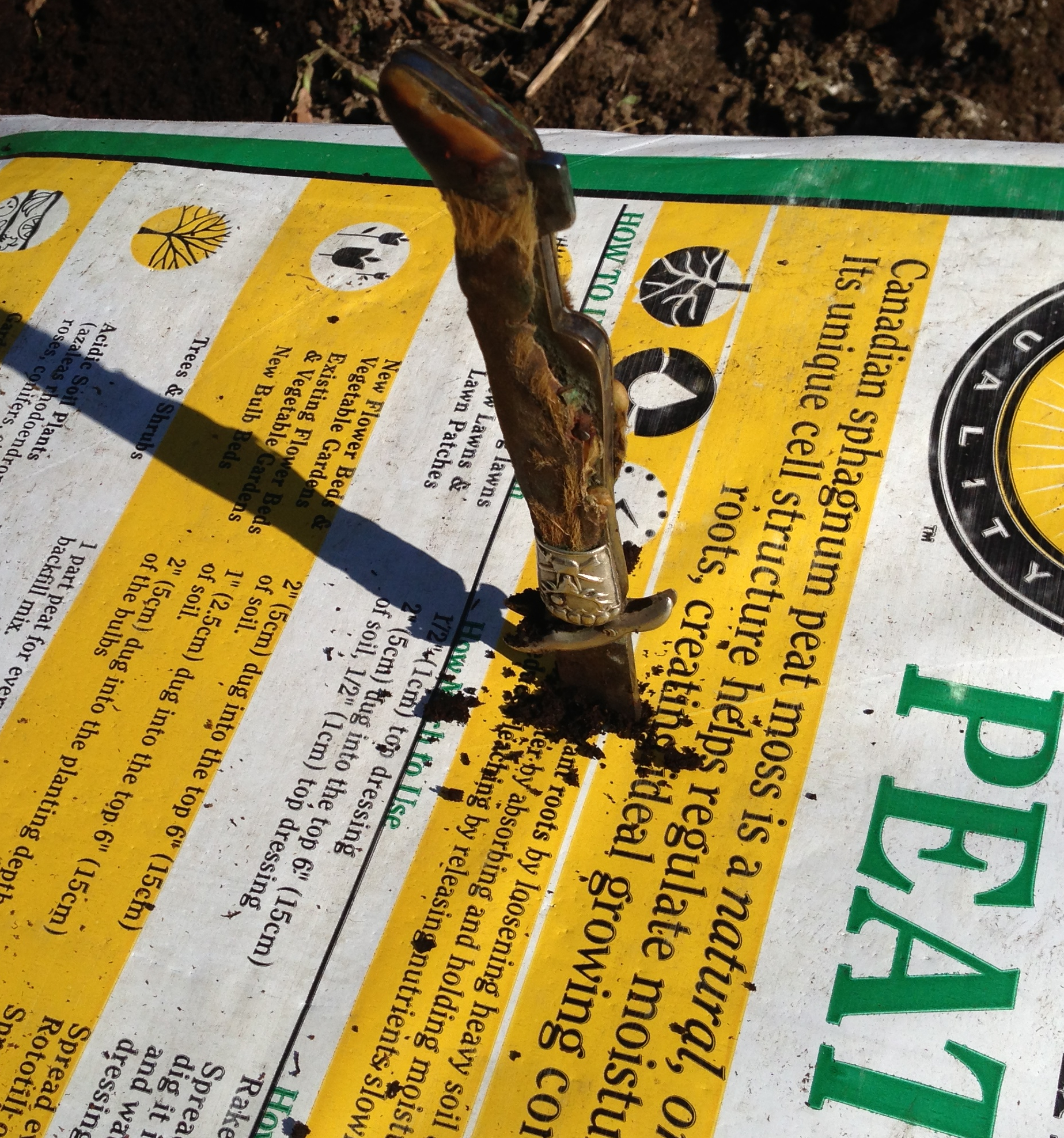
Peat moss, which Gil cut open with his father Acton’s deer hoof knife.

Deer Knife

Not only peat moss, but lime and bone meal and Plant-Tone went into our E-Z Bake topsoil, plus a vinegary smelling mineral rock dust, plus decomposed lobster, plus some stuff they import from Maine that has a mixture of decayed blueberry, mussels and salmon mixed with sphagnum peat. Work it in or cook with it? Whatever you do, be sure you wear gloves.

We toiled all afternoon (Gil sweating hard over the rototill, me somewhat less so over the windowboxes).

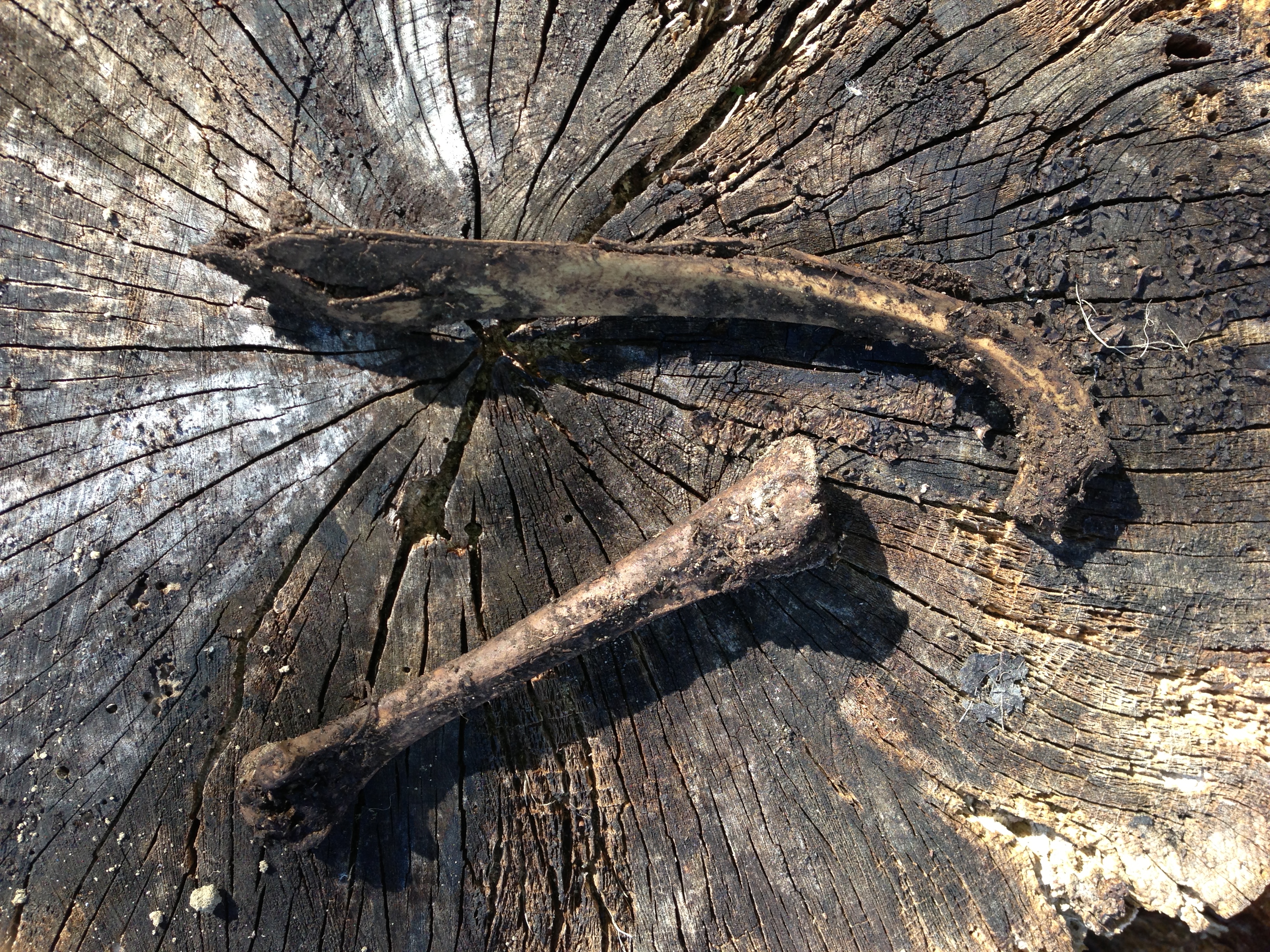
Taking a break only to examine the still-uncomposted bones in our garden soil.

bones

8 Comments

Filed under Cooking, Home, Jean Zimmerman, Nature

The Algorithm of Curvy Passion

Whale bone doll. Greyhound vs. great dane.

dane pup

WTF?

I get a regular report from WordPress, the outfit that hosts this blog, which tells me the search terms used every day to find my site.

I love to read these oddly linked words and imagine the people that typed them into a search box and, even more, wonder about how those phrases got to me. It’s a little of what’s Hecuba to him, or he to Hecuba, as Hamlet says (and you haven’t heard the plaintive, flummoxed quality of these lines unless you’ve experienced Paul Giametti’s turn with Hamlet at Yale Repertory Theater, as I did recently). What is the algorithm? Where do they come from,  these disjointed, nonsensical idioms, and what do they have to do with yours truly?

Curvy passion. Another search that landed someone on my site.

Anna karenina dresses.

Anna Karenina  Race Dress 2


Well, okay, that is conceivably something you’d find in my blog. But:

Alligator tails?

Knock knock. I’m at your door. Do you have anything on your site that can respond to that?
Horse gilding furry porn.

Embroidery on plywood.

ColonialBoston

Kids in grass winter.
They’re interesting, but as far as I know, I haven’t yet filed a post related to these phrases.

Peacock one to one correspondence.

Sorry.

Now, there are some crazy-sounding terms that beat an understandable trail to jeanzimmerman.com.

Wooden cowboy roadside, for instance. Recently, from Arizona, I described a series of handmade wooden signs posted mysteriously along a highway in Scottsdale, one of them featuring, yes, a cowboy. I like hand-painted signs, and this was one of the finest.

Cowboy sign

Sweet old world meaning. Last month, I tried to get at the feeling Lucinda William’s rhapsodic song gave me, when Gil’s mother lay in the cocoon of her dying, and it struck a chord in some readers.

More music. Sweet milk and peaches tuning. I’m no musician, I barely even sing in the car, but I watched a fiddler play country songs from the rural south circa the beginning of the 20th century, and it carried me off in a square dance time machine.

I want to do to you what spring does to the cherry trees. Someone actually typed that in a search box. The achingly erotic verse of Pablo Neruda, who I profiled the other day when word emerged that his remains were being disinterred (to the strains of a string quartet) so the authorities could check if he had been poisoned.

Tiny silver spoons. Well, yes, that would be my mother’s collection of family cutlery.

Prickly pear babies. My quest to find the infant spawn of the saguaro.

desert gardener

Mark Wyse 17 parked cars. I talked about Wyse’s book 17 Parked Cars in my review of Ed Ruscha’s exhibit at the Gagosian Gallery in Manhattan.

Faviken. A rave-up of the brilliant Scandinavian chef/restauranteur Magnus Nilsson, who likes more than anything to cook with lichen.

But perhaps the searches I get most of all have to do with witika or wendigo or native american monsters, which all point to the beast in The Orphanmaster, nine feet tall with putrid green skin, razor-sharp fangs and claws good for slashing.

wendigo

P.S. The witika finds human beings pretty tasty. Apparently there’s a healthy coterie of witika enthusiasts out there, and on this site I have an essay with some fantastic pictures about the monster.
So I’m not seeing any searches for Lindsay Lohan here. Nor anyone leaning in to find Sheryl Sandberg. Nor to find the dope on Louis CK,  though I plan to write something about the genius comic one of these days.

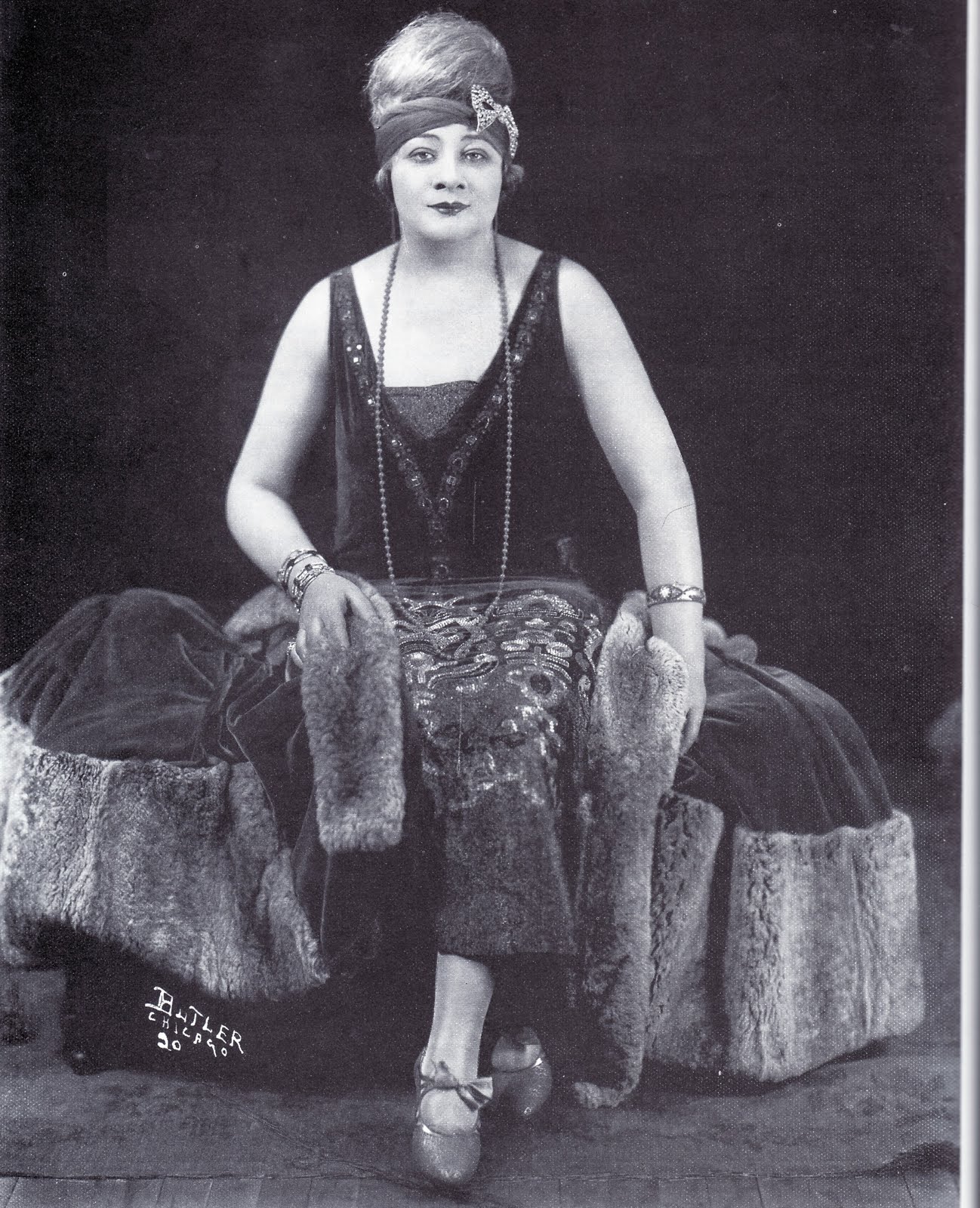
One of these days…Some of these days… Sophie Tucker, my favorite jazz era nightclub singer, known to her fans as The Last of the Red Hot Mamas, did a hit song called “Some of these days.” I wrote about her and Etta James in the same post – two singers who wow me.

sophie-tuckerNow go do some searching, and we’ll see if you circle back my way. And if there’s something you’d like to see me write about that I haven’t already — or even if I have — just leave me a comment and let me know. We aim to please.


Leave a comment

Filed under Art, Cooking, Dogs, Fashion, Fiction, Music, Poetry

Pruning Links

Damn. My cup runneth over with links. My computer wouldn’t let me save another bookmark, it was so stopped up, so I had to prune. Throw out and organize. Floss. Figure out what I really needed to save, what I might need – need being a relative term – and what could be relegated to the virtual trash heap. So I’d have room for new, extra important links!

It was enlightening, actually. In embarking on this task, I found that there were three big categories that had held special importance for me in the past few years.

One was wonderful me and my wonderful work . My log cabin got its due . Even a movie (just a glimmer, but a Hollywood glimmer) had found its way into my bookmark file.

When I was a middle schooler making covers for my little hand-crafted books by binding pages into cardboard and calico with ironed wax paper, I think I would have been amazed that some day someone in the world would be interested in what I had to say. I still remember the smell of the hot wax paper as it was pressed, and the excitement that Miss Henny Penny’s Travels was going to be “published.”

young Jean

Edith Wharton tells a story in her autobiography, A Backward Glance, about going in to a book store in London when her first book, The Greater Inclination, came out in 1899 and asking the manager innocently if there was any new and interesting book she could look at. “In reply Mr. Bain handed me my own little volume, with the remark: ‘This is what everybody in London is talking about just now.’” He had no ideas who he was talking to.
Then, second, I have the category of Gertrude and Sylvia  and Simone   and the rest of the ladies who launch. And more of Stein.

U1889231

I couldn’t believe how many iterations I had of critiques, praise, profiles, pictures of the women who inspired me over the years and still fascinate me.

The third whopper of a group: scarves. Knit patterns for scarves. Especially circle scarves. Yes, cooking and knitting do take up some of my time, I admit it, unintellectual as that might make me. I’m itching to make Paula Deen’s gooey butter cake. But the scarves have it. I made seven this winter. Plus a sock.

knit

Then there is everything else. Before they go into the Older Bookmarks file, I’ll highlight a few that have grabbed my interest along the way. A self audit, as it were. And a little gift to anyone looking for something new to chew up their time.

I obviously made a serious trip into Victorian America in recent months. Many times over DanceDressGetting aroundMansions, mansions, mansions. Does my time machine have an exit onto Manhattan’s Fifth Avenue in the 1870s? You bet.

James Tissot 1836-1902 - French Plein Air painter - Tutt'Art@ (8) copy

Even (or especially?) Victorian headless portraits interest me. So much of this nineteenth century arcana found its way into Savage Girl, my new novel that will be published in early 2014, which officially made it work, but it still felt like a guilty pleasure.

More research, this time for The Orphanmaster, unearthed this incredibly absorbing digital redraft of the Castello Plan. You can hover over the first street plan of New York, a drawn-to-scale view of seventeenth century New Amsterdam, and investigate what it was actually like.

I had the idea at one point that we should explore Oliver’s genetic background and see what part of him was actually pit and which part was hound. So I looked into DNA testing for dogs.

Oliver

I wondered what you’d see if you opened the refrigerator door in Bangkok or Jerusalem. I found out at Fridgewatcher.

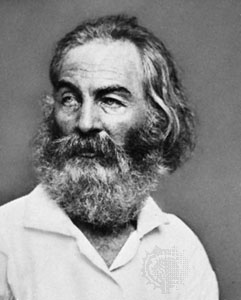
I always find it useful to keep a library on file in case my disheveled bookshelves won’t yield it up. And so, here they are, minding their own business, various books in their entirety, like George Orwell’s Down and Out in Paris and London, one of my favorites,  and the Diary of Samuel Pepys. And it’s always good to be able to access an exhibit based on Whitman’s Leaves of Grass.

iwhitmw001p1

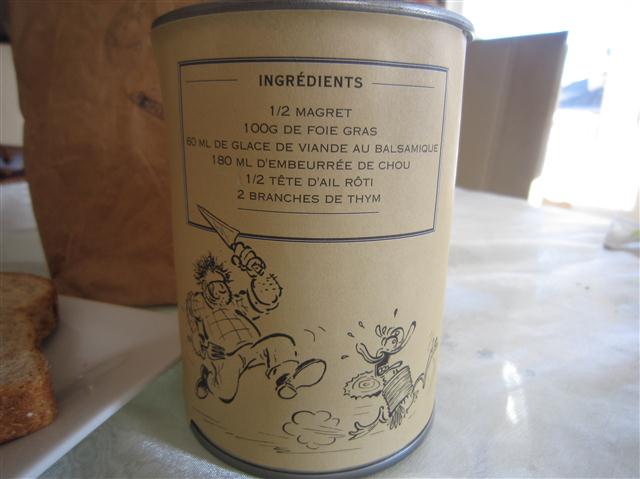
Gil and I ventured to Au Pied de Cochon in Montreal. For a while afterward we didn’t get our cholesterol levels checked. The menu  includes such delicacies as Tarragon Bison Tongue and Foie Gras Poutine (foie gras is their speciality, along with everything pig-related), all of it drenched in butter. It was here that I had the famous “duck in a can,” consisting of a duck breast, a lobe of foie gras, half a head of garlic and some kind of spectacular gravy packed into a metal can, like a soup can, and boiled.

duck in a can

Afterwards, when you’ve been sitting at your table for a while marveling at the number of trendy people there are in Montreal, the waiter opens the can at the table and dumps the whole stew onto your plate. Fabulous.

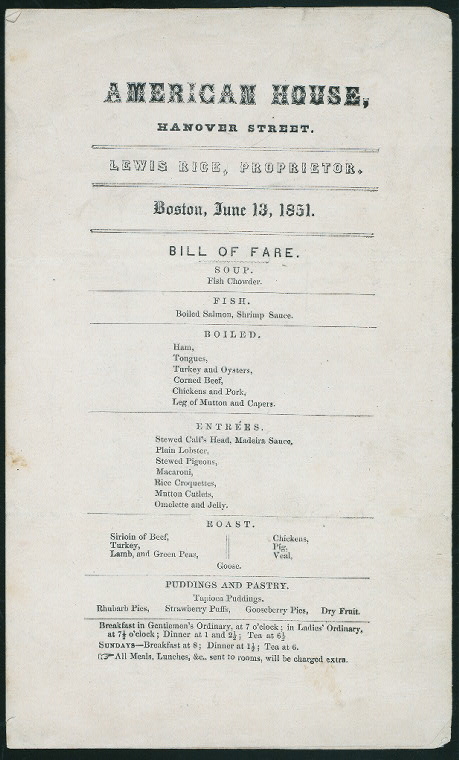
If you like menus as much as I do, you’ll go to The New York Public Library’s historic menu collection.

American House

Something I don’t want to file too far way is The Top Ten Relationship Words That Aren’t Translatable into English, assembled by a serious linguist, and including such gems as Cafuné (Brazilian Portuguese): The act of tenderly running your fingers through someone’s hair.

Probably the most delightful site I’m back-burnering. For now. Or, on the other hand, I think I’ll leave it out for a while in case I want to take it with me as a reference when I next tour the Metropolitan Museum of Art: Nipples at the Met(“updated regularly”).

nipples

All links welcome; leave them in a comment.

4 Comments

Filed under Art, Cooking, Dogs, Fashion, Fiction, History, Home, Jean Zimmerman, Knitting, Poetry, Savage Girl, The Orphanmaster, Writing

Apron Strings

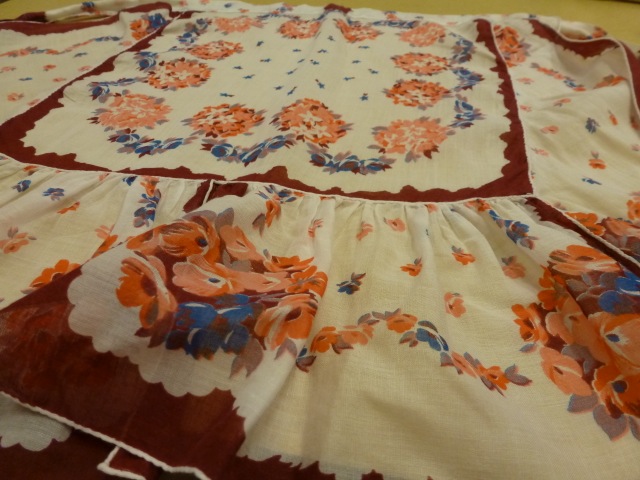
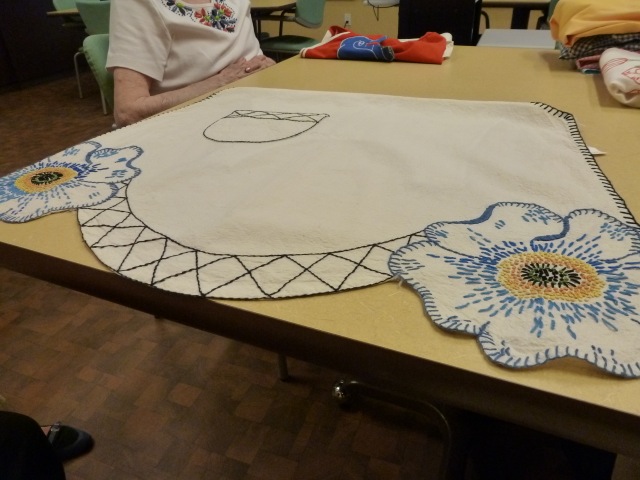
My mother Betty has been good enough to pitch in with a guest post today. She attended a presentation at the residential community were she lives by a traveling apron-enthusiast.

sunflowers

I would have liked to see and touch these beautiful heirlooms but I’m 2,000 miles away.

sunflower cu

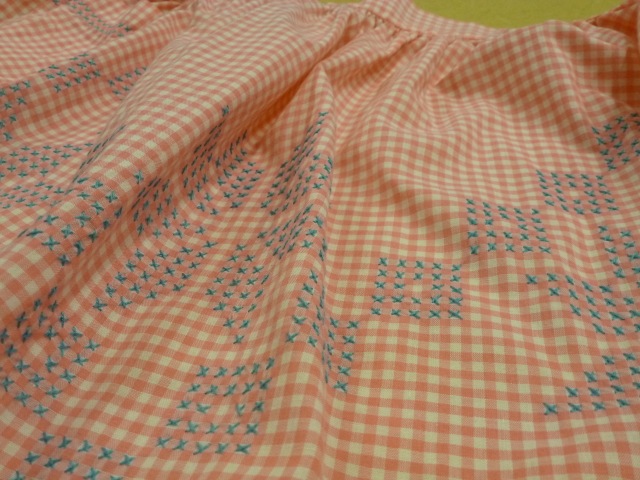
Bobbie Schafer’s medicine show includes a slide presentation and a wicker chest bursting with vintage aprons. Betty brought a Christmas apron embroidered for her by my great aunt in the late 40s early 50s, topped with a round of plastic.

Auntie's apron

Yes, her waist was that small.

All the photos to follow are my mother’s. Hit it, Betty!

The original style of apron was called a “butcher” apron.  It had a bib top, and covered the dress  almost completely, to keep the garment from getting soiled. Washing dresses was not easy then.  The homesteaders brought aprons (and rifles) into use.

In Victorian times, matrons created their aprons with silk, often with lace.  Obviously, the lady of the house used them for adornment, not real use.

Matching handkerchiefs were sewn together in the 1920s to make hankie aprons.

hankie apron

In the ’30s the apron still covered the whole dress.  The painting by Grant Wood, “American Gothic,” is an example, also including the use of rickrack, new in the ’30s.  Some women wore two aprons, so that when you answered the door, you could quickly shed the outer one and appear in a fresh one.

rick rack

The ’40s brought shorter dresses. The government told you how long a dress could be. [Note: You’ve got to be kidding!]  The amount of material used was less, and because of wartime, it was less easily available.  The aprons were accordingly shorter and smaller — often made of only one yard.  They were still the full, or bibbed style, sometimes pinafore style. “Victory” aprons appeared during the war, with red, white and blue designs.  Polka-dots, plaids and rickrack became very popular.  (An interesting side story. During wartime, ladies alway wore hose, and because nylons weren’t available, they used an eye pencil to paint the seam down the backs of their legs.)

cross stitch

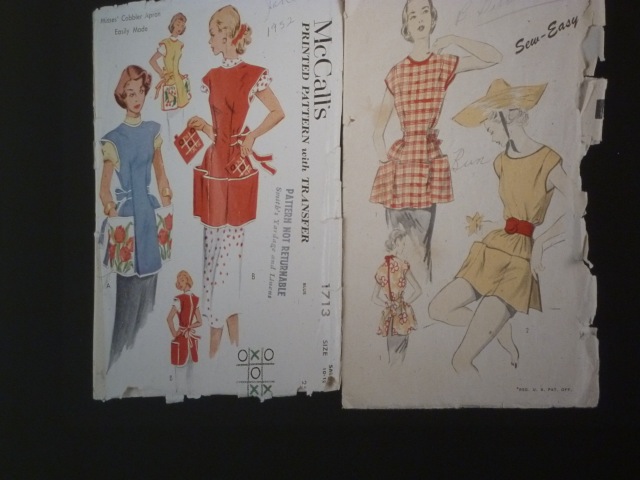
Also in the ’40s, the first patterns for aprons became available, from companies like McCall’s and Simplicity.

apron patterns

There were iron-on transfer patterns with designs for embroidery and appliqués.

girl apron pattern

In the ’50s hostess aprons were popular, often made of taffeta.  These were party or cocktail aprons.  Often they had hearts, spades, clubs appliquéd on them, for use at ladies’ card parties.  Sometimes women wore holiday aprons, and some had aprons for each holiday.

mexican apron

There were also cobbler aprons, or hobby aprons, with lots of pockets for holding tools, etc.  And for the first time, aprons for MEN!  (These were back to butcher-style.)  Real aprons for women went out of favor, as TV dinners had been invented, and women didn’t cook as much.

mexican apron cu

In the ’60s, The washing machine meant aprons didn’t need to cover the dress.  Women started wearing pants and with the women’s movement, women decided to throw away their aprons, anyway!

In the ’70s, the pinafore style became popular again.  Now the apron is back.  There are more patterns available than there were 10 years ago.  They are popular, even on college campuses, and in stores like Target.

cross stitch:applique

9 Comments

Filed under Cooking, Fashion, History, Home, Jean Zimmerman

A Pretty Good Biscuit Recipe

She made a pretty good biscuit.

2 biscuits

A kerfuffle over an obit has me thinking about how I would want my character to be rendered in print once I die.

What happened is this. Yesterday The New York Times ran an obituary for a jet propulsion scientist with a title that read, “Yvonne Brill, a Pioneering Rocket Scientist, Dies at 88.”

The long, laudatory article, written by veteran Times reporter Douglas Martin, honored Brill’s achievements, noting that in the 1970s, she “invented a propulsion system to help keep communications satellites from slipping out of their orbits.” She received the National Medal of Technology and Innovation from President Obama at the White House in 2011.

brill-obama-getty

The problem was the lead of the obit. It went like this: “She made a mean beef stroganoff, followed her husband from job to job and took eight years off from work to raise three children. ‘The world’s best mom,’ her son Matthew said.”

Only then did the story commence with Brill’s amazing career accomplishments: “But Yvonne Brill, who died on Wednesday at 88 in Princeton, N.J., was also a brilliant rocket scientist…”

The Twittersphere went crazy with critiques. How could “world’s best mom” precede “only woman doing rocket science in the 1940s”? A mean beef stroganoff? Really?!

In response to all the excitement, the Times edited the online version of the article to begin this way: “She was a brilliant rocket scientist who followed her husband from job to job and took eight years off from work to raise three children. ‘The world’s best mom,’ her son Matthew said.” No more stroganoff.

So consider… would you want your domestic life and achievements to take the lead in how the Times explained you at your death?

I make a pretty good biscuit. I think that sounds like a pretty good lead. And she wrote some decent books too…

It took me a long while to master biscuits. They came out too brown, too crisp. Too flat. That was the main thing. And how can you serve a flat biscuit? They were only serviceable as dog biscuits. How could I get them to rise?

Learn to bake 1 copy

I so envied my friend Christine, who could turn out a fluffy, towering batch like she was walking down Broadway.  I began to think I lacked the biscuit gene.

Well, there is no gene for biscuit making, it turns out. It’s just trying and failing until you succeed, like with anything (writing included).

Jean:biscuit 3

Although you do have to put in, corny as it may seem, a dollop of love. As with so many homecooked specialties. Meat loaf. Macaroni and cheese. Beef stroganoff, rocket scientist’s Yvonne Brill’s specialty.

Love, and the right recipe. Here is mine.

A Pretty Good Biscuit

Preheat oven to 450.

Sift together 4 cups flour, 8 tsp baking powder, 2 T sugar and 1 and a half tsp salt. Cut in 6 T butter and 6 T shortning (best if you use lard, especially leaf lard). Stir in 1 and a half c. milk with a fork until the dough mostly hangs together. (Here’s where you add that love.) Turn it out on a floured board and knead gently for 30 seconds. Roll dough half an inch thick and cut with a glass for the size biscuits you want. Bake 10-15 minutes. Invite over some friends. Throw a pig roast. Serve biscuits with sweet butter, jam, honey or ham.

Then go invent your space-wang-doodle and take it round the sun.

7 Comments

Filed under Cooking, Jean Zimmerman

The Widening Day

Springtime. Easter. Our days stretch. The song of frogs mating fills all of the night and most of the day.

Annie Dillard writes:

The day widened, pulled from both ends by the shrinking dark, as if darkness itself were a pair of hands and daylight a skein between them, a flexible membrane, and the hands that had pressed together all winter—praying, paralyzed with foreboding—now flung wide open.

It’s not, probably, that the first of the daffodils bloomed at the Cabin today, but that today, Easter, is when I first saw them.

daffs

Despite my intention of having a nonEaster this year, rebirth fills my head.

Eggs. Shatter the shells.

shells

Pull apart the whites and the yolks.

eggs

Devil those eggs. Place them in crystal. We will feast.

1 Comment

Filed under Cooking, Home, Writers

A Recipe for Happiness

Milk is good for you!

Nourishing Milk Drinks

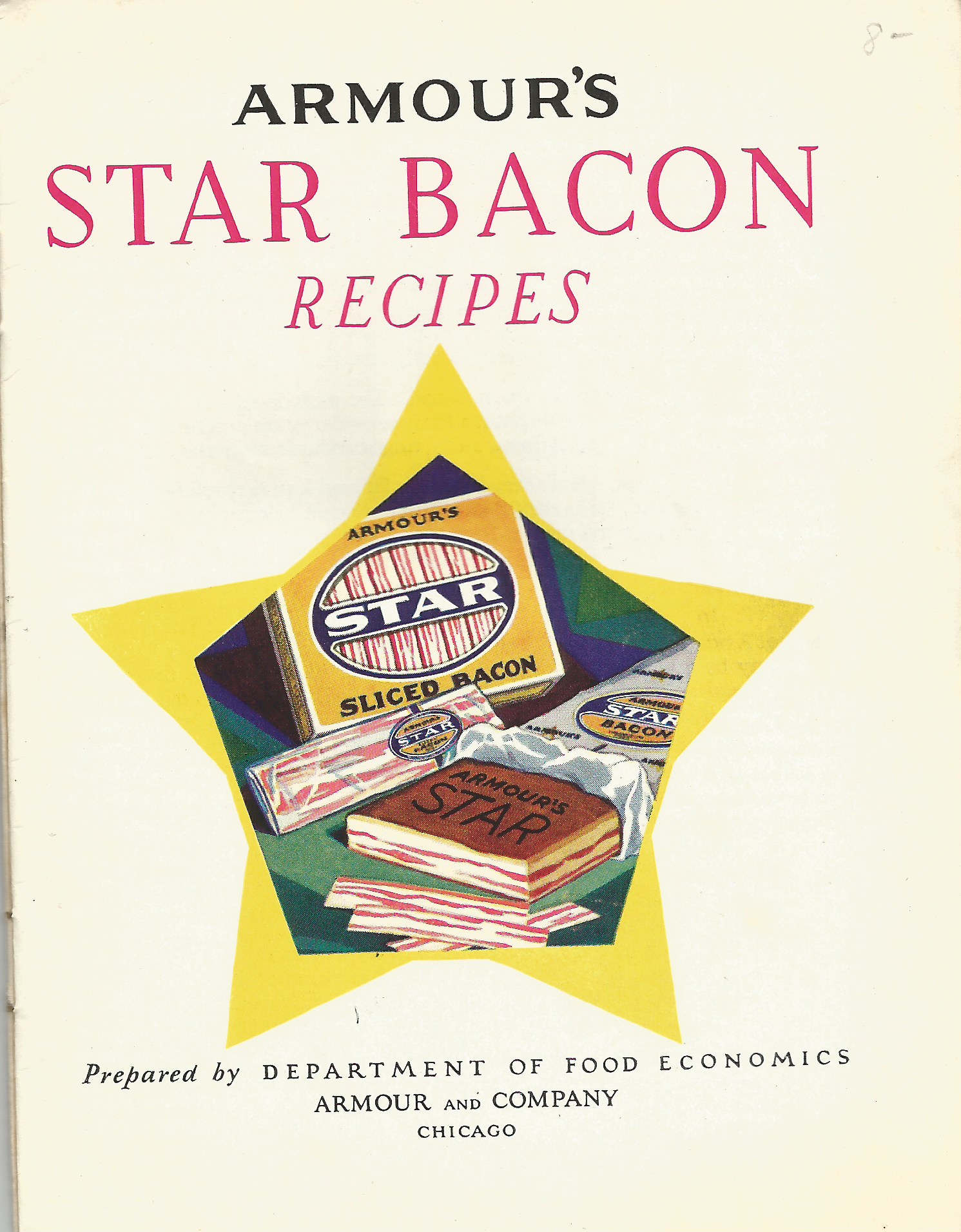
I was champing at the bit waiting for the final edit of Savage Girl to arrive by mail, so I spent some time organizing my collection of cooking pamphlets and community cookbooks.

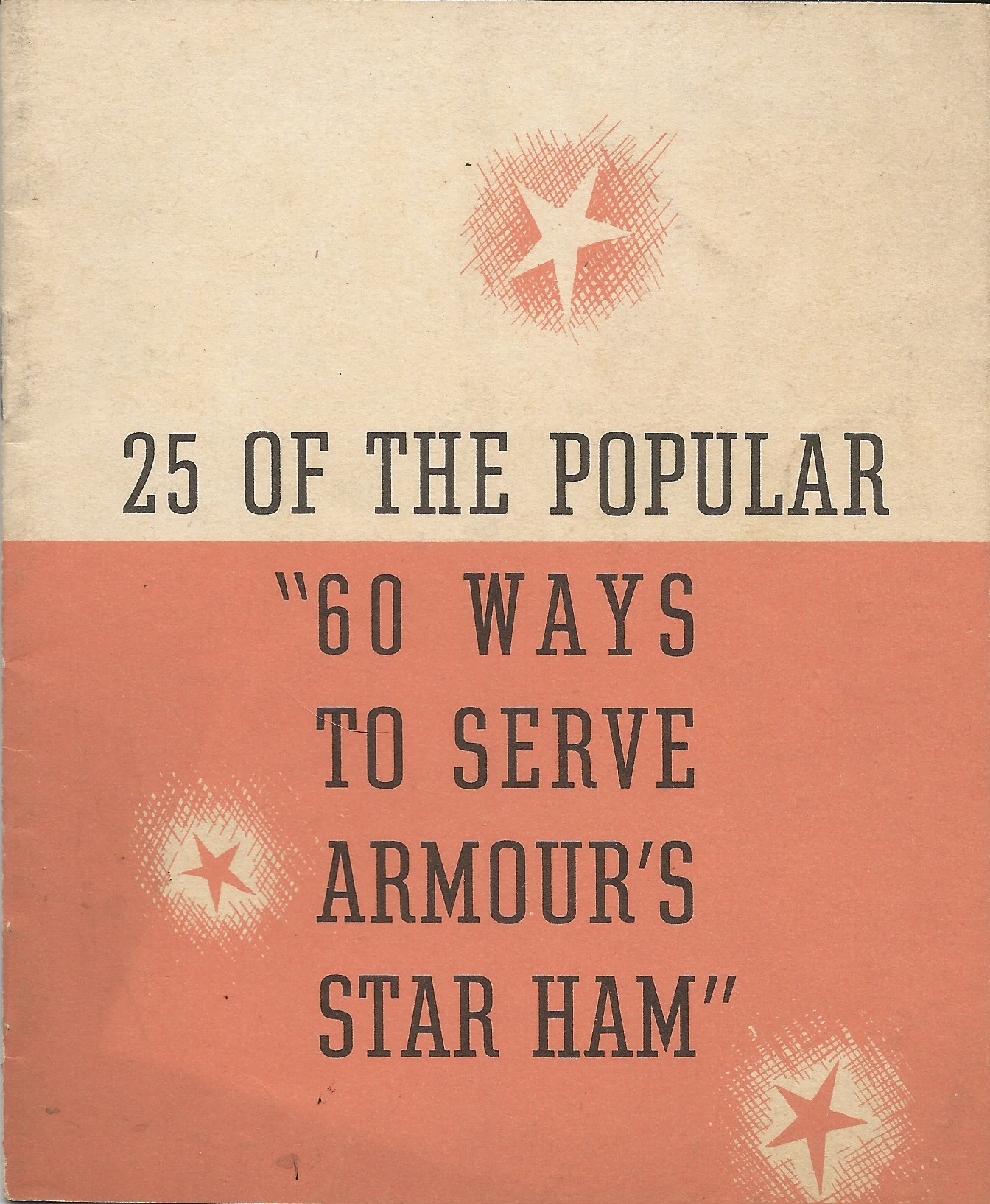
Star Bacon 1

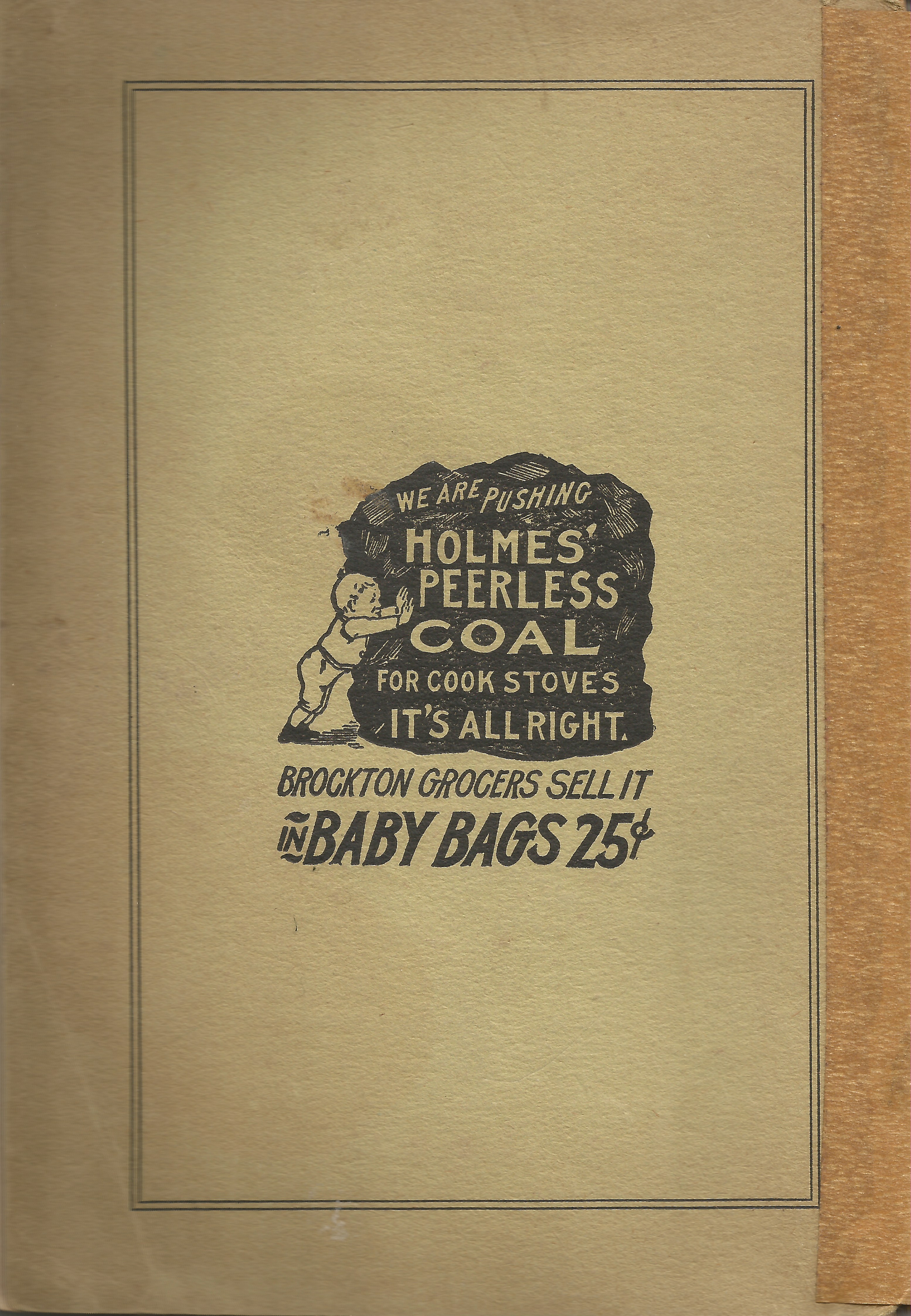
They are all precious, whether they date from the oh-so-distant 1900s, with one recipe for a “Nice Luncheon Dish” (of sardines) and another for “Plain Apple Pudding,” (starred in pencil by the original owner of the book),

The Porter Church Cook Book 1

Peerless Coal 1

The homespun ’30s,

Homemade Ice Cream 2 copy

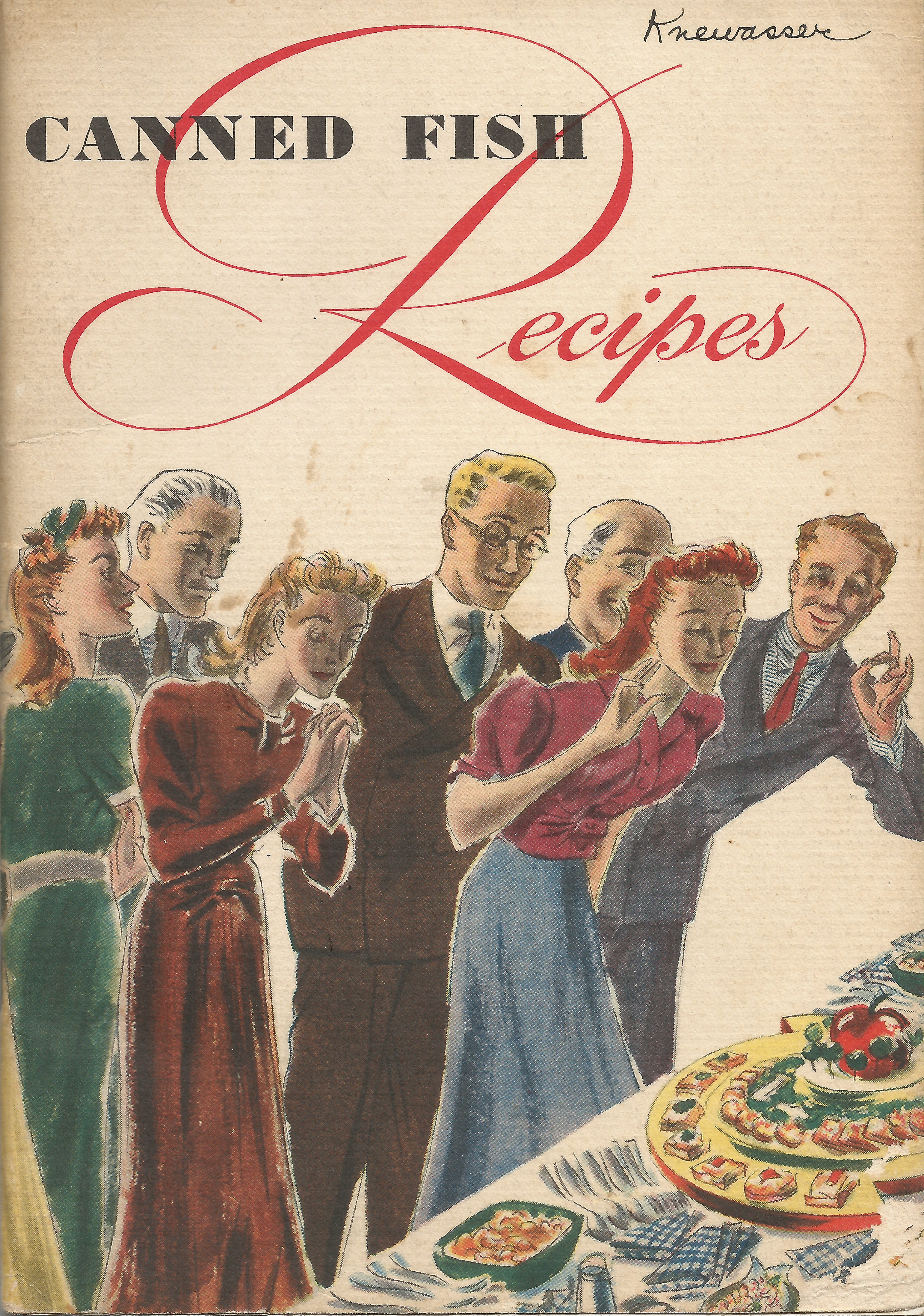
The science-minded ’40s,

Canned Fish 1

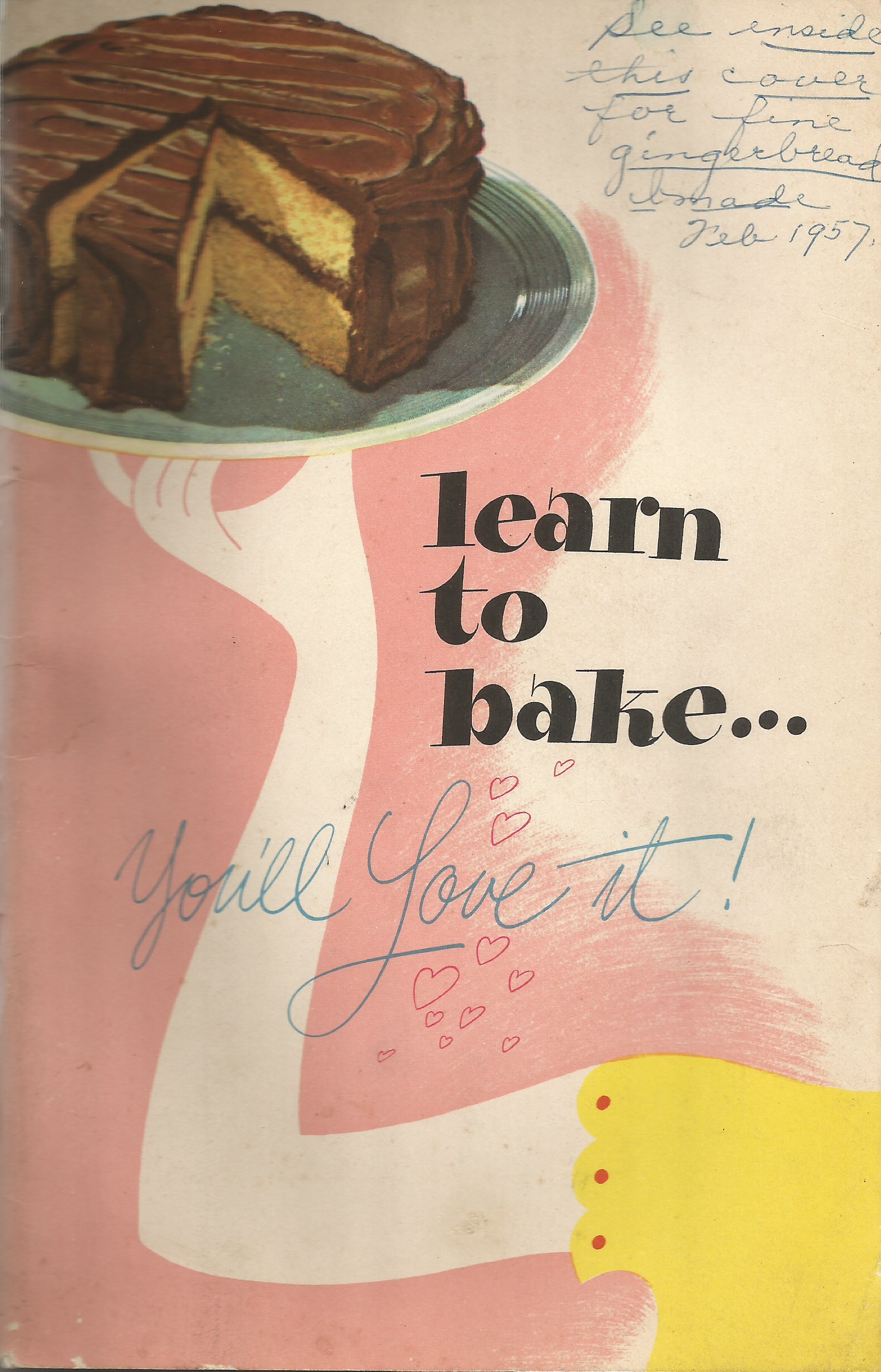
The ’50s, domain of the housewife

Learn to bake 1

Well, every decade with these pamphlets is the domain of the housewife.

The Housewife's Year Book

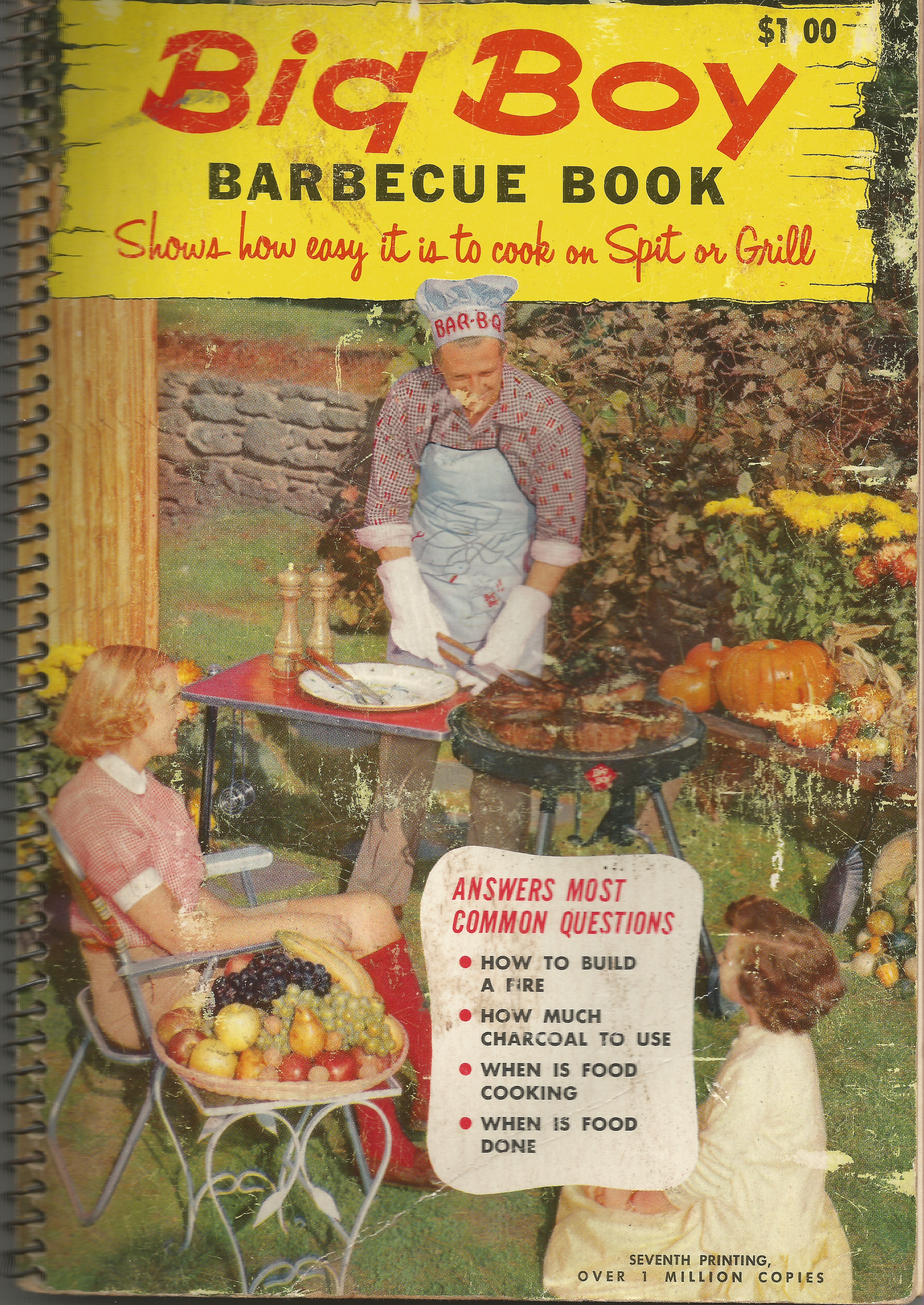
And man-the-grill husband. Something for everyone.

Big Boy

A Man's Cook Book

The eerie, disembodied homemakers of pamphlets published by companies like Sunbeam grab me the most, I guess.

Sunbeam Mixmaster 2 copy

Hamilton Beach 4 copy

All this art conveys a plainer time – a time when people actually cooked at home. Betty Friedan’s got nuthin’ on Hamilton Beach.

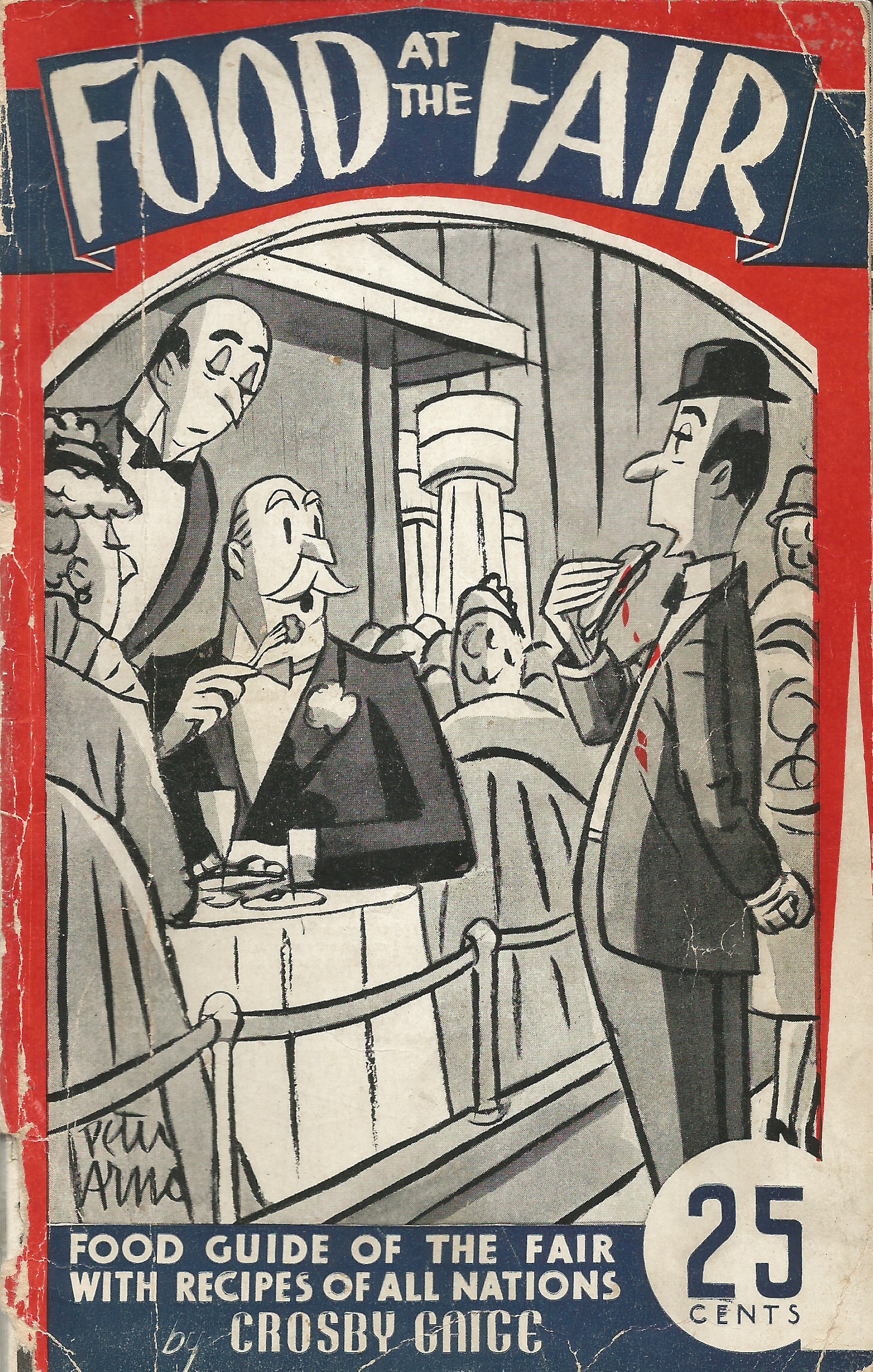
Recipes reflected a desire for novelty. For expanded horizons. Like this one from the 1939 World’s Fair.

Food at the Fair 1

Here you can learn to make “Venezuelan Hallacus,” and wow your friends.

Canned Fish Recipes suggests the adventurous “Delmonico Salmon in Rice Nests” and crunchy, bread crumb-rolled “Crabettes”.

Some are sneakily subversive. A Lion in the Kitchen: Meats has a passage by a member of the Lions Club of Hudson, Indiana, “How to Cook a Husband,” that advises, Some women keep their husbands in a stew by irritating words and ways; others waste them. Some keep them in a pickle all the lives. No husbands will be tender and good if treated in such ways, but they are extremely delicious when properly managed over a steady heat. After some more of this it continues: Tie him into the kettle by a strong silken cord of comfort; the one called duty is only jute and is apt to be weak. If he flies out of the kettle, he is apt to be burned and crusty around the edges, since, like crabs and lobsters, they must be cooked while alive. Etc.

The fact that companies and organizations used these publications for self-promotion bothers me not a whit.

Guernsey Milk

Or this number from General Foods:

Cookies Galore

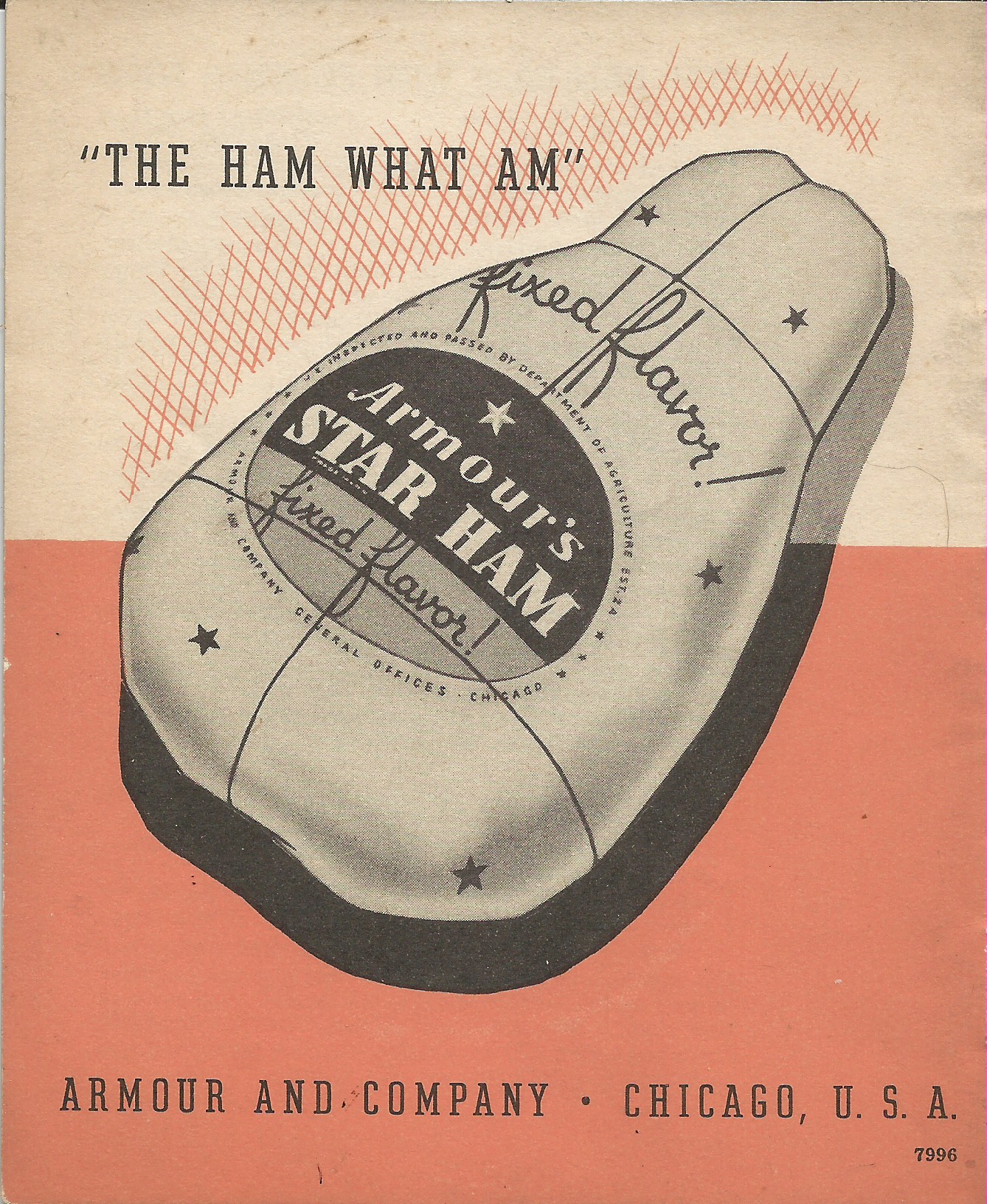
Or this, from Armour.

Armour's Ham 2 copy

Armour's Ham Over copy

Some were straight from the heart, self published, with a readership of their church congregation, if that.

Hilltop Housewife

Some are just a mystery (coffee stained in this case).

The Little Book of Excellent Recipes 1

And some are just a gas.

Cookout fun 2 copy

4 Comments

Filed under Art, Cooking, Jean Zimmerman

Mud Pies and Other Delicacies

I think this is my favorite season. It’s actually an inter-season, when the last of the snow has nearly melted and the reeds of last summer still stand tall and blond and dry.

old snow

winter reeds

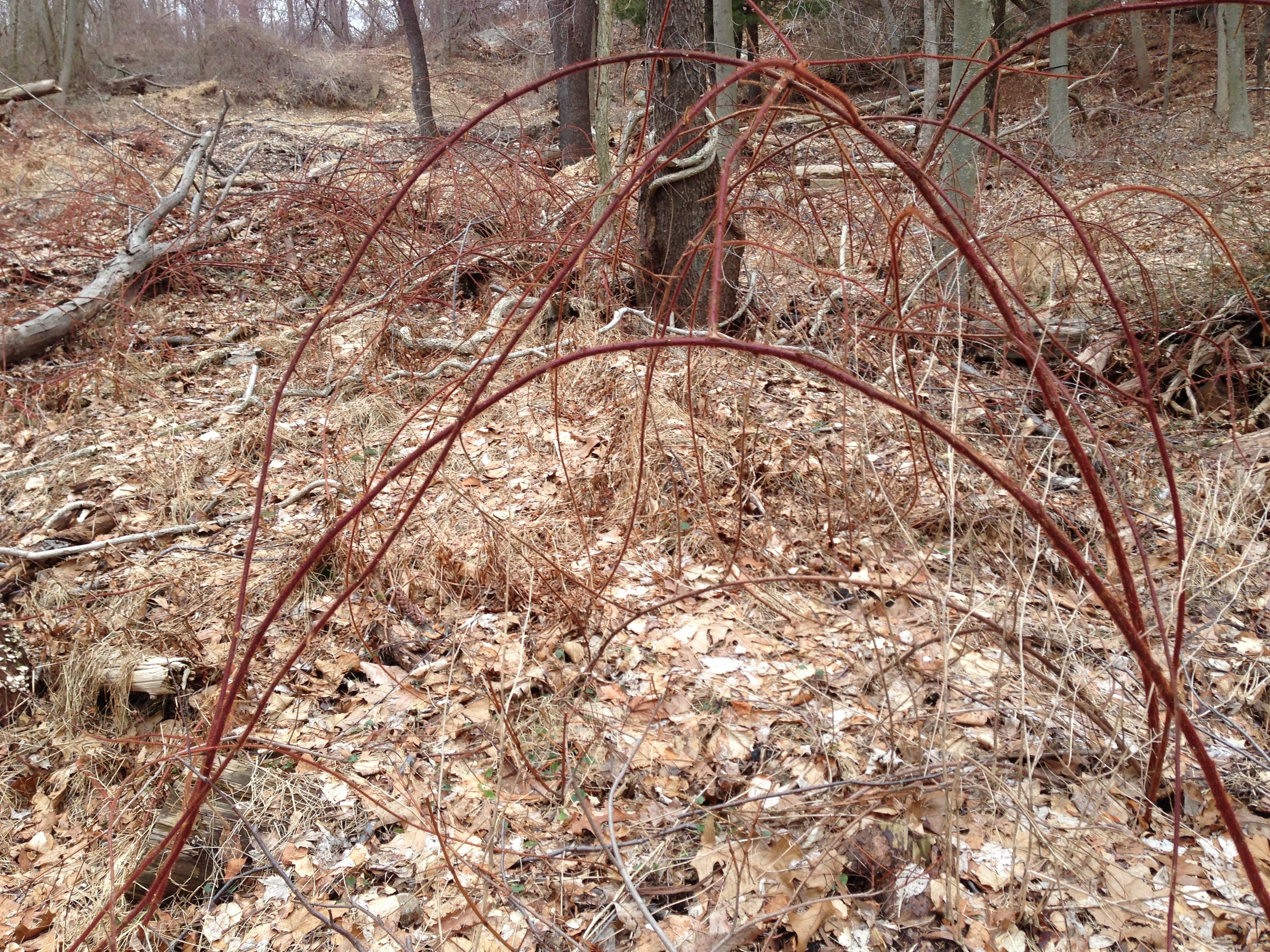
And yet… the canes of bushes like these raspberries are reddening.

red canes

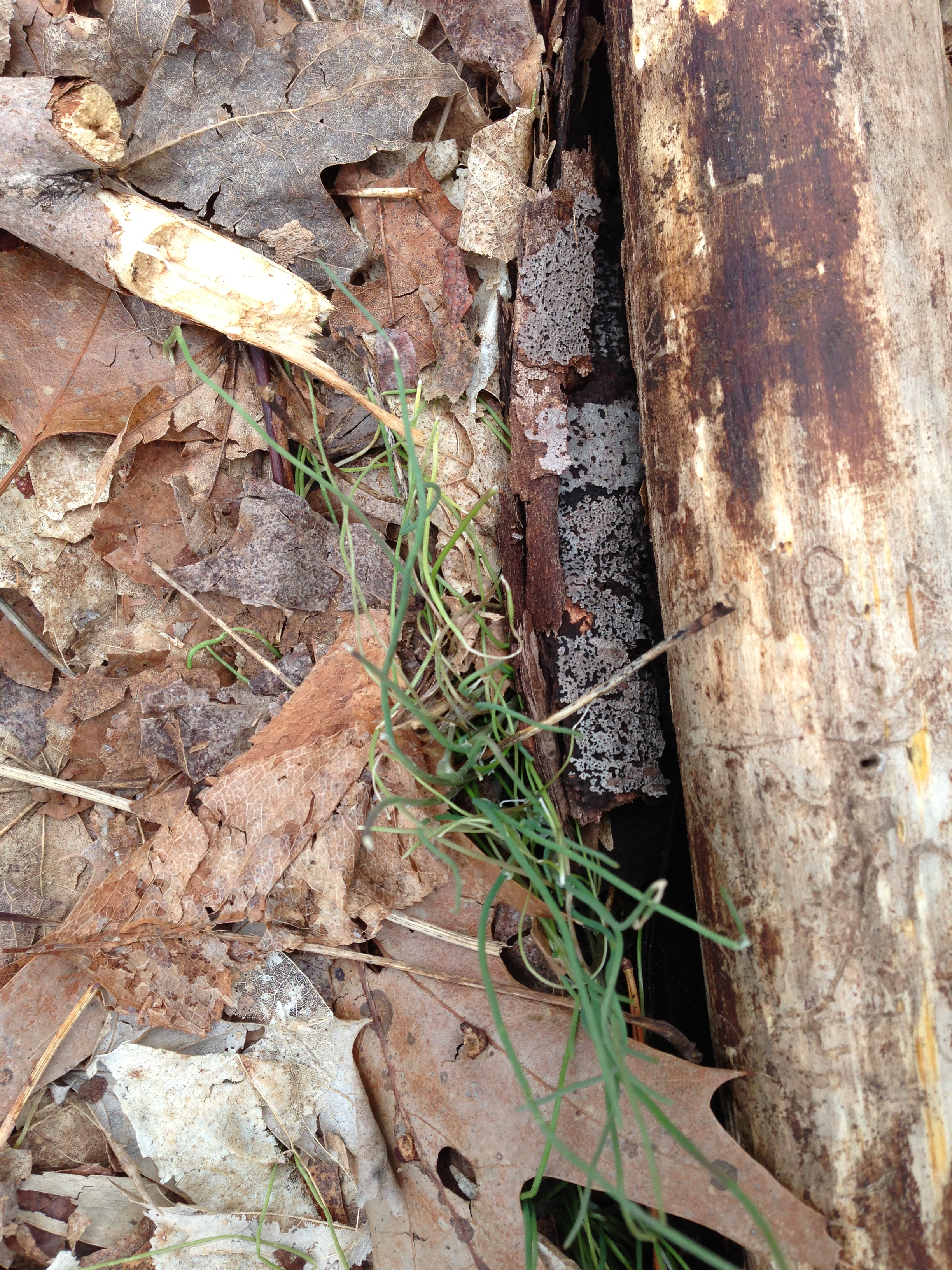
Tiny fringes of green poke through rotted leaves.

new grass

You can almost hear the sap rising in the trees. The end of winter. The beginning of spring.

I’m impatient to have the warm weather here. At five in the morning the birds are beginning to tune up. I am ready for the warm-weather mud.

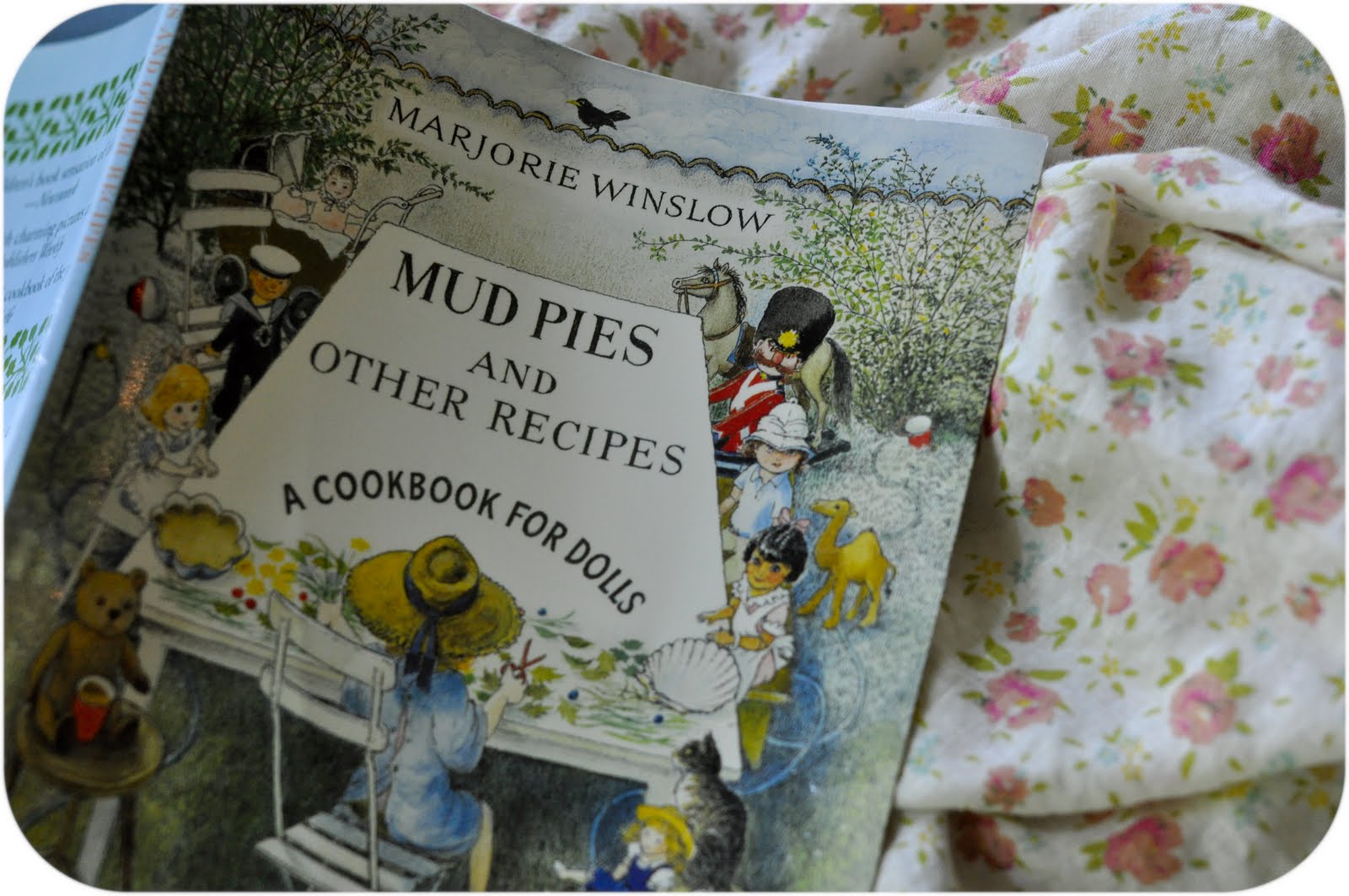
I still think of a book I obsessed over when I was a child, called Mud Pies and Other Recipes. The author, Marjorie Winslow, spelled out instructions that called for raindrops (to make “fried water”) and crushed dry leaves, flower petals and pine needles (for appetizers, to serve prettily in baking cups cut from shirt cardboard). I dreamed over that book.

mud pies and other recipes cover

There was, naturally, plenty of mud. For “wood chip dip” you must “mix dirt with water until it is as thick as paste. Place this bowl on a platter surrounded by wood shavings. Scoop the dip with the chip.” For a kid who liked to build homes out of acorn shells between the roots of trees, this was heady stuff.

The landscape around the Cabin, especially in this inter-season, makes me wonder what magic Winslow would concoct here.

fallen bark

How about a bark sandwich?

bark sandwich

But let’s try to leave babyish games behind.

One of the best-known young Scandinavian chefs, Magnus Nilsson, brings nature into his decidedly grownup cuisine, with meals people travel into the remote Swedish hinterlands to experience. Marigold petals are as much staples of his kitchen as they are in the world of Mud Pies, along with ingredients like birch syrup and moose-meat powder.

MagnusNilsson_2354943b

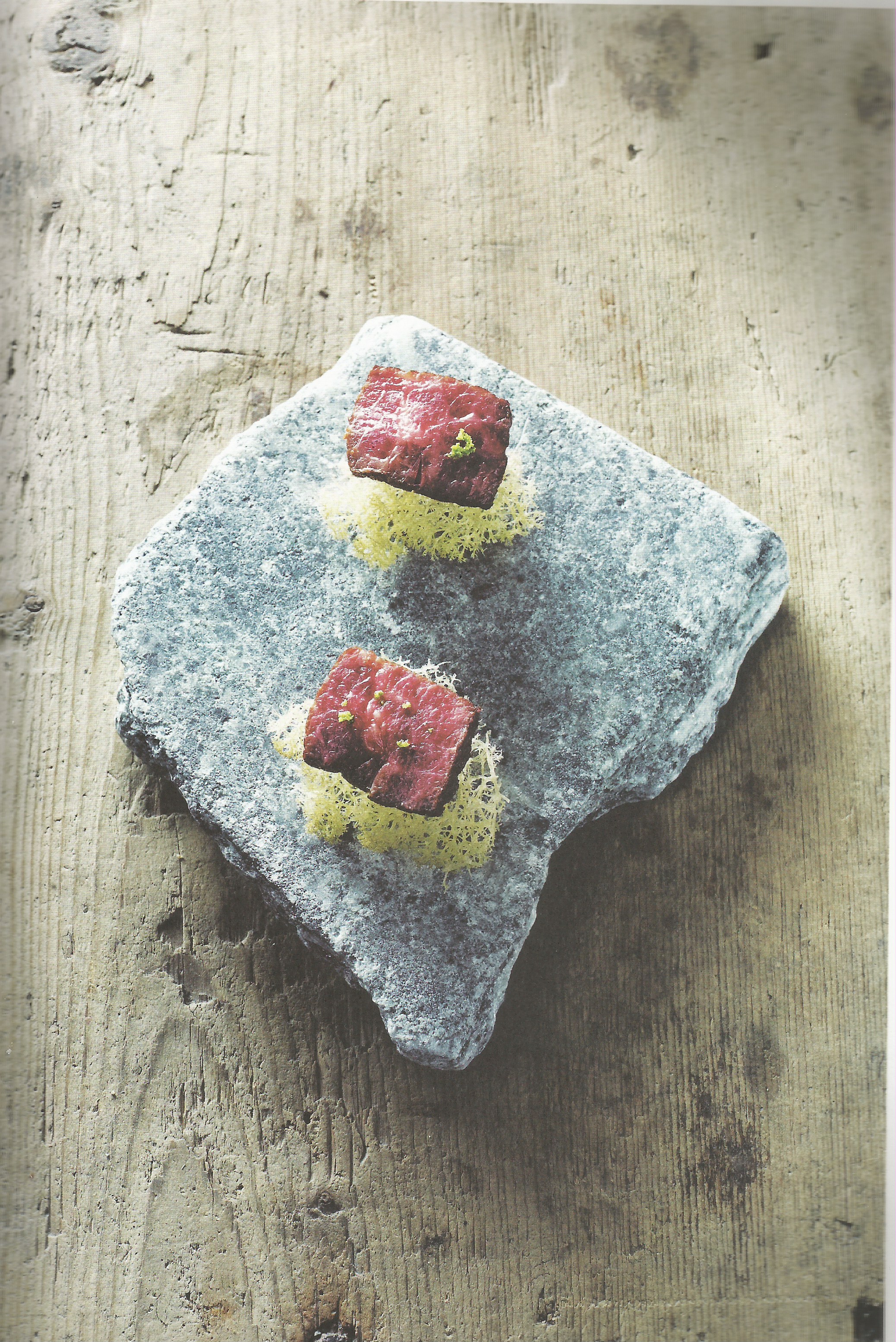
He has recently come out with a cookbook, Faviken, that evokes fairy tales through its approach to food preparation. The book delineates the secrets of Faviken Magasinet, the fabled restaurant Nilsson runs, giving recipes with surprisingly narrative titles, like “Marrow and heart with grated turnip and turnip leaves that have never seen the light of day, grilled bread and lovage salt.” He explains, about this dish, that “the main ingredients are a perfectly fresh femur and an equally fresh cow’s heart.” Not something I’m going to try at home, but possessed of a mythic poetry. Or how about this one? “A tiny slice of top blade from a retired dairy cow, dry aged for nine months, crispy reindeer lichen, fermented green gooseberries, fennel salt.”

nillson 1

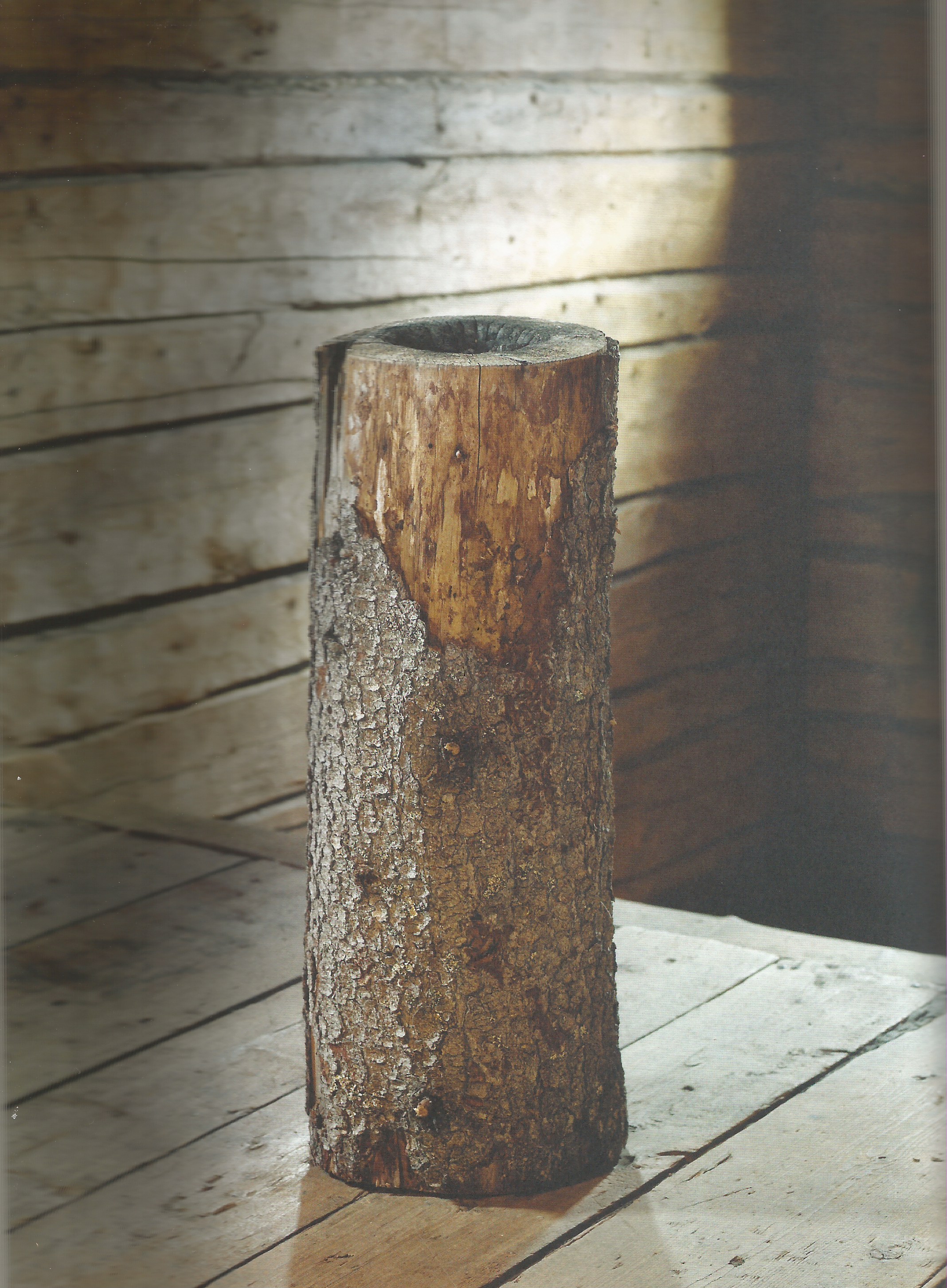
Magnus Nilsson loves lichen. He loves all the ingredients from Mud Pies, it would seem. A typical recipe: “Pine mushroom, lamb’s kidney, pickled marigold.” Wild plants distinguish his cooking. “Vegetables cooked with autumn leaves.” And perhaps the most spectacular yet absolutely simple preparation: “Vinegar matured in the burnt-out trunk of a spruce tree.”

nillson 1 1

I bet I could put together some pretty good acorn furniture for the base.

acorns

10 Comments

Filed under Cooking, Home, Jean Zimmerman, Nature, Photography, Publishing