Out of Africa

Maud is back from Malawi.

back from malawi

Wearing a chichinge, a wrap skirt of block-printed African cloth. Her resilient muscles are only a little sore, and she seems impervious to jet lag after 20  hours in the air.

Maud and her group from buildOn, working with hundreds of village men, laid a foundation and raised a quarter of the walls for a new school block that will allow the town of Mpandakila to educate its 5th and 6th graders. So that after 4th grade the kids will not drop out rather than hike the six kilometers to the nearest school.

Maud ate nsima — corn porridge — pumpkin greens and soupy beans for 12 days, sleeping on a bamboo mat in a very special homestead. Her hosts were one of the chiefs of the community and his wife and their five precocious daughters. Also grandma, the babies of the two eldest daughters, and a two-day-old goat that cried for its mom all night. 

A hen slept in the room with Maud and her friend Claire, laying its eggs while they were sleeping.  The chief offered the young women a chicken as they left, which they took and sold to the bus driver who took them six hours back to Lilongue. They fed it ground nuts (peanuts), which they picked fresh from the vine every morning.

Dancing was a big thing in the village, to the pounding of drums and the ululations of the older women. The whole village loved learning the Macarena.

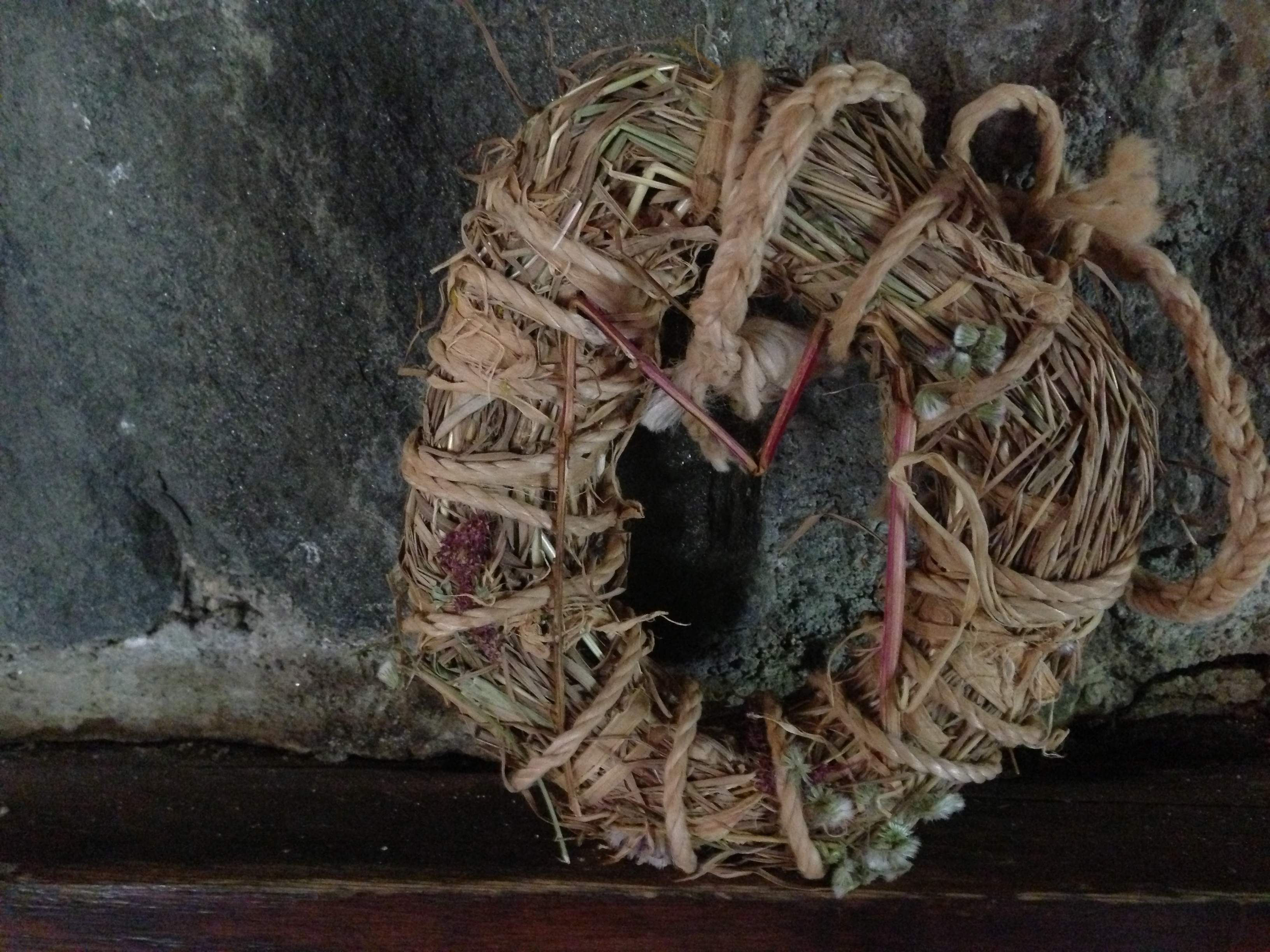
What Maud loved learning about the most was how to carry water atop her head — and dirt, and bricks. A woven circle of straw helped her balance. 

water carrier

It felt so far away, but at the same time there was a human familiarity about it all — a smile as you walked by someone, the  bossiness of the sisters. Maud didn’t come away with any answers about the best way to go about helping other countries, without imposing your will or encouraging dependency. What matters is asking the questions, and coming away with more.

Zikomo kwambiri means thank you very much in Chichewa.

6 Comments

Filed under Cooking, Culture, Fashion, History, Home, Jean Zimmerman, Music

Wildflowers and a Verse

A mile-long park runs along the Hudson River bank at Croton-on-Hudson, New York, where you can walk the path as dusk descends and see the sun set hazily, just for you.

sunset hudson

The town took an underused industrial area and rehabbed it about ten years ago with the help of the Open Space Institute so that everyone who wants to came come down and praise the beauty of the wide, placid Hudson. Well, not always placid. It seems every small dog in Westchester County is being trotted along at that hour, yapping and sniffing.

The smell of flowers pervades the air.

wild white roses

Along the railroad tracks you’ll find the multiflora rose, which came to the U.S. in the late 19th century as rootstock for ornamental varieties and was then pressed into use as a “living fence” to corral livestock. Its lovely petals float on the air for just about two weeks every June, then it reverts to its less-beautiful identity as a sticker-bush. Other wild roses bloom here too, some with better manners.

wild pink rose

Almost as fragrant as the white ones when you stick your nose into a bloom. And honeysuckle – when was the last time you sucked the fragrant dew from one of its blossoms? Put it on your to-do list for today.

honeysuckle 2

Vivid spires come up, having materialized after our rains came, finally, and jump started all the plants.

purple spires

And the wild iris, down by the shore, its proud head, its feet in the mud.

iris

The great poet Louise Gluck writes in a poem named for a flower, “Snowdrops,” in her Pulitzer-winning collection The Wild Iris:

I did not expect to survive,

earth suppressing me. I didn’t expect

to waken again, to feel

in damp earth my body

able to respond again, remembering

after so long how to open again

in the cold light

of earliest spring—


afraid, yes, but among you again

crying yes risk joy


in the raw wind of the new world.

2 Comments

Filed under Home, Nature, Photography, Poetry, Writers, Writing

I Saw Her Standing There

The Tenth Annual Musical Saw Festival took place at Trinity Lutheran Church, located in deepest, darkest Astoria, Queens.

TrinityLutheranChurchPhotoByRodneyBauer2000-300x218

The gathering has been recorded in the Guinness Book of Records as the largest musical saw ensemble ever assembled. It features musicians and fans who are rather intense about keeping alive the 300-year-old art of playing music on a carpenter’s saw. I’d always been curious about the saw and liked its sound when I heard it in a song. Which wasn’t too often, however.

carpenter

Arriving during an intermission, I wandered around the pews  and found people in an almost giddy state of shared purpose. There was a musical saw art exhibit, musical saw poetry, the premier of musical saw score for the movies, and solos by dozens of sawists from around the world. Workshops were scheduled for novices and experts alike. There would even be a “chorus of saws” in which all the musicians present would work out as a group, accompanied only by a piano.

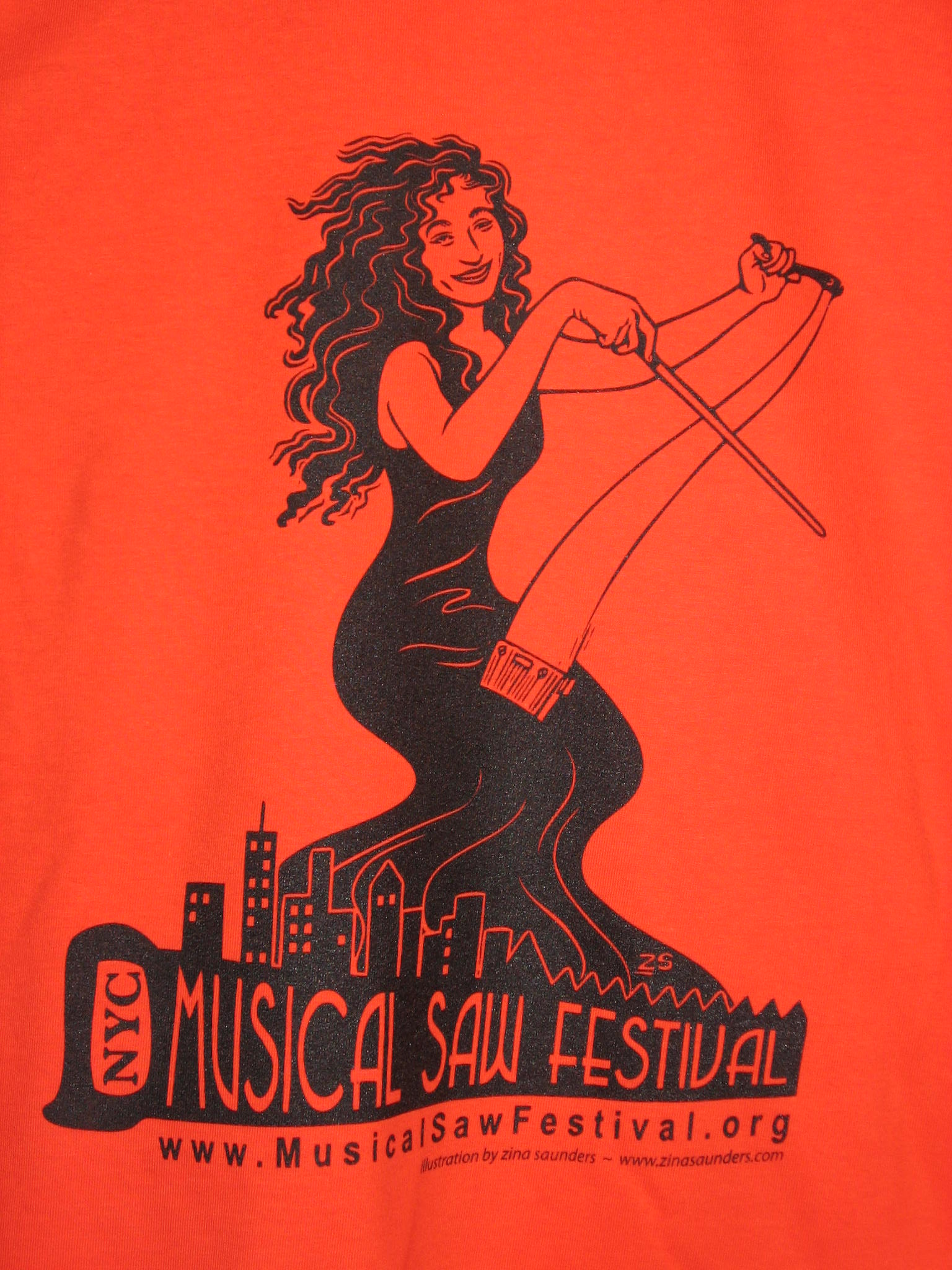
If you wanted to, you could bring home a souvenir T-shirt.

TshirtOrange

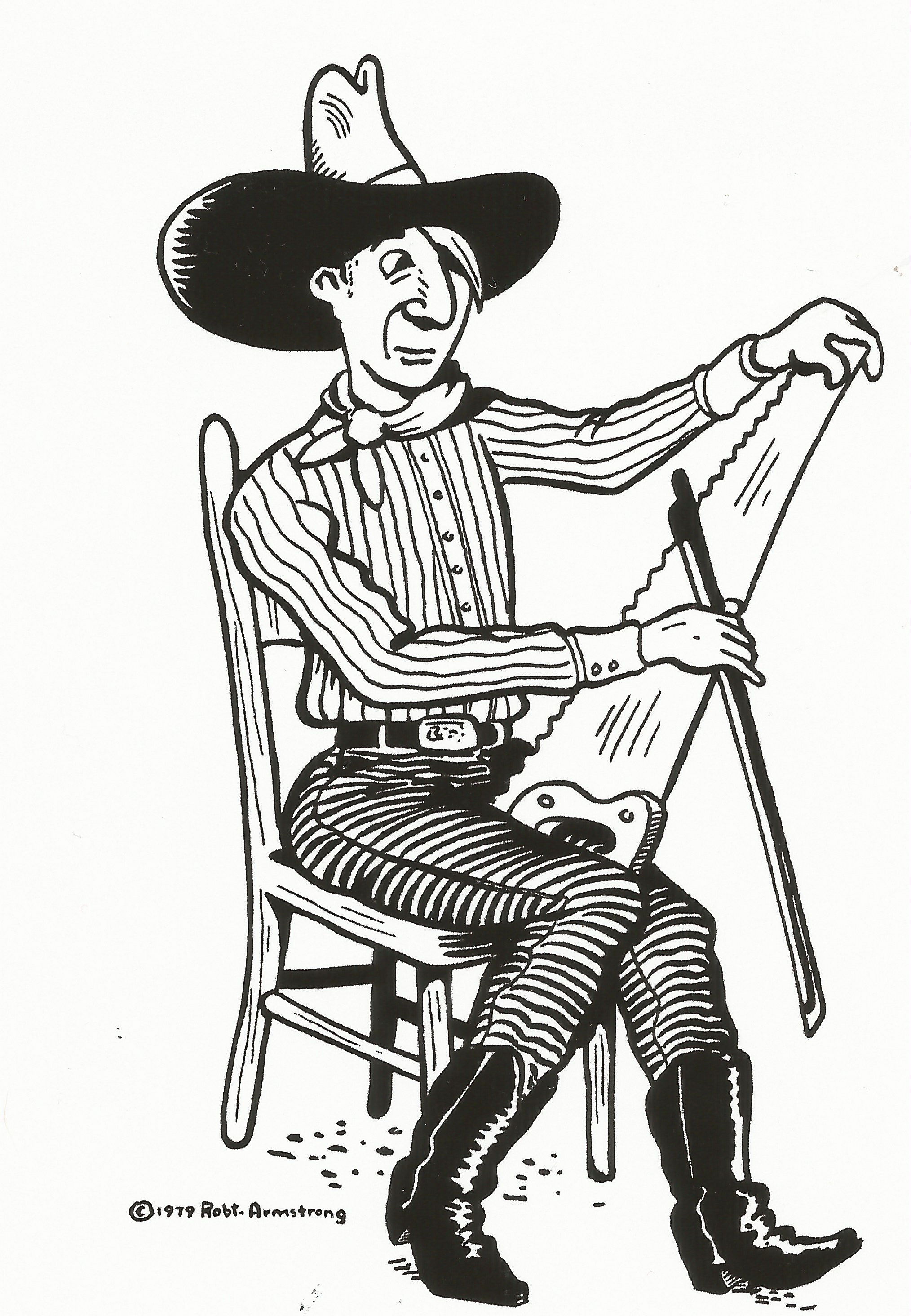
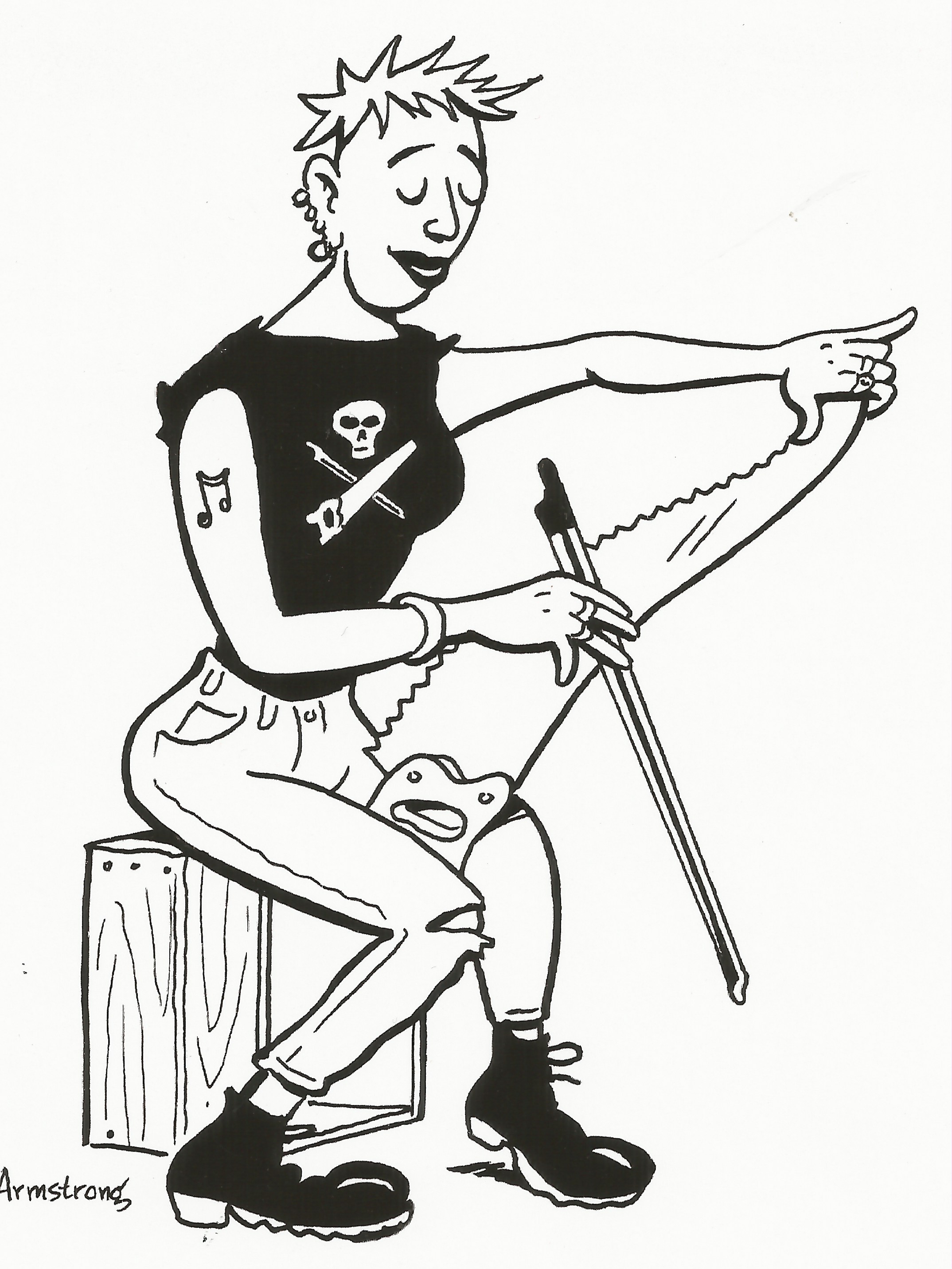
Where did this art originate, I wondered? Information abounds if you are motivated to look. The gently bent metal blade creates a keening or wavering tone when a bow is drawn across it and is capable of glissando. Marlene Dietrich entertained the troops with her saw, that I know. I actually think Wikipedia has a pretty good handle on the technicalities.  Of course, you can always consult the International Musical Saw Association. (Robert Armstrong does these cheery illustrations for them.)

cowboy

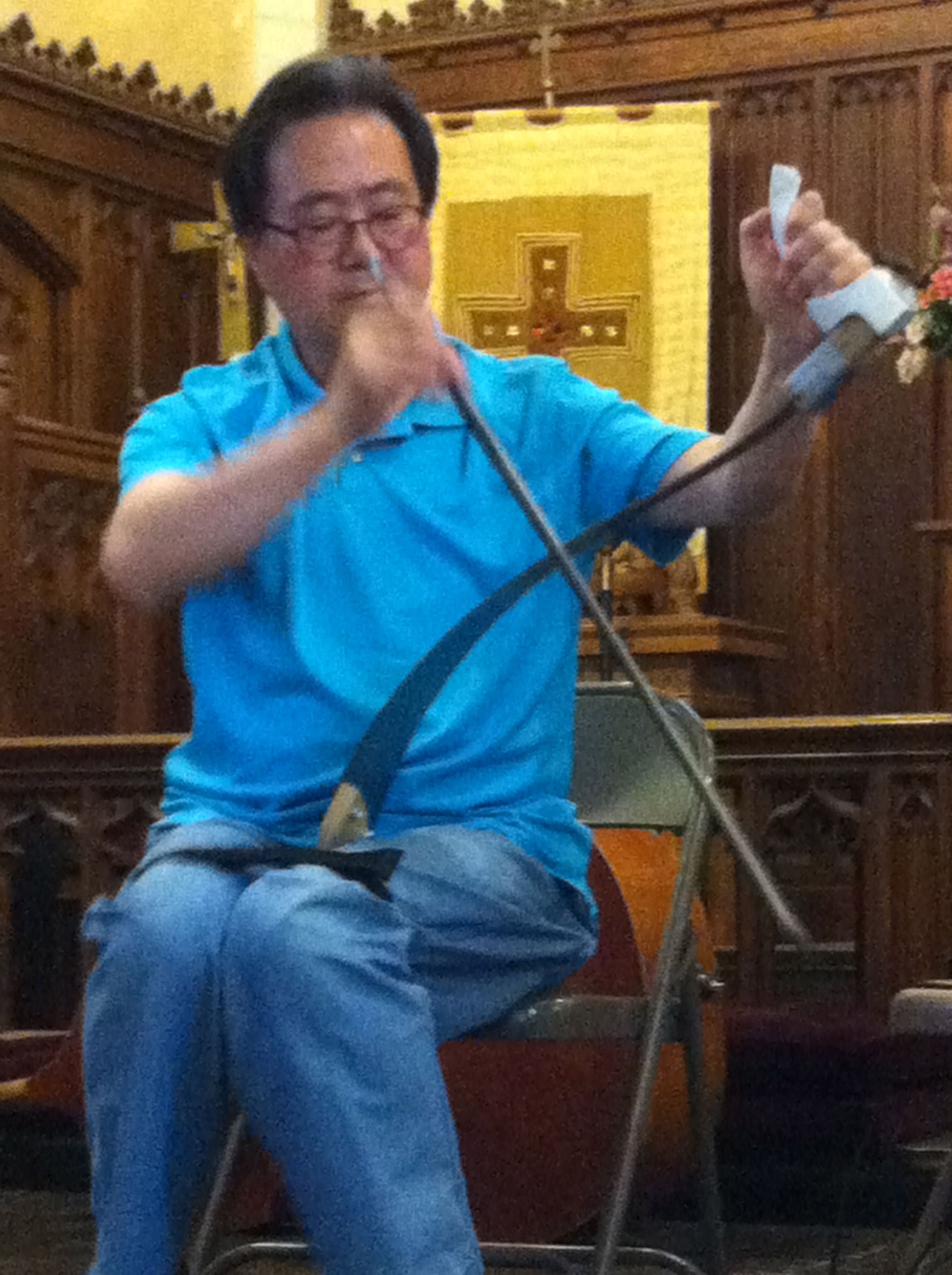
Some of the festival highlights included a sawist in a turquoise polo who delivered an energetic version of Tom Jones’ hit Delilah. He turned up the amplifier to heighten the drama of certain segments.

turquoise

The audience roared its approval.

I saw a man with a gag hat from which protruded the business end of a saw on one side, the handle on the other. Also intriguing, a burly guy with a musical clef tattoed in black on each his forearms.

A duo played an original composition titled Poor Nietzche, “about Neitche going crazy” according to the m.c. The elegant blonde on the saw was accompanied by a 12-string mandolin player in a pork pie hat. It was an edgy performance the likes of which I could not have anticipated encountering on a Saturday afternoon in Queens, but artsy types seem to have embraced the musical saw.

goth

Another pair put on a hipster duet with a saw and an old-fashioned typewriter against a fog-machine backdrop.

Then there was the Chilean dude who had only been playing for a year and who performed a soulful tune from the “New Chilean Song Movement of the 1970s.” The melody was emotionally affecting and perfectly interpreted by this dark-eyed, shaggily handsome prodigy.

There seemed to be an underlying competition of some sort about just how genuine your instrument really was. One musician, it was announced, would perform on a “26-inch Stanley fine-finished saw from the hardware store.” People toted about bare saws and saws in canvas covers, wielding their bows as if they might commence playing at any moment. These musicians use the same rosin on their bows, I was told, as a ballerina uses on her slippers.

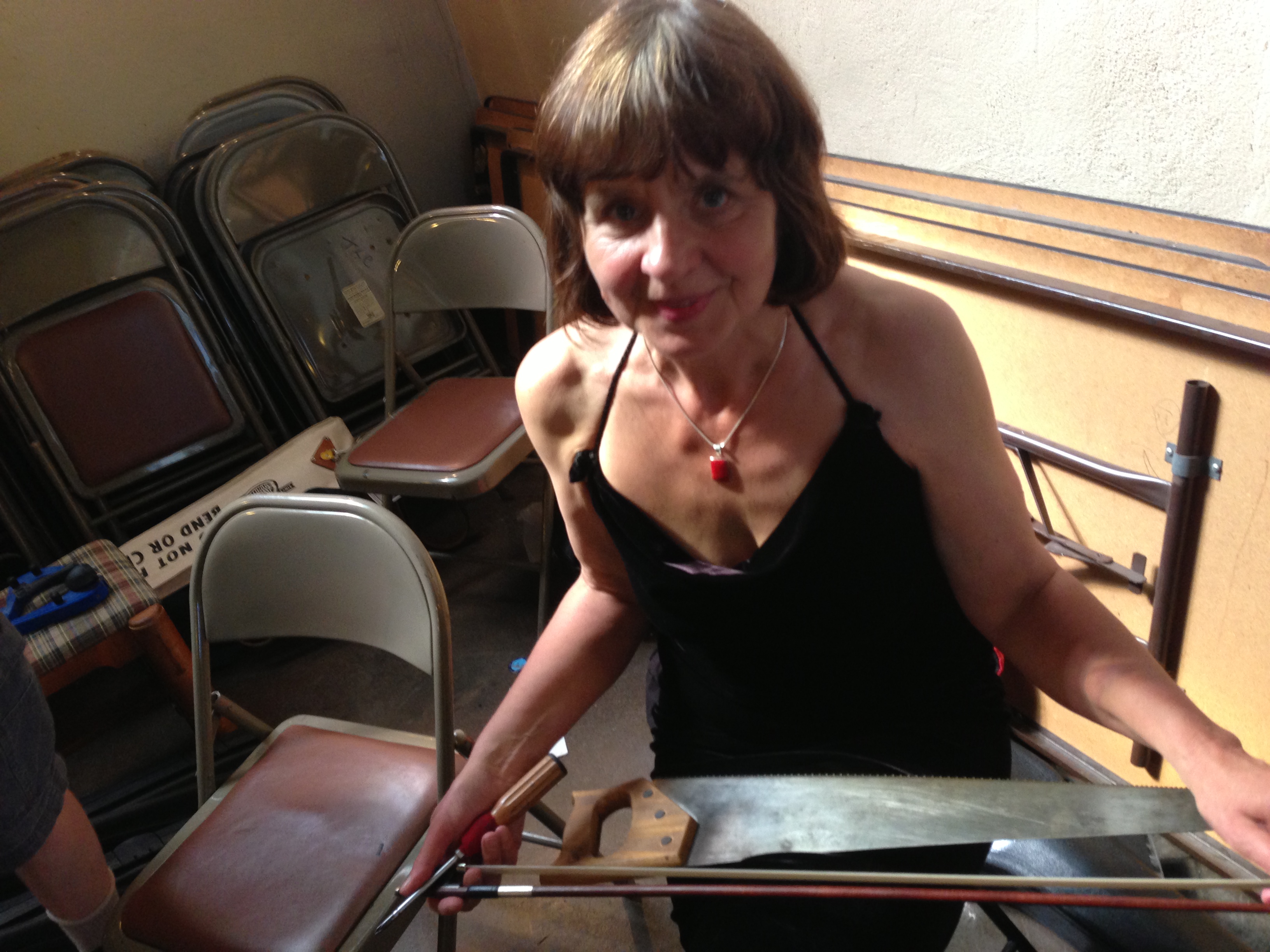
I think my favorite player was a woman named Gisela O’Grady-Pfeiffer, from Germany, who told me she was nervous going up on stage every year.

Gisela

She needn’t have been. Her Debussy piece, Claire de Lune, was haunting, her musical sawing exemplary. She came, she saw, she conquered.

15 Comments

Filed under Jean Zimmerman

Red Is the Color

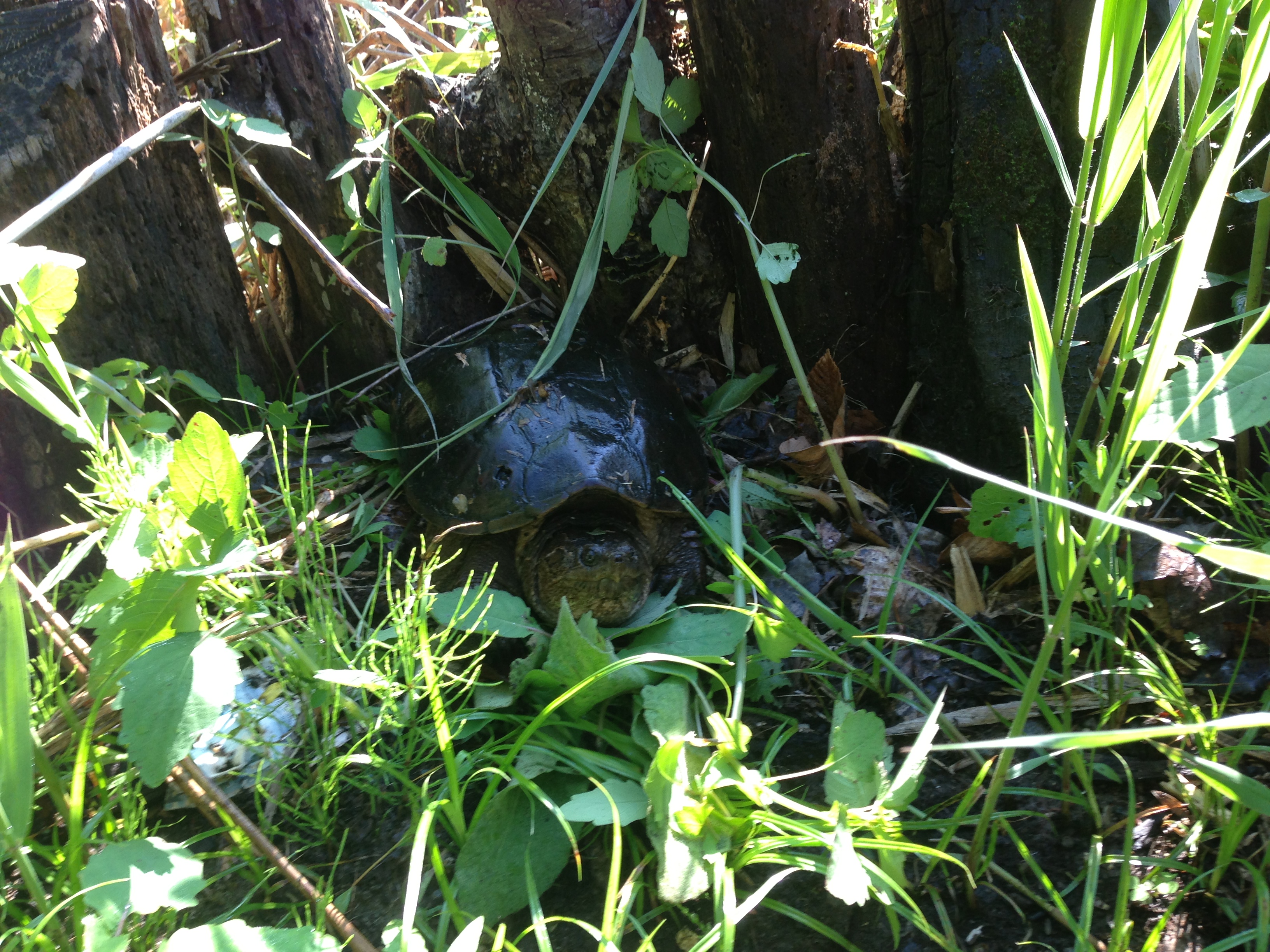
We were ushered off to our strawberry jaunt by a visitor from prehistory.

snapping turtle

A snapping turtle backed herself into a corner of the the vegetable garden when I startled her. She scowled, bit the air and elongated her snake-like neck when her ejection was proposed with a shovel. Snappers evolved over 40 million years ago, so she deserves our careful respect.

It’s strawberry season. But it’s early.

strawberry field

Still, we wanted to pick.

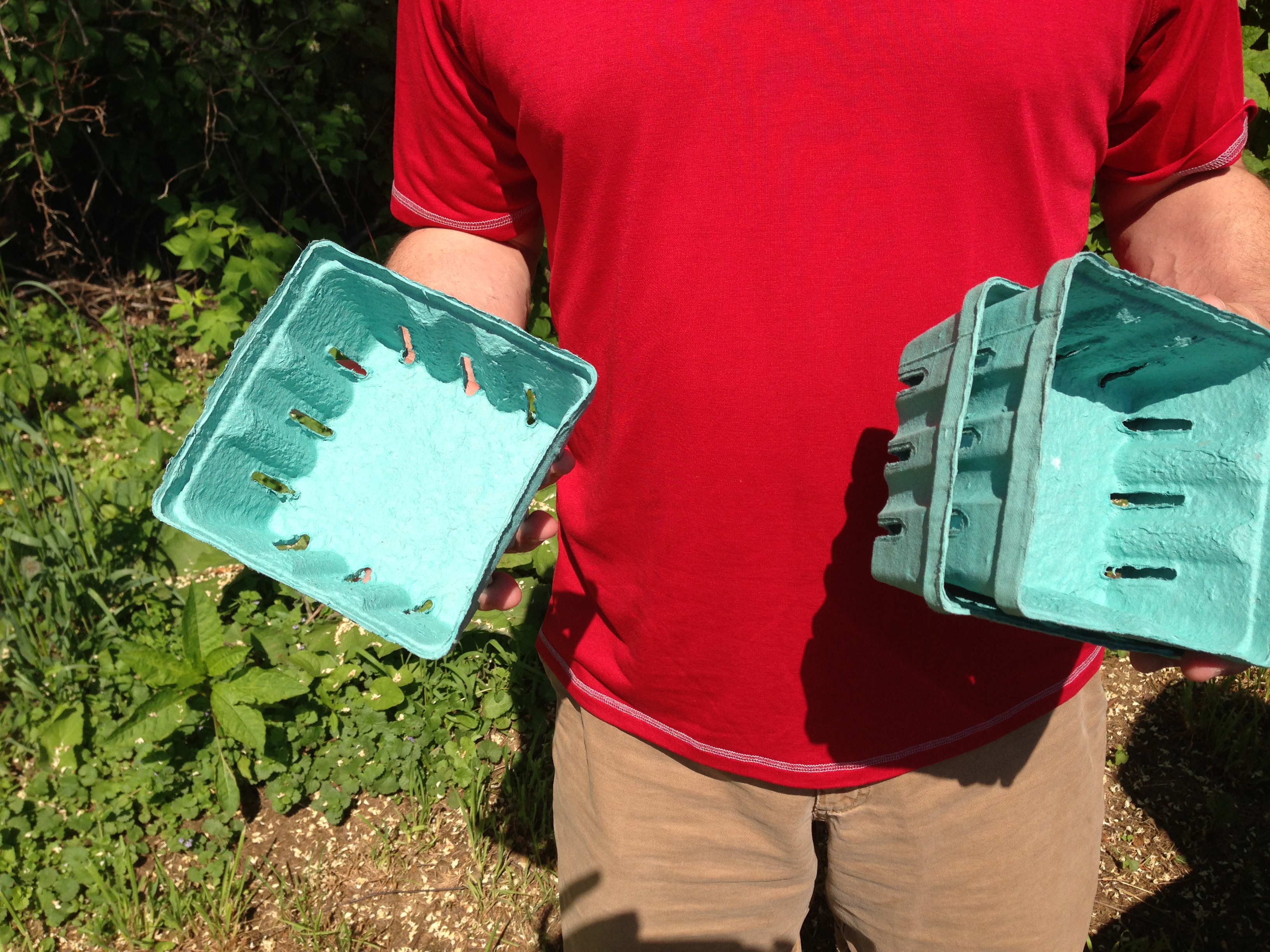
Gil boxes empty

One of my mother’s fondest memories of strawberry picking as a kid is the bluebird she saw on a post, her first bluebird, as she rode into the field in the back of a pickup truck with her sister Sandra and her brother Jere.

No bluebirds for us, or birds of any kind. The berries, clustered under their tents of leaves were largely unripe.

unripe strawberry

At Grieg Farm, in Red Hook, New York, we had a summer sky, hot blue with hazy clouds. And strawberries, it turned out when we looked, plenty enough for the two of us.

I remember eating strawberries when Gil proposed to me decades upon decades ago. He went into the restaurant’s men’s room and looked into the mirror, then came back to the table and dove in.

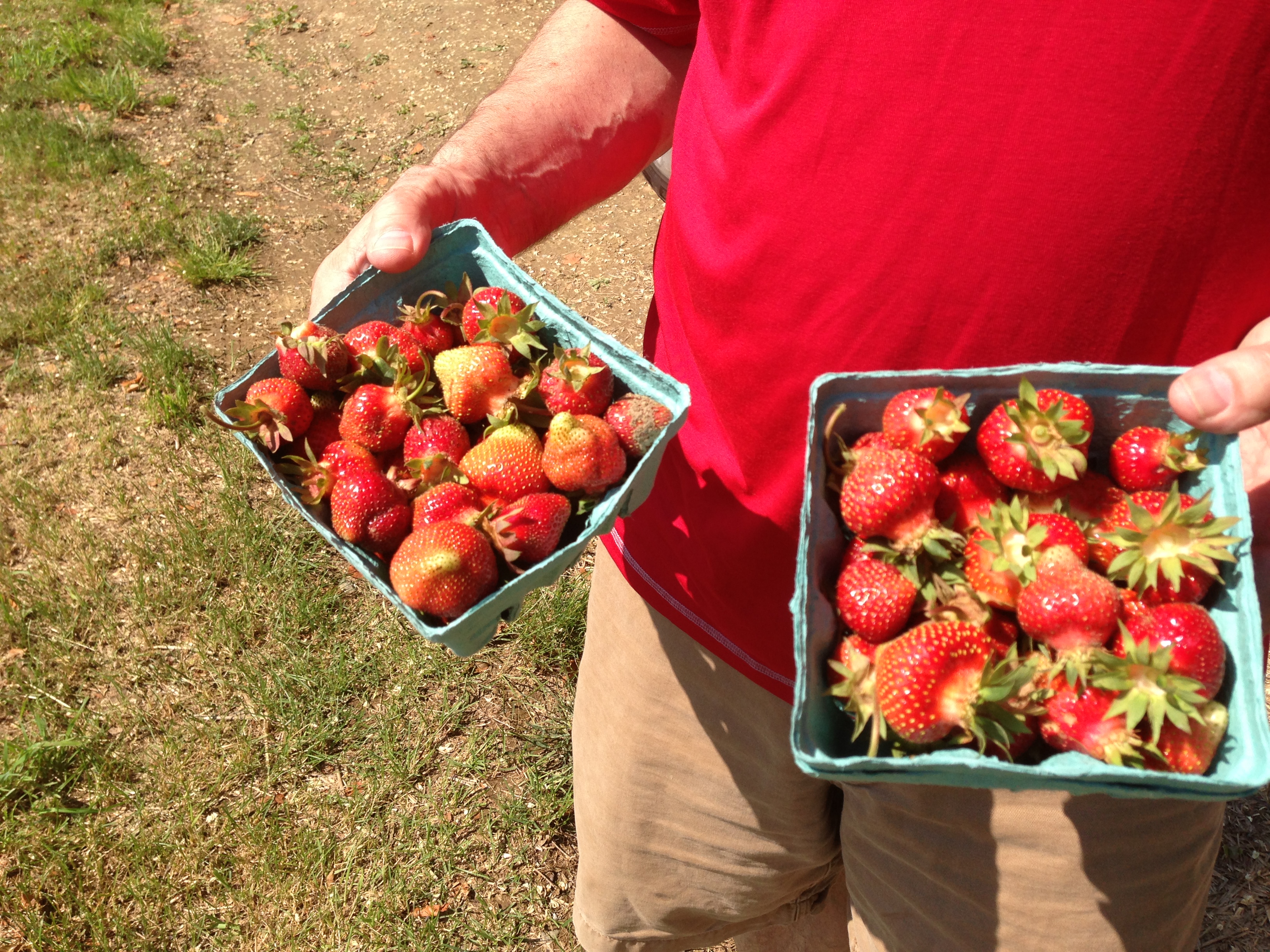
Gil boxes full

Ryan took our six bucks and explained that while the berries weren’t the prettiest, they were just as sweet as if they were perfectly red.

Redder (and pink) were the radishes at the farm stand.

radishes

One nurseryman told me that if you harvest the baby radishes with their leaves and saute them together, it results in a dish that is delicious. I have plenty of baby radishes in my garden – until the snapping turtle comes for them – and I’m going to try it.

Red-green rhubarb, to go with my peppermint-striped strawberries.

rhubarb

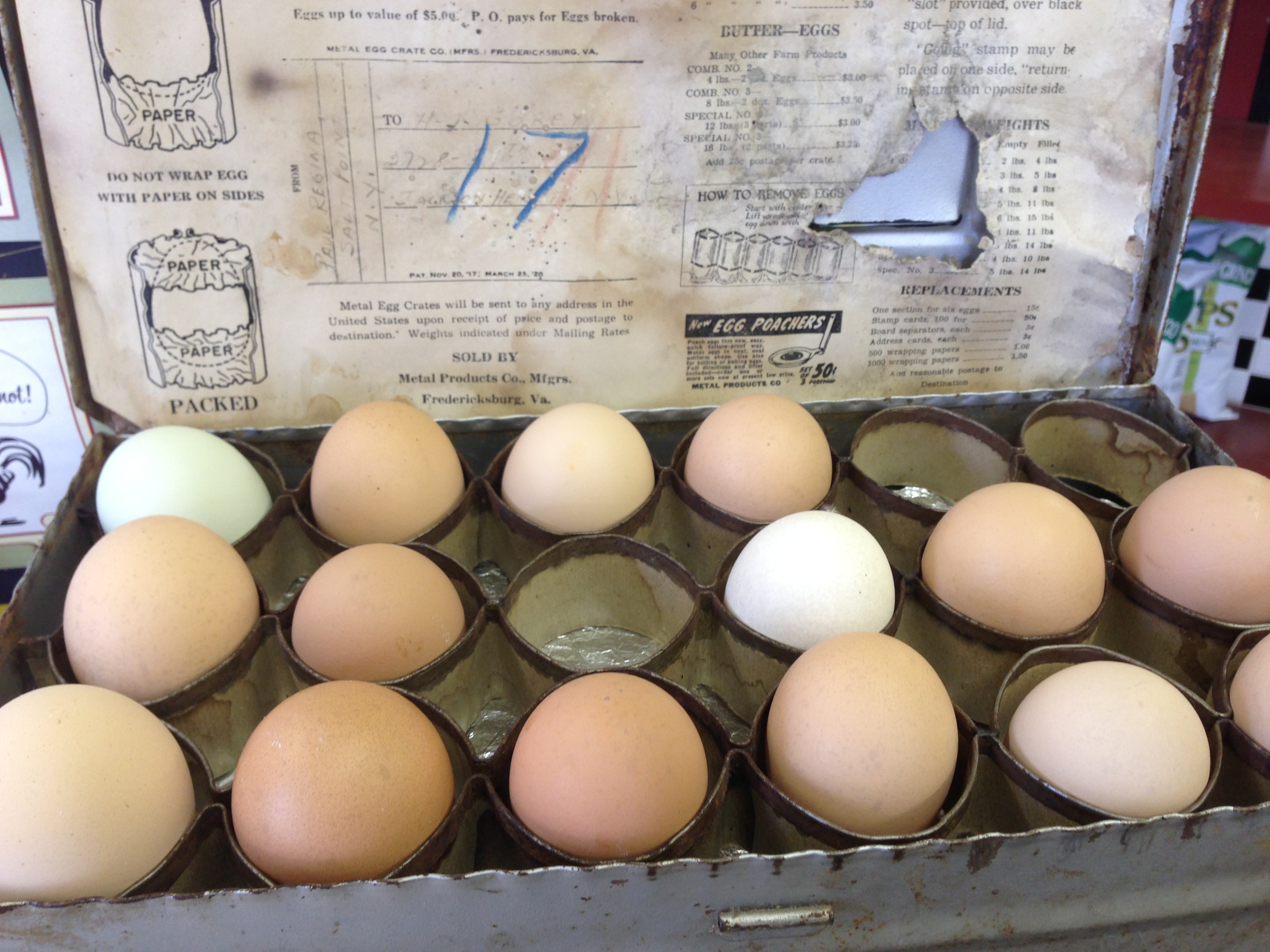
Maybe preceded by a meal of eggs so fresh their yolks puff up like small islands of saffron?

brown eggs

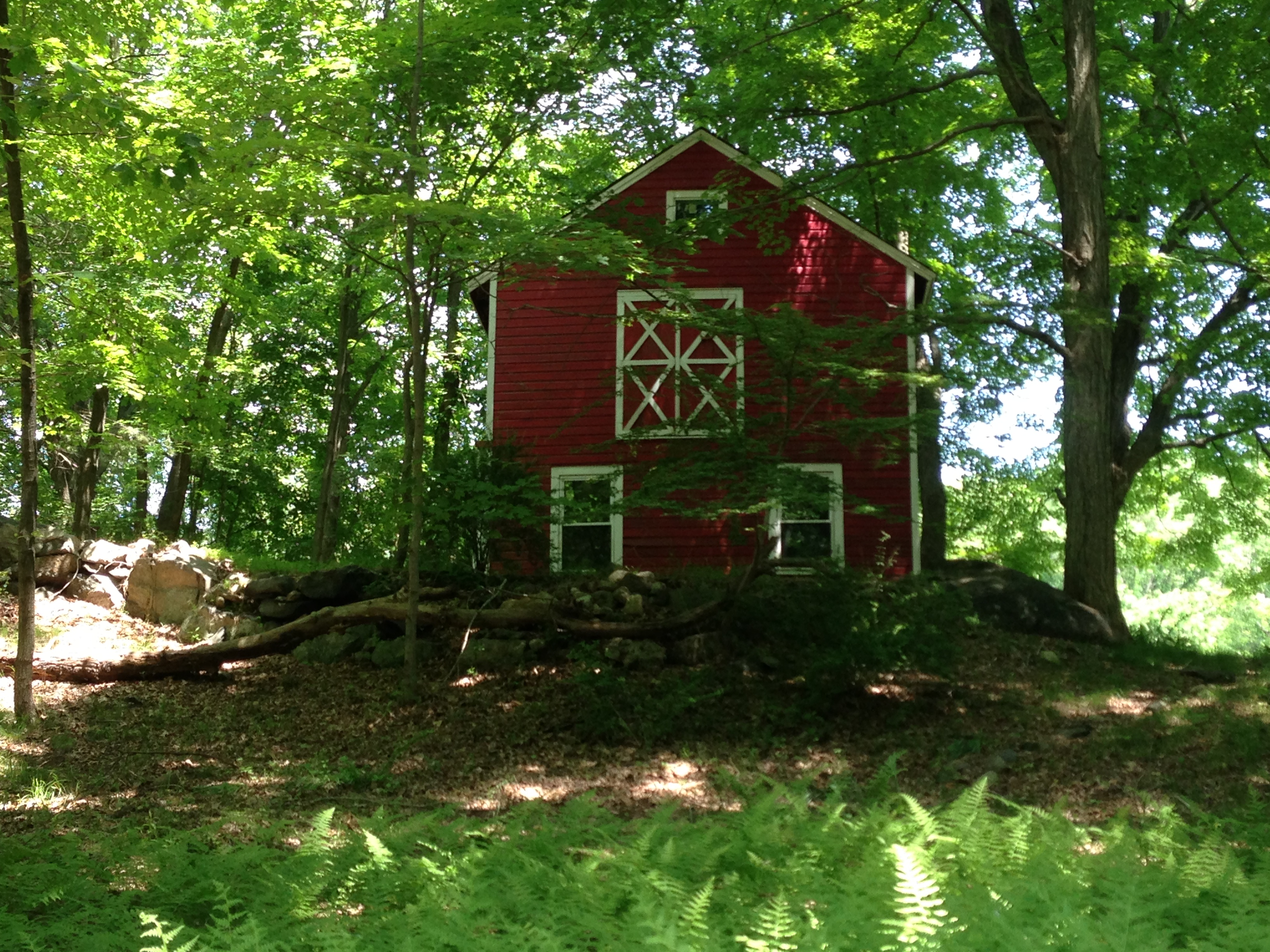
So the strawberries weren’t red. So what? The barns were.

red barn

In the car, driving home with alacrity before my coleus plants wilted, Gil said, Do you know why so many barns are red?

coleus

I never thought about it.

Because of the chemical properties of dying stars, he said. One byproduct when stars decay is ferrous ochre. Ferrous ochre is plentiful on earth. And ferrous ochre is what makes paint red. So it’s the cheapest kind of paint.

Okay, I say.

Barns are big, he says. Farmers are cheap.

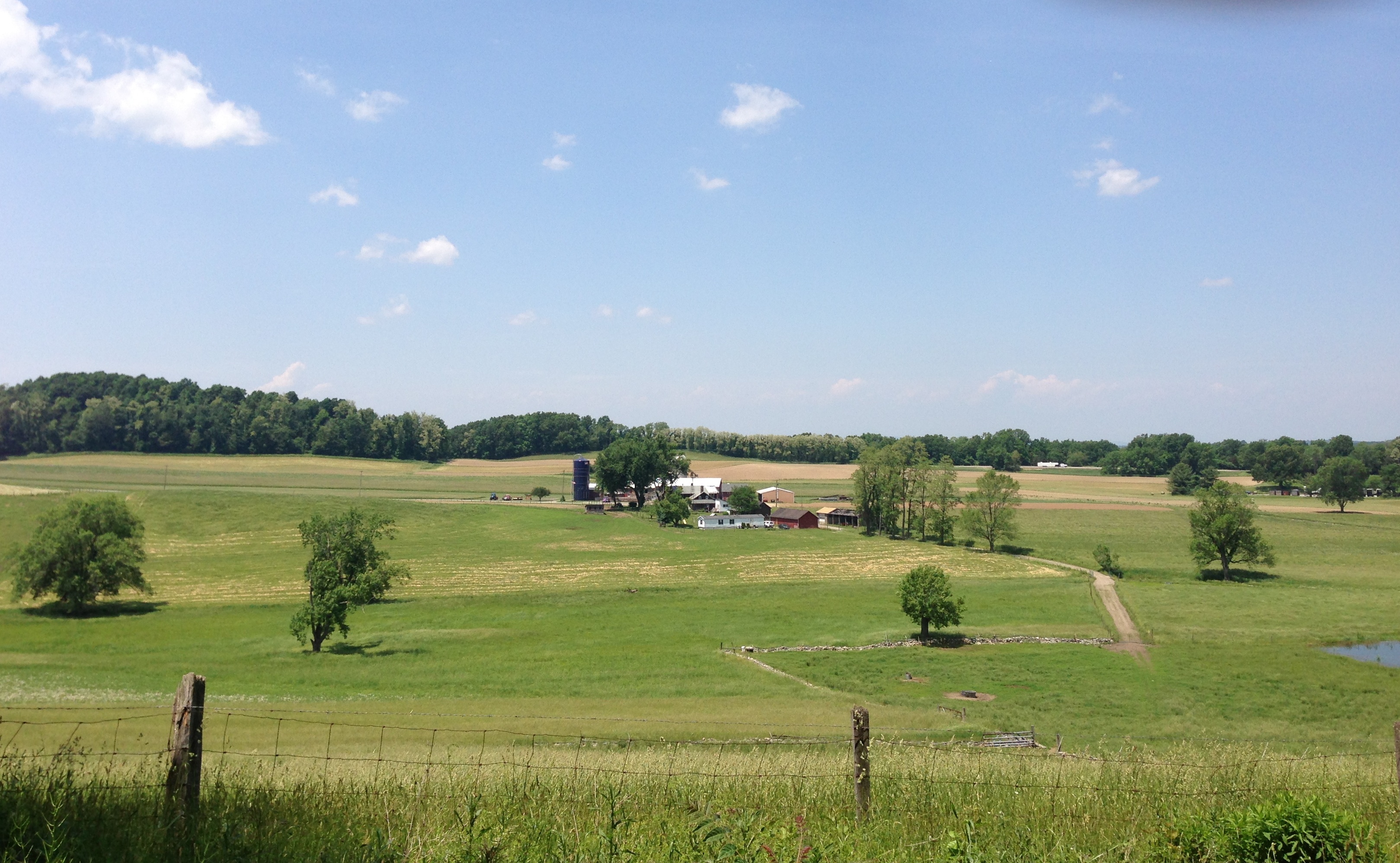
farmland

We have red barns because of the chemical properties of dying stars.

Strawberries are a different story.

Macerated Strawberries with Basil

[Macerate= to soften or decompose (food) by the action of a solvent.]

2 lb. fresh strawberries, rinsed, hulled, and sliced 1/8 to 1/4 inch thick (about 4 cups)

1 Tbs. granulated sugar

2 tsp. balsamic vinegar (alternate: 2 tsp. vanilla)

8 to 10 medium fresh basil leaves

In a large bowl, gently toss the strawberries with the sugar and vinegar. Let sit at room temperature until the strawberries have released their juices but are not yet mushy, about 30 minutes. (Don’t let the berries sit for more than 90 minutes, or they’ll start to collapse.)

Just before serving, stack the basil leaves on a cutting board and roll them vertically into a loose cigar shape. Using a sharp knife, very thinly slice across the roll to make a fine chiffonade of basil. Scatter with the basil to garnish.

2 Comments

Filed under Cooking, History, Home, Jean Zimmerman, Nature, Writers, Writing

Fond Birthday Wishes, Mr. Whitman

In swim class this morning, the instructor played road song after road song. Not what you would necessarily think of. Low Rider by  War. Truckin’  by the Grateful Dead– called a “national treasure” by the Library of Congress. Johnny Cash’s I’ve Been Everywhere. (A household treasure, though Gil prefers the Hank Snow  version, a number one hit that you have to see to believe.)

johnny-cash

Serendipity. My favorite word, if you ask me. That, and butter.

It being May 31st, Walt Whitman’s birthday, I was thinking this morning of the greatest American poet, and particularly of his Song of the Open Road. That poem sounds as stupendous today as it did when it came to the public’s attention as part of the collection Leaves of Grass in 1855 (it would reappear, revised, around five more times during Whitman’s lifetime).
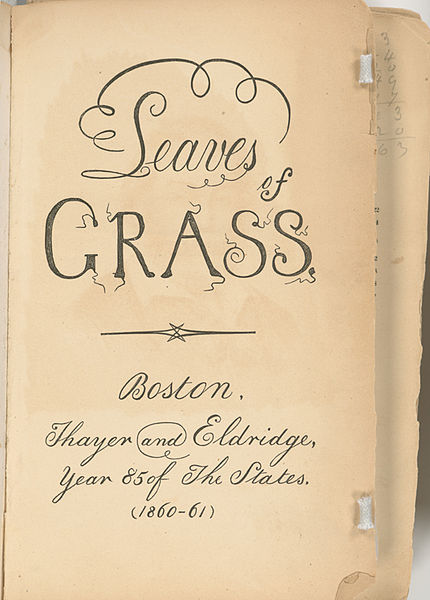
Leaves

I remember lying on my bed as a 16-year-old, on my stomach, book open, thrilling to the long-line cadences of Song of the Open Road. If I had read any poetry in school at that point, it all went out of my head at that moment. Reading Whitman was like flying. I wanted to fly.

It begins:

Afoot and light-hearted I take to the open road,

Healthy, free, the world before me,

The long brown path before me leading wherever I choose.


Henceforth I ask not good-fortune, I myself am good-fortune,

Henceforth I whimper no more, postpone no more, need nothing,

Done with indoor complaints, libraries, querulous criticisms,

Strong and content I travel the open road.

Now, so many years later, I come to the poem and the poet a bit differently. It’s not only about me, me, me, the teenager, but the era he lived in, and the place, about relishing time travel to Whitman’s world. Brooklyn and Long Island, where Whitman grew up in the mid-19th century, was full of birdsong and truck farms. Below, as an aside, the first fruit of our garden.

radish

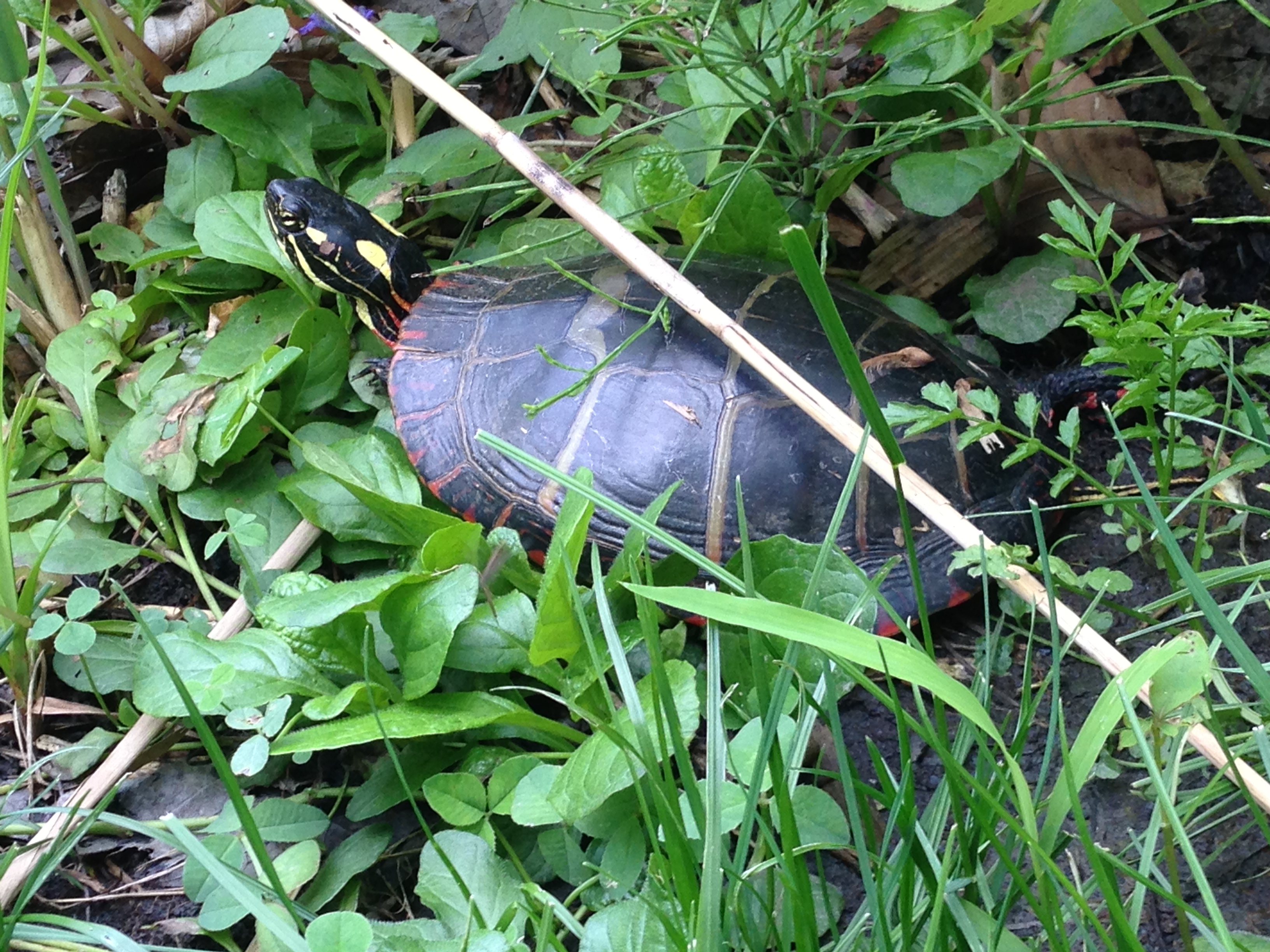
Living in what amounts to wild New York, in a Cabin that dates to Walt’s century, surrounded by undeveloped marshland, I feel sensitive and more partial than ever to that old world, the world before cars and paved roads. Whitman’s world. Here, we find snakes sunning themselves. Vultures on the ridge above the house, serious in their black robes. A painted turtle camouflaging herself in greenery as she urgently goes about finding a spot to lay her eggs.
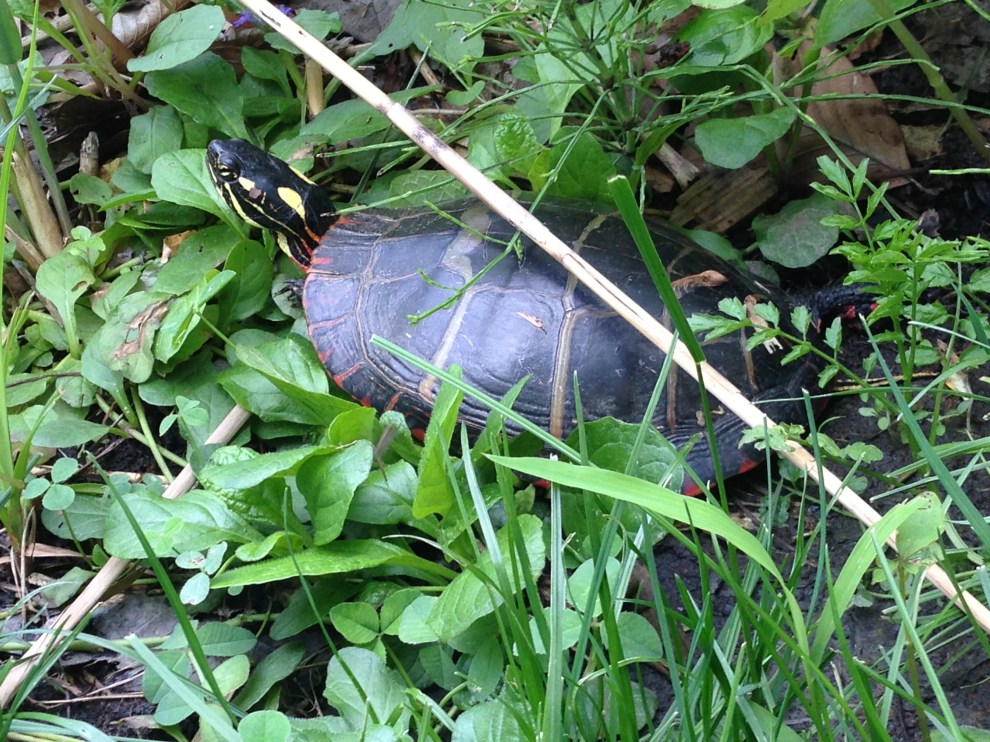
sharp turtle

I’m not the traveler in my family. That would be my  brother Peter, who has made a career and an art of seeking out backwoods backwaters. He wrote a book about his experiences, called Podunk, and if you want to know what goes on in a town named Eggnog, his is your go-to source.

As a culture, we are lucky to have many, many pages of notes from Whitman, an encyclopedia of the man’s thought.

I am the poet of the body 1854

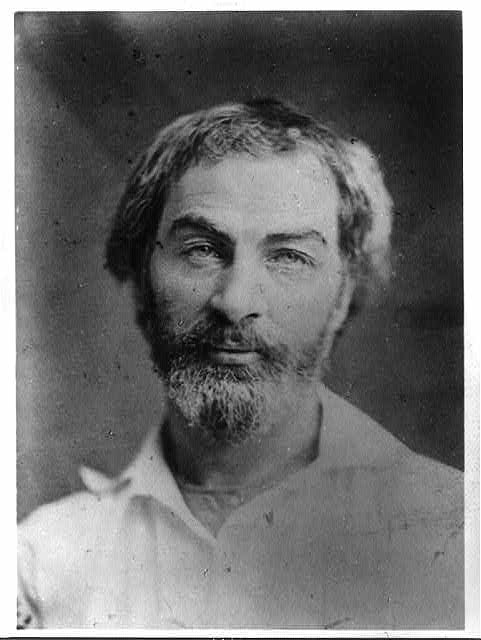
That “I am the poet of the body” is a runnerup, circa about 1854, to Song of Myself. This is the poet in that same year.

Whitman 1854

Song of the Open Road is not to be understood literally, at least primarily. As far as I can see, Whitman did not stray much from New York, aside from when he traveled to Washington, D.C. to help succour wounded soldiers as part of the Union effort. The verses are more a cry for spiritual freedom, for opening yourself to experience in general.

But first, after the stirring statement of his opening lines, he has to dispense with the problem of being encumbered by whatever would keep him from seeking freedom, in some of my favorite lines in all of poetry. He just says, I’ll take my problems with me and go anyway. I love the parentheses — it’s one of the grandest asides of literature.

(Still here I carry my old delicious burdens,

I carry them, men and women, I carry them with me wherever I go,

I swear it is impossible for me to get rid of them,

I am fill’d with them, and I will fill them in return.)

Then comes the great beckoning, the extraordinary invitation.

Here the profound lesson of reception, nor preference nor denial,

The black with his woolly head, the felon, the diseas’d, the illiterate person, are not denied;

The birth, the hasting after the physician, the beggar’s tramp, the drunkard’s stagger, the laughing party of mechanics,

The escaped youth, the rich person’s carriage, the fop, the eloping couple,


The early market-man, the hearse, the moving of furniture into the town, the return back from the town,

They pass, I also pass, any thing passes, none can be interdicted,

None but are accepted, none but shall be dear to me.

Everyone is welcome. Men and women. Young and old. Rich and poor. Snakes and turtles, I presume, even vultures.

Whitman was adopted by the Beat poets and by Jack Kerouac as a literary beacon. Lawrence Ferlinghetti counted himself among Whitman’s “wild children.” I know that Whitman would have approved, might even have appeared in, the famous 1959 Beat film shot by Robert Frank, Pull My Daisy. Much earlier, Whitman even supposedly, improbably, influenced Bram Stoker, who based the character of Count Dracula on him. Huh? Everyone embracing freedom.

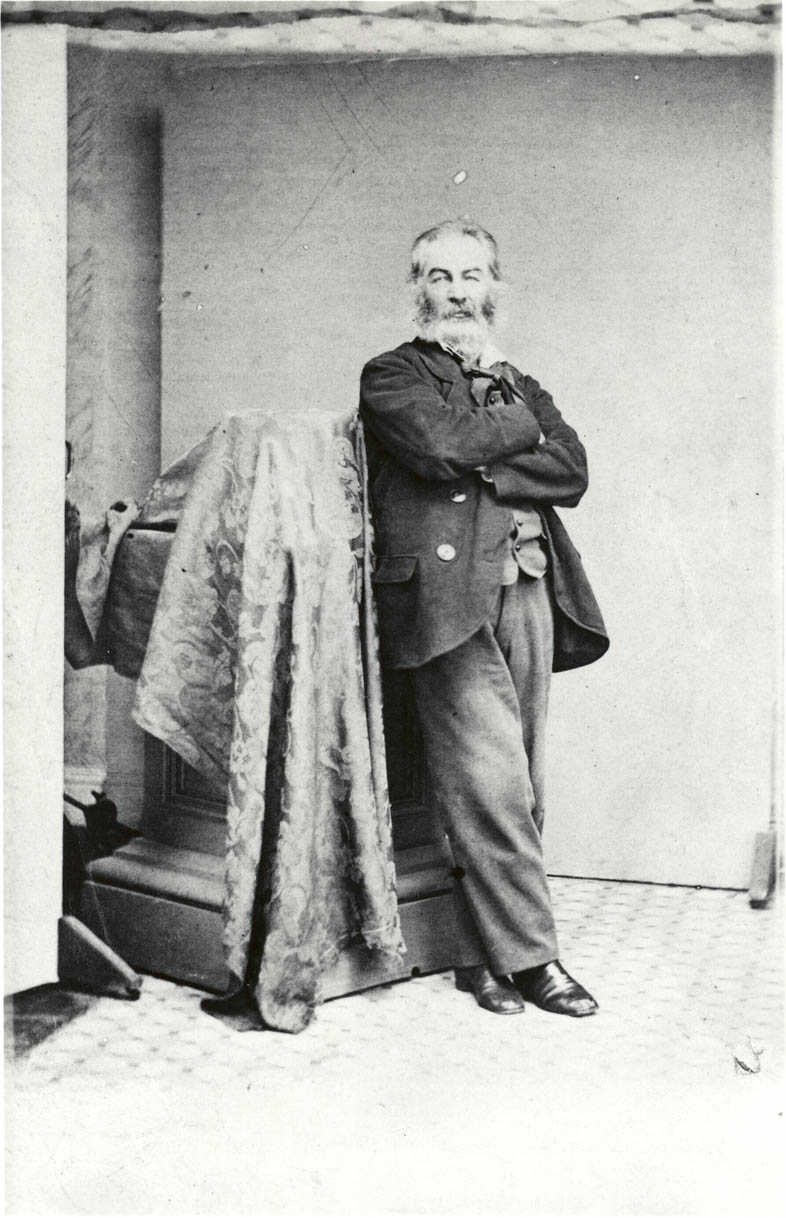
When Whitman determined that he would serve as his own editor and typesetter, he took his own step toward freedom. No one could corral him, no one could limit him. The verbal expression of physicality that earned him the criticism of some in the staid 1800s could not be checked. He didn’t care, which you can sort of tell in this photo by Matthew Brady.

1860 Matthew Brady

Ralph Waldo Emerson went out on a limb, writing an extraordinary letter about Leaves of Grass that Whitman managed to get printed in The New York Tribune: “I find it the most extraordinary piece of wit and wisdom that America has yet contributed…I give you joy of your free and brave thought…I greet you at the beginning of a great career.”

The Library of Congress is a rich repository of original Whitman sources. And a wax cylinder recording even exists of what is thought to be Whitman’s voice reading a fragment of America.

The magnificent, breathtaking finale of Song of the Open Road:

Allons! the road is before us!

It is safe—I have tried it—my own feet have tried it well—be not detain’d!


Let the paper remain on the desk unwritten, and the book on the shelf unopen’d!

Let the tools remain in the workshop! let the money remain unearn’d!

Let the school stand! mind not the cry of the teacher!

Let the preacher preach in his pulpit! let the lawyer plead in the court, and the judge expound the law.


Camerado, I give you my hand!

I give you my love more precious than money,

I give you myself before preaching or law;

Will you give me yourself? will you come travel with me?

Shall we stick by each other as long as we live?
4 Comments

Filed under Jean Zimmerman

Emily in the Garden

The heat feels good. All ninety-nine degrees of it.

The pole beans twist themselves around the bamboo supports, under the arcing sun.

pole beans

The pansies on the front porch of the Cabin salute.

pansies

Even Oliver likes to move his luxuriating form outdoors, having decided that sun-warmed gravel is a choice nap mat. Along the lines of ancient cultures whose people slept comfortably with their heads on carved blocks of wood or stone.

Oliver gravel prone

All the quiet and heat and a sense of the plants feverishly growing brings to mind the work and life of Emily Dickinson, she who was, according to one scholar, “known more widely as a gardener, perhaps, than as a poet” during her time. Dickinson conscientiously tended the flower garden at the Homestead in Amherst, Massachusettes, where she spent her whole life, assembling. a collection of pressed plants in a sixty-six page leather-bound book which contained 424 pressed flower specimens organized according to the Linnaean system.

Dickinson is usually thought of the way she appears in the iconic photo taken when she was about eighteen.

Emily_Dickinson_daguerreotype-e1346874482904

Recently another portrait materialized in an archive, with the poet on the left and her friend Kate Scott Turner on the right.

Emily Dickinson

She would have been well into her genius years, both in terms of writing and gardening.

The Homestead garden was famous in its time, at least among the neighbors. Dickinson’s niece, Martha Dickinson Bianchi, remembered “carpets of lily-of-the-valley and pansies, platoons of sweetpeas, hyacinths, enough in May to give all the bees of summer dyspepsia. There were ribbons of peony hedges and drifts of daffodils in season, marigolds to distraction—-a butterfly utopia.” Dickinson loved scented exotic flowers, writing that she “could inhabit the Spice Isles merely by crossing the dining room to the conservatory, where the plants hang in baskets.” She liked to send friends bunches of blooms with verses attached, but complained mildly that “they valued the posy more than the poetry.”

Dickinson went everywhere, apparently, with her brown Newfoundland Carlo, a gift from her father in the fall of 1849. “My shaggy ally” she called him in a letter.

A lovely animation gives the perfect flavor of the poem “I started early—took my dog.”

Emily was so mysterious, endlessly elliptical.

Presentiment is that long shadow on the lawn

Indicative that suns go down;

The notice to the startled grass

That darkness is about to pass.

Less than a dozen of Dickinson’s 1,800 poems were published in her lifetime. Among the rest were 40 pieced-together and hand-sewn books she had assembled in the years before her death.

Wild Nights

That’s the fascicle-bound manuscript page for the passionate, rhapsodic poem Wild Nights!:

Wild nights! Wild nights! 
Were I with thee, 
Wild nights should be 
Our luxury!

Futile the winds 
To a heart in port, 
Done with the compass, 
Done with the chart.

Rowing in Eden! 
Ah! the sea! 
Might I but moor 
To-night in thee!

In her final years Dickinson also wrote on scraps of paper, chocolate wrappers, the margins of books, and even envelopes she received in the mail. A book documenting these envelope poems is due out this coming October, to be titled Gorgeous Nothings. A related appreciation and performance can be enjoyed even before the book is published.

Emily

2 Comments

Filed under Dogs, Home, Jean Zimmerman, Nature, Poetry, Publishing, Writers, Writing

Le Maitre des Orphelins in Bookstores

I opened a plain brown packing box and saw something beautiful.

It is so exciting to see The Orphanmaster translated into French, published by the publishing house 10/14.

French O-Master Cover

It’s a great company that has introduced such English-speaking authors as Khaled Hosseini, Haruki Murakami, Bret Easton Ellis, Jim Harrison and Colum McCann, not forgetting Nobel laureates such as Toni Morrison. The house has always had a particular reputation for its detective literature.

And yes, this is the second time I’ve announced a French edition – it came out already as a book club offering from France Loisirs. There’s also De Weeskinderen, from Holland. And I’m eagerly awaiting the Hungarian version.

Hungarian Cover- Elhagyatva copy

And the Italian and the Taiwanese.

Holding it in your hand, the 10/18 edition is the chunkiest version so far – fully 500 pages!

Very fulfilling to think of Blandine and Drummond making their way around the world.

7 Comments

Filed under Fiction, Jean Zimmerman, Publishing, The Orphanmaster

Playground Nightmares

As if those clanking swing chains weren’t somehow spooky enough, and those boink-y critters that tended to throw you off when you least expected it, here we have, from Russia, some playground elements that are worthy of a horror film.

Do. Not. Go. To.

These playgrounds.

Ever.

For more images, see 11 Terrifying Images of Old Soviet Playgrounds | Mental Floss.

2 Comments

Filed under Art, Culture, History, Jean Zimmerman

A Tale of Two Uncles

Most families have a service member in their past who died in an American war. Gil and I realized that we each had an uncle, one a brother to my mother, one a brother to his mother, who had earned a reputation among his descendants for valor. These, in a highly abbreviated form, are their stories.

Jere Brown Coats

Jere

As a rebellious young man in tiny, rural Greenfield, Tennessee, Jere always threatened to run off and join the Navy. He was smart, handsome and charismatic, the only son alongside three daughters, and his parents had other ideas for him. So he left Georgia Tech without notifying the folks, bound for Pensacola Naval Air Station, where he trained to fly off aircraft carriers. He dreamed of one day joining the Blue Angels.

In his last letter to his sister Betty, my mother, he apologized for not keeping in touch. He wrote that he was with “the first all missile squadron carrying Sparrow ‘3’s” and Sidewinders, flying the supersonic F3H ‘Demon.’” Stationed at NAS Oceana at Virginia Beach, he died in a flameout on takeoff in May 1957, with not enough altitude for a safe ejection. He was 23 years old.


Gilbert Calef “Sonny” Procter, Jr.

Gilbert Calef Sonny Procter

The eldest of three siblings, Sonny had the reputation in the family of being somewhat stern, with a mean golf swing. He introduced his younger brother to a lifelong passion for golf. We don’t know much more than that he died on the operating table in an Army hospital in Italy during the Second World War. The procedure was supposed to be routine, the death was unexpected and it serves to highlight the fact that not all war casualties come in combat.

7 Comments

Filed under History, Home, Jean Zimmerman

Tender Buttons

I’m sometimes scared of mushrooms. Portobellos I like. Cremini, good for risotto. Even the common white button mushrooms. Throw them into a stir fry, they cook up fine. But wild mushrooms, the kind people hunt for in the woods? What if I get poisoned? In my mind I always saw the flaming red with white dots, the poisonous amanita muscaria. There are old mushroom hunters, and bold mushroom hunters, but no old, bold mushroom hunters. As the saying goes.

407px-Amanita_muscaria_(fly_agaric)

I thought I’d face my fears in a mushroom walk at Cranberry Lake Preserve  cosponsored by a group called COMA, the Connecticut-Westchester Mycological Association, founded in 1975 by a group of amateur naturalists and mushroom enthusiasts. COMA promotes a sense of stewardship of the natural world through the study and appreciation of the world of fungi. It even sponsors a mushroom university.

I got to the meeting place before anyone else. It was just me and the bears and the elves. The sun had broken out and the wind was blowing wildly. So many trees have fallen in recent storms, some shattered to pieces, it seemed amazing there were any left standing.

exploded tree

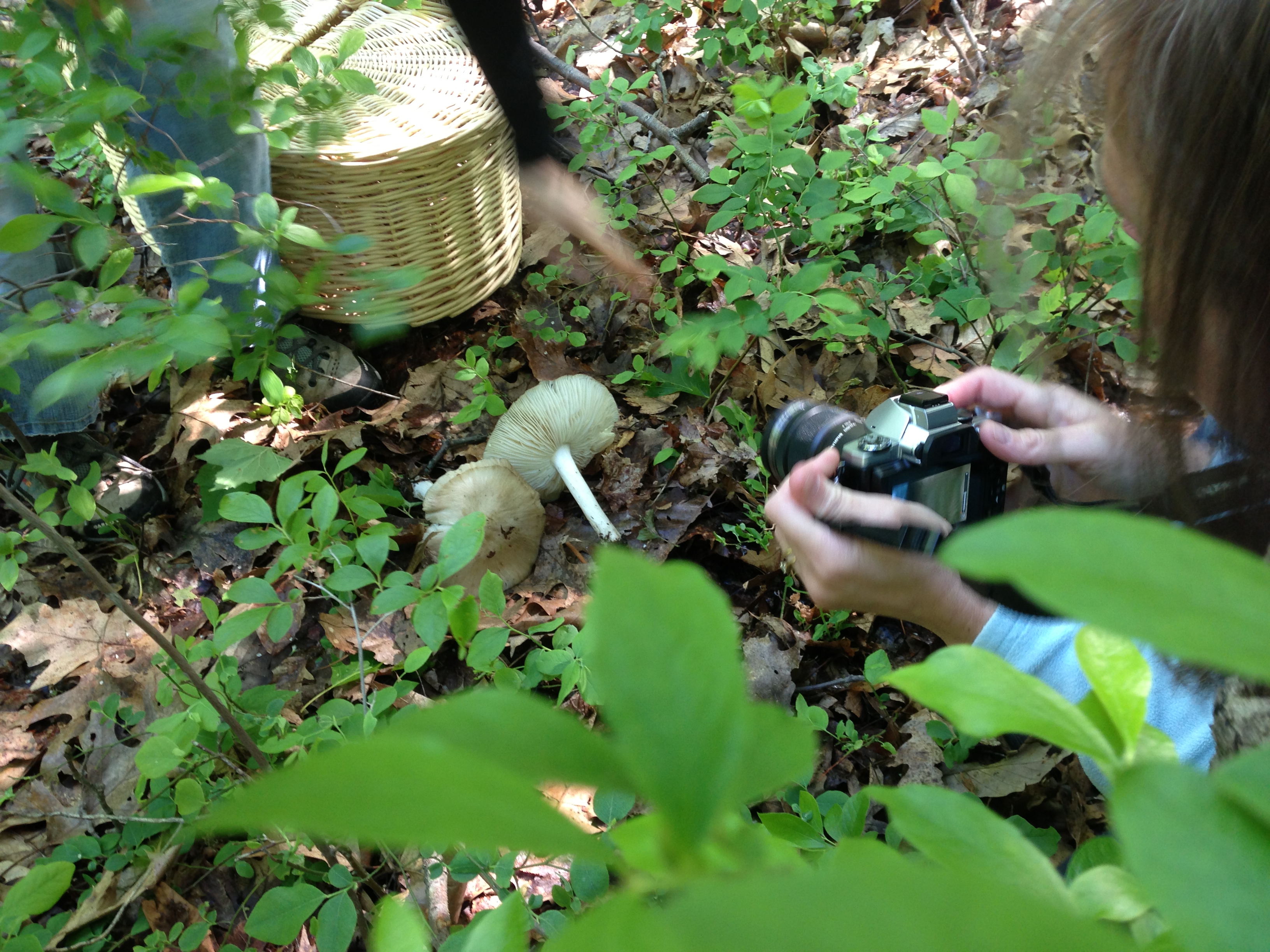
“Nature alone is antique,” wrote Thomas Carlyle, “and the oldest art a mushroom.” Mycologists approach the forest with a combination of hard-headed method, Zen mysticism and dumb luck. My fellow foragers began to arrive with wicker baskets over their arms and expressions of patient, optimistic calm. Zach, our guide, explained some mushroom physiology, the gills underneath the cap, the veil that falls back as the spores mature.

zach

I met Vrena, a retiree and avid traveler from Switzerland, who described the wild food she had gathered from the forest this spring: garlic mustard, dandelion, dock, bamboo and ramps. Young wild grape leaves, she said, are utterly different, when used to stuff cinnamon-flavored rice mixed with lamb than the chewy, flavorless kind you get from a can. “The leaf is not offensive, because it is tender,” she explained.

It seemed an awful lot like an African photo safari but instead of wildebeests there were wild mushrooms.

photo op

Two dozen people moved quietly among the newly leafed out trees, lifting up hunks of fallen bark and other decaying matter to find treasures.

ear funghi

The real gold isn’t the mushroom itself but the vast network of mycelium it grows out of, spreading vastly under the ground. The mushroom is simply the fruiting body of the plant. “Ninety percent of what you’re standing on is mushroom mycellium,” a well-informed mushroomer named Rena asserted. Manufacturers, she said, are starting to use the soft, threadlike stuff as packing material, rather than plastic.

underground

The most common specimen around these woods went by the simple acronym LBM: little brown mushroom.

lbm

Just because it was little didn’t make it boring.

There was the crust fungus.

tree funghi

We saw mushrooms growing on top of other mushrooms – called fairy pins, like little black matchsticks, so small as to be invisible without a loup. A carniverous mushroom, devouring the back leg of a certain beetle and now exploding fruitily through it. All sorts of jellies.

jelly flower

We made our way in slow motion. There was time to thrill to the trill of a tree frog. To hold a serious discussion about solomon’s seal. In the middle ages, noted one herb enthusiast, the wild plant was “the herb for women who happened to fall upon the fist of their husband.” In other words a poultice, a balm that fell short of a divorce but was better than nothing.

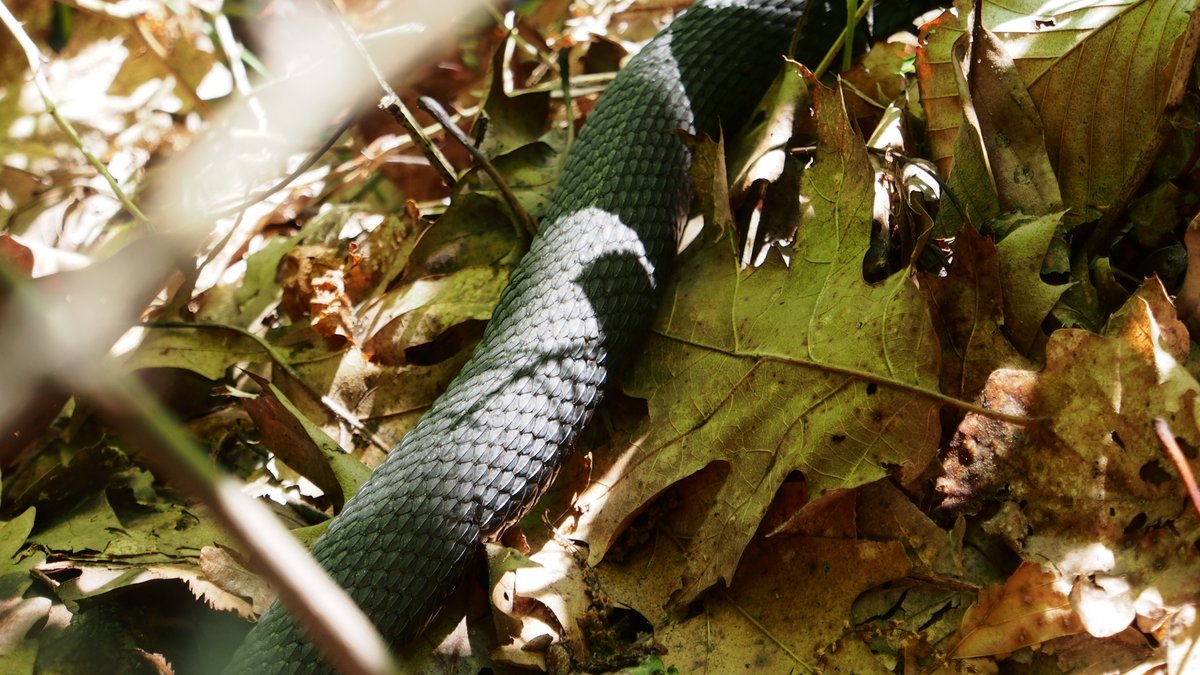
A baltimore oriole. A water snake sunning itself on the lake shore.

OLYMPUS DIGITAL CAMERA

There was so much to learn. Rena: “Every log could be a year’s course of study.” I love that idea.

Zach knew all the proper Latin names for every mushroom. They went in one ear and floated out the other like a puff of mushroom spore. I’d call this one the upside-down-ballerina-fairy-with-her-head-in-the-dirt, if I didn’t learn today that it’s very problematic for people to originate their own names for mushrooms.

ballerina

Just this year a French scientist and an American scientist separately came up with new names for the morel, and it resulted, according to Zach in problems, “leading to hurt feelings.”

Boris from Bulgaria interested himself in botany as well as mycology.

Boris

Plants, he told me, sense a danger from certain aphids, then send a signal to other plants via fungus underneath the ground to warn them about it. Everything is symbiotic, he said. He told me he likes to hike Breakneck Ridge, a practically verticle hiking trail that opens up high above the Hudson River.

“Smell that!” said the expert in medieval balms. She scratched back the bark of a slender branch. The aroma of wintergreen bloomed under my nostrils. “Black birch.” I chewed it as a child, I said. Everyone nodded. So did we all.

This was pretty serious business.

jasper w:mushrooms

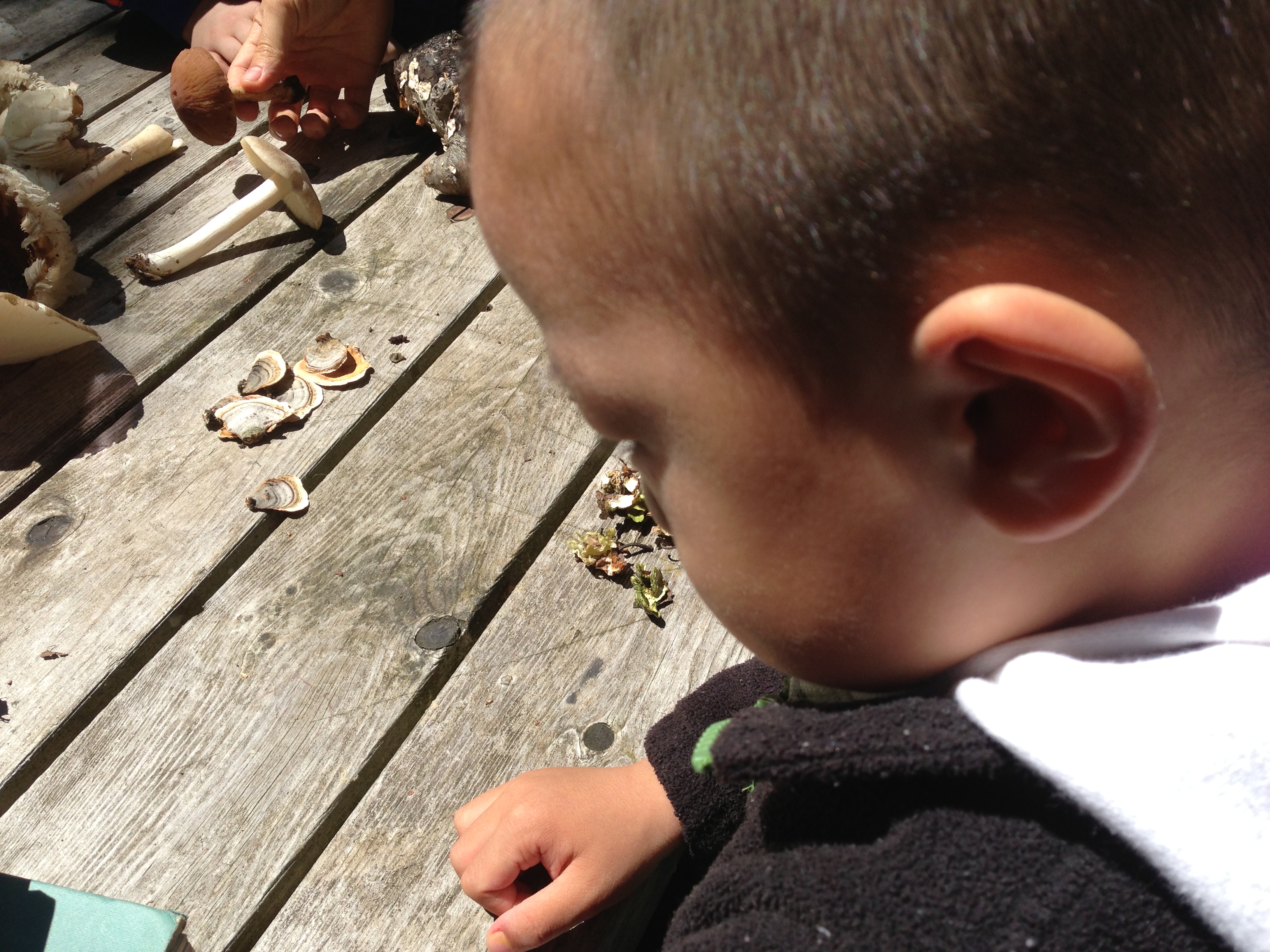
I thought we wouldn’t have collected more than ten specimens, but back at the picnic table people shared dozens. There was cladonia, called British soldiers. “That’s a no-no,” said Zach, referring to the beauteous lichen with bright red spores.

soldeirs

You shouldn’t pick it, apparently, it takes too long too grow.

There were plenty of others.

Some mushrooms looked like babies’ ears, and now babies’ ears resembled mushrooms.

baby ear

There was a small, complicated gorgon of growths.

gorgon

So many different textures and shapes.

table full

And finally, for the weary mushroom hunters, some snacks, including the edible variety: a dish of sesame pasta and chicken mushrooms, orange and chewy. And a plastic container of stuffed grape leaves, donated by Vrena. Not offensive, in the least, and tender.


6 Comments

Filed under Cooking, History, Jean Zimmerman, Nature, Photography

Simple Stock With a Side of Butter

We in the northeastern U.S. have been deluged with a cool spring rain for several days now. Not good weather for adventuring, though I managed to get out and about yesterday and sample some history and some garlicky pork chops.

weeds

The weeds are thriving. Our sump pump is heaving, with the Cabin set as it is down into an overflowing marsh. And the room around me is dim and shadowy, a womb of dark lumber. The pictures stare out of the murk.

picture

Chestnut, a building expert recently assured me. The Cabin is built of chestnut logs. How do you know? I asked. I just know, he said. You can see it in the fireplace mantle.

mantle

Today is fit for a few errands – dry cleaning, library, Good Will. Then as many rounds of a knitted cowl as I have patience for. Beautifully soft merino wool in a heathery blue-brown. The proprietor of my local knit shop, Flying Fingers, after salvaging yet another botched project of mine, confided that business falls off after the winter, that people seem not to think of knitting as a year-round activity. I immediately bought some new yarn.

heather

I think I’ll take another listen to Barry White’s Ecstasy, which I heard in the car for the first time in a long time. At least 20 years, in fact. Is it still brilliant or is it just me?

barry

Perhaps a chapter of What Maisie Knew, the original by Henry James, which I’m newly interested in after the disturbing contemporary movie version I took in earlier in the week. Perhaps a start on The Flamethrowers by Rachel Kushner, which just appeared in April and takes place in 1975 in New York City, where a young woman named Reno is intent on conquering the SoHo art world.

flame

I know I’ll make a big pot of chicken soup, and dive into another pot: links I’ve been saving to mull over on a day just like today.

Here are some you can sink your teeth into.

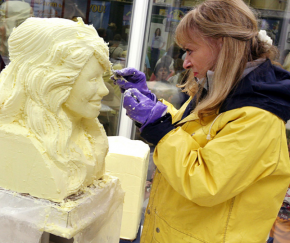
Have you ever wondered about butter sculpting?

butter sculpting

Linda Christensen, a master at the craft, typically spends a week and a half in a booth chilled to near freezing at the Minnesota State Fair in order to render likenesses out of 90-pound blocks. An artist friend of mine once imagined making sculptures out of breast milk butter, but it never came to pass.

How about houses so small they can be mounted on grocery carts?

Early water pipes under New York City carved from whole trees.

wood pipes

Archaeologists are finding them now.

Italian prison inmates who make award-winning chocolate truffles.

The question of whether Michael Pollan is a sexist pig – an excerpt from Homeward Bound: Why Women Are Embracing the New Domesticity, a new book by Emily Matchar that sounds an awful lot like my decade-old Made From Scratch: Reclaiming the Pleasures of the American Hearth.

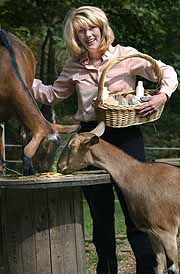
Is it time to order a new supply of Goatboy Soaps, handmade from goat’s milk and shea butter on a farm in New Milford, Connecticut?

1009wc07.jpg

The one called Heavenly does indeed have a celestial aroma, I can vouch for it,but you can also choose from among Blackberry Sage, Cherry Almond, Clean Greens, Lavender Oatmeal, Serious Citrus and others, including Red Clover Tea, the company’s bestseller. No breast milk in evidence.

Research showing why the act of pointing makes babies human. It turns out, according to Slate, that “Babies point to refer to events in the past and the future. They point to refer to things that are no longer there. They can figure out, when an adult points across the room toward a group of objects, what exactly the adult is gesturing toward (the toy they’ve previously played with, say). They can deduce that, by pointing, an adult is trying to communicate something specific (find that toy hidden in that bucket). And not least of all, babies point because they want to share their experience of the world—that puppy—with someone else.”

The fascinating blog of an Irishman elucidating a video of Dublin phrases.  You’re in for a treat if you make posts from Sentence first a regular part of your day.

A recipe for how to make Mango Sticky Rice, at a site called The High Heel Gourmet, brought to you by Miranti, a young chef who seems to know exactly what she’s doing.

high heeled gourmet

And, finally, a piece so lively it will drive all the rain away (by tomorrow, I hope, when I plan to go mushrooming in the Westchester woods), a photo doc on skateboarding in 1965, courtesy of Life magazine.

girl skateboarding

I am sure that some of the individuals pictured have traded skateboards for walkers, but then everything was a breeze.

If you wind up wanting to make home-made soup, a chicken elixir, here’s how.

A Recipe for Simple Stock

1 soup fowl/heavy fowl/soup hen

A bunch of chicken feet if you can get them

2 big fat carrots

2 sticks celery

1 large onion

1 large purple-shouldered turnip

1 large parsnip

a bunch of dill if you have it

salt and pepper to taste

Bring chicken to boil in a pot large enough to accommodate all ingredients.

Skim off scum and reduce to a simmer.

Add all other ingredients.

Simmer 3 hours or until chicken starts to fall off the bone.

Strain stock.

Add noodles or matzoh balls, use as a base for leek-and-potato soup, make gravy for chicken pot pie or stir up some risotto. Perfect for anything that ails you. And if you dribble a little over the kibble, your dog will love you for it.

1 Comment

Filed under Cooking, Fiction, Film, History, Home, Jean Zimmerman, Knitting, Nature, Publishing, Writers, Writing

The Danger of Self Discovery

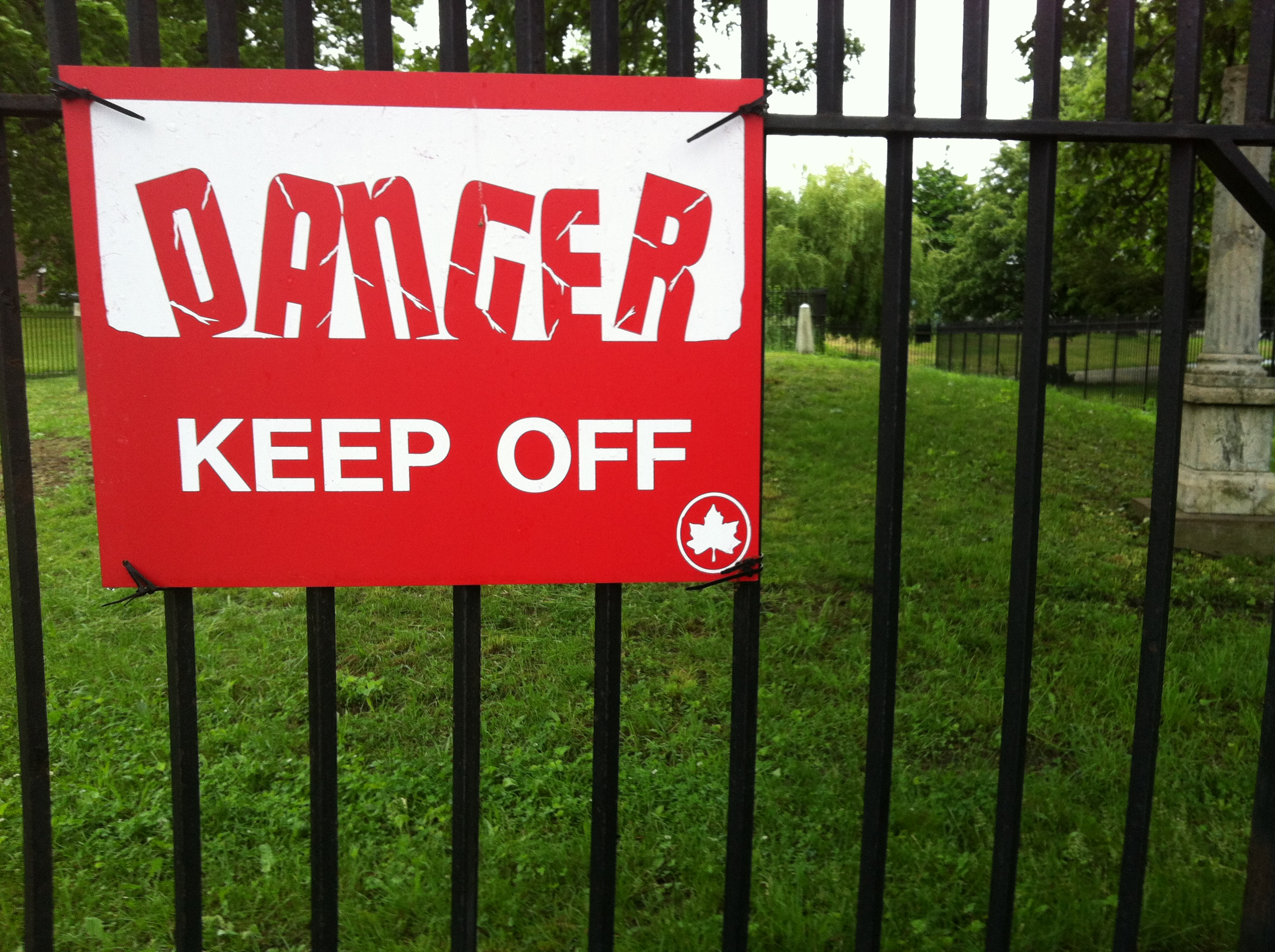
The black iron fence that surrounded the white-folks graveyard was typical of New York City parks – almost.

danger

I don’t know what the danger was, except of self discovery.

I had driven down to the Bronx because I heard tell of a group of elementary school kids there who had stumbled upon a centuries-old, unkempt slave burial ground next to the well-preserved graveyard of the privileged families who owned them. They were trying to reinvest the slave cemetery with the gravitas it deserved. I wanted to see the place, old and mysterious and deep in the Bronx. So Gil and I set off.

The Bronx once had a swellegant reputation, home as it was to distinguished families and verdant farms. It was actually settled by a Swedish sea captain named Jonas Bronck. General Washington marched his troops through on their way to Westchester in October 1776, when no one knew how long the war was going to last.

The cemetery in question, now the center of Drake Park, was originally laid out by the Hunt family – the clan for which Hunts Point was named. The Hunts and the Leggetts ran the local show, along with a few other families and all of them were laid to rest there.

It had been raining for days. Gil and I had the park absolutely to ourselves. We saw an allee of trees running alongside the cemetary.

aisle of trees

Weeds had overtaken the park – only three acres – in the middle of the busy commercial neighborhood. Above our heads, a mature black oak, circa 1848.

black oak

When the park was landscaped in 1915 the slave graveyard disappeared in the shuffle. Once, in some obscure text, its location was referred to as across a lane — was that the allee we saw? If so, the plot has no marking today but a wire fence.

slave cem 2

Teacher Justin Czarka of PS 48 leads the effort to bring recognition to the site — which includes local historians, community organizations, museums, city agencies. To document the final resting place of the slaves of these prominent New York families.

I’m reminded of the fight to commemorate the African Burial Ground in Manhattan, after remains were discovered during the construction of a Federal office building in 1991. In 2003 I stood and watched the processional that led to the reinterrment of 419 sets of remains at the site where they had been discovered. Women and men in brightly colored African garb came through accompanying wood coffins built in Ghana and carved with adinkra symbols.

The ceremony was heady, the effort fraught with tensions, but I find this history in the Bronx unsettling in a more intimate way, the white graves groomed and protected and the black graves lost to time. The students found a photo in the city archives documenting the site at the turn of the century.

old burial ground photo

A 1913 brochure about the Bronx noted that the remains of colonial soldiers were interred in the Hunt graveyard, along with, nearby, slaves of earlier residents, and also “Bill,” the  negro pilot of the wrecked British frigate Hussar.

The kids of  PS 48  examined census data, early maps, coastal surveys, wills and early histories and found some surprising details about how whites and blacks lived in early New York. These wealthy coastal families owned quite a few slaves. John Leggett stipulated in his 1777 will that his son Cornelius would inherit “My Negro Man Tite and my Negro boy Ben” as well as “four Milk Cows.” His daughter Eleanor would receive his “Negro Wench Bett” and a silver cup. Laws were passed to prevent slaves’ sedition. They were forbidden to be in the streets an hour after sunset, by an ordinance passed in 1712.

Blacks and whites would not be buried together, at the Hunt and Legett cemetery, but within an interesting proximity.

The park itself was named not after Hunts or Legetts but after Joseph Rodman Drake, who grew up in the Hunt mansion, became a writer-physician and died of tuberculosis when he was 25, in 1820. His most famous poem, “The American Flag” spoke of freedom:

She tore the azure robe of night,

And set the stars of glory there.

She mingled with its gorgeous dyes

The milky baldric of the skies,

And striped its pure celestial white,

With streakings of the morning light…

I wonder what Drake would have made of the Hunts Point neighborhood now, chockablock with auto glass shops and cheap eateries. We left the antique mysteries of the graveyard and re-entered loud, mechanical contemporary New York. I love the signage along Hunts Point Boulevard, much of it a gaudy yellow and red and fancily hand lettered.

auto glass

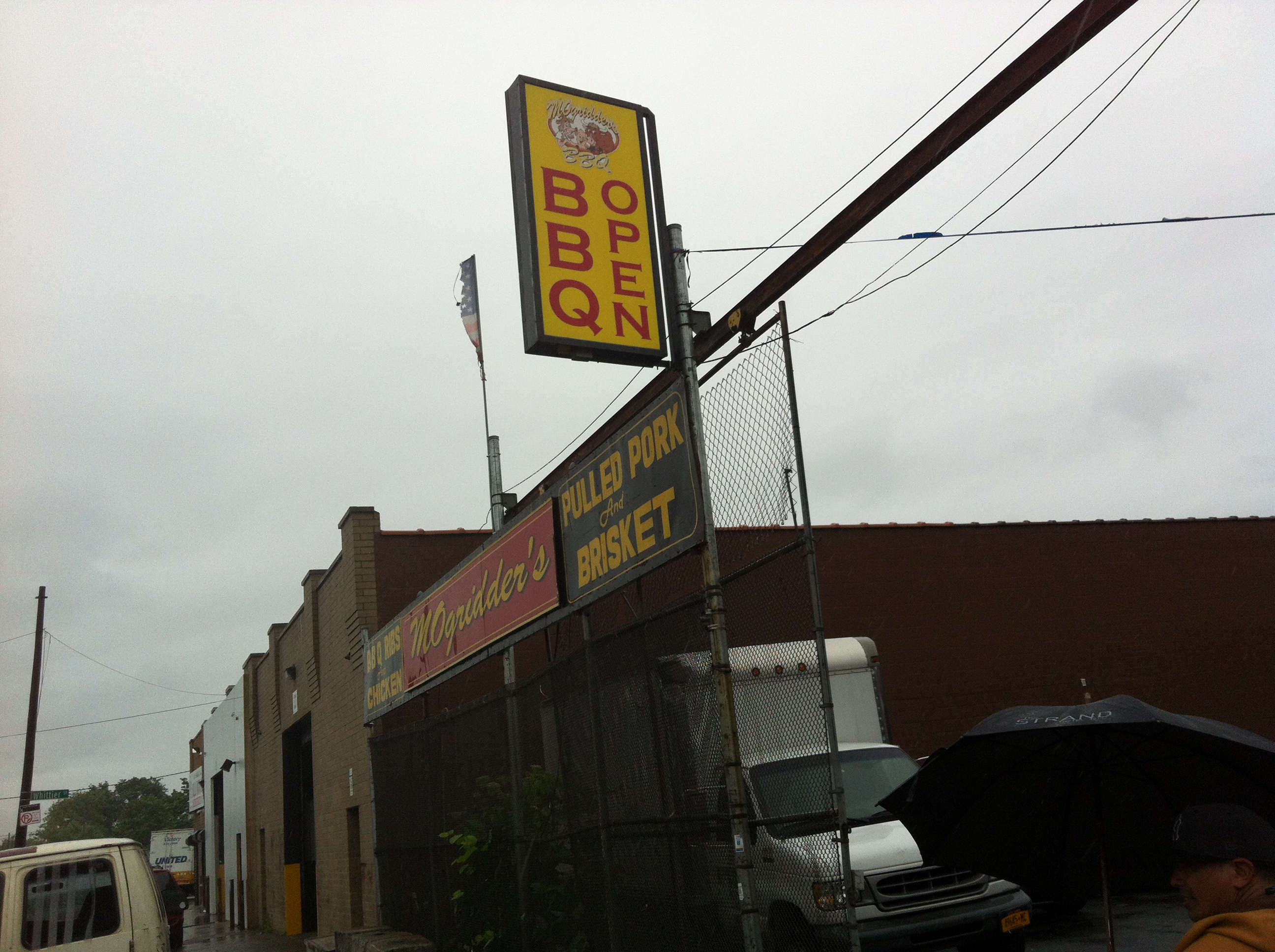
Mo Gridder’s is probably the only barbeque joint, at least in New York, with its dining lounge in an auto parts store.

mo gridder's sign

As we approached an intersection a woman actually ran into the street, beckoning us loudly to come get our car repaired at her place. People stood in the gutters, waiting, sentries for their businesses.

Other, more faded signs spoke of years of dreams deferred.

alcoholics

The Hunts Point Market is alive and well, though it was sleeping when we visited – suppliers of meat, seafood and produce open all night long and shut down by day. The air when we passed the fish buildings had the scent of the sea.

It used to be that sex was for sale too, in abundance, at Hunts Point, but that’s changed. A vestige lives on in the unfortunately titled Mr. Wedge. The last of the Mohicans for adult entertainment in this part of the Bronx.

mr. wedge

A strip joint you can visit while getting your car’s windshield replaced.

Randall Restaurant is a good place to hear Anthony Santos singing a melodious Como Te Voy a Dejar while chewing on garlicky deep fried porkchops or to just chat with a friend. About the liveliest cafe I’ve ever been in. Everyone is welcome, even turistos like us.

restaurant

The pernil is supposed to be formidable but they were all sold out by the time we got there for lunch – for the rest of the clientele, lunch comes in the morning, after a shift at Hunts Point. The pineapple cake, though, and cafe con leche sustained us for our trip home in the rain.

Color everywhere.

graffiti 1


Yes, indeed, the show that never ends. I’m glad we got there before anyone could scrub off the paint.

graffiti van

I like to think of the surprise — the shock — of our forefathers and mothers in the Bronx had they seen the mixing of colors and cultures we saw today. Yes, it can feel dangerous at times. Gertrude Stein once said, Considering how dangerous everything is, nothing is really very frightening.

3 Comments

Filed under Cooking, History, Jean Zimmerman

Enough to Feed an Army

An army marches on its stomach, said Napoleon, who knew a little something about food as well as armies, if his portrait is to be trusted.

napoleon

I recently read a profile of a man seemingly born to fill that marching stomach, Derrick Davenport, a culinary specialist who has just triumphed over 17 other gastronomic overachievers to become the Armed Forces Chef of the Year. Parade reports that the competition has taken place for two decades at the Joint Culinary Center of Excellence in Fort Lee, Virginia. It’s judged cooking-show style, after contestants prepare four courses in four hours, taking in hand some challenging ingredients they didn’t count on ahead of time.

Derrick Davenport

Quinoa and arugula salad. Roasted lamb loin in mushroom sauce with butternut squash puree. Edam cheese fritters? These are no ordinary MREs. But the military takes its food more seriously than ever now that troops’ palates have grown more sophisticated. Plus, says an army evacuation medic named Corrie Blackshear, “It’s more than nourishment. It’s spiritual nourishment.”

Nourishment to the tune of 5,250,000 gallons of milk, 448,000 pounds of Thanksgiving turkey and 214,000 gallons of ketchup a year. Fully 24,884,000 pounds of cooked chicken.

mmw-fat-chickens

This is just part of the 2012 breakdown for all of the U.S. Armed Forces.

I began thinking about gargantuan military food quanities a long time ago when I served as the head of a soup kitchen in Manhattan. I had picked up a copy of the West Point Officers Wives’ Club Cookbook  at the Naval Academy bookstore when I was at Annapolis doing interviews for Tailspin, Women at War in the Wake of Tailhook.

West POint cookbook

It was a spiral-bound community-style softcover of the type I still collect (I have over a hundred) and it had a subtitle I found enticing: Enough to Feed an Army.

I was new to the soup kitchen, which took place once a week at All Souls Unitarian Church on Lexington Avenue, and was known as Monday Night Hospitality. Wandering down to the kitchen one afternoon, just thinking to check out the volunteer options, I encountered a tall, blonde woman with her coat on. I told her I wanted to help. Fine, she said, you’ll cook tonight. I looked around – I was the only one there.

I had cooked for dinner parties before, but the customary crowd at Monday Night Hospitality reached 100 hungry mouths, sometimes more. Don’t worry, said the woman, we have meatballs. And she pointed to the walk-in pantry.

The soup kitchen had always served government-issued meatballs in tomato sauce. Mystery meat. Bad enough to smell, let alone put in your mouth.

That was the only time I served a meal that was not home cooked. I remember trucking in crates of kale from my favorite market Fairway up in Harlem at 134th Street. The produce manager Jaime saw me coming and would break into a smile.

kale

How much ground beef to make meat loaf for 100? How many eggs? I figured it out. I learned to fry chicken in industrial-size skillets. Not 24,884,000 pounds, but close.

I consulted the West Point Officers Wives’ Club spiral bound. It featured recipes from teachers and parents, officers and their wives (and some husbands). It also contained items like reminiscences of graduations past, and the cadet’s prayer. Finally, and here is where I got some guidance, the mess hall weighed in.

sloppy joes

Forty-five hundred servings? Making sloppy joes for 100 was obviously something  a person like me could do. I would bring my favorite 8-inch chef’s knife from home, wrapped in cardboard and duct tape. And my well-used apron. Sometimes a pan I wanted to employ. I would put those entrees on the table, whatever it took.

pan

And it was worth it. Often, our dinner was the first time our guests had tasted a home-cooked meal in a long while.

I remember an elderly man who used to grab me by the arm and recall his late wife, the loving meals she used to fix him. A man mountain with a tiny rearview mirror attached to his glasses, dressed head to toe in fatigues, how he chowed down. And an Eastern European woman named Margo, and how she pampered my five-year-old daughter while stuffing buttered bread in her handbag.

I learned that for all the differences, these people were more like me than I had known. The aroma of many was more pungent than I could imagine. A shower at home was a foreign concept. But they ate with the same relish I did. As did the volunteers, who devoured our food and brought home leftovers. The perfect sous chef from the West Indies. The mother who occasionally brought her helpful daughter (at 19, she seemed so old!). The high schooler with the handsome face and a bottomless capacity for doing dishes over the capacious sink.

At the end of four years, I had a personal crisis that made it impossible for me to cook at the kitchen anymore. I had a book on deadline that I couldn’t write. Financial woes I couldn’t solve. And finally a meltdown from which I needed time to recover.

I approached a fellow volunteer, a writer named Alex who had spent many dinners at Monday Night Hospitality slinging meatloaf with me. Could he possibly take over as head of the kitchen? Immediately?

Surprised but gracious, he said yes.

He comes highly praised, does novelist Alexander Chee.

Alex Chee

His debut novel The New York Times called “haunting,” and gifted, poetic and elegant are also words that have been offered on Alex’s behalf. His new book The Queen of the Night comes out in February of next year from Houghton Mifflin Harcourt – in it, Alex tells the story of an opera singer in 1882 Paris and a secret past she had sought to keep hidden.

The Queen of the Night cover

All this time later, the soup kitchen behind me, I realize something important. I wasn’t the only one who could do this thing of feeding folks with dignity. I was just a writer, cooking for an army of 100 people with no place else to go. The “spiritual nourishment” was mine as much as theirs.

11 Comments

Filed under Cooking, Fiction, History, Home, Jean Zimmerman, Publishing

Meatpacking Amble

We started and ended our Manhattan amble in the Meatpacking District, that venerable neighborhood from around 14th  down to Gansevoort Street that has been totally gentrified in recent years. This is a place that in 1900 had 250 slaughterhouses and packing plants lining its streets. The paving stones under the butchers’ awnings used to actually lie slick with lard and blood when I first came to New York in the late ’70s. Now Diane von Furstenberg has a building of refurbished brick with lavender windows and a penthouse that looks like a geodesic glass bubble on top, and there are eateries like Bubby’s opening that pride themselves on their farm-to-table cuisine.

Bubby's

The sign announcing the imminent arrival of the joint puts across it’s down home, wry message: Defending the American Table (also, we steal recipes from grandmas.)

With illustrations around the side that already seem faded as a pair of farmer’s Levi’s.

Bubby's 2

It reminded me of a sign we saw up in also gentrifying Morningside Heights recently, on Broadway near 125th Street.

Barbershop sign

There was a man on scaffolding outside and we weren’t sure whether he was taking down an old sign or putting up a new one with an exquisitely vintage look. The sign down below left us equally confused.

Prices 2

Maybe you can figure it out.

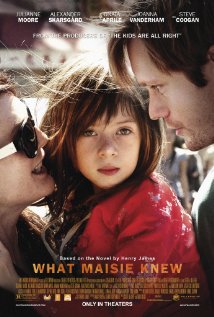
Anyway, on from the Meatpacking District to see a movie on Houston Street, at the northern lip of Soho. “What Maisie Knew” is based on a novella  written by Henry James in 1897 about a classic dysfunctional family. Sad, sad, film.

maisie

It features Julianne Moore as a self-absorbed rock vocalist married to a self-absorbed art dealer played by Steve Koogan. At the heart of the story is their seven-year-old daughter, Maisie, who is being torn apart by the breakup of her parents’ marriage. The two adults literally abandon her places – the story takes place in contemporary Manhattan — when they tire of her. I wondered what James would have made of the profane adaptation.

portrait

The novelist was a theater aficionado and aspiring playwright. Couldn’t he be satisfied with being the most brilliant prose stylist of his day? He never got the reception on the boards that he so very much wanted. Movies might really have rocked his world. We think of him as fusty now, but Edith Wharton writes in her memoir A Backward Glance about how much James loved to “motor.” Yes, driving in the new, perpetually breaking-down automobiles, feeling the wind in his pate, was just about his favorite thing.

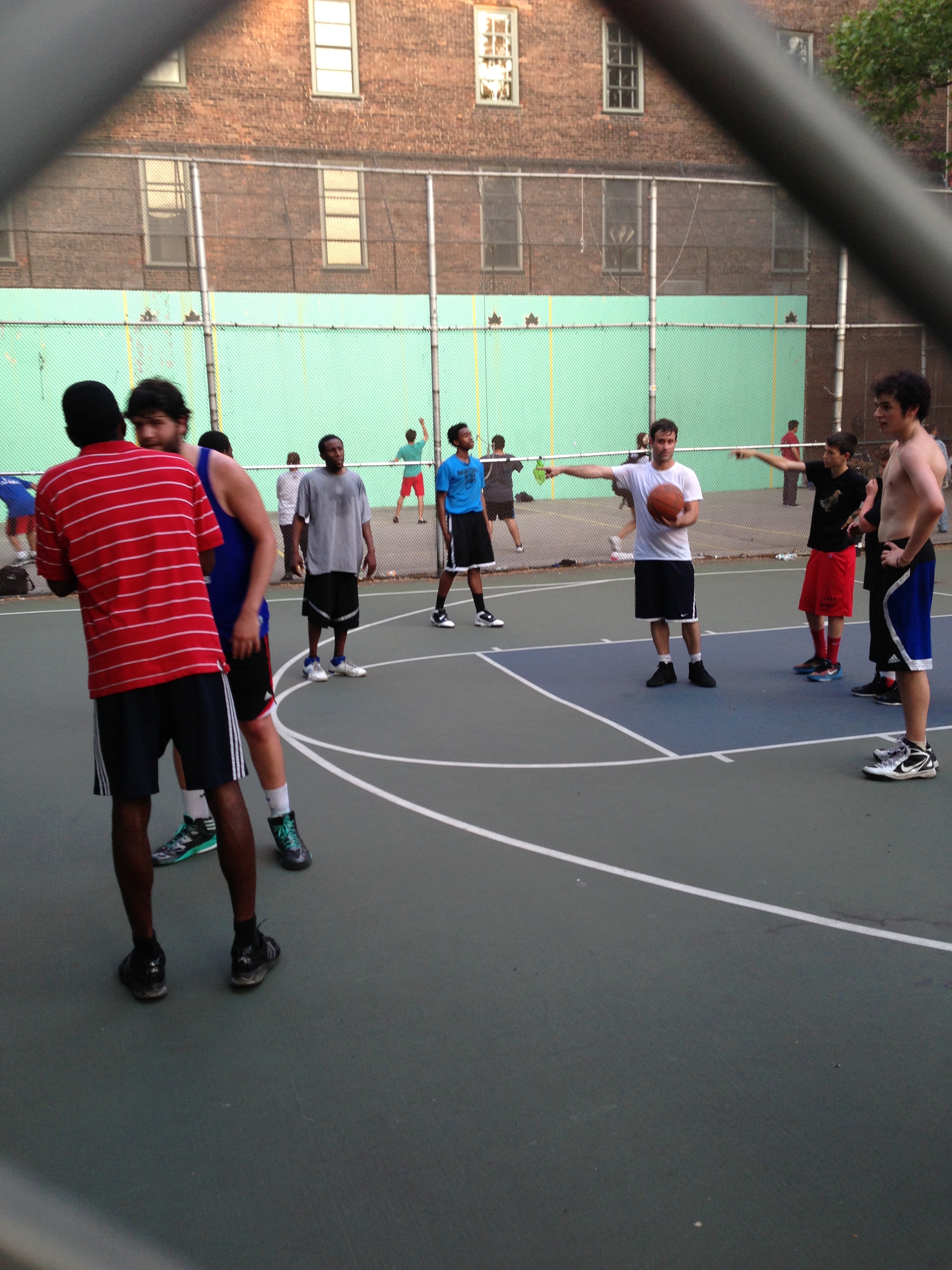
Making our way north, we grabbed a schnitzel and a wurst at a little German joint. En route, we passed the phenomenon that has been around longer than anything else I know in New York: the basketball game at West 4th Street and Sixth Avenue, also known as the Cage.

basketball

Anybody can play and there are fierce tournaments. The supports for the baskets are actually padded with duct tape to mitigate injury to players who stuff.

Under the High Line, where we had earlier found parking (who said it’s tough to get along in New York? Come with me, I have the best parking karma in the city) night had fallen.

high line

A park so beautiful that even Manhattanites are impressed, the High Line was once quite different. An old elevated freight line for meat packers, built under the aegis of Robert Moses, it ran through the buildings of the district, raised up above the streets underneath. The rail bed had long since fallen on hard times when I first saw it decades ago. It was basically a long, winding, dispiriting field of syringes, condoms and weeds. Some brilliant dreamers fought to bring it back to life as a park planted throughout with native plants, meticulously cared for, ingeniously designed. The first section of the park opened in 2009. Now people throng to it day and night, both to walk and to lounge on the massive wooden chaise lounges found along its length.

Gil climbed the stairs and waved down from the dark trees above. I was content looking up past the old, weathered, still-extant butcher’s awning at the winking moon.

moon over meatmarket

4 Comments

Filed under Cooking, Fashion, Fiction, Film, History, Jean Zimmerman, Nature, Writers

A College Vesuvius

What would be the college student’s Pompeii?

boxes

I like an Australian photographer who runs a very nice blog out of Melbourne, focusing on landscapes and historic architecture. Leanne Cole finds the magic in places. Sometimes she writes about her inspirations, as in a post today about the photos of Pompeii she saw that hit her hard when she was around ten.

“Buildings that are falling apart and ravaged by time are incredibly appealing,” she writes in her bio. I’d agree with her. So are the images of people from that ancient city, their shapes formed in ash that was then filled with plaster so that we can miraculously see  them as they were at the instant the lava came down.

pompeii-italy-pictures

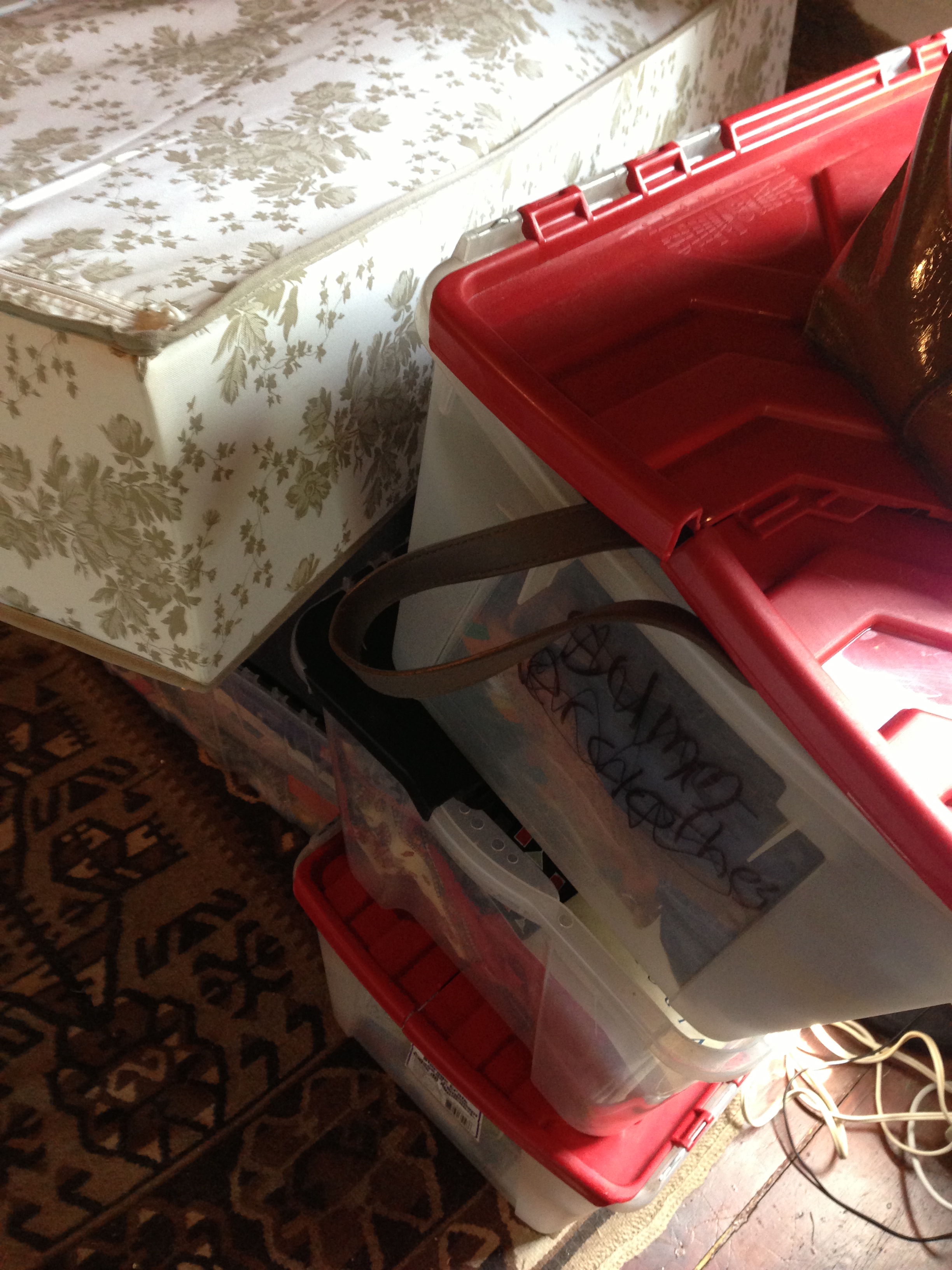
I am thinking about what life would look like in a split second of time because I have a college student home with her bundles and boxes, which we are sorting through to see what goes into storage for the summer. Looking at her things (and things, and more things) as a historian, I’m thinking about about this moment, her belongings, and what they would depict unearthed from their ash and pumice 2,000 years from now.

Where would they find you, who would you be curled around, 2,000 years hence? Possibly Maud and Oliver would be together as a pair. (I know, grisly. Bear with me.)

maud:oliver in pompeii

Would feathers be preserved? For a college student, a duvet is a home, a world. “It makes an uncomfortable dorm bed comfortable,” says Maud. Comfort, as important now as to the Pompeiins.

duvet

“You’re not going to get anything interesting out of this,” Maud informs me as I ask her to explain her world of things, as any circumspect college student would say. She brought home her plain old ottoman, the one that’s hollow, “useful for keeping my socks or other secret things,” she says.

hassock

Were the ancient Romans sentimental? Would you find a picture of a girl’s parents the day before their wedding, or a vintage picture of her pretty grandmother?

grandma

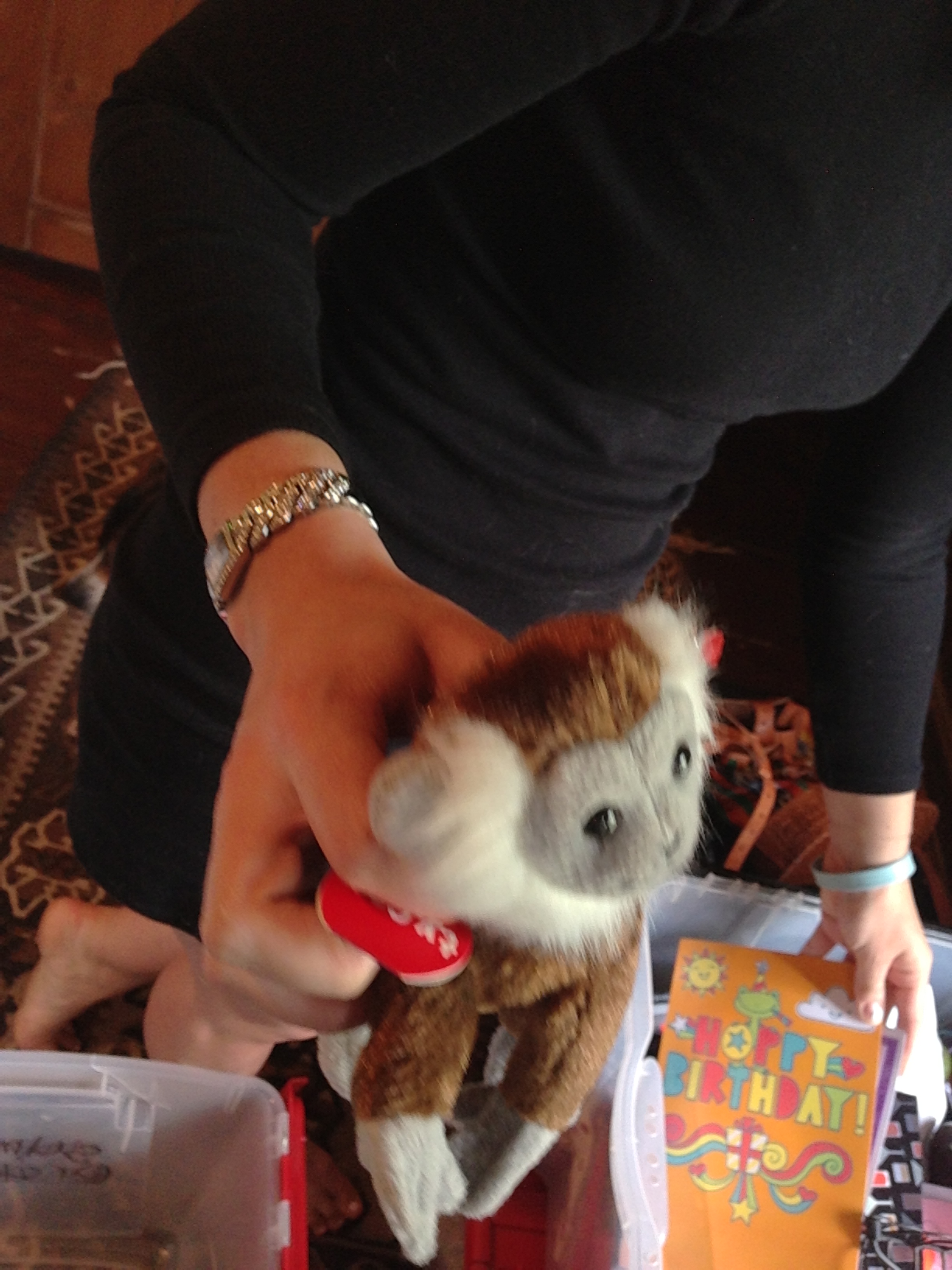
A fuzzy doodad from her boyfriend?

stuffed monkey

She preserves the soul of a friend who died, in a smooth stone she has kept since she was 14.

sky stone

History in general counts for a lot.

jimi

“Got it at the Brooklyn Flea Market,” she says. “Jimi, a cultural icon who remains a cultural icon 50 years later.”

I know the Romans were consumed with their physical appearance.

eyelashes

As are we all.

bike chain

Bracelet from a fond teenage boy, made from a bike chain, and pendant of dichroic glass, a material made for the aerospace industry with multiple micro-layes of metals or oxides. In 4,000 when we are discovered under the ash, probably everything will be made of dichroic glass.

The Romans were literate.

Norton

“These are my favorites,” says Maud: “The Dead, by James Joyce, Blake’s Marriage of Heaven and Hell, and A Room of One’s Own.” I didn’t know she read Woolf’s  A Room of One’s Own, a favorite of mine, but I’m so glad she did.

Minerva’s wisdom ruled, then and now.

owl mug

So did Bacchus. Maud got an advanced degree from the Columbia School of Mixology, and can make you a Manhattan whenever you please.

shot glass

Tea calms the storms that come with being 21.

tea

Everyone had their personal totem back in Roman times. Maud’s is the elephant. It will surely protect her, come what may.

elephant figurines

It’s some hard traveling being a college woman in those final sleepless nights of the term and finally, in summer, you get to take off your boots and rest your dogs.

black boots

Let the lava flow as it will.

2 Comments

Filed under Jean Zimmerman