The Tenth Annual Musical Saw Festival took place at Trinity Lutheran Church, located in deepest, darkest Astoria, Queens.

The gathering has been recorded in the Guinness Book of Records as the largest musical saw ensemble ever assembled. It features musicians and fans who are rather intense about keeping alive the 300-year-old art of playing music on a carpenter’s saw. I’d always been curious about the saw and liked its sound when I heard it in a song. Which wasn’t too often, however.
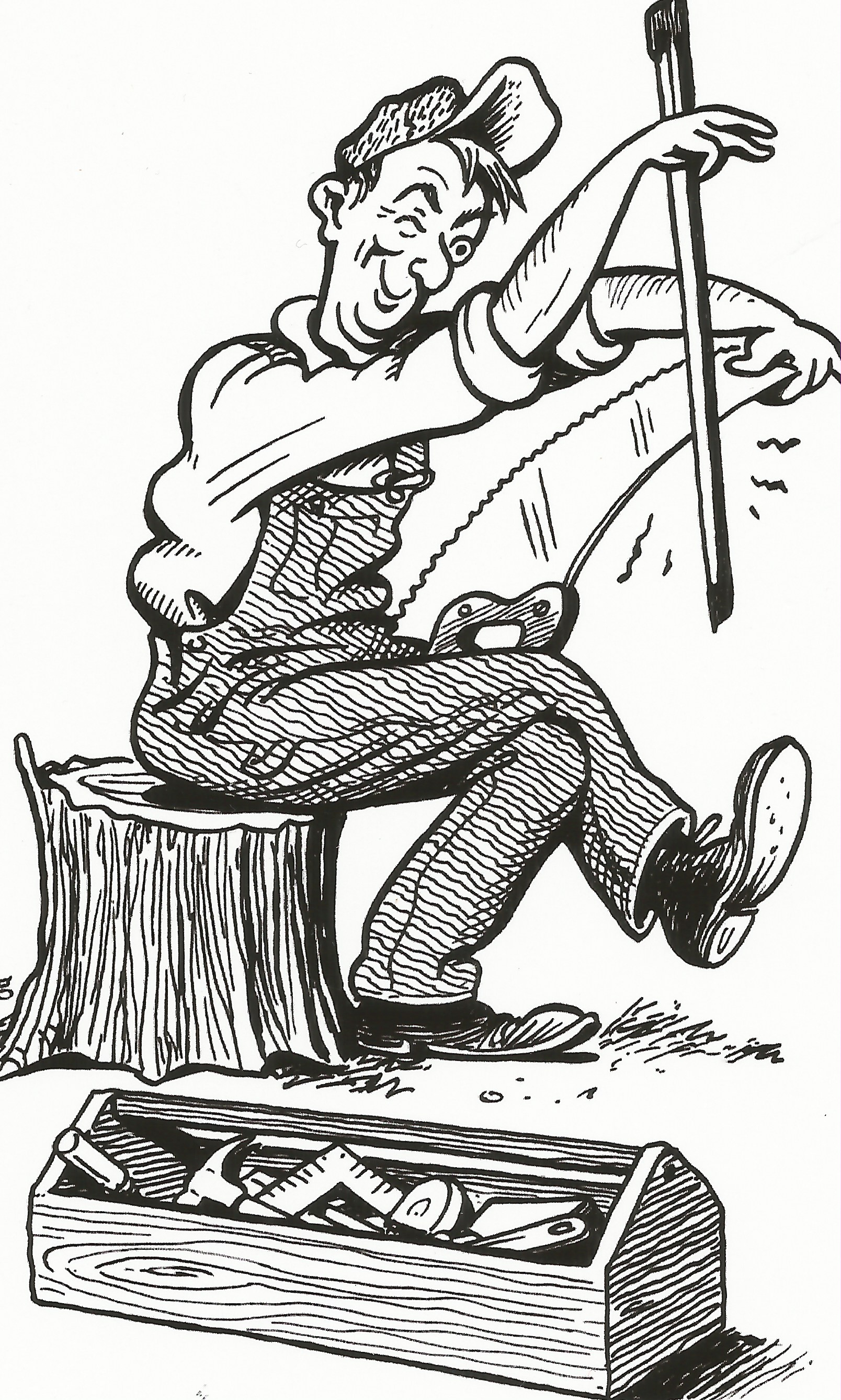
Arriving during an intermission, I wandered around the pews and found people in an almost giddy state of shared purpose. There was a musical saw art exhibit, musical saw poetry, the premier of musical saw score for the movies, and solos by dozens of sawists from around the world. Workshops were scheduled for novices and experts alike. There would even be a “chorus of saws” in which all the musicians present would work out as a group, accompanied only by a piano.
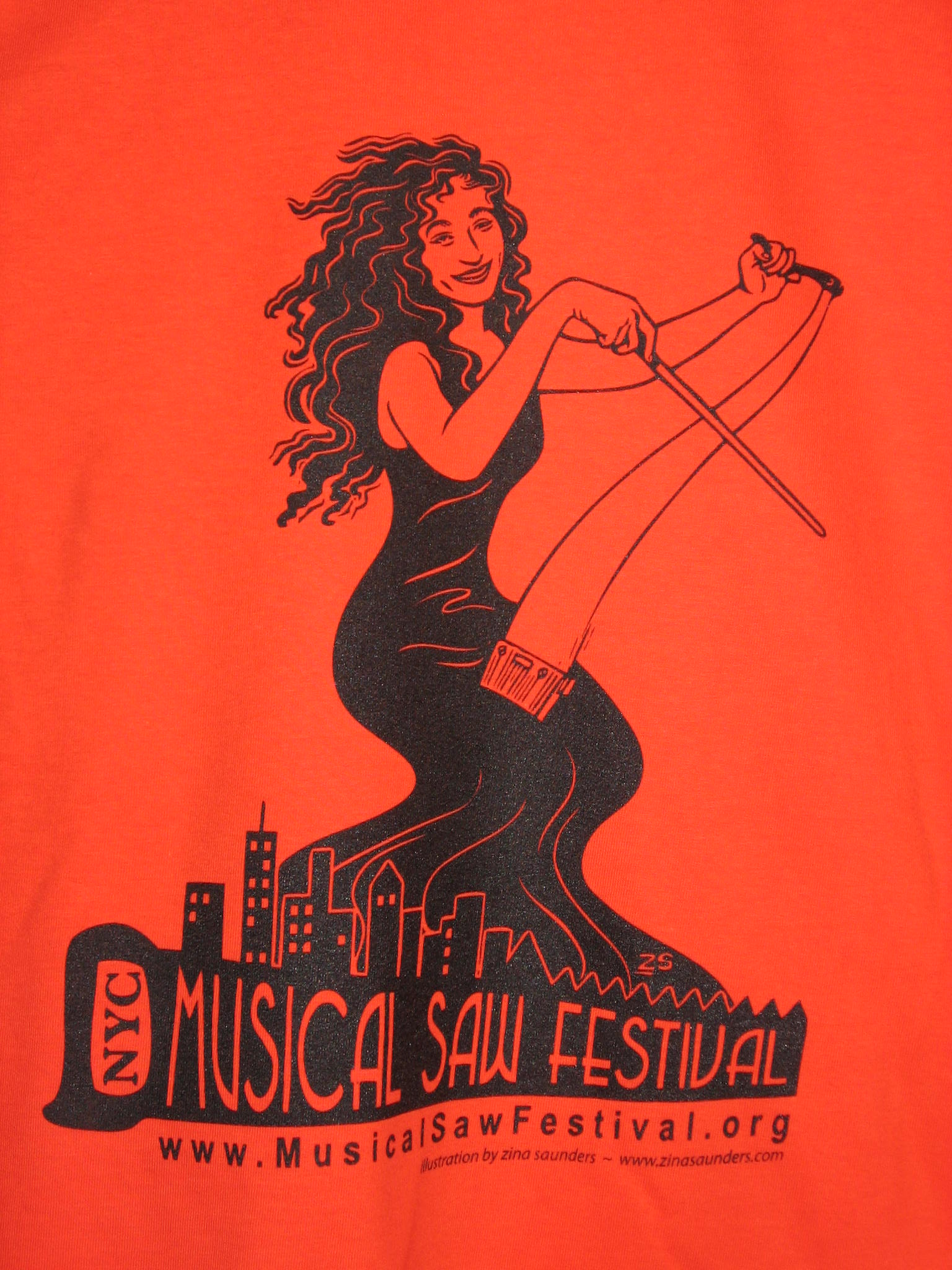
If you wanted to, you could bring home a souvenir T-shirt.
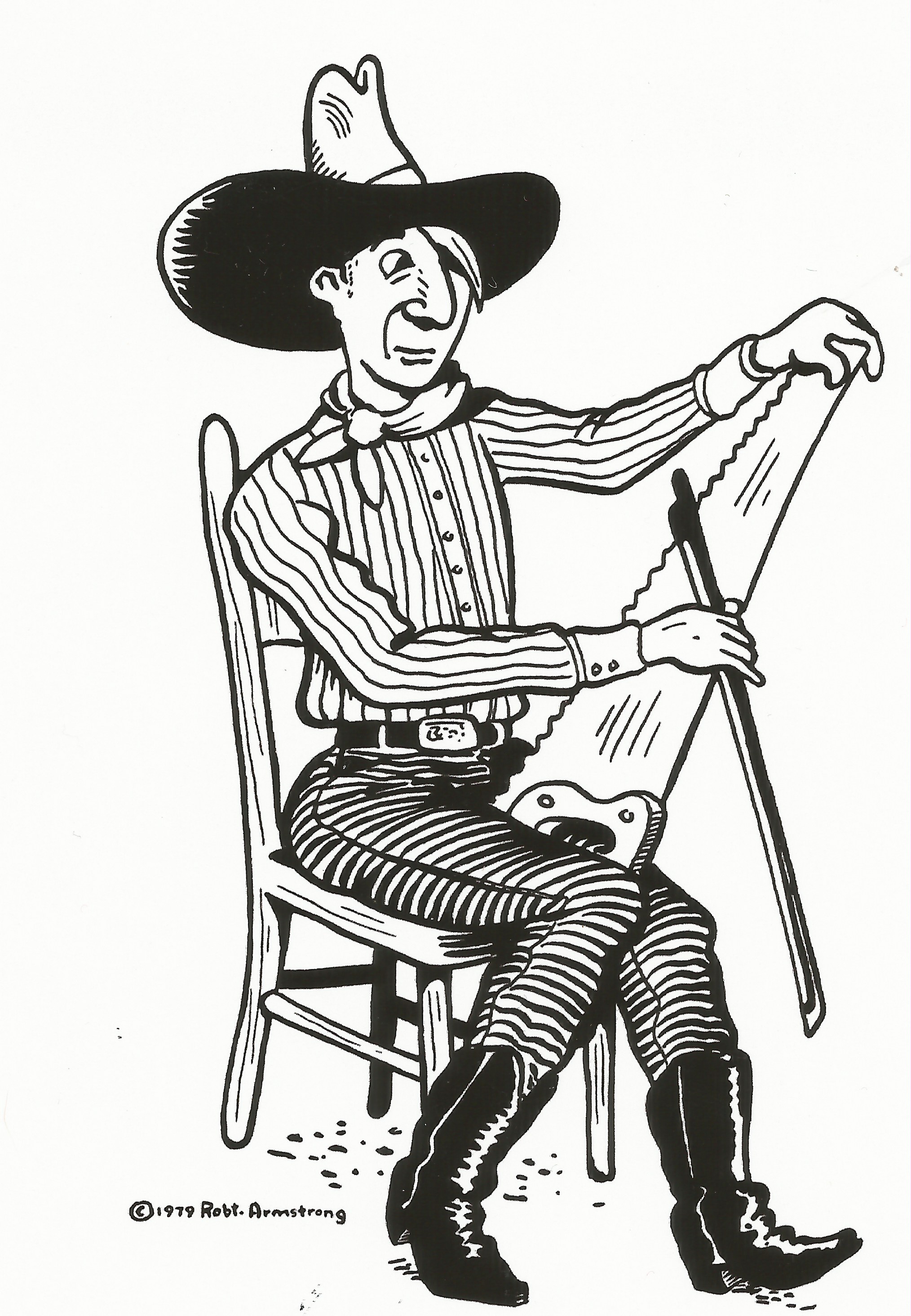
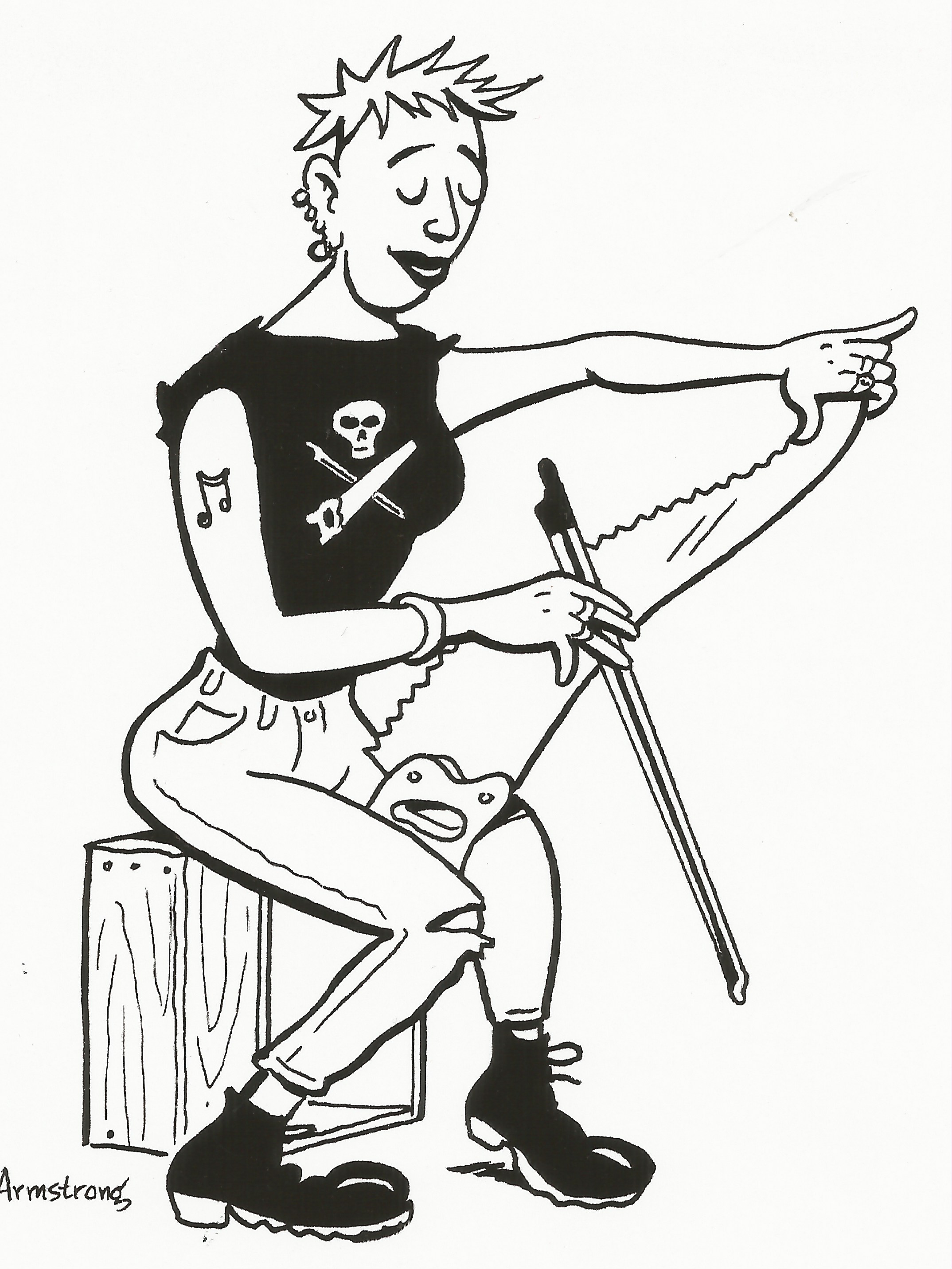
Where did this art originate, I wondered? Information abounds if you are motivated to look. The gently bent metal blade creates a keening or wavering tone when a bow is drawn across it and is capable of glissando. Marlene Dietrich entertained the troops with her saw, that I know. I actually think Wikipedia has a pretty good handle on the technicalities. Of course, you can always consult the International Musical Saw Association. (Robert Armstrong does these cheery illustrations for them.)
Some of the festival highlights included a sawist in a turquoise polo who delivered an energetic version of Tom Jones’ hit Delilah. He turned up the amplifier to heighten the drama of certain segments.
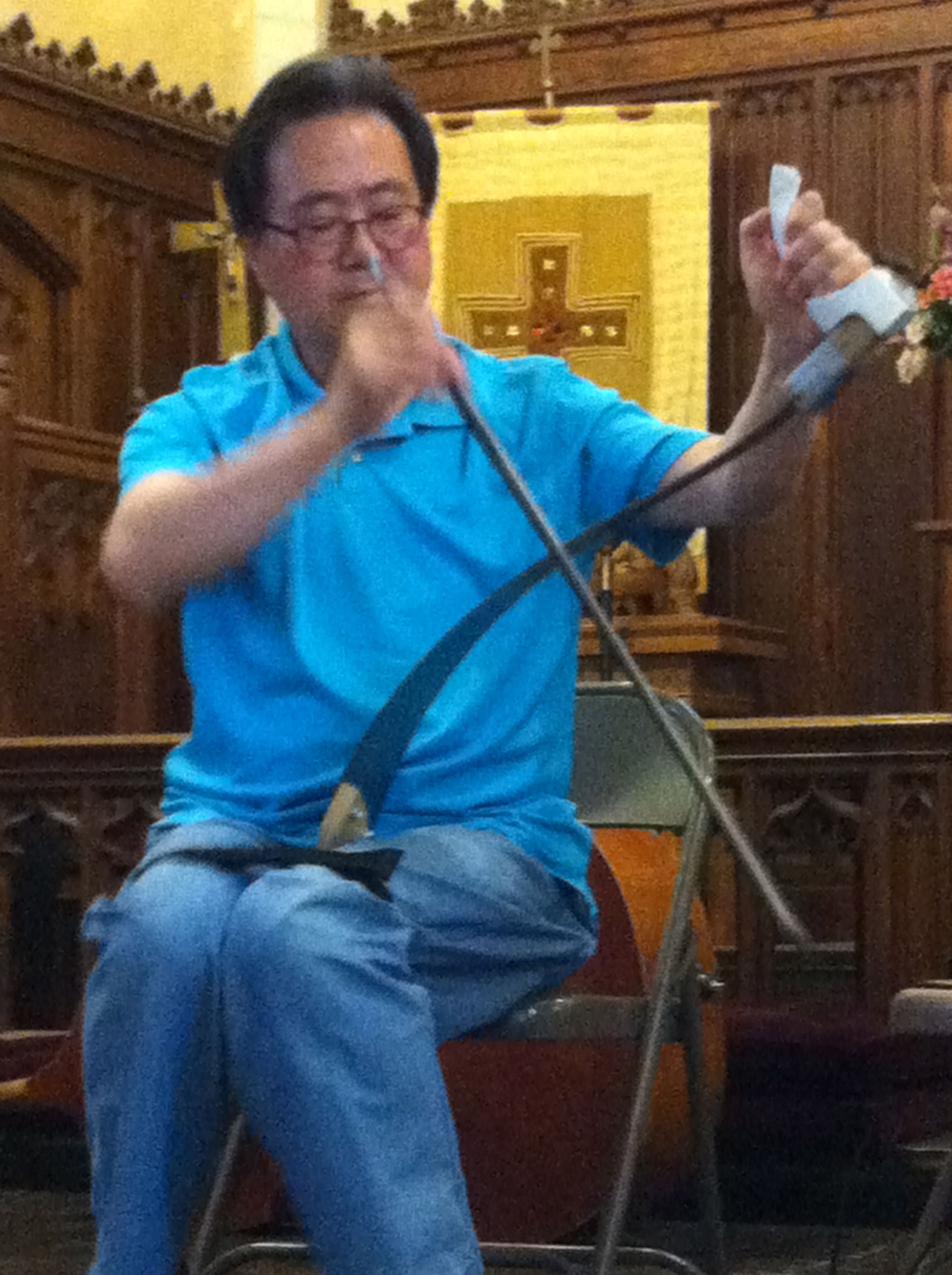
The audience roared its approval.
I saw a man with a gag hat from which protruded the business end of a saw on one side, the handle on the other. Also intriguing, a burly guy with a musical clef tattoed in black on each his forearms.
A duo played an original composition titled Poor Nietzche, “about Neitche going crazy” according to the m.c. The elegant blonde on the saw was accompanied by a 12-string mandolin player in a pork pie hat. It was an edgy performance the likes of which I could not have anticipated encountering on a Saturday afternoon in Queens, but artsy types seem to have embraced the musical saw.
Another pair put on a hipster duet with a saw and an old-fashioned typewriter against a fog-machine backdrop.
Then there was the Chilean dude who had only been playing for a year and who performed a soulful tune from the “New Chilean Song Movement of the 1970s.” The melody was emotionally affecting and perfectly interpreted by this dark-eyed, shaggily handsome prodigy.
There seemed to be an underlying competition of some sort about just how genuine your instrument really was. One musician, it was announced, would perform on a “26-inch Stanley fine-finished saw from the hardware store.” People toted about bare saws and saws in canvas covers, wielding their bows as if they might commence playing at any moment. These musicians use the same rosin on their bows, I was told, as a ballerina uses on her slippers.
I think my favorite player was a woman named Gisela O’Grady-Pfeiffer, from Germany, who told me she was nervous going up on stage every year.

She needn’t have been. Her Debussy piece, Claire de Lune, was haunting, her musical sawing exemplary. She came, she saw, she conquered.