Escape From the Small Screen

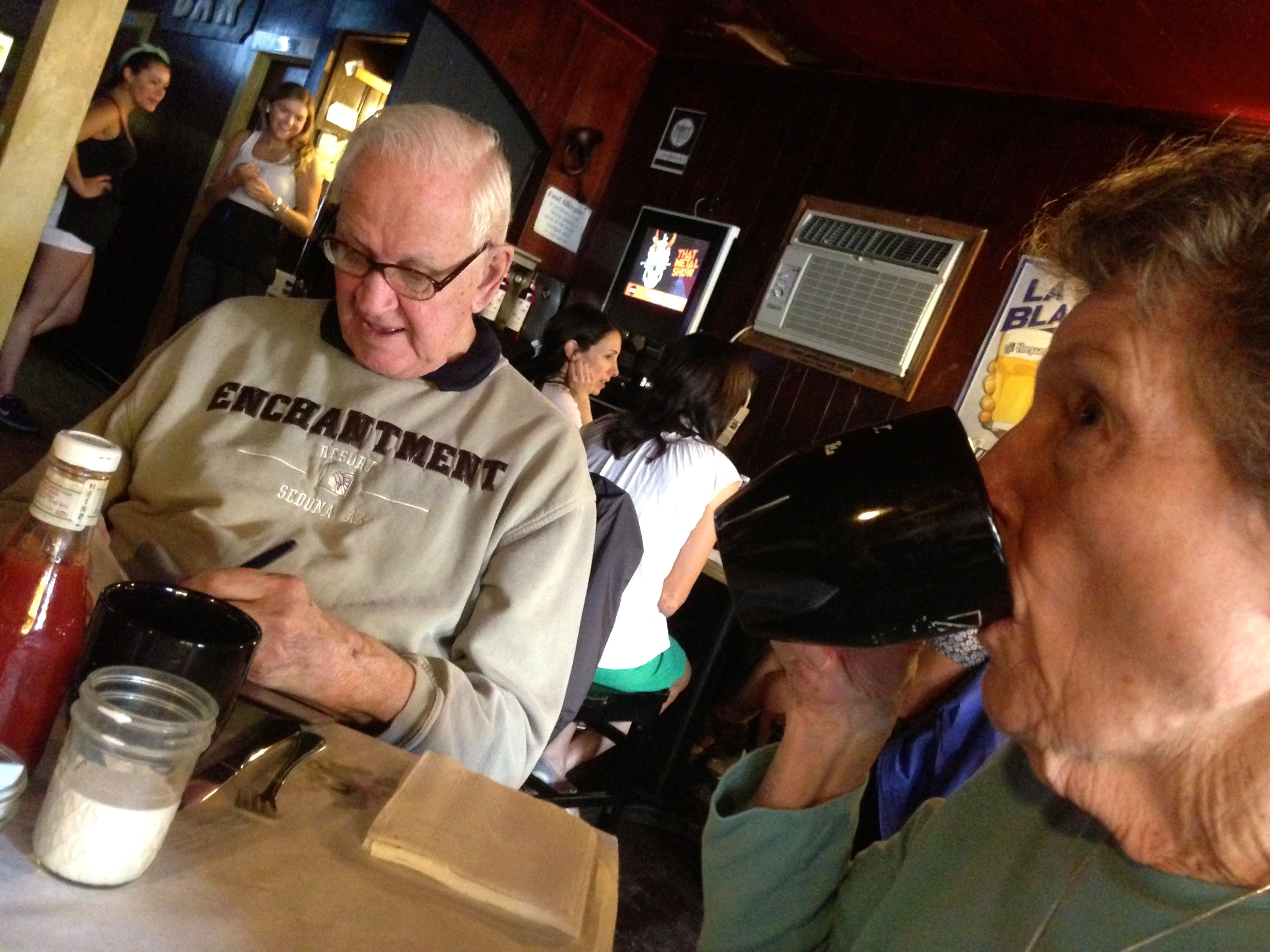
Out of a doze, into a tavern. Burgers, seafood, beer. Prop up the cast on a chair, so much more comfortable that way. Cold beer, even nonalcoholic never tasted so good. After a dozen Breaking Bad reruns, the real world looks sharp, magnificent .

What’s that on your face, said my father to my husband.

Project

It’s my project beard, said Gil. I’ll cut it when I finish my book.

Christmas isn’t for four months, said my dad, suggesting Gil could get a job as a mall Santa. He went back to calculating the check.

B&S

Just a touch more coffee, said my mother to the waitress. No, that’s too much.

Just drink what you want, said my father.

I’ll finish my cold, cold beer. Crunch a last potato chip. Swing my way home to the couch.

Jean on crutches

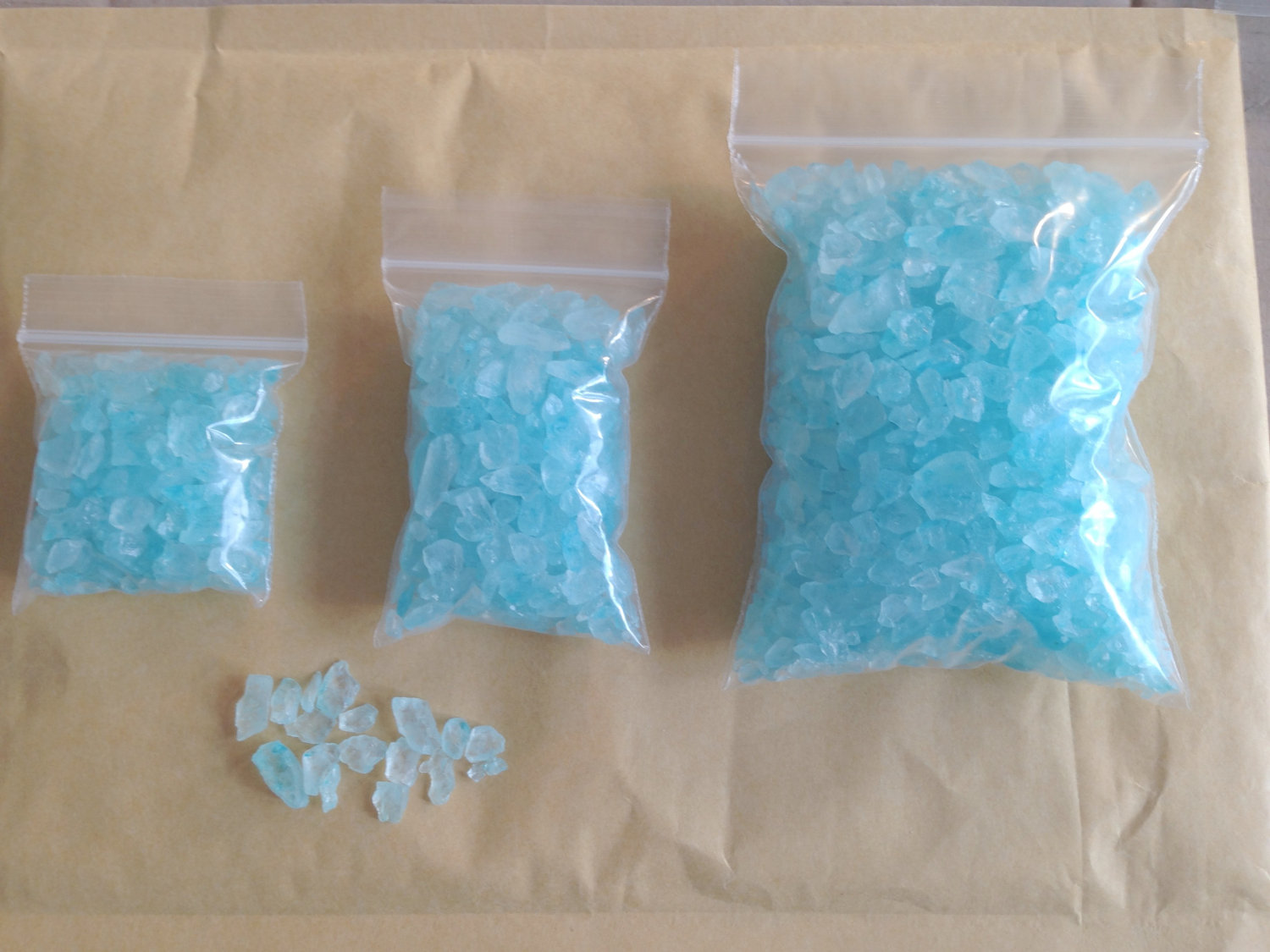
Did you know it rained today? Like sheets of rock candy, or maybe that’s from Breaking Bad.

il_fullxfull.399180881_uw8j

5 Comments

Filed under Cooking, Culture, Film, Home, Jean Zimmerman

Captive Reader

And another great guest post from Gil Reavill, who between brewing coffee, clearing away dishes and bearing down on his own book has managed to fill in literarily while I’m off my foot.

EVER SINCE JEAN shared a bookstore appearance with novelist Koethi Zan, author of The Never List, the theme of captive women seems like a bad tooth that we can’t help worrying.

never list

The horrific tales of Ariel Castro, the Cleveland kidnapper, rapist and murderer, remain in the news long after his captives took back their hard-won freedom. Recently they leveled Castro’s home, part of a plea deal that spared the predator a death sentence.

I wrote about the phenomenon in my book Aftermath, Inc.

Ed Gein’s Wisconsin farmhouse, destroyed by fire. John Wayne Gacy’s house in Des Plains, Illinois, bulldozed flat, as was O.J. Simpson’s Rockingham estate. Jeffrey Dahmer’s Oxford apartment building, with its infamous apartment 213, demolished. These sites were, in the language of real estate experts, ‘stigmatized’ properties. You know you have transgressed in some basic, Decalogue-violating manner when authorities raze your house and sow your fields with salt.

gacy house

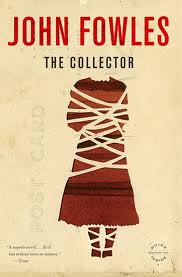
The theme of captive women crops up with stinging regularity in literature. John Fowles’s great novel The Collector was the first treatment of the theme that I encountered, probably as a too-young adolescent.

fowles

In our household, stories of Cynthia Parker and other women taken by Indians have become familiar through research for Jean’s novel, Savage Girl. Captivity is such a popular leitmotif in romance novels that it must form an admitted element in female fantasy. But the difference between rape fantasies and rape, as psychologists reiterate, is that women are in control of their fantasies.

During her research for The Never List, Zan became exhaustively familiar with captive women cases the world over. She tracks the survivors and gives sobering accounts of their inability to adjust to life after captivity. Often such women become recluses, unable to face life after enslavement.

Of course, stories of a lot of these victims never make the news. It might come as a shock to some benighted souls that human slavery did not exactly vanish from the face of the earth with the end of the American Civil War. Read Nicholas Kristoff’s great call to arms, Half the Sky, or David Batstone’s Not for Sale for accounts of sexually enslaved females all over the world (including right here in River City).

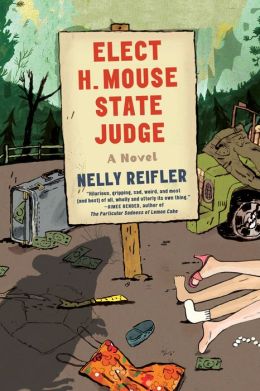
So it was with a creeping sense of recognition that I delved into our friend Nelly Reifler’s captivating (ahem) debut novel, Elect H. Mouse State Judge, out this week from Faber and Faber.

NellyReifler2

H. Mouse is by turns entertaining and disturbing, with Reifler treading a razor’s edge between Wind in the Willows and, say, Chuck Palahnuik, William Vollmann or Andrew Vachss. The innocence here is false innocence, and the topical true-crime reality of captive women leaks through the fairy tale.

H. Mouse is that eminently familiar figure, a compromised politician. His daughters Susie and Margo are taken by a religious nut named Father Sunshine (one Reifler’s best creations). The title character reaches out to a couple of shady political fixers named Barbie and Ken—yes, the very same ragingly popular iconic couple toyed with by children since the doll’s introduction in 1959. Ever wonder how Barbie and Ken do the nasty? Reifler tells us (it involves the removal of limbs). Lawyers from Mattel, Inc. ought to be knocking on Reifler’s door any day now.

elect

The figure of an unreliable narrator is a common one, but with H. Mouse I felt myself put into the position of an unreliable reader. I had the uncanny sense of humming along, enjoying the mice-and-foxes fable, then snapping awake to a nightmare. Reifler’s trap is baited with honey: the tone of faux sweetness is devilish, since one soon learns that it cannot last. Throughout these pages I suffered a quite enjoyable case of literary whiplash, something along the lines one feels with Animal Farm. (There’s a story kicking around, I can’t remember where I encountered it, about a student telling his professor that Orwell’s masterpiece was an excellent tale of the barnyard. The professor told the student to go back and read the novel again.)

79347104_animal-far_340402b

Elect H. Mouse State Judge is short, bittersweet and has a kick like a mule. Not since Art Spiegelman’s Maus have rodents been harnessed to so great effect.

5 Comments

Filed under Culture, Fiction, History, Home, Jean Zimmerman, Publishing, Savage Girl, Writers, Writing

An ARC and a Boost

There’s type and then there’s type.

SG SA

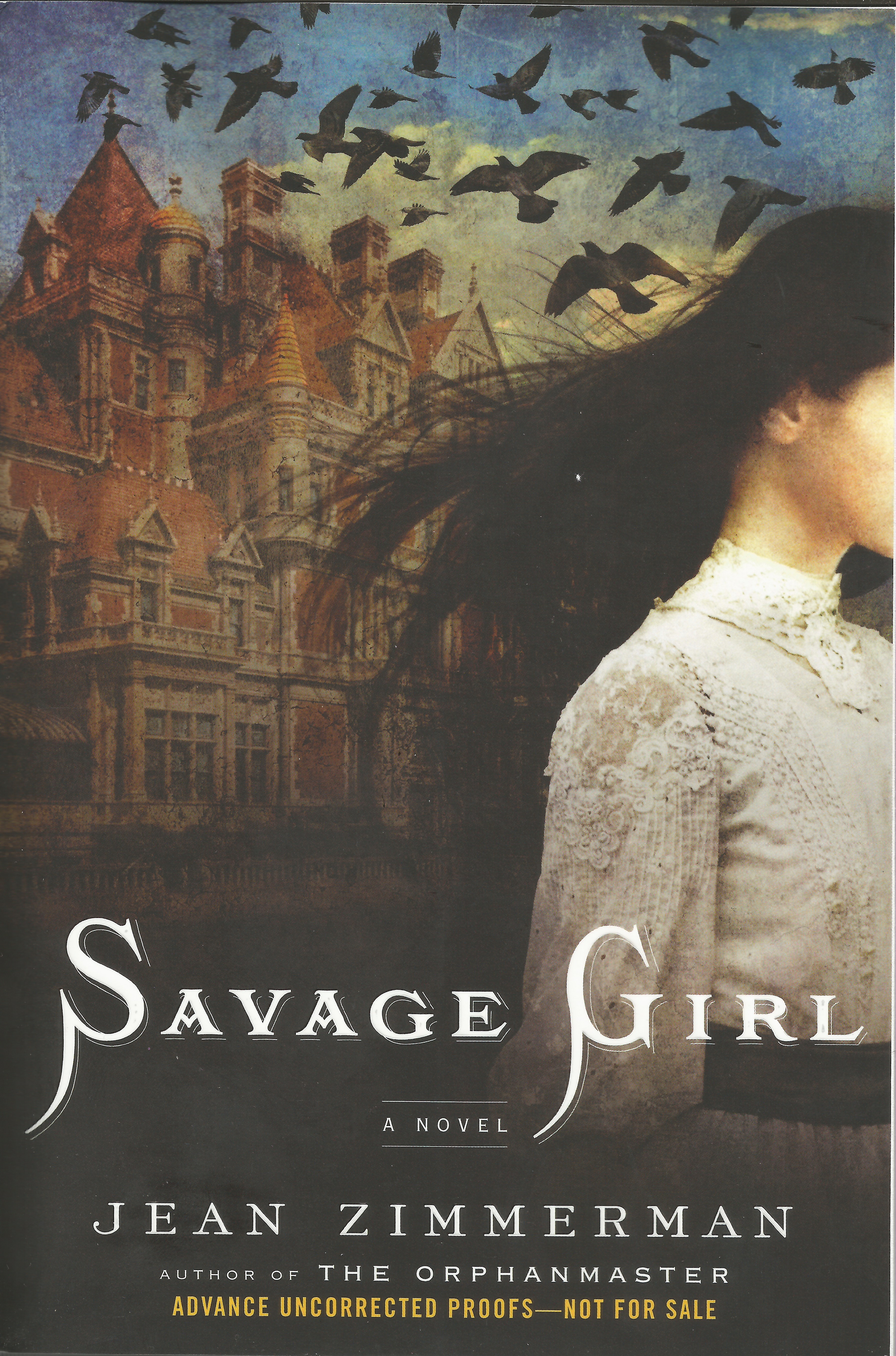
After another day of slogging off and onto the couch, I opened the mail. In among the junk, two gems, two volumes I’ve been waiting for. Two Advance Reading Copies of Savage Girl. Two ARCs. The novel will be out in March 2014. But it’s alive and breathing in its beautiful jacket even as we speak. This is the copy that will go out to early commenters and reviewers, bloggers and big mouths, so we want for it to be gorgeous.

arc cover

And that type. That’s what pops. The image of the girl and the mansion resonate, but the type’s what brings it to life. The title announces itself in a virginal white whose lines also embody the savagery of the title, and the two words are embossed, smooth under your fingertips  as I didn’t know they would be when I simply saw the cover proof. Now its typography renders the package dazzling.

Crack it open and you get the prologue, the first outlines of the mystery the narrator Hugo unfolds.

SG first page

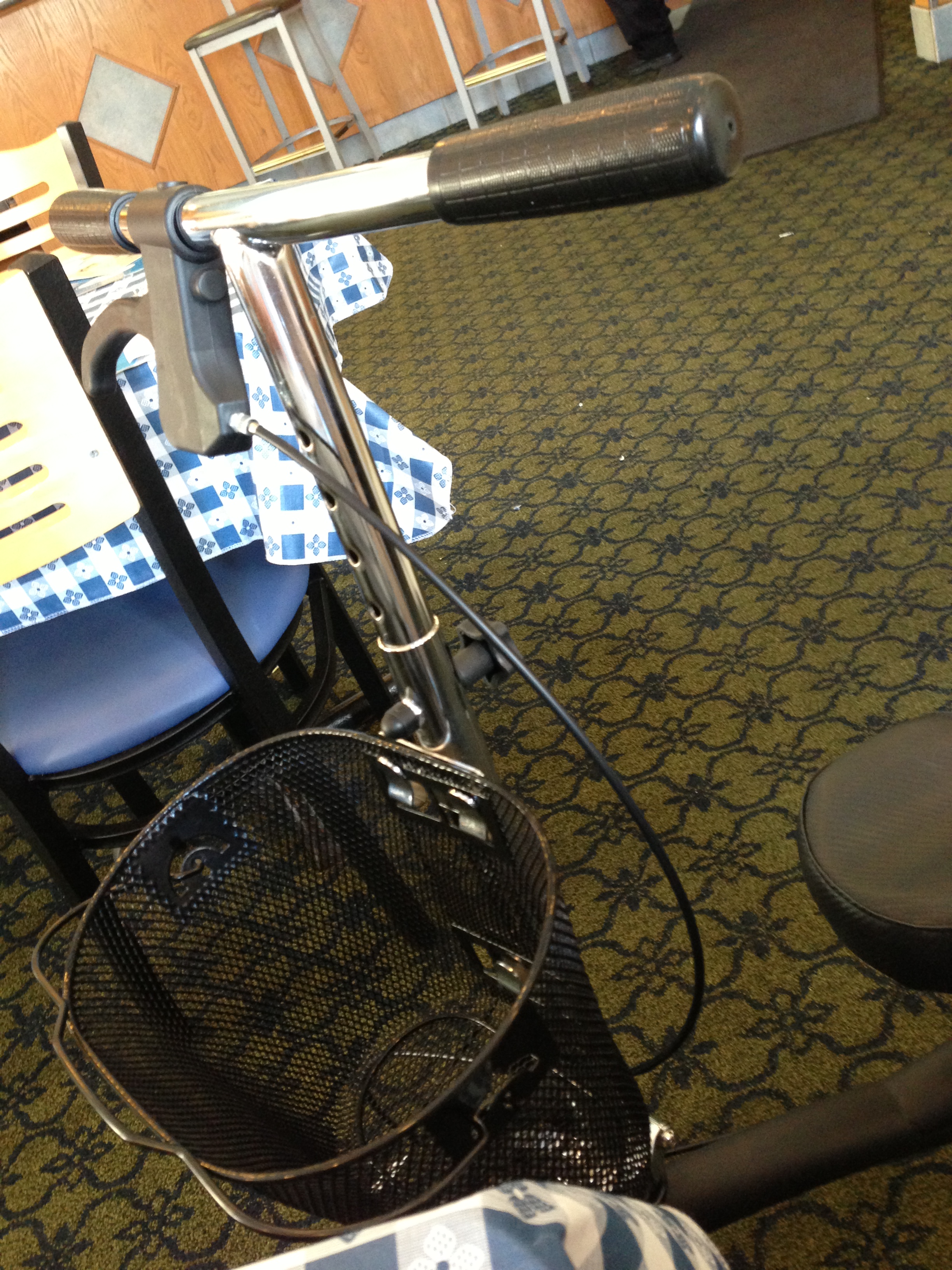
The type popped. Now I’m going to have some pizzazz, too. Gil and I picked up a scooter I’d reserved for rental at the drug store. It waited patiently at the Greek restaurant we like while we downed our sandwiches and skordalia.

scooter

Then it came home with us – and boy, do cars stop for pedestrians when they see a scooter.

It’s somewhat easier to get around than crutches and I’ll be freer to exit my couch and have adventures. I think I’ll call it the Bloke. Right now the Bloke is in the back of the Suburu, waiting for me.

6 Comments

Filed under Cooking, Culture, Fiction, Home, Jean Zimmerman, Publishing, Savage Girl, Writers, Writing

A Haze of Summer Reading

Still embedded in the couch, where I’ll be for the foreseeable future, my leg held slightly less aloft, though… and with less pain in my foot.

The hours go by. The days. So do the pages of the book I’m reading, though the medicine makes me slightly less attentive to the thread of the plot than I’d ordinarily be.

17164599

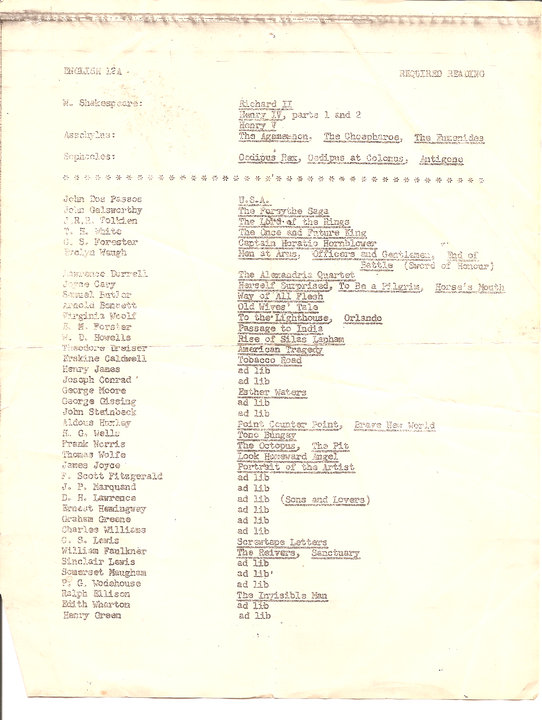
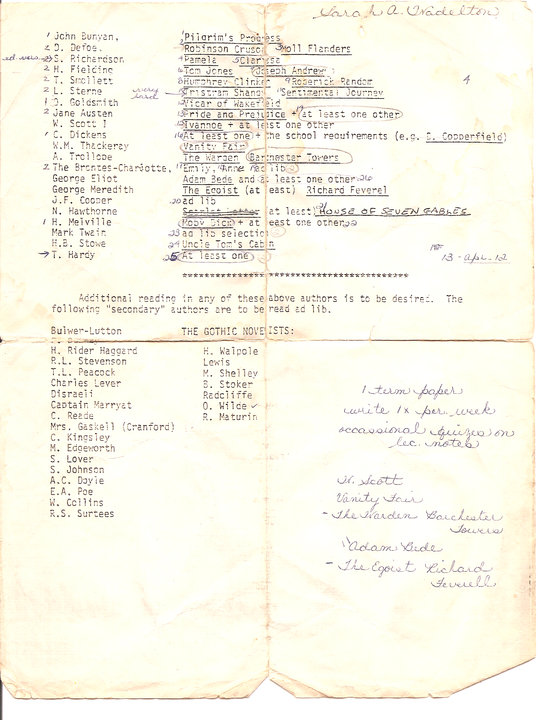
A summer book. A stack of summer books. I recently came across a copy of the syllabus for my honors English class in high school. Forty years ago. The teacher, Chuck Aschmann, was some kind of a genius, and he brought out the genius in his pupils. Just page 1 of the reading list would be enough for more than a single college literature course.

32011_410291856024_2411585_n

By page 2… I don’t remember it being hard to read most of his selections, just sitting for hours in our sticky leather club chair and dreaming over these amazing books. Spending a lot of time in the humid heat of August, reading and dreaming and reading…

32011_410291836024_335984_n

Dos Passos, Woolf, Conrad, James. Fielding, Sterne, Thackeray. Melville. Twain. Sophocles!

I was actually spoiled for college English after this, thought I knew all there was to know about fiction and spent my non-class-time hardly reading at all but scribbling diary entries, page-length prose poems and love letters.

In high school it didn’t take foot surgery to keep me on my rear end reading novels in summer.

2 Comments

Filed under Culture, Fiction, Home, Jean Zimmerman, Writers, Writing

A Full-throated Yodel

Today, Gil Reavill guest-posts as I rest:

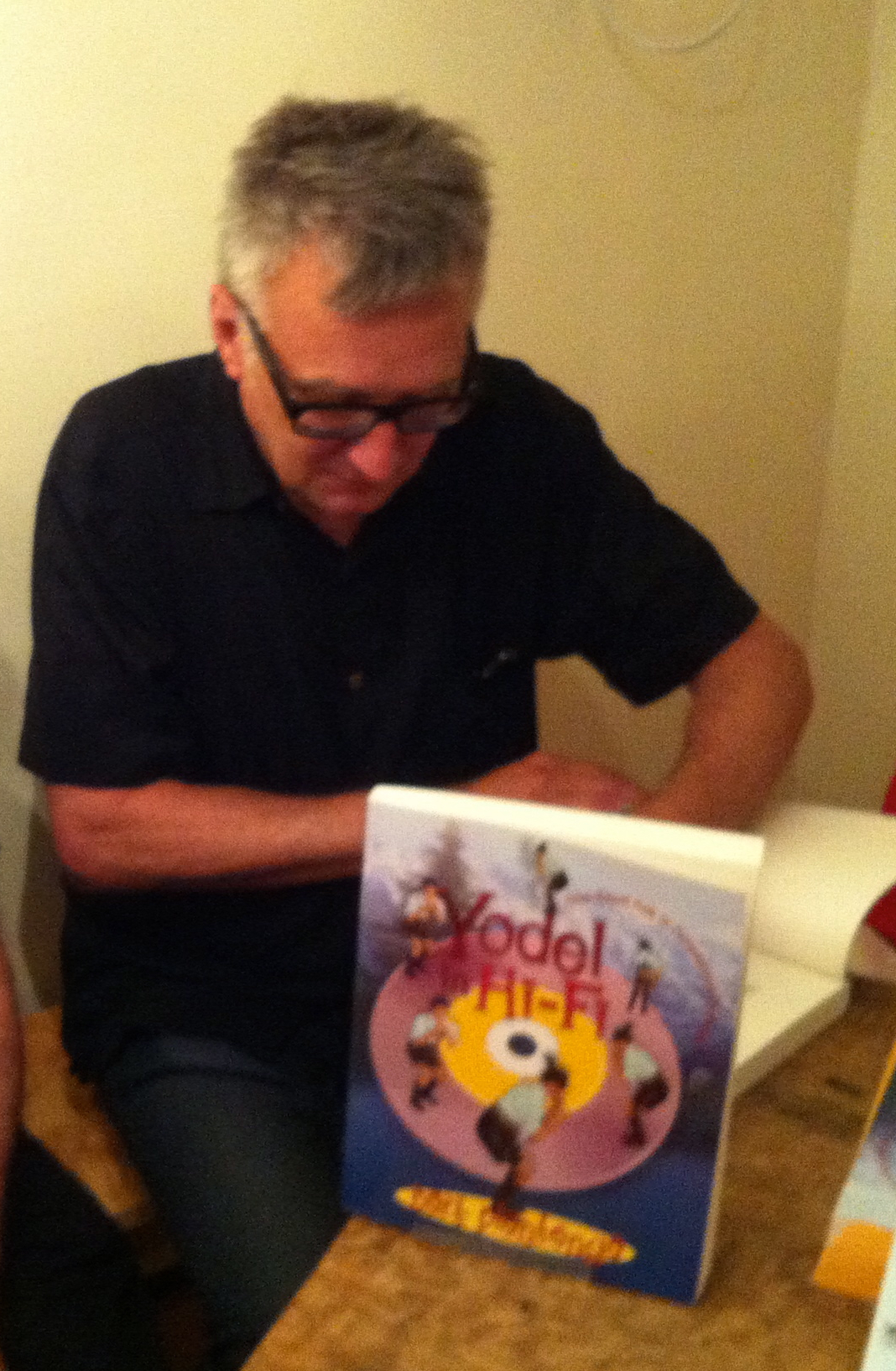
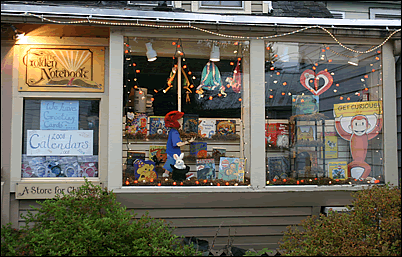
THAT SOUND YOU HEAR is the yodels echoing down from the Catskill Mountains. Author, provocateur, deejay, beer mystic and worldwide yodeling authority Bart Plantenga recently appeared for a full-throated presentation and book-signing at Woodstock, NY’s great indie bookstore, The Golden Notebook.

Bart Signing

The event was held on a tourist-flocked sunny Saturday in Woodstock, aka the People’s Republic of Woodstock. The iconic Aquarian village looked to be thriving and was chock full of public art and cheeky signage.

Woodstock sign

The Golden Notebook is one of our all-time favorites as both a bookstore and a book: the venue is named after Doris Lessing’s nervous breakdown of a masterpiece.

golden-800wi

A feminist touchstone of the Sixties, Notebook turned a lot of minds around and established the author as a leading light in the literature of the day. Margaret Drabble famously called it “inner space fiction.”

doris

We summered in Woodstock once back in the day at the Byrdcliffe Arts Colony in the hills above town, staying in one of the tiny cabins. The founder of Byrdcliffe believed in the health benefits of bathing, so he furnished each cabin there with immense eight-foot-long clawfoot tubs. Water was delivered to the faucet by a spring-fed system which ran through hoses that snaked through the woods. Bob Dylan’s old place was just down the road, and we snuck in for a nighttime swim or two in his former grotto. That year the Byrdcliffe Playhouse was doing a stage adaptation of the film Casablanca, and during the show a spotlight rigged on the theater’s roof would strobe the darkness and a claxon would sound as Louis and his friends would search for “the usual suspects.”

Byrdcliffe-theatre

With the publication of his second book on the subject, Yodel in Hi-Fi: From Kitsch Folk to Contemporary Electronica, our friend Bart has established himself as an unparalleled resource for musicologists, aficionados and just plain yodel-crazy folks. While he does not indulge in the art himself, Plantenga has exhaustively documented yodeling practices all over the globe.

yodel in hi fi

He rounds up the usual suspects—Switzerland, Germany, Scandinavia—but gives fascinating insights into unexpected yodeling traditions among the Pygmy people in Africa and the Hmong in Southeast Asia. Yodeling is a method of changing pitch from ordinary chest register to falsetto, long used as a communication method in mountainous countries where the echo is most pleasing to the ears. Of course it also appears as a vocal effect in many different kinds of music, most notably in country and western but also, as Plantenga shows, in classical, electronica, pop and pretty much every other style on the face of the earth. The great country music pioneer Jimmie Rogers rode to fame on the strength of his “blue yodel.”

yodel

Johnny Weismuller’s Tarzan yodel entered into the modern pop culture in the middle of the last century, and the practice was played for laughs by comic Carol Burnett, who used to open her television show with a suitably loony example. Plantenga’s reach goes much deeper than these popular examples, unearthing gems such as Bollywood actor Kumar, a yodeling sub-genre of German video porn (!), and South Korean faux-Bavarian yodeling groups. Bart spoke about yodeling as an “outburst of joy,” citing the “total Oktoberfest insanity” of alcohol-fueled burghers who bust out in freestyle tavern yodel throwdowns. “I like anomalies that make people re-assess clichés,” he says, and in Yodel in Hi-Fi, he has unearthed dozens of them.

8 Comments

Filed under Culture, History, Jean Zimmerman, Music, Writers, Writing

Day 1-In Which I Learn to Hobble

It was a success, the surgery, though I awoke from the anesthesia blubbering like a baby. It’s normal, said the orthopedic surgeon, come to check on me. A lot of people cry. Then it was hip, hop, on to the wheelchair, on to the crutches, off to my new full-time lair, my living room, my foot on pillows above the couch.

cast

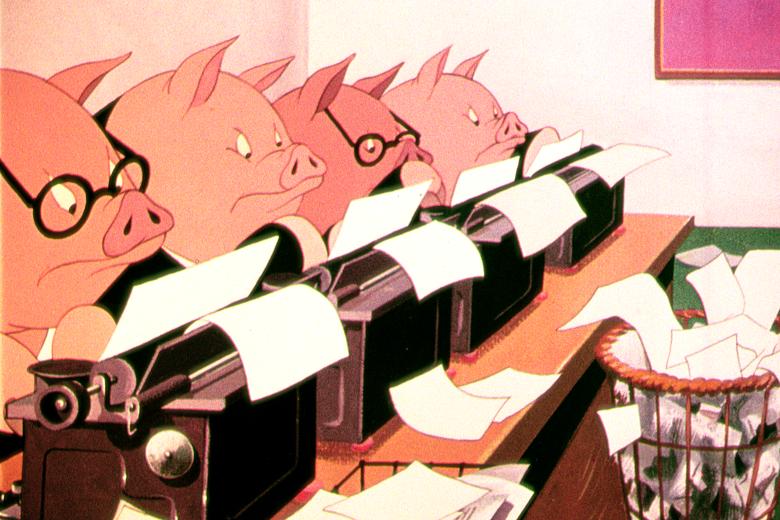
My snouted nursemaid wedged beside me.

ollie nurse

My other nursemaids scurry to my orders. My computer, please! My muffin! My book! Put it close, I’ve got to get an NPR review done this week. Could you please turn that light off? Or on?

I have a good view of Maud’s metallic blue fighter fish, Brussels, making his small way around the bowl.

brussels

Somehow, thinking about the immediate future, though I never had much patience for that fish, I now feel kindly toward it. Brussels reminds me of myself in my own little living room bowl. Except I hobble, can’t float at all, when I want to go brush my teeth.

Trying to stretch myself outside this world, adventuring via pictures of the past to the motor adventure taken in 1918 by John Burroughs, Thomas Edison, Henry Ford and Harvey Firestone.

This brilliant crew took a 12-day car camping trip in Burroughs’ automobile when he was 81.

NoondayRestFinal.jpg.CROP.article920-large

John Burroughs, less well known today than the others, was ragingly popular by that time in his life. Gil and I used to visit his country retreat, a tiny cabin called Slabsides that stood beside a celery marsh in West Park, New York.

slabsides

Burroughs’ fans have kept it intact, so you can see it as he did. Being there always made me want to inhabit a cabin, and now  mine is virtually like his.

burroughs-at-slabsides

… I was offered a tract of wild land, barely a mile from home, that contained a secluded nook and a few acres of level, fertile land shut off from the vain and noisy world by a wooded precipitous mountain… and built me a rustic house there, which I call ‘Slabsides’, because its outer walls are covered with slabs. I might have given it a prettier name, but not one more fit, of more in keeping with the mood that brought me thither … Life has a different flavor here. It is reduced to simpler terms; its complex equations all disappear.

Young college women used to travel in hordes by train to Slabsides to pay homage to the great man, a pioneer of nature writing who published some 25 volumes, of which a million and a half volumes were sold during his lifetime.

In 1918, a convoy of eight vehicles accompanying the brainy colleagues toured Pennsylvania, West Virginia, Tennessee, and Virginia, stopping to camp on farms, examine old industrial sites, take hikes along rivers, and measure farming implements for fun, documenting as they went.

Some shooting entertained Ford and Firestone.

ford and firestone shooting

At night around the campfire the two industrialists, the naturalist and the inventor wound down by chewing over Shakespeare, Thoreau, chemistry. Don’t you wish you could have been there? In a way, you can, because photos from the trip are stored at Harvard’s Widener Library, with a smaller portfolio at my favorite website, Slate’s The Vault.

Closer to home yet exotic in its own way, the wool I am sending away for to keep my hands busy during this nonambulatory period.

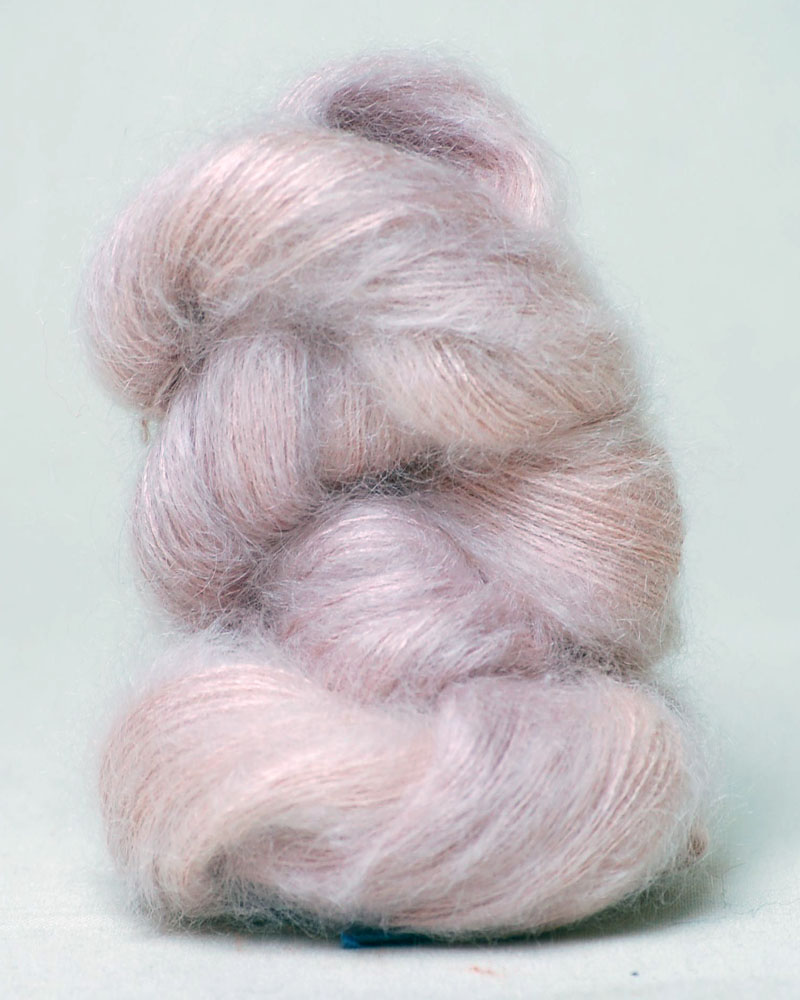
What is mohair, anyway, I wonder, as I fawn over the silk and mohair skein available from the chicest yarn store I know, Purl in Soho, New York City.

It’s from a line called Haiku made by a company called Alchemy. The shade is called Teardrop. Is that not irrisistable?

Alchem's Haiku-Teardrop

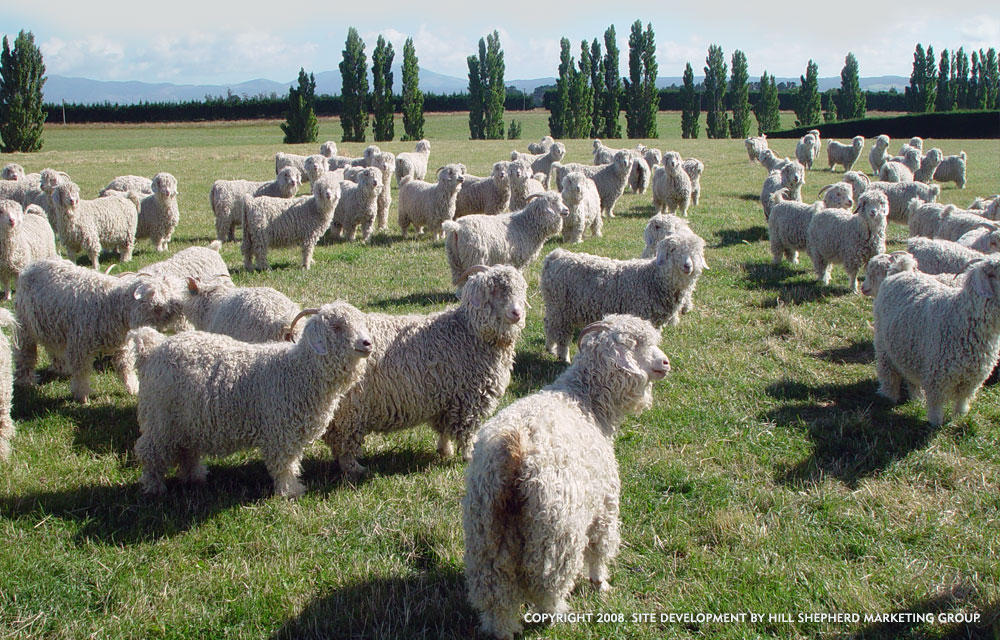
The yarn comes not from a sheep but a goat, the Angora, which emigrated from Tibet to Turkey in the 16th century, and it’s one of the oldest textile materials in use. It’s made of keratin, like hair, wool, horns and skin. Mohair is warm in winter, while remaining cool in summer. It is flame resistant, crease resistant, and does not felt. The goats are mainly bred in South Africa now.

angora_goat_11_12

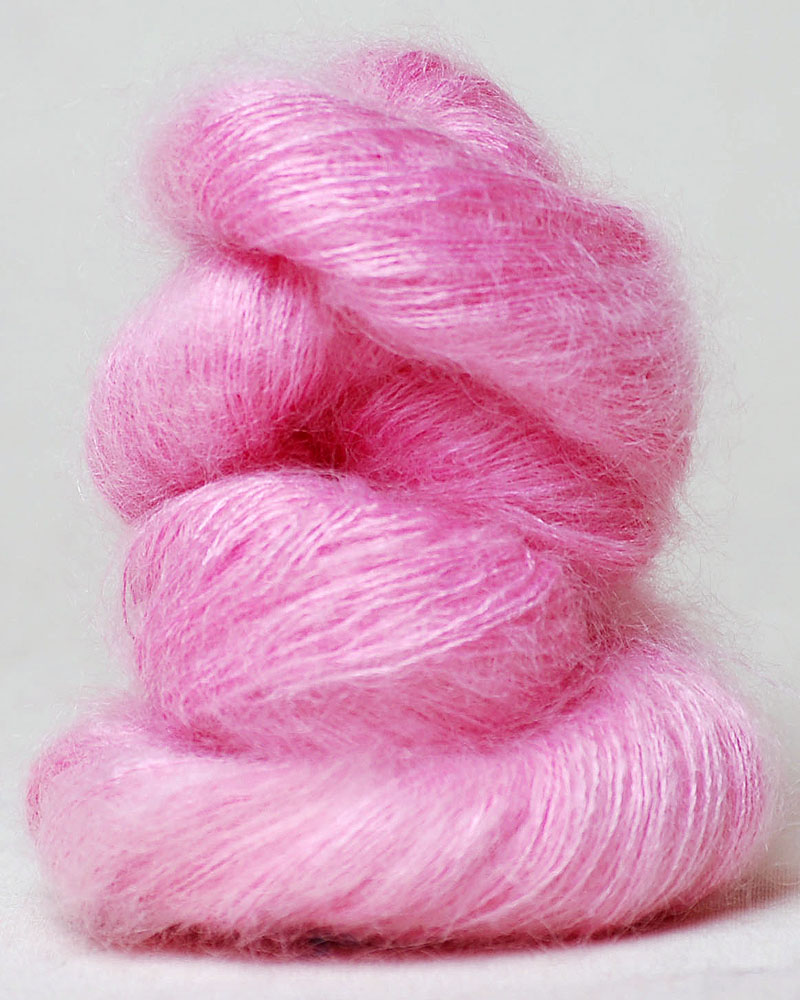
And it is of course beautifully luxurious. Makes your fingers sing. Should I choose this color instead? It’s for a slip of an elegant bandana, not the kind you’d wear around a Slabsides campfire. Evening Pink.

Haiku-Evening Pink

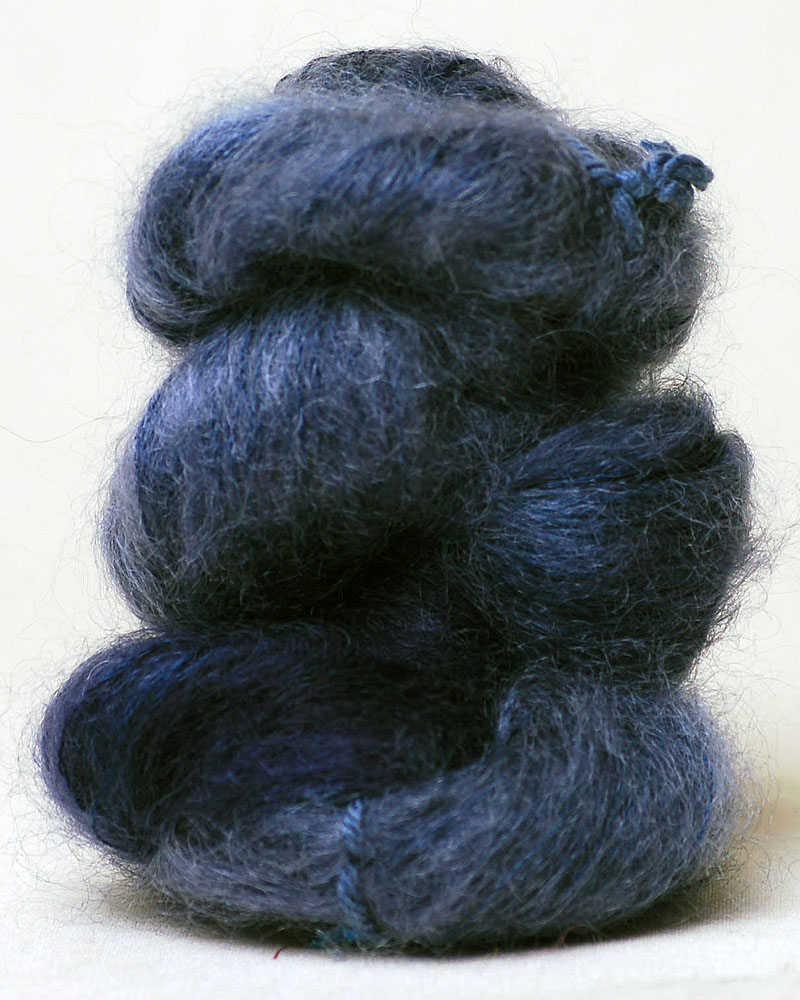
If Firestone and Ford and Edison were on their way over to roast weenies, maybe a scarf in this hue would be more refined: Blue Jay Way.

Haiku-Blue Jay Way

So many choices when your leg is up and all you’ve got to do is dream.

2 Comments

Filed under Art, Culture, Dogs, Fashion, History, Home, Jean Zimmerman, Knitting, Nature, Photography, Publishing, Writers, Writing

Of Leeches and Fiberglass

Five hundred years ago I would be having leeches applied to my leg today. Now it’s just a thigh-high fiberglass cast. And I know my foot will get better. (Even with all those leeches, a person would probably never get out there again in the millet fields.)

imagesJust so you know, I may not be posting as regularly in the next month or so, as I drift in a medicinal haze. We’ll see what adventures are to be had in my living room, aside from gorging on episodic tv and Poptarts. And guest bloggers are welcome, those with adventures to share, just leave me a comment and we’ll discuss.


7 Comments

Filed under Culture, History, Home, Jean Zimmerman, Nature

Life’s a Beach

Visiting Jones Beach today was like being on a public strand circa the 1950s, the bright beach bags, chairs, umbrellas, suits (except the suits were skimpier, even on the less than skimpy subathers).

beach first shot

Families with their chairs drawn around in big circles. Teenagers jumping around, full of beans. Grandpas dozed. Mothers and daughters plunked themselves down  just like me and Maud, who immediately tugged her towel into the perfect rectangle, the perfect protected zone for her to sun her bod.

maud blanket

The middleaged couple next to us seemed to be mooning over each other for the first hour we were there, then disappeared into a dome tent whose sides wobbled along to their muted boom box: I’ve Had the Time of My Life, sung by Bill Medley and Jennifer Warnes, the finale song from Dirty Dancing.

The hardest working man on Jones Beach came around in his Ray Bans and sweaty tee shirt, hoisting his cooler.

ice cream man

Ice cream, Chipwich, frozen fruit bar! he called out. “Is this a picture for the winter?” he asked me as I captured his likeness for my personal magazine. The strawberry FrozFruit was like a rock, like a sweet Antarctica iceberg, until it melted all at once in sticky swirls around my mother-daughter friendship rings.

fruit bar

The whoosh of the waves rolling in and out. Hypnotic. The sun that penetrated even under my floppy hat brim. Snooooooze. Flip through a magazine. Is anything really worth reading?

Music. Manna for a twenty-one year old.

maud arms

I am beginning to wonder what effect Taylor Swift has had on her generation, a group of closet romantics.

Stay stay stay

I’ve been loving you for quite some time…

You took the time to memorize me my fears my hopes and dreams

I just like hanging out with you all the time

All those times that you didn’t leave it’s been occuring to me

I would like to hang out with you for my whole life

The cool soft grit of the sand as I paddle through it with my contented toes.

feet sand

The waves? Too cold, except for an ankle bath. I like my fruit bar chilly, not my Atlantic Ocean. As long as the air is pure. As long as I come home with salt caked in my hair and sand dusting my ankles. Do you know what I like about Jones Beach? You lean back and close your eyes and listen to people laugh.

3 Comments

Filed under Culture, Fashion, Jean Zimmerman, Music, Nature

Feets Too Big

All the places I won’t walk.

I said I’m sorry to an earthworm. Out loud.

Earthworm_bw

It was cut in half, lying on the asphalt. Commiserating with a worm is not something I would ordinarily do, but I could in some ways relate to the creature. I’ll be able to move, but slowly, on crutches, after my foot surgery in three days. My right foot is eventually going to be good as new.

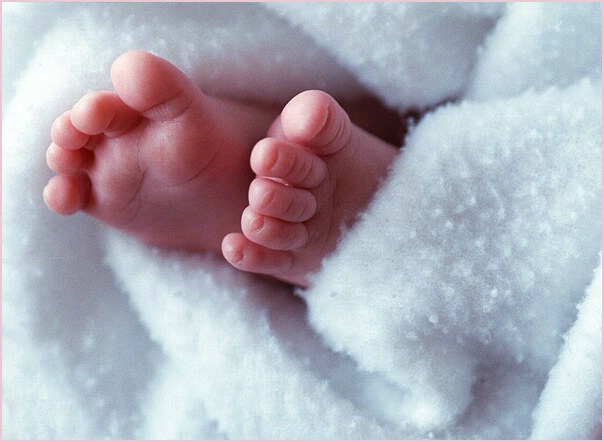
baby feet

My left foot will have to wait to get its imperfections mended. I didn’t know that a tailor’s bunion, the aberrant bump on the outside of the foot — the one that will no longer allow me to get into anything besides flip flops — was named for the way tailors traditionally sat. Cross-legged.

1tailors

I guess it cramped the style of their little toe. Too bad they didn’t have Dr. Voellmicke,  my orthopedic surgeon, to fix them up. I’ll be in a hard cast for six weeks. That little bone that leads up to your toe, the one you never think about, is virtually marrowless, which means it has very little of the good stuff inside it needs to heal properly. Then, while Dr. Voellmicke is at it, he’s going to fix the golf ball size knot of a bone spur that has decided it likes to surf my big toe knuckle. (That’s a mix of about five metaphors, if you’re counting.)

No real walking, no driving, a lot of hurry up and wait. “You can rent one of those little scooters at the drug store,” said the nurse. I don’t think so.

Today, Dalton Trumbo’s Johnny Got His Gun popped into my mind. Maybe because my friend Jennifer and I were talking about the dark novels we read when we were adolescents that were probably too old for us, not to mention already a bit dated — Margerie Morningstar and The Group among them. Johnny, which Trumbo published in 1939, told the story of a soldier who has lost all his limbs in a war as well as all of his face (including his eyes, ears, teeth, and tongue).

johnnygothisgun

I remember how incredibly disturbing was the point of view of the novel, from inside the cave of this tortured guy’s mind. He wasn’t a lump, as he appeared to those around him. Trumbo went on to become one of Hollywood’s best-paid screenwriters, and won two Oscars under pseudonyms even while being blacklisted. I never knew about any of that when I was growing up, just that Johnny Got His Gun was a great tour de force. (And that I was a little bit cool to be reading it.)

But as for me, feel sorry for my self as I might, I will hardly be a lump after Friday.  I’ll just be a tiny bit inconvenienced, incommoded, and rendered relatively adventureless, by an elective surgery that’s going to fix a minor imperfection so I will be able to go hiking in the woods again, or dawdling down the street in New York City, or swimming in my cardio class… I should be thinking not of Trumbo but humming to Your Feet’s Too Big by Fats Waller.

Say up in Harlem at a table for two
There were four of us
Me, your big feet and you
From your ankles up, I’d say you sure are sweet
From there down; there’s just too much feet
Yes, your feets too big
Don’t want ya, ’cause ya feets too big
Can’t use ya, ’cause ya feets too big
I really hate ya, ’cause ya feets too big

What I am doing, aside from humming, until the day of my surgery… simple things. The things you don’t ordinarily think about. Simple pleasures. Ones I need two feet for.

Pogo-ing. Check.

Fixing up a coffee station in my new living room/bedroom — no stairs for me anytime soon.

Harvesting the garden.

ripe tomatoes

Weeding the garden, with help from Maud.

Walking down the stairs to the kitchen, the steps  I usually complain about, to make herbal iced tea with chamomile, mint and lavender from my garden.

herb tea

Going to Jones Beach tomorrow, getting some sand between my soon to be fiber-glassed toes.

jones

Hopefully Maud and I will relish it as Gil and I did last year.

Nails, both fingers and toes. Gossip included, with my good friend Betsy.

Make a reading list. Reread the Trumbo? A movie list. A music playlist. Seriously think about a knitting project.

Drive. I so take it for granted ordinarily. But when we walk by the Hudson at dusk, then drive with the windows down through the warm dark night, Bruce on the radio — It’s midnight in Manhattan, this is no time to get cute, it’s a mad dog’s promenade — an ice cream dripping, I already feel nostalgic about having two feet in hand.

9 Comments

Filed under Cooking, Culture, Home, Jean Zimmerman, Nature, Writers

Pogo Schtick NYC

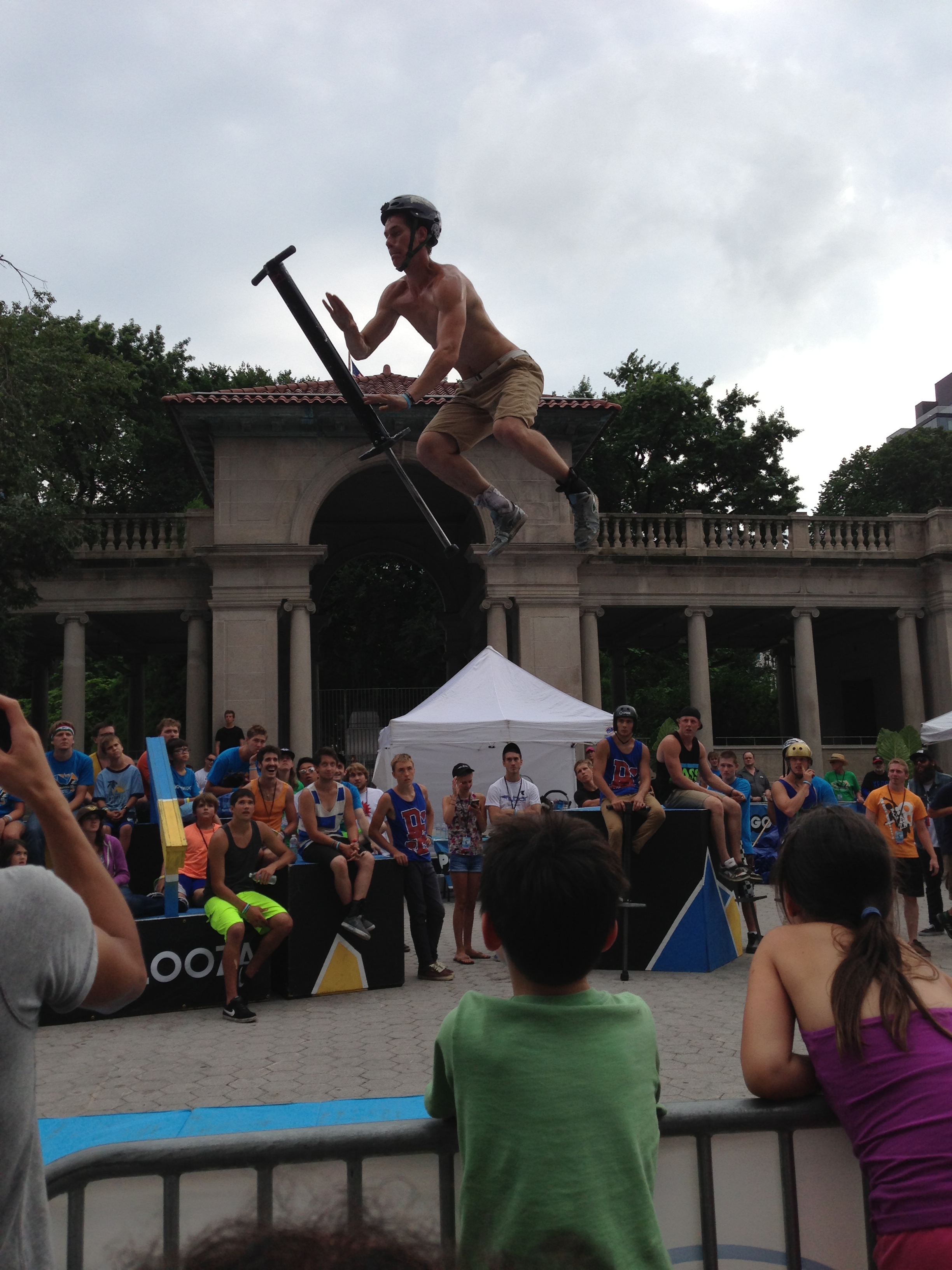
By the time we arrived, the Big Air finals had ended. Pogopalooza 10 was barreling towards its final couple of hours. None of the participants, it seemed, were tired. They were hardly breaking a sweat. It was as if the 10th Annual World Championships of Extreme Pogo, held in venues around New York City over the past day and a half, had just barely begun.

nyc

The crowd surged around the cordoned-off performance area in Union Square Park, on Broadway between 14th and 17th Streets. Because it was New York, where everything happens, twin ferrets made an appearance in the bustling audience, a distraction that was pretty much overlooked.
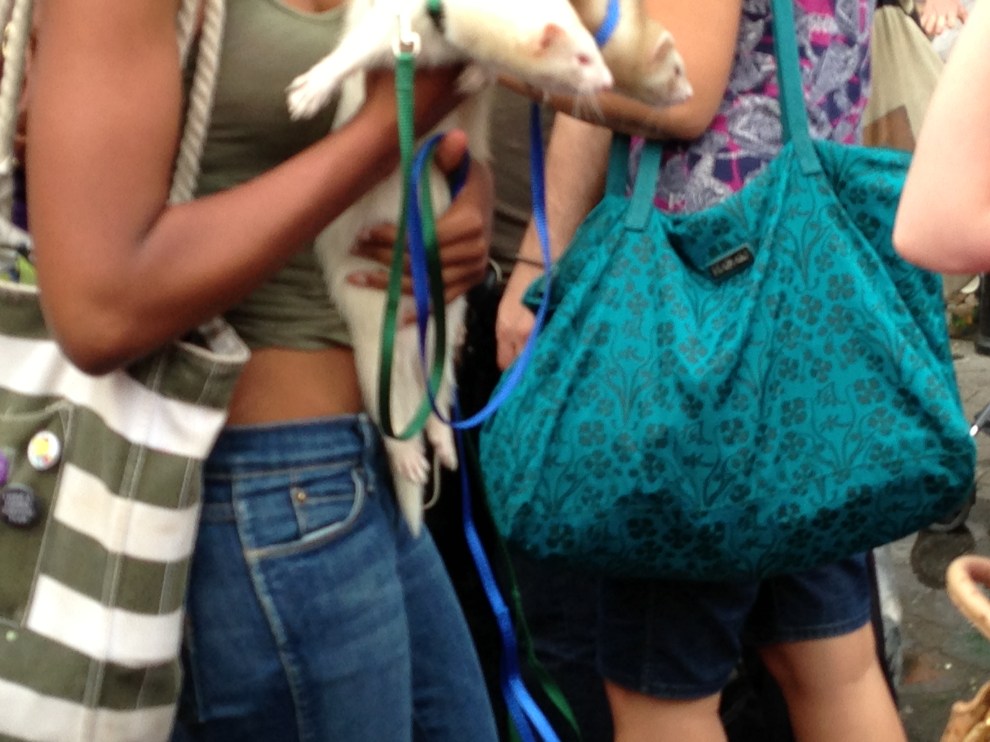
ferrets

The real attraction was the lineup of Xpogo stars, the ones hoping to break Guinness Records or at least achieve their personal best. This was the largest pogo stick event world wide, and all the pro athletes were here.

First came a practice period, with a break in the middle for one brave pogoer to take the mike and propose marriage to his pogo-fan girlfriend. He dropped to one knee and spoke of his happiness, and the crowd applauded. A guy in an orange helmet jumped by the couple: “Hey, congrats,” he said with a grin. (The two betrothed are pictured in the middle.)
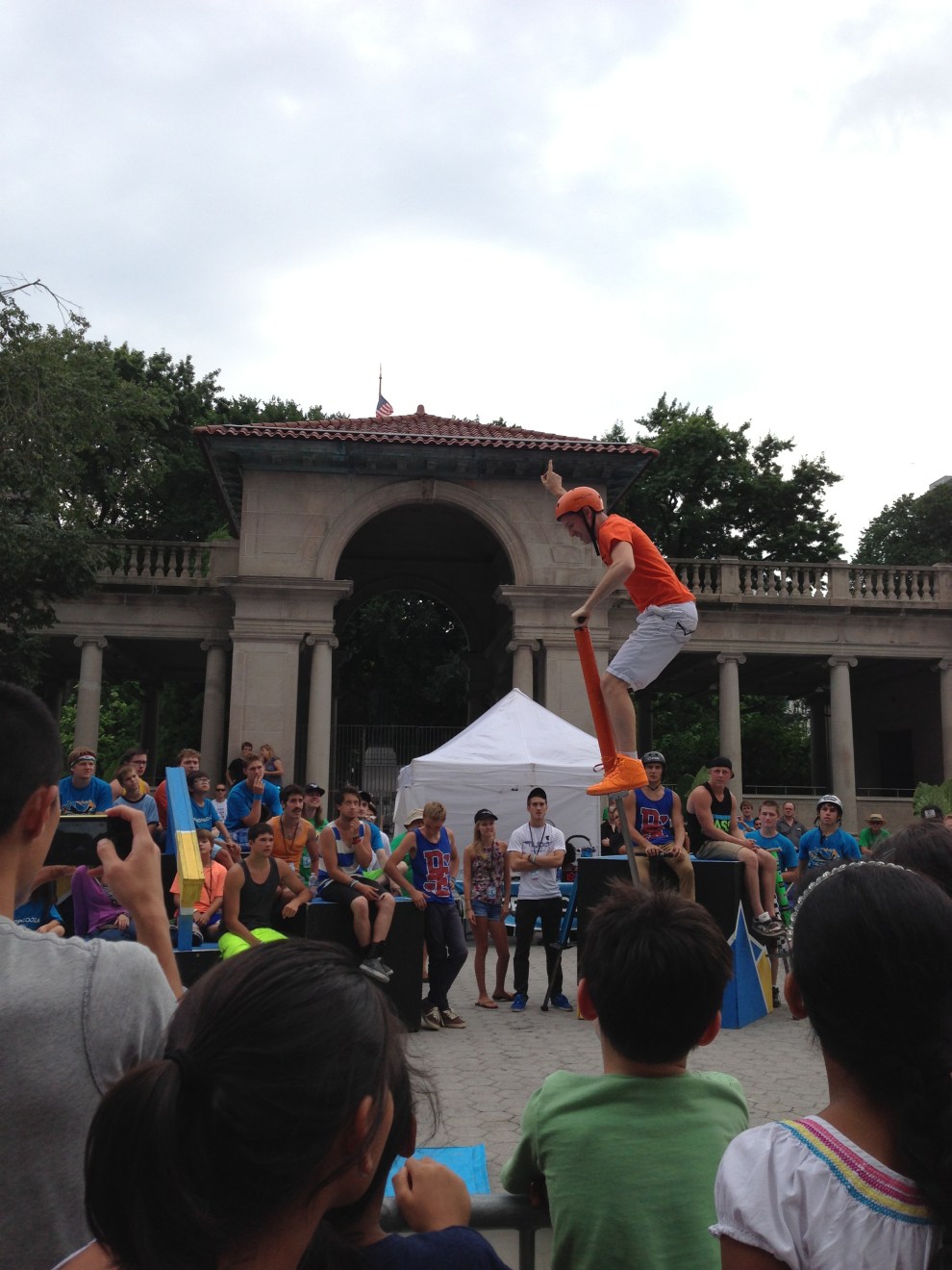
jack jump

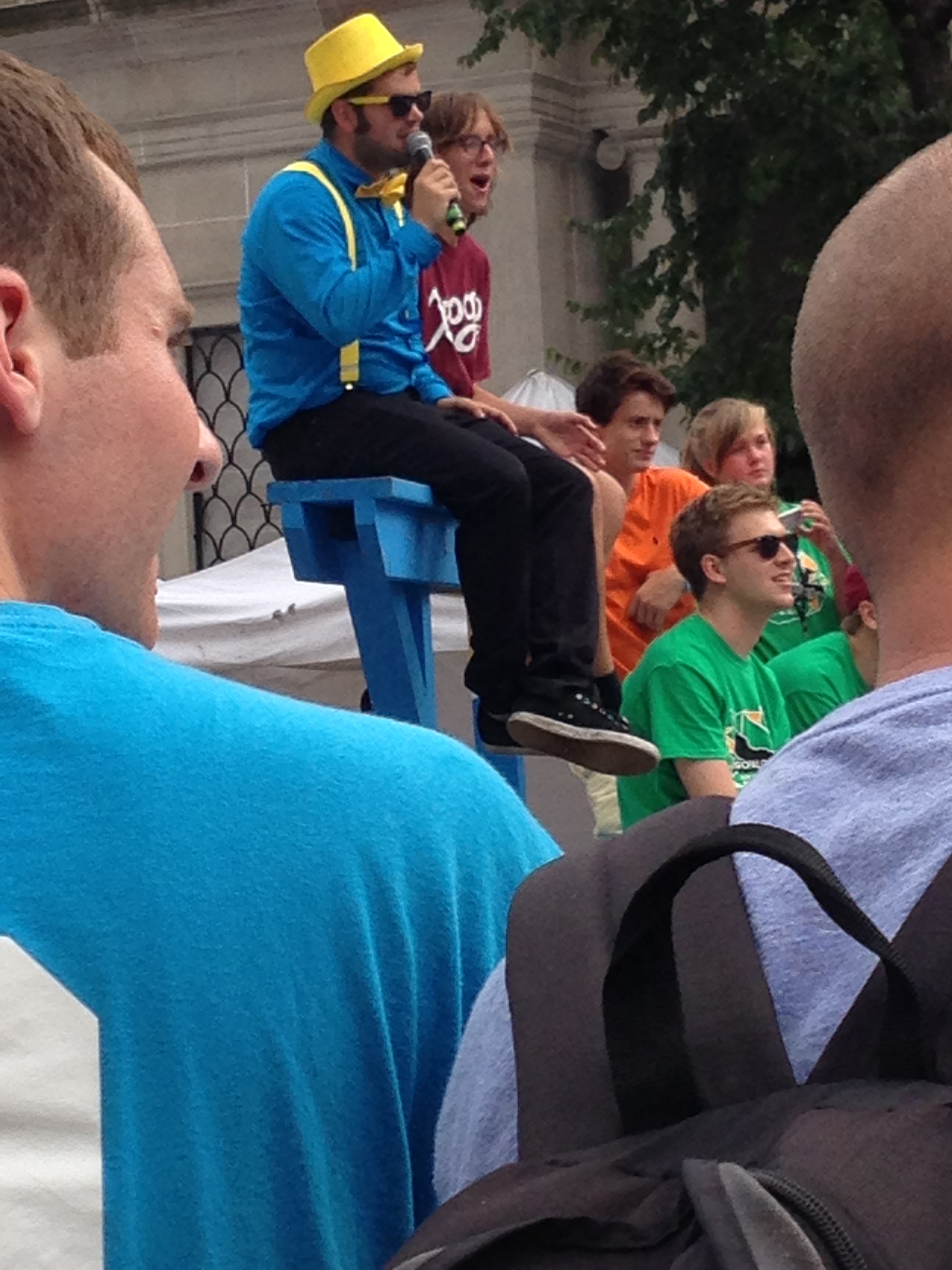
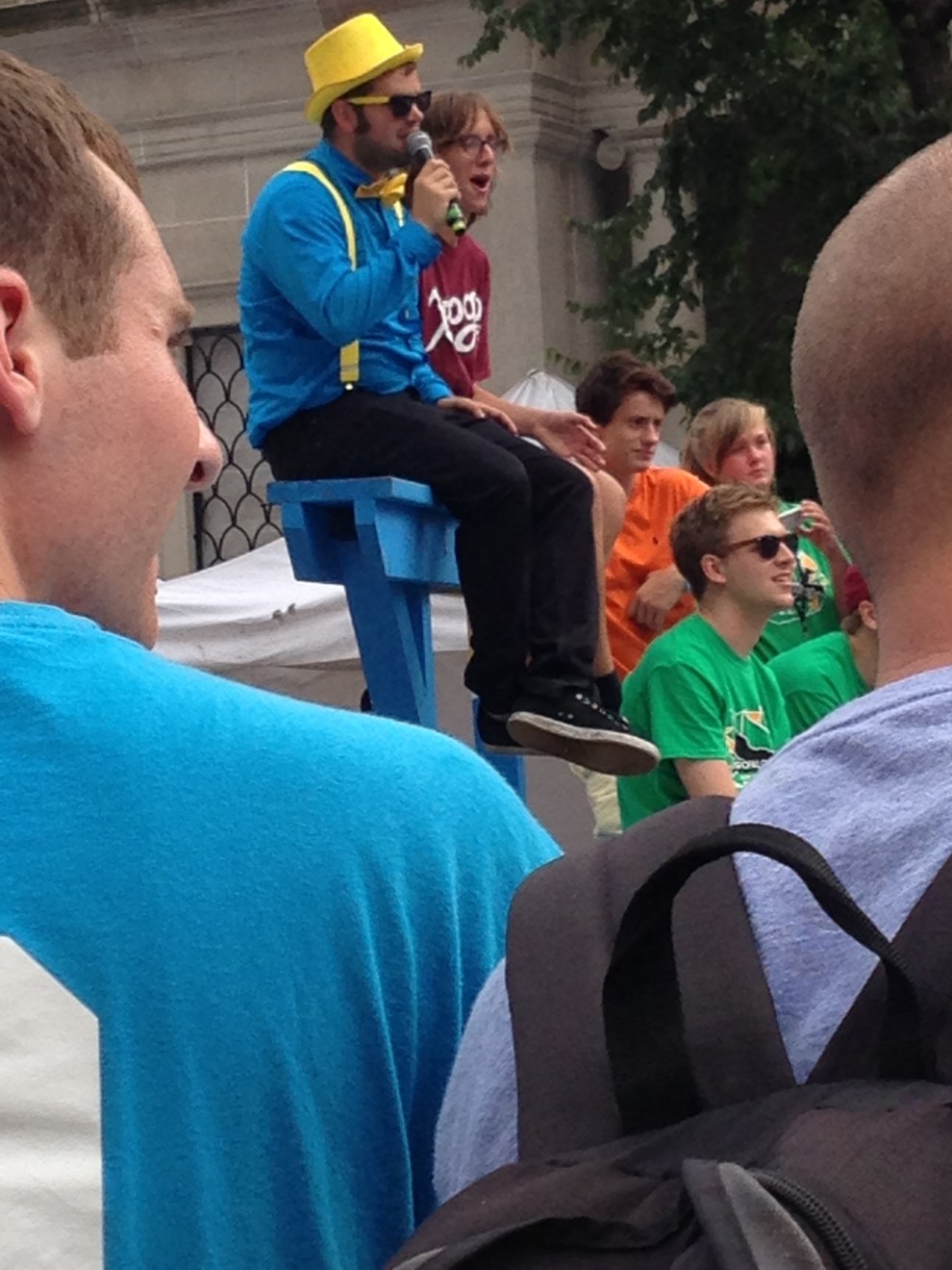
Then a yellow-hatted, yellow-tied, yellow-suspendered master of ceremonies out of a Wizard of Oz  remake introduced a contestant who had pogoed 23.22 miles, and broken a Guinness record with 70,271 bounces (seven straight hours). The athlete made  a pitch for his charity, Bounce to a Cure.

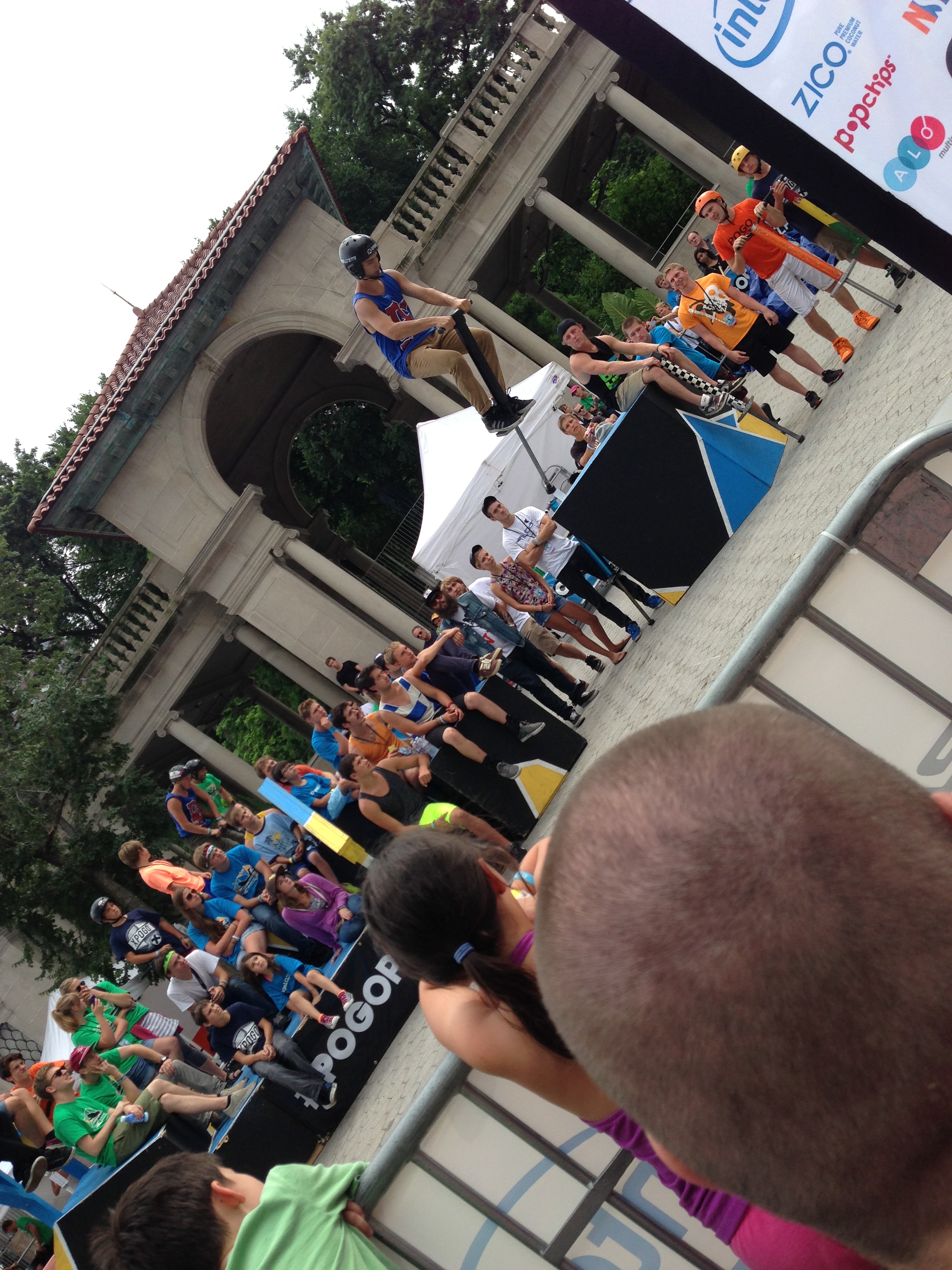
Next came the the Best Trick competition. The dozen or so contestants ranged in age from 16 to28 and in looks from movie-star handsome to pretty darn cute. Fluorescent garb seemed somewhat de rigeur, as were sturdy helmets.

crowd w mc

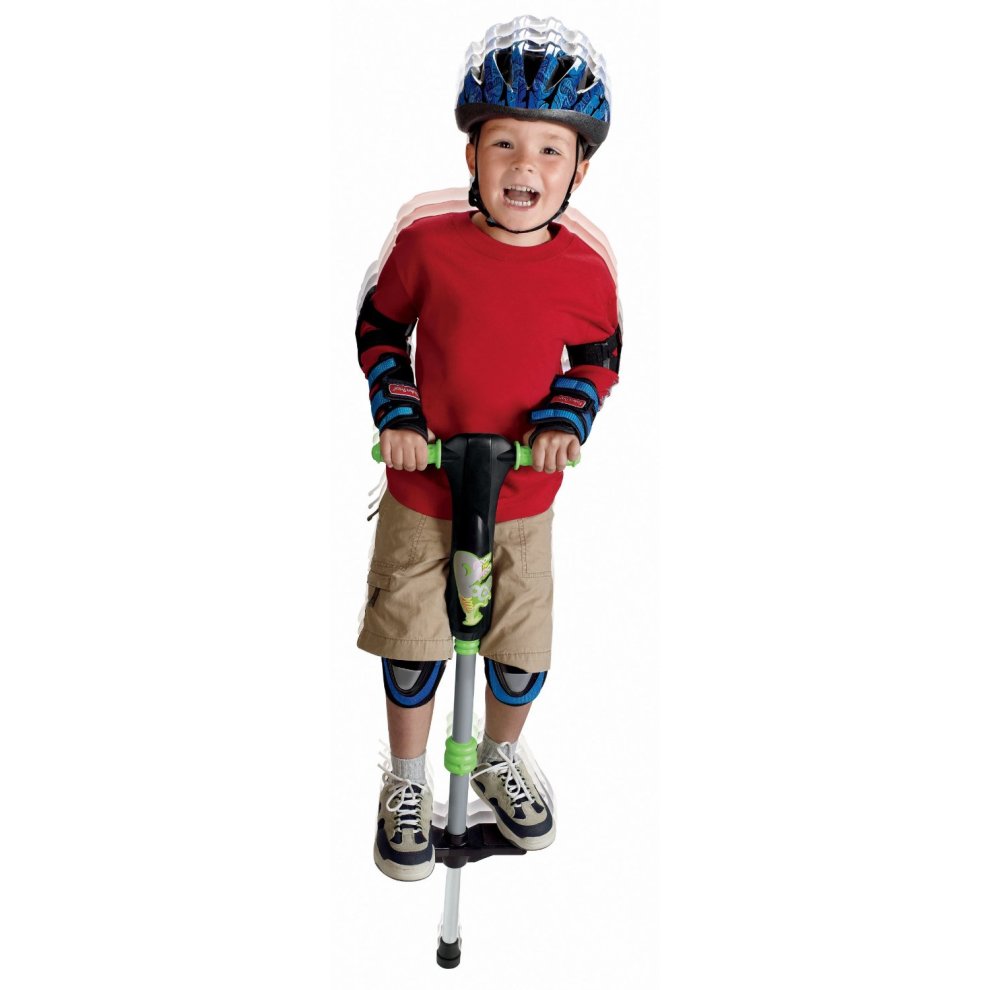
When I was about 10, I ruled on the pogo stick, setting records on my driveway with 100 jumps at a time. I didn’t put a lot of air between my stick and the blacktop, it just felt good to go boing-a-boing-a-boing. To keep that balance for so long. To hold on when it looked like I might crash down.
grow_to_pro_pogo_stick_4

The athletes now acquiescing to pre-Tricks interviews had bigger plans. Some of them, after all, could take themselve fully nine feet in the air, just for a start. There was Wacky Chad from Syracuse, the one in the fluorescent orange helmet and kicks.

jack cu

Also, a qualifier known as Manchild, who jumps his pogo backwards but had no name as of yet for his move. There was Michael Mena, who called his move the “Manchild” out of respect for his colleague. The other contestants gave previews of their tricks: the under the leg bar spin, the infinity wrap, the double 180 wrap, the grisly whip. “You’ll just have to wait and see,” said one fellow who had stripped to the waist, with a mischievous expression.

The Ramones song Judy is a Punk blared from the speakers as the action began.

“None of these tricks have been landed before!” announced the mc.
mc cu

And I noticed that this sport looked fun and all, but was anything but safe. You could injure your body, yes, but you could even more easily bruise your ego. One after the other, the jumpers broke the line and came out into the center, boing-a, boing-a, going through their moves. And invariably, each one wiped out. Dusted himself off. Rejoined the line.

Beck’s Loser was now in the air, a fitting soundtrack for these redblooded competitors who seemed immune to failture.

A guy in sunglasses came out and tripped himself up almost before he began – every single time. “It’s a very technical move,” said the mc, “Give him a hand.”

pogo_stick

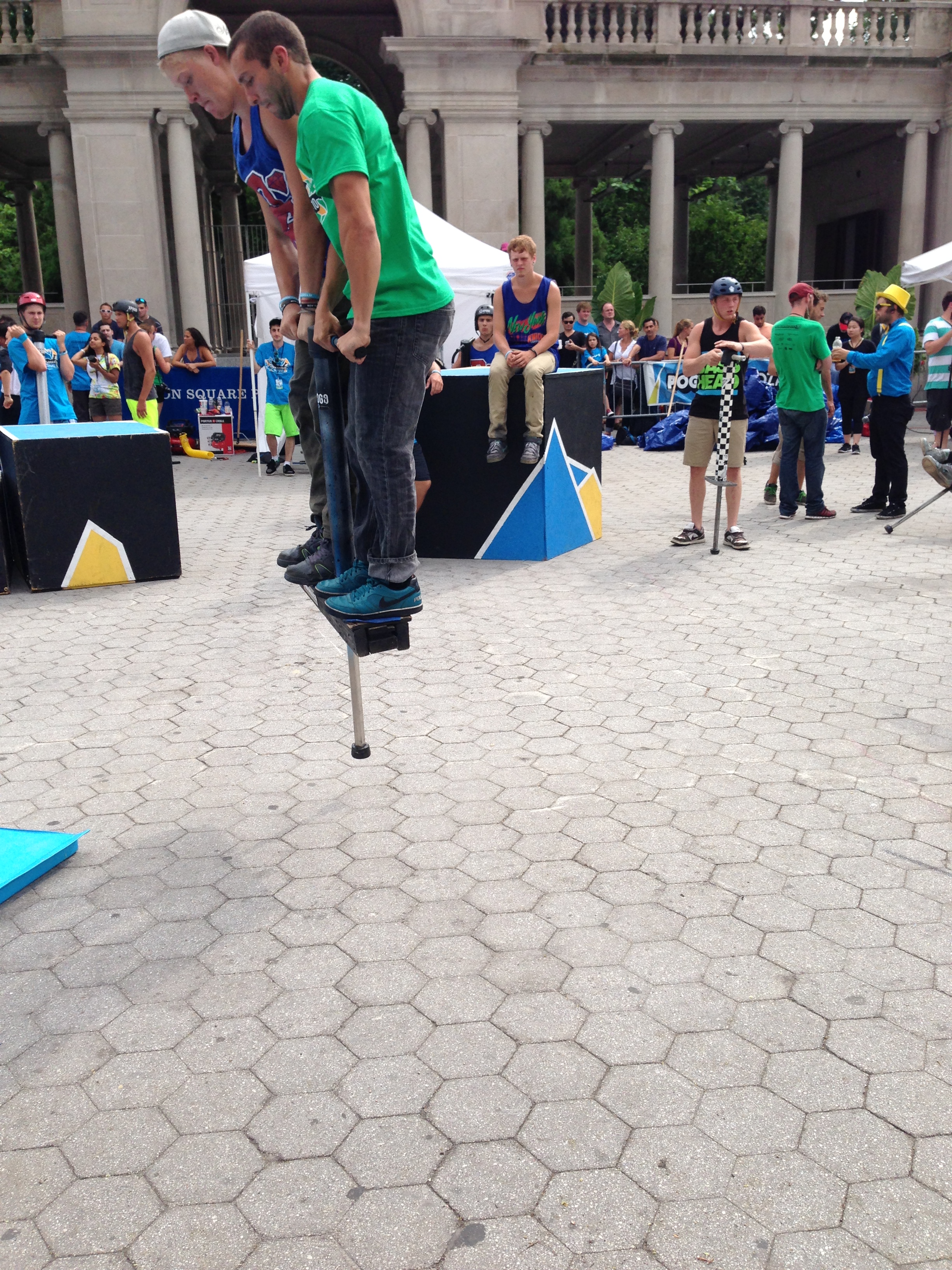
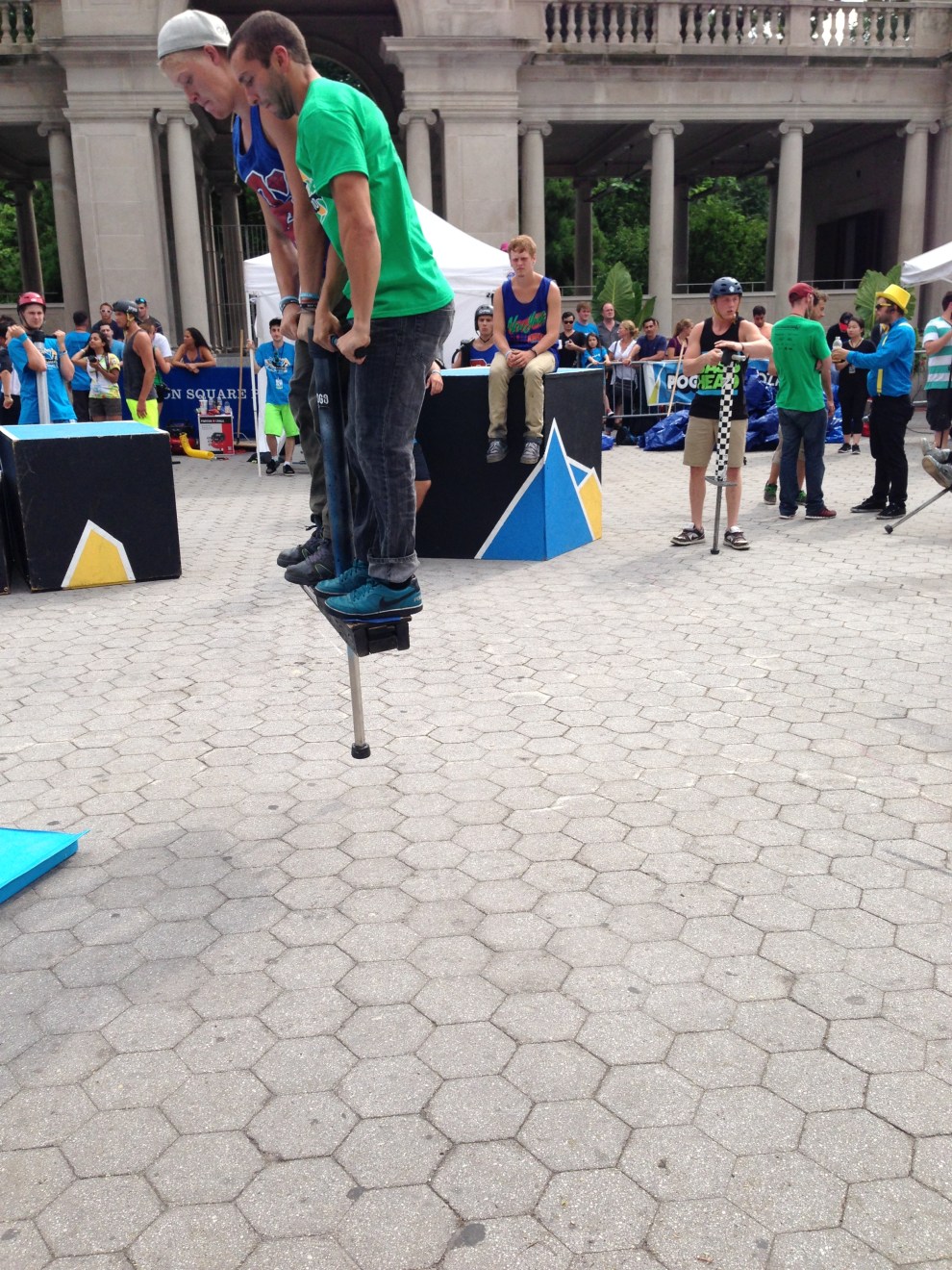
A duo on a double pogo tried over and over again to achieve a back flip—and they did manage to nail it, only they landed with their feet on the ground rather than the stick’s pedals.
pogo duo better

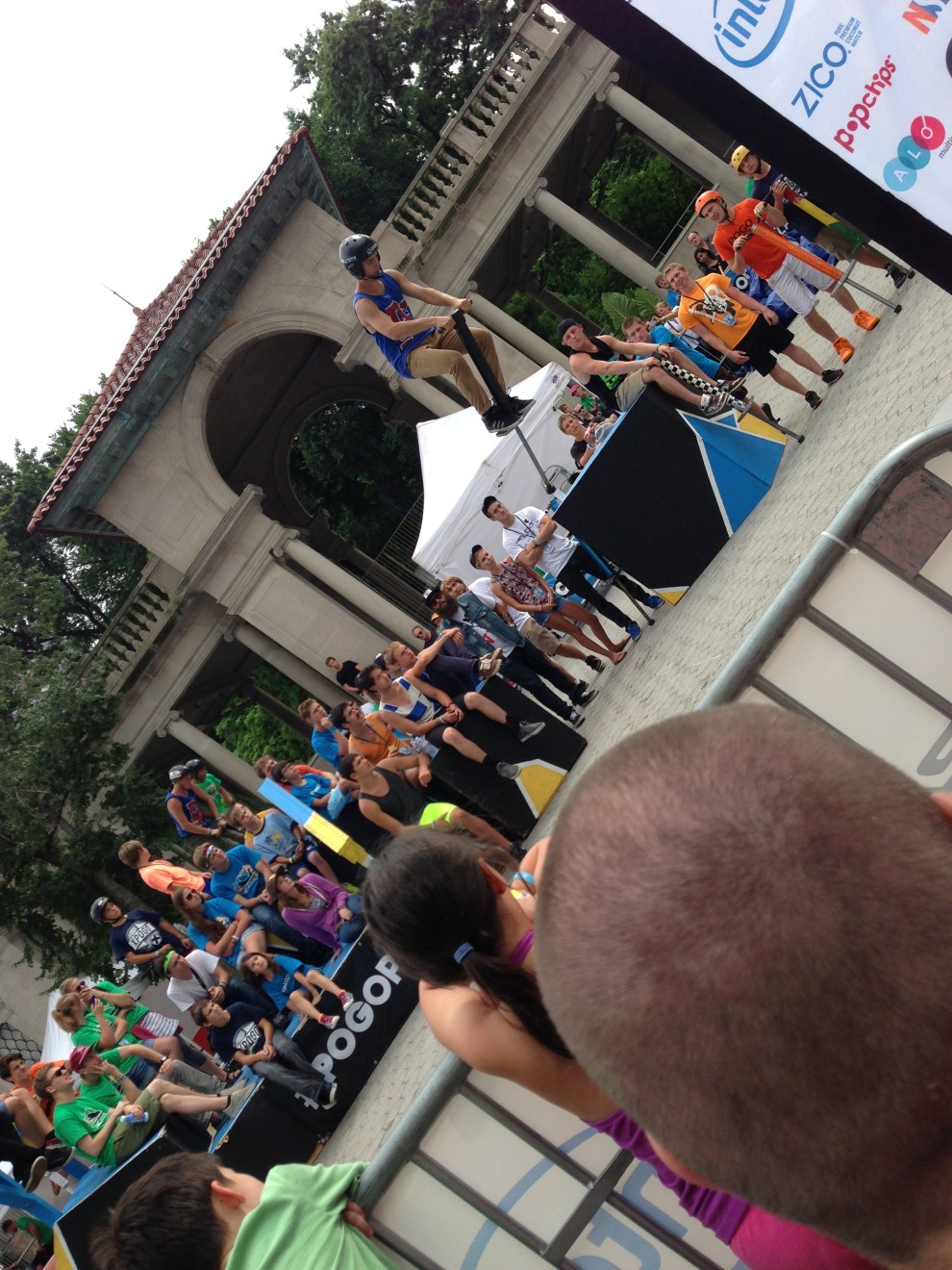
Manchild came so close, so many times.
manchild jumping

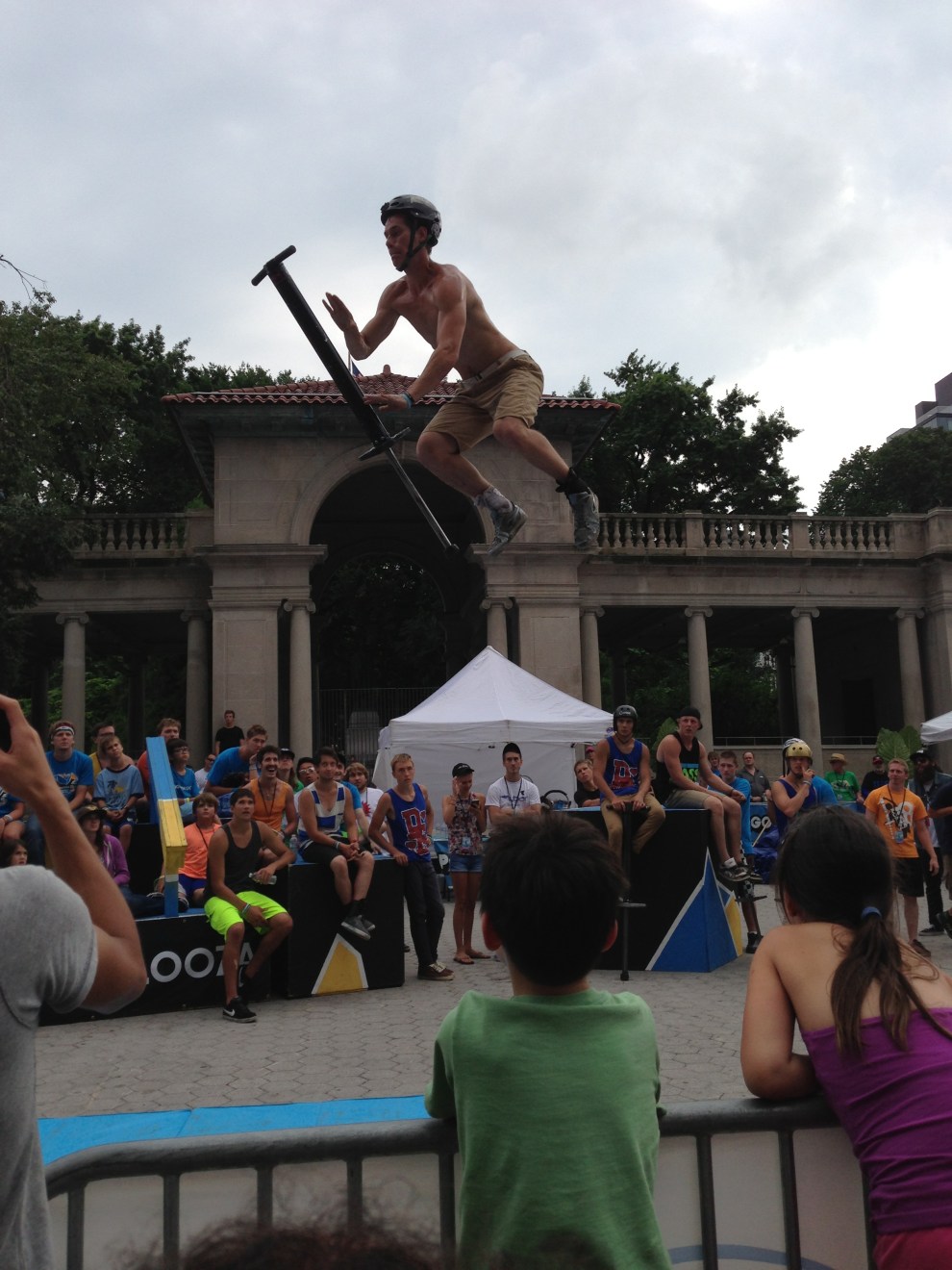
Dan Mahoney, from Nova Scotia, the bare-chested athlete with the wry smile, at 20 is a veteran jumper.

dan hand up better

He held the world record for highest jump on a pogo stick (9’6”). He went high, high, high, with his trick at Union Square, he flew, and the figure he cut was so complex that a second after he’d done it I couldn’t even figure out what he did. Still, he failed.
dan jump better

Until he made it. Yes! Glory. The crowd erupted. Yet the competition continued, as the judges would assess the overall performances at the end of the period and make a cumulative judgment.

The Black Keys Howling for You, their big stadium hit, pounded from the amplifiers now as a backdrop for a sport in a smaller stadium, a struggling extreme sport whose people have performed in Beijing, Rome, London, Japan. Can pogoing ever achieve the respect given snowboarding or skateboarding?

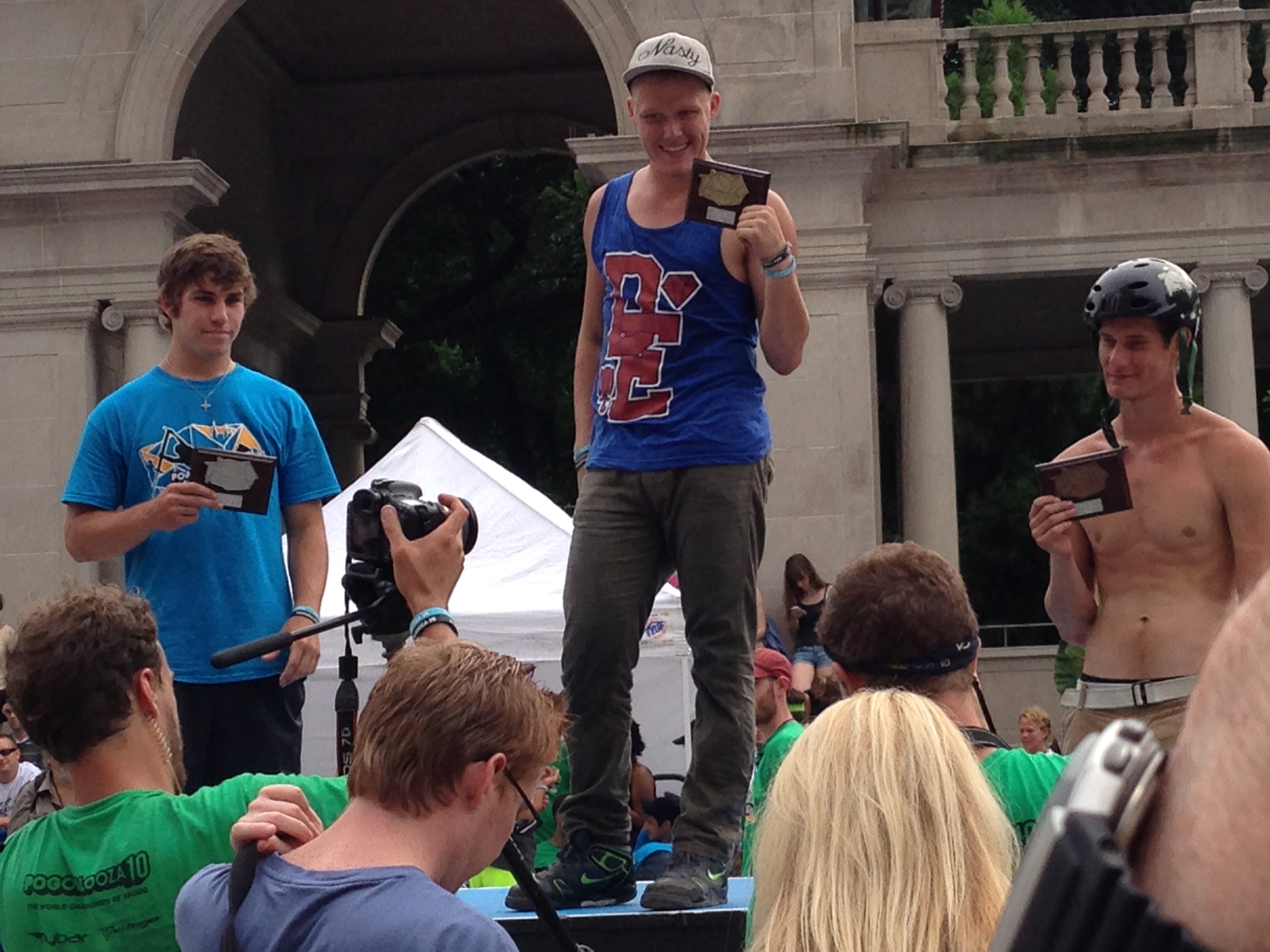
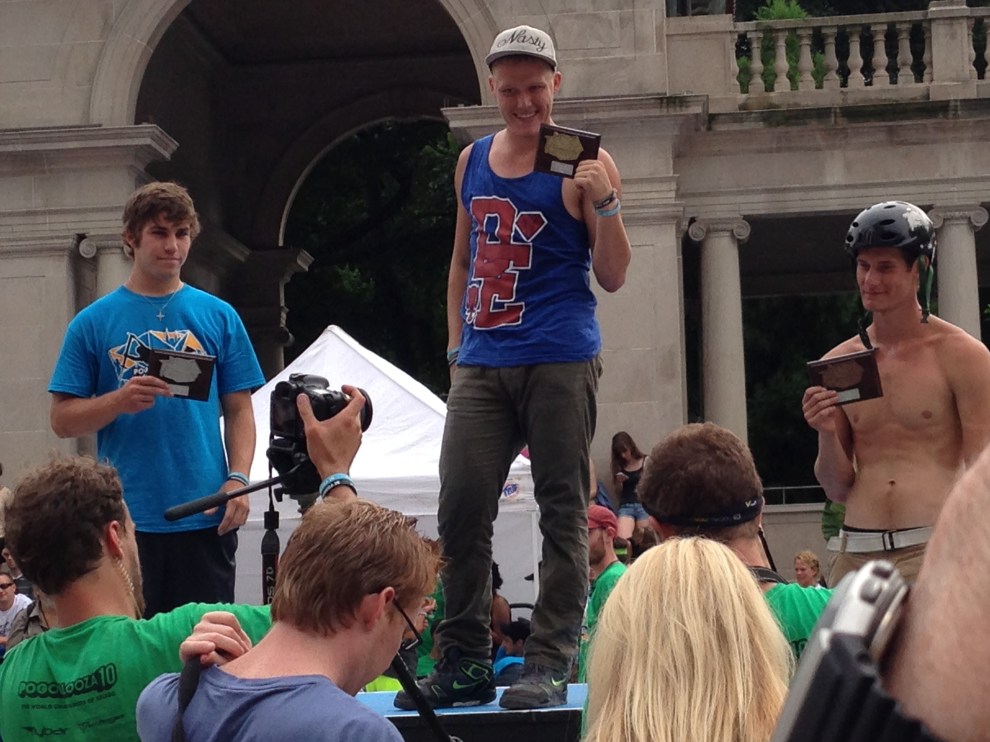
Another champion, Biff Hutchinson of Burley, Idaho, jumped into the fray, accomplishing a back flip, then another, then another. Earlier he had taken first in the Big Air contest.
nasty air prize

No one wanted to stop. Even Wacky Chad had to come out for one more ride.

Finally, the end. I watched Mahoney remove his sneaks and socks and carefully examine his feet. He had developed a small limp in the course of the contest. Now he went forward to collect his prize. Do his interview. “When I think of a trick,” the athlete told the audience, “I can see it in my head.” He’s won this prize for four years now. “I love you all,” he said.

Fail and try again. Fail, and win. That was the spirit of the day. But did I dare?

I approached the open pogo area, where brash little pink skirted toddlers and perplexed looking middle agers tried to develop some confidence on the stick.

free pogo area

I was the last in line for the day.

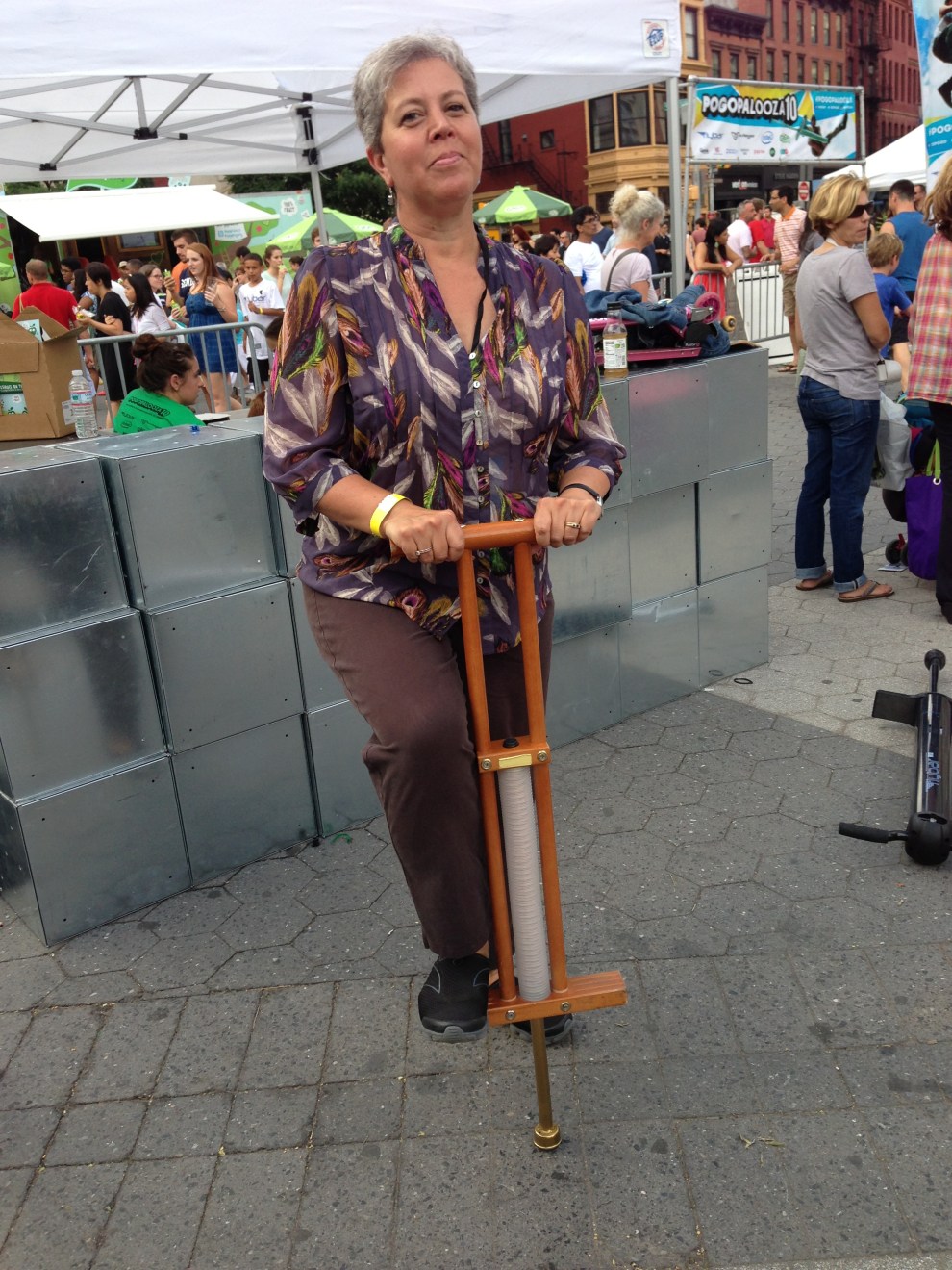
I’d done it before. Yes, several decades before. But give me a moment to collect myself, we’d see who still had the chops.

jz pogo jump

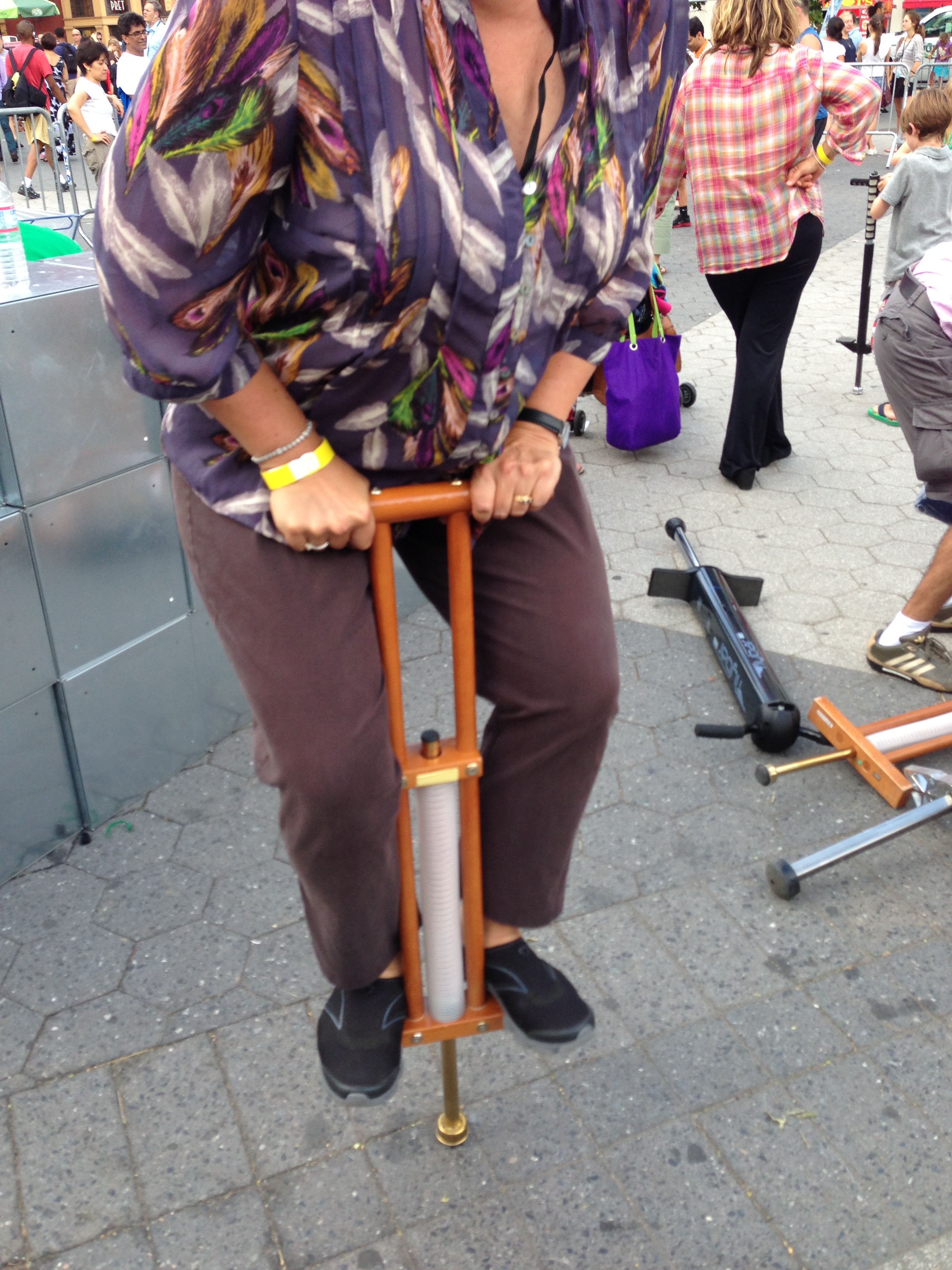
I left my fluorescents at home. I still had my boing-a attitude, though. I asked to use one of the big bazookas but was told by a helper, “That’s what they use,” pointing to the professional pogo pit. That was okay. I mounted my steed and managed not one, not two, but eight jumps. I fell off, then I got up. I dusted myself off.
jz pogo smug

Eight good bounces. Only 92 more to go.
5 Comments

Filed under Culture, Fashion, History, Home, Jean Zimmerman, Photography

Captive Audience

Millbrook, New York is a quiet town, a town of well-behaved dogs on leashes and potted flowers.

box of flowers

A town of rice pudding with cinnamon at a cute bakery called Babette’s Kitchen.

rice pudding

The last notable murder in Millbrook took place a century ago – a nanny named Sarah Brymer was strangled when her employers, of the Barnes Compton clan, left their estate for a New York City visit during a January snowstorm. The coachman, Frank Schermerhorn, did it – though he first tried to pin the blame on the Japanese butler – then cut his own throat with a straight razor when he was apprehended.

That was a long time back and everybody’s forgotten about it.

So it was interesting to be invited to Millbrook’s warm and comfortable Merritt Bookstore for a discussion/book signing today where attendees could “discover the art of mystery.” I was joined by another novelist, Koethi Zan, whose book The Never List was published earlier this month.

16158525

Koethi is a former entertainment industry lawyer who makes her debut with this riveting book. She knows everything there is to know on the subject of girls and women taken captive by craven men, then tortured and imprisoned for years. She is also an authority on the subject of the women who eventually escape these men. And she has worked this knowledge into a thriller which has received strong acclaim from people like Jeffery Deaver and Tess Gerritsen.

It was great to meet Koethi.

Jean and Koethe

She brought her husband, Stephen Metcalf, a critic-at-large at Slate who has a nonfiction book on the 1980s in the works. I brought Gil – yes, Gil Reavill, whose speciality is also crime and whose recent book is Mafia Summit.

All the great minds were present. The only thing lacking was an audience.

It happens sometimes. When you make appearances as an author, you don’t know whether to expect 120 people or three. When it’s three, you still have to be mentally present, be on your game, because these wonderful people made the effort to come out and see you, after all. Amazing!

In this case, nada. So, with two of the book store’s staff, we sat around in the cozy garrett upstairs and had a very stimulating talk about writing books.

We talked about creating a bad guy. How do you get inside his head? Koethi said that for The Never List it was more about her characters trying to ascertain how her bad guy ticked. For me, with The Orphanmaster, I said it was partly about figuring out what he would think and do that was completely the opposite of what I would think and do.

How do you discipline yourself when you don’t feel like working? Five hundred words a day, said Koethi. That is my minimum.

We talked about fact-based prose. About research. (One of my favorite subjects.) I told them about how I had based my protagonist in The Orphanmaster on a real person I had written about for an earlier work, The Women of the House, and how I had all my research practically done when I started my novel. Stephen talked about the book he is working on, about the plenitude of letters regarding the artist Jean-Michel Basquiat, one of his central figures. Koethi, as I said, has absorbed everything on captive females.

She told us about some of the recent high-profile cases, and said that while it seems some of these young women are coming back to a semblance of mental health it’s not always what it seems.

We talked about captivity narratives, about the classic John Wayne film The Searchers, about an article that has recently been published in The New York Review of Books on the subject, about Ride the Wind, a historical novel based on the Cynthia Parker story. The subject interests me historically because in Savage Girl, the central figure spends some time with the Plains Indians.

A lot to chew on. All of this and a full cheese platter too.

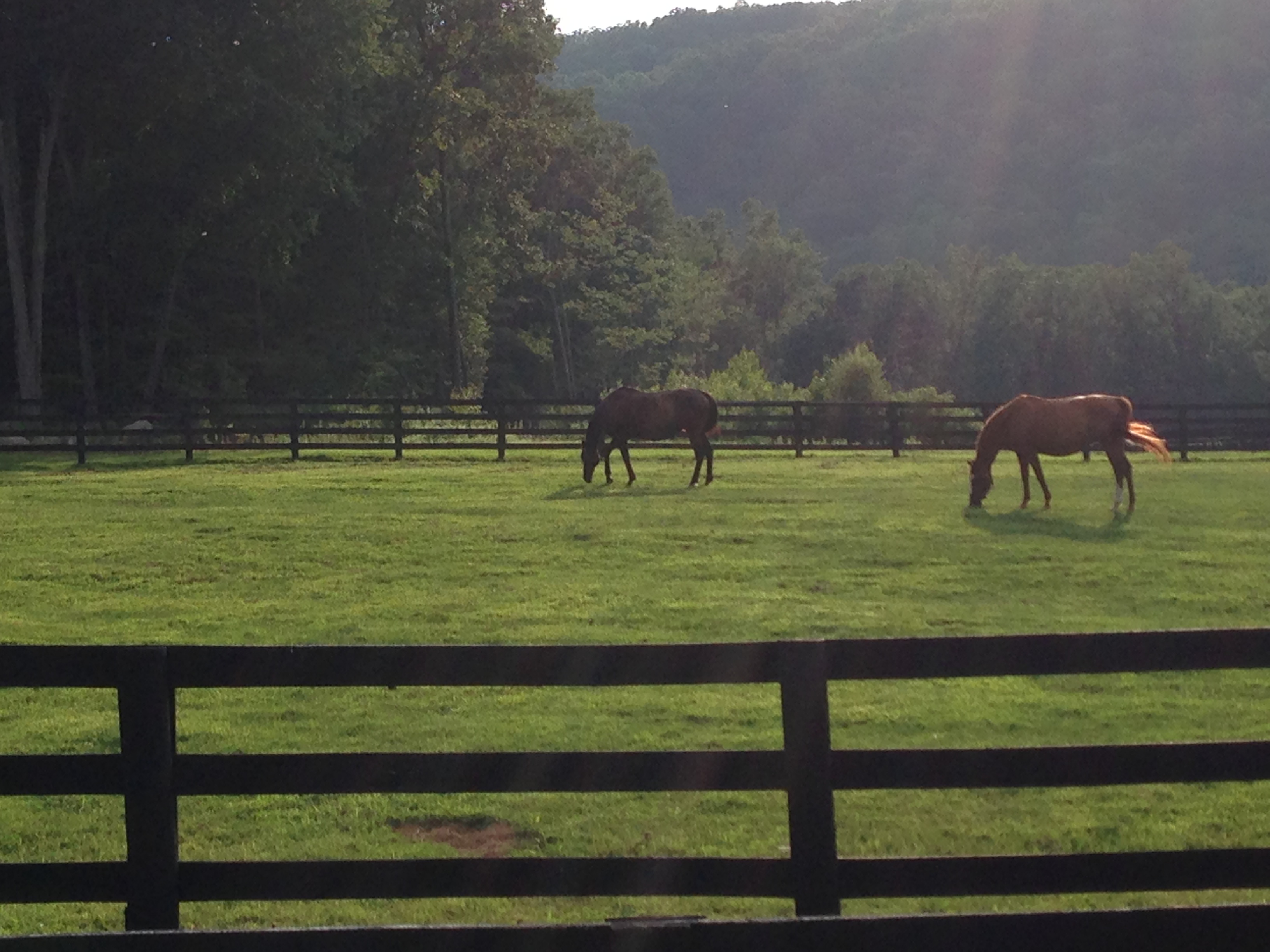
We meandered home on the back roads, through soccer fields and corn fields and gently curving horse meadows.

horses

There was only one exception to the bucolic charm of the open road: the ruin of an abandoned complex that was Wingdale, a mental hospital which operated upstate from 1924-1994 and is said to be haunted by ghosts. With its crumbling brick and busted windows, it looks like the perfect set for a horror film.

No visitors allowed.

wingdale

There’s always something behind the happy façade.

3 Comments

Filed under Culture, Fiction, History, Jean Zimmerman, Savage Girl, The Orphanmaster, Writers, Writing

Lincoln Center Whirl and Twirl

It is about the dance. It is about the crowd. It is about the dance.

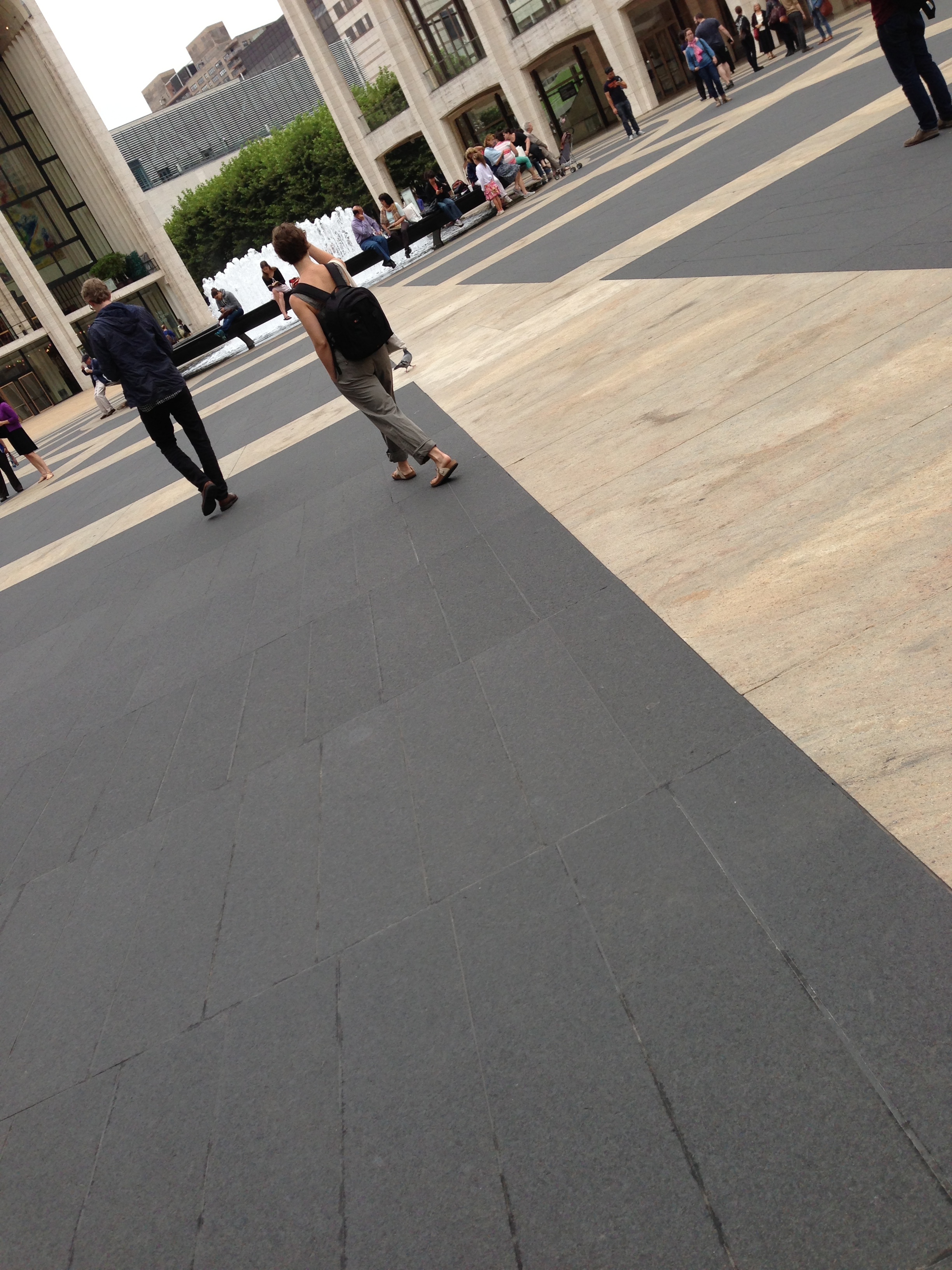
The dance, choreographed by Mark Dendy, is called “Ritual Cyclical,” and it takes place at Lincoln Center, at the north end of its outdoor plaza, on the Upper West Side of Manhattan.

Not at the fountain. That would be too conventional.

fountain

It takes place at the pool, the rectangular, shallow reflecting pool crowned with a sculpture by Henry Moore.

We know the dance is supposed to mysteriously start out of nowhere so as soon as Josefa and I get there we start looking for signs.

It’s hard, because New York is all signs. We have heard there will be some eighty dancers in this flash-mob-ish piece, so anyone could be a performer. Everyone is facing the pool, then someone dressed in business clothes will bolt behind you, a hand on your shoulder. A dancer.

A disembodied voice welcomes us: How to see this piece? Fluidly, moving along, circulating, there is no front, it’s all around, constantly shifting, and changing, and the audience needs to change with it.

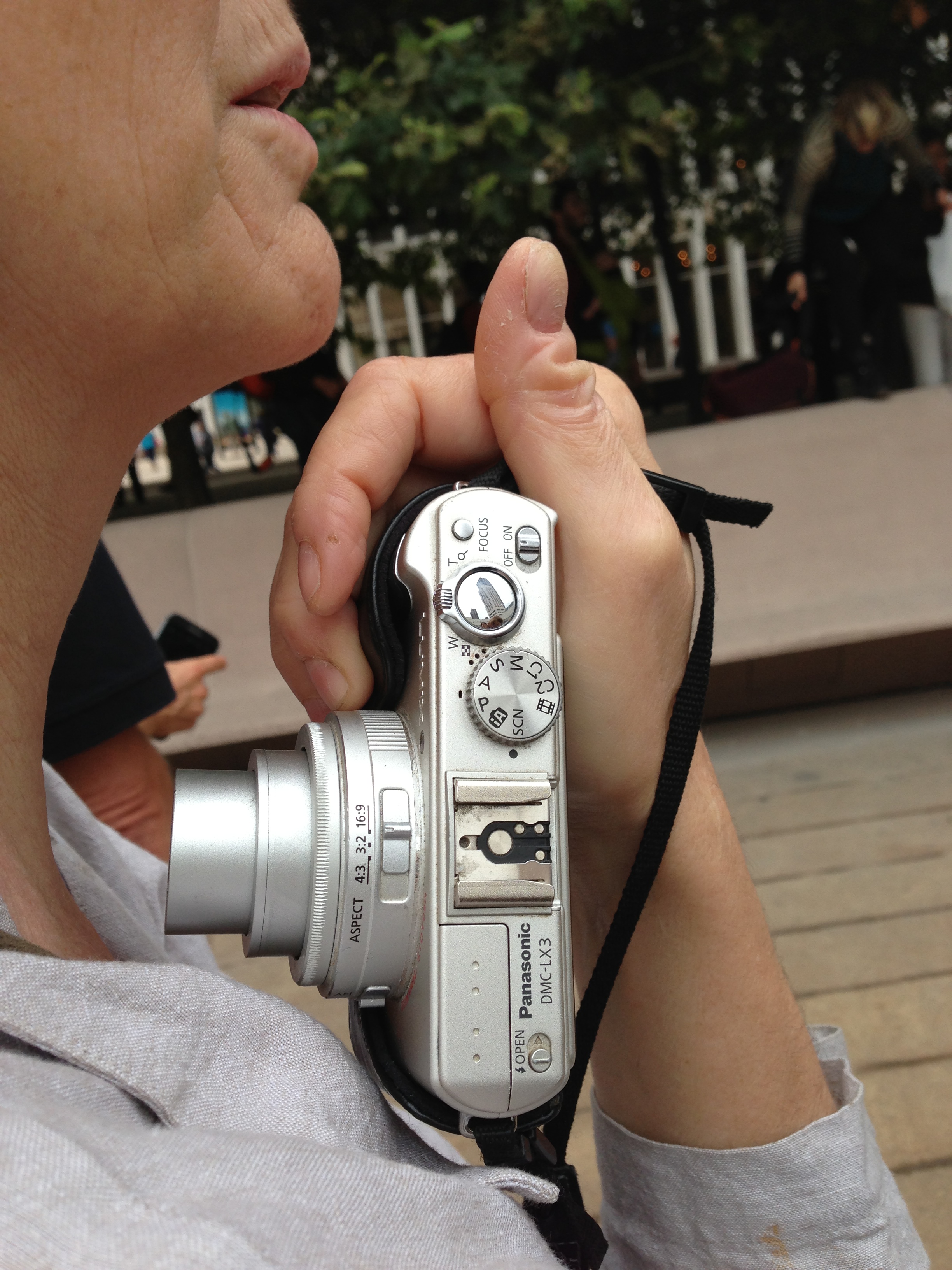
We talk about cameras. Josefa has a great camera and a better eye, and most of these are her images.

josefa camera

How to get the best shot here, where good shots are difficult? I complain that I can’t get a long-distance picture and Josefa tells me a little about the debate over the telephoto lens. In the world of photography, she says, there is thinking going on about what is the responsible way to document something. Is it intimate in a way that is not so good to shoot from far away, rather than close to the subject? The telephoto might be dishonest.

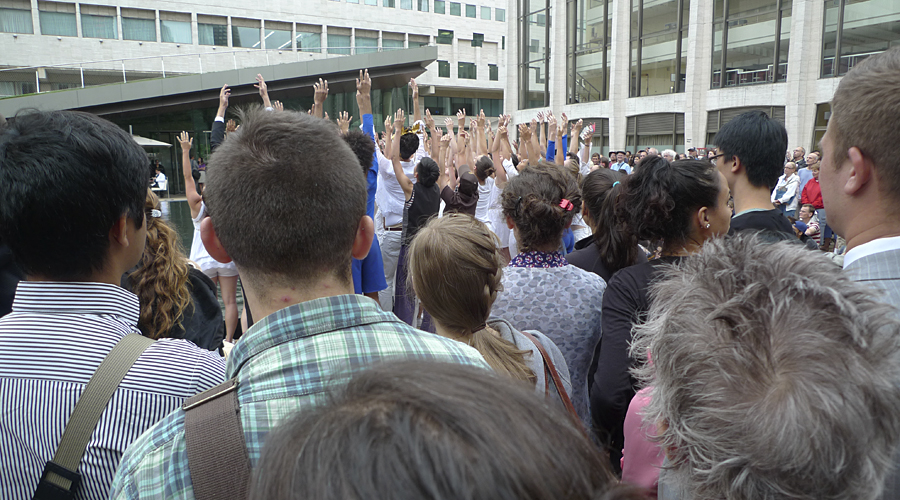
Around peoples’ heads, around  peoples’ cameras, we see people holding their hands up to the sky, waggling their fingers.

hands

It’s as if they are hailing a space ship. The music of the Kronos Quartet soars from speakers all around. It’s six o’clock, just past the afternoon and still not dusk. An hour of expectation, and this piece seems to be a lot about expectation. We’re all crushed up against one another, against hair and shoulders, bellies, hips. It isn’t so bad, strangely.

summer new yorker

New Yorkers in their summer finery.

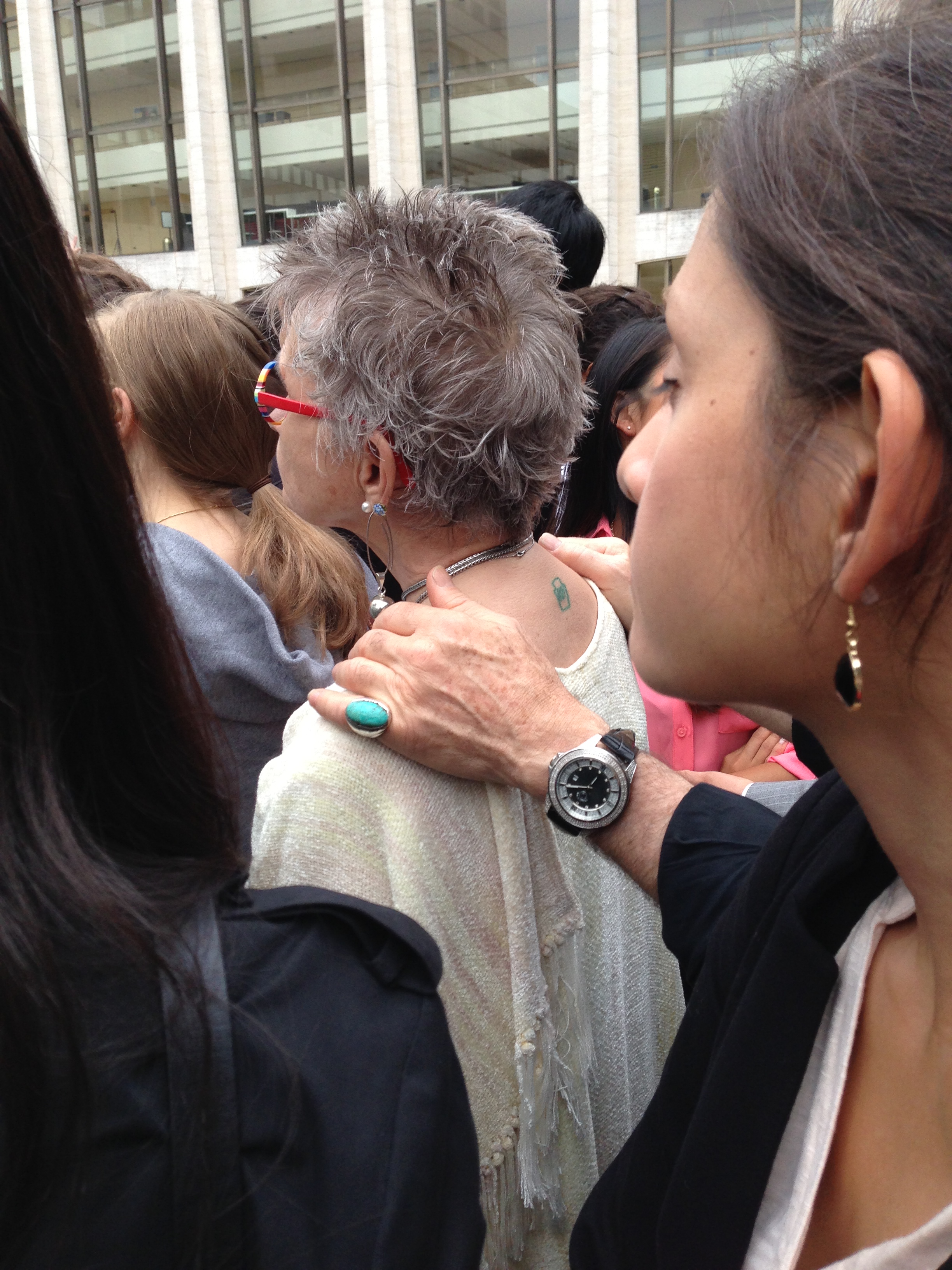
red glasses

The woman with red glasses has a green tatto of a number on the back of her neck. Josefa always wonders what the numbers mean.

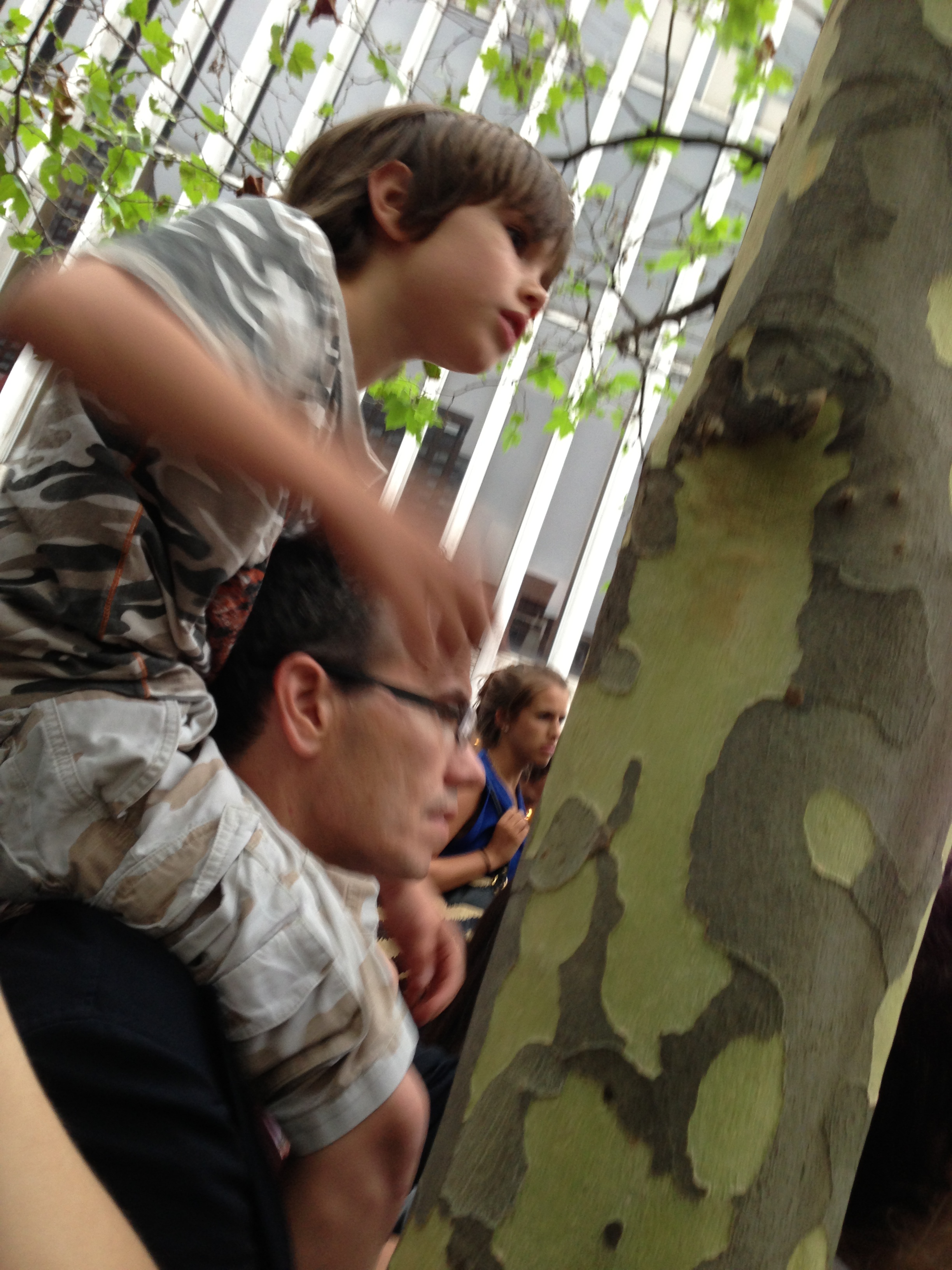
Kids in fatigues already barked at spectators to stand back, clear the area. But the crowds surge.

camouflage

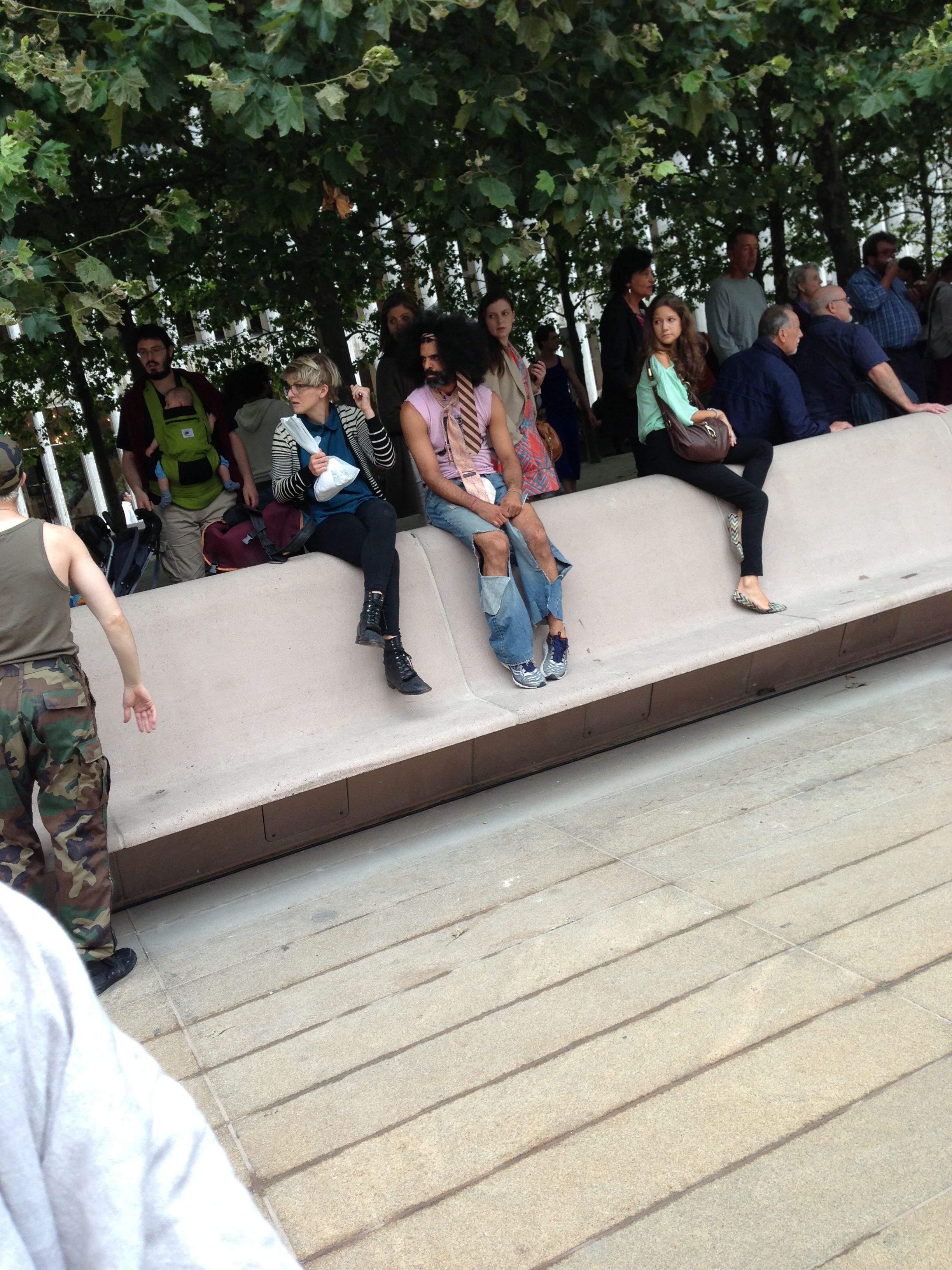
There’s a bum sitting on a concrete bench. Should he be here? Really. Harrumph.

bum sitting

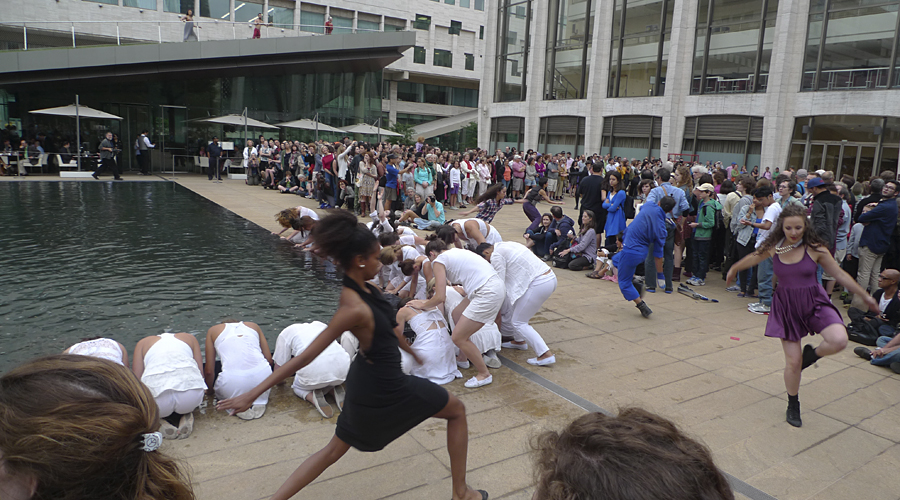
Now girls in white are caressing the water, dripping it across their bodies. A beautiful white-shirted man removes a golden crown from his head.

white girls in water

The dance has begun.

It proceeds on all surfaces, all around, people writhing and twirling, in all manner of costume.

pool dancer

A young man and woman splash and play and court in the middle of the water. She goes piggyback. Up on the green grass plane above the pool, an audience of three dancers stretch their bodies, do what dancers do.

white boy and girl

Then the crowd shifts to the grove of small trees just to the south. Human forms in blue, grey trunks. Josefa: It must be nice to dance against trees like that.

blue dancers

They collapse, and other dancers erupt, doing Latin steps next door.

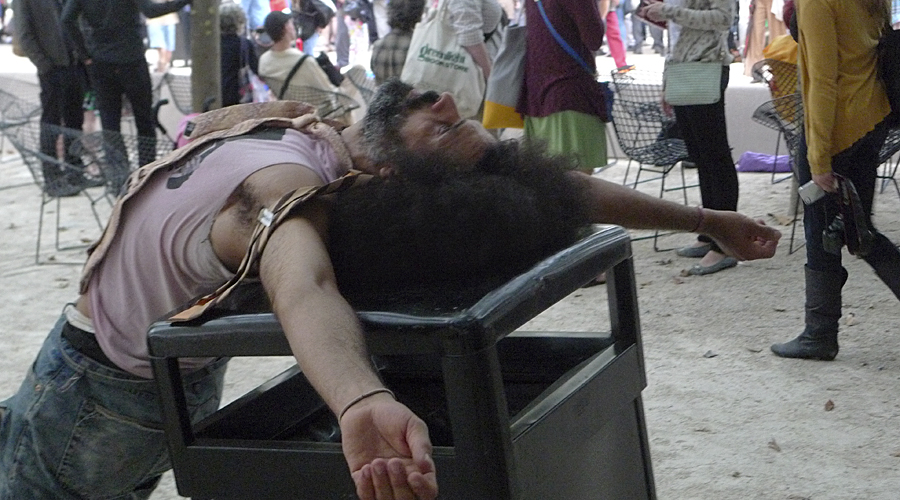
We have a realization. The bum is a dancer. He has appeared everywhere, and is not an interoper, except in our consciousness.

bum blur

His clothes are dirty, he picks up trash from the ground. A dirty dancer. Josefa takes pictures as he twirls, relishing his intransigence.

bum:can

Is he homeless? a man asks me.

No, he’s a dancer.

The homeless dance? he says.

For a finale there is a stage in front of the New York Public Library for the Performing Arts and American tunes: The Battle Cry of Freedom, Dixieland, Elvis, Hendrix.

USA! USA! The performers yell. The crowd presses up close yet everyone gives each other room, room to breathe.

boy:shoulders

We can smell sweat – the dancers’? Our own?

iwo

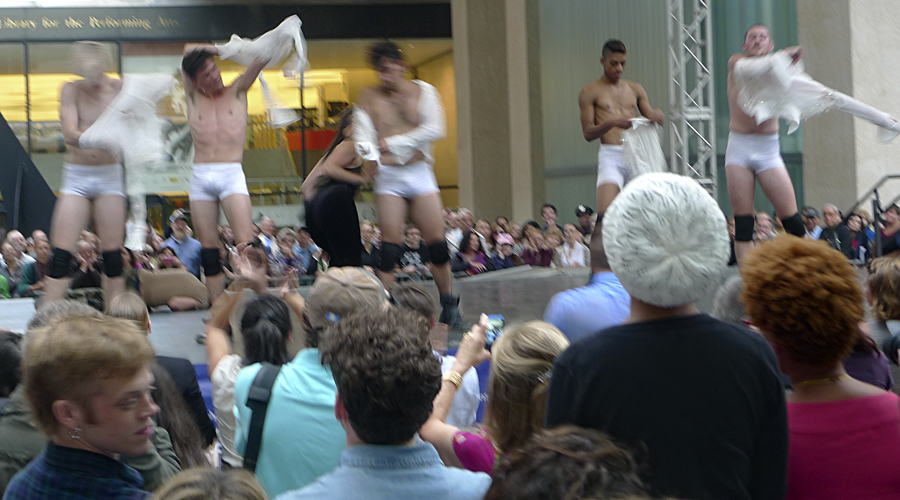
They hoist a flag a la Iwo Jima. American uniforms, then, wow, the vogue-ing, marching dancers strip to their briefs and pitch their shirts and pants out to the audience like rock stars.

clothes

We don’t care, we’re New Yorkers, but still it’s pretty cool.

Mark Dendy told The New Yorker, “Every day, every New Yorker comes into contact with about two hundred thousand other people, and they all depend on each other. So in this piece we do this thing called New York City together.”

Do they ever.

9 Comments

Filed under Dance, Fashion, Jean Zimmerman, Music, Photography

NPR: Great Historical Fiction for Summer 2013

I liked digging into recent historical fiction for my summer round-up on NPR, which is hot off the presses. I knew some of the authors’ work already, and some novels I discovered for this assignment. I tried for a balance of time periods and styles when I selected the books to review. What I was really going for, though, was fiction that took off from specific fact, historical personae or events that grounded the work.

So these were the books I reviewed.

Orphan Train by Christina Baker Kline.

orphan train

The Black Country by Alex Grecian.

black country

The Blood of Heaven by Kent Wascom.

blood of heaven

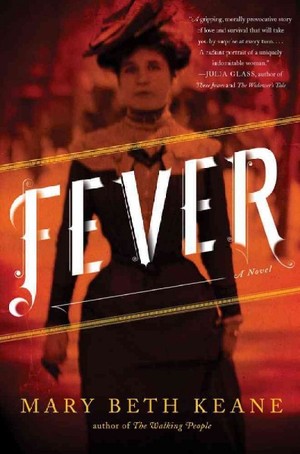
Fever by Mary Beth Keane.

fever

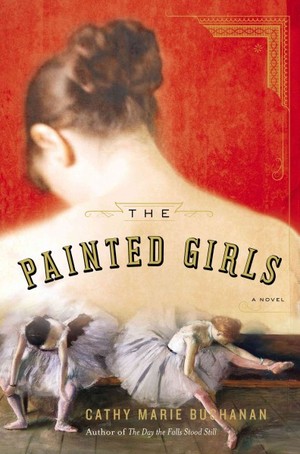
The Painted Girls by Cathy Marie Buchanan.

painted girls

I hope you enjoy your summer reading, whether it takes place in a lawn chair, on a beach towel, or on the couch in front of the air conditioner!

10 Comments

Filed under Culture, Fiction, Jean Zimmerman, Publishing, Writers, Writing

Stop Your Sobbing

How do you cope with the prospect of failure?  Not failure itself, that’s pretty easy. You cry, brush yourself off, move on.

But the likelihood of screwing up. Ah, that’s another thing.

I’m talking about my vegetable garden, which turns out to be both a success and a bomb.

My weeds! They have taken over. Excuses: Heat. Rain. Humidity. Social distractions. And I’ve got to work, after all.

I have tomatoes, so how can I whine? A rainbow of heirlooms.

mixed tomatoes

Basil bushes that could make topiary pesto.

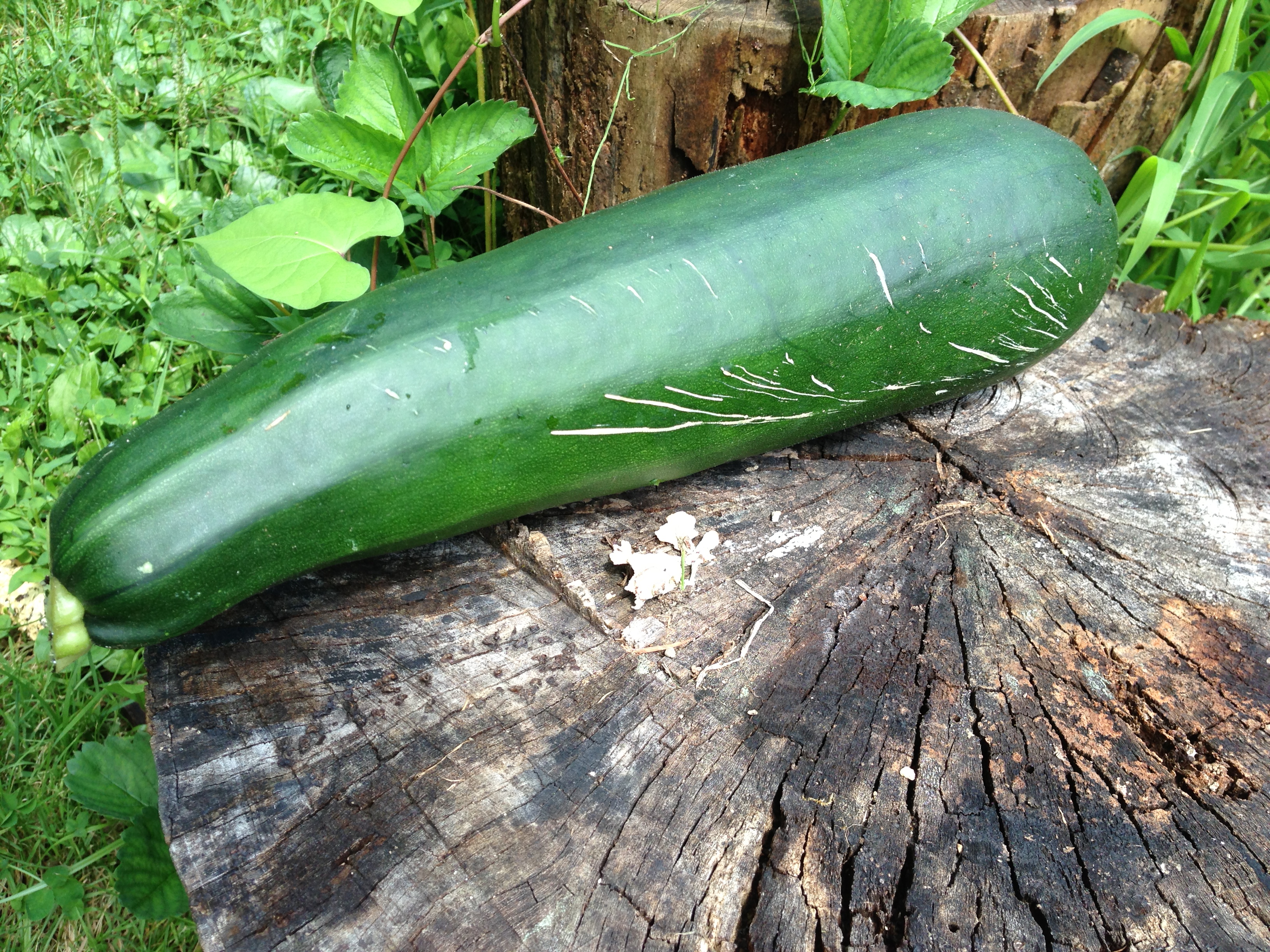
Squash, huge, far too much too eat.

zucchini

Does anyone actually like stuffed zucchini boats?

My herbs were are great before they crushed by toppling mint. The lavender and tarragon have exploded. Next to them, the pinks I planted as companions have bloomed constantly. My raspberry volunteers produced berries that accent vanilla ice cream perfectly.

berries

And here’s the point. Everything is sprouting, bushy, overgrown. The weeds sprawl. But the plants I expected to do well – the pole beans, say, masses of vines and leaves – have produced no beans.

beans

Some cuke plants have thrived, but others flatlined. Peppers, yes, eggplant, nada. Cosmos making a brave go of it.

cosmos

The beautiful crinkled leaves of the rainbow chard? Gourmet rabbit lunches, long gone.

The journey is the goal. To quote Gil, quoting some Oriental sage.

Oh. So it was all about the planting of those wrinkly little potato sections in May, watching the green plants thrive in June, finally the digging of the hard red tubers out of the earth, greeting the earthworms that were their bosom companions. Getting the good dirt under my nails.

potatoes soil

Having a perfectly manicured kitchen garden where every crop prospers isn’t the point even if it was possible. I’ve had that experience, in the past, on a sunny slope with plenty of chicken manure and it was pretty great. But then I didn’t share a marsh with turtles and snakes and red-tailed hawks. I didn’t live in the shady, ethereal woods.

I could use a hand with the weeding. In the meantime, let’s listen as Jonathan Richman sings the Kinks’ Stop Your Sobbing.

5 Comments

Filed under Cooking, History, Home, Jean Zimmerman, Nature, Photography, Writing

Portals Into Other Worlds

I’m thinking about how you can visit other times and places on the web, peeking through portals the way you peer through a cutout in the plywood surrounding a construction site. Here are fifteen visits I’ve made lately that I’d recommend.

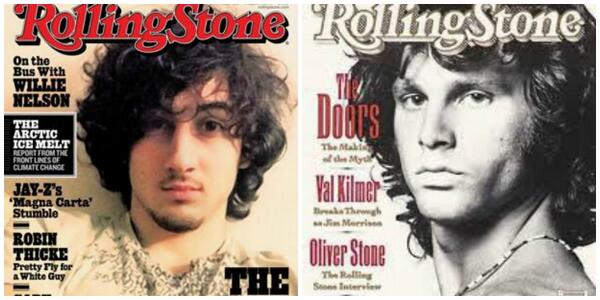
It was a mistake for Rolling Stone to make a rock star out of a creep.

jahar:jim

That doesn’t mean the article that goes with the picture is not good journalism. And don’t we want to know, don’t we have to know, what makes terrorists tick, in order to know how to combat the evil they do? If you don’t feel like patronizing Rolling Stone at the moment to read the piece, if you’re interested in long-form reportage on all kinds of subjects, from a history of the famous indie rock club Maxwell’s to a star 16-year-old pitcher in Japan, go to Longform.org, which reprints new and classic nonfiction from around the web.

Amazon-Kindle1

Admit it, you want to know the inside story of the Kindle. What brainiacs came up with this gizmo that might mean the end of books as we know and love them? (I actually have a Kindle Fire and don’t find it hasn’t stifled my desire to read print on paper, just saying.)

It sounds almost banal, but I guarantee that when you hook into The Evolution of Love Songs (1904-2007) you will not be able to quit. I’m waiting for part 2, 2008-2013.

Up my alley, and I hope yours, a view of how the lives of American women changed over the 19th century through the art of the time.  In particular, life on the farm, complete with Winslow Homerian milkmaids.

Winslow Homer (American artist, 1836-1910) The Milk Maid


There are so many food blogs. I like npr’s the salt.

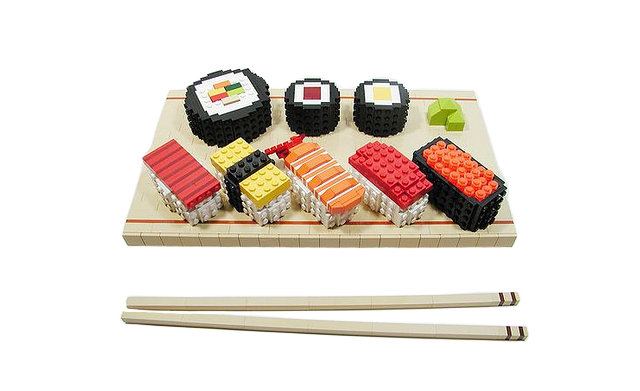
A view into a different world would include the minds of people who make Lego their personal idiom. They do things like make plastic sushi and other amazing Lego food creations. 

Lego sushi

I’m interested in the alternate lives of feral children, especially since my next novel Savage Girl  describes all the trouble one can get into in Gilded Age New York. Like how do you participate in a refined dinner party when you’re accustomed to tearing meat apart with your fingers? Every now and then a contemporary wild child surfaces with an interesting story. You can read about Marina Chapman, a British housewife who claims she was raised by monkeys in Colombia.

 marina chapman

Want to know about neolithic cooking? The Rambling Epicure tells you, and it starts with “one bucket wild spinach leaves.” The excellent food site gives you a recipe from Jane Le Besque’s cookbook, Un Soufflé de Pollen: Livre de Cuisine et de Peinture. A painter, Le Besque lives in the Pays de Gex in the foothills of the Jura mountains, and this is her “artistic vision” of primitive cuisine.

See how other people connect — passionately — with the past. Reenactors get their due with 36 photos from around the world.

reenactors

Here, actors and actresses from Iere Theatre Productions play the roles of indentured East Indian laborers and British constabulary police during a reenactment of the first arrival of East Indians to Trinidad and Tobago, on Nelson Island in the Gulf of Paria off the west coast of Trinidad.

It’s not all about Gettsyburg, clearly.

reenactors 2

These children are taking part in a mock military parade at an amusement park in Pyongyang to mark International Children’s Day, in this photo taken on June 1, 2013.

Okay, the squeamish should not tune in to7 Bio-Artists Who Are Transforming the Fabric of Life Itself” at the site io9.

rabbit

It’s about how some provocative artists today deal with biotechnology. Working with scientists and engineers, these geniuses transform living tissue and even their own bodies into works of art. For example, Brazilian-American “transgenic artist” Eduardo Kac took a rabbit and implanted it with a Green Fluorescent Protein (GFP) found in jellyfish. When placed under a blue light, the rabbit glows an otherworldly hue.

On the lighter side, see the longest domino chain in the world made of books: 2,131 of them.

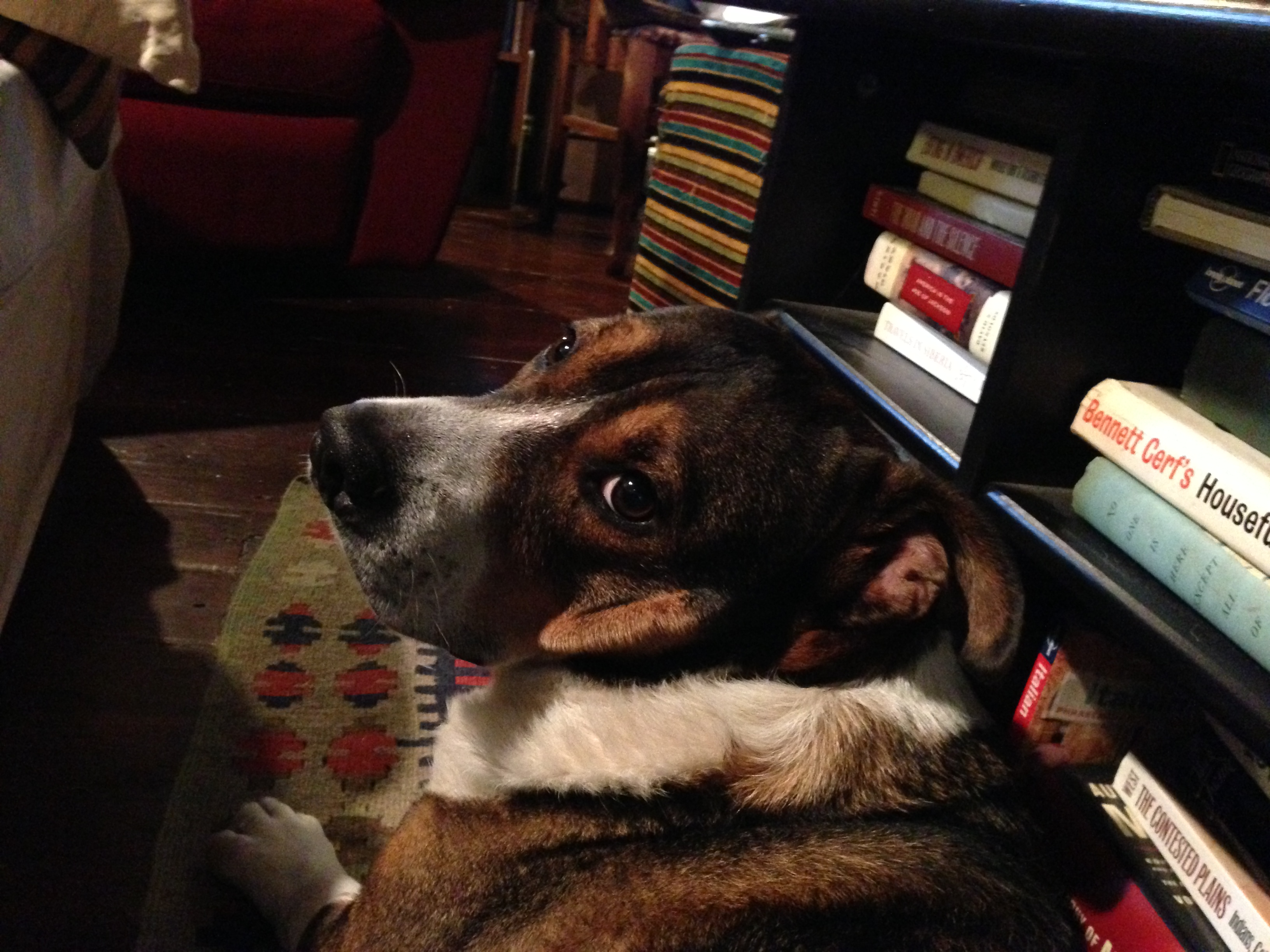
 My dog is named a very modern Oliver. He looks exactly like his name.

oliver about to copy

Medievalists.net has a well-researched piece on ancient pet names, such as dogs called Sturdy, Whitefoot, Hardy, Jakke, Bo and Terri, and a cat in England named Gyb – the short form of of Gilbert –  or one named Mite, who prowled around Beaulieu Abbey in the 13th century, or Belaud, a grey cat belonging to Joachim du Bellay in the 16th century. Isabella d’Este owned a cat named Martino. I bet nobody died their animals green.

Buzzfeed has 16 noble photos of women writers at work, including a great one of Anne Sexton immersed in her craft.

anne sexton

From MessyNessyChic.com, the story of an artist whose work was discovered in the trash 50 years after his death.

Charles Dellschau

This grouchy butcher by trade, an immigrant named Charles Dellschau, had secretly been busy assembling thousands of intricate drawings of flying machines, sewn together in homemade notebooks with shoelaces.

And for anyone who didn’t catch this when it went big on the web, Dustin Hoffman showed us his softer side in reminiscing about Tootsie and what playing a woman meant to him. The interview is a window into the psyche of someone whose brilliant work opened a window into a psyche we were lucky to see.

tootsie25

3 Comments

Filed under Art, Cooking, Culture, Dogs, Fashion, Fiction, History, Home, Jean Zimmerman, Nature, Poetry, Savage Girl, Writers, Writing