Category Archives: Writing

Links in the Chain

A handful of links for a rainy day.

A beautiful look at hand paintings by Moscow-based artist and poet Svetlana Kolosova.

surrealfairytalepalmpaintingsbysvetlanakolosova6

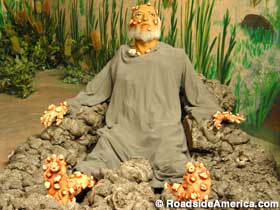
Info about the Biblewalk and Living Bible Museum in Mansfield, Ohio.

OHMANbible12_jobJob appears real!

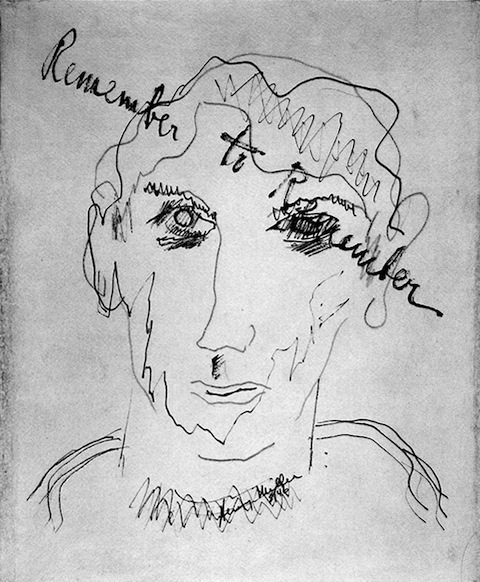
Amazing self-portraits by writers. Henry Miller drew his in 1946.

4b-millerselfportrait


The story of how the Kindle came to be, from an insider’s point of view.

An article on a blog about the history of makeup that discusses whether cosmetics of the past poisoned the women who wore them with ingredients like lead and mercury.

Bildnis-von-Elizabeth-Gunning-Herzogin-von-Argyll-von-Allan-Ramsay-31966


Ten ultra-secluded underground locations, for those times when you’ve disclosed government secrets and need a private place to crash.

And finally, three Japanese hotels that have been in business for a thousand years.

tl-inset_webThis one, Nisiyama Onsen Keiunkan, was built around a hot spring that supposedly has curing powers. Maybe it cured women with makeup-induced illnesses.


3 Comments

Filed under Art, Culture, Fashion, History, Home, Jean Zimmerman, Writers, Writing

A Bookish Brunch

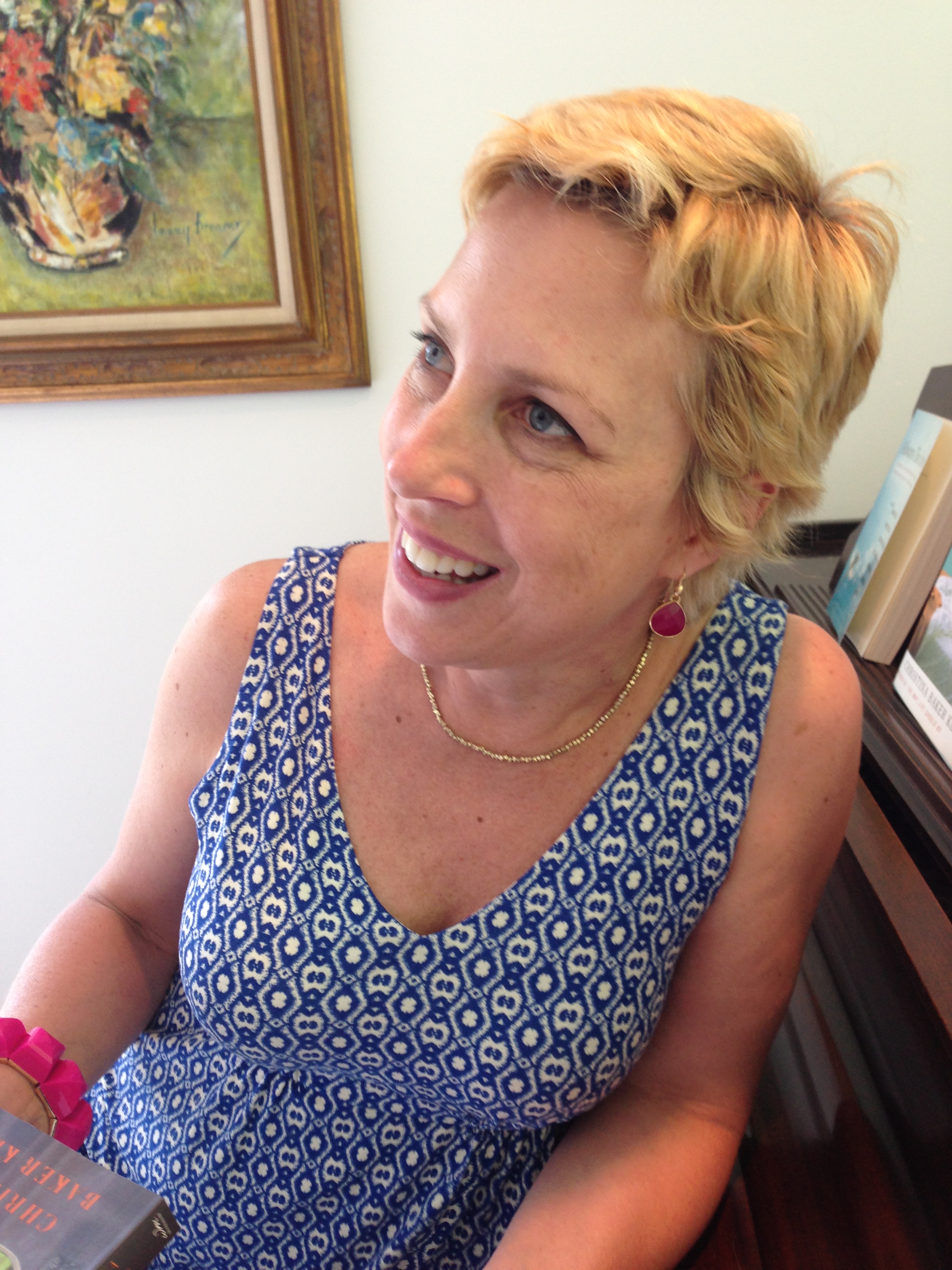
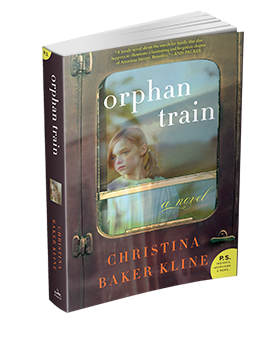
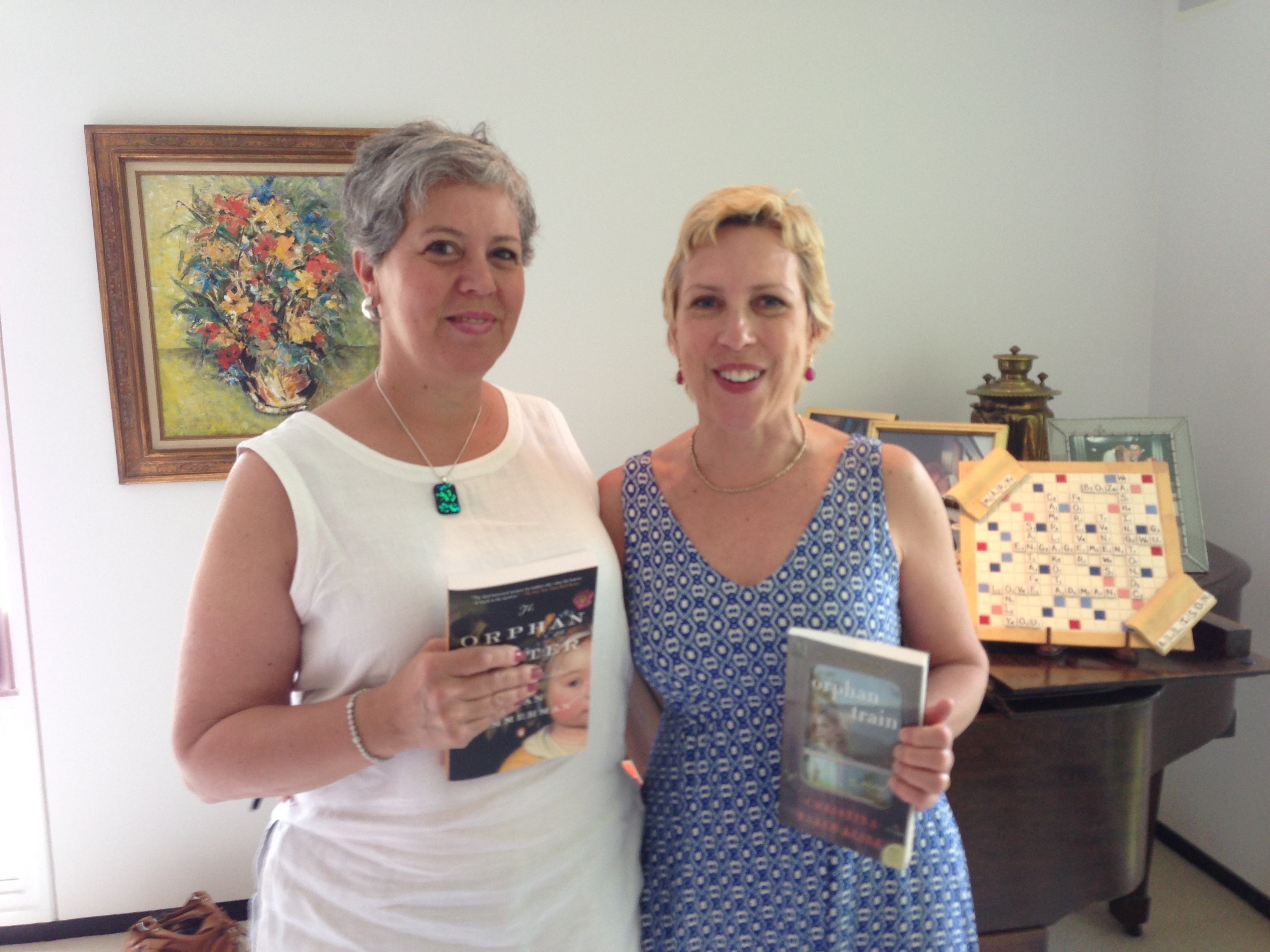
Christina Baker Kline’s book Orphan Train was released on April 2nd by William Morrow, and I was lucky enough to attend a brunch in her honor today. As the intuitive and scrappy Allison Gilbert, our nonfiction-writing hostess, put it, “Writing a book is like pushing a mountain through your head.” An event like this, she said, can show people that a book exists from the ground up. “That’s what we writers do for each other.” Indeed. The house in Irvington, New York was filled with bookish well wishers.

Christina

Orphan Train has hit the best seller lists of both USA Today and The New York Times, Goodreads saluted it as a 2013 beach read, and it has been brought out in a special edition by Target, for which Christina had to sign thousands of copies.

orphan trainShe had come in from a meeting with the powerhouse biographer Robert K. Massie and would go off to be the keynote speaker at an event held by Books New Jersey, but spared a chunk of time in the noon hour to describe her book and the process by which it went from Henry James’ “germ of a story” to a full-blown narrative.

Christina stumbled on to the phenomenon of orphan trains 10 years ago.

orphan-train

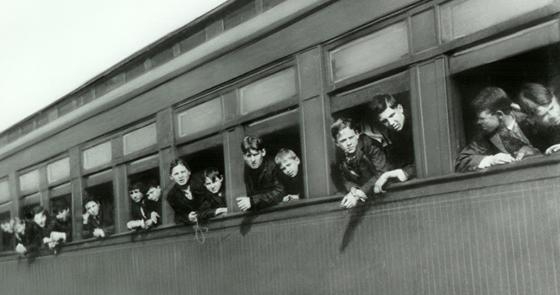
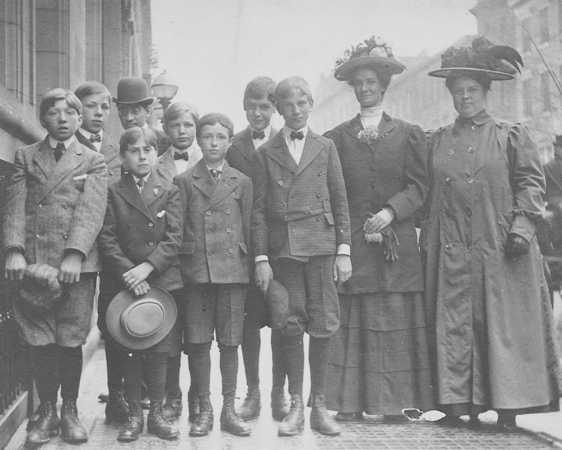
It seems her husband’s North Dakota grandfather was one of “riders.” Most  kids were plucked off the streets of New York between 1854 and 1929 and shipped to the Midwest as free labor for farm families. Ultimately there would be 250,000.

orpans with women


Some of them, actually about 60 percent, were not legitimately parentless, but their single parents, usually their mothers, simply couldn’t afford to feed and house them. Civil War widows, in particular, couldn’t hack the expenses of parenthood, and there were no social programs to help them. Today the original orphans have two million descendants in this country.

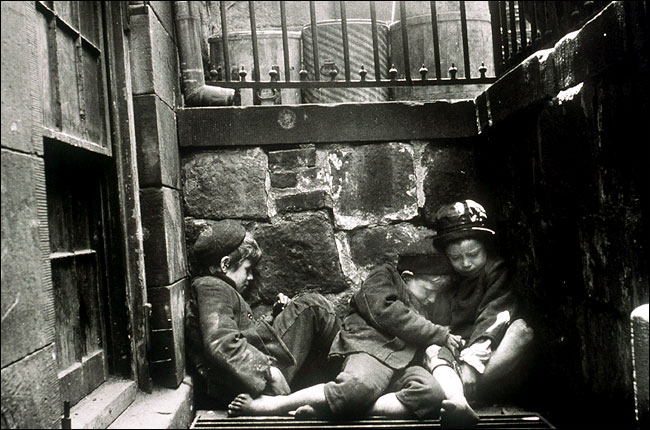
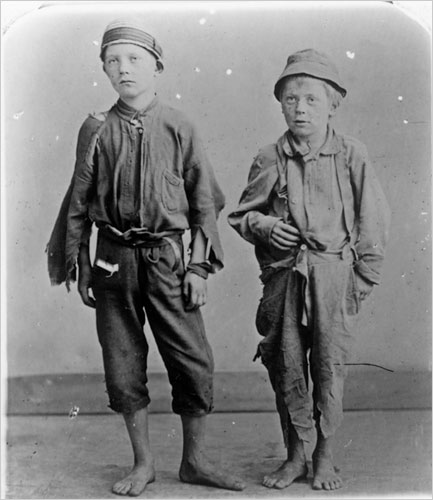
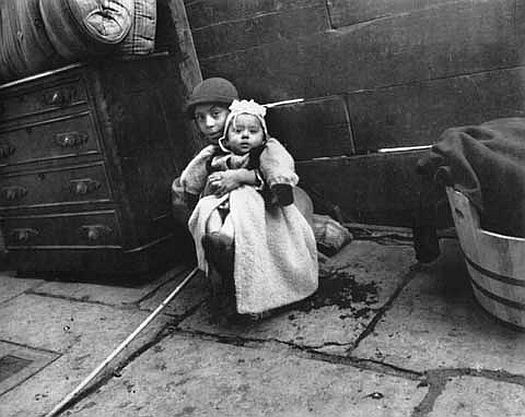
Jacob Riis made devastating pictures late in the 19th century of some of these lost New York street children.

jacob riis boys

The older they were, the more desirable they were for the farmers who took them in. Better workers.

riis grown boys


Babies were popular too.

riis boy and baby


Girls, not so much. A threat to the women in the household. This little girl Riis captured is beyond sad.

riis girl

Now Christina has taken this powerful material and made a story out of it, centered in the relationship between a troubled 17-year-old girl and an aging Irish immigrant who keeps her orphan train memories in an attic trunk.

Christina and I talked over aspects of bringing out a book, including the fact that we both take a powerpoint with us when we hit the road to talk about our work, something not every fiction writer does but that seems appealing to fans of historical fiction. I liked something she said about the writing process, about creating the structure for a story: “We need to build too much, explain too much, before we take that scaffolding away in the revision process.”

I can’t wait to read Orphan Train, to see what commonalities exist between her children of the late-19th century to the early 20th century and the parentless waifs of The Orphanmaster‘s 17th-century New Amsterdam. Novelist Helen Schulman  said Orphan Train “makes for compulsive reading,” and The Orphanmaster has been called “compulsively readable,” so we have a bond. It’s too bad Adam Johnson couldn’t be sharing bagels and lox with us at Allison’s house today.

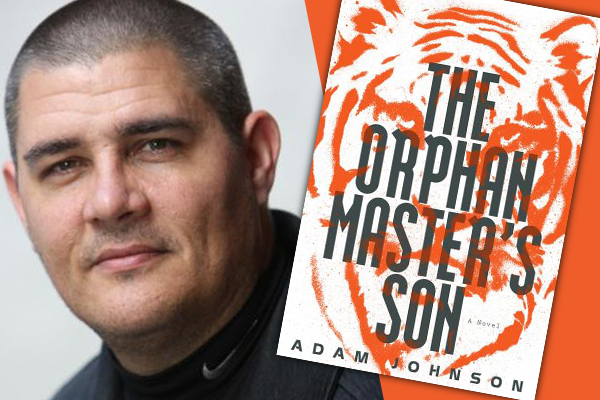
orphanmastersson

His book, The Orphanmaster’s Son, won the 2013 Pulitzer Prize for fiction. I have found myself in the interesting position since the award was announced of having people congratulate me for my “recent honor.” Well… no. But you’ve got to think that this hat trick of orphan novels suggests something in the cultural water. Andre Gide said, Not everyone can be an orphan. I salute Adam, whose book is supposed to be as terrifying as it is wonderful. But for now, it’s just Christina and me in the picture.

j and c


7 Comments

Filed under Cooking, Fiction, History, Jean Zimmerman, Photography, Publishing, Writers, Writing

Rock Paper Scissors Book

Kids write books. They just don’t appear on Kindle.

And they couldn’t. They’re hand-wrought. Messy. One of a kind.

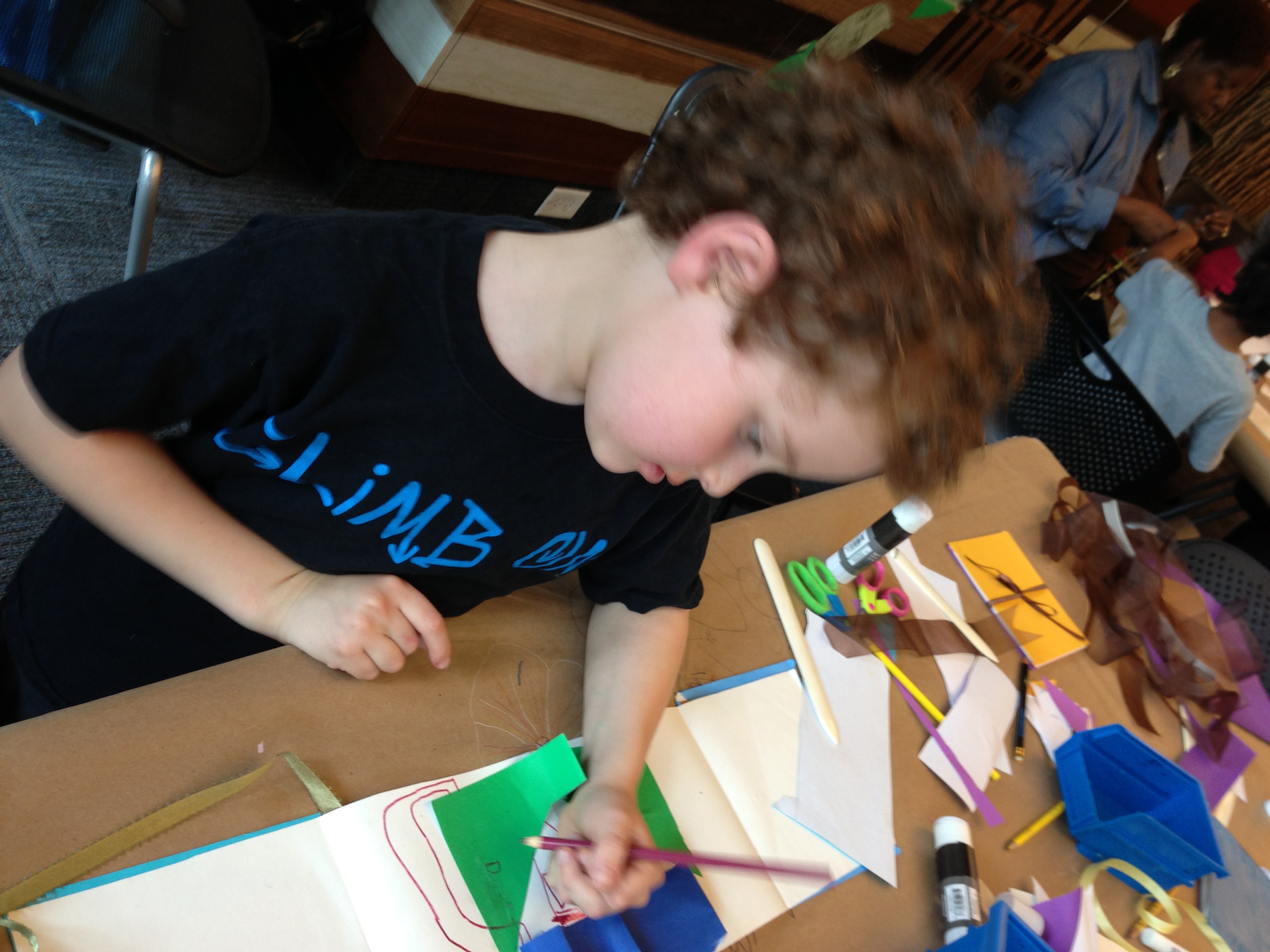
We took our nephew Jasper to a book-making class for children today at the Cooper-Hewitt Museum’s Design Center in Harlem. Jasper is a lefty — is that why he has a creative streak, or is it because he’s my nephew? Just asking.

lefty


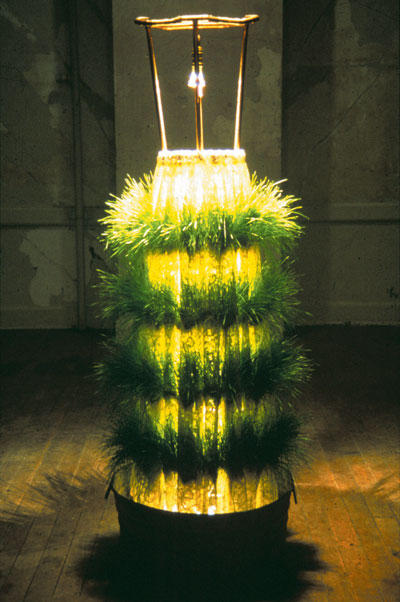
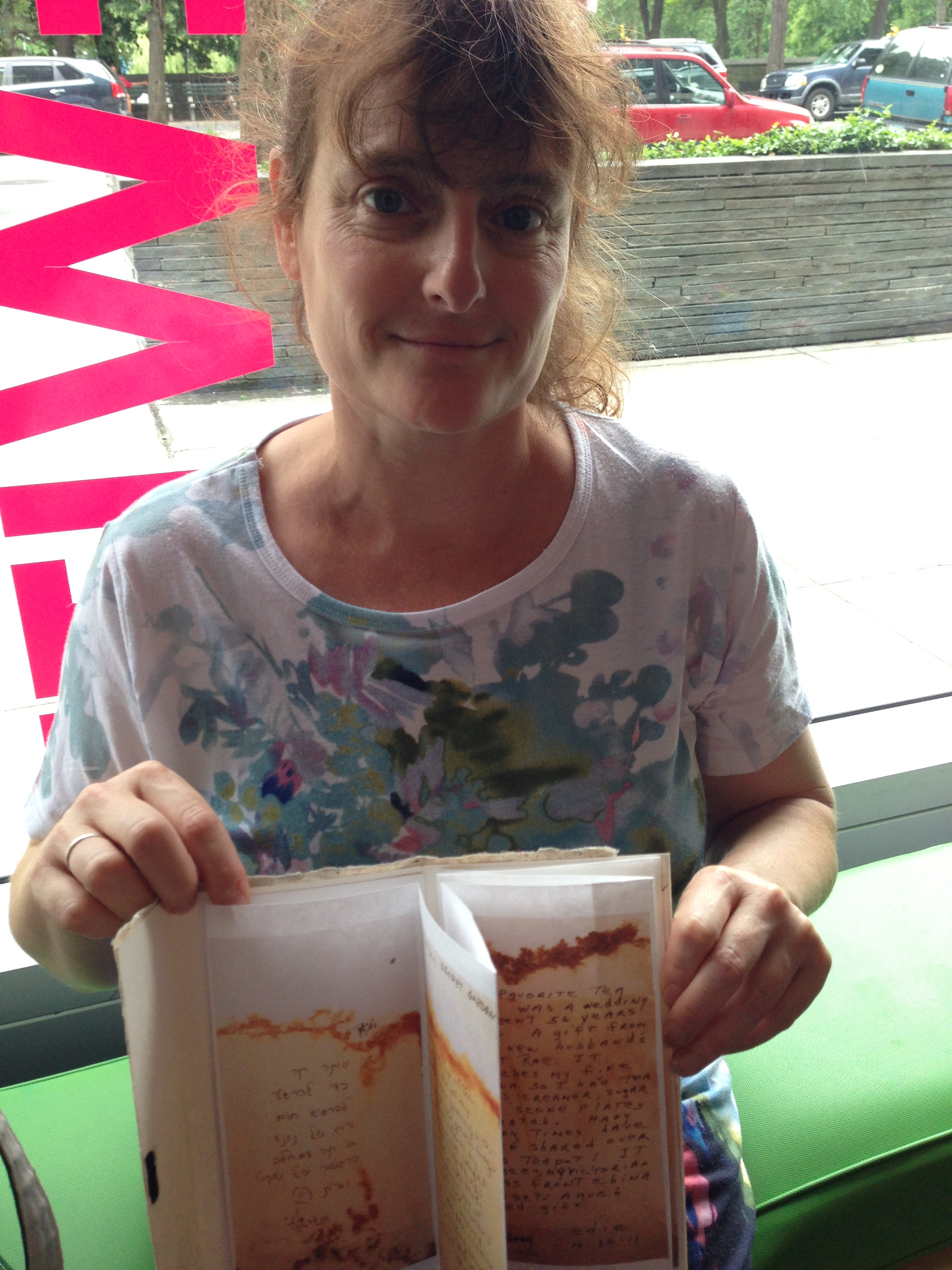
The ever-patient instructor was an artist named Michele Brody, who is well known for producing site-specific installations, including many  involving plants and water.

brody

She likes to show the entire life cycle, she told me, including the decay and death of the plants.

Michele Brody


But she’s also  produced art volumes about tea and stained by tea, so she knows about putting together books from scratch. Today she introduced me to a novel concept, that of the bone folder.

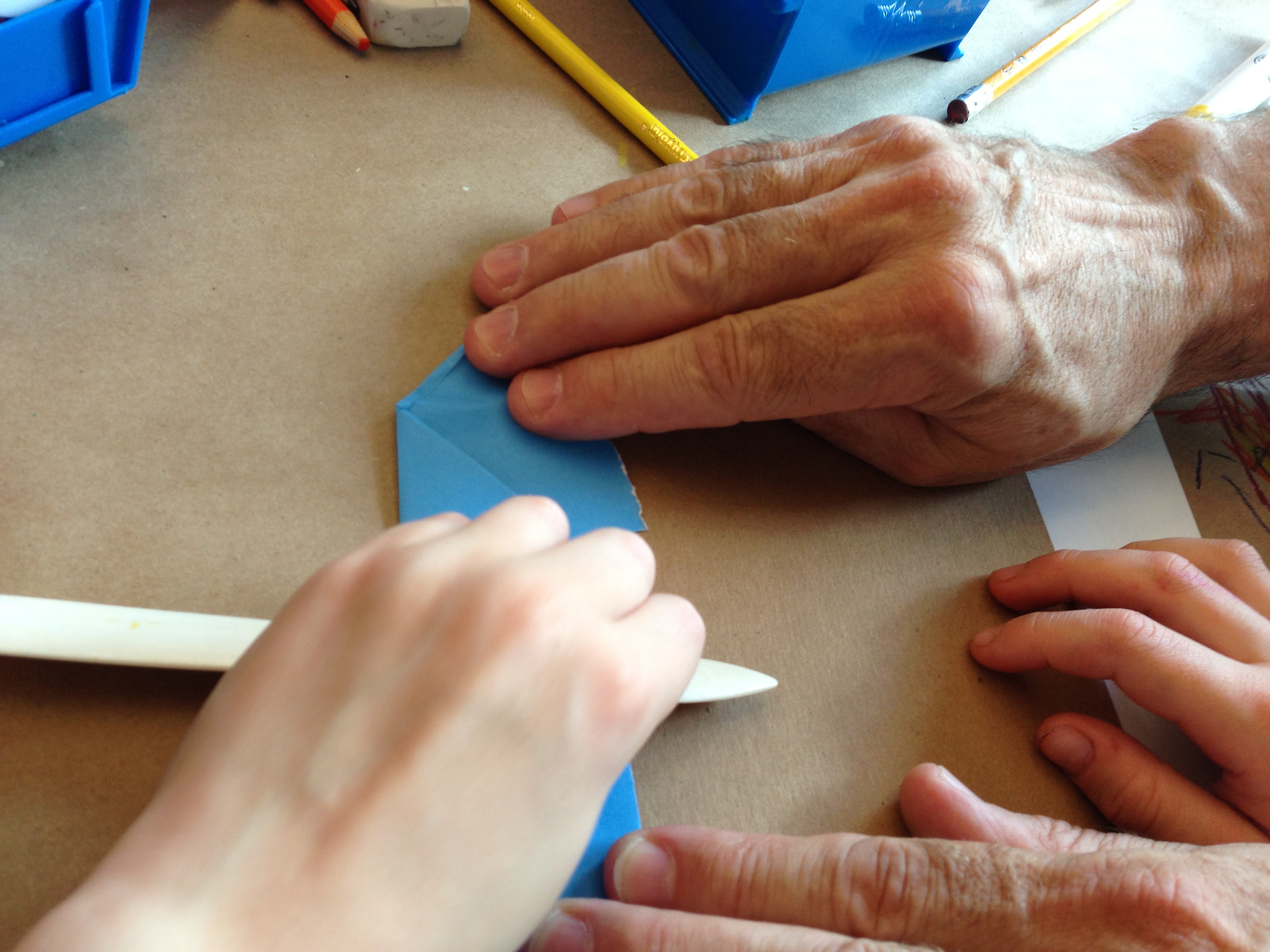
bone folder

The bone folder is a smooth ivory tool that allows you get a nice sharp crease in the paper you’re using to bind your book, and to smooth out any bubbles that might appear in the glueing process. How satisfying, sliding the tool along those bubbles.

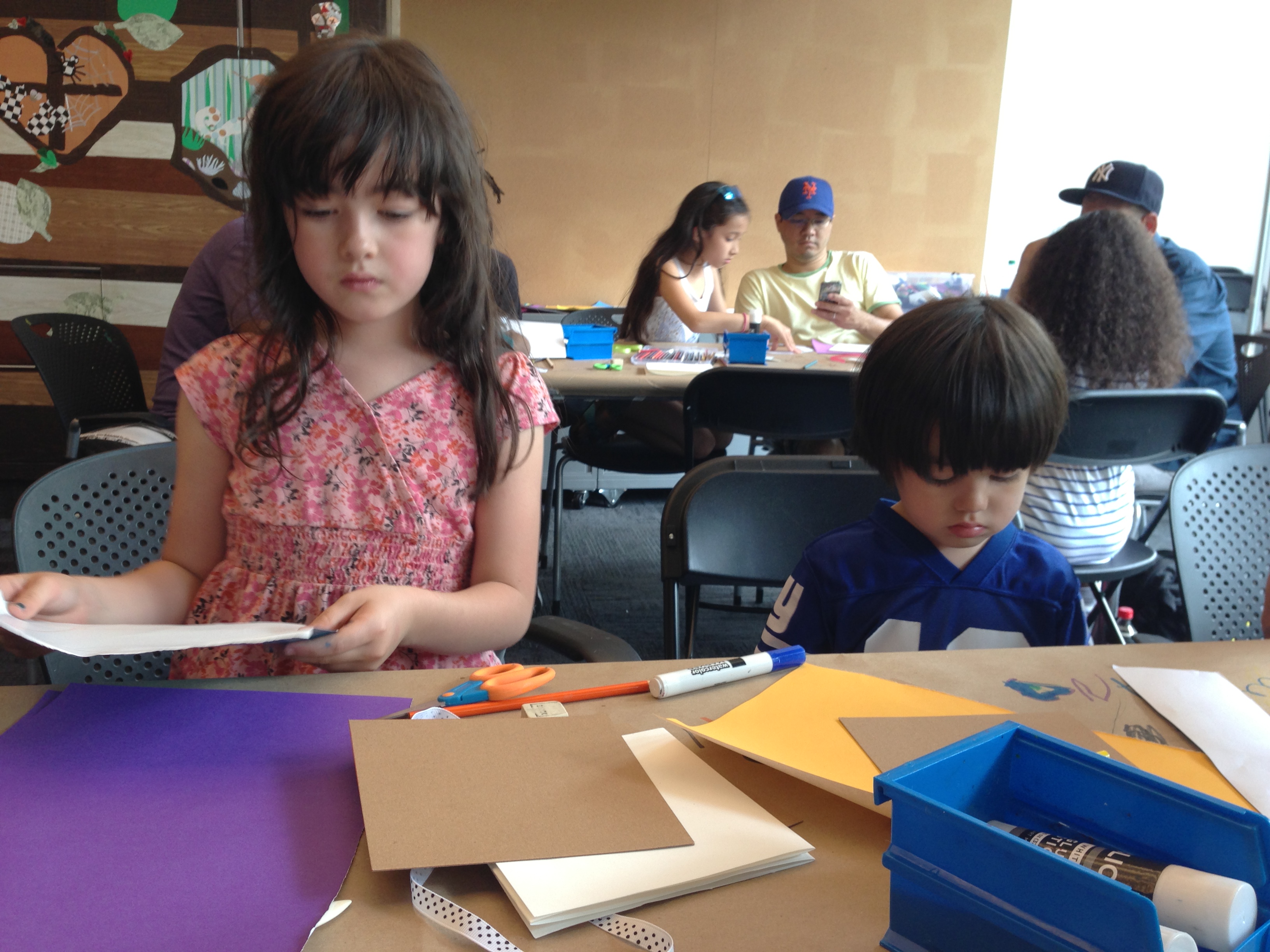
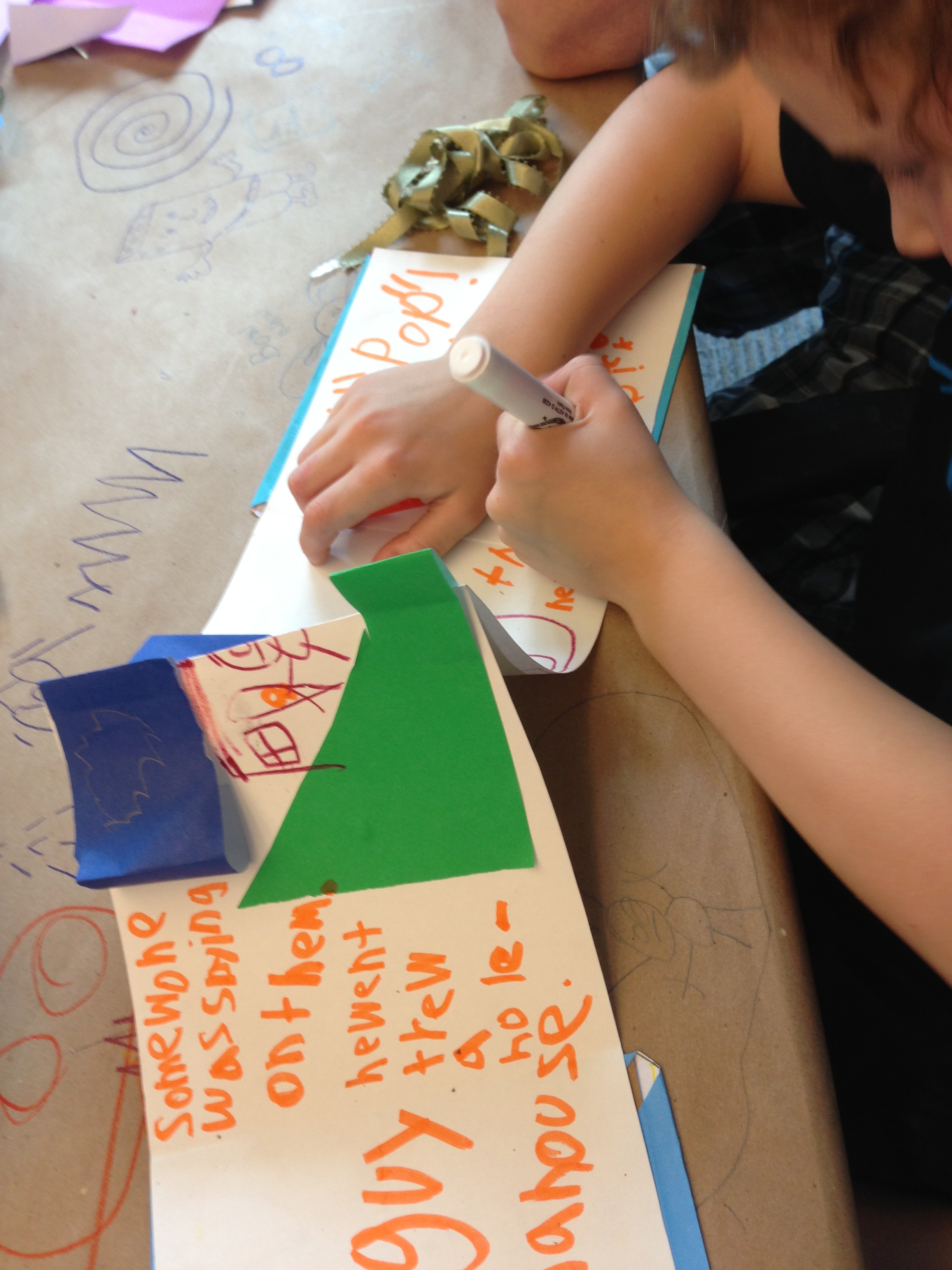
The children in the class dove in with cardboard, markers and ribbons every which way. Siblings Aidan and Molly — “silly and active,” according to Jasper —  did better than I did. I watched their creations materialize across the table.

Molly:Aidan


Jasper’s book was crammed with action and surprises. If he could only write a single book in his life, this one would be enough, but of course he’s already written hundreds.

Pop!


What did he like best about writing a book, I inquired.

The kid’s answer was immediate. The pop-ups, he said. He has always liked building pop-ups into his works. Architectural, three-dimensional, crazy blasts from another dimension.

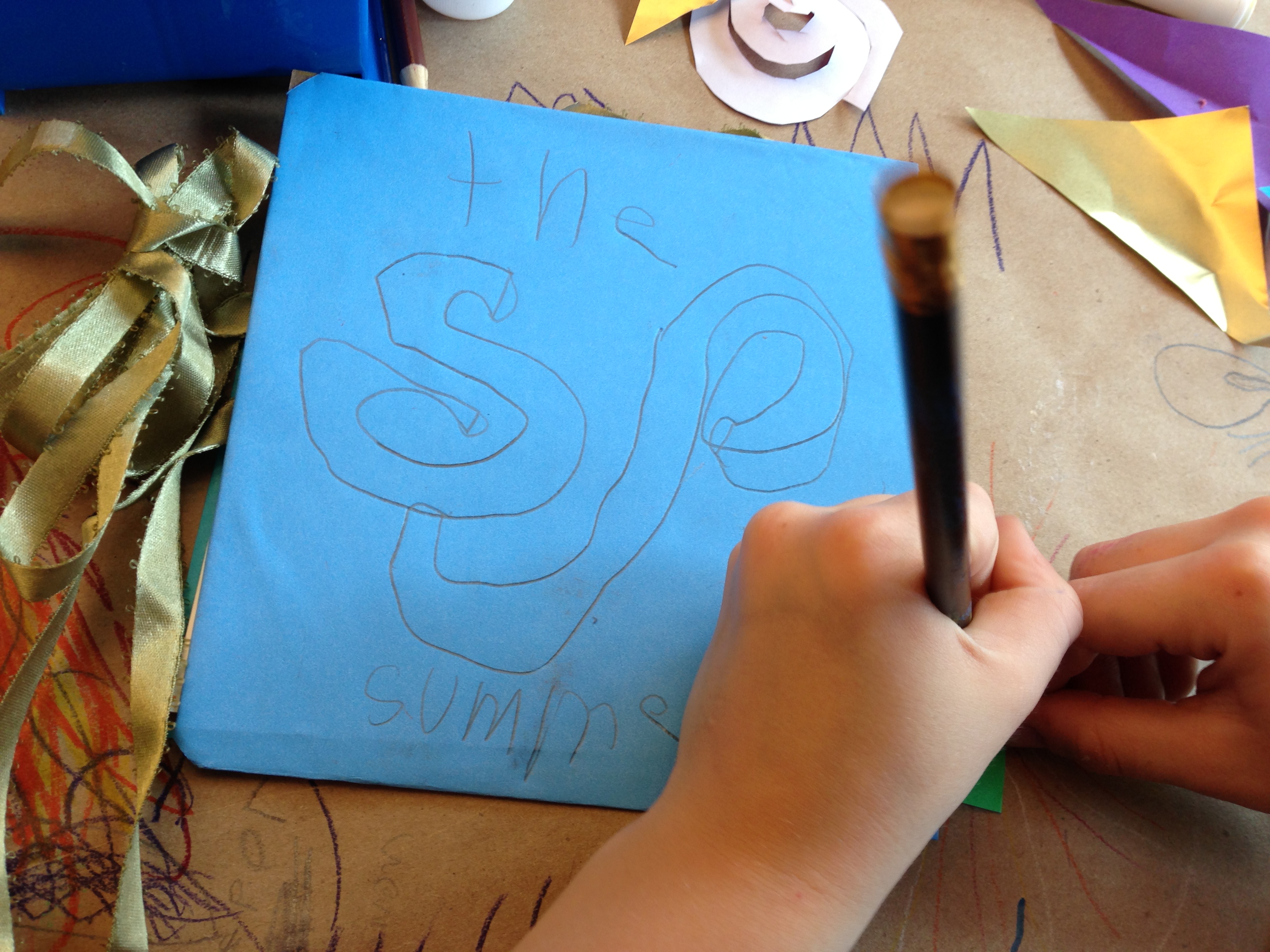
Kindle just can’t accommodate construction-paper pop-ups. And that is why you will never be able to order Jasper Zimmerman’s The Spy in Summer from Amazon. It’s the story of a spy who steals the bad guy’s jewelry, then eats him — well, that last part is not actually in this volume, says the author, but it will be in the sequel.

the spy in summer


That one will have pop-ups, too.


2 Comments

Filed under Art, Culture, Fiction, Jean Zimmerman, Publishing, Writers, Writing

Prayers and Limits

Rainy day rush hour on 9A, the four-lane that runs through Manhattan and north past the Cabin. Traffic has us crawling. But the radio is loud, with Phosphorescent singing Ride On/Right On.

phosphorescent

E-Z lyrics:

Let’s go for a ride, hey you turn me right on


Let’s get on the bike, hey you turn me right on


Ain’t nothing to hide and hey you turn me right on


The city at night, hey she turn me right on

Phosphorescent’s the moniker for an Alabama-to-Brooklyn boy named Matthew Houck (he previously went by the nom de guerre Fillup Shack) and he has out a new album, perfect for rainy day traffic jam listening.

I’m approaching that long, weedy section of highway, bordered by a sluggish streambed, where ordinarily the cars sail along briskly. There’s a sign along here someplace, planted out here near the road by someone who remains invisible. It’s plain plywood, painted white with black Gothic lettering and a simple legend: GOD ANSWERS PRAYERS. I’ve passed it hundreds of times, but I’ve never been able to get a picture of it because traffic moves so fast and there’s no shoulder to stop on. The sign just blinks by.

Now, God and I are not ordinarily on the most intimate terms. But I love this sign that has greeted me on every drive home and in many frames of mind, including the most dispirited. GOD ANSWERS PRAYERS. Okay, whatever you say. And I start to wonder about other manifestations of the same phrase.

gap rock

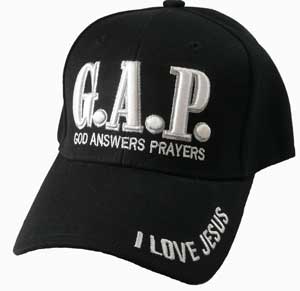
They abound, on hats as well as rocks.

gap hat

In rhinestones.

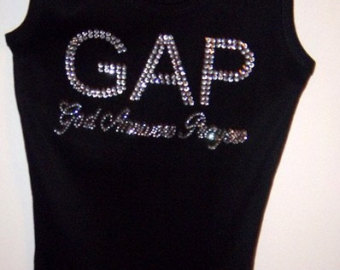
gap rhinestones

Is that what GAP means, as in The Gap? Those nice pants I bought last Fall? Never knew.

Zowie. Turn the radio up. Mr. David Bowie has come out with a new body of work, including the exciting song The Next Daythe video for which has been condemned by the Catholic Church as indecent. Well, it does show Bowie attired as Christ alongside Gary Oldman as a debauched priest (I thought Oldman was already a debauched priest) and Marion Cotillard as a beautiful prostitute with stigmata wounds.

david.bowie_

Bowie hadn’t put out a record in a decade, I guess he felt pent up.

my-prayers-have-been-answered

Ho hum, the traffic does crawl. Gil was in a jam yesterday and God answered his prayers with the Dan Hicks song on his shuffle, Traffic Jam.

Dan Hicks

Prayers, they don’t always work so good. I favor the sentiment of Oliver Wendell Holmes: We have learned that whether we accept from Fortune a spade, and look downward and dig, or from Aspiration an axe and rope to scale the ice, the one and only success which is ours to command is to bring to our work a mighty heart.

As true today as it was when he said it in 1884. It doesn’t fit on a plywood sign, unfortunately.

You can get a daily “meditation” like the Holmes quote in your inbox from All Souls, a church that is almost not a church it is so open-minded – “deeds, not creeds” is its motto. To get you questioning things like prayer.

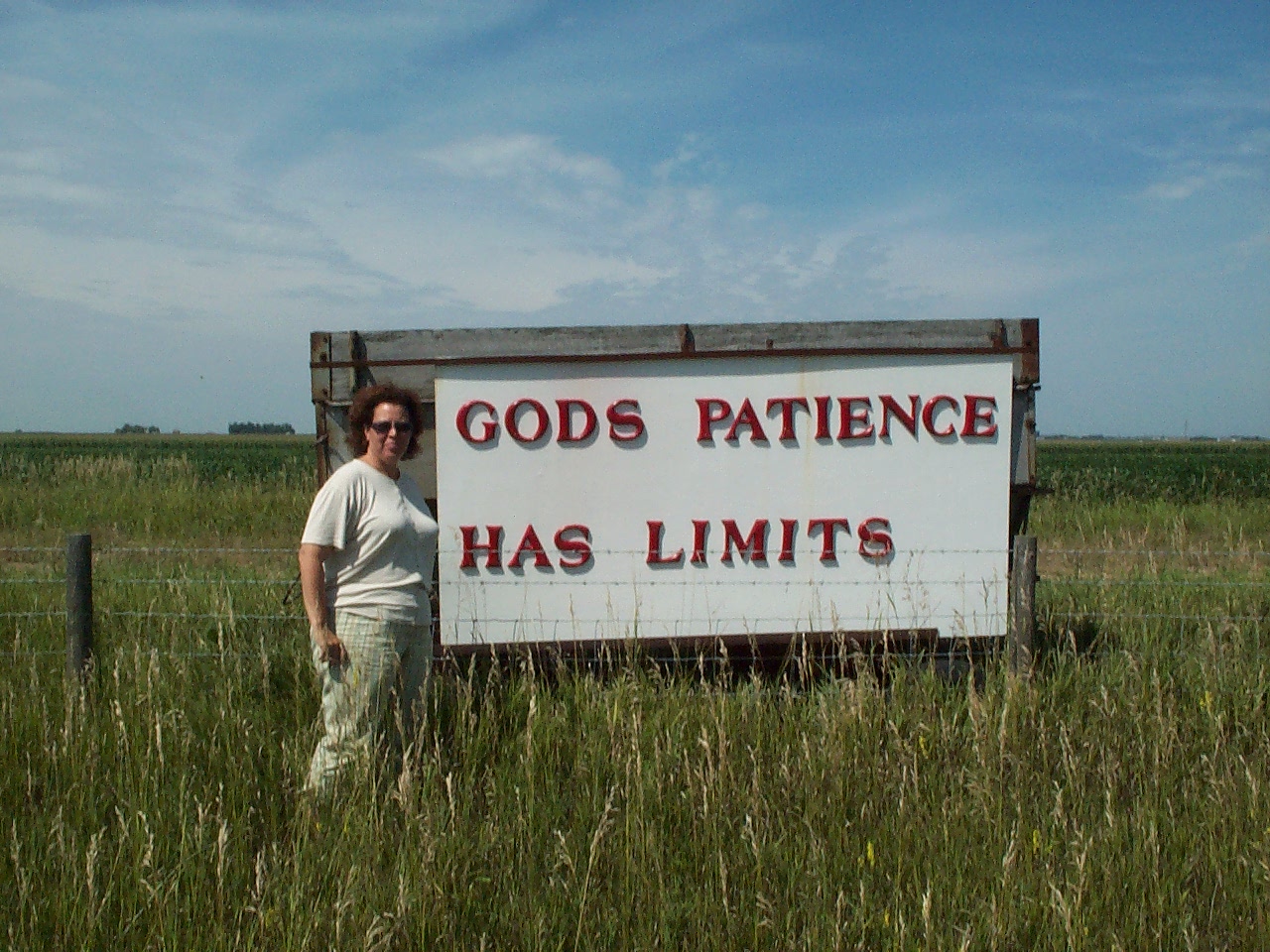
That sign on 9A, I like it almost as much as the one I saw by the side of a Nebraska highway about ten years ago. We wanted to bring it home with us but couldn’t figure out a way to tie it on top of the car.

god's patience has limits

A God with limits? Isn’t that heretical? For some reason I like the in-your-face Nebraska farm wife who stuck it along the interstate. She was probably shaking her fist at us as we drove away.

Whooosh—there goes GOD ANSWERS PRAYERS. Funny, I was just praying I would see that sign come around.

3 Comments

Filed under Culture, History, Home, Jean Zimmerman, Music, Photography, Writers, Writing

For Art’s Sake

The art of the perfect egg cream.

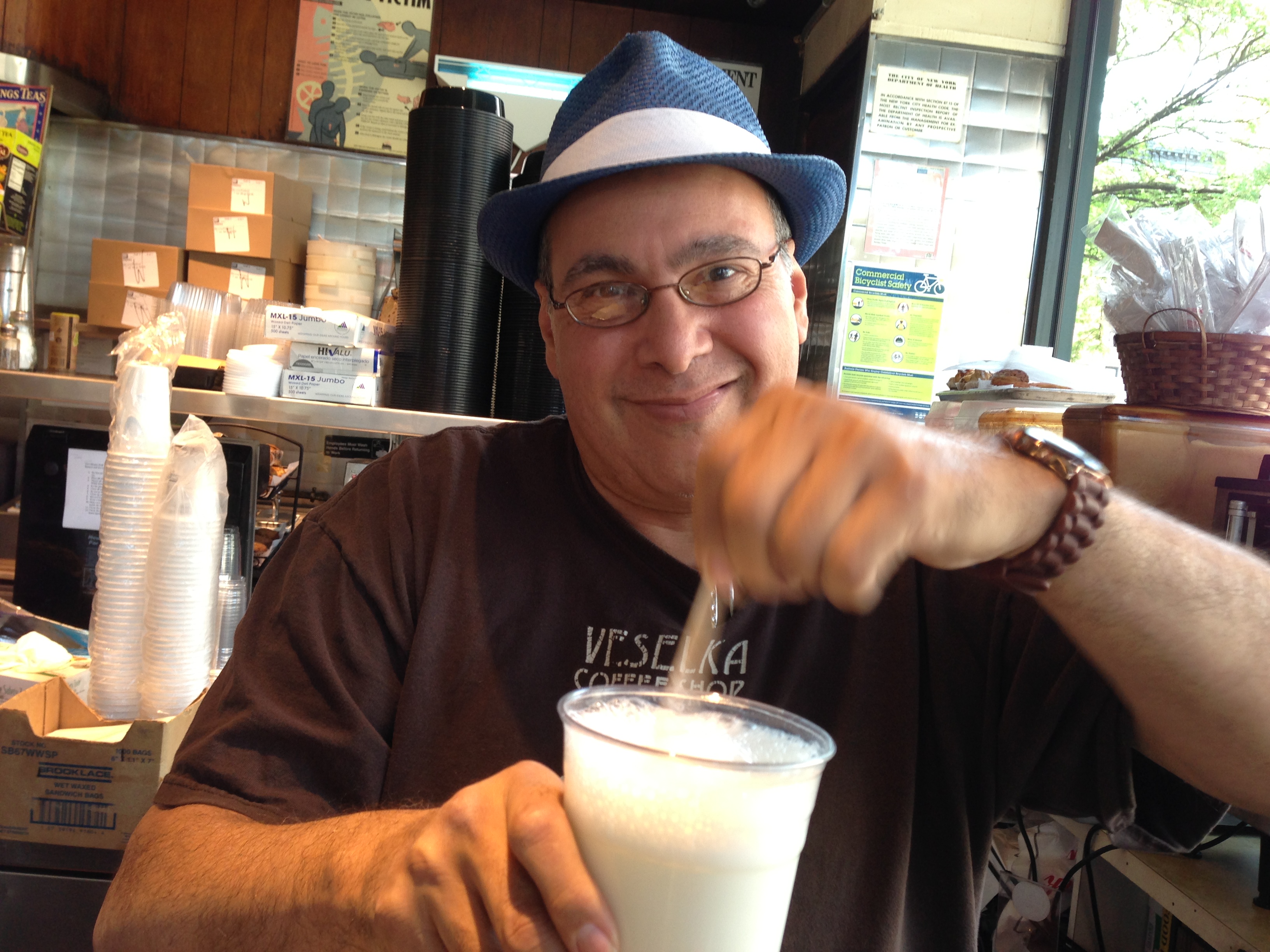
At Veselka Coffee Shop in New York City’s East Village, Eddie explained that we came in at just the right time, because his is the real deal. None better.

How long did it take you to reach perfection, I asked, watching him furiously stir the seltzer, vanilla and milk into a froth. A few years, he said, ha ha. Everybody loves Eddie, said the waitress. Eddie, said the counterman, your wife is calling on line one.

Eddie

The art of coffee in a takeout cup.

coffee

There are those people who truly grok a to-go cup, light, no sugar, and others who will never understand. Those who get it will survive.

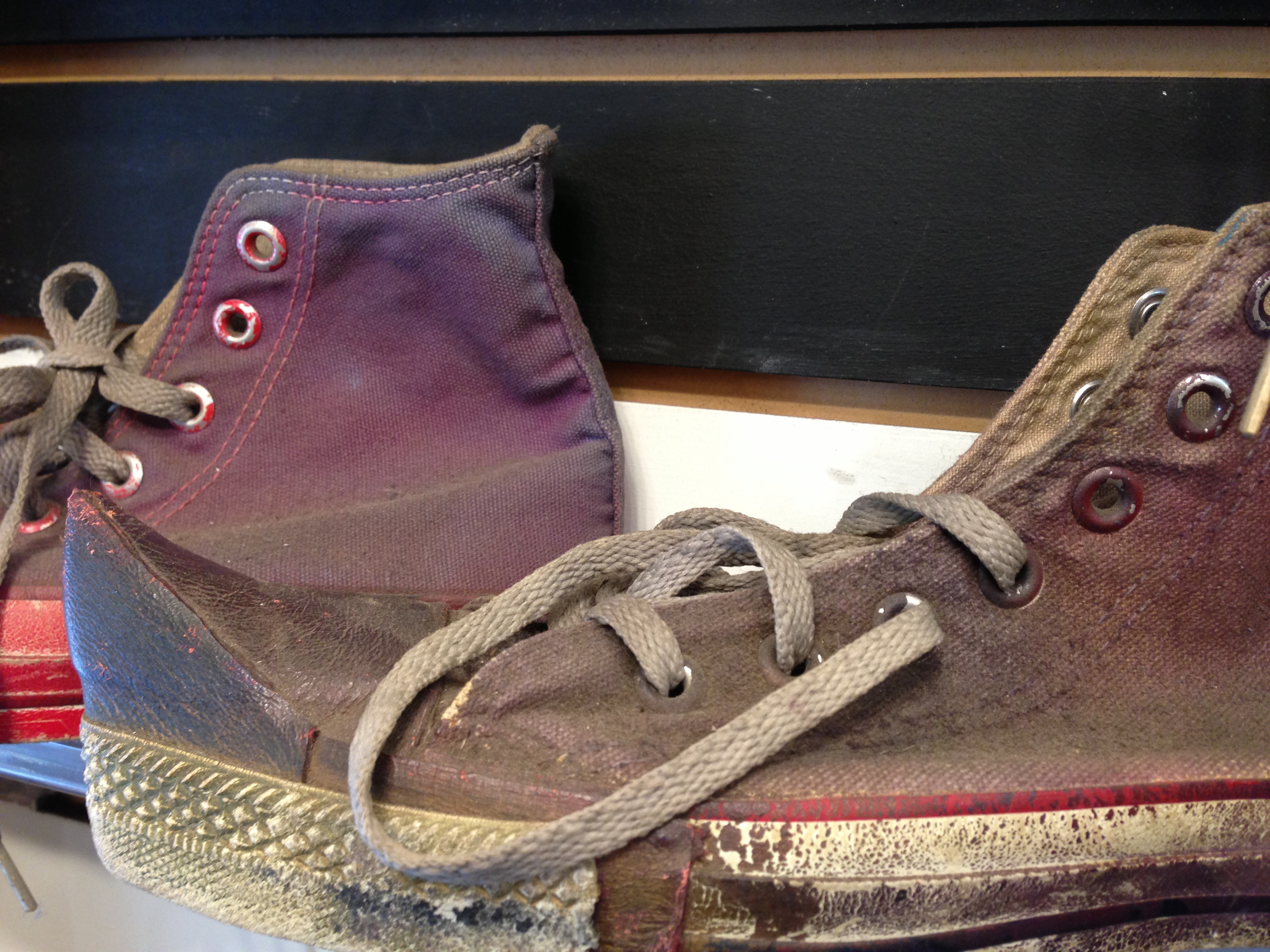
The art of the handcrafted athletic shoe. Boris works out of shoebox of a shop on St. Mark’s Place, customizing Converse sneakers. This must be one of his masterpieces.

converse

The art of the display window.

doll window

Maud and I made our way all around the East Village today but couldn’t convince ourselves to venture inside this storefront. I do, however, believe in the cause of Free Pussy Riot, the truncated message displayed on the sign – two of the three rockers are still in jail in Russia on some trumped up charge of fomenting unrest and making people think. Free Pussy Riot!

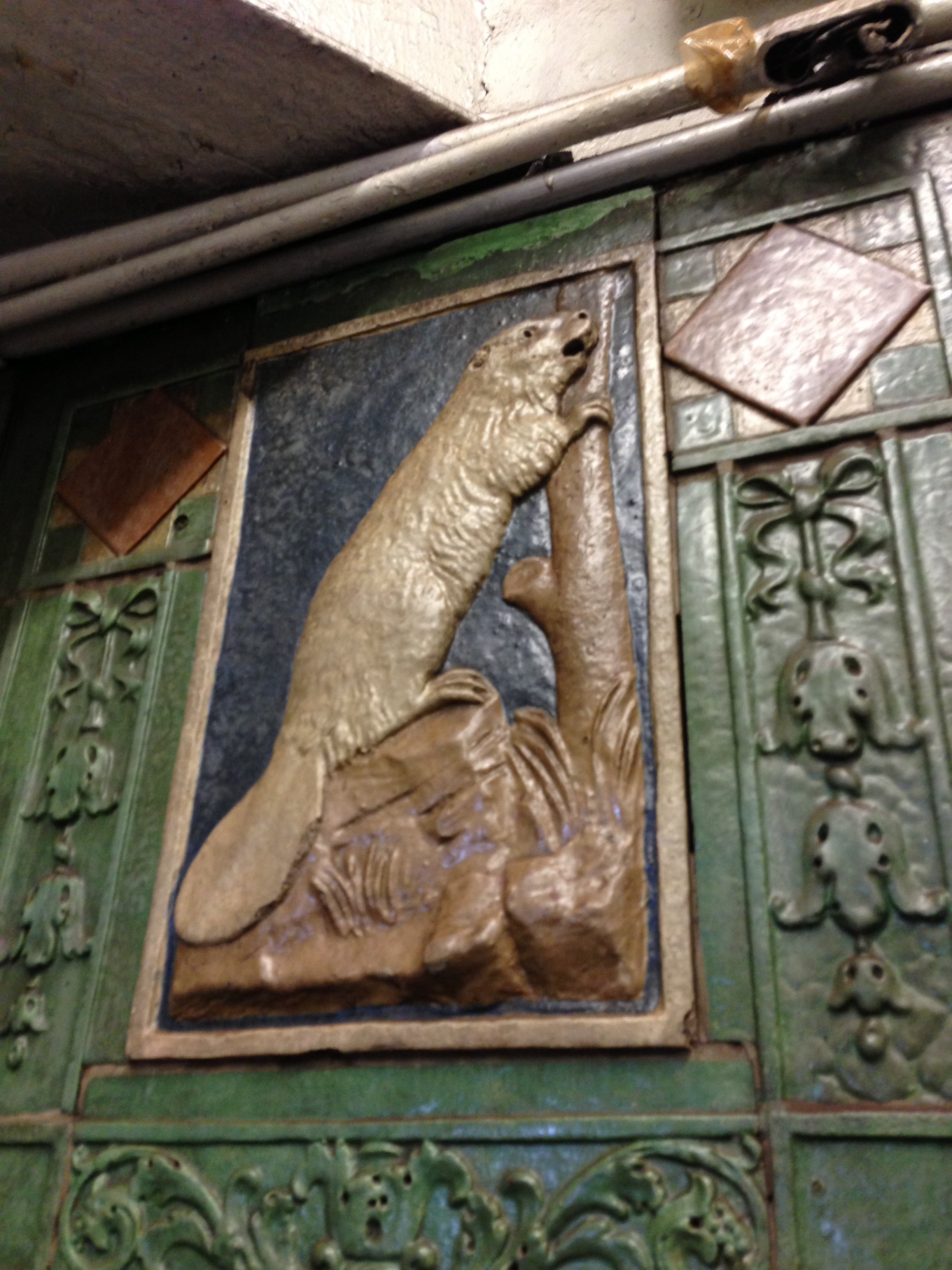
The art of the subway mosaic.

astor place beaver

New York’s subways house some splendid creative works, usually related to the locale of the stop. The Astor Place subway walls display ceramic plaques of beavers — made by the Grueby Faience Company in 1904 — because fur baron John Jacob Astor’s mansion stood nearby, and his fortune derived from the beaver-pelt trade.

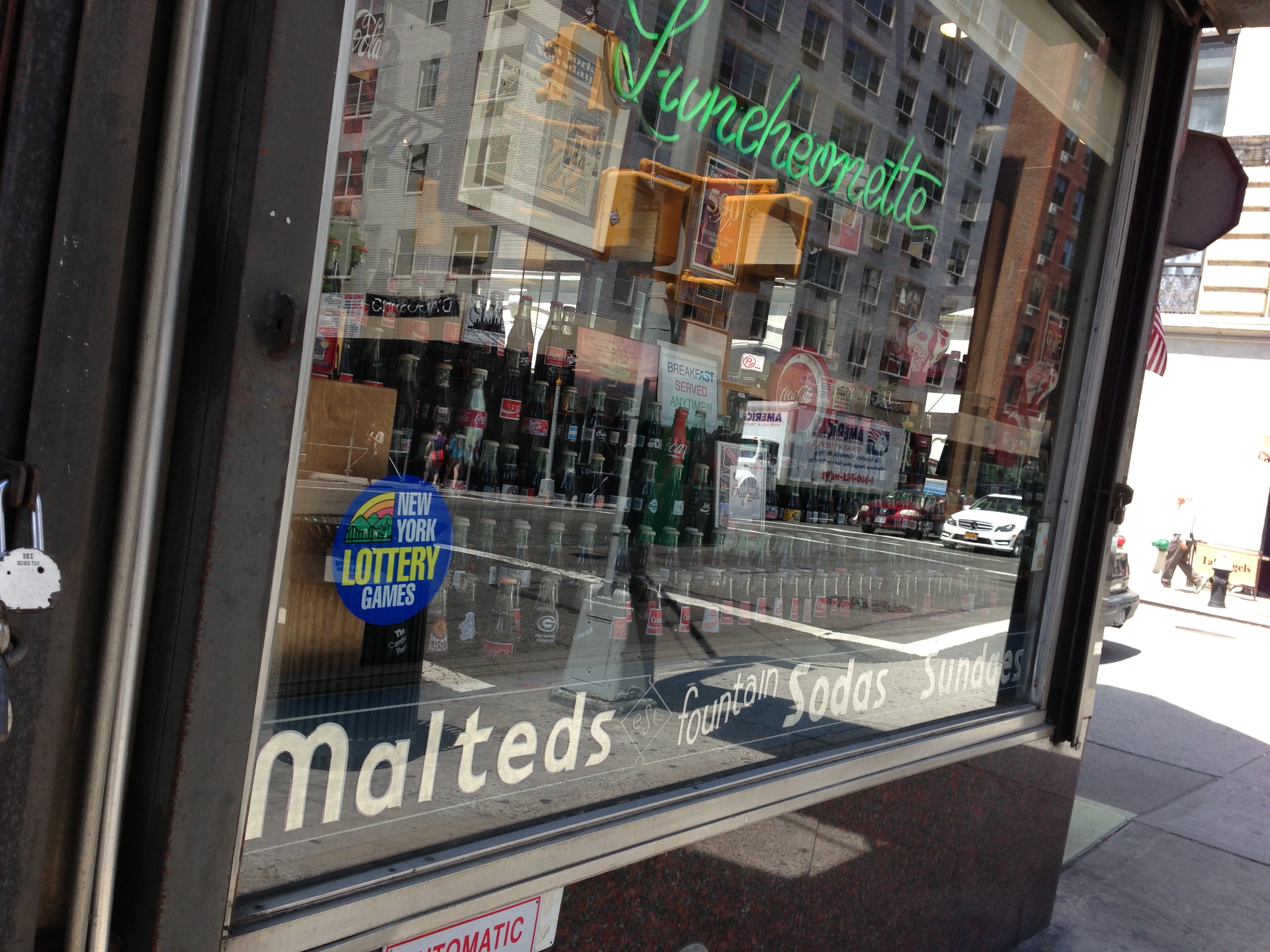
The art of the old-time luncheonette.

It sometimes seems as though everything old, dear, and genuine in Manhattan has been driven out, but once in a while a gem like the Lexington Candy Shop Luncheonette survives. It has been serving up milk shakes and lemonade since 1925.

lexington luncheonette

The art of the tooth-hurting truffle.

We grazed the cherry caramel samples at the counter of Vosges Haut-Chocolat, which sounds French but is actually out of Chicago.

caramels

Admired the pure silk hankies they use to wrap up the really important custom gifts.

silk

Then we each had a truffle of our own. Maud’s was the Rooster, with taleggio cheese, Tahitian vanilla and organic walnuts. Mine was a Woolloomooloo, featuring coconut and macadamia nuts. Gil’s getting a bacon/chocolate confection for Father’s Day.

The art of instilling disquiet.

rooftop people

The rooftop garden at the Metropolitan Museum currently features one of the most wonderful, most disturbing installations I’ve seen. The Pakistani artist Imran Qureshi was inspired by escalating bombings in Lahore when he spilled and splattered blood-red acrylic paint across the nearly 8,000-square-foot open space of the Metropolitan’s deck. Elegantly dressed European tourists traipsed across the blossoms of blood as if they were nothing.

rooftop paint 2

To me they called up the times I’ve come upon a recent deer/car collision on the highway, with the pavement still a wash of gore. Or the searing images from Gil’s book Aftermath, Inc., in which he describes the stains that occurred following trauma events, such as murder or suicide. The artist Qureshi has said, “Yes, these forms stem from the effects of violence. They are mingled with the color of blood, but at the same time this is where a dialogue with life, with new beginnings and fresh hope start.”

The art of water vapor.

cloud

Far above the paint, the New York clamor, the scene, serene, inviolable, sublime. Art for art’s sake.

8 Comments

Filed under Art, Culture, Fashion, History, Jean Zimmerman, Nature, Photography, Writing

Wildflowers and a Verse

A mile-long park runs along the Hudson River bank at Croton-on-Hudson, New York, where you can walk the path as dusk descends and see the sun set hazily, just for you.

sunset hudson

The town took an underused industrial area and rehabbed it about ten years ago with the help of the Open Space Institute so that everyone who wants to came come down and praise the beauty of the wide, placid Hudson. Well, not always placid. It seems every small dog in Westchester County is being trotted along at that hour, yapping and sniffing.

The smell of flowers pervades the air.

wild white roses

Along the railroad tracks you’ll find the multiflora rose, which came to the U.S. in the late 19th century as rootstock for ornamental varieties and was then pressed into use as a “living fence” to corral livestock. Its lovely petals float on the air for just about two weeks every June, then it reverts to its less-beautiful identity as a sticker-bush. Other wild roses bloom here too, some with better manners.

wild pink rose

Almost as fragrant as the white ones when you stick your nose into a bloom. And honeysuckle – when was the last time you sucked the fragrant dew from one of its blossoms? Put it on your to-do list for today.

honeysuckle 2

Vivid spires come up, having materialized after our rains came, finally, and jump started all the plants.

purple spires

And the wild iris, down by the shore, its proud head, its feet in the mud.

iris

The great poet Louise Gluck writes in a poem named for a flower, “Snowdrops,” in her Pulitzer-winning collection The Wild Iris:

I did not expect to survive,

earth suppressing me. I didn’t expect

to waken again, to feel

in damp earth my body

able to respond again, remembering

after so long how to open again

in the cold light

of earliest spring—


afraid, yes, but among you again

crying yes risk joy


in the raw wind of the new world.

2 Comments

Filed under Home, Nature, Photography, Poetry, Writers, Writing

Red Is the Color

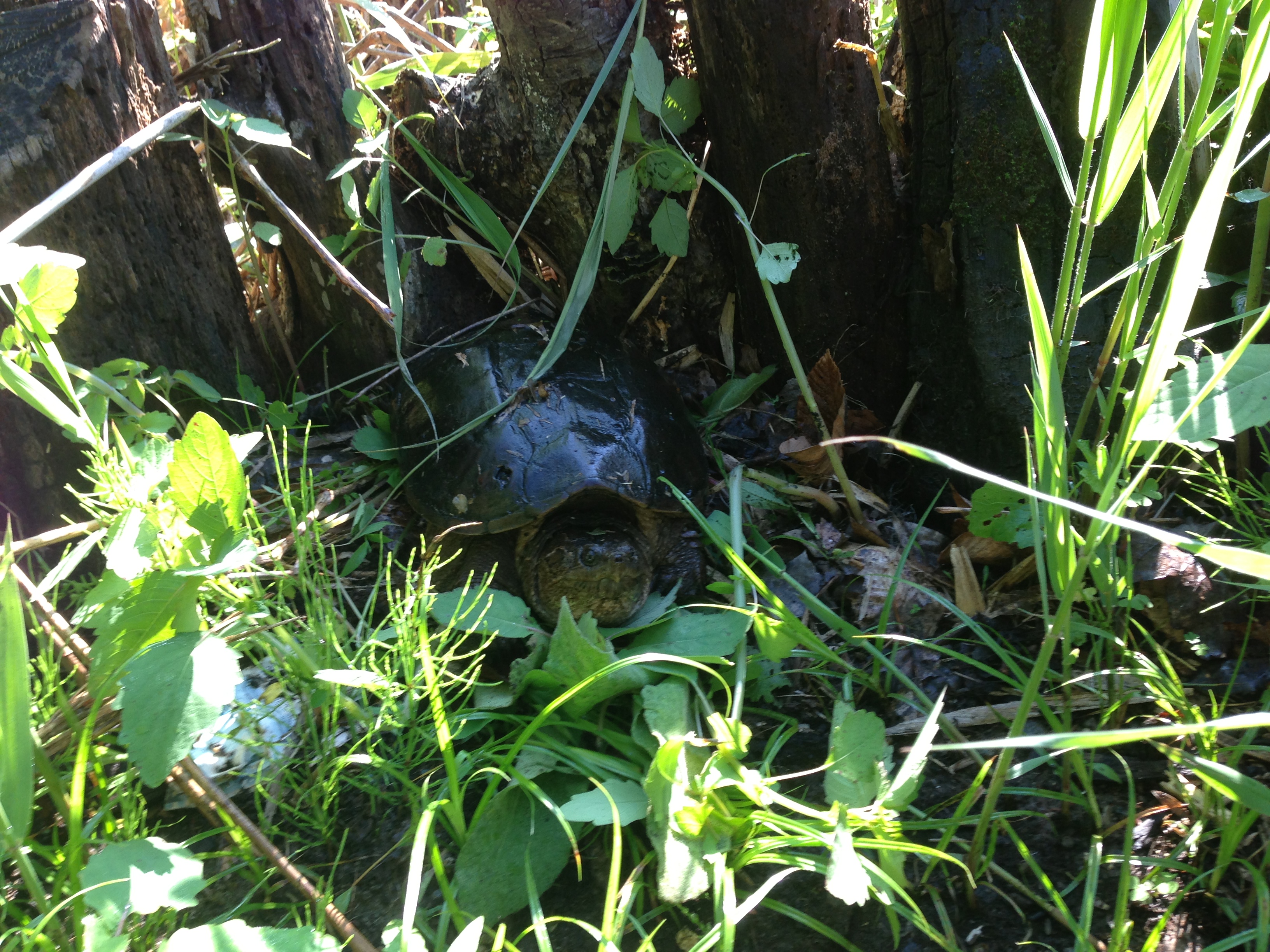
We were ushered off to our strawberry jaunt by a visitor from prehistory.

snapping turtle

A snapping turtle backed herself into a corner of the the vegetable garden when I startled her. She scowled, bit the air and elongated her snake-like neck when her ejection was proposed with a shovel. Snappers evolved over 40 million years ago, so she deserves our careful respect.

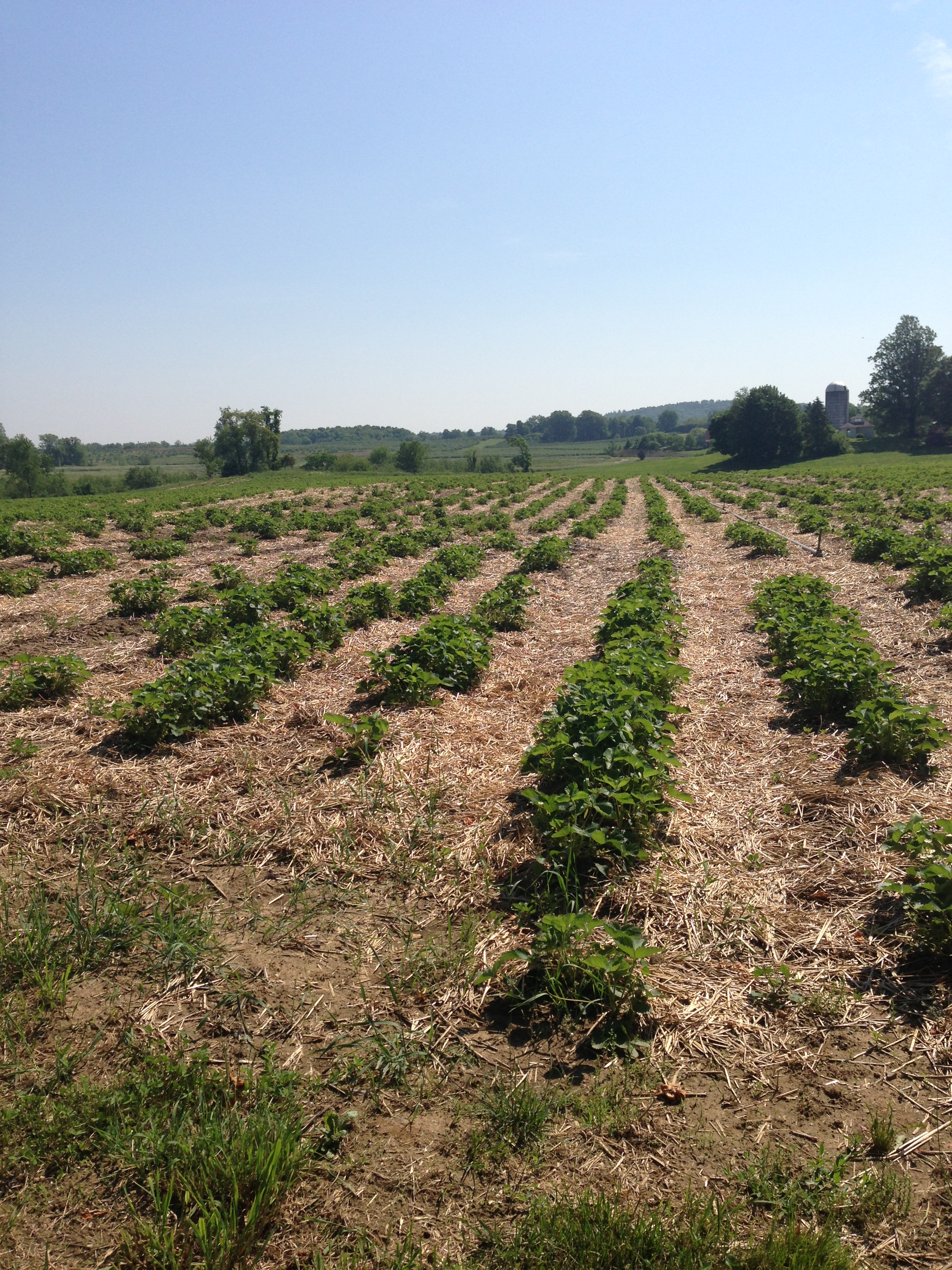
It’s strawberry season. But it’s early.

strawberry field

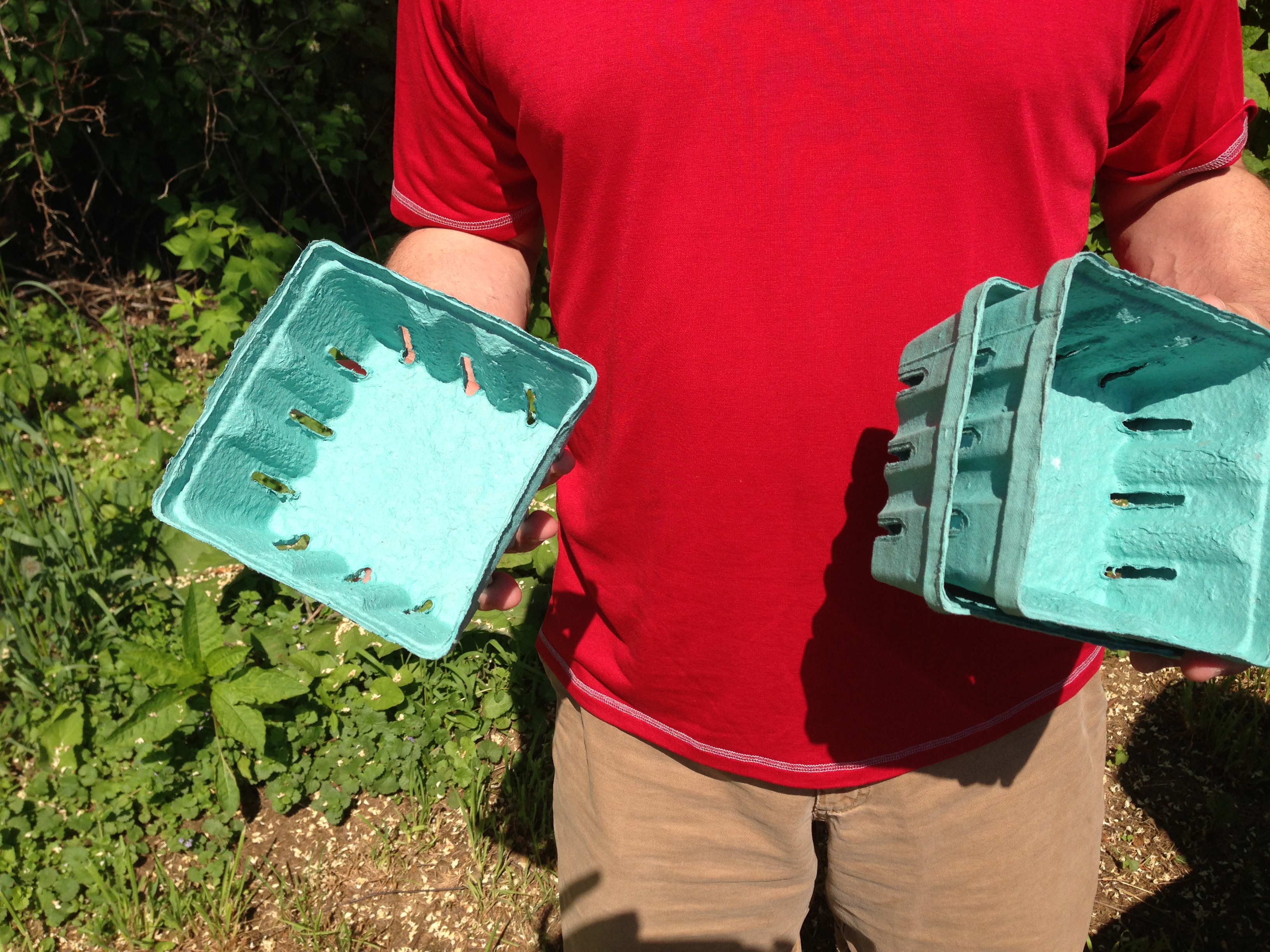
Still, we wanted to pick.

Gil boxes empty

One of my mother’s fondest memories of strawberry picking as a kid is the bluebird she saw on a post, her first bluebird, as she rode into the field in the back of a pickup truck with her sister Sandra and her brother Jere.

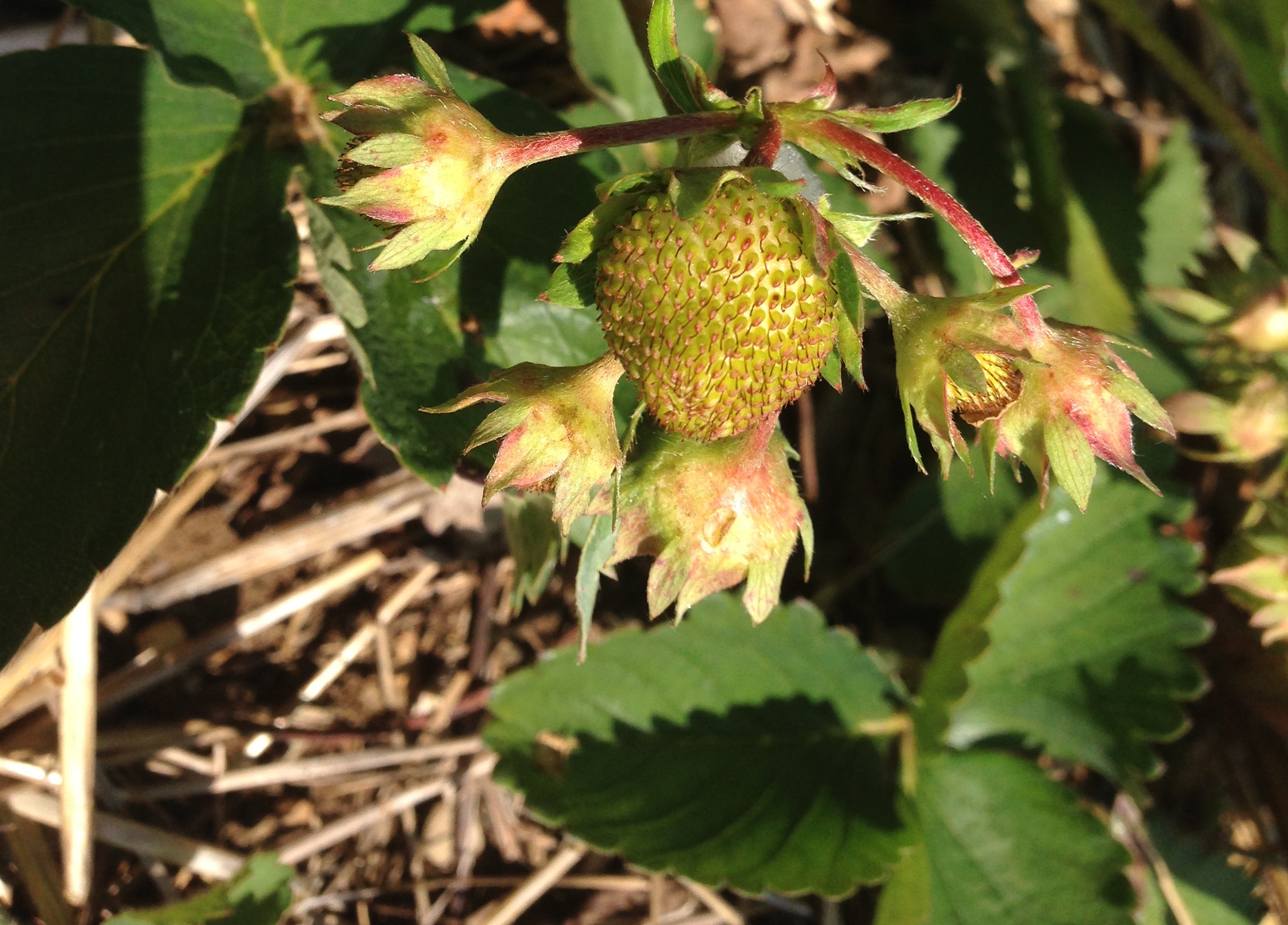
No bluebirds for us, or birds of any kind. The berries, clustered under their tents of leaves were largely unripe.

unripe strawberry

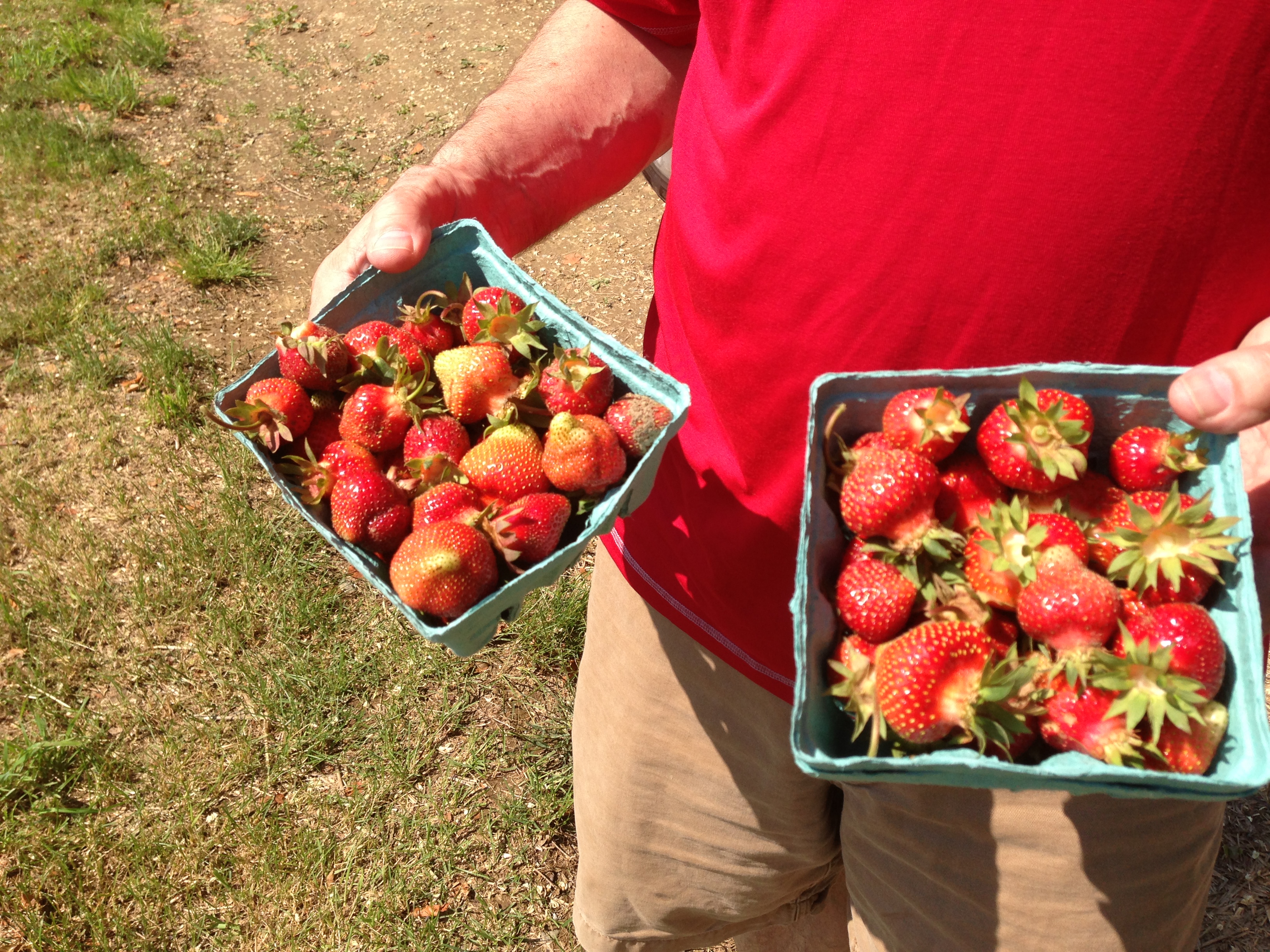
At Grieg Farm, in Red Hook, New York, we had a summer sky, hot blue with hazy clouds. And strawberries, it turned out when we looked, plenty enough for the two of us.

I remember eating strawberries when Gil proposed to me decades upon decades ago. He went into the restaurant’s men’s room and looked into the mirror, then came back to the table and dove in.

Gil boxes full

Ryan took our six bucks and explained that while the berries weren’t the prettiest, they were just as sweet as if they were perfectly red.

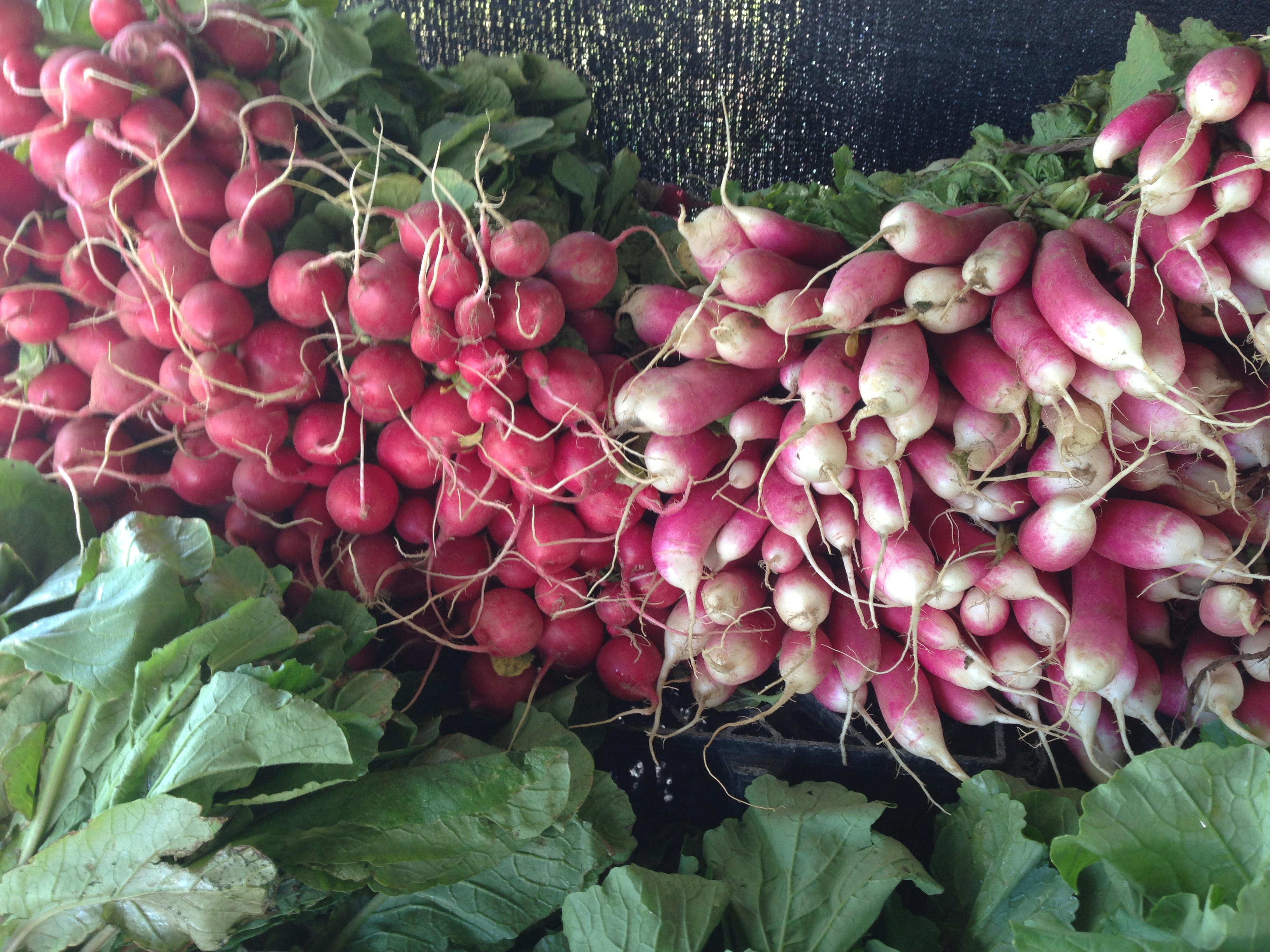
Redder (and pink) were the radishes at the farm stand.

radishes

One nurseryman told me that if you harvest the baby radishes with their leaves and saute them together, it results in a dish that is delicious. I have plenty of baby radishes in my garden – until the snapping turtle comes for them – and I’m going to try it.

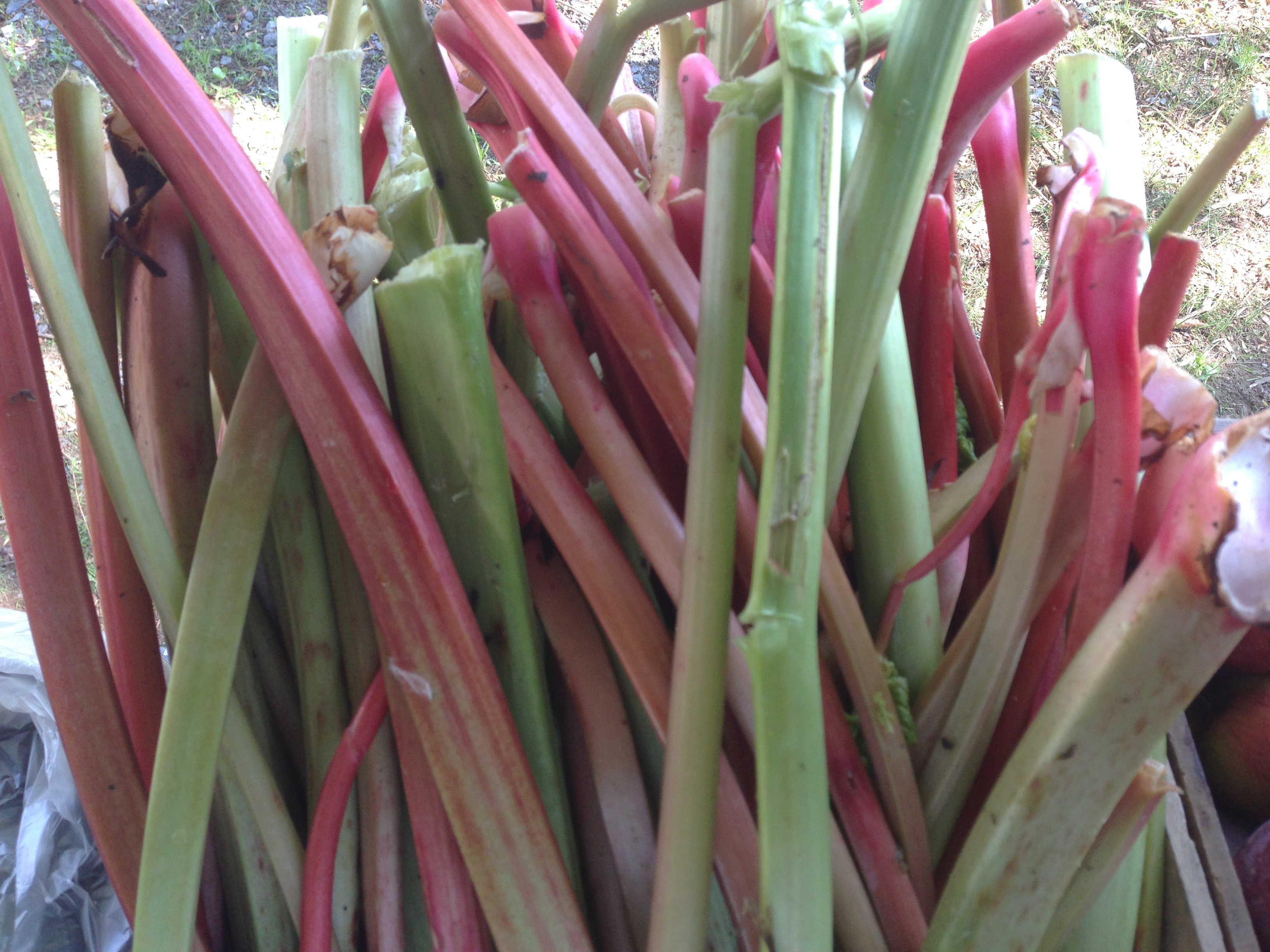
Red-green rhubarb, to go with my peppermint-striped strawberries.

rhubarb

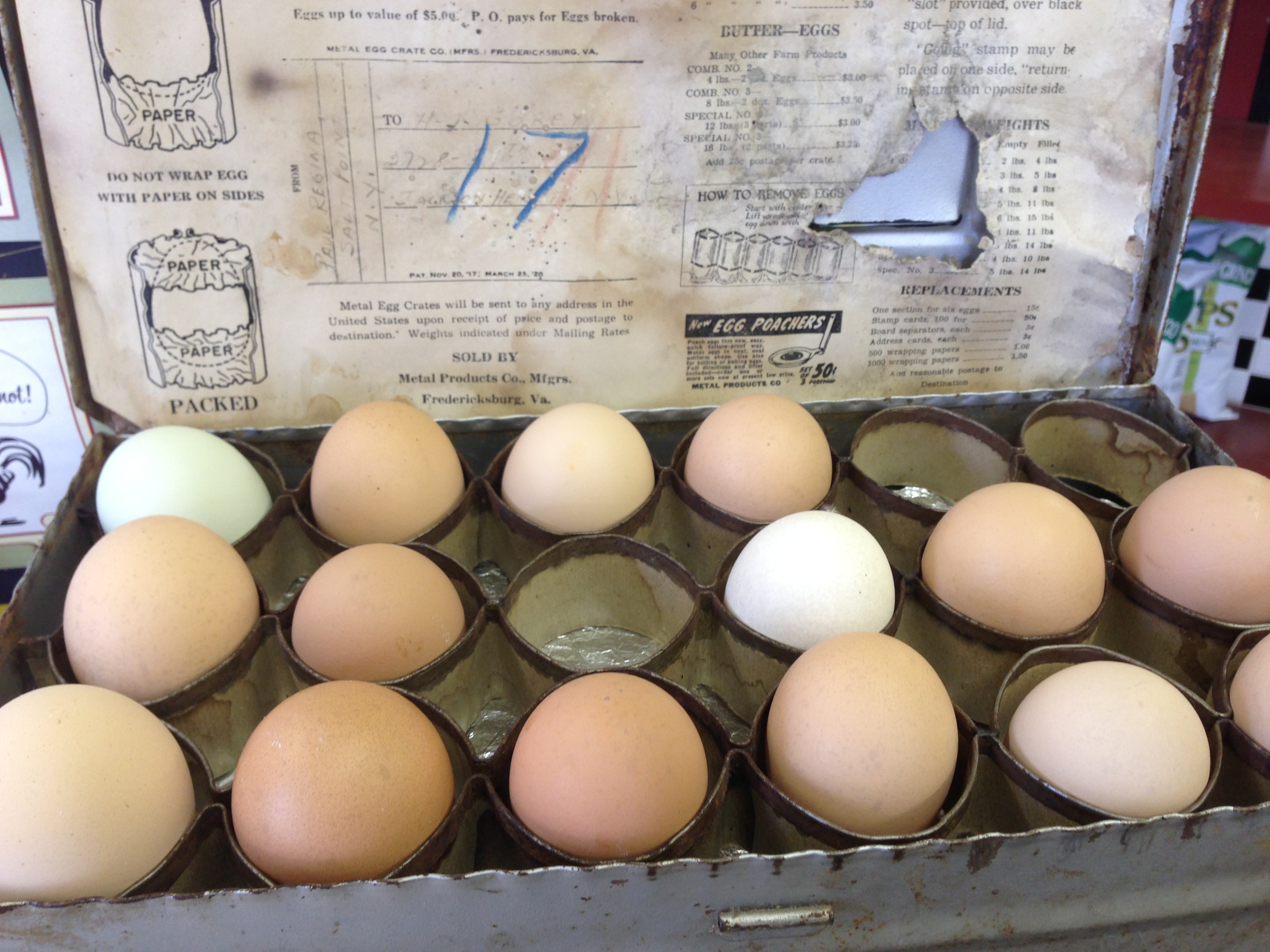
Maybe preceded by a meal of eggs so fresh their yolks puff up like small islands of saffron?

brown eggs

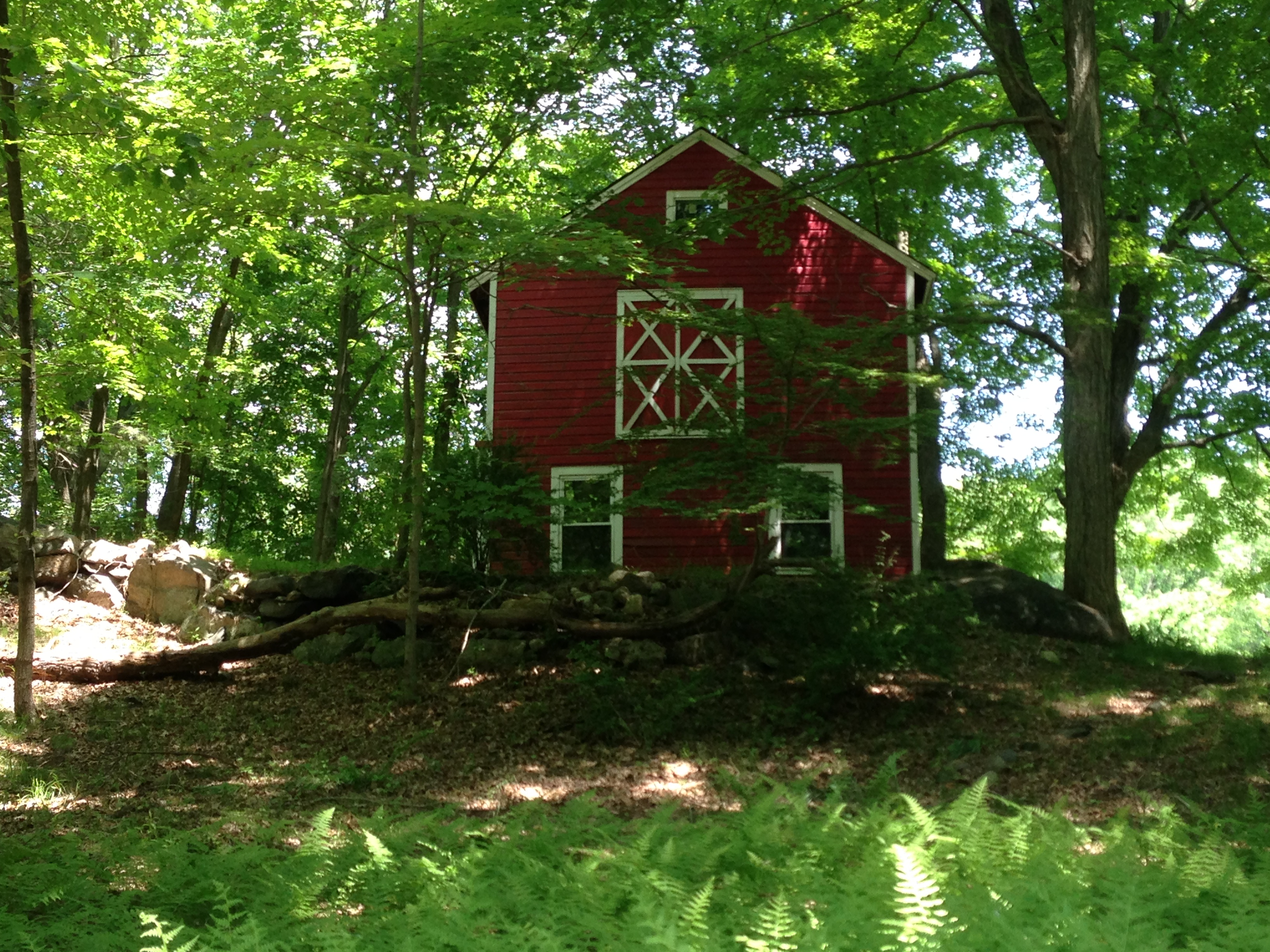
So the strawberries weren’t red. So what? The barns were.

red barn

In the car, driving home with alacrity before my coleus plants wilted, Gil said, Do you know why so many barns are red?

coleus

I never thought about it.

Because of the chemical properties of dying stars, he said. One byproduct when stars decay is ferrous ochre. Ferrous ochre is plentiful on earth. And ferrous ochre is what makes paint red. So it’s the cheapest kind of paint.

Okay, I say.

Barns are big, he says. Farmers are cheap.

farmland

We have red barns because of the chemical properties of dying stars.

Strawberries are a different story.

Macerated Strawberries with Basil

[Macerate= to soften or decompose (food) by the action of a solvent.]

2 lb. fresh strawberries, rinsed, hulled, and sliced 1/8 to 1/4 inch thick (about 4 cups)

1 Tbs. granulated sugar

2 tsp. balsamic vinegar (alternate: 2 tsp. vanilla)

8 to 10 medium fresh basil leaves

In a large bowl, gently toss the strawberries with the sugar and vinegar. Let sit at room temperature until the strawberries have released their juices but are not yet mushy, about 30 minutes. (Don’t let the berries sit for more than 90 minutes, or they’ll start to collapse.)

Just before serving, stack the basil leaves on a cutting board and roll them vertically into a loose cigar shape. Using a sharp knife, very thinly slice across the roll to make a fine chiffonade of basil. Scatter with the basil to garnish.

2 Comments

Filed under Cooking, History, Home, Jean Zimmerman, Nature, Writers, Writing

Emily in the Garden

The heat feels good. All ninety-nine degrees of it.

The pole beans twist themselves around the bamboo supports, under the arcing sun.

pole beans

The pansies on the front porch of the Cabin salute.

pansies

Even Oliver likes to move his luxuriating form outdoors, having decided that sun-warmed gravel is a choice nap mat. Along the lines of ancient cultures whose people slept comfortably with their heads on carved blocks of wood or stone.

Oliver gravel prone

All the quiet and heat and a sense of the plants feverishly growing brings to mind the work and life of Emily Dickinson, she who was, according to one scholar, “known more widely as a gardener, perhaps, than as a poet” during her time. Dickinson conscientiously tended the flower garden at the Homestead in Amherst, Massachusettes, where she spent her whole life, assembling. a collection of pressed plants in a sixty-six page leather-bound book which contained 424 pressed flower specimens organized according to the Linnaean system.

Dickinson is usually thought of the way she appears in the iconic photo taken when she was about eighteen.

Emily_Dickinson_daguerreotype-e1346874482904

Recently another portrait materialized in an archive, with the poet on the left and her friend Kate Scott Turner on the right.

Emily Dickinson

She would have been well into her genius years, both in terms of writing and gardening.

The Homestead garden was famous in its time, at least among the neighbors. Dickinson’s niece, Martha Dickinson Bianchi, remembered “carpets of lily-of-the-valley and pansies, platoons of sweetpeas, hyacinths, enough in May to give all the bees of summer dyspepsia. There were ribbons of peony hedges and drifts of daffodils in season, marigolds to distraction—-a butterfly utopia.” Dickinson loved scented exotic flowers, writing that she “could inhabit the Spice Isles merely by crossing the dining room to the conservatory, where the plants hang in baskets.” She liked to send friends bunches of blooms with verses attached, but complained mildly that “they valued the posy more than the poetry.”

Dickinson went everywhere, apparently, with her brown Newfoundland Carlo, a gift from her father in the fall of 1849. “My shaggy ally” she called him in a letter.

A lovely animation gives the perfect flavor of the poem “I started early—took my dog.”

Emily was so mysterious, endlessly elliptical.

Presentiment is that long shadow on the lawn

Indicative that suns go down;

The notice to the startled grass

That darkness is about to pass.

Less than a dozen of Dickinson’s 1,800 poems were published in her lifetime. Among the rest were 40 pieced-together and hand-sewn books she had assembled in the years before her death.

Wild Nights

That’s the fascicle-bound manuscript page for the passionate, rhapsodic poem Wild Nights!:

Wild nights! Wild nights! 
Were I with thee, 
Wild nights should be 
Our luxury!

Futile the winds 
To a heart in port, 
Done with the compass, 
Done with the chart.

Rowing in Eden! 
Ah! the sea! 
Might I but moor 
To-night in thee!

In her final years Dickinson also wrote on scraps of paper, chocolate wrappers, the margins of books, and even envelopes she received in the mail. A book documenting these envelope poems is due out this coming October, to be titled Gorgeous Nothings. A related appreciation and performance can be enjoyed even before the book is published.

Emily

2 Comments

Filed under Dogs, Home, Jean Zimmerman, Nature, Poetry, Publishing, Writers, Writing

Simple Stock With a Side of Butter

We in the northeastern U.S. have been deluged with a cool spring rain for several days now. Not good weather for adventuring, though I managed to get out and about yesterday and sample some history and some garlicky pork chops.

weeds

The weeds are thriving. Our sump pump is heaving, with the Cabin set as it is down into an overflowing marsh. And the room around me is dim and shadowy, a womb of dark lumber. The pictures stare out of the murk.

picture

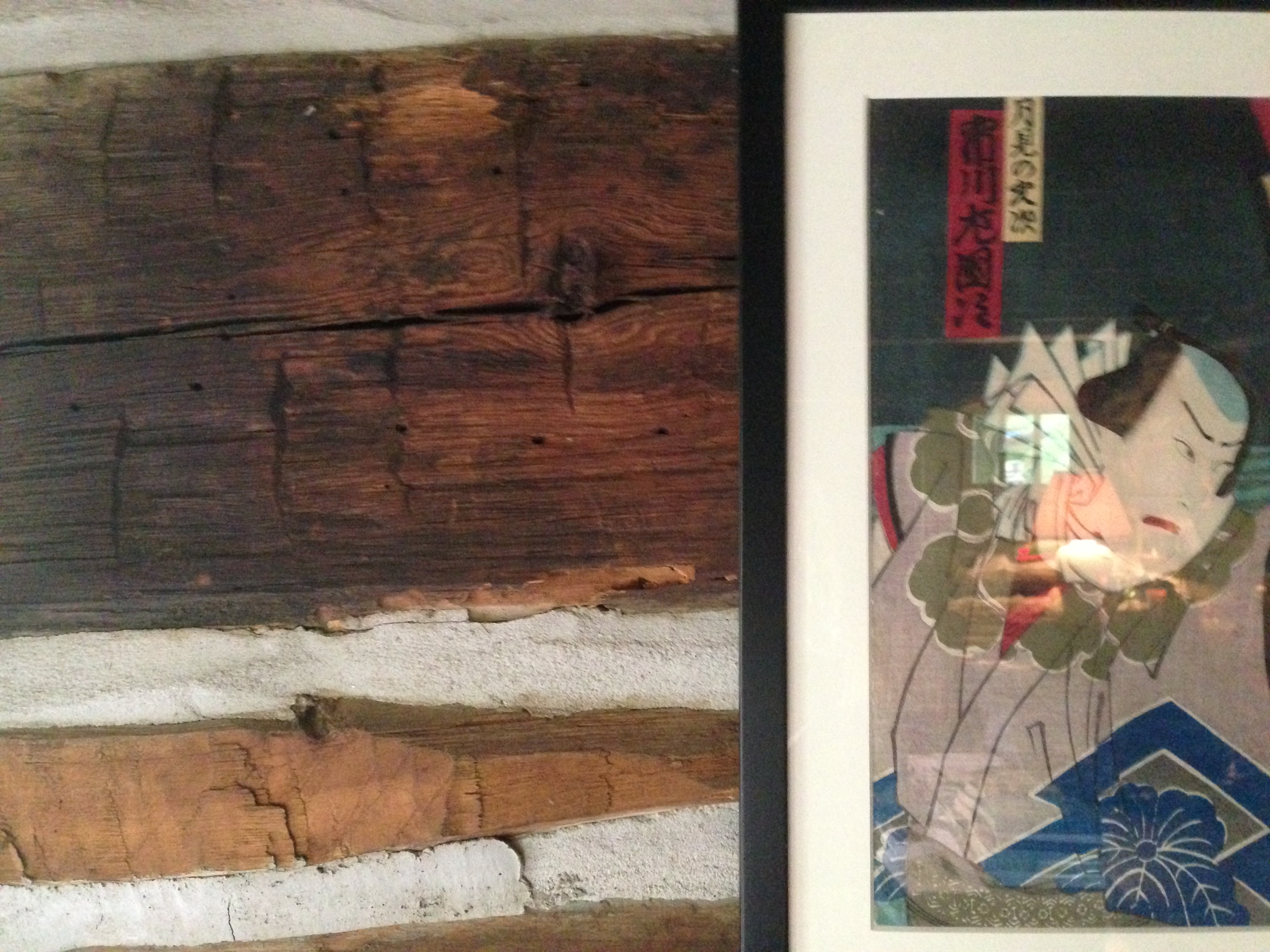
Chestnut, a building expert recently assured me. The Cabin is built of chestnut logs. How do you know? I asked. I just know, he said. You can see it in the fireplace mantle.

mantle

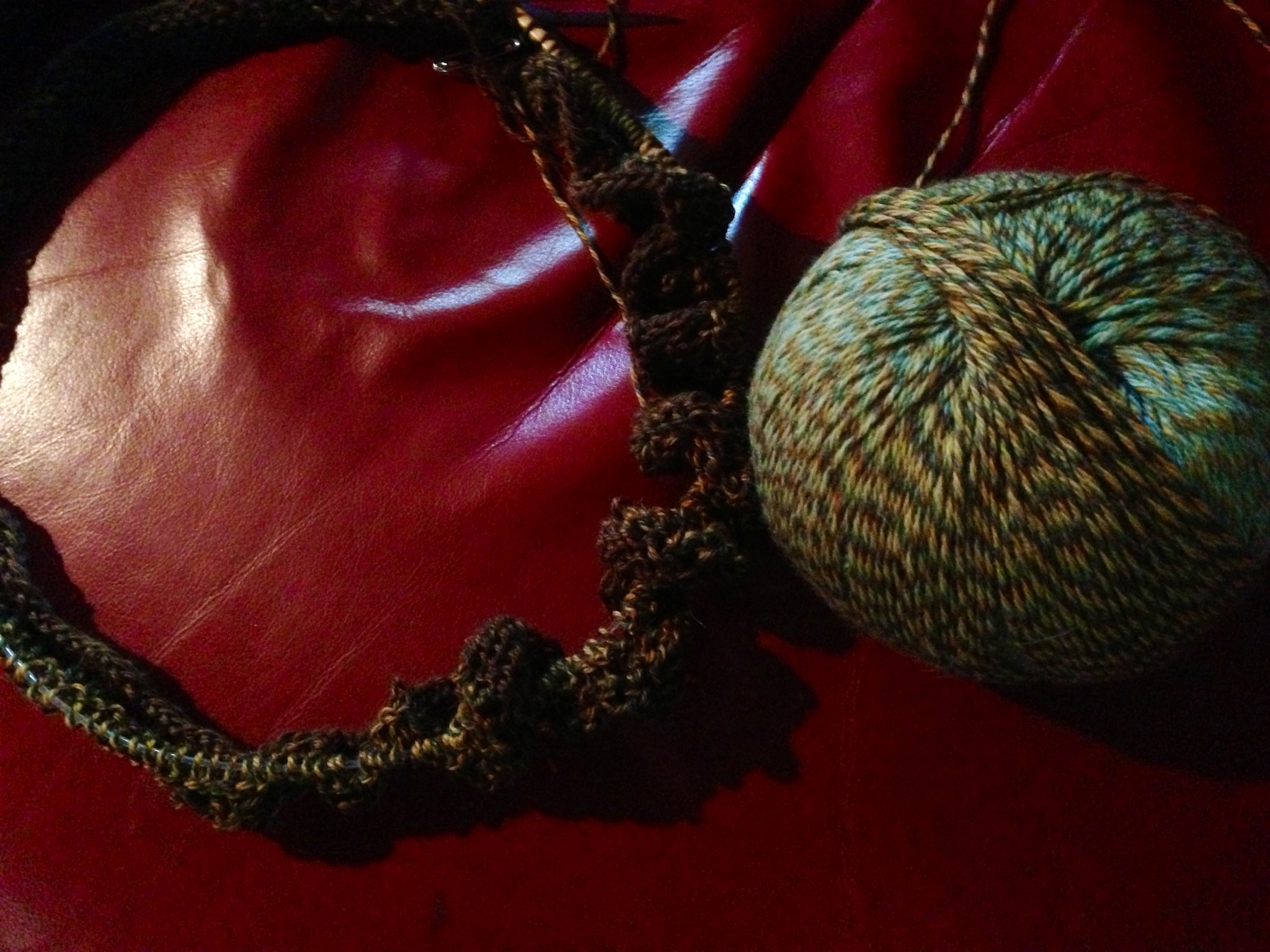
Today is fit for a few errands – dry cleaning, library, Good Will. Then as many rounds of a knitted cowl as I have patience for. Beautifully soft merino wool in a heathery blue-brown. The proprietor of my local knit shop, Flying Fingers, after salvaging yet another botched project of mine, confided that business falls off after the winter, that people seem not to think of knitting as a year-round activity. I immediately bought some new yarn.

heather

I think I’ll take another listen to Barry White’s Ecstasy, which I heard in the car for the first time in a long time. At least 20 years, in fact. Is it still brilliant or is it just me?

barry

Perhaps a chapter of What Maisie Knew, the original by Henry James, which I’m newly interested in after the disturbing contemporary movie version I took in earlier in the week. Perhaps a start on The Flamethrowers by Rachel Kushner, which just appeared in April and takes place in 1975 in New York City, where a young woman named Reno is intent on conquering the SoHo art world.

flame

I know I’ll make a big pot of chicken soup, and dive into another pot: links I’ve been saving to mull over on a day just like today.

Here are some you can sink your teeth into.

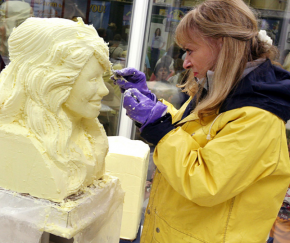
Have you ever wondered about butter sculpting?
butter sculpting

Linda Christensen, a master at the craft, typically spends a week and a half in a booth chilled to near freezing at the Minnesota State Fair in order to render likenesses out of 90-pound blocks. An artist friend of mine once imagined making sculptures out of breast milk butter, but it never came to pass.

How about houses so small they can be mounted on grocery carts?

Early water pipes under New York City carved from whole trees.

wood pipes

Archaeologists are finding them now.

Italian prison inmates who make award-winning chocolate truffles.

The question of whether Michael Pollan is a sexist pig – an excerpt from Homeward Bound: Why Women Are Embracing the New Domesticity, a new book by Emily Matchar that sounds an awful lot like my decade-old Made From Scratch: Reclaiming the Pleasures of the American Hearth.

Is it time to order a new supply of Goatboy Soaps, handmade from goat’s milk and shea butter on a farm in New Milford, Connecticut?

1009wc07.jpg

The one called Heavenly does indeed have a celestial aroma, I can vouch for it,but you can also choose from among Blackberry Sage, Cherry Almond, Clean Greens, Lavender Oatmeal, Serious Citrus and others, including Red Clover Tea, the company’s bestseller. No breast milk in evidence.

Research showing why the act of pointing makes babies human. It turns out, according to Slate, that “Babies point to refer to events in the past and the future. They point to refer to things that are no longer there. They can figure out, when an adult points across the room toward a group of objects, what exactly the adult is gesturing toward (the toy they’ve previously played with, say). They can deduce that, by pointing, an adult is trying to communicate something specific (find that toy hidden in that bucket). And not least of all, babies point because they want to share their experience of the world—that puppy—with someone else.”

The fascinating blog of an Irishman elucidating a video of Dublin phrases.  You’re in for a treat if you make posts from Sentence first a regular part of your day.

A recipe for how to make Mango Sticky Rice, at a site called The High Heel Gourmet, brought to you by Miranti, a young chef who seems to know exactly what she’s doing.

high heeled gourmet

And, finally, a piece so lively it will drive all the rain away (by tomorrow, I hope, when I plan to go mushrooming in the Westchester woods), a photo doc on skateboarding in 1965, courtesy of Life magazine.

girl skateboarding

I am sure that some of the individuals pictured have traded skateboards for walkers, but then everything was a breeze.

If you wind up wanting to make home-made soup, a chicken elixir, here’s how.

A Recipe for Simple Stock

1 soup fowl/heavy fowl/soup hen

A bunch of chicken feet if you can get them

2 big fat carrots

2 sticks celery

1 large onion

1 large purple-shouldered turnip

1 large parsnip

a bunch of dill if you have it

salt and pepper to taste

Bring chicken to boil in a pot large enough to accommodate all ingredients.

Skim off scum and reduce to a simmer.

Add all other ingredients.

Simmer 3 hours or until chicken starts to fall off the bone.

Strain stock.

Add noodles or matzoh balls, use as a base for leek-and-potato soup, make gravy for chicken pot pie or stir up some risotto. Perfect for anything that ails you. And if you dribble a little over the kibble, your dog will love you for it.
1 Comment

Filed under Cooking, Fiction, Film, History, Home, Jean Zimmerman, Knitting, Nature, Publishing, Writers, Writing

Lettuce F*****g Entertain You

Thug politely pledged to test out my biscuit recipe when I contacted him/her/them, that is as soon as the dust settled. (His actual words:  I love biscuits and will try your shit out.) Thug Kitchen has after all experienced a viral explosion since the novel cooking site launched in October. Critics call it profane, and profane blended with strawberries and avocados seems to produce a bit of gastric discomfort. Is this some kind of trick? Are we being had?

I call the combination real.

chickpea

What is it with men and cooking? Top chefs are almost uniformly male. Backyard barbeque-meisters, natch. Boys learn from their fathers.

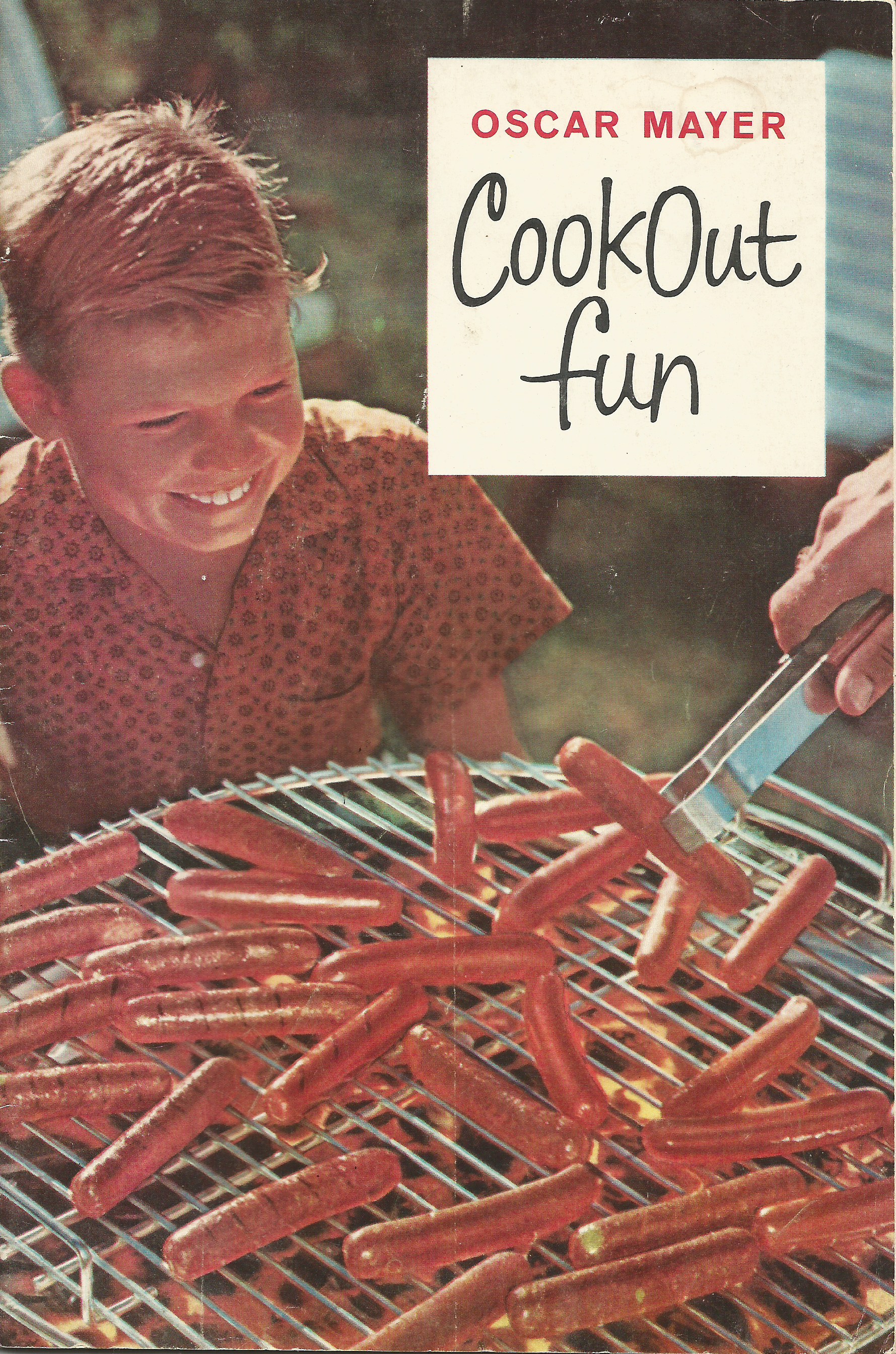
Cookout fun 2 copy 2

But those who are not chefs of reality TV or summer parties, the men who man the stove day in, day out, making family meals, making solitary meals, prepping the onions and boiling the rice – still sadly a minority. Even Brooklyn foodies cook less than their wives.

Thug cooks for dogs. Sweet potato jerky treats that Oliver would relish.

dog sweet potato

The press will tell you different, that hordes of men are cooking now. After all, the men of the fourth estate are different, and they write what they know. Men have of course increased their kitchen activity since, say, the 50s and 60s, since women gave them a shove with the spatula and said, Do it. Make me proud in here. A wee bit. (And truth be told, younger men are stepping up. A 25-year study of Gen Xers found that men were making two-thirds of the meals married women were. Not too shabby.)

Some men today deliver.

Gil, for example, makes a mean green chili. Okay, that’s a typical boy preserve. He can also deliver a whole wheat pizza topped by homemade tomato sauce, fresh mozzarella, baby spinach, bacon and olives. With aplomb. Delicious, I had three slices yesterday.
Both my brothers have achieved local fame over the years for their culinary expertise. I still remember the roast goose Andy put on the Christmas table a couple of years back, crisp and done to perfection, but he also puts his kindergartener’s dinner on family table every day. Peter assembles a crazy raw kale salad. Don’t know where they got the gene, as the sum total of our father’s skill is a perfect hard-cooked egg.

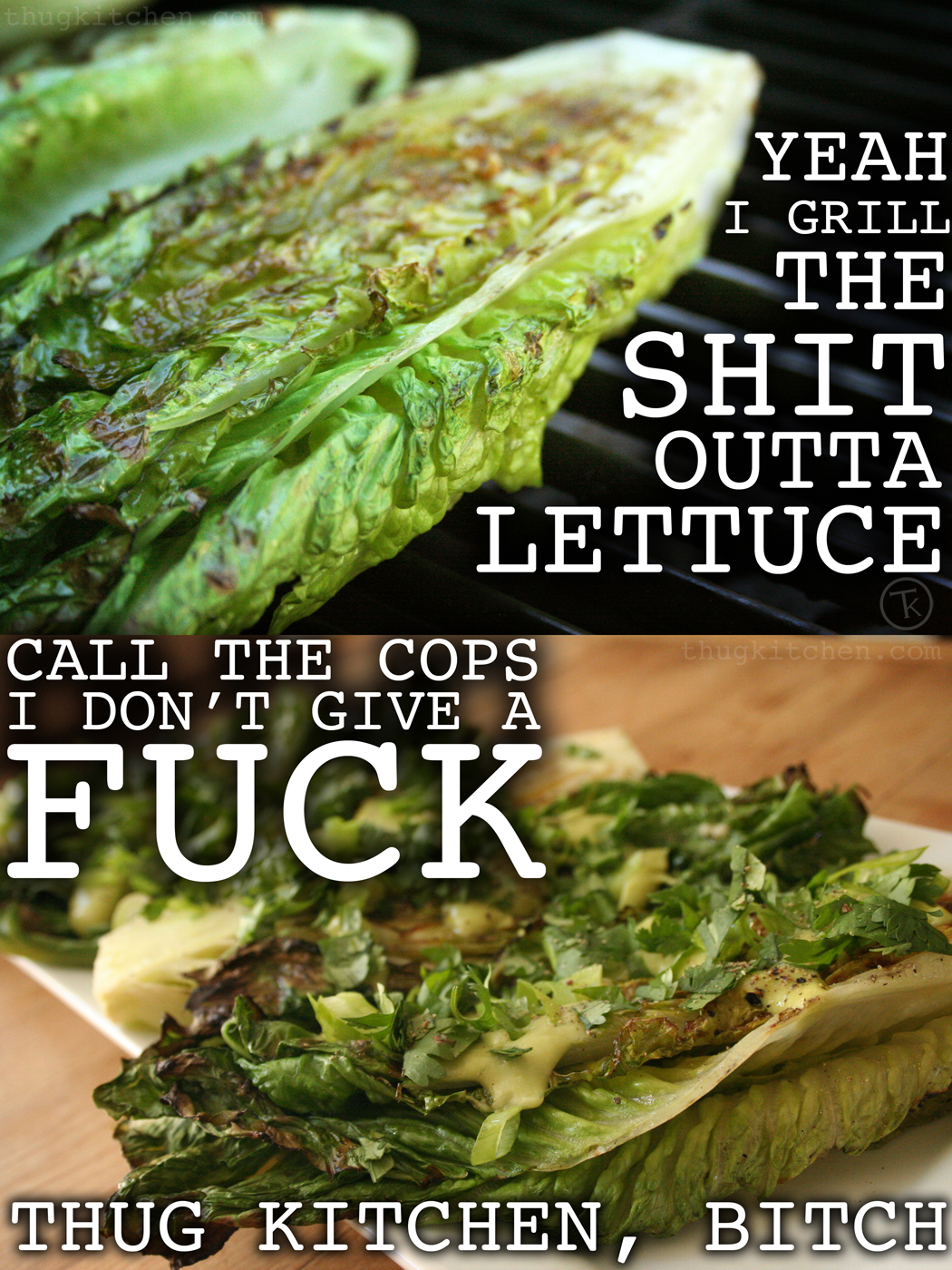
Thug Kitchen unites macho and grilled-romaine-with-a-touch-of-seasalt as easily as a stroll in some vegan park. Saveur called it the number one food blog around.

lettuce

“ANYBODY CAN GRILL A FUCKING BURGER OR HOTDOG. Elevate your grilling game with something that simpleminded motherfuckers wouldn’t even consider. Grilling veggies is some classy shit and it only takes a few minutes. I am not talking about some played out portabella burger that tastes like a dirty sponge. Eggplant, artichokes, okra, lettuce: all that shit can be thrown on the grill and are in peak form during the spring and summer. People are guaranteed to come correct next time you invite them over. Raise the fucking bar and grill to impress.”

It doesn’t need to be Oscar Mayer any more.

Thug actually is vegan, if you scroll down the site to take a better look, past the blast of biting admonitory locution. No fathers in man-aprons grilling steaks here. Instead, dishes a lady would love: lavender lemonade: “Calm Your Bitch Ass down like a Boss-Drink Some Fucking Flowers” runs the heading, and the recipe advises, “This is some good shit to make when you are feeling bougie as fuck.” Roasted strawberry and coconut salad inspires this heading: “Eat a Goddamn Salad. Fuck it-Eat Ten Then Brag about it.” But TK told the NY Daily News, “You don’t have to be fancy to give a f— about what you eat.”

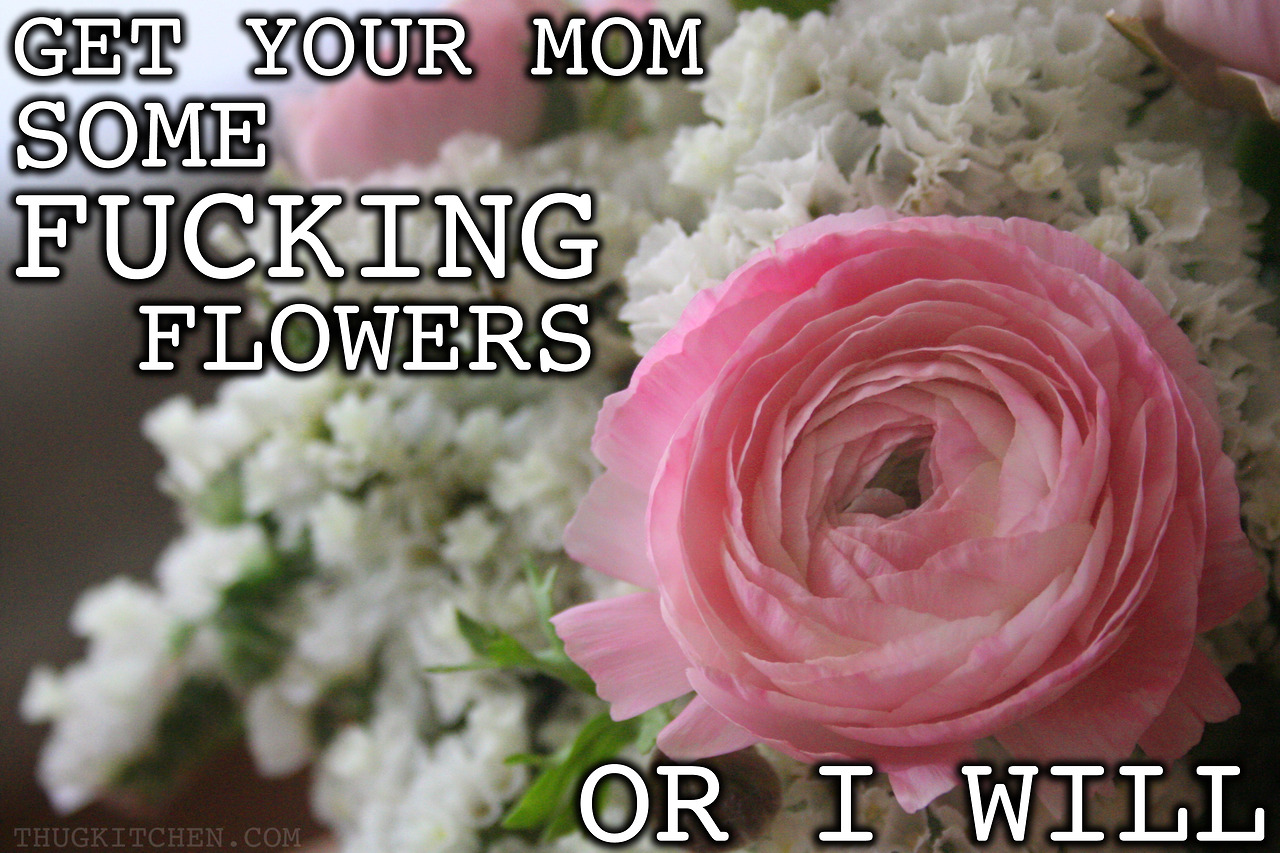
Thug Kitchen loves moms.

flowers for mom

Thug appears to be a collective. I got a note framed in the royal we. (They’re going out with a book, as soon as they get a proposal together. A book we ladies can share with the gentlemen in our lives.) If so, they must be having a blast, sucking down their strawberry-grapefruit margaritas and talking trash.

Can I come out to L.A. for dinner? I clean up nice and I bet you do too.


Grapefruit Guacamole – recipe courtesy of Thug Kitchen

GRAPEFRUIT GUACAMOLE

5 ripe avocados

2 medium grapefruits or 1 big son of a bitch

¼ cup chopped cilantro

¼ cup chopped red onion

juice of 1 lime (about 2 tablespoons)

¼ teaspoon salt

Take the pit out of the avocados and scoop out all the green flesh into a large bowl. Mash it up with fork. I like my guacamole chunky but do what you gotta do. Cut the grapefruit up into segments like you would cut an orange. Remove the peel and cut the segments into pieces about the size of a nickel. Put all the grapefruit into the bowl with the avocado. Add the cilantro, red onion, lime juice, and salt and mix it all up. Taste it and add more shit until you like it. Serve immediately or chill it for a bit. I’m not gonna tell you how to eat guacamole, just follow your fucking heart.

8 Comments

Filed under Cooking, Dogs, Home, Jean Zimmerman, Publishing, Writers, Writing

Boxcar Boy

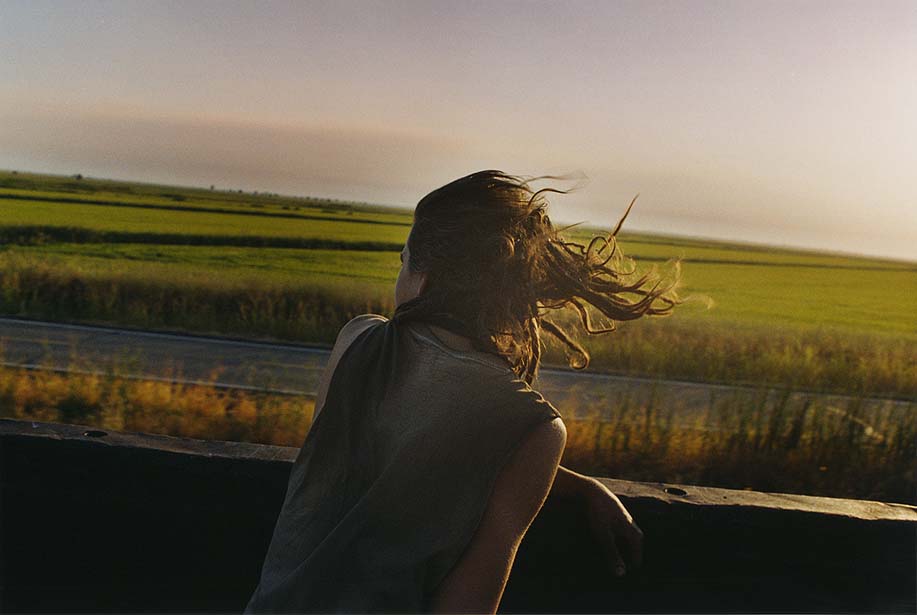
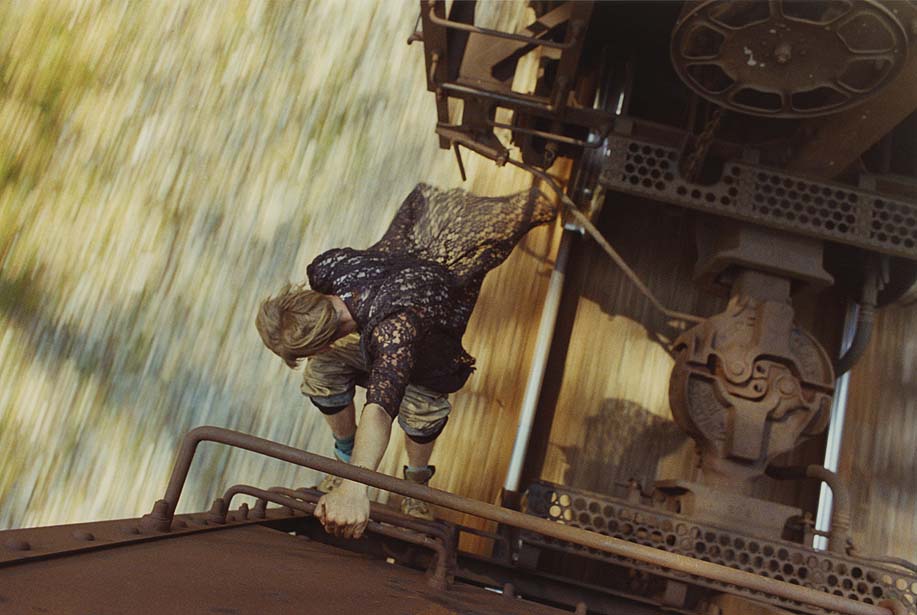
Mike Brodie is not making pictures any more. He left that behind along with a life on the rails, wind in his hair, the dirt of the road.

girl's hair

But for almost five years, since he was 17, he used a Polaroid and then a 1980s 35mm camera to document the world of young freight-train hoppers, his peers, in some searing and sweet images.

two figures on train

As I was cleaning my house today I thought, What if I didn’t have a house to clean? What if I didn’t have a counter to scrub, a coffee table to dust? I love home, the idea and the reality. But what if it was all suddenly swept away and I could just fly.

boy on train

Drift.

kids w map

Brodie traveled 50,000 miles through 46 states, catching a lift on more than 170 long-haul freight trains, and capturing the tiny details of life that usually don’t mean anything to anyone outside the people themselves. He had no experience as a photographer, he first picked up a discarded camera left behind in a car and just started to shoot his friends. One of his cronies took this portrait of him along the way.

mike-brodie-self

“There was nowhere to go but everywhere, so just keep on rolling under the stars.” So wrote Kerouac. His words have never felt less dated.

train

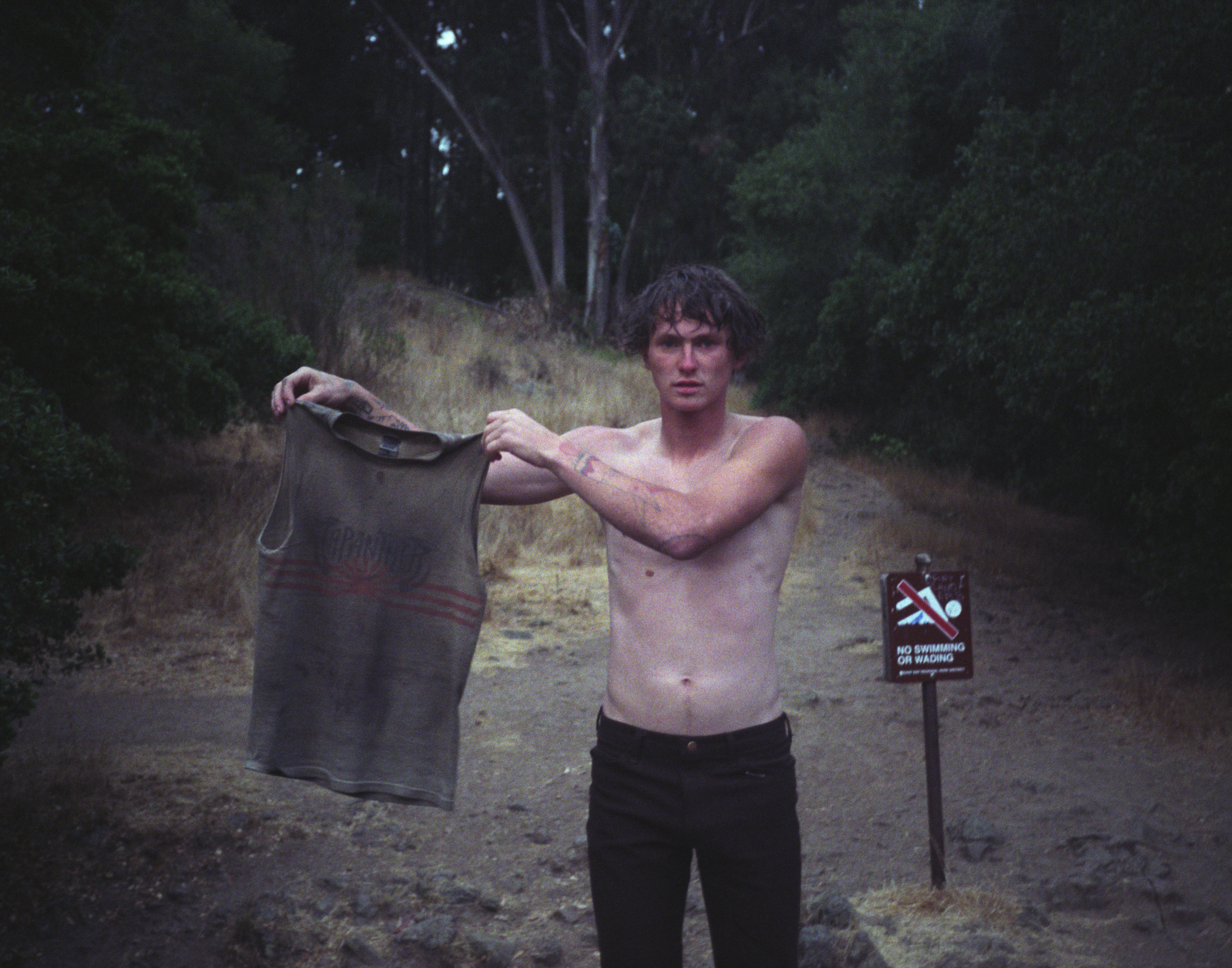
Brodie’s photos are romantic, edgy, authentic, and might make someone uncomfortable.

stain

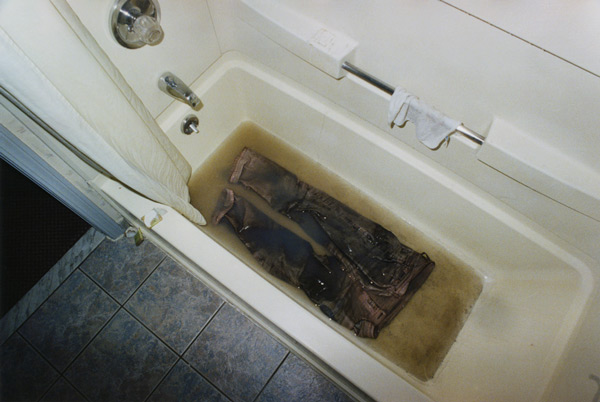
All right. You’re shocked. I’m shocked. Youth shocks, it demands attention. Brodie documents arrests and injuries, squats, disheveled car interiors (trains are only part of this story). Dirt. I love this one.

bathtub

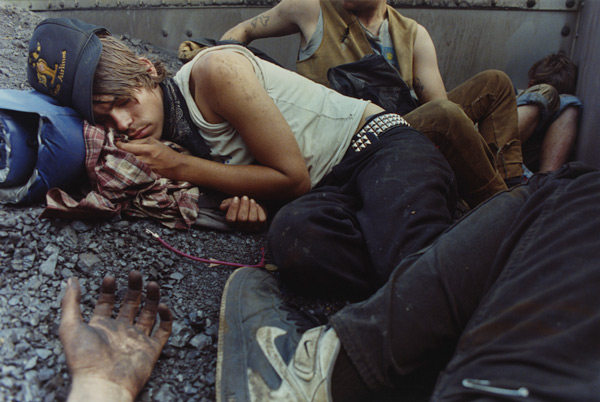
Some photos are grim. One reviewer described the work as “stolen glances.” There’s some truth to that. These are raw depictions of a ramshackle but exhilarating life.

boy sleeping

Whitman’s Song of the Open Road, another chestnut that begs to accompany these pictures:

Henceforth I ask not good-fortune,

I myself am good-fortune,

Henceforth I whimper no more, postpone no more, need nothing,

Done with indoor complaints, libraries, querulous criticisms,

Strong and content I travel the open road.

The result of Brodie’s adventure is a photo book called A Period of Juvenile Prosperity, published by Twin Palms, with coinciding exhibits in art galleries on both coasts. He and his friends apparently have mixed emotions seeing his intimate work appear in the mainstream. “You have a lot of worlds colliding right there,” Brodie told The Guardian.

A Period 2

This is not Never Never Land. Whitman knew the truth. Some of my favorite lines in literature, also from Song of the Open Road:

(Still here I carry my old delicious burdens,

I carry them, men and women, I carry them with me wherever I go,

I swear it is impossible for me to get rid of them,

I am fill’d with them, and I will fill them in return.)

People in the recovery business talk about the uselessness of the “geographical cure” by which you try to escape your problems by changing your location. But still, some lucky people are flying, mostly by choice, rolling under the stars, true angels with dirty faces, thrilling to the open road.

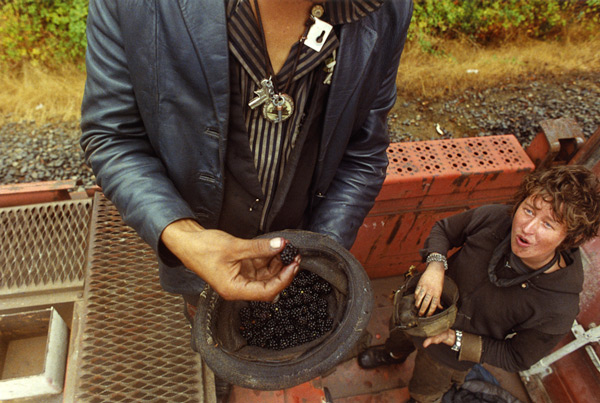
Can you imagine how sweet these berries tasted?

fruit

Cormac McCarthy, in his work of apocalyptic genius, The Road: “Then they set out along the blacktop in the gunmetal light, shuffling through the ash, each the other’s world entire.”

sleepers

Mike Brodie has said the inspiration for his work was “from the folks I was hangin’ out with in Pensacola. The punk scene, like radical anarchists and all these feminist girls, at the time, their ideas and way of life were really interesting and inspiring to me and really gave me the push to think for myself and, well, hit the road.” It was a tight tribe, he says, and nobody was “actually homeless.” Instead, “We took what we could get to make it through one more day or to get to the next town.” He reminisced to the Los Angeles Times about the “sound of a high-priority Z train whizzing by you at 70 mph in the middle of a cornfield in Nebraska, zooom zooom, zooom…”

In an essay for his book, he writes that “I don’t want to be famous, but I hope this book is remembered forever.” He has announced that he will not take any more photographs. He has graduated from the Nashville Auto-Diesel College and now works as a mobile diesel mechanic out of his silver ’93 Dodge Ram.

Mike. Please pick up a camera. Maybe show us the secret world of auto mechanics. Or any secret world you choose.

6 Comments

Filed under Art, Fiction, Photography, Poetry, Writing

A Quiche That Stands Up and Salutes

Does anyone besides me bake quiche anymore? Or has this delicious standby been totally ruined? By familiarity, by bad versions, by a laugh line that will never be forgotten?

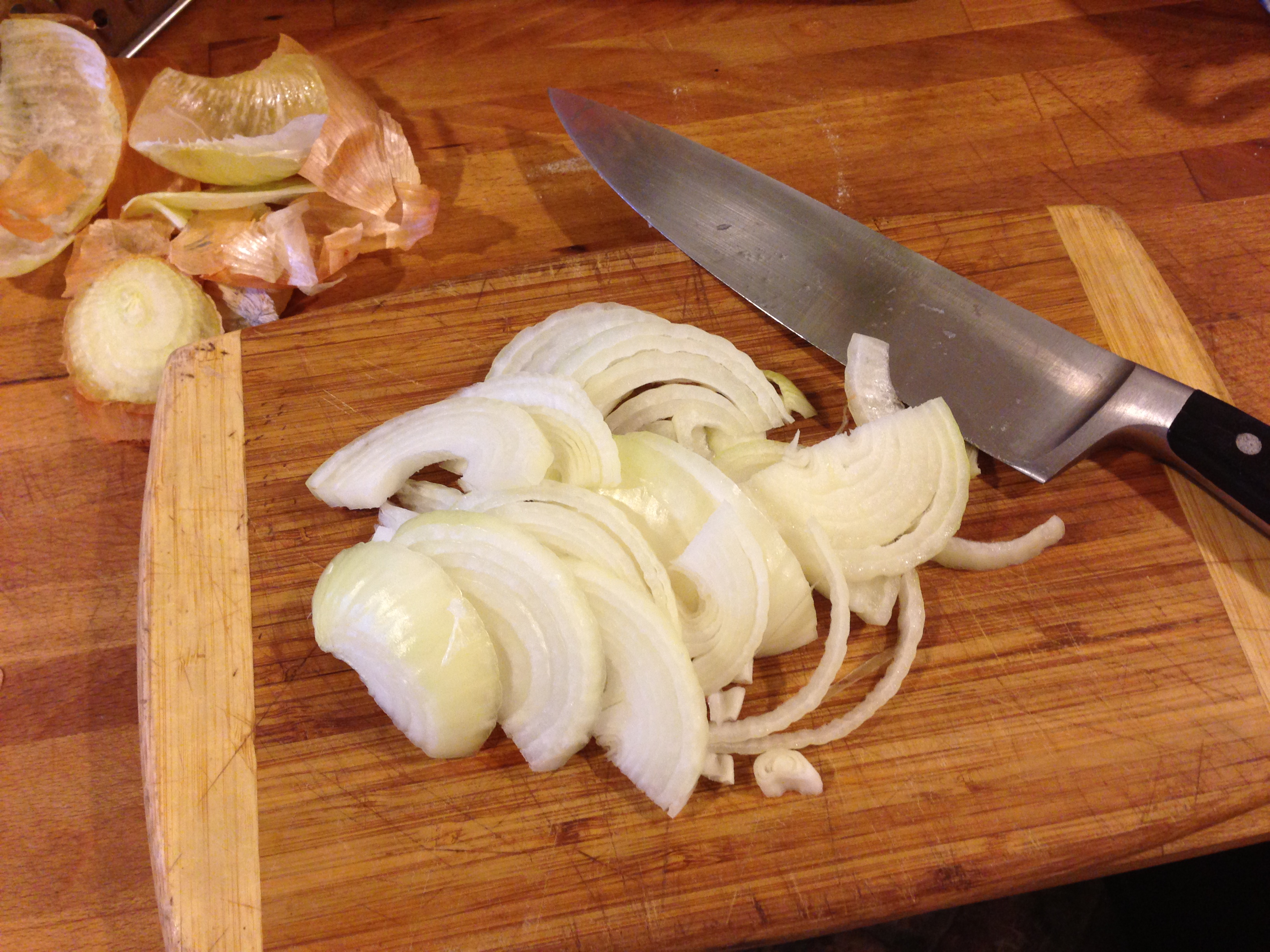
Real Men Don’t Eat Quiche was a long time ago – 1982, actually. Funny guy Bruce Fierstein popularized the notion that consuming eggs and cream in a crust was unmasculine. Chopping onions, properly women’s work. Ha ha. Or should it be?

sliced onion

It was a time when the idea of men’s and women’s intertwining roles was particularly fraught. Women had, it seemed, gone on the warpath, demanding equal pay, control over their reproductive lives, a break once in a while in their household routines. I worked as an editor at a think tank called Catalyst, where we encountered business male executives’ overheated fears over the inroads of female executives. Scaling the corporate ladder or any other was in the pop cultural air.

9_to_5_dolly_parton_435

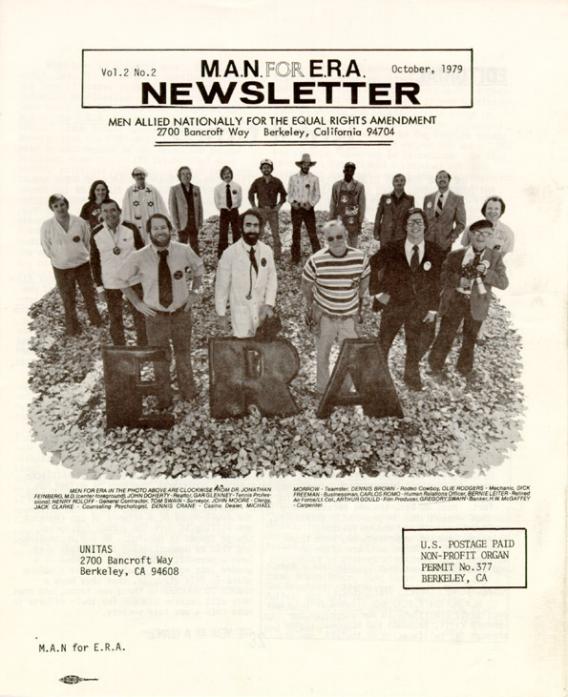
There were men who alligned themselves with women. I love this example of how some men came together in 1979 to share the good fight.

MANforERA1Final.jpg.CROP.article568-large

Slate’s Rebecca Onion writes that the newsletter’s authors were “group of men based in Berkeley, Calif., who were working for the ratification of the Equal Rights Amendment. The sheet was sent to interested activists throughout the late 1970s, as the feminist movement worked to secure the support of enough states to win the amendment’s permanent attachment to the Constitution.”

The group’s acronym stood for Men Allied Nationally for the Equal Rights Amendment. It’s goal, evidently, was “summed up in a motto that mixed arguments based on morality, feasibility, and ego: ‘Stake, Place, Chance, and Strokes.'”

Quiche eaters all, natch. Some were probably even quiche bakers. Quel horreur!

The B-52’s do a mean Quiche Lorraine. It’s about a little dog

dyed dark green.

About two inches tall, with a strawberry blonde fall;

Sunglasses and a bonnet

and designer jeans with appliques on it?

My point, and I do have one… as Ellen Degeneres used to say. In my house, the quiches happen to be my domain, while Gil does the donuts, the paninis and the best molasses cookies ever.

cheese:hand

I haven’t given up on quiche. It’s a historic entree, having originated once upon a time not in France, actually, but in Germany, and English versions of custard in pastry go back to the 15th century. The original rustic Quiche Lorraine was dished up in a cast iron pan. So ours is a connection to a simpler time. I actually impressed myself by making it for the first time in high school, in home ec class.

And it meets my leftovers standard. The egg in a crust you heat up in the microwave the day after (or the day after that) is almost as good as you had it hot from the oven that first night. Crucial in a household of writers who might not want to pause mid-sentence to create a meal from scratch.

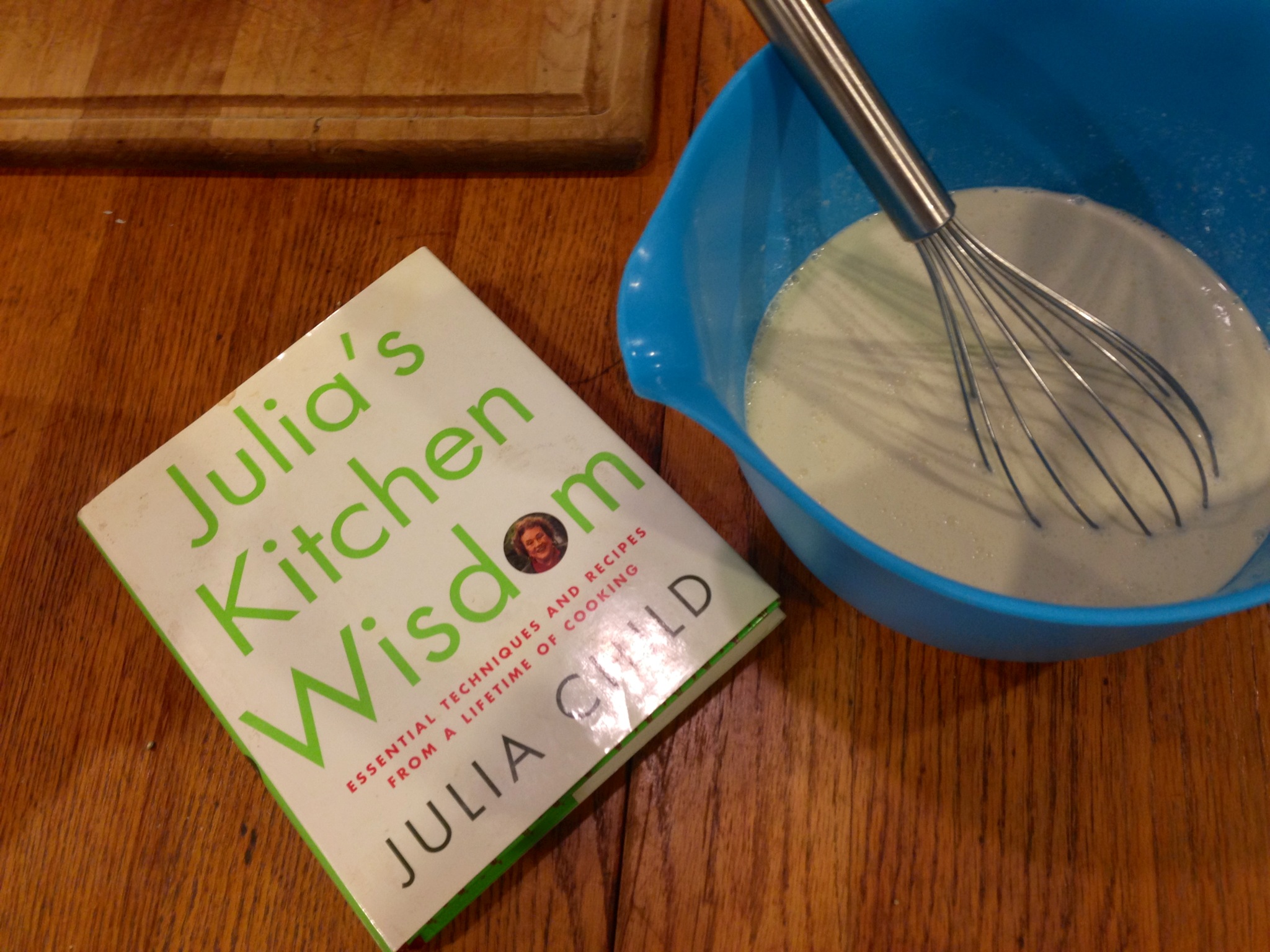
Julia Child has been my guide in developing a great recipe, but I don’t have patience with her doorstop tomes.

Julia's

I think the 107-page Julia’s Kitchen Wisdom: Essential Techniques and Recipes From a Lifetime of Cooking has just about all the information and recipes that are needed to square you away with your pots and pans. I especially like one of the tenets of her quiche recipe: you measure out the proper amount of eggs to cream by cracking the egg in a half-cup measure and filling it with the dairy, continuing in the same way until you get the amount of liquid required.

This reminds me of another egg trick I thought was great when I saw it in a movie. When a recipe calls for a whole egg, you sklurp your finger around the inside of the shell after breaking it to make sure you don’t waste any bit of precious white.

I make what historically has been called a Quiche Lorraine, with eggs, bacon and cream, except I always use cheese, and usually add some kind of leafy greens or broccoli – to make it healthy (!). My crust recipe is tried and true, and I always use leaf lard if I have some in the house.

The recipe may be mustily retro, but let’s call it classic cool. The quiche. A recipe for men and women equally.

A Noble Quiche

Crust:

1 ½ c flour (half and half white and whole wheat)

¼ c butter

1 ½ T crisco (or lard)

½ c cold water

pinch salt

Cut together butter, shortening and flour and salt, then mix in water with a fork; chill an hour.

Filling:

4 eggs

Half and half to fill up a half cup for every egg (you can use heavy cream for a more custard-like or milk for a more omelette-like consistency)

(plus extra eggs/cream as needed to fill your pie plate)

1 large onion, sliced thin

6 slices crisp bacon, crumbled

1 ½-2 c gruyere, shredded

greens or broccolli to taste, steamed

Fry bacon, remove. Fry onion til golden in same pan.

Whisk eggs and cream together.

Lay onions then bacon then cheese in pie shell. Pour in egg/cream mixture. Grind some pepper on top.

Bake at 375 for 45 minutes.

4 Comments

Filed under Cooking, History, Home, Jean Zimmerman, Writing

About To

Cloudy and damp, good planting weather. And just the right climate for the annual plant sale at Teatown, the nature preserve down the road from the Cabin.

flowers

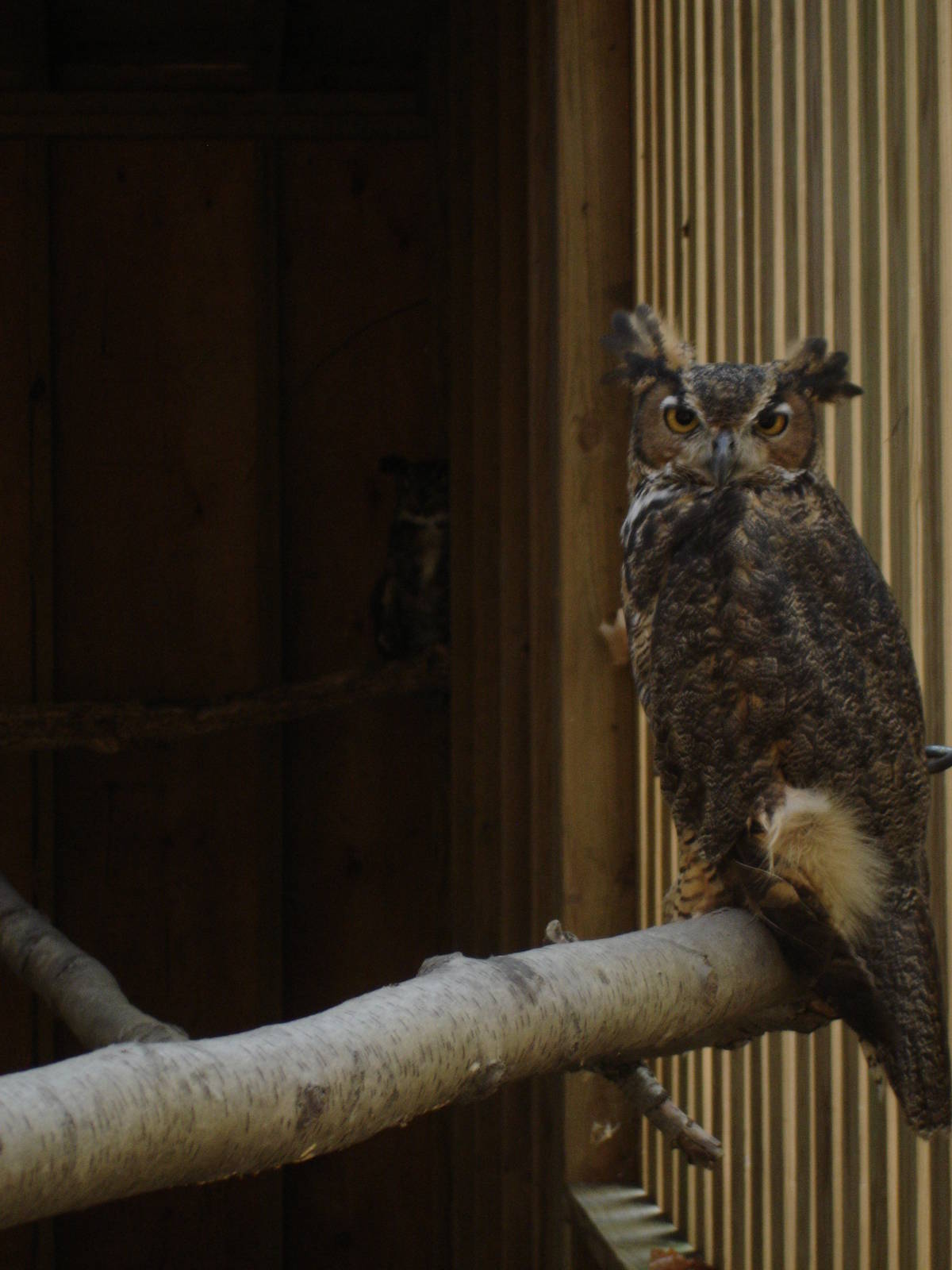
Teatown has 875 miles of trails, a large lake, hemlock forests and laurel groves, a wildflower island and, dear to my heart, a collection of wounded raptors, lost souls that have here been given a safe haven and a purpose: educating visitors about how wonderful they are.

I like the owls, some of them one blinded in one eye, most paired in their environments in a perfect, companionable matched set.

owl

I collected my little starts at the herb table, dill and chamomile. Thought I’d try some eucalyptus. Wished I had to space for the native plants for sale all around.

Then I noticed a stalky bearded iris obviously about to burst.

iris

I realize that they more I go along, the more I like things that are about to

Like the iris. You can just see a fringe of furled purple petal above the green.

Like a novel about to be published.

Rolls about to come out of the oven.

A cardinal about to skitter up into the air.

Oliver about to enter his snoring slumberland.

oliver about to

Water about to boil – test it for salt with one hardy finger.

About to speak at an engagement, that shivery feeling in your stomach.

About to buy something exquisite, but expensive. Then deciding not to.

About to start to knit, a chunky skein and needles in hand.

My 21-year-old Maud about to have the most glorious adventure, working in a school for Teach For America, living in New York City, the whole shebang laid out ahead of her.

maud smiling

Rolls about to come out of the oven.

Water about to boil.

The iris about to pop.

2 Comments

Filed under Dogs, Home, Jean Zimmerman, Knitting, Nature, Writing

A Washington Irving Award, Thank You

Back to Cabinworld after an afternoon at the Washington Irving Awards, presented at a local Hilton.

Compared with hotel air, the azaleas, violets and weeds seem to bloom a bit more riotously.

azalea

The smell of rain in the air. The first angry-sounding, toothpick-billed hummingbird of the year dive-bombed me near the feeder with its red sugar-water.

My weathered old three-legged stool (note pegs that join the top, no nails) is ready for duty as a summer-porch-time computer stand.

stool

At the conference to get one of the awards, I spent time with librarians (hundreds, representing the Westchester Library Association) and authors (20 or so, all Westchester residents). Funny, sometimes, inspiring, always. I saw some friends, nonfiction, fiction and librarian. I always feel a little sleepy after a rubber-chicken luncheon, but I pepped up for the remarks of keynote speaker Barbara Stripling, current head of the American Library Association.

stripling

Barbara’s remarks, passed along with both bubbly mannerisms and erudition, talked among other things about finding a “gorgeous balance” between digital and paper resources. She spoke about libraries changing lives. But first she told a story about when she was in college, craving an A on a paper and seeing only a lot of plus signs in the margins. She stuck up her hand and demanded to know the meaning of the notations. Those were actually t’s, she was told – they stood for trite.

Ouch.

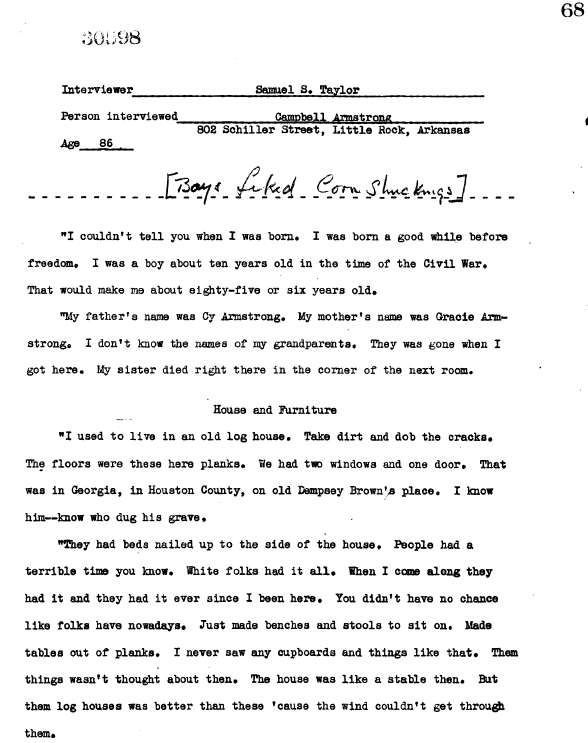
Does the use of primary sources encourage empathy? That’s the question she asked in her Ph.d. studies, going into high school classrooms that were studying slave narratives. It’s a fascinating line of inquiry.

SlaveNarratives1

It’s hard for people to use primaries, she found, without some sort of context. I get that, I suppose. Although as a historian I generally find the original sources when they are embedded in some author’s history to be the most exciting part of the work. They themselves give the context. That’s where you find the BITADs, the bite in the ass details that really give the flavor of a time or place or person.

I liked another story Barbara told, too, about a knitting club that refused to be shut into one of the back rooms at a public library for  their weekly stitch n’ bitch, but instead colonized a  table in the center of the building. Well, a technology club soon discovered the knitters and found what they were doing interesting, and the two groups ended up knit-bombing the library – the mouse, the circulation desk, etc.

knit tech

Everything covered in knit and purl by tech geeks and old ladies.

A library “provides the thinking spaces for civilization,” said Jaron Lanier – he’s the computer geek who popularized the term virtual reality.

lanier

He has a new book just out, Who Owns the Future? Certainly worth a look.

The feeling that you are just another mouth in a chorus of songsters is a welcome one when you spend a lot of your time on your own at your desk. That is what I brought home from talking to my fellow writers and hearing them deliver brief remarks at the podium. Being one of the crowd, one of a club.

Allison Gilbert won a Washington Irving Award for her book Parentless Parents: How the Loss of Our Mothers and Fathers Impacts the Way We Raise Our Children. Allison lost her own parents at a tender age, but the book is much more than a memoir or advice manual.

Allison

It’s not her first book on the subject, and support groups of parentless parents have sprung up around the country to deal with the difficult subject. Allison announced some news, that some these groups have banded together to make a trip to Peru to help orphans there.

It gave me goosebumps to hear about another project she’s got lined up, because the excitement in her demeanor was just so visceral. There’s a real life journalist she wants to write about who went from panning for gold in the early 1900s to penning regular columns for Hearst in one dramatic lifetime. Apparently this person was a rabblerouser, a women’s rights advocate and is now – but perhaps not forever – all but forgotten. What a great topic, a great kernel of history to unearth.

Writers were honored today from all over the literary map.

My colleague Karen Engelmann was there for her novel The Stockholm Octavo, a magical work set in 18th century Sweden. Delicious, witty and swooping are some of the buzzwords used around her book.

jean and karen

Doesn’t everyone look happy today? If a bit blurry? Karen’s next novel is well underway, and she promises to jump forward a few centuries and incorporate greeting cards rather than fortune-telling into the mix.

I stood up to say a few words about The Orphanmaster. How The Orphanmaster is a love story wrapped around a murder mystery that takes place in a tiny settlement in the middle of a vast wilderness. And about libraries. That over the years I’ve not only dug into books and mususcripts, taken thousands of pages of notes and written many chapters in libraries, but eaten and drank within their hallowed halls. My hometown library growing up, in Hastings-on-Hudson, where I read Tristram Shandy for the first time:

hastings library

I’ve also taken some great naps, with fantastic dreams.

Some of what I was saying felt as if it were in the rearview – I’m working on the Savage Girl copyedit, and just took a first peek at the proposed cover for the novel. The art is beautiful and chilling and only needs a little fine tuning to make it perfect. I am obsessed with Savage Girl at the moment, though I have to wait until January 2014 for the book to be published.

Still, The Orphanmaster has just come out in paperback, well in time for another season of beach reading. And to be given an award for The Orphanmaster by librarians, for librarians to appreciate it, was a very special thrill.

Without librarians, said Maggie Barbieri, one of the fiction writers getting an award, we’re “a bunch of noisy trees echoing in an empty forest.”

2 Comments

Filed under Fiction, History, Jean Zimmerman, Knitting, Nature, Publishing, Savage Girl, The Orphanmaster, Writers, Writing

Parsing the Copyedit

My copyeditor got the manuscript for Savage Girl back to me and I’ve been hustling to get it done by the deadline. Did you know that it’s typical for authors to be given two weeks to get a copyedited manuscript back to the publisher? Did you know that copyeditors go way beyond the Chicago Manual of Style, making themselves experts on every subject your book concerns. When copyeditors do their job, the pages are covered with pencil — at least they used to be. Now everyone uses the track changes function on Word, so editors do their work on the computer and so do you.

track changes

Yes, it is nerdy, and yes, as an author you must do it.

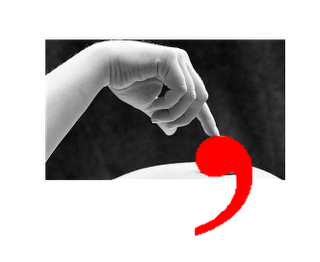
Fortunately, there are great copyeditors who make the job easy, using every tool at their disposal. Often they just add or subtract commas, other times they throw queries at you and the judgment is your call. By the way, that previous sentence features a  comma splice, which means two standalone phrases on either side of a comma, and my current copyeditor would not let it occur on her watch. But this is a copyeditor-free zone. So sue me.

comma

I like my copyeditor a lot. Her name is Maureen. She left me a note attached (electronically) to my manuscript telling me that she hoped the rest of the world would love Savage Girl as much as she did. Isn’t that grand? Twice over, that she thought it, and that she went out of her way to tell me. It’s a weird intimacy you have, writer and copyeditor joined for a brief but intense period of time over this thing that you care about so much, before virtually anyone else has seen it.

This afternoon I’ve been addressing concerns such as whether there would actually be a gibbous moon in May of 1776, and the proper Latin translation for “the door has a floor,” a saying in the family portrayed in Savage Girl, the Delegates. Maureen went to great lengths to nail the correct form of the expression, and even consulted with a friend who was a Latin scholar at Columbia University to get it right.

She also wanted to determine precisely when the word was first coined for a tigon, the African cat that has a tiger for a father and a lioness for a mother.

tigon

As opposed to the ligon, for which the reverse parentage is true.

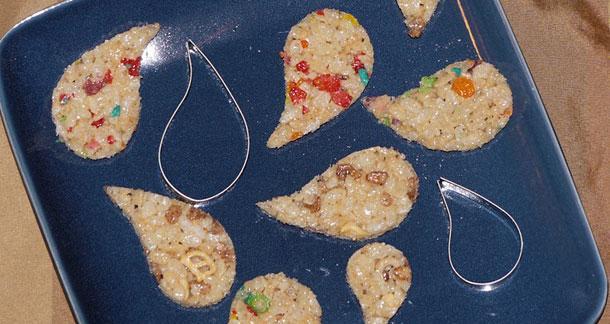
Something that makes the copyedit go better is if you bake at the same time. Well, most things go better if you bake simultaneously. Which I will definitely do next time around, perhaps creating some rice crispy treats in the shape of my favorite punctuation mark.

cereal-commas

3 Comments

Filed under Fiction, Jean Zimmerman, Publishing, Savage Girl, Writers, Writing