Category Archives: Photography

Prayers and Limits

Rainy day rush hour on 9A, the four-lane that runs through Manhattan and north past the Cabin. Traffic has us crawling. But the radio is loud, with Phosphorescent singing Ride On/Right On.

phosphorescent

E-Z lyrics:

Let’s go for a ride, hey you turn me right on


Let’s get on the bike, hey you turn me right on


Ain’t nothing to hide and hey you turn me right on


The city at night, hey she turn me right on

Phosphorescent’s the moniker for an Alabama-to-Brooklyn boy named Matthew Houck (he previously went by the nom de guerre Fillup Shack) and he has out a new album, perfect for rainy day traffic jam listening.

I’m approaching that long, weedy section of highway, bordered by a sluggish streambed, where ordinarily the cars sail along briskly. There’s a sign along here someplace, planted out here near the road by someone who remains invisible. It’s plain plywood, painted white with black Gothic lettering and a simple legend: GOD ANSWERS PRAYERS. I’ve passed it hundreds of times, but I’ve never been able to get a picture of it because traffic moves so fast and there’s no shoulder to stop on. The sign just blinks by.

Now, God and I are not ordinarily on the most intimate terms. But I love this sign that has greeted me on every drive home and in many frames of mind, including the most dispirited. GOD ANSWERS PRAYERS. Okay, whatever you say. And I start to wonder about other manifestations of the same phrase.

gap rock

They abound, on hats as well as rocks.

gap hat

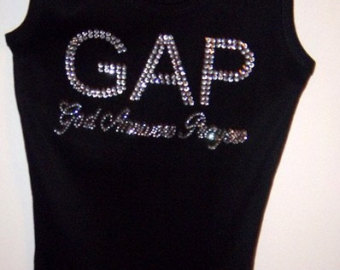
In rhinestones.

gap rhinestones

Is that what GAP means, as in The Gap? Those nice pants I bought last Fall? Never knew.

Zowie. Turn the radio up. Mr. David Bowie has come out with a new body of work, including the exciting song The Next Daythe video for which has been condemned by the Catholic Church as indecent. Well, it does show Bowie attired as Christ alongside Gary Oldman as a debauched priest (I thought Oldman was already a debauched priest) and Marion Cotillard as a beautiful prostitute with stigmata wounds.

david.bowie_

Bowie hadn’t put out a record in a decade, I guess he felt pent up.

my-prayers-have-been-answered

Ho hum, the traffic does crawl. Gil was in a jam yesterday and God answered his prayers with the Dan Hicks song on his shuffle, Traffic Jam.

Dan Hicks

Prayers, they don’t always work so good. I favor the sentiment of Oliver Wendell Holmes: We have learned that whether we accept from Fortune a spade, and look downward and dig, or from Aspiration an axe and rope to scale the ice, the one and only success which is ours to command is to bring to our work a mighty heart.

As true today as it was when he said it in 1884. It doesn’t fit on a plywood sign, unfortunately.

You can get a daily “meditation” like the Holmes quote in your inbox from All Souls, a church that is almost not a church it is so open-minded – “deeds, not creeds” is its motto. To get you questioning things like prayer.

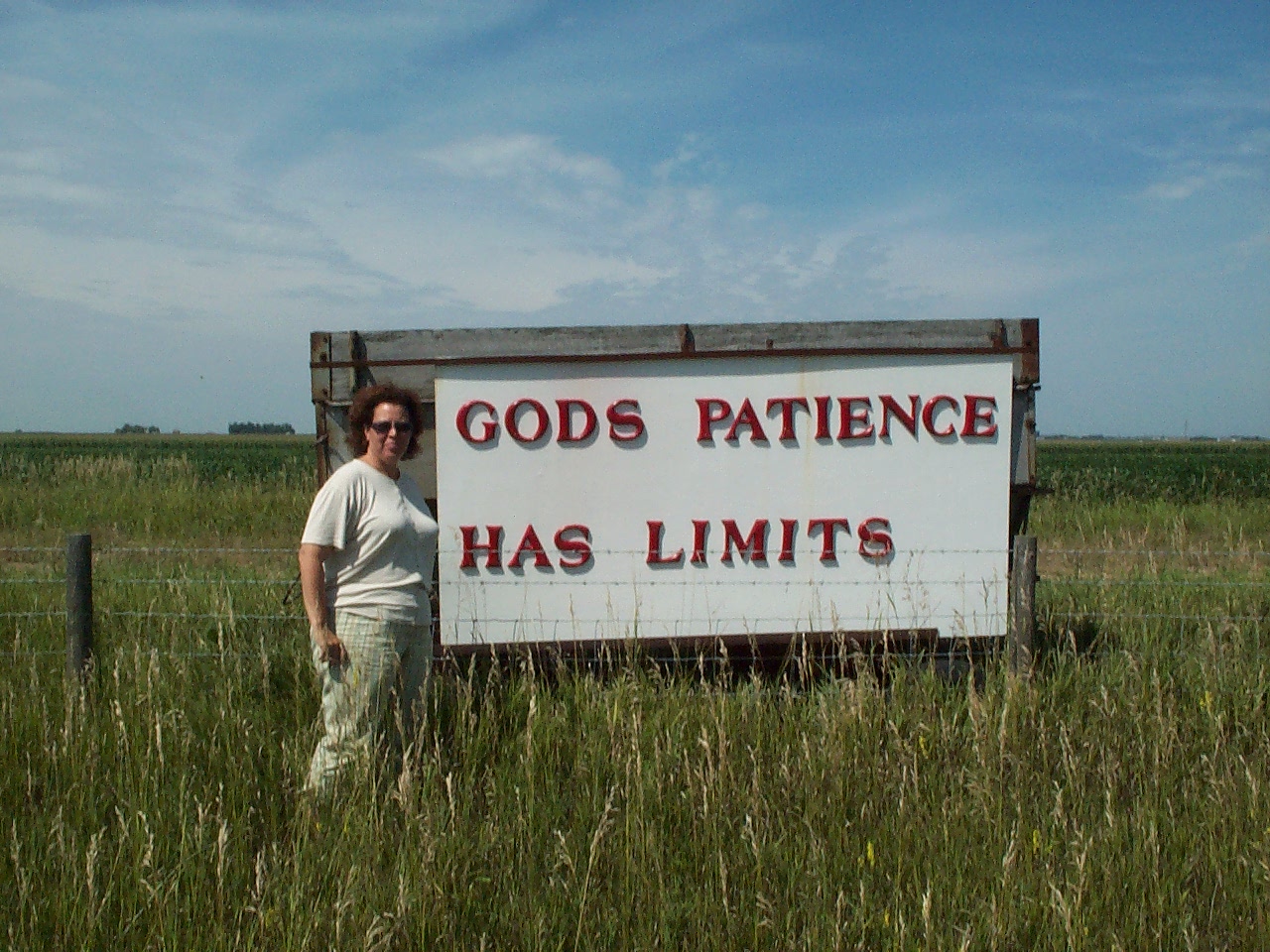
That sign on 9A, I like it almost as much as the one I saw by the side of a Nebraska highway about ten years ago. We wanted to bring it home with us but couldn’t figure out a way to tie it on top of the car.

god's patience has limits

A God with limits? Isn’t that heretical? For some reason I like the in-your-face Nebraska farm wife who stuck it along the interstate. She was probably shaking her fist at us as we drove away.

Whooosh—there goes GOD ANSWERS PRAYERS. Funny, I was just praying I would see that sign come around.

3 Comments

Filed under Culture, History, Home, Jean Zimmerman, Music, Photography, Writers, Writing

For Art’s Sake

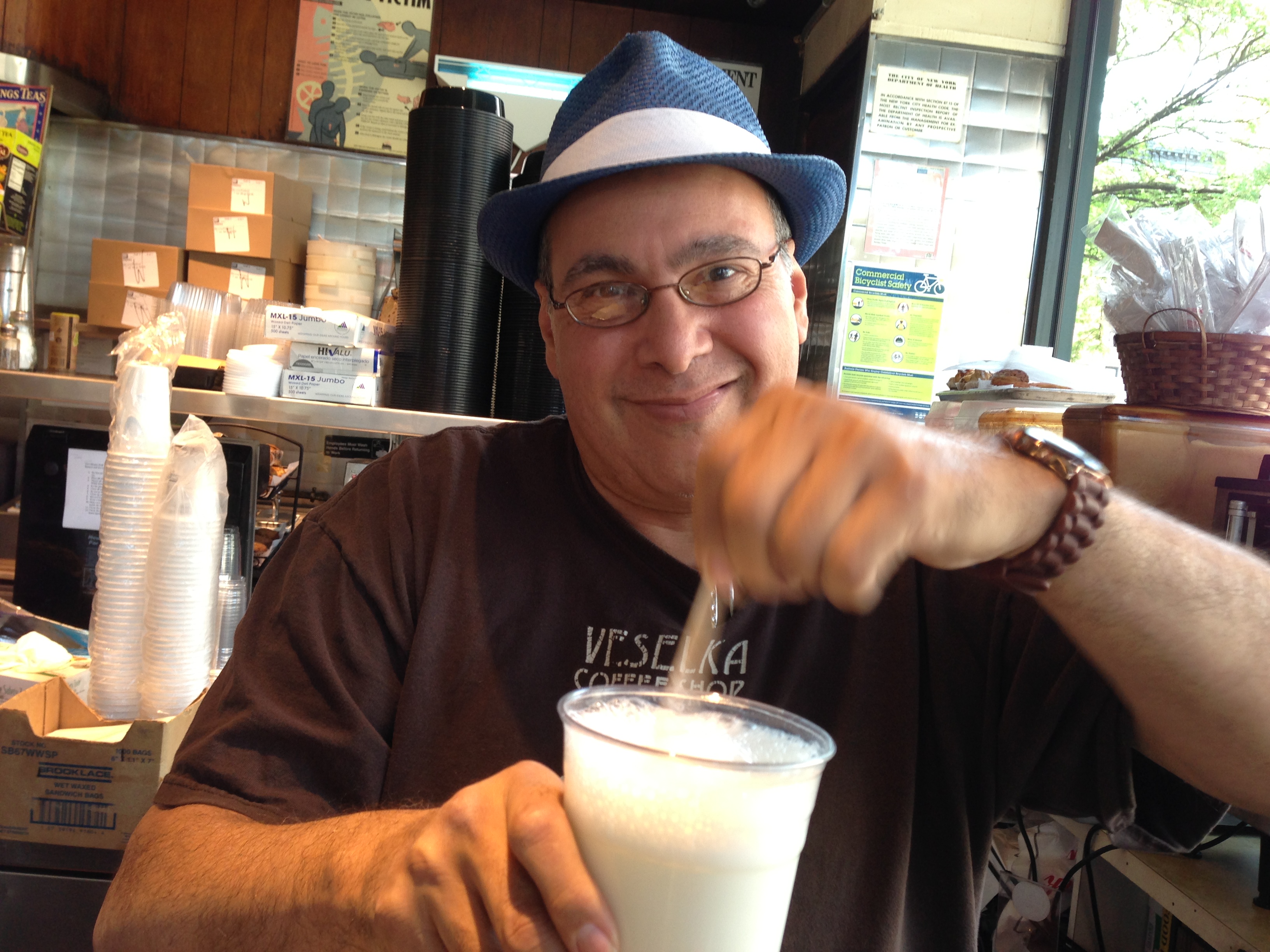
The art of the perfect egg cream.

At Veselka Coffee Shop in New York City’s East Village, Eddie explained that we came in at just the right time, because his is the real deal. None better.

How long did it take you to reach perfection, I asked, watching him furiously stir the seltzer, vanilla and milk into a froth. A few years, he said, ha ha. Everybody loves Eddie, said the waitress. Eddie, said the counterman, your wife is calling on line one.

Eddie

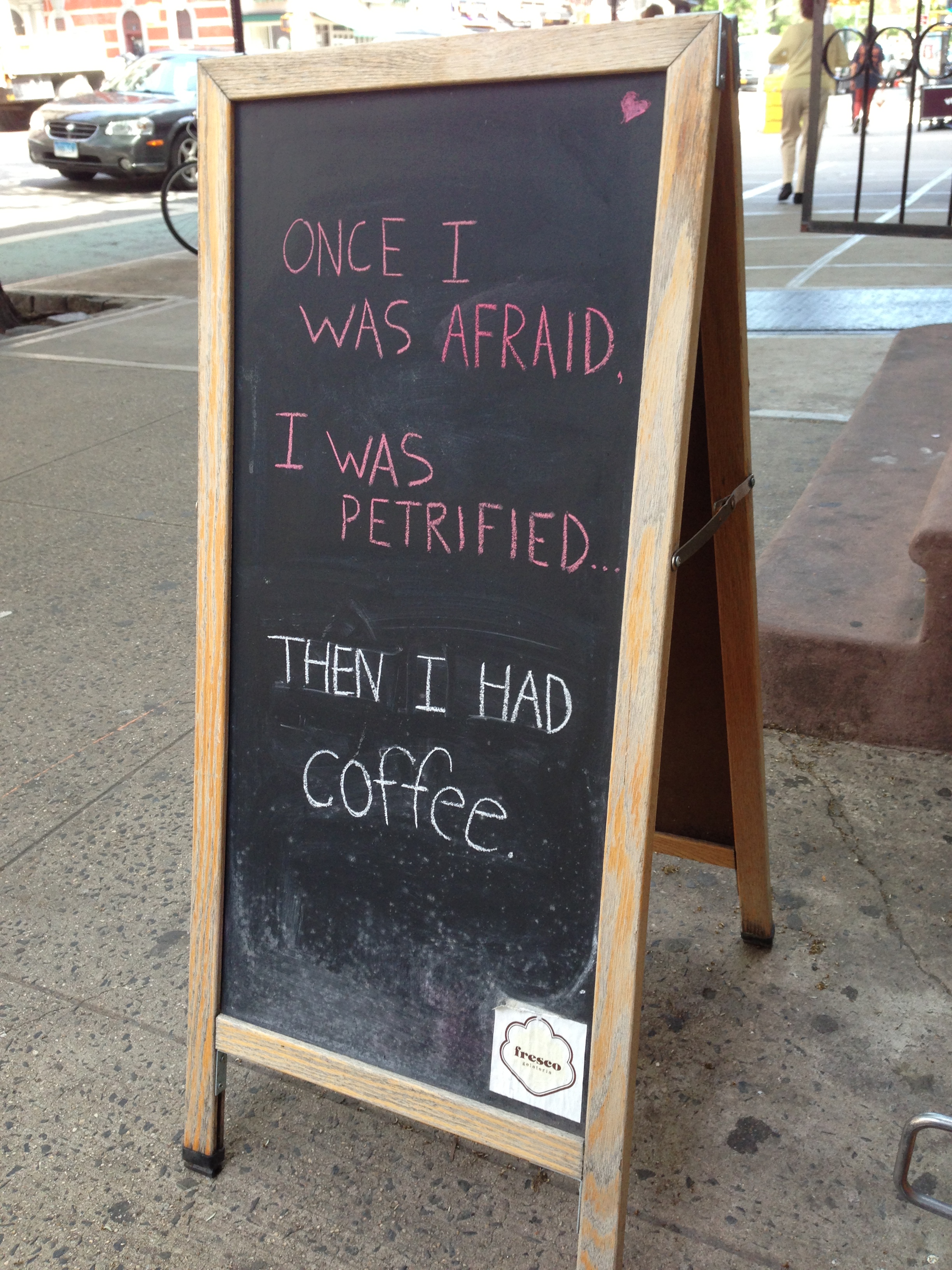
The art of coffee in a takeout cup.

coffee

There are those people who truly grok a to-go cup, light, no sugar, and others who will never understand. Those who get it will survive.

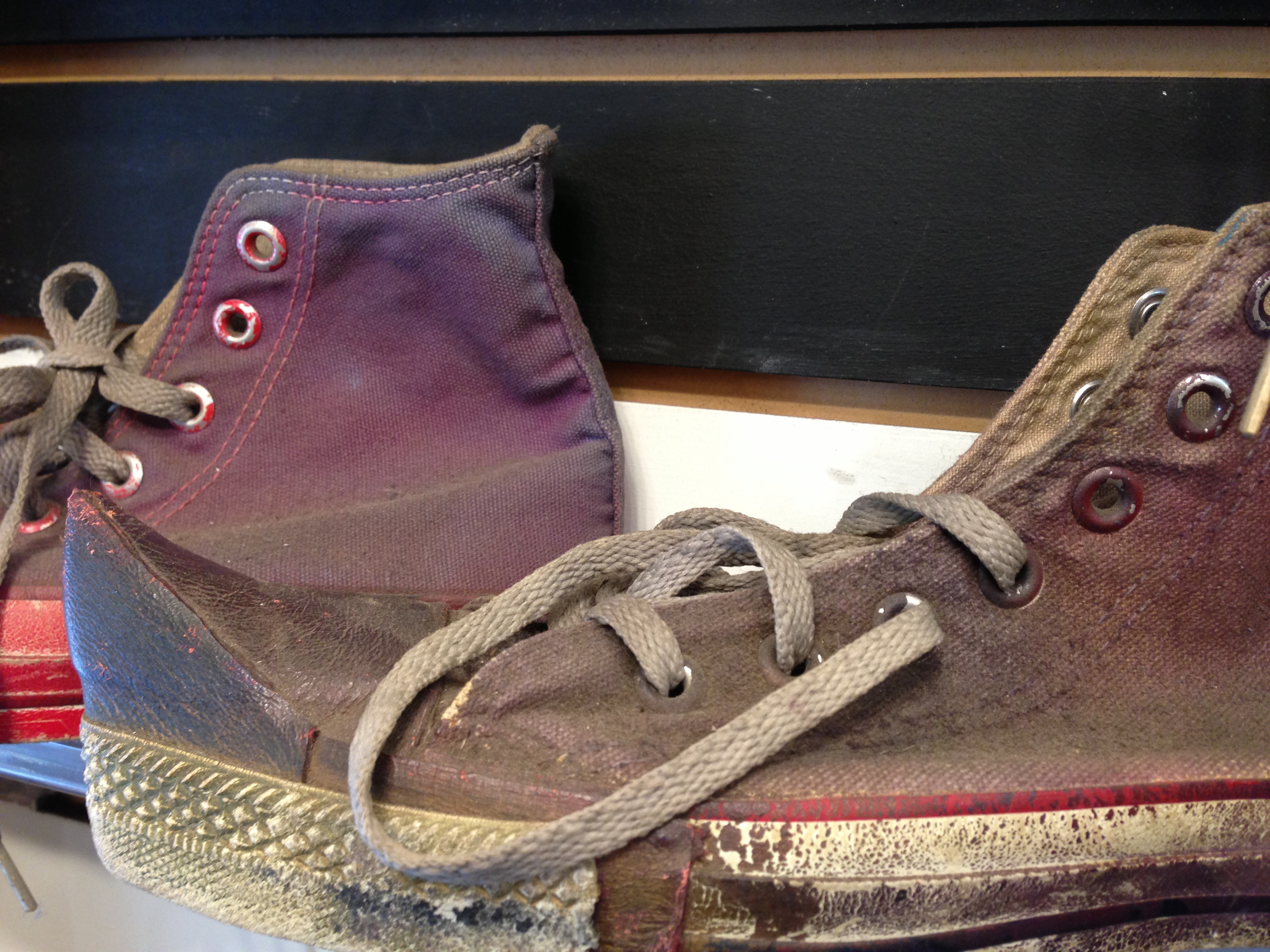
The art of the handcrafted athletic shoe. Boris works out of shoebox of a shop on St. Mark’s Place, customizing Converse sneakers. This must be one of his masterpieces.

converse

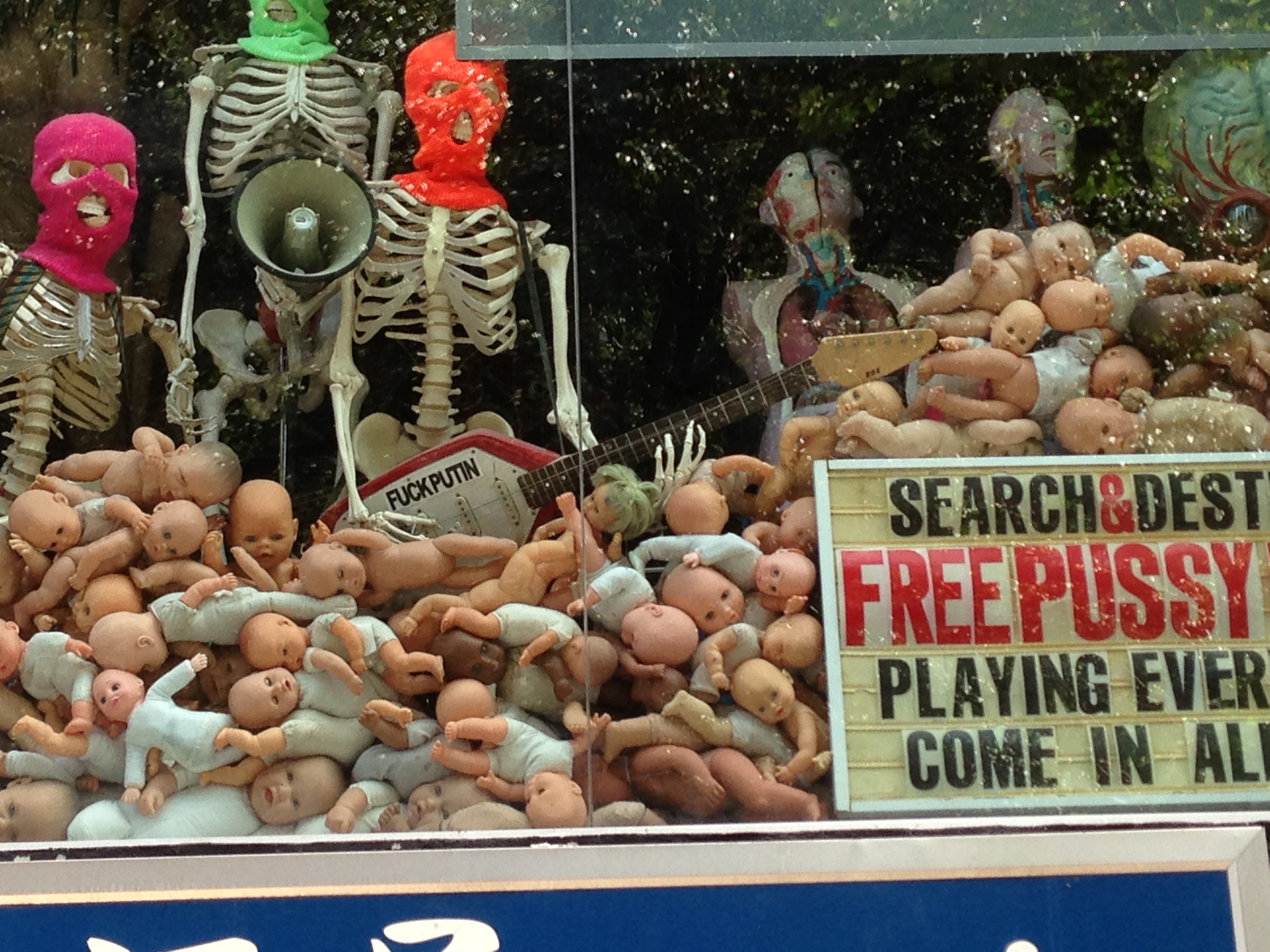
The art of the display window.

doll window

Maud and I made our way all around the East Village today but couldn’t convince ourselves to venture inside this storefront. I do, however, believe in the cause of Free Pussy Riot, the truncated message displayed on the sign – two of the three rockers are still in jail in Russia on some trumped up charge of fomenting unrest and making people think. Free Pussy Riot!

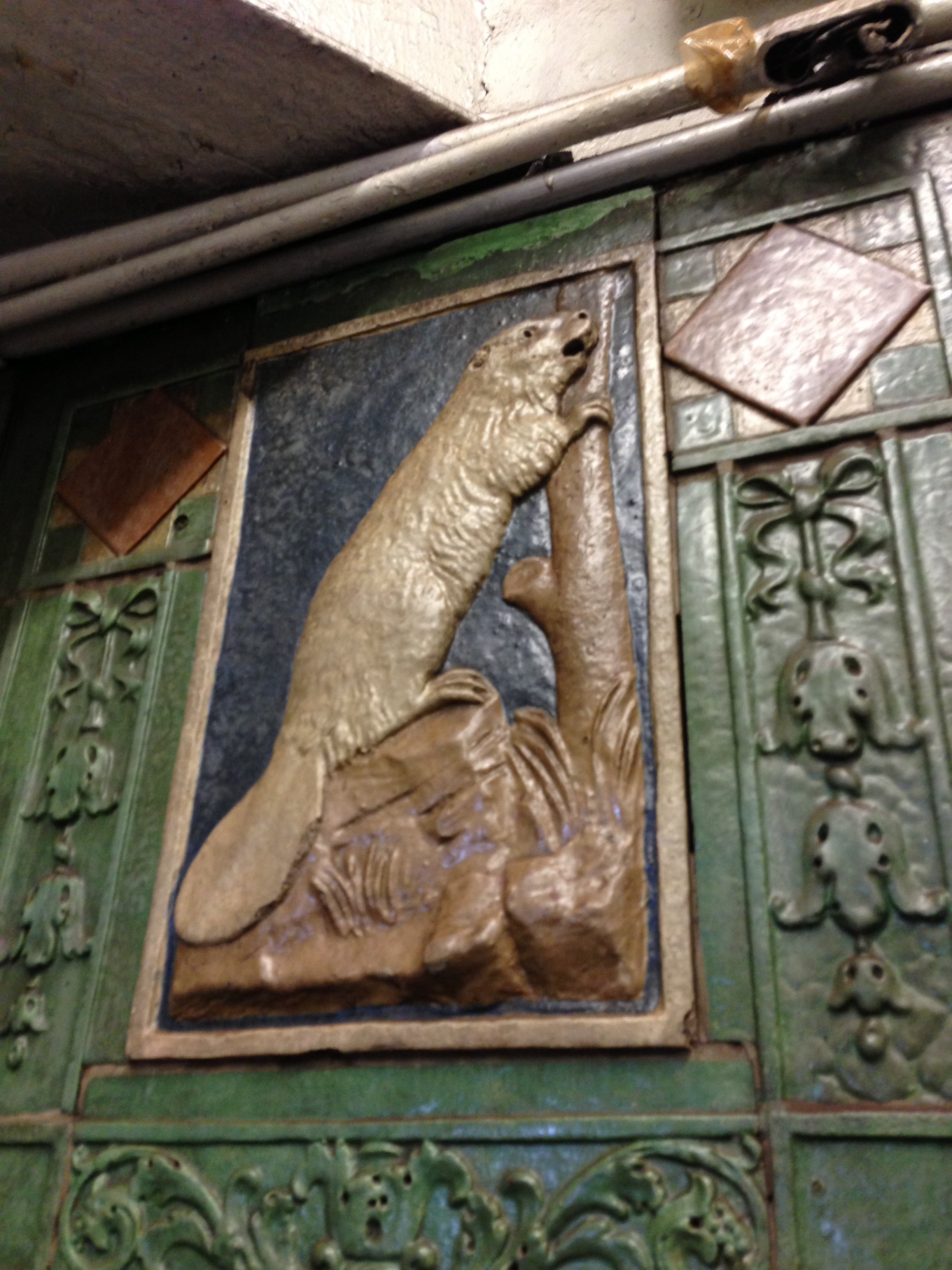
The art of the subway mosaic.

astor place beaver

New York’s subways house some splendid creative works, usually related to the locale of the stop. The Astor Place subway walls display ceramic plaques of beavers — made by the Grueby Faience Company in 1904 — because fur baron John Jacob Astor’s mansion stood nearby, and his fortune derived from the beaver-pelt trade.

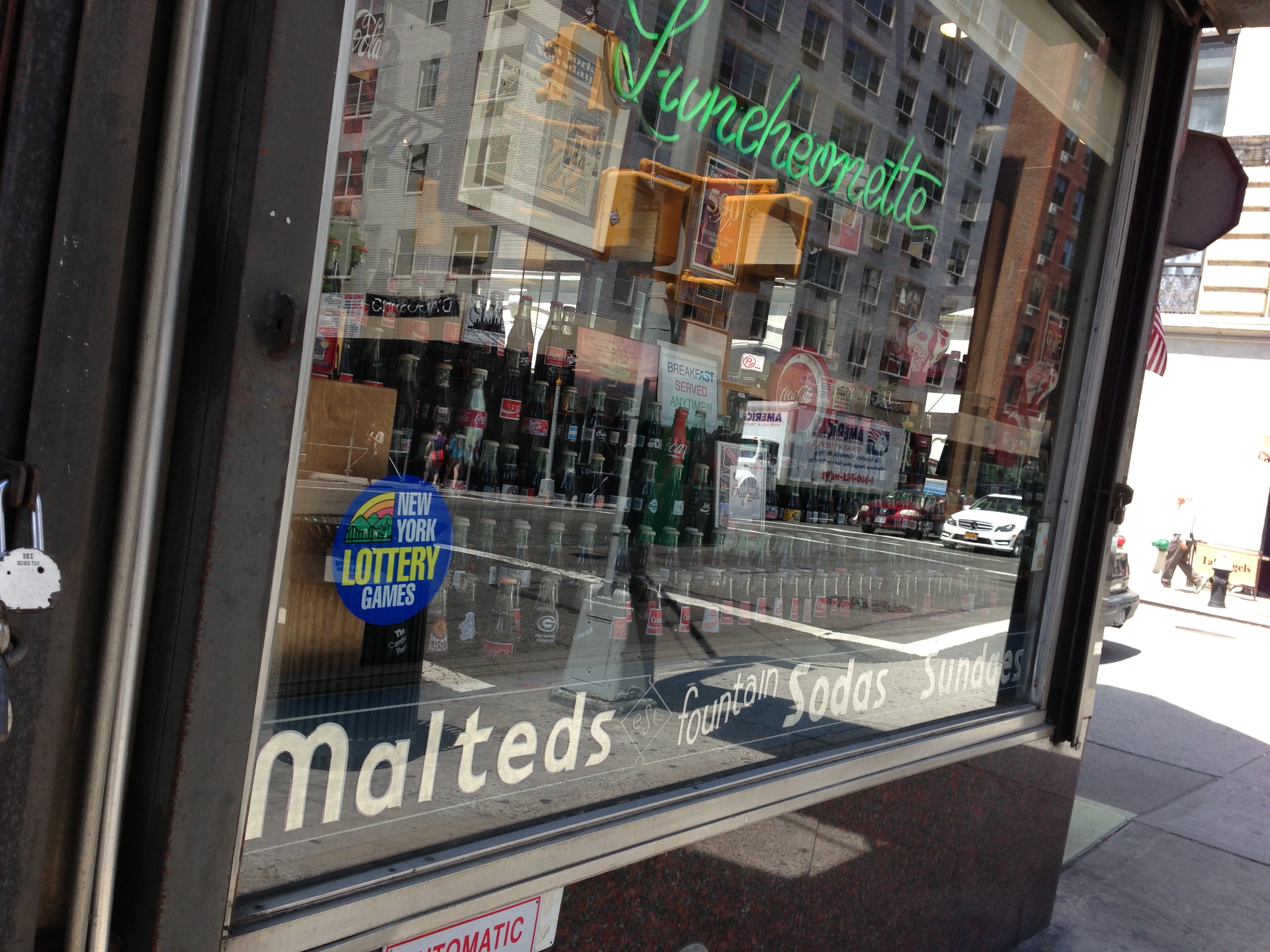
The art of the old-time luncheonette.

It sometimes seems as though everything old, dear, and genuine in Manhattan has been driven out, but once in a while a gem like the Lexington Candy Shop Luncheonette survives. It has been serving up milk shakes and lemonade since 1925.

lexington luncheonette

The art of the tooth-hurting truffle.

We grazed the cherry caramel samples at the counter of Vosges Haut-Chocolat, which sounds French but is actually out of Chicago.

caramels

Admired the pure silk hankies they use to wrap up the really important custom gifts.

silk

Then we each had a truffle of our own. Maud’s was the Rooster, with taleggio cheese, Tahitian vanilla and organic walnuts. Mine was a Woolloomooloo, featuring coconut and macadamia nuts. Gil’s getting a bacon/chocolate confection for Father’s Day.

The art of instilling disquiet.

rooftop people

The rooftop garden at the Metropolitan Museum currently features one of the most wonderful, most disturbing installations I’ve seen. The Pakistani artist Imran Qureshi was inspired by escalating bombings in Lahore when he spilled and splattered blood-red acrylic paint across the nearly 8,000-square-foot open space of the Metropolitan’s deck. Elegantly dressed European tourists traipsed across the blossoms of blood as if they were nothing.

rooftop paint 2

To me they called up the times I’ve come upon a recent deer/car collision on the highway, with the pavement still a wash of gore. Or the searing images from Gil’s book Aftermath, Inc., in which he describes the stains that occurred following trauma events, such as murder or suicide. The artist Qureshi has said, “Yes, these forms stem from the effects of violence. They are mingled with the color of blood, but at the same time this is where a dialogue with life, with new beginnings and fresh hope start.”

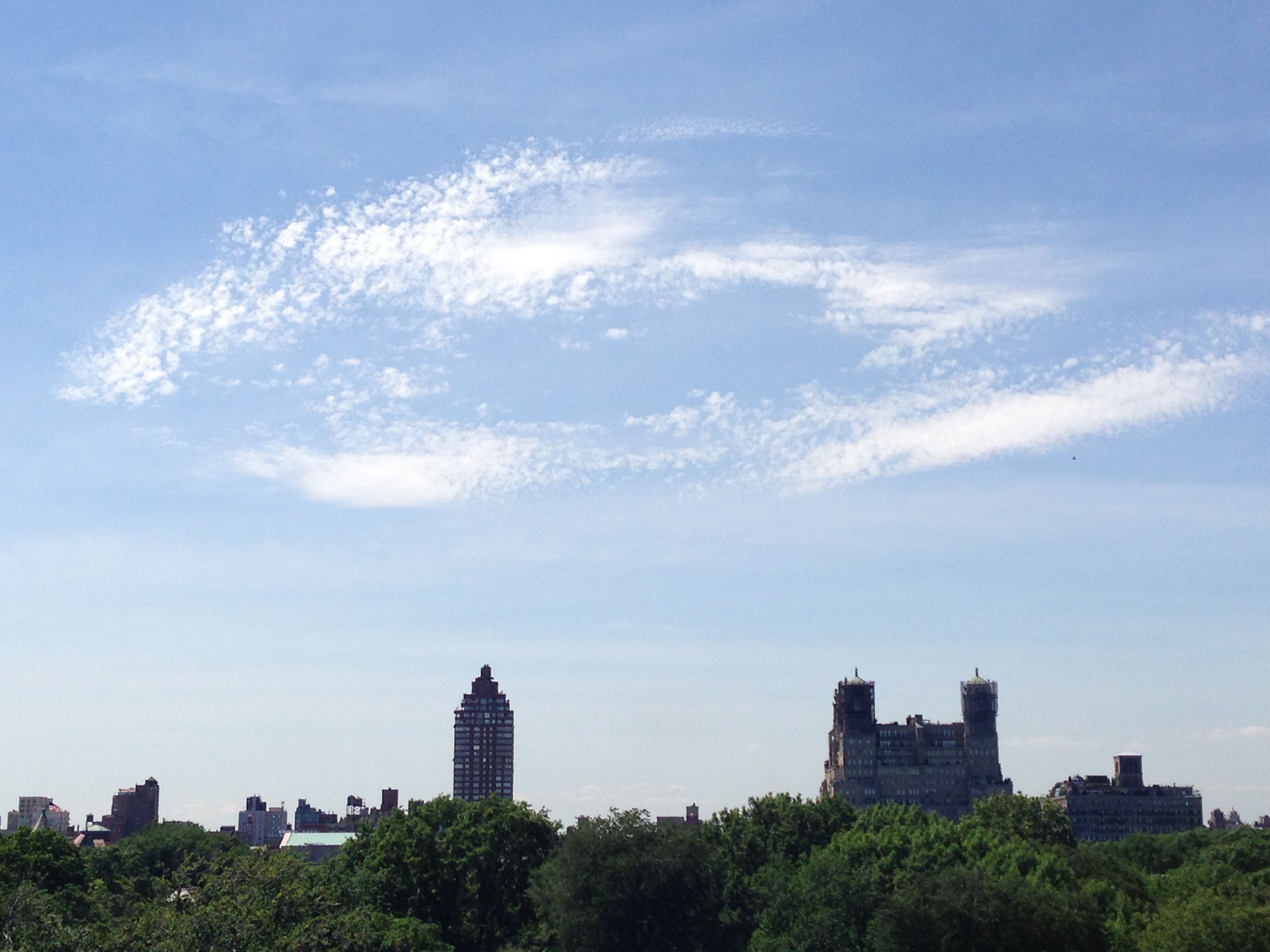
The art of water vapor.

cloud

Far above the paint, the New York clamor, the scene, serene, inviolable, sublime. Art for art’s sake.

8 Comments

Filed under Art, Culture, Fashion, History, Jean Zimmerman, Nature, Photography, Writing

Wildflowers and a Verse

A mile-long park runs along the Hudson River bank at Croton-on-Hudson, New York, where you can walk the path as dusk descends and see the sun set hazily, just for you.

sunset hudson

The town took an underused industrial area and rehabbed it about ten years ago with the help of the Open Space Institute so that everyone who wants to came come down and praise the beauty of the wide, placid Hudson. Well, not always placid. It seems every small dog in Westchester County is being trotted along at that hour, yapping and sniffing.

The smell of flowers pervades the air.

wild white roses

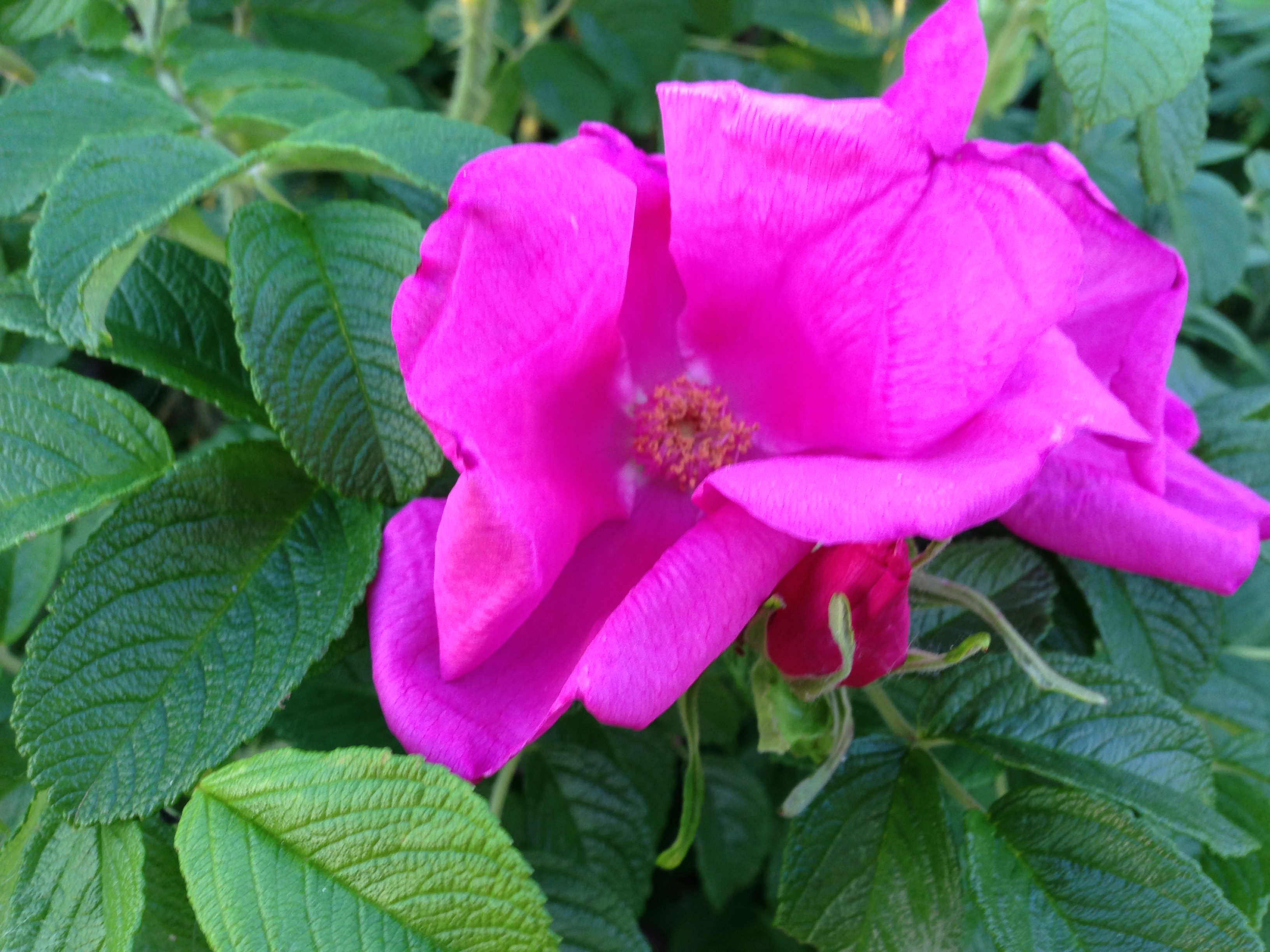
Along the railroad tracks you’ll find the multiflora rose, which came to the U.S. in the late 19th century as rootstock for ornamental varieties and was then pressed into use as a “living fence” to corral livestock. Its lovely petals float on the air for just about two weeks every June, then it reverts to its less-beautiful identity as a sticker-bush. Other wild roses bloom here too, some with better manners.

wild pink rose

Almost as fragrant as the white ones when you stick your nose into a bloom. And honeysuckle – when was the last time you sucked the fragrant dew from one of its blossoms? Put it on your to-do list for today.

honeysuckle 2

Vivid spires come up, having materialized after our rains came, finally, and jump started all the plants.

purple spires

And the wild iris, down by the shore, its proud head, its feet in the mud.

iris

The great poet Louise Gluck writes in a poem named for a flower, “Snowdrops,” in her Pulitzer-winning collection The Wild Iris:

I did not expect to survive,

earth suppressing me. I didn’t expect

to waken again, to feel

in damp earth my body

able to respond again, remembering

after so long how to open again

in the cold light

of earliest spring—


afraid, yes, but among you again

crying yes risk joy


in the raw wind of the new world.

2 Comments

Filed under Home, Nature, Photography, Poetry, Writers, Writing

Tender Buttons

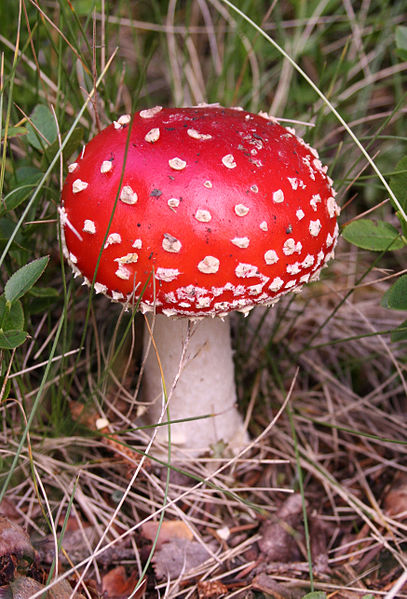
I’m sometimes scared of mushrooms. Portobellos I like. Cremini, good for risotto. Even the common white button mushrooms. Throw them into a stir fry, they cook up fine. But wild mushrooms, the kind people hunt for in the woods? What if I get poisoned? In my mind I always saw the flaming red with white dots, the poisonous amanita muscaria. There are old mushroom hunters, and bold mushroom hunters, but no old, bold mushroom hunters. As the saying goes.

407px-Amanita_muscaria_(fly_agaric)

I thought I’d face my fears in a mushroom walk at Cranberry Lake Preserve  cosponsored by a group called COMA, the Connecticut-Westchester Mycological Association, founded in 1975 by a group of amateur naturalists and mushroom enthusiasts. COMA promotes a sense of stewardship of the natural world through the study and appreciation of the world of fungi. It even sponsors a mushroom university.

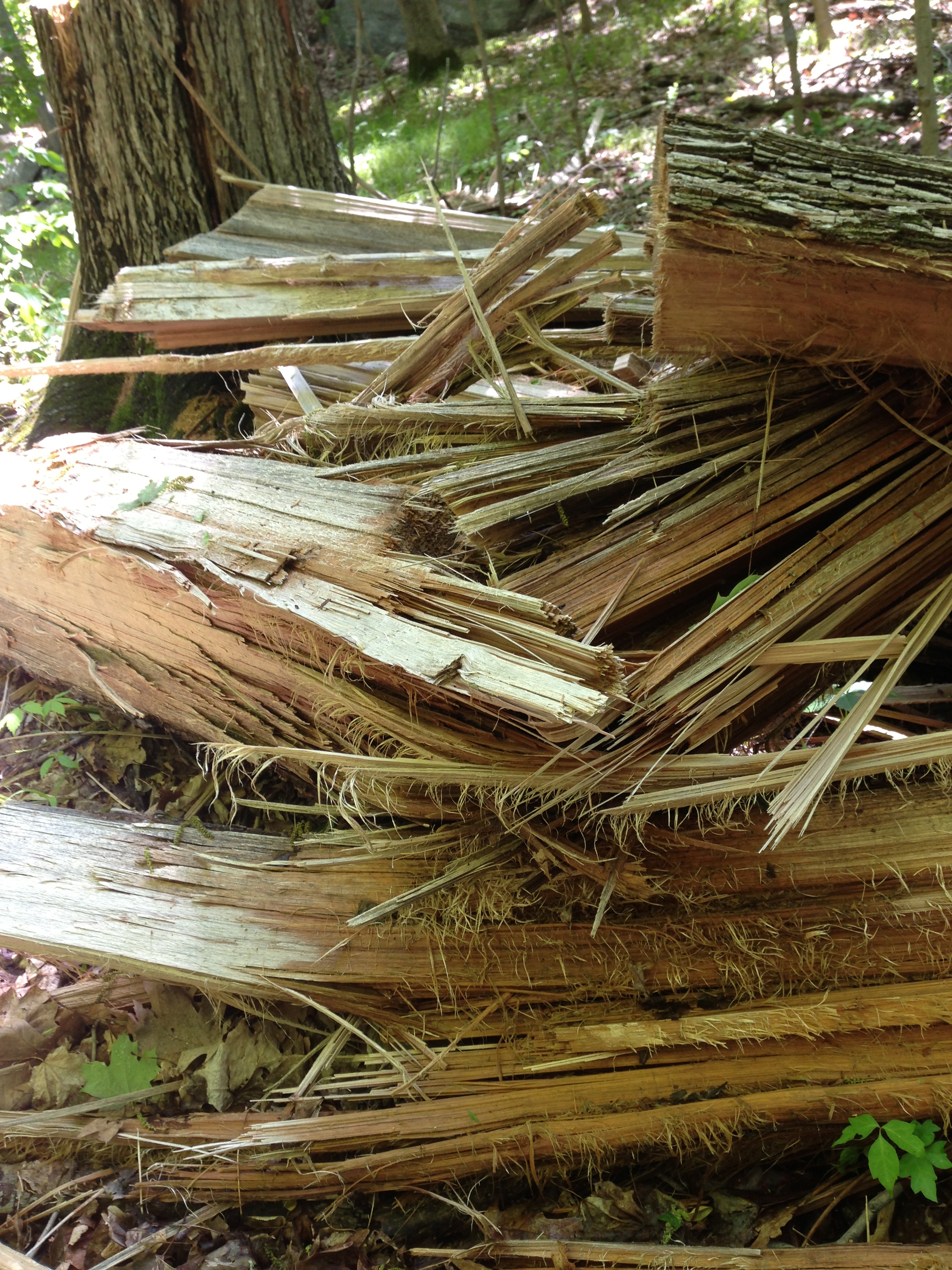
I got to the meeting place before anyone else. It was just me and the bears and the elves. The sun had broken out and the wind was blowing wildly. So many trees have fallen in recent storms, some shattered to pieces, it seemed amazing there were any left standing.

exploded tree

“Nature alone is antique,” wrote Thomas Carlyle, “and the oldest art a mushroom.” Mycologists approach the forest with a combination of hard-headed method, Zen mysticism and dumb luck. My fellow foragers began to arrive with wicker baskets over their arms and expressions of patient, optimistic calm. Zach, our guide, explained some mushroom physiology, the gills underneath the cap, the veil that falls back as the spores mature.

zach

I met Vrena, a retiree and avid traveler from Switzerland, who described the wild food she had gathered from the forest this spring: garlic mustard, dandelion, dock, bamboo and ramps. Young wild grape leaves, she said, are utterly different, when used to stuff cinnamon-flavored rice mixed with lamb than the chewy, flavorless kind you get from a can. “The leaf is not offensive, because it is tender,” she explained.

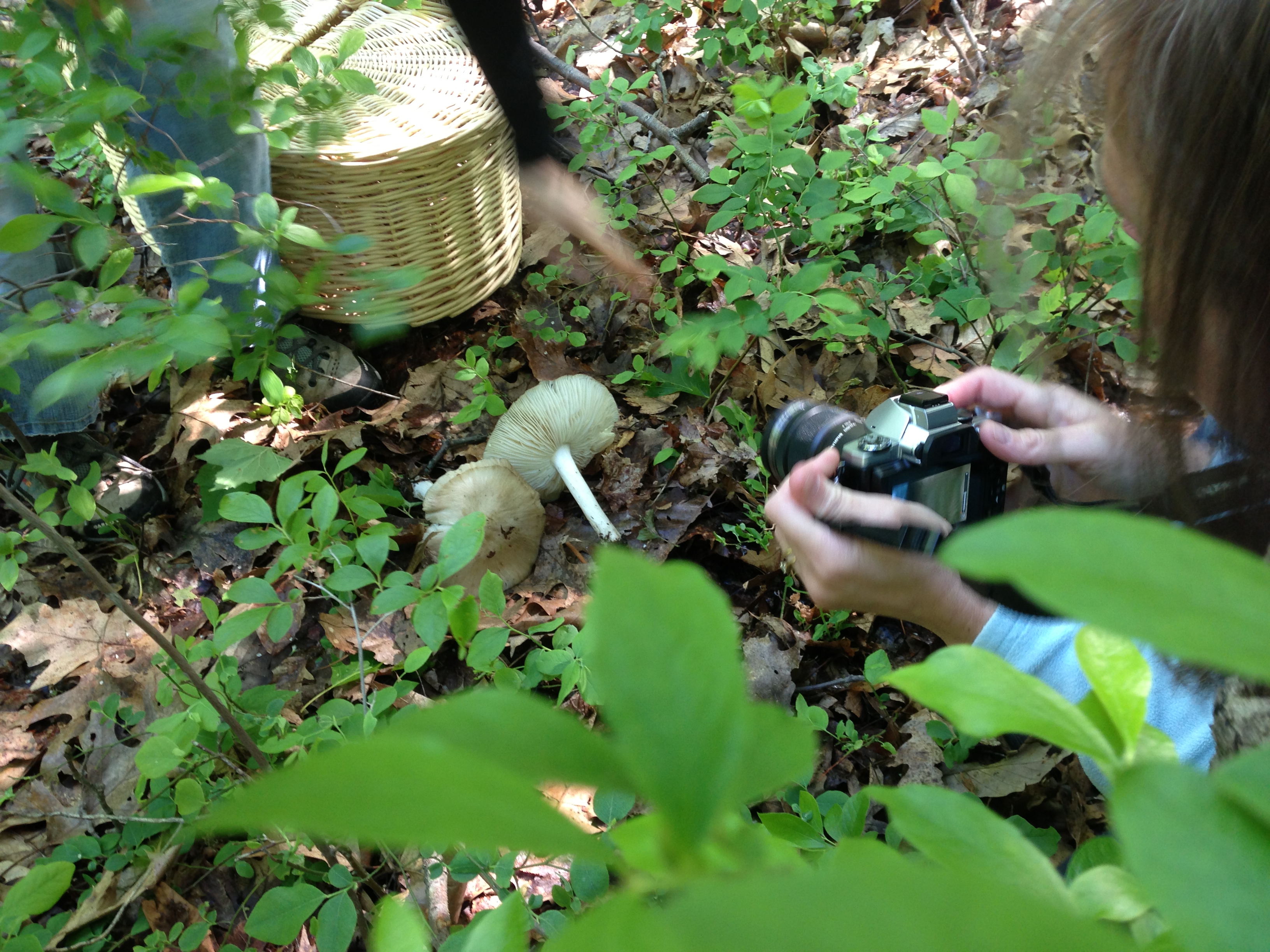
It seemed an awful lot like an African photo safari but instead of wildebeests there were wild mushrooms.

photo op

Two dozen people moved quietly among the newly leafed out trees, lifting up hunks of fallen bark and other decaying matter to find treasures.

ear funghi

The real gold isn’t the mushroom itself but the vast network of mycelium it grows out of, spreading vastly under the ground. The mushroom is simply the fruiting body of the plant. “Ninety percent of what you’re standing on is mushroom mycellium,” a well-informed mushroomer named Rena asserted. Manufacturers, she said, are starting to use the soft, threadlike stuff as packing material, rather than plastic.

underground

The most common specimen around these woods went by the simple acronym LBM: little brown mushroom.

lbm

Just because it was little didn’t make it boring.

There was the crust fungus.

tree funghi

We saw mushrooms growing on top of other mushrooms – called fairy pins, like little black matchsticks, so small as to be invisible without a loup. A carniverous mushroom, devouring the back leg of a certain beetle and now exploding fruitily through it. All sorts of jellies.

jelly flower

We made our way in slow motion. There was time to thrill to the trill of a tree frog. To hold a serious discussion about solomon’s seal. In the middle ages, noted one herb enthusiast, the wild plant was “the herb for women who happened to fall upon the fist of their husband.” In other words a poultice, a balm that fell short of a divorce but was better than nothing.

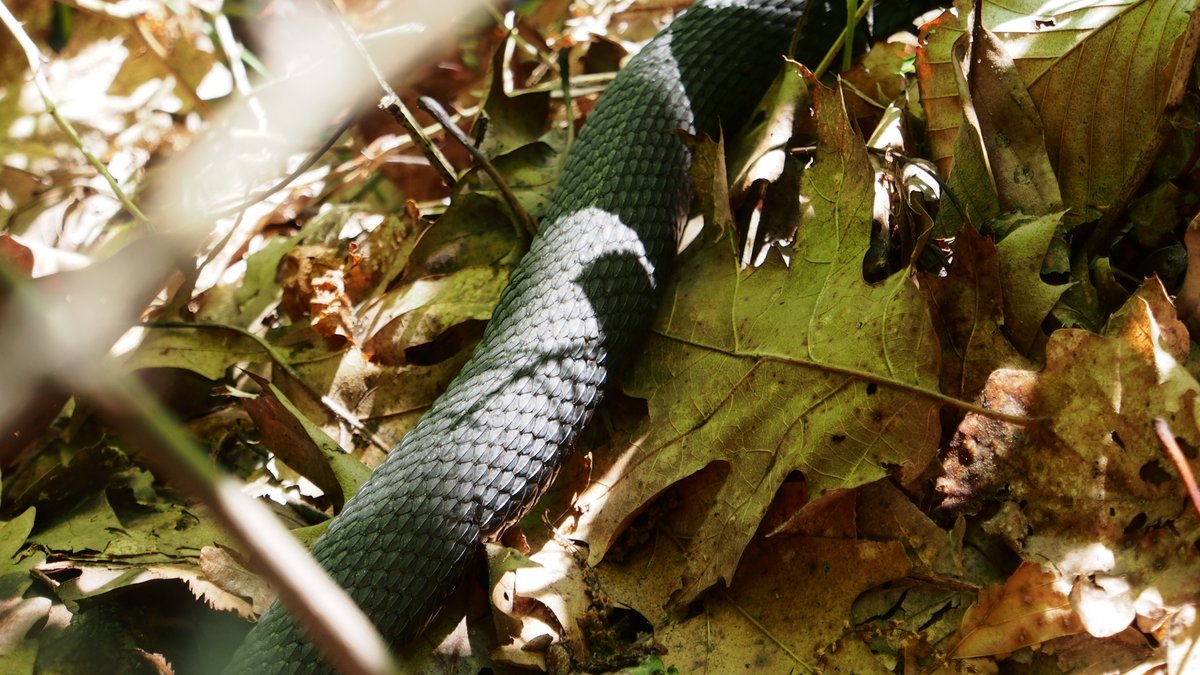
A baltimore oriole. A water snake sunning itself on the lake shore.

OLYMPUS DIGITAL CAMERA

There was so much to learn. Rena: “Every log could be a year’s course of study.” I love that idea.

Zach knew all the proper Latin names for every mushroom. They went in one ear and floated out the other like a puff of mushroom spore. I’d call this one the upside-down-ballerina-fairy-with-her-head-in-the-dirt, if I didn’t learn today that it’s very problematic for people to originate their own names for mushrooms.

ballerina

Just this year a French scientist and an American scientist separately came up with new names for the morel, and it resulted, according to Zach in problems, “leading to hurt feelings.”

Boris from Bulgaria interested himself in botany as well as mycology.

Boris

Plants, he told me, sense a danger from certain aphids, then send a signal to other plants via fungus underneath the ground to warn them about it. Everything is symbiotic, he said. He told me he likes to hike Breakneck Ridge, a practically verticle hiking trail that opens up high above the Hudson River.

“Smell that!” said the expert in medieval balms. She scratched back the bark of a slender branch. The aroma of wintergreen bloomed under my nostrils. “Black birch.” I chewed it as a child, I said. Everyone nodded. So did we all.

This was pretty serious business.

jasper w:mushrooms

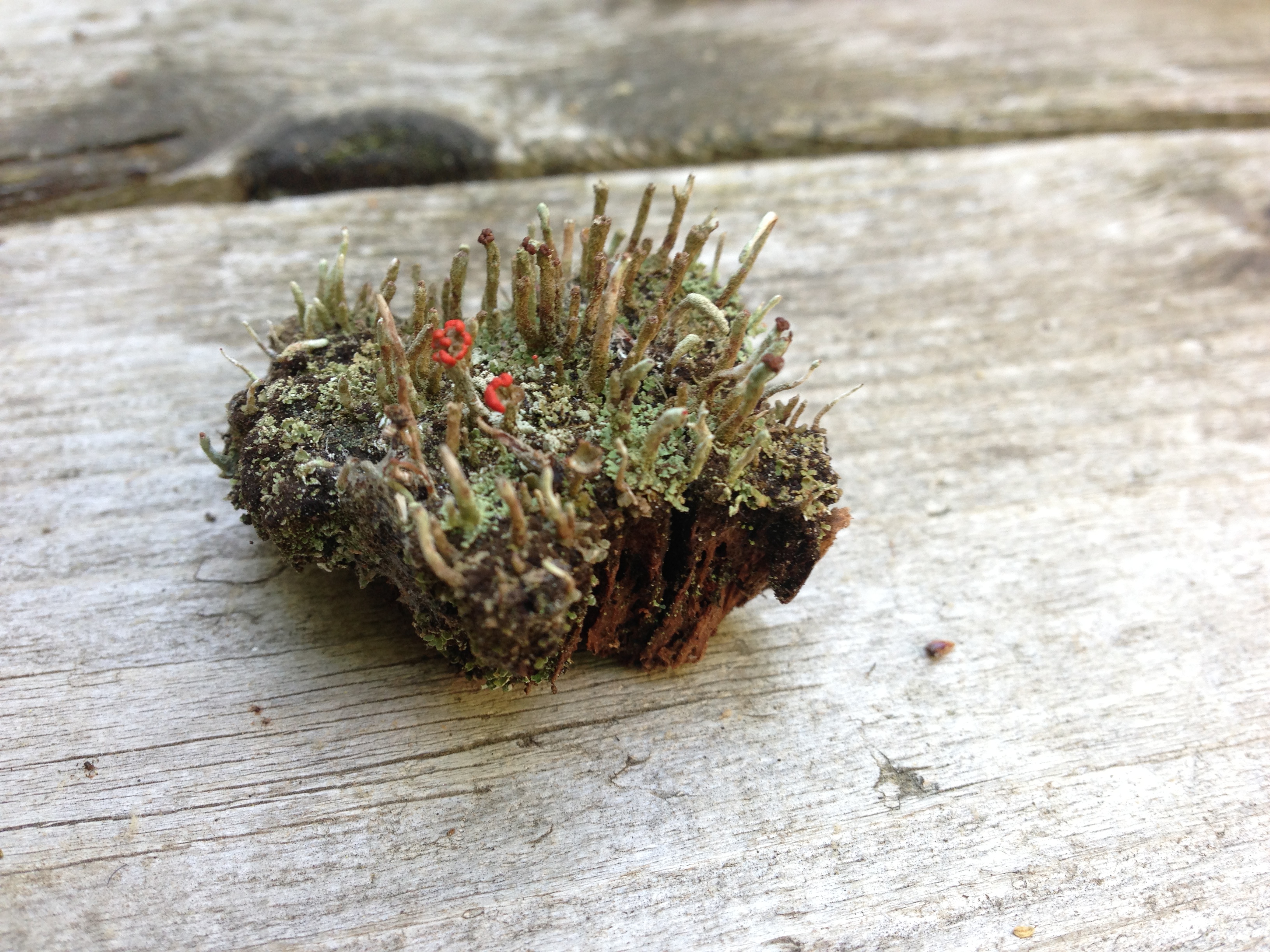
I thought we wouldn’t have collected more than ten specimens, but back at the picnic table people shared dozens. There was cladonia, called British soldiers. “That’s a no-no,” said Zach, referring to the beauteous lichen with bright red spores.

soldeirs

You shouldn’t pick it, apparently, it takes too long too grow.

There were plenty of others.

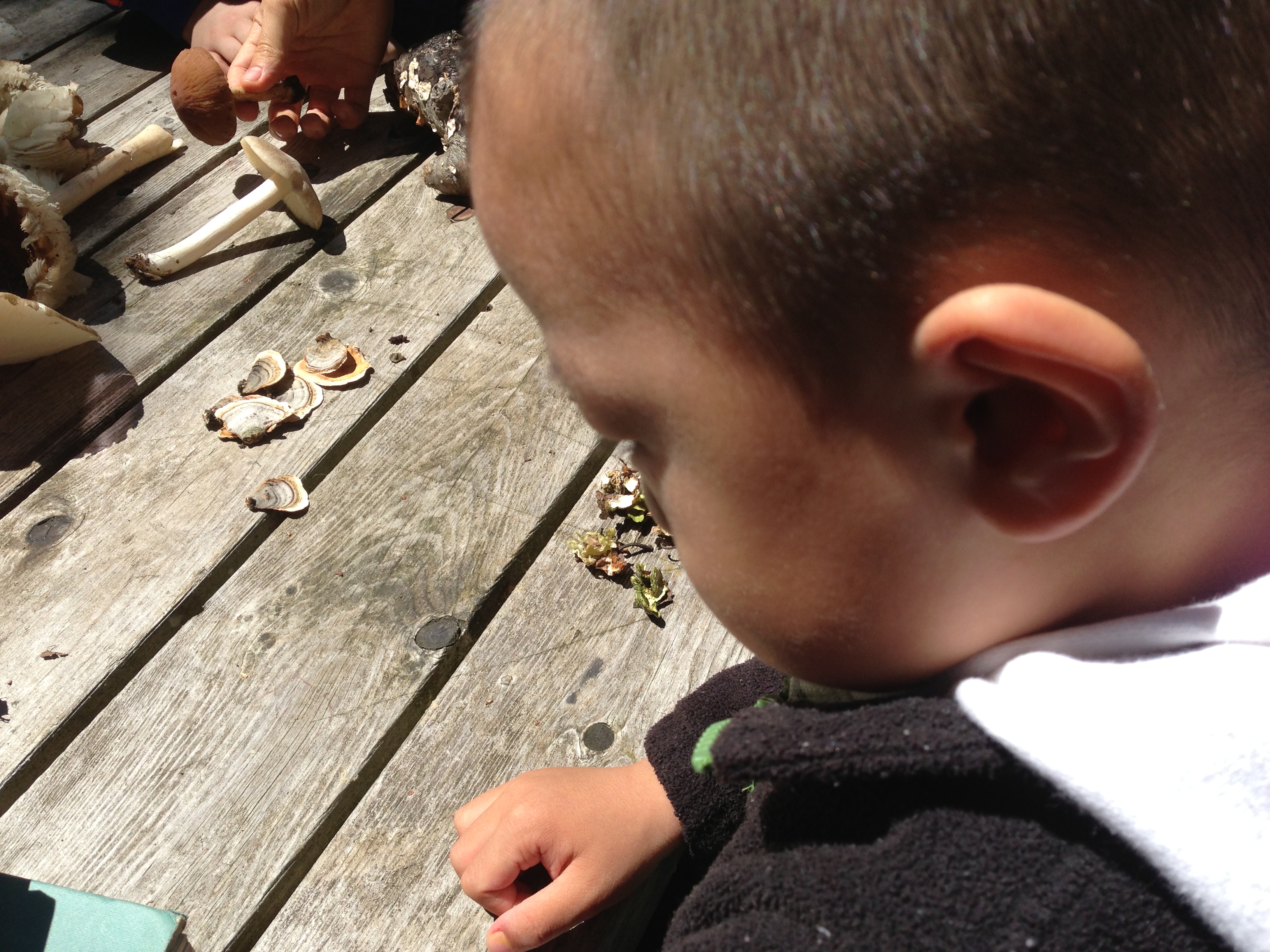
Some mushrooms looked like babies’ ears, and now babies’ ears resembled mushrooms.

baby ear

There was a small, complicated gorgon of growths.

gorgon

So many different textures and shapes.

table full

And finally, for the weary mushroom hunters, some snacks, including the edible variety: a dish of sesame pasta and chicken mushrooms, orange and chewy. And a plastic container of stuffed grape leaves, donated by Vrena. Not offensive, in the least, and tender.


6 Comments

Filed under Cooking, History, Jean Zimmerman, Nature, Photography

Boxcar Boy

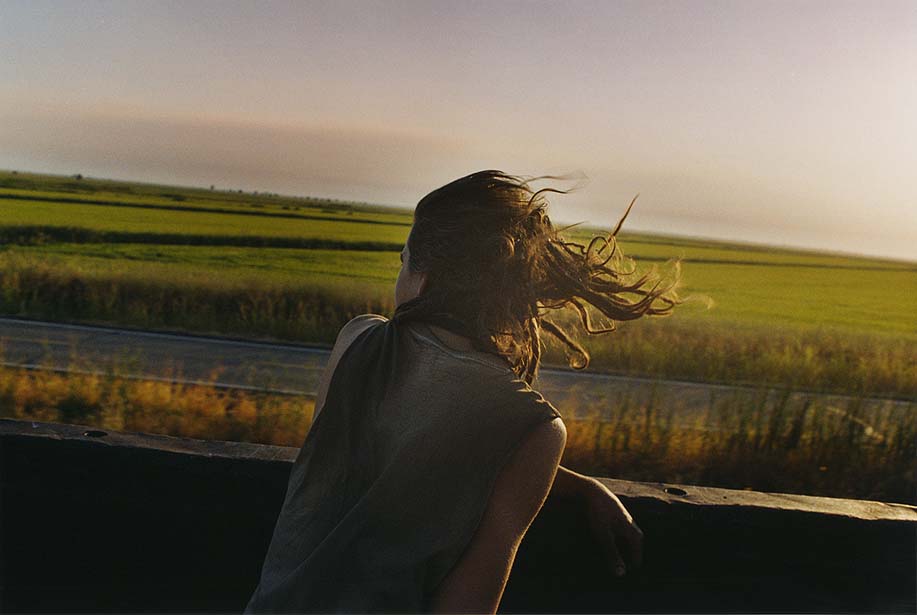
Mike Brodie is not making pictures any more. He left that behind along with a life on the rails, wind in his hair, the dirt of the road.

girl's hair

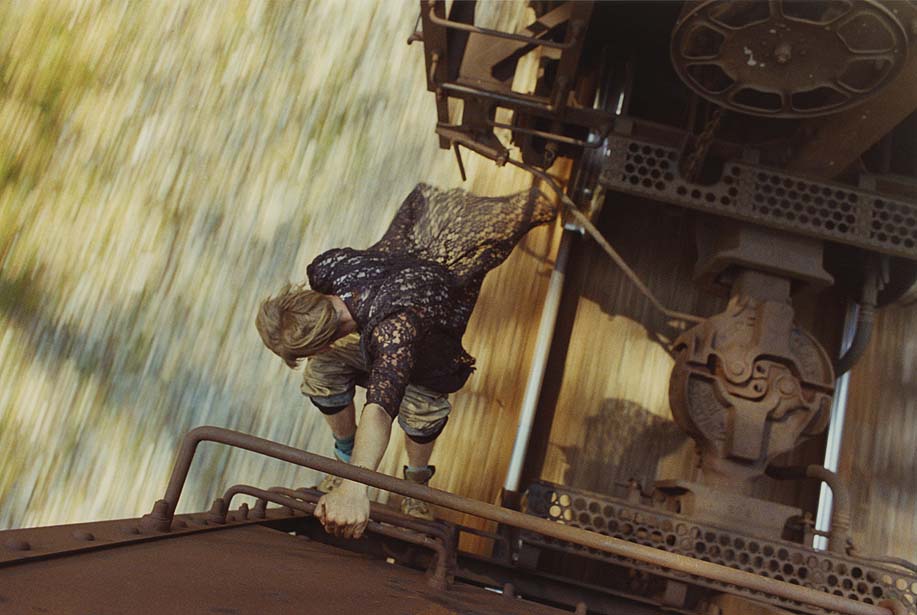
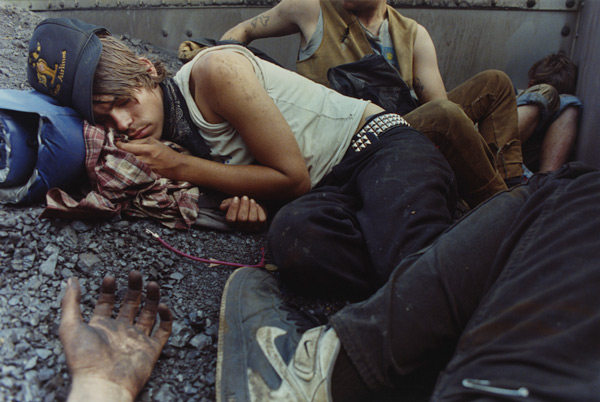
But for almost five years, since he was 17, he used a Polaroid and then a 1980s 35mm camera to document the world of young freight-train hoppers, his peers, in some searing and sweet images.

two figures on train

As I was cleaning my house today I thought, What if I didn’t have a house to clean? What if I didn’t have a counter to scrub, a coffee table to dust? I love home, the idea and the reality. But what if it was all suddenly swept away and I could just fly.

boy on train

Drift.

kids w map

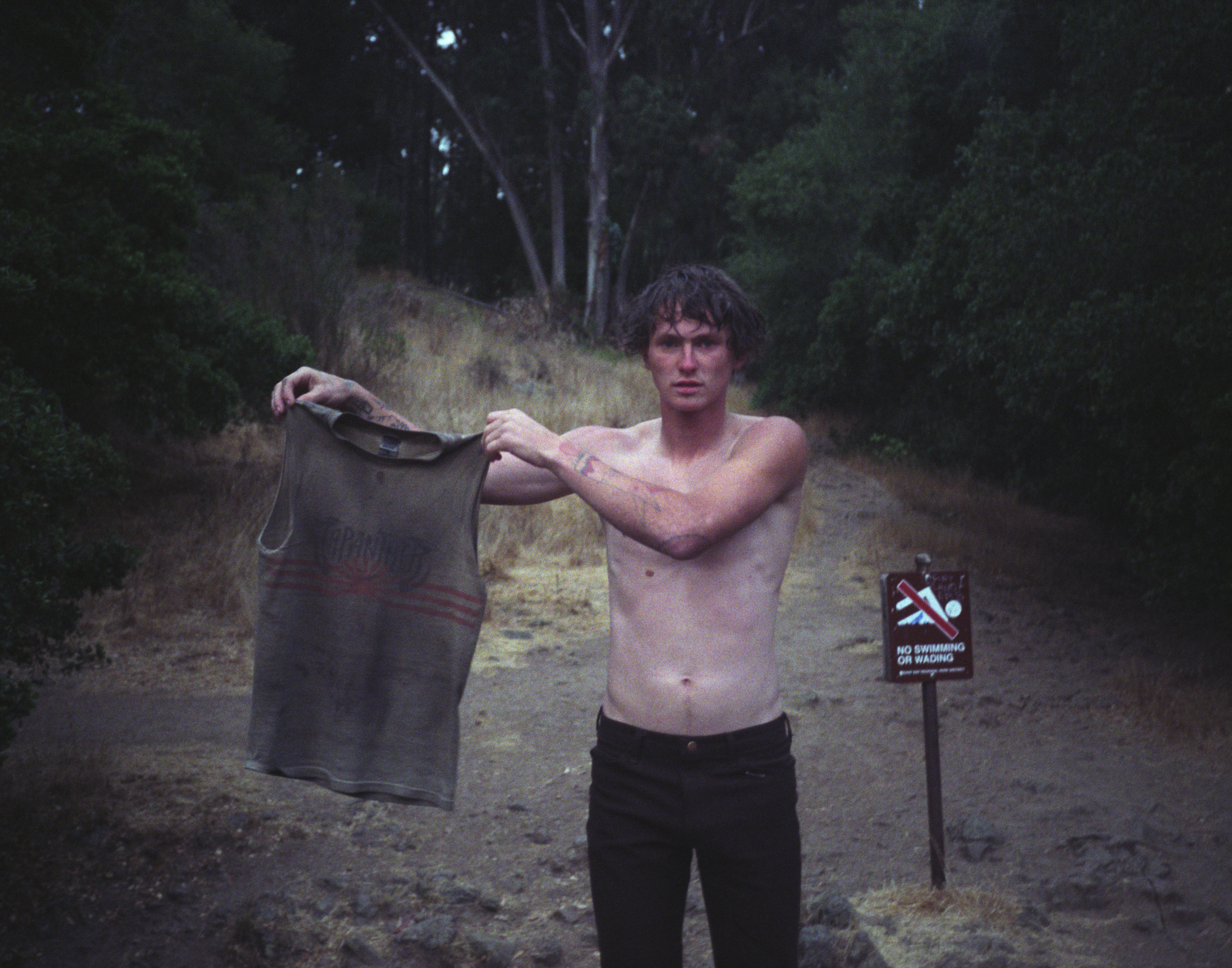
Brodie traveled 50,000 miles through 46 states, catching a lift on more than 170 long-haul freight trains, and capturing the tiny details of life that usually don’t mean anything to anyone outside the people themselves. He had no experience as a photographer, he first picked up a discarded camera left behind in a car and just started to shoot his friends. One of his cronies took this portrait of him along the way.

mike-brodie-self

“There was nowhere to go but everywhere, so just keep on rolling under the stars.” So wrote Kerouac. His words have never felt less dated.

train

Brodie’s photos are romantic, edgy, authentic, and might make someone uncomfortable.

stain

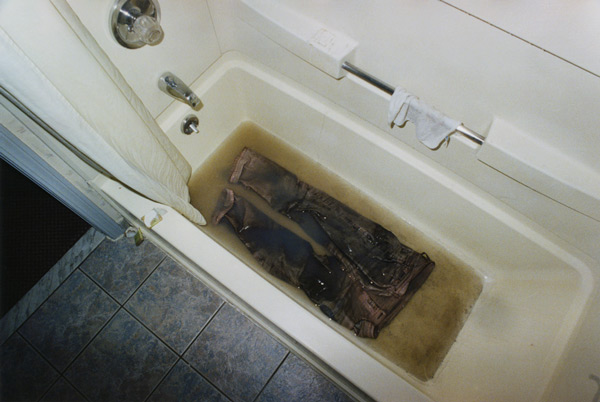
All right. You’re shocked. I’m shocked. Youth shocks, it demands attention. Brodie documents arrests and injuries, squats, disheveled car interiors (trains are only part of this story). Dirt. I love this one.

bathtub

Some photos are grim. One reviewer described the work as “stolen glances.” There’s some truth to that. These are raw depictions of a ramshackle but exhilarating life.

boy sleeping

Whitman’s Song of the Open Road, another chestnut that begs to accompany these pictures:

Henceforth I ask not good-fortune,

I myself am good-fortune,

Henceforth I whimper no more, postpone no more, need nothing,

Done with indoor complaints, libraries, querulous criticisms,

Strong and content I travel the open road.

The result of Brodie’s adventure is a photo book called A Period of Juvenile Prosperity, published by Twin Palms, with coinciding exhibits in art galleries on both coasts. He and his friends apparently have mixed emotions seeing his intimate work appear in the mainstream. “You have a lot of worlds colliding right there,” Brodie told The Guardian.

A Period 2

This is not Never Never Land. Whitman knew the truth. Some of my favorite lines in literature, also from Song of the Open Road:

(Still here I carry my old delicious burdens,

I carry them, men and women, I carry them with me wherever I go,

I swear it is impossible for me to get rid of them,

I am fill’d with them, and I will fill them in return.)

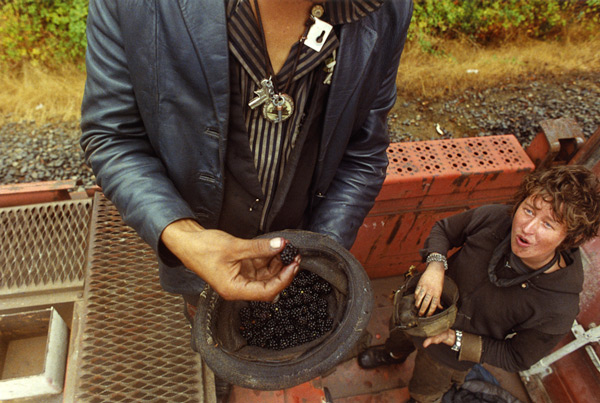
People in the recovery business talk about the uselessness of the “geographical cure” by which you try to escape your problems by changing your location. But still, some lucky people are flying, mostly by choice, rolling under the stars, true angels with dirty faces, thrilling to the open road.

Can you imagine how sweet these berries tasted?

fruit

Cormac McCarthy, in his work of apocalyptic genius, The Road: “Then they set out along the blacktop in the gunmetal light, shuffling through the ash, each the other’s world entire.”

sleepers

Mike Brodie has said the inspiration for his work was “from the folks I was hangin’ out with in Pensacola. The punk scene, like radical anarchists and all these feminist girls, at the time, their ideas and way of life were really interesting and inspiring to me and really gave me the push to think for myself and, well, hit the road.” It was a tight tribe, he says, and nobody was “actually homeless.” Instead, “We took what we could get to make it through one more day or to get to the next town.” He reminisced to the Los Angeles Times about the “sound of a high-priority Z train whizzing by you at 70 mph in the middle of a cornfield in Nebraska, zooom zooom, zooom…”

In an essay for his book, he writes that “I don’t want to be famous, but I hope this book is remembered forever.” He has announced that he will not take any more photographs. He has graduated from the Nashville Auto-Diesel College and now works as a mobile diesel mechanic out of his silver ’93 Dodge Ram.

Mike. Please pick up a camera. Maybe show us the secret world of auto mechanics. Or any secret world you choose.

6 Comments

Filed under Art, Fiction, Photography, Poetry, Writing

Eagles Nesting 24/7

You may have a lot you think you have to do. Laundry. Work after hours. Dinner dishes. Pushing a cart down the fluorescent aisles of Shop Rite.

And there are a lot of crucial things to think about these days, from Benghazi to preventive breast removal. You have money concerns, I have money concerns. Someone is in the hospital. Someone else is terribly sad.

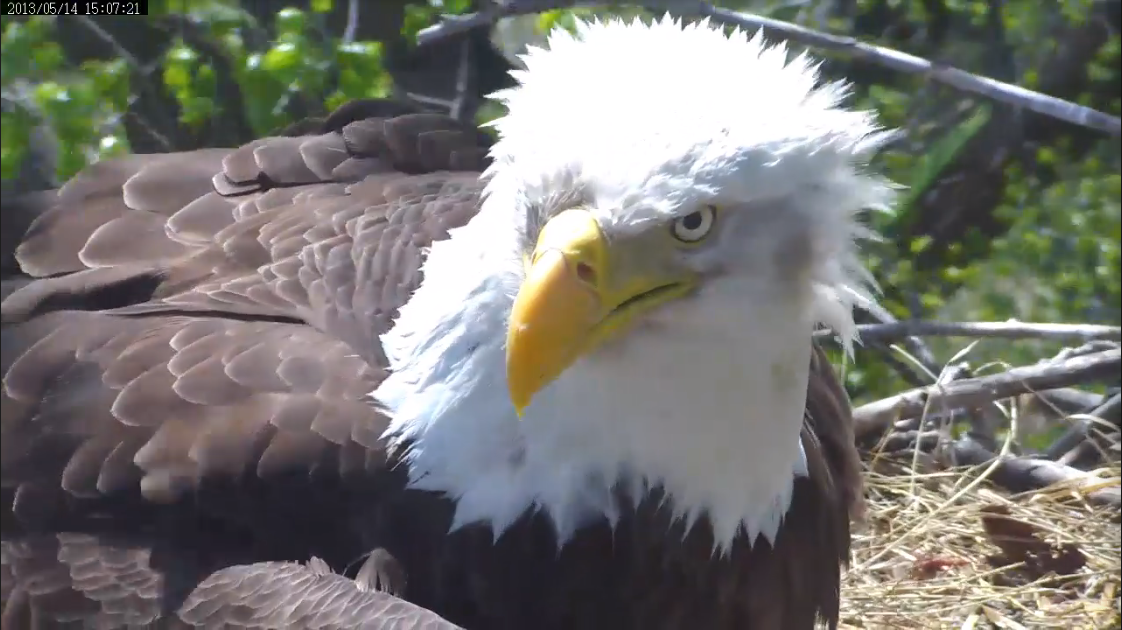
There is only one thing for it. Tune in to nesting bald eagles, a majestic pair with their big, wobbly grey babies, eaglets to be precise. Their names: Peace and Harmony. The webcam captures the birds in gorgeous detail.

mom eagle

This family has made its perch 75 feet in the air in a cottonwood tree in central Minnesota, at the edge of a river, and is available for viewing 24/7, any time you’d like to leave your real life behind.

One parent carries a turkey wing back to the mattress-sized nest. The other picks it apart, shoves bits into the chicks’ eager beaks. The mature birds are dashing to look at, as clean as if they bathed with soap and water every day of the week. You know that when they leave they’ll be riding the thermals, jumping on one for altitude then surfing to another, searching ceaselessly for choice prey to bring back to the nest.

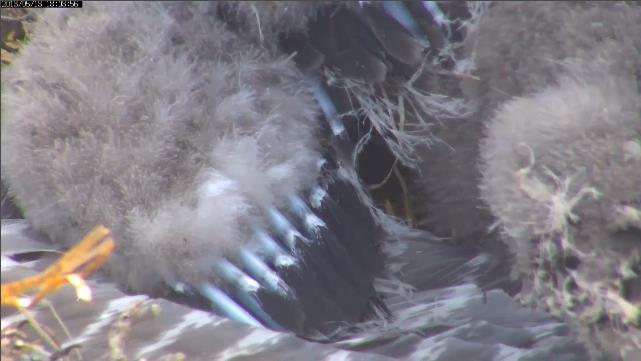
The Minnesota chicks are almost a month old now, their primary feathers coming in.

Peace's primaries

You never know what you’ll get. Sometimes those babies just sleep the sleep of the dead, a couple of heavy-breathing feather balls, and you wonder why you’re paying attention. Then, suddenly, one raises its head, holding itself upright, improbably, the way a bean seedling seems to stretch three inches taller after a rain.

And after watching for minutes… hours… days… you suddenly feel better.


4 Comments

Filed under Jean Zimmerman, Nature, Photography

Suzanne Takes You Down to Her Place by the River

Allow me to introduce a photographer whose work needs to be better known.

Susie's sky

Suzanne Levine. For decades she has gone nowhere without a camera in her hand.

Suzanne

She happens to be family to me, my sister-in-law, and lives with her husband and son in Hastings-on-Hudson, New York, where I grew up and lived for years.

People in-the-know know that she is one of the most talented photographers around.

cactus at night

Thank goodness, the explosion of social media means for one thing that fantastic photographers don’t have to labor in obscurity. Much less likely, the possibility of overlooking a Vivien Maier, the recently discovered shutterbug who worked for years in the 1950s as a nanny while walking the streets with her Rollieflex, photographing everyone from  well-dressed shoppers to street bums, producing gorgeous images that no body ever saw.

Vivien Maier

Street photography isn’t Suzanne Levine’s chosen discipline – though she is great with the human form.

5-7-13

More her bent is landscape, and particularly, I think, articulating a vision of the Hudson River.

red Palisades

Her living room window overlooks the tracks headed south along the shore and the Palisades beyond, so it’s got to be a lot on her mind.

rains

Her usual interpretations of the Palisades are fluid and soulful, soft yet strong.

blue Palisades

Rothko-esque.

Suzanne is sensitive to the venerable Palisades-depicting tradition in Hastings, beginning with Jasper Cropsey, who painted this canvas in 1887.

CropseyPalisades

“It’s hard to do it in a meaningful way,” she says. “Particularly with photography, a landscape may be technically skillful, but empty.  The detail and the majesty can be overbearing; too much of a hard sell.  When I see an image like that I think, that’s not how you make a picture of the Palisades.”

green Palisades

You can see a series of Suzanne’s Palisades images here.

She is also an intuitive mom-photographer, with a knack for “getting” what’s going on with her son. Jasper’s now six, a  gabby, literate, lego obsessed energy bundle, and she captures the bright light of his personality.

now we are six

One recent body of work Suzanne called postcards.

Suzanne's postcard 1

Works that threw two images together, shook em up, poured em out as the perfect visual cocktail. She started to make them as portraits of Facebook friends, both those she knew personally and those she had met on line. “Are you a psychic?” asked a friend she hadn’t seen since high school.

Suzanne's postcard 2

She must have done a hundred of these.

Suzanne's postcard 3

Each one more interesting than the next.

Suzanne's postcard 4

Suzanne has recently begun using an Olympus OM-D E-M5, a Micro Four Thirds interchangable lens camera, a step-up from the compact digital cameras she’d been using the past few years.  Once in a while she still employs a one-megapixel camera, when she wants to go lo-fi.  She still keeps a 35mm Nikon F and a Rolleiflex TLR, as well as a collection of vintage cameras. Her favorite: a Newman & Guardia view camera, which was the camera of choice for polar explorers because of its innovative spring-powered pneumatic shutter.

You can see more of these photos. You can share work with Suzanne or to talk about getting a print made. Leave a comment for me here and I’ll make sure she gets your information.

Just don’t distract her too much from the sweet, moody, serene, soulful river that runs through her world.

16 Comments

Filed under Art, Home, Jean Zimmerman, Nature, Photography

Wizard Sticks and Tree Guards

Some magic has come into my life. I am not a person who favors yard ornaments in the vein of gnomes, glass spheres or plywood ladies with polkadotted underpants. And I’ve never even read The Hobbit.

But I have fallen in love with a Wizard Stick.

garden wiz cu cu

It owes part of its charm to the fact that it was a gift from old friends. Part, also, to the chunky blue-green “crystal” grasped in its iron claw. The Wizard Stick will bring the rains to my vegetable garden, I am sure, when planted facing in the proper direction and with the ceremony that behooves its installation. Gil’s going to jump around minus his undershorts while I chant for precipitation.

But there is something else. The company that created the Wizard Stick, Tringalli Iron Works, fabricates the totems only as a sidelight to its regular business. A business to which street tree guards are central, and have been since Liborio Tringalli started the enterprise in Tribeca in the 1920s.

Libero-Tringali,-Founder-(Bud's-Grand-Father)

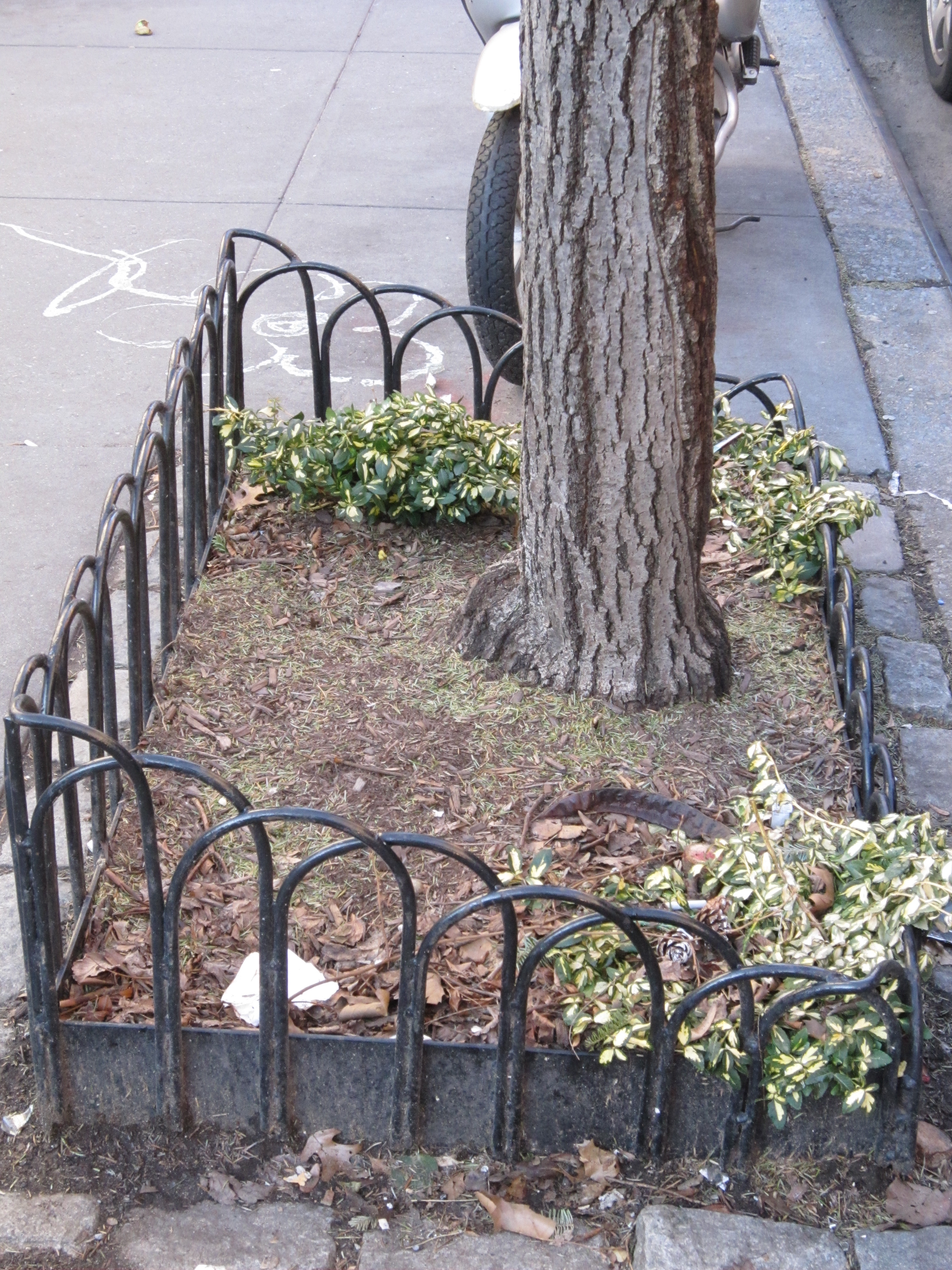
Yes, tree guards do matter. Here is one you probably have overlooked every time you ambled down a New York City sidewalk. Eighteen-inch iron hoops all around. Shielding a little root-friendly plot that is blessedly feces-free.

street guard 1

Edith Wharton showed Lily Bart roaming around near Grand Central Station in the humid heat of a Manhattan summer afternoon, desperate to find some cool relief.

“‘Oh dear, I’m so hot and thirsty—and what a hideous place New York is!’ She looked despairingly up and down the dreary thoroughfare. ‘Other cities put on their best clothes in summer, but New York seems to sit in its shirtsleeves.’ Her eyes wandered down one of the side-streets. ‘Some one has had the humanity to plant a few trees over there. Let us go into the shade.’

“’I am glad my street meets with your approval,’ said Selden as they turned the corner.”

In 1905, when House of Mirth was published, a battle was underway over New York’s street trees.  The island was still nostalgically remembered as a haven, a bower of oak, chestnut, pine and cedar, but now the trees had been almost all torn down for new construction. They were inconvenient to development.

Madison and 55th Street in 1870.

mad

I wrote about the transformation in my book Love, Fiercely, that took place during that period.  I.N. Phelps Stokes despaired over the change:

Old, bucolic Manhattan was vanishing, buried in the smooth cement of the new. By the turn of the century, the leafy streets of lower New York had lost their shade.

In an incisive history called The Creative Destruction of Manhattan 1900-1940 author Max Page charts the demise of the New York street tree. At a certain point the trees could be counted on one hand. I love this 1913 photo of a woman he included in his book, walking by the sole remaining tree at Fifth Avenue and 37th Strteet.

street

And the pear tree planted by Peter Stuyvesant at 1oth Street and Third Avenue. The city mourned when it was killed after being mowed into by a dray in 1867; it had stood for 200 years.

stuyvesant-tree-01

Yes, there was a love of trees, and 317,166 were planted in New York State on Arbor Day between 1889 and 1909. But in 1909 only one in five of those trees still stood. A Tree Planting Association sprang up to organize around replenishing the city’s streets, with a classic Progressive fervor, augmenting the efforts of New York’s Parks Department. The fact that we have any street trees at all today is probably due to their efforts.

And to those tree guards. Tringalli has made 125,000 of them since 1923.

Tringal 2

Today, the city’s plan is to plant more than 200,000 new street trees over a decade (street trees area  subset of city trees in general, which include parks, yards, etc). There are upwards of half a million street trees now. MillionTreesNYC is playing an important part. Saplings come from three different nurseries in Maryland, Buffalo and long Island. These are Maples.

maples

People who care about trees can even become Citizen Pruners, taking a five-session course and getting a license that lasts for five years. A friend of mine has become an arborist, a new profession, who advises construction companies on the health of trees.

The New York Parks Department keeps count of species, and has identified 168, with the top specimens the London Plane Tree, the Littleleaf Linden, the Norway maple, the Green Ash and the Callery Pear. And there is always the ubiquitous, sometimes stinky ginkgo biloba, with its pretty fan-shaped leaves. Long thought to be extinct, the ginkgo was rediscovered during Victorian times in hidden groves in China.

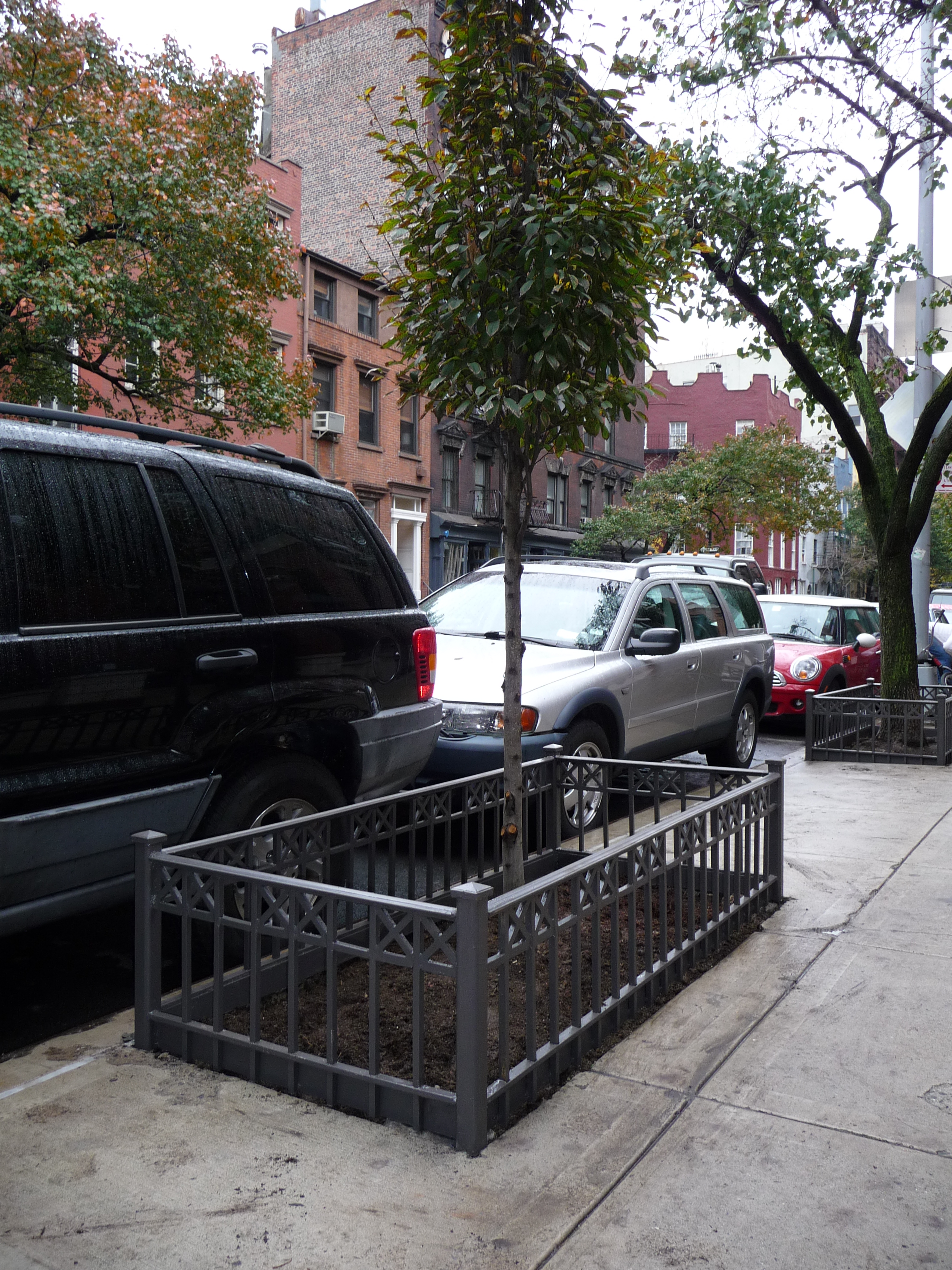
All of them need a tree guard.

treeguard3

A Wizard Stick might be nice, too. Some magic, to keep a tree alive when the chips are down.

wiz:sky

I’m not parting with mine.

3 Comments

Filed under History, Home, Jean Zimmerman, Love, Fiercely, Nature, Photography

All This and a Hand-Crafted Marshmallow Recipe

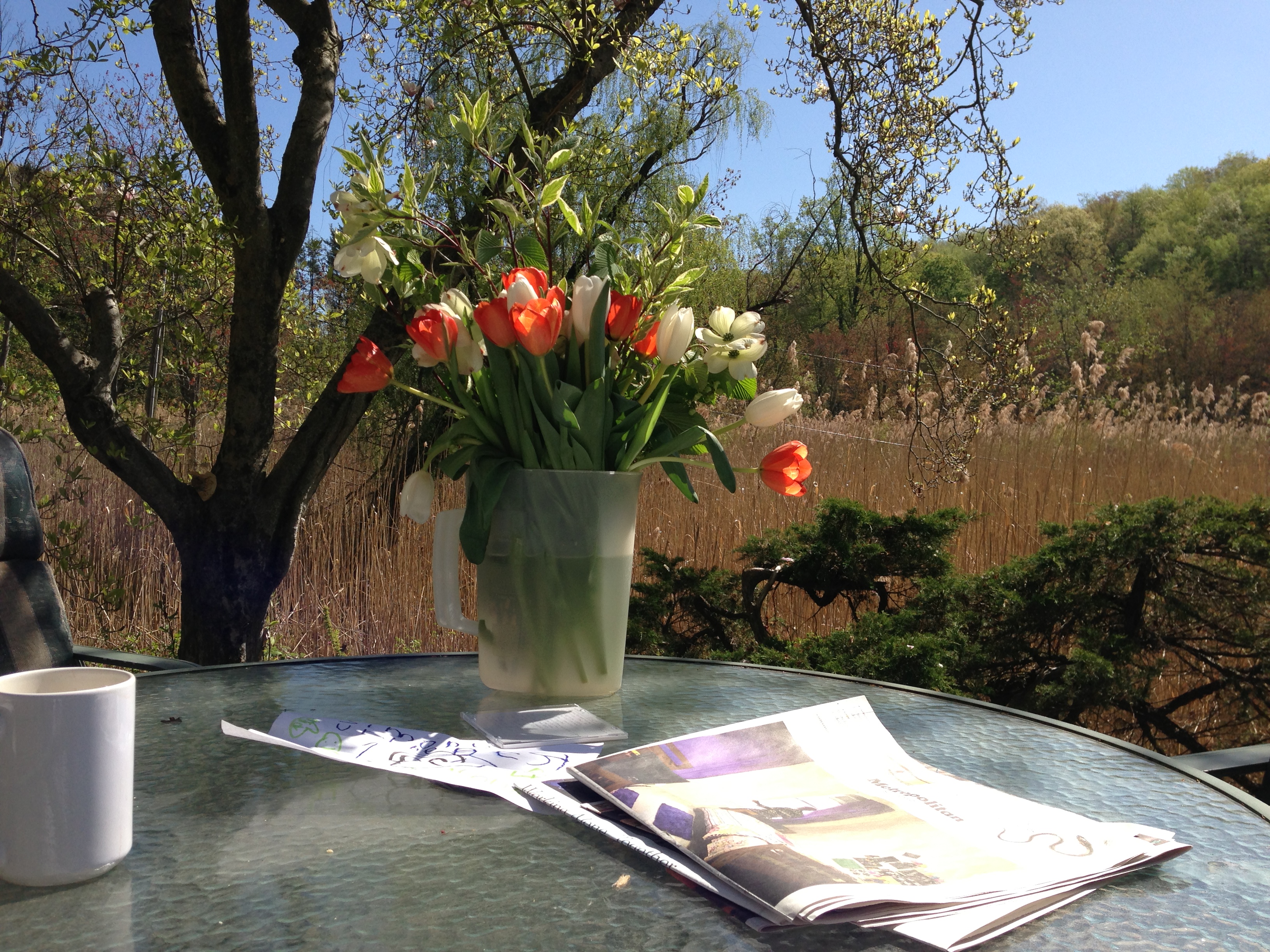
The day after. All that’s left of the pig roast are the party tulips and the dogwood stars.

tulips and dogwood

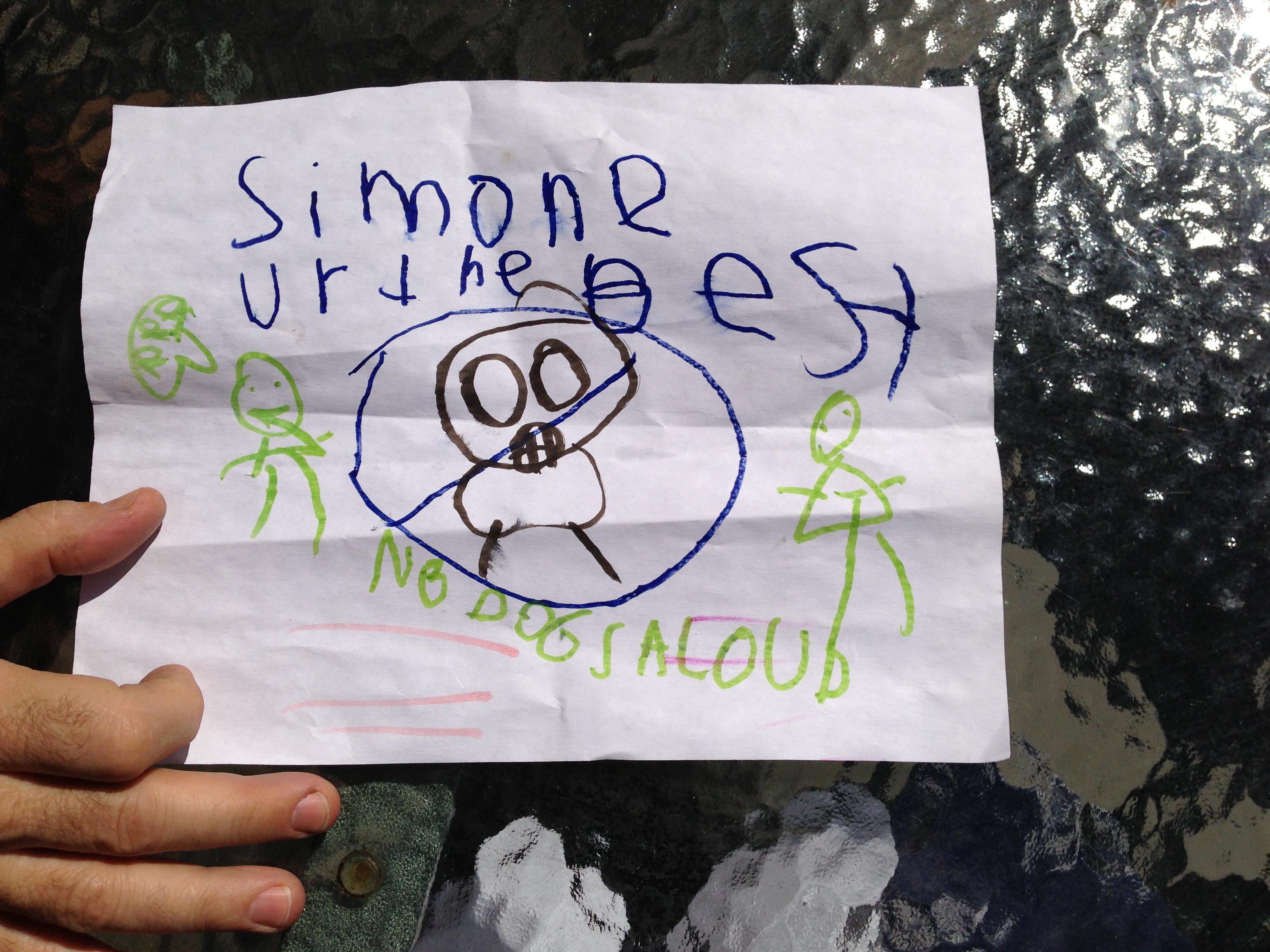
And a drawing by doting 6-year-old Jasper for winsome three-year-old Simone.

Simone picture

Oliver was locked away until the waning hours, when he was let out in all his growly glory, with a  muzzle and a leash, and petted by the braver partygoers. Says something about the loving spirit of this particular gathering.

OLYMPUS DIGITAL CAMERA

The love reached its apotheosis in the marshmallows.

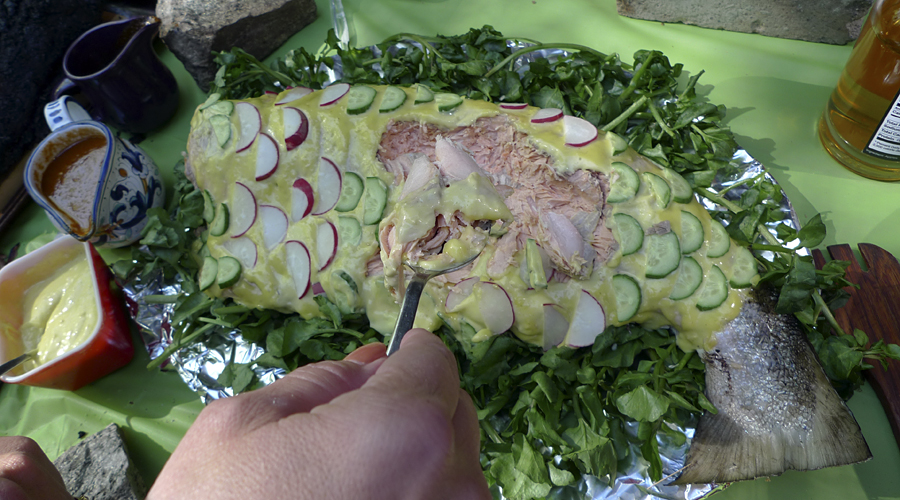
I was almost too busy replenishing food on the buffet to have a conversation, let alone to document anything, and the hours of the pig roast sailed by in something of a haze. Josefa gave me this photo of my salmon, thickly coated with rich horseradish mayonnaise and scales of radish and cucumber. The fish, not the photo.

salmon josefa

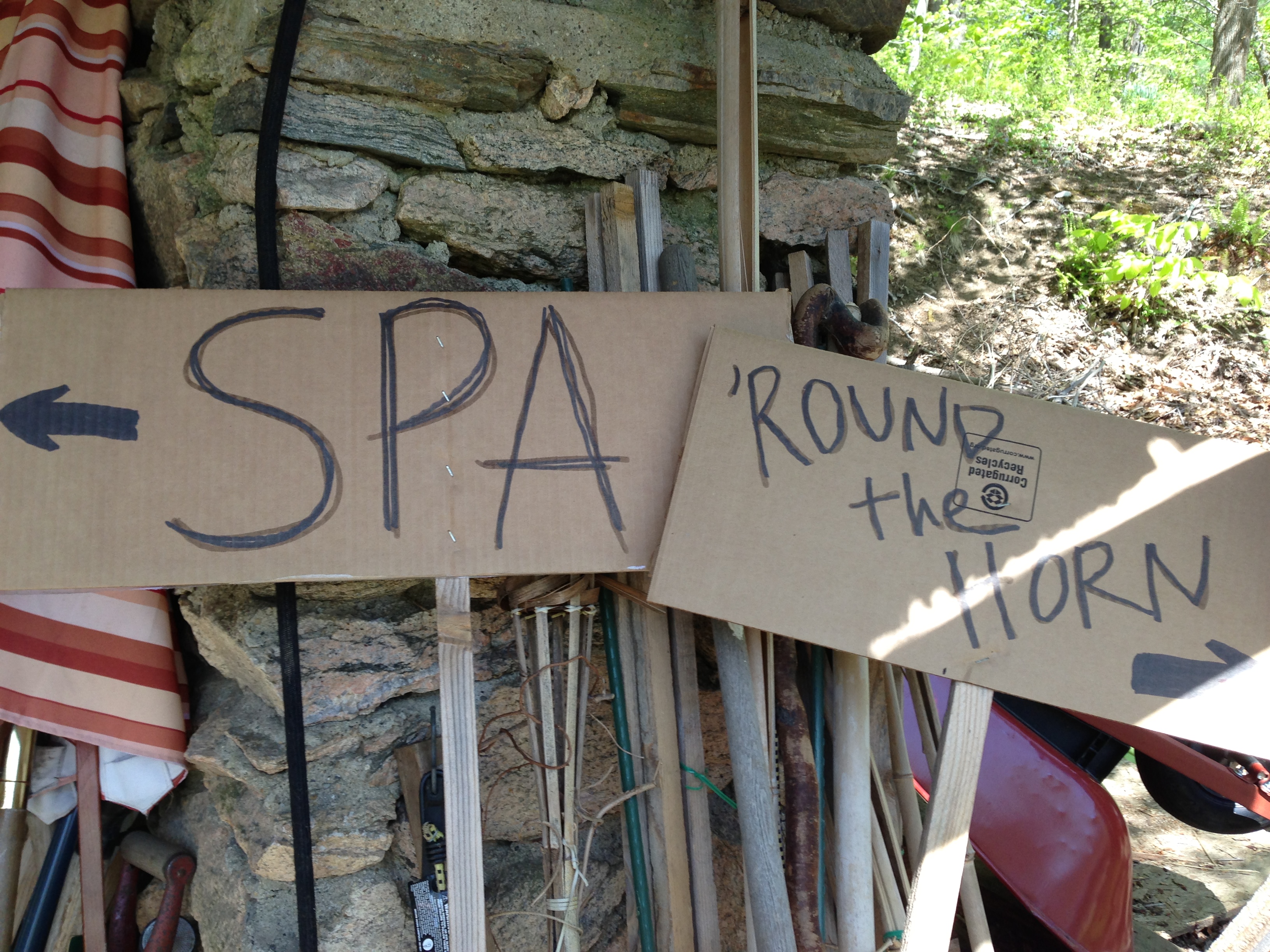
The signs we put up around the property are taken down.

signs

The Spa, of course, which Gil had dug out of the swamp. As far as I know, unutilized for a mud bath. ‘Round the Horn, where you could hike around a promontory, past the pachysandra groves, and wind up back at the Cabin.

Human gatherings are so ephemeral. Did you talk to so-and-so? No? I had an intimate conversation with him I didn’t intend upon. Little epiphanies, most of them forgotten by the next morning.

Gary found a skull.

Rat? Rabbit?

The music  boomed, especially near the speaker, which hovered in a window above the food. George Jones’ essential question: Who’s gonna chop my baby’s kindling when I’m gone? Who indeed?

The rum was drained.

Nora-marshmallows

You would think that after the huge smoked brisket, the salmon and the cripy pig, the fava beans and asparagus with Pecorino, and the spicy blue cheese slaw, people’s stomachs would be full to bursting.

Gil in the pit

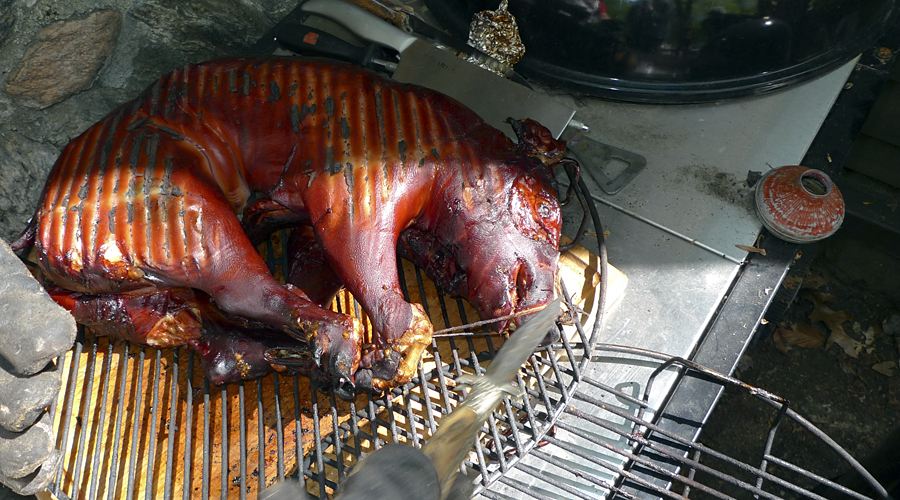
Gil, down in the Pit, pulled the pig off the fire at just the right golden moment.

pig

And the biscuits. I took a gamble on whole wheat biscuits this time. I think they disappeared even before the rest of the platters were set down. A sparkling day builds an appetite. And shoe golf.

shoe golf

That’s Josefa’s picture. Somehow she caught the shoe flying through the air on its way to the hole, a plastic bin set some 10 yards away. Far enough to make people look ridiculous taking a shot at it. Even college students lowered themselves to try.

OLYMPUS DIGITAL CAMERA

But the marshmallows. It was as if people had never seen a marshmallow before. As if they had never seen food before. You can make those? I never knew.

We had cut young green branches up in the woods yesterday morning, and now all the adults were acting like kids, standing over the fire and toasting Gil’s home-made marshmallows with glee.

marshmallow

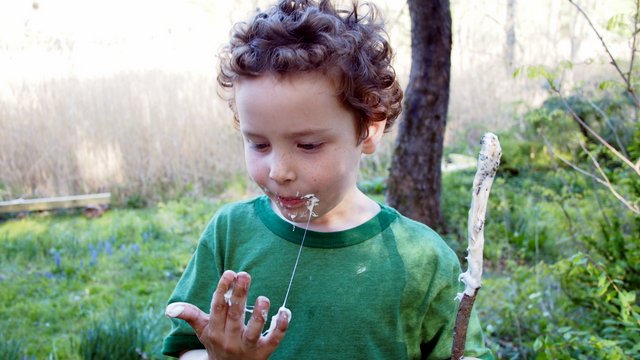
Everyone had drips of white around their mouths.

OLYMPUS DIGITAL CAMERA

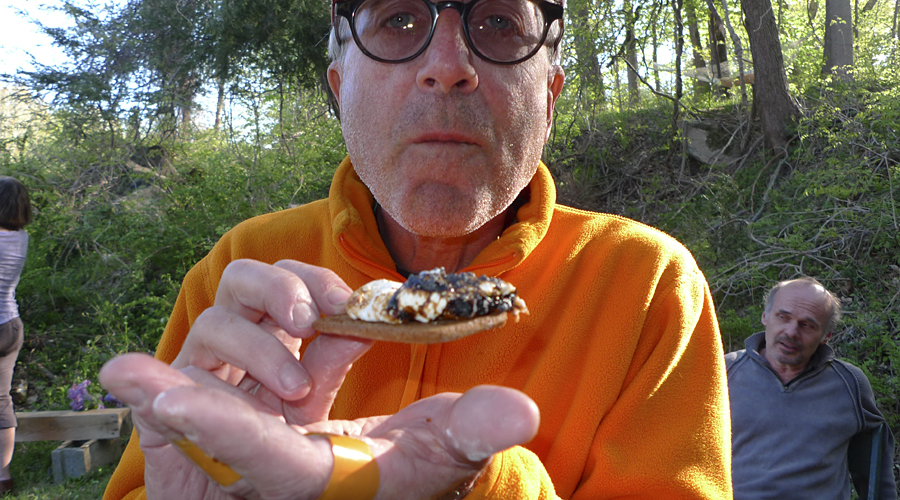
Grown men made s’mores. (Gil concocted his version of home-made graham crackers, too.) We layered in slivers of salted caramels.

gary

Our friend Stu left us with a mix-cd that has party tunes, including Ray Wylie Hubbard with the lyrics: Only two things that money can’t buy, that’s true love and home-grown tomatos. I would add a  third, hand-crafted marshmallows.

Hand-Crafted Marshmallows

6 packages gelatin (the unflavored kind, GoBio has an organic product)

2 cups icewater

3 cups granulated sugar

2 cups corn syrup (Wholesome Sweeteners organic brand has a little vanilla in it)

½ teaspoon salt

2 tsp vanilla extract

½ cup confectioners sugar

½ cup cornstarch

(Optional flavorings: almond extract, lavender drops, orange extract, etc)

In the bowl of an electric mixer with a whisk attachment combine the gelatin with half the ice water.

Combine in a saucepan: the rest of the ice water, the sugar and the salt. Using a candy thermometer, cook until mixture reaches 240 degrees (soft-ball stage). Remove from heat, pour into bowl with gelatin and whisk on slow speed to combine. Increase speed to high and whisk for fifteen minutes. Add vanilla and optional flavorings at end and whisk for a minute to combine.

Pour into greased 9 x 13 pan that’s also well dusted bottom and sides with the half-and-half mixture of the confectioners sugar and cornstarch. Spread evenly with a lightly oiled spatula. Let stand uncovered overnight.

Turn out onto cutting board dusted with the confectioners sugar and cornstarch. Cut into cubes with a pizza wheel dusted with the confectioners sugar and cornstarch. Dust with the confectioners sugar and cornstarch (mix up more if necessary).

Makes about sixty marshmallows. Enough for a roiling pig roast.

2 Comments

Filed under Cooking, Dogs, Home, Jean Zimmerman, Music, Nature, Photography

Writing From the Nitty Gritty

Reading The New York Times today, I came across a story about archivists in the city, what a rare breed they are and what their jobs are like, and I envied them. “Specialists who snatch objects from oblivion,” as  Alison Leigh Cowan, the author of the piece, describes them, these men and women get to immerse themselves in the nitty gritty of life in a different time and place, continually. It’s an activity that as a history-obsessed writer I only get to spend part of my time doing. The archivists profiled preserve everything from teacups, to Meyer Lansky’s marriage license, to the see-through panties of Gypsy Rose Lee.

gypy

I have favorites among archival collections.

The Henry R. Luce Center for the Study of American Art at the Metropolitan Museum has on view those myriad fine art and decorative art objects that are not currently displayed in the more conventional Museum galleries. It’s a funny sort of place, an open secret, accessible to the public yet off the beaten track. Objects have been arranged in huge glass vitrines according to material (e.g. furniture and woodwork, glass, ceramics, and metalwork).

Luce

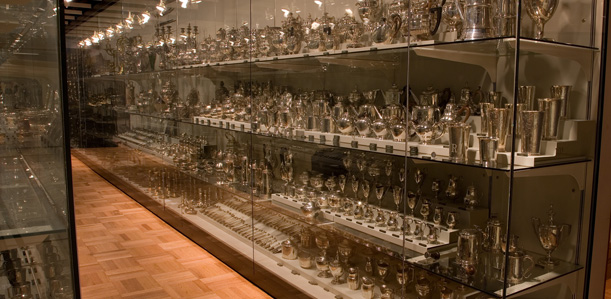
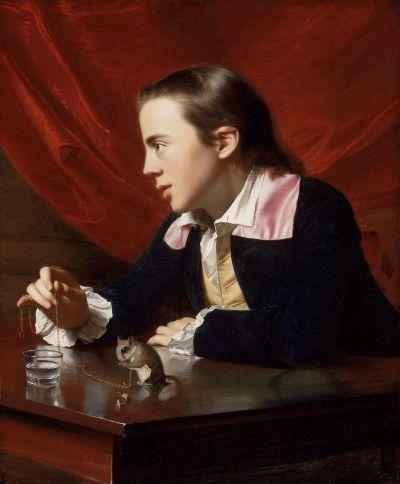
It’s a fine place to find a dozen nearly identical andirons, if you’re in the mood to see andirons, or a hundred sterling silver tumblers, or any number of porringers of yesteryear. Oh, and paintings. Any item the museum can’t find a place for at the moment gets tucked away here, in plain sight, and that includes some wonderful canvases. Even such crowd pleasers as John Singer Sargent’s Madame X sometimes cool their heels here. One day I turned a corner and came across one of my favorite paintings that I’d never seen in person, the portait of nine-year-old Daniel Verplanck by John Singleton Copley, painted in 1771.

John-Singleton-Copley-Daniel-Crommelin-Verplanck

It’s not the only boy/squirrel portrait Copley painted – there’s one in Boston, too, at the Museum of Fine Arts, a fine one, of  Henry Pelham, painted in 1765.
copley-squirrel1316573541100

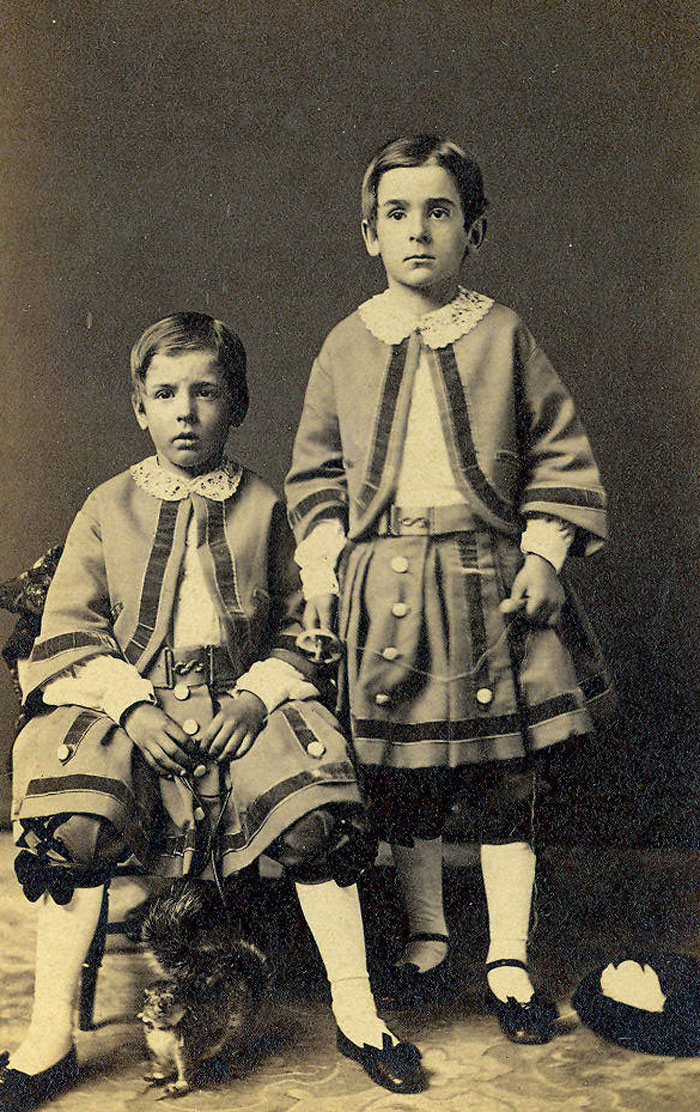
But here I had what amounted to a private viewing, just me and the boy and his pet. It seems funny now, but keeping squirrels as pets was commonplace through to the twentieth century. Before the family dog, the family squirrel. Here we have the Ridgely brothers in 1862, Howard and his younger brother Otho, the children of a wealthy landowning family in Maryland.
squirrel boys

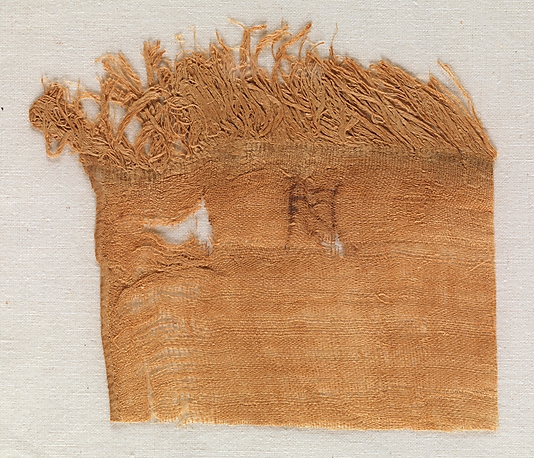
I like to visit another kind of archive when I’m at the Met, as well. Next door to the imposing Temple of Dendur is a tiny warren of display cases that contain long rolls of linen 2000 years old, mummy linen. Here is a scrap.
mummy linen

I don’t know whether the fabric has been unrolled from the embalmed corpses or is waiting to enfold them, but it is incredible to be inches away from these archivally preserved Middle Kingdom textiles. Only slightly frayed and browned by time. Magic.

Another archival highlight. I once ventured up to the attic of the Union Church of Pocantico Hills, with the well-known rose window designed by Henri Matisse – his last work of art, dedicated on Mother’s Day 1956.

henri matisse rose window at union church

There under the eaves lay the physical archives of Historic Hudson Valley, the nonprofit organization that runs the church and other properties in Westchester County. I was there to view a painting of an elite young Mary Philipse by John Wollaston, for my book The Women of the House.

Mary

I was, luckily, sanctioned to browse around the other objects displayed on the shelves while the archivist inspected various historical maps. Some intricately decorated colonial pottery, some other paintings, including one, provenance unknown, of waves crashing against the shore at the southern tip of Manhattan around 300 years ago. And what really got me, a collection of pastel silk slippers in pristine condition, perfect for the fancy parties of the eighteenth century. All these things just breathing there, largely ignored by the world, protected in their secret little alcove atop a church.

The Manuscripts and Archives Division at the New York Public Library, when I went there to do research on I.N. Phelps Stokes for Love, Fiercely: A Gilded Age Romance, always seemed like it existed underwater, dim and calm, holding tight to its treasures. It contains over 29,000 linear feet of archival material in over 3,000 collections, of which I was accessing 36 boxes of yellowed paper.

There is something gratifying about examining letters that have not been paid attention to in a hundred years. Being the first to take them out and handle them. The papers that interested me concerned the architect/philanthropist/collector’s epic Iconography of Manhattan Island. I had already done research at the library of the New-York Historical society, where I discovered a note from Stokes imploring an influential friend for contacts to help publicize his book.

stokes p.r. letter

Also something of a gas was his 1913 campaign, revealed in a fundraising letter, to get an educational farm installed in Central Park. His sister Ethel had the idea of equipping “a diminutive group of buildings, consisting of a tiny cottage of four rooms, a cow-shed and dairy for two cows, and a chicken house for twenty-five chickens.” Everything could be “inspected through glazed openings without entering the buildings,” wrote Stokes. A negative editorial in The New York Times helped shoot down the plan.

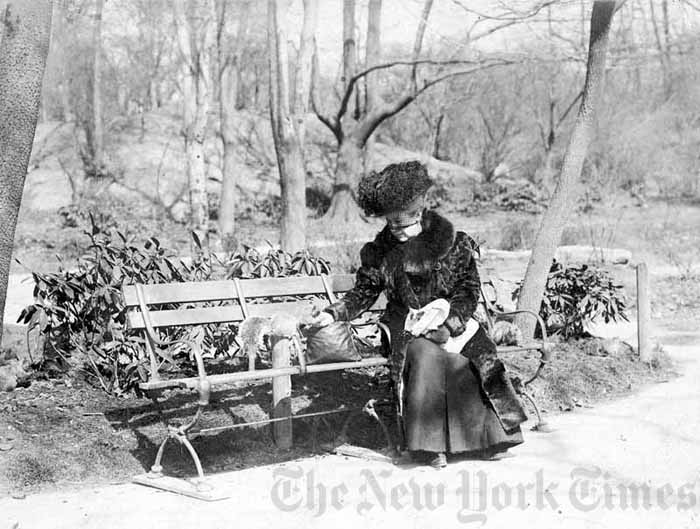
Petting squirrels was still popular in Central Park at that time, I have found.
Central Park squirrel

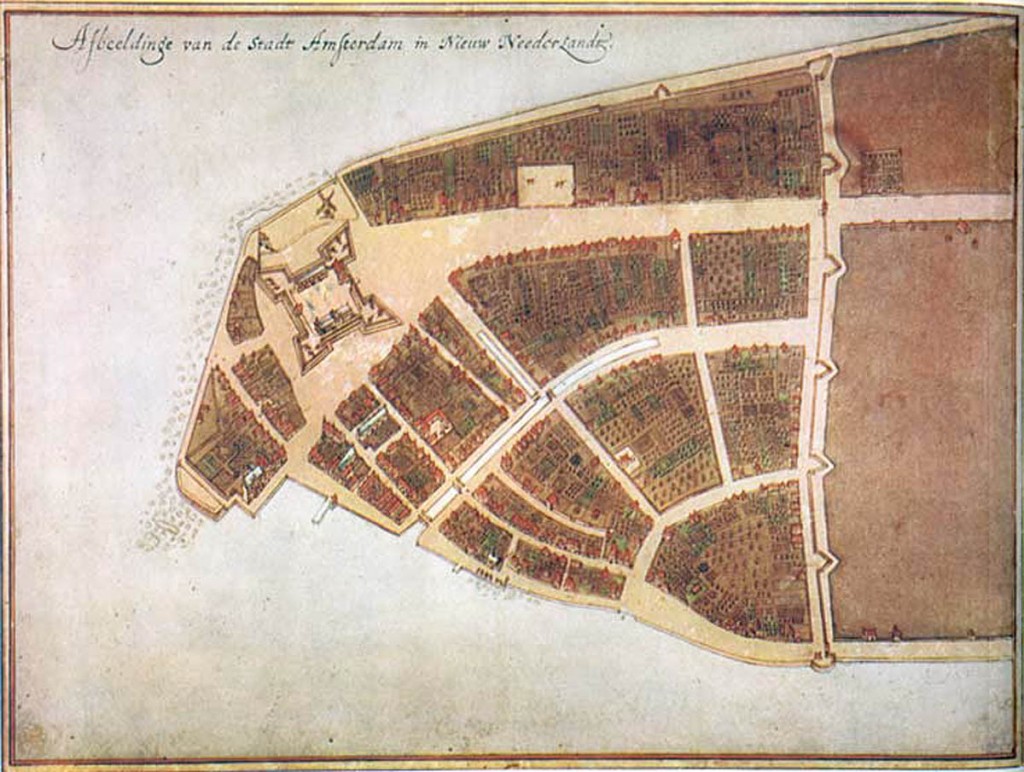
I recall the day at the NYPL Manuscripts room when I found a small envelope containing two thumb-sized black-and-white photographs depicting the very first street plan of New York, drawn in 1660.
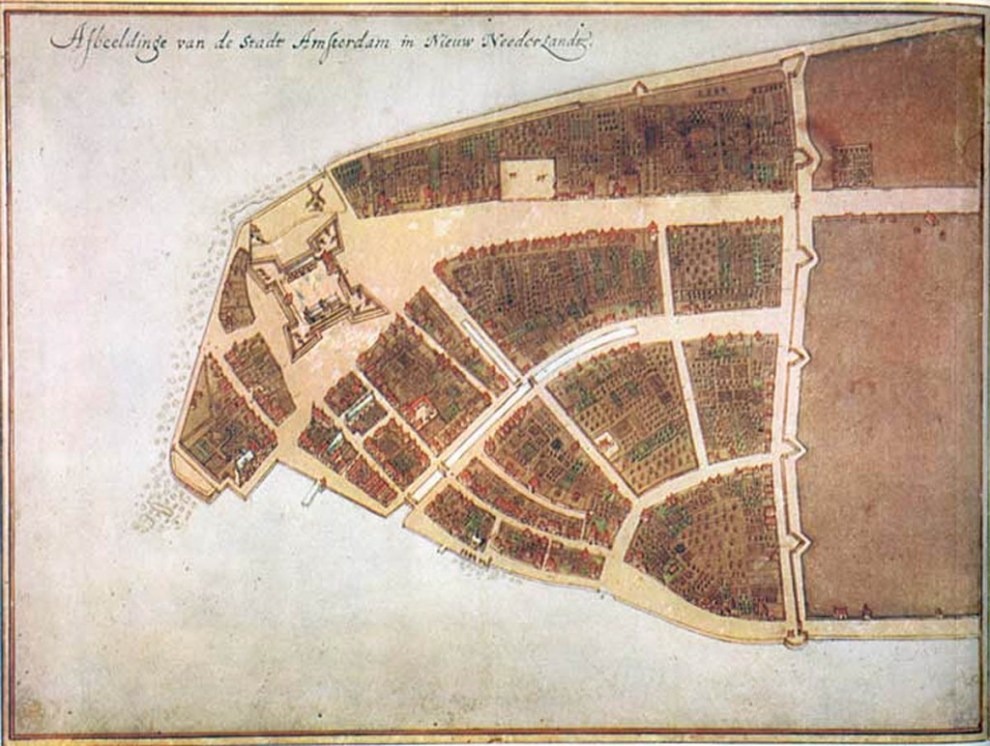
CastelloPlanOriginal-1024x772

They were snapped by Stokes’ researcher behind a guard’s back at the Florence villa where the map was housed, and sent back over the sea to his boss in New York City. Stokes must have leapt out of his chair (also in the New York Public Library, where he had a private second-floor office) when he saw those first pics in 1916.

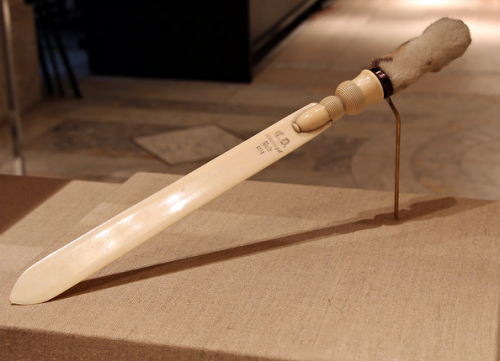
A friend of mine, the curator Thomas Mellins,  produced Celebrating 100 Years, an exhibit for the New York Public Library that brought some of its best archival artifacts out of mothballs. Did you know that this book-and-paper institution in in the possession of the walking stick Virginia Woolf had with her when she waded into the water on her last day? It floated to the surface. The Library also has such objets as Jack Kerouac’s typewriter, yes, the one on which he wrote On the Road. And my personal favorite, perhaps because I had just been reading David Copperfield when I saw it — Dickens’ personal copy of David Copperfield, the one he used when touring for the book, pocket-sized, complete with his penciled-in notations for emphasis. There is also the genius’ letter opener, topped with the taxidermied paw belonging to Dickens’ cat, Bob.

letter opener

The pleasure of handling archival materials is an emotion that you can’t experience second-hand, unfortunately. You have to be there, deep amid the tarnished porringers and the satin slippers. But there is a website I like a lot that gives you snippets of historical artifacts. Slate features a department called The Vault: Historical Treasures, Oddities, and Delights.  You can see, if not touch, pieces of history like a hand-written dance instructional from 1817, an 1893 letter promising compensation to former slaveowners, or Bram Stoker’s literary plans for Dracula. You don’t get to sit underwater at the Manuscripts Collection, true, but you can turn the virtual pages in the comfort of your living room, in your stocking feet.
4 Comments

Filed under Art, Fiction, History, Jean Zimmerman, Love, Fiercely, Photography, Publishing, Writers, Writing

An Artistic Amble

The morning began with vivid red strawberries and the day continued with even brighter colors.

strawberries

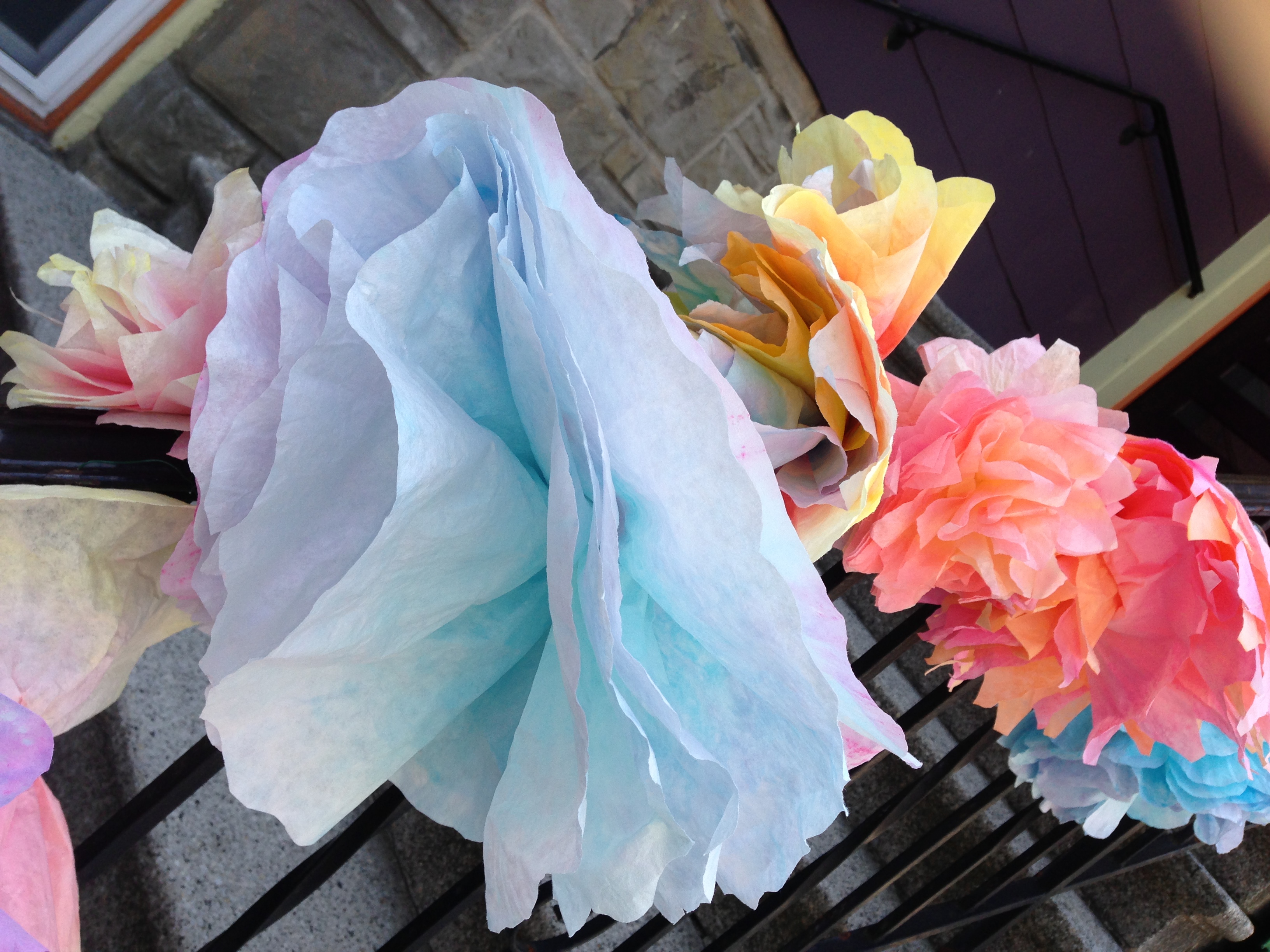
Tie-dyed flowers crafted from paper coffee filters festooned the stairway to the first exhibit of our journey.

paper filter flowers

This was open studio day in the Rivertowns, an artsy neck of the Westchester County woods. My friends Josefa and Suzanne had art displayed in a converted church. Josefa made this fantastic image originally for a children’s book.

josefa

We drove to a factory building perched above the Hudson River, now housing everything from bagpipers to potters, originally constructed for the Anchor Brewing Company in 1889. We wedged ourselves between the weedy denizens to park.

red truck

The longest white stretch I’ve ever seen, now abandoned, snapped simultaneously by Suzanne, who is a first-rate photographer.

stretch

And, on the side of a truck, an omen I chose to see as excellent.

zim

In the first studio I was introduced to the artist Madge Scott — she knows my friends — who unexpectedly wrapped her arms around me, hugged me hard, then grasped and held my hand while staring into my face and uttering one word, Wow, over and over again for several minutes. Rapturous views out the floor-to-ceiling windows, and the rapturous feeling of been “seen” by another human being.

Madge

Her canvases, some of them depicting her native Jamaica, tell powerful stories.

madge painting

Mama’s Boy has a woman about to make dinner with her children around her. That’s a bucket of water. The key hangs on the nail behind her, Madge told me, because the family doesn’t have the wherewithal to go out much, they don’t have reason to lock their door. “It was hard to make a painting like this,” says Madge, “but I had to at the time.”

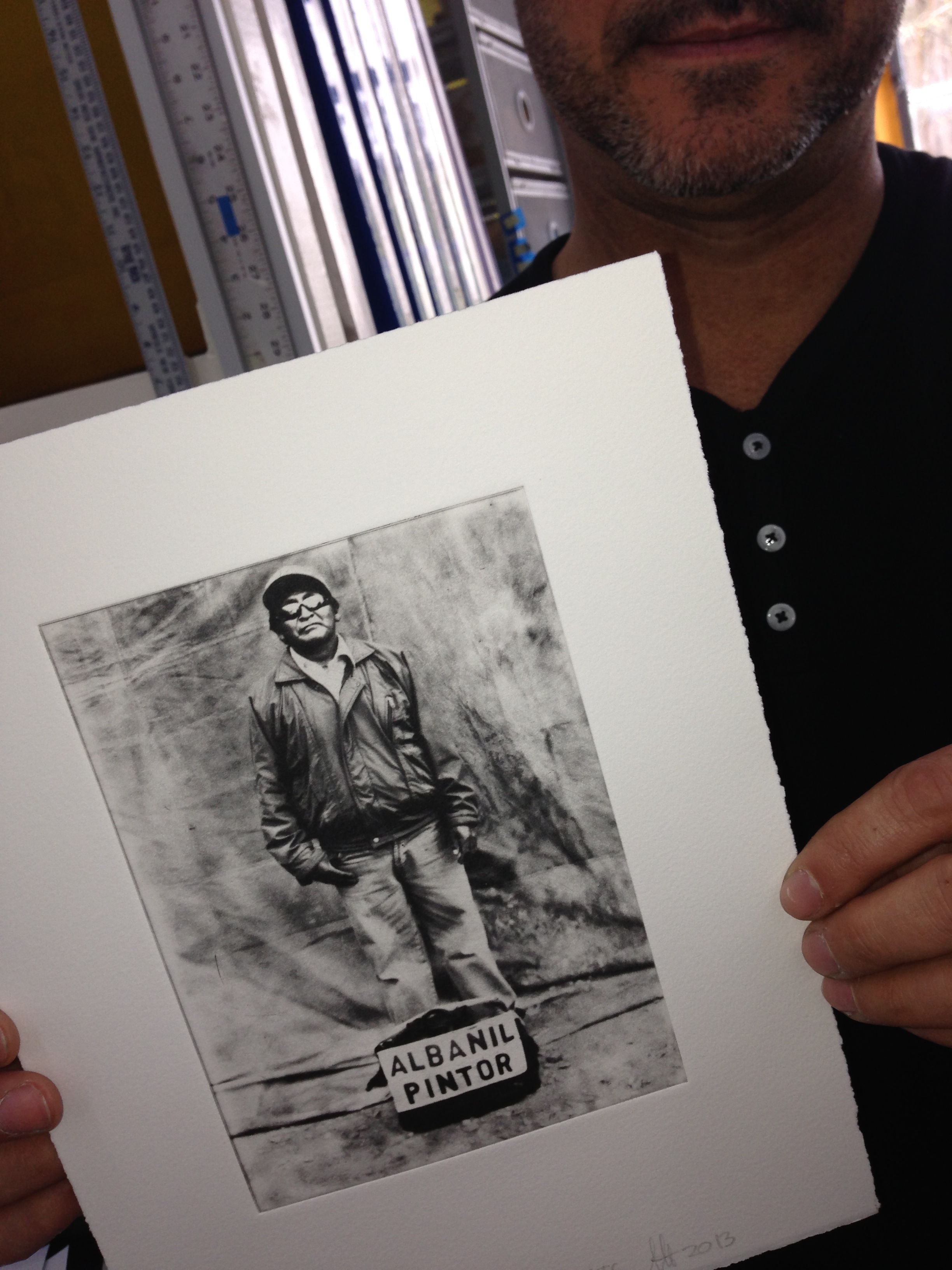
At Coronado Print Studio we saw the arresting photos of Edward Endress, shot in La Paz, Bolivia.

pepe

There are nine in his series, Portraits in the Yunga’s Market, and each one shows a day laborer waiting for work, his bag spelling out his specialty: plumber, electrician, painter, etc.

We spent time with Eleanor Goldstein, who had tidied up her space for guests, but still had her oils out as though she might dive back into a project at any moment.

goldstein's paints

Eleanor talked about the inspiration she derives from flying, how she furiously sketches in pastels as the plane banks before landing, and transfers that inspiration later to her painted canvases. You can see the curve of the earth over her shoulder.

eleanor goldstein

Inspiration comes from many places. Ellen Hopkins Fountain, a renowned painter of Hudson River views, says that “sometimes it’s an out of body experience.” You might feel, as I do, looking at her work, that somehow the familiar estuary flows exactly as it should, that it is the perfect image of itself.

fountain easel

Ellen’s studio, in her lovely house’s light-flooded garret, had grown crowded with visitors by the time we got there in mid-afternoon.

She was indefatigable, showing fans her beautiful watercolors. Many of them depicted the Palisades, that range of rocks that faces lower Westchester across the broad, calm river.

ellen hopkins fountain

Pleasant, open and no nonsense, she gives visual artists a good name. “Some painters transform the sun into a yellow spot,” said Picasso, a bit obscurely, “Others transform a yellow spot into the sun.” Fountain does the latter.

In Ardsley stood a house by a cult architect, Martin Lowenfish, whose white stucco exterior had been augmented by a handsome addition the multitalented Suzanne had actually designed last year for Christina Griffin Architects. A new master suite, kitchen and art studio sheathed in stone. Very nice.

addition

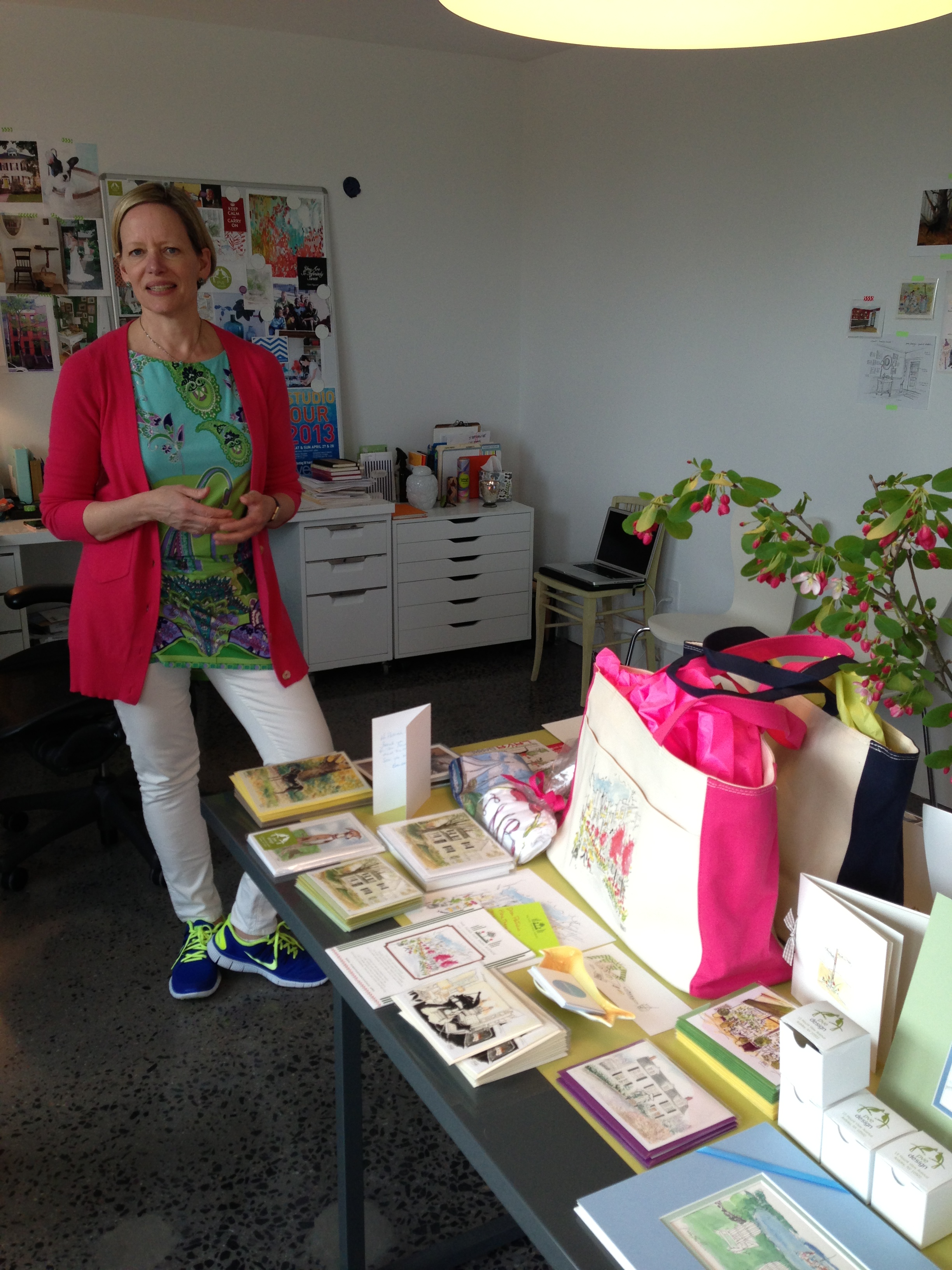
Inside, Patricia van Essche displayed her upbeat graphic products.

patricia

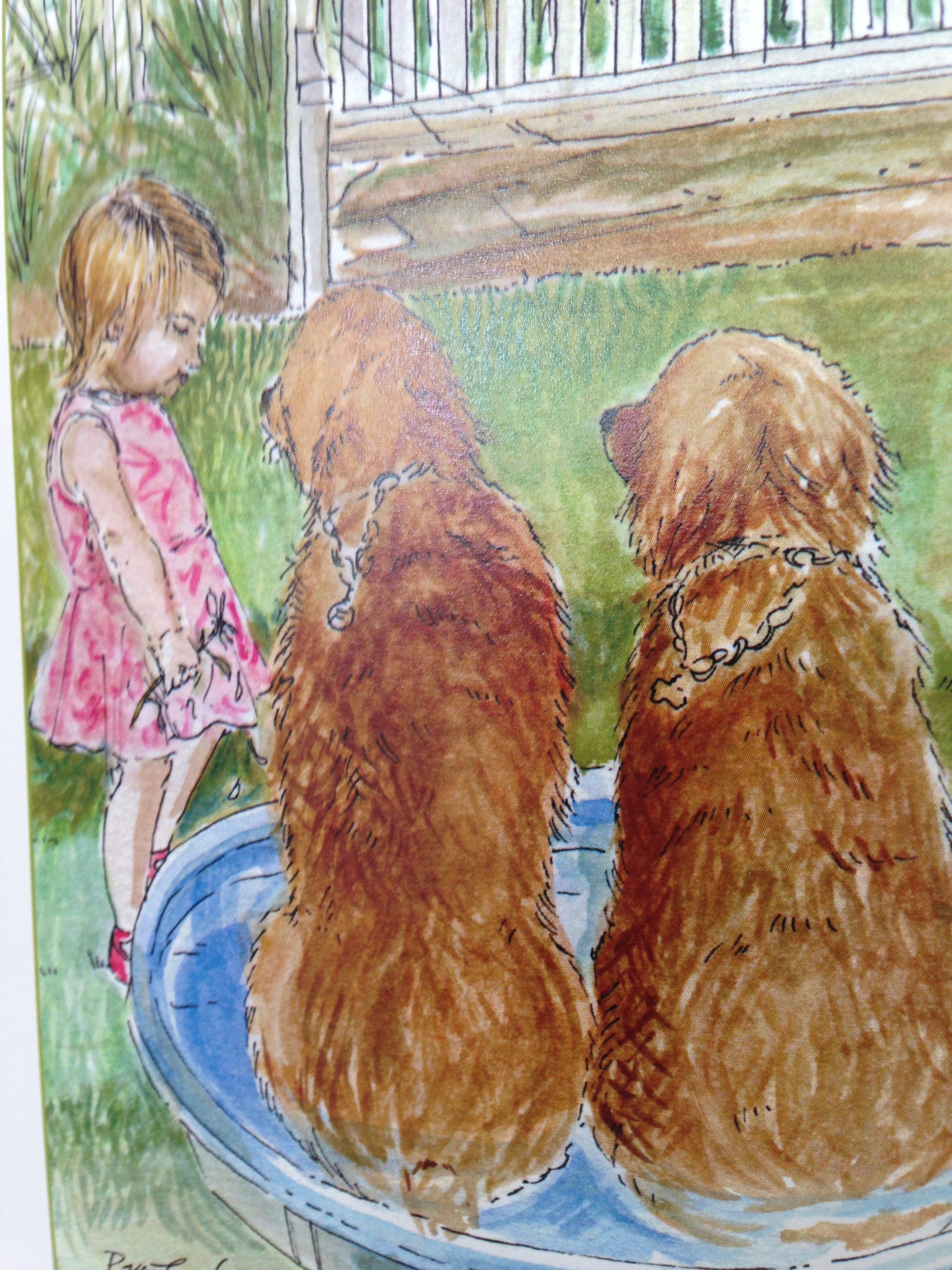
“Design, create and inspire an artful life,” is her motto. This mega blogger will create a handsome portrait of your dog – or two dogs, if you have them, and if they happen to be sitting in a swimming pool.

patricia's dogs

One more stop, and one that had some mystery about it. We were going to visit textile artist Arle Sklar-Weinstein, in Hastings-on-Hudson, and I had the vague feeling that I had once actually studied under her, as a teenager. I was interested in learning how to weave, and with the rental of a table loom and some instruction from a local artist I was able to achieve my dream.

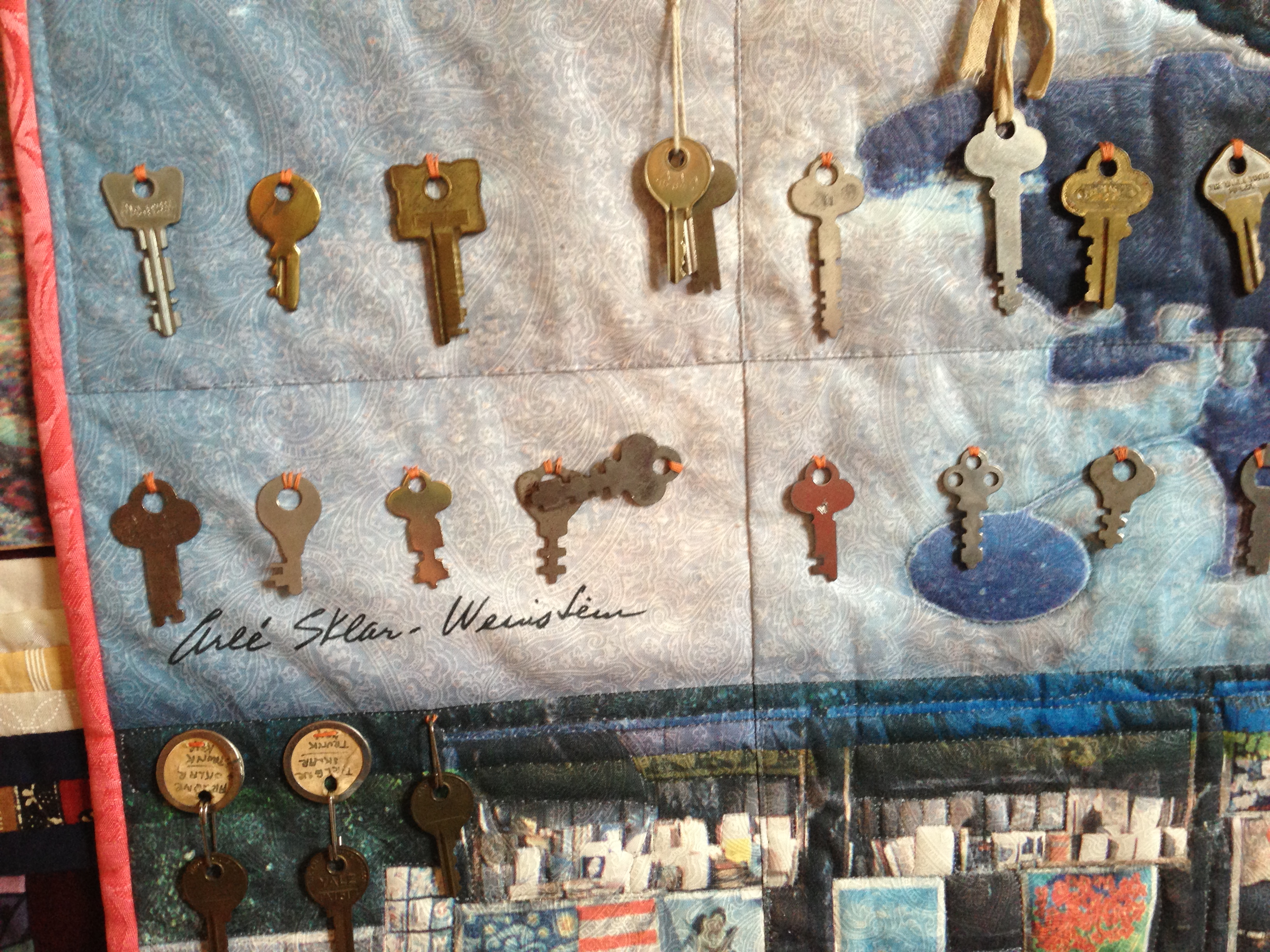
But Arle had to disappoint me. I asked her. She confirmed that my idea, my image of the past, was mistaken. But though she was never my teacher, I discovered some fascinating things at her studio. She has been making quilts with and without photographic images for decades. She incorporates objects, in this case a set of her mother’s household keys.

sklar-weinstein keys

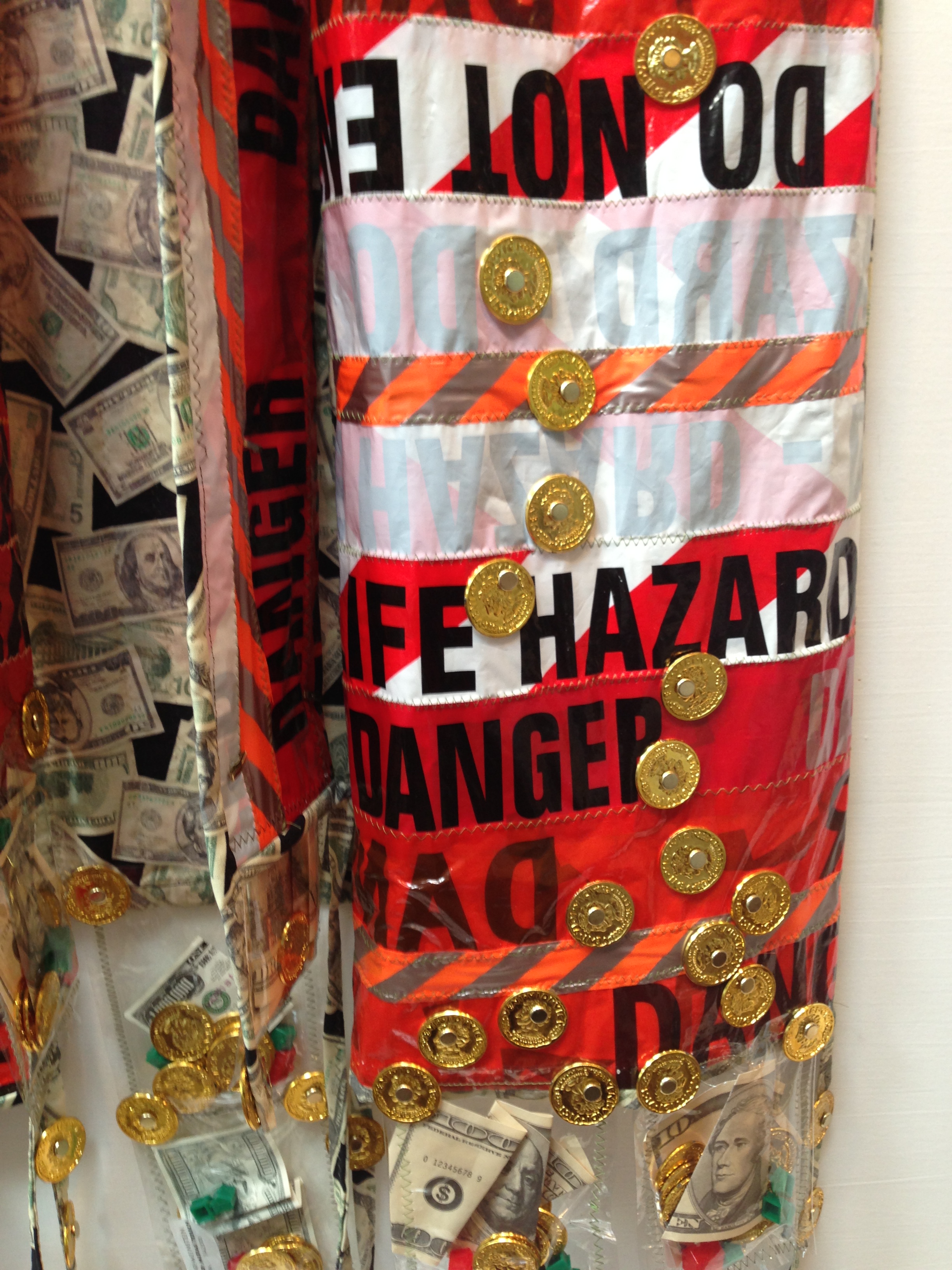
Her most recent work involves outsize kimonos she stitches together from plastic and fabric. It was exciting to see a project she’d embarked on just six months before. Starting something brand new and then inviting people into your studio to see it? That’s brave. “I’m stimulated and excited by things I see in the environment,” she told us. “I’m more political than ever before.”

sklar-weinstein cu

The one with the gold coins, in this close up,  is called “Life Hazard: Midas Touch.”

I didn’t come away from this day of art any richer, except on the inside.


9 Comments

Filed under Art, Jean Zimmerman, Photography

How to Be a Couple of Writers

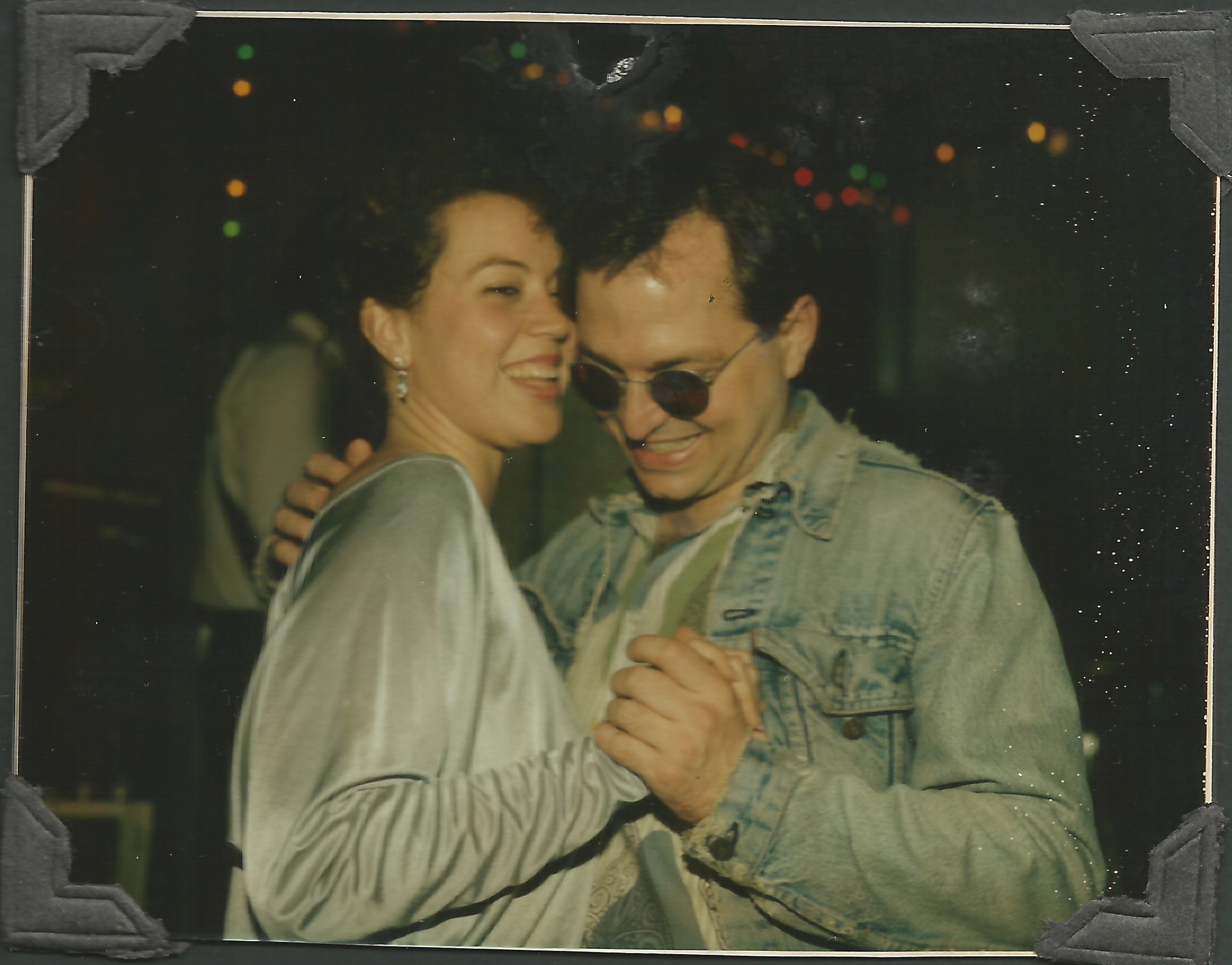
Today is our wedding anniversary. Gil and I have been married 26 years. It’s a lot of  time since our engagement party, at a Russian bar in Brighton Beach, New York!

April 1987

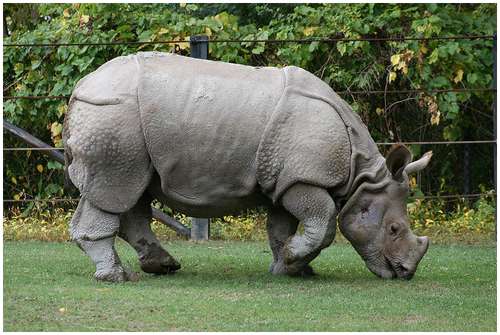
People always ask, How can you possibly stay married to another writer? It’s not something everyone does, and in fact the matrimonial union of two inkstained wretches is almost as rare as the Javan rhino, of whom less than 60 now exist.

Javan-Rhino

Some other writer-couples make it work. Novelists Paul Auster and Siri Hustvedt are a famous example. Well, they live in Brooklyn, and perhaps that artsy atmosphere gives them sustenance. Also consider the Beat poets Allen Ginsberg and Peter Orlovsky, together from 1954 until Ginsberg’s death in 1977. They chanted. They stayed loose. They were happily hip.

ginsberg

Once upon a time there was Mary Shelley (Frankenstein) and Percy Bysshe Shelley (Heaven smiles, and faiths and empires gleam,/like wrecks of a dissolving dream). It was wildly romantic, she running off with him when he was married to another woman and she was 16. Anais Nin and Henry Miller also managed to have both a torrid love affair and a meeting of the literary minds.

Anais_Nin_y_Henry_Miller

Yes, there were couples that were cursed, like Sylvia Plath and Ted Hughes. One dead by her own hand, one forever tortured by her demise. A similar dark story in Zelda and F. Scott Fitzgerald. He stole well-turned phrases from her journals, and things turned out badly (him dying of drink, her in a mental hospital fire).

fitzgerald:zelda

So what makes a writerly marriage work? Gil and I have been writing our own stuff and collaborating with each other ever since we got together. We actually met in a poetry writing workshop in New York City, led by the wonderful Sharon Olds (she won the Pulitzer for poetry this year). In the early days we didn’t have much space. I remember a tiny studio in Los Angeles with a single surface, a kitchen counter, where we set up our computers across from each other. And we produced books there. Today in the Cabin we have a bit more room, two separate offices (mine in the living room!), but we seem to often end up working side by side. Somehow our literary life together succeeds.

desk

So I will offer you my suggestions about sharing your life as a writer with another writer.

Accept debate. Disagree, argue, even fight over language. Just don’t come to blows. Try not to be hardheaded over a word or phrase or plot point. Be willing to kill your darlings, as they say, if your partner advises it. (Also praise each other’s work to the skies).

Celebrate the milestones. Little as well as large – the nice, toss-off comments of an acquaintance or the brilliant review. The copyedit as well as the first pristine hardback book copy. Raise a toast together, no matter which of you got the kudo, the contract, even the mot juste.

Ride the ups and downs. And there will be downs.Publishing is a fickle business and you can’t let the market ruin your mood or your relationship.

Embrace change. When we were married, I was an aspiring poet and Gil wrote plays that were produced off-off-Broadway. We made ends meet with editorial jobs. We grew, we branched out. We were the same people, but we became different sorts of writers. Between us, articles, screenplays, nonfiction, memoirs, fiction, even this blog…

We don’t know what will happen in the future. What writer does? Just be prepared to be perpetually surprised by your writerly mate, as you are surprised by yourself. Said Andre Maurois: In literature as in love, we are astonished at what is chosen by others.

Jean and Gil copy

16 Comments

Filed under Fiction, History, Home, Jean Zimmerman, Photography, Poetry, Publishing, Writers, Writing

A Swirl of Indies

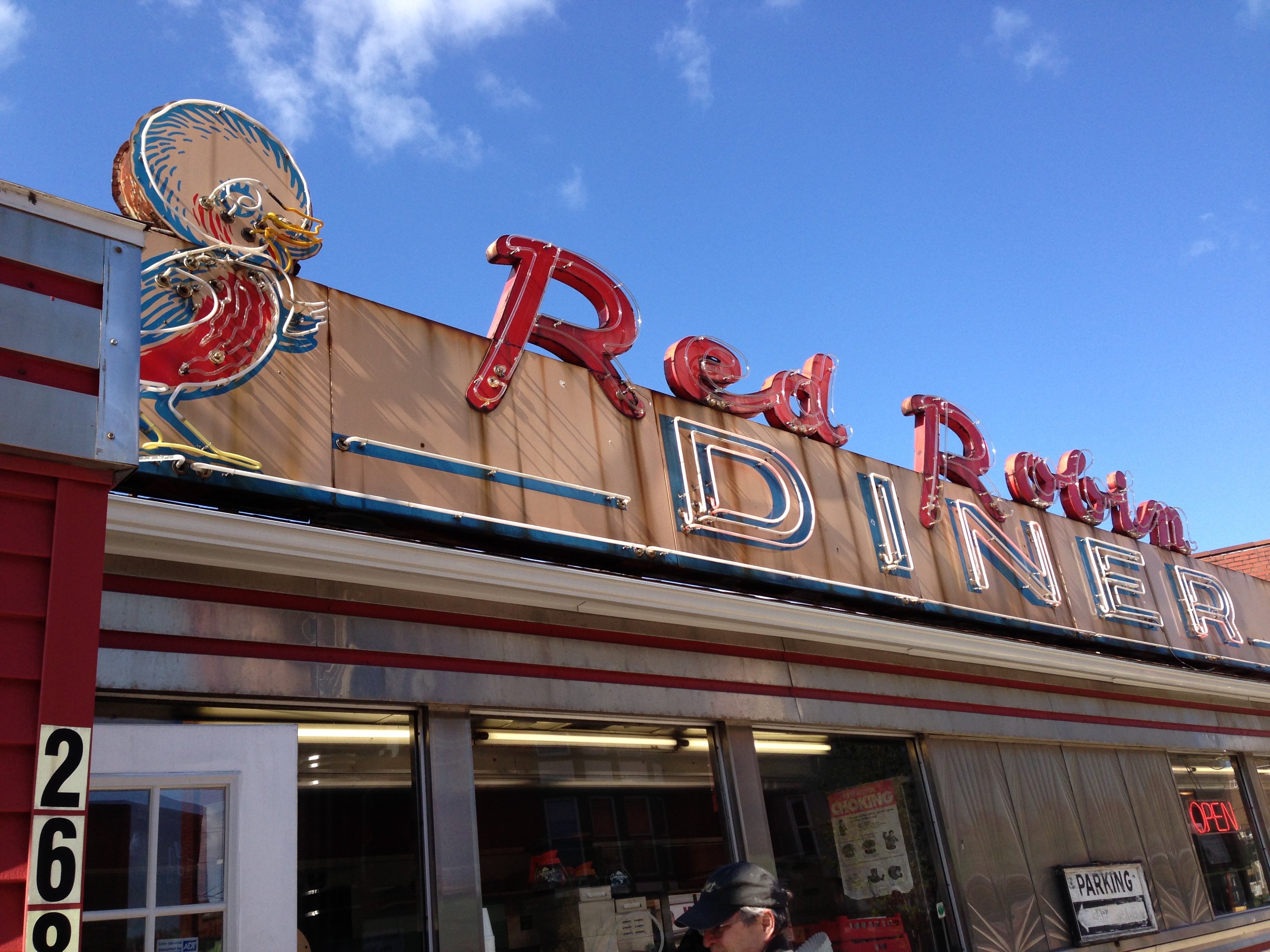
Still on the trail of indies – indigenous landscape elements – in the Binghamton area of New York, we  came to this classic diner for a classic diner breakfast.

red robin

With its fetching signage. The eggs not-so-bad, not-so-good, but a totally intact red leatherette interior, chrome that wouldn’t quit, and self-knowledge in the form of that Norman Rockwell Saturday Evening Post image “Runaway” pasted up on the wall.

runaway

A cop and a little boy on the run trade secrets while sitting atop a diner’s spinning stools, as if it was painted from life in this very diner.

It’s spring, didn’t you know? Time to get your lawn in gear.

mower

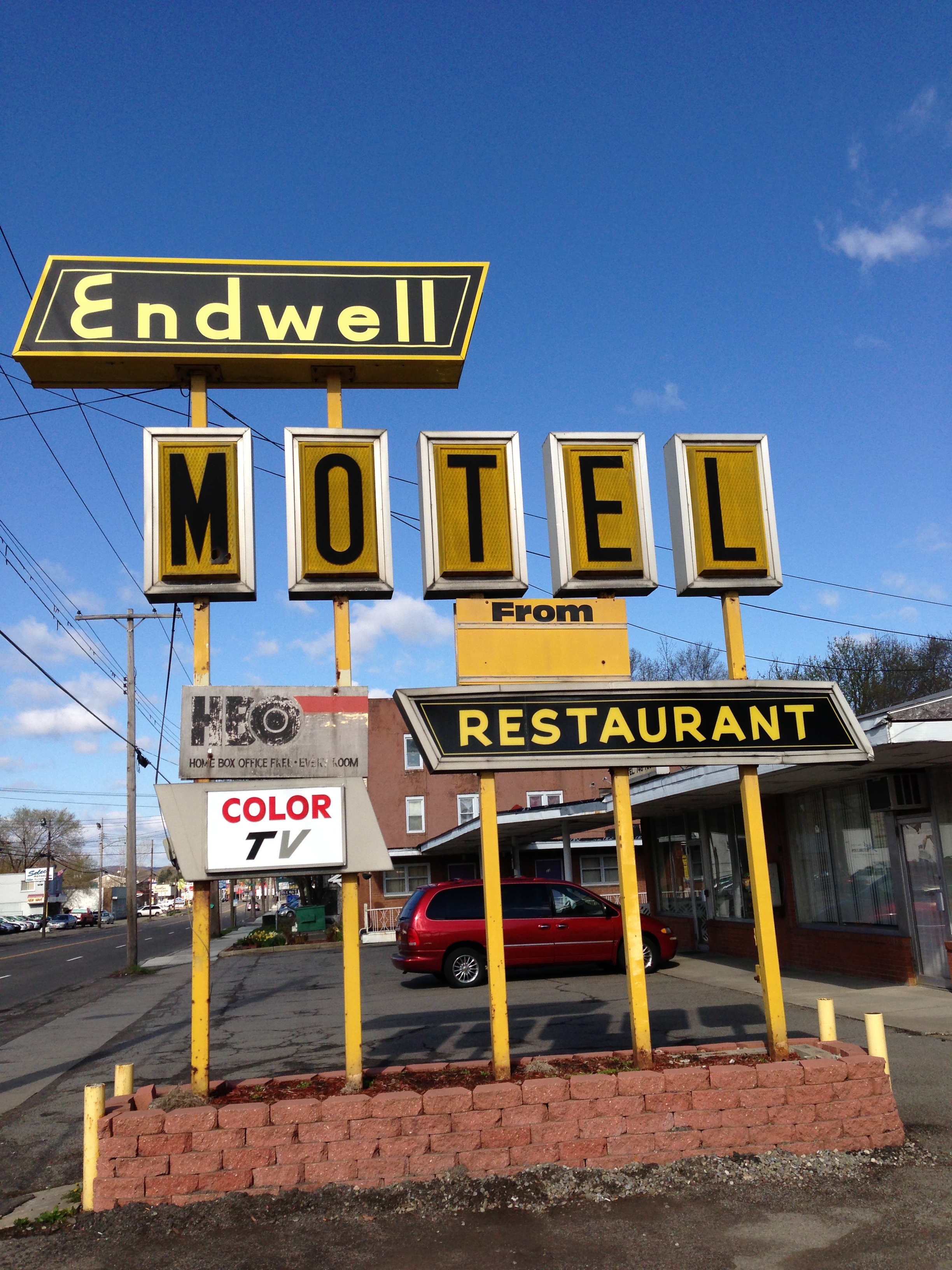
Crappy motels have the best signs.

endwell

Endwell is actually the name of a town, not just the end of a famous saying, and not just how you hope it’s gonna go when you check in. Endwell, along with Endicott and Johnson City, were three communities renamed by shoe-leather magnate George F. Johnson when he took the area over in the 1920s. Endwell was a brand of shoes. Universally known as George F., the irrepressible mogul came up through the ranks of local shoe workers and, when he made it to the top, did things like build churches and schools in his effort to provide what he called the “square deal” for his workers. He installed five elaborate carousels within a 20-mile radius.

This one’s not open until Memorial Day and they keep it locked up tight.

carousel house

We wanted so badly to get in, we pressed our noses up against the windows like a couple of Norman Rockwell kids.

last ride

The carousel was built in C. Fred Johnson Park in 1923 (the Johnson name proliferated with his success) and has 72 figures four abreast, with all the carving, bevelled mirrors and scenic panels intact. We’ll have to return some time for a ride. There’s no admission, but you’re supposed to contribute a piece of litter.

best carousel

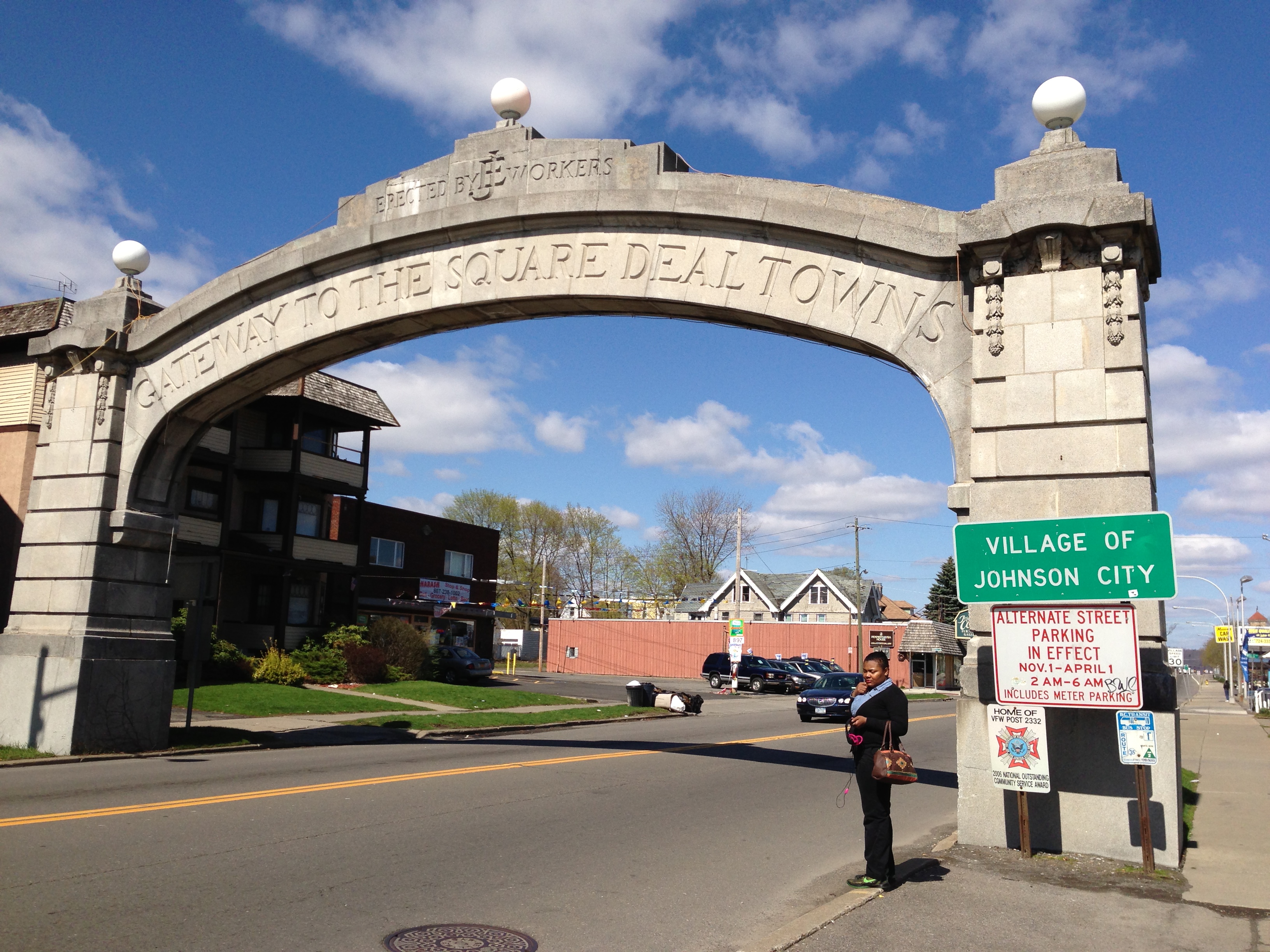
George F. wanted to keep his workers happy so they wouldn’t think of unionizing, and it seems he was successful.

gateway

“Gateway to the Square Deal Towns” reads the welcome to Johnson City.

We stopped at this bold and blocky indie sign.

library

Could this actually be the name of a small town library or was it more in the line of an exhortation? A bit of both, it turns out. Inside, there was more about the George F. era and legacy in a series of glass cabinets.

johnson

An original shoebox, from the glory days long gone.

shoebox

Your Home Library was originally built as a residence by Elijah Bridgham in 1885 with bricks from his own brickyard. Harry L., the younger brother of George F., made it an institution in 1917. Soon there were dining rooms, children’s rooms, sewing rooms. “Your Home Library was his conception of a home atmosphere and home freedom for the community,” said Rev. William MacAlpine at the dedication of the Harry L. monument in 1922. Home freedom?

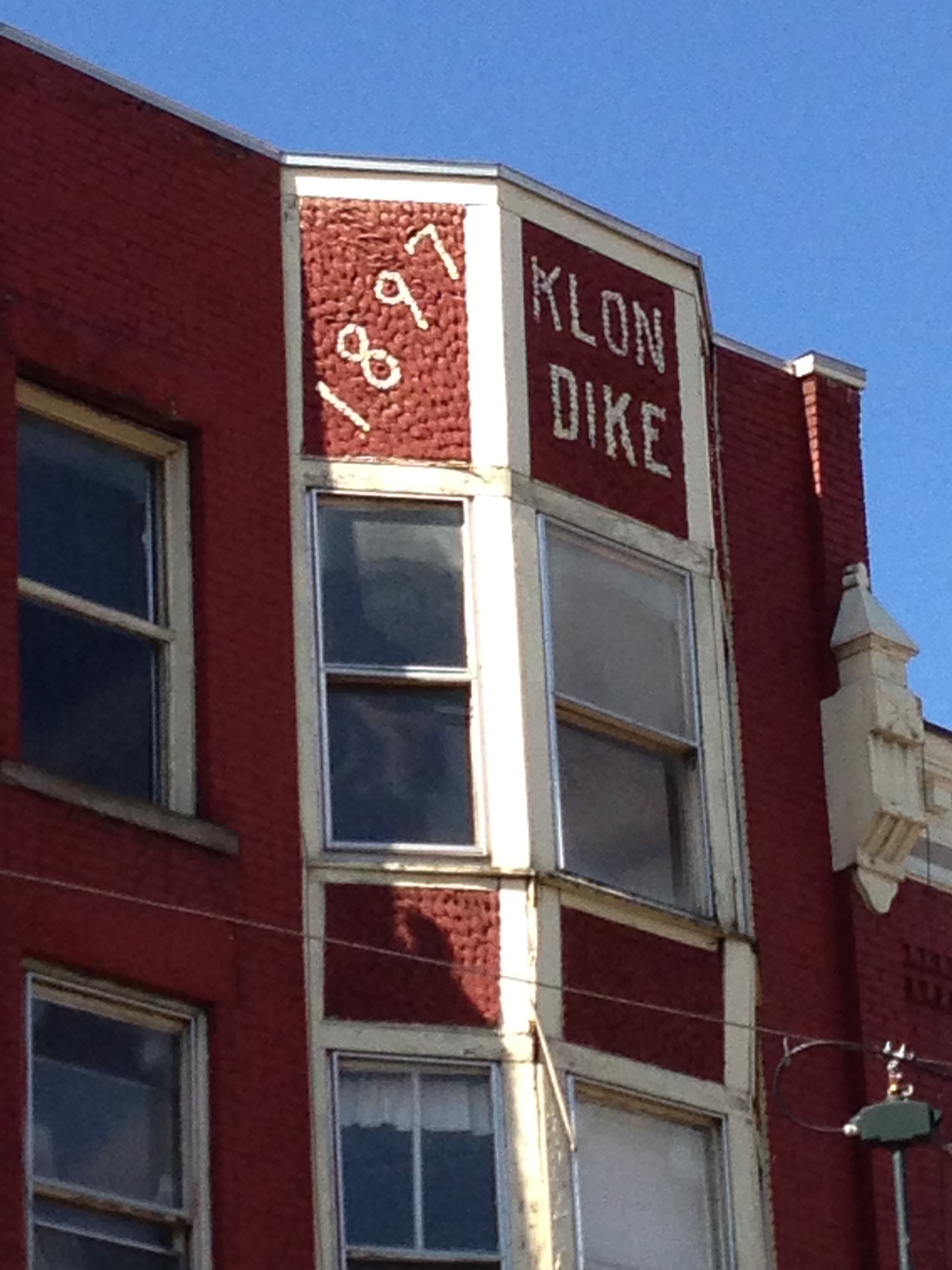
All kinds of indies, everywhere you looked.

Klondike

Perhaps a building endowed by the Klondike Bar magnate? You never known in these parts.

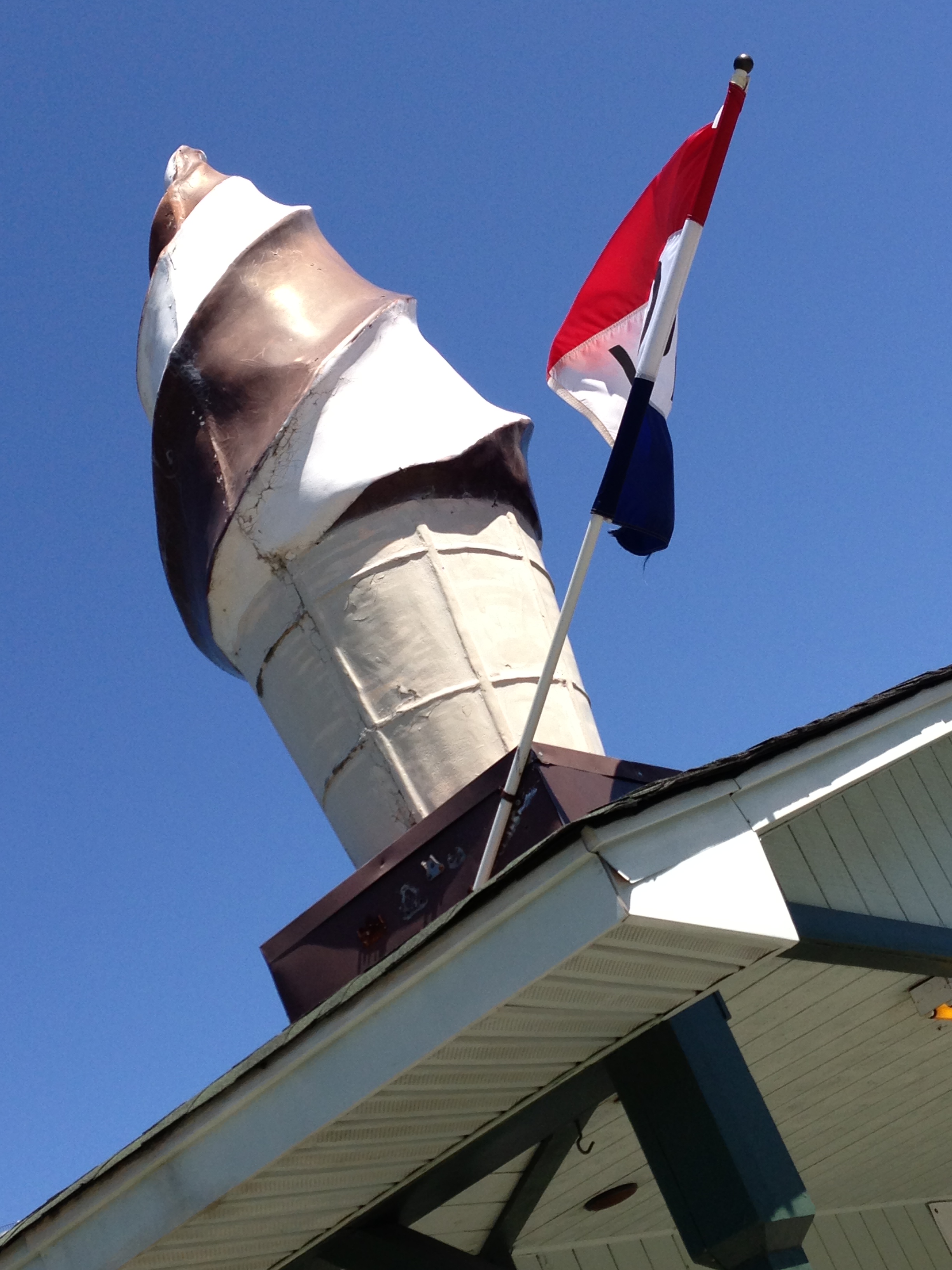
We passed several examples of the ice cream school of signage, which often presents a tasty homemade effort.

swirl

Fortunately, this was one of the soft ice cream joints that has survived intact beneath its sign. It even offers a peanut butter dip.

peanut butter cone

Vanilla shake in hand (no yellow cake or panda tracks for me) it was time to head for home. We have indigenous creations there too.

cherish


5 Comments

Filed under Art, Cooking, History, Home, Jean Zimmerman, Photography, Writing

Mob-fest at Apalachin

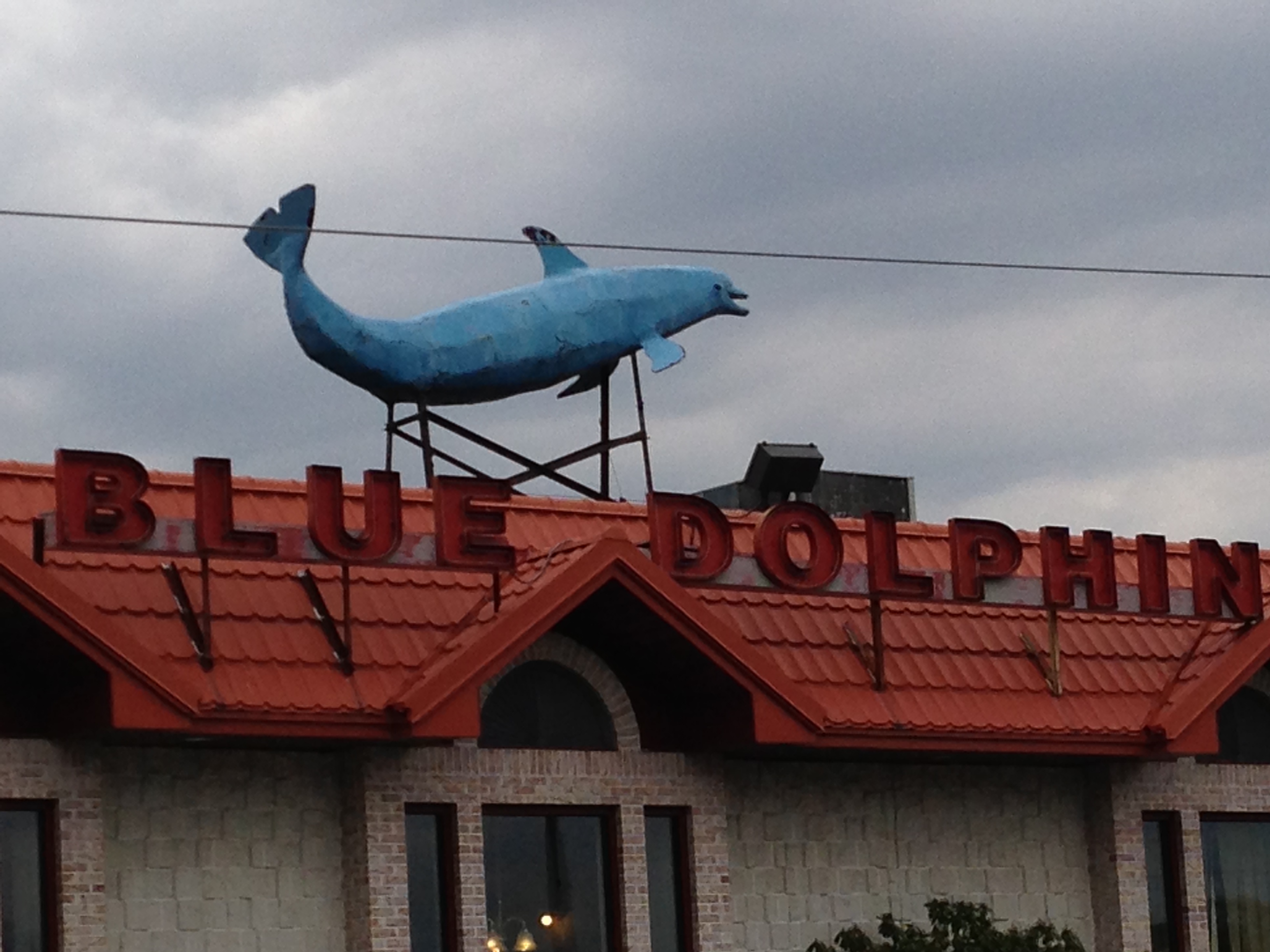
There were so many people who wanted to attend Gil’s talk on his book Mafia Summit: J.Edgar Hoover, the Kennedy Brothers, and the Meeting That Unmasked the Mob that the location had to change. From the Apalachin Library, it would now take place in the cavernous party room at a local landmark, the Blue Dolphin diner.

blue dolphin

The book had strong local interest. Gil tells the rollicking story of the 1957 mobster meeting in Tioga county, New York, the assembly parodied in the Billy Crystal/Robert de Niro movie Analyze This, where the bad guys skulk off into the muddy woods. The book’s also about the mob wars that led up to the meeting, and the drama that followed between Hoover and the Kennedy boys. People here knew the Barbara’s, the family whose paterfamilias hosted the meeting, they socialized with them, worked for them. For them, it’s not only a national saga but an intensely personal story.

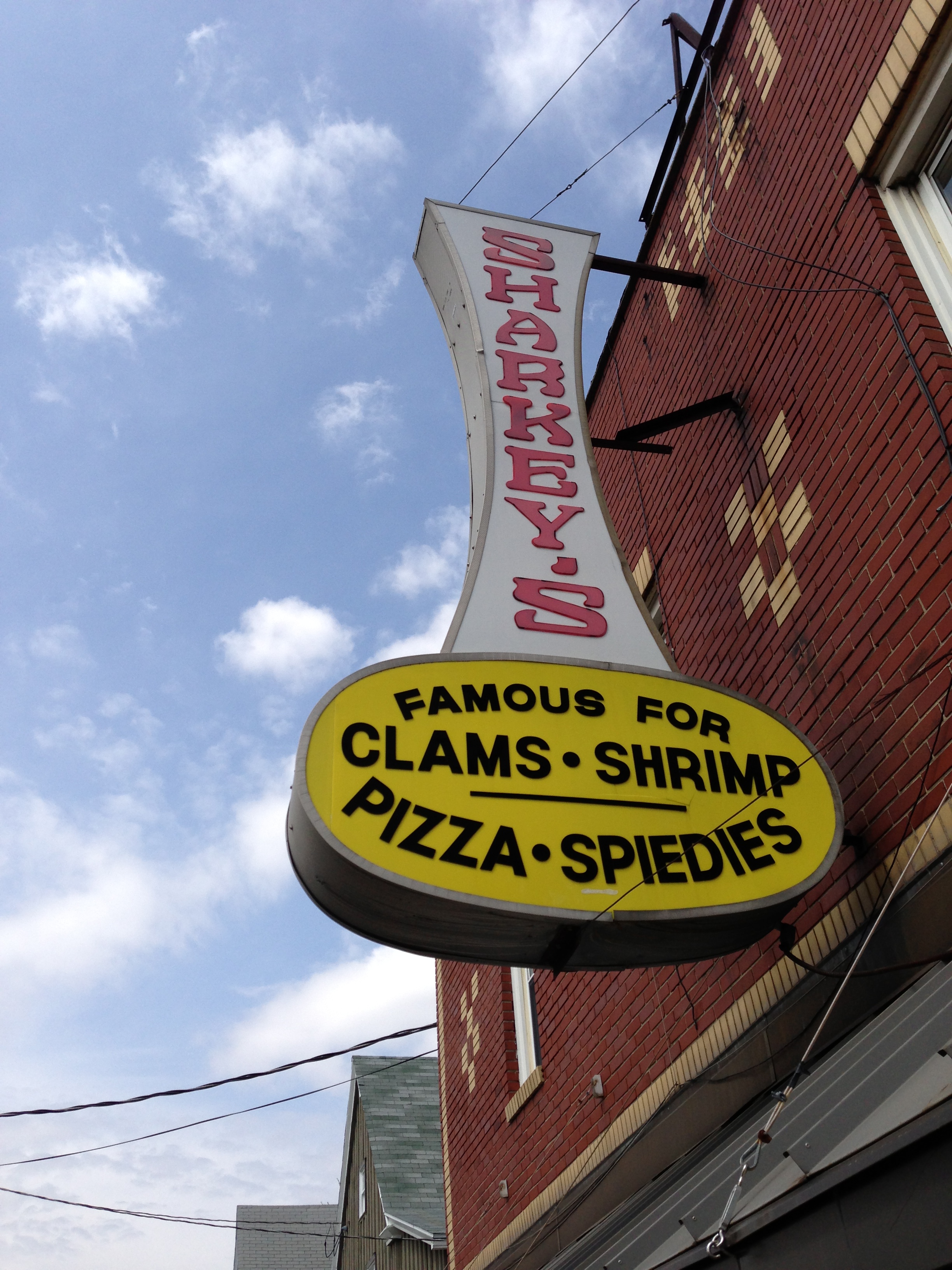
We got to Binghamton – Apalachin’s big-city neighbor – and hungrily headed for a spiedie joint.

sharkey's

Spiedies are a kind of marinated pork kebab that you squeeze between pieces of cheap, soft white bread. For some reason Sharkey’s also specializes in clams “available to go by the dozens, hundreds and bags,” boasting on its menu that, “The clams you eat today slept in the bay last night.” Since the only water nearby is the muddy, meandering Susquenna River, that gave us pause.

clams

But didn’t stop us from ingesting a dozen coarse, prehistoric-seeming steamed clams.

Just as we got ready to go, I noticed a button to the side of our old, scarred booth, a relic of another time.

button

Some kind of a magic button, maybe capable of summoning a mobster’s ghost. The place dates back to 1947, and it was probably old Joe Barbara’s cigarette smoke that stained its walls a coffee brown.

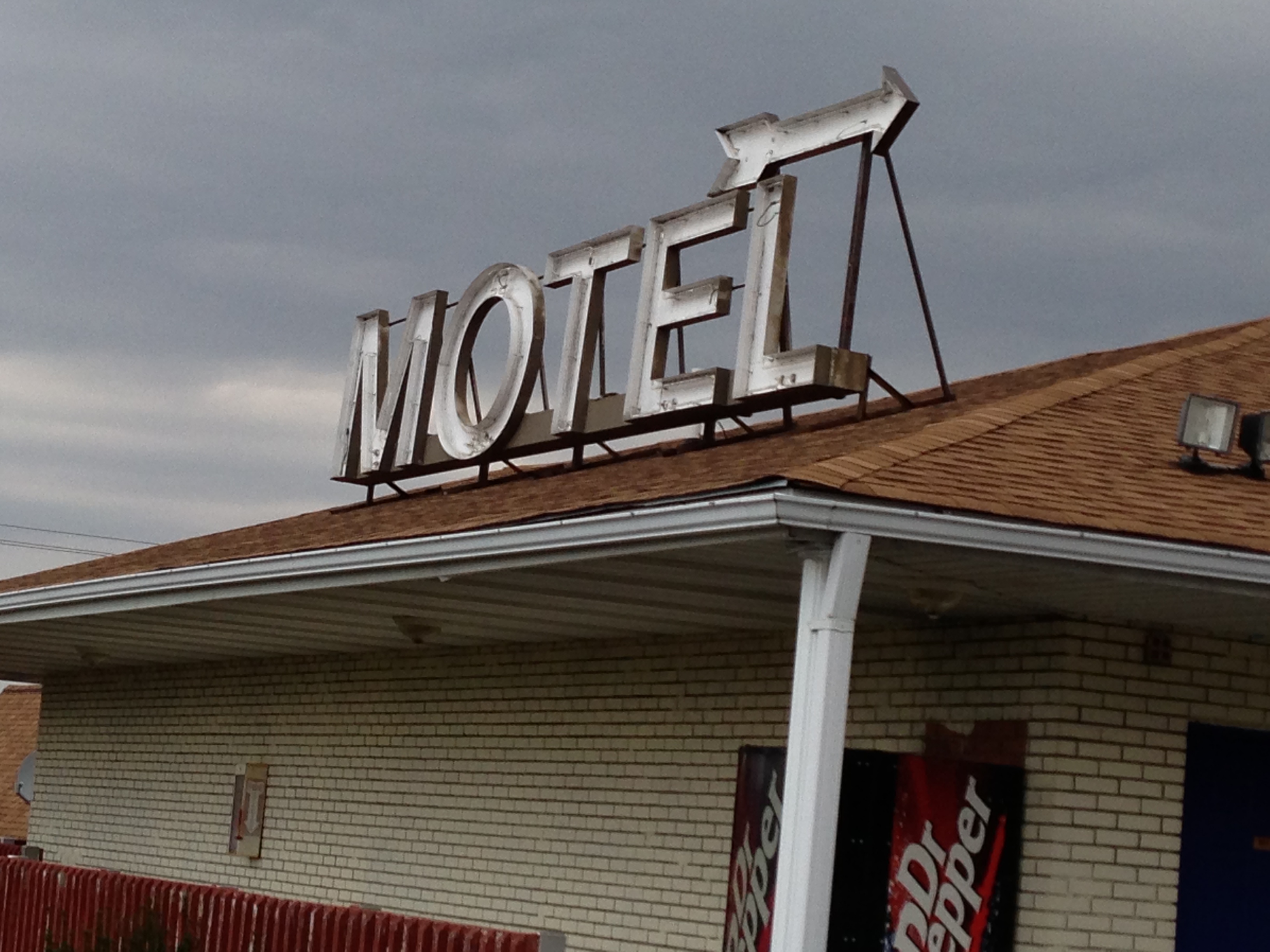
We stayed at a highway motel. Not just any highway motel, but the one where Detective Ed Croswell, the hero of Gil’s book, first intuited that something was rotten in the state of Apalachin.

motel

Croswell, there on another police matter, saw a guy in a sharkskin suit making reservations for a group attending a “convention” and hung back observing the situation until he got the information he needed.

moody motel

The motel needs a bit of a spitshine but it definitely gets you in the mood for a mob-fest, like the one at the Blue Dolphin tonight that packed the room with people who drove an hour to get there.

Gil  has some serious hand cramps in its wake.

Gil signing

5 Comments

Filed under Cooking, History, Photography, Publishing, Writers, Writing

Gil’s Best French Fry Recipe

Today I planted my potatoes.

planting potatoes

Their eyes are all sprouted, ready to go.

Unearthing them at the end of the season – and here in the northeast, it’s a long season – is one of my favorite things. You get to reach into the dark, crumbly loam and pull out the hard little orbs, detaching them delicately from the stem. You get dirt under your nails.

You get to say loam.

It’s of a kin to reaching under a hen, feeling around through the softest feathers imaginable to pull out her just laid, still-warm, golden eggs.

Once, around thirty years ago, I wrote a play called One Potato. The things I recall about it: there was a protagonist named Esmerelda, it took place in Europe during the Middle Ages, and it was actually about the invention of the dinner fork. I loved the fact that it was hard to find information on my subject (pre-web!), I had to dig (like digging potatoes) and even embroider on what I found to create a story. Barbara Tuchman, the great historian of the middle ages in A Distant Mirror, once said, “The unrecorded past is none other than our old friend, the tree in the primeval forest which fell without being heard.”

This was when I was young and poetical.

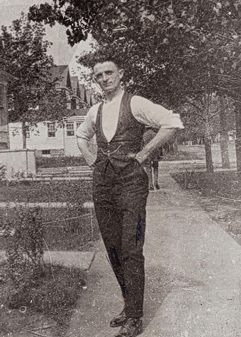
jz young

The pic was taken about that time, on a downtown rooftop in the meatpacking district, when Manhattan still had a thriving meat market that  left a slick of blood across the cobblestones  every morning. My photographer friend Jonathan Pite produced my likeness for the American Poetry Review.

I always thought he captured the yearning inside me and the grit of 1980s Manhattan in the air. It was a strange place, but great.

potato-23242

You are lucky to be invited to our house nowadays if Gil is making french fries – he takes the potato to a new level.

Gil’s Best French Fry Recipe

Take a bunch of spuds. No need to peel. “I like russet potatoes, myself.”

Wash thoroughly.

Cut in half the long way. Cut into thin strips. Cut crosswise three times. Should yield long thin french fries.

Soak in a big bowl of water with 3 T salt and ¼ tsp sugar. Make sure salt and sugar dissolve.

“Soak for as long as you have…5 minutes, 10…”

What to listen to as you work? “Always the blues, all the Slim blues players, Magic Slim…”

slim-bio

Spin potatoes dry in a salad spinner.

Heat a large pot of canola oil to smoking, enough to cover the potatoes. Fry until brown. Lift out with a wok ladle or slotted spoon.

Drain fries on brown paper bags.

Dust with salt, and/or cumin, chili powder, whatever you like.

Serve with malt vinegar, aeoli or tomato ketchup.

Says Gil: “There are five levels of how to judge the fanciness of a restaurant.

Level One: They give you ketchup in packets.

Level Two: The ketchup is in a bottle on the table.

Level Three: You ask for ketchup and they bring it in a bottle.

Level Four: You ask for ketchup and they bring in in a little silver bowl.

Level Five: You ask and they come to the tableside and make the ketchup for you.”

We generally do the Heinz. Oh, and if you’re on a diet, this year we’ll be offering spinach, too.

young spinach

3 Comments

Filed under Cooking, History, Jean Zimmerman, Photography, Poetry, Writing