Category Archives: Photography

Locks, Stock and Barrel

Rindfleischetikettierungsüberwachungsaufgabenübertragungsgesetz. Things do change in Germany.

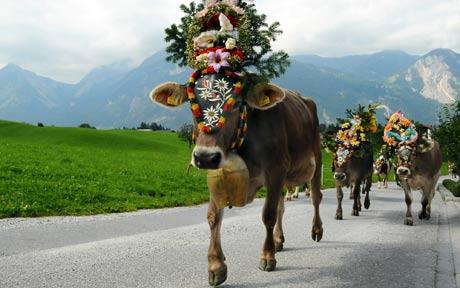
Rindfleischetikettierungsüberwachungsaufgabenübertragungsgesetz, the 63-letter word meaning “law for the delegation of monitoring beef labelling,” is no more, having been dropped from the language, repealed by a regional parliament after the EU lifted a recommendation to carry out BSE tests on healthy cattle.

cow-beauty_1699660c

The longest German word had appeared in official texts but not in dictionaries. (You can hear it properly pronounced here, before you put it aside and never think of it again.)

Anyway, it’s now kaput.

This fragment of ephemera constitutes my most recent knowledge of things German, so I am glad that my parents, Betty and Steve Zimmerman, have kindly  contributed a post as they make their way through the country by river barge. Here is their team effort, with Steve’s prose and Betty’s pictures:

MEMORIES of the lunacy and destruction of Adolf Hitler’s Third Reich exist today (writes Steve) only among Germans in their 70’s and 80’s, and older.  

Among young Germans, especially those in their teens and into their 30’s and 40’s, a dramatic recovery, brought about in large part by the Marshall Plan, NATO and the collapse of the Soviet Union (and the infamous Berlin Wall), has enabled the emergence of a new Germany, clearly the undisputed economic leader of Europe. The change has been nothing short of miraculous.

Today, 50 years after our first trip to post World War II Germany, this new Germany has been shaped in both obvious and subtle ways.

The beautiful countryside of central and southern Bavaria, the largest state of Germany, was clearly the highlight of our 1963 trip…and it looks essentially the same in 2013, a dozen trips to Germany later.

1

On this trip, we are sailing on the Rhine, Main and Danube rivers on the newly-built River Splendor, with 173 other American passengers and a multi-national crew of 44. The journey is made possible by a remarkable canal with 66 locks between the Rhine and the Danube rivers.

2

The project was initially  conceived by Charlemagne in 793 AD but abandoned due to incessant rain.

The expensive project was again attempted by Hitler in the mid-1930’s but was dropped in favor of Hitler’s ambitious plans to conquer all of Europe, and eventually the entire world.

The project was begun again 40 years later and completed in 1992. The current canal system consists of 66 locks on the rivers plus the Main Canal itself.

3

Europe has a Continental Divide similar to that in the United States. Therefore, the first 50 or so locks elevate ships upwards by as much as 81 feet until a total height of 1,332 feet is reached. Just past Nuremberg, the canal locks start to bring ships down closer to sea level.

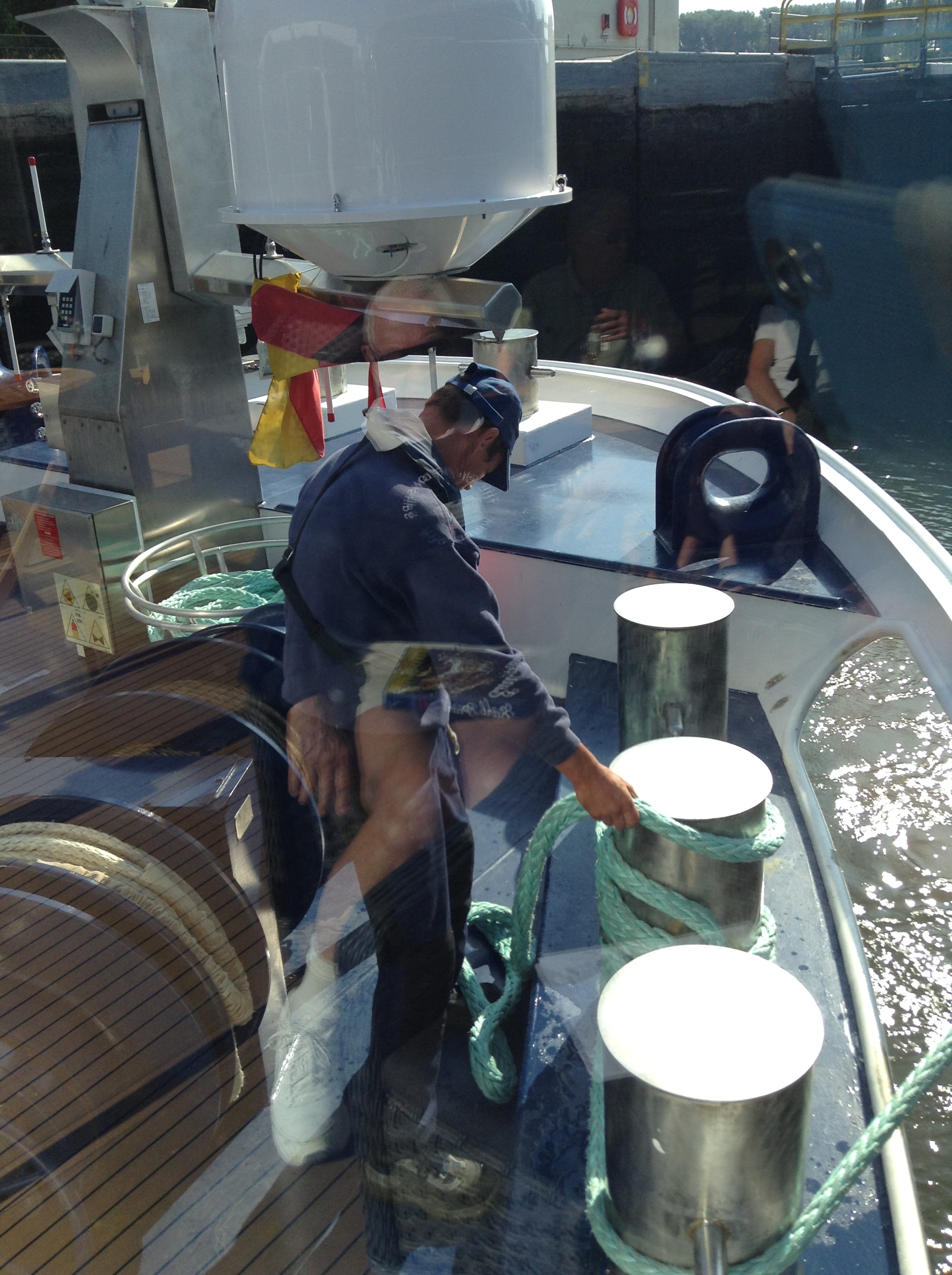
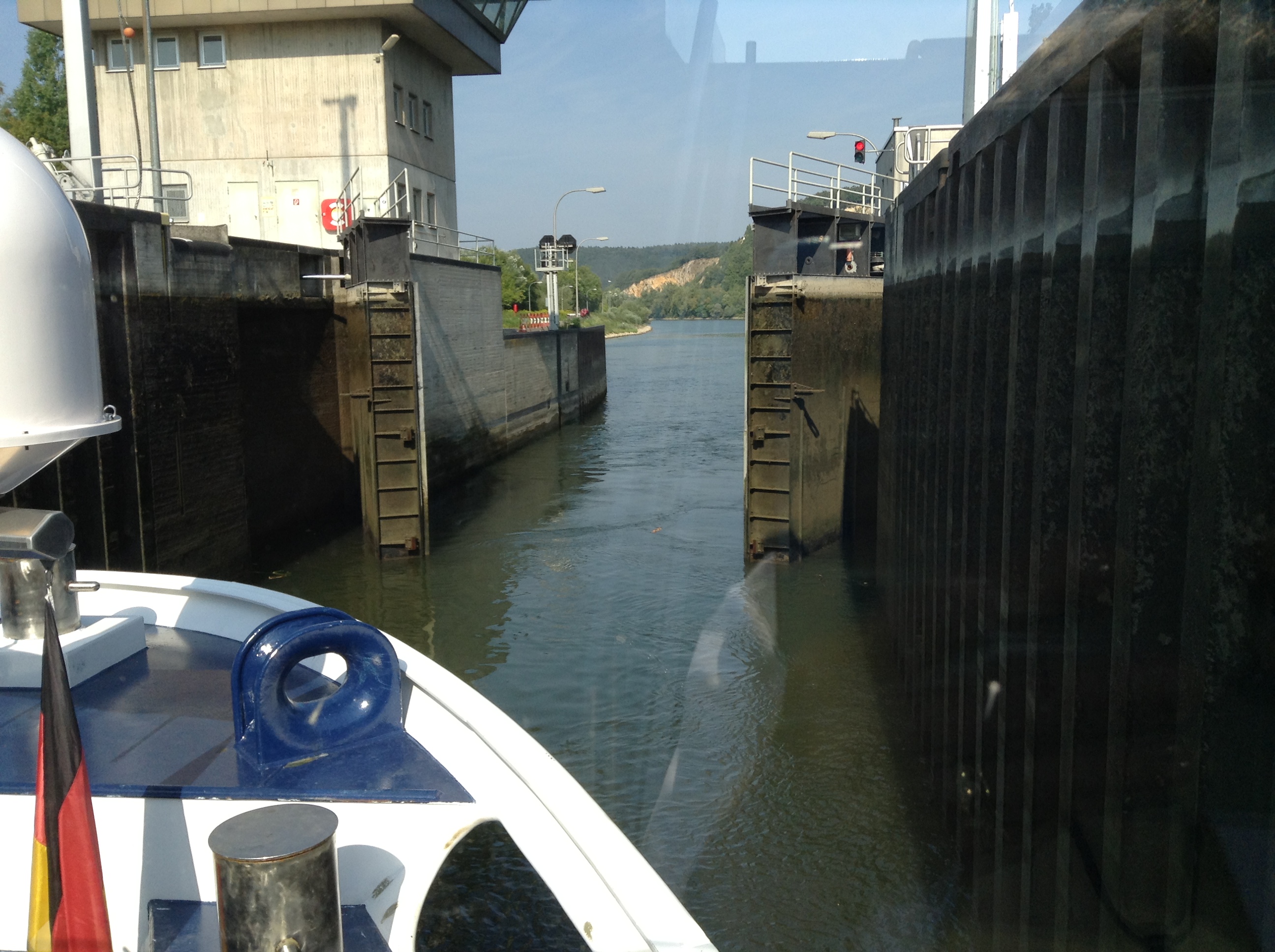
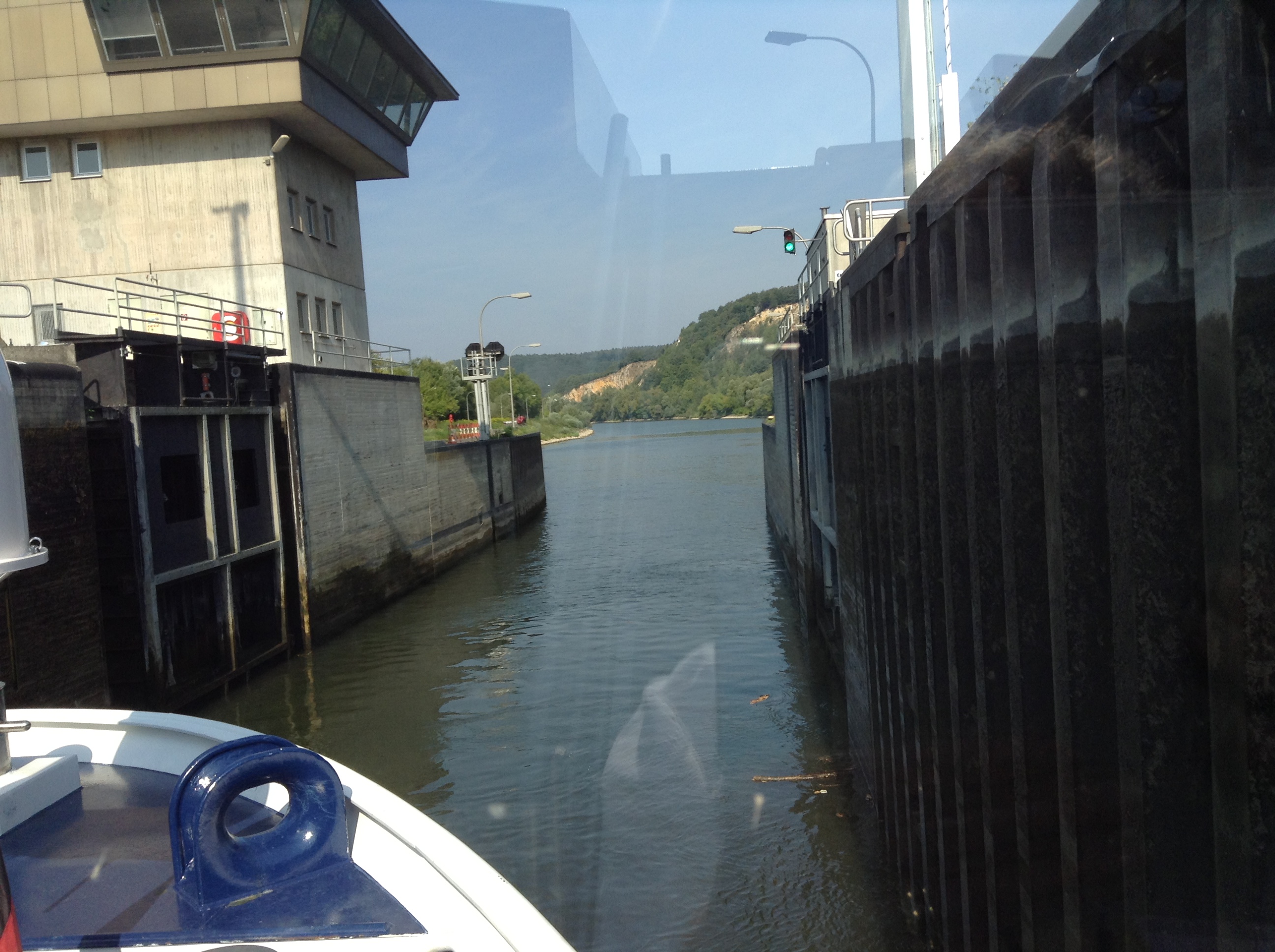
Here are pictures taken of the lock at Bad Abbach, which brings our ship 18.7 feet down.

4

5

Our ship is 30.40 feet wide and the locks are all 39.40 feet wide, a difference of just two feet. Expert as our Dutch captain is, we still occasionally bump into the side of a lock with a noticeable thump.

6

It is now noon on Saturday, August 24th and we will soon dock in Regensburg for a walking tour of the town. Only 14 more locks to visit later today and tomorrow.

7

2 Comments

Filed under Culture, History, Nature, Photography

Maine Woods Ramblin’

My world-rambling brother Peter has sent a bulletin from the northern Maine forest, where he is catching his breath in the middle of a book project and, as always, exploring the local history. Peter published Podunk: Ramblin’ to America’s Small Places in a Delapidated Delta 88, which remains the definitive portrait of locales far off the beaten track, and a perfect reflection of his restless, questing mind.

Pete

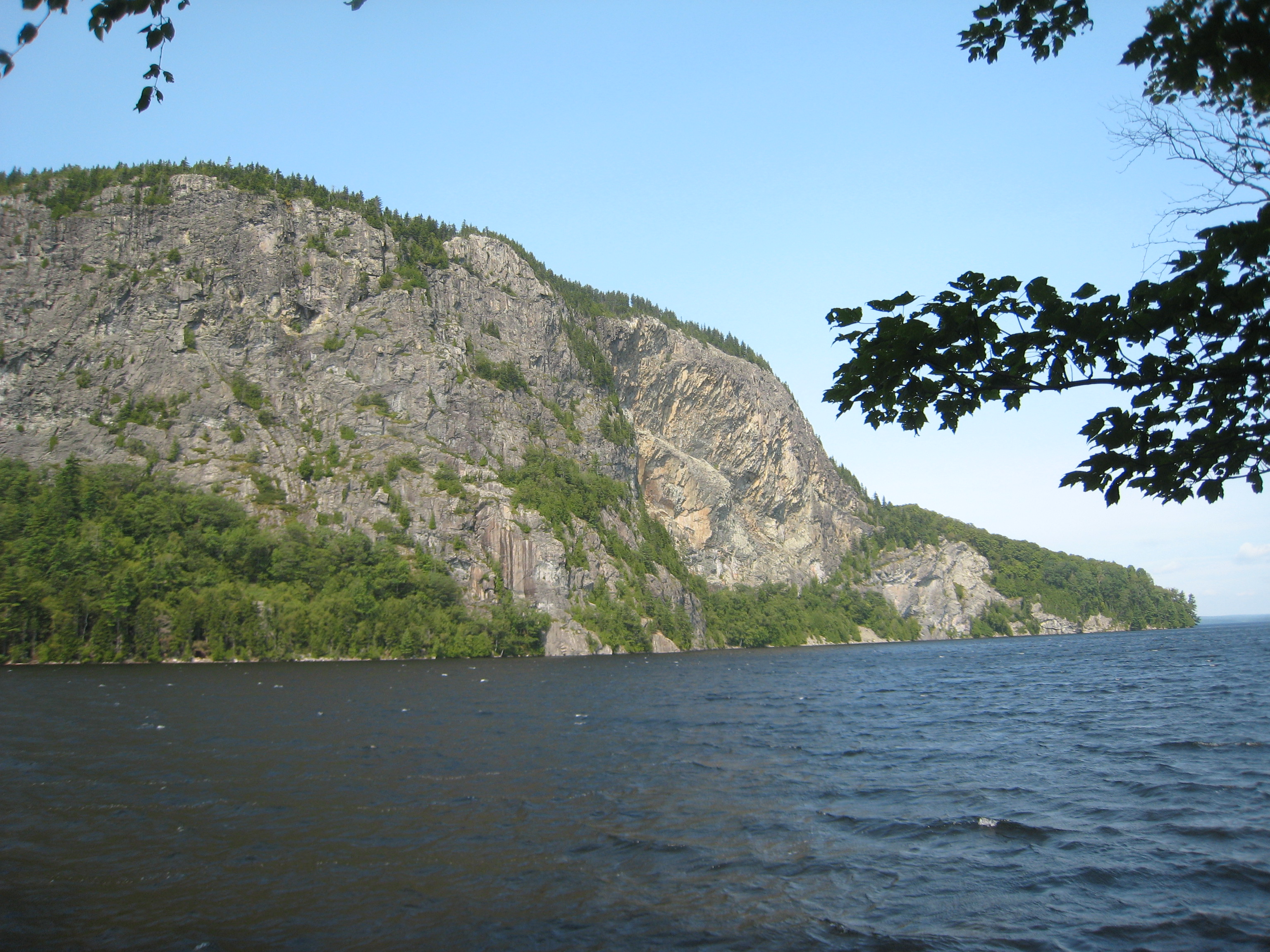
What you can’t get enough of in Podunk are Pete’s vivid photographs, and his pictures of Moosehead Lake in Maine are definitely worth sharing. He’s been spending time around Mount Kineo.

mt kineo cliffs

Mount Kineo’s wild beauty has long been celebrated, but few know it abuts a piece of land called Misery Gore, an “untrampled” place Pete investigated for Podunk. Gores are highly unusual geographical features, Pete’s research shows, limited to Vermont and Maine, “largely forgotten anachronisms that don’t much impact most peoples’ lives in any profound way.”

He says that the source of Misery Gore’s name might be its preponderance of black flies, or it being “a miserable place to survey, log, hunt, and birdwatch,” or that it’s overgrown with briars and brambles, or that “a French-Canadian logger from Miseree once passed through this neck of the woods.” The parcel is wedge-shaped, crisscrossed with nothing but dirt roads.

It is, however, Penobscot country – the tribe has a reservation near Bangor known as Old Town — and on this trip Peter reacquainted himself with some of his Podunk contacts, three generations worth, including 50-year-old Andrew Tomer, his 12- year-old nephew and his father, Penobscot elder Francis.

Francis Tomer

Penobscot, Peter told me, means “where the stream runs by the mossy rock that is white when dry.”

Mount Kineo’s 800-foot cliffs of rhyolite were carved by the Indians into arrowheads. “Thoreau cut himself on this flint-like rock,” Peter writes, “which he called ‘hornstone.’”

arrow heads

“Some Native Americans believed that the cliffs under water were bottomless” Peter told me. He took a ferry to the Tomers’ dock. “After a dinner of well-grilled steak, corn on the cob, green beans from the garden and small spanish olives with pimentos, Francis took out a cigar box with all the arrowheads, marbles, stone tools, etc., and told me about them,” said Peter. Andrew, he reported, was very quiet. “He wanted to remember the stories for future generations.”

clay marbles

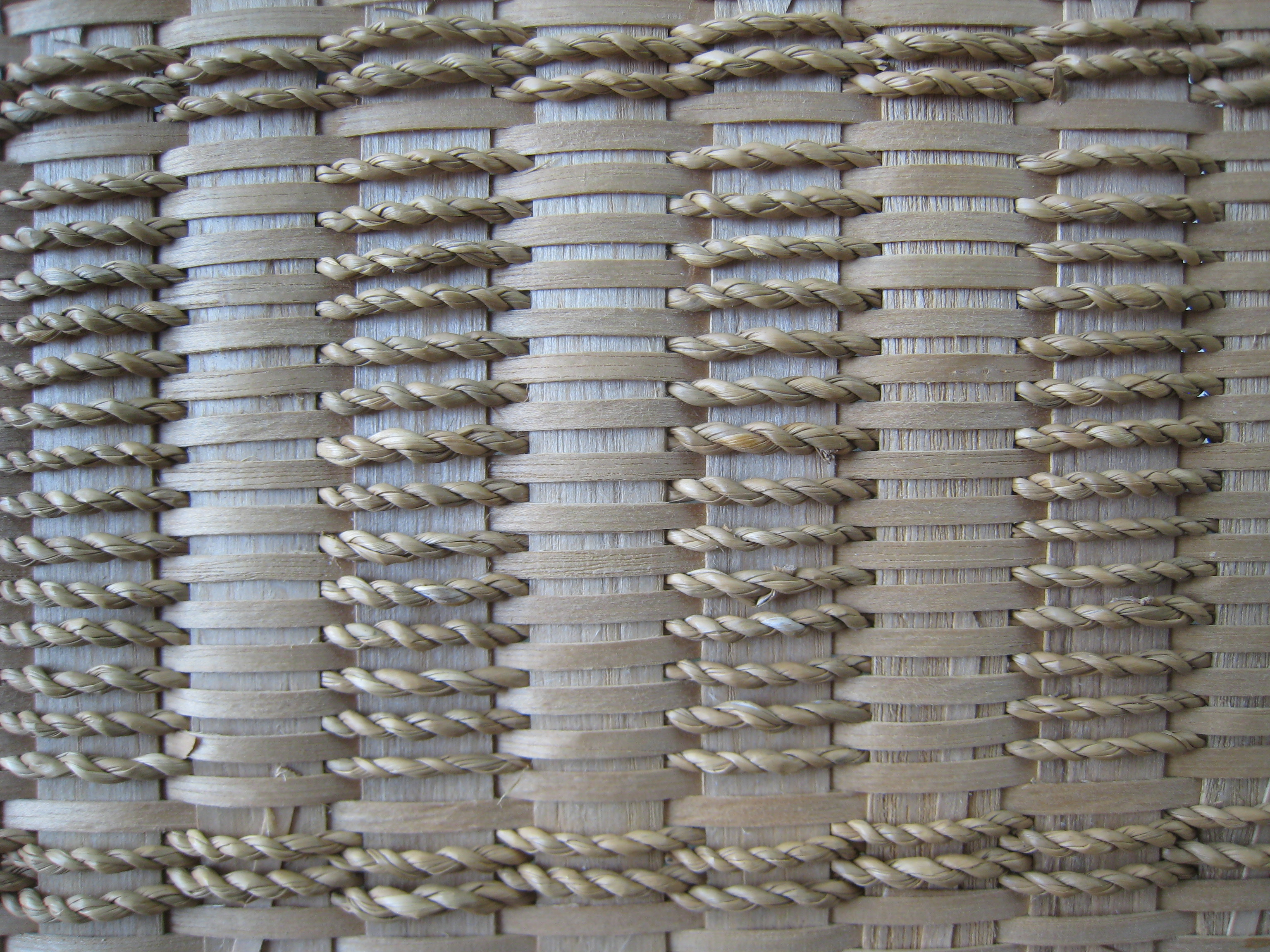
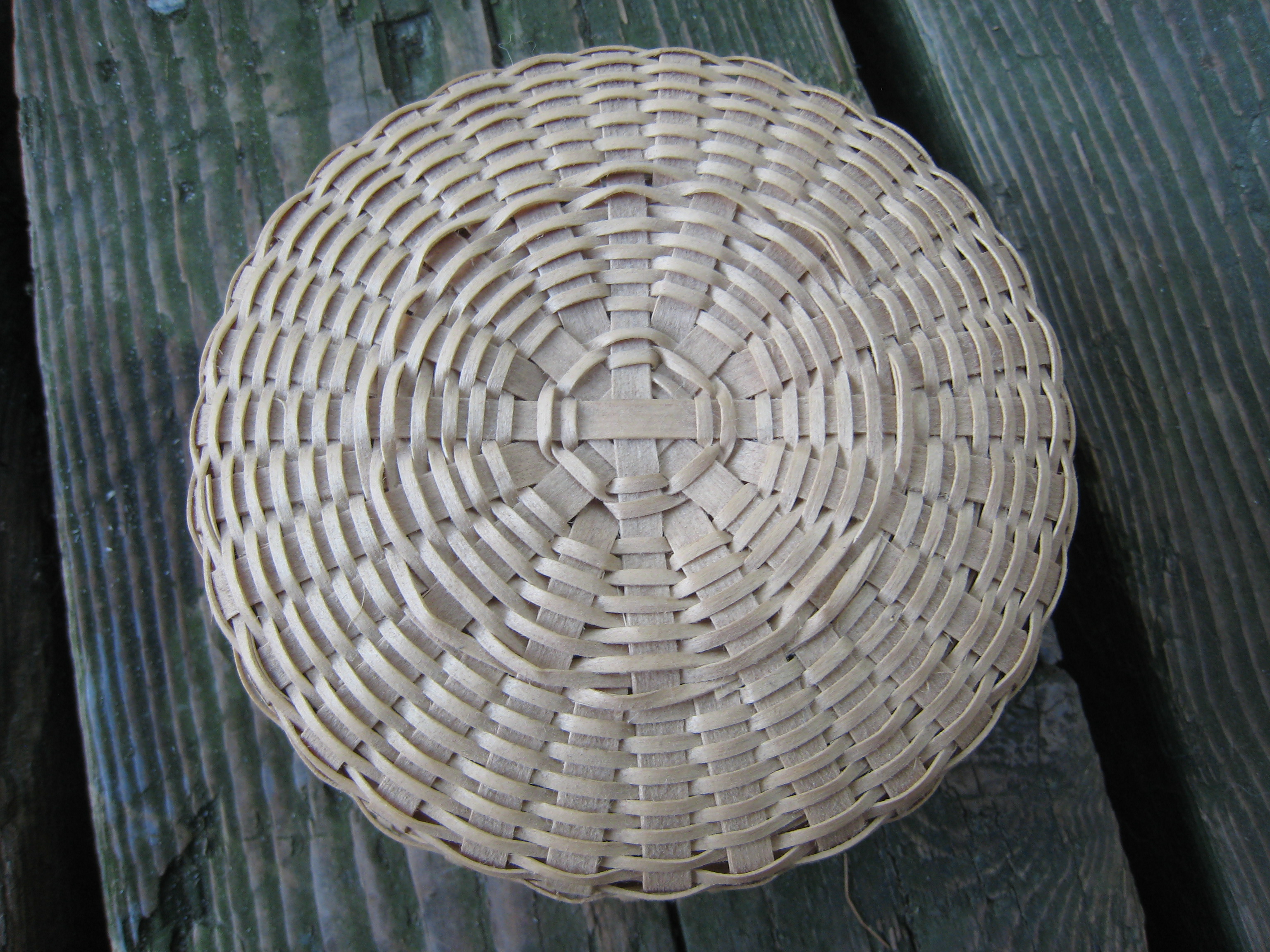
“Basket weaving by the Penobscot can be quite intricate,” says Pete.

basket 1

“First, pieces of ash are soaked in water. Then each one must be individually sanded down.”

basket 2

These baskets were made by a woman who lives in Rockwood, Maine, on the shore of Moosehead Lake. There Peter saw mushrooms. Fresh, with a garnish of smooth stones.

mushroom

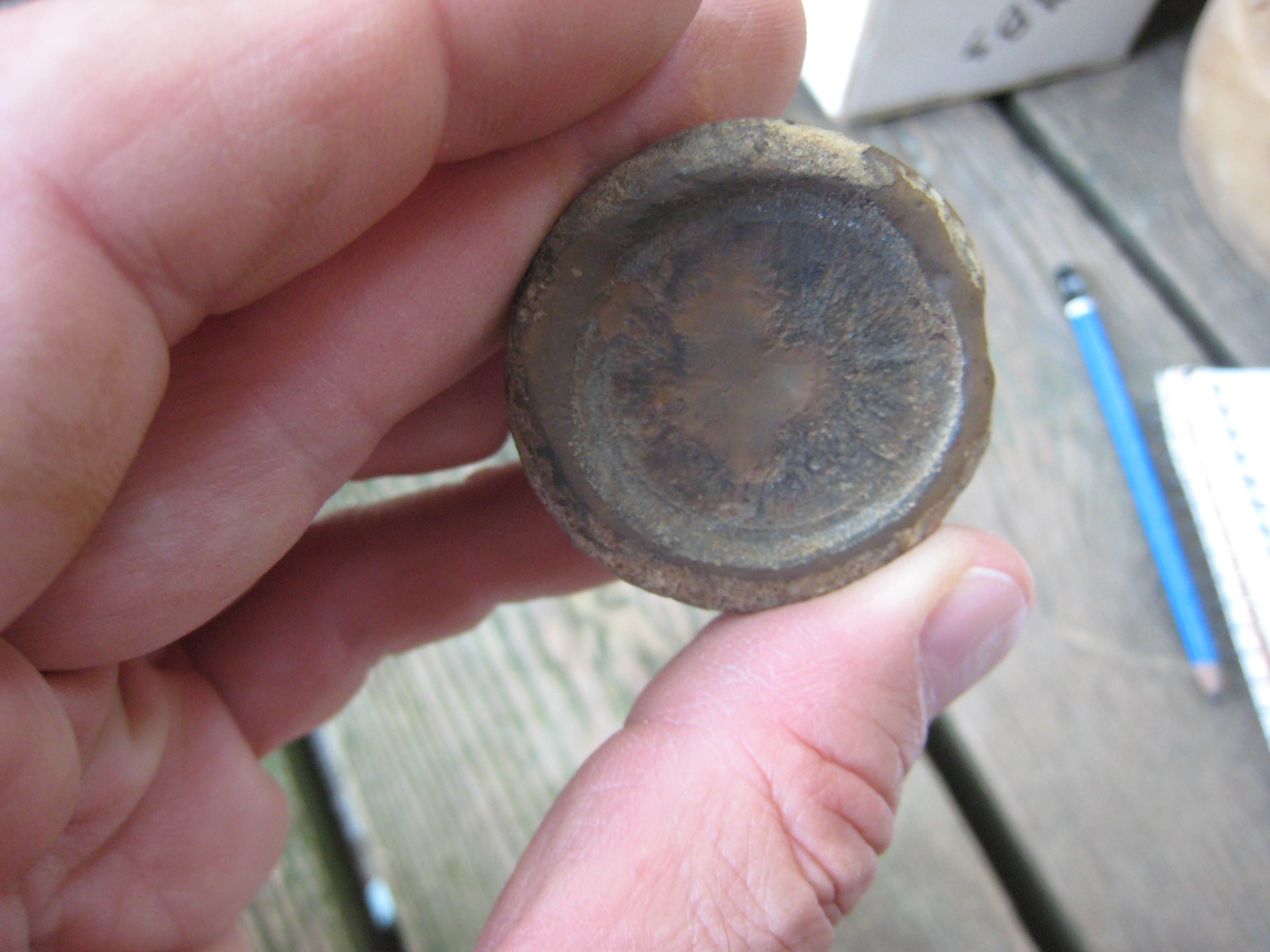
And fossilized.

fossil mushroom

A sculpture of some kind.

stone sculpture

A piece of the rhyolite from which arrowheads are carved.

piece of rhyolite

Wampum.

wampum

An ancient knife used to carve walking sticks.

old knife used tomake canes

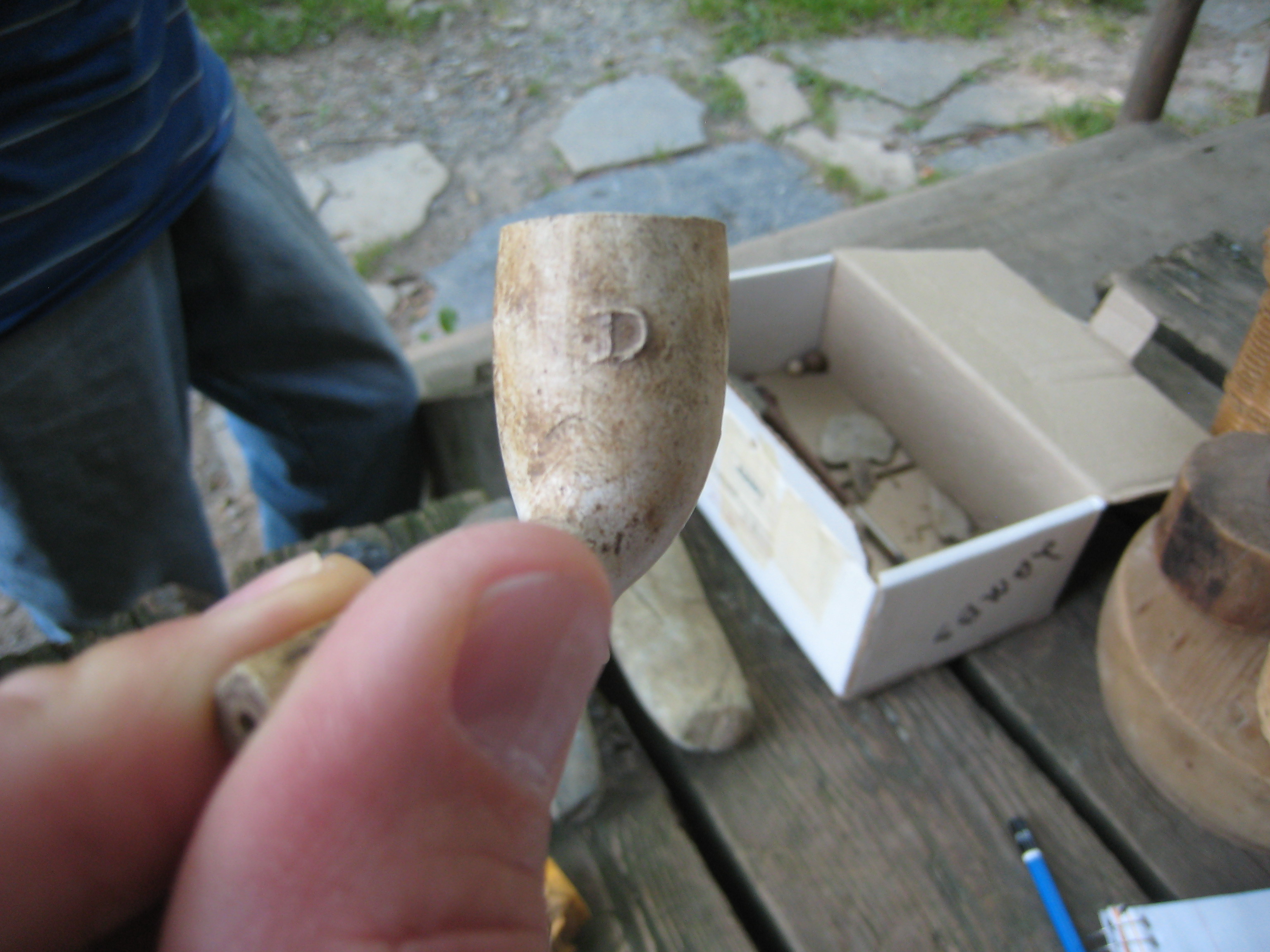
An initialed pipe left by an early settler.

pipe

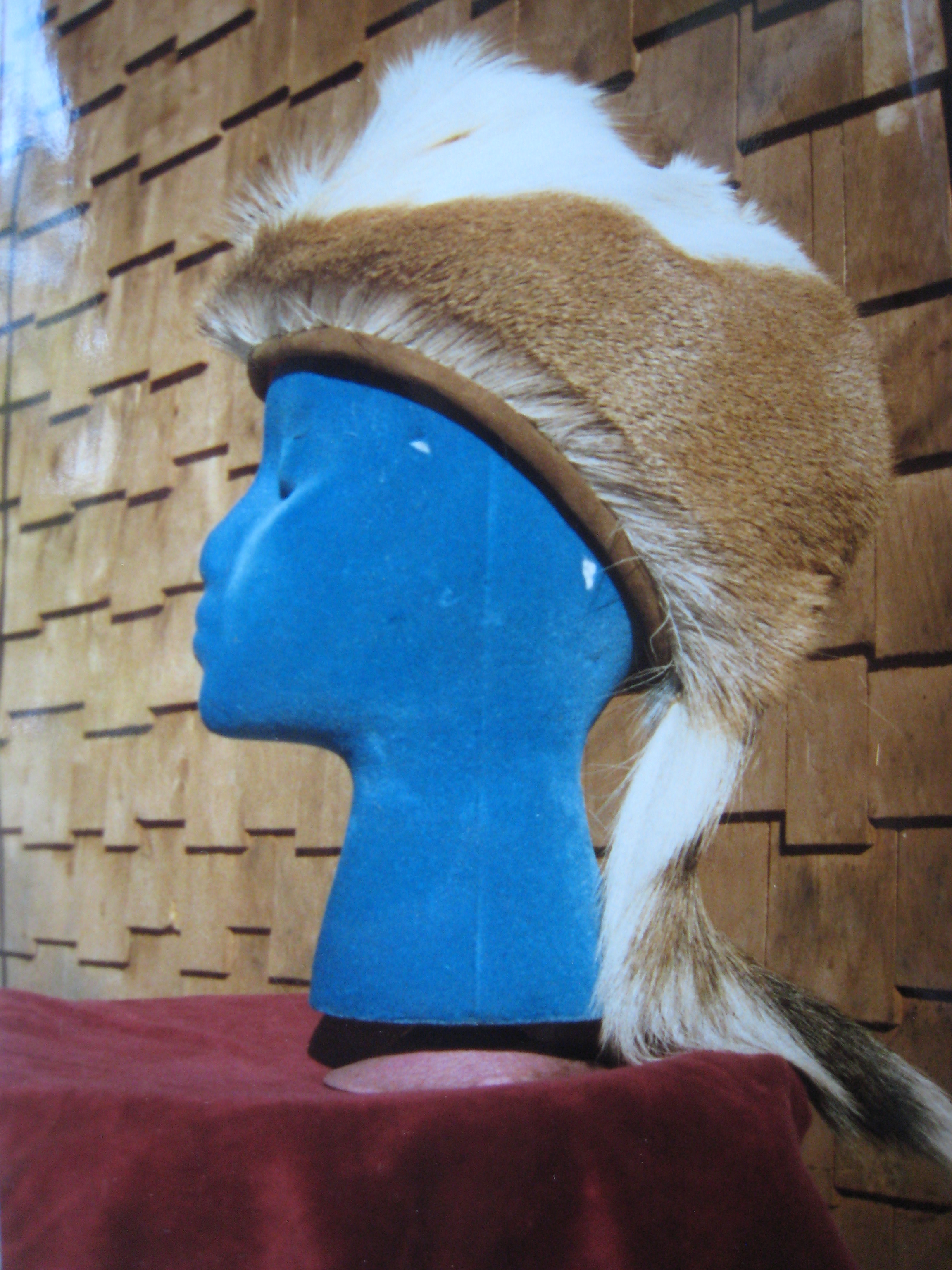
A deerskin cap.

deerskin copy

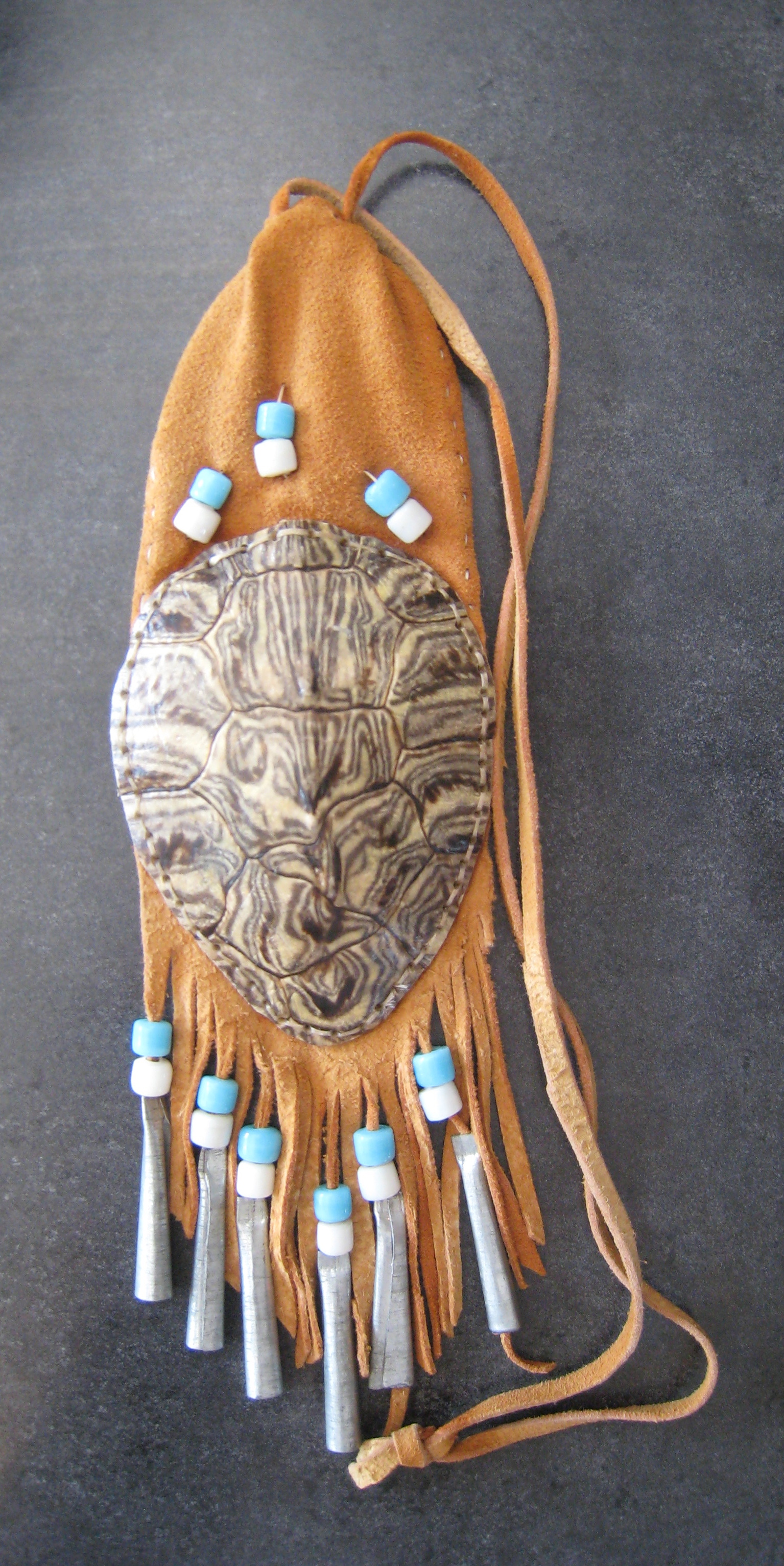
A deerskin pouch adorned with a baby snapping turtle shell that Peter plans to bring with him when he leaves.

pouch

A celebration of all that is old and new and precious in these cool, mysterious Maine Woods.

7 Comments

Filed under Art, Cooking, Culture, Fashion, History, Home, Jean Zimmerman, Nature, Photography, Publishing, Writers, Writing

I Am the Walrus

I’m about a foot shorter and slightly less blubbery, and my tusks have not come in, but my habit of lolling on the couch is pronounced.

walrus face

I could be lying atop a Greenland ice floe. A tooth-walking seahorse (Odonus rosmarus) through and through, cast-footed variety. Basically sedentary. Shellfish savoring. Laughable? Don’t people sort of snicker at walruses?

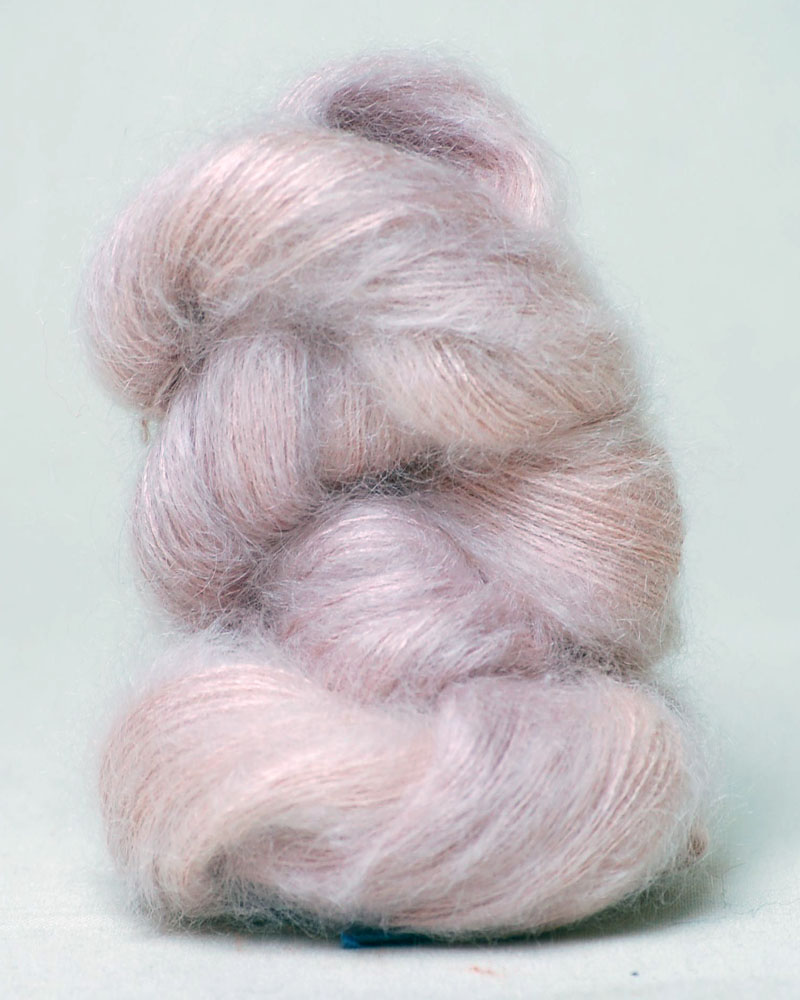
My main function these days, when I’m resisting the urge to watch past episodes of Orange Is the New Black, is to absorb information. That and try to knit a mohair bandana with a pair of metal toothpicks, willing Oliver not to drag the tiny wound-up ball of pink fluff under the coffeetable.

oliver snout

(Not successful, and I nearly rebroke the bones in my foot retrieving it.)

mohair

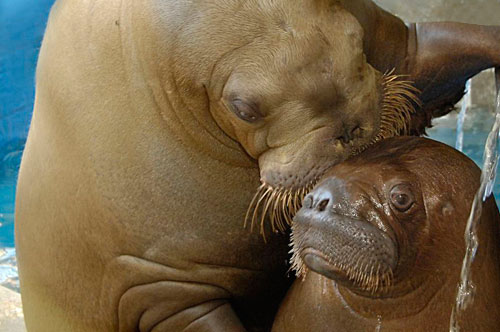
Walruses show affection.

baby-walrus-kissed-by-mother

There’s more where that one came from, walrus fetishists.

Aside from walrus kiss-bombs, I sourced a few more of life’s interesting details today.

1. A California man named Jerry Gretzinger has spent 50 years drawing an enormous map of a world he invented.  Hmnh, you say, don’t people do this every day? Well, maybe brainy 3rd graders do something similar on a sheet of oaktag.  But his is just so much more carefully delineated than others, did I mention 2,000 feet long, and he uses a weird deck of cards he pasted up to determine next steps he will take on the thing. Including which neighborhoods get what he calls “voided,” or just suddenly blasted out of existance.

gretzinger1

There is a great mini doc about him, and you might want to bring home some colored pencils when you’re out today. (Note the envy in that: when you’re out today.) For more great stuff on do it yourself cartography (and moving gigantic maps) try Making Maps.

2. I never knew what was in O magazine – lists upon lists of Oprah’s fave books that were going to earn more than my books ever would? But today I checked out the September issue because we got a subscription in error. And it turned out the issue was all about hair. Here is something so inutterably weird I reread it a few times. A timeline of how glamorous hair extensions come to be. It begins with Hindu pilgrims shaving their heads at the temple Tirumala in Tiraputi, India. (I did a little further research. As many as 10,000 pilgrims get their hair shaved by 500 temple barbers every single day.) The hair is fumigated and wrapped in bundles in Bangladore, then shipped by private courier to Rome to be bleached and dyed. Six weeks later it goes to U.S. salons. After 3 to 6 months use the repurposed locks get tossed in the trash. Footnote from the same O: 90 percent of celebrities at the Academy Awards are wearing extensions – everyone except, according to one expert, children and women with pixie cuts. I guess men, too, go unextended. But who knows.

3. A lot of people consider the Hudson to be “my river.” Me too. That’s why I was surprised not to have known before that the actual start of the estuary, the southern terminus that is, is deemed by scientists to occur precisely at Manhattan’s Battery.

stock-footage-aerial-panorama-downtown-manhattan-wtc-financial-district-east-river-hudson-rivers-battery

I knew it began down there in the Harbor someplace, but everything seemed pretty watery and diffuse to me. Now I realize that you have Hudson River Mile 0 at the Battery, the George Washington Bridge at HRM 12, the Tappan Zee at 28, Bear Mountain at 47, Beacon-Newburgh Bridge at 62, the Mid-Hudson Bridge at 75, the Kingston-Rhinecliff Bridge at 95, the Rip Van Winkle 114, and the Federal Dam at Troy, the head of tidewater, at 153. The tidal section of the Hudson constitutes a bit less than half the total distance – 315 miles – from Lake Tear of the Clouds to the Battery. I learned this scrap and so many other things from the State Department of Environmental Conservation’s weekly easy–to subscribe to e-newsletter, Hudson River Almanac. If you want to know how many hummingbirds appeared in someone’s yard this May, and how that compared with last year’s count, or the story of a kingfisher riding the back of a hawk, or that Atlantic blue crabs are known to rivermen as “Jimmys,”(mature males) “Sooks,” (mature females) and “Sallys (immature females), this is the place for you. I find I want to know these things.

Hummingbird-Wallpaper

It’s amazing what you’re ignorant of as a walrus.

3 Comments

Filed under Art, Culture, Dogs, Fashion, History, Home, Jean Zimmerman, Knitting, Nature, Photography, Publishing, Writers, Writing

The Mummy’s Bones

The Bloke smokes. The thing you need to know if you get a kneeling scooter is you have to embrace the experience, you have to enjoy it, you have to gliiiide. Even with a cup of iced Starbucks in one hand.

jz scoots

Like a kid. Like all the kids that look at you with envy when they see you and your device, The Bloke, come careening their way. I beat Gil in a race down the drug store aisles.

Gil says, Jean, don’t write about your foot again.

But I say, write what you know. And at this point my foot is pretty central to what I know.

I felt good because I came out of my first week of rehab with a completed book review for NPR – and the book was a hefty one, too: The Daughters of Mars, by Thomas Keneally. It makes it somewhat easier to handle an achy-breaky right foot when you’re reading about World War I soldiers getting their faces “shorn off.” Amputees were the new normal. Who am I to complain? I got a few stitches, that’s all.

suture

But crutches suck. You see those college jocks swinging along on a pair after a football injury, going to History 329 or maybe a crowded  party up a flight of frat-house stairs – how do they do that? It’s all I can do to limp across the living room or out to the car. It’s the young guys’ superior upper-body strength, I’m sure, but also the breezy ‘tude, and a strong desire to get back into the swim of beer pong.

Which brings me back to The Bloke. I was going to decline the Pig Mountain barbecue at the end of August, thinking I just couldn’t manage the street fair thing. But how can you turn down a pork-enshrining food fest in a town called Narrowsburg, New York, which started out as a punk rock show in a basement? Fourteen chefs and fourteen pigs. So what if I get some drinks slopped on The Bloke. He can handle a little rust.

This is one way to get through 6 weeks of life in a foot cast: gliiiide through it, sampling pork ribs and other delicacies along the way.

I’ve become a pudding fiend. A bowl of the stuff being the demarcation between early evening on the couch, foot up, and late evening on the couch, foot up.

KozyShack

I’ll tell you a secret about Kozy Shack. It’s no worse than any homemade pudding or gourmet restaurant mousse either, containing just milk, eggs, sugar and real vanilla. It has only one flaw. The chocolate does not have the delectable skin on it you get when it cools after you spoon it out of a hot pan. Yuck, says Gil.

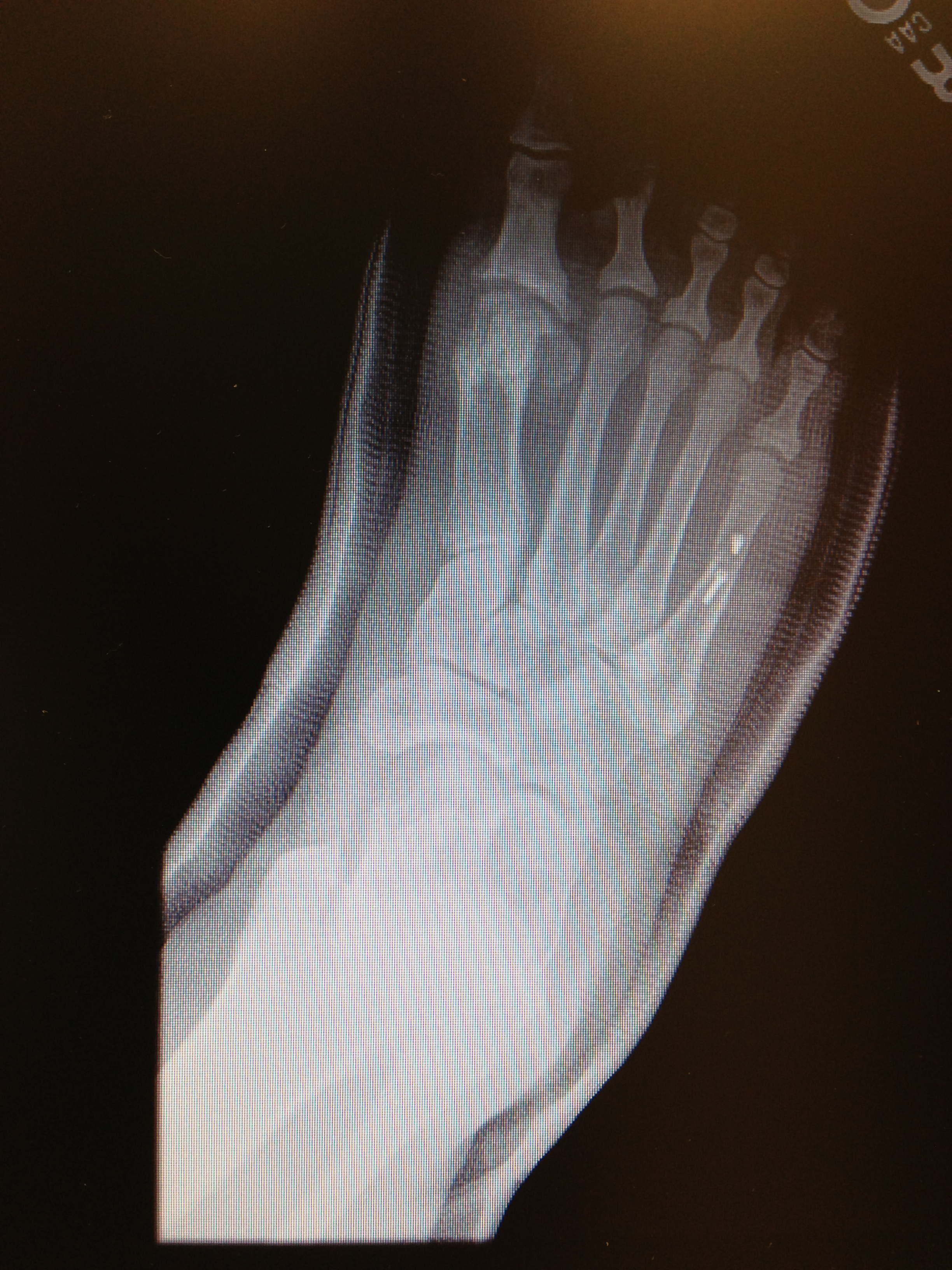
Another avenue to wellness: idolize your doc, and realize you lucked into the Greatest Foot Surgeon in the World. The Greatest. There is something of the Stockholm Syndrome in this, probably, as Dr. Voellmicke is mine for the duration, so he better be good. But in truth, he has a sharp mind and a gentle touch. Not everyone could repair a fifth metatarsal with such delicacy.

foot xray

We visited with Dr. Voellmicke so that I could get my sutures removed and my plaster cast exchanged for a streamlined fiberglass model. This sterling representative of his profession performs every bit of the work himself, including creating a fiberglass mold of wet strips the way you’d make a kids’ pinata.

bandaged foot

I came up with a horror film trope. Bunions: The Movie. Or maybe The Bone Spur. Anyway, my feet have been a nightmare for a long time, and it was thrilling to see the monster bones I was living with transformed into the elegant lines that now lie beneath the mummy bandages, awaiting their closeup.

9 Comments

Filed under Culture, Film, Home, Jean Zimmerman, Nature, Photography, Publishing, Writers, Writing

Day 1-In Which I Learn to Hobble

It was a success, the surgery, though I awoke from the anesthesia blubbering like a baby. It’s normal, said the orthopedic surgeon, come to check on me. A lot of people cry. Then it was hip, hop, on to the wheelchair, on to the crutches, off to my new full-time lair, my living room, my foot on pillows above the couch.

cast

My snouted nursemaid wedged beside me.

ollie nurse

My other nursemaids scurry to my orders. My computer, please! My muffin! My book! Put it close, I’ve got to get an NPR review done this week. Could you please turn that light off? Or on?

I have a good view of Maud’s metallic blue fighter fish, Brussels, making his small way around the bowl.

brussels

Somehow, thinking about the immediate future, though I never had much patience for that fish, I now feel kindly toward it. Brussels reminds me of myself in my own little living room bowl. Except I hobble, can’t float at all, when I want to go brush my teeth.

Trying to stretch myself outside this world, adventuring via pictures of the past to the motor adventure taken in 1918 by John Burroughs, Thomas Edison, Henry Ford and Harvey Firestone.

This brilliant crew took a 12-day car camping trip in Burroughs’ automobile when he was 81.

NoondayRestFinal.jpg.CROP.article920-large

John Burroughs, less well known today than the others, was ragingly popular by that time in his life. Gil and I used to visit his country retreat, a tiny cabin called Slabsides that stood beside a celery marsh in West Park, New York.

slabsides

Burroughs’ fans have kept it intact, so you can see it as he did. Being there always made me want to inhabit a cabin, and now  mine is virtually like his.

burroughs-at-slabsides

… I was offered a tract of wild land, barely a mile from home, that contained a secluded nook and a few acres of level, fertile land shut off from the vain and noisy world by a wooded precipitous mountain… and built me a rustic house there, which I call ‘Slabsides’, because its outer walls are covered with slabs. I might have given it a prettier name, but not one more fit, of more in keeping with the mood that brought me thither … Life has a different flavor here. It is reduced to simpler terms; its complex equations all disappear.

Young college women used to travel in hordes by train to Slabsides to pay homage to the great man, a pioneer of nature writing who published some 25 volumes, of which a million and a half volumes were sold during his lifetime.

In 1918, a convoy of eight vehicles accompanying the brainy colleagues toured Pennsylvania, West Virginia, Tennessee, and Virginia, stopping to camp on farms, examine old industrial sites, take hikes along rivers, and measure farming implements for fun, documenting as they went.

Some shooting entertained Ford and Firestone.

ford and firestone shooting

At night around the campfire the two industrialists, the naturalist and the inventor wound down by chewing over Shakespeare, Thoreau, chemistry. Don’t you wish you could have been there? In a way, you can, because photos from the trip are stored at Harvard’s Widener Library, with a smaller portfolio at my favorite website, Slate’s The Vault.

Closer to home yet exotic in its own way, the wool I am sending away for to keep my hands busy during this nonambulatory period.

What is mohair, anyway, I wonder, as I fawn over the silk and mohair skein available from the chicest yarn store I know, Purl in Soho, New York City.

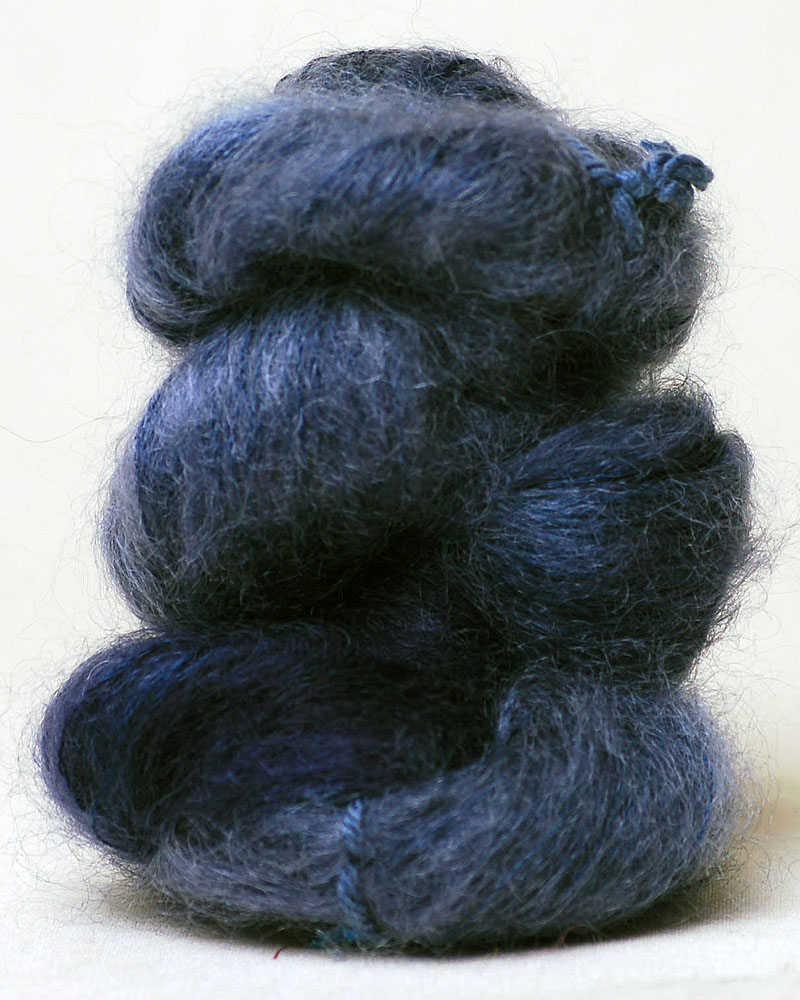
It’s from a line called Haiku made by a company called Alchemy. The shade is called Teardrop. Is that not irrisistable?

Alchem's Haiku-Teardrop

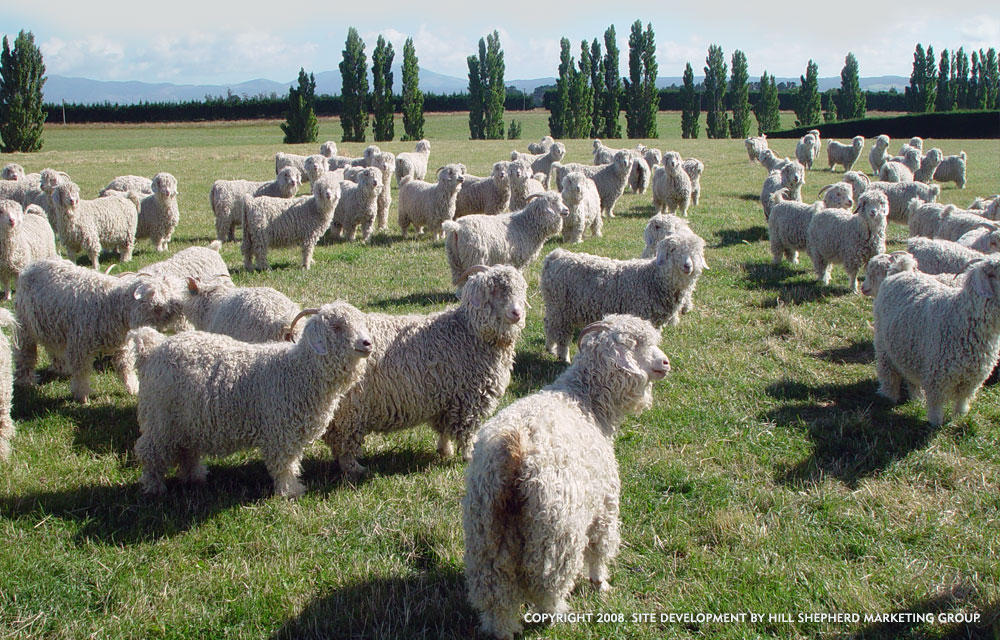
The yarn comes not from a sheep but a goat, the Angora, which emigrated from Tibet to Turkey in the 16th century, and it’s one of the oldest textile materials in use. It’s made of keratin, like hair, wool, horns and skin. Mohair is warm in winter, while remaining cool in summer. It is flame resistant, crease resistant, and does not felt. The goats are mainly bred in South Africa now.

angora_goat_11_12

And it is of course beautifully luxurious. Makes your fingers sing. Should I choose this color instead? It’s for a slip of an elegant bandana, not the kind you’d wear around a Slabsides campfire. Evening Pink.

Haiku-Evening Pink

If Firestone and Ford and Edison were on their way over to roast weenies, maybe a scarf in this hue would be more refined: Blue Jay Way.

Haiku-Blue Jay Way

So many choices when your leg is up and all you’ve got to do is dream.

2 Comments

Filed under Art, Culture, Dogs, Fashion, History, Home, Jean Zimmerman, Knitting, Nature, Photography, Publishing, Writers, Writing

Pogo Schtick NYC

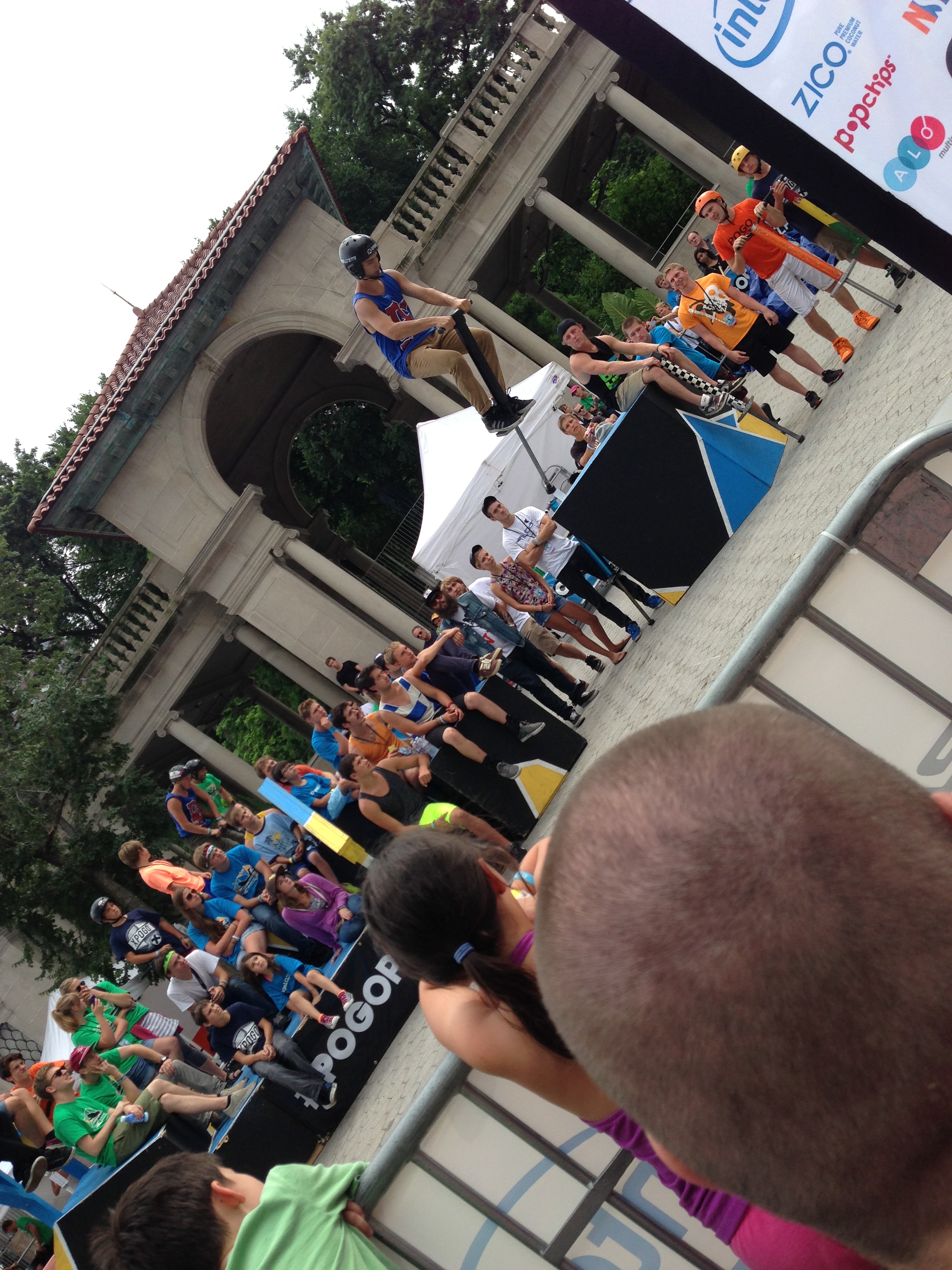
By the time we arrived, the Big Air finals had ended. Pogopalooza 10 was barreling towards its final couple of hours. None of the participants, it seemed, were tired. They were hardly breaking a sweat. It was as if the 10th Annual World Championships of Extreme Pogo, held in venues around New York City over the past day and a half, had just barely begun.

nyc

The crowd surged around the cordoned-off performance area in Union Square Park, on Broadway between 14th and 17th Streets. Because it was New York, where everything happens, twin ferrets made an appearance in the bustling audience, a distraction that was pretty much overlooked.

ferrets

The real attraction was the lineup of Xpogo stars, the ones hoping to break Guinness Records or at least achieve their personal best. This was the largest pogo stick event world wide, and all the pro athletes were here.

First came a practice period, with a break in the middle for one brave pogoer to take the mike and propose marriage to his pogo-fan girlfriend. He dropped to one knee and spoke of his happiness, and the crowd applauded. A guy in an orange helmet jumped by the couple: “Hey, congrats,” he said with a grin. (The two betrothed are pictured in the middle.)

jack jump

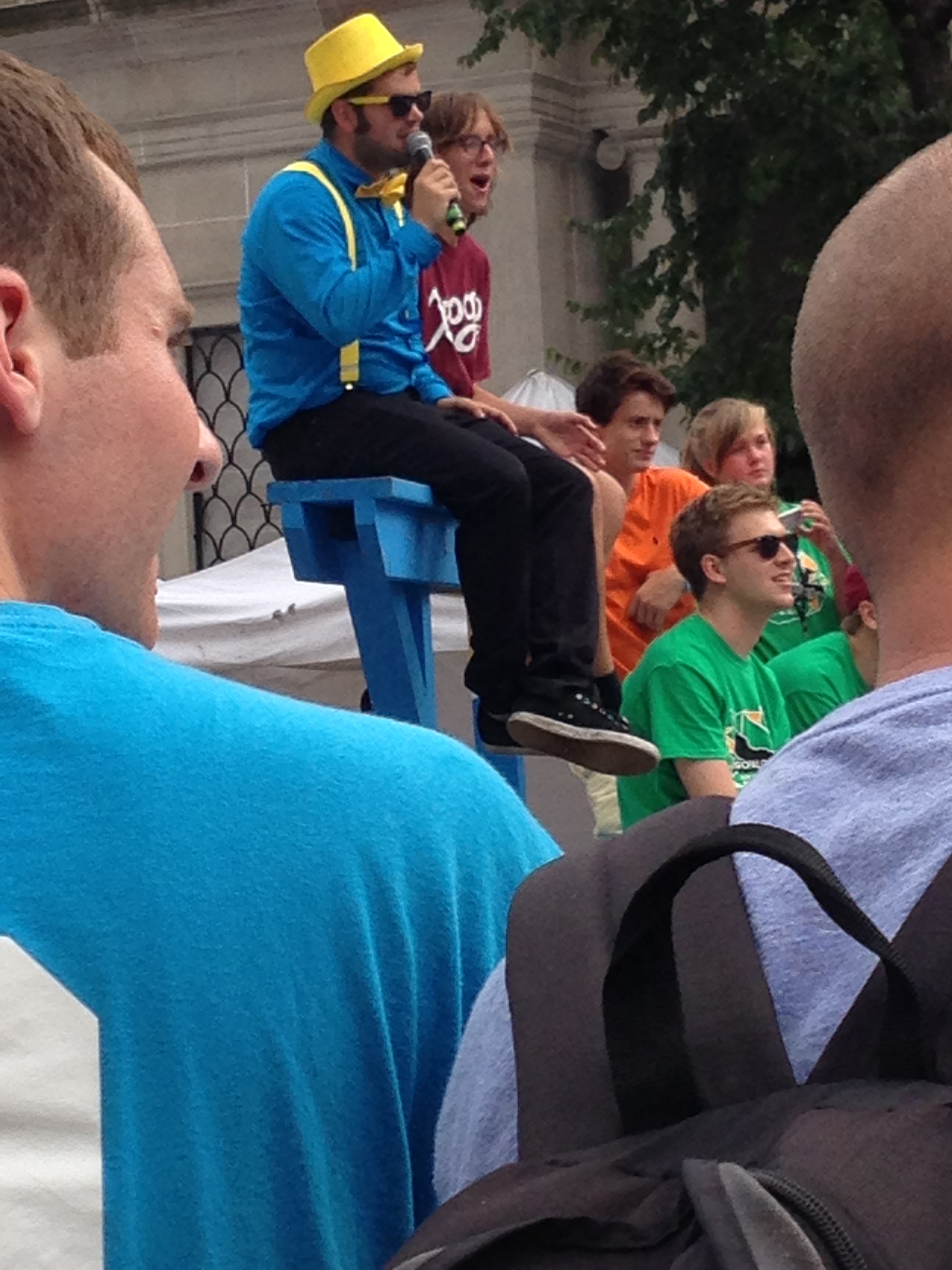
Then a yellow-hatted, yellow-tied, yellow-suspendered master of ceremonies out of a Wizard of Oz  remake introduced a contestant who had pogoed 23.22 miles, and broken a Guinness record with 70,271 bounces (seven straight hours). The athlete made  a pitch for his charity, Bounce to a Cure.

Next came the the Best Trick competition. The dozen or so contestants ranged in age from 16 to28 and in looks from movie-star handsome to pretty darn cute. Fluorescent garb seemed somewhat de rigeur, as were sturdy helmets.

crowd w mc

When I was about 10, I ruled on the pogo stick, setting records on my driveway with 100 jumps at a time. I didn’t put a lot of air between my stick and the blacktop, it just felt good to go boing-a-boing-a-boing. To keep that balance for so long. To hold on when it looked like I might crash down.

grow_to_pro_pogo_stick_4

The athletes now acquiescing to pre-Tricks interviews had bigger plans. Some of them, after all, could take themselve fully nine feet in the air, just for a start. There was Wacky Chad from Syracuse, the one in the fluorescent orange helmet and kicks.

jack cu

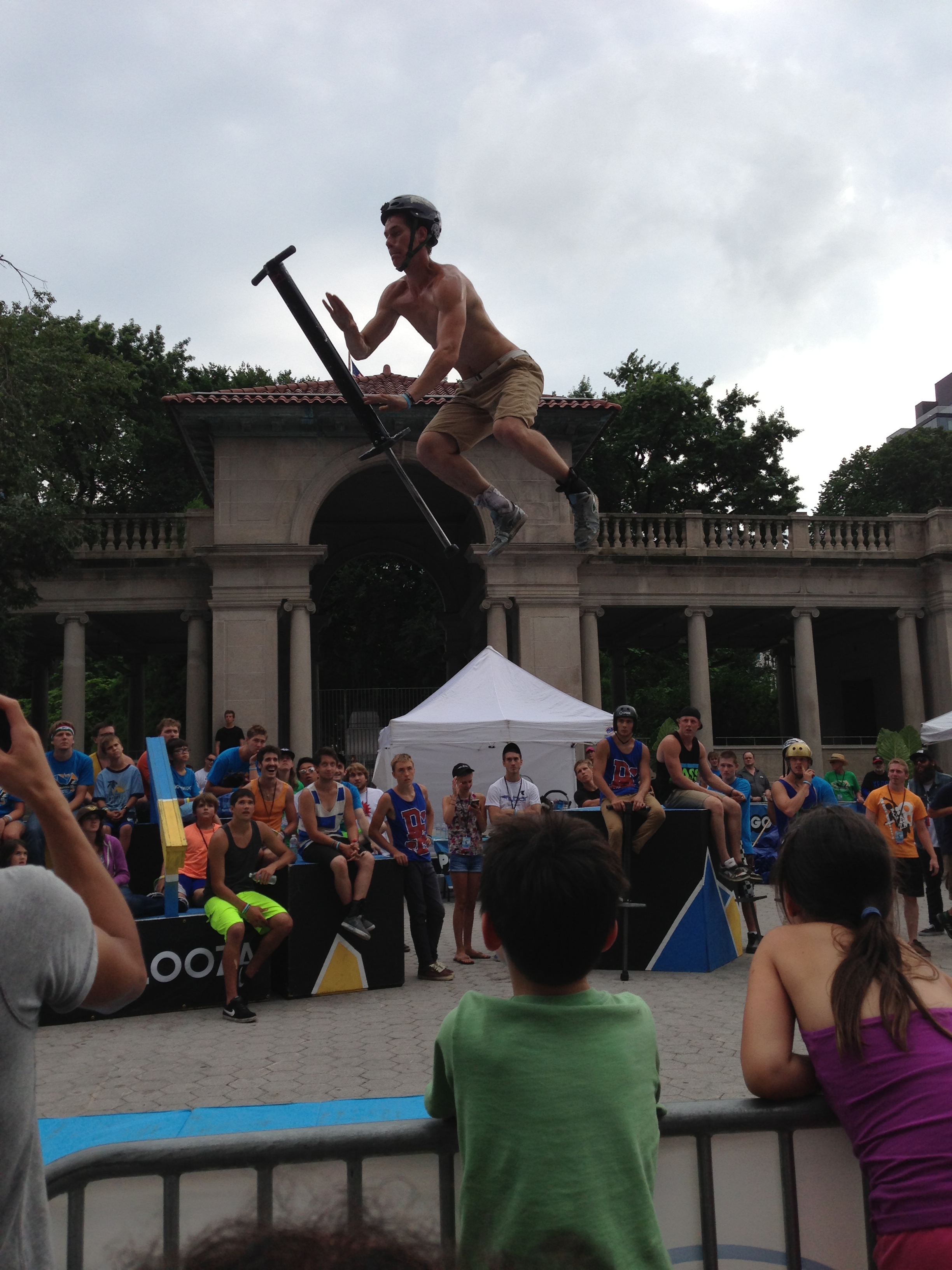
Also, a qualifier known as Manchild, who jumps his pogo backwards but had no name as of yet for his move. There was Michael Mena, who called his move the “Manchild” out of respect for his colleague. The other contestants gave previews of their tricks: the under the leg bar spin, the infinity wrap, the double 180 wrap, the grisly whip. “You’ll just have to wait and see,” said one fellow who had stripped to the waist, with a mischievous expression.

The Ramones song Judy is a Punk blared from the speakers as the action began.

“None of these tricks have been landed before!” announced the mc.

mc cu

And I noticed that this sport looked fun and all, but was anything but safe. You could injure your body, yes, but you could even more easily bruise your ego. One after the other, the jumpers broke the line and came out into the center, boing-a, boing-a, going through their moves. And invariably, each one wiped out. Dusted himself off. Rejoined the line.

Beck’s Loser was now in the air, a fitting soundtrack for these redblooded competitors who seemed immune to failture.

A guy in sunglasses came out and tripped himself up almost before he began – every single time. “It’s a very technical move,” said the mc, “Give him a hand.”

pogo_stick

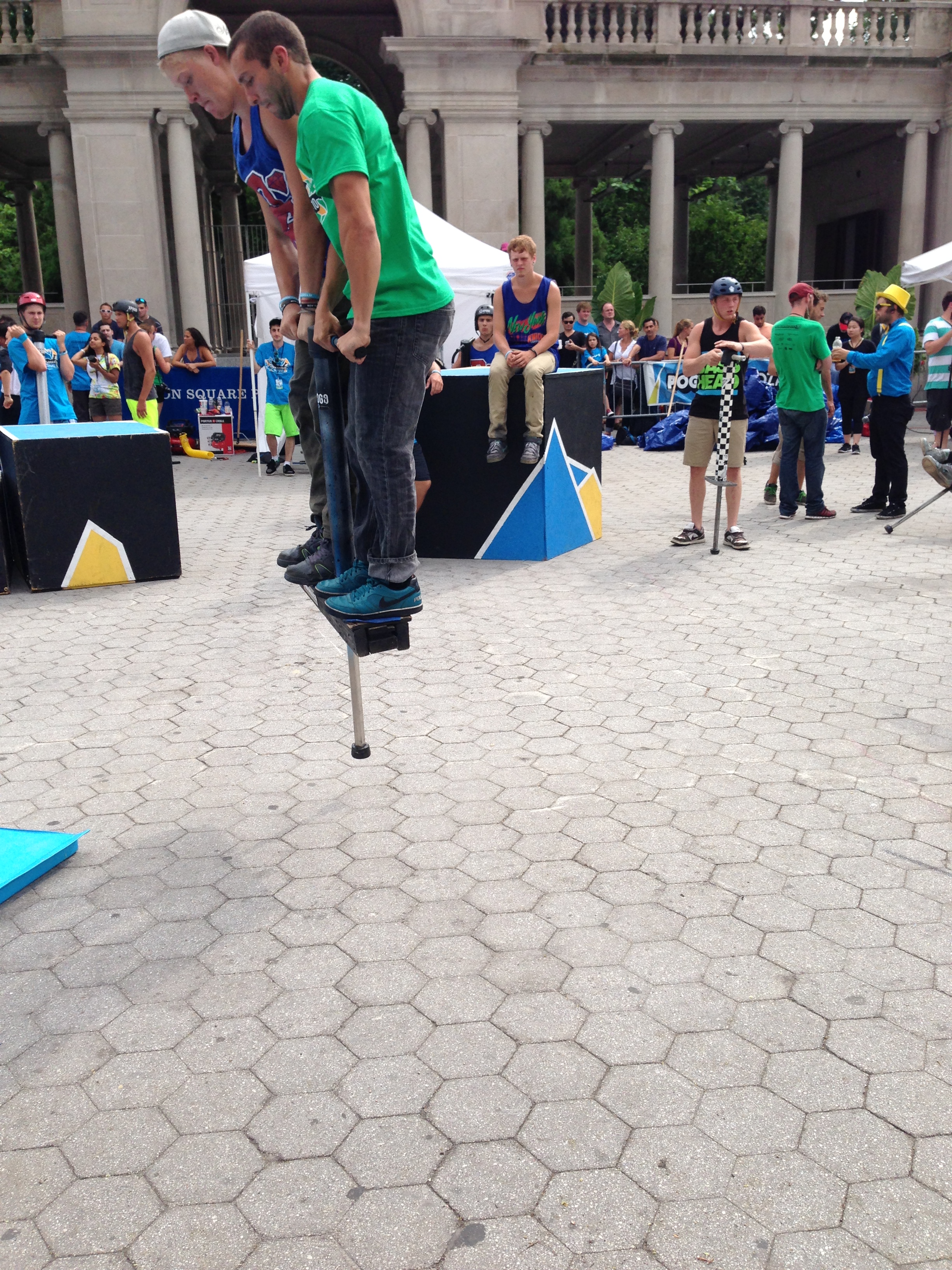
A duo on a double pogo tried over and over again to achieve a back flip—and they did manage to nail it, only they landed with their feet on the ground rather than the stick’s pedals.

pogo duo better

Manchild came so close, so many times.

manchild jumping

Dan Mahoney, from Nova Scotia, the bare-chested athlete with the wry smile, at 20 is a veteran jumper.

dan hand up better

He held the world record for highest jump on a pogo stick (9’6”). He went high, high, high, with his trick at Union Square, he flew, and the figure he cut was so complex that a second after he’d done it I couldn’t even figure out what he did. Still, he failed.

dan jump better

Until he made it. Yes! Glory. The crowd erupted. Yet the competition continued, as the judges would assess the overall performances at the end of the period and make a cumulative judgment.

The Black Keys Howling for You, their big stadium hit, pounded from the amplifiers now as a backdrop for a sport in a smaller stadium, a struggling extreme sport whose people have performed in Beijing, Rome, London, Japan. Can pogoing ever achieve the respect given snowboarding or skateboarding?

Another champion, Biff Hutchinson of Burley, Idaho, jumped into the fray, accomplishing a back flip, then another, then another. Earlier he had taken first in the Big Air contest.

nasty air prize

No one wanted to stop. Even Wacky Chad had to come out for one more ride.

Finally, the end. I watched Mahoney remove his sneaks and socks and carefully examine his feet. He had developed a small limp in the course of the contest. Now he went forward to collect his prize. Do his interview. “When I think of a trick,” the athlete told the audience, “I can see it in my head.” He’s won this prize for four years now. “I love you all,” he said.

Fail and try again. Fail, and win. That was the spirit of the day. But did I dare?

I approached the open pogo area, where brash little pink skirted toddlers and perplexed looking middle agers tried to develop some confidence on the stick.

free pogo area

I was the last in line for the day.

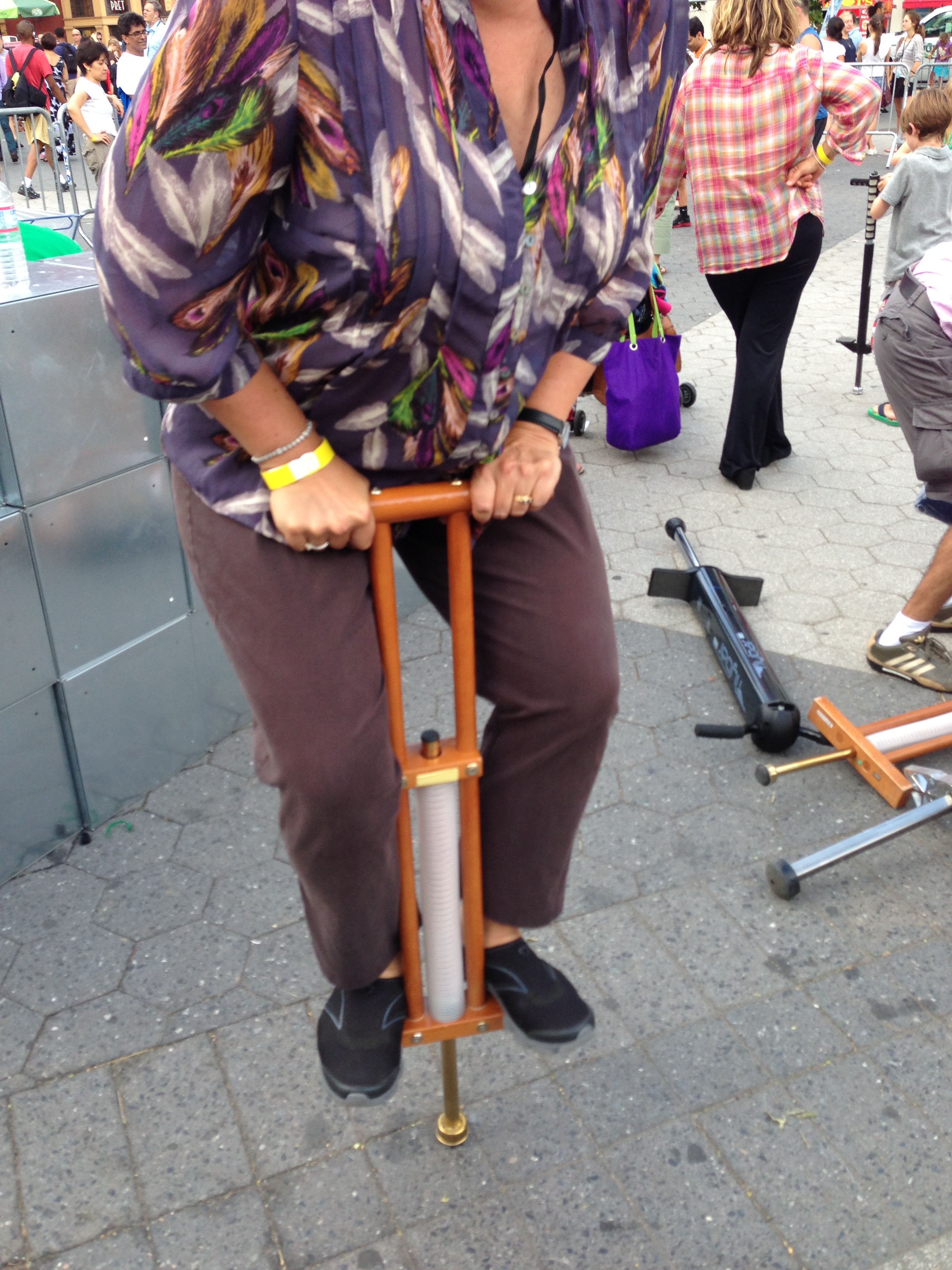
I’d done it before. Yes, several decades before. But give me a moment to collect myself, we’d see who still had the chops.

jz pogo jump

I left my fluorescents at home. I still had my boing-a attitude, though. I asked to use one of the big bazookas but was told by a helper, “That’s what they use,” pointing to the professional pogo pit. That was okay. I mounted my steed and managed not one, not two, but eight jumps. I fell off, then I got up. I dusted myself off.

jz pogo smug

Eight good bounces. Only 92 more to go.

5 Comments

Filed under Culture, Fashion, History, Home, Jean Zimmerman, Photography

Lincoln Center Whirl and Twirl

It is about the dance. It is about the crowd. It is about the dance.

The dance, choreographed by Mark Dendy, is called “Ritual Cyclical,” and it takes place at Lincoln Center, at the north end of its outdoor plaza, on the Upper West Side of Manhattan.

Not at the fountain. That would be too conventional.

fountain

It takes place at the pool, the rectangular, shallow reflecting pool crowned with a sculpture by Henry Moore.

We know the dance is supposed to mysteriously start out of nowhere so as soon as Josefa and I get there we start looking for signs.

It’s hard, because New York is all signs. We have heard there will be some eighty dancers in this flash-mob-ish piece, so anyone could be a performer. Everyone is facing the pool, then someone dressed in business clothes will bolt behind you, a hand on your shoulder. A dancer.

A disembodied voice welcomes us: How to see this piece? Fluidly, moving along, circulating, there is no front, it’s all around, constantly shifting, and changing, and the audience needs to change with it.

We talk about cameras. Josefa has a great camera and a better eye, and most of these are her images.

josefa camera

How to get the best shot here, where good shots are difficult? I complain that I can’t get a long-distance picture and Josefa tells me a little about the debate over the telephoto lens. In the world of photography, she says, there is thinking going on about what is the responsible way to document something. Is it intimate in a way that is not so good to shoot from far away, rather than close to the subject? The telephoto might be dishonest.

Around peoples’ heads, around  peoples’ cameras, we see people holding their hands up to the sky, waggling their fingers.

hands

It’s as if they are hailing a space ship. The music of the Kronos Quartet soars from speakers all around. It’s six o’clock, just past the afternoon and still not dusk. An hour of expectation, and this piece seems to be a lot about expectation. We’re all crushed up against one another, against hair and shoulders, bellies, hips. It isn’t so bad, strangely.

summer new yorker

New Yorkers in their summer finery.

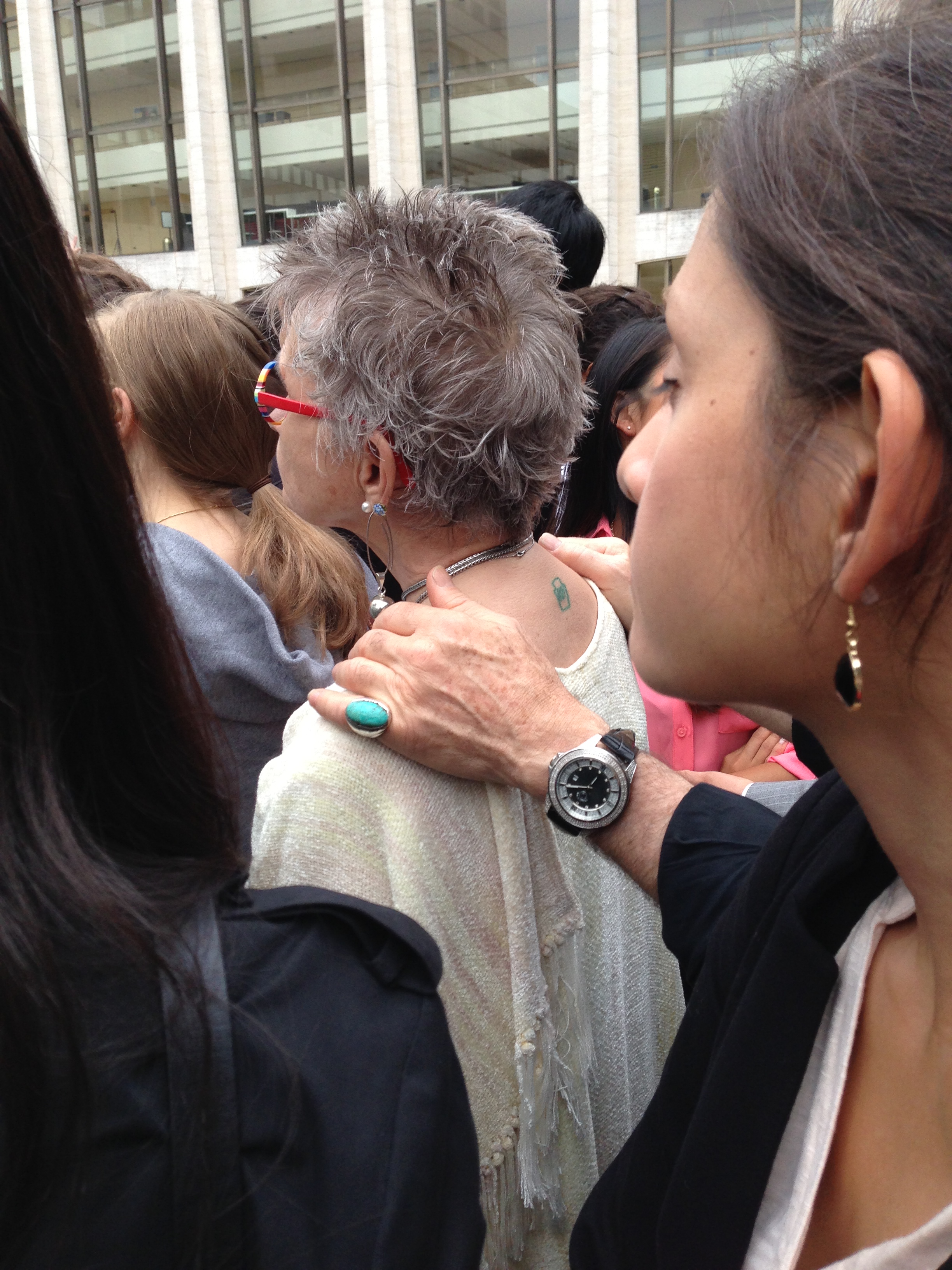
red glasses

The woman with red glasses has a green tatto of a number on the back of her neck. Josefa always wonders what the numbers mean.

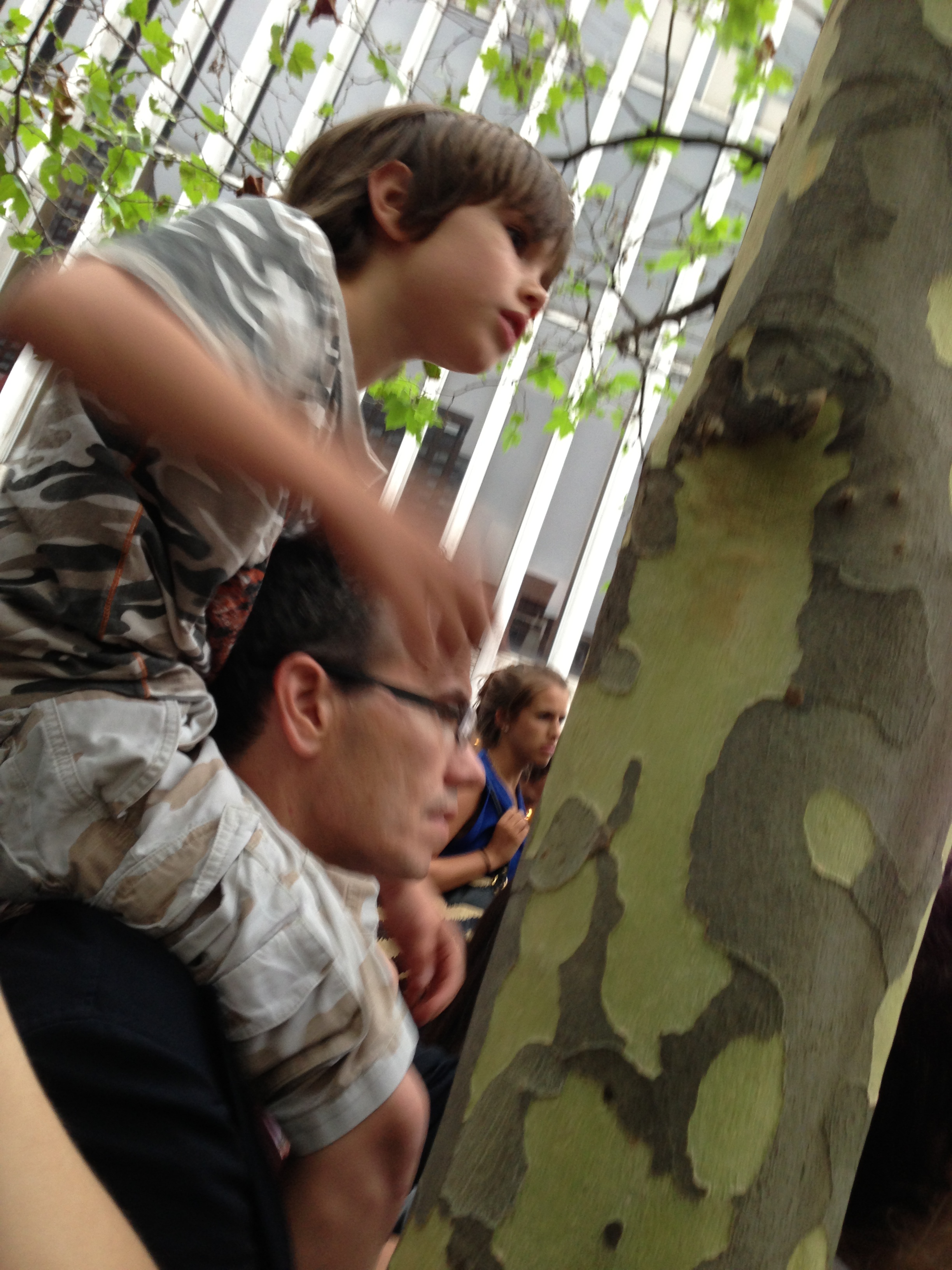
Kids in fatigues already barked at spectators to stand back, clear the area. But the crowds surge.

camouflage

There’s a bum sitting on a concrete bench. Should he be here? Really. Harrumph.

bum sitting

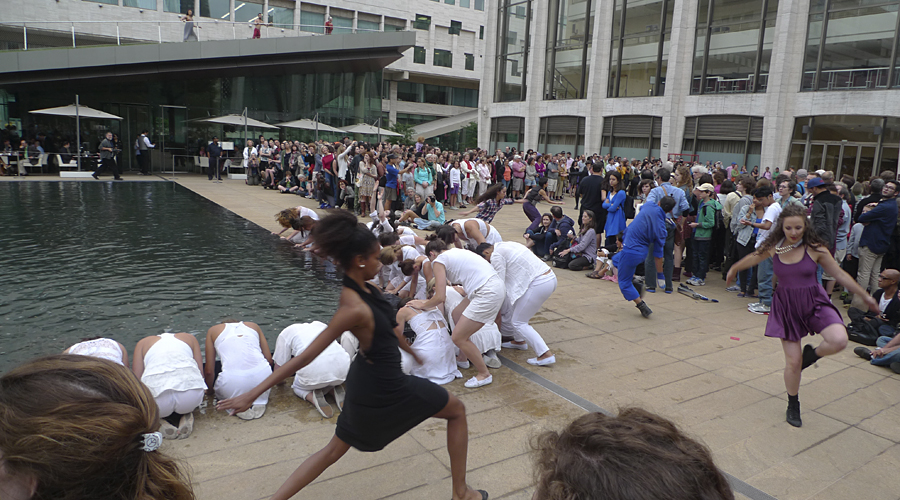
Now girls in white are caressing the water, dripping it across their bodies. A beautiful white-shirted man removes a golden crown from his head.

white girls in water

The dance has begun.

It proceeds on all surfaces, all around, people writhing and twirling, in all manner of costume.

pool dancer

A young man and woman splash and play and court in the middle of the water. She goes piggyback. Up on the green grass plane above the pool, an audience of three dancers stretch their bodies, do what dancers do.

white boy and girl

Then the crowd shifts to the grove of small trees just to the south. Human forms in blue, grey trunks. Josefa: It must be nice to dance against trees like that.

blue dancers

They collapse, and other dancers erupt, doing Latin steps next door.

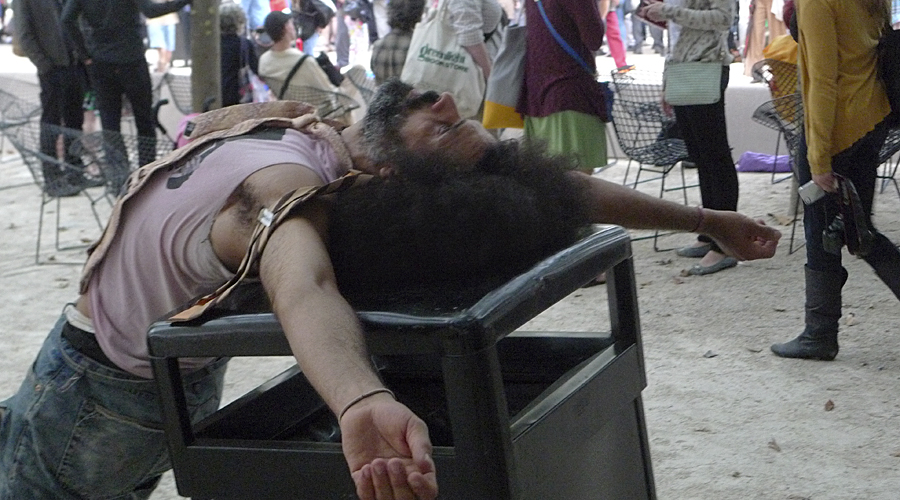
We have a realization. The bum is a dancer. He has appeared everywhere, and is not an interoper, except in our consciousness.

bum blur

His clothes are dirty, he picks up trash from the ground. A dirty dancer. Josefa takes pictures as he twirls, relishing his intransigence.

bum:can

Is he homeless? a man asks me.

No, he’s a dancer.

The homeless dance? he says.

For a finale there is a stage in front of the New York Public Library for the Performing Arts and American tunes: The Battle Cry of Freedom, Dixieland, Elvis, Hendrix.

USA! USA! The performers yell. The crowd presses up close yet everyone gives each other room, room to breathe.

boy:shoulders

We can smell sweat – the dancers’? Our own?

iwo

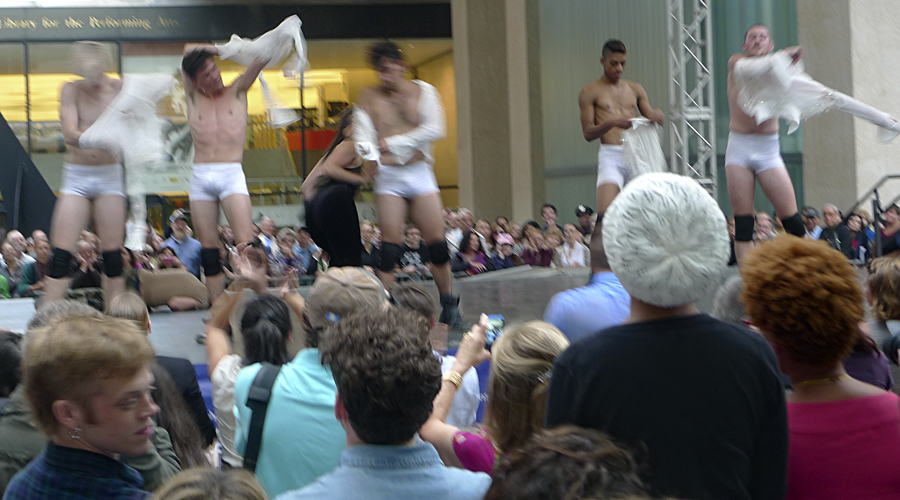
They hoist a flag a la Iwo Jima. American uniforms, then, wow, the vogue-ing, marching dancers strip to their briefs and pitch their shirts and pants out to the audience like rock stars.

clothes

We don’t care, we’re New Yorkers, but still it’s pretty cool.

Mark Dendy told The New Yorker, “Every day, every New Yorker comes into contact with about two hundred thousand other people, and they all depend on each other. So in this piece we do this thing called New York City together.”

Do they ever.

9 Comments

Filed under Dance, Fashion, Jean Zimmerman, Music, Photography

Stop Your Sobbing

How do you cope with the prospect of failure?  Not failure itself, that’s pretty easy. You cry, brush yourself off, move on.

But the likelihood of screwing up. Ah, that’s another thing.

I’m talking about my vegetable garden, which turns out to be both a success and a bomb.

My weeds! They have taken over. Excuses: Heat. Rain. Humidity. Social distractions. And I’ve got to work, after all.

I have tomatoes, so how can I whine? A rainbow of heirlooms.

mixed tomatoes

Basil bushes that could make topiary pesto.

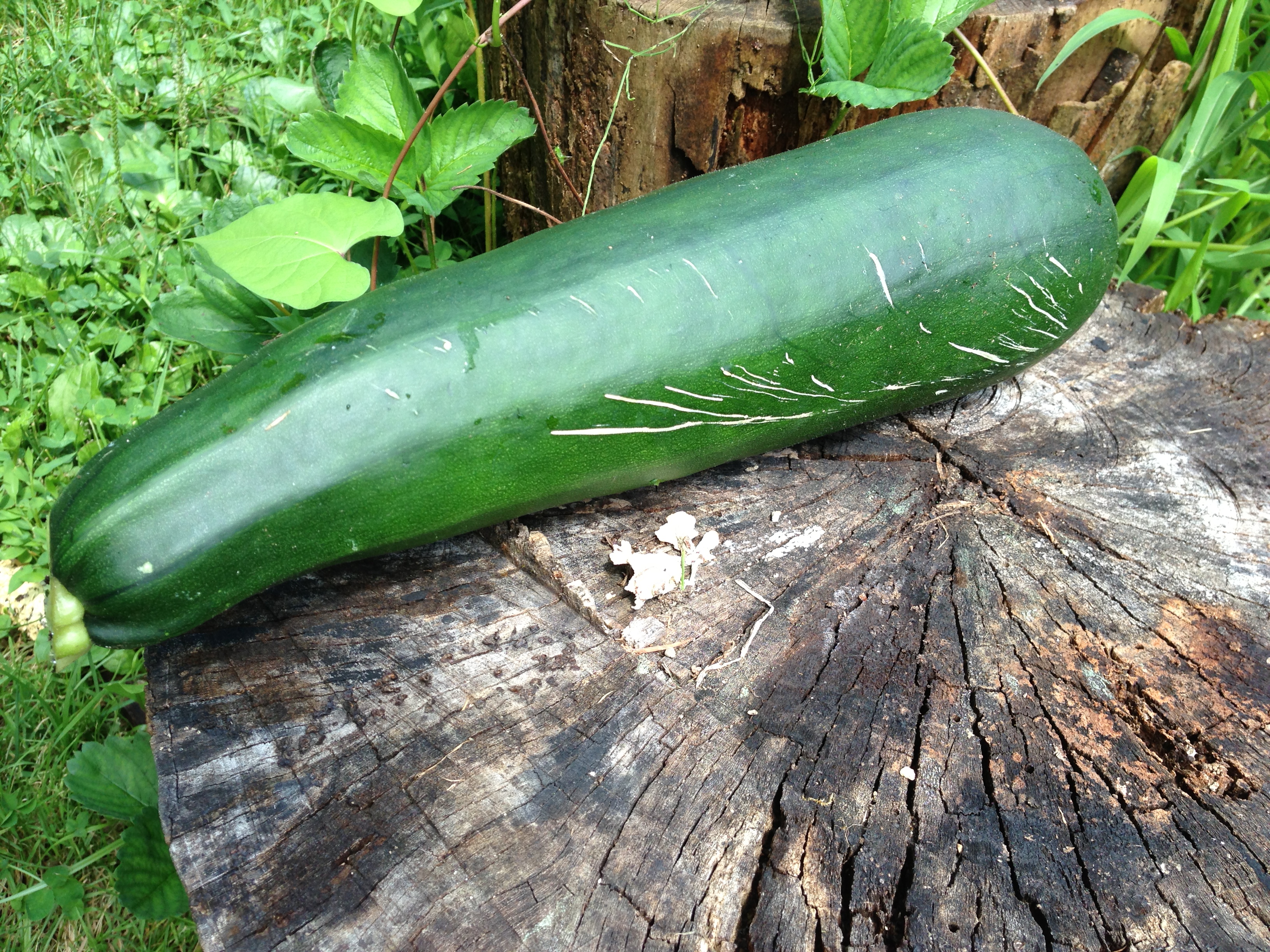
Squash, huge, far too much too eat.

zucchini

Does anyone actually like stuffed zucchini boats?

My herbs were are great before they crushed by toppling mint. The lavender and tarragon have exploded. Next to them, the pinks I planted as companions have bloomed constantly. My raspberry volunteers produced berries that accent vanilla ice cream perfectly.

berries

And here’s the point. Everything is sprouting, bushy, overgrown. The weeds sprawl. But the plants I expected to do well – the pole beans, say, masses of vines and leaves – have produced no beans.

beans

Some cuke plants have thrived, but others flatlined. Peppers, yes, eggplant, nada. Cosmos making a brave go of it.

cosmos

The beautiful crinkled leaves of the rainbow chard? Gourmet rabbit lunches, long gone.

The journey is the goal. To quote Gil, quoting some Oriental sage.

Oh. So it was all about the planting of those wrinkly little potato sections in May, watching the green plants thrive in June, finally the digging of the hard red tubers out of the earth, greeting the earthworms that were their bosom companions. Getting the good dirt under my nails.

potatoes soil

Having a perfectly manicured kitchen garden where every crop prospers isn’t the point even if it was possible. I’ve had that experience, in the past, on a sunny slope with plenty of chicken manure and it was pretty great. But then I didn’t share a marsh with turtles and snakes and red-tailed hawks. I didn’t live in the shady, ethereal woods.

I could use a hand with the weeding. In the meantime, let’s listen as Jonathan Richman sings the Kinks’ Stop Your Sobbing.

5 Comments

Filed under Cooking, History, Home, Jean Zimmerman, Nature, Photography, Writing

A Manhattan Birthday Boat

Today was my birthday. I decided to take the two adventurers closest to me and go on the high seas. An oceanographic architectural tour of Manhattan launches most days from Pier 62, on the island’s west side, and the fact that it was the hottest day of the year made a liquid frolic all the more appealing.

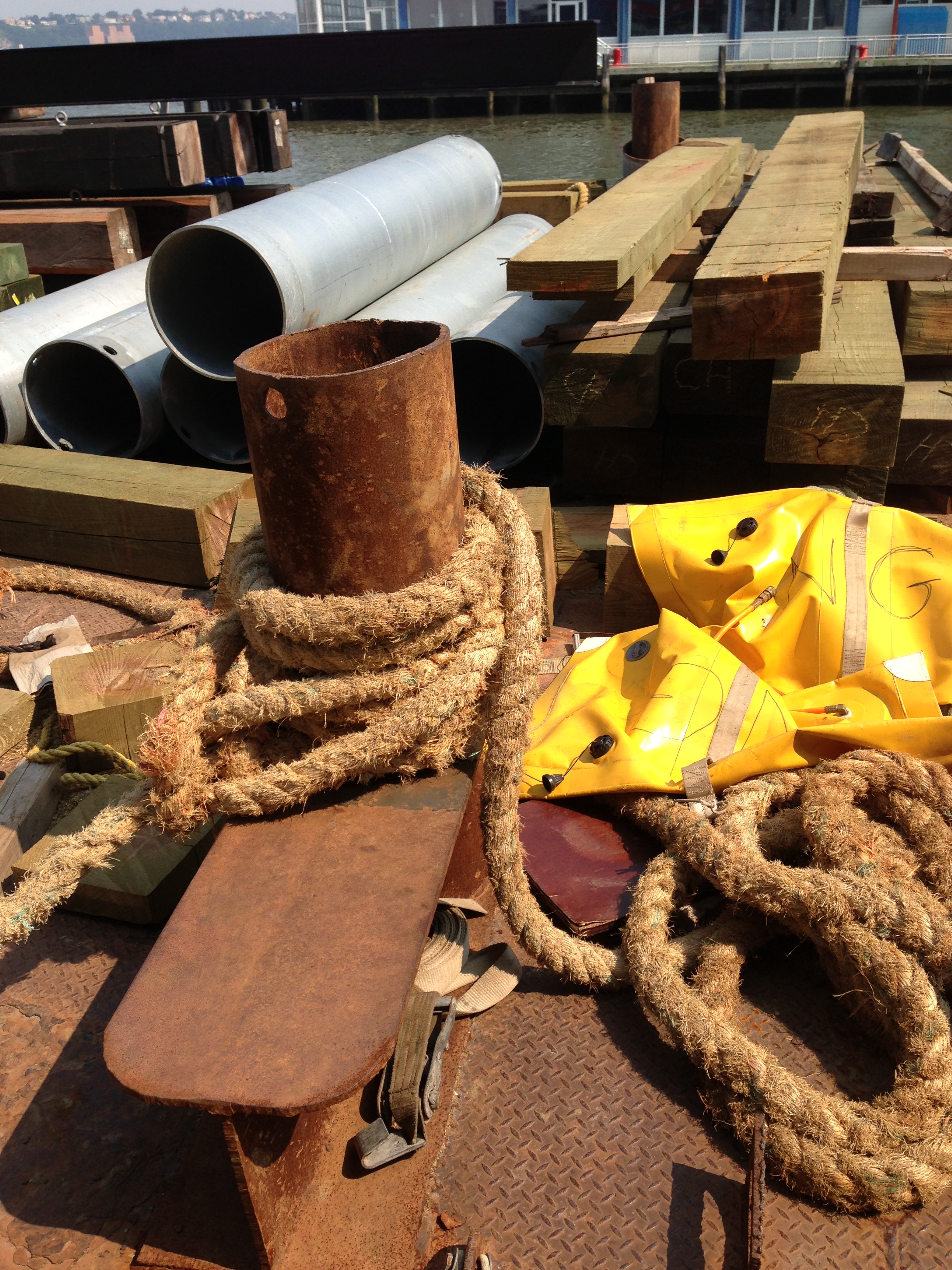
Pier 62, part of the Chelsea Piers sports complex, has some offerings for while you’re waiting for your boat to launch. You can watch hundreds of elementary-age gymnasts and soccer buffs perform in the air-conditioned splendor of a huge indoor gym. Watch deckhands spiff up the many yachts tied to the dock. Check out the picturesque marine ropes stashed at the end of the pier.

ship rope

Wonder about a Marcel du Champs-style composition of dining fork and some kind of bulbous ship hitch.

ship thing

Note the gallery of oversize photographs celebrating Chelsea Piers, including one of the Lusitania sailing out on its final, doomed voyage, with horse carriages stacked up watching it depart.

lusitania

Our boat was Manhattan, built in 2006 to resemble a 1920s riverboat, all light and gleaming wood panelling.

the manhattan

The cruise traveled south on the Hudson River to the Upper Bay, curtseyed to the Statue of Liberty, continued down around the Battery, up the East River, then retraced its steps, west again, all the way up to 125th Street, where it circled back to the starting point.

Austin, the captain, introduced the incredibly savvy architects Arthur Platt and Scott Cook, who would be narrating our journey. We wouldn’t be able to tour the very top of the island, said Austin, because of the heat: the steel of the swing bridge at Spuyten Duyvil had reached 95 degrees. If they swung it open, its expansion would make it impossible to close. On a brighter note, Hannah and Heather would be manning the bar, serving up ice-cold beverages for the next three hours, even champagne.

Maud, please, will you have some champagne for my birthday, I implored my daughter, since I myself refrain from alcohol and someone should raise a toast.

No, Mom, she said, the breeze ruffling her hair as we pulled out past Battered Bull of Georgetown, motoring into the channel. Water, she said. I want water.

Good thought. You could sit inside on this trip, in the climate-controlled saloon, and see the sights through glass. Or you could sit at the bow, on a bench outside in the red-hot sun, the New York harbor wind whipping your face. Where do you think we sat?

I learned. I learned so much. And then I forgot so much. The architects knew everything in the world about New York. And something about New Jersey too.

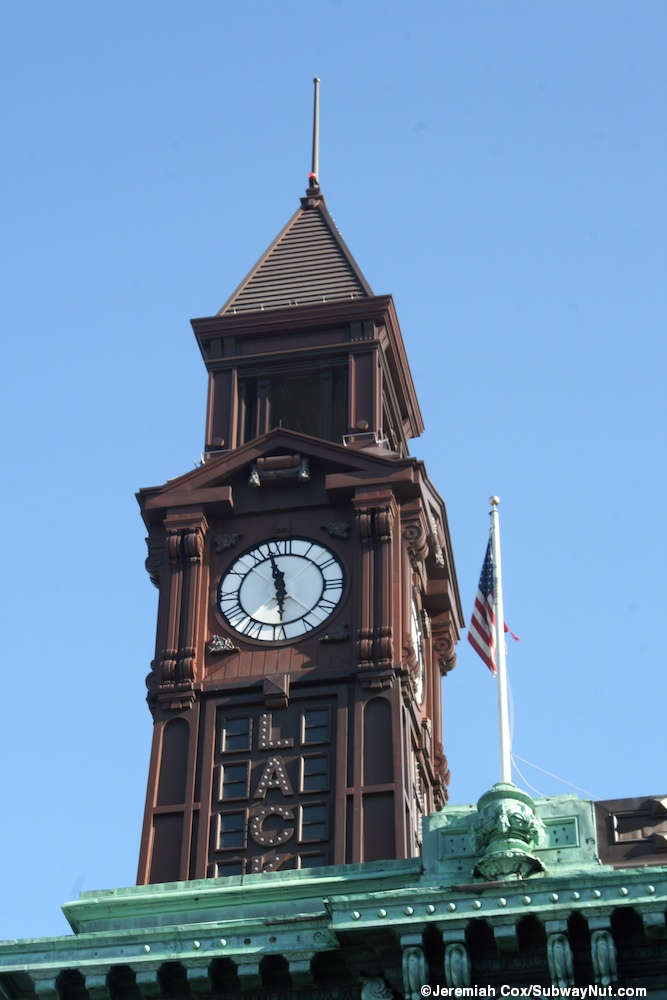
Like that the Erie Lackawanna rail terminal in Hoboken, for example, was built in 1909, and its dull brown color represents the hue of copper before it oxidizes – like the color of the Statue of Liberty originally. I never knew that.

That was a refrain that ran through my sunburned skull all day: I never knew that.

hoboken_terminal32

Or the fact that Ellis Island sits on the site of one of the harbor’s four original “oyster islands,” barely visible at high tide, and that Ellis Island, where so many American immigrants were “processed” was built first of wood and burned in 1897.

Ellis_Island_First_Bldg_Burnt_15-June-1897

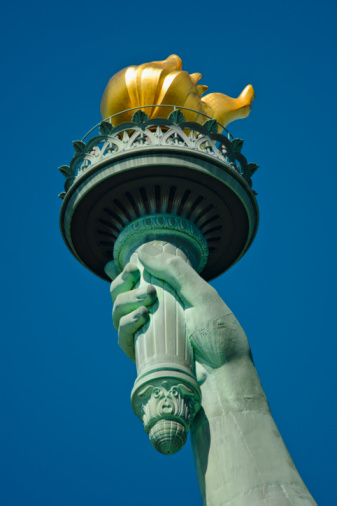
That the Statue of Liberty’s skin is two pennies thin, and the torch is covered in 24 carat gold. Her sandals are upturned because Liberty is “always on the move.”
statue-of-liberty-torch1

I never knew that either.

Or the following interesting things, absorbed between cooling draughts of water.

On Governor’s Island – we talked a lot about the future of New York, not only the past — the biggest demolition project ever planned in New York, of old Coast Guard buildings, will create hills eighty feet high from which to view the Statue and Manhattan.

On the Brooklyn Waterfront, the site of Wallabout Bay, you can now take a bike tour of the Navy Yard.

We passed Williamsburg, Greenpoint – it’s “your last opportunity to look at this industrial waterfront,” said the architectural commentary. Brooklyn is developing so fast. “Bloomberg’s administration has upzoned more acreage in the history of New York than any other.” But even Bloomberg might be stymied by what was described as the “black mayonnaise” sediment of the oil-contaminated Newtown Creek.

newtown

On Roosevelt Island stands a monument, a shrine to FDR, designed by the architect Louis Kahn, who passed away in Pennsylvania Station and  “it took a while to identify him.” I certainly never knew that about Louis Kahn. In fact, I could barely believe it.

In Harlem you find the concept of “the tower in the park”, when public housing units stand solo, without a connection to the larger community.

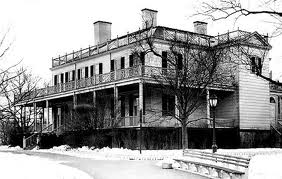
It was 1790 when Archibald Gracie built a house in what was then the countryside outside of New York City, never dreaming that his domicile would one day be the home of mayors (current mayor excluded, as he already has eleven homes).
gracie

And it was at this point that I put aside some of my adventuring spirit and stumbled inside to an air-conditioned seat. I was having fun — yet I wondered if the seasickness that has plagued me throughout my life had come back to haunt me. Then the music of fact revived me. That and the fizz of a diet Coke.

In 1909 the Metropolitan Life building with its elegant cupola was the highest in the world.

metropolitan

One difference between public and private high rises is that the private ones have balconies.

The Woolworth Building is just now having its centennial.

Gulp. Water. Is this boat rocking or is it me?

There is a very famous, ultra-cool architectural firm called SHoP. Never knew it.

One of the newer fancy buildings, of the many, many fancy buildings in New York, features an indoor dog walking court and built in nanny-cams.

Goldman Sachs employees take a private ferry every day from Manhattan to the firm’s offices in Jersey City.

The “exploded Malibu Barbie house” of artist Julian Schnabel was built on top of a stable.

NYT2008031214231288C

Fireboat 343, docked at Pier 40, was named for the 343 firefighters killed on 9/11.

343

Maybe if I were to go outside, get a breeze? Another Coke? Would my queasiness subside?

Frank Gehry’s sumptuous IAC building of smoky glass was made by “cold warping” the panels on site.

Gehry-IAC-building

There is now such a thing as a permanent window washing crane stationed atop several skyscrapers. It’s controversial, if that matters to you.

We passed a trio of kayakers at Pier 76, bobbing, no doubt very hot, but feeling very chill there in the waters of Manhattan.

And finally what the architect Scott called his favorite structure – his favorite, after all these hundreds? – the Lehigh Building. The “architects held back vertical elements at the façade,” he said, praising its “no nonsense” lines, its wraparound windows.

favorite bldg

We stumbled off the gangplank, our brains sunstruck, saturated and several pounds heavier. We collapsed.

gr after

Even youth faded in the heat.

mr after

But we revived with some time in a restaurant in an old boat called the Frying Pan.

frying pan

And taking the place of birthday cake, an ice cream sandwich with red velvet wafers and cream cheese ice cream.

red velvet

Home to dry land and cool, fragrant birthday flowers, from Maud.

birthday flowers

4 Comments

Filed under Cooking, Culture, History, Home, Jean Zimmerman, Nature, Photography

Rapid Cycling

You’ve heard about the Citi Bikes that now throng Manhattan. There are thousands of them parked in solar-powered docks from Battery Park to Central Park. Anybody with a bank card can rent one for half an hour. (There are some bikes in the outer boroughs, too.) They’re making New York into Minneapolis or Melbourne or any of the other healthy bike-sharing cities around the world. Everybody in New York is taking a set of wheels out for a spin, tourists and natives alike.

citibikes

I said, when asked, I wouldn’t do it.

I did it.

My logic: there are a lot of things on my reverse bucket list, my fuck-it list, things I pledge never to do. Anything involving getting lofted high above the ground. No skydiving for my 60th birthday.  No bungee jumping any time at all. The list goes on.

Then there are things I will probably never do even though it’s my dream. Leaping over a fence, say, while gracefully swinging my legs out to the side. It’s not a question of being young enough — I never could do it. Too difficult.

But riding a soft-saddled steed on a Manhattan summer afternoon? This I could probably accomplish without undue shock to the system.

Gil agreed.

gil:bike

It would only be 30 minutes, after all.

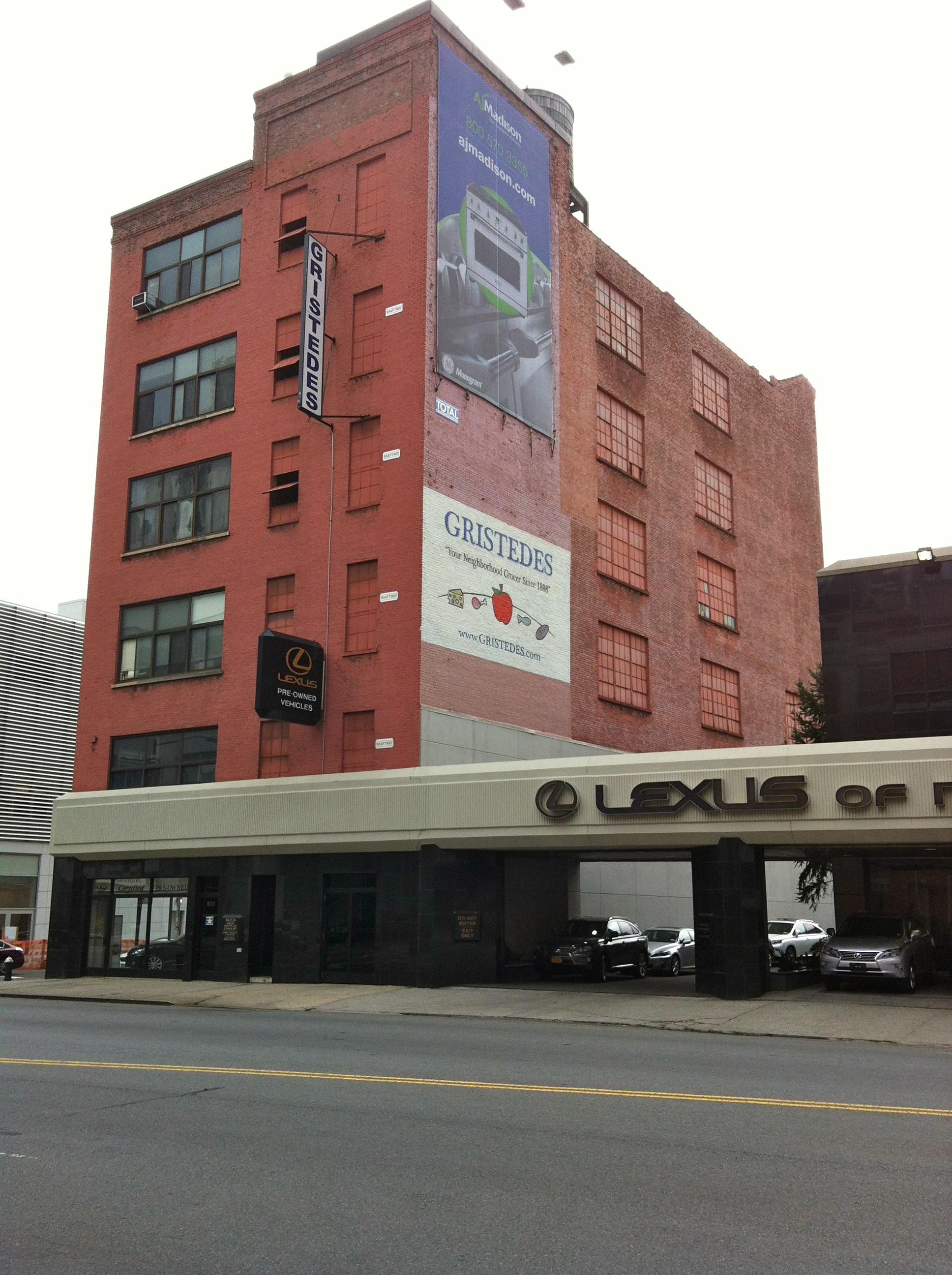
We started at luxury car alley, that stretch of Eleventh Avenue in Midtown where drivers with a fat wallet can take away  a Lexus, an Audi or a Mini. Glossy, glassy buildings on every side. But as in so many corners of New York, shreds of a past neighborhood identity can be found if you look, like old signage for a supermarket over the Lexus dealership.

IMG_0527

Someone was watching us.

IMG_0526

We’d better behave. Across the avenue from the bike rack, at 59th Street, stands a grand monument to both the subway system and steam, a full-block-square Stanford White designed industrial temple that was originally the Interborough Rapid Transit Powerhouse.

power plant

Built in 1904, it has bold Rennaissance Revival details. When it outlasted its usefulness to the subway system in the 1950s, Con Edison took is over to supply the New York City steam system.

Under the shadow of its grand façade we pedaled to the Hudson, wobbling ever so slightly and nearly getting sideswiped by several taxis. Then we joined the stream of cyclists on the pavement along the river under the West Side Highway.

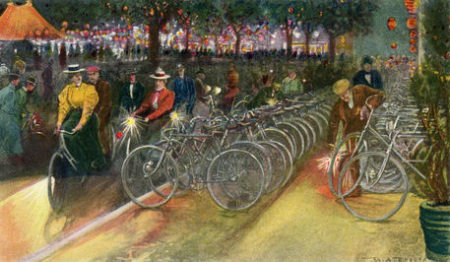
Biking is hardly a new fashion in New York City, especially for women. In the 1890s, female cyclists crowded the urban streets, and their exploits were enthusiastically described by gossip columnists. Pictures of glamorous women, the wind in their upswept hair, graced the covers of Puck, Life, Scribner’s.

1097-1510-Bicycling for Ladies_front cover_copy

A slight hitch in their pursuit of the sport lay in their mode of dress – the yardage of their ankle-length skirts had a tendency to get snagged in the wheels of the so-called “safety bicycle.” But that was okay, split skirts – bloomers – were coming in. Just ignore the consternation of cycling advocate Mrs. Mary Hopkins of Boston on the subject: “It has made wheeling just another way for a woman to make a fool of herself,” she told the New York Times. “She has made a half-way sort of creature of herself. She can’t be a man, and she is a disgrace as a woman.”

wheelsofchange1

Susan B. Anthony thought differently. She said: “I think cycling has done more to emancipate women than anything else in the world. It gives a woman a feeling of freedom and self-reliance.” Feminism before feminism, all on the mean streets of Riverside Drive.

Cyclists in New York, 1890s

“The moment she takes her seat she knows she can’t get into harm unless she gets off her bicycle, and away she goes, the picture of free, untrammeled womanhood.” I don’t know if Susan B. Anthony rode a bike herself.

sewyourownbuttons_wide

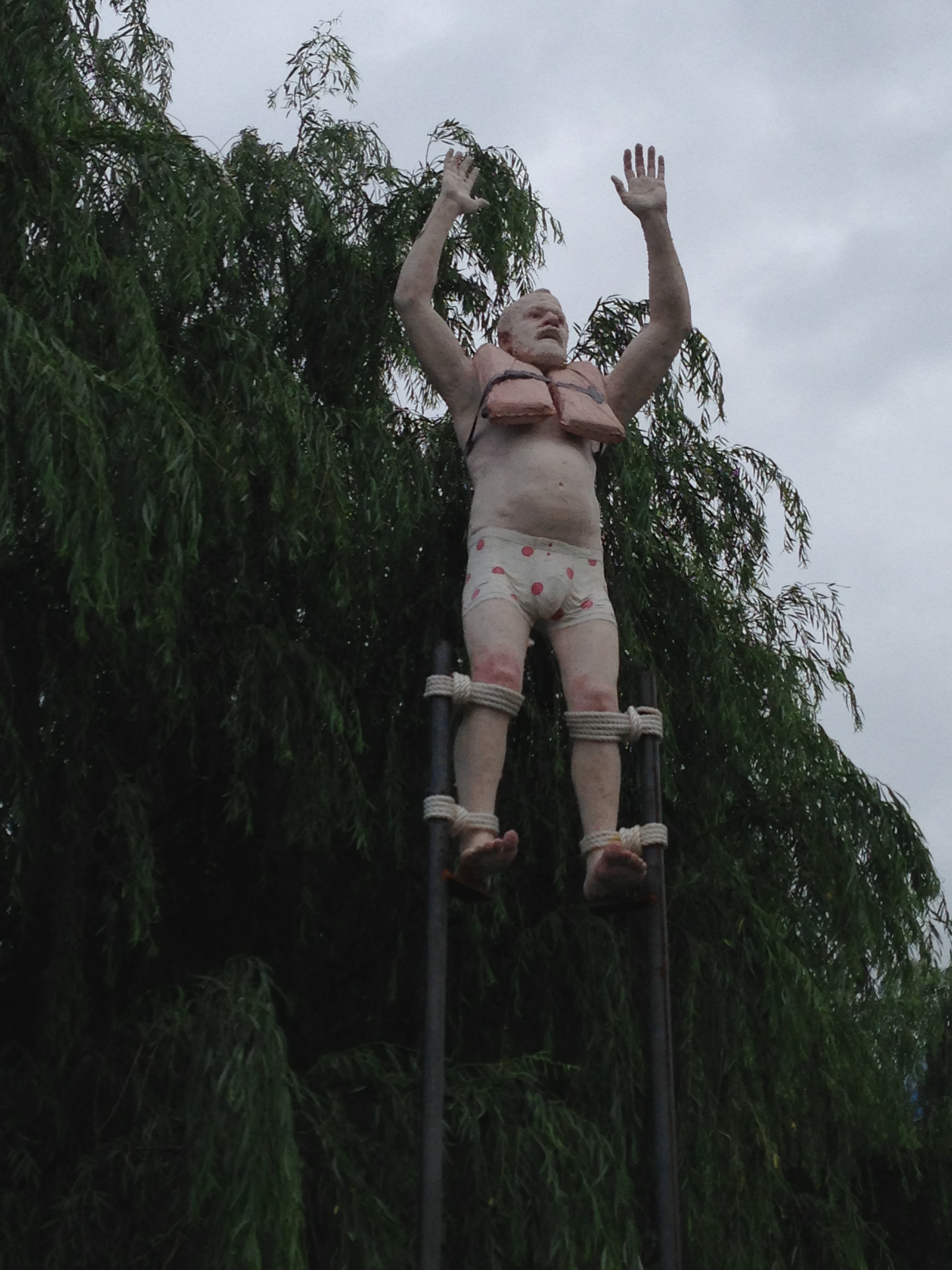
I don’t see how I could come to any harm if I got off my bike in one of New York’s new, pristine waterfront parks, aside from getting a headache from looking up at one of the oversized sculptures looking out over New Jersey.

river art

The sculpture by Benat Iglesias Lopez is one of a group installed this year called The Bathers.

I somehow prefer the art of the decrepit pilings that march along the coastline, vestiges of a different age.

nyc pilings

They’ve been there so long, and they’ve seen so much.

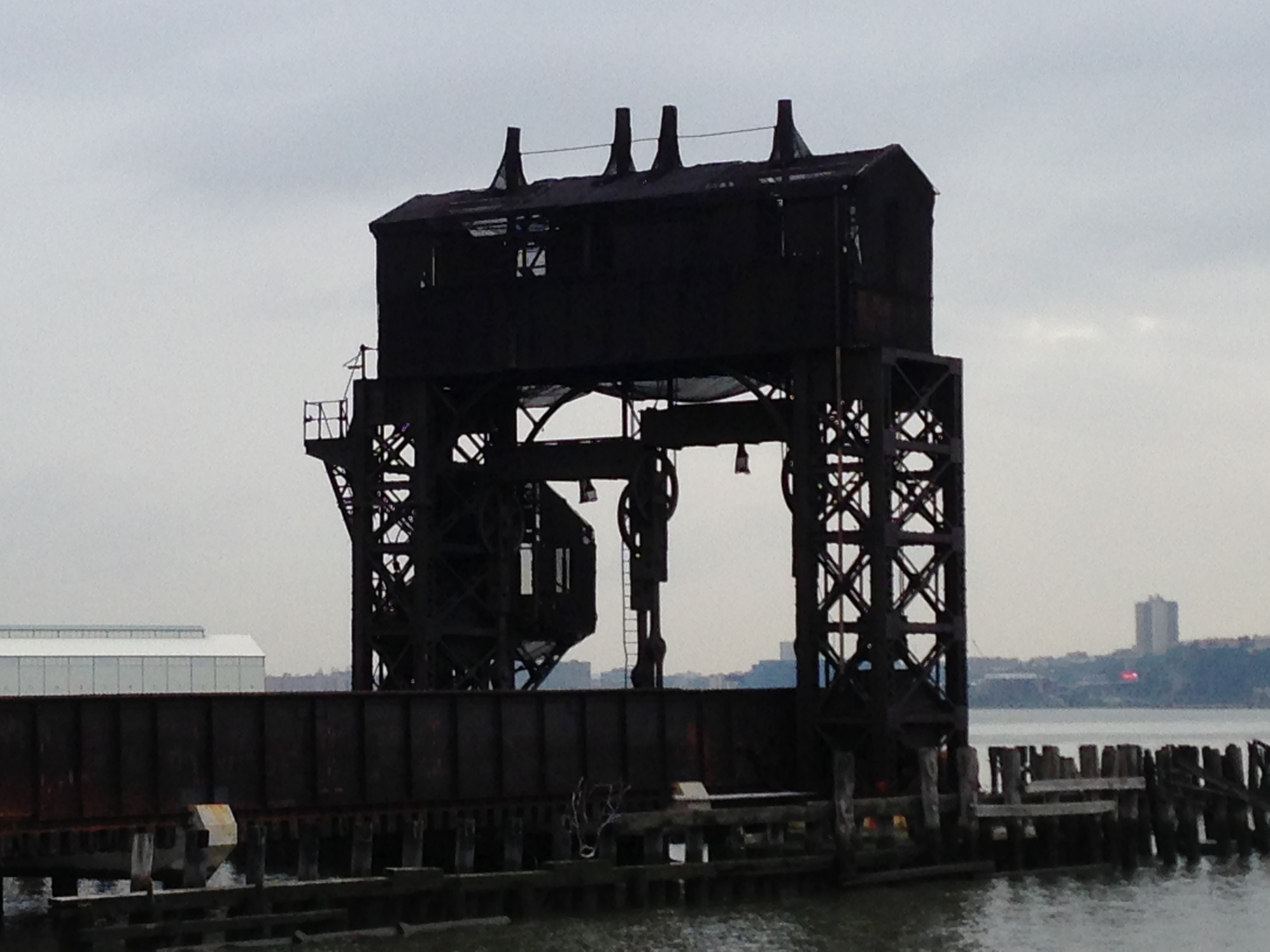
I’ve also always loved this  landmarked historic ruin, the control tower of the 69th Street Transfer Bridge, which at one time belonged to the West Side Line of the NY Central Railroad. The bridge was built in 1911 and enabled the transfer of train cars from rail to boat, to be floated across the river to the rail yards of Weehawken, New Jersey.

elevator tower

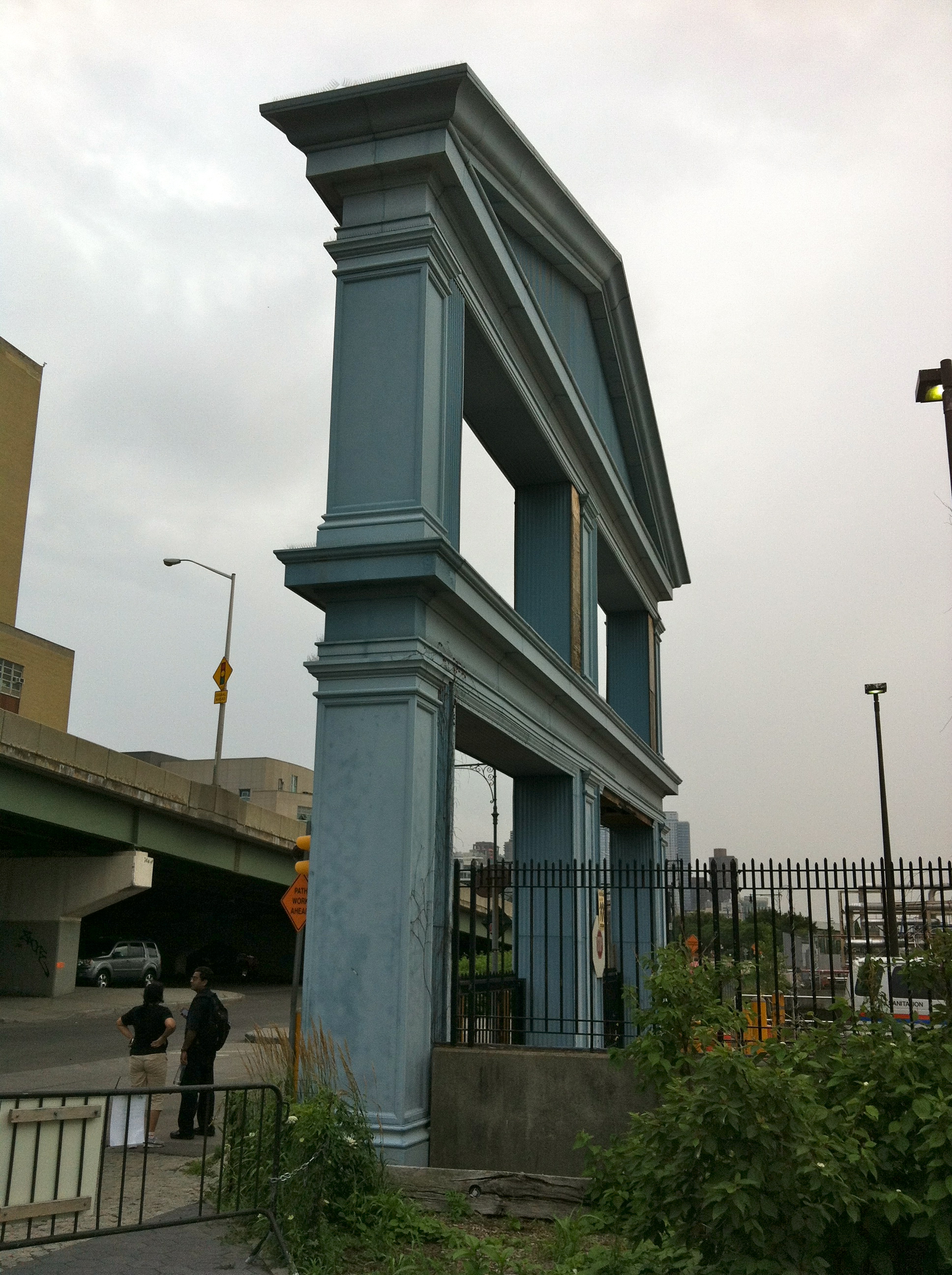
I often get a view of this spooky structure from the West Side Highway that runs alongside it at just about its level. Something else, too, that I can usually spot from the highway but now get a better view from my bike, the proud classical gateway to the Sanitation Pier at 58th Street.

IMG_0525

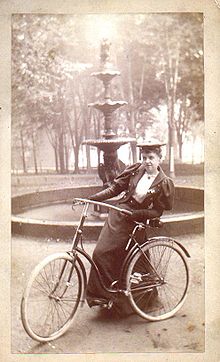
We checked our watches and found it was the moment to return, but promised ourselves this wouldn’t be the last time we risked our necks for a half hour of the Manhattan wind in our hair.  As we picked up to go, I felt a certain proud resemblance to another female cyclist of the past.

jz bike pose

Only her cycling get-up’s a little more elegant than mine.

17303653102979642

2 Comments

Filed under Culture, Fashion, History, Home, Jean Zimmerman, Photography

Swedish Farm

My friend Sarah Hollister, an American who has lived in Sweden for some years now, agreed to do a guest post for me. Her perspective and her pictures are lovely. Here she is:

We’re soon leaving the Henning Mankell Gård (translated farm) up here in Härjedalen in the northwestern part of Sweden. Just one more day. One of the great things about this writing residence is that family is welcome (there’s even a sweet baby crib in one of the bedrooms) so my partner Gunnar has been here with me which has been good. This house is too big for one person.

IMG_1634

I spent the first day roaming the roominess of the house, up and down the stairs, examining the books in the library, checking out the huge laundry room, washer, dryer, and a drying closet for heavy rugs. Just enjoying the space before I settled down in my workroom on the first floor.

Gunnar and I took some day trips on the two cycles provided and discovered a number of deserted houses up here, people who had given up. Though we also saw some very prosperous looking farms.

IMG_1486

You can’t be in this part of Sweden without encountering a fäbod, (translated mountain pasture). But a fäbod is more than grass, it’s a concept, now lost, a way of living. Fäbods consist of a cluster of small weathered log houses built on a site where there was plenty of green grass for cows to graze to their heart’s content.

We visited  one just up the road from the Mankell Gård, climbing up the narrow path that led to the high pasture. I thought of cows, of many cows navigating these paths covered in roots and rocks, mooing and balking.

IMG_1536

The log houses are fairly small, no bigger than a large farm shed, with low ceilings, dispelling the myth of the towering Vikings. It’s easy to bump your head if you don’t duck. Most of the buildings were built for storage, hay and wheat, milk and butter products.

IMG_1523

In one of the buildings, we found pictures carved into the beam logs. There was a written explanation on the door that explained the pictures were representations of the wars between Norway and Sweden, border skirmishes that took place up here in this part of Sweden. It was hard to tell though. The small figures looked like ordinary men and women to me. Someone had an interest in art.

IMG_1532There is one log house (as in every fäbod) specifically to house a young girl, the fäbodjäntan. It’s difficult to find an English translation for this word —  let’s say cow tender. She helped drive the cows up the mountain, then stayed on alone tending the cows over the long summer days.

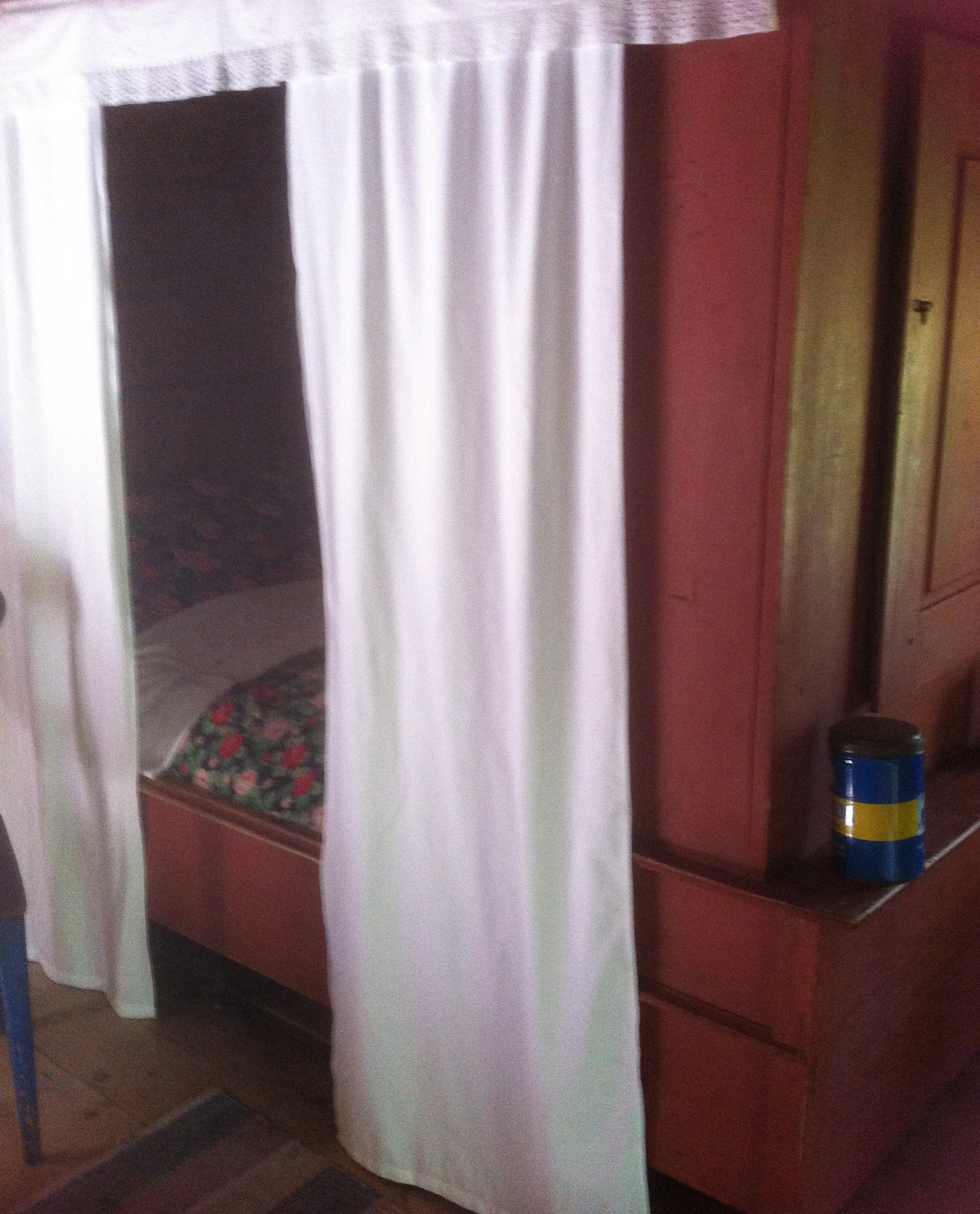
What do we know about these girls, the fäbodjäntans? They had a song they used to call out to the cows, their voices echoing up and down the hills and mountains. I like the romance of it, I admit. They slept in small beds in the small wooden houses of the fäbod. They were kept warm by a fireplace should the need arise, cooked their meals there as well and at times were allowed a visit from their fiancé if they had one. A larger bed with a curtain was available for those visits.

IMG_1518

Gunnar pointed out that morality was not so strict in those days, at least for farm girls.

IMG_1517

I’ve grown used the quiet of the mountains, the sunlight glinting off the birch leaves, shimmering, silvery. I wouldn’t mind living in a fäbod myself. They’re for sale if someone has a knack (and the money to spend) for renovation. It would be nice though to spend a whole summer in one, dreaming and writing.

IMG_1520

3 Comments

Filed under Art, Culture, History, Home, Jean Zimmerman, Nature, Photography, Writers, Writing

Rockets Glare

Hastening toward Wisconsin. Can it be a true road trip if you only drive one road? On the other hand, it’s a massive road, Interstate 80. And it’s the glorious Fourth.We begin at the GW bridge.

flagOliver has already finessed the jump from the  cargo hold to the back seat, next to Maud.

oliver back seatGil is principal road man.

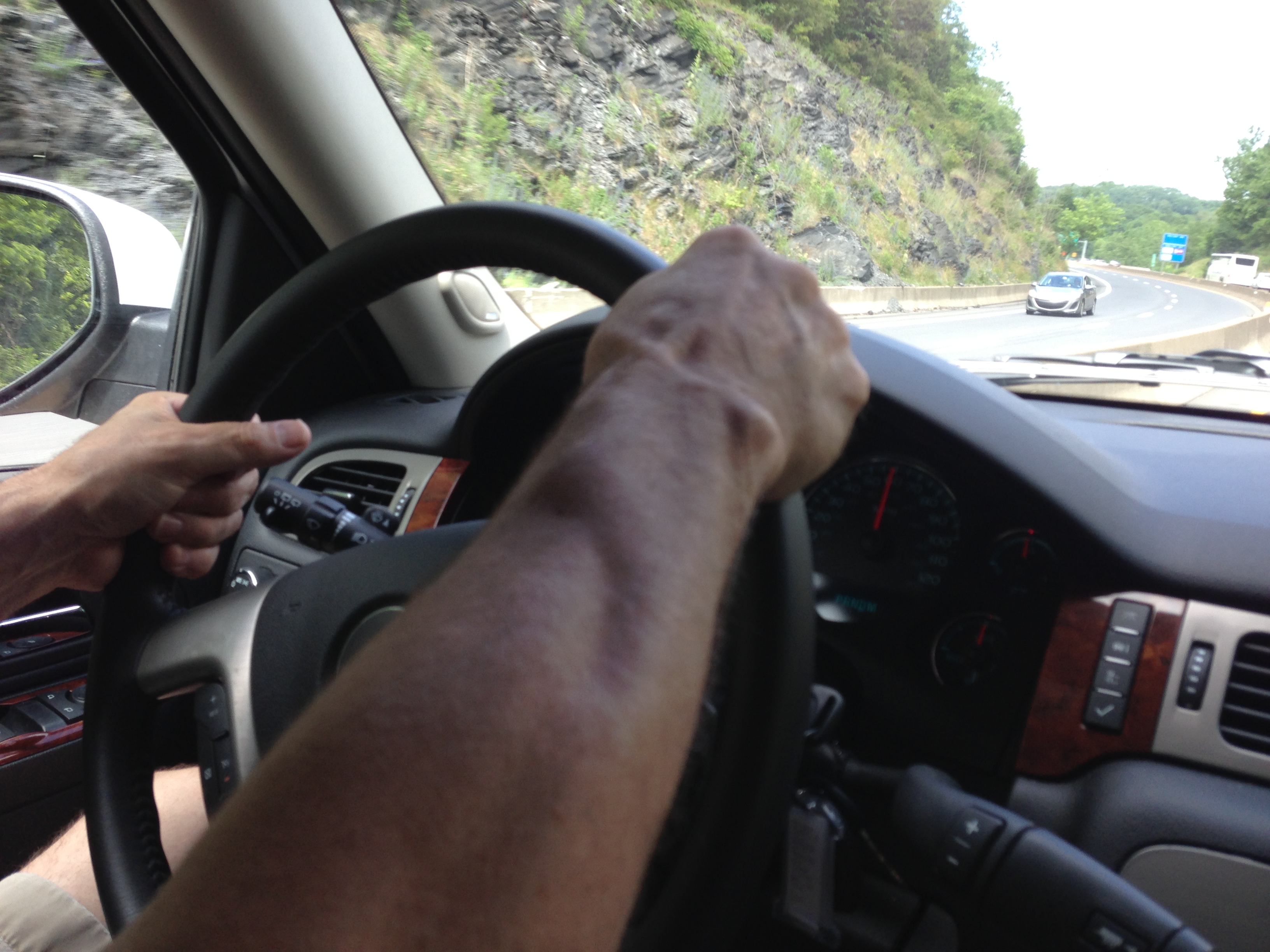
gil's armsJohn Lennon’s Dig a Pony plays repeatedly on the console.

Well, you can celebrate anything you want

Yes, you can celebrate anything you want

The land rolls by.

cloud shadow

The trucks roll  by.

truck

I do a road hog

Well, you can penetrate any place you go

Yes, you can penetrate any place you go

I told you so

Rain hits as I drive. Maud sweet talks her beau long distance.

windshield washer

Well, you can radiate everything you are

Yes, you can radiate everything you are

midwest sunset w carEyes drift over my book as the sun sets, superlative driver Maud in the driver’s seat.

I feel the wind blow

Well, you can indicate everything you see

Yes, you can indicate anything you see

Lennon later said he thought the song was garbage. Can you imagine?

dancers bookOn to the Chicago Skyway at Dusk.

chicago skyway


And then, all up the corridor through the great city of Chicago, starting at nine o’clock, splashes of fireworks go up from all the little communities along the way, on every side, red, pink, green, blue and silvery-white, some cascading right over our heads on the highway. Pop! Pop!

Chicago fireworks

All I want is you

Everything has got to be just like you want it to

Because

Fifteen hours, forty minutes, over 1,000 miles. I’d do this again, says Gil. Maud says, Me too.


2 Comments

Filed under Culture, Dogs, Fiction, Music, Photography

The Taksim Square Book Club

In  Turkey, people are reading books. In public.

Which is amazing, considering the country’s recent history.

Taksim Square Book Club

People are afraid of losing freedoms. And they’re finding a clever way to meet in public when demonstrations have been banned. Book clubs as free speech.

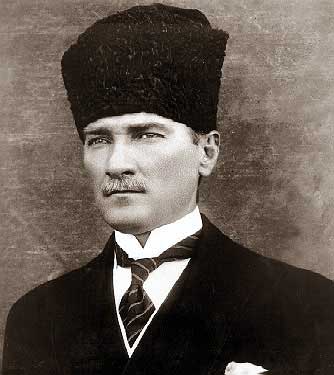
From Ataturk – which means Father of the Turks – who founded the Republic in 1922, all the way up to the present day, the country has had strong secular leadership.

ataturk3

Now the hardliners have come in. In Tacsim square the prime minister wanted to destroy part of a park for “redevelopment.” Somehow that struck a chord with the public and hundreds of thousands of people took to the streets.

The complexities of this story are better left for a political writer, but the numbers have already reached these totals, according to one source: 4,500,000 people provided their support for the Gezi Park Resistance; there were 603 protests in 77 provinces; at least 75 people were arrested; at least 1,750  injured; 3 people including one police officer died. There is an excellent visual timeline of the “ten days of resistance.” New developments are not promising.

Taksim Square Book Club

As an alternative to the violence, the Turkish performance artist Erdem Gunduz chose to stand with his hands in his pockets, facing the Ataturk Cultural Centre in Taksim Square for eight hours.

erdem-gunduz-kimdir-gezi-parki-duran-adam-4746497_1628_o

Gunduz become the symbol of the resistance movement. Thousands of people emulated his action, standing still for minutes or hours around the country. “The Taksim Square Book Club” dovetailed with the still postures, and the books people are choosing form a reflection of their thoughtfulness in the face of this tremendous cultural upheaval. Albert Camus, The Myth of Sisyphus, about God and meaning. Gabriel Garcia Marquez’s Leaf Storm. Nineteen eighty-four. Turkish writer Tezer Oslu’s short story collection Old Garden-Old Love. When Nietzche Wept, a historical novel by Irvin David Yalom. Again, Nineteen eighty-four.

Taksim Square Book Club

What would you hold?

8 Comments

Filed under Culture, Fiction, History, Jean Zimmerman, Photography, Publishing, Writers, Writing

Lowdown on the High Line

New York City’s High Line park is totally overexposed. I’m going to expose it further.

walking

I walk with three menfolk from the top to the bottom of this new icon of the Manhattan landscape, stunned by the native plantings that seem to find city soil the best fertilizer in the world.

yellow flowers

I spent a day in the country looking at wildflowers and saw no profusion like this.

cone

Superflowers.

purple flowers

And a planting of bamboo, which has to be tightly constrained by a metal guard to keep it happy in its place. Kind of the opposite of Jesse, who isn’t happy unless he’s on the open seas or in some other free environment.

jess:bamboo

The High Line was  built between 1929 and 1934 from Gansevoort to 34th Streets to lift dangerous freight trains above the traffic. For years, meat, produce and dairy products were shipped to town and arrived at the third floor level of plants. That might have been a little inconvenient, but the situation previous was insupportable. In the nineteenth century, people actually called Tenth Avenue “Death Avenue” because the street-level railroad caused so many accidents. Men in an outfit called the “West Side Cowboys” were hired to ride in front of trains and wave red flags to warn traffic off.

cowboy

In 1980 the last train came through with a load of frozen turkeys. Then the rail bed deteriorated. Gil, who lived in the city then, says, “It was the high line, alright, everyone was getting high.” What grew there was what the High Line people now politely call a “self sown landscape.” In other words, weeds. Weeds, condoms, syringes.

Now there are trees, grasses and flowers, and I think even Larry, who lives on a farm surrounded by midwestern forest, is impressed.

larry

The gardeners of the High Line transformed the place, beginning in 1999. It’s a classic urban place to stop and smell the roses.

climbing roses

Wild roses are fairest, said Louise May Alcott, and nature a better gardener than art. The High Line has nature, art and a third thing, a deep industrial past.

There are musicians.

asian musician

Painters.

painter

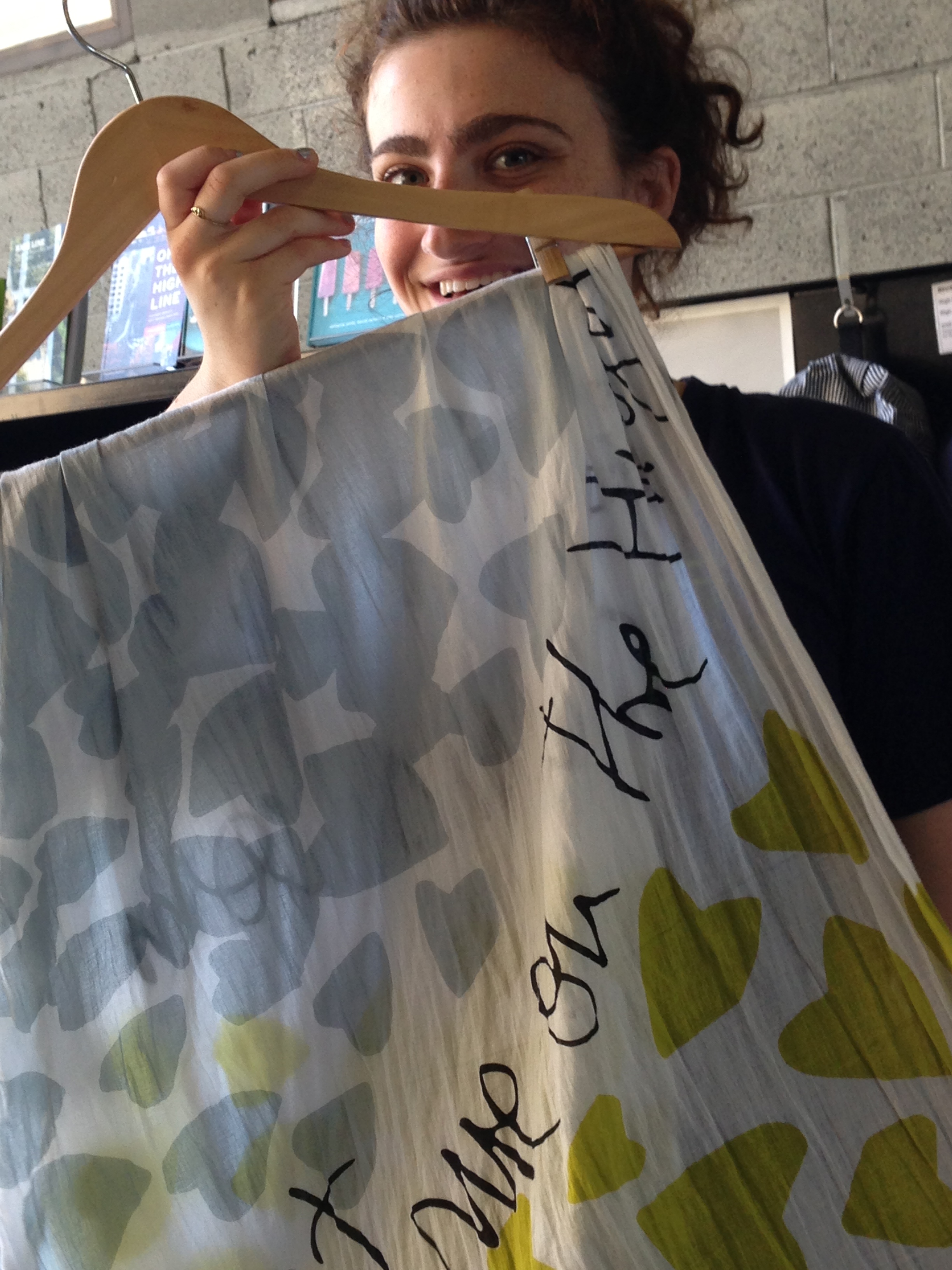
It even has its own clothing franchise, with sarongs that read “Dreams Come True on the High Line.”

sarong

Sculpture rises up along the walkway.

funny sculpture

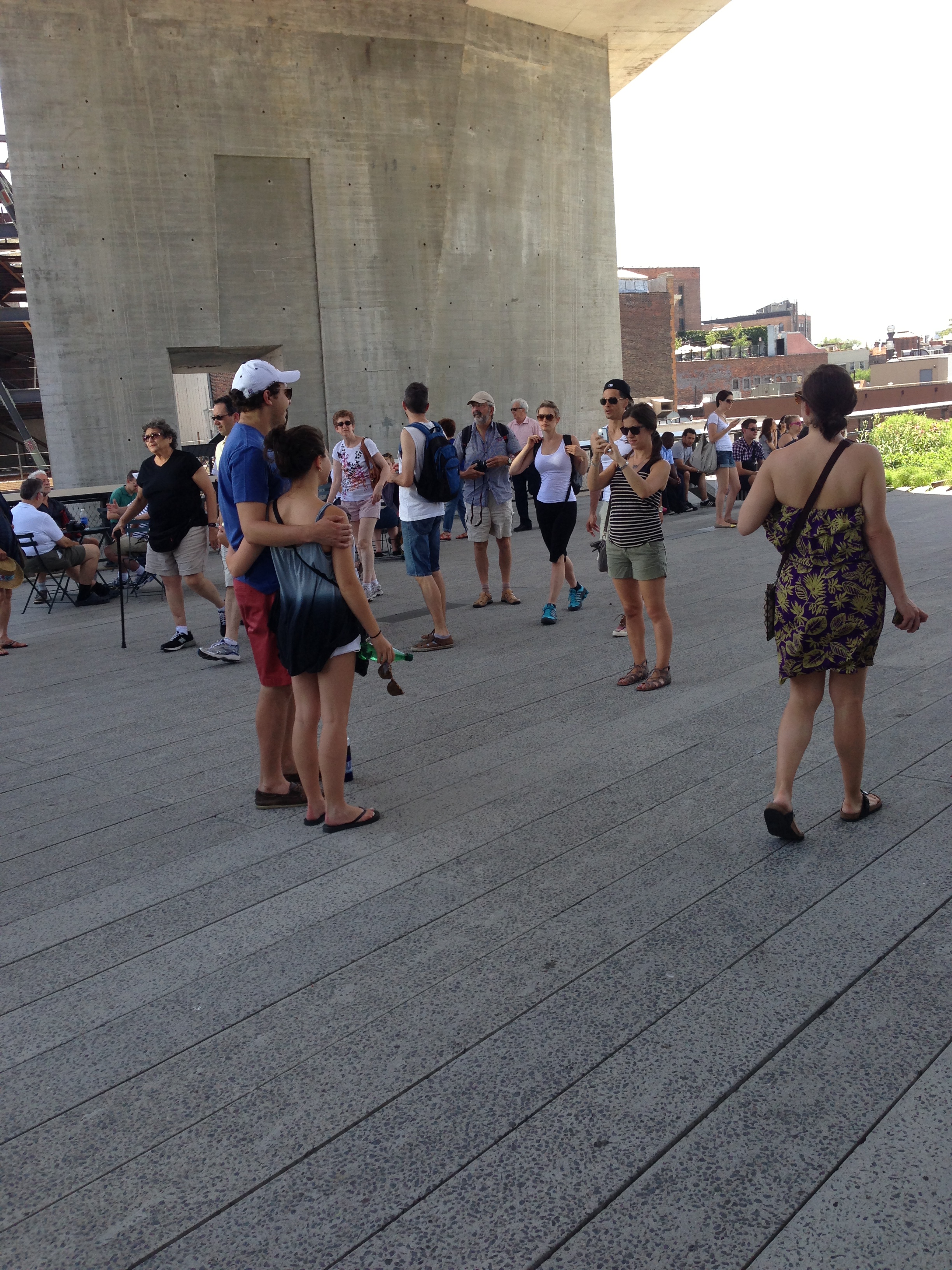
And human sculpture, as people freeze for pictures. What the High Line should have next to the fresh fruit ice pops stand is a camera kiosk. Someone would get rich. Tourists throng — you can walk a long way down the path and not hear a word of English.

taking pictures

With the new, there’s the old – a mysterious pattern of bricks.

bricks

And a towering old painted sign: BONDED. Across it a tag reads REVS, shortened from REVLON, a famous graffitti artist. “It’s got to be on the edge, where it’s not allowed,” REV has said. There’s room on the High Line for all vintages.

old sign

The Gehry-designed IAC Building, at 555 West 18th Street, with its milky, origami exterior, has been open since 2007. Vanity Fair called it the world’s most attractive office building. It’s especially great to see it in tandem with structures of other vintages, including the old-fashioned piedmont of a lower one whose top is flush with the park.

Gehry

The Standard Hotel soars above. It gained some notoriety when High Line strollers realized they could look up and see happy exhibitionists making whoopee in the floor-to-ceiling windows.

the standard

(When Chuck Barris was looking for a word to meet the network censors’ standards on the Newlywed Game, the term ultimately settled upon was whoopee.) Meat trolleys for hanging beeves still exist if you look closely. Right along the Standard, in the shadows, a rusted remnant of the  district’s sanguinary past.

beeves

But one essential thing about the High Line is the views.

cityview

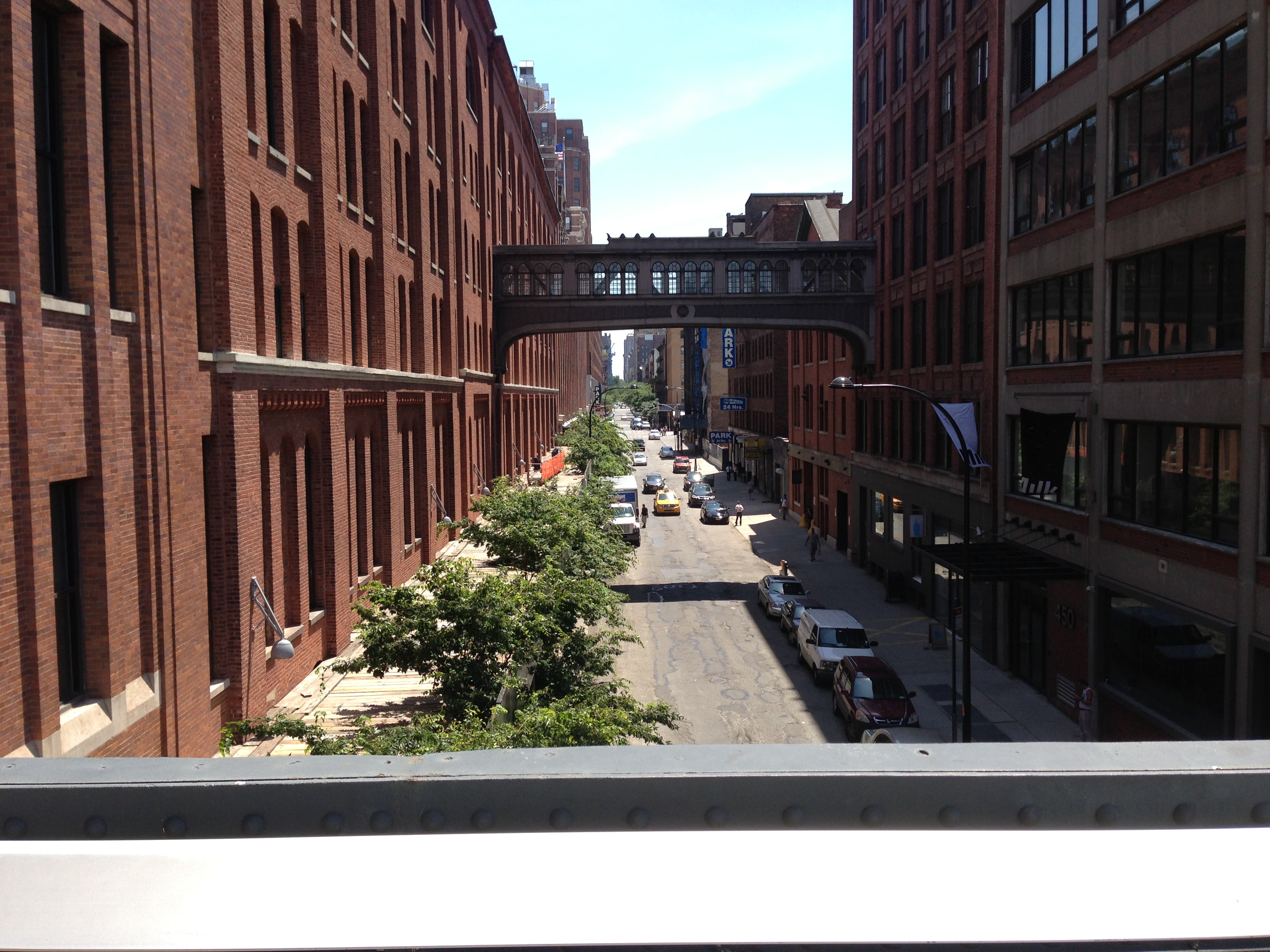
In the nineteenth century, landscape architects carved out pastoral views on grand country estates, cropping trees advantageously to accentuate vistas of rivers, mountains, or other natural elements. The High Line is the 21st century equivalent, with quirky street perspectives all around, framed from this tall iron structure.

bridge

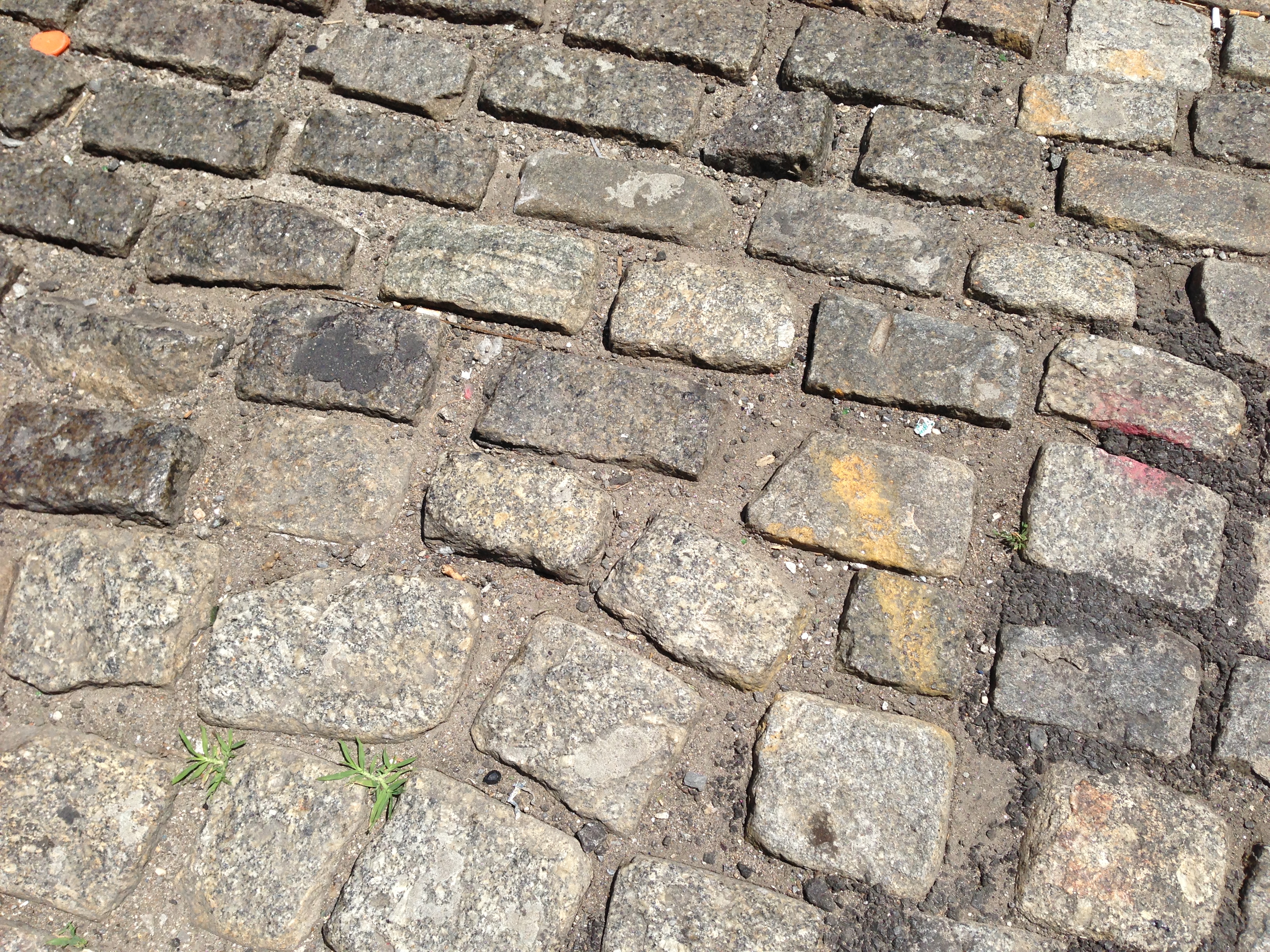
After our promenade, we descend to vintage New York cobbles. A remnant of the lost city.

cobbles

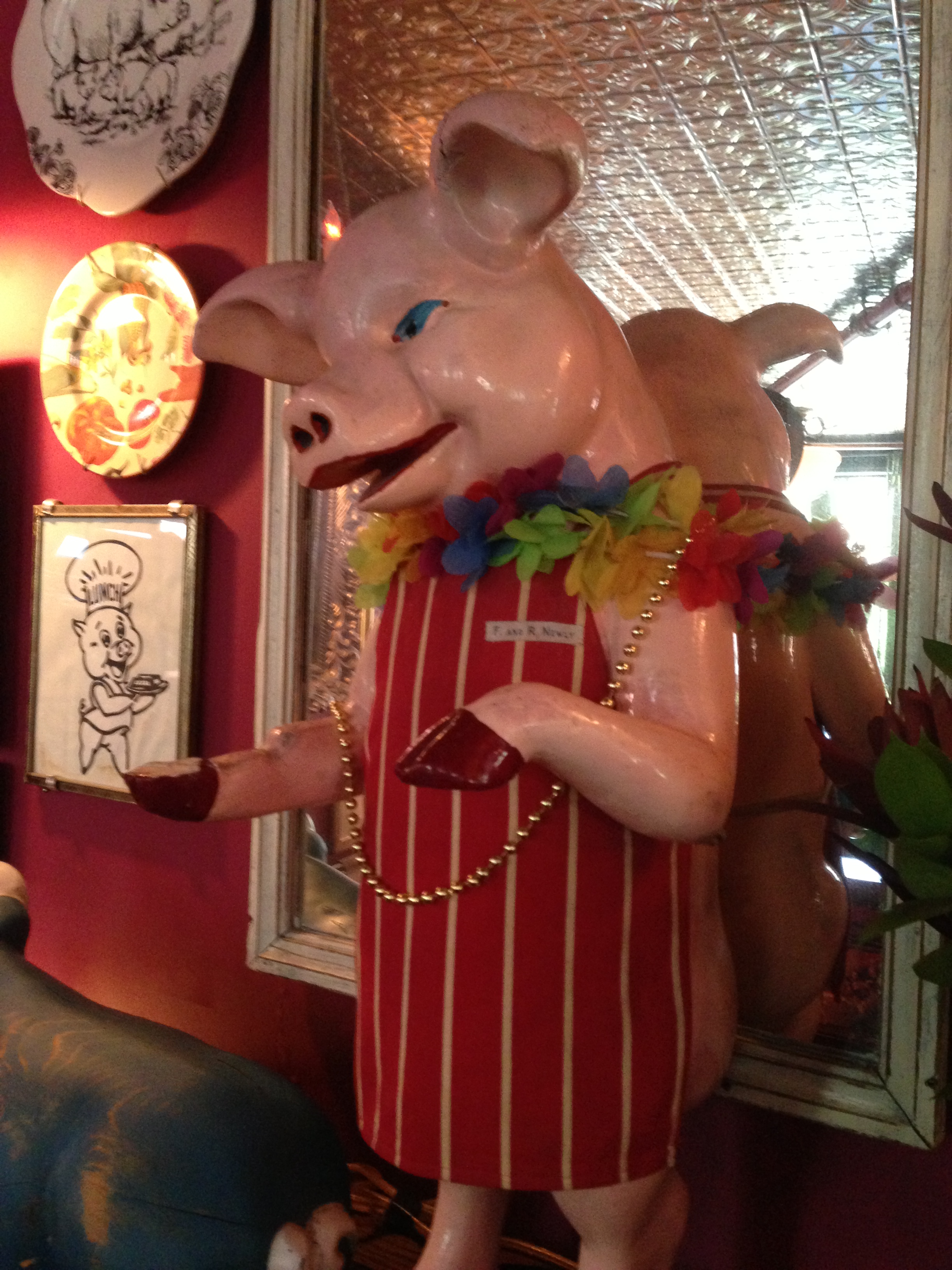
We refuel at a restaurant called The Spotted Pig.

pig

The eggs it serves are divine, with crunchy flecks of sea salt.

egg

I am tired after our sun-blasted walk of a two miles. Jesse is wide awake, which he always is, except when he’s asleep.

jess eyes

And the french fries… well, it is hard to shovel them in fast enough.

fries

The chef strews the shoestrings here with shreds of rosemary. Everything tastes better after the High Line. An ordinary pinapple smoothie from a new perspective.

smoothie

A fantastic church frieze overhead. Had it always been there? I can’t recall. The galleries of Chelsea are closed on Sunday, but that doesn’t mean the great sidewalks of New York are closed for business.

girl graffiti

Too much graffiti has been scrubbed off in recent years. Manhattan is the new Minneapolis. Now we have clean, healthy biking all over town. In Greenpoint, Brooklyn,  where I visited a week ago, it’s a different – and more colorful – story, as it hasn’t quite shed its industrial past and makes a fine canvas for folks who do outdoor outsider art.

slut tribe

Here in the Meatpacking District we find a few worthy efforts.

boy graffitti

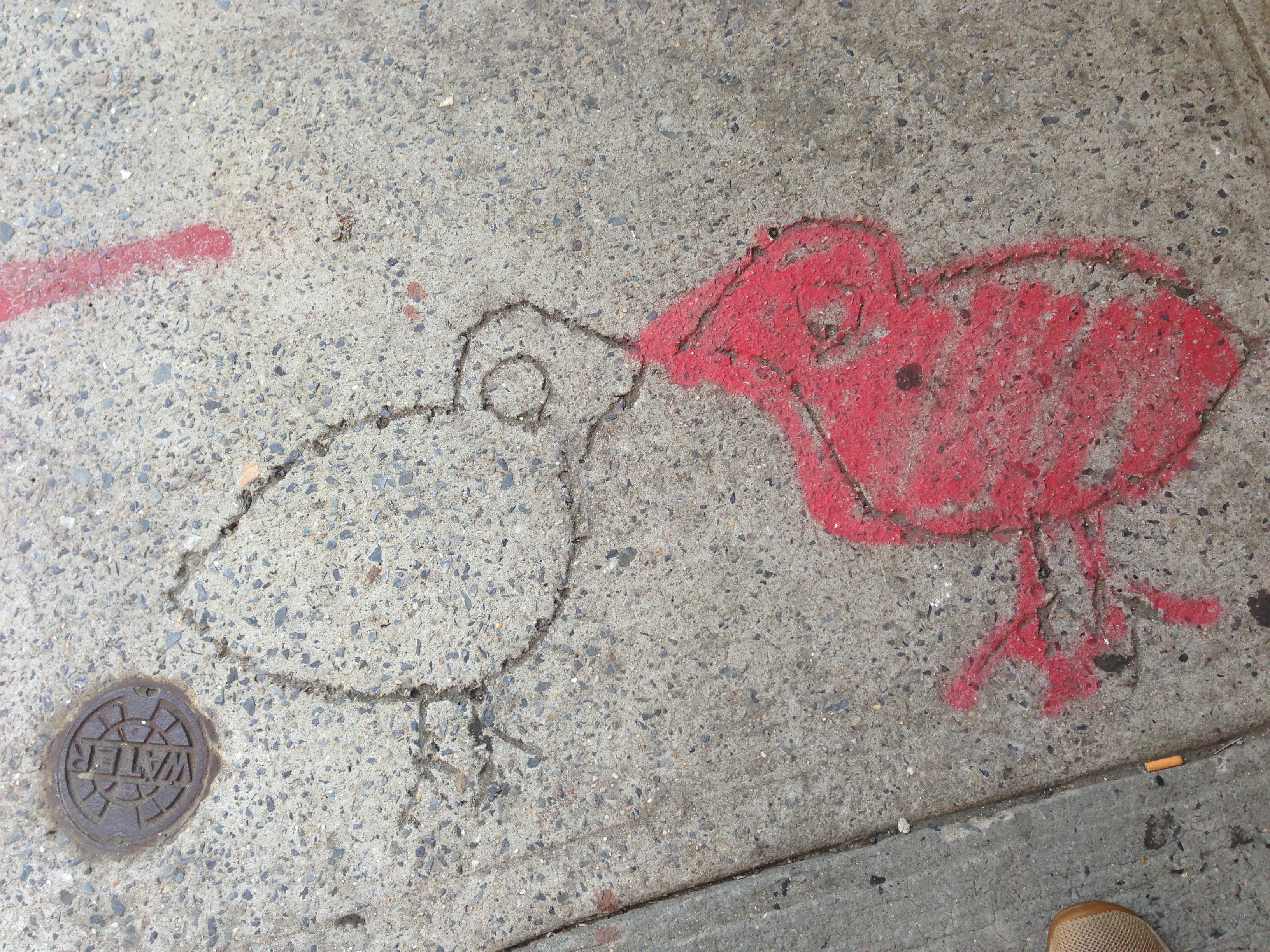
Two chicks etched on the sidewalk beneath our feet.

chick sidewalk art

For some reason I like these simple birds, making kissy next to their little water fountain.

The all-seeing eye. The Eye of Providence.

evil eye

On the island of Manhattan, if you let your vision wander up, you see some marvelous things. A blue horizon chockablock with architects’ freshest concoctions. Pieces of old New York, dusty red bricks that have miraculously been saved from the wrecking ball. Climbing roses, if you’re walking the High Line. From that same pathway, a glimpse of a well-to-do fanny in a chic hotel window. And there are still wooden water towers.

water tower

Just two companies, Rosenwach Tank Company and Isseks Bros., manufacture the tanks, which are unpainted and made with untreated wood. A new water tower is a leaky water tower, as it takes time for the material to become saturated and watertight. Chelsea has one, completely dry of course, that has recently been transformed into an exclusive club called Night Heron. You can see it from the High Line.

1 Comment

Filed under Art, Cooking, Culture, Fashion, History, Jean Zimmerman, Nature, Photography, Writers, Writing

A Bookish Brunch

Christina Baker Kline’s book Orphan Train was released on April 2nd by William Morrow, and I was lucky enough to attend a brunch in her honor today. As the intuitive and scrappy Allison Gilbert, our nonfiction-writing hostess, put it, “Writing a book is like pushing a mountain through your head.” An event like this, she said, can show people that a book exists from the ground up. “That’s what we writers do for each other.” Indeed. The house in Irvington, New York was filled with bookish well wishers.

Christina

Orphan Train has hit the best seller lists of both USA Today and The New York Times, Goodreads saluted it as a 2013 beach read, and it has been brought out in a special edition by Target, for which Christina had to sign thousands of copies.

orphan trainShe had come in from a meeting with the powerhouse biographer Robert K. Massie and would go off to be the keynote speaker at an event held by Books New Jersey, but spared a chunk of time in the noon hour to describe her book and the process by which it went from Henry James’ “germ of a story” to a full-blown narrative.

Christina stumbled on to the phenomenon of orphan trains 10 years ago.

orphan-train

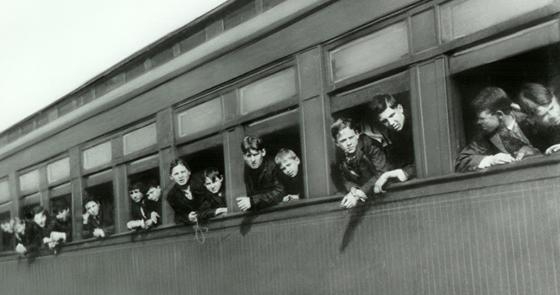
It seems her husband’s North Dakota grandfather was one of “riders.” Most  kids were plucked off the streets of New York between 1854 and 1929 and shipped to the Midwest as free labor for farm families. Ultimately there would be 250,000.

orpans with women


Some of them, actually about 60 percent, were not legitimately parentless, but their single parents, usually their mothers, simply couldn’t afford to feed and house them. Civil War widows, in particular, couldn’t hack the expenses of parenthood, and there were no social programs to help them. Today the original orphans have two million descendants in this country.

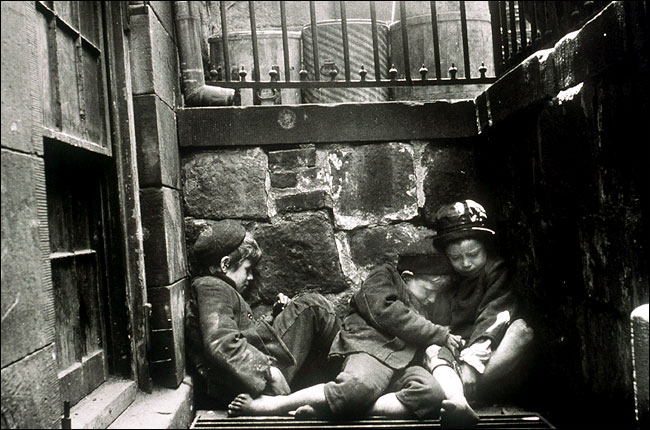
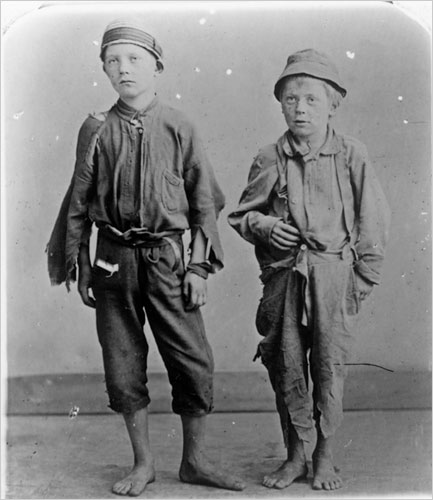
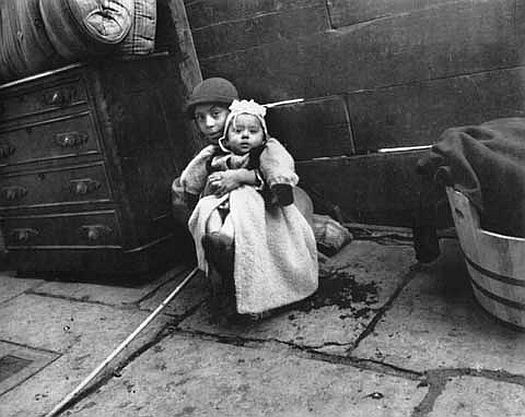
Jacob Riis made devastating pictures late in the 19th century of some of these lost New York street children.

jacob riis boys

The older they were, the more desirable they were for the farmers who took them in. Better workers.

riis grown boys


Babies were popular too.

riis boy and baby


Girls, not so much. A threat to the women in the household. This little girl Riis captured is beyond sad.

riis girl

Now Christina has taken this powerful material and made a story out of it, centered in the relationship between a troubled 17-year-old girl and an aging Irish immigrant who keeps her orphan train memories in an attic trunk.

Christina and I talked over aspects of bringing out a book, including the fact that we both take a powerpoint with us when we hit the road to talk about our work, something not every fiction writer does but that seems appealing to fans of historical fiction. I liked something she said about the writing process, about creating the structure for a story: “We need to build too much, explain too much, before we take that scaffolding away in the revision process.”

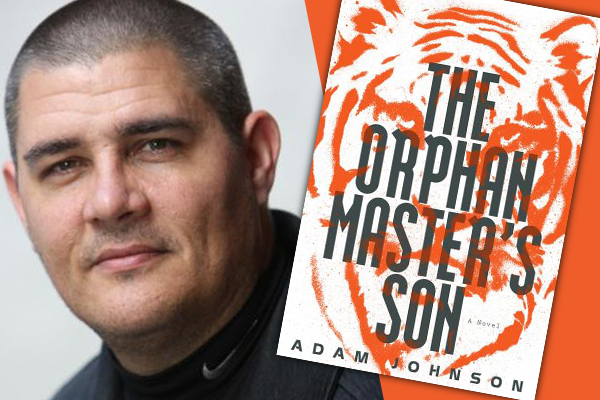
I can’t wait to read Orphan Train, to see what commonalities exist between her children of the late-19th century to the early 20th century and the parentless waifs of The Orphanmaster‘s 17th-century New Amsterdam. Novelist Helen Schulman  said Orphan Train “makes for compulsive reading,” and The Orphanmaster has been called “compulsively readable,” so we have a bond. It’s too bad Adam Johnson couldn’t be sharing bagels and lox with us at Allison’s house today.

orphanmastersson

His book, The Orphanmaster’s Son, won the 2013 Pulitzer Prize for fiction. I have found myself in the interesting position since the award was announced of having people congratulate me for my “recent honor.” Well… no. But you’ve got to think that this hat trick of orphan novels suggests something in the cultural water. Andre Gide said, Not everyone can be an orphan. I salute Adam, whose book is supposed to be as terrifying as it is wonderful. But for now, it’s just Christina and me in the picture.

j and c


7 Comments

Filed under Cooking, Fiction, History, Jean Zimmerman, Photography, Publishing, Writers, Writing