Category Archives: Jean Zimmerman

Thanks for Schools

Last summer my daughter Maud helped build a school in La Cruz, Nicaragua, an effort sponsored by BuildOn, the organization she runs at Columbia. You should hear the stories she came back with. The tiny house she stayed at, bigger than the rest of the houses in the village, yet they all slept in the same room. The unvarying meals of rice and beans (delicious! she said). The ankle-deep mud where they poured the foundation for the school. How they worked side by side with the townspeople on the construction of the building. The town had had only a one-room schoolhouse before, unadorned. The immense friendliness of her hosts, who tolerated her lack of Spanish with patience and charm. The excitement of the little kids about the education that they knew was coming their way.

They were thankful. And the members of BuildOn will be thankful for your support this year.

This May the college students of BuildOn plan to travel to Malawi to build a primary school that boys and girls will attend in equal numbers. That’s important, as you may know, because getting an education is a difficulty faced by disadvantaged girls in many places around the globe. By December 20th Maud needs to personally raise $1700 out of $4700 total or the trip won’t happen. Please give what you can by clicking the red “donate now” button on Maud’s BuildOn page. Thank you! And please pass this appeal on to anyone you know who might support Maud’s effort.

Maud and Oneida in Nicaragua

2 Comments

Filed under Jean Zimmerman

Canned Goods

Everyone is gathering, gathering, and so are the foods we eat when we gather — the brined white turkey, yes, but also the potatoes, the spinach, the gravy fixings, and most iconically, the canned pumpkin, better than fresh to make pies, everyone always says. This is the best song I’ve heard about canning fruits and vegetables — in fact, the only song I’ve heard about canning, by Gregg Brown.

1 Comment

Filed under Cooking, Home, Jean Zimmerman

Stately, Plump

We went to the farm to pick up the bird.

Hemlock Hill Farm lies in Cortlandt Manor, New York —  it sells organic meat and poultry all year long. Also, a compost/manure mix that I plan to get for my garden this spring. Chicken manure being the piece de resistance for garden fertilizer. When I had a house in an apple orchard upstate there was a chicken farm down the road and we’d get sackfuls of the stuff. Zucchinis are always big but the ones I grew then had the proportions of missiles, and my tomatoes  were like cantaloupes.

Hemlock Hill was a real working farm, not inordinately picturesque, though there was this one misty hillside…

The shop was earthy too. People lined up a dozen deep to pick up their turkeys, which were bloodier in their plastic bags than any poultry I’d ever seen in a supermarket. I looked through a swinging metal door to a back room behind the cash register. Framed in window glass, men gutting birds on stainless steel tables, thumping them all around. The room was cold, and steam lifted off the white skins. When was ours butchered?, I asked the woman who rang us up. Ohhh, she checked the tag. Last night. They did a lot of ’em last night.

The bird itself is delightfully plump. Stately, plump Buck Mulligan. Almost as perfectly plump as this sight next to the Department of Motor Vehicles, where I stopped on the way to Hemlock Hill.

2 Comments

Filed under Cooking, Jean Zimmerman

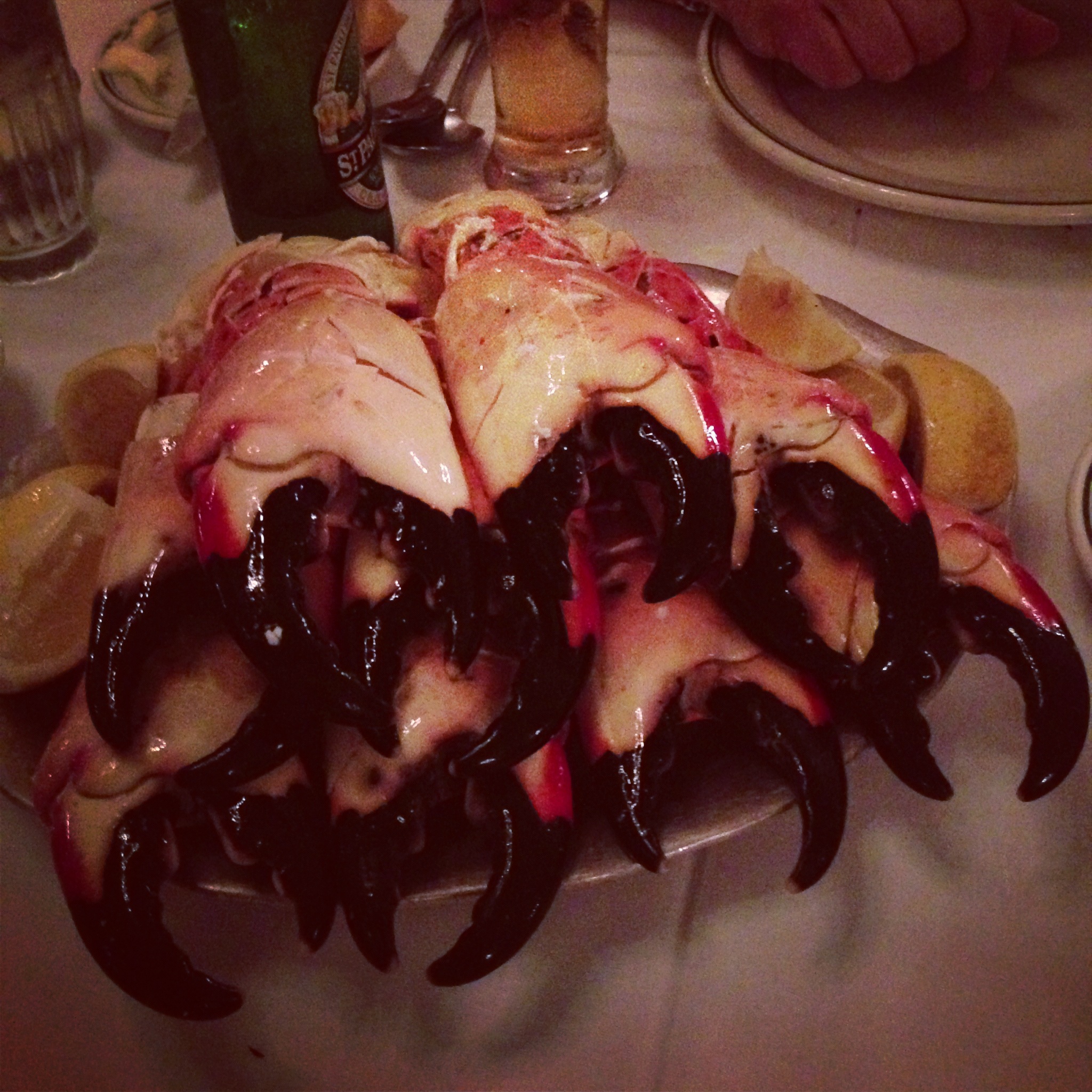
Stone Crabs

1 Comment

November 19, 2012 · 9:07 pm

So long, Miami

Goodbye, Port of Miami.

20121119-103528.jpg
Goodbye, sparkling light and women’s perfume and Latin everything. I rode the Hilton elevator with Annie Lamott, the last wisp of the Book Fair. Now, back to books.

1 Comment

Filed under Jean Zimmerman, Publishing, Writers

A Place Called Joe’s

The violet and gold neon of Ocean Drive in South Beach is a far cry from the Miami Book Fair.

South Beach From a Convertible

But that’s where I wound up after the hectic, stimulating two days of panels, lectures, and sometimes electrifying, sometimes tiresome schmoozing. Finally, dinner with bookish friends: Joe’s is an institution in Miami Beach (the restaurant is now a century old) and its stone crab claws are not to be believed — hunks of flesh that you pull off the cartilage with your teeth the way you would an artichoke leaf, after dunking in a creamy mustard mayonnaise. Then there are fried green tomatos. And a key lime pie almost as good as mine. I don’t know how the ladies of South Beach suction themselves into those tight black minidresses after the crabs at Joe’s, but they seem to manage okay.

Earlier today I served on my book panel. The prose of Da Chen is often admired as lyrical, and I can say as a fellow panelist that his presentation skills are equally lovely. He was at the Book Fair to talk about his most recent novel, My Last Empress, and after executing a standup routine about his impoverished upbringing in China that was both soulful and hilarious, he took out his flute and ably delivered a haunting melody. Only then did he read briefly from his new work. And that wasn’t too bad either.

Da Chen and His Flute

What I found, I think, even more remarkable than his presentation was his mode of performing autographs. He unwrapped a tray of black ink along with a soft brush, and applied personalized calligraphy to the book of every person who approached him for a signing. He then stamped his name in red. Here is the inscribed flyleaf of my copy of his book.

“For a Book Friend,” it reads, with the characters for gold and for pen. I think that giving back to readers in this way is just what authors should aspire to.

When I found the writerly atmosphere a little stuffy — yes, it happened —  I explored the bookseller tents outside. There were some amazing nuggets in the stalls, with, as usual, the things I wanted not found desirable by anybody else and thus available for only a buck or two.

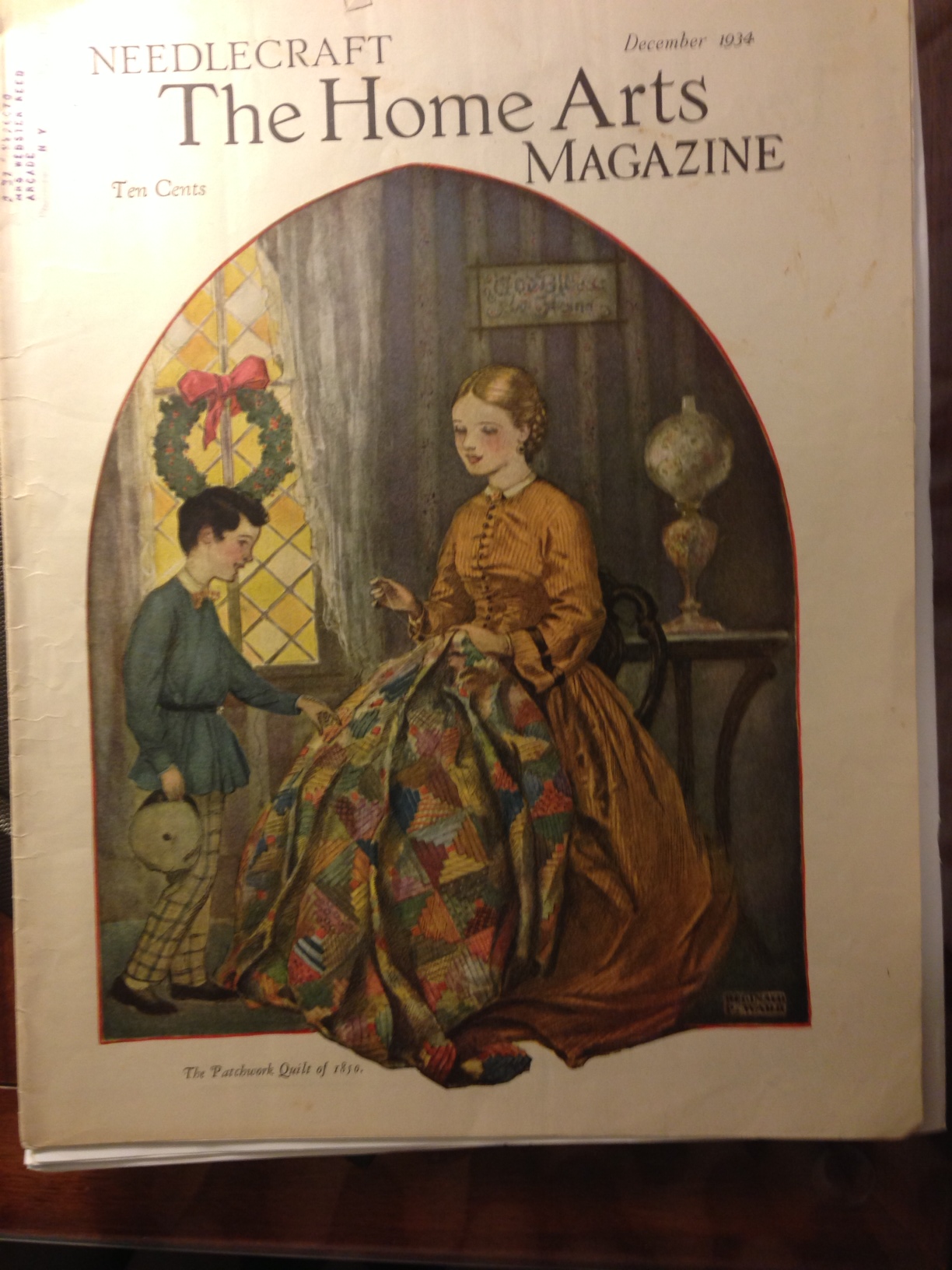
A 1934 edition of The Home Arts Magazine, with this the nostalgic image on the front cover:

And this on the back. You’ve come a long way, baby.

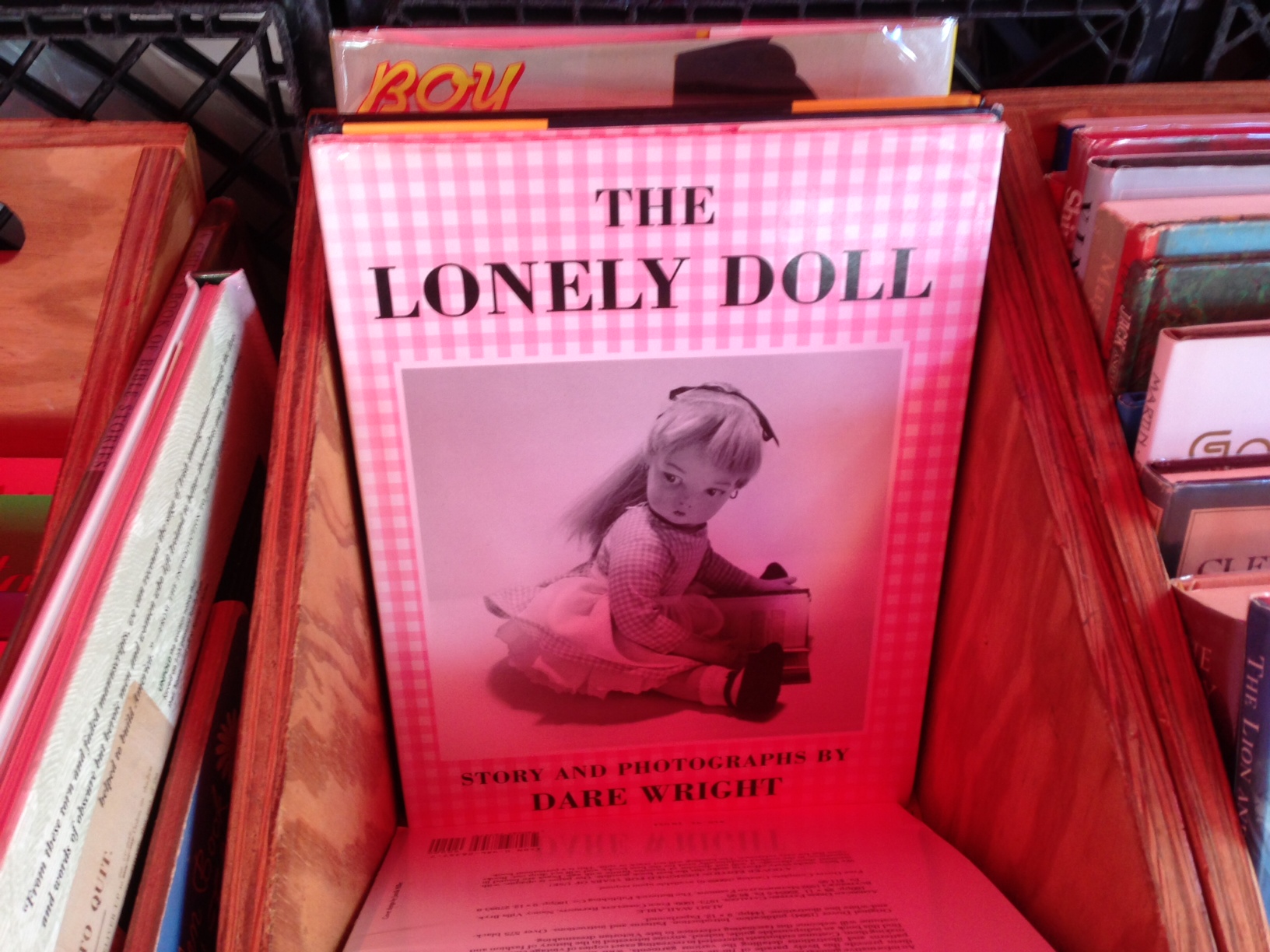
I also found a copy of a book that haunted me as a young reader.

And possibly the most useful item, a book titled 59 Authentic Turn-of-the-Century Fashion Patterns, with exacting instructions for assembling a Ladies’ Street Costume or a Gentlemen’s Night Shirt. Or a Stout Ladies’ Costume, for those who might indulge too often in the high life at Joe’s.

Leave a comment

Filed under Fiction, Jean Zimmerman, Publishing, The Orphanmaster, Writers, Writing

Sign Here

Signing. A lot of it going on around the Book Fair, at rectangular tables with author name cards and lines of readers in front of them, books tucked under their arms. Don’t cry too much, but it’s tough to be a big-name writer, armed with nothing more than a Sharpie and a smile. Naomi Wolf gave so rousing (arousing?) explication of the vagina-brain connection — it was practically a religious revival in that Miami Dade lecture hall — that when she reached the signing table outside some steam seemed to have gone out of her step. Another signer, a graphic novelist, puts down a full, funny illustration of himself on the title page. Takes time to get through a line of signature seekers when you go all out like that. It’s good there’s entertainment here while you wait.

The Miami Book Fair

For some diversion on this subject, check out the autograph auction that will be held November 29th by Swann Galleries in NYC. You can see all 294 lots online and whether you like Americana, presidents, artists or writers, there’s something for you. Not that you can necessarily afford one of these scraps of ephemera. A handwritten quote from Mark Twain from his Pudd’nhead Wilson is starting at $3,000 to $4,000. “Consider well the proportions of things: it is better to be a young June-bug than an old bird of paradise.” Whatever that means.

A woman who interviewed me today for a radio show asked for my signature in The Orphanmaster even though, she unapologetically announced, she hadn’t read the book. “It might be worth something some day!” she said with a funny tone, as though that was actually the least likely scenario that would ever come to pass.

On the subject of never knowing what might come to pass, I visited a panel that had four participants: the two authors of Beautiful Creatures, Kami Garcia and Margaret Stohl, and two young actors who will star in the 2013 film adapted from that teen novel. The two writers met when one was the teacher of the other’s adolescent daughter. They hatched the story and wrote it over seven weeks, only as a means of entertaining their daughters and their friends, with what  Garcia called a “human coming of age story in a magical world.”  An author friend submitted the manuscript to a literary agent behind their backs. That book and sequals have gone on, of course, to be mega mega best sellers. Stohl, the teacher, even had to quit her teaching job — she said sorrowfully — she just had to spend so much time touring internationally on behalf of the book, it wasn’t fair to the kids she taught. As for the movie, they were thrilled, thrilled, and one provocative detail is that the set and actors were so perfect, when the book’s editor visited she burst into tears.

1 Comment

Filed under Jean Zimmerman, Publishing, The Orphanmaster, Writers, Writing

Raindrops and Book Groups in Miami

At a pre-Book Fair backyard party under the Miami palms and a light drizzle of rain, I talked to writers. One had published a novel about the last week of Marilyn Monroe’s life. One was working on a history of Los Angeles and water. One, a MacArthur-winning poet, had written about sea monkeys. One had just brought out a book about the Wall Street implosion.

I spoke with an archivist who lives here in Miami. She knew all the head librarians at the great Manhattan collections — the New-York Historical Society, the Manuscripts room at NYPL, the Morgan, all of them.

I know your book! she told me. My book group just read it this past month! They’ll all be there Sunday for your panel.

Very, very nice, under a palm tree, under a light sprinkling of rain, in Miami.

2 Comments

Filed under Jean Zimmerman, Poetry, Publishing, The Orphanmaster, Writers, Writing

Hyphenated

In Miami, lamenting my hotel view… of a sad white industrial rooftop… when I look up to see 50 fish hawks wheeling. We are a block from the water after all.

We have a guest blogger today, Gil Reavill, addressing the too-often-ignored subject of the hyphen. Here he is:

NEW HYPHEN YORK

For a long time New York had a little hitchhiker attached to it, a parasite that had wormed into its bowels, a hiccup, a connector, a missing link. During the 19th century the name of the greatest city in the world was oftentimes rendered “New-York.” Given that the earliest records of the city neglected the hyphen, and that the interior squiggle disappeared after 1890 or so, it’s tempting to think of the additional punctuation as a Gilded Age grace note. The New York Times spelled itself “The New-York Times” from its inception in 1851 until it dropped the hyphen in 1896. The New-York Historical Society, founded in 1809, still uses it.

The hyphen itself came into being via Johannes Gutenberg, in his monumental Bible of 1455. The printer used a uniform 42-line page, justified, the innovative movable type held in place by a rigid frame. When such a lock-step process necessitated a break in the middle of a word, Gutenberg inserted a simple signifier as the final element on the right side. It wasn’t today’s brutally horizontal staccato burp, either, but a more elegant tailored dash, rising at an 60-degree angle. Necessity proved the mother of invention, and the hyphen was born. In the Middle Ages, it was written as a double slash, like a tilted equal sign.

Why did the hyphen land in the middle of New York to begin with? Why then, in the 19th century, and not before, and not after? Who decided it should suddenly appear, and who ordained it should leave? Literary nit-pickers will recall that another 19th-century behemoth, Melville’s Moby-Dick, also employed a hyphen. Perhaps no explanation is required other than the dictates of whim, or fad, or fashion. To 19th-century eyes, New York might simply have looked better with a hyphen.

It’s a mystery that might yield to further research. Meanwhile, a simple rhyme states my personal sentiment about bygone punctuation.

GILDED AGE COUPLET

I much prefer life when

New-York had a hyphen.

Leave a comment

Filed under History, Jean Zimmerman, Writing

The Miami Book Fair International

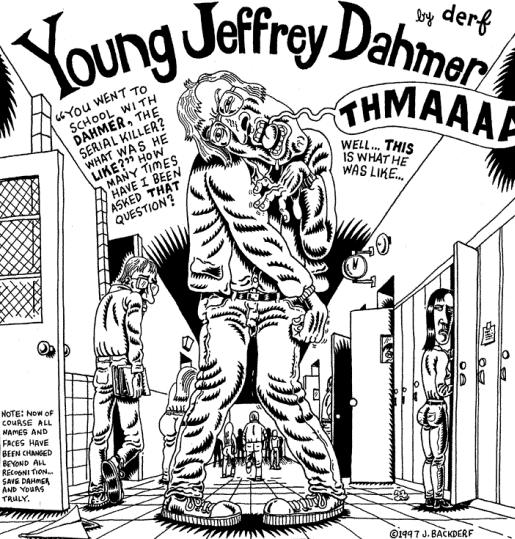
The Miami Book Fair, where I’ll be speaking this weekend, looks to have a smashing array of author events. In addition to my panel of historical fiction writers — with Michael Ennis on The Malice of Fortune, Debra Dean on The Mirrored World, and Da Chen on My Last Empress — at 12:00 Sunday, there are some real stars. Tom Wolfe. Junot Diaz. Sandra Cisneros. Jeffrey Toobin. Dave Barry. Martin Amis. And Naomi Wolf, if you’re in the mood for some frank talk about vaginas. There are innumerable cookbook authors, offering demonstrations, also poetry readings, and a guy, Derf Backderf, who did a graphic novel about Jeffrey Dahmer.

Image from My Friend Dahmer

I might stay back at my hotel’s rooftop pool for that one. Oh, that’s right, I just wrote a book about cannibals myself.

If you want to see some of this stuff, you can check out the schedule on Book TV, they’re going to be covering highlights of the Fair. As far as I can see, my panel didn’t make the cut, but you never know.

1 Comment

Filed under Jean Zimmerman, Publishing, Writers

The Whale

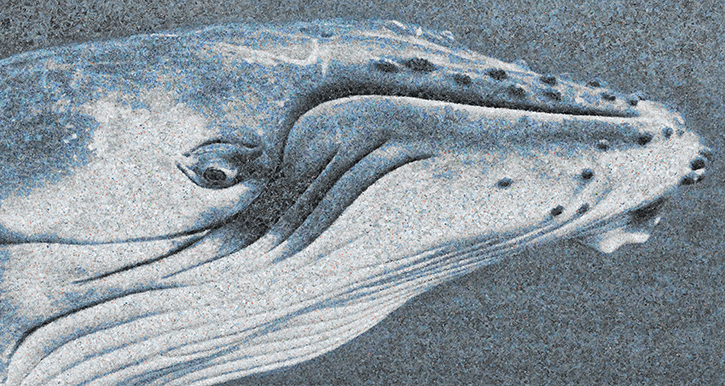
This is a wonderful thing: an internet presentation of Moby-Dick, or The Whale, with each chapter delivered by an individual reader, and artwork commissioned to illustrate the text. It’s called the Moby Dick Big Read, http://www.mobydickbigread.com, and you can download a chapter a day — that would be 135 chapters. You can also begin at the beginning and go at as leisurely pace as you wish.

“I have written a blasphemous book,” said Melville when his novel was first published in 1851, “and I feel as spotless as the lamb.”

The world paid his book little mind. Moby-Dick never sold out its initial printing of 3,000 copies, and his total earnings from the American edition amounted to just $556.37. By 1876, in fact, all of Melville’s works were out of print. It was not until the next century that the writer’s brilliance was appreciated.

Artist: Chris Jordan

What I’m finding, as I knit and listen, is that listening makes me want to go back and read the book on the page. Perhaps that is because too much of my brain is preoccupied with knitting 12 then purling 12, knitting 7 then purling 7. But also, Melville’s prose is just too great to only hear, you want to relish it in print.

Like Ishmael’s description of the officers’ mess, Chapter 34. In the cabin, he writes:

“was no companionship; socially, Ahab was inaccessible. Though nominally included in the census of Christendom, he was still an alien to it. He lived in the world, as the last of the Grisly Bears lived in settled Missouri. And as when Spring and Summer had departed, that wild Logan of the woods, burying himself in the hollow of a tree, lived out the winter there, sucking his own paws; so, in his inclement, howling old age, Ahab’s soul, shut up in the caved trunk of his body, there fed upon the sullen paws of its gloom!”

Leave a comment

Filed under Fiction, Jean Zimmerman, Writers

Turkey Trot

It’s time to plan. All the periodicals, all the food sites have begun to trot out their turkey tips. We sat down today, awash in recipes we’ve used before or always wanted to use. This year we’re having Thanksgiving at the Cabin for the first time, with a borrowed table set up in front of a blazing fire, and maybe I’ll put out the good silver, my grandmother’s. Isn’t the planning almost the best thing about the holiday? Where will we get the turkey, what kind of turkey will it be? This year we’re going to Hemlock Hill Farm, in Cortlandt Manor — family-owned for over 60 years — and bringing home a broad-breasted white that has spent its short life running around, slyly if stupidly, in a big open pen. We’ll have creamed spinach, as always, and sausage and apple stuffing. Sweet potatoes. We’ll have a new item, maple syrup pie, but of course we’ll bake the old pumpkin, since Gil says we must.

Savage Girl (you won’t read it until Viking brings it out another year from now, so here’s a sneak peek) recreates a Thanksgiving repast circa 1875 Manhattan. I did research into the customs of the time. Imagine a long mahogany table with a burgundy runner down the center, in a dining room belonging to one of the wealthiest families in New York, the Delegates. They consume oyster soup and cod with egg sauce, slivered carrots and celery in crystal boats, a crisp-skinned bird (need we add free range?), lobster salad, stuffed apples, aspic, and superior biscuit, all washed down with champagne. Crystal and gold-edged china. But wait, there’s more… Stewed peaches, ginger cake, pound cake, ribbon cake, figs, walnuts in the shell. Toasts are raised.

It would all be swell if there wasn’t a mute, half-wild teenage girl upstairs, wreaking havoc by refusing to come down and have Thanksgiving with the family that so badly wants her to behave.

1 Comment

Filed under Cooking, Jean Zimmerman, Savage Girl

A Red Letter Day

It feels so good to sit and down with a hot latte, even though I performed only a tiny part of the cleanup. Bowne & Co. Stationers and Printers, like so much of South Street Seaport, suffered a five foot surge during Sandy, with two and a half feet submerging its invaluable stock of letterpresses and type. Bad timing, since they’ve just been expanding their print shop.

The streets and subway platforms of downtown Manhattan, I saw on my way there, still bear patches of wetness from the deluge two weeks ago. Passing an upended, truncated tree at Water Street, I reached the shop.

Arboreal Sandy Victim

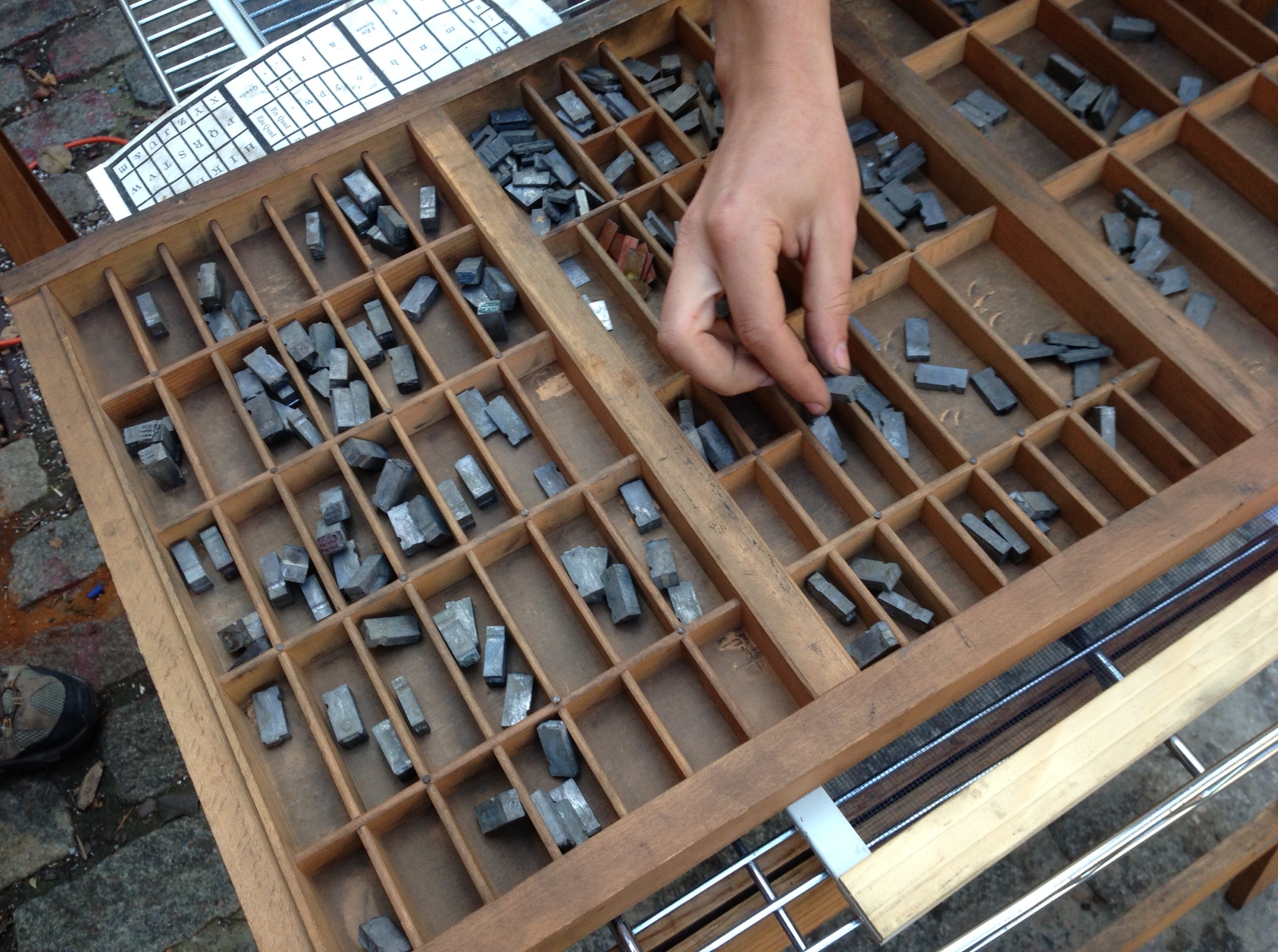
Stalwart printers Gideon Finck and Ali Osborn were guiding volunteers in a makeshift, laborious, meticulous process of bleaching wooden cases to erase their lacy spots of mold and cleansing lead type to make it usable again.

Gideon Organizing Type

Bowne & Co. is the oldest business in NY surviving under the same name; merchant/philanthropist Robert Bowne set up shop in 1775. (Pretty sure he was one of Edith Minturn’s forbears.)  The Seaport restored the shop as a facsimile in 1970 with the flavor it might have had 200 years before before, when it would have turned out gilt-edge letter paper, tissue paper, copying paper, blank books, bill books, cargo books, bankbooks and seamen’s journals. Some of Bowne’s presses date back to 1844.

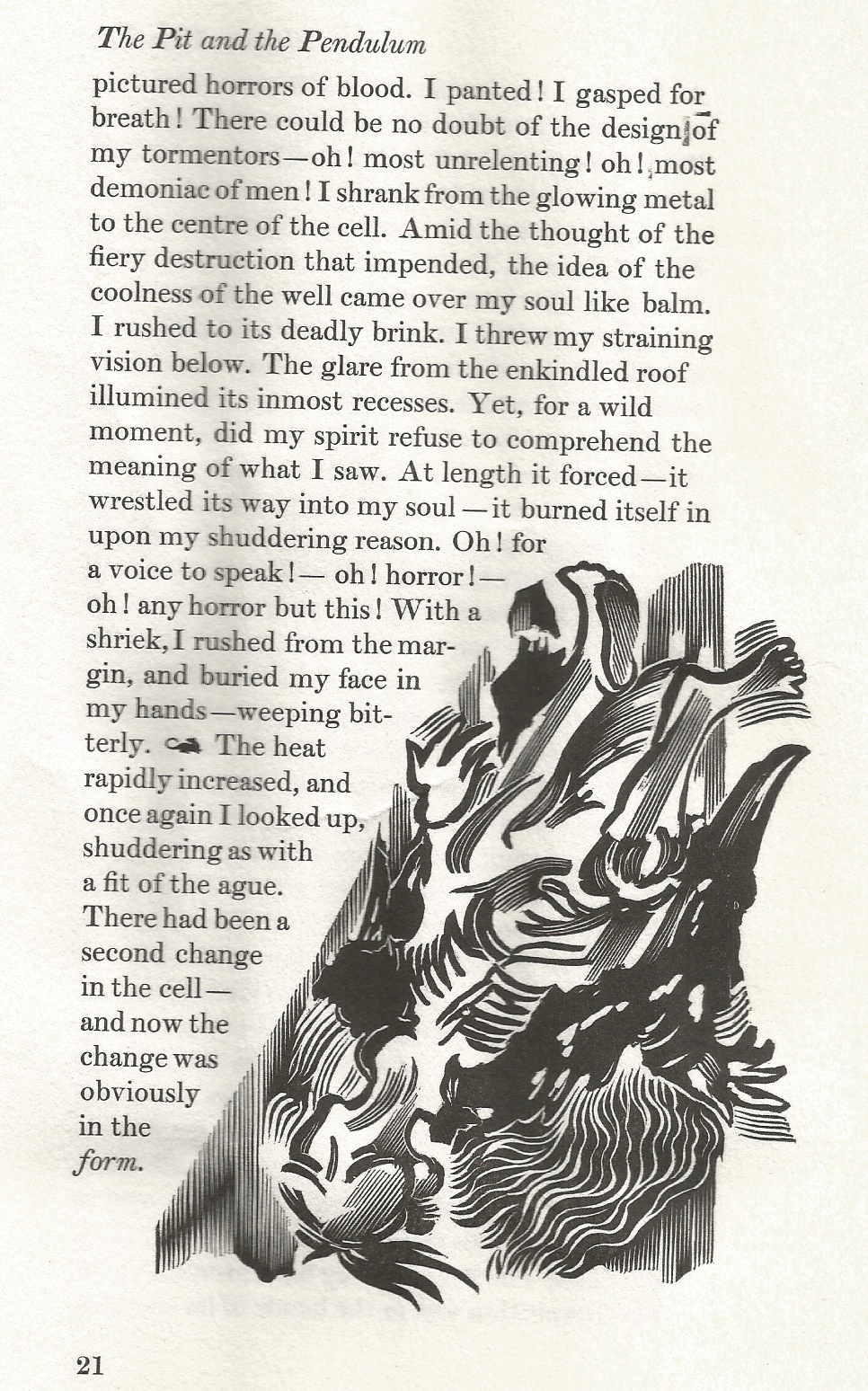
A Bit of Poe from Bowne

I’m dipping metal letters a few at a time in fresh water, then mineral spirits, then towel drying each one. A cold, oily, dirty business. The shop has 1200 cases of type, so it’s quite an enterprise, especially out on the sidewalk in a bracing, buffeting wind. But if each letter is not cared for, the historic fonts will disappear. So far, all has been salvaged.

Inside the building, in a shadowy back room with a gently buckling floor, I find an immense, robustly carved figurehead and a quantity of  rough grey planking – the hull of an ocean ship, it turns out.

I wash the oil off my hands, thinking of a young Herman Melville, the same age as the printers at Bowne, looking out at the bay, sighting along the horizon, awaiting his first seagoing job as a “boy” on a New York ship bound for Liverpool. He’s clutching a letterpress broadside as if his future depends upon it.

1 Comment

Filed under History, Jean Zimmerman

Gilding the Lily

We were watching swans eat, but I was thinking about how we used to eat swans.

For a recipe I went to Le Menagier de Paris, a 1393 guidebook that purports to be an wise older man giving advice to a newlywed wife, emphasizing the crucial theme of womanly obedience. There are instructions for preparing dishes like frumenty (a thick wheat porridge served with venison) and lardy milk (“Take milk of cows or ewes and put to boil in the fire, and throw in bits of bacon and some saffron: and have eggs, that is both white and yolk, well-beaten and throw in all at once, without stirring, and make it all boil together, and then take it off the fire and leave it to turn”). But the coup de grace is a gilded swan that might grace the table for a wedding feast.

“Take a swan and prepare it and put it on to roast until it is all cooked, then make a paste of eggs, as clear as paper, and pour it on the said swan while turning the spit so that the paste cooks on it, and be careful that no wings or thighs be broken, and put the swan’s neck as though it were swimming in water, and to keep it in this position, you must put a skewer in its head which will rest between the two wings, passing all other, until it holds the neck firm, and another skewer below the wings, and another between the thighs, and another close to the feet and at each foot three to spread the foot: and when it is well cooked and well gilded with the paste, take out the skewers, except that in the neck, then make a terrace of whole-wheat pastry, which should be thick and strong, and which is one fist thick, made with nice fluting all around, and let it be two feet long, and a foot and a half broad, or a little more, then cook it without boiling, and have it painted green like a grassy meadow, and gild your swan with a skin of silver, except for about two fingers width around the neck, which is not gilded, and the beak and the feet, then have a flying cloak, which should be of crimson sendal on the inside, and emblazon the top of said cloak with whatever arms you wish, and around the swan have banners, the sticks two and a half feet long with banners of sendal, emblazon with whatever arms you wish, and put all in a dish the size and shape of the terrace, and present it to whomever you wish.”

1 Comment

Filed under Cooking, History, Jean Zimmerman

A Tale of Two Women

Where is Auntie when I need her? My great aunt was a crafter before the shorthand existed. A home economics teacher in rural Tennessee, she taught me how to crochet as a child (I seemed constitutionally unable to learn to knit) and going to her tiny house out on the highway meant diving into closets full of fabric. She had a big field of green beans in front, a kitchen counter where we would eat buttery corn on the cob, a litter of kittens under the porch. Now that I’ve finally learned to love knitting, but lack the know-how to do much with it, I could really use her patient hands, deftly lifting the yarn and looping it back on the needle to help me out of whatever spot I’ve gotten myself in now.

After I gave a talk today at Ossining Library I began thinking about what has always made me want to write about strong women. Blandine van Couvering, Margaret Hardenbroeck, and the rest of the ladies I’ve treated in my nonfiction. Growing up with Auntie is one reason. Another is my father’s mother, also a force of nature, but in a different style. She did things her way, always. With a Polish-Jewish family only recently come to America, she ate lobster. When Joyce’s Ulysses was still banned in the U.S., she got her hands on a rare copy. She was a certifiable intellectual, a Manhattanite, with New York windows that overlooked the craggy grey outcroppings of Central Park.

They were two of my earliest heroines. What they would make of me as an adult I can’t say for sure, but I hope I’d do them proud.

3 Comments

Filed under Cooking, Fiction, History, Jean Zimmerman