Category Archives: History

Water, Dirty and Clean

Today’s is a two–part post, all about water.

water

Number One: Man puts junk in water.

No man is an island. But out in the middle of the Pacific Ocean, man has created an island. An island of trash.

I heard of this phenomenon some time ago, and I found my mind circling back to it occasionally. It sounded farfetched, incredible, too disgusting to be true. But I finally decided to learn what was what.

It’s easy to put something out of your mind that takes place a thousand miles off the coast of California, in the middle of a stretch of sea that is an oceanic desert of sorts, filled mainly with plankton. Fishermen or recreational sailors rarely come through the central North Pacific Ocean. Currents there rotate in a ceaseless gyre.

That is where you find the Great Pacific Garbage Patch, as it is technically known. Enormous gross plastic sludge, to the less scientific-minded.

North Pacific Gyre

It’s a floating mass of plastics, chemicals, and astronomical numbers of disintegrated  grocery bags – the largest landfill in the world. The mess has been trapped in the pervasive currents, which pull garbage into their vortex from households far away.

The size of the Patch has been put at twice the area of Texas. Yes, that’s what I said.

San Diego’s Scripps Institution of Oceanography found recently that plastic in the Great Pacific Garbage Patch had increased by 100 times the amount of what was found in the region 40 years ago.

In 1997, a sailor named Charles Moore was returning home from a race when he came upon a stretch of debris of monstrous dimensions, most of it suspended below the surface, in a configuration that’s been called “confetti-like”.
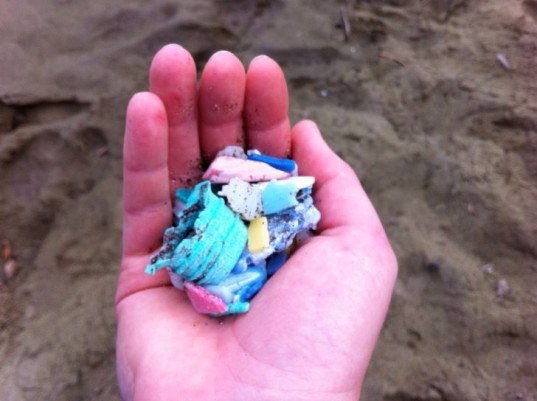
confetti

It’s been estimated that 80 percent of the stuff comes from North America and Japan, while another 20 comes from cruise ships – your typical 3,000-passenger cruise ship dumps up to eight tons of solid waste weekly. But fishing nets find their way into the gyre too. Turning and turning in the widening gyre, wrote Yeats in his apocalyptic poem “The Second Coming.”

One hundred million tons of trash. That’s what it is. Broken down into small-enough pieces to be ingested by marine critters like the sea turtle and the black-footed albatross, when the current brings garbage from the gyre to the Midway Atoll.
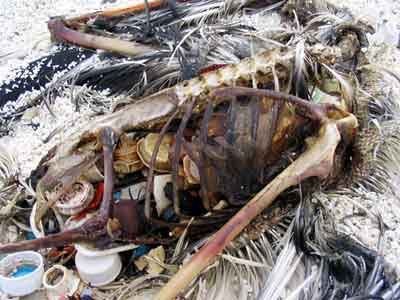
albatross

Captain Moore, who can be heard giving a TED talk, now heads a foundation to clean up all the plastic.

Moore w plastic tray

In America, we use two million plastic beverage bottles every five minutes – but what’s worse than bottles is bottle caps. That’s what albatross moms feed their chicks, thinking they’re food.

Part Two: Man cleans up water.

Or rather woman cleans up water. Young genius woman. With the help of oysters. In New York City.

Isn’t this great: a landscape architect named Kate Orff had an idea that respects history and the environment all at once.

Kate_Orff

Under the auspices of a project called Oyster-texture, she and her team at Scape/Landscape Architecture P.L.L.C. are attempting to reinstall oyster archipelagos in Gowanus Canal, Brooklyn, currently a toxic Superfund site. It’s an effort to blend urbanism and ecology in a new and exciting way, on a working pier, in the middle of the polluted harbor.

Up until 100 years ago, the palm-size bivalves were a mainstay of New York’s gastronomy, its economy, and, it turns out, its ecology.
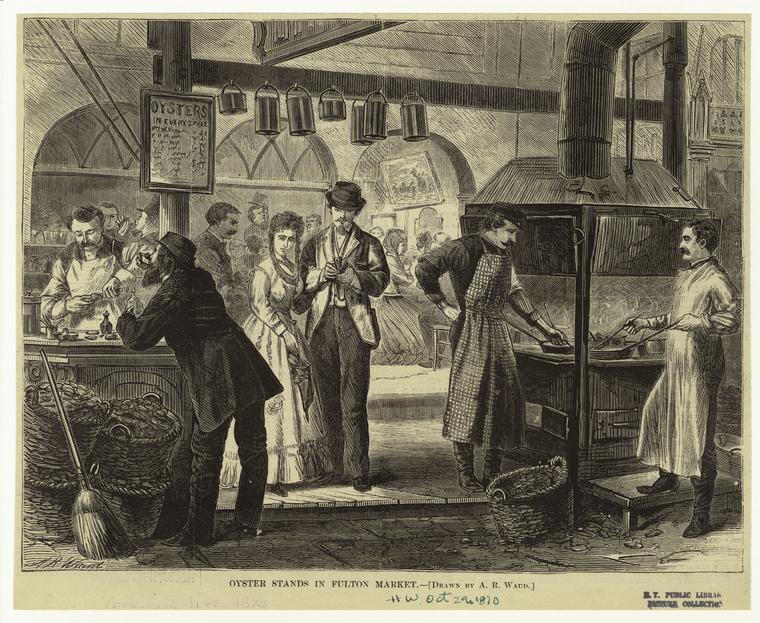
Fulton Market, 1870

You’d get oysters from a street peddlar the way you get a hot dog now.

oyster houses-bowery boys

Oysters were so healthy, back when New Amsterdam was first settled, they could be found as big as a dinner plate. Manhattan’s indians consumed them in such quantitites, you’d find huge middens of shells all over the island. The Gowanus Creek in particular was a harvesting place for the succulent shellfish – they were so good, they were harvested by the Dutch and shipped back to Europe.

Then, of course, the waterways surrounding New York got dirty. In 1927 the last oyster bed  closed. As Thomas Wolfe wrote  in You Can’t Go Home Again, in 1940, “It is the old Gowanus Canal, and that aroma you speak of is nothing but the huge symphonic stink of it, cunningly compacted of unnumbered separate putrefactions.”

Oysters died off. No more local oysters at the Oyster Bar in Grand Central Station, one of my favorite haunts. Oyster reefs used to cover a quarter of New York harbor. Now, none of it.
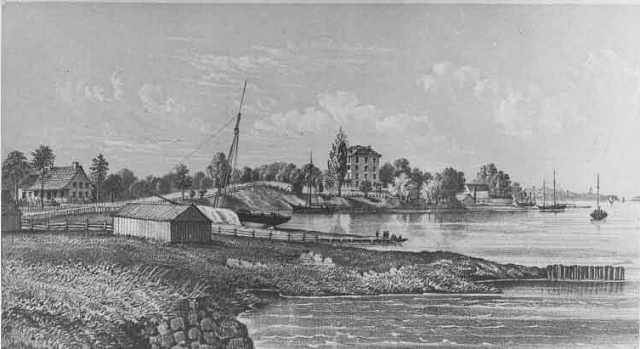
ships in gowanus bay-1867-Brooklyn Public Library

But the thing about that was – and this is where Kate Orff comes in – it was the oysters themselves in large part that were cleaning the water! So the thing to do, as she sees it, is reinstall them, carefully, so they’ll survive and build reefs. (The babies are called spats.) The oyster has a natural, what Orff calls a “beautiful, glamorous set of stomach organs” that take in algae and contaminants on one end and filter out clean water. She wants to “harness the biological power of the creatures that live in the harbor and the people who live in the city to make change now.”

oyster_diagram

She decided to use a cheap marine mainstay she refers to as “fuzzy rope” and build nets for the shellfish to cling to. (They brought knitters in to weave prototypes in the studio rather than drawing them.) Ultimately the reefs will serve as storm surge protectors and habitat for sea birds.
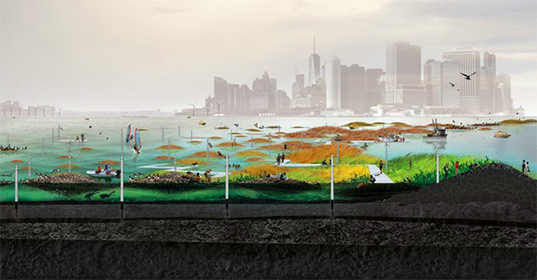
oyster-tecture-mollusk-park-for-nyc

Orff has big plans. She did a project for the Museum of Modern Art that laid out what could happen in Brooklyn if the oysters took hold. Ultimately there would be a floating raft with oyster nurseries below and recreational opportunities above. You can hear all about it in, yes, her TED lecture .

Clean water, local oyster slurping (far from now, probably).

the love of oysters

Scuba diving. A watery jog-park. But, mainly, clean water.

7 Comments

Filed under Cooking, History, Jean Zimmerman, Knitting, Nature

Scented Letters

I went in search of the ink. As a writer, I was naturally beguiled by the idea of a perfume that was supposed to have the scent of ink on skin, from a company called Byredo. Gil said he’d give me a bottle for an early anniversary present, so we ended up at Barney’s, the department store on Madison Avenue, a glitzy place to shop but the only location that stocks the stuff in the United States.

It’s actually called M/Mink, I discovered.

mink

M/Mink, along with the rest of a line of unorthodox scents developed by a tattoo-covered Swedish basketball player turned fragrance entrepreneur (!) named Ben Gorham, “is given a clear identity and reason of being.”

bengorham

M/Mink came about in partnership with parfumiers Michael Amzalag and Mathias Augustyniak of M/M (Paris) and features such ingredients as patchouli leaf, clover honey and amber. At the counter, the clerk sprayed some M/Mink on a paper wand. I inhaled, Gil inhaled, and we shook our heads. Somehow chemical. Not right for me.

I love scent. A few years ago Maud and I visited Grasse, in southern France, whose thousands of acres of flower fields make it an ideal perfume manufacturing spot. Jasmine, rose, lavender, orange flower, and tuberose are all harvested nearby. We spent a morning at Parfumerie Galimard, which began making perfume in 1747. It actually started out providing the king with olive oil, pomades and perfumes to scent the all-important fashion accessory, the leather glove, also a historic local industry. At Galimard today, if you don’t want to purchase their Rencontre or Ma Faute, you can sit in a cubicle and be guided by a “nose” (a professional parfumier) in creating your very own scent, with the assistance of eye droppers and beakers and over 127 “notes.”

galimard workshop cu

Smells, to you. Combine the top note (peak note), the middle note (heart note) and the base note  (fond note) in the proper architecture and you get a bottle of your own to name. I came up with Plus Plus (English translation: More More). Maud’s “brand” was Bel Ete (Beautiful Summer). And it was a beautiful summer. Maud and I agree that becoming a temporary nose was one of our most enjoyable experiences. Ever.

Plus Plus

They kept my number on file in case I ever need a refill. But it gave me respect for the noses behind wonderful places like Penhaligon’s (British, also venerable, est. 1870) because it turns out you can’t just throw in some honeysuckle and some green grass and have it all turn out alright.

For a horrific nose-based thriller, try Patrick Susskind’s Perfume. The counter personnel at Barney’s would love it.

perfume

This blog post is brought to you by smell-o-vision. Today, Gil and I sniffed the other perfumes in the Byredo line, in rapid succession. Baudelaire was tasty (juniper berry, black pepper, hyacinth, leather). Pulp, a little too pulpy (bergamot, cardamom, red apple, peach flower). We tried others for good measure – Palermo and Gypsy Water were contenders – and ventured outside the line to small colored bottles of essential oils that would have cost a fortune. We learned that the salesman had a sister who rescued endangered birds. The saleswoman had suffered an acrimonious divorce in Iran.

Flowery, spicy, powdery. Figgy. Just like Chanel. Our noses were swimming.

They sprayed the scent on my fingertips. On the backs of my hands. A cup of coffee beans was proffered to cleanse my nasal palate. We were advised to take a stroll around the store to clear our heads. And we did. I do anything someone tells me when they treat me like Cleopatra.

Jean with Perfume Stick

You get along so well, said the saleswoman, rapidly waving a wand to get the perfume just dry enough to sniff. He’s so agreeable! she said to me. And he was, was Gil.

It was rather warm in there, and I realized one of the first scents I’d tried was the finest. Bal D’Afrique, which combines African marigolds with violet, jasmin petals and cyclamen in an elixir you’d almost like to drink.

Gorham accompanies each bottle with a funny little story line. The one for Bal D’Afrique goes: “The noble faces of tall and straight-backed chieftains and princes greet us, the guests. The red dirt floor, covered by the exotic furs of big game, resonates with the stomps of the bejeweled dancers…” I can’t finish, I’m laughing too hard.

We followed our noses out to the street, where my wrists and throat were now armed against the delightfully dirty New York air.

Bal D'Afrique box


5 Comments

Filed under Fashion, History, Jean Zimmerman, Nature, Writing

Turning It Around

I  can’t believe it, I said to Gil. I cannot believe I’m 55 years old and don’t know the proper time to plant a sunflower seed.

Well, he said, it’s no big deal. I’m 59 years old and I don’t know either.

It got me to thinking, how many new things, simple things, nothing earthshaking, come into my life every day, even at my advanced age.

It’s a question of noticing.

Today I prowled around the boonies upstate, in Dutchess County, with my brother Peter – these photos include his — seeing some small things I hadn’t seen before.

Pete

We spent most of our time in Tivoli, a tiny village near the Hudson River that dates back to 1872 but avoids all dustiness, with its free-thinking, artistic, intellectual inhabitants.  Nearby Bard College sends over a constant scruffy stream of  students, not to mention professors.

Pete introduced me to a monument in the cemetery of St. Paul’s Episcopal Church in Tivoli, where the stones seem dominated by the Hudson  Valley families DePeyster and Livingston.

statuary

An exquisite stone carving to represent the soul of a remarkable woman, Estelle Elizabeth de Peyster Toler, who was born in 1844 in Red Hook and died 45 years later in Manhattan. Descended from the cream of New York society — De Lanceys, Van Cortlandts and Coldens — she was known for her piety and philanthropy. Her husband died the day after her death of a broken heart. Estelle’s marker reads, from the Proverbs, “A perfect example in life of the ideal virtuous woman.”

dePester

But I found the inscription on the base of the praying girl more moving.

sister baby

With its sweet embellishments of lichen and moss: SISTER–BABY.

Another grave, more modest, this one in a field of grass off a country highway.

Molly

Was this Molly also a virtuous woman? A virtuous pet? It’s an odd place for a burial but oddly peaceful.

Coffee break.

I’ve had plenty of fancy cappuccinos, like this one at Tivoli’s Murray’s café, designed by stylish barrista Michelle.

cap

Pretty good, she said under her breath, checking her work, deadpan. Not the best I’ve done.

But I’ve never before had borscht made with garbanzos rather than beef to complement its beet chunks. Topped with a spoonful of organic sour cream, it was scrumptious.

And before today I never had a perfectly-designed, shot-silk carryall for knitting needles such as I brought home from  the yarn shop on the tiny stretch of Broadway that is the heart of Tivoli. Fabulous Yarn offers luscious skeins (“fibers for fanatics”).

yarn

And whimsical taste. Under one cheery roof.

yarn store

Down the street, a tavern called the Black Swan, currently under repair.

black sway

Attitude will remain unchanged.

all our visitors

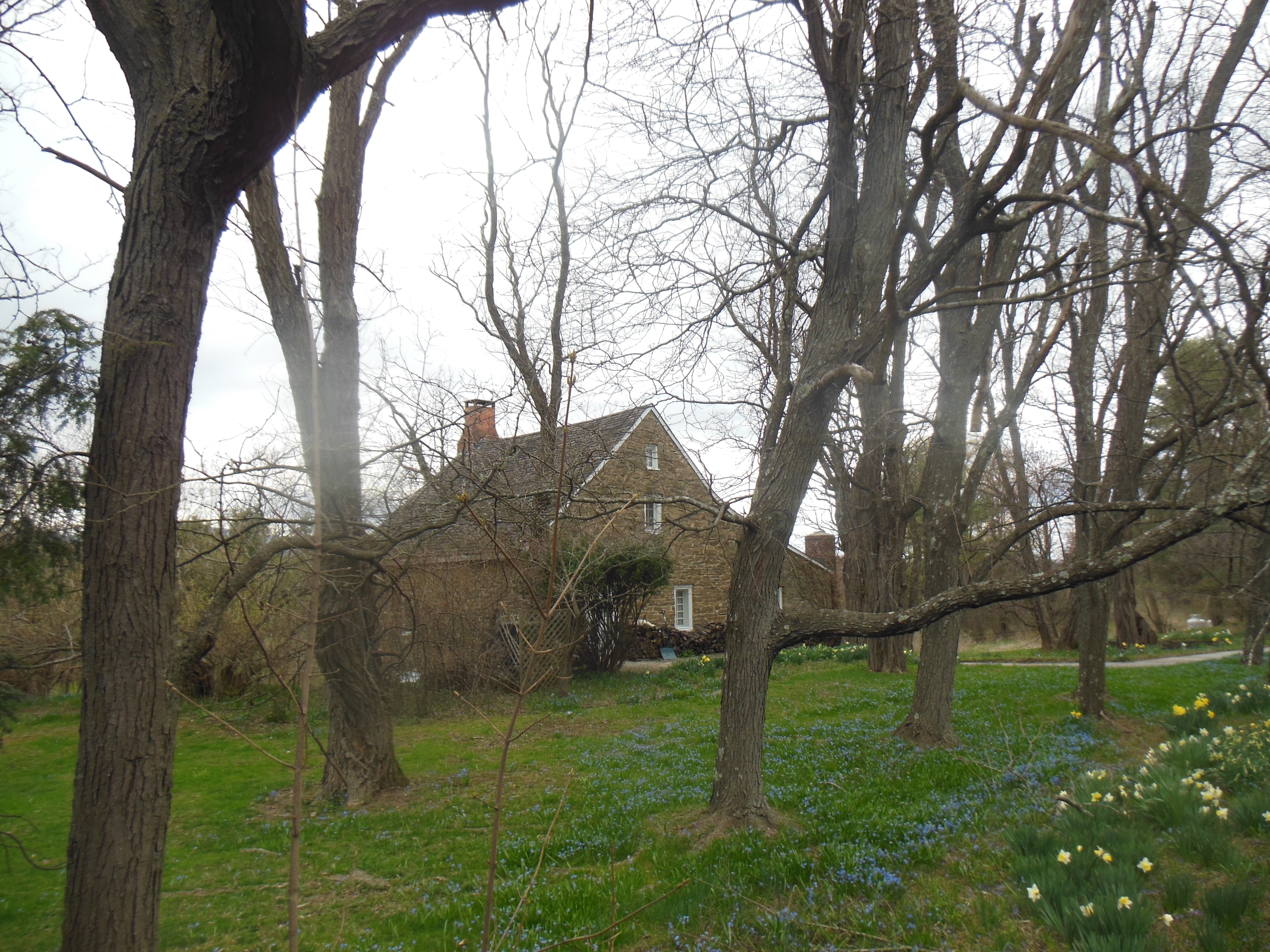
Before today, I had never laid eyes on the brick-and-stone construct of architectural genius that is the historic Stone Jug House in Clermont, housing families since 1752. Local stone, I knew. Weathered brick, sure. Together, gorgeous.

jug

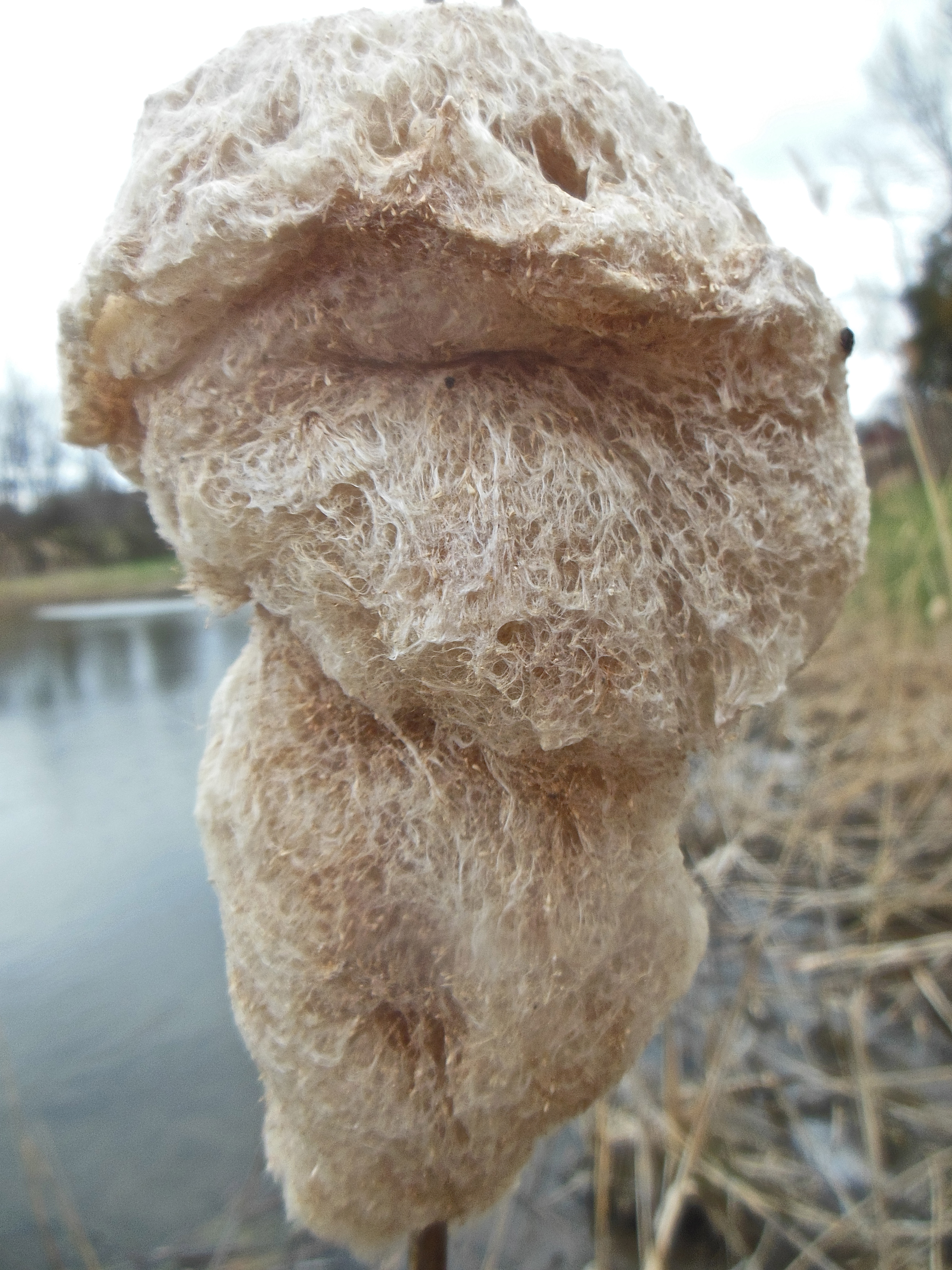
I looked around today for something I’d seen a hundred times, but always loved: a painted turtle. But the large one Peter knew of refused to show his face at the pond, the weather being cloudy. Still, there was something to see, an exploded cattail.

cattail

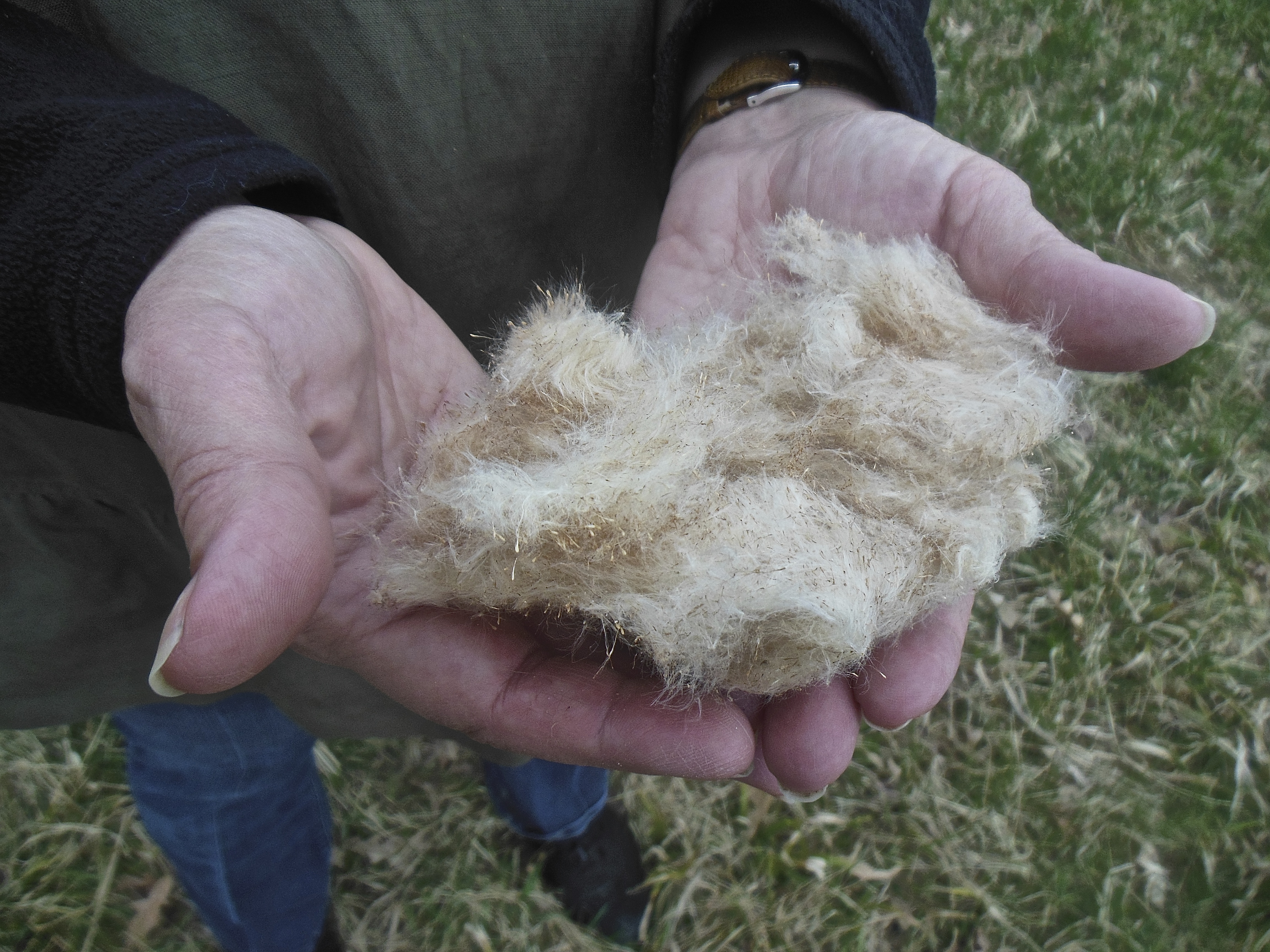
Like cotton wool laced with cornmeal. It was something I’d never touched before.

cattail cu

Sometimes if you simply turn something around, it’s totally new.

lovewisdomgracepeace

Love.

4 Comments

Filed under Art, Cooking, History, Jean Zimmerman, Knitting, Nature, Photography

Fixing Stained Glass

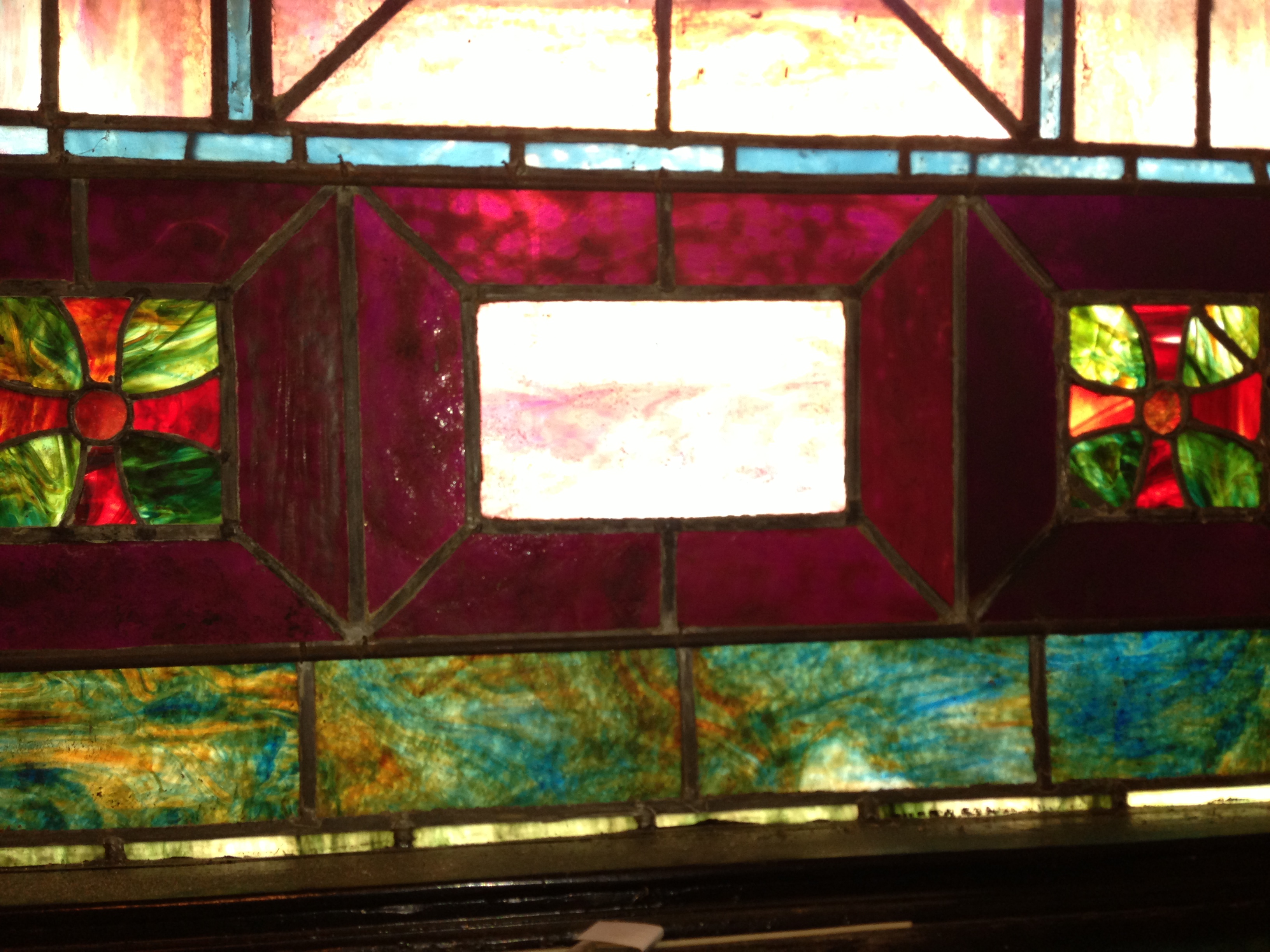
Some of the stained glass leading in the sanctuary’s 160-year-old lancet windows has split over time, and high-up panes blew out during Sandy. What remains is lovely.

stained glass

The Reverend John Hamilton toured us around St. John’s Church in Yonkers, New York, and showed us some of the attributes of this historic place.

In 1752, when the oldest part of the church went up, funded by nearby landowner Frederick Philipse II, the windows of St. John’s were clear, and the walls vanilla-white. The Enlightenment reigned. Worshippers sat in rationally arranged rows facing a central pulpit. The Church of England was the only game in town.

The Philipses’ rubblestone house just 300 yards away rose out of a bucolic landscape. It was grand, a European-influenced manor house in  wild country. An indomitable fur trader named Margaret Hardenbroeck first built it as a stopping-off point between Manhattan and Albany in 1682.

pmh

A rushing stream, the Nepperhan, ran downhill beside it to the Hudson River. Its terraced gardens were famous among travelers who passed by. There’s even a picture of this paradise, thought to date to a real estate circular in 1784.

Philipse Manor Hall 1784

A bit later, a diarist recalled that the Nepperhan was surrounded by “fields of wild violets that filled the air with perfume.” A deer park suited the Philipse taste, with the last of the line, Frederick III, a Loyalist who was banished from the new America at the end of the Revolution.

Overseeing the building of the Episcopalian church was his great accomplishment.

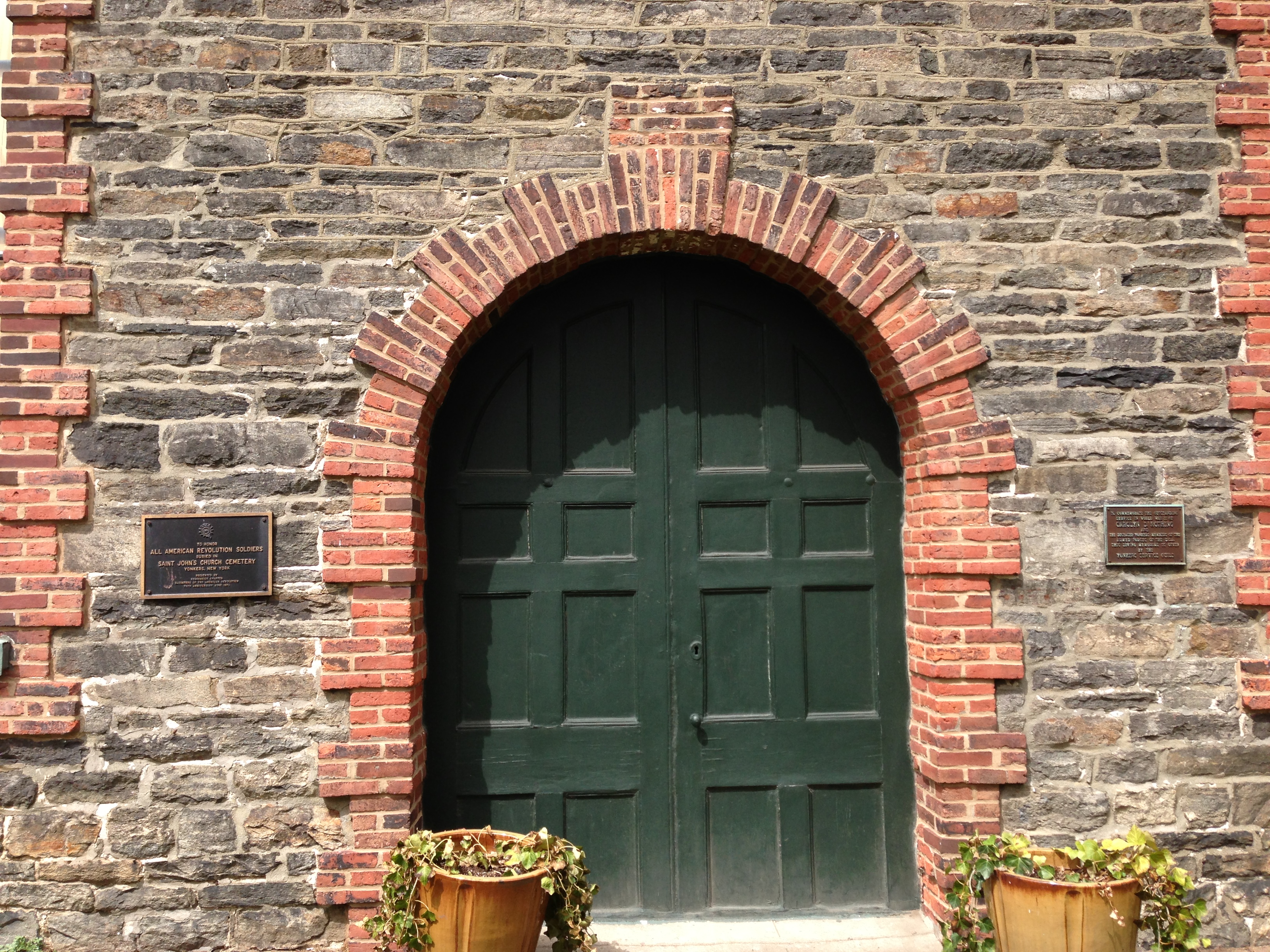
You can still see the original doors. To me, they  bespeak a humbler age of churches.

church door

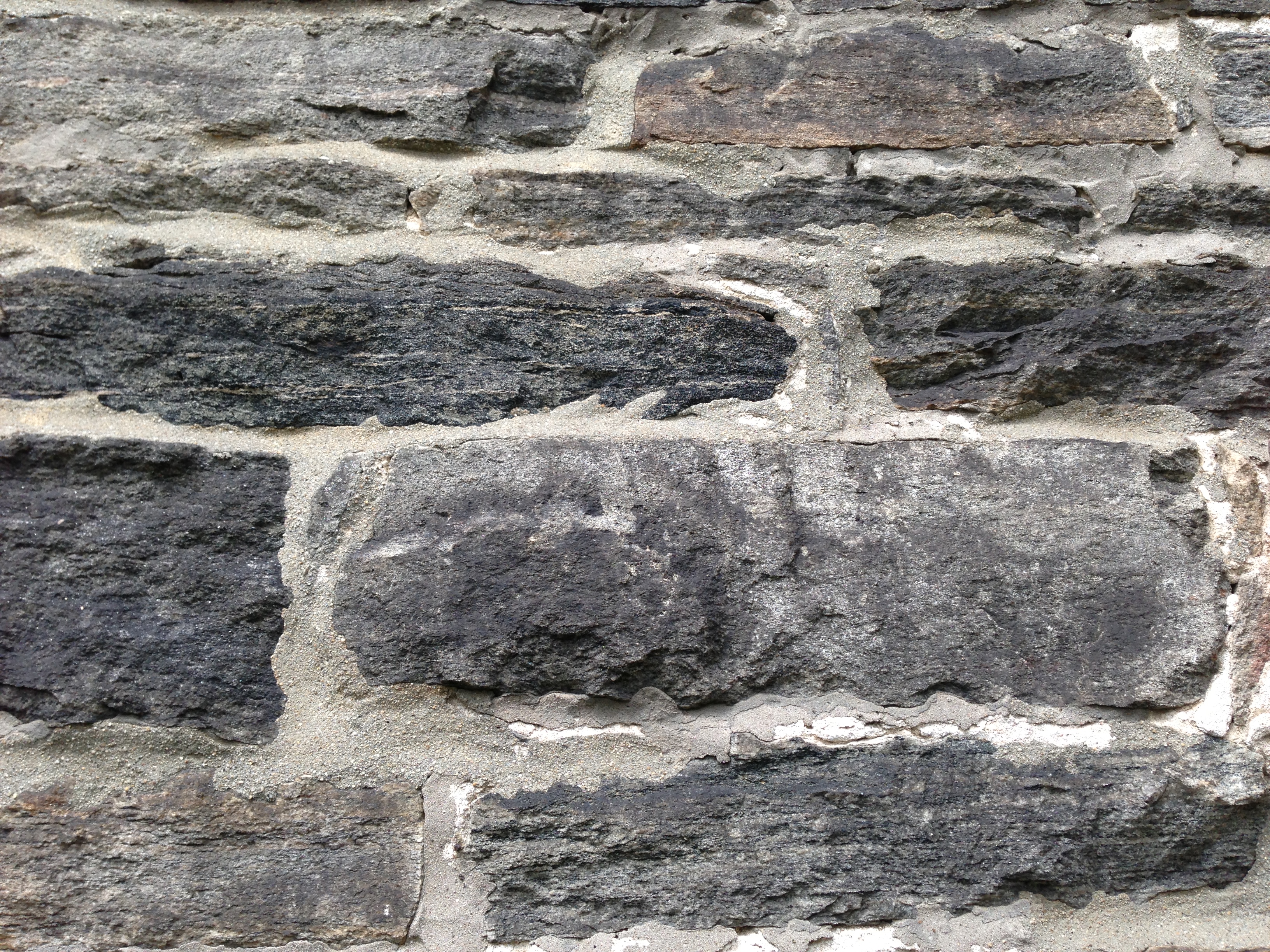
Weathered bricks and old silvery colonial stones frame the door. Above, a patterned, multi-colored slate roof.

rubbletone

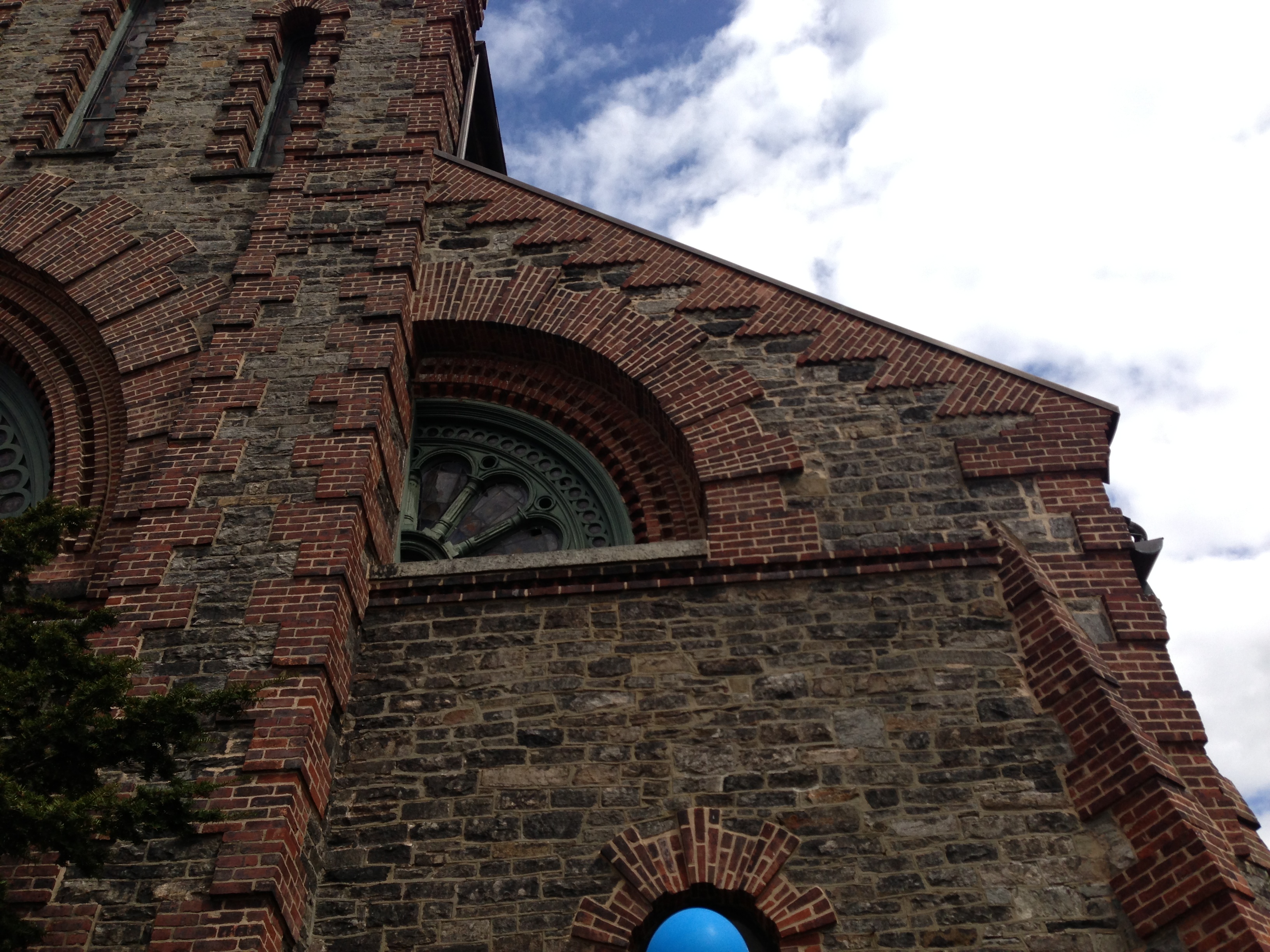
Quoins of a newer addition (1849) take from the Dutch tradition.

quoin

Today St. John’s and Philipse Manor Hall remain the oldest structures in downtown Yonkers, their existence a proud bulwark of a neighborhood that has suffered blight since the 1960s.

The church building itself is hurting. The 1818 church bell can’t ring because its rope is stuck (“I’ll get your bell rope free,” says Gil. He likes to climb.) But inside, intact and clearly visible, high above the congregation, a legend from St. Augustine runs around the edge of the nave: He brought me into his banquet hall and his banner over me was love. About the architect who revamped the old colonial structure and installed that saying, Edward Tuckerman Potter, Father John says, “He made funky buildings.”

St. John's

At the time of the Revolution, St. John’s served as a military hospital where the wounds of Patriots and Redcoats  were tended to equally. Legend says soldiers are buried beneath the building. But an interesting story comes down to us about a rector’s wife of the time, a secret Patriot. She sneakily alerted the Americans to the movements of enemy troops with the use of a domestic semaphore — by the way she hung out her laundry.

Washington worshipped here.

big church

“Don’t forget that sermons were an hour long,” says Father John. “I always say that Washington slept here.” The General also paid court to a Philipse girl, Mary – he called her Polly – down the way. (She was something of a firecracker, someone I wrote about in The Women of the House, and was responsible for the oldest building in Manhattan, now known as the Morris-Jumel Mansion.)

Today the fabric of that past is fraying, at least in the physical character of the church. Father John is happy that the City of Yonkers has promised a matching grant for a campaign to restore St. John’s windows. The economy makes this a terrible time to fix panes of glass.

But otherwise they blow away.

7 Comments

Filed under Art, History, Jean Zimmerman

Pruning Links

Damn. My cup runneth over with links. My computer wouldn’t let me save another bookmark, it was so stopped up, so I had to prune. Throw out and organize. Floss. Figure out what I really needed to save, what I might need – need being a relative term – and what could be relegated to the virtual trash heap. So I’d have room for new, extra important links!

It was enlightening, actually. In embarking on this task, I found that there were three big categories that had held special importance for me in the past few years.

One was wonderful me and my wonderful work . My log cabin got its due . Even a movie (just a glimmer, but a Hollywood glimmer) had found its way into my bookmark file.

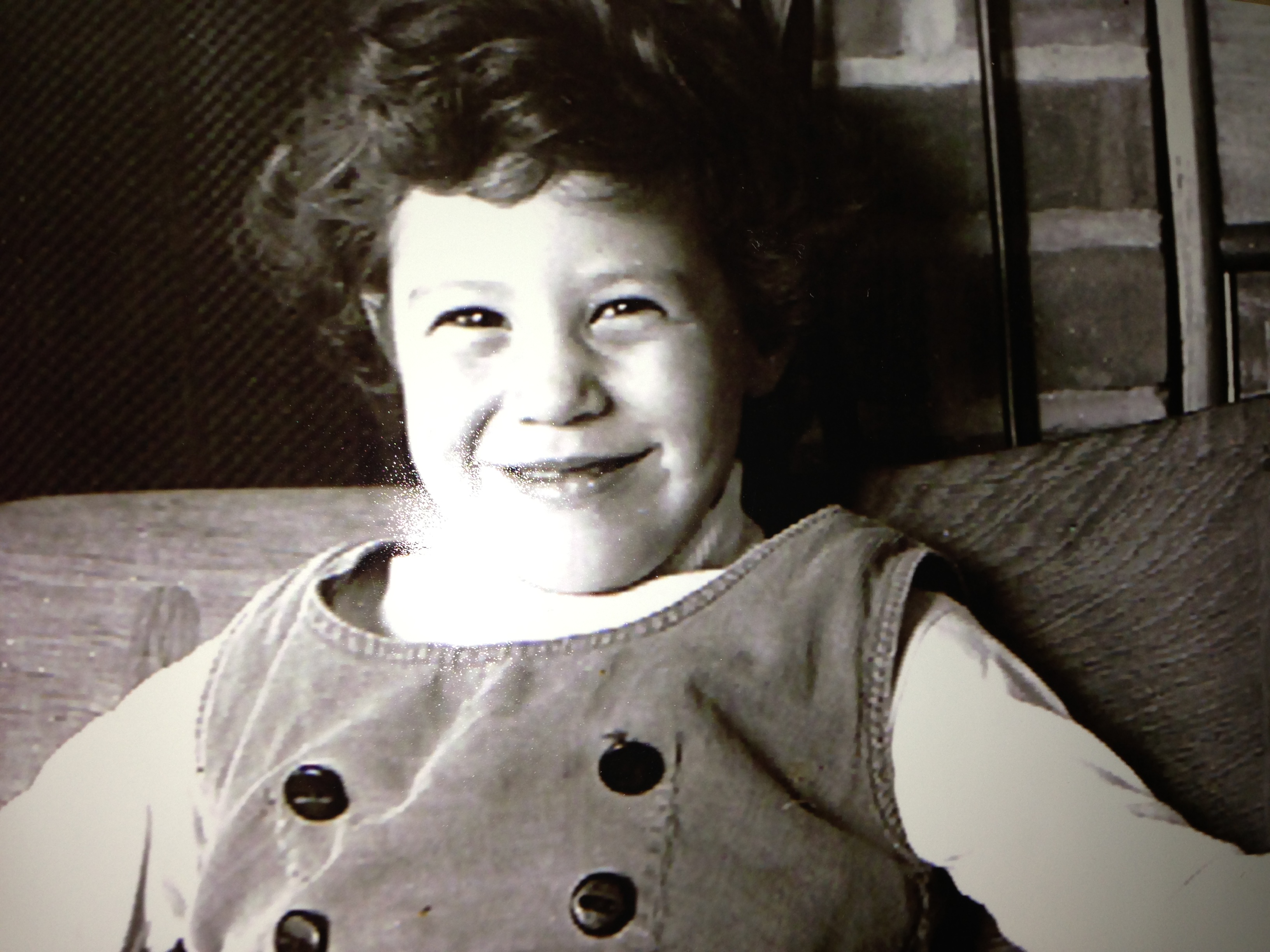
When I was a middle schooler making covers for my little hand-crafted books by binding pages into cardboard and calico with ironed wax paper, I think I would have been amazed that some day someone in the world would be interested in what I had to say. I still remember the smell of the hot wax paper as it was pressed, and the excitement that Miss Henny Penny’s Travels was going to be “published.”

young Jean

Edith Wharton tells a story in her autobiography, A Backward Glance, about going in to a book store in London when her first book, The Greater Inclination, came out in 1899 and asking the manager innocently if there was any new and interesting book she could look at. “In reply Mr. Bain handed me my own little volume, with the remark: ‘This is what everybody in London is talking about just now.’” He had no ideas who he was talking to.

Then, second, I have the category of Gertrude and Sylvia  and Simone   and the rest of the ladies who launch. And more of Stein.

U1889231

I couldn’t believe how many iterations I had of critiques, praise, profiles, pictures of the women who inspired me over the years and still fascinate me.

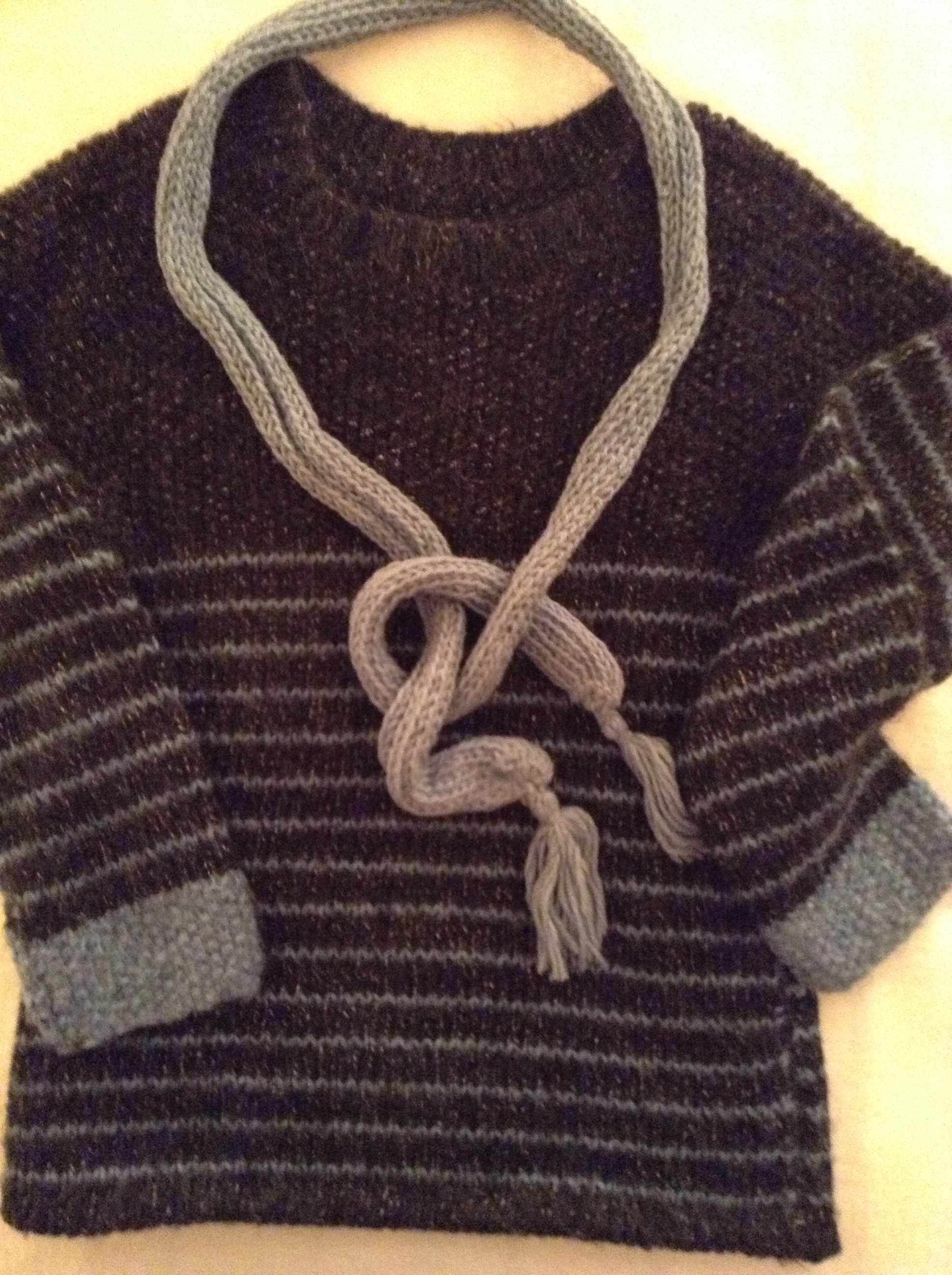
The third whopper of a group: scarves. Knit patterns for scarves. Especially circle scarves. Yes, cooking and knitting do take up some of my time, I admit it, unintellectual as that might make me. I’m itching to make Paula Deen’s gooey butter cake. But the scarves have it. I made seven this winter. Plus a sock.

knit

Then there is everything else. Before they go into the Older Bookmarks file, I’ll highlight a few that have grabbed my interest along the way. A self audit, as it were. And a little gift to anyone looking for something new to chew up their time.

I obviously made a serious trip into Victorian America in recent months. Many times over DanceDressGetting aroundMansions, mansions, mansions. Does my time machine have an exit onto Manhattan’s Fifth Avenue in the 1870s? You bet.

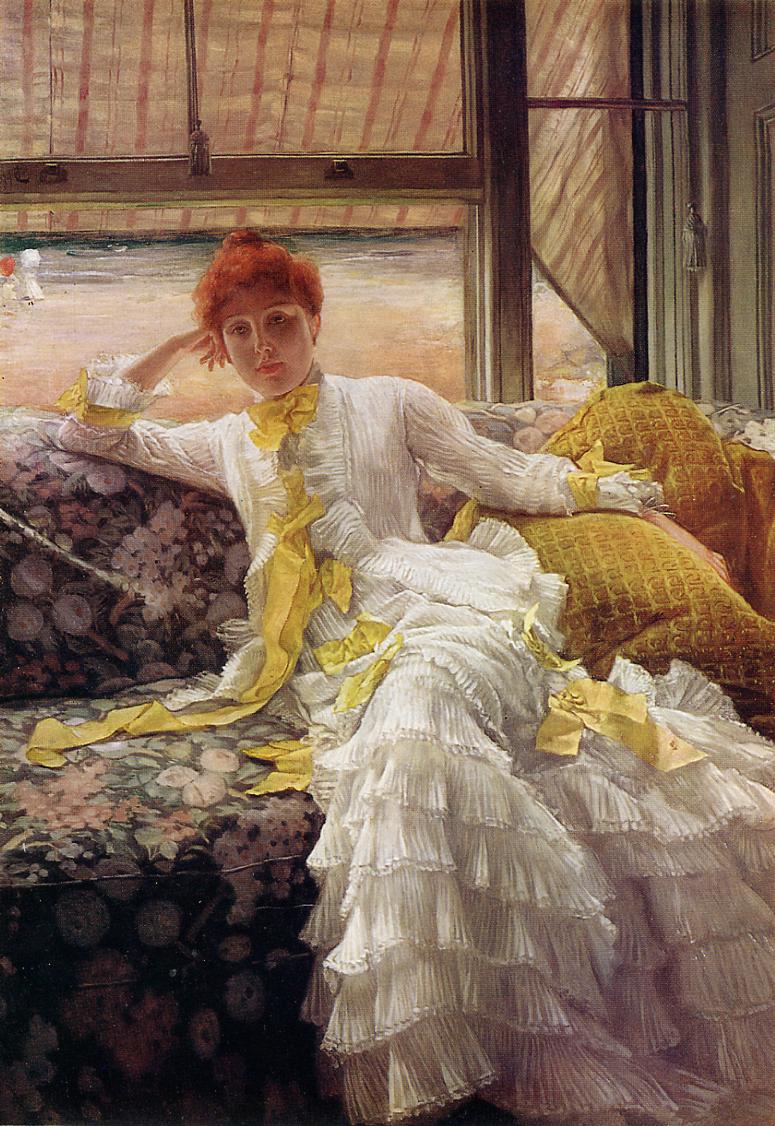
James Tissot 1836-1902 - French Plein Air painter - Tutt'Art@ (8) copy

Even (or especially?) Victorian headless portraits interest me. So much of this nineteenth century arcana found its way into Savage Girl, my new novel that will be published in early 2014, which officially made it work, but it still felt like a guilty pleasure.

More research, this time for The Orphanmaster, unearthed this incredibly absorbing digital redraft of the Castello Plan. You can hover over the first street plan of New York, a drawn-to-scale view of seventeenth century New Amsterdam, and investigate what it was actually like.

I had the idea at one point that we should explore Oliver’s genetic background and see what part of him was actually pit and which part was hound. So I looked into DNA testing for dogs.

Oliver

I wondered what you’d see if you opened the refrigerator door in Bangkok or Jerusalem. I found out at Fridgewatcher.

I always find it useful to keep a library on file in case my disheveled bookshelves won’t yield it up. And so, here they are, minding their own business, various books in their entirety, like George Orwell’s Down and Out in Paris and London, one of my favorites,  and the Diary of Samuel Pepys. And it’s always good to be able to access an exhibit based on Whitman’s Leaves of Grass.

iwhitmw001p1

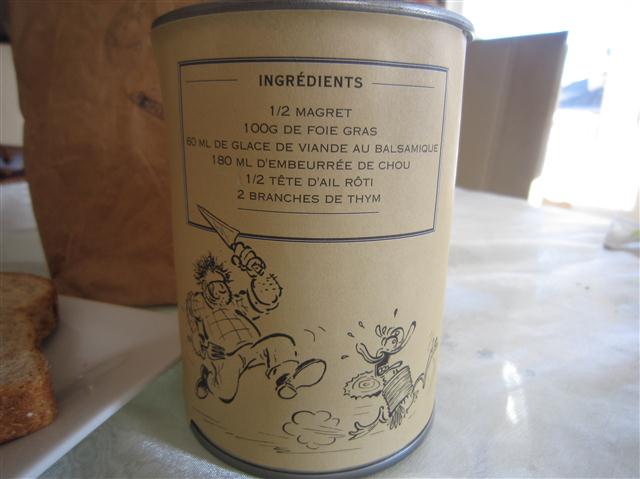
Gil and I ventured to Au Pied de Cochon in Montreal. For a while afterward we didn’t get our cholesterol levels checked. The menu  includes such delicacies as Tarragon Bison Tongue and Foie Gras Poutine (foie gras is their speciality, along with everything pig-related), all of it drenched in butter. It was here that I had the famous “duck in a can,” consisting of a duck breast, a lobe of foie gras, half a head of garlic and some kind of spectacular gravy packed into a metal can, like a soup can, and boiled.

duck in a can

Afterwards, when you’ve been sitting at your table for a while marveling at the number of trendy people there are in Montreal, the waiter opens the can at the table and dumps the whole stew onto your plate. Fabulous.

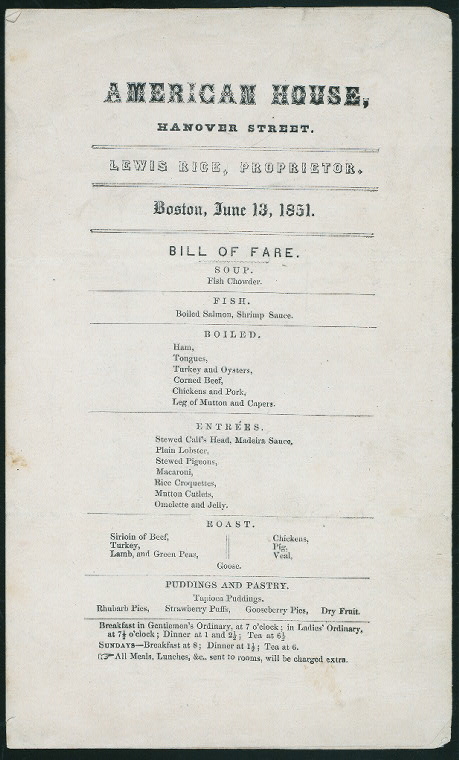
If you like menus as much as I do, you’ll go to The New York Public Library’s historic menu collection.

American House

Something I don’t want to file too far way is The Top Ten Relationship Words That Aren’t Translatable into English, assembled by a serious linguist, and including such gems as Cafuné (Brazilian Portuguese): The act of tenderly running your fingers through someone’s hair.

Probably the most delightful site I’m back-burnering. For now. Or, on the other hand, I think I’ll leave it out for a while in case I want to take it with me as a reference when I next tour the Metropolitan Museum of Art: Nipples at the Met(“updated regularly”).

nipples

All links welcome; leave them in a comment.

4 Comments

Filed under Art, Cooking, Dogs, Fashion, Fiction, History, Home, Jean Zimmerman, Knitting, Poetry, Savage Girl, The Orphanmaster, Writing

Museum Creatures for Real

The Austrian photographer Klaus Pichler has done a series of works centering around what visitors don’t ever see when they go to the magnificant Vienna Museum of Natural History.

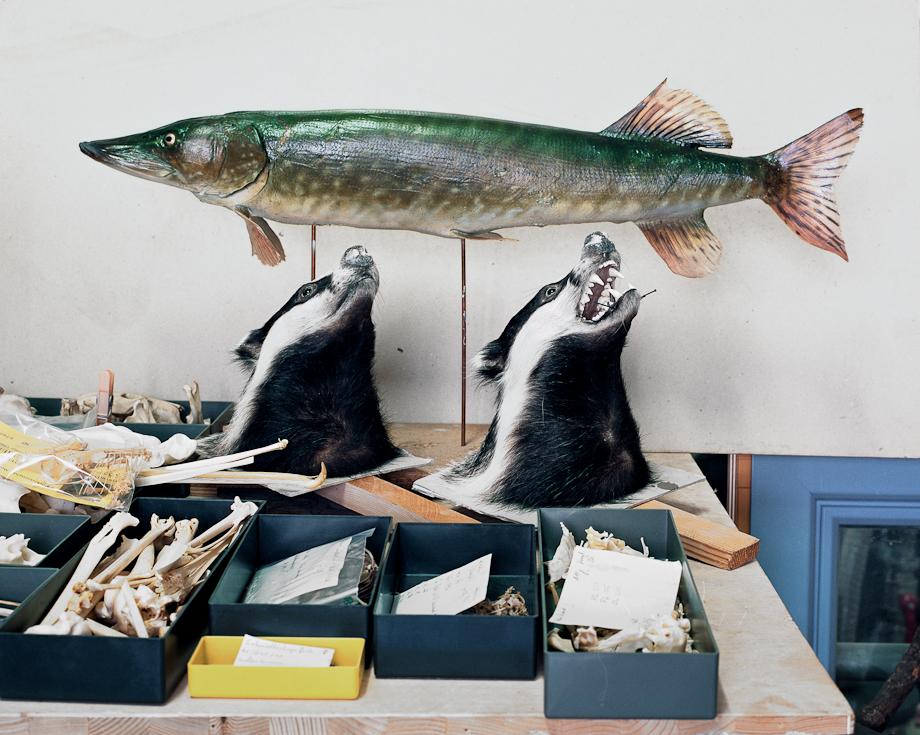
bandgers and pike, 2011 .jpg.CROP.article920-large

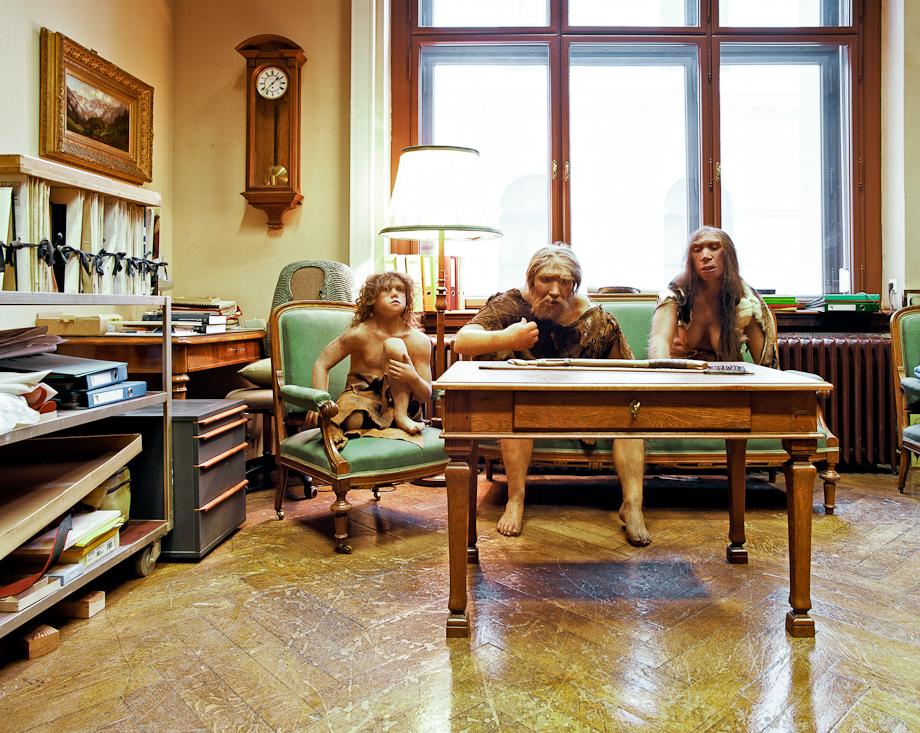
He stumbled upon a back room and his artist’s antennae went up. There were taxidermied animals in various states of confusion, as though they’d been thrown up in the air and tumbled down every which way or, more unsettling, as if someone had gone around arranging them in poses that were anything but the perfect scenes you’d see in the museum’s halls.

neandertals, 2012.jpg.CROP.article920-large

It wasn’t only taxidermy and early man come  to life.

hallway painting, 2011.jpg.CROP.article920-large

The museum’s director gave him a tour, and believe it or not the artist rearranged nothing, just took the pictures as he found them. “Skeletons in the Closet” hits some primeval fear-buttons, at least for me.

basement shark, 2011.jpg.CROP.article920-large

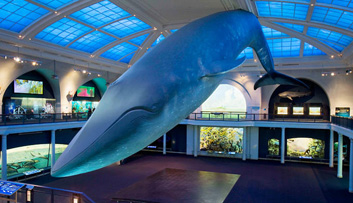
The American Museum of Natural History in New York City has always been a favorite of mine, and not only because Maud put on her walking shoes there, toddling up and down the carpeted ramps of the Hall of Gems on the Museum’s ground floor. We lived a block away, on Columbus Avenue, and she probably spent as much time there in her preschool years as she did in our small apartment, clocking hours dancing under the gigantic suspended Blue Whale.

Blue-Whale-at-Natural-History-Museum-1

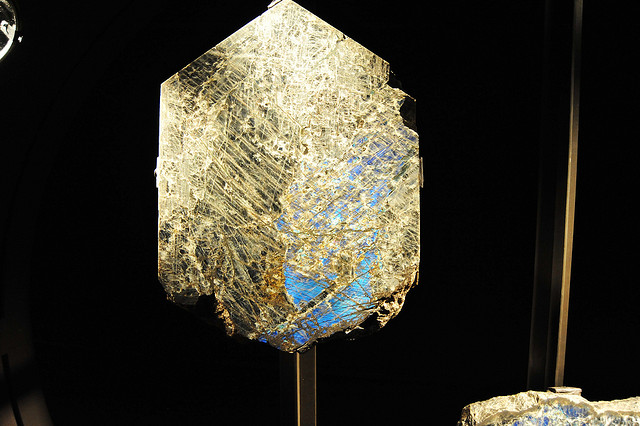
I remember a room of gold specimens in particular, which had a small bench on which you could be lulled into a trance by all that gleaming rock around you. Or maybe that was only a trance induced by chasing a toddler down the corridors all morning.

gold

I thought of those gleaming rooms last year when a very smart reader I met persuaded me to get a copy of Relic, by Douglas Preston and Lincoln Child. Does everyone experience fascination with the idea of what lurks in the museum basement? Relic would not usually be my type of book, but I was hooked by the gothic quality of the setting.

preston_child-relic

It’s the first in a series of innumerable thrillers starring a detective named Pendergast, and the author booked some time as a  Museum staffer, so he knows his stuff. Something’s loose in the Museum of Natural History and I won’t tell you what but suffice it to say it’s big and savage and hiding behind that innocent looking exit sign just next to the dioramas.

The dioramas, of course, are the Museum’s beauty queens, now refurbished — a team of artists, conservators, taxidermists and designers dusted leaves, freshened fur, and restored the perfect but faded background vistas – and reopened this past October.

bison

Everyone wants them to come alive (not a la Relic, though). Or to step into one. One man was responsible for the exquisite nature of most of these: James Perry Wilson (1889-1976) was a master of trompe l’oeil painting techniques and combined the real materials of the foreground with the painted background to create a mythic space.

Alaska Brown Bear

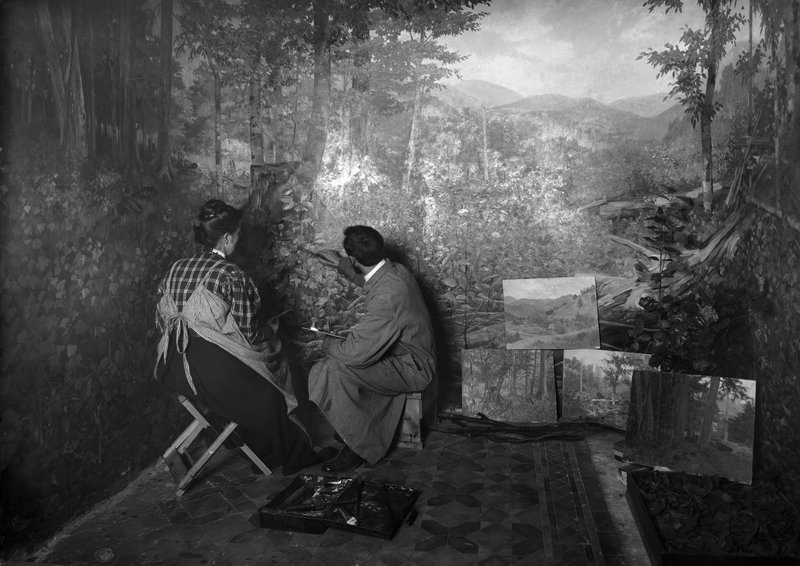
It must have been magical to be in it, in the diorama, from the beginning, if you could. To actually make one.  Here are Mr. and Mrs. Bruce Horsefall in 1907, at work painting the background of the Wild Turkey Habitat Group in the North American Bird Hall.

31655.tif

I’m thinking of Gil and me at work on something like that – but we might rather do the Bongo Group or the Wild Boars.

Personally, I like the small dioramas at the entrance of the Mammal Hall, which house depictions of mammoths and other ice-age mammals – larger-than-life beasts here rendered miniature, more like playthings than real animals. I love the idea that while the other creatures here are taxidermied, the prehistoric predators here were built from the ground up out of clay or putty or whatever they use. Sort of like the the neanderthals in the basement of the Vienna Museum.

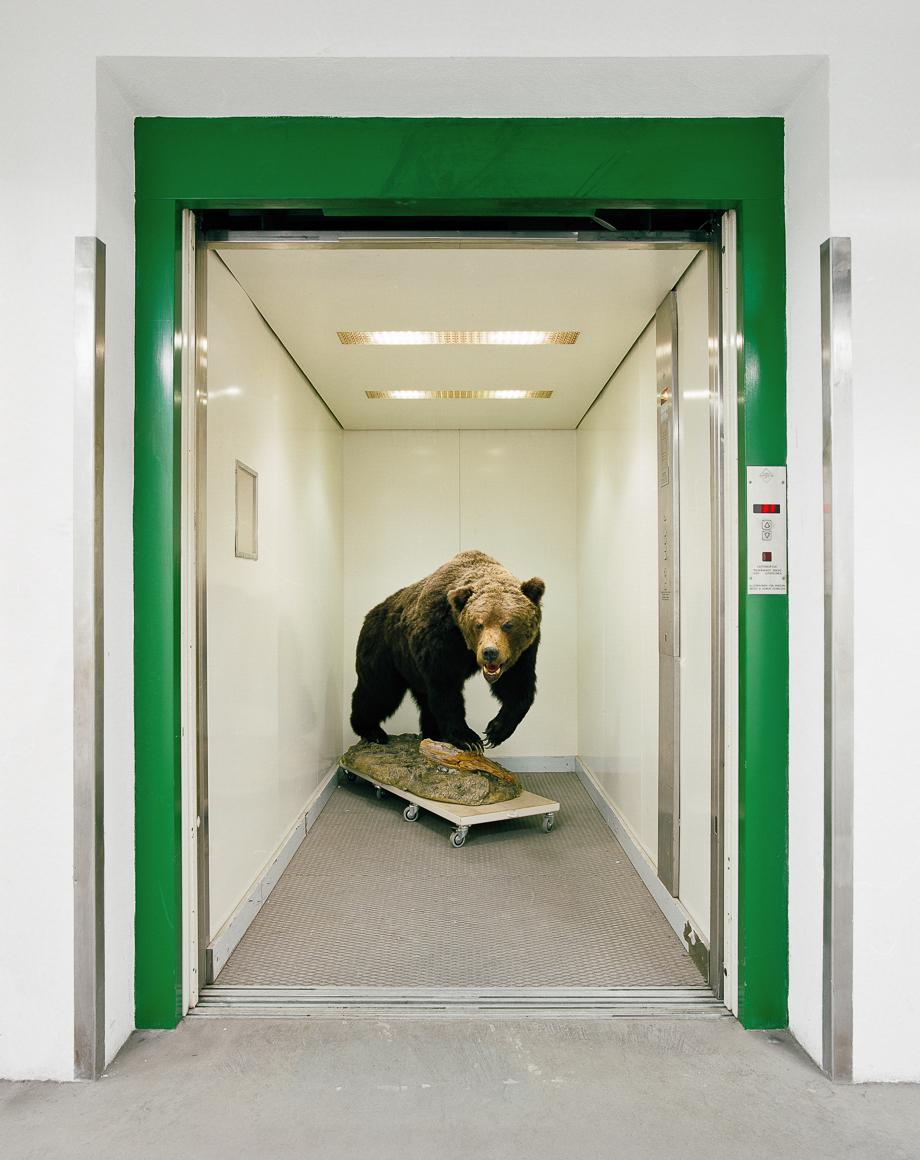
The bigger animals at the Museum of Natural History are naturally exciting, too. (This Vienna one, from Klaus Pichler, is maybe a little too exciting.)

elevator bear.jpg.CROP.article920-large

Though truth be told I liked the critters a little mothbit, before their spa treatment. There’s that Mad Men scene from last season when tweenaged Sally clutches her belly after running off to the museum, standing in front of the glorious, imposing dioramas, complaining of stomach cramps, and it turns out she has “become a woman.”

What she feels is not just all that running around in the stuffed, gleaming museum, after all. It’s real.

2 Comments

Filed under Art, History, Jean Zimmerman, Nature, Photography

Apron Strings

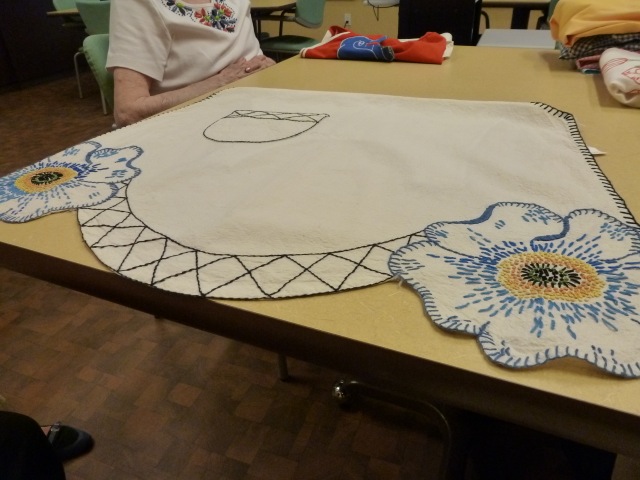
My mother Betty has been good enough to pitch in with a guest post today. She attended a presentation at the residential community were she lives by a traveling apron-enthusiast.

sunflowers

I would have liked to see and touch these beautiful heirlooms but I’m 2,000 miles away.

sunflower cu

Bobbie Schafer’s medicine show includes a slide presentation and a wicker chest bursting with vintage aprons. Betty brought a Christmas apron embroidered for her by my great aunt in the late 40s early 50s, topped with a round of plastic.

Auntie's apron

Yes, her waist was that small.

All the photos to follow are my mother’s. Hit it, Betty!

The original style of apron was called a “butcher” apron.  It had a bib top, and covered the dress  almost completely, to keep the garment from getting soiled. Washing dresses was not easy then.  The homesteaders brought aprons (and rifles) into use.

In Victorian times, matrons created their aprons with silk, often with lace.  Obviously, the lady of the house used them for adornment, not real use.

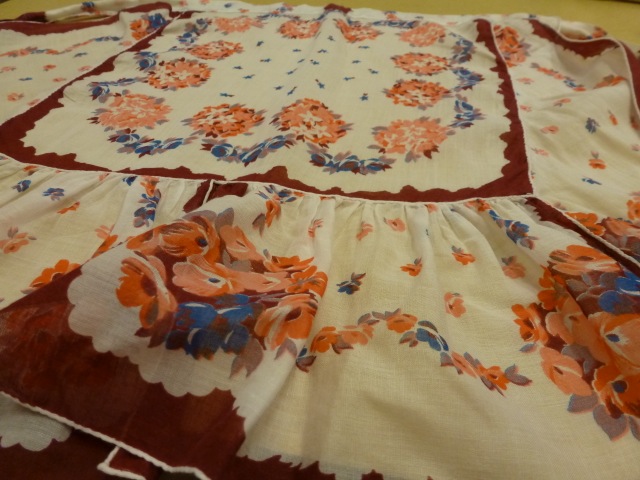
Matching handkerchiefs were sewn together in the 1920s to make hankie aprons.

hankie apron

In the ’30s the apron still covered the whole dress.  The painting by Grant Wood, “American Gothic,” is an example, also including the use of rickrack, new in the ’30s.  Some women wore two aprons, so that when you answered the door, you could quickly shed the outer one and appear in a fresh one.

rick rack

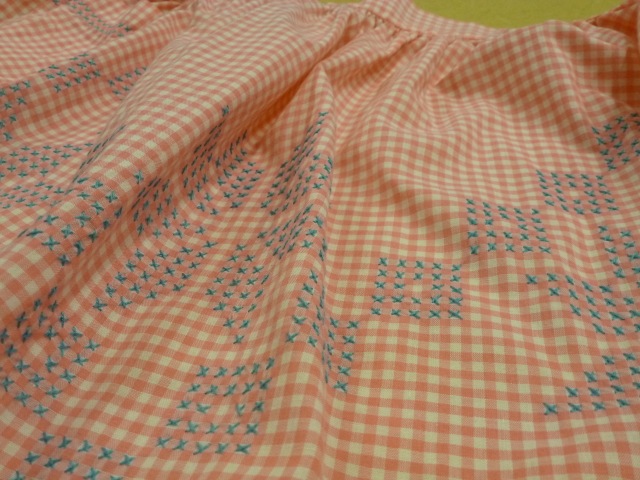
The ’40s brought shorter dresses. The government told you how long a dress could be. [Note: You’ve got to be kidding!]  The amount of material used was less, and because of wartime, it was less easily available.  The aprons were accordingly shorter and smaller — often made of only one yard.  They were still the full, or bibbed style, sometimes pinafore style. “Victory” aprons appeared during the war, with red, white and blue designs.  Polka-dots, plaids and rickrack became very popular.  (An interesting side story. During wartime, ladies alway wore hose, and because nylons weren’t available, they used an eye pencil to paint the seam down the backs of their legs.)

cross stitch

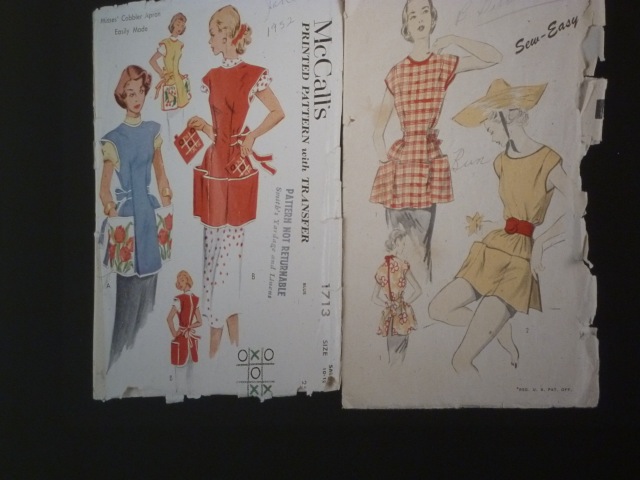
Also in the ’40s, the first patterns for aprons became available, from companies like McCall’s and Simplicity.

apron patterns

There were iron-on transfer patterns with designs for embroidery and appliqués.

girl apron pattern

In the ’50s hostess aprons were popular, often made of taffeta.  These were party or cocktail aprons.  Often they had hearts, spades, clubs appliquéd on them, for use at ladies’ card parties.  Sometimes women wore holiday aprons, and some had aprons for each holiday.

mexican apron

There were also cobbler aprons, or hobby aprons, with lots of pockets for holding tools, etc.  And for the first time, aprons for MEN!  (These were back to butcher-style.)  Real aprons for women went out of favor, as TV dinners had been invented, and women didn’t cook as much.

mexican apron cu

In the ’60s, The washing machine meant aprons didn’t need to cover the dress.  Women started wearing pants and with the women’s movement, women decided to throw away their aprons, anyway!

In the ’70s, the pinafore style became popular again.  Now the apron is back.  There are more patterns available than there were 10 years ago.  They are popular, even on college campuses, and in stores like Target.

cross stitch:applique

9 Comments

Filed under Cooking, Fashion, History, Home, Jean Zimmerman

Neruda Poisoned?

Did General Augusto Pinochet murder the great poet? To me the question is not whether but how. Neruda’s remains, interred for 40 years in his garden, have now been exhumed. Will toxins be found that prove he was killed by the fascist regime on the 23rd of September 1973, just 12 days after Pinochet’s military coup?

pablo neruda:road

It would be a level of political venality the political animal Neruda would appreciate. Among numerous political posts, he served as the President Allende’s ambassador to France in the early ‘70s.

Neruda penned love poems, beginning with his first book, Twenty Love Poems and a Song of Despair, when he was a 20-year-old prodigy.

young pablo-neruda

The language was lyrical, passionate, penetrating, fiery.

I want

To do with you what spring does with the cherry trees.

He wrote in “La Poesia” of his being swept away by poetry: I was fourteen years old, proudly obscure.

You can hear him read the poem here.

It was at that age

that poetry came in search of me.

Twenty-Love-Poems-and-a-Song-of-Despair-9780142437704

Madonna, of all people, has given a thoughtful reading of the masterful “If You Forget Me” in a video.

Mostly he wrote about love. From “100 Love Sonnets”:

so I wait for you like a lonely house

till you will see me again and live in me.

Till then my windows ache.

But sorrow was also his domain. Wild, bursting nature.

tree

Introspection. His words:

Someday, somewhere – anywhere, unfailingly, you’ll find yourself, and that, and only that, can be the happiest or bitterest hour of your life.

Alienation. My favorite of his poems, “Walking Around,” has nothing to do with love, really.

It so happens I am sick of being a man.

And it happens that I walk into tailorshops and movie houses

dried up, waterproof, like a swan made of felt

steering my way in a water of wombs and ashes.


The smell of barbershops makes me break into hoarse sobs.

The only thing I want is to lie still like stones or wool.

The only thing I want is to see no more stores, no gardens,

no more goods, no spectacles, no elevators.


It so happens that I am sick of my feet and my nails

and my hair and my shadow.

It so happens I am sick of being a man.

The poem goes on from there and only gets more powerful, especially in the masterful translation of Robert Bly, who did a book-length Neruda and Vallejo.

He came from a backwoods background in southern Chile, born in 1904, Ricardo Eliezer Neftali Reyes y Basoalto, a name he changed when he reached his teens in homage to the Czech poet Jan Neruda.

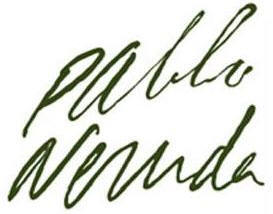
neruda_signature

He favored green ink, using it as his symbol for desire and hope.

Gabriel Garcia Marquez called him “the greatest poet of the 20th century in any language.” He filled stadiums with awed fans.

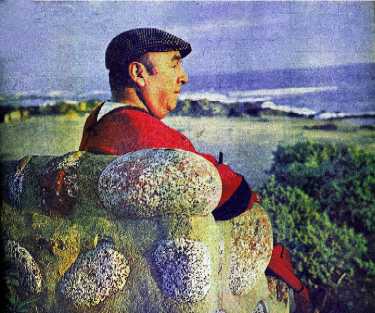
He shared his romantic passion with his wife and muse, the singer Matilde Urrutia, in the beach idyll of Isla Negra, off Chile’s southern coast.

Pablo-Neruda outdoors

All his poems can be had on line, for free, which I think he would have liked.

Now the possibility of his poisoning. Supposedly Neruda had prostate cancer. But he never had cancer, says one of his closest survivors, his driver Manuel Arraya. Supposedly he went into the hospital for treatment, just 12 days after Pinochet’s coup, and there he died of a heart attack. It was just days before he was to travel to Mexico to lead the global opposition to the new regime. Neruda’s assistant says he got a call from the hospital. Pablo, saying they had come in the night and given him a mysterious shot in the stomach. “They didn’t want Neruda to leave the country so they killed him,” says Arraya. The poet was 69.

A week before, soldiers had searched his house.  He reportedly told them: “There is only one thing here that poses a danger to you: poetry.”

To quote another monumental poet, W.H. Auden, about the death of yet another great poet, W.B. Yeats, What instruments we have agree/ The day of his death was a dark cold day.

All of Chile wept.

There is a poem Neruda wrote titled “The Me Bird.”

I am the Pablo Bird,

bird of a single feather,

a flier in the clear shadow

and obscure clarity,

my wings are unseen,

my ears resound

when I walk among the trees


or beneath the tombstones


like an unlucky umbrella

or a naked sword,

stretched like a bow


or round like a grape,

I fly on and on not knowing,


wounded in the dark night,

who is waiting for me,

who does not want my song,

who desires my death,

who will not know I’m arriving

and will not come to subdue me,

to bleed me, to twist me,


or to kiss my clothes,

torn by the shrieking wind.

That’s why I come and go,

fly and don’t fly but sing:


I am the furious bird

of the calm storm.

It’s been interpreted in an animation that shows a dancer, imprisoned, flightless, as the walls close in.

oldneruda

Ambushed by death, singing all the while.


3 Comments

Filed under History, Jean Zimmerman, Poetry

Minnies Land and Audubon

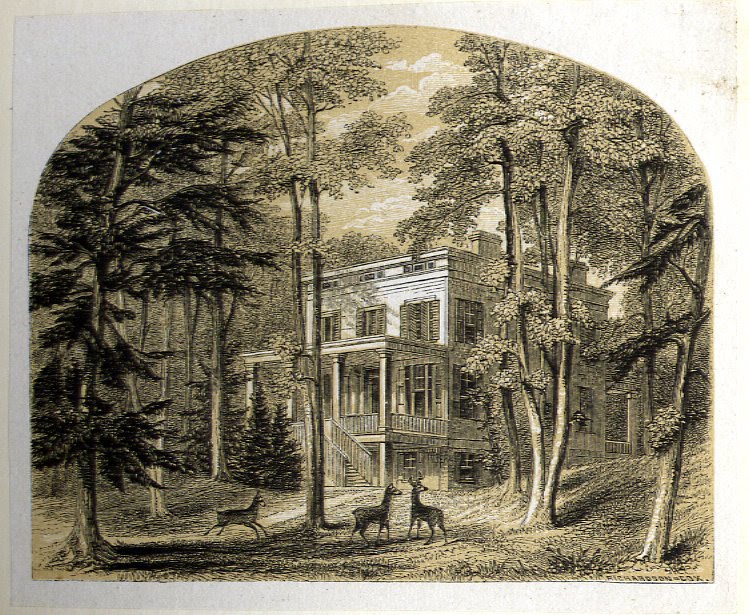
What would John James Audubon have made of the transformation of his Manhattan estate in the years since his death in 1851? He called the 44-acre property Minnies Land in honor of his wife – her name was Lucy, but Minnie was a Scottish endearment, the term for Mama, and it was what he and the couple’s two sons had begun to call her when they lived in Scotland in the 1830s. In 1842,with funds from Birds of America, the Audubons bought the property and built a sprawling house on the Hudson River’s bank, near a lively stream. If there were city streets there then — so far they were only parallel lines on a surveyor’s map — the house would have stood in the vicinity of 157th or 158th.

house

Two piazzas (the then-name for verandas) opened from the gracious two-story structure, which at some point got a mansard roof and a new bay window. It could be that Samuel Morse, a friend of Audubon’s, sent the first telegraph message across the Hudson from a laundry room in the basement. It was a place where things happened, because things were always happening around Audubon.

Aud

The environment was more like a Cropsey canvas than anything associated with metropolitan New York (the Hudson River School genius painted this one around West Point in 1877). Even then, the city proper stood miles downtown, at the tip of Manhattan. The estate “consisted of forty-four acres, all heavily wooded, and at that time was almost as remote from the city as a lodge in the Catskills,” wrote one historian in 1902.

Cropsey On the Hudson Near West Point 1877 Point

A good place for bird hunting, if you were a man in need of a spectacular looking turkey.

audubon_wild_turkey_large

Not an inch of Minnies Land remains today, but we went looking for clues, snippets of the past in a jostling, randy, determinedly contemporary neighborhood.

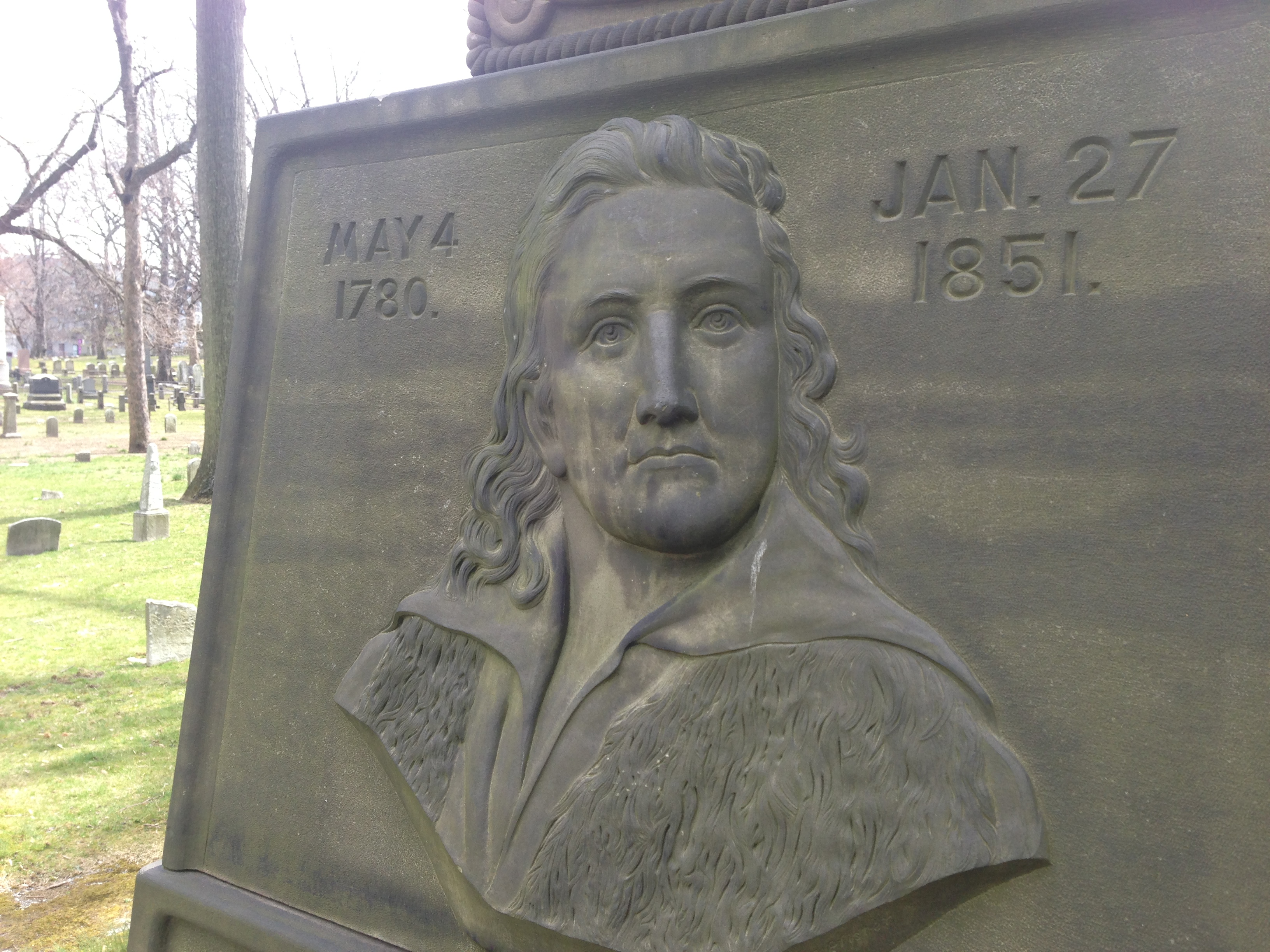
We started with Audubon’s burial site, under a towering local-bluestone obelisk in Trinity Cemetery  at Broadway and 157th Street.

audubon engraving

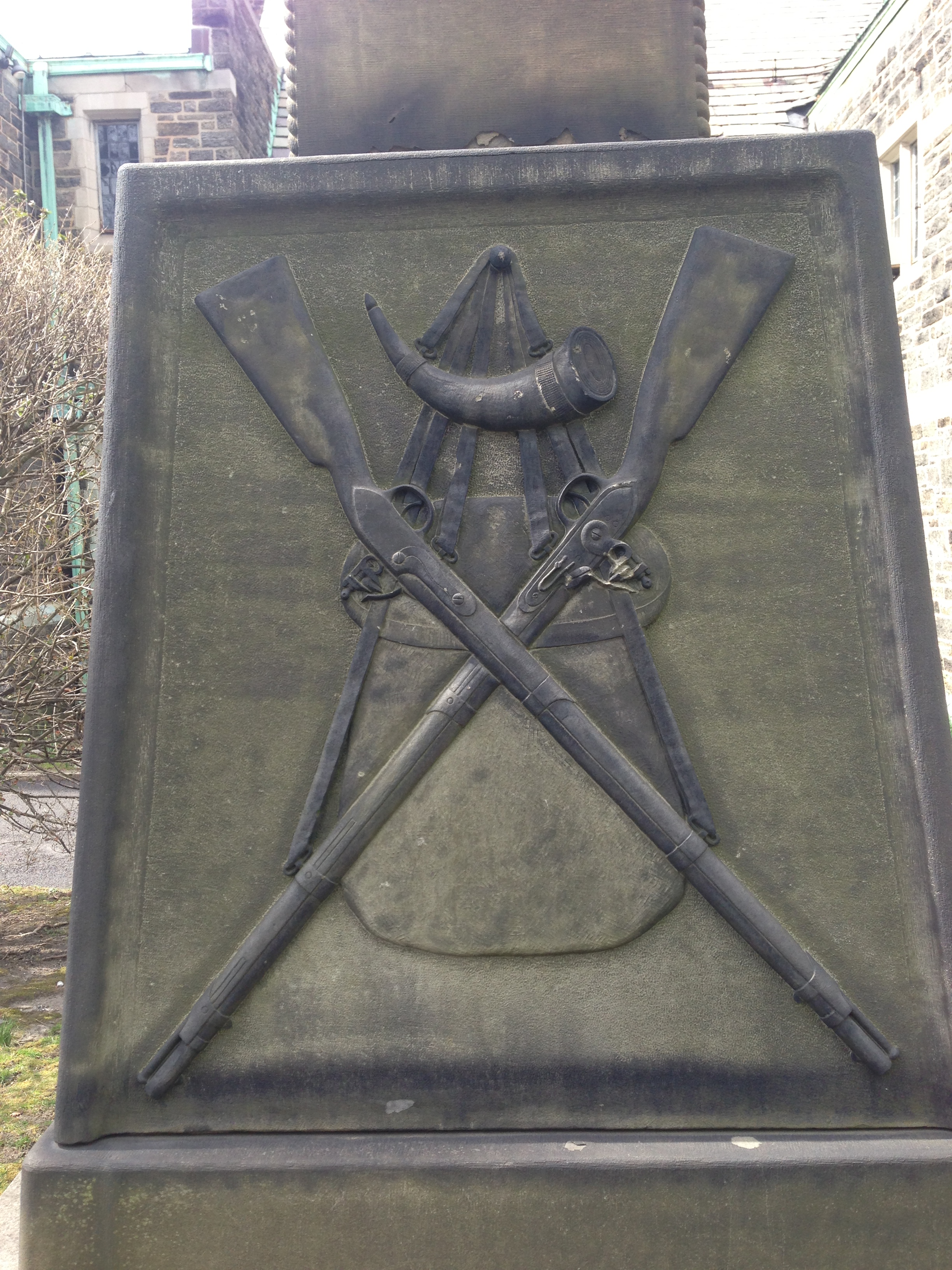
Elaborate carving shows bas relief critters on each side of the piece, land-mammals on one side and creatures of the air on the other. Fittingly, while one plaque shows painterly accessories, a palette and a brush, its twin on the reverse of the monument gives the gritty equipment with which Audubon accomplished his goals.

guns

A few daffodils reared their heads amid the stones for Woodruff, Corbin, Mayer and Smith, so many Smiths, it seemed, all the early New York names. And in another part of the cemetary (bisected when Broadway came through in 1868) lies Charles Dickens’ son, struck down by a heart attack in 1912 when on a lecture tour in the U.S. on the centenary of his father’s work.

The terrain of Trinity cemetary is the one feature in the neighborhood not changed in the nearly two hundred years since Audubon settled his family here. Rough, craggy, sloping steeply down to the Hudson, the graveyard was a favorite destination for Manhattanites, who loved to drive uptown in their carriages to stroll here.

Since 1932 a grand apartment house, 765 Riverside Drive, sits where the Audubon house did, and it is cut off from the river by the Riverside Drive viaduct, which came through in 1911. Then, the house sat some 50 feet below the current street level, on the river bank, and the new highway buried it almost completely.

minniesland eventually

The gracious old house was eventually moved, then demolished.

When her husband died, Lucy and her sons had begun selling off parcels of the estate to make ends meet – there were 14 grandchildren to support – and 10 happy owners became part of a development  known as Audubon Park. Lucy, residing nearby, outlived her husband and her sons.

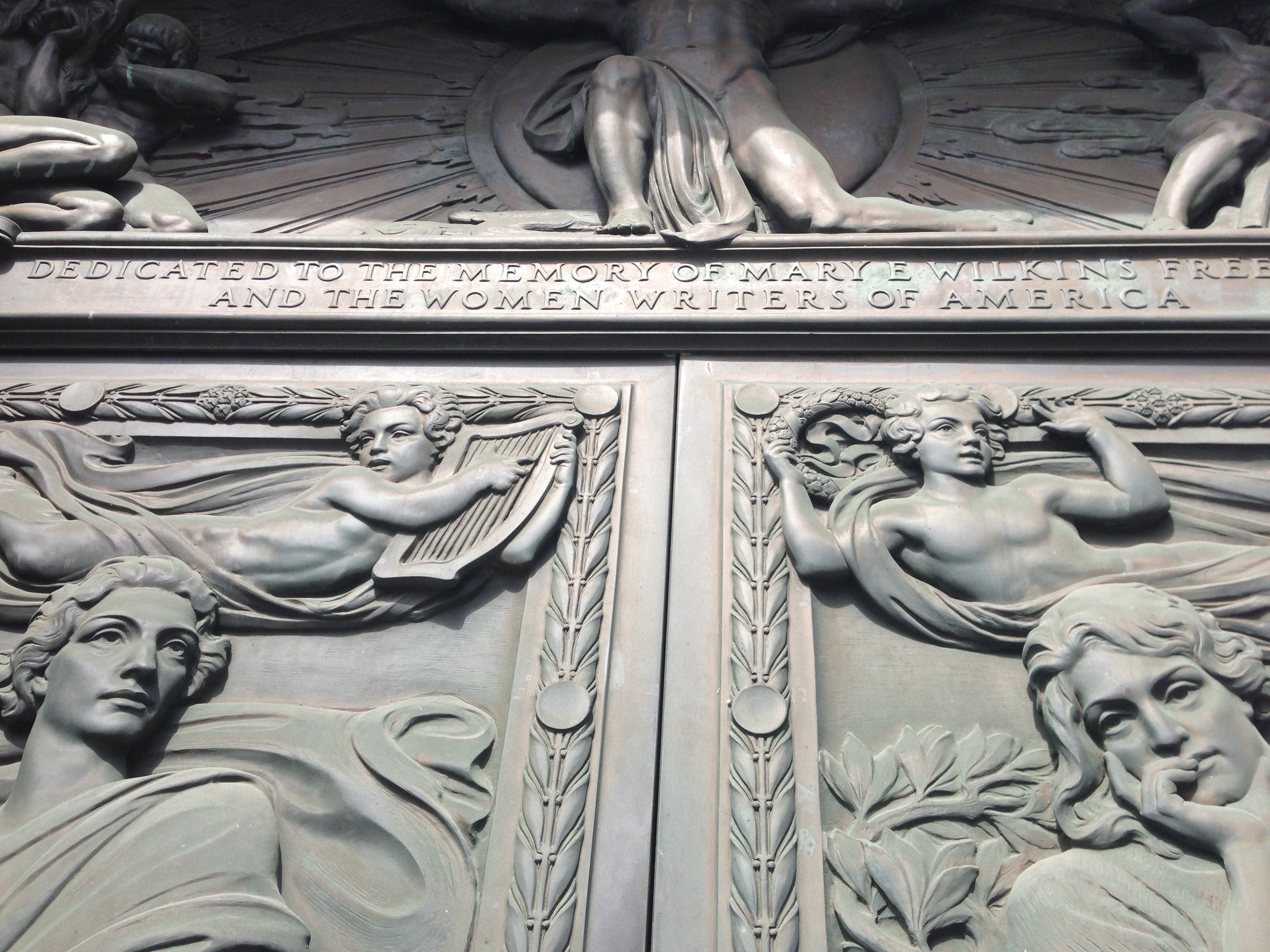
All the grand houses have since been razed, but we wandered around the neighborhood. We discovered the carved bronze back door of the American Academy of Arts and Letters, with its beautifully grave women and its inspiring legend:

women legend

On the next block, the reverse of the building sports more etched mottos. Milton.

A good book is the precious life blood of a master spirit.

And, with no citation but from Edwin Arlington Robinson.

We are Young and We are Friends of Time

I’m in need of a new personal motto and that one seems just fine.

Another legend, one more in keeping with the present spirit of the locale, had been pasted up on the locked doors below: No sidewalk or street barbeques allowed.

Audubon Terrace, a Beaux-Arts complex that houses the American Academy, also is the site of the Hispanic Society of America Museum, seemingly unchanged since it opened in 1908, except for dozens of empty display cases, which will one day soon be filled, hopefully. Still, there are new coats of terra cotta paint to match the gallery’s burnt-sienna floor tiles. Here you can see a sheaf of works by Goya and El Greco and Velasquez, along with curiously beautiful objects. Door knockers dating to 1500.

knocker

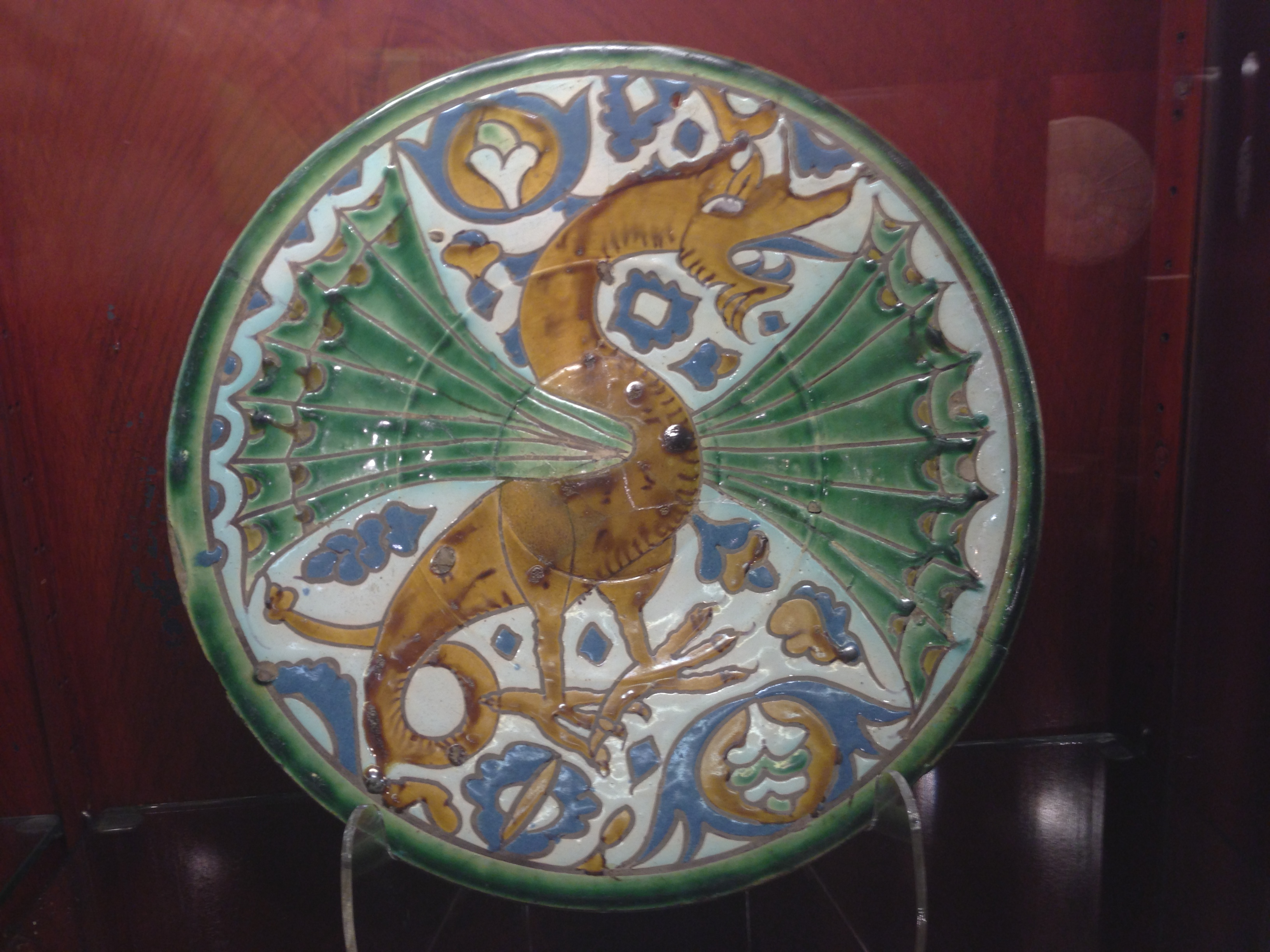
Ceramics, tin-glazed earthenware, of dragons, which were real in the middle ages.

dragon

Tiles, this one depicting one of Oliver’s ancestors.

oliver

Infants embracing skulls, from about 1700.

baby:skull

And a Saint Acisclo so vivid you feel he’ll step out of 1680 and shake your hand.

sad saint

A visit to Minnies Land would not be complete without a visit to the Morris-Jumel mansion, “your house,” as my brother told me, since my book The Women of the House concerned itself in part with Mary Philipse and Roger Morris and the adventure of building their home on a bluff overlooking the Harlem River in 1765.

jumel mansion 1854

Later the home made the perfect headquarters for General Washington, who could stroll around this high perch and be able to sight miles in every direction, planning military campaigns all the while. When Audubon took up residence at Minnies Land, the Morris House was still probably the only place nearby you could go to get a cup of sugar.

Perfectly preserved, the house offers a display of morning-glory wallpaper, velvet, circa 1820, handblocked and flocked to within an inch of its life.

silk walpaper

And there is the famous octagonal drawing room, said to be the first in America, then called a withdrawing room, that I was once lucky enough to give a talk in.

Walking back to the car, we passed by  J & F Meat Market, Iglesia Pentecostal and Flaco’s Pizza, the sidewalks bathed in dog waste. A church lady making her way home in a purple hat. A bold mural. Everything was blowing up in the cold spring wind.

mural

In 1909, The New York Times opined that “within another year there will be no trace of the little garden spot laid out by Audubon about seventy years ago.”

There’s not. And that’s hard to take. But we can still imagine it.

3 Comments

Filed under Art, Dogs, History, Jean Zimmerman

Gone Birding

The last time I was in a room with so many birds — a pet shop with African Greys and budgies and the like — I had something of an anxiety attack. Many of them were free to roam at will, and some decided my shoulders would make a good roost.

This time the closest thing to drawing blood came in a museum gift shop, where the sharp elbows of two Manhattan matrons kept jabbing me away from the bird postcards.

The day was clear as glass, but cold, and we decided that we’d have better luck birdwatching at the New-York Historical Society than in Central Park.

audubon owls

The museum is having the first show of three, together titled “The Complete Flock,” that will display all the museum’s unparalleled collection of John James Audubon. At the same time as it shows the watercolor models for the sumptuous double-elephant-folio print edition of The Birds of America (published between 1827 and 1838), it has something else special – early works that have rarely been seen, that show the development of the artist from a young age, when the naturalist was new to America and stoked about what he was seeing.

He was new, and so was the turkey vulture he depicted in 1820, when Audubon was 35.

turkey vulture nestling

You can see the nestling’s downy feathers, rendered in pastel, and its leathery feet, drawn in black ink. Interesting creatures, they open their eyes immediately after hatching and in less than a week begin to move about in their dark cave. Lacking a syrinx, their vocalizations are limited to hisses and grunts. Within two weeks they become larger and more aggressive, and their black flight feathers begin to emerge, as Audubon shows with dreadful clarity. The adult turkey vulture has a six-foot wing span.

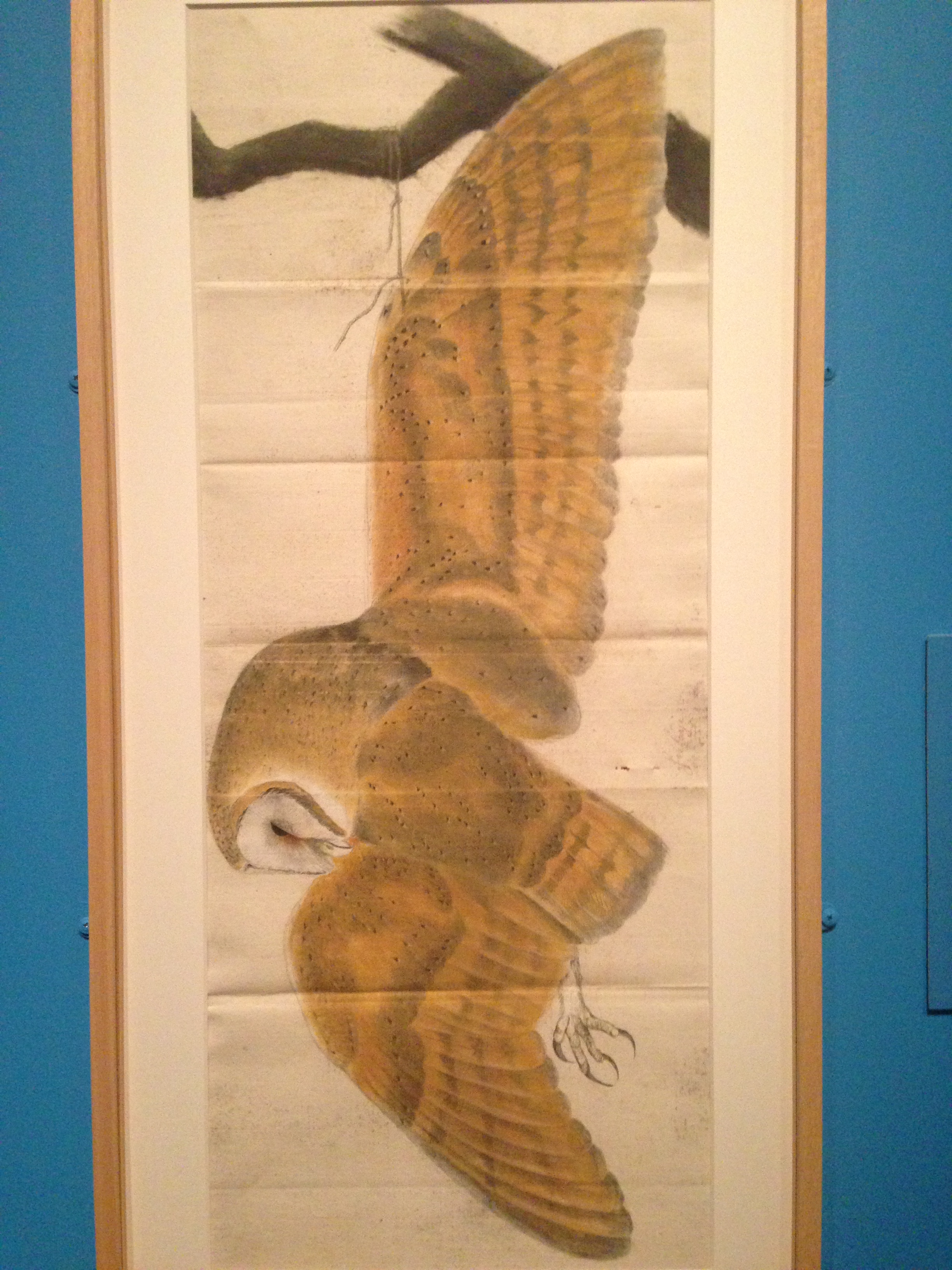
Also on display, a mechanism through which the young Audubon got the poses he wanted. He used something called a “position board” with horizontal and vertical lines, to which the bird was fixed with skewers and pins. None survive today but we have a verbal description of the specimens being impaled. This was an improvement over his earlier techniques, when he simply suspended a jay or a meadowlark by its beak and drew it that way, or a  barn owl by its honey-colored wing. You can see the folds of the paper the artist used for this pastel.

owl

The great naturalist would kill 400 ducks to get the proper specimen. And when in the wild, he consumed his specimens for his supper.

Bird calls are a thing you can’t describe in words. So I was glad there was a small device available that allowed visitors to hear the call of the wood thrush, so extolled in poetry.

wood thrush

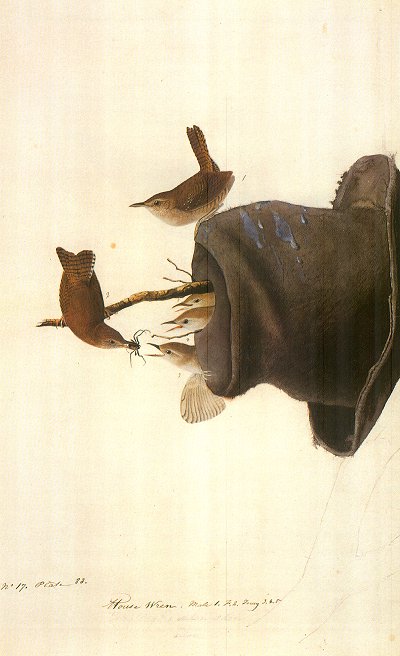
I loved the slightly nutty picture of house wrens nesting in an old faded hat, but appreciated it all the more because displayed alongside was the copperplate that had been used to make the print.

wrens

After the plates came to America in 1839 they were stored at Minnie’s Land, Audubon’s estate on the Upper West Side of New York. Until in 1871 Lucy Bakewell, his widow, in desperate financial straits, sold most of them for scrap metal to the Ansonia Brass and Copper Company (the company, incidentally, owned by the Phelps family I wrote about in Love, Fiercely). Supposedly a teenaged son saved nearly a quarter of the plates from destruction. (Could it be Newton Stokes’ ancestor who made this smart move?) The New-York Historical Society owns four of the extant plates.

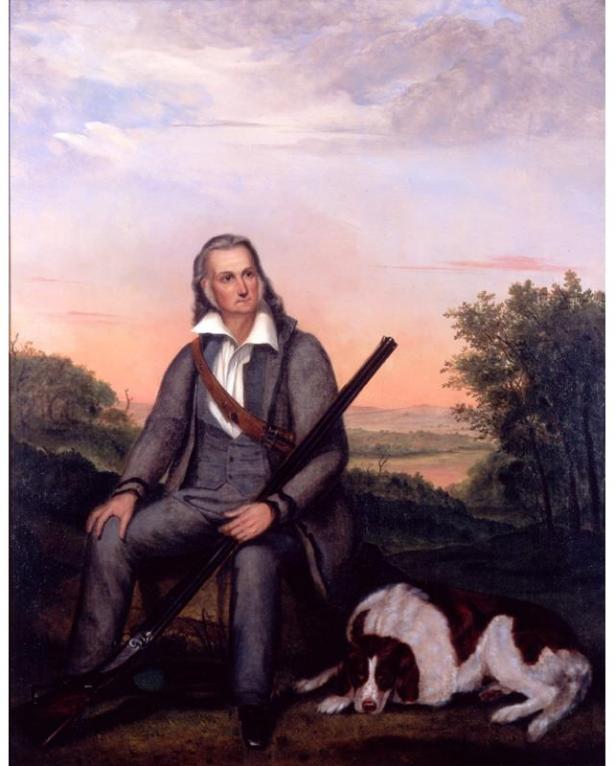
Audubon, we know, was suave, lean, a rock star of his time, his hair smoothed back with bear grease.

audubon outside

Lucy, a Pre-Raphaelite beauty, liked to swim naked in rivers, and often went birding alongside her adventurous husband. They saw many crystal days together, and I bet they found some birds in Manhattan, too — before Central Park, back when New-York had a hyphen. The Central Park, as it was then called, did not open until 1857.

3 Comments

Filed under Art, History, Jean Zimmerman, Love, Fiercely, Nature

Tiny Houses

Walled with dark wood logs, topped off with dark wood rafters, with dark wood planks underfoot, the Cabin can be a shadowy place sometimes. Especially when all outside is calling crazily that spring is here. I look out the window over my desk and see the bright glow of the marsh reeds, the heady blue of the sky, the sunlight cast over everything, and I can’t help but feel that the house I live in is… small.

spring indoor cabin

Magical, yes. But dainty.

We have about a thousand square feet. Some of that number, I have to say, is stairs. I know people whose total window area measures larger. My friend Josefa tells me that how to live in so small a space is the way they do on ships, stowing everything when it’s not in use.

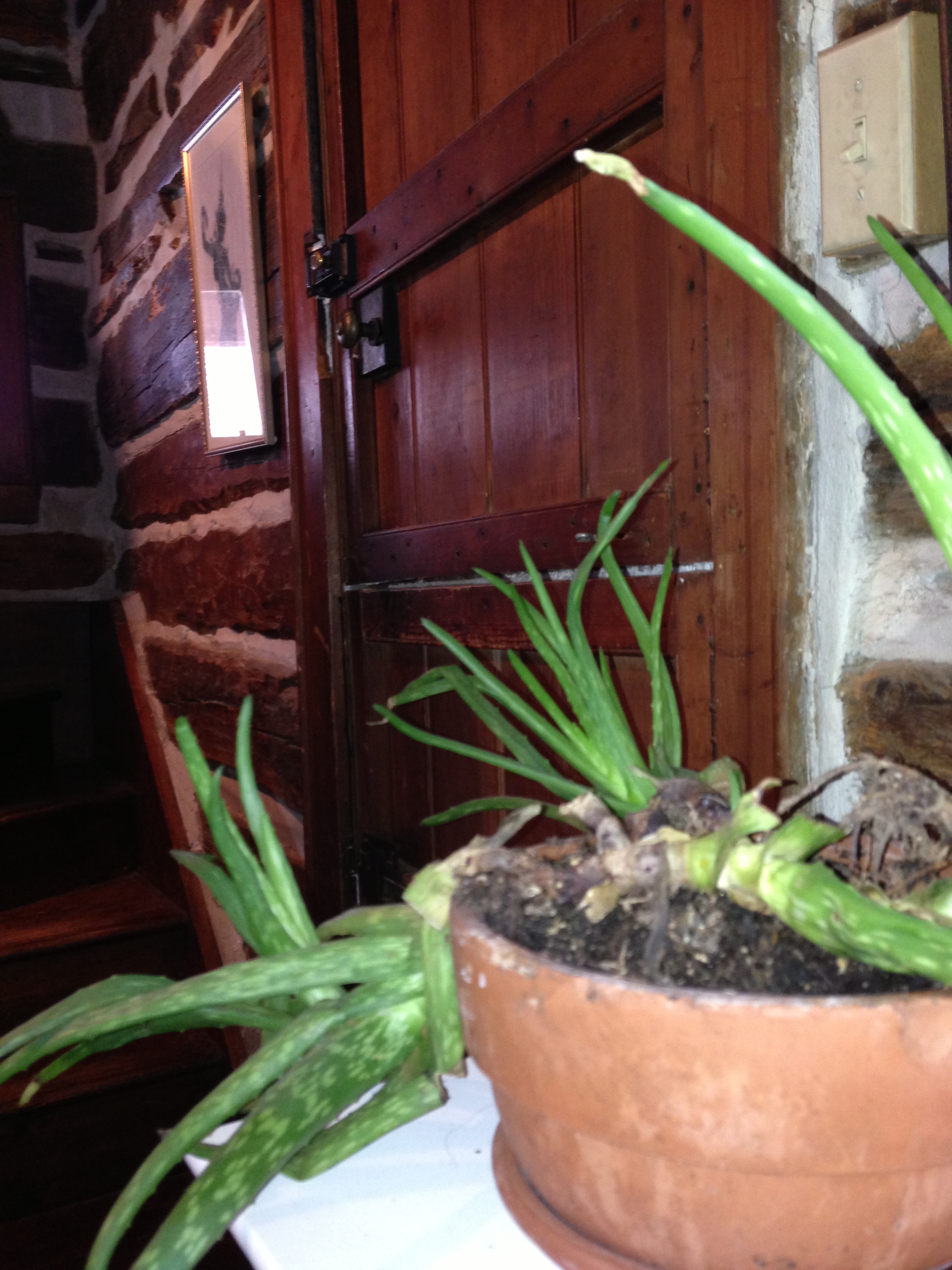
I never liked shipboard life. All our cubbies are full to bursting, plus we have out and available all the things we’re interested in at any one time. We scoot in between pieces of furniture, and sometimes have to tuck in our feet so they don’t get stepped on. Books clutter every surface. (Don’t say clutter though, that’s a negative, suggesting untidy or disordered – try “a wealth of books” instead.) I can barely see the surface of my narrow desk, covered as it is with slips of paper, notebooks, folders and stacks of books. Pots live out in the open in the kitchen, the cupboards won’t fit them. I just realized the aloe plant I proudly acquired and nurtured this winter has to be moved so the dutch door will open this summer.

aloe

I like to write about peoples’ houses, and some of them have been big enough to fit the Cabin into many times over. Shadow Brook, for example, which the Stokes family built in 1893 in Stockbridge, Massachusetts. The rambling stone castle cost one million dollars to construct, and had an acre of floor space on each of four floors.

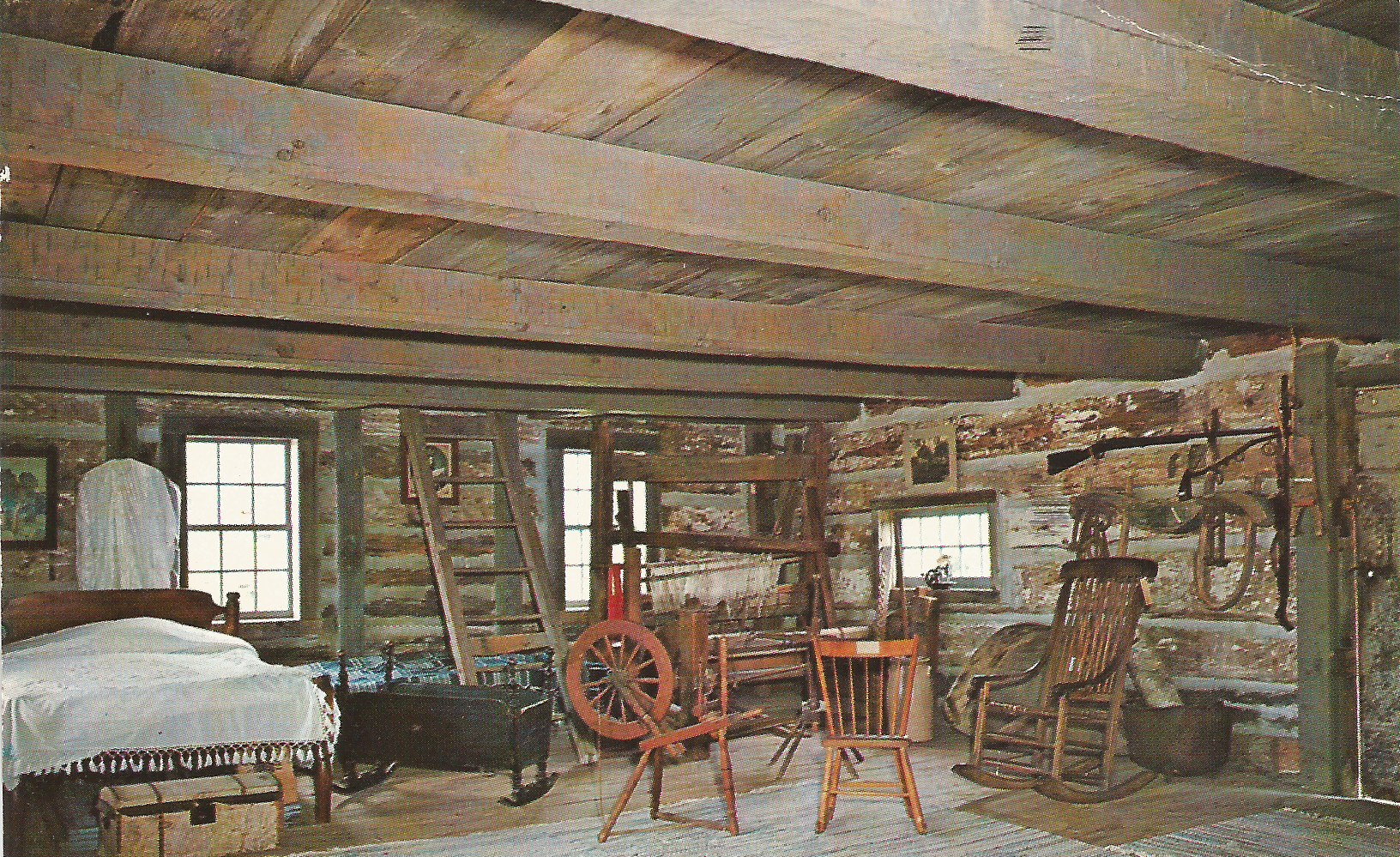
In Vermont a cabin built by a family named Hyde has stood since 1783. It’s a twin to ours, built during the same era, with similar materials in a near identical layout.

Hyde cabin

We do have another floor, also tiny, and a kitchen in the basement, neither of which was there when the Cabin first went up. It must have felt like such a haven when you came in with wet boots around 1800 to the fire roaring in the hearth and maybe a chicken on the spit.

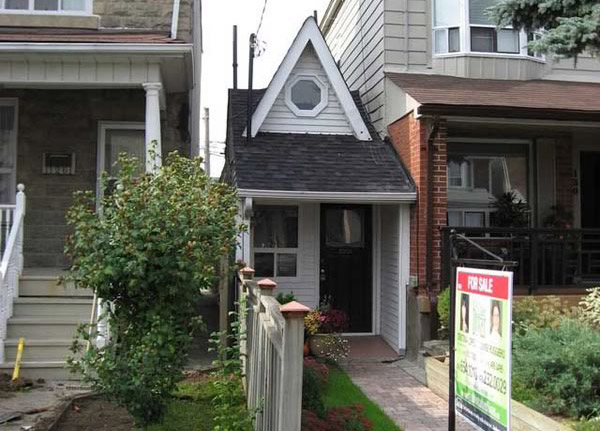
Ours isn’t quite the tiniest home. I know because I’ve done a little sleuthing.

tiny home outside

Last spring I visited a publishing convention in southern California, where I manned a table with advance copies of The Orphanmaster to be signed and given away. Just across from me, I noticed in between conversations, was a constant throng of people. When they cleared momentarily I saw that the author at that table was signing copies of Tiny Homes: Simple Shelter, a large-format book that was beautifully illustrated with pictures of places that some might say were suitable only for Tom Thumb.

At the book conference, every time I looked across the way there was the Tiny Homes author, replenishing the stacks that towered on his table from the cardboard boxes behind his chair.

Lloyd_Kahn

Lloyd Kahn, the author, was once upon a time the shelter editor of the Whole Earth Catalog and has spent his life building green structures out of interesting materials (sod roofs, poured concrete walls, plywood and aluminum geodesic domes), when he wasn’t surfing. At the convention, he also had adorable palm-sized souvenirs of his book, tiny books about tiny homes, one of which I took back to my own home.


Cover

It made me wonder. The fantasy of a tiny home. All these people lining up for a glimpse into the peanut world presented to them by Lloyd Kahn. Who actually wants to live the tiny life? Besides Gil and me?

house between two

People who live in tiny homes see life as an adventure.

tiny homes simple shelter 1

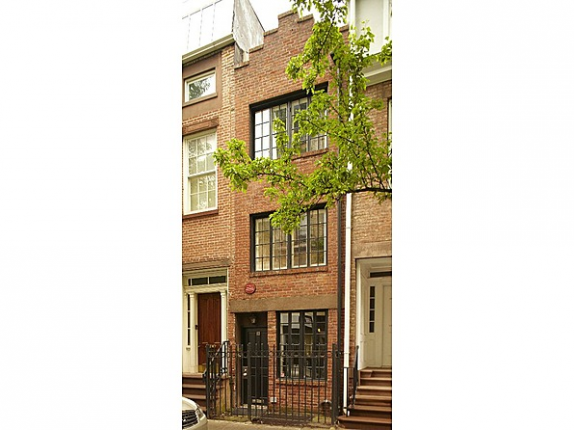
Edna St. Vincent Millay lived at 75.5 Bedford Street, in Greenwich Village, which was then and now Manhattan’s skinniest house. “Please give me some good advice in your next letter,” wrote the poet. “I promise not to follow it.” Her narrow domicile had only 999 square feet and was 9.5 feet across in the front. Last I heard it was on the market for 3.95 million dollars.

75.5-Bedford-Skinny-Front-574x430

I checked out a web site for people who want to buy, sell and rent tiny structures. Tiny House Listings offers homes of 1,000 square feet or less.

Could anyone not love this caravan? A kind of giant beer barrel on wheels.

Bears Caravan

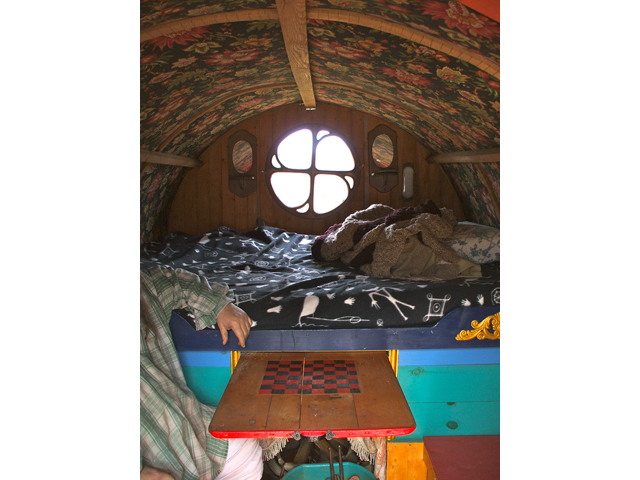
Five hundred square feet. Yours for $29,000. Siloam Springs, Arkansas. Checkers included.

Bears Interior

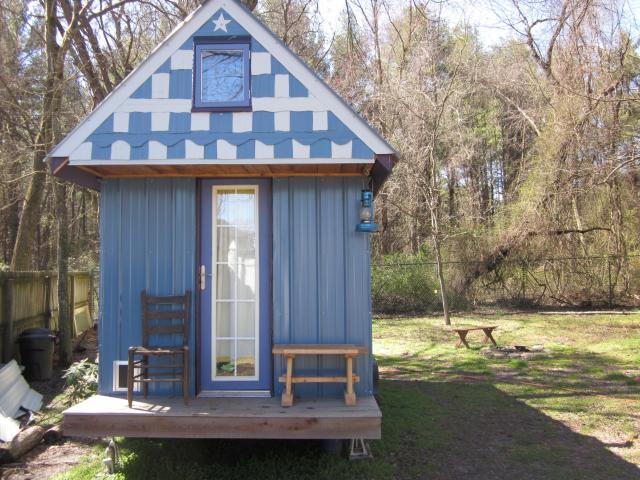
For a bit more you could have this hobbit house, an A-frame in Granite Falls, Washington.

A Frame

Or rent. For 400 a month you can stash your stuff in this green house’s cubbies.

Or rent

The web site allows you to dip inside and get the big picture, so to speak, before you commit to the Tom Thumb lifestyle.

interior rental

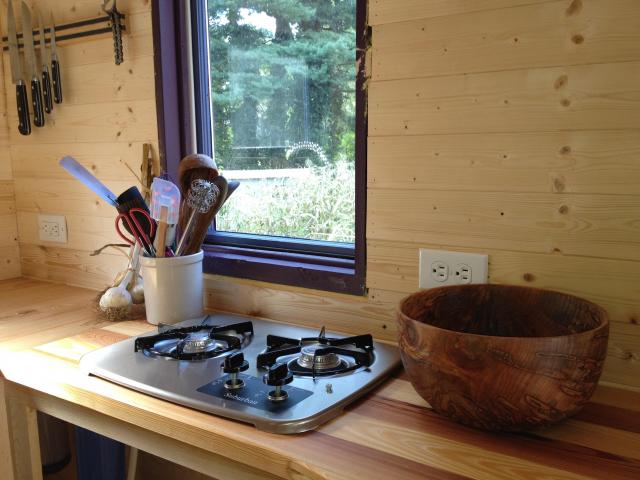
For a galley, it looks more spacious than the Cabin. Maybe it’s all that clean, smooth, un-lived-in pine.

1 Comment

Filed under History, Home, Jean Zimmerman, Publishing, The Orphanmaster

Life and Taxes

I had an errand to do and nothing could put it off. My accountant, based in lower Broadway in Manhattan, was waiting, and up Broadway we walked.

The financial district remains trapped in a purgatory between winter and spring. Mufflers and gloves abounded. The buildings themselves seemed frozen. The sound of traffic in those narrow streets formed itself into a cartoon thought-balloon above my head.

The graveyard at Trinity Church on the corner of Wall Street and Broadway had nothing like what Walt Whitman called the “beautiful uncut hair of graves.” All the grass lay shorn and grayish-brown beneath the eroded ancient stones.

trinity gravestone

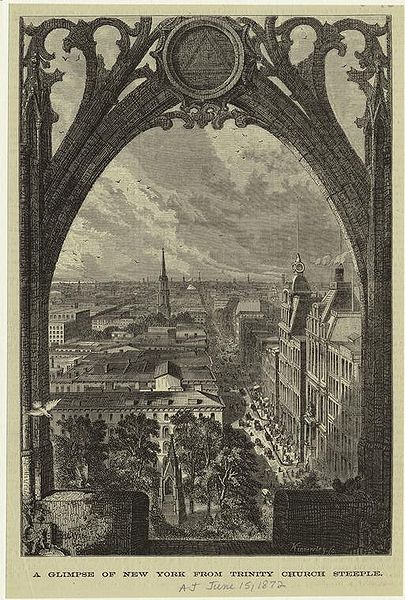
This isn’t the first Trinity Church. The original was destroyed by a fire that consumed a quarter of New York City during the Revolutionary War, leaving the steeple fallen and smoldering on the ground. The second, consecrated in 1790, was buffeted by severe snowstorms and deemed too risky to stand. The third went up in 1846. It boasted a spire that was magnificent, the tallest structure in Manhattan. The view from the church steeple became a fantastic tourist attraction and a romantic place to date.

view from trinity 1872

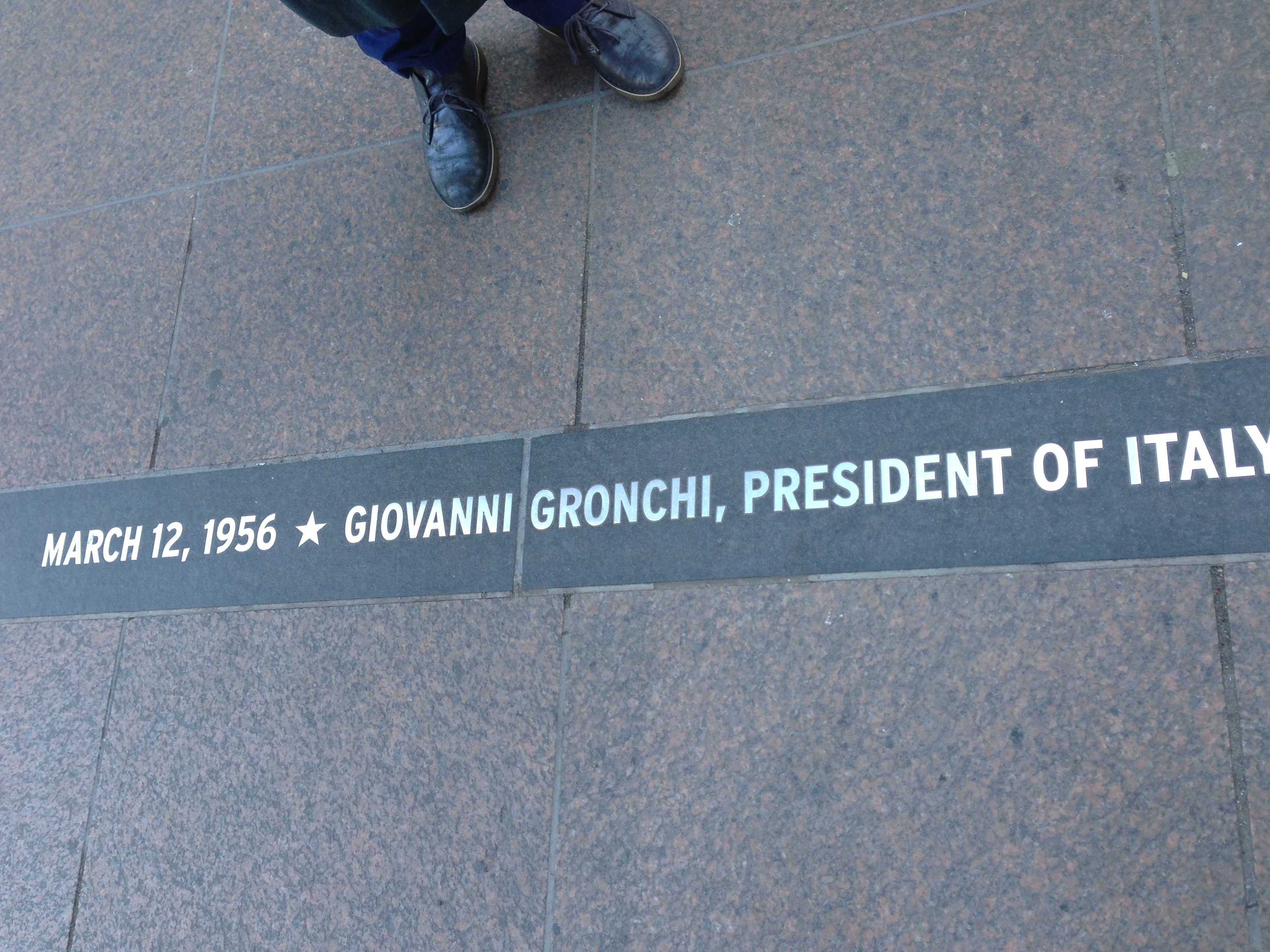
This was the Canyon of Heroes. The most recent ticker tape parade on lower Broadway celebrated  the New York Giants in honor of their Super Bowl XLVI championship in 2012, with 50 tons of confetti. And embedded in the sidewalk at regular intervals are the names of previous parade honorees.

canyon of heros

Most of them date to the 1950s, it would seem. Were we more celebratory then?

Thames Street exists. I saw it with my own eyes for the first time today. Pronounced Thaymz. A band called All Time Low did a song about it.

Thames Street,
I’ll take you out though I’m hardly worth your time,
In the cold you look so fierce, but I’m warm enough,
Because the tension’s like a fire.
We’ll head South Broadway in a matter of minutes,
And like a bad movie, I’ll drop a line,
Fall in the grave I’ve been digging myself,
But there’s room for two,
Six feet under the stars.

My accountant Sue’s office lets in the light of the harbor, though without the views. Positioned around the office were baby jade plants and elongated poinsettias left over from the holidays, depictions of angels and lollipop easter eggs. On a file cabinet, her pictured pugs, including the wiry one who kept Sue’s ill mother’s feet warm.

In front of Gil and me, untouched, a plastic bowl of peppermints. Sue can play the calculator blindfolded, one hand tied behind her back.

Sue Reda

Gil and I engaged in some chest thumping, some head hanging, some soul searching, as we always do when we review our year’s finances. What does it mean to try to make it as a professional writer in America, in New York, in mid life? Is it worth it?

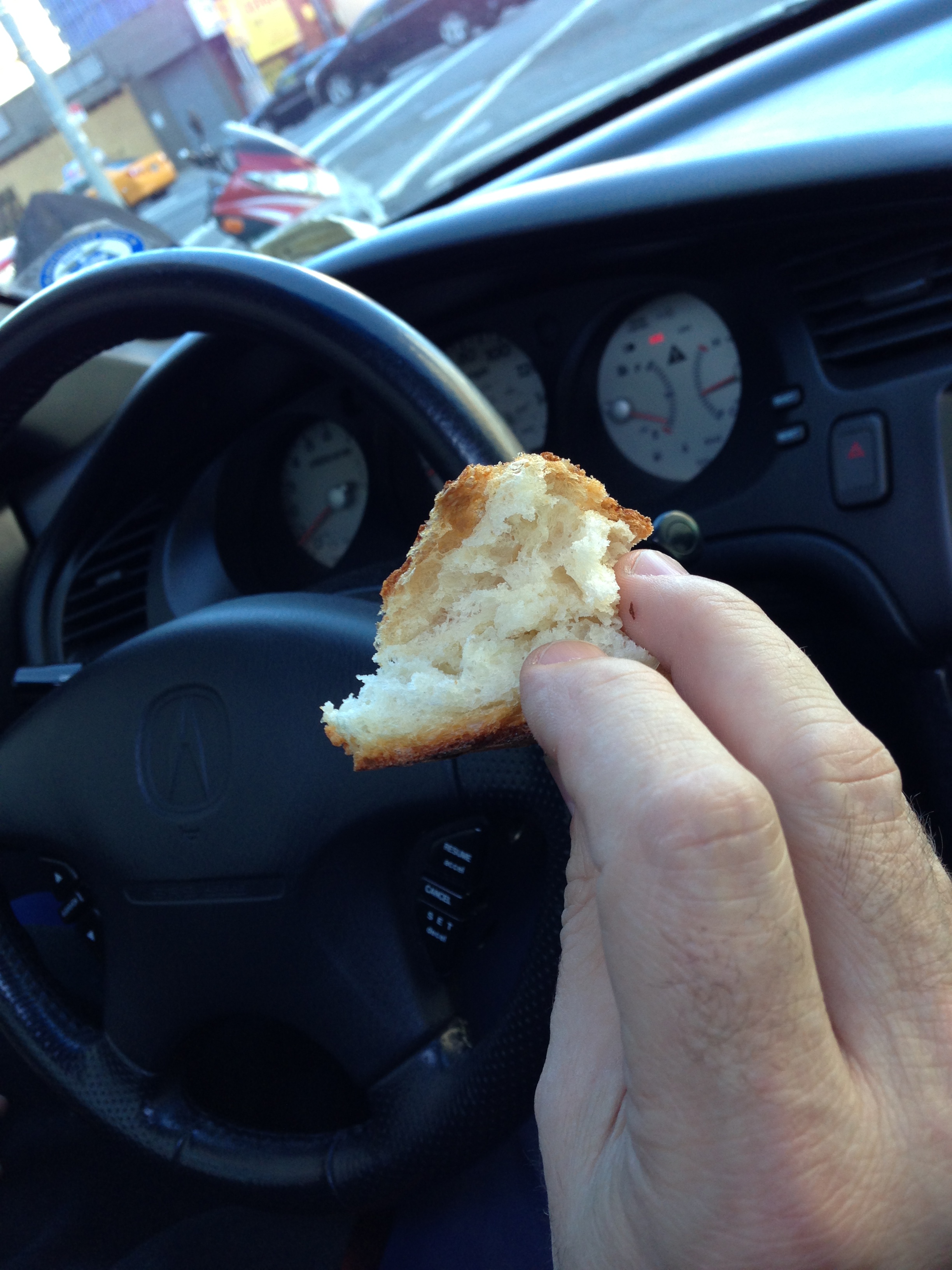
Sprung from there and resolved to keep better accounts in 2013, we stopped at Sullivan Street Bakery (located not on Sullivan Street but an industrial block in midtown). The loaf Gil brought out to the car was hot from the oven, crusty and chewy.

hot bread

We tore off the top and gulped it down, finances (nearly) forgotten.

One more errand before picking up Maud in Morningside Heights on this surprisingly good Friday. My favorite store, Fairway, where the fishmonger asked if I preferred the male or female flounder filets. The female flesh, he explained, was paler, sweeter. I think he was serious.

The fishmonger would get in trouble, he said, if he allowed me to photograph his face in the store, and he turned his back toward the sink so that management wouldn’t abuse him.

fairway

His face was beautiful.

1 Comment

Filed under History, Jean Zimmerman, Writing

Mapping Amusement and Despair on Manhattan

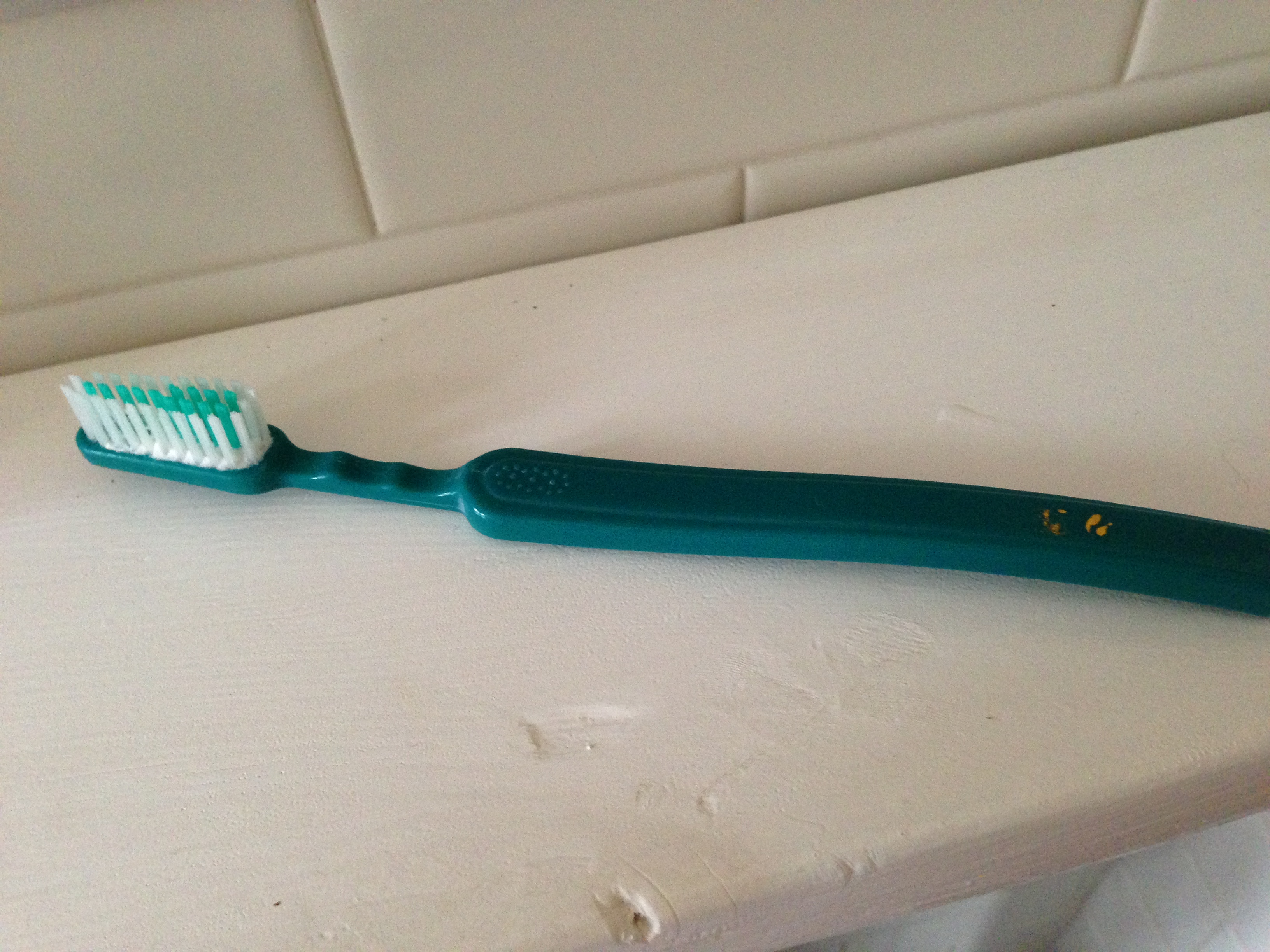
I like handmade maps. Of course. (I do like machine-made products too. Like toothbrushes. My current one resembles part of a kit stowed aboard a cold-war Russian submarine, wielded by a rough hand.)

toothbrush

But do I fancy maps drawn with a human touch. Especially maps of New York.

Now comes a new book whose author, a young cartographer named Becky Cooper, distributed nearly 3,000 outlines of Manhattan Island to New Yorkers and asked them to fill in the geographic details. The results, compiled in Mapping Manhattan: A Love (and Sometimes Hate) Story in Manhattan by 75 New Yorkers,“reveal more about their makers than the places they describe.” So says the author. The book will be published in April by Abrams Image.

mapping manhattan

When you ask New Yorkers on the street for directions they never mislead you. These maps, likewise, reveal all.

Cooper map

One map chronicles a man’s four-decade love affair with his wife, including her death. Another shows where the person got a crush, got drunk, got chased. One shows the coffeehouses of the city in linear detail.

Cooper map 2

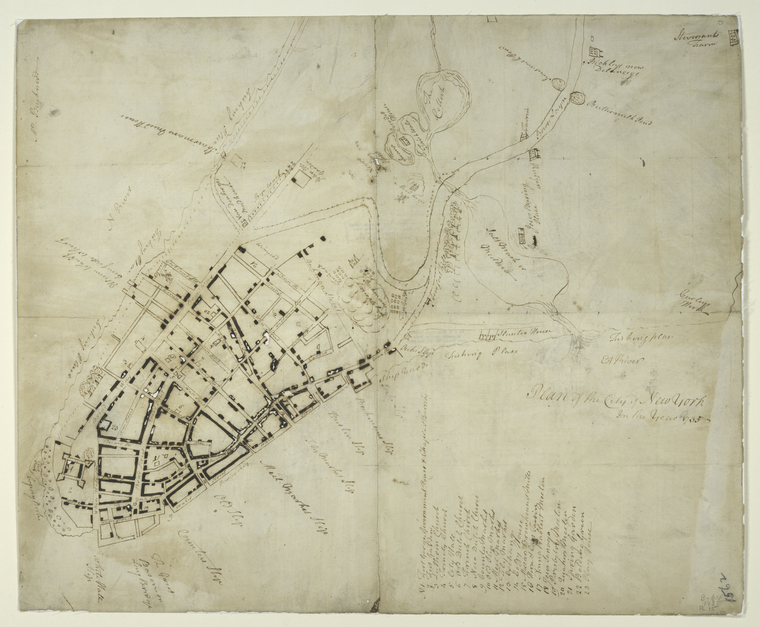
A woman in a different era, who signed her map simply Mrs Buchnerd, also showed a “Coffy House,” near Dock Street. She detailed the amusements of Manhattan in 1735. The paper she used to draw her map – in a spidery hand, its ink now faded to brown – reveals traces of folds that suggest it was designed to fit a pocket. It appears to have been a key to the city a lady might have given a visiting friend to navigate its many amusements. It is the first known plan of the city to be executed by a woman.

Mrs. Buchnerd's Map

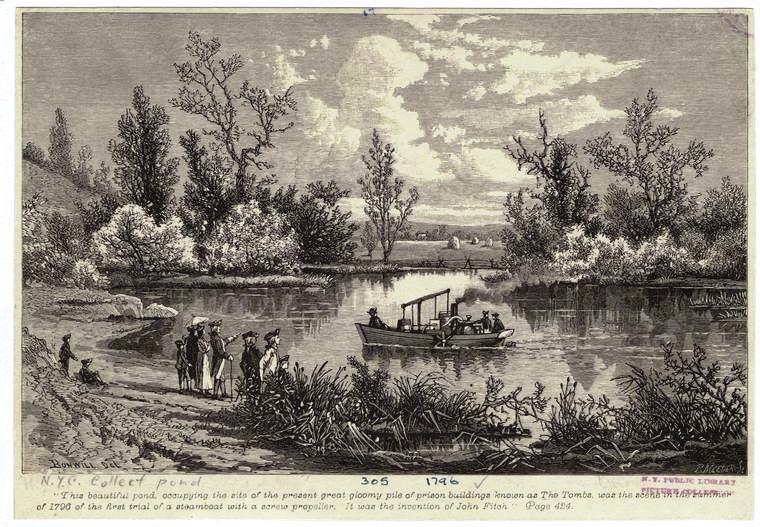
Close examination reveals “resorts” where genteel residents could take the air – a famous pleasure garden named “Vauxhall,” for example, on Greenwich Street between Warren and Chambers, the future site of Soho – a good place to dine and dance and stroll through sylvan landscapes. There was a similar hot spot called “Spring Garden,” and one she labelled simply “the winyerd.” She rendered the pools where romantic idylls might take place, Buttermilk Pond and Sweetmilk Pond, as well as the major source of clean drinking water, the Collect, later submerged under Canal Street.

Collect_pond

As mesmerized by the lives of the rich and famous as a gossipy tour guide would be today, she noted the country estates of the elite, Stuyvesant, De Lancey and others. She designated a theater at the base of Broadway, just above Beaver Street. And she drew the four major markets where an out-of town-friend might want to shop: the Fly Market, the Meal Market, Coenties and Old Slip.

I especially like Mrs. Buchnerd’s notations on the east and west shores of the island that read “Fishing Place.” You get the sense from her plan of a town in love with itself, with its attractions and its amusements, no different than today’s Manhattan. Except then a central social scene might be a turtle feast at a “house” along the East River. Reverand Andrew Burnaby from England kept a diary of his travels through North America.

burnaby

He chortled over these flirtation marathons, where “thirty to forty gentlemen and ladies meet to dine together, drink tea in the afternoon, fish, and amuse themselves till evening, then return home in Italian chaises – a gentleman and lady in each chaise.” Shocking! En route, couples passed atop a Kissing Bridge, which arced over a millstream just about where the chamfered crown of the Citicorp Tower later would stand in midtown Manhattan. Who knew what might happen.

The Buchnerd map is elegantly elucidated in Manhattan in Maps: 1527-1995, by Robert T. Augustyn and Paul E. Cohen.

I. N. Phelps Stokes, the obsessive map collector I profiled in Love Fiercely: A Gilded Age Romance, originally published the Buchnerd creation in his Iconography of Manhattan Island.

Stokes

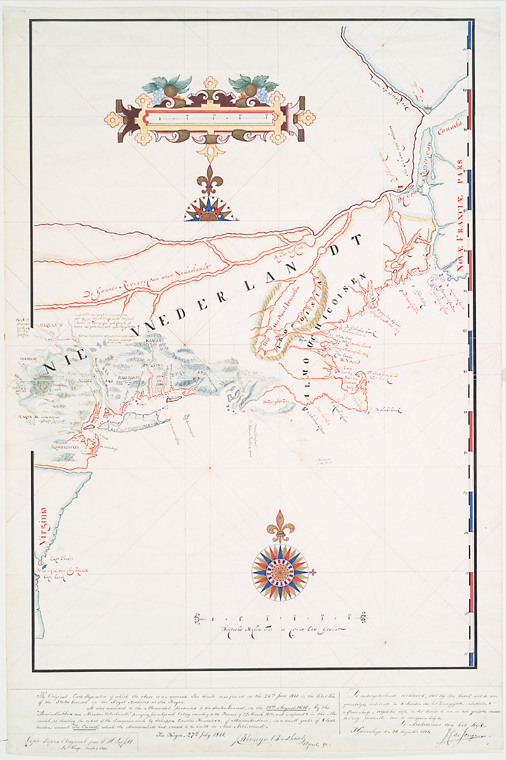
Stokes concerned himself especially with renderings that showed Manhattan’s “insularity,” a cherished concept for him, in other words depictions showing that the island was in fact an island. The first of these was a 1614 production  by Adrian Block, a trader and navigator who had the interesting status of being the first European to take up lodgings in Manhattan, when his ship burned to its hull and he had to rebuild it, with the help of local Algonquins, spending the cold season on the great Bay of New York. The remains of that ship, the Tyger, were uncovered in 1916 during the construction of the New York City subway system.

Adriaen Block's map

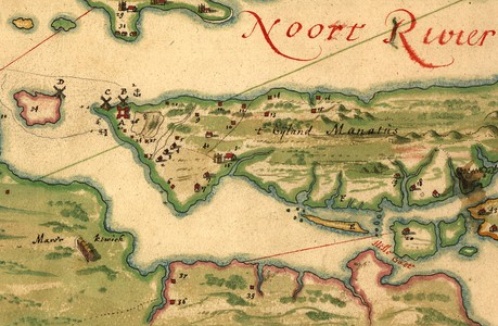
More intimate, and more resonant for me, with a sweet hand-drawn feel, is the 1639 creation known as the Manatus Map, inked in Holland, which highlights the red-roofed farmhouses of the island and flags the names of their owners, along with delineating windmills and hayricks. The background forms a green field against a coastline of soft blue, the whole comprising a somehow idyllic picture of Manhattan at its first settlement by Europeans. It looks, appropriately, like there were only about 25 people living there.

manatus cu

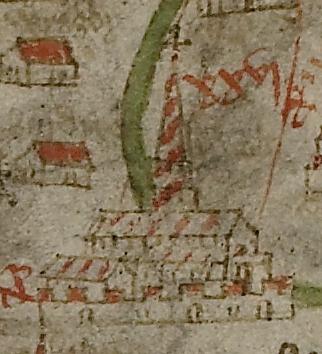
The drawing evokes the flavor of one of the most famous early geographical renderings, the Gough Map of Great Britain, dating to about 1355.  Its name derives from an early collector.

Gough Map Settlements

Across the Gough Map’s weathered face, pictographs of tiny towns and roads, along with place denotations.

Gough Map

London is one of two settlements whose names are rendered in gold.

Gough Map London

No one knows who penned the Gough Map, or why. And no one knows who kissed its maker, or where he got his coffee. But the map allows us to imagine.

Leave a comment

Filed under History

Ghosts of Garments Past

I visited my parents in the  desert. My mother shared her wisdom on various things.

The efflorescing flora all around.

Mexican Golden Poppies

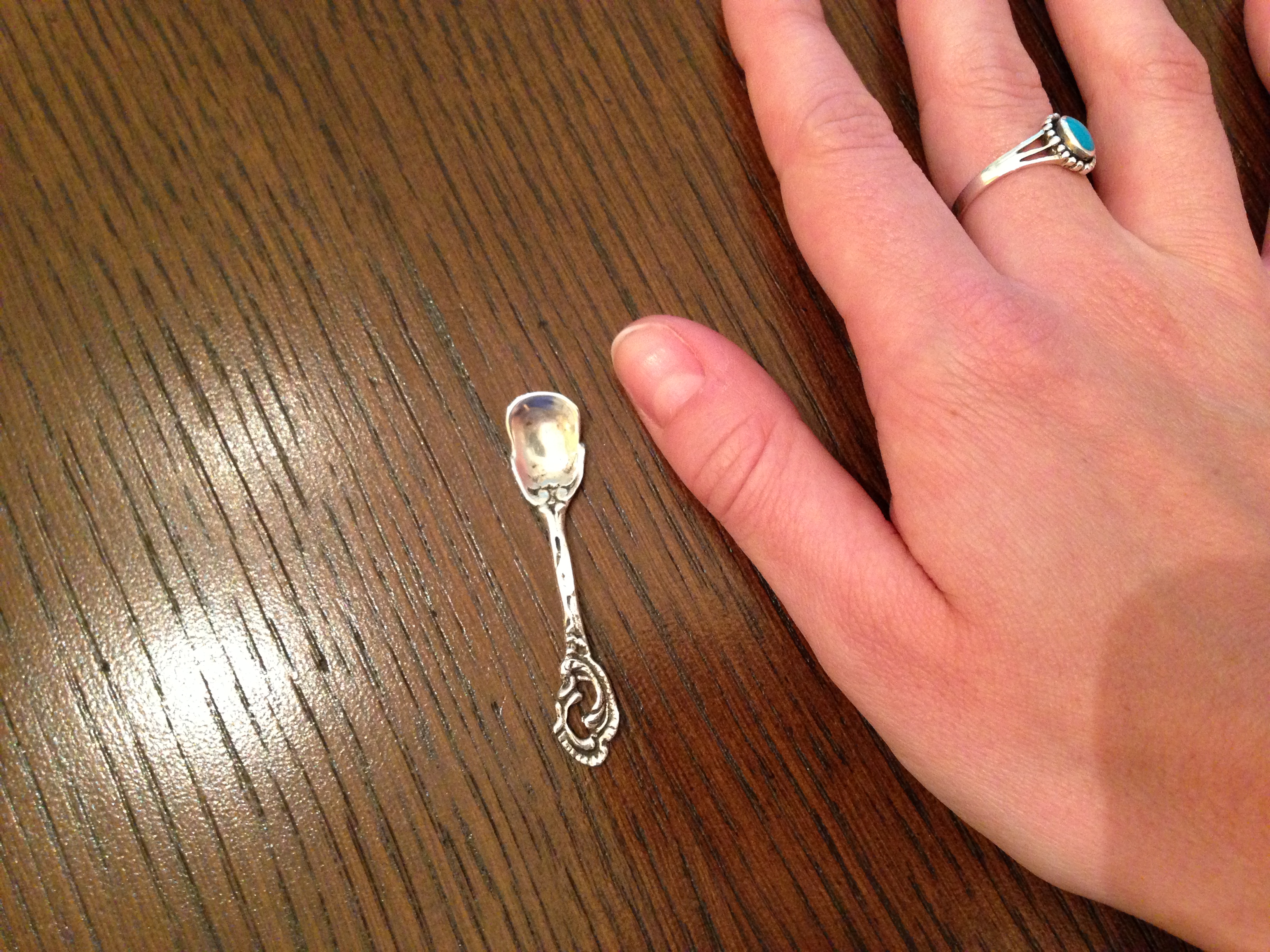
Family history, seen through a series of silver demitasse spoons.

silver spoon

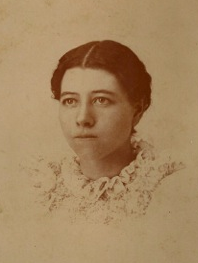
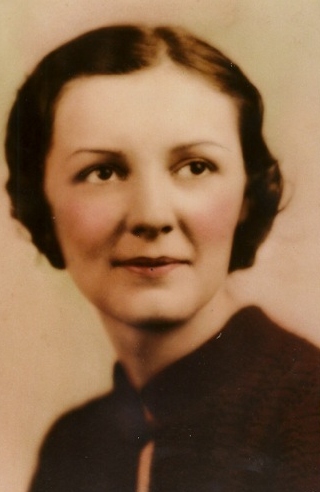
They belonged to Lockie Hilllis Coats, my great grandmother, shown here in 1894.

Lottie

The personalities of various seniors my mother lives with, who mingle and gossip like kids in a college dorm. She and my father have a charmed life at their retirement community. Though that sounds like almost too technical a name for a place with stretching gardens, a comfortable, well-thumbed library and big open doors onto a sun-flooded patio. They adore it.

Silverstone-Arches-Toward-Mountains

I began to miss them even before I stepped on the plane back.

My mother shared something else with me. Her collection of hand-knitted sweaters. Some are the cherished work of matriarchs on both sides of my family. Each branch seems to have had a gene for needlework, or perhaps it was just in the water of their generation. To an avid novice knitter like me they gave great inspiration.

sweater 1

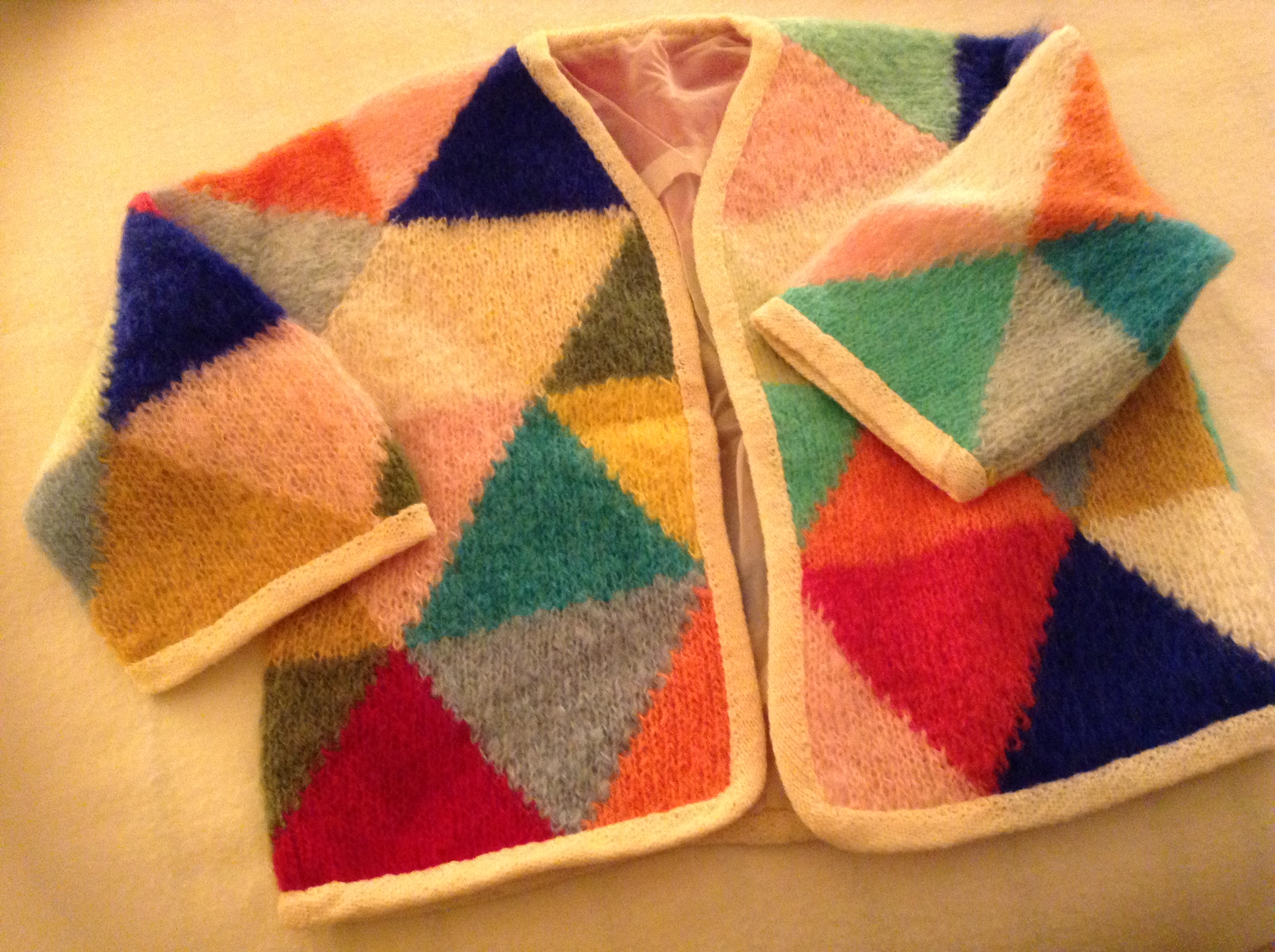
My great aunt, known to me as Auntie, produced a color blast of a harlequin-patterned cardigan for my mother. Auntie became a renowned home ec teacher in rural Tennessee and was the kind of adept who could knit and purl in a pitch-black movie theater without dropping a stitch. Tatting was her main thing, and carefully put away in storage I have the openwork pieces she wrought – in the dozens, if not hundreds.

Auntie

For the triangle-themed sweater my mother laid out on her bed, Auntie took a different approach.

auntie's sweater

There was not only this one, it seems, but identical garments for two other women, my mother’s sister Sandra and her mother Virginia. Were they intended to wear them all at once? My mother pronounced the pattern gaudy if beautiful. Good for the circus, not for her.

On the other side of the family, the delicate crochet-work stole of my Aunt Gus, my grandfather’s sister, posed prettily here with Jack.

Gus and Jack

Yellowed now but preserved in one of my mother’s sensible moth-guarding plastic bags.

sweater 6 cu

And a knitted short-sleeved sweater decorated with appliqued circles like suns and tiny pearls. Perfect size and retro styling for Maud, who has it now at school.

gus sweater

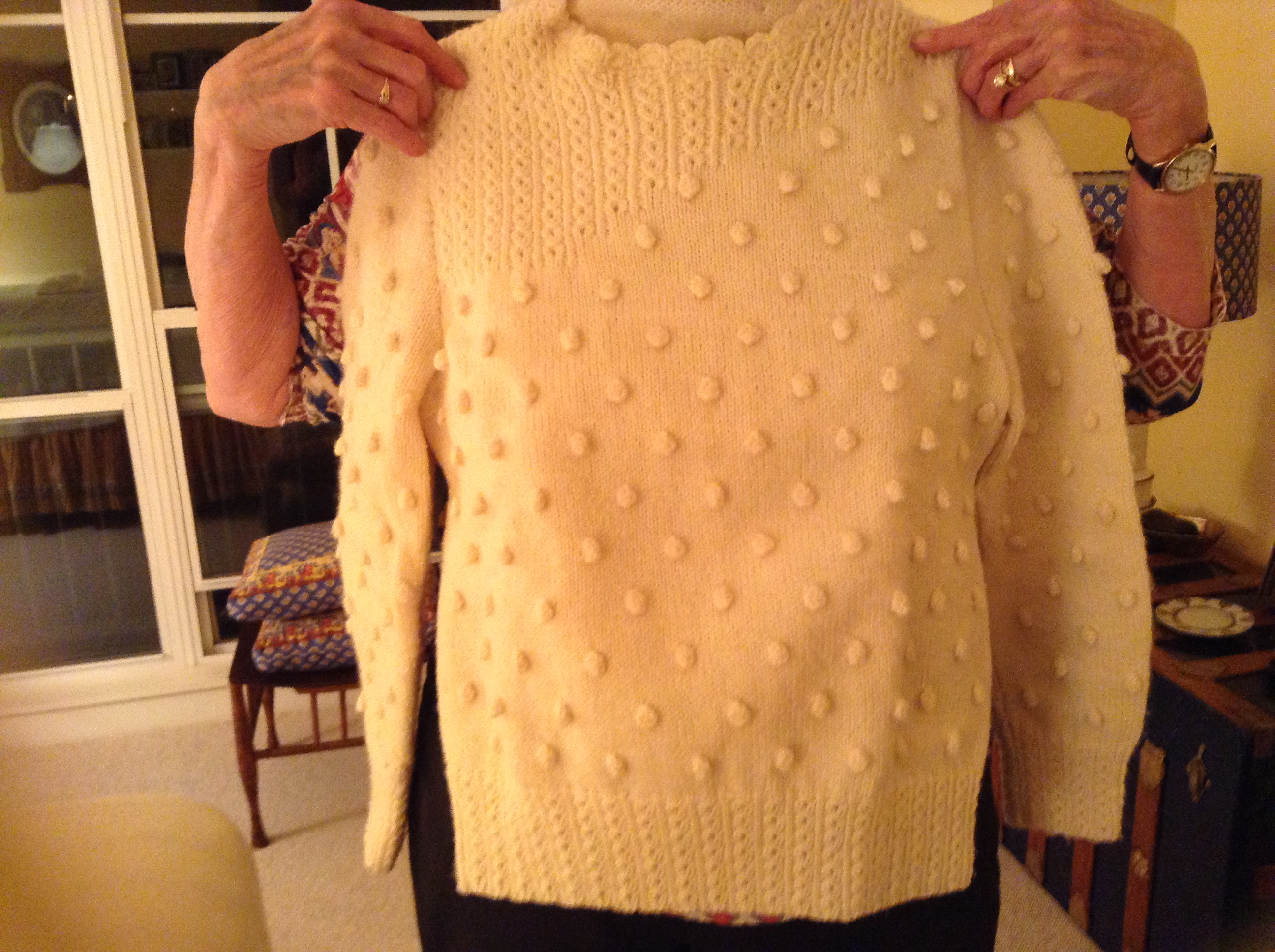
Then, moving away from family, came the popcorn sweater from New Zealand.

popcorn 2

Each wool bubble intricately worked out of the body of the sweater.
popcorn 1

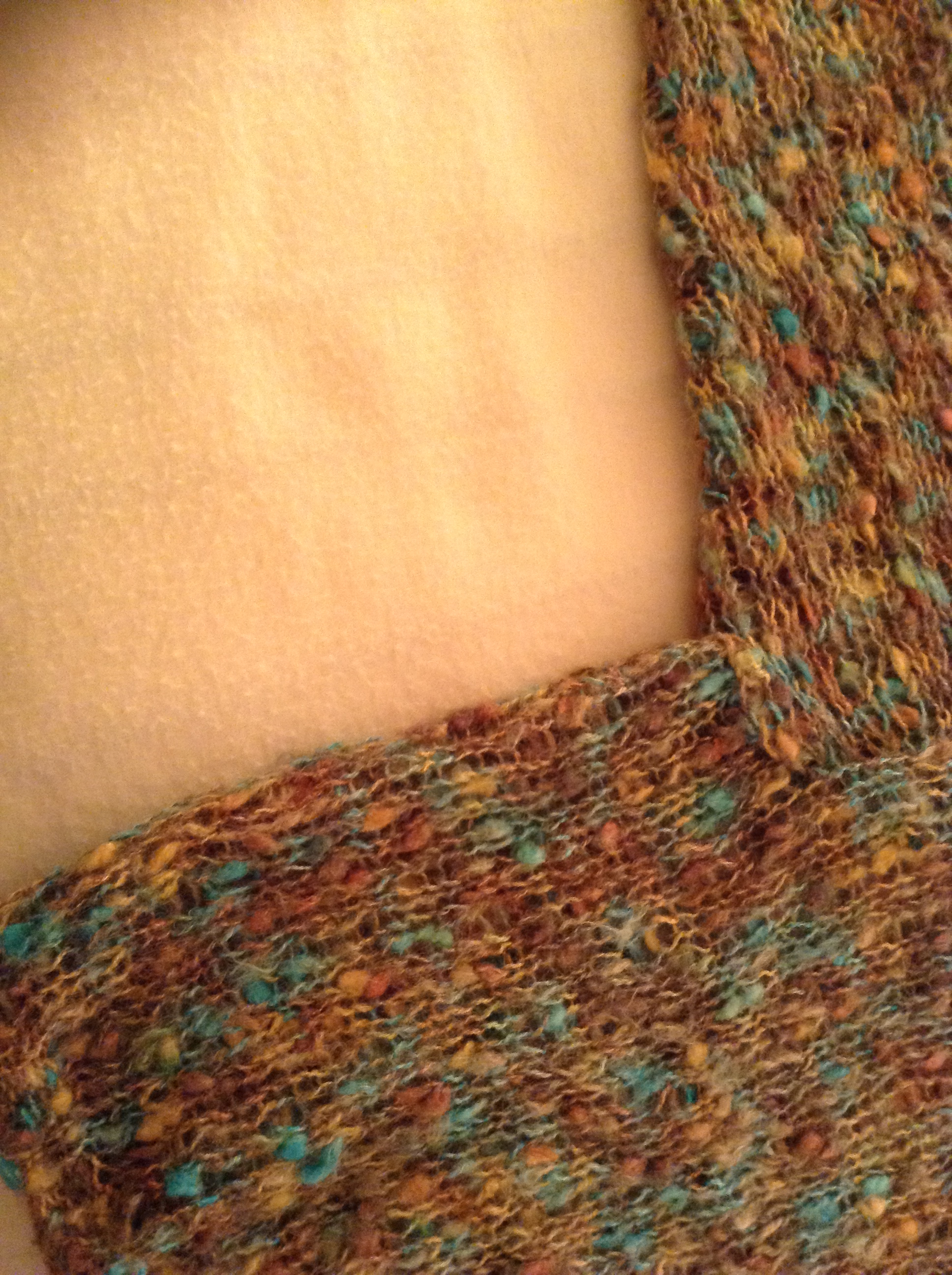
Also from New Zealand, this blue and brown beauty.

sweater 4

And a lacy pink number with ballooning sleeves that has appeared at various special occasions.

sweater 5 cu

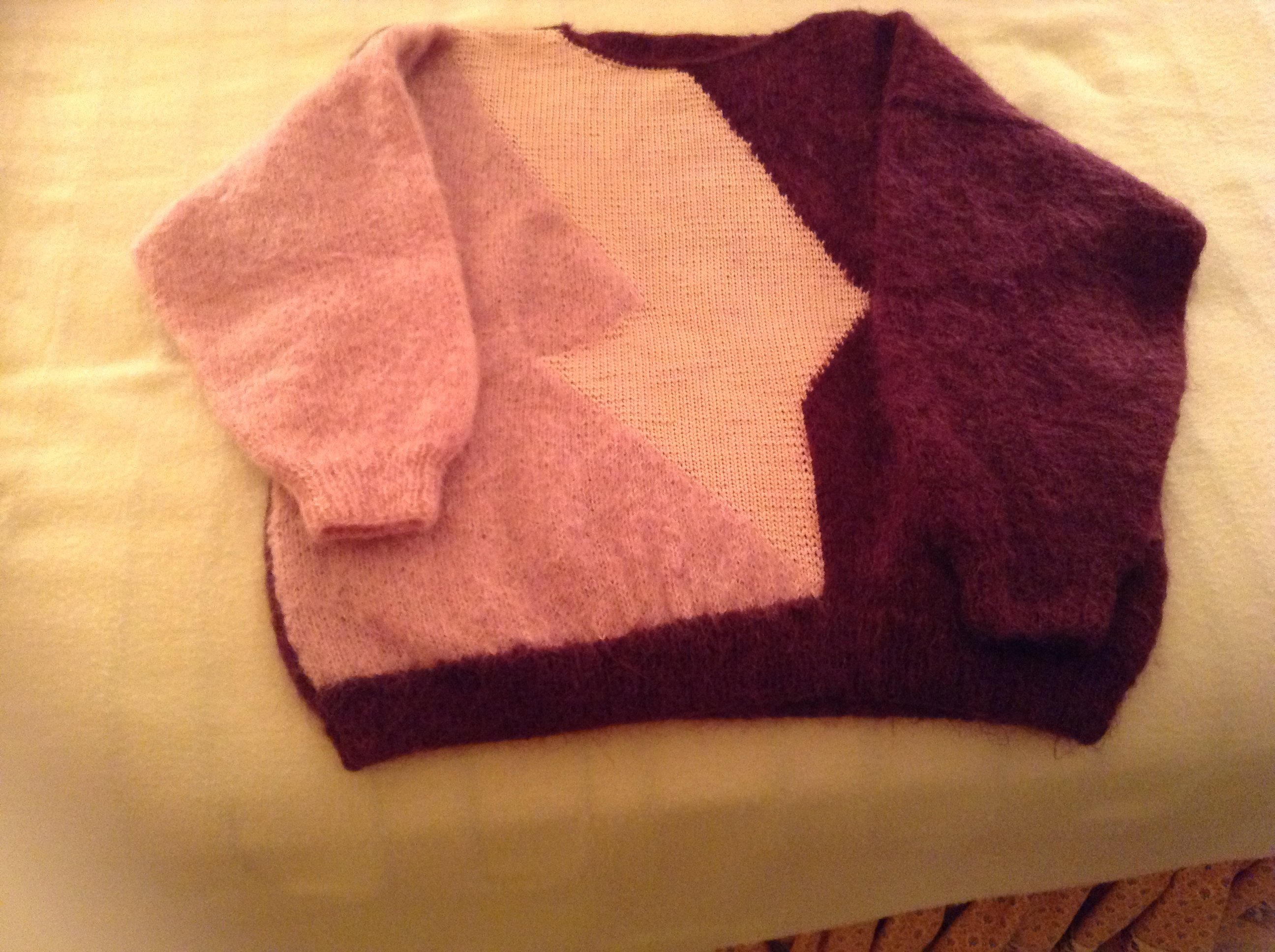
Pink, also, but kind of crazy, the zig zags hailing from Holland, where my mother tells me she saw all the women sit out on their stoeps and ply their needles.

sweater 3

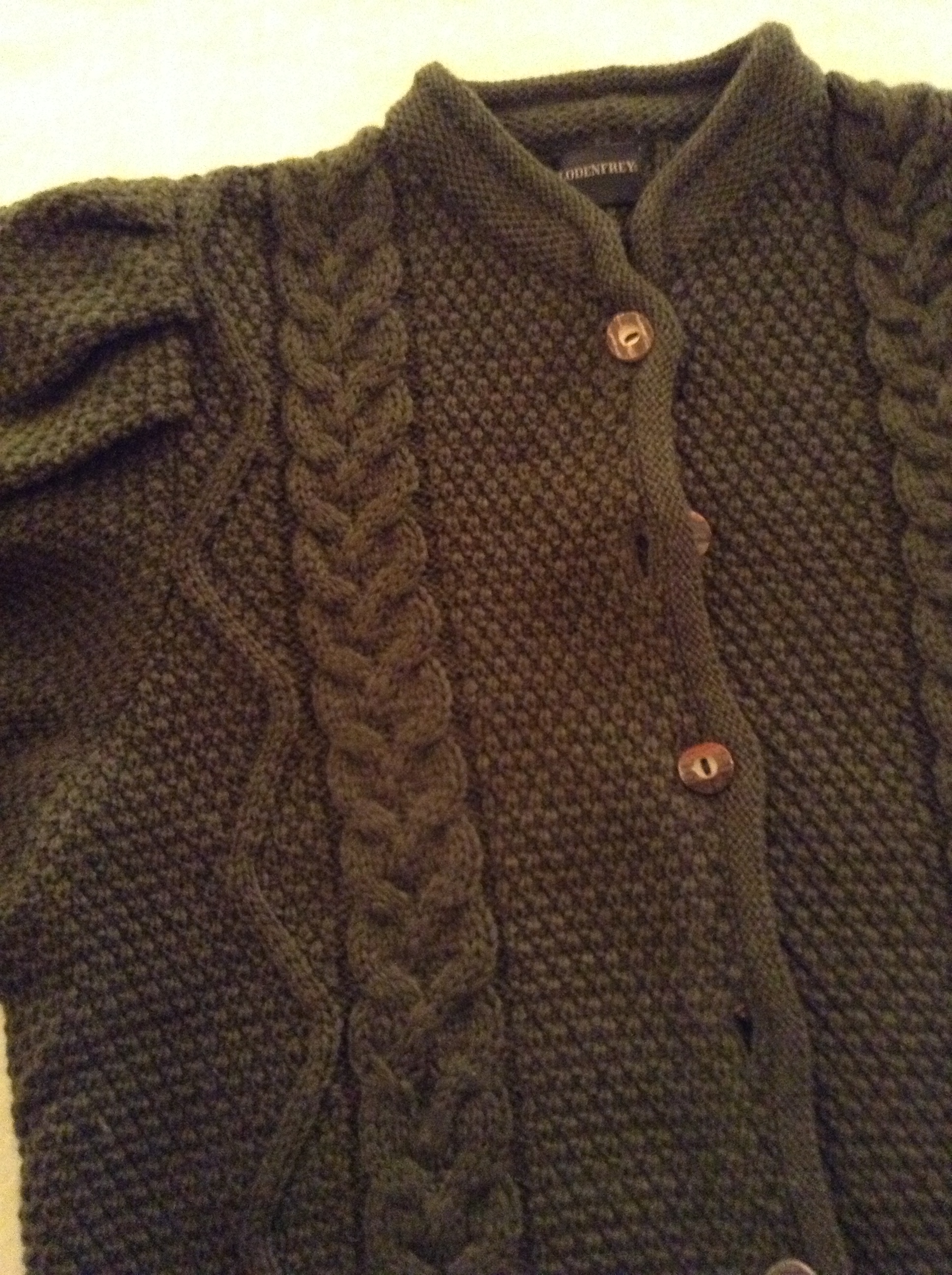
A loden from Germany with the kind of cables I long to make.

sweater 8

And the oldest one, from Italy, darkest blue and fuzzy yet almost scratchy.

sweater 7

Touching the handiwork of women from around the world, created so many years ago, is a rich experience, shared in a bedroom in the desert.

Then my mother brought out a wrap, teal ribs, with not-well-hidden knots where the yarn was joined. Amateur hour.
You made this for me, she said. In college or maybe in high school.
teal stole

Big question mark. I’ve only just learned to knit, in my 50s, I’m as sure of that as I am of anything in the world. When I was that young the notion of wielding pointy sticks was unfathomable. I was also too silly and distracted to sit still to knit.

Jean-High School

But my mother insisted. You did this, she said. You.

So was this actually knit? Was it crochet? Which I did have the patience for back then. Or woven out from some other material, or done in some secret life I have no memory of, or something that my mother in her wisdom invented? Or imagined?

It is teal, it is made by hand, and she has worn it many times. That’s what matters.

9 Comments

Filed under Fashion, History, Home, Knitting

Toothpick Time

So long to the West.

slow sign

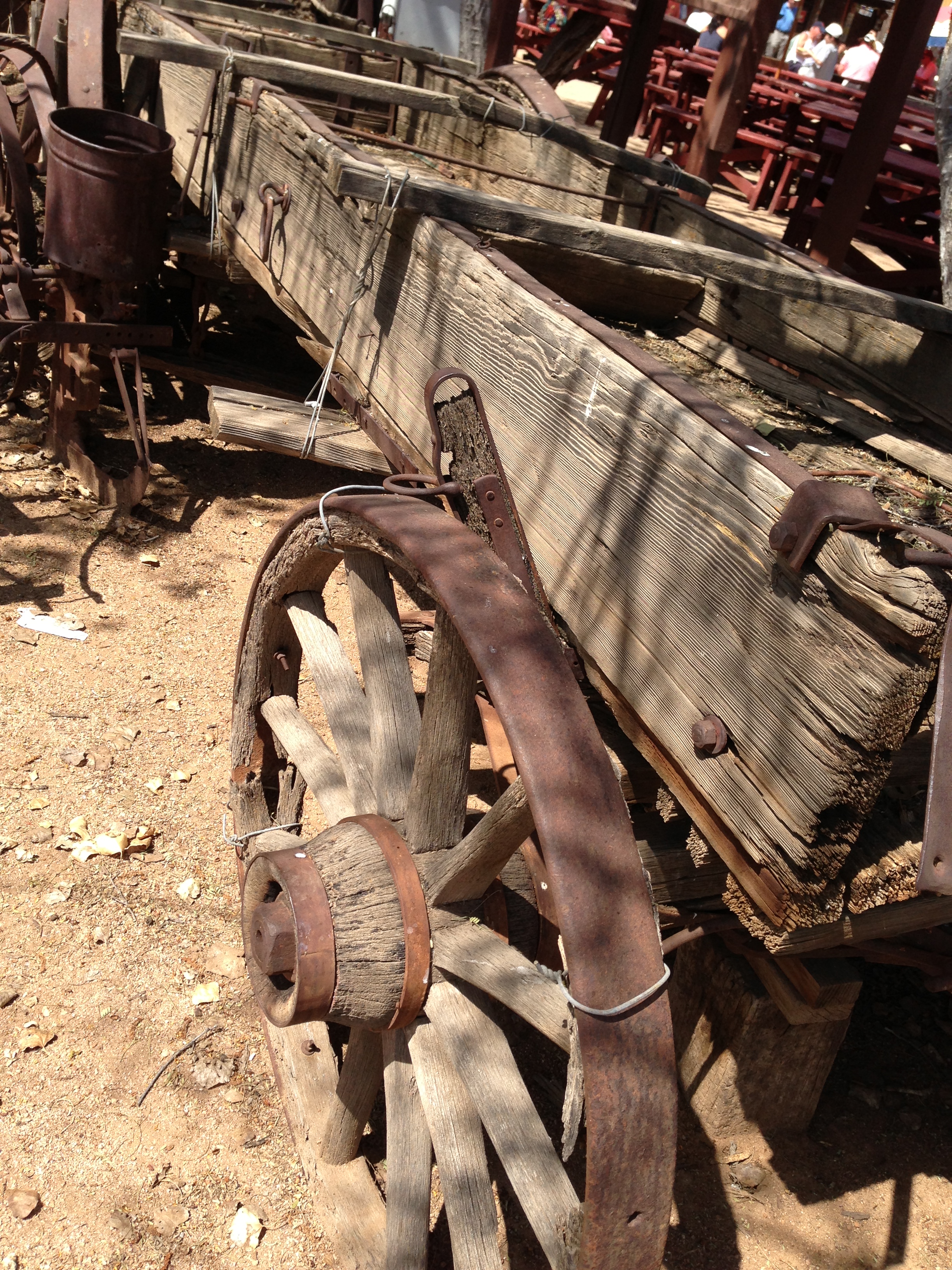
The conestoga wagons are long gone.

conestoga

Bikes rule.

bikes

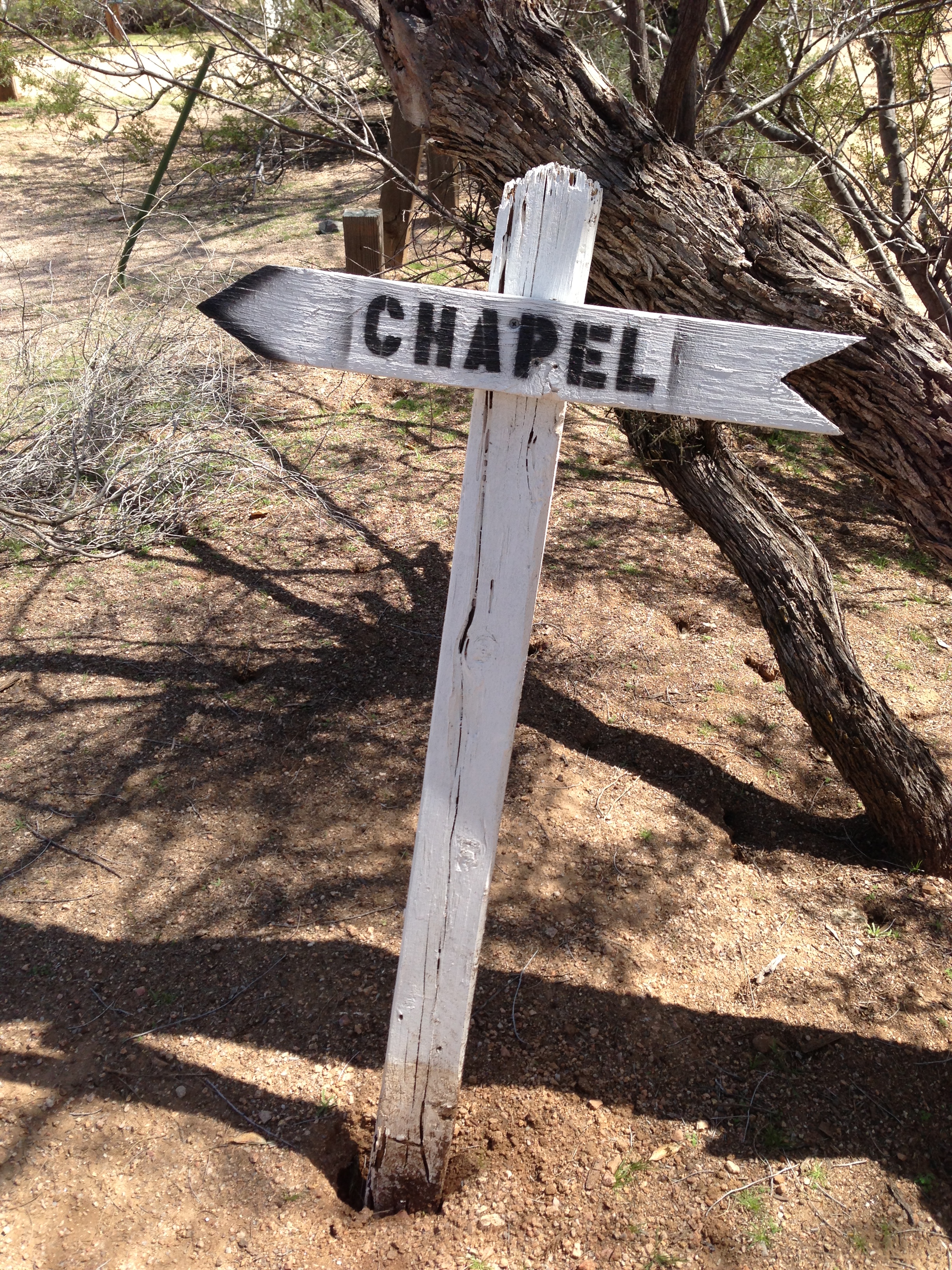
It’s a spiritual place, still.

chapel sign cu

I pray as I please.

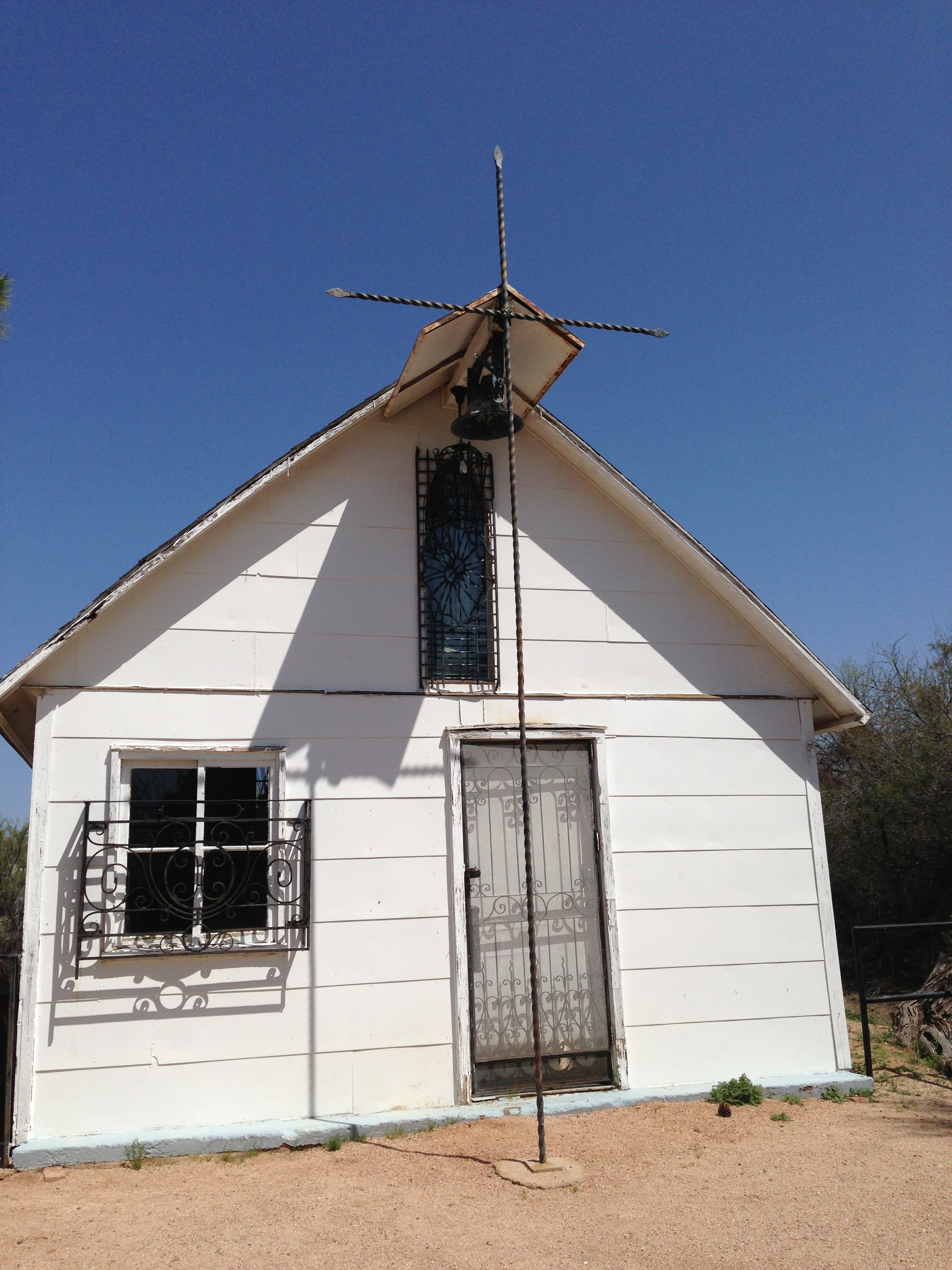
chapel bldg

Don’t fence me in.

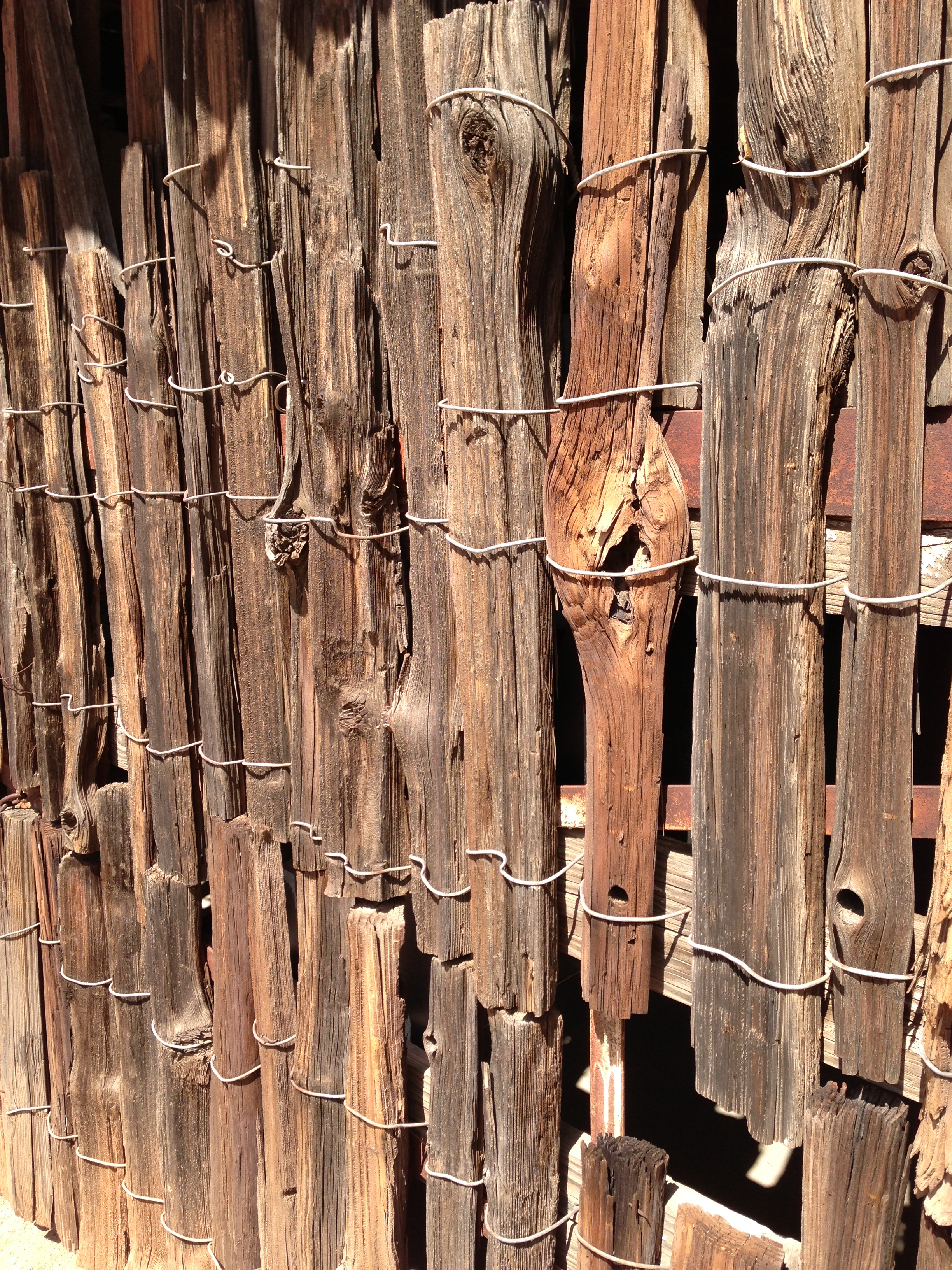
rough wood fences

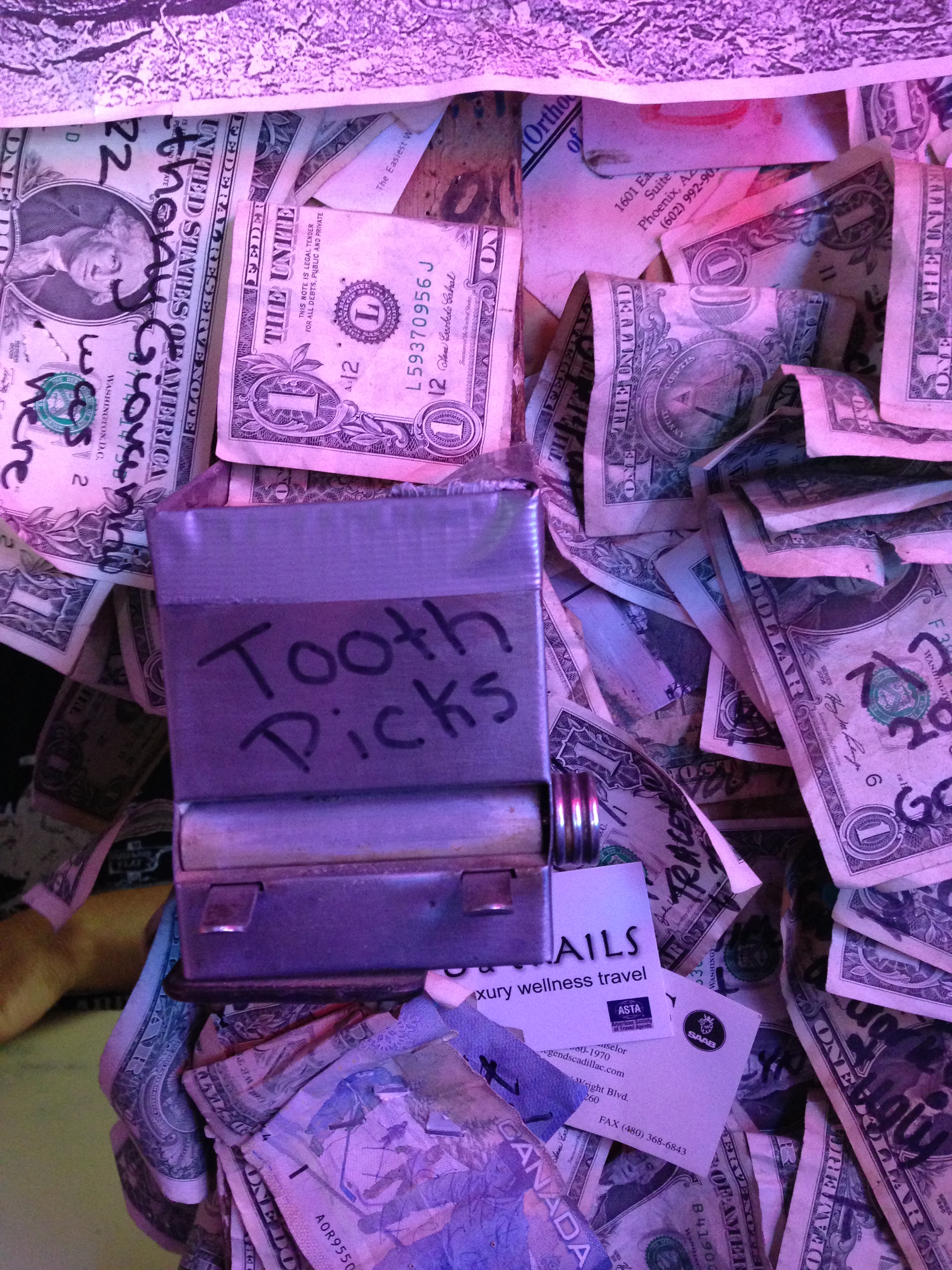
Be sure to take a toothpick for the road. Especially one from Greasewood Flat.

toothpicksand…

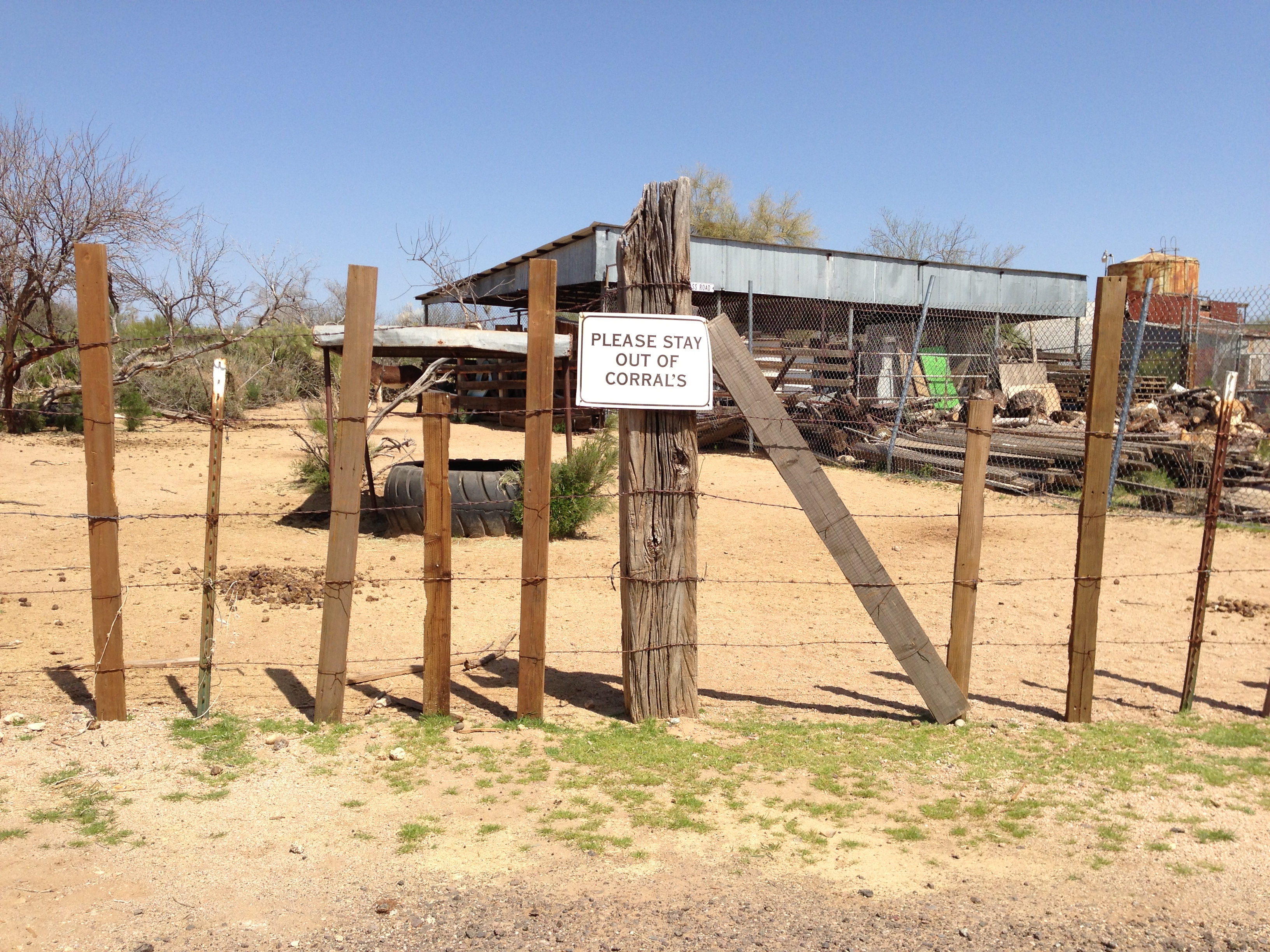
please stay out ofDonkeys bite.


3 Comments

Filed under History, Photography