Category Archives: Culture

Locks, Stock and Barrel

Rindfleischetikettierungsüberwachungsaufgabenübertragungsgesetz. Things do change in Germany.

Rindfleischetikettierungsüberwachungsaufgabenübertragungsgesetz, the 63-letter word meaning “law for the delegation of monitoring beef labelling,” is no more, having been dropped from the language, repealed by a regional parliament after the EU lifted a recommendation to carry out BSE tests on healthy cattle.

cow-beauty_1699660c

The longest German word had appeared in official texts but not in dictionaries. (You can hear it properly pronounced here, before you put it aside and never think of it again.)

Anyway, it’s now kaput.

This fragment of ephemera constitutes my most recent knowledge of things German, so I am glad that my parents, Betty and Steve Zimmerman, have kindly  contributed a post as they make their way through the country by river barge. Here is their team effort, with Steve’s prose and Betty’s pictures:

MEMORIES of the lunacy and destruction of Adolf Hitler’s Third Reich exist today (writes Steve) only among Germans in their 70’s and 80’s, and older.  

Among young Germans, especially those in their teens and into their 30’s and 40’s, a dramatic recovery, brought about in large part by the Marshall Plan, NATO and the collapse of the Soviet Union (and the infamous Berlin Wall), has enabled the emergence of a new Germany, clearly the undisputed economic leader of Europe. The change has been nothing short of miraculous.

Today, 50 years after our first trip to post World War II Germany, this new Germany has been shaped in both obvious and subtle ways.

The beautiful countryside of central and southern Bavaria, the largest state of Germany, was clearly the highlight of our 1963 trip…and it looks essentially the same in 2013, a dozen trips to Germany later.

1

On this trip, we are sailing on the Rhine, Main and Danube rivers on the newly-built River Splendor, with 173 other American passengers and a multi-national crew of 44. The journey is made possible by a remarkable canal with 66 locks between the Rhine and the Danube rivers.

2

The project was initially  conceived by Charlemagne in 793 AD but abandoned due to incessant rain.

The expensive project was again attempted by Hitler in the mid-1930’s but was dropped in favor of Hitler’s ambitious plans to conquer all of Europe, and eventually the entire world.

The project was begun again 40 years later and completed in 1992. The current canal system consists of 66 locks on the rivers plus the Main Canal itself.
3

Europe has a Continental Divide similar to that in the United States. Therefore, the first 50 or so locks elevate ships upwards by as much as 81 feet until a total height of 1,332 feet is reached. Just past Nuremberg, the canal locks start to bring ships down closer to sea level.

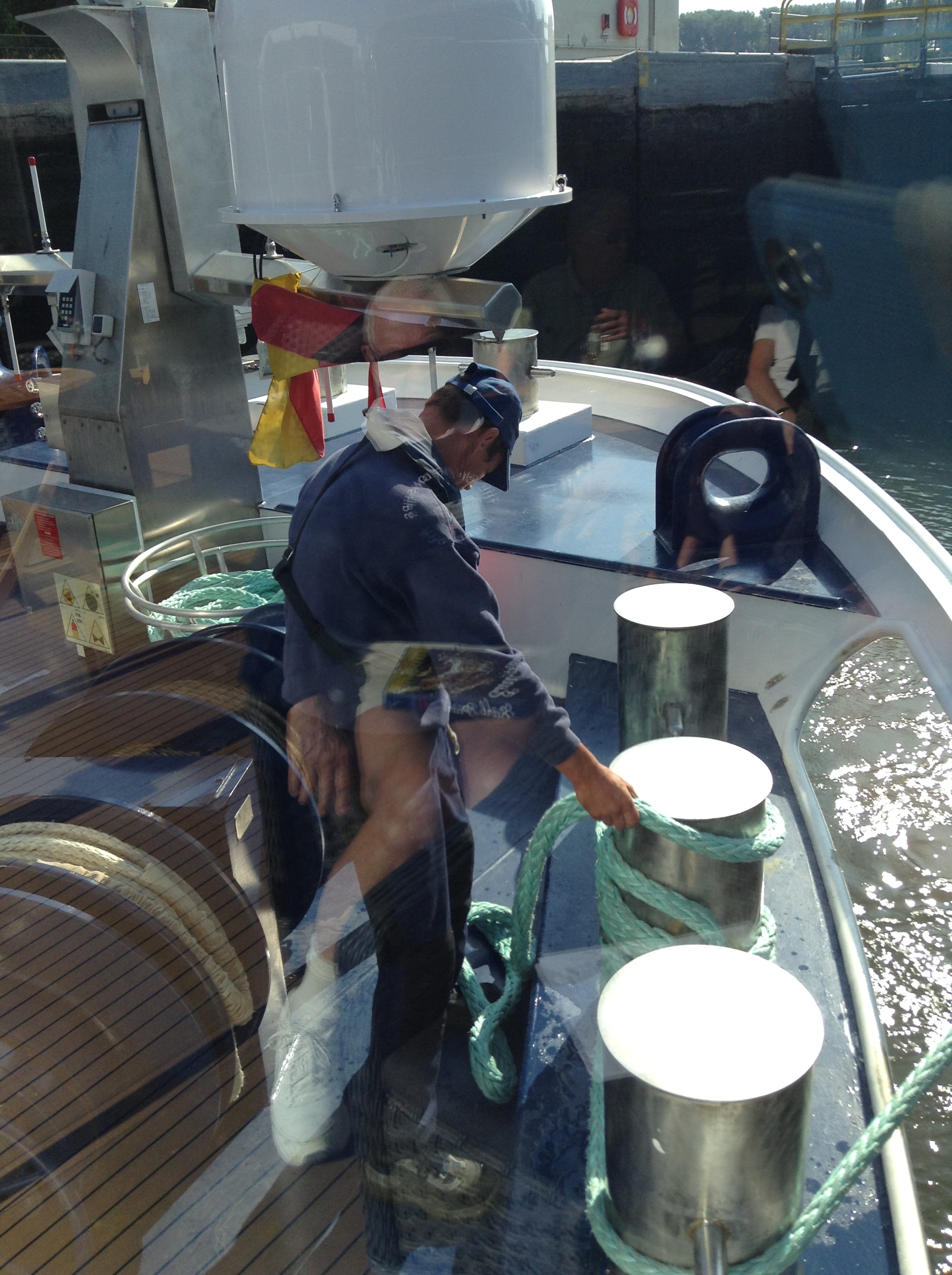
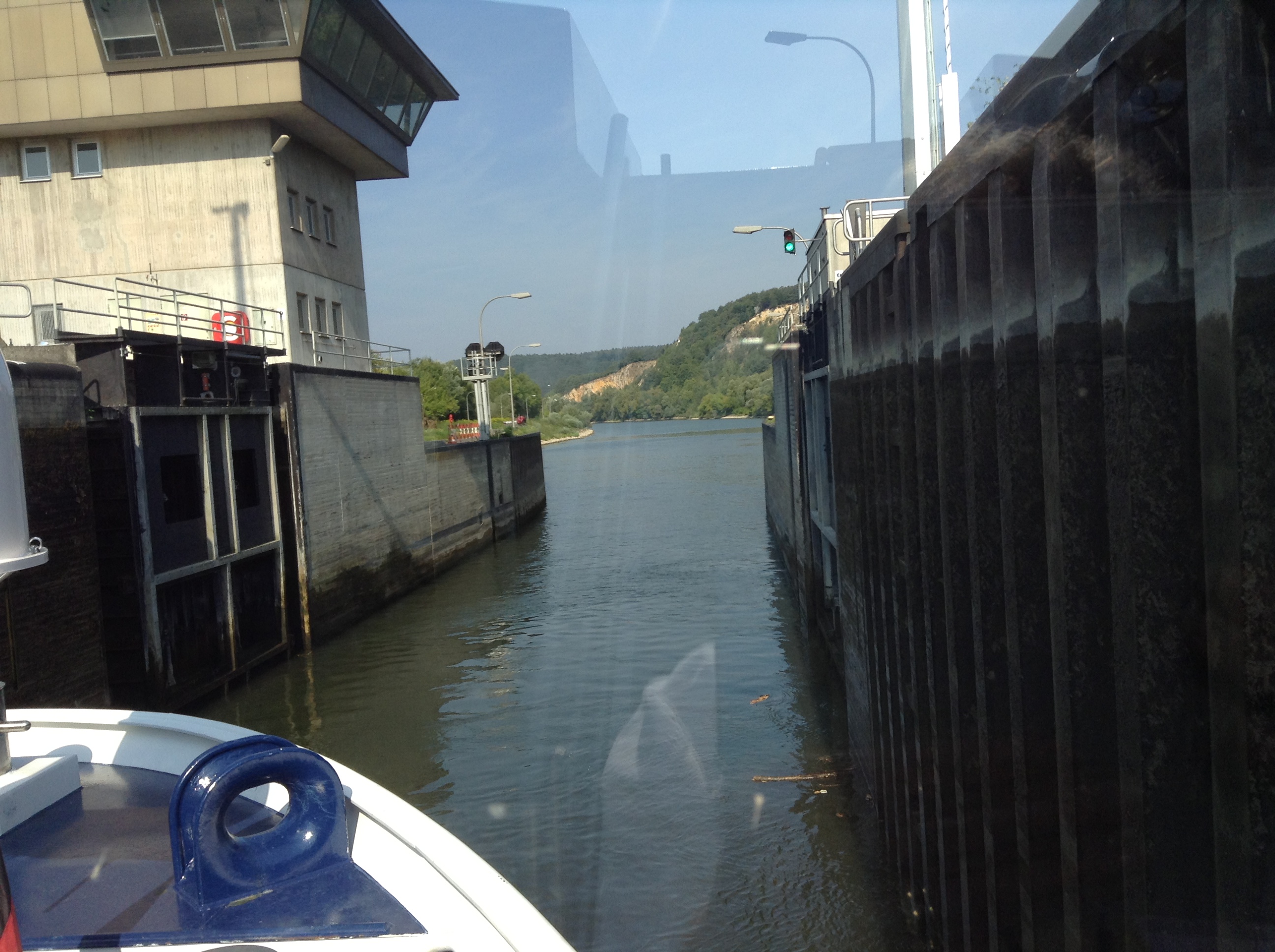
Here are pictures taken of the lock at Bad Abbach, which brings our ship 18.7 feet down.

4

5

Our ship is 30.40 feet wide and the locks are all 39.40 feet wide, a difference of just two feet. Expert as our Dutch captain is, we still occasionally bump into the side of a lock with a noticeable thump.
6

It is now noon on Saturday, August 24th and we will soon dock in Regensburg for a walking tour of the town. Only 14 more locks to visit later today and tomorrow.

7

2 Comments

Filed under Culture, History, Nature, Photography

Knowing How to Swing

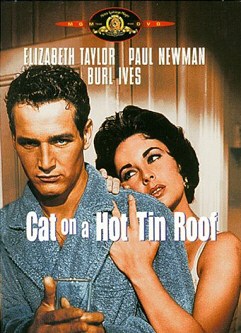
Revisited some of Cat on a Hot Tin Roof with Liz Taylor and Paul Newman.

poster

How gorgeous and weird a production it is, and what a knockout she is in her silken white dress with its deep vee.

taylor

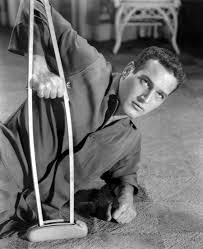
And, something I’d totally forgotten, what an amazing crutch walker is Newman’s Brick.

Cat on a Hot Tin Roof blouse skirt

It’s not a real broken ankle, Gil reminds me. But still, to be able to swing around the room like that, spilling nary a drop of his whiskey, a single wooden crutch under one arm?

newman crutches

His real crutch of course his his addiction to alcohol.

Or what about the incredible gymnastics that occur when Newman takes a swing at Taylor’s Maggie with the crutch, ending up on the rug, the both of them smiling ruefully. Why is Uncle Brick on the floor? asks one of the little no-neck monsters. Because I tried to kill your Aunt Maggie, says Brick. But I failed. And I fell. Eyes of blue, achilles heel.

newman floor

I wonder if Tennessee Williams ever had to go around on crutches.

tenness

2 Comments

Filed under Culture, Fashion, Film, Home, Jean Zimmerman

Maine Woods Ramblin’

My world-rambling brother Peter has sent a bulletin from the northern Maine forest, where he is catching his breath in the middle of a book project and, as always, exploring the local history. Peter published Podunk: Ramblin’ to America’s Small Places in a Delapidated Delta 88, which remains the definitive portrait of locales far off the beaten track, and a perfect reflection of his restless, questing mind.

Pete

What you can’t get enough of in Podunk are Pete’s vivid photographs, and his pictures of Moosehead Lake in Maine are definitely worth sharing. He’s been spending time around Mount Kineo.

mt kineo cliffs

Mount Kineo’s wild beauty has long been celebrated, but few know it abuts a piece of land called Misery Gore, an “untrampled” place Pete investigated for Podunk. Gores are highly unusual geographical features, Pete’s research shows, limited to Vermont and Maine, “largely forgotten anachronisms that don’t much impact most peoples’ lives in any profound way.”

He says that the source of Misery Gore’s name might be its preponderance of black flies, or it being “a miserable place to survey, log, hunt, and birdwatch,” or that it’s overgrown with briars and brambles, or that “a French-Canadian logger from Miseree once passed through this neck of the woods.” The parcel is wedge-shaped, crisscrossed with nothing but dirt roads.

It is, however, Penobscot country – the tribe has a reservation near Bangor known as Old Town — and on this trip Peter reacquainted himself with some of his Podunk contacts, three generations worth, including 50-year-old Andrew Tomer, his 12- year-old nephew and his father, Penobscot elder Francis.

Francis Tomer

Penobscot, Peter told me, means “where the stream runs by the mossy rock that is white when dry.”

Mount Kineo’s 800-foot cliffs of rhyolite were carved by the Indians into arrowheads. “Thoreau cut himself on this flint-like rock,” Peter writes, “which he called ‘hornstone.’”

arrow heads

“Some Native Americans believed that the cliffs under water were bottomless” Peter told me. He took a ferry to the Tomers’ dock. “After a dinner of well-grilled steak, corn on the cob, green beans from the garden and small spanish olives with pimentos, Francis took out a cigar box with all the arrowheads, marbles, stone tools, etc., and told me about them,” said Peter. Andrew, he reported, was very quiet. “He wanted to remember the stories for future generations.”

clay marbles

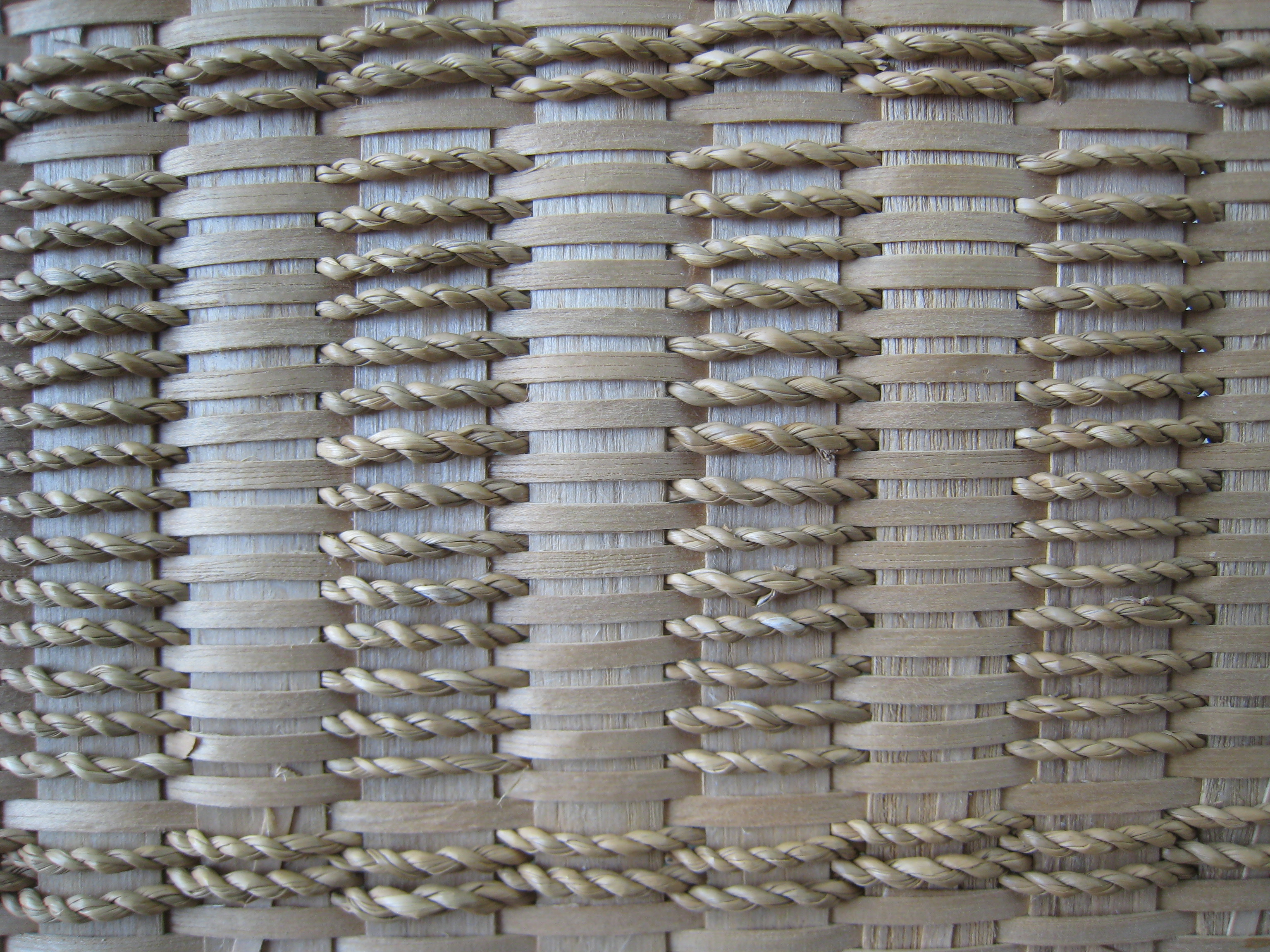
“Basket weaving by the Penobscot can be quite intricate,” says Pete.

basket 1

“First, pieces of ash are soaked in water. Then each one must be individually sanded down.”

basket 2

These baskets were made by a woman who lives in Rockwood, Maine, on the shore of Moosehead Lake. There Peter saw mushrooms. Fresh, with a garnish of smooth stones.

mushroom

And fossilized.

fossil mushroom

A sculpture of some kind.

stone sculpture

A piece of the rhyolite from which arrowheads are carved.

piece of rhyolite

Wampum.

wampum

An ancient knife used to carve walking sticks.

old knife used tomake canes

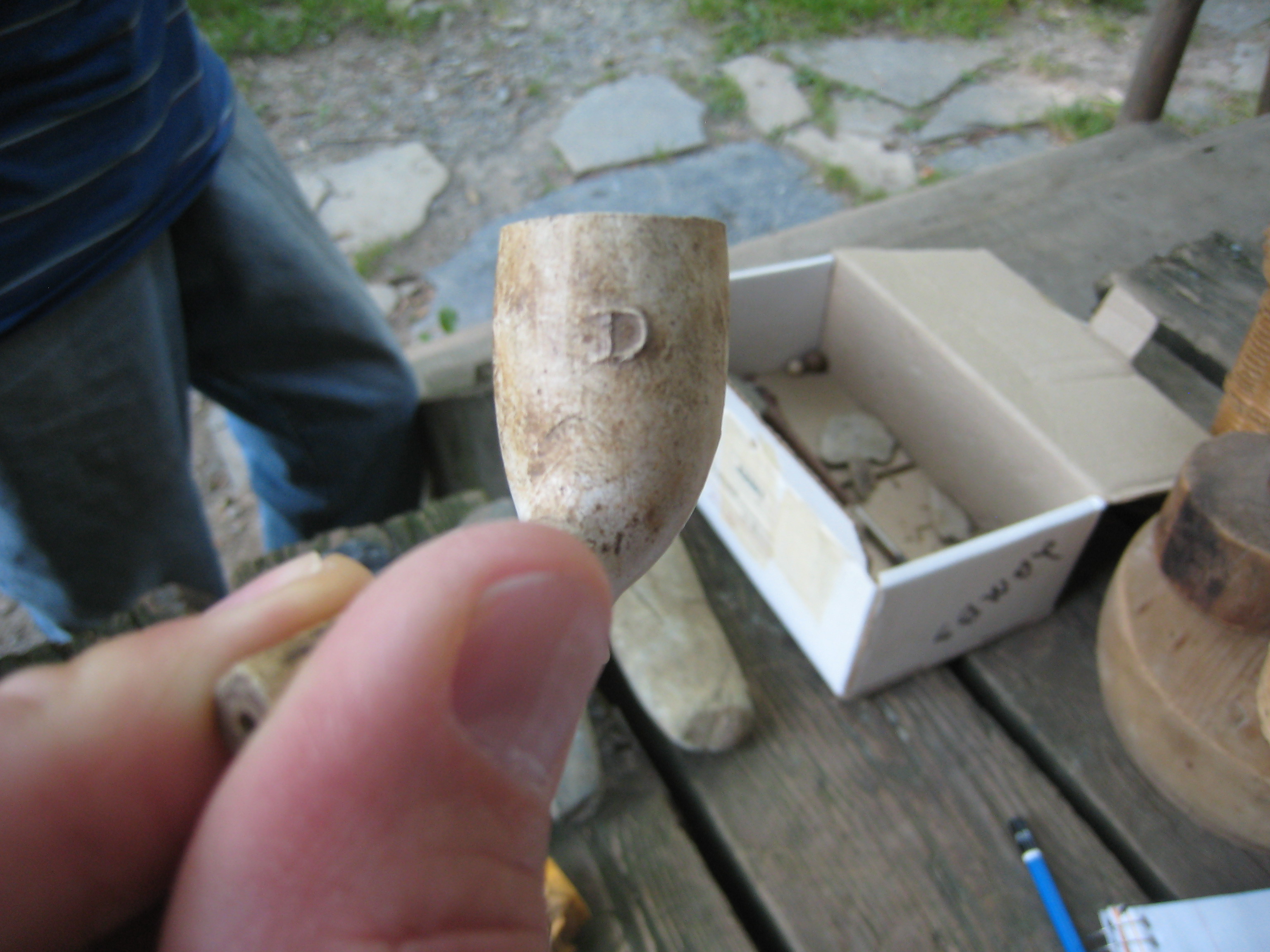
An initialed pipe left by an early settler.

pipe

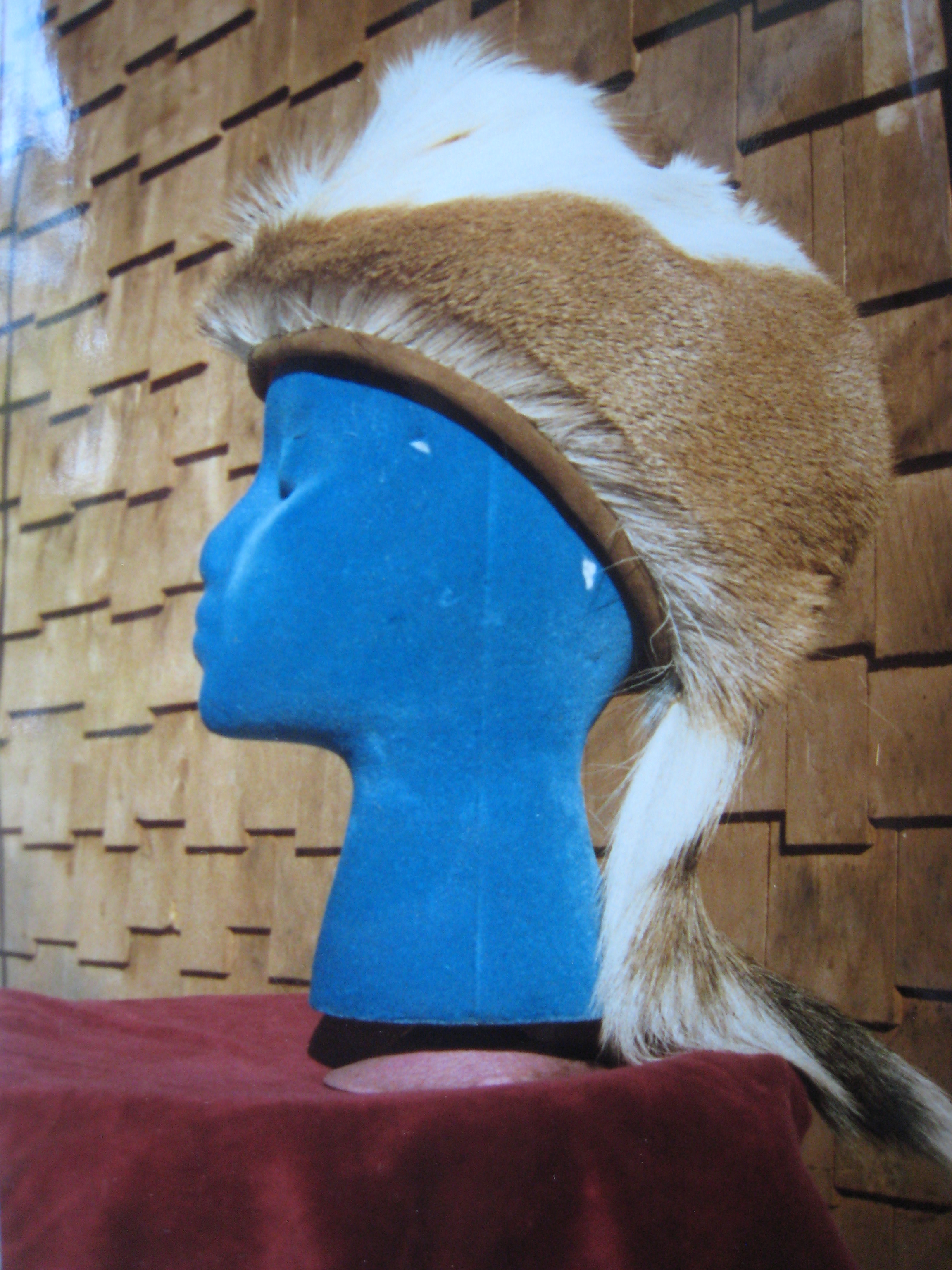
A deerskin cap.

deerskin copy

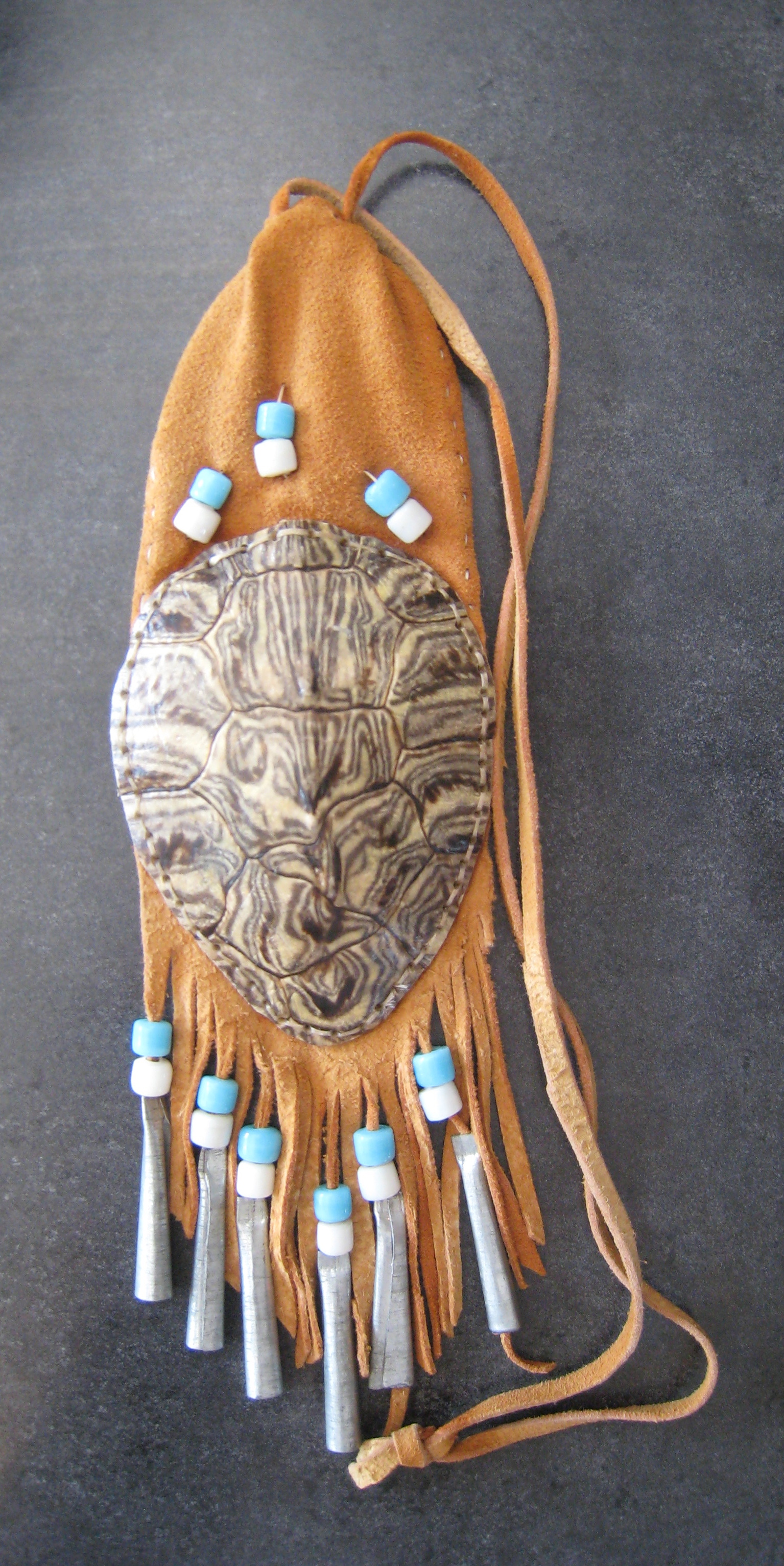
A deerskin pouch adorned with a baby snapping turtle shell that Peter plans to bring with him when he leaves.

pouch

A celebration of all that is old and new and precious in these cool, mysterious Maine Woods.

7 Comments

Filed under Art, Cooking, Culture, Fashion, History, Home, Jean Zimmerman, Nature, Photography, Publishing, Writers, Writing

Crushes on Crutches

At the movies I saw a woman on crutches. A young, pretty woman in a color-block sundress. As I watched, she hopped around the serve-yourself beverage kiosk, assembling her ice, her soda and her straw, putting the whole drink together before her boyfriend politely carried it away for her.

I saw her next swinging her way into the ladies’ room. Into a regular stall! Not the one with the wheelchair icon I was struggling to enter with my kneeling scooter The Bloke. I washed my hands, she washed her hands, the difference being that she was cool as a cuke, graceful and weightless, not perspiring and puffing like me. Probably about 24 years old.

At the film line she was waiting, as was I, to go in. We shared war stories. A motorcyle accident, she said.

anime

A little piece of the bike flew off into her ankle. The doctor had her in her cast for six weeks. It was a little difficult, she told me, because she lives up four floors and the laundry’s in the basement. But she’s making do okay. Her bike? Came out of the accident perfectly fine. She couldn’t wait to get back on it.

By the next morning my conversation with motorcycle girl had begun to percolate. I had been proud of myself for managing The Bloke so well. But now I had crutches envy. How do you make the best of this particular situation, a bum foot, and do it with some measure of equanimity and grace? It helps if you are an athletically gifted person of 24, of course. I wondered, how do you take your lumps and move forward, albeit with a cast on your foot that feels like a stiff leather ice skate with no sock? A little sand drizzled in for good measure.

Recently I asked my brother Peter for blog ideas since I knew I’d be less able than usual to go on gallivants and cover eclectic cultural happenings like I usually do. Why don’t you just catalogue all the stuff in your house, he suggested.

I feel, though, that I have already catalogued some of the things I like best. My vintage cookbook-pamphlet collection, for example.

salad book

The heirloom lace created by my foremothers.

lace cu 2

I don’t know that I’ve ever indexed the bones that have surfaced from the marsh in front of the Cabin, mainly carried helpfully to us in Oliver’s mouth. We joke that he is trying to assemble to assemble a full deer skeleton.

bones

Or the skins that have been sloughed off by so many snakes just to the south of the house.

snakeskin

But, like motorcycle girl, probably I do get to a few things every day, even now, move my constrained life ahead bit by bit. Take some action, even if I’m not swinging effortlessly on my axilla mobility aids. Thus, a catalogue of 10 actions taken today.

1. A shower bath, my leg encased in a plastic bag, with streaming hot water and a worn-down bar of soap a revelation.

2. A knitted row of  angora, hopefully without a slipped stitch.

angora

3. Perused some passages in Travels in North America, a volume published by Swedish naturalist Peter Kalm in the 1760s. In it he expounds on such scientific matters as the way bears kill livestock in Philadelphia: by biting a hole in a cow’s hide and inflating it until it dies.

racoon1

4. Stumbled upon a recipe for Warm, Cheesy Swiss Chard and Roasted Garlic Dip. As soon as I’m up and around the kitchen again!

5. Checked out the Thanksgiving episode of Orange Is the New Black.

o-ORANGE-IS-THE-NEW-BLACK-facebook

How many programs have a cast that is 99 percent female, let along with a heavy lesbian slant? Mindblowing.

6. Pushed The Bloke to the sushi bar at the back of a Japanese restaurant and had the treat of watching the chef halve a bright pink, yard-long salmon with finesse, season it with rock salt and layer it in a tub with its perfect filet brothers.

7. Scootered through a supermarket I usually despise as being too plastic but which today looked cheerily kaleidoscopic after two weeks of grocery deprivation.

market

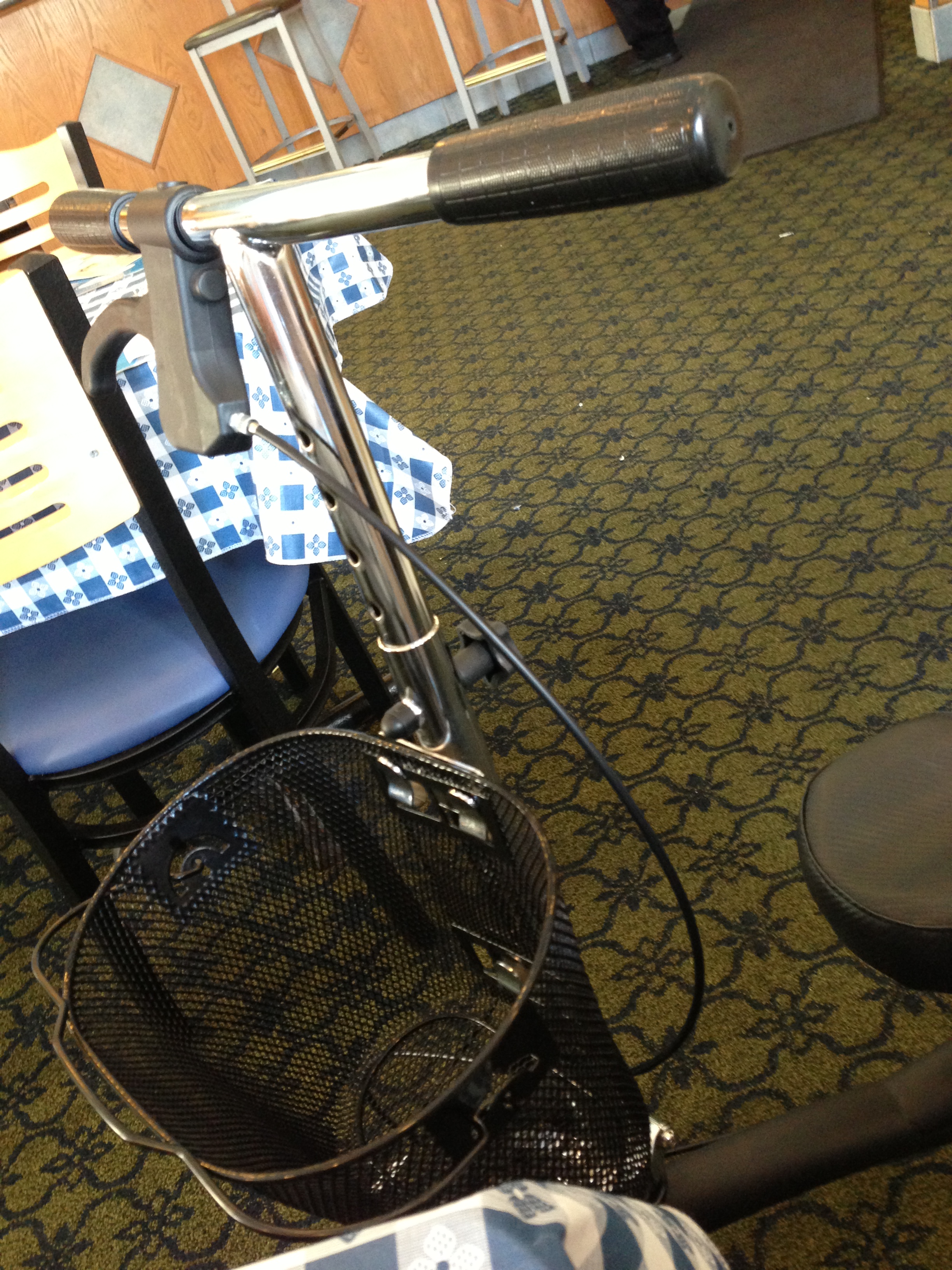
8. Brought home the beer in The Bloke’s handy basket.

kaliber

9. Visited my garden for the first time since the surgery. The collards were begging for a simmer with a pork hock.

collards

10. Visited with Oliver on his turf, the front yard, for a change, rather than him visiting with me on the couch.

oliver rolling

I’m getting back onto that couch now and elevating my aching foot. Ahhhh. But… I wonder what motorcycle girl is up to. On her anime-sparkle-titanium-neon crutches. Rocking the lead vocals with her hip hop crew? Bottle-feeding a new litter of rottweiler-lab pups? Baking a dozen loaves of vegan meatloaf for her closest friends? Or just getting ready to fly down those four flights and go out to the movies again? Because she can do just about anything she wants. As can I.

3 Comments

Filed under Cooking, Culture, Dogs, Fashion, Film, History, Home, Jean Zimmerman, Knitting, Music, Writers, Writing

L.E.C.M.-Elysium-Karma

An interminable eighteen days until the brittle cast comes off my leg. In the meantime, Gil Reavill has consented to contribute yet another juicy post to this page. Here he is.

JEAN ZIMMERMAN (writes Gil) is well celebrated for her parking karma. This arcane skill is probably not noteworthy in any other place than New York City and San Francisco, but within the confines of Manhattan, especially, it is golden. Jean’s strategy, by the by, is to drive directly to the place we’re heading for and not slow to look for street parking along the way. Like as not, she finds a spot close upon  the goal.

In Cabinworld, cabin fever is a quite literal situation, and Jean insisted on getting herself and her splint-bound leg off the couch and out of the house this afternoon. We decided on Elysium, the Matt Damon movie by the South African writer-director Neill Blomkamp, who directed a 2009 film we both liked, District 9. Lured by brand-new reclining La-Z-Boy style seats, we aimed for the AMC theater on 84th Street and Broadway. (These are the best movie seats in the world, says Jean, worth going to a film for even when the film is rotten.)

Pulling up directly in front of the movie house, we found ourselves opposite a sedan with a driver sitting in the driver’s seat. Jean posed the traditional NYC question: Are you leaving? Yes, I am, said the driver. And he did. It was magic, especially for unloading a knee scooter and a person with a hurt foot.

Parking Karma

Karma is a belief that there is some form of justice in the universe. Behave badly, be reincarnated as a worm or some other lower life form. Do good and step up the chain of being toward bodhisattva.

Gamblers call it luck. Here’s a passage from Jean’s The Orphanmaster that deals with it:

Drummond had witnessed the world’s best gamblers at play, including Prince Henry, a demon at cards. Bassett was Henry Stuart’s game, and he could win a hundred pound on the turn of a queen, only to lose it the next hand. Drummond knew the action well enough to understand the play was not really about winning and losing.

It was about faith and belief.

The field of battle and the gaming table. Drummond once stood beside an officer, a good man judged by all to be lucky and deserving, only to see a dressed-stone cannon ball take off his head. Every soldier learned the harshest lesson of battle in ways that re-ordered his very soul: Luck had nothing to do with it. Randomness ruled.

The gambler wanted to believe differently, that the world held some secret order to it, one that would accord him a special measure of good fortune. Every play tested the gambler’s faith in that belief.

Jean’s parking karma notwithstanding, I’ve always considered karma as no more than a comforting fairy tale. The universe is random and makes no exception at all for human concerns.

Martin Luther King, Jr. articulated a belief similar to karma, not in Buddhist/Hindu terms but with his usual Southern Baptist eloquence: The arc of the moral universe is long, but it bends toward justice.

Martin-Luther-King-Jr-9365086-2-402

It would be pretty to think so, as Hemingway would say. Such a kernel of optimism might be necessary in order to commit to the long-haul cause of social justice. King no doubt needed to believe to endure the incredible trials he encountered.

Talk of karma and the bend toward justice somehow implies that the universe will take care of itself. You don’t have to get on up off of your duff. But social justice doesn’t just happen. It needs a push.

Here is King’s great predecessor in the cause, Frederick Douglass:

Those who profess to favor freedom, and yet deprecate agitation, are people who want crops without plowing up the ground. They want rain without thunder and lightning; they want the ocean without the awful roar of its waters. This struggle may be a moral one; or it may be both moral and physical; but it must be a struggle. Power concedes nothing without a demand; it never did and it never will. Find out what people will submit to, and you have found out the exact amount of injustice which will be imposed upon them. The limits of tyrants are prescribed by the endurance of those whom they oppress.

This August 28 marks the 50th anniversary of the March on Washington for Jobs and Freedom, the occasion for King’s celebrated “I Have a Dream” speech. Five years later, just before his assassination, his political strategy had widened to a specific economic purpose. He proposed another march on Washington, D.C., this one rendered tragic by his death: The Poor People’s Campaign in June 1968.

Civil rights is a dangerous enough cause to push, but demanding economic equality, that’s what they’ll kill you for.

Elysium, the movie that we watched flat on our backs in the AMC 84th Street Theater, was surprisingly political. (Political enough to make you drop your popcorn, says Jean.)

gil reclining

A broad-gauge fable of sorts, it spoke to the world’s most pressing issue, according to Dr. King. It usually goes by the name of “income inequality” today. We’re creating a two-tier society, segregated, policed and imbalanced.

In the film, the haves have decamped the earth for Elysium, a paradisal, mandala-like orbiting space environment.

elysi

The have-nots, down below, live in impoverished, overpopulated, climate-fried squalor. It’s like America after the Walton family and the Koch brothers get through with it: one sprawling, fetid favela.

The film has a covert message, with plenty of clues littered throughout. Elysium, a word the ancient Greeks invoked for paradise, is code for L.E.C.M. (say it fast), the alt-culture rallying cry of Love, Empathize, Create, March.

Damon’s solid, but Jodie Foster, as the military bigwig who concedes nothing without an armed invasion, turns in not her best performance ever. The steampunk flavor of the art direction is really the movie’s star. It just looks cool.

explosive

One way to follow the dictates of Frederick Douglass and agitate for social justice in 2054 Los Angeles, it turns out, is to have a rack of metal implanted into your skull.

What the haves really have and the have-nots haven’t any of, in Neill Blomkamp’s dystopian vision, is health care. It’s oddly endearing to watch a $115 million Hollywood action movie where the climax is… everybody gets the Affordable Care Act! (In the form of a magic box in your living room that instantly cures all ills, says Jean. Wouldn’t you like to have one? Now if Obama could manage that, that would be karma.)

1 Comment

Filed under Art, Culture, Film, History, Jean Zimmerman

I Am the Walrus

I’m about a foot shorter and slightly less blubbery, and my tusks have not come in, but my habit of lolling on the couch is pronounced.

walrus face

I could be lying atop a Greenland ice floe. A tooth-walking seahorse (Odonus rosmarus) through and through, cast-footed variety. Basically sedentary. Shellfish savoring. Laughable? Don’t people sort of snicker at walruses?

My main function these days, when I’m resisting the urge to watch past episodes of Orange Is the New Black, is to absorb information. That and try to knit a mohair bandana with a pair of metal toothpicks, willing Oliver not to drag the tiny wound-up ball of pink fluff under the coffeetable.

oliver snout

(Not successful, and I nearly rebroke the bones in my foot retrieving it.)

mohair

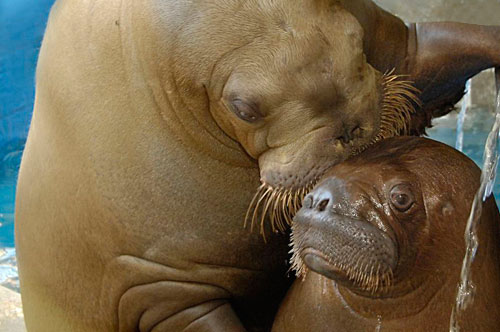
Walruses show affection.

baby-walrus-kissed-by-mother

There’s more where that one came from, walrus fetishists.

Aside from walrus kiss-bombs, I sourced a few more of life’s interesting details today.

1. A California man named Jerry Gretzinger has spent 50 years drawing an enormous map of a world he invented.  Hmnh, you say, don’t people do this every day? Well, maybe brainy 3rd graders do something similar on a sheet of oaktag.  But his is just so much more carefully delineated than others, did I mention 2,000 feet long, and he uses a weird deck of cards he pasted up to determine next steps he will take on the thing. Including which neighborhoods get what he calls “voided,” or just suddenly blasted out of existance.

gretzinger1

There is a great mini doc about him, and you might want to bring home some colored pencils when you’re out today. (Note the envy in that: when you’re out today.) For more great stuff on do it yourself cartography (and moving gigantic maps) try Making Maps.

2. I never knew what was in O magazine – lists upon lists of Oprah’s fave books that were going to earn more than my books ever would? But today I checked out the September issue because we got a subscription in error. And it turned out the issue was all about hair. Here is something so inutterably weird I reread it a few times. A timeline of how glamorous hair extensions come to be. It begins with Hindu pilgrims shaving their heads at the temple Tirumala in Tiraputi, India. (I did a little further research. As many as 10,000 pilgrims get their hair shaved by 500 temple barbers every single day.) The hair is fumigated and wrapped in bundles in Bangladore, then shipped by private courier to Rome to be bleached and dyed. Six weeks later it goes to U.S. salons. After 3 to 6 months use the repurposed locks get tossed in the trash. Footnote from the same O: 90 percent of celebrities at the Academy Awards are wearing extensions – everyone except, according to one expert, children and women with pixie cuts. I guess men, too, go unextended. But who knows.

3. A lot of people consider the Hudson to be “my river.” Me too. That’s why I was surprised not to have known before that the actual start of the estuary, the southern terminus that is, is deemed by scientists to occur precisely at Manhattan’s Battery.

stock-footage-aerial-panorama-downtown-manhattan-wtc-financial-district-east-river-hudson-rivers-battery

I knew it began down there in the Harbor someplace, but everything seemed pretty watery and diffuse to me. Now I realize that you have Hudson River Mile 0 at the Battery, the George Washington Bridge at HRM 12, the Tappan Zee at 28, Bear Mountain at 47, Beacon-Newburgh Bridge at 62, the Mid-Hudson Bridge at 75, the Kingston-Rhinecliff Bridge at 95, the Rip Van Winkle 114, and the Federal Dam at Troy, the head of tidewater, at 153. The tidal section of the Hudson constitutes a bit less than half the total distance – 315 miles – from Lake Tear of the Clouds to the Battery. I learned this scrap and so many other things from the State Department of Environmental Conservation’s weekly easy–to subscribe to e-newsletter, Hudson River Almanac. If you want to know how many hummingbirds appeared in someone’s yard this May, and how that compared with last year’s count, or the story of a kingfisher riding the back of a hawk, or that Atlantic blue crabs are known to rivermen as “Jimmys,”(mature males) “Sooks,” (mature females) and “Sallys (immature females), this is the place for you. I find I want to know these things.

Hummingbird-Wallpaper

It’s amazing what you’re ignorant of as a walrus.

3 Comments

Filed under Art, Culture, Dogs, Fashion, History, Home, Jean Zimmerman, Knitting, Nature, Photography, Publishing, Writers, Writing

Clerihew’s on First

Yet another GOODIE FROM GIL. Thank you Gil, for providing moral support and iced coffee while I sit around with my leg up and my brain a little dialed down.

In a recent interview (writes Gil Reavill) Woody Allen belched forth about his writing process in ways that struck a sympathetic note with me.

woody

Here are a couple excerpts:

“What people who don’t write don’t understand is that they think you make up the line consciously — but you don’t. It proceeds from your unconscious.”

“The best you can do to get through life is distraction. Love works as a distraction. And work works as a distraction. You can distract yourself a billion different ways. But the key is to distract yourself.”

This comes close to what I’ve experienced about writing.

1) “You,” the ego-locked soul pushing the pen, is not really the author in any credible sense. Instead, it’s what used to be called the Muse, what Mr. Allen calls the unconscious. Sentences and phrases tend to leap out fully-formed and pre-created, like Athena from the forehead of Zeus.

athena

The byline is the biggest fiction there is. The greatest authors ever—Homer, Tu Fu, Shakespeare—are ciphers as individuals, to the degree that some people insist they never existed or didn’t even write their works.

2) At best, what you create is nothing more important than a diversion for yourself and others, a distraction from boredom or a way to excuse oneself from facing the howling void of the universe. Forget Art with a capital “A.” Forget literatoor. In other words, don’t take yourself or your work too seriously.

Doggerel fits the bill quite nicely. I indulge in it often and most of it never sees the light of day (thank the Lord, you might respond). Limericks, parodies, couplets, one-offs—and clerihews.

Here’s Wiki on the rules of writing the clerihew:

“A clerihew is a whimsical, four-line biographical poem invented by Edmund Clerihew Bentley. The first line is the name of the poem’s subject, usually a famous person put in an absurd light. The rhyme scheme is AABB, and the rhymes are often forced. The line length and meter are irregular. Bentley invented the clerihew in school and then popularized it in books. One of his best known is this (1905):

Sir Christopher Wren

Said, “I am going to dine with some men.

If anyone calls

Say I am designing St. Paul’s.”

A few years back I entered the clerihew contest of the literary society in the village where we lived. I wrote a whole slew of them. (A cleri-slew, says Jean.) One of them won second prize, a gift certificate to a local bookstore that I never cashed in. It was an honor just to be nominated. Plus it was the Muse’s doing, not mine. Blame her. See if you can guess which of these took the silver.

Meeting Charlotte Brontë

I would say, “Enchanté,

“Your hero’s charismatic

“But who’s that in the attic?”

220px-Charlotte_Bronte_coloured_drawing

Emily Brontë

Wrote less than Dante

One book to four

Proving less is moor

200px-Emilybronte_retouche

Brontë, Anne

Youngest of the clan

Wrote ‘til she had blisters

But she’s still not her sisters

Anne_Bronte

Moving on from the Bronte clan…

Charles Dickens

At injustice sickens

His muse quickens

And the plot thickens

Charles Dickens

Ken Kesey

Makes us uneasy

When he gets on the bus

And leaves without us

kesey

Raymond Chandler

Had a wife but he banned her

From reading his books

About killers and crooks

BK.1017.Nolan20A-- File Photo-- Jan. 13, 1987-- Raymond Chandler.  LA Library

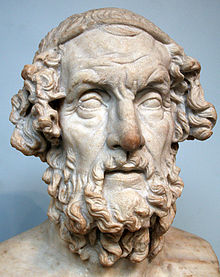
Homer

Told of a sea roamer

The hero Ulysses

Who missed his wife’s kissies

220px-Homer_British_Museum

The heretic Tyndale

Saw flames start to kindle

When he translated the Bible

And at the stake was held liable

william_tyndale

Victor Hugo

Never drove a Yugo

He preferred a fiacre

In which he met his Maker

Victor+Hugo+Victor_Hugo

Leo Tolstoy

Was a good ol’ boy

Who fled from his wife

At the end of his life 

tolstoy

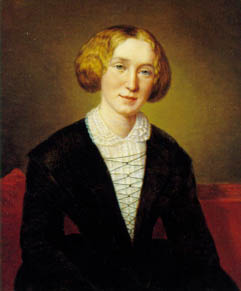
George Eliot

To hear biographers tell it

Wrote as a man

But lived as Mary Ann

George_Eliot_at_30_by_François_D'Albert_Durade

James Cain

Waited in vain

For his royalty checks

Now his postman’s an ex

cain

Aeschylus

With comedy can thrill us

But an eagle did hurtle

And he was killed by a turtle

[Snopes.com discounts the tale, saying there is no confirmed factual information regarding the death of Aeschylus]

David Foster Wallace

Was not quite as tall as

The length of the rope

And the loss of his hope

david-foster-wallace2Bentley, Ed Clerihew

Created a merry brew

Of rhymes for the very few

So no one would say “Cleri- who?”

EDMUND-CLERIHEW-BENTLEY-Wiki

3 Comments

Filed under Culture, Fiction, Jean Zimmerman, Writers, Writing

The Mummy’s Bones

The Bloke smokes. The thing you need to know if you get a kneeling scooter is you have to embrace the experience, you have to enjoy it, you have to gliiiide. Even with a cup of iced Starbucks in one hand.

jz scoots

Like a kid. Like all the kids that look at you with envy when they see you and your device, The Bloke, come careening their way. I beat Gil in a race down the drug store aisles.

Gil says, Jean, don’t write about your foot again.

But I say, write what you know. And at this point my foot is pretty central to what I know.

I felt good because I came out of my first week of rehab with a completed book review for NPR – and the book was a hefty one, too: The Daughters of Mars, by Thomas Keneally. It makes it somewhat easier to handle an achy-breaky right foot when you’re reading about World War I soldiers getting their faces “shorn off.” Amputees were the new normal. Who am I to complain? I got a few stitches, that’s all.

suture

But crutches suck. You see those college jocks swinging along on a pair after a football injury, going to History 329 or maybe a crowded  party up a flight of frat-house stairs – how do they do that? It’s all I can do to limp across the living room or out to the car. It’s the young guys’ superior upper-body strength, I’m sure, but also the breezy ‘tude, and a strong desire to get back into the swim of beer pong.

Which brings me back to The Bloke. I was going to decline the Pig Mountain barbecue at the end of August, thinking I just couldn’t manage the street fair thing. But how can you turn down a pork-enshrining food fest in a town called Narrowsburg, New York, which started out as a punk rock show in a basement? Fourteen chefs and fourteen pigs. So what if I get some drinks slopped on The Bloke. He can handle a little rust.

This is one way to get through 6 weeks of life in a foot cast: gliiiide through it, sampling pork ribs and other delicacies along the way.

I’ve become a pudding fiend. A bowl of the stuff being the demarcation between early evening on the couch, foot up, and late evening on the couch, foot up.

KozyShack

I’ll tell you a secret about Kozy Shack. It’s no worse than any homemade pudding or gourmet restaurant mousse either, containing just milk, eggs, sugar and real vanilla. It has only one flaw. The chocolate does not have the delectable skin on it you get when it cools after you spoon it out of a hot pan. Yuck, says Gil.

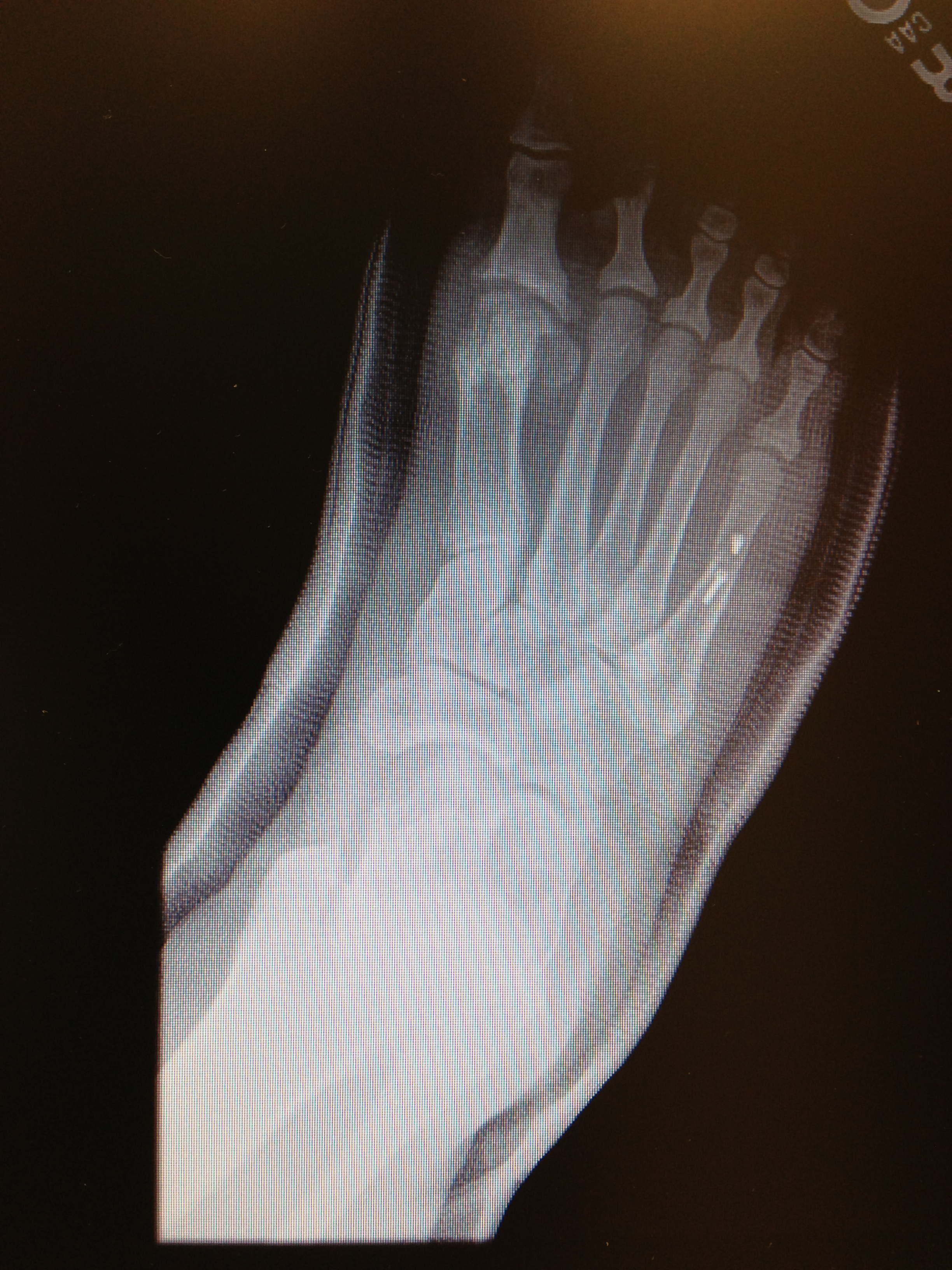
Another avenue to wellness: idolize your doc, and realize you lucked into the Greatest Foot Surgeon in the World. The Greatest. There is something of the Stockholm Syndrome in this, probably, as Dr. Voellmicke is mine for the duration, so he better be good. But in truth, he has a sharp mind and a gentle touch. Not everyone could repair a fifth metatarsal with such delicacy.

foot xray

We visited with Dr. Voellmicke so that I could get my sutures removed and my plaster cast exchanged for a streamlined fiberglass model. This sterling representative of his profession performs every bit of the work himself, including creating a fiberglass mold of wet strips the way you’d make a kids’ pinata.

bandaged foot

I came up with a horror film trope. Bunions: The Movie. Or maybe The Bone Spur. Anyway, my feet have been a nightmare for a long time, and it was thrilling to see the monster bones I was living with transformed into the elegant lines that now lie beneath the mummy bandages, awaiting their closeup.

9 Comments

Filed under Culture, Film, Home, Jean Zimmerman, Nature, Photography, Publishing, Writers, Writing

Live From Lincoln Center

AND ONCE AGAIN, let me welcome guest post-er Gil Reavill, who took himself out of Cabinworld while I was in lockdown to visit Lincoln Center Out of Doors in Manhattan:

After days of rain (writes Gil) the 30th Annual Roots of American Music, under the aegis of Lincoln Center Out of Doors Festival, kicked off the weekend with perfect weather.

A political rant festered in the warmth of the beautiful sunshine on the Upper West Side of Manhattan. All around the Lincoln Center cultural mecca, billionaires had festooned their names. Bloomberg sponsored the music festival, so that name was emblazoned on banners and signs. There was also Hearst Plaza, as well as David H. Koch Theater, home of the New York City Ballet and formerly the home of City Opera, used to be called the New York State Theater. If just plain folks do it, it’s called graffiti and prosecuted. But if big-money smears its name around on buildings, it’s called philanthropy and celebrated.

This is how the scam works. Conservatives agitate to eliminate arts funding (among other frivolities like roads and bridges). Under pressure from the billionaire-owned-and-operated Republican party, arts funding is duly cut to the bone. So when some noblesse oblige moneybag like David Koch comes along, a funding-parched venue like Lincoln Center (which was, after all, founded by Rockefeller money) can do nothing else but buckle. The populist-named New York State Theater becomes Koch Theater, and the arts become privatized.

David Koch and his brother Charles Koch lead the radical right-wing libertarian charge. They want to be free of government interference for their pollution-spewing enterprises. The day I willingly enter an edifice named after a corporate gangster like Koch is “when shrimps learn to whistle,” a phrase Nikita Khrushchev liked to use. If we adequately funded our public institutions, they wouldn’t have to lease themselves to big-money robber barons.

Then there was something called the “Modern Luxury Lounge sponsored by Celebrity Cruises,” an enormous covered and cordoned off seating area erected stage left at Damrosch Bandshell. American have slowly gotten accustomed to the idea that these sort of luxury skyboxes/VIP areas are always looking down on them whenever they venture into public spaces. But such zones are a clear violation of the egalitarian spirit. They’ve been tearing down stadiums all over the country just to erect replacements that feature more skyboxes, more segregated playgrounds for the rich. Just remember, folks, some pigs are more equal than others.

But on to the music.

In the smaller performance space on the north side of the Met, we caught the New Orleans band Hurray for the Riff Raff fronted by the wonderful Alynda Lee Segarra.

Alynda_Hurray for the Riff Raff

Her smooth, powerful alto is her own, but her phrasing reminded me a little of Concrete Blonde’s Johnette Napolitano. She writes and sings all the band’s songs herself. She killed with The Body Electric, a kind of answer song to the whole tradition of Omie Wise-style he-done-her-wrong murder ballads. How would a man feel, she asks in her lyrics, if a song like Omie Wise was about his own daughter? Beautifully strong stuff, worth tracking down.

The program transferred to the Damrosch Park bandshell on the south side of the Met. Kicking off the evening show was a rockabilly revue, featuring the real reason for showing up that night: James Burton, master of the telecaster, Elvis’s longtime guitarist for his live shows, who played with everybody else under the Sun Records sun, too.

Master of the Telecaster James Burton

Arkansas’s biggest singer (in the literal sense of the word: he’s 6’7″), Sleepy LaBeef performed the vocal duties and brought along his own band.

Sleepy LaBeef_James Burton

Burton did a definitive version of Mystery Train and showed why he was name-checked by almost every person on stage that night.

Burton

Jason Isbell of the Drive-by-Truckers did a full-throated middle set, featuring a song by Isbell’s fiddle player and wife, Amanda Shires, formerly of the Thrift Store Cowboys.

Amanda Shire

Isbell’s recent Southeaster and Shires’s brand-spanking new Down Fell the Doves form a one-two punch for the couple, both albums released within a couple months from each other.

Isbell and Shire

Tough acts to follow. After all the roaring guitars from the all the multiple-personnel bands that crowded Lincoln Center all day, could a single performer with a single acoustic possibly hold the stage? Nick Lowe managed to make it look easy.
Lowe

The man is simply one the best songwriters alive today. What’s really great about Lowe is how long he’s been out there—from way back in the day when he wrote “(What’s So Funny About) Peace Love and Understanding” for his late-60s band, Brinsley Schwarz. Half a century later, he just keeps going without losing a step, his vocals and songwriting still superb. Lowe’s performance at Damrosch was masterful. Just one guy (he’d probably say “bloke”) held the whole 2,000-plus audience mesmerized with feel-good pop tunes and killer lyrics. Lowe may be a dinosaur, but he’s the kind that eats younger bands for lunch.

Lowe onstage

4 Comments

Filed under Culture, History, Jean Zimmerman, Music

A Hut of Candy Floss

Magical, feel good potions of the day: a tall iced coffee, a small pain smoother, a delicate skein of candy floss.

coffee

There’s a lot you don’t know about crutches before they come into your life. Like what good yarn-winders they make in a pinch.

crutch winders

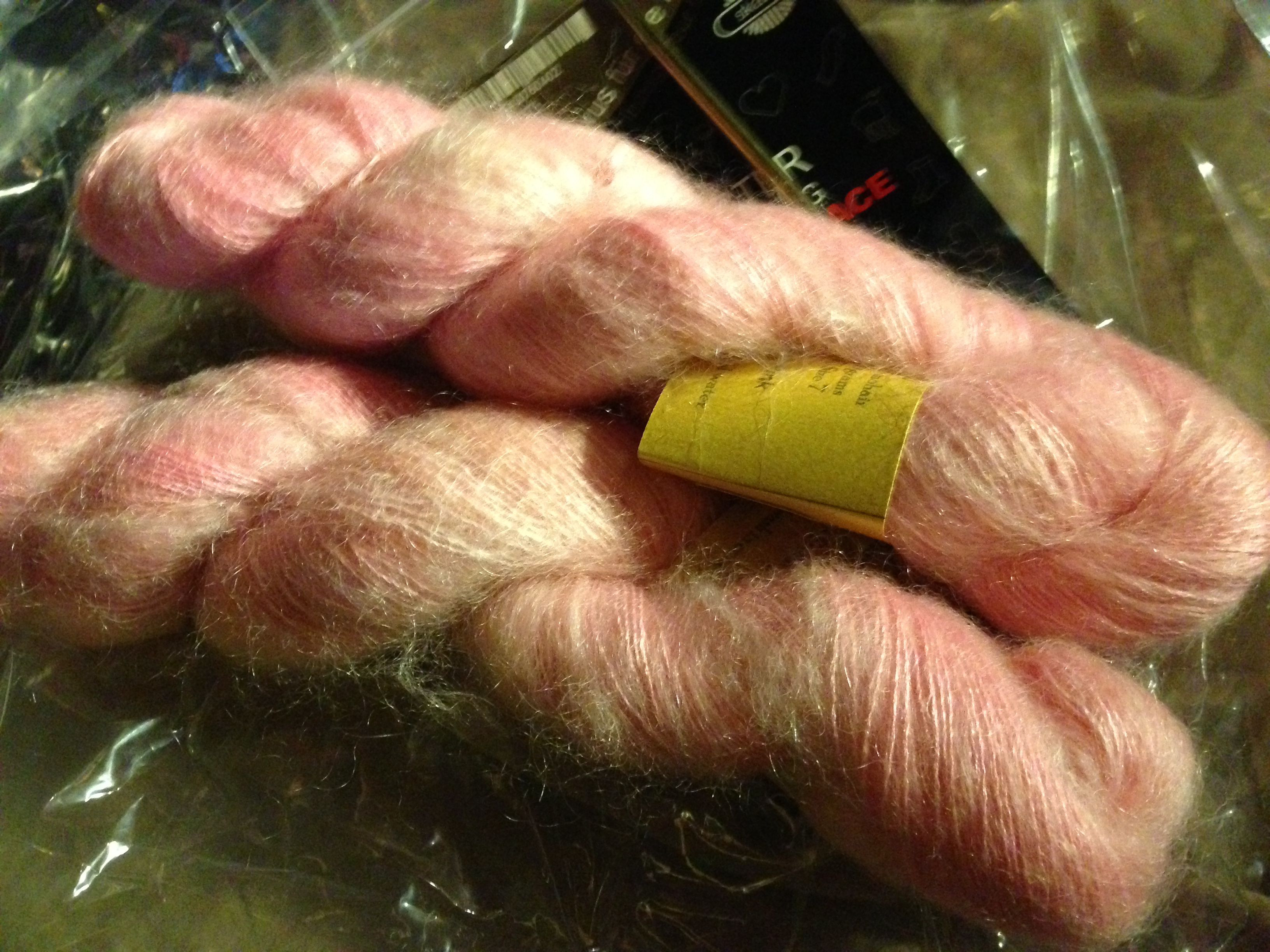
This silk-angora begs to be knitted into a Barbie evening wrap.

candy floss

I seem to be rendered all thumbs by the work on my toes.

floss knit

Don’t you love it when you come across an actress just casually knitting in the movies?

Audrey Hepburn in Breakfast at Tiffany’s makes a famous attempt, looking fetching while botching her pattern.

audrey

Or Myrna Loy in the Thin Man movies. She makes knitting snazzy.

Myrna Loy

Sylvia Sidney appears in a fantastic shot on set, needles in hand.

Sylvia Sidney A

That last comes from one of my favorite blogs, One More Stitch, whose author researches and recreates garments of the past.

All these glamour pusses make it look so easy.

When I feel like tossing my needles, I think about entering the knit world another way — through  the example of this guy in France who soaked sweaters in milk and lime, threw them over a frame of branches and covered them with black soap and linseed oil. He padded the inside with earth and, for some reason, horse manure. He lives there now.

Hepburn would probably even look more cool knitting her sweater in this knit hut.
1 Comment

Filed under Culture, Dogs, Fashion, Film, Home, Jean Zimmerman, Knitting, Nature

Escape From the Small Screen

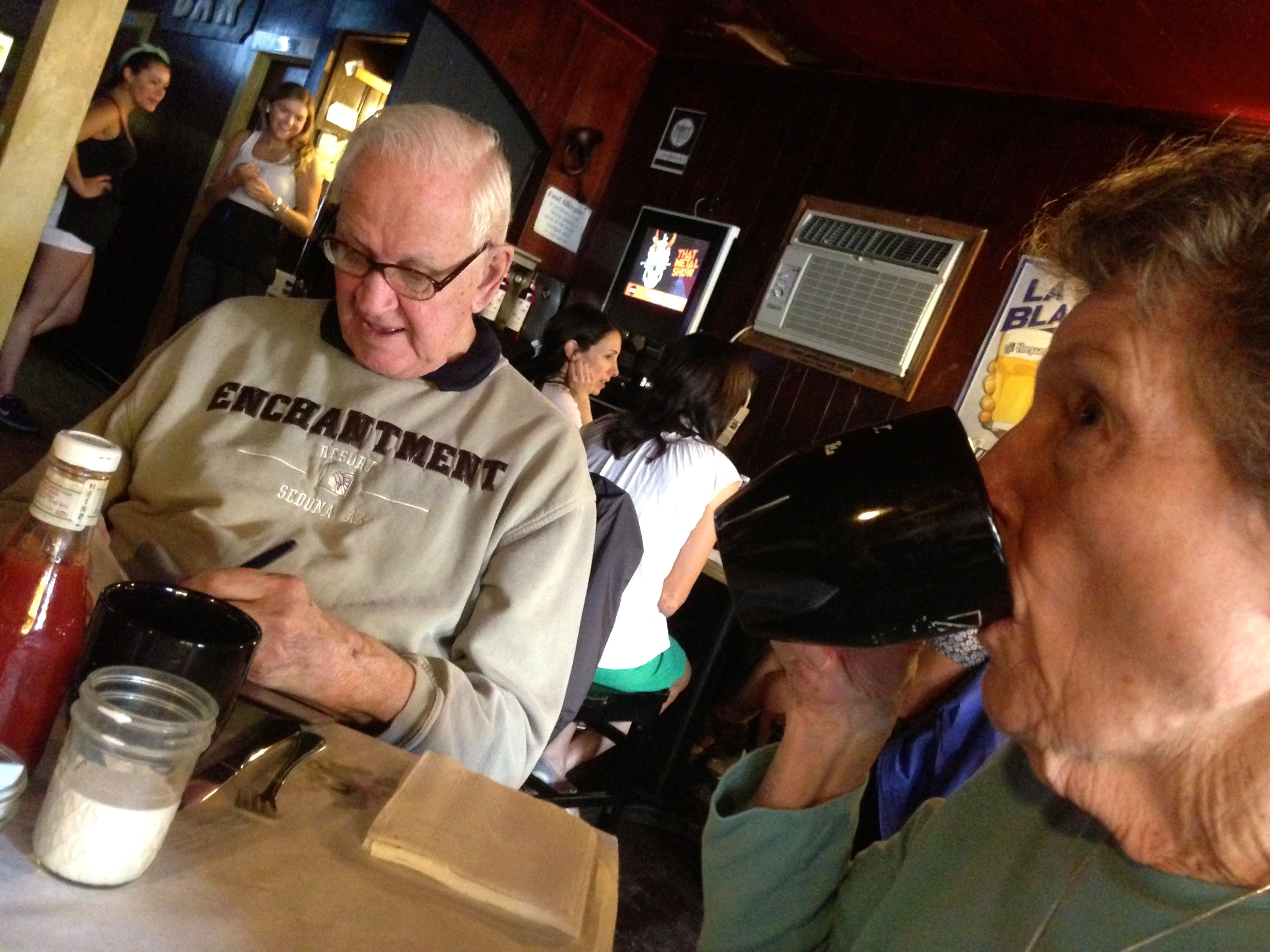
Out of a doze, into a tavern. Burgers, seafood, beer. Prop up the cast on a chair, so much more comfortable that way. Cold beer, even nonalcoholic never tasted so good. After a dozen Breaking Bad reruns, the real world looks sharp, magnificent .

What’s that on your face, said my father to my husband.

Project

It’s my project beard, said Gil. I’ll cut it when I finish my book.

Christmas isn’t for four months, said my dad, suggesting Gil could get a job as a mall Santa. He went back to calculating the check.

B&S

Just a touch more coffee, said my mother to the waitress. No, that’s too much.

Just drink what you want, said my father.

I’ll finish my cold, cold beer. Crunch a last potato chip. Swing my way home to the couch.

Jean on crutches

Did you know it rained today? Like sheets of rock candy, or maybe that’s from Breaking Bad.

il_fullxfull.399180881_uw8j

5 Comments

Filed under Cooking, Culture, Film, Home, Jean Zimmerman

Captive Reader

And another great guest post from Gil Reavill, who between brewing coffee, clearing away dishes and bearing down on his own book has managed to fill in literarily while I’m off my foot.

EVER SINCE JEAN shared a bookstore appearance with novelist Koethi Zan, author of The Never List, the theme of captive women seems like a bad tooth that we can’t help worrying.

never list

The horrific tales of Ariel Castro, the Cleveland kidnapper, rapist and murderer, remain in the news long after his captives took back their hard-won freedom. Recently they leveled Castro’s home, part of a plea deal that spared the predator a death sentence.

I wrote about the phenomenon in my book Aftermath, Inc.

Ed Gein’s Wisconsin farmhouse, destroyed by fire. John Wayne Gacy’s house in Des Plains, Illinois, bulldozed flat, as was O.J. Simpson’s Rockingham estate. Jeffrey Dahmer’s Oxford apartment building, with its infamous apartment 213, demolished. These sites were, in the language of real estate experts, ‘stigmatized’ properties. You know you have transgressed in some basic, Decalogue-violating manner when authorities raze your house and sow your fields with salt.

gacy house

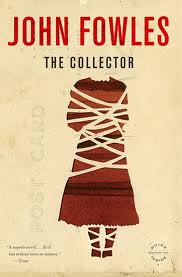
The theme of captive women crops up with stinging regularity in literature. John Fowles’s great novel The Collector was the first treatment of the theme that I encountered, probably as a too-young adolescent.

fowles

In our household, stories of Cynthia Parker and other women taken by Indians have become familiar through research for Jean’s novel, Savage Girl. Captivity is such a popular leitmotif in romance novels that it must form an admitted element in female fantasy. But the difference between rape fantasies and rape, as psychologists reiterate, is that women are in control of their fantasies.

During her research for The Never List, Zan became exhaustively familiar with captive women cases the world over. She tracks the survivors and gives sobering accounts of their inability to adjust to life after captivity. Often such women become recluses, unable to face life after enslavement.

Of course, stories of a lot of these victims never make the news. It might come as a shock to some benighted souls that human slavery did not exactly vanish from the face of the earth with the end of the American Civil War. Read Nicholas Kristoff’s great call to arms, Half the Sky, or David Batstone’s Not for Sale for accounts of sexually enslaved females all over the world (including right here in River City).

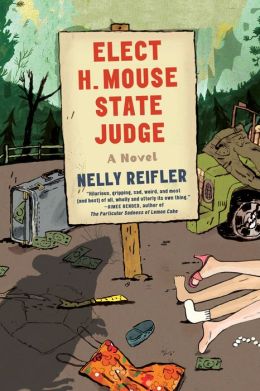
So it was with a creeping sense of recognition that I delved into our friend Nelly Reifler’s captivating (ahem) debut novel, Elect H. Mouse State Judge, out this week from Faber and Faber.

NellyReifler2

H. Mouse is by turns entertaining and disturbing, with Reifler treading a razor’s edge between Wind in the Willows and, say, Chuck Palahnuik, William Vollmann or Andrew Vachss. The innocence here is false innocence, and the topical true-crime reality of captive women leaks through the fairy tale.

H. Mouse is that eminently familiar figure, a compromised politician. His daughters Susie and Margo are taken by a religious nut named Father Sunshine (one Reifler’s best creations). The title character reaches out to a couple of shady political fixers named Barbie and Ken—yes, the very same ragingly popular iconic couple toyed with by children since the doll’s introduction in 1959. Ever wonder how Barbie and Ken do the nasty? Reifler tells us (it involves the removal of limbs). Lawyers from Mattel, Inc. ought to be knocking on Reifler’s door any day now.

elect

The figure of an unreliable narrator is a common one, but with H. Mouse I felt myself put into the position of an unreliable reader. I had the uncanny sense of humming along, enjoying the mice-and-foxes fable, then snapping awake to a nightmare. Reifler’s trap is baited with honey: the tone of faux sweetness is devilish, since one soon learns that it cannot last. Throughout these pages I suffered a quite enjoyable case of literary whiplash, something along the lines one feels with Animal Farm. (There’s a story kicking around, I can’t remember where I encountered it, about a student telling his professor that Orwell’s masterpiece was an excellent tale of the barnyard. The professor told the student to go back and read the novel again.)

79347104_animal-far_340402b

Elect H. Mouse State Judge is short, bittersweet and has a kick like a mule. Not since Art Spiegelman’s Maus have rodents been harnessed to so great effect.

5 Comments

Filed under Culture, Fiction, History, Home, Jean Zimmerman, Publishing, Savage Girl, Writers, Writing

An ARC and a Boost

There’s type and then there’s type.

SG SA

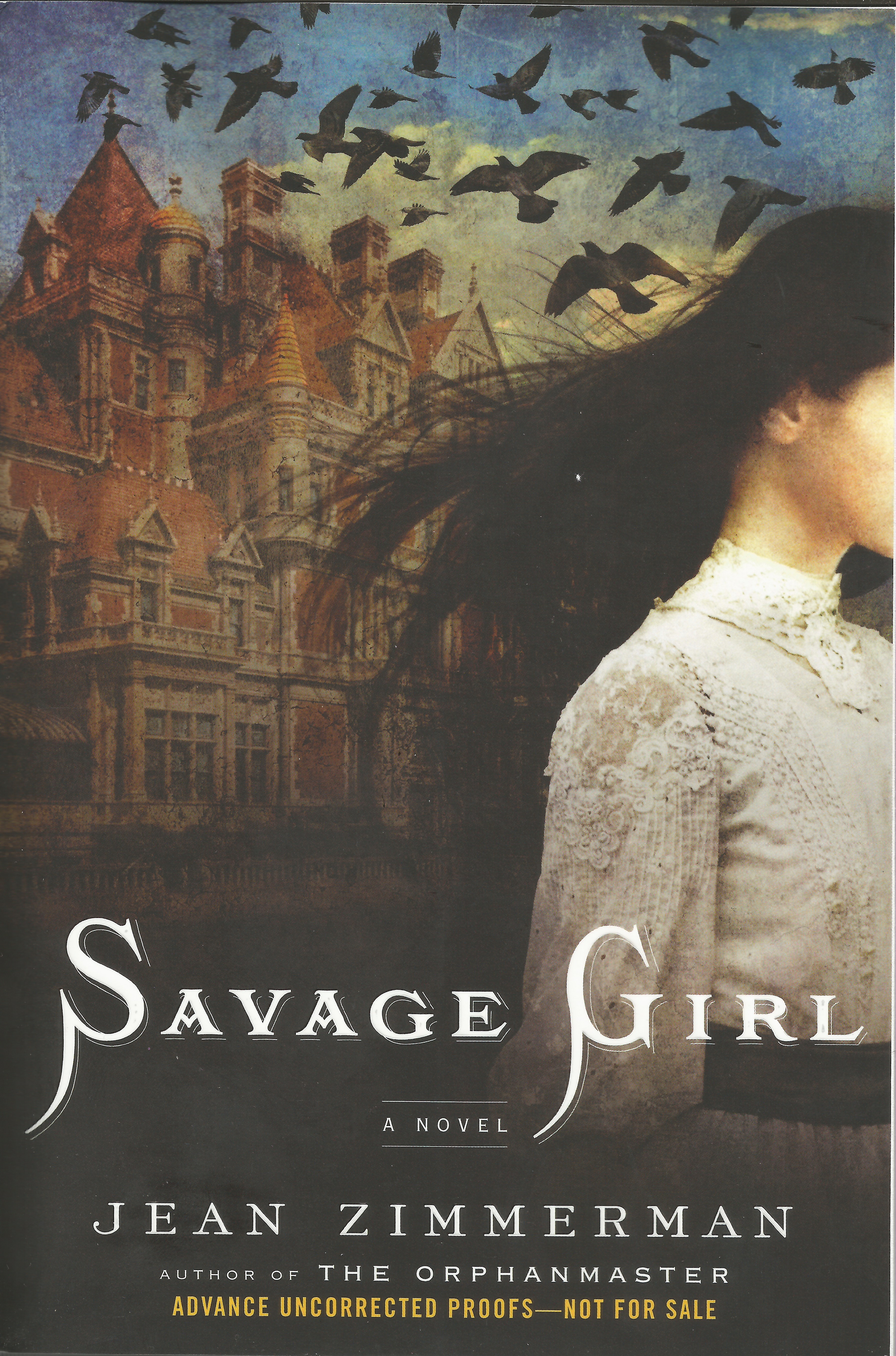
After another day of slogging off and onto the couch, I opened the mail. In among the junk, two gems, two volumes I’ve been waiting for. Two Advance Reading Copies of Savage Girl. Two ARCs. The novel will be out in March 2014. But it’s alive and breathing in its beautiful jacket even as we speak. This is the copy that will go out to early commenters and reviewers, bloggers and big mouths, so we want for it to be gorgeous.

arc cover

And that type. That’s what pops. The image of the girl and the mansion resonate, but the type’s what brings it to life. The title announces itself in a virginal white whose lines also embody the savagery of the title, and the two words are embossed, smooth under your fingertips  as I didn’t know they would be when I simply saw the cover proof. Now its typography renders the package dazzling.

Crack it open and you get the prologue, the first outlines of the mystery the narrator Hugo unfolds.

SG first page

The type popped. Now I’m going to have some pizzazz, too. Gil and I picked up a scooter I’d reserved for rental at the drug store. It waited patiently at the Greek restaurant we like while we downed our sandwiches and skordalia.

scooter

Then it came home with us – and boy, do cars stop for pedestrians when they see a scooter.

It’s somewhat easier to get around than crutches and I’ll be freer to exit my couch and have adventures. I think I’ll call it the Bloke. Right now the Bloke is in the back of the Suburu, waiting for me.

6 Comments

Filed under Cooking, Culture, Fiction, Home, Jean Zimmerman, Publishing, Savage Girl, Writers, Writing

A Haze of Summer Reading

Still embedded in the couch, where I’ll be for the foreseeable future, my leg held slightly less aloft, though… and with less pain in my foot.

The hours go by. The days. So do the pages of the book I’m reading, though the medicine makes me slightly less attentive to the thread of the plot than I’d ordinarily be.

17164599

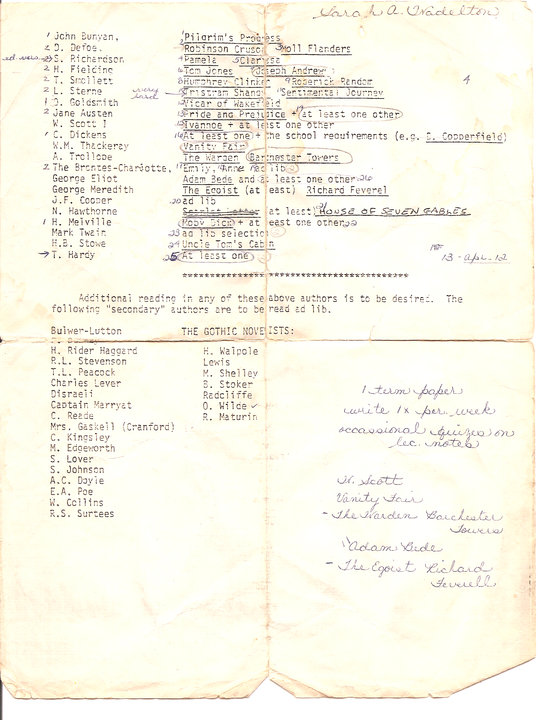
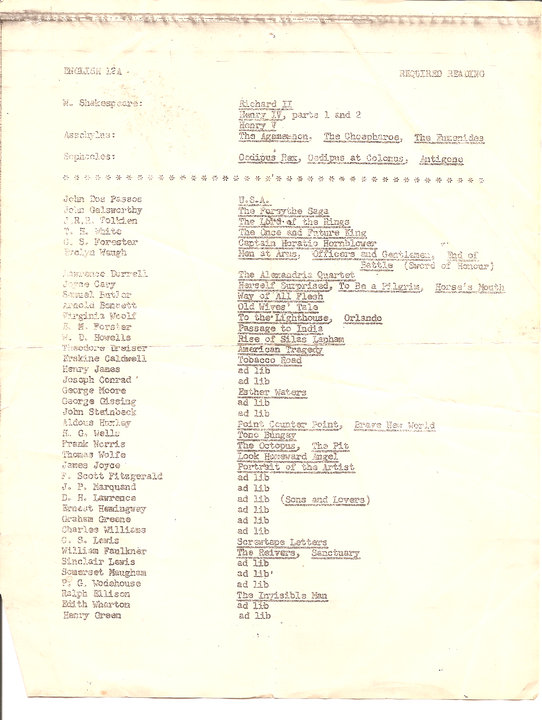
A summer book. A stack of summer books. I recently came across a copy of the syllabus for my honors English class in high school. Forty years ago. The teacher, Chuck Aschmann, was some kind of a genius, and he brought out the genius in his pupils. Just page 1 of the reading list would be enough for more than a single college literature course.

32011_410291856024_2411585_n

By page 2… I don’t remember it being hard to read most of his selections, just sitting for hours in our sticky leather club chair and dreaming over these amazing books. Spending a lot of time in the humid heat of August, reading and dreaming and reading…

32011_410291836024_335984_n

Dos Passos, Woolf, Conrad, James. Fielding, Sterne, Thackeray. Melville. Twain. Sophocles!

I was actually spoiled for college English after this, thought I knew all there was to know about fiction and spent my non-class-time hardly reading at all but scribbling diary entries, page-length prose poems and love letters.

In high school it didn’t take foot surgery to keep me on my rear end reading novels in summer.

2 Comments

Filed under Culture, Fiction, Home, Jean Zimmerman, Writers, Writing

A Full-throated Yodel

Today, Gil Reavill guest-posts as I rest:

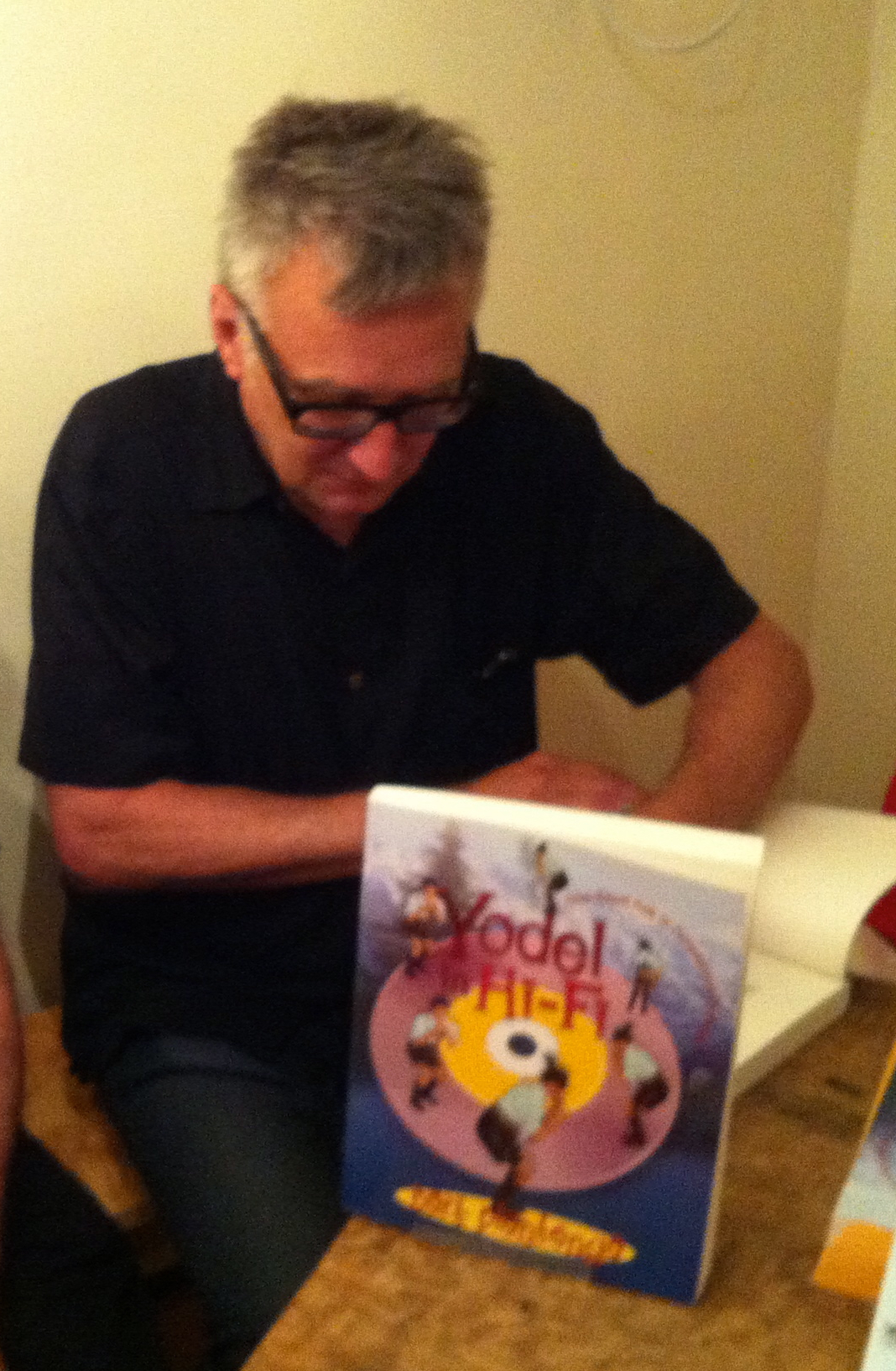
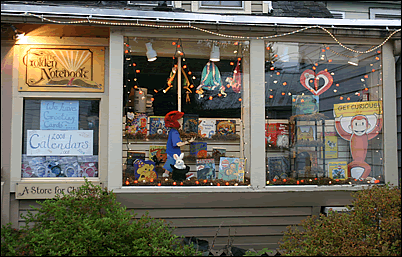
THAT SOUND YOU HEAR is the yodels echoing down from the Catskill Mountains. Author, provocateur, deejay, beer mystic and worldwide yodeling authority Bart Plantenga recently appeared for a full-throated presentation and book-signing at Woodstock, NY’s great indie bookstore, The Golden Notebook.

Bart Signing

The event was held on a tourist-flocked sunny Saturday in Woodstock, aka the People’s Republic of Woodstock. The iconic Aquarian village looked to be thriving and was chock full of public art and cheeky signage.

Woodstock sign

The Golden Notebook is one of our all-time favorites as both a bookstore and a book: the venue is named after Doris Lessing’s nervous breakdown of a masterpiece.

golden-800wi

A feminist touchstone of the Sixties, Notebook turned a lot of minds around and established the author as a leading light in the literature of the day. Margaret Drabble famously called it “inner space fiction.”

doris

We summered in Woodstock once back in the day at the Byrdcliffe Arts Colony in the hills above town, staying in one of the tiny cabins. The founder of Byrdcliffe believed in the health benefits of bathing, so he furnished each cabin there with immense eight-foot-long clawfoot tubs. Water was delivered to the faucet by a spring-fed system which ran through hoses that snaked through the woods. Bob Dylan’s old place was just down the road, and we snuck in for a nighttime swim or two in his former grotto. That year the Byrdcliffe Playhouse was doing a stage adaptation of the film Casablanca, and during the show a spotlight rigged on the theater’s roof would strobe the darkness and a claxon would sound as Louis and his friends would search for “the usual suspects.”

Byrdcliffe-theatre

With the publication of his second book on the subject, Yodel in Hi-Fi: From Kitsch Folk to Contemporary Electronica, our friend Bart has established himself as an unparalleled resource for musicologists, aficionados and just plain yodel-crazy folks. While he does not indulge in the art himself, Plantenga has exhaustively documented yodeling practices all over the globe.

yodel in hi fi

He rounds up the usual suspects—Switzerland, Germany, Scandinavia—but gives fascinating insights into unexpected yodeling traditions among the Pygmy people in Africa and the Hmong in Southeast Asia. Yodeling is a method of changing pitch from ordinary chest register to falsetto, long used as a communication method in mountainous countries where the echo is most pleasing to the ears. Of course it also appears as a vocal effect in many different kinds of music, most notably in country and western but also, as Plantenga shows, in classical, electronica, pop and pretty much every other style on the face of the earth. The great country music pioneer Jimmie Rogers rode to fame on the strength of his “blue yodel.”

yodel

Johnny Weismuller’s Tarzan yodel entered into the modern pop culture in the middle of the last century, and the practice was played for laughs by comic Carol Burnett, who used to open her television show with a suitably loony example. Plantenga’s reach goes much deeper than these popular examples, unearthing gems such as Bollywood actor Kumar, a yodeling sub-genre of German video porn (!), and South Korean faux-Bavarian yodeling groups. Bart spoke about yodeling as an “outburst of joy,” citing the “total Oktoberfest insanity” of alcohol-fueled burghers who bust out in freestyle tavern yodel throwdowns. “I like anomalies that make people re-assess clichés,” he says, and in Yodel in Hi-Fi, he has unearthed dozens of them.

8 Comments

Filed under Culture, History, Jean Zimmerman, Music, Writers, Writing