The Mansions of Fifth Avenue

[I will be adding essays in upcoming days under the Savage Girl tab on this site. Here is the first.]

It took two hundred years for the well to do of Manhattan to migrate uptown from the foot of the island to frontier of 59th Street, and even then they weren’t completely sure that living so far uptown was the proper thing to do.

In the beginning, in the mid-seventeenth century, when settlement began, wealthy residents of New Amsterdam kept neat homes of brick and wood.

nieuw amsterdam

The only residence approaching grandeur was White Hall, the English name for the house Peter Stuyvesant built at the southern tip of the island, with its stunning view of New York Harbor.
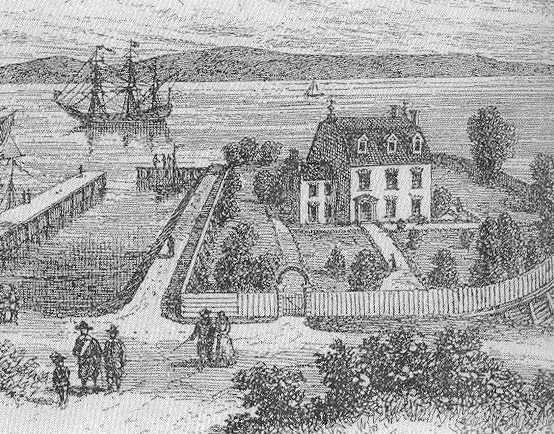
White Hall

In those early days, before Fifth Avenue had been laid out, a fashionable address for the wealthy meant Bowling Green, after which people who could afford it moved up Broadway through Murray and Chambers Streets, on to Washington Square.

Until the Commissioners’ Plan of 1811 cut regular streets through the city (155 cross streets and 12 Avenues) the start of Fifth Avenue was farmland, as was almost almost all the property north of Canal Street. The name Fifth Avenue appeared for the first time on the Commissioners’ map. No one imagined that the thoroughfare would one day stretch six-and-a-half miles up the island. But the street was spacious and straight, and Manhattanites began to build townhouses along it; within two decades church steeples rose on either side of the street, Belgian blocks were laid for paving, and New Yorkers had begun to promenade along its length. In 1828, the city opened Washington Square at Eighth street at the base of Fifth Avenue, a tract that had been used since 1797 as a potter’s field. Gracious homes went up around the square.
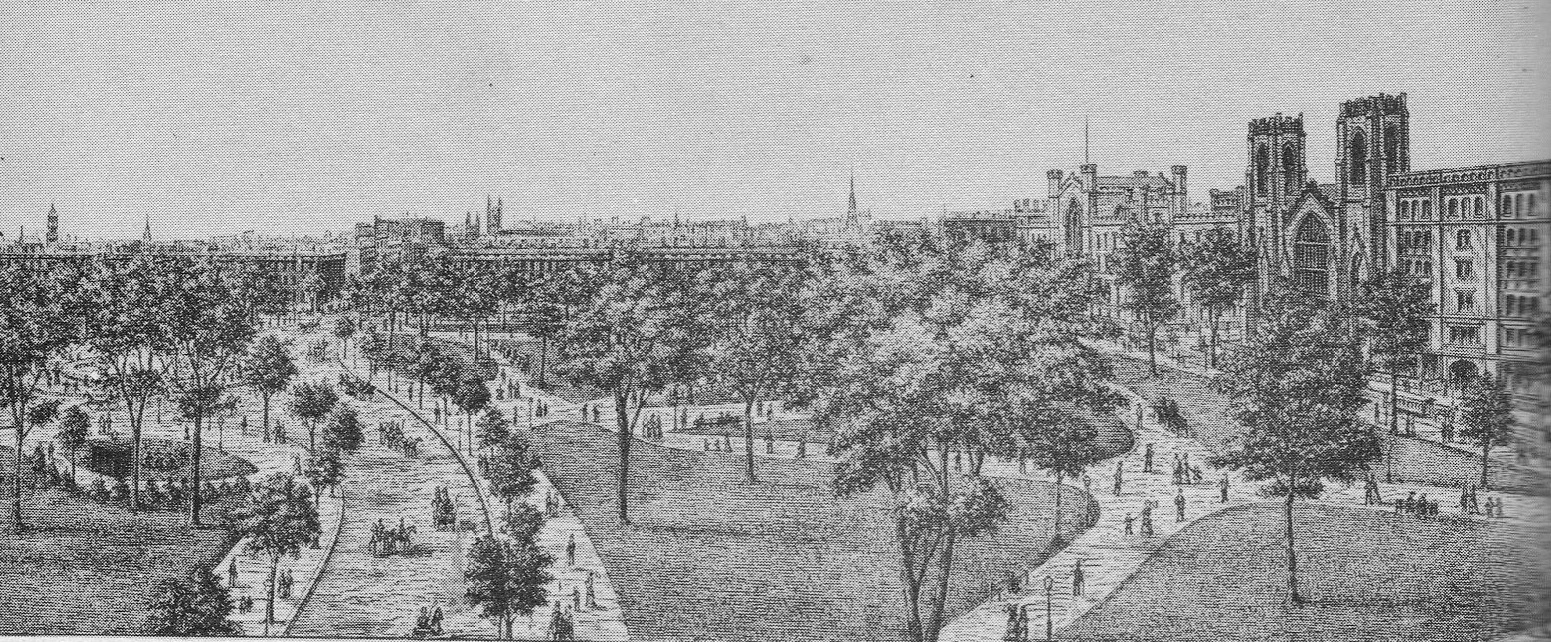
washingtonsquare1880s

In 1825 the new gas lamps came in south of 14th street; by 1847 they extended up to 18th street. Now lower Fifth Avenue became the fashionable locus of New York. One of the first of the home builders was Henry Brevoort, who inherited all the farmland around from his father and built a luxurious five-bedroom house with iconic columns and lilacs and rose of sharon blooming in the front yard behind an iron fence. The house stood until 1925.

brevoort house april 1925 nypl

Other fine homes followed, surrounded with yards and gardens, backed by stables. The ambience was quietly fancy, unprepossessing.
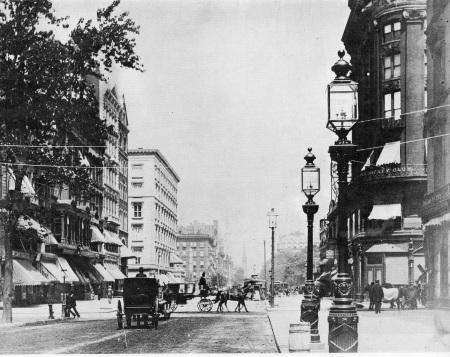
fifthavenue22ndst1889

In 1851 a study found that below 23rd Street on Fifth there were still 32 vacant lots, and fifteen others were described as “now building” No matter. When Delmonico’s, New York’s premier restaurant, opened in a shipowner’s home at 14th and 5th it was clear the neighborhood had arrived.

Delmonico's

The custom of the leisurely promenade continued, and with it the practice of making calls. Fifth Avenue was a social place.

1872 fifth avenue promenade 1872

The move of peoples’ homes uptown was unstoppable if somewhat slow paced. For one thing, the street was still being built. Fifth Avenue did not cut through to 23rd St  until 1837, and it was still surrounded largely by countryside, crisscrossed with streams and studded by ponds. Fifth Avenue was surprisingly rural. Stagecoaches stopped at a tavern on 23 Street called Madison Cottage. Cows wandered in front of that day’s incarnation of Grand Central Station.
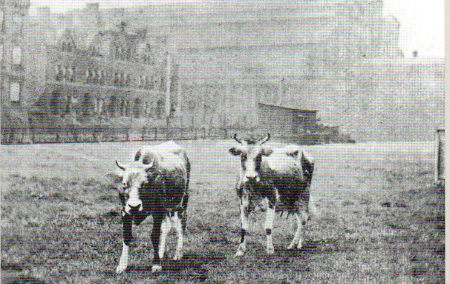
grandcentralcows 18702

The city’s livestock market took place nearby, and cowboys drove herds of cattle through what we think of now as midtown.

Then handsome houses, some sheathed in brownstone, began to rise. The New York Herald named 200 of the city’s most important men in 1851, and half of them lived north of 14 Street. Madison Square was now becoming the center of the city’s professional class. Fashionable clubs opened there, the Union in 1855, followed by the Athanaeum, the Manhattan, the Lotos and others, along with refined academies for young ladies.

The first tycoons to make the move were William B. Astor, Jr. and his brother John Jacob III. Thirty-fourth street was a good distance uptown from where the family had traditionally settled, down around Lafayette Street. The Astor houses, separated by a garden, were relatively modest, brickfaced, with rustic columns. Nearby stood the mansion of Samuel B. Townsend, “the Sarsparilla King,” and on the same site after his death the grandiose, 55-room marble palace of Alexander Turney Stewart and his wife Cornelia, built in the late 1860s.

Stewart

Stewart’s department store on Broadway between 9th and 10th Streets landed him among the wealthiest Americans, and ushered in a new age of lavish consumption.

The die was cast. In the next two decades Fifth Avenue up to 42nd Street became an almost unbroken parade of handsome brownstone mansions on 25×100 foot lots, not as large as the Stewart house but occupied by well-to-do, successful New Yorkers and incorporating all the trimmings, from gas lights to running water to fully equipped bathrooms. Chocolate in color, brownstone was quarried in New Jersey and cut into sheets that were applied as a façade to wood, for a uniform appearance that some found grand and others dull.

fifthavenusnday1898

Strolling along the avenue was extended upwards when James Renwick designed the gargantuan Croton Reservoir (also referred to as the Murray Hilll Distributing Reservoir) at 42nd Street in 1842, and ran a promenade along the top rim of its forty-one- and-a-half foot high slanted walls. The walkway became a hit society destination. You could get an ice cream afterward across the street at Croton Cottage.
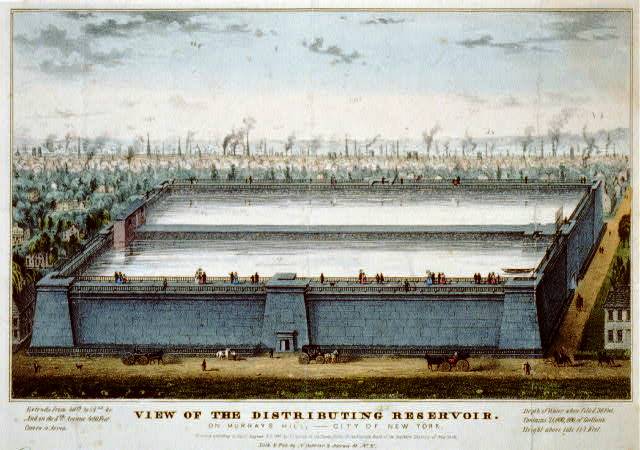
currier & ives print of croton reservoir

North of the reservoir stretched the undeveloped city. If you look at a picture made in 1863,  facing south from the site of what would become Central Park, you can see the still-pastoral nature of uptown.

valentine's manuel 1858, 5 ave s from 63 st

Fifth Avenue, to the left, heads determinedly north, flanked by buildings in its lower reaches but by nothing but fields and cattle farther up. A few homes dot the landscape, but more dominant are the ungainly freestanding charitable institutions that would not be accommodated farther downtown. You can see the massive shapes of St. Luke’s Hospital, between 54th and 55th Streets, and the Deaf and Dumb Asylum. Behind St. Luke’s stands the Colored Orphan Asylum, which was attacked in the horrific week-long Draft Riots of 1863 (five years after this image was made). Saint Patrick’s, the landmark we associate with midtown Fifth Avenue, was not begun until 1858.

To give an idea what the surroundings were like, consider Madison Avenue, a block over from Fifth, as it made its way north from 55th Street around this time.
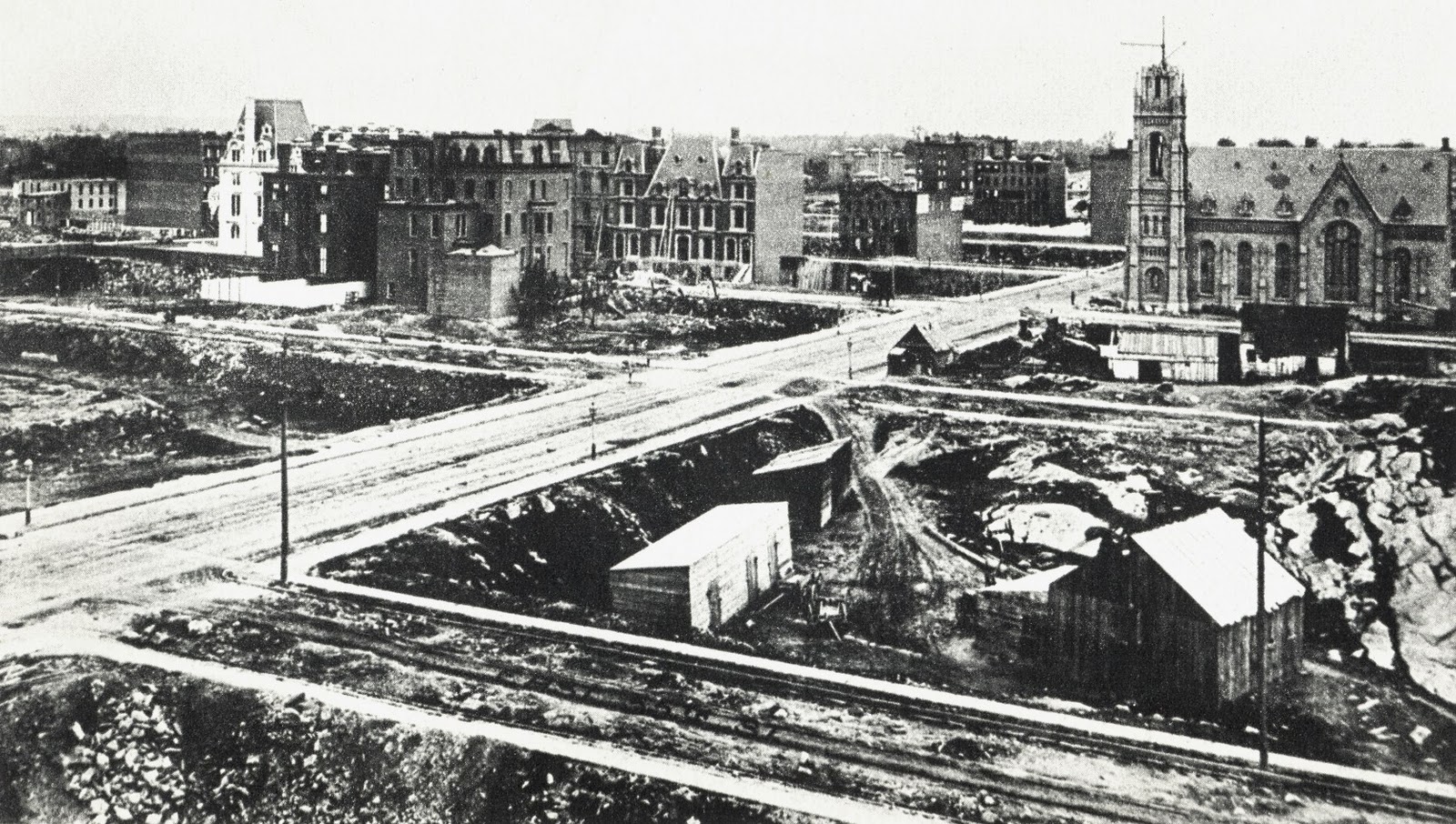
ne from mad and 55

A thirty-acre farm owned by the prosperous Lenox family dominated the neighborhood, with a stolid white tenant farmhouse located between 71 and 72 near Fifth Avenue. Cows grazed nearby and market crops grew in rows. Lying on the outskirts of town this far north were slaughterhouses, stockyards and tanneries, enterprises fashionable downtown did not want near their homes. The Lenox Library, a handsome block-long structure designed by star-architect Richard Morris Hunt, went up in 1875 at Fifth Avenue and 71st Street, an outpost of civilization.

As of 1865, the city was moving uptown.

NYC1865

New Yorkers took the air on Fifth Avenue, promenading as always with vigor. The Easter Parade was only one opportunity to admire and be admired.
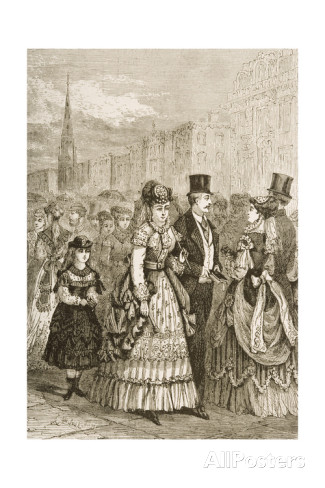
1870 fifth-avenue-new-york-in-c-1870-from-american-pictures-published-by-the-religious-tract

But while the upper tens (the equivalent of today’s “one percent”) of New York built their urban villas and stolid townhouses to the south, wide open stretches of the boulevard north of 60th Street still seemed off limits for luxury development. At the time of Savage Girl, 1875, more than 340 private residences had been constructed up to 59th Street but none above.

The lack of elegant homes didn’t mean people didn’t live there. Those precincts had long been settled by African Americans and German and Irish squatters who occupied shanty towns where the principle businesses were bone boiling, glue, soap and candlemaking. Eventually they were  eliminated from the area both by the development of Central Park and rising real estate prices.

 by Ralph Albert Blakelock

Edith Wharton remembered the area as dominated at that time by “the hoardings, the quarries, the one-story saloons, the wooden greenhouses in ragged gardens, the rocks from which goats surveyed the scene.” North of the site I gave the Delegate house, it was still this old, bucolic, rough-hewn New York landscape, unrefined, undeveloped, not yet buried in the smooth cement of the new. Central Park, built in the 1860s and opened officially in 1873, made inroads in “civilizing” the neighborhood; but it still seemed too much like a savage wilderness for the upper crust to build there.

There were a few exceptions, wealthy home builders that for their own reasons decided to go above 42nd Street. Robber baron Jay Gould built a residence on the corner of 47th and Fifth in 1870. The infamous Madame Restell and her husband moved in at the northeast corner of 52nd and Fifth in 1864. But mansions towered over shacks.

Mary Mason Jones, a distant relation of Edith Wharton’s – personified in The Age of Innocence by Mrs. Manson Mingott — built a row of mansions on Fifth Avenue bet. 58th and 57th Streets, completing them in 1870. A remarkably independent, wealthy, well-travelled woman, she had had the first bathtub in New York installed in her home on Chambers Street, and her choice of venue for her new residence was equally offbeat. Five homes were constructed of gleaming white marble, with a two-story mansard roof that had green copper trim.

Marble Row, built 58th and 5th 1870

By the time the fictional Delegates settled into their house in the early 1870s, the intersection of Fifth Avenue and 63rd Street was still quiet, devoid of built structures, undiscovered by Knickerbocker Society. The Delegates were pioneers. I decided to situate them there because the choice makes them outliers, risk takers, iconoclasts in a society they see as conformist. I wanted to show them as the first to build a grand residence there, one that would outshine all the others in the city.

Eventually, Fifth Avenue upwards of 59th Street would be lined with mansions that were even more extravagant than the homes built in the avenue’s lower reaches. When people passed, they would gape at at the welter of materials and styles, the polished marble, dramatic gables and steep-hipped roofs, puncuated by balustrades and moats and massive chimney stacks. Whether architects hewed to the gleaming white symmetries of the Beaux-Arts or the swagger of the Moorish fortress or the period’s beloved French Renaissance design idiom, their creations lorded it over the somber-faced brownstones of the cross streets.

I couldn’t resist borrowing from some of the later residential masterworks to design the Delegate house, even though they would not be erected for a few more years. The various Vanderbilt homes offered the kind of opulence I felt the Delegates would emulate. After inheriting an estate of nearly 100 million dollars from their shipping-and-railroad-magnate father, the Vanderbilt descendents put on a grand architectural show. William Henry Vanderbilt, the Commodore’s eldest son, built triple houses for himself and his daughters between Fifty First and Fifty third Streets. William K. Vanderbuilt, William Henry’s son, had Richard Morris Hunt design him the mansion at the northwest corner of 52nd Street that was the setting for a famous fancy-dress ball of 1883.

Wm K. Vanderbilt House-the Petit Chateau

I was especially impressed by the mansion Cornelius Vanderbilt II put up at 58th Street and 5th Avenue in 1883,  the largest private residence ever built in New York City. A full block long, designed by George B. Post, it stood sentry until 1927, as one mansion after another followed it up the avenue.
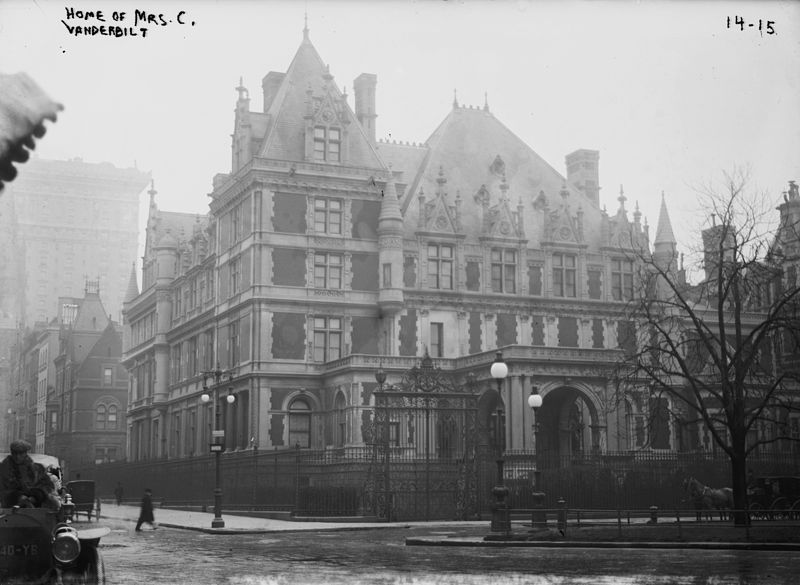
corneliusvanderbiltiimansion

Actually, I’m being slightly inaccurate. For the record, in the early 1870s one house did stand on Fifth Avenue at 63rd Street, above the 59th Street divide, just across the street from the still forbidding Park. A narrow townhouse circa 1871, it was built speculatively built by one Runyon Martin, hardly a mogul. It didn’t last long.

The Delegates knocked it down to put up their turreted, mulberry-colored, block-long twin palaces.

2 Comments

Filed under Culture, Fashion, History, Home, Jean Zimmerman, Photography, Publishing, Savage Girl, Writers, Writing

Pub. Date-Savage Girl

There are no two better things in the world. The day your book is published. And pancakes.

pancakes

4 Comments

Filed under Cooking, Culture, Fiction, Jean Zimmerman, Publishing, Savage Girl, Writers, Writing

Savage Girl Talk-Twain House

For anyone wondering when I am venturing forth to speak about Savage Girl, one such event is coming up on March 14, a Friday, at the Mark Twain House and Museum in Hartford, Connecticut. I am extremely happy to speak at Twain’s genteel abode because some of his early work informed Savage Girl. Specifically, the great writer penned Roughing It about his days in Virginia City, Nevada as a cub reporter in the 1860s.

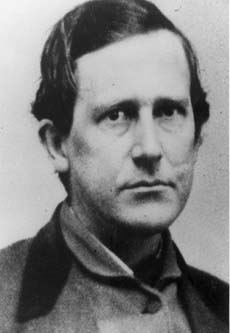
This is how he looked at that time.

young twain 1867

I drew on the rollicking material in Roughing It for the first part of Savage Girl, which takes place in 1875 Virginia City at the height of the silver boom.

If you can make it to Hartford on March 14th, I’d love to have you there. I plan to read a bit from the novel and also talk about some wonderful images I’ll bring to flesh out the history behind the fiction.

1 Comment

Filed under Culture, Fiction, History, Jean Zimmerman, Publishing, Savage Girl, Writers, Writing

I Brake for Knit Projects

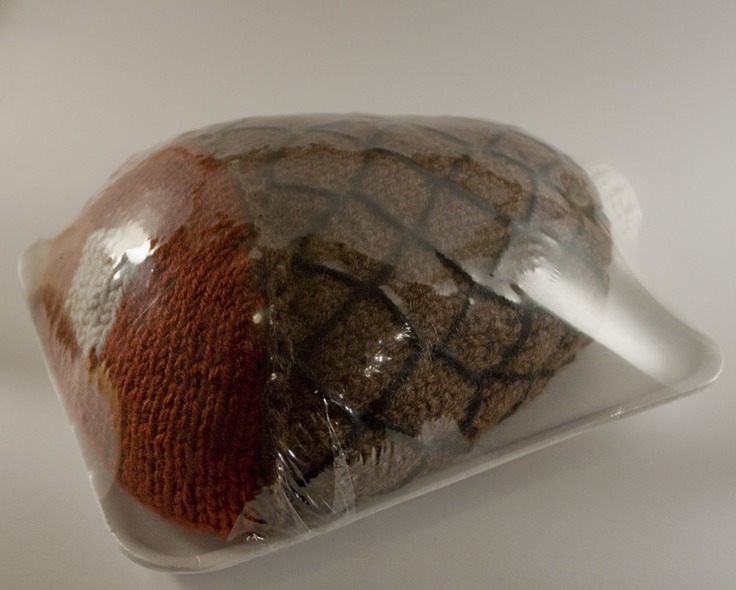
If I had to choose between these knitted winners, it would have to be the animal heads.

animal-heads

No, the full-body suit.

knitted suit

No, the meat. Definitely the meat.

knittedmeat

After this short commercial break, we bring you back to the Oscars, live.

3 Comments

Filed under Art, Cooking, Culture, Home, Jean Zimmerman, Knitting

Skordalia With a Kick

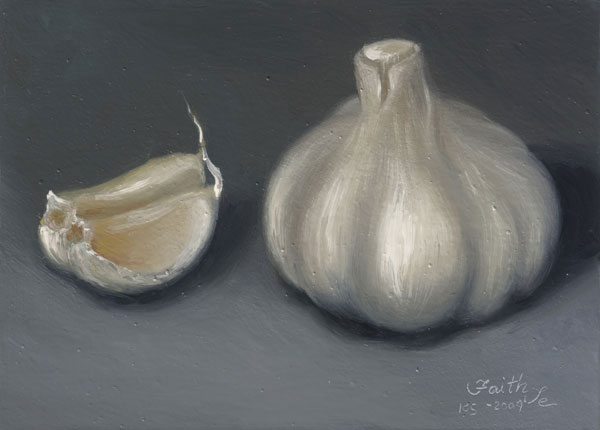
If you are a garlic hound like me you could probably use some skordalia to warm you up in this bitter weather.

garlic-paintings-aceo-daily-oil

The Greek dip/sauce can open your sinuses, for sure. It’s a versatile kind of dish too. First of all, you can use either potatoes or bread soaked in water as a base. I first learned to make it with pulverized pine nuts but if I don’t have them on hand I use almonds or walnuts.

I have a fond memory of preparing skordalia with sunflower seeds once in a pinch, then scooping up the dip with green pepper wedges and washing it down with a pitcher of dry martinis. We were hanging out on a friend’s front stoop, and never was there a more perfect afternoon.

superhero_green_pepper_cartoon_character_cut_out-rf56e6a8f442345fcac782583e8b1c0f6_x7saw_8byvr_512

It doesn’t have to be green pepper wedges, though – you can consume skordalia with pita bread or chips, with boiled beets, crispy slices of fried zucchini or eggplant, or really whatever whets your appetite. Or just grab a spoon and dig in. It’s always good.

Skordalia

  • 4-5 garlic cloves
  • 2 ½ ounces of walnuts
  • 1 large slice stale bread
  • ¾ cup olive oil
  • Salt

1.  Grind the walnuts.

2.  In a food processor process the garlic cloves with a bit of salt until they become a paste.

3.  Add the walnuts to the garlic paste and mix well.

4.  Soak the bread (without the crust, in water) and then squeeze well.

5.  Mix the bread with the walnuts and garlic mixture. Mix until smooth.

6.  Add olive oil gradually until olive oil is absorbed.

Add a spritz of lemon juice if you wish.

2 Comments

Filed under Cooking, Home, Jean Zimmerman

The VIDA Tally

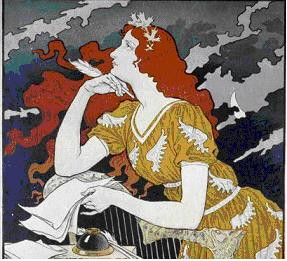
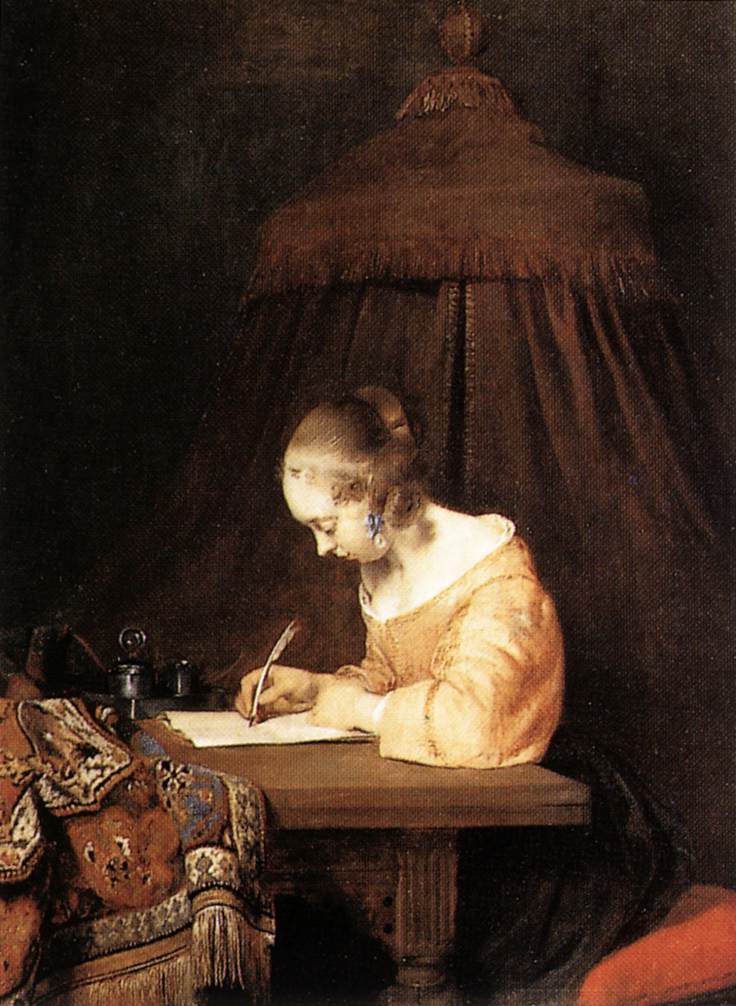
Do you like to read female writers? Do you think that women who write ought to get a fair shake?

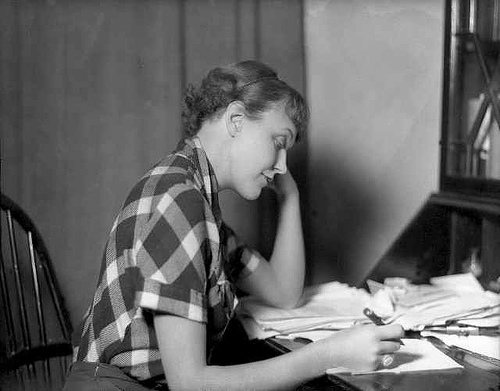
woman writing

Then you might be dismayed to hear of the imbalance in the number of pieces by women and men published in the major literary magazines of our day. The annual VIDA count tracking gender inequality in literary publications has just come out. The situation as reflected in its 2013 numbers looks somewhat bleak.

Since 2009, VIDA has tallied the number of female authors reviewed and the number of female reviewers in 39 publications, including The New York Times Book Review, The New Yorker and Harper’s.

woman writing 2

The results weren’t all bad this year, but some were lousy. The New Republic had 55 male reviewers to 4 female. The New York Review of Books had 212 male book reviewers and only 52 female book reviewers. Seventy five percent of the writers published by The New Yorker are men.

woman writer 3

Some periodicals showed improvement from past years. The New York Times Book Review, which now has a female editor, prints an essentially equal number of male and female reviewers. I’m unhappy, though, that the Book Review n 2013 chose to run reviews of books authored by 482 men and only 332 women. The Paris Review also shows itself favorably, with 47 male and 48 female bylines.

woman writing 4

Poet Erin Belieu, a founder of the group, told The New York Times, “Because the count frees our national literary community from the gut reactive, the anecdotal, we hope having the VIDA data will allow our community to find the will and means to change the gender bias you see at many of the top-tier publications.”

woman-writer

I enjoyed the comment of another writer, Elissa Schappell, who suggested the alternative to change in the on-line Dame Magazine: “These publications have a right to publish whomever they choose. If they want to publish the same gaspers they’ve been publishing since the 1950s or people who pee standing up, that’s their prerogative. If they get off on reciting Norman Mailer to each other while combing out their powdered wigs, or sip the blood of suffragettes out of the skull of Jane Austen, while grumbling about uppity females, so be it.”

Awareness can make the long-term imbalance right. It’s a good effort.

3 Comments

Filed under Jean Zimmerman

The Dressmaker’s Studio

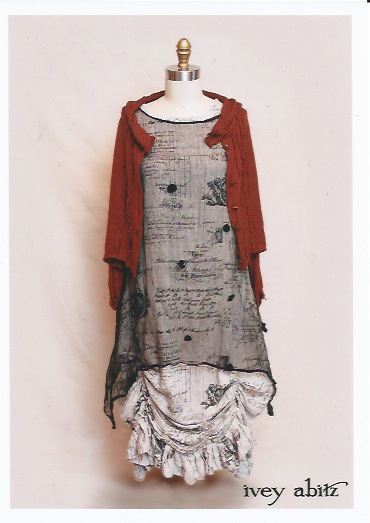
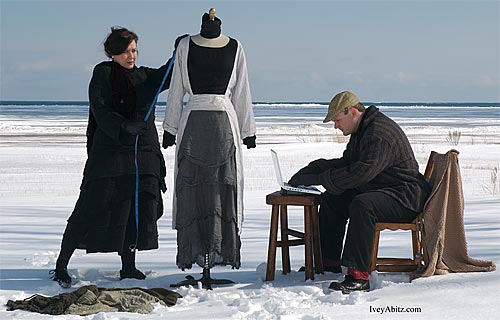
I pay a visit to the dressmaker. Not just any dressmaker. A time machine artist. A bespoke 21st century fashion designer with the soul of a Victorian seamstress. Cynthia Ivey Abitz is her name, and the clothes she designs are magical.

Gil knew I wanted one of her garments, a sweeping, floating coat called the Hambledon duster. He knew because I begged for one, having been tipped off to Ivey Abitz’s existence by an artistic friend. He had no choice, he gave me a gift certificate for Christmas, and I saved up the getting of it like a stocking candy that was too good to eat right away.

ivey abitz dress 1

I decided to visit the Ivey Abitz studio, which she keeps on a cross street in the shadow of St. John the Divine, just above Manhattan’s Central Park. I wanted to feel the leather, as they say in the car-selling business, before deciding on the fabric of my coat. For every one of the hundreds of designs available, the client chooses the material.

swatches

A fluffy quartet of small cats and dogs share the cozy, sun-filled place, which is crowded with the eccentrically beautiful clothing that has earned her a reputation among the eccentrically beautiful. “Antique inspired garments relevant for everyday modern life,” is how Ivey Abitz describes her designs. I would say they have a patina you can’t find on the Macy’s sales rack, where I am usually  inclined to find my wardrobe.

On the Ivey Abitz web site there is a more elaborate manifesto: The collection “gives a nod to the past and present… It’s anti-generic garb. It’s an aesthetic. It embraces certain classic and vintage design elements and gives them life in the present. It’s a celebration of life by getting dressed in something rare and special every day. It’s a state of mind. It’s regalia for everyday life.”

ivey abitz dress 2

Cynthia, Cynthia, you had me at “nod to the past and present.”

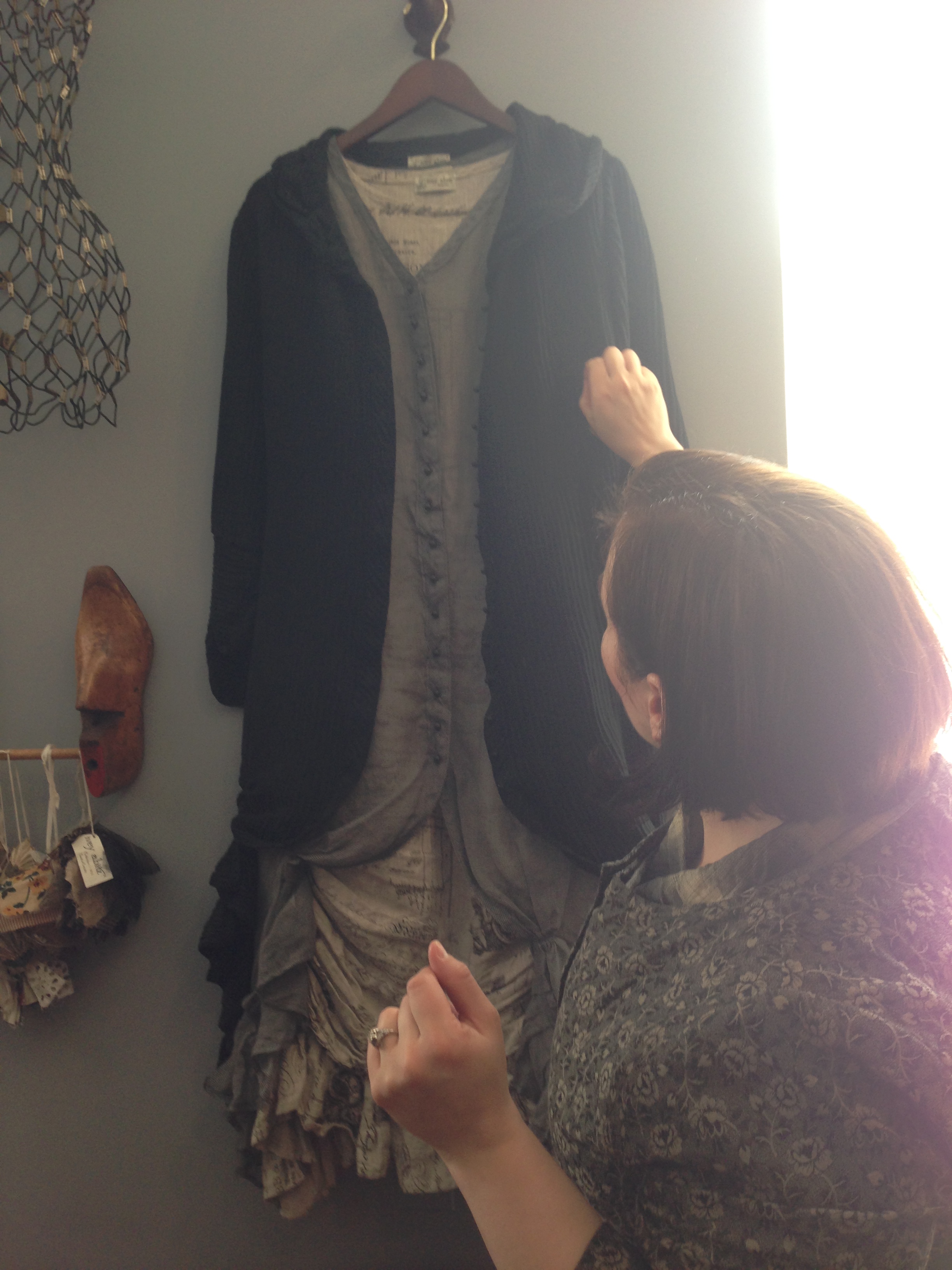
On my visit, the designer bustles around, smoothing, fluffing, brushing away loose threads. I will come home and find loose threads all over me. The hazards of visiting the dressmaker, poor me.

Cyn w frock

How did she arrive at this unique aesthetic? Ivey Abitz remembers a family friend’s collection of antique clothing she happened to see when she was a kid of around eight, dressed in her summer attire of shorts and tee shirt, and saying to herself, Why doesn’t everybody dress like that? She grew up in Michigan farm country and spent her summers on Lake Huron, where she still has a cottage with her husband Josh Ivey Abitz, her partner in the business.

Cynthia and Joshua

The two partnered as magazine photographers before they went into fashion but the outfits she designed and wore to shoots attracted more attention than the pictures. The couple have been coming to New York since 2001, and moved to the city full-time in 2008 to be closer to their beloved seamstresses and fabric makers.

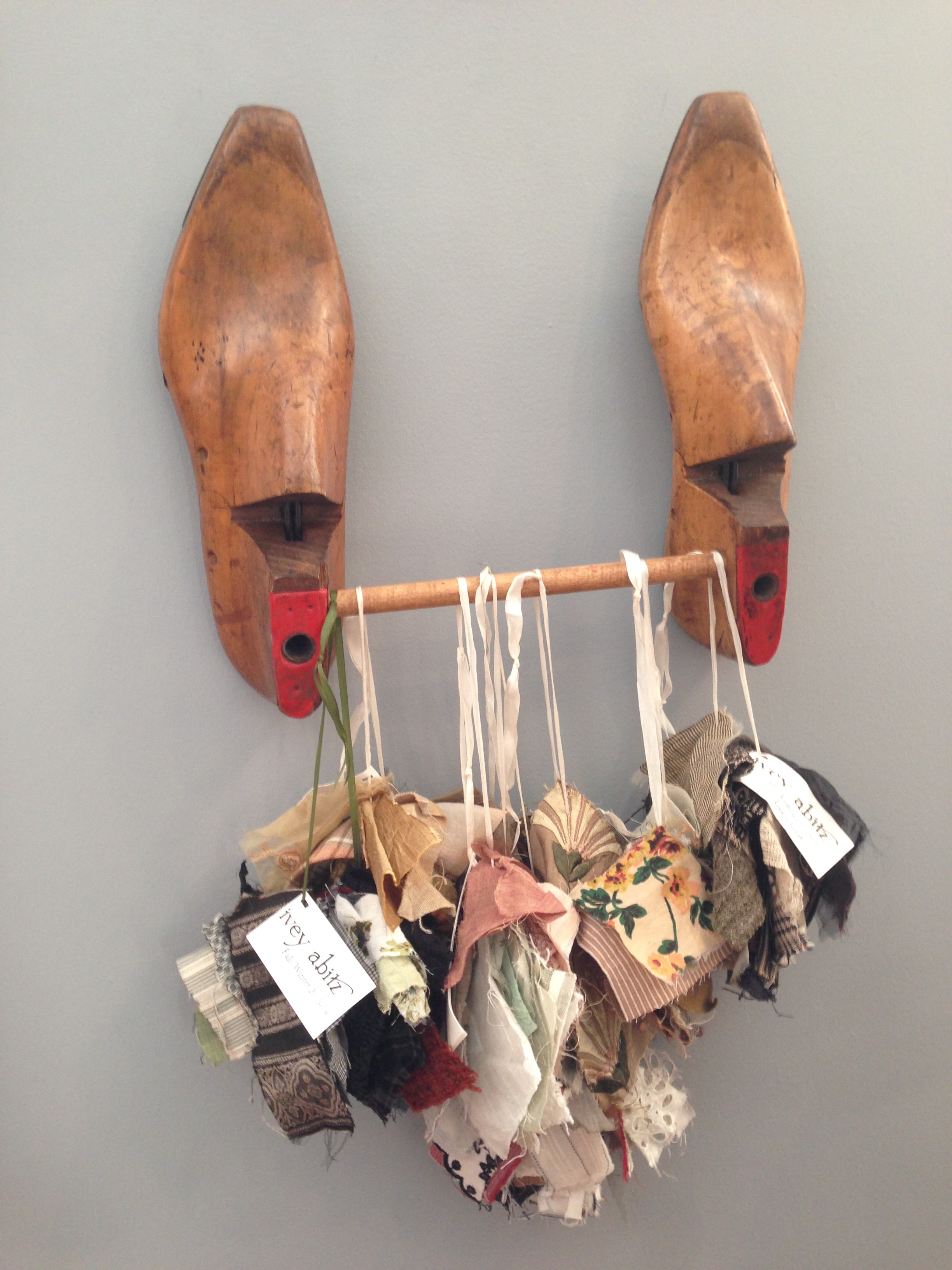
Pretty pretty pretty. Everything here is pretty. A pretty way of displaying fabric swatches.

wood shoes

Yellow checks on a dress – we call them frocks here, though — that seem so simple yet are so lovely.

plaid

Wouldn’t it be pretty to think so? floats into my mind, the sad last line of Hemingway’s The Sun Also Rises. Yes, well, what is the matter with pretty thinking? Here in the dressmaker’s studio are silken coats that make you want to go up and nestle your face in them.

beaut shirt

The garments come with stories. A shirt I am infatuated with, featuring a delicate flutter about its raw edges, was inspired by Ivey Abitz’s grandmother, who encouraged her to be a dreamer. Another piece took its inspiration from a favorite childhood dog.

Everything is hand tailored and in some cases is handwoven. Ivey Abitz shows me a jacket fresh in from the tailor, not yet blocked, made of a deep rust-colored hand-loomed wool thread. Luscious.

When I ask her if she has a favorite garment she gently rebuffs me, saying that would be like choosing a favorite child. What she does suggest is that when people get to mix and match the designs and fabrics they prefer, they fall in love with their clothes. “They garden, play with children and grandchildren, go to the symphony, sleep in them… everything,” the dressmaker tells me.

I know that when I put on my duster of black and white checked taffeta, I’m never going to take it off.

8 Comments

Filed under Art, Culture, Fashion, History, Home, Jean Zimmerman, Photography

Wild Music for a Savage Girl

What wild child anthem gets your juices flowing? Curtis Mayfield’s Little Child Running Wild? Wild Thing by the Troggs? Or perhaps an oldie like Bessie Smith’s I’m Wild About that Thing? My personal favorite:  Born to Be Wild as rendered by the immortal Etta James.

etta

Whatever your taste, you can get a bunch of hits in one place when you check out the Spotify playlist I’ve put together with the help of Viking for  Savage Girl’s release in… 11 days (really? is that possible?).

Of course, these selections all appeal to our contemporary taste and would probably appall the characters in Savage Girl, who would have been more entertained by music that was quite different in a pre-Victrola, pre-modern age. To enjoy popular music in the late nineteenth century people might sing around the piano in their homes, enjoying such numbers as My Grandfather’s Clock (1876), Clementine (1863), or Home on the Range (1873). They would also enjoy some of the great composer Stephen Foster’s work, tunes such as Beautiful Dreamer (1864) or Jeannie With the Light Brown Hair (1854), which were popular throughout the second half of the 1800s.

foster1

If they attended a ball, they would in all likelihood waltz – the most popular dance step of the nineteenth century — to compositions by Johann Strauss, Jr, who wrote the famous Blue Danube among over 400 waltzes.

I don’t think you’ll ever waltz to the Troggs. But you can try. Just click on my Spotify playlist.

3 Comments

Filed under Culture, Dance, History, Home, Jean Zimmerman, Music, Publishing, Savage Girl, Writers, Writing

Parisian Time Machine

Here is an amazing story that concerns the Nazi invasion of Paris, a fleeing woman and the apartment she left behind. Not opened for 70 years, when the door was cracked it revealed a person and a style of life in a time capsule you have to see to believe. I think I’ll just hand over the link and let you do the rest.

time-capsule-living-room

3 Comments

Filed under Art, Culture, History, Home, Jean Zimmerman

Savage Girl Events-Spring 2014

This spring I am looking forward to speaking about Savage Girl at various venues. Here are the firm dates so far. Further details to come closer to the date.

When I talk about Savage Girl I’ll likely show some pictures in a powerpoint to give the context for the novel, as well as talk and read from the book. It should be enjoyable! I hope that some of you will be able to attend one of these events.

I’ll continually update my speaking engagements on the sidebar to the right-hand side of this site.

If you live someplace not on my schedule but you’d like me to visit, please drop me a comment here or on my Facebook page, and I’ll get right back to you. (While you’re at it, please like my FB page!)

Savage Girl Events-Spring 2014

March 14   The Mark Twain House and Museum, Hartford, CT

March 26   Ossining Public Library, Ossining, NY

April 3   The Poisoned Pen, Scottsdale, AZ

April 16   The National Arts Club, NY, NY

May 24   Musehouse: A Center for the Literary Arts, Philadelphia, PA

June 21   Millbrook Literary Festival, Millbrook, NY

2 Comments

Filed under Culture, Fiction, Jean Zimmerman, Publishing, Savage Girl, Writers, Writing

Savage Girl Book Club Kit

My book club has an interestingly intellectual way of approaching literature — with lots of research materials, dozens of post-it notes on the book pages, and nary a glass of Chardonnay in sight. However, I have not seen them use information direct from the publisher. It can be really useful in directing a discussion and, in the case of the materials for Savage Girl, extraordinary beautiful (thanks to the  brilliance of the Viking design team). We also offer recipes for cocktails in the Gilded Age spirit and a terrific playlist that you can access on Spotify. And of course I answered some questions. So check out Viking’s on-line book club kit — whether or not you have a reading group of your own. Or maybe you’ll be inspired to start one up. (Warning: there might be spoilers in some of the questions.)

Leave a comment

Filed under Culture, Jean Zimmerman, Publishing, Savage Girl, Writers, Writing

Charles Marville’s Old Paris

It was a day of Old Paris in New York. The Metropolitan Museum had an exhibit, Charles Marville: Photographer of Paris, showcasing a Frenchman who was one of the first people to turn a photographic lens on the world, starting in the 1850s. I think the word “evocative” might have been coined to describe Marville’s glass-negative images, with their rain-wet cobblestones and ancient, crumbling Parisian walls. “When good Americans die,” said Oscar Wilde, “they go to Paris.” I was feeling pretty good.

12. Rue de Constantine  1866

I prepared myself to see the show with a cup of chicken velouté, properly French and exactly creamy enough. Julia Child’s pronouncement about velouté in The Way to Cook goes as follows: “Soups may be creamed in a number of ways, including great lashings of cream itself – an ambrosial item I shall soft-pedal here in favor of the velouté system
 with its flour-butter roux… which looks, feels, and tastes for all the world like a creamy soup but can contain as low as zero fat.” The Metropolitan Museum cafeteria is a place where you can eat hoity-toity French soup and eavesdrop as the people around you have erudite conversations about high art. Those speaking English in any case, which was the minority on this polyglot afternoon. The rest of the diners around me, for all I knew, could be discussing race cars or Swahilian TV stars or the price of eggs in Hong Kong.

We crowded into the elevator with a handsome, voluble French family who looked like they would be saved from every one of life’s hardships by the cut of their clothes.

Charles Marville began his career as an illustrator, coming to photography later in life (and early in the life of the medium, as it had only been invented eleven years before he picked up a camera). His early work displayed country scenes and self portraits, like the one of Marville on the bank of the Rhine, hand held up poetically to brow. The cathedrals at Chartres and Rheims offered fertile subjects for his developing eye. I liked the treasures he showed in a tableau at the latter, complete with a mysterious mummified cat. He also did cloud studies, incredibly difficult in an era when everything shot needed a different exposure.

Then Marville found his artistic voice. He began depicting the narrow, winding alleyways and lanes of Paris just as Baron Georges-Eugène Haussmann was transforming it with new, grand boulevards and public buildings at the behest of Napolean III. The government encouraged him, too, appointing him the official photographer of the city, with a surprising sense that all this would be going away forever. It was now his job to capture the rapidly disappearing, incredibly textured urban micro-landscapes of the mid-century City of Light. The streets glisten, both with rainwater and the sewage that runs down every gutter.

Impasse de la Bouteille, vue prise de la rue Montorgueil. Paris (IIËme arr.), 1865-1868. Photographie de Charles Marville (1816-1879). Paris, musÈe Carnavalet. Dimensions : 35,90 X 27,70 cm Dimensions de la vue

It was a time that was somewhat appalled to see itself speeding pell mell into the future. Le Temps commented about “grand roads vomiting and absorbing torrents of pedestrians and vehicles” on some of the new perfectly paved roads. It is that very contrast that makes this work so poignant, of course.

Marville frequently used the motif of a “window” or opening at the back of the picture to lead your eye back.

Passage St Benoit. Paris (VIËme arr.), 1865-1868. Photographie de Charles Marville (1816-1879). Paris, musÈe Carnavalet. Dimensions : 36,50 X 27,60 cm Dimensions de la vue

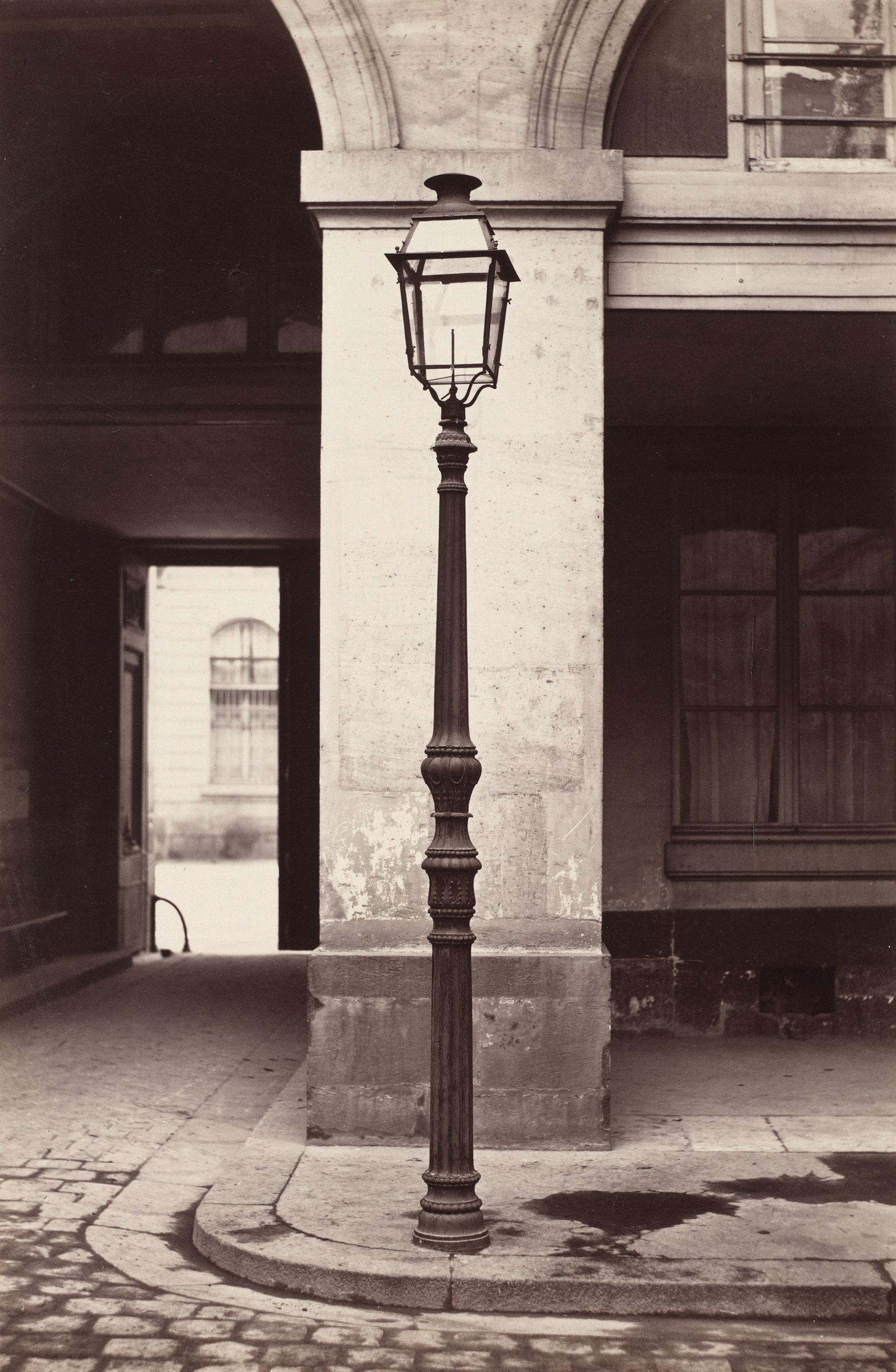
After documenting the streets slated for urban renewal, Marville was assigned to capture for posterity some of the newfangled improvements Haussman had installed. These included two features that were futuristic at the time. Lamposts. There now stood some 20,000 gas street lamps where before there were none. Marville photographed dozens of them.

gas lamp

And urinals.

Urinoir (SystËme Jennings). Plateau de l'Ambigu. Boulevard Saint-Martin.   Paris (XËme arr.), 1858-1878. Photographie de Charles Marville (1816-1879). Paris, musÈe Carnavalet. Dimensions : 27,10 X 36,40 cm Dimensions du tirage

Called vespasiennes, the name derived from that of the Roman Emperor Vespasian, who supposedly imposed a tax on urine, these represented the ultimate novelty, private (relatively) and sanitary (relatively) and lit by those same spiffy gas lamps. The vespasiennes seemed antiquated when they were decommissioned at the end of the 20th century, but in 1860 it was like a spaceship-pissoir had touched down.

“A walk about Paris will provide lessons in history, beauty, and in the point of life.” So wrote Thomas Jefferson. At the exhibit I saw a photo with a heavy brown velvet flap hung down over the front due to the image’s sensitivity to light. There was a line of people crowding up at any one time to lift the curtain and see the magic underneath. It was a nice picture. But I felt that the magic was equally contained in each of the poetic photos around the gallery, impervious to time.

3 Comments

Filed under Art, Cooking, Culture, History, Jean Zimmerman, Photography

Review-A Burnable Book

Hot off the presses today, my review for NPR Books of a new novel that taught me something about what historical fiction can be, and what to watch out for in writing the historical novel.

burnable book

Bruce Holsinger’s medieval London, teeming with interesting personages such as Geoffrey Chaucer and Richard II, gets you in the gut. But is the writer’s story overwhelmed by fact? Read my take on it and find out.

4 Comments

Filed under Fiction, History, Jean Zimmerman, Publishing, Writers, Writing

Whatchamadingus?

Writing a historical novel requires checking the provenance of words to make sure they are not anachronistic. Your eighteenth-century narrator cannot use the word “dingus,” for example, because it wasn’t coined until 1840. It’s something I feel pretty strongly about.

Sam Spade in The Maltese Falcon called the “black bird” a dingus, slang along the lines of whatchamacallit. I’m sure that was appropriate to its time.

HUMPHREY BOGART WITH THE MALTESE FALCON

I happened to see the index of words I’ve looked up recently:

staccato, pathetic, unconscious, comatose, manumission, beatitude, hit, runabout, streetwise, kid, dingus, diffuse, eczema, fun, modern, groats, fairy, hand-me-downs, traffic, advertising, rigamarole, twerp, snug, odds, taxi, loopy, goofy, refugee, pronto, scamper, skedaddle, lynch, vogue, all the rage, frisky, borborygmus, hoodwink, four-in-hand, gig, cute, spooky, generalissimo, galumph, archipelago, genius

Do these terms give some kind of skeletal idea of what the novel’s all about? I don’t know, but it’s fun to see them all in a bunch.

4 Comments

Filed under Fiction, History, Jean Zimmerman, Writers, Writing

Bloom Time

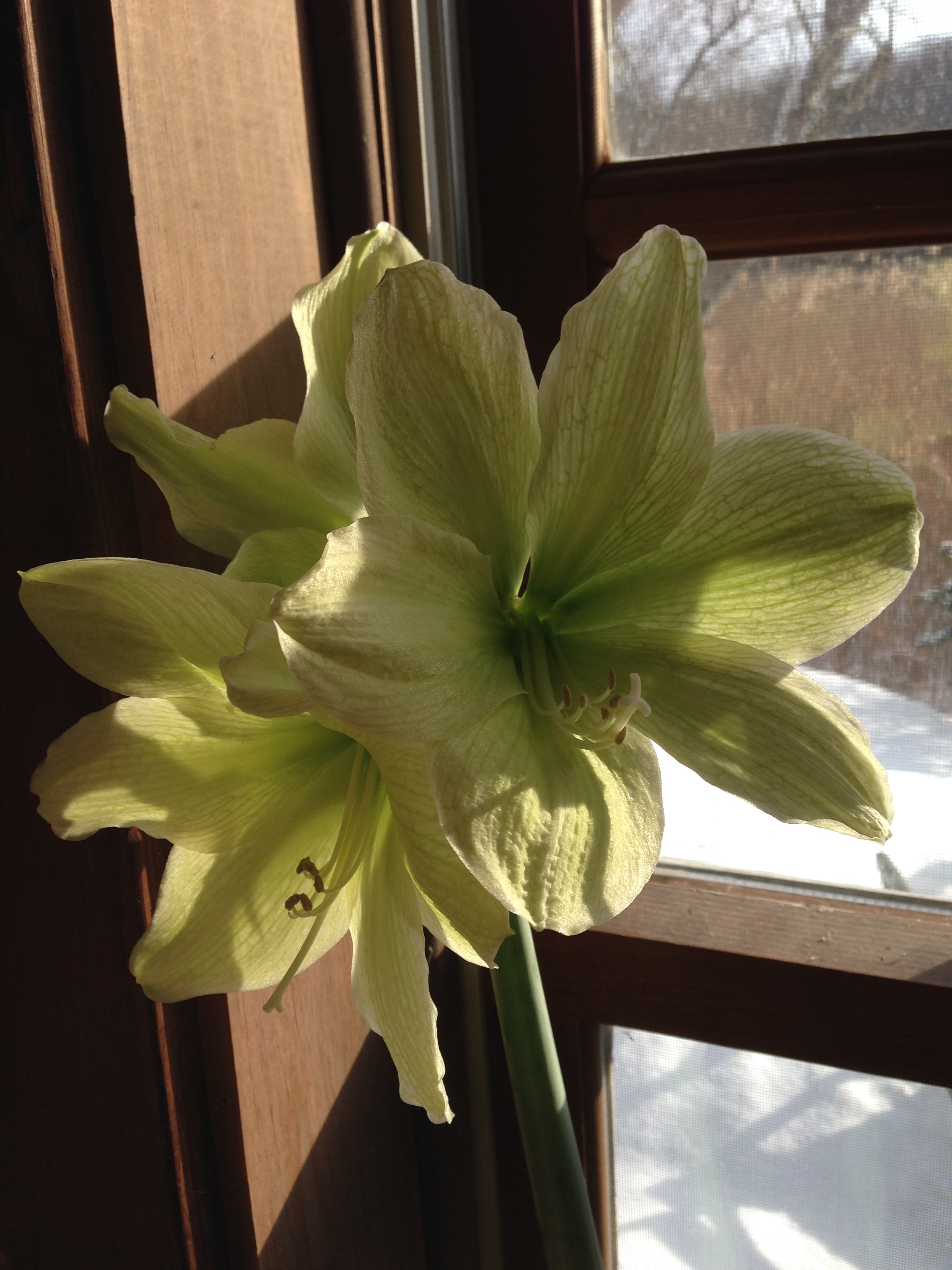
My new novel is blooming. Much like the amaryllis opening up beside my desk, at the window overlooking the marsh. This plant with its glowing greenish-white flowers doesn’t care about the snow and cold, it’s gonna display it’s stop-motion beauty on its own time, as it pleases. I’m just there to write it along.

amaryllis 1

amaryllis1-2


amaryllis4

amaryllis5

amaryllis 6

amaryllis7

3 Comments

Filed under Home, Jean Zimmerman, Nature, Photography, Writers, Writing