Category Archives: Writing

Between the Shelves

Les Liaisons Dangereuses.  The Chicago World’s Fair of 1893: A Photographic Record (a Dover original). Just Kids, by Patti Smith, with its winsome pair on the cover. The lilting new version of Fairy Tales of the Brothers Grimm.

My stacks. A cross-section.

goode vrouw

I always get kind of alarmed when I hear about people who organize their bookshelves perfectly by color. Or by the height of the spine. Or even by subject. I guess I feel kind of abashed because my shelves look like someone just threw a bunch of volumes into them and the way they landed is the way they stuck.

I expect the stately, big public libraries I visit to be properly arranged. At the New York Public Library on 42nd Street, I insist that the chit I hand in for a research item lead unfailingly  to a number on the overhead board, a 155, say, that corresponds to the book I will then pick up at the wood-framed window. I don’t like to wait, even in the lovely caramel-smelling ambience of the Rose Reading Room, where I can spend my time gazing up at the fluffy clouds floating in azure. And, though I love wandering the mysterious stacks at Columbia University’s Butler Library, I expect to set my hands on the thing cited in the catalogue where  and when I want it. As with the following super-polished domestic book sanctuaries, everything is organized.

one library

three library

Not so at my home.

My own library, as I said, is a shambles. Gardens of the Gilded Age is wedged next to A Confederacy of Dunces, which is neighbor to The Goode Vrouw of Mana-ha-ta, by Mrs. John King Van Rensselaer (Scribner’s, 1898, signed by the author). The Goode Vrouw was a priceless source to me for everything I’ve written about Dutch colonial women. Some of my favorite books, like the latter, are end of the line library volumes, dumped when the branch needed room for contemporary titles. Some are by friends: Yodel-Ay-Ee-Oooo: The Secret History of Yodeling Around the World, by foremost authority Bart Plantenga. On my shelf, it sits somewhat awkwardly next to Roderick Nash’s Wilderness and the American Mind.

Living in the Cabin, where every inch of space is precious, meant giving up dozens of cartons of books.  Some to the library, some to the Strand (for precious little resale value), some for pennies at the yard sale. Painful as it was to do it — and with boxes still in storage — we survived,  managing to to keep, say, one in twenty. There is a bookcase about the size of a coffin along the wall of the living room. That is all. Are those, the books favored enough to keep, the ones that I read? Do I turn and re-turn the pages, hold them, go back to them?

Infrequently.

Library hardbacks in their glossy sheaths, the dozens of e-books that hide themselves in my Kindle, the occasional irresistible find on the table at a great independent book store. Those go by my bedside, not my winnowed, cherished chums on the bookshelves. Occasionally I’ll return to Tristram Shandy (the first novel I really fell for with, in high school), or one of the two brilliant Alices, Gertrude Stein’s Autobiography of Alice B. Toklas or The Diary of Alice James. I might dive down into the disordered waves and come up with a gem. But otherwise the books on the cabin’s shelves — in chaos — are only to keep, to have, to save, to nurse a taste for, the way you might keep a bar of divinely dense chocolate in the refrigerator for the day you need to take a bite.

It needn’t be perfect to be delicious.

two library

Leave a comment

Filed under Home, Jean Zimmerman, Writers, Writing

De weeskinderen

The Orphanmaster (De weeskinderen) comes out in Holland!

Leave a comment

Filed under Jean Zimmerman, Publishing, The Orphanmaster, Writing

Put Your Name on the Line

The Women’s Club of Larchmont held a large and friendly luncheon at Orienta Beach Club in Mamaroneck, where we put away butternut squash soup and baked chicken before the show began… the show being myself, Dan Zevin (Dan Gets a Minivan) and Richard Zacks (Island of Vice: Theodore Roosevelt’s Doomed Quest to Clean Up Sin-Loving New York). A different kettle of fish in each case, as you can imagine (united by Z’s). Yet these literature-loving, Christmas outfit-wearing ladies came to all our tables afterward, often to pick up the entire trio of books, the whole hat trick, imagining they’d find some grateful recipient for one or another over the holidays.

When you’re autographing books, people sometimes seem apologetic if they only want a signature, not an inscription. “Oh, I’ll be passing it along (to my daughter, or my mother, or my son-in-law) so just sign,” they say. But I love the idea of someone liking my book enough that they want to pass it along. I’m fine with just signing my name.

A fellow writer talked to me today about signing, how with her own first novel she didn’t “know how” to sign and she had to buttonhole the person in charge of the event, anxiously, to find out. And it’s true that there can be a technique to signing. It’s good to practice, and it’s possible to be rusty. What face is your signature going to wear? And where are you going to post it? The title page, or the blank page inside the front cover? Where, exactly, on the title page? Sharpie, gel pen, ballpoint? Black or blue? If it should ever happen that you sign a lot of copies at once – this year I signed dozens on occasion, and that’s nothing compared with many writers – you want to have a system.

And what else will you employ besides your signature? I’m always impressed when authors manage to squeeze out a couple of sentences – difficult, with a clumsy Sharpie, if you’re lucky enough to have a line of people waiting. If you have one of my books you know that I often write, “Enjoy!” While that is indeed my hope, the exhortation strikes me sometimes as a ridiculously insipid.

I’ve come across wonderful twists on the conventional author’s signature as I’ve travelled around the country and met a lot of authors with just-published books.

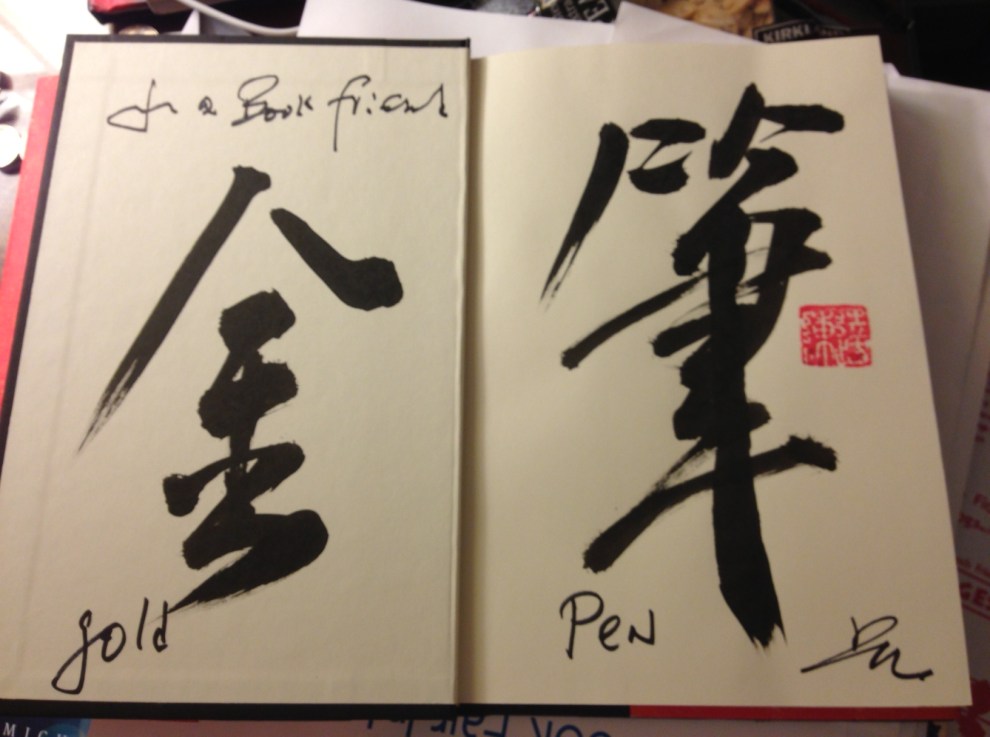
Da Chen (My Last Empress) with his dramatic calligraphy and red seal.

Chen's signature

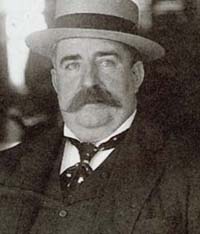
Richard Zacks (Island of Vice) includes a quote from early Chief of Police Big Bill Devery: “Hear, see, say nuthin! Eat, drink, pay nuthin!”

Devery1

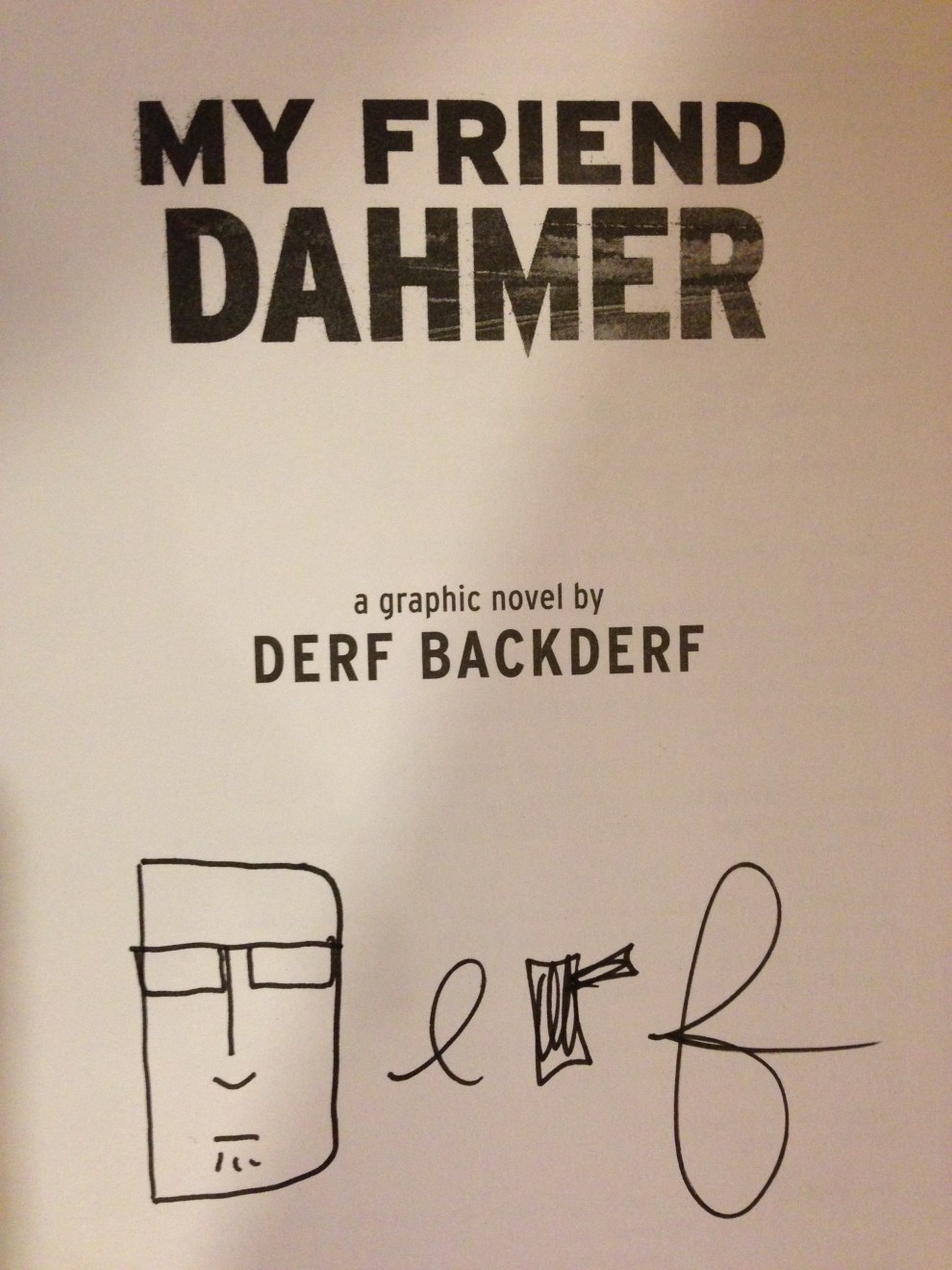
The cartoonist Derf Backderf (My Friend Dahmer) draws a self portrait.

Backderf

Axel Vervoordit (Wabi Inspirations), the eccentric Belgian interior designer, autographs his illustrated books by actually jabbing his thumb through the first page. It’s somehow just right for his bare but expressive sensibility.

Axel-Vervoordt-02

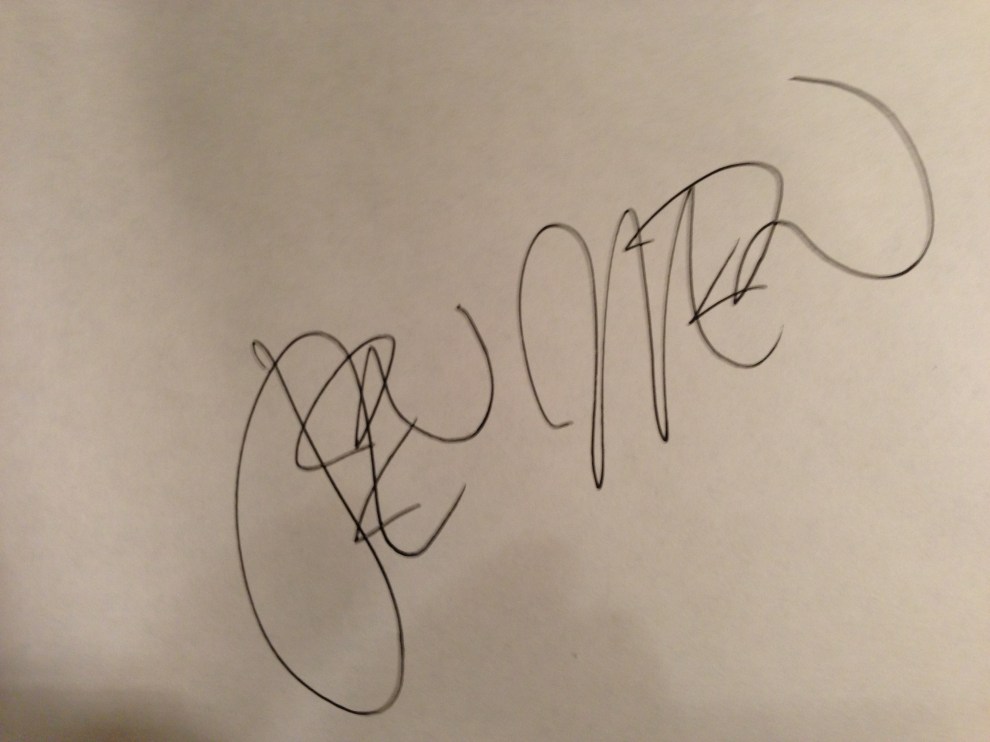
Makes me want to come up with something more personal than this, my own mark.

jz sig

A bit minimal, a bit manic. Maybe that makes perfect sense.

Just one thing. Never call it a John Hancock.

3 Comments

Filed under Jean Zimmerman, Writers, Writing

NPR Shows Some Love for The Orphanmaster

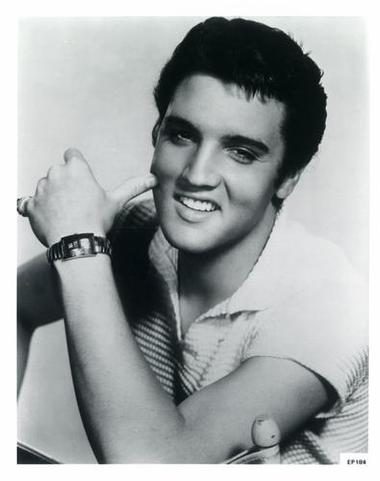
“You can’t just stand there like a statue.” Elvis’ response to accusations of vulgarity when he was just launching his career.

elvis-presley

Earlier this week I found out that NPR chose The Orphanmaster as one of the six best historical fiction titles of 2012.

Yes! In the same league with Hilary Mantel, incredible.

“Jean Zimmerman’s The Orphanmaster is a rip-roaring read, packed with action and dark suspense,” went the review.  “I was captivated by Zimmerman’s unforgettable evocation of New Amsterdam.”

Now, “rip-roaring,” that’s not standing there like a statue.

3 Comments

Filed under Jean Zimmerman, Publishing, The Orphanmaster, Writing

Grandly Whispering

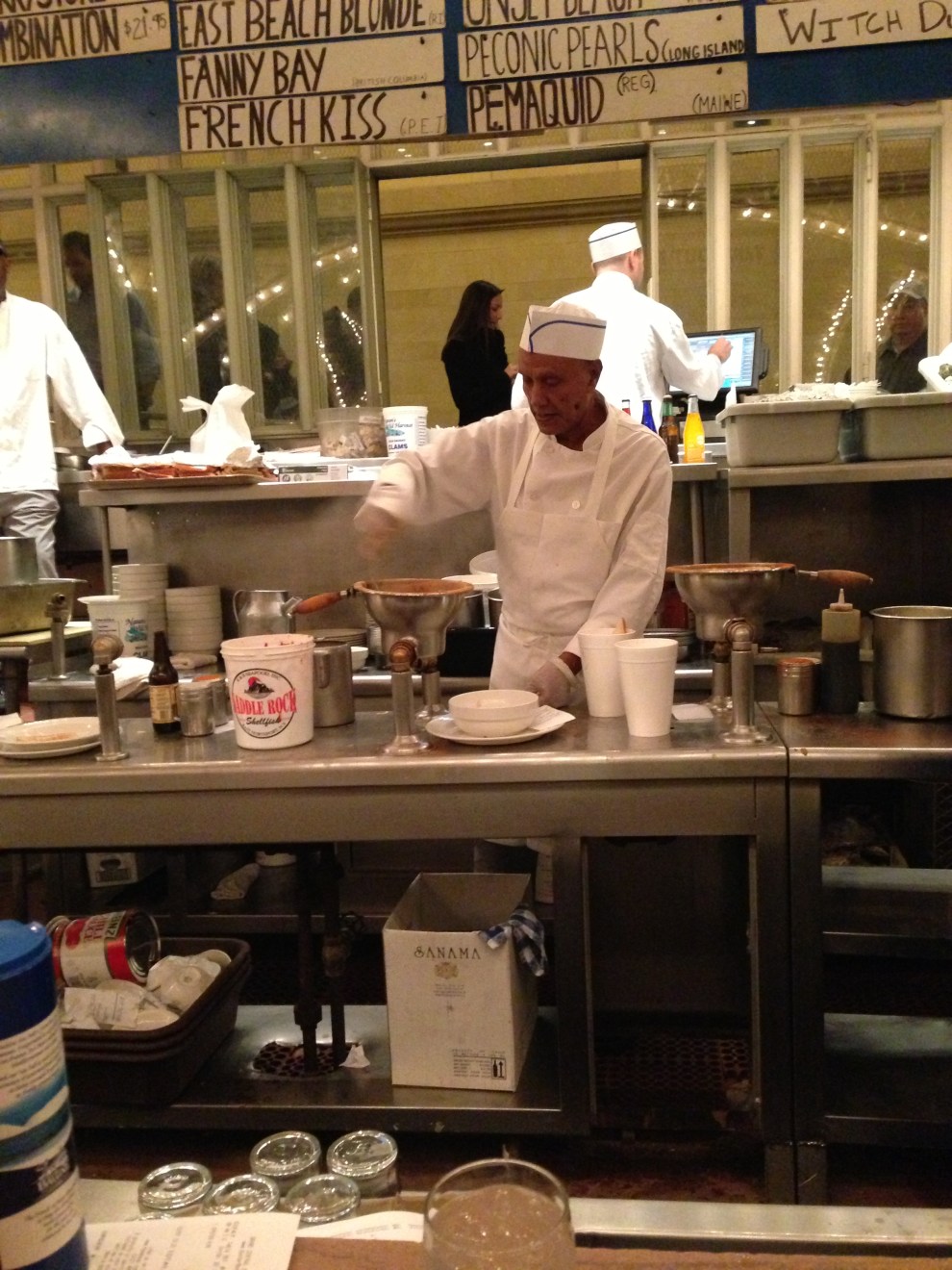
A wash of holiday feeling has come over Grand Central Station and over me as well. After a meeting for business (the business of possibly writing a new book) I went home via the train station, stopping en route at I think my favorite place in all of New York, the Oyster Bar, where the same chef has been working his station at the counter for as many years as I’ve been coming.

Oyster Bar

I did not slurp down the Fanny Bay or French Kiss shellfish or the Peconic Pearls, but I did have the oyster pan roast, a slight digression from my usual oyster stew and deliciously tomatoey.

Oyster Pan Roast

Even the dregs are delicious.
The other night at the Union League I met one of the authors of a current book about the restoration of Grand Central and the architect in charge of that effort, Grand Central: Gateway to a Million Lives. During the holiday season the place is at its most bustling, with suburbanites coming in to see The Tree — the ones in my car yesterday stoking themselves with booze on ice before strolling Fifth Avenue, and everyone very cheery about it — and Vanderbilt Hall given over to an overpriced bazaar of gift items.

Tucked in a corner by Track 42, an element of the station overlooked by all the tourists: a vintage board detailing the comings and goings of trains, in a giant vitrine high on the wall. My picture doesn’t due it justice, with its gold paint and dusty old chalk.

old grand central board

That’s one vision of Grand Central. Another is on display in the Ticketed Passenger Waiting Room.

all natural grand central

This is the all-natural Grand Central Station, made exclusively with organic materials, bark, twigs, stems, fruits, seeds, and other fibers, on loan from the New York Botanical Garden in the Bronx, which does a Holiday Train Show every year featuring iconic New York landmarks, such as the original Penn Station, Radio City Music Hall, St. Patrick’s Cathedral, The New York Public Library on 42nd Street, and the Brooklyn Bridge. If you go there you can find out how artists manage to make magnolia leaf roof shingles. This appeals to that part of me that was obsessed with the children’s book The Borrowers. I spent hours crafting furniture out of acorns and pebbles to stash Hobbit-like between the roots of trees. I love the grand houses I have been writing about but the small, slight, mysteriously miniscule appeals to me just as much.

Grand Central is, of course, grand in every way, but retains pockets of intimacy, like the 2,000-square-foot whispering gallery just outside the Oyster Bar, where I saw passersby keenly huddling to hear each other speak from one arch end to another under Guastavino’s ingeniously constructed tile vaulting. A whisper is a powerful thing on a merry afternoon in old Grand Central.

Leave a comment

Filed under Cooking, History, Jean Zimmerman, Writers, Writing

Lip Flap

There wasn’t any book flapping at the Union League Club’s Annual Book Fair — even the big-name authors performed their autographing tasks all on their own — but there was plenty of lip flapping. There was something so mystically gratifying about seeing those mega-selling doyennes Mary Higgins Clark and Linda Fairstein gabbing with each other beside their tables, and something so mystifying about the 10-deep crowd that constantly enveloped wraith-like Ann Coulter at hers. Dava Sobel was there, and Jennifer Egan, and a couple dozen other literary luminaries, in this incredibly luxurious setting, a very far cry from the corner Barnes & Noble.

Glass cases line some of the walls, containing all manner of ancient tin soldiers.

toy soldiers

About those soldiers. The club dates back to 1863, when it was formed to support the Union, hence the name, and its first president was the grandfather of Edith Minturn, my subject in Love, Fiercely. A person who probably shouldn’t have done so told me I could find Robert Minturn’s portrait up on the 4th floor, in the President’s Room. So up I went, after dinner, brownie-to-go wrapped sloppily in a paper napkin, and followed the winding old narrow hallways to a room with a brass plaque on the door and smoke wisking out the door jamb. Hello? I asked, entering gingerly. I could barely see the people there, the cigar smoke was so thick. They seemed shocked to see me, but not unpleasantly so, and directed me to the portrait in its gilt frame on the near wall. Liberal, altruistic, sensitive eyes — the man that fathered the man that fathered the woman I wrote about. He was known for caring about the disenfranchised.

The man I shared my book-selling table with had a following among the club’s more neanderthal members, who kept on bellyaching about how now with the election past they were ready to move to New Zealand. Neither Robert Minturn nor myself had much patience for this sort of talk. Turns out the author, Herb London, has a daughter who was profiled in The New York Times today — Stacey London of What Not to Wear. Did you ever imagine she’d end up being a style guru? I asked him. He shook his head. She was a philosophy major, he said, baffled.

Leave a comment

Filed under Jean Zimmerman, Love, Fiercely, Writers, Writing

The Library

Libraries form the centerpiece of the world for most writers and for everyone who loves to read and dream.

I was talking with the director of the White Plains Library when I spoke there the other day about how jampacked the place was during Sandy as everyone came in to charge their electronics, but also how being there then represented much more than that. Community. The library scheduled movies so people would have a warm, comforting place to hang out during the storm. There was actually a fancy benefit planned at the library and it was not cancelled, even though people had to get swelled up at home in the candlelight and dark beforehand — it was a grand success.

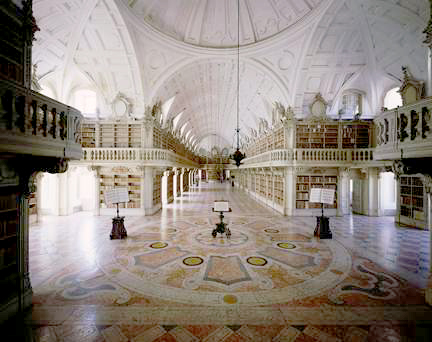
The White Plains Library is a handsome, modern structure on a downtown street, where anyone would want to come to a movie. How about a place like this, the Vilnius University Library in Lithuania? Does it make you want to snuggle into your sleeping bag with a box of popcorn for a showing of Ghostbusters?

800px-VU_bibliotekos_J.Lelevelio_salė

Or the crisp, pristine Biblioteca do Palacio e Convento de Mafra I in Portugal.

Mafra1-IPPAR

These libraries and more beauties can be found at this terrific site for bibliofanatics.

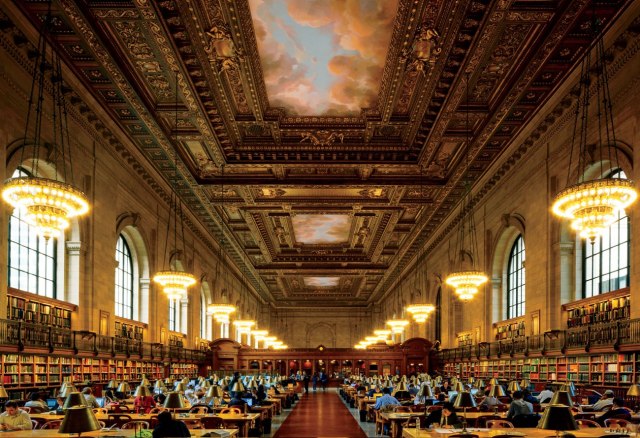
I personally hold with the marble-sculpted halls of the New York Public Library at 42nd Street, but that’s probably because I’ve spent inestimable hours there over the years. If you put me in the Rose Reading Room with a scarf tied around my eyes I would recognize it by the aroma.

cn_image.size.new-york-public-library

I. N. Phelps Stokes managed to get his own private study on the second floor — this was just after the place opened in 1911. You can still find the room, which is now littered with someone else’s stuff but is otherwise unchanged. Stokes wanted to be in the NYPL because he’d be that much closer to the invaluable sources he was drawing upon for The Iconography of Manhattan Island. Maps, antiquarian narratives, they were all there. For the touching.

Which is what we all love about the library. We can lay our fingers on the texts, especially the ones slightly yellowed with age, and touch the history of literature.

Leave a comment

Filed under Jean Zimmerman, Love, Fiercely, Writers, Writing

Back to Woodstock

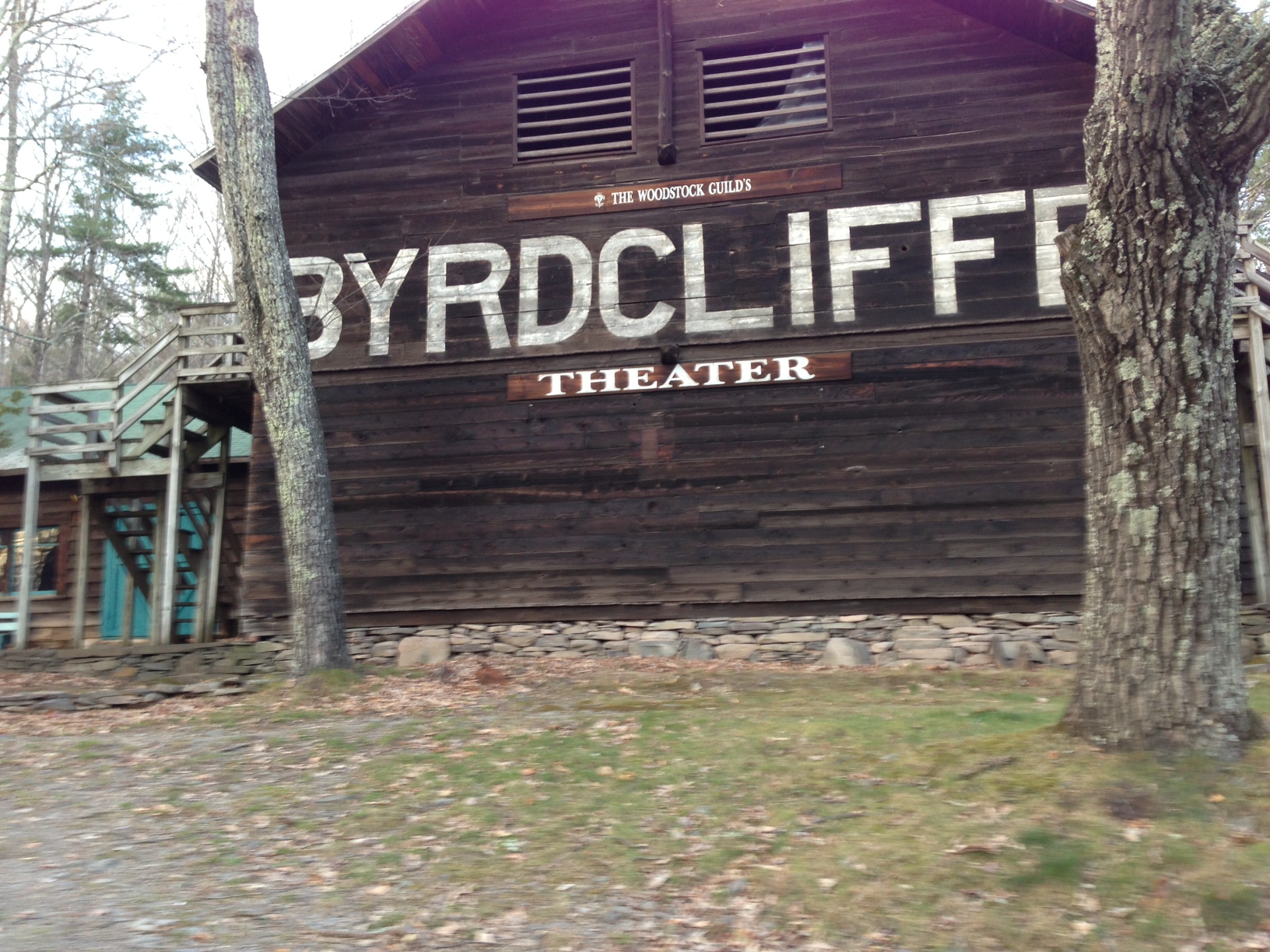
Back to Byrdcliffe. The artist’s colony in Woodstock, New York sits on the side of a mountain and consists of arts and craft style cabins in dark wood with no insulation and windows that look out on a quiet wooded landscape.

ImageWe came here 25 years ago, newlyweds, to spend a long summer hiatus writing poems and drinking blueberry daiquiris, or was that writing daiquiris and drinking blueberry poems.  Now we found our cabin none the worse for the wear.

ImageIt always reminded me of a pup tent, it was so small and narrow, only one room wide. And yet the man who founded the colony in 1902, Ralph Radcliffe Whitehead, believed strongly in the healthful properties of bathing, so our little cabin and every other was equipped with an eight-foot porcelain tub whose pipes were fed by mountain stream water.

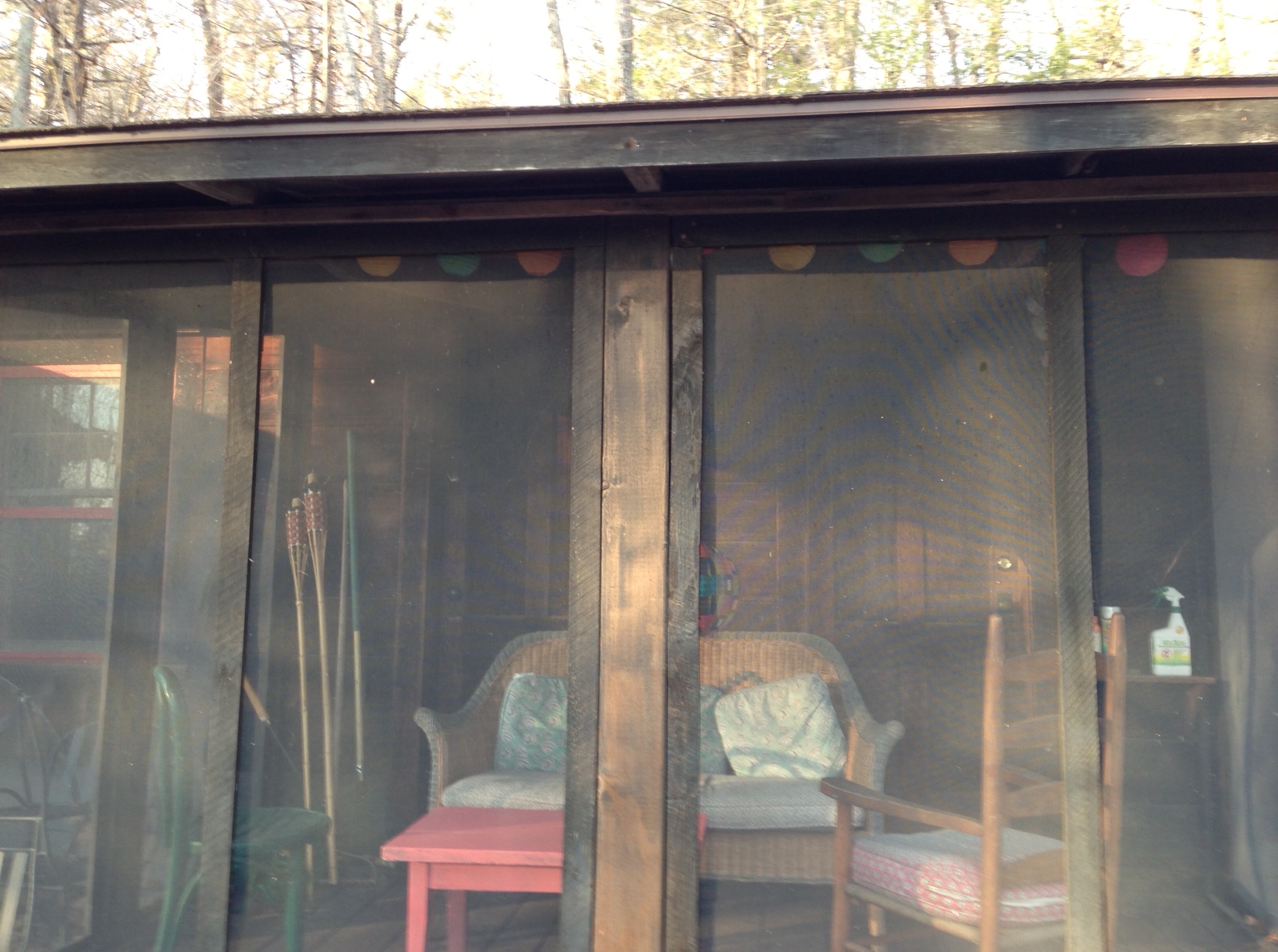
I made a summer study out of the screened-in front porch, which had sloping loose floorboards, into whose cracks Gil one day lost his new gold wedding band, sending him down on his knees to pry up the wood to find it.

ImageI thought I would be a poet forever.

The village of Woodstock had remained almost the same. This was different, though, a sign by the wayside put up by someone with a sly sense of humor.

Image

Leave a comment

Filed under History, Jean Zimmerman, Writing

A Place Called Joe’s

The violet and gold neon of Ocean Drive in South Beach is a far cry from the Miami Book Fair.

South Beach From a Convertible

But that’s where I wound up after the hectic, stimulating two days of panels, lectures, and sometimes electrifying, sometimes tiresome schmoozing. Finally, dinner with bookish friends: Joe’s is an institution in Miami Beach (the restaurant is now a century old) and its stone crab claws are not to be believed — hunks of flesh that you pull off the cartilage with your teeth the way you would an artichoke leaf, after dunking in a creamy mustard mayonnaise. Then there are fried green tomatos. And a key lime pie almost as good as mine. I don’t know how the ladies of South Beach suction themselves into those tight black minidresses after the crabs at Joe’s, but they seem to manage okay.

Earlier today I served on my book panel. The prose of Da Chen is often admired as lyrical, and I can say as a fellow panelist that his presentation skills are equally lovely. He was at the Book Fair to talk about his most recent novel, My Last Empress, and after executing a standup routine about his impoverished upbringing in China that was both soulful and hilarious, he took out his flute and ably delivered a haunting melody. Only then did he read briefly from his new work. And that wasn’t too bad either.

Da Chen and His Flute

What I found, I think, even more remarkable than his presentation was his mode of performing autographs. He unwrapped a tray of black ink along with a soft brush, and applied personalized calligraphy to the book of every person who approached him for a signing. He then stamped his name in red. Here is the inscribed flyleaf of my copy of his book.

“For a Book Friend,” it reads, with the characters for gold and for pen. I think that giving back to readers in this way is just what authors should aspire to.

When I found the writerly atmosphere a little stuffy — yes, it happened —  I explored the bookseller tents outside. There were some amazing nuggets in the stalls, with, as usual, the things I wanted not found desirable by anybody else and thus available for only a buck or two.

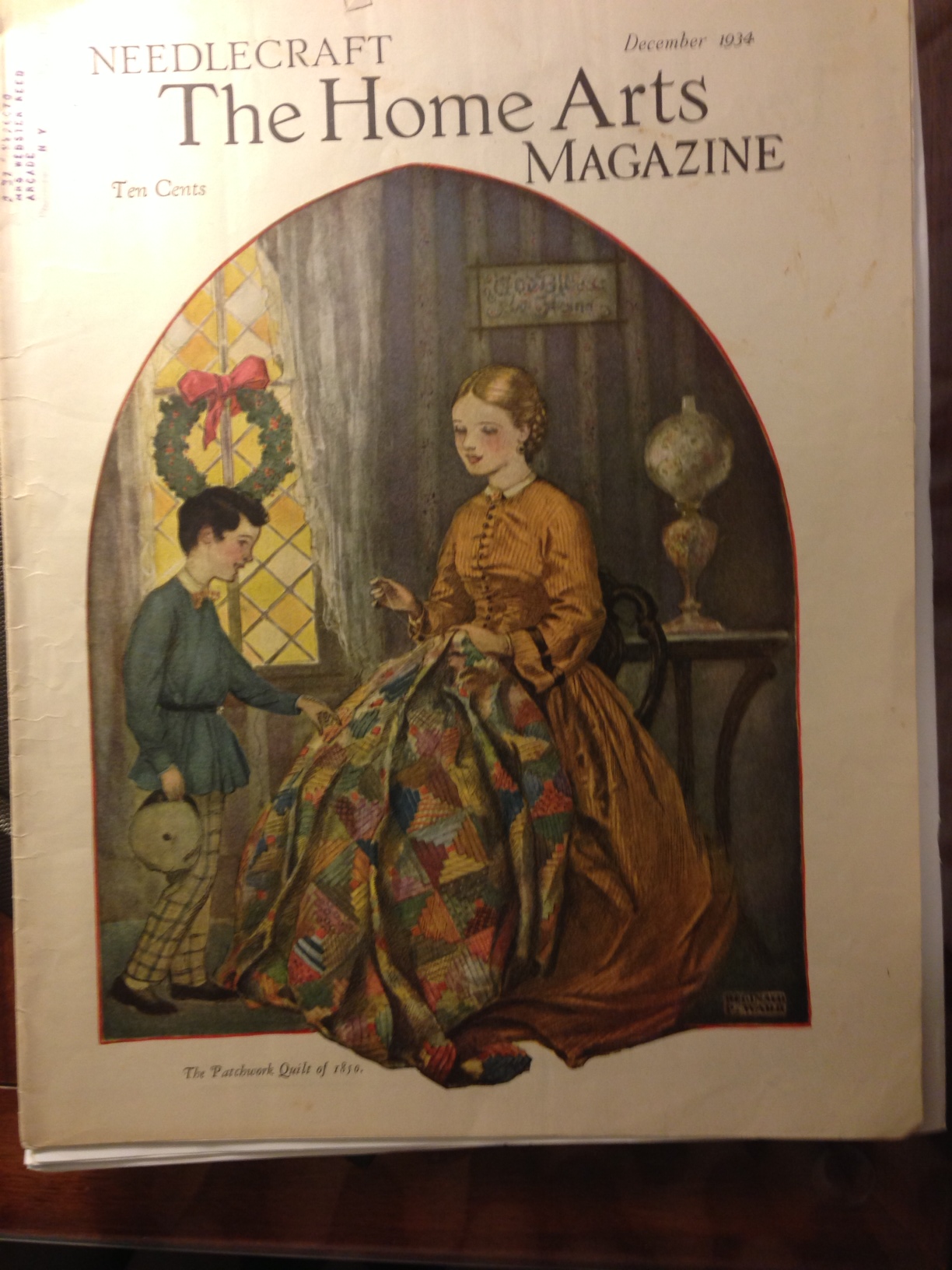
A 1934 edition of The Home Arts Magazine, with this the nostalgic image on the front cover:

And this on the back. You’ve come a long way, baby.

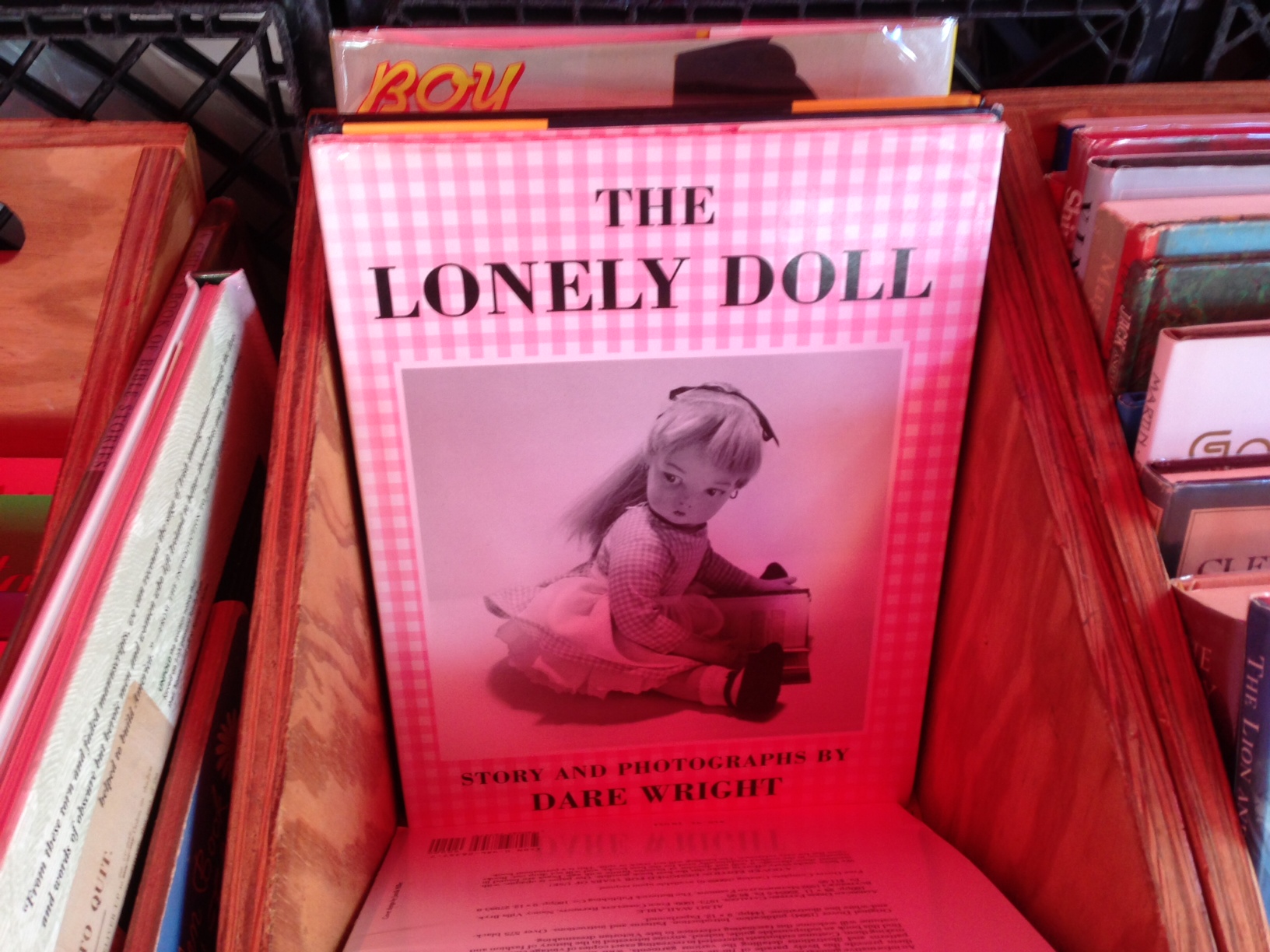
I also found a copy of a book that haunted me as a young reader.

And possibly the most useful item, a book titled 59 Authentic Turn-of-the-Century Fashion Patterns, with exacting instructions for assembling a Ladies’ Street Costume or a Gentlemen’s Night Shirt. Or a Stout Ladies’ Costume, for those who might indulge too often in the high life at Joe’s.

Leave a comment

Filed under Fiction, Jean Zimmerman, Publishing, The Orphanmaster, Writers, Writing

Sign Here

Signing. A lot of it going on around the Book Fair, at rectangular tables with author name cards and lines of readers in front of them, books tucked under their arms. Don’t cry too much, but it’s tough to be a big-name writer, armed with nothing more than a Sharpie and a smile. Naomi Wolf gave so rousing (arousing?) explication of the vagina-brain connection — it was practically a religious revival in that Miami Dade lecture hall — that when she reached the signing table outside some steam seemed to have gone out of her step. Another signer, a graphic novelist, puts down a full, funny illustration of himself on the title page. Takes time to get through a line of signature seekers when you go all out like that. It’s good there’s entertainment here while you wait.

The Miami Book Fair

For some diversion on this subject, check out the autograph auction that will be held November 29th by Swann Galleries in NYC. You can see all 294 lots online and whether you like Americana, presidents, artists or writers, there’s something for you. Not that you can necessarily afford one of these scraps of ephemera. A handwritten quote from Mark Twain from his Pudd’nhead Wilson is starting at $3,000 to $4,000. “Consider well the proportions of things: it is better to be a young June-bug than an old bird of paradise.” Whatever that means.

A woman who interviewed me today for a radio show asked for my signature in The Orphanmaster even though, she unapologetically announced, she hadn’t read the book. “It might be worth something some day!” she said with a funny tone, as though that was actually the least likely scenario that would ever come to pass.

On the subject of never knowing what might come to pass, I visited a panel that had four participants: the two authors of Beautiful Creatures, Kami Garcia and Margaret Stohl, and two young actors who will star in the 2013 film adapted from that teen novel. The two writers met when one was the teacher of the other’s adolescent daughter. They hatched the story and wrote it over seven weeks, only as a means of entertaining their daughters and their friends, with what  Garcia called a “human coming of age story in a magical world.”  An author friend submitted the manuscript to a literary agent behind their backs. That book and sequals have gone on, of course, to be mega mega best sellers. Stohl, the teacher, even had to quit her teaching job — she said sorrowfully — she just had to spend so much time touring internationally on behalf of the book, it wasn’t fair to the kids she taught. As for the movie, they were thrilled, thrilled, and one provocative detail is that the set and actors were so perfect, when the book’s editor visited she burst into tears.

1 Comment

Filed under Jean Zimmerman, Publishing, The Orphanmaster, Writers, Writing

Raindrops and Book Groups in Miami

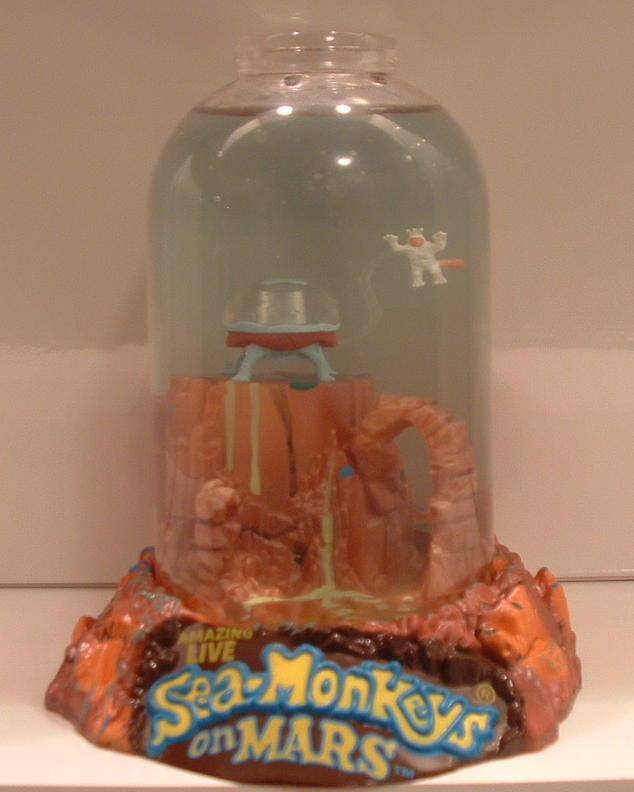
At a pre-Book Fair backyard party under the Miami palms and a light drizzle of rain, I talked to writers. One had published a novel about the last week of Marilyn Monroe’s life. One was working on a history of Los Angeles and water. One, a MacArthur-winning poet, had written about sea monkeys. One had just brought out a book about the Wall Street implosion.

I spoke with an archivist who lives here in Miami. She knew all the head librarians at the great Manhattan collections — the New-York Historical Society, the Manuscripts room at NYPL, the Morgan, all of them.

I know your book! she told me. My book group just read it this past month! They’ll all be there Sunday for your panel.

Very, very nice, under a palm tree, under a light sprinkling of rain, in Miami.

2 Comments

Filed under Jean Zimmerman, Poetry, Publishing, The Orphanmaster, Writers, Writing

Hyphenated

In Miami, lamenting my hotel view… of a sad white industrial rooftop… when I look up to see 50 fish hawks wheeling. We are a block from the water after all.

We have a guest blogger today, Gil Reavill, addressing the too-often-ignored subject of the hyphen. Here he is:

NEW HYPHEN YORK

For a long time New York had a little hitchhiker attached to it, a parasite that had wormed into its bowels, a hiccup, a connector, a missing link. During the 19th century the name of the greatest city in the world was oftentimes rendered “New-York.” Given that the earliest records of the city neglected the hyphen, and that the interior squiggle disappeared after 1890 or so, it’s tempting to think of the additional punctuation as a Gilded Age grace note. The New York Times spelled itself “The New-York Times” from its inception in 1851 until it dropped the hyphen in 1896. The New-York Historical Society, founded in 1809, still uses it.

The hyphen itself came into being via Johannes Gutenberg, in his monumental Bible of 1455. The printer used a uniform 42-line page, justified, the innovative movable type held in place by a rigid frame. When such a lock-step process necessitated a break in the middle of a word, Gutenberg inserted a simple signifier as the final element on the right side. It wasn’t today’s brutally horizontal staccato burp, either, but a more elegant tailored dash, rising at an 60-degree angle. Necessity proved the mother of invention, and the hyphen was born. In the Middle Ages, it was written as a double slash, like a tilted equal sign.

Why did the hyphen land in the middle of New York to begin with? Why then, in the 19th century, and not before, and not after? Who decided it should suddenly appear, and who ordained it should leave? Literary nit-pickers will recall that another 19th-century behemoth, Melville’s Moby-Dick, also employed a hyphen. Perhaps no explanation is required other than the dictates of whim, or fad, or fashion. To 19th-century eyes, New York might simply have looked better with a hyphen.

It’s a mystery that might yield to further research. Meanwhile, a simple rhyme states my personal sentiment about bygone punctuation.

GILDED AGE COUPLET

I much prefer life when

New-York had a hyphen.

Leave a comment

Filed under History, Jean Zimmerman, Writing

A Blast From the Past-New York Times Story

I woke up this morning and saw two things:

1. My breath in the air when I drank my coffee.

2. The article I wrote for the Times T magazine about the magical townhouse on East 72 Street in Manhattan, the one dating to the 1880s whose owners had restored it to an — imagined — former appearance, down to the velvet portierres, intricate wallpaper, sconces, mammoth china urns and brass tacks holding the leather coverings to the wall of the dining room. And the gaslamps out front, flanking the stained-glass inset front door. The 17-room brownstone is a curiosity not only for its allegiance to these details but because its owners, the Loebs, actually live a full life there, amid the antiques and fine woods, a couple and adolescent triplets! It’s a period room at the Metropolitan Museum with no velvet ropes. You can see the digital version of the article here, and don’t miss the slide show.

The disaster that has befallen New York with Sandy is not without precedent. In the first decade of the Loeb house’s existence, when cows still grazed nearby and there were basically no buildings anywhere around, a winter storm wreaked havoc here.

1888 Blizzard

The Great Blizzard of 1888 ranks as one of the most serious natural disasters ever to hit our region. The snow hit when the March weather was unseasonably mild. More than fifty inches fell, with sustained winds of more than 40 miles per hour and gusts up to 80. Drifts more than 30 feet high buried homes and shops. Afterward, everything had to be dug out by hand, with temperatures in the single digits and below. Fire departments were paralyzed so fires burned uncontrolled. Around 400 people died – plus 100 sailors whose ships were wrecked. Pictures of the traumatized city  are amazing.

Imagine the Loeb townhouse in its row of nine at the 72nd Street outpost, snows heaped to the first floor windows and no way to clear the stuff. The city used to send horse drawn carts to collect the mounds and dump them in the East River, but you can imagine the labor and time involved.

We are due for a Nor’easter on Wednesday, the weather people say. Let’s hope the snow doesn’t sock in the Cabin’s windows.

1 Comment

Filed under Art, History, Home, Jean Zimmerman, Writing

New Books in Biography

Check out my New Books in Biography interview with Oline Eaton about Love, Fiercely.

Leave a comment

Filed under Jean Zimmerman, Love, Fiercely, Publishing, Writing

Library Thoughts

I met a couple of women at the talk I gave last night in Dobbs Ferry. They were part of a big, pleasant audience of history buffs. These ladies had read The Orphanmaster with their book group and had been inspired to recreate all the recipes and foodstuffs in the book — including fortified wine! What a great idea. They had a feast, though they told me they had a hard time finding cumin cheese.

I wonder if they ate by candlelight.

We are conserving our candles, our water and our gas. Now there is no fuel to be had anywhere, and we have one generator-full left — about eight hours — and three quarters of a tank in the car. We’re rationing. Two hours of power per day. All the estimates could be kerflooey, but they’ve been saying at least a week before the power comes back, and all bets are off re: finding gas.

Nonetheless, we have driven to the Ossining Public Library (where I will talk on The Orphanmaster next Saturday), well lit and warm, to spend the afternoon with hundreds of other aftermath-refugees, all determinedly using the beefed-up outlets here to charge their phones and computers. Within walking distance: our favorite local lunch place, with succulent, crispy-skinned Carribbean roast pork, yellow rice and red beans, coconut water. It’s nice to be out of the house.

This morning we got some sun on our faces, hiking up with Oliver to the clearing. Shattered limbs covered the trail, many of them too heavy to move. I keep having the feeling, whether watching the images of devastation on tv or passing the eerily quiet service stations (“No gas,” one sign read, “We did the best we could.”) or walking up the path through our woods and sighting over the hill to those majestic wind-overturned cedars, I didn’t know it could be so bad. I just had no idea.

And yet there are hot showers constantly on tap at the gym. So who am I to complain.

Leave a comment

Filed under Cooking, Home, Jean Zimmerman, The Orphanmaster, Writing