Category Archives: Writing

100 Books About Books

I climbed the stairs of the brownstone at 72nd Street and Madison thinking about what it was like when the house was new, in the 1880s, and surrounded but nothing but cow meadows and truck gardens.
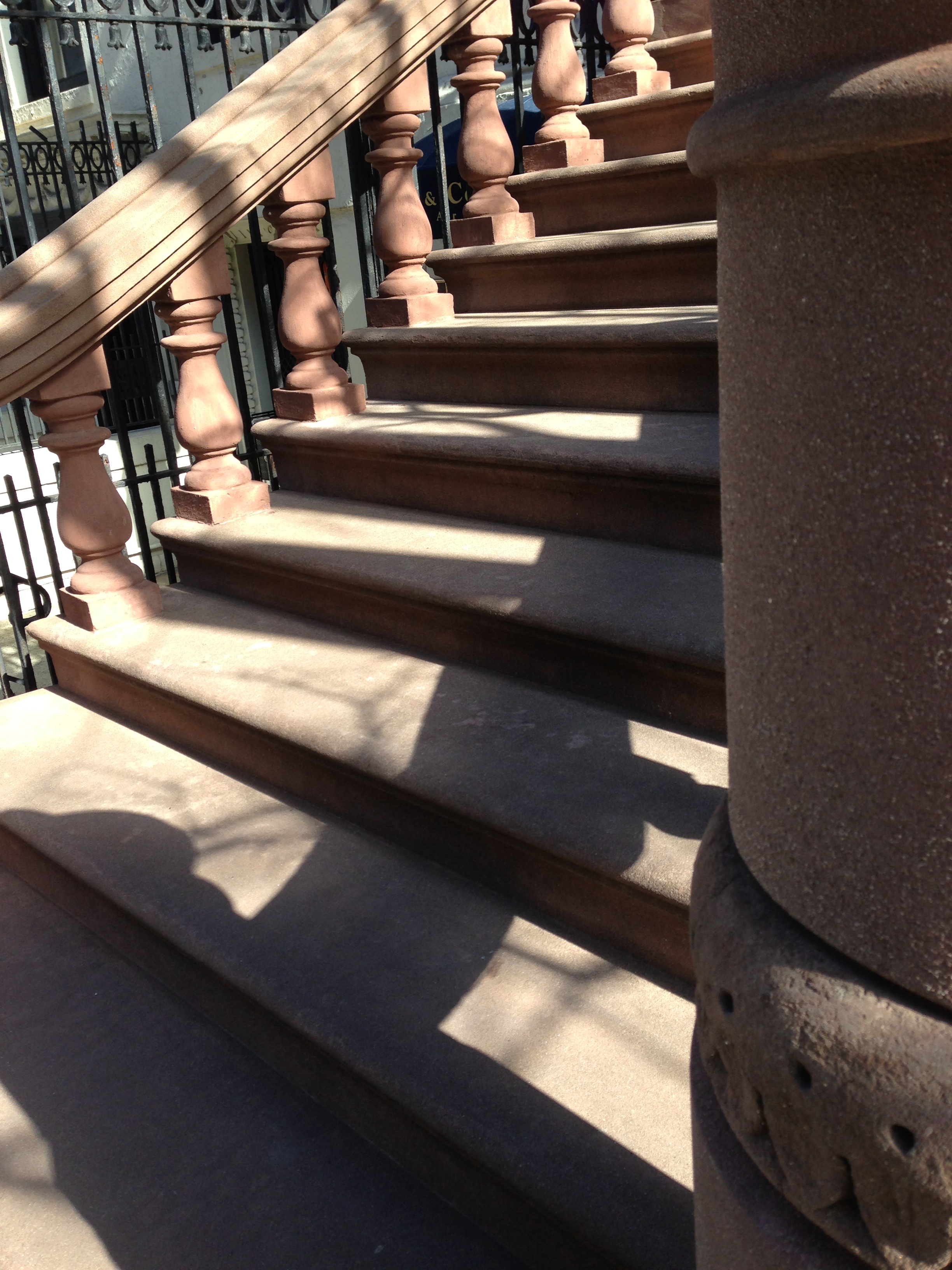
brownstone steps

Once inside, I noted that the interior was as fabulous as it had been when I was first introduced to it and wrote an article on it for The New York Times some months back. It hadn’t been a figment of my imagination. It was all there, the gleaming mahogany, the sumptuous velvet portierres, the sparkling sunflowers spread across the wallpaper. The gold and cranberry crystal remained perfectly organized in its tall glass cabinet, ready for punch, just as it was when the Mayer family had the place in the Victorian era.

cranberry crystal

Now how to put all this fabulousness in book form? That was the agenda of the meeting, attended by architect David Parker and an independent publisher of illlustrated books who just might be interested in showcasing the brownstone so the world can admire it. How would a book look, what size should it be, how many photographs should it include? Durston Saylor, who shot the photos for the Times, might play the same role with an illustrated book. What kind of cover? What sort of endpapers? Should they resemble embossed leather – or peacock feathers (an emblem of the Aesthetic Movement)?
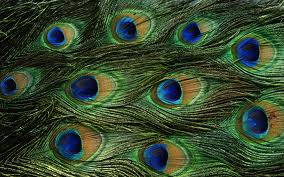
peacock

Still mulling over books, I left the townhouse and checked out the Edward Ruscha show at the Gagosian Gallery. There I encountered published works that were about as far from the 1880s as they could possibly be.

ruscha and his books

Ruscha is the conceptual artist who created his first book in 1962, inspired by the humble volumes he found on street stalls during a trip to Europe.
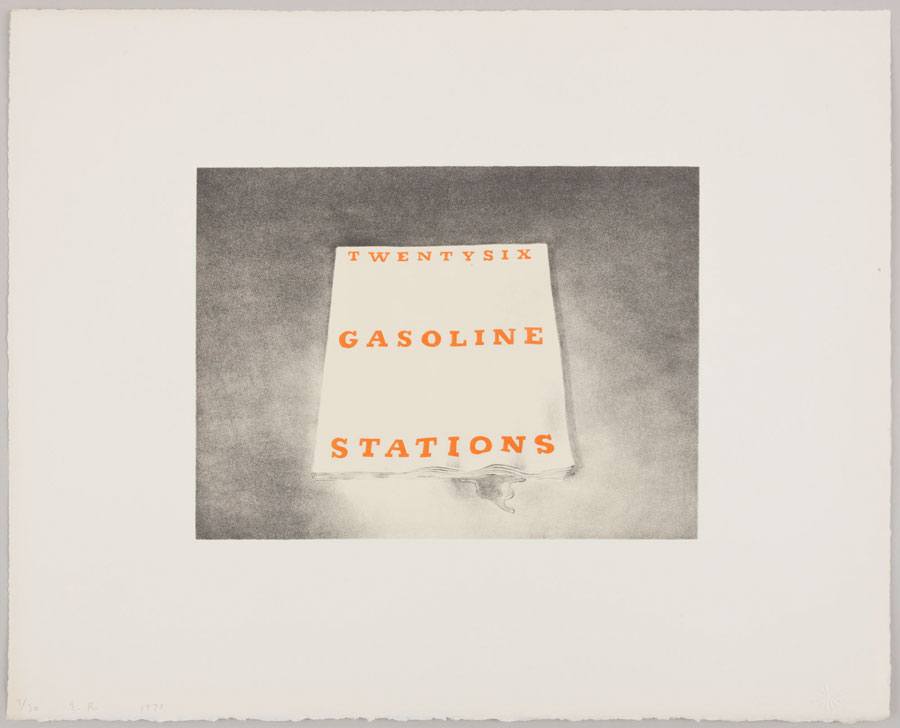
26 gasoline stations

Twentysix Gasoline Stations featured 26 photos of gas stations with simple captions denoting their brand and location. A common denominator: they were all on Route 66.

In the decades since he has published many more of these short, photographic monographs, unintimidated by the Library of Congress’ refusal to copyright Twentysix Gas Stations, due to its “unorthodox form and supposed lack of information.” His greatest hits include Some Los Angeles Apartments (1965), Nine Swimming Pools and a Broken Glass (1968), Real Estate Opportunities (1970), Various Small Fires and Milk (1964), and Thirty-four Parking Lots (1967), all minimalist, all deadpan, all brilliant.

He did something a little different but that I love in 1969 with Stains, a copy of which is in the collection of the Museum of Modern Art. Here you have a portfolio of diverse smeared substances, from L.A. tap water to sulfuric acid to egg white to parsley to cinnamon oil. All carefully listed.

stains

The art world eventually took notice of Ruscha’s mischief, and the exhibit at Gagosian displays dozens of homages to his works, many of them dangling from chains on the walls so that you can hold them and flip the pages.

gagosian

Here are some: 149 Business Cards, by John Trembley. Every Letter in ‘The Sunset Strip,’ by Derek Sullivan in 2008, which features anagrams like Enthuses Script and Persistent Huts. Mark Wyse, in 2002, assembled 17 Parked Cars in Various Parking Lots Along Pacific Coast Highway Between My House and Ed Ruscha’s. It was a small edition, only 10 printed. John Waters made his contribution in 1999 with 12 Assholes and a Dirty Foot. The exhibit goes on. There are Ten Convenience Stores, Fifteen Pornography Companies,  Nineteen Potted Palms, Twenty-six Abandoned Jackrabbit Homesteads and Every Coffee I Drank in January 2010. (The photos feature only the dripped-on take-out lids.)

Ruscha once said, “Good art should elicit a response of ‘Huh? Wow!’ as opposed to ‘Wow! Huh?'”

Also on view is Jerry McMillan’s Photographs of Ed Ruscha 1958-1972, including one of the artist as a cowboy and one wearing a bunny suit.

ruscha as cowboy

Taking the train home, my head was filled with books. Across from me, a guy wearing a crewcut, reading a thick copy of Debt: the First 10,000 Years and devouring a sloppy sub. If this were a car of Ruscha-ites, we’d all be eating a variety of hoagie and reading things like Furry Animals: The First Quarter Century and Cranberry Crystal: The First 120 years.

Ruscha

4 Comments

Filed under Art, Jean Zimmerman, Photography, Publishing, Writing

Spring, Sprang, Sprung

Finally, full-blown crocuses.

crocuses

Pine cones, scales open, strewn about, at the last stage of their life cycle.

pine cones 2

The sun, hot beams through the still-cold air.

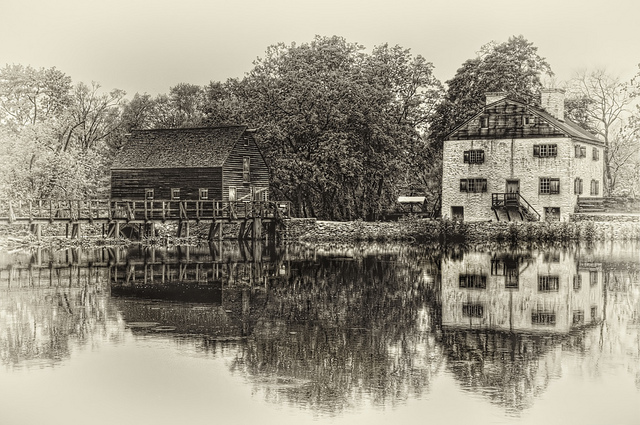
We pulled around to the back of Phillipsburg Manor, a historical restoration in Sleepy Hollow with a mill pond and a still-working farm, and got out of the car to look over the fence. A dozen sheep grazed, several of them fatly pregnant, while one tiny white lamb hid behind the herd. The first of the new babies.

philipsburg manor

I was very familiar with this place, this scene. A library stands on the property, housed in a white clapboard, colonial-style home. It contains the archive where I researched The Women of the House, where I went to investigate the lives of one New York family, the Philipse clan, and its wonderfully headstrong matriarch, Margaret Hardenbroeck Philipse. I remember that I would lift up my face from the heady dust of crumbling manuscript pages to take a break, and go to look out the window, where the early spring lambs bleated and raced around on their still clumsy legs, the white flags of their uncut tails flopping in the breeze.

It made a wonderful juxtaposition, the ancient and the new.

As a longtime nonfiction writer, and now historical fiction, I have spent, cumulatively, I think, whole years of my life in libraries, and I know that some of the best days in my life have been in libraries. I’ve not only dug in to books and manuscripts, taken thousands of pages of notes, and written many chapters, but even eaten and drank within different libraries’ hallowed halls.

I’ve also taken some great naps, with fantastic dreams.

Libraries are in my blood. Some of my favorites over the years: my hometown library, overlooking the Hudson River, which had a conservative collection but the perfect books I needed growing up, the Virginia Woolf and Lawrence Stern and Melville that made me the writer and person I am today.

hastings library view

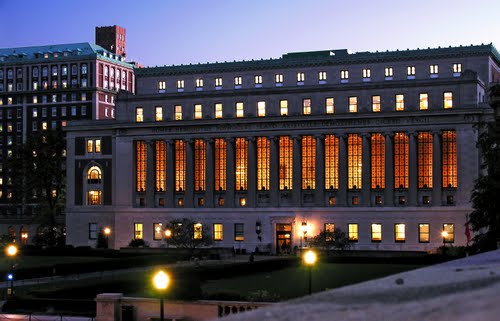
Then there were the stacks at Columbia University’s Butler Library when I was an undergraduate– what a thrill it was to step through that heavy portal and prowl among the tiers of volumes with their sweetly musty aroma of aged book paper.

butler

I have to mention the New York Public Library, where for 30 years I have made pilgrimmages to the Rose Reading Room, to the Manuscripts Collection and most recently to the Allen Room, which allows authors with book contracts the privacy and quiet to make progress on their projects. The NYPL – all that chunky Vermont marble and golden oak can’t help but inspire a writer.

rose

But I digress. It is spring, still brisk, but time to think about spending afternoons outside, not inside even the most magical library’s walls. I know I’ve told this story of Gertrude Stein before but it bears repeating.

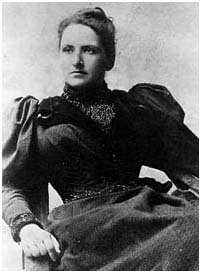
When Stein was an undergraduate at Radcliffe, in the 1890s, studying under psychologist William James — she was a young woman, conventional at least on the outside, not the close-cropped Amazon she would some day become —  the day came to take the course’s final exam. Here is how she tells the story in The Autobiography of Alice B. Toklas:

“It was a very lovely spring day, Gertrude Stein had been going to the opera every night and going also to the opera in the afternoon and had been otherwise engrossed and it was the period of the final examinations, and there was the examination in William James’ course. She sat down with the examination paper before her and she just could not. Dear Professor James, she wrote at the top of her paper. I am so sorry but really I do not feel a bit like an examination paper in philosophy to-day, and left.

young

“The next day she had a postal card from William James saying, Dear Miss Stein, I understand perfectly how you feel I often feel like that myself. And underneath it he gave her work the highest mark in his course.”

It’s spring. Let’s cut school. Let’s cut work. Let’s get out there and smell the crocuses.

1 Comment

Filed under Jean Zimmerman, Writers, Writing

The Indie Boom

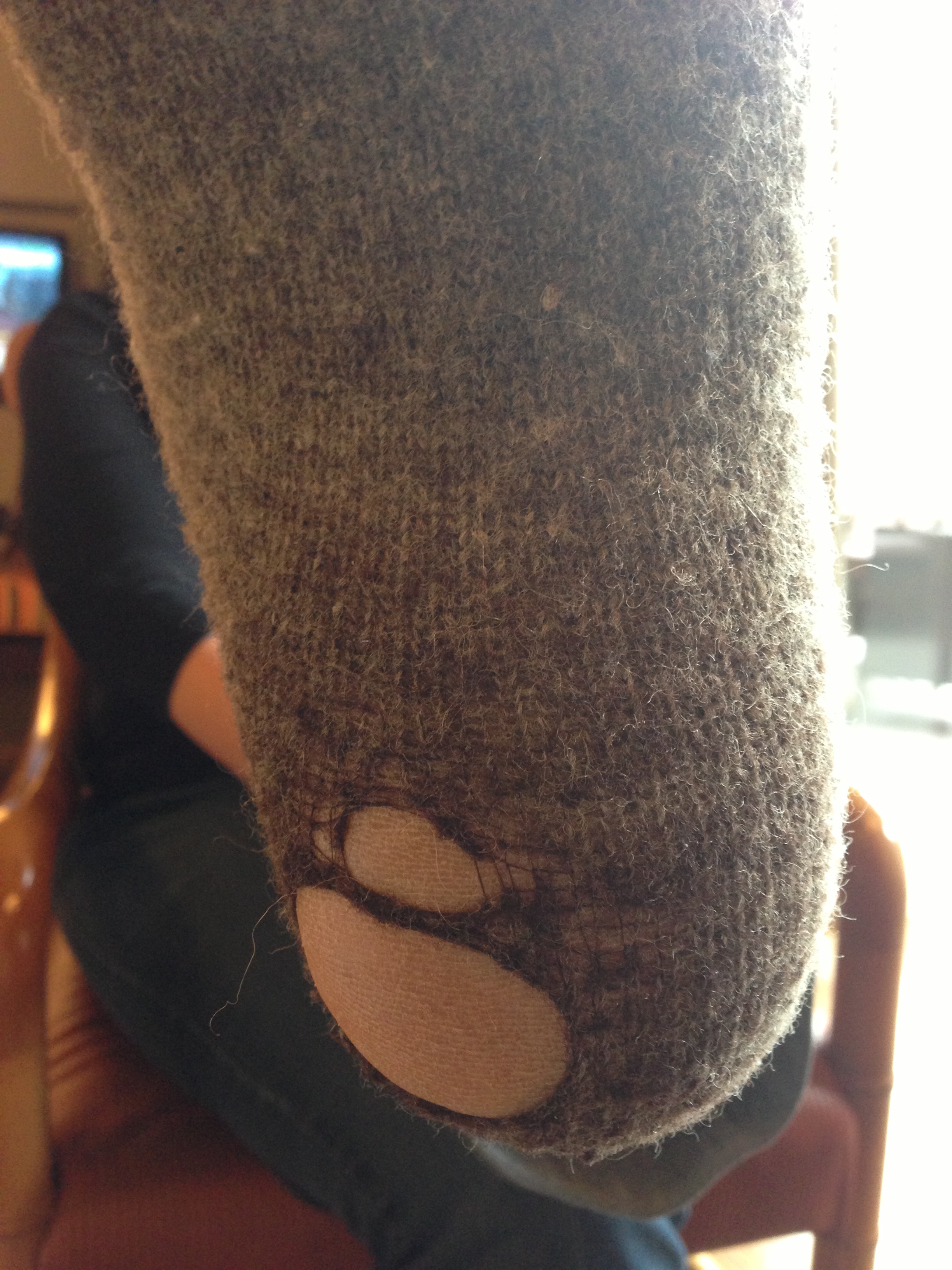
A hole in the heel of my favorite wool sock, I’m trekking along one of the most enchanting trails I’ve known, Dead Man’s Pass in Sedona, Arizona, which forks off of the Long Canyon trail toward Boynton Canyon.

Dead Man's Pass

There are open vistas all around, across the landscape of low manzanita forest toward the brick-red monuments all around, a straight route over the top of the world. It can’t help but make you consider your life. How all the pieces have come together. The luck you’ve had. The good that has inadvertently come your way, as undeserving as you might be. How we’re all in it together, somehow. Heel rubbed sore or not.

sock hole

“Human kind has not woven the web of life,” said Chief Seattle. “We are but one thread within it. Whatever we do to the web, we do to ourselves. Alll things are bound together.”

I’m thinking of sores, and bandaids. And about books.

Last year when I went around the country to talk about The Orphanmaster, I heard from so many booksellers about the challenges of their business, the wickedness of Amazon, the evils of electronic publishing. All very polite, of course. But the idea was that the goodly paper-and-ink culture of books and book selling was suffering because of all these developments and might never recover.

Now comes an article in the Christian Science Monitor that extolls independent book stores, says the trend is all good, that indies are reviving across the country. The “chief content officer” of Kobo, which connects e-readers to book stores, puts it vividly. “We absolutely believe indies are the small, fast-moving mammals in this dynamic,” says Michael Tambley.  One bookstore owner, Wendy Welch, of Tales of the Lonesome Pine in Big Stone Gap, Virginia, offers, succinctly, “2012 was the year of the ‘bookstore.’” In January 2013, the ABA reported 40 new bookstores since the previous May.

It’s not that bookstores aren’t shutting their doors; they are. But sales at existing ones have gone up and new ones are busting out bookcases with alacrity. Some of the success stems from a “shop local” trend: “All things are bound together,” as Chief Seattle put it, especially communities.

Of the 32 speaking engagements I had last year, 15 took place at independent bookstores (I also spoke at libraries, historical societies, book colloquies, clubs of various kinds, etc.). At R.J. Julia Booksellers, in Connecticut, the sparkplug owner gave me the most gracious intro I’ve had, and insisted I take a book gratis. In the Bay Area, at Book Passage, I was given cream-colored stationery engraved with my initials. A few of the businesses that received me so warmly have since seen hard times or even gone under.

But on that trip, I saw so many stores that made a writer feel welcome, that conveyed the notion that we were all part of a vast, well-wrought web of readers and authors and publishers and bookstores, Amazon and the other meanies be damned.

There was one memorable evening on August 15 at Boswell Book Company in Milwaukee.

boswellbook

The proprietor of Boswell’s is a pip.

danield green

Daniel Goldin, a young guy who worked as a buyer for Schwartz books on North Downer Avenue, bought the place when a local book chain closed after 82 years, in 2009. He had an elfin energy. He scrambled around to make the screen and chairs and lectern all fit just right in the back of the store for my presentation. He wore a shirt in a vivid shade of purple. The Christian Science Monitor relates that he refused to be photographed for their article reading a book, saying, “We don’t read in the store.” They’re simply too busy.

Boswell logo

Not too busy to make this first-time fiction author feel like a star.

And another thing about Boswell, Goldin, and the hole in my sock. The thing that got me started mulling over the whole thing in the first place: at the back of the busy store stands a tall translucent vitrine filled with a collection of vintage Bandaid boxes. Why was it there? Simply a quirk of the owner, who collects them.

60bandaid

That’s why they call booksellers independent.

3 Comments

Filed under Jean Zimmerman, Publishing, The Orphanmaster, Writing

Why I Knit

What about me? she said. My oldest friend, Josefa. She was eyeing the slubby cowl I made for my sister-in-law.

Okay, I said. How about pink?

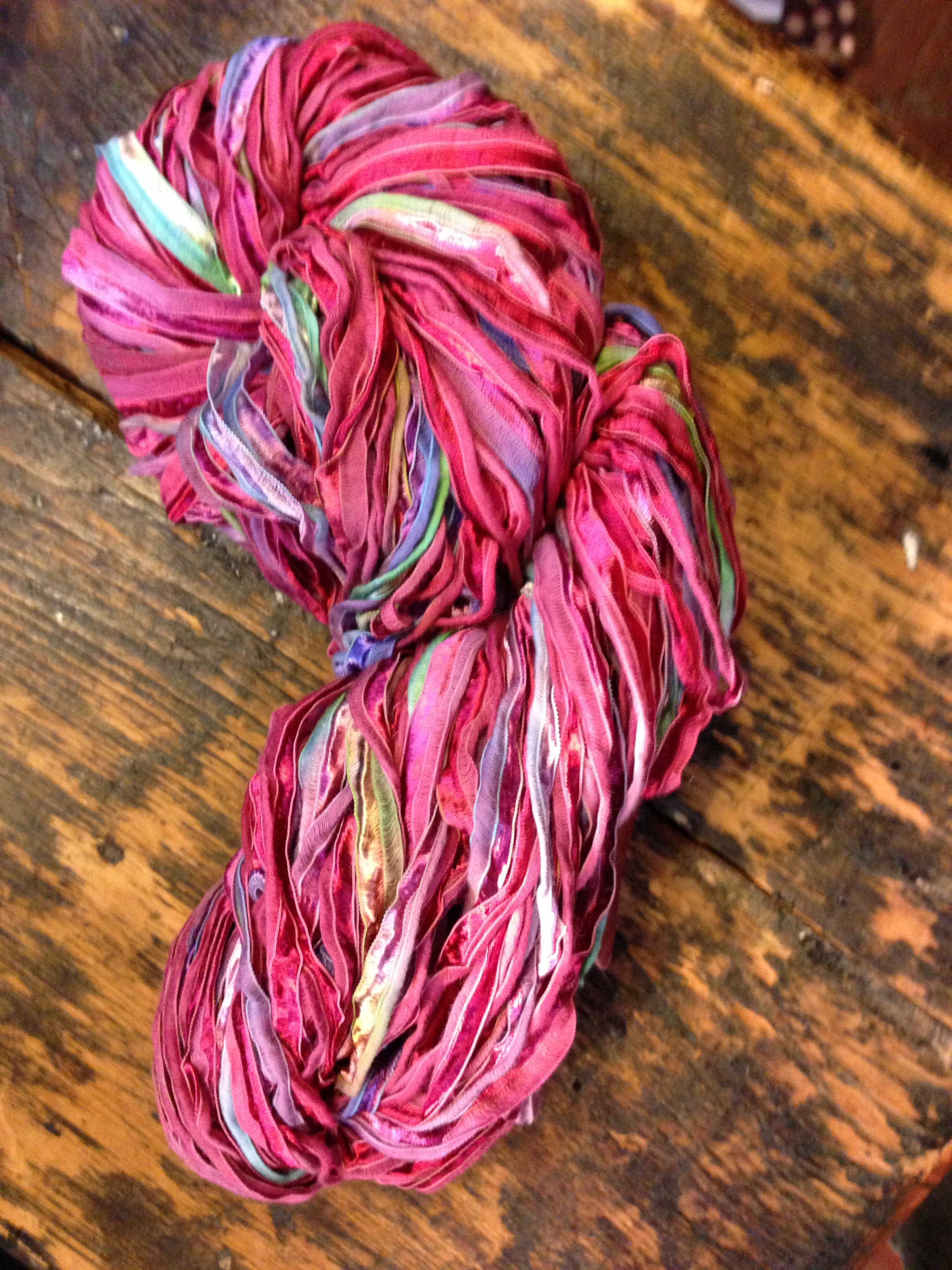
And so I was off. Seed stitch, ribbon-yarn, simple cast on with 15 stitches.

ribbon yarn copy

My friends are not knitters. It may be hard for some of them to comprehend why I have become enraptured with sticks and wool.

This, then, is why I knit.

1. Because I can ply my needles on the couch with my dog snoozing beside me.

2. Because I’m bad at it. Fumbling with needles is humbling. Every dropped stitch, every extraneous loop is a lesson in how much I have to learn, how far I have to go. You can’t be cocky when you’re ripping out a row.

3. Because it gives me goals. Long term: some day I will use a cabling needle. Make a sweater. Upholster a chair. Sit at the back table in the knitting store with the people who really know their craft, the ones bringing into being elaborate mohair sleeves. Follow a pattern off of the wonderful German knitting site Grasflecken. Or, short-term – make it to the end of this skein this evening, before bedtime. Get three lap throws done by Christmas for presents. Wind a multicolored ball using this straight-backed chair.
4. Because I have absolute authority over colors, yarn weight and texture. Slinky, silky, chunky, nubbly. The hues of daybreak or deepest shadows. The coarse, undyed wool scarf made for my brother came from a Jacob sheep and was 12 feet long. Decisions I alone made (and my brother has to live with).

5. Because gifts materialize with my love woven into them. See above, 12 feet of scarf. Someone might not like the thing you knit for them, but they always recognize the sentiment.

pink scarf close up

6. Because it connects me with history. Men knitted stockings in Renaissance England. In the Scottish Isles, turn of the twentieth century, housewives knitted as they walked. With bundles on their backs! I’m part of an honored lineage.

7. Because it gives me something to do.

8. Because it’s so unlike writing. No paper, no ink, no computer screen, no books flopped open for reference. No stagefright, no verbal errors to erase. Instead, pliable, vibrant yarn, plush in your hands, fuzzy with promise.

9. Because it’s so much like writing. Building nub upon nub of fiber, row after row after row, is the closest thing to building sentences word by word. You make mistakes. You rip them out. You choose color, texture. It’s about you and not about you. If you keep at it long enough, you get a blanket, the same as keeping at the written word gets you a book. At the end, you look at your product and say, did I do that? And smile: you did.

10. Because I can. Now. I always wanted to knit. I never thought I could learn. I believed my fingers were too inept, my hands too shaky. I had already turned 50 when I tried in earnest, asking for help – which wasn’t easy – from my nephew’s girlfriend Paula, and making swaths of nothing identifiable, with huge bulges and ladders. I’m not gonna pick up waterskiing now, at this time of my life, but I can pick up a pair of needles and land on my feet. Even make a pair of socks for those feet. Well, nearly.

This one’s for you, Josefa. Wear it with your pink pants, if you insist.

pink scarf over door

4 Comments

Filed under Jean Zimmerman, Knitting, Writing

Blips of Wonderment

They were small moments of wonderment, as befits a small person. A sheltered life. Still, sudden blips bubbled up from within my romantic child mind, bouts of vague yet powerful curiosity that would seize me out of the blue. There were times when I was sure that some day I would understand the things that mystified me now. That one day I might even write about them. These are a handful of those moments.

Sitting on the stair landing of my quiet home at night, looking out the window to the quiet street, a pool of light beneath the lamppost, and needing to know what went on beyond that quiet. Wondering about the world.

Watching the wind-blown leaves of the oak in the center of our yard, standing in the kitchen,the thought consciously occuring to me, I Am Myself, and wondering about the world.

Checking out the newspaper, black squiggles on white, the landscape of adulthood that as yet made no sense to me, and wondering about the world.

Jumping in fall leaves with my neighbor-friend, then remembering the scratchiness of those leaves later, when he died at 16, and wondering about the world.

Chugging up a Swiss mountain trail through herds of belled cows to see a tiny jeweled village below, and wondering about the world.

Lying on the living room couch after school, lost in “Will You Love Me Tomorrow,” and wondering about the world.

Watching a teacher hold a boy by the hair and kick him for punishment, and wondering about the world.

A dry, awkward first kiss from a kid when I was 13, thinking hmmn, and wondering about the world.

Sewing a flannel nightgown for myself, by myself, and wondering about the world.

Feeling the heat of Marjorie Morningstar, of all things, and wondering about the world.

Driving on the highway to Baltimore, curled in the backseat, gazing out the window at the headlights of the trucks barreling towards us, asking myself where they were headed, and wondering about the world.

Taking the train along the Hudson and feeling certain that the world did not hold another river as beautiful. Something I  knew for certain, beyond all blips of curiosity or wonderment, then as I do today.

Hudson sunset

5 Comments

Filed under History, Home, Jean Zimmerman, Writing

When It’s Okay to Be List-y

There’s a great piece on Flavorwire that anthologizes ten lists “that seem like they could be poems in and of themselves.” The writers responsible for these lists are diverse. I’m reminded of a term for a writerly sin that Gil and I coined — being “list-y,” filling a passage with a bunch of wonderful facts that when run together just add up to dead weight.

But sometimes a list is a dynamic object, grocery lists, laundry lists, books to read, resolutions of every kind. Bucket lists itemizing the wonderful activities you’ll someday get around to… although I have instead a fuck-it list, things I will not in any circumstances ever do in my lifetime, the ones I refuse to consider, like bungee-jumping from a helicopter or white water rafting down a too-exciting Colorado River.

There’s nothing quite like rediscovering a scrap of paper — buried on your desk or in your bag — and realizing that you’ve actually accomplished the things on it. Ta-da. I did something! No matter how small. I returned the DVD to the library. I picked the tomatoes.

tomatoes copy

And I remember what that day was, the crumbly soil, the sun, the smell of the tomato stems when I cut them. How my lower back felt when I was done. The taste of the salad, later. It all comes back with pencilled words on a scrap of paper. A list enumerates the world.

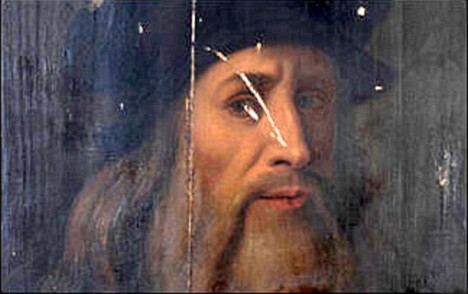
Here you can see Leonardo da Vinci present his qualifications for a job at the court of Ludovico Sforza in the early 1480s. One bullet point refers to his early designs for military tanks: “Also, I will make covered vehicles, safe and unassailable, which will penetrate the enemy and their artillery, and there is no host of armed men so great that they would not break through it.”

da vinci

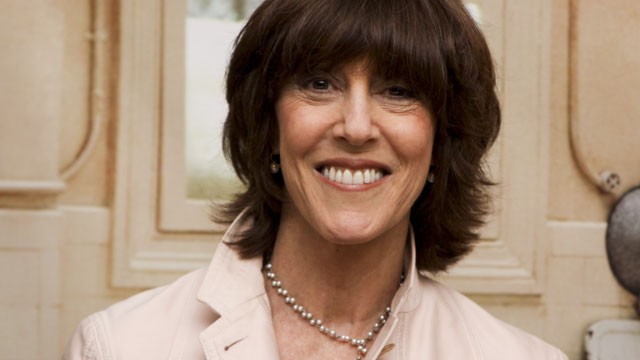
Nora Ephron writes about the things that she won’t miss when she’s gone.

Nora Ephron

Two are “washing my hair” and “the sound of the vacuum.”

Woody Guthrie gives his new year’s resolutions for 1942, including “Listen to radio a lot” and “Help win war—beat fascism.”

Folk Musician Woody Guthrie

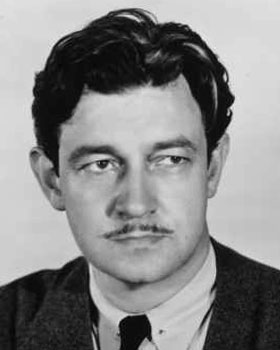
Sullivan’s Travels director Preston Sturges’s decrees “eleven rules for box-office appeal.”

preston_sturges

The whole series is great:

A pretty girl is better than an ugly one.


A leg is better than an arm.


A bedroom is better than a living room.


An arrival is better than a departure.


A birth is better than a death.


A chase is better than a chat.


A dog is better than a landscape.


A kitten is better than a dog.


A baby is better than a kitten.


A kiss is better than a baby.


A pratfall is better than anything.

Pianist Thelonius Monk takes a bold-faced approach to giving advice to musicians in 1960.

thelonious-monk-2

Two are:

STOP PLAYING ALL THOSE WEIRD NOTES (THAT BULLSHIT), PLAY THE MELODY!

and

MAKE THE DRUMMER SOUND GOOD.

What I think I like the best of this selection is Isaac Newton’s itemization of his recently committed sins, penned when he was 19 years old, in 1661 – several years before he set his mind to the principles of calculus.

isaac newton

And so I’m going to borrow from Flavorwire to run Newton’s list in its entirety, from his notebook:

Before Whitsunday 1662

Using the word (God) openly

Eating an apple at Thy house

Making a feather while on Thy day

Denying that I made it.

Making a mousetrap on Thy day

Contriving of the chimes on Thy day

Squirting water on Thy day

Making pies on Sunday night

Swimming in a kimnel on Thy day

Putting a pin in Iohn Keys hat on Thy day to pick him

Carelessly hearing and committing many sermons

Refusing to go to the close at my mothers command

Threatning my father and mother Smith to burne them and the house over them

Wishing death and hoping it to some

Striking many

Having uncleane thoughts words and actions and dreamese

Stealing cherry cobs from Eduard Storer

Denying that I did so

Denying a crossbow to my mother and grandmother though I knew of it

Setting my heart on money learning pleasure more than Thee

A relapse

A relapse

A breaking again of my covenant renued in the Lords Supper

Punching my sister

Robbing my mothers box of plums and sugar

Calling Dorothy Rose a jade

Glutiny in my sickness

Peevishness with my mother

With my sister

Falling out with the servants

Divers commissions of alle my duties

Idle discourse on Thy day and at other times

Not turning nearer to Thee for my affections

Not living according to my belief

Not loving Thee for Thy self

Not loving Thee for Thy goodness to us

Not desiring Thy ordinances

Not long {longing} for Thee in {illeg}

Fearing man above Thee

Using unlawful means to bring us out of distresses

Caring for worldly things more than God

Not craving a blessing from God on our honest endeavors.

Missing chapel.

Beating Arthur Storer.

Peevishness at Master Clarks for a piece of bread and butter.

Striving to cheat with a brass halfe crowne.

Twisting a cord on Sunday morning

Reading the history of the Christian champions on Sunday

Since Whitsunday 1662

Glutony

Glutony

Using Wilfords towel to spare my own

Negligence at the chapel.

Sermons at Saint Marys (4)

Lying about a louse

Denying my chamberfellow of the knowledge of him that took him for a sot.

Neglecting to pray 3

Helping Pettit to make his water watch at 12 of the clock on Saturday night

4 Comments

Filed under Jean Zimmerman, Writers, Writing

Kill Your Darlings?

“Kill your darlings?”

I was talking with a nonwriter about revising my Savage Girl manuscript, about the small cuts my editor had gently suggested would improve the narrative.

Kill does sound pretty violent. And why would you want to kill a darling?

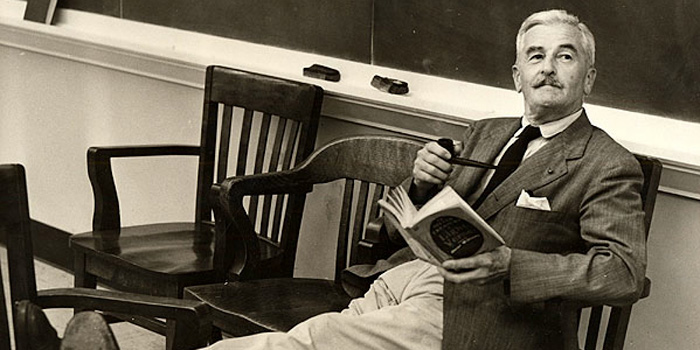
It’s a well-established dictum, something of a cliché at this point. Widely attributed to William Faulkner. (So we know it’s not necessarily about chopping up long sentences.)

faulkner_0

In writing, you must kill all your darlings.

It may be apocryphal, since I haven’t ever located the story behind the saying.

Faulkner would seem to have adapted the sentiment from a once-lionized writers who has since become fairly obscure.

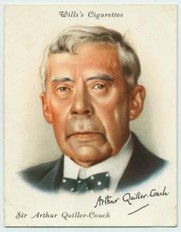
Sir Arthur Thomas Quiller-Couch (1863-1944) was a British gentleman who published under the pen name of Q. Fiction, poetry and criticism flowed from his pen, but probably his best-known work was the Oxford Book of English Verse, 1250-1900. He also translated fairy tales from the French.

quiller-couch

It was when discussing style in his 1916 publication On the Art of Writing that Quiller-Couch proposed the idea that style “is not—can never be—extraneous ornament.” Instead, he advised the following rule:

Whenever you feel an impulse to perpetrate a piece of exceptionally fine writing, obey it—whole-heartedly—and delete it before sending your manuscript to press. Murder your darlings.

Before Q came Samuel Johnson, who urged, Read over your compositions, and wherever you meet with a passage which you think is particularly fine, strike it out.

Stephen King jumped on the bandwagon more recently. In his 2001 book On Writing, King told writers to kill your darlings, kill your darlings, even when it breaks your egocentric little scribbler’s heart, kill your darlings.

But what does the riff mean, anyway? What does it mean for me, as I’m sitting here deciding whether or not to strike, for example, this passage:

Stepping into the lift, I had craned my head up to the purple sky above me, with just a dusting of stars emerging. Below, the blacker pit.

Perhaps cut this? asks my editor. The narrator is stepping into an elevator that will take him down a mine shaft.

Elmore Leonard once said, If I come across anything in my work that smacks of ‘good writing,’ I immediately strike it out.

The idea is that a bit you’re especially proud of will stand out as self indulgent and ruin the piece. Go to writing books, writing teachers, and so-called experts on the web and you will find any number of elaborations on this theme. One editor says, “darlings are scenes or sections that are fantastically written, funny, evocative…but don’t belong. They don’t move the story forward, or they repeat stuff we already know, or they cause problems with pacing, conflict, or characterization. And they are hard to eliminate. The fantastic writing, wit, and emotion blind us to the truth.”

A computer programmer applies it to code, saying, “If it turns out to be overwrought or too slick for the need, you should probably kill your darling and replace it with an ordinary solution that others can actually use, and not just marvel at.”

Darlings are the little pieces of glitter, the tinsel that the crow felt so proud to weave into her nest, but that turn out to be a distraction to everyone else.

I’m reminded of a word a friend of mine once coined to describe inadvertent foolishness with an overlay of conceit. Fardo, she called it. You think you’re being so smart but what you’re doing is overreaching and laughable. If I leave in that passage about the purple sky and the dusting of stars, will I be fardo?

Quick, don’t all speak up at once.

And yet. When you like something you wrote, when you feel good about that glitter you found – and doesn’t the glitter help hold together the nest, anyway? – won’t it appeal to someone else, to a reader?

I find another piece of Faulkner’s wisdom a bit more inspiring when it comes to writing or rewriting. Something he didn’t crib from an earlier author.

All of us failed to match our dreams of perfection. So I rate us on the basis of our splendid failure to do the impossible.

purple sky

5 Comments

Filed under Jean Zimmerman, Savage Girl, Writing

The Orphanmaster-edition Francais

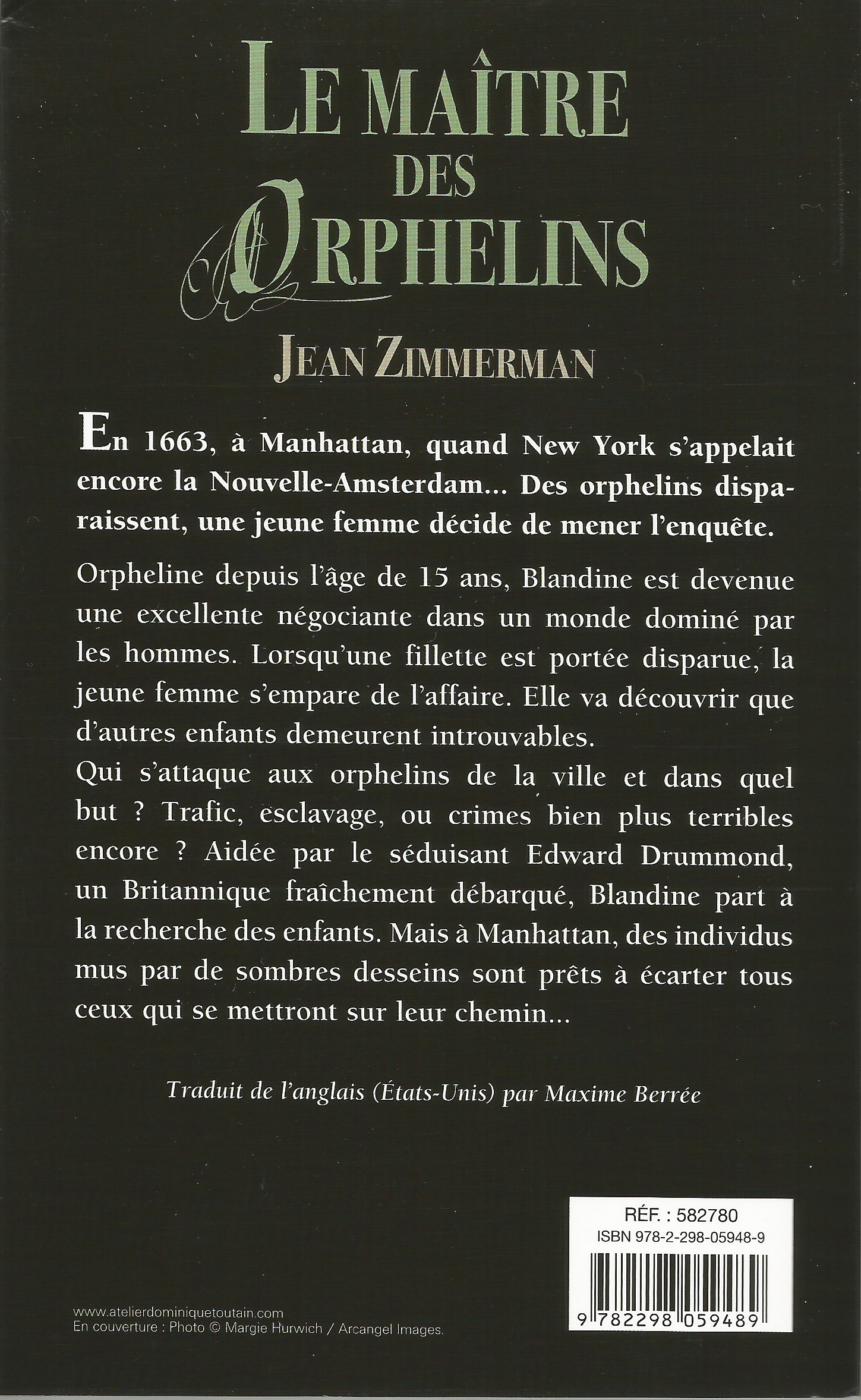
The French advance reading copy of The OrphanmasterLe Maitre des Orphelins – has landed on my doorstep. The publisher 10/18 will bring it out in May. Isn’t the cover art terrifying?

Lucky Peach 2

The Orphanmaster has already come out in Holland and will soon be published in Italy, Hungary and Taiwan as well. So cool to think of people from all corners of the world voyaging in their minds to 1663 Manhattan.

Lucky Peach 3

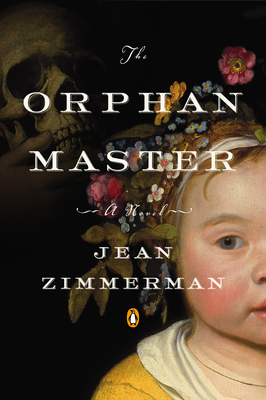
The jacket designers at 10/18 and Viking must have been drinking the same KoolAid. Look at the art for The Orphanmaster’s softcover… it hits the stands in America April 30.

Orphanmaster Paper Official Cover

I don’t know if the vulnerable child in either image is meant to represent a specific character in the story, but all I can think of is one of my favorite characters, the toddler Sabine, known as “the Bean,” she with the winning way and persistent lisp, holding up her just-baked “tookie,” blissfully unconscious of the evil that stalks her. Luckily she’s got Blandine van Couvering covering her back.

4 Comments

Filed under Fiction, Jean Zimmerman, Publishing, The Orphanmaster, Writing

Mr. Darcy Cooks

Mr. Darcy's

And I wondered what happened to Darcy after he was run off of Pemberley for feather spanking that chambermaid. He’s peeling potatoes in the shadow of Mount Okemo in Ludlow, Vermont.

Today we found a place that served not only crispy french fried potatoes and sweet belly clams but was a haven of sorts for writers.

Wall

It’s an anthology based in South Deerfield, Mass., and we’re now a part of it.

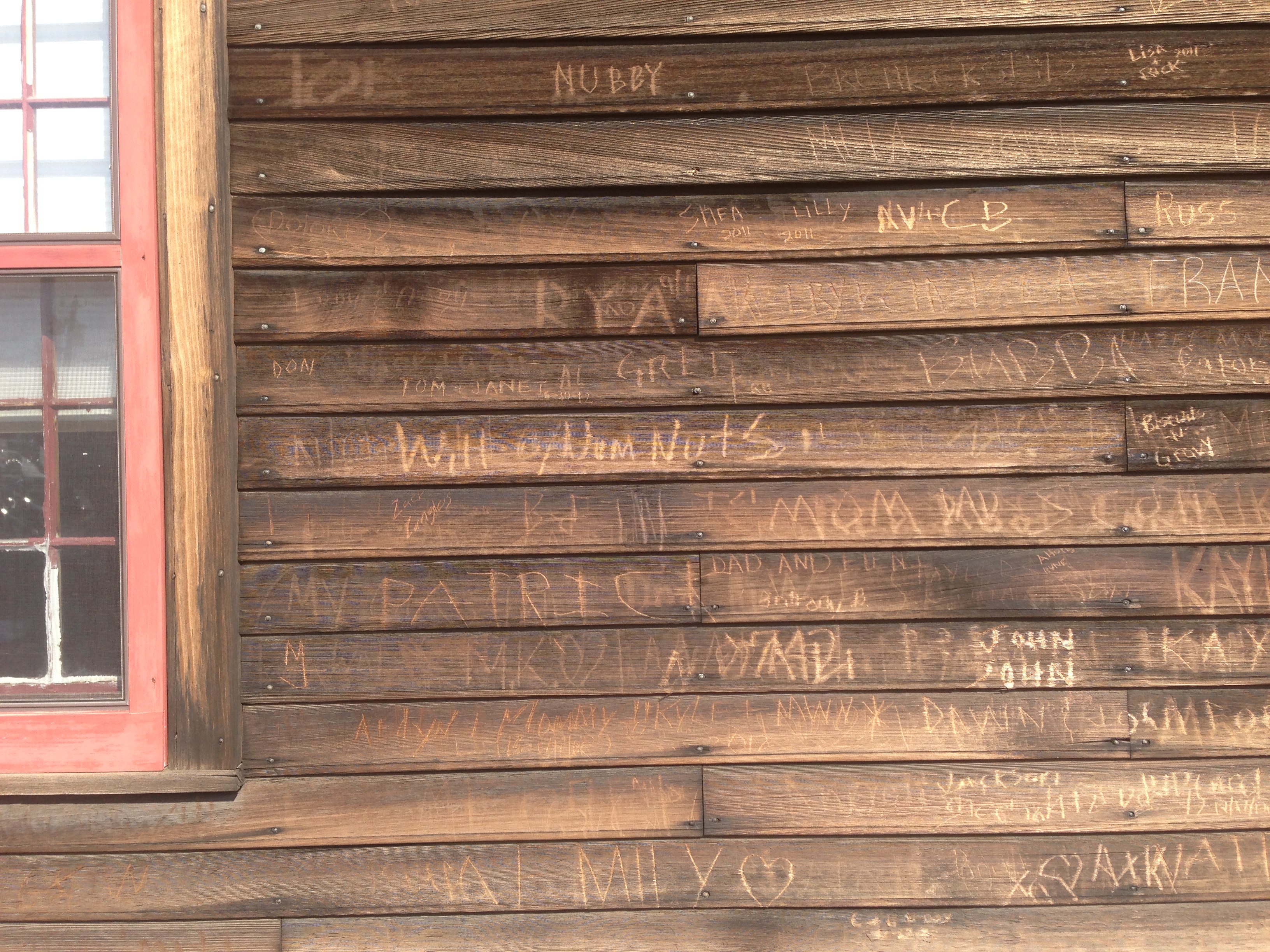
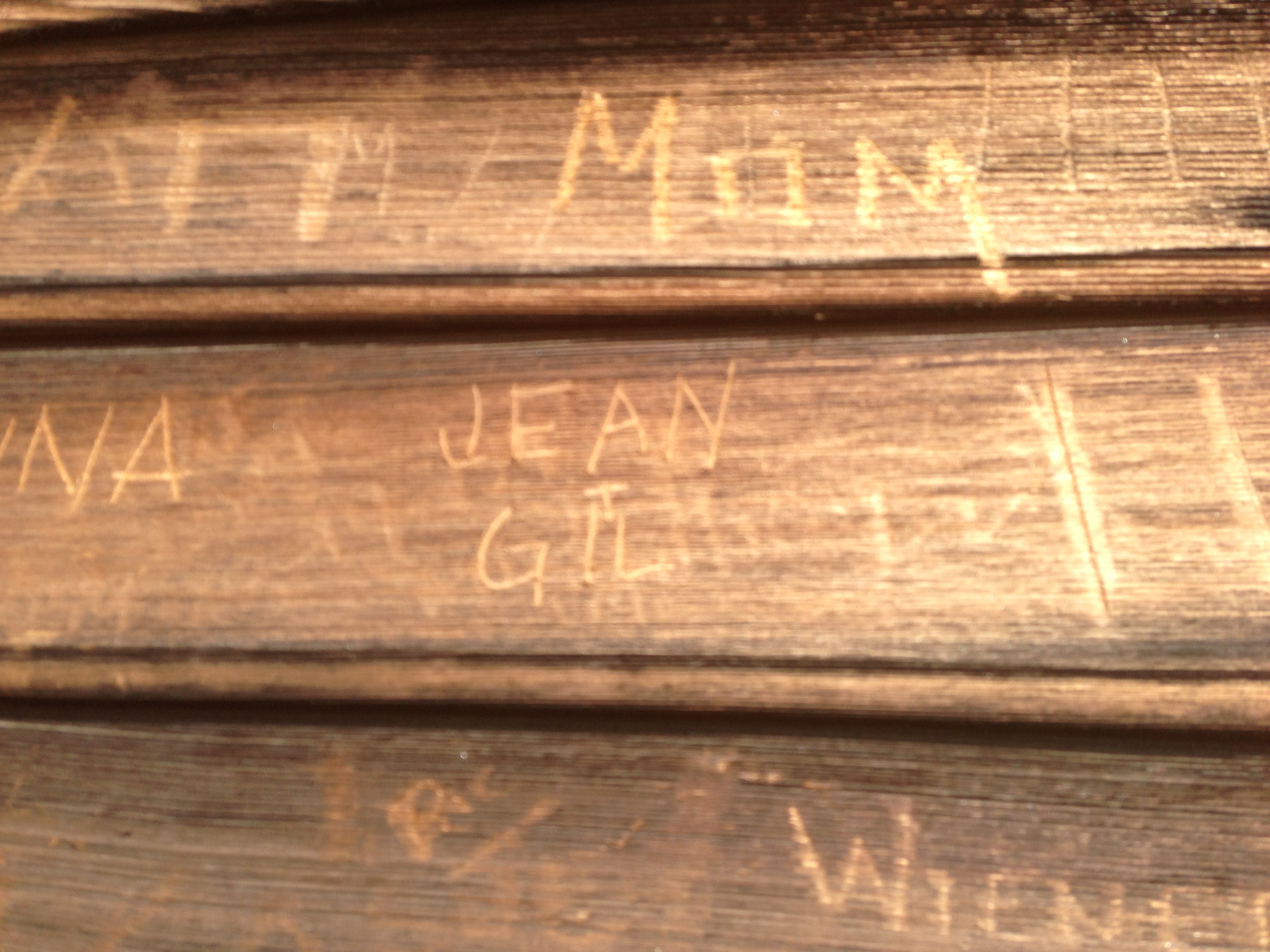
Jean:Gil

If you’re going to leave your name behind, it’s probably better for longevity’s sake to put it down in stone rather than wood. I remember the escarpment high above the Hudson River at North-South Lake, the site of the venerable long-gone Catskill Mountain House, which a hotelier built there to take advantage of the views up and down the river. That was in 1823.

Catskill Mountain House

One Victorian guest observed, on reaching “the broad tabular rock upon which the House is set”:

“We could hardly realize it. After threading in the dark for two or three hours in a perfect wilderness, without a trace save our narrow road, to burst thus suddenly upon a splendid hotel and, glittering with lights, and noisy with the sound of the piano and the hum of gaiety – it was like enchantment.”

Long after the hotel was razed, in 1963, we spent a July 4 on those flat rocks, watching the bursts of firework displays in the little communities north and south along the river. The pyrotechnics looked like tiny faraway flowers blossoming briefly in the darkness.

Carved in the stone beneath our feet, the names of  visitors, a guest book that reaches back to the beginning of the nineteenth century.

Catskill Mountain House graffiti

Another rock pic

The older the calligraphy, the more likely the letters are to be engraved in a serif font. I’ve always thought that in the quiet that surrounds this spectacular vista you can hear the voices of the people who etched their names above it all.

I can even see Fitzwilliam Darcy here, in a frock coat, politely tapping his chisel into the stone.

1 Comment

Filed under Fiction, History, Jean Zimmerman, Photography, Writers, Writing

The Front Lines

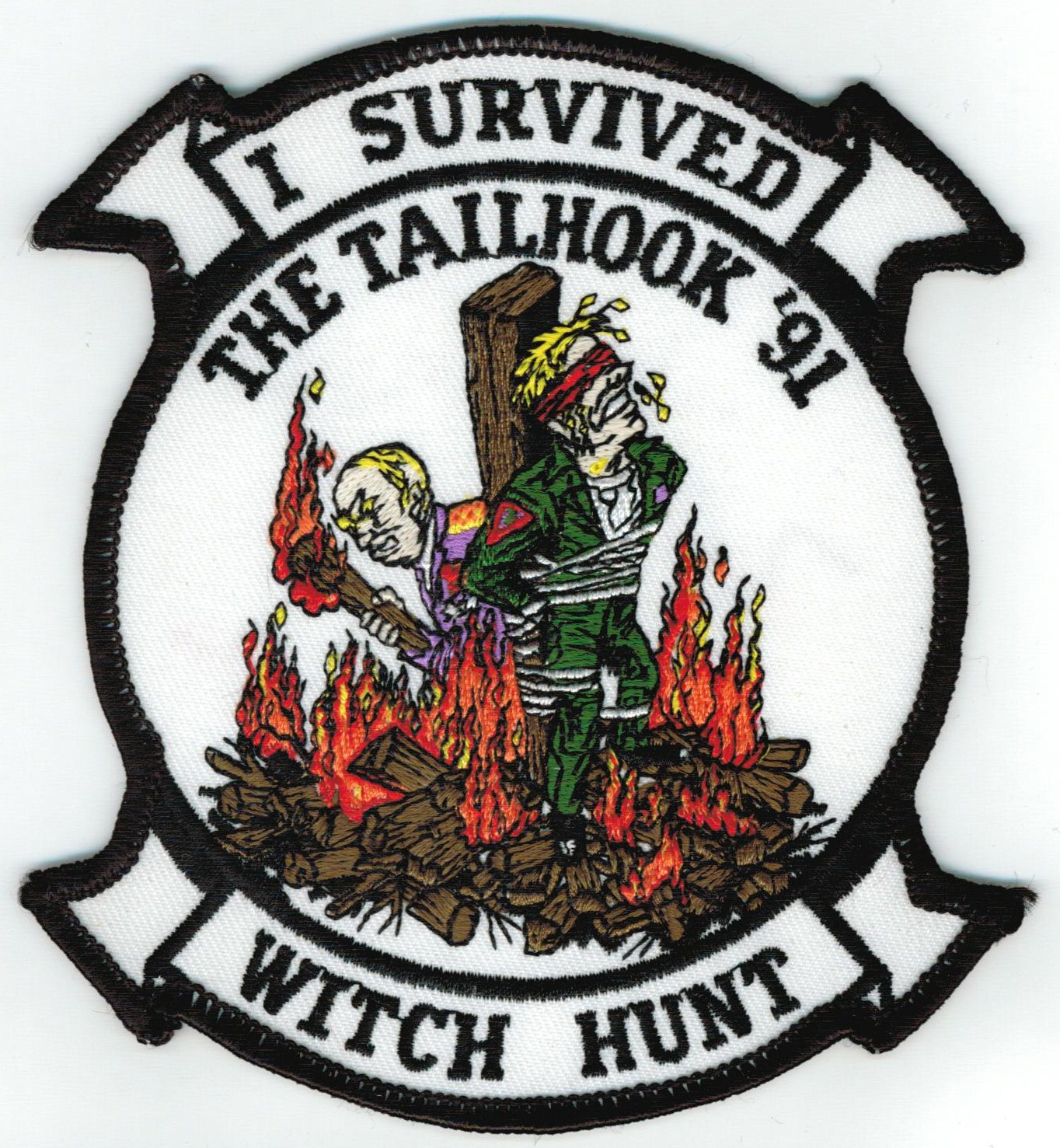
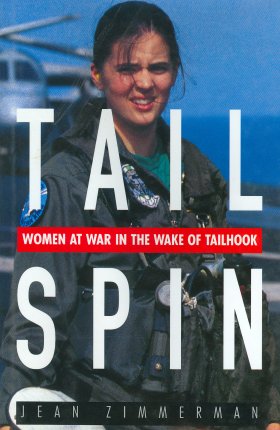
In 1991 I began working on my first book, Tailspin: Women at War in the Wake of Tailhook.

tailspin

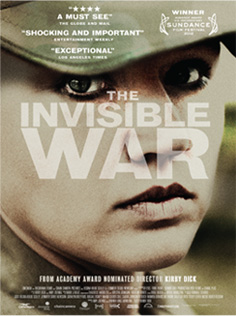
I recalled the experience of getting up close to the U.S. Navy (they gave me unprecedented access) when I saw a disturbing film today that treated the epidemic of rape in the U.S. military. The Invisible War profiled a dozen women and a few men of the thousands who have been assaulted by their fellow soldiers and whose cases were then dismissed or left to languish by the powers that be. It showcased the suffering that results when women in the armed services experience this violation at the hands of people they see as their peers and brothers and (often) their commanders, the very people that are supposed to watch out for their interests.

the invisible war

The movie explored antecedents for the current situation, beginning with the Tailhook scandal of 1991. I’m not an expert on military rape but I do know something about that sordid case, having covered it for Tailspin. At an outrageous, hard-partying, booze-fueled convention of naval aviators at a Las Vegas Hilton, women who were officers and jet jocks found themselves groped – too polite a term – by their peers. There was an endless corridor, a line up infamous as The Gauntlet. Afterwards, the victims were scapegoated and ignored when they went to seek redress for their experiences.

Tailhook #2

The story of that night only got grosser as I learned more about it. But one aspect grew more arresting and eventually took over the narrative. That was the issue that has now once again exploded on the front pages, the question of women in combat. In 1992, when I wrote Tailspin, people in the U.S. Navy were puzzling out whether or how more positions in the service should be opened to women on the front lines. It seemed to me that the link between the two subjects was obvious: sexual harrassment, the bane of the Tailhook scandal, would diminish as women were integrated into military roles that would earn them increased respect from men, roles at the heart of the warfighting business.

In the post-Tailhook era, the Navy changed its policies on recruitment, retention, training and selection of occupational fields to be “gender neutral to the maximum extent possible.” Women could now serve in all combat positions except SEAL commando units and submarines, and the top brass was putting them on aircraft carriers methodically, albeit slowly. Of course, women had long served honorably, and they had earned this expanded role.

women-navy

This has been a thorny issue for feminists. As Gloria Steinem was quoted recently in The New York Times, “We kept saying we hope no one will be in combat, but, if they are, women should be there, too.”

One person I profiled in Tailspin still speaks to me – in my thoughts, not in reality, because she died as the book was going to press.

kara close up

Kara Hultgreen trained as an F-14 Tomcat pilot alongside men when she didn’t know if she would ever get to serve as anything other than as an instructor. Now that the Navy had changed its rules for women, she would get the chance to go out on real missions. Hultgreen was rangy and brash and smart, like so many of her male counterparts in Navy flying. I had spent hours with her, much because so many people I had interviewed said, Kara, she’s the one you should talk to. She’s the real thing. A real Top Gun. Her handle was The Hulk. Now she had carrier qualified (brought her F-14 to land on the deck of the carrier with its tailhook catching the wire stretched across the deck) and she’d joined the Black Lions of VF-213, who were getting ready to deploy to the Persian Gulf.

I was writing the last few pages of Tailspin, writing about Kara and the future of naval aviation’s women, when I opened the Times on October 26, 1994 to see her picture. During a practice run over the Pacific, as Hultgreen was readying her plane to land, the aircraft suddenly lost altitude, dropping into the sea, and she was not able to eject in time. “She was a smart girl. I know she knew the chances she was taking,” said her grandmother.

Women in today’s military know the chances they are taking. But the 20 percent of female veterans who say they have been sexually assaulted shouldn’t have to take that kind of risk. Symbolism matters. Once equal opportunities for women as warfighters open in all fields, from the Army’s front lines to submarines’ cramped quarters, they’ll get the respect they deserve.

1 Comment

Filed under History, Jean Zimmerman, Writing

Klonopin and Knitting

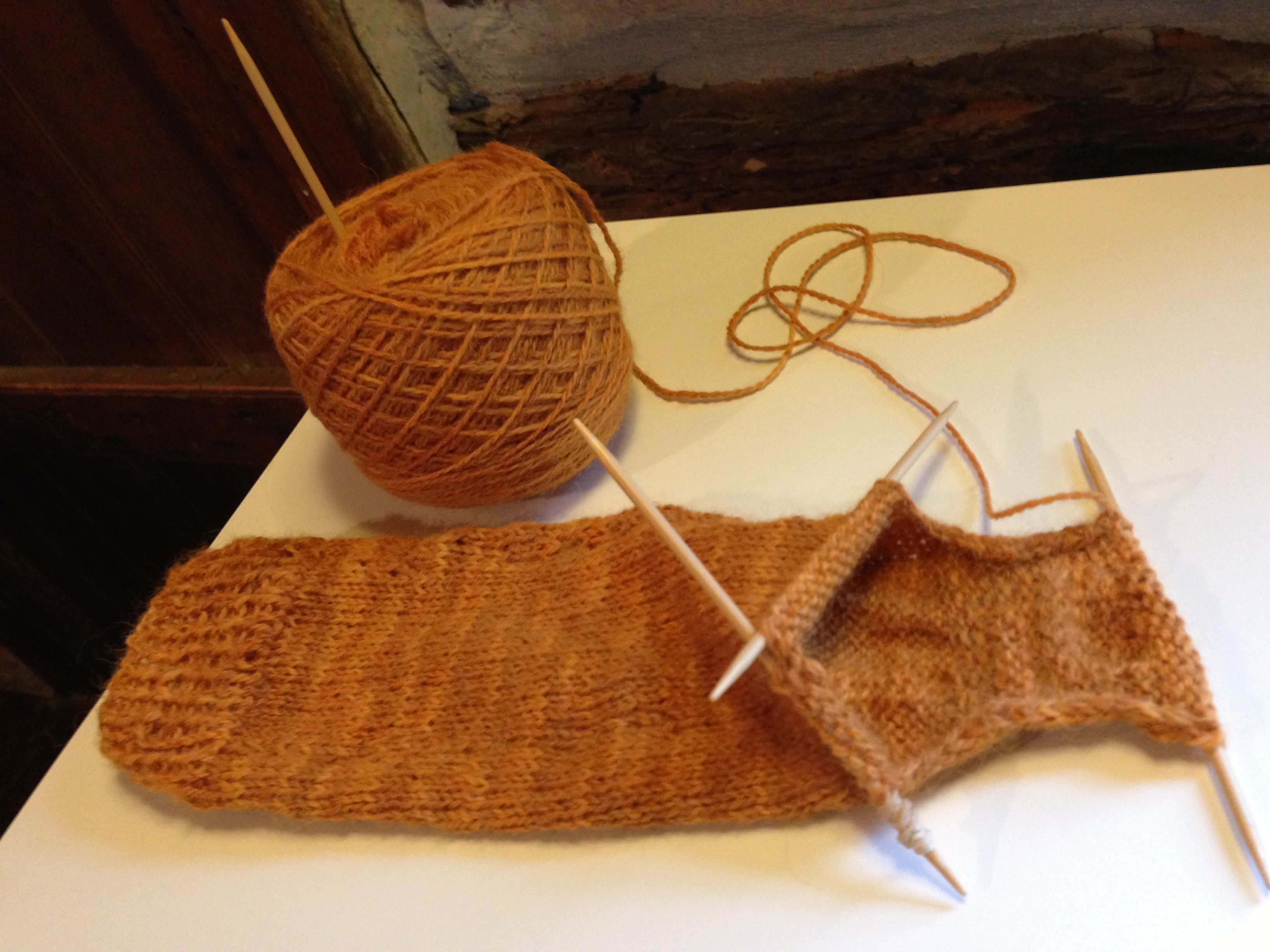
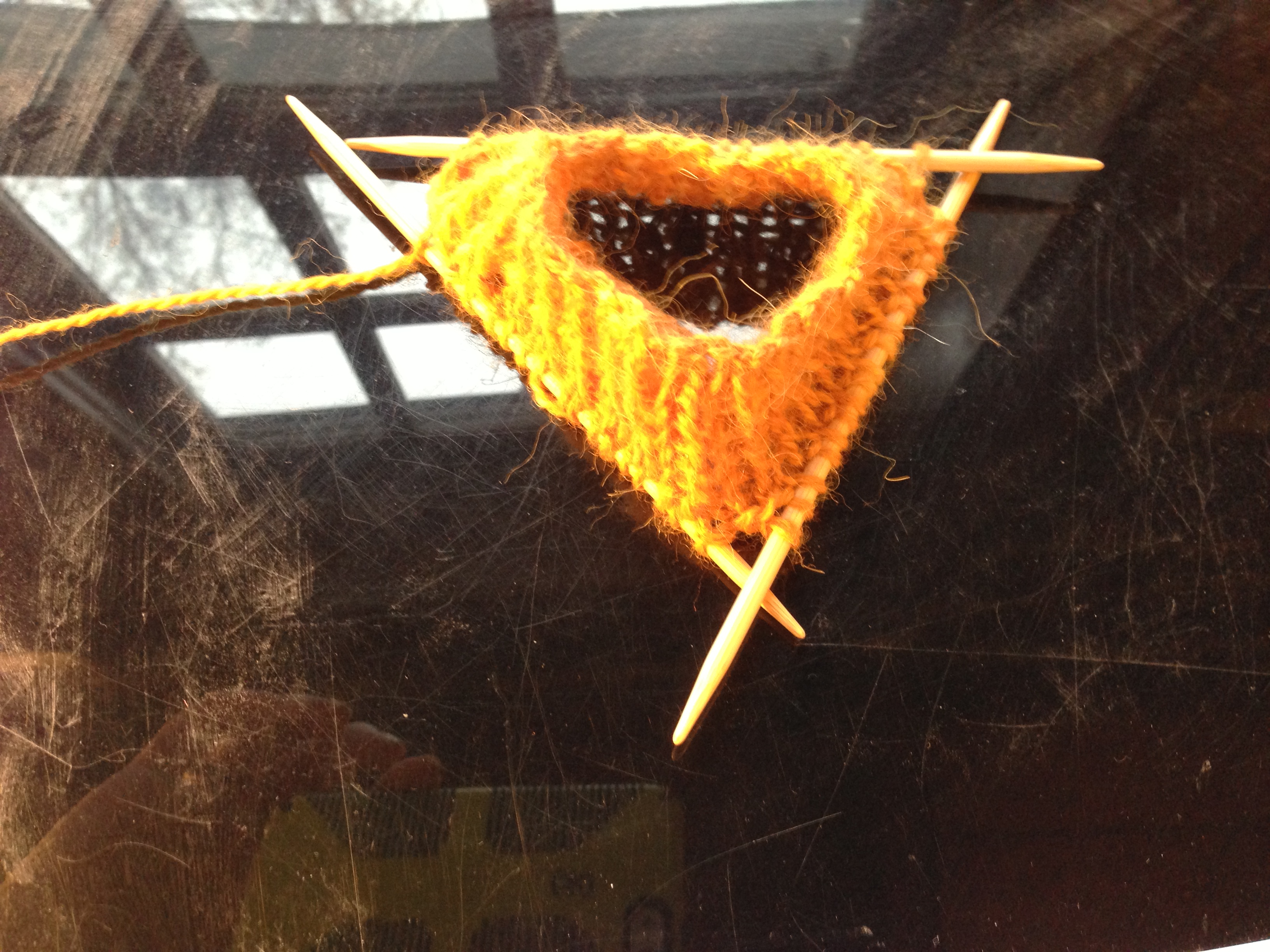
Which better soothes the savage beast, a trusted benzodiazepine or wool work? I choose both, one for night and one by day. I get a good eight hours. And as my pumpkin stocking comes along, so do I.

pumpkin sock 3

But I can’t limit myself to a sock, so I’m starting on a scarf of fine merino – its color defies description — that will be worked in a sprigged geometric I haven’t attempted before.

new wool

Different. And more difficult. One thing about knitting is that it’s humbling; it’s actually the hardest thing I’ve ever done, aside from writing, and I’m barely getting closer to the cable stitch that was my new year’s resolution for 2013. To cable, to make those gorgeous chunky fisherman twists, you need to use a special needle. Although I’ve heard a chopstick will do. But you really need, also, a brain that can move through the pattern’s complexities.

I wonder if my brain, trained up for the first time as a novice in this demanding, ancient craft, is approaching the actual work of my life differently. I’m currently ping ponging between two projects, neither of which I can divulge in detail at the risk of angering the novel gods.

But doing historical research, if you write about history, is another kind of soothing, even a self massage of a sort. It’s that good. You take your era, dive in and float with its current, sending your mind wandering to either shore and how your characters might relate to that time. The grittier, the more textured, the more exciting it is to submerge yourself through books and documents that will help you tell your story.

I will say this, that one book idea has to do with the American Revolutionary War – not in Boston, not in Philadelphia, but in New York City, which the Brits held for seven years while skirmishing on the outskirts of town with the Patriots. The high drama of the episode informs the book I am planning.

hat

“Sleep knits up the ravelled sleeve of care,” says Lady Macbeth. And so does research.

1 Comment

Filed under History, Jean Zimmerman, Knitting, Writing

An Egg Is an Egg Is an Egg

Maybe it is because I just dined in a Manhattan restaurant in a historic building with a soaring ceiling and fresh yellow and white décor. It reminded me of a famous Parisian eating place, the Angelina Tearoom on the Rue de Rivoli, that is of a different vintage but also boasts a high ceiling, yellow and white décor and kitchy chandeliers – as well as the best hot chocolate in the world and its famous Mont Blanc pastry, made with cords of chestnut cream. Or maybe it’s because on Sunday we sat in the kitchen and ate perfect soft boiled eggs in egg cups with buttered toast. In any case, I’ve been reading Alice B. Toklas’ Aromas and Flavors of Past and Present, and her recipes, especially those for eggs, speak to me.

I like Aromas and Flavors, published in 1958, as much as The Alice B. Toklas Cookbook (1954), which was her culinary triumph as well as a memoir of her life with Stein and Picasso and Matisse and all the others at the Rue de Fleurus in the first third of the Twentieth Century. The Alice B. Toklas Cookbook has the seminal sociological goods, but Aromas simply and directly delivers the recipes. It cuts to the chase, an exquisite approach to cuisine that seems awfully foreign today.

“I refuse to believe that trading recipes is silly,” wrote Barbara Grizzuti Harriso. “Tunafish casserole is at least as real as corporate stock.”

Not that she, whose culinary prowess sustained Gertrude Stein’s mind and girth, would ever make tuna casserole. But what Toklas left us is certainly real.

On to eggs. Perhaps because she lived through food shortages during both wars, the simplest preparations predominate, and servings are diminutive. Toklas’ editor, Poppy Cannon, marginally comments that Alice would serve the following dish, “Eggs Prepared in the Creuse,” “as a first course, in which case only 1 eggg is allowed for each person.”

Eggs/Salt/Pepper/Cream/Swiss Cheese

Beat the whites of 8 eggs until very stiff, seasoning them with ½ tsp salt and ¼ tsp pepper. Place them in the bottom of a well-buttered fireproof dish, flattening the surface with a moist spatula. Make 8 hollows in which you place the yolks of the eggs. Cover each yolk with 1 tablespoon cream. Sprinkle the whites of the eggs with ¾ cup of grated Swiss cheese. Place in 450 degree oven for 8 minutes and serve piping hot.

Of course Alice didn’t only prepare eggs. In The Alice B. Toklas Cookbook she writes about the proper way to kill pigeons for cooking. After the First World War, she says, the concierge at Rue de Fleurus brought her a gift sent by a friend in the country: “Six white pigeons to be smothered, to be plucked, to be cleaned and all this to be accomplished before Gertrude Stein returned for she didn’t like to see work being done. If only I had the courage the two hours before her return would easily suffice. A large cup of strong black coffee would help.”

alicebstein-1

She continues, “It was a most unpleasant experience, though as I laid out one by one the sweet young corpses there was no denying one could become accustomed to murdering.” The result, her recipe for Braised Pigeons on Croutons, follows, consisting of stewing morsels of the poultry with salt pork and mushrooms in butter and Madeira.

I imagine it satisfied Gertrude, who was known for not being able to boil an egg.

The marijuana brownies Toklas became famous for were actually from the recipe provided by a friend, Brion Gysin. Toklas writes, “anyone could whip up [Haschich Fudge] on a rainy day,” and continues

“This is the food of paradise – of Baudelaire’s Artificial Paradises: it might provide an entertaining refreshment for a Ladies’ Bridge Club or a chapter meeting of the DAR. In Morocco it is thought to be good for warding off the common cold in damp winter weather and is, indeed, more effective if taken with large quantities of hot mint tea. Euphoria and brilliant storms of laughter; ecstatic reveries and extensions of one’s personality on several simultaneous planes are to be complacently expected. Almost anything Saint Theresa did, you can do better if you can bear to the ravished by “un évanouissement reveillé”.

“Take 1 teaspoon black peppercorns
1 whole nutmeg
4 average sticks of cinnamon
1 teaspoon coriander
These should all be pulverized in a mortar.

“About a handful each of stoned dates, dried figs, shelled almonds and peanuts: chop these and mix them together.

“A bunch of Cannabis sativa can be pulverized. This along with the spices should be dusted over the mixed fruit and nuts, kneaded together.

“About a cup of sugar dissolved in a big pat of butter. Rolled into a cake and cut into pieces or made into balls about the size of a walnut, it should be eaten with care. Two pieces are quite sufficient.

“Obtaining the Cannabis may present certain difficulties, but the variety known as Cannabis sativa grows as a common weed, often unrecognized, everywhere in Europe, Asia and part of Africa; besides being cultivated as a crop for the manufacture of rope.

“In the Americas, while often discouraged, its cousin, called Cannabis indica, has been observed even in city window boxes. It should be picked and dried as soon as it has gone to seed and while the plant is still green.”

1 Comment

Filed under Cooking, History, Jean Zimmerman, Writing

Sock and Story

To some, knitting a sock might seem boring. All the world is talking today about Armstrong’s drug confession, about Teo, about the Americans abducted in Algeria. The exciting narratives of the world.

To me, it is high drama.

continued sock

The piling on of tiny knotted nuggets of sock yarn. The beginning a story of whether I can do this thing at all, this task I’ve set my mind to. I feel mildly victorious, not for finishing a chapter or a book or even a haiku, this time, but for finishing a row without dropping a stitch. And then, more amazing, dropping a stitch and managing to fix it with a needle and a tiny crochet hook. I’ve also added extra stitches and successfully taken them away, and mistakenly dropped loops off the needle and fetched them up before they were lost forever. Now that’s progress, and all in seven rows. Making mistakes, fixing them.

Story hung heavy in the air  last night when I returned to the Union League clubhouse after visiting for their December Book Fair, this time to give a talk for members about I.N. Phelps Stokes and Edith Minturn.

This is why you go to the Union League if you’re lucky enough to be invited: besides the fine wines, passed hot hors d’oeuvres and rare roast beef, besides the vitrines of toy soldiers (a long-term loan from one collector, who personally dusts all 15,000 of the figures when he visits once a year), besides the animated, literate audience, they give you a thank you gift.

A bust of Abraham Lincoln engraved with your name.

Lincoln bust

Throughout the evening, everyone liked to tell the tale of the Union League’s involvement in the Civil War, how it was formed to support Lincoln, how it sponsored two Negro battalions, how it opened its commodious pockets to fund the good guys. Hence the name.

The story I told over dessert intertwined with theirs. I wrote about Edith Minturn, whose grandfather, Robert Bowne Minturn, was the first president of the club.

Robert Bowne Minturn

Minturn came from an illustrious shipping family, grew up in Manhattan, received some education in England, and was as well known for his charitable works as he was for his business acumen. He was one of the people behind the establishment of Central Park – then called The Central Park — along with his firebrand wife, Anna Mary Wendell. He created an association for bettering the lot of the poor of New York. He was passionately opposed to slavery. A story has him buying a number of slaves in order to set them free.

The Union League would appear to be a rather reactionary place now, but it took a progressive stance back in the 19th century, when the Draft Riots tore apart New York City and you literally took your life in your hands to back President Lincoln. The club did important things, has a good story to tell even now.

On my way back home, Pershing Place, the street near Grand Central Station, was blocked, oddly, by a series of horse trailers, with three sleek mares chomping out of gunny sacks hung from the side of one vehicle. For a moment I felt transported to the time of the Union League’s founding, when these horses would have made for an ordinary sight on a snowy January night. Now a crowd was clicking away with camera-phones, wanting a story, an illustrated tale to send a friend, to tell about our night in New York.

More story, in the train station, with Klieg lights and corridors blocked off under the western staircase. Blocked off, you say? New Yorkers will not be denied.

film shoot

The hordes needed a good sighting of the hats, and it was all the production guys could do to wrap them them back around to the waiting room. It was late, 10pm, after a long day that started with slush on the ground, but we all wanted to know: What’s the story here? Is it a video, a movie, a commercial? What?

Back, back, called the exasperated production guy. We’re gonna do this shot a million more times.

That’s alright, I’m done with that business. I’m going back to my own small but crucial narrative, the story of a sock.

1 Comment

Filed under History, Jean Zimmerman, Knitting, Love, Fiercely, Writing

Birthday Wishes, Simone

Today, light a birthday candle for Simone de Beauvoir, who made so many beautifully coherent declarations, including, “Each of us is responsible for everything and to every human being.”

Though Beauvoir came to lasting fame for her revolutionary treatiseThe Second Sex, I have always loved  her Memoirs of a Dutiful Daughter, in which she wrote about coming to womanhood in the restrictive french society of her day.

SIMONE-DE-BEAUVOIR-001 Born in 1908, Beauvoir had a sense of her uniqueness from when she was around ten years old.

“I became in my own eyes a character out of a novel… One afternoon I was playing croquet with Poupette, Jeanne, and Madeleine. We were wearing beige pinafores with red scallops and embroidered cherries. The clumps of laurel were shining in the sun, and the earth smelled good. Suddenly I was struck motionless: I was living through the first chapter of a novel in which I was the heroine… I decided that my sister and my cousins, who were prettier, more graceful, and altogether nicer than myself would be more popular than I; they would find husbands, but not I. I should feel no bitterness about it; people would be right to prefer them to me: but something would happen which would exalt me beyond all personal preference; I did not know under what form, or by whom I should be recognized for what I was. I imagined that already there was someone watching the croquet lawn and the four little girls in their beige pinafores: the eyes rested on me and a voice murmured: “She is not like other girls.”

Yet Simone was hardly a rebel compared with her best friend Zaza. The two girls were called the “inseparables.” Zaza and Simone shared a common interest in ideas and in books. “ZaZa was a cynic,” Beauvoir later said when asked what attracted her to her friend. “ I had never heard anyone speak with such openness and force. There was no such thing as propriety, and no subject was sacred. Even at such a young age, I had learned to guard my remarks, but not she. She would say anything.” She relays a story in the book about Zaza delivering a perfect solo at a packed piano recital, then sticking out her tongue to taunt her instructor – innocent enough sounding, but typical of her antisocial shenanigans.

In 1929, Zaza died of meningitis. The way Beauvoir portrays it in Memoirs, Zaza’s struggle to resist an arranged marriage was the real cause of her death. Zaza’s friendship and her untimely demise haunt Memoirs of a Dutiful Daughter, and fueled the great feminist’s later critiques of society’s constraints on women.

Beauvoir would later write: “I tore myself away from the safe comfort of certainties through my love for truth – and truth rewarded me.”

Reading about Zaza and Simone was formative for me when I was an adolescent, trying to figure out my role as the heroine of my own life. I remember gazing out the kitchen window at a spreading tree in the center of our yard and having a thought cross my mind, very clearly and consciously: I am myself. My self.

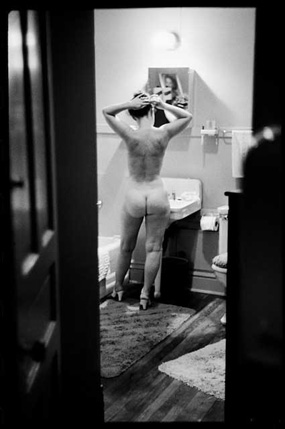
Simone de Beauvoir went from that beige pinafore on to greatness, her ideas reaching millions, startling people with her unorthodox relationships with Sartre and other men, such as, famously, the American writer Nelson Algren. Her social theory, her political activism, her fiction, her feminist theory have inspired legions. There was even a posthumous kerfuffle over a nude photo Art Shay took that surfaced on the cover of the French journal Nouvel Observateur in 2008. She shocked the world all over again.

de Beauvoir naked

It’s a beautiful photo. I think Zaza would have approved.

1 Comment

Filed under Jean Zimmerman, Writers, Writing

The Muse of the Odd

“Woo the muse of the odd,” wrote Lafcadio Hearn.

Speaks to me of my novel, Savage Girl, its manuscript just now revised. Well, it probably still needs a word changed. And another. And another. But the book is basically done and on its way to publication by Viking.

I think the character of Savage Girl herself shines out more now than before. Discovered as an adolescent in a Virginia City, Nevada side show in 1875, she is being displayed as a wild child – one raised by wild beasts. All sorts of mystery surrounds her.

wild children

The locals line up to ogle her. Then a seriously wealthy couple from New York City come out West to inspect their silver mines, adopt the girl, and bring her back East to raise her up as a debutante.

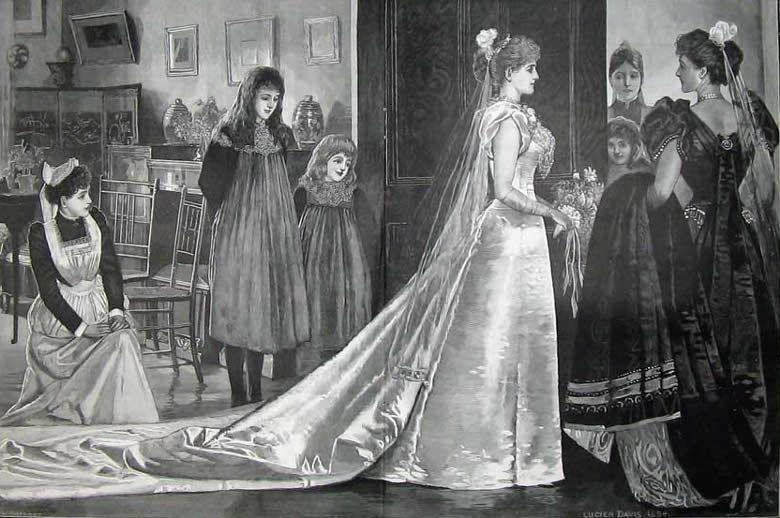
Victorian-debutante

It was a time when people were fascinated by the differences/connections between beasts and humans (Darwin, etc.) and the question of whether this young girl can be civilized is pivotal. In the process, worlds crash together, and murder and mayhem ensue.

homo_sapiens

The narrator of this tale, a young anatomy student named Hugo Delegate, takes as his mentor Andreas Vaselius, the founding genius of anatomical art who in 1543 published an illustrated book called De humani corporis fabrica (“On the Structure of the Human Body”). The drawings shocked the Rennaissance, showing the human animal demystified. More questions of what makes us human.

Visalius

Together, Hugo and the Savage Girl go on adventures through Gilded Age Manhattan, searching for the bad guys, discovering each other. Oddities of all sorts prevail. It was a fabulously odd book to work on. And I hope other people will read it in the same spirit.

1 Comment

Filed under Jean Zimmerman, Savage Girl, Writing