Goodbye, Port of Miami.

Goodbye, sparkling light and women’s perfume and Latin everything. I rode the Hilton elevator with Annie Lamott, the last wisp of the Book Fair. Now, back to books.
Goodbye, Port of Miami.
Goodbye, sparkling light and women’s perfume and Latin everything. I rode the Hilton elevator with Annie Lamott, the last wisp of the Book Fair. Now, back to books.
Filed under Jean Zimmerman, Publishing, Writers
The violet and gold neon of Ocean Drive in South Beach is a far cry from the Miami Book Fair.

South Beach From a Convertible
But that’s where I wound up after the hectic, stimulating two days of panels, lectures, and sometimes electrifying, sometimes tiresome schmoozing. Finally, dinner with bookish friends: Joe’s is an institution in Miami Beach (the restaurant is now a century old) and its stone crab claws are not to be believed — hunks of flesh that you pull off the cartilage with your teeth the way you would an artichoke leaf, after dunking in a creamy mustard mayonnaise. Then there are fried green tomatos. And a key lime pie almost as good as mine. I don’t know how the ladies of South Beach suction themselves into those tight black minidresses after the crabs at Joe’s, but they seem to manage okay.
Earlier today I served on my book panel. The prose of Da Chen is often admired as lyrical, and I can say as a fellow panelist that his presentation skills are equally lovely. He was at the Book Fair to talk about his most recent novel, My Last Empress, and after executing a standup routine about his impoverished upbringing in China that was both soulful and hilarious, he took out his flute and ably delivered a haunting melody. Only then did he read briefly from his new work. And that wasn’t too bad either.
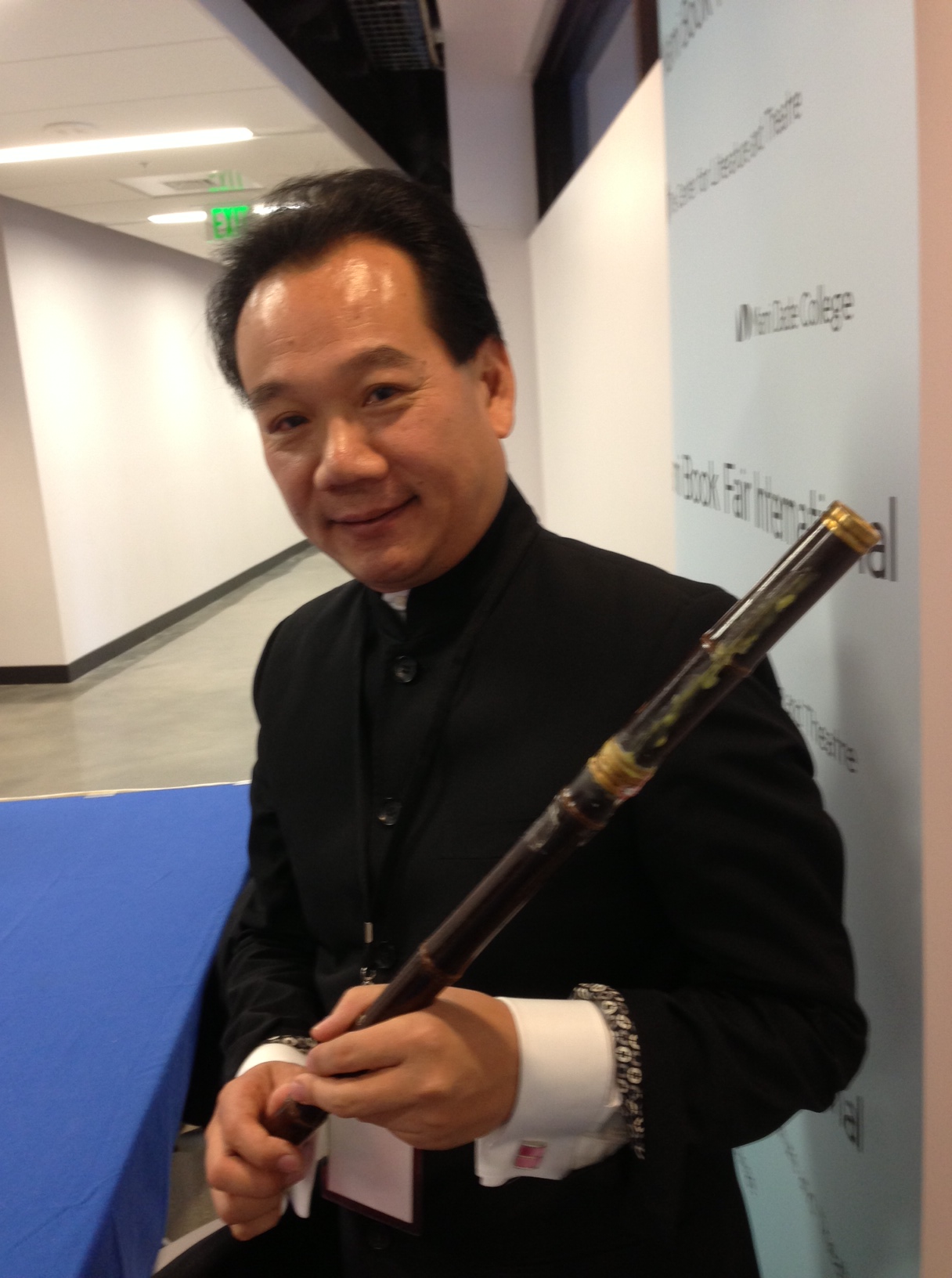
Da Chen and His Flute
What I found, I think, even more remarkable than his presentation was his mode of performing autographs. He unwrapped a tray of black ink along with a soft brush, and applied personalized calligraphy to the book of every person who approached him for a signing. He then stamped his name in red. Here is the inscribed flyleaf of my copy of his book.

“For a Book Friend,” it reads, with the characters for gold and for pen. I think that giving back to readers in this way is just what authors should aspire to.
When I found the writerly atmosphere a little stuffy — yes, it happened — I explored the bookseller tents outside. There were some amazing nuggets in the stalls, with, as usual, the things I wanted not found desirable by anybody else and thus available for only a buck or two.
A 1934 edition of The Home Arts Magazine, with this the nostalgic image on the front cover:
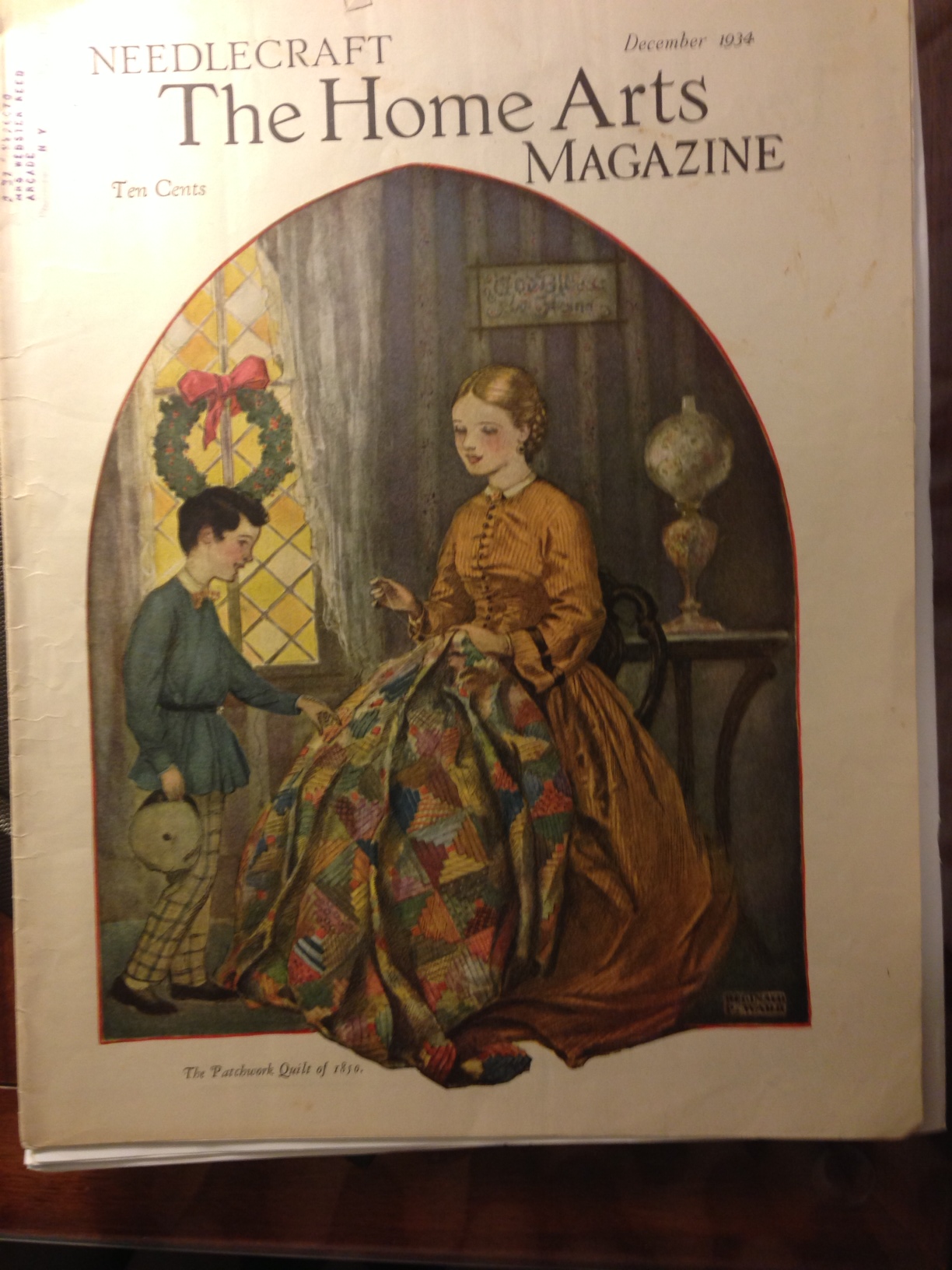
And this on the back. You’ve come a long way, baby.

I also found a copy of a book that haunted me as a young reader.

And possibly the most useful item, a book titled 59 Authentic Turn-of-the-Century Fashion Patterns, with exacting instructions for assembling a Ladies’ Street Costume or a Gentlemen’s Night Shirt. Or a Stout Ladies’ Costume, for those who might indulge too often in the high life at Joe’s.

Filed under Fiction, Jean Zimmerman, Publishing, The Orphanmaster, Writers, Writing
Signing. A lot of it going on around the Book Fair, at rectangular tables with author name cards and lines of readers in front of them, books tucked under their arms. Don’t cry too much, but it’s tough to be a big-name writer, armed with nothing more than a Sharpie and a smile. Naomi Wolf gave so rousing (arousing?) explication of the vagina-brain connection — it was practically a religious revival in that Miami Dade lecture hall — that when she reached the signing table outside some steam seemed to have gone out of her step. Another signer, a graphic novelist, puts down a full, funny illustration of himself on the title page. Takes time to get through a line of signature seekers when you go all out like that. It’s good there’s entertainment here while you wait.
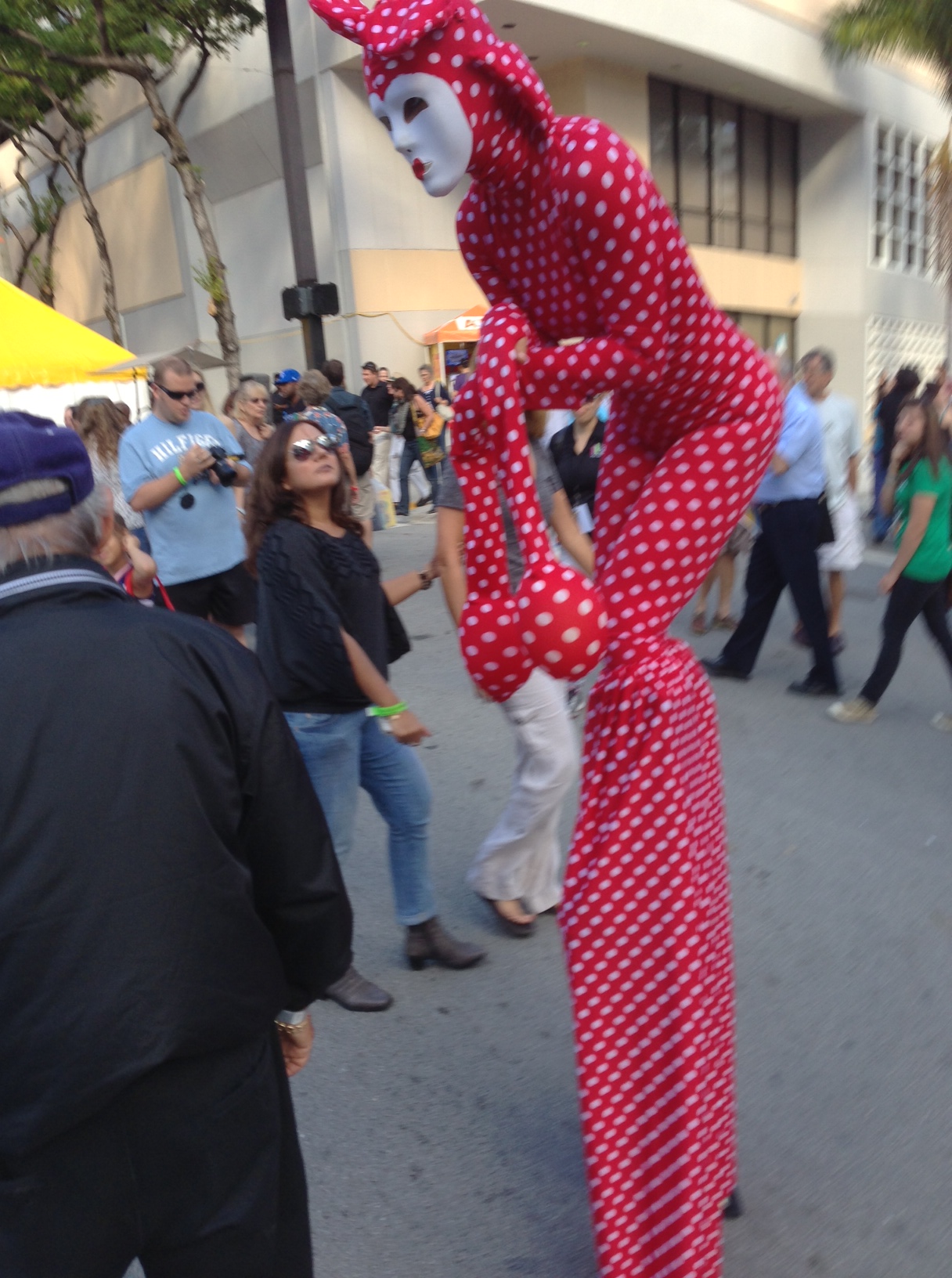
The Miami Book Fair
For some diversion on this subject, check out the autograph auction that will be held November 29th by Swann Galleries in NYC. You can see all 294 lots online and whether you like Americana, presidents, artists or writers, there’s something for you. Not that you can necessarily afford one of these scraps of ephemera. A handwritten quote from Mark Twain from his Pudd’nhead Wilson is starting at $3,000 to $4,000. “Consider well the proportions of things: it is better to be a young June-bug than an old bird of paradise.” Whatever that means.
A woman who interviewed me today for a radio show asked for my signature in The Orphanmaster even though, she unapologetically announced, she hadn’t read the book. “It might be worth something some day!” she said with a funny tone, as though that was actually the least likely scenario that would ever come to pass.
On the subject of never knowing what might come to pass, I visited a panel that had four participants: the two authors of Beautiful Creatures, Kami Garcia and Margaret Stohl, and two young actors who will star in the 2013 film adapted from that teen novel. The two writers met when one was the teacher of the other’s adolescent daughter. They hatched the story and wrote it over seven weeks, only as a means of entertaining their daughters and their friends, with what Garcia called a “human coming of age story in a magical world.” An author friend submitted the manuscript to a literary agent behind their backs. That book and sequals have gone on, of course, to be mega mega best sellers. Stohl, the teacher, even had to quit her teaching job — she said sorrowfully — she just had to spend so much time touring internationally on behalf of the book, it wasn’t fair to the kids she taught. As for the movie, they were thrilled, thrilled, and one provocative detail is that the set and actors were so perfect, when the book’s editor visited she burst into tears.
Filed under Jean Zimmerman, Publishing, The Orphanmaster, Writers, Writing
At a pre-Book Fair backyard party under the Miami palms and a light drizzle of rain, I talked to writers. One had published a novel about the last week of Marilyn Monroe’s life. One was working on a history of Los Angeles and water. One, a MacArthur-winning poet, had written about sea monkeys. One had just brought out a book about the Wall Street implosion.
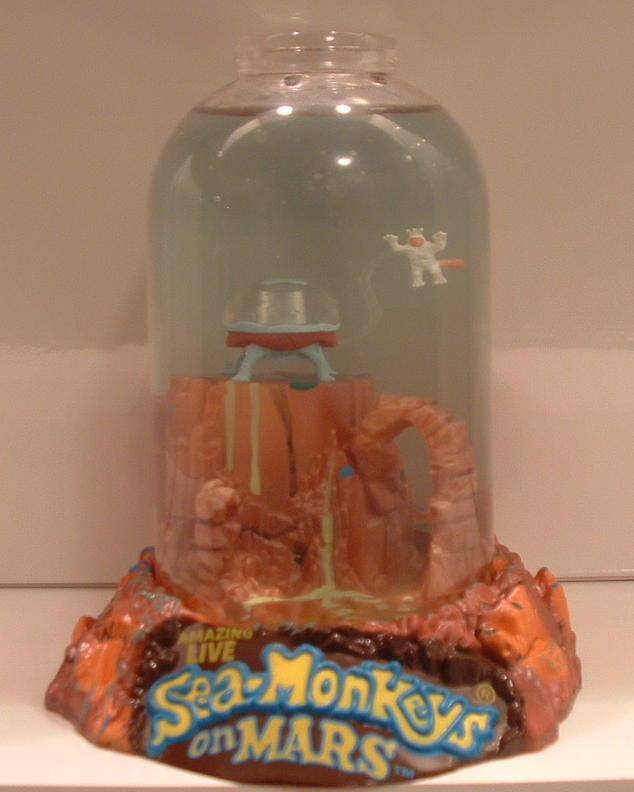
I spoke with an archivist who lives here in Miami. She knew all the head librarians at the great Manhattan collections — the New-York Historical Society, the Manuscripts room at NYPL, the Morgan, all of them.
I know your book! she told me. My book group just read it this past month! They’ll all be there Sunday for your panel.
Very, very nice, under a palm tree, under a light sprinkling of rain, in Miami.
Filed under Jean Zimmerman, Poetry, Publishing, The Orphanmaster, Writers, Writing
The Miami Book Fair, where I’ll be speaking this weekend, looks to have a smashing array of author events. In addition to my panel of historical fiction writers — with Michael Ennis on The Malice of Fortune, Debra Dean on The Mirrored World, and Da Chen on My Last Empress — at 12:00 Sunday, there are some real stars. Tom Wolfe. Junot Diaz. Sandra Cisneros. Jeffrey Toobin. Dave Barry. Martin Amis. And Naomi Wolf, if you’re in the mood for some frank talk about vaginas. There are innumerable cookbook authors, offering demonstrations, also poetry readings, and a guy, Derf Backderf, who did a graphic novel about Jeffrey Dahmer.
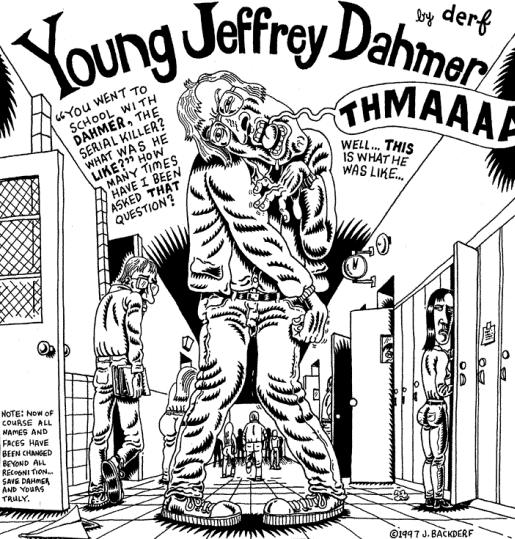
Image from My Friend Dahmer
I might stay back at my hotel’s rooftop pool for that one. Oh, that’s right, I just wrote a book about cannibals myself.
If you want to see some of this stuff, you can check out the schedule on Book TV, they’re going to be covering highlights of the Fair. As far as I can see, my panel didn’t make the cut, but you never know.
Filed under Jean Zimmerman, Publishing, Writers
This is a wonderful thing: an internet presentation of Moby-Dick, or The Whale, with each chapter delivered by an individual reader, and artwork commissioned to illustrate the text. It’s called the Moby Dick Big Read, http://www.mobydickbigread.com, and you can download a chapter a day — that would be 135 chapters. You can also begin at the beginning and go at as leisurely pace as you wish.
“I have written a blasphemous book,” said Melville when his novel was first published in 1851, “and I feel as spotless as the lamb.”
The world paid his book little mind. Moby-Dick never sold out its initial printing of 3,000 copies, and his total earnings from the American edition amounted to just $556.37. By 1876, in fact, all of Melville’s works were out of print. It was not until the next century that the writer’s brilliance was appreciated.
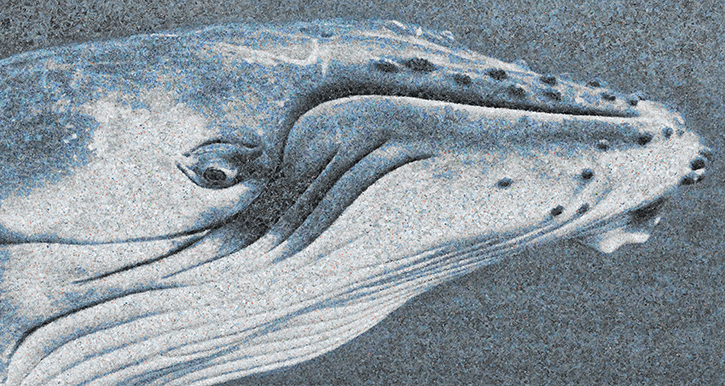
Artist: Chris Jordan
What I’m finding, as I knit and listen, is that listening makes me want to go back and read the book on the page. Perhaps that is because too much of my brain is preoccupied with knitting 12 then purling 12, knitting 7 then purling 7. But also, Melville’s prose is just too great to only hear, you want to relish it in print.
Like Ishmael’s description of the officers’ mess, Chapter 34. In the cabin, he writes:
“was no companionship; socially, Ahab was inaccessible. Though nominally included in the census of Christendom, he was still an alien to it. He lived in the world, as the last of the Grisly Bears lived in settled Missouri. And as when Spring and Summer had departed, that wild Logan of the woods, burying himself in the hollow of a tree, lived out the winter there, sucking his own paws; so, in his inclement, howling old age, Ahab’s soul, shut up in the caved trunk of his body, there fed upon the sullen paws of its gloom!”
Filed under Fiction, Jean Zimmerman, Writers
When John Cheever died, the flags in Ossining flew at half mast. He lived in Ossining from 1961 until his death in 1982 — just down Cedar Lane from the Cabin, as it happens. A vitrine dedicated to the writer occupies a wall of the Ossining Public Library, built in 2007, and many locals have a Cheever story to tell. Like the one a neighbor shared about the time John stripped naked to swim at a cocktail function and it cleared the party. Whatever his behavior, his skill and imagination had me stoked when I took a fiction writing class in college where the only text was the writer’s Collected Stories.

Cheever wasn’t the only great artist to live in Ossining — Walker Evans resided on his sister’s farm here in 1928 (where he grew hybrid gladiolas) and intermittently in the years afterward, and he produced dozens of photographs here, including this one, in the collection of the Met.
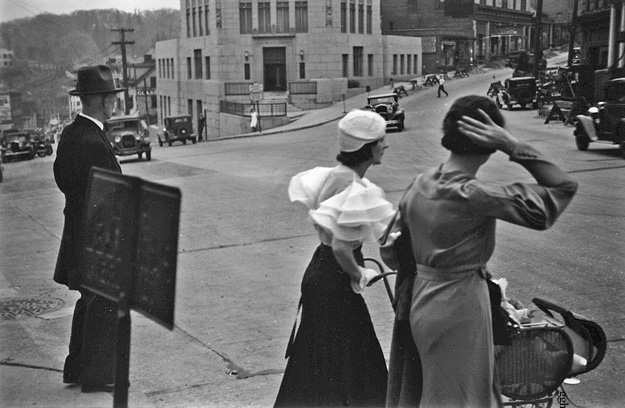
We drive by the bank standing at this fork every time we go to the library.
Evans called himself “tourmente, serre par la sante perverse d’Amerique” — “tormented, constrained by the perverse well-being of America.”
When they first met Cheever worked as a darkroom assistant to Evans. Later Evans captured a young, penniless Cheever’s boarding house room on Hudson Street. In all the photos Walker Evans took in Ossining, he never depicted Sing Sing, the looming prison for which the town was named. And he never shot the expansive Hudson.

However, Ossining is known historically as much as a fisherman’s spot as an artist’s haven. Witness this giant sturgeon caught off the Ossining waterfront, one of nature’s monstrous creatures.

I will have the pleasure of presenting at the Ossining Public Library on Saturday at 1:30 pm, with pictures, as I customarily do. Signing copies of The Orphanmaster afterward. Come one, come all.
Filed under Art, Fiction, History, Jean Zimmerman, Photography, Writers
A new version of Fairy Tales From the Brothers Grimm by the great Philip Pullman is about to come out in November — reviewed here with a preview, The Frog King.

If all the frogs in the marsh at the Cabin became princes we’d have quite a party.
Filed under Jean Zimmerman, Writers, Writing
I’m off to the countryside near Siena, Italy, and I will attempt to post from there.
I am psyched.
Henry James went to Siena and imagined the interior monologue of the houses there, “silvered by moonlight”: “We are very old and a trifle weary, but we were built strong and piled high, and we shall last for many an age. The present is cold and heedless, but we keep ourselves in heart by brooding over our store of memories and traditions. We are haunted houses in every creaking timber and aching stone.”
Filed under Jean Zimmerman, Writers, Writing
On October 11th I’ll take part in an interesting event, at the University Settlement in Manhattan. This is the organization’s 125th birthday; it has worked for over a century to help integrate and educate immigrants on New York’s Lower East Side. My involvement? I.N. Phelps Stokes designed the brick-and-limestone University Settlement building at 184 Eldridge Street. It was his first architectural commission, when he returned to the States with Edith Minturn after their extended honeymoon in Paris.
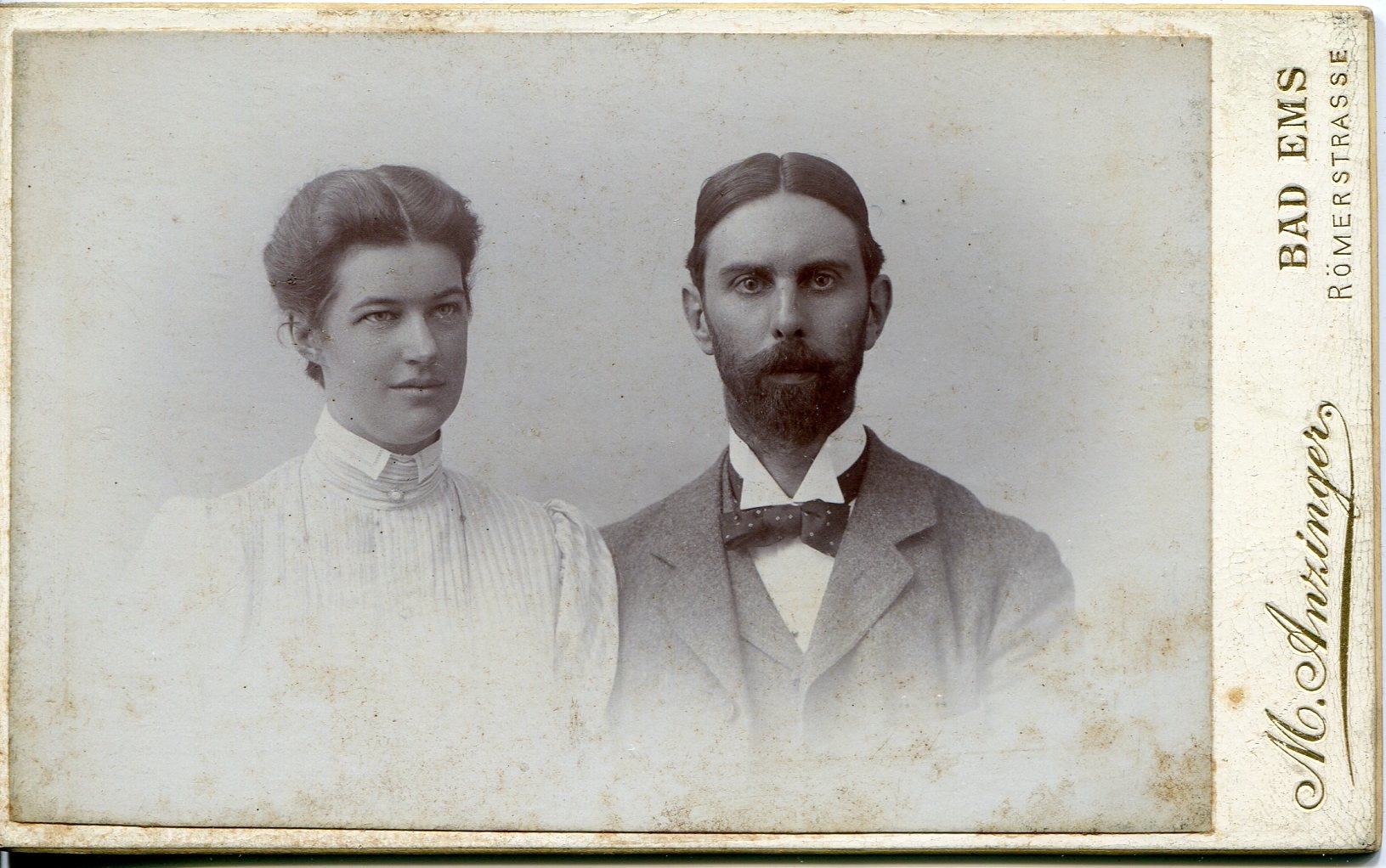
Newton and Edith
A clean and classical creation, still extant, the building at 184 Eldridge rose grandly, and improbably, above the swirl of street life below. On the Lower East Side at the time, Russian and Polish pedestrians jostled speakers of Italian and Yiddish; narrow, cobbled streets teemed with horse-drawn wagons, electric cars and horse cars; and pushcarts hawked everything from tomatoes to tin cups.
In this dingy neighborhood, among jumbled, decrepit tenements, there now stood a fresh, elegant new structure, Newton’s debut architectural contribution. What made it even more amazing than its appearance, though, was its function. It had been commissioned by people who intended to improve, if not revolutionize, the conditions all around it. —Love, Fiercely, p. 165
It was a different era. While local denizens streamed into the building to use the baths or take English lessons, well-heeled volunteers resided in elegant top-floor digs — it was a badge of honor among certain young aristocratic idealists to put in time at University Settlement.

University Settlement Building
To celebrate the birthday, the group is getting together descendants of the original donors to the cause, with names like Rockefeller, Warburg and Huntington, for a portrait and champagne. Here is the original document listing names and amounts.

University Settlement Building Donors 1899
If you want to know more about the event, go to the New York Social Diary for September 26 and scroll down. If you are a descendant or know one, let me know and I’ll pass the name along!
For a review of Love, Fiercely, in which I describe the story of building the Settlement House, click on the Social Diary for Monday, September 24 and scroll down.
Rich philanthropists putting their hearts into fixing the slums. Now there’s an idea.
Filed under History, Jean Zimmerman, Love, Fiercely, Publishing, Writers, Writing
Look outside. The hot sun, the flawless sky. Other than the season, today is like another day.
“It was a very lovely spring day, Gertrude Stein had been going to the opera every night and going also to the opera in the afternoon and had been otherwise engrossed and it was the period of the final examinations, and there was the examination in William James’ course. She sat down with the examination paper before her and she just could not. Dear Professor James, she wrote at the top of her paper. I am so sorry but really I do not feel a bit like an examination paper in philosophy to-day, and left.
“The next day she had a postal card from William James saying, Dear Miss Stein, I understand perfectly how you feel I often feel like that myself. And underneath it he gave her work the highest mark in his course.”
Gertrude Stein, The Autobiography of Alice B. Toklas
Filed under Jean Zimmerman, Writers, Writing
In a few weeks I am flying to Italy, to Siena. I will be staying in the countryside, but perhaps we’ll get into the city, about which Henry James has this to say:
“Other places may treat you to as drowsy an odour of antiquity, but few exhale it from so large an area.”
Filed under Jean Zimmerman, Writers
Spicy chocolate ice cream wasn’t my only reward for visiting with the folks at Ventfort Hall in Lenox, Massachusetts (50 people attended, and they seemed enthusiastic about my picture-talk on Love, Fiercely: A Gilded Age Romance).
Today I visited The Mount, Edith Wharton’s gem of a home nearby. I’ve been there before but it has been seriously spruced up in the meantime and most of her library has been reclaimed at auction (at grave financial risk to the organization that owned the house, but it all turned out okay), so the experience wowed me all the more. Gil and Maud fell under the place’s spell as well. The house is all clean lines and airiness and balance, designed by Wharton in conjunction with two different architects, and there is nary a Victorian wallpaper in the joint. It is as if all that 19th century fustiness simply blew away when the dial hit 1900 (The Mount went up in 1902).
Fans of The House of Mirth (like me) will foam at the mouth when they see the early pages of the novel spread out over the bed in Wharton’s sunlit bedroom.
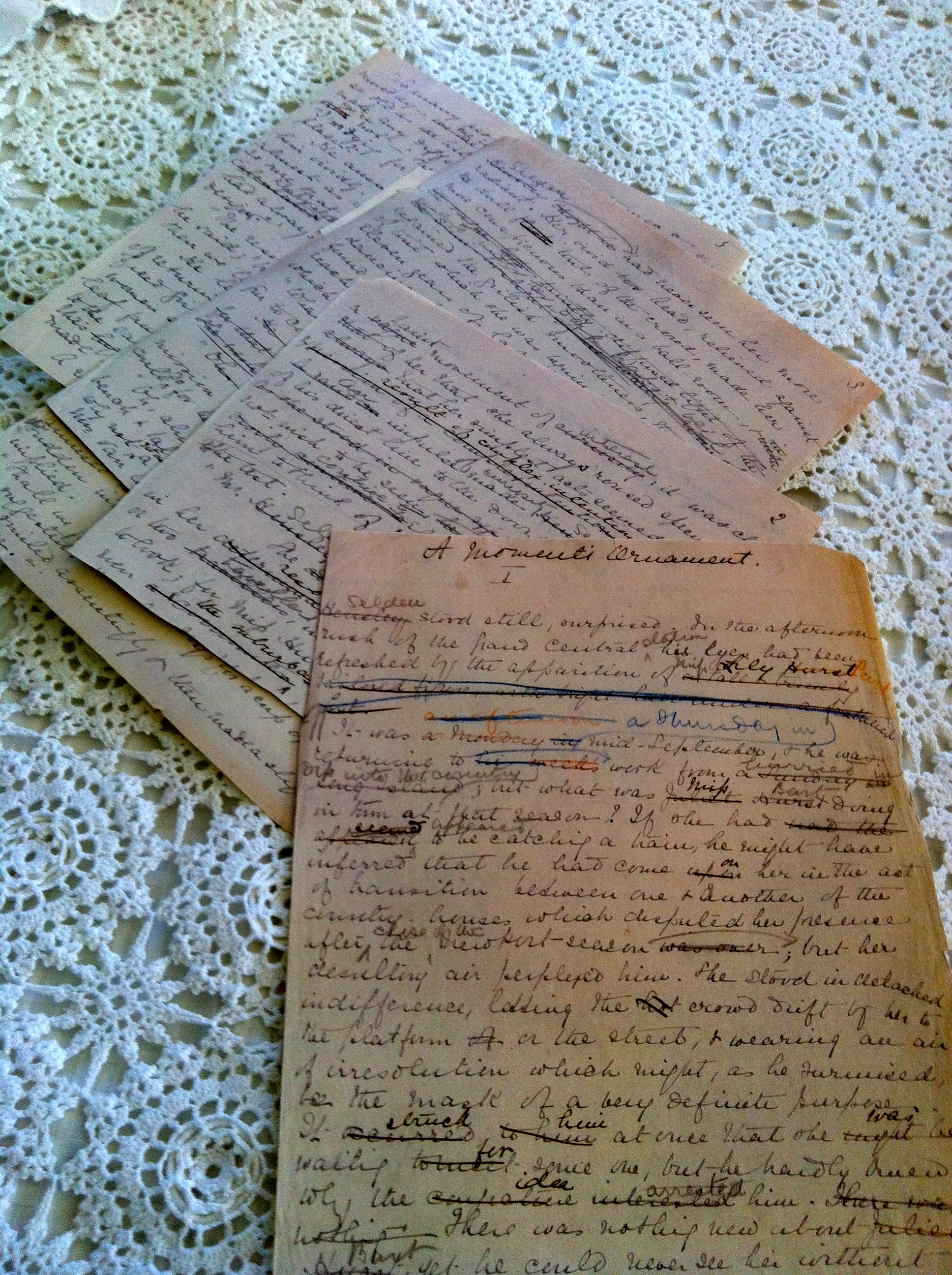
House of Mirth Draft
Yes, Wharton wrote propped up in bed every morning, casually casting aside her finished pages as she went. She actually had photos posed with her sitting at a desk with inkwell and paper, thinking it more dignified, but the truth is she stayed prone, warmed by the little dogs she loved.

The Wharton Dogs
To enter her room and be able to get that close to genius! People were looking so I couldn’t lie down on the bed.
Ghosts have been glimpsed in the house. The only sign I saw of one was in the bathroom adjoining the bedroom where Wharton’s single houseguests found accommodation. Henry James, who occupies the apex of literary achievement, for me, visited frequently when he came over from Europe. Here is the bathtub into which the Master would have lowered his robust, aristocratic frame. I think I saw a wisp of something ghostly, but maybe it was some stray moisture from the faucet…

The Henry James Honorary Bathtub
The veranda offers an exquisite view of the grounds (as well as iced tea and salad), and might well have been the location for James’ comment as remembered by Wharton: “Summer afternoon — summer afternoon; to me those have always been the two most beautiful words in the English language.”
And while that is one of the most beautiful statements ever made, James was so full of wordly wisdom I might as well offer another:
“We work in the dark — we do what we can — we give what we have. Our doubt is our passion and our passion is our task. The rest is the madness of art.”
Filed under History, Jean Zimmerman, Love, Fiercely, Writers, Writing
“I wish to live deep and suck out all the marrow of life. I want to cut a broad swath, to drive life into a corner and reduce it to its lowest terms. If it proves to be mean, then to get the whole and genuine meanness of it, and publish its meanness to the world. Or if it is sublime, to know it by experience, and to be able to give a true account of it.”
(Henry David Thoreau, 1817 – 1862)
Filed under Jean Zimmerman, Writers, Writing
From the torture of dentistry — a new crown — to the delicious pleasure of berry picking, all in one afternoon.
“Summer afternoon, summer afternoon… the two most beautiful words in the English language.” So said Henry James, and he was never wrong.
Being raked by wild canes while delicately pulling off the first of the wild raspberries in the woods of the Rockefeller Preserve, one of the peak experiences of summer. Only gathered a liter this trip… we’ll have to come back for more.
Filed under Jean Zimmerman, Nature, Writers
 Jean Zimmerman