Category Archives: Nature

From Mormon Cupcakes to McCook

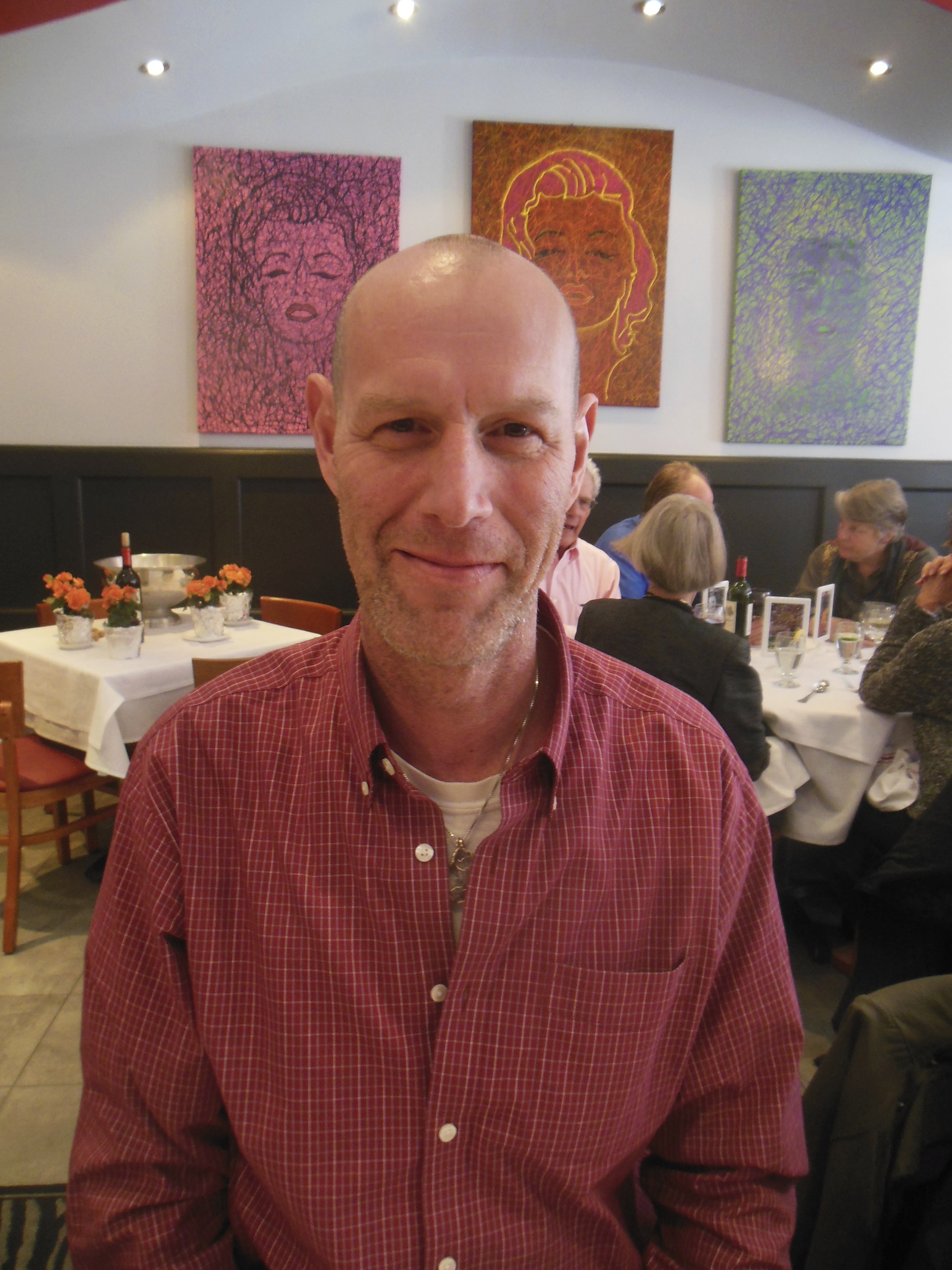
My brother, writer/photographer/perambulator Peter Zimmerman, has been a peach about furnishing posts for me while I’ve been laid up with an adventure-prohibiting bum foot. Here he is again, sharing an album of views he’s enjoyed recently.

AFTER BEING MIRED for eight long years in the New Age mecca of Sedona, Arizona (writes Pete) I hit the road about 13 months ago and now (for the time being) live somewhere in Maine.

“The sharpest pleasure of a traveler,” G.K. Chesterton once wrote, “is in finding the things that are at once so strange and so obvious that they must have been noticed, yet somehow they have not been noted.”

These are some of the some places I’ve seen along the way….

Mormon cupcakes in St. Joseph, Arizona.

ARIZONA

Canola fields in Colorado’s San Luis Valley.

COLORADO

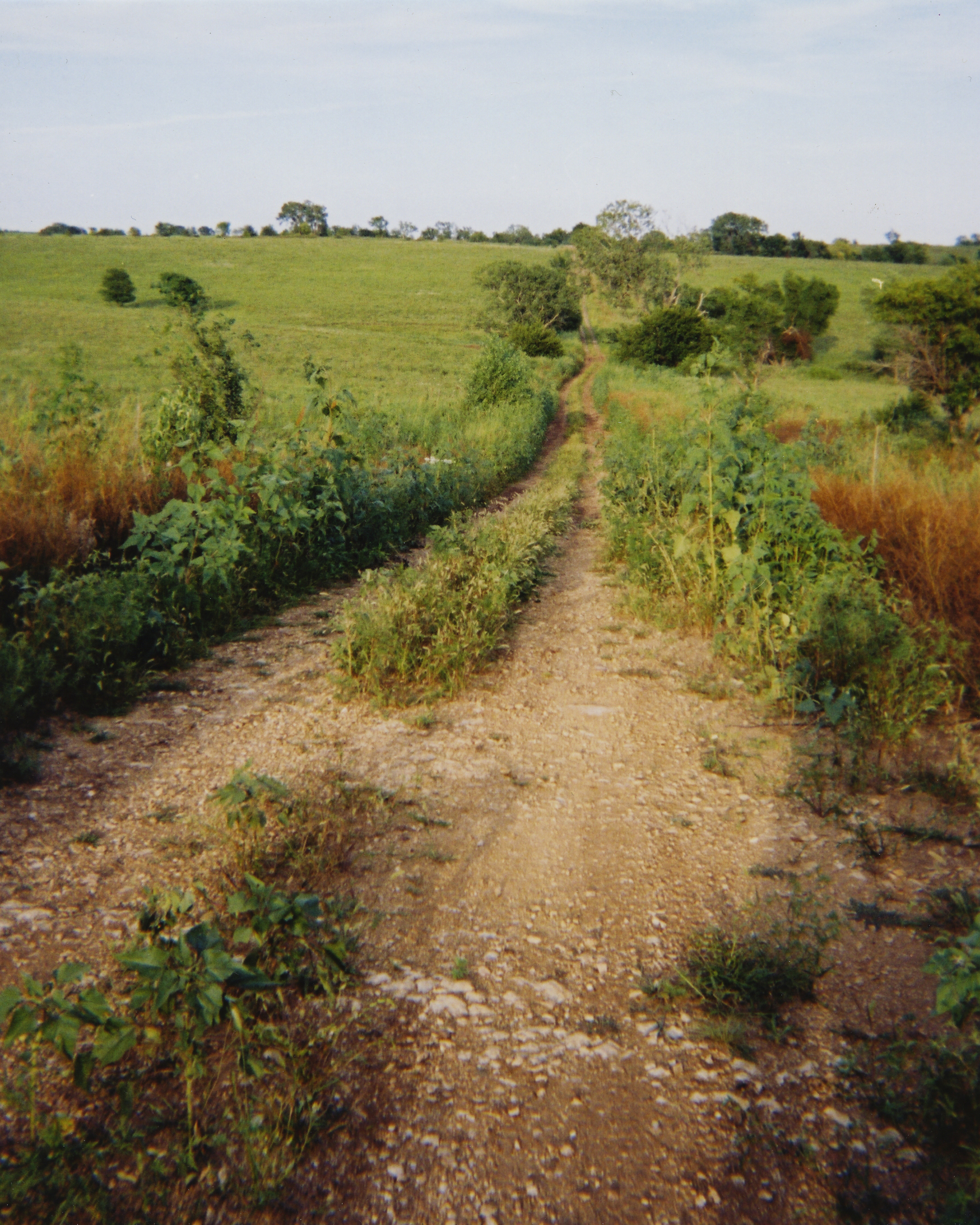
The Pottawatomie reservation north of Topeka, Kansas.

KANSAS

Mt. Kineo, Maine.

MAINE

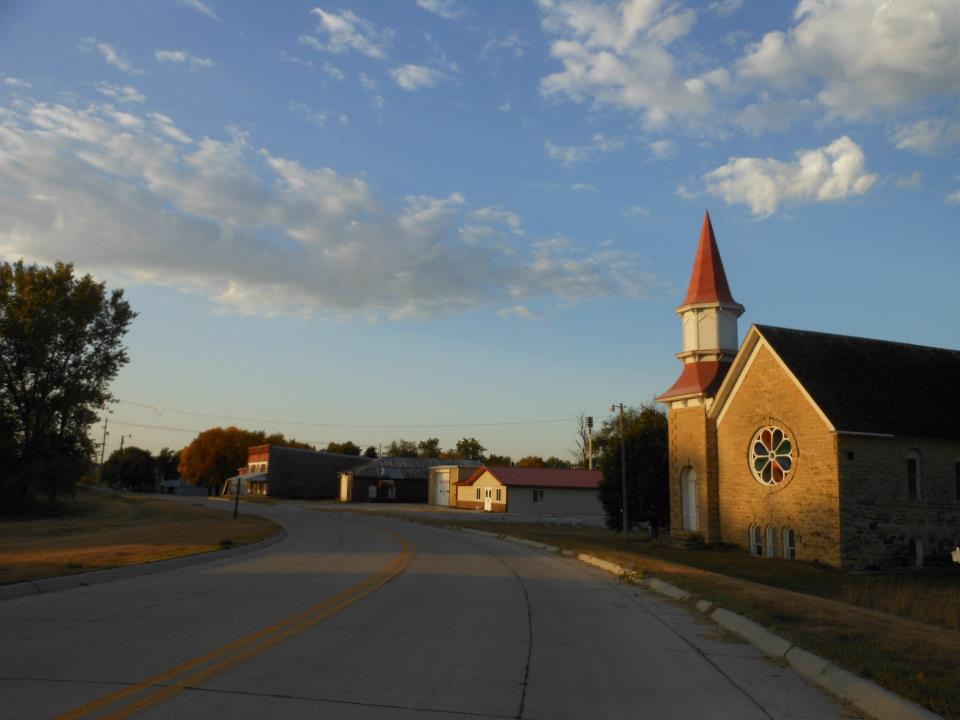
Steele City, Nebraska.

NEBRASKA

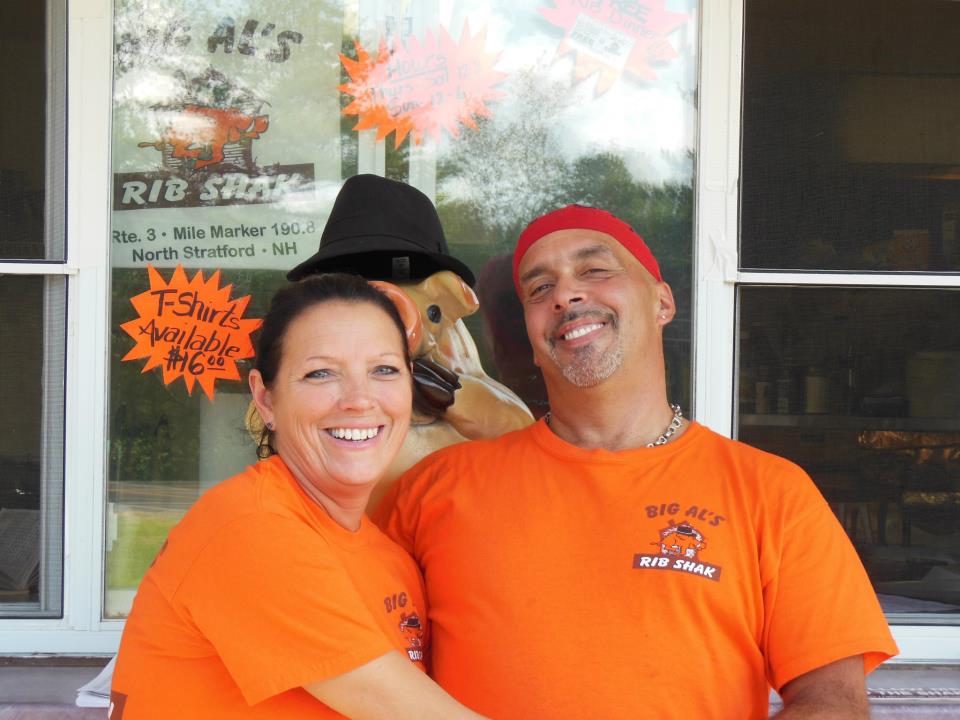
Big Al’s Rib Shak, New Hampshire (Al and Mary).

NEW HAMPSHIRE

McCook Army Air Base (abandoned), Oklahoma.

OLYMPUS DIGITAL CAMERA

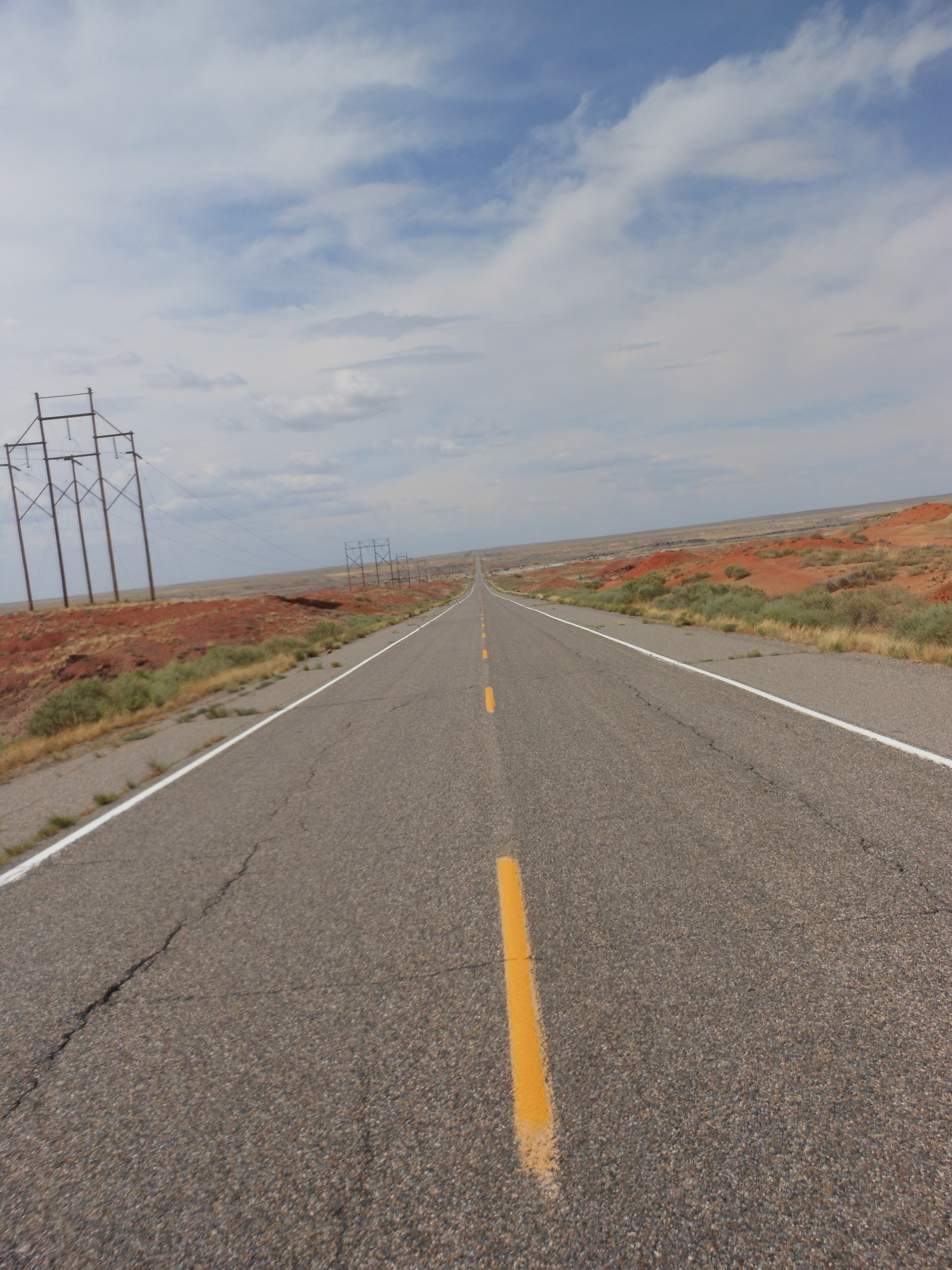
Road to the Bisti Wilderness, New Mexico.

NEW MEXICO

The Leaning Forest, New York.

NEW YORK

Stockholm, Texas.

TEXAS

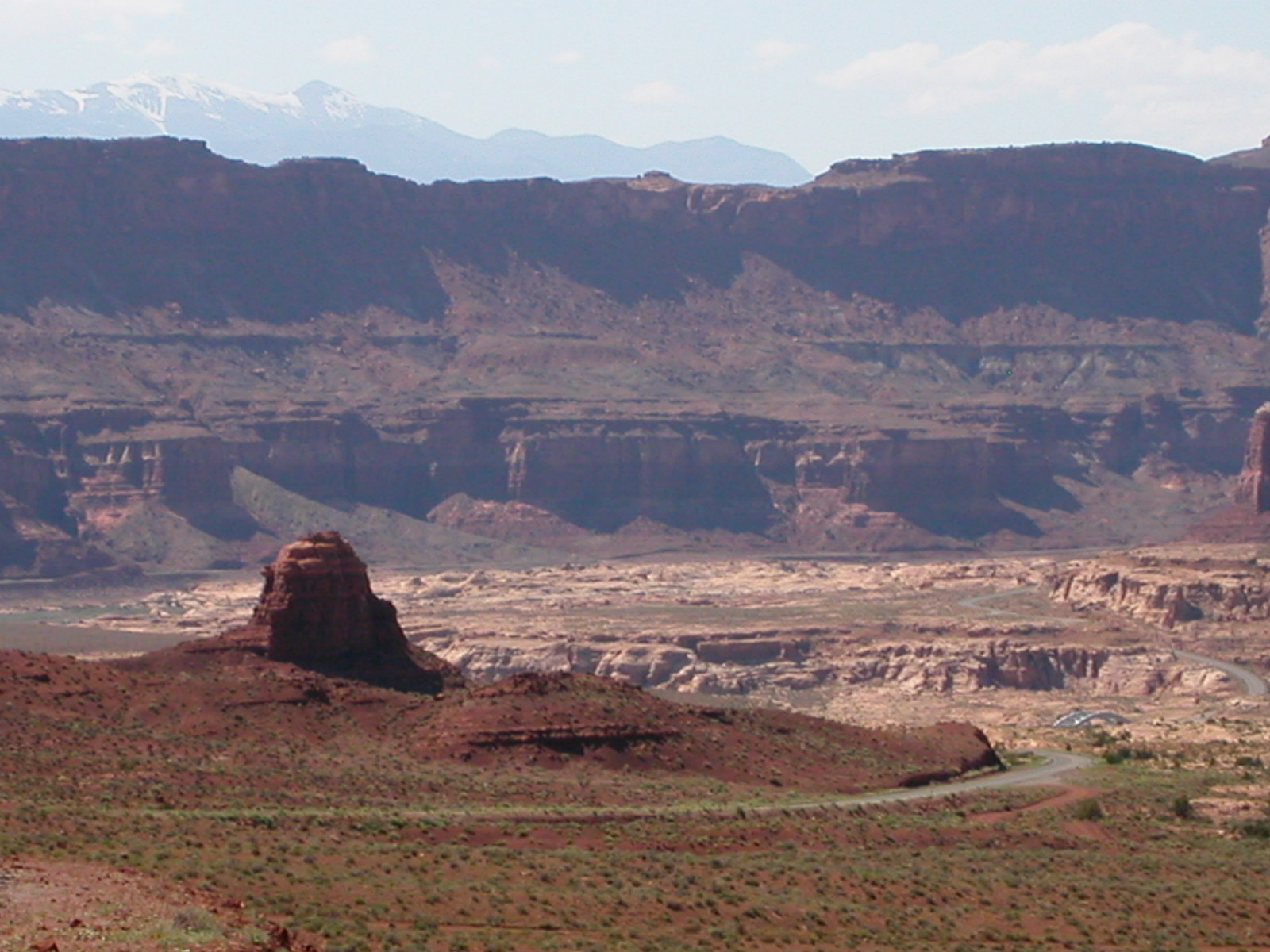
El Despoblado, near Eggnog, Utah.

UTAH

3 Comments

Filed under Culture, History, Jean Zimmerman, Nature, Photography, Writers

The Big Melt

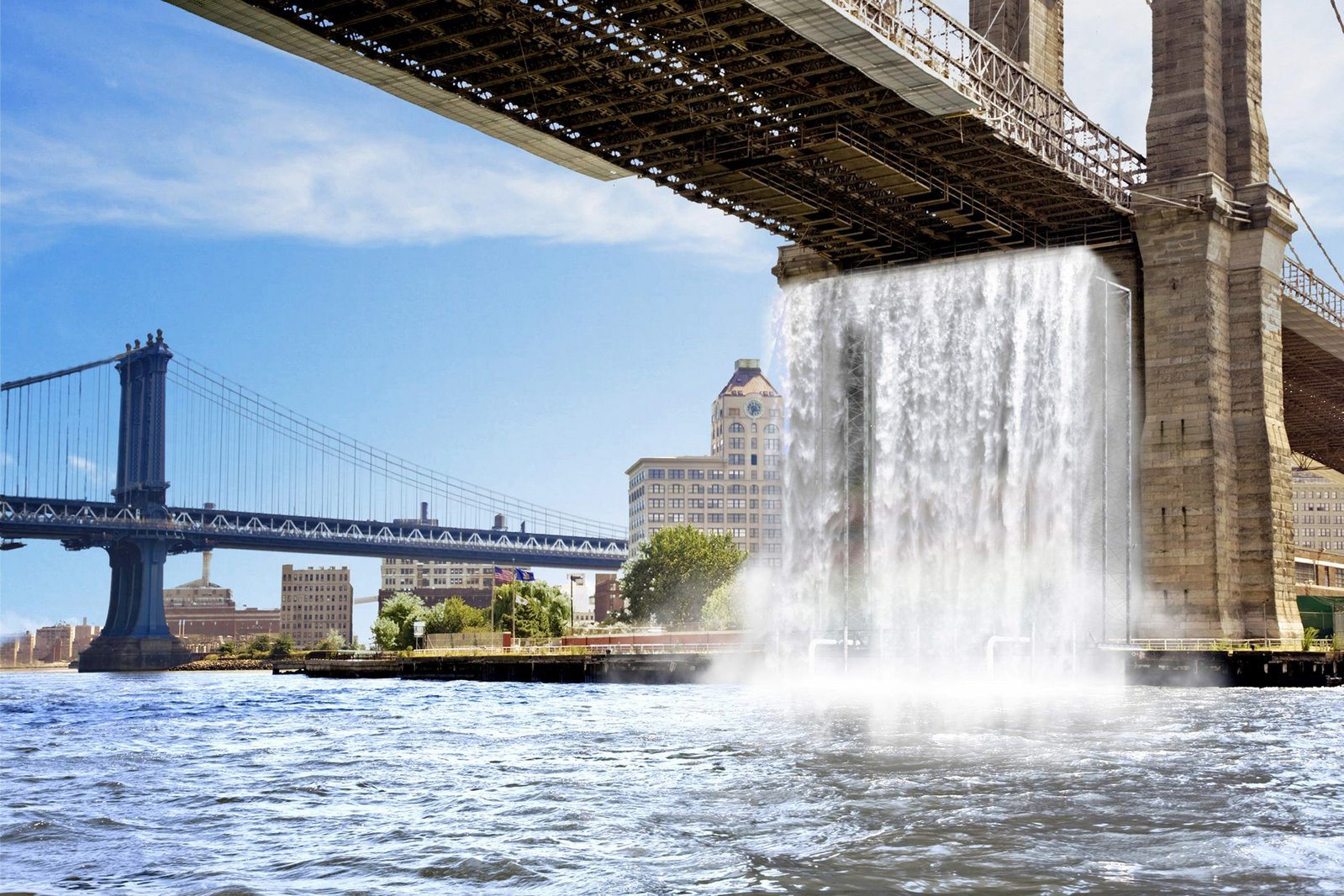
The ice had all melted. I had come to the group show at MOMA P.S.1 in Long Island City, “Expo1,” to see the contribution of Olafur Eliasson, the Danish-Icelandic artist responsible for the amazing waterfalls he installed five years ago around the island of Manhattan.

waterfall1

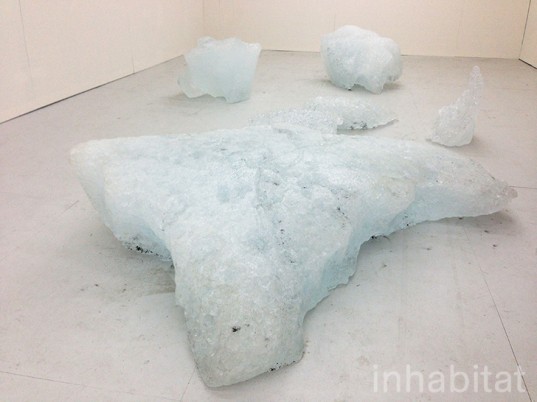
This time he’d put a little bit of Arctic ice in a climate-controlled room at the former public school/art showplace. It was the closest to the Arctic I thought I’d get in the near future, so I made sure to hit the show on its final weekend.

oeps16-537x402

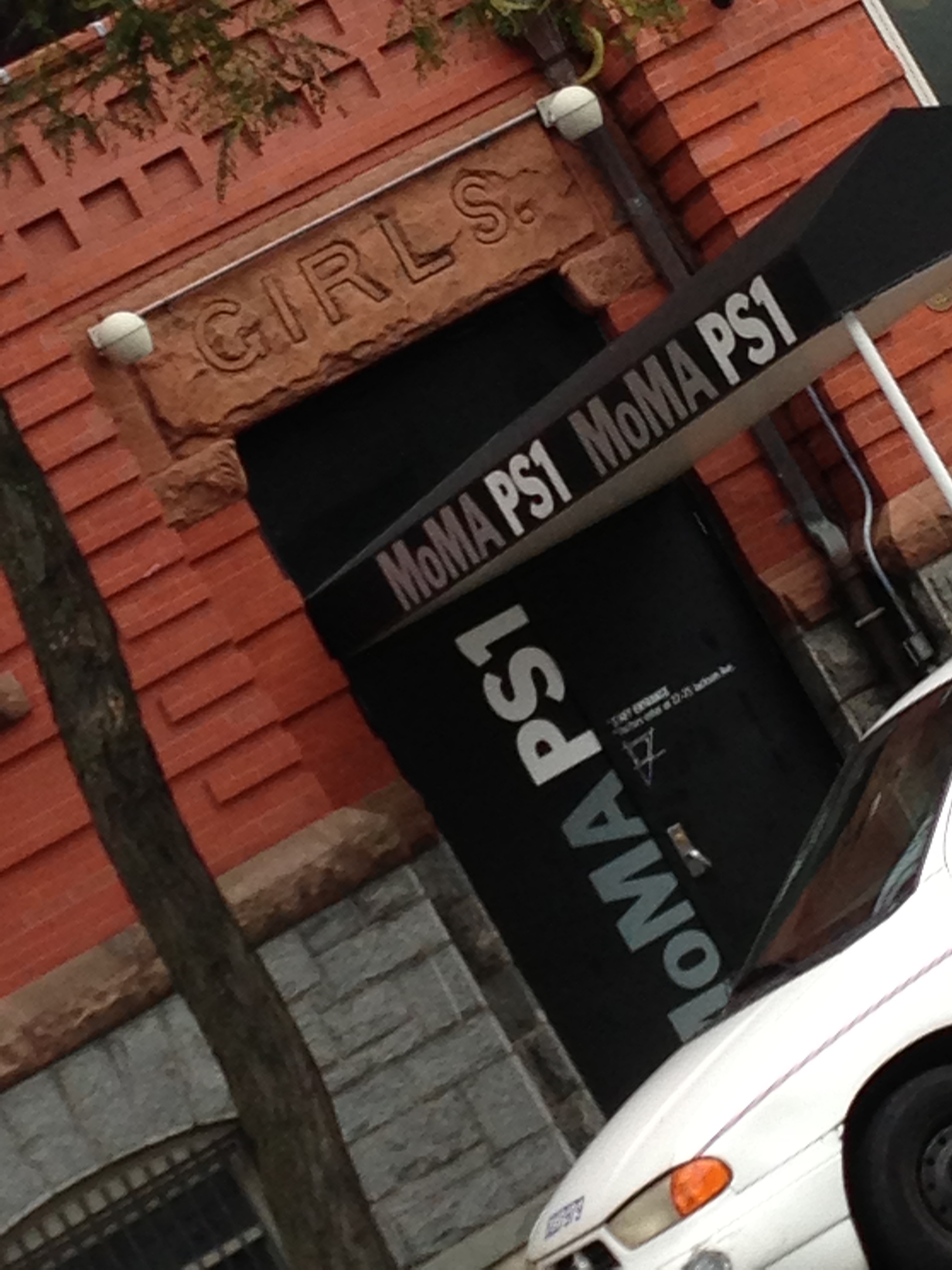
I would have gone in the GIRLS entrance at P.S.1, the former First Ward Primary School of Queens, except it was only for staff.

ps 1 girls

I’ve always liked those gender-differentiated doors in schools. My own middle school had them.They bring to mind a lively picture of the dangers of mixed-sex post-recess lines — hair-pulling and other scrapping.

The show we’d come to P.S.1 to see featured environmentally-themed works by contemporary artists in a range of disciplines, from video to wall-sized paintings. “Dark optimism” is how the museum describes the show’s approach to various ecosystems.

xpo 1

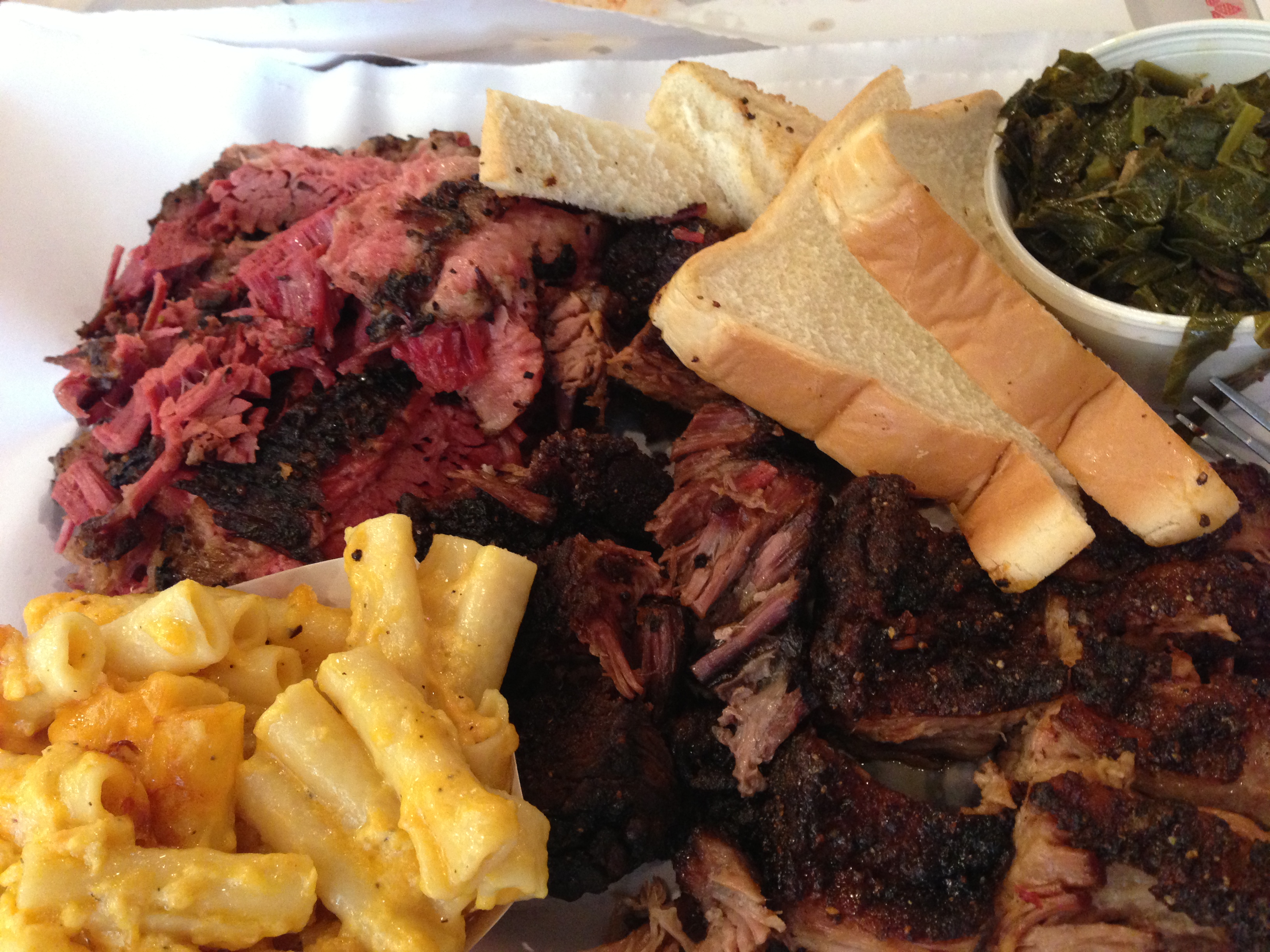
We went stoked with barbeque from a joint in the neighborhood, called John Brown Smokehouse (named after the abolitionist), that loaded our plates with piles of Kansas-City-style brisket ends and pinkest pastrami.

meat

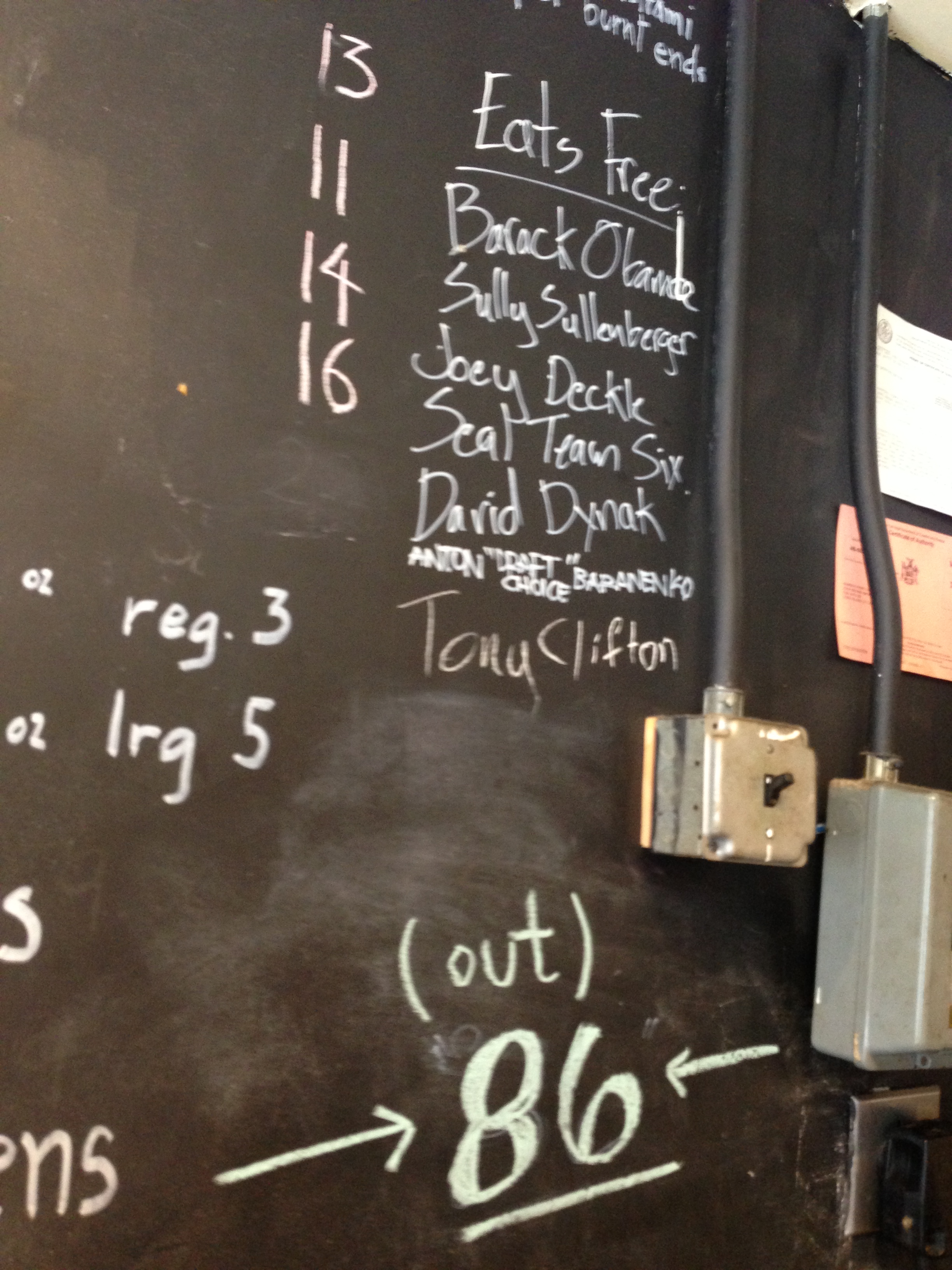
We didn’t find our names on the freebie list next to the chalkboard menu.

eats free

Afterwards we picked up a wheelchair at P.S. 1’s coatcheck. I always wondered what it’s like to cruise through an art museum in a chair. One thing I found out: you see the lower end of the frame a lot.

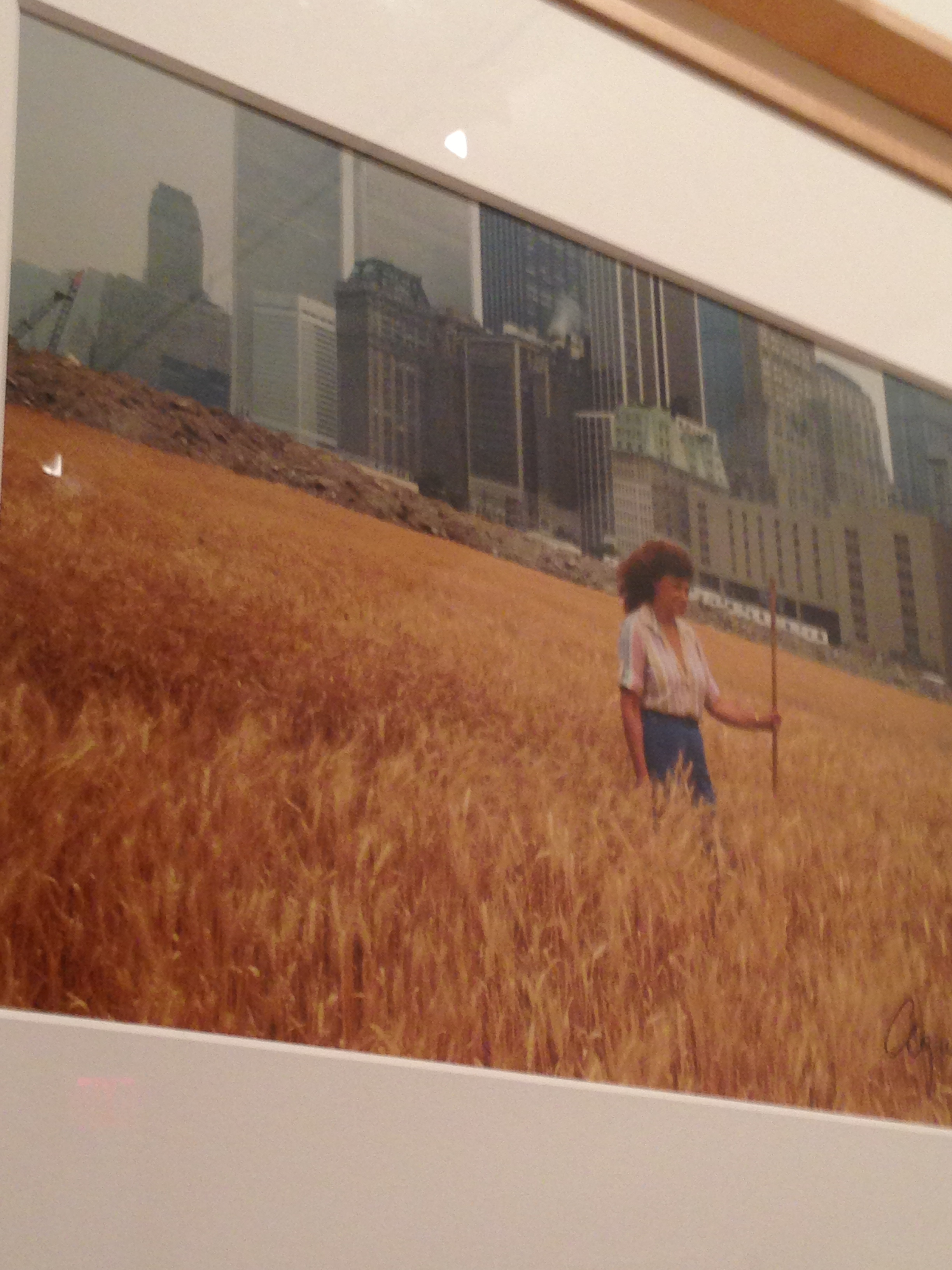
wheatfield

That’s from a series by Agnes Denes, completed in 1982, for which she planted a field of grain in what was then undeveloped landfill and is now hugely built out Battery Park City. Her photographs show unsettling views of the World Trade Towers half hidden by amber waves in the foreground.

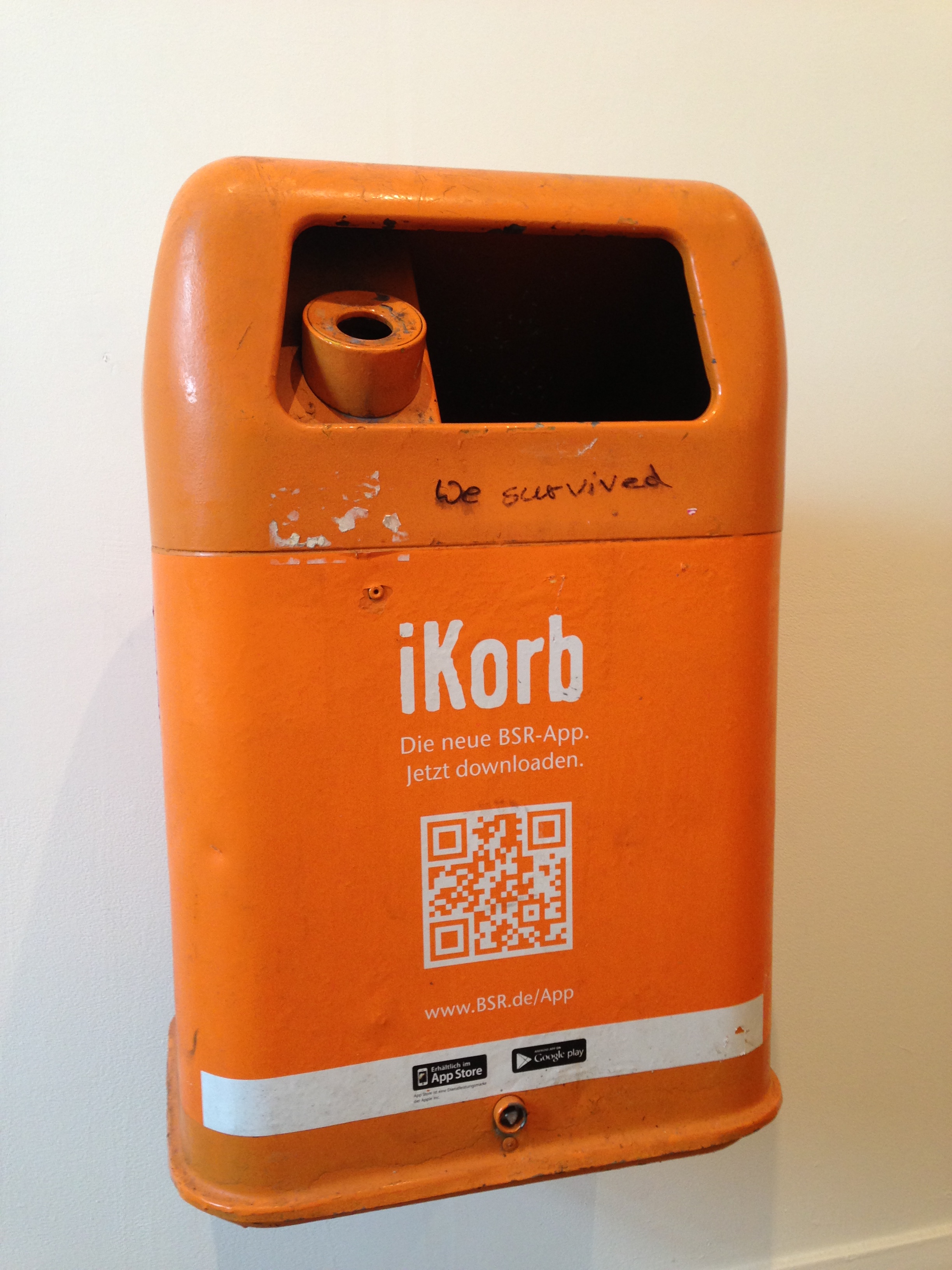
I sat at the perfect height to examine the trash receptacles that lined a small square room, by Klara Liden, untitled. It lends a certain poignancy to all of these works to realize that you are making your way from classroom to classroom as you go, where some of those girls from the GIRLS entrance and boys from the BOYS entrance shot spitballs and kicked each other under the desks.

garbage

I like your graffiti, said a young lady in a sundress, eyeing my cast. They appreciate fine art at P.S. 1. As it happens, I got it right across the street at 5Pointz, the graffiti mecca that is destined to be shut down shortly for luxury housing. Ed Koch used to say that the purpose of an artist is to move into a neighborhood and increase the rents by so much that artists can’t afford to live there any more. Or something like that.

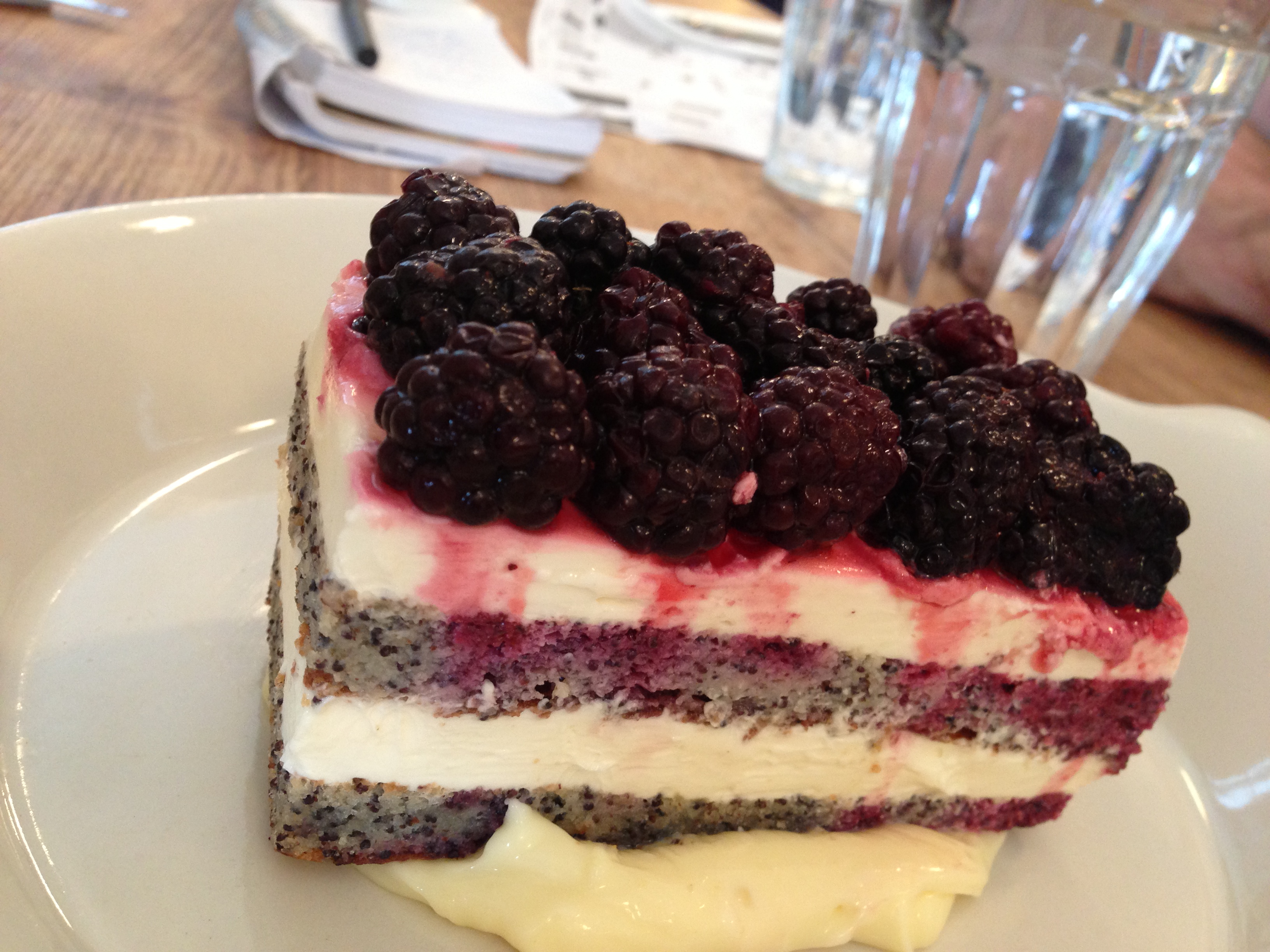
The fancy museum cafe served us coffee and exquisite poppyseed-blackberry cake with lemon curd. For nineteen dollars. Now that’s some high-toned art.

poppy

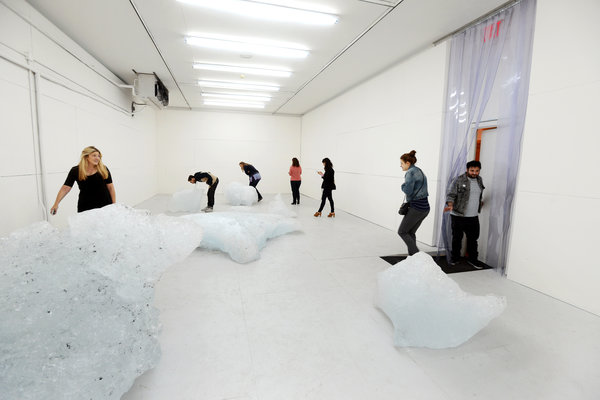
But no ice, any place. The piece called “Your waste of time” was no more. The room, with its shards of ice from Iceland’s largest glacier, Vatnajökull, was not intended for a deep freeze, a guard told me. “It was a real mess,” he said. The ceiling started to fall. In an exhibit about the environment,  global warming writ small. This happened about a month ago.

There were other great things at the museum though.

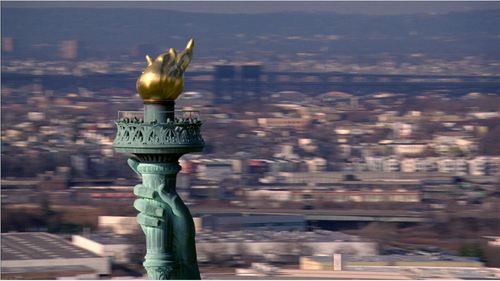
Steve McQueen’s disturbing, hypnotic film from the vantage point of a helecopter buzzing the Statue of Liberty.

statue

A tiny hole in the floor that revealed a video showing the artist Pipilotti Rist drowning in lava while shouting “I am a worm and you are a flower!”

A tree reminiscient of Billie Holiday’s Strange Fruit from which a dog, cat, rat, frog and a few other strays were strung up, all dipped in sticky black paint. This nightmare by Mark Dion, titled “Killers Killed,” reminded me of the Uncle Remus stories. My artist-friend Gary, who came along to the museum, told me he knew the artist’s wife when she owned a dress store in Soho. Artists lead ordinary lives, no matter how bizarre their creative efforts.

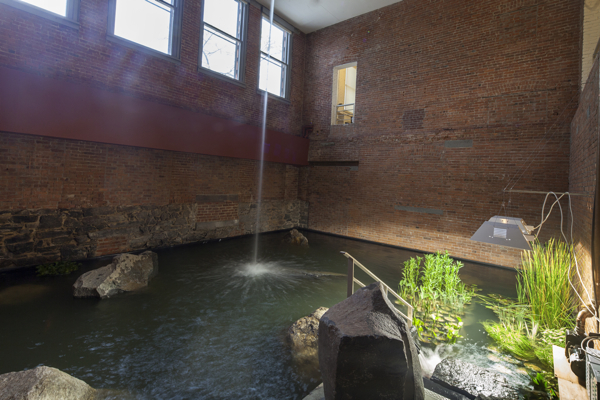
There was the grotto created by Meg Webster originally in 1998 and reinstalled for this exhibit. It has some vicious looking koi swimming around. The artist herself comes in for a dip once in a while.

grotto 2

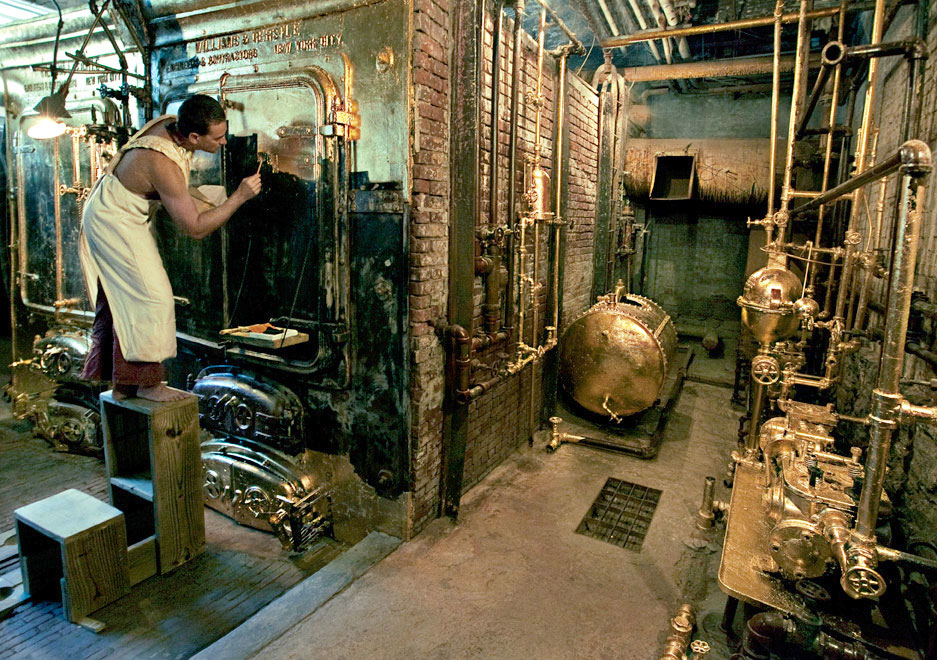
What I liked perhaps the most was a permanent piece, the gold-leaf covered boiler system in the basement, the work of Saul Melman in 2010. This is a vintage coal boiler out of Freddy Kruger, in a dank stone and brick cellar that reminded me of the basement I grew up with, penetrated by boulders. I could only see gold-gleaming bowels from the upper doorway as I could not descend the stairs, and I wish I saw the artist in action.

central-governor

But the current show was the place to go if you wanted to see a projection of a parrot against Betty Boop wallpaper or a disembodied porcelain hand holding a broken porcelain egg. If you were interested, as I was, in frightening urban scenes of large old trees against barbed wire fences.

But not if you wanted ice. For that you’d have to go to the service exit.

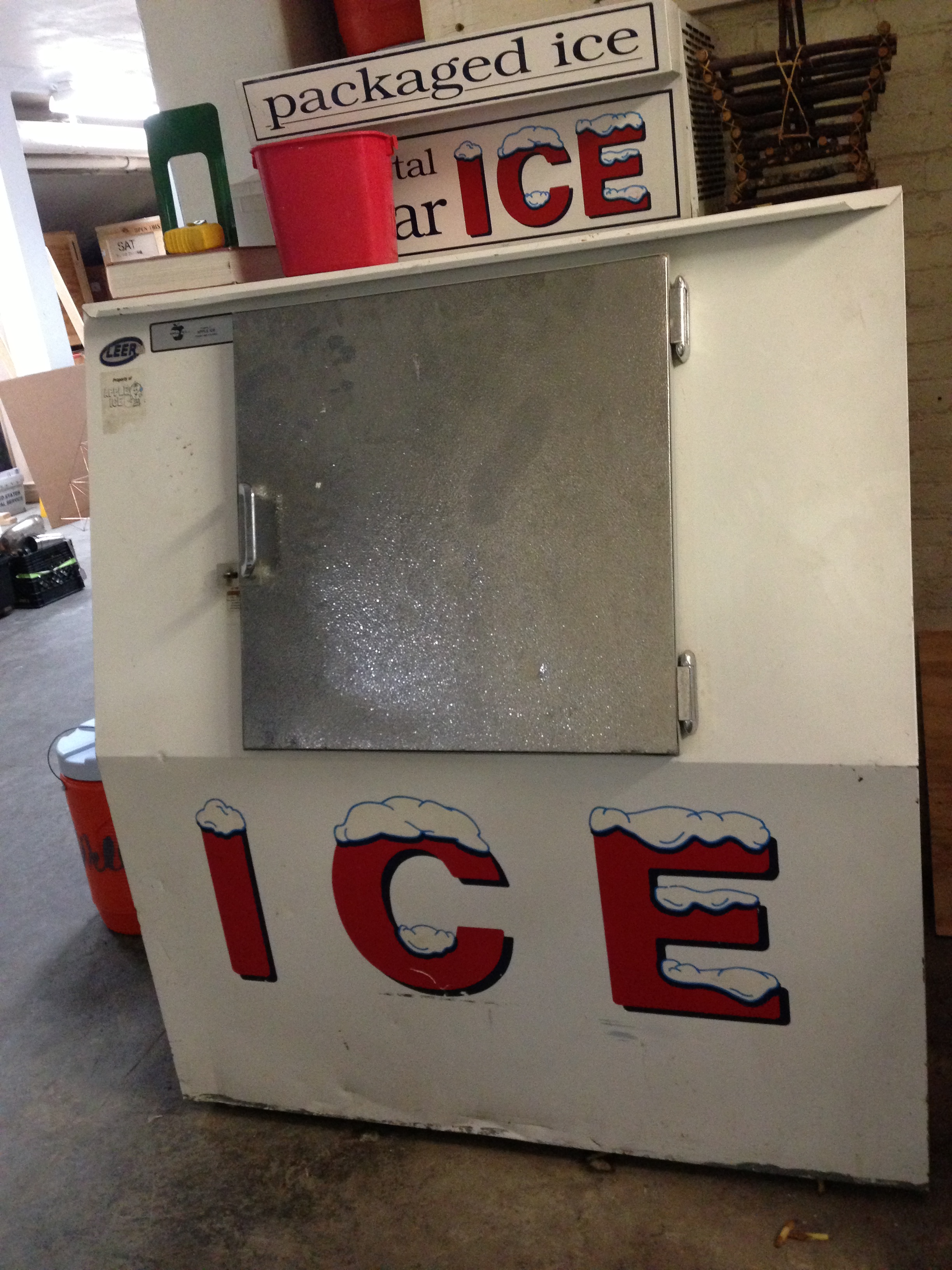
ice machine

3 Comments

Filed under Art, Cooking, Culture, History, Jean Zimmerman, Nature, Photography

Digging

I made a list. The things I’d do if I were going out and about this weekend. The free-of-leg-cast things.

There’s the NYC Unicycle Festival, which kicks off with a 13-mile single-wheeled parade across the Brooklyn Bridge to Coney Island and which includes a bout of unicycle sumo wrestling.

UniFest2012 photo creditKeithNelsoniphone_1654

Then, the art installlation by Olaf Eliasson, called “Your Waste of Time,” in Long Island City, at MOMA PS1, with chunks of Icelandic ice in a refrigerated room.

31EXPO-articleLarge

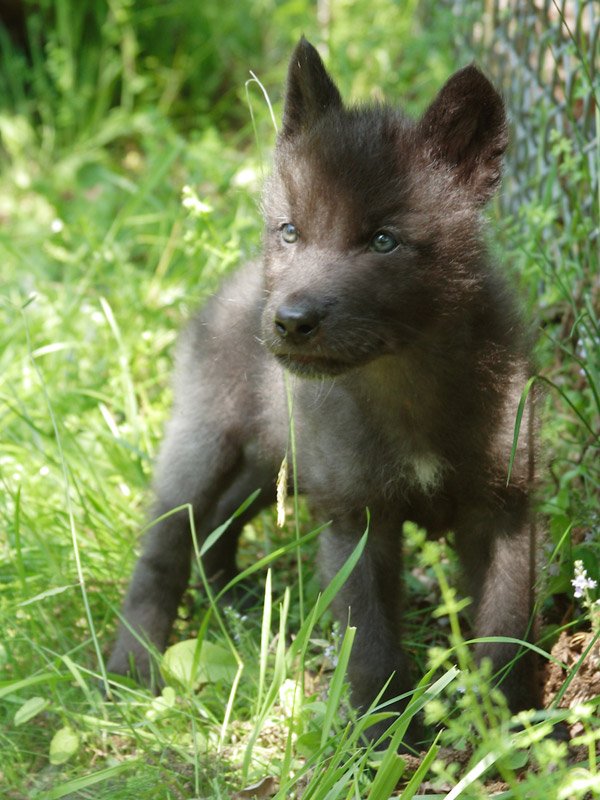
I could visit the Wolf Conservation Center north of the Cabin. Sit behind protective glass and watch a pack howl. They even offer overnights in a tent. The Center has babies, like Zephyr, born April 20th.

zephyr

There’s a tug boat armada on the Hudson, more accurately the Great North River Tugboat Race & Competition, complete with a Popeye-themed contest for spinach eaters.

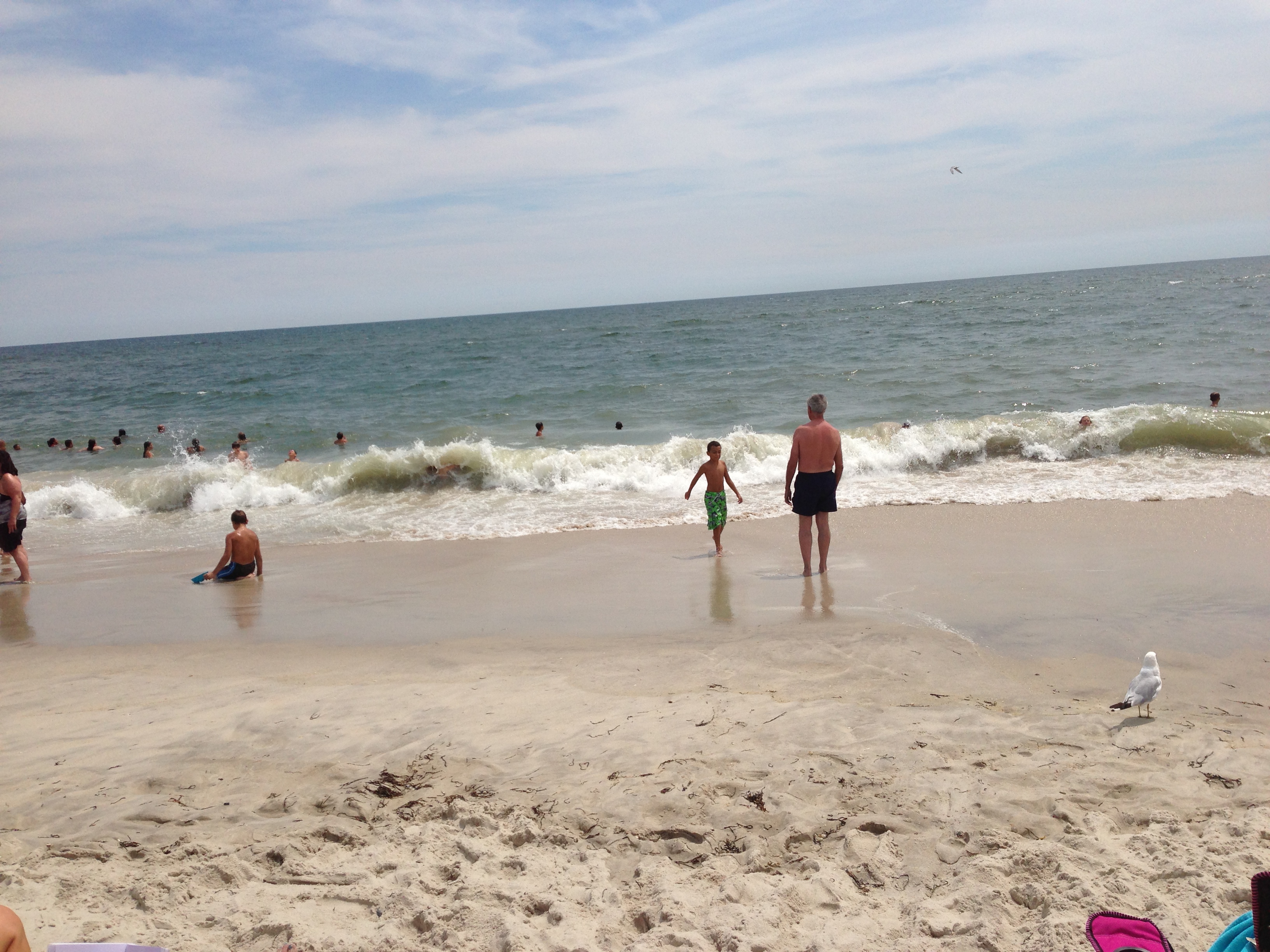
Jones Beach, its tawny sands burning hot in August, its crashing waves filled with quarter-size quivering jellyfish. We don’t care about jellyfish, though. It’s the last swim before fall. But no room on that crowded strand for a fiberglass leg cast.

ocean

The Breaking Bad exhibit at Museum of the Moving Image in Queens that displays the costumes, props and other accoutrements of everyone’s latest streamed addiction, one that has smoothed the way through these mellow weeks post-foot-surgery. The arc of the show was contrived as carefully as Walt crafts his blue rocks, not surprisingly, and “From Mr. Chips to Scarface: Walter White’s Transformation in Breaking Bad.” will show you how. The stuffed animal that splashes down into the Whites’ swimming pool was specially commissioned, it turns out.
BreBa-Pink-teddy-640x415-300x194

Do you care to see the tighty-whities that Walt wore in season one, episode one? For some reason I do, but I don’t know if the terrain is maneuverable for me and my scooter.

I missed the Battle of Brooklyn last weekend – reenactors assembled in what later becamethe famous Green-Wood Cemetery – out of a dread of uneven grass and pebbly stretches.

green-wood-cemetery-battle-brooklyn-reenactment-redcoats

There was supposed to be cannon fire and I know people were boiling pots over smoky campfires.

I must eschew places that wouldn’t easily accommodate what Gil calls “Jean’s crutches, sons of butches, or the Bloke, no joke.” What the ladies at the nail salon called my “motorcycle.” One was so nice she gave me an upper arm massage. I never knew that crutches kill your triceps.

Jean on crutches

But it’s all in the name of pampering that tiny metatarsal in my right foot, the one that needs some extra help to mend so that I can go on ever greater adventures. Who knows, next year a pair of hiking boots that actually fit. Kilimanjaro.

I am most definitely emerging today for a time to “help” cart Maud’s things for the year to her new dorm. She makes up in leggy activity, just back from sunny Spain, what I currently lack. Out catching drinks with friends, seeing music, buying notebooks, all new things, looking to the future.

maud spain

I am also looking to the future, though a ripple of boredom is creeping through me like a sweet rot. Day to day, I dive down into the Revolutionary New York research for my next novel and come up with gorgeous crumbs. And you need crumbs to make the rich loaf that is a historical novel. But that’s just a start.

I’m going to need a new couch after this recuperation, the indentation in the current one might not plump back up.

A walk down to the garden to dig potatoes would be great. Fingers — toes! — in the dirt. I remember the loam of mid-summer fondly.

potatoes soil copy

Oh, forking over potatoes today… would be amazing. The just-deceased Nobel-winning poet Seamus Heaney’s poem on the subject, “Digging,” is one of the great works of modern literature. Have a seat on my couch. Take a listen.

Between my finger and my thumb   

The squat pen rests; snug as a gun.


Under my window, a clean rasping sound   

When the spade sinks into gravelly ground:   

My father, digging. I look down


Till his straining rump among the flowerbeds   

Bends low, comes up twenty years away   

Stooping in rhythm through potato drills   

Where he was digging.


The coarse boot nestled on the lug, the shaft   

Against the inside knee was levered firmly.

He rooted out tall tops, buried the bright edge deep

To scatter new potatoes that we picked,

Loving their cool hardness in our hands.


By God, the old man could handle a spade.   

Just like his old man.


My grandfather cut more turf in a day

Than any other man on Toner’s bog.

Once I carried him milk in a bottle

Corked sloppily with paper. He straightened up

To drink it, then fell to right away

Nicking and slicing neatly, heaving sods

Over his shoulder, going down and down

For the good turf. Digging.


The cold smell of potato mould, the squelch and slap

Of soggy peat, the curt cuts of an edge

Through living roots awaken in my head.

But I’ve no spade to follow men like them.


Between my finger and my thumb

The squat pen rests.

I’ll dig with it.
4 Comments

Filed under Culture, Fashion, Film, History, Home, Jean Zimmerman, Nature, Poetry, Publishing, Writers, Writing

My Gîte and a Whole Wheat Bread Recipe

The peripatetic Peter Zimmerman continues to make his way through the north country, from which he sends this illustrated bulletin. Thanks Pete!

MARGUERITE MARGO – no relation to Brigette Bardot – is a baking fool (writes Peter).

marguerite

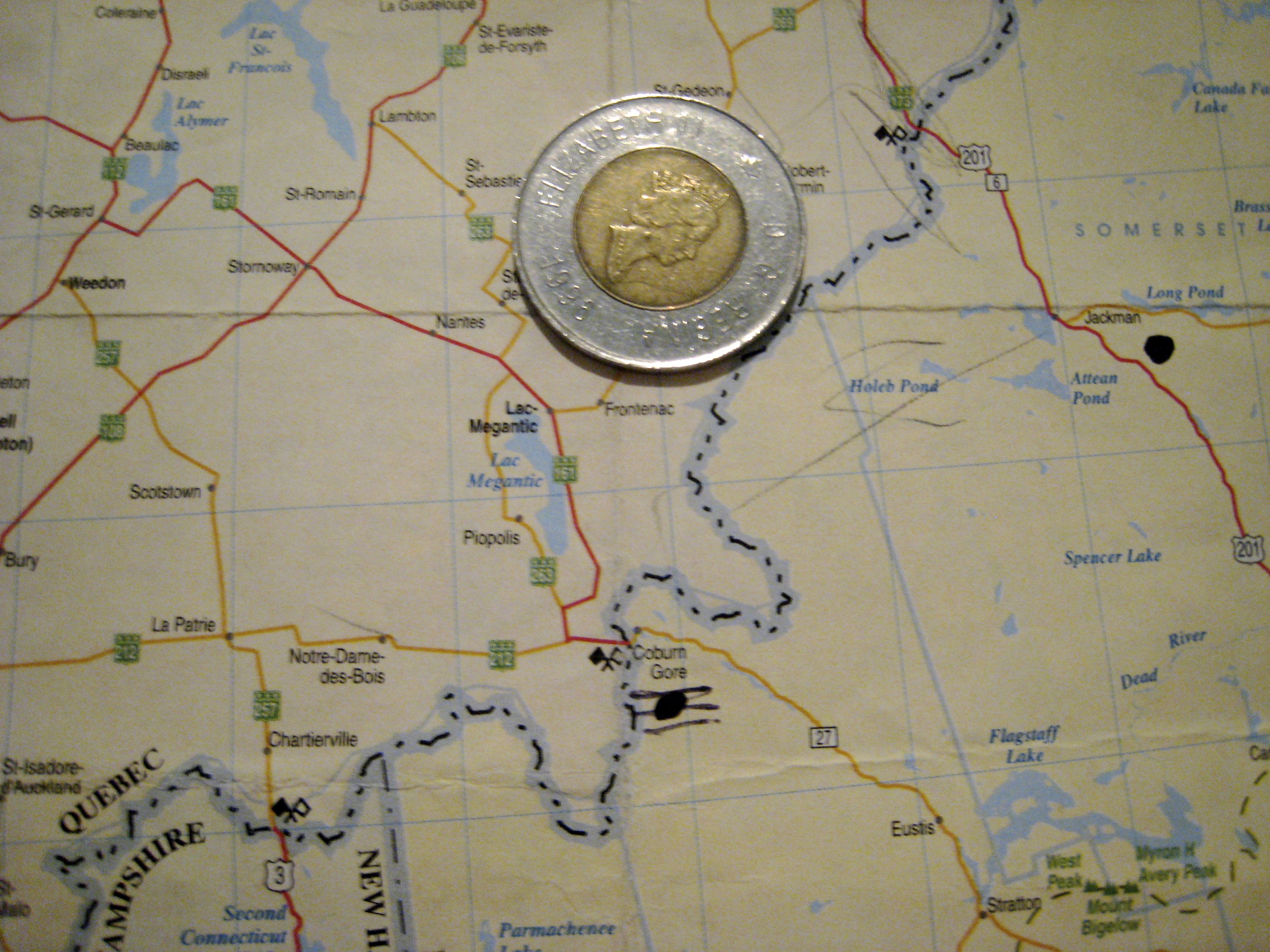
I met her after exiting the highway to take a breather and stumbling onto her boulangerie (bakery) in the small village of Saint-Gédéon, Quebec, along the river Chauvières, not far from the Maine border.

st gedeon map

In this small area of Quebec, Le Beauce, there are more than a dozen towns named after saint this and saint that, all quite obscure: St-Robert-Bellamin, St-Georges, St-Martin, St-Ludger, St-Honore, St-Sebastien, St-Hilaire-de-Dorset, St-Romain, St-Cecile-de-Whitton, and St-Samuel-Station.

“My town,” St- Gédéon, is 96% Roman Catholic, 3% Atheist (!) and 1% Protestant. St-Gédéon was the 13th bishop of Besancon, France. He served six years and died in 796. His feast day is August 8.

Here is the church of St- Gédéon.

st gedeon church

Louis Hémon wrote the first draft of Maria Chapdelaine while staying in Saint-Gédéon in 1912.

What I didn’t notice at first about the boulangerie is that it’s also a gîte (bed and breakfast).

my gite

I was tired and ended up spending two days and nights there.

Turks cap or bellingham lilies flourished in the front yard of my gîte.

lilies

Every time I came downstairs, Marguerite was bustling around the kitchen, baking something new.

marg bread

Sometimes hidden.

hidden

I bought a liter of blueberries and she is making two little blueberry pies just for moi!

pie baking

The first step is “biling” the berries.

boiling

She laid it in a crust.

pies

Out of the oven.

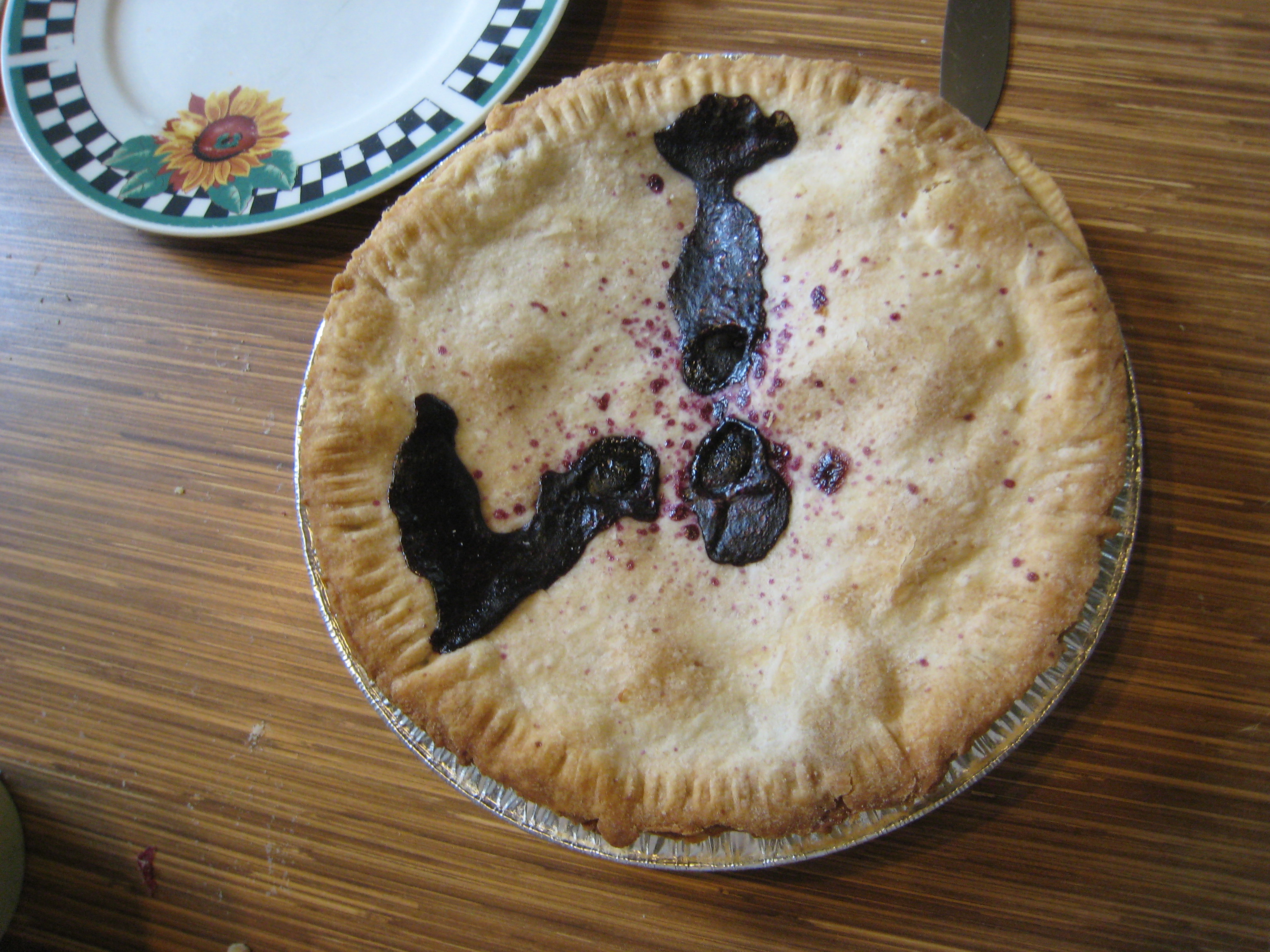
pie next to plate blueberry pie cut

But where did all those baked goods go?

At the end of my visit, I found out that she sells her goodies at a nearby campground, where everything is snapped up like hotcakes, so to speak.

biscuits

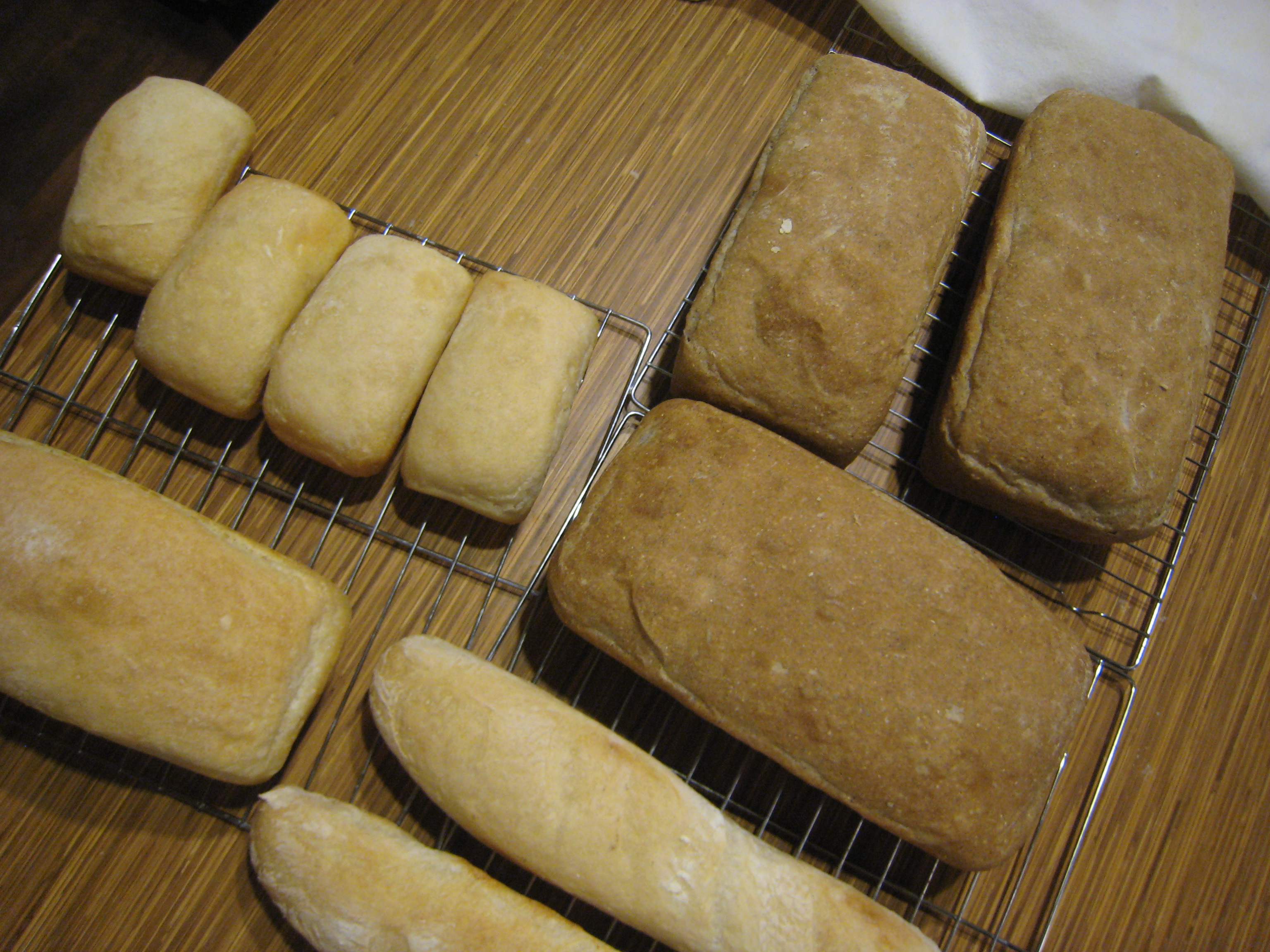
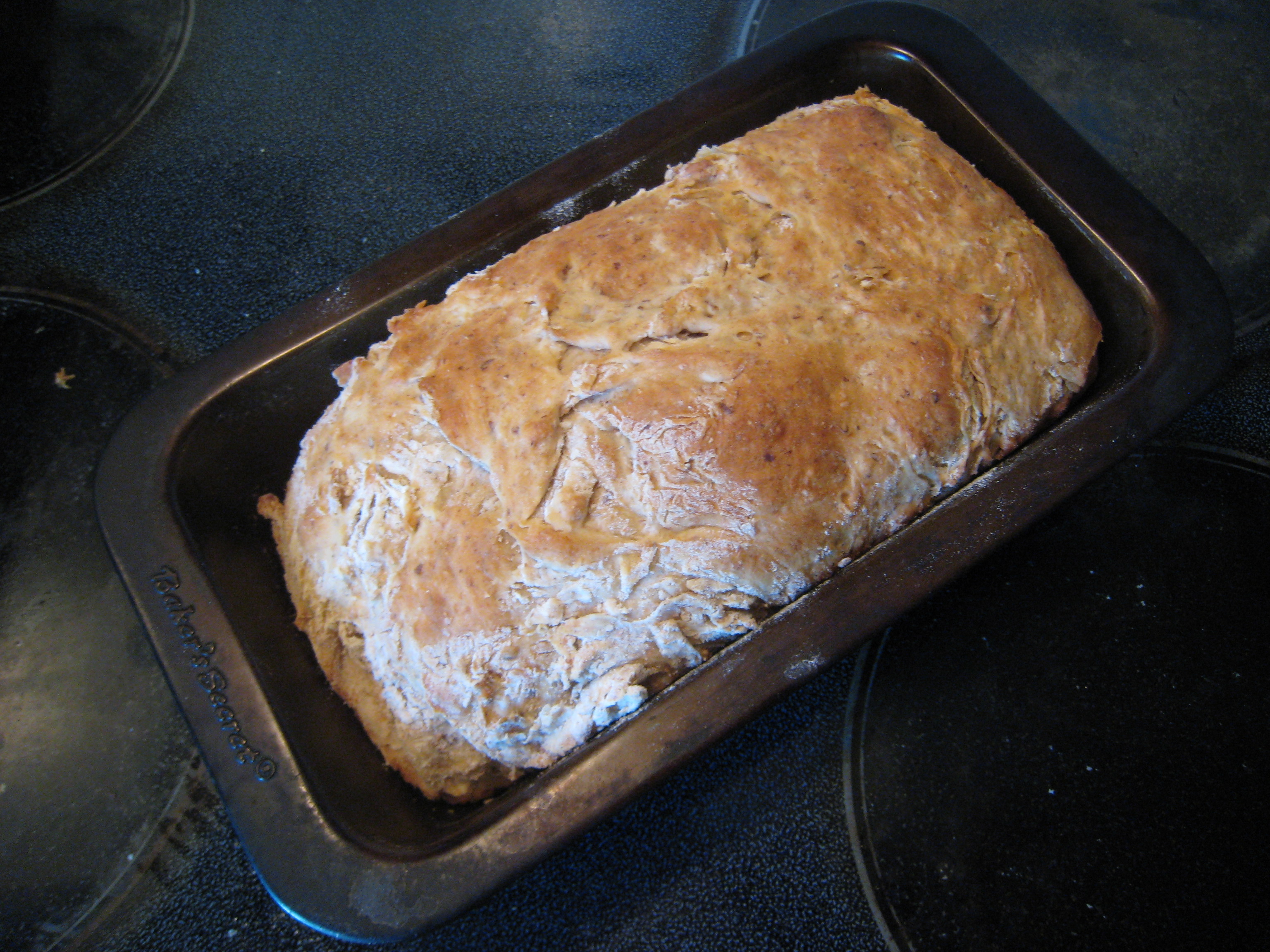
While she was off making her delivery, before I departed, I baked her a loaf of my whole wheat-flax bread. 😉

whole wheat flax bread

Although Marguerite knows very little English and I only know a few French words, we speak the universal language of pain.

Meme si Marguerite connait tres peu la langue Anglaise et moi quelques mots Francais. Nous parlons la langue universelle du pain.

crabapples

Pete’s Whole Wheat-Flax Bread Recipe

take out 2-3 T. yeast from refrigerator and wait 15-30 minutes until room temperature

add 2 T. honey and 1 tsp. salt or to taste, then 2 T. oil, 2 T. flax meal and 1/4 cup wheat bran

mix well (but gently)

add 1/2 unbleached white flour and 1/2 whole wheat (approx. 3-4 cups of each), mix and knead

after you’ve added the flours, you need to keep adding lukewarm water a little at a time until you have the right consistency

then before you let it rise, dust the dough lightly with flour

let rise 30-60 minutes, fold into oiled bread pan

bake at 375 degrees for 30-40 minutes, until golden brown on top

let cool on warm stovetop for 30 minutes

turn onto baking rack.

best toasted and topped with unsalted butter

for lighter bread, add 1 cup wheat bran to step 2

5 Comments

Filed under Cooking, Culture, History, Home, Jean Zimmerman, Nature, Photography, Writers

Locks, Stock and Barrel

Rindfleischetikettierungsüberwachungsaufgabenübertragungsgesetz. Things do change in Germany.

Rindfleischetikettierungsüberwachungsaufgabenübertragungsgesetz, the 63-letter word meaning “law for the delegation of monitoring beef labelling,” is no more, having been dropped from the language, repealed by a regional parliament after the EU lifted a recommendation to carry out BSE tests on healthy cattle.

cow-beauty_1699660c

The longest German word had appeared in official texts but not in dictionaries. (You can hear it properly pronounced here, before you put it aside and never think of it again.)

Anyway, it’s now kaput.

This fragment of ephemera constitutes my most recent knowledge of things German, so I am glad that my parents, Betty and Steve Zimmerman, have kindly  contributed a post as they make their way through the country by river barge. Here is their team effort, with Steve’s prose and Betty’s pictures:

MEMORIES of the lunacy and destruction of Adolf Hitler’s Third Reich exist today (writes Steve) only among Germans in their 70’s and 80’s, and older.  

Among young Germans, especially those in their teens and into their 30’s and 40’s, a dramatic recovery, brought about in large part by the Marshall Plan, NATO and the collapse of the Soviet Union (and the infamous Berlin Wall), has enabled the emergence of a new Germany, clearly the undisputed economic leader of Europe. The change has been nothing short of miraculous.

Today, 50 years after our first trip to post World War II Germany, this new Germany has been shaped in both obvious and subtle ways.

The beautiful countryside of central and southern Bavaria, the largest state of Germany, was clearly the highlight of our 1963 trip…and it looks essentially the same in 2013, a dozen trips to Germany later.

1

On this trip, we are sailing on the Rhine, Main and Danube rivers on the newly-built River Splendor, with 173 other American passengers and a multi-national crew of 44. The journey is made possible by a remarkable canal with 66 locks between the Rhine and the Danube rivers.

2

The project was initially  conceived by Charlemagne in 793 AD but abandoned due to incessant rain.

The expensive project was again attempted by Hitler in the mid-1930’s but was dropped in favor of Hitler’s ambitious plans to conquer all of Europe, and eventually the entire world.

The project was begun again 40 years later and completed in 1992. The current canal system consists of 66 locks on the rivers plus the Main Canal itself.

3

Europe has a Continental Divide similar to that in the United States. Therefore, the first 50 or so locks elevate ships upwards by as much as 81 feet until a total height of 1,332 feet is reached. Just past Nuremberg, the canal locks start to bring ships down closer to sea level.

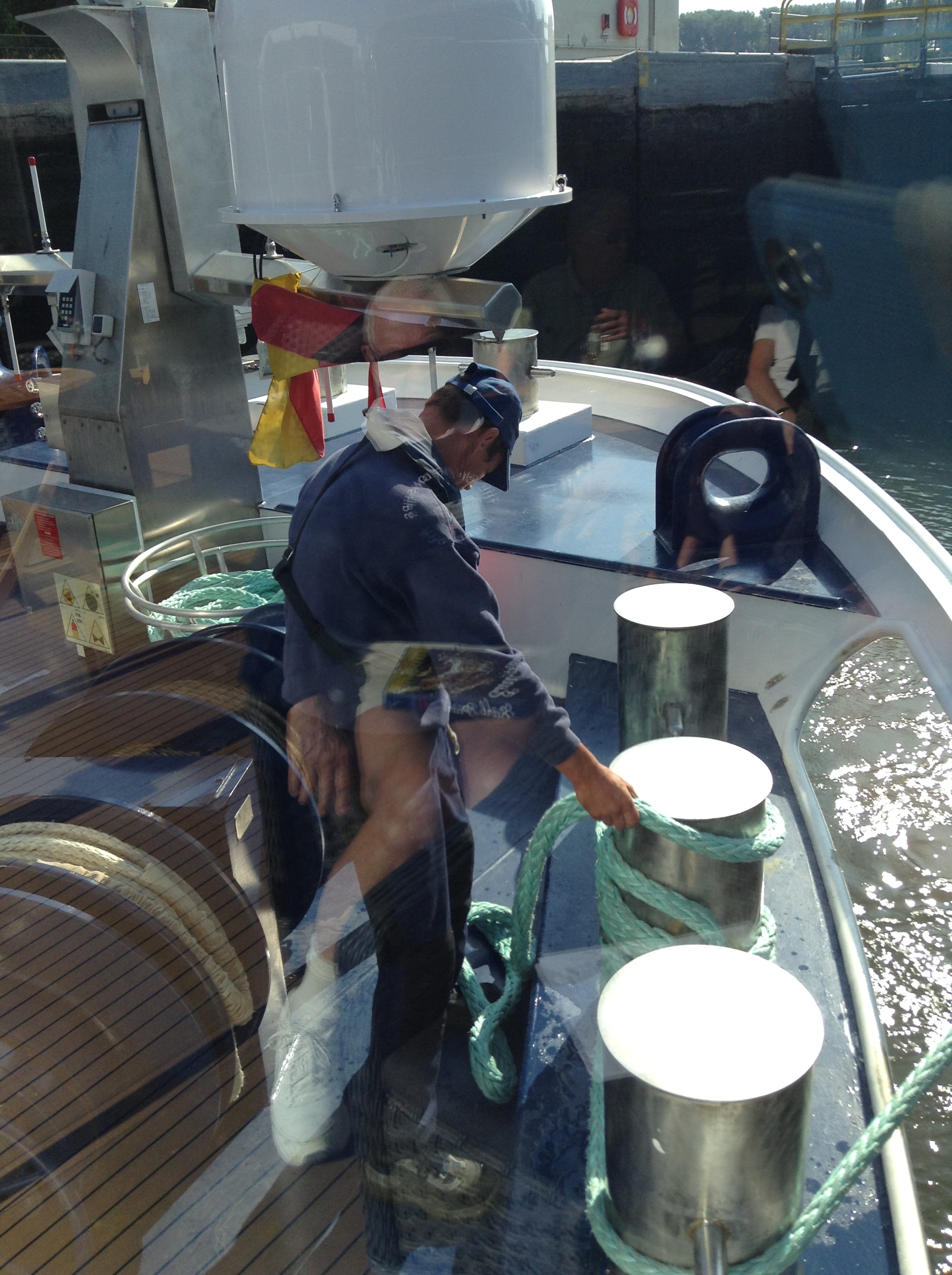
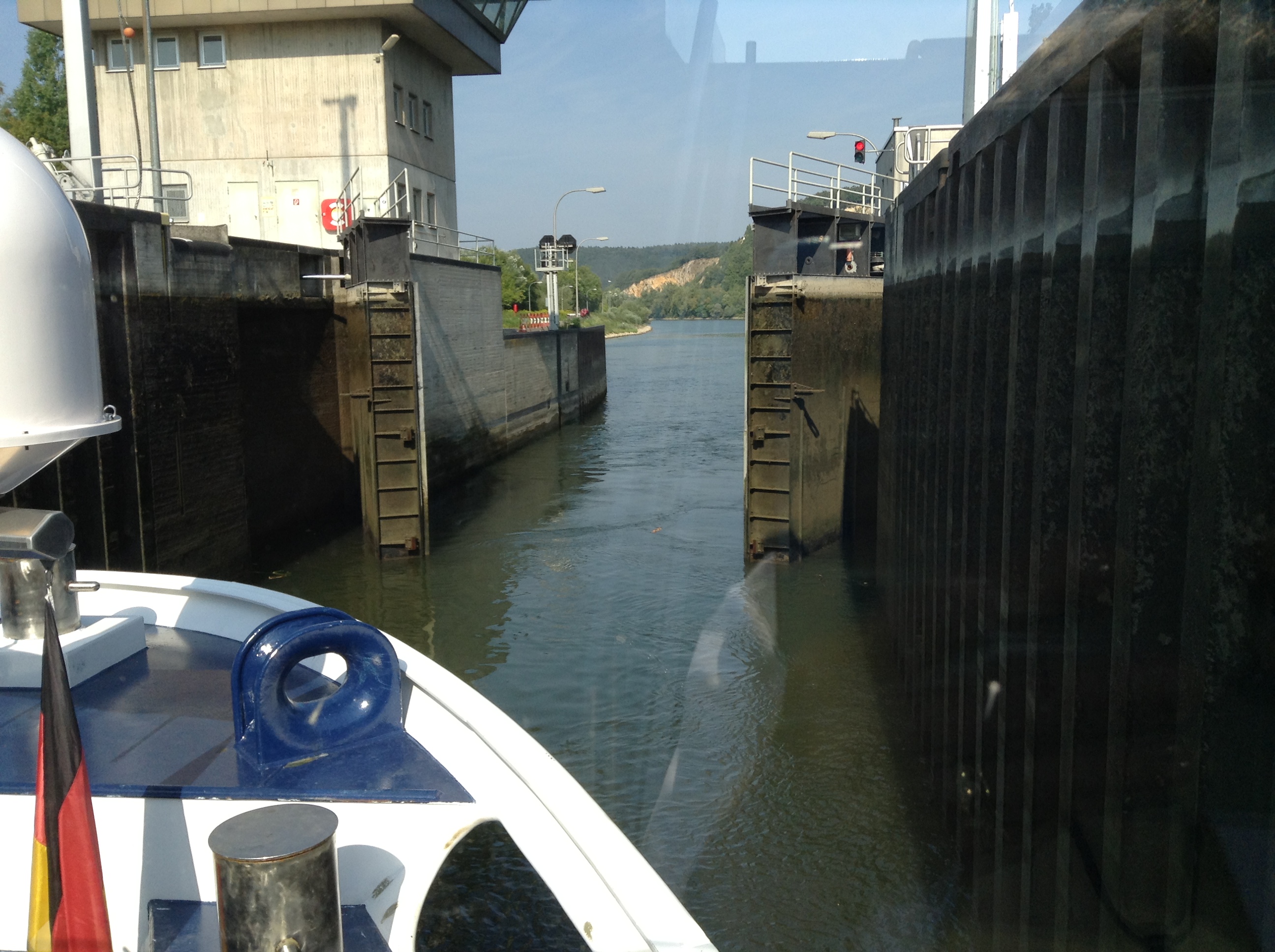
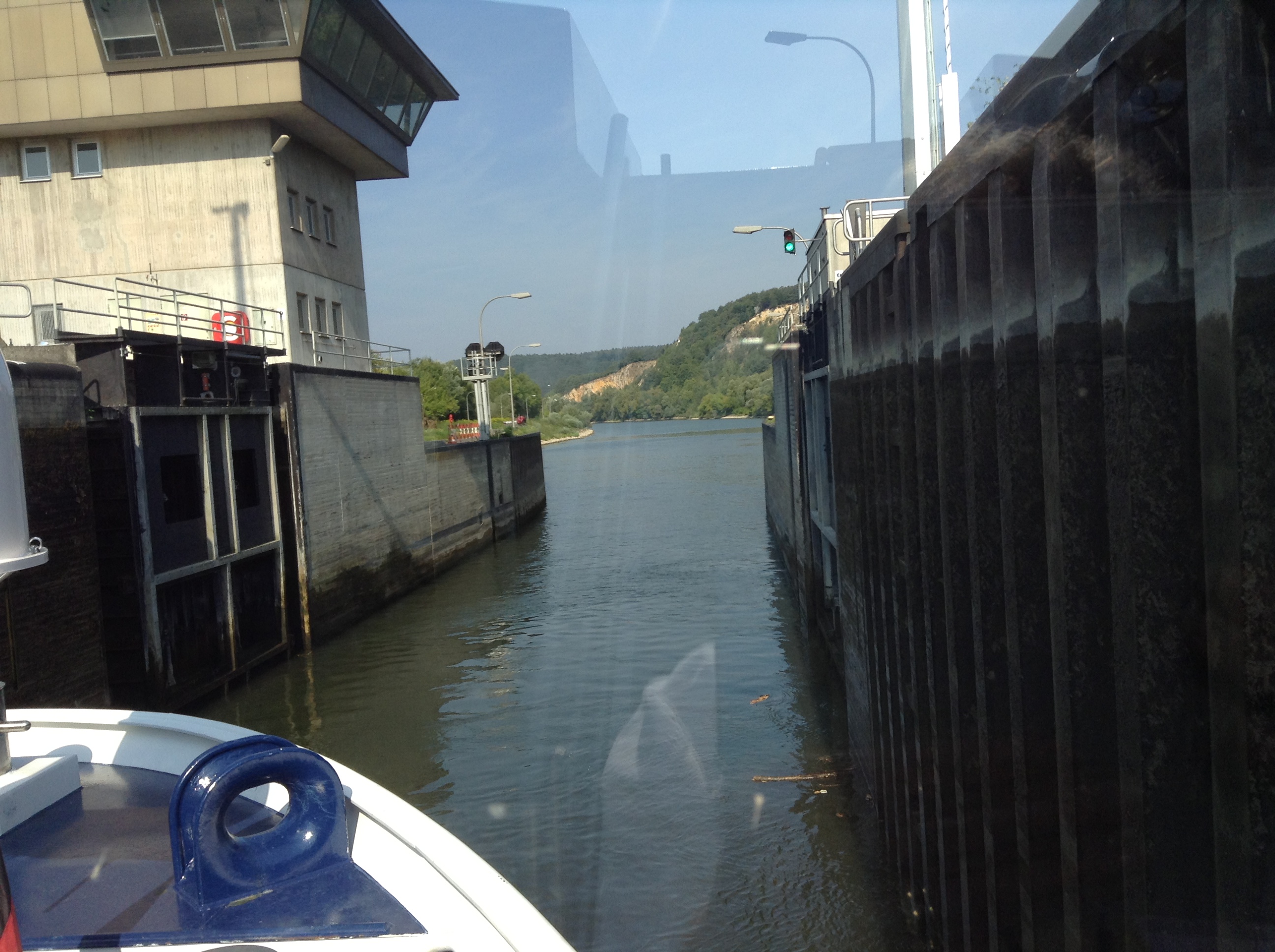
Here are pictures taken of the lock at Bad Abbach, which brings our ship 18.7 feet down.

4

5

Our ship is 30.40 feet wide and the locks are all 39.40 feet wide, a difference of just two feet. Expert as our Dutch captain is, we still occasionally bump into the side of a lock with a noticeable thump.

6

It is now noon on Saturday, August 24th and we will soon dock in Regensburg for a walking tour of the town. Only 14 more locks to visit later today and tomorrow.

7

2 Comments

Filed under Culture, History, Nature, Photography

Maine Woods Ramblin’

My world-rambling brother Peter has sent a bulletin from the northern Maine forest, where he is catching his breath in the middle of a book project and, as always, exploring the local history. Peter published Podunk: Ramblin’ to America’s Small Places in a Delapidated Delta 88, which remains the definitive portrait of locales far off the beaten track, and a perfect reflection of his restless, questing mind.

Pete

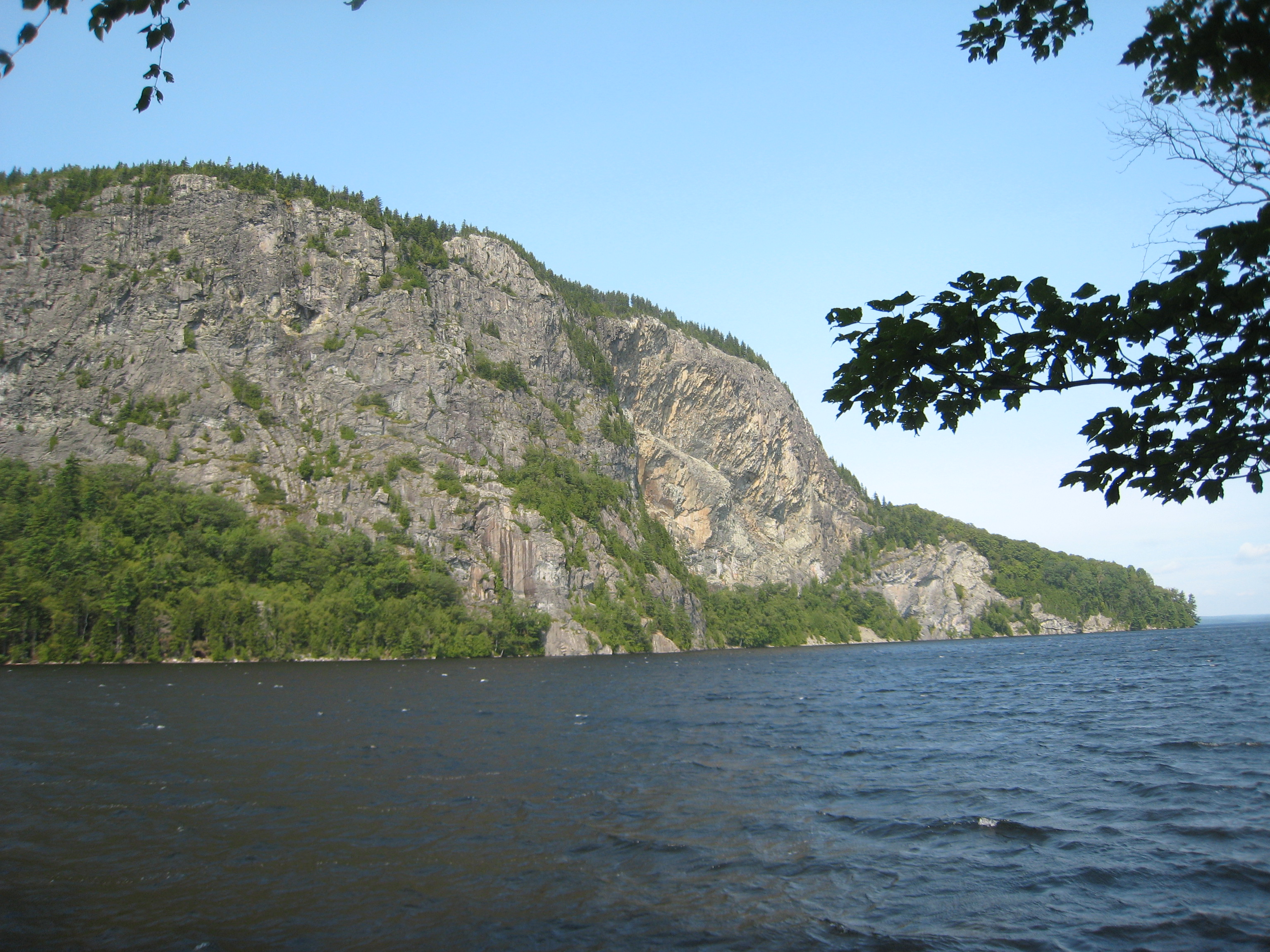
What you can’t get enough of in Podunk are Pete’s vivid photographs, and his pictures of Moosehead Lake in Maine are definitely worth sharing. He’s been spending time around Mount Kineo.

mt kineo cliffs

Mount Kineo’s wild beauty has long been celebrated, but few know it abuts a piece of land called Misery Gore, an “untrampled” place Pete investigated for Podunk. Gores are highly unusual geographical features, Pete’s research shows, limited to Vermont and Maine, “largely forgotten anachronisms that don’t much impact most peoples’ lives in any profound way.”

He says that the source of Misery Gore’s name might be its preponderance of black flies, or it being “a miserable place to survey, log, hunt, and birdwatch,” or that it’s overgrown with briars and brambles, or that “a French-Canadian logger from Miseree once passed through this neck of the woods.” The parcel is wedge-shaped, crisscrossed with nothing but dirt roads.

It is, however, Penobscot country – the tribe has a reservation near Bangor known as Old Town — and on this trip Peter reacquainted himself with some of his Podunk contacts, three generations worth, including 50-year-old Andrew Tomer, his 12- year-old nephew and his father, Penobscot elder Francis.

Francis Tomer

Penobscot, Peter told me, means “where the stream runs by the mossy rock that is white when dry.”

Mount Kineo’s 800-foot cliffs of rhyolite were carved by the Indians into arrowheads. “Thoreau cut himself on this flint-like rock,” Peter writes, “which he called ‘hornstone.’”

arrow heads

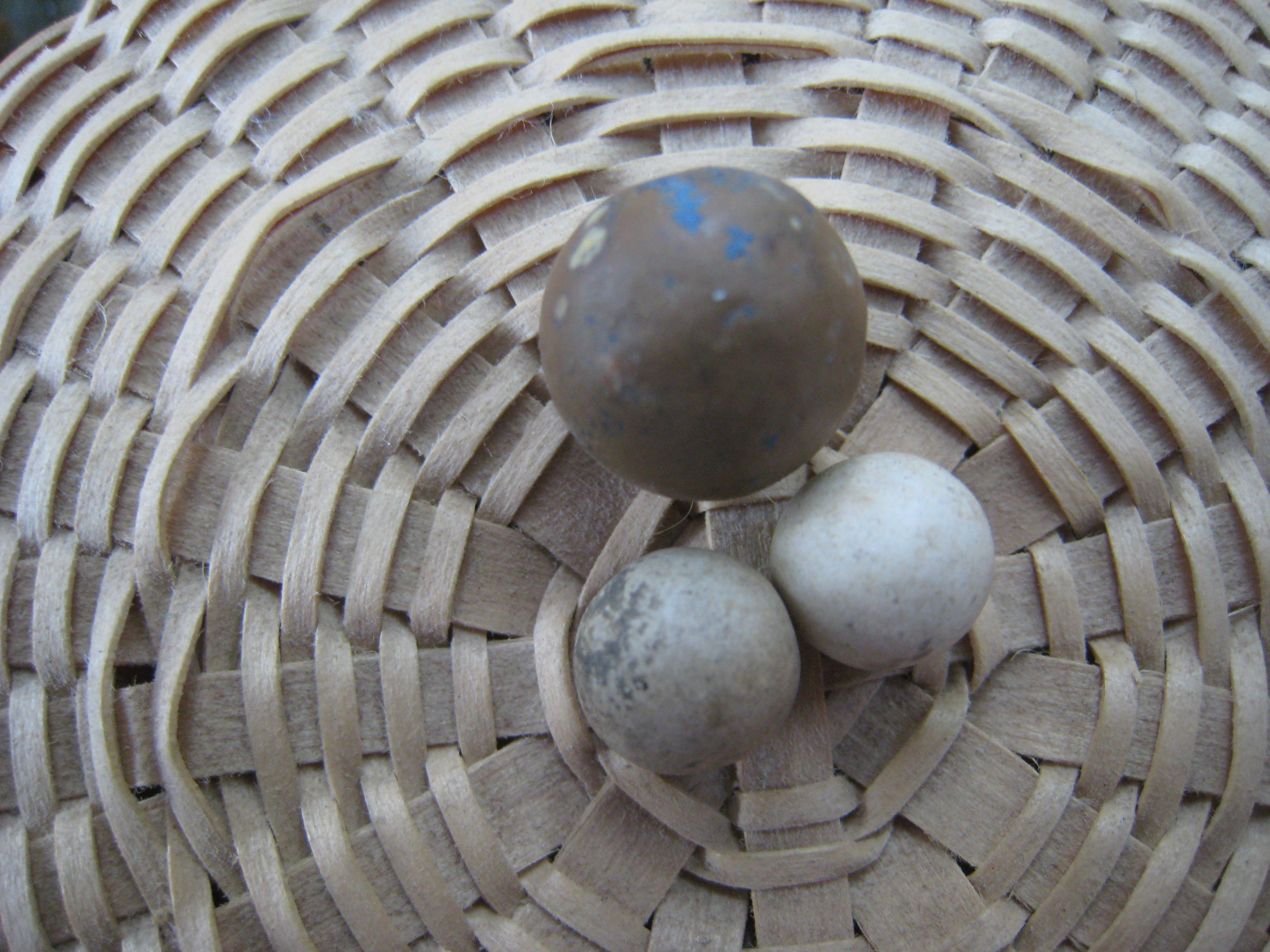
“Some Native Americans believed that the cliffs under water were bottomless” Peter told me. He took a ferry to the Tomers’ dock. “After a dinner of well-grilled steak, corn on the cob, green beans from the garden and small spanish olives with pimentos, Francis took out a cigar box with all the arrowheads, marbles, stone tools, etc., and told me about them,” said Peter. Andrew, he reported, was very quiet. “He wanted to remember the stories for future generations.”

clay marbles

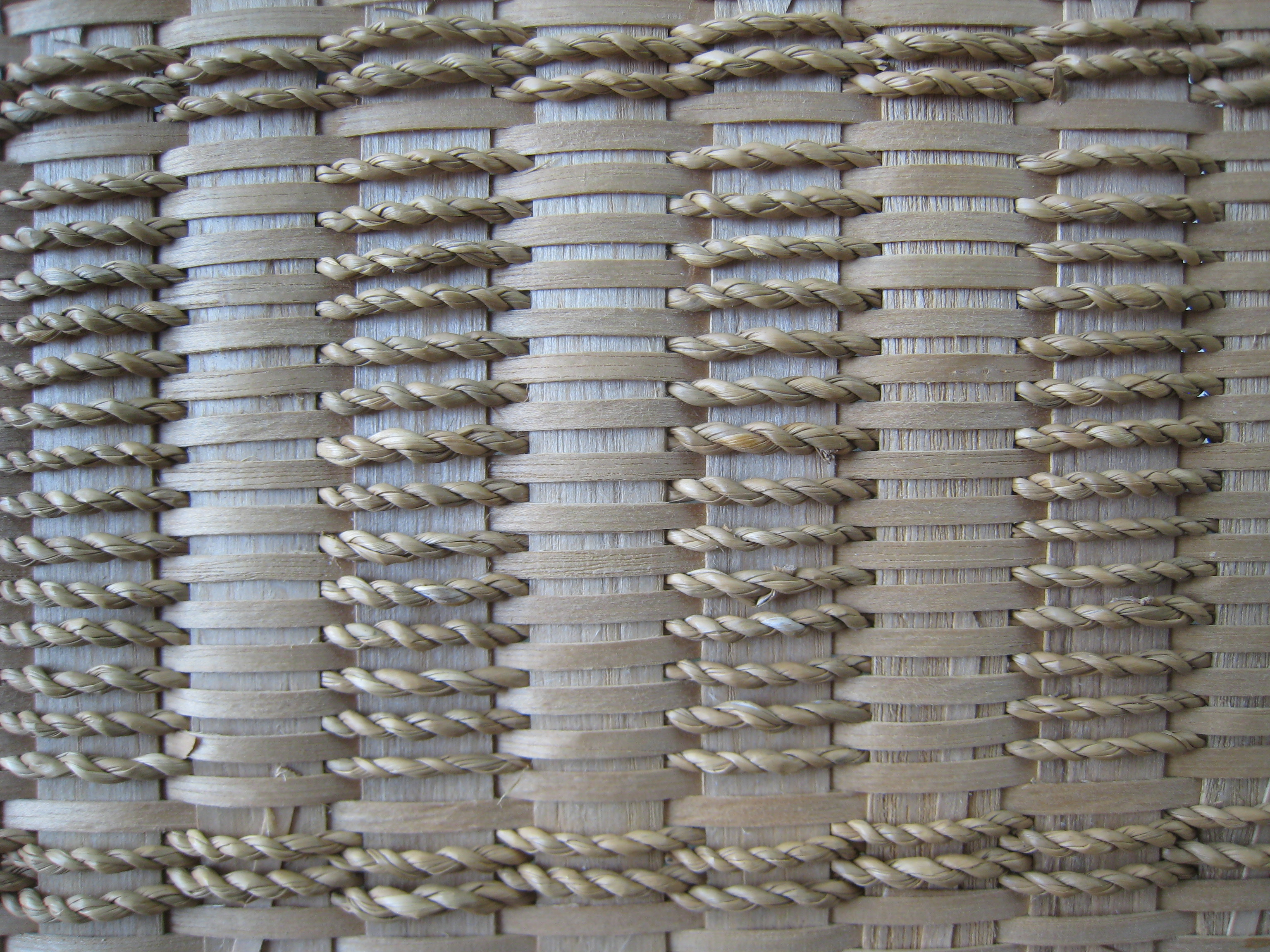
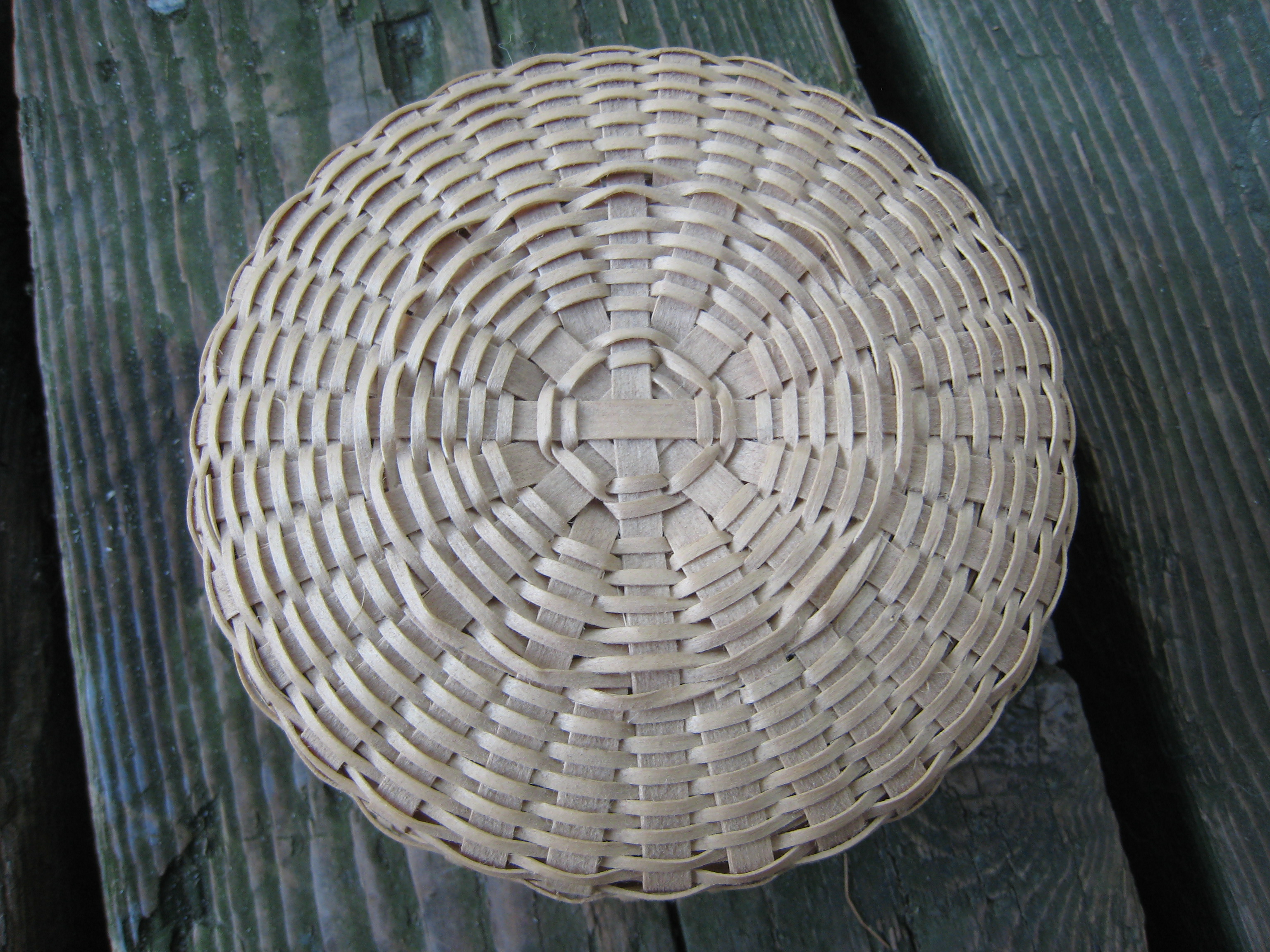
“Basket weaving by the Penobscot can be quite intricate,” says Pete.

basket 1

“First, pieces of ash are soaked in water. Then each one must be individually sanded down.”

basket 2

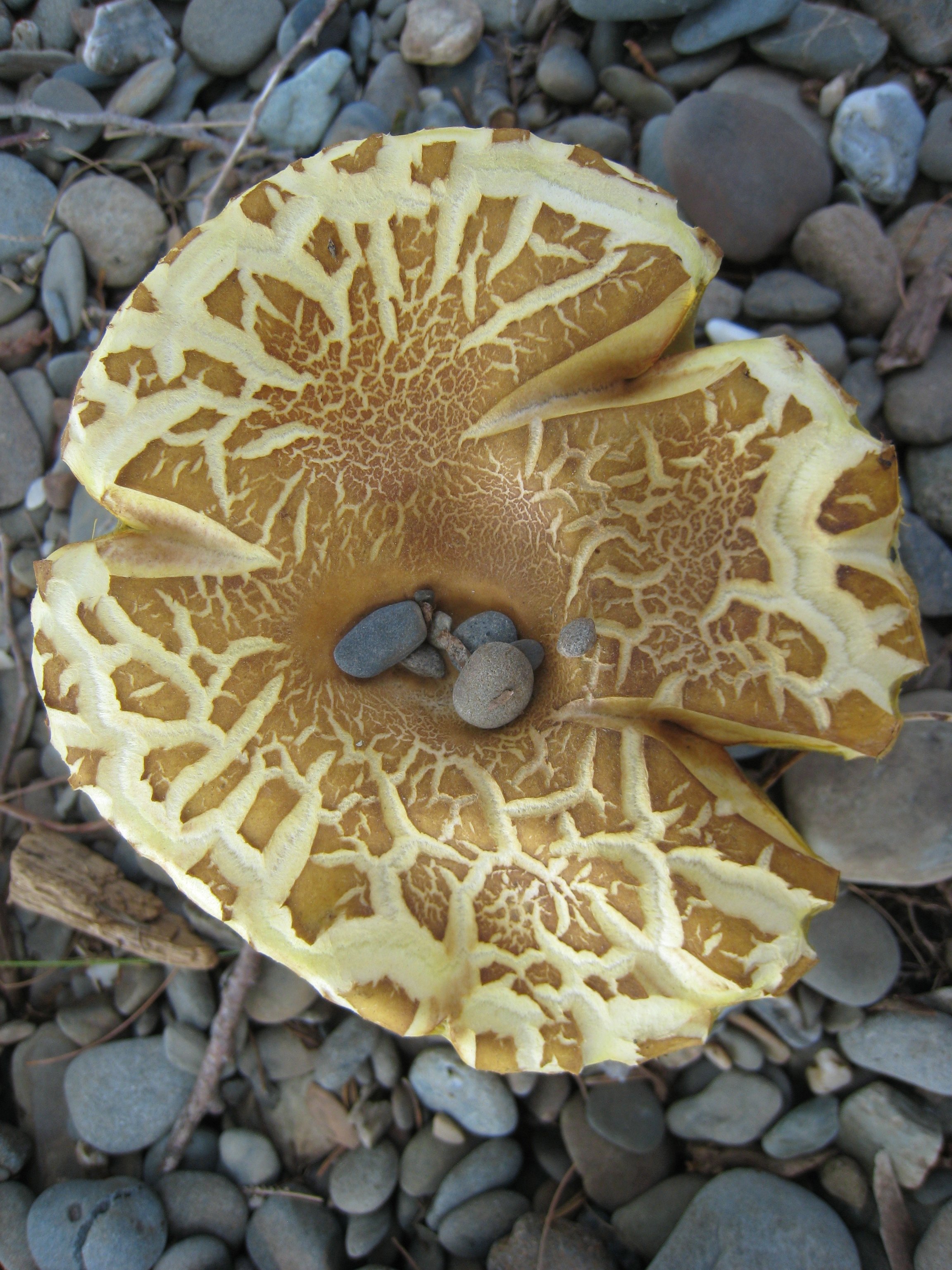
These baskets were made by a woman who lives in Rockwood, Maine, on the shore of Moosehead Lake. There Peter saw mushrooms. Fresh, with a garnish of smooth stones.

mushroom

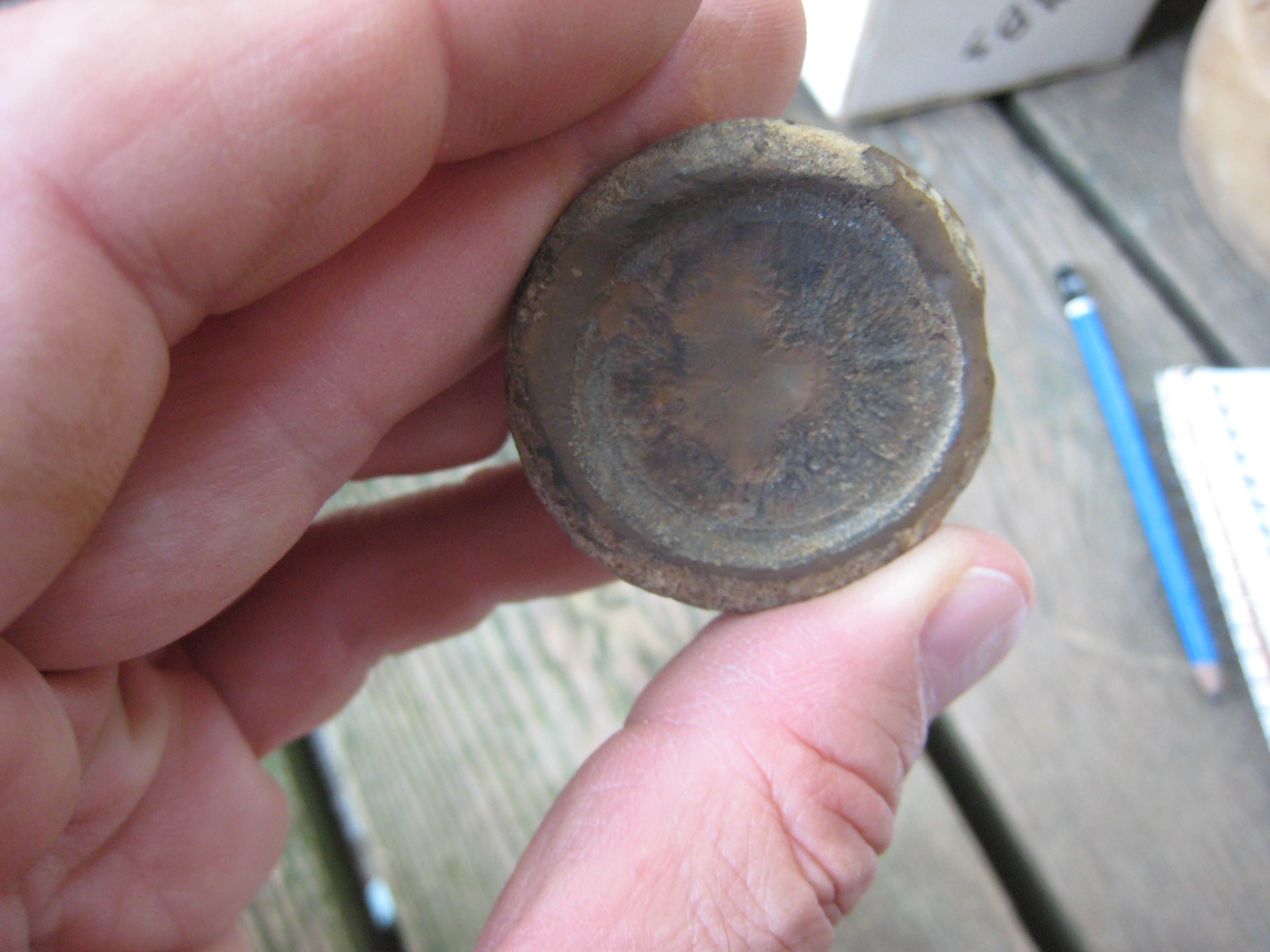
And fossilized.

fossil mushroom

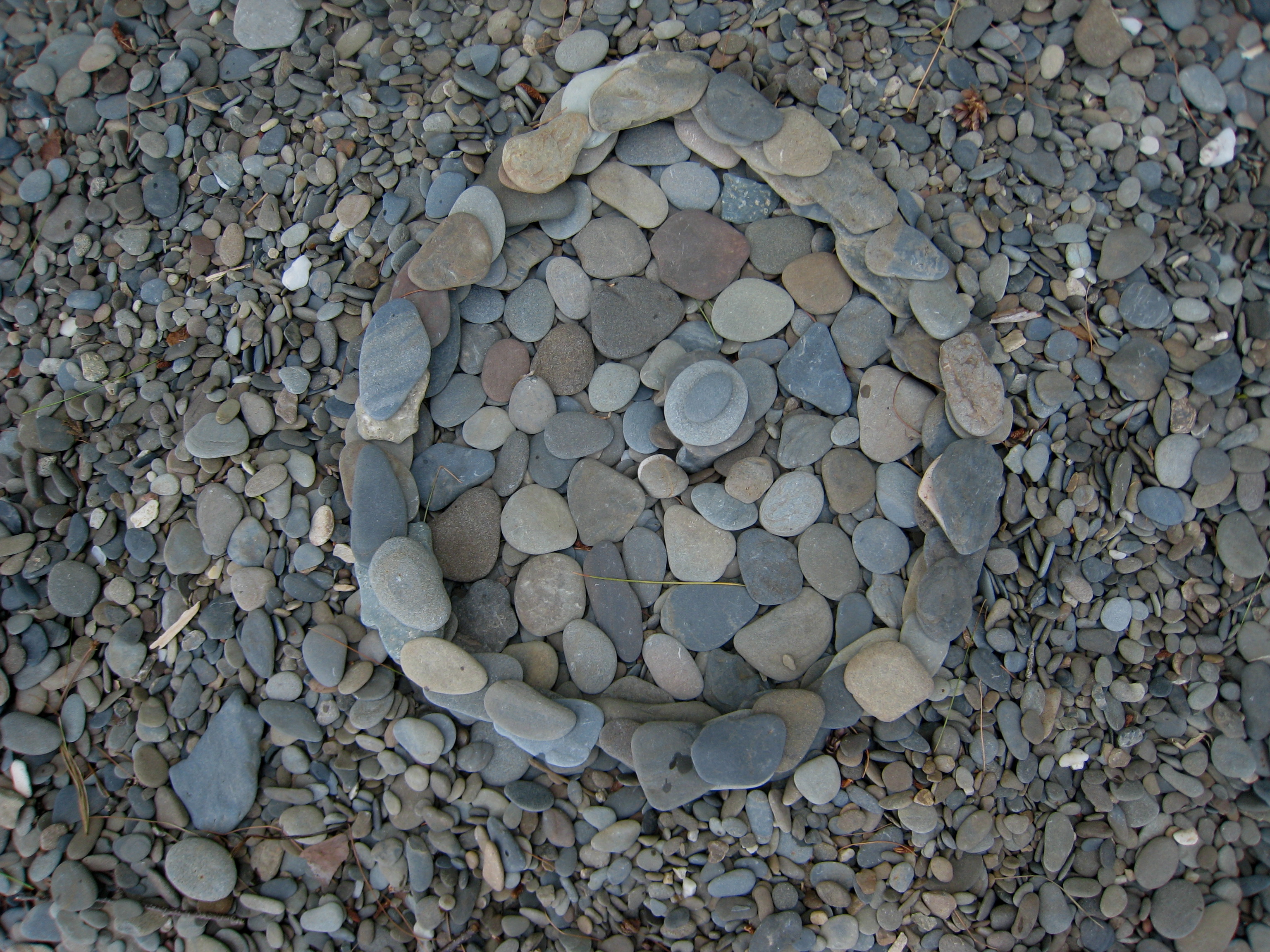
A sculpture of some kind.

stone sculpture

A piece of the rhyolite from which arrowheads are carved.

piece of rhyolite

Wampum.

wampum

An ancient knife used to carve walking sticks.

old knife used tomake canes

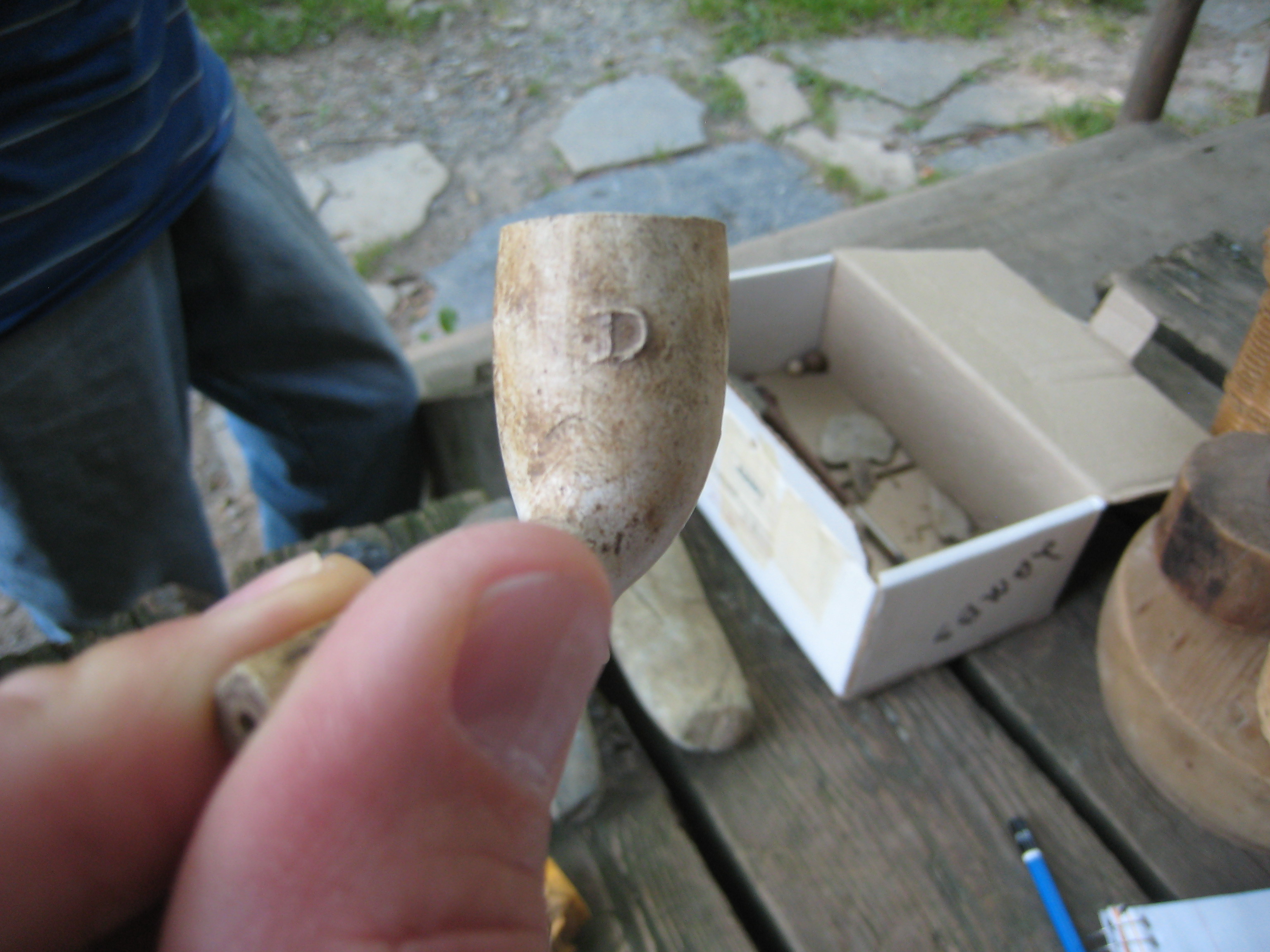
An initialed pipe left by an early settler.

pipe

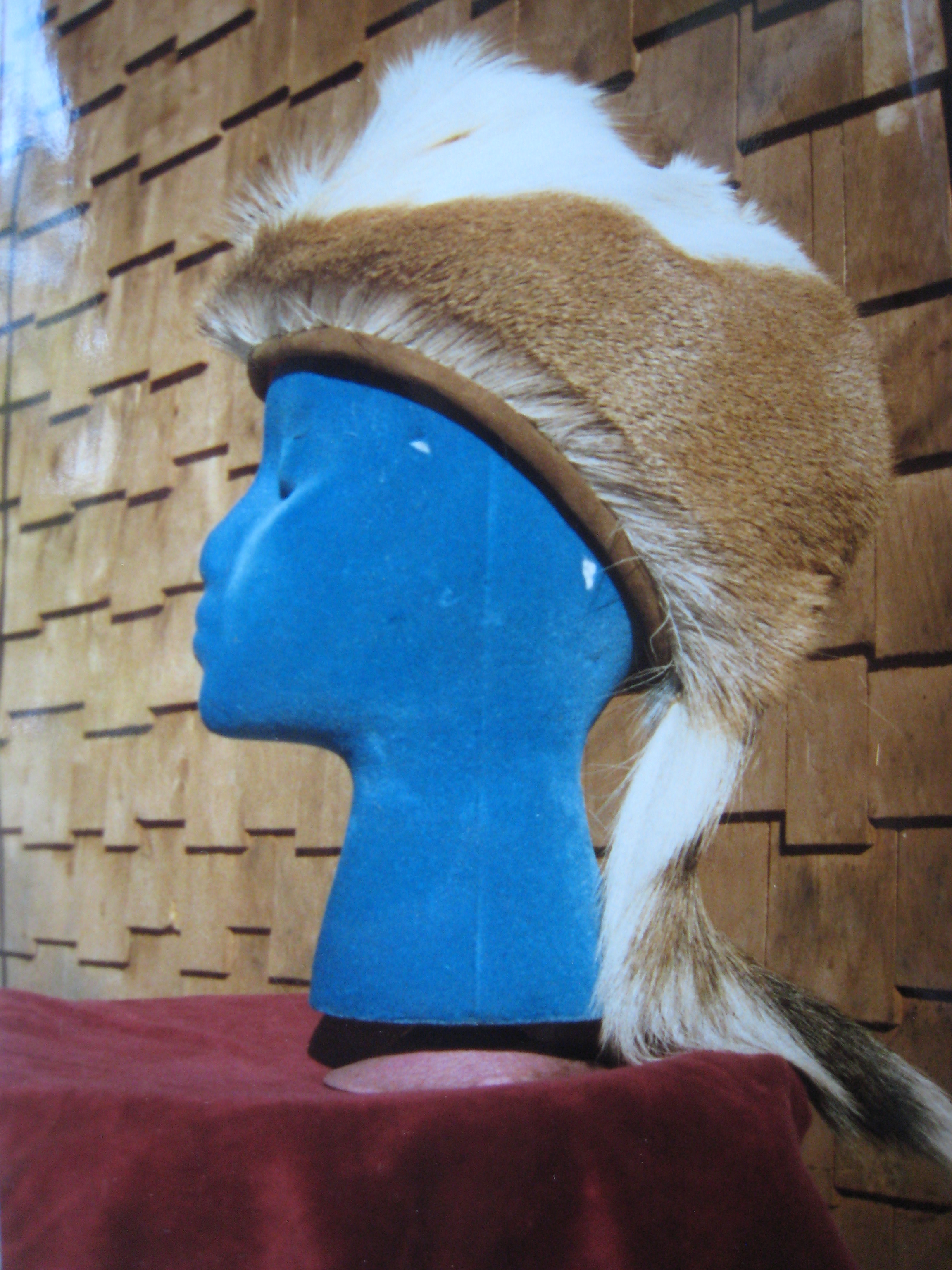
A deerskin cap.

deerskin copy

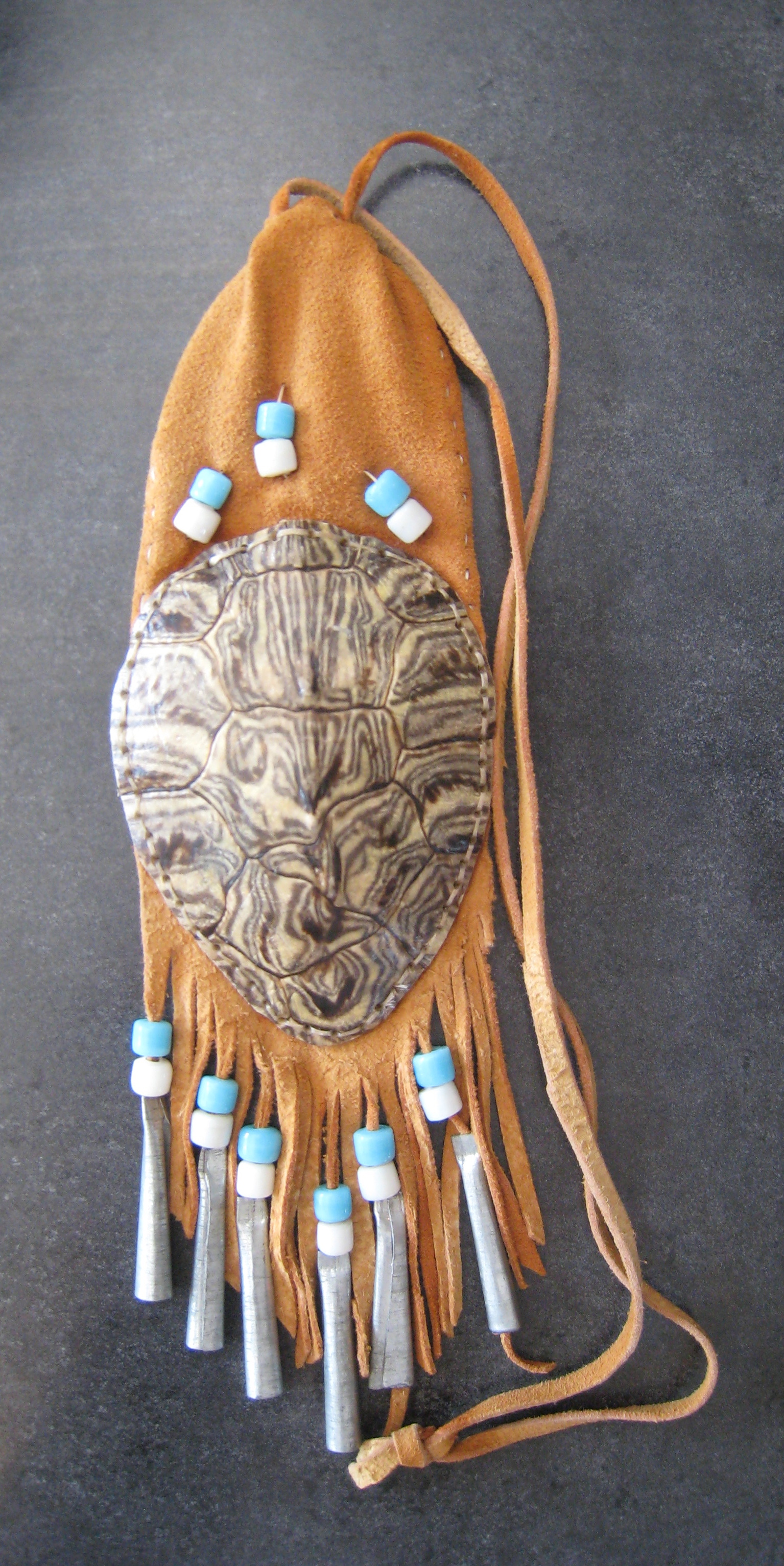
A deerskin pouch adorned with a baby snapping turtle shell that Peter plans to bring with him when he leaves.

pouch

A celebration of all that is old and new and precious in these cool, mysterious Maine Woods.

7 Comments

Filed under Art, Cooking, Culture, Fashion, History, Home, Jean Zimmerman, Nature, Photography, Publishing, Writers, Writing

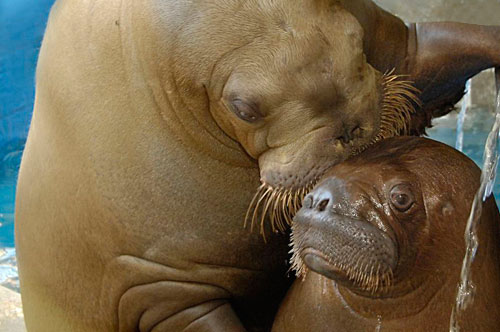
I Am the Walrus

I’m about a foot shorter and slightly less blubbery, and my tusks have not come in, but my habit of lolling on the couch is pronounced.

walrus face

I could be lying atop a Greenland ice floe. A tooth-walking seahorse (Odonus rosmarus) through and through, cast-footed variety. Basically sedentary. Shellfish savoring. Laughable? Don’t people sort of snicker at walruses?

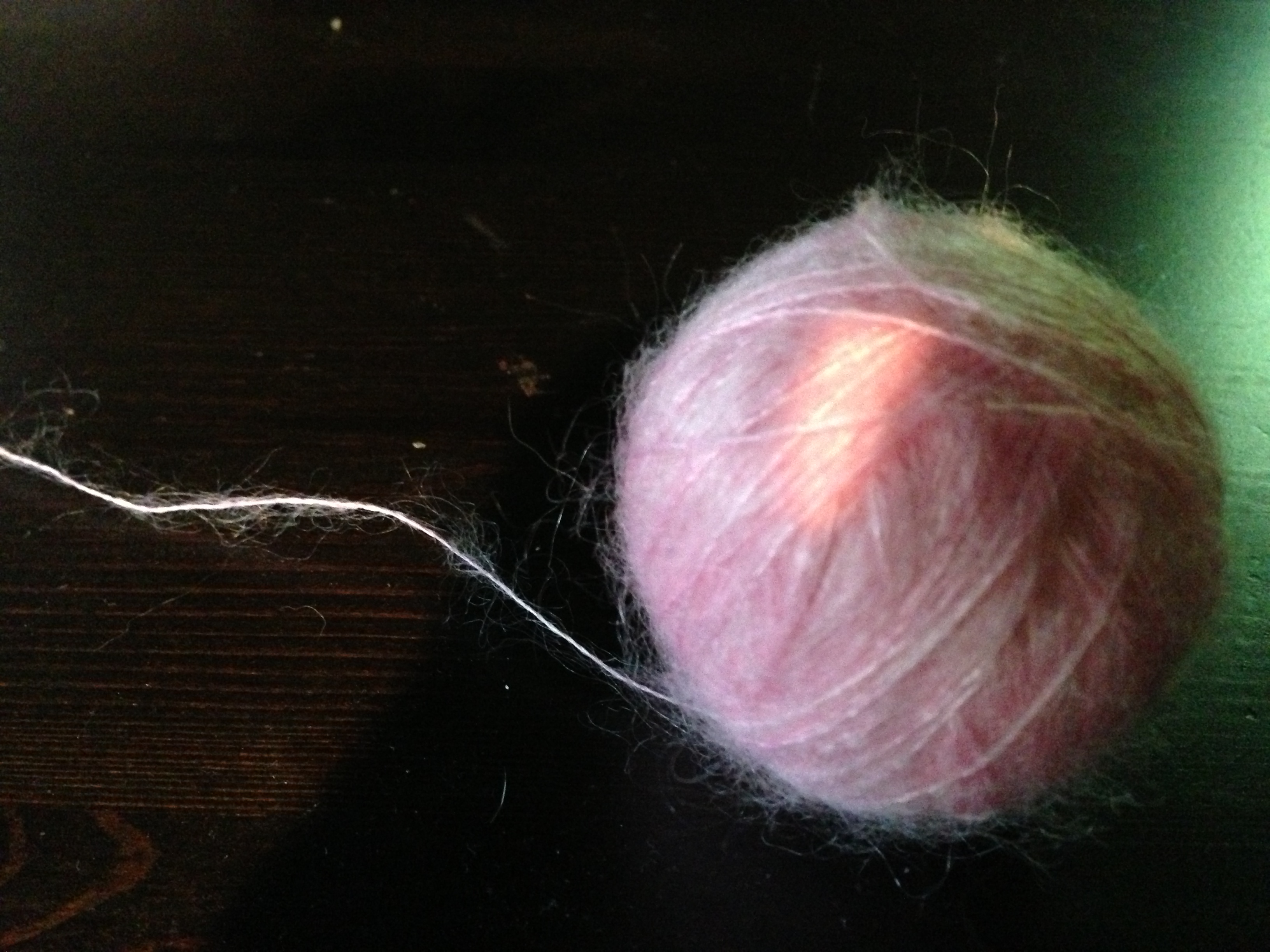
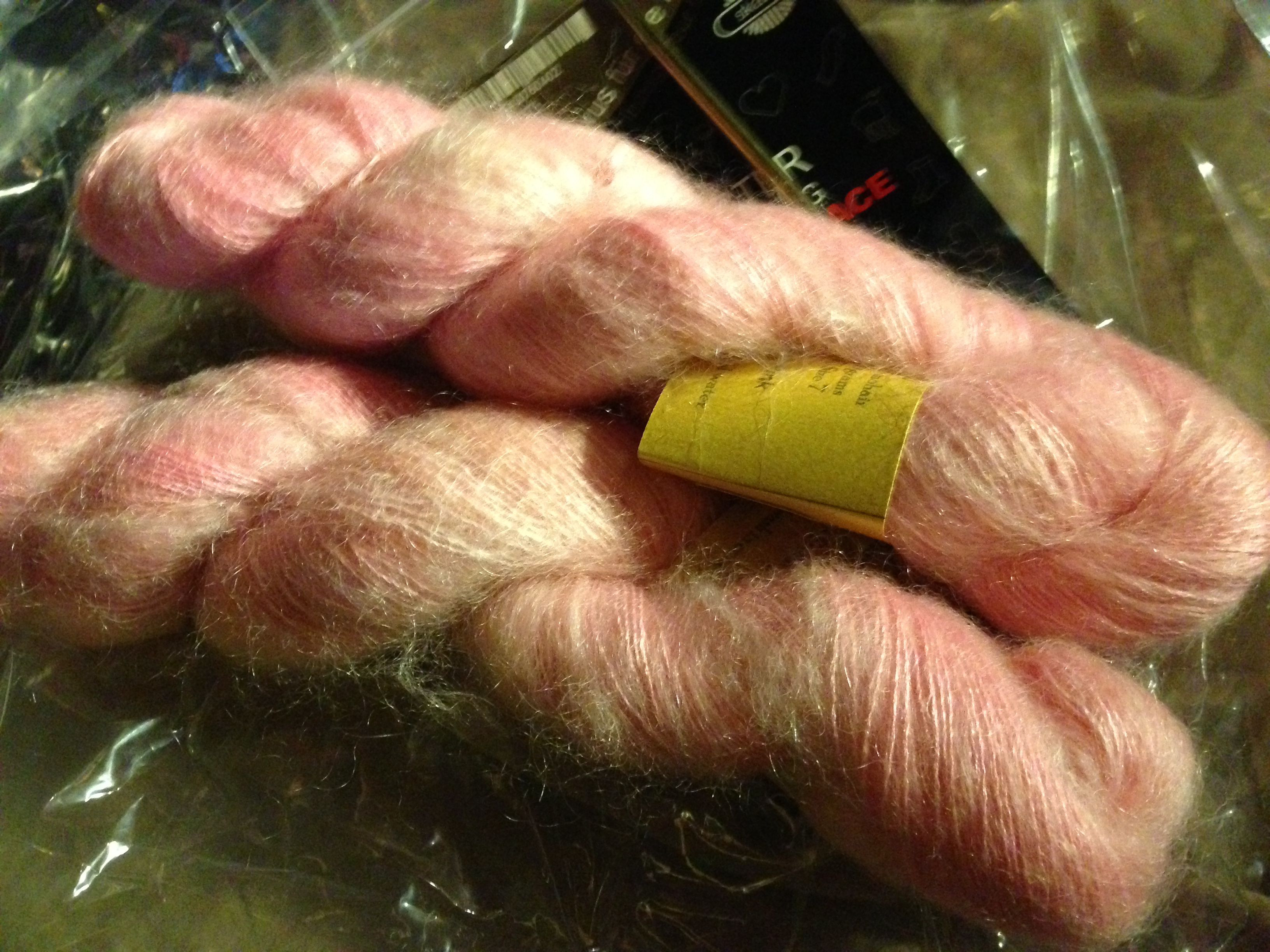
My main function these days, when I’m resisting the urge to watch past episodes of Orange Is the New Black, is to absorb information. That and try to knit a mohair bandana with a pair of metal toothpicks, willing Oliver not to drag the tiny wound-up ball of pink fluff under the coffeetable.

oliver snout

(Not successful, and I nearly rebroke the bones in my foot retrieving it.)

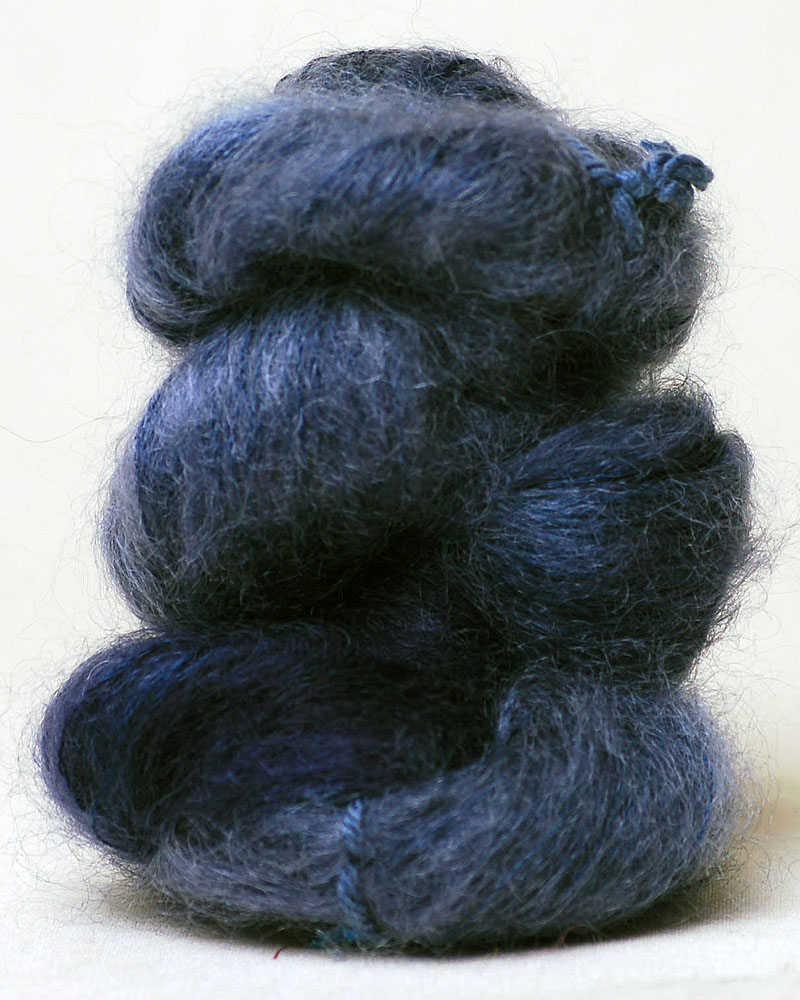
mohair

Walruses show affection.

baby-walrus-kissed-by-mother

There’s more where that one came from, walrus fetishists.

Aside from walrus kiss-bombs, I sourced a few more of life’s interesting details today.

1. A California man named Jerry Gretzinger has spent 50 years drawing an enormous map of a world he invented.  Hmnh, you say, don’t people do this every day? Well, maybe brainy 3rd graders do something similar on a sheet of oaktag.  But his is just so much more carefully delineated than others, did I mention 2,000 feet long, and he uses a weird deck of cards he pasted up to determine next steps he will take on the thing. Including which neighborhoods get what he calls “voided,” or just suddenly blasted out of existance.

gretzinger1

There is a great mini doc about him, and you might want to bring home some colored pencils when you’re out today. (Note the envy in that: when you’re out today.) For more great stuff on do it yourself cartography (and moving gigantic maps) try Making Maps.

2. I never knew what was in O magazine – lists upon lists of Oprah’s fave books that were going to earn more than my books ever would? But today I checked out the September issue because we got a subscription in error. And it turned out the issue was all about hair. Here is something so inutterably weird I reread it a few times. A timeline of how glamorous hair extensions come to be. It begins with Hindu pilgrims shaving their heads at the temple Tirumala in Tiraputi, India. (I did a little further research. As many as 10,000 pilgrims get their hair shaved by 500 temple barbers every single day.) The hair is fumigated and wrapped in bundles in Bangladore, then shipped by private courier to Rome to be bleached and dyed. Six weeks later it goes to U.S. salons. After 3 to 6 months use the repurposed locks get tossed in the trash. Footnote from the same O: 90 percent of celebrities at the Academy Awards are wearing extensions – everyone except, according to one expert, children and women with pixie cuts. I guess men, too, go unextended. But who knows.

3. A lot of people consider the Hudson to be “my river.” Me too. That’s why I was surprised not to have known before that the actual start of the estuary, the southern terminus that is, is deemed by scientists to occur precisely at Manhattan’s Battery.

stock-footage-aerial-panorama-downtown-manhattan-wtc-financial-district-east-river-hudson-rivers-battery

I knew it began down there in the Harbor someplace, but everything seemed pretty watery and diffuse to me. Now I realize that you have Hudson River Mile 0 at the Battery, the George Washington Bridge at HRM 12, the Tappan Zee at 28, Bear Mountain at 47, Beacon-Newburgh Bridge at 62, the Mid-Hudson Bridge at 75, the Kingston-Rhinecliff Bridge at 95, the Rip Van Winkle 114, and the Federal Dam at Troy, the head of tidewater, at 153. The tidal section of the Hudson constitutes a bit less than half the total distance – 315 miles – from Lake Tear of the Clouds to the Battery. I learned this scrap and so many other things from the State Department of Environmental Conservation’s weekly easy–to subscribe to e-newsletter, Hudson River Almanac. If you want to know how many hummingbirds appeared in someone’s yard this May, and how that compared with last year’s count, or the story of a kingfisher riding the back of a hawk, or that Atlantic blue crabs are known to rivermen as “Jimmys,”(mature males) “Sooks,” (mature females) and “Sallys (immature females), this is the place for you. I find I want to know these things.

Hummingbird-Wallpaper

It’s amazing what you’re ignorant of as a walrus.

3 Comments

Filed under Art, Culture, Dogs, Fashion, History, Home, Jean Zimmerman, Knitting, Nature, Photography, Publishing, Writers, Writing

The Mummy’s Bones

The Bloke smokes. The thing you need to know if you get a kneeling scooter is you have to embrace the experience, you have to enjoy it, you have to gliiiide. Even with a cup of iced Starbucks in one hand.

jz scoots

Like a kid. Like all the kids that look at you with envy when they see you and your device, The Bloke, come careening their way. I beat Gil in a race down the drug store aisles.

Gil says, Jean, don’t write about your foot again.

But I say, write what you know. And at this point my foot is pretty central to what I know.

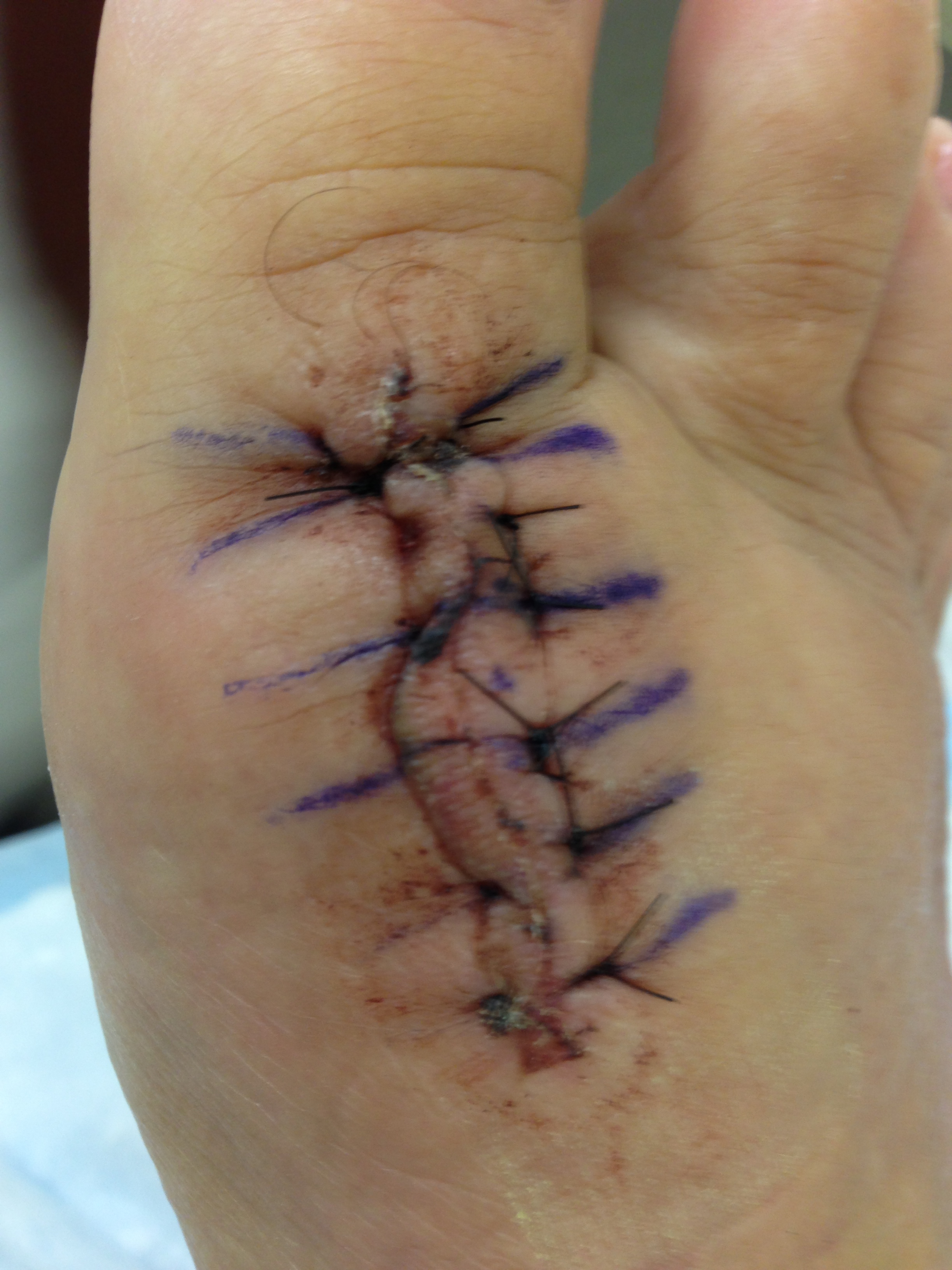
I felt good because I came out of my first week of rehab with a completed book review for NPR – and the book was a hefty one, too: The Daughters of Mars, by Thomas Keneally. It makes it somewhat easier to handle an achy-breaky right foot when you’re reading about World War I soldiers getting their faces “shorn off.” Amputees were the new normal. Who am I to complain? I got a few stitches, that’s all.

suture

But crutches suck. You see those college jocks swinging along on a pair after a football injury, going to History 329 or maybe a crowded  party up a flight of frat-house stairs – how do they do that? It’s all I can do to limp across the living room or out to the car. It’s the young guys’ superior upper-body strength, I’m sure, but also the breezy ‘tude, and a strong desire to get back into the swim of beer pong.

Which brings me back to The Bloke. I was going to decline the Pig Mountain barbecue at the end of August, thinking I just couldn’t manage the street fair thing. But how can you turn down a pork-enshrining food fest in a town called Narrowsburg, New York, which started out as a punk rock show in a basement? Fourteen chefs and fourteen pigs. So what if I get some drinks slopped on The Bloke. He can handle a little rust.

This is one way to get through 6 weeks of life in a foot cast: gliiiide through it, sampling pork ribs and other delicacies along the way.

I’ve become a pudding fiend. A bowl of the stuff being the demarcation between early evening on the couch, foot up, and late evening on the couch, foot up.

KozyShack

I’ll tell you a secret about Kozy Shack. It’s no worse than any homemade pudding or gourmet restaurant mousse either, containing just milk, eggs, sugar and real vanilla. It has only one flaw. The chocolate does not have the delectable skin on it you get when it cools after you spoon it out of a hot pan. Yuck, says Gil.

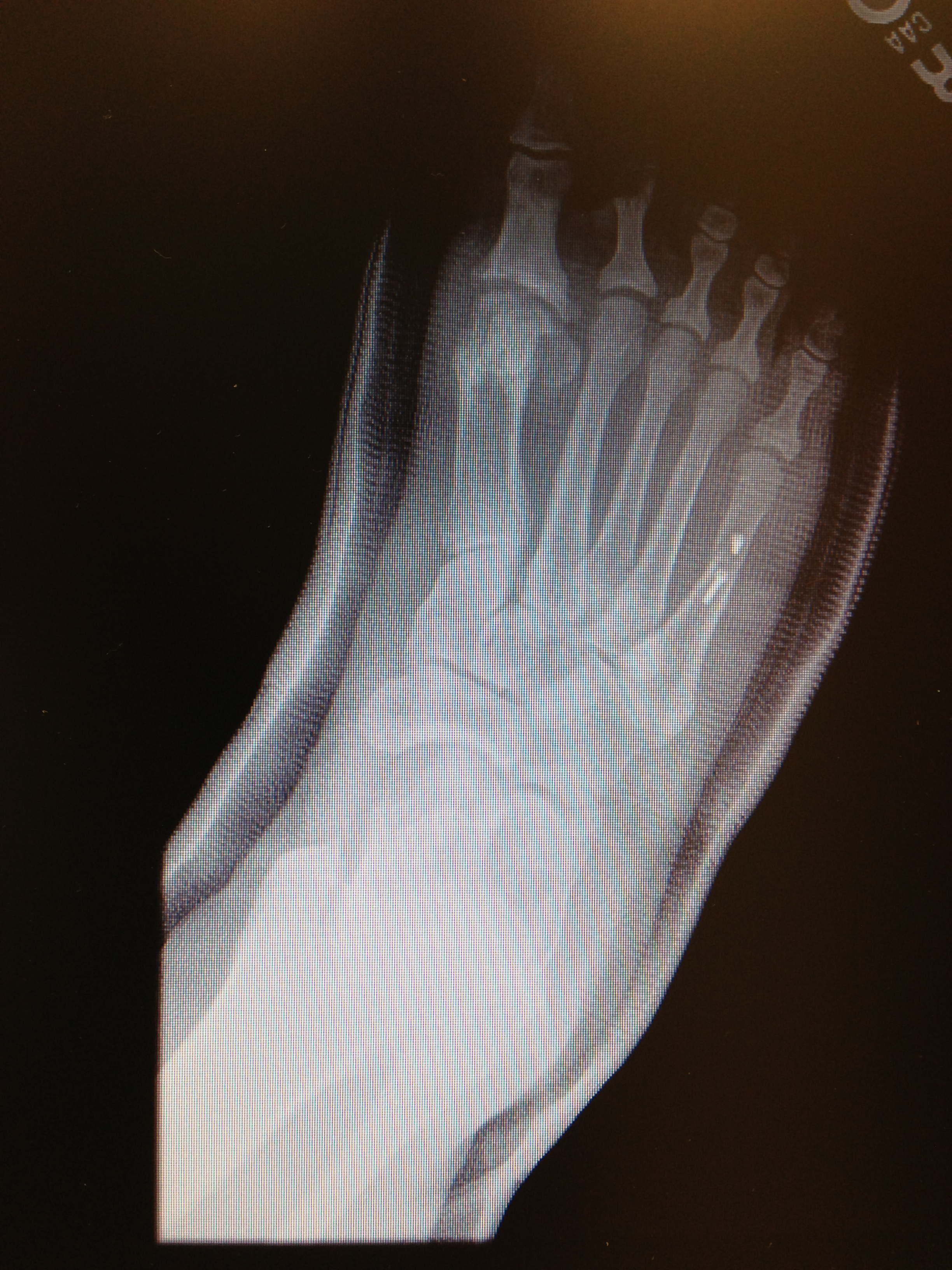
Another avenue to wellness: idolize your doc, and realize you lucked into the Greatest Foot Surgeon in the World. The Greatest. There is something of the Stockholm Syndrome in this, probably, as Dr. Voellmicke is mine for the duration, so he better be good. But in truth, he has a sharp mind and a gentle touch. Not everyone could repair a fifth metatarsal with such delicacy.

foot xray

We visited with Dr. Voellmicke so that I could get my sutures removed and my plaster cast exchanged for a streamlined fiberglass model. This sterling representative of his profession performs every bit of the work himself, including creating a fiberglass mold of wet strips the way you’d make a kids’ pinata.

bandaged foot

I came up with a horror film trope. Bunions: The Movie. Or maybe The Bone Spur. Anyway, my feet have been a nightmare for a long time, and it was thrilling to see the monster bones I was living with transformed into the elegant lines that now lie beneath the mummy bandages, awaiting their closeup.

9 Comments

Filed under Culture, Film, Home, Jean Zimmerman, Nature, Photography, Publishing, Writers, Writing

A Hut of Candy Floss

Magical, feel good potions of the day: a tall iced coffee, a small pain smoother, a delicate skein of candy floss.

coffee

There’s a lot you don’t know about crutches before they come into your life. Like what good yarn-winders they make in a pinch.

crutch winders

This silk-angora begs to be knitted into a Barbie evening wrap.

candy floss

I seem to be rendered all thumbs by the work on my toes.

floss knit

Don’t you love it when you come across an actress just casually knitting in the movies?

Audrey Hepburn in Breakfast at Tiffany’s makes a famous attempt, looking fetching while botching her pattern.

audrey

Or Myrna Loy in the Thin Man movies. She makes knitting snazzy.

Myrna Loy

Sylvia Sidney appears in a fantastic shot on set, needles in hand.

Sylvia Sidney A

That last comes from one of my favorite blogs, One More Stitch, whose author researches and recreates garments of the past.

All these glamour pusses make it look so easy.

When I feel like tossing my needles, I think about entering the knit world another way — through  the example of this guy in France who soaked sweaters in milk and lime, threw them over a frame of branches and covered them with black soap and linseed oil. He padded the inside with earth and, for some reason, horse manure. He lives there now.

Hepburn would probably even look more cool knitting her sweater in this knit hut.

1 Comment

Filed under Culture, Dogs, Fashion, Film, Home, Jean Zimmerman, Knitting, Nature

Day 1-In Which I Learn to Hobble

It was a success, the surgery, though I awoke from the anesthesia blubbering like a baby. It’s normal, said the orthopedic surgeon, come to check on me. A lot of people cry. Then it was hip, hop, on to the wheelchair, on to the crutches, off to my new full-time lair, my living room, my foot on pillows above the couch.

cast

My snouted nursemaid wedged beside me.

ollie nurse

My other nursemaids scurry to my orders. My computer, please! My muffin! My book! Put it close, I’ve got to get an NPR review done this week. Could you please turn that light off? Or on?

I have a good view of Maud’s metallic blue fighter fish, Brussels, making his small way around the bowl.

brussels

Somehow, thinking about the immediate future, though I never had much patience for that fish, I now feel kindly toward it. Brussels reminds me of myself in my own little living room bowl. Except I hobble, can’t float at all, when I want to go brush my teeth.
Trying to stretch myself outside this world, adventuring via pictures of the past to the motor adventure taken in 1918 by John Burroughs, Thomas Edison, Henry Ford and Harvey Firestone.

This brilliant crew took a 12-day car camping trip in Burroughs’ automobile when he was 81.

NoondayRestFinal.jpg.CROP.article920-large

John Burroughs, less well known today than the others, was ragingly popular by that time in his life. Gil and I used to visit his country retreat, a tiny cabin called Slabsides that stood beside a celery marsh in West Park, New York.

slabsides

Burroughs’ fans have kept it intact, so you can see it as he did. Being there always made me want to inhabit a cabin, and now  mine is virtually like his.

burroughs-at-slabsides

… I was offered a tract of wild land, barely a mile from home, that contained a secluded nook and a few acres of level, fertile land shut off from the vain and noisy world by a wooded precipitous mountain… and built me a rustic house there, which I call ‘Slabsides’, because its outer walls are covered with slabs. I might have given it a prettier name, but not one more fit, of more in keeping with the mood that brought me thither … Life has a different flavor here. It is reduced to simpler terms; its complex equations all disappear.

Young college women used to travel in hordes by train to Slabsides to pay homage to the great man, a pioneer of nature writing who published some 25 volumes, of which a million and a half volumes were sold during his lifetime.

In 1918, a convoy of eight vehicles accompanying the brainy colleagues toured Pennsylvania, West Virginia, Tennessee, and Virginia, stopping to camp on farms, examine old industrial sites, take hikes along rivers, and measure farming implements for fun, documenting as they went.

Some shooting entertained Ford and Firestone.

ford and firestone shooting

At night around the campfire the two industrialists, the naturalist and the inventor wound down by chewing over Shakespeare, Thoreau, chemistry. Don’t you wish you could have been there? In a way, you can, because photos from the trip are stored at Harvard’s Widener Library, with a smaller portfolio at my favorite website, Slate’s The Vault.

Closer to home yet exotic in its own way, the wool I am sending away for to keep my hands busy during this nonambulatory period.

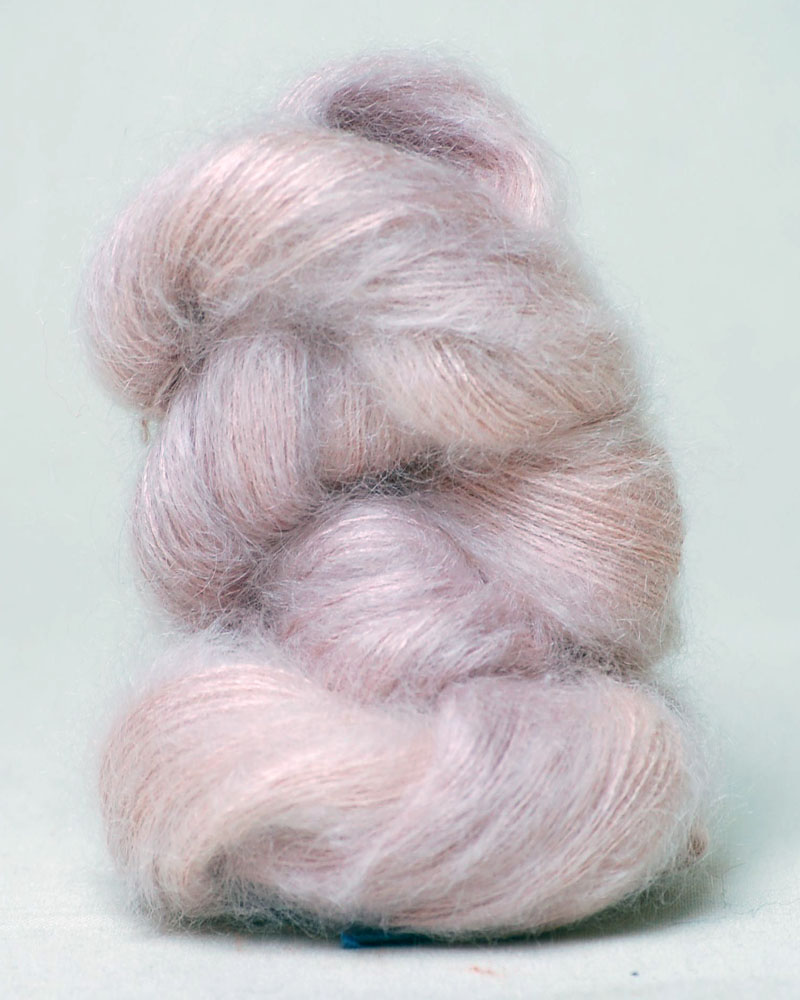
What is mohair, anyway, I wonder, as I fawn over the silk and mohair skein available from the chicest yarn store I know, Purl in Soho, New York City.

It’s from a line called Haiku made by a company called Alchemy. The shade is called Teardrop. Is that not irrisistable?

Alchem's Haiku-Teardrop

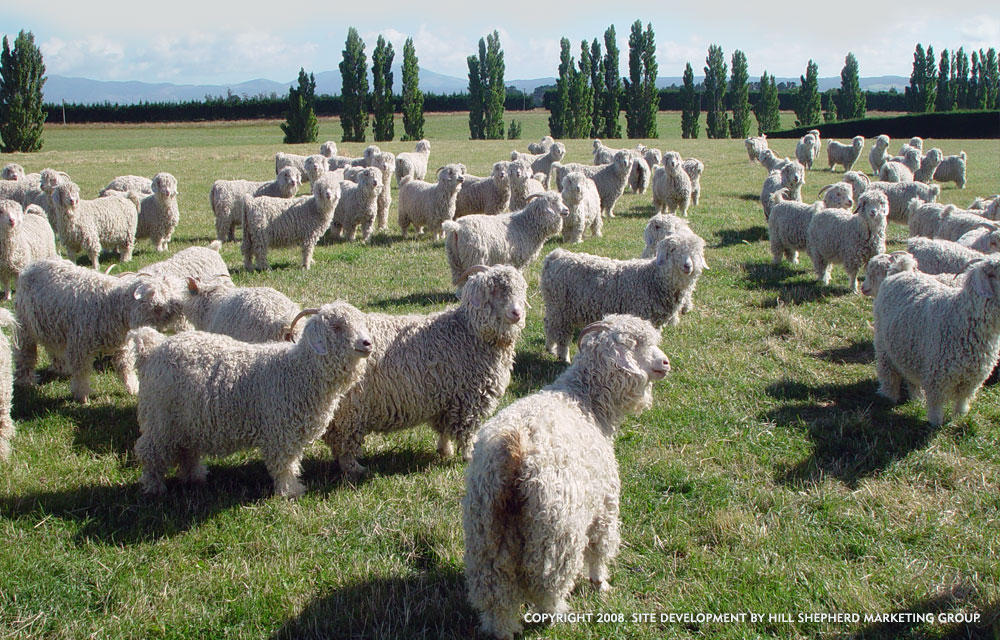
The yarn comes not from a sheep but a goat, the Angora, which emigrated from Tibet to Turkey in the 16th century, and it’s one of the oldest textile materials in use. It’s made of keratin, like hair, wool, horns and skin. Mohair is warm in winter, while remaining cool in summer. It is flame resistant, crease resistant, and does not felt. The goats are mainly bred in South Africa now.

angora_goat_11_12

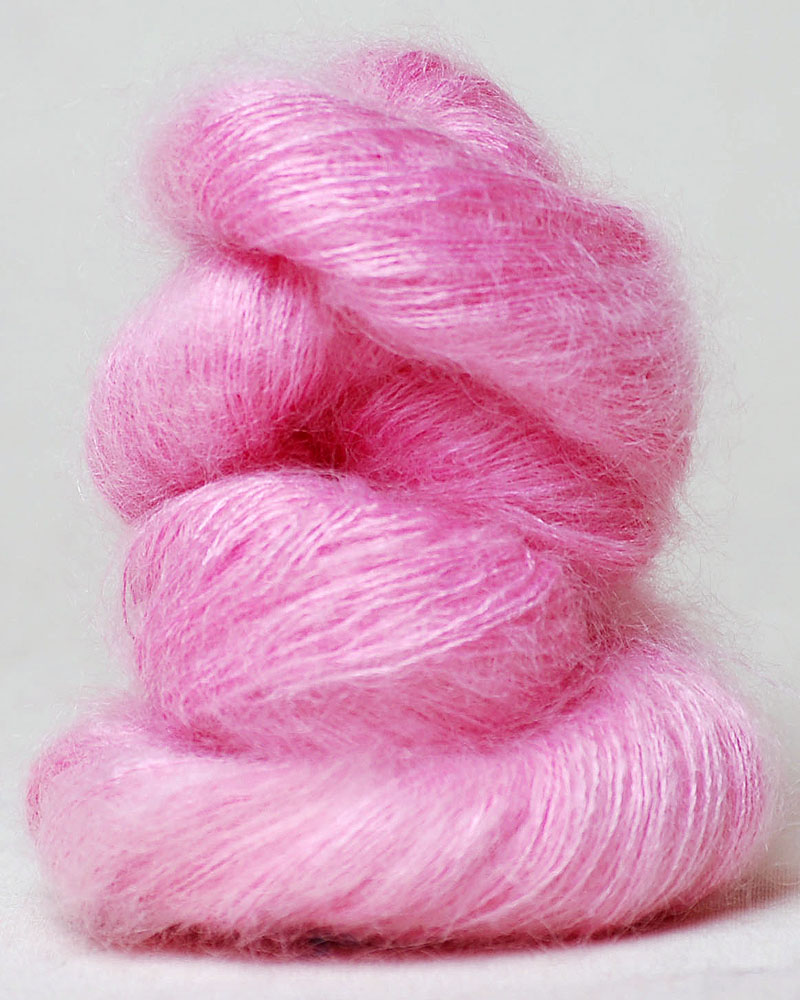
And it is of course beautifully luxurious. Makes your fingers sing. Should I choose this color instead? It’s for a slip of an elegant bandana, not the kind you’d wear around a Slabsides campfire. Evening Pink.

Haiku-Evening Pink

If Firestone and Ford and Edison were on their way over to roast weenies, maybe a scarf in this hue would be more refined: Blue Jay Way.

Haiku-Blue Jay Way

So many choices when your leg is up and all you’ve got to do is dream.

2 Comments

Filed under Art, Culture, Dogs, Fashion, History, Home, Jean Zimmerman, Knitting, Nature, Photography, Publishing, Writers, Writing

Of Leeches and Fiberglass

Five hundred years ago I would be having leeches applied to my leg today. Now it’s just a thigh-high fiberglass cast. And I know my foot will get better. (Even with all those leeches, a person would probably never get out there again in the millet fields.)

imagesJust so you know, I may not be posting as regularly in the next month or so, as I drift in a medicinal haze. We’ll see what adventures are to be had in my living room, aside from gorging on episodic tv and Poptarts. And guest bloggers are welcome, those with adventures to share, just leave me a comment and we’ll discuss.


7 Comments

Filed under Culture, History, Home, Jean Zimmerman, Nature

Life’s a Beach

Visiting Jones Beach today was like being on a public strand circa the 1950s, the bright beach bags, chairs, umbrellas, suits (except the suits were skimpier, even on the less than skimpy subathers).

beach first shot

Families with their chairs drawn around in big circles. Teenagers jumping around, full of beans. Grandpas dozed. Mothers and daughters plunked themselves down  just like me and Maud, who immediately tugged her towel into the perfect rectangle, the perfect protected zone for her to sun her bod.

maud blanket

The middleaged couple next to us seemed to be mooning over each other for the first hour we were there, then disappeared into a dome tent whose sides wobbled along to their muted boom box: I’ve Had the Time of My Life, sung by Bill Medley and Jennifer Warnes, the finale song from Dirty Dancing.

The hardest working man on Jones Beach came around in his Ray Bans and sweaty tee shirt, hoisting his cooler.

ice cream man

Ice cream, Chipwich, frozen fruit bar! he called out. “Is this a picture for the winter?” he asked me as I captured his likeness for my personal magazine. The strawberry FrozFruit was like a rock, like a sweet Antarctica iceberg, until it melted all at once in sticky swirls around my mother-daughter friendship rings.

fruit bar

The whoosh of the waves rolling in and out. Hypnotic. The sun that penetrated even under my floppy hat brim. Snooooooze. Flip through a magazine. Is anything really worth reading?

Music. Manna for a twenty-one year old.

maud arms

I am beginning to wonder what effect Taylor Swift has had on her generation, a group of closet romantics.

Stay stay stay

I’ve been loving you for quite some time…

You took the time to memorize me my fears my hopes and dreams

I just like hanging out with you all the time

All those times that you didn’t leave it’s been occuring to me

I would like to hang out with you for my whole life

The cool soft grit of the sand as I paddle through it with my contented toes.

feet sand

The waves? Too cold, except for an ankle bath. I like my fruit bar chilly, not my Atlantic Ocean. As long as the air is pure. As long as I come home with salt caked in my hair and sand dusting my ankles. Do you know what I like about Jones Beach? You lean back and close your eyes and listen to people laugh.

3 Comments

Filed under Culture, Fashion, Jean Zimmerman, Music, Nature

Feets Too Big

All the places I won’t walk.

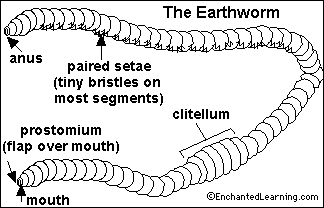
I said I’m sorry to an earthworm. Out loud.

Earthworm_bw

It was cut in half, lying on the asphalt. Commiserating with a worm is not something I would ordinarily do, but I could in some ways relate to the creature. I’ll be able to move, but slowly, on crutches, after my foot surgery in three days. My right foot is eventually going to be good as new.

baby feet

My left foot will have to wait to get its imperfections mended. I didn’t know that a tailor’s bunion, the aberrant bump on the outside of the foot — the one that will no longer allow me to get into anything besides flip flops — was named for the way tailors traditionally sat. Cross-legged.

1tailors

I guess it cramped the style of their little toe. Too bad they didn’t have Dr. Voellmicke,  my orthopedic surgeon, to fix them up. I’ll be in a hard cast for six weeks. That little bone that leads up to your toe, the one you never think about, is virtually marrowless, which means it has very little of the good stuff inside it needs to heal properly. Then, while Dr. Voellmicke is at it, he’s going to fix the golf ball size knot of a bone spur that has decided it likes to surf my big toe knuckle. (That’s a mix of about five metaphors, if you’re counting.)

No real walking, no driving, a lot of hurry up and wait. “You can rent one of those little scooters at the drug store,” said the nurse. I don’t think so.

Today, Dalton Trumbo’s Johnny Got His Gun popped into my mind. Maybe because my friend Jennifer and I were talking about the dark novels we read when we were adolescents that were probably too old for us, not to mention already a bit dated — Margerie Morningstar and The Group among them. Johnny, which Trumbo published in 1939, told the story of a soldier who has lost all his limbs in a war as well as all of his face (including his eyes, ears, teeth, and tongue).

johnnygothisgun

I remember how incredibly disturbing was the point of view of the novel, from inside the cave of this tortured guy’s mind. He wasn’t a lump, as he appeared to those around him. Trumbo went on to become one of Hollywood’s best-paid screenwriters, and won two Oscars under pseudonyms even while being blacklisted. I never knew about any of that when I was growing up, just that Johnny Got His Gun was a great tour de force. (And that I was a little bit cool to be reading it.)

But as for me, feel sorry for my self as I might, I will hardly be a lump after Friday.  I’ll just be a tiny bit inconvenienced, incommoded, and rendered relatively adventureless, by an elective surgery that’s going to fix a minor imperfection so I will be able to go hiking in the woods again, or dawdling down the street in New York City, or swimming in my cardio class… I should be thinking not of Trumbo but humming to Your Feet’s Too Big by Fats Waller.

Say up in Harlem at a table for two
There were four of us
Me, your big feet and you
From your ankles up, I’d say you sure are sweet
From there down; there’s just too much feet
Yes, your feets too big
Don’t want ya, ’cause ya feets too big
Can’t use ya, ’cause ya feets too big
I really hate ya, ’cause ya feets too big

What I am doing, aside from humming, until the day of my surgery… simple things. The things you don’t ordinarily think about. Simple pleasures. Ones I need two feet for.

Pogo-ing. Check.

Fixing up a coffee station in my new living room/bedroom — no stairs for me anytime soon.

Harvesting the garden.

ripe tomatoes

Weeding the garden, with help from Maud.

Walking down the stairs to the kitchen, the steps  I usually complain about, to make herbal iced tea with chamomile, mint and lavender from my garden.

herb tea

Going to Jones Beach tomorrow, getting some sand between my soon to be fiber-glassed toes.

jones

Hopefully Maud and I will relish it as Gil and I did last year.

Nails, both fingers and toes. Gossip included, with my good friend Betsy.

Make a reading list. Reread the Trumbo? A movie list. A music playlist. Seriously think about a knitting project.

Drive. I so take it for granted ordinarily. But when we walk by the Hudson at dusk, then drive with the windows down through the warm dark night, Bruce on the radio — It’s midnight in Manhattan, this is no time to get cute, it’s a mad dog’s promenade — an ice cream dripping, I already feel nostalgic about having two feet in hand.

9 Comments

Filed under Cooking, Culture, Home, Jean Zimmerman, Nature, Writers

Stop Your Sobbing

How do you cope with the prospect of failure?  Not failure itself, that’s pretty easy. You cry, brush yourself off, move on.

But the likelihood of screwing up. Ah, that’s another thing.

I’m talking about my vegetable garden, which turns out to be both a success and a bomb.

My weeds! They have taken over. Excuses: Heat. Rain. Humidity. Social distractions. And I’ve got to work, after all.

I have tomatoes, so how can I whine? A rainbow of heirlooms.

mixed tomatoes

Basil bushes that could make topiary pesto.

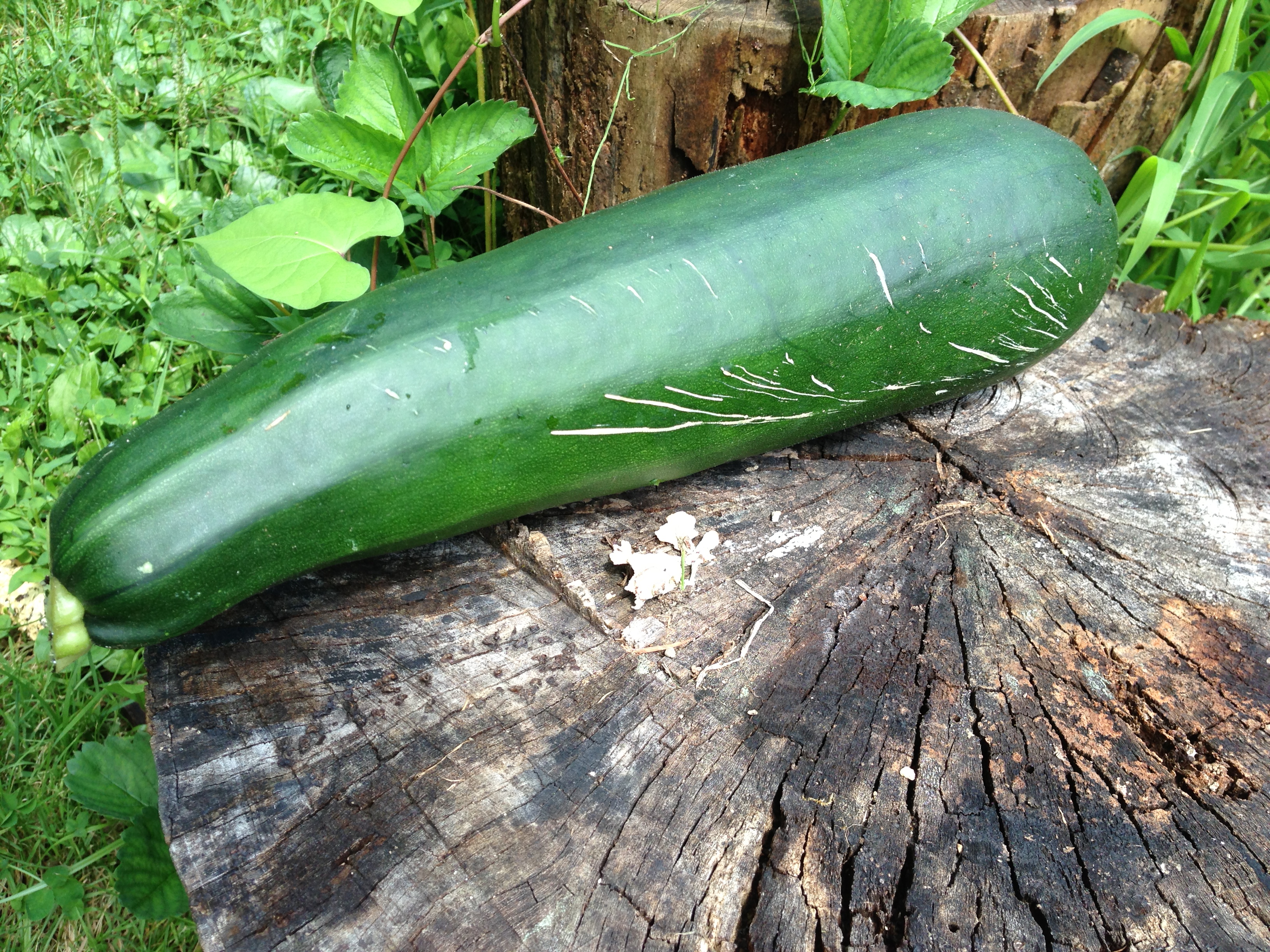
Squash, huge, far too much too eat.

zucchini

Does anyone actually like stuffed zucchini boats?

My herbs were are great before they crushed by toppling mint. The lavender and tarragon have exploded. Next to them, the pinks I planted as companions have bloomed constantly. My raspberry volunteers produced berries that accent vanilla ice cream perfectly.

berries

And here’s the point. Everything is sprouting, bushy, overgrown. The weeds sprawl. But the plants I expected to do well – the pole beans, say, masses of vines and leaves – have produced no beans.

beans

Some cuke plants have thrived, but others flatlined. Peppers, yes, eggplant, nada. Cosmos making a brave go of it.

cosmos

The beautiful crinkled leaves of the rainbow chard? Gourmet rabbit lunches, long gone.

The journey is the goal. To quote Gil, quoting some Oriental sage.

Oh. So it was all about the planting of those wrinkly little potato sections in May, watching the green plants thrive in June, finally the digging of the hard red tubers out of the earth, greeting the earthworms that were their bosom companions. Getting the good dirt under my nails.

potatoes soil

Having a perfectly manicured kitchen garden where every crop prospers isn’t the point even if it was possible. I’ve had that experience, in the past, on a sunny slope with plenty of chicken manure and it was pretty great. But then I didn’t share a marsh with turtles and snakes and red-tailed hawks. I didn’t live in the shady, ethereal woods.

I could use a hand with the weeding. In the meantime, let’s listen as Jonathan Richman sings the Kinks’ Stop Your Sobbing.

5 Comments

Filed under Cooking, History, Home, Jean Zimmerman, Nature, Photography, Writing

Portals Into Other Worlds

I’m thinking about how you can visit other times and places on the web, peeking through portals the way you peer through a cutout in the plywood surrounding a construction site. Here are fifteen visits I’ve made lately that I’d recommend.

It was a mistake for Rolling Stone to make a rock star out of a creep.

jahar:jim

That doesn’t mean the article that goes with the picture is not good journalism. And don’t we want to know, don’t we have to know, what makes terrorists tick, in order to know how to combat the evil they do? If you don’t feel like patronizing Rolling Stone at the moment to read the piece, if you’re interested in long-form reportage on all kinds of subjects, from a history of the famous indie rock club Maxwell’s to a star 16-year-old pitcher in Japan, go to Longform.org, which reprints new and classic nonfiction from around the web.

Amazon-Kindle1

Admit it, you want to know the inside story of the Kindle. What brainiacs came up with this gizmo that might mean the end of books as we know and love them? (I actually have a Kindle Fire and don’t find it hasn’t stifled my desire to read print on paper, just saying.)

It sounds almost banal, but I guarantee that when you hook into The Evolution of Love Songs (1904-2007) you will not be able to quit. I’m waiting for part 2, 2008-2013.

Up my alley, and I hope yours, a view of how the lives of American women changed over the 19th century through the art of the time.  In particular, life on the farm, complete with Winslow Homerian milkmaids.

Winslow Homer (American artist, 1836-1910) The Milk Maid


There are so many food blogs. I like npr’s the salt.

A view into a different world would include the minds of people who make Lego their personal idiom. They do things like make plastic sushi and other amazing Lego food creations. 

Lego sushi

I’m interested in the alternate lives of feral children, especially since my next novel Savage Girl  describes all the trouble one can get into in Gilded Age New York. Like how do you participate in a refined dinner party when you’re accustomed to tearing meat apart with your fingers? Every now and then a contemporary wild child surfaces with an interesting story. You can read about Marina Chapman, a British housewife who claims she was raised by monkeys in Colombia.

 marina chapman

Want to know about neolithic cooking? The Rambling Epicure tells you, and it starts with “one bucket wild spinach leaves.” The excellent food site gives you a recipe from Jane Le Besque’s cookbook, Un Soufflé de Pollen: Livre de Cuisine et de Peinture. A painter, Le Besque lives in the Pays de Gex in the foothills of the Jura mountains, and this is her “artistic vision” of primitive cuisine.

See how other people connect — passionately — with the past. Reenactors get their due with 36 photos from around the world.

reenactors

Here, actors and actresses from Iere Theatre Productions play the roles of indentured East Indian laborers and British constabulary police during a reenactment of the first arrival of East Indians to Trinidad and Tobago, on Nelson Island in the Gulf of Paria off the west coast of Trinidad.

It’s not all about Gettsyburg, clearly.

reenactors 2

These children are taking part in a mock military parade at an amusement park in Pyongyang to mark International Children’s Day, in this photo taken on June 1, 2013.

Okay, the squeamish should not tune in to7 Bio-Artists Who Are Transforming the Fabric of Life Itself” at the site io9.

rabbit

It’s about how some provocative artists today deal with biotechnology. Working with scientists and engineers, these geniuses transform living tissue and even their own bodies into works of art. For example, Brazilian-American “transgenic artist” Eduardo Kac took a rabbit and implanted it with a Green Fluorescent Protein (GFP) found in jellyfish. When placed under a blue light, the rabbit glows an otherworldly hue.

On the lighter side, see the longest domino chain in the world made of books: 2,131 of them.

 My dog is named a very modern Oliver. He looks exactly like his name.

oliver about to copy

Medievalists.net has a well-researched piece on ancient pet names, such as dogs called Sturdy, Whitefoot, Hardy, Jakke, Bo and Terri, and a cat in England named Gyb – the short form of of Gilbert –  or one named Mite, who prowled around Beaulieu Abbey in the 13th century, or Belaud, a grey cat belonging to Joachim du Bellay in the 16th century. Isabella d’Este owned a cat named Martino. I bet nobody died their animals green.

Buzzfeed has 16 noble photos of women writers at work, including a great one of Anne Sexton immersed in her craft.

anne sexton

From MessyNessyChic.com, the story of an artist whose work was discovered in the trash 50 years after his death.

Charles Dellschau

This grouchy butcher by trade, an immigrant named Charles Dellschau, had secretly been busy assembling thousands of intricate drawings of flying machines, sewn together in homemade notebooks with shoelaces.

And for anyone who didn’t catch this when it went big on the web, Dustin Hoffman showed us his softer side in reminiscing about Tootsie and what playing a woman meant to him. The interview is a window into the psyche of someone whose brilliant work opened a window into a psyche we were lucky to see.

tootsie25

3 Comments

Filed under Art, Cooking, Culture, Dogs, Fashion, Fiction, History, Home, Jean Zimmerman, Nature, Poetry, Savage Girl, Writers, Writing