Category Archives: Nature

The Golden Notebook in Golden Fall

Tomorrow will be a perfect day to take in the leaves upstate as they color up. If so much natural beauty wears thin and if you happen to be near Woodstock, New York, consider coming to The Golden Notebook for my 2:00 talk on The Orphanmaster. Signing copies, too. I know there are excellent lattes down the street and I’m pretty sure the nice people in the store will allow you to nurse one in in a  paper cup while you sit back and enjoy my slide show — lots of nuggets about the way people, places and things looked in 1660s Manhattan. The raging beaver trade. The fashion of men in red-heeled pumps. What was it actually like, anyway? New York before it became New York. Imagine.

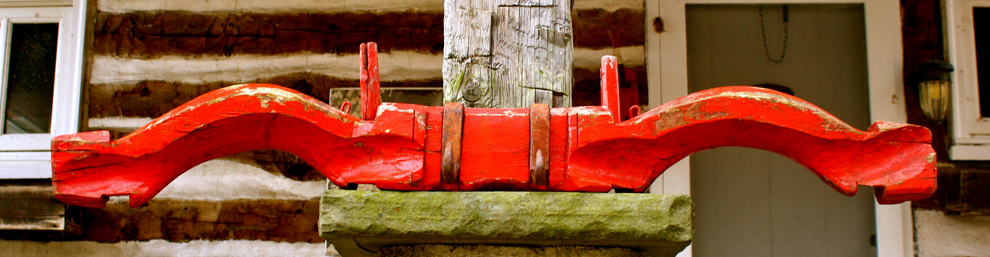
visscherDetail2k

Please do come. I’ll be up on the second floor.

4 Comments

Filed under Art, Culture, Fashion, Fiction, History, Jean Zimmerman, Nature, Publishing, The Orphanmaster, Writers, Writing

Truck Garden

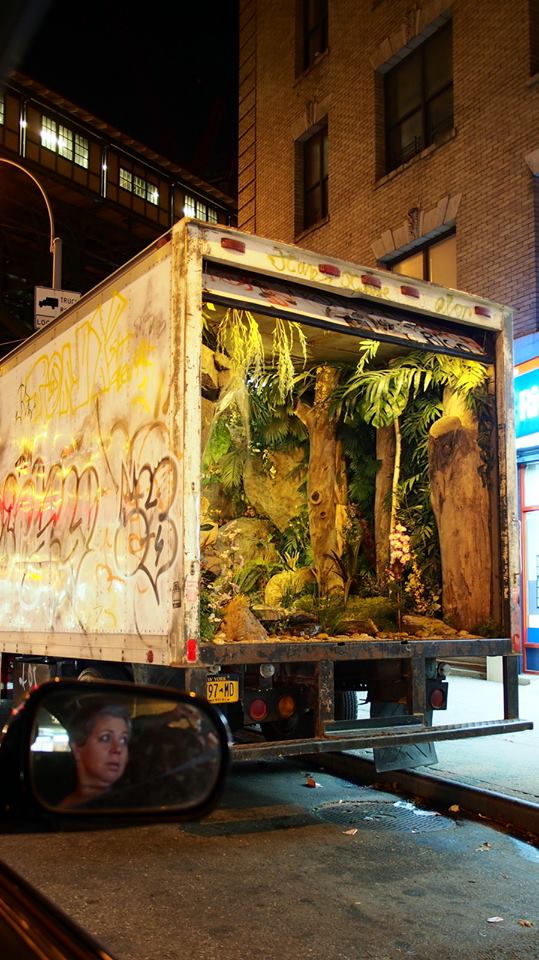
125th and Broadway, 9pm on a Tuesday night. The hush of dusk is just behind us as we pull up to a red light at the intersection.

To our right, a dilapidated box truck covered with hieroglyphics of graffiti. Dirty and timeworn. The back is open, but nothing is being loaded or unloaded. Inside, we suddenly register, is a magical forest, a glistening waterfall. We can’t believe our eyes. The crack photographer Suzanne Levine, tucked in the back sea, takes out her camera.

Banksy

Gil says, Get out, you’ll get a better picture. It’s okay, she says. It’s fine this way.

And it is. (Check out my mug in the rear view.) A drive-by photo shoot in the New York City night is the perfect way to capture an artwork by, it turns out, one of the greatest creative minds and pranksters of the age.

Banksy was here.

Banksy has been turning up all over New York recently, though he’s headquartered elsewhere, with his mysterious stencilled message graffiti and now… this. A grungy delivery truck complete with a motorized waterfall and plastic butterflies. He was quoted today as saying, I should probably be somewhere more happening like Moscow or Beijing, but the pizza is better here.

The truck will make a stop at dusk each evening, but no one knows exactly where, or for how long, just as no one knows just about anything for real about Banksy. But if you want to listen to a story about the Garden of Eden in a box truck, you can call 1-800-656-4271 and press 3# at the prompt.

Manhattan comes through, just something we rolled up on in the gloaming.

2 Comments

Filed under Art, Culture, Jean Zimmerman, Nature, Photography

Going to the Chapel

I needed to get a new author photo and I wanted to pose against the neat red bricks of St. Paul’s Chapel on the campus of Columbia University. It was not difficult to set up, since Maud was the photographer and this is where she went to school.

St. Paul's

When I.N. Phelps Stokes designed St. Pauls, it was the first non-McKim, Mead and White structure erected on campus. This was 1907. A photo from the time shows it looking new and bare. It would prove to be Stokes’ greatest architectural achievement.

1905

Over a century later, the diminutive chapel’s Renaissance design still wins acclaim for its beacon-like green dome, its Italianate authenticity, its salmon-brick Guastavino vaults and its splendid acoustics. A schedule of magnificent music was posted outside the doors. People love to get hitched here.

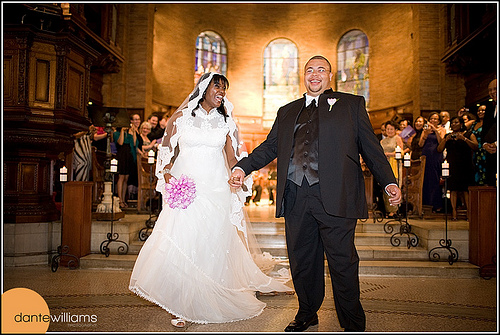
hitched

Waiting for our photo session, I took a seat–as I had many times, many years ago, when I was studying writing and this was my school–on the curving stone bench across from the Chapel.

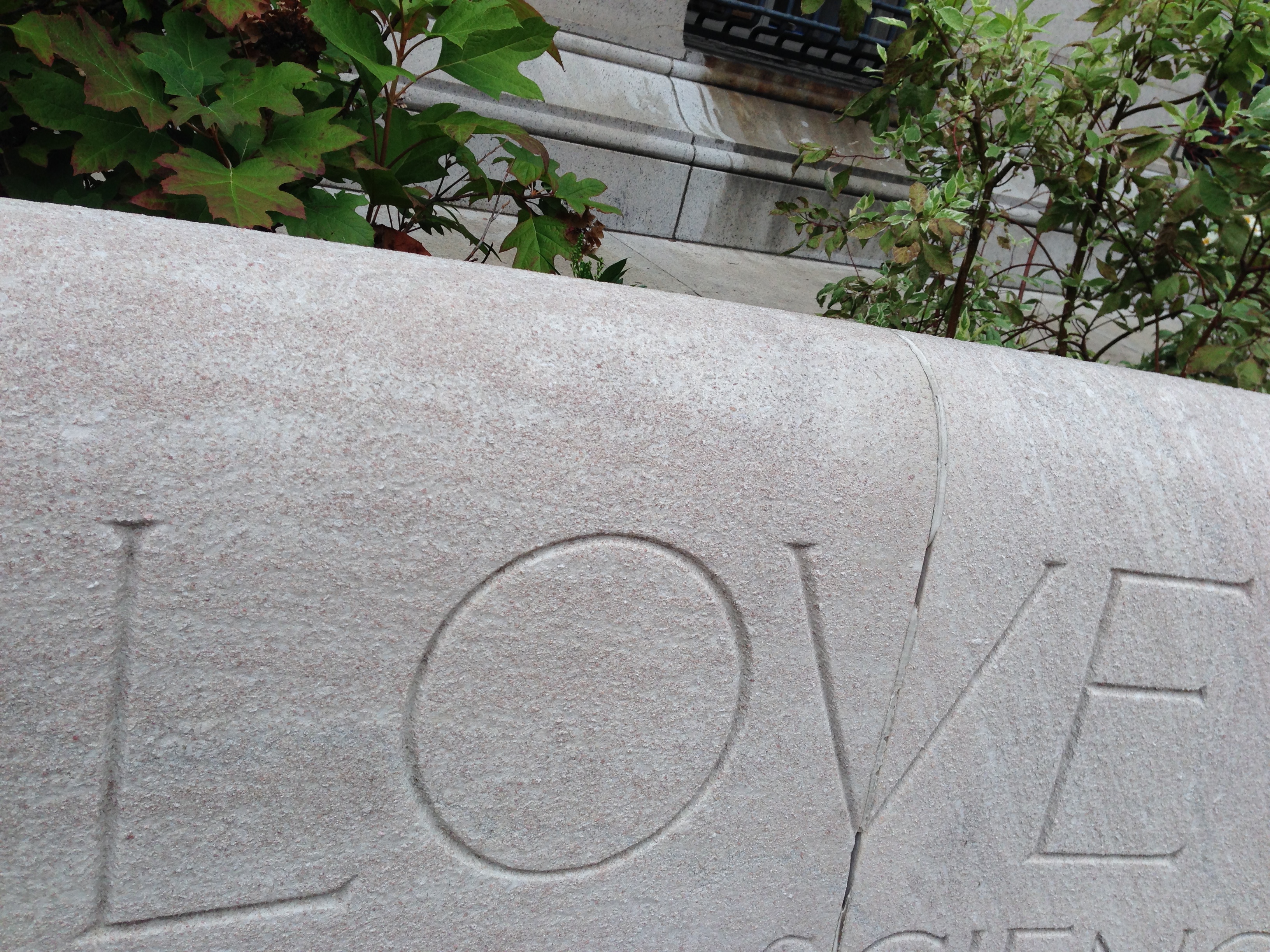
love

It actually spells out Love Your Alma Mater, but I like the more elemental, bare-bones message.

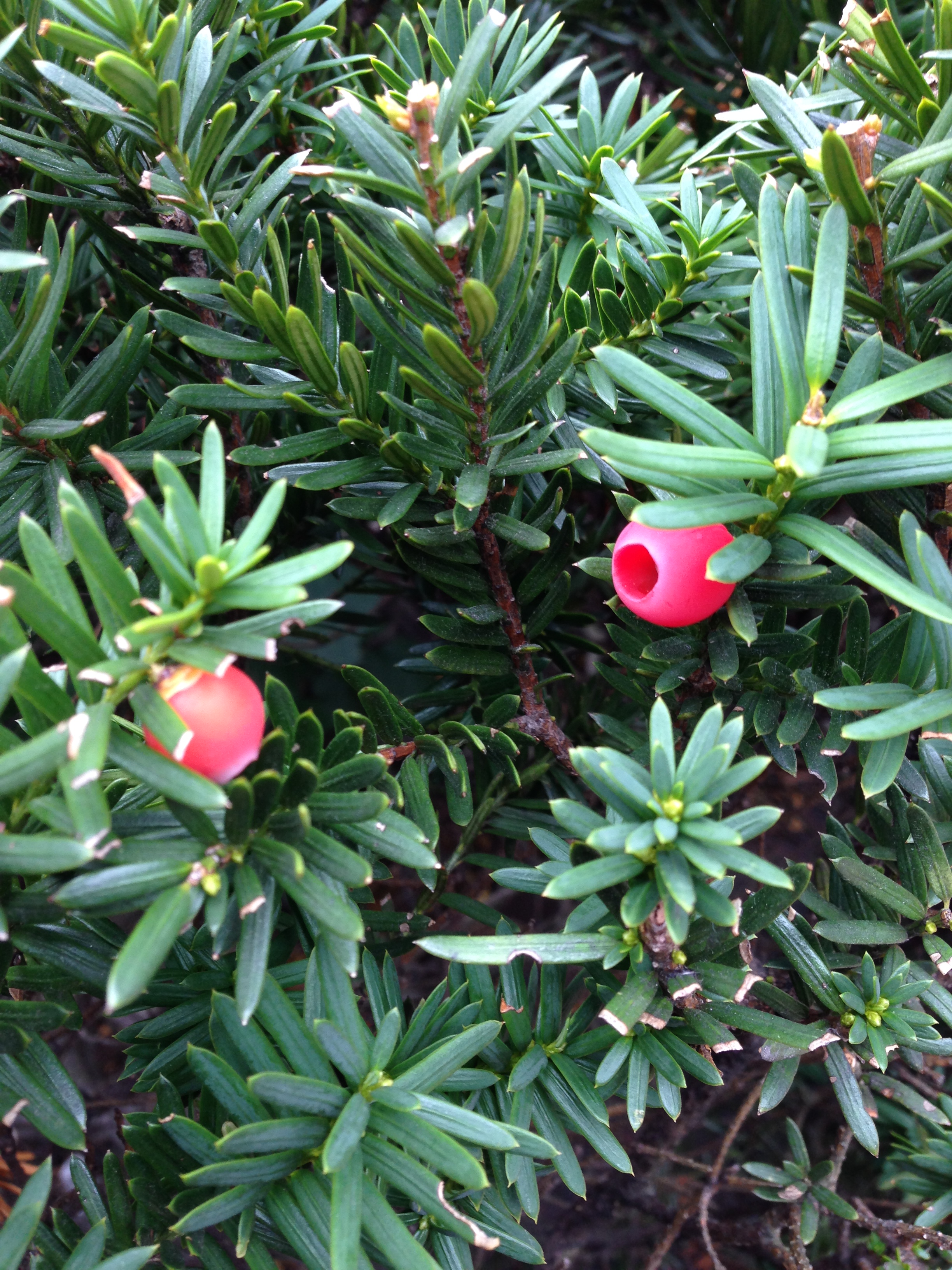
All around, the autumn hedges were producing moist red berries.

berries

They looked like pieces of candy stuck there for the taking.

I ducked inside to check out Stokes’ inspired efforts. (Not pictured here, because no pictures allowed.) He created the glossy floors of marble fragments in intricate patterns resembling those you find in Italian churches, but these patterns are purely decorative, with no symbolic meaning. Sturdy wood chairs were preferable to pews, he decided. He and Edith had toured Italy in the winter and spring of 1905 as preparation for working on St. Pauls. During the trip he decided to bring back some wine – not just a few jugs of Chianti but 50 liters of red in casks that he then had decanted into half-pint bottles.

Stokes was a meticulous man, and a driven one. He wanted the job of designing St. Paul’s. His passion for the project was shared by his altruistic aunts, immensely wealthy sisters who refused to provided the funding unless their nephew was hired on.

I hovered in the back of the Chapel while mass was conducted in the nave. Short and sweet, body, wine, done.

My pictures also came about pronto. In the background the bricks, yes, to the side of the columned portico – at the top of each of those columns is a cherub carved by Gutzon Borglum, who was responsible for Mount Rushmore.

columns

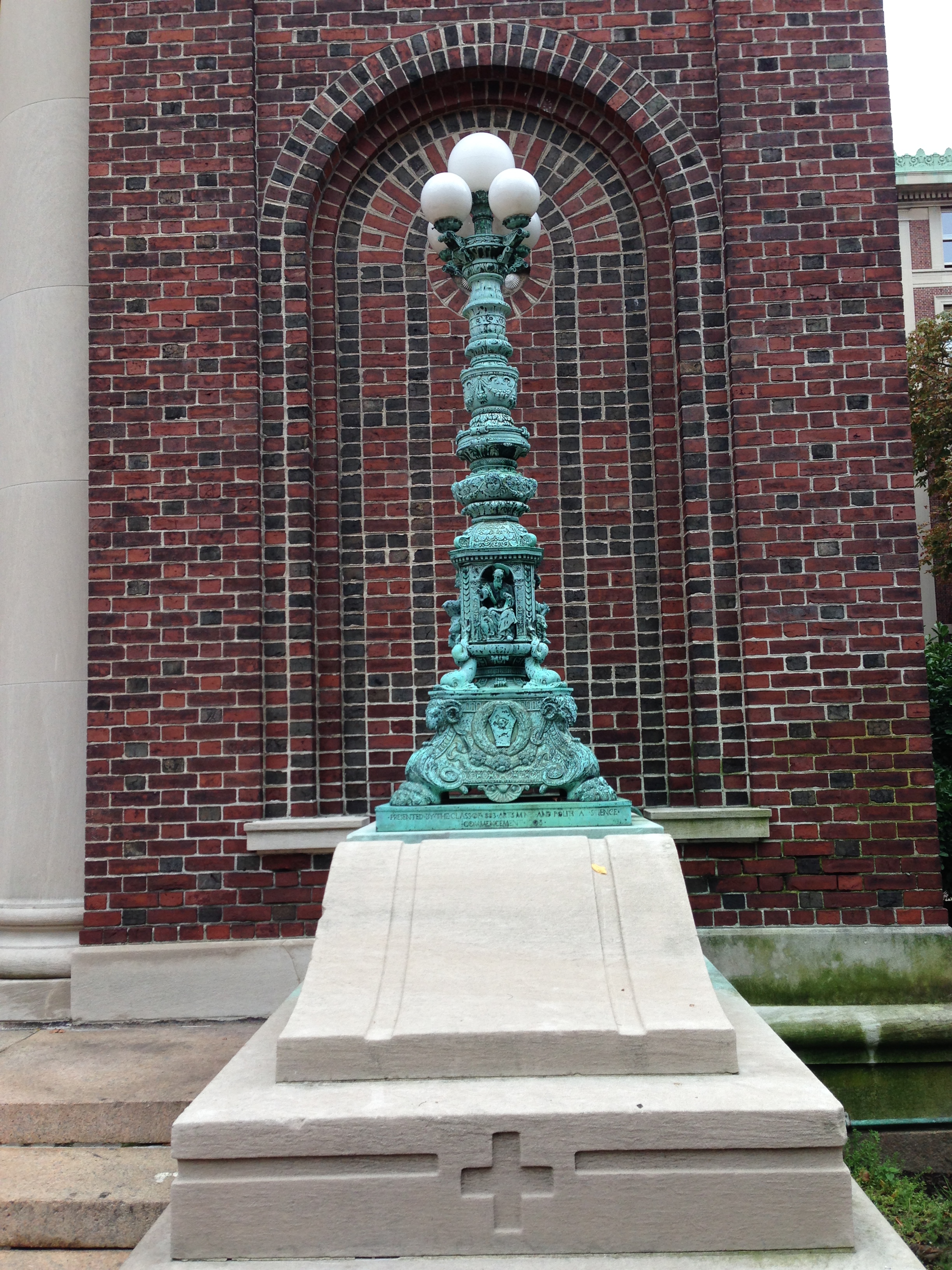
In the background of the photos stands a Quattrocento-style bronze lamp, pickled green by time, designed by sculptor Arturo Bianchini to show the four apostles of the Old Testament but also a pod of swimming dolphins.

lumiere

Of course what you’ll see most of all in Maud’s pictures is not the bricks, not the dolphins, but my smile, beaming, because it is my daughter behind the camera and we are connecting through the medium of photography.

dolphins

3 Comments

Filed under Art, Culture, History, Jean Zimmerman, Love, Fiercely, Music, Nature, Photography, Writers, Writing

Silk Thread on Cotton

The Metropolitan Museum on a Saturday afternoon in fall: everything seems very still, but perhaps that’s because I am moving fast, whisked along in a wheelchair to save my aching foot, the cool gallery breeze in my face, going to see a show I’ve been hungering to experience. On the way we pass the spectacle of so many different works, in diverse media, all amounting to a taste-whetter for what is to come. First, in the great hall, the five monumental displays of flowers on all sides, hydrangeas something of a blur as we roll past. The arrangements, fresh weekly, have been bankrolled since1969 by a fund established by Reader’s Digest co-founder Lila Acheson Wallace, and each one is more fabulous than the last.

hydrangeas

We zoom past Lorenzo Lotto’s Cupid and Virgin, the somewhat silly canvas from the 1520s that shows the mischievous creature urinating on Venus, a symbol of fertility.

Lotto

Another Virgin, one that came to the museum with a thirteen-million-dollar price tag, is shown in the Madonna and Child painted by Duccio di Buonisegna in the fourteenth century.

duccio.L

We whiz by the effigy of one Elizabeth Duvenick, sculpted by her husband, Frank Duvenick – Henry James called him “the unsuspected genius” — dripping with gold leaf, in the courtyard at the front of the American Wing.

Tomb_Effigy_of_Elizabeth_Boott_Duveneck_1891

“A zombie,” says a young boy passing by. Good point. Then we’re off through the hall of Rodins – a sculptor I recall loving as a teenager, then thinking was impossibly tacky, though now I’ve come around again.

Blink as you ride along and you’ll miss the medieval bronze baptismal font held aloft by kneeling pilgrims.

And through it all there is the sense that Zorn is here, someplace. John Zorn, that is, mister avant composer and saxophonist, whose work is being celebrated at the Met in over a dozen performances today throughout the galleries in honor of the musician’s 60th.

zornfeat

We can’t squeeze into the one performance of the man himself, so we are forlorn, Zorn-less, but over the heads of a crowd as we make our way along we hear the noise of string instruments breathing.

music

There should be a special genre of art in New York City called Over-People’s-Heads.

The Metropolitan tears you in all directions, in a happy way, a way that jazzes up your senses and makes your mind feel more alive. The show we are here to see, Interwoven Globe: The Worldwide Textile Trade, 1500-1800, does the same thing in a more focused way. Now, I have to say from the start that although this exhibit has been touted as the Met’s blockbuster of the season, I wasn’t expecting to have to fight my way through the crowds to get at the items being displayed. And I was correct. This is a haven principally for textile lovers, and there is plenty of space to stretch your limbs and be dazzled by the bed covers and kimonos on display. This is not an Over-People’s-Heads show.

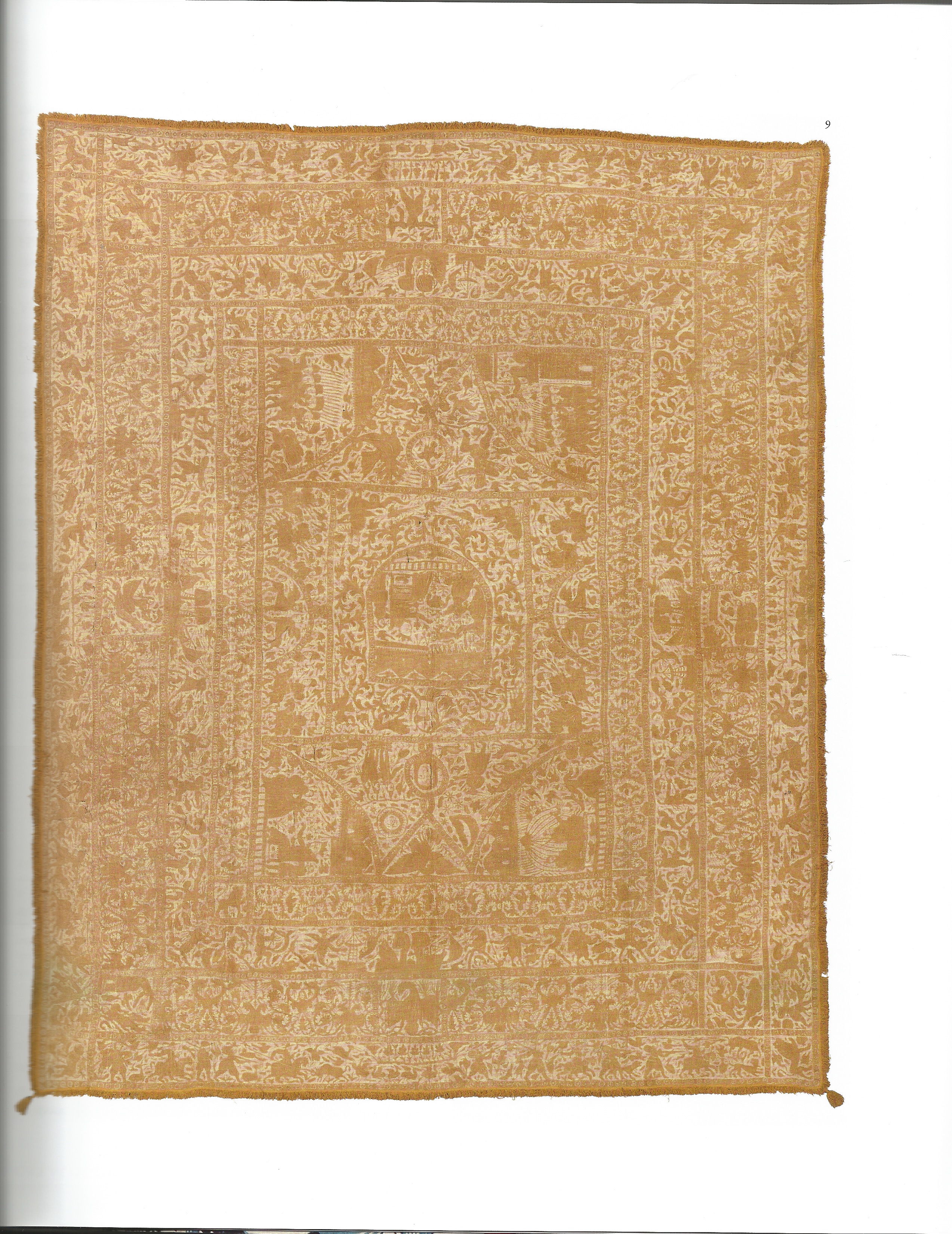
Did someone say bed covers? This coverlet, called a colcha, originated in India for the Portugese market in the early seventeenth century. It was embroidered of yellow tussah silk, also called wild silk, on a cotton background, showing images that included a hunt, the adventures of Hercules, the Judgment of Solomon and Phaeton driving his chariot too close to the sun. Among many other things.

cov

People used to embellish their mattresses with textiles almost unimaginable to those of us who have spent too much time over the years at Bed, Bath and Beyond. Interwoven Globe takes as its premise the interconnectedness of cultures around the world in producing objects that were both intrinsically beautiful and historically fascinating. Japan, China, Turkey, Iran, Europe and the Americas all played a part. The fashion for the “exotic” bloomed in trade.

From the first glide into the opening room, I’m sort of oozing, mentally, into the fabric, wondering about the lucky few who get to take the stuff down from the wall and actually handle it, when I see another gem. A damask woven in China of silk satin for the Iberian market.

text

Elephants such as the ones depicted were customarily given as tribute to Chinese emporers and imported by Portugese kings to be used as diplomatic gifts to the courts of Spain, Austria, France and England. The ones marching along on the textiles were Asian, I learned – you can tell by the diminutive ears. On this piece the elephants have multiple tusks – of course the weavers couldn’t access an actual image of one! Instead, they drew on the Buddist six-tusked elephant described in a fifth century Chinese translation of a sutra as being sparkling and resplendent.

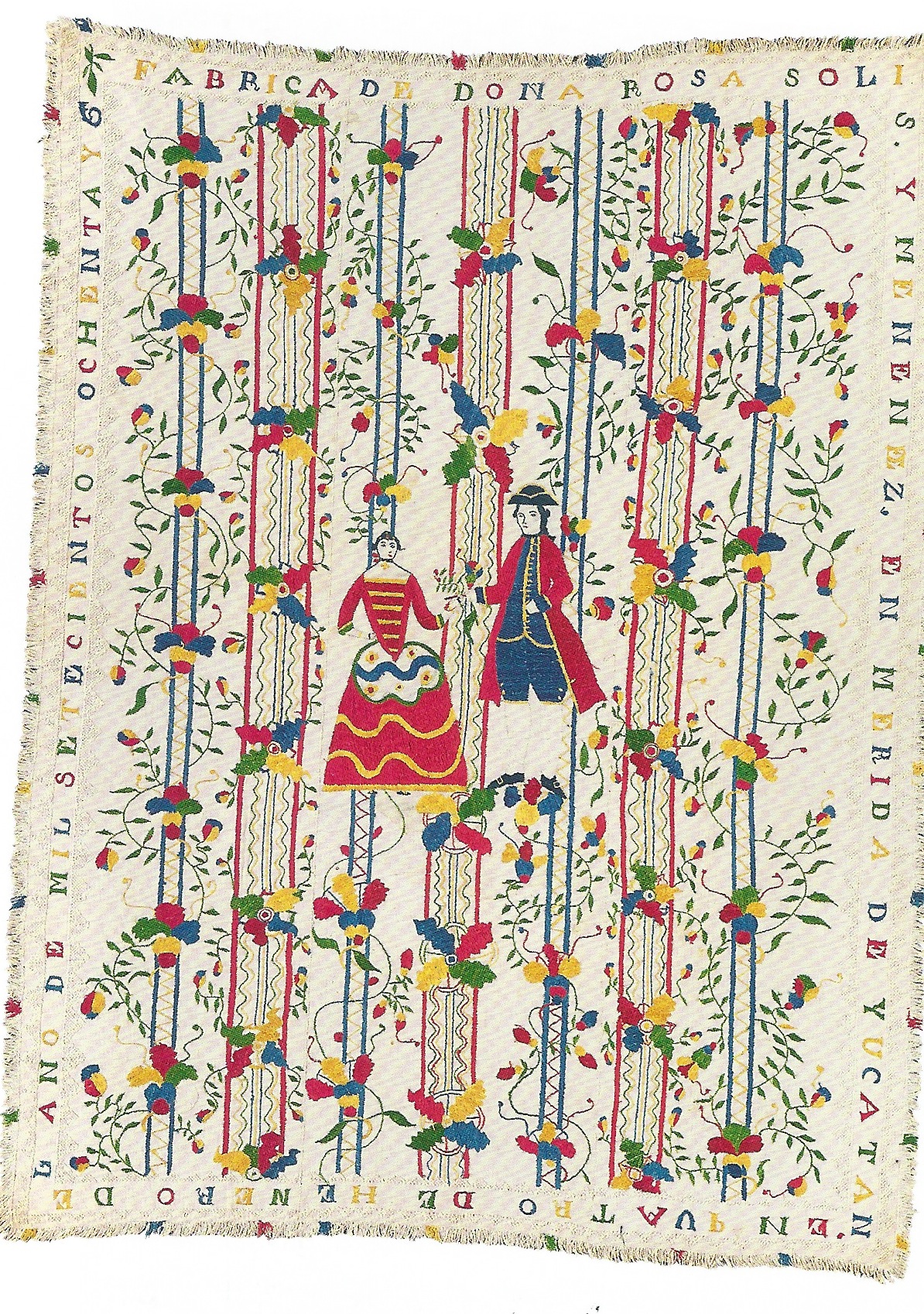
Another coverlet, this one produced in Mexico, was made to celebrate the wedding of the couple shown in the center.

mex

Trellises surround them.They wear Europen style clothes, embroidered of silk dyed red with the insect cochineal and yellow with a plant known as weld, which was probably grown in Spain. The silk itself was imported from China. Again, a crisscrossing of cultures went into a flawless product, which happens to be signed by its maker, Dona Rosa Solis y Menendez, with a date of January 4, 1786 and a place, Merida, the Yucatan.

I see dresses, not just coverlets and bolts of fabric. This one was sewn in France of “bizarre” Chinese silk in 1710.

bizarre

Bizarre being a term twentieth century textile historians came up with to describe silk designs at the junction of the Baroque and Rococo periods, usually heavily brocaded and beaded, with glittering metallic threads.

More women’s dresses. Gowns you could rest your elbows on, they had such wide panniers, a variation on the hoop. The robe a la francaise, here sewn in Germany of Chinese-painted silk moire, which definitely would have been my choice in the 1740s if my door frames were wide enough to allow me access.

robe

And men’s dresses. The banyan, or informal morning gown that well-dressed men wore over their clothes, is represented. Sewn in France from Indian fabric that had been stamped with wooden blocks.

banyan

The inimitable John Singleton Copley caught Joseph Sherburne lounging in his banyan in 1767, wearing a cap to cover his shaved, not at the moment bewigged pate.

sherburne

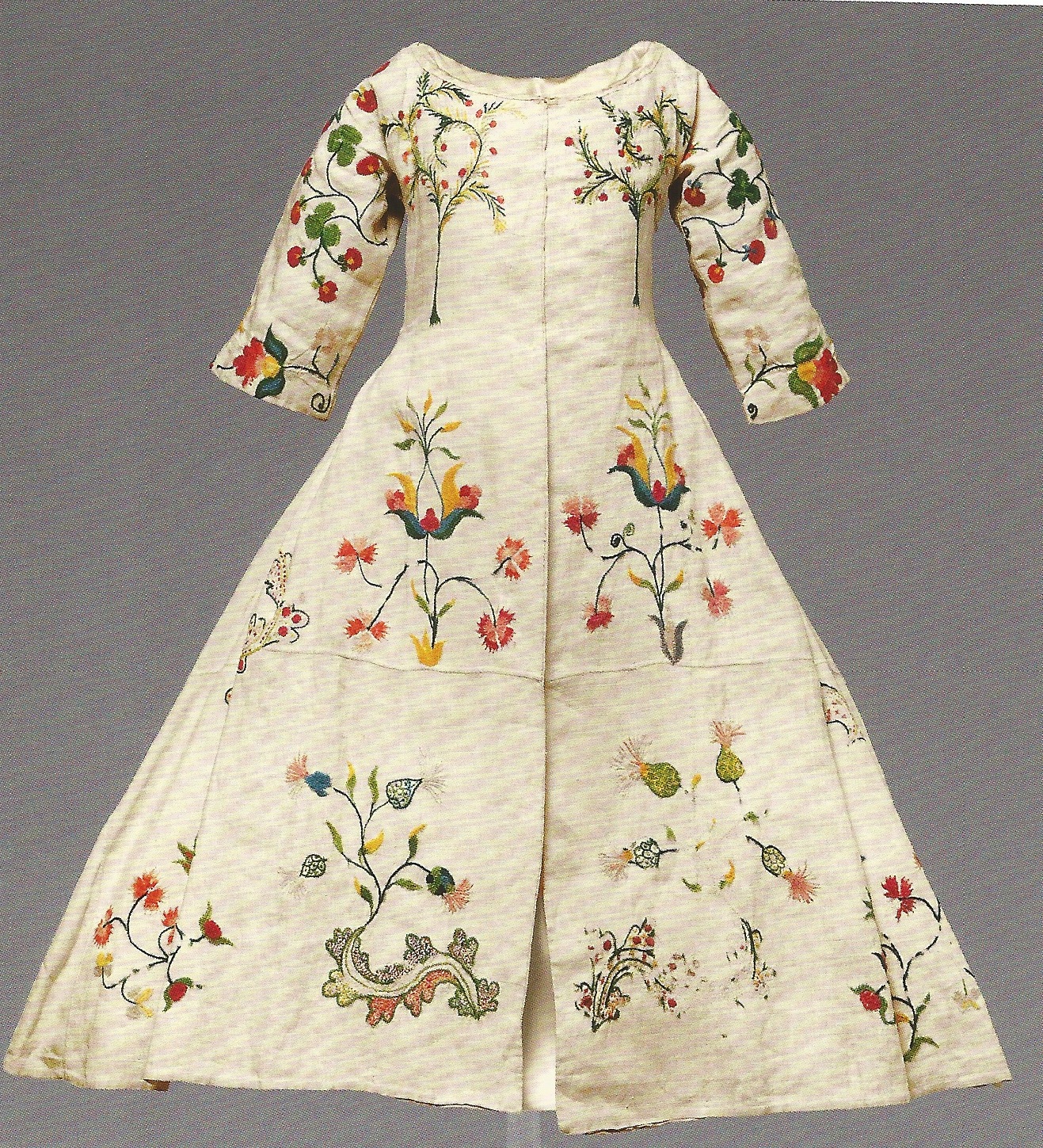
Charmingly, then, a dress also for a very lucky little boy. Linen embroidered with tulips, roses, carnations and fruit trees. Yes, a boy. Male children wore frocks alongside their sisters until they were around five years old.

boy dress

Something I really like, that brings this luxurious trip to the past down to earth: a textile sample book, dogeared by English merchants’ hands, with 500 swatches of ordinary cloth, no fancy silks or embroideries here, that would have been worn by sailors, artisans or enslaved people in North America.

sample

And I haven’t even started on chintz. Suffice it to say there is a tutorial that totally satisfies my long-term desire to understand the mechanics of chintz production. It’s incredibly elaborate, and if you pay me enough money I might try to explain it to you someday.

After this flood of textile experience, sitting with some restorative strong coffee in the courtyard, I notice the air smells like roses, and the fabrics we all wear appeared simple, streamlined. There are some stripes, yes, but no elephants, no carnations, no trees of life, no metallic threads glinting in the pale sunlight. I see a woman in a plain pink sweater. I see denim. I see a young man in a simple, blue-checked shirt, his foot in a boot, sitting in a wheelchair like me, running his hand through his hair. He seems weary, now that women no longer dress themselves in the robe a la francaise, now that all the flash has gone out of coverlets.

9 Comments

Filed under Art, Culture, Fashion, History, Home, Jean Zimmerman, Nature

Nuggets From Afar

When the fall chill hits and you wrap yourself in a shawl and feel like drifting off to other times and places, these links might inspire you.

The Evolution of Love Songs. In case you ever forget the words to Let Me Call You Sweetheart, here rendered by the Peerless Quartet in 1911.

peerless

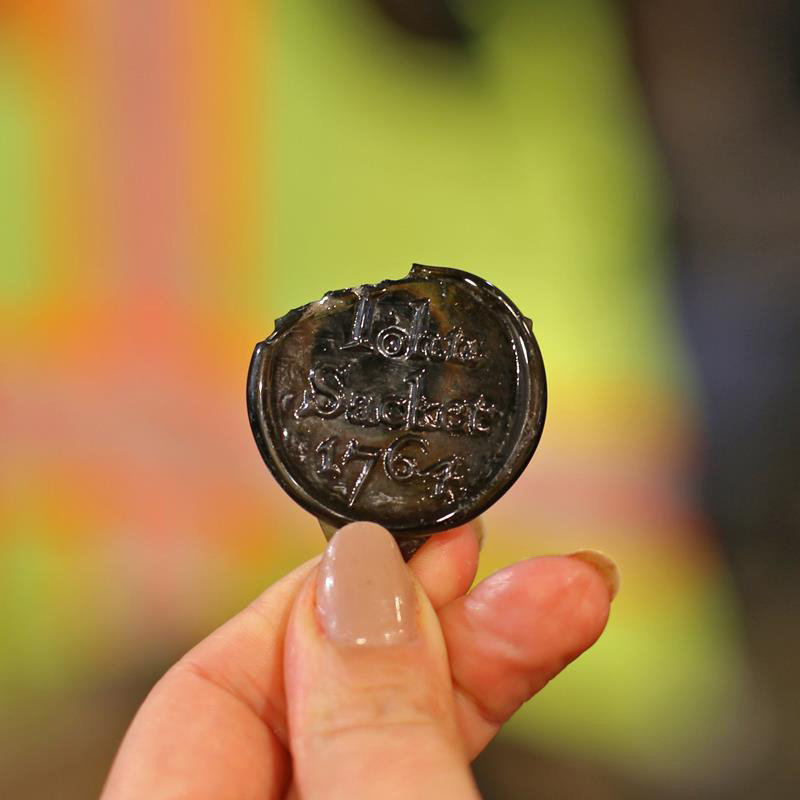
Chrysalis is a firm of archaeological consultants that specializes in the history of New York. They’ve recently pursued excavations in the South Street Seaport Historic District that recovered two intact nineteenth-century wooden water mains. Other treasures: eighteenth-century toddlers’ slippers crafted of leather, and British Revolutionary soldiers’ buttons, which turned up along the original shoreline of Manhattan. A liquor bottle seal circa 1764 brings that time alive.

fultonstreet_archaeology01

Between 1885 and 1908, a collector named William Hayes Ward amassed a bounty of 1,157 cylindrical seals dating as far back as the beginning of the fifth millenium. If you like tiny images on semiprecious carved stones from Mespotamia – gods, bulls, antelopes galore — you will want to take a look at these enchanting objects, which formed the core of J.P. Morgan’s collection.

seal-rotate-intro

Living With Herds: A Visualization Dictionary is a short film by a research fellow at an Australian university that shows how Mongolian herders communicate with their animals.

living-with-herds-vocalisation-dictionary-natasha-fijn-2

Women’s bodies were never meant to be squeezed into corsets, which is immediately apparent when you check out x-ray images from 1908.

woman xray

Linguistic fossils offer a glimpse of times gone by.

fossil

And finally, secret, tiny fairy doors began materializing all over Ann Arbor. This was in 2005. Perhaps not surprisingly, the carpenter turns out to be a children’s book author. Doors have appeared at the library, the pet store, the children’s hospital. Anyplace they’d be sure to raise an eyebrow and the corners of your mouth.

tiny door

4 Comments

Filed under Art, Culture, Fashion, History, Home, Jean Zimmerman, Music, Nature, Writing

On Tiptoe

It’s a pleasant thing to be young, and have ten toes, quoth Robert Louis Stevenson.

Well, it’s good to have ten working toes at any age, I would say, as someone who is coming down the home stretch from foot surgery with a big toe that is being extremely uncooperative. It’s stiff, sore, and doesn’t want to help my foot walk smoothly. You will recognize me if you see me limping awkwardly toward you, my pins distinctly out of whack.

f0698_bigtoe

A physical therapist has been assigned to fiddle with, manipulate and macerate my hallux to get it where it has to go. Heat is being applied. Cold has been furnished. Exercises, ones that would bore to death a soul with healthy feet – a repeated ballet releve, rocking, wiggling—now earn my intensest interest. I have learned to pick up a marble with my toes and deposit it in a plastic bowl. A great achievement, don’t you know.

I looked to the Poetry Foundation for inspiration. A great poem called An Exchange between the Fingers and the Toes by the English wordsmith John Fuller describes a comical oneupsmanship between the sets of digits. In an interview, Fuller once explained that “a good poem takes some irresolvable complication, worries it to death like a dog with a bone, and leaves it still unresolved. The pleasure of the poem lies entirely in the worrying, the verbal growling and play. Life itself stubbornly remains entirely like a bone.”

john-fuller

In this verse, which speaks eloquently to my current state, the crafty fingers accuse the klutzy hallux at one point of being a “futile pig,” but the toes come back with eventual triumph:

Despite your fabrications and your cunning,   

The deepest instinct is expressed in running.

3 Comments

Filed under Dance, Home, Jean Zimmerman, Nature, Poetry, Writers, Writing

Melancholy and Industry

On it comes, fall, my favorite season (do I say that every season?). In yoga class today, when we did the tree posture, holding up our arms and crooking our legs, I looked in the mirror and everyone actually looked like bare-branched autumn trees. A human forest.

Things to do to jump into fall. Pull the late season carrots, whiskery and somewhat cork-like.

carrots

At the same time, admire the mess the deer have made denuding the garden. How did they pull all those bell peppers from the plants so delicately, leaving the plants intact? They left the one sunflower standing, hanging down its giant brown head.

sunflower hanging

Make plans to attend a show – we don’t do the theater too much but Romeo and Juliet is rolling onto the boards for the hundredth time, this time with movie cutie Orlando Bloom, and we’re gonna hoof it to Broadway. Maybe I’ll even be able to pull on some shoes, with a healed, streamlined foot.

romeo

What else, in fall, what are the timeworn threads of coziness you begin to weave back into your life? Put fresh sheets on the bed, the flannel ones. Shake out the comforter that’s been shoved in the closet all summer. Burrow in.

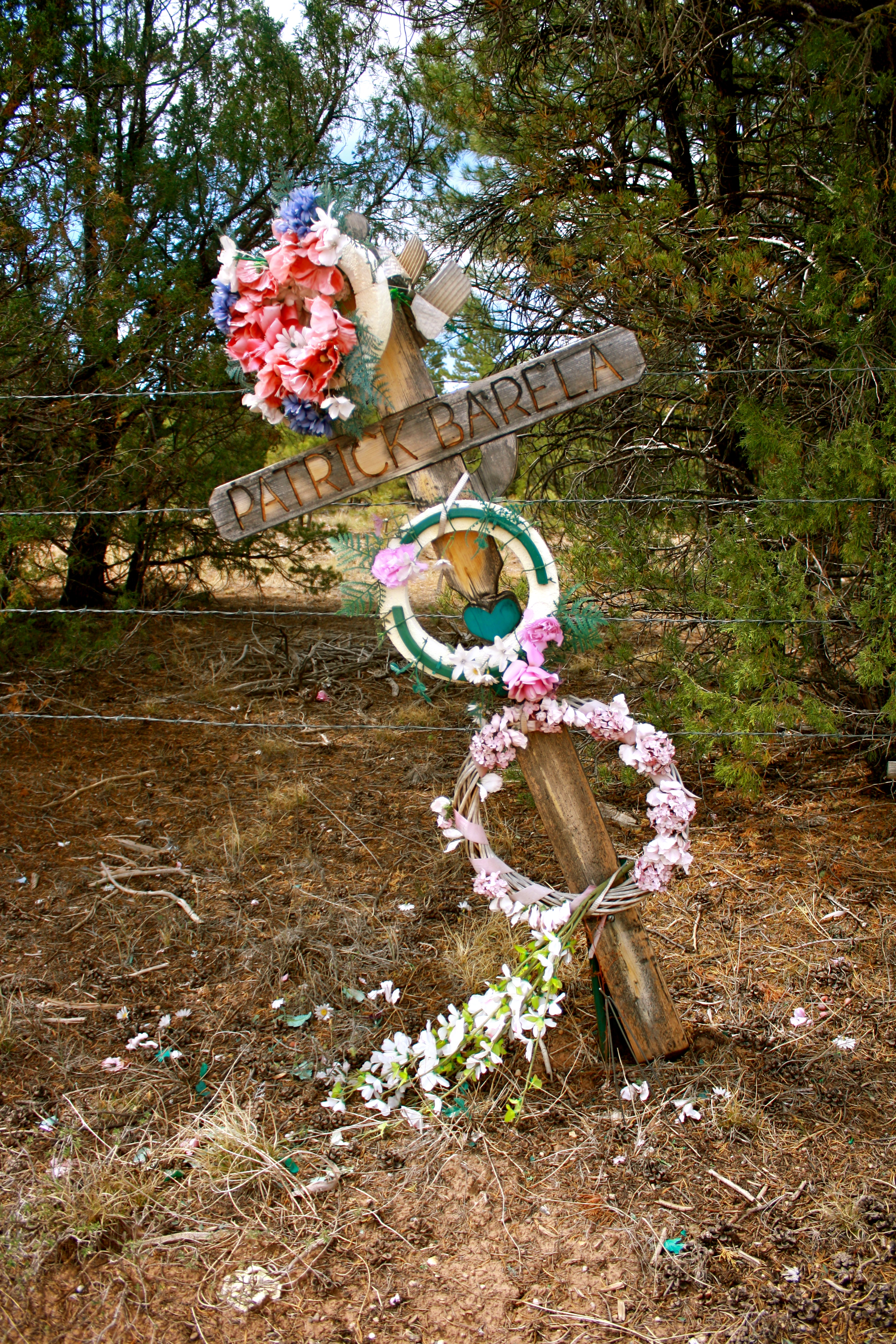
Read the first college paper of the year, if you’re lucky enough to have a student nearby. Maud’s concerns a melancholy subject she’s been attacking for her anthro major, the proliferation of descansos, roadside shrines in New Mexico. Her photos of the sites are filled with a lonely beauty.

maud shrine

The comic Louis C.K. plumbed the topic of melancholy on Conan O’Brien recently and I loved what he said about the “fall back to school depression feeling,” how he was driving in his car, listening to a Springsteen tune on the radio, getting that “forever empty” feeling, that “knowledge that it’s forever and you’re alone.” It’s a mental state I remember so well from college, and also bouncing back with insane gladness, that as Louis said “you’re lucky to have sad moments.”

Louis-CK-hosting-SNL-fun-Saturday-Night-Live-Hurricane-Sandy

Two things from college that I still resonate to all these years later, melancholy and industry.

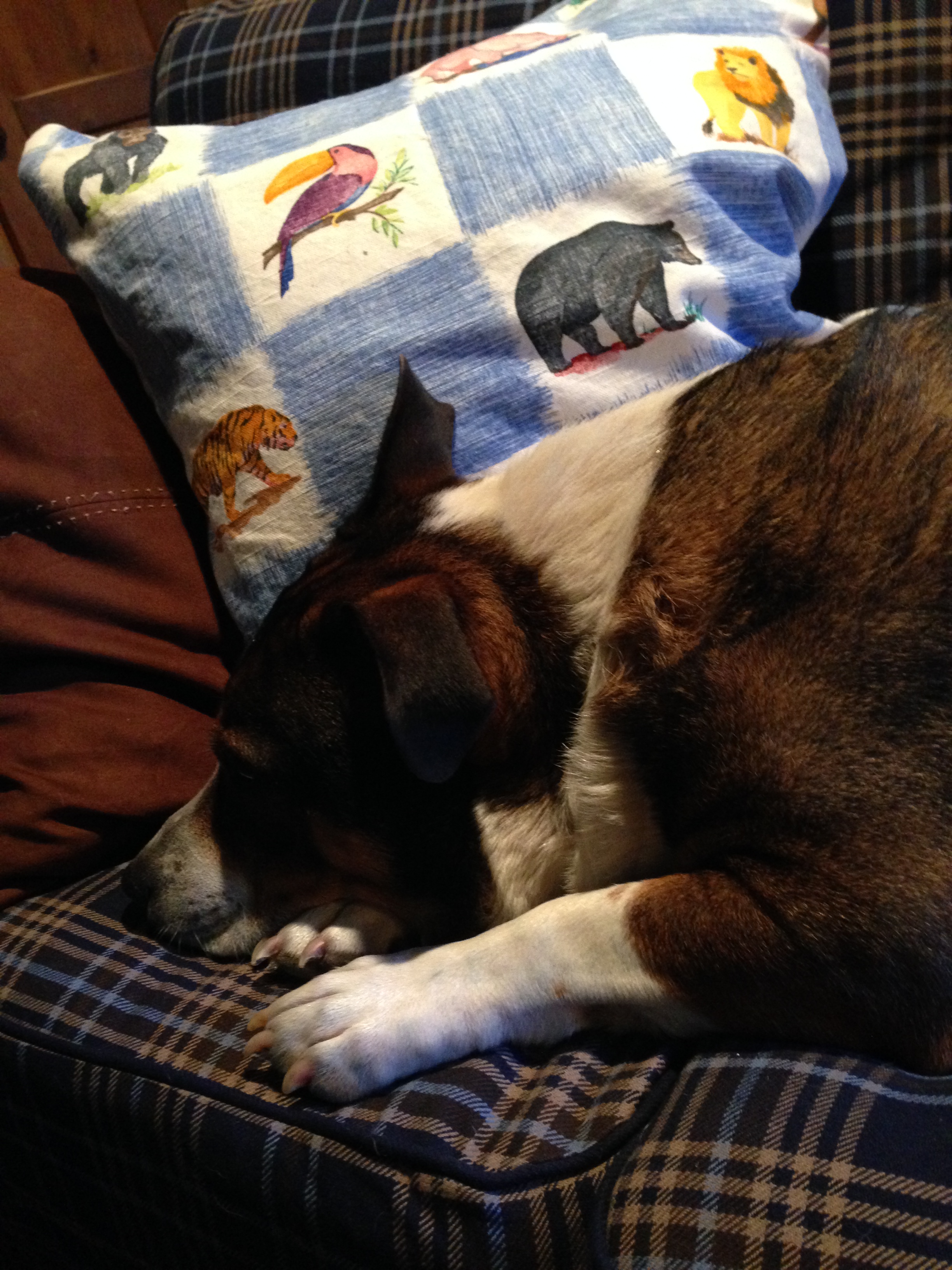
So in fall, when it gets cold and lonely, make something. Get out the trusty sewing machine, unearth some ancient fabric, make a simple pillow cover. One that Oliver will cuddle up to.

dog pillow

Read a new book, or revisit an old one. It’s a good time to take another look at The Catcher in the Rye – sure, an old chestnut, but with a Salinger book and movie coming out a good time as any to see if the author’s a genius or a shnook. Or both. And he knows from melancholy.

Rye_catcher

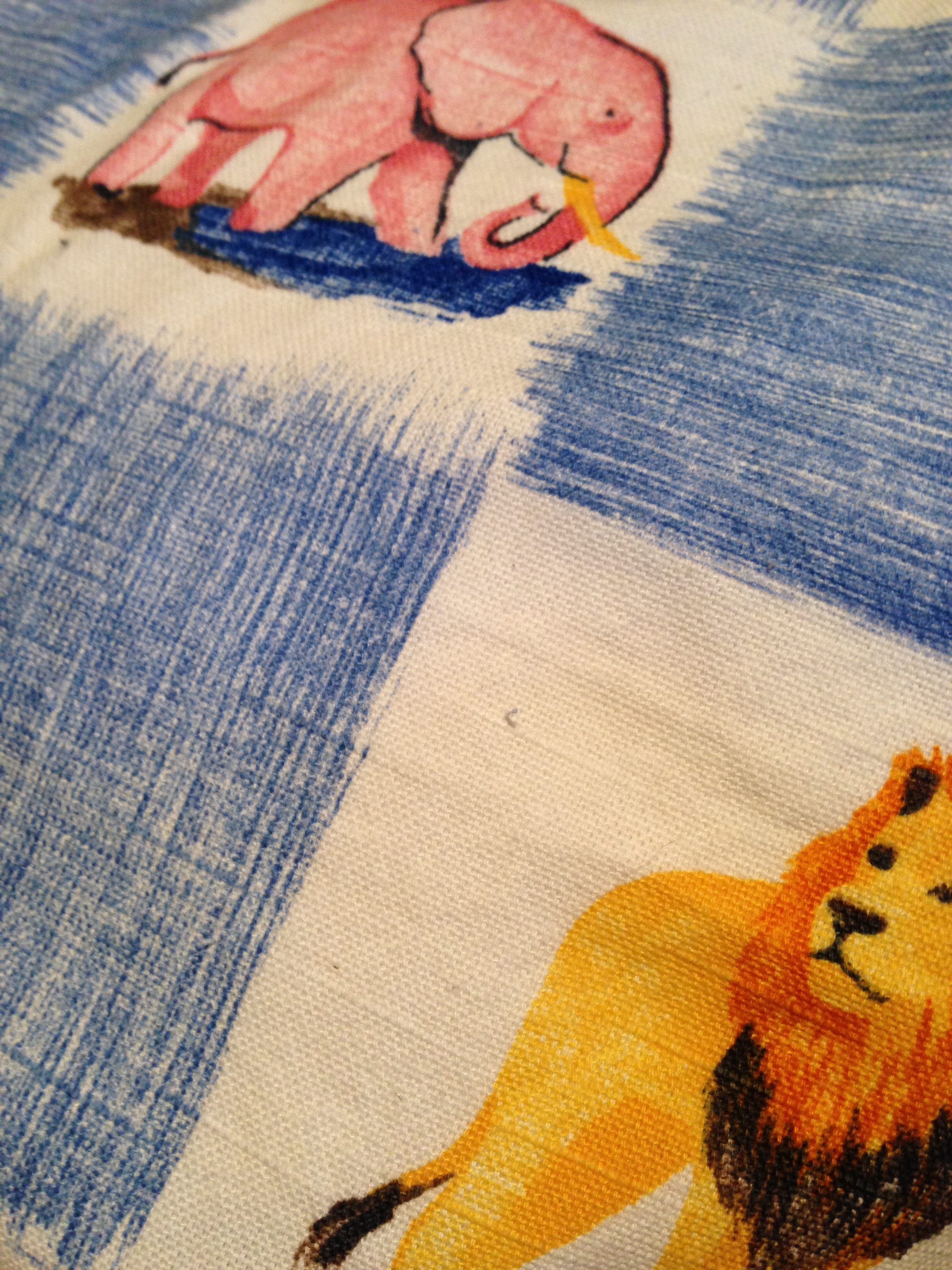
Nourish yourself. I’m stewing beef with onions, those garden carrots, garden onions and beer, not wine, because that’s what I have in the house. And fall’s about what you have in the house.

pillow fabric

4 Comments

Filed under Art, Cooking, Culture, Dogs, Fiction, History, Home, Jean Zimmerman, Nature, Photography

Arrr, Matey

Biker-pirate crazies rumbling through Times Square, tossing eyeballs into the tourist throngs?

I admit, that’s a concept. One, once I heard about it, that got me out of my house and into Manhattan.

It was the annual Talk Like a Pirate Day, which I first heard existed when we received an amusing card in the mail marking the occasion. It sounded like a joke, but the holiday is celebrated on September 19th by wannabe Johnny Depps the world over.

depp

I did some research into seventeenth century pirating when I wrote about New York’s Philipse family for my book The Women of the House a few years back. Merchant Frederick Philipse was one of the richest gentlemen in Manhattan. He had a cellar full of wampum in barrels and a 52,000-acre estate that comprised much of today’s Westchester County. For years he pursued trade with corsairs off the coast of Madagascar, a place only a little bit wilder than New York City in that day.

First of all, there were some crazy animal species there that didn’t exist anywhere else in the world.

Elephant birds, artwork

The elephant bird, a flightless giantess, always intrigued me, and I looked around for evidence of historic human encounters with the beady-eyed long-extinct creature, but all we have today are fossil eggs like cement volleyballs.

Then there was the indri, a still-thriving lemur with lemon drop eyes, whose wail carried across the nighttime countryside, and a pygmy hippo and a panther-hunting cat-dog.

indri-jw

Pirates, yes, I was discussing pirates. Sheltered coves around the Madagascar coast offered private places to careen an ocean-damaged hull, to harvest scurvy-preventing lemons, to provision a ship with oxen, sheep and poultry.

Pyle_pirates_treasfight

A charismatic buccaneer named Adam Baldridge came to Madagascar in 1691 and transformed an island off its coast called Sainte–Marie into a pirate paradise inhabited by as many as 1,500 sailors at a time. A trading post/resort, Sainte-Marie offered up Malagasy “brides” and a locus for business between merchants and pirates.

PIRATE&MAID

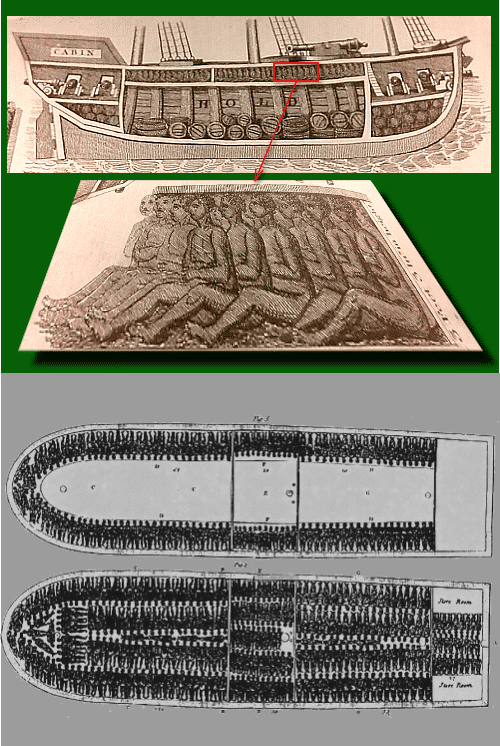
This is where Frederick Philipse saw his opportunity. Baldridge proposed a transaction that would furnish Philipse with two hundred premium Malagasy captives at thirty shillings a head, well below the going rate for African Gold Coast slaves. Also, Philipse was welcome to unload merchandise on Sainte-Marie in exchange for pieces of eight, India goods, or whatever currency best suited the ship merchant. This was all quite nice for Philipse, who was just starting to trade in human flesh but was finding it hard to break into the Africa market, which favored English men. “It is by negroes that I finde my cheivest Proffitt,” wrote Philipse in a letter to Baldridge. “All other trade I look upon as by the by.”

NavioNegreiro

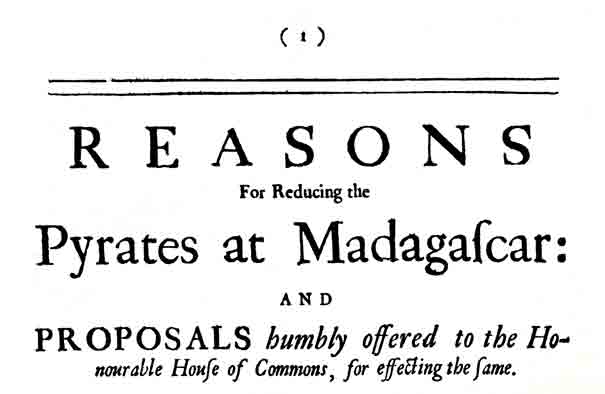
Ships went back and forth, and Philipse’s reputation didn’t suffer through the nature of his Madagascar business—his cohorts in Manhattan welcomed the cargo. Enslaved Africans were bought and sold on wharves along the New York waterfront, at the foot of Wall Street, and out of taverns. But finally, Britain put the kabosh on the activities of pirates around Madagascar and those who interacted with them in Manhattan.

reducing

Philipse brokered one last deal, to bring a load of seventy Malagasy slaves into New York Harbor, whereupon he got spanked. He had a ship impounded and was forced to resign from a post with the governor’s council.

So pirating was not quite so charming as they make it out to be in the movies. Still, Thursday’s Talk Like a Pirate motor escapade was to have its beginning at the historic tavern the Ear Inn, one of my favorites, so I thought I might go check it out.

ear inn outdoor sign

The Ear Inn began its life long after Frederick Philipse’s heyday, though in the mists of time for us: it was built as a residence in 1817 for an affluent African-American tobacco trader named James Brown, who had been an aide to George Washington. If you look close you can see him in the famous painting of Washington crossing the Delaware.

washington_crossing_the_delaware

The house stood on Spring Street, in present-day SoHo, and when it was constructed the waters of the Hudson River lapped at its door.

Marks outside show that Hurricane Sandy brought the shoreline back to what it was centuries ago.

hudson river

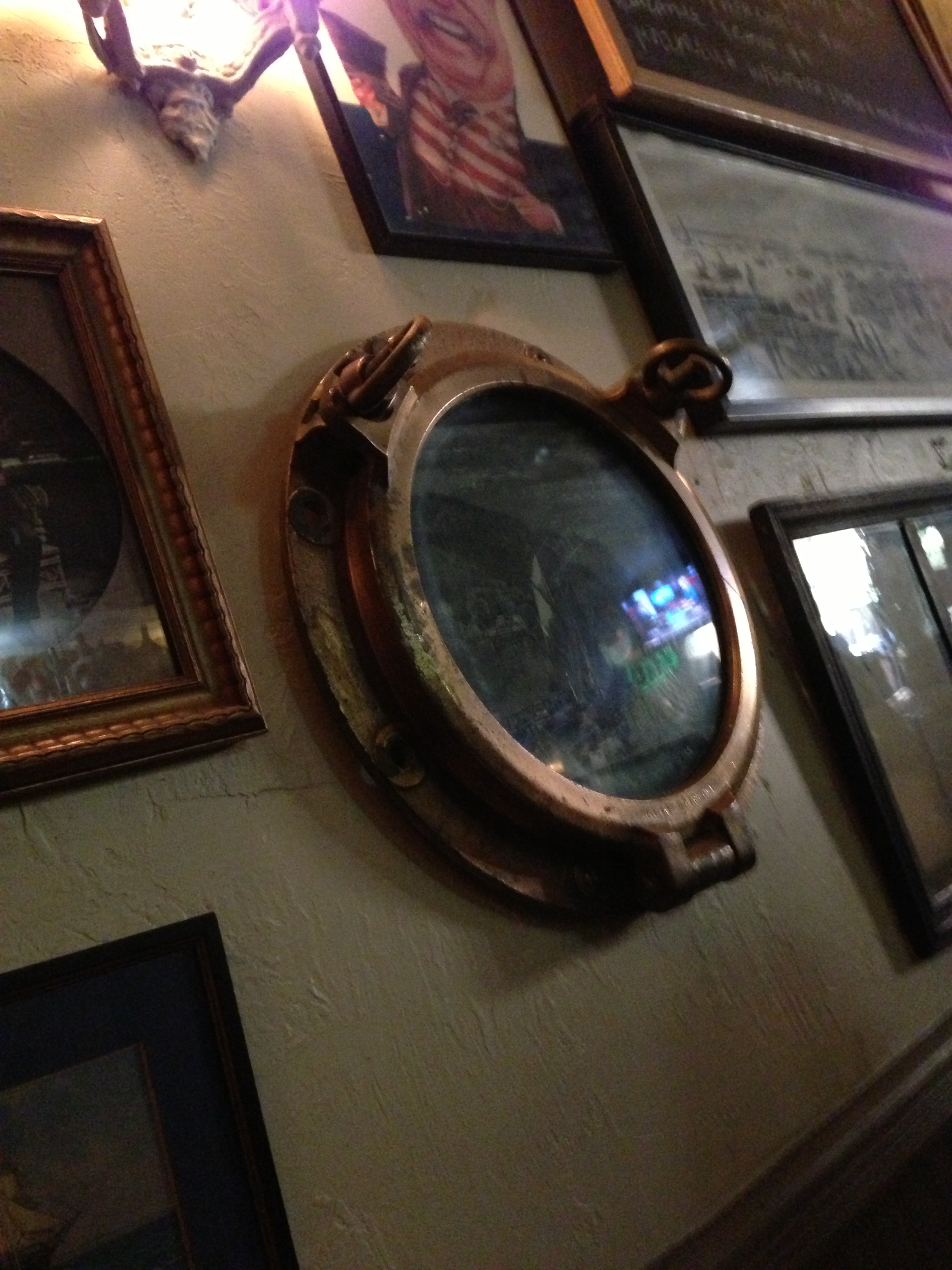
Later the building became a sailors’ tavern, then a speakeasy. There’s still a flavor of the nautical in the place, with brass portholes here and there.

porthole

It’s dark and a bit dusty.

ear inn indoors sign

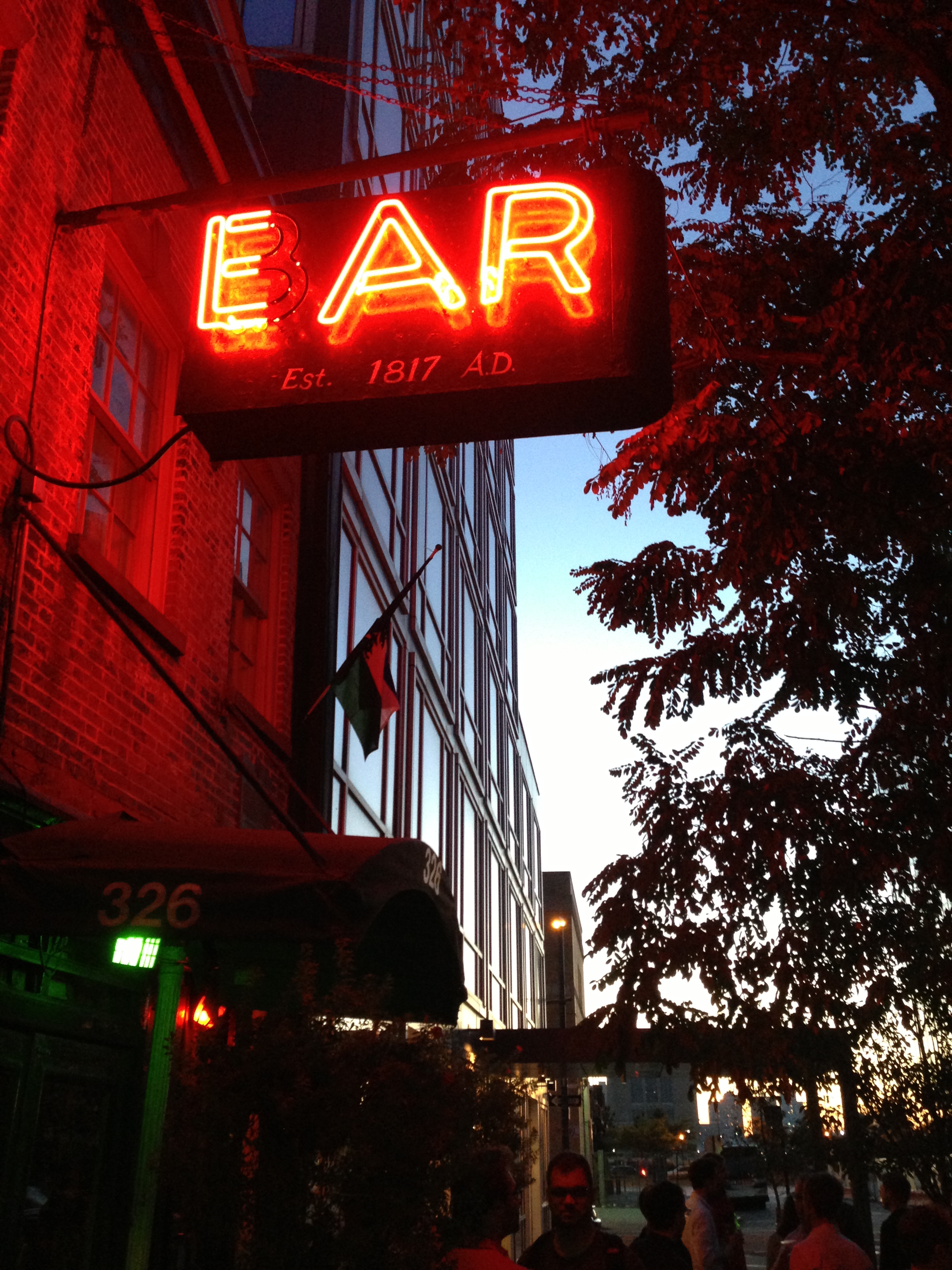
You don’t go there for the food, but for the flavor of history. When new owners wanted to avoid a drawn-out landmarks review of their BAR sign in 1977, they changed the name to the EAR – but old-timers still call the place the Green Door. It’s the oldest working bar in New York City.

It was a logical old-timey place to begin a pirate romp, sponsored by  a gonzo motorcycle group called Biker Entourage, one that would assemble at the old bar, make its way up the West Side Highway to Times Square, toss those eyeballs, conduct some kind of crazy mock-swordfight in front of the no-longer-existing house of Captain Kidd on Wall Street and wind up at South Street Seaport. The perfectly logical premise: “Had these wheeled dragons been invented say 400 years ago, pirates’d be roarin through the streets with these wheeled dragons between their legs ‘n pegs sure as a shark loves a chumbucket.”

The only thing was, we found at the Ear Inn, the ranks of contemporary pirates were sparse. If dramatic.

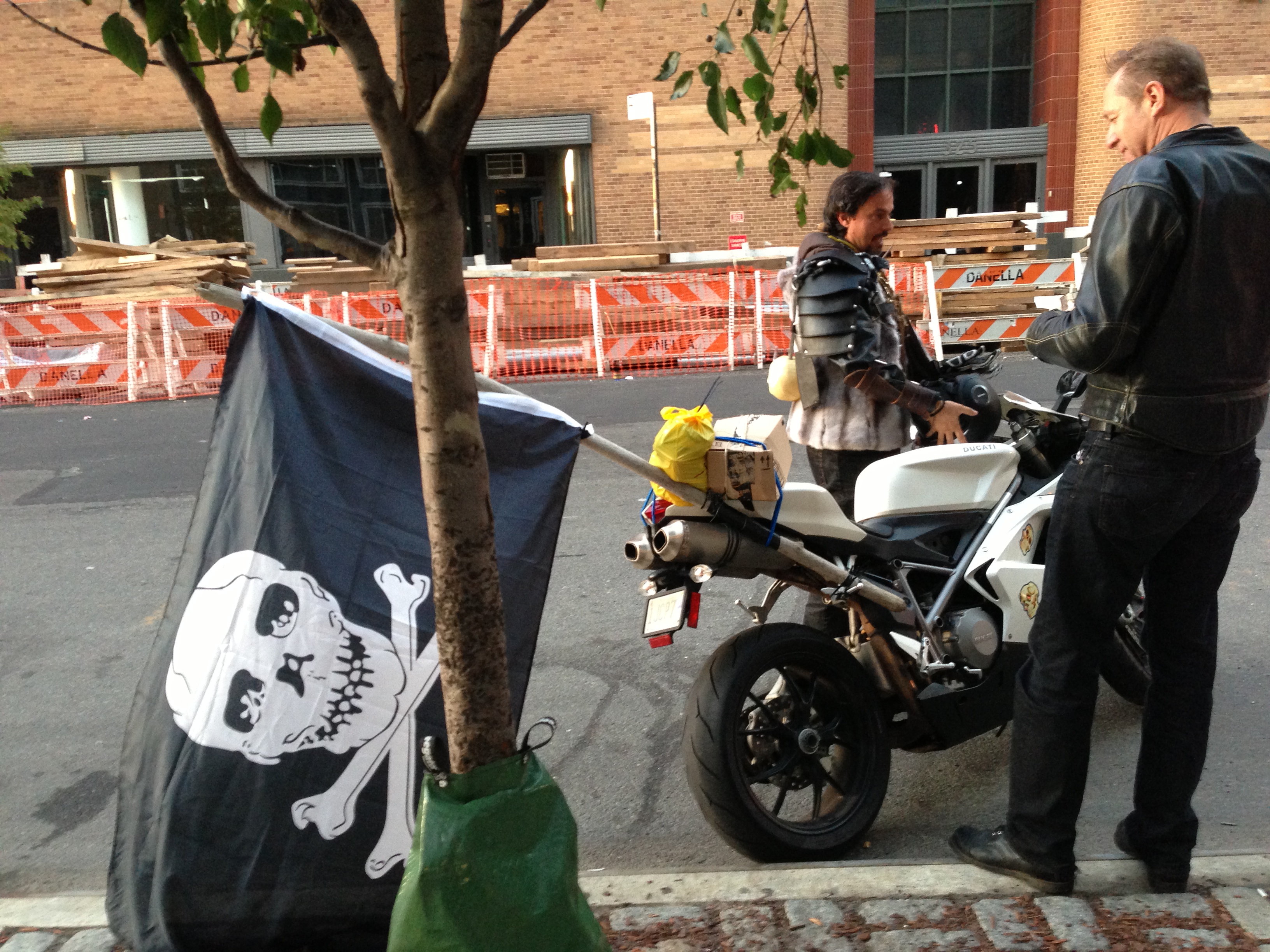
pirate bike

There were a few individuals in leathers and pirate garb. Most of the patrons out on the sidewalk preferred the uniform of SoHo skinny chic.

two pirates

We saw a few cutlasses and some Halloweeny dangling skulls.

But no one threw an eyeball our way. The real New York pirates were, as always, down in the financial district. Everyone here was too busy lifting a brew to do much pirating, anyway. Much as it probably was back on the island of Sainte-Marie.

4 Comments

Filed under Art, Culture, Fashion, Film, History, Jean Zimmerman, Nature

Out of My Library

If you don’t like the feeling of book dust on your hands, the sight of new gaps between the volumes on your shelves, the surprise discovery of tomes you missed even though you never knew you missed them – read no further.

I am in the grips of a book-shedding catharsis. I realized today – and this is the way it often happens for me – that I couldn’t let another hour go by without winnowing out my book shelves. I insisted that Gil sort his office, too. (He couldn’t find any to give up, but he tried.) The resulting 100 or so cast-off titles went into an extra-large packing box.

gil w book box

Off to the library.

croton mat

A mother stood trying to corral her preschooler near the sidewalk. “Donations?” she said cheerfully. “Efficient way to bring them.”

“Is he a neighbor?” said her son.

“Maybe,” said the mom.

Local book sales bring together browsers with only a desultory interest, avid bargain hunters and steely-eyed professionals. Pop selections are only a minor part of the culture.

hunger games

When we lived in Hastings-on-Hudson, resellers from all over bought Friends of the Library memberships so that they could go to the earlybird presale and scoop up multiple cartons of the most valuable items. That was okay, we managed to find plenty of gems on our own time – including some we had ourselves donated. Yes, it’s true: we turned in books for the sale that we later decided were simply too fascinating to pass by.

radiating like a stone

But it’s such a relief to weed out the honeys of yesteryear: The Man Who Quit Money by Mark Sundeen, Jonathan Franzen’s Freedom, Dava Sobel’s Longitude, The Judgment of Paris by Ross King. All good reads, eye opening, brain teasing. None of them necessary to my life at the moment.

The Croton Free Library has just celebrated its 75th anniversary. I hope that its patrons will enjoy my books as avidly as I did.

croton library anniversary cup

There are people with acres of shelves in their home library. Their libraries. Their nooks and end tables. Their bedside stacks. When we downsized to the Cabin, that life ended for us. We knew we’d have to focus a laser beam on what meant something to us. We carted out dozens of boxes for various libraries, dozens to sell at the Strand, and ended up leaving many freebies at the curb. Even if you mourn the loss of your books, it is worth it for the experience of a transaction at the historic institution of the Strand, which has been in business since 1927 on 12th Street and Broadway in Manhattan.

strand-history-thumb

The  buyer peers down his spectacles and thumbs through your precious collection, calculating all in his head the value of each book before announcing the usually paltry total. Sometimes it is a triumph, enough for dinner in a decent restaurant. Those novels that you thought were brilliant, invaluable, they’re basically worthless at the Strand, while the store covets and compensates well for the scholarly and academic works you thought no one would ever want.

Now the smooth, dust-free spines of the books line up straight on my wooden shelves in the proper order – all of them books I have selected anew, that I want and need.

double shelves

Some of them seem to have a special kinship even outside their genre. Not exactly subject. More, spirit.

green books

Many, like these, have a story besides the narrative in the book – the story of my relationship with it. My mother-in-law gave me Stalking the Wild Asparagus when I was a newlywed with a house in an apple orchard and a nascent interest in gardening. Ian Frazier’s Great Plains has been a touchstone over the years in thinking about writing nonfiction. Wilderness and the American Mind dates from my college days and still holds my intense interest. Everyone who loves books has these intimacies with individual volumes, the how and why of how your relationship with it came about. Your foundation with it. These begin to make up the essence of a library, the authors that really meant something then and now.

The true reason to get rid of books? Honestly? To collect more books.

current

I needed space for a working library, all the ones I’m drawing on for my next novel. Any clue as to what the book’s about?

6 Comments

Filed under Culture, Fiction, History, Home, Jean Zimmerman, Nature, Photography, Publishing, Writers, Writing

A Catskill Idyll

I really ought to get out more. Even if out means going from a cabin to a cottage with an adjacent bungalow as I did this weekend.

It was the gray, cool weather of late summer, more like fall. The Catskill Mountains. The cottage had a quaint disposition, the pet decorating project of antiquarian friends of friends. Charm bloomed in corners. On side tables, one of which held a seal enraptured with a ball.

seal lamp

Windowsills offered various small collections.

small nest

Dramatically tarnished old mirrors lined the walls.

tarnished mirrors

We brought zinnias, butterscotch bars.

zinnias

Neil, the host, grilled chicken over wood. There was sweet aged bourbon for some. For me,  mango lemonade. A funny kind of tea, milky oat tops. Was it restorative in some way or just cut up grass in bags? Hard to say but worth gently debating. What music should we listen to? Everything sounded good.

milky oat

A fire glowing in the stove, a healthy stack of wood.

fire

Conversation about our kids growing up, finding their feet. About ourselves,  still finding our feet. Will we ever find them? Monopoly and pet play.

dog play

The shaggy, gloomy, romantic Catskills offered up their forests and creeks.

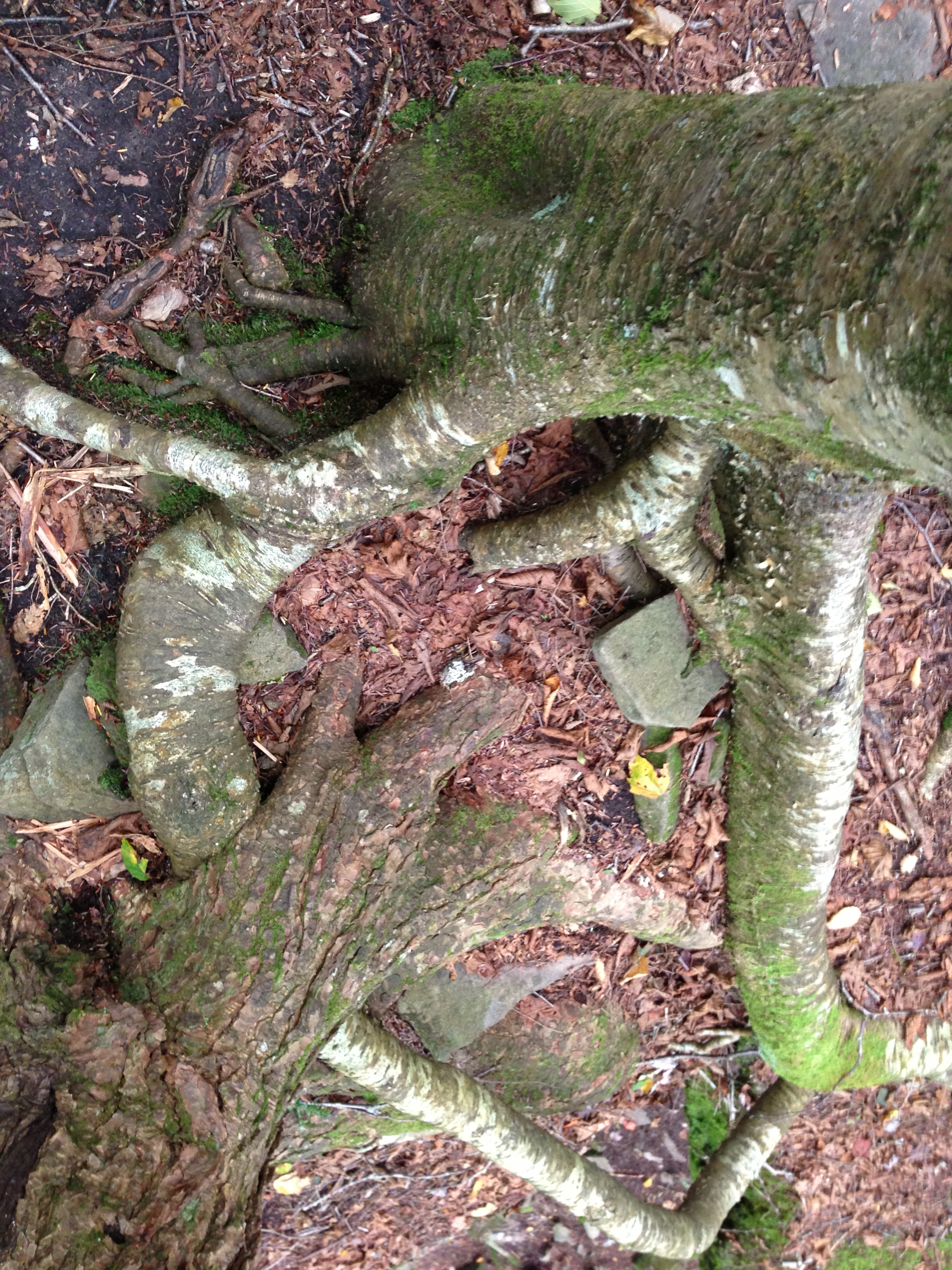
roots

Girdled, Neil the arborist says is the term for roots that entwine themselves like this. What about those trees, though, that entwine themselves as though in love? No special name, they just are.

entwined trees

Mushrooms gleamed against the mulch.

white mushroom cu

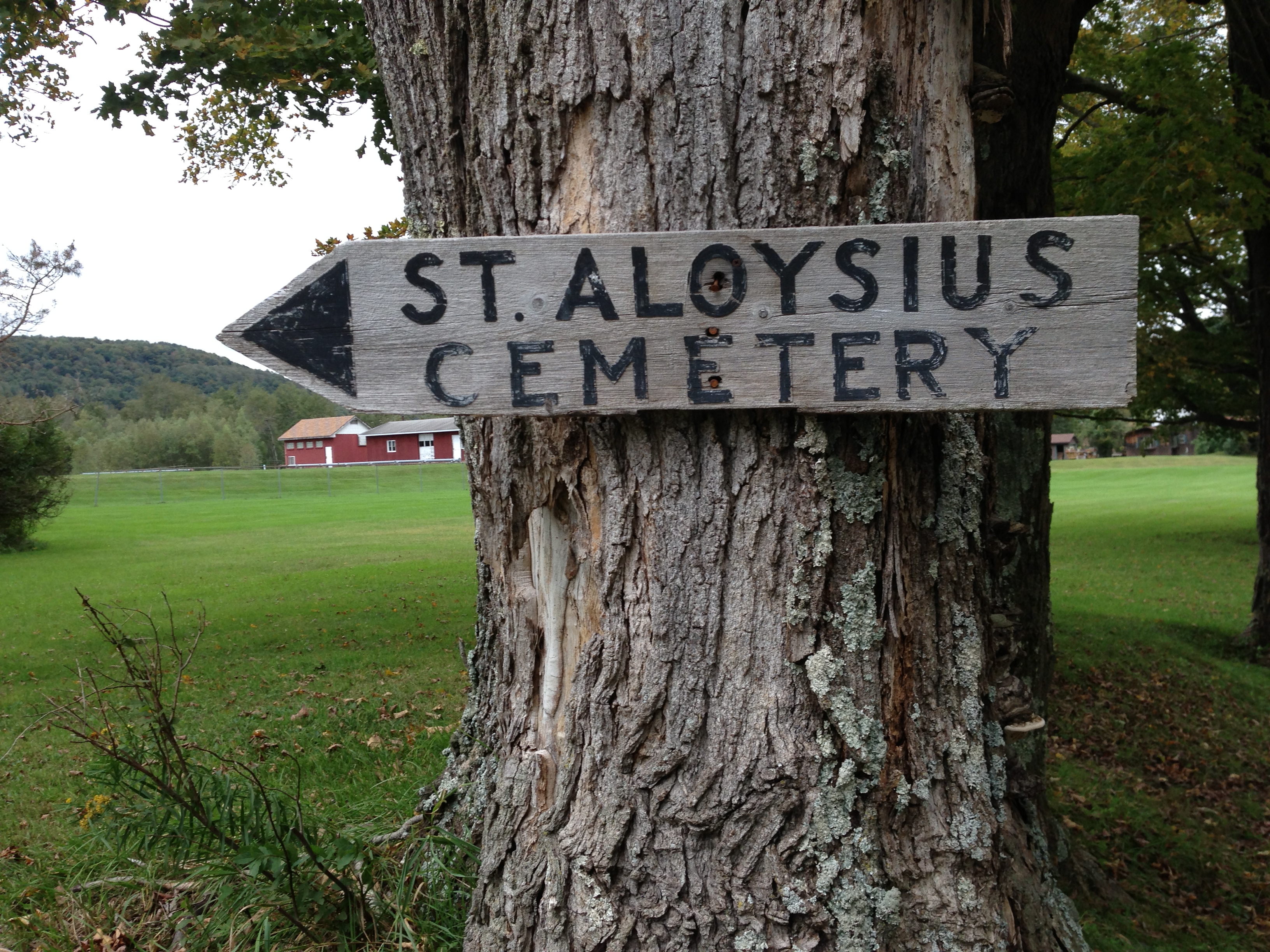
When the woods were so delightful we couldn’t stand any more, we took a drive through the weathered local community, Livingston Manor. An ancient graveyard, simply marked, appeared on Creamery Road.

st aloysius

Plain, as was the cemetery’s groundskeeping shed.

caretaker's

Something else simple appeared out of nowhere — a staunch old wood covered bridge dating to the late 1800s.

covered bridge

Sometime in the long afternoon I saw my friend Suzanne sitting by the fire, taking a pensive break from all the charm, the activity, the pets and children. The yap of conversation.

suzanne pensive

I thought of one of my favorite poems, perfect any day but especially for this place, the person, the moment: When You Are Old, by W.B. Yeats.

When you are old and grey and full of sleep,

And nodding by the fire, take down this book,

And slowly read, and dream of the soft look

Your eyes had once, and of their shadows deep;


How many loved your moments of glad grace,

And loved your beauty with love false or true,

But one man loved the pilgrim soul in you,

And loved the sorrows of your changing face;


And bending down beside the glowing bars,

Murmur, a little sadly, how Love fled

And paced upon the mountains overhead

And hid his face amid a crowd of stars.

3 Comments

Filed under Art, Cooking, Culture, Dogs, Music, Nature, Poetry, Writers, Writing

Kitchawan Dragonflies

Are dragonflies magic? My favorite insect, I think.

green

Humans have always had a fascination with them. We were creating amulets of the insects back in 1640 B.C. Egypt.

dragonfly amulet, egypt, 1640 bc, faience

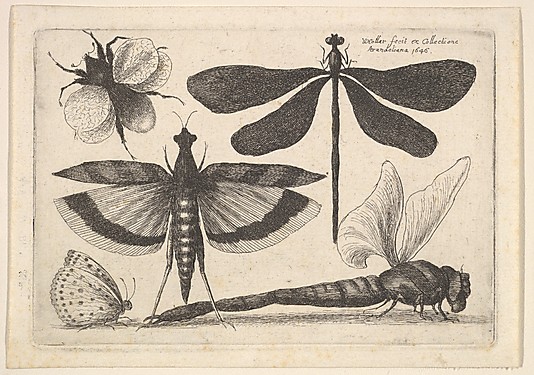
They’re prehistoric. Ravishing to look at. Voracious hunters. Fascinating to artists, like Wenceslas Hollar, the great 17th century lithographer.

Wenceslas Hollar, 1646

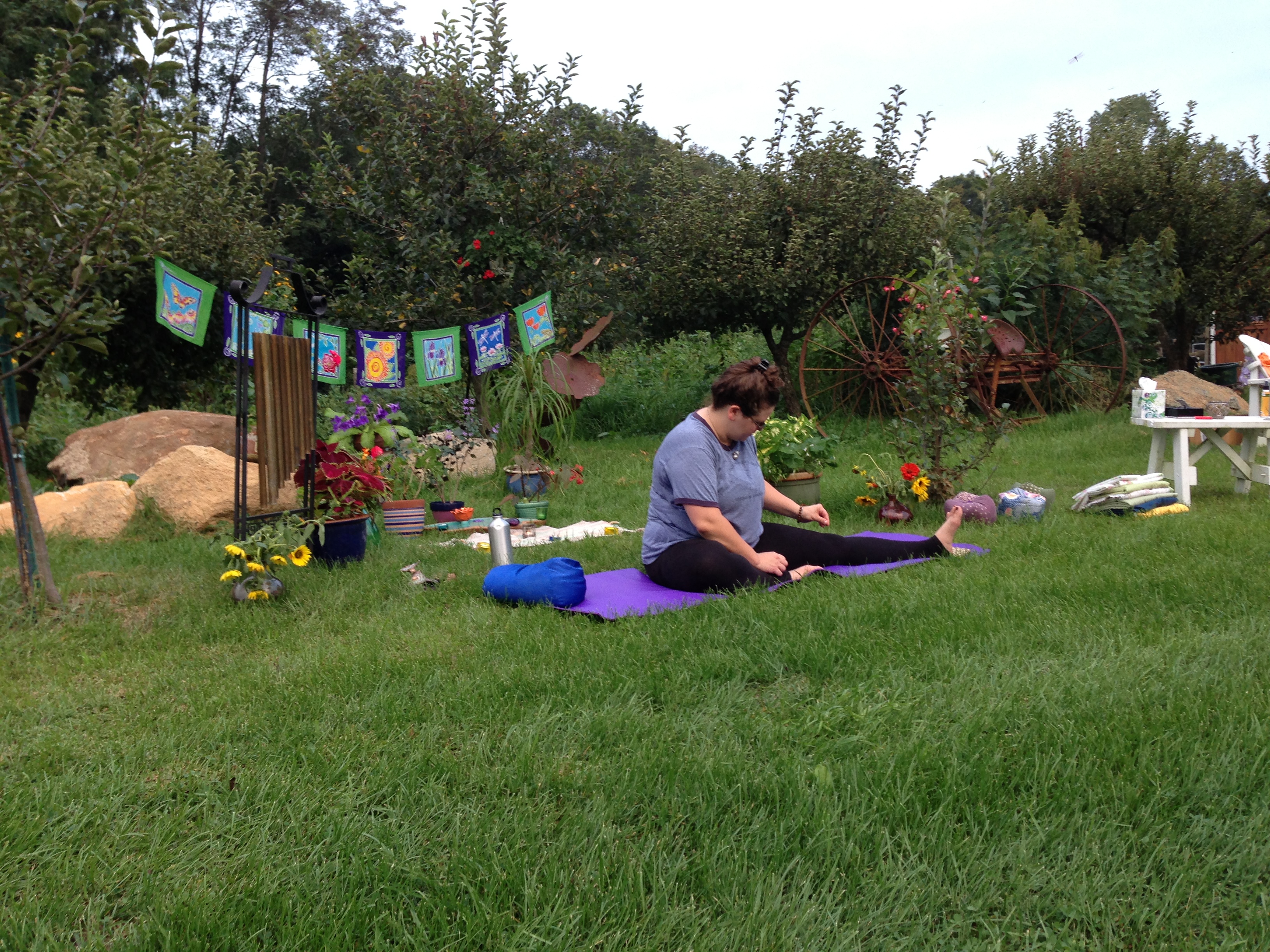
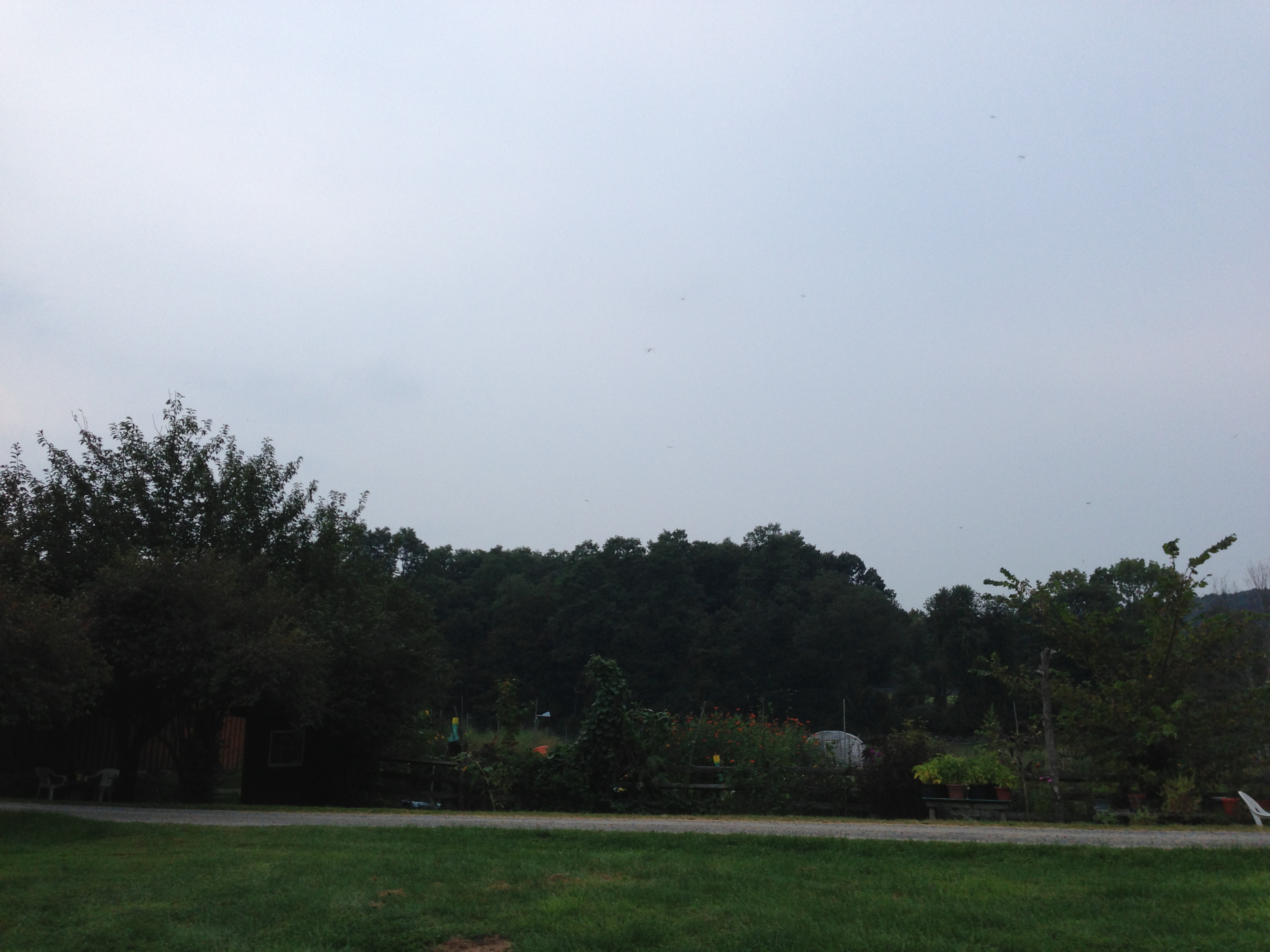
A cloud of hundreds of dragonflies swelled over our heads at the outdoor yoga class offered at Kitchawan Farm in the early dusk. The farm, in Ossining, was a place I’d always wanted to visit. It was September 11, and the class was free to whomever wanted to drop in, a way to mark the day.

Kathleen Clarke led the group. She usually was an instructor at Dragonfly Wellness nearby. Perhaps she brought the bugs?

Kathleen

I brought my boot and a desire to stretch my tight, tired muscles, sick of sitting with my foot up for six whole weeks. We laid out our mats, the dragonflies zooming and booming above.

I didn’t know if the people there would be nice about my infirmity. Maybe they’d be yoga-fascists, insisting on fast, sweaty gyrations, on keeping up a certain pace. But as soon as we set up, a woman hurried over to offer me a plastic chair in case I needed it. It turned out to be Linsay Cochran, who manages this century-old family farm. So gracious, and so welcoming.

There was a meditation to begin, and Kathleen suggested we think not so much of September 11, but perhaps more important, September 12. What did we do in the wake of the tragedy? I thought about the 11th, watching the flames all the way down the Hudson, scoping from Hastings to New York City from the lawn next to the library, the dawning dread that this was real. But September 12th – what did I do, actually? I think the day was about our shared shock, but also about the difficulty of explaining what had happened, to myself but also to my nine-year-old daughter.

shrine

At Kitchawan, in the dusk, we stretched our arms to the graying sky, held our hands in prayer position, again stretched our arms to the sky.

My Frankenstein boot presented no problem. Kindness, I felt, made my awkwardness a nonissue.

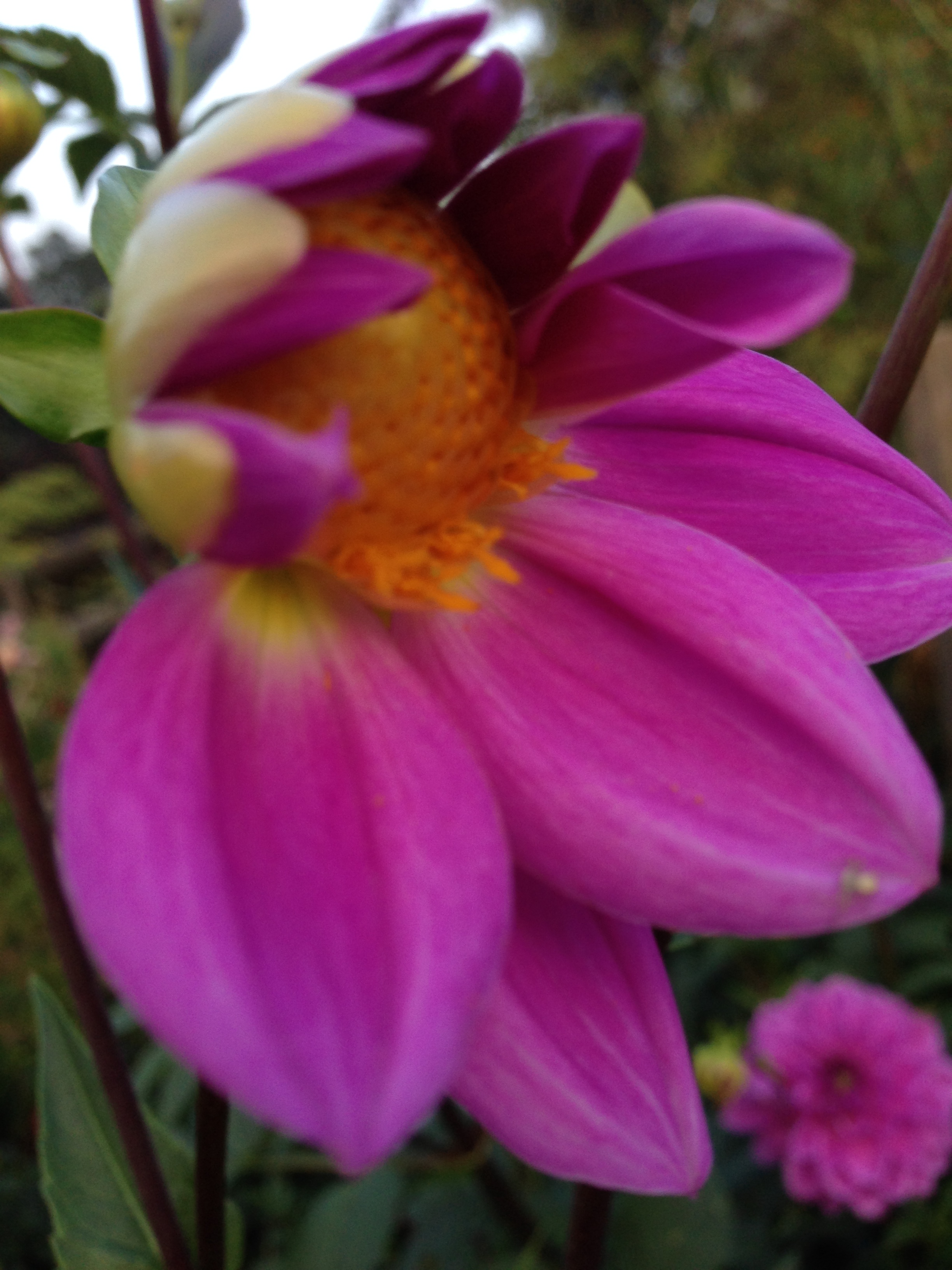
Kitchawan Farm has 20 acres, and specializes in flowers as well as vegetables and herbs. The blooms of later summer were all around.

pink flower

“There shall be eternal summer in the grateful heart,” wrote Celia Thaxter, a popular gardener/writer of 1890s New England who is now, like so many women writers of that time, largely forgotten. If you are in need of eternal summer, give Linsay some advance notice and she will a bouquet for you.

fuschia flower

Gil and I had wandered the rows when we first arrived. Decided on chard for dinner.

chard

They’re mainly a CSA operation here at Kitchawan, and some people were coming to pick up their shares. Others picked up their wild, sweet children from the little summer camp there.

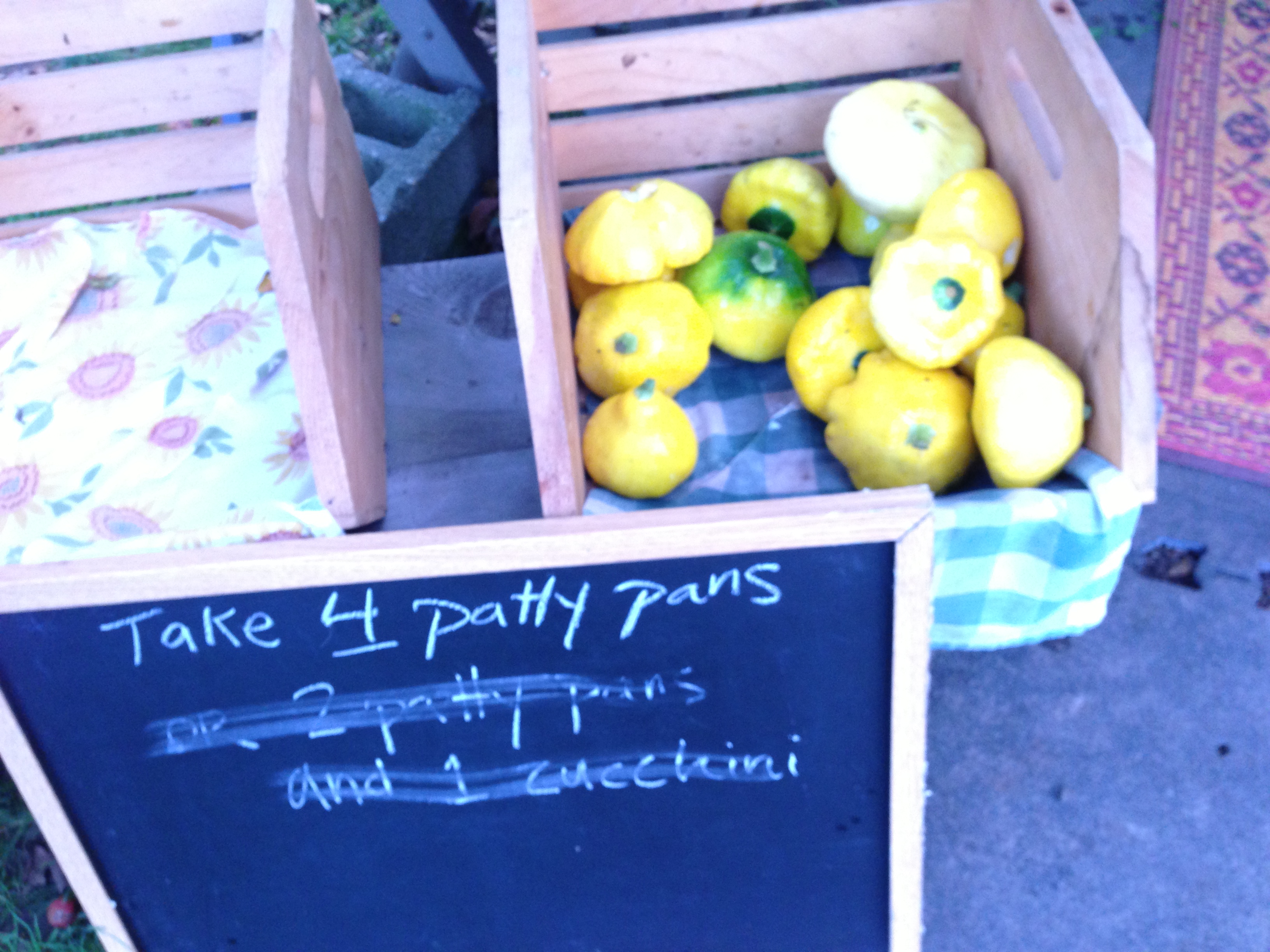
patty pans

Late-season bounty crowded the tables.

carrots in tub

We bought garlic from a  young woman in the “stuga” (Swedish for cottage), two of a half dozen varieties. A garlic house, how charming.

siberian red

Wished we could get closer to the horses – the farm boards 10 but they were all off behind fences in their horse dreamworlds, munching grass.

Gil had gone to walk in the woods of Kitchawan Preserve while I levitated under the dragonflies.

Linsay, laying out on her mat, was constantly attended by her large, gentle dog Pogo.

When the sun salutation came, I knew my foot was spent, so I moved my stretched-out body over to an Adirondack chair and watched the dragonflies recede.

grey sky farm

I inhaled the scents of manure and herbs. Listened to the horses snort, the excited hens and rooster and guinea hens vocalize. I heard Kathleen taking the little group through the final meditation, murmuring a narrative that was all about compassion, gratitude, virtue, healing others. There was so much good feeling here at Kitchawan, they could sell it in bouquets by the roadside. Or, I guess, give it away.

Being able to heal others. I don’t know about anyone else there, but I felt a little healed. My foot was tired, but my soul weariness had been transported away by dragonflies.

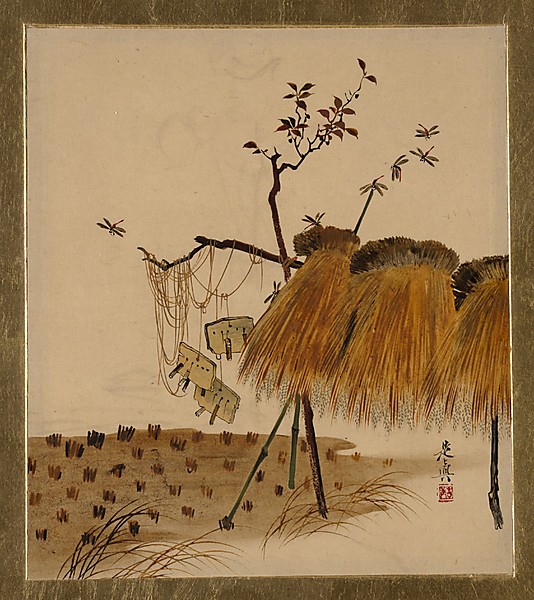
shibata zeshin


5 Comments

Filed under Art, Culture, History, Home, Jean Zimmerman, Nature, Photography, Writers

Mementos in a Vermont Boneyard

Peter Zimmerman continues his ramble through New England, shooting some images our way as he goes.

TODAY I LUCKED OUT (writes Pete).  Not only did I have the Old First Church of Bennington, built in 1762,  all to myself, but then I had the audience of its pastor, the Rev. Kenneth A. Clarke, as well.

I had been poking around the old boneyard adjacent to the cemetery before trying the door to the church and finding it open but “No One home.”

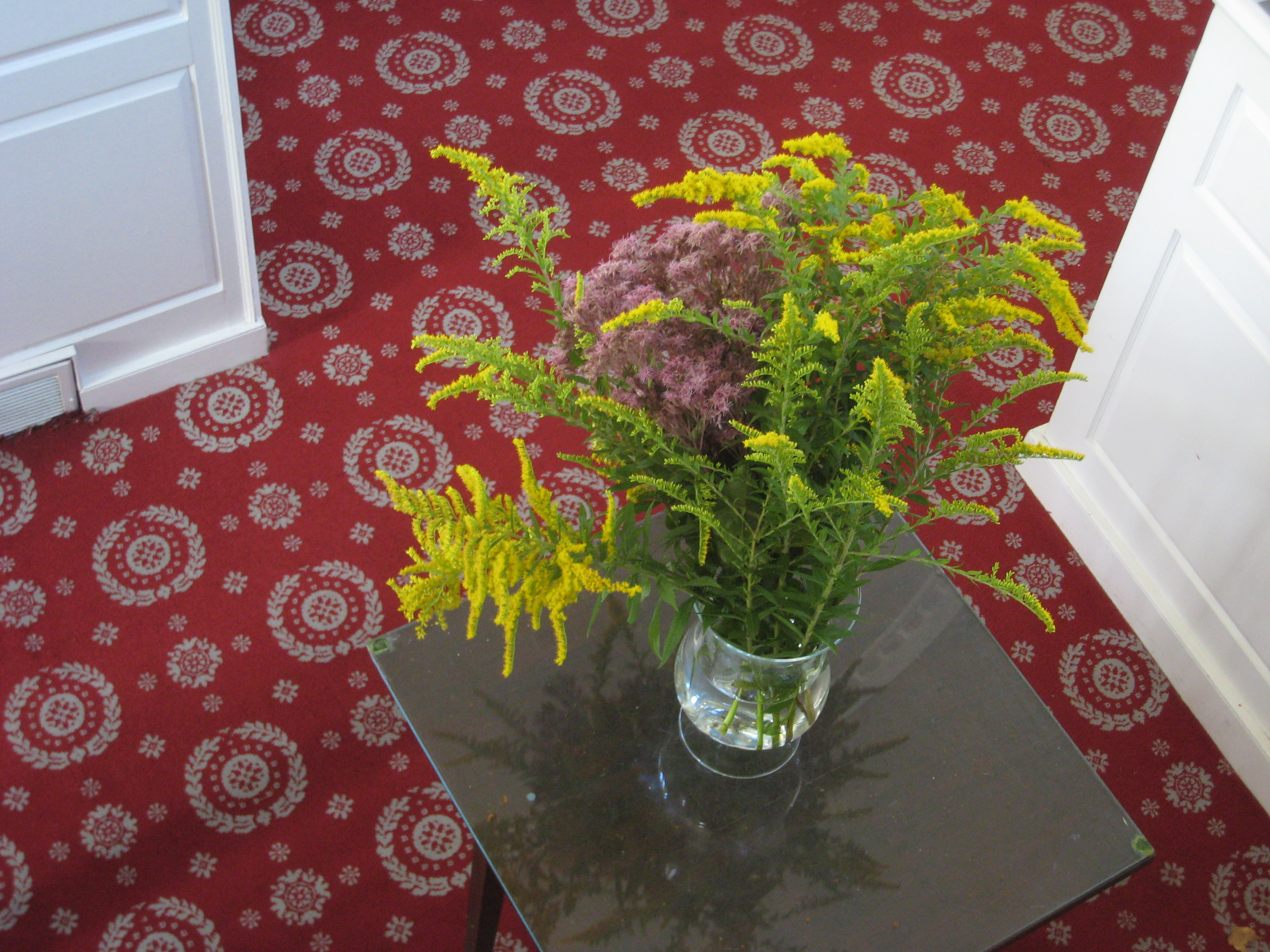
Inside I found a vase of simple goldenrod.

goldenrod

The flag of Vermont and Old Glory were standing on either side of the pulpit.

vt flag

One thing was conspicuously absent: any kind of Cross or statue of Christ.

whatsmissing?

I couldn’t resist climbing up the stairs to the top of the pulpit.

pulpit

A large Bible was turned to Psalm 91.

psalm 91

The tools of the trade. Reverend Clarke told me  that other people climb up there, too, and sometimes leave the volume open on a different page.

lectern The windows are clear glass rather than stained for a simple reason. Back in the days before electricity, they let more light in.

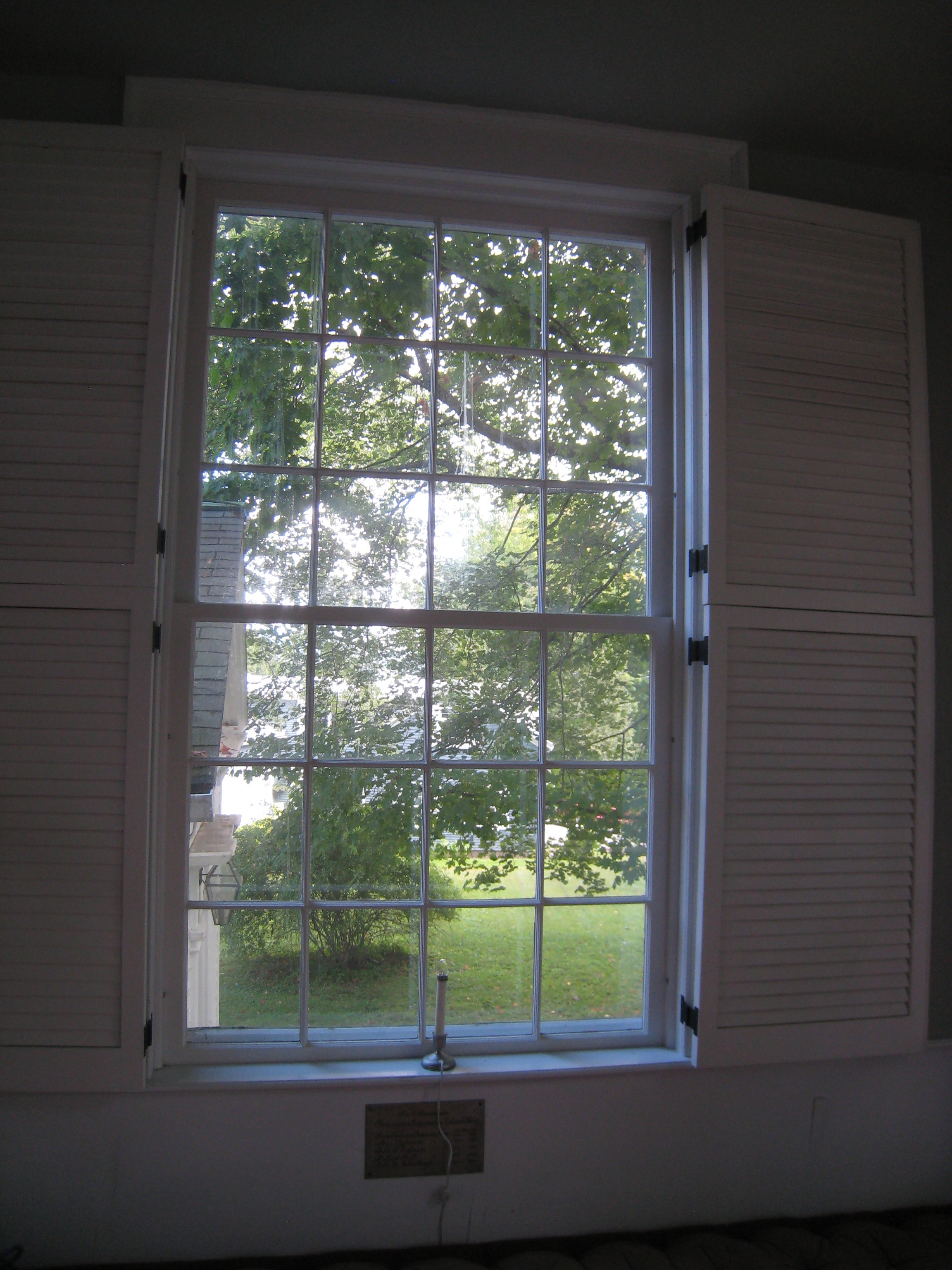
window

I found a very old foot-warmer in one of the box pews (as opposed to regular old slip pews).

footwarm

pew

Here is pew number 9, number 9, number 9….

number 9

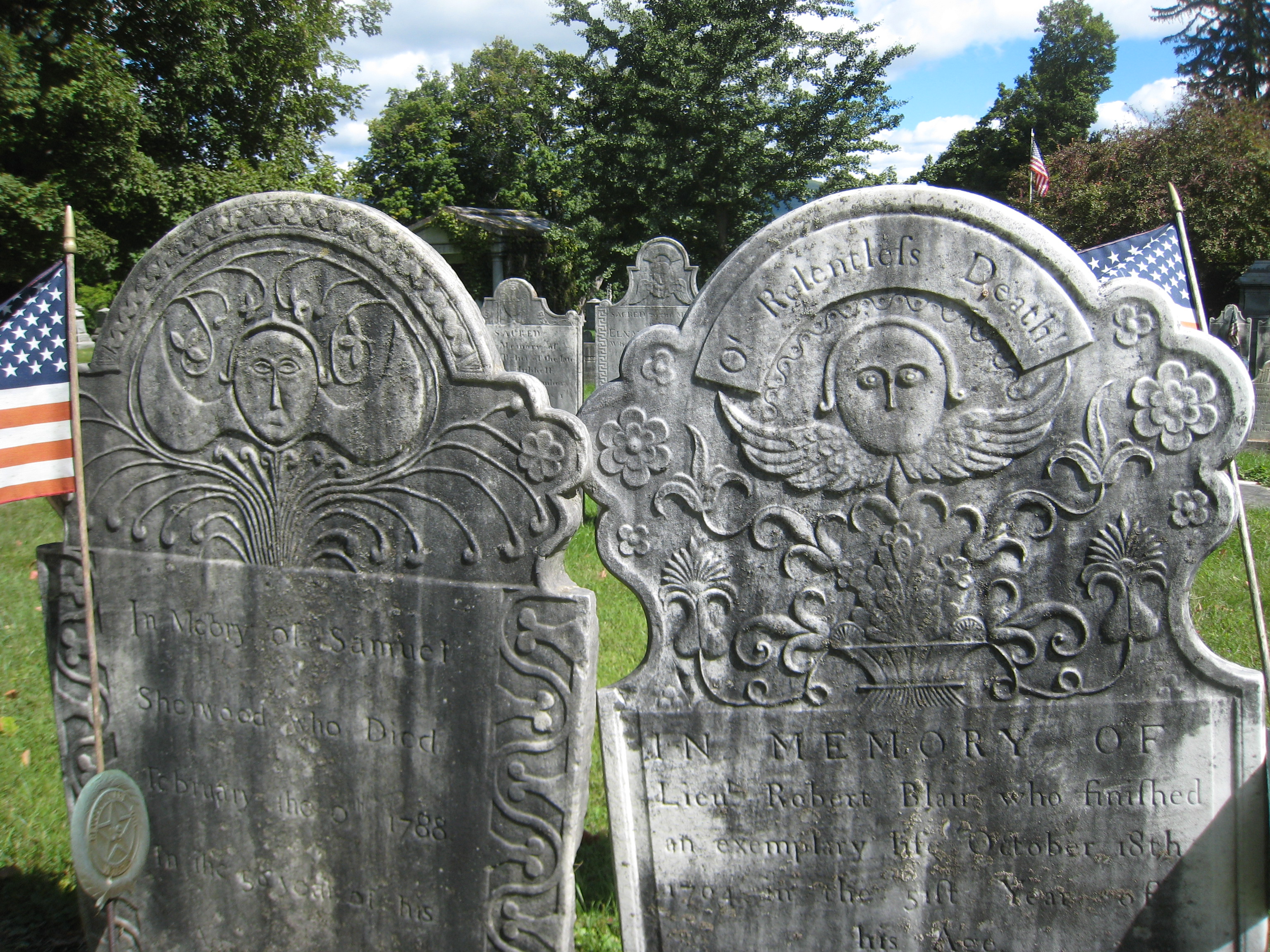
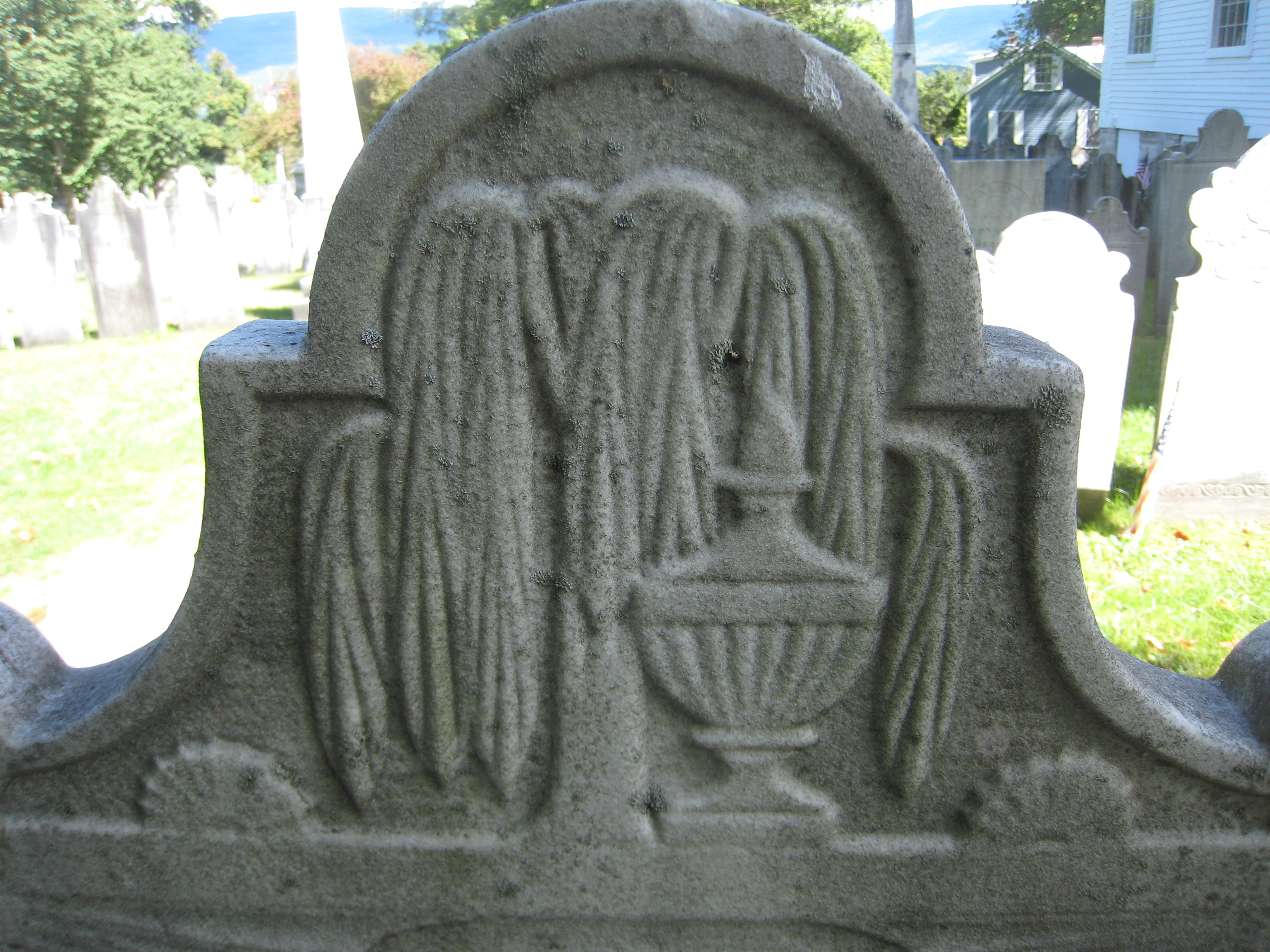
I asked Reverend Clarke about some of the headstones I had seen in the graveyard. Many of them were decorated with “ascending angels,” which came into vogue after the skull-and-crossbone style, and were followed by the weeping willow.

angelheads

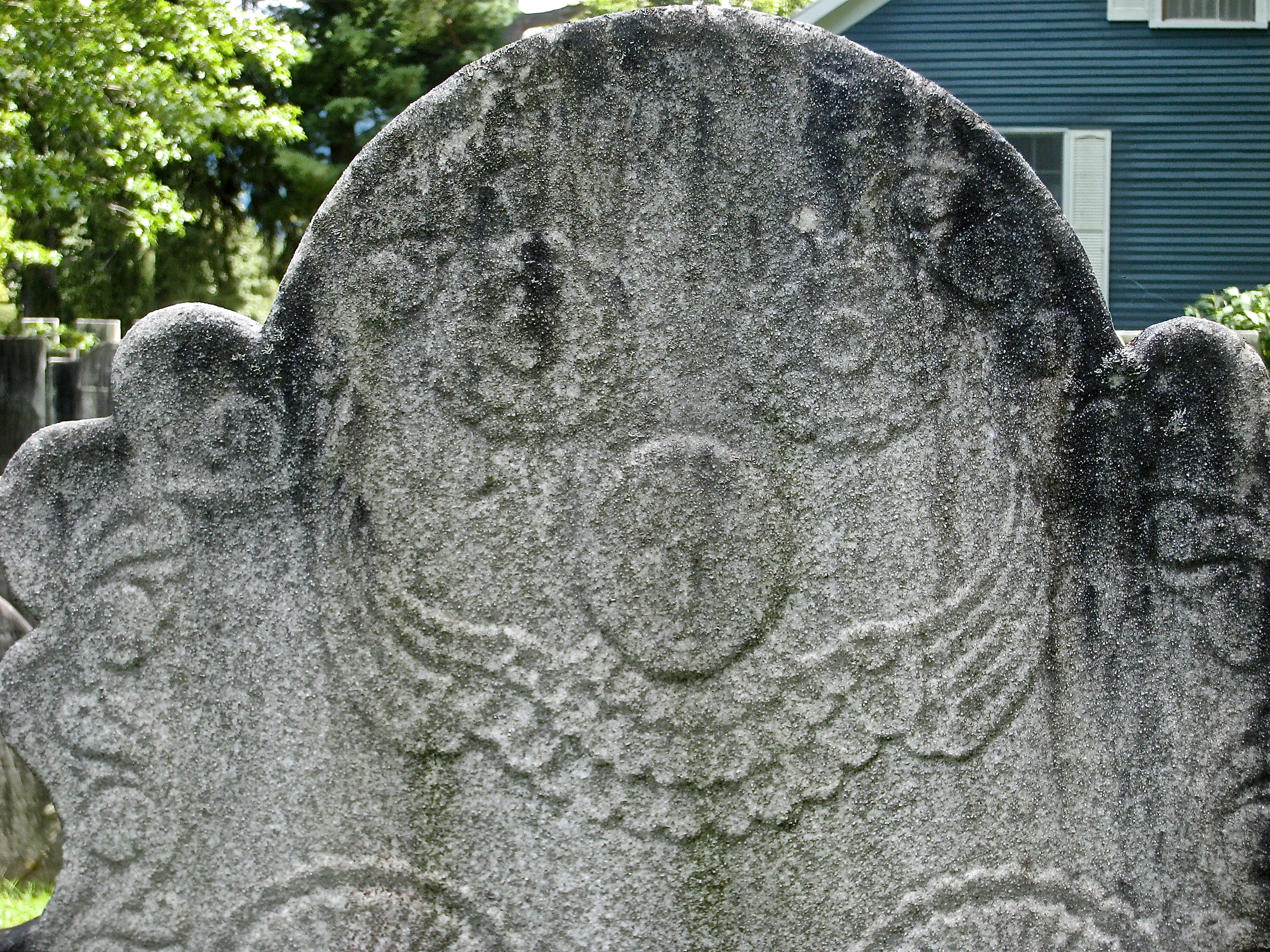
One of the ascending angels bore a distinct resemblance to Groucho Marx. Rev. Clarke laughed and said he hadn’t noticed that.

groucho

Robert Frost is the most famous inhabitant. He and his wife Elinor share a footstone with two children.

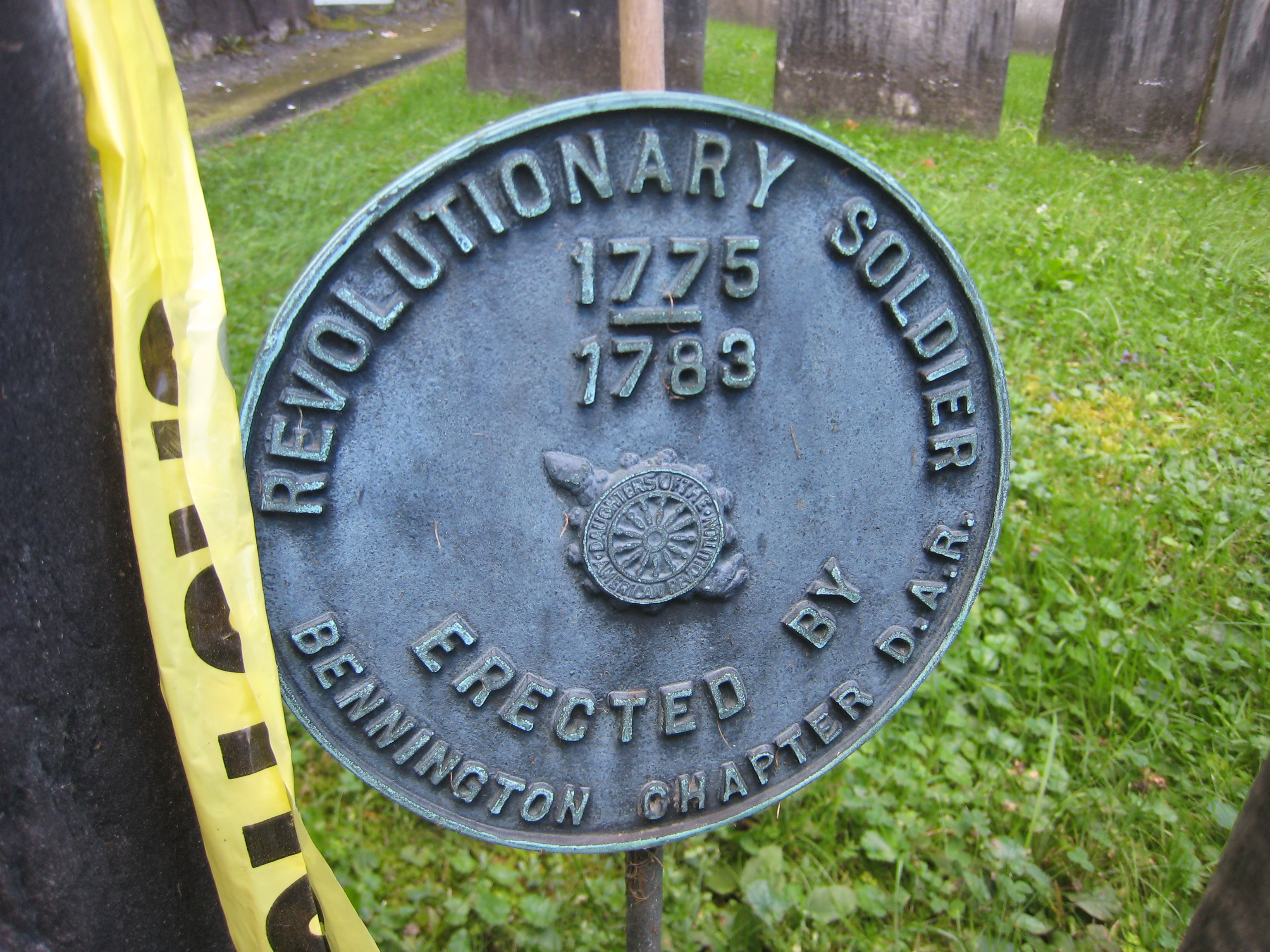
There are lots of Revolutionary War-era soldiers and patriots, but not Ethan Allen or Seth Warner.

rev plaque

Five of Vermont’s Governors can be found here, the female’s first female settler, Bridget Harwood, and some fellow who drowned on the Titanic who used to work as a herdsman on the Colgate family estate (I got the last one from the Reverend). The first person buried in the cemetery died in 1762, when George Washington was a mere 30 years old. I wanted to know whether a person could STILL be buried here. Yes and no, says Clarke. Your family has to already have a plot. And spots are tight, he said with a wink.

willow

2 Comments

Filed under Art, Culture, History, Jean Zimmerman, Nature, Photography, Writers

Art for Art’s Sake

When was the last time you thought about Art Garfunkel? His angelic tenor, his sensitive beak, his fallouts/reunions with Paul Simon, his blond ‘fro?
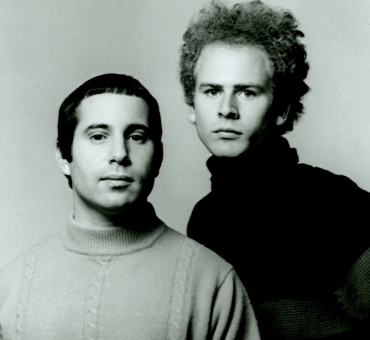
simon:garfunkel

Probably, like me, not recently.

Which is why I jumped at the chance to see him solo in a tiny venue in the middle of New Jersey, in a performance that was being billed as an “open rehearsal” – for what, somewhat unclear. Anyway it would just be Art and a guitar up on the stage, with a group of several hundred devotees.

Three hundred fifty, to be exact, because that was the seating capacity of a hall called the Tabernacle in a magical, historical community called Mount Tabor that originated as a Methodist summer camp meeting ground in the late nineteenth century.
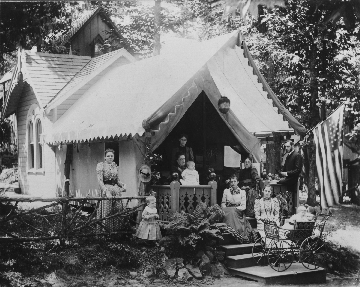
event_146798492.jpeg

People live there now, in houses, not tents. Our friends Eric and Mary Ann have been Mount Tabor-ites for decades.

eric and maryann's home

Walking to the Tabernacle for the show has an element of the mystical, along the small, civilized paths.
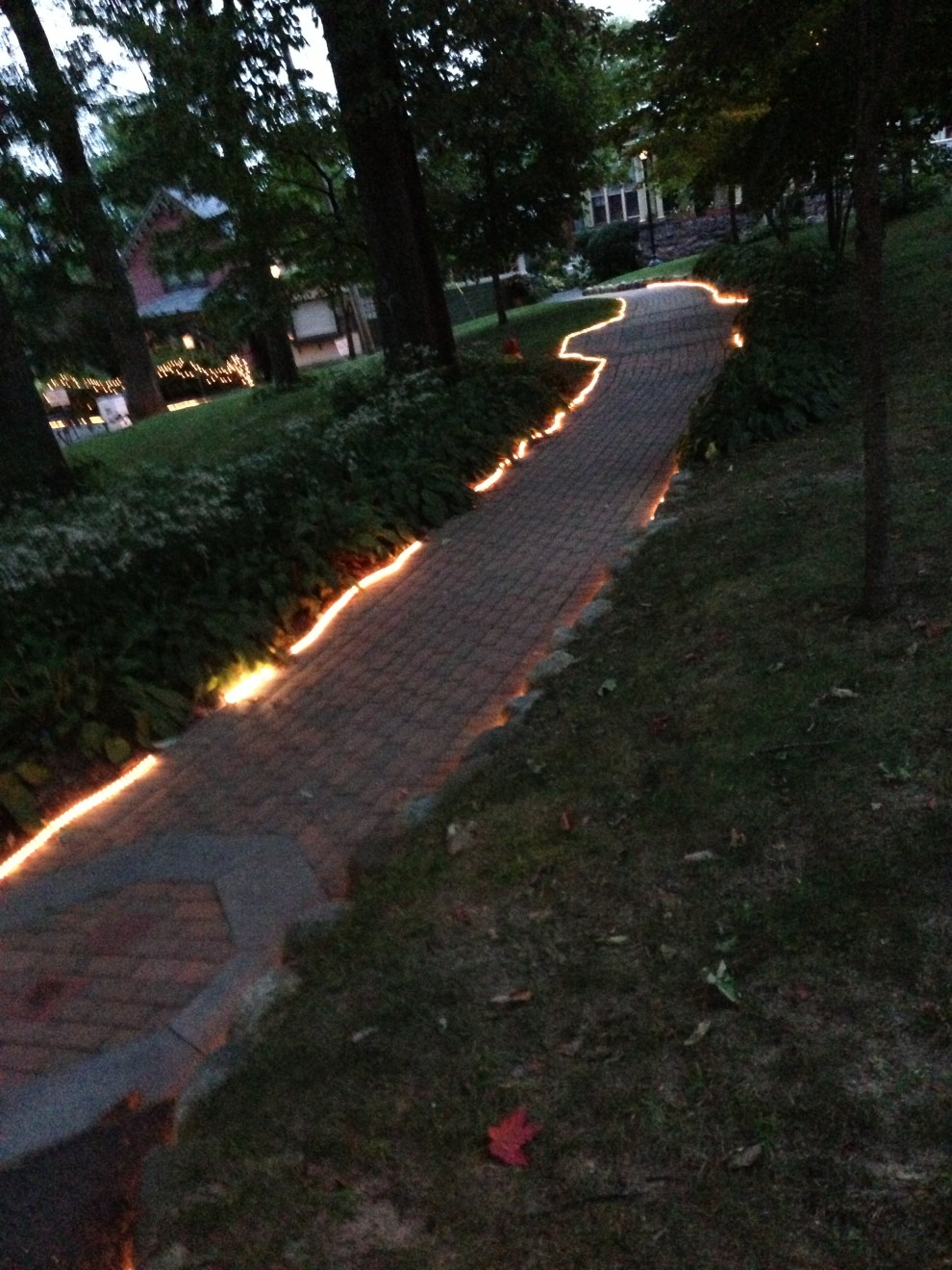
magical tabor

When the place originated, tent properties (leased from the Camp Meeting Association of the Newark Conference of the United Methodist Church, never bought outright) stretched back from the central building and its green, with the more prominent families closest to the preaching. People came here for a month in the summer to get their evangelical fix much the way they did at Ocean Grove, Tabor’s Methodist sister town on the Jersey shore. It all depended on whether you wanted the mountains or the sea, both were equally soul-restoring. The movement faded at the turn of the twentieth century, with houses  eventually built to replace tents, and 212 of the ornate gingerbread-decorated originals remain. National landmark status for the district is imminent. Quiet streets wind throughout this other-timely locale.

tabor homes

Eric and Mary Ann, who raised three kids here, have a property of “six to eight tent plots.” They are “the landed gentry,” Mary Ann wisecracks. She tells me that unlike other towns, here you actually tell your kids to go out and play in the street – because yards are postage stamps if they exist at all. It used to be canvas abutting canvas. “You sneeze in your house,” Mary Ann tells me, “and they say bless you in the next house.”
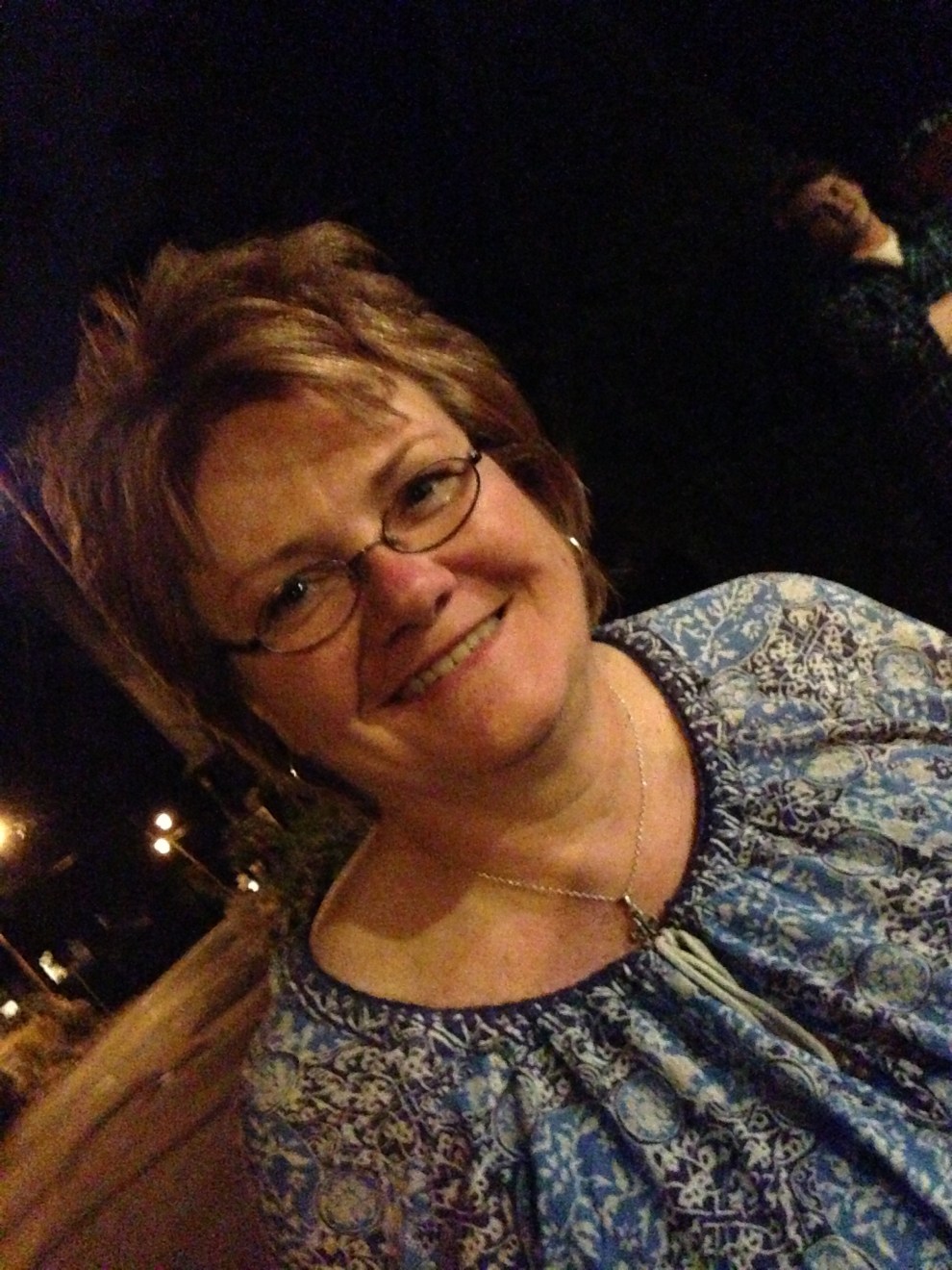
Mary Ann 2

There’s history here, multiple generations living on in one house. A descendent of the original farmer-landowner named Dickerson still runs the supermarket down the hill. Mary Ann orchestrates a longstanding local holiday (like, a hundred-forty years long) called Children’s Day. “You could be a benevolent dictator,” suggests Gil. “There are certain people you must dictate to,” says Mary Ann archly.

We wait in line for Art Garfunkel. Hydrangeas glow in the dusk.

hyrangeas

Time expands. The line stretches, people who have journeyed to this little enclave to see a great singer.

There are perks of being a Mount Tabor resident, and since Mary Ann and Eric know George, the organizer of the event, we go back to the green room half an hour before the performance. It’s located in an adjacent historic building that is usually bare, filled only with folding chairs, where various committees hold their meetings.
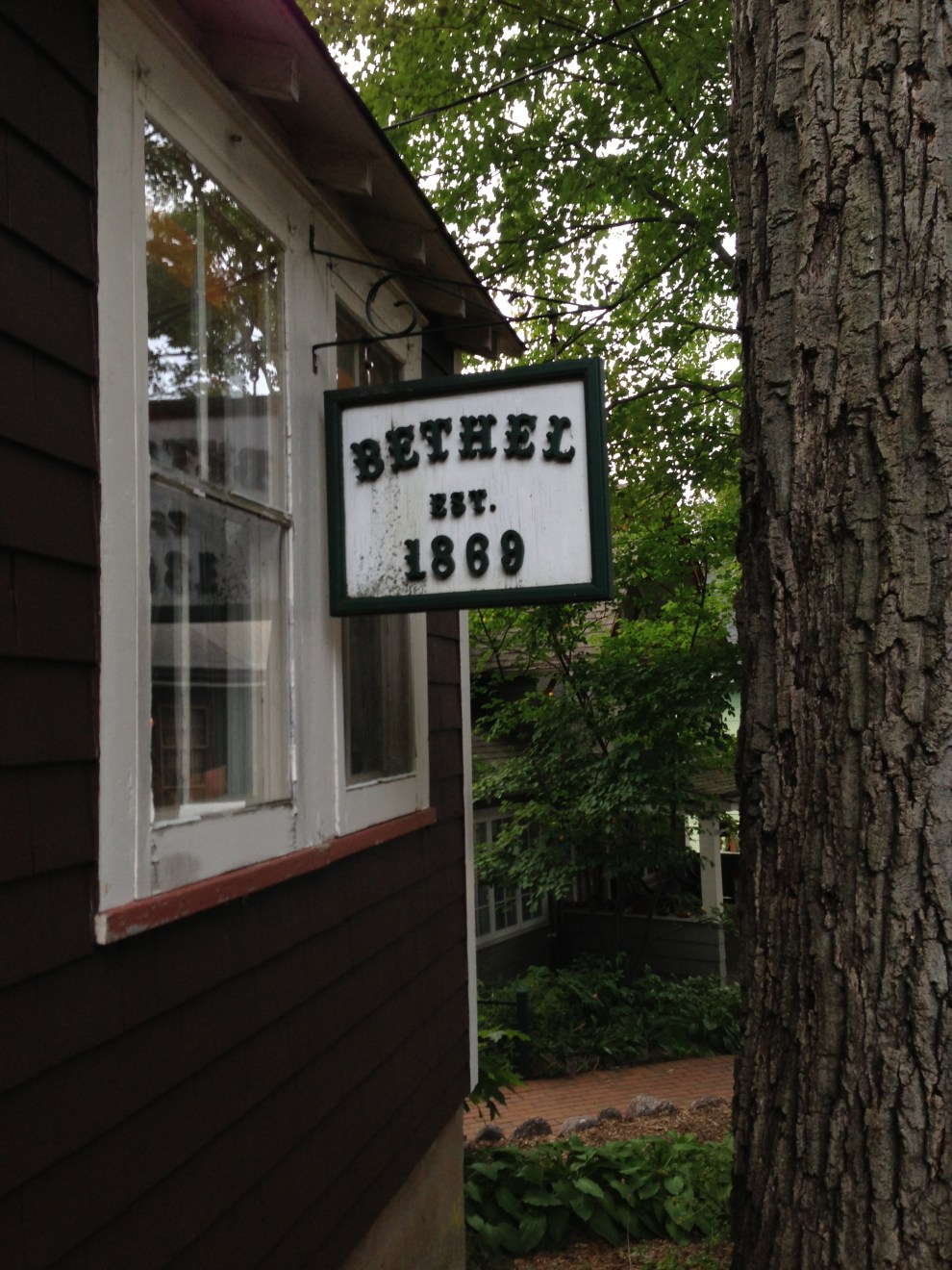
bethel

“This is why they come,” says George, referring to the other big-name acts that have appeared in small-town Mount Tabor, Hot Tuna, Arlo Guthrie and Donovan among them. The green room features low, romantic lights and rich burgundy tableclothes and a line-up of chafing dishes in this quaint building that transports you to another time. They had to peel Donovan out of here to get him to the airport after a post-show Buddy Holly singalong.

“Art is sleeping on the ground floor beneath us,” George tells us. I think about that.

art garf

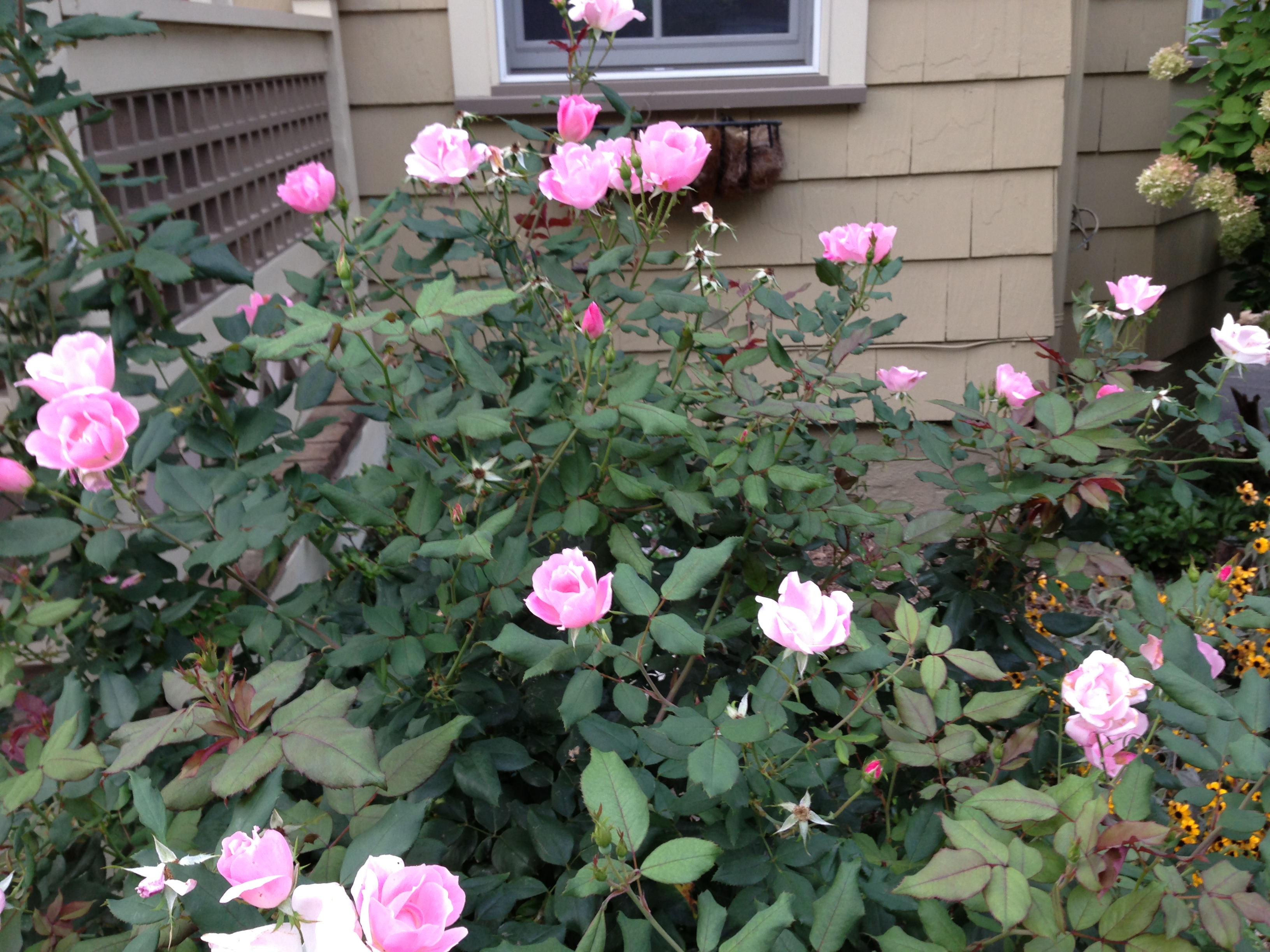
Ssshh. Outside, we inhale the late summer air, cool and warm breezes intermixed, the scent of late roses from people’s tiny garden plots.
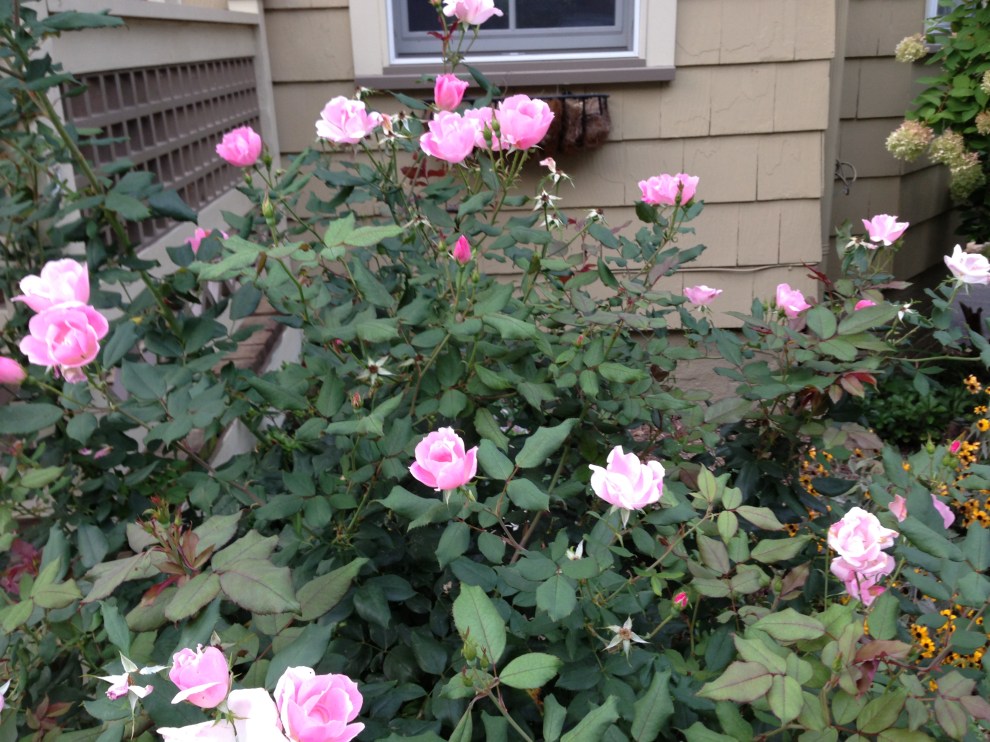
roses

We’re standing next to what everyone likes to call the 1873 condo, a building of connected homes where three tent sites originally stood. Slate and gingerbread! Some of that detail might enhance the Cabin.

condo

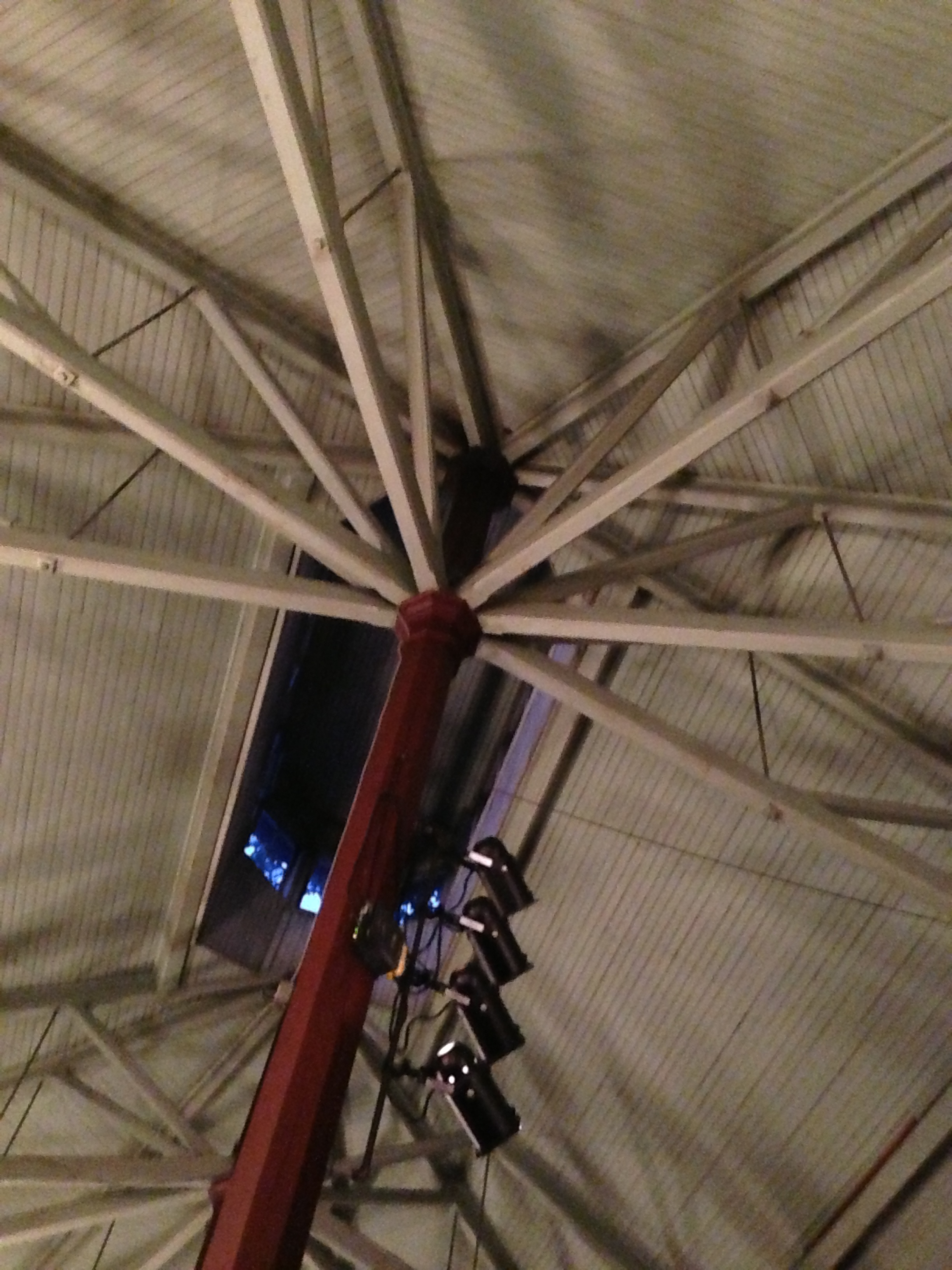
The Tabernacle, built in 1885, is a wooden octagon topped by a cupola. It has no heat, just hardbacked benches with plenty of leg room.

tabernacle

The interior paint is original. No joke.
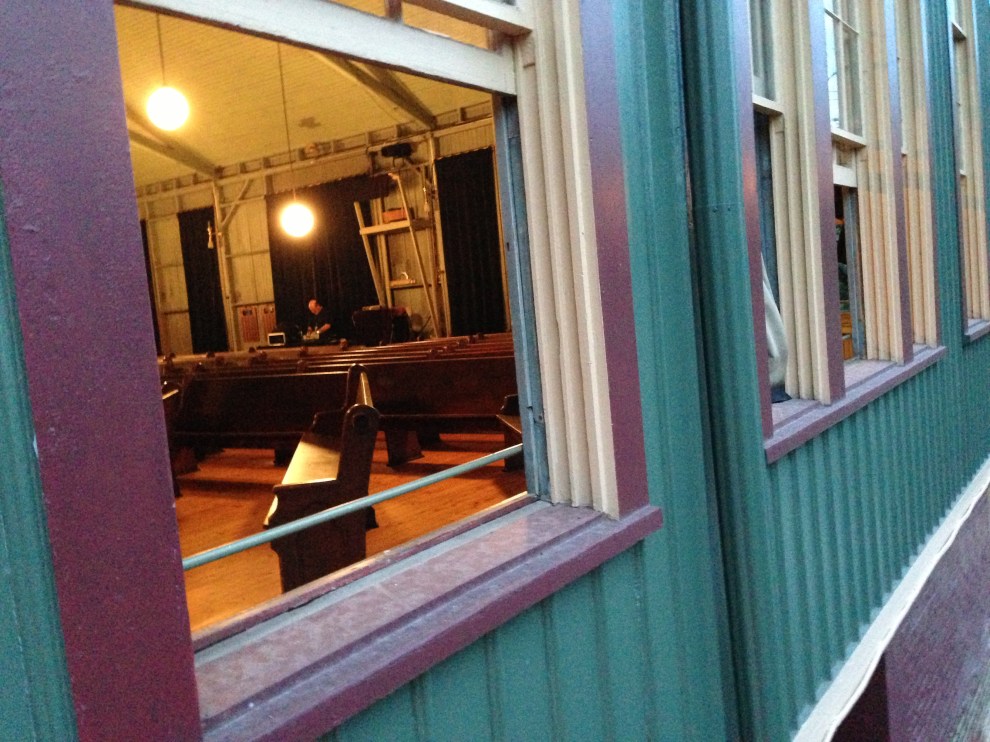
inside tab

Giant poles hold the roof up.

tab inside

It’s time. George, at the mike, gives fair warning: Art detests gadgets. Phones and cameras throw him off his game. Turn everything off. Everything. Now. A big change for those of us accustomed to concerts with everybody waving their units around in the air, with everything instantly You Tubed. What kind of curmudgeon makes these rules?

And Art does turn out to be a bit curmudgeonly,  approaching the front of the stage to lecture someone rude enough to attempt a picture. He looks the curmudgeon too, his nose sharpened by time, his height perhaps decreased, his pate and his frizz, a plain checked shirt and jeans, a man in his later years.

art-garfunkel

He begs our forbearance. He has been struggling with his “damaged voice” for three years, he says. (He cancelled a tour last year, I heard.) He just now feels he can bring it out in front of a crowd, but he is self conscious. Between songs, he thanks listeners graciously for their support. He reads to us from writings on the backs of white envelopes, poems, he says, he wants to test out on us, from a collection will be published next year by Knopf.

He recites a poem he originally read for Paul Simon on his 70th birthday:

For 70 years his arm has been around my shoulder,

He’s dazzled me with gifts.

I nurtured him in his youth.

He brought me into prominence.

I taught him to sing.

He connected my voice to the world.

I made him tall.

All of our personal belongings are intertwined.

We say it’s exhausting to compete,

But we shine for each other.

It’s still our favourite game.

tall art:simon

He tells us a story of living on Amsterdam Avenue when he was in architecture school at Columbia, living among roaches. Simon came over saying he thought he had a song that might be worth something and it was Sounds of Silence. Garfunkel sings Sounds of Silence for us. Haunting.

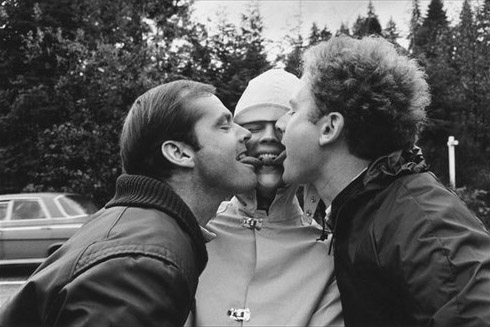
He shares an anecdote about Jack Nicholson’s acting chops when they did time together in Hollywood on Carnal Knowledge.

Jack-Nicholson-Candice-Bergen-and-Art-Garfunkel

A story about the “bird in his throat,” and singing Ol’ Man River for a herd of cows as he hiked in the country one day.

As for the singing… the angelic tenor… well, the instrument is indeed broke, in part. Still ravishing, sometimes. It is an amazing performance, though, just because it is so raw, because his voice is imperfect, because of the notes he can not hit and the notes he snags, better in the lower registers. Bookends, a capella. Cathy’s Song. The Boxer. Parsley, Sage, eliding over the rosemary, but bringing the song home, ultimately.

There in Mount Tabor’s intimate, historic Tabernacle, all is forgiven.
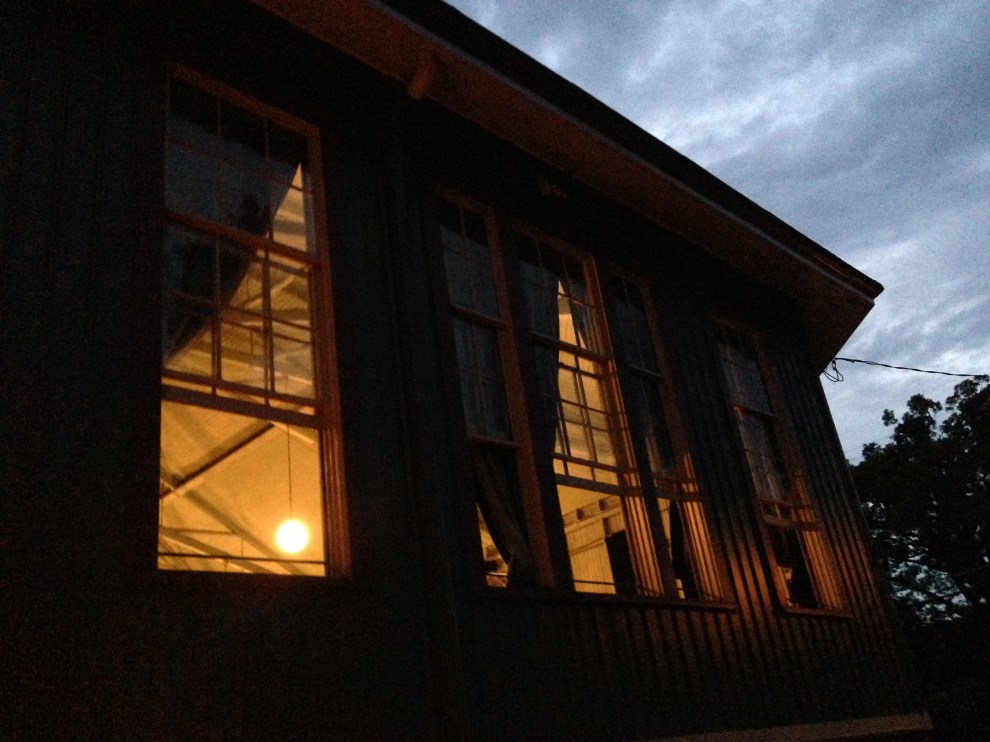
tab night

6 Comments

Filed under Culture, Film, History, Home, Jean Zimmerman, Music, Nature, Photography, Poetry, Publishing

Beans and Nothingness

Clomp, clomp, clomp. Down to the garden for the first time in the cool weather with my Frankenstein boot.

What does Nature do when you turn your back? Surprise you.

Six weeks ago when I had foot surgery and disappeared into my couch I had given up on my beans. Runner beans, Blue Lake, which makes them sound more poetic than what they are – just plain old string beans. I had vines galore, yes. But no fruit.

Today… a bumper crop, scaling the brawny sunflower that’s hanging it’s heavy head down, waiting for the birds. Ready for boiling and buttering and serving alongside a pork roast on Sunday, which is just what I plan on doing.

Beans and Nothingness

Never give up. I planted those things in mid-May and it’s taken them four months to proclaim their bean-ness.

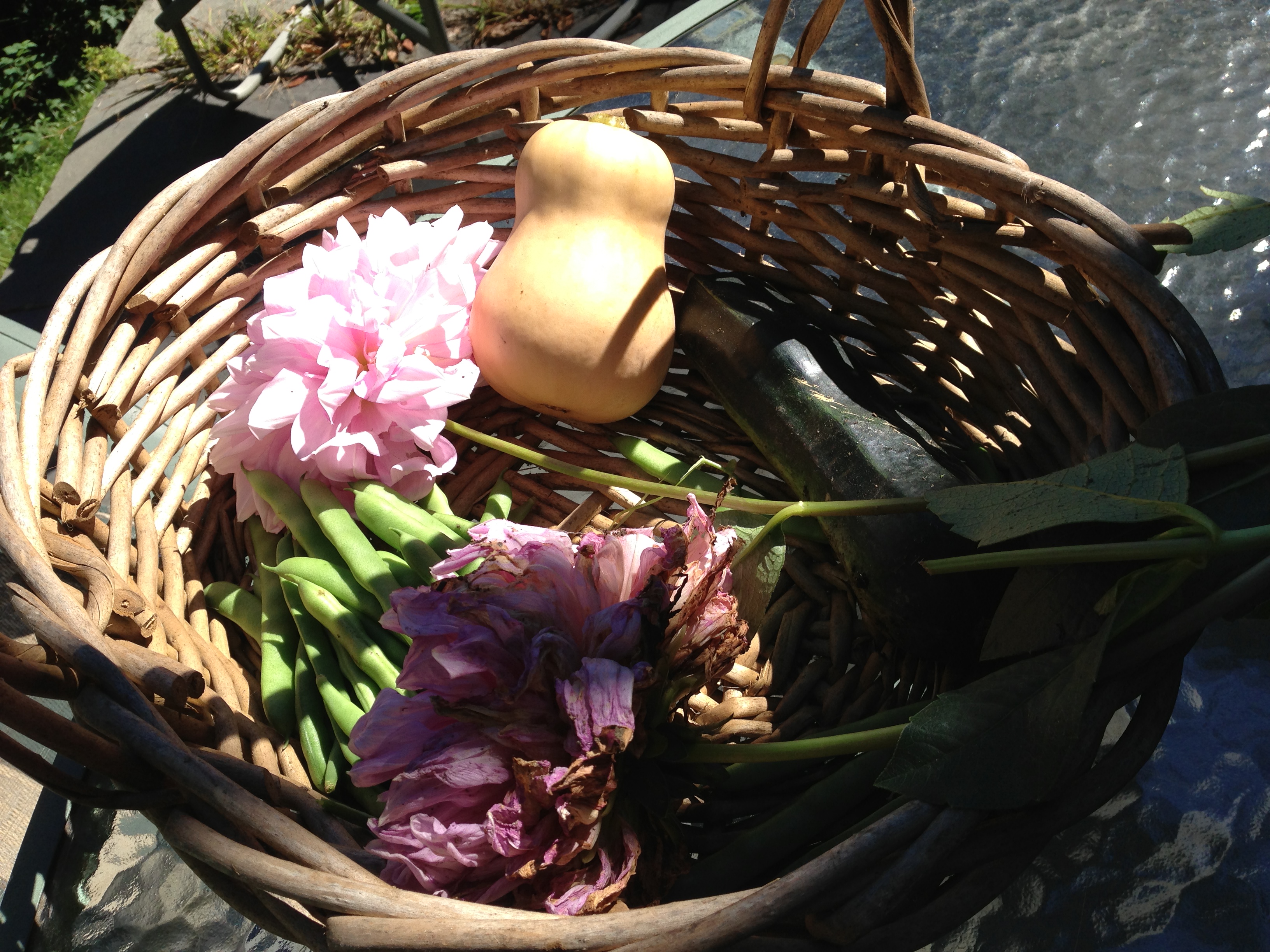
In the weeds and vines that have overtaken the ground I found other prizes. Dahlias. I planted about two dozen, having never tried before, and here were two lavender beauties with their cupped, pointed petal tips. And a jolly pint-size butternut squash, the first I’ve ever attempted to cultivate.

dahlias

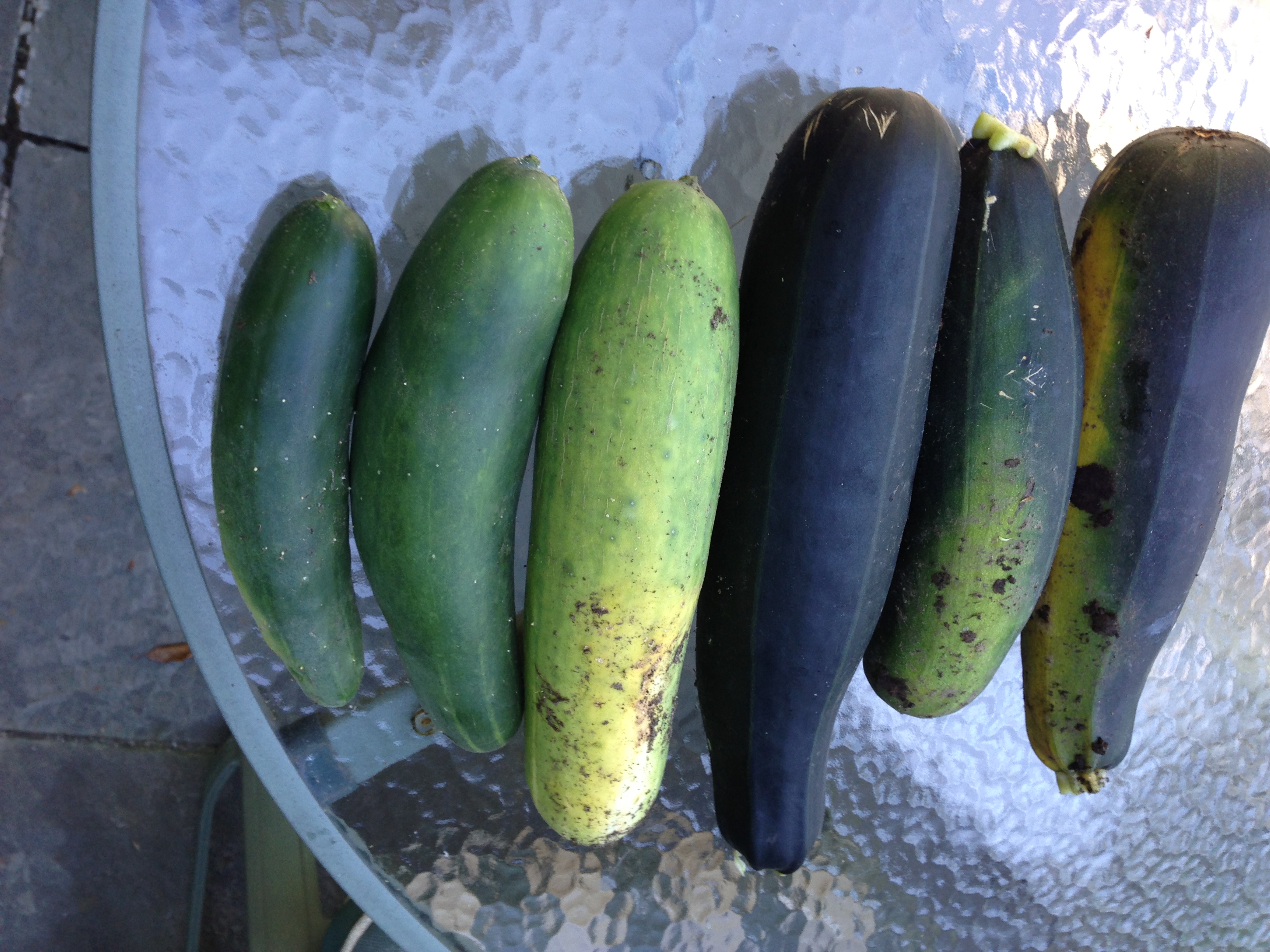
I asked Gil to cut all the cukes and zucchini that had waited patiently to be harvested all those weeks I was gone.

big uns

They’re monsters, of course, as big as my big boot. Good for nothing, culinarily. Only useful for proving what happens when you turn your back on something with the inherent ability to grow. Like the idea for a novel, which expands out of fertile soil when you’re busy doing something else.

dahlia

Leave a comment

Filed under Cooking, Home, Jean Zimmerman, Nature, Writing

A Step Forward

The last morning with the cast.

cast

The orthopedics waiting room was full of people bracing themselves with canes, crutches, wheelchairs. No scooters, though. The Bloke has been a loyal companion, but one I was glad to banish. And in a way it was sad to say goodbye to the graffiti. I was accustomed to that bit of funky glitter.

cast cu

Gil and I entered what the nurse called the Cast Room. Tools awaited me on the table.

tools

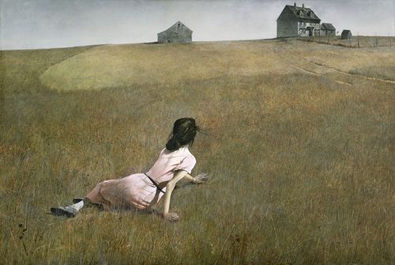
I was thinking about Christina’s World, the Andrew Wyeth painting of a woman in a dress dragging herself up a grassy hillside toward a grey frame house. The portrait, I recently learned, was based on an actual woman named Christina Olson who had polio and eschewed a wheelchair, instead crawling everywhere. Wyeth was inspired when he spotted her on the ground from the upper window of her family’s house.

Christinasworld

In the Cast Room, I didn’t know what would happen next, but I knew I would not be crawling afterward. I never fully realized until now what it means to not have the use of your leg/s. And I’ve only had six weeks of deprivation! You want so much to go independently, to crawl across a field if like Christina it takes crawling across a field. I could understand that drive.

I just wanted to walk across my living room.

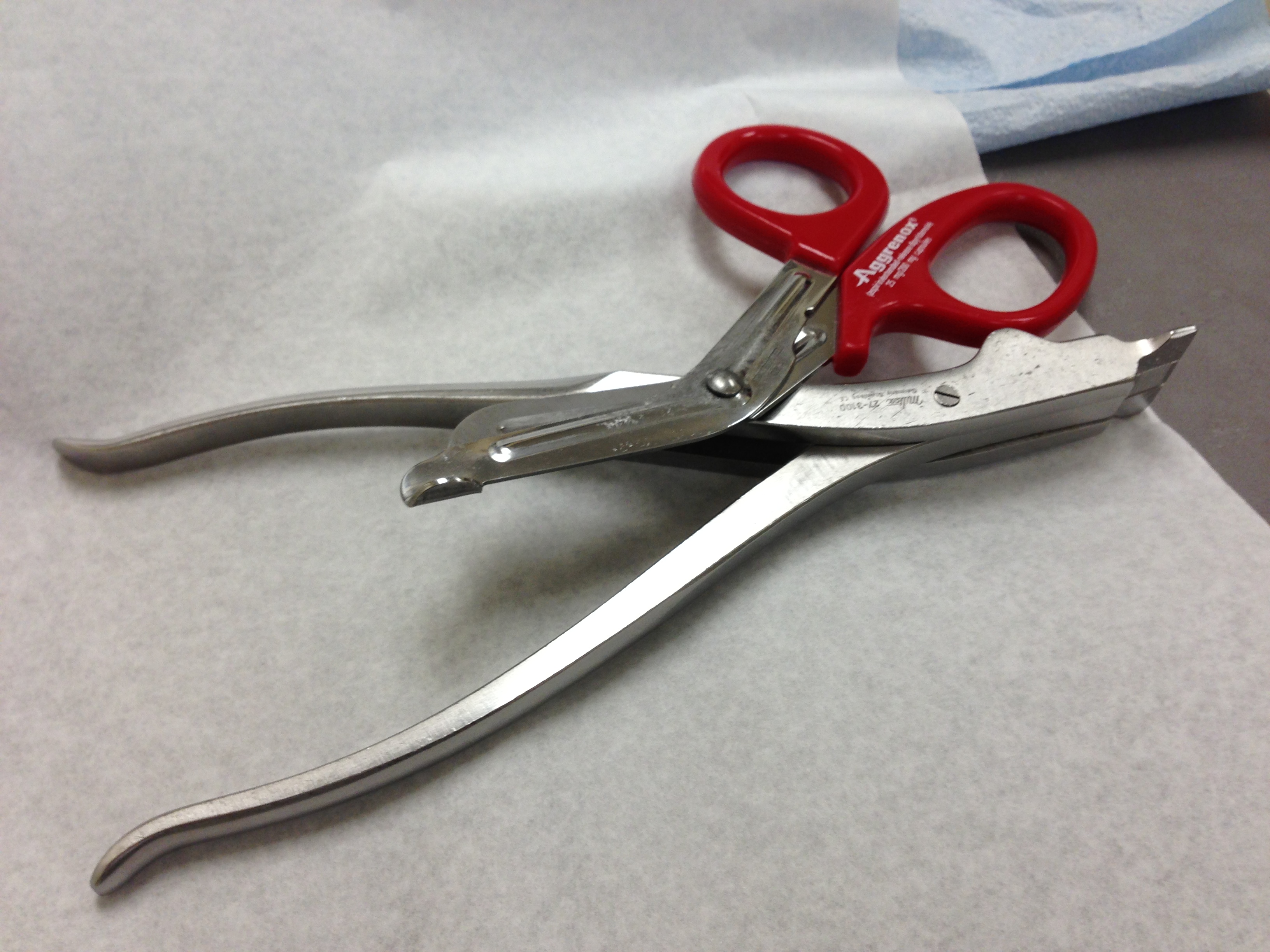
The tool Dr. Voellmicke used to cut my cast neatly in two resembled a delicate jig saw, and I hoped it wouldn’t nick my leg as it buzzed. He clipped off the gauze.

My foot and ankle were tender and swollen. There was still purple marker from the surgical incisions. I didn’t recognize the outline of this precious, vulnerable appendage. It was like being born again.

But before my foot and I could really get reacquainted the doctor brought out the Moon Boot, the constant companion that would replace my cast. Now I bounce and rock when I walk. And I would need a cane, the doctor said, at least for now.

Moon Boot

Can I get a pedicure? I asked the doctor. Not a massage, he said patiently, but a dunk in the water would be okay.

A dunk in the water, and then a rocking stroll across the vast reaches of the nail salon.

I bet I’m not the first person to ask you that, I said.
No, the doctor smiled.

3 Comments

Filed under Art, Culture, Home, Jean Zimmerman, Nature