Category Archives: Nature

Sand Between the Toes

I’ll tell you something about Jones Beach. It’s a democratic place. Anyone can put up a flashy pink umbrella.

pink umbrella

I saw one today.

Anyone who’s in New York can go to Jones. And everyone does. In August, before the jellyfish descend, the water is superbly cold and the waves fantastic for diving through. Surfers can be seen far off shore, catching small waves. It’s hard to get to Maui, after all.

Children play at the water’s edge shoveling holes in the endless strand, all un-helicoptered by any adult, and sitting on your towel you have absolutely no responsibility for them. Just enjoy their blissful ways from a distance, a dumbshow of babyhood. (In fact there were helicopters, real ones, Blackhawks that made a low pass along the shore.)

There’s the smell of the surf, as primal as that of cut grass. I measure my mood by my receptivity to these aromas. Throw open the windows – what is that that smells so good? Oh, it’s the smell of the ground after it rains, everyone’s favorite. There was actually a poll. But the briny air at Jones Beach came in a close second.

Fifteen-year-old girls make their way by like flamingo offspring, ducking their heads, so shy.

The man carrying a cooler full of ice cream: Chipwich! Frozen fruit bars! Dry ice makes the treats hard as concrete. He smiles though the sand must be a carpet of hot coals under his bare feet. His favorite places when he gets off? A bowling alley. A cave. He loves to wear shoes.

But what I like best is the sight of the old couples, the well-worn lovers, brown as belt leather and greasy with lotion, sitting silently side by side in their low chairs. They never speak. They go everywhere together. As one, they stay still, confronting the sun.

2 Comments

Filed under Culture, Jean Zimmerman, Nature, Writers, Writing

Leafy Air and Cheese

I can breathe again. I took a trip to Michigan and Wisconsin, the Great North Woods, which has leafy air worthy of inhaling.

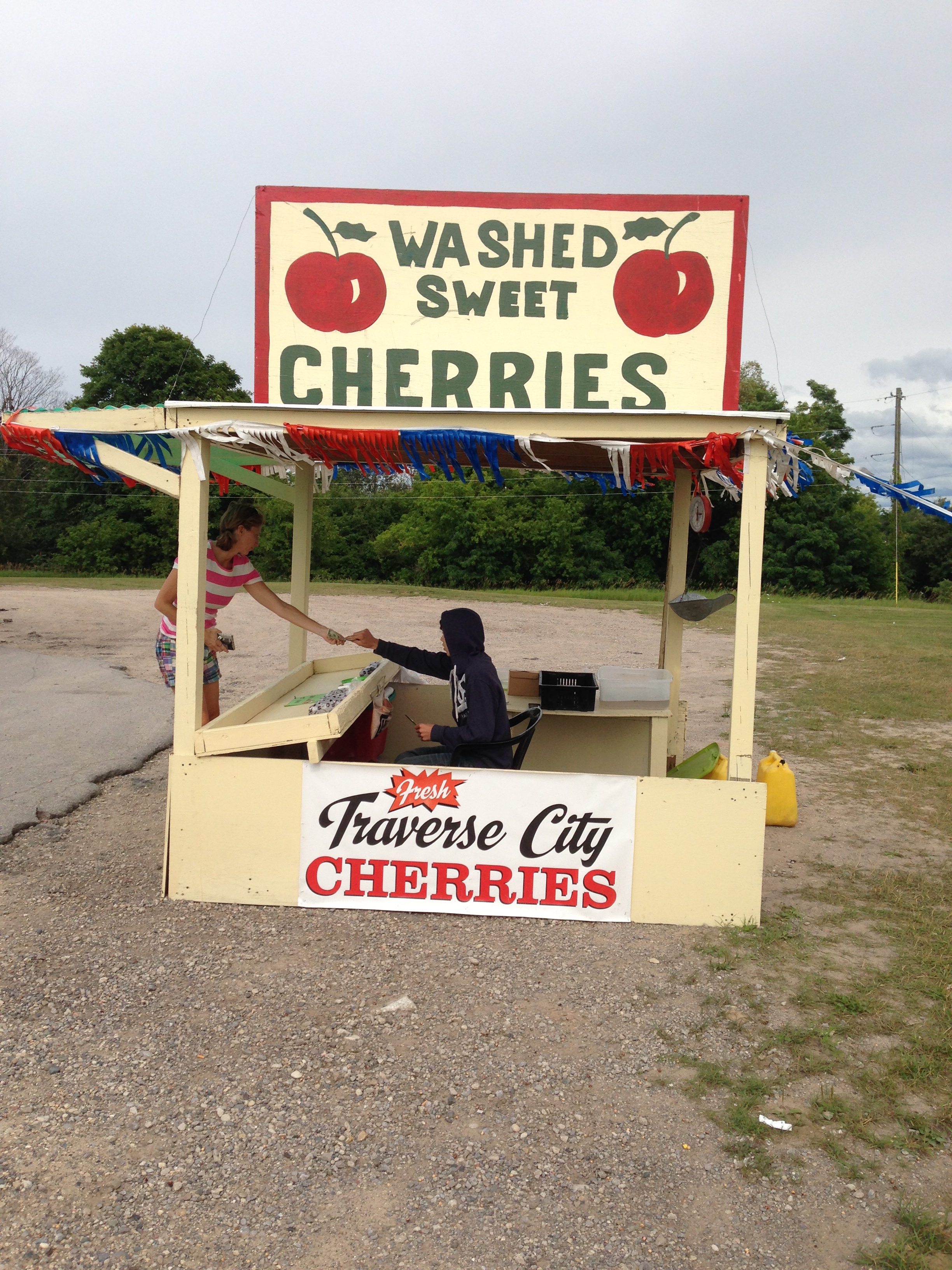
Also, sweet black cherries worthy of devouring. They sell them, washed, plump and juicy, from little stands at gas stations.

cherries

I experienced a hailstorm that hit just as our sailboat anchored in that lovely private lagoon a ways into Lake Superior. Just enough to put every wet person on board in stitches.

I can breathe again because I turned in the manuscript of my new novel and my editor said he likes it. A lot. That’s an outsize sigh of relief. It made me open to everything around me.

I found that lying in bed on the shore of Lake Michigan, I could feel every delicious cotton fiber with my toes.

I saw the sights, hugged family, brought home souvenirs from people who had made them with their hands.

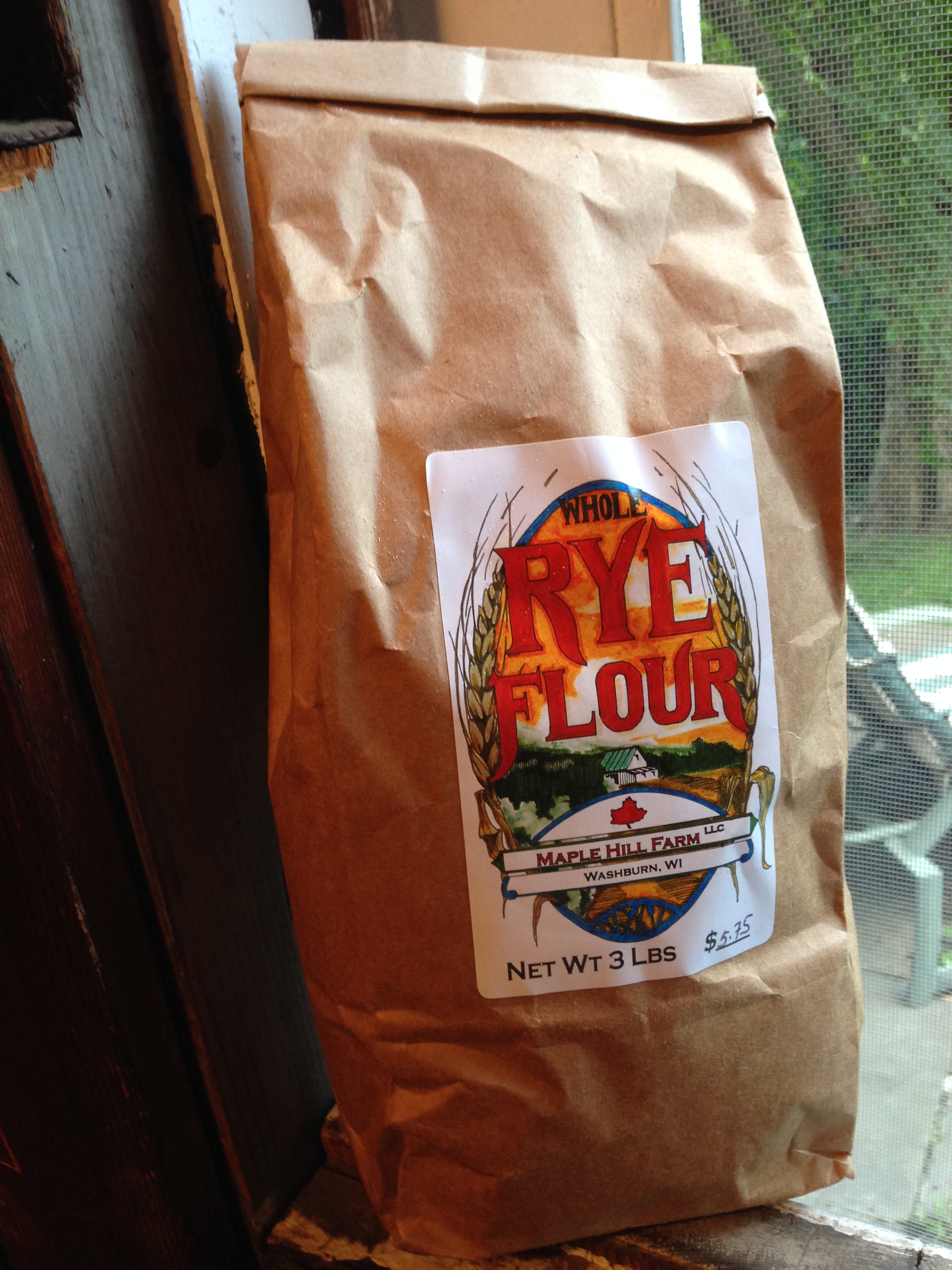
rye

There was rye flour from the farmer who grew it, at Maple Hill Farm in Washburn, Wisconsin.

And fingerless gloves knitted by his wife. She sewed a pad of suede on the palm for good gripping.

fingerless

The Northland is kind, even its rusty old trucks.

kindness

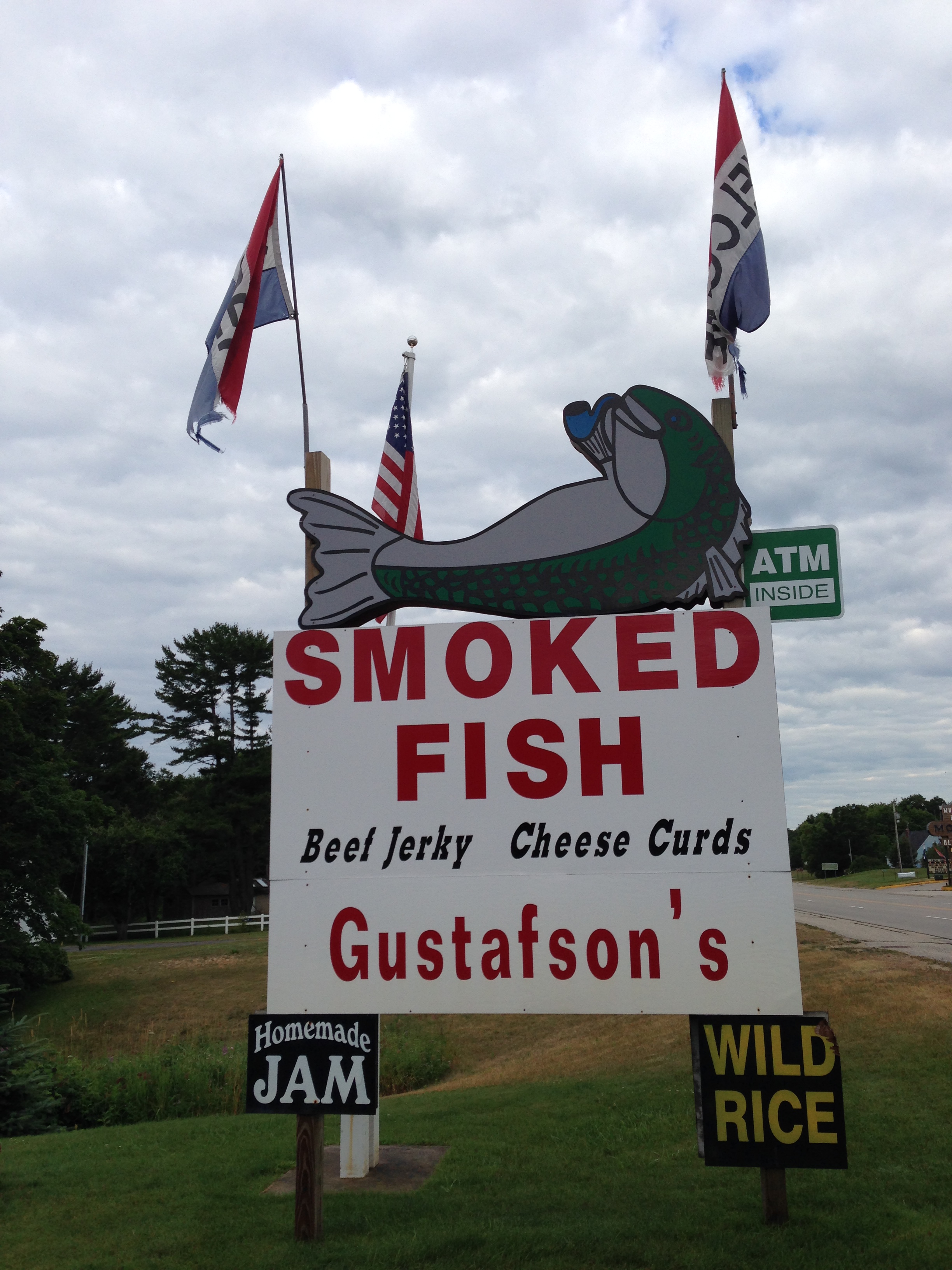
The region loves its fish. Smoked, fried or souped.

whitefish

It offers a hundred different moccasins.

bambi

Thrives on pop (drive-in menu, top right). Known to us North Easterners as soda.

pop

Then, of course, there is the cheese. I tasted a Michigan dairy’s Colby-style specimen, bright orange and moist, that was produced from a 1915 recipe.

Did I mention that my editor liked it? The novel, I mean, not the cheese.

8 Comments

Filed under Cooking, Culture, Fiction, History, Home, Jean Zimmerman, Knitting, Nature, Publishing, Writers, Writing

Finding Rosebud

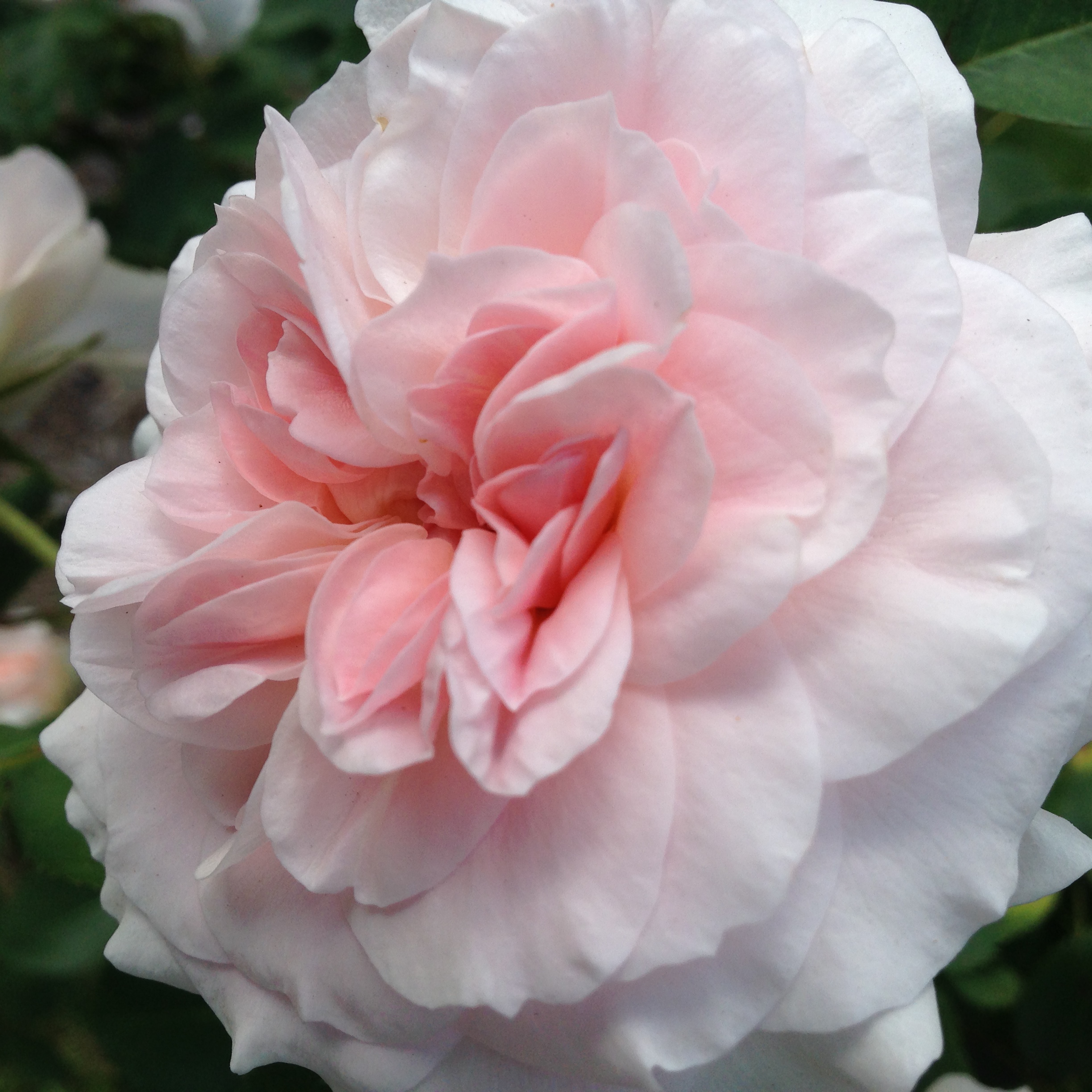
I told myself I would have it done by the time the roses bloomed.

soft rose

My new novel, that is.

I do that sometimes, set an arbitrary time of year – not a date, never a date – when I will finish a book. It gives me something to shoot for. When the trees turn red. When the first snow falls. A seasonal moment which my project will match with its completion.

When the roses bloom.

I have been working for some time on a manuscript that shows some signs that it wants to be finished. But I still have chapters to revise before I can call it done. Yet it’s Spring, high rose season.

Just to see where things stood, how far behind I was, I thought I would pay a visit to the lovely grounds of Lyndhurst, the historic site near my house. This was the estate of the robber baron Jay Gould, and the old mansion is grey and gothic and not to my taste, though the huge specimen trees and plantings always astound. There is a fantastic heirloom rose garden there, one that I usually seem to get to too late to enjoy the blooms at their height.

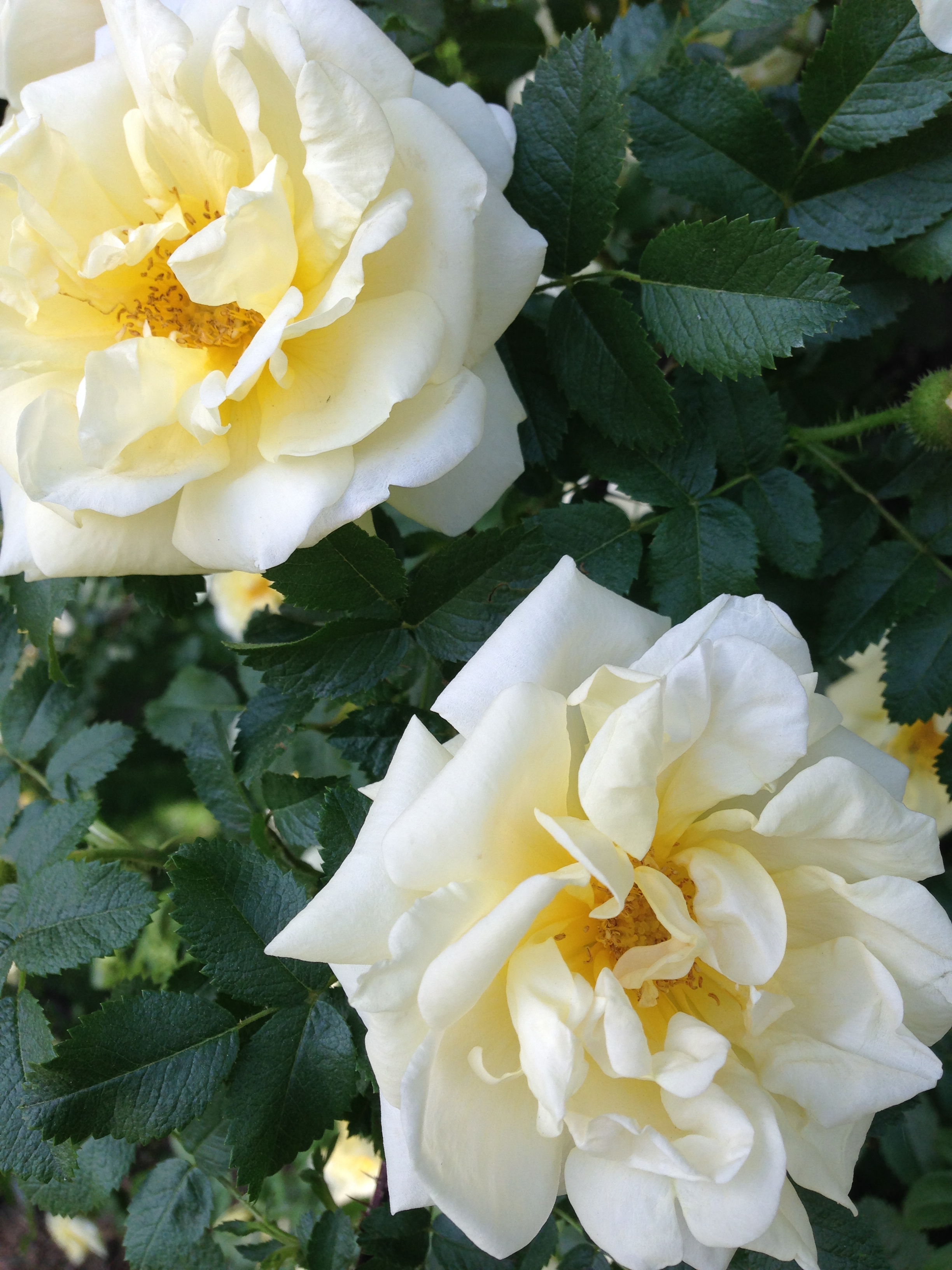
This year the place was nearly deserted, and the circle of plants looked suspiciously green as I approached across the perfect lawn. There were two visiting matrons; one said, You must not miss the yellow blossoms on that bush, they smell like lemon.

yellow roseos

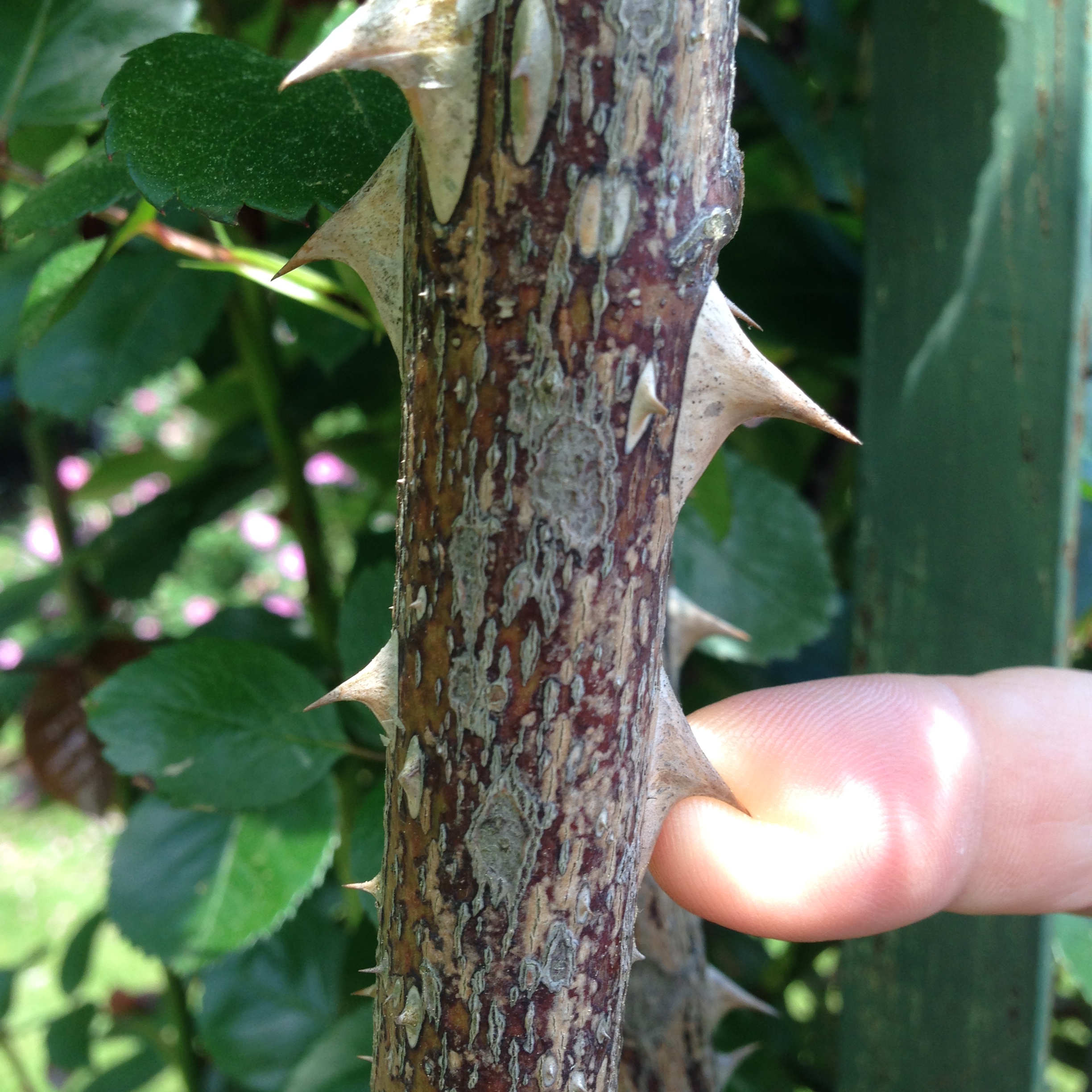
And they did. But the lemon roses were one of only a few shrubs out of dozens there that were actually in bloom. Others offered wicked thorns.

thorns

Or buds so tightly sewn up it was hard to imagine them ever opening.

buds

I’ve come across some thorns and some sewn-tight problems in the narrative I’m working on, so I could appreciate them. I wished I could have seen Lyndhurst’s roses, lush, exploded, lemon, yes, but also vanilla, musk and all the other scents that don’t have proper names imagined yet.

More than anything, though, I felt happy. Because the roses had not yet bloomed, and my novel will bloom when they do.

3 Comments

Filed under Fiction, History, Home, Jean Zimmerman, Nature, Photography, Publishing, Writers, Writing

First Shoots

Someone said, Don’t.

Someone said, You’ll do too much.

Someone said You’ll re-injure your foot.

Someone said, Take a load off. Sit in the sun and read.

But a nice neighbor said, I noticed your garden. If you want some help raking it out, I’m here.

That set me off. My garden did indeed need raking, and when I dug under the dry, sun-baked surface of the leaves, I found things that made me glad to be up on my feet.

carrots

Forgotten carrots from last summer, baby nuggets that survived this harsh winter in all their delicacy.

A necklace of new strawberry plants I hadn’t noticed before, hidden as they were in the verdancy of the herb garden.

strawberries

Spearmint. I won’t dignify the overgrown rascal with a photo, but got to give it props for its muscular thriving. Mint will inherit the earth when we’re gone, I’m sure of it.

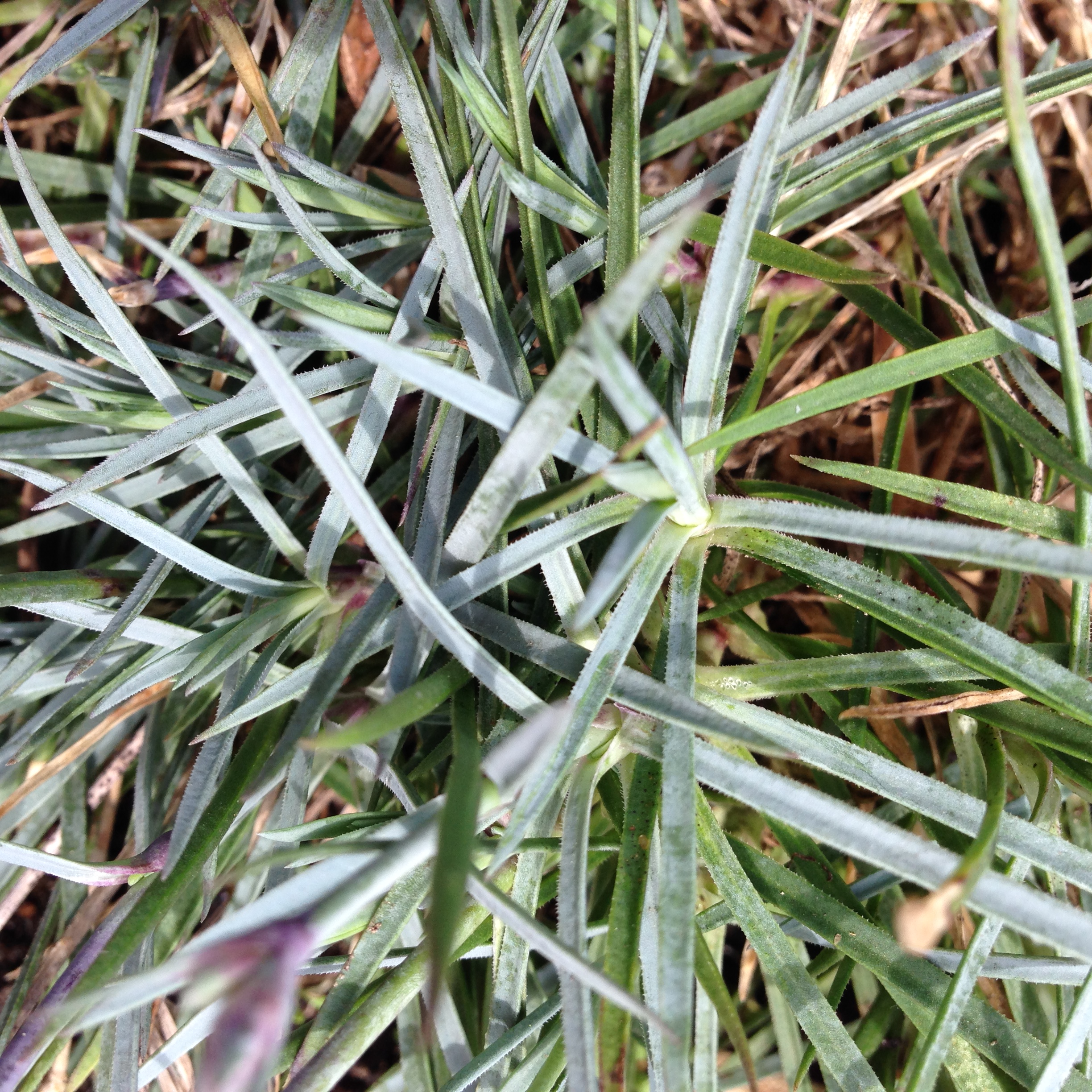
And the pinks, fluffy and greening up with just a hint of silver.

pinks

I tousled their tops for luck, then leaned my rake against a stump and headed to the Cabin to rest my foot. I had accomplished half. The rest wasn’t going anywhere.

1 Comment

Filed under Home, Jean Zimmerman, Nature

April Daffs

Is April really the cruellest month? Just because T.S. Eliot phrased it so beautifully in The Wasteland doesn’t necessarily make it so.

April is the cruellest month, breeding

Lilacs out of the dead land, mixing

Memory and desire, stirring

Dull roots with spring rain.

I saw my first daffodils of the season today.

daffs

I’m in a mood. I can’t quite put my finger on why April is hateful, yet I know it to be true.

The birdsong I usually love strikes me as obnoxious.

The bright spring sun, scalding to the eyes. The alternative, sunglasses, too dark.

At the coffee place, I watch the barrista draw a cute foam face on the latte of the guy in front of me. Do you make funny faces for all the lattes? I ask. Just the special ones, he says.

I wait for my latte. Plain old plain old.

plain latte

It’s that kind of day.

Alice James, that overlooked yet so wise diarist of the nineteenth century, said: “The ancient superstition as to spring and youth being the most joyous periods is pretty well exploded, don’t you think? The one is the most depressing moment of the year, so is the other the most difficult of life.”

Even the luscious yellow of the daffodils. Save it for later, will you? Tomorrow, April might be a peach of a month.

1 Comment

Filed under Culture, Jean Zimmerman, Nature, Poetry, Writers

The Beginning of the Beginning

As if summoned by the chorus of spring peepers, tiny plants rise up out of the forest leaf scatter. This is the first green I’ve seen this year.

green

And this the first purple. I knew it would be there. I knew the deer wouldn’t get it. But still I waited with bated breath. I didn’t believe.

crocus


And then I believed.

2 Comments

Filed under Home, Jean Zimmerman, Nature

A Bronze Frolic

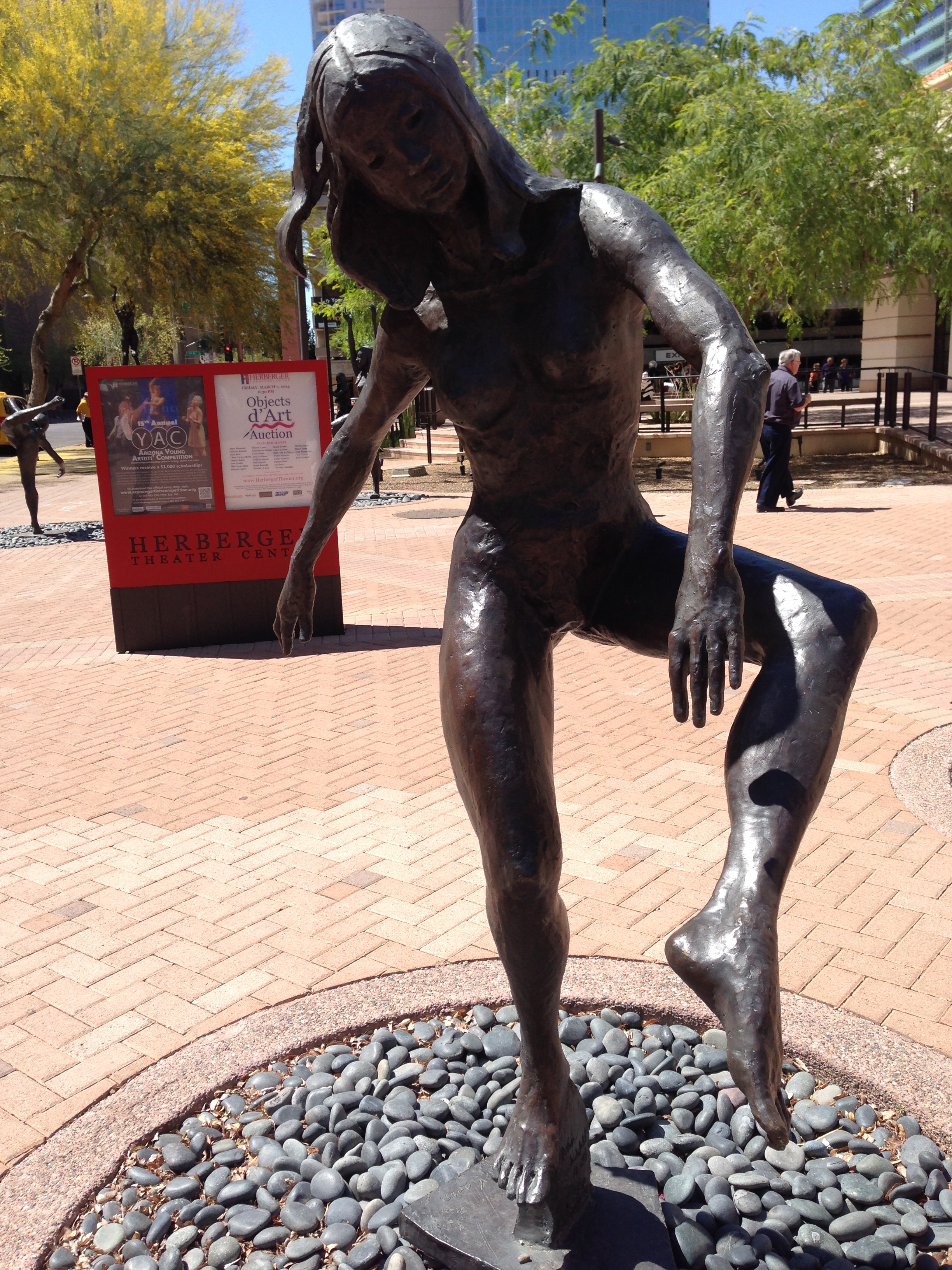
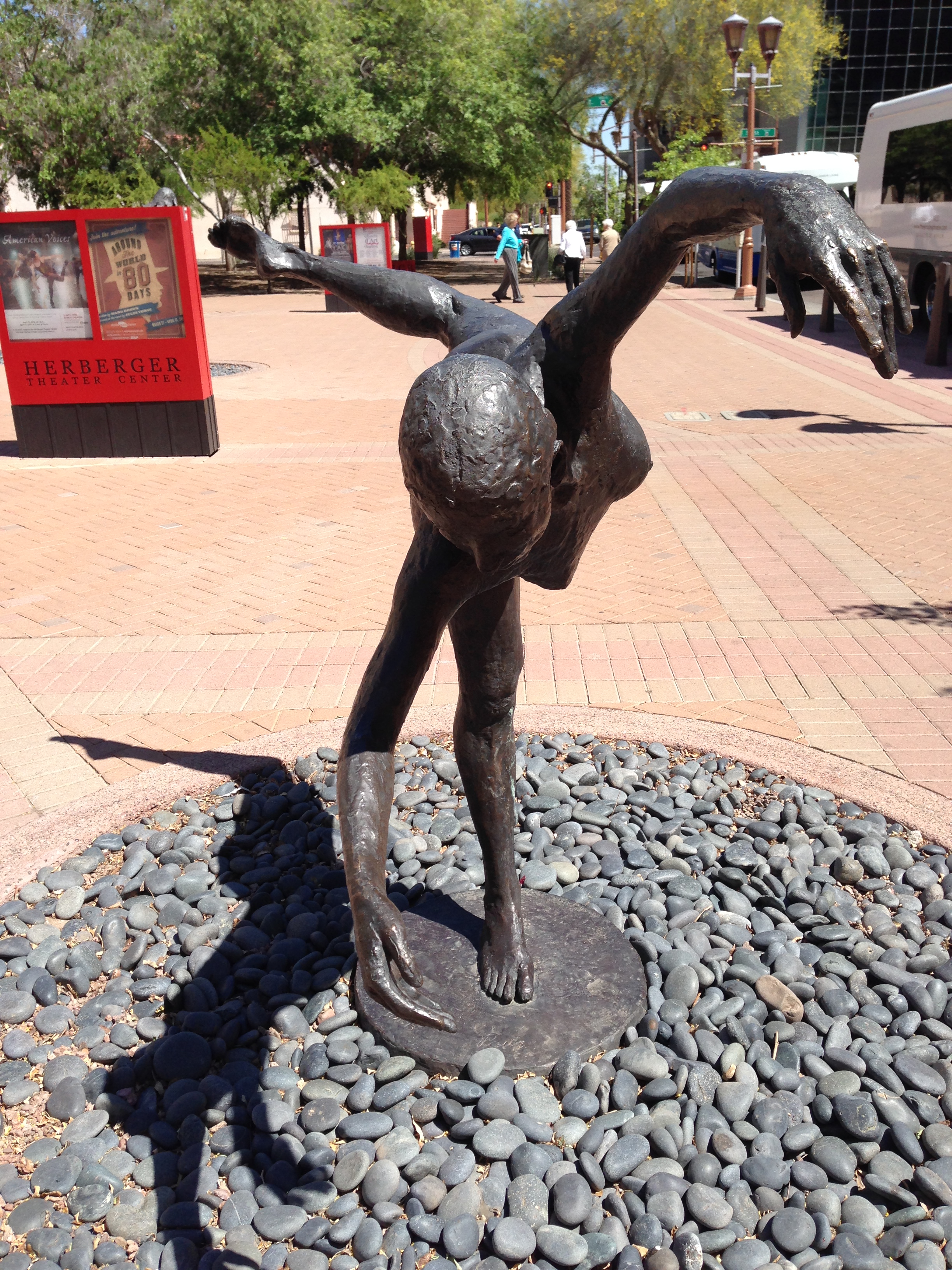
Interesting. The artist John Waddell, who is now 93, is best known for his larger-than-life bronze sculptures of young, frolicking nude women. He’s a longtime resident of the Verde Valley, and when I was in Arizona I got to see his tour-de-force Dance grouping in front of the Herberger Theater in downtown Phoenix.

dancer 1

According to Waddell’s bio, the 1963 church bombing in Birmingham became a pivotal event in his development as an artist. So the tragic death of four little girls led to his many portrayals of grown females in motion?

dancer 2

Some of the pieces here are quite arresting.

dancer 3

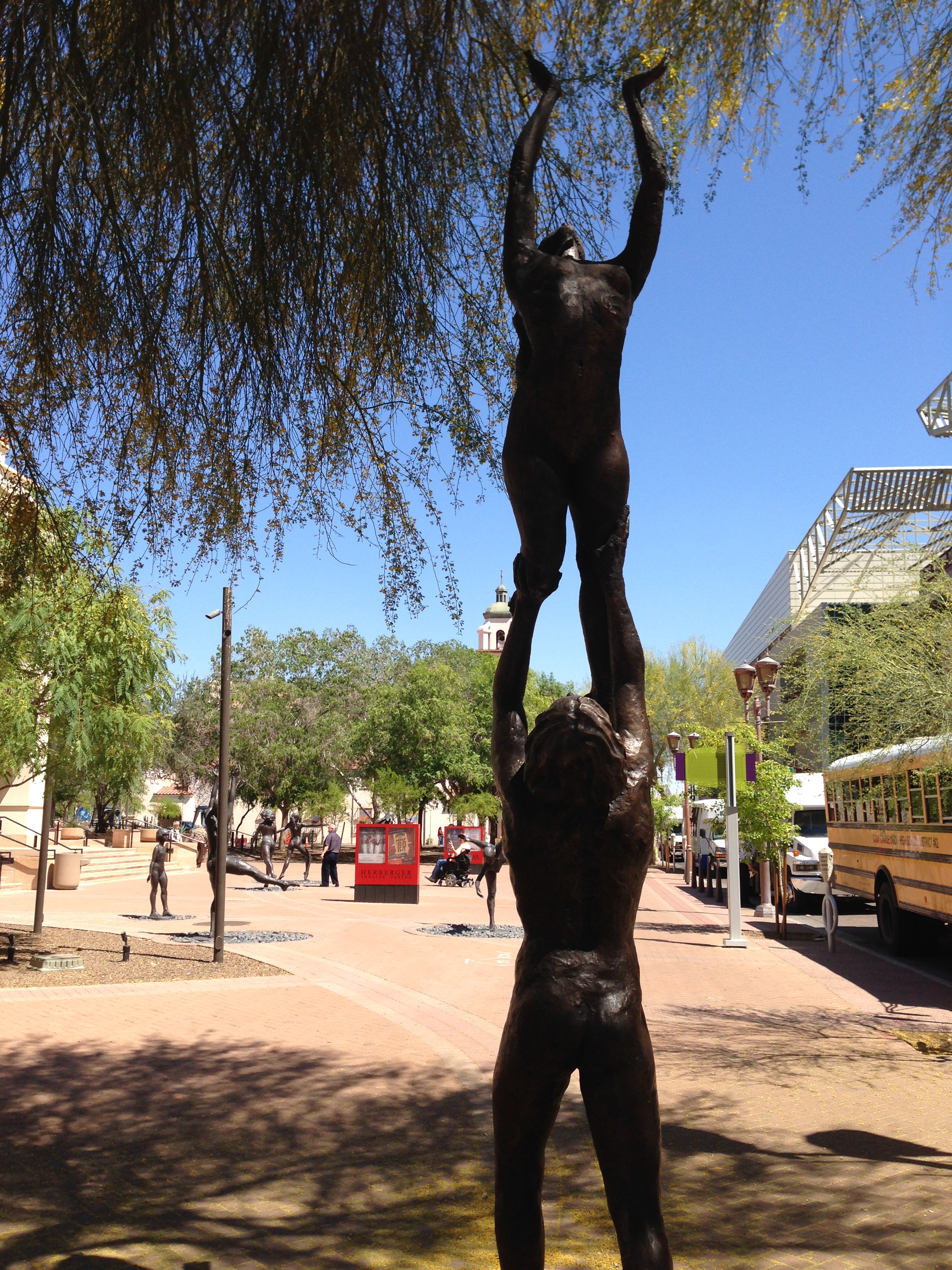
One couple reaches up to the highest boughs.

reaching up

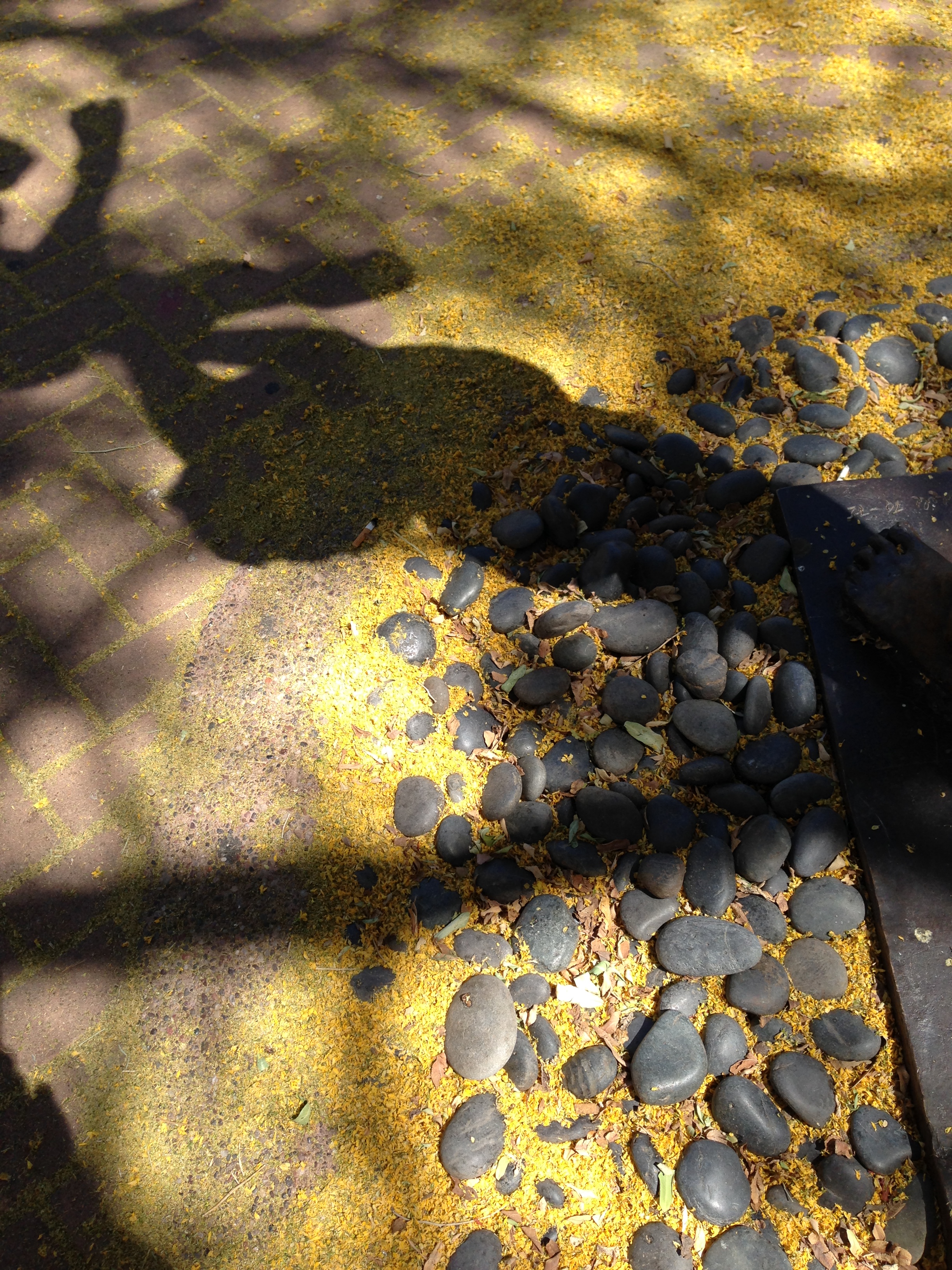
The representational approach is not my cup of tea, especially. I liked the stuff the tree flung to the ground as much as the sculpture that rose above.

tree droppings

You can’t really imagine it the other way around, can you — a 93-year-old female sculptor receiving acclaim for her dancing young male nudes? No way.

But seeing all these women wending around the sidewalk, all that exertion, all that freedom, brought me out of myself somehow. I felt glad to see them there.

dancer 4

2 Comments

Filed under Art, Culture, History, Jean Zimmerman, Nature

Hummingbirds, Bats and Butterflies

The Desert Discovery Guide invited us to enjoy three zones along a trail that led out from the Scottsdale Senior Center: a hummingbird nest, a saguaro and bat sanctuary, and a butterfly garden.

desert garden

I foresaw bliss ahead, an afternoon of hummingbirds, bats and butterflies, all in one swooping, fluttering place.

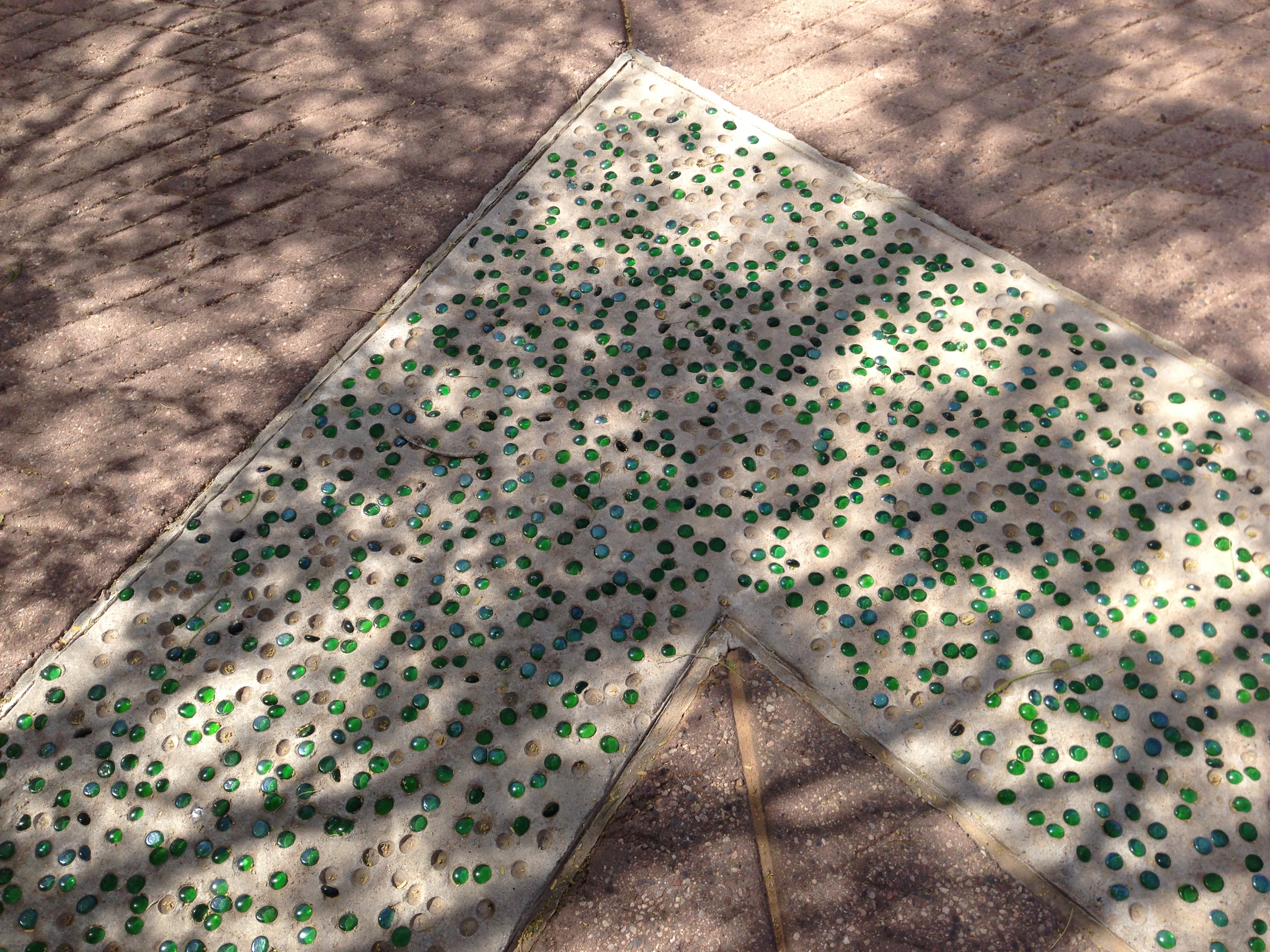
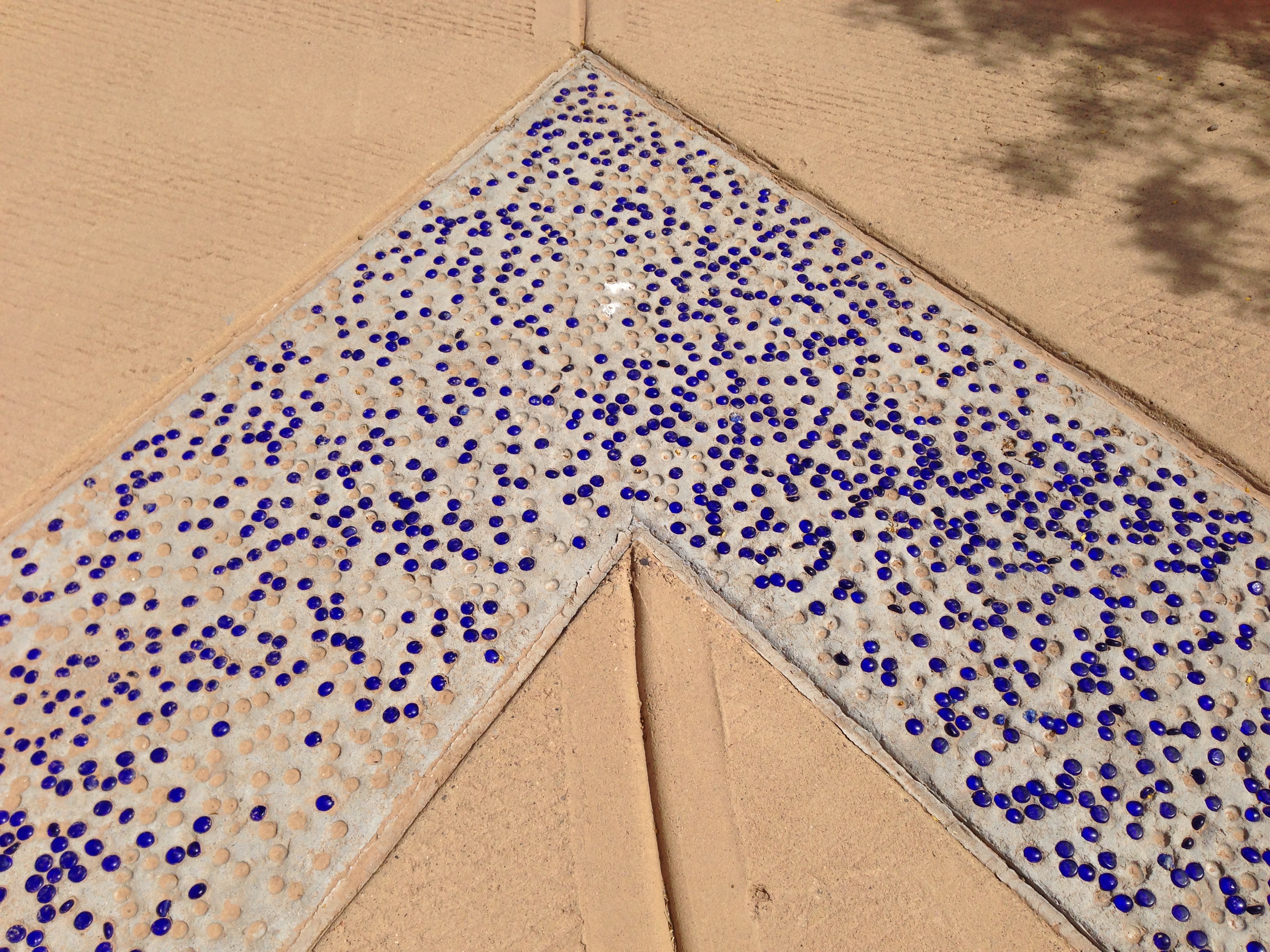
We just had to follow the gleaming glass-embedded arrows.

green path

They look like jelly beans, said my mother.

jellly beans

The mesquite dangled over our heads.

mesquite

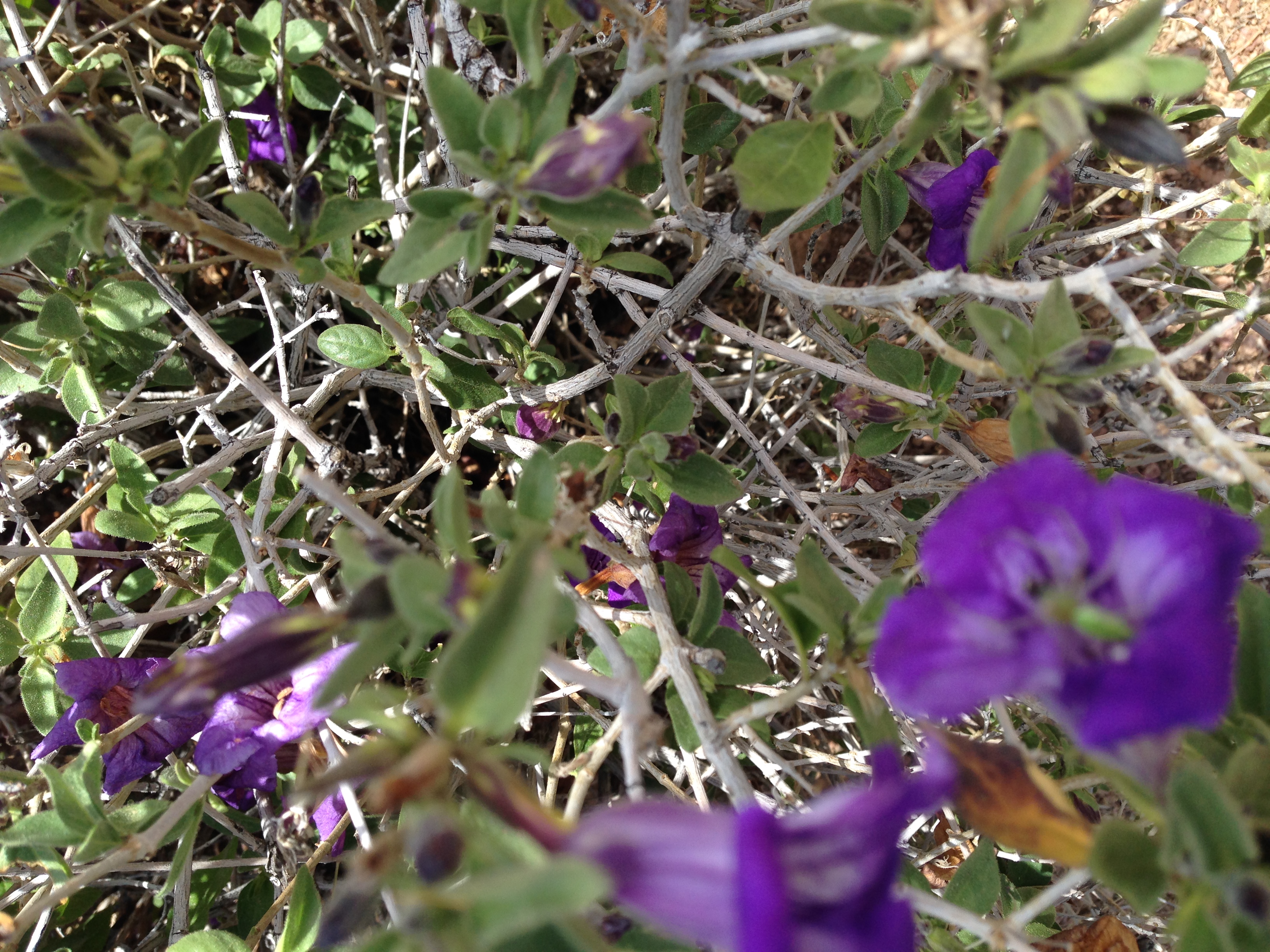
Desert blooms along the way tantalized us. They would be perfect for butterflies, wouldn’t they?

purple

There was a monstrous twin-headed cactii. A bat home! Where were the bats?

twin saguaro

Saguaro are unlike any other plant, said my mother. All the others follow a regular pattern. Not so the saguaro.

Walk, walk, follow the arrows. All around, mallow, the peachy-orange blooms that hummingbirds love.

blue path

Not a hummingbird to be seen, though, in a nest or out. No sanctuary for bats, no garden for butterflies.

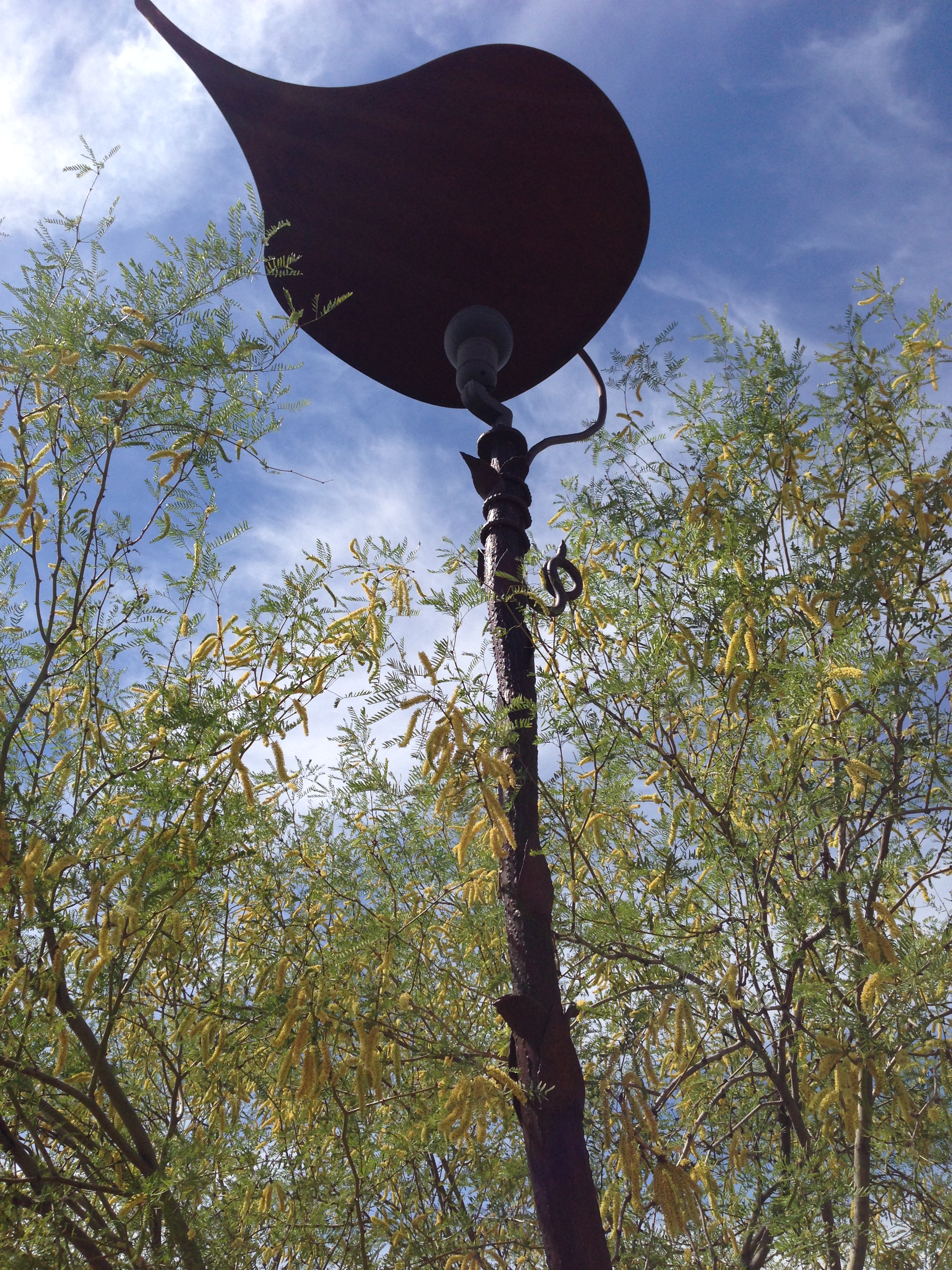
A trail to nowhere, with plants in bud, an empty picnic table, a tall metal sculpture standing alone.

sculpture

But a kindly elf had constructed an ingenious dog fountain on the dirt, activated by paw pressure.

dog bowl

We went in hope of something and came away emptyhanded, but for a handful of jellybeans and thorns. Sounds like Easter is on its way.


Leave a comment

Filed under Art, Dogs, Jean Zimmerman, Nature, Photography

Cactus Blossom Special

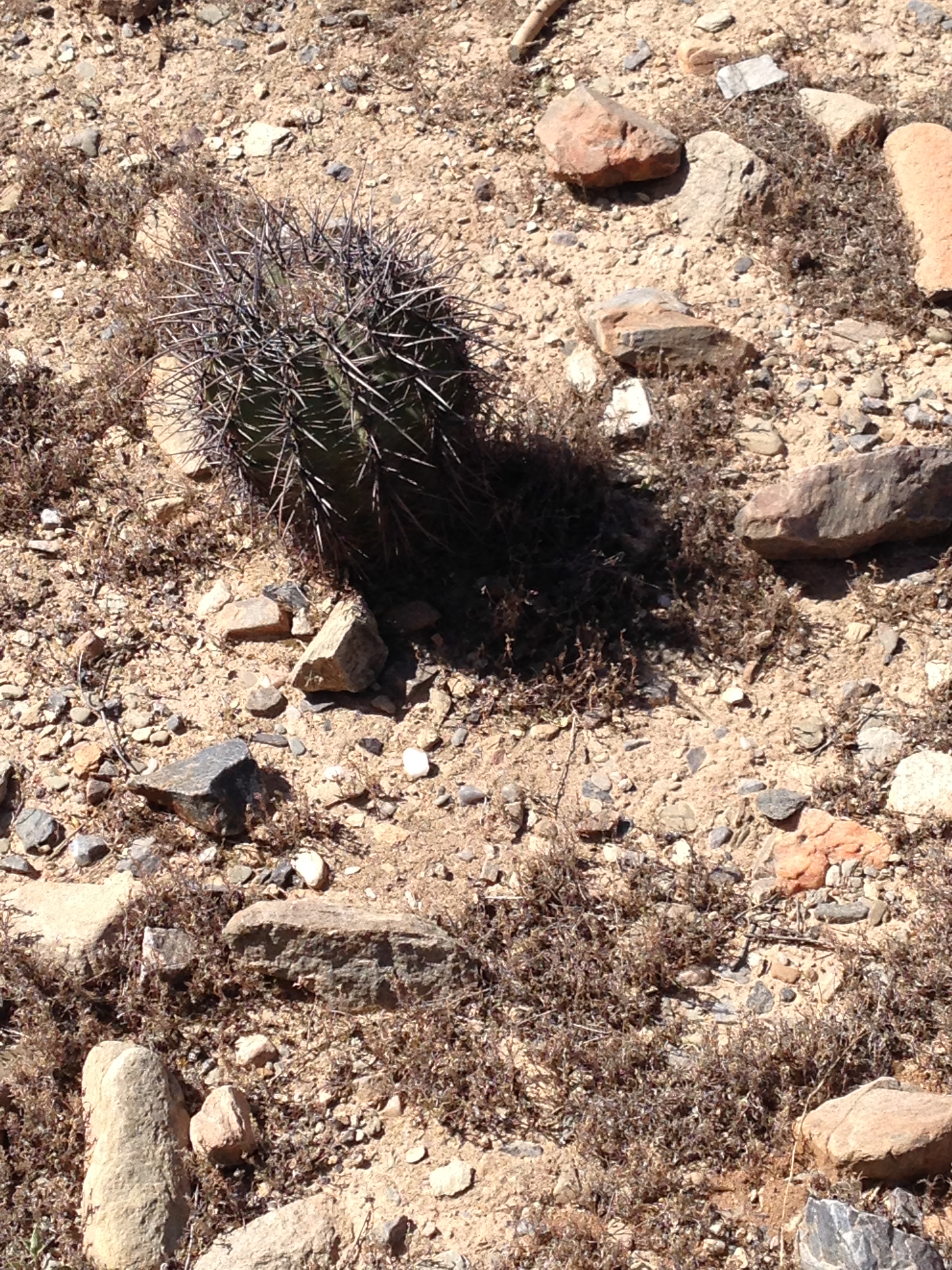
Three quarters of an inch of precipitation. That’s all they’ve had in Scottsdale this year. Luckily, baby saguaros like this juvenile don’t need much to thrive.

juvenile

They become monsters with just a little drink of water at a time.

grown saguaro

When you feed your mind, water it, fill it with the energy it needs to think, to write, how much is required? Could your creativity survive a drought?

prickers

The stuff you produce can be succulent as saguaro flesh, piercing as its spines.

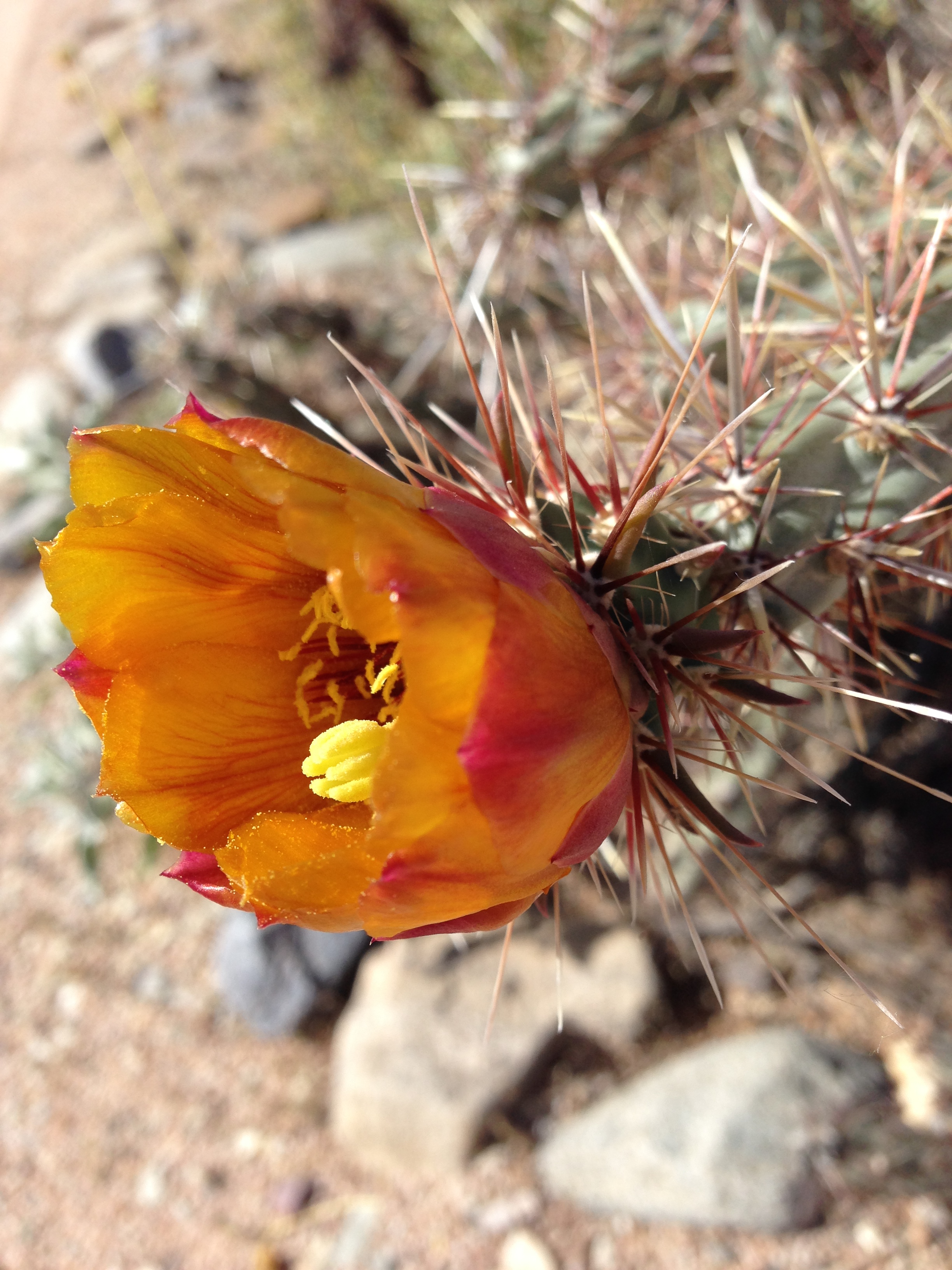
Flowers. The few buds that materialized this year, three-quarters of an inch worth. The cholla cactus can only just manage to squeeze them out, it seems.

cholla

But when you find a blossom — when you discover one in yourself, especially after a dry spell — it’s ravishing.

1 Comment

Filed under Fiction, Jean Zimmerman, Nature, Photography, Writers, Writing

A Boat in the Desert

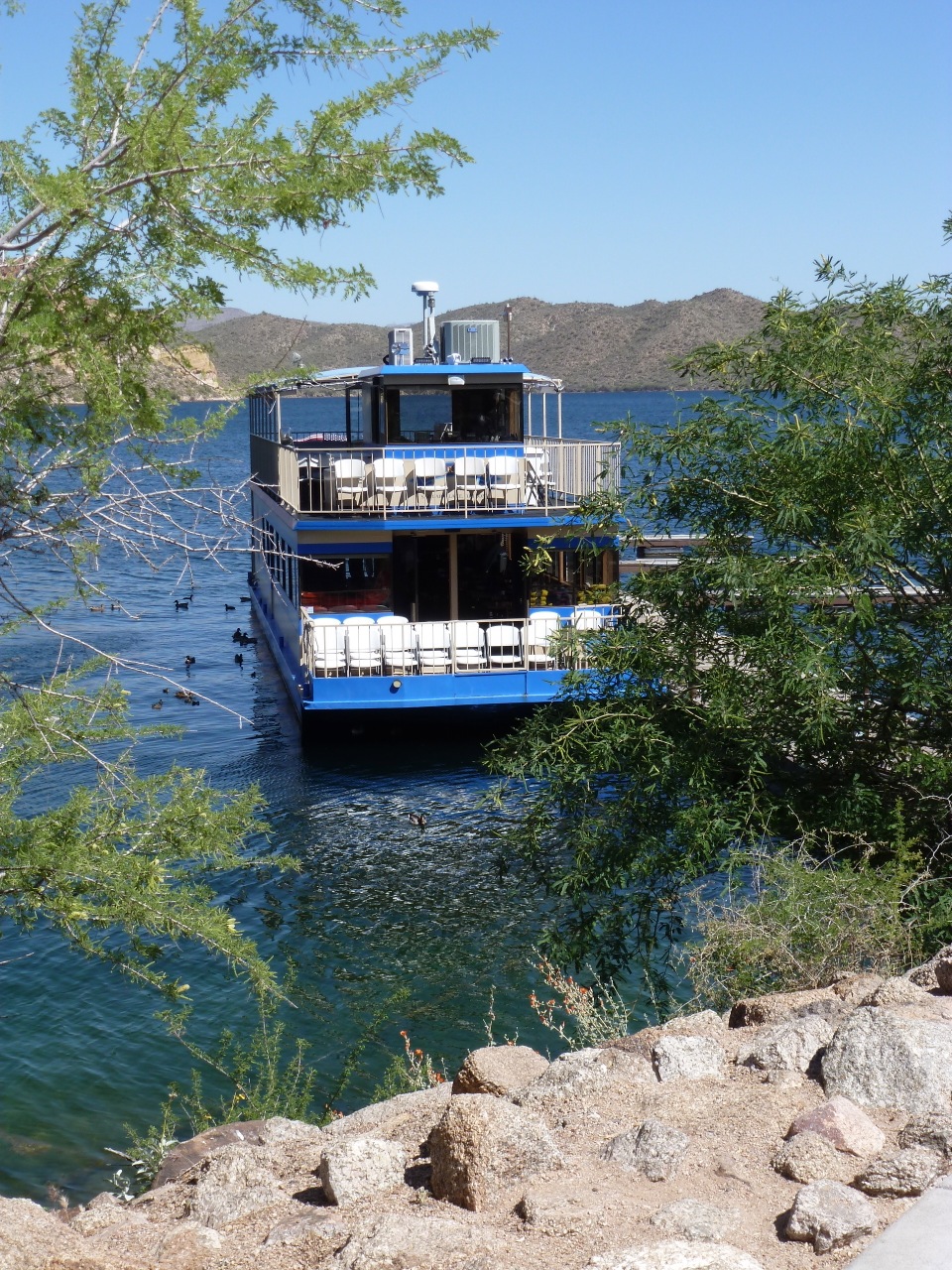
Life finds me this April Fool’s Day in a boat on a lake in the middle of a desert in the state of Arizona. It’s gusty and the waters form a chop that throws droplets onto me and the rest of the sightseers, who seem to have formed a plan to come aboard dressed in butterfly wings, the preferred colors of the Southwest.

boat

The captain’s name, he announces over the loudspeaker, is Tom. Captain Tom will narrate the tour on the Pioneer Belle, speaking steadily for an hour and a half about the natural graces of the landscape and their deeper meanings. But first he spins a tune, Splish Splash, and I see him singing along as he maneuvers the big steering wheel to push back the boat from the dock.

Rock faces and hills rise improbably out of the drink. I am impressed by the facts the captain spiels – that Stewart Mountain Dam was built in 1930 to create this body, Saguaro Lake, that the depth of the water here is exactly 118 feet, that those white streaks you see on the dark rocks are “one hundred percent eagle poo.” Bald eagles are known to propagate here, soaring high above the cliffs.

elephant

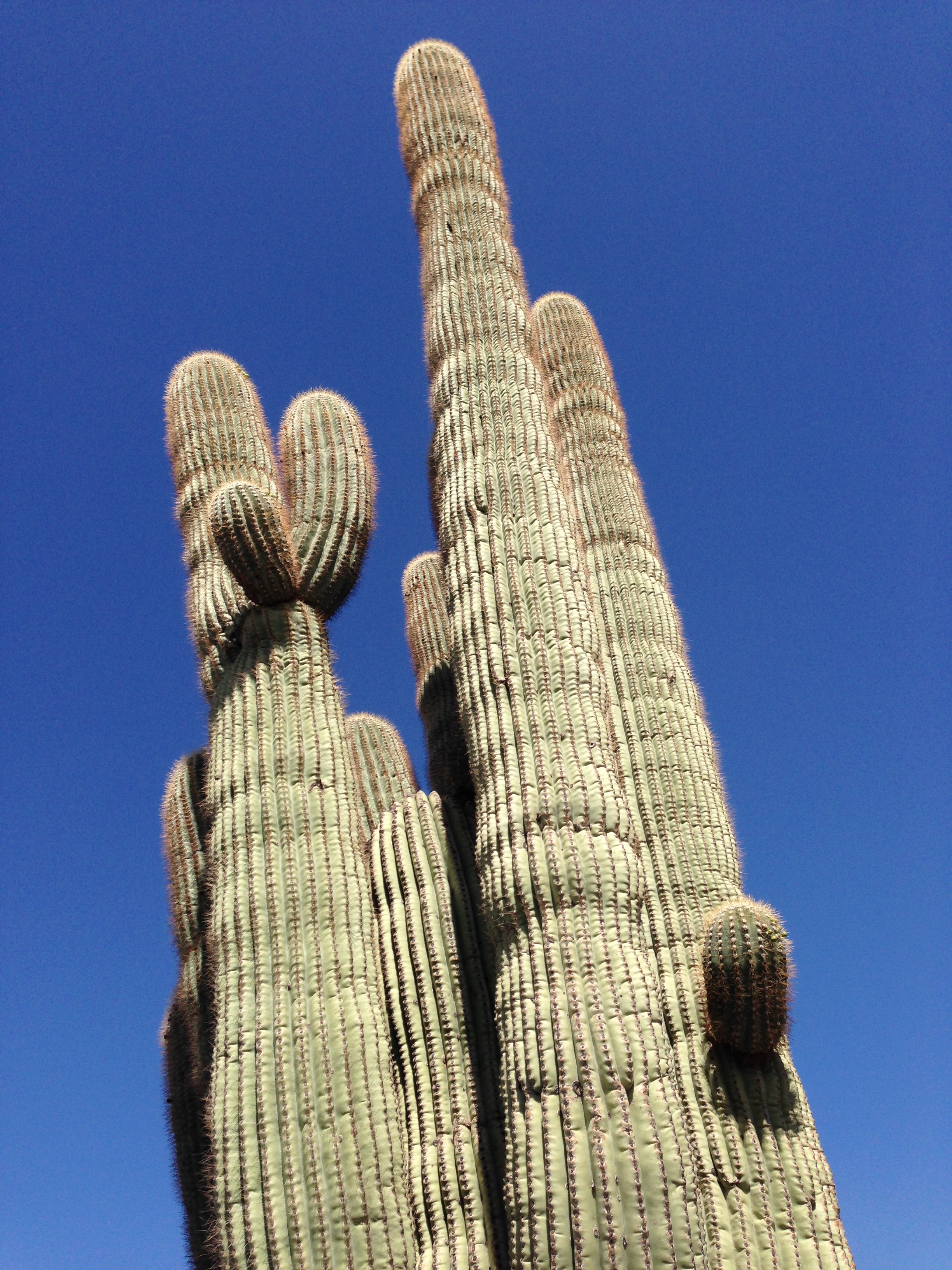
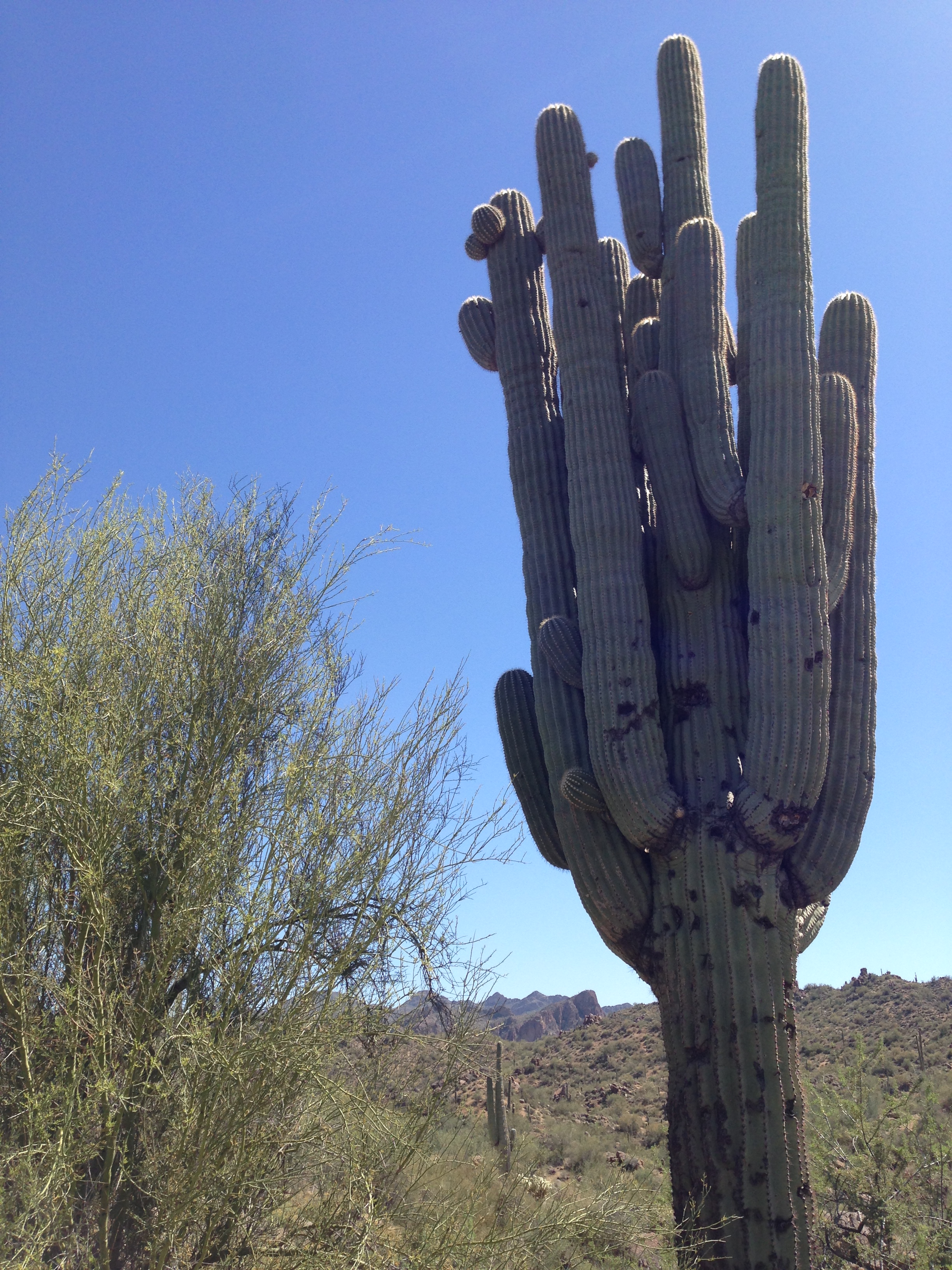
Saguaros grow in unlikely places, Captain Tom says. They have a tap root of just three inches. “The saguaro seemingly doesn’t need any soil, it pinches itself into the rock,” he says. Some specimens have been alive two hundred years. You can tell by the plethora of arms.

old saguaro

“It’s freezing!” says a woman seated in front of me. There is a stiff breeze. But, no, don’t say freezing in front of a New Yorker who has just emerged from this biting winter.

Captain Tom offers up a Kenny Chesney tune: Raw oysters, yeah, give me one and shuck it… He’ll go coastal on you.

Yes, Captain Tom is a little cheesy. You don’t know how hard it is to be exactly the right degree of cheesy until you stand up with a mike in front of a crowd that has absolutely no knowledge of what you’re talking about, that just wants to kick back with a beer in the sun and breathe…

After doing book talks, I appreciate the skill of Captain Tom.

We hear about the sharp-winged vultures circling above, who “never need to flap their wings – they come out here to play, I’m certain of it.”

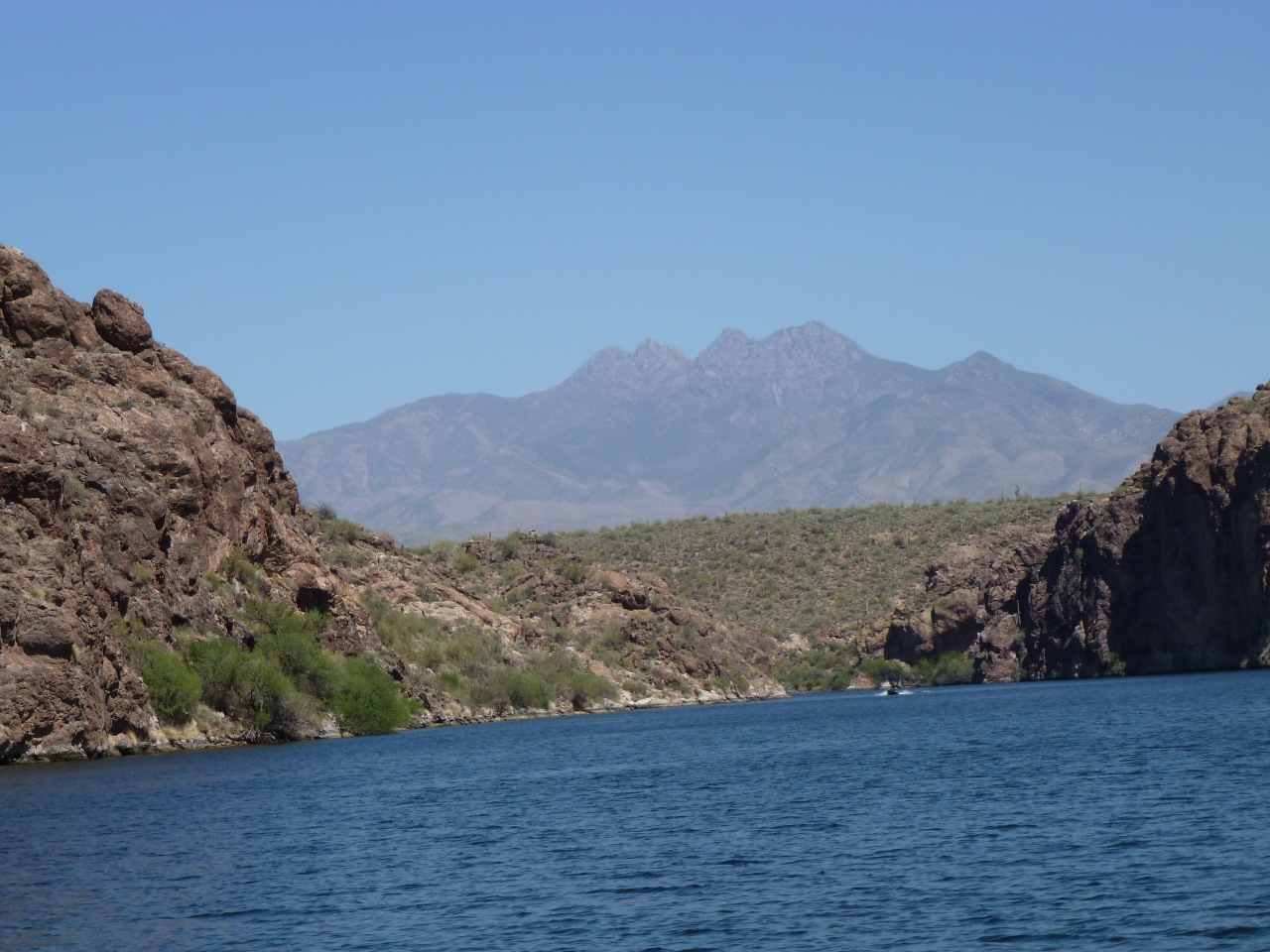
About the amethysts discovered in the nineteenth century in the nearby Four Peaks range and how they found their way “into the crown jewels of five countries.”

four peaks

Captain Tom tells us, “I don’t make this stuff up. You can’t make it up.” Now isn’t that a line he stole from my presentation about historical fiction?

Desert varnish, says Tom, is created when manganese and iron leach out onto the face of a canyon wall.

Not listening, the golden tanned woman seated in front of me stretches out her arms. “Can you smelll the water? I love that smell,” she says to her companion.

“The large mouth bass is the trophy fish here,” says Tom, along with the walleye and some others.

“Nature’s something else, isn’t it?” says a man with a beer can.

As if prompted by Tom’s remark, a fisherman in a nearby boat pulls a yellow-silver bass out of the water, and the crowd breaks into applause.

Tom puts on another Kenny Chesney tune: No shoes, no shirt, no problem. He tells us things I didn’t know, that blue heron colonies are called heronies, that desert bighorn sheep can climb at an angle of 85 percent. That said sheep have a life cycle of just two years.

“Oh, that’s sad!” says someone who is listening to Tom. Someone who is not listening tells her friends that she is an expert waterskier and has performed her magic on every lake in Arizona. “I can get up in an instant, but after you get off your legs are like jelly sometimes.”

saguaros

Those who did not listen to Tom can buy a DVD of the captain’s talk, complete with 120 good photos.

I might make DVD’s available when next I present about a book.

“I’ll take a few minutes and bring you back in time to the earliest residents of the Salt River Valley, the Hohokum,” says Tom, and again I feel a kindred spirit with our sightseeing boat’s narrator, that here is something I might invite an audience to do, go back in time, visit a marvelous place…

“The Hohokum,” says Tom. “The name means Those Who Have Vanished.”

“Wow,” says the waterskier.

More music, from Darius Rucker:

So rock me momma like a wagon wheel

Rock me momma any way you feel

Hey momma rock me

Rock me momma like the wind and the rain

Rock me momma like a south bound train

Hey momma rock me

Tom calls out the beauty in the drabness of the rocks all around, the chemistry of lichen, and I see the way the granite can resemble faces, as clouds can.

lichen

There is grandeur here in the ironwood trees that can live up to 1,500 years. Is the water blue or green? I am getting sun-stunned, and Tom’s voice is so lilting. I see why people drift off during book talks.

Somehow the last anecdote the captain relates, as the boat approaches the dock, is the most powerful, though it lacks inches or years or other measures, and only has the teller’s personal voice. Tom was building a house at the edge of this desert that surrounds us, he says, and he laid down a smooth coat of dirt beside the foundation and wetted it well with water. He came back to the patch of earth later to find mouse tracks, pack rat indentations, the footprints of gambrel quail, of coyotes, javelina, and the slithery imprint of a snake. He saw this with his own eyes, he says.

I was wide awake in a boat on a lake in the middle of the desert, and I heard it.

6 Comments

Filed under Culture, History, Jean Zimmerman, Nature, Publishing, Writers, Writing

Deep in the Novel Cave

Sshhh. I can’t hear you. I am writing a book. Or as Father John Misty said in a song last year, “I’m writing a novel, because it’s never been done before.”

I want to make amends for letting my daily posts slide a bit recently. It’s partly that I’m preoccupied by the release of Savage Girl, yes. But more relevant, perhaps, I have been deep in novel-writing, a process that in my experience tends to zone out most other activity. Like laundry, dishes, housekeeping.

My new book tells the story of a girl in 1776 New-York (back when the city had a hyphen), and I have been spending all my time in that British-occupied city.

Let me tell you what it is like in my household when Gil and I are writing books.

We wake. Let Oliver out the door. Let Oliver back in.

winsome OIiver

Coffee, lots of it. We sit down at the computer. Get up for lunch, the lightest lunch possible so that we won’t be sluggish in the afternoon. Sit down once more at the computer. Knock off in the late afternoon. Let Oliver take us for walk. Dinner. Game of Thrones reruns. A fitful, novel-haunted sleep.

Next morning, begin again.

It is boring. It is fascinating. To me, anyway, if to no one else.

“There are three rules for writing a novel. Unfortunately, no one knows what they are.” Thus quoth Somerset Maugham. And so it is really a matter of creating new rules, a new language, every single day until you get your 450 manuscript pages finished. You never know what you’re doing. It’s insecurity raised to the max, alternating with momentary blips of glee that you got something right. Got something write. Ha.

Anything outside that process is hard to fathom, hard to incorporate – the spring buds on the trees, the return of the birds, social beckonings, exercise, even cooking good food, something that for me almost never falls by the wayside.

I remember years ago attending a party with a book freshly done, wiped out, eyes bleary, toasted to a turn, and thinking that it was impossible to even have a social conversation with someone who had not just finished a book. I simply could not relate to a book-less human being.

“There is nothing to writing,” said Hemingway, “All you do is sit down at a typewriter and bleed.” A mite melodramatic, are we?

Once upon a time, the novelist Amy Tan’s house burned down with her manuscript in it. She didn’t have another copy. She said she had no interest in talking to anybody whose house had not burned down, she was so consumed by what had happened.

So Gil and I retreat into our little cave, better known as the Cabin. The only thing in the Cabin is, right now, a pair of computers. And a dog. (Oliver refuses incontrovertibly to fall by the wayside.) There is the odor of hyacinth in the air, a strangely chemical smell, if beautiful. And a new page to be written, with words I cannot yet imagine.

5 Comments

Filed under Cooking, Culture, Dogs, Fiction, Home, Jean Zimmerman, Nature, Publishing, Savage Girl, Writers, Writing

Wolf Boys and Girls

Feral children, wild children, human beings raised by wolves… or bears… or goats… or rats… How credible are the stories of their existence?

They’ve inflamed the popular imagination for centuries. Surely it is impossible to believe that a mama wolf will take in a human baby and suckle it with her own. Surely it is outlandish for a little boy or girl to come in from the wild, hale and fed if not very well groomed, with the claim of having been nurtured from infancy by animals. Yet their demeanor would seem to lend credence to the claim – no human language of any kind, an alien affect, absolutely zero table manners.

Stories of feral children surface up to the present day. The archetype might originate with Romulus and Remus.

rom-rem

Roman legend has it that the twin sons of Rhea Silvia, a priestess, and the god Mars were raised by wolves. When it was found that she had been pregnant and had children, King Amulius, who had usurped her father’s throne, ordered her to be buried alive and for the twins to be killed. Instead, they were set in a basket on the Tiber, where a she-wolf found them and raised them until the boys were discovered as toddlers.

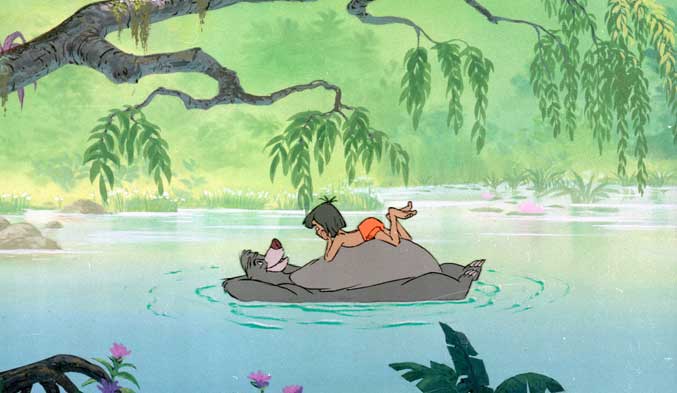
Probably the best known wild child today is fictional. Mowgli, invented by the protagonist of Rudyard Kipling’s The Jungle Book stories in the 1890s, became a contemporary star with Disney’s 1967 massive hit animated film of the same name. According to Kipling’s hugely successful telling, Mowgli lost his parents in a tiger attack in Central India and is adopted by Mother and Father Wolf.
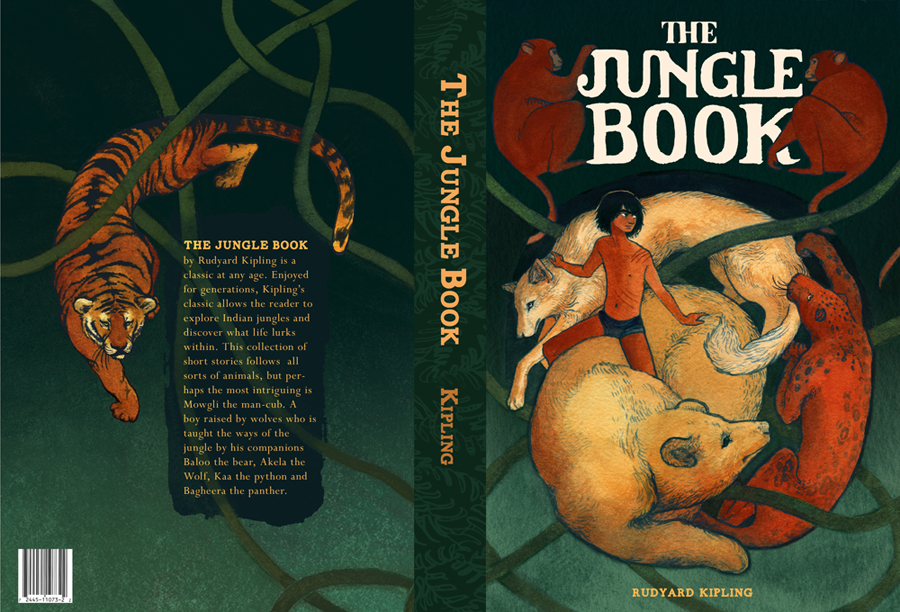
junglebookblog2

A tiger wants to adopt him, a panther befriends him, and Mowgli wins the respect of all through his unique ability to extricate thorns from the paws of his wolf brothers.
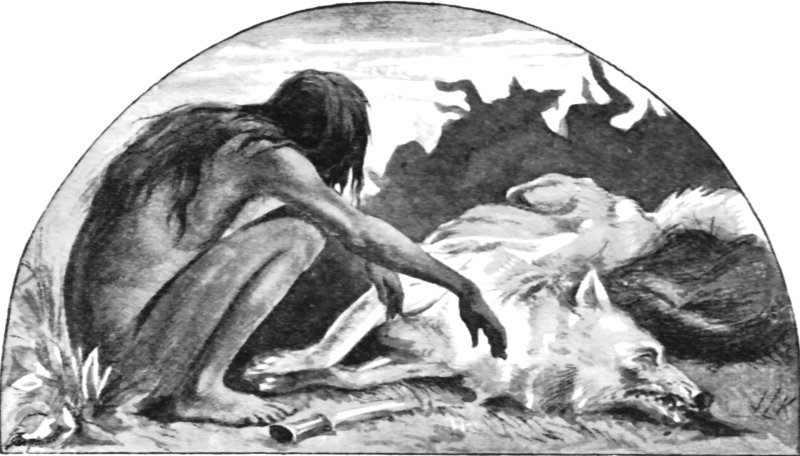
Lockwood-kipling-red-dog-illustration

He is ultimately adoped by human parents and brought into civilized society.

In the Disney version, Mowgli, “man-cub,” wants nothing more than to remain in the carefree forest among his baboon, elephant, sloth and panther friends, even after he has been told by many that he must return to the Man-Village. He only goes when he becomes smitten by young girl and follows her back to civilization.
disney-mowgli-and-baloo

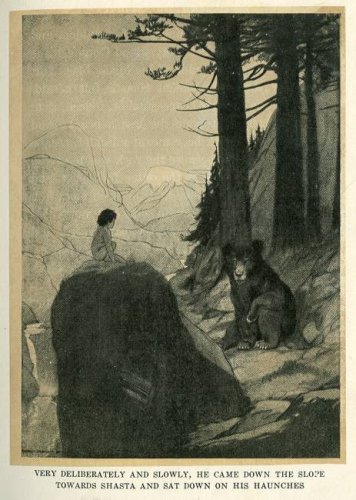
A similar feral child novel from slightly later than Kipling is Shasta of the Wolves. In Shasta, a boy raised by a pack in the Pacific Northwest goes back and forth between a human tribe and his wolf clan… ultimately deciding to stay with the pack.
shasta illustration

Mowgli has always been seen as a major influence on Edgar Rice Burroughs in developing his own feral child story Tarzan.

tarzan:jane

Appearing first in 1914 and followed by fully 25 sequels, Burroughs’ Tarzan of the Apes captured the American imagination. The movies expanded the franchise — Between 1918 and 2008, 89 movies starred Tarzan, with the most famous portrayal being that of Olympic swimmer Johnny Weissmuller. Tarzan is the quintessential noble savage, a man who manages to navigate two worlds with ease.

Orphaned as a child, Tarzan finds himself adoped by the leader of the ape tribe that killed his father – while Tarzan is his ape name, his English name is John, Clayton, Viscount Greystoke. As a young adult, Tarzan falls in with Jane, an American whose father and the rest of their party have been marooned in the jungle. They fall in love and he follows her back to the United States, marries her and the couple return to Africa, where they have a son. Intelligent, handsome, athletic, Tarzan lives up to his noble background though in the guise of a forest creature. His loin cloth is all he needs for clothes, a tree branch his preferred bed, raw meat the nutrient he favors. His upbringing represents the opposite of deprivation – this child of nature gained agility, speed, endurance and strength from his ape family – and yet, when he returns to civilization, he is able to adapt, learn languages, speak grammatically and make his way in civilized society.

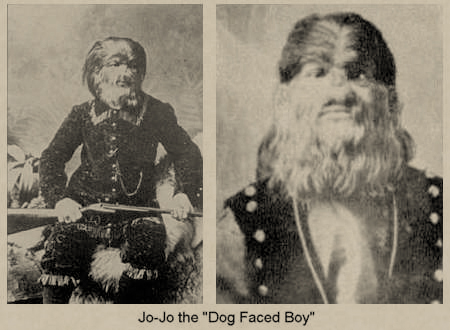
Before the mythic creations of Mowgli and Tarzan, other, real, historical feral children fueled the public imagination. One related phenomenon is that of people afflicted with the genetic condition known as hypertrichosis, which causes an individual to resemble an animal in the growth of fur all over the body. Many children with the condition were exhibited in American side shows in an earlier period.
jojo-713518

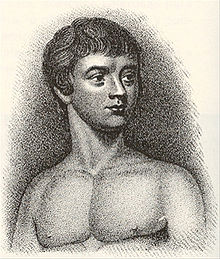
But non-hairy wild children fueled public fascination the world over. The best known, Victor of Aveyron, lived at the turn of the nineteenth century in rural France.
Victor

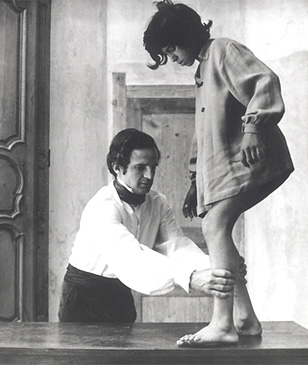
He was prepubescent when he emerged from the woods near Saint-Sernin-sur-Rance in 1798, having been spotted by a trio of hunters. How he had lived during his childhood was unknown, but that he only grunted, that he showed no modesty about his nakedness, that he periodically returned to the forest, that he had numerous scars on his body, that he seized potatoes hot from the hire, told his captors that his was a feral childhood. Shortly after he came in from the woods he was seen frolicking nude in the snow – a sign that he could tolerate exposure.That and the central feature of his existance, his lack of speech. It was clear that he could hear. A young physician named Jean Marc Gaspard Itard adopted the boy and worked with him for five years to teach the boy and the case became a cause celebre.

victor_itard

Whether the boy could learn language inflamed the debate over what distinguished man from animal. Did the Wild Boy of Aveyron exist in a pure state of nature? Could he be civilized? Ultimately, Victor learned only two phrases : lait (milk) and Oh, Dieu (Oh, God). Itard published his A Historical Account of the Discovery and Education of a Savage Man in 1802. Today we know of Victor and kindly Dr. Itard through L’Enfant sauvage, The Wild Child, Francois Truffaut’s masterful 1970 film.

Peter of Hanover wandered out of the woods near the town of Hamelin, near Hanover in Germany, in 1726 — or was hunted down; accounts differ — and soon became the talk of Europe. He was around fourteen, naked, mute, and resistant, when he arrived in London and came under the protection of King George I and his court. The child had a predilection for acorns, and was fascinated upon hearing a watch strike the hour for the first time. George I did not speak English himself, and hailed from the same part of Germany as this mysterious wild child, explaining some of his attraction.
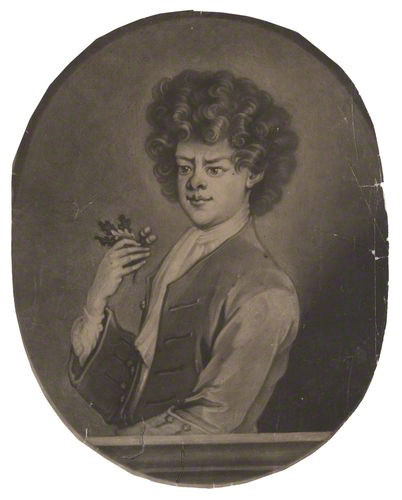
NPG D3895; Peter the Wild Boy by John Simon, after  William Kent

Plus, anthropology had come in vogue, with people bringing back accounts from foreign lands about savages, Hottentots, children reared by animals. Was Peter truly human or was he more along the lines of an orangutang? The media went wild over Peter, commenting on his primitive demeanor, wondering at his forest upbringing, marveling that the King adopted him as a kind of court pet. Writers hailed him as a wonder of nature and his likeness thrilled visitors to a celebrated was museum. Daniel Defoe proclaimed him the only truly sensible person alive. Peter never learned to utter a word, and eventually spent a long life being cared for on a farm in the country.

Another feral child was even more mysterious. Kaspar Hauser simply appeared one day in 1828 at the city gate of German’s Nuremberg, strangely dressed and, once again, mute.

kaspar hauser

He was around 17, and he carried a letter asking that he be given a place in the calvary. He could write his name, but he would eat only bread and butter and preferred to spend his days seated on the floor playing with toy horses. Philosophers visited him to try to understand what could have caused his strange, dull behavior (no swinging on vines for this one). The fascination has continued up to our time, with a 1974 movie done on his life, The Enigma of Kaspar Hauser by Werner Herzog.
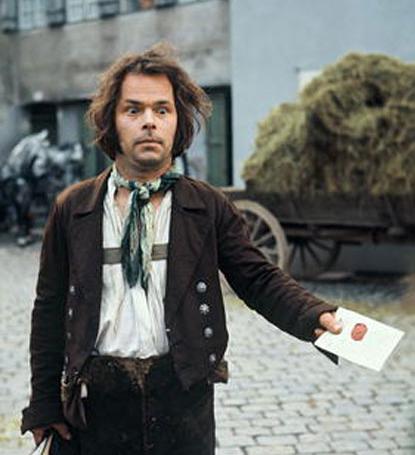
review_BrunoS_KasparHauser

The foundling did manage some speech, developed a love for music, and became a skilled horseman, and eventually the memory returned of his childhood, having been imprisoned in a dark room, fed by a man he never saw. Not a child raised by wolves, but by a predatory human. He was eventually murdered in a public park by a stranger at the age of 22.

Feral children are not all boys. One famous wild child of the eighteenth century was Marie-Angélique Memmie Le Blanc, who was born in 1712 and became known as The Wild Child of Songy. Born into a Native American community and brought from Canada to Marseilla during the bubonic plague epidemic of 1720, the girl survived for ten years walking through the forests of France.
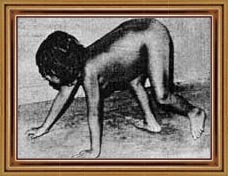
feral girl

She survived not by living with wolves but by battling them with a club. Captured, she went for ten years without speaking but eventually did take up words. Accounts of her life were widespread – popular pamphlets, books by historians and naturalists all fed the maw of interest in her feral upbrininging.

Of the many more instances of children who managed to survive in the wild, some have been discounted outright. Still, it is fascinating to see the interest that embraces those nurtured by all different sorts of animals. Nineteenth-century men and women devoured tales about the Lobo Girl of the Devil’s River, captured after her wolf sojourn, who managed an escape in 1846 and was last spotted at age 17 in 1852. Earlier, people hungered for tales of an Irish boy brought up by sheep, recorded by Nicaolaes Tulp in 1672. There was the Bear-Girl of Krupina, Slovakia, dating to 1767. The Ostrich Boy, named Hadara, lost in the Sahara by his parents at the age of two and reclaimed ten years later. The Chilean boy raised by pumas. Robert, who lived with vervet monkeys for three years when orphaned during the Ugandan Civil War. A Peruvian boy nurtured by goats. I have even heard of a girl raised by rats.

So nothing in Savage Girl should inspire disbelief, no matter how farfetched it sounds. No, nothing at all.
Leave a comment

Filed under Culture, Fiction, Film, History, Home, Jean Zimmerman, Nature, Publishing, Savage Girl, Writers, Writing

Savage Girl’s Central Park

[Here is another post that I am also putting up under the Savage Girl tab.]

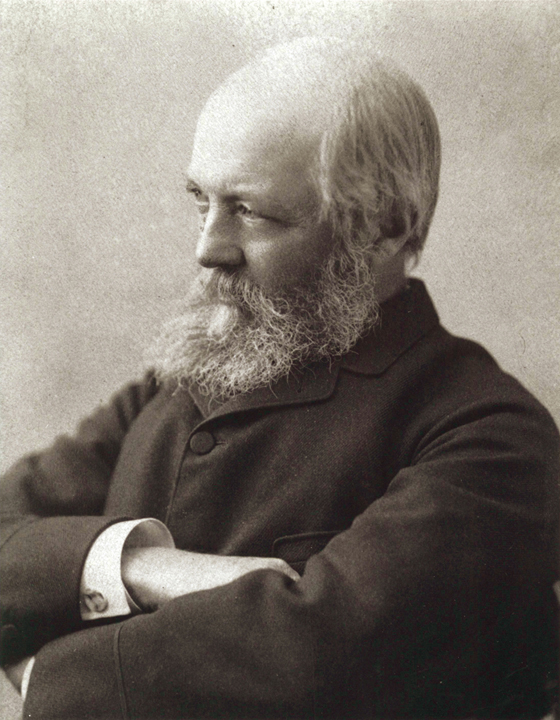
The Central Park, as it was known in the nineteenth century, had only been officially open for two years when Savage Girl arrives at the Delegate Mansion in 1875. The scrupulously landscaped plot of 843 acres, designed by Frederick Olmsted and Calvert Vaux, was set in the middle of the island of Manhattan with the idea that the creeping city would eventually reach far enough uptown to surround it, even though the locus of mid-1800s New York was much farther downtown.

centralparkmap1863

The Park came about as the brainchild of a group of well-heeled Manhattanites who wanted the city to emulate the great parks of Europe, the Bois de Boulogne, Hyde Park and other green urban spaces. Robert Minturn, his wife Anna, William Cullen Bryant and others, classic progressives all, took the lead in advocating the need for a large, verdant playground  for both rich and poor, a place that would improve public health and provide jobs in its construction. According to Olmsted, the park was “of great importance as the first real Park made in this country—a democratic development of the highest significance.”

olmsted

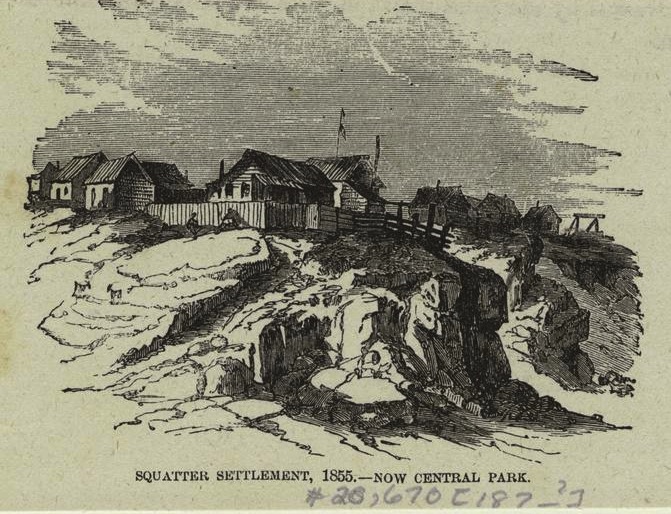
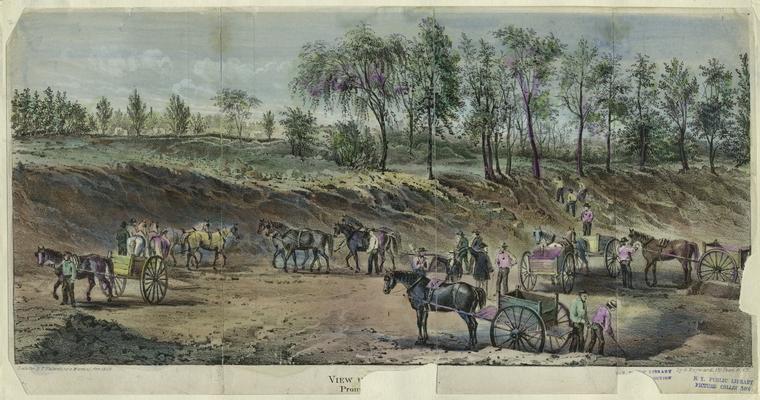
In 1853, when the Park was born by legislative fiat, the land between 59th and 110th Streets was occupied largely by poor squatters who according to one observer “lived off the refuse of the city, which they daily conveyed in smalll carts, chiefly drawn by dogs.”

centralparksquatters1855

German gardeners and Irish pig farmers occupied shanty towns known as Dutch Hill, Dublin Corners, and the Piggery, and a well-established African-American community called Seneca Village stood at what is now Columbus Avenue and 82nd Street — all of whom were displaced when the Park came in.

NY shantytown

Among the more arcane activities of denizens was the nineteenth-century trade of “bone boiling,” which produced a byproduct used in sugar refining. The area encompassed swamps and bluffs, wooded areas, and massive rock outcroppings.

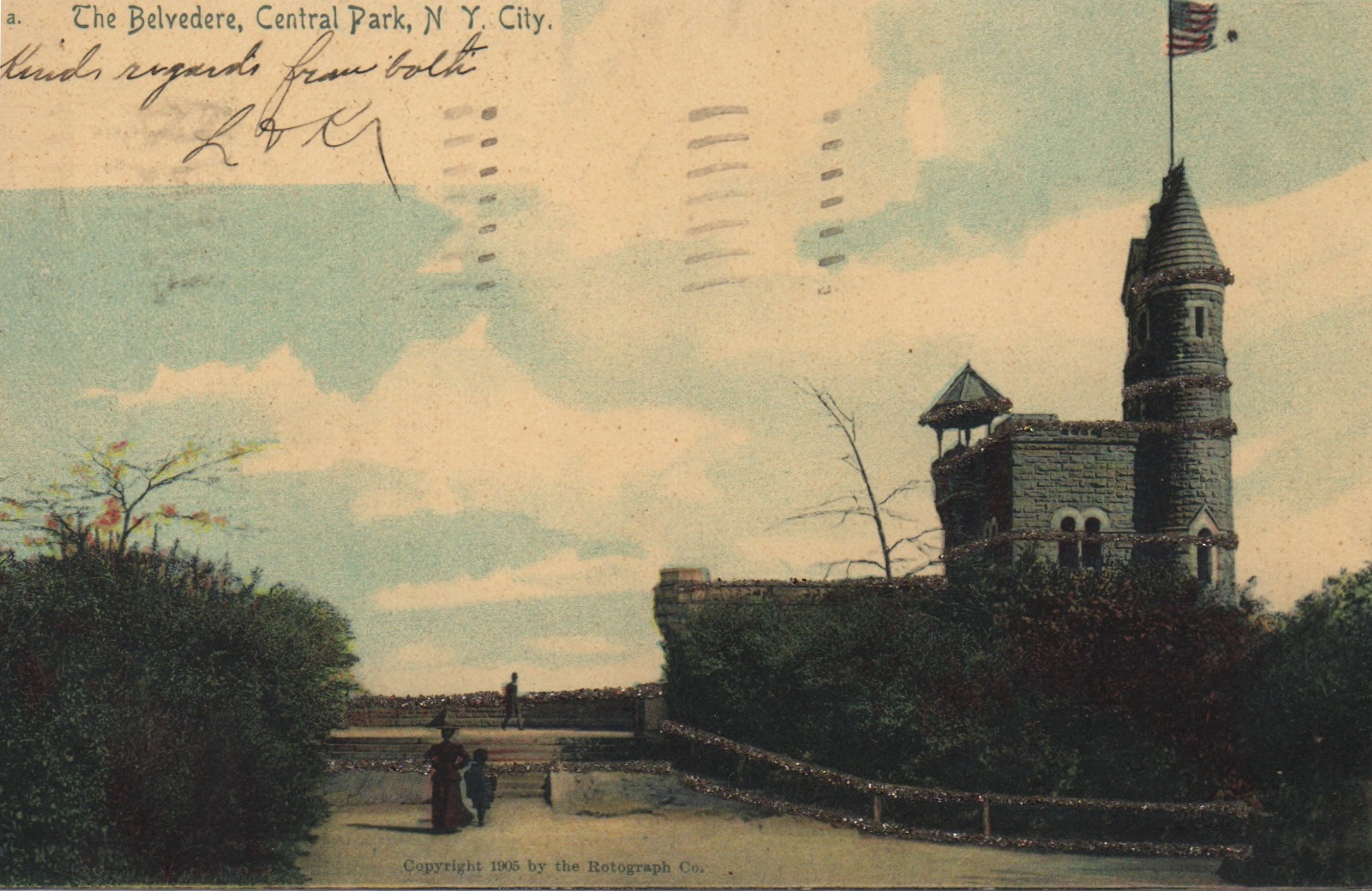
The Greensward Plan of Olmsted and Vaux was eight feet long and three feet wide, covered with stipple points designating vegetation, rock accents, footpaths and carriageways. A topographical tool and work of art all at once, the map specified structures that still exist today. The three and a half million square foot plot of land has remained remarkably the same, despite ideas that have been floated over time for such new things as stadiums, new athletic fields, model farms and airplane landing strips. The Park has 250 acres of lawns, seven bodies of water and 80 acres of woodlands. The Greensward plan called for some 36 bridges, all designed by Vaux, ranging from rugged spans of schist or granite to neo-gothic cast iron. The Mall’s doubled allées of elms comes to a stop at the Bethesda Terrace, whose centerpiece is the Bethesda Fountain. When Calvert Vaux designed the romantic Belvedere Castle in 1869, it was as one of the Park’s many whimsical structures, intended as a lookout to the reservoir to the north and the Ramble to the south.

belvederecastle

The charms of the Park’s landscaping are largely man-made; during construction, 1800 cubic yards of top soil were carted in from New Jersey to establish plantings. Laborers planted more than four million trees, shrubs and plants. More gunpowder was used to clear the area than was used at the battle of Gettysburg during the American Civil War.

workers building central park

Some elements we associate today with Central Park didn’t exist. The Metropolitan Museum, now sited at the east side of the Park between 83rd and 87th Streets, wouldn’t relocate until 1880 from a townhouse on 14th Street to a red-brick Victorian Gothic building (still part of the museum complex) at the edge of the greensward on the site of a meadow that the city had formerly fenced in as a deer park.

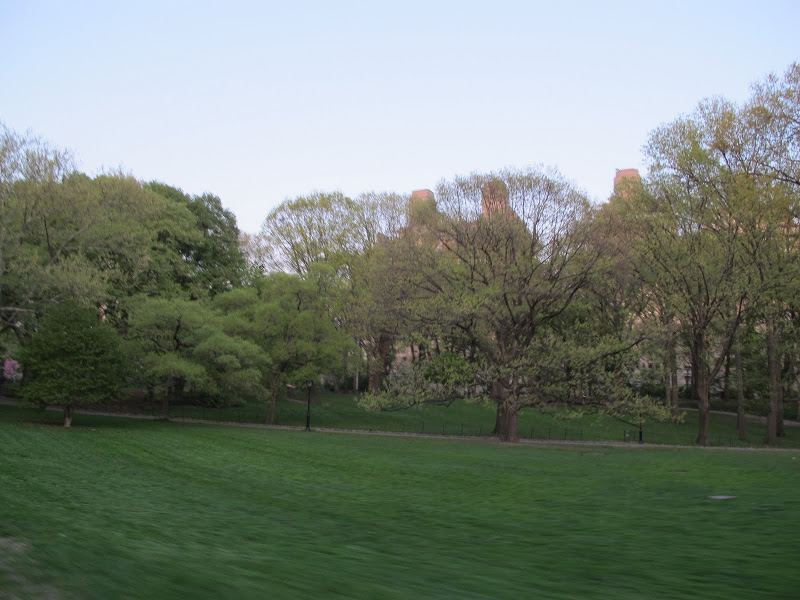
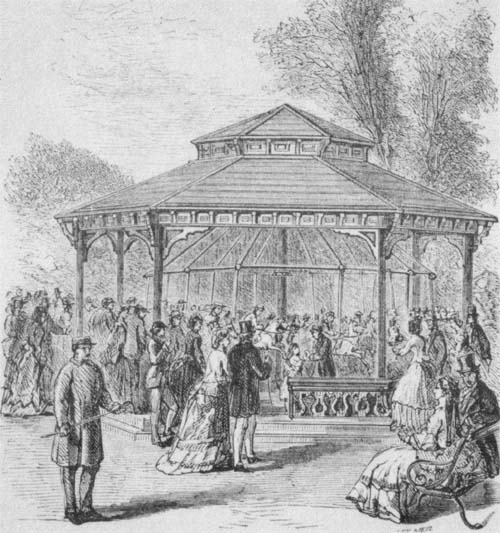
Central Park is a place that is quintessentially public, open to all, and yet offers individuals many sites that become personal favorites. The Dene (a term meaning valley) is one of those. A long stretch of pastoral landscape that exemplifies both the features and the intended effect of Olmsted’s designs runs along the east side from the Conservatory Water and the verdant meadow known as the East Green to the north and the Zoo to the south, it features gently rolling lawns and shaded walks.

the dene

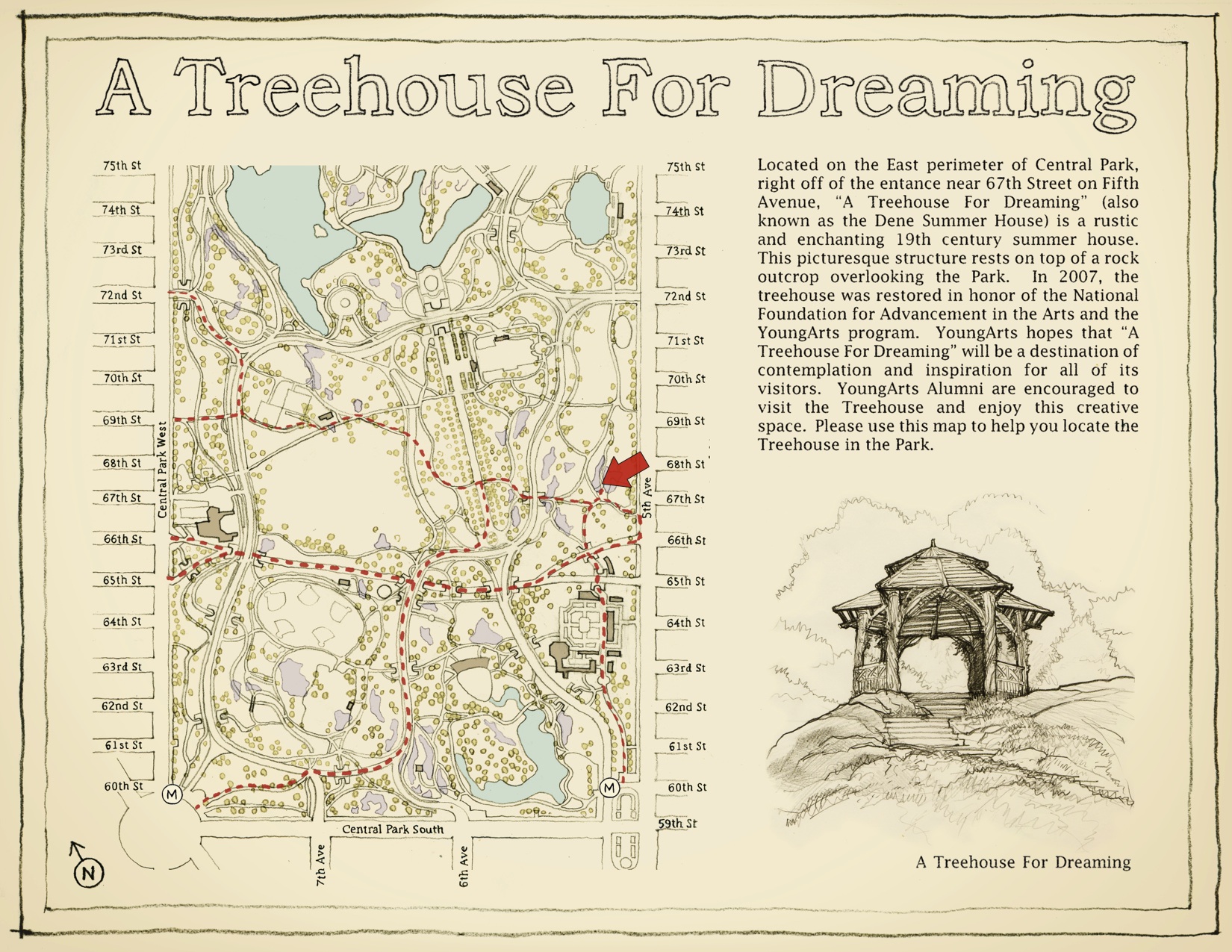
In 2007 the Dene’s rustic summerhouse atop a rock outcropping was restored, and a charming map to the feature was created. You can enter the park at 67th Street and Fifth, just adjacent to where the Delegates house would have stood, to get to the Dene and the historic structure.

A-TREEHOUSE-FOR-DREAMING

From the start, leisure activities reigned in the Park. There was ice-skating on the Pond at 59th street and Fifth Avenue, in front of a much earlier version of the Plaza Hotel.

carriages central park

Elite New Yorkers flew in their coaches down the winding drives. They strolled in the Ramble. They enjoyed such novelties as goat carts, here portrayed in a 1870 lithograph.
goatcart 1870 litho central park

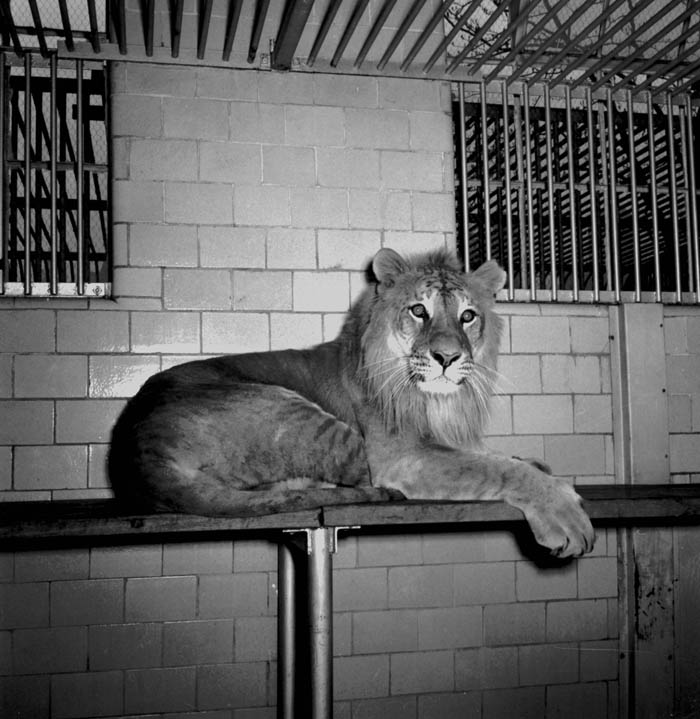
Children sailed toy boats on the Reservoir Pond at 72nd Street. The Central Park Zoo was chartered in 1875, and depended largely on the exotic gifts of wealthy benefactors. General Custer gave the zoo a rattlesnake, and General Sherman offered an African Cape buffalo, one of the spoils of his march through Georgia. One of the zoo’s most exotic donations was Charles the tigon, the offspring of a female African lion and a male Siberian tiger, that was donated to the City in 1938.

Charles Tigon

The Carousel went up when the Park opened. Mules beneath the flooring provided the horsepower to pull the decorated wooded horses above, as pictured here in 1872 in Applebee’s Journal.

1872 carousel appleton's journalA flock of pedigree Southdown and Dorset sheep grazed on the Sheep Meadow from 1860s until 1934. I wonder what they’d make of a tigon escaped from Central Park Zoo.

2 Comments

Filed under Culture, Fiction, History, Jean Zimmerman, Nature, Photography, Publishing, Savage Girl, Writers, Writing

Bloom Time

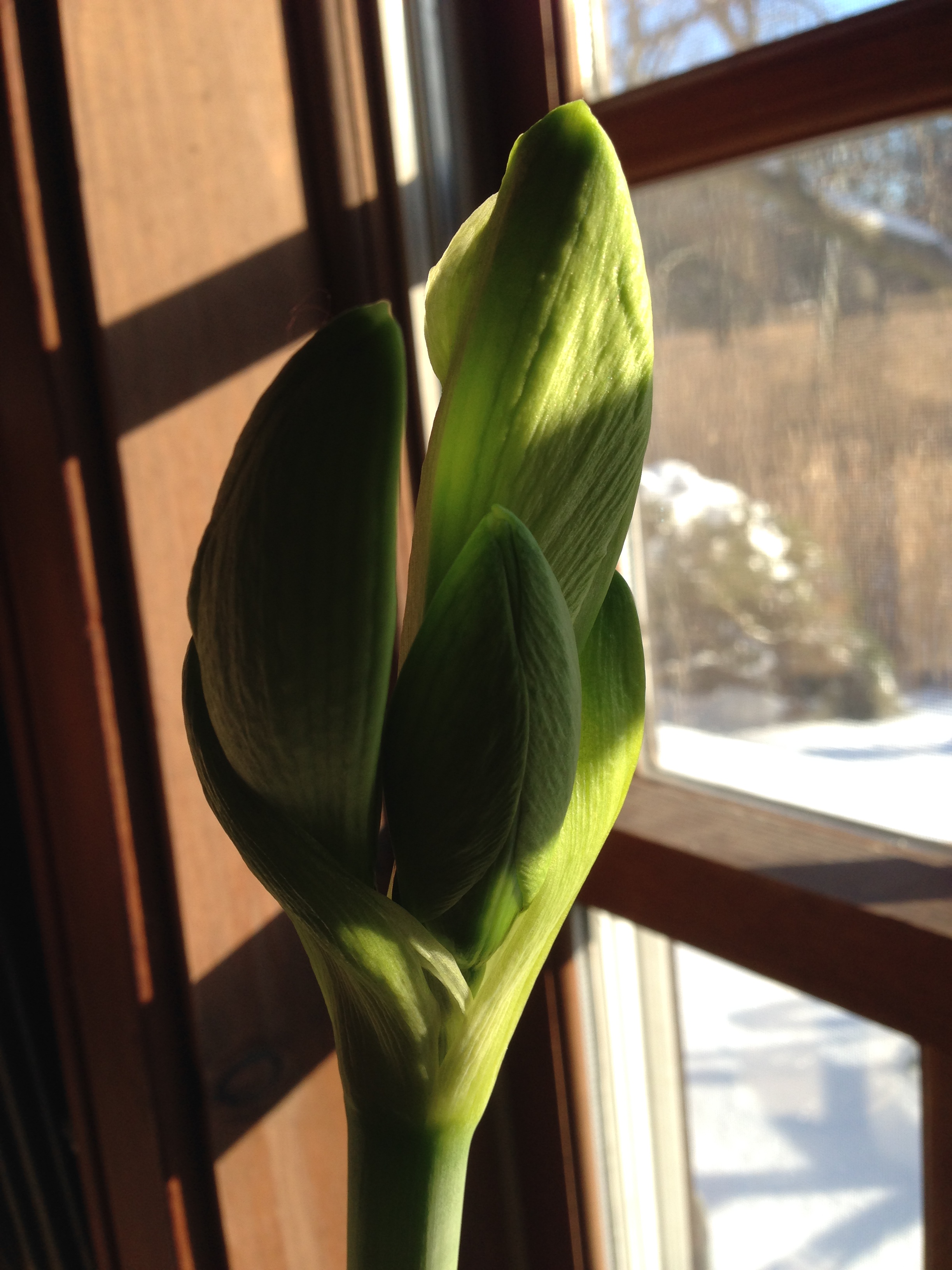
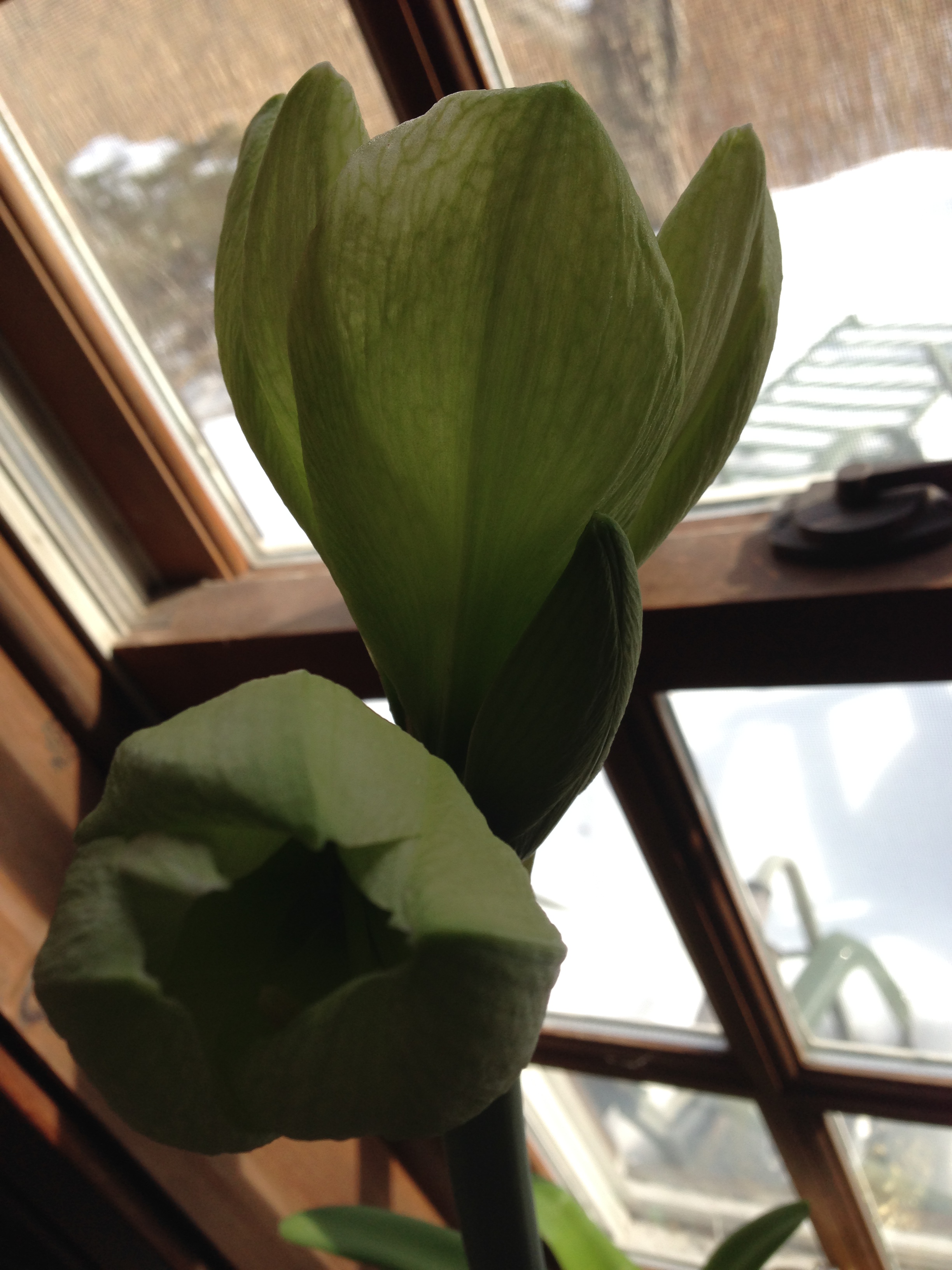
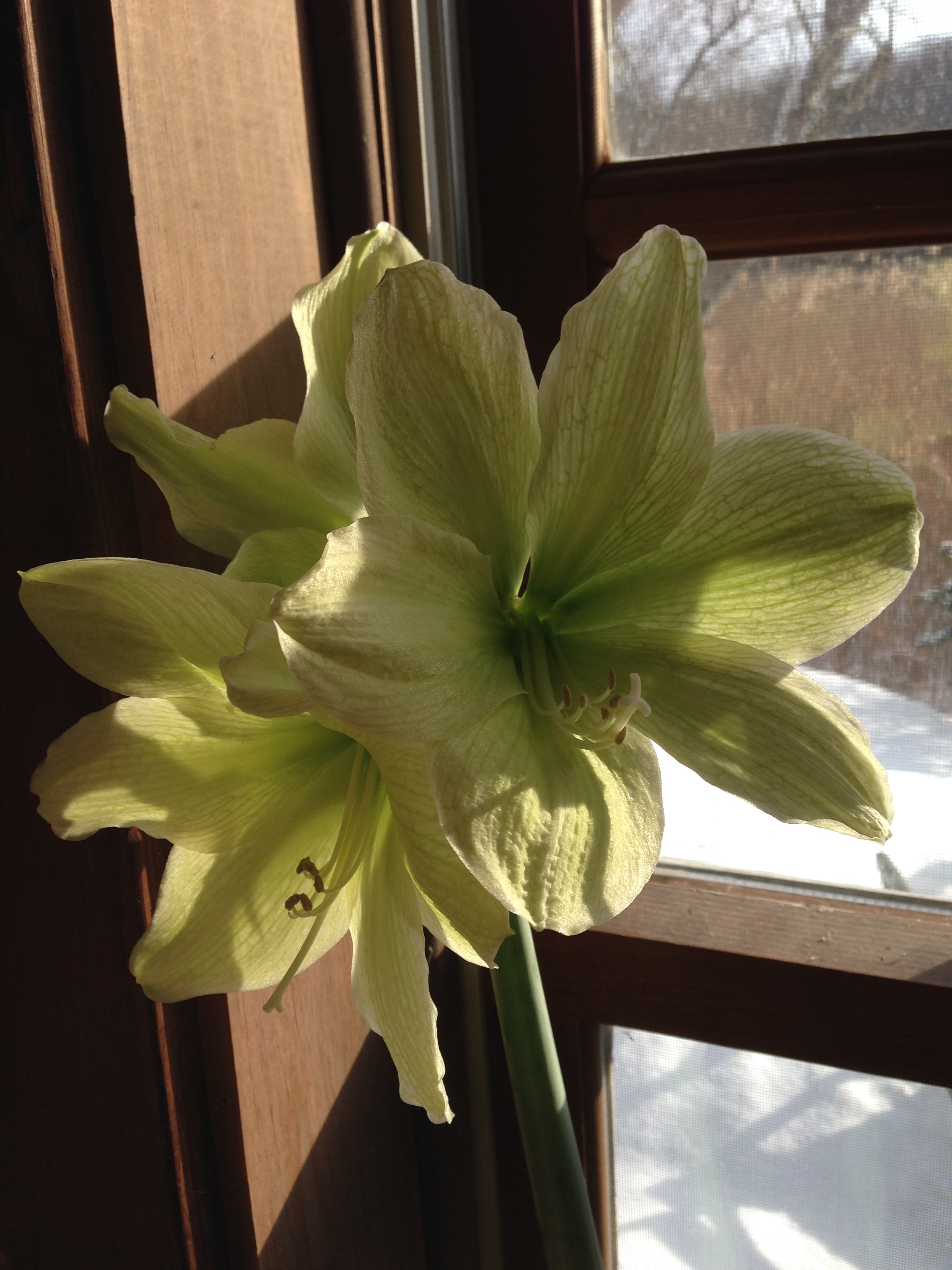
My new novel is blooming. Much like the amaryllis opening up beside my desk, at the window overlooking the marsh. This plant with its glowing greenish-white flowers doesn’t care about the snow and cold, it’s gonna display it’s stop-motion beauty on its own time, as it pleases. I’m just there to write it along.

amaryllis 1

amaryllis1-2


amaryllis4

amaryllis5

amaryllis 6

amaryllis7

3 Comments

Filed under Home, Jean Zimmerman, Nature, Photography, Writers, Writing

Pot Lucky

Just a neighborly event. The lightest of snows twinkled outside the windows. Someone said, You may not see each other for six months but you’re still glad they’re there. There was a list, a neighborhood email listserve, and these 60-odd people were on it.

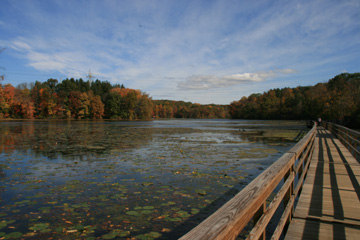
The pot-luck took place in the carriage house of the local nature preserve, Teatown.

scenery_teatown1

Such communal feedbags have a history, dating back to the sixteenth century, when pot-luck meant “food provided for an unexpected or uninvited guest, the luck of the pot.”

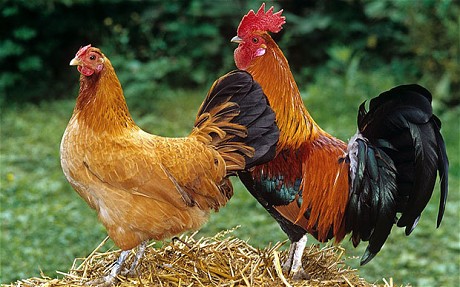
In this bowling-alone world, community often strikes me as a missing element. Or perhaps that’s just because mine is a solitary profession, handcuffed to my computer keyboard, staring out the window at the winter. I was happy now to talk to people I barely knew about books we’d read, about composing music, about keeping chickens.

chickens_1844738c

Above all, we spoke about the deep drifts and ice outside that affect everybody.

As Bilbo Baggins once said, “I don’t know half of you half as well as I should like, and I like less than half of you half as well as you deserve.”

Someone brought a soup enriched almost to a stew with wild rice. Someone else baked a crusty bread. When the desserts came out there was a deep-burnished chocolate bundt cake studded with cherries that had folks lining up. We all shared food, shared companionship. A hat was passed to send kids to the local summer camp.

No one spoke about plumber referrals, or the other information that flies across the internet on the listserve. No one talked about rowdy teens on the roads, or co-mingled recyclables.

separate-recyclables

Above all, no one became embroiled in the deer situation, the bane of the neighborhood, the divisive question of whether to leave the overpopulation alone or somehow control it, and if so, how to do so. It would be a fraught conversation. We let it go. (Though some wry soul offered venison sausage on the buffet table.)

We were gracious, putting faces to names. We shook hands, kissed cheeks. We were neighborly.

Outside, it continued to snow.

5 Comments

Filed under Cooking, Culture, Fiction, History, Home, Jean Zimmerman, Music, Nature