Category Archives: Nature

All This and a Hand-Crafted Marshmallow Recipe

The day after. All that’s left of the pig roast are the party tulips and the dogwood stars.
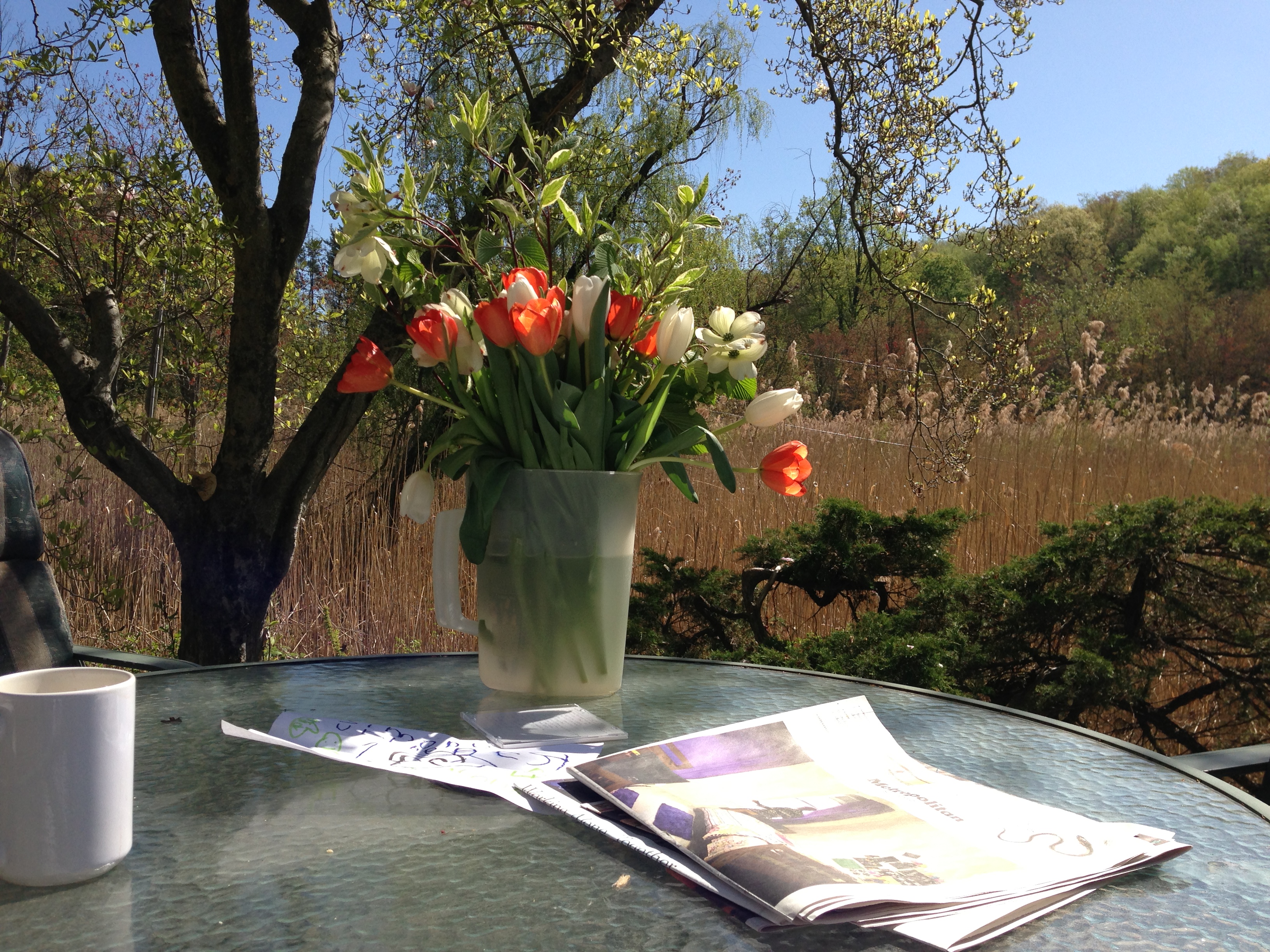
tulips and dogwood

And a drawing by doting 6-year-old Jasper for winsome three-year-old Simone.
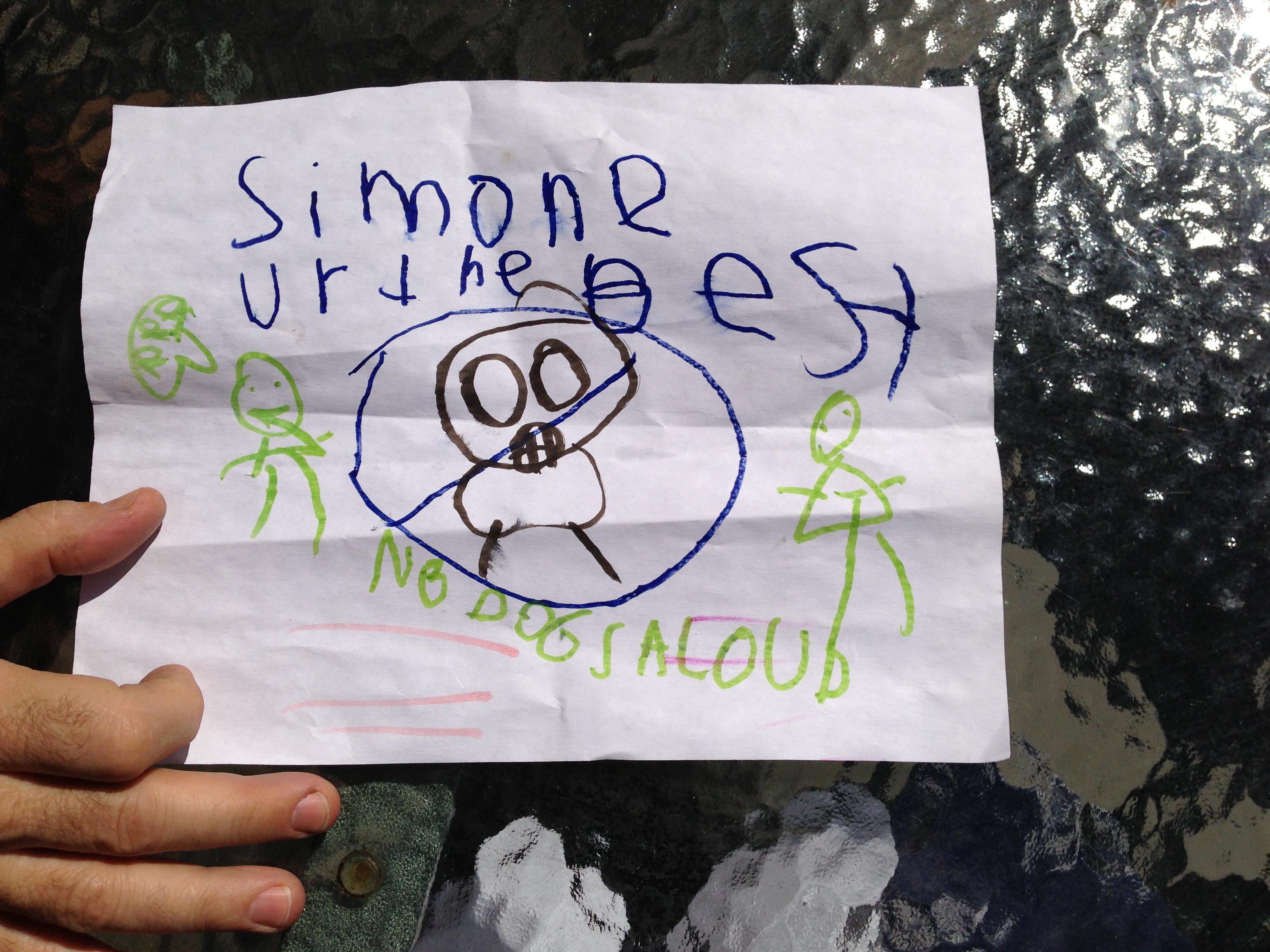
Simone picture

Oliver was locked away until the waning hours, when he was let out in all his growly glory, with a  muzzle and a leash, and petted by the braver partygoers. Says something about the loving spirit of this particular gathering.

OLYMPUS DIGITAL CAMERA

The love reached its apotheosis in the marshmallows.

I was almost too busy replenishing food on the buffet to have a conversation, let alone to document anything, and the hours of the pig roast sailed by in something of a haze. Josefa gave me this photo of my salmon, thickly coated with rich horseradish mayonnaise and scales of radish and cucumber. The fish, not the photo.
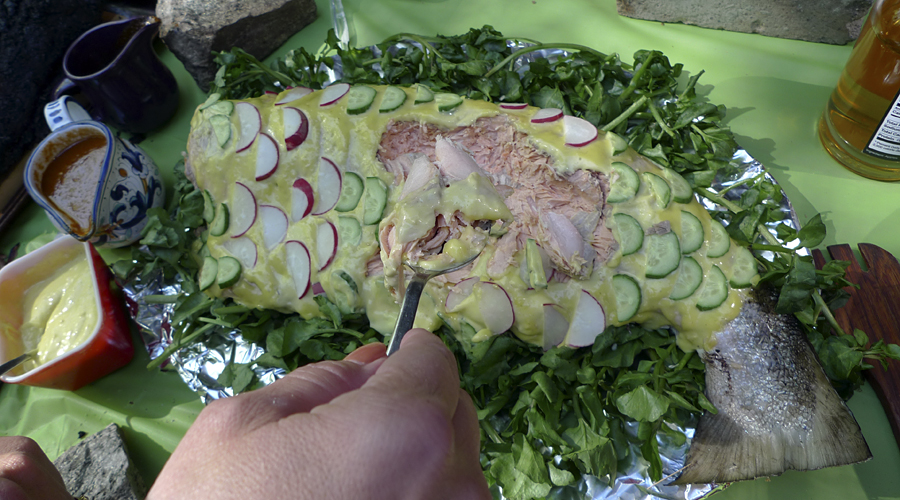
salmon josefa

The signs we put up around the property are taken down.
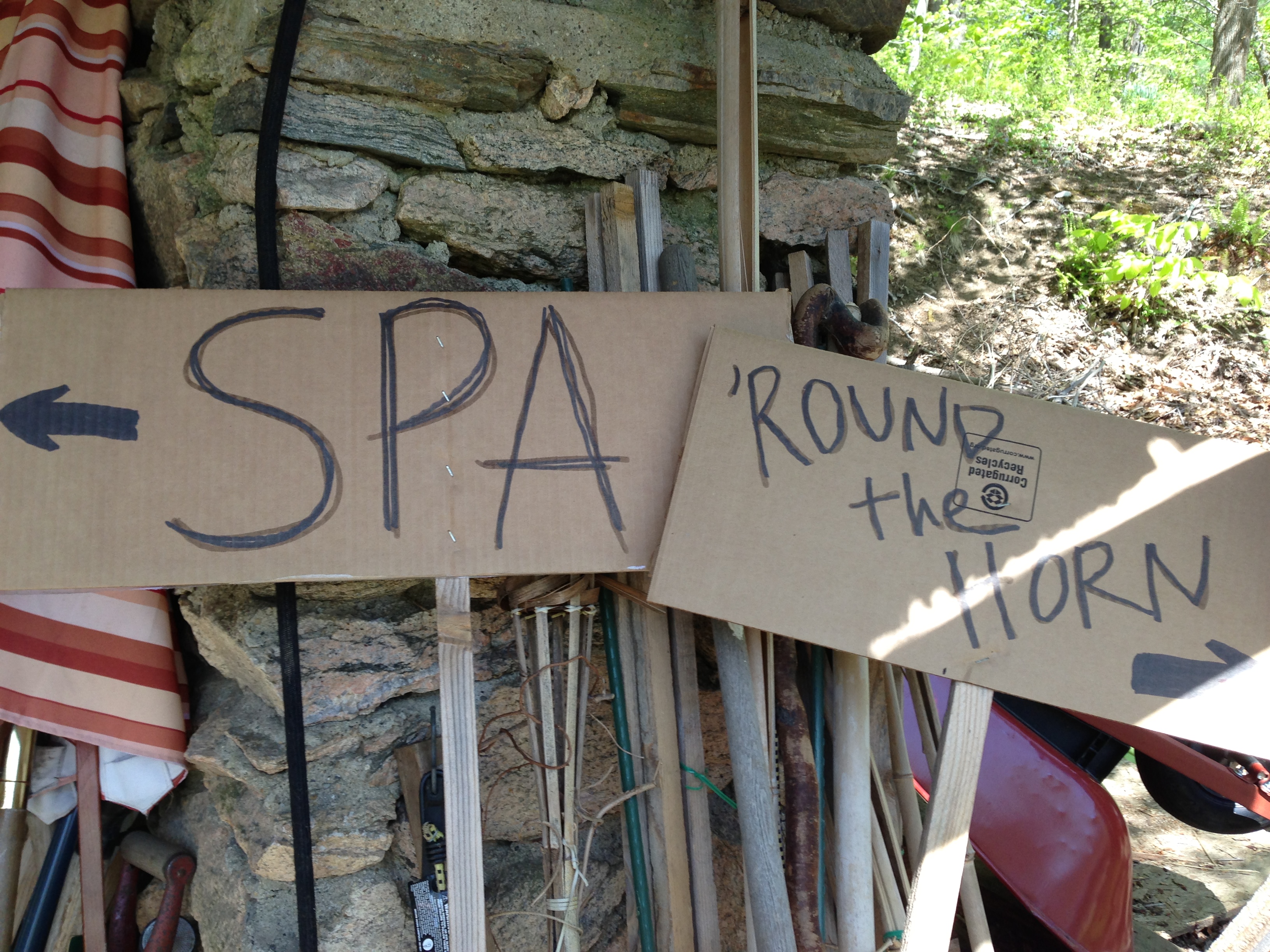
signs

The Spa, of course, which Gil had dug out of the swamp. As far as I know, unutilized for a mud bath. ‘Round the Horn, where you could hike around a promontory, past the pachysandra groves, and wind up back at the Cabin.

Human gatherings are so ephemeral. Did you talk to so-and-so? No? I had an intimate conversation with him I didn’t intend upon. Little epiphanies, most of them forgotten by the next morning.

Gary found a skull.

Rat? Rabbit?

The music  boomed, especially near the speaker, which hovered in a window above the food. George Jones’ essential question: Who’s gonna chop my baby’s kindling when I’m gone? Who indeed?

The rum was drained.

Nora-marshmallows

You would think that after the huge smoked brisket, the salmon and the cripy pig, the fava beans and asparagus with Pecorino, and the spicy blue cheese slaw, people’s stomachs would be full to bursting.

Gil in the pit

Gil, down in the Pit, pulled the pig off the fire at just the right golden moment.
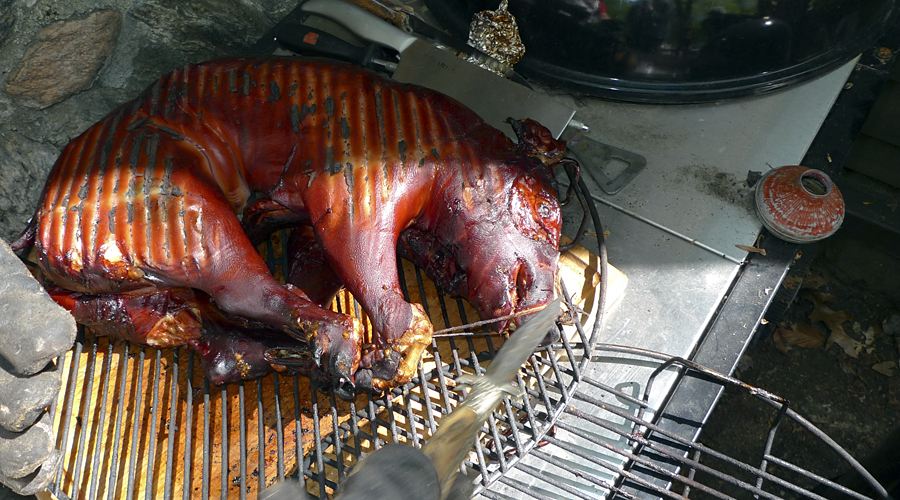
pig

And the biscuits. I took a gamble on whole wheat biscuits this time. I think they disappeared even before the rest of the platters were set down. A sparkling day builds an appetite. And shoe golf.

shoe golf

That’s Josefa’s picture. Somehow she caught the shoe flying through the air on its way to the hole, a plastic bin set some 10 yards away. Far enough to make people look ridiculous taking a shot at it. Even college students lowered themselves to try.
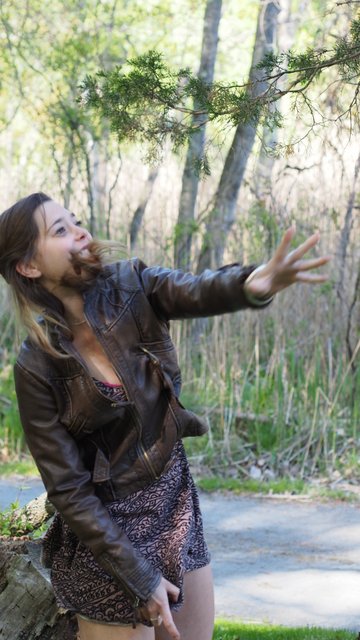
OLYMPUS DIGITAL CAMERA

But the marshmallows. It was as if people had never seen a marshmallow before. As if they had never seen food before. You can make those? I never knew.

We had cut young green branches up in the woods yesterday morning, and now all the adults were acting like kids, standing over the fire and toasting Gil’s home-made marshmallows with glee.

marshmallow

Everyone had drips of white around their mouths.
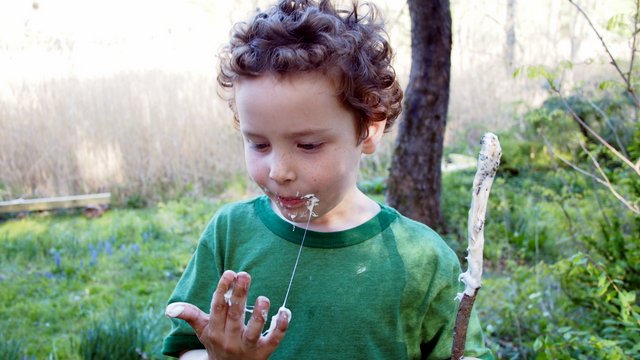
OLYMPUS DIGITAL CAMERA

Grown men made s’mores. (Gil concocted his version of home-made graham crackers, too.) We layered in slivers of salted caramels.
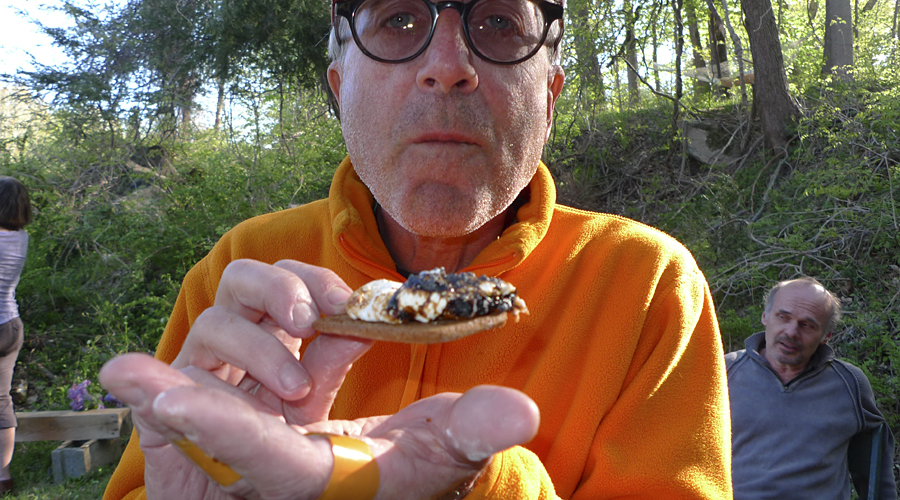
gary

Our friend Stu left us with a mix-cd that has party tunes, including Ray Wylie Hubbard with the lyrics: Only two things that money can’t buy, that’s true love and home-grown tomatos. I would add a  third, hand-crafted marshmallows.

Hand-Crafted Marshmallows

6 packages gelatin (the unflavored kind, GoBio has an organic product)

2 cups icewater

3 cups granulated sugar

2 cups corn syrup (Wholesome Sweeteners organic brand has a little vanilla in it)

½ teaspoon salt

2 tsp vanilla extract

½ cup confectioners sugar

½ cup cornstarch

(Optional flavorings: almond extract, lavender drops, orange extract, etc)

In the bowl of an electric mixer with a whisk attachment combine the gelatin with half the ice water.

Combine in a saucepan: the rest of the ice water, the sugar and the salt. Using a candy thermometer, cook until mixture reaches 240 degrees (soft-ball stage). Remove from heat, pour into bowl with gelatin and whisk on slow speed to combine. Increase speed to high and whisk for fifteen minutes. Add vanilla and optional flavorings at end and whisk for a minute to combine.

Pour into greased 9 x 13 pan that’s also well dusted bottom and sides with the half-and-half mixture of the confectioners sugar and cornstarch. Spread evenly with a lightly oiled spatula. Let stand uncovered overnight.

Turn out onto cutting board dusted with the confectioners sugar and cornstarch. Cut into cubes with a pizza wheel dusted with the confectioners sugar and cornstarch. Dust with the confectioners sugar and cornstarch (mix up more if necessary).

Makes about sixty marshmallows. Enough for a roiling pig roast.

2 Comments

Filed under Cooking, Dogs, Home, Jean Zimmerman, Music, Nature, Photography

Marsh Mellow

Anticipating guests, Gil goes into superhero mode. Building a spa in the swamp.

gil swamp

Or maybe it’ll be a time machine. I don’t know.

gil swamp cu

Making handcrafted marshmallows.

gil marshmallow

Hanging hammocks.

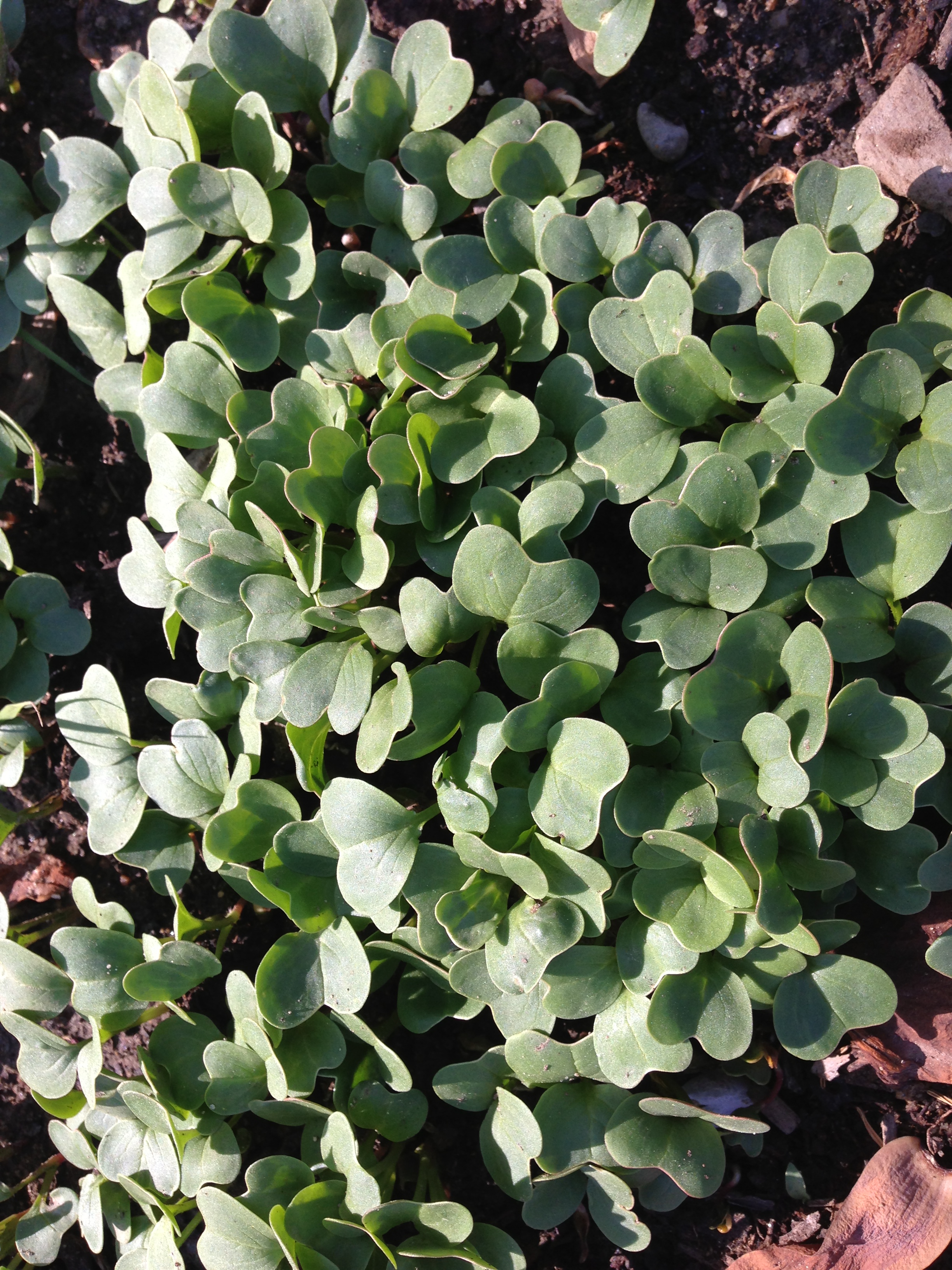
While I rake leaves, water johnny-jump-ups, inspect sprouting radishes.

radishes

Bake a carrot cake. Write a haiku.

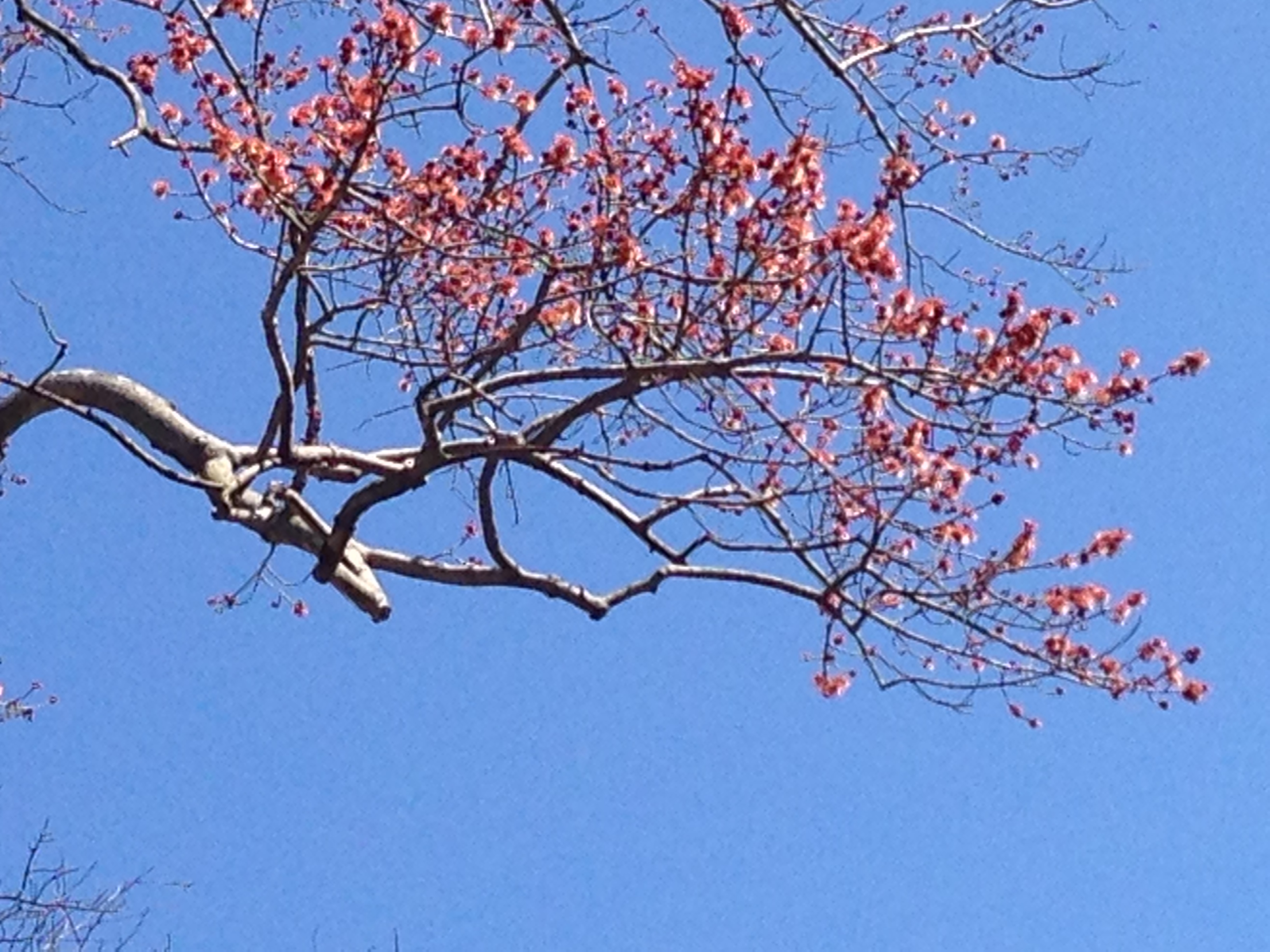
Magnolia petals

Fall from the blossoming tree

Even as I sweep

Gil can write a mean haiku, too.

Admit it, we have
Life down pat at the moment
The hummingbird feeds

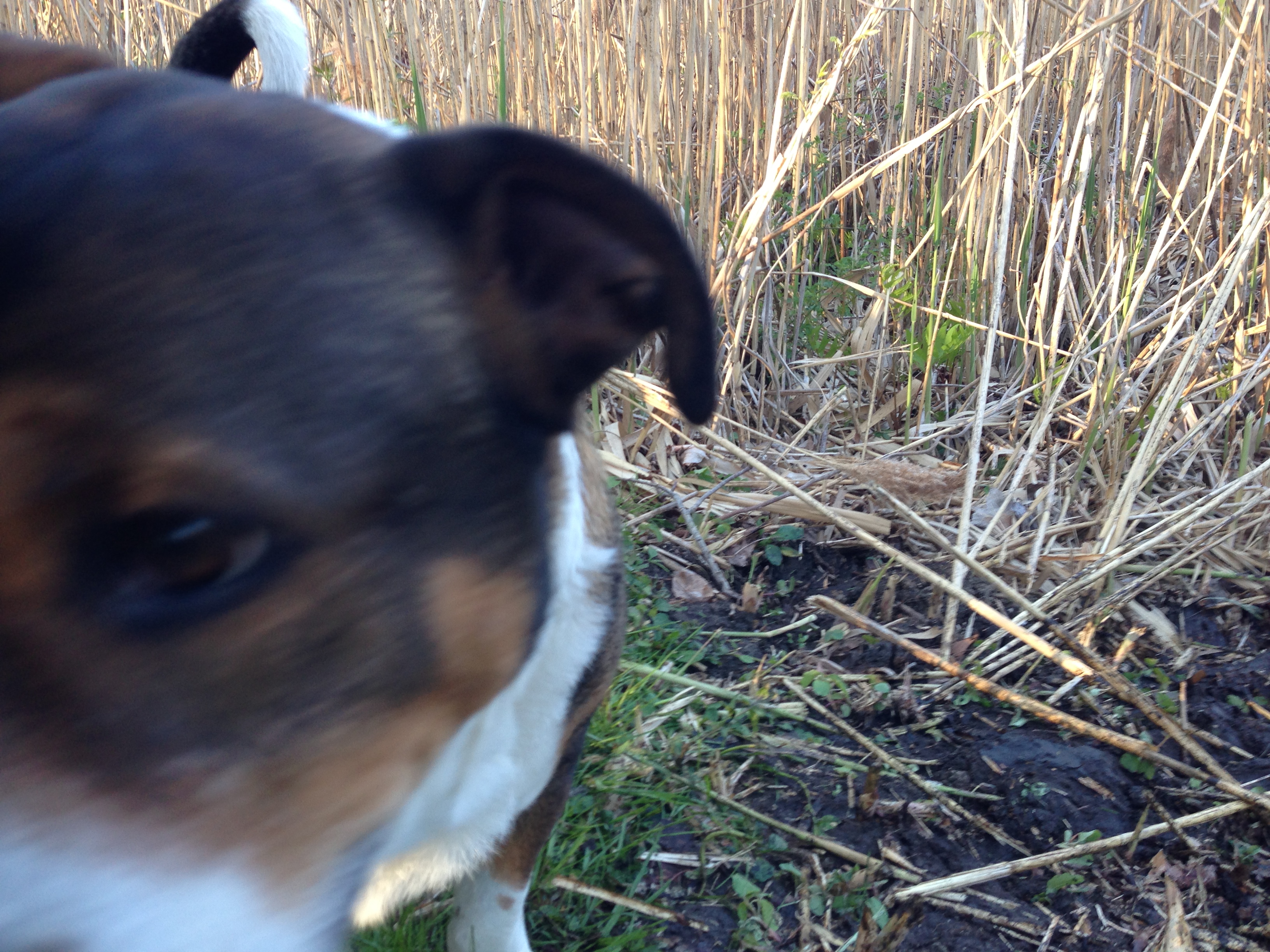
Oliver stays on the lookout for rascally animals.

oliver swamp

Or a stinky place to roll around. One or the other.

Finally I wind up drinking strong coffee with my old friend Barbara.

coffee beans

This place roasts its own beans and welcomes dogs — not mine though, he’d menace the others.

Sundown, the most beautiful day of the spring, a little cool with warmth threaded through it. Inspiring enough for a haiku. You try.

reeds swamp

11 Comments

Filed under Cooking, Dogs, Home, Jean Zimmerman, Nature

Water, Dirty and Clean

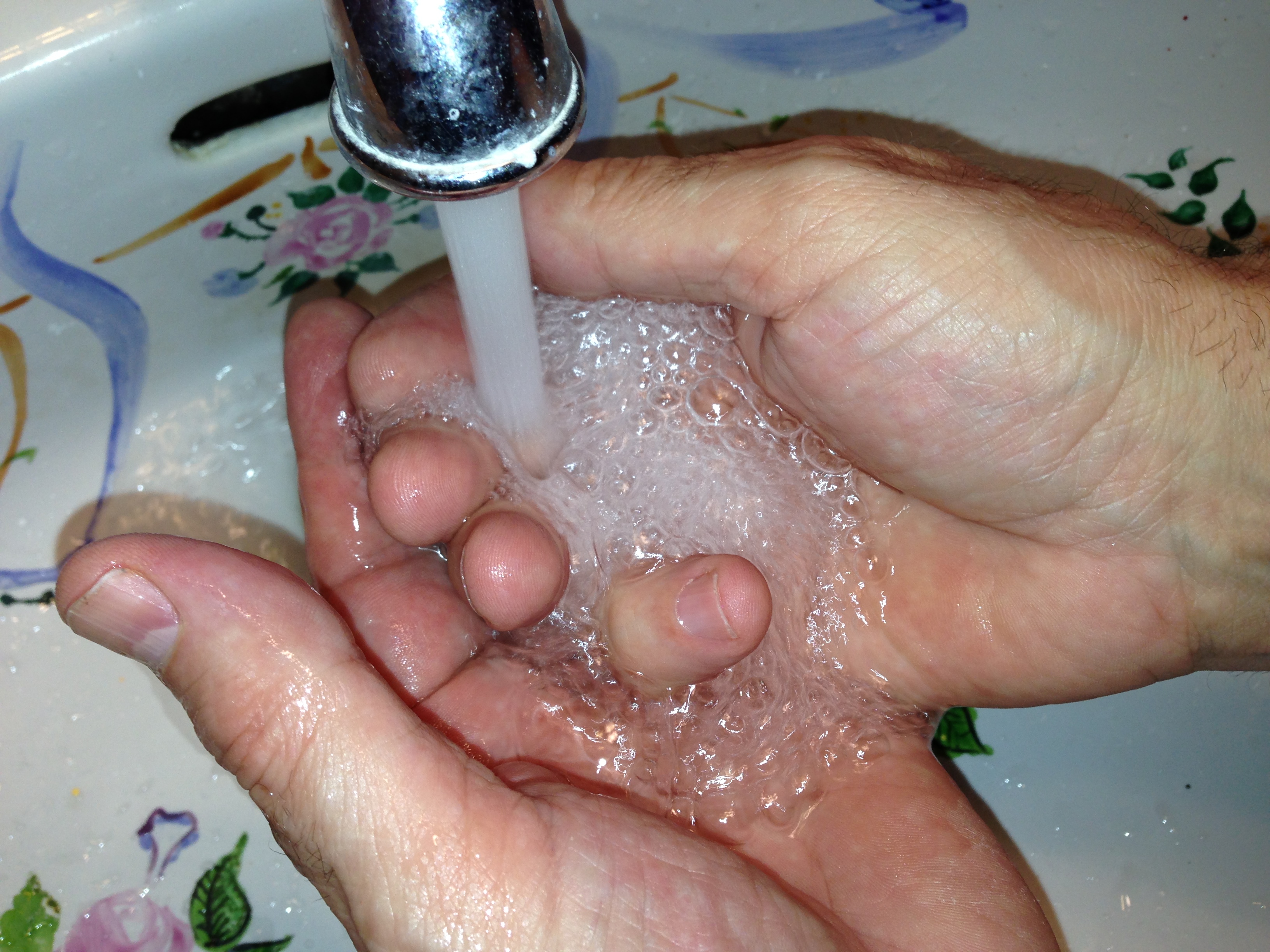
Today’s is a two–part post, all about water.

water

Number One: Man puts junk in water.

No man is an island. But out in the middle of the Pacific Ocean, man has created an island. An island of trash.

I heard of this phenomenon some time ago, and I found my mind circling back to it occasionally. It sounded farfetched, incredible, too disgusting to be true. But I finally decided to learn what was what.

It’s easy to put something out of your mind that takes place a thousand miles off the coast of California, in the middle of a stretch of sea that is an oceanic desert of sorts, filled mainly with plankton. Fishermen or recreational sailors rarely come through the central North Pacific Ocean. Currents there rotate in a ceaseless gyre.

That is where you find the Great Pacific Garbage Patch, as it is technically known. Enormous gross plastic sludge, to the less scientific-minded.

North Pacific Gyre

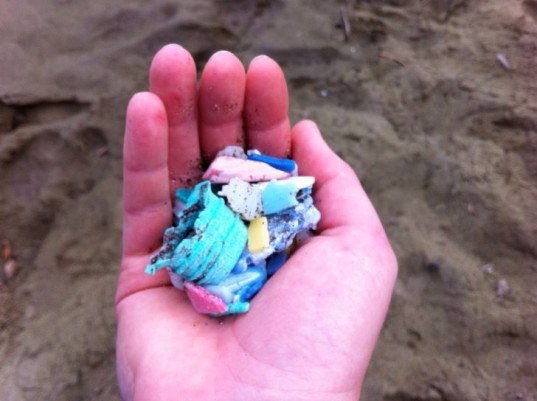
It’s a floating mass of plastics, chemicals, and astronomical numbers of disintegrated  grocery bags – the largest landfill in the world. The mess has been trapped in the pervasive currents, which pull garbage into their vortex from households far away.

The size of the Patch has been put at twice the area of Texas. Yes, that’s what I said.

San Diego’s Scripps Institution of Oceanography found recently that plastic in the Great Pacific Garbage Patch had increased by 100 times the amount of what was found in the region 40 years ago.

In 1997, a sailor named Charles Moore was returning home from a race when he came upon a stretch of debris of monstrous dimensions, most of it suspended below the surface, in a configuration that’s been called “confetti-like”.

confetti

It’s been estimated that 80 percent of the stuff comes from North America and Japan, while another 20 comes from cruise ships – your typical 3,000-passenger cruise ship dumps up to eight tons of solid waste weekly. But fishing nets find their way into the gyre too. Turning and turning in the widening gyre, wrote Yeats in his apocalyptic poem “The Second Coming.”

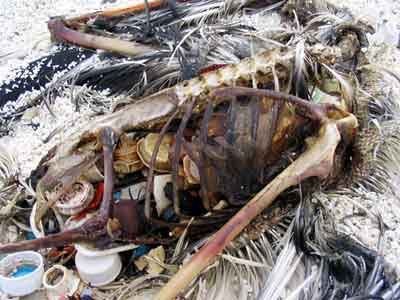
One hundred million tons of trash. That’s what it is. Broken down into small-enough pieces to be ingested by marine critters like the sea turtle and the black-footed albatross, when the current brings garbage from the gyre to the Midway Atoll.

albatross

Captain Moore, who can be heard giving a TED talk, now heads a foundation to clean up all the plastic.

Moore w plastic tray

In America, we use two million plastic beverage bottles every five minutes – but what’s worse than bottles is bottle caps. That’s what albatross moms feed their chicks, thinking they’re food.

Part Two: Man cleans up water.

Or rather woman cleans up water. Young genius woman. With the help of oysters. In New York City.

Isn’t this great: a landscape architect named Kate Orff had an idea that respects history and the environment all at once.

Kate_Orff

Under the auspices of a project called Oyster-texture, she and her team at Scape/Landscape Architecture P.L.L.C. are attempting to reinstall oyster archipelagos in Gowanus Canal, Brooklyn, currently a toxic Superfund site. It’s an effort to blend urbanism and ecology in a new and exciting way, on a working pier, in the middle of the polluted harbor.

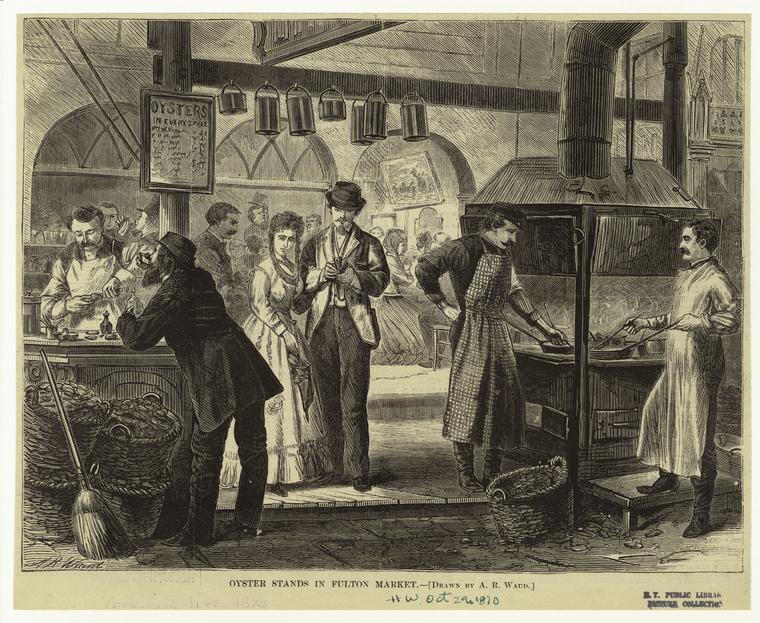
Up until 100 years ago, the palm-size bivalves were a mainstay of New York’s gastronomy, its economy, and, it turns out, its ecology.

Fulton Market, 1870

You’d get oysters from a street peddlar the way you get a hot dog now.

oyster houses-bowery boys

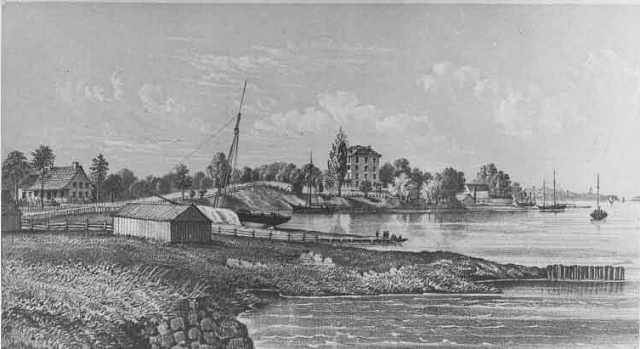
Oysters were so healthy, back when New Amsterdam was first settled, they could be found as big as a dinner plate. Manhattan’s indians consumed them in such quantitites, you’d find huge middens of shells all over the island. The Gowanus Creek in particular was a harvesting place for the succulent shellfish – they were so good, they were harvested by the Dutch and shipped back to Europe.

Then, of course, the waterways surrounding New York got dirty. In 1927 the last oyster bed  closed. As Thomas Wolfe wrote  in You Can’t Go Home Again, in 1940, “It is the old Gowanus Canal, and that aroma you speak of is nothing but the huge symphonic stink of it, cunningly compacted of unnumbered separate putrefactions.”

Oysters died off. No more local oysters at the Oyster Bar in Grand Central Station, one of my favorite haunts. Oyster reefs used to cover a quarter of New York harbor. Now, none of it.

ships in gowanus bay-1867-Brooklyn Public Library

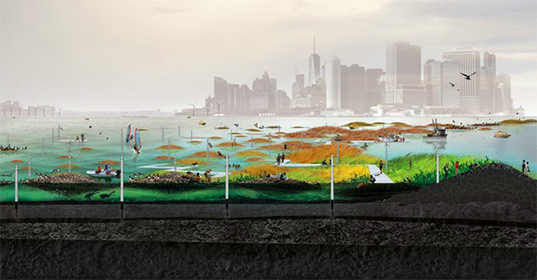
But the thing about that was – and this is where Kate Orff comes in – it was the oysters themselves in large part that were cleaning the water! So the thing to do, as she sees it, is reinstall them, carefully, so they’ll survive and build reefs. (The babies are called spats.) The oyster has a natural, what Orff calls a “beautiful, glamorous set of stomach organs” that take in algae and contaminants on one end and filter out clean water. She wants to “harness the biological power of the creatures that live in the harbor and the people who live in the city to make change now.”

oyster_diagram

She decided to use a cheap marine mainstay she refers to as “fuzzy rope” and build nets for the shellfish to cling to. (They brought knitters in to weave prototypes in the studio rather than drawing them.) Ultimately the reefs will serve as storm surge protectors and habitat for sea birds.

oyster-tecture-mollusk-park-for-nyc

Orff has big plans. She did a project for the Museum of Modern Art that laid out what could happen in Brooklyn if the oysters took hold. Ultimately there would be a floating raft with oyster nurseries below and recreational opportunities above. You can hear all about it in, yes, her TED lecture .

Clean water, local oyster slurping (far from now, probably).

the love of oysters

Scuba diving. A watery jog-park. But, mainly, clean water.

7 Comments

Filed under Cooking, History, Jean Zimmerman, Knitting, Nature

Of Blooms and Brooches

When the old magnolia by the Cabin blooms, I am rendered speechless.

magnolias

Here is an exquisite poem for an exquisite spring day, by Robert Louis Stevenson.

I Will Make You Brooches

I will make you brooches and toys for your delight

Of bird-song at morning and star-shine at night.

I will make a palace fit for you and me

Of green days in forests and blue days at sea.


I will make my kitchen, and you shall keep your room,

Where white flows the river and bright blows the broom,

And you shall wash your linen and keep your body white

In rainfall at morning and dewfall at night.


And this shall be for music when no one else is near,

The fine song for singing, the rare song to hear!

That only I remember, that only you admire,

Of the broad road that stretches and the roadside fire


(Thanks to Beth Levin, who seeks out and shares many wonderful things.)

6 Comments

Filed under Home, Nature, Poetry, Writers

Scented Letters

I went in search of the ink. As a writer, I was naturally beguiled by the idea of a perfume that was supposed to have the scent of ink on skin, from a company called Byredo. Gil said he’d give me a bottle for an early anniversary present, so we ended up at Barney’s, the department store on Madison Avenue, a glitzy place to shop but the only location that stocks the stuff in the United States.

It’s actually called M/Mink, I discovered.

mink

M/Mink, along with the rest of a line of unorthodox scents developed by a tattoo-covered Swedish basketball player turned fragrance entrepreneur (!) named Ben Gorham, “is given a clear identity and reason of being.”

bengorham

M/Mink came about in partnership with parfumiers Michael Amzalag and Mathias Augustyniak of M/M (Paris) and features such ingredients as patchouli leaf, clover honey and amber. At the counter, the clerk sprayed some M/Mink on a paper wand. I inhaled, Gil inhaled, and we shook our heads. Somehow chemical. Not right for me.

I love scent. A few years ago Maud and I visited Grasse, in southern France, whose thousands of acres of flower fields make it an ideal perfume manufacturing spot. Jasmine, rose, lavender, orange flower, and tuberose are all harvested nearby. We spent a morning at Parfumerie Galimard, which began making perfume in 1747. It actually started out providing the king with olive oil, pomades and perfumes to scent the all-important fashion accessory, the leather glove, also a historic local industry. At Galimard today, if you don’t want to purchase their Rencontre or Ma Faute, you can sit in a cubicle and be guided by a “nose” (a professional parfumier) in creating your very own scent, with the assistance of eye droppers and beakers and over 127 “notes.”

galimard workshop cu

Smells, to you. Combine the top note (peak note), the middle note (heart note) and the base note  (fond note) in the proper architecture and you get a bottle of your own to name. I came up with Plus Plus (English translation: More More). Maud’s “brand” was Bel Ete (Beautiful Summer). And it was a beautiful summer. Maud and I agree that becoming a temporary nose was one of our most enjoyable experiences. Ever.

Plus Plus

They kept my number on file in case I ever need a refill. But it gave me respect for the noses behind wonderful places like Penhaligon’s (British, also venerable, est. 1870) because it turns out you can’t just throw in some honeysuckle and some green grass and have it all turn out alright.
For a horrific nose-based thriller, try Patrick Susskind’s Perfume. The counter personnel at Barney’s would love it.
perfume

This blog post is brought to you by smell-o-vision. Today, Gil and I sniffed the other perfumes in the Byredo line, in rapid succession. Baudelaire was tasty (juniper berry, black pepper, hyacinth, leather). Pulp, a little too pulpy (bergamot, cardamom, red apple, peach flower). We tried others for good measure – Palermo and Gypsy Water were contenders – and ventured outside the line to small colored bottles of essential oils that would have cost a fortune. We learned that the salesman had a sister who rescued endangered birds. The saleswoman had suffered an acrimonious divorce in Iran.

Flowery, spicy, powdery. Figgy. Just like Chanel. Our noses were swimming.

They sprayed the scent on my fingertips. On the backs of my hands. A cup of coffee beans was proffered to cleanse my nasal palate. We were advised to take a stroll around the store to clear our heads. And we did. I do anything someone tells me when they treat me like Cleopatra.

Jean with Perfume Stick

You get along so well, said the saleswoman, rapidly waving a wand to get the perfume just dry enough to sniff. He’s so agreeable! she said to me. And he was, was Gil.

It was rather warm in there, and I realized one of the first scents I’d tried was the finest. Bal D’Afrique, which combines African marigolds with violet, jasmin petals and cyclamen in an elixir you’d almost like to drink.

Gorham accompanies each bottle with a funny little story line. The one for Bal D’Afrique goes: “The noble faces of tall and straight-backed chieftains and princes greet us, the guests. The red dirt floor, covered by the exotic furs of big game, resonates with the stomps of the bejeweled dancers…” I can’t finish, I’m laughing too hard.

We followed our noses out to the street, where my wrists and throat were now armed against the delightfully dirty New York air.

Bal D'Afrique box


5 Comments

Filed under Fashion, History, Jean Zimmerman, Nature, Writing

Turning It Around

I  can’t believe it, I said to Gil. I cannot believe I’m 55 years old and don’t know the proper time to plant a sunflower seed.

Well, he said, it’s no big deal. I’m 59 years old and I don’t know either.

It got me to thinking, how many new things, simple things, nothing earthshaking, come into my life every day, even at my advanced age.

It’s a question of noticing.

Today I prowled around the boonies upstate, in Dutchess County, with my brother Peter – these photos include his — seeing some small things I hadn’t seen before.

Pete

We spent most of our time in Tivoli, a tiny village near the Hudson River that dates back to 1872 but avoids all dustiness, with its free-thinking, artistic, intellectual inhabitants.  Nearby Bard College sends over a constant scruffy stream of  students, not to mention professors.

Pete introduced me to a monument in the cemetery of St. Paul’s Episcopal Church in Tivoli, where the stones seem dominated by the Hudson  Valley families DePeyster and Livingston.
statuary

An exquisite stone carving to represent the soul of a remarkable woman, Estelle Elizabeth de Peyster Toler, who was born in 1844 in Red Hook and died 45 years later in Manhattan. Descended from the cream of New York society — De Lanceys, Van Cortlandts and Coldens — she was known for her piety and philanthropy. Her husband died the day after her death of a broken heart. Estelle’s marker reads, from the Proverbs, “A perfect example in life of the ideal virtuous woman.”

dePester

But I found the inscription on the base of the praying girl more moving.

sister baby

With its sweet embellishments of lichen and moss: SISTER–BABY.

Another grave, more modest, this one in a field of grass off a country highway.

Molly

Was this Molly also a virtuous woman? A virtuous pet? It’s an odd place for a burial but oddly peaceful.

Coffee break.

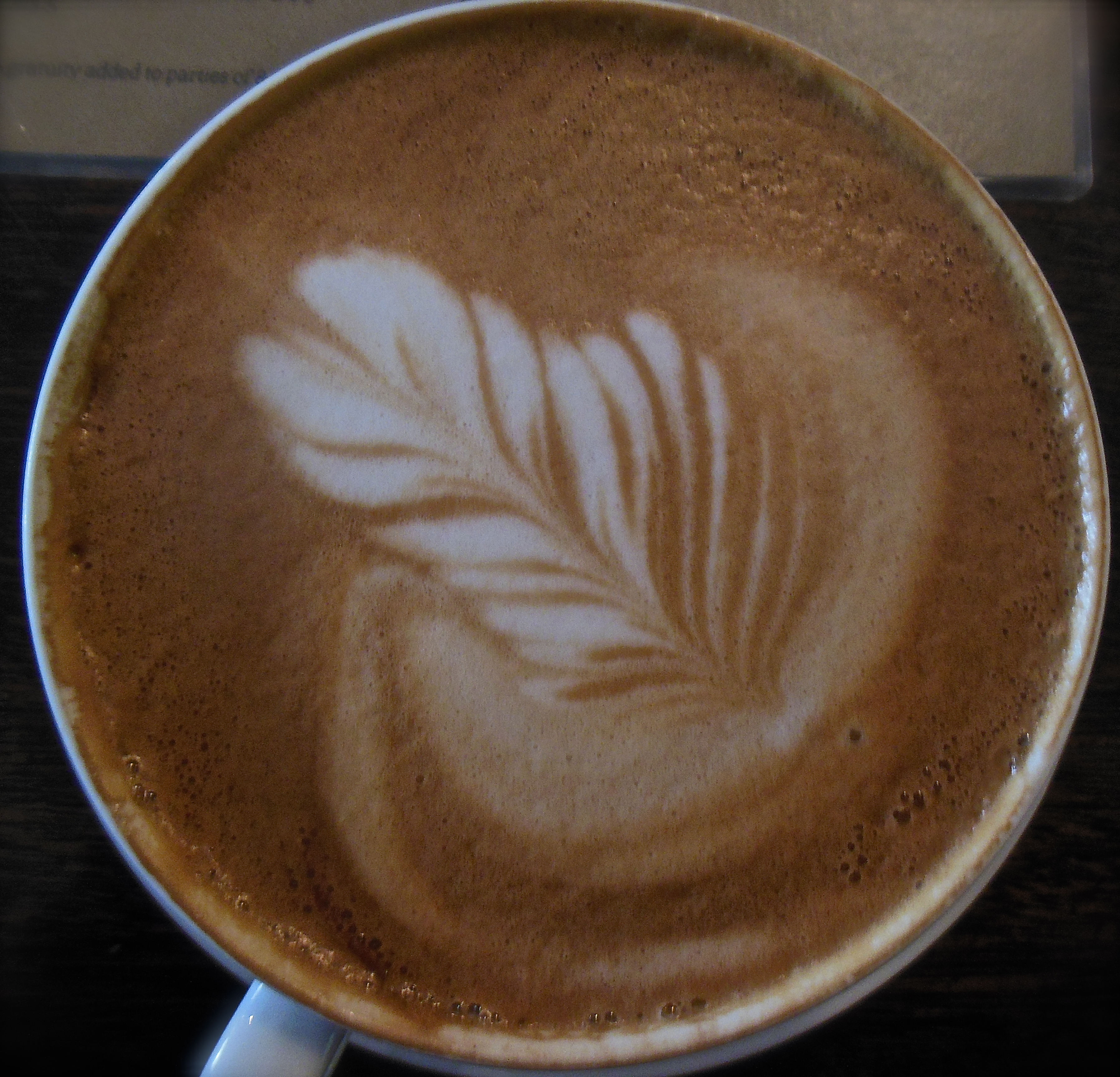
I’ve had plenty of fancy cappuccinos, like this one at Tivoli’s Murray’s café, designed by stylish barrista Michelle.

cap

Pretty good, she said under her breath, checking her work, deadpan. Not the best I’ve done.

But I’ve never before had borscht made with garbanzos rather than beef to complement its beet chunks. Topped with a spoonful of organic sour cream, it was scrumptious.

And before today I never had a perfectly-designed, shot-silk carryall for knitting needles such as I brought home from  the yarn shop on the tiny stretch of Broadway that is the heart of Tivoli. Fabulous Yarn offers luscious skeins (“fibers for fanatics”).

yarn

And whimsical taste. Under one cheery roof.

yarn store

Down the street, a tavern called the Black Swan, currently under repair.

black sway

Attitude will remain unchanged.

all our visitors

Before today, I had never laid eyes on the brick-and-stone construct of architectural genius that is the historic Stone Jug House in Clermont, housing families since 1752. Local stone, I knew. Weathered brick, sure. Together, gorgeous.

jug

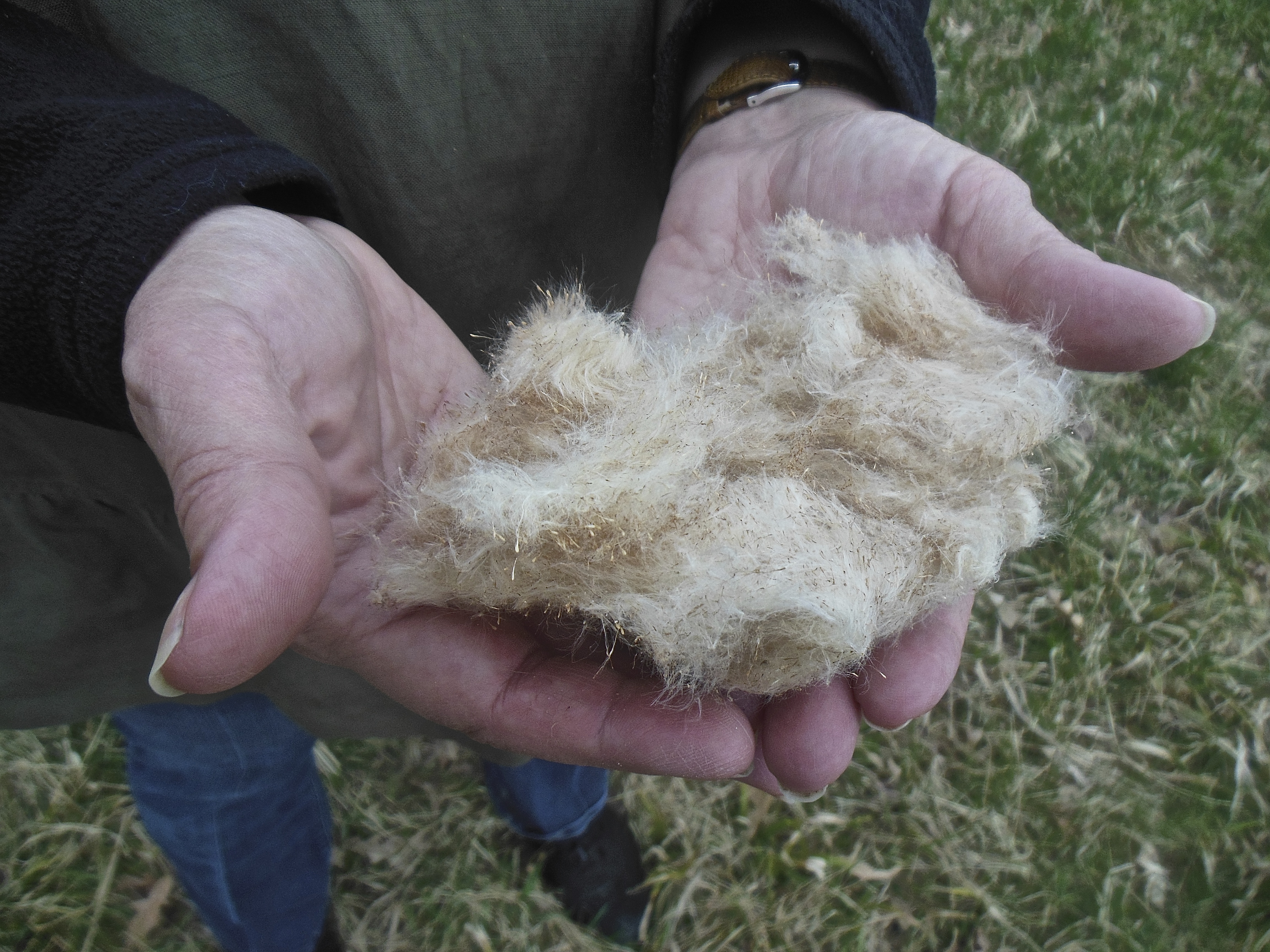
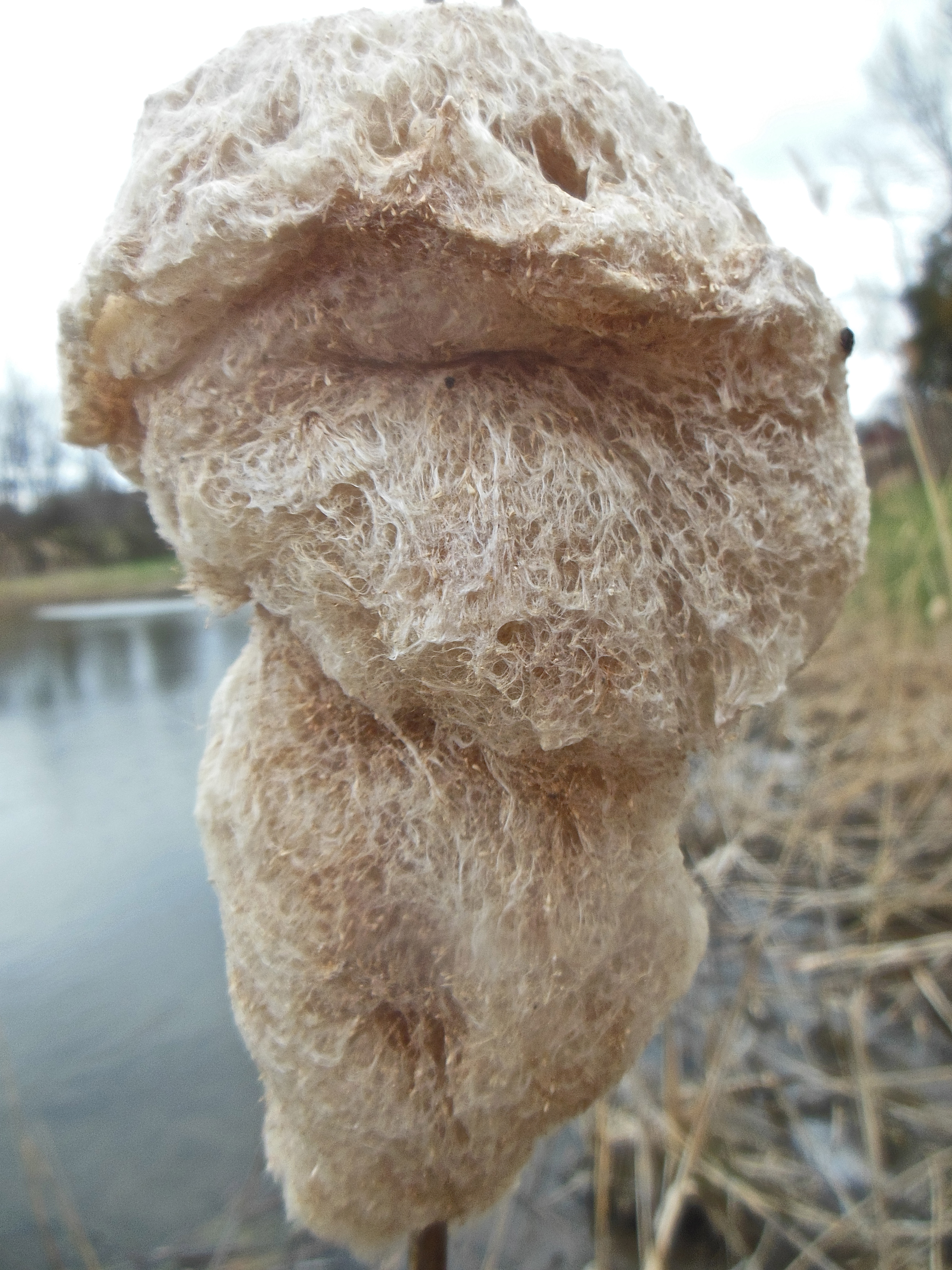
I looked around today for something I’d seen a hundred times, but always loved: a painted turtle. But the large one Peter knew of refused to show his face at the pond, the weather being cloudy. Still, there was something to see, an exploded cattail.

cattail

Like cotton wool laced with cornmeal. It was something I’d never touched before.

cattail cu

Sometimes if you simply turn something around, it’s totally new.

lovewisdomgracepeace

Love.

4 Comments

Filed under Art, Cooking, History, Jean Zimmerman, Knitting, Nature, Photography

Start Spreading Manure

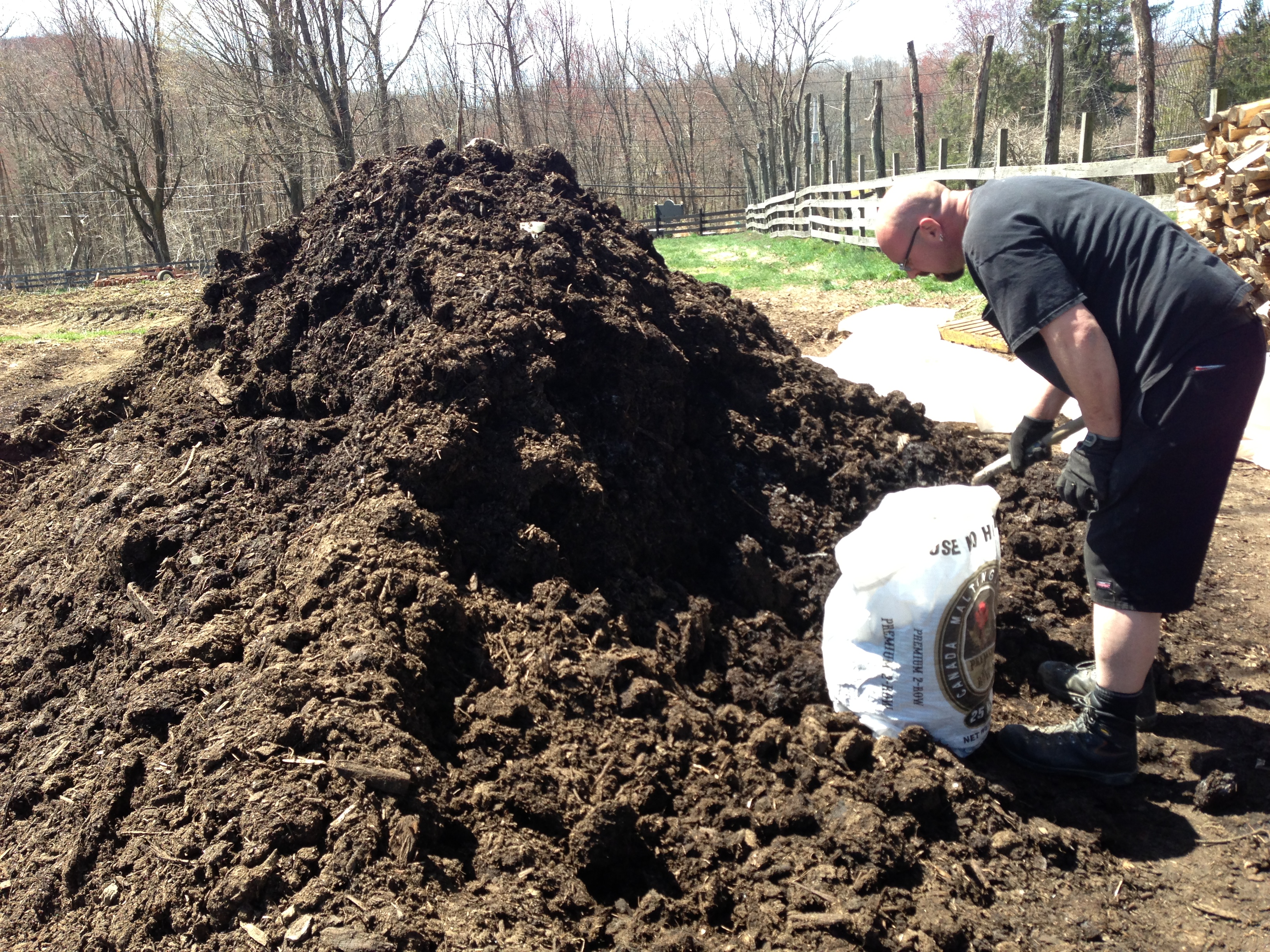
What’s in that, anyway, I asked.

Chris

You mean what kinds? said Chris, who was busy shoveling a big brown pile of composted manure into 50 lb. bags for us to drive home. Oh, he said. Cattle. Chicken. Pig. And other stuff too. Innards.

He told me he once found a jawbone in the compost.

Last year our garden at the Cabin was, truth be told, kind of weeny. Sallow tomatos hung off spindly vines. This will be the macha season of vegetables, helped along by plenty of fertilizer and more diligent weeding. I’m determined.

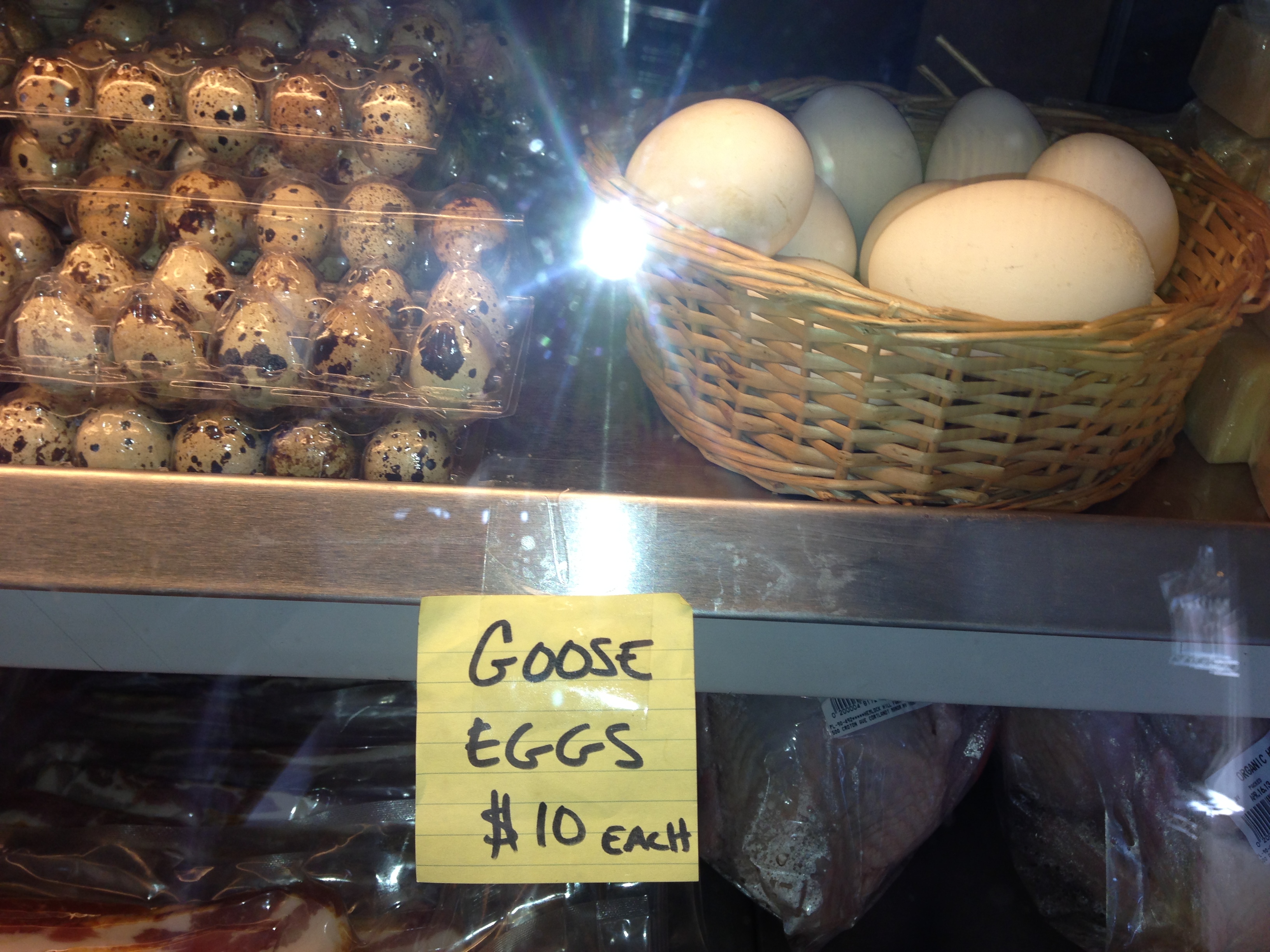
Hemlock Hill Farm  stocks seasoned manure as well as lots of other fortifying things. A variety of eggs, chicken, duck, quail and goose.

goose eggs

Fresh chickens (the bird we brought home today for dinner was running around yesterday). Johnny Jump Ups, with their little lion faces. “There’s pansies, that’s for thoughts,” said Ophelia. In her day, pansies were wild and small, and sometimes known as heart’s ease or love-in-idleness.

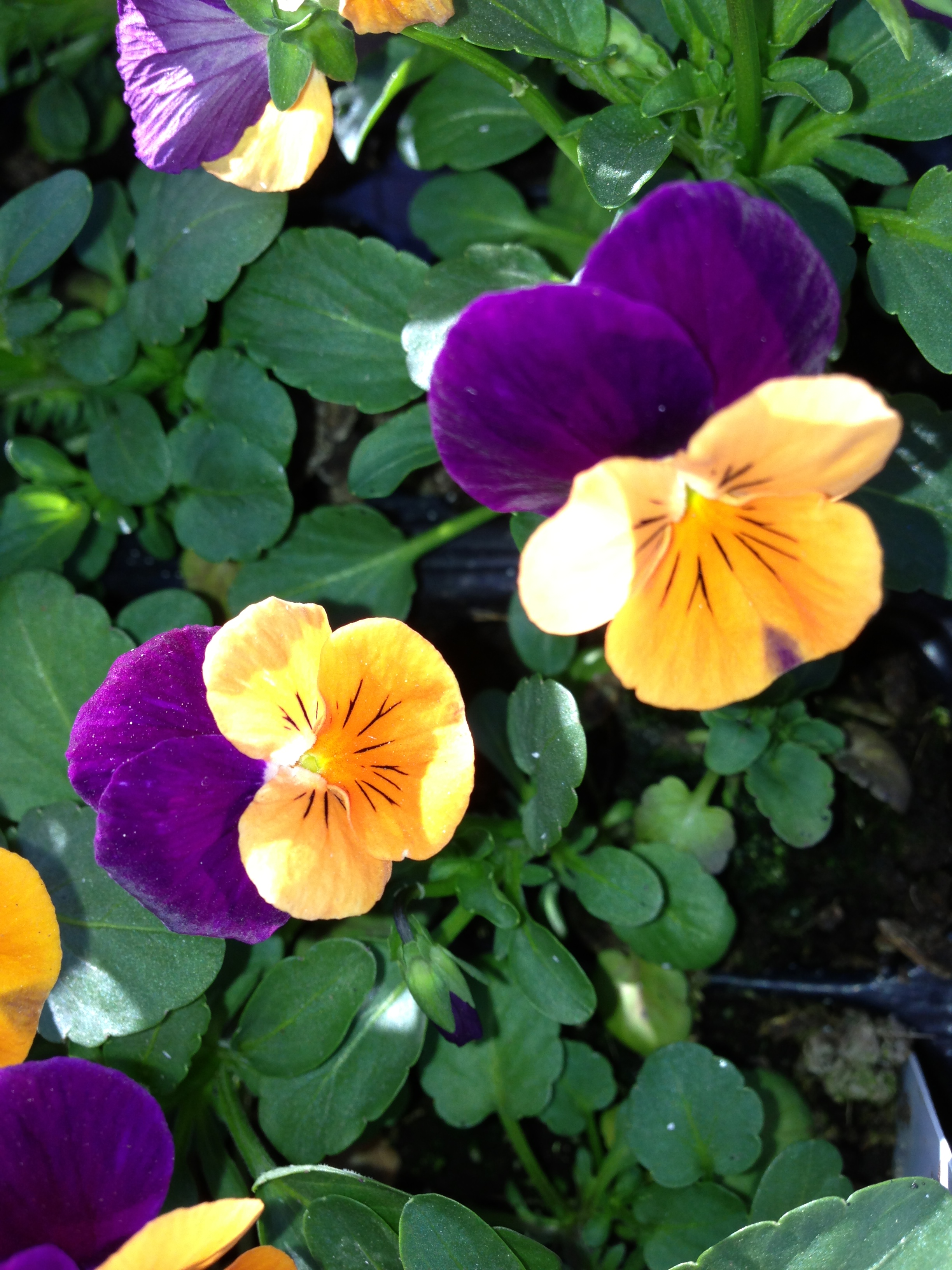
johnny jump ups

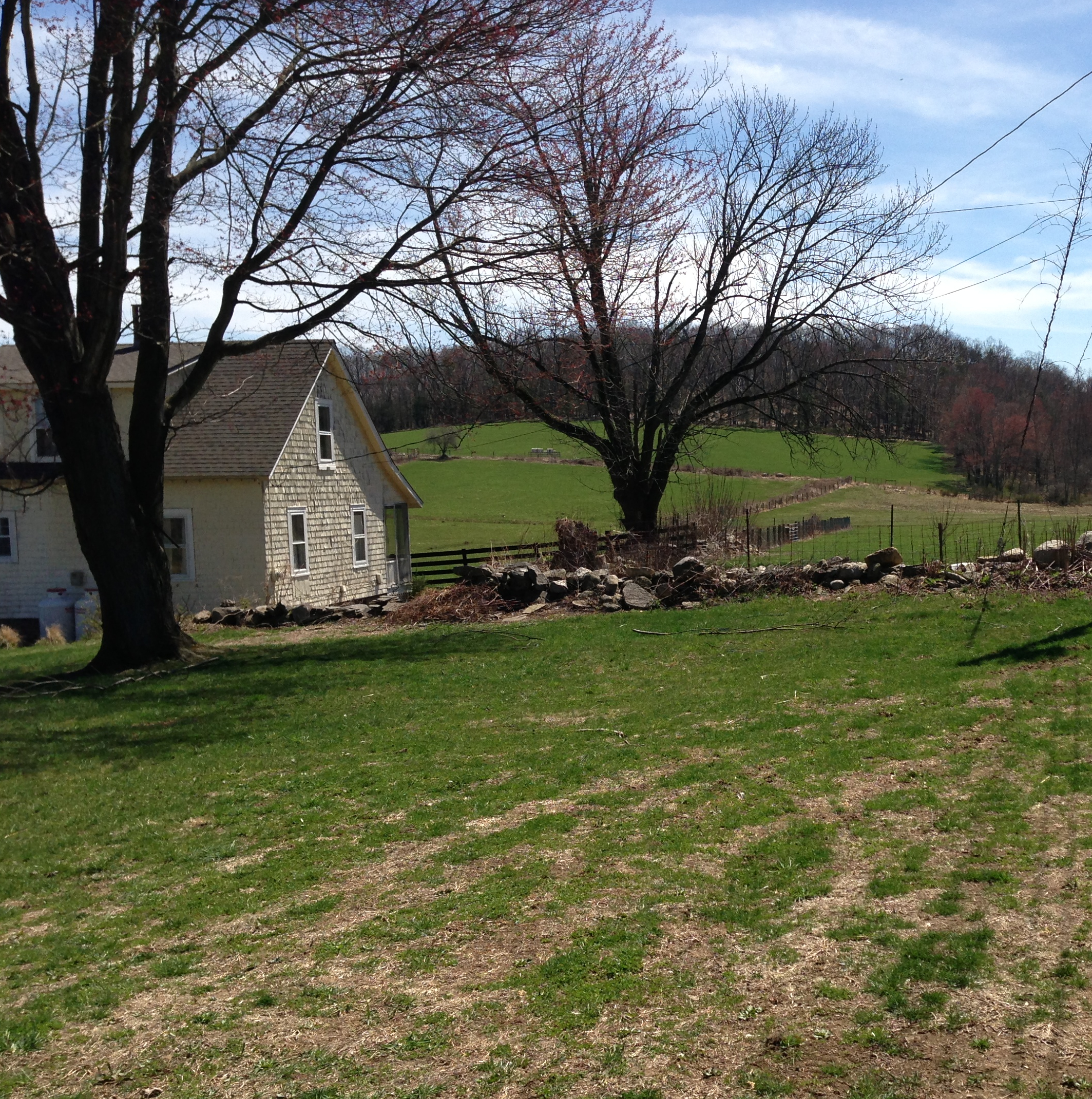
The farm, on 120 acres in Cortlandt Manor, New York, has been owned by the De Maria family since 1939. There is a beautiful hillside to its south, near a spa of sorts for its chickens, which recline on clean straw underneath a shady quonset. It’s good to have an organic farm you can trust in your neighborhood.

Hemlock Farm

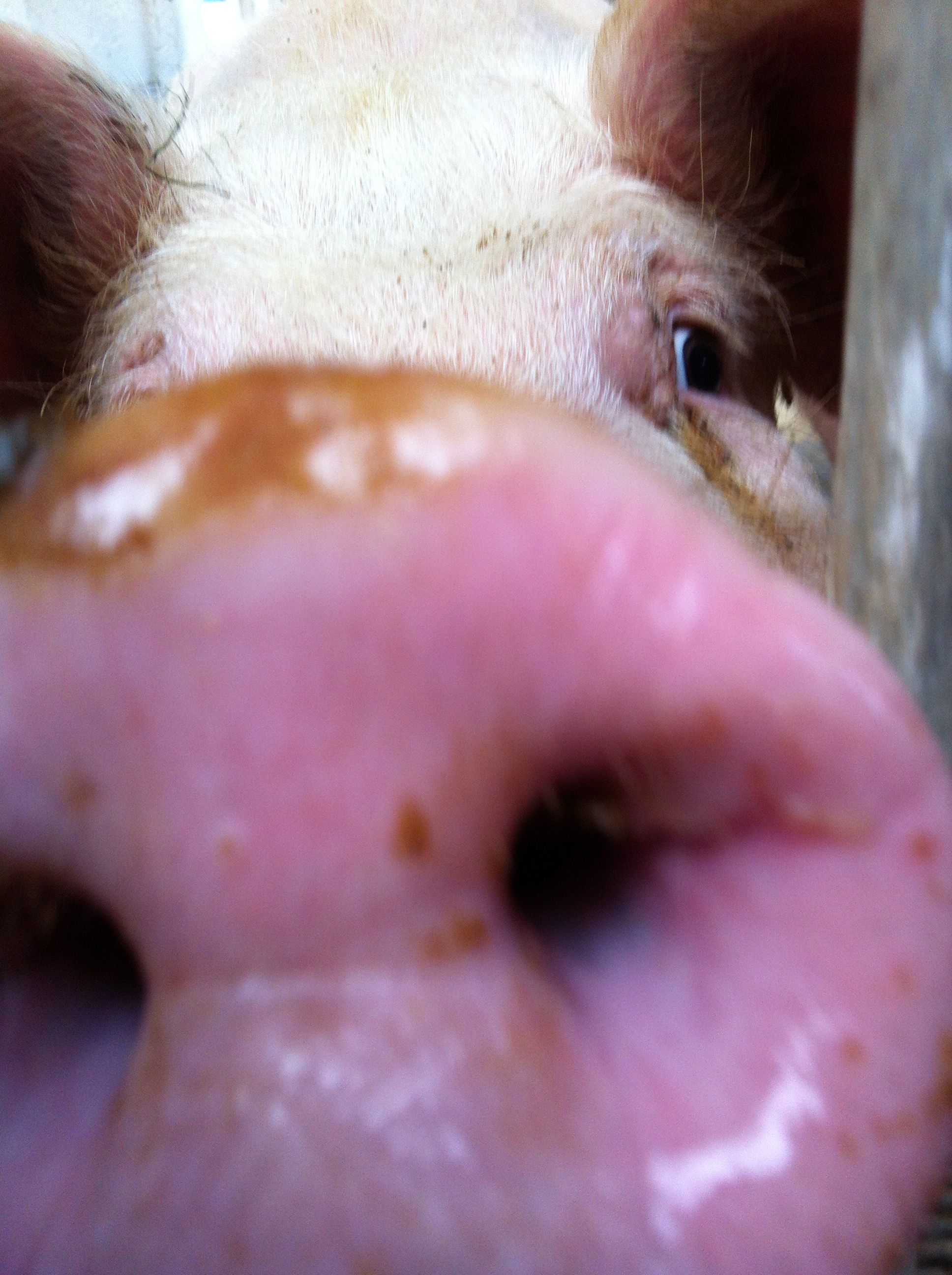
We visited the pigs.

Pig Snout

I’ll admit to mixed emotions, seeing the spring piglets scamper up to the fence, knowing that we have a pig roast planned in our near future. They’re such magnificent animals. Didn’t one of them write Animal Farm?

Wary Pig

Our 300 pounds of Hemlock manure laid the foundation for this year’s vegetable patch. A garden store near us, Sprainbrook Nursery,  has fallen on hard times, but the owner, Al Krautter, is making a go of it despite financial strictures, sending an inspiring e-newsletter and cultivating  a variety of spring plants when he could not afford water or heat in the greenhouses all winter. Krautter is the guru of organic fertilizer. We were advised.

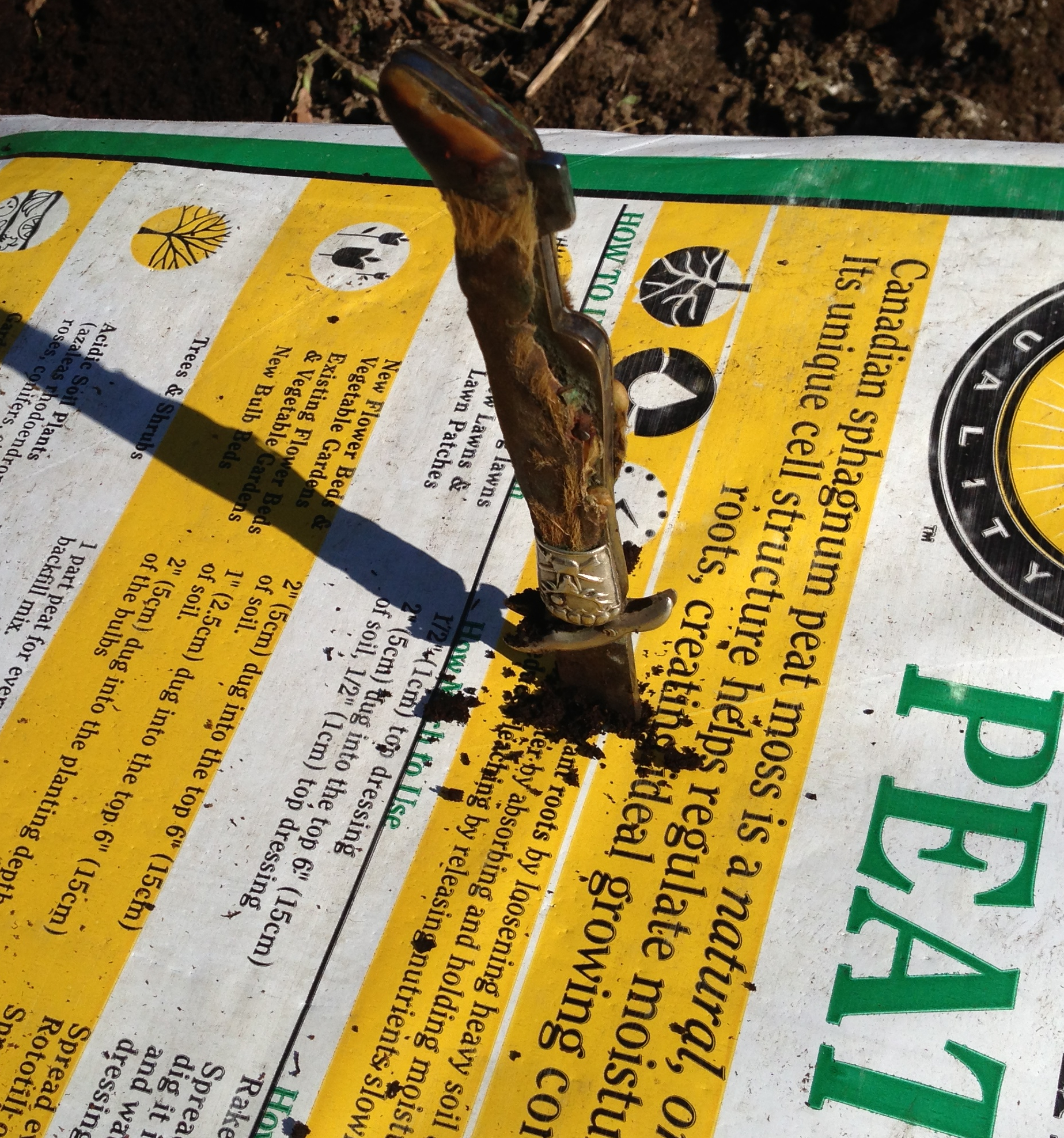
Peat moss, which Gil cut open with his father Acton’s deer hoof knife.

Deer Knife

Not only peat moss, but lime and bone meal and Plant-Tone went into our E-Z Bake topsoil, plus a vinegary smelling mineral rock dust, plus decomposed lobster, plus some stuff they import from Maine that has a mixture of decayed blueberry, mussels and salmon mixed with sphagnum peat. Work it in or cook with it? Whatever you do, be sure you wear gloves.

We toiled all afternoon (Gil sweating hard over the rototill, me somewhat less so over the windowboxes).

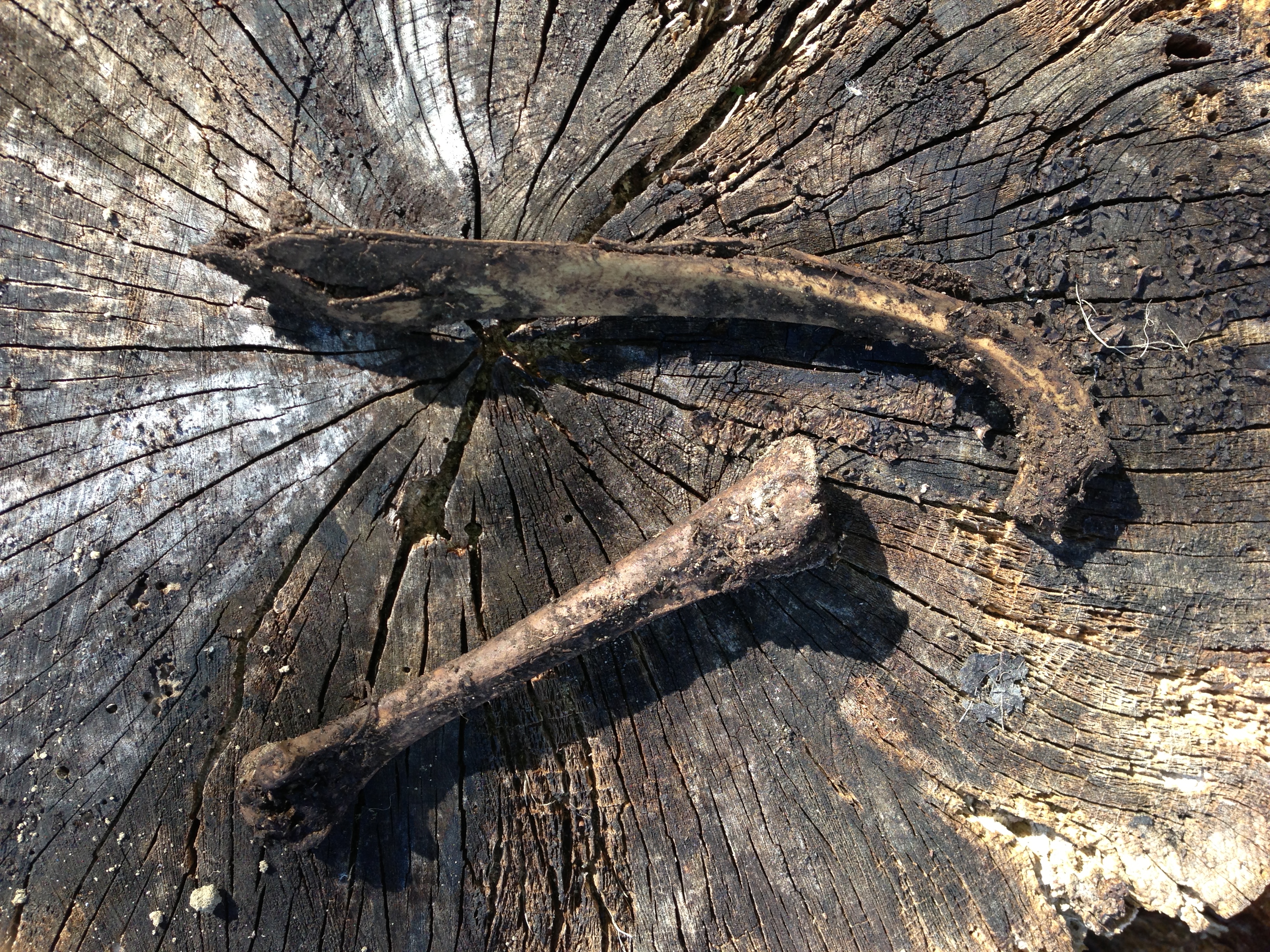
Taking a break only to examine the still-uncomposted bones in our garden soil.

bones

8 Comments

Filed under Cooking, Home, Jean Zimmerman, Nature

Little Green

Spring brings with it a kind of happy sadness. Ferns beginning to emerge.

spring ferns

And yet the air is cold, endlessly.

cold tree

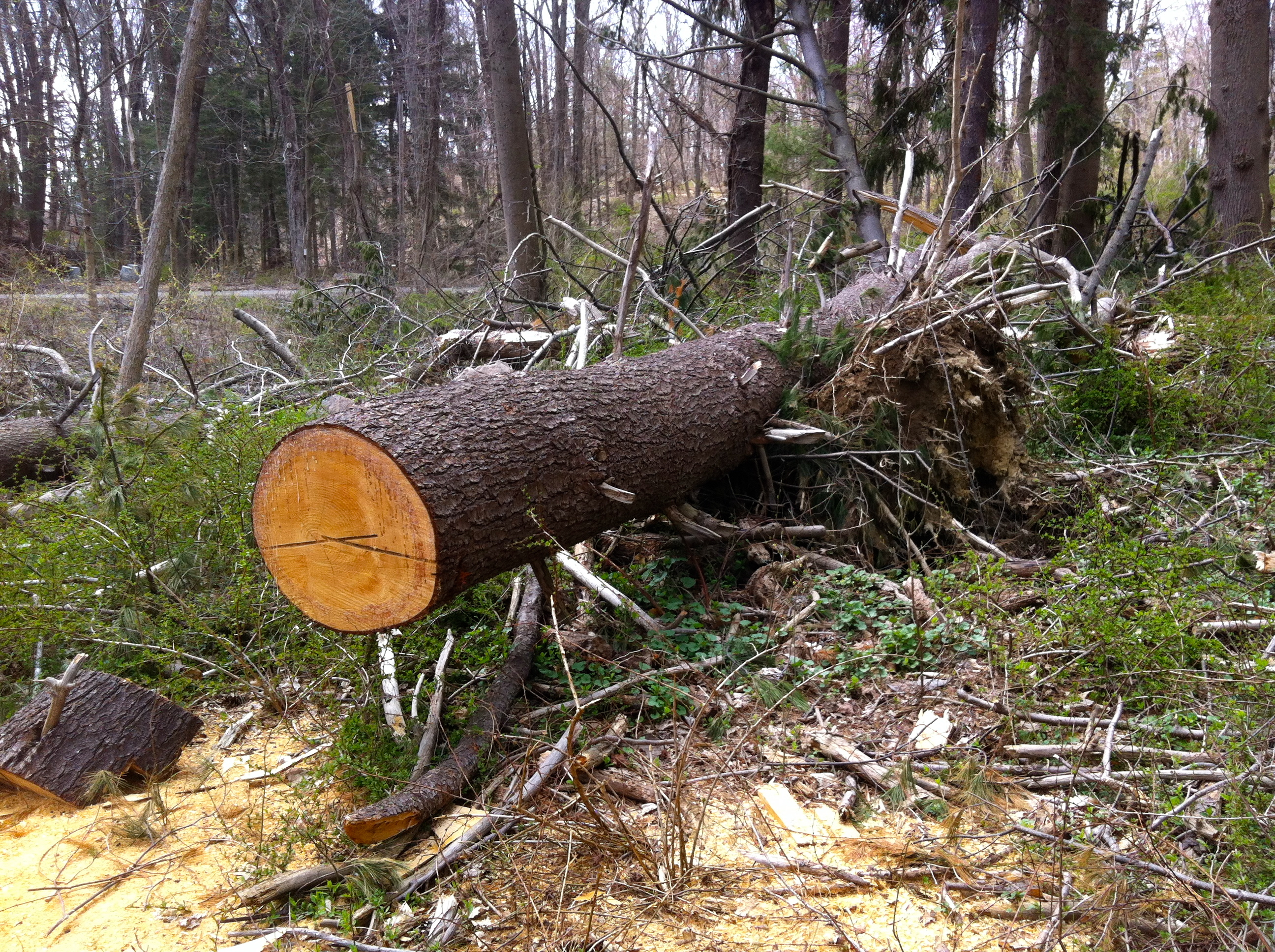
We’re still looking at the downed trees in our front forty, felled during Sandy. Our neighbor took home a dozen planks from one, and it is pretty great that he could use them to build raised beds for a garden this spring. A happy eventuality.

Downed Pine

Still, I’m thinking of the haiku by Kobayashi Issa, who wrote in the early nineteenth century:

The tree will be cut


Not knowing the bird


Makes a nest

The bird will surely build another home in another tree, happily, but here this tree lies, fit only for planks.

In our woods, you now see the moss, there all winter but offering up its soft coat in spring as though you’d never seen it before.

moss

My friend Josefa told me that in Virginia, when spring came, she thought about planting moss in their yard, which was too shady for grass. She was informed by local experts that the ladies of Richmond made their guests put on ballet slippers before treading on their moss. And that they fertilized it with buttermilk. Beautiful images. Yet she was sad in Richmond, even in spring, so sad she had to move back north.

Happy sadness in spring. Poets do it best. (April is National Poetry Month.)

Walt Whitman, an aside in “Song of the Open Road.”

(Still here I carry my old delicious burdens,

I carry them, men and women, I carry them with me wherever I go,

I swear it is impossible for me to get rid of them,

I am fill’d with them; and I will fill them in return.)

whitman

My old delicious burdens. The piercing, pleasurable misery of April. The weight of death, of debts to pay. In the clear sunshine.

April is the cruellest month, breeding

Lilacs out of the dead land, mixing

Memory and desire, stirring

Dull roots with spring rain.

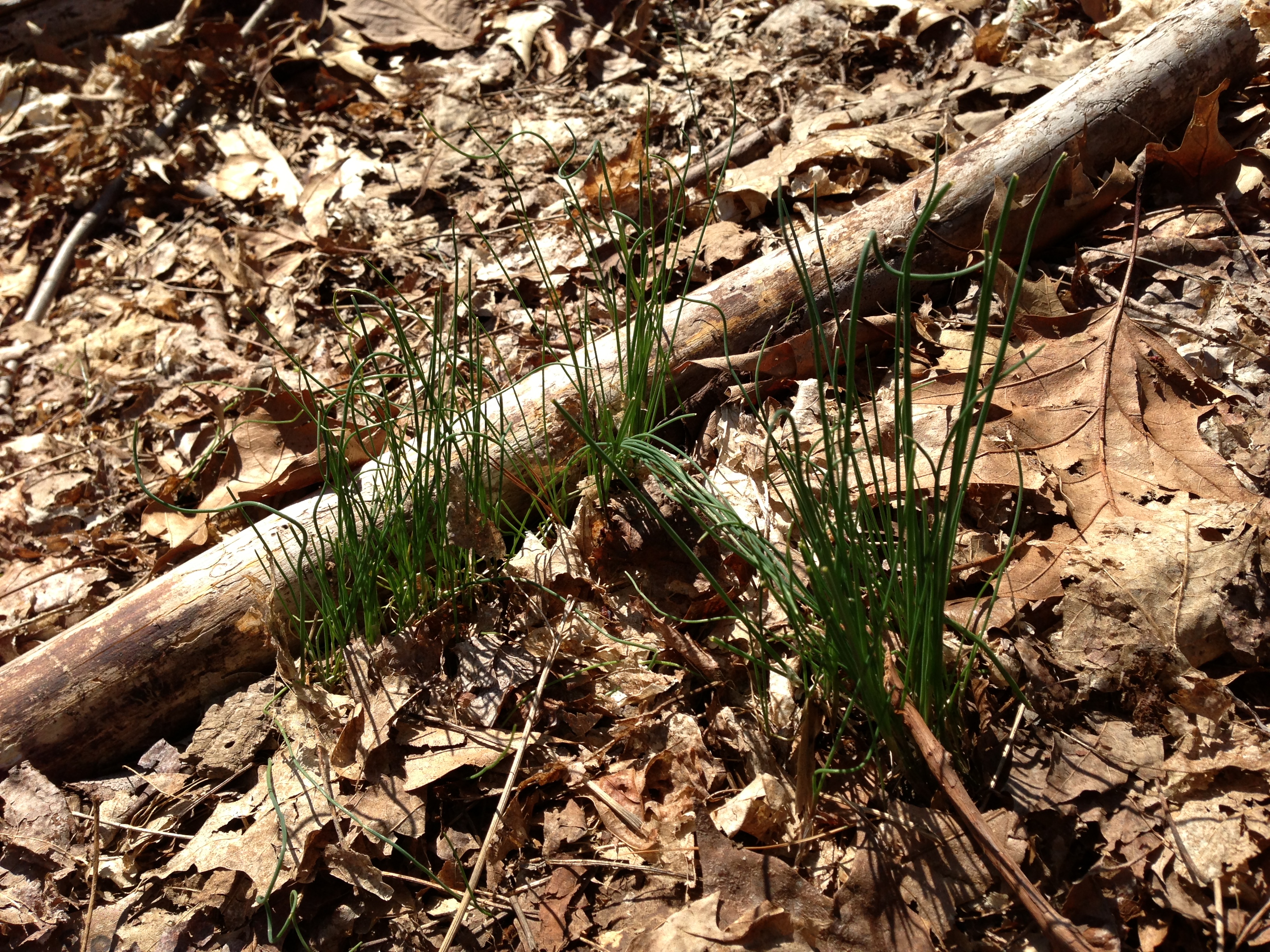
onion grass

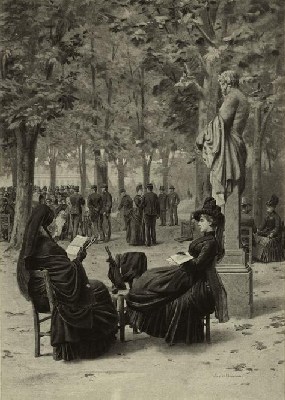
In that poem, The Waste Land, T.S. Eliot also talks about how, In the faint moonlight, the grass is singing/Over the tumbled graves. It was a happy day, beginning in the nineteenth century, for families and lovers to take their leave of the gritty city and visit a graveyard.

green-wood-cemetery06

The landscaped acreage offered a garden and an art museum all in one, you could stroll or take a carriage, and whatever sadness you might feel was mitigated by your joy at being outdoors in the air, with the pristine green grass spilling over in the spring sunshine. Green-Wood Cemetery, in Brooklyn, New York, saw half a million visitors a year in the 1860s.

mourning_1888

Matsuo Basho gets at the bittersweet flavor of such a foray.

the whole family

all with white hair and canes

visiting graves

In the woods above the Cabin, we have tiny green leaves emerging out of the dusky litter of winter.

little green

“Little Green,” Joni Mitchell’s saddest song, carries within it happiness as well.

Just a little green

Like the color when the spring is born

There’ll be crocuses to bring to school tomorrow

Just a little green

Like the nights when the Northern lights perform

There’ll be icicles and birthday clothes

And sometimes there’ll be sorrow

The song, written in 1967, talks about a daughter that the 19-year-old singer gave up for adoption.

Child with a child pretending

Weary of lies you are sending home

So you sign all the papers in the family name

You’re sad and you’re sorry, but you’re not ashamed

Little green, have a happy ending

The comic Louis C.K., who manages to be soulful and raunchily hilarious all at once, gave a recent interview in which he talked about how he gets by in this world.

I don’t mind feeling sad. Sadness is a lucky thing to feel. I have the same amount of happy and sad as anyone else. I just don’t mind the sad parts as much; it’s amazing to have those feelings. I think that looking at how random and punishing life can be, it’s a privilege. There’s so much to look at, so much to observe, and there’s a lot of humor in it. I’ve had sad times, I’ve had some hard times, and I have a lot of things to be sad about, but I’m pretty happy right now.

To achieve happy sadness, we could all be more like animals, who so often mix emotions in their expressions. Yes, there are people who say  not-humans lack emotions. But I look at Oliver, the pit-hound in him tuckered out after chasing the white flag of a deer’s tail through the spring brambles. The look across his features.

deer chaser

And I think of Edith Wharton’s journal in 1924.

I am secretly afraid of animals…. I think it is because of the usness in their eyes, with the underlying not-usness which belies it, and is so tragic a reminder of the lost age when we human beings branched off and left them: left them to eternal inarticulateness and slavery. Why? their eyes seem to ask us.

Dogs do sometimes have that look in their faces – if I wasn’t so satisfied now I would cry. With Oliver I could imagine a particular happy sadness. If I caught that deer today I couldn’t chase it tomorrow, so all is well.

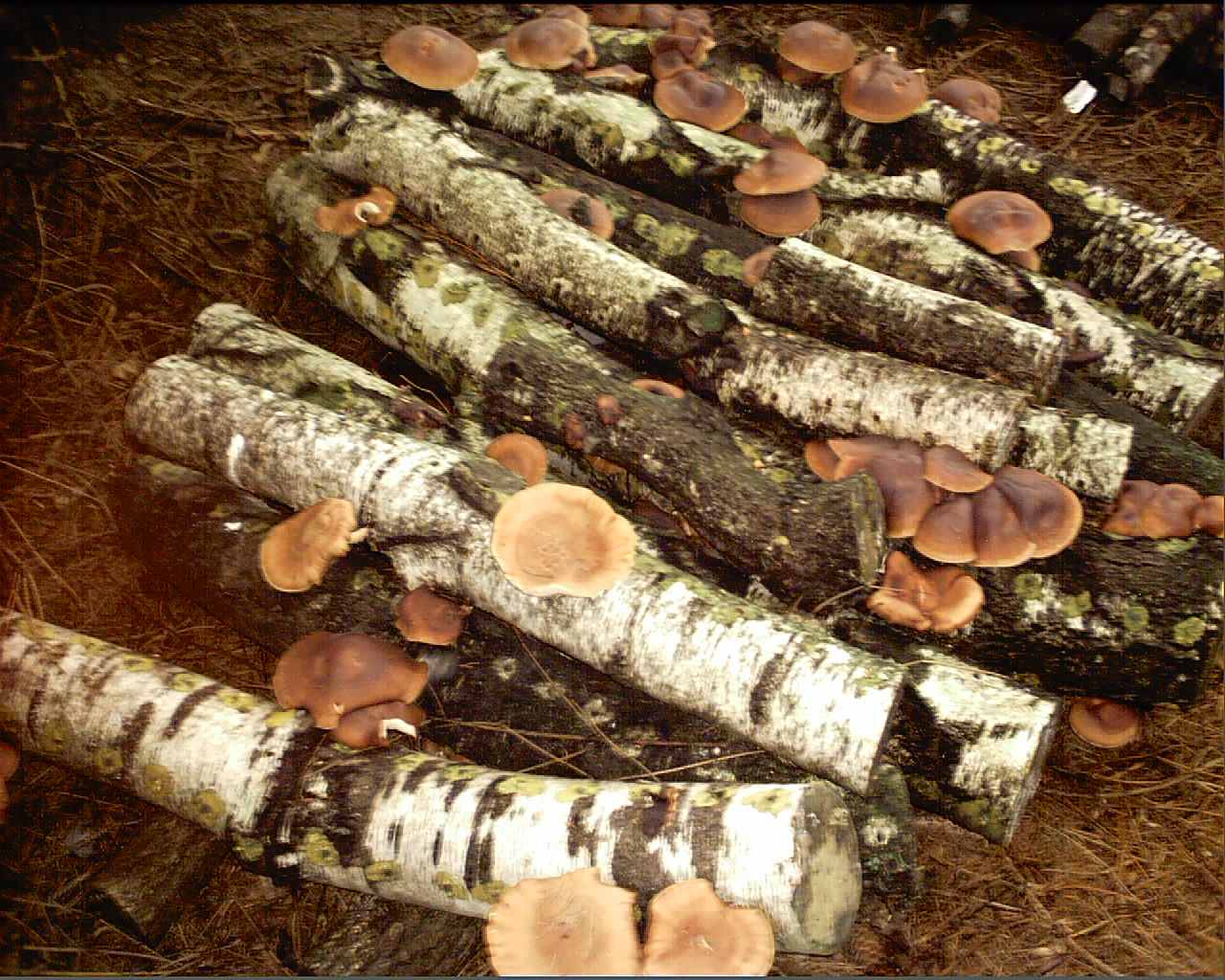
The Japanese christened the unique flavor called umami, something we only understand because of L-glutamate receptors on the tongue. Along with sweet, sour, salty and bitter, the names we all learned as we grew up for what goes on in the mouth when we eat, it’s one of the five basic tastes, identified by scientist Kikunae Ikeda in 1908. But it’s almost impossible to describe. It’s savory or “brothy,” found in dried bonito flakes or shitake mushrooms.

Shiitake Mushrooms

Soy sauce. Parmesan cheese. The thing about umami is that it offers a mixture of sensations that together become pleasurable on the tongue. Intense, saliva-stimulating. A powerful paradox.

Just like spring.

10 Comments

Filed under Dogs, Home, Jean Zimmerman, Nature, Photography, Writers, Writing

Museum Creatures for Real

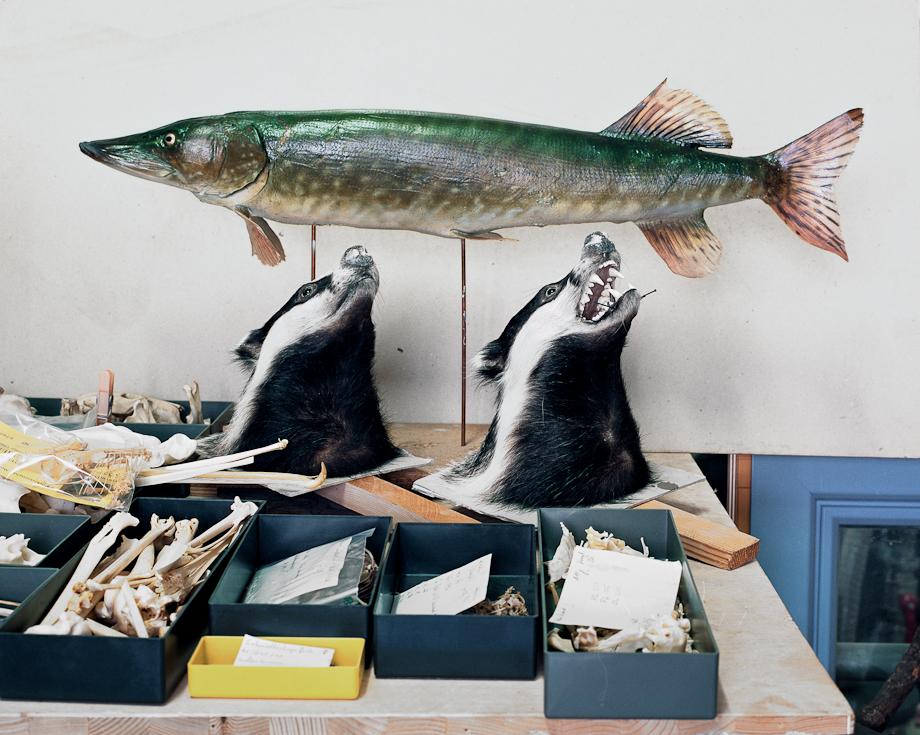
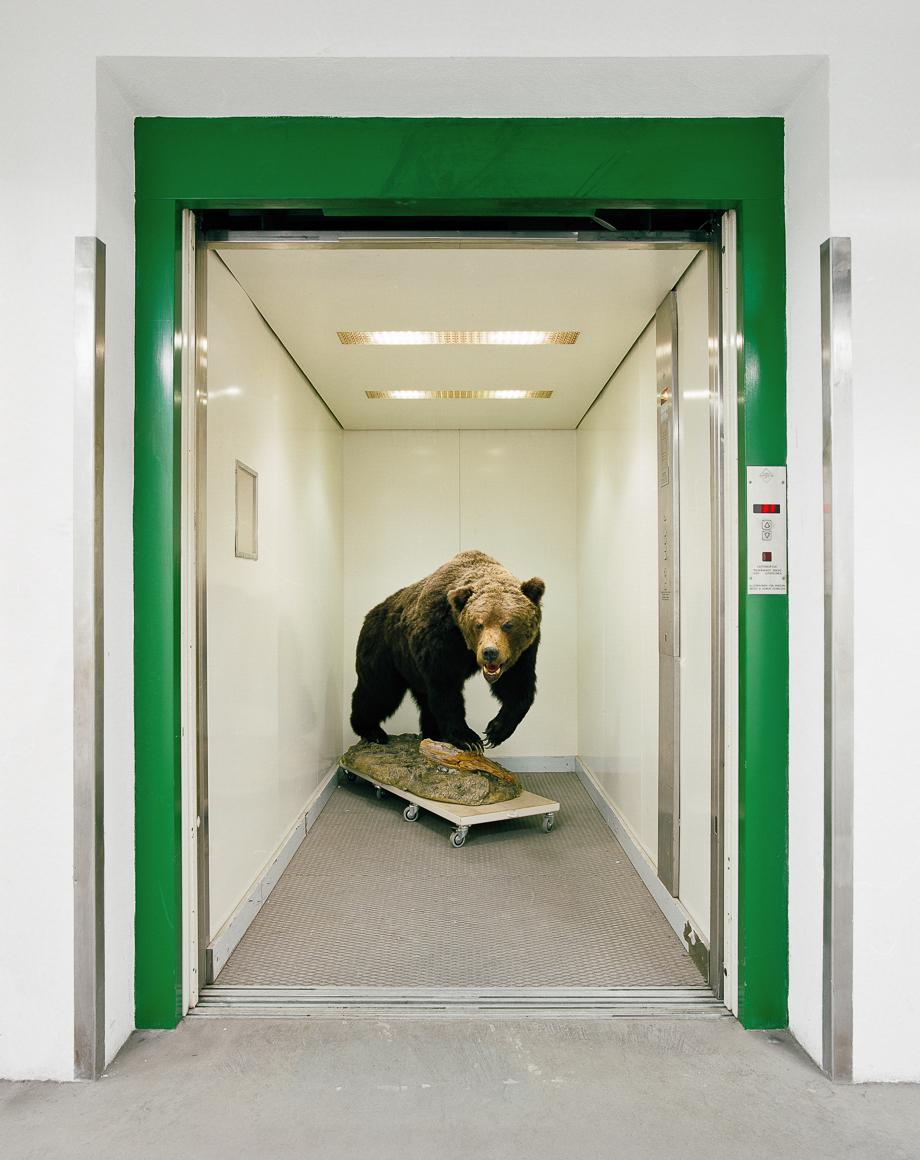
The Austrian photographer Klaus Pichler has done a series of works centering around what visitors don’t ever see when they go to the magnificant Vienna Museum of Natural History.

bandgers and pike, 2011 .jpg.CROP.article920-large

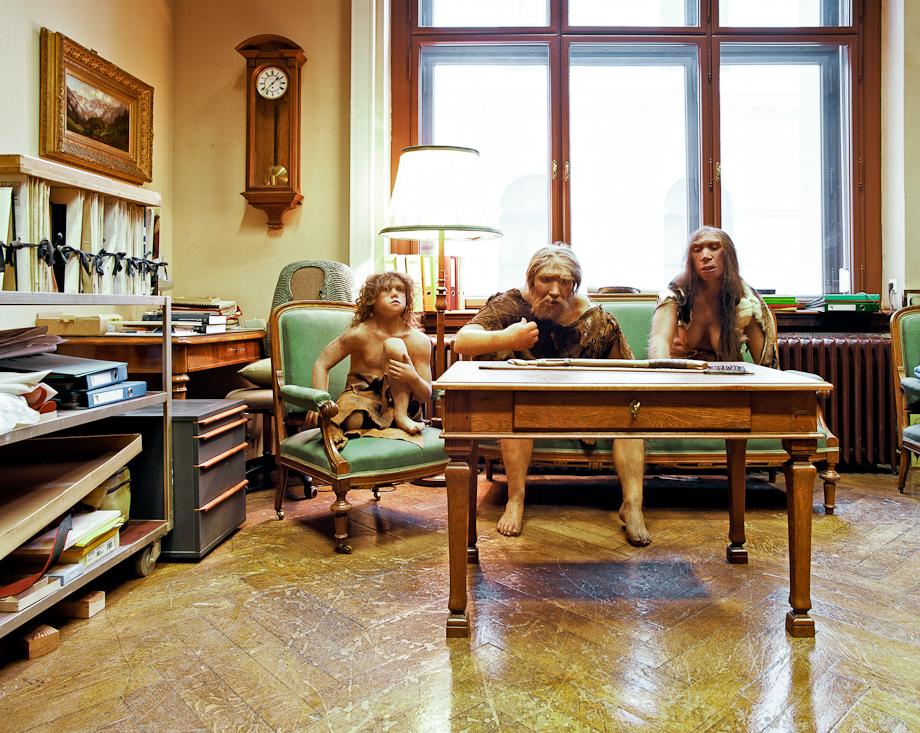
He stumbled upon a back room and his artist’s antennae went up. There were taxidermied animals in various states of confusion, as though they’d been thrown up in the air and tumbled down every which way or, more unsettling, as if someone had gone around arranging them in poses that were anything but the perfect scenes you’d see in the museum’s halls.

neandertals, 2012.jpg.CROP.article920-large

It wasn’t only taxidermy and early man come  to life.

hallway painting, 2011.jpg.CROP.article920-large

The museum’s director gave him a tour, and believe it or not the artist rearranged nothing, just took the pictures as he found them. “Skeletons in the Closet” hits some primeval fear-buttons, at least for me.

basement shark, 2011.jpg.CROP.article920-large

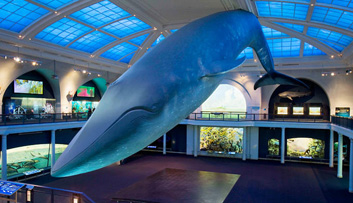
The American Museum of Natural History in New York City has always been a favorite of mine, and not only because Maud put on her walking shoes there, toddling up and down the carpeted ramps of the Hall of Gems on the Museum’s ground floor. We lived a block away, on Columbus Avenue, and she probably spent as much time there in her preschool years as she did in our small apartment, clocking hours dancing under the gigantic suspended Blue Whale.

Blue-Whale-at-Natural-History-Museum-1

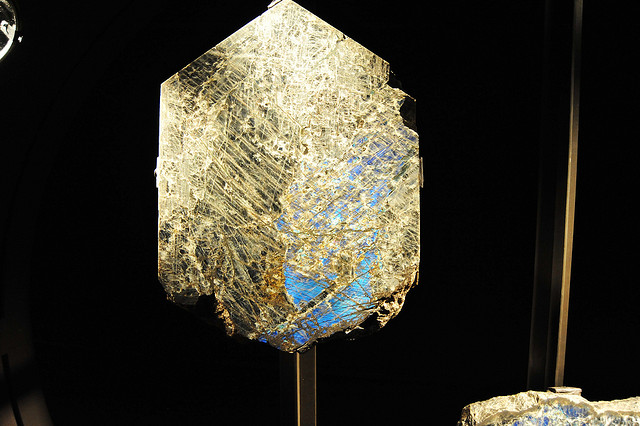
I remember a room of gold specimens in particular, which had a small bench on which you could be lulled into a trance by all that gleaming rock around you. Or maybe that was only a trance induced by chasing a toddler down the corridors all morning.

gold

I thought of those gleaming rooms last year when a very smart reader I met persuaded me to get a copy of Relic, by Douglas Preston and Lincoln Child. Does everyone experience fascination with the idea of what lurks in the museum basement? Relic would not usually be my type of book, but I was hooked by the gothic quality of the setting.

preston_child-relic

It’s the first in a series of innumerable thrillers starring a detective named Pendergast, and the author booked some time as a  Museum staffer, so he knows his stuff. Something’s loose in the Museum of Natural History and I won’t tell you what but suffice it to say it’s big and savage and hiding behind that innocent looking exit sign just next to the dioramas.

The dioramas, of course, are the Museum’s beauty queens, now refurbished — a team of artists, conservators, taxidermists and designers dusted leaves, freshened fur, and restored the perfect but faded background vistas – and reopened this past October.

bison

Everyone wants them to come alive (not a la Relic, though). Or to step into one. One man was responsible for the exquisite nature of most of these: James Perry Wilson (1889-1976) was a master of trompe l’oeil painting techniques and combined the real materials of the foreground with the painted background to create a mythic space.

Alaska Brown Bear

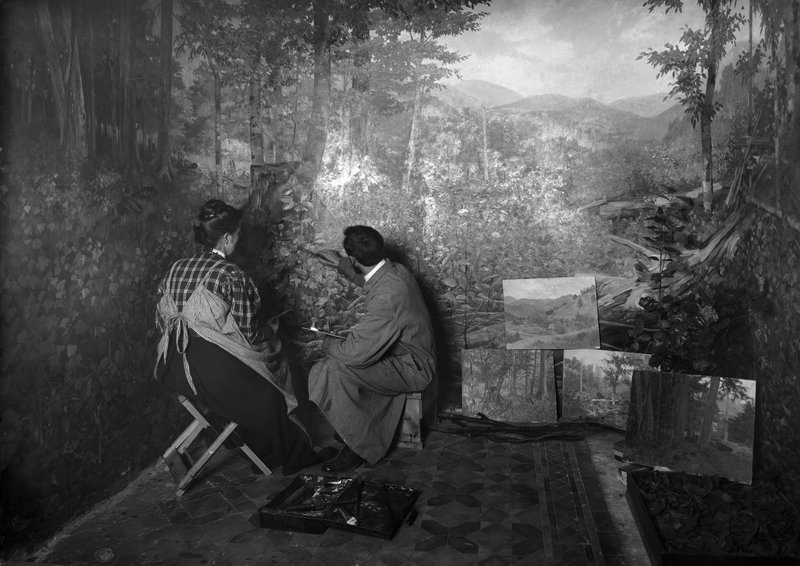
It must have been magical to be in it, in the diorama, from the beginning, if you could. To actually make one.  Here are Mr. and Mrs. Bruce Horsefall in 1907, at work painting the background of the Wild Turkey Habitat Group in the North American Bird Hall.

31655.tif

I’m thinking of Gil and me at work on something like that – but we might rather do the Bongo Group or the Wild Boars.

Personally, I like the small dioramas at the entrance of the Mammal Hall, which house depictions of mammoths and other ice-age mammals – larger-than-life beasts here rendered miniature, more like playthings than real animals. I love the idea that while the other creatures here are taxidermied, the prehistoric predators here were built from the ground up out of clay or putty or whatever they use. Sort of like the the neanderthals in the basement of the Vienna Museum.

The bigger animals at the Museum of Natural History are naturally exciting, too. (This Vienna one, from Klaus Pichler, is maybe a little too exciting.)

elevator bear.jpg.CROP.article920-large

Though truth be told I liked the critters a little mothbit, before their spa treatment. There’s that Mad Men scene from last season when tweenaged Sally clutches her belly after running off to the museum, standing in front of the glorious, imposing dioramas, complaining of stomach cramps, and it turns out she has “become a woman.”

What she feels is not just all that running around in the stuffed, gleaming museum, after all. It’s real.

2 Comments

Filed under Art, History, Jean Zimmerman, Nature, Photography

A Lion, a Pit-Hound, a Bud

The warmth has hit. The sun pours down. The day reminded me of the scene on a Mexican plate from the early 1800s that I saw recently at the Hispanic Society.

Mexican plate

Except I was sporting a ball cap rather than a parasol and my companion was a pit-hound rather than a lion.

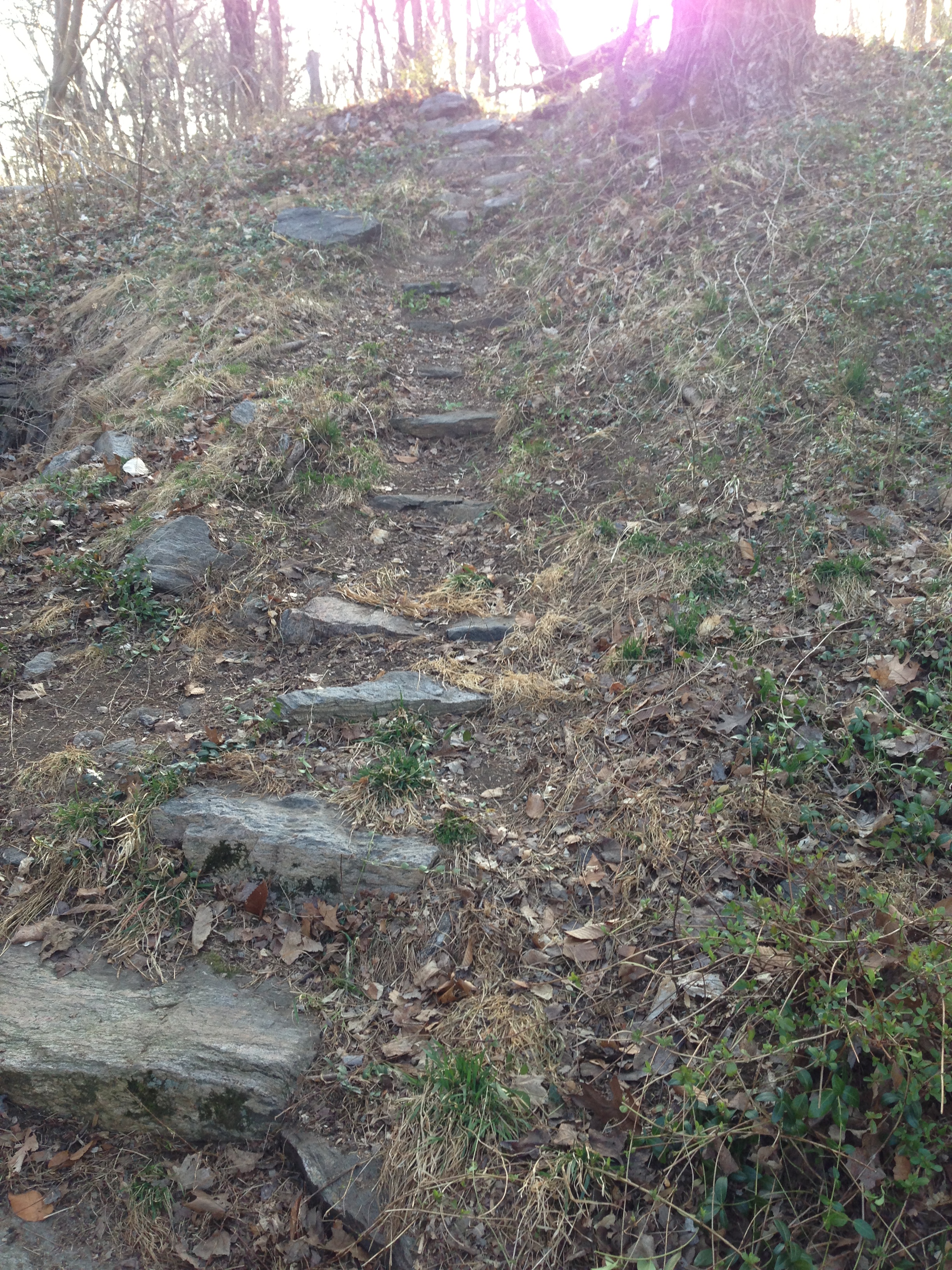
Gil and I took some time outside to rake the pachysandra beds and clear away crumbled leaves from a set of rather magical stone steps that lead to a sunset ridge near the front porch. There’s a wood bench at the top. I plan to colonize it this summer, mint iced tea in one hand, Emily Dickinson in the other.

steps

We sat on the patio late in the day. It faces east, over the marsh. A hawk soared, its breast glinting white. The peepers were even less polite than usual. This spring has been so long to come, but the about-to-bloom magnolia knows when the time is right.

magnolia budJust when you couldn’t wait any longer.


8 Comments

Filed under Art, Dogs, Home, Jean Zimmerman, Nature, Poetry

Gone Birding

The last time I was in a room with so many birds — a pet shop with African Greys and budgies and the like — I had something of an anxiety attack. Many of them were free to roam at will, and some decided my shoulders would make a good roost.

This time the closest thing to drawing blood came in a museum gift shop, where the sharp elbows of two Manhattan matrons kept jabbing me away from the bird postcards.

The day was clear as glass, but cold, and we decided that we’d have better luck birdwatching at the New-York Historical Society than in Central Park.

audubon owls

The museum is having the first show of three, together titled “The Complete Flock,” that will display all the museum’s unparalleled collection of John James Audubon. At the same time as it shows the watercolor models for the sumptuous double-elephant-folio print edition of The Birds of America (published between 1827 and 1838), it has something else special – early works that have rarely been seen, that show the development of the artist from a young age, when the naturalist was new to America and stoked about what he was seeing.

He was new, and so was the turkey vulture he depicted in 1820, when Audubon was 35.

turkey vulture nestling

You can see the nestling’s downy feathers, rendered in pastel, and its leathery feet, drawn in black ink. Interesting creatures, they open their eyes immediately after hatching and in less than a week begin to move about in their dark cave. Lacking a syrinx, their vocalizations are limited to hisses and grunts. Within two weeks they become larger and more aggressive, and their black flight feathers begin to emerge, as Audubon shows with dreadful clarity. The adult turkey vulture has a six-foot wing span.

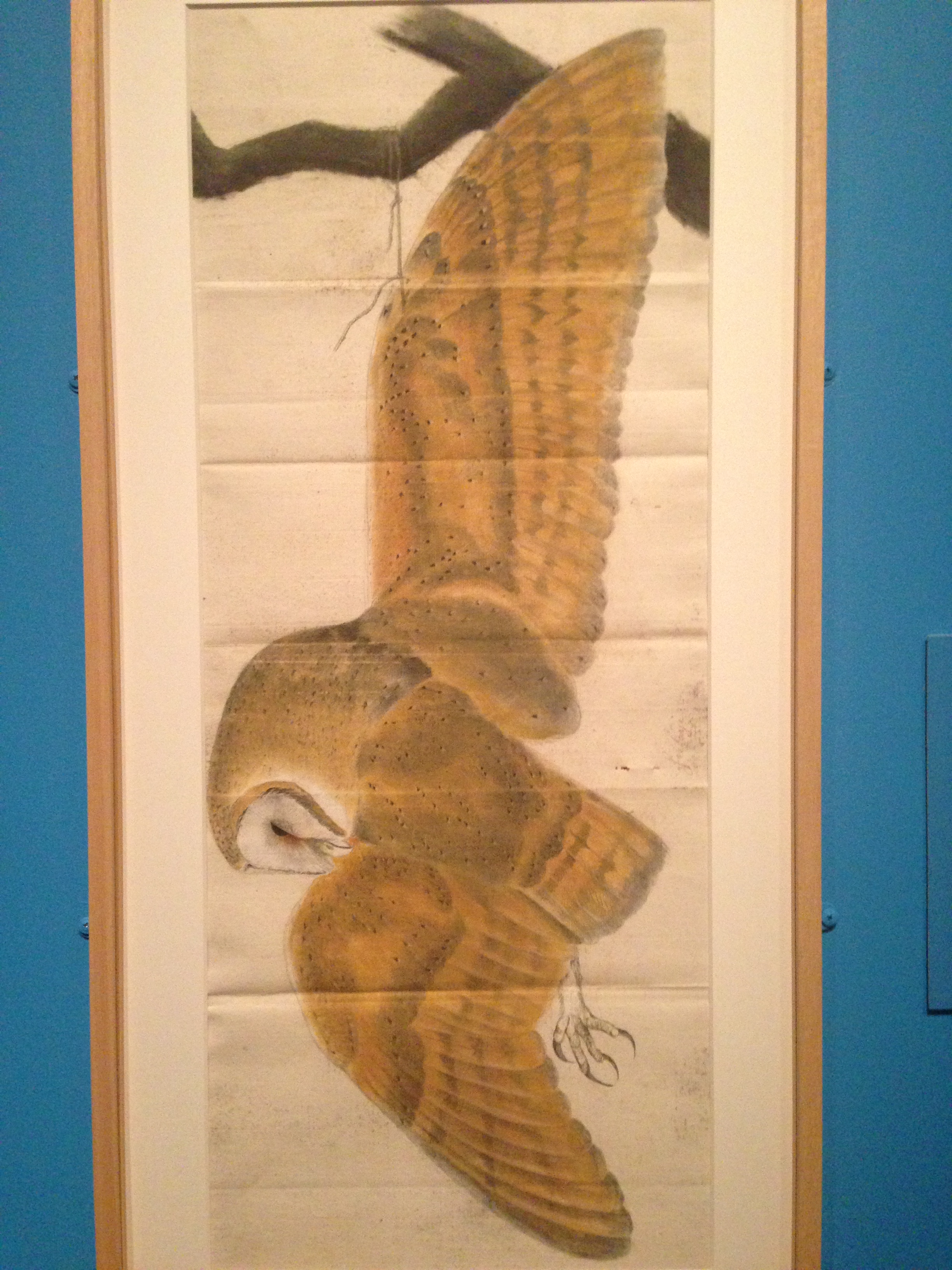
Also on display, a mechanism through which the young Audubon got the poses he wanted. He used something called a “position board” with horizontal and vertical lines, to which the bird was fixed with skewers and pins. None survive today but we have a verbal description of the specimens being impaled. This was an improvement over his earlier techniques, when he simply suspended a jay or a meadowlark by its beak and drew it that way, or a  barn owl by its honey-colored wing. You can see the folds of the paper the artist used for this pastel.

owl

The great naturalist would kill 400 ducks to get the proper specimen. And when in the wild, he consumed his specimens for his supper.

Bird calls are a thing you can’t describe in words. So I was glad there was a small device available that allowed visitors to hear the call of the wood thrush, so extolled in poetry.

wood thrush

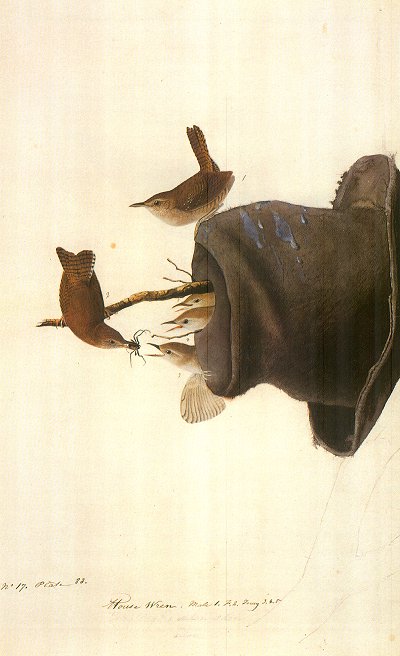
I loved the slightly nutty picture of house wrens nesting in an old faded hat, but appreciated it all the more because displayed alongside was the copperplate that had been used to make the print.

wrens

After the plates came to America in 1839 they were stored at Minnie’s Land, Audubon’s estate on the Upper West Side of New York. Until in 1871 Lucy Bakewell, his widow, in desperate financial straits, sold most of them for scrap metal to the Ansonia Brass and Copper Company (the company, incidentally, owned by the Phelps family I wrote about in Love, Fiercely). Supposedly a teenaged son saved nearly a quarter of the plates from destruction. (Could it be Newton Stokes’ ancestor who made this smart move?) The New-York Historical Society owns four of the extant plates.

Audubon, we know, was suave, lean, a rock star of his time, his hair smoothed back with bear grease.

audubon outside

Lucy, a Pre-Raphaelite beauty, liked to swim naked in rivers, and often went birding alongside her adventurous husband. They saw many crystal days together, and I bet they found some birds in Manhattan, too — before Central Park, back when New-York had a hyphen. The Central Park, as it was then called, did not open until 1857.

3 Comments

Filed under Art, History, Jean Zimmerman, Love, Fiercely, Nature

Monsters in the Garden

I had been looking for days for an infant saguaro, knowing that they began tiny, nested under bigger, more mature, spreading nurse plants like mesquite trees. Not a one.

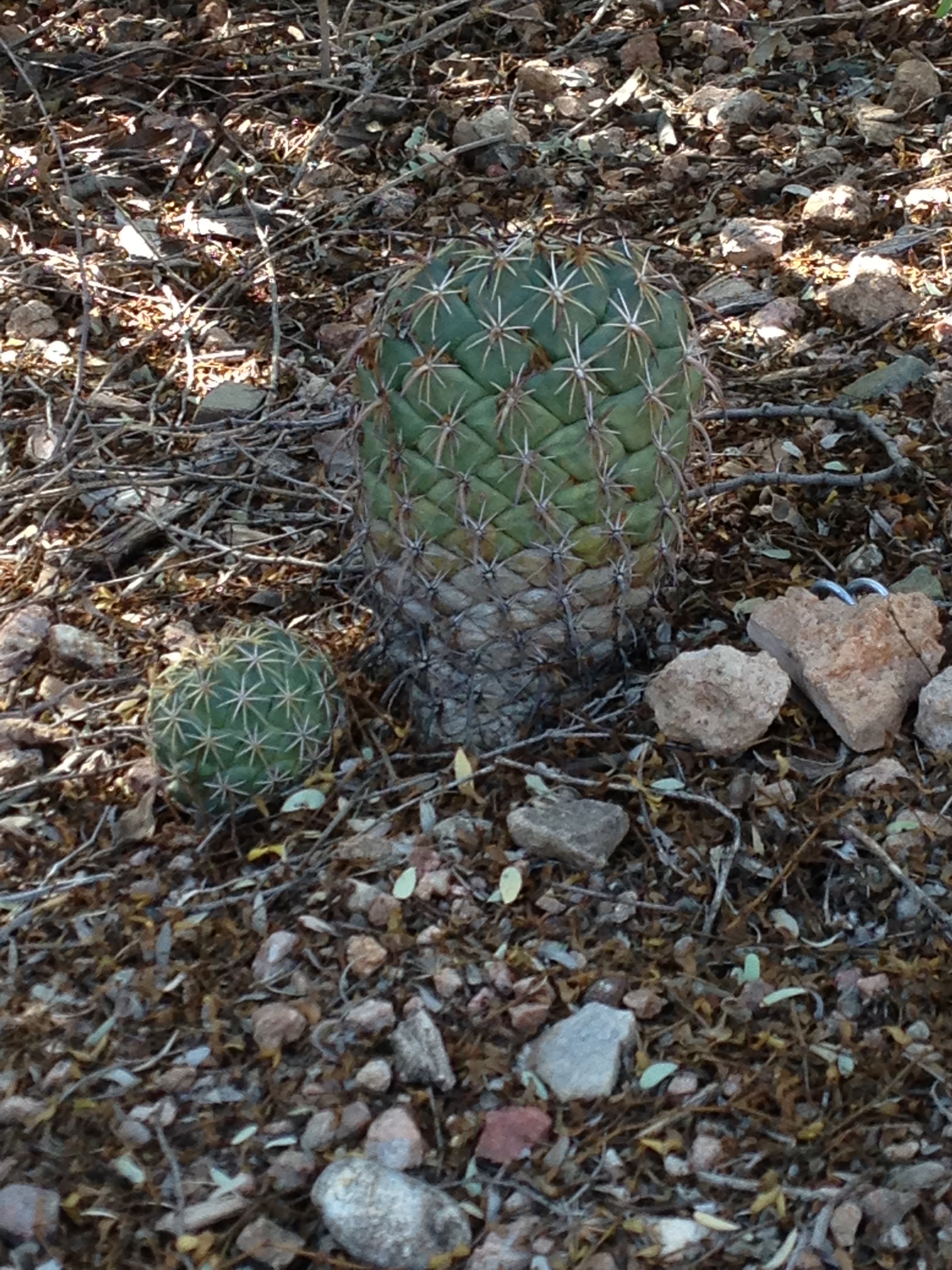
I found other babies.

other baby cactus

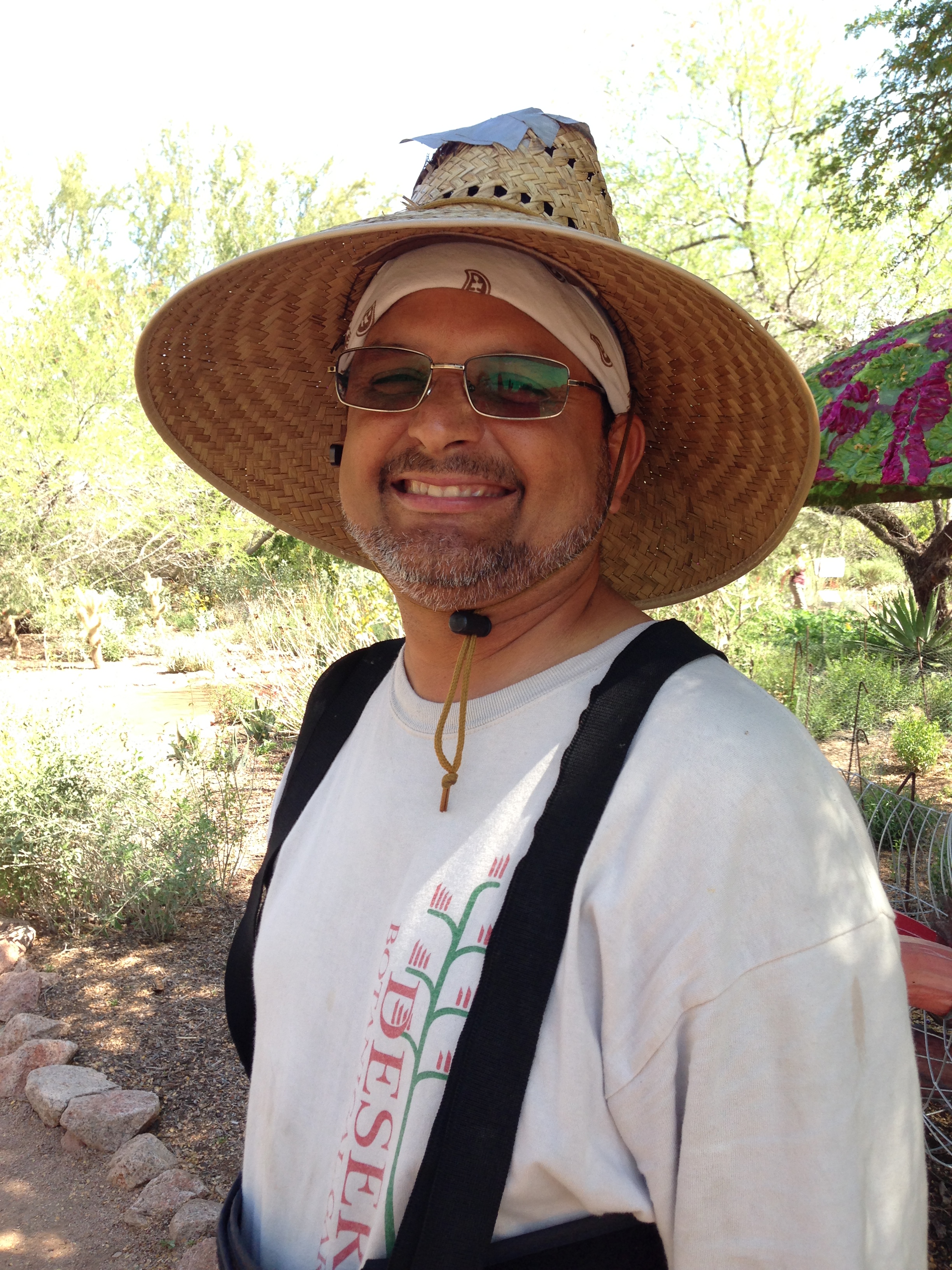
But not those of the saguaro. It was almost as if the giant cactii sprang full grown from the body of the earth. But I was determined. At the Desert Botanical Garden in Phoenix, I buttonholed a gardener who looked like a dashing, red-scarfed gent I once knew named Jorge.

desert gardener

He had silver duct tape holding together the crown of his straw hat,and when I first saw him he was supervising the planting of a smallish saguaro in a bed near the parking lot. In replanting, says my mother, you need to position them so that they face in precisely the same direction they did in the first part of their lives, or else they wither and die. Saguaros have to have the same relationship to the sun, always.

I knew this gardener knew saguaros. Could he point me in the direction of a baby? I asked. He led me through the winding walkways of the Garden. I wanted to find one that was no more than a nub growing out of the ground, just starting out. Jorge seemed to know exactly where it was.

We went through the grove of barrel cactus with its yellow fruit.

barrel cactus with fruit

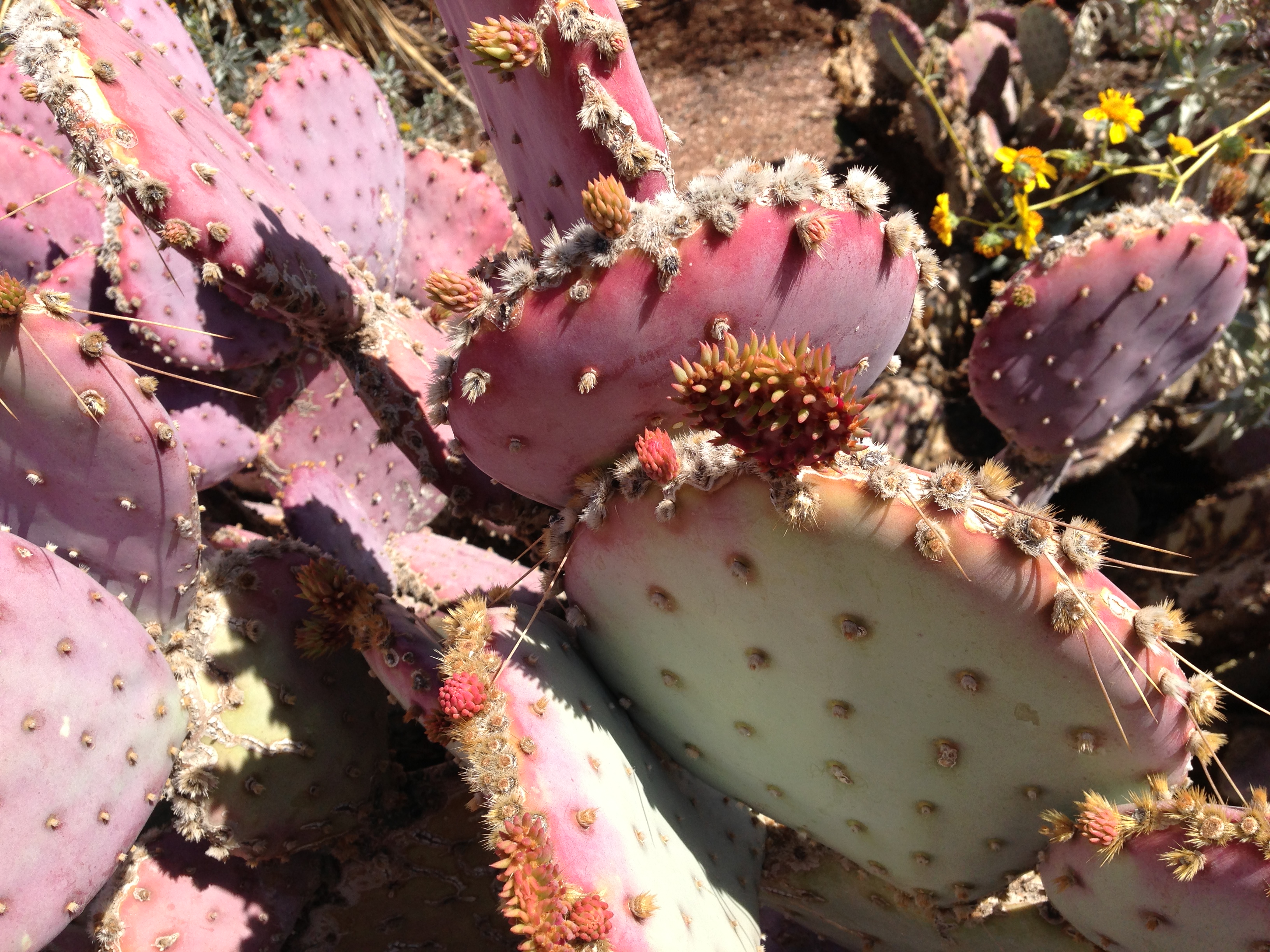
Past the blushing prickly pear.

red prickly pear

Past the half-hidden nest of an absent bird.

Nest

There it is, Jorge said. He pointed beneath a sheltering shrub, which protected the saguaro like a baby Jesus in a creche.

baby saguaro

Not quite an infant, he said. About five years old. It would take ten years to grow that big in the wild, he added with a touch of  pride. The Garden waters their plants so assiduously that they shoot up tall and bright, a technicolor green compared with the black and white of the desert that stretches all around.

Now that I had found my toddler saguaro, I could pay attention to the other fascinations of the Garden. An ebony-colored wood beetle chased us down the path, buzzing furiously. Art was everywhere.

woman plant sculpture

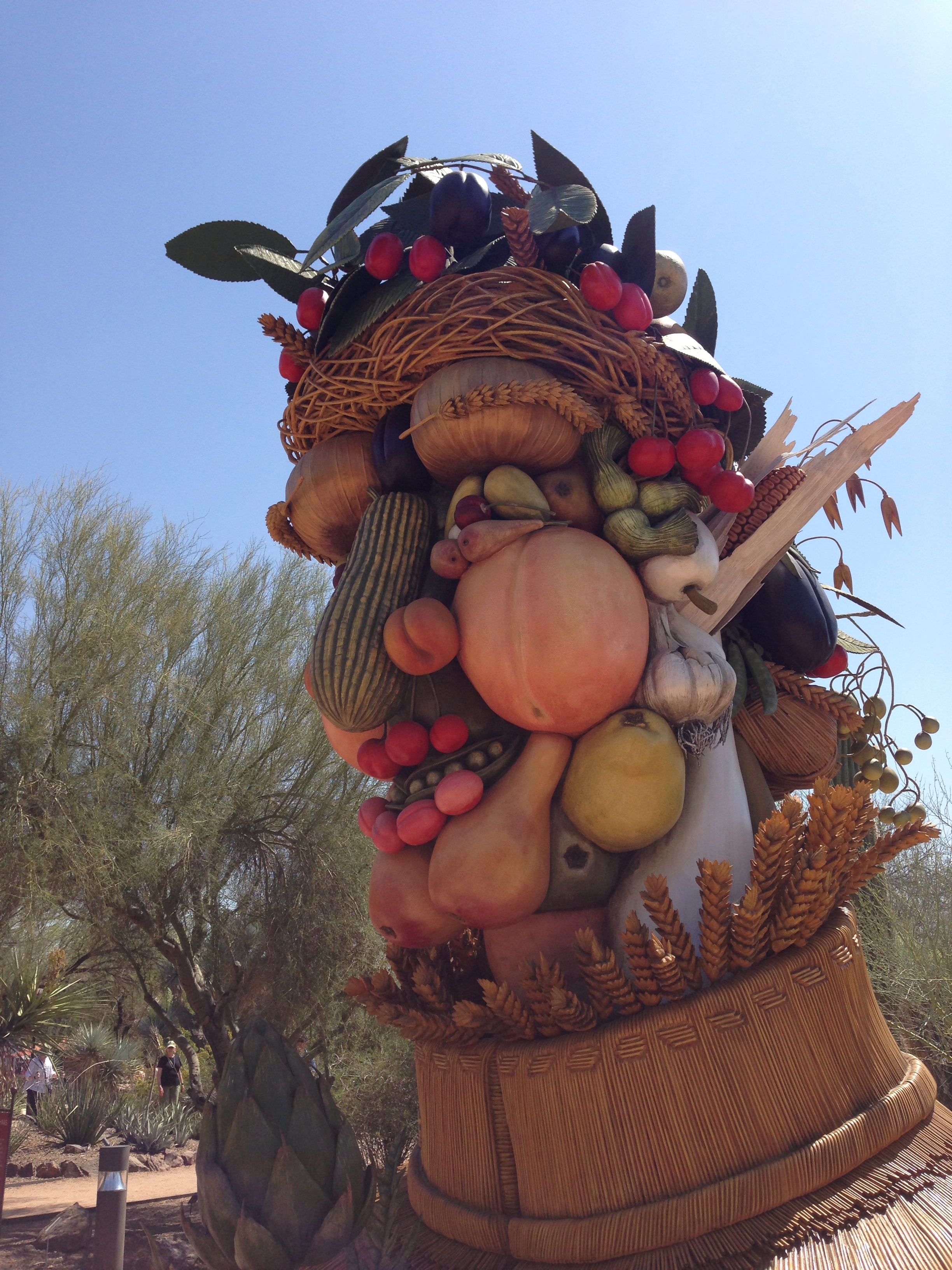
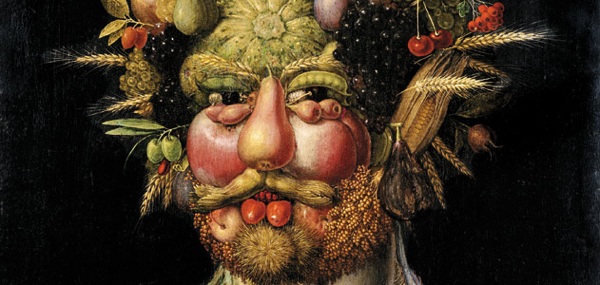
This piece, of course, suggests the Renaissance produce painter Arcimboldo.

arcimboldo

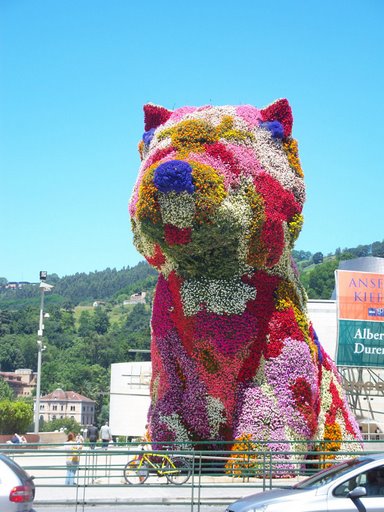
And Jeff Koons in his puppy flower phase.

Jeff koons puppy

My eyes were dazzled with not only organic but plenty of nonorganic growth, furnished by major sculptors.

pink sculpture

The soft green and hard metal played off each other.

sculpture:cactus

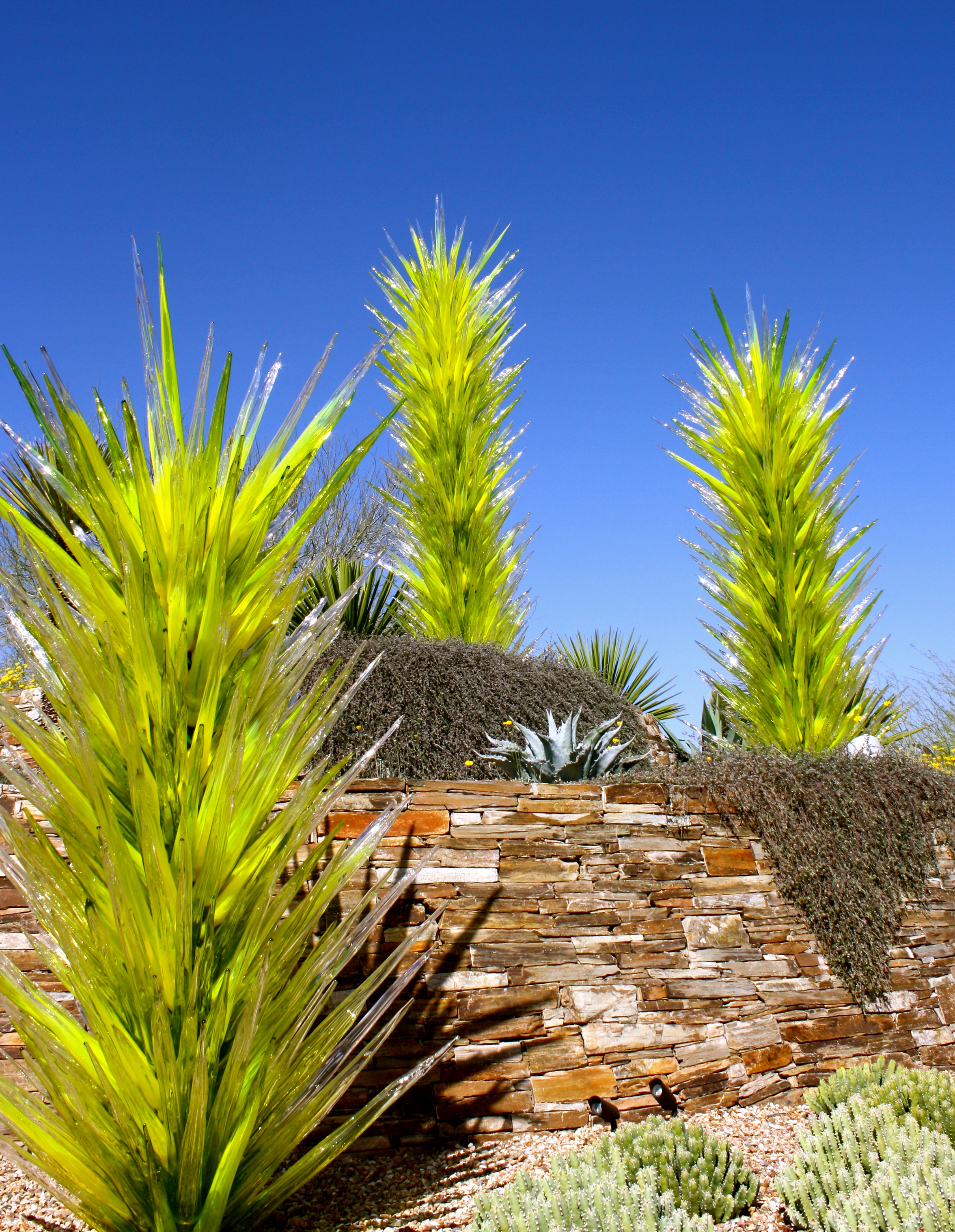
No, said my mother, I don’t like it. She was looking up at the Dale Chihuly forest of glass that welcome visitors to the place. It’s gilding the lily, she said.

Chihuly glass

I liked all that green glass. But maybe because the work was, first of all, monstrous, as were so many of the large-scale works scattered about.

I like monstrous.

Secondly, I was acquainted with Chihuly back in the early ’80s, when I visited his Pilchuck hot shop outside Seattle as a lowly member of a film production team, about the time he returned from the East Coast and blew up into a  legend. I was impressed with his pirate demeanor. And also with my experience of blowing a little glass, anything but monstrous, assisted by another dashing fellow, a tall long-haired Chihuly-ite gaffer who stood behind me and steadied my hands on the pipe. I thought that the keepsake I created would be mine forever. The thick-walled cup I made held exactly the right amount of vodka on the rocks, before it fell and smashed at about the same time I quit drinking a decade or so ago.

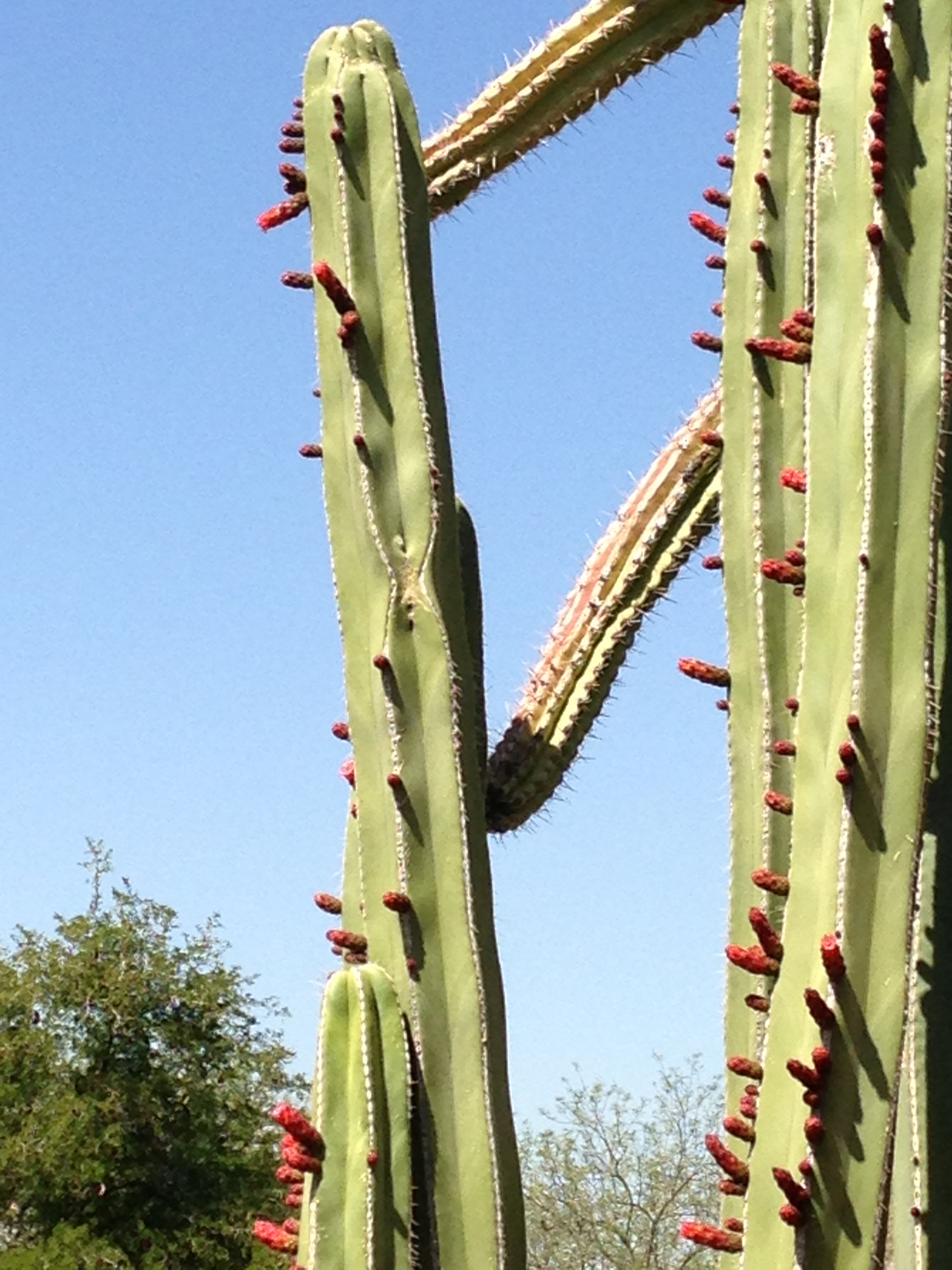
But maybe the natural vegetation was extreme enough. Lipstick cactus.

lipstick cactus

Dazzling enough in its nude simplicity. Agave.

agave

Some specimens remained from the opening of the garden more than 70 years ago.

historical desert garden

We had to go see how the butterflies responded, now that springtime had revealed its face to Arizona.

orange butterflies

Who doesn’t like butterflies? As we waited to enter their enclosure, I felt I could hear the throb of wings.

They kind of make me nervous, said Maud.

Good for you, the docent told my mother, in her white t shirt. They like white shirts. And they’re very partial to redheads.

None of us had red hair, but I hoped in my peacock-feather-painted blouse to be a landing strip.

The netted area had been planted, surprisingly, with swiss chard, which appeared to be uninteresting to the butterfly population as a food source. The butterflies drank instead from the cups of flowers. They seemed to be half in the process of coming alive and half in the process of dying.

black butterfly

Leaving them behind rather sooner than I thought we would – They make some people uncomfortable, they’re insects after all! said a staff person – we progressed toward the Garden exit through the gray-green fleshy fields of cactii.

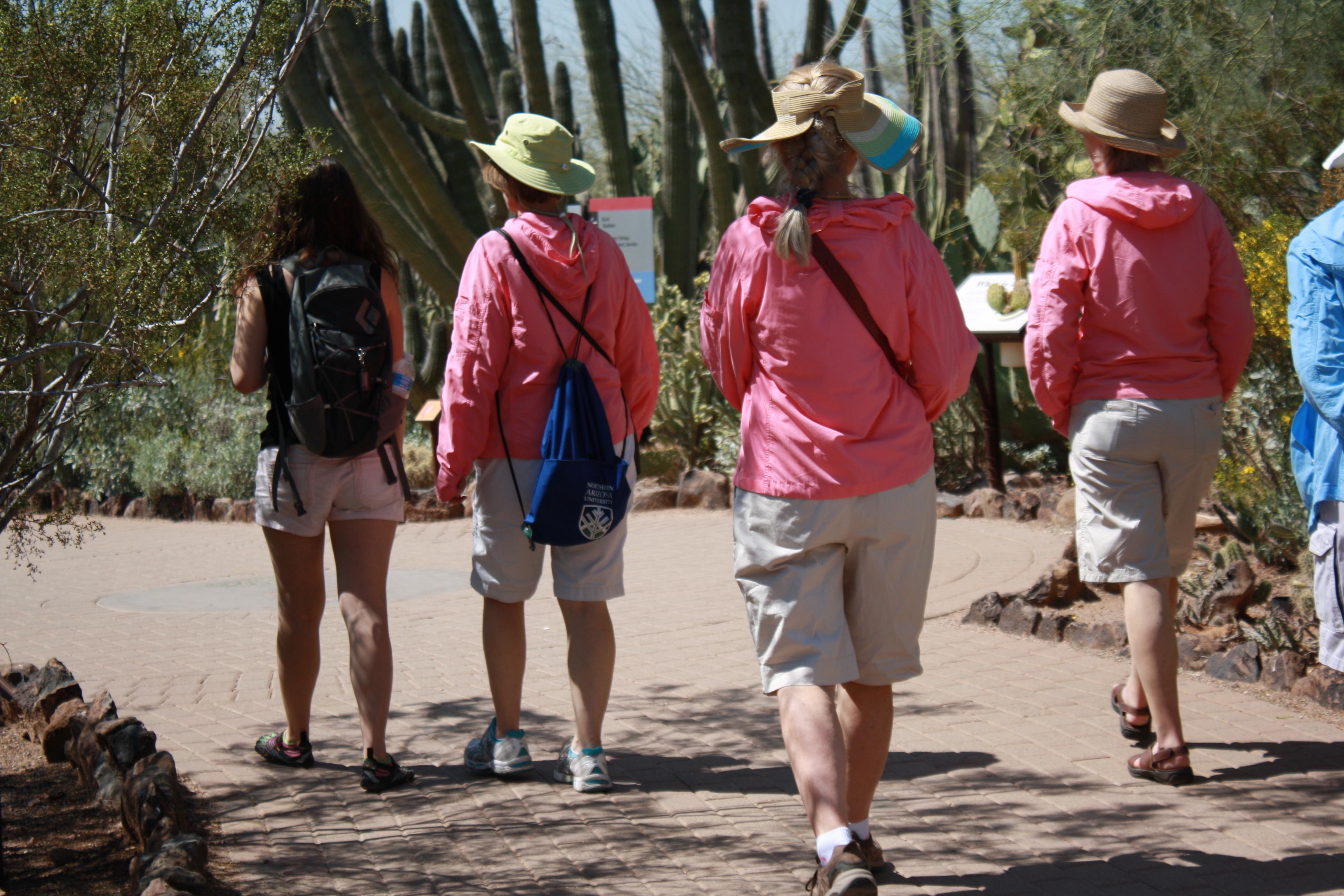
Three more butterflies hovered ahead of us.

pink ladies

Triplets, middleaged, each attired in a powder-pink windbreaker, cargo shorts and a floppy sun hat. I always wonder about multiples who dress alike above the age when their mothers outfit them. A matched pair of senior citizens used to roam Manhattan’s upper west side, mirror images in couture, nylons and cat-frame glasses. Related in spirit, the married couple who used to bike the streets to forage for horse manure for a Garden of Eden they planted on Eldridge Street, in the 1980s, when New York City was a simpler place.

Purple garden

Their names were Adam and Eve Purple. Their garden seemed to come out of nowhere. They dressed themselves, the two of them, in … purple.

17 Comments

Filed under Art, History, Jean Zimmerman, Nature, Photography

No Horse

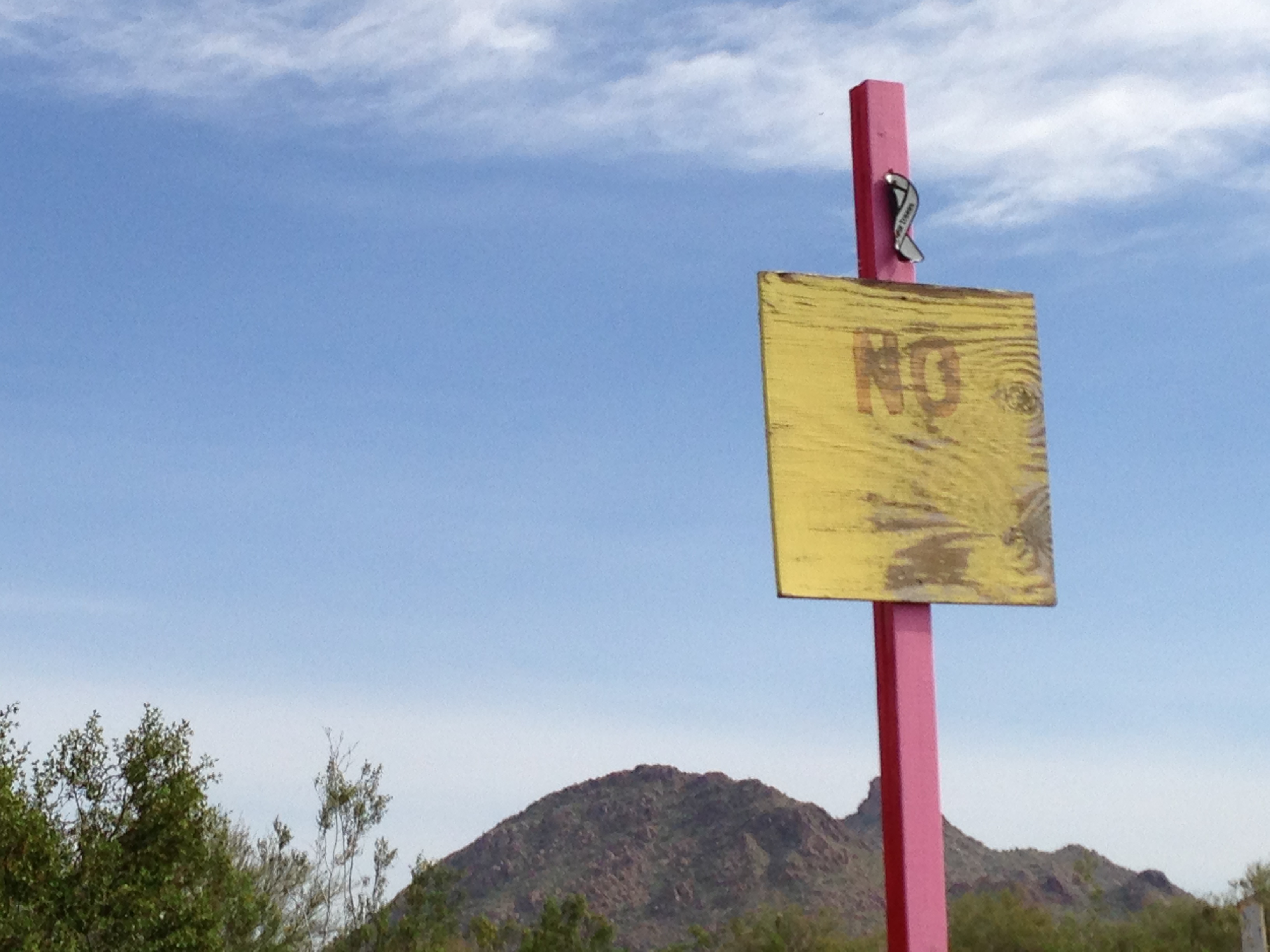
Sweet hand-painted signage in southern Arizona.

No Sign

The guy who owns the 95-acre lot at Pima and Happy Valley Roads in North Scottsdale, Henry Valentine Becker, has been on a longstanding rampage against the Coalition of Pinnacle Peak, which seeks to prevent him from commercially developing his property. He’s been there since 1995, putting up signs and making himself a nuisance.

No what? you may ask. The message has been lost to time, and now suggests, at least to me, a kind of quintessentially Arizonan plywood sentiment … no to gun control, no to “illegals,” no to same-sex marriage, etc. etc. But I like the mysterious No on its own. The signs rim the lot and insist upon their own importance.

Becker has put up other painted signs as well.

Cowboy sign

Wranglers. Kachinas. Lizards. I collect painted signs as long as they’re free. Brought one home off a telephone pole in a Midwest cornfield one time years ago. It reads Cherish.

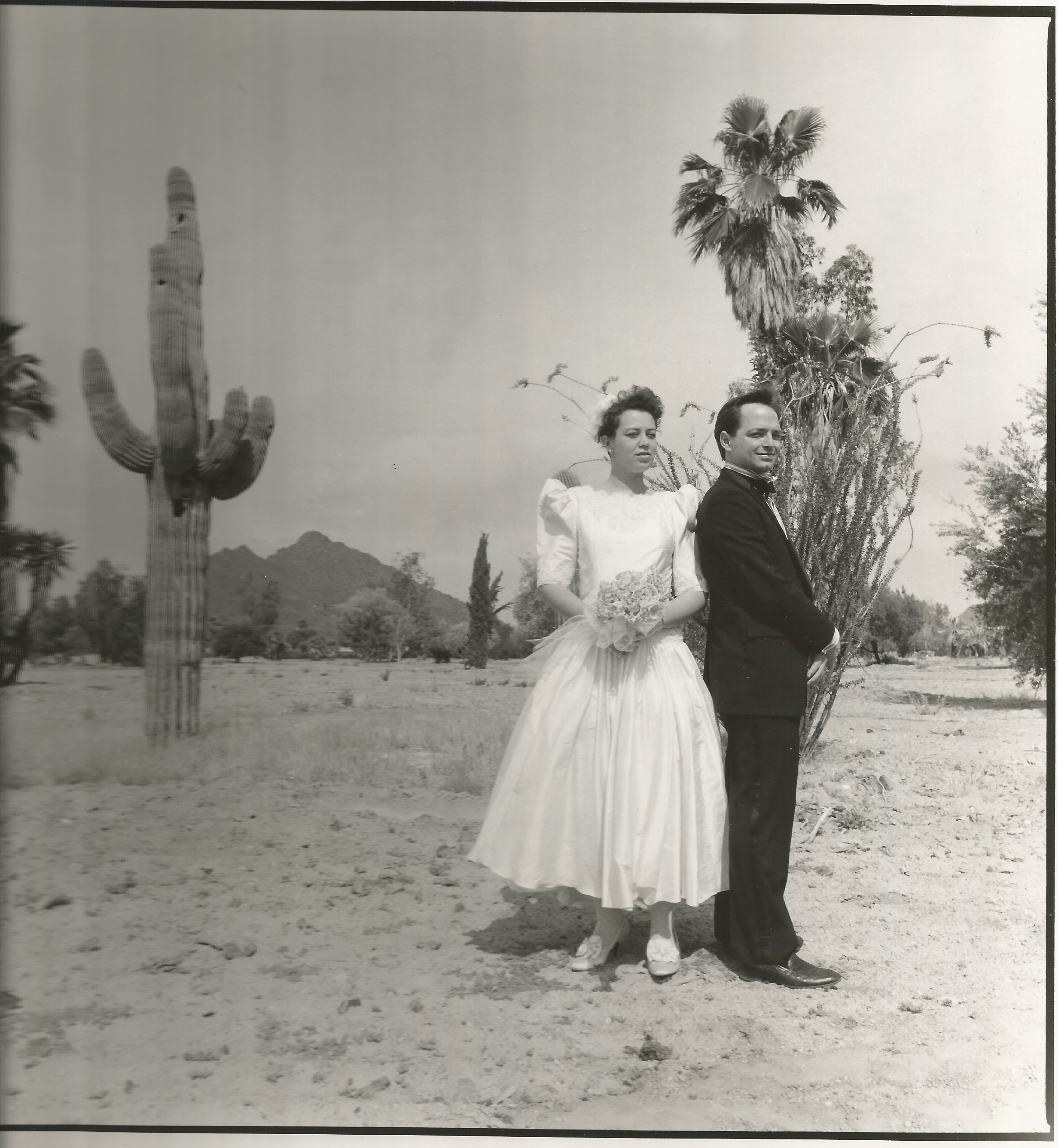
Becker’s property, within the insistent boundary of signs, remains pristine. It reminds me of nothing so much as the as-yet-undeveloped lot across town where Gil land I took our wedding photos 25 years ago.

J & G in April

Among the saguaros, in a time when Scottsdale was more known for horse farms than tacky shopping centers.

pristine

Becker lives in comfort, fairly near the property in question, in a conventional home, if ideosyncratically littered with yellow Post-It notes. The weatherbeaten signs call attention to his plight, get his story across to the millions of cars that jam Pima.

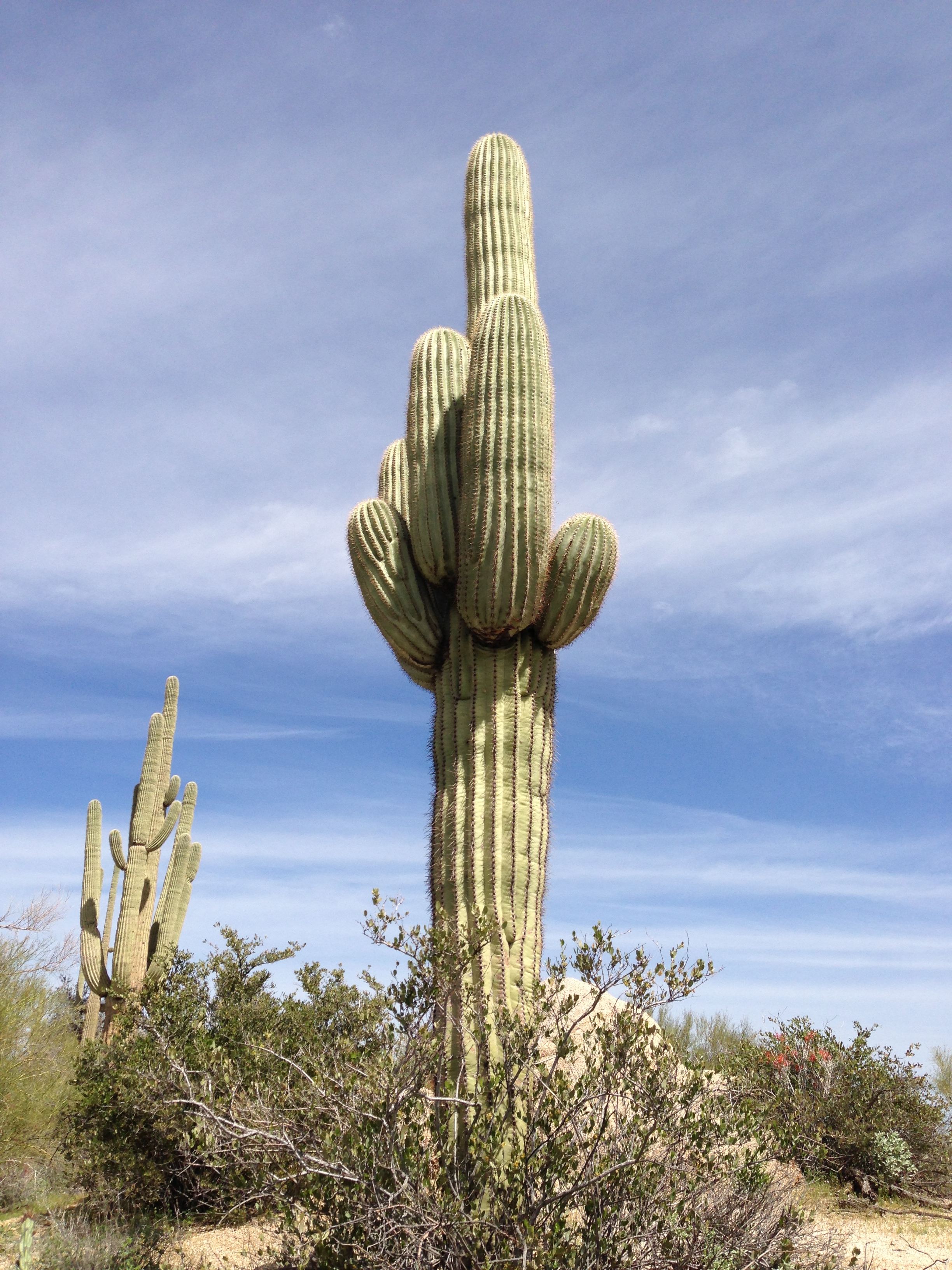
Everything weathers here, even the proud-standing saguaros, the ones giving the finger to the sky.

finger saquaro

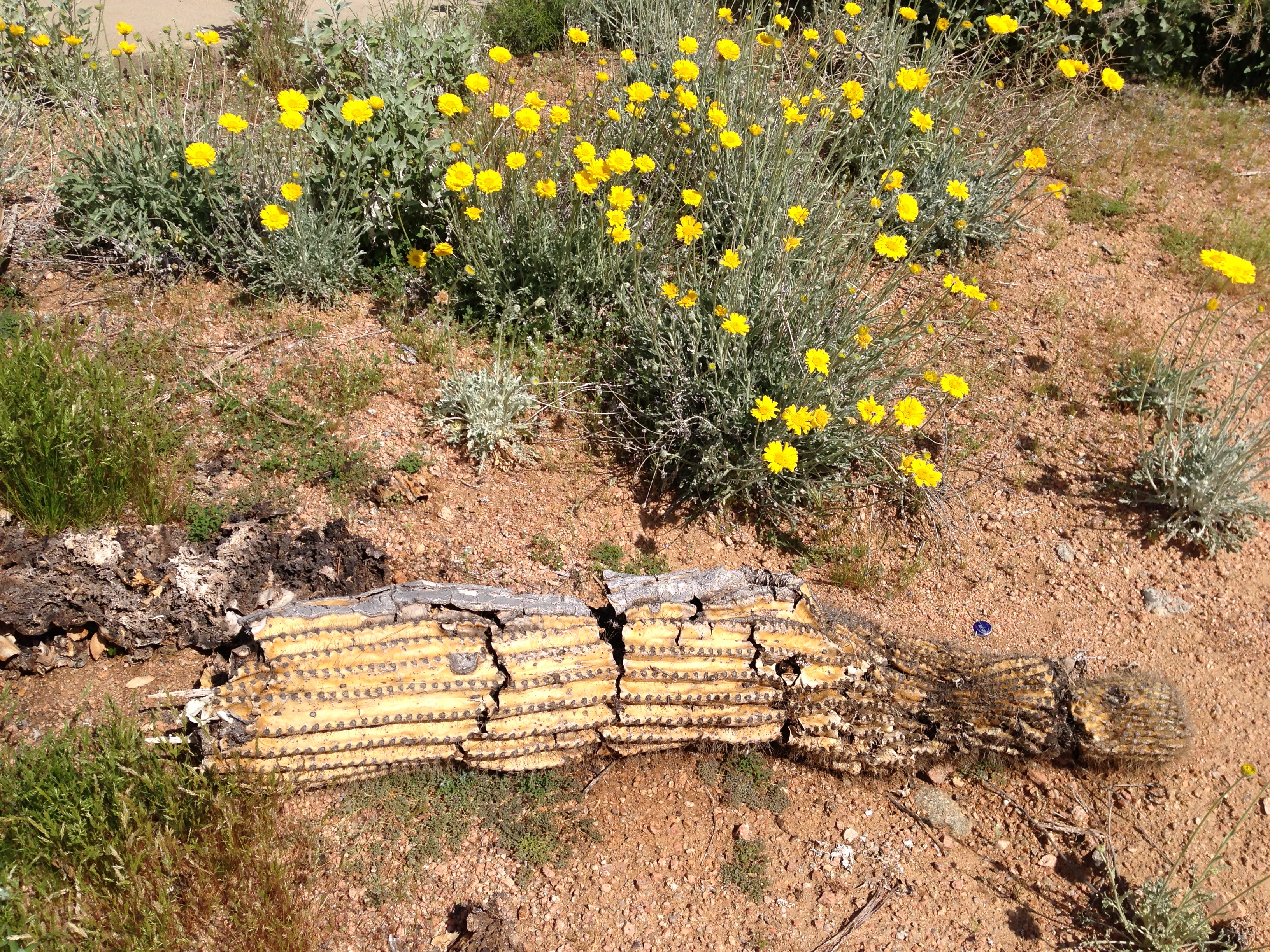
You see their skeletons everywhere littering the ground.

weathered saguaro

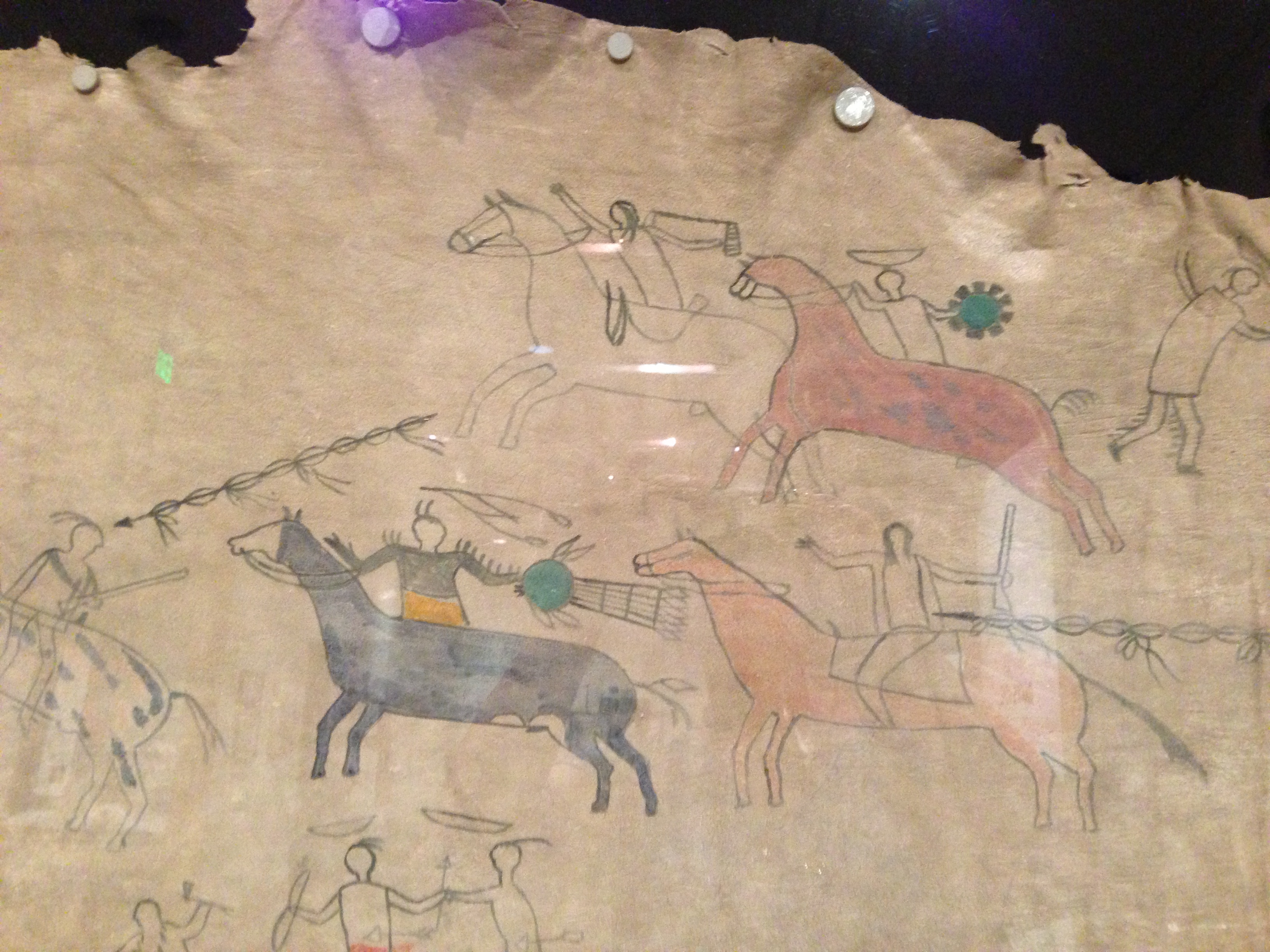
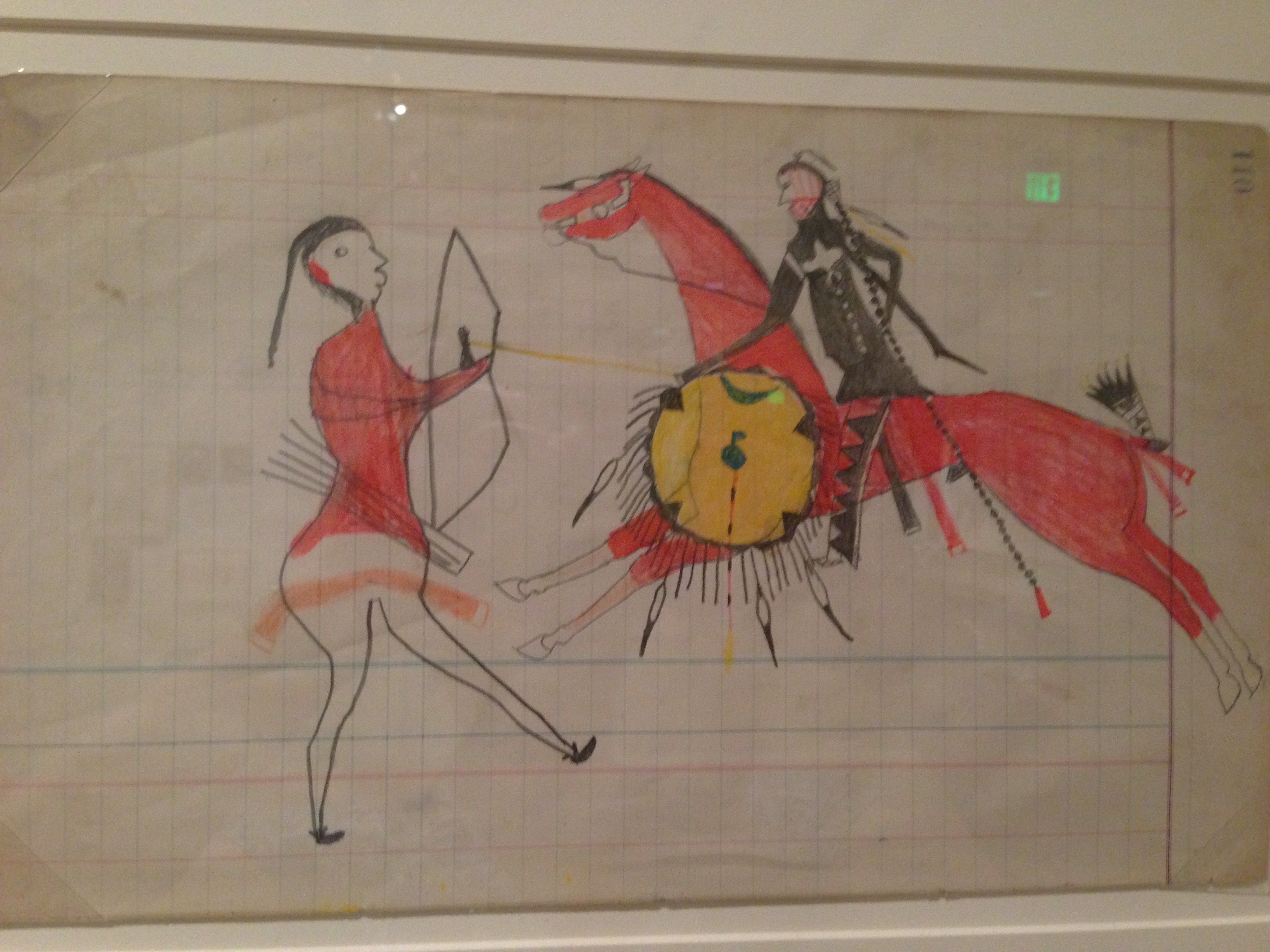
Different, of course, yet similar to Becker’s faded attempts, the ledger art of the Plains Indians, a phenomenon through which artists got their story out between about 1865 and 1935. Originally, the tanned skins of bison were used for painting individual scenes or narratives, using natural pigments. This one dates from 1880, and shows a battle between the Cheyenne and the Pawnee.

hide

The U.S. government initiated a mass slaughter of the bison in order to reduce the central food source of the Plains people. So no more natural canvas. Artists transferred their pictogram paintings to either muslin, woven canvas or, most interestingly, paper ledger books, the ordinary kind businesses used to keep their accounts.

They had to get their story across.

ledger sheet

I love the transgressive nature of these illlustrations, which explode off the pages of the staid, “civilized” lined paper.

ledger 2

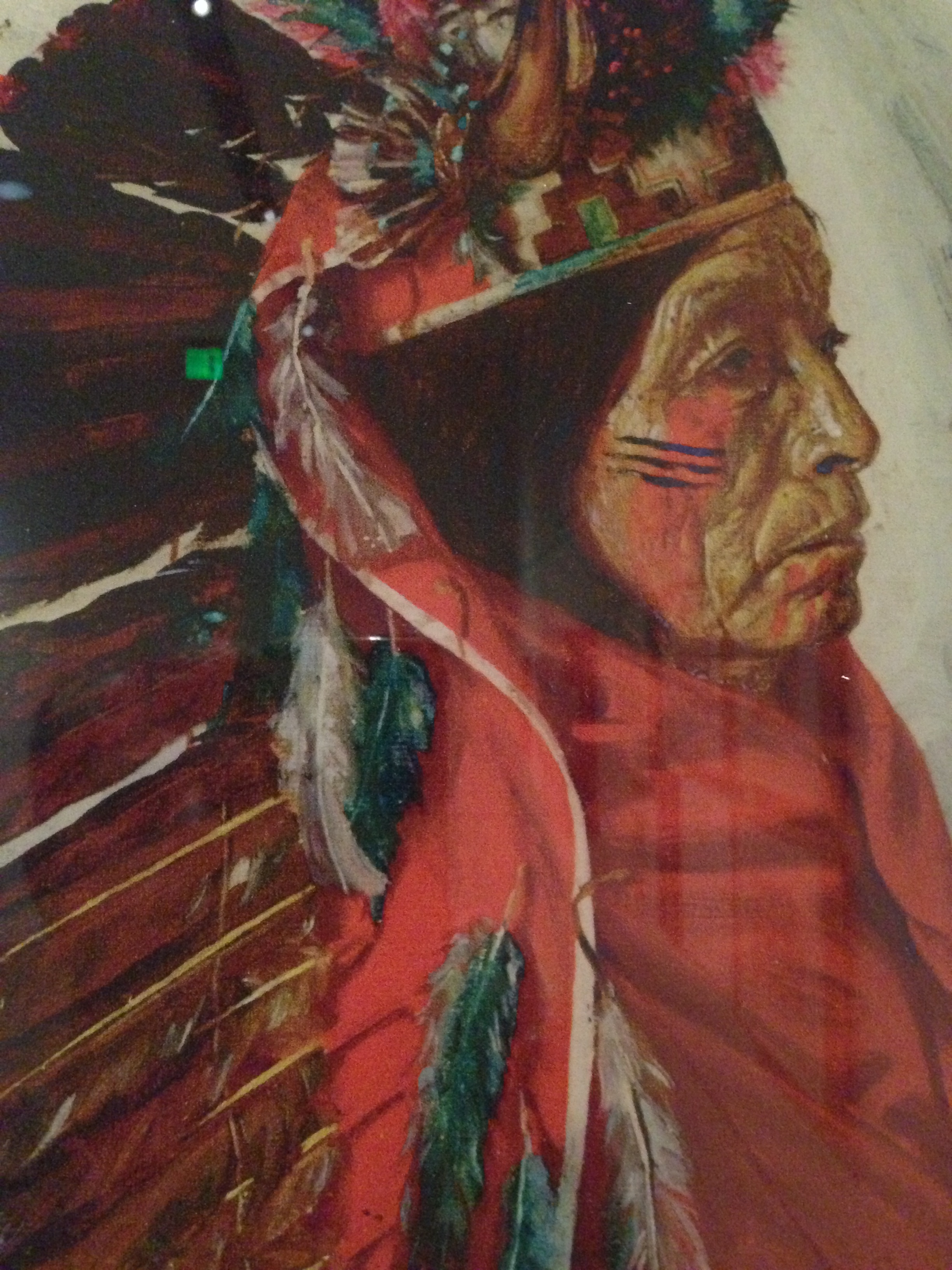
Chief Chief Killer distinguished himself among ledger-book artists.

chief killer

Educated at the Carlisle Indian School in Pennsylvania, the Cheyenne went back to the reservation in Oklahoma as a farmer, butcher, policeman and teamster.

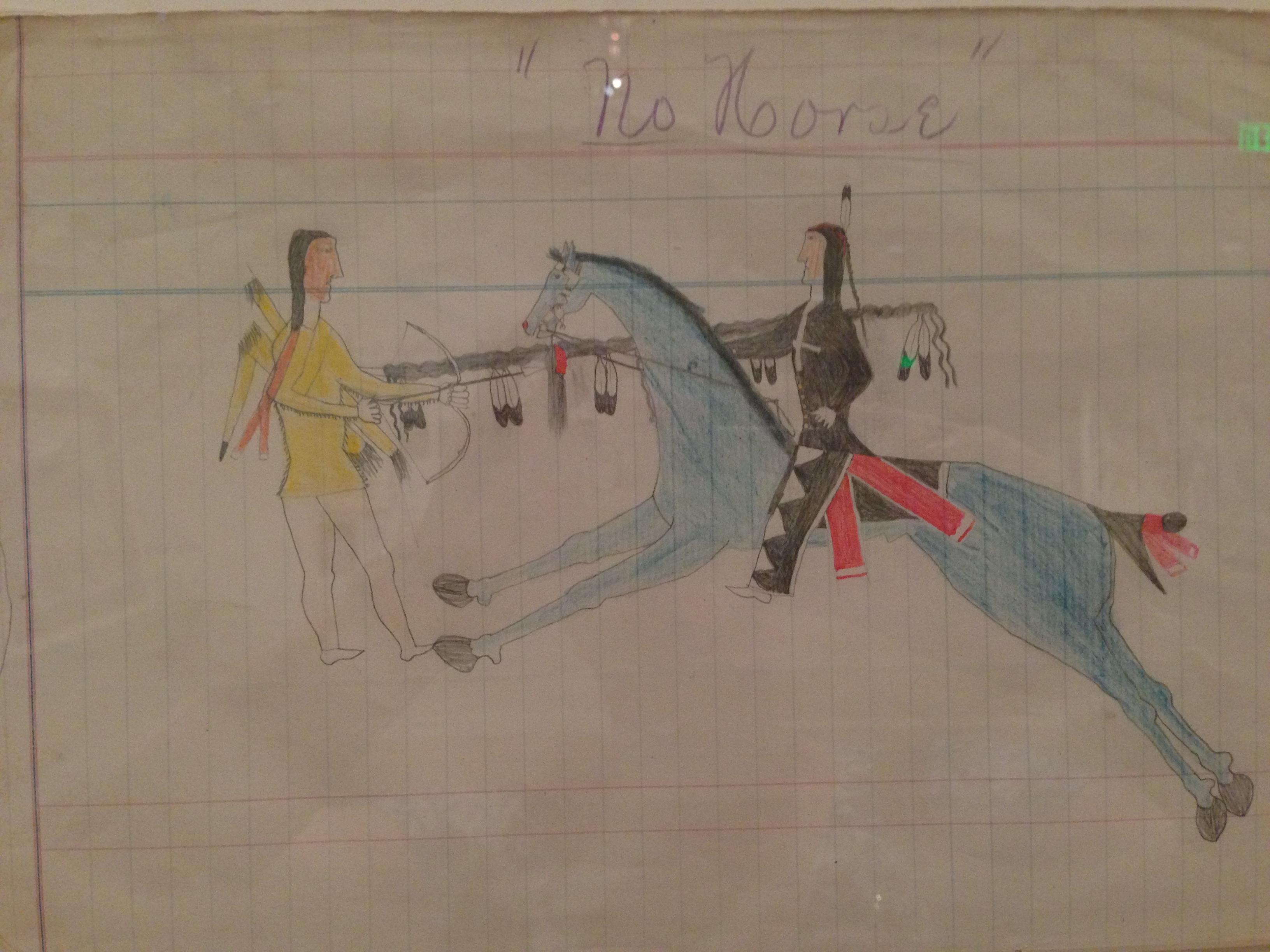
He excelled at scenes of ceremonial life, landscapes and cityscapes. Collected in a ledger book cryptically titled No Horse are a series of accounts or heroism in battle.

no horse

According to his last will and testament, when Chief Chief Killer died in 1923 he left one grandson a spring wagon, one a bay horse, his granddaughter a set of light harness, but neither he nor his descendents had the funds for his burial, which the government covered to the tune of one hundred bare-bones dollars.

The new Heard Museum offshoot in North Scottsdale has a beautiful exhibit of ledger books.

One of my favorite pieces of research for The Women of the House years ago was the 18th century ledger book of the Albany fur trader Everett Wendell, which I felt privileged to handle at the New-York Historical Society, wearing white cotton gloves. Wendell indicated the furry merchandise to be exchanged with pictograms that he and the non-English speaking Alquonquin trappers would both understand: three little beavers, for example, or two bears.

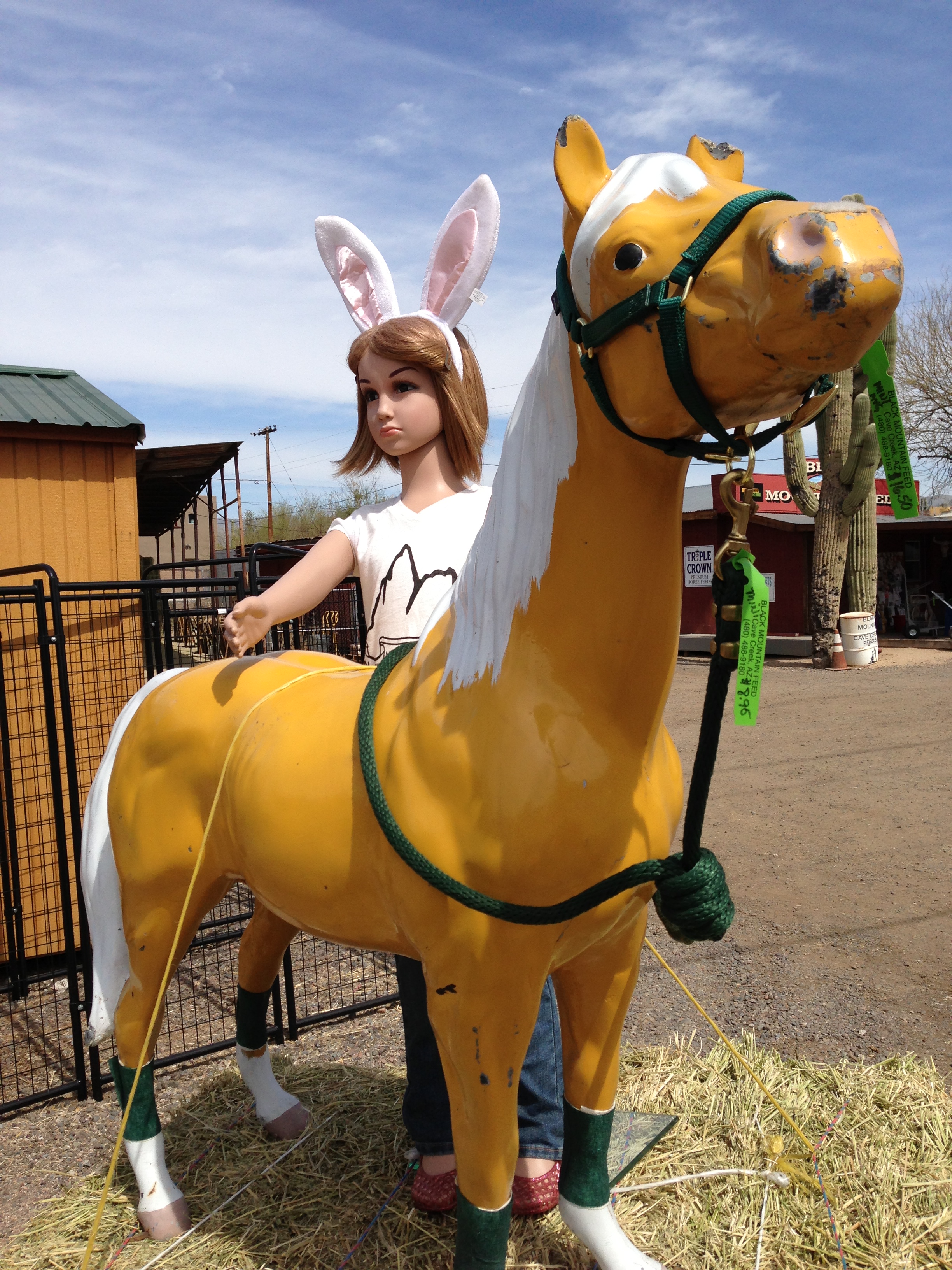
Big hand-lettered signs  or pictures on ledger paper make a clear statement. What statement does this figure make?

feed store

The life-size mannequin stands outside a feed store in Cave Creek, sporting her Easter finery, advising motorists that they better come in and make hay while the sun shines.

Maybe all those No signs could be reconfigured… No Horse.

no horse sheet

5 Comments

Filed under Art, History, Jean Zimmerman, Nature

Bloody Places

Driving south on 17 from Sedona to Phoenix is a trip through the mysteries of western place names, western places, some of them bloody. At first, all you see are the greasewood’s craggy grey branches. The red of Sedona turns tawny, like a leonine pelt. Everything looks spent.

You begin to notice the names, imbued with the past: Bloody Basin Road. Hayfield Draw. Like Margs Draw Trail in Sedona, but that Draw was named, I think, after a mule.

Quath-qua-oda, which means “sweet red round” in Yavapai. What was sweet, and what was round, has not been recorded.

You pass bulbous shapes of cedars. High chapparal: blond grasses atop mesas.

You pass descansos, roadside shrines to car crash victims – two white crosses side by side, then a black cross surrounded by yellow flowers. One lensman, David Nance, has taken some great photographs of these shrines.

descanso David B. Nance

Reminding me of the wall in the gift shop at the greasy spoon this morning, all skulls and crosses.

skull crosses

“We say that the hour of death is uncertain,” writes Proust, “but when we say this we think of that hour as situated in an obscure and distant future. It does not occur to us that it can have any connection with the day already begun or that death could arrive this same afternoon, this afternoon which is so certain and which has every hour filled in advance”.

You come to General Crook Trail. George Crook, the Indian fighting general who earned his props during the Civil War (for the North), served afterward in the Pacific Northwest before repeatedly forcing the surrender of the Arizona Apache under Geronimo.

George Crook

Brown faceless mountains. Beautifully bleak.

Badger Springs Road and Horse Thief Basin.

Ravens soaring across the highway. Ash Creek. Agua Fria.

You pass Arcosanti, still under construction all these years later, its futuristic architect Paolo Soleri continuing to design apses. I still have my green bronze bell, someplace.

Rock Springs, with its biker cafe and 20 kinds of pie, its clutter of signs and decent schlock shop.

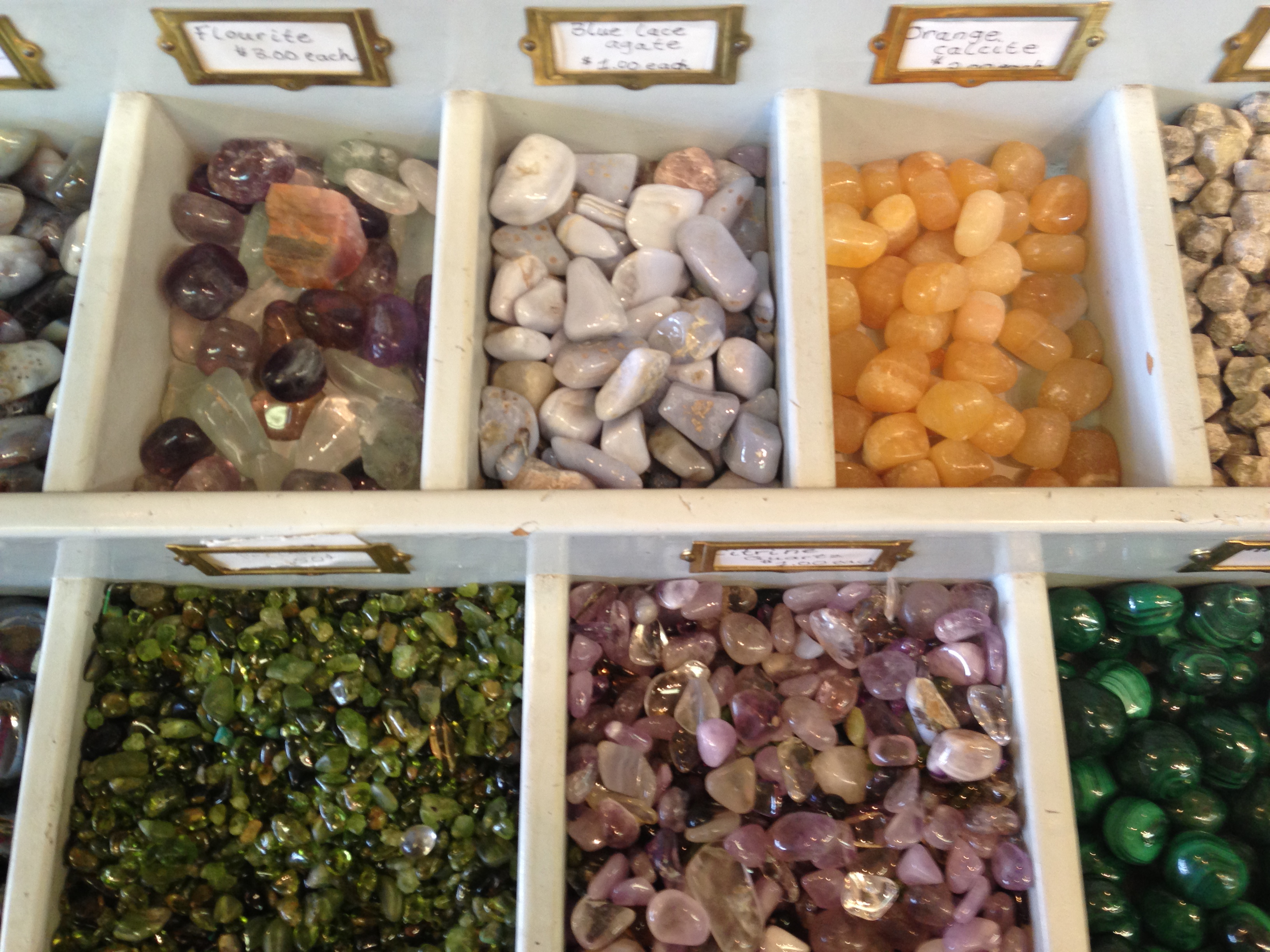
rock shop

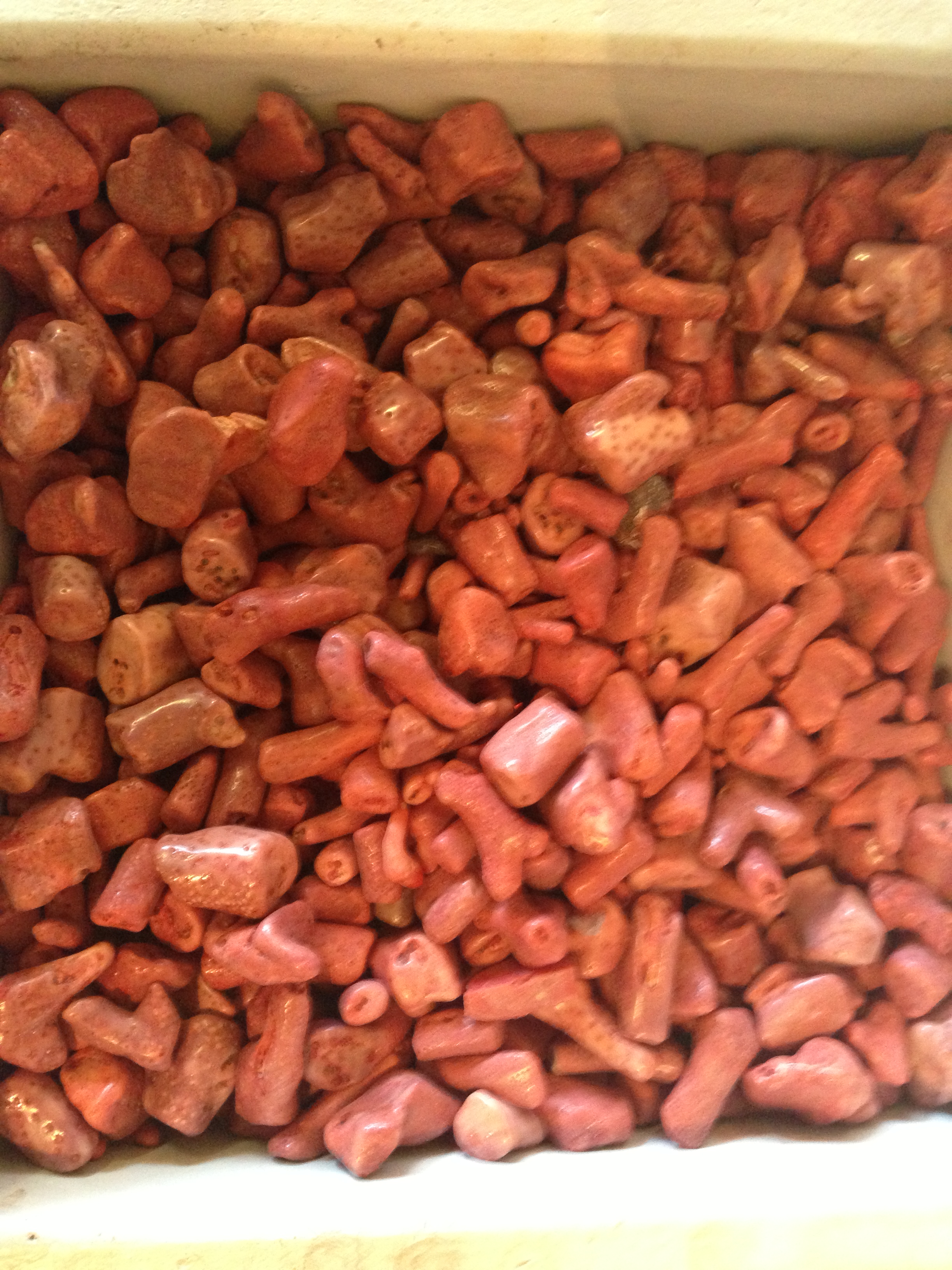
I like coral, hard to find in these days of overharvesting. But on this trip I got a piece half the size of my pinky nail for 75 cents. Good luck to me.

Coral

Little Squaw Creek. Moore’s Gulch.

You start to see ocatillo fly by, then Table Mesa, its top set with cactus and sagebrush.

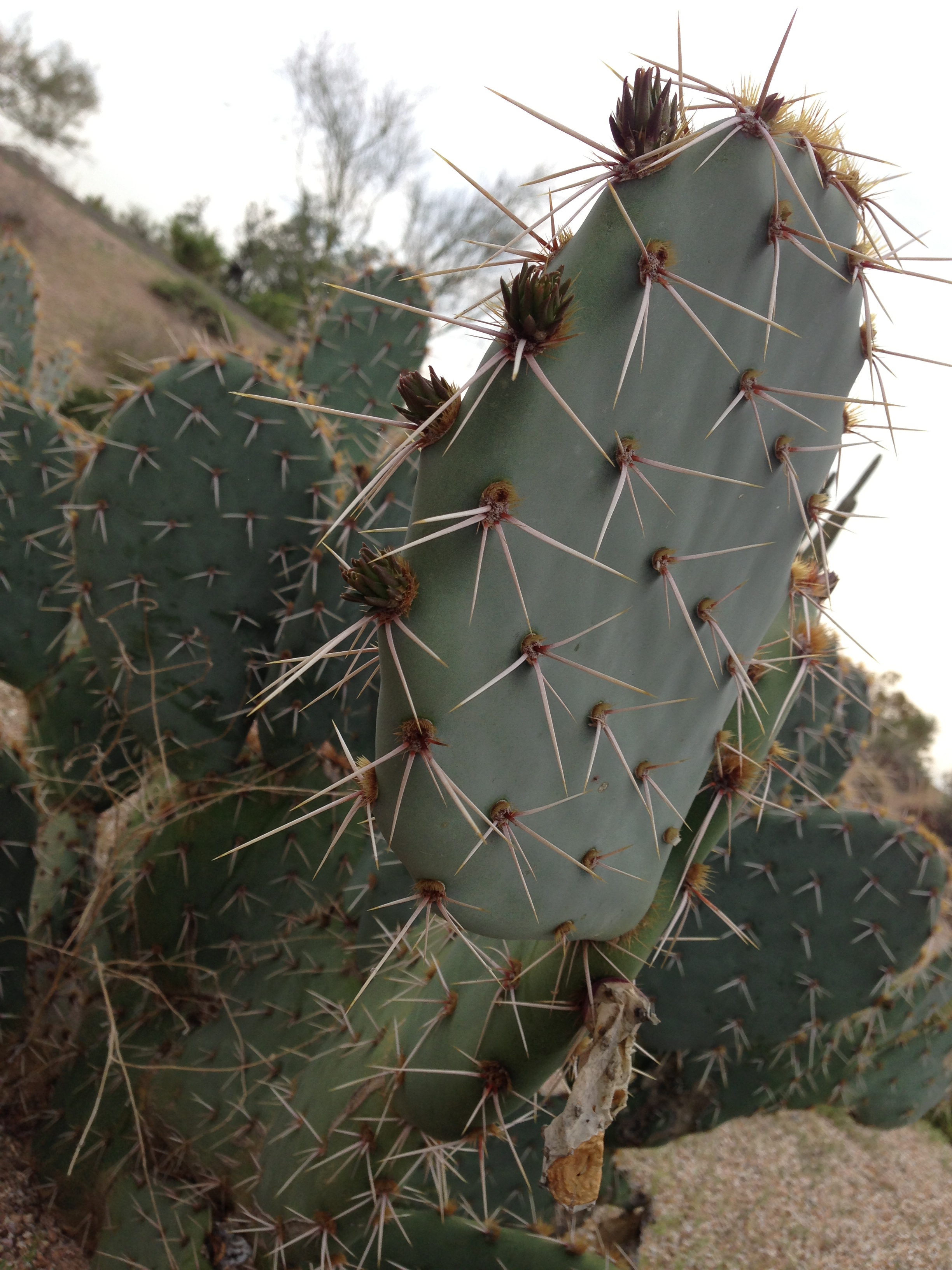
Finally you reach Bumblebee, and with it, now you’ve dropped under 4,000 feet in altitude, the first saguaros, ranging atop the hills. Prickly pear perks up.

prickly pear cactus

Bumblebee, a ghost town and former stagecoach stop, still has a general store and one ranch, yet for a while it sponsored swinging jazz fests. The burg was founded, it has been said, by the maker of Carter’s Little Liver Pills.

Spring starts now: a glimpse of orange globe mallow, a scattering of yellow broom bush, dangerous cholla.

cholla

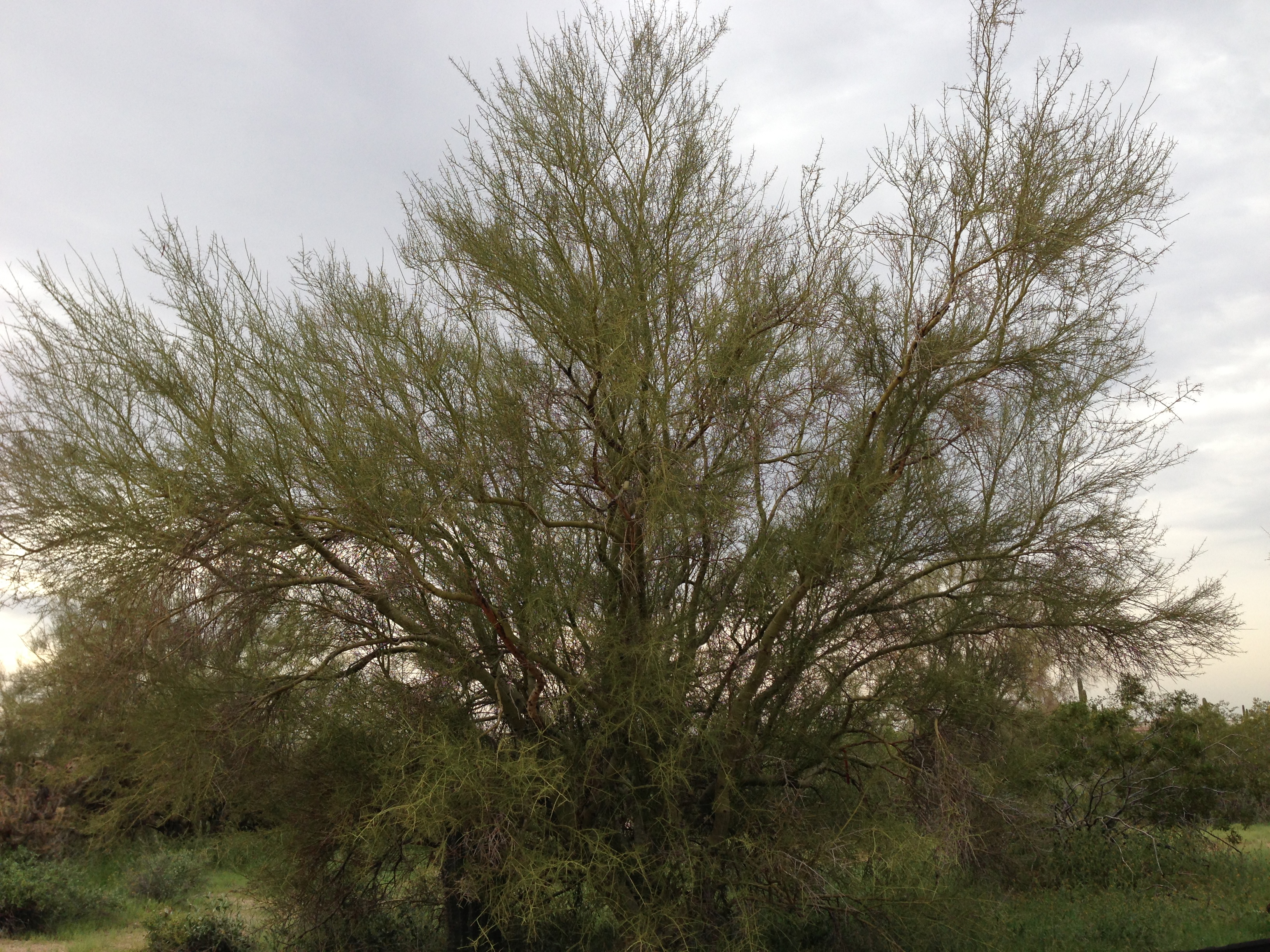
Palo verdes with green trunks.

green tree

Ironwood.

Angelita daisies.

bee on daisy

The thing about saguaros – they’re ancient, grow an inch and a half in their first eight years, then drag their asses along until they finally begin to get huge, attracting creatures in need of a fleshy home like this noisy cactus wren.

cactus wren

They produce luscious fruit.

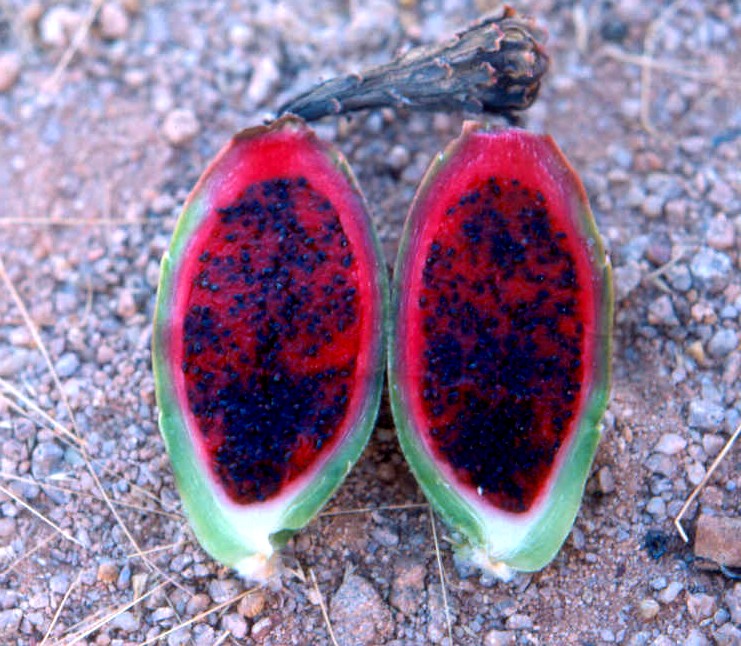
saguaro fruit

Only when they get to be about 100 do they pop out arms, aging to 120, 180, even more than 200 years old. They can weigh six tons or more.

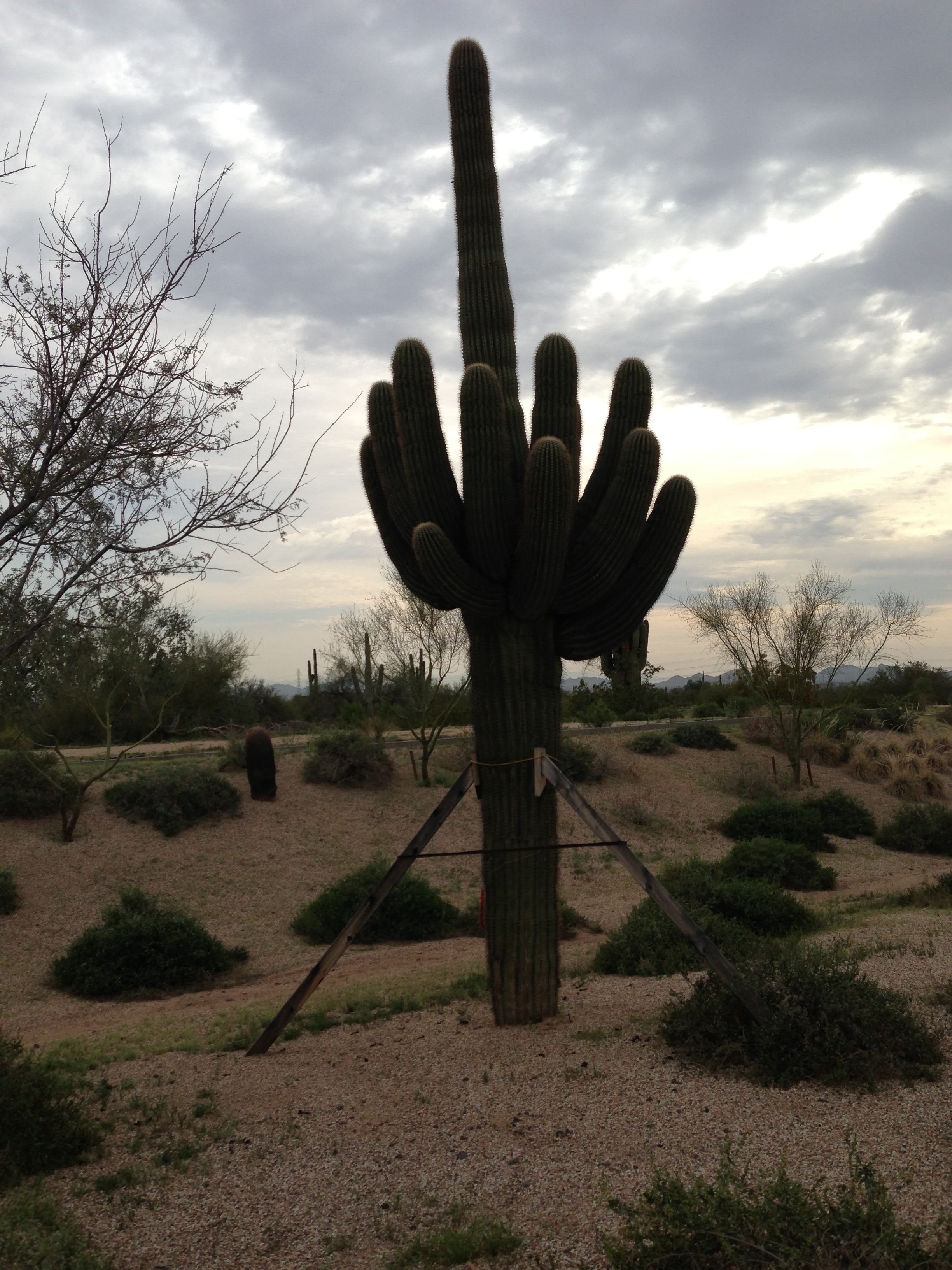
Occasionally one needs bracing, it’s gotten so fat.

propped up saguaro

There are some saguaros standing that General Crook could easily have passed on his way to punish Geronimo.

3 Comments

Filed under History, Nature, Photography

A Paleo Hike

I think our family would really benefit from the Paleo diet, says Maud.

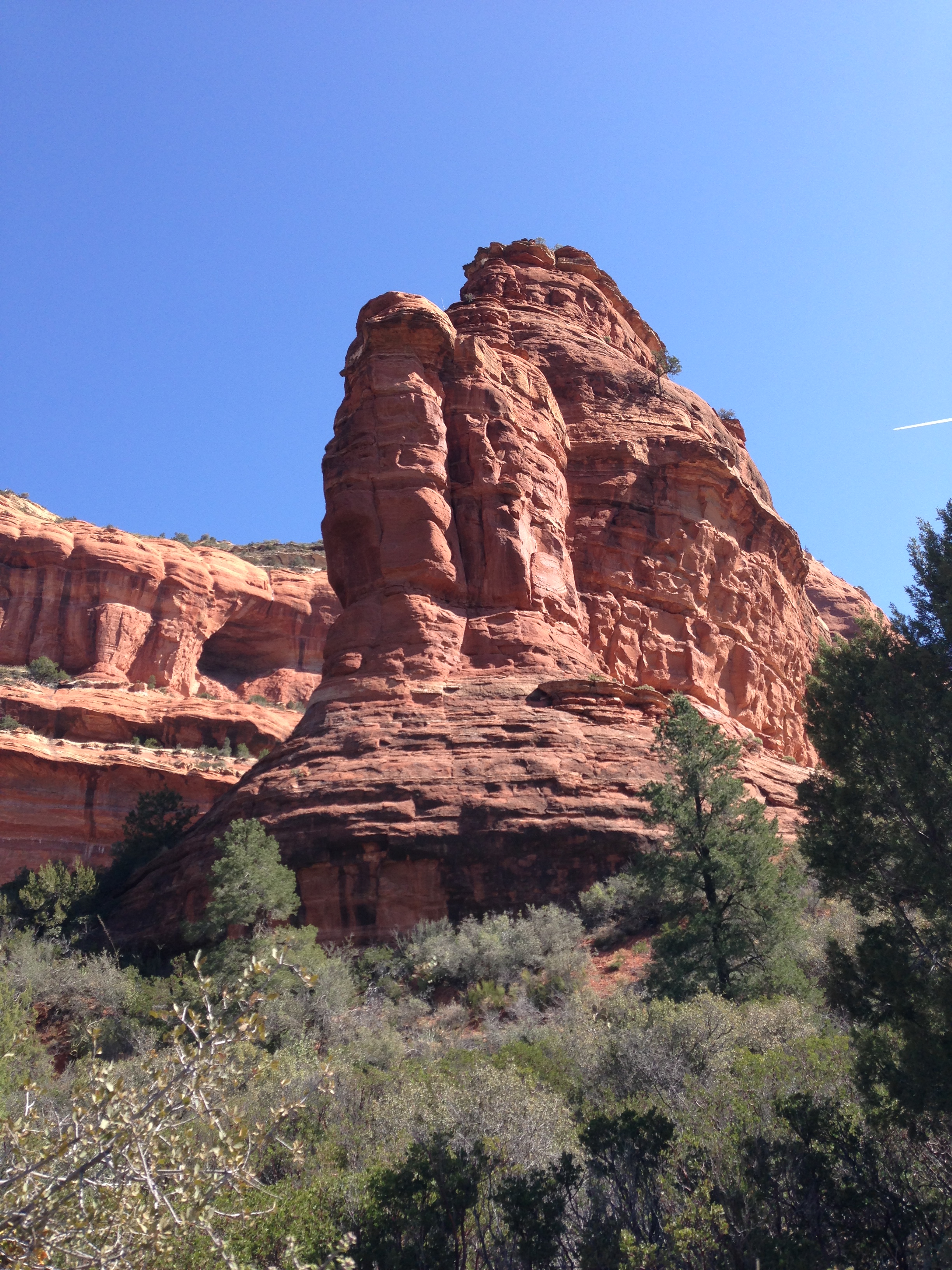
At the mouth of Boynton Canyon, the most beautiful feature of Sedona, Arizona, and probably the rest of the natural world. The dust of the trail is red, but not as red as the rocks that rim the place.

red rocks

The Anasazi, the ones that came before, and those that came after them, the Yavapai, populated these parts until  600 or so years ago, dwelling in caves beneath the circling ravens and slip of moon. Cookfire smoke still can be traced up the walls.

We walk where they walked, talking about eating nothing but meat and fat. Maybe gristle, for variety.

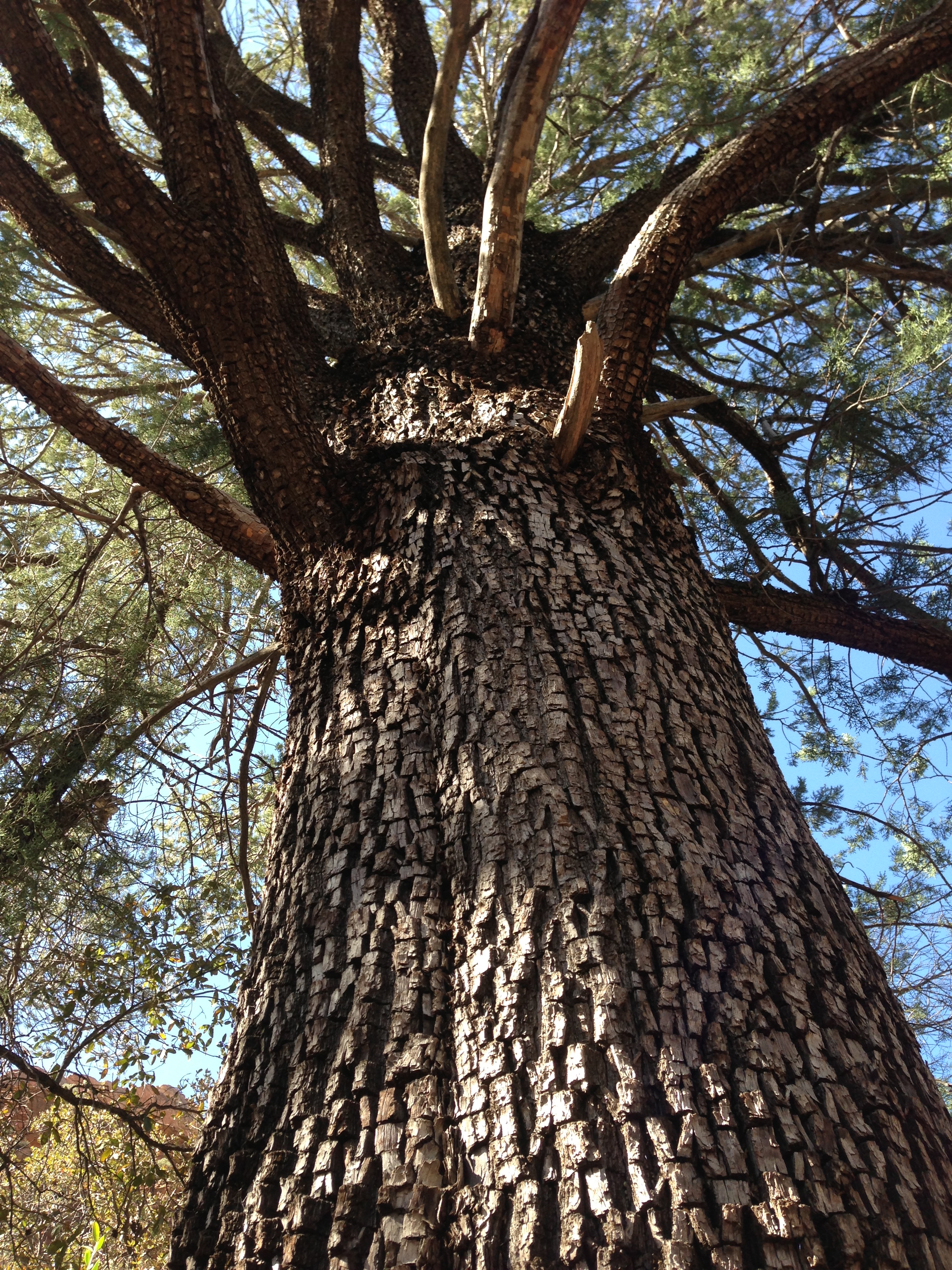
Past the alligator junipers, 300 years in the making.

alligator juniper

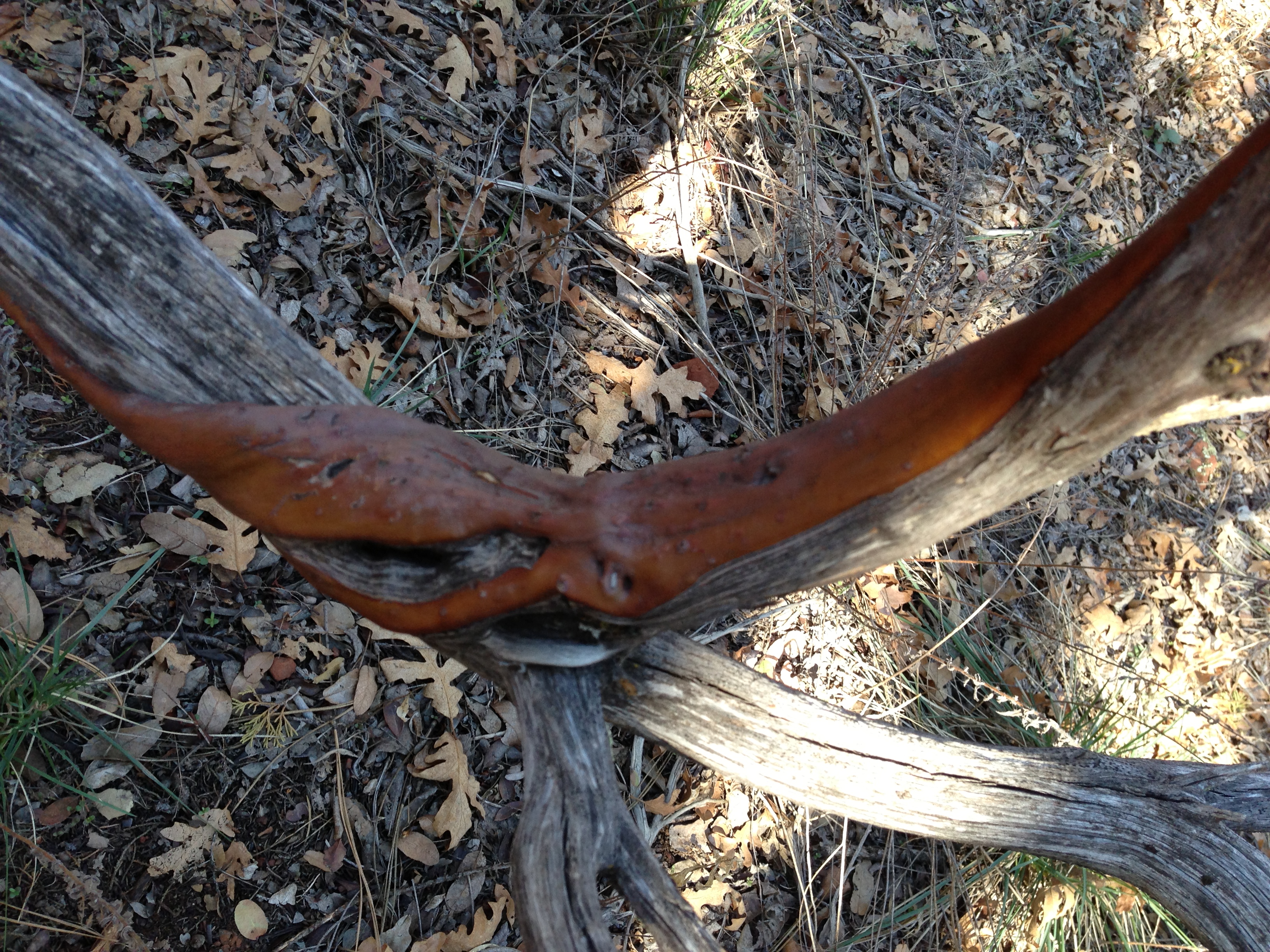
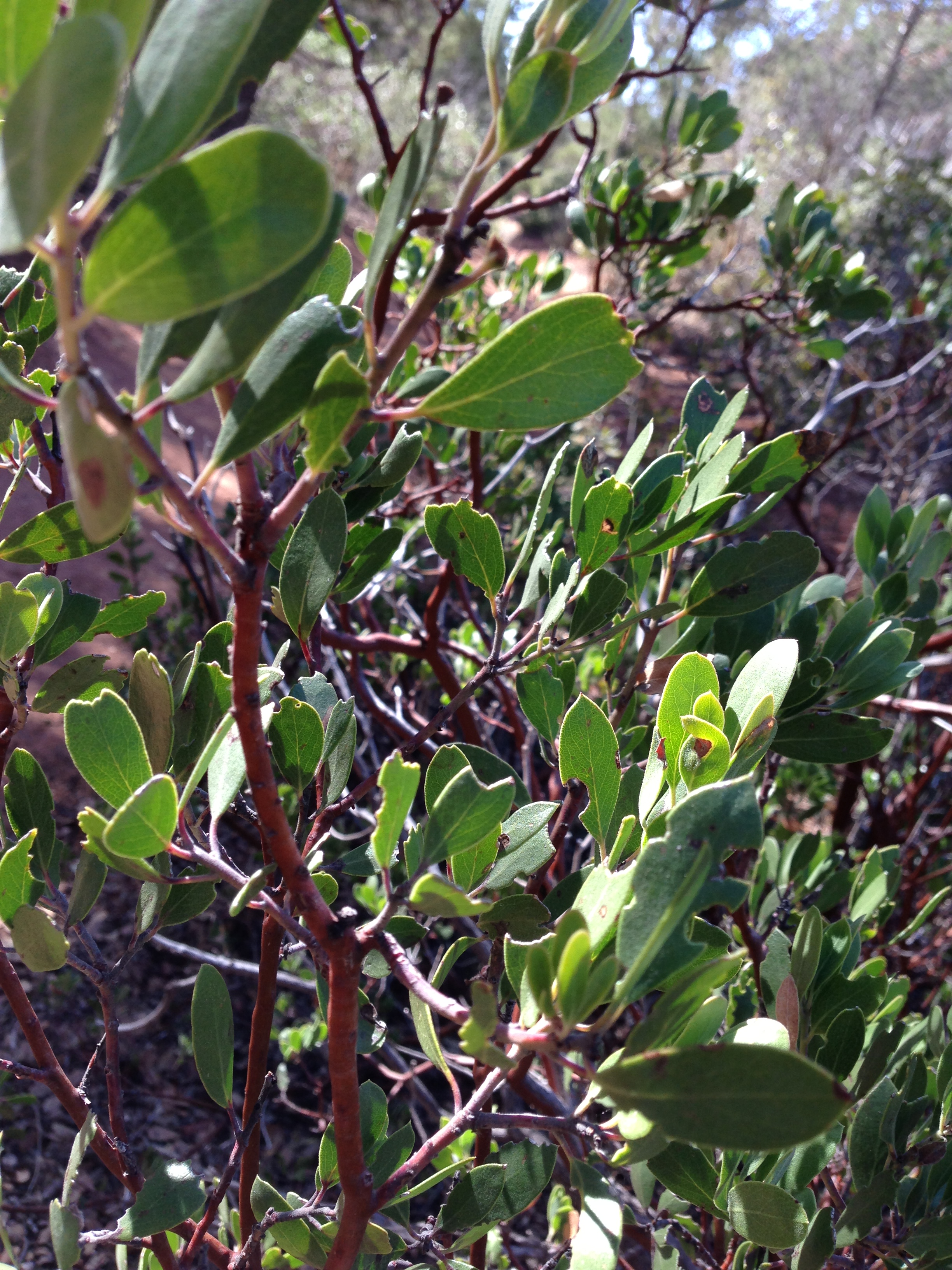
Past the manzanita, which I love because it dies and lives at one and the same time, its red, smooth, cold bark entwining with the old grey.

manzanita detail

We passed a herd of javelina coming in, blustery and shy at once, hustling their young along.

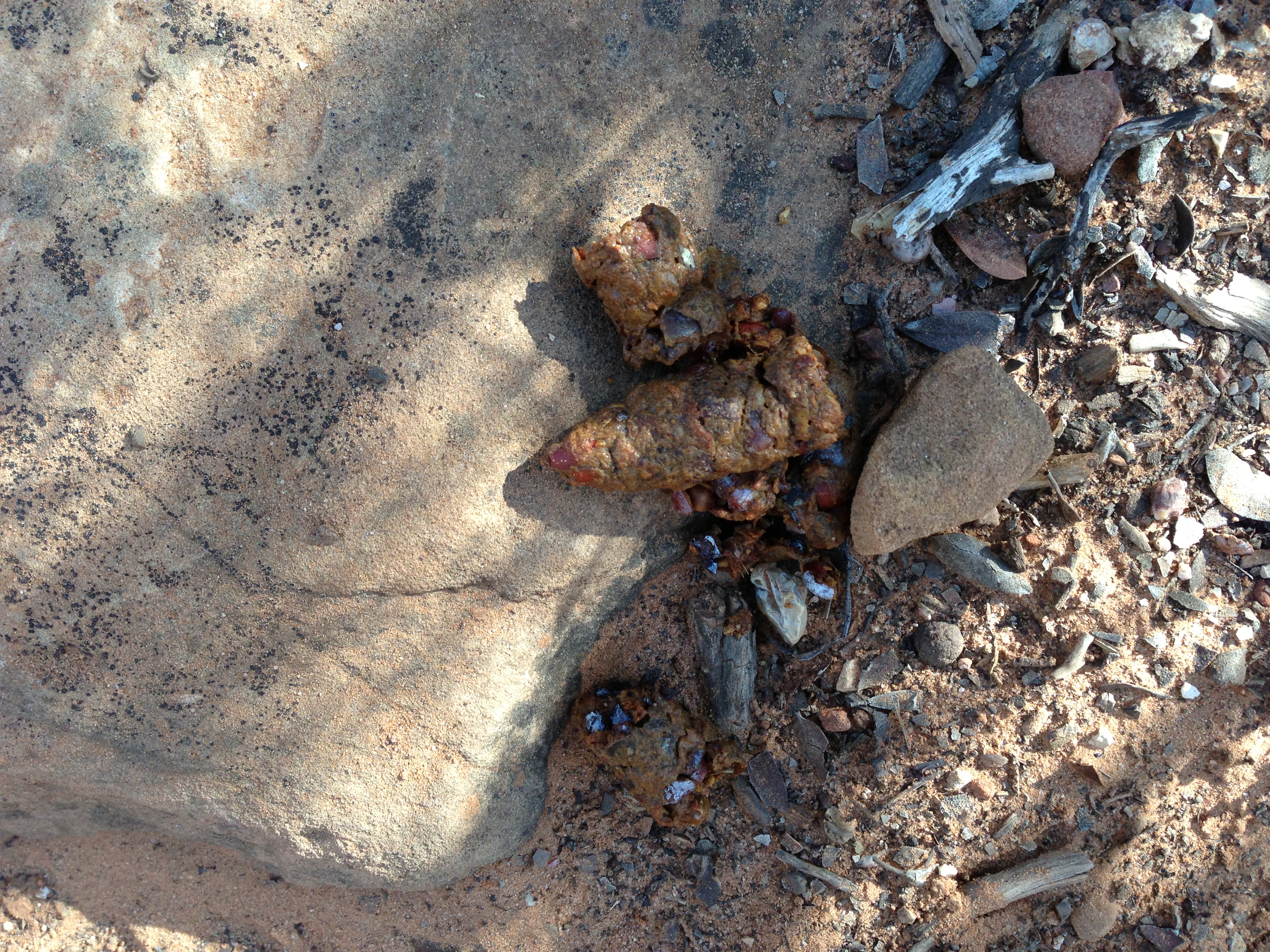
Coyote have been here, leaving blue juniper berries in their scat.

coyote scat

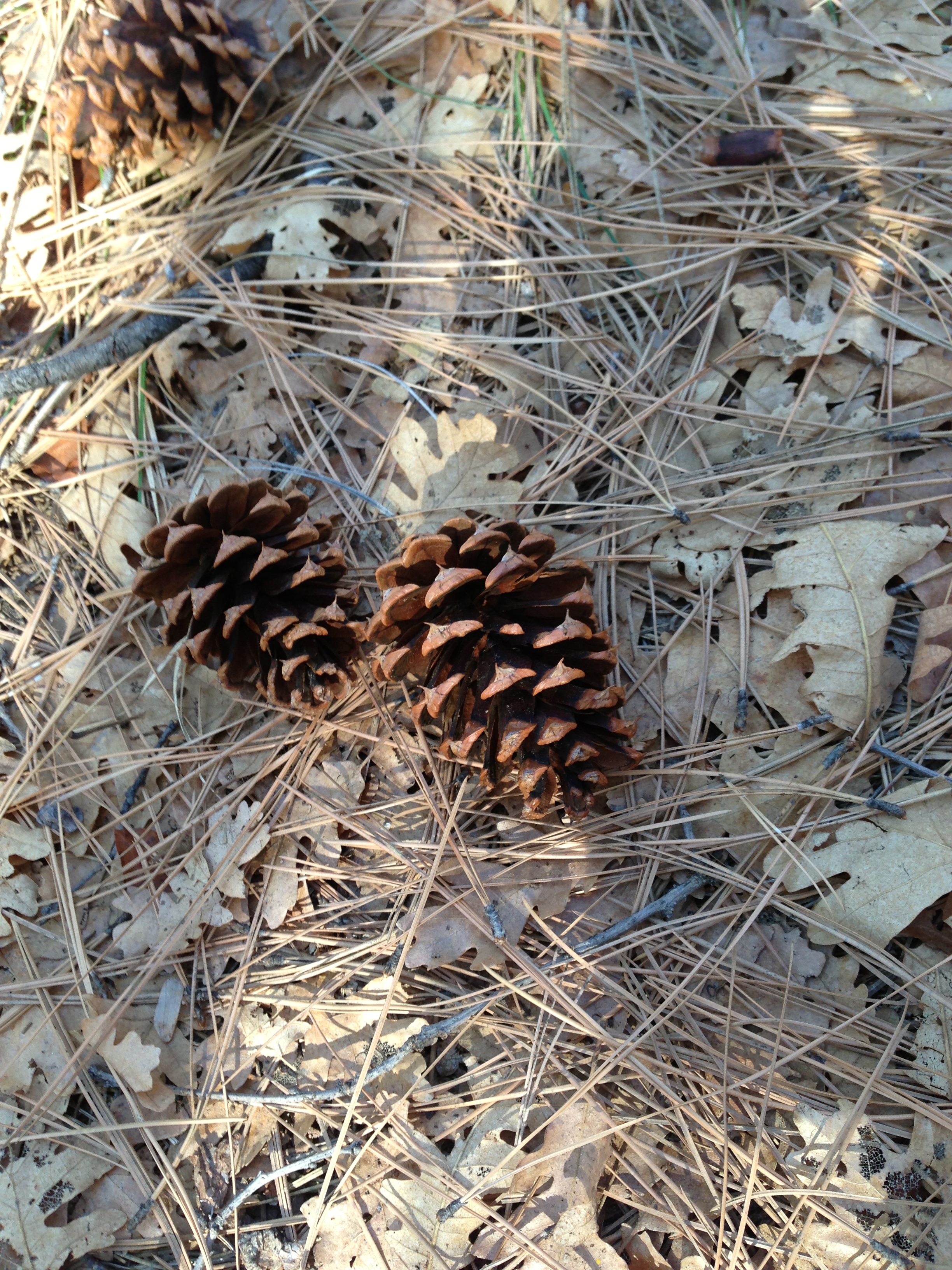
I wonder what it would be like to eat nothing but meat. No juniper berries, no salads of grizzled green grasses. Only the occasional pine nut.

pine cones

Black butterflies and white butterflies flit through the undergrowth. The towhee hops beneath the manzanita, fat red breast and coarse black and white feathers like a Renaissance cloak, then disappears.

manzanita c.u.

Meat. The oily scent of mesquite in the cool air now that the sun has come over the canyon wall. I learned recently about a perfume designer who created a concoction based on the smell of ink. Mesquite for Men?

How far is it to the back of the canyon, I ask a hiker resting on a rock.

There’s only one way to know, he says, smiling with certainty.

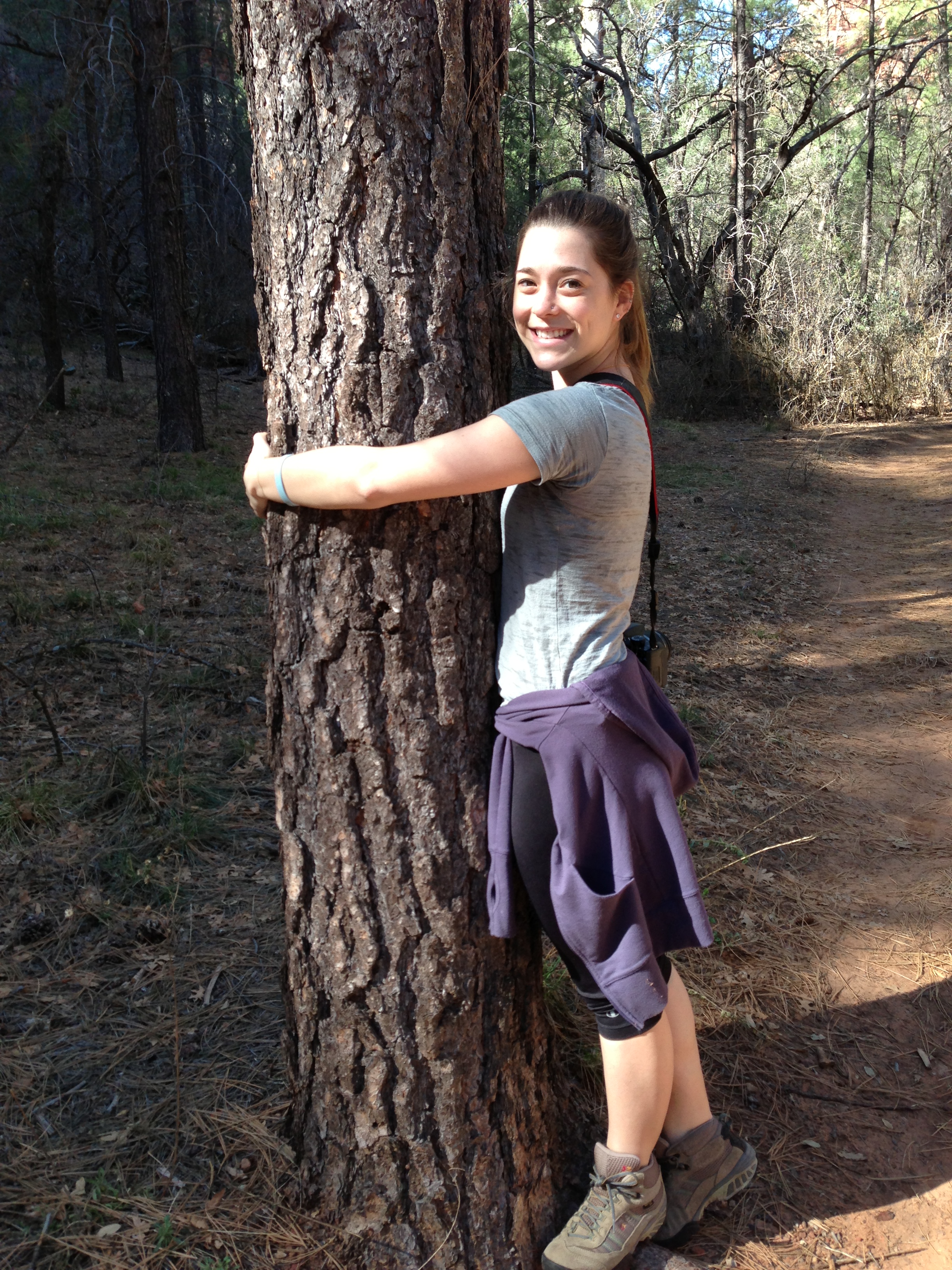
We love the Ponderosa pines, which for some reason thrive in Boynton Canyon.

maud tree

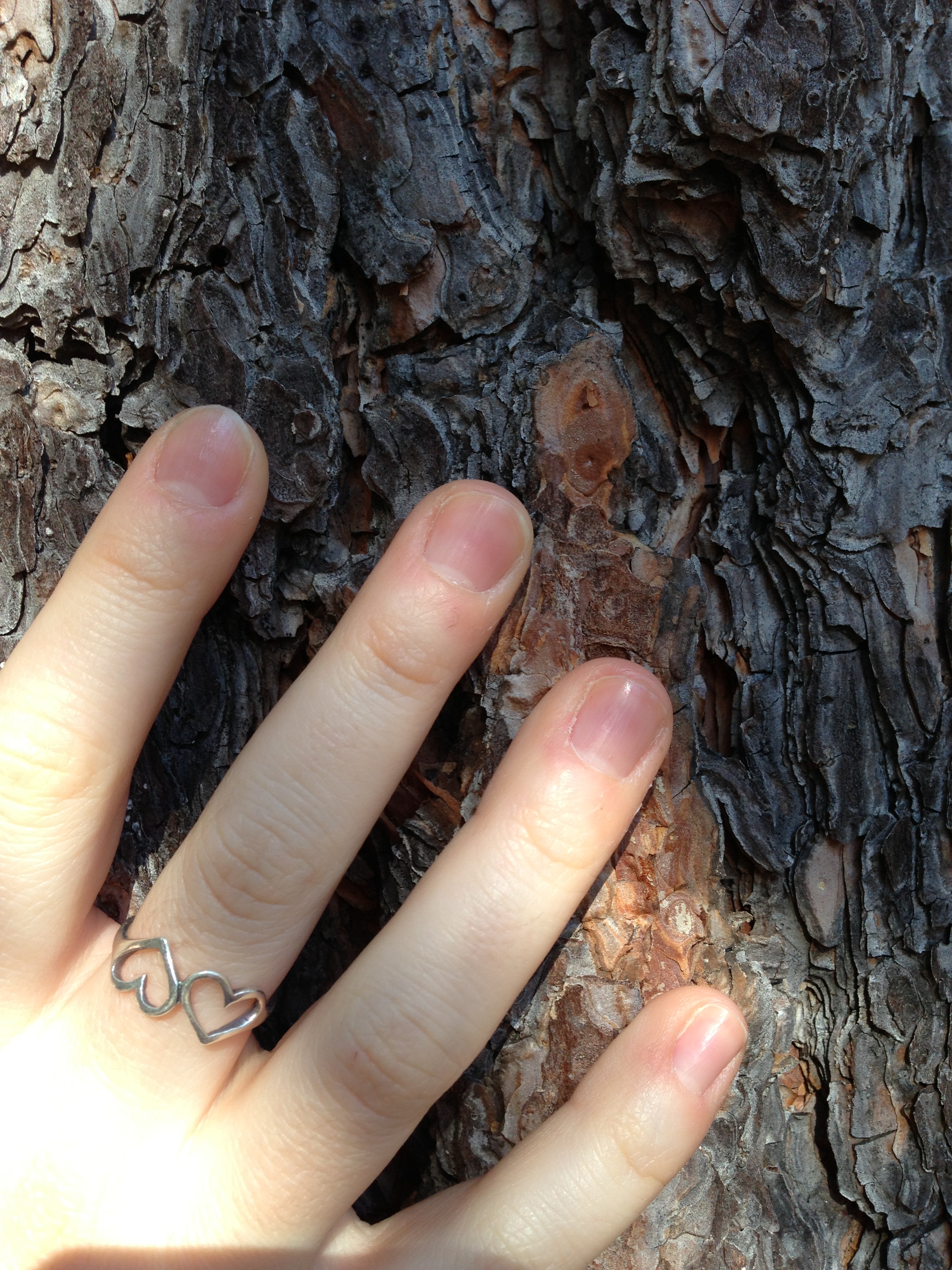
When the sun rays hit their bark, they give off the aroma of butterscotch.

Feel the hot sweat on your back. The negligible soreness in your toes. Press your nose up against a tree, and learn how to live.

Perhaps on a diet of butterscotch.

ponderosa


3 Comments

Filed under History, Nature