Category Archives: Jean Zimmerman

When It’s Okay to Be List-y

There’s a great piece on Flavorwire that anthologizes ten lists “that seem like they could be poems in and of themselves.” The writers responsible for these lists are diverse. I’m reminded of a term for a writerly sin that Gil and I coined — being “list-y,” filling a passage with a bunch of wonderful facts that when run together just add up to dead weight.

But sometimes a list is a dynamic object, grocery lists, laundry lists, books to read, resolutions of every kind. Bucket lists itemizing the wonderful activities you’ll someday get around to… although I have instead a fuck-it list, things I will not in any circumstances ever do in my lifetime, the ones I refuse to consider, like bungee-jumping from a helicopter or white water rafting down a too-exciting Colorado River.

There’s nothing quite like rediscovering a scrap of paper — buried on your desk or in your bag — and realizing that you’ve actually accomplished the things on it. Ta-da. I did something! No matter how small. I returned the DVD to the library. I picked the tomatoes.

tomatoes copy

And I remember what that day was, the crumbly soil, the sun, the smell of the tomato stems when I cut them. How my lower back felt when I was done. The taste of the salad, later. It all comes back with pencilled words on a scrap of paper. A list enumerates the world.

Here you can see Leonardo da Vinci present his qualifications for a job at the court of Ludovico Sforza in the early 1480s. One bullet point refers to his early designs for military tanks: “Also, I will make covered vehicles, safe and unassailable, which will penetrate the enemy and their artillery, and there is no host of armed men so great that they would not break through it.”

da vinci

Nora Ephron writes about the things that she won’t miss when she’s gone.

Nora Ephron

Two are “washing my hair” and “the sound of the vacuum.”

Woody Guthrie gives his new year’s resolutions for 1942, including “Listen to radio a lot” and “Help win war—beat fascism.”

Folk Musician Woody Guthrie

Sullivan’s Travels director Preston Sturges’s decrees “eleven rules for box-office appeal.”

preston_sturges

The whole series is great:

A pretty girl is better than an ugly one.


A leg is better than an arm.


A bedroom is better than a living room.


An arrival is better than a departure.


A birth is better than a death.


A chase is better than a chat.


A dog is better than a landscape.


A kitten is better than a dog.


A baby is better than a kitten.


A kiss is better than a baby.


A pratfall is better than anything.

Pianist Thelonius Monk takes a bold-faced approach to giving advice to musicians in 1960.

thelonious-monk-2

Two are:

STOP PLAYING ALL THOSE WEIRD NOTES (THAT BULLSHIT), PLAY THE MELODY!

and

MAKE THE DRUMMER SOUND GOOD.

What I think I like the best of this selection is Isaac Newton’s itemization of his recently committed sins, penned when he was 19 years old, in 1661 – several years before he set his mind to the principles of calculus.

isaac newton

And so I’m going to borrow from Flavorwire to run Newton’s list in its entirety, from his notebook:

Before Whitsunday 1662

Using the word (God) openly

Eating an apple at Thy house

Making a feather while on Thy day

Denying that I made it.

Making a mousetrap on Thy day

Contriving of the chimes on Thy day

Squirting water on Thy day

Making pies on Sunday night

Swimming in a kimnel on Thy day

Putting a pin in Iohn Keys hat on Thy day to pick him

Carelessly hearing and committing many sermons

Refusing to go to the close at my mothers command

Threatning my father and mother Smith to burne them and the house over them

Wishing death and hoping it to some

Striking many

Having uncleane thoughts words and actions and dreamese

Stealing cherry cobs from Eduard Storer

Denying that I did so

Denying a crossbow to my mother and grandmother though I knew of it

Setting my heart on money learning pleasure more than Thee

A relapse

A relapse

A breaking again of my covenant renued in the Lords Supper

Punching my sister

Robbing my mothers box of plums and sugar

Calling Dorothy Rose a jade

Glutiny in my sickness

Peevishness with my mother

With my sister

Falling out with the servants

Divers commissions of alle my duties

Idle discourse on Thy day and at other times

Not turning nearer to Thee for my affections

Not living according to my belief

Not loving Thee for Thy self

Not loving Thee for Thy goodness to us

Not desiring Thy ordinances

Not long {longing} for Thee in {illeg}

Fearing man above Thee

Using unlawful means to bring us out of distresses

Caring for worldly things more than God

Not craving a blessing from God on our honest endeavors.

Missing chapel.

Beating Arthur Storer.

Peevishness at Master Clarks for a piece of bread and butter.

Striving to cheat with a brass halfe crowne.

Twisting a cord on Sunday morning

Reading the history of the Christian champions on Sunday

Since Whitsunday 1662

Glutony

Glutony

Using Wilfords towel to spare my own

Negligence at the chapel.

Sermons at Saint Marys (4)

Lying about a louse

Denying my chamberfellow of the knowledge of him that took him for a sot.

Neglecting to pray 3

Helping Pettit to make his water watch at 12 of the clock on Saturday night

4 Comments

Filed under Jean Zimmerman, Writers, Writing

Kill Your Darlings?

“Kill your darlings?”

I was talking with a nonwriter about revising my Savage Girl manuscript, about the small cuts my editor had gently suggested would improve the narrative.

Kill does sound pretty violent. And why would you want to kill a darling?

It’s a well-established dictum, something of a cliché at this point. Widely attributed to William Faulkner. (So we know it’s not necessarily about chopping up long sentences.)

faulkner_0

In writing, you must kill all your darlings.

It may be apocryphal, since I haven’t ever located the story behind the saying.

Faulkner would seem to have adapted the sentiment from a once-lionized writers who has since become fairly obscure.

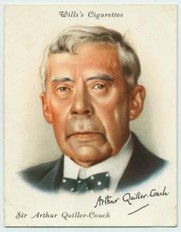
Sir Arthur Thomas Quiller-Couch (1863-1944) was a British gentleman who published under the pen name of Q. Fiction, poetry and criticism flowed from his pen, but probably his best-known work was the Oxford Book of English Verse, 1250-1900. He also translated fairy tales from the French.

quiller-couch

It was when discussing style in his 1916 publication On the Art of Writing that Quiller-Couch proposed the idea that style “is not—can never be—extraneous ornament.” Instead, he advised the following rule:

Whenever you feel an impulse to perpetrate a piece of exceptionally fine writing, obey it—whole-heartedly—and delete it before sending your manuscript to press. Murder your darlings.

Before Q came Samuel Johnson, who urged, Read over your compositions, and wherever you meet with a passage which you think is particularly fine, strike it out.

Stephen King jumped on the bandwagon more recently. In his 2001 book On Writing, King told writers to kill your darlings, kill your darlings, even when it breaks your egocentric little scribbler’s heart, kill your darlings.

But what does the riff mean, anyway? What does it mean for me, as I’m sitting here deciding whether or not to strike, for example, this passage:

Stepping into the lift, I had craned my head up to the purple sky above me, with just a dusting of stars emerging. Below, the blacker pit.

Perhaps cut this? asks my editor. The narrator is stepping into an elevator that will take him down a mine shaft.

Elmore Leonard once said, If I come across anything in my work that smacks of ‘good writing,’ I immediately strike it out.

The idea is that a bit you’re especially proud of will stand out as self indulgent and ruin the piece. Go to writing books, writing teachers, and so-called experts on the web and you will find any number of elaborations on this theme. One editor says, “darlings are scenes or sections that are fantastically written, funny, evocative…but don’t belong. They don’t move the story forward, or they repeat stuff we already know, or they cause problems with pacing, conflict, or characterization. And they are hard to eliminate. The fantastic writing, wit, and emotion blind us to the truth.”

A computer programmer applies it to code, saying, “If it turns out to be overwrought or too slick for the need, you should probably kill your darling and replace it with an ordinary solution that others can actually use, and not just marvel at.”

Darlings are the little pieces of glitter, the tinsel that the crow felt so proud to weave into her nest, but that turn out to be a distraction to everyone else.

I’m reminded of a word a friend of mine once coined to describe inadvertent foolishness with an overlay of conceit. Fardo, she called it. You think you’re being so smart but what you’re doing is overreaching and laughable. If I leave in that passage about the purple sky and the dusting of stars, will I be fardo?

Quick, don’t all speak up at once.

And yet. When you like something you wrote, when you feel good about that glitter you found – and doesn’t the glitter help hold together the nest, anyway? – won’t it appeal to someone else, to a reader?

I find another piece of Faulkner’s wisdom a bit more inspiring when it comes to writing or rewriting. Something he didn’t crib from an earlier author.

All of us failed to match our dreams of perfection. So I rate us on the basis of our splendid failure to do the impossible.

purple sky

5 Comments

Filed under Jean Zimmerman, Savage Girl, Writing

A Recipe for Happiness

Milk is good for you!

Nourishing Milk Drinks

I was champing at the bit waiting for the final edit of Savage Girl to arrive by mail, so I spent some time organizing my collection of cooking pamphlets and community cookbooks.

Star Bacon 1

They are all precious, whether they date from the oh-so-distant 1900s, with one recipe for a “Nice Luncheon Dish” (of sardines) and another for “Plain Apple Pudding,” (starred in pencil by the original owner of the book),

The Porter Church Cook Book 1

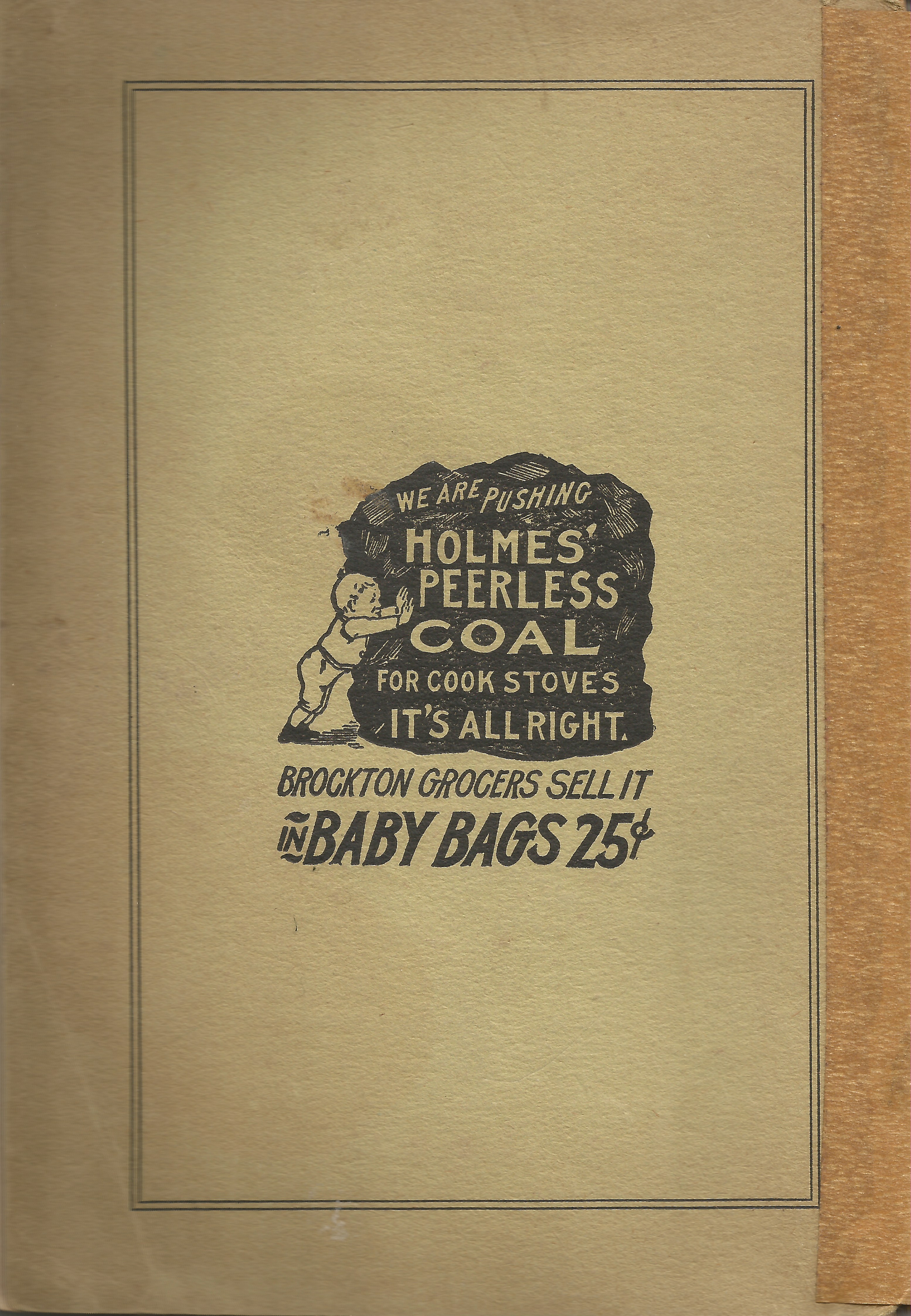
Peerless Coal 1

The homespun ’30s,

Homemade Ice Cream 2 copy

The science-minded ’40s,

Canned Fish 1

The ’50s, domain of the housewife

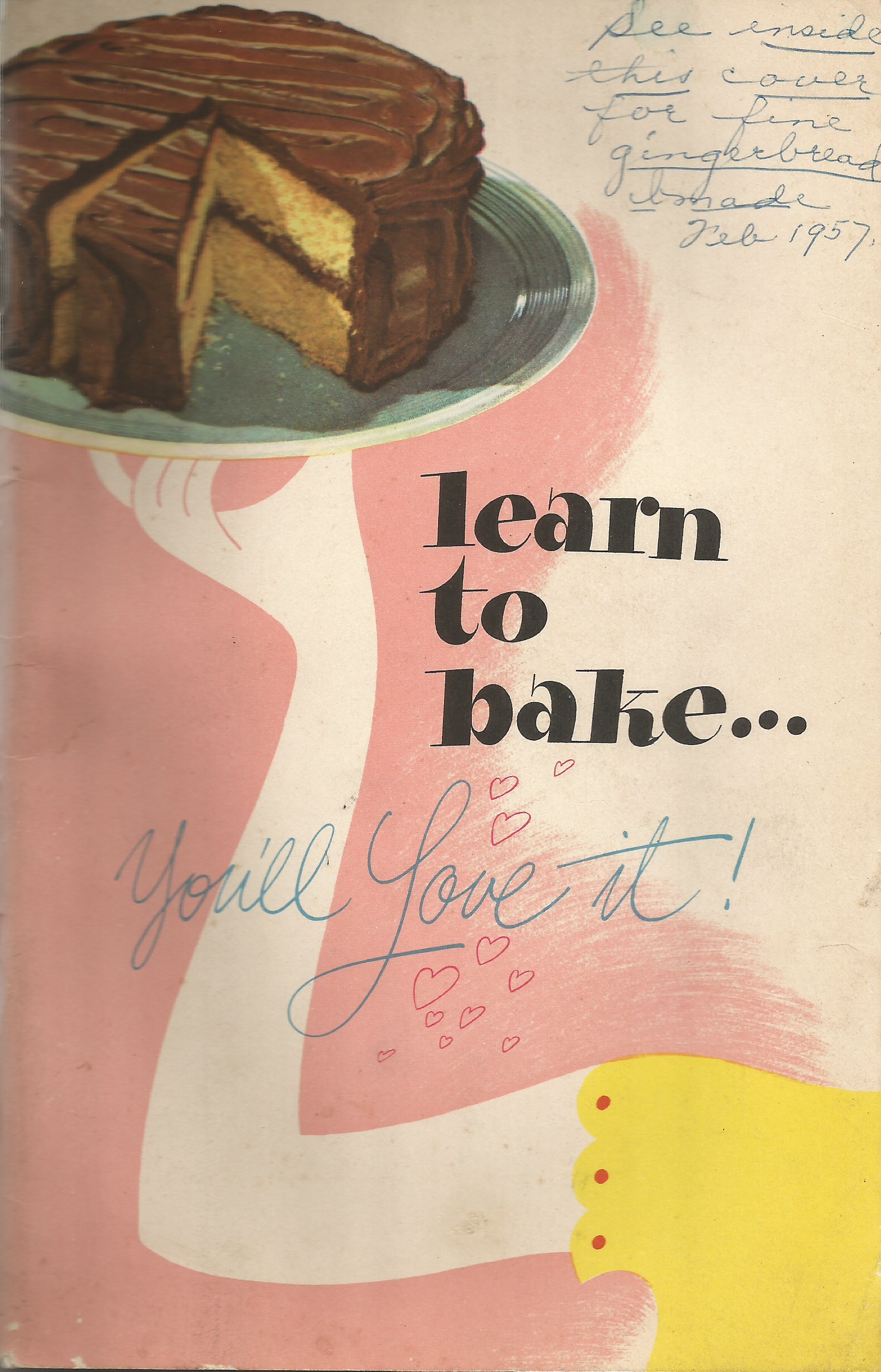
Learn to bake 1

Well, every decade with these pamphlets is the domain of the housewife.

The Housewife's Year Book

And man-the-grill husband. Something for everyone.

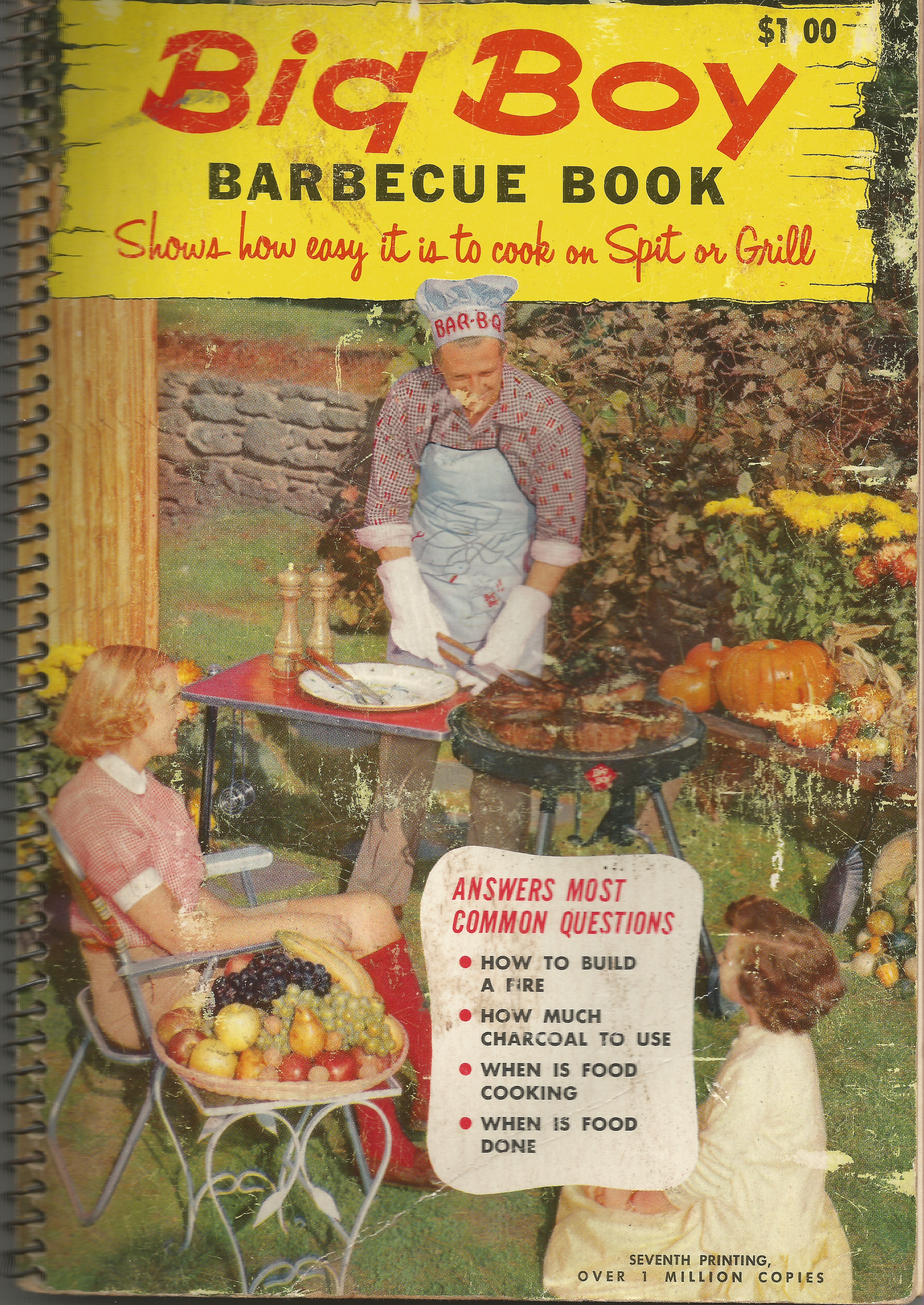
Big Boy

A Man's Cook Book

The eerie, disembodied homemakers of pamphlets published by companies like Sunbeam grab me the most, I guess.

Sunbeam Mixmaster 2 copy

Hamilton Beach 4 copy

All this art conveys a plainer time – a time when people actually cooked at home. Betty Friedan’s got nuthin’ on Hamilton Beach.

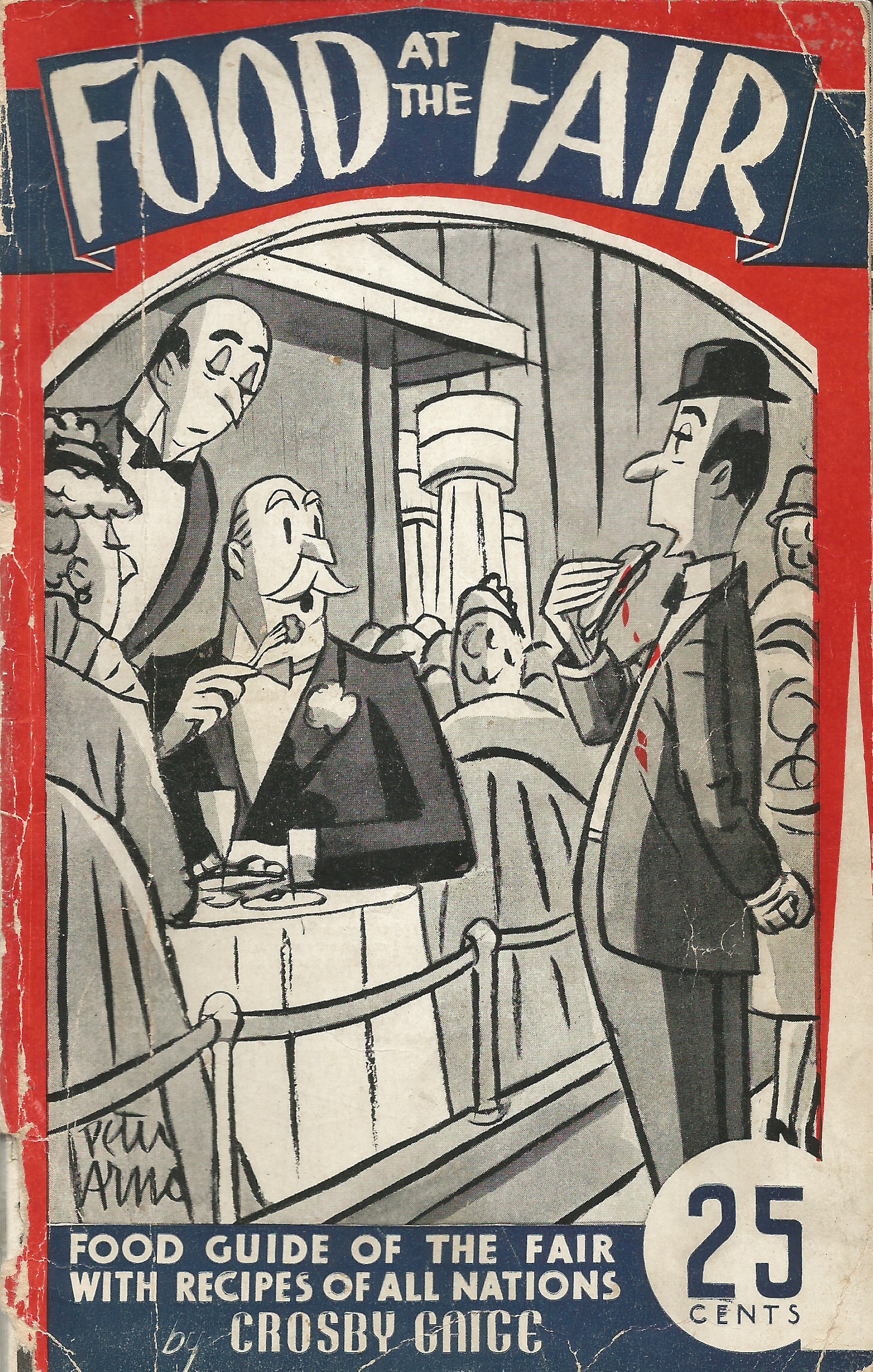
Recipes reflected a desire for novelty. For expanded horizons. Like this one from the 1939 World’s Fair.

Food at the Fair 1

Here you can learn to make “Venezuelan Hallacus,” and wow your friends.

Canned Fish Recipes suggests the adventurous “Delmonico Salmon in Rice Nests” and crunchy, bread crumb-rolled “Crabettes”.

Some are sneakily subversive. A Lion in the Kitchen: Meats has a passage by a member of the Lions Club of Hudson, Indiana, “How to Cook a Husband,” that advises, Some women keep their husbands in a stew by irritating words and ways; others waste them. Some keep them in a pickle all the lives. No husbands will be tender and good if treated in such ways, but they are extremely delicious when properly managed over a steady heat. After some more of this it continues: Tie him into the kettle by a strong silken cord of comfort; the one called duty is only jute and is apt to be weak. If he flies out of the kettle, he is apt to be burned and crusty around the edges, since, like crabs and lobsters, they must be cooked while alive. Etc.

The fact that companies and organizations used these publications for self-promotion bothers me not a whit.

Guernsey Milk

Or this number from General Foods:

Cookies Galore

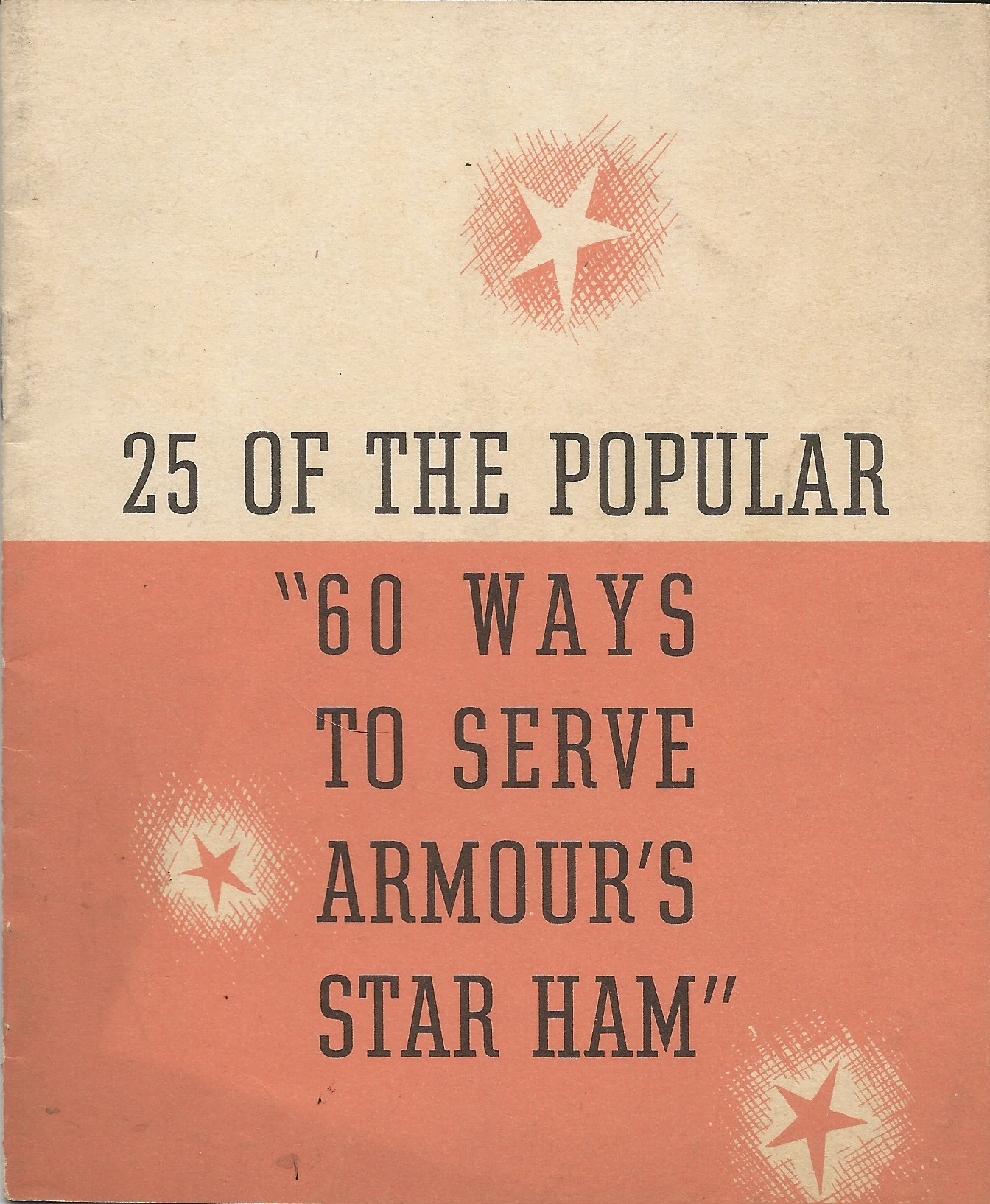
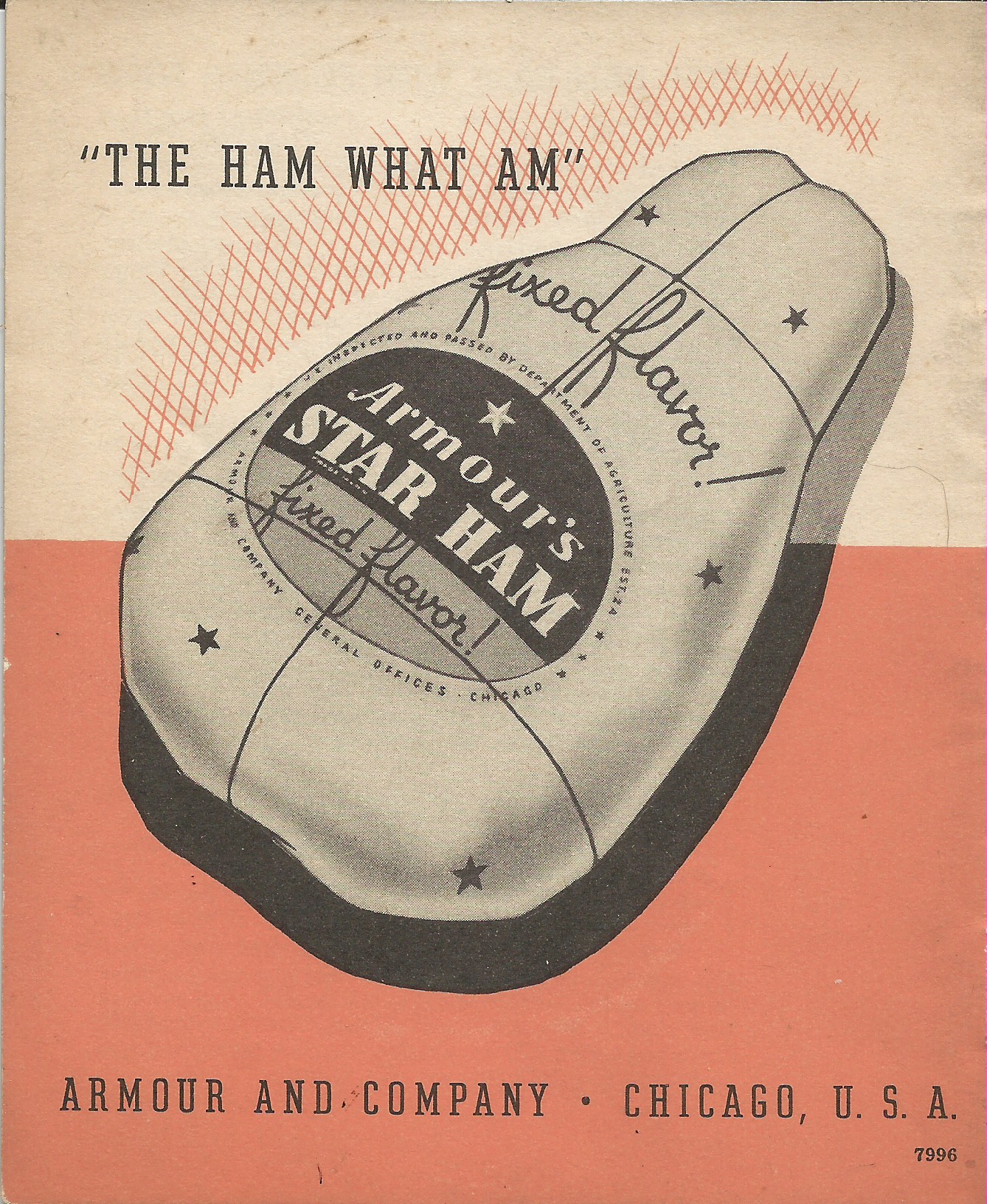
Or this, from Armour.

Armour's Ham 2 copy

Armour's Ham Over copy

Some were straight from the heart, self published, with a readership of their church congregation, if that.

Hilltop Housewife

Some are just a mystery (coffee stained in this case).

The Little Book of Excellent Recipes 1

And some are just a gas.

Cookout fun 2 copy

4 Comments

Filed under Art, Cooking, Jean Zimmerman

A New Way In

Just to let readers know, I have now thoroughly indexed these blog posts, going back over a year — a task I’d been putting off and then quite enjoyed. So, if this is a day on which you find yourself particularly interested in history, or art, or cooking, etc., you can simply click on a category to the right and scroll down through my various posts on the subject, most recent first.

I have been thinking that I would really like to follow the suggestions of my readers more as well as my own whims. So if something strikes you that you’d like me to explore, please drop me a comment and let me know.

Maud always says to post more recipes. Would you like more recipes?

2 Comments

Filed under Jean Zimmerman

Under Cover

I’m thinking about book covers.

Gil takes the jacket off pronto and reads the book naked. The paper covers float arouind the Cabin like disembodied spirits until we remember to replace them.

My editor at Viking was nice enough to ask me for early weigh-in, for ideas as they develop the cover for Savage Girl, my novel which is just now going into production (it’ll be out next winter). My editor did not have to do that. Tradition dictates that authors are owed a consult on the cover, no more. And my last two experiences with jacket art at Viking have been so superb that I trust them implicitly.

But since he asked, I’m thinking about book covers.

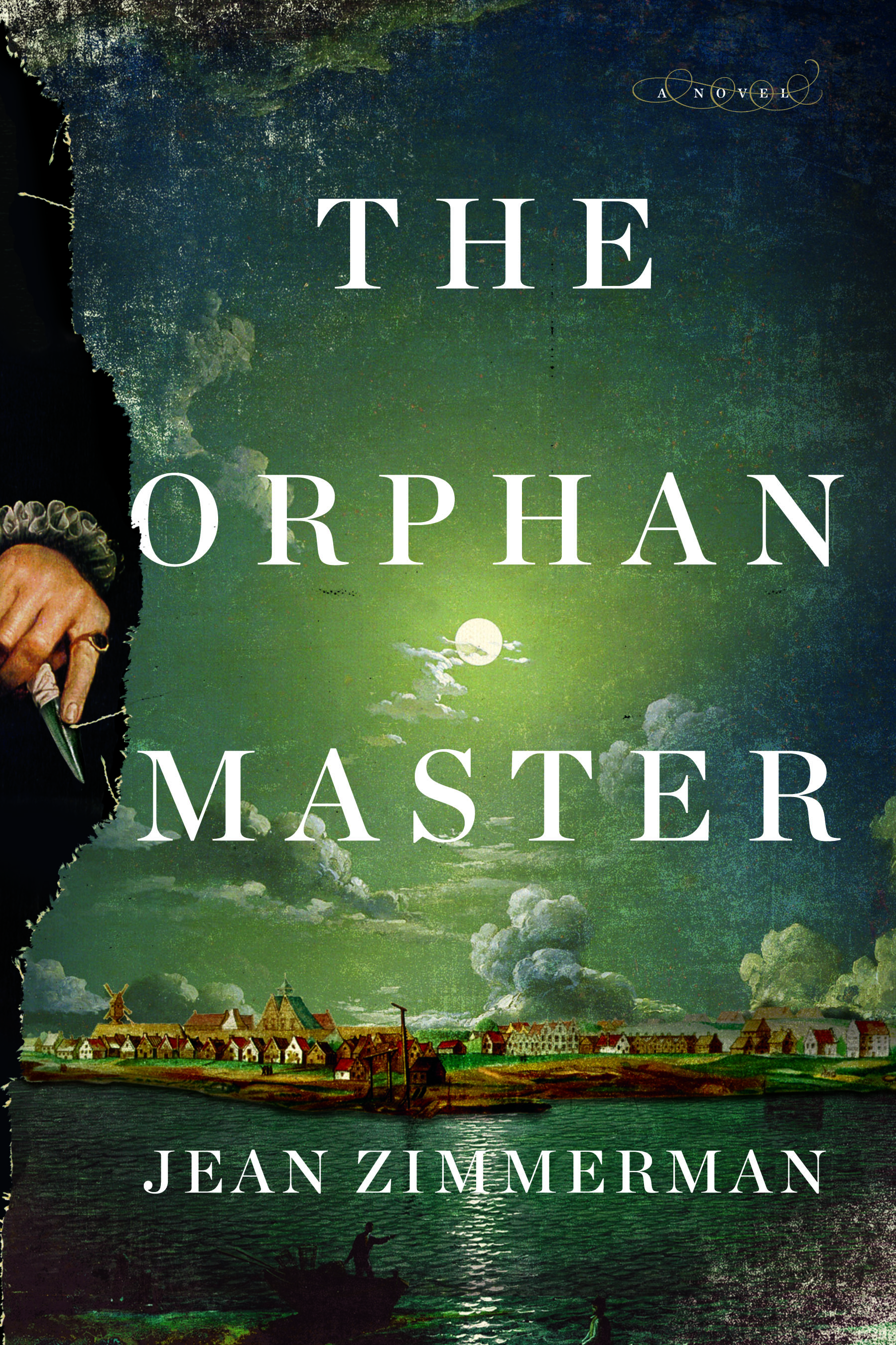
The hardcover of The Orphanmaster amazed me because it incorporated period graphics that I  thought you’d really have to be an expert to be aware of.

9780670023646_Orphanmaster_CV.indd

Someone did their homework. On the back flap is fine print that enumerates the images that appear here as a fantastic collage: (hand, detail) Pieter van Miereveld, The Bridgeman Art Library/Getty Images; (background) View of New York by Johannes Vingbooms, c. 1664, LOC[accession numbers follow]; (foreground) Moonlight Scene, Southampton, 1820 (oil on canvas), Sebasion Pether/The Bridgeman Art Library/Getty Images. The type’s so small I might have got some of this wrong, but suffice it to say the designers did their homework and the result is seamless and just  the right degree of spooky, with its moonlit view of a haunted, tiny New Amsterdam on the tip of Manhattan island so, so long ago.

I always loved that evocation. Then, looking into it a little further, I found out the designer responsible is actually a cover art magician by the name of Gregg Kulick, who has jacketed dozens if not hundreds of books, for various publishers. And is just really smart. He was straightforward when the Huffington Post asked him to name the most important element of a successful book cover: “Getting people to pick it up.”

I also think highly of the cover for The Orphanmaster’s upcoming softcover edition (out April 30).

Orphanmaster Paper Official Cover copy

As an author, I feel so lucky. To me this design holds just the right balance of sweetness and terror, with the little girl’s rosy face and the skull hovering over her shoulder. I’m hoping it will attract some readers who didn’t get a chance to check out the novel the first time around. Bookclubbers, especially who wait for the softcover to pounce.

An interesting place to check out cover ideas is the web site Talking Covers, where authors and jacket designers hold forth on the development of the art for a particular book. The depth of the discussion can be really astonishing. I looked around here, and also at books on the web at the Book Cover Archive  and at Amazon and found it was hard to imagine what might be a starting approach for Savage Girl. Historical fiction, yes, murder mystery, yes, and it takes place in New York during the Gilded Age – all strong features of the book. But what images could get across my story so that a reader would, as Kulik said, “pick it up”?

I found myself liking covers with bold, striking colors, semi-abstract.

Vampires in the Lemon Grove, for example, by Karen Russell.

Vampires

Or Ben Marcus’ The Flame Alphabet.

flame alph

But did these and other disparate, attractive books have any bearing on what should design should clothe Savage Girl?

Back in the day, books did not have jackets. You would buy pages bound with cardboard – then bind the volume yourself with leather. When Fanny Trollope came out with her famous 1832 book that lampooned the United States, Domestic Manners of the Americans, London booksellers offered it in two parts, one red, one blue, cloth-bound in the latest fashion, with gilt titling on the spine. It had a huge first run printing of 1,250. Reviews in England were great, those in the U.S. stunk, and Fanny shot to the top of the bestseller list. Perhaps aided by those chic cloth covers?

I like cloth, still. Some nearly naked volumes are my favorites, like The Goede Vrouw of Mana-ha-ta, by Mrs. John King Van Rensselaer, published by Scribner’s in 1898.

Mana-ha-ta cover 1

With an especially beautiful spine.

Mana-ha-ta cover 3

(My volume was formerly loved as a library book.)

Or, more recently, Magnus Nilsson’s Faviken, its cloth stamped with black flora and fauna.

Faviken cover 1

Cloth or paper-bound, though, a book should jump into your hand from the bookstore shelf. It should warm your lap as you read it; it should purr. A book jacket has to live.

Whether I go to my editor proposing a pearly satin debut gown or a bloody pawprint — two images that pop into my mind when I think of the Savage Girl story–my ideas on their own won’t make much sense. What matters is your designer, your brillant designer of book jackets, and whatever blooms in his head.

3 Comments

Filed under Art, Fiction, Jean Zimmerman, Publishing, Savage Girl, The Orphanmaster

A Sweet Old World

“Sweet Old World” came on the radio when I was driving today. I’ve heard Lucinda Williams’ song a hundred times before — it’s 20 years old —  and I still blinked back tears. I was thinking of someone in particular: my mother-in-law.

See what you lost when you left this world, this sweet old world

The breath from your own lips, the touch of fingertips

The heartbreak in Lucinda’s voice and that intertwined fiddle and guitar, it gets you coming and going. But the lyrics truly soar.

A sweet and tender kiss

The sound of a midnight train, wearing someone’s ring

It’s commonly understood that the whole point of “Sweet Old World” is to enumerate all that you leave behind when you go – that, specifically, it speaks to a person who has made the mistake of choosing to leave this earth. About a loved one’s suicide.

Someone calling your name

Sad, so sad. But the song has depths of meaning besides. Emmy Lou Harris covered “Sweet Old World.” She told Lucinda in a conversation that while people think she’s singing about the death of Gram Parsons, “sometimes that enters into it, but that song has so many different levels. It’s a song that talks about our own mortality, as well as others.”

My mother-in-law, Eloise, now in her 90s, is just waiting to step off this mortal coil, confined to a bed, drifting in a hospice-administered cloud of sweet morphine. Some stern higher being decided to take her brain before her body, so she was left in a devastating irony exactly as she hadn’t planned or wished: without her sharp mind, her wit, her total independence.

Somebody so warm cradled in your arms

What makes Lucinda’s song relevant here is that in verses’ litany of things undone, not experienced, undervalued, Eloise had them all in spades. The touch of fingertips,the ring, the sound of a train, someone calling her name. She had her church, the friends she played cards with, a handsome, charming husband, a bushel basket of kids and grandkids.

Millions of us in love, promises made good

Your own flesh and blood

Eloise could hike faster than anybody I’ve ever seen. I saw her plant a quarter acre of wildflower seed, then spend hours on her hands and knees pulling weeds until the garden was perfect.

Looking for some truth, dancing with no shoes

Gil and his sisters take turns by the bedside, holding their mother’s hand. Good night Eloise. It is a sweet old world.
el 1

21 Comments

Filed under Jean Zimmerman, Music

The Chaos of Memories

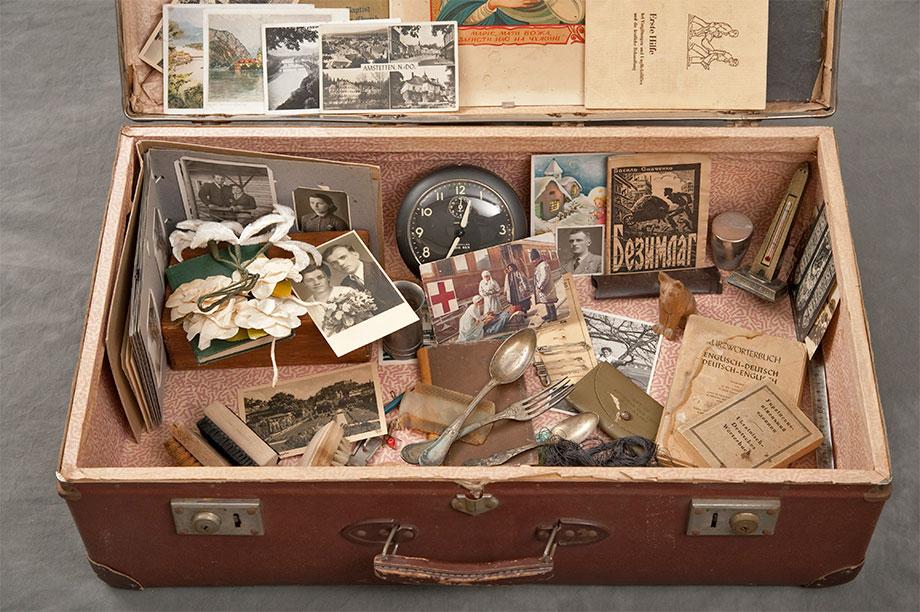
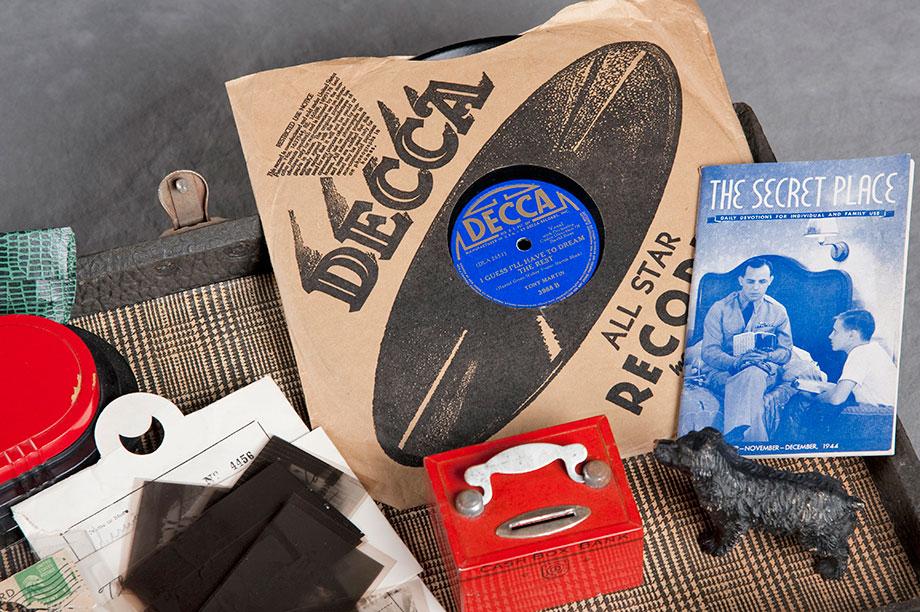
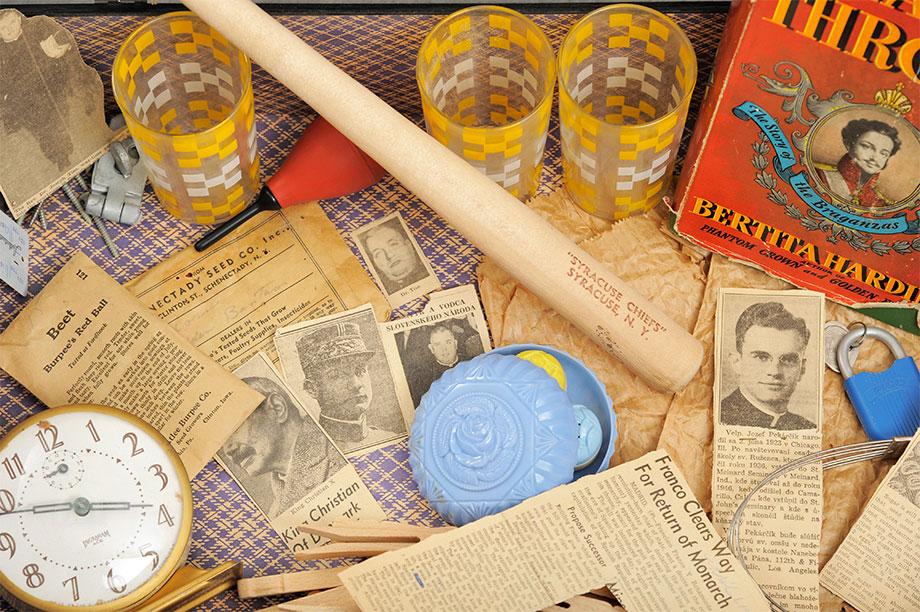
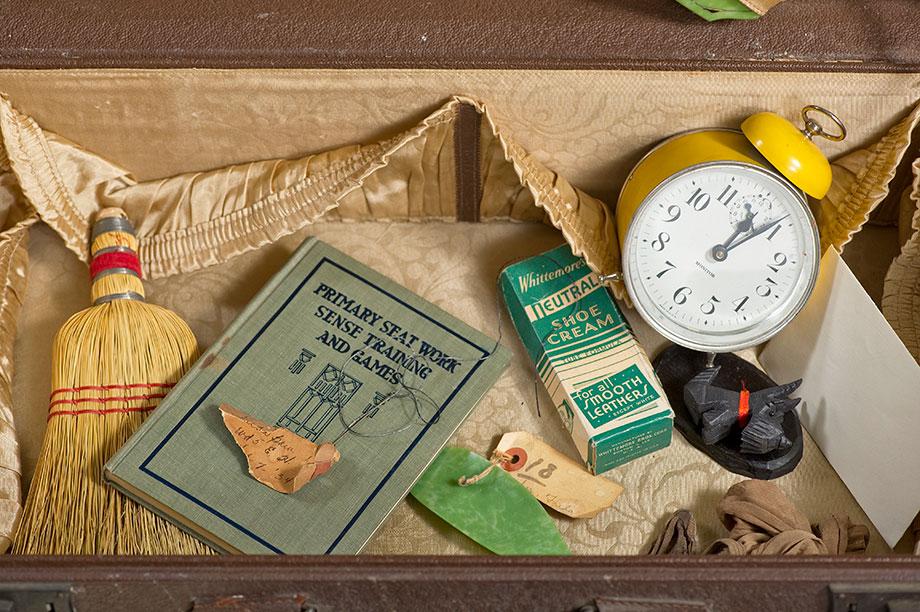
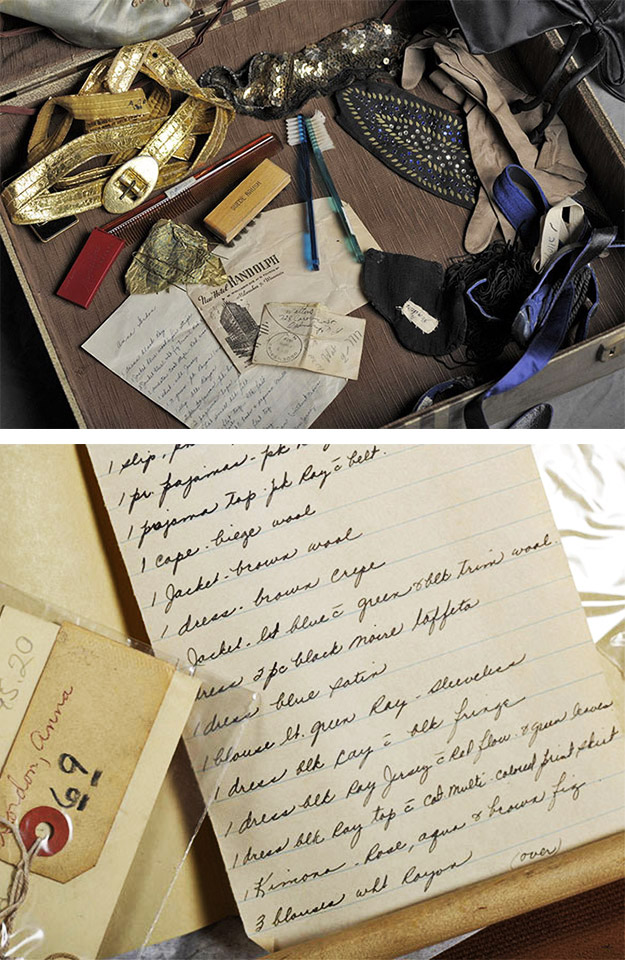
There is a photographer, Jon Crispin, who has taken some arresting pictures of the suitcases belonging to crazy people. I’m talking about mentally ill patients incarcerated in the Willard Asylum for the Chronic Insane in New York State between the 1920s and the 1960s. When the hospital was converted into a prison in the mid-1990s, around 400 carrying cases of deceased patients were discovered in an attic. Recently, Crispin spent a year working to document the belongings of people who are now ghosts. Here are some of the 80-100 photos he has made so far.

Willard suitcase 1

These are marvelously textured snapshots of men’s and women’s lives. You can’t believe the things the photographer discovered, the objects he documented: from toothbrushes to dimestore snapshots to spools of thread. The beautiful and the banal hand in hand.

Willard suitcase 2

One person had a comprehensive set of woodworking tools. Another, a lengthy itemization of her elegant clothing. We have some idea about who these people were because patient records survived and because former Willard staffers worked in tandem with the New York State Museum to preserve the cache of luggage.

I’m especially moved by this project, having many friends and family members who might be a bit “teched,” you could say (myself included). In previous eras, all of us might be stigmatized and isolated in an asylum, with only a suitcase to our names.

Willard suitcase 3

The satchels and valises call to mind something the great German writer-philosopher-aesthete Walter Benjamin wrote  in “Unpacking My Library,” a famous essay about book collecting: Every passion borders on the chaotic, but the collector’s passion borders on the chaos of memories. The collectors Benjamin had in mind were connoisseurs of fine volumes, leather-bound works worth thousands of dollars apiece. But his words apply as much I think to those who have fallen on hard times, people who build their very finite collections-in-a-suitcase inadvertently to some extent (what trinkets you wind up with at the end of the day) but deliberately, also (what you make every effort to keep, against all odds).

Willard suitcase 4

In collecting, on a bookshelf or in a suitcase, you yourself assign value to objects, you alone decide what is worthy. It’s a way of managing that “chaos of memories,” and it elucidates your character. I like something Crispin said in an interview with Collectors Weekly: “The suitcases themselves tell me everything I want to know about these people. I don’t really care if they were psychotic; I care that this woman did beautiful needlework.”

Willard suitcase 5

He told Slate in a recent article that the project wasn’t all ghastly: “Some of the stuff is funny. You see odd things: false teeth out of context, for example. It wasn’t all heavy-duty, serious stuff.  I think the pictures are successful because they do convey a sense of time and the struggle people had to deal with.” Some of the pictures will go an exhibit at the San Francisco Exploratorium on April 17.

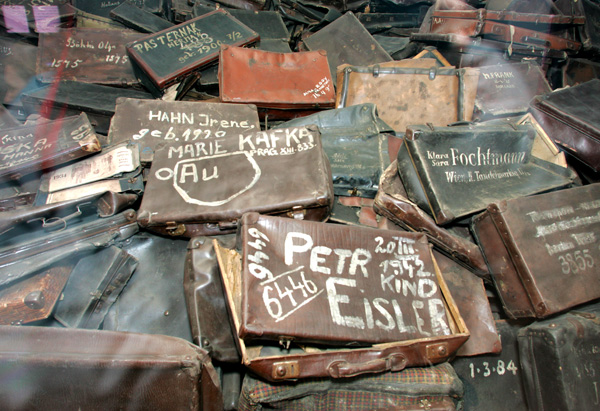
To me, though, the sadness inherent in these carryalls brings to mind another, notorious image of abandoned suitcases – the ones at Auschwitz, now piled high in Block Five of the on-site museum, marked with victims’ names, telling their woesome story alongside shoes and a display of artificial limbs.

Auschwitz color suitcases

But, incongruously, the photos from Willard also call to mind a more immediate, recent, happy time, for me, when I was touring to talk about my novel and my suitcase was always packed beside my bed with what I needed to fly. Face wash, check, Kindle, check, laser pointer, check. I got a suitcase for my birthday after years of depending on a dilapidated duffel. The new green bag meant unexpected, exciting things might occur at any moment.

The people whose suitcases Crispin depicts weren’t going anyplace. What was in that luggage was their whole world.

Willard suitcase 6

Now, this blog is a kind of suitcase for me. In it I stash small and large things of some importance to me. And for a brief moment, sometimes, you pop the top open and have a look in. What would you like to see here? What interests you? Tell me outright in a comment and I’ll try to pack it.

5 Comments

Filed under Art, History, Jean Zimmerman, Photography

Mud Pies and Other Delicacies

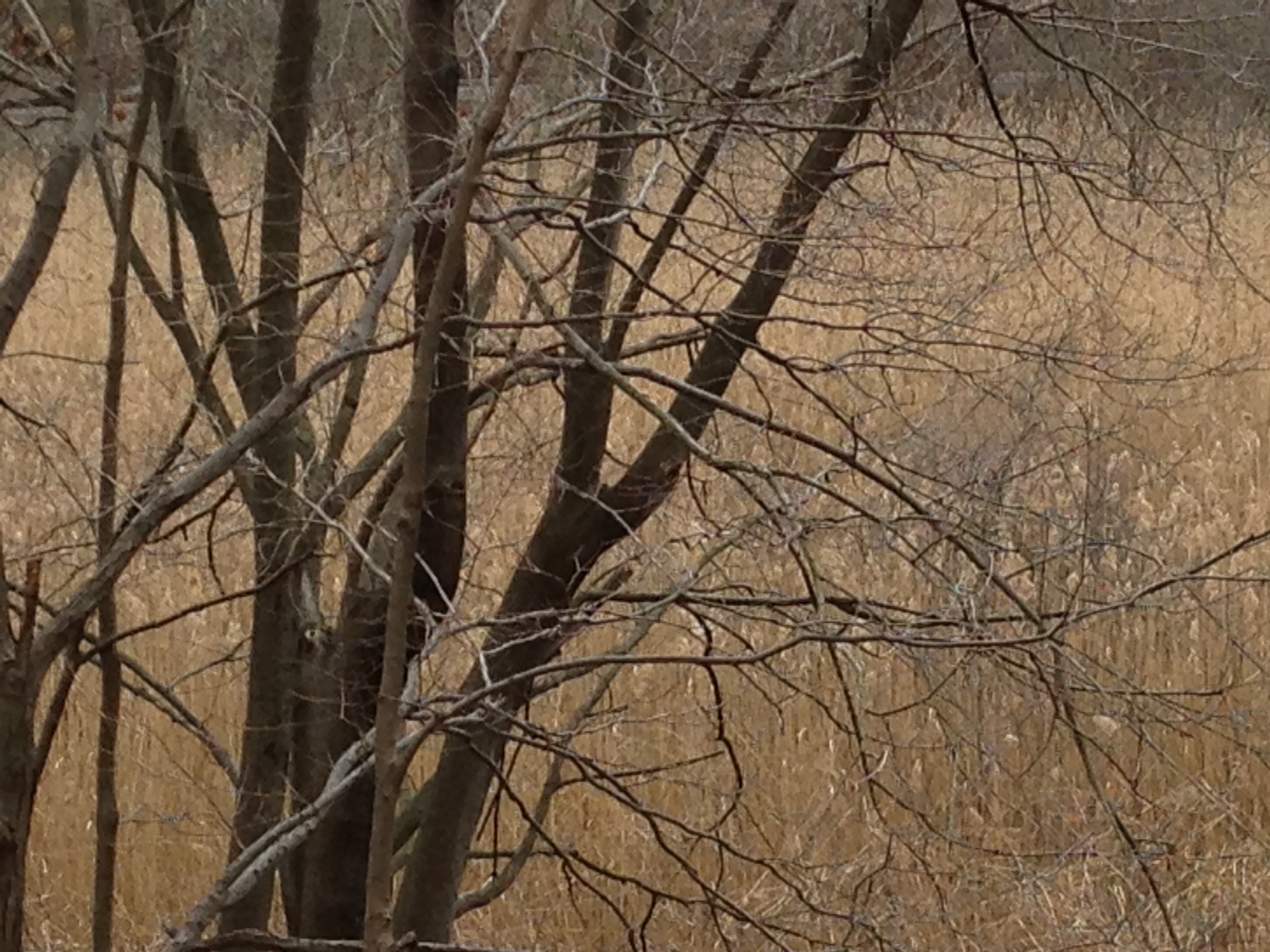
I think this is my favorite season. It’s actually an inter-season, when the last of the snow has nearly melted and the reeds of last summer still stand tall and blond and dry.

old snow

winter reeds

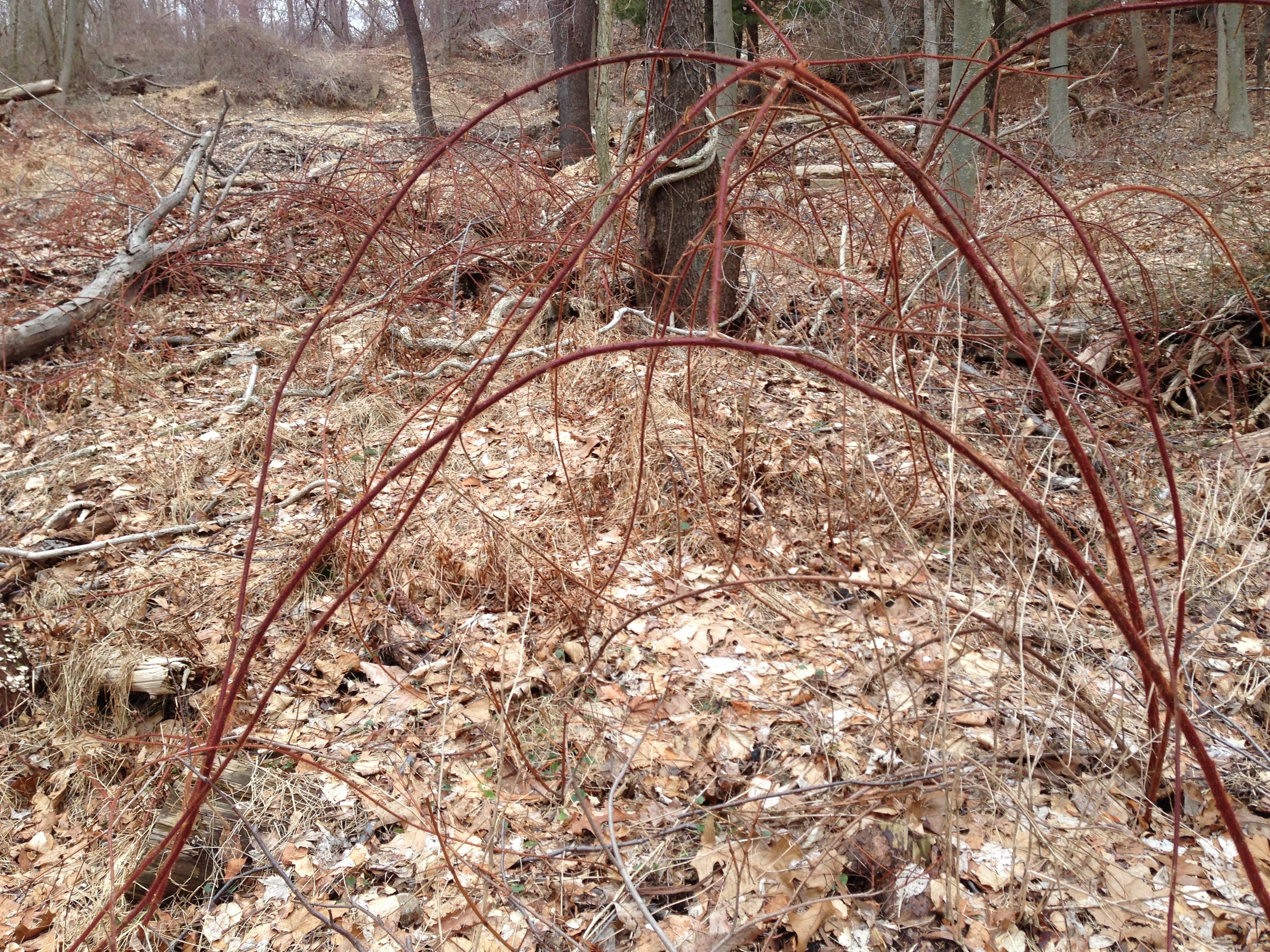
And yet… the canes of bushes like these raspberries are reddening.

red canes

Tiny fringes of green poke through rotted leaves.

new grass

You can almost hear the sap rising in the trees. The end of winter. The beginning of spring.

I’m impatient to have the warm weather here. At five in the morning the birds are beginning to tune up. I am ready for the warm-weather mud.

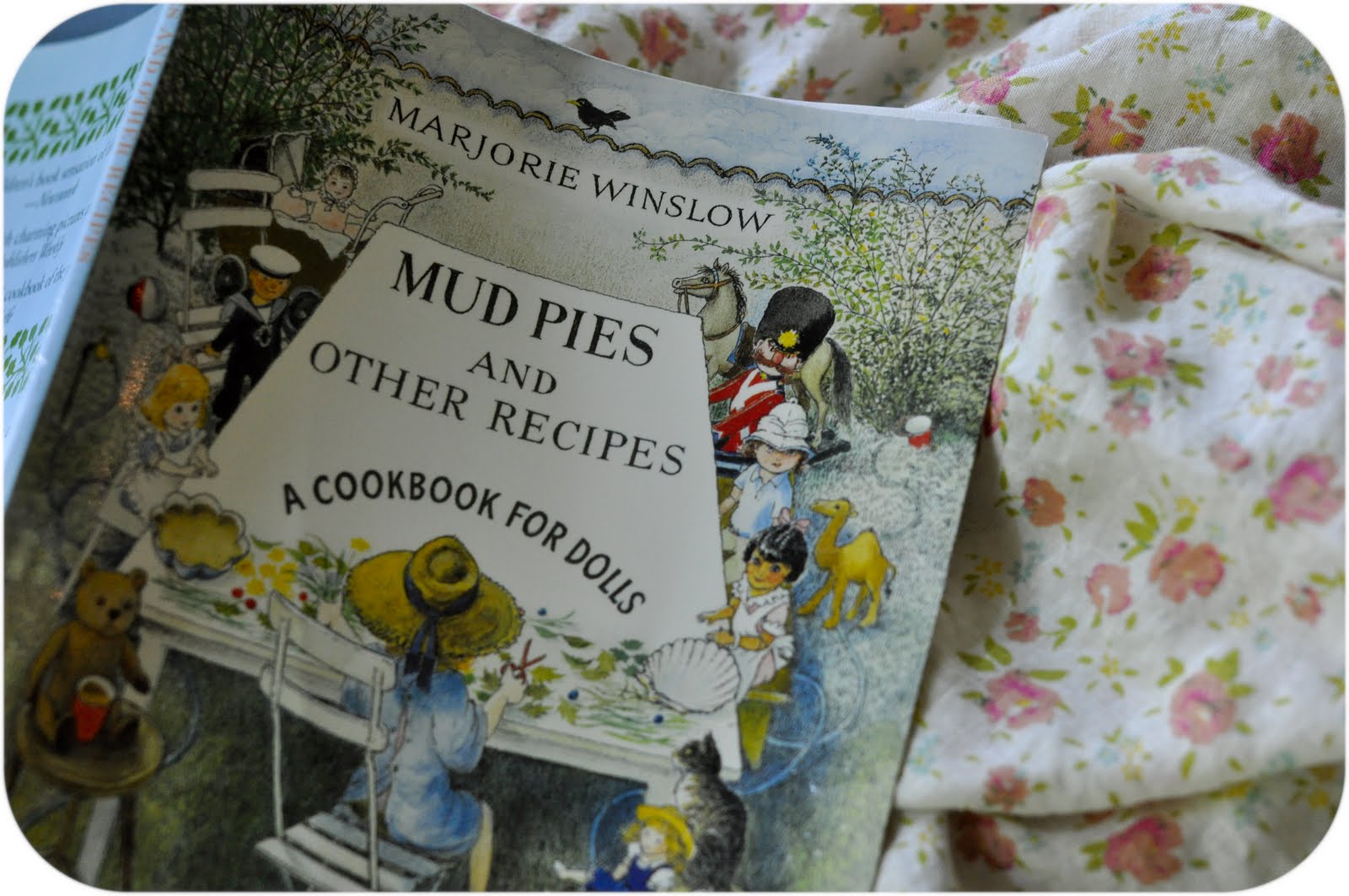
I still think of a book I obsessed over when I was a child, called Mud Pies and Other Recipes. The author, Marjorie Winslow, spelled out instructions that called for raindrops (to make “fried water”) and crushed dry leaves, flower petals and pine needles (for appetizers, to serve prettily in baking cups cut from shirt cardboard). I dreamed over that book.

mud pies and other recipes cover

There was, naturally, plenty of mud. For “wood chip dip” you must “mix dirt with water until it is as thick as paste. Place this bowl on a platter surrounded by wood shavings. Scoop the dip with the chip.” For a kid who liked to build homes out of acorn shells between the roots of trees, this was heady stuff.

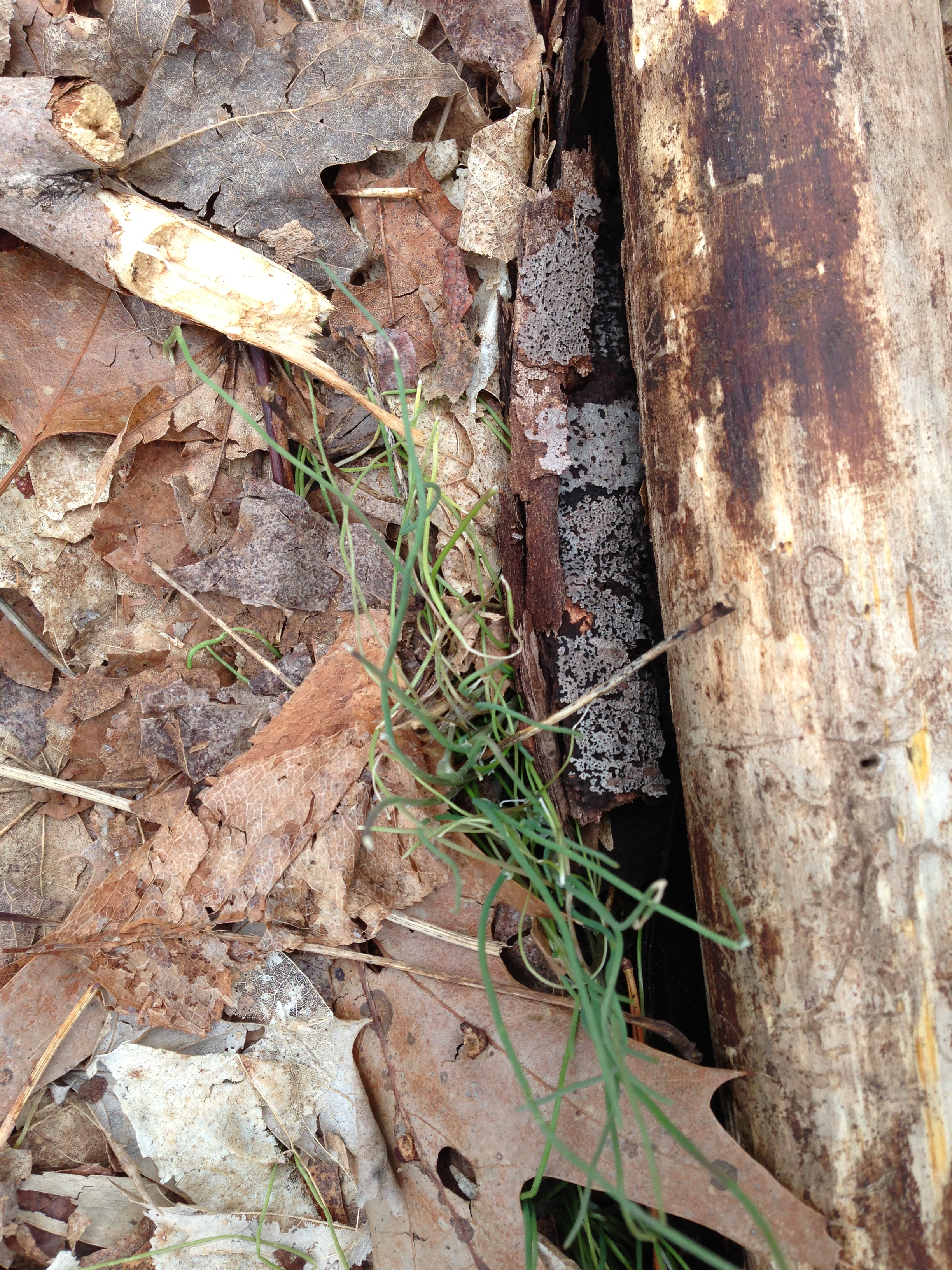
The landscape around the Cabin, especially in this inter-season, makes me wonder what magic Winslow would concoct here.

fallen bark

How about a bark sandwich?

bark sandwich

But let’s try to leave babyish games behind.

One of the best-known young Scandinavian chefs, Magnus Nilsson, brings nature into his decidedly grownup cuisine, with meals people travel into the remote Swedish hinterlands to experience. Marigold petals are as much staples of his kitchen as they are in the world of Mud Pies, along with ingredients like birch syrup and moose-meat powder.

MagnusNilsson_2354943b

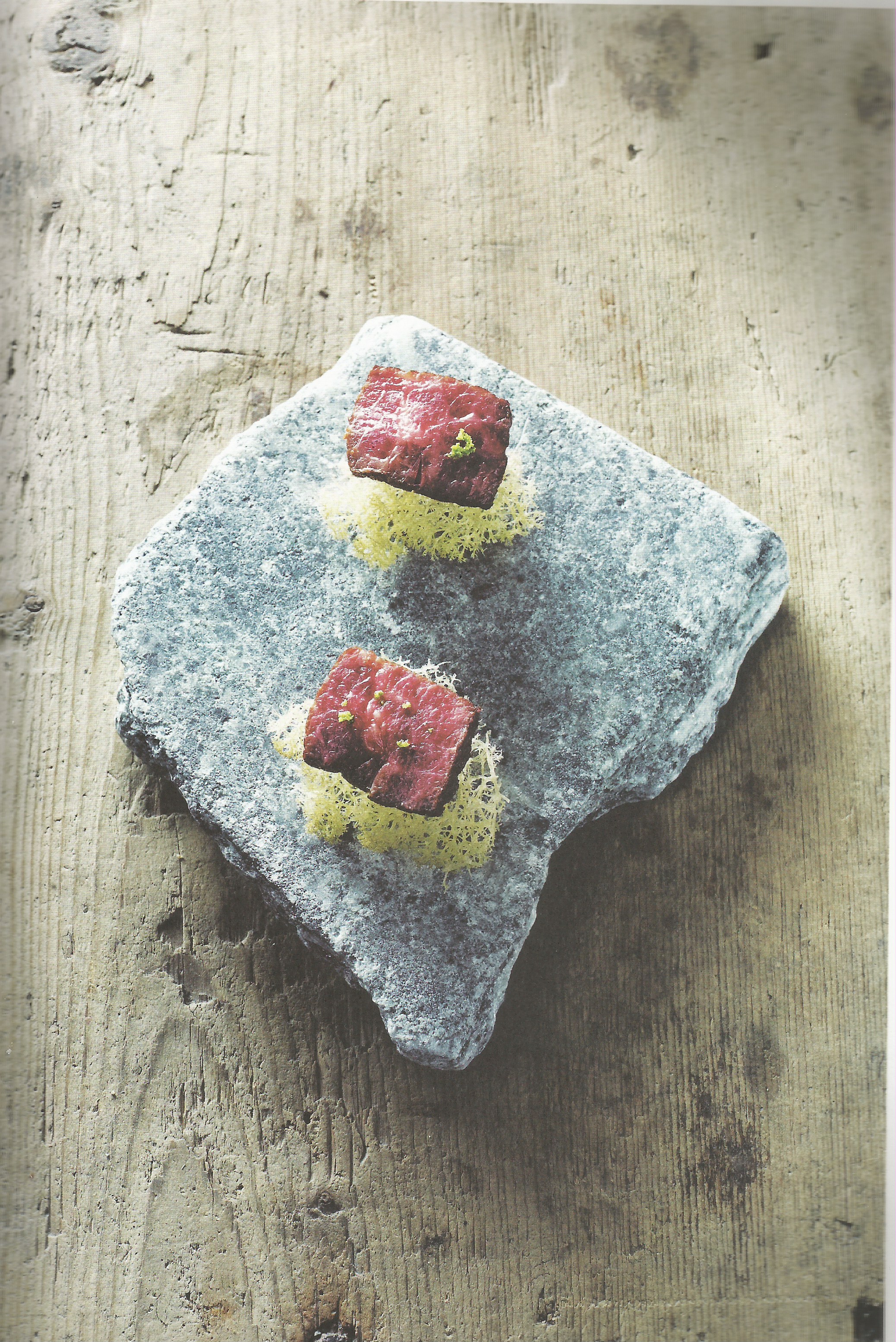
He has recently come out with a cookbook, Faviken, that evokes fairy tales through its approach to food preparation. The book delineates the secrets of Faviken Magasinet, the fabled restaurant Nilsson runs, giving recipes with surprisingly narrative titles, like “Marrow and heart with grated turnip and turnip leaves that have never seen the light of day, grilled bread and lovage salt.” He explains, about this dish, that “the main ingredients are a perfectly fresh femur and an equally fresh cow’s heart.” Not something I’m going to try at home, but possessed of a mythic poetry. Or how about this one? “A tiny slice of top blade from a retired dairy cow, dry aged for nine months, crispy reindeer lichen, fermented green gooseberries, fennel salt.”

nillson 1

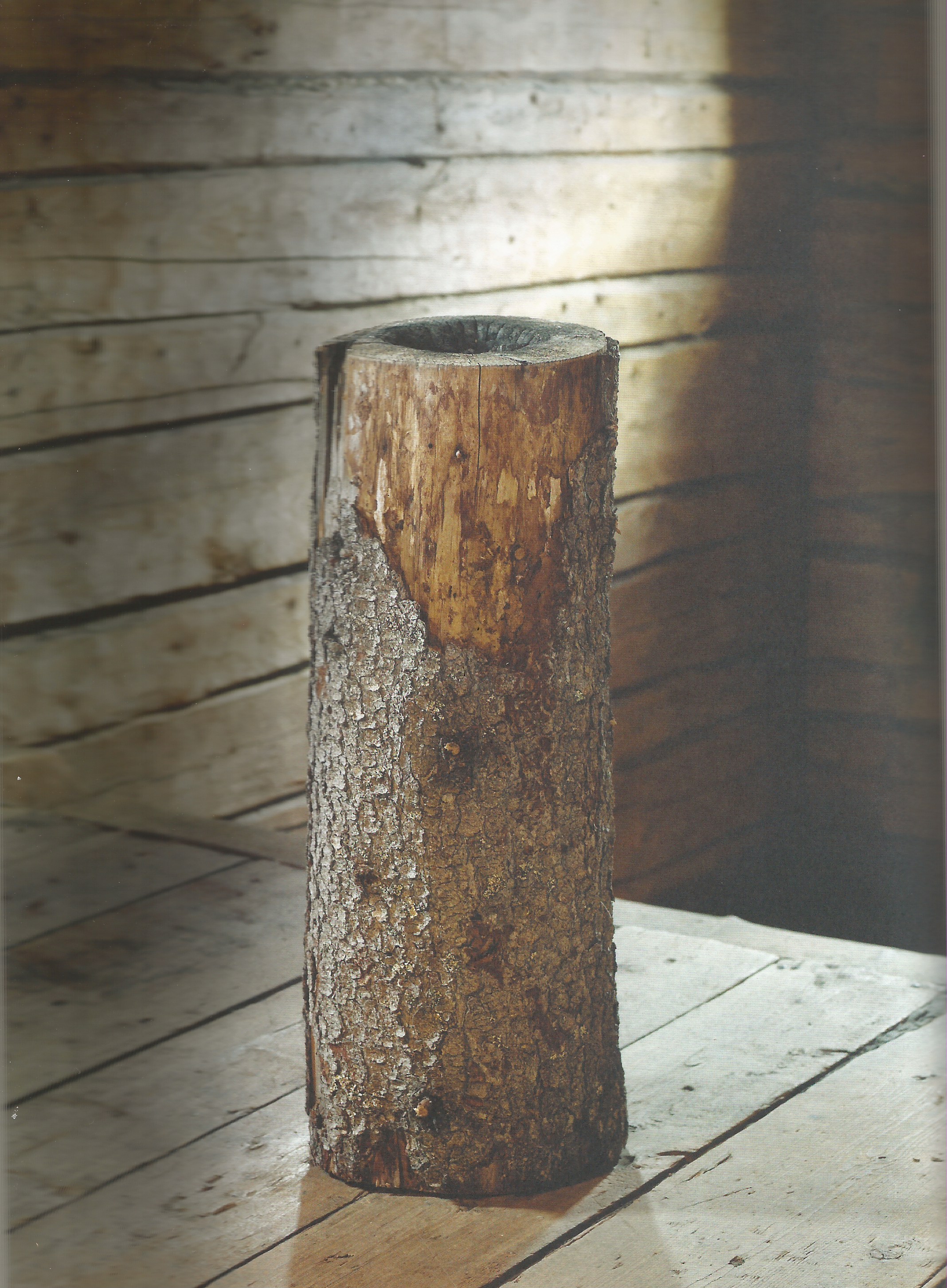
Magnus Nilsson loves lichen. He loves all the ingredients from Mud Pies, it would seem. A typical recipe: “Pine mushroom, lamb’s kidney, pickled marigold.” Wild plants distinguish his cooking. “Vegetables cooked with autumn leaves.” And perhaps the most spectacular yet absolutely simple preparation: “Vinegar matured in the burnt-out trunk of a spruce tree.”

nillson 1 1

I bet I could put together some pretty good acorn furniture for the base.

acorns

10 Comments

Filed under Cooking, Home, Jean Zimmerman, Nature, Photography, Publishing

Getting a Head of Myself

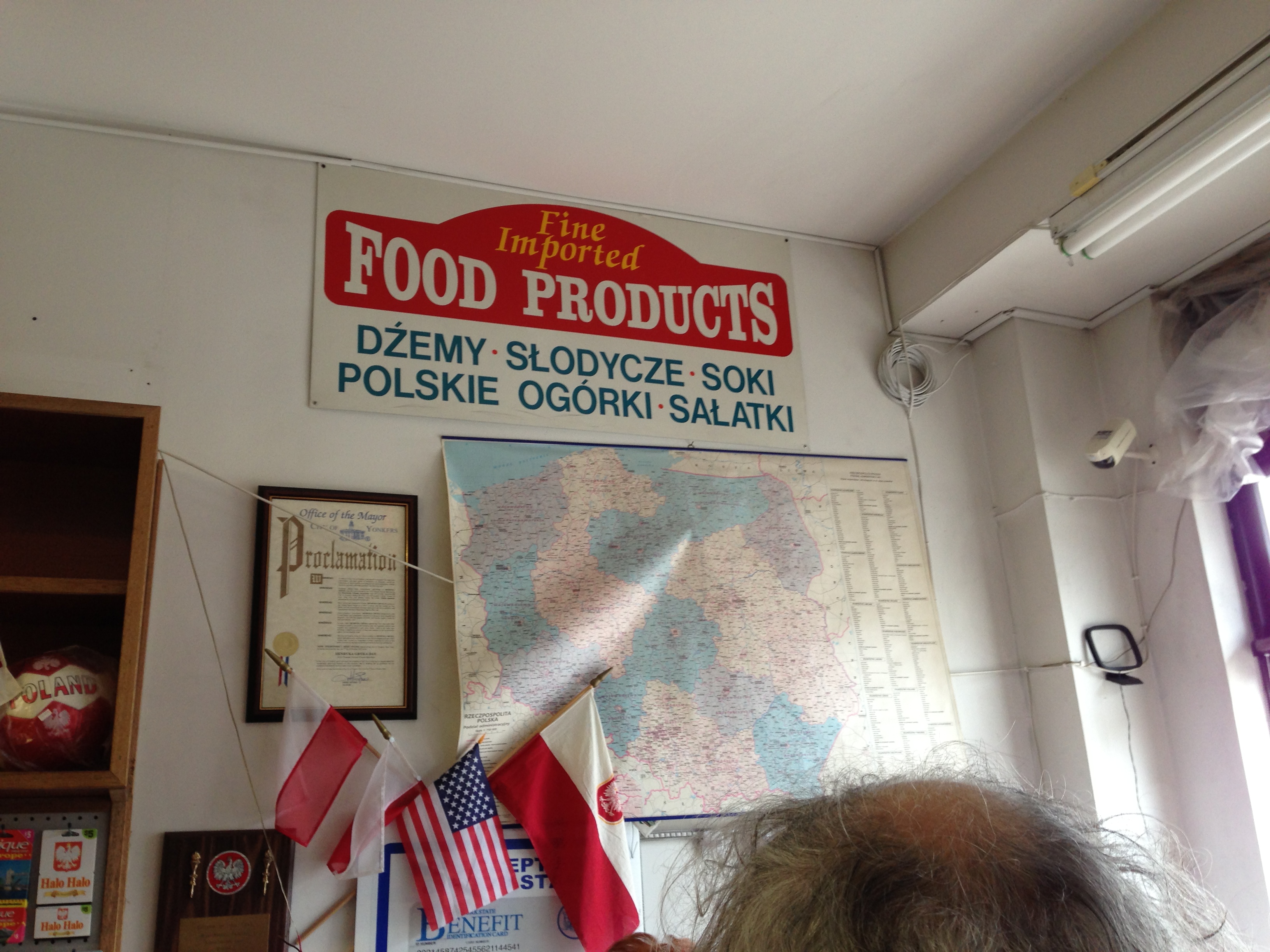
I really wanted the headcheese. Or headcheeses. There were quite a few at the Polish food shop.

food products

But we ended up with kielbasa, which hung high above the many other types of wursts on display.

wursts

I am the only one in my household that will deign to consume a pressed, jellied concoction of bits of pig’s head, heart and other rather downscale meats.

I wondered how the dish came about its name, since it has no cheese in it.

The chef Brad Farmerie gives this derivation: “The word fromage comes from the Latin word forma, which translates as a basket or wooden box in which compressed curds were molded to make cheese. Forma, and then fromage, became the word for cheese, but also remained synonymous with the concept of molding and pressing no matter what was being formed. Thus, the forming of a pig’s head using a mold is called fromage de tête and translates more to “pressed head” than anything to do with cheese, but we English speakers ignore a few of these minor details and use the direct translation to come up with the delightfully unusual ‘headcheese’.” Farmerie has a recipe on his site, along with  a vivid photograph of pig snouts rising up out of a steaming pot that I can’t bear to include here.

It’s a little hard to enjoy pork, I find, when you knew the pig. This summer we laughed at the hijinks of the piglets my nephew was raising in Wisconsin. They rooted where they shouldn’t and skipped about and were delightful pests if not pets. Not so many months later, we were the recipients of a tasty haunch – Gil cured and smoked it and we’re still eating the ham. But its savor, as fine as it is, can’t be separated from the memory of those young, peppy swine. In my mind, at least.

pig

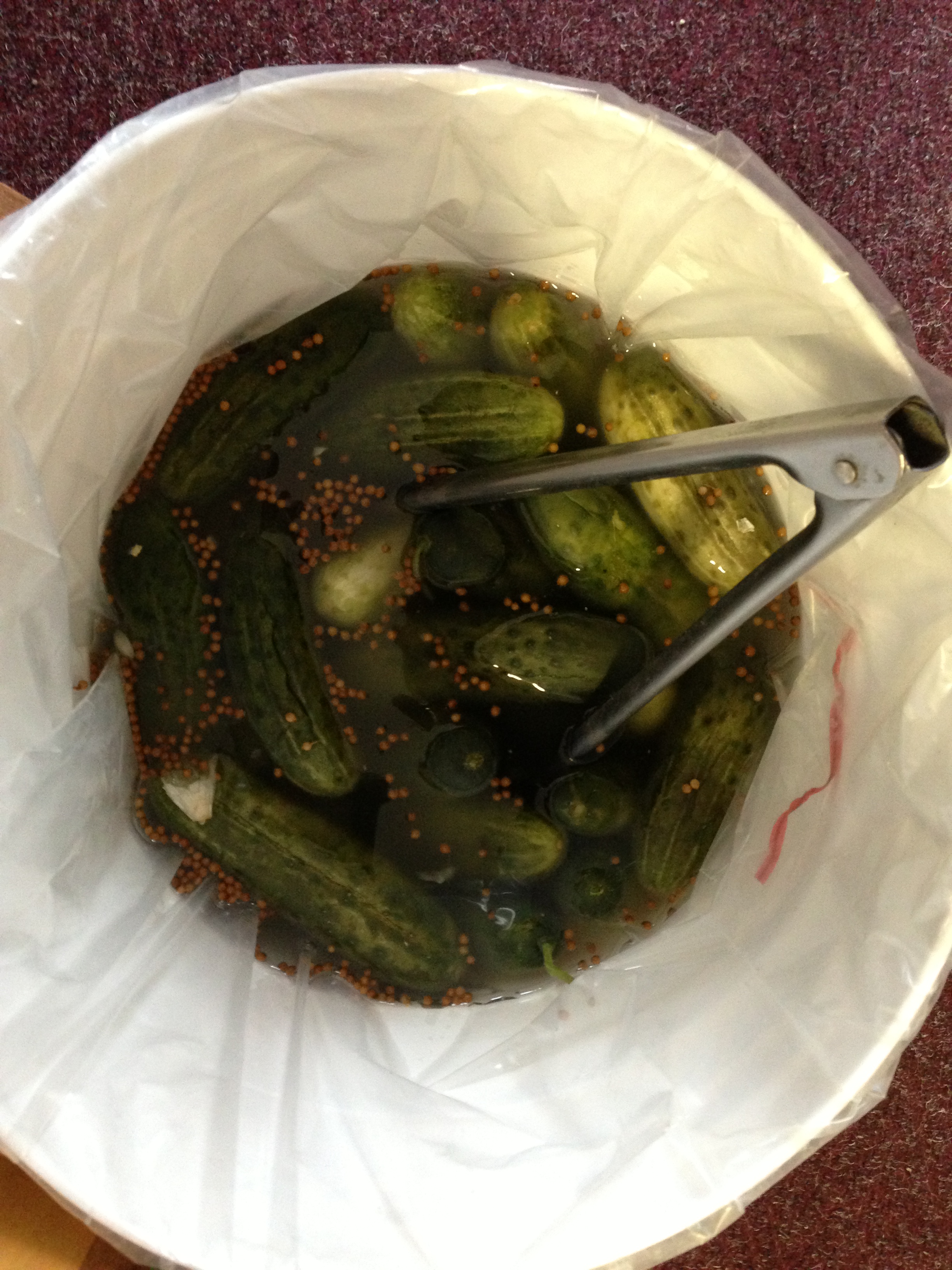
Pickles are a good, pork-free food.

pickles

Mushrooms, too. Especially Milky Cap mushrooms, whatever they may be.

mushrooms

Today we stocked up on pierogi, saurkraut, and other fixings for a Polish feast. The Pole in me – my paternal grandparents’ line, who lived around Lodz – salivated, even though as Jews I don’t think my progenitors would have stepped in a store whose main product was pork.

There are a few things I don’t eat, but I am proud to say I create my own dietary restrictions, which I am free to break at will. Serve me an oyster today and I may decline, but next week I’ll scarf it down. Especially if it’s in the oyster stew from the Oyster Bar at Grand Central. I’m girding up to try escargots again, too, as long as they’re swimming in garlic butter.

It’s all good, as long as I have my slimming coffee to round out the meal.

slimming coffee

1 Comment

Filed under Cooking, History, Jean Zimmerman

1933 at the Movies

Sometimes, when you make writing your work, you get to keep your own hours. That means getting the non-job-stuff done on a Tuesday, and fun stuff as well.

So I got my coif chopped while Gil waited stoically.

Gil:hair

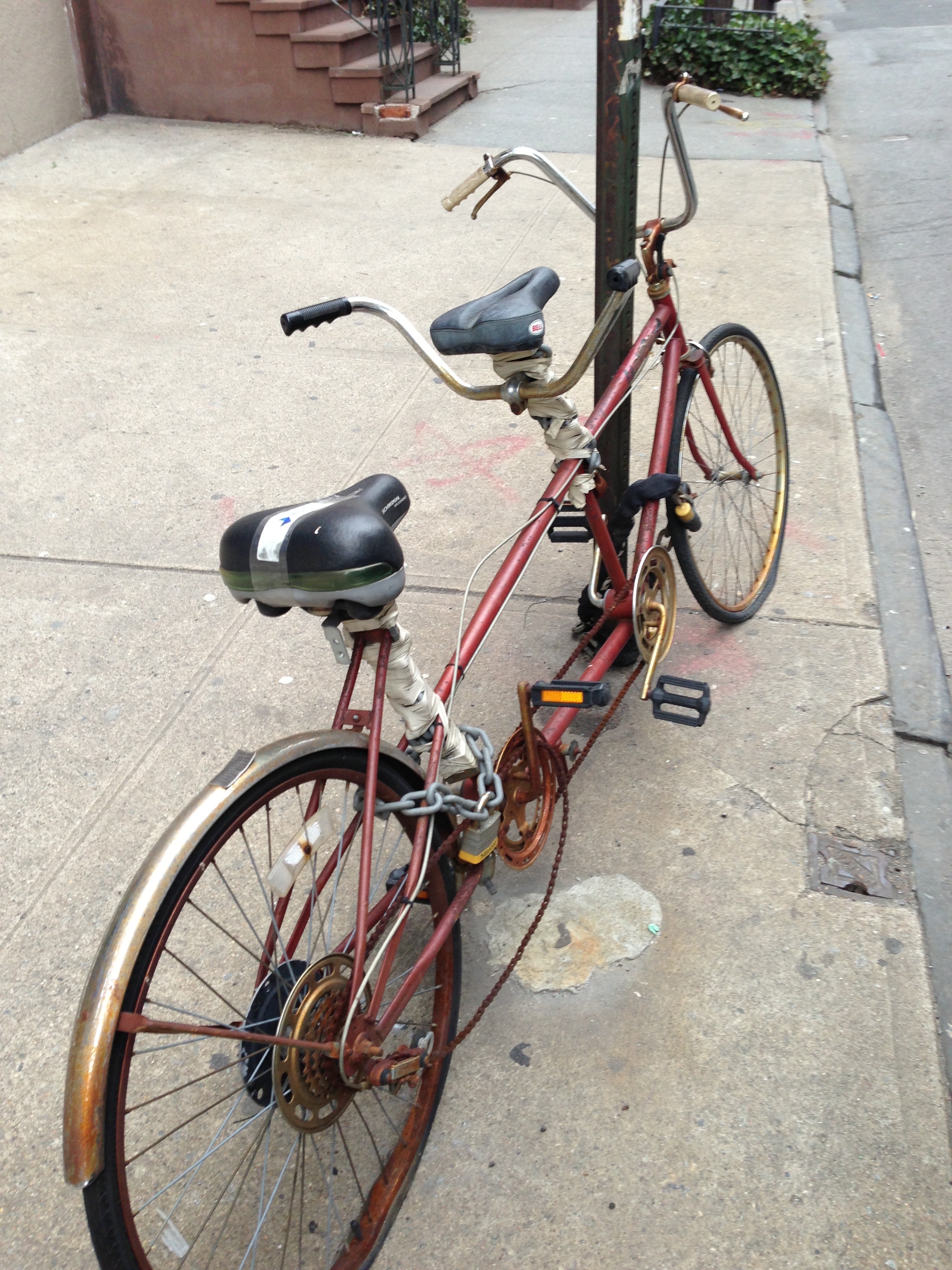
We parked our steed against a pole in Tribeca.

tandem

We dined on crisp crust pizza at 4 pm – what is better than the meal that is not lunch nor dinner? call it dunch – in a little restaurant with a stamped tin ceiling and raw brick walls.

Then we went to the movies.

Film Forum, the great independent cinema on West Houston Street, is showing 66 films from 1933, a series it calls “1933: Hollywood’s Naughtiest, Bawdiest Year,” presented in collaboration with the Library of Congress. That was the year of genius works like George Cukor’s Dinner at Eight and Little Women,  and Ernst Lubitsch’s Design for Living, and the great King Kong with Fay Wray, among numerous other classics. Standing in the lobby, I saw a young woman with appropriately styled seamed stockings and sensible shoes – then another cinephile more of our time, sporting purple tights. Before the lights went down, vintage music emanated from the auditorium’s speakers: “Am I only moonstruck or is this really love?” crooned a 1930s tenor.

king-kong-1933-03-g

Then our trip to the dark side. See, there were many less celebrated numbers in 1933, most of them a bit pungent, with titles like Picture Snatcher and Hard to Handle and Female. 1933 was the final year of “pre-Code” movies, before the studios began to implement self-censorship, first stated in the Hays Code. It took a long time to move past this pinching back of the cinematic imagination.

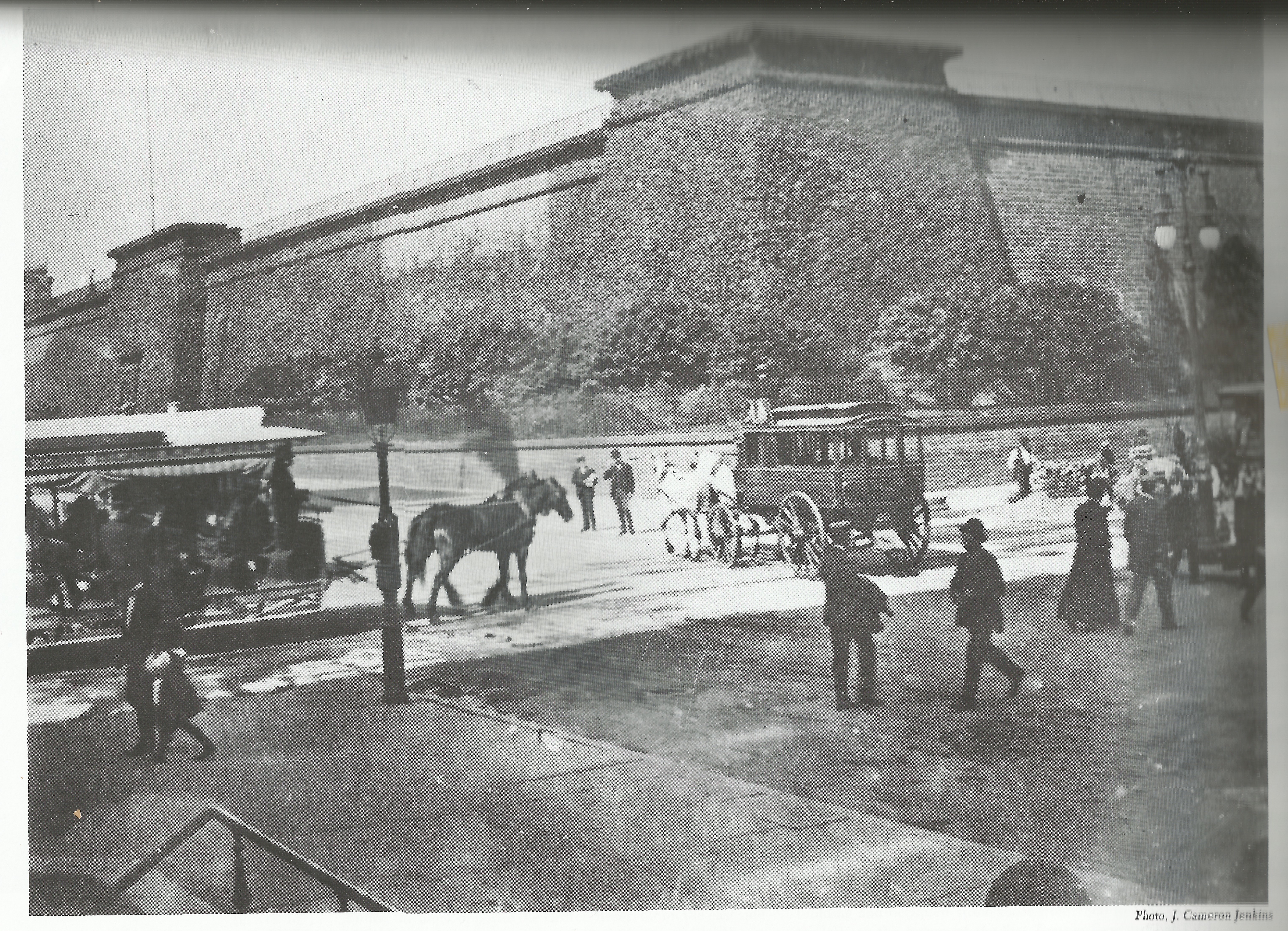
We saw a triple feature, sinking down into our well-used chairs until our seats went slightly numb. 20,000 Years in Sing Sing was a marvelous oportunity to admire vistas of the prison that still marks the downtown of Ossining, our little community. Even today, we can drive right up to the walls and wave at the gun-toting guards in the towers above. They don’t like that too much. In the film, a smooth-faced Spencer Tracy takes the rap for moll Bette Davis’ self-defense killing.

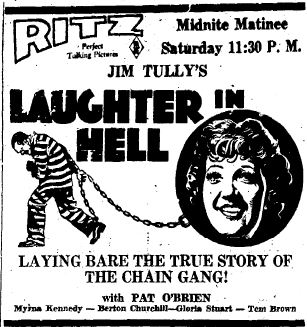
Then we saw Blood Money, a wacky saga of a bail bondsman and a thrillseeking debutante.  And, finally, Laughter in Hell, a long-lost flick that shows in chilling detail the experiences of a chain gang and even a multiple hanging.

Laughter in Hell

They were all great, a truly rare experience. If you can get over to the Film Forum, the festival’s ongoing until March 7.

Leave a comment

Filed under History, Jean Zimmerman

Beasts of the Prehistoric Wild

A lunchtime conversation yesterday with some science-heads got me to thinking about prehistoric mammals and how we got along with them way back when. Evidence of Pleistocene-age man coexisting with “megafauna”—gnarly, gigantic beasts–can be found the world over.

Woolly mammoths, sabertooth tigers and giant sloths thrived up until 12,000 or so years ago and we thrived alongside them. But they weren’t the only oversize creatures. How about dire wolves, giant beavers, the stag-moose, the giant polar bear and the saber-tooth salmon? No joke. As if polar bears aren’t big enough today. And the auroch, the ox-like creature which actually survived in Europe until the middle ages.

auroch

I’m always amazed to think that in The Odyssey, when the characters constantly throw meat on the fire, Homer is probably referring to flavorful cuts of the gigantic auroch. (If you’ve seen Beasts of the Southern Wild, the mythical animal called an auroch is simply a blown-up potbellied pig.)

aurochs_beasts

To me, all these shaggy, heavy-footed animals are both more fascinating and more terrifying than any Tyrannosaurus Rex.

Bits of their story – and ours – continue to surface. Monte Verde, Chile, for example, was excavated beginning more than 30 years ago, when the remains of mastodons were discovered right alongside stone artifacts and nearly a dozen house foundations. A bog sealed over the site, protecting the wooden relics from decay. Archaeologists have even found seeds and fruits in mortars, suitable for crushing.

All this in the middle of an Ice Age that created ice fields two miles high.

Wouldn’t you like to reach out and touch a woolly mammoth?

Woolly_mammoth_Mammuthus_primigenius_-_Mauricio_Antón

It sounds ridiculous, but a lot of people would, for real, and scientists have been trying for years to clone one from the bodies they find buried, usually in Siberian permafrost. The problem is, no viable DNA has yet been discovered. That may soon change. A team from Russia’s North-Eastern Federal University recently found a set of well-preserved remains, including the fur and bone marrow that may contain living cells, during a paleontological trip in the  province of Yakutia. The living cells would contain an intact nucleus, which would be inserted into an elephant embryo, and coaxed into becoming a mammoth clone. Interesting feature on cloning mammoths here.

I don’t know, though, I think I’d rather see a real, live Pleistocene cave lion, 11 and a half feet in length and 700 pounds, like the kind depicted in Werner Herzog’s mesmerizing documentary about paintings in the Chauvet cave in France, Cave of Forgotten Dreams. Inhabitants of the cave rendered the cats in detail, including the scrotum of the male, alongside their own beautiful signature handprints.

CaveArtLion

The cave lion fed, it would appear from evidence in similar caves in Romania, on giant cave bears, whose hibernation nests have been found alongside the skeletons of giant hyenas. Horses rounded out their diet.

4 Comments

Filed under History, Jean Zimmerman, Nature

Adding On

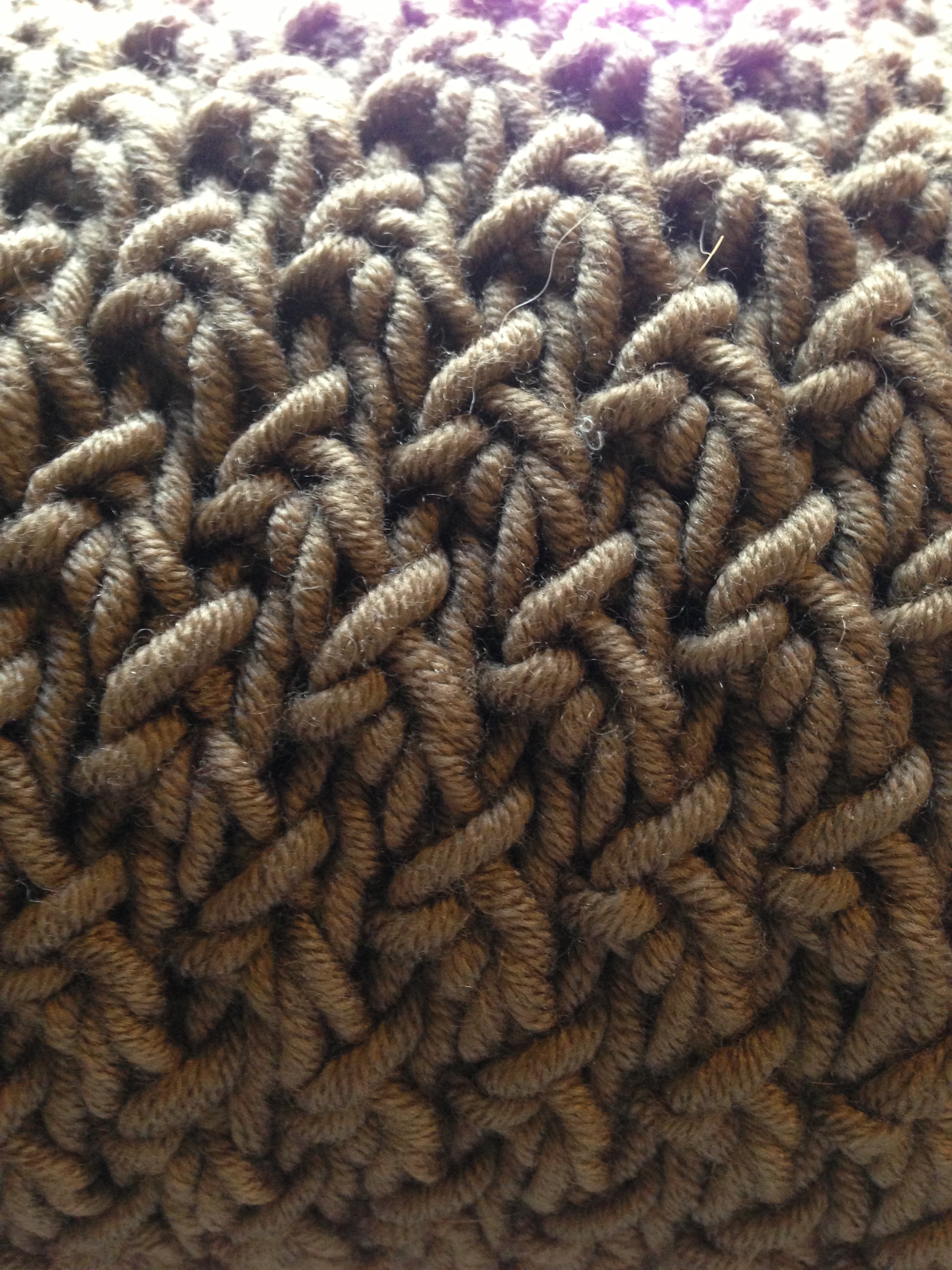
I’ve been a little laid up with an ornery quadriceps today, sitting on the couch, smoothed out with Motrin, admiring the fire and working up a ribbon scarf for my friend who is just moving in to a new home.

josefa

She actually cut through from her old apartment to claim the new space, so it’s sort of a Lion, Witch and the Wardrobe situation, with the old place lived in and broken in and loved, and the new place all spitshined and airy and immaculate. Magical.

The scarf I’m knitting isn’t the complementary flower arrangement those new light-sage walls deserve, but it’s got the warm rose colorations of the springtime that will have arrived when she and her family have moved in and colonized those spacious, high-ceilinged rooms.

pink scarf

Yesterday we toasted the novelty of getting this new add-on to her life, with seltzer. “If you don’t have enough,” chortled my friend, “reach for more!” She had been waiting a long time for this expansion.

The scent of just-finished oak flooring reminded me of moving in to an off-campus apartment so many years ago, when I was in college. The combined polyurethene underfoot and bright white latex on the walls made a heady perfume that promised a new exotic life out from adult supervision. I remember the sound bouncing off the undisturbed walls the first day I walked in, they echoed with promise. I put a scarred old wooden office desk in the corner and propped up my beloved books, then set my bed against the window where I could look out over the little trees in Straus Park and hear the rumble and wheeze of the 104 Broadway bus halting at the stop on our corner. It was the first home that I myself made, all for myself.

“Home is a name, a word,” wrote Dickens. “It is a strong one; stronger than a magician ever spoke, or spirit ever answered to, in the strongest conjuration.”

You can live in a primitive treehouse in Laos, or a Fifth Avenue duplex.

Laos treehouse

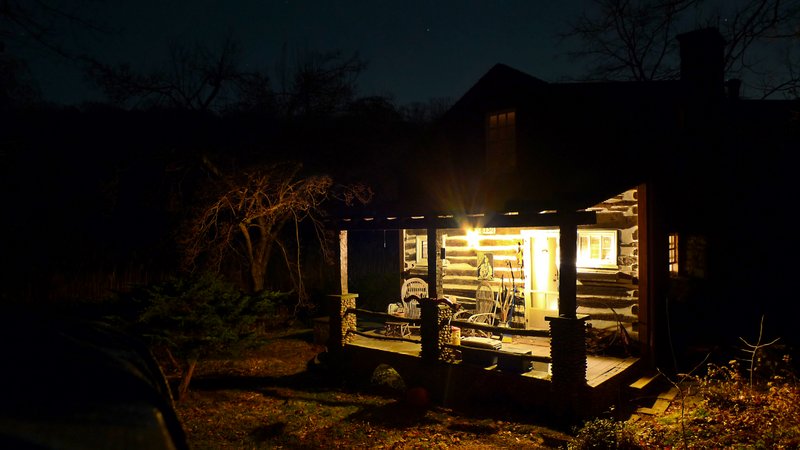
I’ve written about an 1890s mansion in the Berkshires, called Shadow Brook, that had 100 rooms and an attic so big kids could ride their bikes in it. My own house of the moment, the Cabin, could fit in a pocket.

cabin

Home exerts the same pull, no matter how swellegant or how modest. It affords the same excitement when you first move in, too.

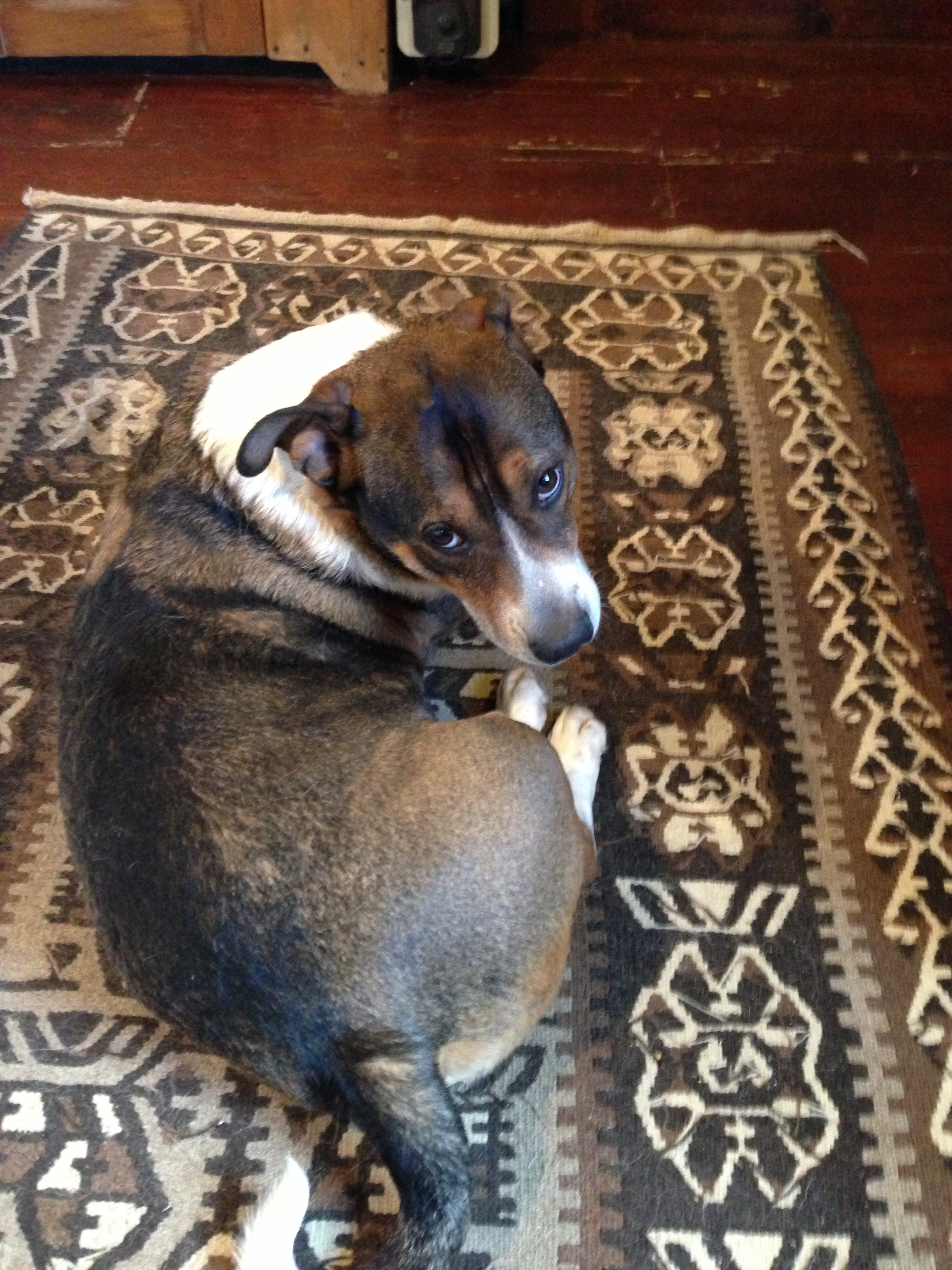
Even for animals. A dog makes a rug its home, those four corners for that moment are the ends of the earth and all that matter.

dog:rug

Dickinson said it, typically, simply: “Where thou art – that – is Home.” So, to expand your home, it would seem, to move in, especially if you’ve been yearning for it for years, is an expansion of self. Could anything be more thrilling?

2 Comments

Filed under Jean Zimmerman, Knitting

Day Trip to the 1890s

Feeling a little cabin feverish today. So icy outside, and so still, only the titmouse on the feeder seems alive.

I wonder what I’d be doing if I lived in Manhattan in the 1890s?

Strolling the top of the Croton Reservoir at 42nd and Fifth, where the New York Public Library now stands? There used to be a little shop across the street where we could take a refreshment. Hot cocoa, then cloak your cold fingers in a warm fur handmuff.

croton reservoir 1900 1

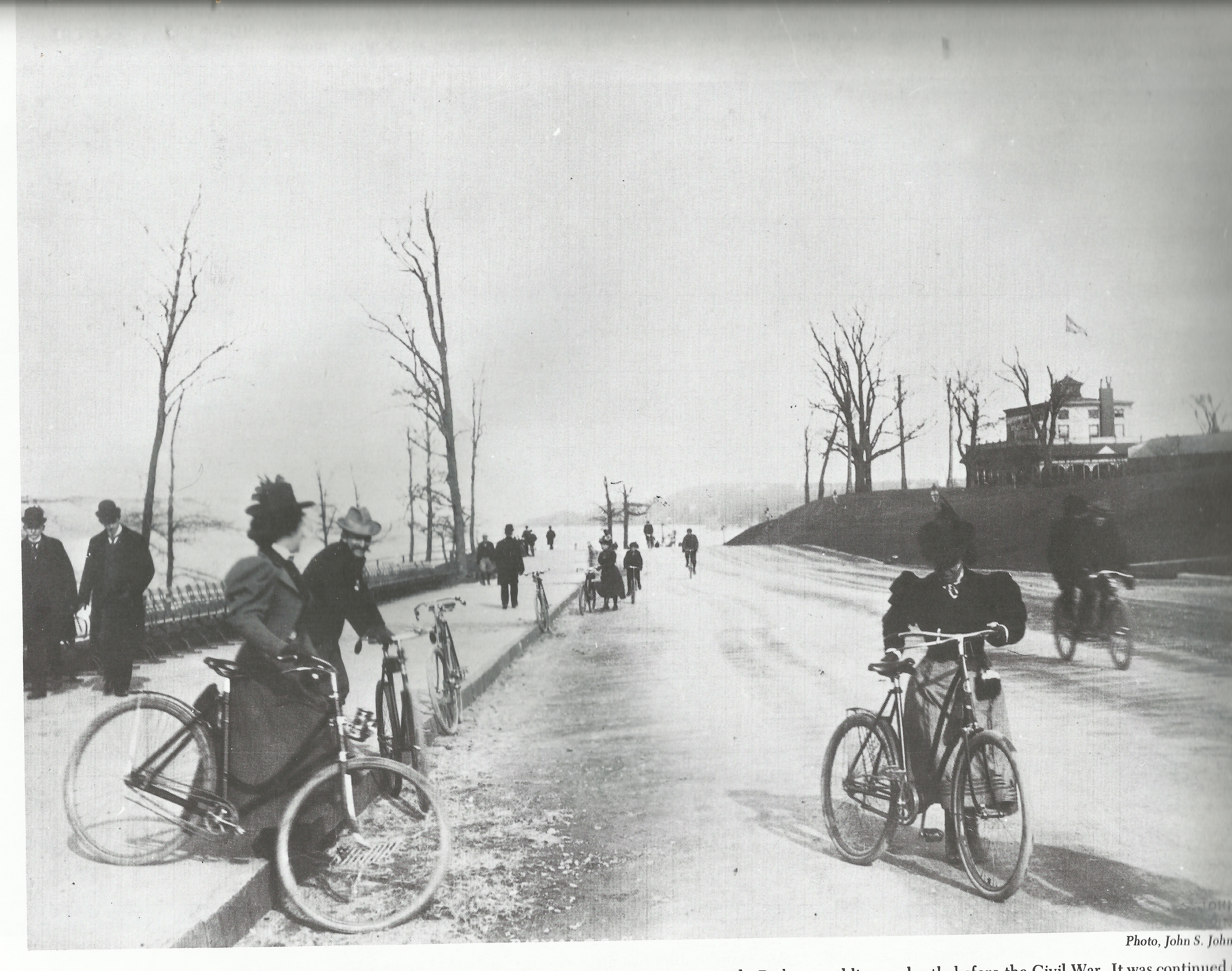
Or perhaps if it warmed up in the afternoon we’d go cycling up at Riverside Drive, on the Upper West Side. After all, for women, being on a bike had gone from being incomprehensibly daring to exceedingly fashionable. Sagacious Susan B. Anthony said that cycling “did more to emancipate women than anything else in the world.”

riverside dr,1898 1

Or after all, why not just go home to a shabby-genteel (emphasis on the shabby) clapboard cottage on Amsterdam Avenue at 122nd Street. (Maud’s dorm now overlooks this exact corner.) Then it was still very much in the country. Note the goat on the steps near the front door.

I wonder what the wallpaper looks like inside?

120 and amst, 1897 1

2 Comments

Filed under History, Jean Zimmerman, Photography

A Burning Issue

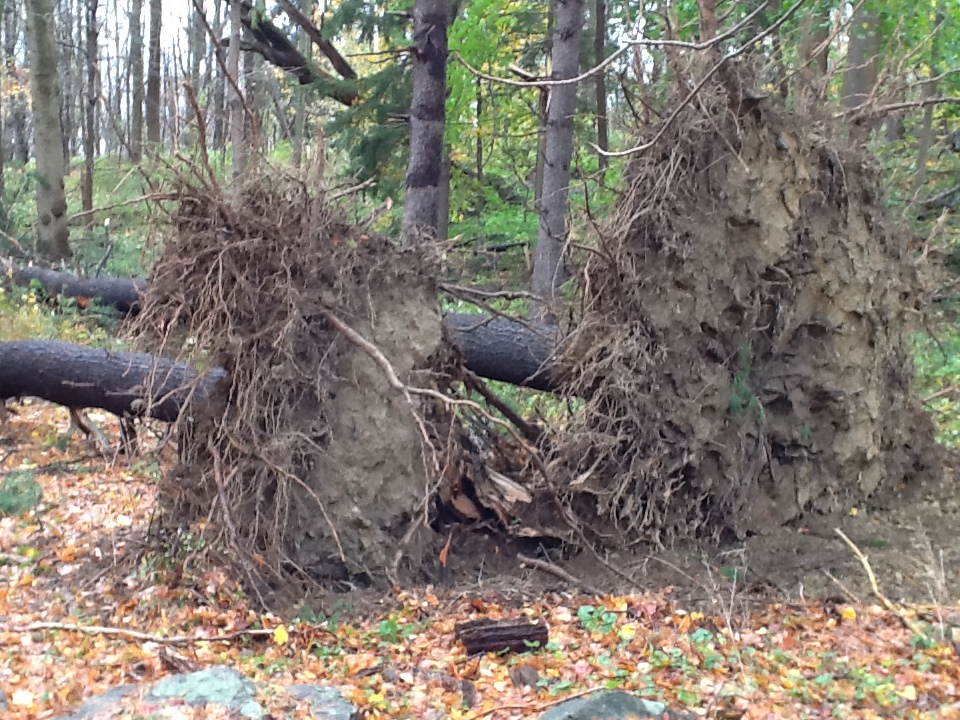
Our neighbor said he will bring his chainsaw and come slice the giant, hurricane-fallen trees on our land to make rough boards. He’ll use them to frame up raised vegetable beds this spring.

twin tall trees

That will be quite a job. The trees are fifty feet long, with a diameter of almost a yard. We’d get some firewood out of it, too, for next year, once it cures. This year’s need for logs to burn is almost over, and just in time, as our woodpile has shrunk to almost nothing.

Somehow it’s been an especially good year for fires. For immersion in movies in front of the hearth, for eating too many cookies, too much buttered popcorn, warmed by the flames. For knitting and purling on a cozy piece of work stretched across my lap, glancing up now and then at the flickering, crackling hardwood.

knitwork

Every fire holds worlds within it.

fireplace

We’ve stayed inside the Cabin a lot this winter, since it’s been cold, working, dreaming. Eating, as I said.

So many people who still have hearths have converted to gas, but it’s just not the same. Good article today in the Times about the cult of firewood in Norway. The subject is practical, historical, even mystical. People there have to stay warm, especially at the Sorrisnivia Igloo Hotel in Alta.

Sorrisniva Igloo Hotel

A Norwegian TV show probed the proper way to cut and stack lumber. After all the discussion, a fire burned onscreen all night long. Viewers found it as thrilling as Downton. Nearly a million people tuned in. Afterwards an expert, the author of a bestseller titled Solid Wood, opined, “One thing that really divides Norway is bark.”
Meaning, should it lie up or down on the pile? A heated argument, so to speak, could be made for either.

1 Comment

Filed under Home, Jean Zimmerman, Knitting, Nature

Phragging on the Hudson

We sat at a long, cloth-covered table set alongside the marsh as the early spring light began to fade. Roast lamb, devoured, salad consumed. Plenty of beer swallowed. I always wonder about these reeds, I said.
A good friend of mine seated just down the way, a landscape architect, turned to me. They’re common reeds, she said. Phragmites. They only grow in a degraded environment.

marsh:magnolia

Boink. Maybe because my friend is beautiful, wise and knows her stuff, my heart just sank. Our marsh. Degraded? No, it’s not degraded. Turtles migrate through the stalks of the reeds, out of the watersoaked ground to lay eggs in our lawn. Red-winged blackbirds hang on the reeds’ wispy heads doing acrobatic stunts and emitting their check-check call. And what about the black snakes that slither to and fro over the long warm season? That environment isn’t degraded.

Her comment has haunted me ever since, when I look out over my desk to the buff-colored legions of stems – bleak and pale now, in winter – or when I lay prone on the patio in the September dusk and listen to the soft rustle of the blue-green leaves in the breeze. So I just had to see what she meant.

And here it is.

Phragmites australis, the common reed, originated in Europe and came over to North America sometime in the 1800s, probably in ship ballast. There’s a native variety of Phragmites, too, one that Indians used to make ceremonial objects, cigarettes, musical instruments and thatch for mats. But what my friend referrred to is the invasive version, which greedily takes over brackish or freshwater wetlands and pushes out the native variety. They’re quite different than cattails, Typha, those honorable brown-velvet-headed grasses we see when we walk down by the Hudson. Stands of the towering Phragmites abound in these parts.

They’re like the wild rose, Rosa multiflora, that originally came to our shores as an ornamental plant, a flower border staple, and ended up taking over the world, just two weeks of delicious scent offsetting a year-round gift of monster-growth and prickers. It turned out to be a true thing, my friend’s observation, that Phragmites is more likely to be found in disturbed sites, such as along roadsides, near construction sites.

Starting a vegetable garden last summer at the edge of the marsh, I could see the reeds encroach. I couldn’t stop digging up their long pointy rhizomes whenever I planted. Still,working in the shadow of the fluffy plumes, the beauty of the unfortunate marsh grass drew me.

I have a bit of a fascination with trash amid grandeur. I love the idea that priceless architectural treasures come from trash pits, waste recepticles. I’ve always wanted to document the last lonely house, the last one standing between two faceless skyscrapers or next to the crummy highway (Emmy Lou Harris suggests that idea beautifully in her song Gulf Coast Highway: “The only thing we’ve ever owned is this old house here by the road”), the last shabby cottage that refuses to be displaced by shopping mall strips. Ugly and useless as these structures seem now, they once were loved.

Even Phragmites has a mythic past. When Apollo changed King Midas’ ears into the ears of an ass, Midas was ashamed and swore his barber to secrecy, but the barber could not stand to keep the secret and dug a hole in the ground where he whispered the story – and the reeds that grew there repeated the tale in whispers.

Who would be here to tell the tale if not for rude, terrible Phragmites?

2 Comments

Filed under Jean Zimmerman, Nature