
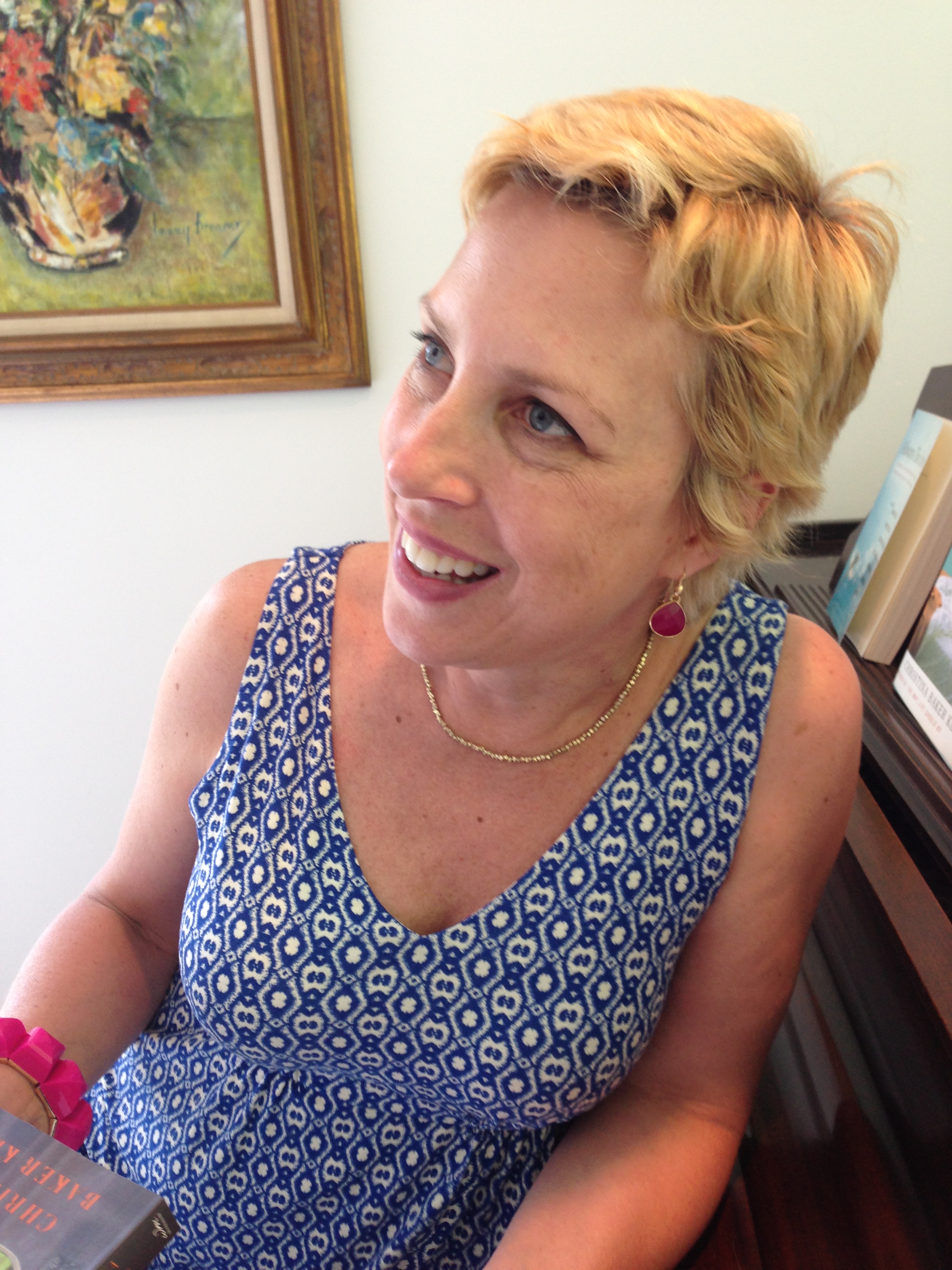
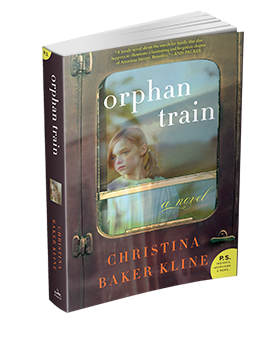
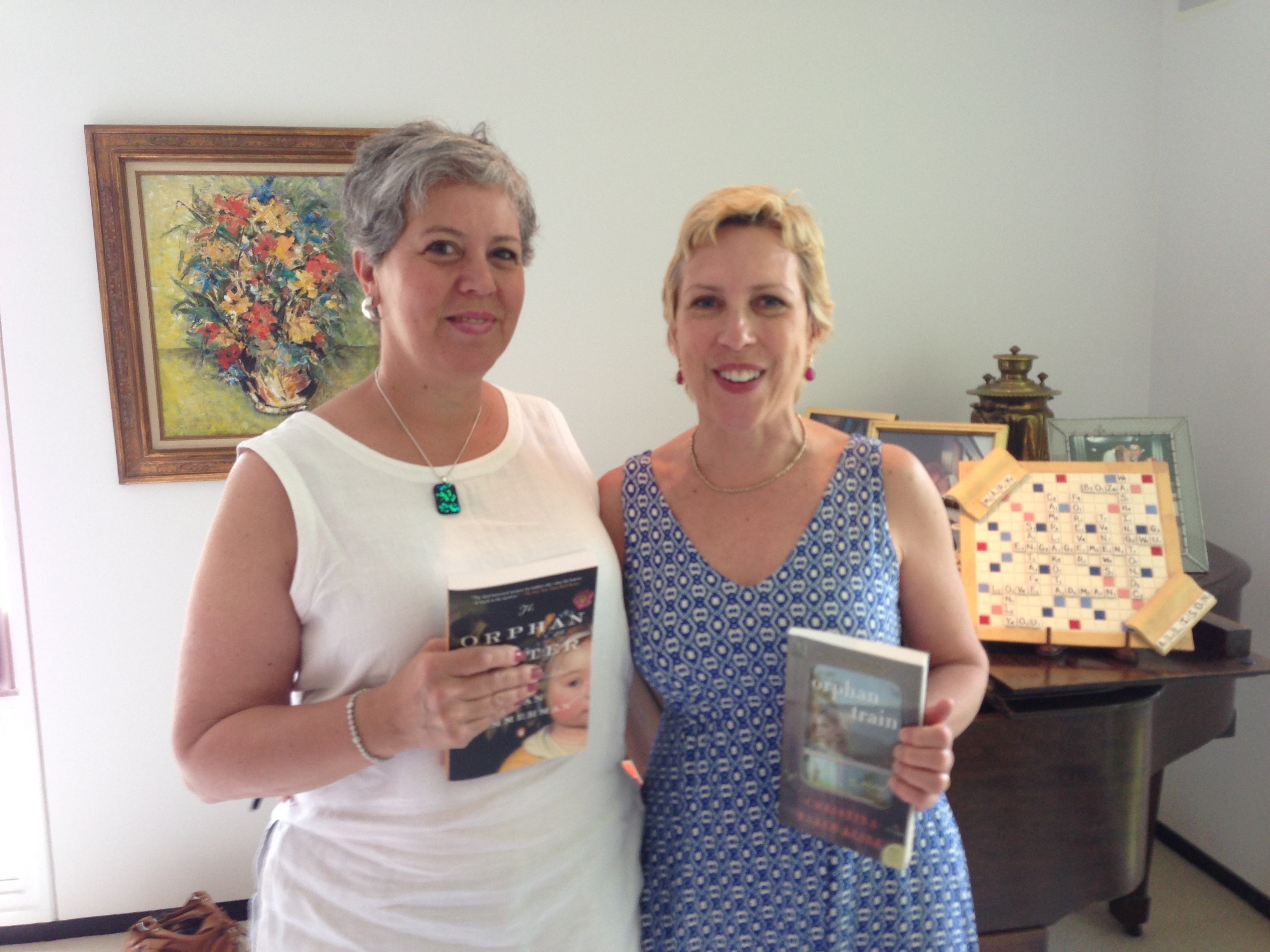
Christina Baker Kline’s book Orphan Train was released on April 2nd by William Morrow, and I was lucky enough to attend a brunch in her honor today. As the intuitive and scrappy Allison Gilbert, our nonfiction-writing hostess, put it, “Writing a book is like pushing a mountain through your head.” An event like this, she said, can show people that a book exists from the ground up. “That’s what we writers do for each other.” Indeed. The house in Irvington, New York was filled with bookish well wishers.
Orphan Train has hit the best seller lists of both USA Today and The New York Times, Goodreads saluted it as a 2013 beach read, and it has been brought out in a special edition by Target, for which Christina had to sign thousands of copies.
 She had come in from a meeting with the powerhouse biographer Robert K. Massie and would go off to be the keynote speaker at an event held by Books New Jersey, but spared a chunk of time in the noon hour to describe her book and the process by which it went from Henry James’ “germ of a story” to a full-blown narrative.
Christina stumbled on to the phenomenon of orphan trains 10 years ago.
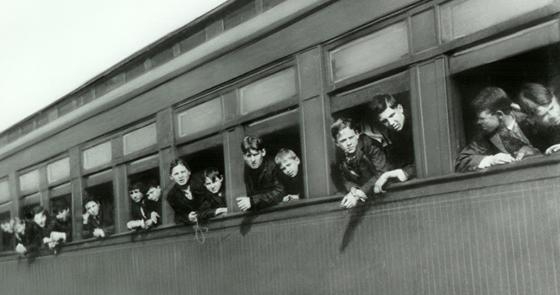
It seems her husband’s North Dakota grandfather was one of “riders.” Most kids were plucked off the streets of New York between 1854 and 1929 and shipped to the Midwest as free labor for farm families. Ultimately there would be 250,000.
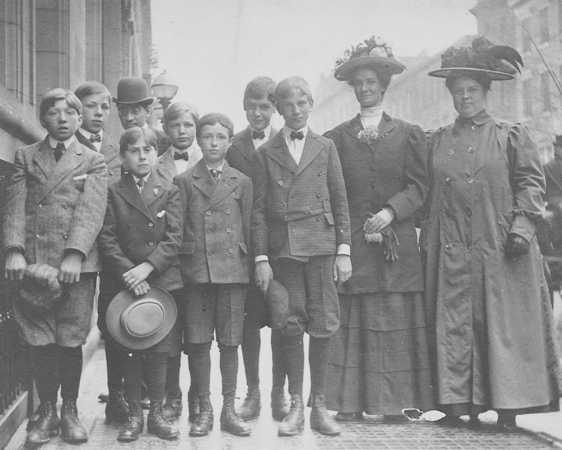
Some of them, actually about 60 percent, were not legitimately parentless, but their single parents, usually their mothers, simply couldn’t afford to feed and house them. Civil War widows, in particular, couldn’t hack the expenses of parenthood, and there were no social programs to help them. Today the original orphans have two million descendants in this country.
Jacob Riis made devastating pictures late in the 19th century of some of these lost New York street children.
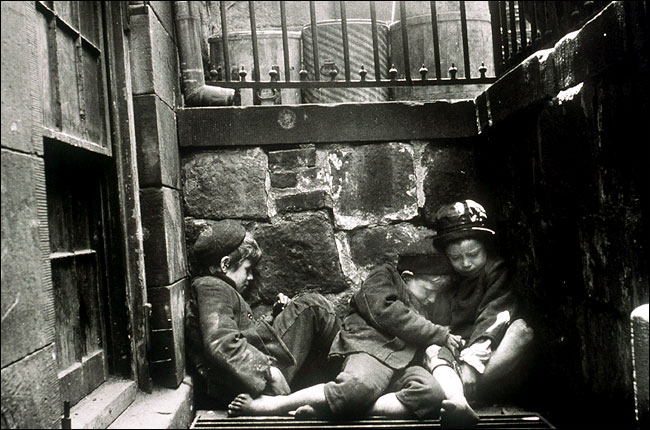
The older they were, the more desirable they were for the farmers who took them in. Better workers.
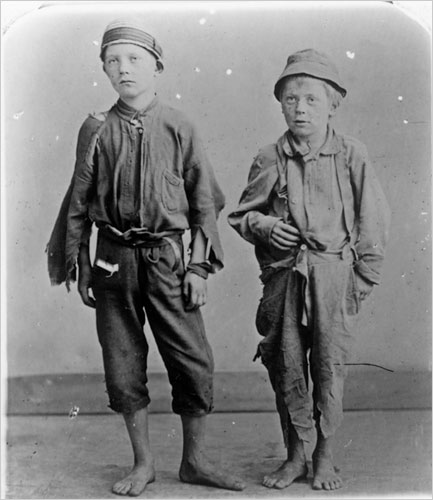
Babies were popular too.
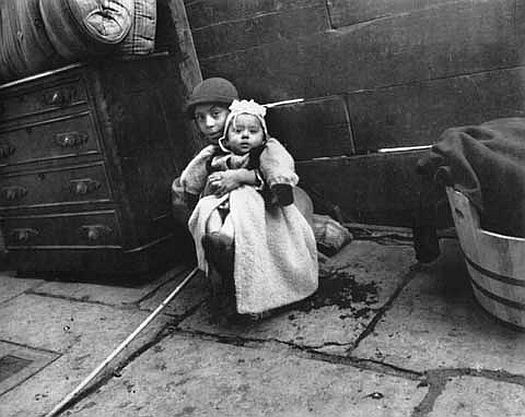
Girls, not so much. A threat to the women in the household. This little girl Riis captured is beyond sad.

Now Christina has taken this powerful material and made a story out of it, centered in the relationship between a troubled 17-year-old girl and an aging Irish immigrant who keeps her orphan train memories in an attic trunk.
Christina and I talked over aspects of bringing out a book, including the fact that we both take a powerpoint with us when we hit the road to talk about our work, something not every fiction writer does but that seems appealing to fans of historical fiction. I liked something she said about the writing process, about creating the structure for a story: “We need to build too much, explain too much, before we take that scaffolding away in the revision process.”
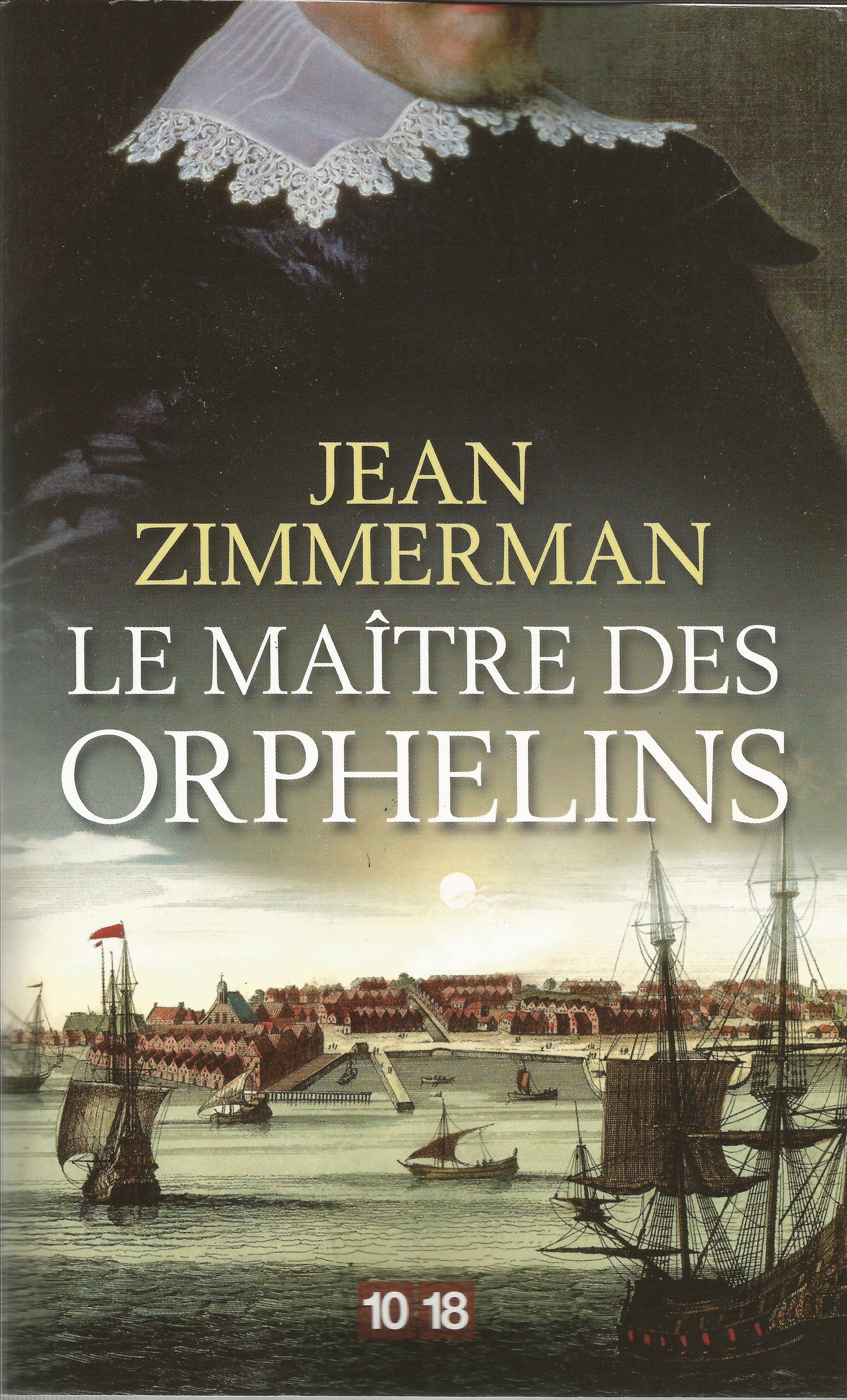
I can’t wait to read Orphan Train, to see what commonalities exist between her children of the late-19th century to the early 20th century and the parentless waifs of The Orphanmaster‘s 17th-century New Amsterdam. Novelist Helen Schulman said Orphan Train “makes for compulsive reading,” and The Orphanmaster has been called “compulsively readable,” so we have a bond. It’s too bad Adam Johnson couldn’t be sharing bagels and lox with us at Allison’s house today.
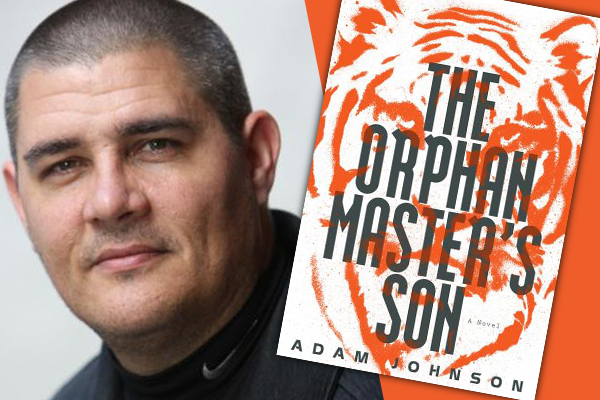
His book, The Orphanmaster’s Son, won the 2013 Pulitzer Prize for fiction. I have found myself in the interesting position since the award was announced of having people congratulate me for my “recent honor.” Well… no. But you’ve got to think that this hat trick of orphan novels suggests something in the cultural water. Andre Gide said, Not everyone can be an orphan. I salute Adam, whose book is supposed to be as terrifying as it is wonderful. But for now, it’s just Christina and me in the picture.




















































 Jean Zimmerman