Category Archives: Jean Zimmerman

The Taksim Square Book Club

In  Turkey, people are reading books. In public.

Which is amazing, considering the country’s recent history.

Taksim Square Book Club

People are afraid of losing freedoms. And they’re finding a clever way to meet in public when demonstrations have been banned. Book clubs as free speech.

From Ataturk – which means Father of the Turks – who founded the Republic in 1922, all the way up to the present day, the country has had strong secular leadership.

ataturk3

Now the hardliners have come in. In Tacsim square the prime minister wanted to destroy part of a park for “redevelopment.” Somehow that struck a chord with the public and hundreds of thousands of people took to the streets.

The complexities of this story are better left for a political writer, but the numbers have already reached these totals, according to one source: 4,500,000 people provided their support for the Gezi Park Resistance; there were 603 protests in 77 provinces; at least 75 people were arrested; at least 1,750  injured; 3 people including one police officer died. There is an excellent visual timeline of the “ten days of resistance.” New developments are not promising.

Taksim Square Book Club

As an alternative to the violence, the Turkish performance artist Erdem Gunduz chose to stand with his hands in his pockets, facing the Ataturk Cultural Centre in Taksim Square for eight hours.

erdem-gunduz-kimdir-gezi-parki-duran-adam-4746497_1628_o

Gunduz become the symbol of the resistance movement. Thousands of people emulated his action, standing still for minutes or hours around the country. “The Taksim Square Book Club” dovetailed with the still postures, and the books people are choosing form a reflection of their thoughtfulness in the face of this tremendous cultural upheaval. Albert Camus, The Myth of Sisyphus, about God and meaning. Gabriel Garcia Marquez’s Leaf Storm. Nineteen eighty-four. Turkish writer Tezer Oslu’s short story collection Old Garden-Old Love. When Nietzche Wept, a historical novel by Irvin David Yalom. Again, Nineteen eighty-four.

Taksim Square Book Club

What would you hold?

8 Comments

Filed under Culture, Fiction, History, Jean Zimmerman, Photography, Publishing, Writers, Writing

The Handsomest Dog in the World

I write frequently about my dog Oliver.

Image

He is loyal. Intelligent. A good eater (lately into ripe strawberries from my garden). Brave. Well, loud and aggressive, anyway, and I think  he’s secretly a bit of a chicken.

We got Oliver as a baby from a dog rescue family that was fostering his ma, a seemingly unadoptable, classic yellow cur. Father: unknown. In a White Plains kitchen squirmed eight chubby balls of fur, attached to eight wagging stumps of tails. It was January. We had run out of time to find adolescent Maud a puppy birthday present. Ollie was it. He might be a beagle, from his coloring. Who knew?

Image

We found everything he did delicious even though he smelled bad and was so snaggletoothed he needed a lot of dental work. His lip was partly cleft. He waddled. Most of all he didn’t play well with others. All he did in obedience class was bark at his classmates. He once found a warren of rabbits and killed them all. His genetic origins, it seemed clear, spanned the basset hound and the pit bull.

Image

Still. Ferocious as he is, he can be the picture of docility. Smiles over the shoes he brings when we come in the door, earning his nickname the Jolly Rancher. He can be mellow, even soulful.

Image

Loving.

Image

He’s was a flaming redhead for Halloween when he was about a year old.

Image

Clownface, I call him.

Image

Whatever else he is, he’s unique.

And so it is that I became shocked and miffed to see this year’s Ugliest Dog in the World paraded across a stage in California and then making the talk show circuit in New York. The contest has taken place for 25 years, and the Chinese Crested breed, which is hairless, usually triumphs. Not this time.

Image

Walle came from Chico, and they were calling him a cross between a basset hound and a boxer. One judge said that Walle looked like “he’s been Photoshopped with pieces from various dogs and maybe a few other animals.”

Image

Walle didn’t look like any other dog, everyone said, with his pudgy gait, chunky paws, large head, lowrise posture, oversize nose.

Image

Well, you tell me. Is Walle unique? Or did we finally locate one of Oliver’s vanished siblings? More to the point, is the dog who won the laurels ugly?

Because Oliver is beautiful.

Image

10 Comments

Filed under Culture, Dogs, Home, Jean Zimmerman, Nature

A Crash, Then Silence

Last fall I created a trail.

path 1

It started at the curve of the Cabin’s driveway and led uphill to a ridge, winding and turning past trees along the way.

path 2

A beautiful mat of bark I’d step across on my way up suggested the drama of a tree’s life cycle. It was as if the bare, dead red pine had shaken the pieces off all at once in a kind of frenzy.

fallen bark

When I brought Oliver for walks in the clearing beyond the ridge, it always stuck me as a threshold to a fairytale world, parklike, denuded of underbrush, just a beautiful blanket of brown leaves amid tall old trees, with some tenacious raspberry canes. Oliver gives chase to deer here, animals invisible to our eyes.

red canes in clearing

Today my access to that fairytale world was denied.

Gil told me that while I was out this morning and he was sitting at his desk, he heard a crash “that went on for five minutes.” It was sequential, he said, an explosion, then a crack, then another explosion.

A tree fell in the forest, and he heard it.

gil uphill

When we went up to investigate – amid swarms of excited mosquitos – we found half a dozen downed trees, all in a tangle.

crashed trees

And all across my path.

Gil’s theory: “the cherry fell on top of the maple. Now the maple’s all bent over, strung like a bow.” I could see the fresh split in its bark.

cracked tree

Oliver was exuberant, racing around, using the fallen limbs as a steeplechase. “The poetical character…lives in gusto,” said Keats. The dog just wouldn’t stand still.

deer chaser

And then, coming home, at the bottom of the hill I find a phenomenon that is the opposite of loud and crashing. A painted turtle had come to lay her eggs, stretching out her strong hind legs and silently clawing up the mud beneath our grass. We saw her as we left for the trail.

All she left was a hole the size of a silver dollar. No white, jellybean eggs.

turtle hole

I wonder if she heard the trees?

5 Comments

Filed under Dogs, Home, Jean Zimmerman, Nature, Poetry, Writers

Lowdown on the High Line

New York City’s High Line park is totally overexposed. I’m going to expose it further.

walking

I walk with three menfolk from the top to the bottom of this new icon of the Manhattan landscape, stunned by the native plantings that seem to find city soil the best fertilizer in the world.

yellow flowers

I spent a day in the country looking at wildflowers and saw no profusion like this.

cone

Superflowers.

purple flowers

And a planting of bamboo, which has to be tightly constrained by a metal guard to keep it happy in its place. Kind of the opposite of Jesse, who isn’t happy unless he’s on the open seas or in some other free environment.

jess:bamboo

The High Line was  built between 1929 and 1934 from Gansevoort to 34th Streets to lift dangerous freight trains above the traffic. For years, meat, produce and dairy products were shipped to town and arrived at the third floor level of plants. That might have been a little inconvenient, but the situation previous was insupportable. In the nineteenth century, people actually called Tenth Avenue “Death Avenue” because the street-level railroad caused so many accidents. Men in an outfit called the “West Side Cowboys” were hired to ride in front of trains and wave red flags to warn traffic off.

cowboy

In 1980 the last train came through with a load of frozen turkeys. Then the rail bed deteriorated. Gil, who lived in the city then, says, “It was the high line, alright, everyone was getting high.” What grew there was what the High Line people now politely call a “self sown landscape.” In other words, weeds. Weeds, condoms, syringes.

Now there are trees, grasses and flowers, and I think even Larry, who lives on a farm surrounded by midwestern forest, is impressed.

larry

The gardeners of the High Line transformed the place, beginning in 1999. It’s a classic urban place to stop and smell the roses.

climbing roses

Wild roses are fairest, said Louise May Alcott, and nature a better gardener than art. The High Line has nature, art and a third thing, a deep industrial past.

There are musicians.

asian musician

Painters.

painter

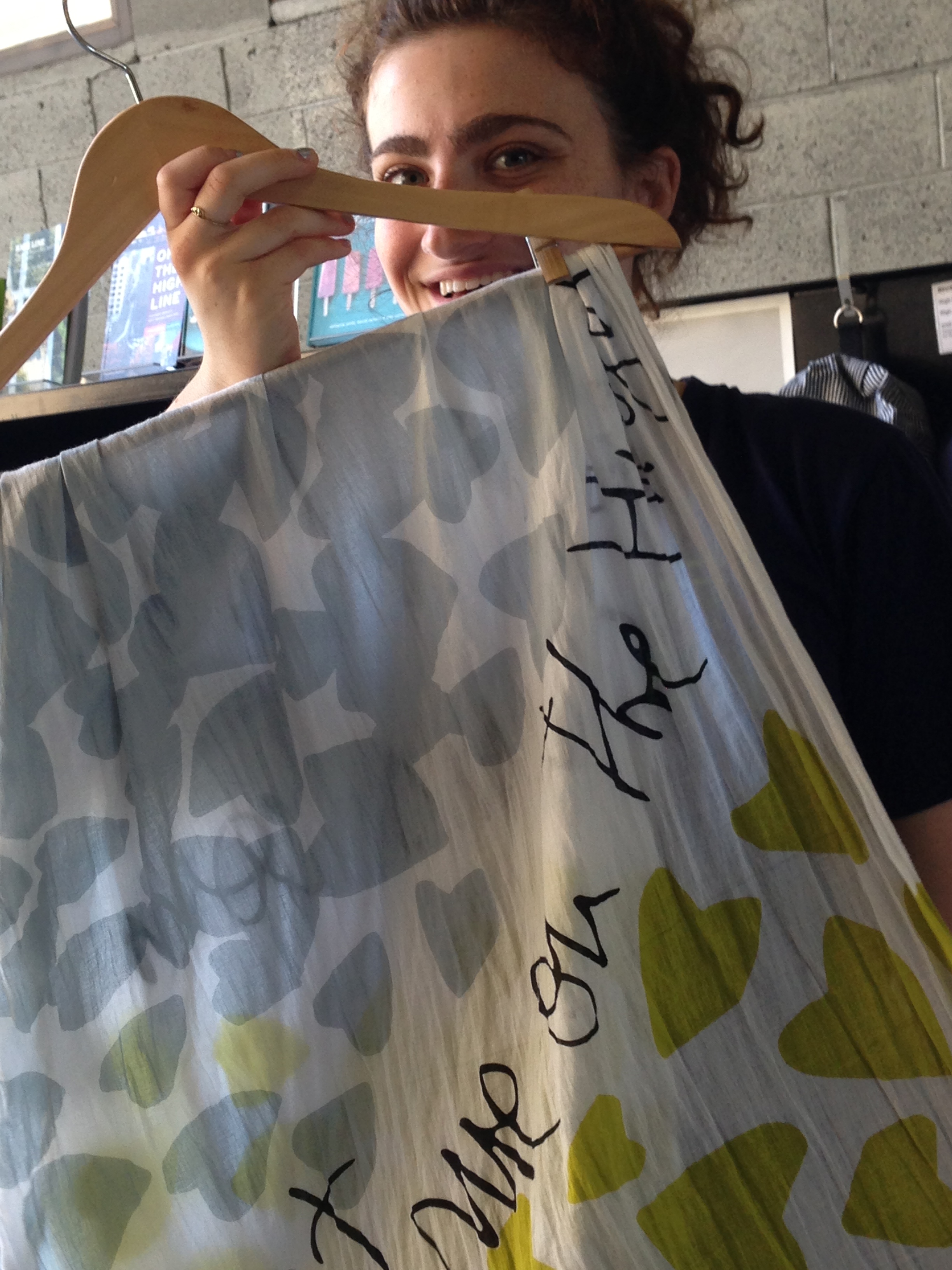
It even has its own clothing franchise, with sarongs that read “Dreams Come True on the High Line.”

sarong

Sculpture rises up along the walkway.

funny sculpture

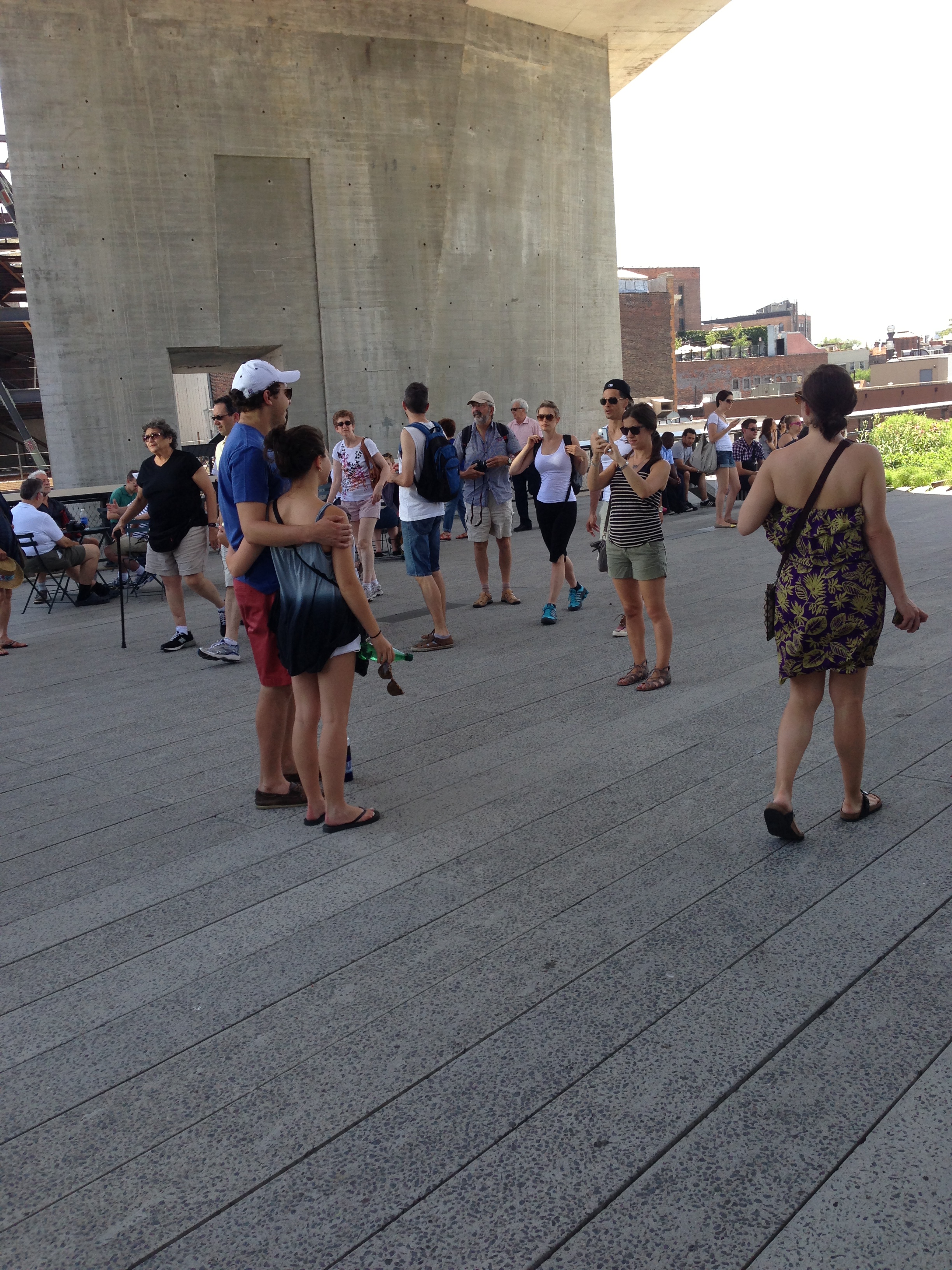
And human sculpture, as people freeze for pictures. What the High Line should have next to the fresh fruit ice pops stand is a camera kiosk. Someone would get rich. Tourists throng — you can walk a long way down the path and not hear a word of English.

taking pictures

With the new, there’s the old – a mysterious pattern of bricks.

bricks

And a towering old painted sign: BONDED. Across it a tag reads REVS, shortened from REVLON, a famous graffitti artist. “It’s got to be on the edge, where it’s not allowed,” REV has said. There’s room on the High Line for all vintages.

old sign

The Gehry-designed IAC Building, at 555 West 18th Street, with its milky, origami exterior, has been open since 2007. Vanity Fair called it the world’s most attractive office building. It’s especially great to see it in tandem with structures of other vintages, including the old-fashioned piedmont of a lower one whose top is flush with the park.

Gehry

The Standard Hotel soars above. It gained some notoriety when High Line strollers realized they could look up and see happy exhibitionists making whoopee in the floor-to-ceiling windows.

the standard

(When Chuck Barris was looking for a word to meet the network censors’ standards on the Newlywed Game, the term ultimately settled upon was whoopee.) Meat trolleys for hanging beeves still exist if you look closely. Right along the Standard, in the shadows, a rusted remnant of the  district’s sanguinary past.

beeves

But one essential thing about the High Line is the views.

cityview

In the nineteenth century, landscape architects carved out pastoral views on grand country estates, cropping trees advantageously to accentuate vistas of rivers, mountains, or other natural elements. The High Line is the 21st century equivalent, with quirky street perspectives all around, framed from this tall iron structure.

bridge

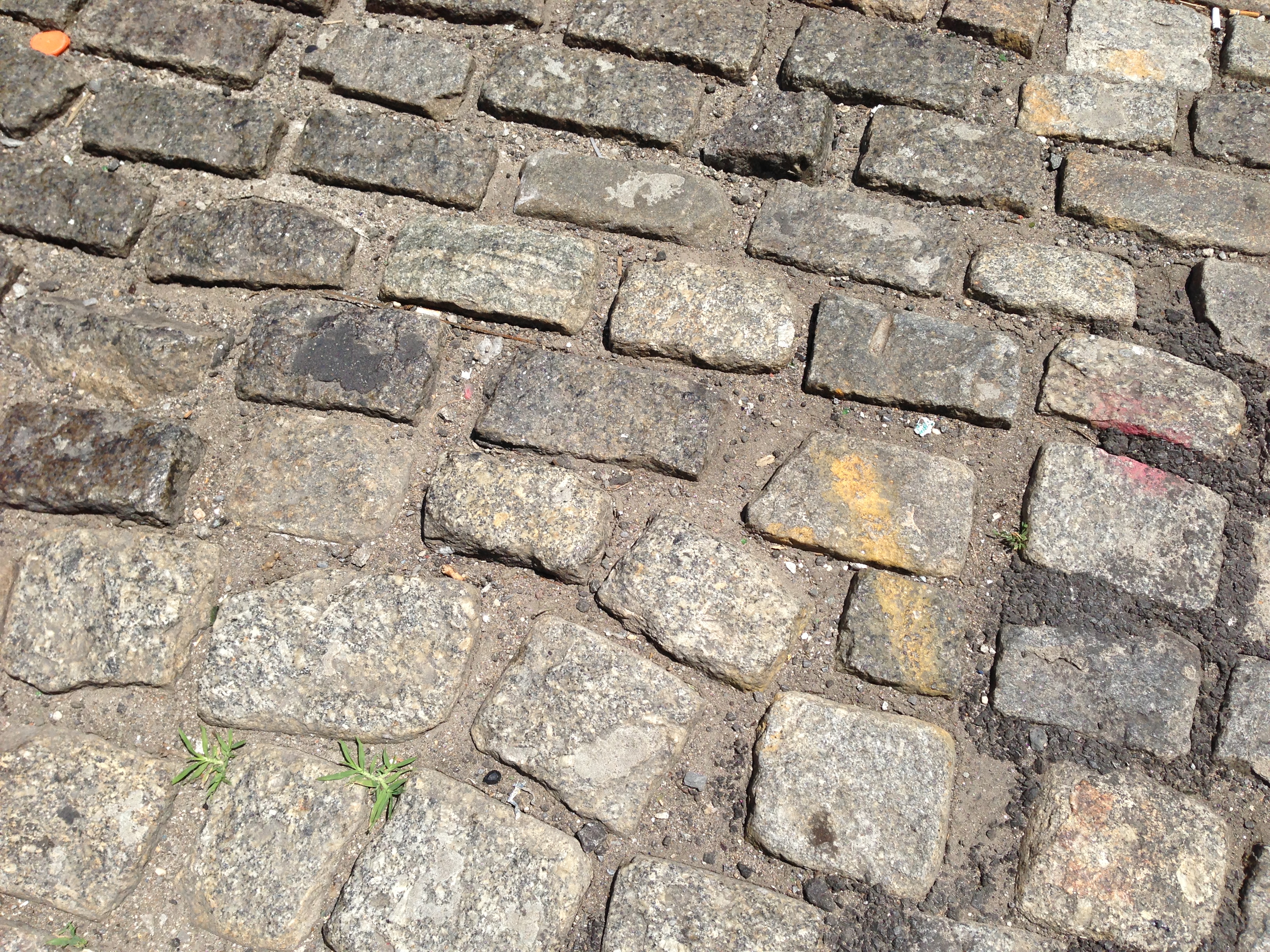
After our promenade, we descend to vintage New York cobbles. A remnant of the lost city.

cobbles

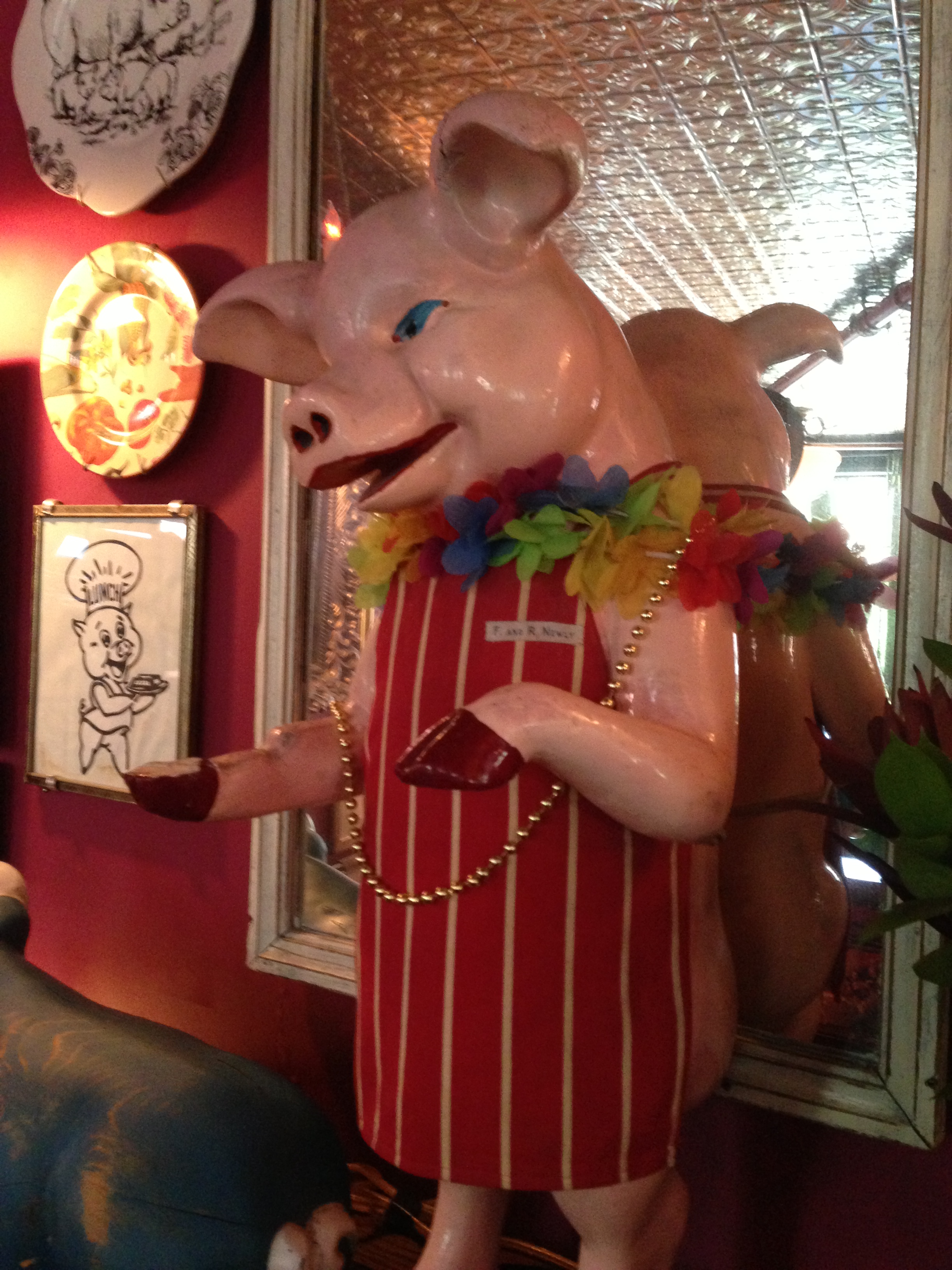
We refuel at a restaurant called The Spotted Pig.

pig

The eggs it serves are divine, with crunchy flecks of sea salt.

egg

I am tired after our sun-blasted walk of a two miles. Jesse is wide awake, which he always is, except when he’s asleep.

jess eyes

And the french fries… well, it is hard to shovel them in fast enough.

fries

The chef strews the shoestrings here with shreds of rosemary. Everything tastes better after the High Line. An ordinary pinapple smoothie from a new perspective.

smoothie

A fantastic church frieze overhead. Had it always been there? I can’t recall. The galleries of Chelsea are closed on Sunday, but that doesn’t mean the great sidewalks of New York are closed for business.

girl graffiti

Too much graffiti has been scrubbed off in recent years. Manhattan is the new Minneapolis. Now we have clean, healthy biking all over town. In Greenpoint, Brooklyn,  where I visited a week ago, it’s a different – and more colorful – story, as it hasn’t quite shed its industrial past and makes a fine canvas for folks who do outdoor outsider art.

slut tribe

Here in the Meatpacking District we find a few worthy efforts.

boy graffitti

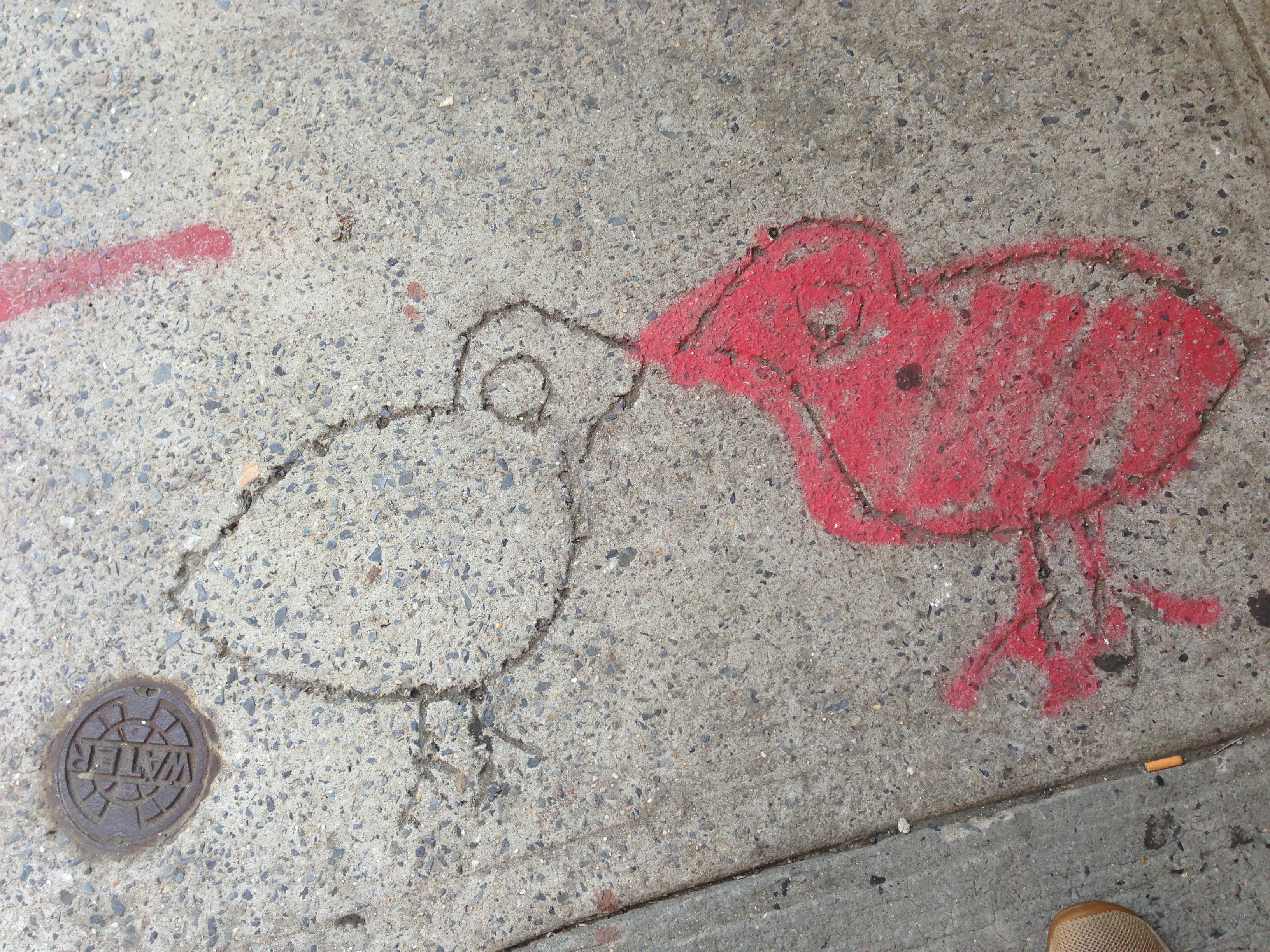
Two chicks etched on the sidewalk beneath our feet.

chick sidewalk art

For some reason I like these simple birds, making kissy next to their little water fountain.

The all-seeing eye. The Eye of Providence.

evil eye

On the island of Manhattan, if you let your vision wander up, you see some marvelous things. A blue horizon chockablock with architects’ freshest concoctions. Pieces of old New York, dusty red bricks that have miraculously been saved from the wrecking ball. Climbing roses, if you’re walking the High Line. From that same pathway, a glimpse of a well-to-do fanny in a chic hotel window. And there are still wooden water towers.

water tower

Just two companies, Rosenwach Tank Company and Isseks Bros., manufacture the tanks, which are unpainted and made with untreated wood. A new water tower is a leaky water tower, as it takes time for the material to become saturated and watertight. Chelsea has one, completely dry of course, that has recently been transformed into an exclusive club called Night Heron. You can see it from the High Line.

1 Comment

Filed under Art, Cooking, Culture, Fashion, History, Jean Zimmerman, Nature, Photography, Writers, Writing

Loupe de Loupe

I never thought I could get so excited about a slime mold.

slime

But I learned, dear reader, I learned. Understanding is a kind of ecstasy, said Carl Sagan. He may have been looking upward at the stars, but we were attending very closely to what was all around us on the ground, and it was rapture. This was a private walk through Wildflower Island at Teatown Lake Reservation, the 875-acre nature preserve that’s just down the street from the Cabin. I had hiked the grounds around the lake often, but never made an appointment to visit the two-acre island. You have to go through a wrought-iron gate in a little wood entry house and across a bridge to get there. It’s kept locked, a secret portal to another world.

gate

We were greeted by a great blue heron.

heron

Diane Alden, a sagacious volunteer wildflower docent, went with me and some of my friends on the walk.

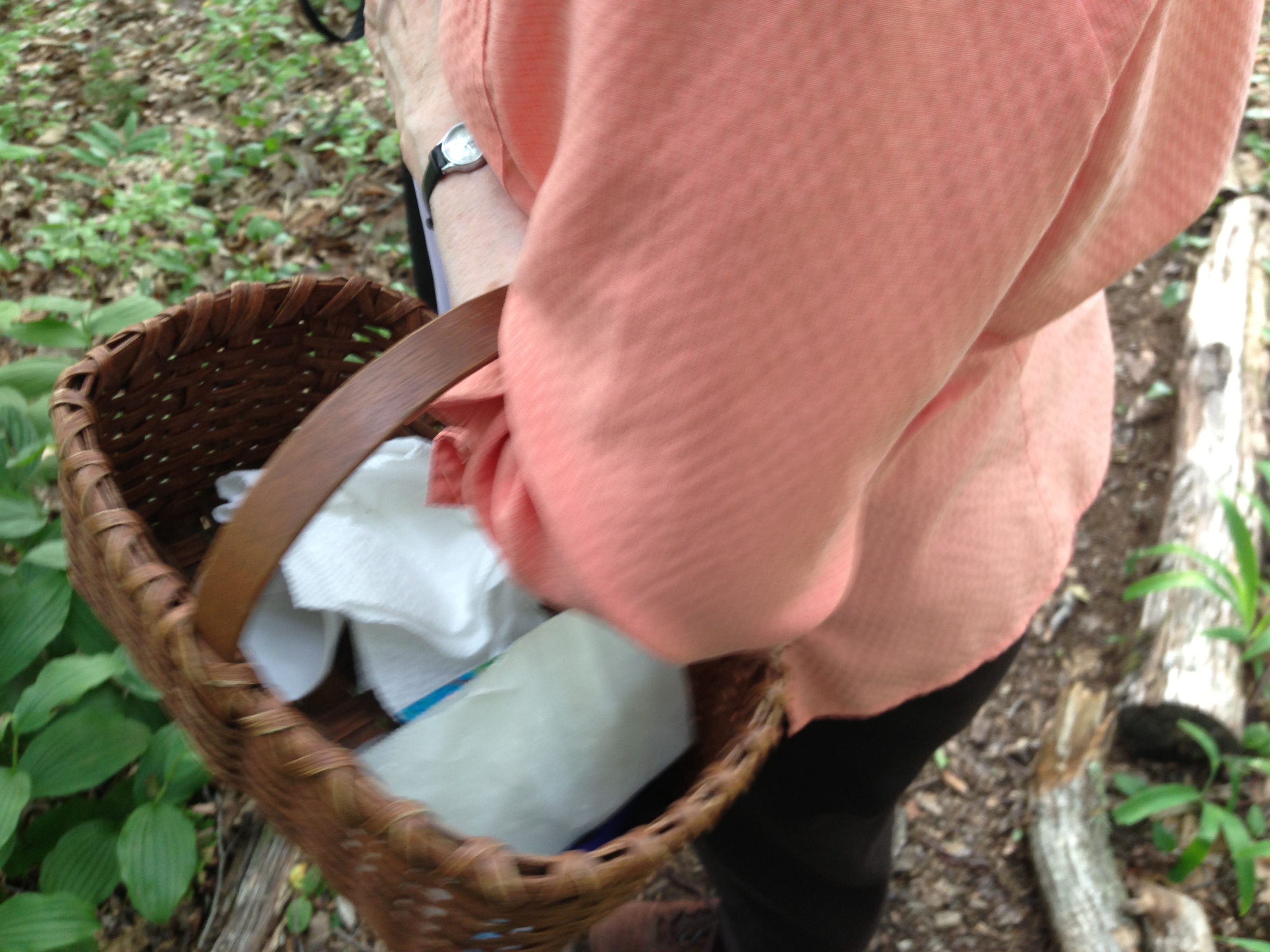
diane's basket

Wherever she went, her basket accompanied her, and I got the feeling that if we were lost she’d take out a small loaf of bread and trail crumbs to save us. Diane had much to tell us about the plants on either side of our path. If I were a better student, I would remember more of it. She said that 400 million years ago, plants came out of the water. Ferns came to live alongside the fungi. Our group saw a whirl of ferns wherever we looked, of all different types, and examined their crumbly brown spores.

blurred fern whirl

“I love ferns,” said Diane. “Because they’re ancient — I love it.”

Lichen, she said, “is a marriage between an algae and a mushroom.” What? A lichen, it seems “eats a rock to make a place for a moss to make a house for a fern.” It’s all like a fairy tale, really, where algaes and mushrooms fall in love, lichens find rocks delicious and ferns move into new castles across town.

lichen

There were so many photo ops, all those shades of green.  Suzanne didn’t know she was so interested in mosses. (Give her credit for many of these pictures.) They don’t grow tall because they have no vascular structure to bring up the water. That’s why they wind up as soft emerald carpets at the bottom of trees.

Suzanne

We all swooned when the cumberland azalea came into sight.

cumberland azalea

It’s in the same family as the blueberry, oddly, and has a symbiotic relationship with the mushroom mycelium beneath its feet. The names of wildflowers were made up by genius poets: cattlesnake plantain, spotted wintergreen, interrupted fern, haircap moss. Princess pine, aka lichopodium, if you’re knowledgable, stands about eight inches high and looks exactly like a miniature Christmas tree. Diane had a friend who used to say she wished she could shrink and walk among them.

forest

Bull frogs belch out their calls. Our own bullfrogs, Gil and my friend Henry, wondered if it would be permissable for them to take an independent stroll around the island. “That’s what the husbands do a lot,” said Diane graciously. We bent to see a small grove of lady’s slippers.

lady's slipper

It was the pink lady’s slipper that caused this island to be preserved as a wildflower refuge. The endangered plants grew in such abundance here  and would not survive a move, so Teatown saved the whole shebang as a sanctuary for indigenous plants thirty years ago. The island itself was formed when the Swope family dammed Bailey Brook to create the lake in 1928. It used to be a farm, and you can still see the old stone  walls around the property.

This island is as good a place as any to establish the accuracy of the following formula:

Sedges have edges

and rushes are round

and grasses are hollow

right down to the ground.

We learned continuously, intensely, over the course of ninety minutes. “Think about the color of the blueberry,” Diane advised. “It’s to attract the birds. It seems obvious but it just occurred to me recently.”

Diane

We were touching buds, berries, stems, flowers, crouching to see more intently.

josefa

We had to look closely to find some species.

species

Josefa’s art mind was going wild with all this nature, and her pictures are amazing. Here’s one, through the loupe that allows us to see the tiniest details imaginable.

josefa pic 2

“Do you know what this is?” asked Diane, and I had a small mental triumph. Solomon’s Seal. How I knew, I don’t know. Perhaps I read it in a fairy tale?

solomon's seal

The buttercup family is vast, and includes the columbine, thimbleweed, and even bugbane, said to help control hot flashes.

wendy holding bugbane

The mosquitos were closing in. We were on an island, after all. But some of us were getting a little cross.

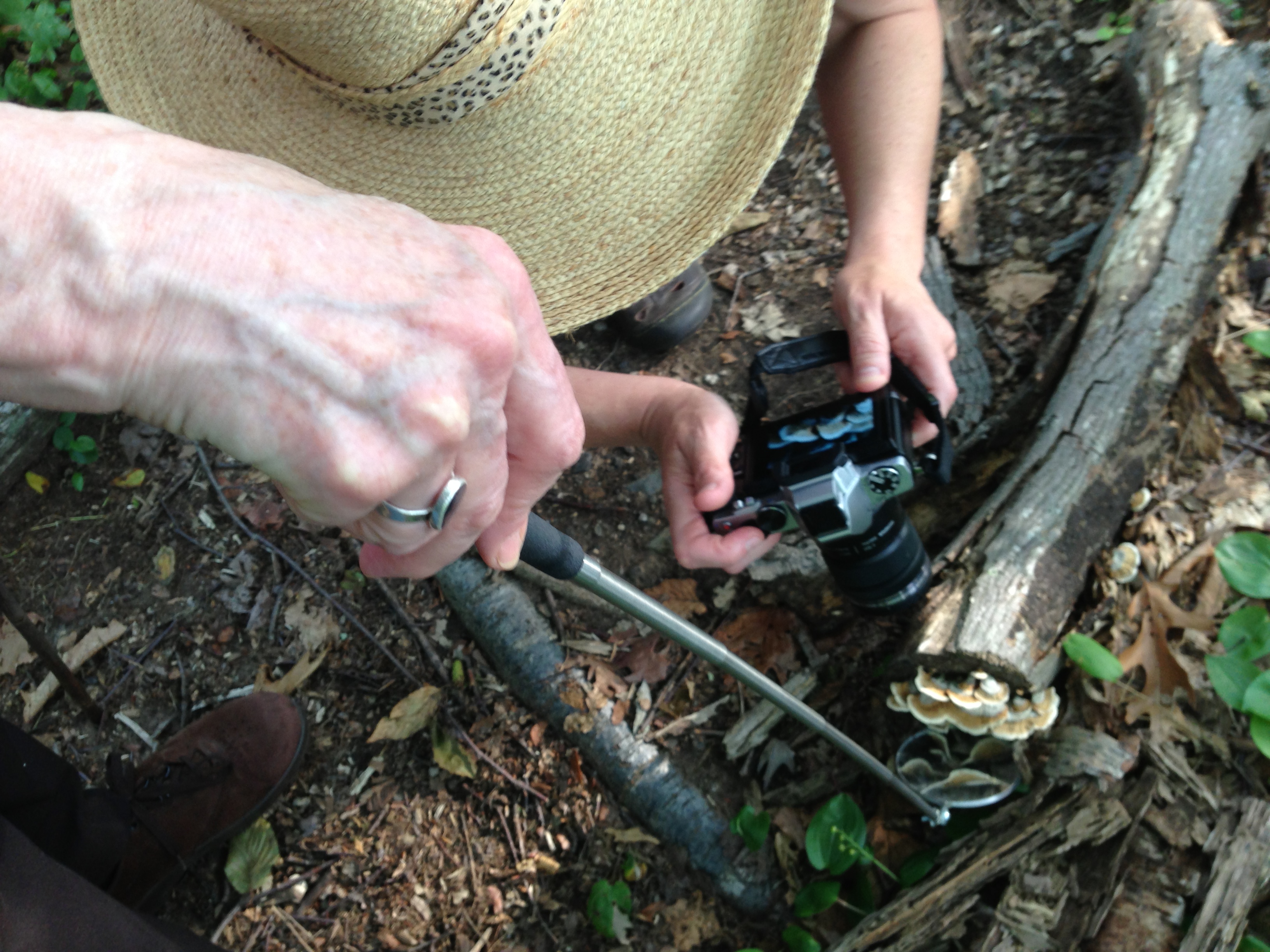
WendyThen something materialized out of that wicker basket of Diane’s, a mirror attached to a light, expandable rod. We were now privy to a new world, the log-attached underside of the false turkey tail mushroom.

diane holding mirror

We emerged to the island’s edge, where the water was crowded with water lilies in all their primitive glory. Deer swim across here, eager to munch on the island’s sweet flowers — Teatown has to cage the island’s handsome rhododendrons. Dragonflies, swooping by, date to the age of the dinosaurs. Diane, who knows about a lot more than wildflowers, explained that each one has two sets of wings, which it cannot collapse to land or to hide. Despite these constraints, they outmaneuver other insects — “dragonflies are better at capturing their prey than lions or tigers or bears,” said she. I once, however, saw a chipmunk devour a dragonfly, so I know they’re vulnerable.

Diane walks in the woods every Monday with some fellow flower lovers, two of whom are botanists.

path

They take note of every thing, from the tall, scraggly shapes of the deciduous azaleas to the tiniest, most crazily delicate seeds. And once they do, they note them all over again, and closely.

seeds

3 Comments

Filed under Jean Zimmerman

All Thumbs

The first day of summer rolls out before us. We zoom south to Pier 45 on the lower west side of Manhattan, where we know we will find fantastic music played by an expert friend.

nora arrives

Nora Balaban is one of the foremost musicians in New York on the mbira, the Shona thumb piano of Zimbabwe. She arrives by bike to Hudson River Park, where we find a cross section of humanity and other species. (On the way down the island, stopping in the Inwood neighborhood, we passed an older gentleman carrying a goose in a wire crate. For dinner or companionship? Impossible to tell.) Here at the Pier, there’s a little bit of everything under the sun. Skates with the wheels on the outside, called land rollers.

skates

The New York Water Taxi motoring in to dock, offloading both tourists and commuters.

water taxi

Pedigreed puppies in a strict training regimen, no petting allowed.

puppies

Sunscreen-slicked Type A’s on cellphones.

type a

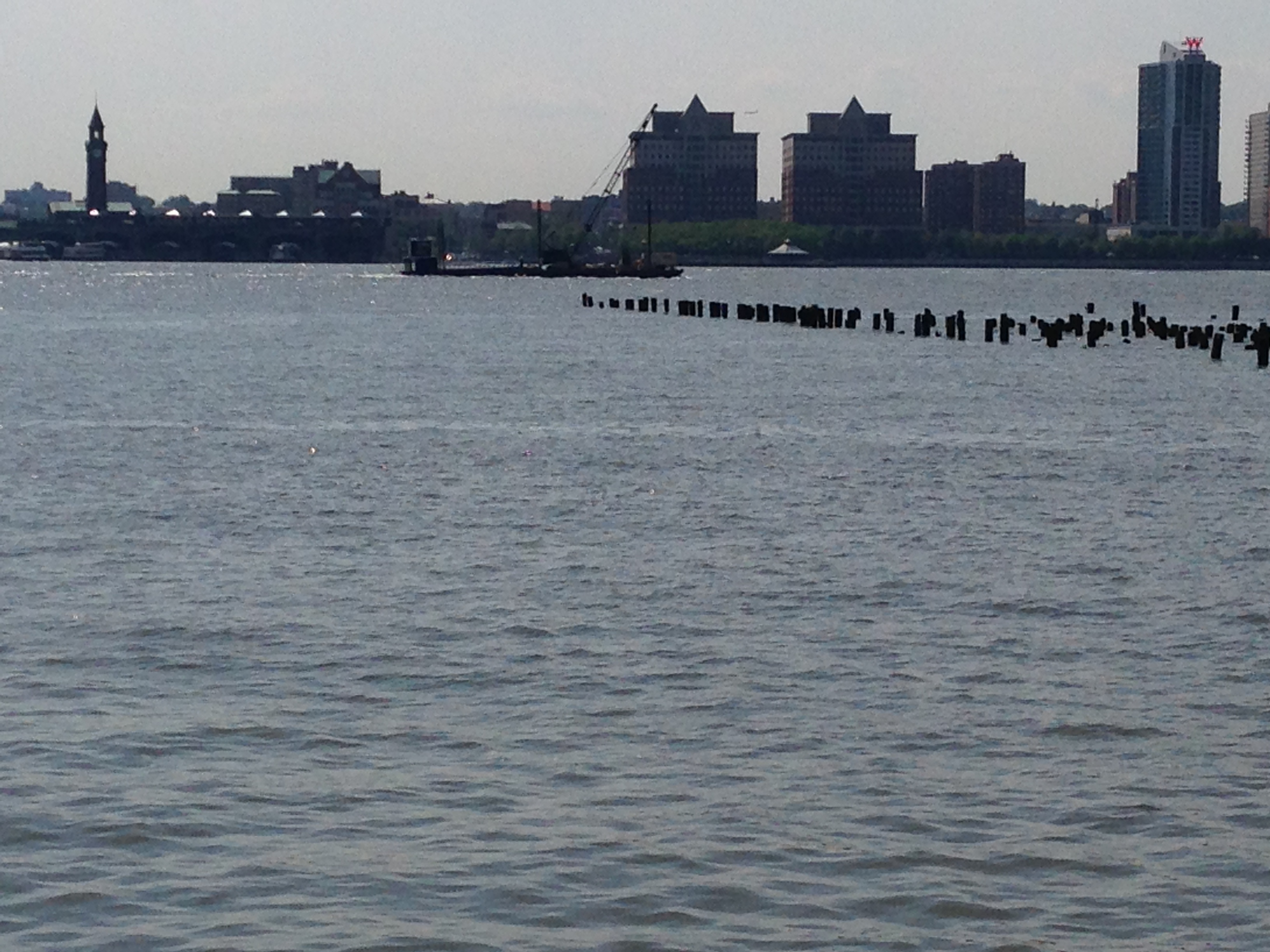
Here at the pier, extensively remodeled and cleaned up by the city in recent years, we listen to the waves of the Hudson lightly slap the pilings. Directly south of us the Freedom Tower, still a work in progress,  balances at least one crane on top.

freedom tower

Speedo-clad sunbathers blanket the grass.

naked

“Our audience is naked men with little thongs, and Gil,” says Nora. I’ve known Nora a very long time time, since junior high.

Nora and I

Everyone on Pier 45 seems rendered unconscious, lulled by sunbeams, water, clean green grass. “Summer afternoon,” said Henry James. “To me those have always been the two most beautiful words in the English language.” Nora and her band, MbiraNYC, will follow a musician named Poingly (real name: Jason Glastetter) who renders a performance not unlike a person confined to a lunatic asylum, dashing back and forth, climbing, wailing, rending his clothes, all at top volume. His first album is titled, no kidding, I Suck.

Pointy

The ancient pilings in the river seem stoic under the onslaught.

pilings

Poingly’s performance, and Nora’s, are sponsored by MakeMusicNew York, a free celebration across all five boroughs, with Israeli and Korean performances in Midtown, West Indian in Crown Heights, Chinese in Flushing and French and Indian in Central Park. Nora tells me it originated around seven years ago to commemorate the summer solstice.

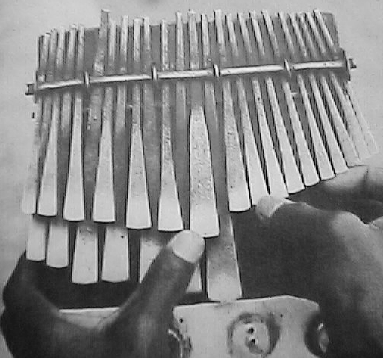
You’ve probably seen an mbira at some point but didn’t know what the metal-pronged instrument was called.

mbira

The band takes the “stage,” with folding chairs under a wing-like shade screen, and begins. Its music mesmerizes.

band far off

Nora has traveled to Zimbabwe many times to study mbira. On an early trip, she took herself to Mozambique, accompanied by an American buddy and packing a Portuguese phrase book (Mozambique shook off Portuguese rule in 1975), to train on  timbila, the wooden xylophone, with Venancio Mbande. He was the premier timbila composer, performer, instrument maker and teacher in all of Mozambique. One of Nora’s bands is actually called Timbila. They play a fusion of African rhythms and rock ‘n’ roll that is funky and joyous.

Timbila_BandShot_072110

Her heart belongs to the mbira, though, which you play nested in a calabash adorned with buzzing bottle caps, and for which Nora requires regular synthetic reinforcements of her fingernails.

calabash

She gives lessons, and doesn’t judge you for your age or your musical inexperience. My brother Andy studies with her, the son of a high school friend does, even the boyfriend of my daughter took a turn and was so inspired, she brought him a perfect, small instrument from Malawi.

band clap

I am leaning back on my elbows, the damp grass soaking into my jeans, without a care in the world. This music does that to you. My brain is melting and that is a pleasant thing. Others are inspired to dance, like the slender young man with the blond faux-hawk that Nora spotted  in the audience at one of her performances. “You’re mine!” she told him, and now he arrives, kissing everyone in the band, and starts his moves, whirling and crouching and stretching his rubbery self to the sky. “ Gil and I admire him. “He’s just not attached,” Gil marvels.

dancer 2

The hosho players switch off with the mbiras, one musician with his long locks tied back and black sunglasses, another tripping the light hosho in a pretty sundress, a late arrival in a flame-yellow top, hair sweeping her knees. People pass by. People doze. They feel they’ve been lifted up, swung in a breeze of music like an auditory hammock. They feel the voices of Nora and her ensemble are calling them from within some leafy glade. “This song is called Meat in the Forest,” Nora tells the audience, “Like hunting – let’s go get us some meat. Not meet in the forest.”

band smile

But here on the pier, in the sun, against the waves, we are meeting in the forest. I am sure of it.

2 Comments

Filed under Jean Zimmerman

Sculptural Sing Sing

After dinner we followed the outdoor sculpture trail through downtown Ossining, all the way to the river. The town is celebrating its 200th year with all kinds of events and tours, but this seemed like the perfect way to mark a pristine late-spring evening, on a full stomach, wearing comfortable sandals and clutching a map that contained the artists’ philosophy for every one of 26 large-scale pieces.

washington school

I found myself being drawn to the environment around the sculptures as much as the works themselves. We walked up to Elizabeth Barksdale’s In a Sea of Grass, for example, and though I liked her justaposition of wood, steel and corrugated plastic roofing, what attracted me especially was the handsome building that served as its backdrop. Built in 1907 in the Beaux-Arts style, the Washington School was the educational heart of Ossining until the student base overflowed its capacity a quarter of a century later. I always like entablatures inscribed with words that someone at some time decided were central to the building’s purpose – here LANGUAGES stands at the forefront.

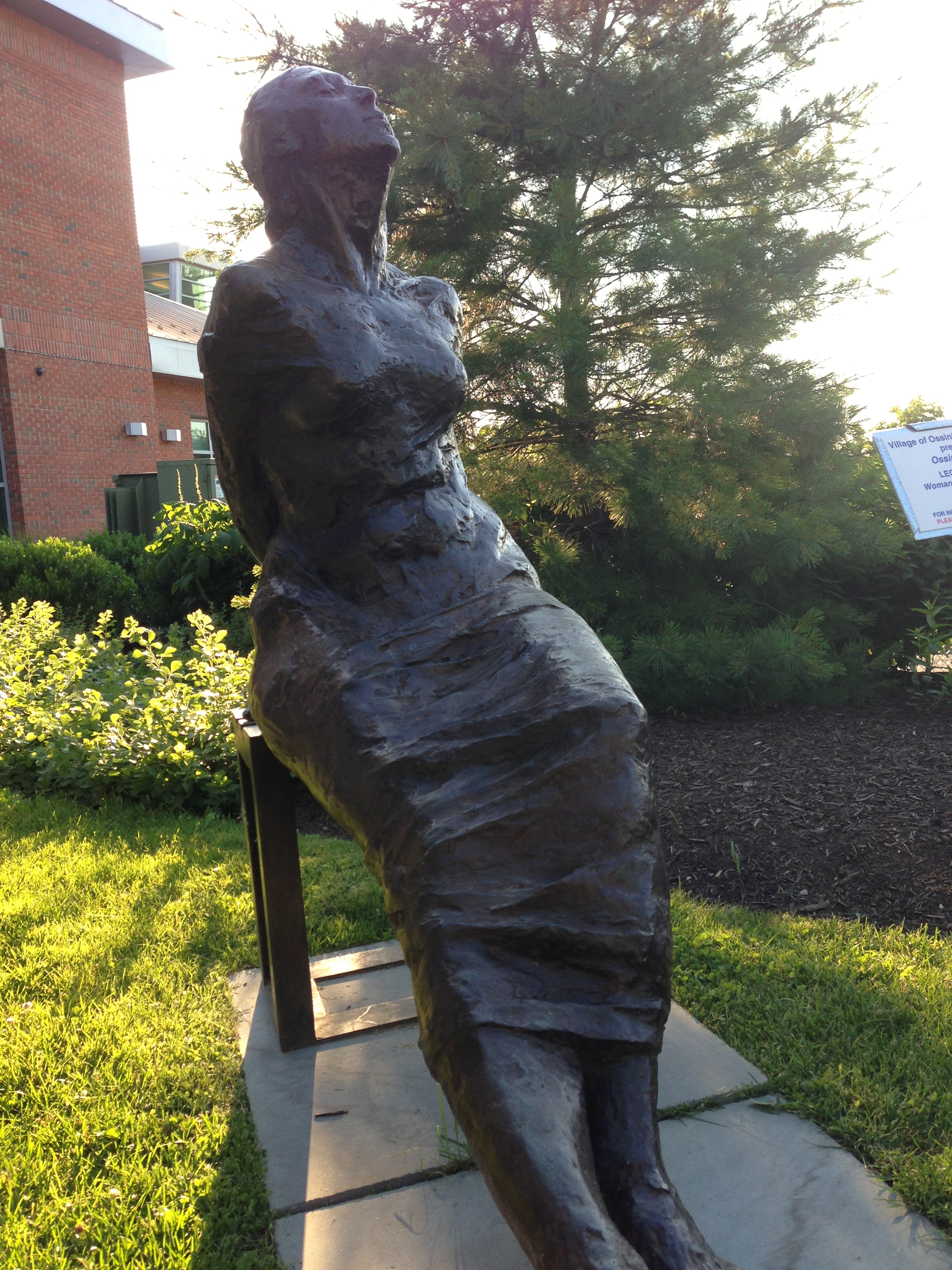
At the Ossining Public Library, which fortunately places no limit on the number of volumes card-holders can check out, I found a statue of myself.

woman library sculpture

Or at least it’s the elegant lady I’d like to see myself as, by Leonda Finke, and it’s also the most expensive piece in the show.

In front of the high school, sculpture and more distractions.

firecrackers

Chinese Firecrackers dangled from the broken branch of a big old pine on the front lawn. Did Fielding Brown choose the site because of the broken branch or break it as part of his art? Two songs danced through my head, Lucinda Williams’ Metal Firecracker (Once we rode together/
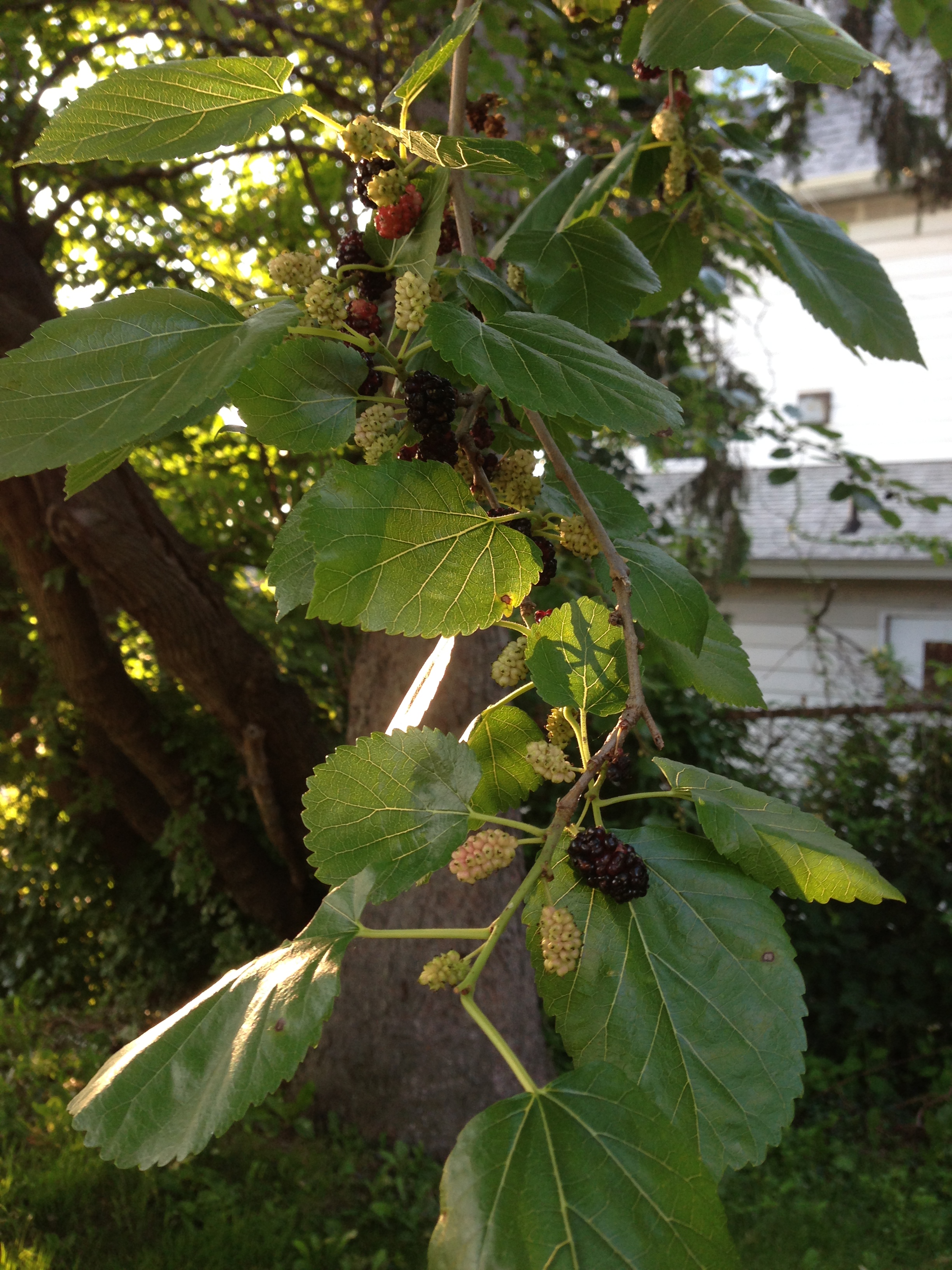
In a metal firecracker) and Ryan Adams’ Firecracker (I just wanna burn up hard and bright/I just wanna be your firecracker). Yet no sculpture could grab me in the gut as much as the mulberry tree at the path as we left, dropping its ripe berries to the stained sidewalk.

mulberry

Childhood memories of tasting the fruit, spitting it out… over and over again. Why, I ask, would you try a mulberry more than once?

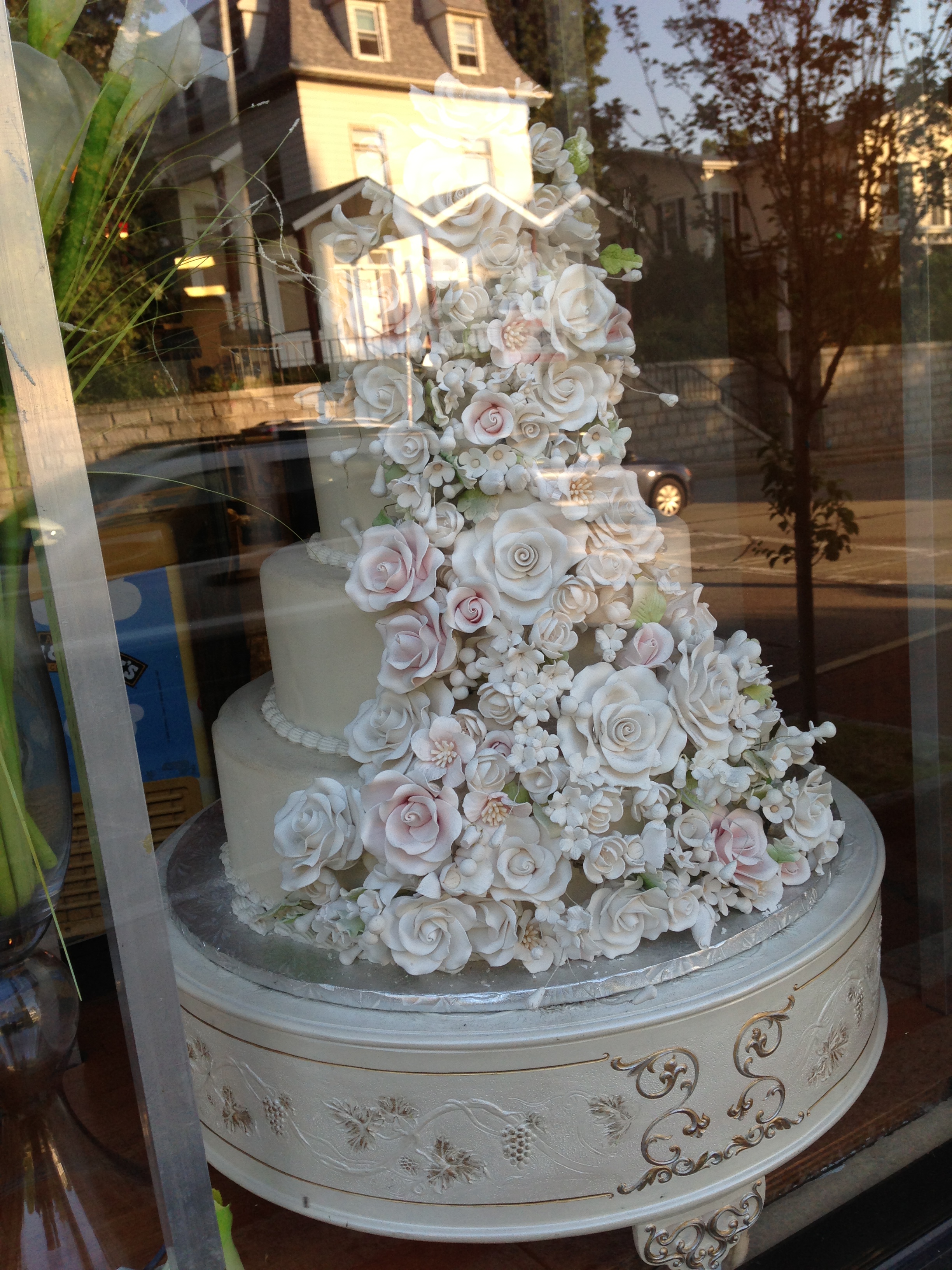
Across the street, a Havisham-cake in a mysterious bakery that always seems closed.

wedding cake

A few paces down stood a fine brick church with a sign that beckoned to me. .

church sign

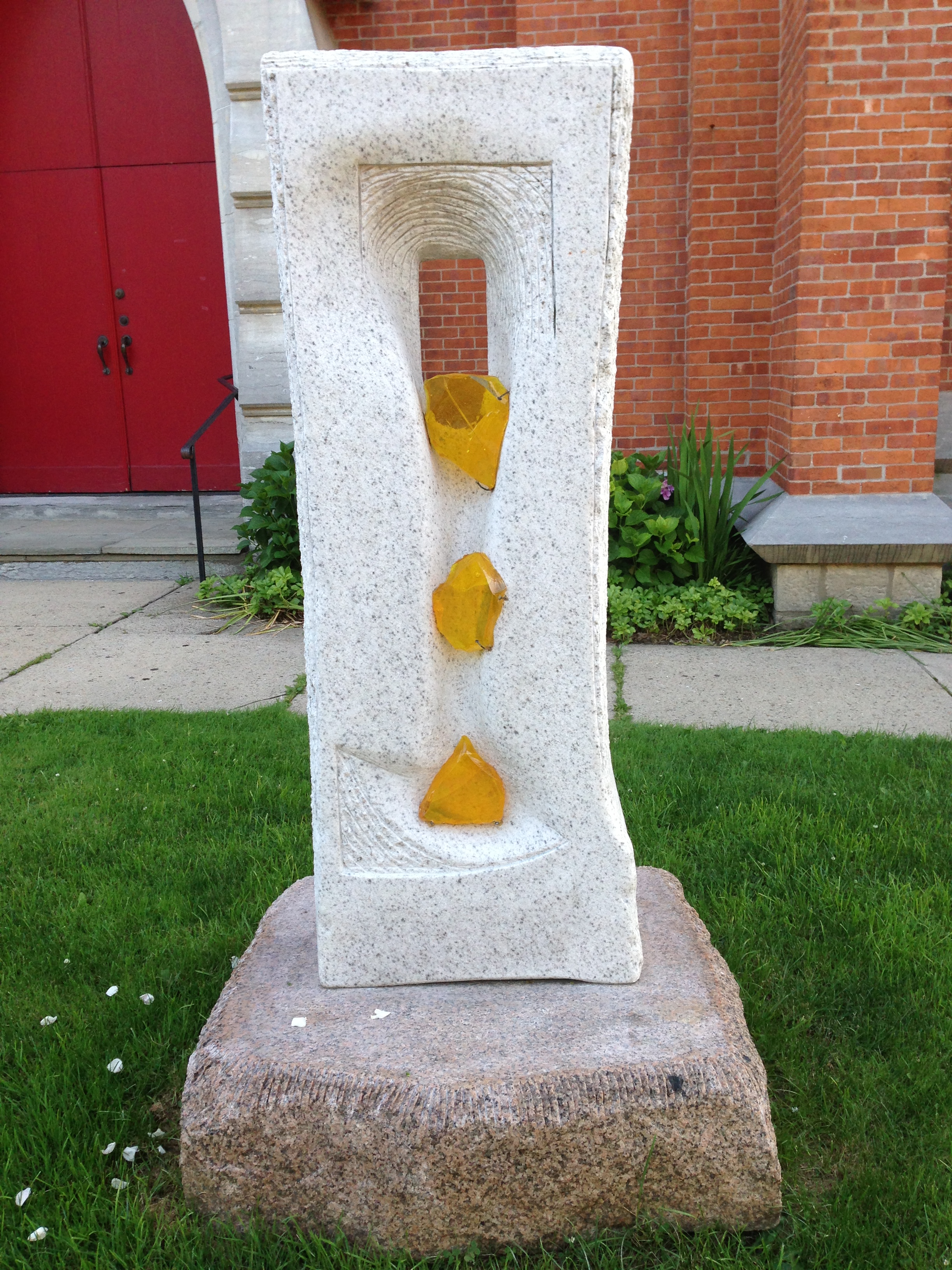
A sculpture called Stamen had lemony chunks of glass lodged in it like the one in my garden Wizard Stick.

wizard sculpture

But calling to me from behind on the church door was a small interior-rhymed poem I liked more.

enter sign

My favorite work, called Let’s Roll, stood in the middle of a busy V.

welded peace sign

I liked as  much as  anything the sculptor’s statement on the back of my map. James Havens says:

I intend that my sculptures should contain enough information that the viewer is not confused or mystified by the artist’s intent. I wish to be considered a good journeyman ironworker who demonstrates a high degree of craftsmanship while using only the best materials to create enduring sculptures that speak to the highest aspirations of the human spirit.

The stainless steel symbol lives up to Havens’ intention, I would say, and I would like my own work to have a similarly high degree of craftsmanship.

welded cu

Now what? The shadows had elongated on Main Street. But the Hudson at Ossining was still golden.

ossining riverfront

Sculptures were strewn across the bank. A mound of wood in Matthew Weber’s Cedar Cluster, like chewed beaver logs.

wood sculpture

Too many artworks to digest.

But the most impressive sculpture of the town stood only blocks away.

sing sing official sign

Sing Sing prison, its original cell block installed in 1825, has earned at various times the coinages “up the river”, “the big house,” and  “the last mile.” The name comes from that of the Native American people, the “Sinck Sinck”, from whom the land was acquired in 1685. The village sprang up around it. The jail still operates as a maximum security facility with about 1,700 prisoners, even as children run and chase in playgrounds right outside its walls and the Hudson Line actually sends its trains right through the complex.

sing sing

The kingdom of ruffians, invalids, and other misfits. You can drive right along the exterior walls and catch a glimpse through an open guardhouse door of a corrections officer reading the newspaper.

But the wall itself is the main attraction. No sculpture could approximate its power.

sing sing cu

5 Comments

Filed under Jean Zimmerman

Discarded but Loved

Just because you love libraries and you love books doesn’t necessarily mean you love clean, pristinely intact books in libraries. Libraries necessarily lead to wear and tear on books – the fact that a volume is somewhat tattered means it has been used. It has been loved.

I buy used books, and often they originate with libraries, which at some point have to offload old volumes to accommodate new stock.

Mana-ha-ta cover 1 copy

On of my favorites is The Goede Vrouw of Mana-ha-ta: At Home and in Society 1609-1760, by Mrs. John King Rensselaer, a member of New York Knickerbocker society during the Gilded Age and a founder of the Colonial Dames of America. The author was something of a firebrand, judging from a turn-of-the-twentieth-century New York Times article about her behavior during a New-York Historical Society meeting. “’Instead of an imposing edifice filled with treasures from Old New York what do we find?’ demanded Mrs. Van Rensselaer. ‘Only a deformed monstrosity filled with curiosities, ill arranged and badly assorted.’” Harrumph.

Her history, a feminist creation in its own way, was published by Charles Scribner’s Sons in 1898, and bears a scrawled inscription that I’ve always told myself must read “Rensselaer.” Its pages are worn and soft and dogeared, stained at the edges. Its orange cloth binding with its marvelous faux-metal trim bears splits at the spine.

Mana-ha-ta cover 3 copy

It’s an expired library book.

book plate

A little sleuthing explicates the book plate. The Wood Library is in Canandaigua, New York, on North Main Street, and is still going strong since its founding in 1857. Major Charles A. Richardson, who donated The Goede Vrouw, was a lifelong bachelor and Canandaigua resident, commissioned in the Civil War, who at the time of the book’s publication had recently been named to the commission charged with establishing the topographical features of the Gettysburg battlefield.

I like the idea of this century-old book by one staunch American given by another staunch American to a Main Street American library. And I like the book’s soft edges, its creases and stains, the carefully inked call number on its spine.

And that is why I find the series of photos of discarded and withdrawn library books by Kerry Mansfield so appealing. In “Expired,” her camera focuses intently on those soft edges, creases and stains. The yellowed, stamped check-out cards and paper pockets. Even some mildew. Behind it all, for me, the fever dream of library books stacked up, awaiting my attention on a summer day, the specter of stern librarians, kind librarians, the smell of library paste.

discardbooks

This artist says she loves paper more than she loves books. And these are artifacts, after all, not book reviews. But she’s taken 1,300 images so far, and for me that means you care.

5 Comments

Filed under Jean Zimmerman

Sneak Peak

It’s a long time, the final gestation of my novel Savage Girl. Nine months until its publication date in March 2014. But I’m already excited. The book has been written. Edited. Copyedited. We now have a cover.

Savage Girl cover 3

And even some catalog copy. It gives the gist of the story, which is both a tangled web and clear as day. It tells of

the dramatic events that transpire when an alluring, blazingly smart eighteen-year-old girl named Bronwyn, reputedly raised by wolves in the wilds of Nevada, is adopted in 1875 by the Delegates, an outlandishly wealthy Manhattan couple, and taken back East to be civilized and introduced into high society.

This girl

hits the highly mannered world of Edith Wharton-era Manhattan like a bomb. As she takes steps toward her grand debut, a series of suitors find her irresistable. But the willful girl’s illicit lovers begin to turn up murdered.

Savage Girl would not be the same story, would not be so much fun, were it not for its narrator, Hugo Delegate, a Harvard medical student and the scion of the family that takes Bronwyn in.

The tormented, self-dramatizing Hugo Delegate speaks from a prison cell where he is prepared to take the fall for his beloved Savage Girl. This narrative – a love story and a mystery with a powerful sense of fable – is his confession.

So says the catalog description. When the book pops out of the oven next winter you’ll have a chance to judge for yourself.


4 Comments

Filed under Art, Fiction, Jean Zimmerman, Publishing, Savage Girl, Writers, Writing

By Heart

Driving west on Route 6, towards the Catskills, a summer weekday morning, and that old Talking Heads song comes on the radio:

I’m writing ’bout the

Book I read

I have to sing about the

Book I read

I’m embarassed to admit it hit the soft spot in my heart

When I found out you wrote the

Book I read so


Take my shoulders as they touch your arms i’ve

Got little cold chills but I feel alright the

Book I read was in your eyes oh oh

Thinking about when the book you’re reading touches you so much, the words become a part of you. The extreme of that is memorization.

My friend Bethany Pray, the person we’re driving to visit today, commits poems to memory. She wouldn’t say so, but it’s a rather serious pursuit. Not just a limerick for party performances, not a haiku or two. Real poems.  A discipline. She once told me she knew 20 or 30 by heart.

happy bethany

I’ve seen Bethany and Gil have poetry duels around campfires.

Slams? They’re easy. You get up and read or recite your verse, people cheer or boo. With a duel you must remember all the lines of a Shakespeare or a Blake. Not so easy.

Bethany says her favorite to recite is John Berryman’s Sonnet #37
.

Sigh as it ends… I keep an eye on your

Amour with Scotch,—too cher to consummate;

Faster your disappearing beer than late-

ly mine; your naked passion for the floor;

Your hollow leg; your hanker for one more


Dark as the Sundam Trench; how you dilate


Upon psychotics of this class, collate

Stages, and… how long since you, well, forbore. 


Ah, but the high fire sings on to be fed


Whipping our darkness by the lifting sea


A while, O darling drinking like a clock.

The tide comes on: spare, Time, from what you spread


Her story,—tilting a frozen Daiquiri,


Blonde, barefoot, beautiful,

     flat on the bare floor rivetted to Bach.

I remember Bethany recited it on a long hike we took around the rustic Rockefeller Preserve in Tarrytown, New York, and how I thought it was a poem I would find hard to follow on paper, let alone in air. Berryman was a tough one.

john-berryman

Berryman’s a favorite of Gil’s, too. Gil is at a slight disadvantage in a duel, at least in terms of volume, since he has not applied himself to more than a dozen titles. “There’s a word in Arabic,” he says, “for someone who has memorized the whole of the Koran.” HBO did a show on it, called Koran by Heart. But it’s rare to get a prize for memorizing poetry today unless you’re in 8th grade honors English.

quranramadan2

When I was in graduate school the Nobel Prize winning poet Joseph Brodsky loved the poetry of Thomas Hardy (and you thought Hardy only wrote novels) and made us memorize his poems and come in to class and write them out. Not a good assignment for me, as I barely can remember my own name sometimes.

“Pasternak was reading his poems in an auditorium in Russia and dropped his notes,” says Gil. “As he bent to get them the crowd picked up where he left off and finished the poem for him.”

Bethany calls herself a “poet without a portfolio,” but she is modest. Before earning a  law degree she collected an MFA from the Warren Wilson MFA program. She was already working as a paralegal, but “life was boring so I would put a poem in my desk drawer,” occasionally pulling it out. Not to read it – to memorize it.

Her coffee table groans politely under the weight of its poetry. “Kay Ryan is really great,” she says.

coffee table

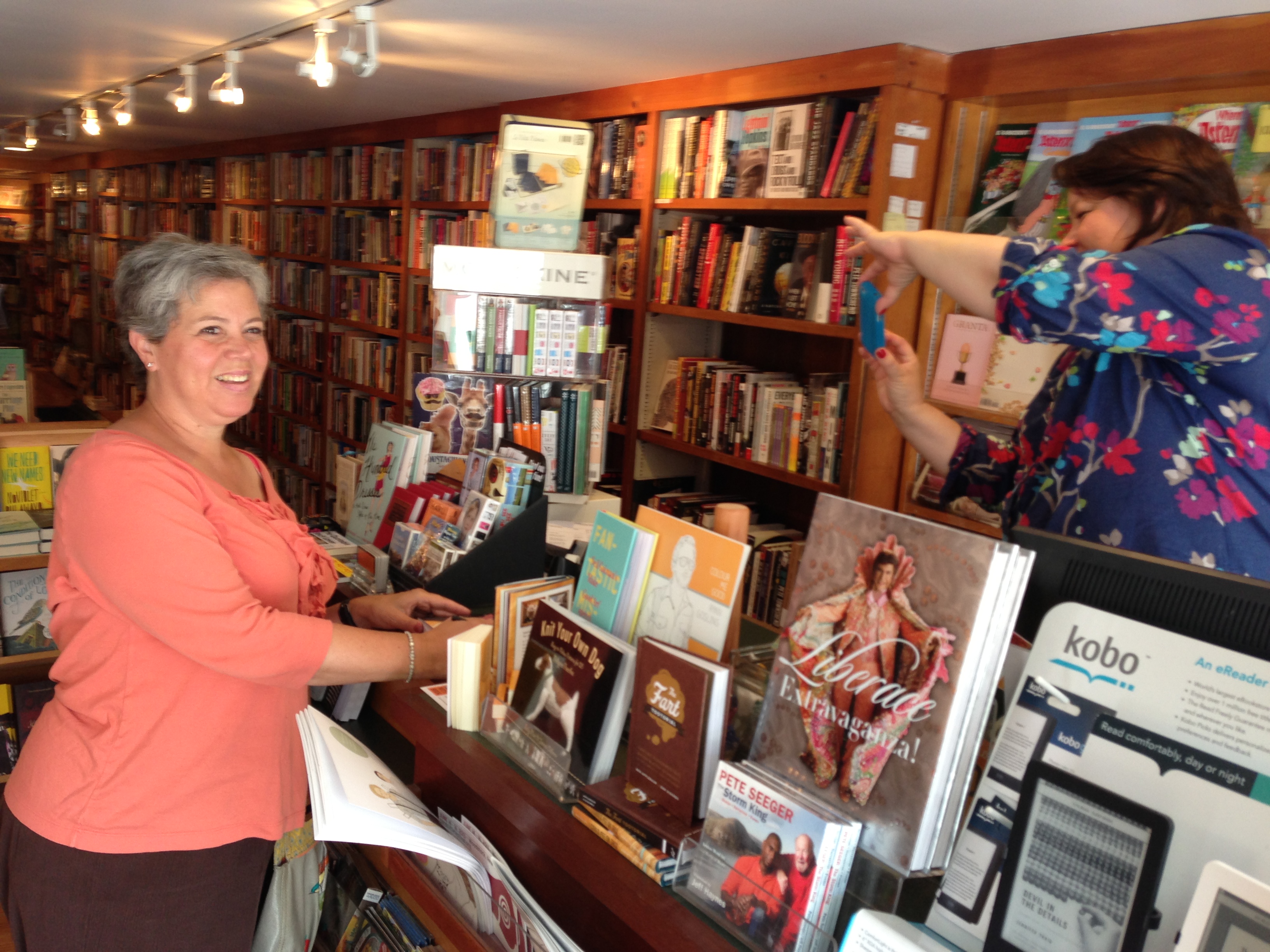
The duel still in our future, we stop for a sweet moment at Woodstock’s 35-year-old book store The Golden Notebook, to find that they are sold out of The Orphanmaster, with five buyers in the past week alone.

happy Jean

“It’s actually on my bedside table right now,” says Desiree, at her perch behind the counter. “My husband just read your book. He doesn’t like anything, he doesn’t like puppies, and he loved it.”

“You got to feel very famous,” Bethany tells me after we’ve left, happy that she guided us into the shop.

Woodstock is full of bibliophiles and music lovers.

guitar 1

Guitar sculptures stud the sidewalks, each one groovier than the next.
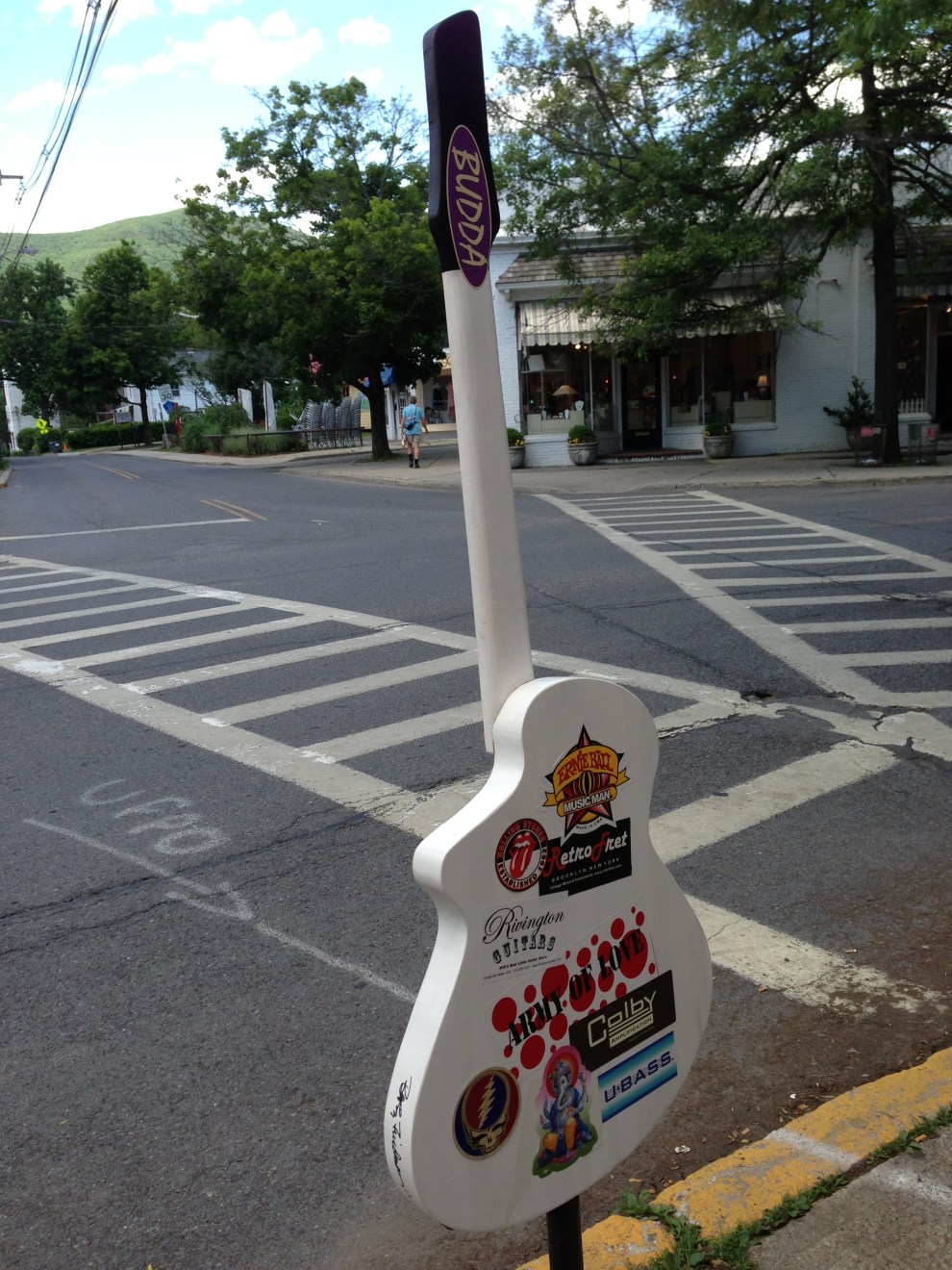
guitar 2

A café has a quiet patio that seems perfect for the poetry throwdown, beneath garlands of honeysuckle and twittering birds, near a lovely puppy with a clubfoot. We get ready to wax poetic. Or rather, they do. I prepare to clap and faint.

gil:beth

Gil begins with Thomas Wyatt’s sonnet to Anne Boleyn, Whoso list to hunt, I know where is an hind… His brain only smokes a little bit as he gropes in his memory.

Gil searching

Bethany goes with Emily Dickinson: On a Columnar self–. “It’s hard to understand her language,” says Bethany. “It’s a kind of mental straitjacket on her passions.”

What do both the duellists have in their quiver? What passions do they share?

They fuck you up, your mum and dad.   
    They may not mean to, but they do.   
They fill you with the faults they had
    And add some extra, just for you…

That’s the opening of Philip Larkin’s dark, hilarious This Be the Verse, one that Bethany and Gil could reel off together, as if in a rock band or at an Irish pub. Gil tells Bethany about the time he recited it in a talent contest at a Universalist family retreat in woodsy Minnesota and got sent away with his knuckles rapped. It’s hardly family friendly, but so brilliant, and Larkin was Poet Laureate of Britain, after all..

Gil’s turn. Blake’s London. I wander through each charter’d street…

Bethany: Ode to Autumn by John Keats.

Beth reciting

She delivers the three long stanzas and we are properly floored.

Another poem for the two of them together –another Berryman, one of the Dreamsongs. Life, friends, is boring. We must not say so.

Coffee all around.

Bethany, another Dickinson. Gil, some Macbeth. Bethany, Spring by Larkin. And she finishes with Berryman’s wonderful I keep an eye on your/Amour.

“His wife learned he was having an affair by reading those poems,” says Gil. I think Gil was inspired to hit the books for his next contest with Bethany, whenever that might occur.

“People survived in the Gulag archipelago by reciting long stretches of poetry,” says Bethany. She knows a poem by Pushkin. She recited it to someone she met, a Russian mail-order bride, who burst into tears, she was so homesick.
4 Comments

Filed under Culture, Fiction, Jean Zimmerman, Poetry, Writers, Writing

A Farm Grows in Brooklyn

Or sometimes Queens.

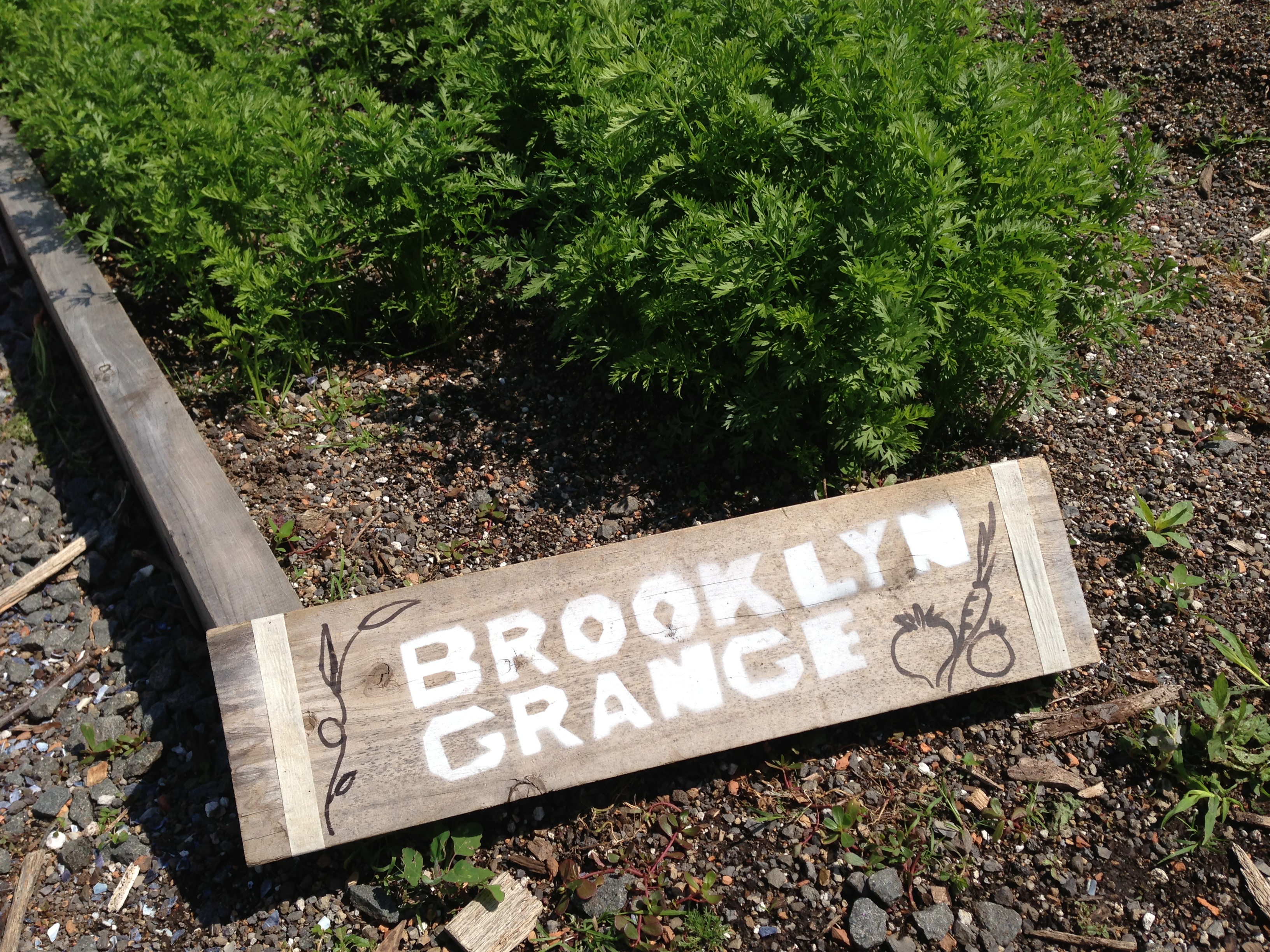
brooklyn grange sign

We had to find our way through a coffeehouse and the winding corridor of a building before getting to the unmarked elevator that led to the roof. Then we knew we had hit pay dirt, so to speak.

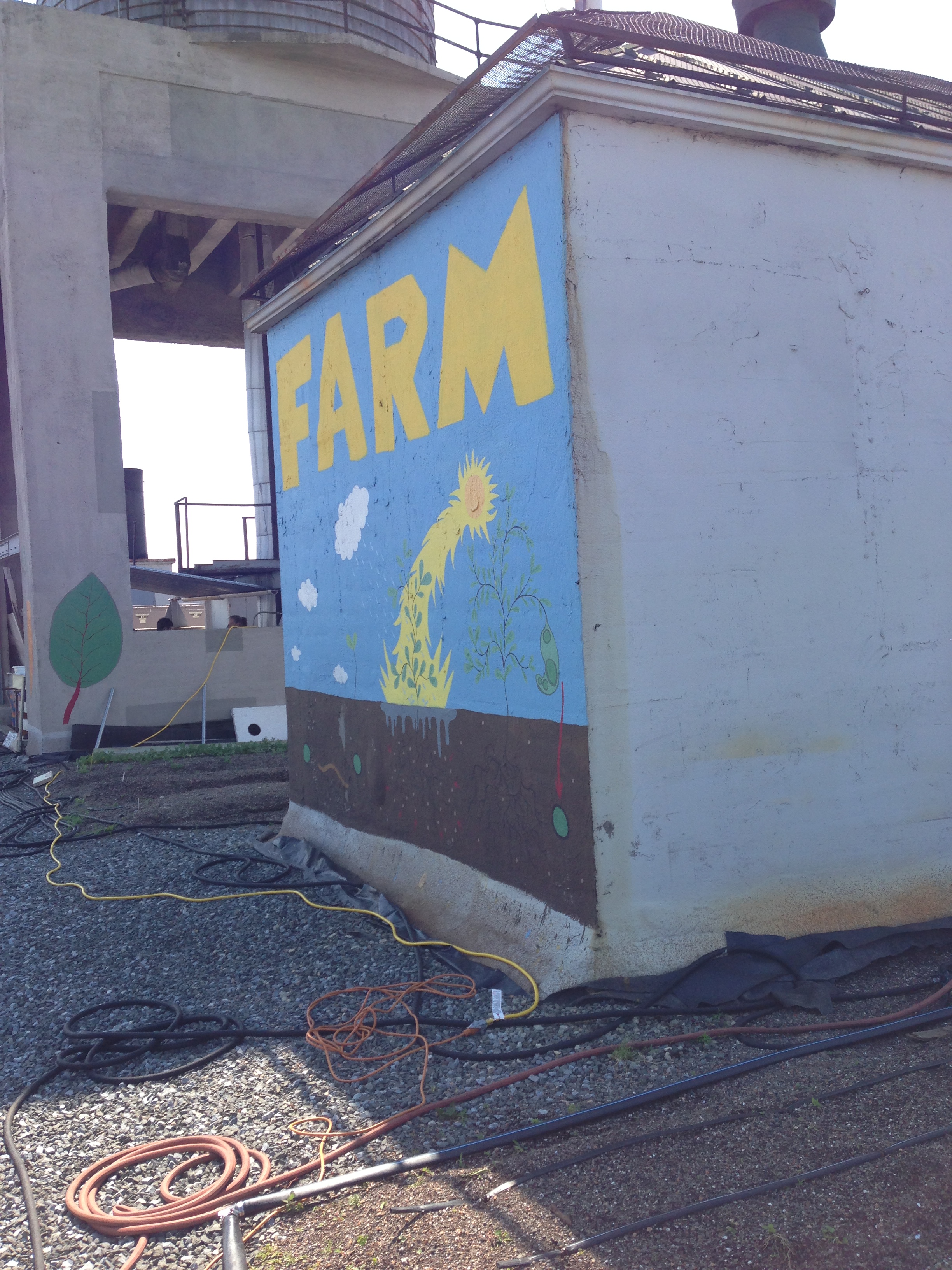
farm sign aslant

Brooklyn Grange is the largest rooftop farm in the country and perhaps the world. Sited atop a building that originated as a furniture factory, it has the space to produce at least three dozen different vegetables and herbs in the course of a season. You would never know it’s there, looking up from Northern Boulevard, a car-choked  thoroughfare that muscles its way through Queens, New York.
farm bldg

We were a little early. The volunteers were still bagging up the greens for the CSA as Gwen, a busy farm worker, applied sunscreen to her arms. This is great weather for kale, said Gwen. All the rain makes it really spring up. The farm stand also displayed beautifully fresh carrots, mesclun, scallions.
greens in rows

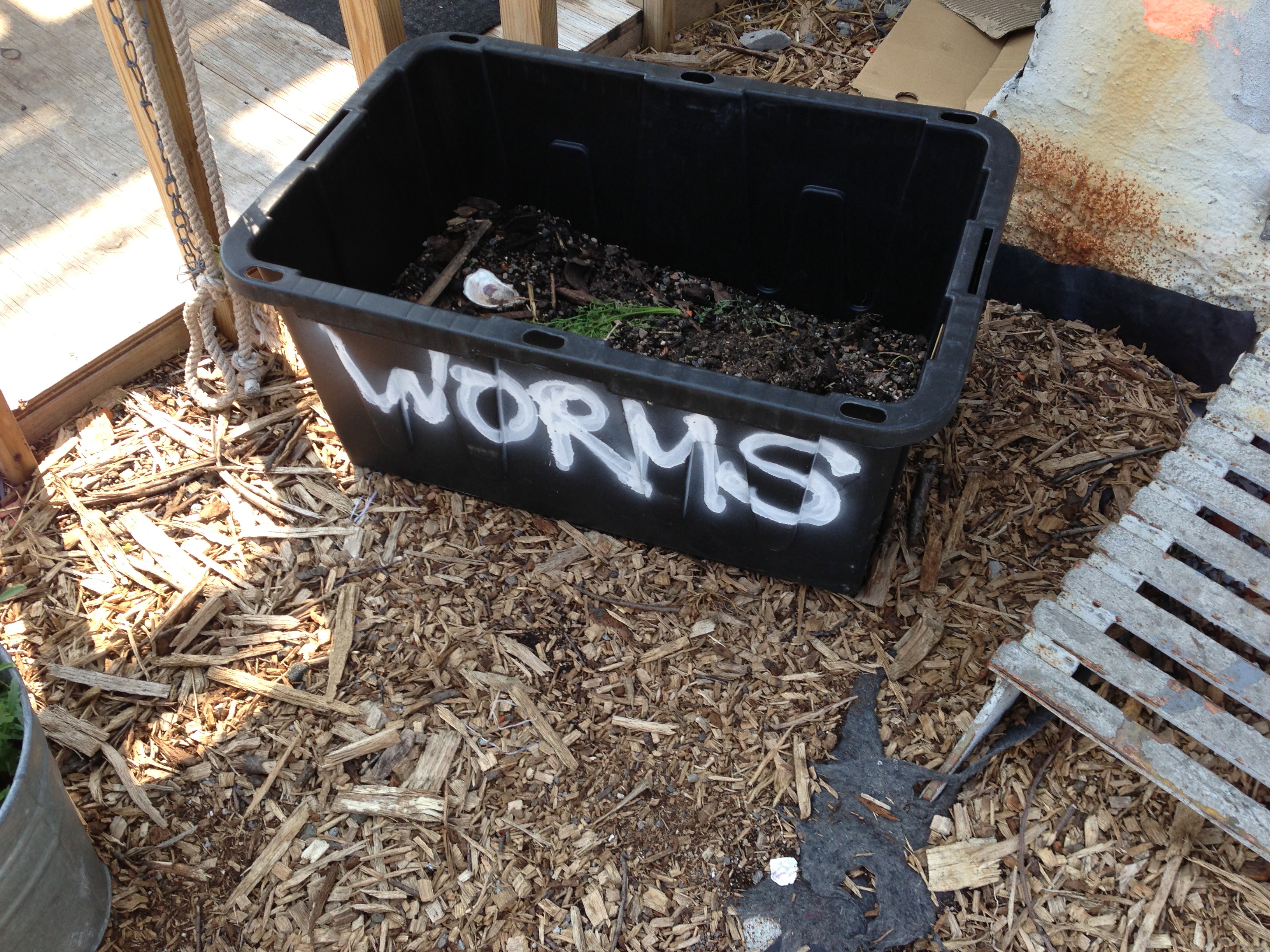
A farm on a roof has to have all the things a farm has on the ground. Worms.

worms

Compost.

compost bins

The farm manager, Bradley, wearing a bright green tee shirt whose back was emblazoned with the words, “This is what a feminist looks like,” told me a little about the chickens.

chickens

The dramatic white one, he said, was a Japanese silky. I asked him about the manure, so great for vegetables. They have about a dozen birds. They give what they can, said Bradley. He directed the volunteers out among the rows to harvest thyme and flowers. Tourists and photographers were beginning to show up, most with the kind of equipment that views like the Farm’s deserve. This one, taken on another day, is by a photographer named Cyrus Dowlatshahi.

Brooklyn-Grange-by-Cyrus-Dowlatshahi2

You feel you could leap the distance from the pepper plants to the Empire State Building in one stride – or at least that Philip Petit could make a project of the crossing.

Photographer Rob Stephenson has made some striking pictures of New York’s farms and gardens.

Hells Kitchen

Not just rooftops but the kind of small, intimate plots that can in found in Harlem and the Bronx, and nurture peoples’ souls as well as their stomachs.

community garden

Close up at Brooklyn Grange you can see the serious thought behind the endeavor.

lettuce w sign

The rows of stakes waiting for the tomato’s slow and steady climb.

tomato stakes

There are roughly 1.2 million pounds of soil in this one-acre plot.  Could the concrete slab roof  give way? Absolutely not. All these details and more are readily available on line.

You can book an event at the rooftop, even a wedding. Perhaps guests could weed between glasses of champagne.

Brooklyn Grange is joined by other urban farms in New York: Added Value, Tenth Acre Farms, Battery Urban Farm, Gotham Greens and and Eagle Farm are just a few of these enterprises. One researcher was quoted in The New York Times last year: “In terms of rooftop commercial agriculture, New York is definitely a leader at this moment.”

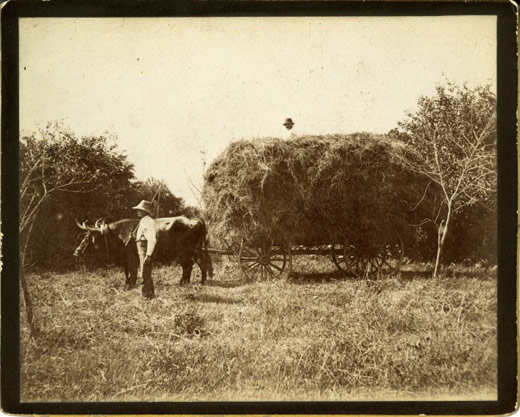
There is a long history of agriculture in the boroughs of Brooklyn and Queens.

Farming-Scene

According toRobin Shulman in her lively and informative book Eat the City: A Tale of the Fishers, Foragers, Butchers, Farmers, Poultry Minders, Sugar Refiners, Cane Cutters, Beekeepers, Winemakers, and Brewers Who Built New York, “As late as 1880, Brooklyn and Queens were the two biggest vegetable-producing counties in the entire country.” She cites one observer as saying, “The finest farmlands in America, in full view of the Atlantic Ocean.” Farmers in the boroughs used the manure of city horses to fertilize their crops, which they brought to the Manhattan market by boat.

I’m thinking about farming as I coax my tiny vegetable plot to maturity. My new strawberries have come in.

new strawberries

And some tomatos, the size and texture of an Atomic Fireball – remember those? – though not the color, yet.

fourth of july

But I’m tired of all this just looking at good stuff growing. Where’s the table in the fashionable farm-to-table equation?

One was set for us at The Farm on Adderley, in the neighborhood of Ditmas Park, Brooklyn. There is nothing like a restaurant with a mission statement: it “has evolved to pursue the principles of supporting local farmers, artisans, entrepreneurs as much as possible, making delicious food from that, and serving it in a completely honest way.”

pastured poultry

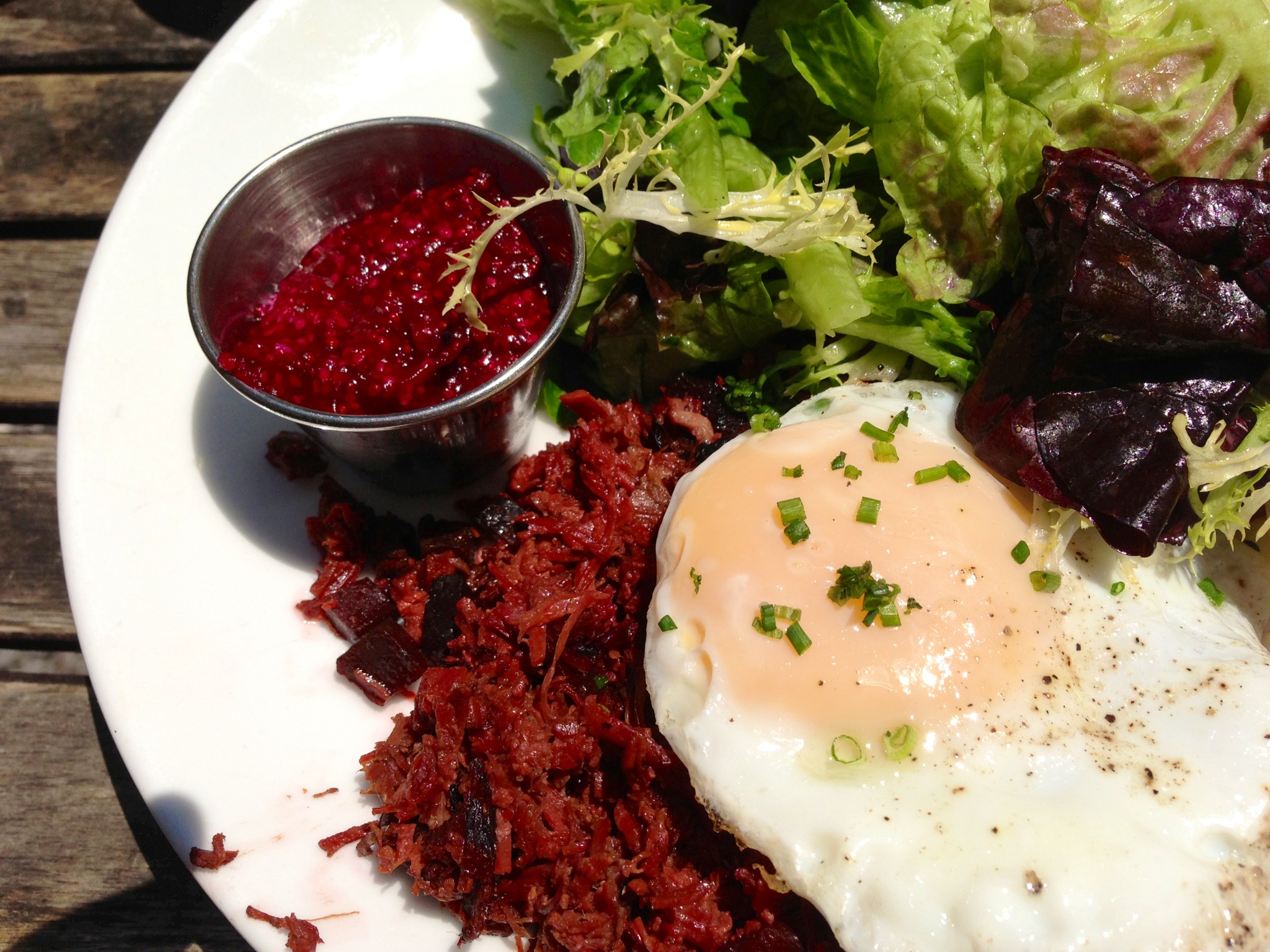
You can get a list of the local farmers who provide the kitchen’s ingredients. But that doesn’t mean anything to me unless I get a plate of food that’s good – as was my red flannel hash, its corned beef colored deeply with beets, and an even deeper burgundy horseradish served alongside. Did it taste better because the beef that was corned had roamed freely? Yes, I believe it did.

hash

The hostess brought to mind a farm girl in her friendliness, and she seated us in the garden, between a towering fir tree and a luxuriant grape vine, next to a wooden crate planted with chard and mint. The sun shone down, and we could have been out in the country. The place hosts events, like a New Amsterdam dinner “curated” by food historian Sarah Lohman, who is an educator at the Lower East Side Tenement Museum and author of a blog called Four Pounds Flour, devoted to “historic gastronomy,”

We were lost in the perfectly crisp, chewy, salty french fries, served with a sultry curry dip.

french fries

Couldn’t help, though, but overhear the young couple next to us planning their nuptials. Should we let them know about Brooklyn Grange? There could be worse places to grow your relationship.

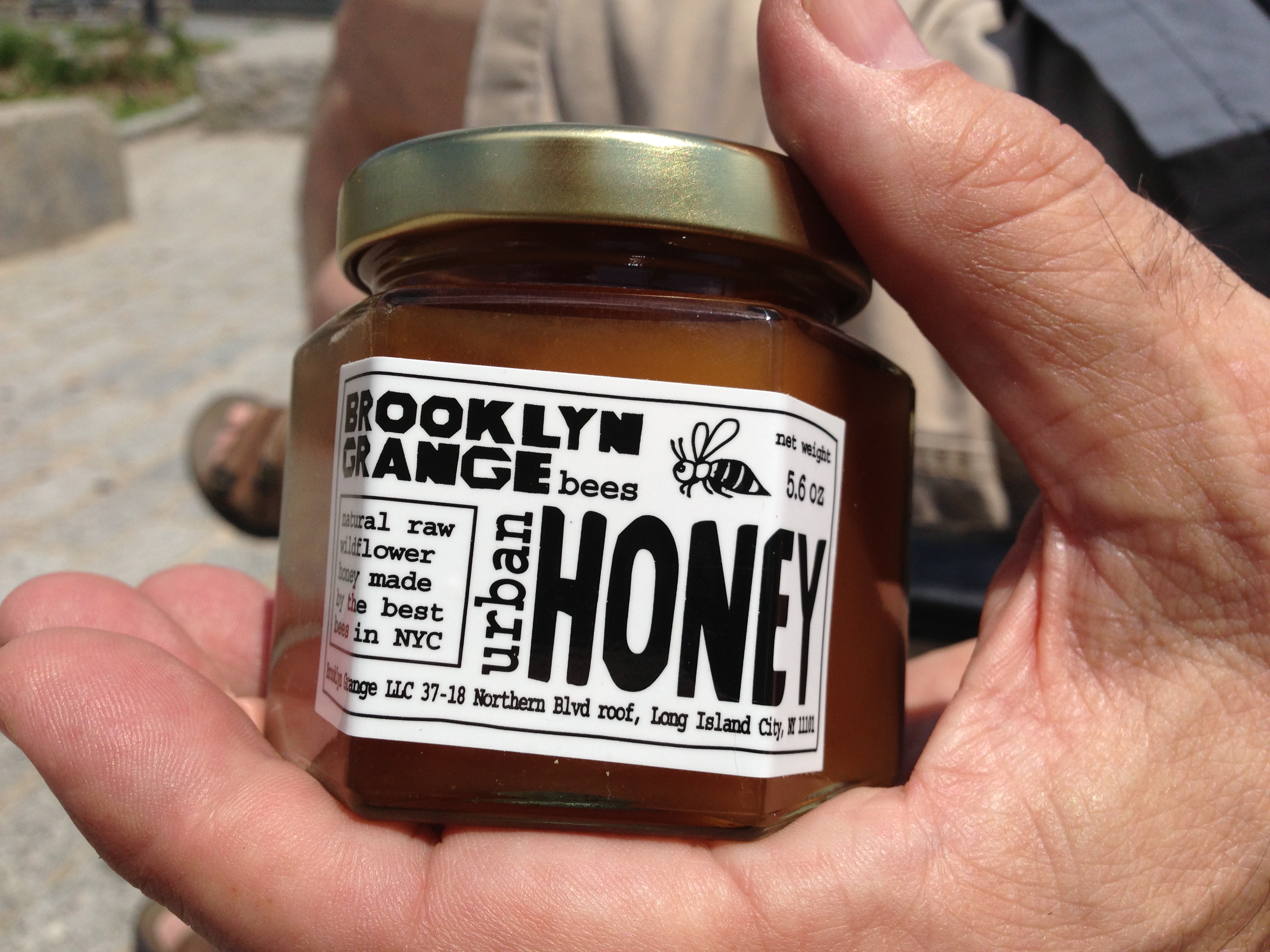
honey


4 Comments

Filed under Cooking, Culture, History, Home, Jean Zimmerman, Nature

Serene and Green

I wondered how it would work, so I went to find out. A literary event in a clothing store in Yonkers, New York. A literary event that had nothing to do with fashion, actually: Reeve Lindbergh, the author of family memoirs, essays and children’s books, would be reading excerpts from the latest volume of her mother Anne Morrow Lindbergh’s writings, Against Wind and Tide:Letters and Journals 1947-1986.

against

The store was Green Eileen, an offshoot of Eileen Fisher where I often go to replenish my wardrobe.

colorful clothes

The clothes Eileen Fisher designs are elegant and serene, with unstructured lines and natural fabrics. If you like linen and silk, this is the place for you. It’s definitely the place for me, but by the same token I often wonder if I can live up to my clothes.

Maybe I like this place so much because the company’s ads showcase graceful  silver foxes alongside the usual younger models. Grey is the new brunette, or didn’t you know?

jean grey

There was an elegant buffet and wine. Reeve began. She read from the book, but even more interesting was the patter that pulled those passages together.

reeve

She told us about her mother’s ever-present blue notepads, containing carbon paper to make three copies, one for the letter recipient, one for her personal archives and one for the master archive at Yale (open to all as of April, as it happens). Anne Morrow Lindbergh often wrote three to four long letters in a day, yet despaired of getting enough writing done. Reeve remembers banging on the door of her mother’s “writing house” and how mad her father got – that’s the only time she had to write, he reminded his daughter.

The title of this volume is a quote from Harriet Beecher Stowe, who claimed that writing, for a wife and mother, is “rowing against wind and tide.” When Reeve herself became a writer, at one point she tragically lost a child and was afraid she would never put pen to paper again. Her mother’s reassurances “probably saved my life,” she told us. “Mom said stop reading the things you think you should be reading and instead write on little scraps of paper the things going on around you.” Reeve still makes this a practice, she said.

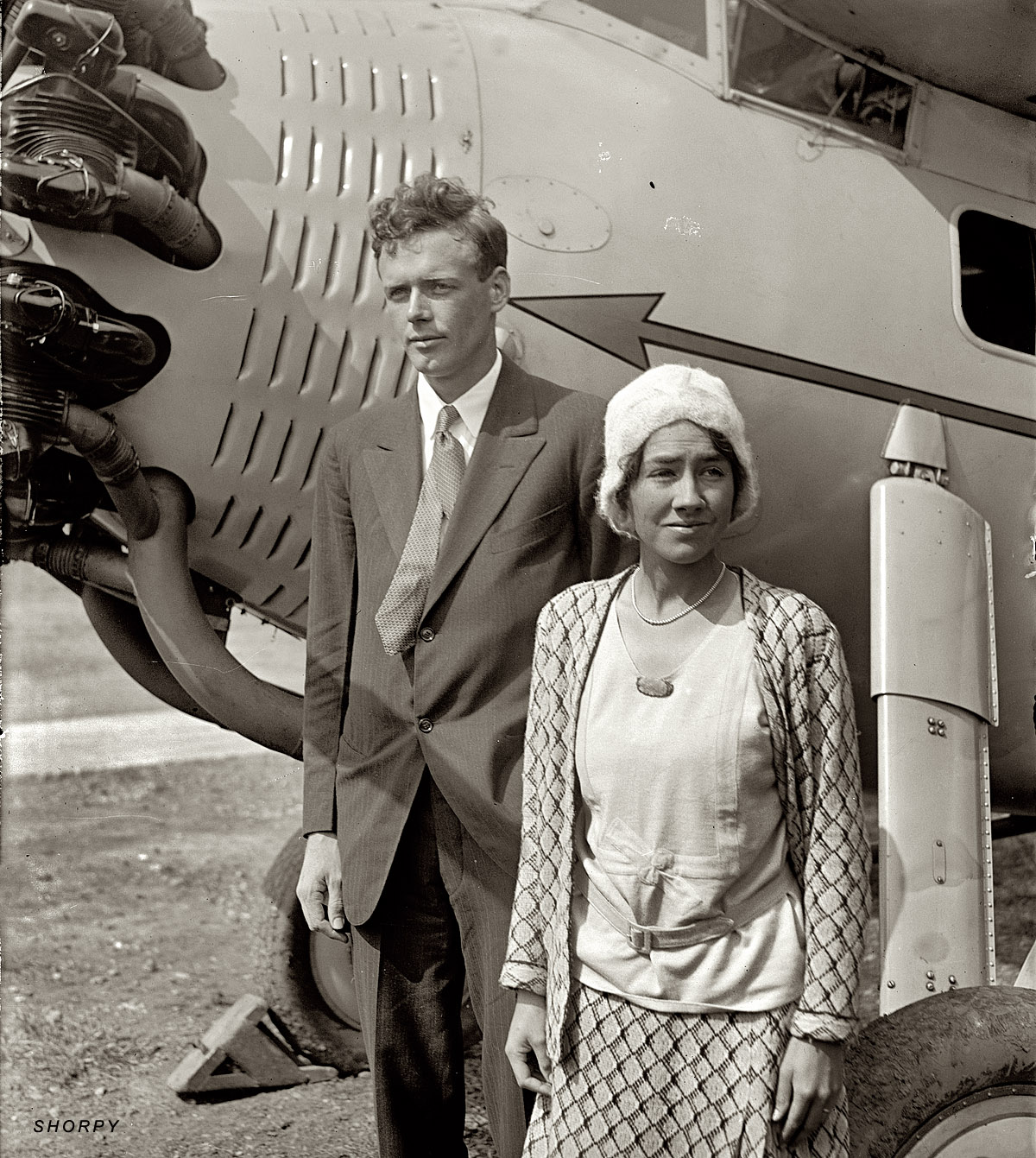
lindberghs

Anne Morrow married Charles Lindbergh, then the most famous man in the world, in 1927, and got her own pilot’s license the following year. They flew the world over while she continued to produce nonfiction, fiction, articles and poetry, with the 1955 Gift From the Sea a seminal work of feminism and environmentalism, never having gone out of print.  A book mothers give to their daughters, who give it to their daughters in turn.

Gift from the Sea

Reeve spoke about her father’s comings and goings, even his infidelities, about the “strong and interdependent relationship” the Lindberghs had nonetheless over 40 some odd years. Charles Lindbergh “showed us a world – his world – that he wanted us to see,” said Reeve of the family, but he could definitely be difficult. Reeve’s mother, she said, always felt her husband’s controversial opinions about Hitler and the Second World War had been misconstrued.

In this volume, Anne Morrow Lindberg talks about her pregnancies, about considering an abortion, about a miscarriage. She rewrites her wedding vows: “Since I know you are not perfect I will not worship you,” is one. “Marriage is not a solution to but a mirror of problems,” another. She wrote a lot about the need for aloneness –how important it is.

“I see life as a journey toward insight,” said Anne Morrow Lindbergh in a speech at the Cosmopolitan Club when she was 75.

Reeve’s editor on the new volume sat in a front row and nodded as she detailed how together they had combed through the archives at Yale to fill the book. All the material was handwritten and had to be typed before the painstaking selection.

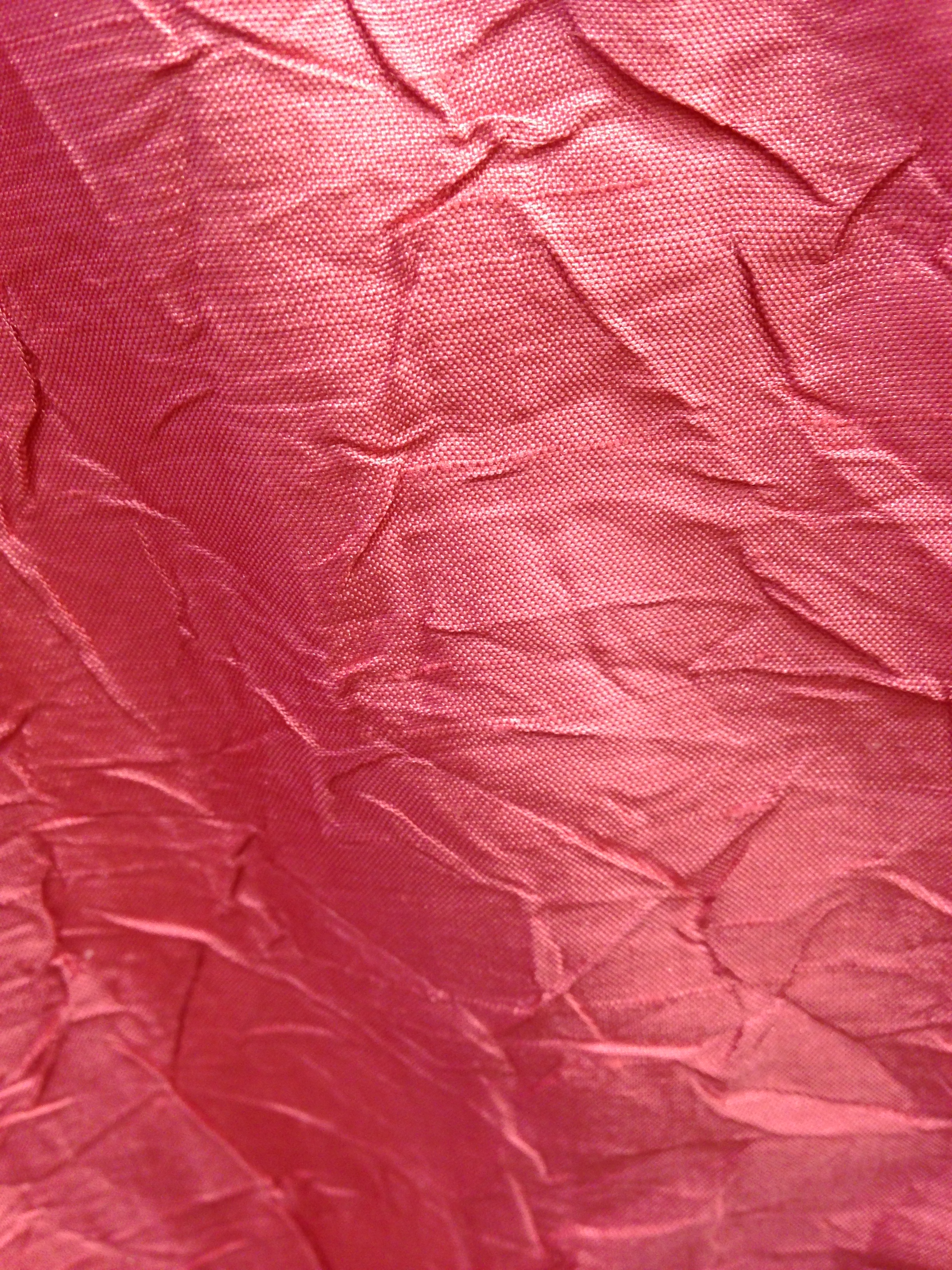
The presentation concluded, and I wandered among the garments that lined the store like bright, clean flags. I’d love to be a person to wear textured pink silk.

pink shirt

Two books were being sold: Against Wind and Tide and a children’s book by Reeve Lindbergh called Homer, the Library CatTen bucks from the sale of each book would go to the Eileen Fisher Foundation.

Jen Beato, the Store Leader, told me why a presentation of the work of Anne Morrow Lindbergh fits the setting of Green Eileen. Every book wouldn’t make sense, she said, but this one shows “how challenges she faced are similar to today’s challenges.”

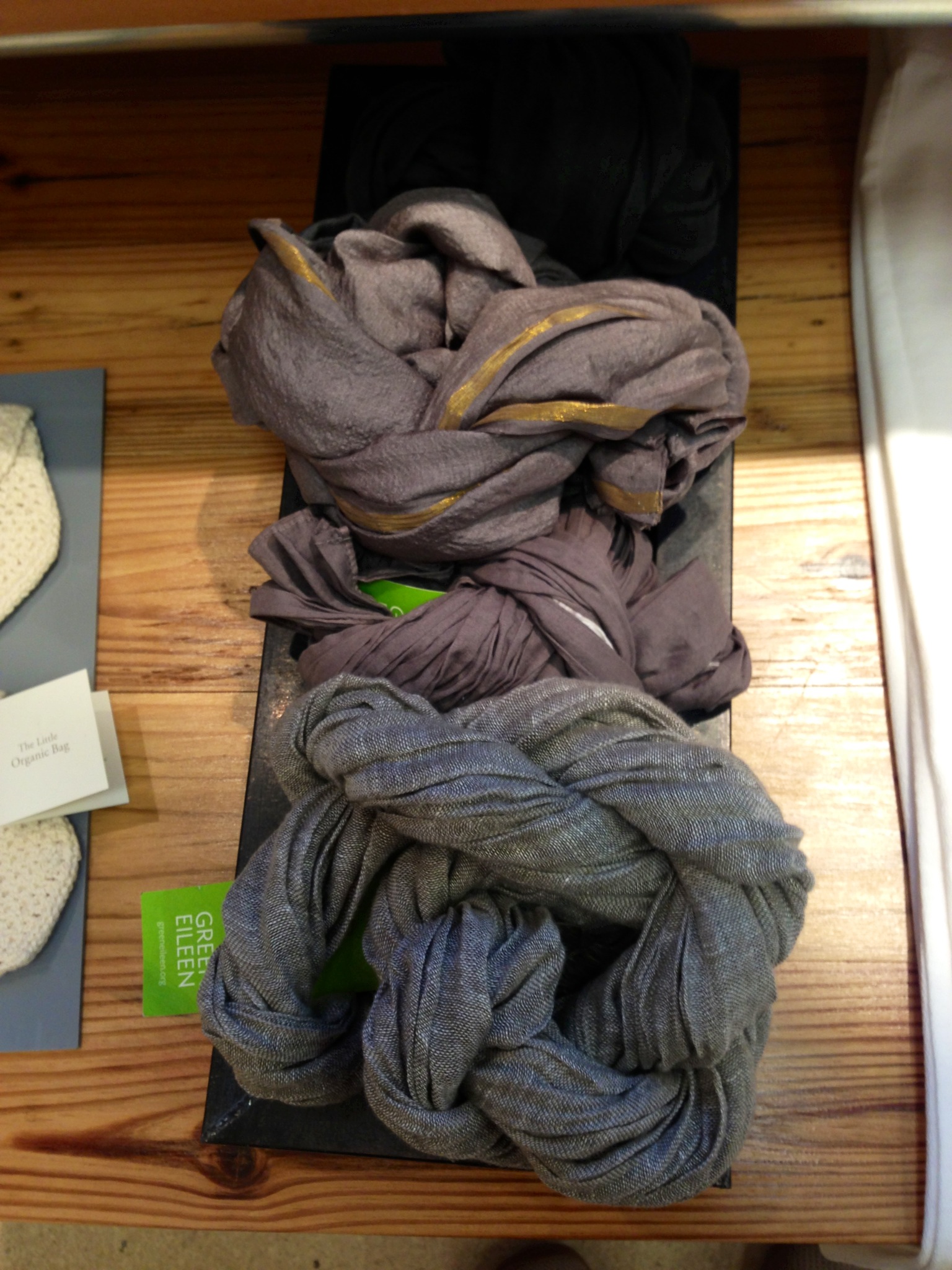
knots

Green Eileen accepts contributions of gently used Eileen Fisher clothing – say you lose some weight, or gain some weight, and you can no longer fit into that perfect pair of pajama-y palazzo pants — which it recycles and sells at an affordable price, with the proceeds going to causes for women and girls locally, nationally and around the world. The National Women’s History Museum,  the New York Women’s Foundation and Planned Parenthood, among many others.

The company makes good points, so I feel virtuous running my fingers over that sleek textured silk.

pink

The average American throws away 68 pounds of clothes per year. Over 4% of global landfills are filled with clothing and textiles. Almost 100% of used clothing is in fact recyclable.

Green Eileen has a pretty cool blog. The store is always sponsoring workshops about crazy things like recycling your wool, cashmere and silk into fabric jewelry. Maybe I’ll go to one sometime.

As night fell, inspired and on my way to insight, I wandered past the rack of beautiful castoffs, now reclaimed.

white clothing

In a simple white bag, I toted my virtuous purchase. Not the pink silk, but  a knee-skimming shift of white linen that will look serene and elegant on my daughter. Then I’ll take something out of my closet to give back to the store.

7 Comments

Filed under Culture, Fashion, History, Home, Jean Zimmerman, Publishing, Writers, Writing

Strangers on a Carousel

I get to see the carousel horses at Binghamton.

george w girlThe Triple Cities, actually — Johnson City, Endicott and Binghamton. A part of the world that strikes me as sort of a blank, a cipher.

blank sign 2Some houses crumble and gape, seemingly lost in time.

sad house


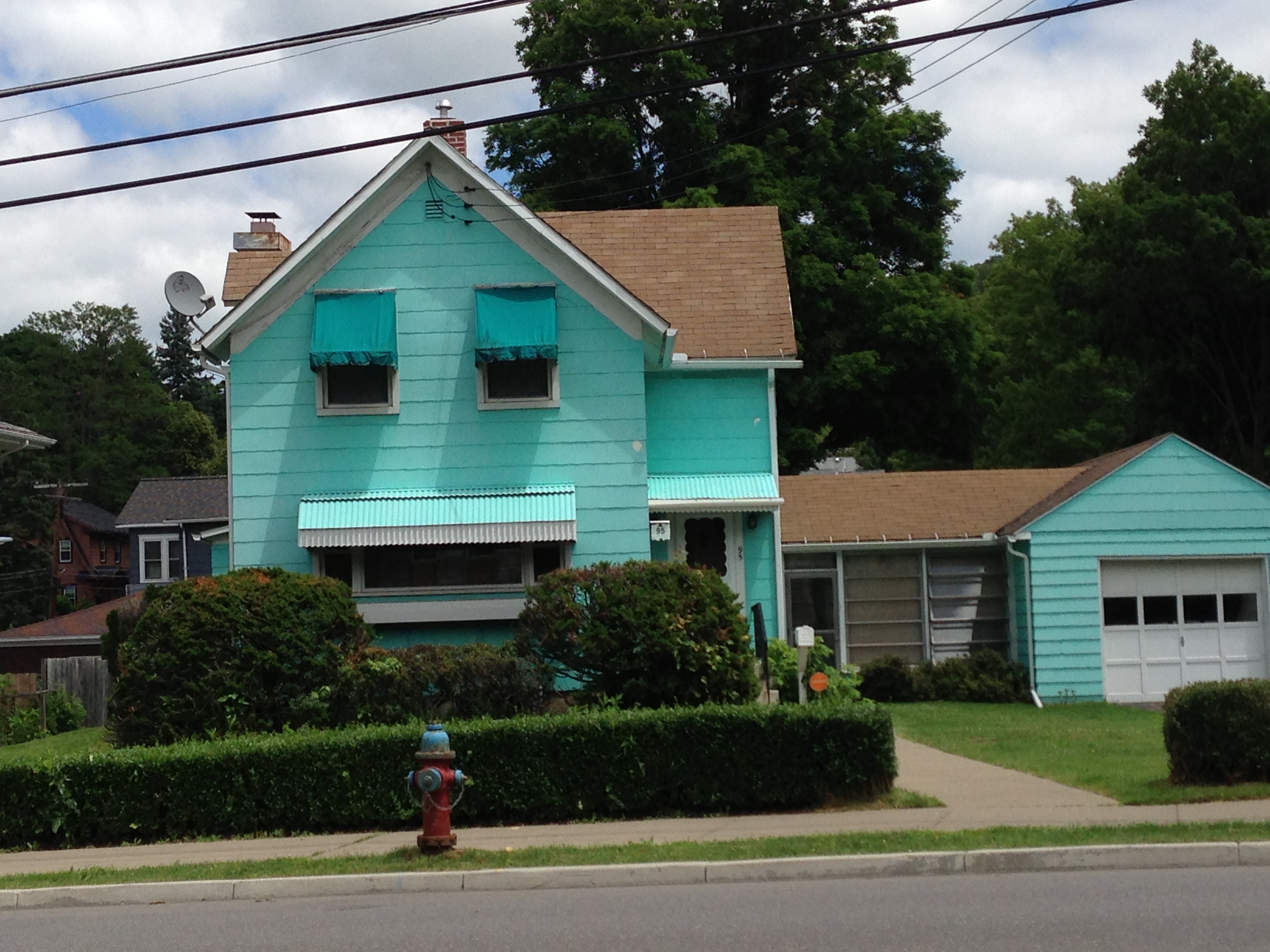
Others are spruced up as garishly as 42nd Street tarts.

blue houseOf course, some of this decrepitude I love. A weatherbeaten sign with “international” flair.

signA space-age car dealership with weeds sprouting up.

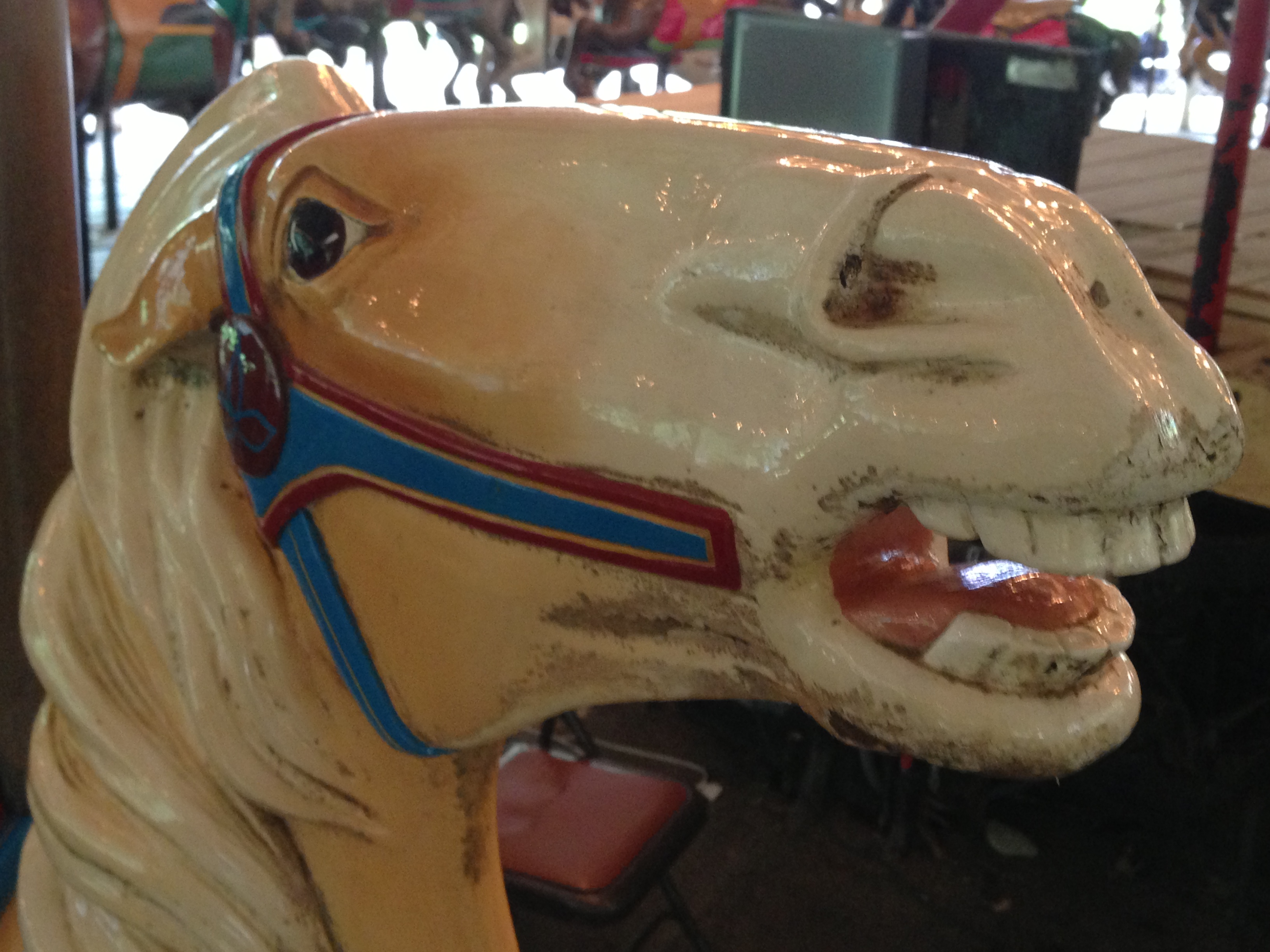
card dealerAll thoughts of the crumbling present go away when we visit four of the six  heirloom merry-go-rounds that still grace the Binghamton area (out of 150 in North America). The first one was installed in 1920, and sits next to a  little zoo — you see and smell a big black pig in its pen as you go ’round. The Ross Park carousel is completely unadvertised, a secret gem known to only a few, reached via a flower-bordered path. The horses, “jumpers,” as they’re called, are a little tattered.

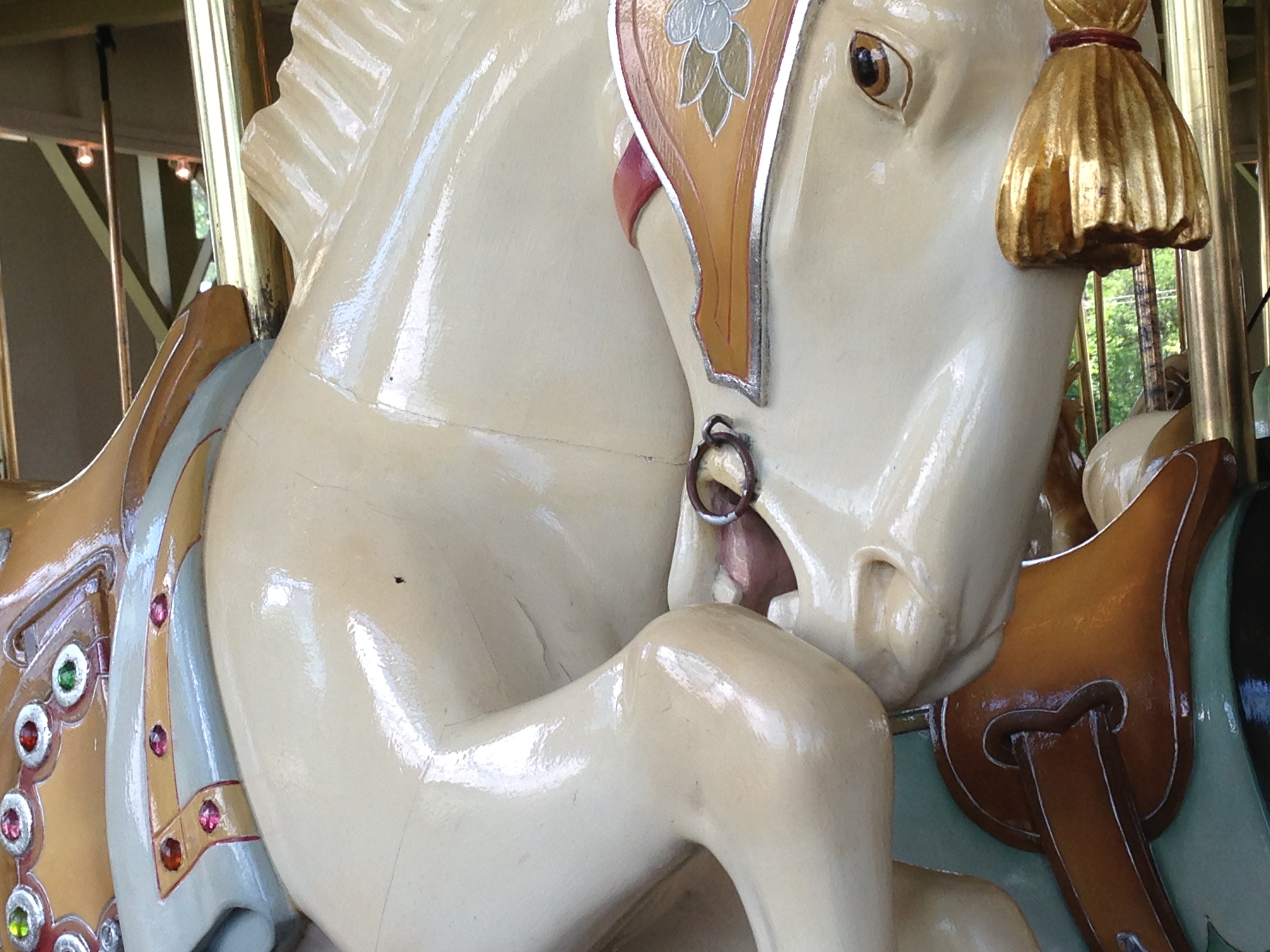
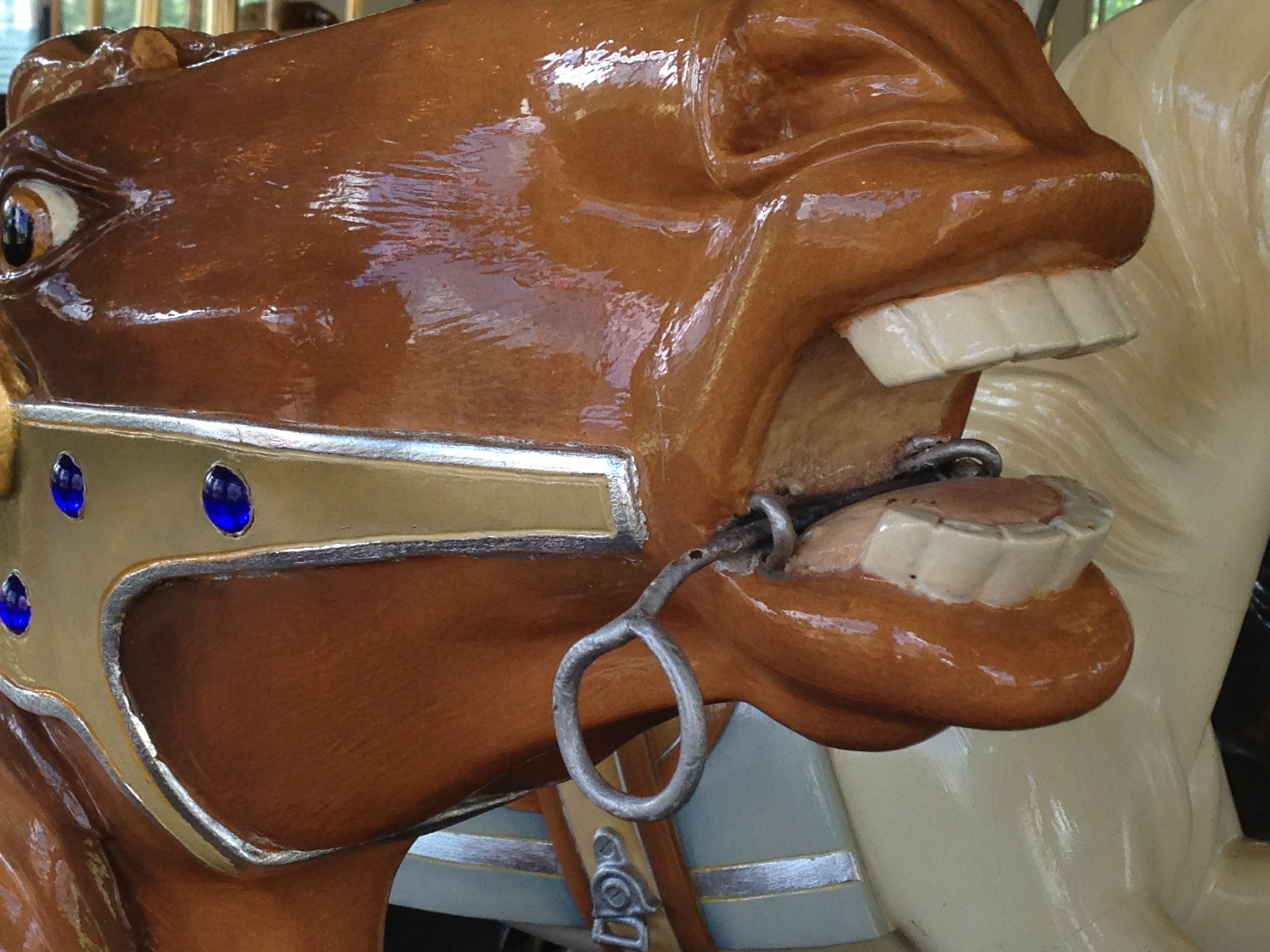
zoo horse 2Gently worn. Still, the original 51-key Wurlitzer Military Band Organ sends you around, and the chariots are flanked by a bathing beauty and an ape, which we sit next to for the whole ride, not noticing its dramatic visage until we rise, slightly rocky, to our feet.

zoo apeA young Tobey-Maguire-in-a-shaved-head-role lookalike blows a whistle, the carousel comes to a halt and we jump off.

The richest men of the city, the Johnson men, funded these spectacular rides of hand-carved wood, made by the Allan Herschell Companies of North Tonawanda, New York. You can visit them all in a day if you get there at the right times, as we do, fueled by a long set of Captain Beefheart on the university radio station. Another of the carousels, in Endicott’s Little Italy, projects a more demure ambiance. It’s housed conveniently next to both a swimming pool (“No Wet Clothing Allowed”) and a window for home-made frozen custard, where a girl is in the middle of changing out the Holy Cannoli for the Watermelon on the flavor board when we arrive.

george horseCare has been taken to preserve and restore the beasts over the years. They are pretty, high-stepping it around the ring. Once upon a time you had to pay admission — a piece of litter! — to get a ride. Now it’s free to all and you can leave your trash in the can where it belongs.

Suddenly, the pavilion gets very quiet. All the kids vamoosed. Is there anything spookier than a silent carousel, especially one that will be 80 years old next year? Then again, calliope music can seem manic, even deranged, and the whole atmosphere fraught — see Strangers on a Train, when the whole ride flies off its axis.

And the horses go around and around, around and around. In Savage Girl I tell the tale of New York’s Central Park carousel, which once upon a time was drawn in its circle by mules trudging in a basement beneath the platform. True story.

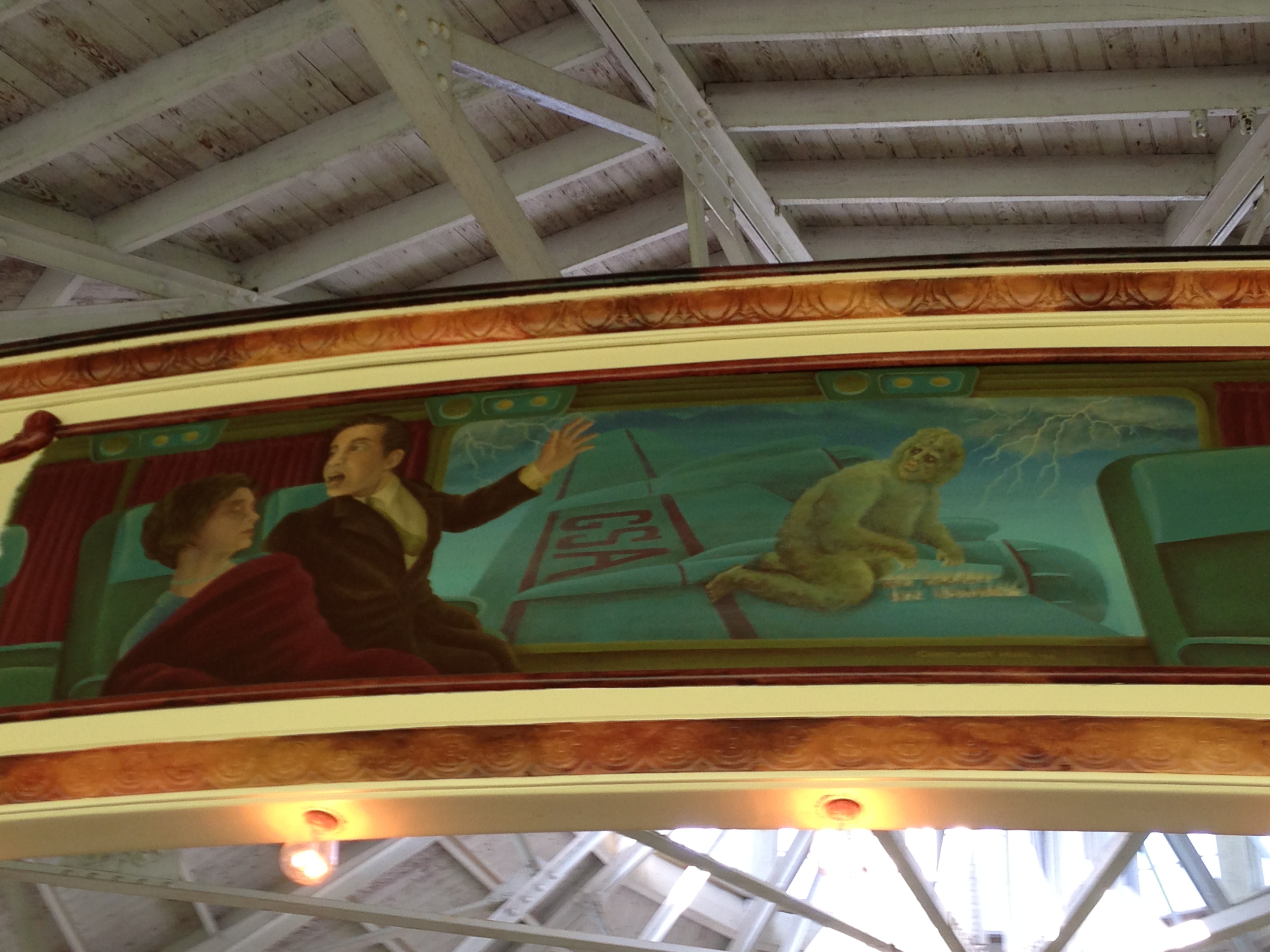
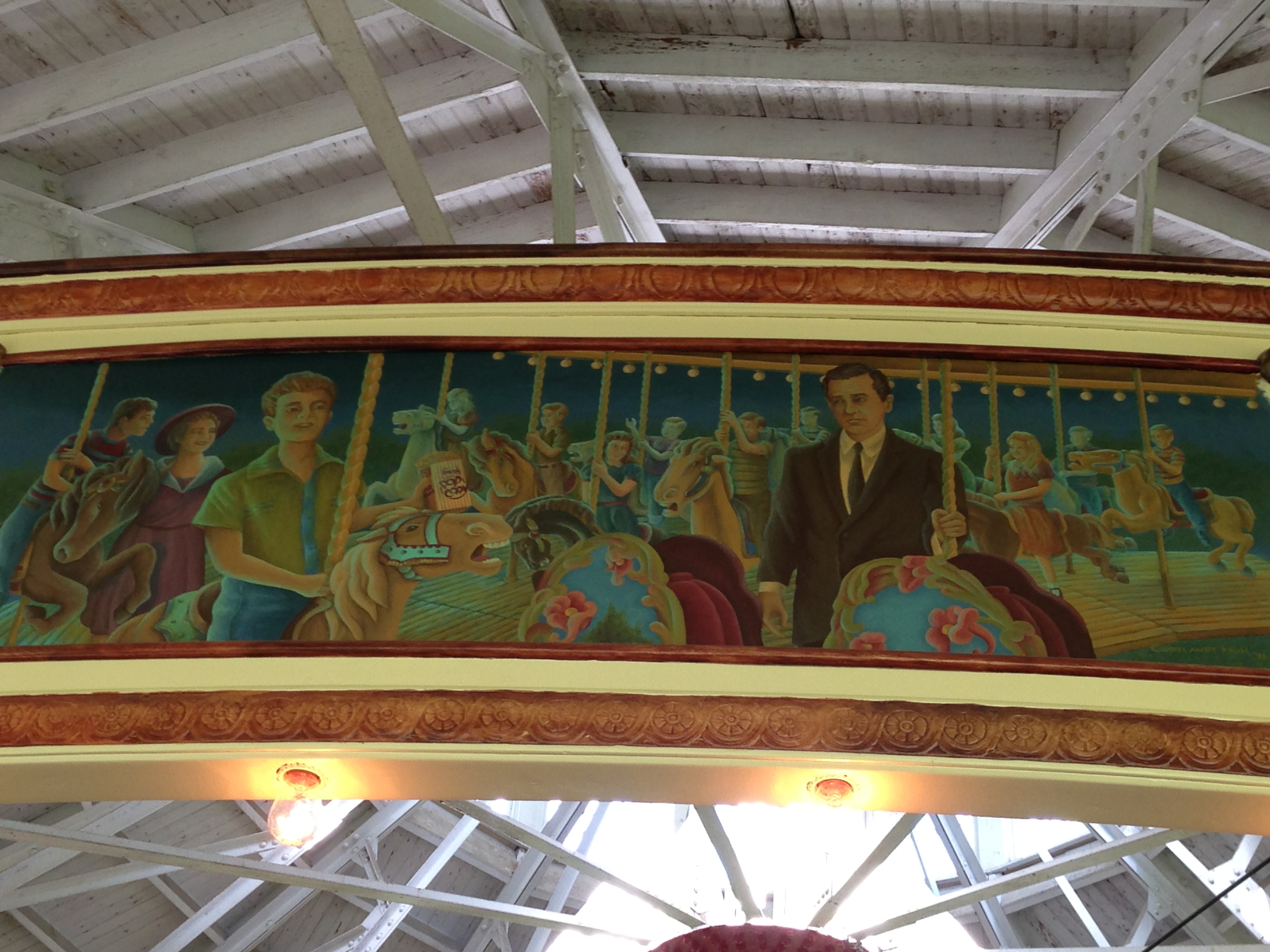
Another carousel, this one at “the Rec”, one of the area’s most used parks,  unexpectedly has a series of rounding boards which feature scenes from Rod Serling’s Twilight Zone. They were painted by artist Cortlandt Hull during a refurbishing in 2011.

twi 3The carousel came to Recreation Park in 1925, well before the TV series, but Serling grew up in Binghamton riding the carousel, so it all makes sense. There’s even a picture of the carousel itself– a scene from the show or a fictive portrait of Serling in his old stomping grounds?

twi 2Endicott-Johnson, the company that earned fortunes for the family that built these beauties, was so big, it made every pair of boots that outfitted American soldiers in world war one. George F. Johnson, the company’s big daddy, in 1916 mandated a 40-hour-work week. Generous, for the time. So was giving his 24,000 workers carousels.

Jack Dougherty, ready with his whistle on a lanyard, told me that they have to be careful at the Rec, closing it up when some rowdy middle schoolers come raging around every afternoon.

Jack

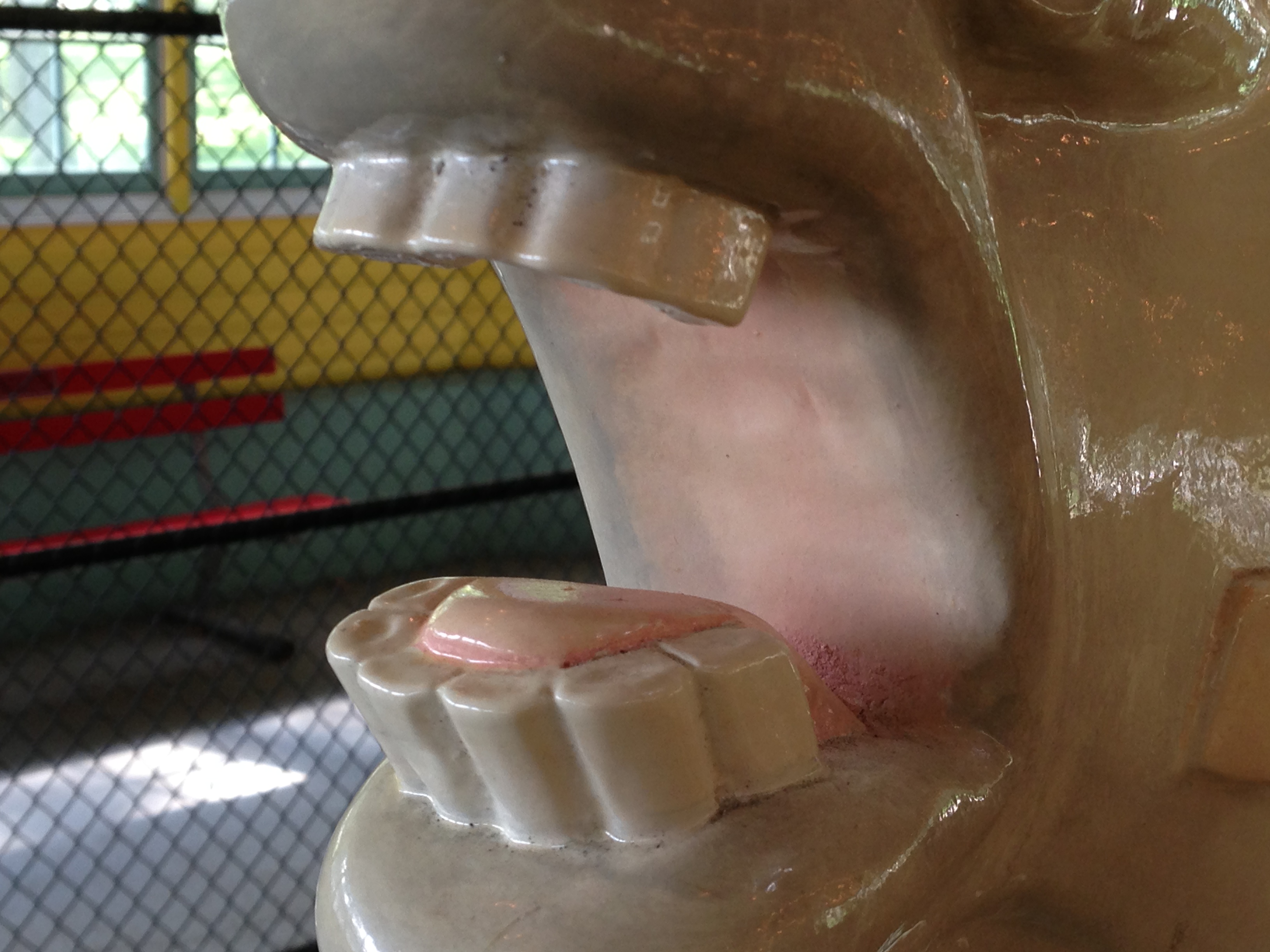
Can’t risk damage to the jumpers. The detail is really exquisite.

twilight chompers


They seem much more sturdy than they are. They’re real/not real.

I wonder if the children of the Triple Cities are somehow happier because of all the carousels in their midst? On the day his namesake merry-go-round opened in 1934, more than 500 neighborhood children paraded to George W. Johnson’s house with a bouquet of flowers to show their gratitude.

george brown horse


Made by human hands, each of them, so brawny and so delicate.

zoo hoofs


5 Comments

Filed under Art, Culture, Fiction, History, Jean Zimmerman, Savage Girl

The Incomplete Fetch

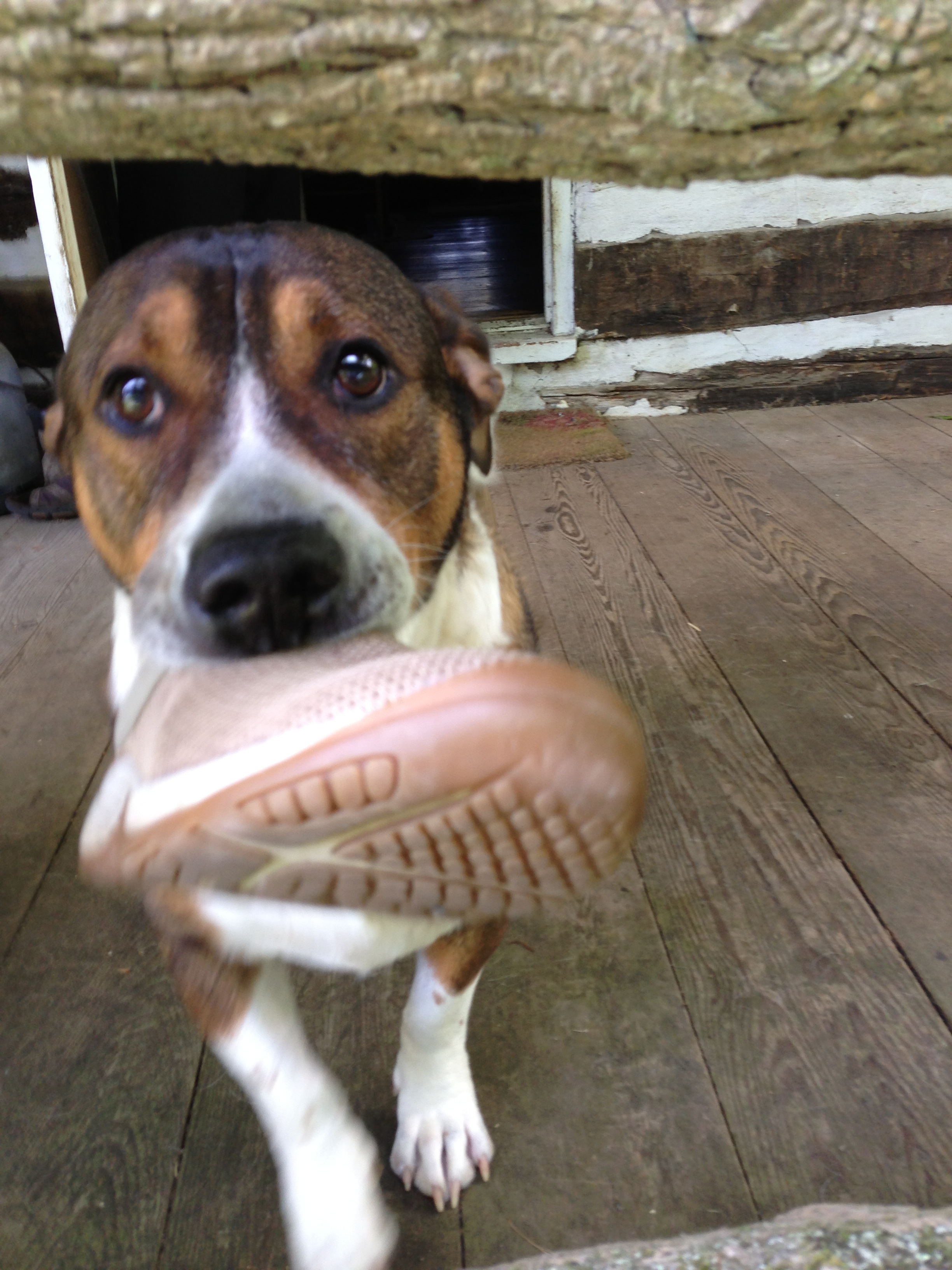
Gil and I have a conversation about Oliver, who has the entrenched habit of greeting whomever arrives at our front door with a shoe in his mouth.

Oliver fetching


Gil: We used to have a purebred dog who looked like a movie star. Whenever we took her out, her adoring public would gather around to ooh and ahhh. This was before a lot of people had shiba inus.

Daisy


Me: She was beautiful, but she never brought us any shoes. In fact, everything had to be brought to her.

Gil: Our present beast, in contrast, has issues. Oliver is a mutt, an unlikely combination of a basset hound and a pit bull.

Maud:Ollie


Me: He was a rescue puppy, which excuses some of his defects. Clown-face is the best name we ever had for him.

Gil: He looks stumpy and low to the ground. He has a slight harelip. His breath is atrocious. If his adoring public ever gathered around him, he’d growl and bark at them. Oliver is an example of a creature that is difficult to love.

oliver about to copy

But love him we do, with a passion. I sometimes think this is a gift he gives us, challenging us to love when loving is sometimes not that easy.

Me: The more I see of men, the more I like my dog. So said Pascal. I think that Oliver’s incomplete fetch at the door — incomplete both because you don’t start the action by throwing to him, and because he won’t drop the shoe at your feet — is perfection itself.

ollie shoe out the door


Gil: We have taken to wagering what kind of footwear he will greet us with: a sandal, a boot, a clog. His present-giving never fails to cheer us.

Me: You have to admire the spirit of a dog, no matter show stupid it may see sometimes. Oliver performs the same act over and over again just as eagerly.  Sometimes with a sock, if a shoe’s inconvenient.

Ollie nose sockIf we leave the house for half an hour he brings a shoe. If we then go out for fifteen minutes, when we return he will offer the same prize, dipping his head and smiling through the gift. Devoted, submissive, jiving and shucking.

ollie shoeWhat a good boy am I. An open heart. It’s as if he’s saying, Whatever else I am, I am this flawlessly faithful dog too.

Gil: Is loving more rewarding when it’s difficult? It puts me in mind of a line from a sad poem by John Engels. Precisely to the degree that you have loved something: a house, a woman, a bird, this tree, anything at all, you are punished by time.

Me: We humans should all bring the shoe to the door with the same fervor Oliver does. With the same open heart. What do we get in return? If we’re lucky, the privilege of rolling on our backs in the dewy grass, scratching that perpetual itch.

Oliver rolling


6 Comments

Filed under Culture, Dogs, Home, Jean Zimmerman, Nature, Poetry, Writers

Links in the Chain

A handful of links for a rainy day.

A beautiful look at hand paintings by Moscow-based artist and poet Svetlana Kolosova.

surrealfairytalepalmpaintingsbysvetlanakolosova6

Info about the Biblewalk and Living Bible Museum in Mansfield, Ohio.

OHMANbible12_jobJob appears real!

Amazing self-portraits by writers. Henry Miller drew his in 1946.

4b-millerselfportrait


The story of how the Kindle came to be, from an insider’s point of view.

An article on a blog about the history of makeup that discusses whether cosmetics of the past poisoned the women who wore them with ingredients like lead and mercury.

Bildnis-von-Elizabeth-Gunning-Herzogin-von-Argyll-von-Allan-Ramsay-31966


Ten ultra-secluded underground locations, for those times when you’ve disclosed government secrets and need a private place to crash.

And finally, three Japanese hotels that have been in business for a thousand years.

tl-inset_webThis one, Nisiyama Onsen Keiunkan, was built around a hot spring that supposedly has curing powers. Maybe it cured women with makeup-induced illnesses.


3 Comments

Filed under Art, Culture, Fashion, History, Home, Jean Zimmerman, Writers, Writing