Category Archives: History

Skin and Bones

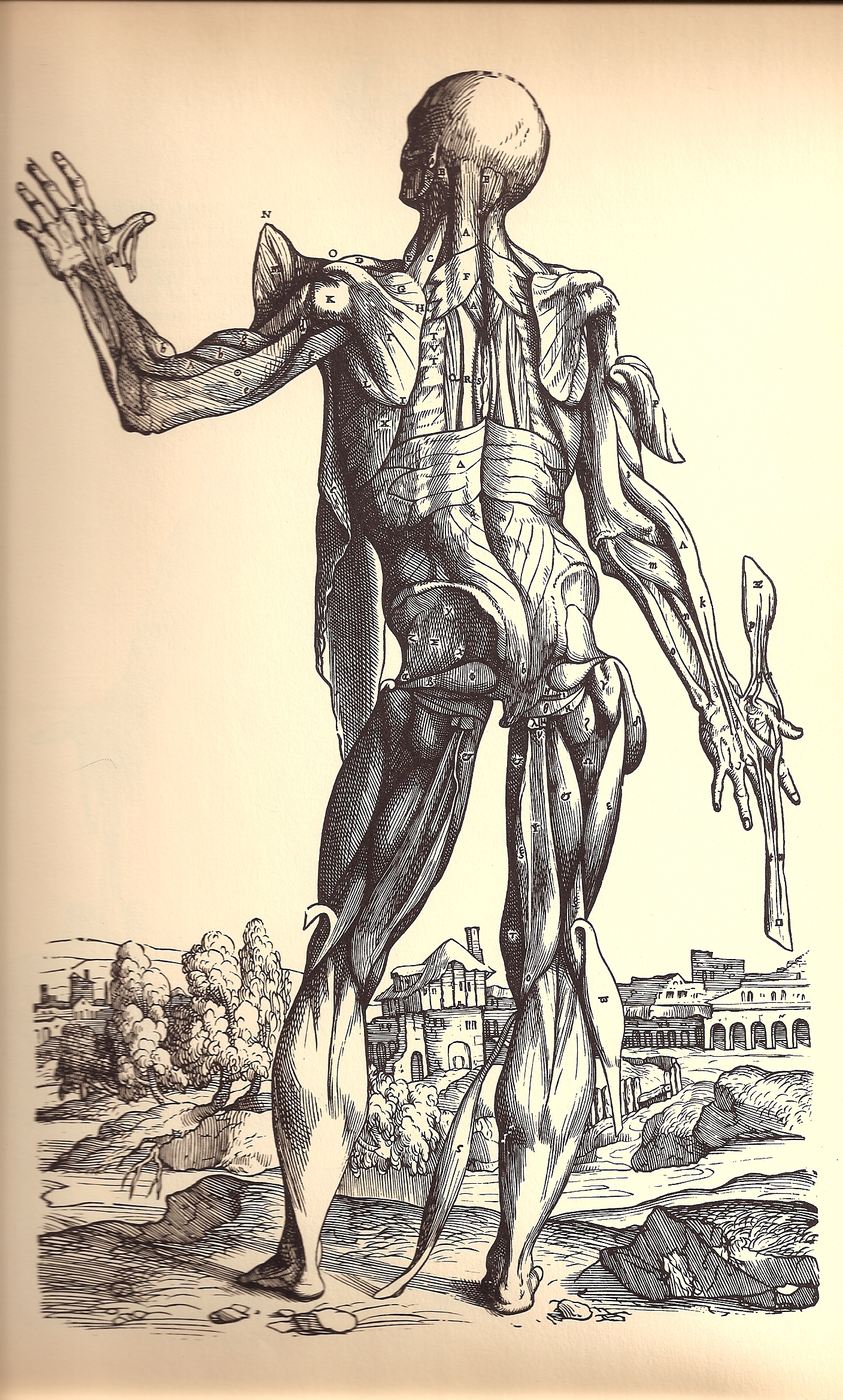
Here’s to Vesalius, the anatomist from 16th century Brussels who revolutionized observational science and research and humankind’s place in the universe. The wooden blocks for The Icones Anatomicae of Andreas Vesalius were engraved in Venice and then lost and discovered several times before being destroyed utterly in the bombing of Munich during the second World War. He himself was an enigma. But the plates miraculously survived. The central character in the book I am currently working on is an aspiring anatomist who reveres Vesalius.

2 Comments

Filed under History, Jean Zimmerman, Nature, Savage Girl

19th Century Liberty

Statue of Libert’s Arm and Torch, Madison Park, 1876

1 Comment

Filed under History, Jean Zimmerman

Don’t Try This at Home

An Australian dance manual of 1875, the year I’m currently writing about:

“This step in the promenade is executed only with the left foot–in describing a circle it is made with both feet. The position is the same for the mazurka as for the Valse a deux temps; the foot should neither be too much bent nor turned out, but left in its natural position., The heel strokes which are interspersed with the various steps of the mazurka, and which are even amongst the necessary accompaniments of the dance must be given in time, and with a certain energy, but without exaggeration. Such stroke, when too noisy, will always be considered in a drawing-room or ball-room as a mark of very bad taste. By the aid of the four elementary steps, which I have described, a pupil may be enabled to execute what is called in the mazurka a Promenade. The Promenade is performed by holding the lady with the right hand and making her accomplish a fanciful course, according to the space allowed.”

Leave a comment

Filed under Fashion, History, Jean Zimmerman

My Jolly Idea

We still refer to a woman’s breasts as “dugs” sometimes, or at least I have been known to for comic effect. The word dates back to hundreds of years ago, which is why it sounds so odd. Also the word hails from English.

If you want to know other delightful terms, check out the 1811 Dictionary of the Vulgar Tongue on line at http://www.fromoldbooks.org/Grose-VulgarTongue/.

Here are some excerpts.

HOYDON: Romping girl.

INEXPRESSIBLES: Breeches.

JOLLY: The head.

POISONED: Big with child.

UNLICKED CUB: Rude, uncouth young fellow.

1 Comment

Filed under History, Jean Zimmerman

Foie Gras vs. Pie

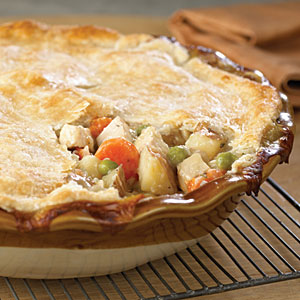
A call from my daughter coming home from college for the weekend. “Can we go out to dinner?…. Or can I help you make chicken pot pie?”

Pie, as you know I know, has the pull of the elemental, the essential, the eternal.

The Oxford English Dictionary traces the first use of the word “pie”  to 1303, observing that the word was well-known and popular by 1362.

“Pie…a word whose meaning has evolved in the course of many centuries and which varies to some extent according to the country or even to region….The derivation of the word may be from magpie, shortened to pie. The explanation offered in favour or this is that the magpie collects a variety of things, and that it was an essential feature of early pies that they contained a variety of ingredients…”

The New York Times ran an article today about lasting foods, foods that fall out of favor and then come back. The piece focuses on foie gras, primarily, and its variations. Tournedos Rossini (truffles, foie gras and madeira sauce.) Hamburgers that incorporate foie gras, beef and spam. But also classics like beef Wellington and lobster newburg.

Apparantly the outcry for these dishes is newly revived, if in fact it ever went away.

I love foie gras. One of my fondest restaurant memories is Au Pied de Cochon in Quebec, where we ate foie gras with every course.

But I would suggest that in terms of lasting fullfillment, a classic that sticks to your heart as well as your ribs, pot pie will never go away.

Chicken, turkey or beef, you choose
Leave a comment

Filed under Cooking, History, Jean Zimmerman

Salvation One Swallow at a Time

Doing some research on the foodways of 1875, I found that in 1876, the women of the First Congregational Church in Marysville, Ohio, published a cookbook to raise money to build a parsonage. They called it the Centennial Buckeye Cookbook. It turned out to be one of America’s most popular cookbooks. I like the dedication on the frontispiece of the first edition:

“To the plucky housewives of 1876, who master their work instead of allowing it to master them.”

Darker, though, is this unattributed quote with which the book opens: “Bad dinners go hand in hand with total depravity, while a properly fed man is already half saved.”

1 Comment

Filed under Cooking, History, Jean Zimmerman

Old New Amsterdam

I heard the windmills creak in lower Manhattan yesterday.

I walked the streets between Pearl and Broadway, the ones that bear the same names they did when the Dutch settled New Amsterdam. They appear completely different, of course, but their contours are the same. Stone Street, so designated because it was the first thoroughfare paved with cobblestones, now lined with tall buildings but formerly the place of grand mansions and a rather large brewery. Marketfield Street, a few steps away, is now a pestilent alley but used to be a comfortable and elegant place to dwell.

I walked up Broad Street, wide because there used to be a canal running there. It was referred to as The Ditch, and was not paved over until 1676.

The Ditch

So the ghost of New Amsterdam lives on in today’s Manhattan. Having written about people who lived on the streets in The Orphanmaster, I walk around the neighborhood and exclaim over one of my characters, say Blandine Van Couvering, residing in a dwelling house on Pearl Street, and her favorite tavern the Red Lion just across the street. Yes, Pearl street is now a gritty concrete canyon, but I see the past there.  I can imagine the parade grounds that spread out just where Broadway widens at Bowling Green today. I can visualize the Dutch fort where it towered, exactly where the U.S. Customs House stands today.

And always, in the background, that lilting, rhythmic creak, as the windmills grind the local wheatberries to flour.

Leave a comment

Filed under Fiction, History, Jean Zimmerman, The Orphanmaster

Utter Cupidity

Jumping the gun on Valentine’s Day — which I am celebrating by going to the Westminster Dog Show with Gil.

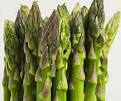
Did you know that bridegrooms were served three courses of asparagus at their prenuptial dinner in nineteenth century France? Earlier, English herbalist Nicholas Culpepper opined that asparagus “stirs up lust in man and woman.”

Succulent Spears

Alexandre Dumas dined on almond soup every night before rendezvousing with his mistress. Samson hooked Delilah with the same nut.

And the Aztecs’ name for the avocado plant was Ahuacuatl, the “testicle tree.” Catholic priests in Spain in days gone by found the fruit so obscene, they banned its consumption.

Chocoholic Lous XIV made love to his wife twice a day at the age of 72.

Food for thought.

Leave a comment

Filed under Cooking, History, Jean Zimmerman

Lightly Flouncing

A ballroom dance of the 1870s. Gowns of lemon, frost, raspberry on every side. A horn sounds and the quadrille commences. But is that a tear in your eye?

The Cotillion

Leave a comment

Filed under History, Jean Zimmerman

Sweet Jane

Coming to watch the first season of Deadwood for the first time, I am amazed by  Calamity Jane — and the performance of the actress, Robin Weigert, who plays her. By turns truculent and tender, sloppy drunk and nurturing, she is the most complex character I’ve seen on TV in a while, even on HBO. Dresses like a man, falls in love like a woman. Out-Nobbs Albert Nobbs. Superb horsewoman and crack shot, she cusses with more conviction than anyone else on the show, and that’s saying something.

Was the real Jane, Martha Jane Cannary, anything like the cable version? Let’s look at something from Jane’s diary, written in the 1890s:

“On occasions of that kind, the men would usually select the best places to cross the streams; myself, on more than one occasion, have mounted my pony and swam across the stream several times merely to amuse myself, and have had many narrow escapes from having both myself and pony washed away to certain death, but, as the pioneers of those days had plenty of courage, we overcame all obstacles and reached Virginia City in safety.”

The Legend

Leave a comment

Filed under Fiction, History, Jean Zimmerman

Young Pullets with Dressing and Buffalo Tongues

Would you care for some sugar-cured herring? Stewed potatoes? The place to go in in 1880 would be the United States Hotel in Saratoga Springs, New York.

You could get some redhead ducks and charlotte bengalienne at Delmonico’s if you were there in 1885 for the Annual Dinner of the New York Free Trade Club.

At the Ladies Festival Banquet, catered by William Tufts, quail on toast was the order of the day. You’d have to be a member of the Baptist Social Union of Boston.

Sweetbread pate, anyone?

Downtown Association, 1890

This most wonderful trove of 9,567 restaurant menus will transport you to another place and time. The kitchen’s always open at the New York Public Library, just click here.

For some reason, “cardinal punch” is a constant. But not all of the feasts offer “DeBrie.”

Leave a comment

Filed under Cooking, History, Jean Zimmerman

Ore Not

Learning about Virginia City, Nevada, where some of the first prospectors in the 1860s lived in holes abandoned by coyotes. Then, afraid they’d get shot at, they moved closer to town and put up shelters made of blankets or brush, potato sacks or old shirts. This to be close to the Comstock lode, to the silver ore that stretched in a two-mile swath away from Sun Mountain, as it was called (Mt. Davidson now). Made me think about what ambition would cause me to live in a tent of potato sacks.

Comstock Necessity

Leave a comment

Filed under History, Jean Zimmerman

Snow Now and Then

Three inches of white stuff and only two or three cars on the Thruway. We’ve become Californians, blanching at a bit of snow.

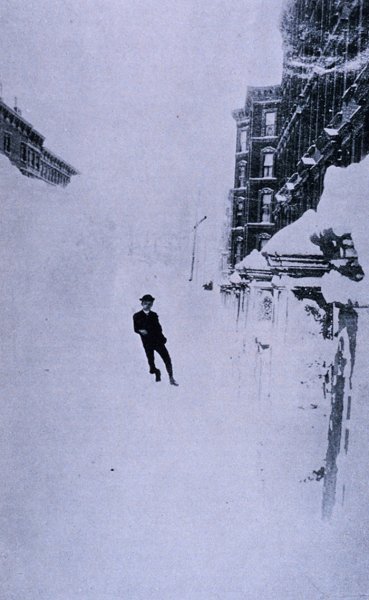
One hundred and twenty years ago, March brought New Yorkers the Great Blizzard of 1888. Snow fell to a depth of twenty one inches over three days, paralyzing the whole East Coast.

Madison and 49th Street, 1888

I came across dozens of pictures of the Blizzard in Yonkers, New York, when I was researching The Women of the House. I was so mesmerized, I felt like switching to write a book about the snowstorm in gilded-age Yonkers rather than the stone house Margaret Hardenbroeck built there in 1682. Bowler-hatted merchants outside snow-mounded shopfronts. The Yonkers train station, plowed under. Ladies dragging their hems through the drifts. Children scaling mountains of snow.

The Great Blizzard wasn’t all fun. Milk and coal totally ran out. Four hundred New York city residents died, hundreds were trapped in the snow. No trucks meant that snow had to be removed by horse and cart to be dumped in the East River.

But on a day like today, looking out the window,  I would love to experience the drama of that time.

p.s. Snow Cream: Set a pot outside to collect clean snow. Stir in vanilla and milk to taste.

2 Comments

Filed under History, Jean Zimmerman, Nature

Streets of Yore

Hoogh Straet — who has ever heard of it? Yet it used to run just behind the town hall, the Stadt Huys, on Manhattan Island when the town was New Amsterdam.

New Amsterdam Stadt Huys

Slick Steegh, Brouwer Straet, Brugh Straet, all were contained within the warren of unpaved streets between the East River and the Hudson. We don’t know them anymore. Well… some continue to exist, and when you walk them you are walking into history. Stone Street, Broadway, Pearl Street were as alive and bustling in 1663 as they are today, if a bit more pungent. Broad Street was broad because a canal ran through it. The Stadt Huys served the town long and well before becoming a tavern.

Leave a comment

Filed under History, Jean Zimmerman

America Eats

Reading a book that consists of the unedited manuscript of a WPA guide called America Eats, an in-depth description of the varied cuisines of the country as they existed in the 1930s. The Food of a Younger Land: The Northeast Eats is fascinating, ranging as it does from a discussion of a “C.O. Cocktail” — castor oil in soda served at a drug store, to a description of Vermont, where maple sugaring is so much a part of peoples’ lives that “sugaring off” became an expression. A person might close some transaction by saying, “Well, Ed, it’s about time we sugar that off.”

Leave a comment

Filed under Cooking, History, Jean Zimmerman