Category Archives: History

Monsters in the Garden

I had been looking for days for an infant saguaro, knowing that they began tiny, nested under bigger, more mature, spreading nurse plants like mesquite trees. Not a one.

I found other babies.
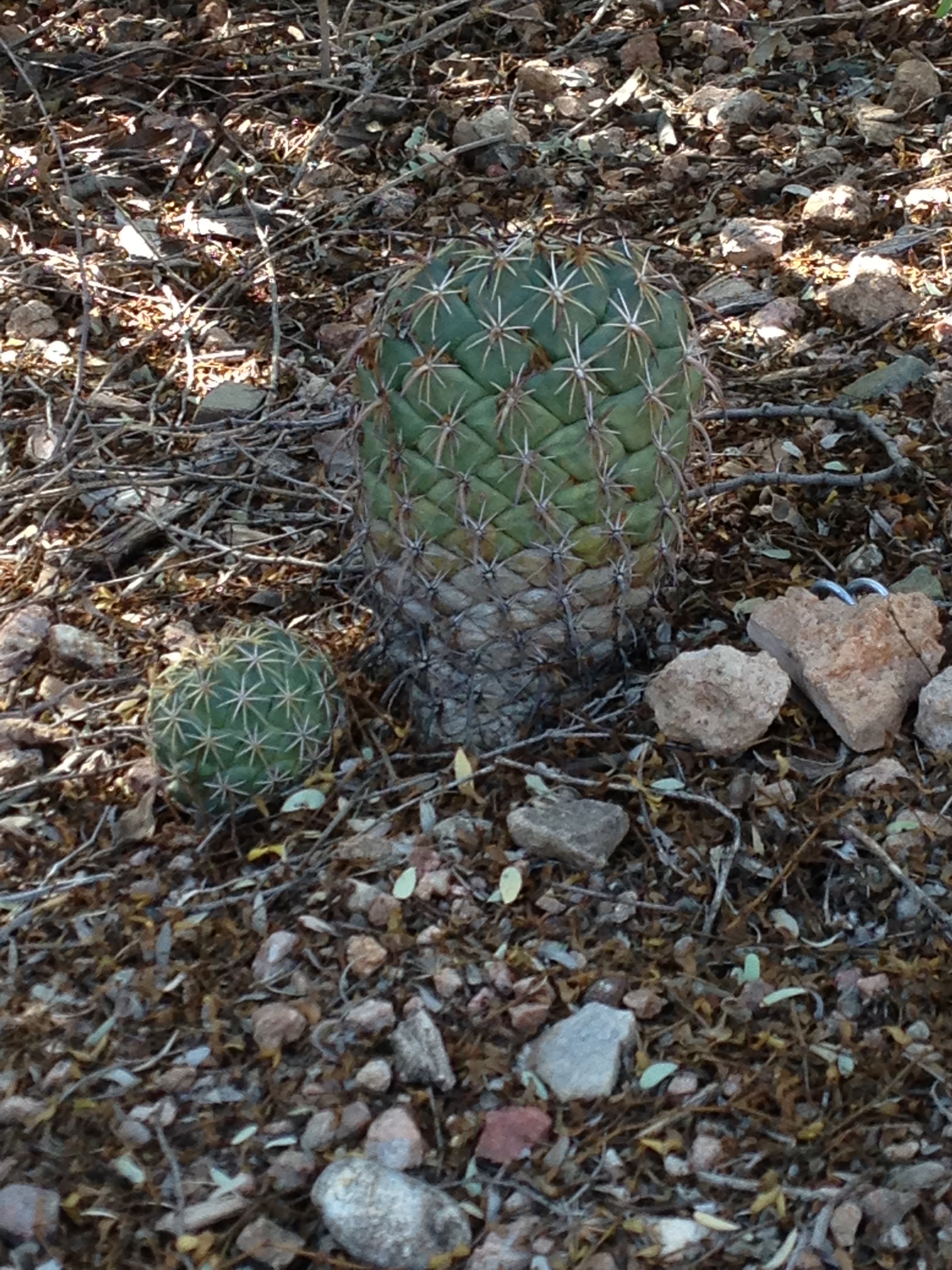
other baby cactus

But not those of the saguaro. It was almost as if the giant cactii sprang full grown from the body of the earth. But I was determined. At the Desert Botanical Garden in Phoenix, I buttonholed a gardener who looked like a dashing, red-scarfed gent I once knew named Jorge.

desert gardener

He had silver duct tape holding together the crown of his straw hat,and when I first saw him he was supervising the planting of a smallish saguaro in a bed near the parking lot. In replanting, says my mother, you need to position them so that they face in precisely the same direction they did in the first part of their lives, or else they wither and die. Saguaros have to have the same relationship to the sun, always.

I knew this gardener knew saguaros. Could he point me in the direction of a baby? I asked. He led me through the winding walkways of the Garden. I wanted to find one that was no more than a nub growing out of the ground, just starting out. Jorge seemed to know exactly where it was.

We went through the grove of barrel cactus with its yellow fruit.

barrel cactus with fruit

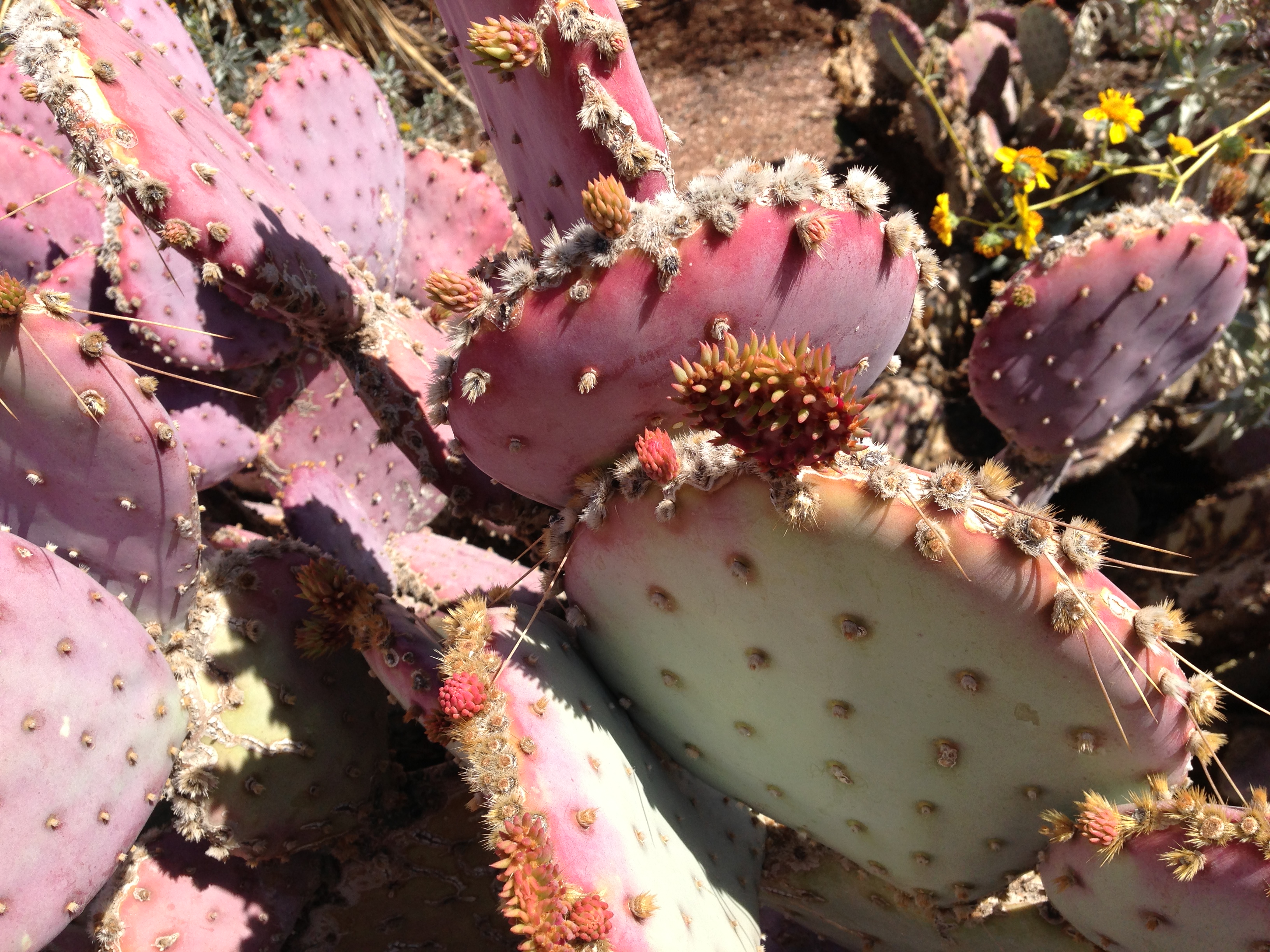
Past the blushing prickly pear.

red prickly pear

Past the half-hidden nest of an absent bird.

Nest

There it is, Jorge said. He pointed beneath a sheltering shrub, which protected the saguaro like a baby Jesus in a creche.

baby saguaro

Not quite an infant, he said. About five years old. It would take ten years to grow that big in the wild, he added with a touch of  pride. The Garden waters their plants so assiduously that they shoot up tall and bright, a technicolor green compared with the black and white of the desert that stretches all around.

Now that I had found my toddler saguaro, I could pay attention to the other fascinations of the Garden. An ebony-colored wood beetle chased us down the path, buzzing furiously. Art was everywhere.
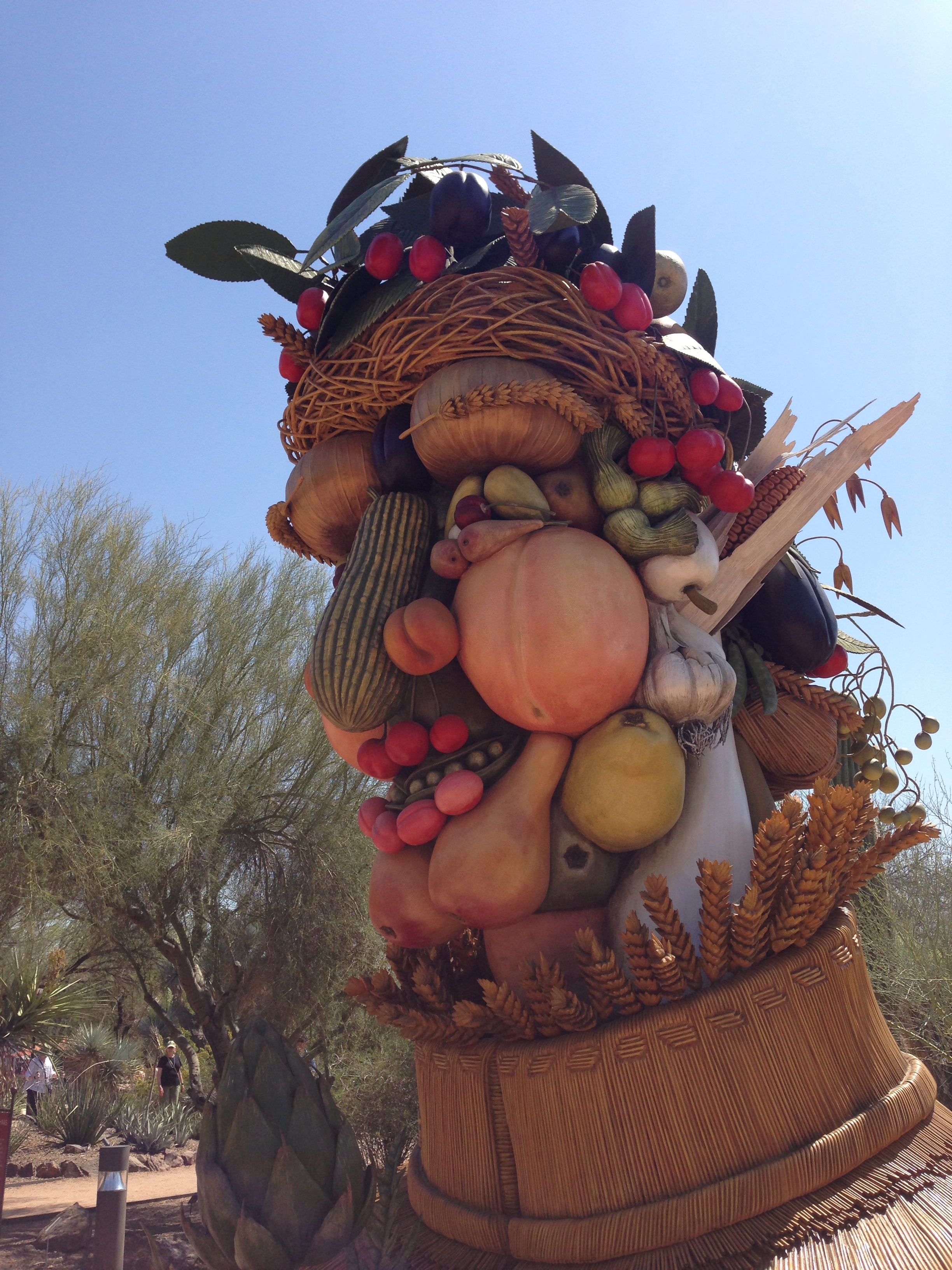
woman plant sculpture

This piece, of course, suggests the Renaissance produce painter Arcimboldo.

arcimboldo

And Jeff Koons in his puppy flower phase.
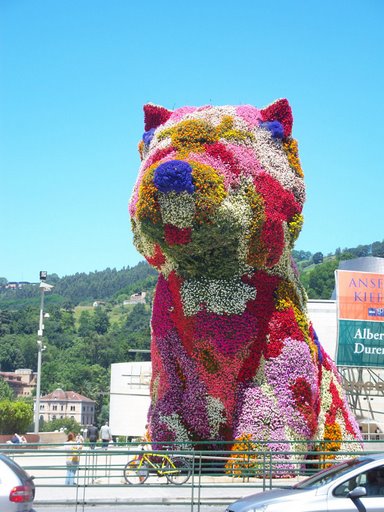
Jeff koons puppy

My eyes were dazzled with not only organic but plenty of nonorganic growth, furnished by major sculptors.

pink sculpture

The soft green and hard metal played off each other.

sculpture:cactus

No, said my mother, I don’t like it. She was looking up at the Dale Chihuly forest of glass that welcome visitors to the place. It’s gilding the lily, she said.

Chihuly glass

I liked all that green glass. But maybe because the work was, first of all, monstrous, as were so many of the large-scale works scattered about.

I like monstrous.

Secondly, I was acquainted with Chihuly back in the early ’80s, when I visited his Pilchuck hot shop outside Seattle as a lowly member of a film production team, about the time he returned from the East Coast and blew up into a  legend. I was impressed with his pirate demeanor. And also with my experience of blowing a little glass, anything but monstrous, assisted by another dashing fellow, a tall long-haired Chihuly-ite gaffer who stood behind me and steadied my hands on the pipe. I thought that the keepsake I created would be mine forever. The thick-walled cup I made held exactly the right amount of vodka on the rocks, before it fell and smashed at about the same time I quit drinking a decade or so ago.

But maybe the natural vegetation was extreme enough. Lipstick cactus.
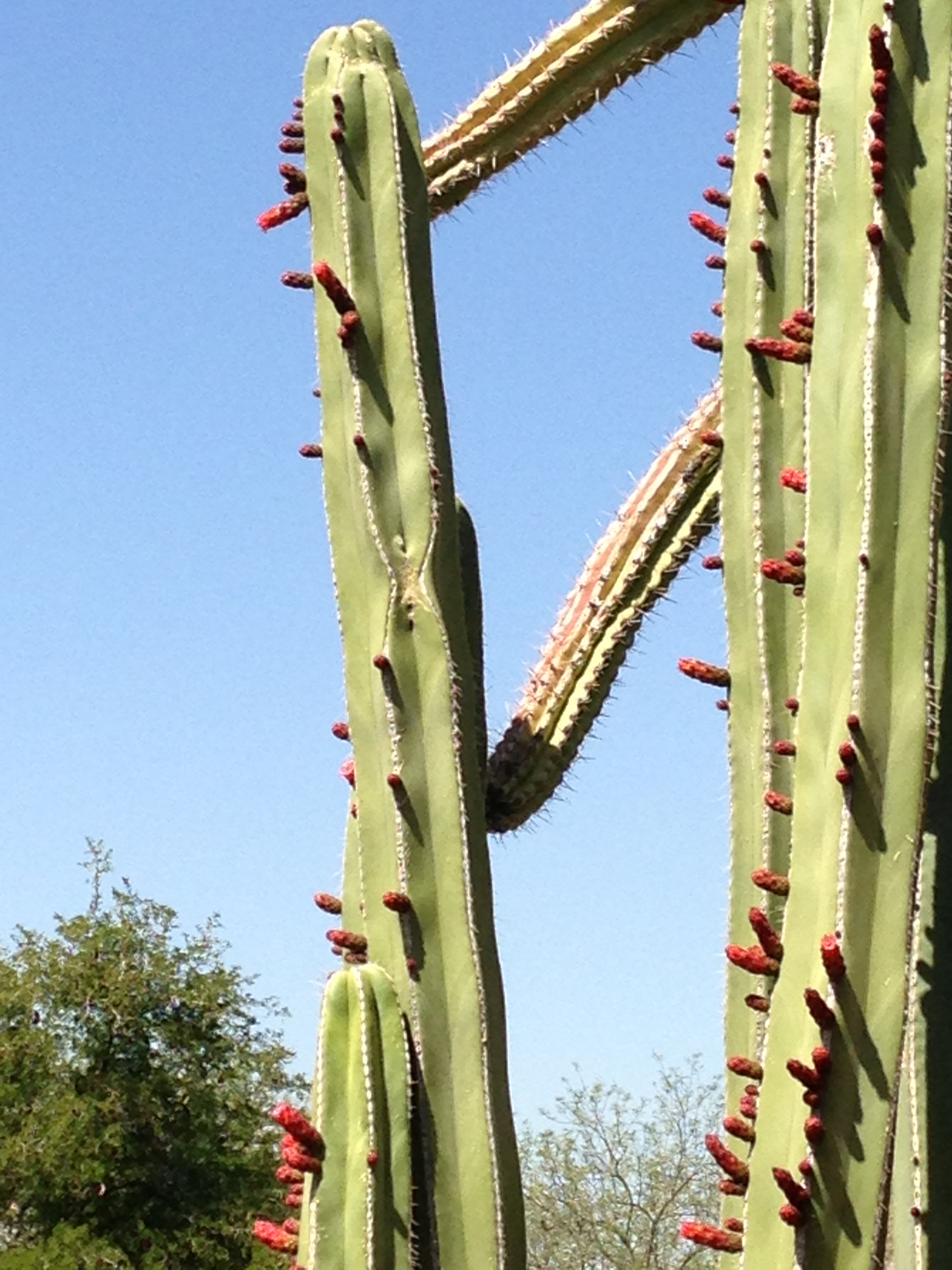
lipstick cactus

Dazzling enough in its nude simplicity. Agave.

agave

Some specimens remained from the opening of the garden more than 70 years ago.
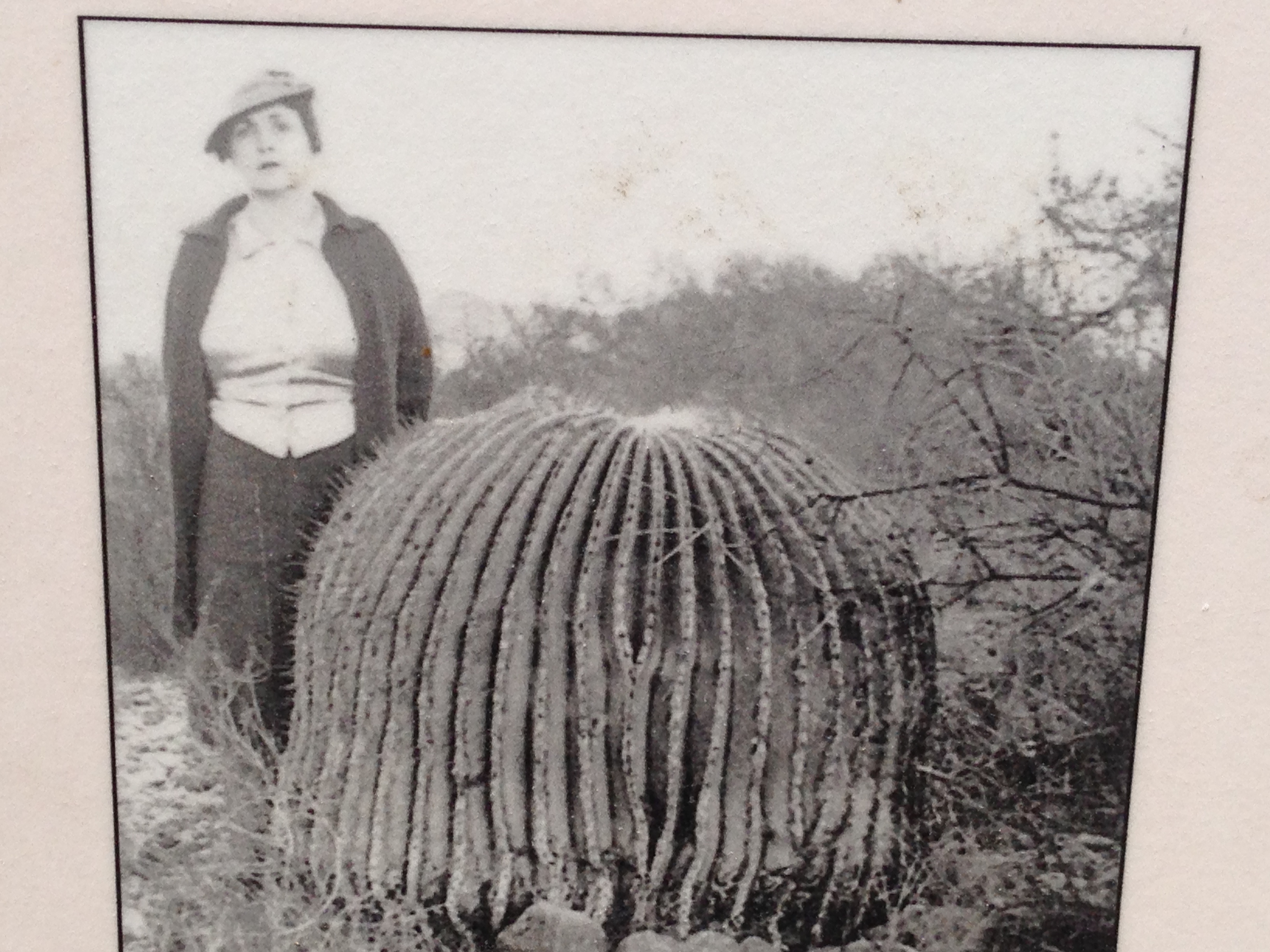
historical desert garden

We had to go see how the butterflies responded, now that springtime had revealed its face to Arizona.
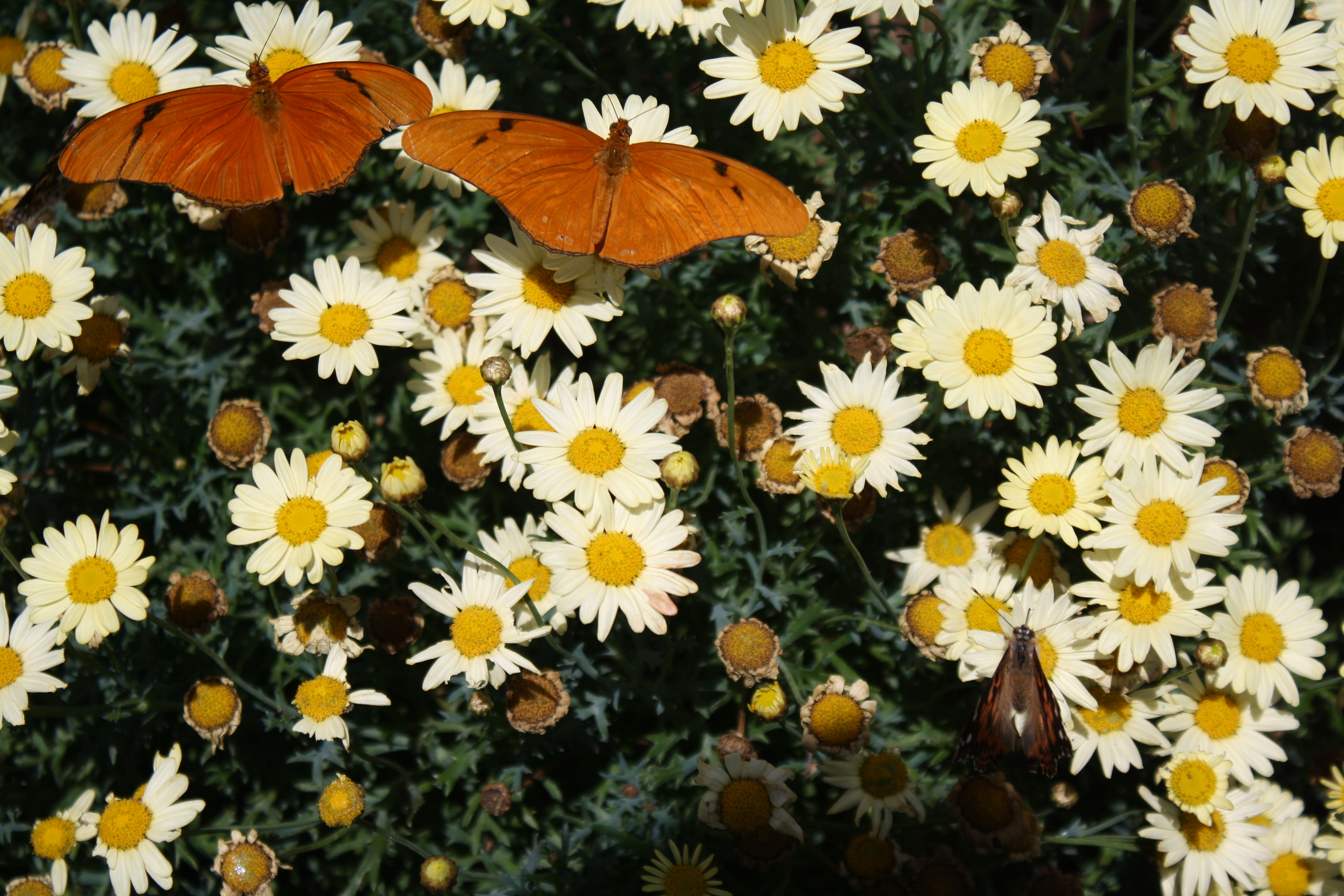
orange butterflies

Who doesn’t like butterflies? As we waited to enter their enclosure, I felt I could hear the throb of wings.

They kind of make me nervous, said Maud.

Good for you, the docent told my mother, in her white t shirt. They like white shirts. And they’re very partial to redheads.

None of us had red hair, but I hoped in my peacock-feather-painted blouse to be a landing strip.

The netted area had been planted, surprisingly, with swiss chard, which appeared to be uninteresting to the butterfly population as a food source. The butterflies drank instead from the cups of flowers. They seemed to be half in the process of coming alive and half in the process of dying.

black butterfly

Leaving them behind rather sooner than I thought we would – They make some people uncomfortable, they’re insects after all! said a staff person – we progressed toward the Garden exit through the gray-green fleshy fields of cactii.

Three more butterflies hovered ahead of us.
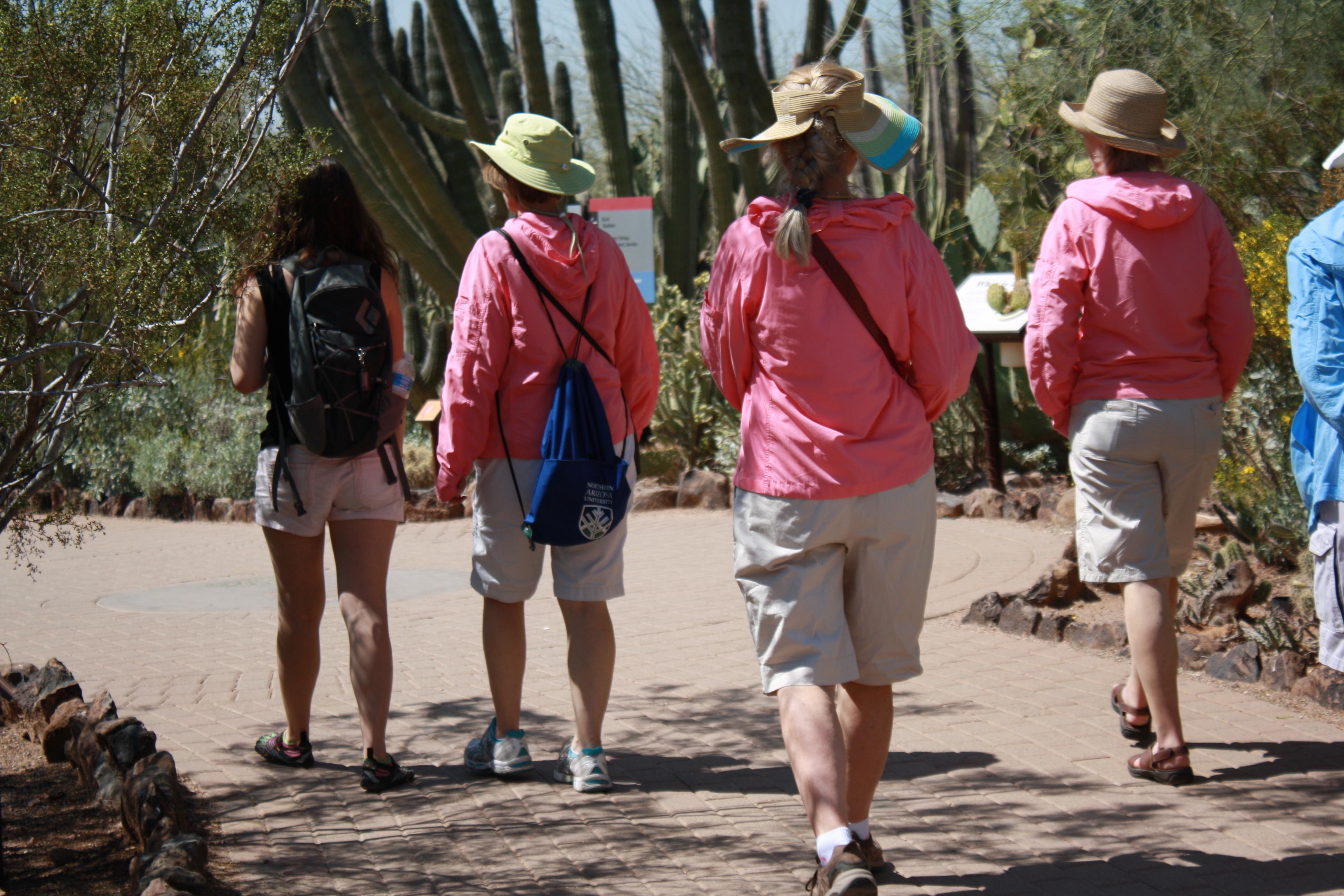
pink ladies

Triplets, middleaged, each attired in a powder-pink windbreaker, cargo shorts and a floppy sun hat. I always wonder about multiples who dress alike above the age when their mothers outfit them. A matched pair of senior citizens used to roam Manhattan’s upper west side, mirror images in couture, nylons and cat-frame glasses. Related in spirit, the married couple who used to bike the streets to forage for horse manure for a Garden of Eden they planted on Eldridge Street, in the 1980s, when New York City was a simpler place.

Purple garden

Their names were Adam and Eve Purple. Their garden seemed to come out of nowhere. They dressed themselves, the two of them, in … purple.
17 Comments

Filed under Art, History, Jean Zimmerman, Nature, Photography

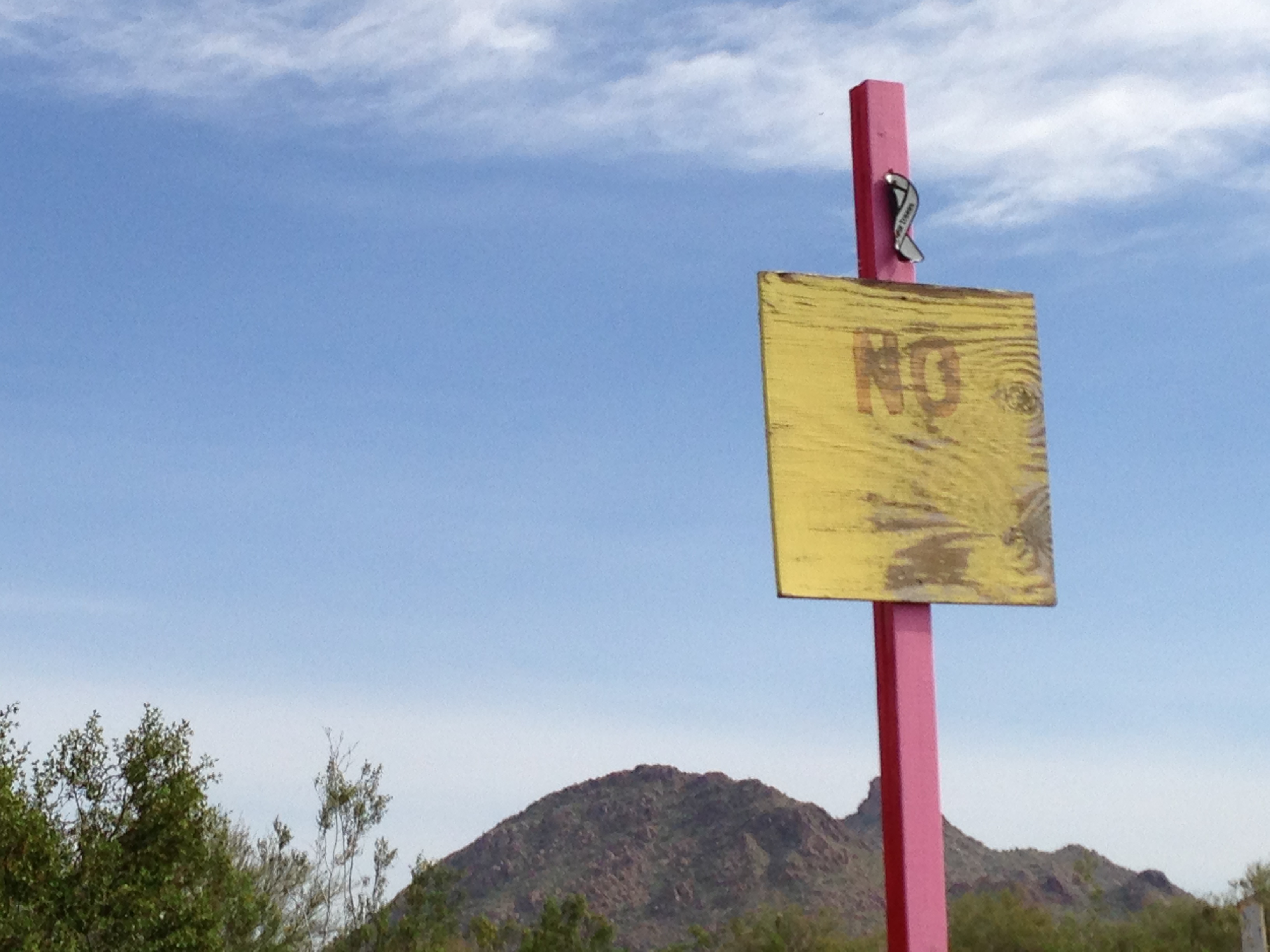
No Horse

Sweet hand-painted signage in southern Arizona.

No Sign

The guy who owns the 95-acre lot at Pima and Happy Valley Roads in North Scottsdale, Henry Valentine Becker, has been on a longstanding rampage against the Coalition of Pinnacle Peak, which seeks to prevent him from commercially developing his property. He’s been there since 1995, putting up signs and making himself a nuisance.

No what? you may ask. The message has been lost to time, and now suggests, at least to me, a kind of quintessentially Arizonan plywood sentiment … no to gun control, no to “illegals,” no to same-sex marriage, etc. etc. But I like the mysterious No on its own. The signs rim the lot and insist upon their own importance.

Becker has put up other painted signs as well.

Cowboy sign

Wranglers. Kachinas. Lizards. I collect painted signs as long as they’re free. Brought one home off a telephone pole in a Midwest cornfield one time years ago. It reads Cherish.

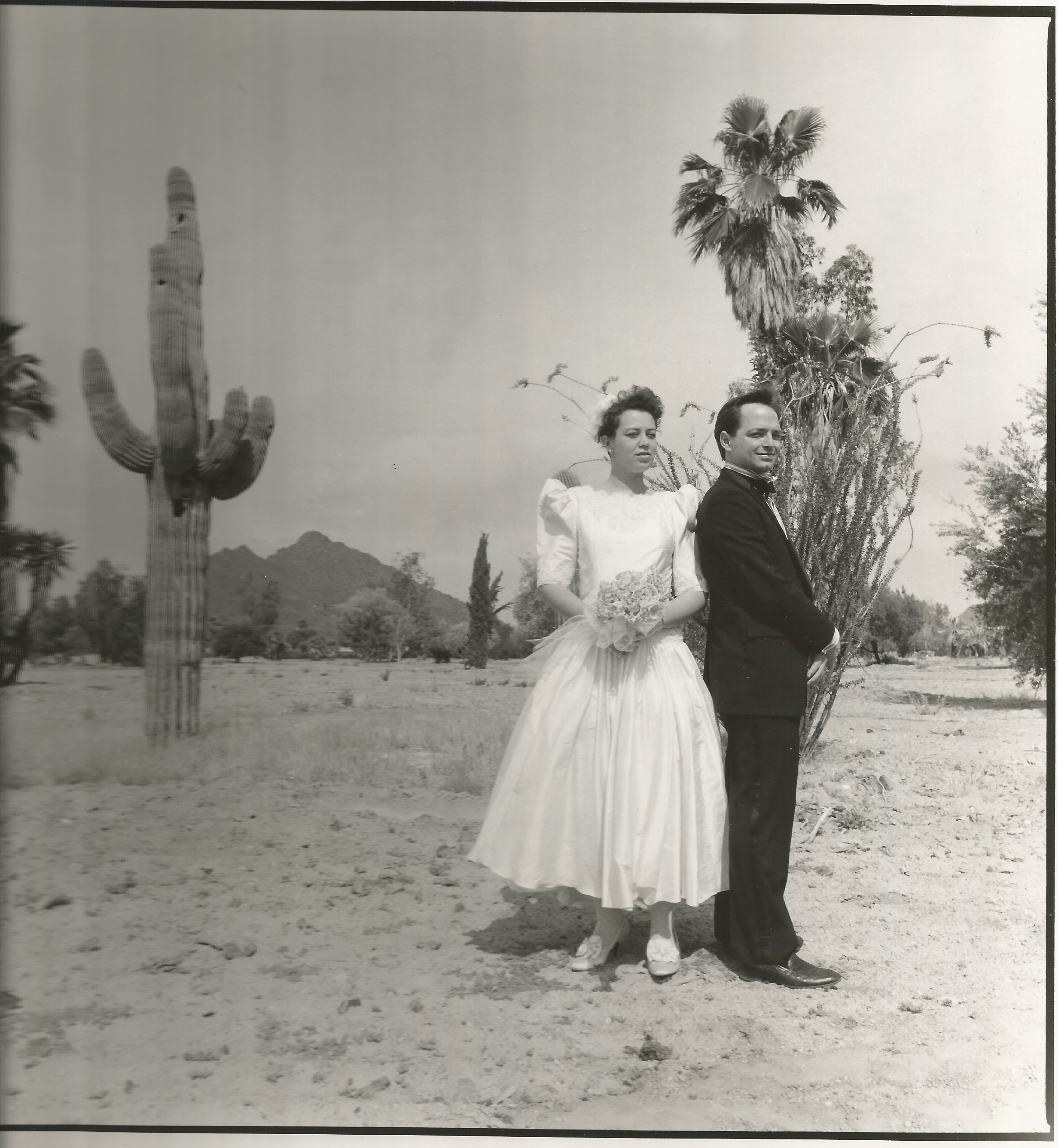
Becker’s property, within the insistent boundary of signs, remains pristine. It reminds me of nothing so much as the as-yet-undeveloped lot across town where Gil land I took our wedding photos 25 years ago.

J & G in April

Among the saguaros, in a time when Scottsdale was more known for horse farms than tacky shopping centers.

pristine

Becker lives in comfort, fairly near the property in question, in a conventional home, if ideosyncratically littered with yellow Post-It notes. The weatherbeaten signs call attention to his plight, get his story across to the millions of cars that jam Pima.

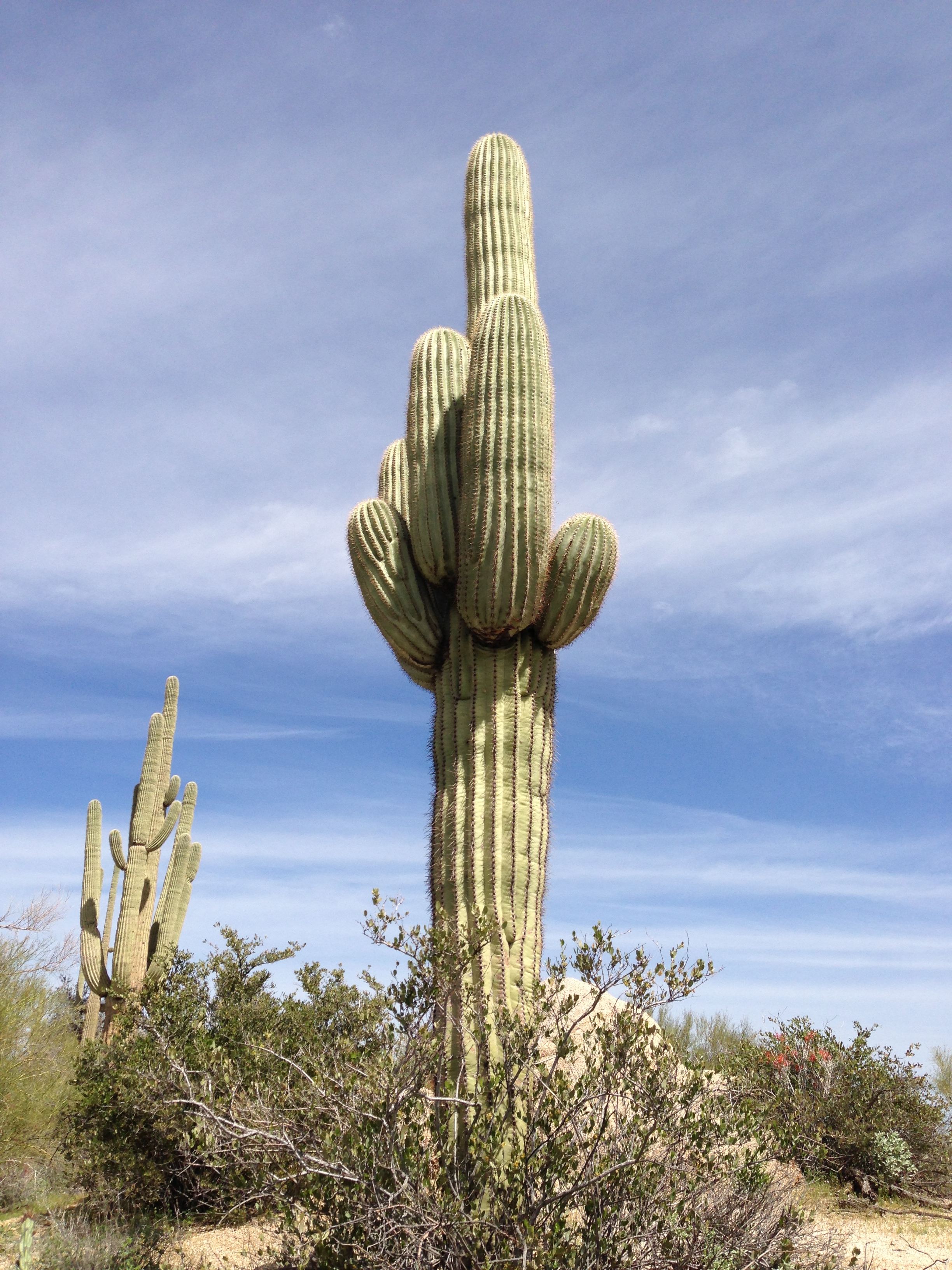
Everything weathers here, even the proud-standing saguaros, the ones giving the finger to the sky.

finger saquaro

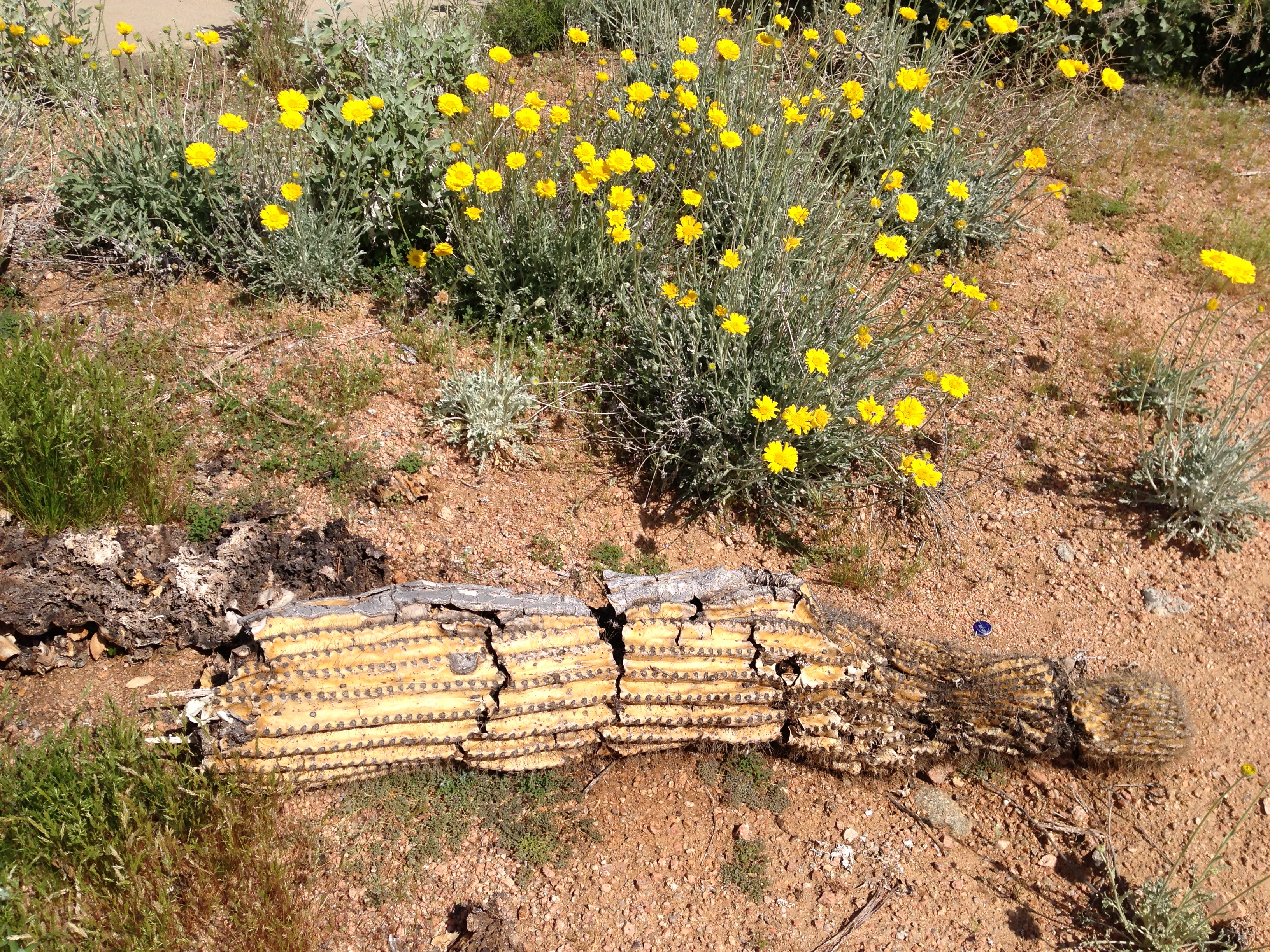
You see their skeletons everywhere littering the ground.

weathered saguaro

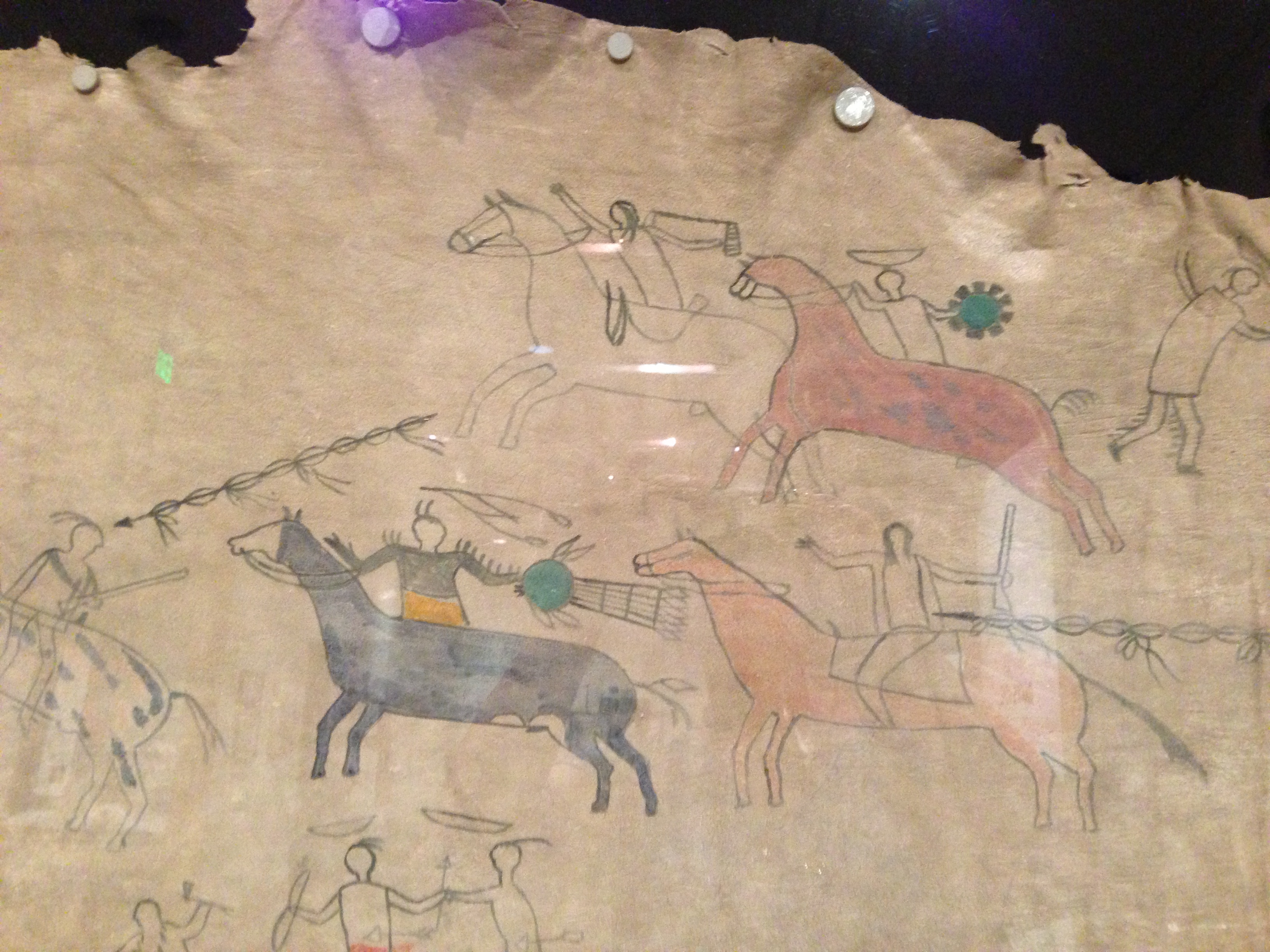
Different, of course, yet similar to Becker’s faded attempts, the ledger art of the Plains Indians, a phenomenon through which artists got their story out between about 1865 and 1935. Originally, the tanned skins of bison were used for painting individual scenes or narratives, using natural pigments. This one dates from 1880, and shows a battle between the Cheyenne and the Pawnee.

hide

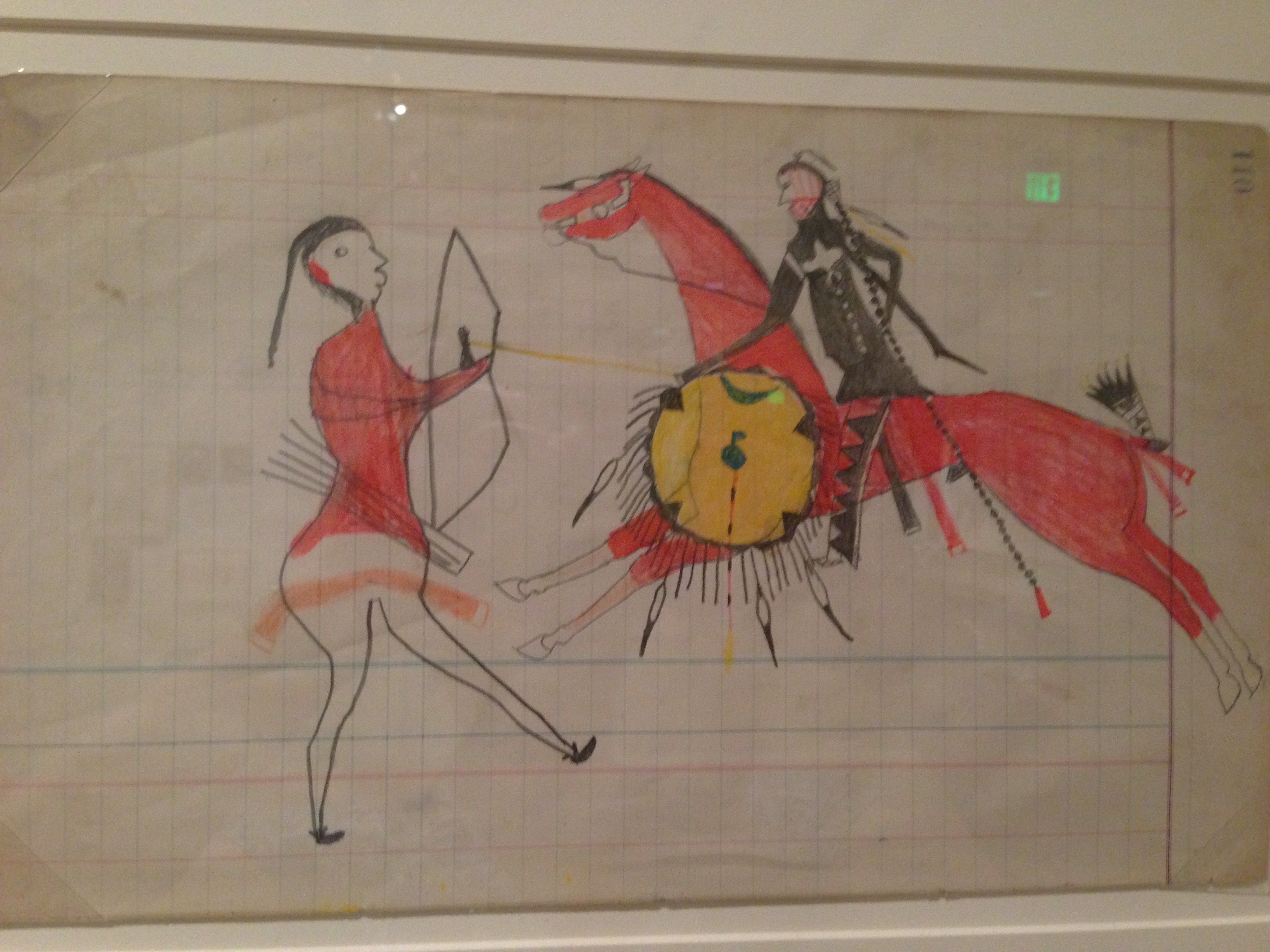
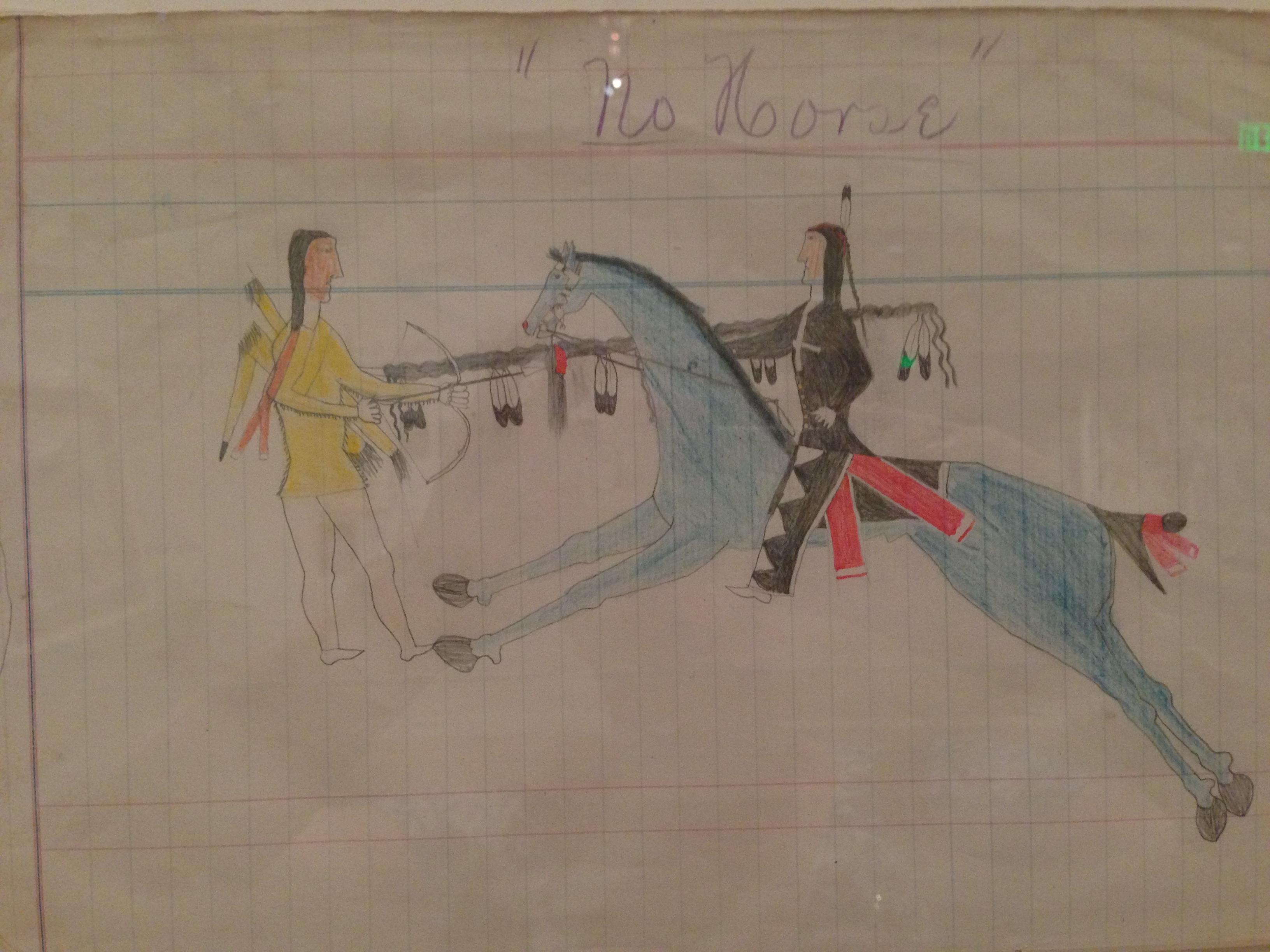
The U.S. government initiated a mass slaughter of the bison in order to reduce the central food source of the Plains people. So no more natural canvas. Artists transferred their pictogram paintings to either muslin, woven canvas or, most interestingly, paper ledger books, the ordinary kind businesses used to keep their accounts.

They had to get their story across.

ledger sheet

I love the transgressive nature of these illlustrations, which explode off the pages of the staid, “civilized” lined paper.

ledger 2

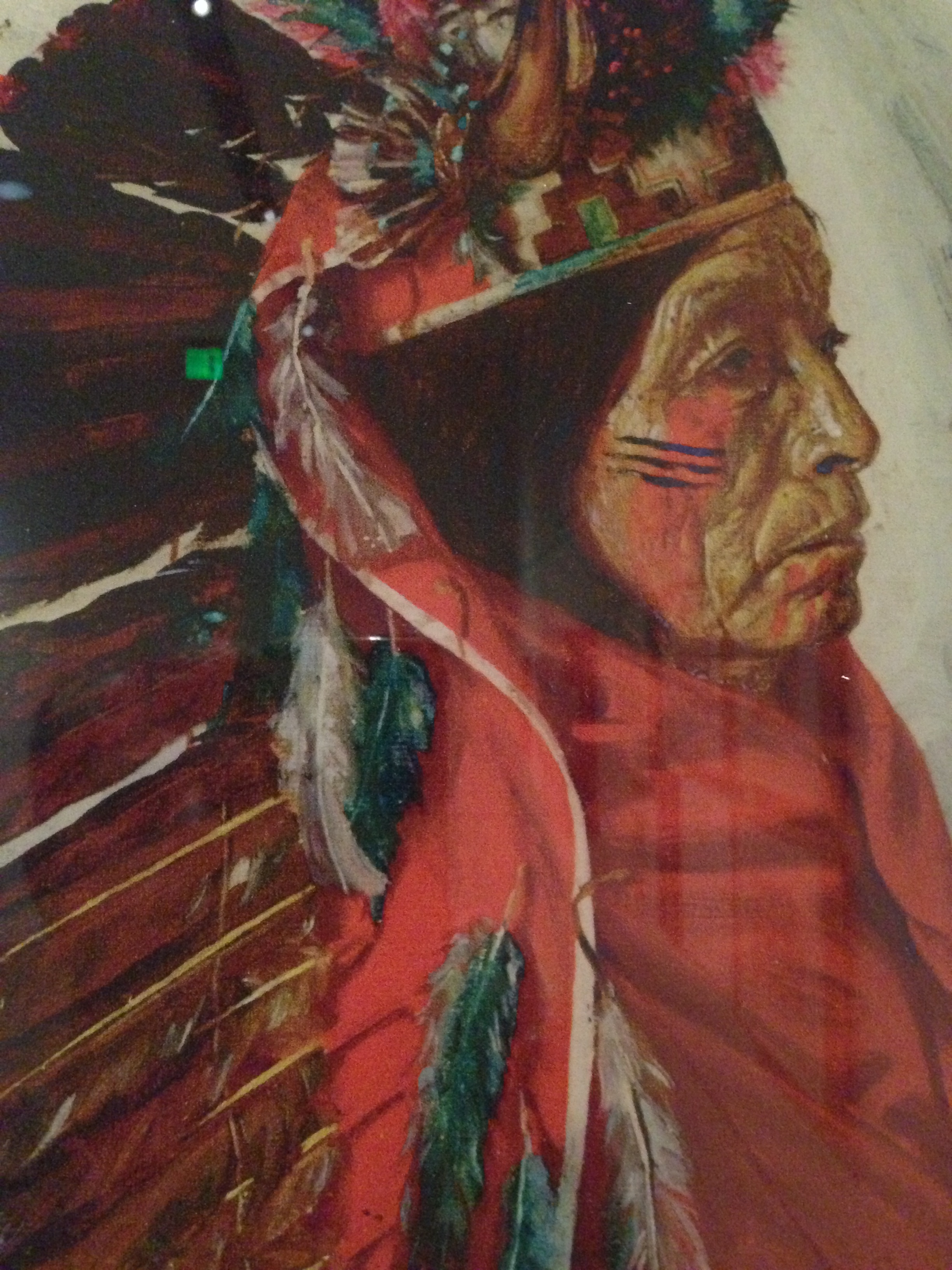
Chief Chief Killer distinguished himself among ledger-book artists.

chief killer

Educated at the Carlisle Indian School in Pennsylvania, the Cheyenne went back to the reservation in Oklahoma as a farmer, butcher, policeman and teamster.

He excelled at scenes of ceremonial life, landscapes and cityscapes. Collected in a ledger book cryptically titled No Horse are a series of accounts or heroism in battle.
no horse

According to his last will and testament, when Chief Chief Killer died in 1923 he left one grandson a spring wagon, one a bay horse, his granddaughter a set of light harness, but neither he nor his descendents had the funds for his burial, which the government covered to the tune of one hundred bare-bones dollars.

The new Heard Museum offshoot in North Scottsdale has a beautiful exhibit of ledger books.

One of my favorite pieces of research for The Women of the House years ago was the 18th century ledger book of the Albany fur trader Everett Wendell, which I felt privileged to handle at the New-York Historical Society, wearing white cotton gloves. Wendell indicated the furry merchandise to be exchanged with pictograms that he and the non-English speaking Alquonquin trappers would both understand: three little beavers, for example, or two bears.

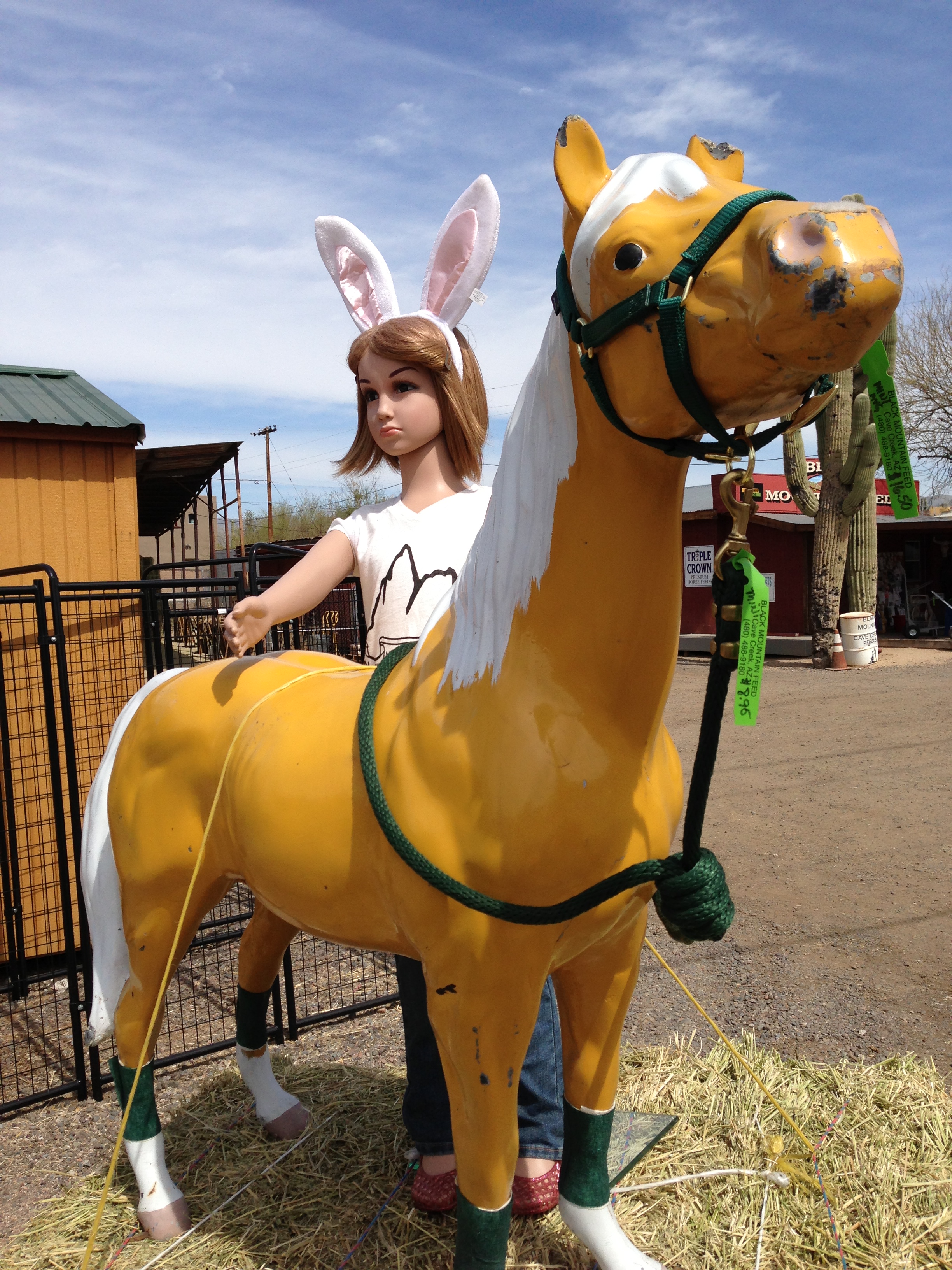
Big hand-lettered signs  or pictures on ledger paper make a clear statement. What statement does this figure make?

feed store

The life-size mannequin stands outside a feed store in Cave Creek, sporting her Easter finery, advising motorists that they better come in and make hay while the sun shines.

Maybe all those No signs could be reconfigured… No Horse.

no horse sheet

5 Comments

Filed under Art, History, Jean Zimmerman, Nature

Bloody Places

Driving south on 17 from Sedona to Phoenix is a trip through the mysteries of western place names, western places, some of them bloody. At first, all you see are the greasewood’s craggy grey branches. The red of Sedona turns tawny, like a leonine pelt. Everything looks spent.
You begin to notice the names, imbued with the past: Bloody Basin Road. Hayfield Draw. Like Margs Draw Trail in Sedona, but that Draw was named, I think, after a mule.

Quath-qua-oda, which means “sweet red round” in Yavapai. What was sweet, and what was round, has not been recorded.

You pass bulbous shapes of cedars. High chapparal: blond grasses atop mesas.

You pass descansos, roadside shrines to car crash victims – two white crosses side by side, then a black cross surrounded by yellow flowers. One lensman, David Nance, has taken some great photographs of these shrines.

descanso David B. Nance

Reminding me of the wall in the gift shop at the greasy spoon this morning, all skulls and crosses.

skull crosses

“We say that the hour of death is uncertain,” writes Proust, “but when we say this we think of that hour as situated in an obscure and distant future. It does not occur to us that it can have any connection with the day already begun or that death could arrive this same afternoon, this afternoon which is so certain and which has every hour filled in advance”.

You come to General Crook Trail. George Crook, the Indian fighting general who earned his props during the Civil War (for the North), served afterward in the Pacific Northwest before repeatedly forcing the surrender of the Arizona Apache under Geronimo.

George Crook

Brown faceless mountains. Beautifully bleak.

Badger Springs Road and Horse Thief Basin.

Ravens soaring across the highway. Ash Creek. Agua Fria.

You pass Arcosanti, still under construction all these years later, its futuristic architect Paolo Soleri continuing to design apses. I still have my green bronze bell, someplace.

Rock Springs, with its biker cafe and 20 kinds of pie, its clutter of signs and decent schlock shop.

rock shop

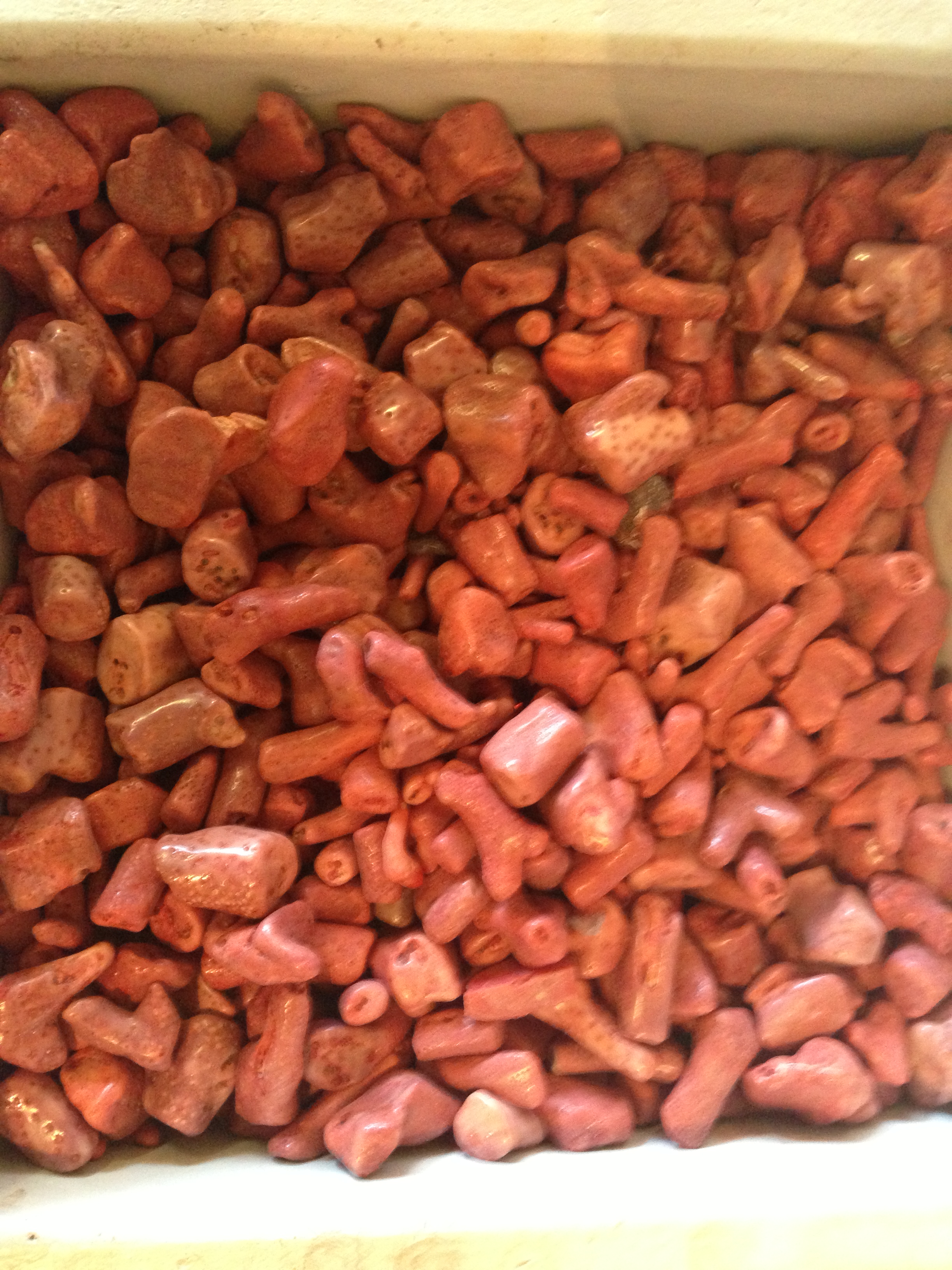
I like coral, hard to find in these days of overharvesting. But on this trip I got a piece half the size of my pinky nail for 75 cents. Good luck to me.

Coral

Little Squaw Creek. Moore’s Gulch.

You start to see ocatillo fly by, then Table Mesa, its top set with cactus and sagebrush.

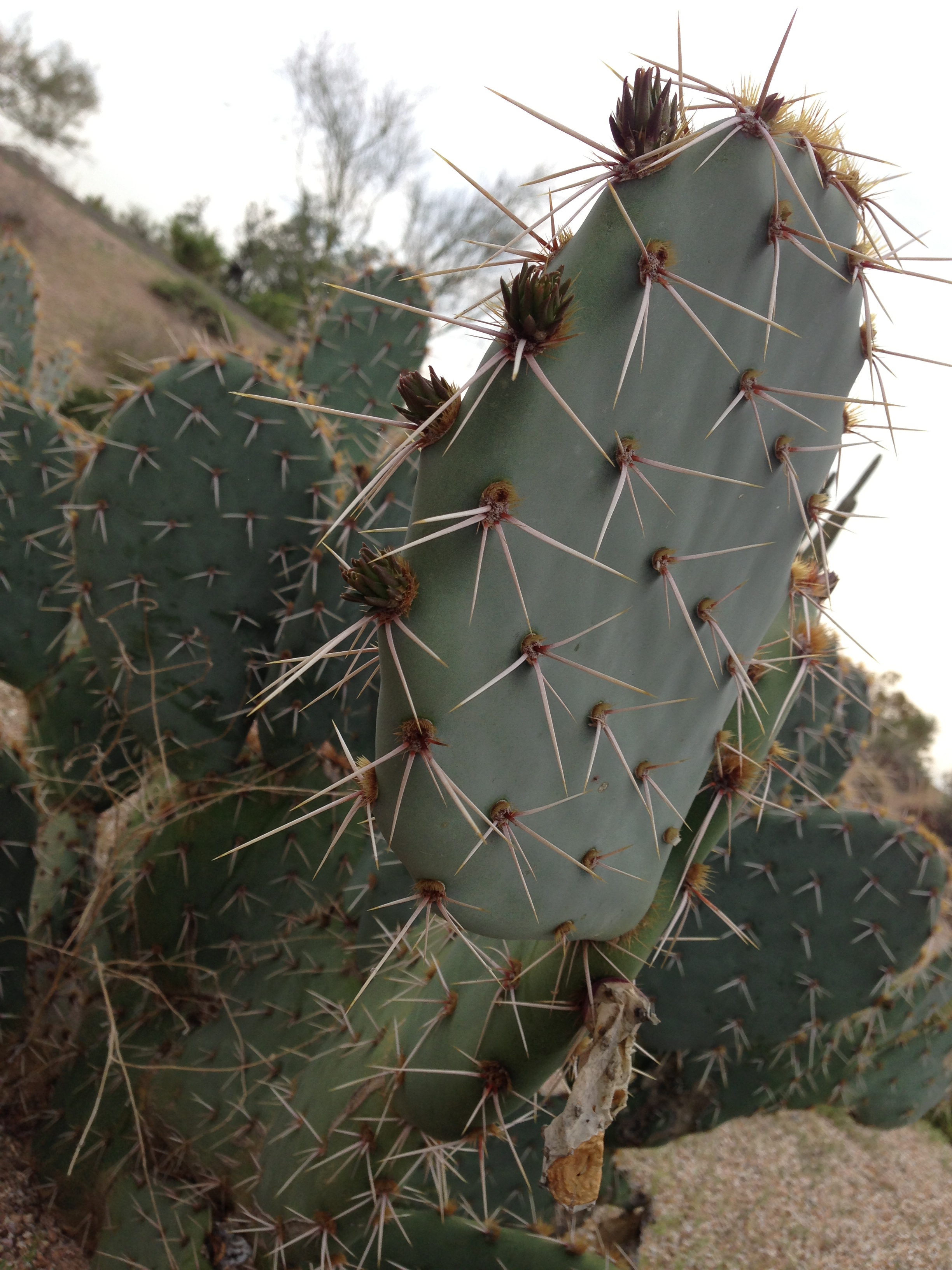
Finally you reach Bumblebee, and with it, now you’ve dropped under 4,000 feet in altitude, the first saguaros, ranging atop the hills. Prickly pear perks up.

prickly pear cactus

Bumblebee, a ghost town and former stagecoach stop, still has a general store and one ranch, yet for a while it sponsored swinging jazz fests. The burg was founded, it has been said, by the maker of Carter’s Little Liver Pills.

Spring starts now: a glimpse of orange globe mallow, a scattering of yellow broom bush, dangerous cholla.

cholla

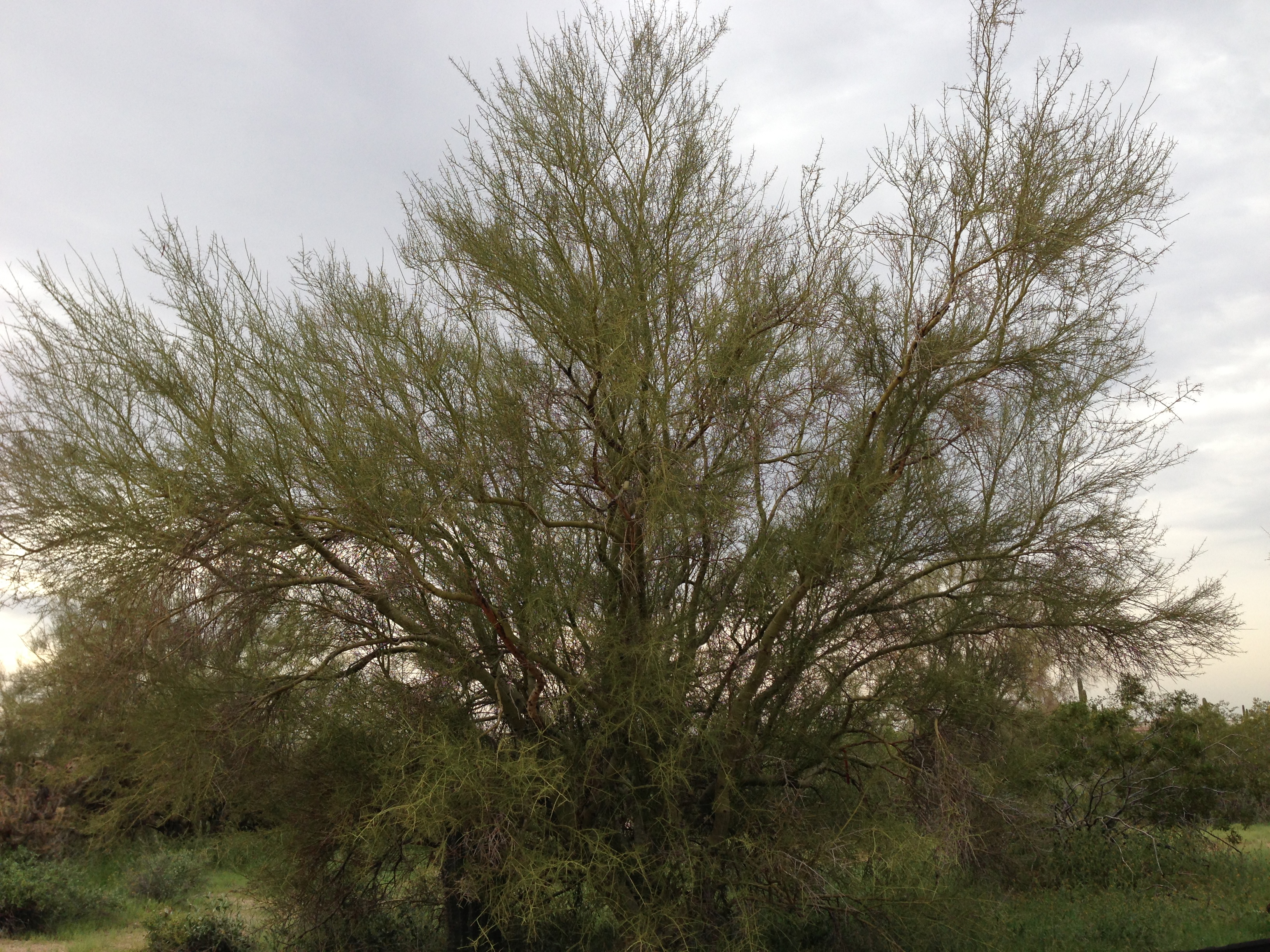
Palo verdes with green trunks.

green tree

Ironwood.

Angelita daisies.

bee on daisy

The thing about saguaros – they’re ancient, grow an inch and a half in their first eight years, then drag their asses along until they finally begin to get huge, attracting creatures in need of a fleshy home like this noisy cactus wren.

cactus wren

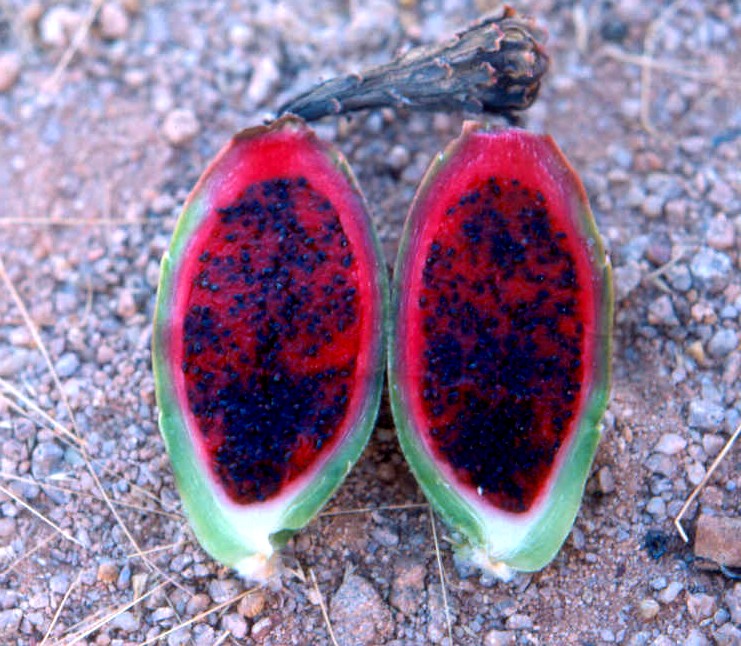
They produce luscious fruit.

saguaro fruit

Only when they get to be about 100 do they pop out arms, aging to 120, 180, even more than 200 years old. They can weigh six tons or more.

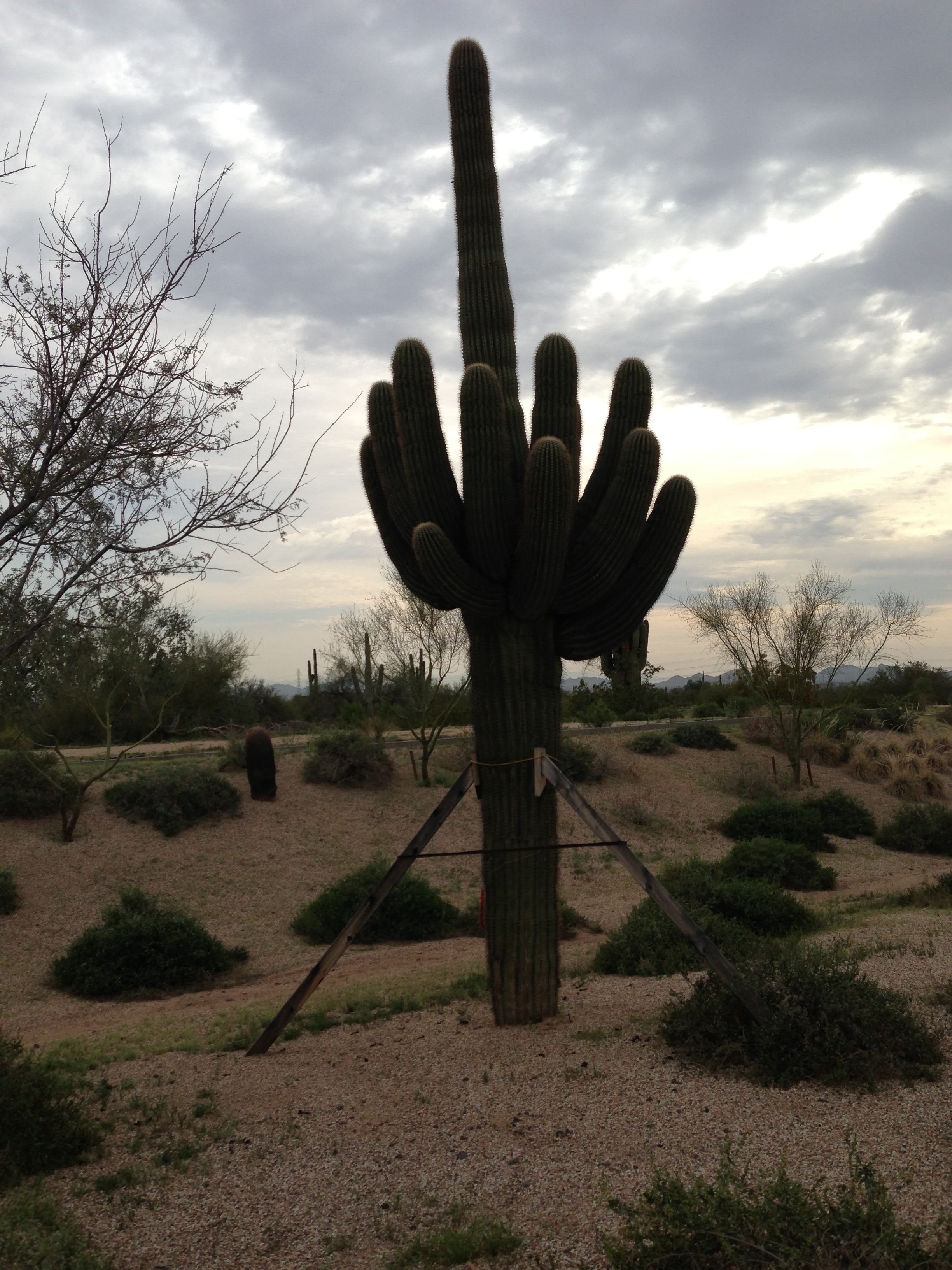
Occasionally one needs bracing, it’s gotten so fat.

propped up saguaro

There are some saguaros standing that General Crook could easily have passed on his way to punish Geronimo.

3 Comments

Filed under History, Nature, Photography

A Paleo Hike

I think our family would really benefit from the Paleo diet, says Maud.

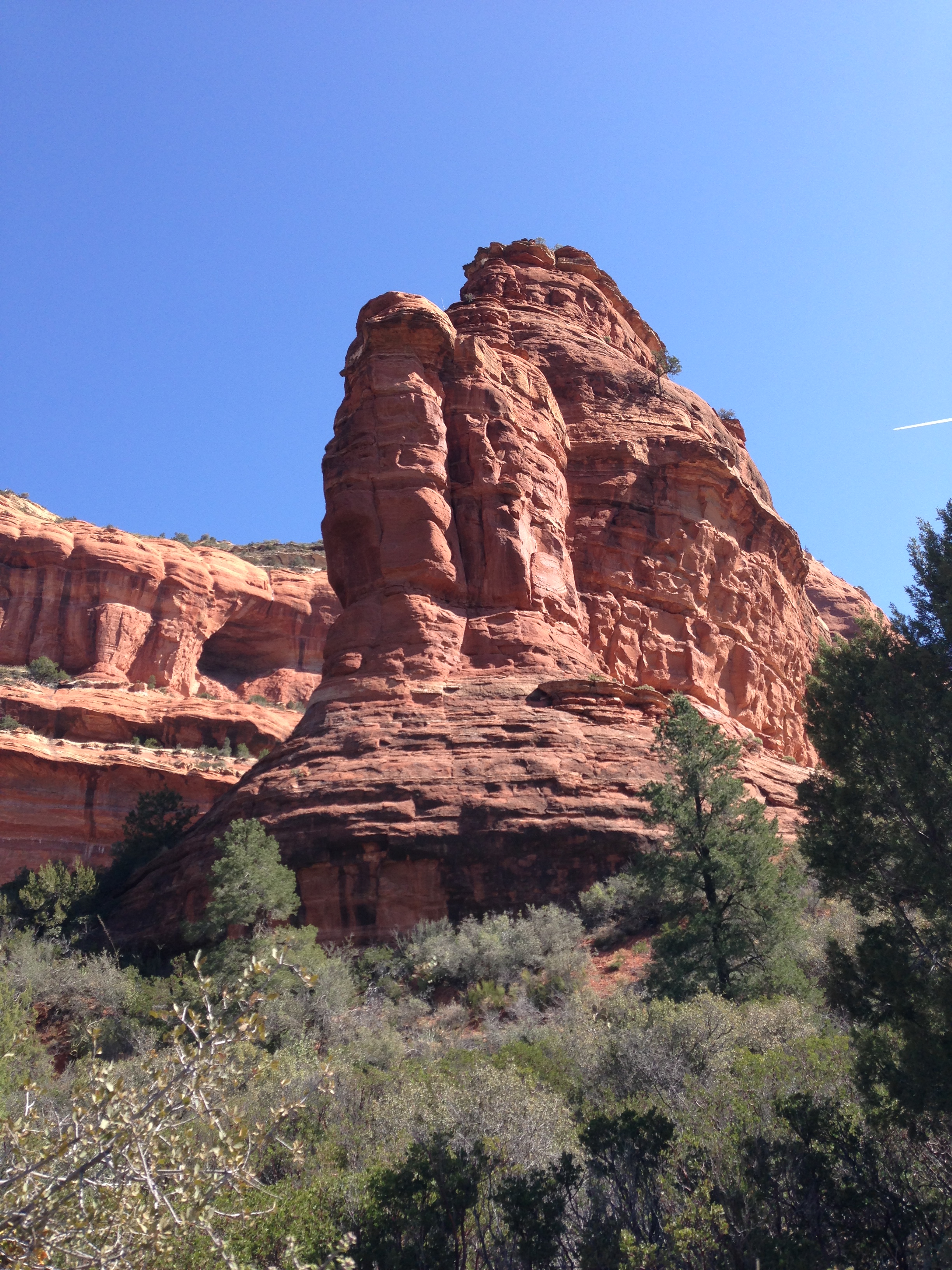
At the mouth of Boynton Canyon, the most beautiful feature of Sedona, Arizona, and probably the rest of the natural world. The dust of the trail is red, but not as red as the rocks that rim the place.

red rocks

The Anasazi, the ones that came before, and those that came after them, the Yavapai, populated these parts until  600 or so years ago, dwelling in caves beneath the circling ravens and slip of moon. Cookfire smoke still can be traced up the walls.

We walk where they walked, talking about eating nothing but meat and fat. Maybe gristle, for variety.

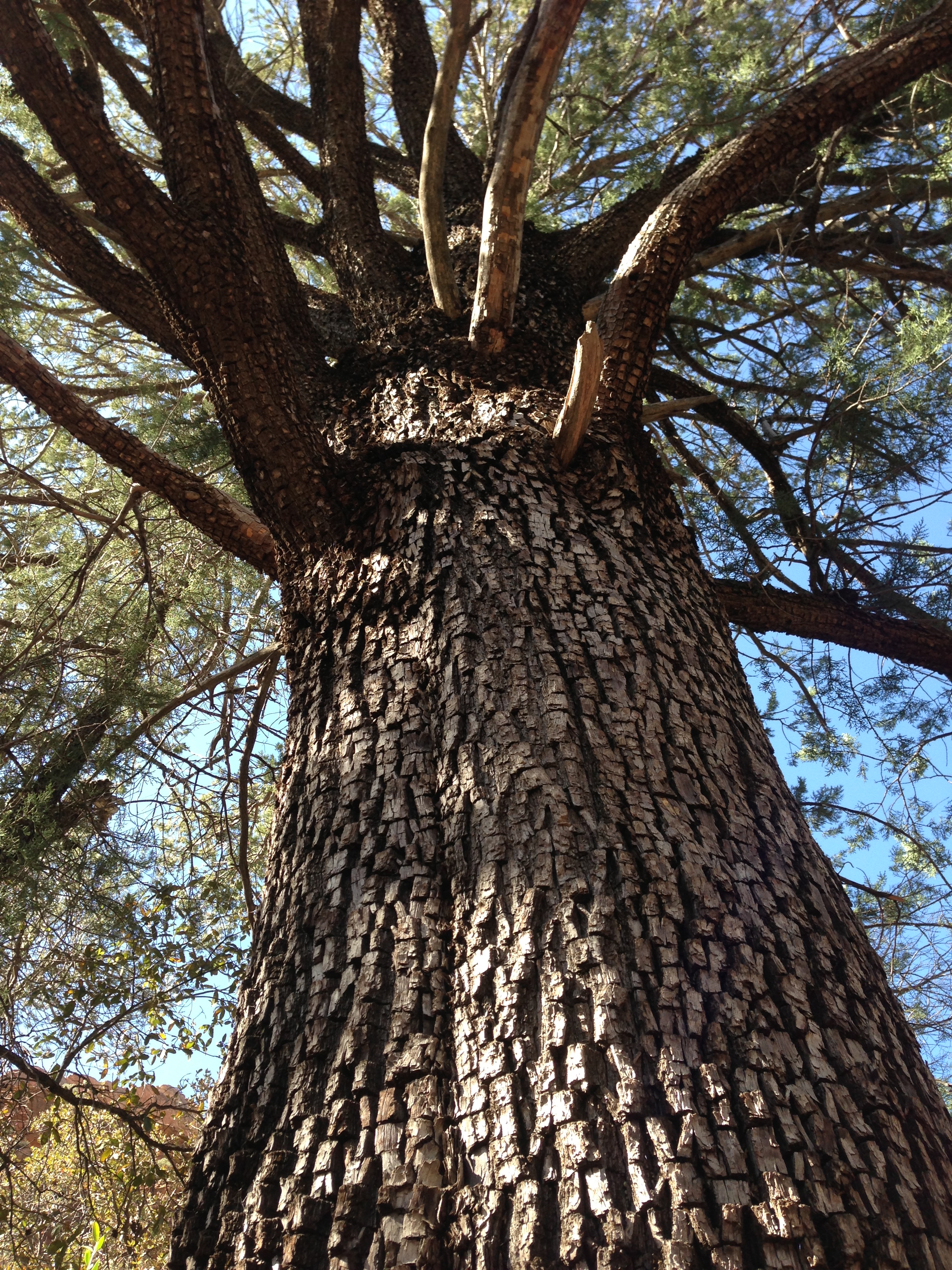
Past the alligator junipers, 300 years in the making.

alligator juniper

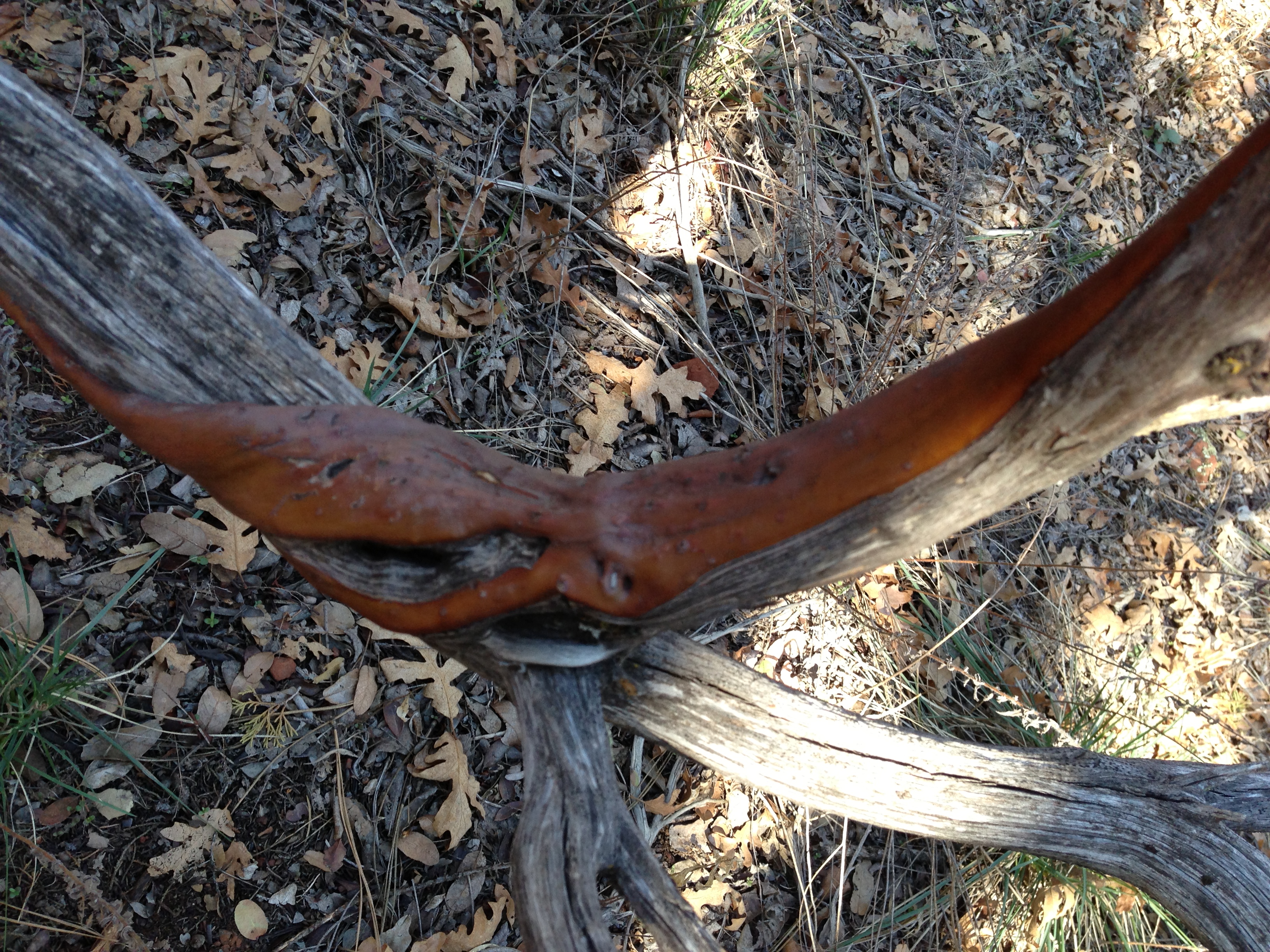
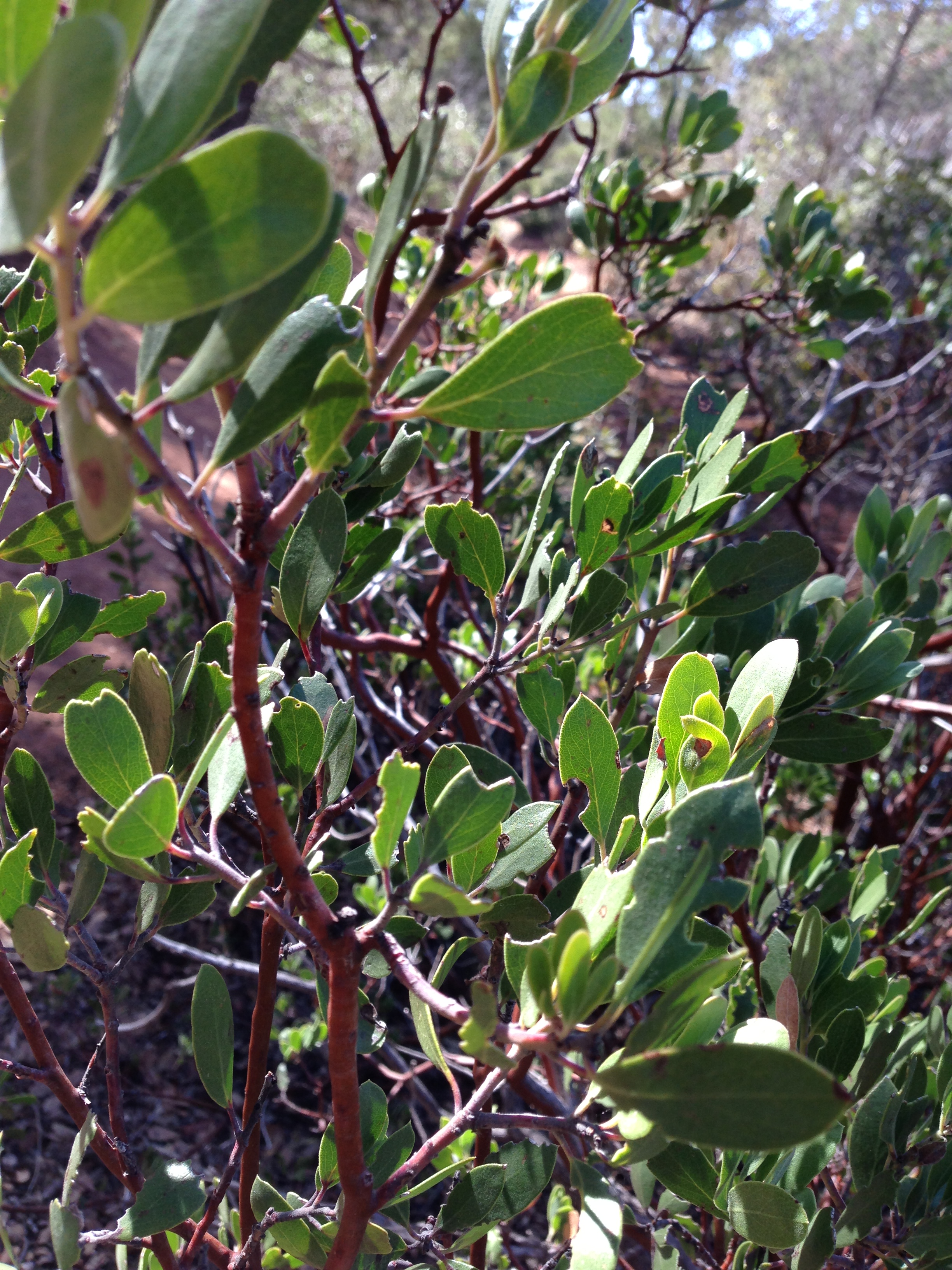
Past the manzanita, which I love because it dies and lives at one and the same time, its red, smooth, cold bark entwining with the old grey.

manzanita detail

We passed a herd of javelina coming in, blustery and shy at once, hustling their young along.

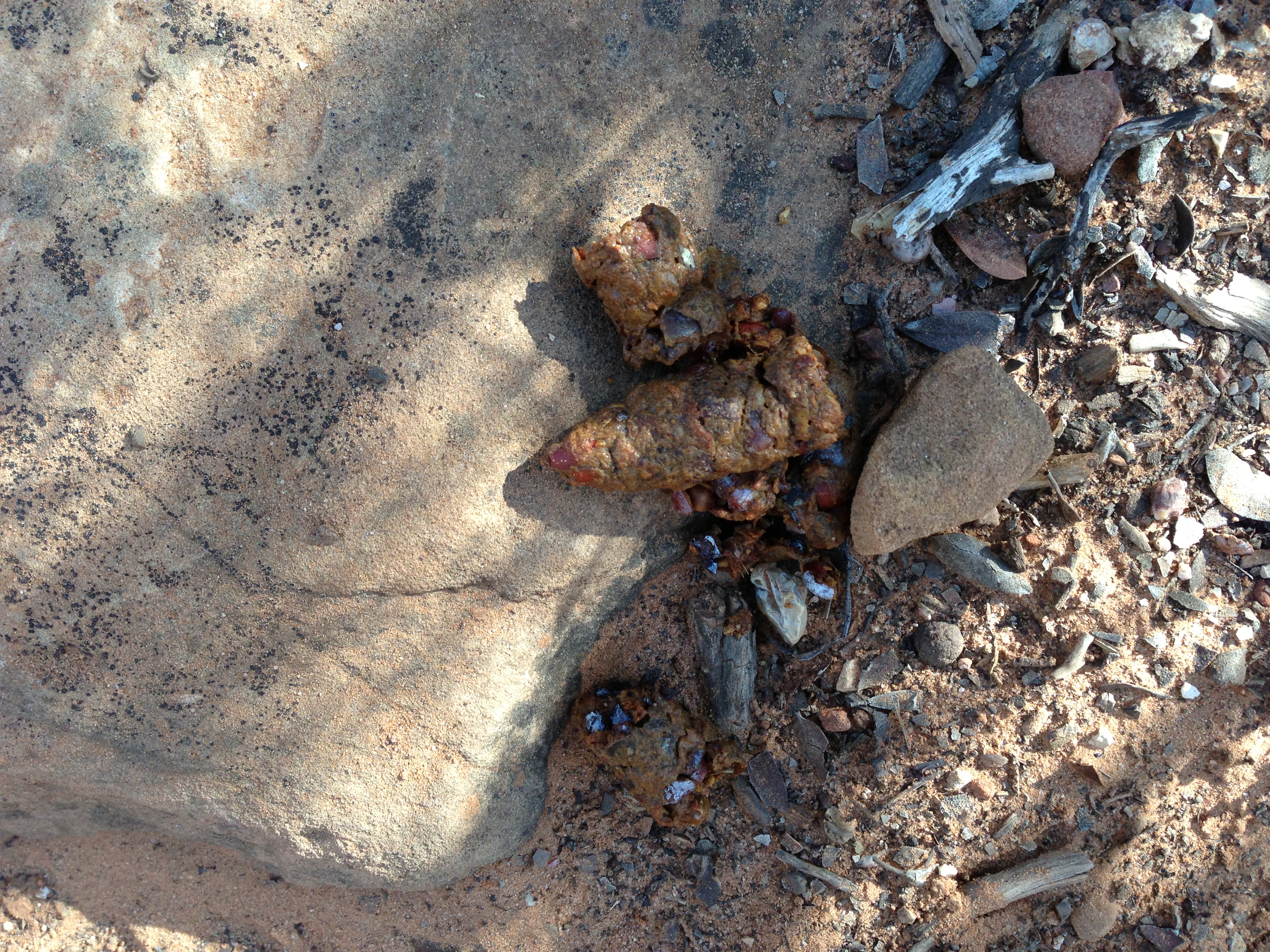
Coyote have been here, leaving blue juniper berries in their scat.

coyote scat

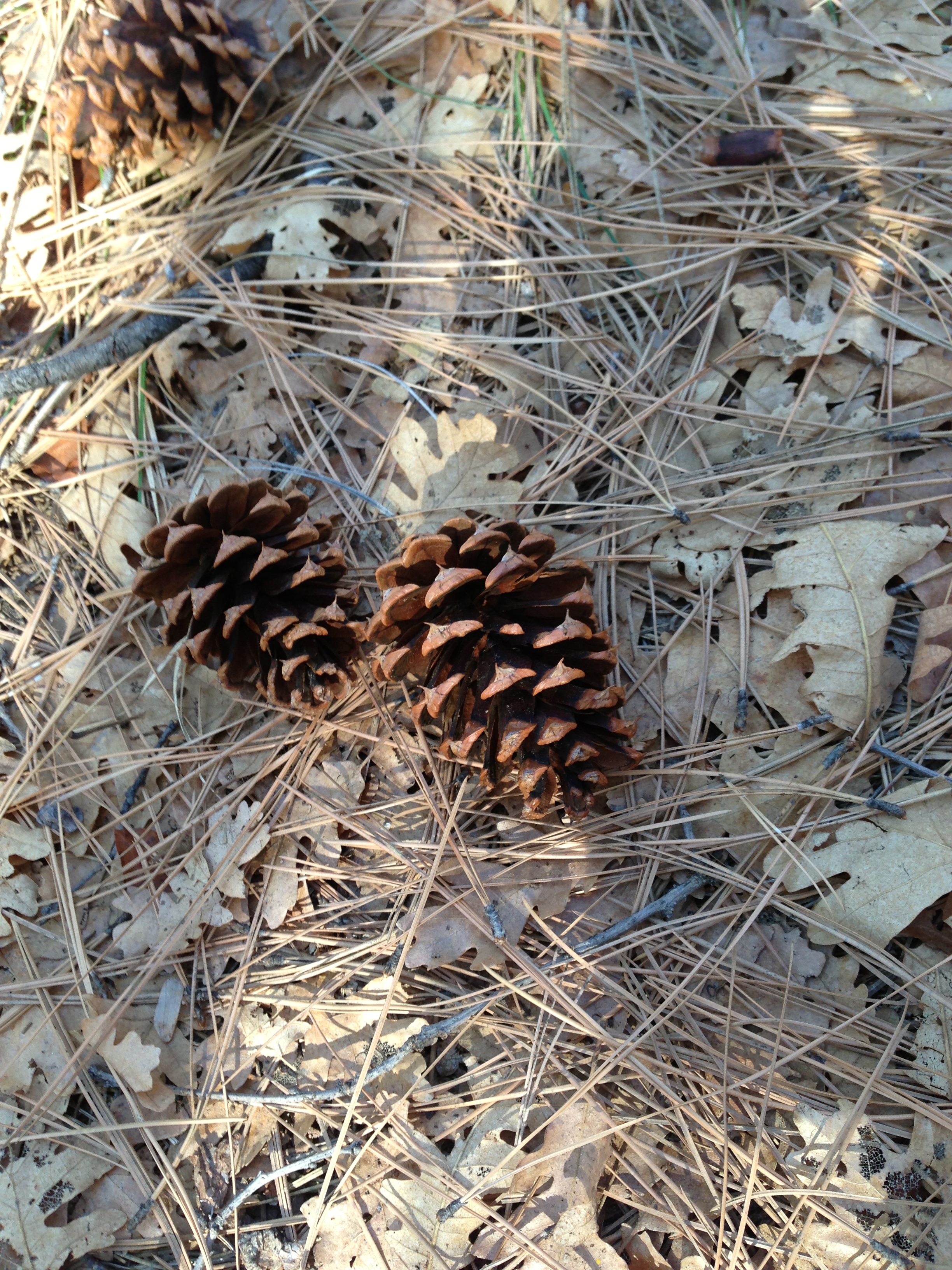
I wonder what it would be like to eat nothing but meat. No juniper berries, no salads of grizzled green grasses. Only the occasional pine nut.

pine cones

Black butterflies and white butterflies flit through the undergrowth. The towhee hops beneath the manzanita, fat red breast and coarse black and white feathers like a Renaissance cloak, then disappears.

manzanita c.u.

Meat. The oily scent of mesquite in the cool air now that the sun has come over the canyon wall. I learned recently about a perfume designer who created a concoction based on the smell of ink. Mesquite for Men?

How far is it to the back of the canyon, I ask a hiker resting on a rock.

There’s only one way to know, he says, smiling with certainty.

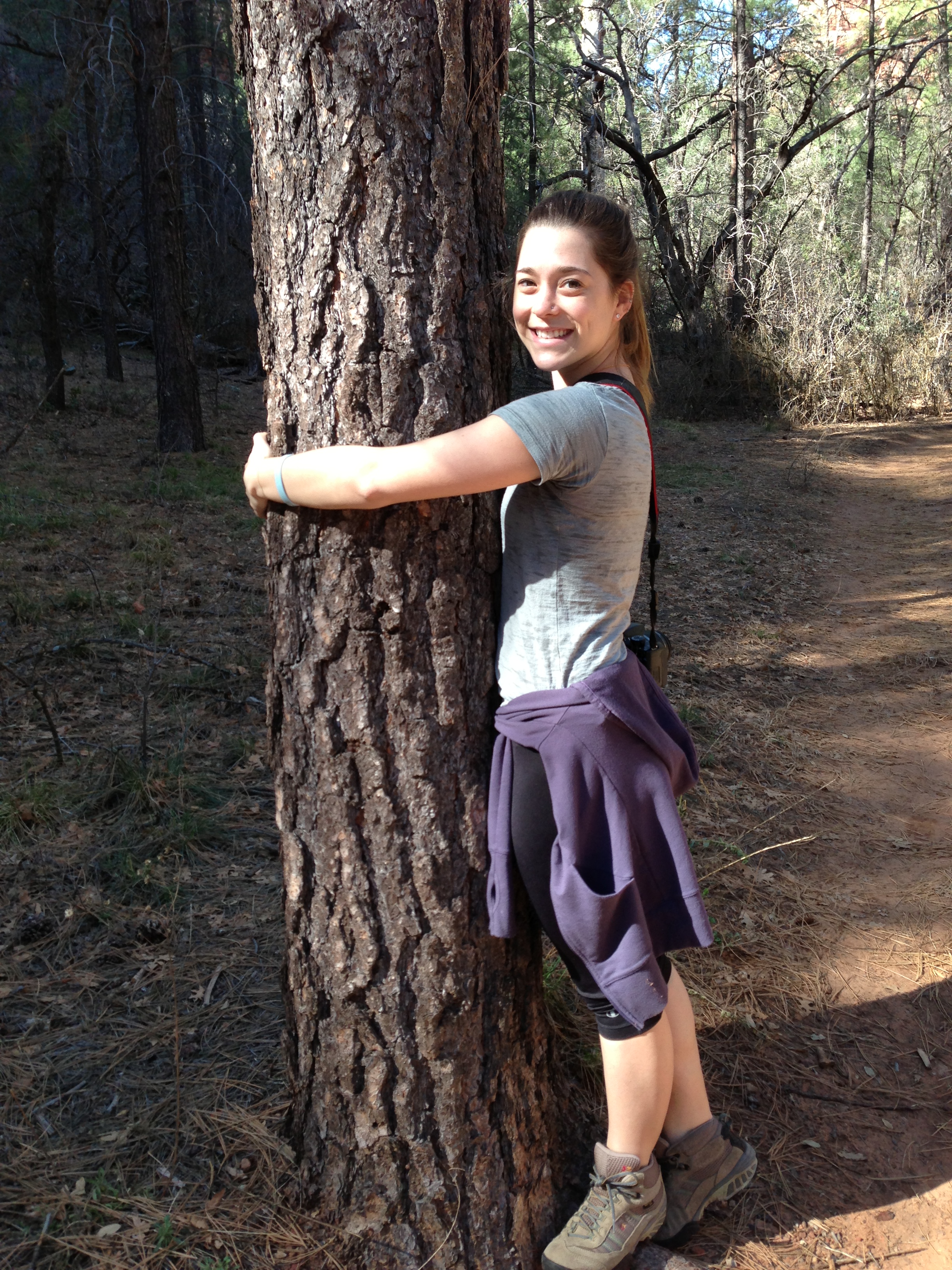
We love the Ponderosa pines, which for some reason thrive in Boynton Canyon.

maud tree

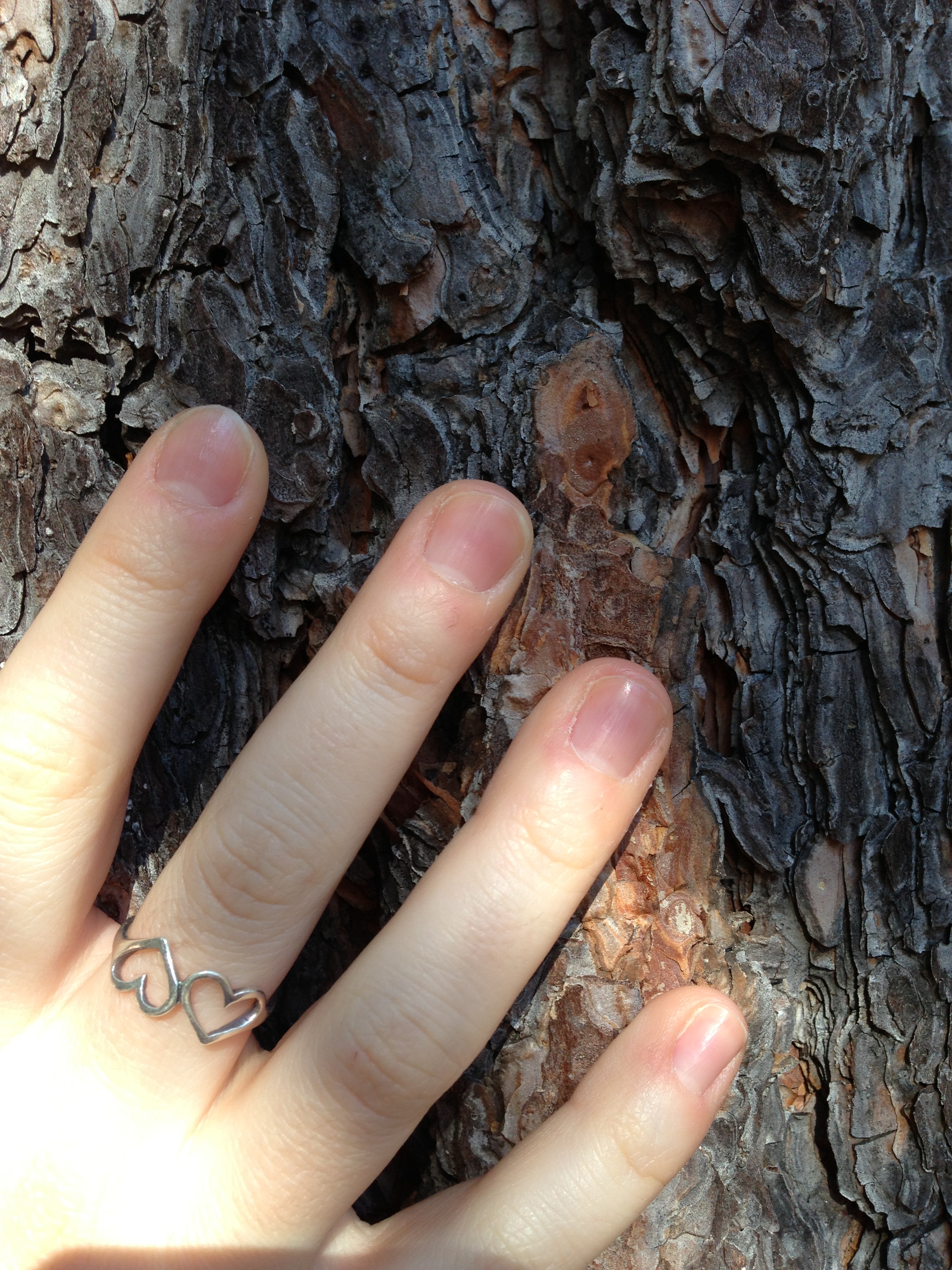
When the sun rays hit their bark, they give off the aroma of butterscotch.

Feel the hot sweat on your back. The negligible soreness in your toes. Press your nose up against a tree, and learn how to live.

Perhaps on a diet of butterscotch.

ponderosa


3 Comments

Filed under History, Nature

More Nautical Mysteries

What lies beneath the Hudson River (besides a ton of PCBs) is… a trove of ships.

English navigator Henry Hudson sailed the river on behalf of the Dutch East India Company in 1609, exploring its reaches in quest of a western route to Asia. Even before that, vessels plied the brackish waters of this most beautiful estuary in the world. And not all of them made it. (Hudson himself didn’t make it, since he and his son were cast adrift in Hudson Bay by a mutinous crew. Reportedly they had scurvy and were a pain in the neck.)

00d/25/arve/g2396/005

Sloops. Revolutionary-era gunboats. Barges. They line the silty Hudson riverbed, each one encrusted with barnacles in a layer as deep as a man’s forearm. Two hundred or so shipwrecks have been found along the course of the river between the Battery in New York City and Albany. Along with railroad cars and random loads of brick. Storms sunk most of them.

Scientists probing with sonar in advance of a new bridge to replace the Tappan Zee found a wreck just north of the bridge. It’s too murky to see down there, even with a powerful light.

Where did all these boats come from? One place is the Rondout. Where the Rondout Creek spills into the Hudson, part of Kingston, New York.

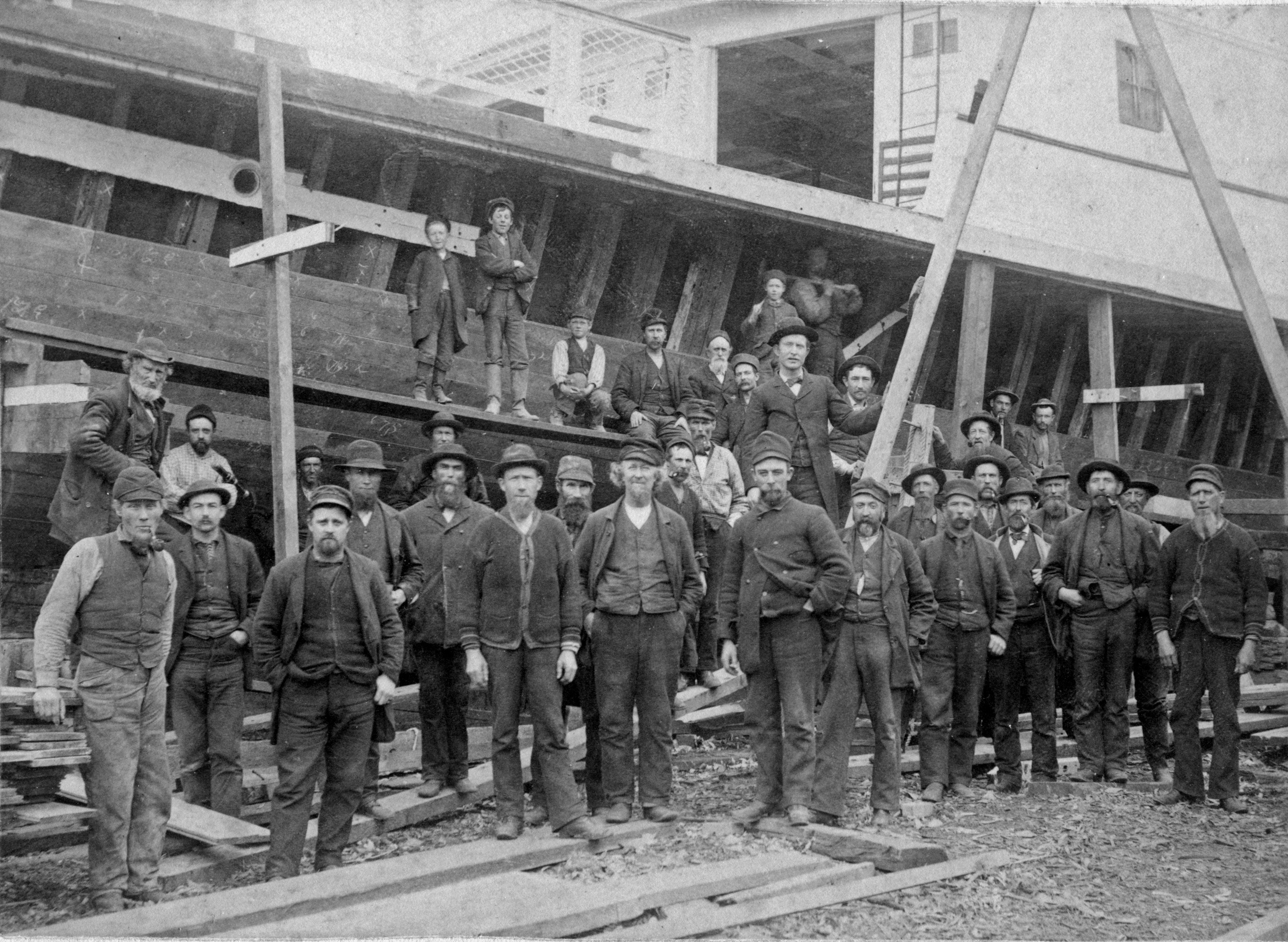
The Rondout emerged in the 1820s and ’30s as the primary Hudson River port between New York City and Albany when it became the terminus of the Delaware & Hudson Canal. It was 108 miles from Carbondale, Pa., and coal men with big dreams realized if they could haul anthracite from there to the Rondout, they could bring it down the Hudson to New York City. And make a fortune.

Shipbuilding concerns sprung up.

Boatbuilders at Rondout

Gristmills, boatyards, dry docks, three freighting companies and a tobacco factory. Brickmaking and ice cutting also thrived. But it was really all about coal.

coal boat, d and h

I got to know Rondout Creek when we had a house a couple of miles down Route 9W from the harbor, a sweet farmhouse in the middle of an orchard, where we were enveloped in springtime by the odor of honey from the apple blossoms. When we were not eating barbecue at a long table we brought out under the moon, surrounded by those low, gnarled trees, we’d go explore the Strand.

The shipyards had long since died away. In 1899, the D and H canal became a railroad. By the middle of the 20th century, the Rondout had fallen into its final slumber.

But boats still tie up there.

I remember boarding a crusty tugboat that belonged to a friend of a friend; this was its port of last resort. It was so exotic.

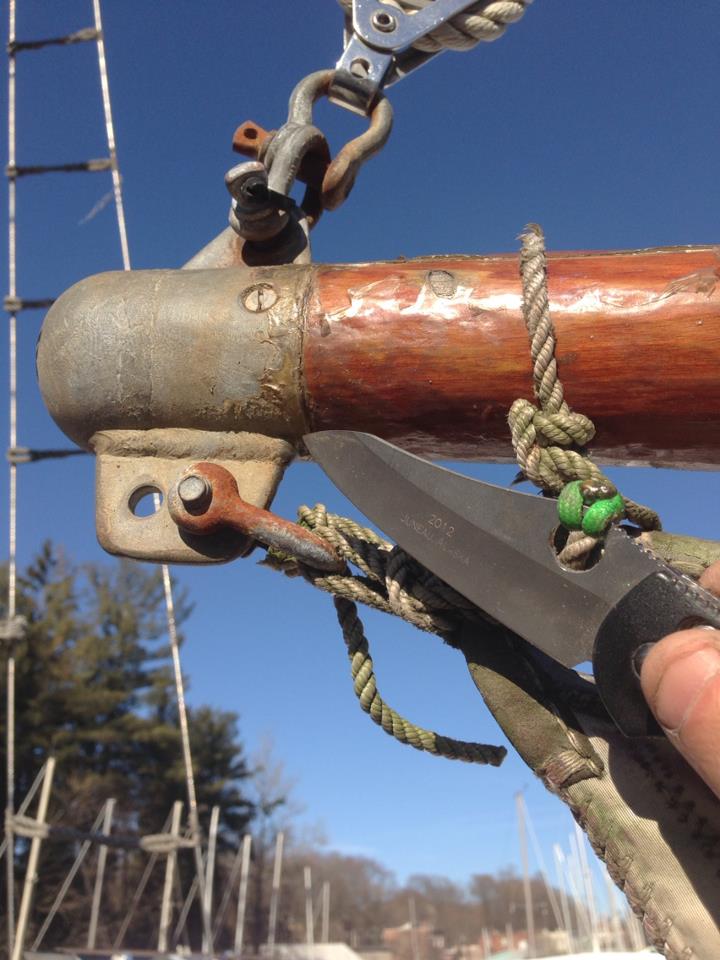
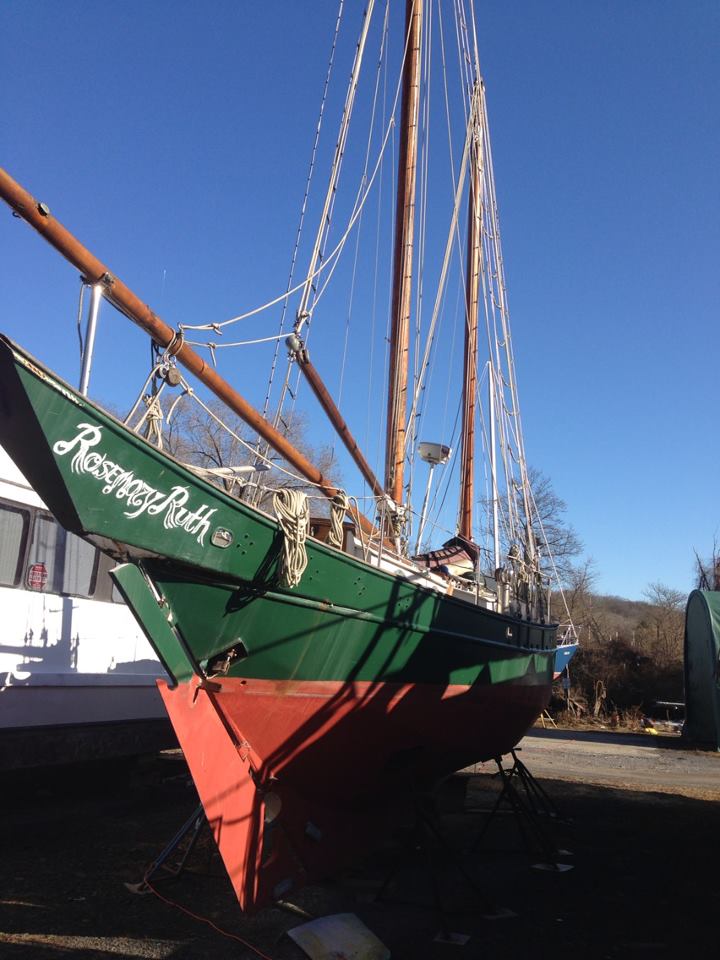
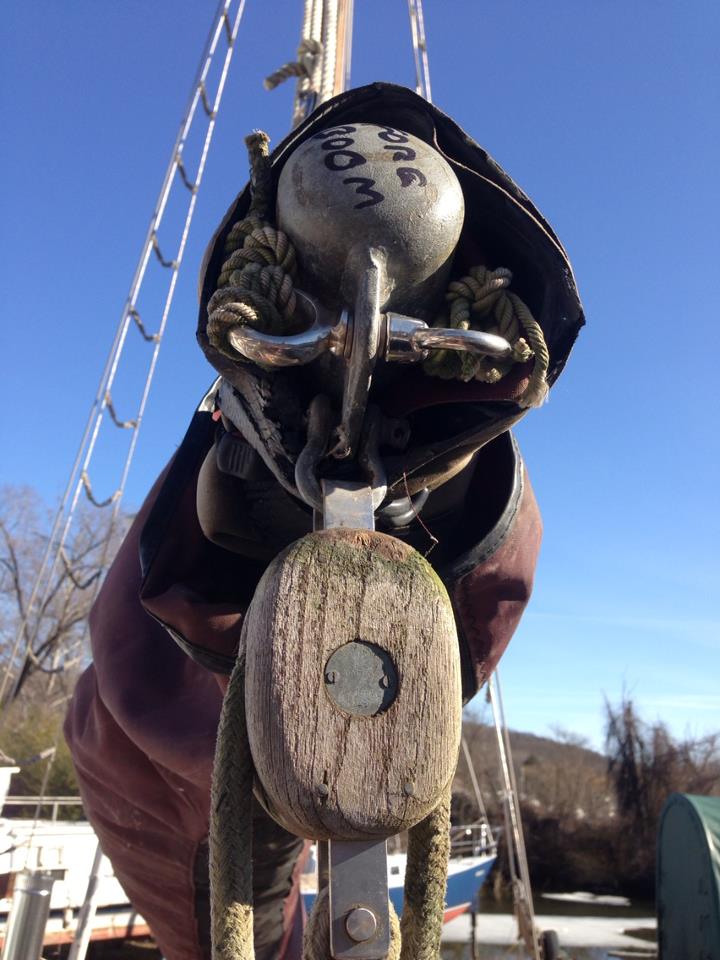
Today, my nephew spends time at the Rondout, where he is refurbishing Rosemary Ruth, a 40-year-old schooner with great lines.

Rosemary Ruth w name on stern

He is undertaking the grungy yet glamorous work of bringing out the inherent seaworthiness and beauty of this vessel. At least glamorous if you’re Jesse.

Jesse face

He’s been scrambling around the foresail boom, enraptured.

Foresail boom and sheet

Cutting the fore gaff line.

Cutting the fore gaff line

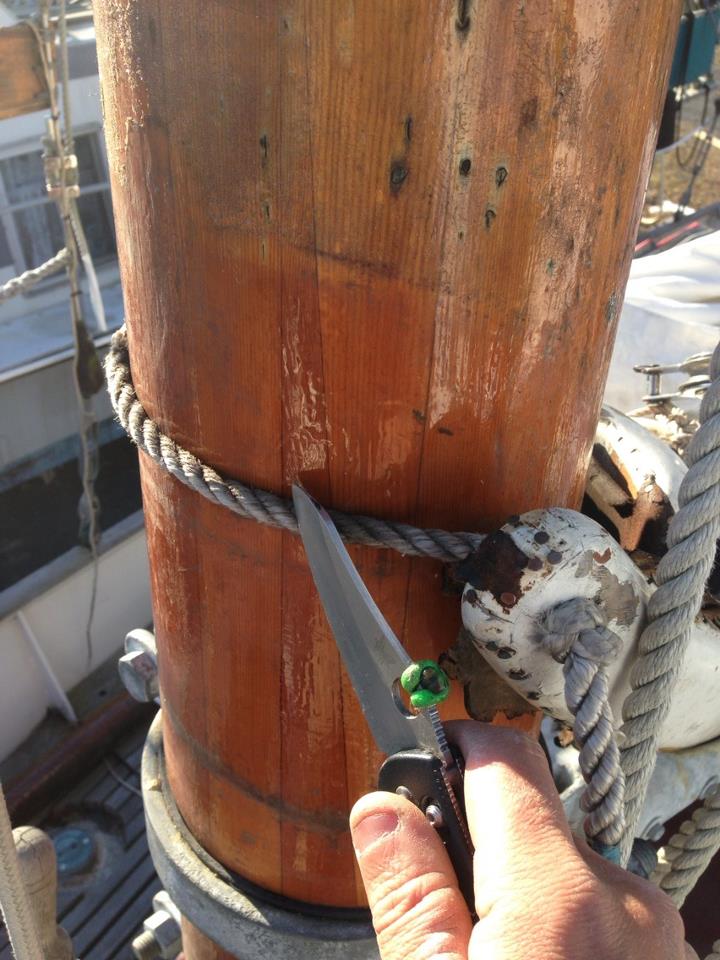
Considering what to do with the mast.

Mast Rosemary Ruth

And getting the muck of her barnacle-preventing paint all over him. There, I said it, her. I always wondered why we have to call nautical vessels her. I remember spending time on the U.S.S. Abraham Lincoln years ago, and it always seemed weird to have an aircraft carrier, one with an undeniably male name, described with a womanly modifier. Actually, one of the female jet jocks I interviewed, who was looking forward to flying off that carrier, persisted in calling the Abe the Babe.

Rosemary Ruth is obviously a girl.

Jesse plans to take her out as a charter boat on glittering, cold Lake Superior. That Maine-sized body of water is so deep that if you lost a boat in there you could never find it. Even with sonar.

Beneath the placid surface of the Hudson, evidence of its sometimes angrier face comes clear. The wreck beneath the Tappan Zee Bridge is a coal barge headed south, a hundred years old. No one was smiling in the Rondout the day it went down.

I’m glad Rosemary Ruth is traveling back to her new Midwestern home on a flatbed.


4 Comments

Filed under History

Geezing

A meeting of the New York Ship Lore and Model Club, tucked away around an alley in Chinatown.

welcome ipad

Appetites whetted by exotic bounty, we made our way through the unusually quiet streets.

dragons

chinese fruit

The occasion, a lecture on “Sailing the Northwest Passage” by Richard Hudson, captain of Issuma, a 50’ steel staysail schooner.

Issuma

The president of the club piped us in. “It’s a fabulous organization for geezing,” she said. “We gather once a month to geeze!” The filled-to-capacity room was lined with a clutter of nautical stuff, including a handsome model of a steam ship.

ship model

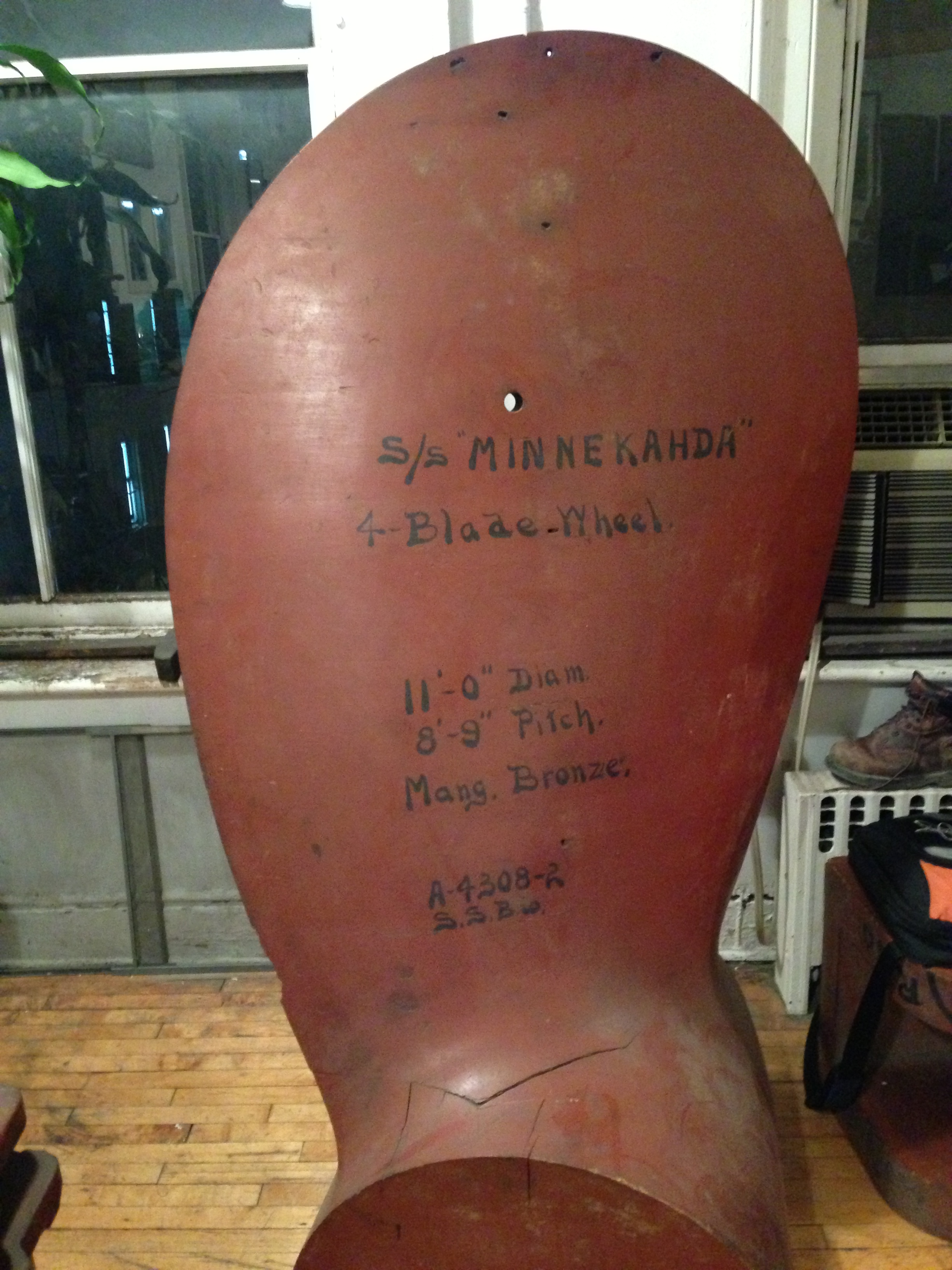
And a piece of the screw of some large vessel, now a weighty souvenir.

Screw

The audience included a cable-knit sweater or two and one magenda-locked lady, but, mainly, a number of earnest plaid-shirted hobbyists. Geezers. A woman stood to make an announcement about rehabbing old oil tankers. A man recommended an article in Outside magazine about the sinking of the replica of the HMS Bounty during Hurricane Sandy.

Hudson’s talk about his trip — from the Davis Strait in the East to the Bering Strait in the West, or Arctic Circle to Arctic Circle — had me mainly shaking my head at how little expertise I have on the subject of sailing the world’s seas. Masts broke, wires snapped, the freezing heavens conspired to keep Hudson in port after port. Roald Admundsen was the first to sail the Northwest Passage, in a wooden converted fishing boat, taking off from Norway in the middle of the night to evade his creditors. The charts were primitive, but he managed it.

Roald Engelbregt Grauning Amundsen.

But I could listen for hours to Hudson’s tales of Labrador, its whales, polar bears, the death of seal hunting and cod fisheries, its abandoned settlements along the shore. Pictures showed icebergs like giant animals carved out of limestone. A place called “Black Tickle,” it seems, takes its name from what Labradorans call a long, narrow body of water: a tickle.

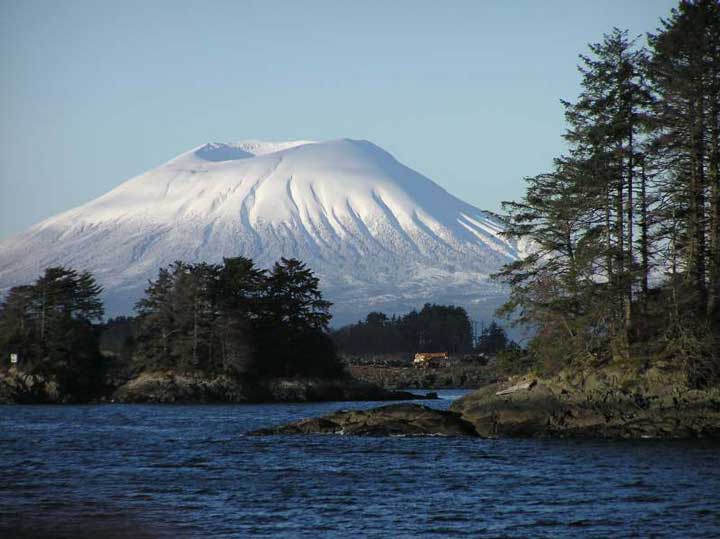
The icy majesty of Mt. Edgecumbe, the volcano near Sitka.

Mt. Edgecumbe

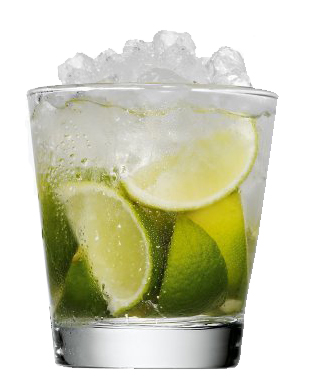
An Alaskan town called Tenakee, population 60, is built around a hot spring, where the male and female residents take dips on alternate days. Captain Hudson made Brazilian Caipirinhas with cachaça and ice from the local bergs. Delicious.

caipirinha1

I’d like to work the words “following wind” into my vocabulary, and my life, on a daily basis. And these northern climes have not only rainbows, but white rainbows – those slightly obscured by fog. If I heard correctly, there is a village someplace in Canada called “WillACockTalk”.

And as I’m turning these cold, splendid, gale-blown pieces of lore over in my mind. The Q and A begins.

“Was the hull flame-sprayed with zinc?”

The boat techies zero in.

“What watch schedule are you comfortable with when you’re single handling?”

This was a fifth-story loft on a narrow street in Chinatown, geezers adrift on a sea of  zinc and watch schedules. What, I wondered, was going on in all the other rooms, in all the other buildings, on all the other New York streets? What secret handshakes were making themselves felt.

4 Comments

Filed under History, Photography

Sentimental Roadshow

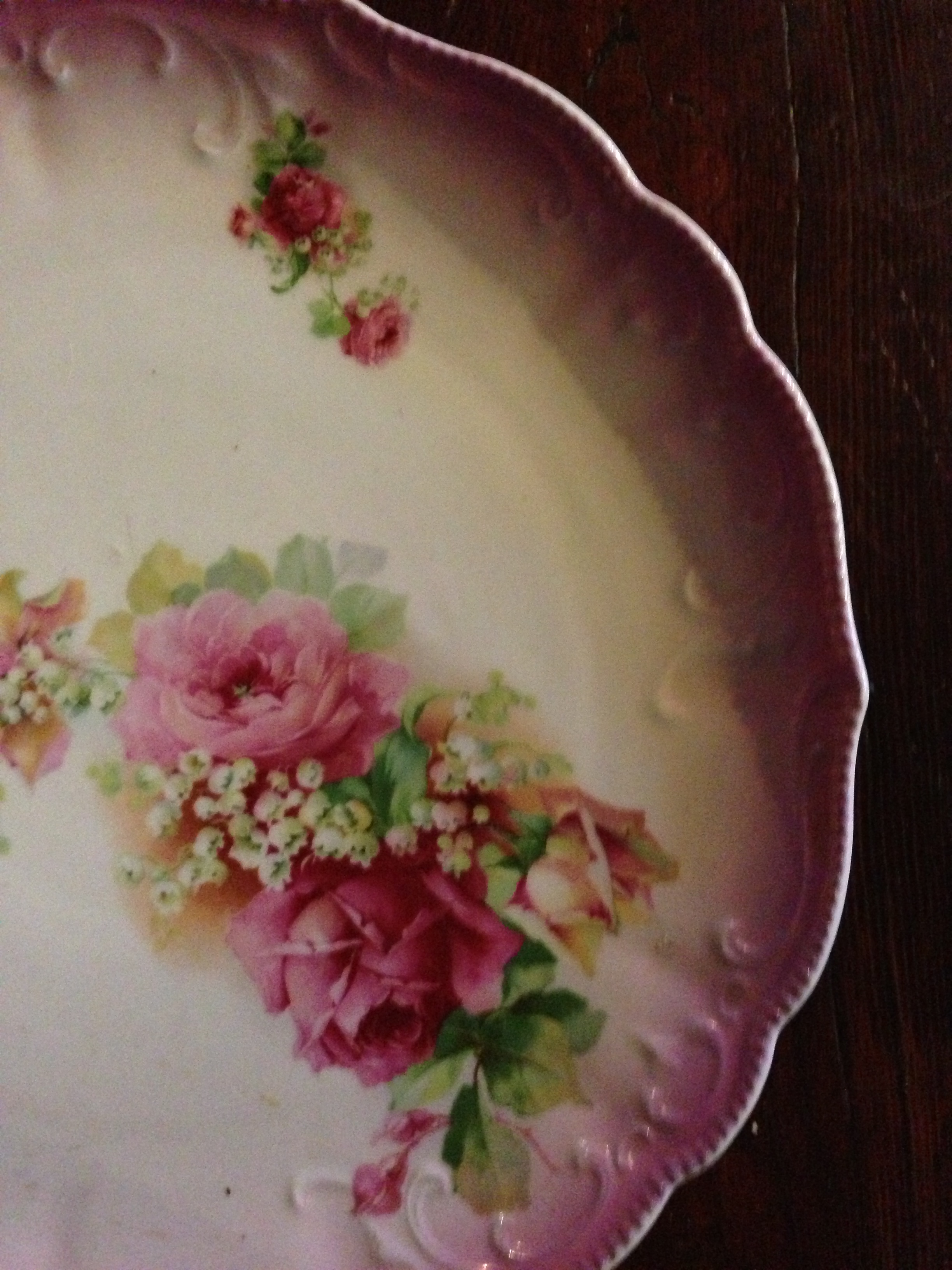
Just a plate.

cake plate

A cake plate. A nice size, a full foot across, embellished by deep pink roses and lilies of the valley.

Just a plate. But a plate belonging to my great-great-grandmother, name of Brown Coats, resident of tiny Greenfield, Tennessee, where she lived with four generations of her family on Main Street.

Smaller Brown Coats

Apparently she served cake. But I don’t have a lot more on her than a gentle face in a faded photograph.

Today was a grand opportunity to find out a little bit, if not about Brown herself, then about her cake plate.

The Antiques Roadshow came to Dobbs Ferry – or at least Leigh Keno, one of its two hosts (with his identical twin brother Leslie) and a cohort of appraisers, who tended to a few hundred supplicants in the auditorium of the Greenburgh Hebrew Center. On my way, driving to the place, Sinatra came on the radio with “Bewitched, Bothered and Bewildered.” I began to get in the mood, thinking about all the things that bewitch and bewilder us, all the precious objects seeing the light of day for the first time in a long time and really assuming new identities.

Heirloom Discovery Day attracted people with all sorts of things.

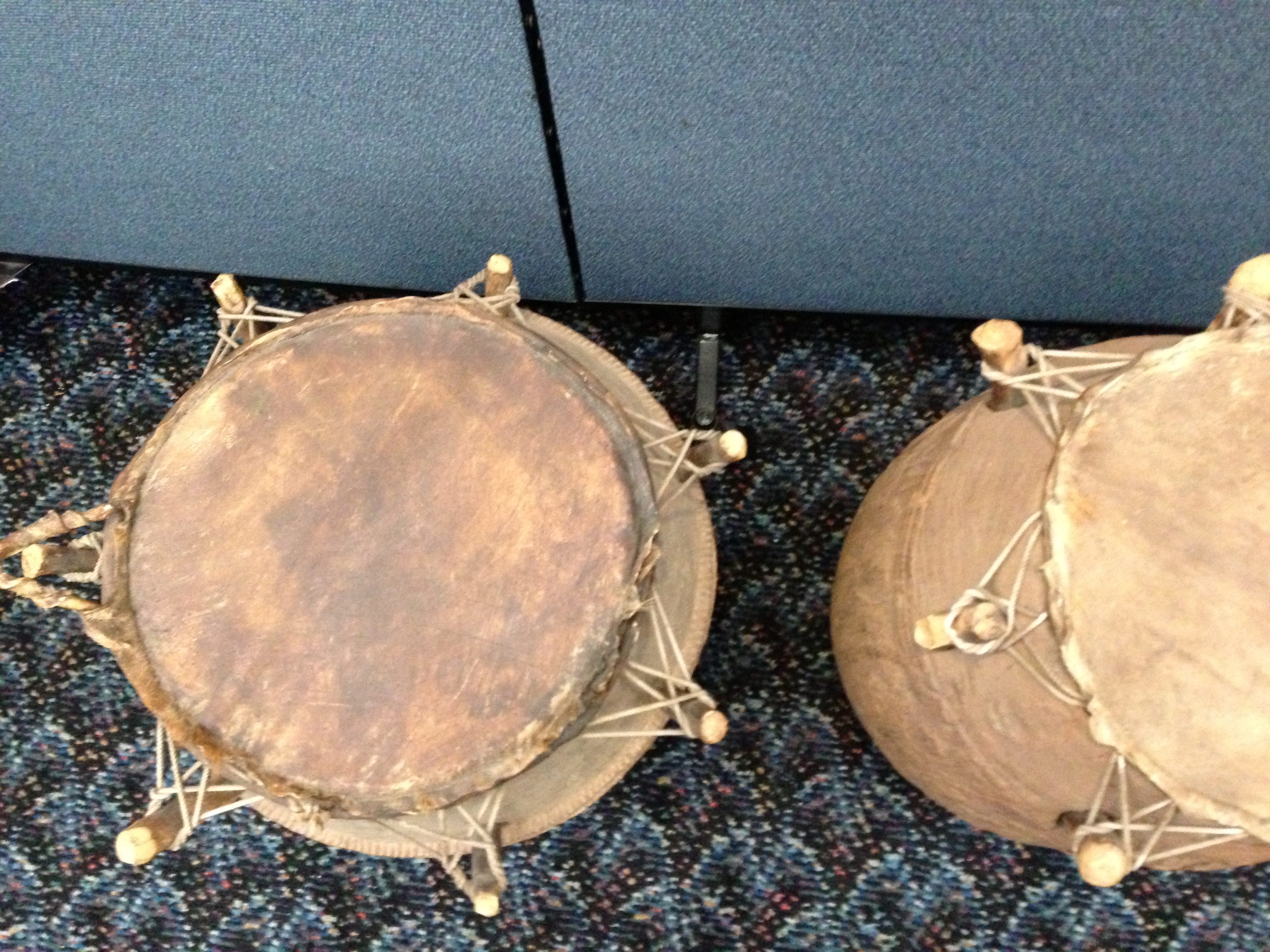
African drums.

drums

Eastern European silverplate.

silverplate

Large, bad paintings. Tasselled lamps. Elaborate tableware. People looked as if they would wait days for an appraisal, hugging packages of brown paper and bubble wrap to their chests. It wasn’t about the money, but the connection with the past that their attic-lodged belongings gave them. One woman told me about the diaphanous nude woman pictured in the oval frame she toted – her mother hid it in the basement the whole time she was growing up with her five sisters, she said, saying it was “porno,” but now at the age of 75 she claimed she’d posed for it.

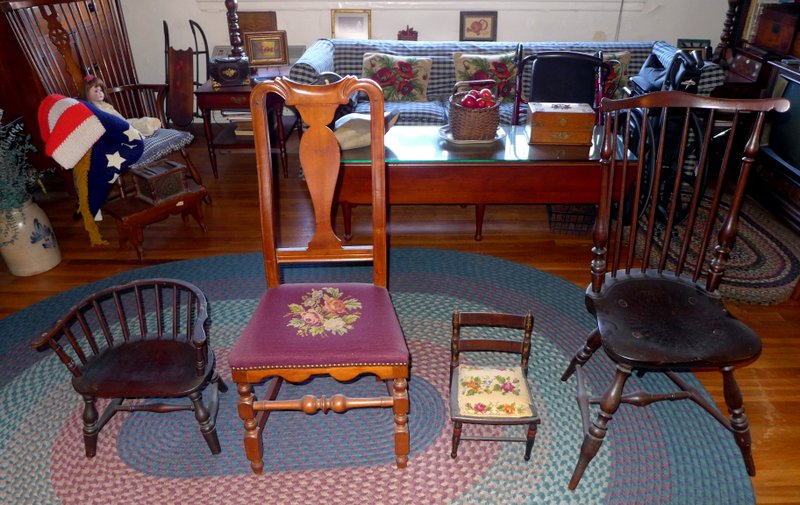
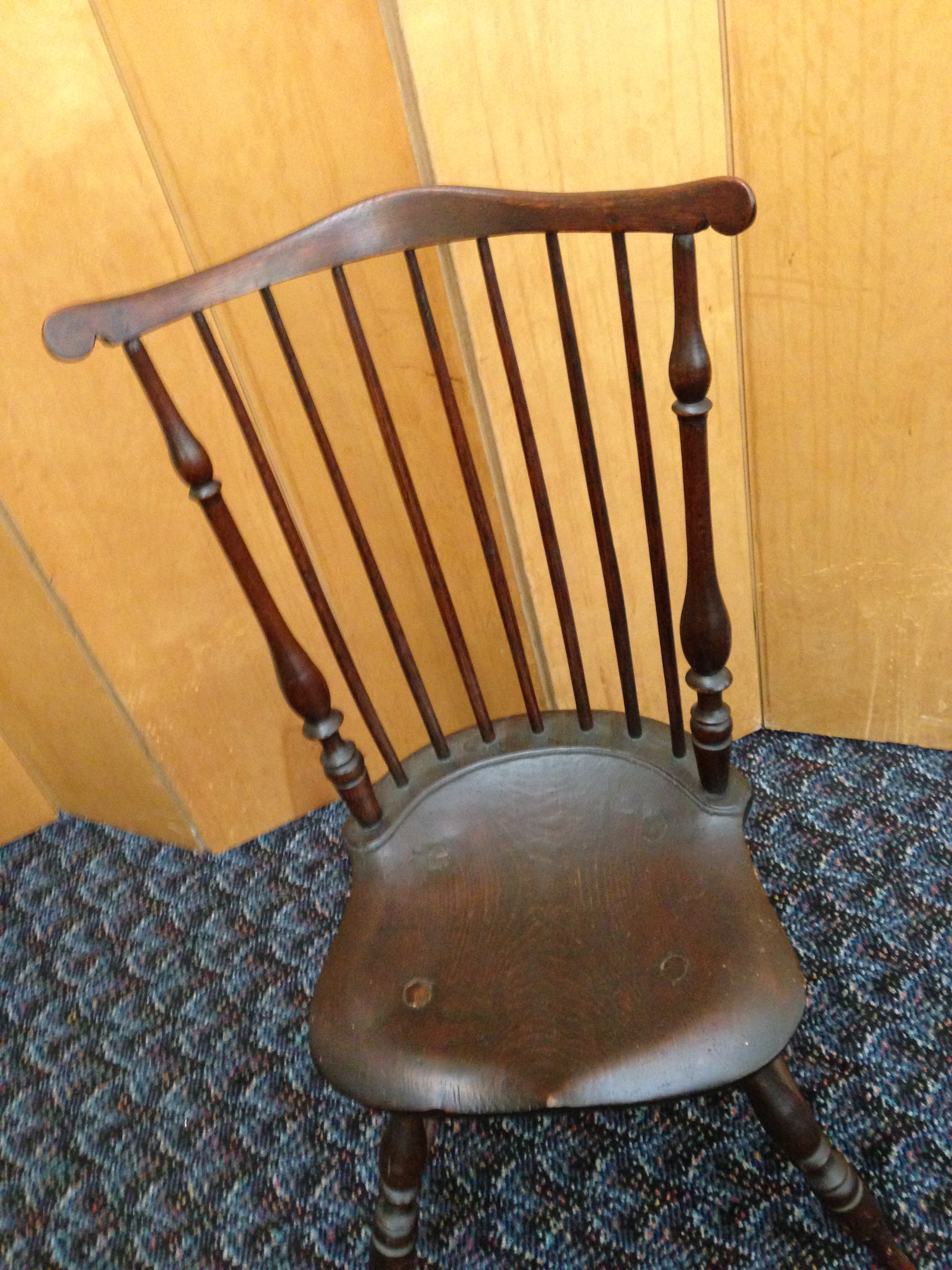
We were just as eager as everyone else. My sister-in-law Suzanne had a Windsor chair and a ceramic jug with a portrait of George Washington on its bulbous face. Her mother had been an antiques dealer. The chair, she always said, was “a good chair.”

She had a lot of similar antiques at home, big and small.

Suzanne's chairs

But how good was the Windsor?

windsor

I had the plate, as I said. My appraiser was kind.

She indicated its hairline cracks that slightly marred the back, though the hand-painted imagery and the curvature of molded scrolls and beaded edge were “very, very sweet.” Austrian, or European, she said, 1870. Originally part of a set that would have included a pitcher, creamer, dessert plates, it now stood alone, a beautiful orphan. It was “not in vogue at the moment,” she said, “not in demand.” It’s too bad, she said, these things fall out of popularity. Worth less than a hundred bucks.

I brought out my next objet.

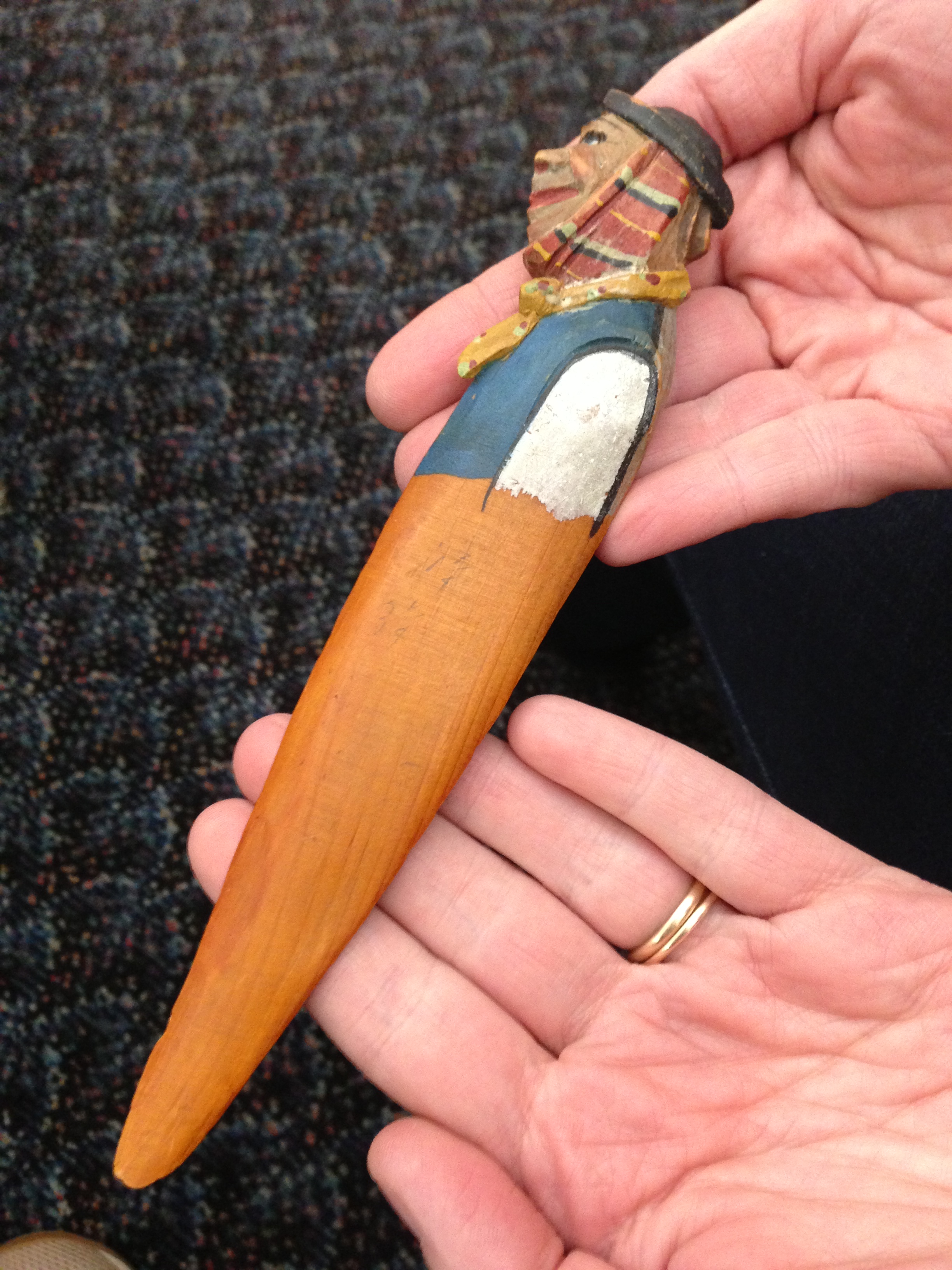
bookmark c-u

It was a “letter opener” that Gil had carried home from Wisconsin, from among his deceased mother’s belongings. I didn’t anticipate my appraiser’s slightly pursed-mouth critique. “Not so sweet,” she said.

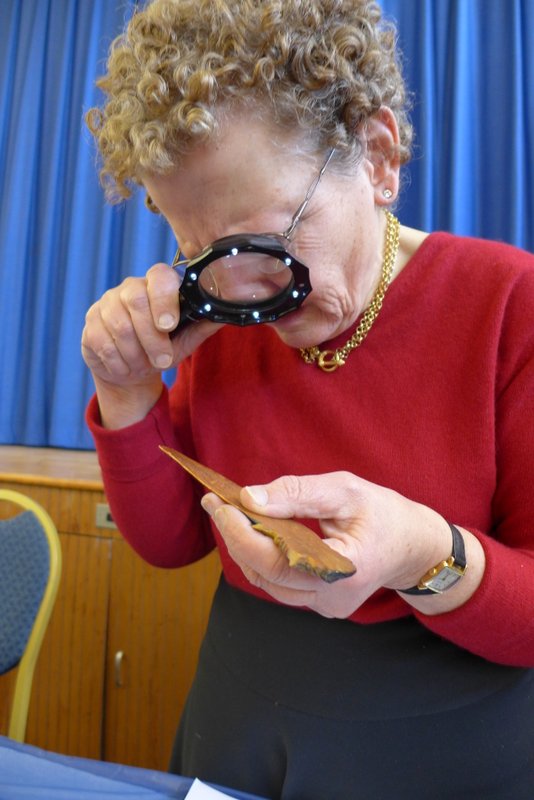
Beth appraising

She examined the reverse with a magnifying glass. The writing, she said, was half Russian, half English – the English part said Bookbinders. Its quaint decoration was a caricature that was not kind to a certain class of people. You could tell from the homely scarves, the humble cap. My father-in-law spent time in Germany in the second world war, I said. Could he have picked it up there? Yes, she said gravely, dating it to the mid-30s. “it’s something they’d been making for many, many years. It mocks peasants,” she said, “especially, you see, because the underclass can’t read, and this is a book mark.”
Well.

It was time for Keno and perhaps a less awkward meet and greet. Friendly and urbane, he ruefully explained his allergies to metals and to news clippings, “if you can imagine.” He turned over the Liverpool creamware jug in his hands, neatly dissecting its good qualities and its flaws. The Windsor chair it took him about 20 seconds to date to 1785 Massachusetts. Hickory, pine and maple gave it its delicate lines. The chair and the jug were “the two neatest things I’ve seen so far,” he told us. Hooray.

Then came the puzzle.
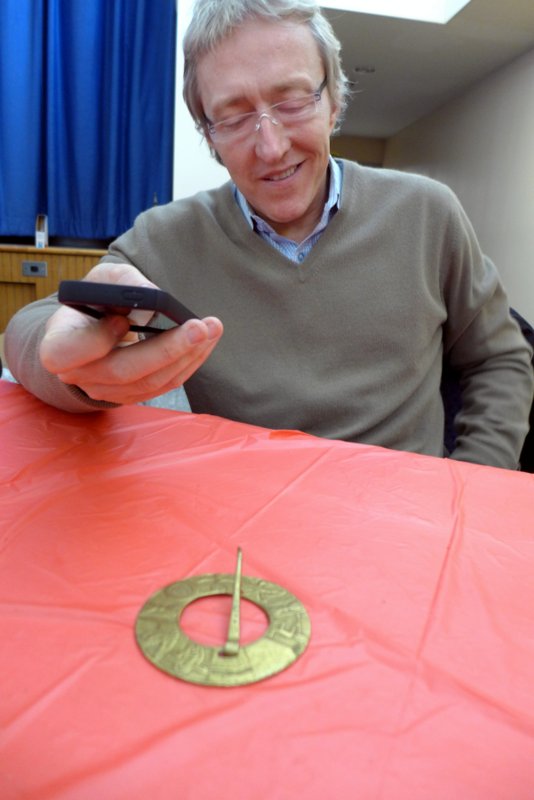
Jasper w buckle

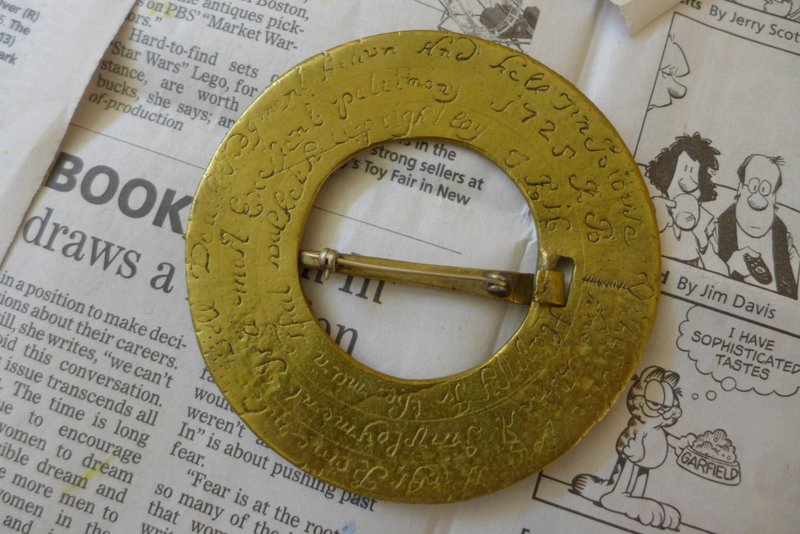
What, we wondered, was the provenance of the gold buckle with runic inscriptions all over its back and front? It already made a good monocle, according to Jasper. “That’s a baffler,” Keno said, getting out his magnifier, bending his blond head over the buckle, attempting to read the words, turning it to all sides to catch the light and generally fidgeting with excitement.

Keno appraising

It’s either a modern fake, he said, or it originated in the 17th century, in which case it would be a very exciting find. He would do some sleuthing, he promised.

buckle

I can’t wait to hear the origin of this buckle. Somehow I think it’s really an amulet of some kind, you hold it up and can fly through the hole, through history.

We joined the antique lovers trooping out of the building.

“Was it worth any money?” one called out to another.

“We still have to keep our day jobs,” jested the one with the bulky package.

Even if there were a fortune in it, in a plate, in a painting, in a chair, in an amulet-buckle, we don’t want to part with it anyway. Not for all the money there is.

6 Comments

Filed under History, Home, Jean Zimmerman

Blips of Wonderment

They were small moments of wonderment, as befits a small person. A sheltered life. Still, sudden blips bubbled up from within my romantic child mind, bouts of vague yet powerful curiosity that would seize me out of the blue. There were times when I was sure that some day I would understand the things that mystified me now. That one day I might even write about them. These are a handful of those moments.

Sitting on the stair landing of my quiet home at night, looking out the window to the quiet street, a pool of light beneath the lamppost, and needing to know what went on beyond that quiet. Wondering about the world.

Watching the wind-blown leaves of the oak in the center of our yard, standing in the kitchen,the thought consciously occuring to me, I Am Myself, and wondering about the world.

Checking out the newspaper, black squiggles on white, the landscape of adulthood that as yet made no sense to me, and wondering about the world.

Jumping in fall leaves with my neighbor-friend, then remembering the scratchiness of those leaves later, when he died at 16, and wondering about the world.

Chugging up a Swiss mountain trail through herds of belled cows to see a tiny jeweled village below, and wondering about the world.

Lying on the living room couch after school, lost in “Will You Love Me Tomorrow,” and wondering about the world.

Watching a teacher hold a boy by the hair and kick him for punishment, and wondering about the world.

A dry, awkward first kiss from a kid when I was 13, thinking hmmn, and wondering about the world.

Sewing a flannel nightgown for myself, by myself, and wondering about the world.

Feeling the heat of Marjorie Morningstar, of all things, and wondering about the world.

Driving on the highway to Baltimore, curled in the backseat, gazing out the window at the headlights of the trucks barreling towards us, asking myself where they were headed, and wondering about the world.

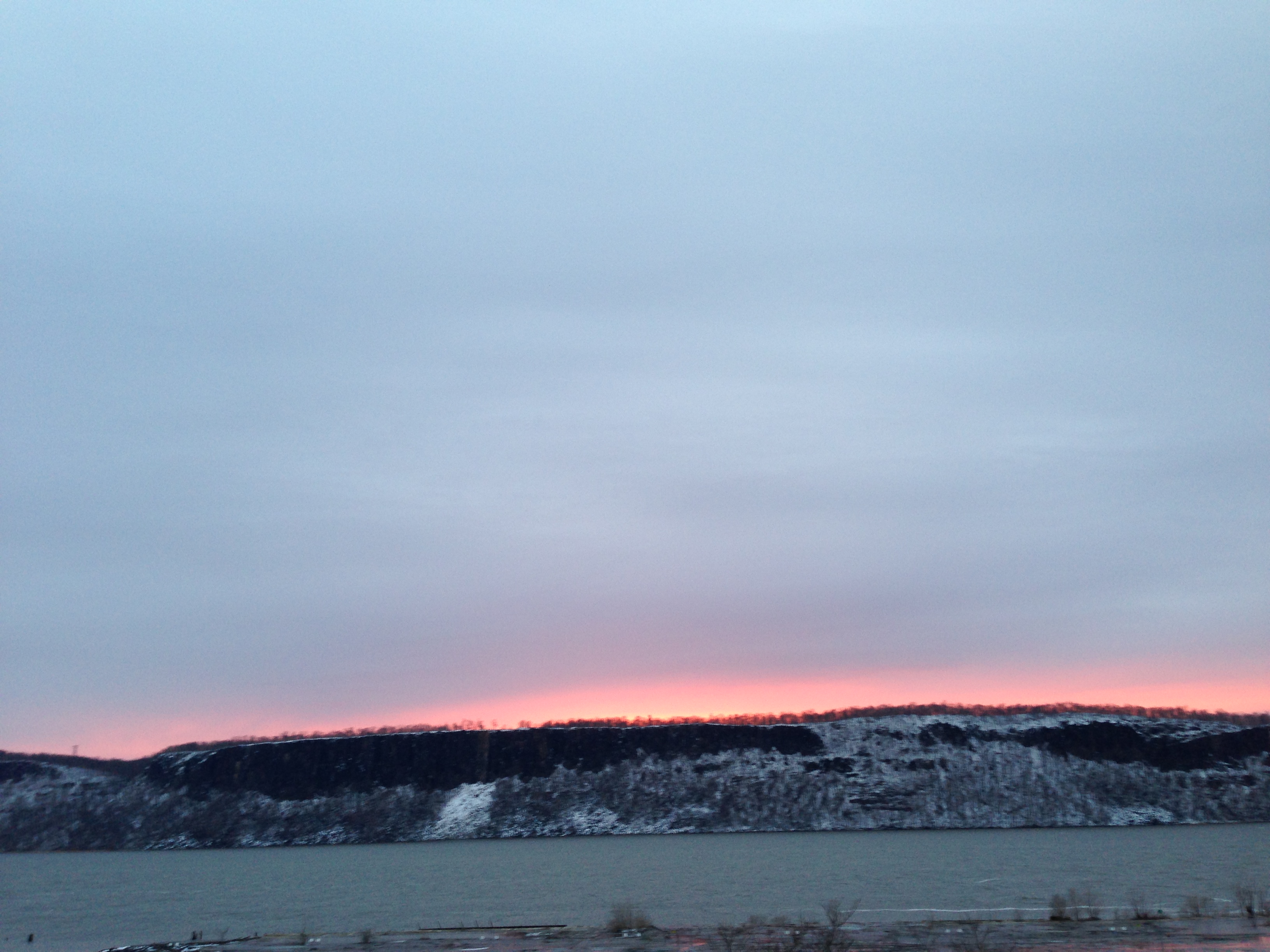
Taking the train along the Hudson and feeling certain that the world did not hold another river as beautiful. Something I  knew for certain, beyond all blips of curiosity or wonderment, then as I do today.

Hudson sunset

5 Comments

Filed under History, Home, Jean Zimmerman, Writing

The Chaos of Memories

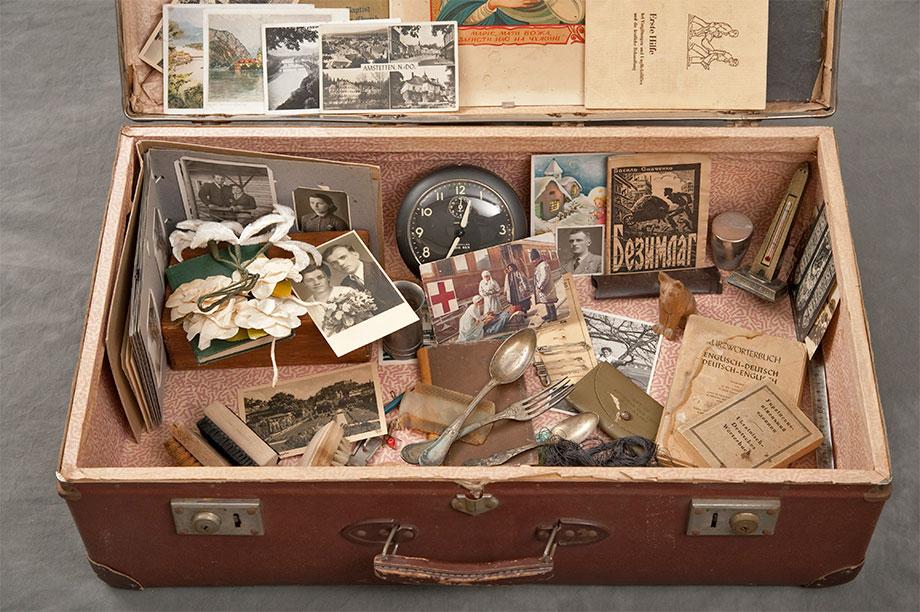
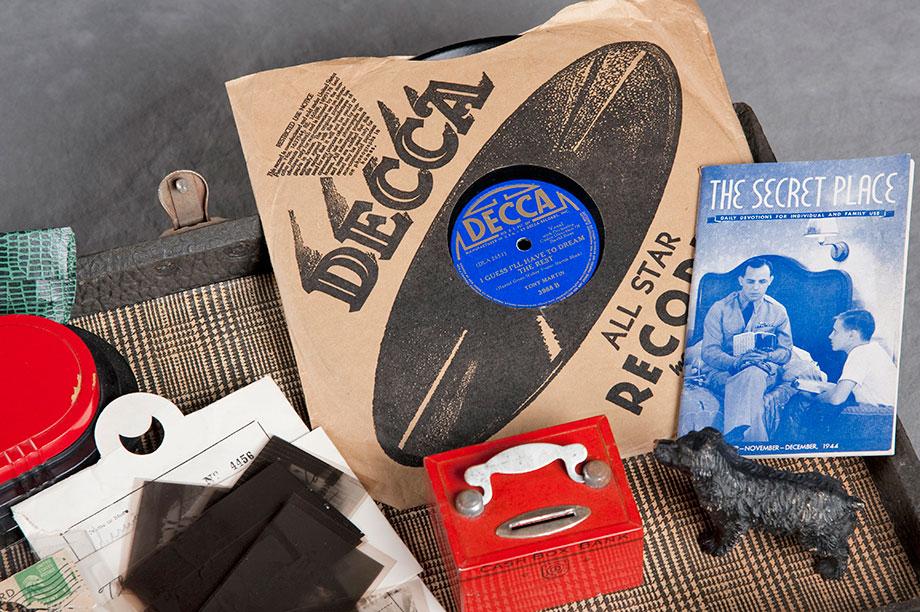
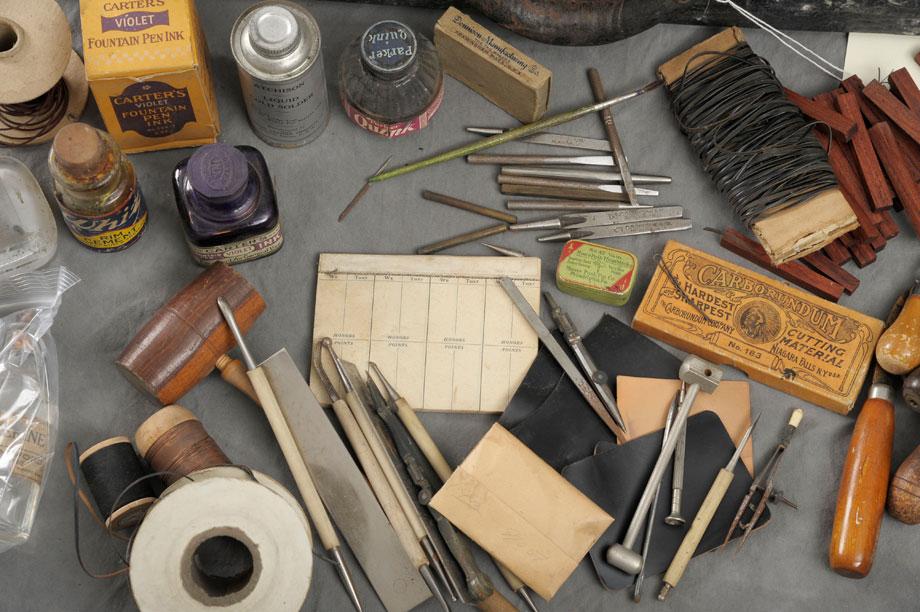
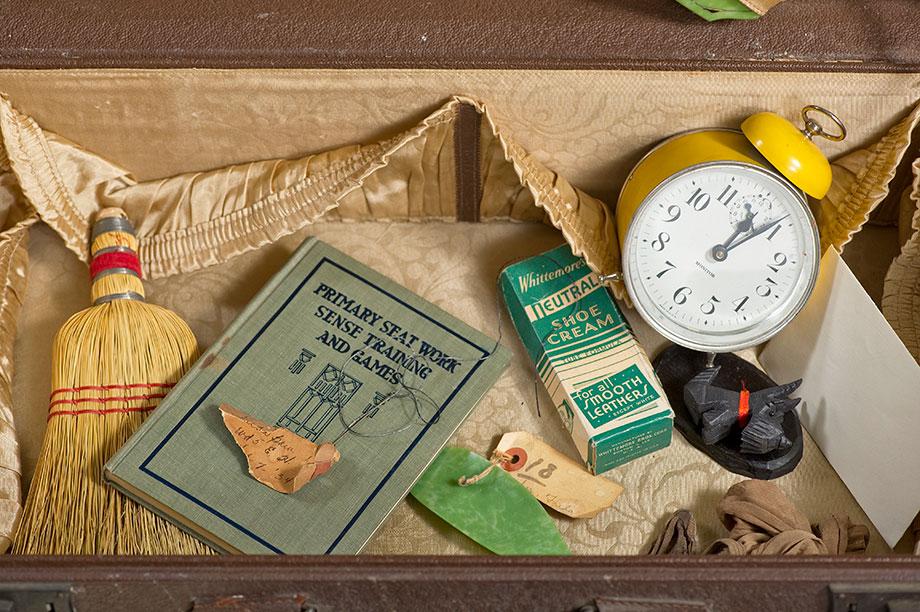
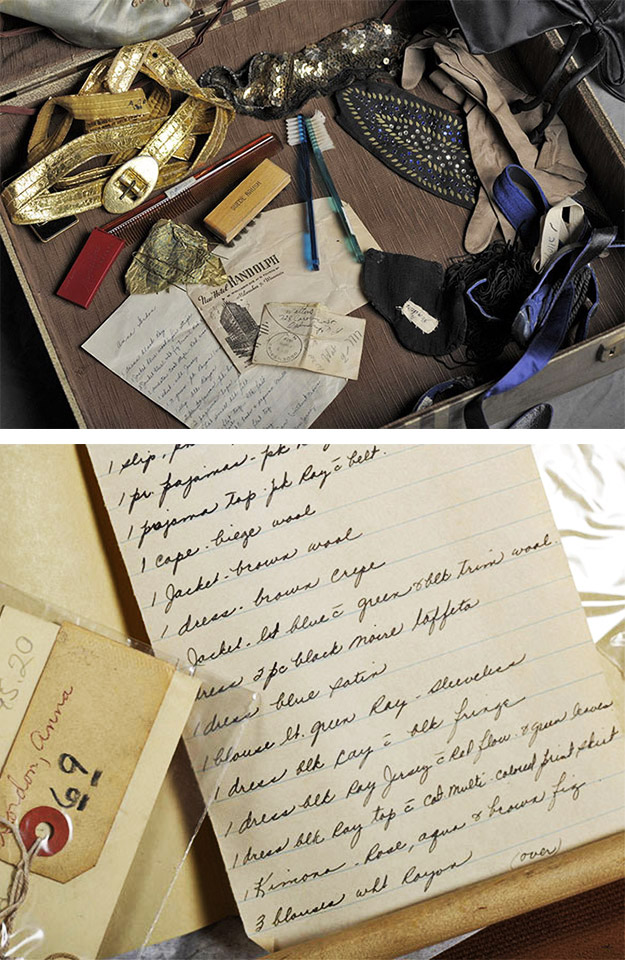
There is a photographer, Jon Crispin, who has taken some arresting pictures of the suitcases belonging to crazy people. I’m talking about mentally ill patients incarcerated in the Willard Asylum for the Chronic Insane in New York State between the 1920s and the 1960s. When the hospital was converted into a prison in the mid-1990s, around 400 carrying cases of deceased patients were discovered in an attic. Recently, Crispin spent a year working to document the belongings of people who are now ghosts. Here are some of the 80-100 photos he has made so far.

Willard suitcase 1

These are marvelously textured snapshots of men’s and women’s lives. You can’t believe the things the photographer discovered, the objects he documented: from toothbrushes to dimestore snapshots to spools of thread. The beautiful and the banal hand in hand.

Willard suitcase 2

One person had a comprehensive set of woodworking tools. Another, a lengthy itemization of her elegant clothing. We have some idea about who these people were because patient records survived and because former Willard staffers worked in tandem with the New York State Museum to preserve the cache of luggage.

I’m especially moved by this project, having many friends and family members who might be a bit “teched,” you could say (myself included). In previous eras, all of us might be stigmatized and isolated in an asylum, with only a suitcase to our names.

Willard suitcase 3

The satchels and valises call to mind something the great German writer-philosopher-aesthete Walter Benjamin wrote  in “Unpacking My Library,” a famous essay about book collecting: Every passion borders on the chaotic, but the collector’s passion borders on the chaos of memories. The collectors Benjamin had in mind were connoisseurs of fine volumes, leather-bound works worth thousands of dollars apiece. But his words apply as much I think to those who have fallen on hard times, people who build their very finite collections-in-a-suitcase inadvertently to some extent (what trinkets you wind up with at the end of the day) but deliberately, also (what you make every effort to keep, against all odds).

Willard suitcase 4

In collecting, on a bookshelf or in a suitcase, you yourself assign value to objects, you alone decide what is worthy. It’s a way of managing that “chaos of memories,” and it elucidates your character. I like something Crispin said in an interview with Collectors Weekly: “The suitcases themselves tell me everything I want to know about these people. I don’t really care if they were psychotic; I care that this woman did beautiful needlework.”

Willard suitcase 5

He told Slate in a recent article that the project wasn’t all ghastly: “Some of the stuff is funny. You see odd things: false teeth out of context, for example. It wasn’t all heavy-duty, serious stuff.  I think the pictures are successful because they do convey a sense of time and the struggle people had to deal with.” Some of the pictures will go an exhibit at the San Francisco Exploratorium on April 17.

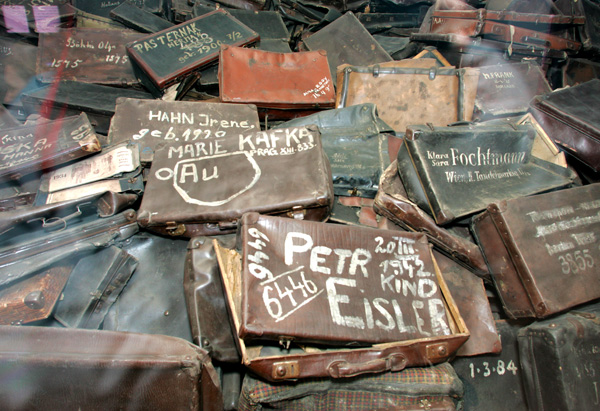
To me, though, the sadness inherent in these carryalls brings to mind another, notorious image of abandoned suitcases – the ones at Auschwitz, now piled high in Block Five of the on-site museum, marked with victims’ names, telling their woesome story alongside shoes and a display of artificial limbs.

Auschwitz color suitcases

But, incongruously, the photos from Willard also call to mind a more immediate, recent, happy time, for me, when I was touring to talk about my novel and my suitcase was always packed beside my bed with what I needed to fly. Face wash, check, Kindle, check, laser pointer, check. I got a suitcase for my birthday after years of depending on a dilapidated duffel. The new green bag meant unexpected, exciting things might occur at any moment.

The people whose suitcases Crispin depicts weren’t going anyplace. What was in that luggage was their whole world.

Willard suitcase 6

Now, this blog is a kind of suitcase for me. In it I stash small and large things of some importance to me. And for a brief moment, sometimes, you pop the top open and have a look in. What would you like to see here? What interests you? Tell me outright in a comment and I’ll try to pack it.

5 Comments

Filed under Art, History, Jean Zimmerman, Photography

Getting a Head of Myself

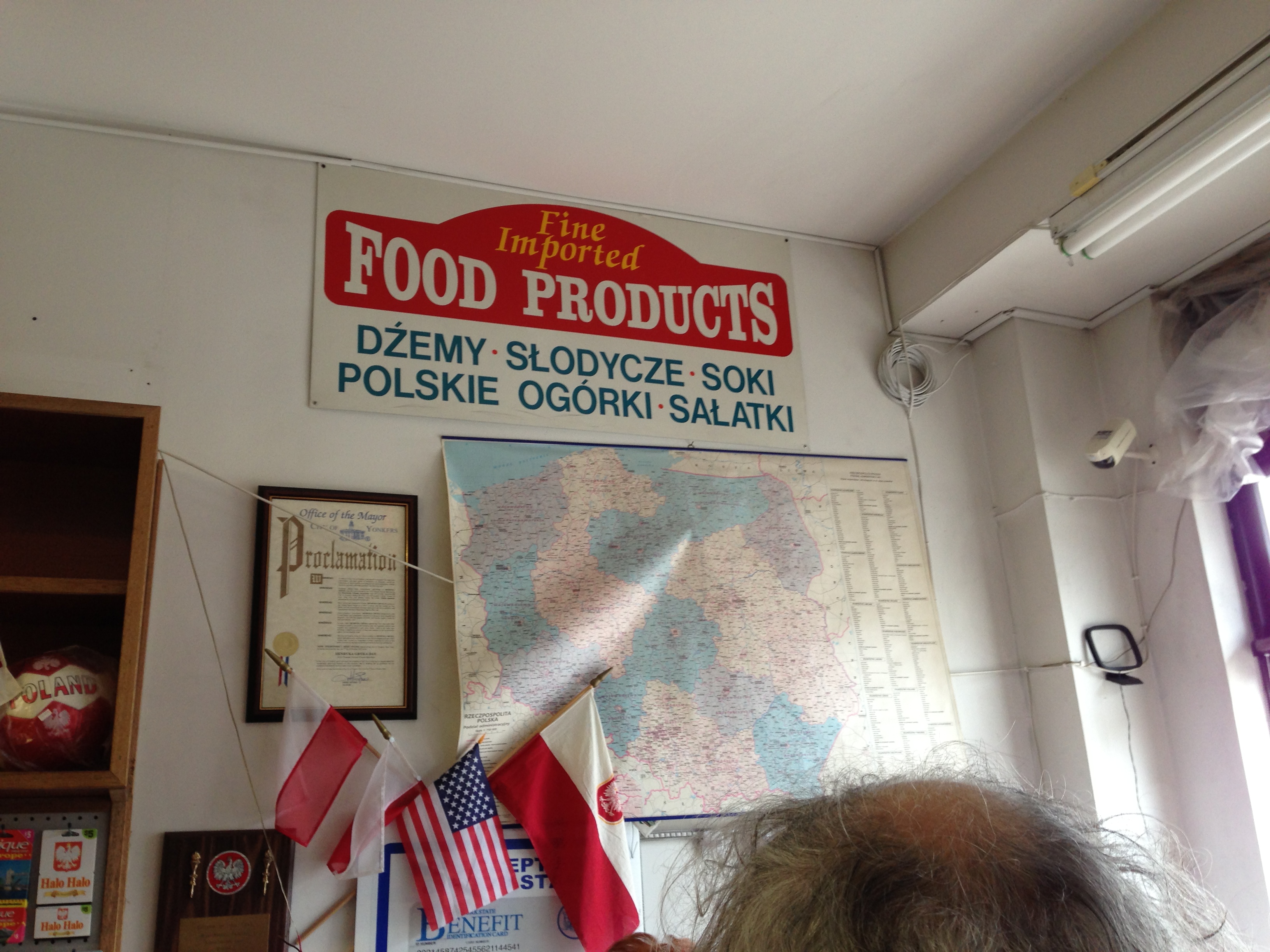
I really wanted the headcheese. Or headcheeses. There were quite a few at the Polish food shop.

food products

But we ended up with kielbasa, which hung high above the many other types of wursts on display.

wursts

I am the only one in my household that will deign to consume a pressed, jellied concoction of bits of pig’s head, heart and other rather downscale meats.

I wondered how the dish came about its name, since it has no cheese in it.

The chef Brad Farmerie gives this derivation: “The word fromage comes from the Latin word forma, which translates as a basket or wooden box in which compressed curds were molded to make cheese. Forma, and then fromage, became the word for cheese, but also remained synonymous with the concept of molding and pressing no matter what was being formed. Thus, the forming of a pig’s head using a mold is called fromage de tête and translates more to “pressed head” than anything to do with cheese, but we English speakers ignore a few of these minor details and use the direct translation to come up with the delightfully unusual ‘headcheese’.” Farmerie has a recipe on his site, along with  a vivid photograph of pig snouts rising up out of a steaming pot that I can’t bear to include here.

It’s a little hard to enjoy pork, I find, when you knew the pig. This summer we laughed at the hijinks of the piglets my nephew was raising in Wisconsin. They rooted where they shouldn’t and skipped about and were delightful pests if not pets. Not so many months later, we were the recipients of a tasty haunch – Gil cured and smoked it and we’re still eating the ham. But its savor, as fine as it is, can’t be separated from the memory of those young, peppy swine. In my mind, at least.

pig

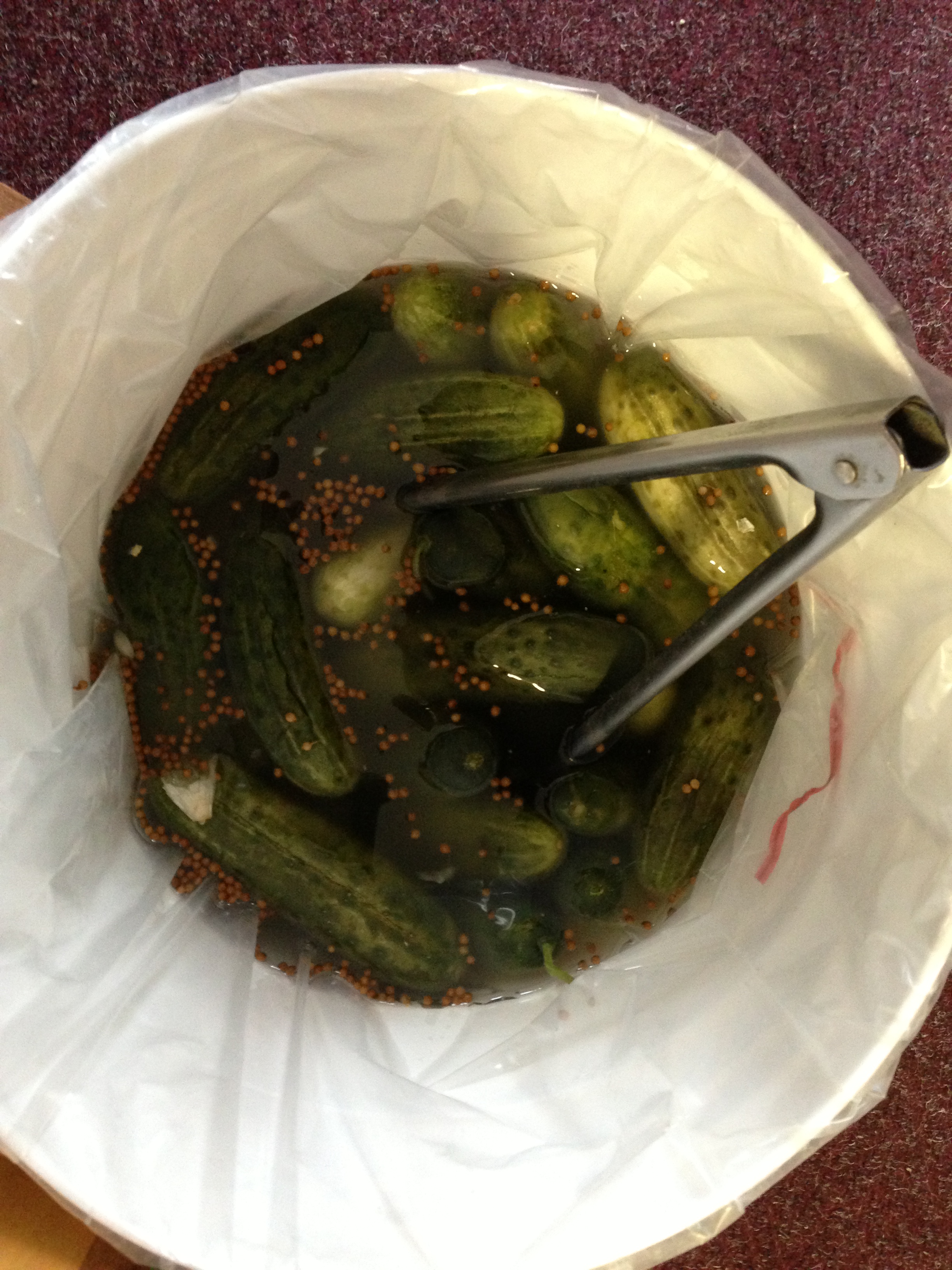
Pickles are a good, pork-free food.

pickles

Mushrooms, too. Especially Milky Cap mushrooms, whatever they may be.

mushrooms

Today we stocked up on pierogi, saurkraut, and other fixings for a Polish feast. The Pole in me – my paternal grandparents’ line, who lived around Lodz – salivated, even though as Jews I don’t think my progenitors would have stepped in a store whose main product was pork.

There are a few things I don’t eat, but I am proud to say I create my own dietary restrictions, which I am free to break at will. Serve me an oyster today and I may decline, but next week I’ll scarf it down. Especially if it’s in the oyster stew from the Oyster Bar at Grand Central. I’m girding up to try escargots again, too, as long as they’re swimming in garlic butter.

It’s all good, as long as I have my slimming coffee to round out the meal.

slimming coffee

1 Comment

Filed under Cooking, History, Jean Zimmerman

A La Mode at the Met

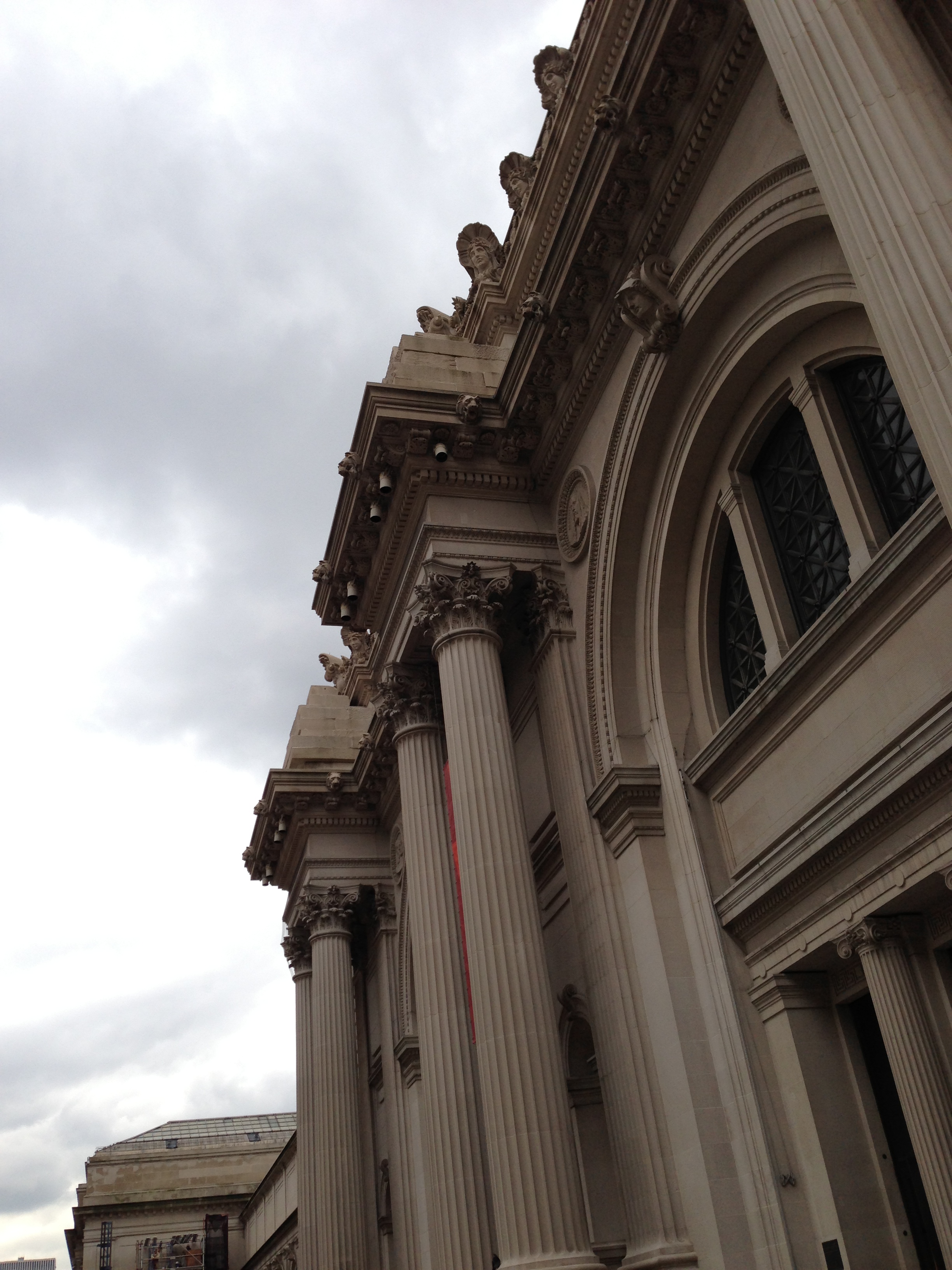
I’m at the Met.

met

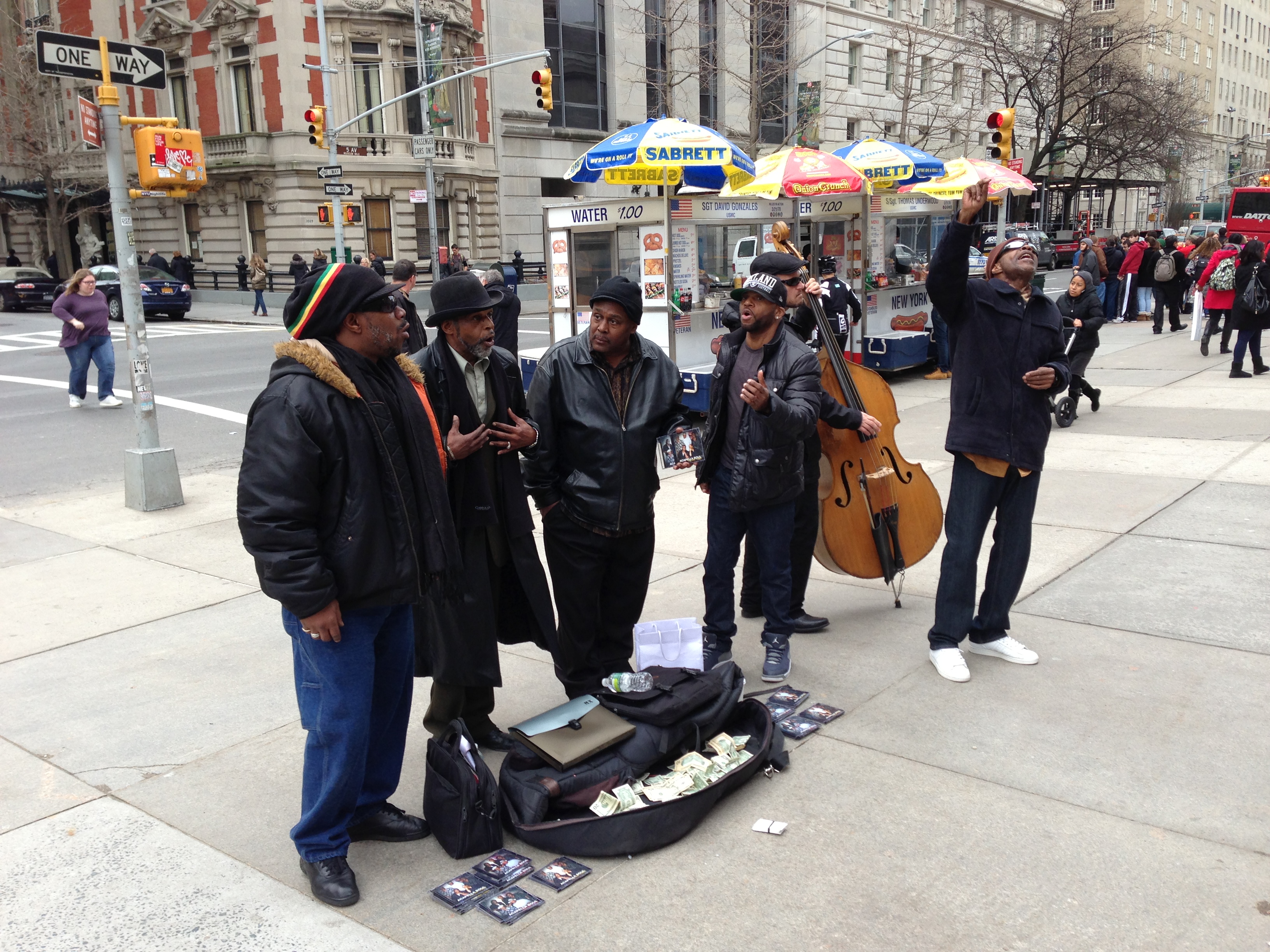
Doo wop’ers belting out, “Words could never explain/I just wish it would rain!” What did the Temptations mean with that song?

doo wop

On my way to a stunning exhibit, to a series of rooms where I will swoon, I get clobbered by various objects I see. The Metropolitan Museum of Art really does have it all. There is no reason to ever go anywhere else.

A yellowed, carved ivory tusk, Byzantine 810. Jesus in your pocket.

carved tusk

Elsewhere, cloissone garnets glow in whorling brooches, made in the year 500 by mad German jewelers. I’m taking a scattershot approach to beauty this afternoon, ranging over continents in every hallway to find the loveliest things.

A golden girdle from Cyprus, hammered around the same time as the cloissone. Down the hall, skipping through an exhibit called “Plain and Fancy,” I stumble upon the designer whose work I encountered earlier this year: Christopher Dresser, urbane and brilliant Englishman who introduced a lovely angularity to objects in the second half of the 19th century. Here he has an 1880 tureen and ladle formed of electroplate and ivory, and a pronged letter rack of silver plate. Down the way, a taste of something completely different: a sugary pink and white Sevres tea service crafted in 1855 for some extravaganza of a tea party.

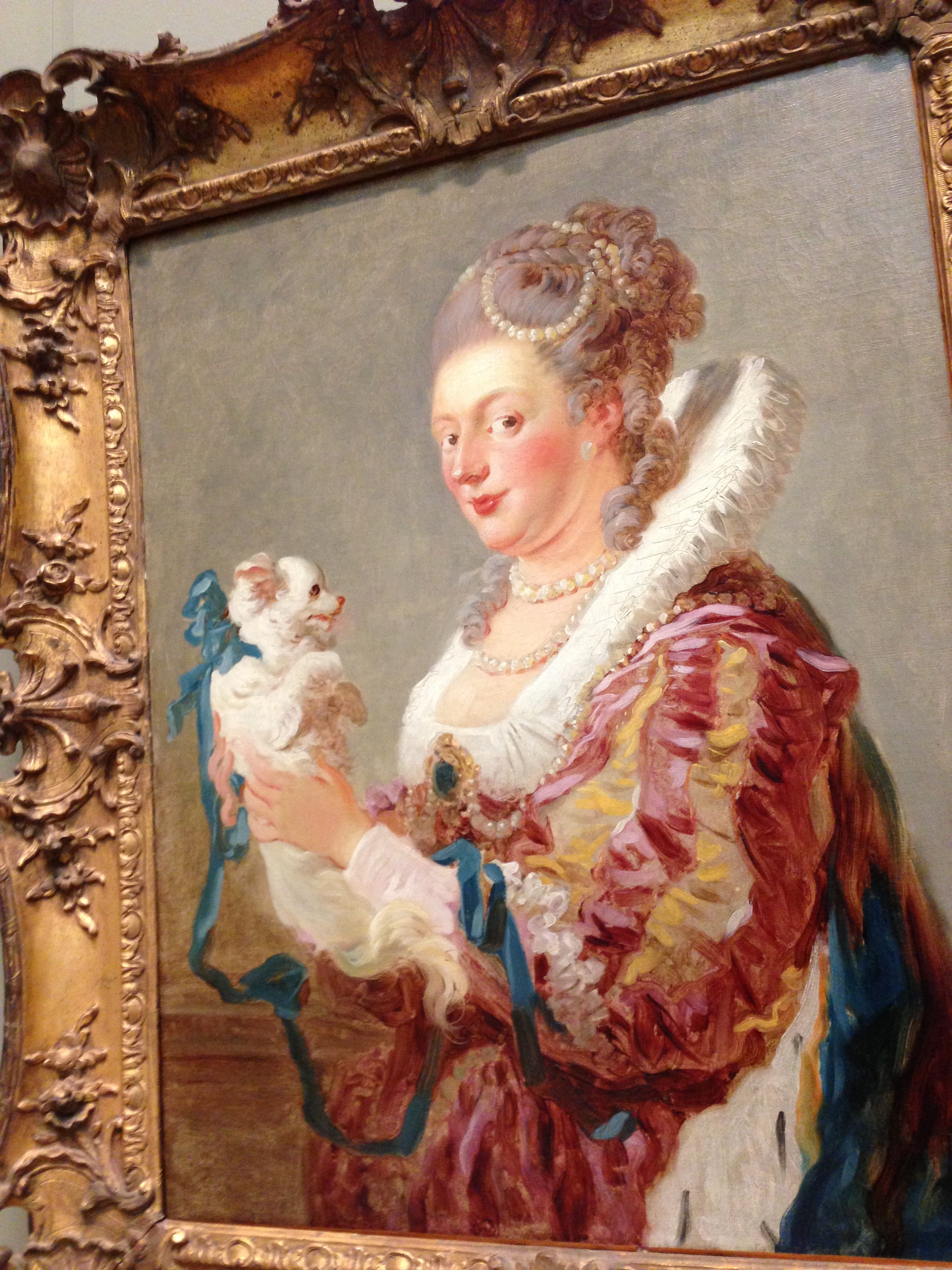
More fragments of created beauty on the way to the exhibit. Jean-Honore Fragonard, Monsier Rococo, one of my favorites for syrupy, cheeky pictures, and his “A Woman with a Dog,” from 1769. What an expression.

Fragonard

Then I reach the prize, “Impressionism, Fashion and Modernity” a new exhibit that has me under its spell before I reach the middle of the first room.

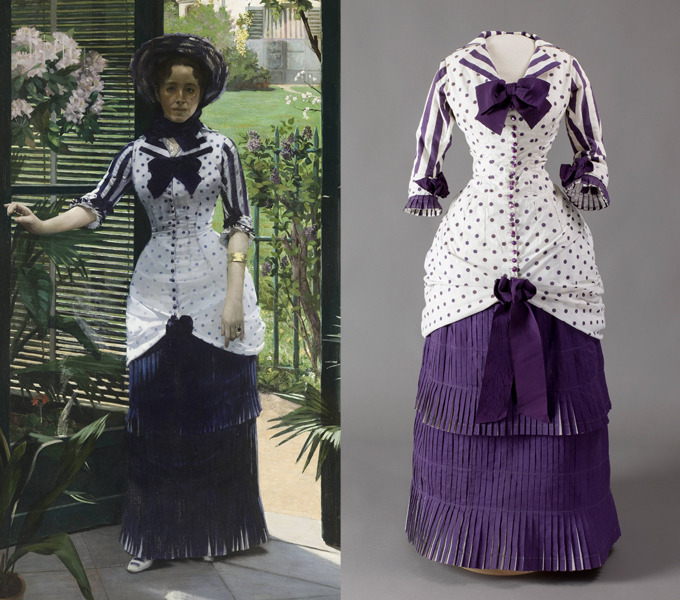
This is a show that displays paintings by the French greats of the late 19th century, Manet, Monet, etc., and then showcases the clothing worn in the paintings. Showcased in prismatic vitrines set up in the middle of the room. So there is Albert Bartholome’s “In the Conservatory,” for example, where he treats his wife coming in from the garden – and right there is her costume itself, all purple polka dots, stripes and pleats, with about a 24 inch waist, miraculously preserved by the family.

Albert Bartholome

I come upon a crisp photo of a woman posed in a spreading black dress, knock-out elegant, holding up a black and white fan, and displayed alongside, the actual intricate fan.

There are some paintings that have not been matched to the exact garment, but they are splendid even in two dimensions – like James Tissot’s portrait of Marquis de Miromon in 1866, her outrageous bubblegum-colored ruffle cascading to the floor.

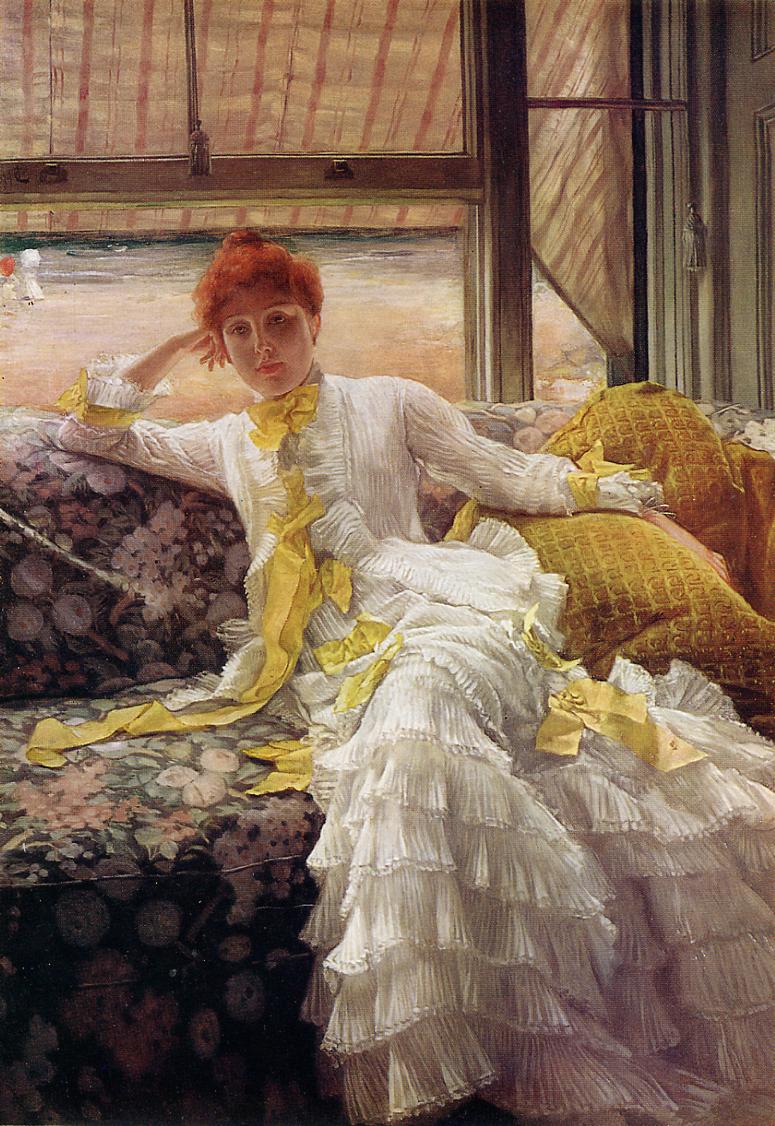
But Tissot also painted a redhead by a window opening onto the sea, lounging in white flounces, with a pale yellow ribbon down her front, and the Met somehow found two specimens that are not this dress but quite close to it.

James Tissot 1836-1902 - French Plein Air painter - Tutt'Art@ (8)

Berthe Morisot’s paintings are on display, but she is also here as a subject, painted in white by Manet. She married his brother–and was also Fragonard’s grand niece!

Le Repose by Manet

A critic at the time wrote that she “grinds flower petals onto her palette in order to spread them later on her canvas, with airy, witty touches.”

Lady at her Toilette


Small gestures predominate, as in Carolus Duran, a woman in elegant black (black being greatly a la mode, suddenly) delicately pulling off her dove grey gloves.

duran_450

The Met’s analysis of all this lusciousness: “The novelty, vibrancy, and fleeting allure of the latest trends in fashion proved seductive for a generation of artists and writers who sought to give expression to the pulse of modern life in all its nuanced richness.”

But I wouldn’t overthink it. Purple polka dots, the painted and the genuine. It gave me the shivery feeling that I could somehow walk right in to the paintings and live there.

1 Comment

Filed under Art, Fashion, History

1933 at the Movies

Sometimes, when you make writing your work, you get to keep your own hours. That means getting the non-job-stuff done on a Tuesday, and fun stuff as well.

So I got my coif chopped while Gil waited stoically.

Gil:hair

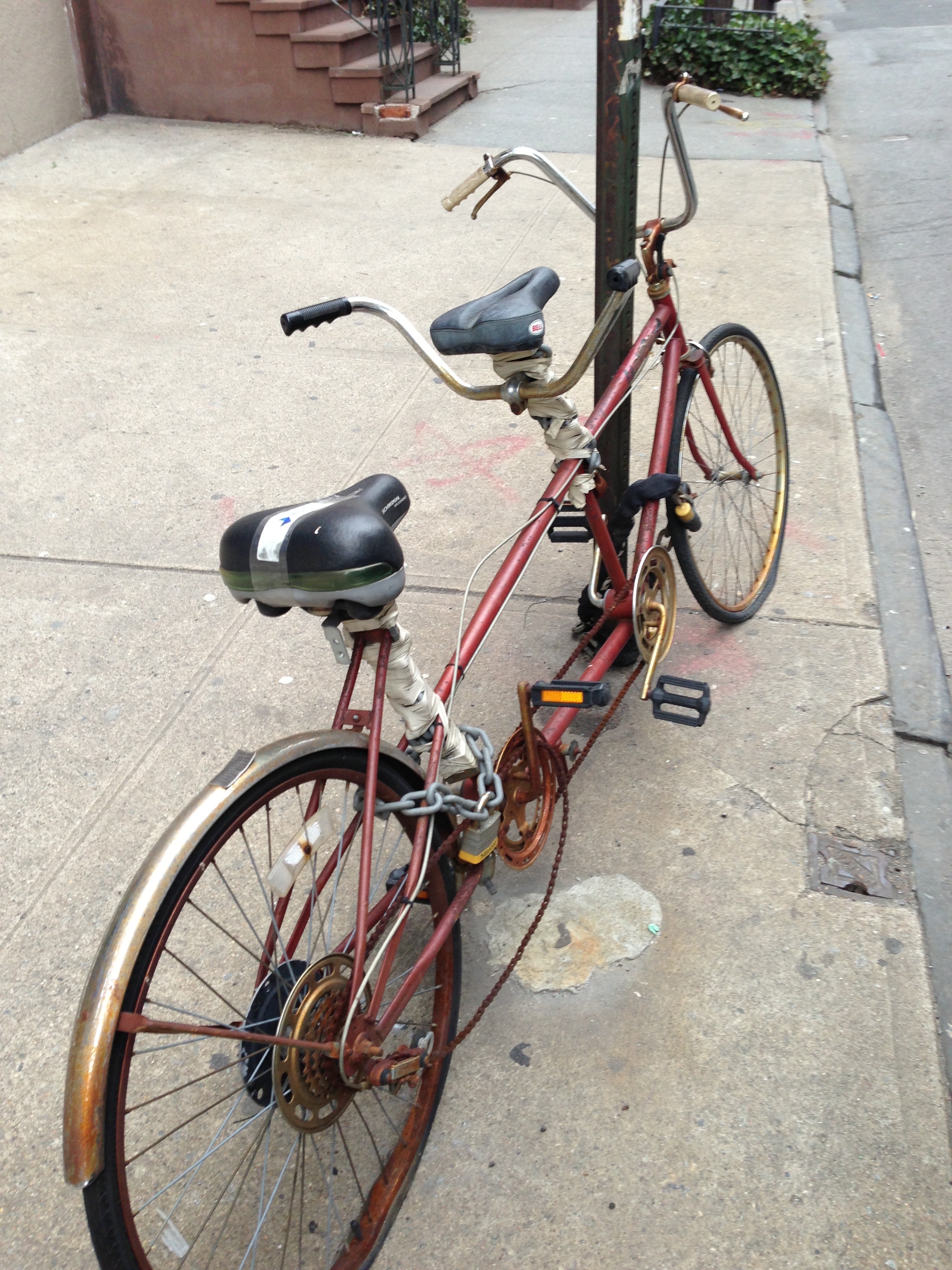
We parked our steed against a pole in Tribeca.

tandem

We dined on crisp crust pizza at 4 pm – what is better than the meal that is not lunch nor dinner? call it dunch – in a little restaurant with a stamped tin ceiling and raw brick walls.

Then we went to the movies.

Film Forum, the great independent cinema on West Houston Street, is showing 66 films from 1933, a series it calls “1933: Hollywood’s Naughtiest, Bawdiest Year,” presented in collaboration with the Library of Congress. That was the year of genius works like George Cukor’s Dinner at Eight and Little Women,  and Ernst Lubitsch’s Design for Living, and the great King Kong with Fay Wray, among numerous other classics. Standing in the lobby, I saw a young woman with appropriately styled seamed stockings and sensible shoes – then another cinephile more of our time, sporting purple tights. Before the lights went down, vintage music emanated from the auditorium’s speakers: “Am I only moonstruck or is this really love?” crooned a 1930s tenor.

king-kong-1933-03-g

Then our trip to the dark side. See, there were many less celebrated numbers in 1933, most of them a bit pungent, with titles like Picture Snatcher and Hard to Handle and Female. 1933 was the final year of “pre-Code” movies, before the studios began to implement self-censorship, first stated in the Hays Code. It took a long time to move past this pinching back of the cinematic imagination.

We saw a triple feature, sinking down into our well-used chairs until our seats went slightly numb. 20,000 Years in Sing Sing was a marvelous oportunity to admire vistas of the prison that still marks the downtown of Ossining, our little community. Even today, we can drive right up to the walls and wave at the gun-toting guards in the towers above. They don’t like that too much. In the film, a smooth-faced Spencer Tracy takes the rap for moll Bette Davis’ self-defense killing.

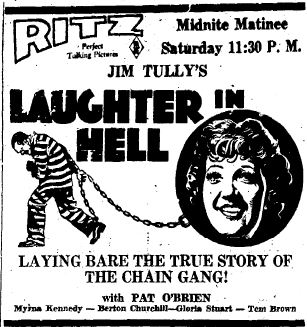
Then we saw Blood Money, a wacky saga of a bail bondsman and a thrillseeking debutante.  And, finally, Laughter in Hell, a long-lost flick that shows in chilling detail the experiences of a chain gang and even a multiple hanging.

Laughter in Hell

They were all great, a truly rare experience. If you can get over to the Film Forum, the festival’s ongoing until March 7.

Leave a comment

Filed under History, Jean Zimmerman

Beasts of the Prehistoric Wild

A lunchtime conversation yesterday with some science-heads got me to thinking about prehistoric mammals and how we got along with them way back when. Evidence of Pleistocene-age man coexisting with “megafauna”—gnarly, gigantic beasts–can be found the world over.

Woolly mammoths, sabertooth tigers and giant sloths thrived up until 12,000 or so years ago and we thrived alongside them. But they weren’t the only oversize creatures. How about dire wolves, giant beavers, the stag-moose, the giant polar bear and the saber-tooth salmon? No joke. As if polar bears aren’t big enough today. And the auroch, the ox-like creature which actually survived in Europe until the middle ages.

auroch

I’m always amazed to think that in The Odyssey, when the characters constantly throw meat on the fire, Homer is probably referring to flavorful cuts of the gigantic auroch. (If you’ve seen Beasts of the Southern Wild, the mythical animal called an auroch is simply a blown-up potbellied pig.)

aurochs_beasts

To me, all these shaggy, heavy-footed animals are both more fascinating and more terrifying than any Tyrannosaurus Rex.

Bits of their story – and ours – continue to surface. Monte Verde, Chile, for example, was excavated beginning more than 30 years ago, when the remains of mastodons were discovered right alongside stone artifacts and nearly a dozen house foundations. A bog sealed over the site, protecting the wooden relics from decay. Archaeologists have even found seeds and fruits in mortars, suitable for crushing.

All this in the middle of an Ice Age that created ice fields two miles high.

Wouldn’t you like to reach out and touch a woolly mammoth?

Woolly_mammoth_Mammuthus_primigenius_-_Mauricio_Antón

It sounds ridiculous, but a lot of people would, for real, and scientists have been trying for years to clone one from the bodies they find buried, usually in Siberian permafrost. The problem is, no viable DNA has yet been discovered. That may soon change. A team from Russia’s North-Eastern Federal University recently found a set of well-preserved remains, including the fur and bone marrow that may contain living cells, during a paleontological trip in the  province of Yakutia. The living cells would contain an intact nucleus, which would be inserted into an elephant embryo, and coaxed into becoming a mammoth clone. Interesting feature on cloning mammoths here.

I don’t know, though, I think I’d rather see a real, live Pleistocene cave lion, 11 and a half feet in length and 700 pounds, like the kind depicted in Werner Herzog’s mesmerizing documentary about paintings in the Chauvet cave in France, Cave of Forgotten Dreams. Inhabitants of the cave rendered the cats in detail, including the scrotum of the male, alongside their own beautiful signature handprints.

CaveArtLion

The cave lion fed, it would appear from evidence in similar caves in Romania, on giant cave bears, whose hibernation nests have been found alongside the skeletons of giant hyenas. Horses rounded out their diet.

4 Comments

Filed under History, Jean Zimmerman, Nature

A Tune Up

I thought I’d spend the midday concert with my knitting. I’ve always thought that being able to knit and do something at the same time was the coolest thing in the world. My great aunt, a knitter par excellence, took her work with her into the darkened movie theater. I’ve always had a burning envy of that.

But today it was not to be, and that was probably a good thing. The ribbon I’m employing to knit is too slippery and the library’s basement theater was too shadowy to allow me to handle it properly.

So I listened. I paid attention. I dreamed.

The first thing I noticed was the fiddle, color blocked, as the fashionistas would have it, in glossy black and honey-colored wood. I’ve never seen such a beaut of a violin. It belonged to Harry Bolick, “fiddle player and tunesmith,” as he styles himself.

Harry Bolick

Then came the tunes, old-timey, straightforward and pretty… sweet, said Bolick, introducing each number. He played with a guitar accompanist. The full room hushed to hear this message from another place and time.

We were transported to Carroll County, Mississippi, listening to the compositions of rural musicians–both black and white–from the beginning of the 20th century, collected as part of WPA efforts in the mid-‘30s then basically forgotten about. Bolick has been researching the “lost fiddle tunes” of the Magnolia State for a book. As he played, we could hear the simple thunking steps of the square dance, the slightly lighter gait of the waltz. We listened to one song that was the best seller of 1929, selling 100,000 copies. Bolick is a fiddle player, yes, a tunesmith, yes, but also a musicologist. (Some songs can be heard on his website.)

In those days, men out in the countryside courted women that had pianos because they wanted to marry music. There was a virtuoso named Alvin Alsop, now known to almost no one but surely one of the brightest talents of his neighborhood. His song Sweet Milk and Peaches lifted me up, spun me around and set me down in another time.

Kerr 2

I saw a road leading through black-dirt fields to a community center. I saw patched gingham skirts and dungarees and a fifth of whiskey poking out of a chest pocket, the windows propped open and a fiddler and banjo player in the corner, everyone flushed and ready to go all night… When I got home I found this picture, snapped in 1939. It matched my fantasy exactly. Let’s waltz.

Couples at square dance in rural home, McIntosh County, Oklahoma   by russell lee 1939a


2 Comments

Filed under History, Knitting, Music, Photography

Day Trip to the 1890s

Feeling a little cabin feverish today. So icy outside, and so still, only the titmouse on the feeder seems alive.

I wonder what I’d be doing if I lived in Manhattan in the 1890s?

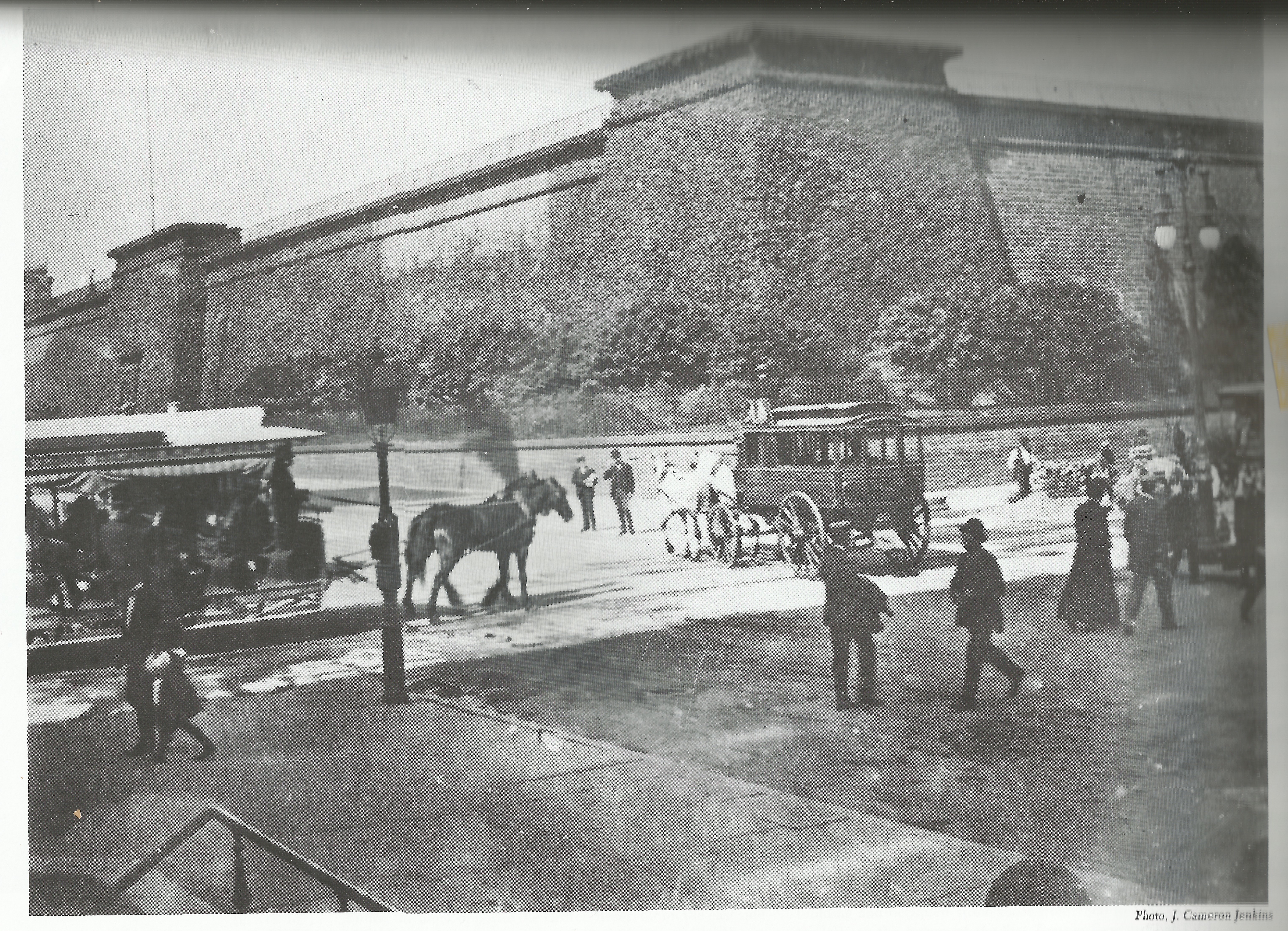
Strolling the top of the Croton Reservoir at 42nd and Fifth, where the New York Public Library now stands? There used to be a little shop across the street where we could take a refreshment. Hot cocoa, then cloak your cold fingers in a warm fur handmuff.

croton reservoir 1900 1

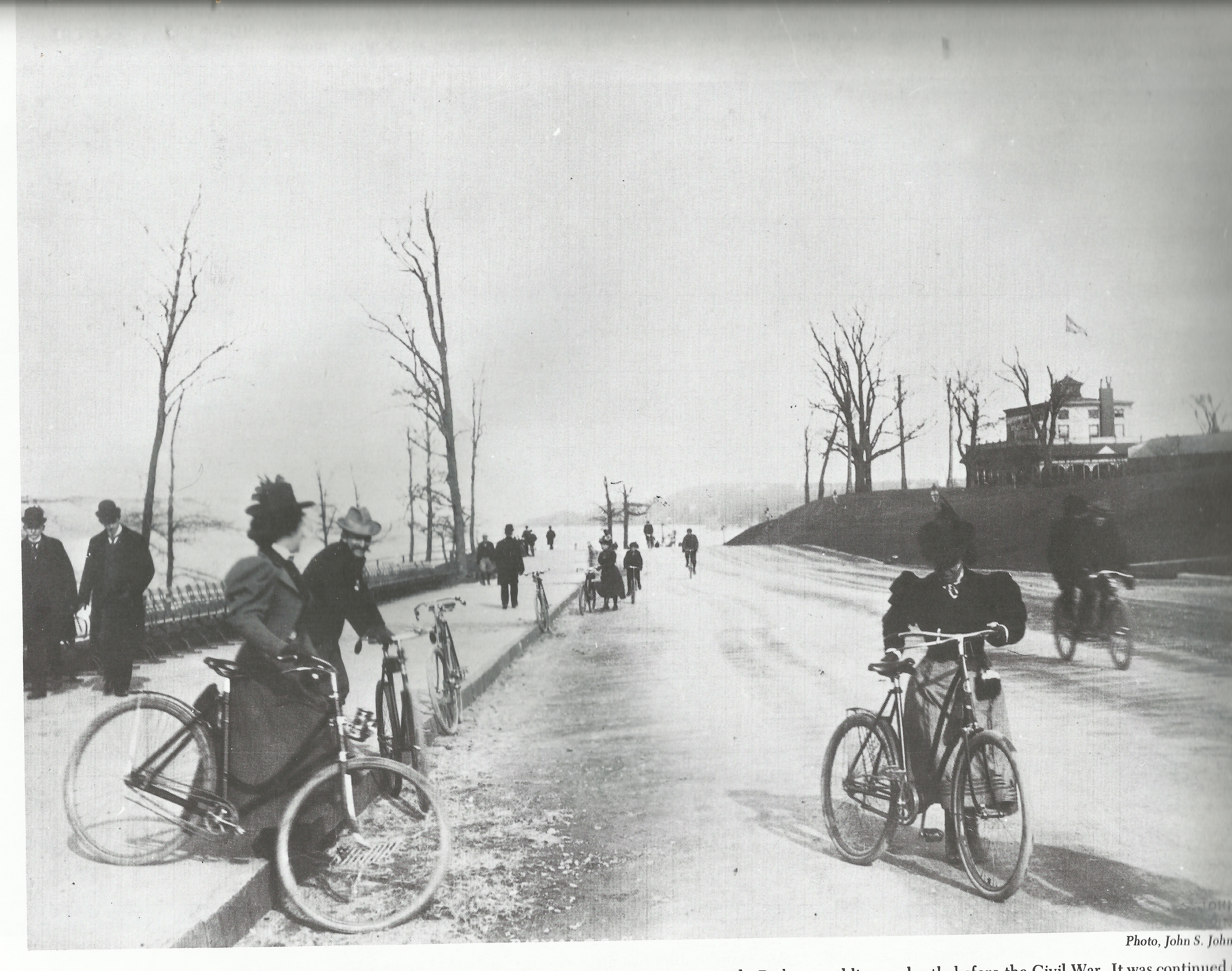
Or perhaps if it warmed up in the afternoon we’d go cycling up at Riverside Drive, on the Upper West Side. After all, for women, being on a bike had gone from being incomprehensibly daring to exceedingly fashionable. Sagacious Susan B. Anthony said that cycling “did more to emancipate women than anything else in the world.”

riverside dr,1898 1

Or after all, why not just go home to a shabby-genteel (emphasis on the shabby) clapboard cottage on Amsterdam Avenue at 122nd Street. (Maud’s dorm now overlooks this exact corner.) Then it was still very much in the country. Note the goat on the steps near the front door.

I wonder what the wallpaper looks like inside?

120 and amst, 1897 1

2 Comments

Filed under History, Jean Zimmerman, Photography