Category Archives: History

Serene and Green

I wondered how it would work, so I went to find out. A literary event in a clothing store in Yonkers, New York. A literary event that had nothing to do with fashion, actually: Reeve Lindbergh, the author of family memoirs, essays and children’s books, would be reading excerpts from the latest volume of her mother Anne Morrow Lindbergh’s writings, Against Wind and Tide:Letters and Journals 1947-1986.

against

The store was Green Eileen, an offshoot of Eileen Fisher where I often go to replenish my wardrobe.

colorful clothes

The clothes Eileen Fisher designs are elegant and serene, with unstructured lines and natural fabrics. If you like linen and silk, this is the place for you. It’s definitely the place for me, but by the same token I often wonder if I can live up to my clothes.

Maybe I like this place so much because the company’s ads showcase graceful  silver foxes alongside the usual younger models. Grey is the new brunette, or didn’t you know?

jean grey

There was an elegant buffet and wine. Reeve began. She read from the book, but even more interesting was the patter that pulled those passages together.

reeve

She told us about her mother’s ever-present blue notepads, containing carbon paper to make three copies, one for the letter recipient, one for her personal archives and one for the master archive at Yale (open to all as of April, as it happens). Anne Morrow Lindbergh often wrote three to four long letters in a day, yet despaired of getting enough writing done. Reeve remembers banging on the door of her mother’s “writing house” and how mad her father got – that’s the only time she had to write, he reminded his daughter.

The title of this volume is a quote from Harriet Beecher Stowe, who claimed that writing, for a wife and mother, is “rowing against wind and tide.” When Reeve herself became a writer, at one point she tragically lost a child and was afraid she would never put pen to paper again. Her mother’s reassurances “probably saved my life,” she told us. “Mom said stop reading the things you think you should be reading and instead write on little scraps of paper the things going on around you.” Reeve still makes this a practice, she said.
lindberghs

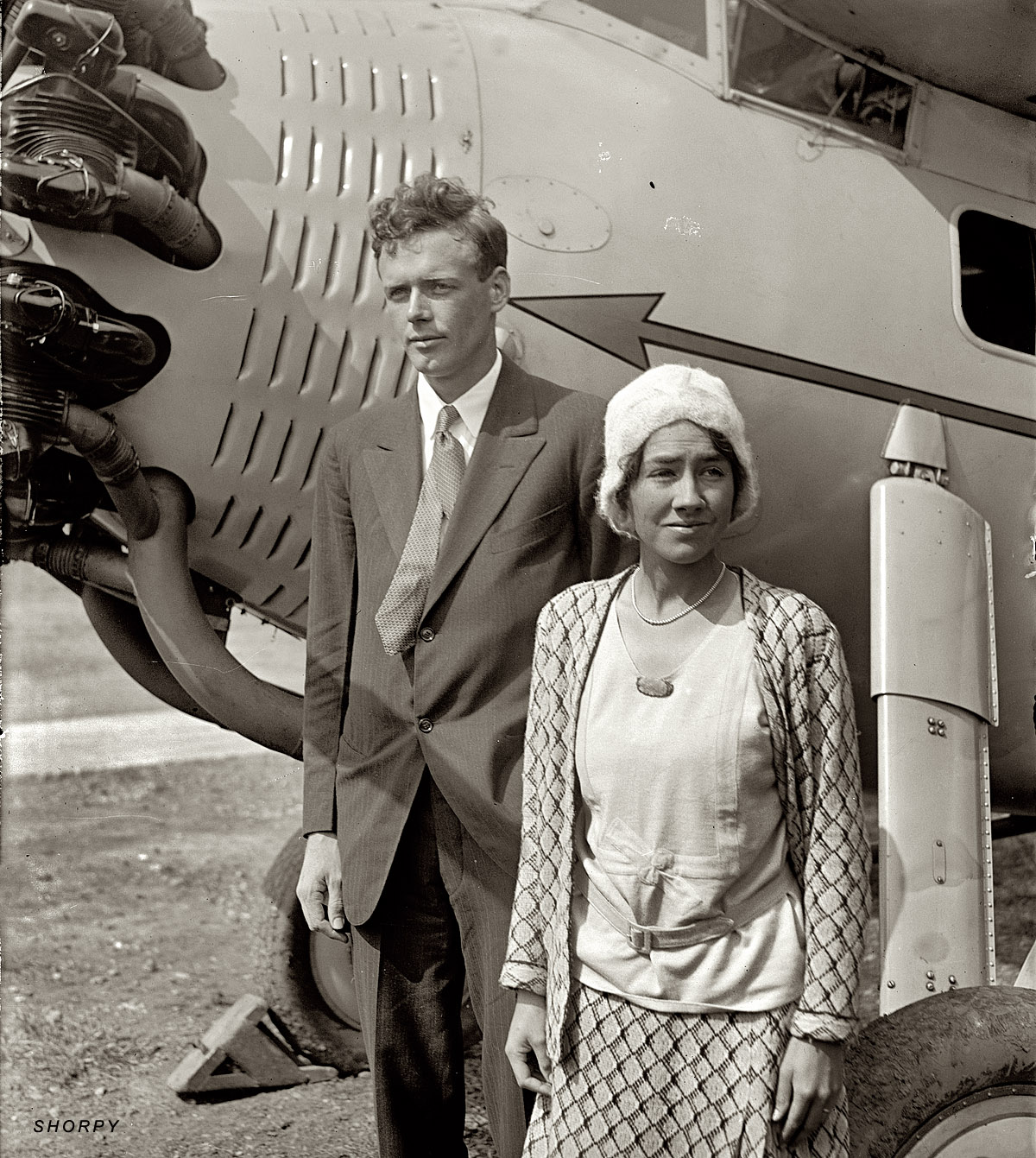
Anne Morrow married Charles Lindbergh, then the most famous man in the world, in 1927, and got her own pilot’s license the following year. They flew the world over while she continued to produce nonfiction, fiction, articles and poetry, with the 1955 Gift From the Sea a seminal work of feminism and environmentalism, never having gone out of print.  A book mothers give to their daughters, who give it to their daughters in turn.

Gift from the Sea

Reeve spoke about her father’s comings and goings, even his infidelities, about the “strong and interdependent relationship” the Lindberghs had nonetheless over 40 some odd years. Charles Lindbergh “showed us a world – his world – that he wanted us to see,” said Reeve of the family, but he could definitely be difficult. Reeve’s mother, she said, always felt her husband’s controversial opinions about Hitler and the Second World War had been misconstrued.

In this volume, Anne Morrow Lindberg talks about her pregnancies, about considering an abortion, about a miscarriage. She rewrites her wedding vows: “Since I know you are not perfect I will not worship you,” is one. “Marriage is not a solution to but a mirror of problems,” another. She wrote a lot about the need for aloneness –how important it is.

“I see life as a journey toward insight,” said Anne Morrow Lindbergh in a speech at the Cosmopolitan Club when she was 75.

Reeve’s editor on the new volume sat in a front row and nodded as she detailed how together they had combed through the archives at Yale to fill the book. All the material was handwritten and had to be typed before the painstaking selection.

The presentation concluded, and I wandered among the garments that lined the store like bright, clean flags. I’d love to be a person to wear textured pink silk.

pink shirt

Two books were being sold: Against Wind and Tide and a children’s book by Reeve Lindbergh called Homer, the Library CatTen bucks from the sale of each book would go to the Eileen Fisher Foundation.

Jen Beato, the Store Leader, told me why a presentation of the work of Anne Morrow Lindbergh fits the setting of Green Eileen. Every book wouldn’t make sense, she said, but this one shows “how challenges she faced are similar to today’s challenges.”
knots

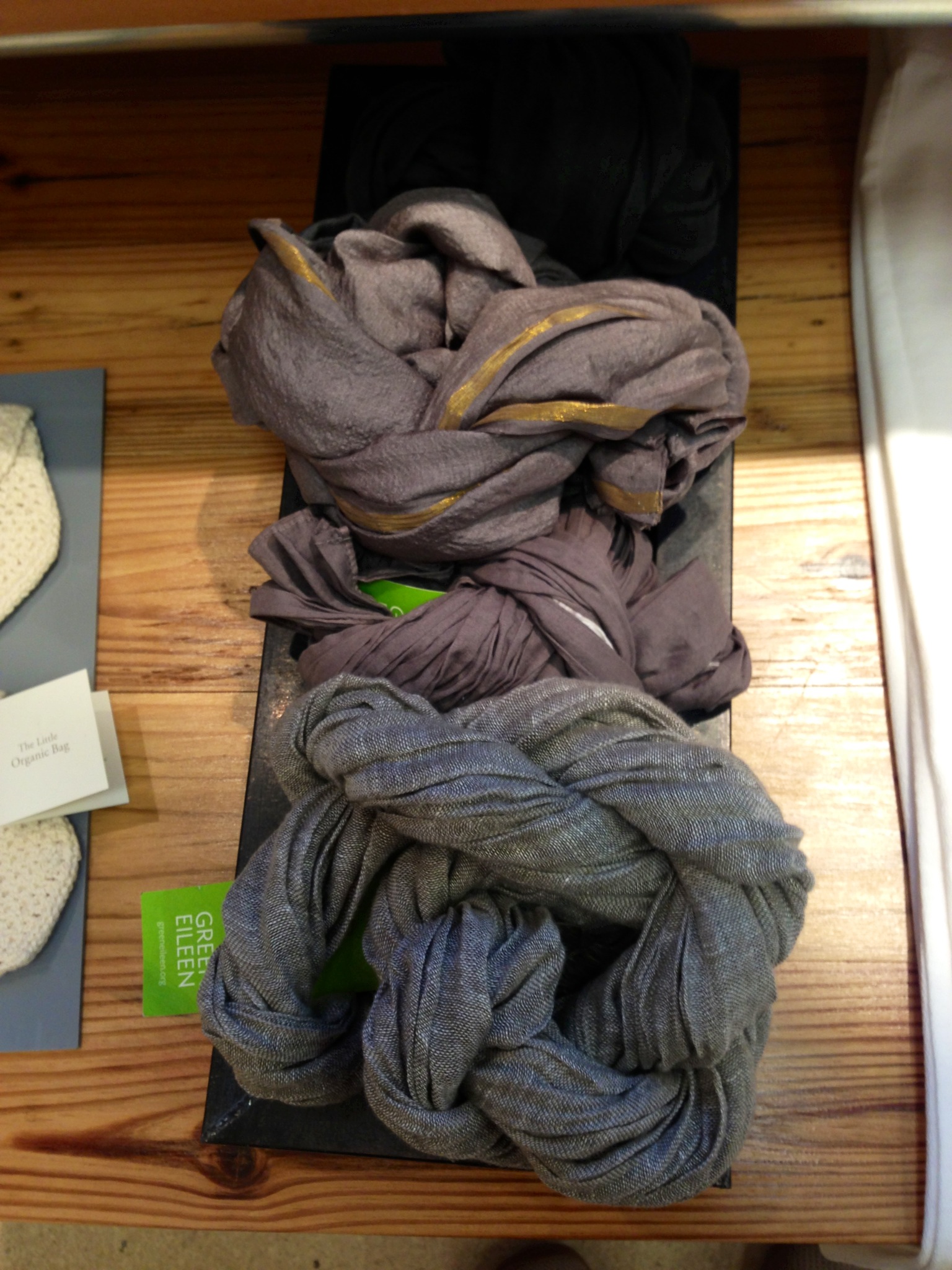
Green Eileen accepts contributions of gently used Eileen Fisher clothing – say you lose some weight, or gain some weight, and you can no longer fit into that perfect pair of pajama-y palazzo pants — which it recycles and sells at an affordable price, with the proceeds going to causes for women and girls locally, nationally and around the world. The National Women’s History Museum,  the New York Women’s Foundation and Planned Parenthood, among many others.

The company makes good points, so I feel virtuous running my fingers over that sleek textured silk.

pink

The average American throws away 68 pounds of clothes per year. Over 4% of global landfills are filled with clothing and textiles. Almost 100% of used clothing is in fact recyclable.

Green Eileen has a pretty cool blog. The store is always sponsoring workshops about crazy things like recycling your wool, cashmere and silk into fabric jewelry. Maybe I’ll go to one sometime.

As night fell, inspired and on my way to insight, I wandered past the rack of beautiful castoffs, now reclaimed.

white clothing

In a simple white bag, I toted my virtuous purchase. Not the pink silk, but  a knee-skimming shift of white linen that will look serene and elegant on my daughter. Then I’ll take something out of my closet to give back to the store.


7 Comments

Filed under Culture, Fashion, History, Home, Jean Zimmerman, Publishing, Writers, Writing

Strangers on a Carousel

I get to see the carousel horses at Binghamton.

george w girlThe Triple Cities, actually — Johnson City, Endicott and Binghamton. A part of the world that strikes me as sort of a blank, a cipher.

blank sign 2Some houses crumble and gape, seemingly lost in time.

sad house


Others are spruced up as garishly as 42nd Street tarts.

blue houseOf course, some of this decrepitude I love. A weatherbeaten sign with “international” flair.

signA space-age car dealership with weeds sprouting up.

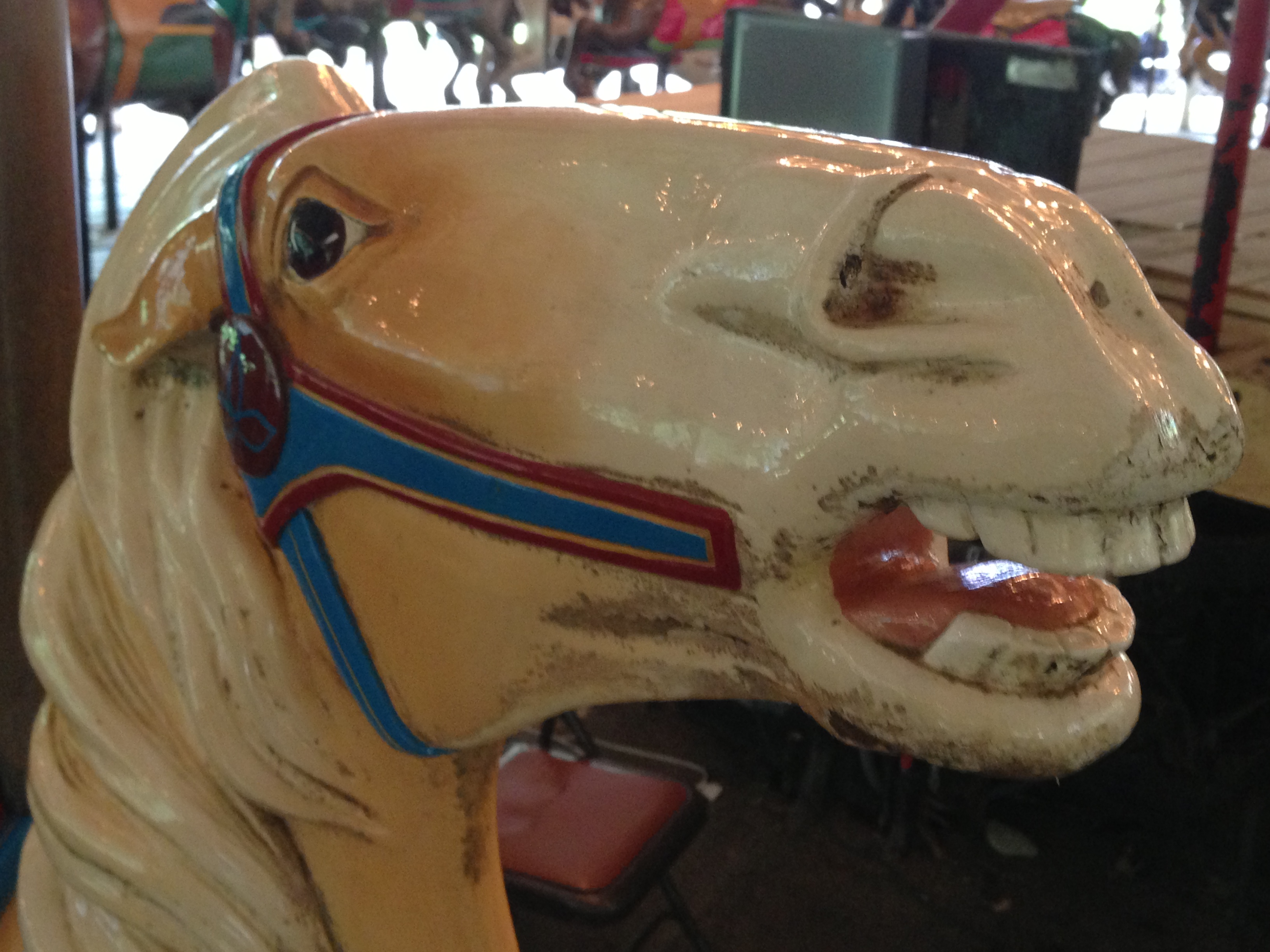
card dealerAll thoughts of the crumbling present go away when we visit four of the six  heirloom merry-go-rounds that still grace the Binghamton area (out of 150 in North America). The first one was installed in 1920, and sits next to a  little zoo — you see and smell a big black pig in its pen as you go ’round. The Ross Park carousel is completely unadvertised, a secret gem known to only a few, reached via a flower-bordered path. The horses, “jumpers,” as they’re called, are a little tattered.

zoo horse 2Gently worn. Still, the original 51-key Wurlitzer Military Band Organ sends you around, and the chariots are flanked by a bathing beauty and an ape, which we sit next to for the whole ride, not noticing its dramatic visage until we rise, slightly rocky, to our feet.

zoo apeA young Tobey-Maguire-in-a-shaved-head-role lookalike blows a whistle, the carousel comes to a halt and we jump off.

The richest men of the city, the Johnson men, funded these spectacular rides of hand-carved wood, made by the Allan Herschell Companies of North Tonawanda, New York. You can visit them all in a day if you get there at the right times, as we do, fueled by a long set of Captain Beefheart on the university radio station. Another of the carousels, in Endicott’s Little Italy, projects a more demure ambiance. It’s housed conveniently next to both a swimming pool (“No Wet Clothing Allowed”) and a window for home-made frozen custard, where a girl is in the middle of changing out the Holy Cannoli for the Watermelon on the flavor board when we arrive.

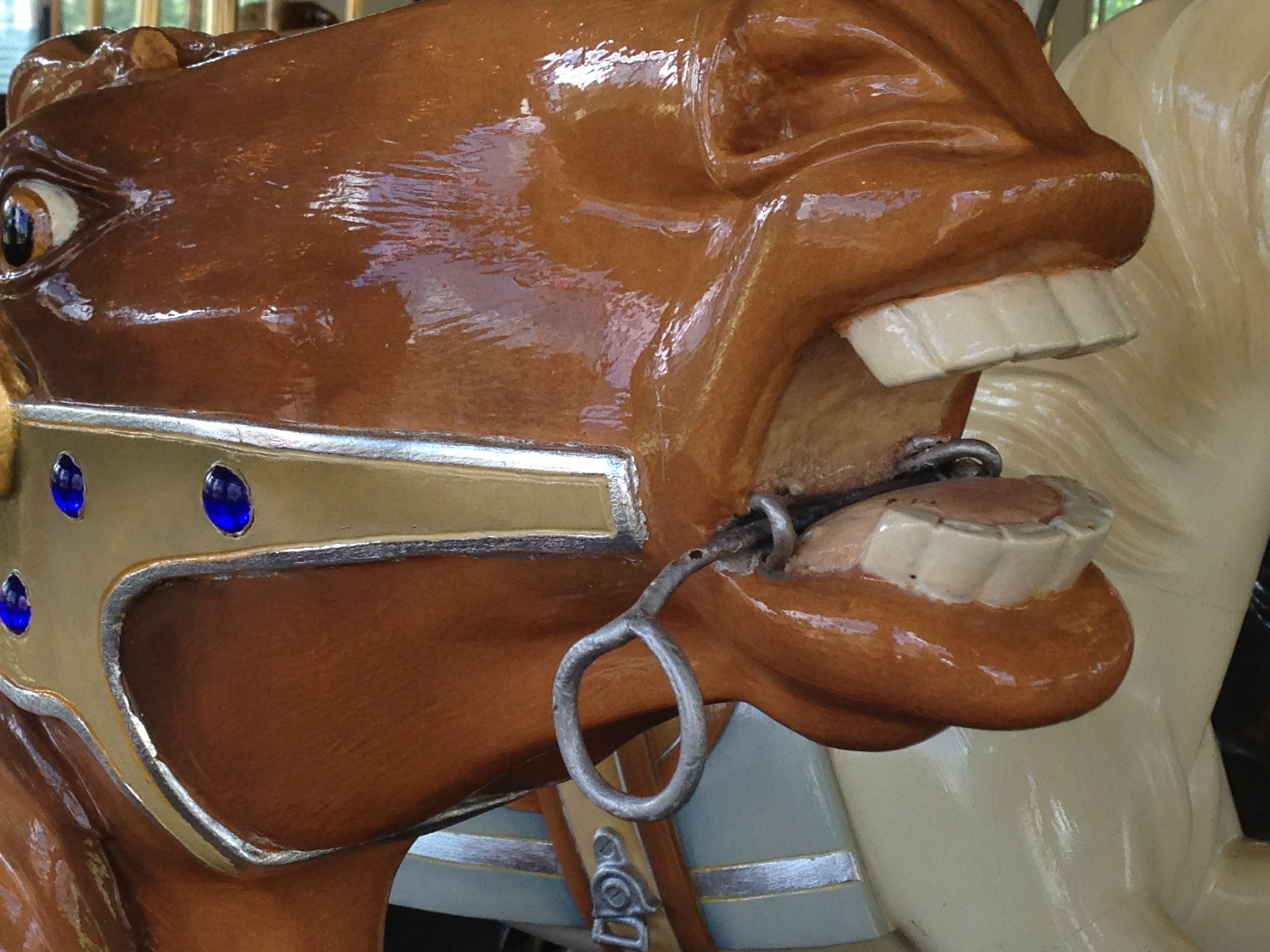
george horseCare has been taken to preserve and restore the beasts over the years. They are pretty, high-stepping it around the ring. Once upon a time you had to pay admission — a piece of litter! — to get a ride. Now it’s free to all and you can leave your trash in the can where it belongs.

Suddenly, the pavilion gets very quiet. All the kids vamoosed. Is there anything spookier than a silent carousel, especially one that will be 80 years old next year? Then again, calliope music can seem manic, even deranged, and the whole atmosphere fraught — see Strangers on a Train, when the whole ride flies off its axis.

And the horses go around and around, around and around. In Savage Girl I tell the tale of New York’s Central Park carousel, which once upon a time was drawn in its circle by mules trudging in a basement beneath the platform. True story.

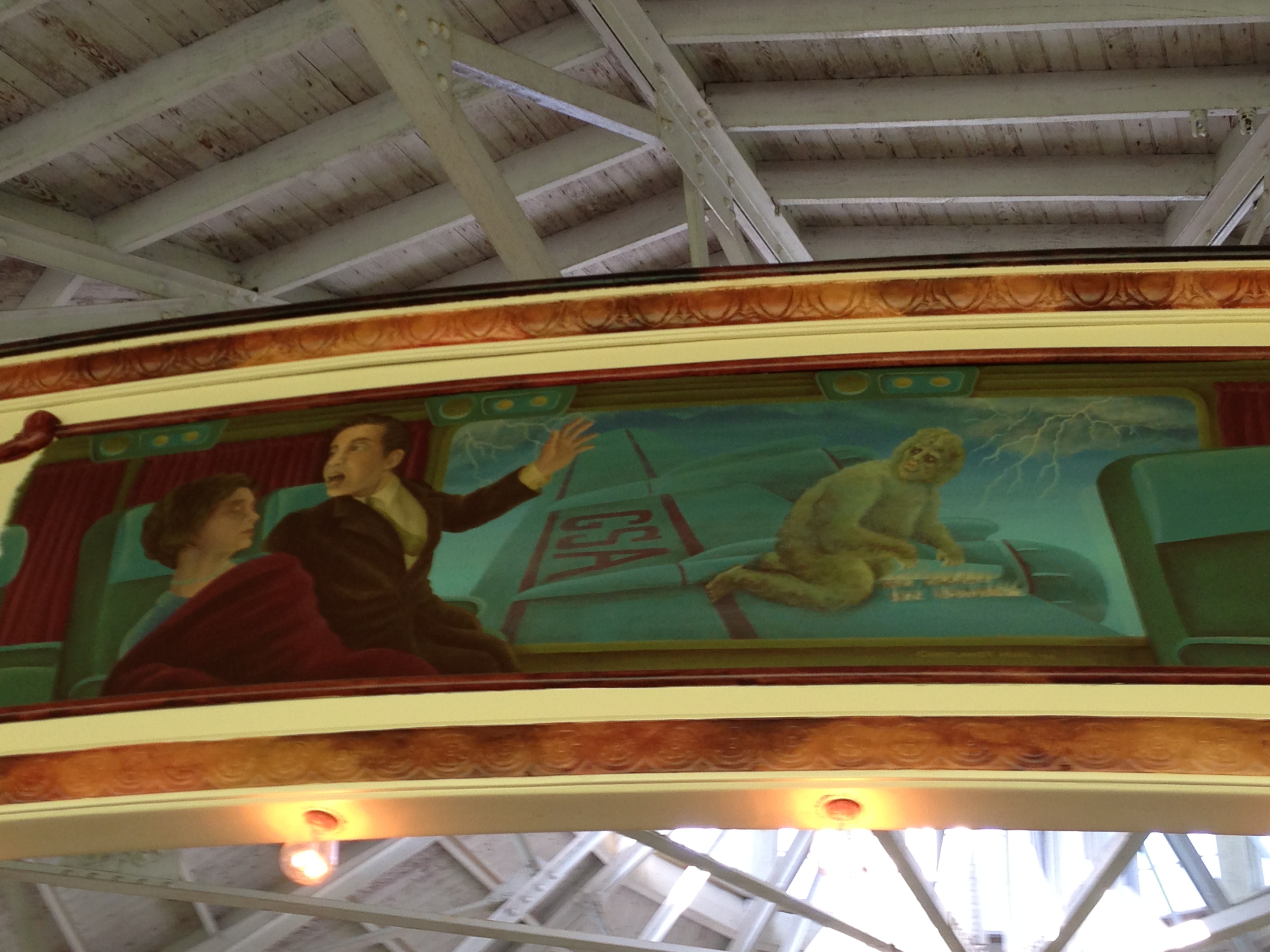
Another carousel, this one at “the Rec”, one of the area’s most used parks,  unexpectedly has a series of rounding boards which feature scenes from Rod Serling’s Twilight Zone. They were painted by artist Cortlandt Hull during a refurbishing in 2011.

twi 3The carousel came to Recreation Park in 1925, well before the TV series, but Serling grew up in Binghamton riding the carousel, so it all makes sense. There’s even a picture of the carousel itself– a scene from the show or a fictive portrait of Serling in his old stomping grounds?

twi 2Endicott-Johnson, the company that earned fortunes for the family that built these beauties, was so big, it made every pair of boots that outfitted American soldiers in world war one. George F. Johnson, the company’s big daddy, in 1916 mandated a 40-hour-work week. Generous, for the time. So was giving his 24,000 workers carousels.

Jack Dougherty, ready with his whistle on a lanyard, told me that they have to be careful at the Rec, closing it up when some rowdy middle schoolers come raging around every afternoon.

Jack

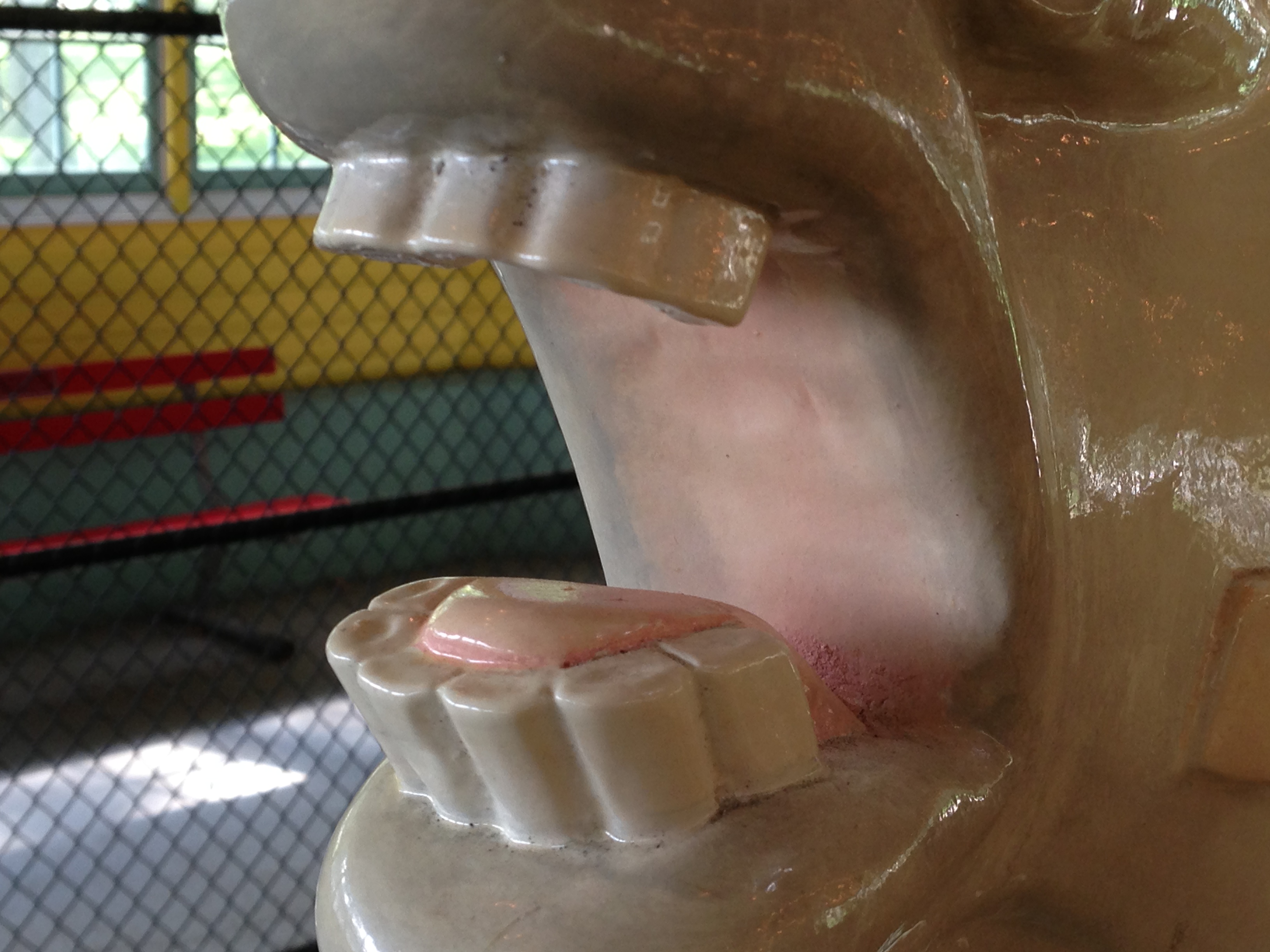
Can’t risk damage to the jumpers. The detail is really exquisite.

twilight chompers


They seem much more sturdy than they are. They’re real/not real.

I wonder if the children of the Triple Cities are somehow happier because of all the carousels in their midst? On the day his namesake merry-go-round opened in 1934, more than 500 neighborhood children paraded to George W. Johnson’s house with a bouquet of flowers to show their gratitude.

george brown horse


Made by human hands, each of them, so brawny and so delicate.

zoo hoofs


5 Comments

Filed under Art, Culture, Fiction, History, Jean Zimmerman, Savage Girl

Links in the Chain

A handful of links for a rainy day.

A beautiful look at hand paintings by Moscow-based artist and poet Svetlana Kolosova.

surrealfairytalepalmpaintingsbysvetlanakolosova6

Info about the Biblewalk and Living Bible Museum in Mansfield, Ohio.

OHMANbible12_jobJob appears real!

Amazing self-portraits by writers. Henry Miller drew his in 1946.

4b-millerselfportrait


The story of how the Kindle came to be, from an insider’s point of view.

An article on a blog about the history of makeup that discusses whether cosmetics of the past poisoned the women who wore them with ingredients like lead and mercury.

Bildnis-von-Elizabeth-Gunning-Herzogin-von-Argyll-von-Allan-Ramsay-31966


Ten ultra-secluded underground locations, for those times when you’ve disclosed government secrets and need a private place to crash.

And finally, three Japanese hotels that have been in business for a thousand years.

tl-inset_webThis one, Nisiyama Onsen Keiunkan, was built around a hot spring that supposedly has curing powers. Maybe it cured women with makeup-induced illnesses.


3 Comments

Filed under Art, Culture, Fashion, History, Home, Jean Zimmerman, Writers, Writing

A Bookish Brunch

Christina Baker Kline’s book Orphan Train was released on April 2nd by William Morrow, and I was lucky enough to attend a brunch in her honor today. As the intuitive and scrappy Allison Gilbert, our nonfiction-writing hostess, put it, “Writing a book is like pushing a mountain through your head.” An event like this, she said, can show people that a book exists from the ground up. “That’s what we writers do for each other.” Indeed. The house in Irvington, New York was filled with bookish well wishers.

Christina

Orphan Train has hit the best seller lists of both USA Today and The New York Times, Goodreads saluted it as a 2013 beach read, and it has been brought out in a special edition by Target, for which Christina had to sign thousands of copies.

orphan trainShe had come in from a meeting with the powerhouse biographer Robert K. Massie and would go off to be the keynote speaker at an event held by Books New Jersey, but spared a chunk of time in the noon hour to describe her book and the process by which it went from Henry James’ “germ of a story” to a full-blown narrative.

Christina stumbled on to the phenomenon of orphan trains 10 years ago.

orphan-train

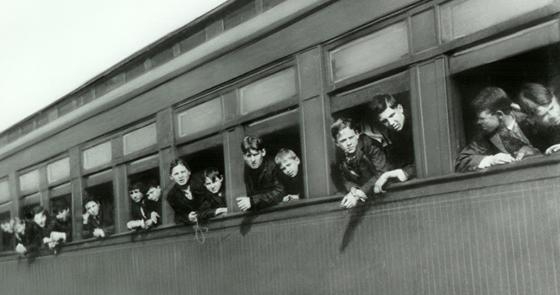
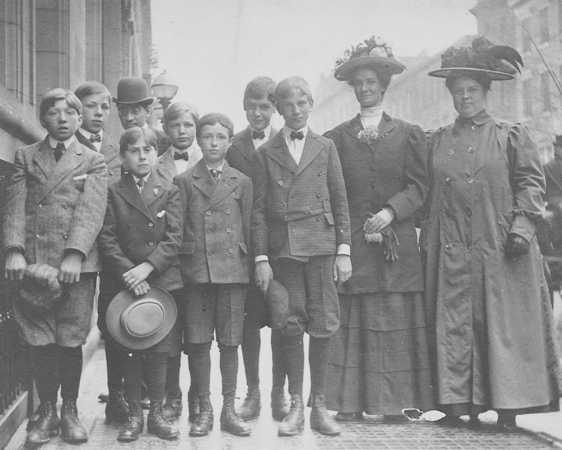
It seems her husband’s North Dakota grandfather was one of “riders.” Most  kids were plucked off the streets of New York between 1854 and 1929 and shipped to the Midwest as free labor for farm families. Ultimately there would be 250,000.

orpans with women


Some of them, actually about 60 percent, were not legitimately parentless, but their single parents, usually their mothers, simply couldn’t afford to feed and house them. Civil War widows, in particular, couldn’t hack the expenses of parenthood, and there were no social programs to help them. Today the original orphans have two million descendants in this country.

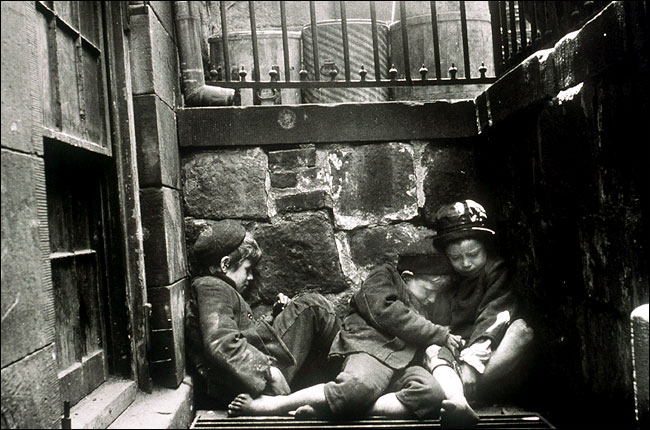
Jacob Riis made devastating pictures late in the 19th century of some of these lost New York street children.

jacob riis boys

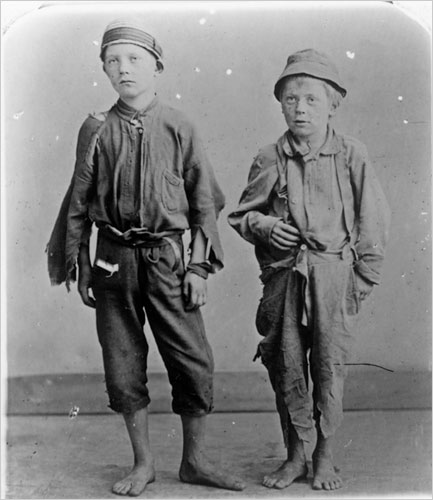
The older they were, the more desirable they were for the farmers who took them in. Better workers.

riis grown boys


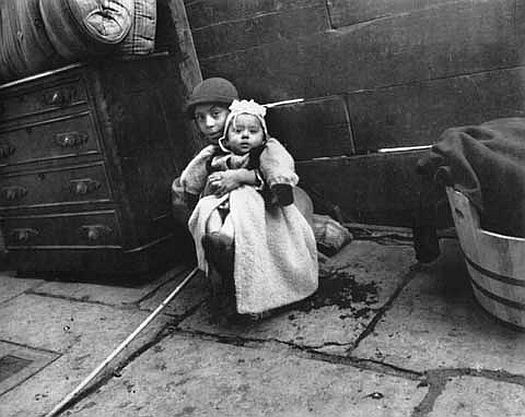
Babies were popular too.

riis boy and baby


Girls, not so much. A threat to the women in the household. This little girl Riis captured is beyond sad.

riis girl

Now Christina has taken this powerful material and made a story out of it, centered in the relationship between a troubled 17-year-old girl and an aging Irish immigrant who keeps her orphan train memories in an attic trunk.

Christina and I talked over aspects of bringing out a book, including the fact that we both take a powerpoint with us when we hit the road to talk about our work, something not every fiction writer does but that seems appealing to fans of historical fiction. I liked something she said about the writing process, about creating the structure for a story: “We need to build too much, explain too much, before we take that scaffolding away in the revision process.”

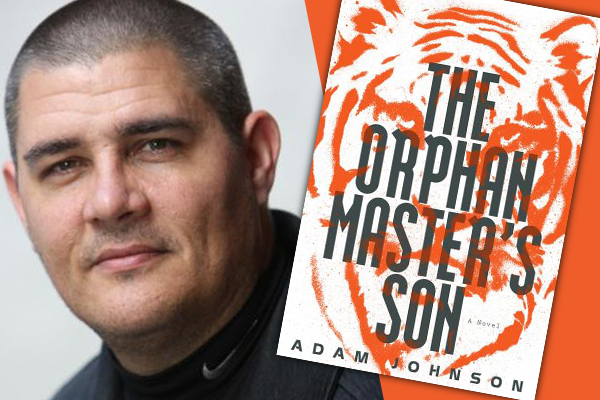
I can’t wait to read Orphan Train, to see what commonalities exist between her children of the late-19th century to the early 20th century and the parentless waifs of The Orphanmaster‘s 17th-century New Amsterdam. Novelist Helen Schulman  said Orphan Train “makes for compulsive reading,” and The Orphanmaster has been called “compulsively readable,” so we have a bond. It’s too bad Adam Johnson couldn’t be sharing bagels and lox with us at Allison’s house today.

orphanmastersson

His book, The Orphanmaster’s Son, won the 2013 Pulitzer Prize for fiction. I have found myself in the interesting position since the award was announced of having people congratulate me for my “recent honor.” Well… no. But you’ve got to think that this hat trick of orphan novels suggests something in the cultural water. Andre Gide said, Not everyone can be an orphan. I salute Adam, whose book is supposed to be as terrifying as it is wonderful. But for now, it’s just Christina and me in the picture.

j and c


7 Comments

Filed under Cooking, Fiction, History, Jean Zimmerman, Photography, Publishing, Writers, Writing

Prayers and Limits

Rainy day rush hour on 9A, the four-lane that runs through Manhattan and north past the Cabin. Traffic has us crawling. But the radio is loud, with Phosphorescent singing Ride On/Right On.

phosphorescent

E-Z lyrics:

Let’s go for a ride, hey you turn me right on


Let’s get on the bike, hey you turn me right on


Ain’t nothing to hide and hey you turn me right on


The city at night, hey she turn me right on

Phosphorescent’s the moniker for an Alabama-to-Brooklyn boy named Matthew Houck (he previously went by the nom de guerre Fillup Shack) and he has out a new album, perfect for rainy day traffic jam listening.

I’m approaching that long, weedy section of highway, bordered by a sluggish streambed, where ordinarily the cars sail along briskly. There’s a sign along here someplace, planted out here near the road by someone who remains invisible. It’s plain plywood, painted white with black Gothic lettering and a simple legend: GOD ANSWERS PRAYERS. I’ve passed it hundreds of times, but I’ve never been able to get a picture of it because traffic moves so fast and there’s no shoulder to stop on. The sign just blinks by.

Now, God and I are not ordinarily on the most intimate terms. But I love this sign that has greeted me on every drive home and in many frames of mind, including the most dispirited. GOD ANSWERS PRAYERS. Okay, whatever you say. And I start to wonder about other manifestations of the same phrase.

gap rock

They abound, on hats as well as rocks.

gap hat

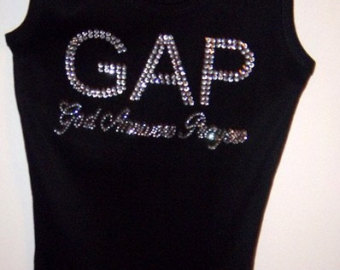
In rhinestones.

gap rhinestones

Is that what GAP means, as in The Gap? Those nice pants I bought last Fall? Never knew.

Zowie. Turn the radio up. Mr. David Bowie has come out with a new body of work, including the exciting song The Next Daythe video for which has been condemned by the Catholic Church as indecent. Well, it does show Bowie attired as Christ alongside Gary Oldman as a debauched priest (I thought Oldman was already a debauched priest) and Marion Cotillard as a beautiful prostitute with stigmata wounds.

david.bowie_

Bowie hadn’t put out a record in a decade, I guess he felt pent up.

my-prayers-have-been-answered

Ho hum, the traffic does crawl. Gil was in a jam yesterday and God answered his prayers with the Dan Hicks song on his shuffle, Traffic Jam.

Dan Hicks

Prayers, they don’t always work so good. I favor the sentiment of Oliver Wendell Holmes: We have learned that whether we accept from Fortune a spade, and look downward and dig, or from Aspiration an axe and rope to scale the ice, the one and only success which is ours to command is to bring to our work a mighty heart.

As true today as it was when he said it in 1884. It doesn’t fit on a plywood sign, unfortunately.

You can get a daily “meditation” like the Holmes quote in your inbox from All Souls, a church that is almost not a church it is so open-minded – “deeds, not creeds” is its motto. To get you questioning things like prayer.

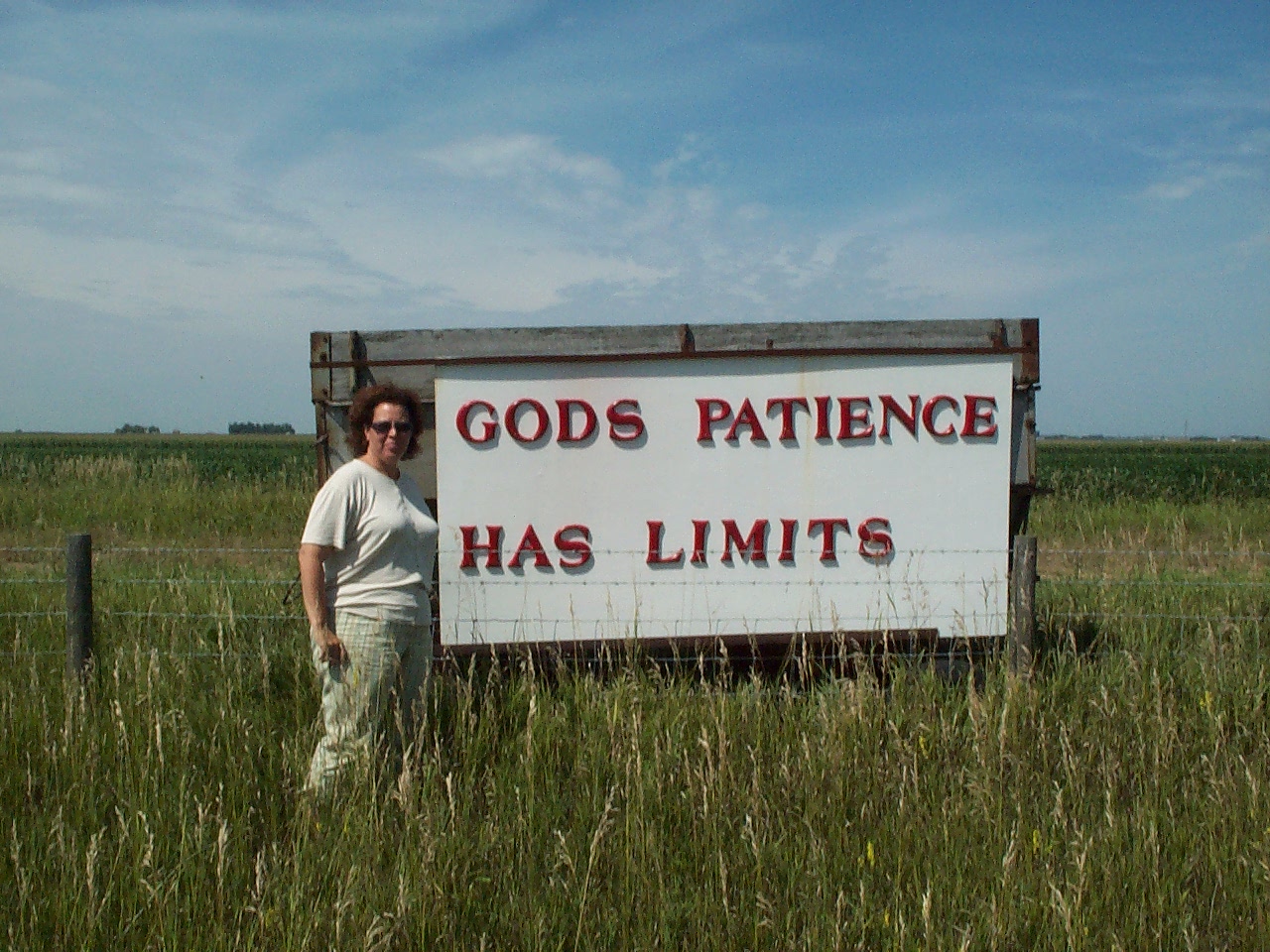
That sign on 9A, I like it almost as much as the one I saw by the side of a Nebraska highway about ten years ago. We wanted to bring it home with us but couldn’t figure out a way to tie it on top of the car.

god's patience has limits

A God with limits? Isn’t that heretical? For some reason I like the in-your-face Nebraska farm wife who stuck it along the interstate. She was probably shaking her fist at us as we drove away.

Whooosh—there goes GOD ANSWERS PRAYERS. Funny, I was just praying I would see that sign come around.

3 Comments

Filed under Culture, History, Home, Jean Zimmerman, Music, Photography, Writers, Writing

For Art’s Sake

The art of the perfect egg cream.

At Veselka Coffee Shop in New York City’s East Village, Eddie explained that we came in at just the right time, because his is the real deal. None better.

How long did it take you to reach perfection, I asked, watching him furiously stir the seltzer, vanilla and milk into a froth. A few years, he said, ha ha. Everybody loves Eddie, said the waitress. Eddie, said the counterman, your wife is calling on line one.

Eddie

The art of coffee in a takeout cup.

coffee

There are those people who truly grok a to-go cup, light, no sugar, and others who will never understand. Those who get it will survive.

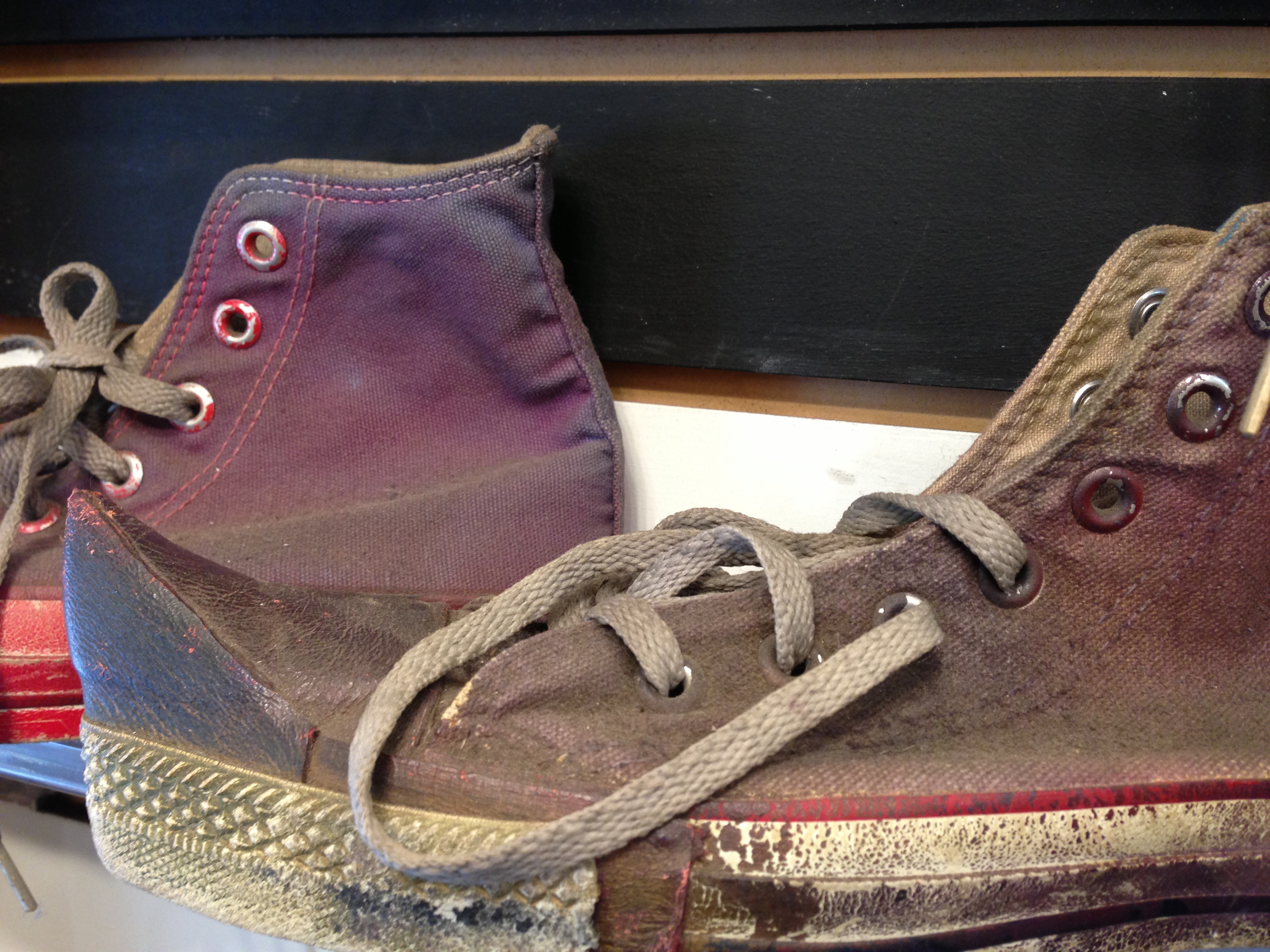
The art of the handcrafted athletic shoe. Boris works out of shoebox of a shop on St. Mark’s Place, customizing Converse sneakers. This must be one of his masterpieces.

converse

The art of the display window.

doll window

Maud and I made our way all around the East Village today but couldn’t convince ourselves to venture inside this storefront. I do, however, believe in the cause of Free Pussy Riot, the truncated message displayed on the sign – two of the three rockers are still in jail in Russia on some trumped up charge of fomenting unrest and making people think. Free Pussy Riot!

The art of the subway mosaic.

astor place beaver

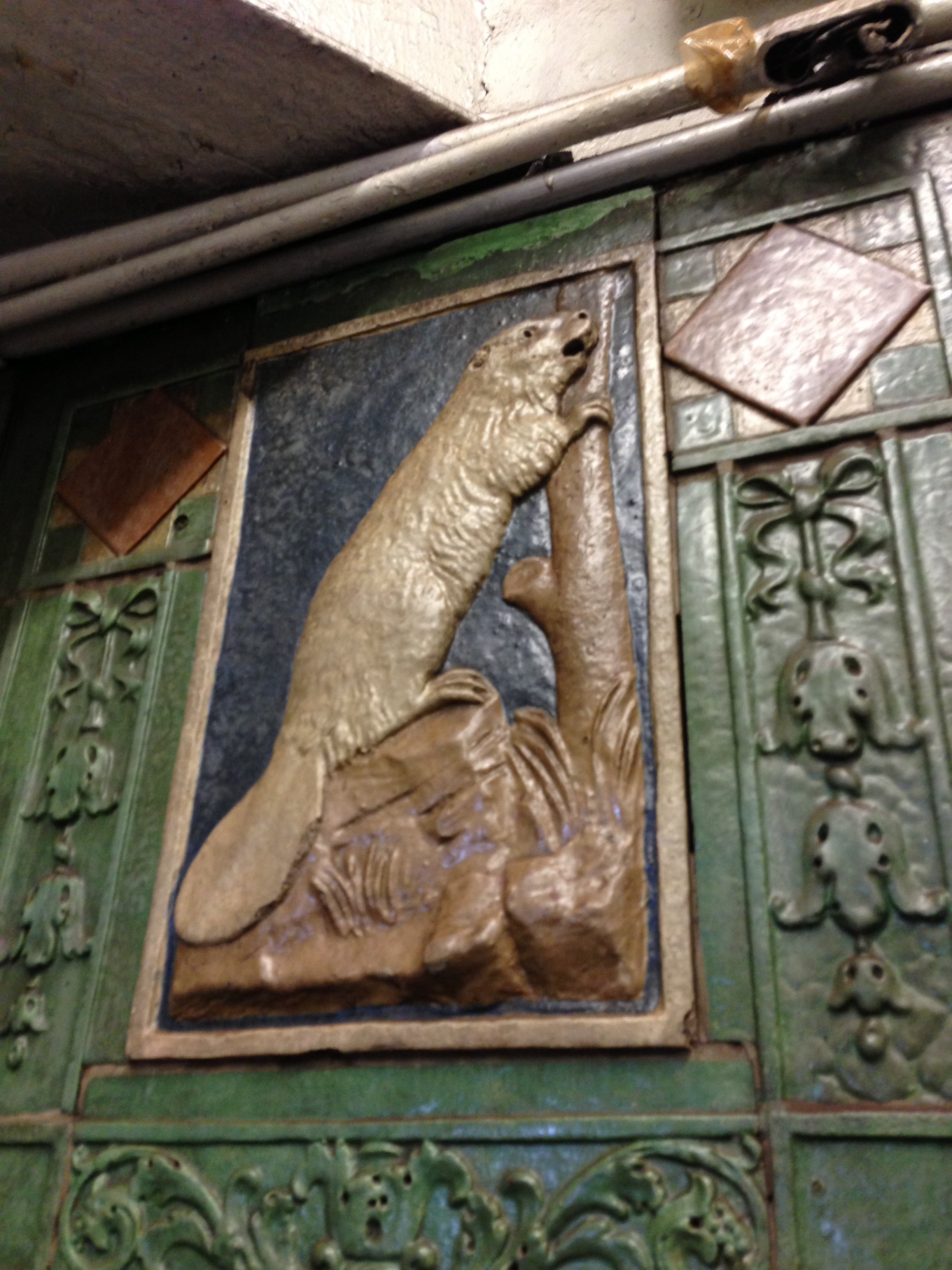
New York’s subways house some splendid creative works, usually related to the locale of the stop. The Astor Place subway walls display ceramic plaques of beavers — made by the Grueby Faience Company in 1904 — because fur baron John Jacob Astor’s mansion stood nearby, and his fortune derived from the beaver-pelt trade.

The art of the old-time luncheonette.

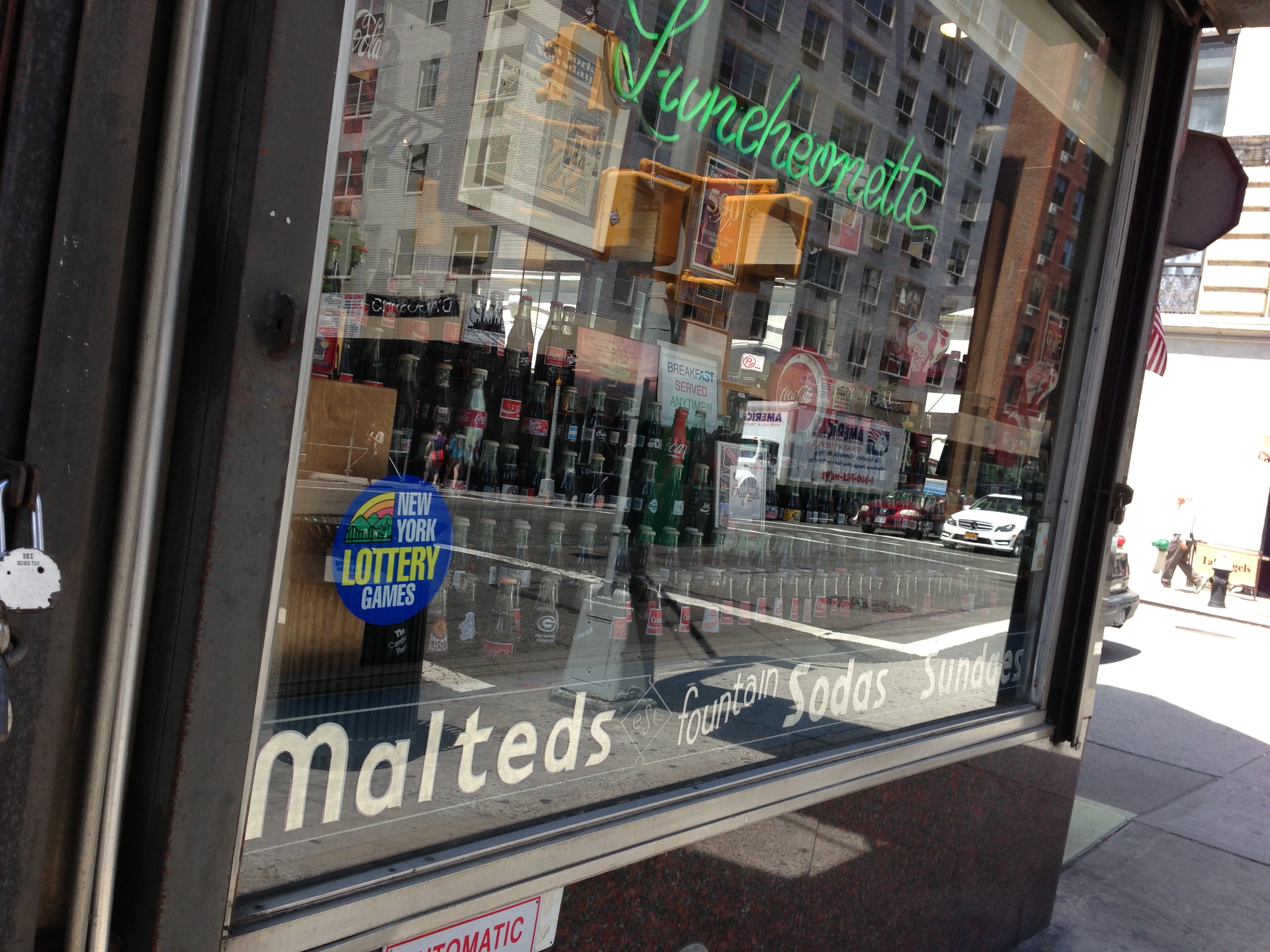
It sometimes seems as though everything old, dear, and genuine in Manhattan has been driven out, but once in a while a gem like the Lexington Candy Shop Luncheonette survives. It has been serving up milk shakes and lemonade since 1925.

lexington luncheonette

The art of the tooth-hurting truffle.

We grazed the cherry caramel samples at the counter of Vosges Haut-Chocolat, which sounds French but is actually out of Chicago.

caramels

Admired the pure silk hankies they use to wrap up the really important custom gifts.

silk

Then we each had a truffle of our own. Maud’s was the Rooster, with taleggio cheese, Tahitian vanilla and organic walnuts. Mine was a Woolloomooloo, featuring coconut and macadamia nuts. Gil’s getting a bacon/chocolate confection for Father’s Day.

The art of instilling disquiet.

rooftop people

The rooftop garden at the Metropolitan Museum currently features one of the most wonderful, most disturbing installations I’ve seen. The Pakistani artist Imran Qureshi was inspired by escalating bombings in Lahore when he spilled and splattered blood-red acrylic paint across the nearly 8,000-square-foot open space of the Metropolitan’s deck. Elegantly dressed European tourists traipsed across the blossoms of blood as if they were nothing.

rooftop paint 2

To me they called up the times I’ve come upon a recent deer/car collision on the highway, with the pavement still a wash of gore. Or the searing images from Gil’s book Aftermath, Inc., in which he describes the stains that occurred following trauma events, such as murder or suicide. The artist Qureshi has said, “Yes, these forms stem from the effects of violence. They are mingled with the color of blood, but at the same time this is where a dialogue with life, with new beginnings and fresh hope start.”

The art of water vapor.

cloud

Far above the paint, the New York clamor, the scene, serene, inviolable, sublime. Art for art’s sake.

8 Comments

Filed under Art, Culture, Fashion, History, Jean Zimmerman, Nature, Photography, Writing

Out of Africa

Maud is back from Malawi.

back from malawi

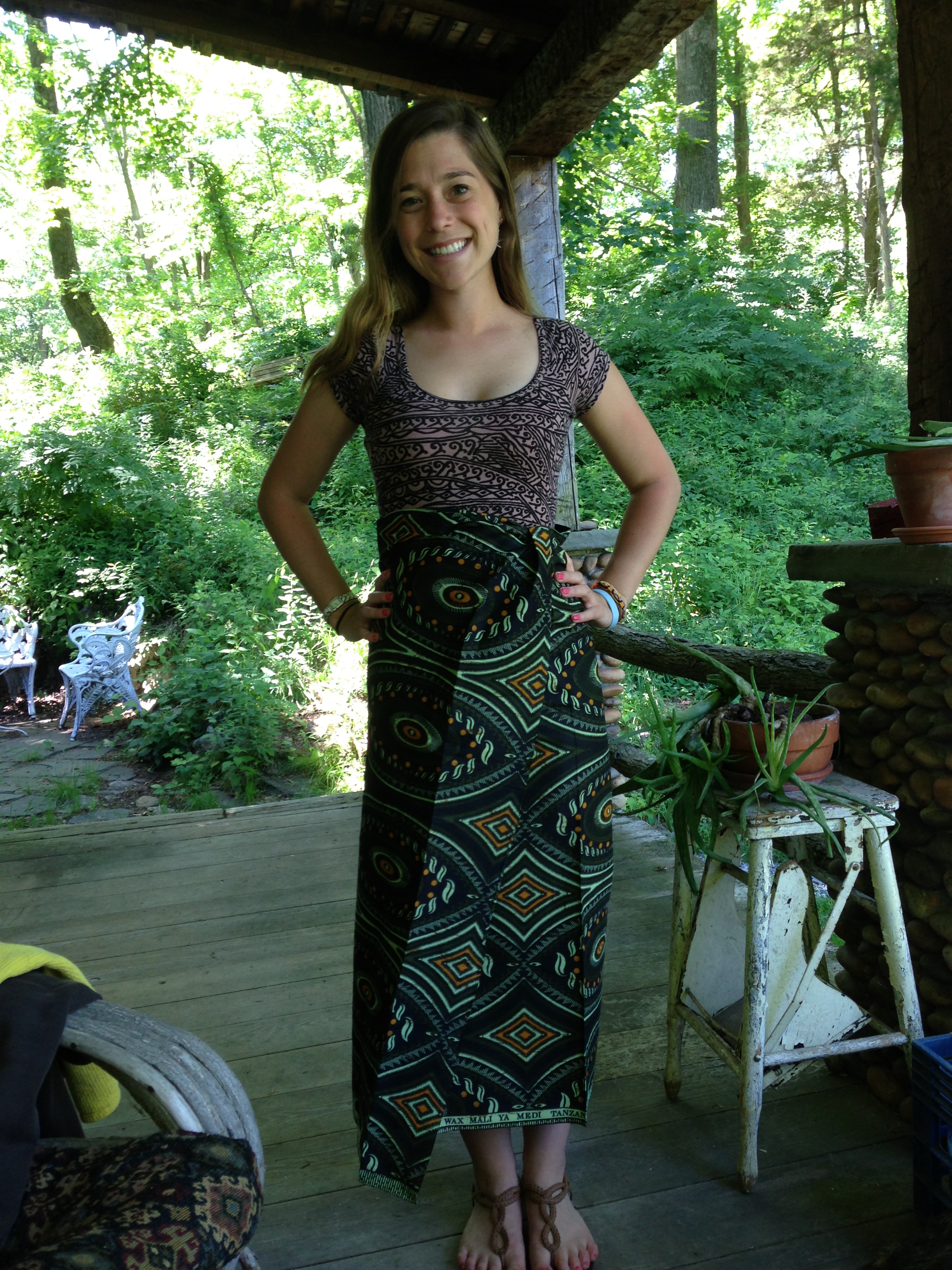
Wearing a chichinge, a wrap skirt of block-printed African cloth. Her resilient muscles are only a little sore, and she seems impervious to jet lag after 20  hours in the air.

Maud and her group from buildOn, working with hundreds of village men, laid a foundation and raised a quarter of the walls for a new school block that will allow the town of Mpandakila to educate its 5th and 6th graders. So that after 4th grade the kids will not drop out rather than hike the six kilometers to the nearest school.

Maud ate nsima — corn porridge — pumpkin greens and soupy beans for 12 days, sleeping on a bamboo mat in a very special homestead. Her hosts were one of the chiefs of the community and his wife and their five precocious daughters. Also grandma, the babies of the two eldest daughters, and a two-day-old goat that cried for its mom all night. 

A hen slept in the room with Maud and her friend Claire, laying its eggs while they were sleeping.  The chief offered the young women a chicken as they left, which they took and sold to the bus driver who took them six hours back to Lilongue. They fed it ground nuts (peanuts), which they picked fresh from the vine every morning.

Dancing was a big thing in the village, to the pounding of drums and the ululations of the older women. The whole village loved learning the Macarena.

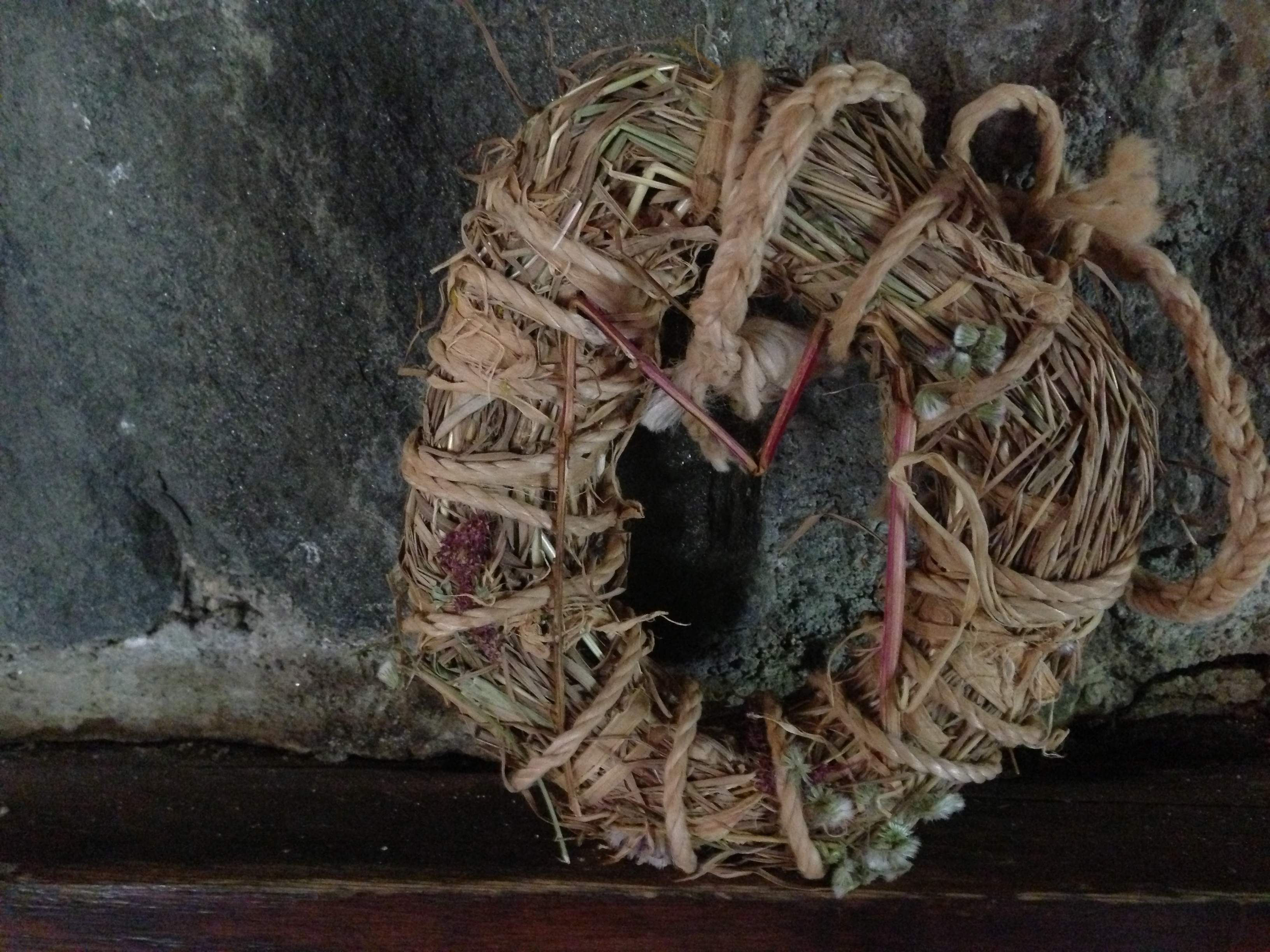
What Maud loved learning about the most was how to carry water atop her head — and dirt, and bricks. A woven circle of straw helped her balance. 

water carrier

It felt so far away, but at the same time there was a human familiarity about it all — a smile as you walked by someone, the  bossiness of the sisters. Maud didn’t come away with any answers about the best way to go about helping other countries, without imposing your will or encouraging dependency. What matters is asking the questions, and coming away with more.

Zikomo kwambiri means thank you very much in Chichewa.

6 Comments

Filed under Cooking, Culture, Fashion, History, Home, Jean Zimmerman, Music

Red Is the Color

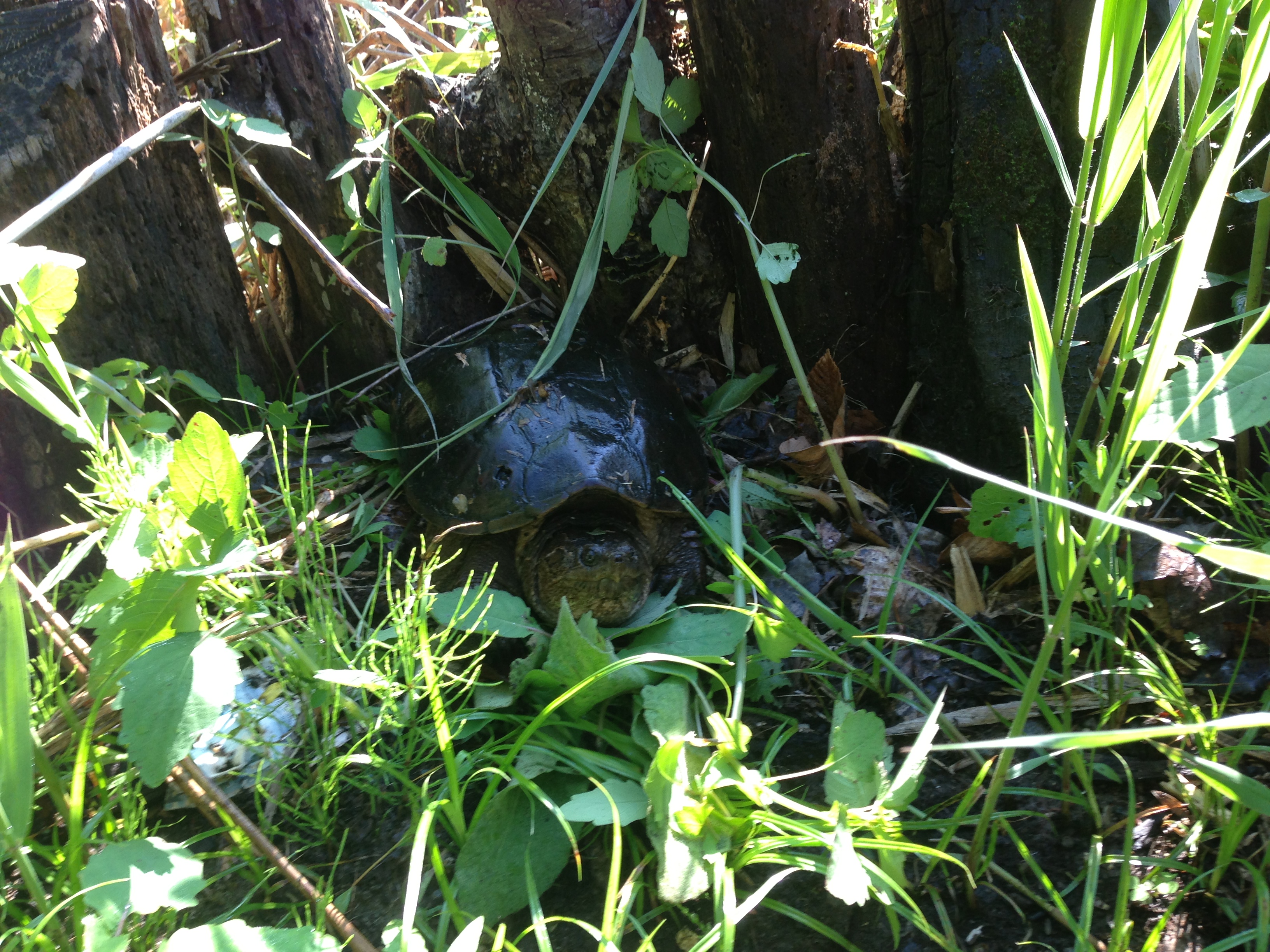
We were ushered off to our strawberry jaunt by a visitor from prehistory.

snapping turtle

A snapping turtle backed herself into a corner of the the vegetable garden when I startled her. She scowled, bit the air and elongated her snake-like neck when her ejection was proposed with a shovel. Snappers evolved over 40 million years ago, so she deserves our careful respect.

It’s strawberry season. But it’s early.

strawberry field

Still, we wanted to pick.

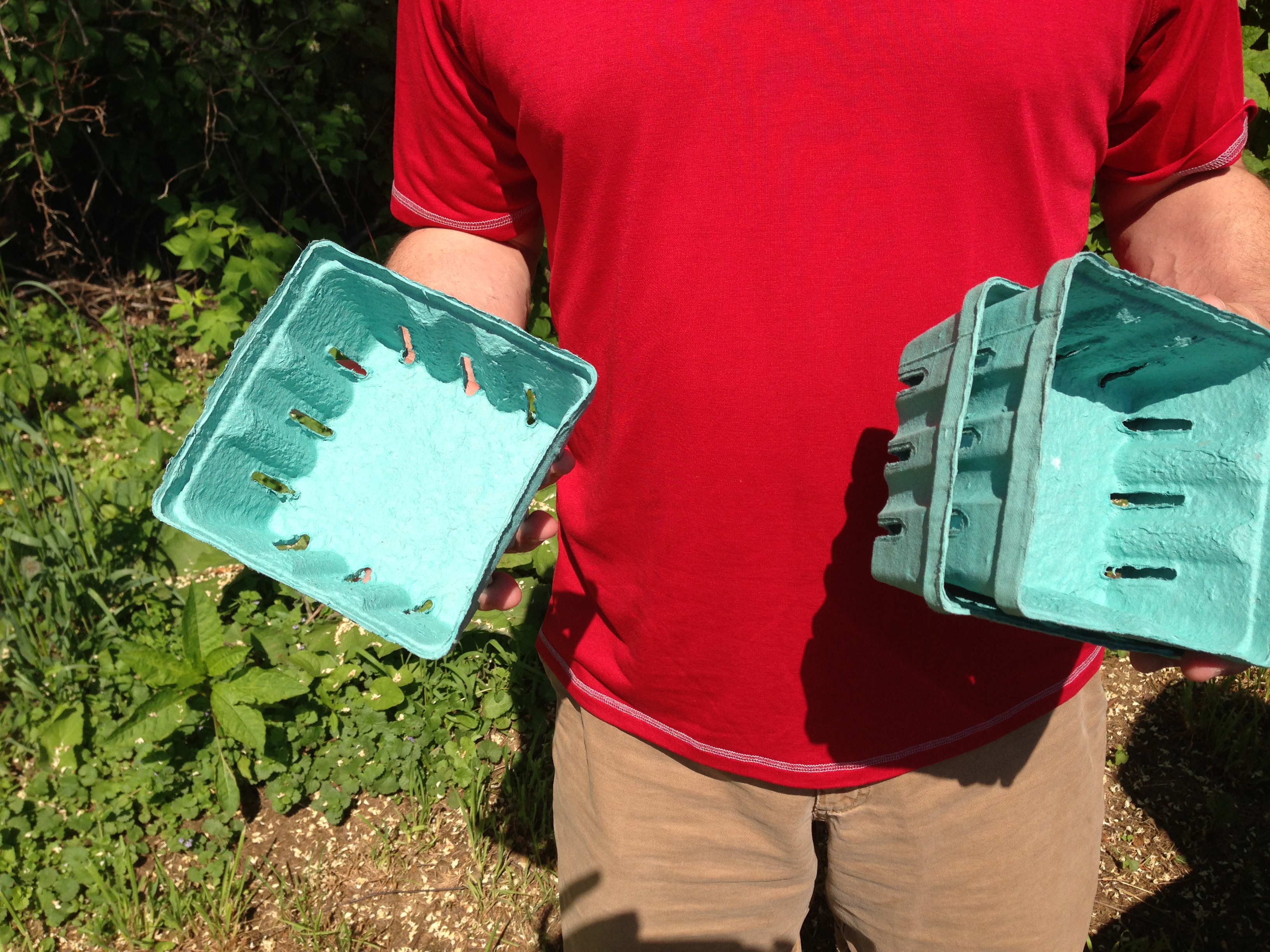
Gil boxes empty

One of my mother’s fondest memories of strawberry picking as a kid is the bluebird she saw on a post, her first bluebird, as she rode into the field in the back of a pickup truck with her sister Sandra and her brother Jere.

No bluebirds for us, or birds of any kind. The berries, clustered under their tents of leaves were largely unripe.

unripe strawberry

At Grieg Farm, in Red Hook, New York, we had a summer sky, hot blue with hazy clouds. And strawberries, it turned out when we looked, plenty enough for the two of us.

I remember eating strawberries when Gil proposed to me decades upon decades ago. He went into the restaurant’s men’s room and looked into the mirror, then came back to the table and dove in.

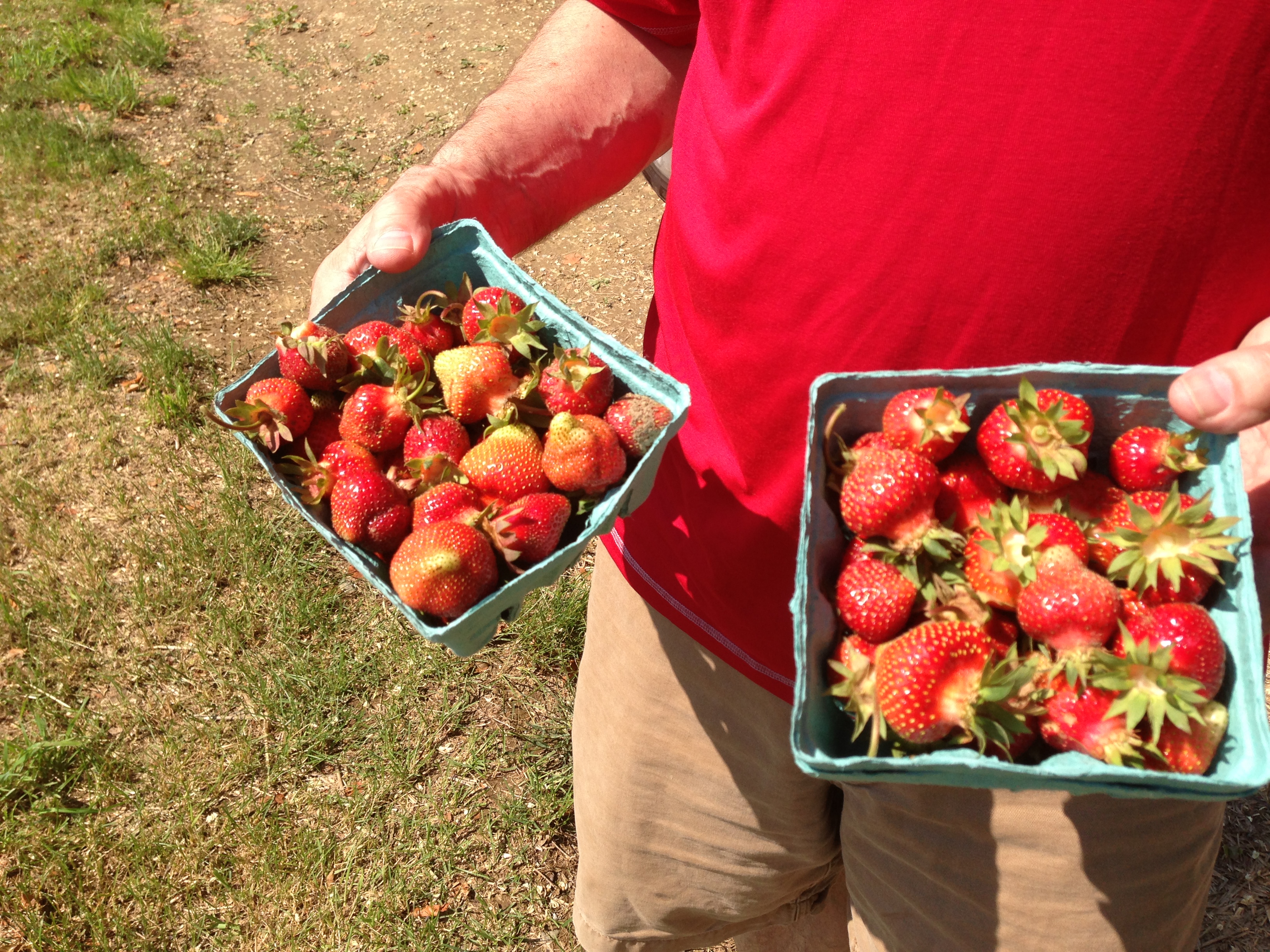
Gil boxes full

Ryan took our six bucks and explained that while the berries weren’t the prettiest, they were just as sweet as if they were perfectly red.

Redder (and pink) were the radishes at the farm stand.

radishes

One nurseryman told me that if you harvest the baby radishes with their leaves and saute them together, it results in a dish that is delicious. I have plenty of baby radishes in my garden – until the snapping turtle comes for them – and I’m going to try it.

Red-green rhubarb, to go with my peppermint-striped strawberries.

rhubarb

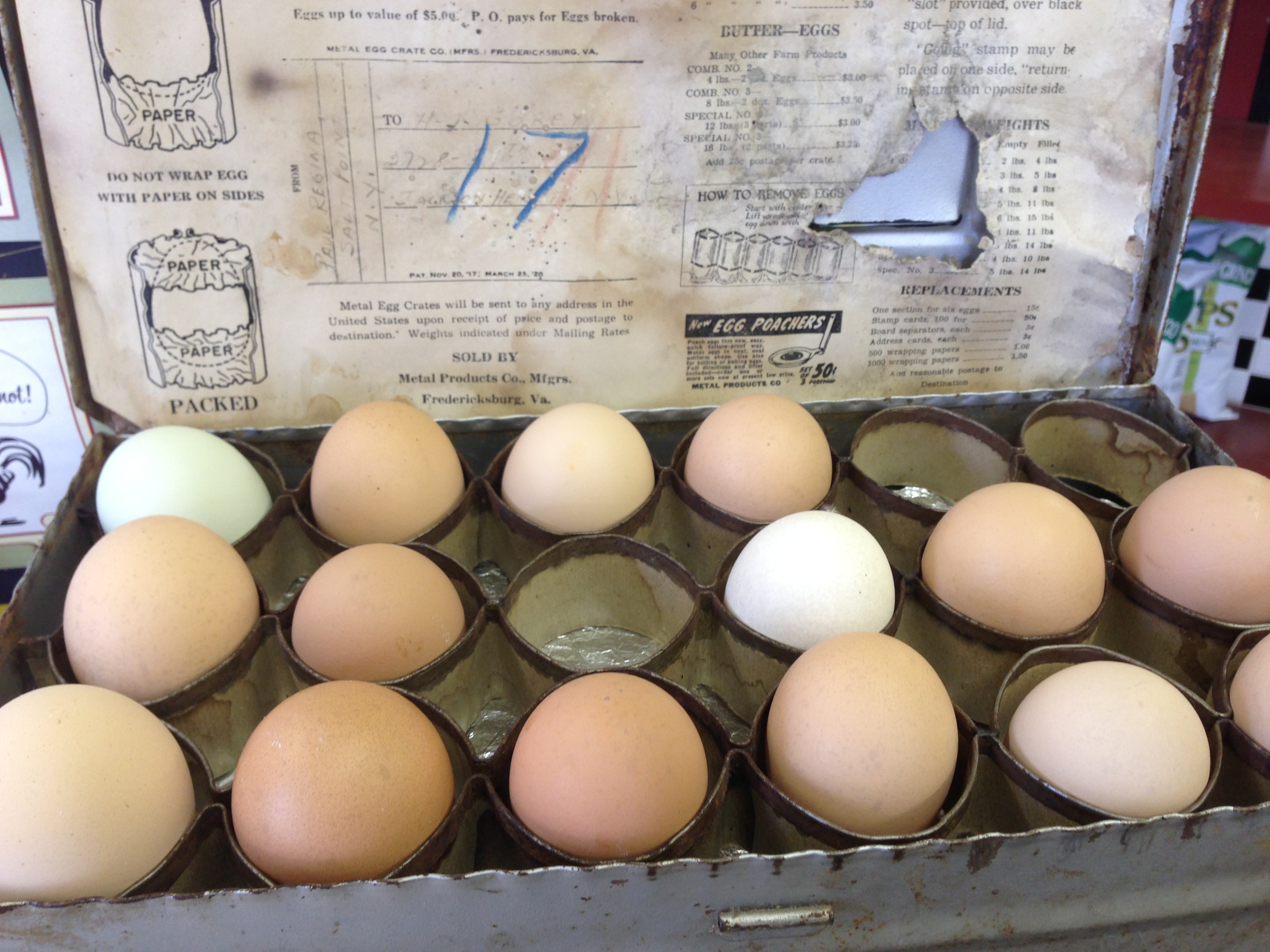
Maybe preceded by a meal of eggs so fresh their yolks puff up like small islands of saffron?

brown eggs

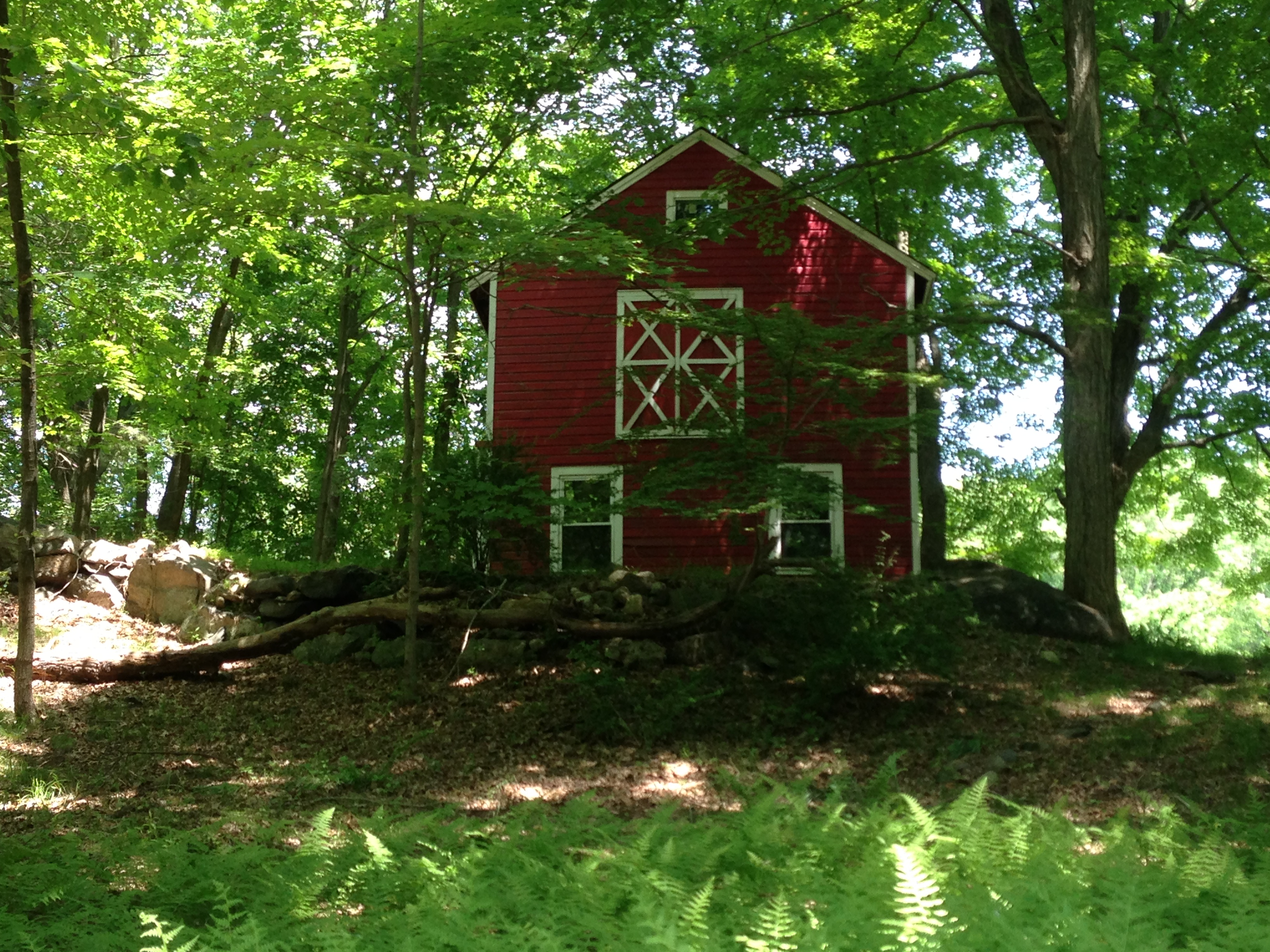
So the strawberries weren’t red. So what? The barns were.

red barn

In the car, driving home with alacrity before my coleus plants wilted, Gil said, Do you know why so many barns are red?

coleus

I never thought about it.

Because of the chemical properties of dying stars, he said. One byproduct when stars decay is ferrous ochre. Ferrous ochre is plentiful on earth. And ferrous ochre is what makes paint red. So it’s the cheapest kind of paint.

Okay, I say.

Barns are big, he says. Farmers are cheap.

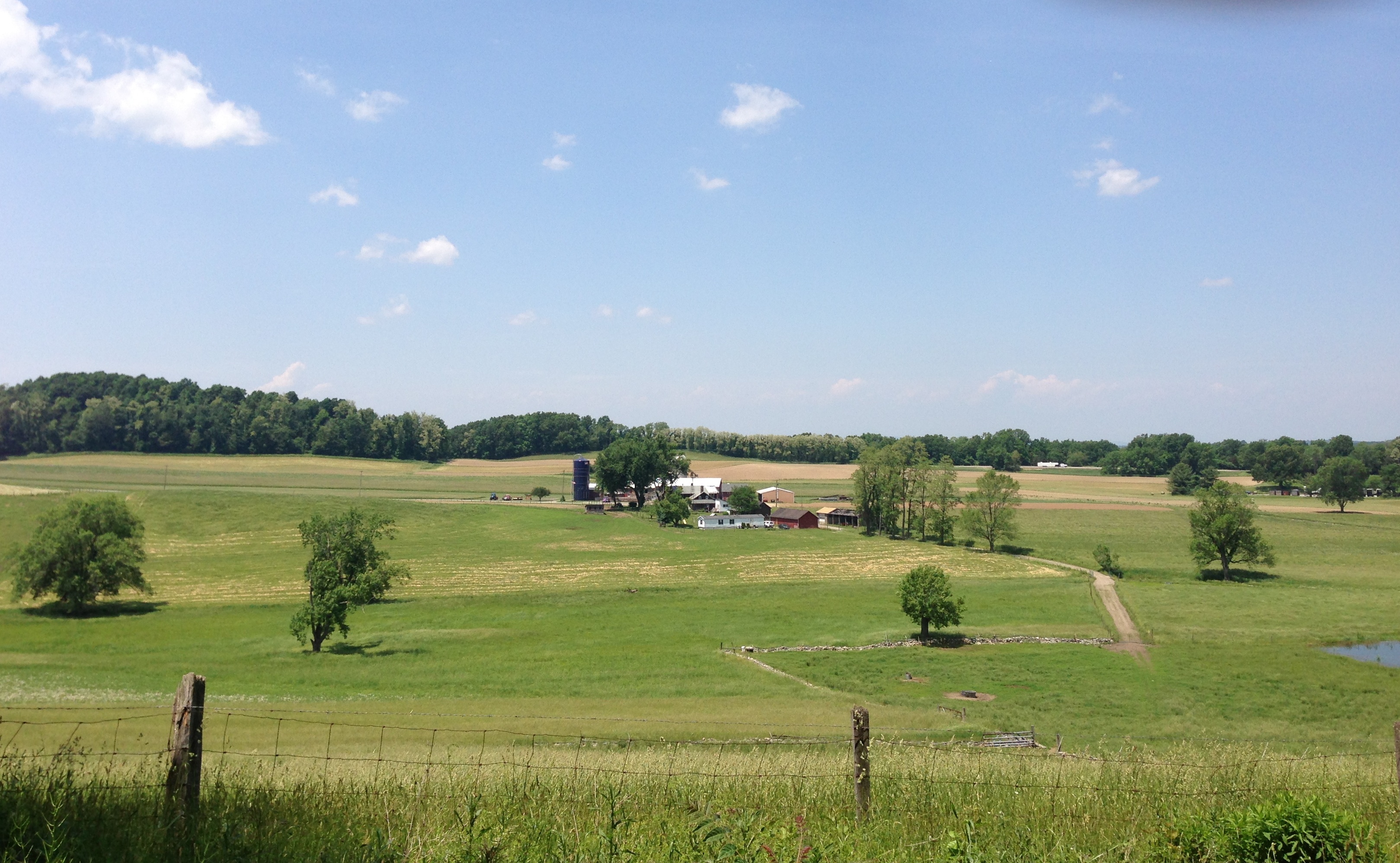
farmland

We have red barns because of the chemical properties of dying stars.

Strawberries are a different story.

Macerated Strawberries with Basil

[Macerate= to soften or decompose (food) by the action of a solvent.]

2 lb. fresh strawberries, rinsed, hulled, and sliced 1/8 to 1/4 inch thick (about 4 cups)

1 Tbs. granulated sugar

2 tsp. balsamic vinegar (alternate: 2 tsp. vanilla)

8 to 10 medium fresh basil leaves

In a large bowl, gently toss the strawberries with the sugar and vinegar. Let sit at room temperature until the strawberries have released their juices but are not yet mushy, about 30 minutes. (Don’t let the berries sit for more than 90 minutes, or they’ll start to collapse.)

Just before serving, stack the basil leaves on a cutting board and roll them vertically into a loose cigar shape. Using a sharp knife, very thinly slice across the roll to make a fine chiffonade of basil. Scatter with the basil to garnish.

2 Comments

Filed under Cooking, History, Home, Jean Zimmerman, Nature, Writers, Writing

Playground Nightmares

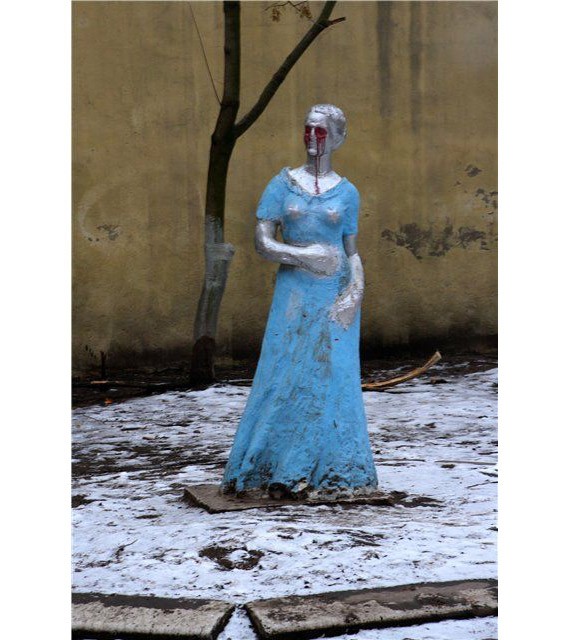
As if those clanking swing chains weren’t somehow spooky enough, and those boink-y critters that tended to throw you off when you least expected it, here we have, from Russia, some playground elements that are worthy of a horror film.

Do. Not. Go. To.

These playgrounds.

Ever.

For more images, see 11 Terrifying Images of Old Soviet Playgrounds | Mental Floss.

2 Comments

Filed under Art, Culture, History, Jean Zimmerman

A Tale of Two Uncles

Most families have a service member in their past who died in an American war. Gil and I realized that we each had an uncle, one a brother to my mother, one a brother to his mother, who had earned a reputation among his descendants for valor. These, in a highly abbreviated form, are their stories.

Jere Brown Coats

Jere

As a rebellious young man in tiny, rural Greenfield, Tennessee, Jere always threatened to run off and join the Navy. He was smart, handsome and charismatic, the only son alongside three daughters, and his parents had other ideas for him. So he left Georgia Tech without notifying the folks, bound for Pensacola Naval Air Station, where he trained to fly off aircraft carriers. He dreamed of one day joining the Blue Angels.

In his last letter to his sister Betty, my mother, he apologized for not keeping in touch. He wrote that he was with “the first all missile squadron carrying Sparrow ‘3’s” and Sidewinders, flying the supersonic F3H ‘Demon.’” Stationed at NAS Oceana at Virginia Beach, he died in a flameout on takeoff in May 1957, with not enough altitude for a safe ejection. He was 23 years old.


Gilbert Calef “Sonny” Procter, Jr.

Gilbert Calef Sonny Procter

The eldest of three siblings, Sonny had the reputation in the family of being somewhat stern, with a mean golf swing. He introduced his younger brother to a lifelong passion for golf. We don’t know much more than that he died on the operating table in an Army hospital in Italy during the Second World War. The procedure was supposed to be routine, the death was unexpected and it serves to highlight the fact that not all war casualties come in combat.

7 Comments

Filed under History, Home, Jean Zimmerman

Tender Buttons

I’m sometimes scared of mushrooms. Portobellos I like. Cremini, good for risotto. Even the common white button mushrooms. Throw them into a stir fry, they cook up fine. But wild mushrooms, the kind people hunt for in the woods? What if I get poisoned? In my mind I always saw the flaming red with white dots, the poisonous amanita muscaria. There are old mushroom hunters, and bold mushroom hunters, but no old, bold mushroom hunters. As the saying goes.

407px-Amanita_muscaria_(fly_agaric)

I thought I’d face my fears in a mushroom walk at Cranberry Lake Preserve  cosponsored by a group called COMA, the Connecticut-Westchester Mycological Association, founded in 1975 by a group of amateur naturalists and mushroom enthusiasts. COMA promotes a sense of stewardship of the natural world through the study and appreciation of the world of fungi. It even sponsors a mushroom university.

I got to the meeting place before anyone else. It was just me and the bears and the elves. The sun had broken out and the wind was blowing wildly. So many trees have fallen in recent storms, some shattered to pieces, it seemed amazing there were any left standing.

exploded tree

“Nature alone is antique,” wrote Thomas Carlyle, “and the oldest art a mushroom.” Mycologists approach the forest with a combination of hard-headed method, Zen mysticism and dumb luck. My fellow foragers began to arrive with wicker baskets over their arms and expressions of patient, optimistic calm. Zach, our guide, explained some mushroom physiology, the gills underneath the cap, the veil that falls back as the spores mature.

zach

I met Vrena, a retiree and avid traveler from Switzerland, who described the wild food she had gathered from the forest this spring: garlic mustard, dandelion, dock, bamboo and ramps. Young wild grape leaves, she said, are utterly different, when used to stuff cinnamon-flavored rice mixed with lamb than the chewy, flavorless kind you get from a can. “The leaf is not offensive, because it is tender,” she explained.

It seemed an awful lot like an African photo safari but instead of wildebeests there were wild mushrooms.

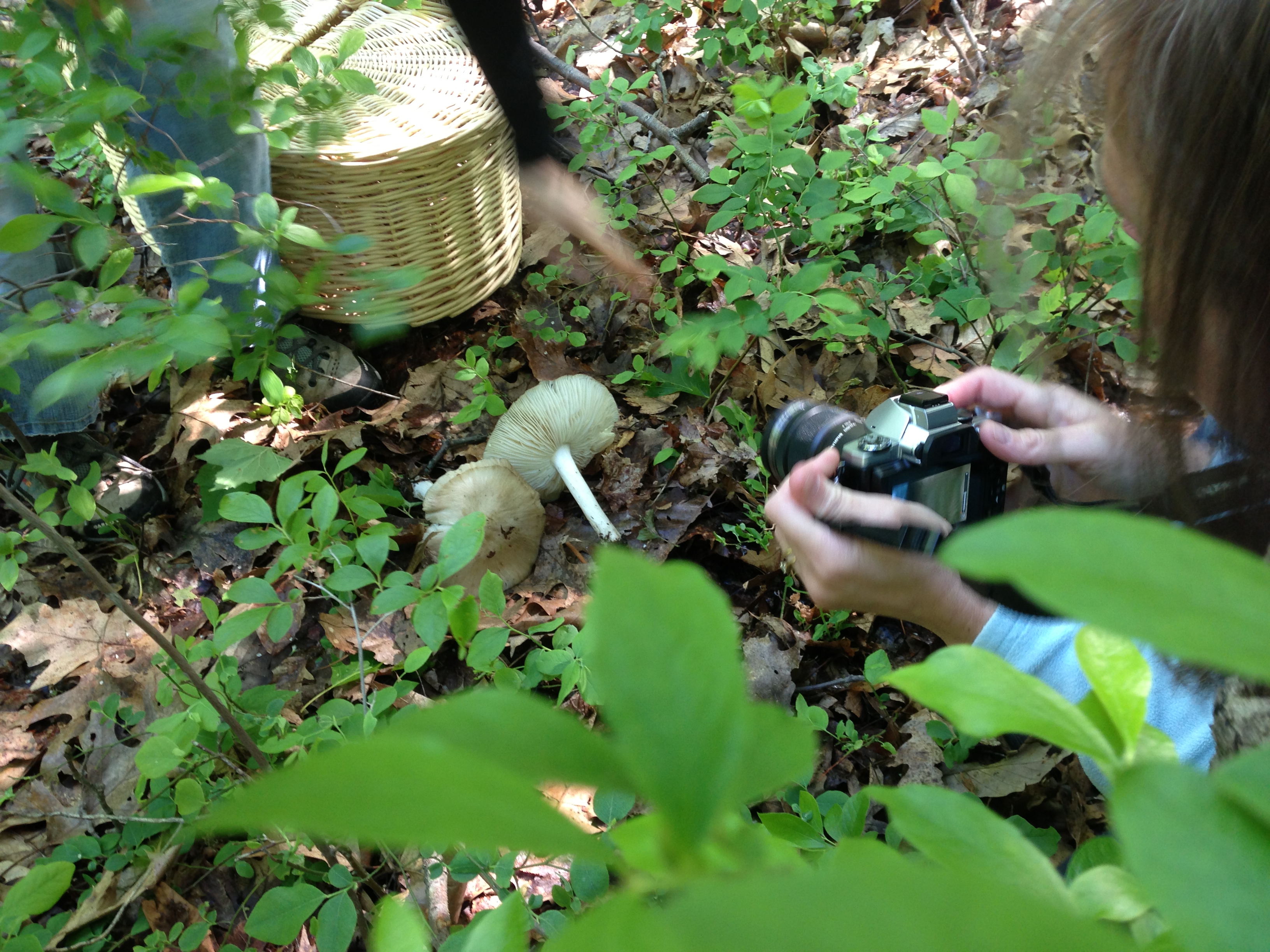
photo op

Two dozen people moved quietly among the newly leafed out trees, lifting up hunks of fallen bark and other decaying matter to find treasures.

ear funghi

The real gold isn’t the mushroom itself but the vast network of mycelium it grows out of, spreading vastly under the ground. The mushroom is simply the fruiting body of the plant. “Ninety percent of what you’re standing on is mushroom mycellium,” a well-informed mushroomer named Rena asserted. Manufacturers, she said, are starting to use the soft, threadlike stuff as packing material, rather than plastic.

underground

The most common specimen around these woods went by the simple acronym LBM: little brown mushroom.

lbm

Just because it was little didn’t make it boring.

There was the crust fungus.

tree funghi

We saw mushrooms growing on top of other mushrooms – called fairy pins, like little black matchsticks, so small as to be invisible without a loup. A carniverous mushroom, devouring the back leg of a certain beetle and now exploding fruitily through it. All sorts of jellies.

jelly flower

We made our way in slow motion. There was time to thrill to the trill of a tree frog. To hold a serious discussion about solomon’s seal. In the middle ages, noted one herb enthusiast, the wild plant was “the herb for women who happened to fall upon the fist of their husband.” In other words a poultice, a balm that fell short of a divorce but was better than nothing.

A baltimore oriole. A water snake sunning itself on the lake shore.

OLYMPUS DIGITAL CAMERA

There was so much to learn. Rena: “Every log could be a year’s course of study.” I love that idea.

Zach knew all the proper Latin names for every mushroom. They went in one ear and floated out the other like a puff of mushroom spore. I’d call this one the upside-down-ballerina-fairy-with-her-head-in-the-dirt, if I didn’t learn today that it’s very problematic for people to originate their own names for mushrooms.

ballerina

Just this year a French scientist and an American scientist separately came up with new names for the morel, and it resulted, according to Zach in problems, “leading to hurt feelings.”

Boris from Bulgaria interested himself in botany as well as mycology.

Boris

Plants, he told me, sense a danger from certain aphids, then send a signal to other plants via fungus underneath the ground to warn them about it. Everything is symbiotic, he said. He told me he likes to hike Breakneck Ridge, a practically verticle hiking trail that opens up high above the Hudson River.

“Smell that!” said the expert in medieval balms. She scratched back the bark of a slender branch. The aroma of wintergreen bloomed under my nostrils. “Black birch.” I chewed it as a child, I said. Everyone nodded. So did we all.

This was pretty serious business.

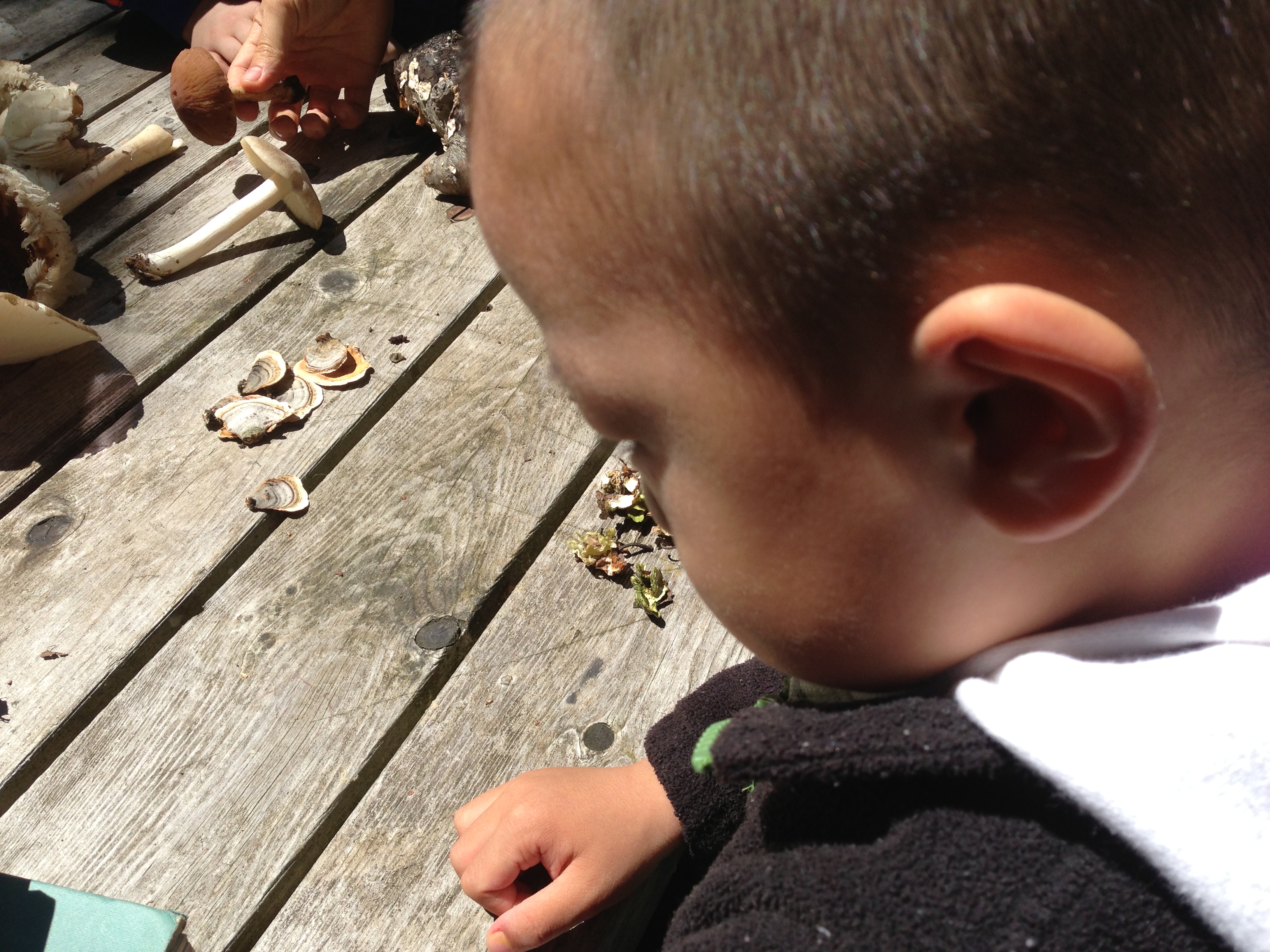
jasper w:mushrooms

I thought we wouldn’t have collected more than ten specimens, but back at the picnic table people shared dozens. There was cladonia, called British soldiers. “That’s a no-no,” said Zach, referring to the beauteous lichen with bright red spores.

soldeirs

You shouldn’t pick it, apparently, it takes too long too grow.

There were plenty of others.

Some mushrooms looked like babies’ ears, and now babies’ ears resembled mushrooms.

baby ear

There was a small, complicated gorgon of growths.

gorgon

So many different textures and shapes.

table full

And finally, for the weary mushroom hunters, some snacks, including the edible variety: a dish of sesame pasta and chicken mushrooms, orange and chewy. And a plastic container of stuffed grape leaves, donated by Vrena. Not offensive, in the least, and tender.


6 Comments

Filed under Cooking, History, Jean Zimmerman, Nature, Photography

Simple Stock With a Side of Butter

We in the northeastern U.S. have been deluged with a cool spring rain for several days now. Not good weather for adventuring, though I managed to get out and about yesterday and sample some history and some garlicky pork chops.

weeds

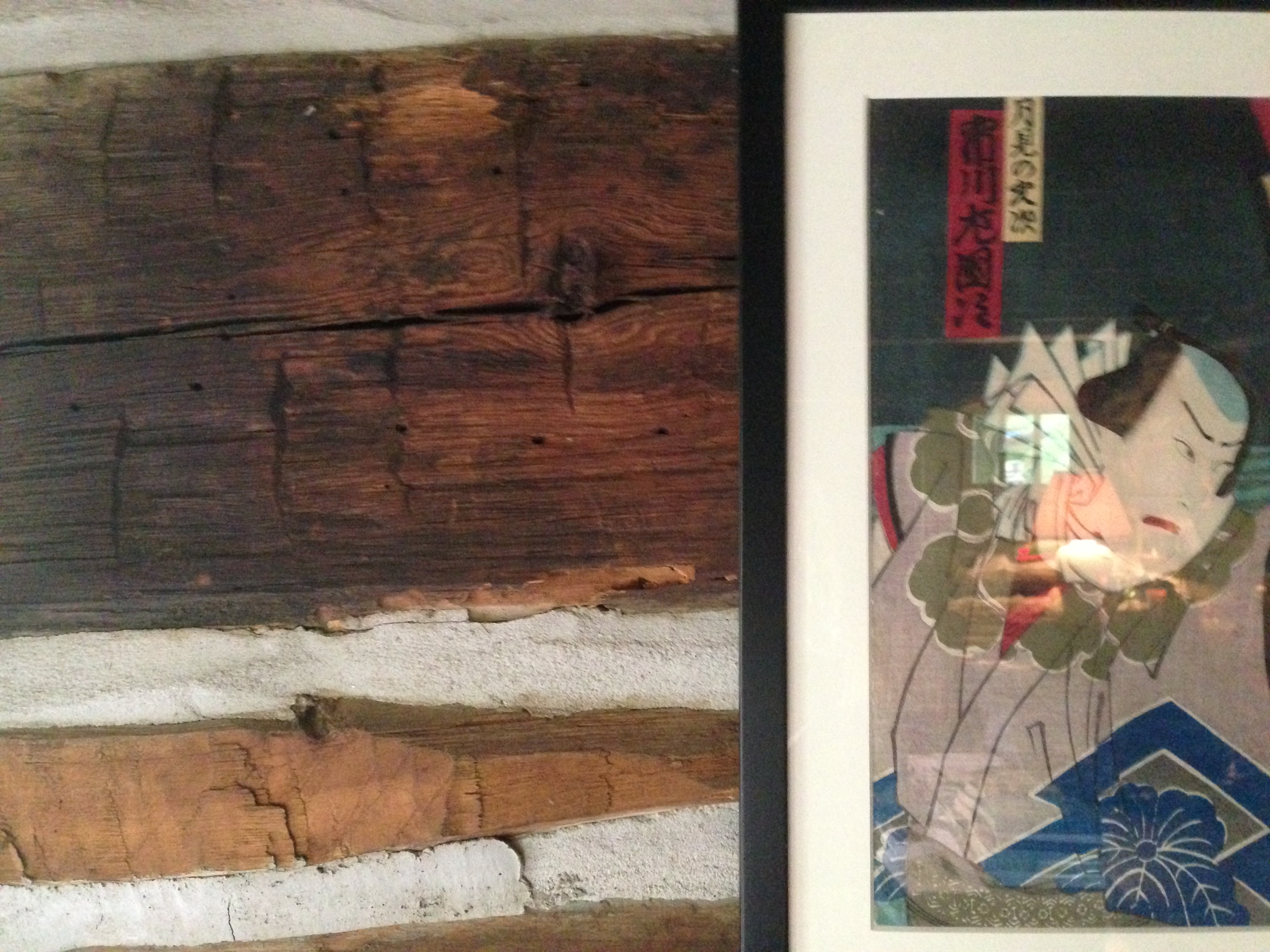
The weeds are thriving. Our sump pump is heaving, with the Cabin set as it is down into an overflowing marsh. And the room around me is dim and shadowy, a womb of dark lumber. The pictures stare out of the murk.

picture

Chestnut, a building expert recently assured me. The Cabin is built of chestnut logs. How do you know? I asked. I just know, he said. You can see it in the fireplace mantle.

mantle

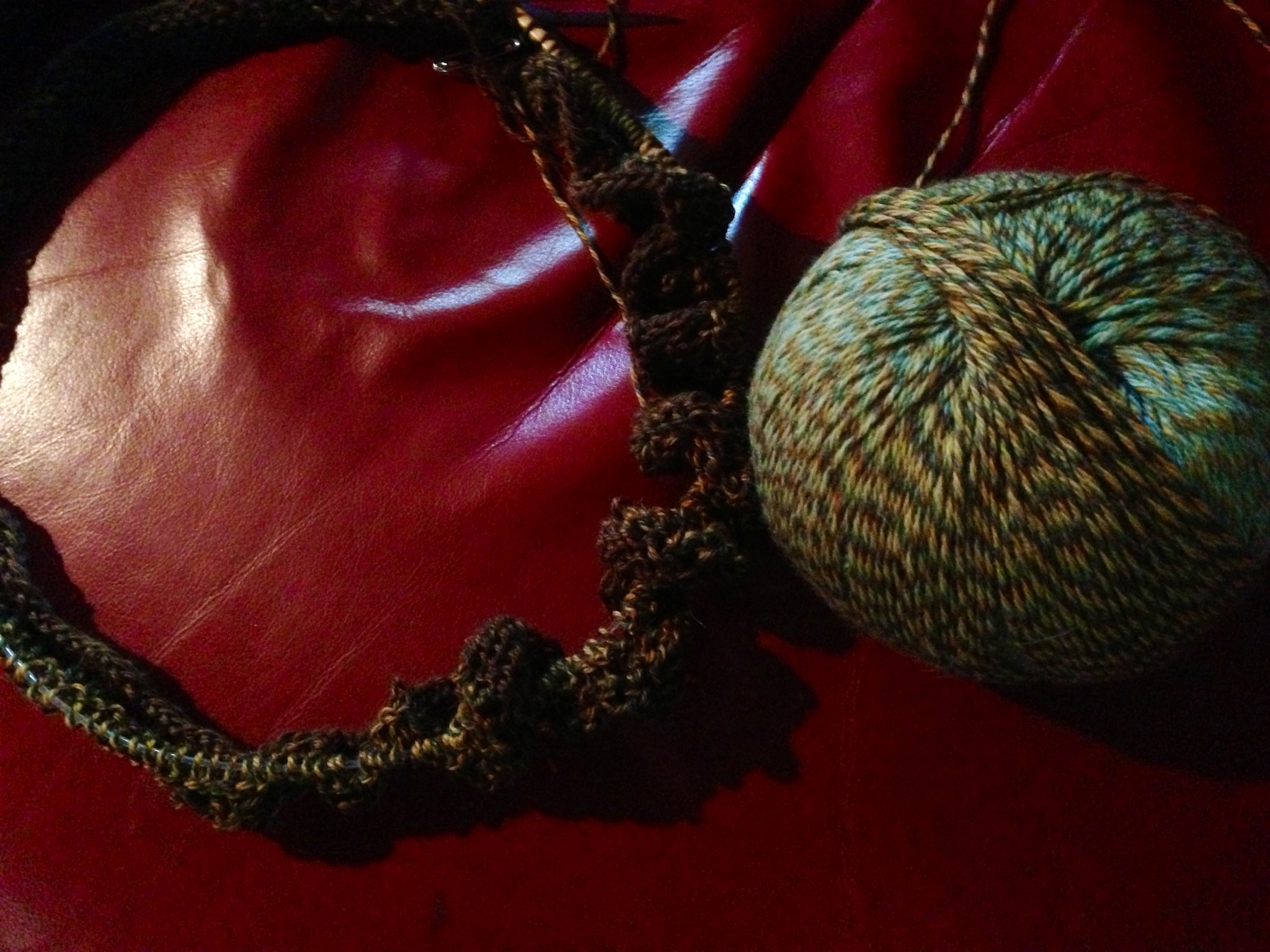
Today is fit for a few errands – dry cleaning, library, Good Will. Then as many rounds of a knitted cowl as I have patience for. Beautifully soft merino wool in a heathery blue-brown. The proprietor of my local knit shop, Flying Fingers, after salvaging yet another botched project of mine, confided that business falls off after the winter, that people seem not to think of knitting as a year-round activity. I immediately bought some new yarn.

heather

I think I’ll take another listen to Barry White’s Ecstasy, which I heard in the car for the first time in a long time. At least 20 years, in fact. Is it still brilliant or is it just me?

barry

Perhaps a chapter of What Maisie Knew, the original by Henry James, which I’m newly interested in after the disturbing contemporary movie version I took in earlier in the week. Perhaps a start on The Flamethrowers by Rachel Kushner, which just appeared in April and takes place in 1975 in New York City, where a young woman named Reno is intent on conquering the SoHo art world.

flame

I know I’ll make a big pot of chicken soup, and dive into another pot: links I’ve been saving to mull over on a day just like today.

Here are some you can sink your teeth into.

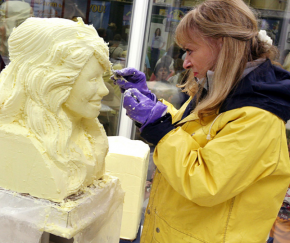
Have you ever wondered about butter sculpting?

butter sculpting

Linda Christensen, a master at the craft, typically spends a week and a half in a booth chilled to near freezing at the Minnesota State Fair in order to render likenesses out of 90-pound blocks. An artist friend of mine once imagined making sculptures out of breast milk butter, but it never came to pass.

How about houses so small they can be mounted on grocery carts?

Early water pipes under New York City carved from whole trees.

wood pipes

Archaeologists are finding them now.

Italian prison inmates who make award-winning chocolate truffles.

The question of whether Michael Pollan is a sexist pig – an excerpt from Homeward Bound: Why Women Are Embracing the New Domesticity, a new book by Emily Matchar that sounds an awful lot like my decade-old Made From Scratch: Reclaiming the Pleasures of the American Hearth.

Is it time to order a new supply of Goatboy Soaps, handmade from goat’s milk and shea butter on a farm in New Milford, Connecticut?

1009wc07.jpg

The one called Heavenly does indeed have a celestial aroma, I can vouch for it,but you can also choose from among Blackberry Sage, Cherry Almond, Clean Greens, Lavender Oatmeal, Serious Citrus and others, including Red Clover Tea, the company’s bestseller. No breast milk in evidence.

Research showing why the act of pointing makes babies human. It turns out, according to Slate, that “Babies point to refer to events in the past and the future. They point to refer to things that are no longer there. They can figure out, when an adult points across the room toward a group of objects, what exactly the adult is gesturing toward (the toy they’ve previously played with, say). They can deduce that, by pointing, an adult is trying to communicate something specific (find that toy hidden in that bucket). And not least of all, babies point because they want to share their experience of the world—that puppy—with someone else.”

The fascinating blog of an Irishman elucidating a video of Dublin phrases.  You’re in for a treat if you make posts from Sentence first a regular part of your day.

A recipe for how to make Mango Sticky Rice, at a site called The High Heel Gourmet, brought to you by Miranti, a young chef who seems to know exactly what she’s doing.

high heeled gourmet

And, finally, a piece so lively it will drive all the rain away (by tomorrow, I hope, when I plan to go mushrooming in the Westchester woods), a photo doc on skateboarding in 1965, courtesy of Life magazine.

girl skateboarding

I am sure that some of the individuals pictured have traded skateboards for walkers, but then everything was a breeze.

If you wind up wanting to make home-made soup, a chicken elixir, here’s how.

A Recipe for Simple Stock

1 soup fowl/heavy fowl/soup hen

A bunch of chicken feet if you can get them

2 big fat carrots

2 sticks celery

1 large onion

1 large purple-shouldered turnip

1 large parsnip

a bunch of dill if you have it

salt and pepper to taste

Bring chicken to boil in a pot large enough to accommodate all ingredients.

Skim off scum and reduce to a simmer.

Add all other ingredients.

Simmer 3 hours or until chicken starts to fall off the bone.

Strain stock.

Add noodles or matzoh balls, use as a base for leek-and-potato soup, make gravy for chicken pot pie or stir up some risotto. Perfect for anything that ails you. And if you dribble a little over the kibble, your dog will love you for it.

1 Comment

Filed under Cooking, Fiction, Film, History, Home, Jean Zimmerman, Knitting, Nature, Publishing, Writers, Writing

The Danger of Self Discovery

The black iron fence that surrounded the white-folks graveyard was typical of New York City parks – almost.

danger

I don’t know what the danger was, except of self discovery.

I had driven down to the Bronx because I heard tell of a group of elementary school kids there who had stumbled upon a centuries-old, unkempt slave burial ground next to the well-preserved graveyard of the privileged families who owned them. They were trying to reinvest the slave cemetery with the gravitas it deserved. I wanted to see the place, old and mysterious and deep in the Bronx. So Gil and I set off.

The Bronx once had a swellegant reputation, home as it was to distinguished families and verdant farms. It was actually settled by a Swedish sea captain named Jonas Bronck. General Washington marched his troops through on their way to Westchester in October 1776, when no one knew how long the war was going to last.

The cemetery in question, now the center of Drake Park, was originally laid out by the Hunt family – the clan for which Hunts Point was named. The Hunts and the Leggetts ran the local show, along with a few other families and all of them were laid to rest there.

It had been raining for days. Gil and I had the park absolutely to ourselves. We saw an allee of trees running alongside the cemetary.

aisle of trees

Weeds had overtaken the park – only three acres – in the middle of the busy commercial neighborhood. Above our heads, a mature black oak, circa 1848.

black oak

When the park was landscaped in 1915 the slave graveyard disappeared in the shuffle. Once, in some obscure text, its location was referred to as across a lane — was that the allee we saw? If so, the plot has no marking today but a wire fence.

slave cem 2

Teacher Justin Czarka of PS 48 leads the effort to bring recognition to the site — which includes local historians, community organizations, museums, city agencies. To document the final resting place of the slaves of these prominent New York families.

I’m reminded of the fight to commemorate the African Burial Ground in Manhattan, after remains were discovered during the construction of a Federal office building in 1991. In 2003 I stood and watched the processional that led to the reinterrment of 419 sets of remains at the site where they had been discovered. Women and men in brightly colored African garb came through accompanying wood coffins built in Ghana and carved with adinkra symbols.

The ceremony was heady, the effort fraught with tensions, but I find this history in the Bronx unsettling in a more intimate way, the white graves groomed and protected and the black graves lost to time. The students found a photo in the city archives documenting the site at the turn of the century.

old burial ground photo

A 1913 brochure about the Bronx noted that the remains of colonial soldiers were interred in the Hunt graveyard, along with, nearby, slaves of earlier residents, and also “Bill,” the  negro pilot of the wrecked British frigate Hussar.

The kids of  PS 48  examined census data, early maps, coastal surveys, wills and early histories and found some surprising details about how whites and blacks lived in early New York. These wealthy coastal families owned quite a few slaves. John Leggett stipulated in his 1777 will that his son Cornelius would inherit “My Negro Man Tite and my Negro boy Ben” as well as “four Milk Cows.” His daughter Eleanor would receive his “Negro Wench Bett” and a silver cup. Laws were passed to prevent slaves’ sedition. They were forbidden to be in the streets an hour after sunset, by an ordinance passed in 1712.

Blacks and whites would not be buried together, at the Hunt and Legett cemetery, but within an interesting proximity.

The park itself was named not after Hunts or Legetts but after Joseph Rodman Drake, who grew up in the Hunt mansion, became a writer-physician and died of tuberculosis when he was 25, in 1820. His most famous poem, “The American Flag” spoke of freedom:

She tore the azure robe of night,

And set the stars of glory there.

She mingled with its gorgeous dyes

The milky baldric of the skies,

And striped its pure celestial white,

With streakings of the morning light…

I wonder what Drake would have made of the Hunts Point neighborhood now, chockablock with auto glass shops and cheap eateries. We left the antique mysteries of the graveyard and re-entered loud, mechanical contemporary New York. I love the signage along Hunts Point Boulevard, much of it a gaudy yellow and red and fancily hand lettered.

auto glass

Mo Gridder’s is probably the only barbeque joint, at least in New York, with its dining lounge in an auto parts store.

mo gridder's sign

As we approached an intersection a woman actually ran into the street, beckoning us loudly to come get our car repaired at her place. People stood in the gutters, waiting, sentries for their businesses.

Other, more faded signs spoke of years of dreams deferred.

alcoholics

The Hunts Point Market is alive and well, though it was sleeping when we visited – suppliers of meat, seafood and produce open all night long and shut down by day. The air when we passed the fish buildings had the scent of the sea.

It used to be that sex was for sale too, in abundance, at Hunts Point, but that’s changed. A vestige lives on in the unfortunately titled Mr. Wedge. The last of the Mohicans for adult entertainment in this part of the Bronx.

mr. wedge

A strip joint you can visit while getting your car’s windshield replaced.

Randall Restaurant is a good place to hear Anthony Santos singing a melodious Como Te Voy a Dejar while chewing on garlicky deep fried porkchops or to just chat with a friend. About the liveliest cafe I’ve ever been in. Everyone is welcome, even turistos like us.

restaurant

The pernil is supposed to be formidable but they were all sold out by the time we got there for lunch – for the rest of the clientele, lunch comes in the morning, after a shift at Hunts Point. The pineapple cake, though, and cafe con leche sustained us for our trip home in the rain.

Color everywhere.

graffiti 1


Yes, indeed, the show that never ends. I’m glad we got there before anyone could scrub off the paint.

graffiti van

I like to think of the surprise — the shock — of our forefathers and mothers in the Bronx had they seen the mixing of colors and cultures we saw today. Yes, it can feel dangerous at times. Gertrude Stein once said, Considering how dangerous everything is, nothing is really very frightening.

3 Comments

Filed under Cooking, History, Jean Zimmerman

Enough to Feed an Army

An army marches on its stomach, said Napoleon, who knew a little something about food as well as armies, if his portrait is to be trusted.

napoleon

I recently read a profile of a man seemingly born to fill that marching stomach, Derrick Davenport, a culinary specialist who has just triumphed over 17 other gastronomic overachievers to become the Armed Forces Chef of the Year. Parade reports that the competition has taken place for two decades at the Joint Culinary Center of Excellence in Fort Lee, Virginia. It’s judged cooking-show style, after contestants prepare four courses in four hours, taking in hand some challenging ingredients they didn’t count on ahead of time.

Derrick Davenport

Quinoa and arugula salad. Roasted lamb loin in mushroom sauce with butternut squash puree. Edam cheese fritters? These are no ordinary MREs. But the military takes its food more seriously than ever now that troops’ palates have grown more sophisticated. Plus, says an army evacuation medic named Corrie Blackshear, “It’s more than nourishment. It’s spiritual nourishment.”

Nourishment to the tune of 5,250,000 gallons of milk, 448,000 pounds of Thanksgiving turkey and 214,000 gallons of ketchup a year. Fully 24,884,000 pounds of cooked chicken.

mmw-fat-chickens

This is just part of the 2012 breakdown for all of the U.S. Armed Forces.

I began thinking about gargantuan military food quanities a long time ago when I served as the head of a soup kitchen in Manhattan. I had picked up a copy of the West Point Officers Wives’ Club Cookbook  at the Naval Academy bookstore when I was at Annapolis doing interviews for Tailspin, Women at War in the Wake of Tailhook.

West POint cookbook

It was a spiral-bound community-style softcover of the type I still collect (I have over a hundred) and it had a subtitle I found enticing: Enough to Feed an Army.

I was new to the soup kitchen, which took place once a week at All Souls Unitarian Church on Lexington Avenue, and was known as Monday Night Hospitality. Wandering down to the kitchen one afternoon, just thinking to check out the volunteer options, I encountered a tall, blonde woman with her coat on. I told her I wanted to help. Fine, she said, you’ll cook tonight. I looked around – I was the only one there.

I had cooked for dinner parties before, but the customary crowd at Monday Night Hospitality reached 100 hungry mouths, sometimes more. Don’t worry, said the woman, we have meatballs. And she pointed to the walk-in pantry.

The soup kitchen had always served government-issued meatballs in tomato sauce. Mystery meat. Bad enough to smell, let alone put in your mouth.

That was the only time I served a meal that was not home cooked. I remember trucking in crates of kale from my favorite market Fairway up in Harlem at 134th Street. The produce manager Jaime saw me coming and would break into a smile.

kale

How much ground beef to make meat loaf for 100? How many eggs? I figured it out. I learned to fry chicken in industrial-size skillets. Not 24,884,000 pounds, but close.

I consulted the West Point Officers Wives’ Club spiral bound. It featured recipes from teachers and parents, officers and their wives (and some husbands). It also contained items like reminiscences of graduations past, and the cadet’s prayer. Finally, and here is where I got some guidance, the mess hall weighed in.

sloppy joes

Forty-five hundred servings? Making sloppy joes for 100 was obviously something  a person like me could do. I would bring my favorite 8-inch chef’s knife from home, wrapped in cardboard and duct tape. And my well-used apron. Sometimes a pan I wanted to employ. I would put those entrees on the table, whatever it took.

pan

And it was worth it. Often, our dinner was the first time our guests had tasted a home-cooked meal in a long while.

I remember an elderly man who used to grab me by the arm and recall his late wife, the loving meals she used to fix him. A man mountain with a tiny rearview mirror attached to his glasses, dressed head to toe in fatigues, how he chowed down. And an Eastern European woman named Margo, and how she pampered my five-year-old daughter while stuffing buttered bread in her handbag.

I learned that for all the differences, these people were more like me than I had known. The aroma of many was more pungent than I could imagine. A shower at home was a foreign concept. But they ate with the same relish I did. As did the volunteers, who devoured our food and brought home leftovers. The perfect sous chef from the West Indies. The mother who occasionally brought her helpful daughter (at 19, she seemed so old!). The high schooler with the handsome face and a bottomless capacity for doing dishes over the capacious sink.

At the end of four years, I had a personal crisis that made it impossible for me to cook at the kitchen anymore. I had a book on deadline that I couldn’t write. Financial woes I couldn’t solve. And finally a meltdown from which I needed time to recover.


I approached a fellow volunteer, a writer named Alex who had spent many dinners at Monday Night Hospitality slinging meatloaf with me. Could he possibly take over as head of the kitchen? Immediately?

Surprised but gracious, he said yes.

He comes highly praised, does novelist Alexander Chee.

Alex Chee

His debut novel The New York Times called “haunting,” and gifted, poetic and elegant are also words that have been offered on Alex’s behalf. His new book The Queen of the Night comes out in February of next year from Houghton Mifflin Harcourt – in it, Alex tells the story of an opera singer in 1882 Paris and a secret past she had sought to keep hidden.

The Queen of the Night cover

All this time later, the soup kitchen behind me, I realize something important. I wasn’t the only one who could do this thing of feeding folks with dignity. I was just a writer, cooking for an army of 100 people with no place else to go. The “spiritual nourishment” was mine as much as theirs.

11 Comments

Filed under Cooking, Fiction, History, Home, Jean Zimmerman, Publishing

Meatpacking Amble

We started and ended our Manhattan amble in the Meatpacking District, that venerable neighborhood from around 14th  down to Gansevoort Street that has been totally gentrified in recent years. This is a place that in 1900 had 250 slaughterhouses and packing plants lining its streets. The paving stones under the butchers’ awnings used to actually lie slick with lard and blood when I first came to New York in the late ’70s. Now Diane von Furstenberg has a building of refurbished brick with lavender windows and a penthouse that looks like a geodesic glass bubble on top, and there are eateries like Bubby’s opening that pride themselves on their farm-to-table cuisine.

Bubby's

The sign announcing the imminent arrival of the joint puts across it’s down home, wry message: Defending the American Table (also, we steal recipes from grandmas.)

With illustrations around the side that already seem faded as a pair of farmer’s Levi’s.

Bubby's 2

It reminded me of a sign we saw up in also gentrifying Morningside Heights recently, on Broadway near 125th Street.

Barbershop sign

There was a man on scaffolding outside and we weren’t sure whether he was taking down an old sign or putting up a new one with an exquisitely vintage look. The sign down below left us equally confused.

Prices 2

Maybe you can figure it out.

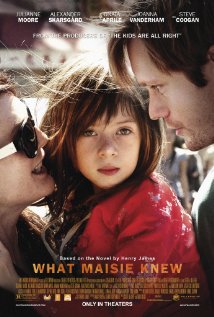
Anyway, on from the Meatpacking District to see a movie on Houston Street, at the northern lip of Soho. “What Maisie Knew” is based on a novella  written by Henry James in 1897 about a classic dysfunctional family. Sad, sad, film.

maisie

It features Julianne Moore as a self-absorbed rock vocalist married to a self-absorbed art dealer played by Steve Koogan. At the heart of the story is their seven-year-old daughter, Maisie, who is being torn apart by the breakup of her parents’ marriage. The two adults literally abandon her places – the story takes place in contemporary Manhattan — when they tire of her. I wondered what James would have made of the profane adaptation.

portrait

The novelist was a theater aficionado and aspiring playwright. Couldn’t he be satisfied with being the most brilliant prose stylist of his day? He never got the reception on the boards that he so very much wanted. Movies might really have rocked his world. We think of him as fusty now, but Edith Wharton writes in her memoir A Backward Glance about how much James loved to “motor.” Yes, driving in the new, perpetually breaking-down automobiles, feeling the wind in his pate, was just about his favorite thing.

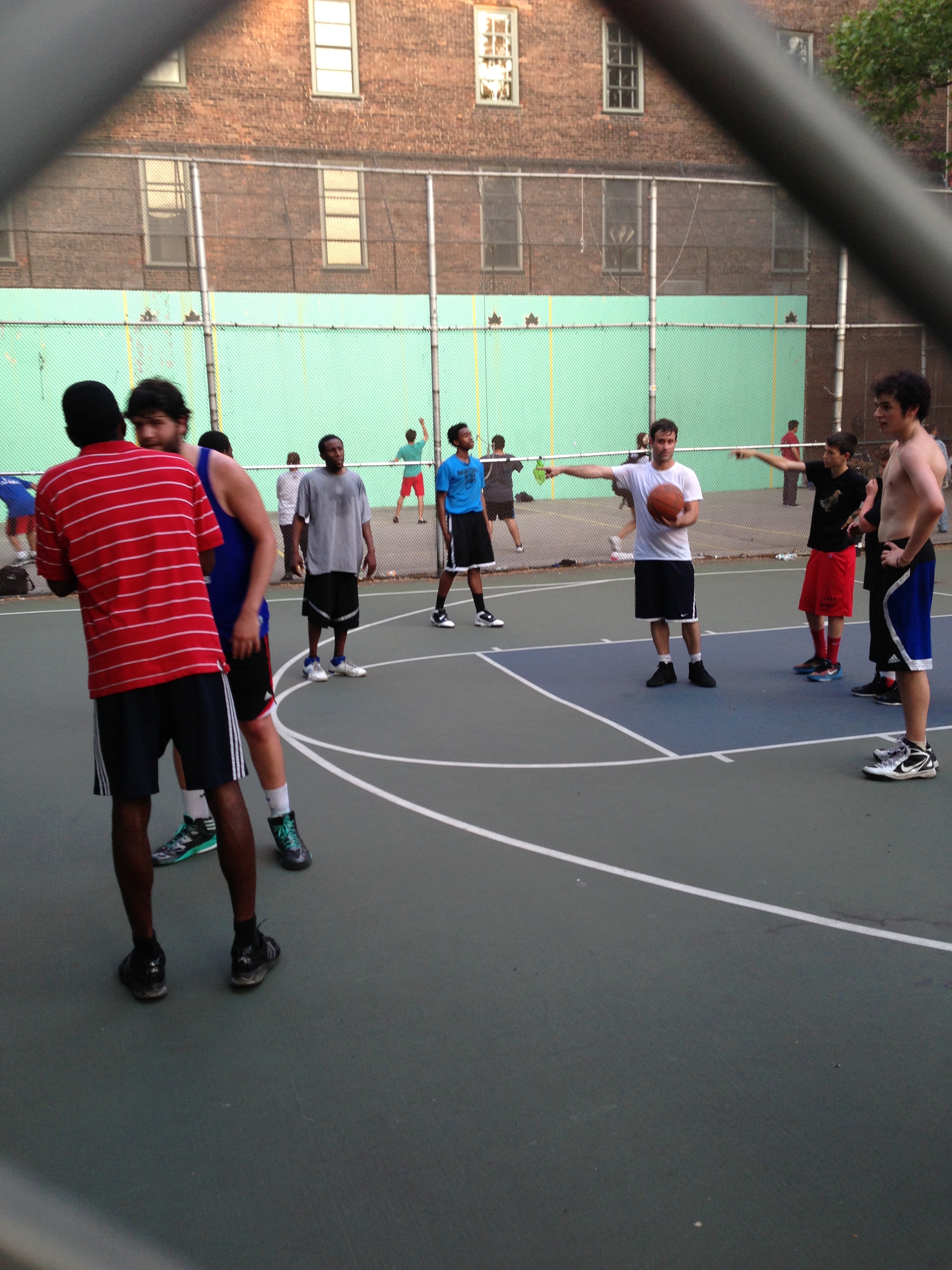
Making our way north, we grabbed a schnitzel and a wurst at a little German joint. En route, we passed the phenomenon that has been around longer than anything else I know in New York: the basketball game at West 4th Street and Sixth Avenue, also known as the Cage.

basketball

Anybody can play and there are fierce tournaments. The supports for the baskets are actually padded with duct tape to mitigate injury to players who stuff.

Under the High Line, where we had earlier found parking (who said it’s tough to get along in New York? Come with me, I have the best parking karma in the city) night had fallen.

high line

A park so beautiful that even Manhattanites are impressed, the High Line was once quite different. An old elevated freight line for meat packers, built under the aegis of Robert Moses, it ran through the buildings of the district, raised up above the streets underneath. The rail bed had long since fallen on hard times when I first saw it decades ago. It was basically a long, winding, dispiriting field of syringes, condoms and weeds. Some brilliant dreamers fought to bring it back to life as a park planted throughout with native plants, meticulously cared for, ingeniously designed. The first section of the park opened in 2009. Now people throng to it day and night, both to walk and to lounge on the massive wooden chaise lounges found along its length.

Gil climbed the stairs and waved down from the dark trees above. I was content looking up past the old, weathered, still-extant butcher’s awning at the winking moon.

moon over meatmarket

4 Comments

Filed under Cooking, Fashion, Fiction, Film, History, Jean Zimmerman, Nature, Writers