Category Archives: Fiction

Out of My Library

If you don’t like the feeling of book dust on your hands, the sight of new gaps between the volumes on your shelves, the surprise discovery of tomes you missed even though you never knew you missed them – read no further.

I am in the grips of a book-shedding catharsis. I realized today – and this is the way it often happens for me – that I couldn’t let another hour go by without winnowing out my book shelves. I insisted that Gil sort his office, too. (He couldn’t find any to give up, but he tried.) The resulting 100 or so cast-off titles went into an extra-large packing box.
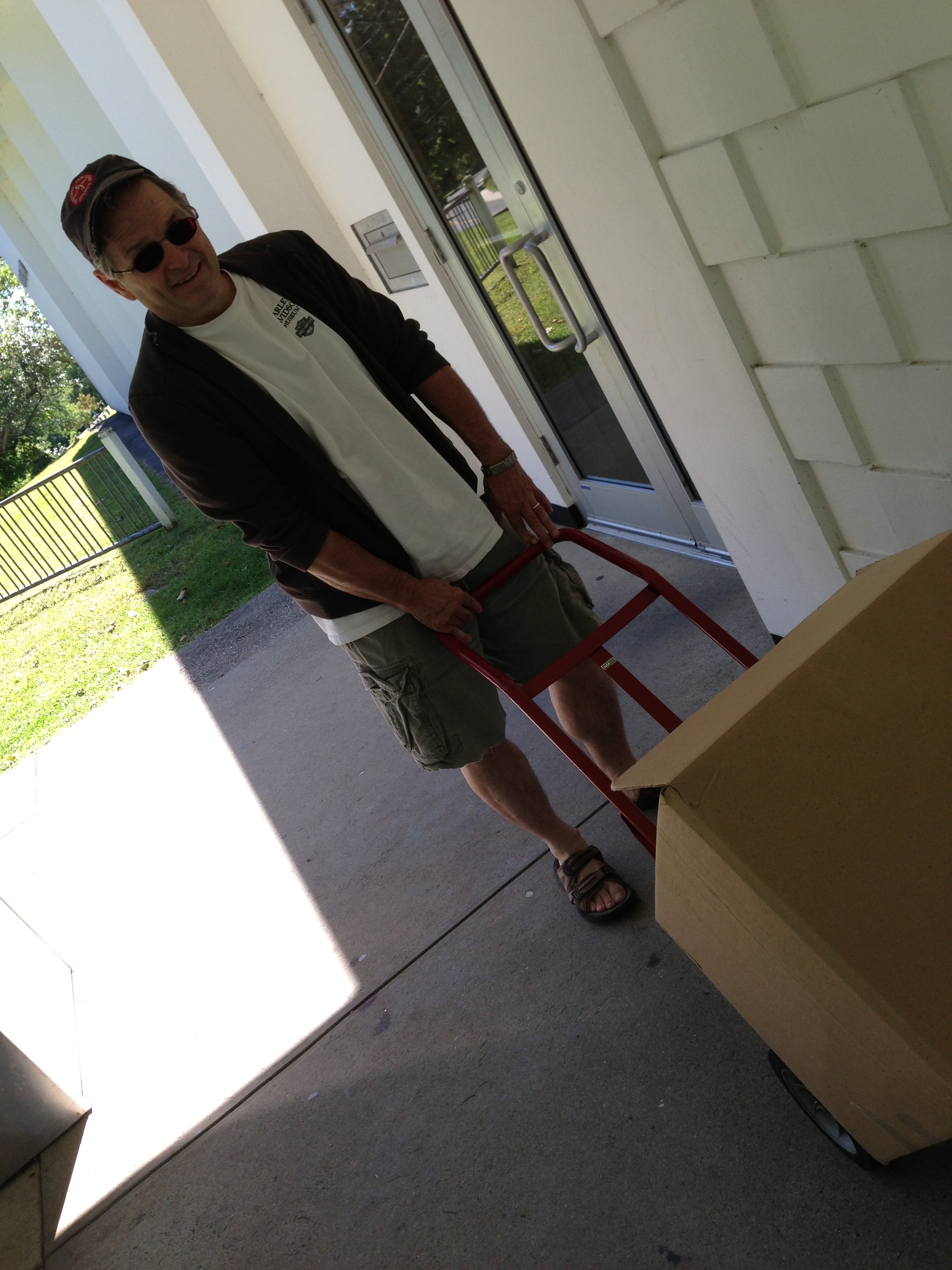
gil w book box

Off to the library.

croton mat

A mother stood trying to corral her preschooler near the sidewalk. “Donations?” she said cheerfully. “Efficient way to bring them.”

“Is he a neighbor?” said her son.

“Maybe,” said the mom.

Local book sales bring together browsers with only a desultory interest, avid bargain hunters and steely-eyed professionals. Pop selections are only a minor part of the culture.

hunger games

When we lived in Hastings-on-Hudson, resellers from all over bought Friends of the Library memberships so that they could go to the earlybird presale and scoop up multiple cartons of the most valuable items. That was okay, we managed to find plenty of gems on our own time – including some we had ourselves donated. Yes, it’s true: we turned in books for the sale that we later decided were simply too fascinating to pass by.
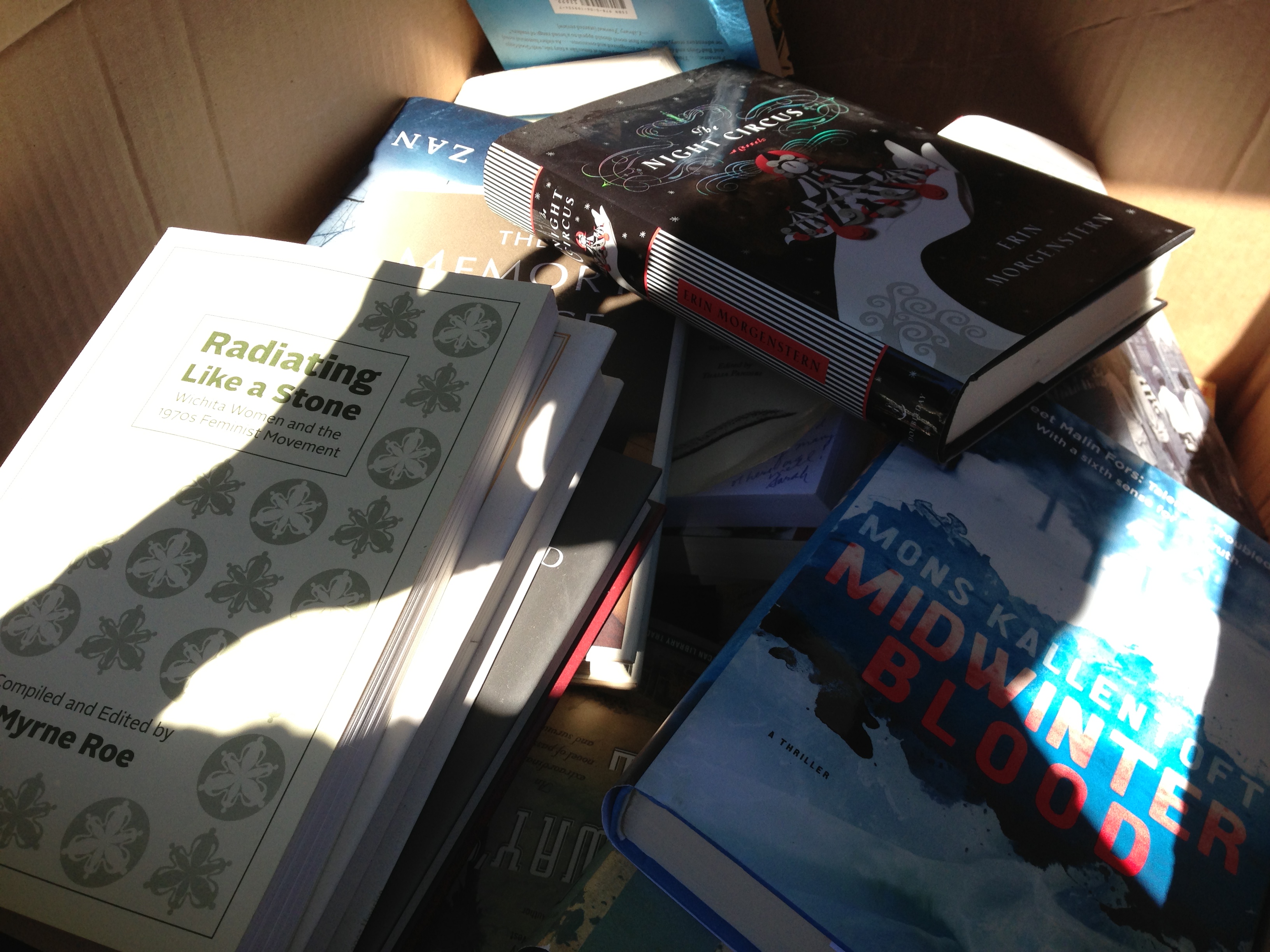
radiating like a stone

But it’s such a relief to weed out the honeys of yesteryear: The Man Who Quit Money by Mark Sundeen, Jonathan Franzen’s Freedom, Dava Sobel’s Longitude, The Judgment of Paris by Ross King. All good reads, eye opening, brain teasing. None of them necessary to my life at the moment.

The Croton Free Library has just celebrated its 75th anniversary. I hope that its patrons will enjoy my books as avidly as I did.

croton library anniversary cup

There are people with acres of shelves in their home library. Their libraries. Their nooks and end tables. Their bedside stacks. When we downsized to the Cabin, that life ended for us. We knew we’d have to focus a laser beam on what meant something to us. We carted out dozens of boxes for various libraries, dozens to sell at the Strand, and ended up leaving many freebies at the curb. Even if you mourn the loss of your books, it is worth it for the experience of a transaction at the historic institution of the Strand, which has been in business since 1927 on 12th Street and Broadway in Manhattan.

strand-history-thumb

The  buyer peers down his spectacles and thumbs through your precious collection, calculating all in his head the value of each book before announcing the usually paltry total. Sometimes it is a triumph, enough for dinner in a decent restaurant. Those novels that you thought were brilliant, invaluable, they’re basically worthless at the Strand, while the store covets and compensates well for the scholarly and academic works you thought no one would ever want.

Now the smooth, dust-free spines of the books line up straight on my wooden shelves in the proper order – all of them books I have selected anew, that I want and need.
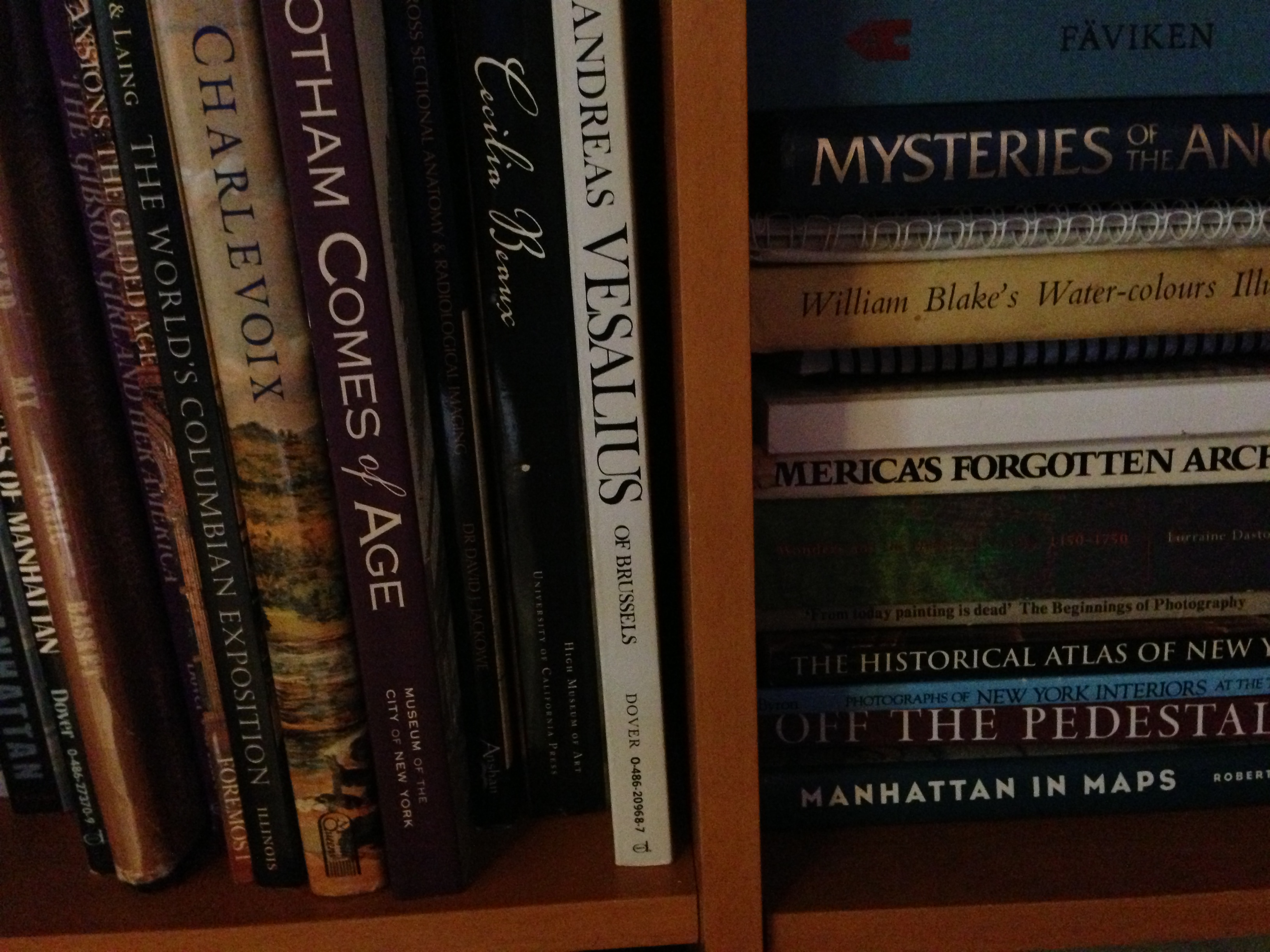
double shelves

Some of them seem to have a special kinship even outside their genre. Not exactly subject. More, spirit.

green books

Many, like these, have a story besides the narrative in the book – the story of my relationship with it. My mother-in-law gave me Stalking the Wild Asparagus when I was a newlywed with a house in an apple orchard and a nascent interest in gardening. Ian Frazier’s Great Plains has been a touchstone over the years in thinking about writing nonfiction. Wilderness and the American Mind dates from my college days and still holds my intense interest. Everyone who loves books has these intimacies with individual volumes, the how and why of how your relationship with it came about. Your foundation with it. These begin to make up the essence of a library, the authors that really meant something then and now.

The true reason to get rid of books? Honestly? To collect more books.

current

I needed space for a working library, all the ones I’m drawing on for my next novel. Any clue as to what the book’s about?


6 Comments

Filed under Culture, Fiction, History, Home, Jean Zimmerman, Nature, Photography, Publishing, Writers, Writing

Blurbs for The Asylum

Blue Rider Press has come out with a book trailer featuring fashion insider Simon Doonan talking about getting blurbs for his his forthcoming book The Asylum.

the asylum

There is actually a series of very brief videos, including the blurb one but also one about designer Thom Browne and one about Michael Kors and one featuring “career advice for young people,” among others. An original approach to promoting a book through a video, well suited to such an original guy.

Simon_Doonan_photo-credit-Albert-Sanchez

The one about blurbs, “those wonderful little comments on the back of the book,” is pretty honest and funny enough, and hits home as I am wading into the waters of asking people to read and comment upon Savage Girl. Publication isn’t until March 2014, but quotes are needed long before that to be printed on the book jacket. And publishing pros say they are critical to getting a book noticed.

Savage Girl cover 3

Doonan says that when he is asking for blurbs “I am in a permanent pretzel of cringing, shame and self loathing.” Then he reels off some of the glowing comments he got from Marc Jacobs, Alexander Wang and others.  “Don’t even think about becoming an author,” he warns, “unless you’re prepared to go through the torture, the torment, the challenges of getting some blurbs.” The Asylum: A collage of couture reminiscences…and hysteria is out Sept. 3.

1 Comment

Filed under Culture, Fashion, Fiction, History, Jean Zimmerman, Publishing, The Orphanmaster, Writers, Writing

Clerihew’s on First

Yet another GOODIE FROM GIL. Thank you Gil, for providing moral support and iced coffee while I sit around with my leg up and my brain a little dialed down.

In a recent interview (writes Gil Reavill) Woody Allen belched forth about his writing process in ways that struck a sympathetic note with me.

woody

Here are a couple excerpts:

“What people who don’t write don’t understand is that they think you make up the line consciously — but you don’t. It proceeds from your unconscious.”

“The best you can do to get through life is distraction. Love works as a distraction. And work works as a distraction. You can distract yourself a billion different ways. But the key is to distract yourself.”

This comes close to what I’ve experienced about writing.

1) “You,” the ego-locked soul pushing the pen, is not really the author in any credible sense. Instead, it’s what used to be called the Muse, what Mr. Allen calls the unconscious. Sentences and phrases tend to leap out fully-formed and pre-created, like Athena from the forehead of Zeus.

athena

The byline is the biggest fiction there is. The greatest authors ever—Homer, Tu Fu, Shakespeare—are ciphers as individuals, to the degree that some people insist they never existed or didn’t even write their works.

2) At best, what you create is nothing more important than a diversion for yourself and others, a distraction from boredom or a way to excuse oneself from facing the howling void of the universe. Forget Art with a capital “A.” Forget literatoor. In other words, don’t take yourself or your work too seriously.

Doggerel fits the bill quite nicely. I indulge in it often and most of it never sees the light of day (thank the Lord, you might respond). Limericks, parodies, couplets, one-offs—and clerihews.

Here’s Wiki on the rules of writing the clerihew:

“A clerihew is a whimsical, four-line biographical poem invented by Edmund Clerihew Bentley. The first line is the name of the poem’s subject, usually a famous person put in an absurd light. The rhyme scheme is AABB, and the rhymes are often forced. The line length and meter are irregular. Bentley invented the clerihew in school and then popularized it in books. One of his best known is this (1905):

Sir Christopher Wren

Said, “I am going to dine with some men.

If anyone calls

Say I am designing St. Paul’s.”

A few years back I entered the clerihew contest of the literary society in the village where we lived. I wrote a whole slew of them. (A cleri-slew, says Jean.) One of them won second prize, a gift certificate to a local bookstore that I never cashed in. It was an honor just to be nominated. Plus it was the Muse’s doing, not mine. Blame her. See if you can guess which of these took the silver.

Meeting Charlotte Brontë

I would say, “Enchanté,

“Your hero’s charismatic

“But who’s that in the attic?”

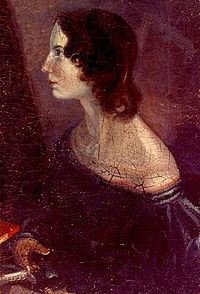
220px-Charlotte_Bronte_coloured_drawing

Emily Brontë

Wrote less than Dante

One book to four

Proving less is moor

200px-Emilybronte_retouche

Brontë, Anne

Youngest of the clan

Wrote ‘til she had blisters

But she’s still not her sisters

Anne_Bronte

Moving on from the Bronte clan…

Charles Dickens

At injustice sickens

His muse quickens

And the plot thickens

Charles Dickens

Ken Kesey

Makes us uneasy

When he gets on the bus

And leaves without us

kesey

Raymond Chandler

Had a wife but he banned her

From reading his books

About killers and crooks

BK.1017.Nolan20A-- File Photo-- Jan. 13, 1987-- Raymond Chandler.  LA Library

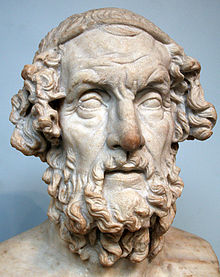
Homer

Told of a sea roamer

The hero Ulysses

Who missed his wife’s kissies

220px-Homer_British_Museum

The heretic Tyndale

Saw flames start to kindle

When he translated the Bible

And at the stake was held liable

william_tyndale

Victor Hugo

Never drove a Yugo

He preferred a fiacre

In which he met his Maker

Victor+Hugo+Victor_Hugo

Leo Tolstoy

Was a good ol’ boy

Who fled from his wife

At the end of his life 

tolstoy

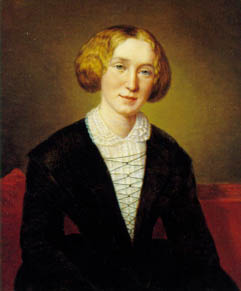
George Eliot

To hear biographers tell it

Wrote as a man

But lived as Mary Ann

George_Eliot_at_30_by_François_D'Albert_Durade

James Cain

Waited in vain

For his royalty checks

Now his postman’s an ex

cain

Aeschylus

With comedy can thrill us

But an eagle did hurtle

And he was killed by a turtle

[Snopes.com discounts the tale, saying there is no confirmed factual information regarding the death of Aeschylus]

David Foster Wallace

Was not quite as tall as

The length of the rope

And the loss of his hope

david-foster-wallace2Bentley, Ed Clerihew

Created a merry brew

Of rhymes for the very few

So no one would say “Cleri- who?”

EDMUND-CLERIHEW-BENTLEY-Wiki

3 Comments

Filed under Culture, Fiction, Jean Zimmerman, Writers, Writing

Captive Reader

And another great guest post from Gil Reavill, who between brewing coffee, clearing away dishes and bearing down on his own book has managed to fill in literarily while I’m off my foot.

EVER SINCE JEAN shared a bookstore appearance with novelist Koethi Zan, author of The Never List, the theme of captive women seems like a bad tooth that we can’t help worrying.

never list

The horrific tales of Ariel Castro, the Cleveland kidnapper, rapist and murderer, remain in the news long after his captives took back their hard-won freedom. Recently they leveled Castro’s home, part of a plea deal that spared the predator a death sentence.

I wrote about the phenomenon in my book Aftermath, Inc.

Ed Gein’s Wisconsin farmhouse, destroyed by fire. John Wayne Gacy’s house in Des Plains, Illinois, bulldozed flat, as was O.J. Simpson’s Rockingham estate. Jeffrey Dahmer’s Oxford apartment building, with its infamous apartment 213, demolished. These sites were, in the language of real estate experts, ‘stigmatized’ properties. You know you have transgressed in some basic, Decalogue-violating manner when authorities raze your house and sow your fields with salt.

gacy house

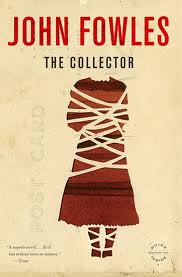
The theme of captive women crops up with stinging regularity in literature. John Fowles’s great novel The Collector was the first treatment of the theme that I encountered, probably as a too-young adolescent.

fowles

In our household, stories of Cynthia Parker and other women taken by Indians have become familiar through research for Jean’s novel, Savage Girl. Captivity is such a popular leitmotif in romance novels that it must form an admitted element in female fantasy. But the difference between rape fantasies and rape, as psychologists reiterate, is that women are in control of their fantasies.

During her research for The Never List, Zan became exhaustively familiar with captive women cases the world over. She tracks the survivors and gives sobering accounts of their inability to adjust to life after captivity. Often such women become recluses, unable to face life after enslavement.

Of course, stories of a lot of these victims never make the news. It might come as a shock to some benighted souls that human slavery did not exactly vanish from the face of the earth with the end of the American Civil War. Read Nicholas Kristoff’s great call to arms, Half the Sky, or David Batstone’s Not for Sale for accounts of sexually enslaved females all over the world (including right here in River City).

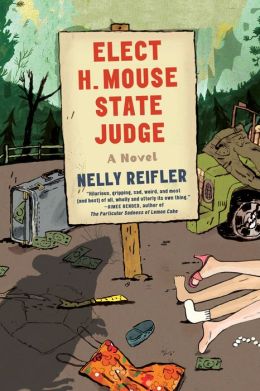
So it was with a creeping sense of recognition that I delved into our friend Nelly Reifler’s captivating (ahem) debut novel, Elect H. Mouse State Judge, out this week from Faber and Faber.

NellyReifler2

H. Mouse is by turns entertaining and disturbing, with Reifler treading a razor’s edge between Wind in the Willows and, say, Chuck Palahnuik, William Vollmann or Andrew Vachss. The innocence here is false innocence, and the topical true-crime reality of captive women leaks through the fairy tale.

H. Mouse is that eminently familiar figure, a compromised politician. His daughters Susie and Margo are taken by a religious nut named Father Sunshine (one Reifler’s best creations). The title character reaches out to a couple of shady political fixers named Barbie and Ken—yes, the very same ragingly popular iconic couple toyed with by children since the doll’s introduction in 1959. Ever wonder how Barbie and Ken do the nasty? Reifler tells us (it involves the removal of limbs). Lawyers from Mattel, Inc. ought to be knocking on Reifler’s door any day now.

elect

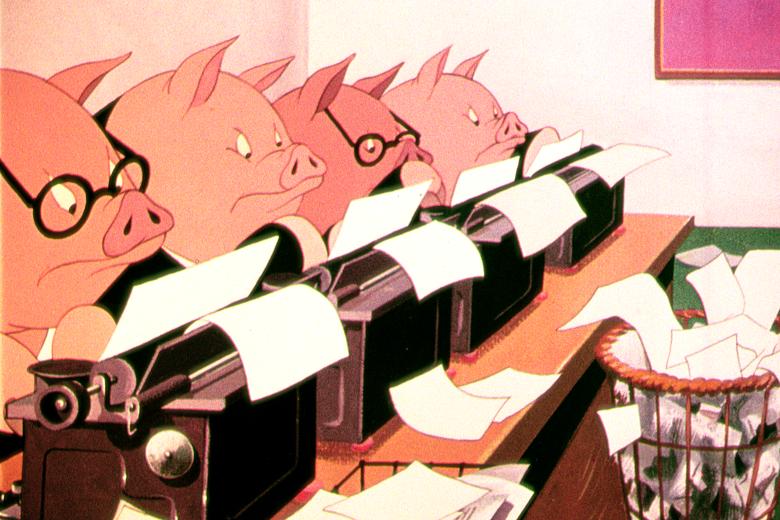
The figure of an unreliable narrator is a common one, but with H. Mouse I felt myself put into the position of an unreliable reader. I had the uncanny sense of humming along, enjoying the mice-and-foxes fable, then snapping awake to a nightmare. Reifler’s trap is baited with honey: the tone of faux sweetness is devilish, since one soon learns that it cannot last. Throughout these pages I suffered a quite enjoyable case of literary whiplash, something along the lines one feels with Animal Farm. (There’s a story kicking around, I can’t remember where I encountered it, about a student telling his professor that Orwell’s masterpiece was an excellent tale of the barnyard. The professor told the student to go back and read the novel again.)

79347104_animal-far_340402b

Elect H. Mouse State Judge is short, bittersweet and has a kick like a mule. Not since Art Spiegelman’s Maus have rodents been harnessed to so great effect.

5 Comments

Filed under Culture, Fiction, History, Home, Jean Zimmerman, Publishing, Savage Girl, Writers, Writing

An ARC and a Boost

There’s type and then there’s type.

SG SA

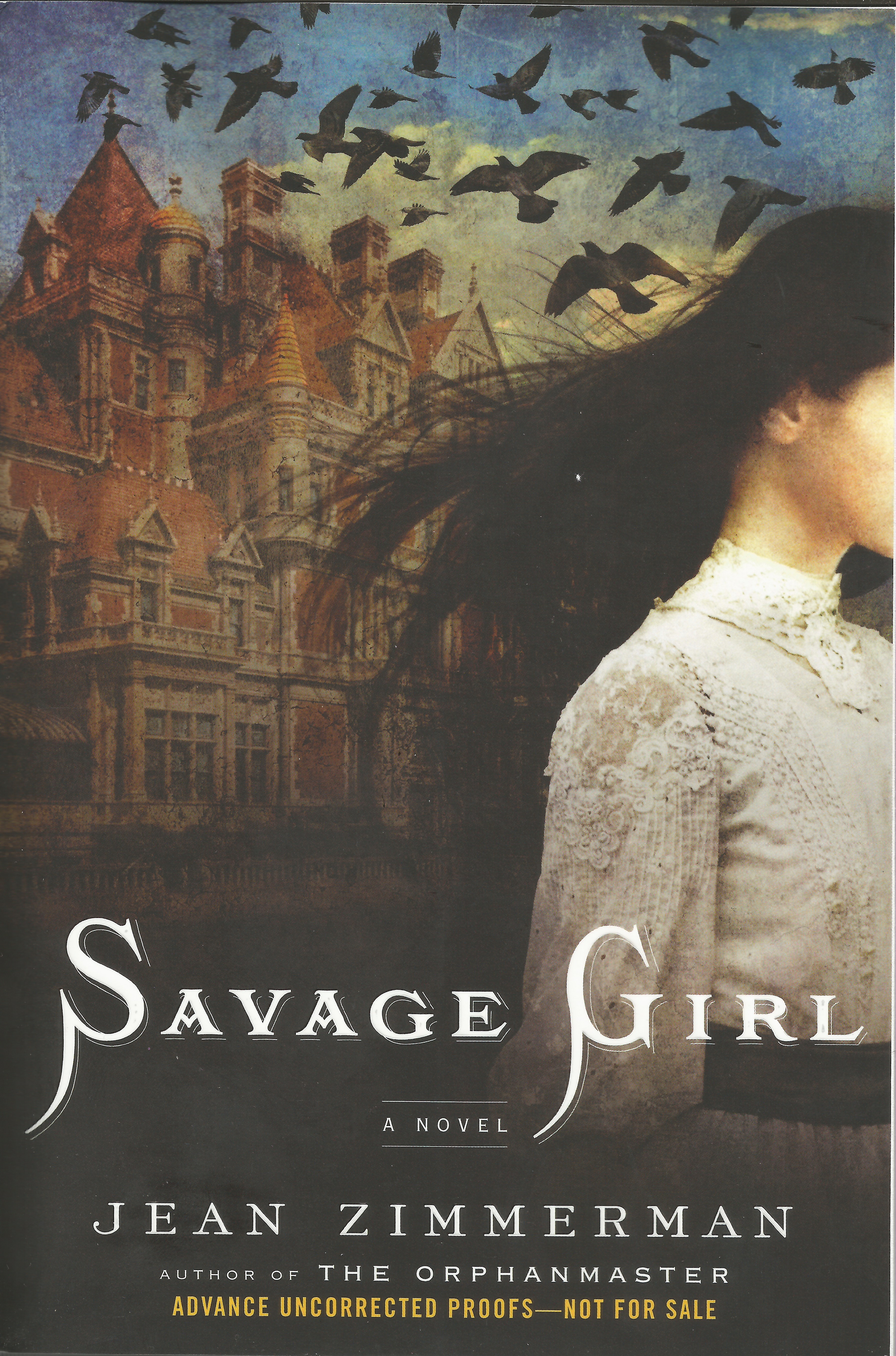
After another day of slogging off and onto the couch, I opened the mail. In among the junk, two gems, two volumes I’ve been waiting for. Two Advance Reading Copies of Savage Girl. Two ARCs. The novel will be out in March 2014. But it’s alive and breathing in its beautiful jacket even as we speak. This is the copy that will go out to early commenters and reviewers, bloggers and big mouths, so we want for it to be gorgeous.

arc cover

And that type. That’s what pops. The image of the girl and the mansion resonate, but the type’s what brings it to life. The title announces itself in a virginal white whose lines also embody the savagery of the title, and the two words are embossed, smooth under your fingertips  as I didn’t know they would be when I simply saw the cover proof. Now its typography renders the package dazzling.

Crack it open and you get the prologue, the first outlines of the mystery the narrator Hugo unfolds.

SG first page

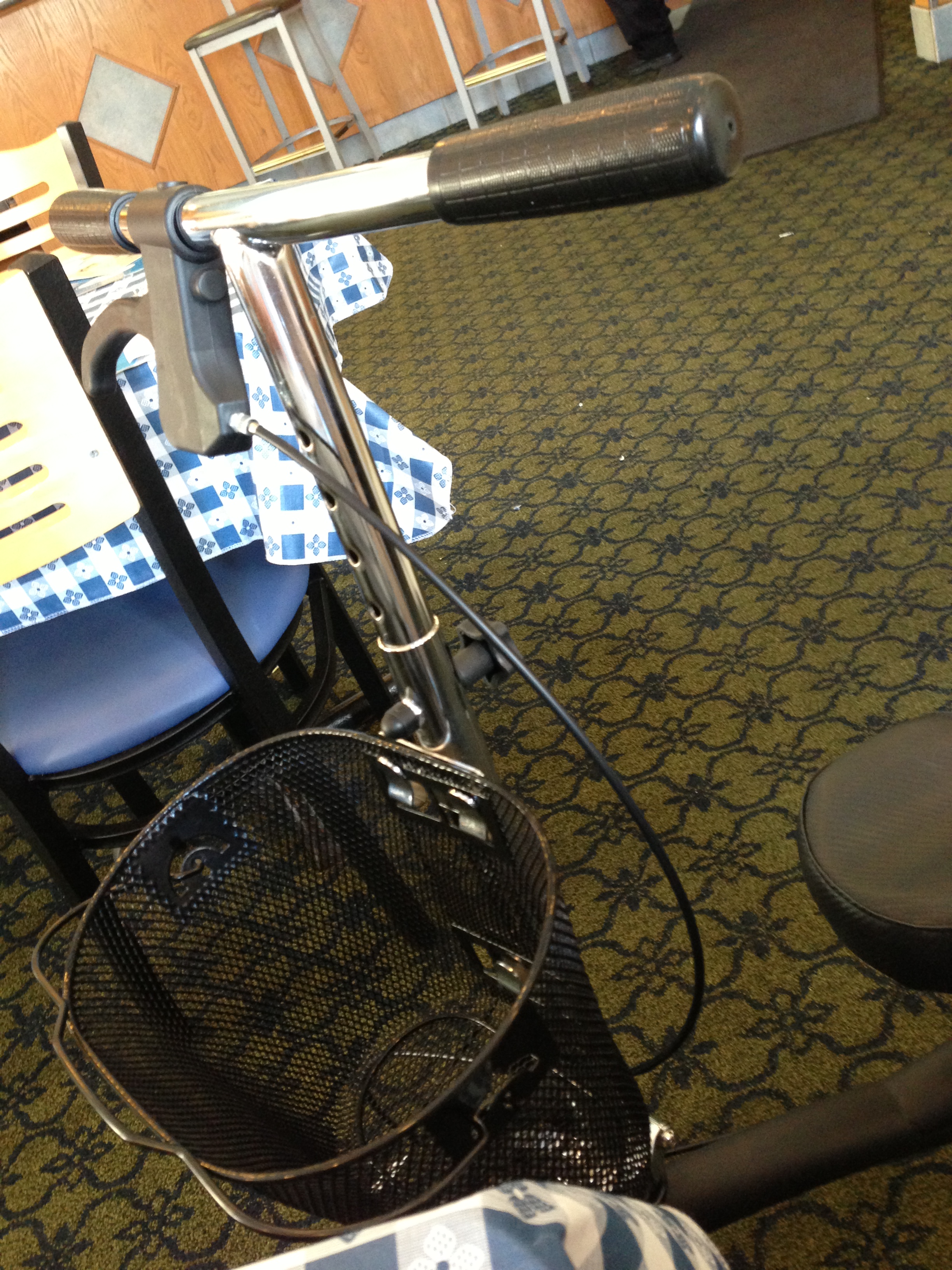
The type popped. Now I’m going to have some pizzazz, too. Gil and I picked up a scooter I’d reserved for rental at the drug store. It waited patiently at the Greek restaurant we like while we downed our sandwiches and skordalia.

scooter

Then it came home with us – and boy, do cars stop for pedestrians when they see a scooter.

It’s somewhat easier to get around than crutches and I’ll be freer to exit my couch and have adventures. I think I’ll call it the Bloke. Right now the Bloke is in the back of the Suburu, waiting for me.

6 Comments

Filed under Cooking, Culture, Fiction, Home, Jean Zimmerman, Publishing, Savage Girl, Writers, Writing

A Haze of Summer Reading

Still embedded in the couch, where I’ll be for the foreseeable future, my leg held slightly less aloft, though… and with less pain in my foot.

The hours go by. The days. So do the pages of the book I’m reading, though the medicine makes me slightly less attentive to the thread of the plot than I’d ordinarily be.

17164599

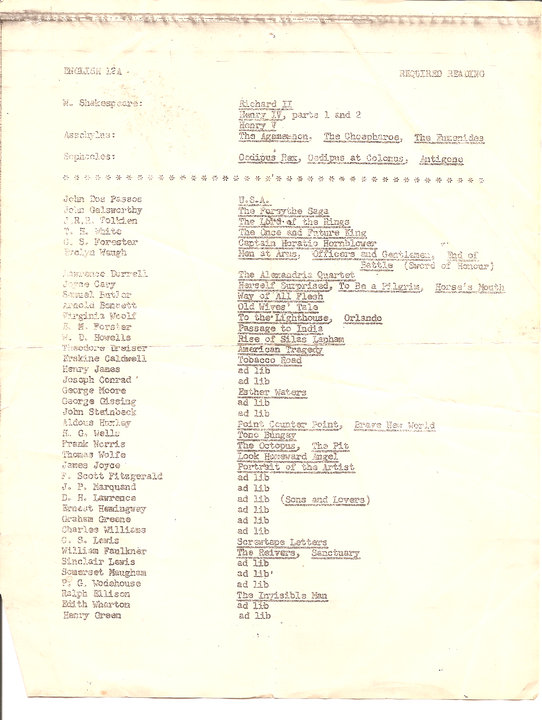
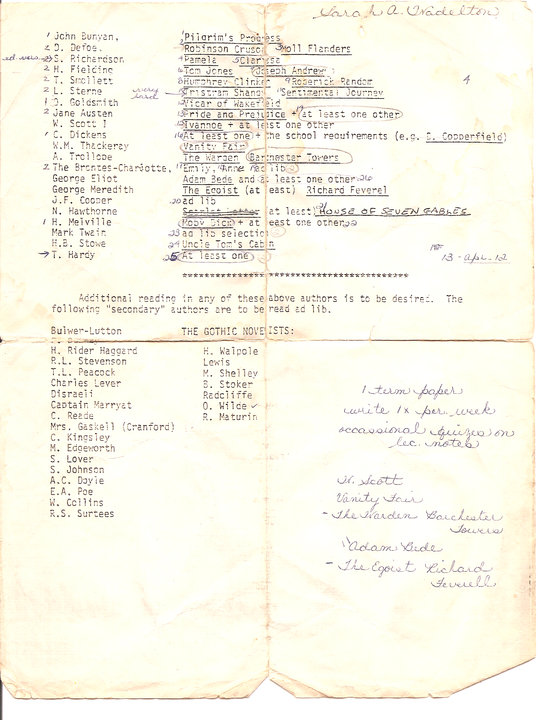
A summer book. A stack of summer books. I recently came across a copy of the syllabus for my honors English class in high school. Forty years ago. The teacher, Chuck Aschmann, was some kind of a genius, and he brought out the genius in his pupils. Just page 1 of the reading list would be enough for more than a single college literature course.

32011_410291856024_2411585_n

By page 2… I don’t remember it being hard to read most of his selections, just sitting for hours in our sticky leather club chair and dreaming over these amazing books. Spending a lot of time in the humid heat of August, reading and dreaming and reading…

32011_410291836024_335984_n

Dos Passos, Woolf, Conrad, James. Fielding, Sterne, Thackeray. Melville. Twain. Sophocles!

I was actually spoiled for college English after this, thought I knew all there was to know about fiction and spent my non-class-time hardly reading at all but scribbling diary entries, page-length prose poems and love letters.

In high school it didn’t take foot surgery to keep me on my rear end reading novels in summer.

2 Comments

Filed under Culture, Fiction, Home, Jean Zimmerman, Writers, Writing

Captive Audience

Millbrook, New York is a quiet town, a town of well-behaved dogs on leashes and potted flowers.

box of flowers

A town of rice pudding with cinnamon at a cute bakery called Babette’s Kitchen.

rice pudding

The last notable murder in Millbrook took place a century ago – a nanny named Sarah Brymer was strangled when her employers, of the Barnes Compton clan, left their estate for a New York City visit during a January snowstorm. The coachman, Frank Schermerhorn, did it – though he first tried to pin the blame on the Japanese butler – then cut his own throat with a straight razor when he was apprehended.

That was a long time back and everybody’s forgotten about it.

So it was interesting to be invited to Millbrook’s warm and comfortable Merritt Bookstore for a discussion/book signing today where attendees could “discover the art of mystery.” I was joined by another novelist, Koethi Zan, whose book The Never List was published earlier this month.

16158525

Koethi is a former entertainment industry lawyer who makes her debut with this riveting book. She knows everything there is to know on the subject of girls and women taken captive by craven men, then tortured and imprisoned for years. She is also an authority on the subject of the women who eventually escape these men. And she has worked this knowledge into a thriller which has received strong acclaim from people like Jeffery Deaver and Tess Gerritsen.

It was great to meet Koethi.

Jean and Koethe

She brought her husband, Stephen Metcalf, a critic-at-large at Slate who has a nonfiction book on the 1980s in the works. I brought Gil – yes, Gil Reavill, whose speciality is also crime and whose recent book is Mafia Summit.

All the great minds were present. The only thing lacking was an audience.

It happens sometimes. When you make appearances as an author, you don’t know whether to expect 120 people or three. When it’s three, you still have to be mentally present, be on your game, because these wonderful people made the effort to come out and see you, after all. Amazing!

In this case, nada. So, with two of the book store’s staff, we sat around in the cozy garrett upstairs and had a very stimulating talk about writing books.

We talked about creating a bad guy. How do you get inside his head? Koethi said that for The Never List it was more about her characters trying to ascertain how her bad guy ticked. For me, with The Orphanmaster, I said it was partly about figuring out what he would think and do that was completely the opposite of what I would think and do.

How do you discipline yourself when you don’t feel like working? Five hundred words a day, said Koethi. That is my minimum.

We talked about fact-based prose. About research. (One of my favorite subjects.) I told them about how I had based my protagonist in The Orphanmaster on a real person I had written about for an earlier work, The Women of the House, and how I had all my research practically done when I started my novel. Stephen talked about the book he is working on, about the plenitude of letters regarding the artist Jean-Michel Basquiat, one of his central figures. Koethi, as I said, has absorbed everything on captive females.

She told us about some of the recent high-profile cases, and said that while it seems some of these young women are coming back to a semblance of mental health it’s not always what it seems.

We talked about captivity narratives, about the classic John Wayne film The Searchers, about an article that has recently been published in The New York Review of Books on the subject, about Ride the Wind, a historical novel based on the Cynthia Parker story. The subject interests me historically because in Savage Girl, the central figure spends some time with the Plains Indians.

A lot to chew on. All of this and a full cheese platter too.

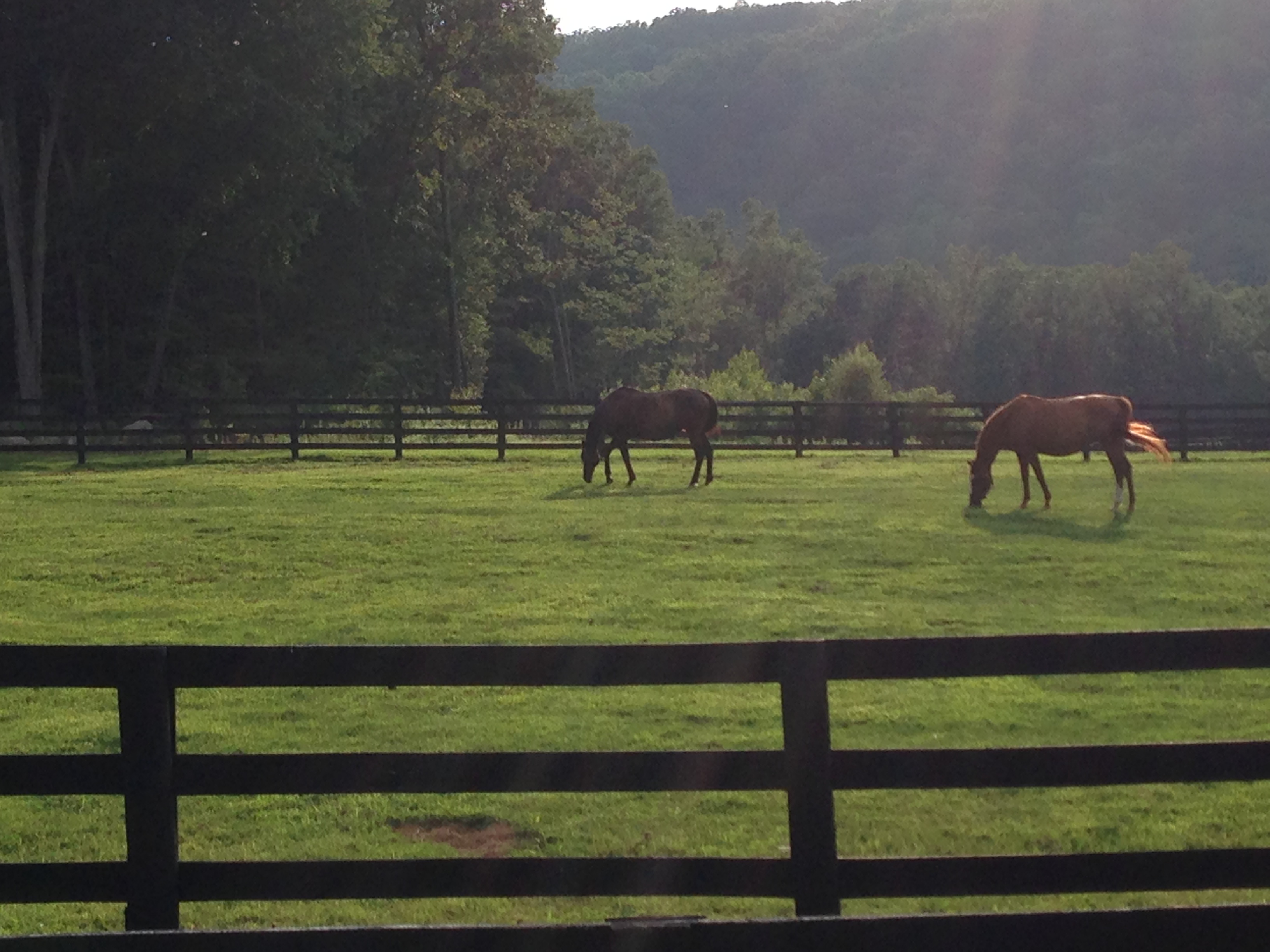
We meandered home on the back roads, through soccer fields and corn fields and gently curving horse meadows.

horses

There was only one exception to the bucolic charm of the open road: the ruin of an abandoned complex that was Wingdale, a mental hospital which operated upstate from 1924-1994 and is said to be haunted by ghosts. With its crumbling brick and busted windows, it looks like the perfect set for a horror film.

No visitors allowed.

wingdale

There’s always something behind the happy façade.

3 Comments

Filed under Culture, Fiction, History, Jean Zimmerman, Savage Girl, The Orphanmaster, Writers, Writing

NPR: Great Historical Fiction for Summer 2013

I liked digging into recent historical fiction for my summer round-up on NPR, which is hot off the presses. I knew some of the authors’ work already, and some novels I discovered for this assignment. I tried for a balance of time periods and styles when I selected the books to review. What I was really going for, though, was fiction that took off from specific fact, historical personae or events that grounded the work.

So these were the books I reviewed.

Orphan Train by Christina Baker Kline.

orphan train

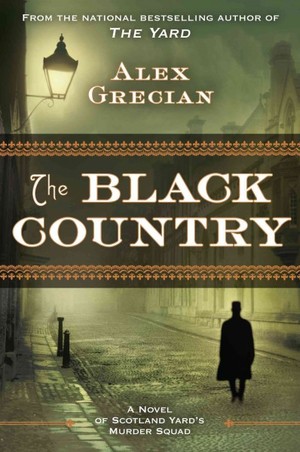
The Black Country by Alex Grecian.

black country

The Blood of Heaven by Kent Wascom.

blood of heaven

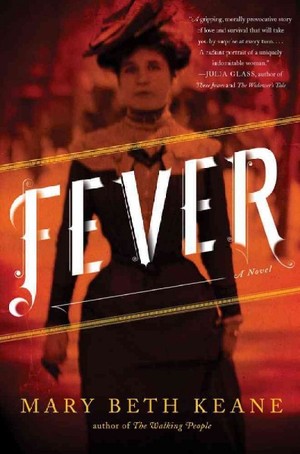
Fever by Mary Beth Keane.

fever

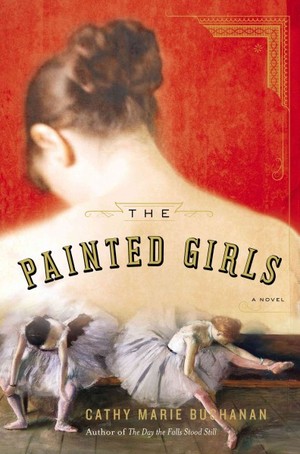
The Painted Girls by Cathy Marie Buchanan.

painted girls

I hope you enjoy your summer reading, whether it takes place in a lawn chair, on a beach towel, or on the couch in front of the air conditioner!

10 Comments

Filed under Culture, Fiction, Jean Zimmerman, Publishing, Writers, Writing

Portals Into Other Worlds

I’m thinking about how you can visit other times and places on the web, peeking through portals the way you peer through a cutout in the plywood surrounding a construction site. Here are fifteen visits I’ve made lately that I’d recommend.

It was a mistake for Rolling Stone to make a rock star out of a creep.

jahar:jim

That doesn’t mean the article that goes with the picture is not good journalism. And don’t we want to know, don’t we have to know, what makes terrorists tick, in order to know how to combat the evil they do? If you don’t feel like patronizing Rolling Stone at the moment to read the piece, if you’re interested in long-form reportage on all kinds of subjects, from a history of the famous indie rock club Maxwell’s to a star 16-year-old pitcher in Japan, go to Longform.org, which reprints new and classic nonfiction from around the web.

Amazon-Kindle1

Admit it, you want to know the inside story of the Kindle. What brainiacs came up with this gizmo that might mean the end of books as we know and love them? (I actually have a Kindle Fire and don’t find it hasn’t stifled my desire to read print on paper, just saying.)

It sounds almost banal, but I guarantee that when you hook into The Evolution of Love Songs (1904-2007) you will not be able to quit. I’m waiting for part 2, 2008-2013.

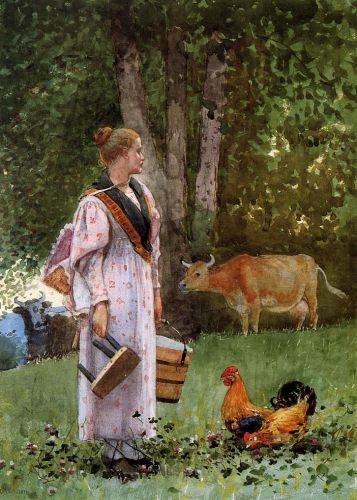
Up my alley, and I hope yours, a view of how the lives of American women changed over the 19th century through the art of the time.  In particular, life on the farm, complete with Winslow Homerian milkmaids.

Winslow Homer (American artist, 1836-1910) The Milk Maid


There are so many food blogs. I like npr’s the salt.

A view into a different world would include the minds of people who make Lego their personal idiom. They do things like make plastic sushi and other amazing Lego food creations. 

Lego sushi

I’m interested in the alternate lives of feral children, especially since my next novel Savage Girl  describes all the trouble one can get into in Gilded Age New York. Like how do you participate in a refined dinner party when you’re accustomed to tearing meat apart with your fingers? Every now and then a contemporary wild child surfaces with an interesting story. You can read about Marina Chapman, a British housewife who claims she was raised by monkeys in Colombia.

 marina chapman

Want to know about neolithic cooking? The Rambling Epicure tells you, and it starts with “one bucket wild spinach leaves.” The excellent food site gives you a recipe from Jane Le Besque’s cookbook, Un Soufflé de Pollen: Livre de Cuisine et de Peinture. A painter, Le Besque lives in the Pays de Gex in the foothills of the Jura mountains, and this is her “artistic vision” of primitive cuisine.

See how other people connect — passionately — with the past. Reenactors get their due with 36 photos from around the world.

reenactors

Here, actors and actresses from Iere Theatre Productions play the roles of indentured East Indian laborers and British constabulary police during a reenactment of the first arrival of East Indians to Trinidad and Tobago, on Nelson Island in the Gulf of Paria off the west coast of Trinidad.

It’s not all about Gettsyburg, clearly.

reenactors 2

These children are taking part in a mock military parade at an amusement park in Pyongyang to mark International Children’s Day, in this photo taken on June 1, 2013.

Okay, the squeamish should not tune in to7 Bio-Artists Who Are Transforming the Fabric of Life Itself” at the site io9.

rabbit

It’s about how some provocative artists today deal with biotechnology. Working with scientists and engineers, these geniuses transform living tissue and even their own bodies into works of art. For example, Brazilian-American “transgenic artist” Eduardo Kac took a rabbit and implanted it with a Green Fluorescent Protein (GFP) found in jellyfish. When placed under a blue light, the rabbit glows an otherworldly hue.

On the lighter side, see the longest domino chain in the world made of books: 2,131 of them.

 My dog is named a very modern Oliver. He looks exactly like his name.

oliver about to copy

Medievalists.net has a well-researched piece on ancient pet names, such as dogs called Sturdy, Whitefoot, Hardy, Jakke, Bo and Terri, and a cat in England named Gyb – the short form of of Gilbert –  or one named Mite, who prowled around Beaulieu Abbey in the 13th century, or Belaud, a grey cat belonging to Joachim du Bellay in the 16th century. Isabella d’Este owned a cat named Martino. I bet nobody died their animals green.

Buzzfeed has 16 noble photos of women writers at work, including a great one of Anne Sexton immersed in her craft.

anne sexton

From MessyNessyChic.com, the story of an artist whose work was discovered in the trash 50 years after his death.

Charles Dellschau

This grouchy butcher by trade, an immigrant named Charles Dellschau, had secretly been busy assembling thousands of intricate drawings of flying machines, sewn together in homemade notebooks with shoelaces.

And for anyone who didn’t catch this when it went big on the web, Dustin Hoffman showed us his softer side in reminiscing about Tootsie and what playing a woman meant to him. The interview is a window into the psyche of someone whose brilliant work opened a window into a psyche we were lucky to see.

tootsie25

3 Comments

Filed under Art, Cooking, Culture, Dogs, Fashion, Fiction, History, Home, Jean Zimmerman, Nature, Poetry, Savage Girl, Writers, Writing

Dirty Disney

I expected the Paul McCarthy show at New York’s Park Avenue Armory to be raunchy, demented, transgressive. What I didn’t anticipate was that it would be hilarious.

Screen-Shot-2013-07-08-at-9.34.24-AM

If you follow the contemporary art world you know that McCarthy excels at tweaking the public’s nose. Not long ago there was the giant inflatable “Complex Pile” he contributed to ultra-civilized monumental art shows.

poop

The fifty-one-foot dog poop went pop in a downpour one recent day in Hong Kong, but not before it had made its comment on our expectations for the public sculpture we’re used to admiring. Plastic dolls, masks and ketchup have also figured in the 68-year-old McCarthy’s oeuvre over the years.

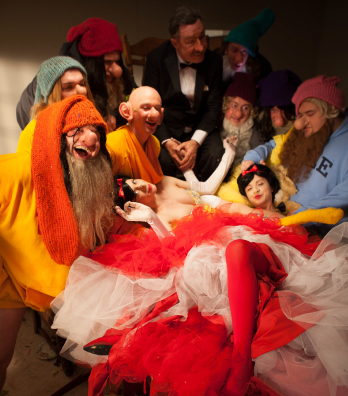
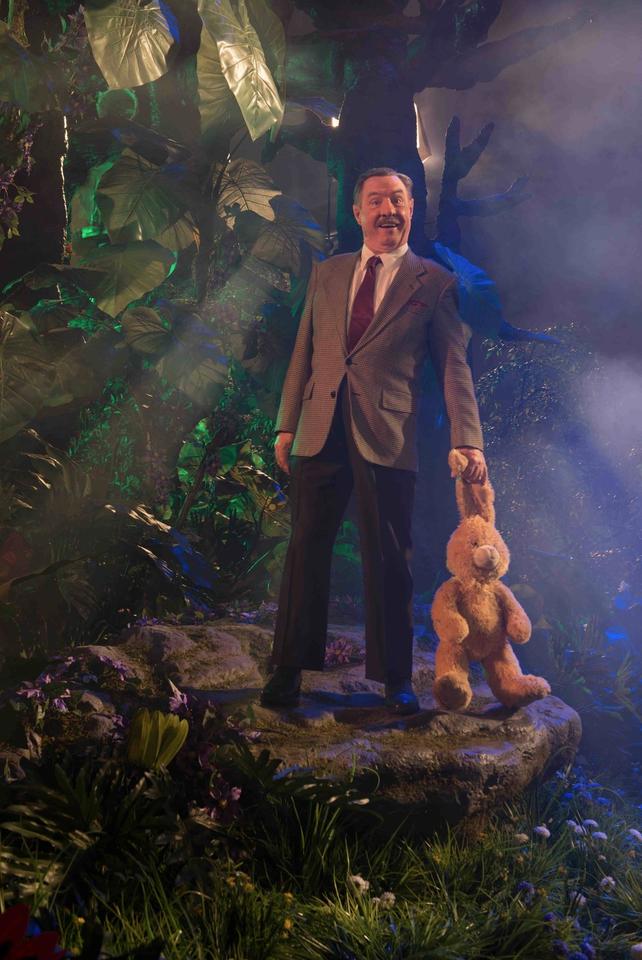
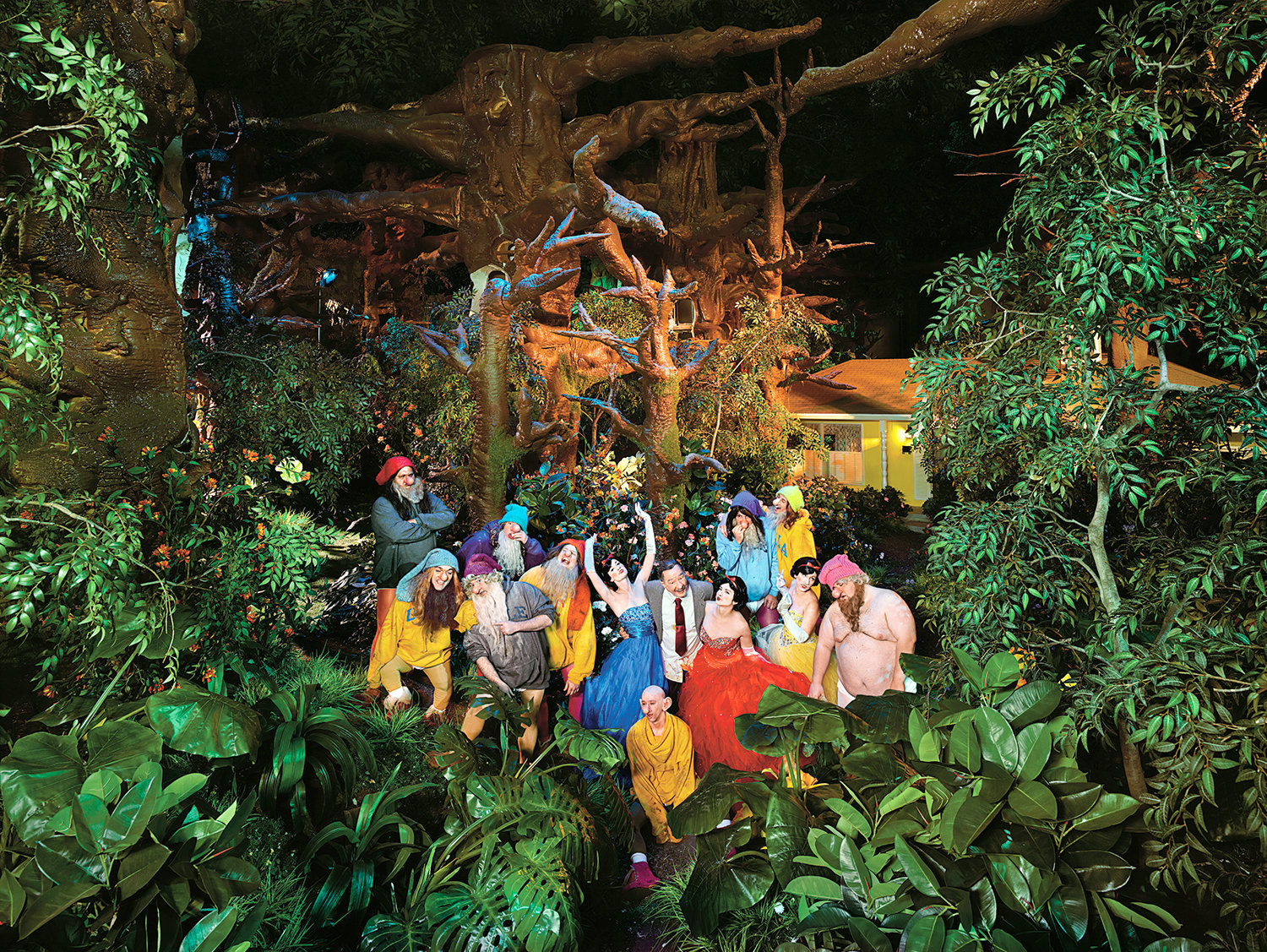
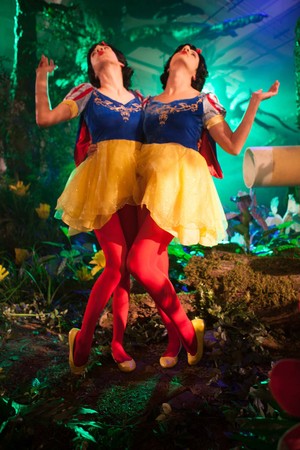
In W/S,  the largest installation the artist has ever created, we have a multimedia reimagining of the tale of Snow White and the Seven Dwarfs, its Disney iconography mashed up with elements of horror and porn and probably a few other elements I missed. In the films that are the bulwark of the show, McCarthy plays an ersatz Walt Disney, here called Walt Paul, nose prosthetiicized to the max.

061813white4

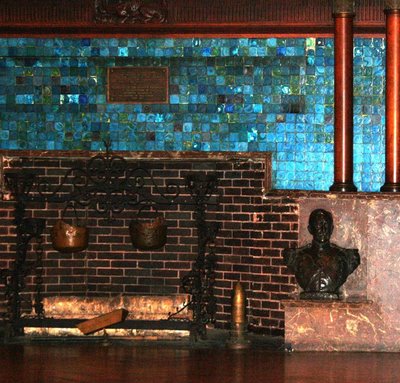
Neither Maud nor I said much as we went around the Armory’s cavernous Wade Thompson Drill Hall, one of the largest public spaces in Manhattan. The last time I visited the Armory it was for the prim and proper Winter Antiques Show, and I remember marvelling at the fancily gorgeous reception rooms designed by people like Louis Comfort Tiffany.

armorytiffany3

This time we heard the exhibit before we saw anything, a raucous moaning and groaning like a bloated x-rated soundtrack. The noise emanated from two gigantic screens, each as big as a drive in theater’s. On the screens, dwarves cavorted with  White Snow – McCarthy’s version of the Disney heroine — in a hectic, squalid party.

screen

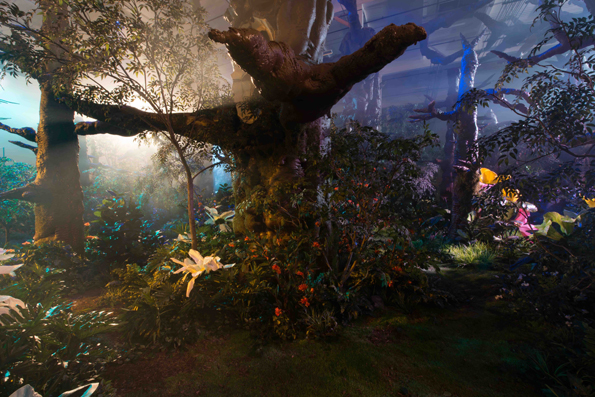
Under the blast of sound we couldn’t hear each other anyway. In front of us stood a large, Wonderland-proportioned forest of painted styrofoam trees and garish monster flowers.

forest dark

Its lavish 8,800 square feet formed the centerpiece of the show and had served as the soundstage of the production, before it was carted to New York from Los Angeles in dozens of tractor-trailers.

forest

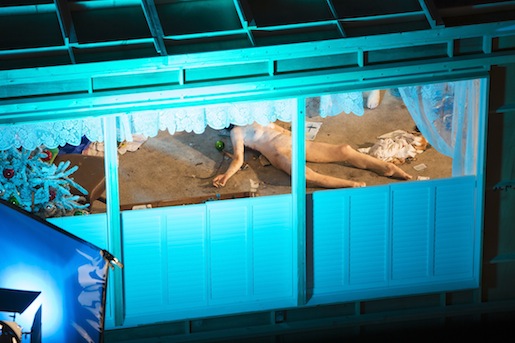
A house, or “cottage,” stood in front of us, or anyway a film set version of one. The back was punctuated with a series of square peepholes like the ones you see at some major construction sites. I’ve always liked peering into those. Here there was the same suggestion of a secret view.

body

There were disturbing glimpses of the aftermath of something gone terribly wrong, a woman and a man collapsed in a tacky living room. But the squirt bottle of Hershey’s was the tipoff as to the display’s tomfoolery. You do know that in Hollywood, Hershey’s often substitutes for blood, don’t you?

In W/S, McCarthy exhumes Walt Disney and has him trot around getting into trouble before really getting into trouble at the hands of Grumpy, Sneezy, et al. All I could think of was a guy I knew who landed a good job working at Disney in the ‘60s before Walt personally had him fired for sporting a beard.

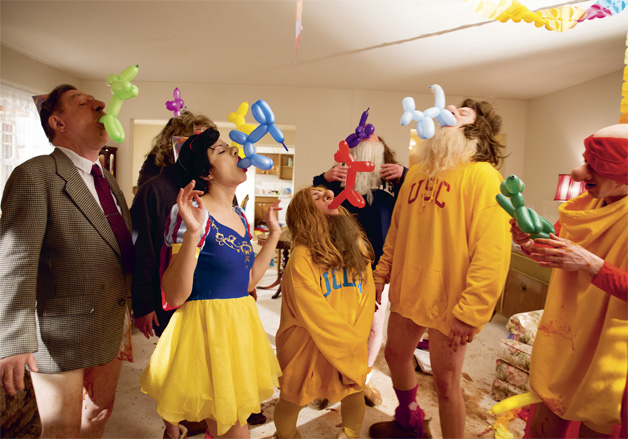
Now here was one of the most famous men in the world surrounded by beards and noses and genitalia and a lot of chocolate syrup, making love to a wench of a White Snow, all of them doing everything that no one would ever do in a Disney film (or theme park or corporation). It’s an upside down, inside out world, as crude and scary as the other was clean and safe. I imagine the Disney barracudas preparing their legal briefs.

balloons

Randy Kennedy of The New York Times did a piece on the artist recently that said, “His work can – and does – provoke physical revulsion. But it is not mere provocation; it’s intended as an all-out assault, a ‘program of resistance,’ as he calls it. And the older he gets, the more explicit he has become that his target is the American entertainment-consumer economy.”

Spectators weren’t allowed in the forest, but in a smaller film arcade along the side we could observe chapters of the story. An unclothed Prince Charming wandered through its glades. Shocking events transpired. We could also visit another house in a retro ranch style that is actually a three-quarter-scale replica of McCarthy’s Salt Lake City childhood home. Alex Poots, Artistic Director of the Armory, has had a lot of explaining to do about the piece, and at one point he said, “it explores the vast and at times distressingly dark corners of the human psyche.” And the dark corners of some pretty sad vintage rooms, I would say.

screen set

Walt Paul is not Paul McCarthy – the latter lives in Pasadena with his wife of 46 years, surrounded by kids, grandkids and pets. His grown son partnered with him in putting on W/S.

portrait


McCarthy told an interviewer that the show “may have something to do with how we see reality and desire. And art. This is a kind of hyper-reality of desire. A Disneyesque landscape that does not exist. A dreamscape.” All of this styrofoam and soundstage equipment comes at a cost, of course, and the project required millions of dollars. I like to think of Walt Paul in his lumpy nose approaching potential benefactors: Well, there’s this plastic forest, see, and this Hershey’s syrup…

I read a review that said the show “put the grim back into the classic Brothers Grimm fairytale.” I saw it as a series of extravagant what-ifs. What if Snow White had a split (or triple) personality? What if there was a handsome prince who didn’t rescue her but treated her more like a centerfold than a princess? What if Walt actually appeared in his own movies alongside Bambi, say, or Cinderella? What if those beloved childhood movies were more like stag films? What if the dwarves weren’t wholesome and helpful and cute but more like your twisted Uncle Charlie?

ws

The Grimm tales have always been dark. The great children’s author Philip Pullman recently came out with a new version, just in time for the 200th anniversary of their first publication.

grimm


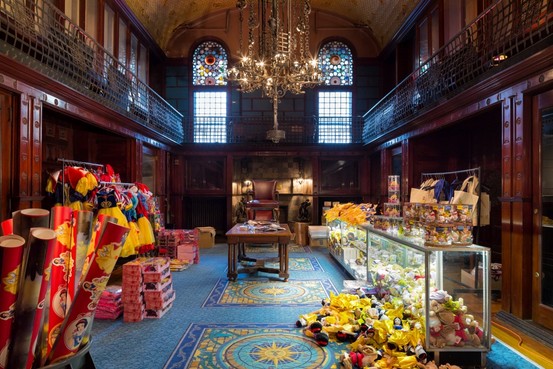
McCarthy’s show is also unabashedly commercial, with plentiful Snow White artifacts available in the gift shop.

Disney stuff

Pullman’s Fairy Tales From the Brothers Grimm are punchy and elegant but also violent and raw. In his translation of Snow White, a huntsman cuts out the heart and liver of a wild boar and takes them back to the evil queen as evidence of the girl’s death. “The cook was ordered to season them well, fry them, and the wicked queen ate them all up.”

Do you recall the conversation parents have had from time to time about whether these ancient fairy tales offer an appropriate reading experience for their innocent youngsters? The answer is No, if you’re doing it right. And this version is done to a turn.


3 Comments

Filed under Art, Culture, Fiction, Film, History, Jean Zimmerman, Publishing, Writers, Writing

The Real Stuff of the Past

Ice. Bricks. Wrecks.

schultz brick

I discovered three potential novels today in a small museum in Kingston, New York. Anyway, there were artifacts that could be the seeds of novels, historical subject matter so robust and potent that some writer’s sure to climb on board. One day soon, I hope.

I was there for a festival celebrating the Hudson River, but it didn’t take place, so I was left to wander without a plan. The Hudson River Maritime Museum houses itself in a weathered brick building on Rondout Creek in Kingston, where it keeps alive the history of the area. It teems with artifacts from the D and H canal, which brought anthracite coal from the innards of the country to the Hudson between 1828 and 1898, from the steamboats that brought nineteenth-century travellers from New York City north, the tugboats which dominated this place when so much freight went by ship, and the various industries that sprang up around here in the nineteenth century.

The dock area bustled. You could see the Half Moon, the working replica of the ship Henry Hudson drove up this very river, complete down to the most persnickety detail.

hudson detail

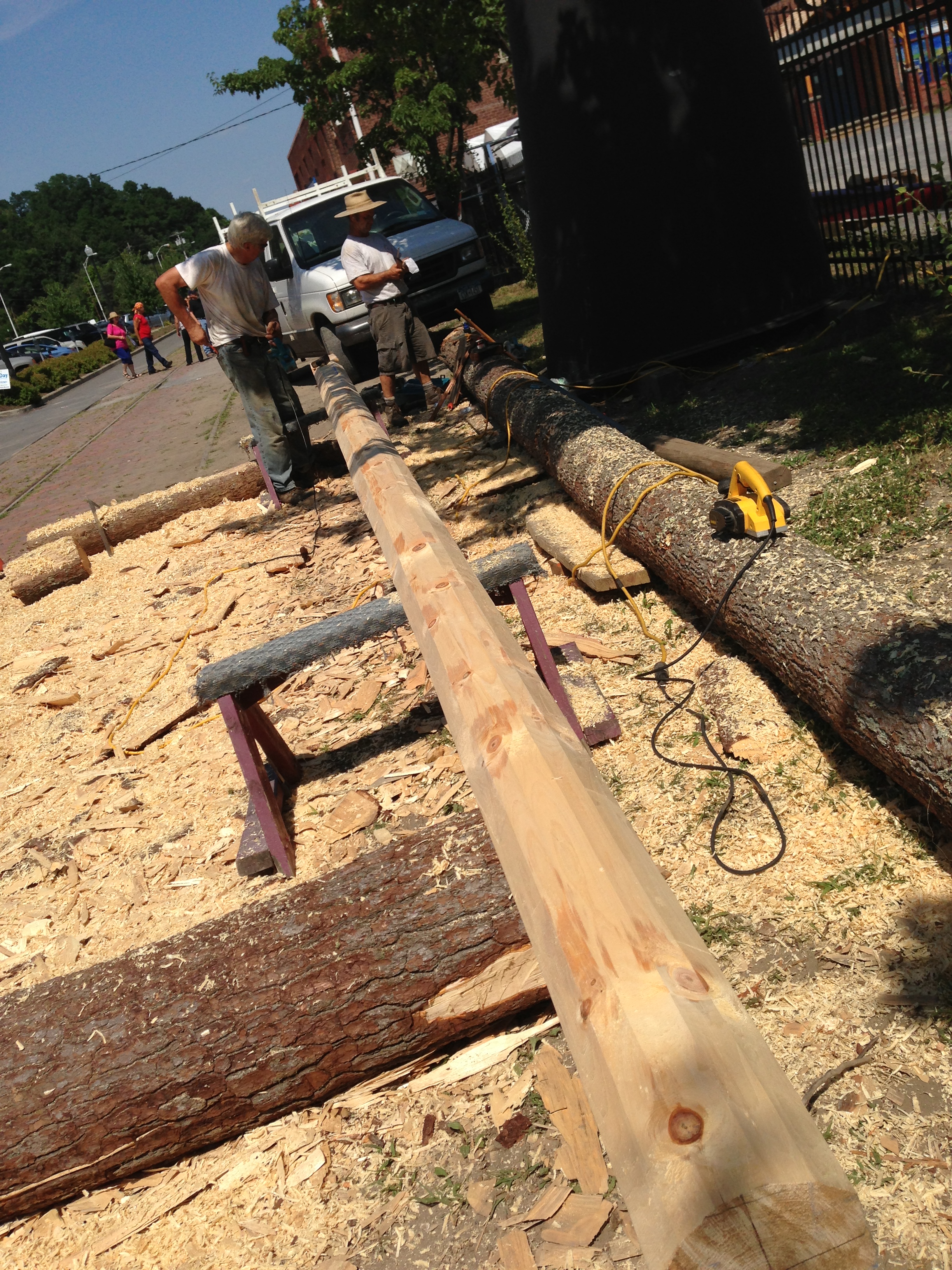
Costumed interpreters introduced jaded suburbanites to a living space smaller than the smallest New York City apartment.You could also see a new topmast being planed for the boat, by a gentleman foregoing period tools for more efficient electric sanders.

mast

There was a yellow submarine.

submarine

The Seahorse can hold two crew members and has been used for archaeological dives in Lake George.

Mammoth propellers studded the grounds.

propeller

But what I loved, going inside the chock full precincts of the museum, was the ice. Here was talk, detailed talk, of an industry that had basically vanished by mi-century but was incredibly important before.

The Kingson area was a hub for ice harvesting. And since ice was crucial for warm weather food preservation (not to mention ice cream making), it was big business.

iceharvesting

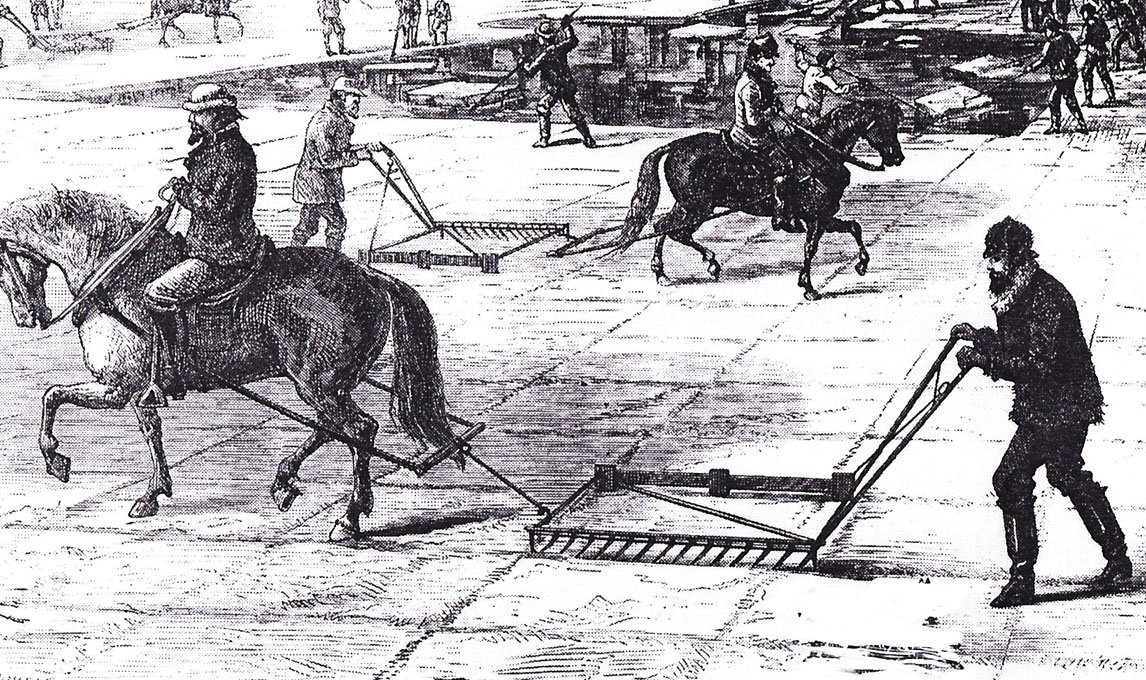
Over one hundred ice houses dotted the shores of the Hudson in 1900. Manhattan and Brooklyn consumed 1.3 million tons in 1879. Everything about the industry was big, especially the ice saws and other tools.

ice saws

One detail that especially excited me is that the same horses employed to drag huge blocks of ice off of the river during the winter would be brought down to New York City to pull the ice wagons in the summer. I’d like to follow one of those ice horses, alternate between life in two such different port cities.

ice wagon

One of my  heroines out of history, English traveller and diarist Fanny Trollope, made the comment, in the 1830s, “I do not imagine there is a home without the luxury of a piece of ice to cool the water and harden the butter.” I’d love to read more and write more about the sweat that went into that cold work.

Bricks.

2 bricks

The Dutch in New Amsterdam imported small, hard yellow bricks from Holland. Then someone realized the magnificence of the natural clay deposits in America. Along the Hudson River men molded “green brick” in wood frames, and it had to be carefully turned when drying.

turning

Imprinted names came either from the brickyard owner or could be commissioned.

brick tower

Such beautiful, beefy stuff, this brick, and the story behind it.

Then, the wrecks. Some of the steamboat capsizings on the Hudson in the middle of the 1800s were doozies. People were so excited about the new toy, a boat without sails, that they raced passenger steamers up and down the Hudson seemingly without a thought in their heads. The boats offered their genteel riders swellegant accommodations and a chance to see the breathtaking views along the way.

The Swallow, built in 1836 in Brooklyn, raced the Rochester between New York and Albany in a snow squall in 1843. Well, it stuck on a rock, ultimately breaking in two, and 15 of the 200 passengers died. In the total darkness of night, they couldn’t see that they were close enough to get easily to shore.

swallow_steamboat_burning

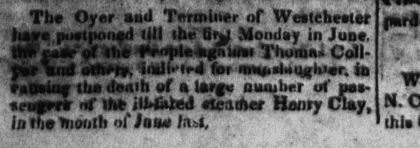
The Henry Clay disaster occurred when the boat left Albany in 1852 and began racing the Amenia, with a fire erupting at Yonkers and the craft beaching at Riverdale. Seventy men and women died, including the famous landscape architect Andrew Jackson Downing. It was, as you can imagine, a nightmare and a scandal and terrific news copy all combined.

clay

There was the Thomas Cornell (ran aground), the Daniel Drew (burned), the Trojan (burned), John H. Cordts (burned). A piece of panelling from the Cordts has been preserved. These were magnificent creatures, these vessels, costly, exciting. And doomed.

burnt detail

In the silt of the Hudson lie small boats, barges, sunken bricks, barnacled anchors. All mysterious pieces of the past, hidden from us.

Those steamboat races, though. They are fact. But they are the stuff of great fiction.

ferry sign

6 Comments

Filed under Culture, Fiction, History, Jean Zimmerman

Tuber or Not Tuber

My potatoes are ready to harvest. Knuckling up from under the crumbly soil, red, firm, practically begging to be dug.

potatoes stalks

The tops of the plants have collapsed and faded, letting me know the tubers have reached their point of ripeness.

And I’m on my knees (on my gardening pad, protecting my getting-to-be-arthritic knees) thinking about things that grow under the soil.

potatoes soil

Earthworms, like the one strutting across my gloved fingers, surprised in its wanderings around the potato neighborhood. Gil tells me that earthworms are actually an invasive species and have disrupted the ecology of the forest floor.

worm

I’ve always liked earthworms, admired their digestive capabilities, and wanted them to multiply in my garden. At the same time, being a little squeamish, I’m anxious about coming across them writhing in my path.

Here are potatoes, washed and sliced, for a summer gratin.

potatoes raw

So fresh they slice more like cukes or squash. Moist like just-picked tomatoes.

tomatoes

I’m thinking about anxiety, another thing that, like a potato, grows underground. You can put them aside, the things that worry you, by day. The yet-to-be-paid bills, the yet-to-be-written article, the yet-to-be-published book, the yet-to-be-proofread galleys, the yet-to-be-folded laundry. But roundabout 11pm, lying between the sheets, the air conditioner blotting out all distractions, those anxieties come back for their nightly haunting. Herbal tea, you say? Hot milk? Meds? All you can do is dig yourself out of the dirt by the next day’s sunlight.

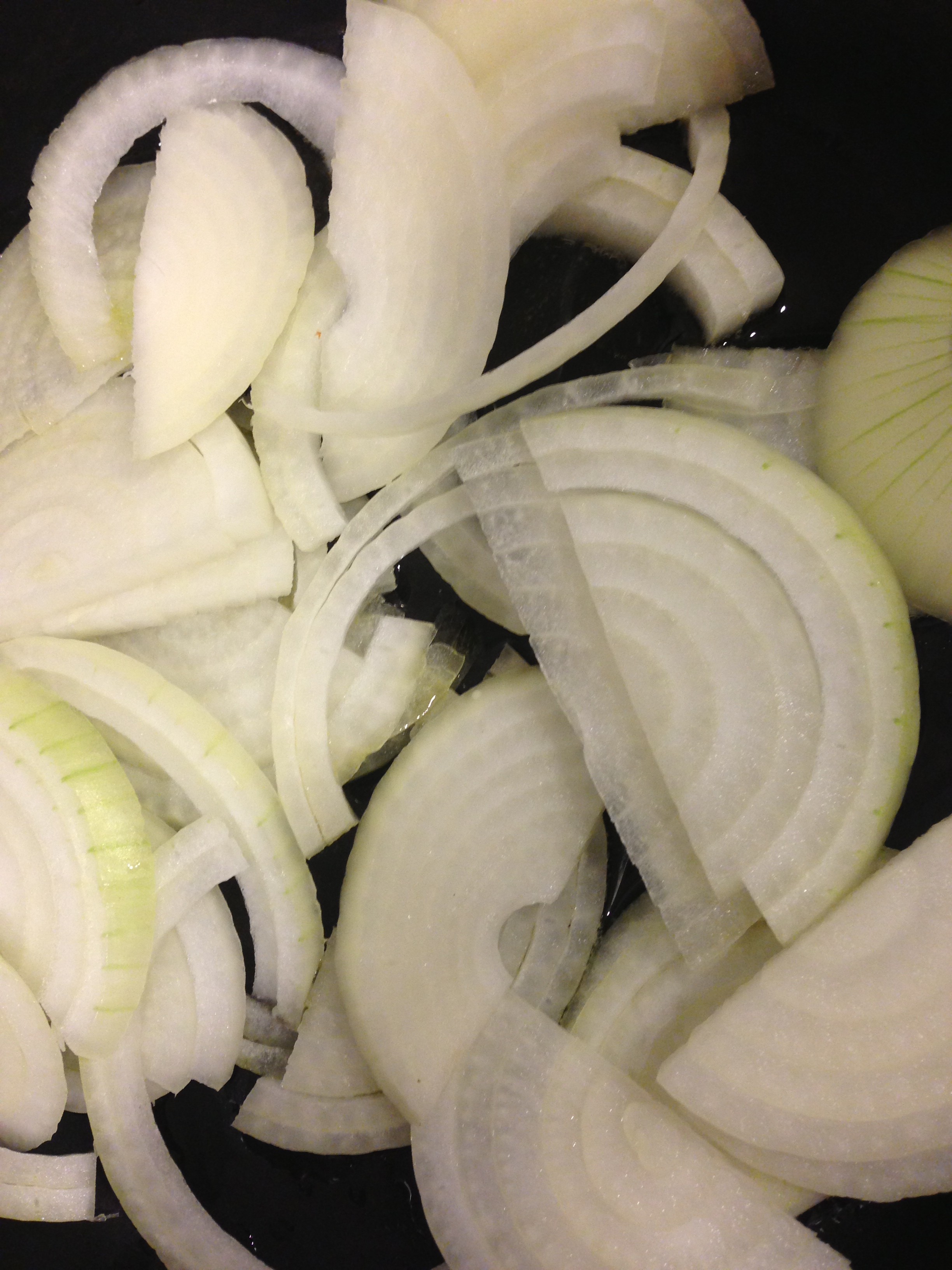
Onions swell beneath the dirt. Onions to fry in olive oil for the gratin.

onions raw

Creativity also grows underground. Say I have an idea for a new story. An idea about the way a certain neighborhood looks in a New York of a different age. A thought about a character the other characters call simply the Turk. A whaleboat loaded with cabbages. Ideas percolate under the surface and peep up occasionally. You’d better write them down in a notebook or they’ll descend back down again.

Layer the potatoes in a casserole dish. This gratin is simple. Place the rounds, spoon the onions over and then the shredded gruyere. One, two, three layers. Extra cheese on top (no anxiety about its cost or its cholesterol!).

Give anyone deserving a shred.

oliver cheese

Take a break from proofreading your galleys. Pour a pint of cream over the layers. A pinch of salt, a few grinds of pepper.

gratin

Crank the oven to 425 degrees. It’s hot in here, isn’t it? The rest of the ten pounds of  potatoes, homely and crumbly, await their cold bath. They’re dug up now, won’t ever go back. Anxiety, creativity, things to bring into the light of day. It’s their turn in the sun.

potatoes basket

4 Comments

Filed under Cooking, Culture, Dogs, Fiction, Home, Jean Zimmerman, Nature, Publishing, Writers, Writing

Rockets Glare

Hastening toward Wisconsin. Can it be a true road trip if you only drive one road? On the other hand, it’s a massive road, Interstate 80. And it’s the glorious Fourth.We begin at the GW bridge.

flagOliver has already finessed the jump from the  cargo hold to the back seat, next to Maud.

oliver back seatGil is principal road man.

gil's armsJohn Lennon’s Dig a Pony plays repeatedly on the console.

Well, you can celebrate anything you want

Yes, you can celebrate anything you want

The land rolls by.

cloud shadow

The trucks roll  by.

truck

I do a road hog

Well, you can penetrate any place you go

Yes, you can penetrate any place you go

I told you so

Rain hits as I drive. Maud sweet talks her beau long distance.

windshield washer

Well, you can radiate everything you are

Yes, you can radiate everything you are

midwest sunset w carEyes drift over my book as the sun sets, superlative driver Maud in the driver’s seat.

I feel the wind blow

Well, you can indicate everything you see

Yes, you can indicate anything you see

Lennon later said he thought the song was garbage. Can you imagine?

dancers bookOn to the Chicago Skyway at Dusk.

chicago skyway


And then, all up the corridor through the great city of Chicago, starting at nine o’clock, splashes of fireworks go up from all the little communities along the way, on every side, red, pink, green, blue and silvery-white, some cascading right over our heads on the highway. Pop! Pop!

Chicago fireworks

All I want is you

Everything has got to be just like you want it to

Because

Fifteen hours, forty minutes, over 1,000 miles. I’d do this again, says Gil. Maud says, Me too.


2 Comments

Filed under Culture, Dogs, Fiction, Music, Photography

Il Rituale dei Bambini Perduti

Italy has weighed in.

anteprima-il-rituale-dei-bambini-perduti-L-fp4Qio

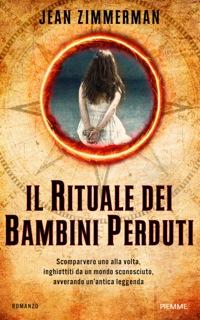
My Italian publisher’s visual interpretation of the drama of The Orphanmaster is not perhaps what I would have expected. It’s baroque. It’s scary.

It’s amazing to think of people sitting down with a copy of Il Rituale dei Bambini Perduti, so far from the island of Manhattan in 1664.

If you can read the language, check out a book blog.

13 Comments

Filed under Culture, Fiction, Jean Zimmerman, Publishing, The Orphanmaster, Writing

The Taksim Square Book Club

In  Turkey, people are reading books. In public.

Which is amazing, considering the country’s recent history.

Taksim Square Book Club

People are afraid of losing freedoms. And they’re finding a clever way to meet in public when demonstrations have been banned. Book clubs as free speech.

From Ataturk – which means Father of the Turks – who founded the Republic in 1922, all the way up to the present day, the country has had strong secular leadership.

ataturk3

Now the hardliners have come in. In Tacsim square the prime minister wanted to destroy part of a park for “redevelopment.” Somehow that struck a chord with the public and hundreds of thousands of people took to the streets.

The complexities of this story are better left for a political writer, but the numbers have already reached these totals, according to one source: 4,500,000 people provided their support for the Gezi Park Resistance; there were 603 protests in 77 provinces; at least 75 people were arrested; at least 1,750  injured; 3 people including one police officer died. There is an excellent visual timeline of the “ten days of resistance.” New developments are not promising.

Taksim Square Book Club

As an alternative to the violence, the Turkish performance artist Erdem Gunduz chose to stand with his hands in his pockets, facing the Ataturk Cultural Centre in Taksim Square for eight hours.

erdem-gunduz-kimdir-gezi-parki-duran-adam-4746497_1628_o

Gunduz become the symbol of the resistance movement. Thousands of people emulated his action, standing still for minutes or hours around the country. “The Taksim Square Book Club” dovetailed with the still postures, and the books people are choosing form a reflection of their thoughtfulness in the face of this tremendous cultural upheaval. Albert Camus, The Myth of Sisyphus, about God and meaning. Gabriel Garcia Marquez’s Leaf Storm. Nineteen eighty-four. Turkish writer Tezer Oslu’s short story collection Old Garden-Old Love. When Nietzche Wept, a historical novel by Irvin David Yalom. Again, Nineteen eighty-four.

Taksim Square Book Club

What would you hold?

8 Comments

Filed under Culture, Fiction, History, Jean Zimmerman, Photography, Publishing, Writers, Writing