Category Archives: Dogs

Little Green

Spring brings with it a kind of happy sadness. Ferns beginning to emerge.

spring ferns

And yet the air is cold, endlessly.

cold tree

We’re still looking at the downed trees in our front forty, felled during Sandy. Our neighbor took home a dozen planks from one, and it is pretty great that he could use them to build raised beds for a garden this spring. A happy eventuality.
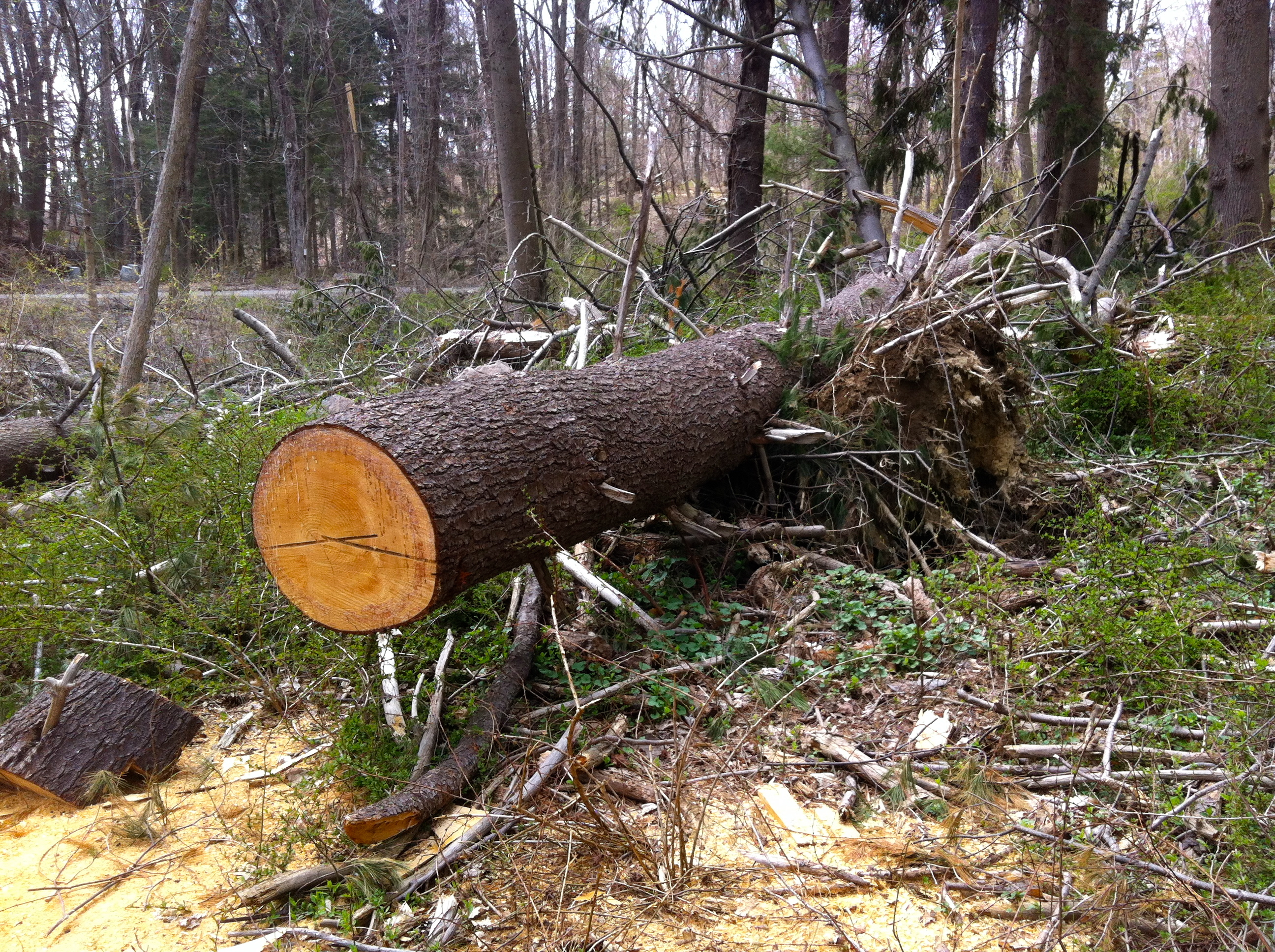
Downed Pine

Still, I’m thinking of the haiku by Kobayashi Issa, who wrote in the early nineteenth century:

The tree will be cut


Not knowing the bird


Makes a nest

The bird will surely build another home in another tree, happily, but here this tree lies, fit only for planks.

In our woods, you now see the moss, there all winter but offering up its soft coat in spring as though you’d never seen it before.

moss

My friend Josefa told me that in Virginia, when spring came, she thought about planting moss in their yard, which was too shady for grass. She was informed by local experts that the ladies of Richmond made their guests put on ballet slippers before treading on their moss. And that they fertilized it with buttermilk. Beautiful images. Yet she was sad in Richmond, even in spring, so sad she had to move back north.

Happy sadness in spring. Poets do it best. (April is National Poetry Month.)

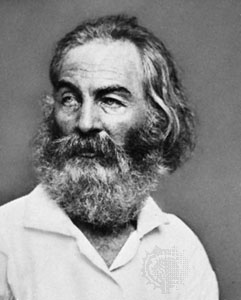
Walt Whitman, an aside in “Song of the Open Road.”

(Still here I carry my old delicious burdens,

I carry them, men and women, I carry them with me wherever I go,

I swear it is impossible for me to get rid of them,

I am fill’d with them; and I will fill them in return.)

whitman

My old delicious burdens. The piercing, pleasurable misery of April. The weight of death, of debts to pay. In the clear sunshine.

April is the cruellest month, breeding

Lilacs out of the dead land, mixing

Memory and desire, stirring

Dull roots with spring rain.
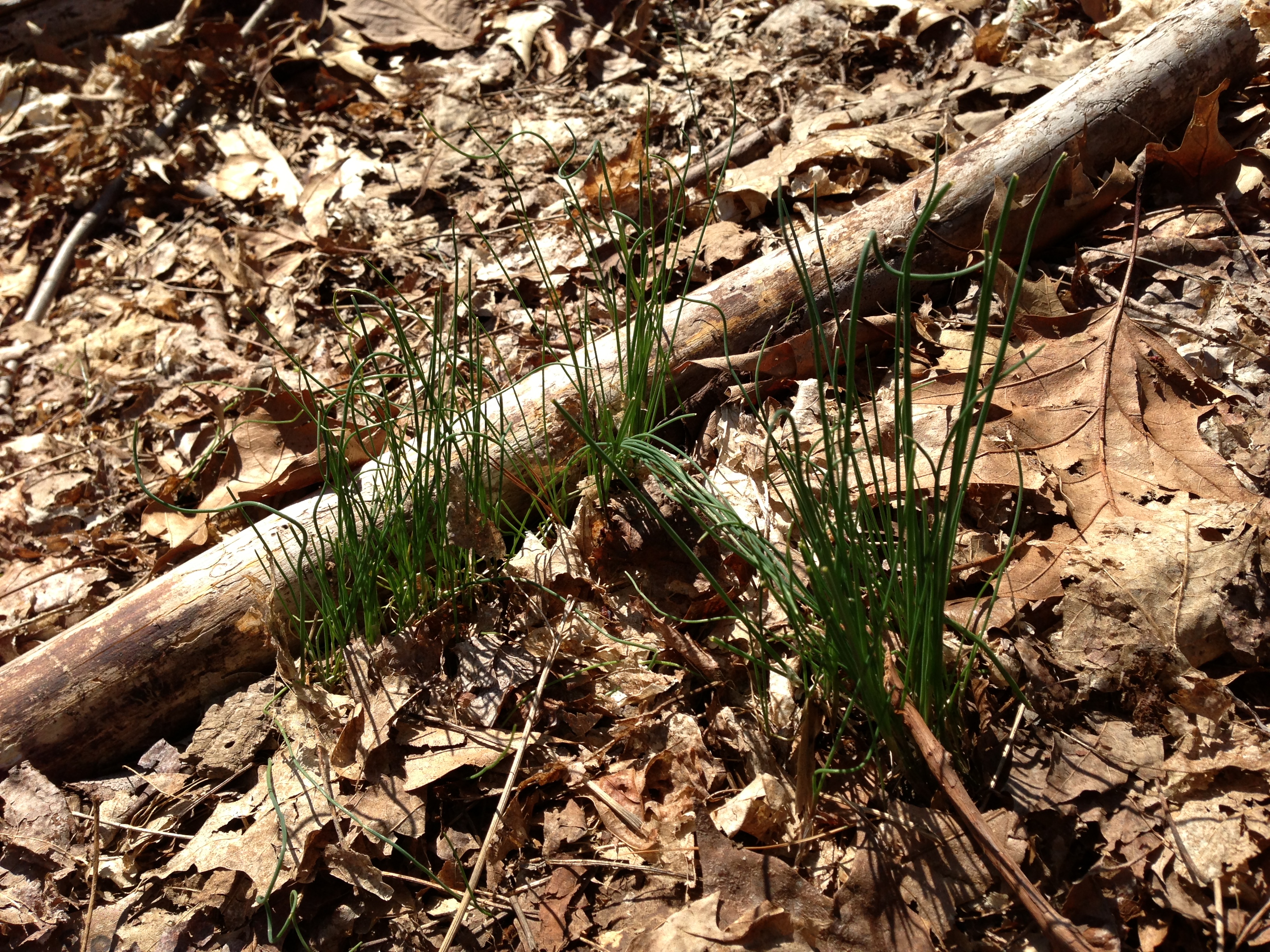
onion grass

In that poem, The Waste Land, T.S. Eliot also talks about how, In the faint moonlight, the grass is singing/Over the tumbled graves. It was a happy day, beginning in the nineteenth century, for families and lovers to take their leave of the gritty city and visit a graveyard.

green-wood-cemetery06

The landscaped acreage offered a garden and an art museum all in one, you could stroll or take a carriage, and whatever sadness you might feel was mitigated by your joy at being outdoors in the air, with the pristine green grass spilling over in the spring sunshine. Green-Wood Cemetery, in Brooklyn, New York, saw half a million visitors a year in the 1860s.
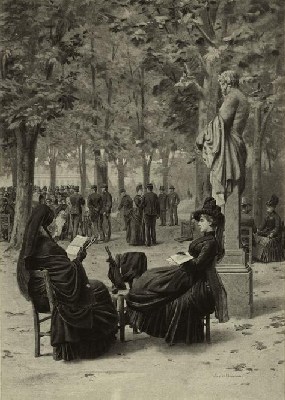
mourning_1888

Matsuo Basho gets at the bittersweet flavor of such a foray.

the whole family

all with white hair and canes

visiting graves

In the woods above the Cabin, we have tiny green leaves emerging out of the dusky litter of winter.

little green

“Little Green,” Joni Mitchell’s saddest song, carries within it happiness as well.

Just a little green

Like the color when the spring is born

There’ll be crocuses to bring to school tomorrow

Just a little green

Like the nights when the Northern lights perform

There’ll be icicles and birthday clothes

And sometimes there’ll be sorrow

The song, written in 1967, talks about a daughter that the 19-year-old singer gave up for adoption.

Child with a child pretending

Weary of lies you are sending home

So you sign all the papers in the family name

You’re sad and you’re sorry, but you’re not ashamed

Little green, have a happy ending

The comic Louis C.K., who manages to be soulful and raunchily hilarious all at once, gave a recent interview in which he talked about how he gets by in this world.

I don’t mind feeling sad. Sadness is a lucky thing to feel. I have the same amount of happy and sad as anyone else. I just don’t mind the sad parts as much; it’s amazing to have those feelings. I think that looking at how random and punishing life can be, it’s a privilege. There’s so much to look at, so much to observe, and there’s a lot of humor in it. I’ve had sad times, I’ve had some hard times, and I have a lot of things to be sad about, but I’m pretty happy right now.

To achieve happy sadness, we could all be more like animals, who so often mix emotions in their expressions. Yes, there are people who say  not-humans lack emotions. But I look at Oliver, the pit-hound in him tuckered out after chasing the white flag of a deer’s tail through the spring brambles. The look across his features.

deer chaser

And I think of Edith Wharton’s journal in 1924.

I am secretly afraid of animals…. I think it is because of the usness in their eyes, with the underlying not-usness which belies it, and is so tragic a reminder of the lost age when we human beings branched off and left them: left them to eternal inarticulateness and slavery. Why? their eyes seem to ask us.

Dogs do sometimes have that look in their faces – if I wasn’t so satisfied now I would cry. With Oliver I could imagine a particular happy sadness. If I caught that deer today I couldn’t chase it tomorrow, so all is well.

The Japanese christened the unique flavor called umami, something we only understand because of L-glutamate receptors on the tongue. Along with sweet, sour, salty and bitter, the names we all learned as we grew up for what goes on in the mouth when we eat, it’s one of the five basic tastes, identified by scientist Kikunae Ikeda in 1908. But it’s almost impossible to describe. It’s savory or “brothy,” found in dried bonito flakes or shitake mushrooms.
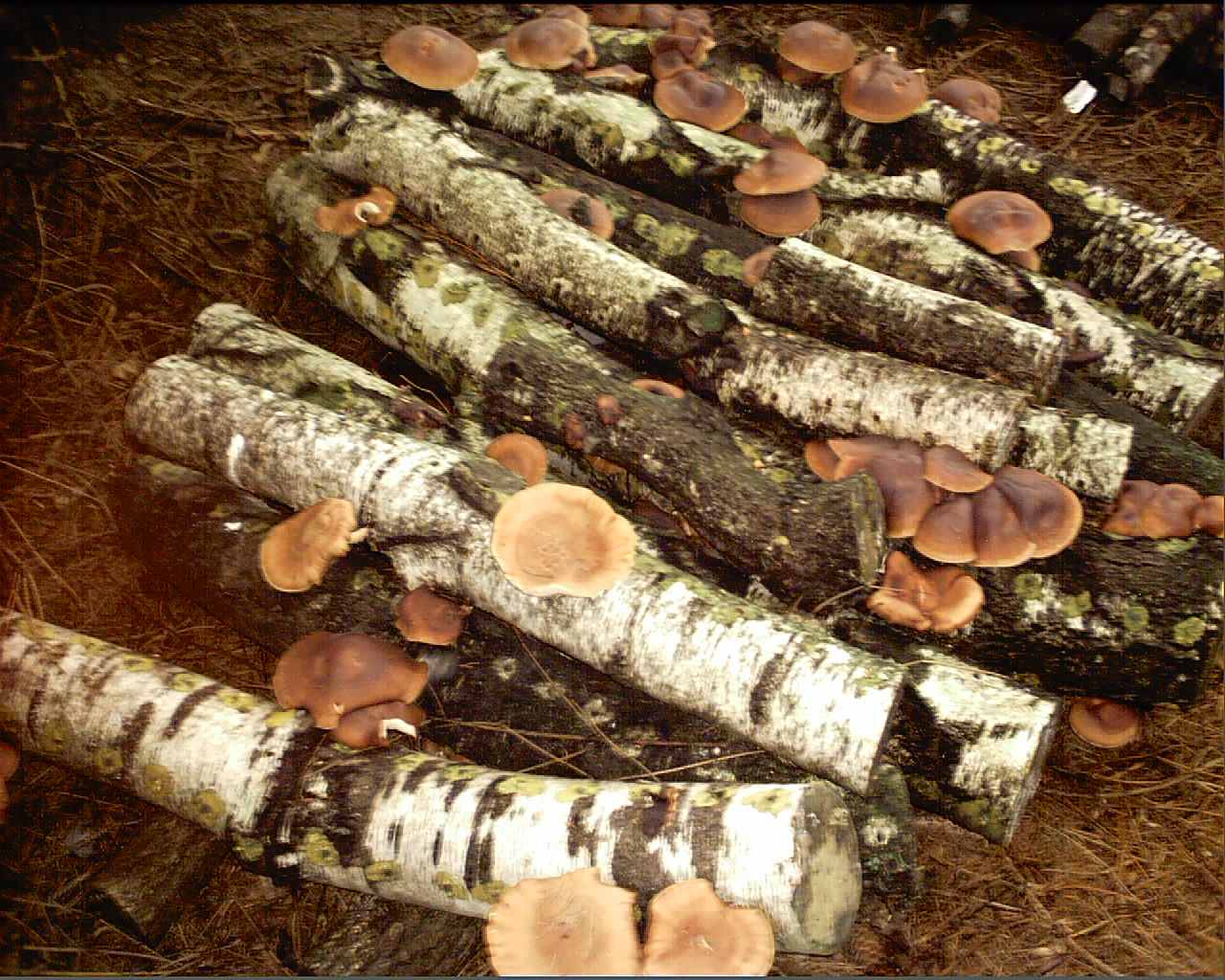
Shiitake Mushrooms

Soy sauce. Parmesan cheese. The thing about umami is that it offers a mixture of sensations that together become pleasurable on the tongue. Intense, saliva-stimulating. A powerful paradox.

Just like spring.

10 Comments

Filed under Dogs, Home, Jean Zimmerman, Nature, Photography, Writers, Writing

The Algorithm of Curvy Passion

Whale bone doll. Greyhound vs. great dane.

dane pup

WTF?

I get a regular report from WordPress, the outfit that hosts this blog, which tells me the search terms used every day to find my site.

I love to read these oddly linked words and imagine the people that typed them into a search box and, even more, wonder about how those phrases got to me. It’s a little of what’s Hecuba to him, or he to Hecuba, as Hamlet says (and you haven’t heard the plaintive, flummoxed quality of these lines unless you’ve experienced Paul Giametti’s turn with Hamlet at Yale Repertory Theater, as I did recently). What is the algorithm? Where do they come from,  these disjointed, nonsensical idioms, and what do they have to do with yours truly?

Curvy passion. Another search that landed someone on my site.

Anna karenina dresses.

Anna Karenina  Race Dress 2


Well, okay, that is conceivably something you’d find in my blog. But:

Alligator tails?

Knock knock. I’m at your door. Do you have anything on your site that can respond to that?

Horse gilding furry porn.

Embroidery on plywood.

ColonialBoston

Kids in grass winter.

They’re interesting, but as far as I know, I haven’t yet filed a post related to these phrases.

Peacock one to one correspondence.

Sorry.

Now, there are some crazy-sounding terms that beat an understandable trail to jeanzimmerman.com.

Wooden cowboy roadside, for instance. Recently, from Arizona, I described a series of handmade wooden signs posted mysteriously along a highway in Scottsdale, one of them featuring, yes, a cowboy. I like hand-painted signs, and this was one of the finest.

Cowboy sign

Sweet old world meaning. Last month, I tried to get at the feeling Lucinda William’s rhapsodic song gave me, when Gil’s mother lay in the cocoon of her dying, and it struck a chord in some readers.

More music. Sweet milk and peaches tuning. I’m no musician, I barely even sing in the car, but I watched a fiddler play country songs from the rural south circa the beginning of the 20th century, and it carried me off in a square dance time machine.

I want to do to you what spring does to the cherry trees. Someone actually typed that in a search box. The achingly erotic verse of Pablo Neruda, who I profiled the other day when word emerged that his remains were being disinterred (to the strains of a string quartet) so the authorities could check if he had been poisoned.

Tiny silver spoons. Well, yes, that would be my mother’s collection of family cutlery.

Prickly pear babies. My quest to find the infant spawn of the saguaro.

desert gardener

Mark Wyse 17 parked cars. I talked about Wyse’s book 17 Parked Cars in my review of Ed Ruscha’s exhibit at the Gagosian Gallery in Manhattan.

Faviken. A rave-up of the brilliant Scandinavian chef/restauranteur Magnus Nilsson, who likes more than anything to cook with lichen.

But perhaps the searches I get most of all have to do with witika or wendigo or native american monsters, which all point to the beast in The Orphanmaster, nine feet tall with putrid green skin, razor-sharp fangs and claws good for slashing.

wendigo

P.S. The witika finds human beings pretty tasty. Apparently there’s a healthy coterie of witika enthusiasts out there, and on this site I have an essay with some fantastic pictures about the monster.

So I’m not seeing any searches for Lindsay Lohan here. Nor anyone leaning in to find Sheryl Sandberg. Nor to find the dope on Louis CK,  though I plan to write something about the genius comic one of these days.

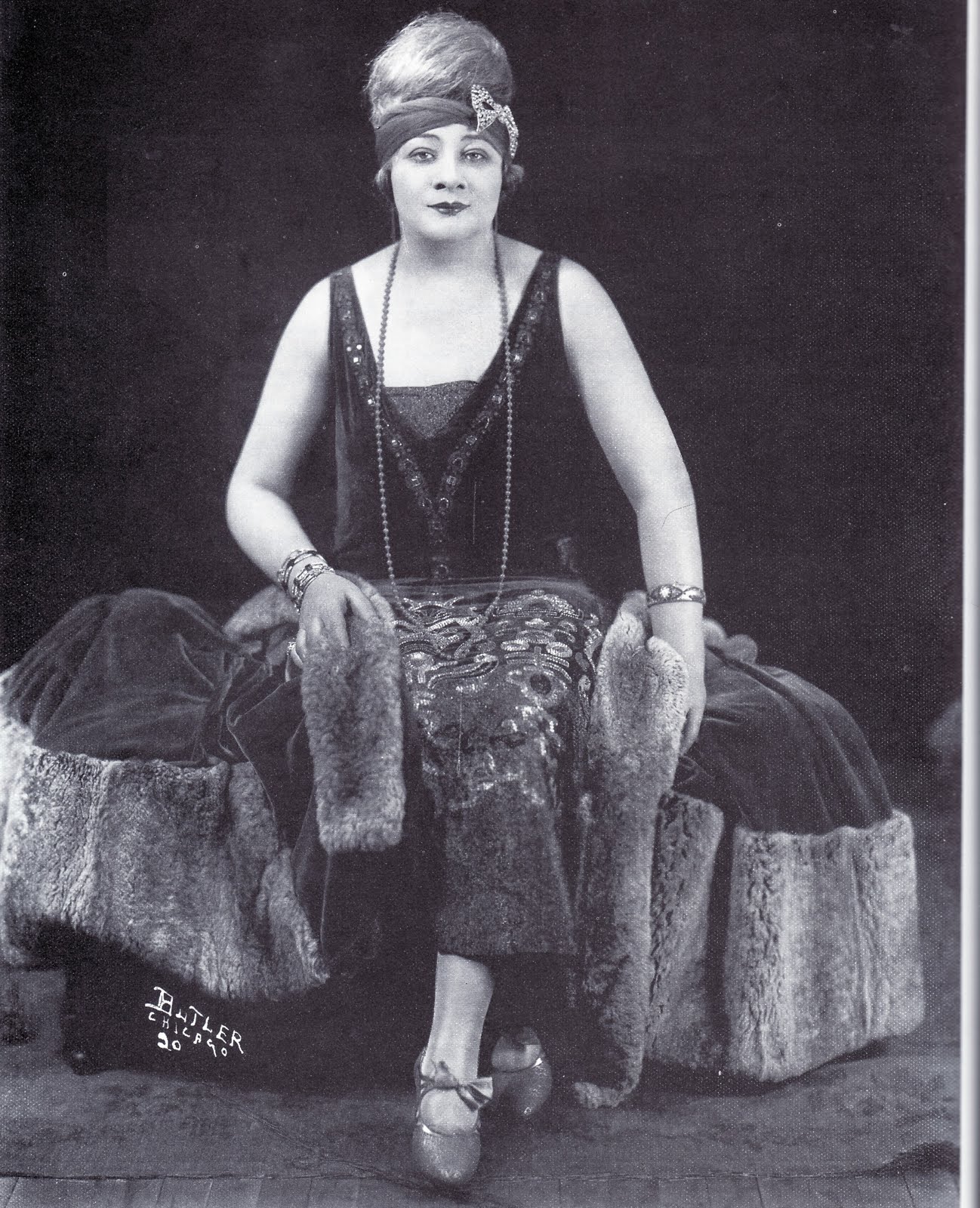
One of these days…Some of these days… Sophie Tucker, my favorite jazz era nightclub singer, known to her fans as The Last of the Red Hot Mamas, did a hit song called “Some of these days.” I wrote about her and Etta James in the same post – two singers who wow me.

sophie-tuckerNow go do some searching, and we’ll see if you circle back my way. And if there’s something you’d like to see me write about that I haven’t already — or even if I have — just leave me a comment and let me know. We aim to please.


Leave a comment

Filed under Art, Cooking, Dogs, Fashion, Fiction, Music, Poetry

Pruning Links

Damn. My cup runneth over with links. My computer wouldn’t let me save another bookmark, it was so stopped up, so I had to prune. Throw out and organize. Floss. Figure out what I really needed to save, what I might need – need being a relative term – and what could be relegated to the virtual trash heap. So I’d have room for new, extra important links!

It was enlightening, actually. In embarking on this task, I found that there were three big categories that had held special importance for me in the past few years.

One was wonderful me and my wonderful work . My log cabin got its due . Even a movie (just a glimmer, but a Hollywood glimmer) had found its way into my bookmark file.

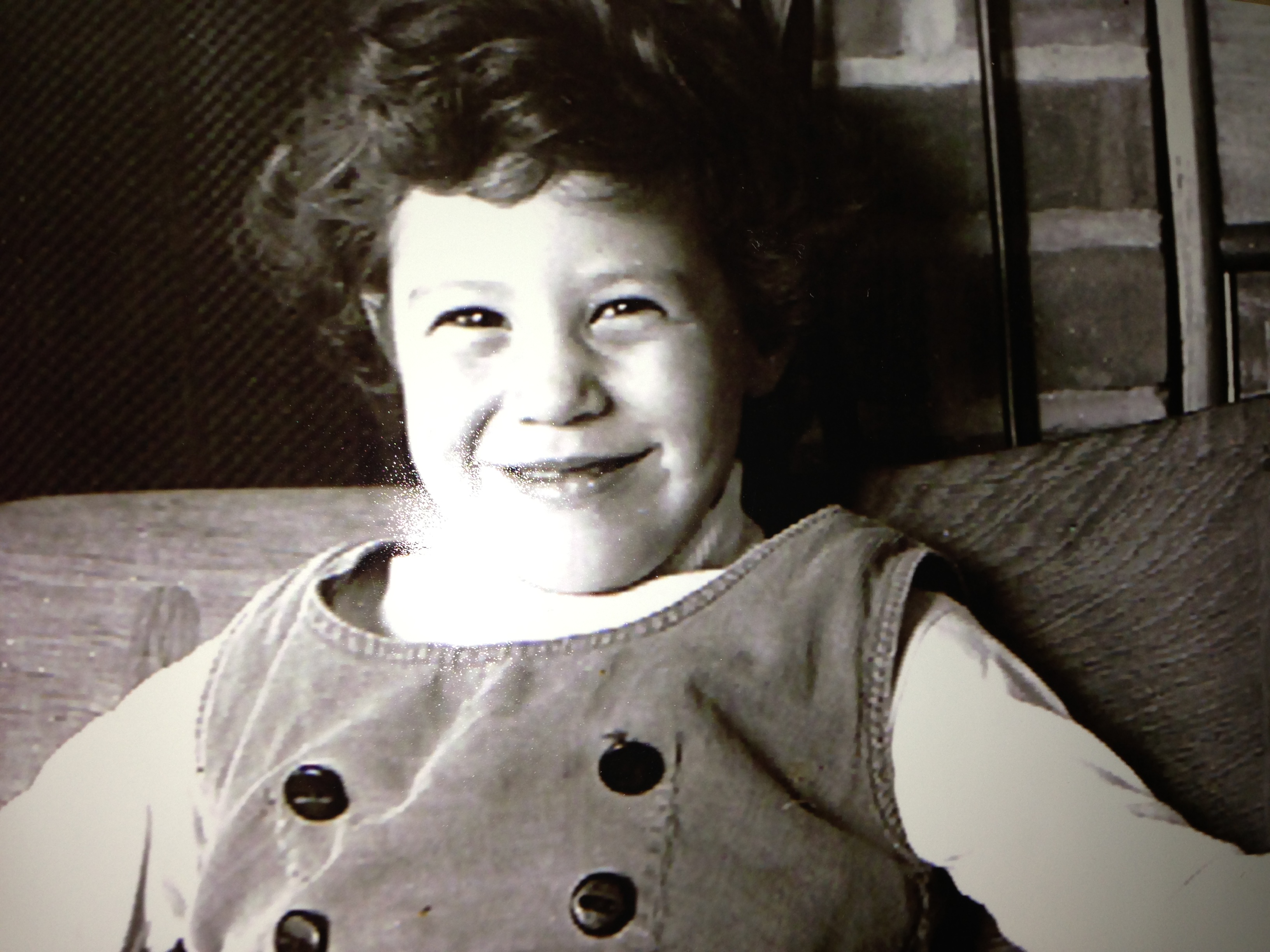
When I was a middle schooler making covers for my little hand-crafted books by binding pages into cardboard and calico with ironed wax paper, I think I would have been amazed that some day someone in the world would be interested in what I had to say. I still remember the smell of the hot wax paper as it was pressed, and the excitement that Miss Henny Penny’s Travels was going to be “published.”

young Jean

Edith Wharton tells a story in her autobiography, A Backward Glance, about going in to a book store in London when her first book, The Greater Inclination, came out in 1899 and asking the manager innocently if there was any new and interesting book she could look at. “In reply Mr. Bain handed me my own little volume, with the remark: ‘This is what everybody in London is talking about just now.’” He had no ideas who he was talking to.

Then, second, I have the category of Gertrude and Sylvia  and Simone   and the rest of the ladies who launch. And more of Stein.

U1889231

I couldn’t believe how many iterations I had of critiques, praise, profiles, pictures of the women who inspired me over the years and still fascinate me.

The third whopper of a group: scarves. Knit patterns for scarves. Especially circle scarves. Yes, cooking and knitting do take up some of my time, I admit it, unintellectual as that might make me. I’m itching to make Paula Deen’s gooey butter cake. But the scarves have it. I made seven this winter. Plus a sock.

knit

Then there is everything else. Before they go into the Older Bookmarks file, I’ll highlight a few that have grabbed my interest along the way. A self audit, as it were. And a little gift to anyone looking for something new to chew up their time.

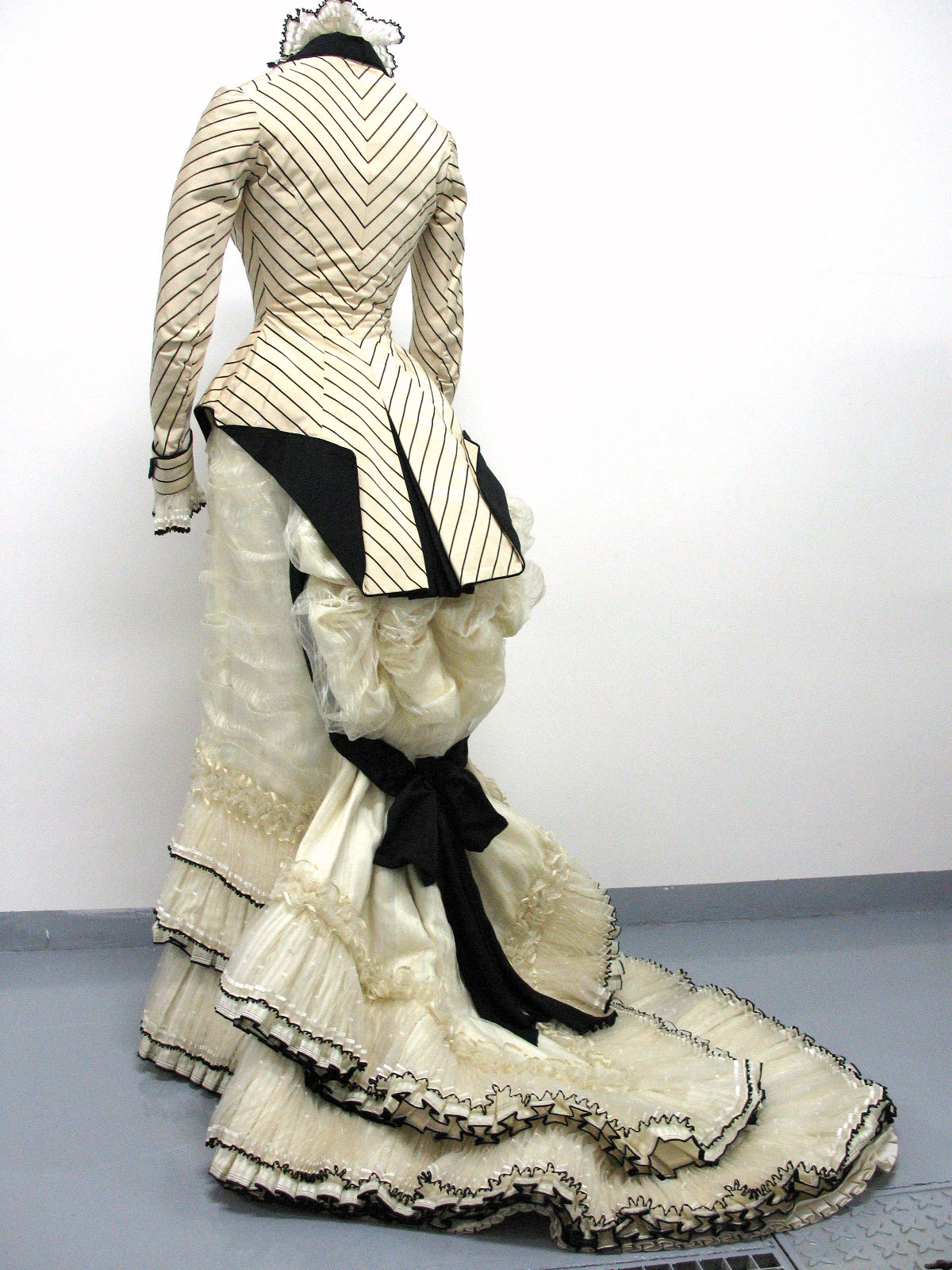
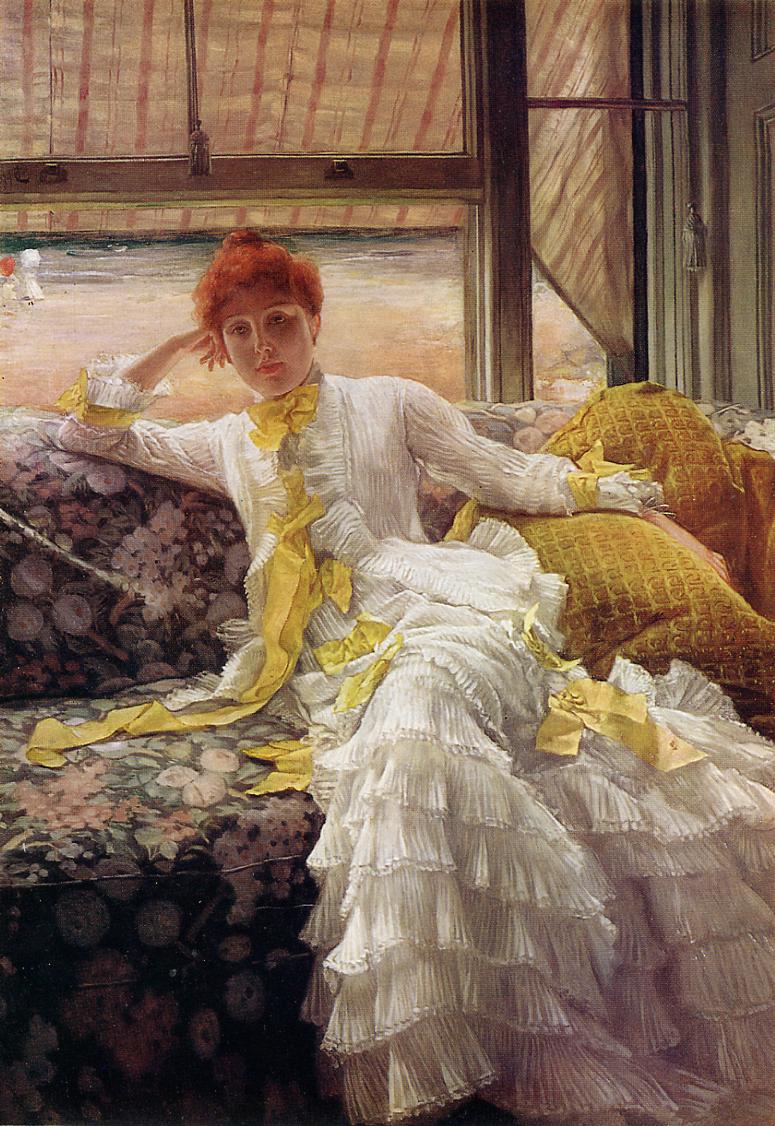
I obviously made a serious trip into Victorian America in recent months. Many times over DanceDressGetting aroundMansions, mansions, mansions. Does my time machine have an exit onto Manhattan’s Fifth Avenue in the 1870s? You bet.

James Tissot 1836-1902 - French Plein Air painter - Tutt'Art@ (8) copy

Even (or especially?) Victorian headless portraits interest me. So much of this nineteenth century arcana found its way into Savage Girl, my new novel that will be published in early 2014, which officially made it work, but it still felt like a guilty pleasure.

More research, this time for The Orphanmaster, unearthed this incredibly absorbing digital redraft of the Castello Plan. You can hover over the first street plan of New York, a drawn-to-scale view of seventeenth century New Amsterdam, and investigate what it was actually like.

I had the idea at one point that we should explore Oliver’s genetic background and see what part of him was actually pit and which part was hound. So I looked into DNA testing for dogs.

Oliver

I wondered what you’d see if you opened the refrigerator door in Bangkok or Jerusalem. I found out at Fridgewatcher.

I always find it useful to keep a library on file in case my disheveled bookshelves won’t yield it up. And so, here they are, minding their own business, various books in their entirety, like George Orwell’s Down and Out in Paris and London, one of my favorites,  and the Diary of Samuel Pepys. And it’s always good to be able to access an exhibit based on Whitman’s Leaves of Grass.

iwhitmw001p1

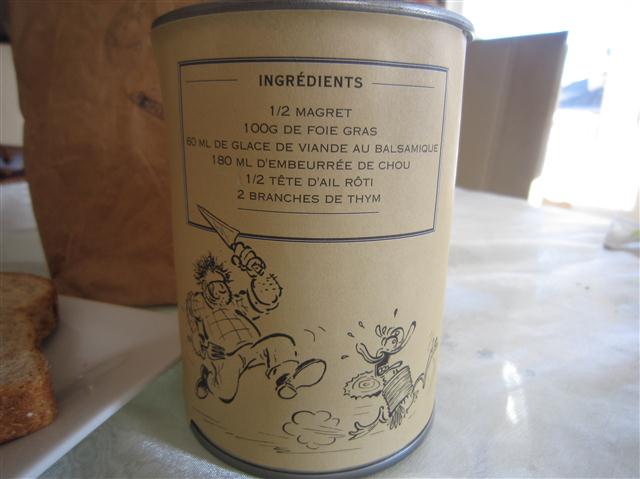
Gil and I ventured to Au Pied de Cochon in Montreal. For a while afterward we didn’t get our cholesterol levels checked. The menu  includes such delicacies as Tarragon Bison Tongue and Foie Gras Poutine (foie gras is their speciality, along with everything pig-related), all of it drenched in butter. It was here that I had the famous “duck in a can,” consisting of a duck breast, a lobe of foie gras, half a head of garlic and some kind of spectacular gravy packed into a metal can, like a soup can, and boiled.

duck in a can

Afterwards, when you’ve been sitting at your table for a while marveling at the number of trendy people there are in Montreal, the waiter opens the can at the table and dumps the whole stew onto your plate. Fabulous.

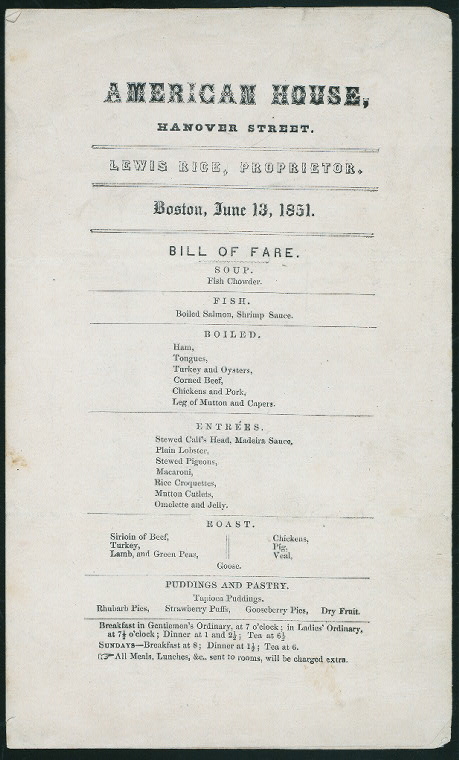
If you like menus as much as I do, you’ll go to The New York Public Library’s historic menu collection.

American House

Something I don’t want to file too far way is The Top Ten Relationship Words That Aren’t Translatable into English, assembled by a serious linguist, and including such gems as Cafuné (Brazilian Portuguese): The act of tenderly running your fingers through someone’s hair.

Probably the most delightful site I’m back-burnering. For now. Or, on the other hand, I think I’ll leave it out for a while in case I want to take it with me as a reference when I next tour the Metropolitan Museum of Art: Nipples at the Met(“updated regularly”).

nipples

All links welcome; leave them in a comment.

4 Comments

Filed under Art, Cooking, Dogs, Fashion, Fiction, History, Home, Jean Zimmerman, Knitting, Poetry, Savage Girl, The Orphanmaster, Writing

A Lion, a Pit-Hound, a Bud

The warmth has hit. The sun pours down. The day reminded me of the scene on a Mexican plate from the early 1800s that I saw recently at the Hispanic Society.

Mexican plate

Except I was sporting a ball cap rather than a parasol and my companion was a pit-hound rather than a lion.

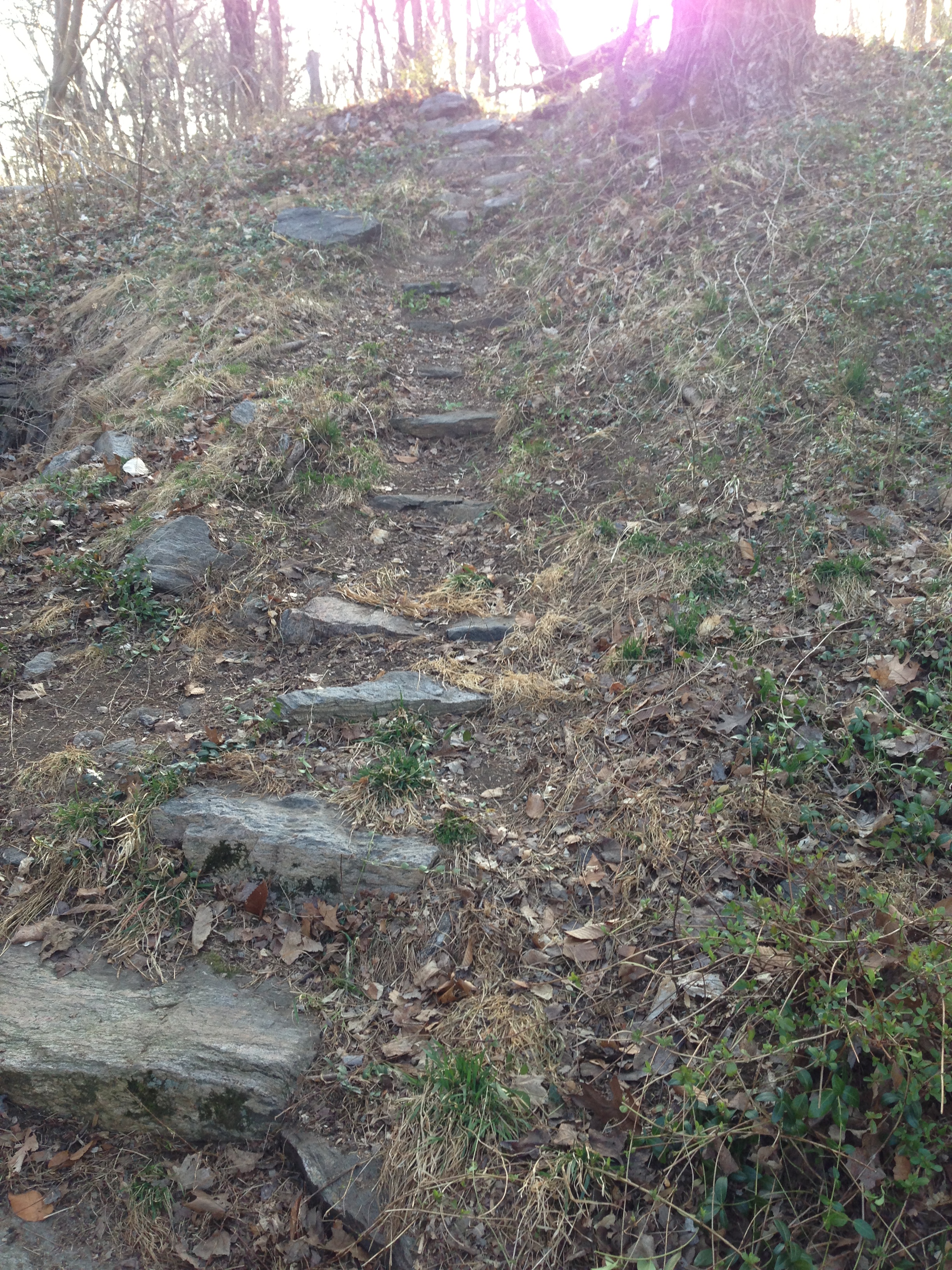
Gil and I took some time outside to rake the pachysandra beds and clear away crumbled leaves from a set of rather magical stone steps that lead to a sunset ridge near the front porch. There’s a wood bench at the top. I plan to colonize it this summer, mint iced tea in one hand, Emily Dickinson in the other.

steps

We sat on the patio late in the day. It faces east, over the marsh. A hawk soared, its breast glinting white. The peepers were even less polite than usual. This spring has been so long to come, but the about-to-bloom magnolia knows when the time is right.

magnolia budJust when you couldn’t wait any longer.


8 Comments

Filed under Art, Dogs, Home, Jean Zimmerman, Nature, Poetry

Minnies Land and Audubon

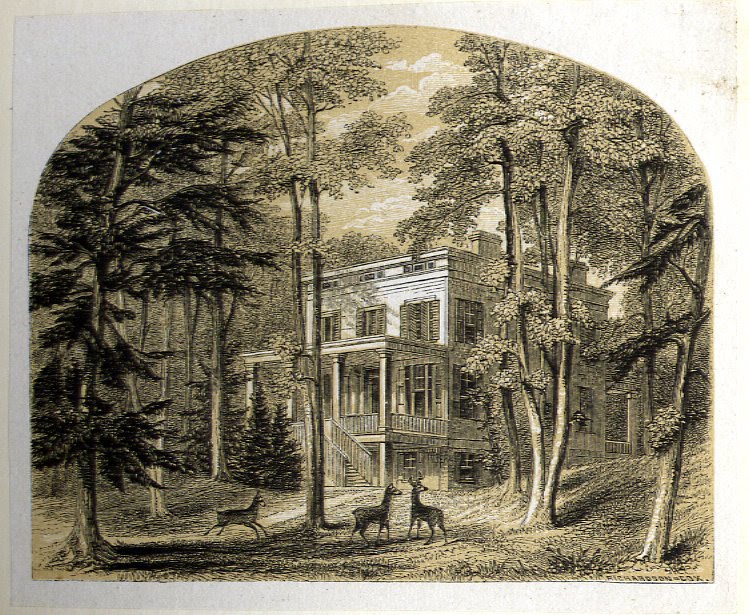
What would John James Audubon have made of the transformation of his Manhattan estate in the years since his death in 1851? He called the 44-acre property Minnies Land in honor of his wife – her name was Lucy, but Minnie was a Scottish endearment, the term for Mama, and it was what he and the couple’s two sons had begun to call her when they lived in Scotland in the 1830s. In 1842,with funds from Birds of America, the Audubons bought the property and built a sprawling house on the Hudson River’s bank, near a lively stream. If there were city streets there then — so far they were only parallel lines on a surveyor’s map — the house would have stood in the vicinity of 157th or 158th.

house

Two piazzas (the then-name for verandas) opened from the gracious two-story structure, which at some point got a mansard roof and a new bay window. It could be that Samuel Morse, a friend of Audubon’s, sent the first telegraph message across the Hudson from a laundry room in the basement. It was a place where things happened, because things were always happening around Audubon.

Aud

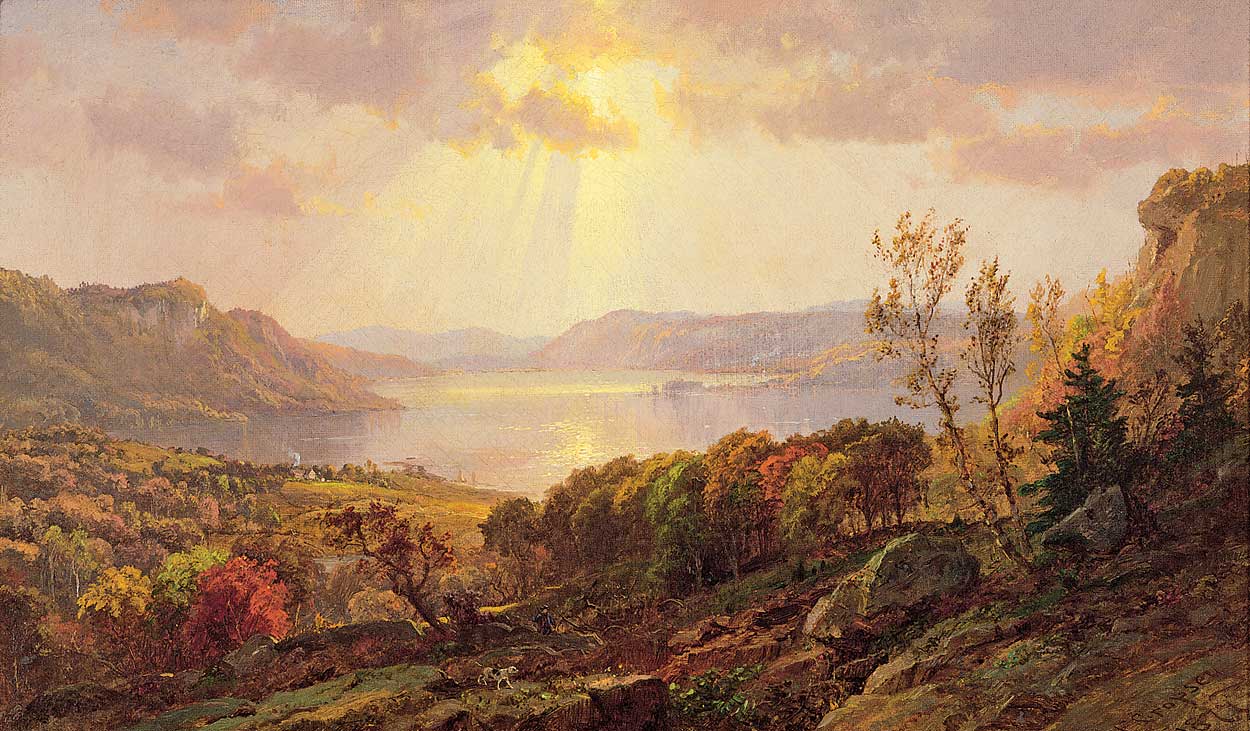
The environment was more like a Cropsey canvas than anything associated with metropolitan New York (the Hudson River School genius painted this one around West Point in 1877). Even then, the city proper stood miles downtown, at the tip of Manhattan. The estate “consisted of forty-four acres, all heavily wooded, and at that time was almost as remote from the city as a lodge in the Catskills,” wrote one historian in 1902.

Cropsey On the Hudson Near West Point 1877 Point

A good place for bird hunting, if you were a man in need of a spectacular looking turkey.

audubon_wild_turkey_large

Not an inch of Minnies Land remains today, but we went looking for clues, snippets of the past in a jostling, randy, determinedly contemporary neighborhood.

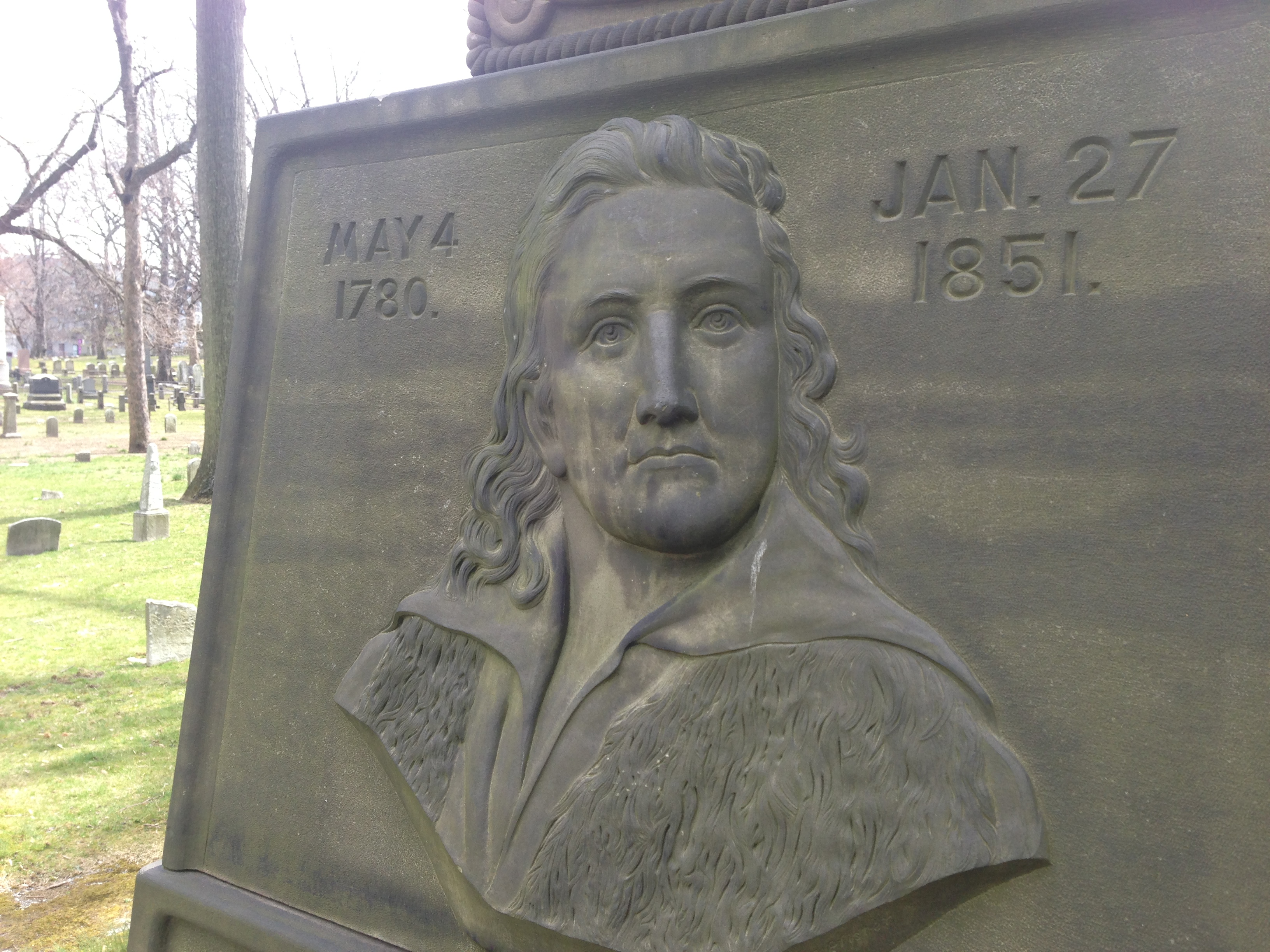
We started with Audubon’s burial site, under a towering local-bluestone obelisk in Trinity Cemetery  at Broadway and 157th Street.

audubon engraving

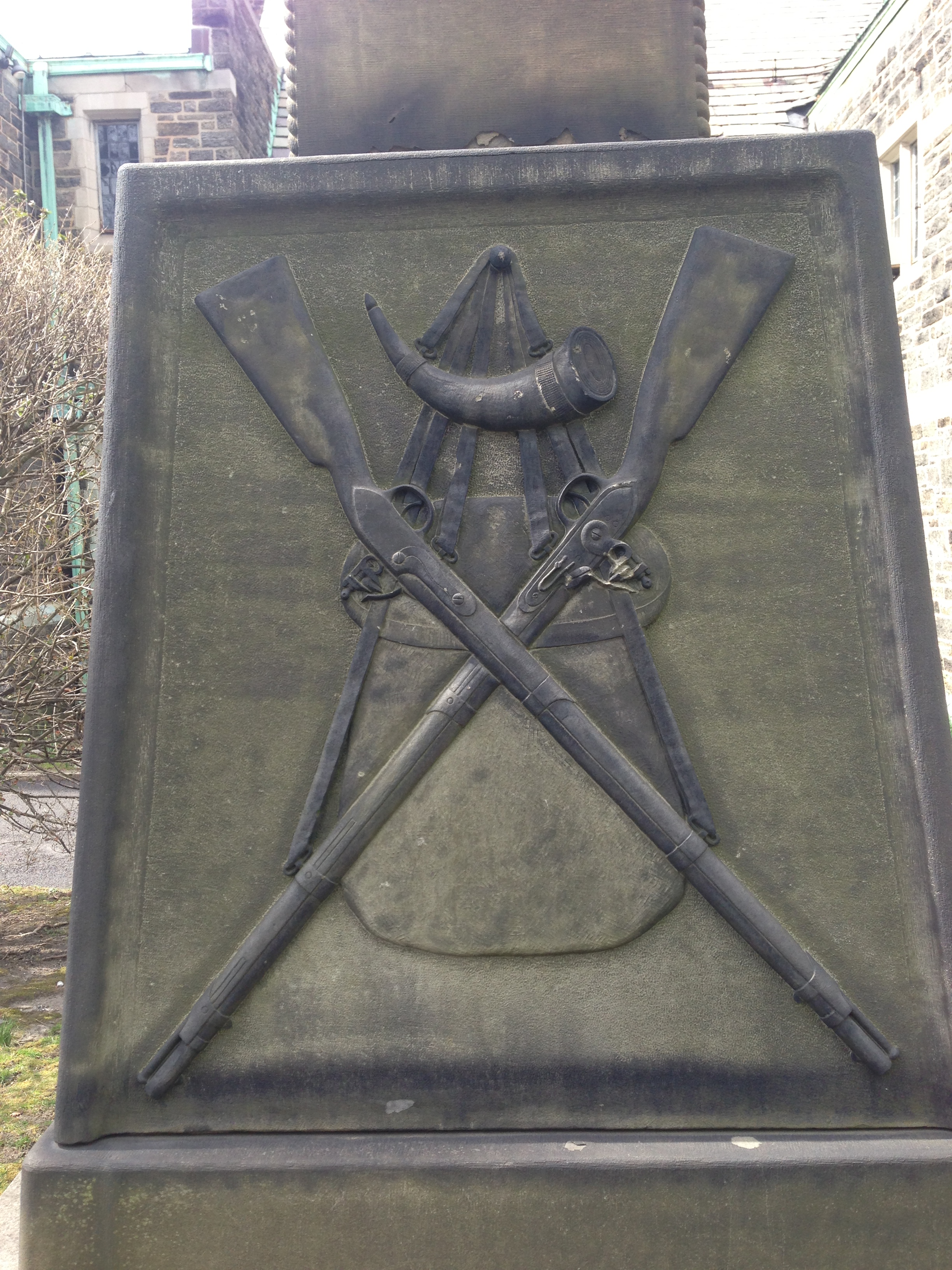
Elaborate carving shows bas relief critters on each side of the piece, land-mammals on one side and creatures of the air on the other. Fittingly, while one plaque shows painterly accessories, a palette and a brush, its twin on the reverse of the monument gives the gritty equipment with which Audubon accomplished his goals.

guns

A few daffodils reared their heads amid the stones for Woodruff, Corbin, Mayer and Smith, so many Smiths, it seemed, all the early New York names. And in another part of the cemetary (bisected when Broadway came through in 1868) lies Charles Dickens’ son, struck down by a heart attack in 1912 when on a lecture tour in the U.S. on the centenary of his father’s work.

The terrain of Trinity cemetary is the one feature in the neighborhood not changed in the nearly two hundred years since Audubon settled his family here. Rough, craggy, sloping steeply down to the Hudson, the graveyard was a favorite destination for Manhattanites, who loved to drive uptown in their carriages to stroll here.

Since 1932 a grand apartment house, 765 Riverside Drive, sits where the Audubon house did, and it is cut off from the river by the Riverside Drive viaduct, which came through in 1911. Then, the house sat some 50 feet below the current street level, on the river bank, and the new highway buried it almost completely.

minniesland eventually

The gracious old house was eventually moved, then demolished.

When her husband died, Lucy and her sons had begun selling off parcels of the estate to make ends meet – there were 14 grandchildren to support – and 10 happy owners became part of a development  known as Audubon Park. Lucy, residing nearby, outlived her husband and her sons.

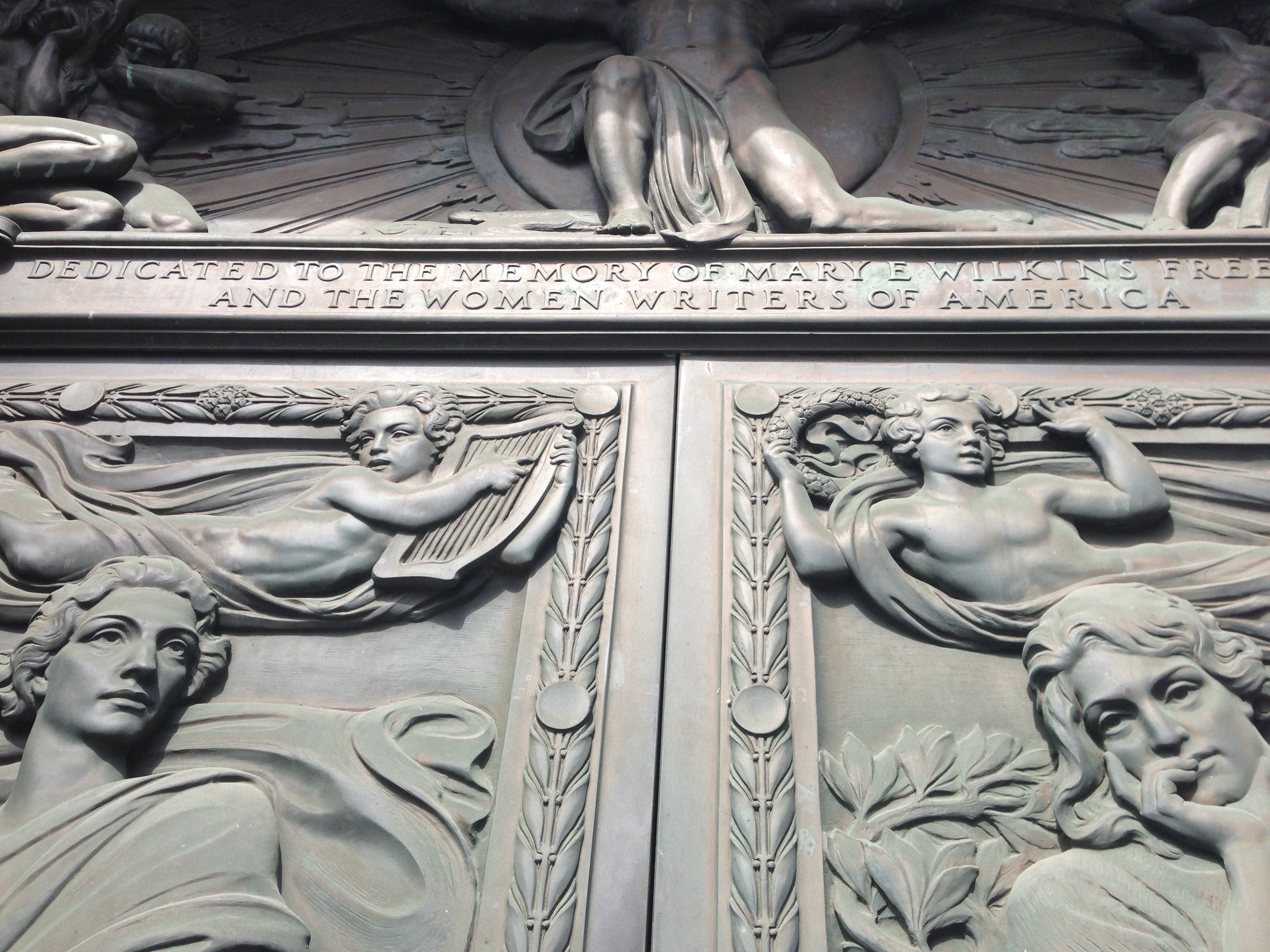
All the grand houses have since been razed, but we wandered around the neighborhood. We discovered the carved bronze back door of the American Academy of Arts and Letters, with its beautifully grave women and its inspiring legend:

women legend

On the next block, the reverse of the building sports more etched mottos. Milton.

A good book is the precious life blood of a master spirit.

And, with no citation but from Edwin Arlington Robinson.

We are Young and We are Friends of Time

I’m in need of a new personal motto and that one seems just fine.

Another legend, one more in keeping with the present spirit of the locale, had been pasted up on the locked doors below: No sidewalk or street barbeques allowed.

Audubon Terrace, a Beaux-Arts complex that houses the American Academy, also is the site of the Hispanic Society of America Museum, seemingly unchanged since it opened in 1908, except for dozens of empty display cases, which will one day soon be filled, hopefully. Still, there are new coats of terra cotta paint to match the gallery’s burnt-sienna floor tiles. Here you can see a sheaf of works by Goya and El Greco and Velasquez, along with curiously beautiful objects. Door knockers dating to 1500.

knocker

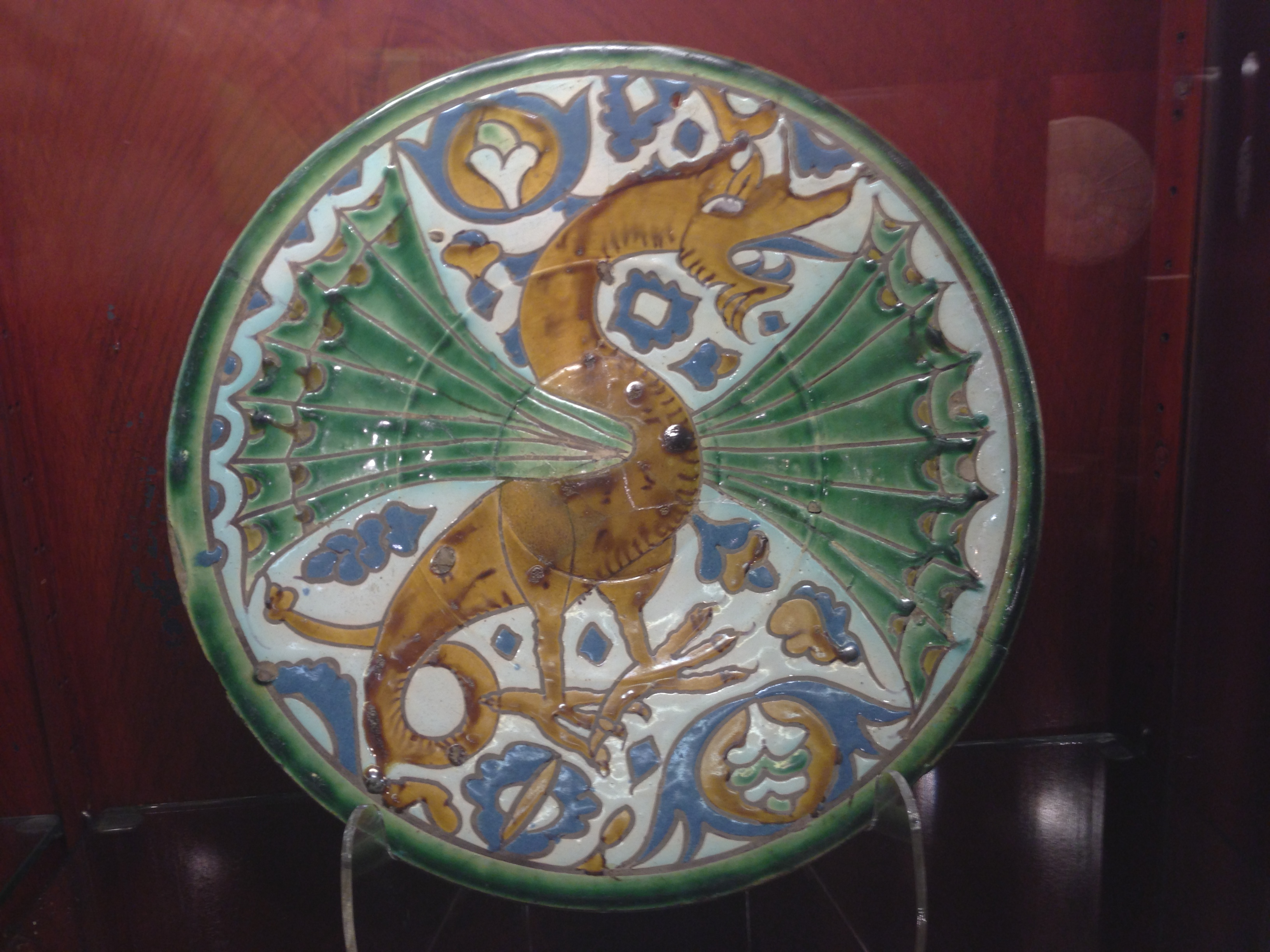
Ceramics, tin-glazed earthenware, of dragons, which were real in the middle ages.

dragon

Tiles, this one depicting one of Oliver’s ancestors.

oliver

Infants embracing skulls, from about 1700.

baby:skull

And a Saint Acisclo so vivid you feel he’ll step out of 1680 and shake your hand.

sad saint

A visit to Minnies Land would not be complete without a visit to the Morris-Jumel mansion, “your house,” as my brother told me, since my book The Women of the House concerned itself in part with Mary Philipse and Roger Morris and the adventure of building their home on a bluff overlooking the Harlem River in 1765.

jumel mansion 1854

Later the home made the perfect headquarters for General Washington, who could stroll around this high perch and be able to sight miles in every direction, planning military campaigns all the while. When Audubon took up residence at Minnies Land, the Morris House was still probably the only place nearby you could go to get a cup of sugar.

Perfectly preserved, the house offers a display of morning-glory wallpaper, velvet, circa 1820, handblocked and flocked to within an inch of its life.

silk walpaper

And there is the famous octagonal drawing room, said to be the first in America, then called a withdrawing room, that I was once lucky enough to give a talk in.

Walking back to the car, we passed by  J & F Meat Market, Iglesia Pentecostal and Flaco’s Pizza, the sidewalks bathed in dog waste. A church lady making her way home in a purple hat. A bold mural. Everything was blowing up in the cold spring wind.

mural

In 1909, The New York Times opined that “within another year there will be no trace of the little garden spot laid out by Audubon about seventy years ago.”

There’s not. And that’s hard to take. But we can still imagine it.

3 Comments

Filed under Art, Dogs, History, Jean Zimmerman

The Fires of March

Meanwhile… back at the Cabin, a guest post from Gil:

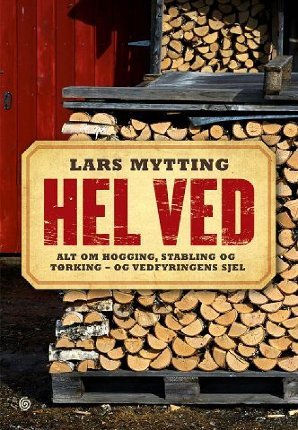
I’m thinking about Lars Mytting, who has a best-seller in Norway with his book, Solid Wood: All About Chopping, Drying and Stacking Wood — and the Soul of Wood-Burning.Hel Ved

Mytting’s book has not yet washed up upon these unenlightened shores, and the closest you can get is Thorsten Duser and Mimi Lipton’s delightful photo-essay, Stacking Wood.

One of the finest pleasures is a fire in the grate in March. With spring weather creeping up outside, the hot hearth has a bittersweet, valedictory air. The flaming chunks of wood crumble and fall apart like calving icebergs. The yellow-blue of the blaze my favorite color I think.

Ollie and Fire

Makes me remember the fires of The Orphanmaster:

They were silent for a long moment, both staring at the embers. There were cities revealed there among the coals, fiery foreign hells, countries of the damned.

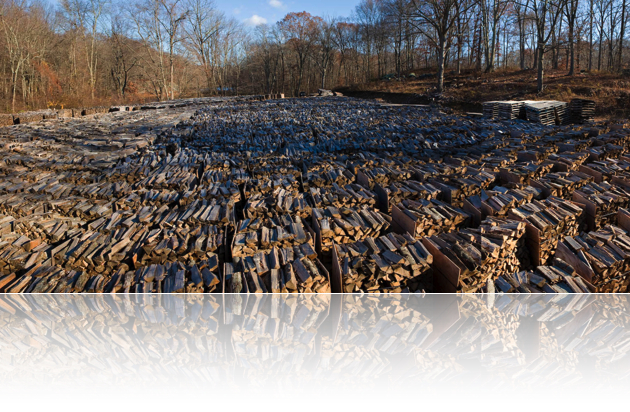
We had fires almost every day over the period The Orphanmaster was written. The winter of 2010-2011, a good year for woodfires. We got our wood from our long-time purveyor, George Hauser Firewood.

Our friend Terry Lautin put us on to Hauser back in 1998 when she lived in Westchester. Later, when we started using him to supply our own fireplace in Hastings-on-Hudson, we discovered that a few of our more discerning friends used Hauser, too. This wasn’t your unseasoned, trash-wood cuttings offered by tree service and landscaping crews. This was year-old ready-to-burn hardwood.

Our pals Neil and Michelle White were talking about burning Hauser wood. I recalled Aline and R. Crumb’s masterful celebration of his tape dispenser, and said that Hauser was the “Better Packages” of firewood. A small, family-owned business that simply got it right, providing a superior product by dint of an uncompromising, old-fashioned way of doing the right thing.
We visited his woodlot, off Route 22 in Putnam County.

Hauser Woodlot

George: “People come out here, they always quote Thoreau to me, I tell them, this wood here, I’ve been warmed up hundreds of times.”

George Hauser died last year, but his business is being carried on by his wife and son-in-law. RIP George Hauser, one of the last of a vanishing breed of American.

5 Comments

Filed under Dogs, Fiction, Home, Photography, Publishing, The Orphanmaster, Writers

Happy Birthday, Edith

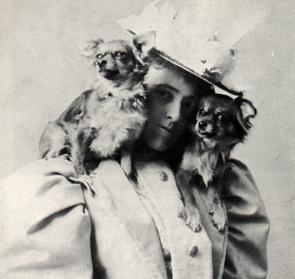
Edith Wharton (1862-1937) at the age of 27, posing with her beloved long-hair chihuahuas, Mimi and Miza.

edith-wharton-and-dogs

Her eye was keen, her sense of the tragic rich. I think she knew fully she was capturing her age and class in a way no one else could.

At the start of A Backward Glance, her memoir, she describes herself:

“It was on a bright day of midwinter, in New York. The little girl who eventually became me, but as yet was neither me nor anybody else in particular, but merely a soft anonymous morsel of humanity — this little girl, who bore my name, was going for a walk with her father. The episode is literally the first thing I can remember about her, and therefore I date the birth of her identity from that day.”

She goes on to describe almost every article of clothing she had on, she with her perfect ability to capture physical details: her bonnet of gathered white satin, “patterned with a pink and green plaid in raised velvet.” It had “thick ruffles of silky blonde lace under the brim in front” and a “gossamer veil of the finest white Shetland wool.” She wore white woolen mittens.

This was the child who would at least skim every volume in her father’s library before she reached the age of seventeen. Poetry drew her:  “Ah, the long music-drunken hours on that library floor, with Isaiah and the Song of Solomon and the Book of Esther, and ‘Modern Painters’, and Augustin Thierry’s Merovingians, and Knight’s ‘Half Hours’, and that rich mine of music, Dana’s ‘Household Book of Poetry.’ Faust, Keats and Shelley guided her to her ambition to be a writer.” Then the gates of the realms of gold swung wide, and from that day to this I don’t believe I was ever again, in my inmost self, wholly lonely or unhappy.

Not that she didn’t have some personal challenges. While she was born into a family of Jones and Rhinelanders and Rensselaers in lap-of-luxury New York (it is her father’s family that is referred to when people say “keeping up with the Joneses”) she suffered over a marriage to mentally unstable Teddy Wharton, whom she eventually divorced. She did not publish her great best-selling novel of manners, The House of Mirth, until 1905 — she was 43. The title came from Ecclesiastes: The heart of the wise is in the house of mourning; but the heart of fools is in the house of mirth. Every word of that book is brilliant sadness.

Wharton describes the impetus for The House of Mirth in A Backward Glance, saying the question was how to make a meaningful story out of fashionable New York. The answer: “a frivolous society can acquire dramatic significance only through what its frivolity destroys. Its tragic implication lies in its power of debasing people and ideas. The answer, in short, was my heroine, Lily Bart.”

A 1918 film of The House of Mirth starred debutante/silent actress Katherine Harris Barrymore (married to John Barrymore). In other words, a high-society young woman who could have been portrayed in the book starred in the movie. How strange and delicious, a dramatic detail worthy of Wharton.

Screen shot 2012-01-20 at 8.59.38 AM

Leave a comment

Filed under Dogs, Fiction, History, Jean Zimmerman, Photography, Writers

The Thaw

Birds on promenade in this wet warm weather: a downy woodpecker and a cardinal side by side on the magnolia this morning, each with their bright red, and a humbler chickadee foraging on the ground.

Yesterday a ring-necked pheasant fluttered across the road in front of the car, its bottle-green collar glowing in the dusk.

Oliver tracks furiously through the woods, camouflaged perfectly against the leaves, bark and black earth.

woods

The deer better take cover.

Oliver in leaves

Leave a comment

Filed under Dogs, Jean Zimmerman, Nature

Update

Gil drove home from Wisconsin over 23 hours (4 for sleep) and crossed the Tappan Zee without getting blown off the bridge.  When you see an empty Interstate highway, he says, you’ve seen the apocalypse. Wisconsin cheese and beer in hand. Out the cabin window, the reeds bowing low in the marsh. A gigantic crash. Oliver bored: what’s the fuss?

7 Comments

Filed under Dogs, Home, Jean Zimmerman, Nature

Storm Update

The pot roast in the oven smells great, Moby Dick online sounds great, and the scarf I’m knitting is now a good seven feet. Oliver is keeping tabs on the mouse, which has crawled out from the bathroom and behind a bookcase. And the blowing outside has only increased a bit. So we’re fine for now.

1 Comment

Filed under Cooking, Dogs, Home, Jean Zimmerman, Knitting

Places of Magic II

The first thing I saw as we hiked out from the Cabin this afternoon was an eight-point buck bounding across the face of the woods, and of course Oliver gave chase. When we reunited at the leaf-carpeted clearing (I saw dug-out hoof indentations in the soft dirt all the way up the hill) the dog was still roving in circles, nose stuck to the ground. He seemed pretty pleased with himself.

After the Chase

In the clearing, a blue jay muscled around from branch to branch around me, showing off. I saw a building foundation down the slope that I’d never seen before, and realized I was standing atop a berm created by a wall of giant boulders.

On this particular dreamy afternoon, it would have seemed almost normal to run into some gargantuan natural apparation, like the Stratosphere Giant of the Redwood National Park in California, 370 feet tall (the Statue of Liberty is 305 feet).

Leave a comment

Filed under Dogs, Home, Jean Zimmerman, Nature

Places of Magic

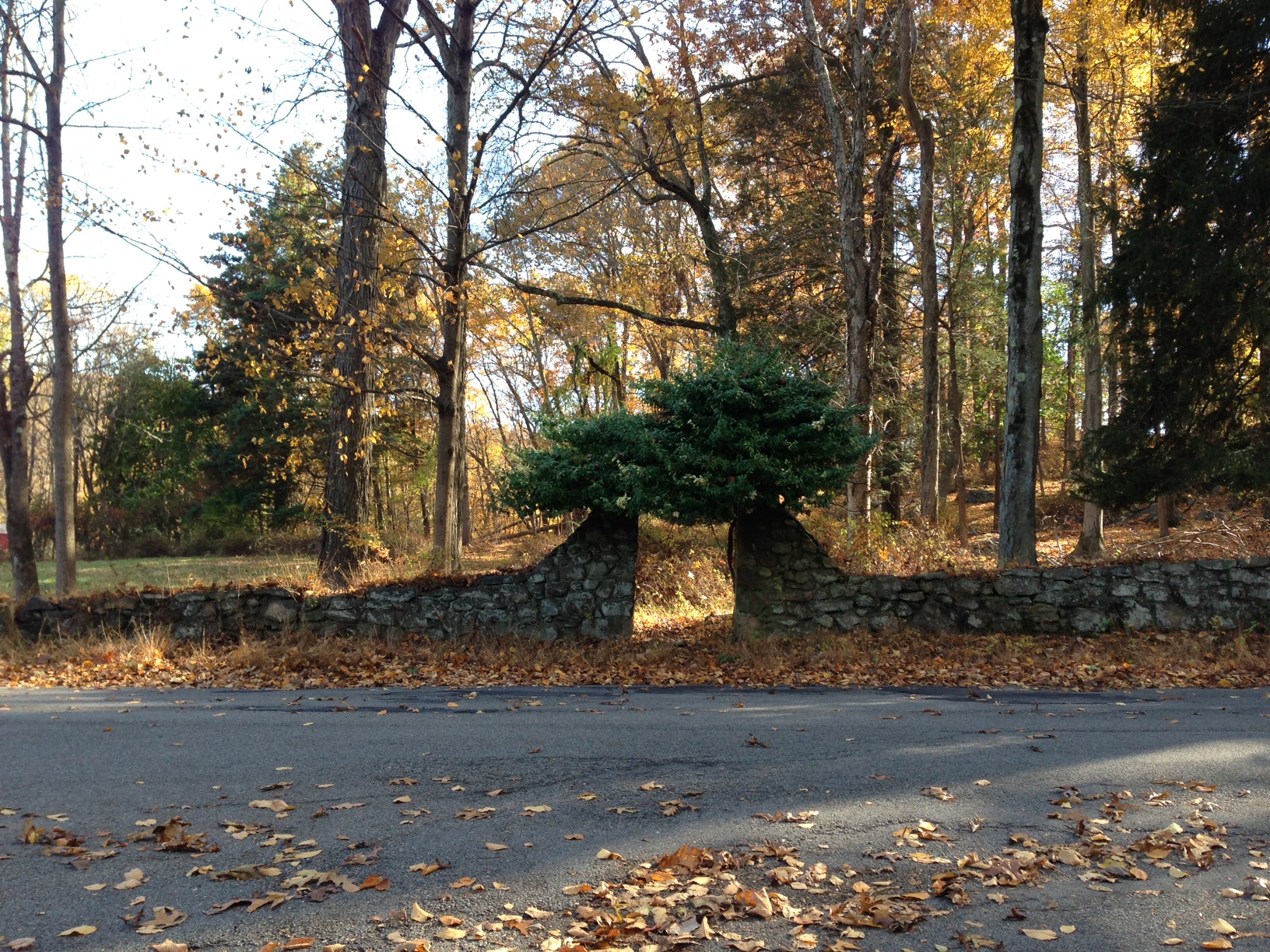
I’ve always liked this vine-topped stone gate about a half mile down Cedar Lane from the Cabin.

So mysterious. It would appear to lead nowhere, but appearances can be deceiving. Maybe it’s the entry to the skeleton dance, or the blue jay coven, or maybe it’s where Oliver goes when he disappears at night, where he hangs with the foxes.
Went to another magical location this afternoon — Oliver led me through the raspberry prickers in the woods to a mystically open hillside with a spread of golden leaves, the glow of autumn hanging in the air — a Brothers Grimm kind of place. Then I pried out of the pit hound’s smiling mouth a small yellowed bone with a knuckle, exactly like the orphan’s digit in The Orphanmaster. The signet ring in the book would have been too much to ask, I guess.

Leave a comment

Filed under Dogs, Home, Jean Zimmerman, Nature

Croissants at Rest

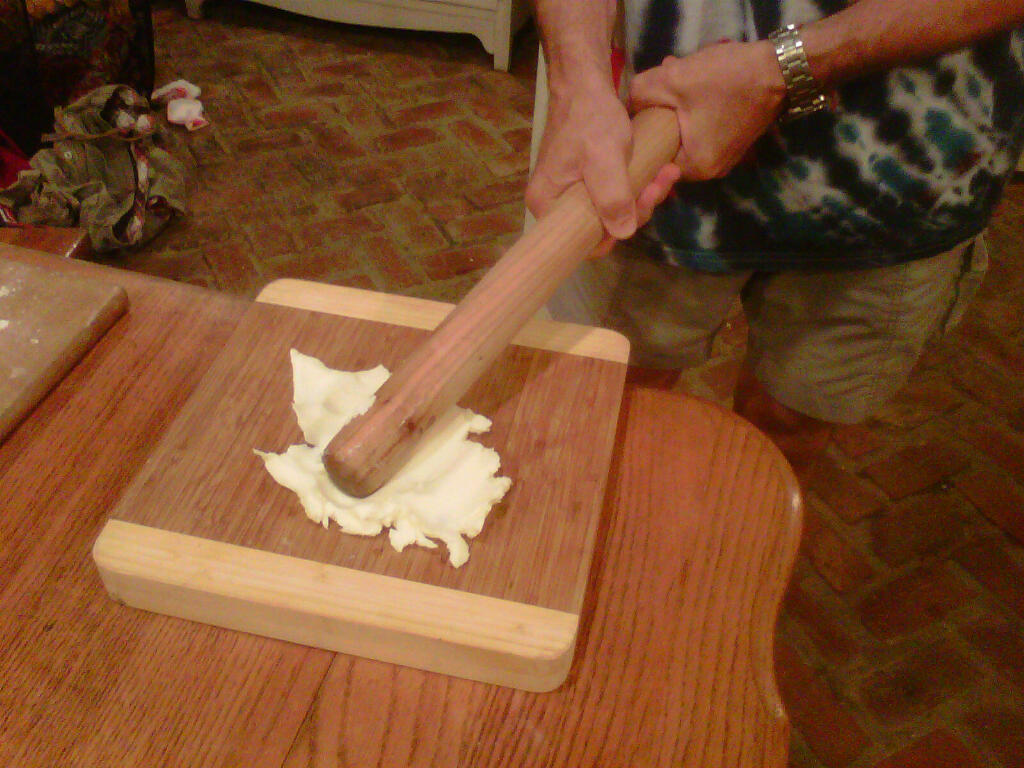
The butter being whacked first thing this morning, as per Julia Child’s intricate instructions, with an attentive audience.

After the dough is done “resting” a few more times, we undertake the following steps with military precision.

We don’t have the specialized cutter Child prescribes (it looks an awful lot like a mysterious wedding gift we saw Celeste Holm scrutinize  in High Society last night) , so we might have to use an apple corer or a cheese grater. We should be done six hours from now.

In the meantime I’m going out to the garden to admire the morning glories and try to make myself weed.

Leave a comment

Filed under Cooking, Dogs, Home, Jean Zimmerman

The Bafflement of Animals

I’ve always wondered what goes on in Oliver’s head when I look into his pit-hound eyes.

Maybe this is the answer. I heard Jonathan Schwartz read these lines on his Sunday show… they’re from Edith Wharton’s journal in 1924.

”I am secretly afraid of animals…. I think it is because of the usness in their eyes, with the underlying not-usness which belies it, and is so tragic a reminder of the lost age when we human beings branched off and left them: left them to eternal inarticulateness and slavery. Why? their eyes seem to ask us.”

Leave a comment

Filed under Dogs, Jean Zimmerman, Nature

Homecoming

Driving east on I-90, a change after yesterday’s guinea chicks toddling along the pasture edge after their mother. But return home to Cabinworld we must. Gil craves his writing desk, I want my own bed and down time after the last, Midwestern leg of the book tour, Maud to trade her tractor and farm boots for anthro texts and NYC stilettos, Oliver to return to his secret places In the cedar grove above the marsh. It’s been a busy-sweet season, now, as always in Fall, renewal comes with the crisp air.

Leave a comment

Filed under Dogs, Home, Jean Zimmerman