Category Archives: Culture

The Dressmaker’s Studio

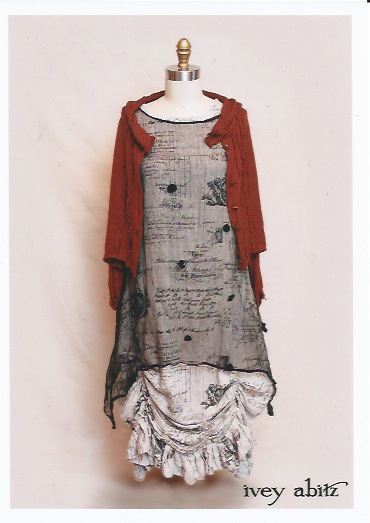
I pay a visit to the dressmaker. Not just any dressmaker. A time machine artist. A bespoke 21st century fashion designer with the soul of a Victorian seamstress. Cynthia Ivey Abitz is her name, and the clothes she designs are magical.

Gil knew I wanted one of her garments, a sweeping, floating coat called the Hambledon duster. He knew because I begged for one, having been tipped off to Ivey Abitz’s existence by an artistic friend. He had no choice, he gave me a gift certificate for Christmas, and I saved up the getting of it like a stocking candy that was too good to eat right away.

ivey abitz dress 1

I decided to visit the Ivey Abitz studio, which she keeps on a cross street in the shadow of St. John the Divine, just above Manhattan’s Central Park. I wanted to feel the leather, as they say in the car-selling business, before deciding on the fabric of my coat. For every one of the hundreds of designs available, the client chooses the material.

swatches

A fluffy quartet of small cats and dogs share the cozy, sun-filled place, which is crowded with the eccentrically beautiful clothing that has earned her a reputation among the eccentrically beautiful. “Antique inspired garments relevant for everyday modern life,” is how Ivey Abitz describes her designs. I would say they have a patina you can’t find on the Macy’s sales rack, where I am usually  inclined to find my wardrobe.

On the Ivey Abitz web site there is a more elaborate manifesto: The collection “gives a nod to the past and present… It’s anti-generic garb. It’s an aesthetic. It embraces certain classic and vintage design elements and gives them life in the present. It’s a celebration of life by getting dressed in something rare and special every day. It’s a state of mind. It’s regalia for everyday life.”
ivey abitz dress 2

Cynthia, Cynthia, you had me at “nod to the past and present.”

On my visit, the designer bustles around, smoothing, fluffing, brushing away loose threads. I will come home and find loose threads all over me. The hazards of visiting the dressmaker, poor me.
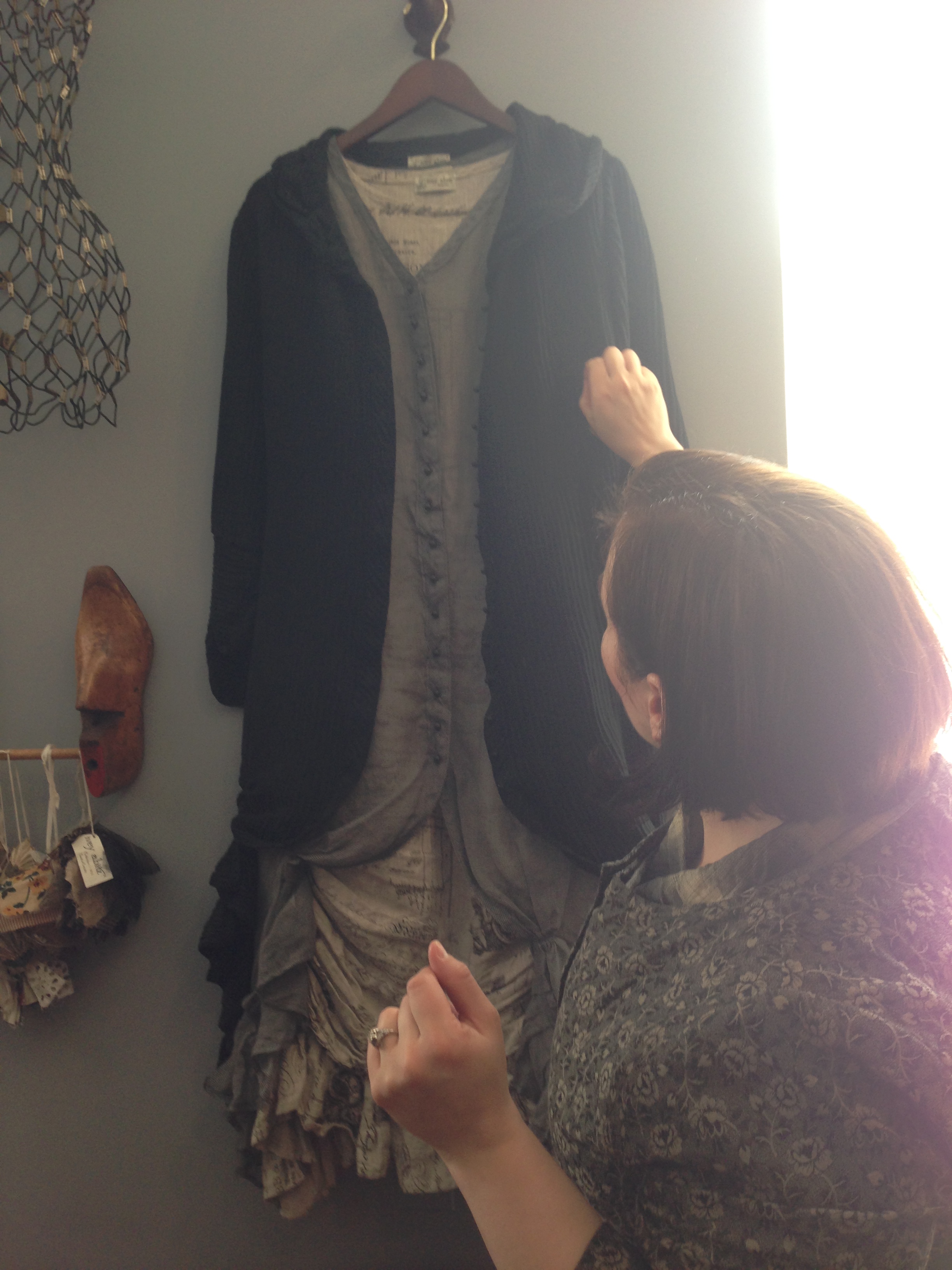
Cyn w frock

How did she arrive at this unique aesthetic? Ivey Abitz remembers a family friend’s collection of antique clothing she happened to see when she was a kid of around eight, dressed in her summer attire of shorts and tee shirt, and saying to herself, Why doesn’t everybody dress like that? She grew up in Michigan farm country and spent her summers on Lake Huron, where she still has a cottage with her husband Josh Ivey Abitz, her partner in the business.
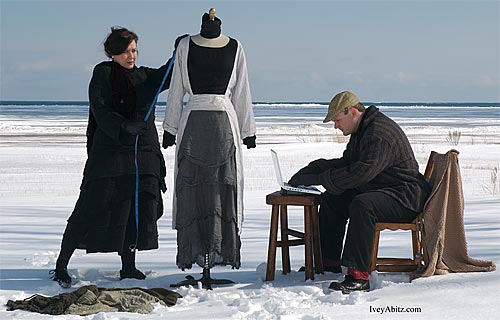
Cynthia and Joshua

The two partnered as magazine photographers before they went into fashion but the outfits she designed and wore to shoots attracted more attention than the pictures. The couple have been coming to New York since 2001, and moved to the city full-time in 2008 to be closer to their beloved seamstresses and fabric makers.

Pretty pretty pretty. Everything here is pretty. A pretty way of displaying fabric swatches.
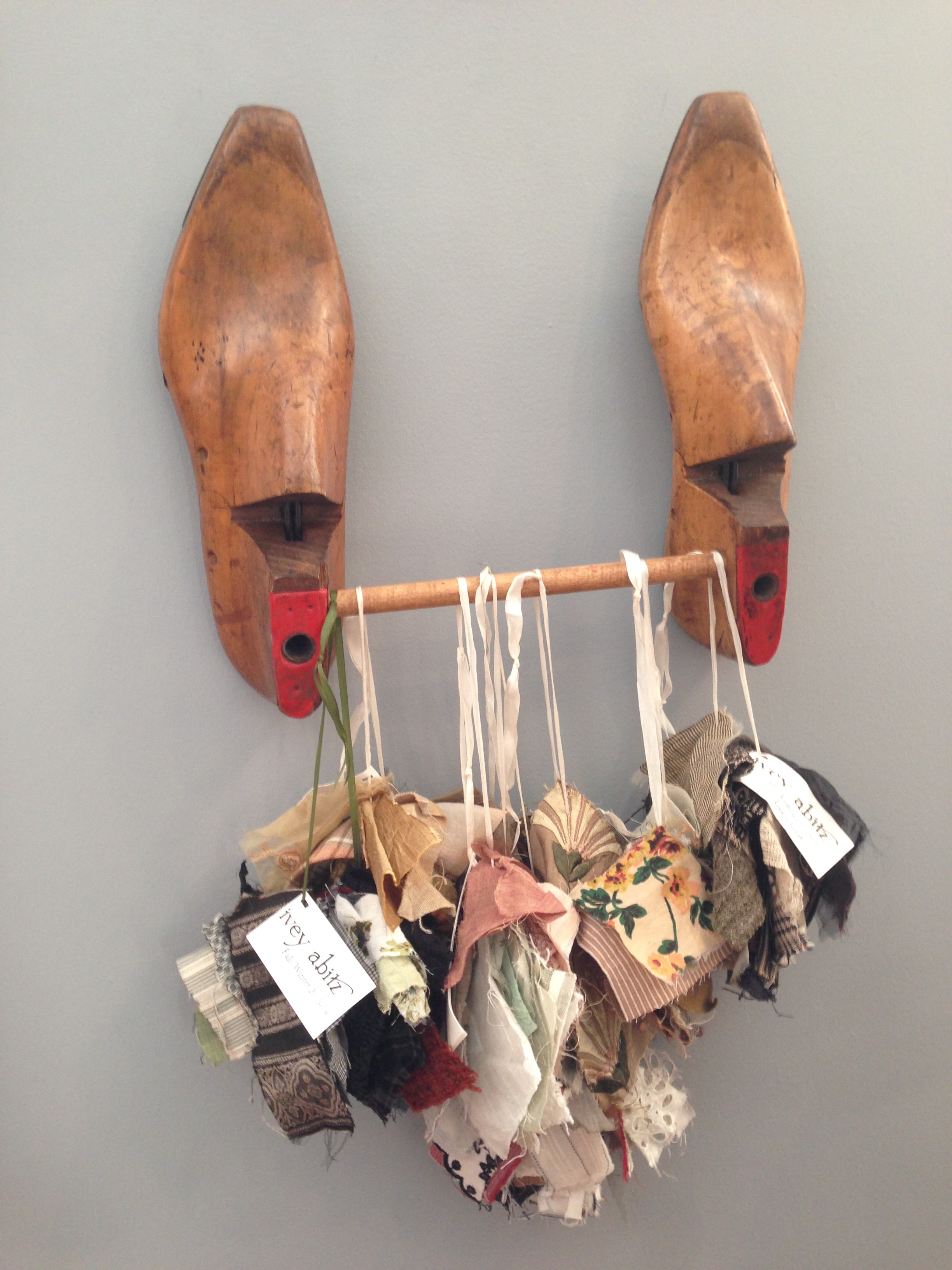
wood shoes

Yellow checks on a dress – we call them frocks here, though — that seem so simple yet are so lovely.
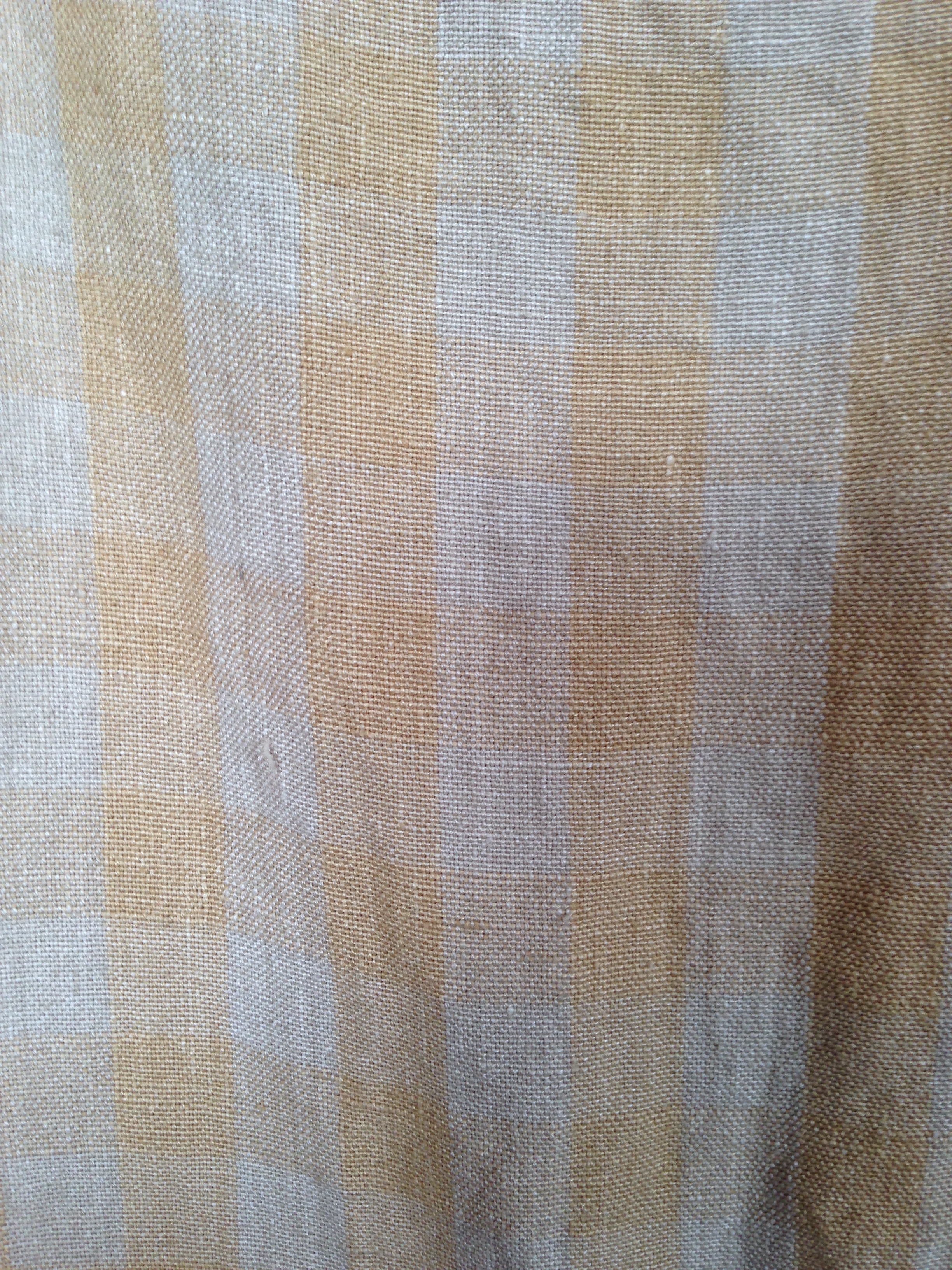
plaid

Wouldn’t it be pretty to think so? floats into my mind, the sad last line of Hemingway’s The Sun Also Rises. Yes, well, what is the matter with pretty thinking? Here in the dressmaker’s studio are silken coats that make you want to go up and nestle your face in them.

beaut shirt

The garments come with stories. A shirt I am infatuated with, featuring a delicate flutter about its raw edges, was inspired by Ivey Abitz’s grandmother, who encouraged her to be a dreamer. Another piece took its inspiration from a favorite childhood dog.

Everything is hand tailored and in some cases is handwoven. Ivey Abitz shows me a jacket fresh in from the tailor, not yet blocked, made of a deep rust-colored hand-loomed wool thread. Luscious.

When I ask her if she has a favorite garment she gently rebuffs me, saying that would be like choosing a favorite child. What she does suggest is that when people get to mix and match the designs and fabrics they prefer, they fall in love with their clothes. “They garden, play with children and grandchildren, go to the symphony, sleep in them… everything,” the dressmaker tells me.

I know that when I put on my duster of black and white checked taffeta, I’m never going to take it off.
8 Comments

Filed under Art, Culture, Fashion, History, Home, Jean Zimmerman, Photography

Wild Music for a Savage Girl

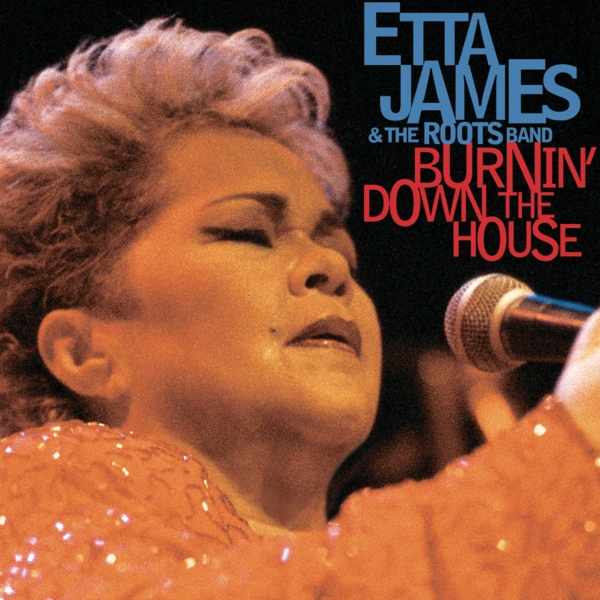
What wild child anthem gets your juices flowing? Curtis Mayfield’s Little Child Running Wild? Wild Thing by the Troggs? Or perhaps an oldie like Bessie Smith’s I’m Wild About that Thing? My personal favorite:  Born to Be Wild as rendered by the immortal Etta James.

etta

Whatever your taste, you can get a bunch of hits in one place when you check out the Spotify playlist I’ve put together with the help of Viking for  Savage Girl’s release in… 11 days (really? is that possible?).

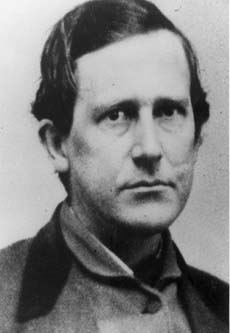
Of course, these selections all appeal to our contemporary taste and would probably appall the characters in Savage Girl, who would have been more entertained by music that was quite different in a pre-Victrola, pre-modern age. To enjoy popular music in the late nineteenth century people might sing around the piano in their homes, enjoying such numbers as My Grandfather’s Clock (1876), Clementine (1863), or Home on the Range (1873). They would also enjoy some of the great composer Stephen Foster’s work, tunes such as Beautiful Dreamer (1864) or Jeannie With the Light Brown Hair (1854), which were popular throughout the second half of the 1800s.

foster1

If they attended a ball, they would in all likelihood waltz – the most popular dance step of the nineteenth century — to compositions by Johann Strauss, Jr, who wrote the famous Blue Danube among over 400 waltzes.

I don’t think you’ll ever waltz to the Troggs. But you can try. Just click on my Spotify playlist.

3 Comments

Filed under Culture, Dance, History, Home, Jean Zimmerman, Music, Publishing, Savage Girl, Writers, Writing

Parisian Time Machine

Here is an amazing story that concerns the Nazi invasion of Paris, a fleeing woman and the apartment she left behind. Not opened for 70 years, when the door was cracked it revealed a person and a style of life in a time capsule you have to see to believe. I think I’ll just hand over the link and let you do the rest.

time-capsule-living-room

3 Comments

Filed under Art, Culture, History, Home, Jean Zimmerman

Savage Girl Events-Spring 2014

This spring I am looking forward to speaking about Savage Girl at various venues. Here are the firm dates so far. Further details to come closer to the date.

When I talk about Savage Girl I’ll likely show some pictures in a powerpoint to give the context for the novel, as well as talk and read from the book. It should be enjoyable! I hope that some of you will be able to attend one of these events.

I’ll continually update my speaking engagements on the sidebar to the right-hand side of this site.

If you live someplace not on my schedule but you’d like me to visit, please drop me a comment here or on my Facebook page, and I’ll get right back to you. (While you’re at it, please like my FB page!)

Savage Girl Events-Spring 2014

March 14   The Mark Twain House and Museum, Hartford, CT

March 26   Ossining Public Library, Ossining, NY

April 3   The Poisoned Pen, Scottsdale, AZ

April 16   The National Arts Club, NY, NY

May 24   Musehouse: A Center for the Literary Arts, Philadelphia, PA

June 21   Millbrook Literary Festival, Millbrook, NY

2 Comments

Filed under Culture, Fiction, Jean Zimmerman, Publishing, Savage Girl, Writers, Writing

Savage Girl Book Club Kit

My book club has an interestingly intellectual way of approaching literature — with lots of research materials, dozens of post-it notes on the book pages, and nary a glass of Chardonnay in sight. However, I have not seen them use information direct from the publisher. It can be really useful in directing a discussion and, in the case of the materials for Savage Girl, extraordinary beautiful (thanks to the  brilliance of the Viking design team). We also offer recipes for cocktails in the Gilded Age spirit and a terrific playlist that you can access on Spotify. And of course I answered some questions. So check out Viking’s on-line book club kit — whether or not you have a reading group of your own. Or maybe you’ll be inspired to start one up. (Warning: there might be spoilers in some of the questions.)

Leave a comment

Filed under Culture, Jean Zimmerman, Publishing, Savage Girl, Writers, Writing

Charles Marville’s Old Paris

It was a day of Old Paris in New York. The Metropolitan Museum had an exhibit, Charles Marville: Photographer of Paris, showcasing a Frenchman who was one of the first people to turn a photographic lens on the world, starting in the 1850s. I think the word “evocative” might have been coined to describe Marville’s glass-negative images, with their rain-wet cobblestones and ancient, crumbling Parisian walls. “When good Americans die,” said Oscar Wilde, “they go to Paris.” I was feeling pretty good.

12. Rue de Constantine  1866

I prepared myself to see the show with a cup of chicken velouté, properly French and exactly creamy enough. Julia Child’s pronouncement about velouté in The Way to Cook goes as follows: “Soups may be creamed in a number of ways, including great lashings of cream itself – an ambrosial item I shall soft-pedal here in favor of the velouté system
 with its flour-butter roux… which looks, feels, and tastes for all the world like a creamy soup but can contain as low as zero fat.” The Metropolitan Museum cafeteria is a place where you can eat hoity-toity French soup and eavesdrop as the people around you have erudite conversations about high art. Those speaking English in any case, which was the minority on this polyglot afternoon. The rest of the diners around me, for all I knew, could be discussing race cars or Swahilian TV stars or the price of eggs in Hong Kong.

We crowded into the elevator with a handsome, voluble French family who looked like they would be saved from every one of life’s hardships by the cut of their clothes.

Charles Marville began his career as an illustrator, coming to photography later in life (and early in the life of the medium, as it had only been invented eleven years before he picked up a camera). His early work displayed country scenes and self portraits, like the one of Marville on the bank of the Rhine, hand held up poetically to brow. The cathedrals at Chartres and Rheims offered fertile subjects for his developing eye. I liked the treasures he showed in a tableau at the latter, complete with a mysterious mummified cat. He also did cloud studies, incredibly difficult in an era when everything shot needed a different exposure.

Then Marville found his artistic voice. He began depicting the narrow, winding alleyways and lanes of Paris just as Baron Georges-Eugène Haussmann was transforming it with new, grand boulevards and public buildings at the behest of Napolean III. The government encouraged him, too, appointing him the official photographer of the city, with a surprising sense that all this would be going away forever. It was now his job to capture the rapidly disappearing, incredibly textured urban micro-landscapes of the mid-century City of Light. The streets glisten, both with rainwater and the sewage that runs down every gutter.

Impasse de la Bouteille, vue prise de la rue Montorgueil. Paris (IIËme arr.), 1865-1868. Photographie de Charles Marville (1816-1879). Paris, musÈe Carnavalet. Dimensions : 35,90 X 27,70 cm Dimensions de la vue

It was a time that was somewhat appalled to see itself speeding pell mell into the future. Le Temps commented about “grand roads vomiting and absorbing torrents of pedestrians and vehicles” on some of the new perfectly paved roads. It is that very contrast that makes this work so poignant, of course.

Marville frequently used the motif of a “window” or opening at the back of the picture to lead your eye back.

Passage St Benoit. Paris (VIËme arr.), 1865-1868. Photographie de Charles Marville (1816-1879). Paris, musÈe Carnavalet. Dimensions : 36,50 X 27,60 cm Dimensions de la vue

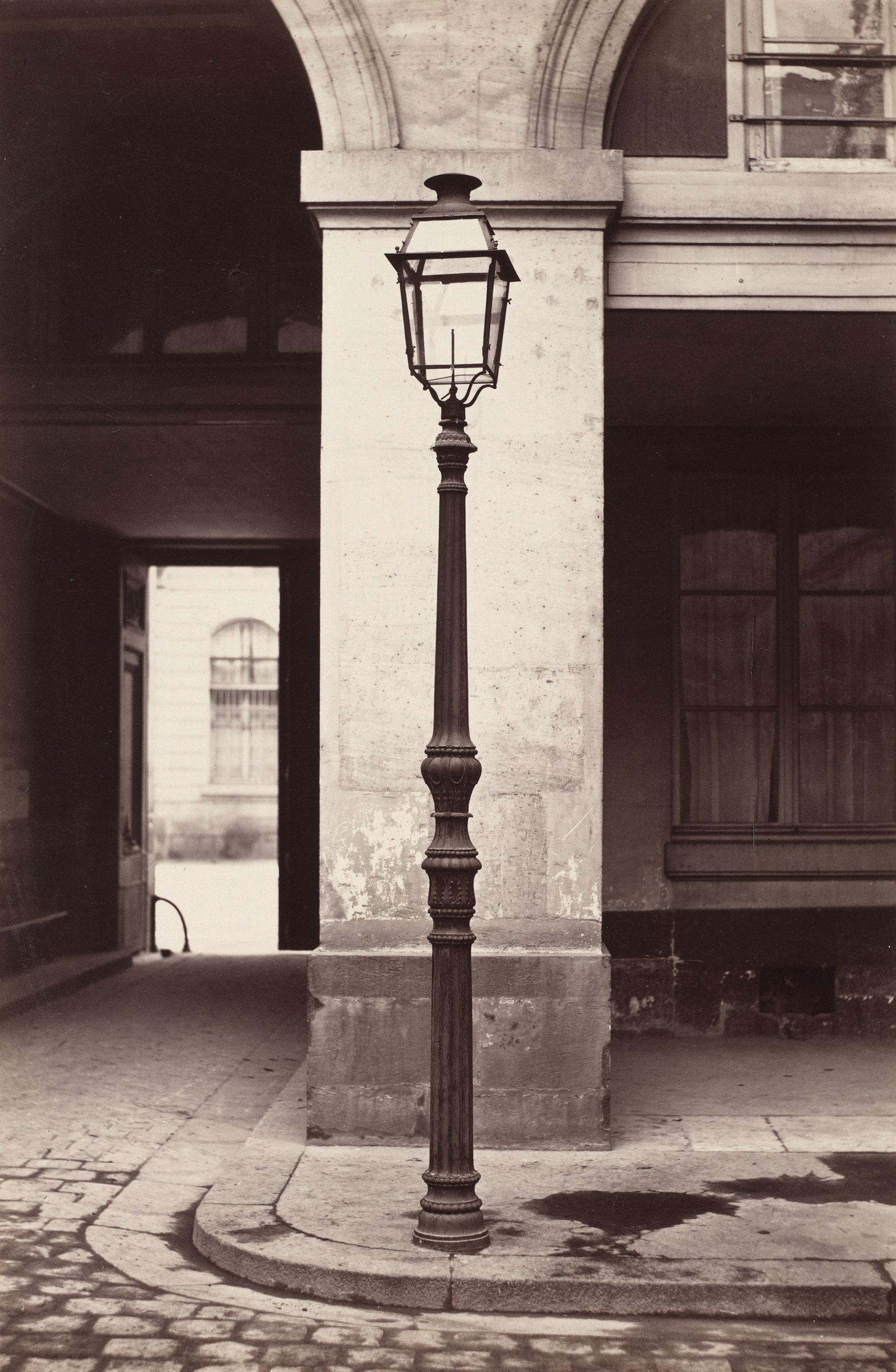
After documenting the streets slated for urban renewal, Marville was assigned to capture for posterity some of the newfangled improvements Haussman had installed. These included two features that were futuristic at the time. Lamposts. There now stood some 20,000 gas street lamps where before there were none. Marville photographed dozens of them.

gas lamp

And urinals.

Urinoir (SystËme Jennings). Plateau de l'Ambigu. Boulevard Saint-Martin.   Paris (XËme arr.), 1858-1878. Photographie de Charles Marville (1816-1879). Paris, musÈe Carnavalet. Dimensions : 27,10 X 36,40 cm Dimensions du tirage

Called vespasiennes, the name derived from that of the Roman Emperor Vespasian, who supposedly imposed a tax on urine, these represented the ultimate novelty, private (relatively) and sanitary (relatively) and lit by those same spiffy gas lamps. The vespasiennes seemed antiquated when they were decommissioned at the end of the 20th century, but in 1860 it was like a spaceship-pissoir had touched down.

“A walk about Paris will provide lessons in history, beauty, and in the point of life.” So wrote Thomas Jefferson. At the exhibit I saw a photo with a heavy brown velvet flap hung down over the front due to the image’s sensitivity to light. There was a line of people crowding up at any one time to lift the curtain and see the magic underneath. It was a nice picture. But I felt that the magic was equally contained in each of the poetic photos around the gallery, impervious to time.

3 Comments

Filed under Art, Cooking, Culture, History, Jean Zimmerman, Photography

The Burger of My Dreams

I am finally enough recovered from roiling bloat to write about the hamburger I consumed the other night.

DB Bistro Moderne stands on 44th Street in Times Square, on a block that is distinguished by the Harvard Club, the New York Yacht Club and the swanky hostelry attached to the restaurant called the City Club Hotel. The Algonquin, with its always-crowded, ever-literary lobby and comfy cocktail chairs, one of my very favorite places in New York, is right next door.

The-Algonquin-Hotel-NYC-3

We were celebrating Valentine’s Day early, knowing we were up for a snow pounding that might keep us in the day itself.

For years, we’d heard about a burger. A mythic burger, a burger for those of hearty appetites and gourmet tastebuds. In 2001 Daniel Boulud introduced the thing for an unseemly 27 dollars, but that only made people want it more.

Daniel-Boulud.jpg?q=100

Now the price has risen to $32, roughly twice what we pay for dinner at our favorite ramen joint.

hot and delish

What the hey, it was faux Valentine’s Day. We arrived, we settled in among the blonde New York princesses with gaudy Chanel necklaces and thousand-dollar leather jackets, we ordered a non-alcoholic beer. The bread, studded with olives, went down fine. An arugula and frisee salad with a lemony dressing and lots of almonds tasted better than it sounded.

But what about the burger?

retro_vintage_kitsch_kids_eating_hamburgers_burger_sticker-r5733afe1d44b4938bfeb118e16c8bbd6_v9waf_8byvr_512How would that be? This burger, you see, is no ordinary burger, but a giant softball of ground sirloin embedded with strips of brisket, a chunk of foie gras and a soupcon of black truffle.

DB-Burger-Vancouver-by-E-Kheraj

It’s a long way way from the simple but tasty culinary icon that Wimpy loved.

wimpy

How did we get from there to here?

I have learned that the Mongol Army under Genghis Kahn would stuff filets of meat (sometimes beef, sometimes lamb) under their saddles as they rode so that it would crumble and cook in time for lunch.

genghis-khan-soldiers-images

America’s own Hannah Glasse gave a recipe in her 1770 Art of Cookery that paired minced meat (cooked) and toast. Other cultures have long dined on meatballs, kissing cousins in a smaller ball of beef.

So the claim of the United States to inventing the burger has only a partial foundation in truth. Emigrants from Hamburg brought versions of minced steak to New York in the late nineteenth century, where they were served raw or lightly cooked in exclusive restaurants such as Delmonico’s, sometimes accompanied by a raw egg, and sometimes for breakfast.

delmonico's kitchen

The mechanical meat grinder, invented in the mid-1800s – mincing had earlier been done with a chisel – made mass production of ground beef possible. It’s thought that the hamburger in its present form originated as cheap eats at a county fair in Wisconsin, or Ohio – somewhere in the land where people needed sustenance to traverse the games, exhibits and rides. A slick of Heinz ketchup, patented in 1888, soon tagged along.

burger sign

On this night, our DB burgers landed in front of us with a thud, encased in a polished Parmesan bun, stuck through with wooden sticks and cut neatly in half. On full display were the slices of short rib and diseased goose liver, in lush cross section. A bite through the red of the beef released the flavors of fresh red onion, tomato jam and mustard. No Heinz 44 for this baby.

We could have eaten half but managed the whole. It was juicy, meaty, greasy, messy as a burger should be. But was it the best? Was it $32 worth of hamburger? When the bill arrived we told them that we’d gladly pay them Tuesday for a hamburger today.

8 Comments

Filed under Cooking, Culture, Fashion, History, Home, Jean Zimmerman, Publishing, Writers, Writing

Rapture in Blue

Guest post from Gil Reavill:

In the space of a week (writes Gil) New York City offered Jean and me two superb opportunities for time travel, sucking us back four centuries in one case and then nine decades in another.

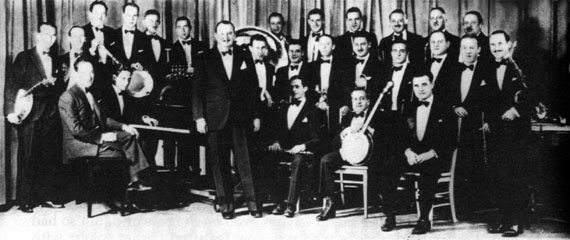
On February 12, 1924, at the Aeolian Hall on 43rd Street, Paul Whiteman and his jazz orchestra premiered a new work, Rhapsody in Blue, with composer George Gershwin himself at the piano.

paul whithead orchestra

Ninety years later to the day, Maurice Peress and Vince Giordano mounted a tribute concert at Town Hall, a block away from where Gershwin’s masterwork first saw the light of day.

Peress is a musician, teacher and orchestra conductor who served for years at the Philharmonic under Leonard Bernstein. Eighty-four years old now, he has the kind of beaming, expansive, jolly personality of someone who has spent a life in music. On the podium at Town Hall, he performed antic dances while conducting, winking and giving wry body-language commentary on the proceedings, as well as delivering effusive stage patter between numbers.

Vince Giordano is the leader of the venerable Nighthawks, and both his band and his whole life have been devoted to playing, preserving and promoting the music of the early jazz era.

giordano

The two men produced the concert themselves, laying out their own money to rent the hall, taking a flier in the hopes enough ticket buyers would come out to fill the seats on a chill February night.

They did. Town Hall was totally sold out. You could feel the bon homie among the audience audience members. The musicians were primed.

Nighthawks

I couldn’t help but feel we were in for a treat. Giordano and Peress are both avid musicologists. They tracked down original scores, unearthed sheet music with holograph notations, replicated the arrangements and instrumentation from the original concert from the slide whistle down to the heckelphone.

That original concert was held on a winter afternoon in the stuffy concert hall of the Aeolian piano company.

AeolianHall1212

It was jazz genius Paul Whiteman’s baby all the way. He conducted his Palais Royal Orchestra in a program called An Experiment in Modern Music, designed to close the gap between jazz and classical audiences. In attendance that afternoon were heavyweights such as Sergei Rachmaninoff, Jascha Heifetz and John Phillip Sousa.

whiteman program

Gershwin himself almost didn’t make it. Whiteman and he had discussions about commissioning a piece, which the composer forgot about until brother Ira read a piece in theTribune five weeks before the concert. “George Gershwin is at work on a jazz concerto” read a blurb in the article’s final paragraph.

The composer had only a month to create what is one of the greatest pieces of American music ever written. On a trip to Boston, the click-clack rhythm of the train inspired him. He scribbled the main themes then and there. At first the piece was called American Rhapsody, but Ira suggested the title under which it is now known after attending a show of James McNeill Whistler paintings that had names such as Nocturne in Black and Gold.

Gershwin-01

The famous clarinet glissando with which Rhapsody kicks off is a last-minute development also, with the Whiteman orchestra’s virtuoso jazz clarinetist, Ross Gorman, ginning it up almost as a joke.

Whiteman didn’t think the name of the largely unknown 26-year-old Gershwin could carry a concert, so he brought in a popular pianist of the day, Zez Confrey, had top billing over the composer. The concert featured such popular numbers as Confrey’s “Kitten on the Keys” and Irving Berlin’s “Alexander Ragtime Band.”

kittenonthekeys

When it came to Rhapsody, though, Gershwin played it himself, with a piano score that was not yet written down.

Sitting in Town Hall in 2014, Jean and I heard a program performed note for note as close as possible to what audience members heard ninety years ago and a block away, with the superb Ted Rosenthal sitting in for George Gershwin. The Aeolian Hall is long gone, now the quarters of the CUNY Optometry School. Peress told us he performed a pilgrimage, though, and through a gap in the dropped ceiling saw a section of the gilded proscenium from the original theater. These fragments we shore against our ruin.

Earlier in the week Jean and I journeyed to the Brooklyn Academy of Music’s Harvey Theater for another kind of time travel, this one a performance of the Chichester Festival Theatre Company’s King Lear, with Frank Langella in the title role. The production was played very straight. It was not set in Weimar Germany, say, or contemporary Uganda, as other directors are wont to dish up their Shakespeare, but in the Celtic landscape of the original text. The blocking was stylized and almost static. Langella delivered a phenomenal performance.

KINGLEAR-master675

No one knows what the play might have sounded like during its only verified performance in Shakespeare’s time, on December 26, 1606 in the court of King James I at London’s Whitehall. Scholars suggest that Elizabethan English sounded similar to the accents of the American South. Lear’s trio of daughters would have been played by males. (In 1660, decades later, Samuel Pepys wrote in his diary, “Saw ‘The Scornfull Lady,’ now done by a woman, which makes the play appear much better than ever it did to me.”) But again, as with the Giordano-Peress concert, I was able to pretend that I was somehow witnessing a shard of the past, broken off and magically turning up in the present.

The BAM audience laughed often at Shakespeare’s acerbic wit, four-hundred year old jokes still getting a enthusiastic response today. The tragic flavor of doom came across, too. “Never, never, never, never, never,” Lear repeats, his last words. Yes, we can never truly beat the tyranny of time. But sometimes it’s pretty to try.

1 Comment

Filed under Culture, History, Jean Zimmerman, Music

Booklist Reviews Savage Girl

Booklist (March 1, 2014)

Savage Girl.

Mar 2014. 402 p. Viking, hardcover, $27.95. (9780670014859).

Debutante or demon? The title character of Zimmerman’s gripping historical novel seems to be a little bit of both. Discovered in a Nevada mining town by a wealthy couple determined to overcome the “savage” girl’s apparent feral upbringing, Bronwyn is introduced by them to Gilded Age Manhattan’s high society. But as the couple’s son, the novel’s narrator, can attest, she is perhaps not as innocent as she seems. All revolves around the central question of whether Bronwyn or the captivated narrator is responsible for the trail of bloody crimes left in their wake. Suffused with a gothic aura of dark suspense, this is a finely wrought psychological work from the author of The Orphanmaster (2012), rich with historical detail. The mystery stretches from society’s heights to its absolute depths and touches everything between, always increasing in dramatic tension. Zimmerman’s settings spring off the page, from the stinging dust of the American desert to the dank despair of the Tombs prison in New York. Immensely readable, Savage Girl takes the reader by the throat and doesn’t let go.

— Bridget Thoreson

3 Comments

Filed under Culture, Fiction, Jean Zimmerman, Publishing, Savage Girl, Writers, Writing

Pot Lucky

Just a neighborly event. The lightest of snows twinkled outside the windows. Someone said, You may not see each other for six months but you’re still glad they’re there. There was a list, a neighborhood email listserve, and these 60-odd people were on it.

The pot-luck took place in the carriage house of the local nature preserve, Teatown.

scenery_teatown1

Such communal feedbags have a history, dating back to the sixteenth century, when pot-luck meant “food provided for an unexpected or uninvited guest, the luck of the pot.”

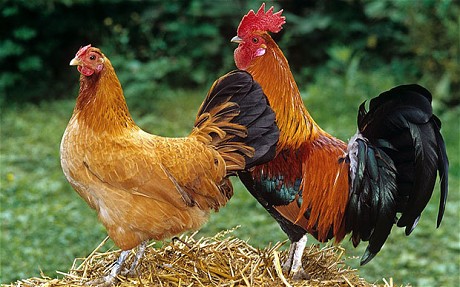
In this bowling-alone world, community often strikes me as a missing element. Or perhaps that’s just because mine is a solitary profession, handcuffed to my computer keyboard, staring out the window at the winter. I was happy now to talk to people I barely knew about books we’d read, about composing music, about keeping chickens.

chickens_1844738c

Above all, we spoke about the deep drifts and ice outside that affect everybody.

As Bilbo Baggins once said, “I don’t know half of you half as well as I should like, and I like less than half of you half as well as you deserve.”

Someone brought a soup enriched almost to a stew with wild rice. Someone else baked a crusty bread. When the desserts came out there was a deep-burnished chocolate bundt cake studded with cherries that had folks lining up. We all shared food, shared companionship. A hat was passed to send kids to the local summer camp.

No one spoke about plumber referrals, or the other information that flies across the internet on the listserve. No one talked about rowdy teens on the roads, or co-mingled recyclables.

separate-recyclables

Above all, no one became embroiled in the deer situation, the bane of the neighborhood, the divisive question of whether to leave the overpopulation alone or somehow control it, and if so, how to do so. It would be a fraught conversation. We let it go. (Though some wry soul offered venison sausage on the buffet table.)

We were gracious, putting faces to names. We shook hands, kissed cheeks. We were neighborly.

Outside, it continued to snow.

5 Comments

Filed under Cooking, Culture, Fiction, History, Home, Jean Zimmerman, Music, Nature

The Voice on the Page

I’ve been thinking about voice. Not the voice of Miley Cyrus, or Roseanne Cash, or even the Russian-born soprano, Anna Netrebko, who belted out the Olympic anthem at Sochi last night. She really shook the rafters.

No, I am trying to get a handle on voice in fiction. Writing a new novel about a girl who lives in New York City during the Revolutionary War, I want to make sure I get her right. And it forces me to deal with some difficult issues.

Can I show her best in the first person or the third? That’s probably the biggest question going in, because while writing “as” my protagonist gives me access to all kinds of emotional complexity, it is also limiting. It’s writing in handcuffs. You the reader can only see what my character sees, and by its nature that is not everything. I can see a very interesting house but I can’t necessarily go into that house. If I bring my character into the house it rejiggers the plot in all kinds of ways.

I’ve determined to go down the first-person path if it kills me.

Probably the most famous use of the first-person protagonist is in Dickens’ David Copperfield, with its wonderful first line:

Whether I shall turn out to be the hero of my own life, or whether that station will be held by anybody else, these pages must show.

The myriad of other first-person first lines include Call me Ishmael in Moby Dick.

There is Notes From Underground: I am a sick man . . . I am a spiteful man.

For a long time, I went to bed early, in Proust’s Swann’s Way.

It was a queer, sultry summer, the summer they electrocuted the Rosenbergs, and I didn’t know what I was doing in New York. From Plath’s The Bell Jar.

Considering the first lines of books turns out to be incredibly interesting.

Other issues you have to address as the plot unfolds: how much does my protagonist know about the world, how sophisticated is she? My character is a teenager, but is mature beyond her years, as kids of that era were. What kind of language would she use? Should I eradicate all adverbs from the narrative? How smart-alecky is she, how wise, how snarky?

How much historically appropriate language can you get away with using without a page sinking under the weight of Ye Olde? On the other hand, is a word you’re using wrong because it was invented yesterday, and she can’t possibly have known it? I looked up “goofy” today and found that “giddy” would suit the 1776 world of my character’s speech much better.

Is she addressing someone? Hugo in Savage Girl addresses his story to his lawyers. Is my character relaying the history of her life to someone, say a great granddaughter? Is it an epistolary novel, like The Sun Also Rises? Or is the text simply in her head? Is she “talking to the air,” as Gil and I put it when we discuss these questions.

All these and more are the thorns you must cross through in order to reach the fruit when you are writing a novel. Sometimes it helps to have an image as you work, a picture that reminds you of your heroine. I have adopted this 1750 painting by Pietro Rotari, Girl with a Book, which inspires me to find my character’s voice and do it justice. What draws me is not the cap nor the jewels, charming as they may be, but the wry, lovely expresssion in her eyes.

1750 pietro-antonio-rotari-girl-with-a-book-1337982962_b

5 Comments

Filed under Art, Culture, Fiction, History, Jean Zimmerman, Writers, Writing

Good Housekeeping Seal of Approval

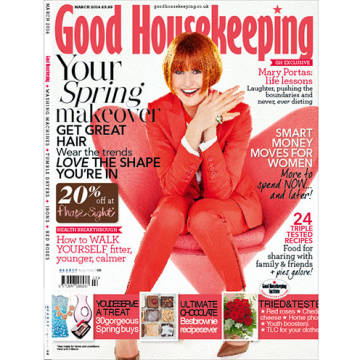
I’m so pleased to see Savage Girl among Good Housekeeping‘s recommended books for March.

March-cover-230114-de-lg

Here is the magazine’s thumbnail review, which manages to distill the essence of the story quite well, I think.

Good Housekeeping, March 2014

New Book Picks: No matter what mood you’re in, we have a page-turner to tempt you

FOR INTRIGUE

Savage Girl

A wealthy couple touring the American West in 1875 “rescue” a young woman who’s said to have been raised by wolves, then attempt to introduce her into society back East. Bronwyn cleans up nicely, but her suitors keep ending up dead. A wild ride.


5 Comments

Filed under Culture, Fiction, Home, Jean Zimmerman, Publishing, Savage Girl, Writers, Writing

A Crinoline Cage

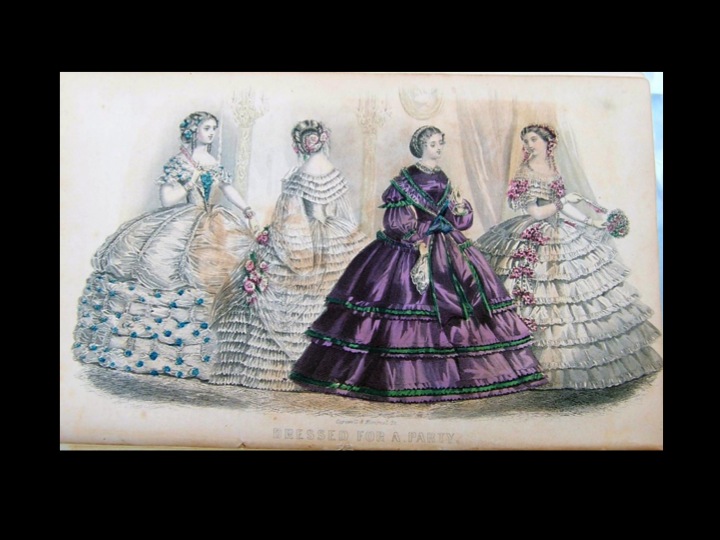
I found a wonderful lecture transcript and powerpoint on line for a talk titled “The Crinoline Cage.” The speaker, Lynda Nead, is an art history professor at the University of London. I’ve always wanted to find a piece that really goes into the history of crinolines and hoop skirts, and this is it. The accompanying images from the nineteenth century include cartoons from Punch, extracts from Dickens, letters from Victorian women and paintings by artists such as Franz Winterhalter, the painter of the Royal and Imperial Courts of Europe. They’re all wonderful, so check this out.

Slide06

In the introduction to her remarks, Nead says this:

The middle of the nineteenth century was the great age of the crinoline. Dresses became bigger and more ornate; skirts grew wider and wider, devouring metres of fabric and decorated with flounces, fringes and ribbons. The style was facilitated by the development of the sewing machine and technological developments in textile production that introduced new machine-made light, gauzy fabrics, which supplemented the more established and expensive silks and taffetas and were suited to the purses of the middling classes. The key to this fashion, the frame for this confection of fabrics and ornament, was the hooped cage crinoline. Historians have been divided on whether the crinoline turned women into ‘exquisite slaves’ or was a sign of female assertiveness and subversion.

Slide05

Leave a comment

Filed under Culture, Fashion, History, Home

Big Ol’ Brick of Books

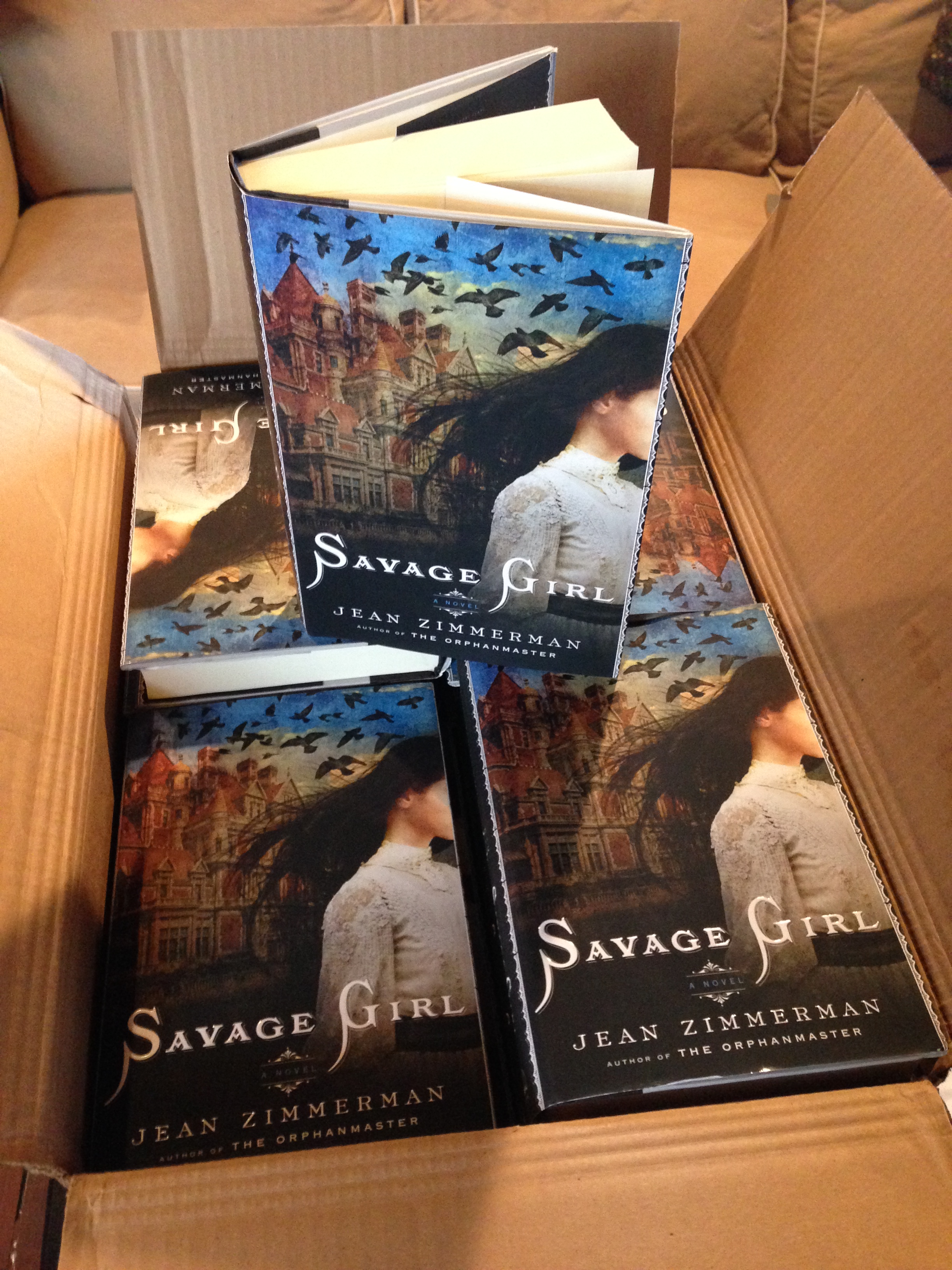
A brick of books. Author copies. Twenty-eight, to be exact, sitting where UPS dumped the box, in the fresh, deep pile of snow at the head of the driveway. The cardboard was soaked around the edges.

But the books were dry, miraculously. That novel is watertight.

open

2 Comments

Filed under Art, Culture, Fiction, Home, Jean Zimmerman, Nature, Publishing, Savage Girl, Writers, Writing

Kirkus Reviews Savage Girl

Kirkus Reviews Savage Girl (pub. Feb. 15, 2014):

A formal, measured tempo only heightens the tension in Zimmerman’s second historical fiction–cum-thriller (The Orphanmaster, 2012), this one set in the 1870s and concerning a serial killer whose rampage ranges from a rough mining community in Nevada to upper-class Manhattan.

The novel opens in 1876 with narrator Hugo Delegate, Harvard-educated scion of one of New York’s wealthiest and most socially connected families, locked up for the gruesome murder of another New York dandy. He willingly claims his guilt—though that guilt is far from certain—but his expensive lawyers demand he tell them the true story from the beginning. Hugo starts with his family’s visit to Virginia City, Nev., home of his father Freddy’s silver mine. Soon, Hugo’s parents, eccentric liberals interested in the nurture/nature debate raised by Darwin, are eager to adopt a young girl they have discovered in a Virginia City freak show, the owner of which claims she was raised by wolves. Of unknown origins, she speaks Comanche as well as a smattering of English, and her performance involves a set of mechanical claws and a swimming tank. The girl, whose name turns out to be Bronwyn, travels on the Delegates’ private train to New York, where the Delegates plan to put one over on their friends My Fair Lady–style by having her debut as a fashionable young lady. But one grisly murder after another seems to follow in Bronwyn’s wake, the victim always a man who has shown his attraction to Bronwyn’s considerable charms. Is Bronwyn, with her animallike instincts, the killer? Or is it Hugo, with his past mental problems, his capacity to black out and his love for Bronwyn that borders on jealous insanity? Neither Hugo nor the reader is sure right up to the satisfying if melodramatic end.

Zimmerman’s dark comedy of manners is an obvious homage to Edith Wharton, a rip-roaring murder mystery more Robert Louis Stevenson than Conan Doyle and a wonderfully detailed portrait of the political, economic and philosophical issues driving post–Civil War America.

4 Comments

Filed under Culture, Fiction, History, Jean Zimmerman, Publishing, Savage Girl, The Orphanmaster, Writers, Writing