Category Archives: Art

Sargent and the Newlywed Stokeses

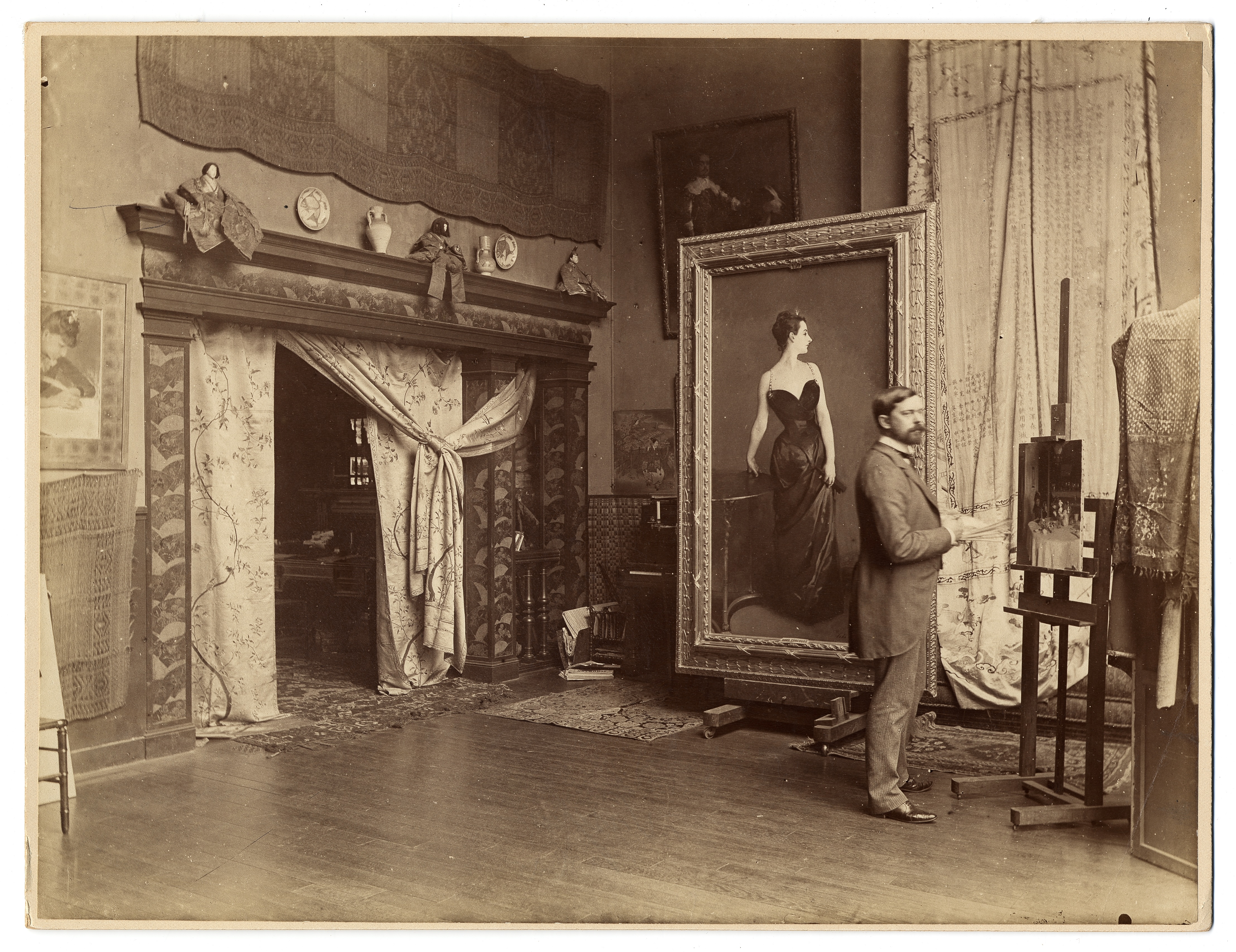
John Singer Sargent painted Mr. and Mrs. I. N. Phelps Stokes in 1897, during the couple’s honeymoon – a classic portrait and an icon of the time. The three of them spent weeks in his studio, with Sargent occasionally taking breaks to pound out tunes on his grand piano. The great painter was at the height of his career and almost too busy to make time for them, but an influential family friend had commissioned the work as a wedding gift.

Sargent in Studio

Not everyone liked  it. One critic called the painting “too clever for its own good.”

Mr_and_Mrs_John_Phelps_Stokes

Bringing the portrait into existence had been a challenge for Sargent. According to I.N. Phelps Stokes, newlywed Edith “sat to” Sargent 25 times, posing over and over agin in a blue silk gown. Sargent finally got fed up with the formality and said “I want to paint you as you are.” Edith had come in from the hot London streets that day wearing informal attire, clothes drastically different than the diaphanous gowns the painter’s models typically posed in, and she had a fresh, dewy look about her cheeks.

In other words, she was sweating.

Edith

Come tonight to see more pictures and hear more nuggets about the Newton and Edith Stokes, their portrait, and their remarkable lives – Dominican Academy, 44 East 68th Street, bet. Park and Madison, at 6pm, sponsored by the Victorian Society of New York. Free.

1 Comment

Filed under Art, Culture, Fashion, History, Jean Zimmerman, Love, Fiercely, Writers, Writing

Victorian Society Oct. 8 Talk

Please join me tomorrow evening, Tuesday October 8th, at 6 pm, to hear a free talk I’m giving for the Victorian Society of New York on Love, Fiercely: A Gilded Age Romance. The evening will take place at a school called the Dominican Academy that is housed in a historic mansion at 44 East 68th Street, bet. Park and Madison, in NYC. Get there early for a seat!

Edith & Isaac

For a little more info — according to the organization’s lecture schedule, my presentation:

“will discuss the life, times and passion of two remarkable individuals living in a remarkable age. Her book Love Fiercely: A Gilded Age Romance is both a cultural history of America on the cusp of modernity and a biography of two of the era’s most interesting characters, Isaac Newton Phelps Stokes and his wife, Edith Minturn Stokes, whose double portrait by John Singer Sargent hangs in the Metropolitan Museum’s American Wing. Love, Fiercely immerses readers in the world of the Astors and Vanderbilts, the “uppertens” and the “fashionables” in New York City and its satellite resorts. Zimmerman will also tell the parallel story of the couple’s reform work and of Mr. Stokes’s monumental tome, The Iconography of Manhattan Island.

Mr_and_Mrs_John_Phelps_Stokes

I’ll show lots of great pictures and probably digress quite a bit from these topics, I hope enjoyably. And I’ll sign books after my talk, of course. So come if you can.

4 Comments

Filed under Art, Culture, History, Jean Zimmerman, Love, Fiercely, Photography, Publishing, Writers, Writing

Crystal Palace Visions

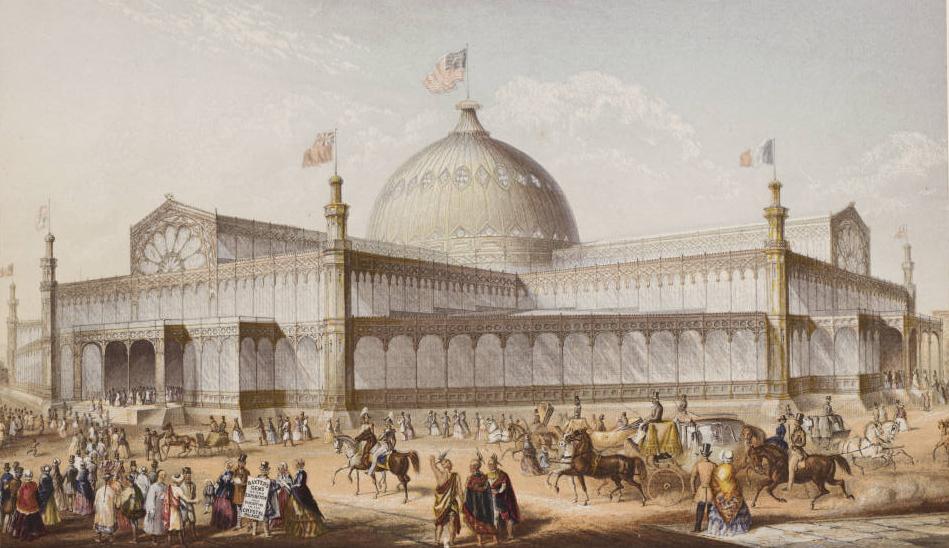
One thing on the island of Manhattan that I’ve always wished I could have seen is the Crystal Palace, built to house the World’s Fair of 1853, “The Exhibition of the Industry of All Nations.” Walt Whitman called the glass and iron complex “Earth’s modern wonder.”

New_York_Crystal_Palace

On 42nd Street between Fifth and Sixth Avenues, where Bryant Park now stands, the Crystal Palace welcomed its thousands of awe-struck visitors. Believed impervious to fire, it burned to the ground 155 years ago, on Oct. 5 1858. The conflagration started in a lumber room and within 15 minutes the huge dome had collapsed. I wonder whether any of the exhibitors were able to salvage their goods in time – Samuel Morse had his telegraph there on view, and Isaac Singer was showing his new invention, the sewing machine, which would transform our world in ways that couldn’t have been imagined.

Oct 5, 1858 crystal palace burns

Across the street stood the tallest structure in New York, the Latting Observatory, 315 feet high. Warren Latting erected a wooden tower resembling a scaled-down oil derrick as a tourist attraction in conjunction with the fair. Sightseers could take a steam-powered “safety hoister” elevator up 315 feet in a tiny, ornately decorated cab to the pinnacle of the tower. There they would admire the marvels of Manhattan through a battery of telescopes.

latting_view-scaled1000

A meticulously detailed engraving, drawn in 1855 by B.F. Smith and engraved by William Wellstood, documented the bird’s eye view of the city south of 42nd Street. It revealed the sheen of the Crystal Palace and the bulk of its neighbor, the brick-walled Croton Distributing Reservoir, which had supplied the city with pure drinking water from upstate since its completion in 1842, when the neighborhood was largely fields and cows. To the south you could just see the neo-Gothic spire of Trinity Church, a geographic talisman of New York the way first the Woolworth building and then the Empire State Building would be for future generations. People would go courting up in the steeple.

The Reservoir had 50-foot-high Egyptian-style parapets, 25 feet wide, upon which the fashionables of the day had grown to favor promenading.

olphot

Later, the 42nd Street Public Library would come, with its 20,000 blocks of marble, its Beaux-Arts edifice, its lions cleverly named (in the 1930s by, of all people, Mayor Fiorello LaGuardia) Patience and Fortitude, the two traits absolutely required of any writer. The site would be excavated by 500 workers over the course of two years before construction could begin in 1902, and the library wouldn’t open for business until 1911.

1907-Exterior-marble-work-Fifth-Avenue-facade.

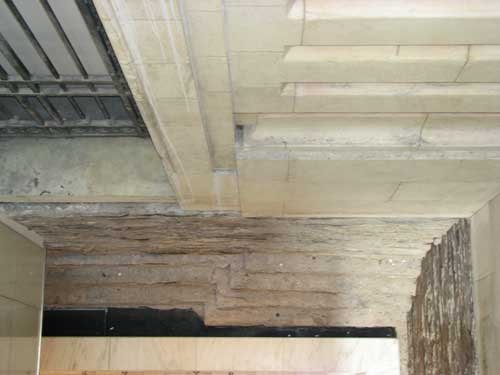
You can still see a chunk of the old reservoir if you know where to look inside the library.

nypl_20060822_15

Carrere and Hastings delivered a grand design. The grandest structure in the city to this day, I think, with its sweeps of stone, its vaulted arches, its treasure trove of seven floors of books.

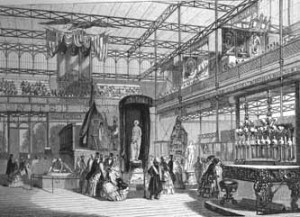
Still, it’s no Crystal Palace. Imagine the wonders you would have seen strolling through those light-flooded rooms?

usdeptn-300x217

4 Comments

Filed under Art, Culture, Fashion, History, Jean Zimmerman, Photography

The Flash Mob in My Mind

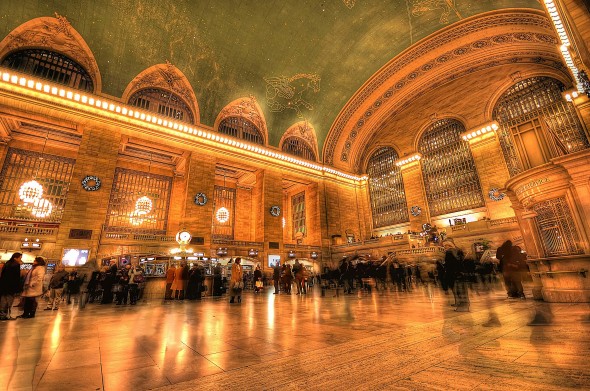
To and fro they go, all the busy, self-involved commuters. A long day at work, the usual stresses, rushing home to other responsibilities. Set faces, hurrying through Grand Central Station with barely a glance at the reaches of fluid, majestic marble, the astronomical ceiling, the hundred-year-old intricate architectural features of the main concourse.

grand centrl

Then along the slick stone floor skitters something – what is it? – a human form, not walking upright but rushing through on all fours.

harry-b-neilson-feral-child-drinking-with-wolf-cubs-3-of-5

People stand back. The human animal races pell mell all around the place, knocking into briefcases, brushing peoples’ knees. It becomes clear gradually that underneath the tangled hair and plain white shift this is a wild girl of some kind.

Voices pipe up throughout the concourse, first a few, than a chorus, and people begin stepping through the crowd, toward the center of the space, in high Victorian dress. The men have top hats and frock coats, the women wear sweeping gowns.

victorian-dresses-3

They are harmonizing a strange, old fashioned tune, a dance-hall melody with unfamiliar lyrics.

Grand Central commuters halt in the path to their gates and listen. The music swells. A cello flight emerges out of nowhere.

The savage girl skitters out of sight.

As the song continues, the throng of singers parts. Suddenly, just under the constellation of Pisces we see the savage girl, now transformed into a young woman, gliding forward,  fully upright. She is dressed spectacularly in a pearlescent floor-length dress with a train, long cream-colored gloves, glossy hair, décolletage.

victorian-era-dress

The Victorian assemblage turn to her and she joins in their melody for the final verse.

Then, as quickly as they appeared, the players vanish. Savage Girl is perhaps the last to go, and gazes one final time out at the crowd with a beautiful but remote expression on her now civilized face.

I had a conversation with my literary agent about ways of introducing Savage Girl to the world come March. I got off the phone and fantasized about a Victorian flash mob starring our girl. It might never come to be, since Grand Central is full of armed homeland security folks and german shepherds, but wouldn’t it be fantastic?

4 Comments

Filed under Art, Culture, Fashion, Fiction, History, Jean Zimmerman, Music, Publishing, Savage Girl

Silk Thread on Cotton

The Metropolitan Museum on a Saturday afternoon in fall: everything seems very still, but perhaps that’s because I am moving fast, whisked along in a wheelchair to save my aching foot, the cool gallery breeze in my face, going to see a show I’ve been hungering to experience. On the way we pass the spectacle of so many different works, in diverse media, all amounting to a taste-whetter for what is to come. First, in the great hall, the five monumental displays of flowers on all sides, hydrangeas something of a blur as we roll past. The arrangements, fresh weekly, have been bankrolled since1969 by a fund established by Reader’s Digest co-founder Lila Acheson Wallace, and each one is more fabulous than the last.

hydrangeas

We zoom past Lorenzo Lotto’s Cupid and Virgin, the somewhat silly canvas from the 1520s that shows the mischievous creature urinating on Venus, a symbol of fertility.

Lotto

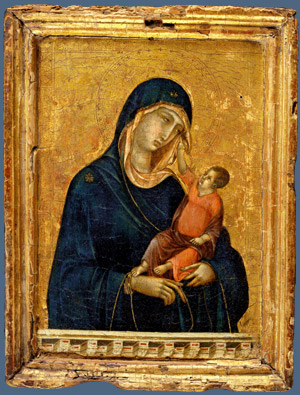
Another Virgin, one that came to the museum with a thirteen-million-dollar price tag, is shown in the Madonna and Child painted by Duccio di Buonisegna in the fourteenth century.
duccio.L

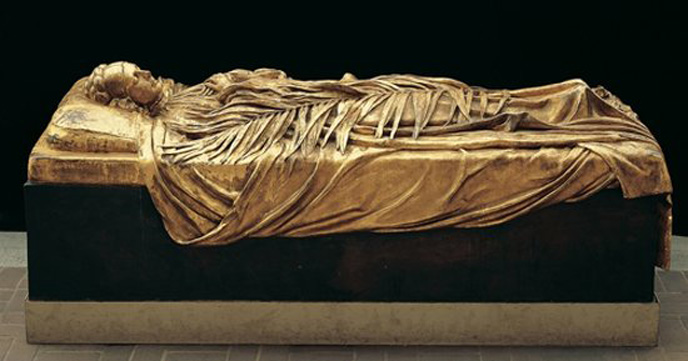
We whiz by the effigy of one Elizabeth Duvenick, sculpted by her husband, Frank Duvenick – Henry James called him “the unsuspected genius” — dripping with gold leaf, in the courtyard at the front of the American Wing.
Tomb_Effigy_of_Elizabeth_Boott_Duveneck_1891

“A zombie,” says a young boy passing by. Good point. Then we’re off through the hall of Rodins – a sculptor I recall loving as a teenager, then thinking was impossibly tacky, though now I’ve come around again.

Blink as you ride along and you’ll miss the medieval bronze baptismal font held aloft by kneeling pilgrims.

And through it all there is the sense that Zorn is here, someplace. John Zorn, that is, mister avant composer and saxophonist, whose work is being celebrated at the Met in over a dozen performances today throughout the galleries in honor of the musician’s 60th.

zornfeat

We can’t squeeze into the one performance of the man himself, so we are forlorn, Zorn-less, but over the heads of a crowd as we make our way along we hear the noise of string instruments breathing.

music

There should be a special genre of art in New York City called Over-People’s-Heads.

The Metropolitan tears you in all directions, in a happy way, a way that jazzes up your senses and makes your mind feel more alive. The show we are here to see, Interwoven Globe: The Worldwide Textile Trade, 1500-1800, does the same thing in a more focused way. Now, I have to say from the start that although this exhibit has been touted as the Met’s blockbuster of the season, I wasn’t expecting to have to fight my way through the crowds to get at the items being displayed. And I was correct. This is a haven principally for textile lovers, and there is plenty of space to stretch your limbs and be dazzled by the bed covers and kimonos on display. This is not an Over-People’s-Heads show.

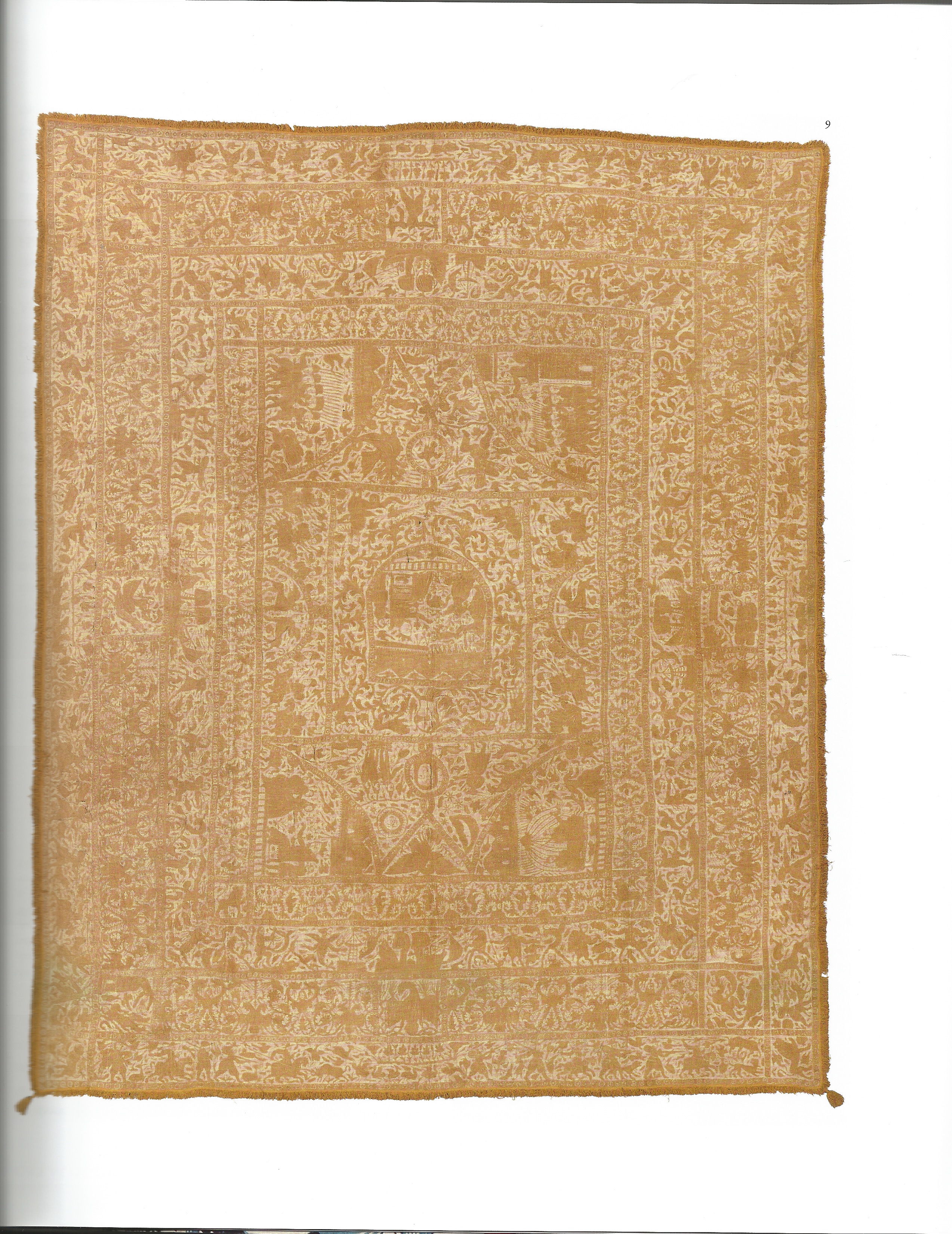
Did someone say bed covers? This coverlet, called a colcha, originated in India for the Portugese market in the early seventeenth century. It was embroidered of yellow tussah silk, also called wild silk, on a cotton background, showing images that included a hunt, the adventures of Hercules, the Judgment of Solomon and Phaeton driving his chariot too close to the sun. Among many other things.

cov

People used to embellish their mattresses with textiles almost unimaginable to those of us who have spent too much time over the years at Bed, Bath and Beyond. Interwoven Globe takes as its premise the interconnectedness of cultures around the world in producing objects that were both intrinsically beautiful and historically fascinating. Japan, China, Turkey, Iran, Europe and the Americas all played a part. The fashion for the “exotic” bloomed in trade.

From the first glide into the opening room, I’m sort of oozing, mentally, into the fabric, wondering about the lucky few who get to take the stuff down from the wall and actually handle it, when I see another gem. A damask woven in China of silk satin for the Iberian market.
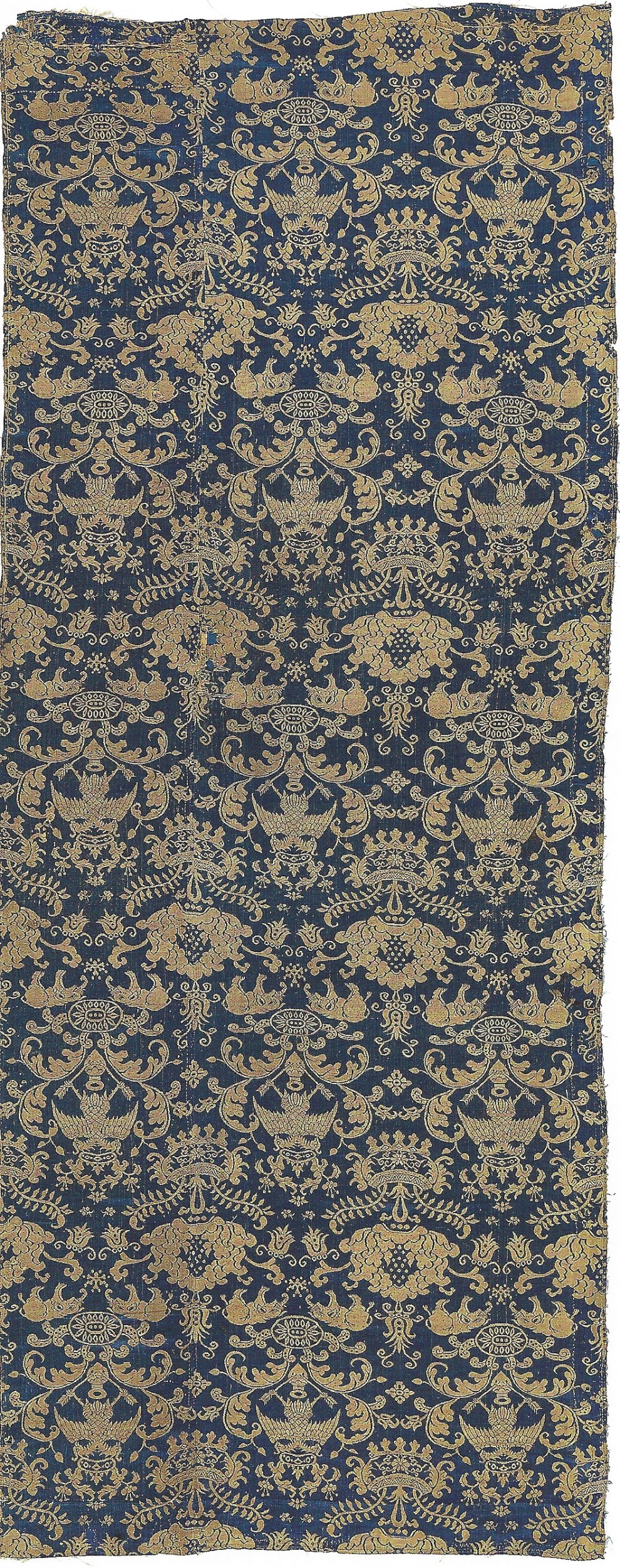
text

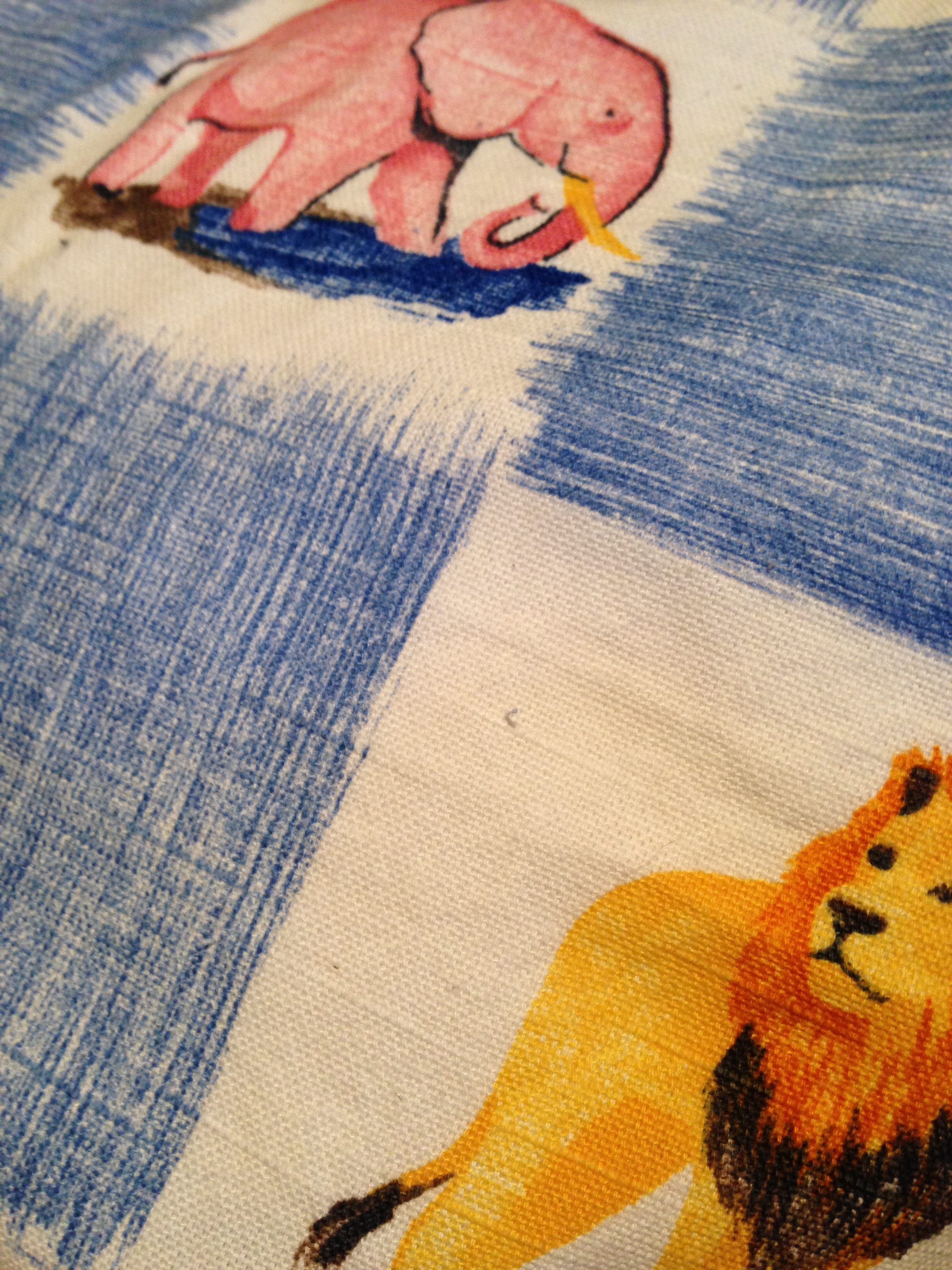
Elephants such as the ones depicted were customarily given as tribute to Chinese emporers and imported by Portugese kings to be used as diplomatic gifts to the courts of Spain, Austria, France and England. The ones marching along on the textiles were Asian, I learned – you can tell by the diminutive ears. On this piece the elephants have multiple tusks – of course the weavers couldn’t access an actual image of one! Instead, they drew on the Buddist six-tusked elephant described in a fifth century Chinese translation of a sutra as being sparkling and resplendent.

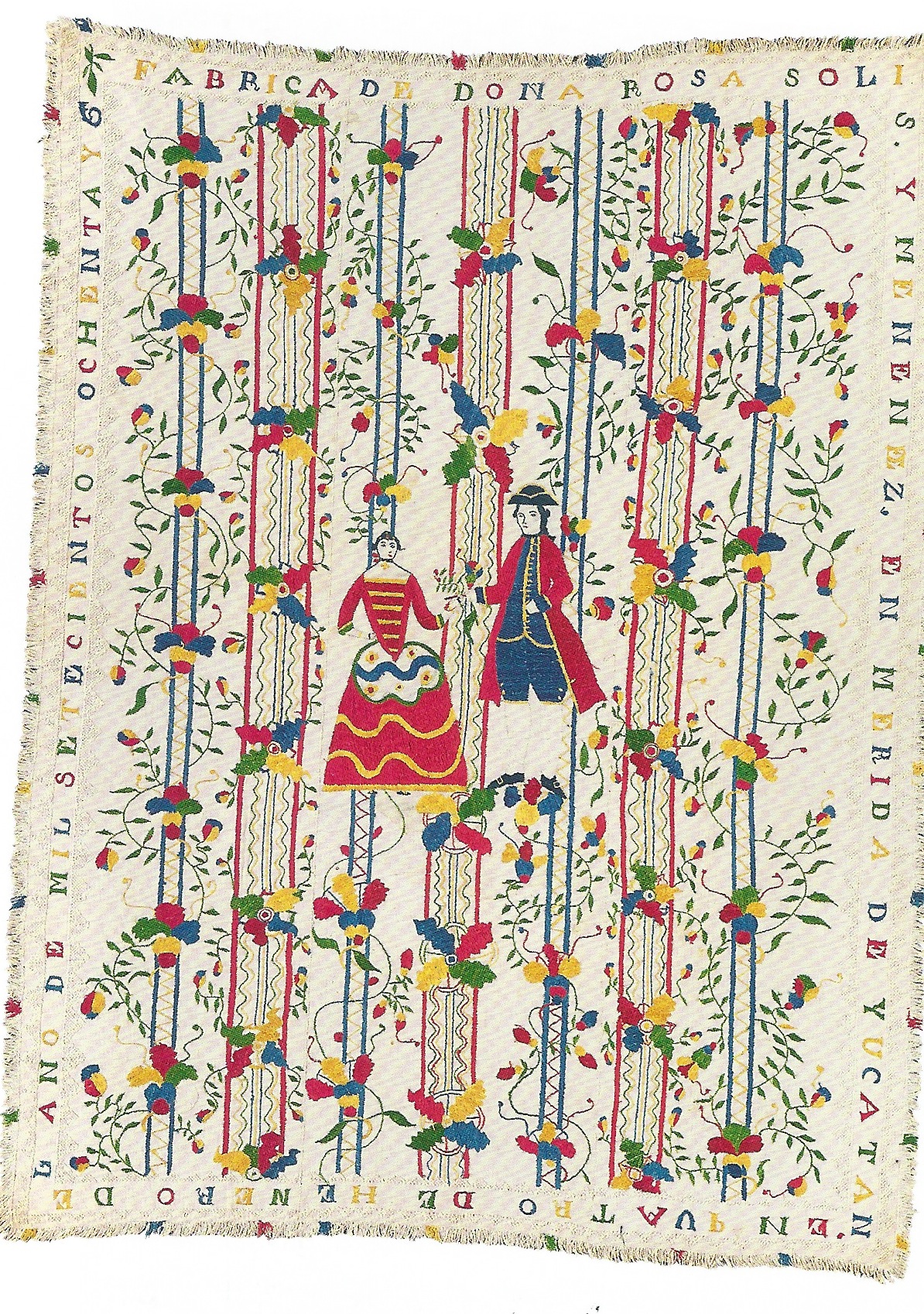
Another coverlet, this one produced in Mexico, was made to celebrate the wedding of the couple shown in the center.

mex

Trellises surround them.They wear Europen style clothes, embroidered of silk dyed red with the insect cochineal and yellow with a plant known as weld, which was probably grown in Spain. The silk itself was imported from China. Again, a crisscrossing of cultures went into a flawless product, which happens to be signed by its maker, Dona Rosa Solis y Menendez, with a date of January 4, 1786 and a place, Merida, the Yucatan.

I see dresses, not just coverlets and bolts of fabric. This one was sewn in France of “bizarre” Chinese silk in 1710.

bizarre

Bizarre being a term twentieth century textile historians came up with to describe silk designs at the junction of the Baroque and Rococo periods, usually heavily brocaded and beaded, with glittering metallic threads.

More women’s dresses. Gowns you could rest your elbows on, they had such wide panniers, a variation on the hoop. The robe a la francaise, here sewn in Germany of Chinese-painted silk moire, which definitely would have been my choice in the 1740s if my door frames were wide enough to allow me access.

robe

And men’s dresses. The banyan, or informal morning gown that well-dressed men wore over their clothes, is represented. Sewn in France from Indian fabric that had been stamped with wooden blocks.
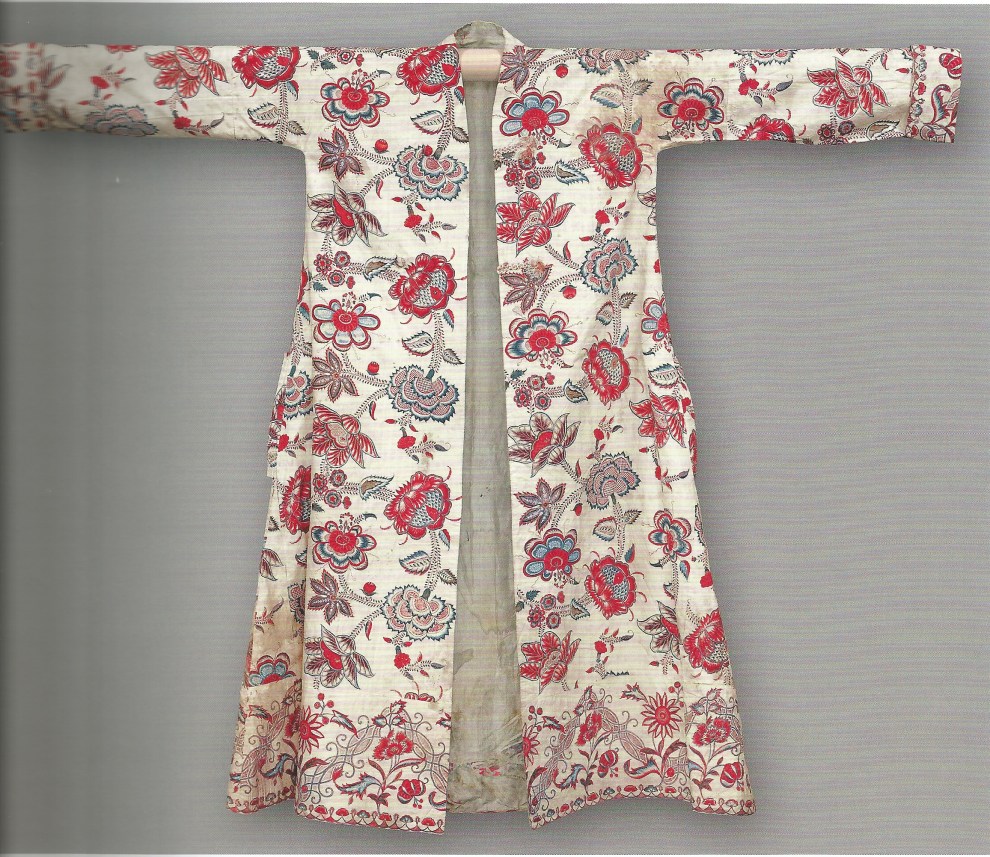
banyan

The inimitable John Singleton Copley caught Joseph Sherburne lounging in his banyan in 1767, wearing a cap to cover his shaved, not at the moment bewigged pate.

sherburne

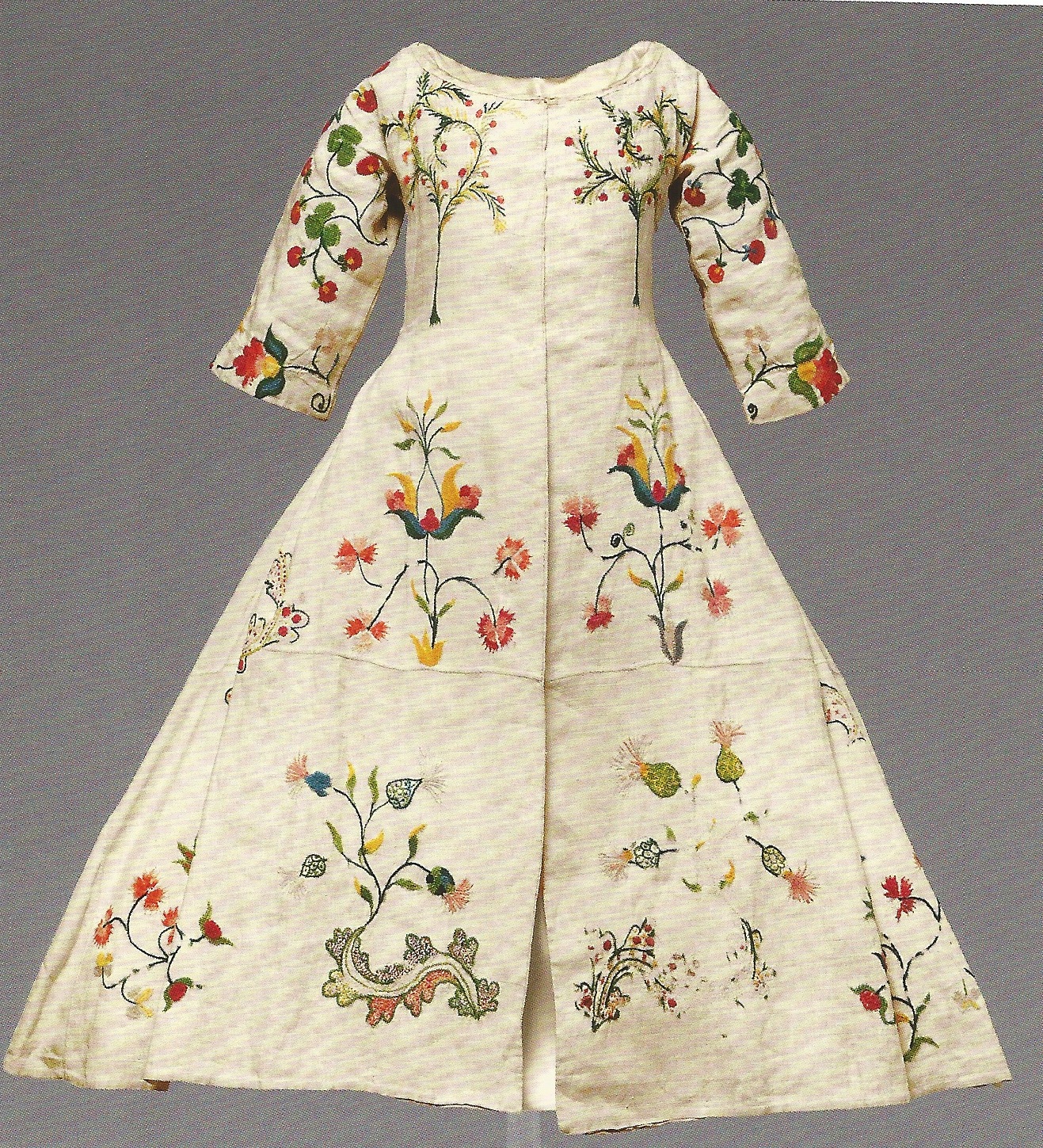
Charmingly, then, a dress also for a very lucky little boy. Linen embroidered with tulips, roses, carnations and fruit trees. Yes, a boy. Male children wore frocks alongside their sisters until they were around five years old.

boy dress

Something I really like, that brings this luxurious trip to the past down to earth: a textile sample book, dogeared by English merchants’ hands, with 500 swatches of ordinary cloth, no fancy silks or embroideries here, that would have been worn by sailors, artisans or enslaved people in North America.

sample

And I haven’t even started on chintz. Suffice it to say there is a tutorial that totally satisfies my long-term desire to understand the mechanics of chintz production. It’s incredibly elaborate, and if you pay me enough money I might try to explain it to you someday.

After this flood of textile experience, sitting with some restorative strong coffee in the courtyard, I notice the air smells like roses, and the fabrics we all wear appeared simple, streamlined. There are some stripes, yes, but no elephants, no carnations, no trees of life, no metallic threads glinting in the pale sunlight. I see a woman in a plain pink sweater. I see denim. I see a young man in a simple, blue-checked shirt, his foot in a boot, sitting in a wheelchair like me, running his hand through his hair. He seems weary, now that women no longer dress themselves in the robe a la francaise, now that all the flash has gone out of coverlets.
9 Comments

Filed under Art, Culture, Fashion, History, Home, Jean Zimmerman, Nature

Nuggets From Afar

When the fall chill hits and you wrap yourself in a shawl and feel like drifting off to other times and places, these links might inspire you.

The Evolution of Love Songs. In case you ever forget the words to Let Me Call You Sweetheart, here rendered by the Peerless Quartet in 1911.

peerless

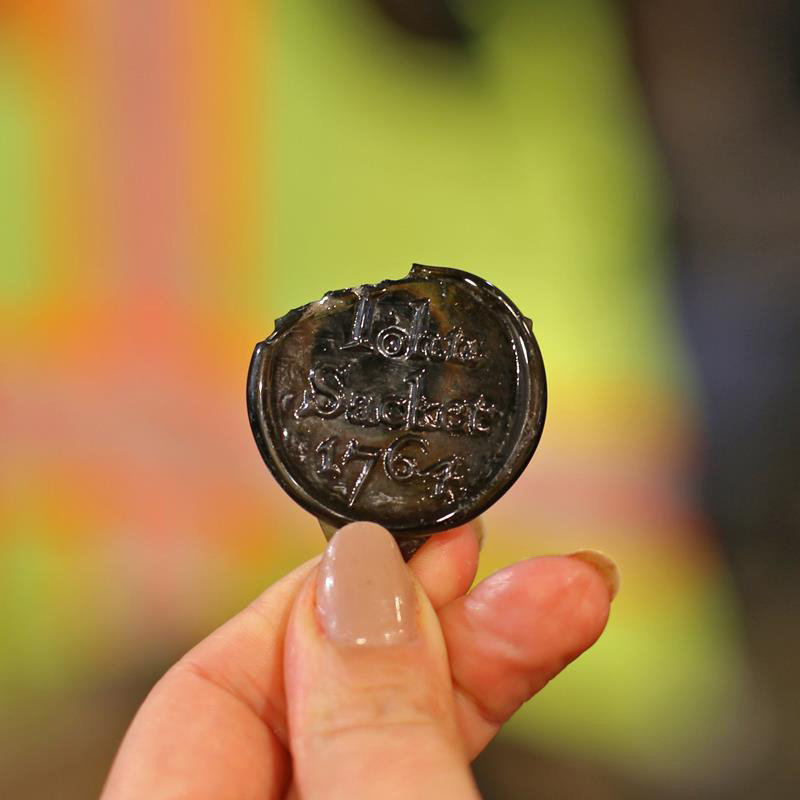
Chrysalis is a firm of archaeological consultants that specializes in the history of New York. They’ve recently pursued excavations in the South Street Seaport Historic District that recovered two intact nineteenth-century wooden water mains. Other treasures: eighteenth-century toddlers’ slippers crafted of leather, and British Revolutionary soldiers’ buttons, which turned up along the original shoreline of Manhattan. A liquor bottle seal circa 1764 brings that time alive.

fultonstreet_archaeology01

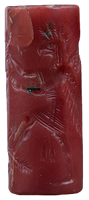
Between 1885 and 1908, a collector named William Hayes Ward amassed a bounty of 1,157 cylindrical seals dating as far back as the beginning of the fifth millenium. If you like tiny images on semiprecious carved stones from Mespotamia – gods, bulls, antelopes galore — you will want to take a look at these enchanting objects, which formed the core of J.P. Morgan’s collection.

seal-rotate-intro

Living With Herds: A Visualization Dictionary is a short film by a research fellow at an Australian university that shows how Mongolian herders communicate with their animals.

living-with-herds-vocalisation-dictionary-natasha-fijn-2

Women’s bodies were never meant to be squeezed into corsets, which is immediately apparent when you check out x-ray images from 1908.

woman xray

Linguistic fossils offer a glimpse of times gone by.

fossil

And finally, secret, tiny fairy doors began materializing all over Ann Arbor. This was in 2005. Perhaps not surprisingly, the carpenter turns out to be a children’s book author. Doors have appeared at the library, the pet store, the children’s hospital. Anyplace they’d be sure to raise an eyebrow and the corners of your mouth.

tiny door

4 Comments

Filed under Art, Culture, Fashion, History, Home, Jean Zimmerman, Music, Nature, Writing

In a New Light at the Guggenheim

I finally went, on the next to last day of the exhibition. The James Turrell installation, that is, called Aten Reign, at the Solomon R. Guggenheim Museum in New York City.

gugg bldg

It’s been up since June, and everyone said You’ve got to go, you’ve got to go.

Now I understand why.

Turrell is a conceptual artist who manipulates natural and artificial light on a grand scale. He’s been practicing his craft since the 1960s. “My art deals with light itself,” he has said. “It’s not the bearer of the revelation. It is the revelation.”

JamesTurrell_landscape

Sounds lofty. But when you enter the rotunda of the Guggenheim and look up to see the deep magic of colored orbs, eggs really, egg after egg after egg, created by lights projected on the concentric rings of the museum’s famous spiral, you see what he means. As you watch, the colors begin to shift, from pale silver to violet to tangerine to raspberry  to acid lime. A fruit-sweetened flow of light.

red eggs

My mind entered a waking dream state. I have to admit that I was equally fascinated by the 200 or so human animals on display beneath the well of light. Tourists. Natives. Suits and shorts, stripes and leggings and boots. Fifteen, twenty languages, who knew? It was one of those afternoons when people look especially beautiful. We were all in a cave filled with liquid light, all creatures awestruck, bemused, interested in the same phenomenon. Turrell is a Quaker, a faith he characterizes as having a “straightforward, strict presentation of the sublime.” Patient contemplation is a tenet of his work. It’s not a particular feature of life in New York City, usually, yet here it was.

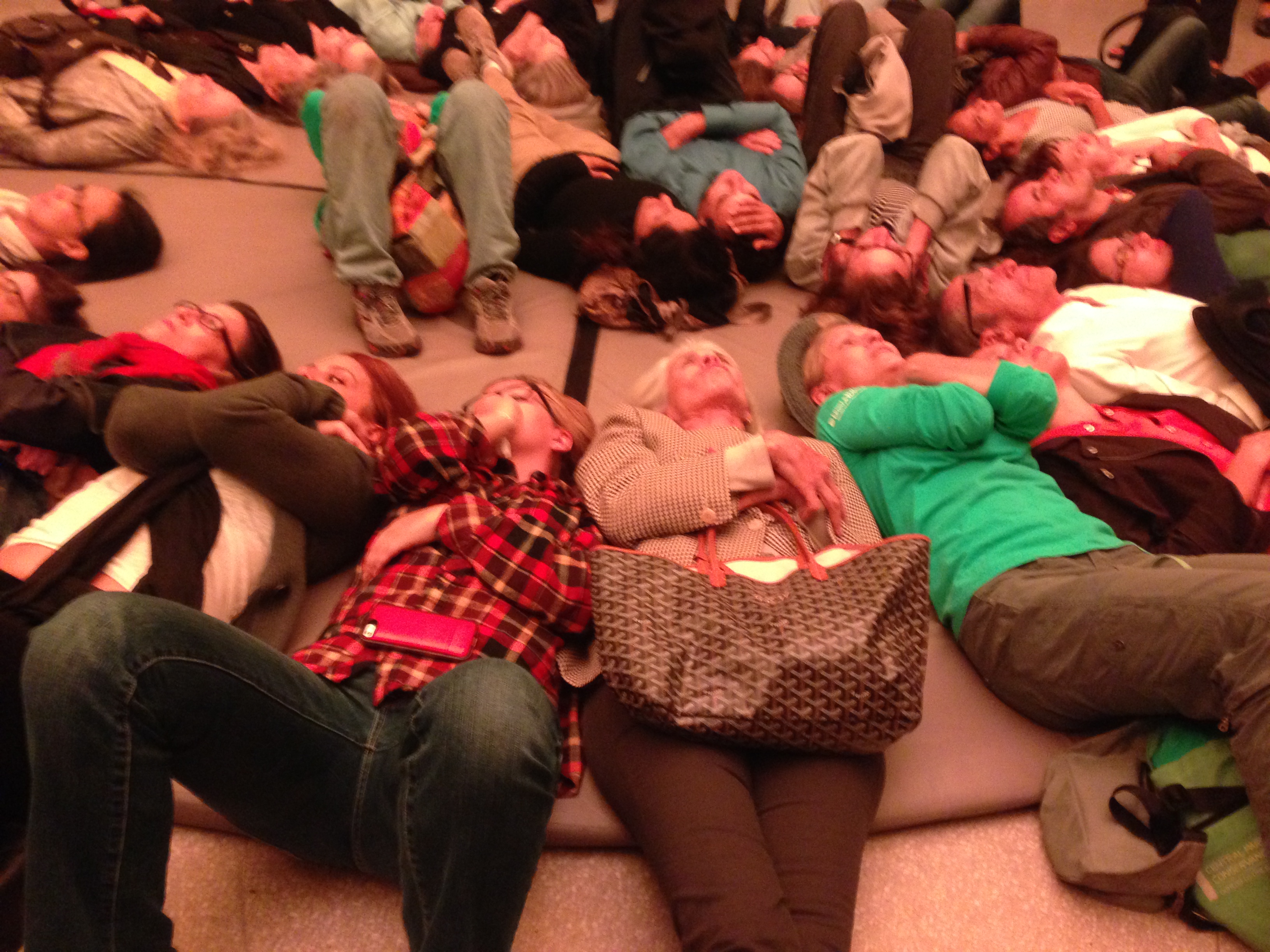
A circular mat lay in the center of the space. People sprawled on the pad like participants at an old-fashioned happening, gaping upward at the magnificent spaces of Frank Lloyd Wright’s genius structure, now transformed to a Turrell Skyspace.

red room

Museum goers waited calmly for a chance at the mat – it was easier to find a parking spot outside than a supine position on the Guggenheim’s floor. They tried to take pictures of the lights but were checked by guards. But Aten Reign begged for pictures. It reminded me of that experiment with toddlers and marshmallows, where a lady gives a kid a marshmallow and says if he holds off for x minutes without eating it, he’ll be given two. What kid can exert that much self control?  Likewise, what adult at this luscious light show could resist clicking a phone upward even if it meant sneaking to do it?

purple eggs

I was reminded of Oscar Wilde’s famous line, We are all in the gutter, but some of us are looking at the stars. Gil waded into the scrum, pretty spry for a nearly-sixty-year-old man – you had to move fast to claim a spot – and lay himself down, spellbound. “It was like a wrestling mat,” he told me afterward, “one where people have been pinned too many times.” The funk of the thousands of bodies since the show opened somehow added to the appeal.

The sky above went from ultraviolet to dark as a storm. Tranquillity descended. Was this what my sometime cynic of a husband liked to call the “theater of faint effect” – something that’s not necessarily going to change your life?  Still, “I felt like I needed a lamaze coach” was what he told me later about the near birth experience he’d had. This would seem to partake of E.M. Forster’s “only connect,” with all of us touching this spiritual lozenge above us, this gleaming cough drop of a god, and at the same time touching each other.

blue room

A friend once told me about her experience walking on burning coals, that there was no rational reason for it but she was transformed by a mystical joy. No one knows exactly why, but it happens.

pink eggs

I sat on the bench that ran around the circular walls. Behind me I realized I was listening to the plash of a fountain. This is the first time I’ve ever employed that word. Later, at lunch in the museum’s somewhat pretentiously named restaurant, The Wright, I ate something I had never tried before, in a frisee salad: a skinned cherry tomato, poached or braised somehow to bring out its pulpy flavor. In the corner, Isaac Mizrahi with his doo-rag held forth in some kind of ecstatic state.

Everything appeared fresh after the Turrell show. September 25, the exhibit closes. There is only tomorrow. Go.

6 Comments

Filed under Art, Culture, Fashion, Jean Zimmerman, Photography, Writers, Writing

Melancholy and Industry

On it comes, fall, my favorite season (do I say that every season?). In yoga class today, when we did the tree posture, holding up our arms and crooking our legs, I looked in the mirror and everyone actually looked like bare-branched autumn trees. A human forest.

Things to do to jump into fall. Pull the late season carrots, whiskery and somewhat cork-like.

carrots

At the same time, admire the mess the deer have made denuding the garden. How did they pull all those bell peppers from the plants so delicately, leaving the plants intact? They left the one sunflower standing, hanging down its giant brown head.

sunflower hanging

Make plans to attend a show – we don’t do the theater too much but Romeo and Juliet is rolling onto the boards for the hundredth time, this time with movie cutie Orlando Bloom, and we’re gonna hoof it to Broadway. Maybe I’ll even be able to pull on some shoes, with a healed, streamlined foot.

romeo

What else, in fall, what are the timeworn threads of coziness you begin to weave back into your life? Put fresh sheets on the bed, the flannel ones. Shake out the comforter that’s been shoved in the closet all summer. Burrow in.

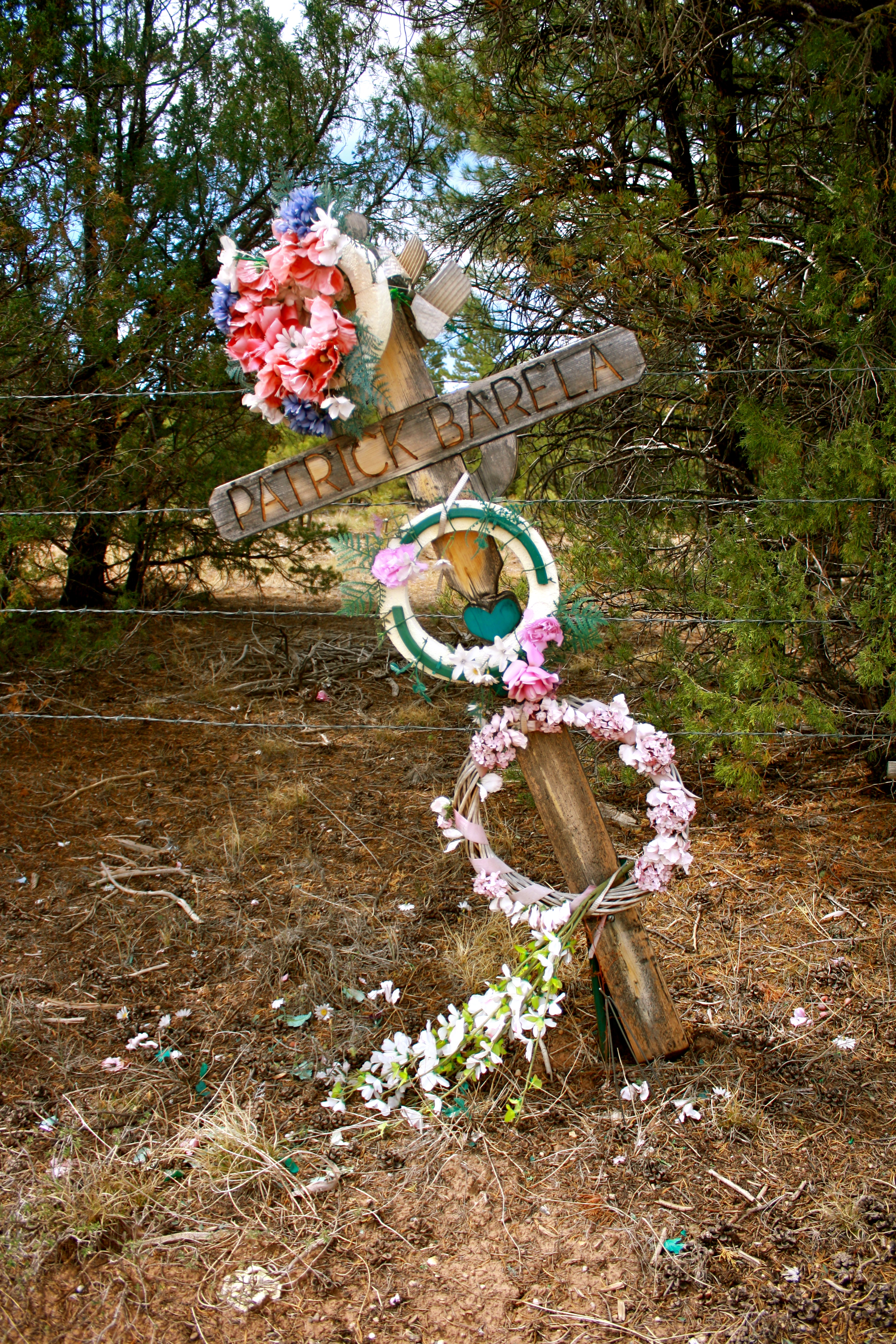
Read the first college paper of the year, if you’re lucky enough to have a student nearby. Maud’s concerns a melancholy subject she’s been attacking for her anthro major, the proliferation of descansos, roadside shrines in New Mexico. Her photos of the sites are filled with a lonely beauty.

maud shrine

The comic Louis C.K. plumbed the topic of melancholy on Conan O’Brien recently and I loved what he said about the “fall back to school depression feeling,” how he was driving in his car, listening to a Springsteen tune on the radio, getting that “forever empty” feeling, that “knowledge that it’s forever and you’re alone.” It’s a mental state I remember so well from college, and also bouncing back with insane gladness, that as Louis said “you’re lucky to have sad moments.”

Louis-CK-hosting-SNL-fun-Saturday-Night-Live-Hurricane-Sandy

Two things from college that I still resonate to all these years later, melancholy and industry.

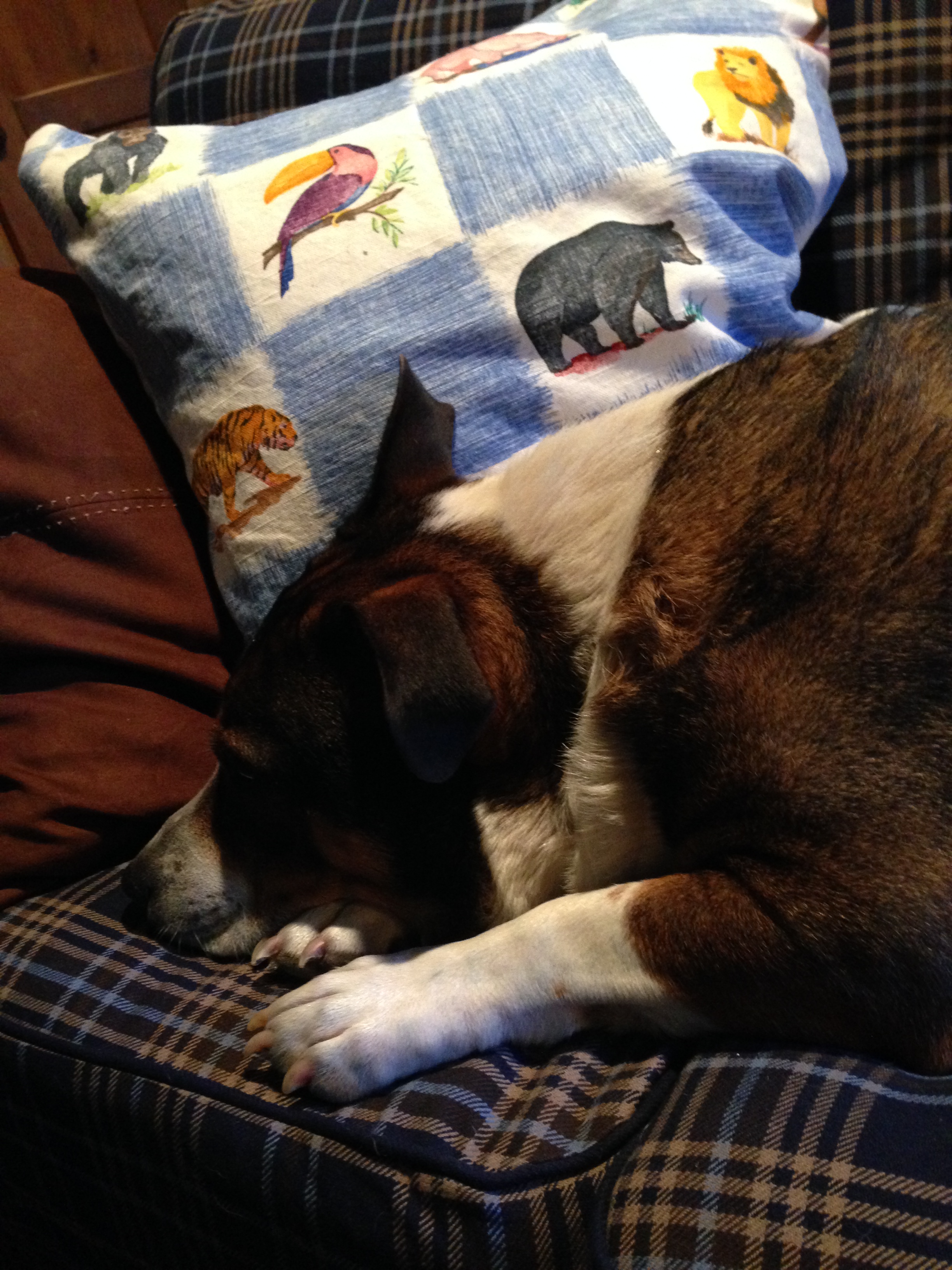
So in fall, when it gets cold and lonely, make something. Get out the trusty sewing machine, unearth some ancient fabric, make a simple pillow cover. One that Oliver will cuddle up to.

dog pillow

Read a new book, or revisit an old one. It’s a good time to take another look at The Catcher in the Rye – sure, an old chestnut, but with a Salinger book and movie coming out a good time as any to see if the author’s a genius or a shnook. Or both. And he knows from melancholy.

Rye_catcher

Nourish yourself. I’m stewing beef with onions, those garden carrots, garden onions and beer, not wine, because that’s what I have in the house. And fall’s about what you have in the house.

pillow fabric

4 Comments

Filed under Art, Cooking, Culture, Dogs, Fiction, History, Home, Jean Zimmerman, Nature, Photography

Arrr, Matey

Biker-pirate crazies rumbling through Times Square, tossing eyeballs into the tourist throngs?

I admit, that’s a concept. One, once I heard about it, that got me out of my house and into Manhattan.

It was the annual Talk Like a Pirate Day, which I first heard existed when we received an amusing card in the mail marking the occasion. It sounded like a joke, but the holiday is celebrated on September 19th by wannabe Johnny Depps the world over.

depp

I did some research into seventeenth century pirating when I wrote about New York’s Philipse family for my book The Women of the House a few years back. Merchant Frederick Philipse was one of the richest gentlemen in Manhattan. He had a cellar full of wampum in barrels and a 52,000-acre estate that comprised much of today’s Westchester County. For years he pursued trade with corsairs off the coast of Madagascar, a place only a little bit wilder than New York City in that day.

First of all, there were some crazy animal species there that didn’t exist anywhere else in the world.

Elephant birds, artwork

The elephant bird, a flightless giantess, always intrigued me, and I looked around for evidence of historic human encounters with the beady-eyed long-extinct creature, but all we have today are fossil eggs like cement volleyballs.

Then there was the indri, a still-thriving lemur with lemon drop eyes, whose wail carried across the nighttime countryside, and a pygmy hippo and a panther-hunting cat-dog.

indri-jw

Pirates, yes, I was discussing pirates. Sheltered coves around the Madagascar coast offered private places to careen an ocean-damaged hull, to harvest scurvy-preventing lemons, to provision a ship with oxen, sheep and poultry.

Pyle_pirates_treasfight

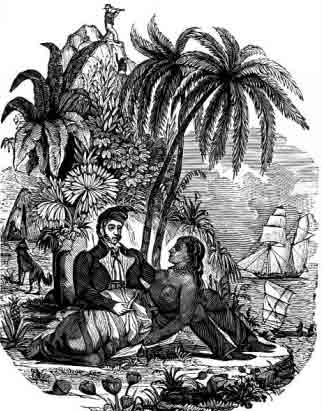
A charismatic buccaneer named Adam Baldridge came to Madagascar in 1691 and transformed an island off its coast called Sainte–Marie into a pirate paradise inhabited by as many as 1,500 sailors at a time. A trading post/resort, Sainte-Marie offered up Malagasy “brides” and a locus for business between merchants and pirates.

PIRATE&MAID

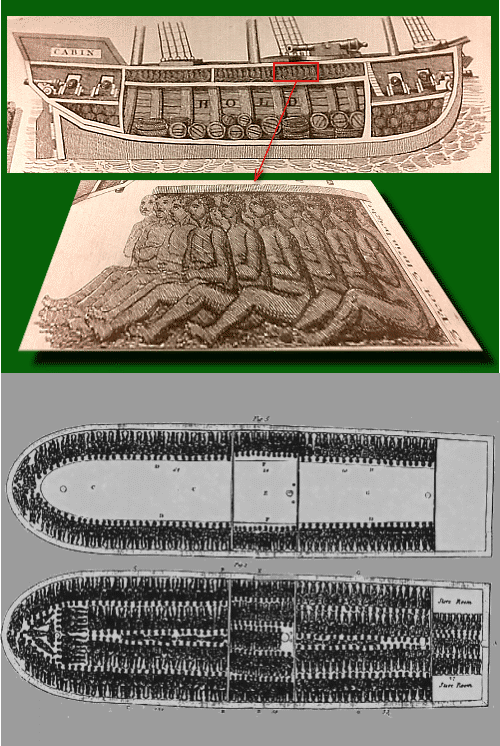
This is where Frederick Philipse saw his opportunity. Baldridge proposed a transaction that would furnish Philipse with two hundred premium Malagasy captives at thirty shillings a head, well below the going rate for African Gold Coast slaves. Also, Philipse was welcome to unload merchandise on Sainte-Marie in exchange for pieces of eight, India goods, or whatever currency best suited the ship merchant. This was all quite nice for Philipse, who was just starting to trade in human flesh but was finding it hard to break into the Africa market, which favored English men. “It is by negroes that I finde my cheivest Proffitt,” wrote Philipse in a letter to Baldridge. “All other trade I look upon as by the by.”

NavioNegreiro

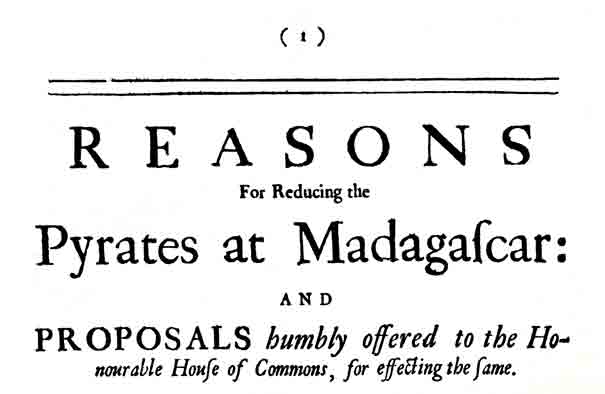
Ships went back and forth, and Philipse’s reputation didn’t suffer through the nature of his Madagascar business—his cohorts in Manhattan welcomed the cargo. Enslaved Africans were bought and sold on wharves along the New York waterfront, at the foot of Wall Street, and out of taverns. But finally, Britain put the kabosh on the activities of pirates around Madagascar and those who interacted with them in Manhattan.

reducing

Philipse brokered one last deal, to bring a load of seventy Malagasy slaves into New York Harbor, whereupon he got spanked. He had a ship impounded and was forced to resign from a post with the governor’s council.

So pirating was not quite so charming as they make it out to be in the movies. Still, Thursday’s Talk Like a Pirate motor escapade was to have its beginning at the historic tavern the Ear Inn, one of my favorites, so I thought I might go check it out.

ear inn outdoor sign

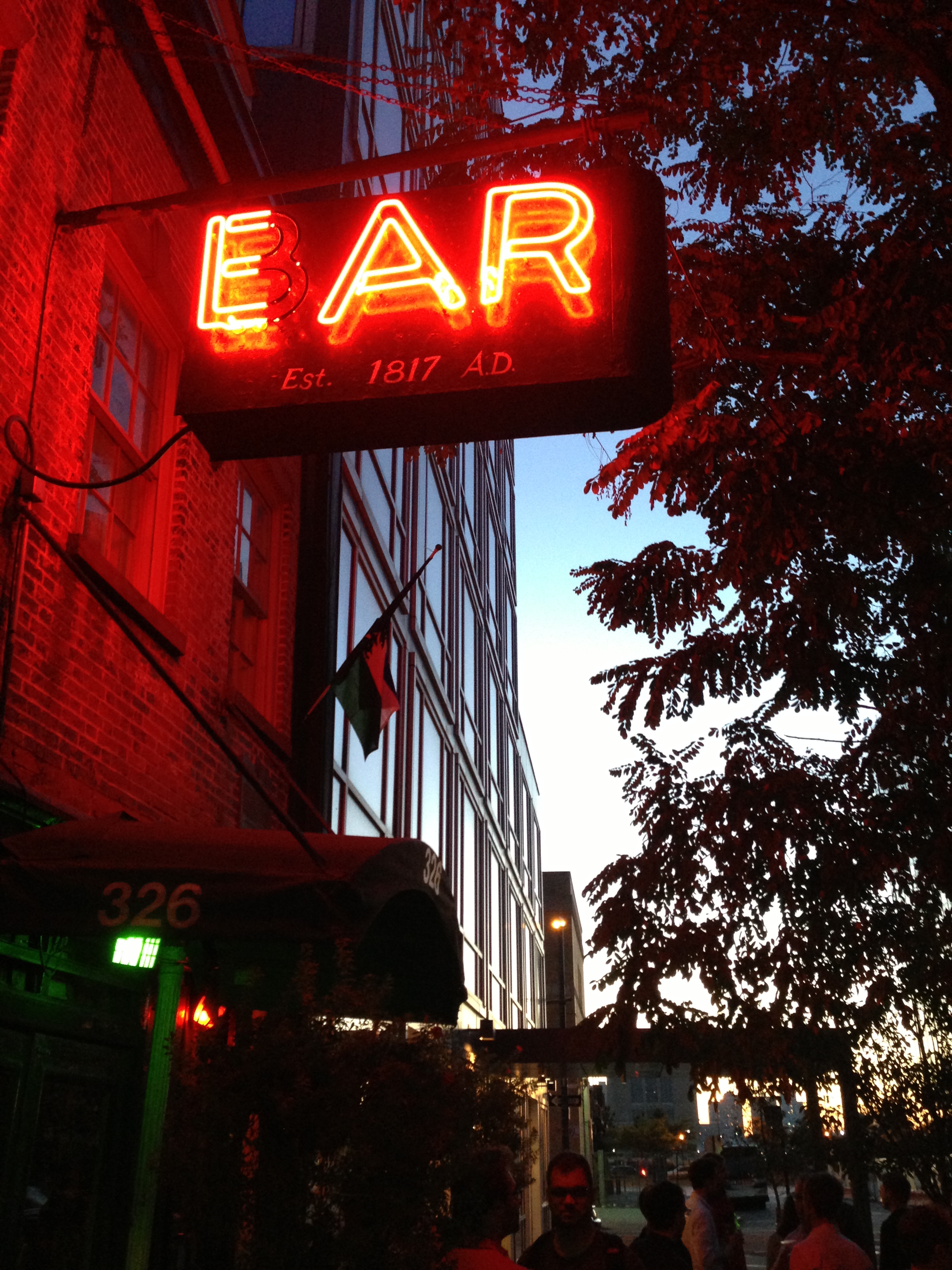
The Ear Inn began its life long after Frederick Philipse’s heyday, though in the mists of time for us: it was built as a residence in 1817 for an affluent African-American tobacco trader named James Brown, who had been an aide to George Washington. If you look close you can see him in the famous painting of Washington crossing the Delaware.

washington_crossing_the_delaware

The house stood on Spring Street, in present-day SoHo, and when it was constructed the waters of the Hudson River lapped at its door.

Marks outside show that Hurricane Sandy brought the shoreline back to what it was centuries ago.

hudson river

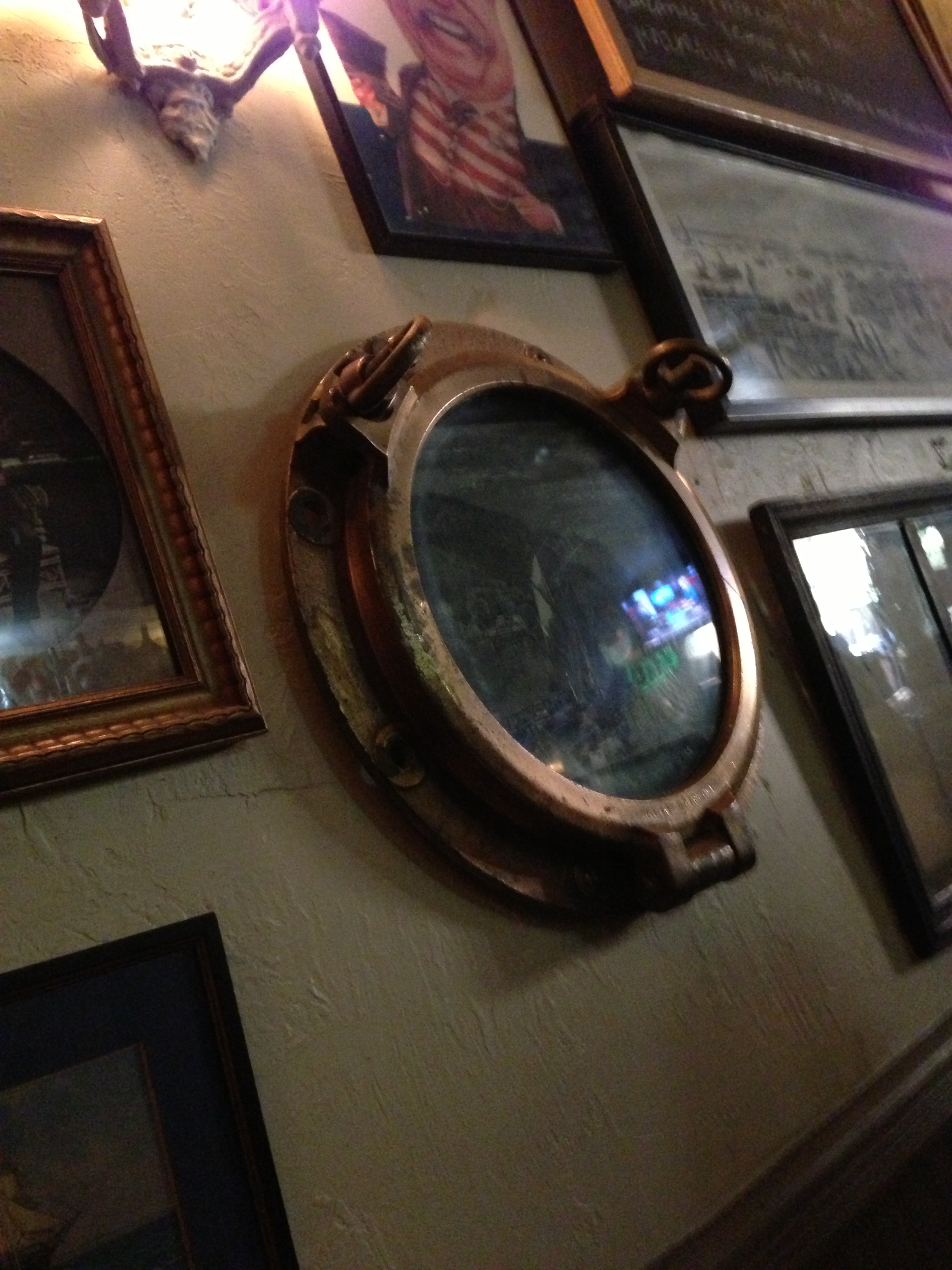
Later the building became a sailors’ tavern, then a speakeasy. There’s still a flavor of the nautical in the place, with brass portholes here and there.

porthole

It’s dark and a bit dusty.

ear inn indoors sign

You don’t go there for the food, but for the flavor of history. When new owners wanted to avoid a drawn-out landmarks review of their BAR sign in 1977, they changed the name to the EAR – but old-timers still call the place the Green Door. It’s the oldest working bar in New York City.

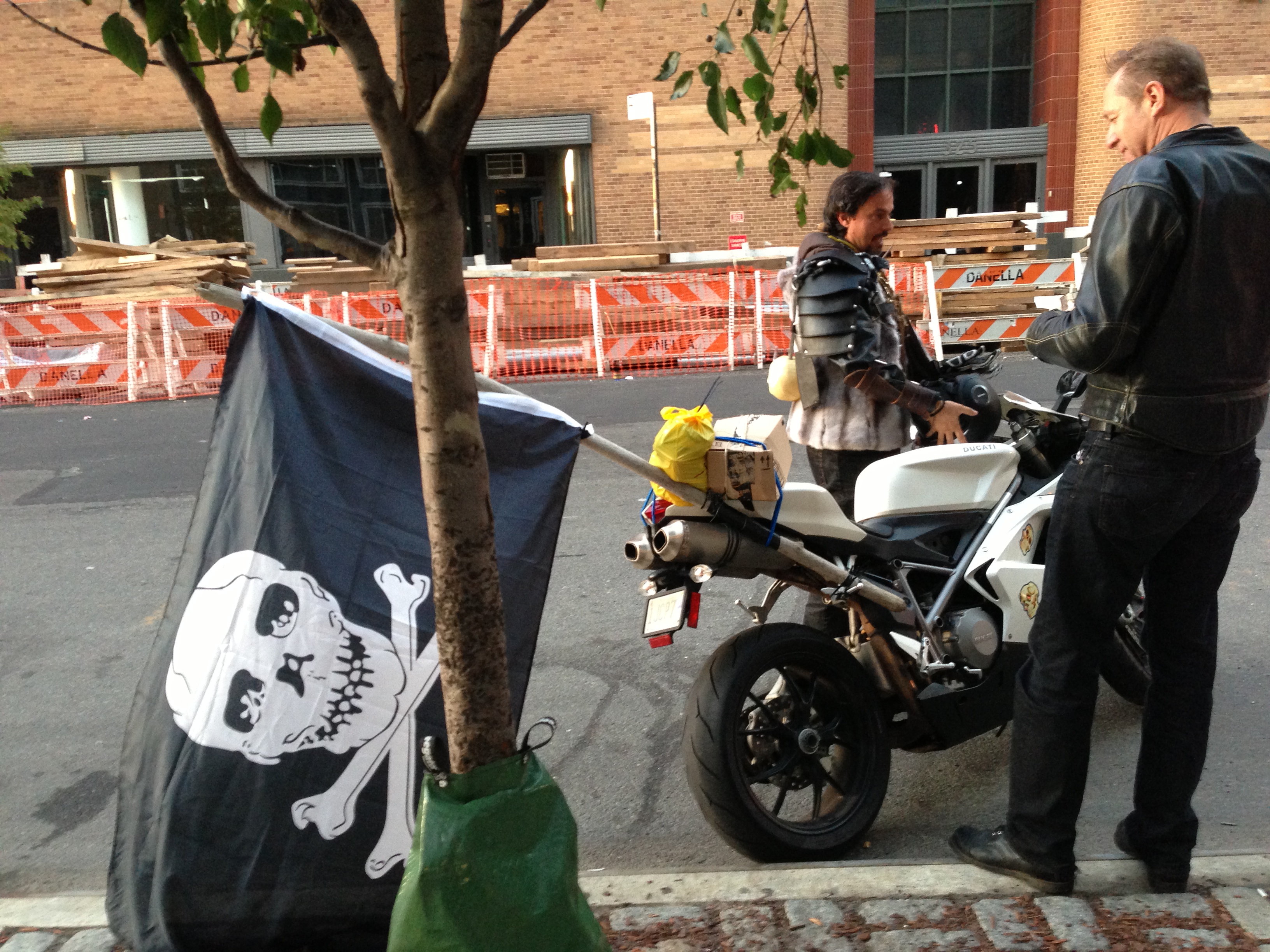
It was a logical old-timey place to begin a pirate romp, sponsored by  a gonzo motorcycle group called Biker Entourage, one that would assemble at the old bar, make its way up the West Side Highway to Times Square, toss those eyeballs, conduct some kind of crazy mock-swordfight in front of the no-longer-existing house of Captain Kidd on Wall Street and wind up at South Street Seaport. The perfectly logical premise: “Had these wheeled dragons been invented say 400 years ago, pirates’d be roarin through the streets with these wheeled dragons between their legs ‘n pegs sure as a shark loves a chumbucket.”

The only thing was, we found at the Ear Inn, the ranks of contemporary pirates were sparse. If dramatic.

pirate bike

There were a few individuals in leathers and pirate garb. Most of the patrons out on the sidewalk preferred the uniform of SoHo skinny chic.

two pirates

We saw a few cutlasses and some Halloweeny dangling skulls.

But no one threw an eyeball our way. The real New York pirates were, as always, down in the financial district. Everyone here was too busy lifting a brew to do much pirating, anyway. Much as it probably was back on the island of Sainte-Marie.

4 Comments

Filed under Art, Culture, Fashion, Film, History, Jean Zimmerman, Nature

A Catskill Idyll

I really ought to get out more. Even if out means going from a cabin to a cottage with an adjacent bungalow as I did this weekend.

It was the gray, cool weather of late summer, more like fall. The Catskill Mountains. The cottage had a quaint disposition, the pet decorating project of antiquarian friends of friends. Charm bloomed in corners. On side tables, one of which held a seal enraptured with a ball.

seal lamp

Windowsills offered various small collections.

small nest

Dramatically tarnished old mirrors lined the walls.

tarnished mirrors

We brought zinnias, butterscotch bars.

zinnias

Neil, the host, grilled chicken over wood. There was sweet aged bourbon for some. For me,  mango lemonade. A funny kind of tea, milky oat tops. Was it restorative in some way or just cut up grass in bags? Hard to say but worth gently debating. What music should we listen to? Everything sounded good.

milky oat

A fire glowing in the stove, a healthy stack of wood.

fire

Conversation about our kids growing up, finding their feet. About ourselves,  still finding our feet. Will we ever find them? Monopoly and pet play.

dog play

The shaggy, gloomy, romantic Catskills offered up their forests and creeks.

roots

Girdled, Neil the arborist says is the term for roots that entwine themselves like this. What about those trees, though, that entwine themselves as though in love? No special name, they just are.

entwined trees

Mushrooms gleamed against the mulch.

white mushroom cu

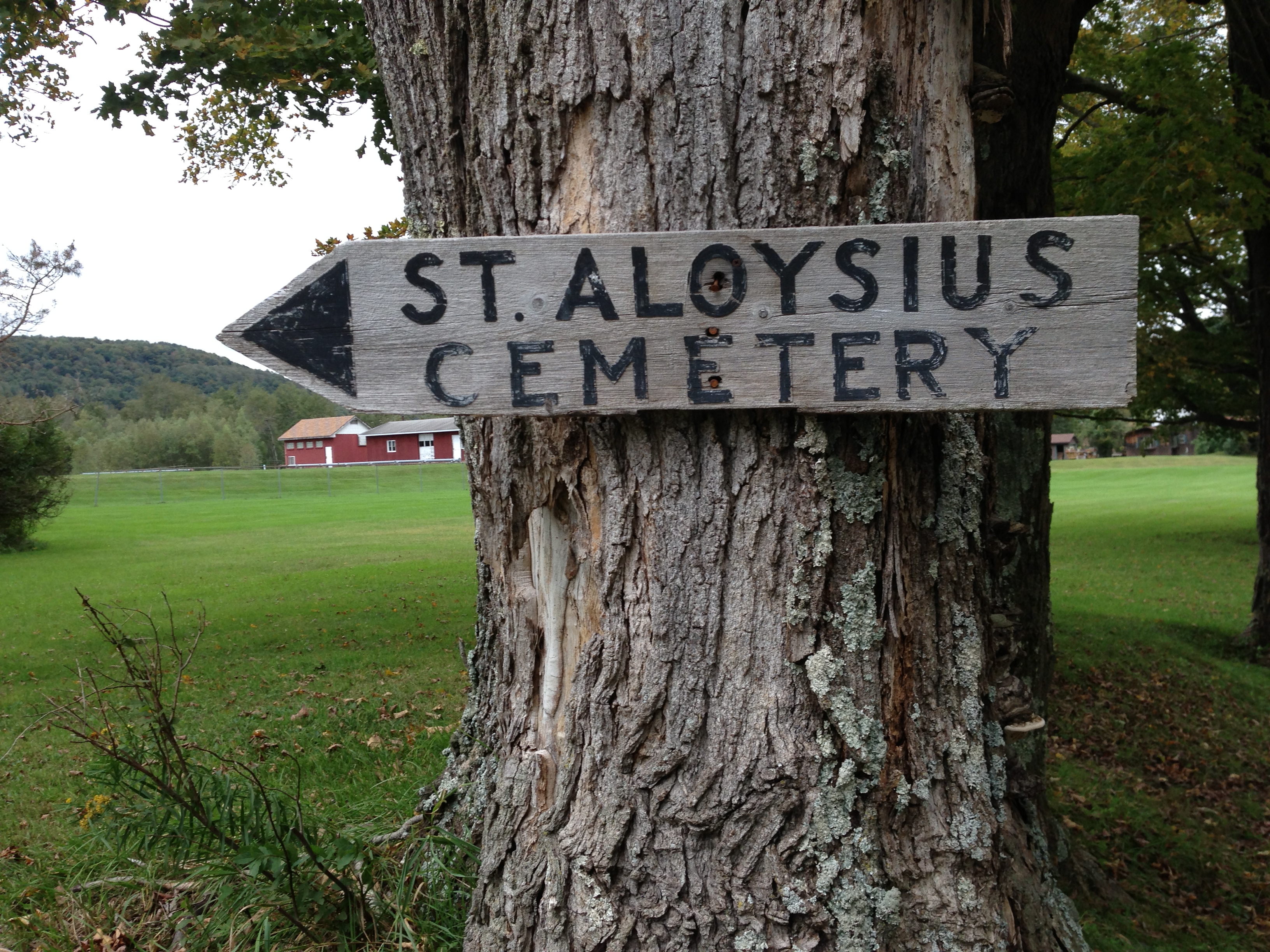
When the woods were so delightful we couldn’t stand any more, we took a drive through the weathered local community, Livingston Manor. An ancient graveyard, simply marked, appeared on Creamery Road.

st aloysius

Plain, as was the cemetery’s groundskeeping shed.

caretaker's

Something else simple appeared out of nowhere — a staunch old wood covered bridge dating to the late 1800s.

covered bridge

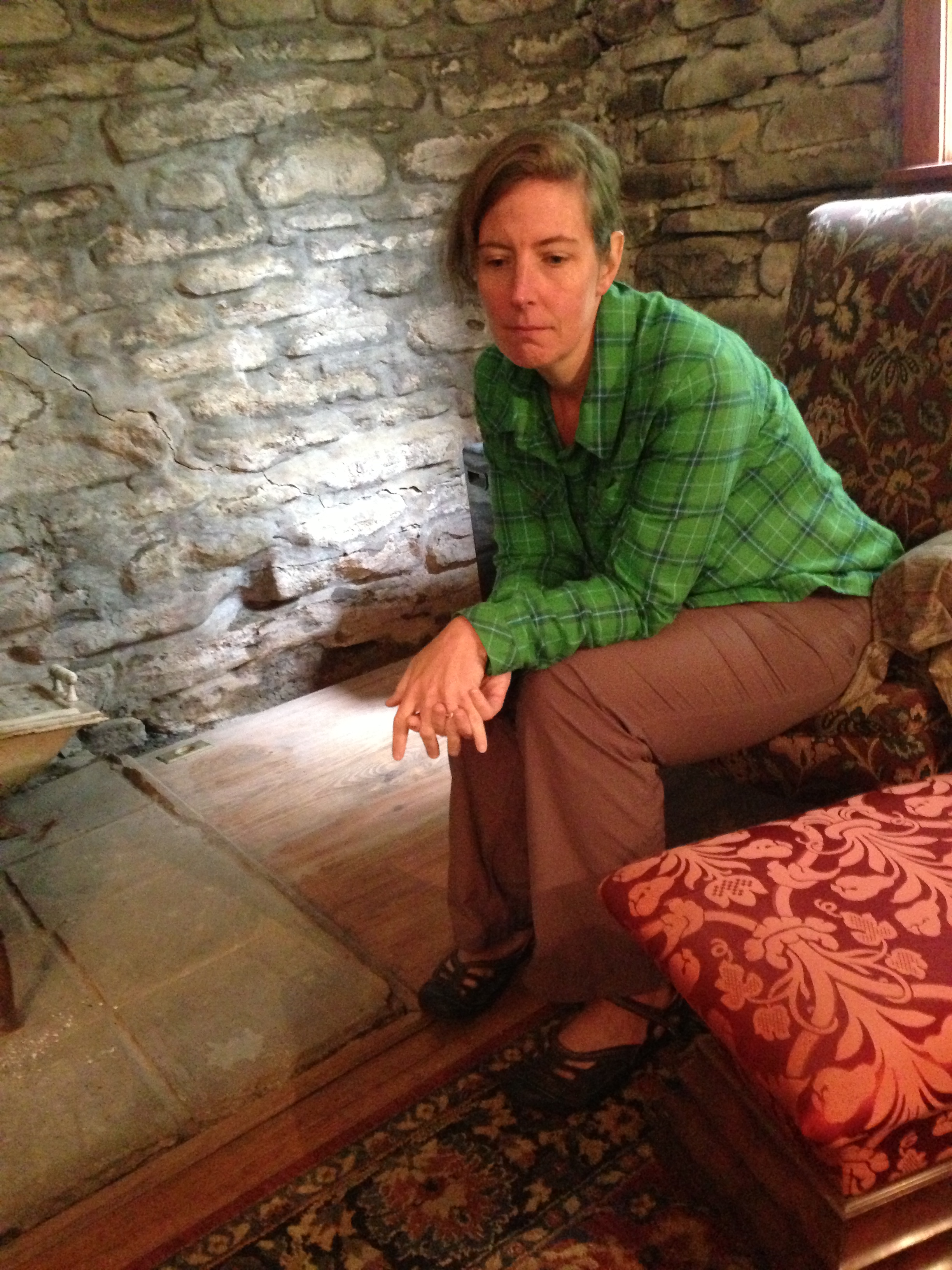
Sometime in the long afternoon I saw my friend Suzanne sitting by the fire, taking a pensive break from all the charm, the activity, the pets and children. The yap of conversation.

suzanne pensive

I thought of one of my favorite poems, perfect any day but especially for this place, the person, the moment: When You Are Old, by W.B. Yeats.

When you are old and grey and full of sleep,

And nodding by the fire, take down this book,

And slowly read, and dream of the soft look

Your eyes had once, and of their shadows deep;


How many loved your moments of glad grace,

And loved your beauty with love false or true,

But one man loved the pilgrim soul in you,

And loved the sorrows of your changing face;


And bending down beside the glowing bars,

Murmur, a little sadly, how Love fled

And paced upon the mountains overhead

And hid his face amid a crowd of stars.

3 Comments

Filed under Art, Cooking, Culture, Dogs, Music, Nature, Poetry, Writers, Writing

Pop Up Rules of the Game

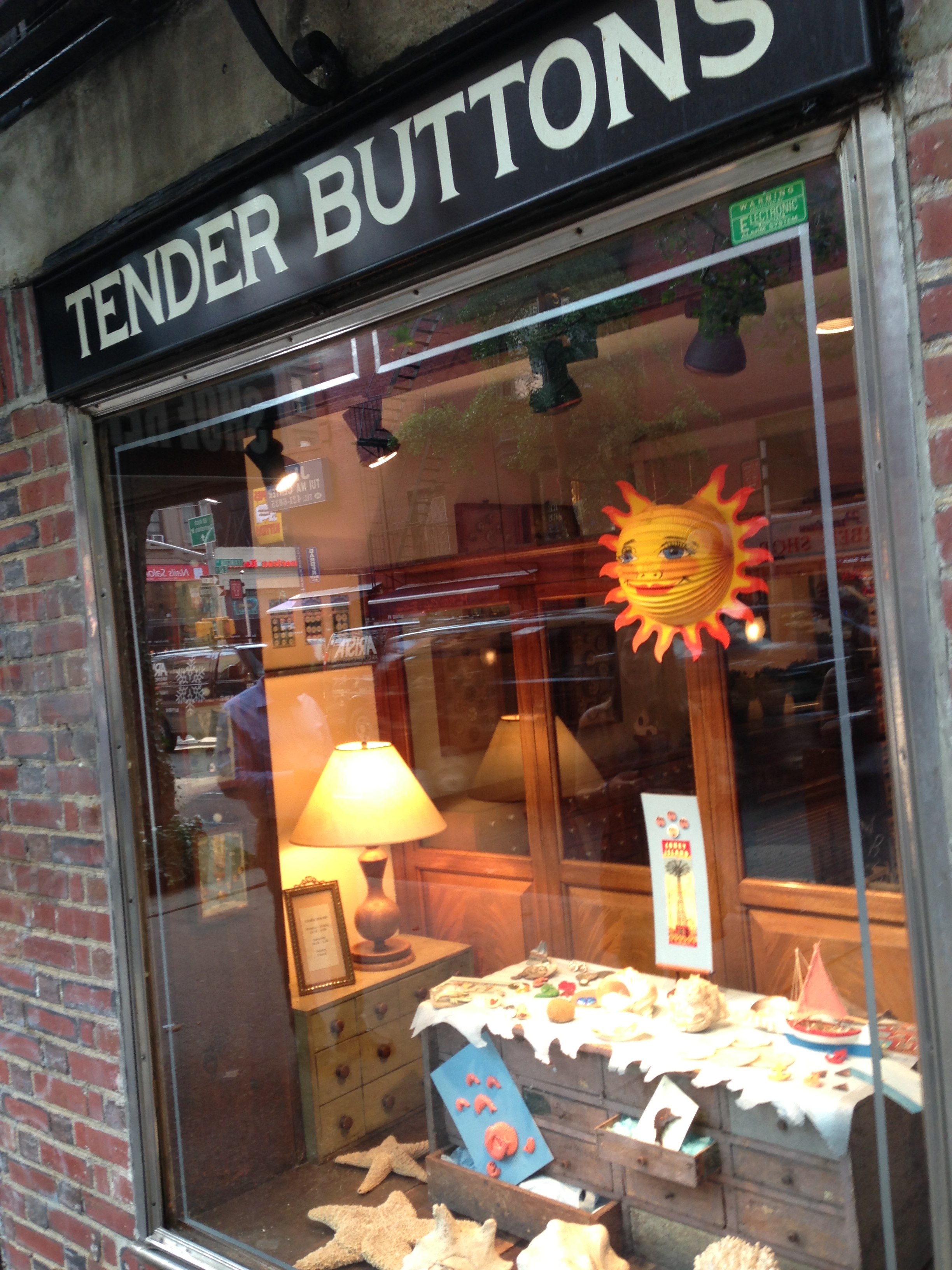
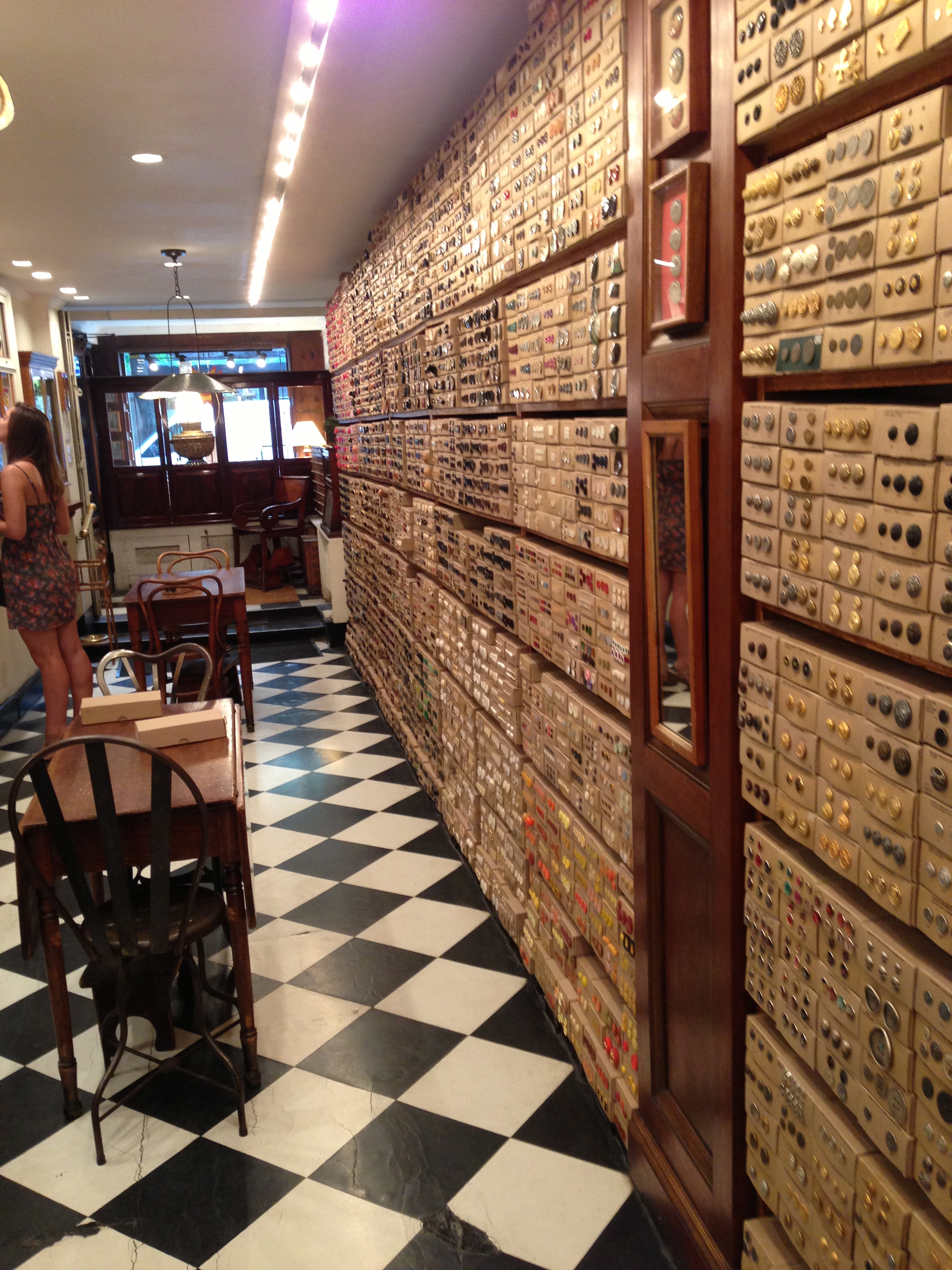
I wore my jacket for so many years the buttons started to blow. There was only one thing for it: pay a visit to Tender Buttons, just around the corner from Bloomingdale’s on New York’s Upper East Side.

tender buttons

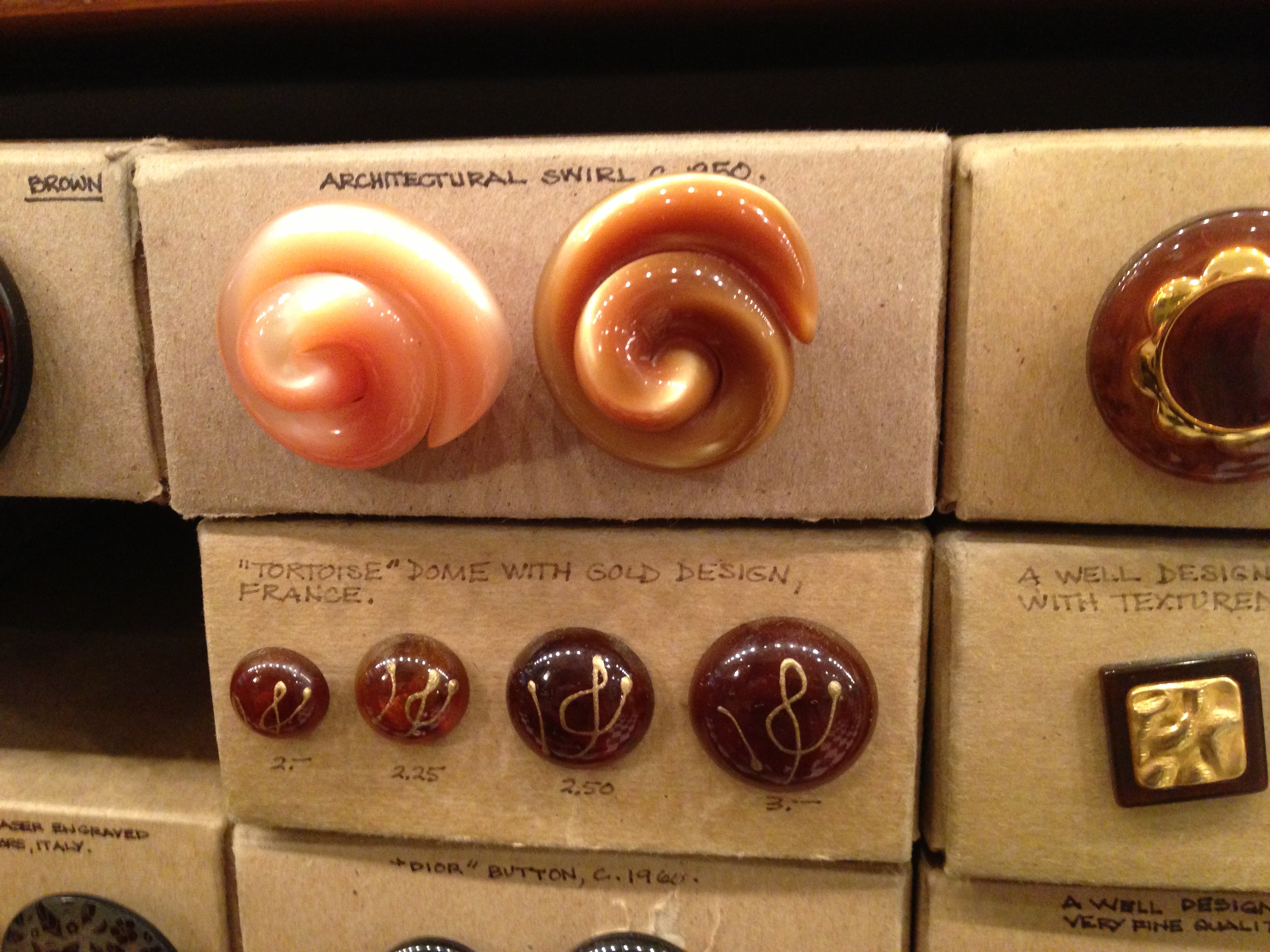
I collect buttons myself, the kind you happen upon at tag sales. None suited my jacket. Tender Buttons, named after an obscure volume by Gertrude Stein, stocks fancy buttons – something of an oxymoron, wouldn’t you say?

architectural swirl

You may browse as long as you like.

pink buttons

Until you are bewitched, bothered and bewildered.

yellow buttons

There are too many choices. You may be tempted to take some of the children’s beauties home even if you don’t have a child.

child buttons

Bone, horn, leather, plastic, wood. Maud and I tried to take it all in. What is the fanciest button you sell? I asked. That would be the Swarovski crystal, said the sales clerk a little primly.

store interior

I loved the scrimshaw, carved scenes on aged walrus tusk. Price point out of range for me however. And who wouldn’t like the limited-edition artist-painted scenes from Alice in Wonderland, one to a button. You’d be telling a fantastic story as you walked down the street.

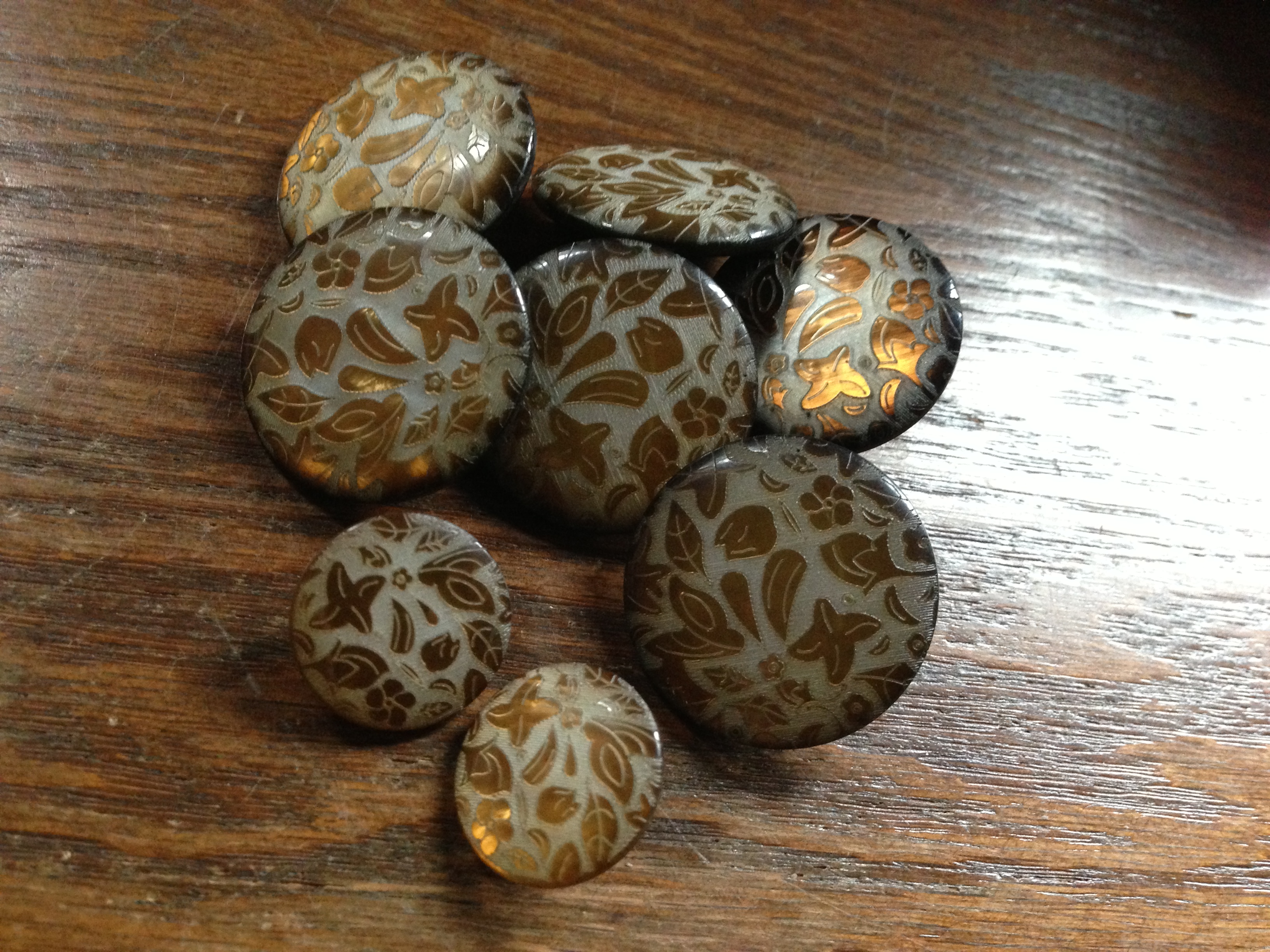
I settled on the finest buttons in the store, fortunately less fancy than some but French, crafted of glass.

jean buttons

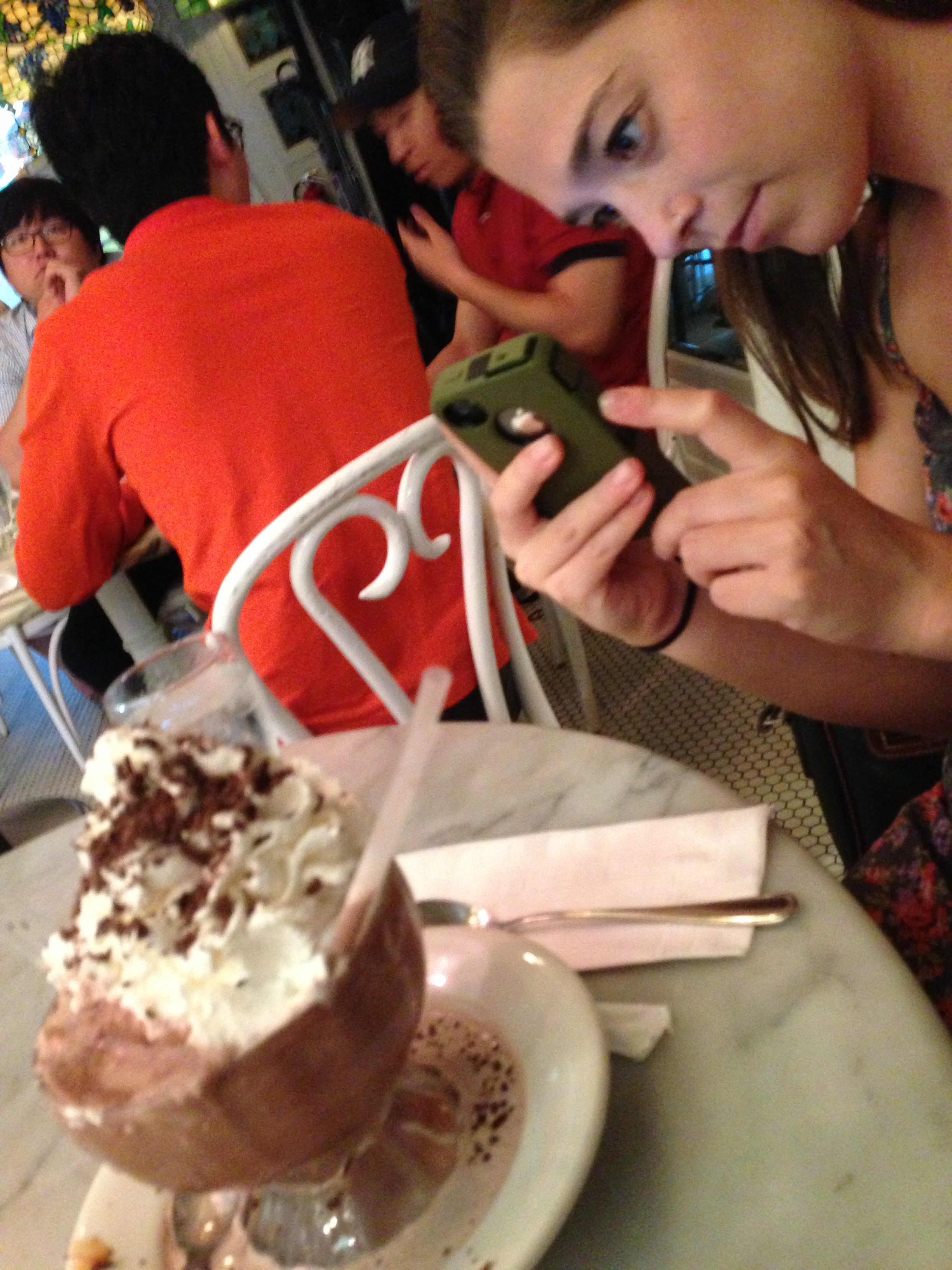
We had fortified ourselves for this venture, Maud and I, with a stop at Serendipity 3 just down the street, which was serving up frozen hot chocolate in giant goblets. Worthy of many photos.
serendipity picture

We shared the over-the-top, whipped cream crowned confection over laughs and confidences.

Then stole away for a treat, lipstick from the people who know how to make lipstick, carefully chosen with our particular lips in mind by a greenly eye-shadowed Bloomingdale’s salesperson.

lipstick

A woman needs a French lipstick in her arsenal. Maud’s made her look more mature, mine made me look less mature. Perfect.

Dinner was a celebration at a pop up steak restaurant that had been relocated while its premises were renovated.

redfarm blackboard

To a laundromat downstairs.

laundry

Gil has a new project, a collaboration. So we toasted him with hot crunchy egg rolls stuffed with pastrami from Katz’s. Chicken-fried chicken stuffed with shrimp. Baby shitake mushrooms, nude and slathered in a slick garlic cream sauce. And a blazing red shellfish casserole roasted in a banana leaf tureen.
banana leaf

I don’t eat crawfish.

crawfish

So there was plenty for Gil and Maud

gil maud redfarm

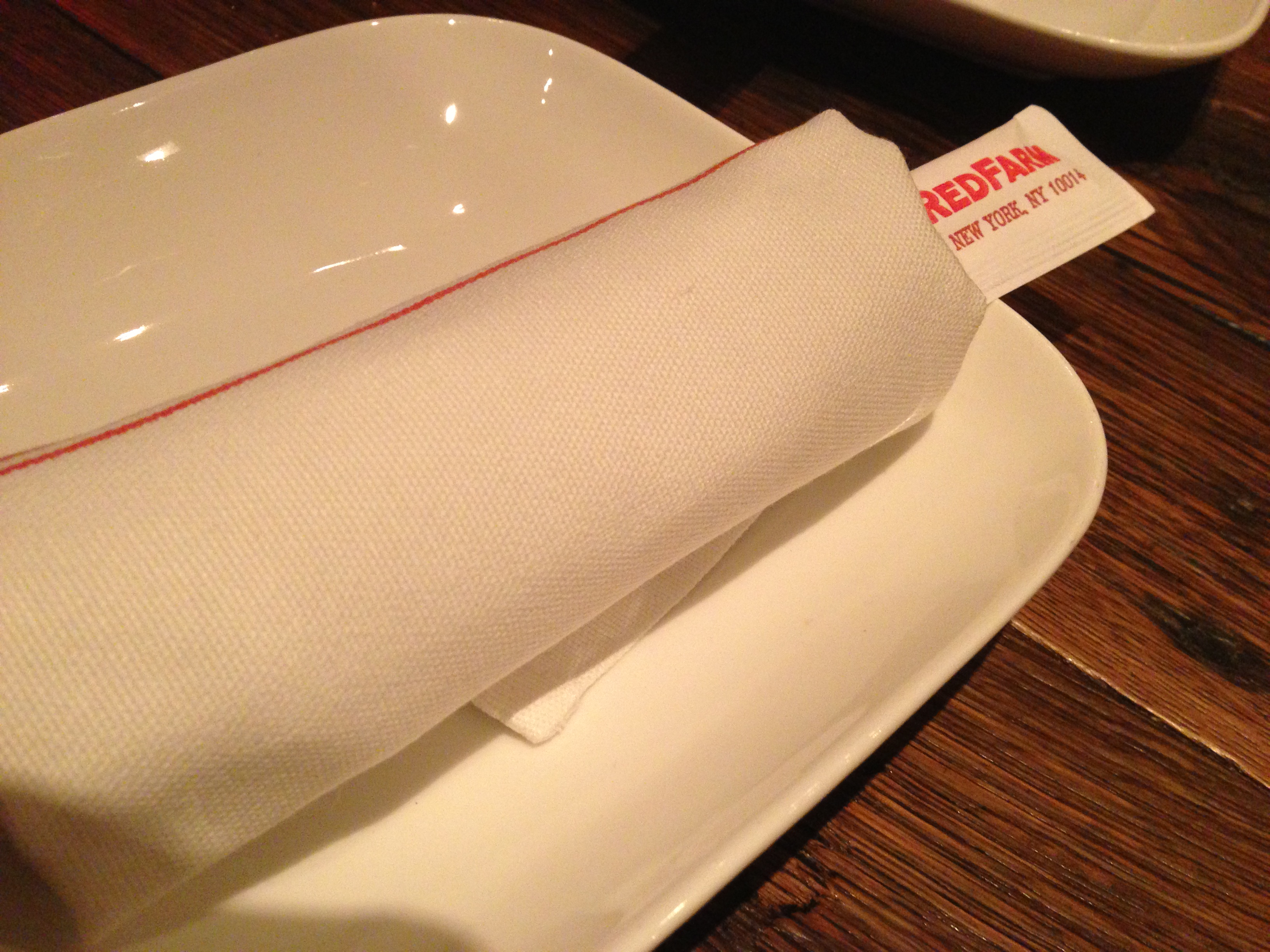
And perfect steak, of course, all served around a farm table with dish towel napkins that were quite well used by the end of the meal. If the place reverts to a laundry they’ll have their hands full.

napkin

We had cooked up a plan to go try “spaghetti ice cream” at a place down the street – ice cream forced through a culinary fun factory, with ice cream  meatballs.

enhanced-buzz-16071-1378422061-10But a downpour hit as we stepped out the door at Redfarm. We quickstepped by the illumination of lightning flashes to the car. Oh my aching foot.

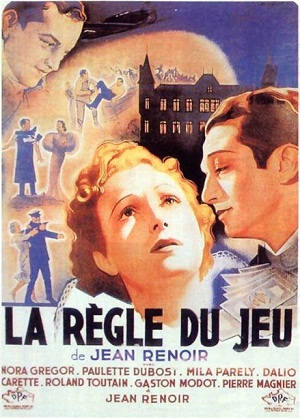
Later, sunk on the couch at home with my leg up, I watched Renoir’s Rules of the Game, the story of rich Parisian twits and their foibles in a country house one fateful fall weekend, putting on amateur theatricals, falling in and out of love, shooting rabbits as well as each other.

La_regle_du_jeu

Elegant buttons, luscious ice creams, lobster, premium lipstick… these are all things Christine, the protagonist, would be well acquainted with as often as she pleased. Run of the mill, ho hum. For us, a one-day treat was extravagant… and enough.

3 Comments

Filed under Art, Cooking, Culture, Fashion, Film, Jean Zimmerman, Photography

Kitchawan Dragonflies

Are dragonflies magic? My favorite insect, I think.

green

Humans have always had a fascination with them. We were creating amulets of the insects back in 1640 B.C. Egypt.

dragonfly amulet, egypt, 1640 bc, faience

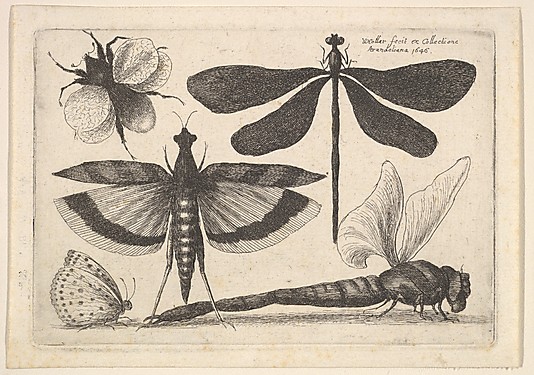
They’re prehistoric. Ravishing to look at. Voracious hunters. Fascinating to artists, like Wenceslas Hollar, the great 17th century lithographer.

Wenceslas Hollar, 1646

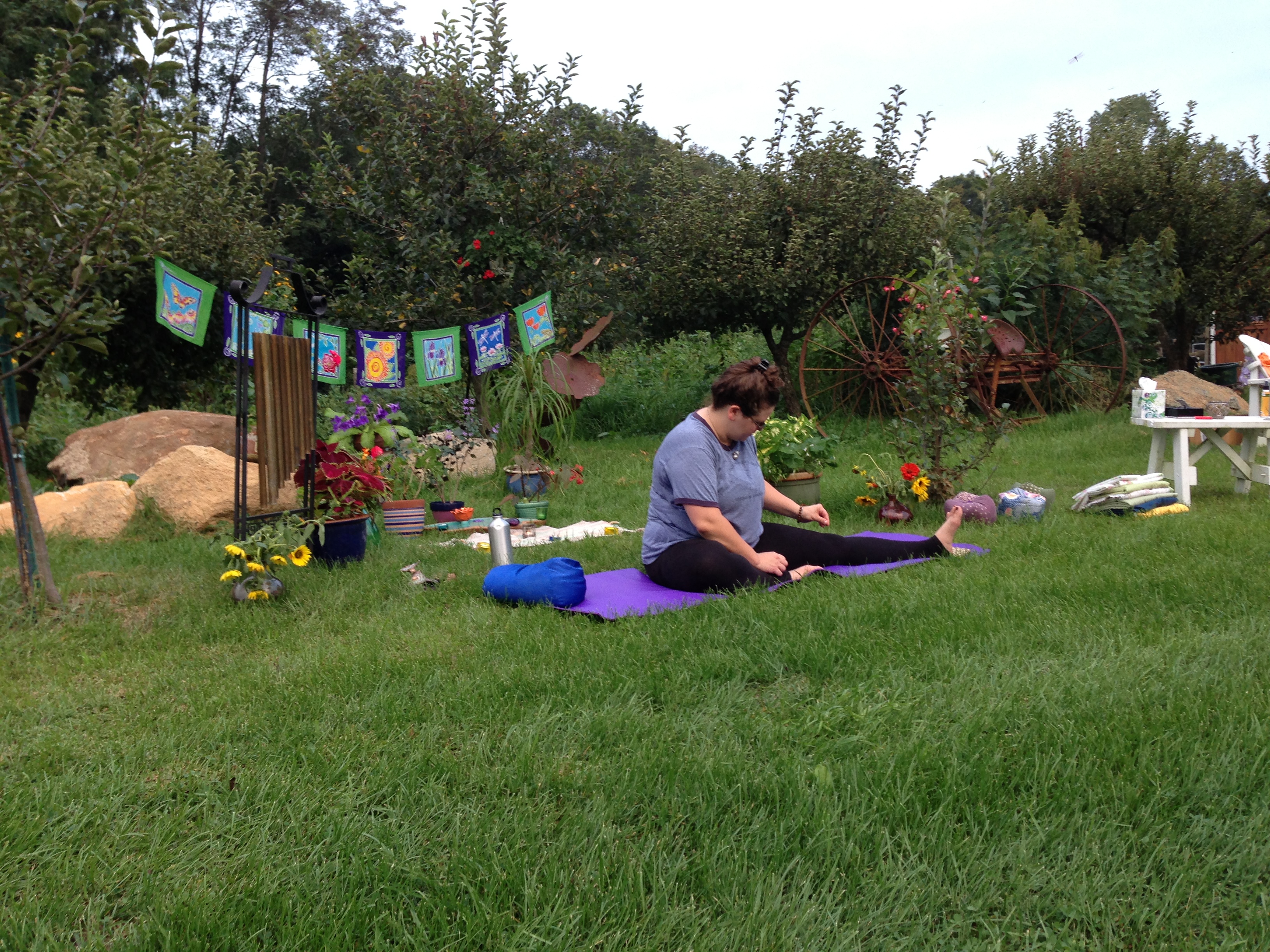
A cloud of hundreds of dragonflies swelled over our heads at the outdoor yoga class offered at Kitchawan Farm in the early dusk. The farm, in Ossining, was a place I’d always wanted to visit. It was September 11, and the class was free to whomever wanted to drop in, a way to mark the day.

Kathleen Clarke led the group. She usually was an instructor at Dragonfly Wellness nearby. Perhaps she brought the bugs?

Kathleen

I brought my boot and a desire to stretch my tight, tired muscles, sick of sitting with my foot up for six whole weeks. We laid out our mats, the dragonflies zooming and booming above.

I didn’t know if the people there would be nice about my infirmity. Maybe they’d be yoga-fascists, insisting on fast, sweaty gyrations, on keeping up a certain pace. But as soon as we set up, a woman hurried over to offer me a plastic chair in case I needed it. It turned out to be Linsay Cochran, who manages this century-old family farm. So gracious, and so welcoming.

There was a meditation to begin, and Kathleen suggested we think not so much of September 11, but perhaps more important, September 12. What did we do in the wake of the tragedy? I thought about the 11th, watching the flames all the way down the Hudson, scoping from Hastings to New York City from the lawn next to the library, the dawning dread that this was real. But September 12th – what did I do, actually? I think the day was about our shared shock, but also about the difficulty of explaining what had happened, to myself but also to my nine-year-old daughter.

shrine

At Kitchawan, in the dusk, we stretched our arms to the graying sky, held our hands in prayer position, again stretched our arms to the sky.

My Frankenstein boot presented no problem. Kindness, I felt, made my awkwardness a nonissue.

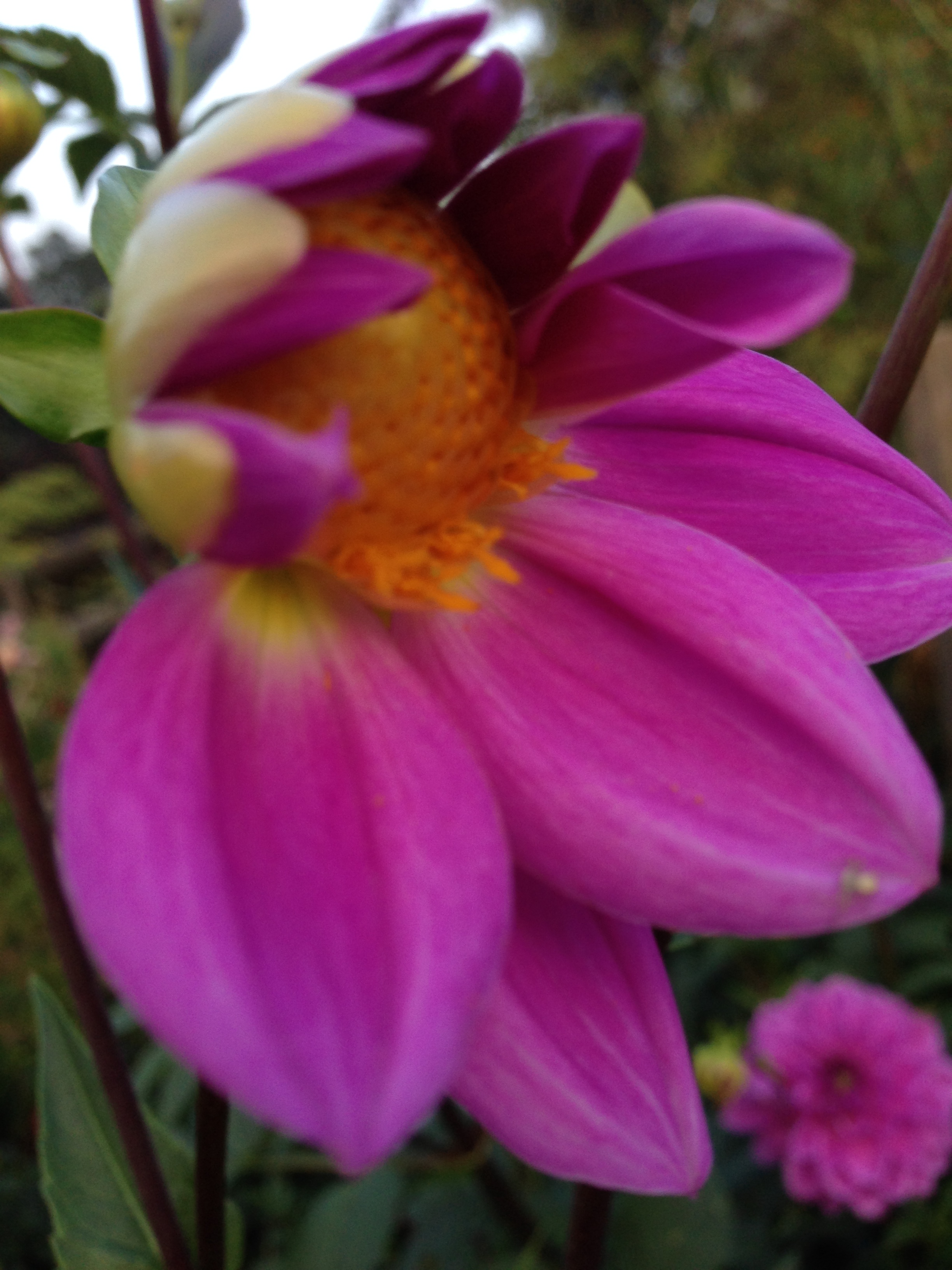
Kitchawan Farm has 20 acres, and specializes in flowers as well as vegetables and herbs. The blooms of later summer were all around.

pink flower

“There shall be eternal summer in the grateful heart,” wrote Celia Thaxter, a popular gardener/writer of 1890s New England who is now, like so many women writers of that time, largely forgotten. If you are in need of eternal summer, give Linsay some advance notice and she will a bouquet for you.

fuschia flower

Gil and I had wandered the rows when we first arrived. Decided on chard for dinner.

chard

They’re mainly a CSA operation here at Kitchawan, and some people were coming to pick up their shares. Others picked up their wild, sweet children from the little summer camp there.

patty pans

Late-season bounty crowded the tables.

carrots in tub

We bought garlic from a  young woman in the “stuga” (Swedish for cottage), two of a half dozen varieties. A garlic house, how charming.

siberian red

Wished we could get closer to the horses – the farm boards 10 but they were all off behind fences in their horse dreamworlds, munching grass.

Gil had gone to walk in the woods of Kitchawan Preserve while I levitated under the dragonflies.

Linsay, laying out on her mat, was constantly attended by her large, gentle dog Pogo.

When the sun salutation came, I knew my foot was spent, so I moved my stretched-out body over to an Adirondack chair and watched the dragonflies recede.

grey sky farm

I inhaled the scents of manure and herbs. Listened to the horses snort, the excited hens and rooster and guinea hens vocalize. I heard Kathleen taking the little group through the final meditation, murmuring a narrative that was all about compassion, gratitude, virtue, healing others. There was so much good feeling here at Kitchawan, they could sell it in bouquets by the roadside. Or, I guess, give it away.

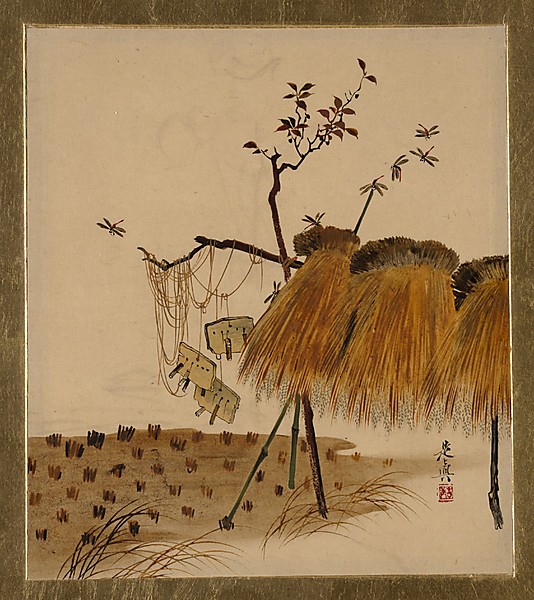
Being able to heal others. I don’t know about anyone else there, but I felt a little healed. My foot was tired, but my soul weariness had been transported away by dragonflies.

shibata zeshin


5 Comments

Filed under Art, Culture, History, Home, Jean Zimmerman, Nature, Photography, Writers

Taking Back the Streets

When I was around 25, I used to walk to work each morning across 19th Street to a new job I had at a think tank that focused on women’s corporate advancement. Here I applied myself as an editor. The offices were not especially glamorous, but all the staff made an effort to look professional.

I remember getting up in the morning, putting on my silk blouse, my blazer with its padded shoulders (this was the mid-eighties), pantyhose, mid-height pumps. Making up my face. And starting off west along the quiet side street to my job.

Past the school playground. Past the Korean fruit stand. Past the old-fashioned brownstones. Past the construction site.

The construction site. And it was here that it happened. Every day, cat calls. Nothing out of the ordinary. The basics, hey mama, chiquita, etc., including the one I disliked the most: Why don’t you smile? C’mon, smile.

Really, was this a big thing? It didn’t have a devastating impact on my life. But I recall struggling to answer the question for myself, at my desk, as I edited papers exploring how women struggled to cross barriers in businesses dominated by men. All I knew is that the experience of being called to on the street somehow turned me inside out, upside down, made me feel as if all that pride I’d felt getting dressed to go to my fancy job had been smeared.

That was a long time ago, but it crosses my mind once in a while.

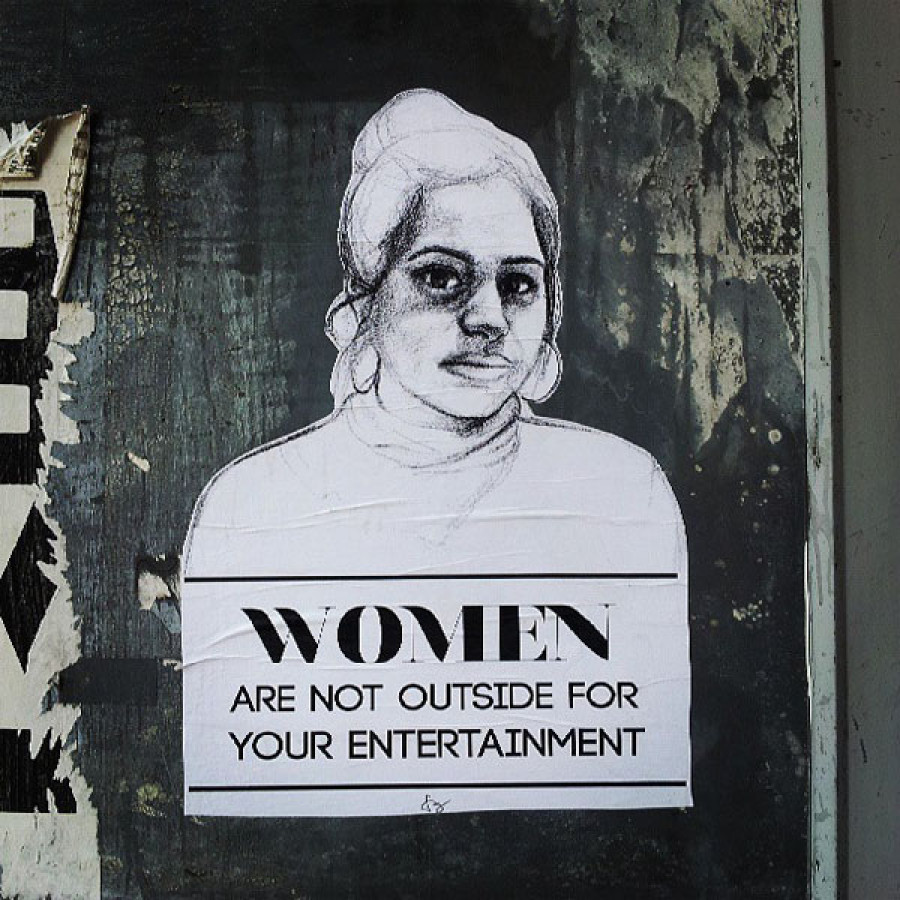
So I was pleased to see an artist dealing with cat calls in a way that makes sense. Brooklyn-based artist Tatyana Fazlalizadeh  has created a project titled “Stop Telling Women to Smile” that places portraits of women in public places with captions like “My name is not baby.”

my  name is not baby

How about “My outfit is not an invitation”? Or this one. I think these are great.

not outside

So far Tatyana Fazlalizadeh’s posted her drawings in Philadelphia and Boston. The project is called “Stop Telling Women to Smile” or STWTS.

stop telling

This goes a long way, somehow, toward compensating me for those cat calls of long ago, making me feel as if someone is taking care of women on the street the way I felt in that long ago time and place that I was looking out for women in the workplace.

6 Comments

Filed under Art, Culture, Jean Zimmerman

Mementos in a Vermont Boneyard

Peter Zimmerman continues his ramble through New England, shooting some images our way as he goes.

TODAY I LUCKED OUT (writes Pete).  Not only did I have the Old First Church of Bennington, built in 1762,  all to myself, but then I had the audience of its pastor, the Rev. Kenneth A. Clarke, as well.

I had been poking around the old boneyard adjacent to the cemetery before trying the door to the church and finding it open but “No One home.”

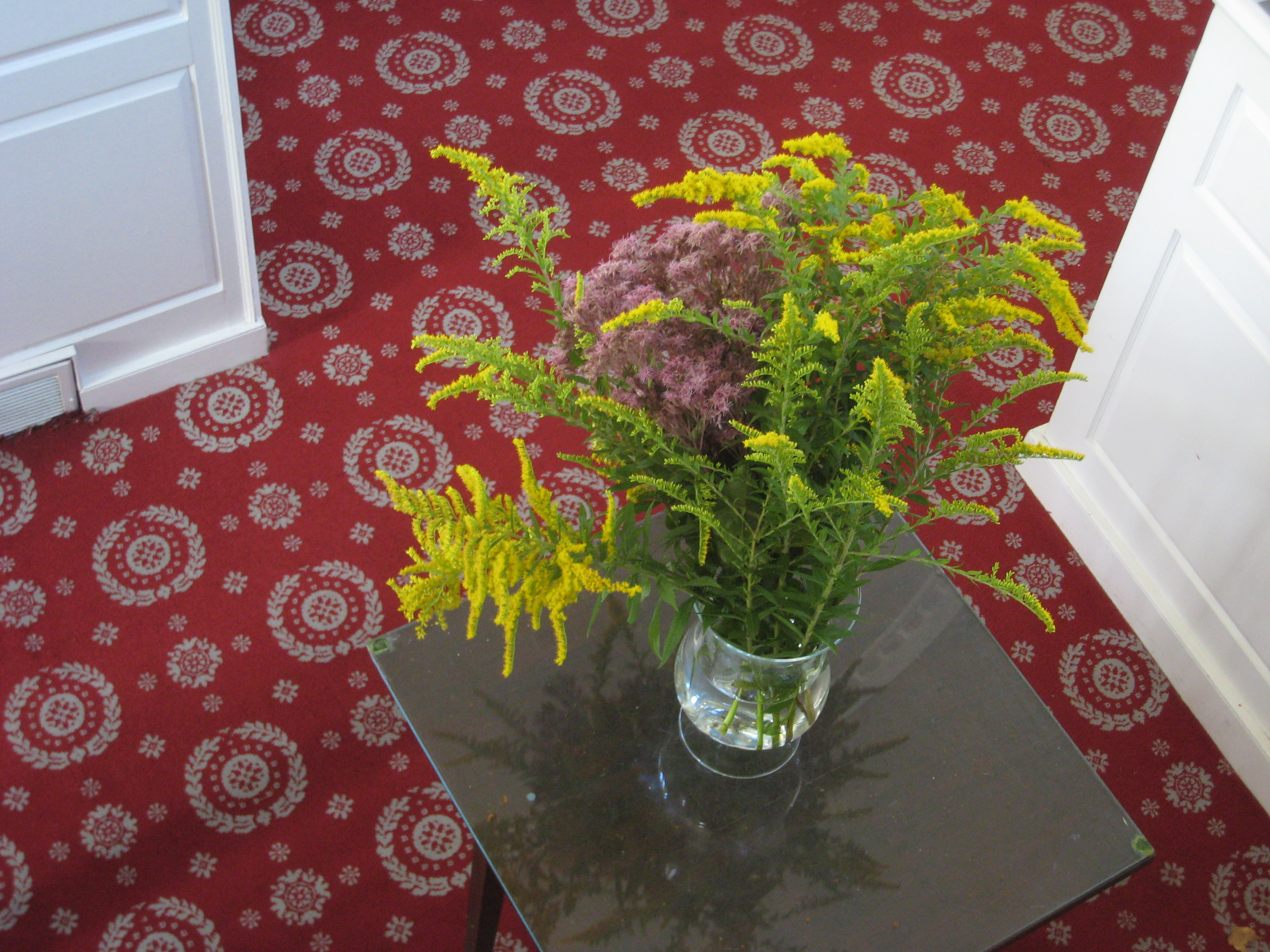
Inside I found a vase of simple goldenrod.

goldenrod

The flag of Vermont and Old Glory were standing on either side of the pulpit.

vt flag

One thing was conspicuously absent: any kind of Cross or statue of Christ.

whatsmissing?

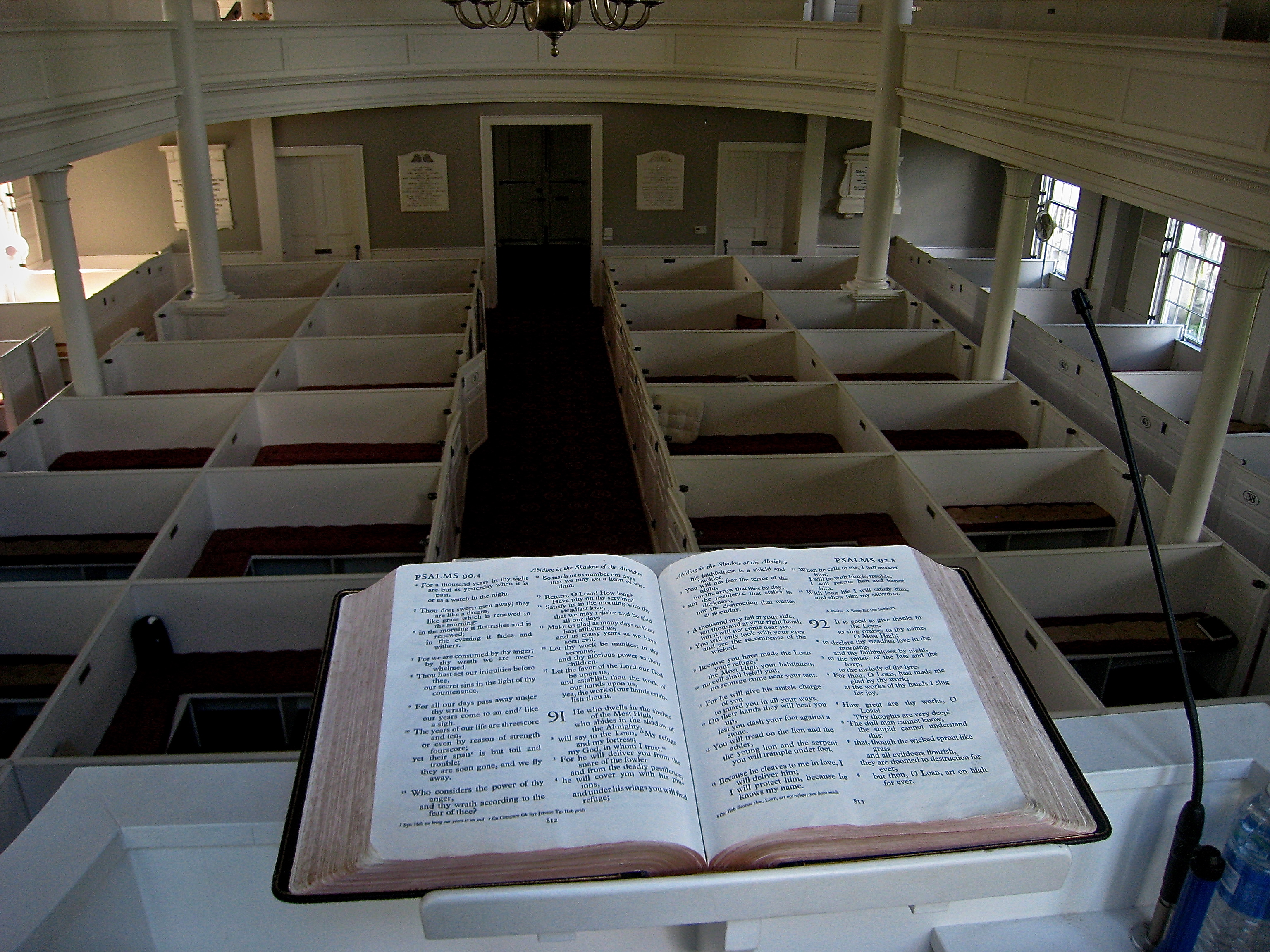
I couldn’t resist climbing up the stairs to the top of the pulpit.

pulpit

A large Bible was turned to Psalm 91.

psalm 91

The tools of the trade. Reverend Clarke told me  that other people climb up there, too, and sometimes leave the volume open on a different page.

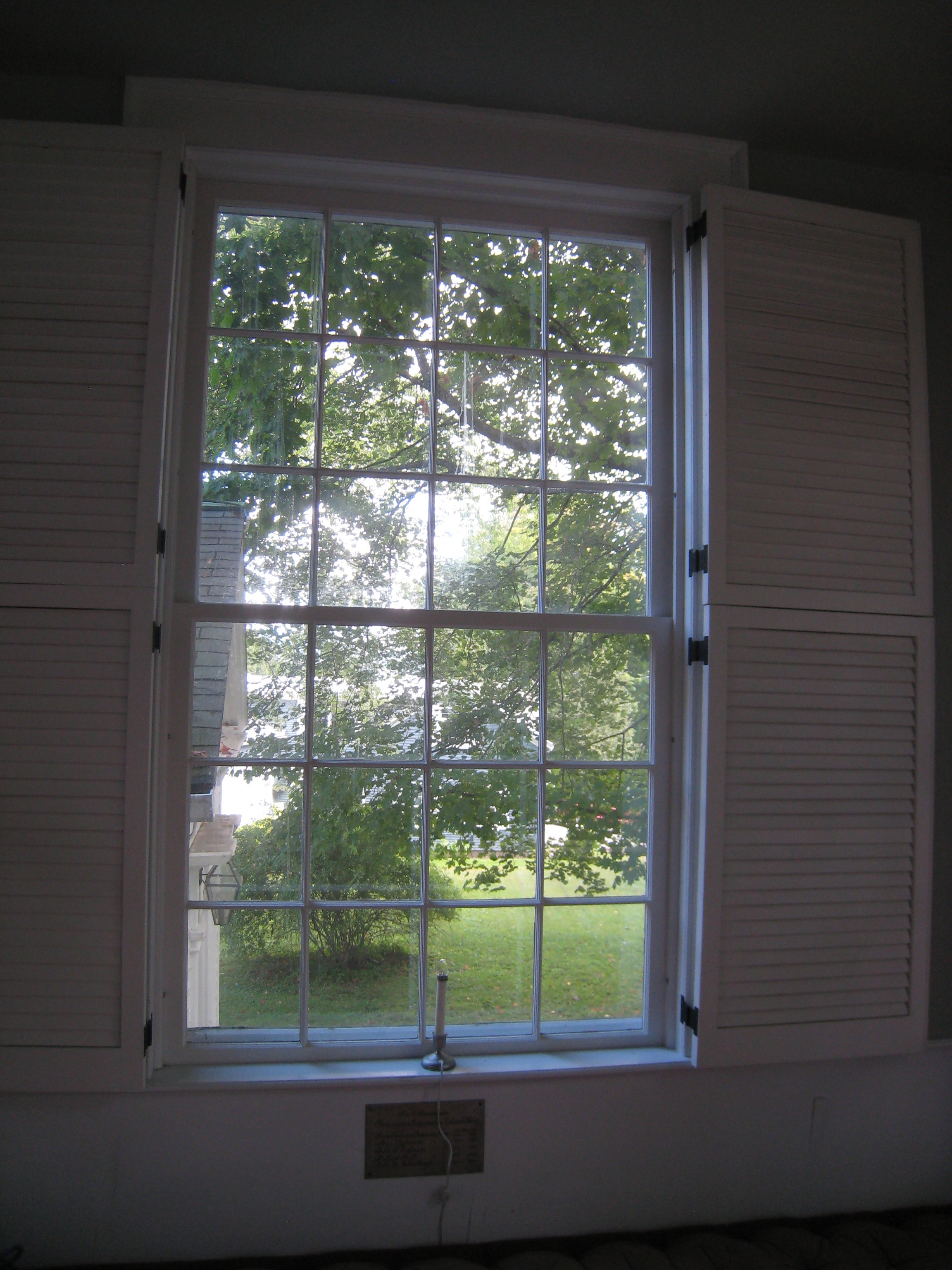
lectern The windows are clear glass rather than stained for a simple reason. Back in the days before electricity, they let more light in.

window

I found a very old foot-warmer in one of the box pews (as opposed to regular old slip pews).

footwarm

pew

Here is pew number 9, number 9, number 9….

number 9

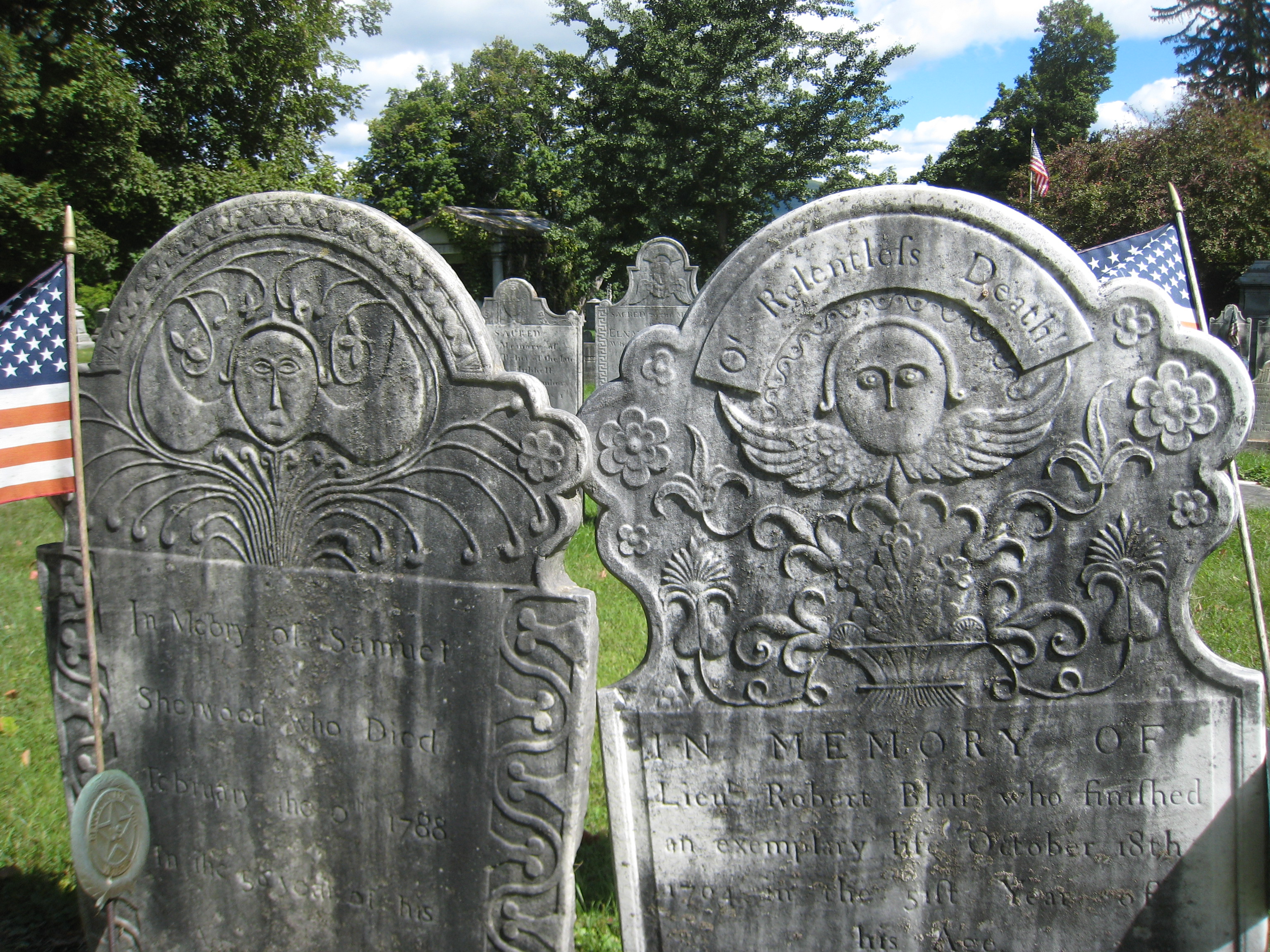
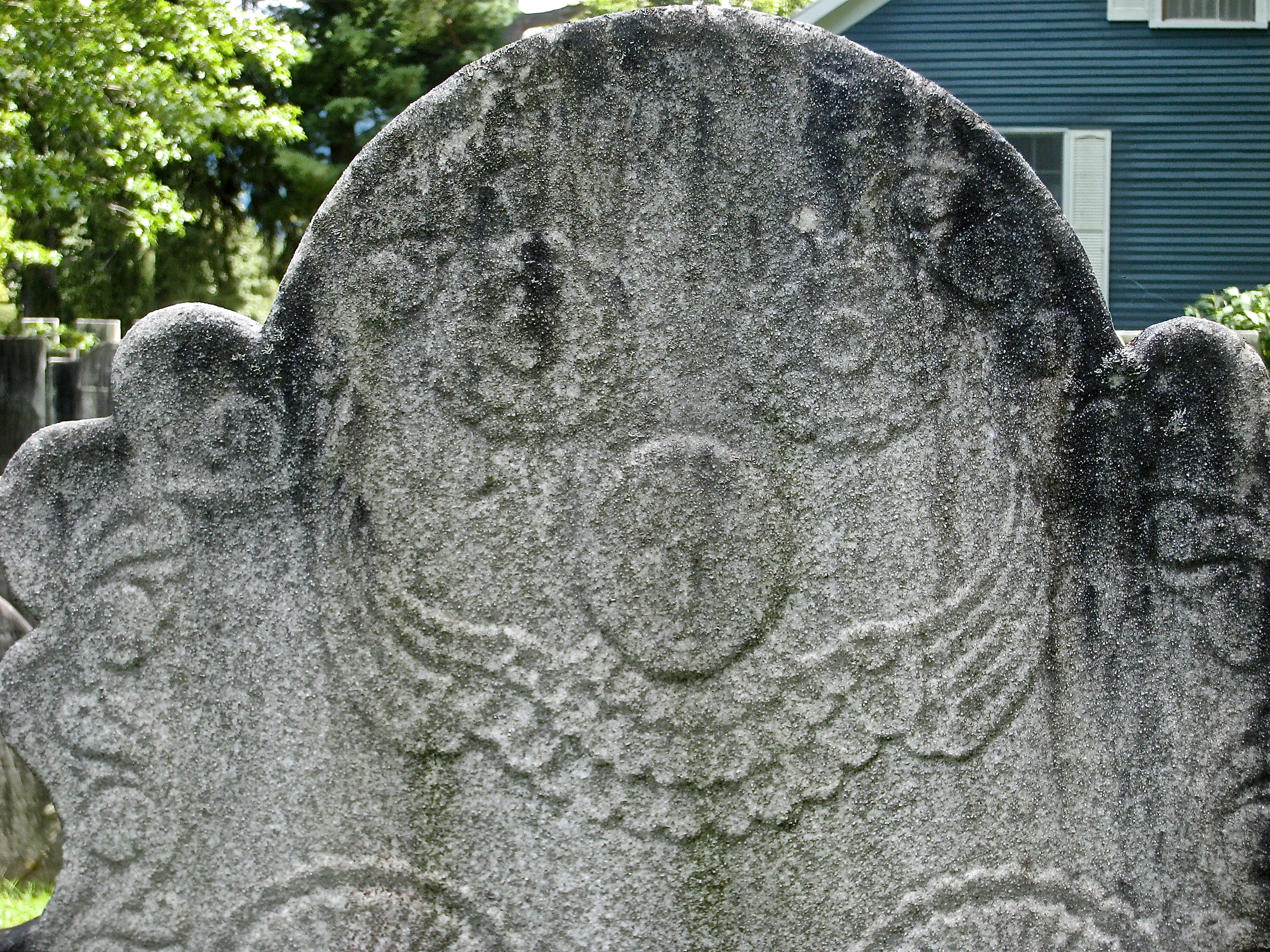
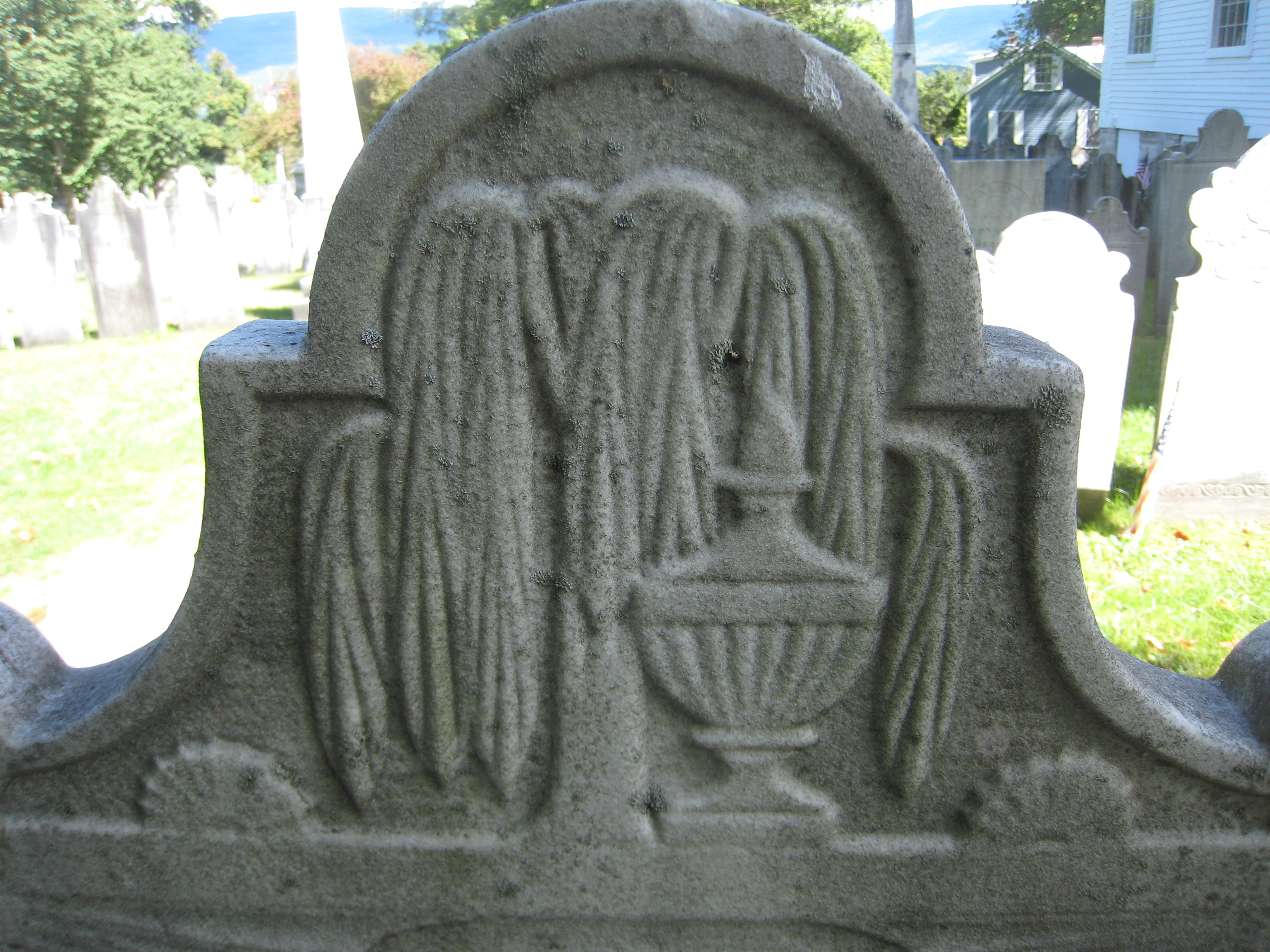
I asked Reverend Clarke about some of the headstones I had seen in the graveyard. Many of them were decorated with “ascending angels,” which came into vogue after the skull-and-crossbone style, and were followed by the weeping willow.

angelheads

One of the ascending angels bore a distinct resemblance to Groucho Marx. Rev. Clarke laughed and said he hadn’t noticed that.

groucho

Robert Frost is the most famous inhabitant. He and his wife Elinor share a footstone with two children.

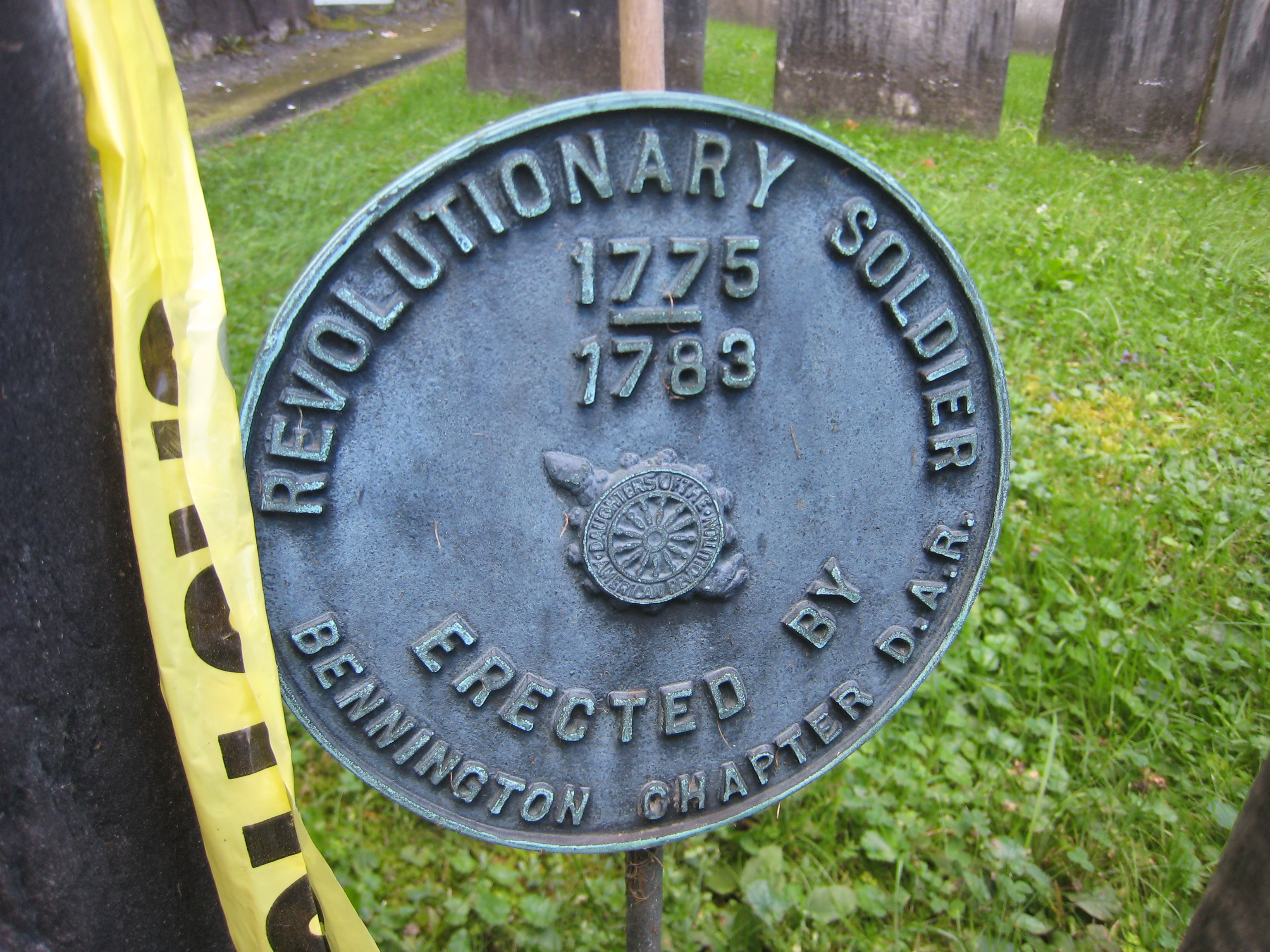
There are lots of Revolutionary War-era soldiers and patriots, but not Ethan Allen or Seth Warner.

rev plaque

Five of Vermont’s Governors can be found here, the female’s first female settler, Bridget Harwood, and some fellow who drowned on the Titanic who used to work as a herdsman on the Colgate family estate (I got the last one from the Reverend). The first person buried in the cemetery died in 1762, when George Washington was a mere 30 years old. I wanted to know whether a person could STILL be buried here. Yes and no, says Clarke. Your family has to already have a plot. And spots are tight, he said with a wink.

willow

2 Comments

Filed under Art, Culture, History, Jean Zimmerman, Nature, Photography, Writers

A Step Forward

The last morning with the cast.

cast

The orthopedics waiting room was full of people bracing themselves with canes, crutches, wheelchairs. No scooters, though. The Bloke has been a loyal companion, but one I was glad to banish. And in a way it was sad to say goodbye to the graffiti. I was accustomed to that bit of funky glitter.

cast cu

Gil and I entered what the nurse called the Cast Room. Tools awaited me on the table.

tools

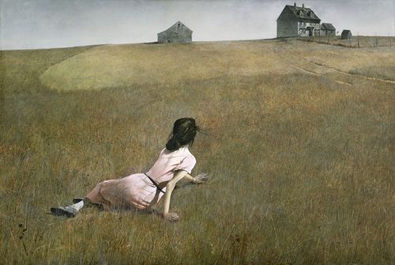
I was thinking about Christina’s World, the Andrew Wyeth painting of a woman in a dress dragging herself up a grassy hillside toward a grey frame house. The portrait, I recently learned, was based on an actual woman named Christina Olson who had polio and eschewed a wheelchair, instead crawling everywhere. Wyeth was inspired when he spotted her on the ground from the upper window of her family’s house.

Christinasworld

In the Cast Room, I didn’t know what would happen next, but I knew I would not be crawling afterward. I never fully realized until now what it means to not have the use of your leg/s. And I’ve only had six weeks of deprivation! You want so much to go independently, to crawl across a field if like Christina it takes crawling across a field. I could understand that drive.

I just wanted to walk across my living room.

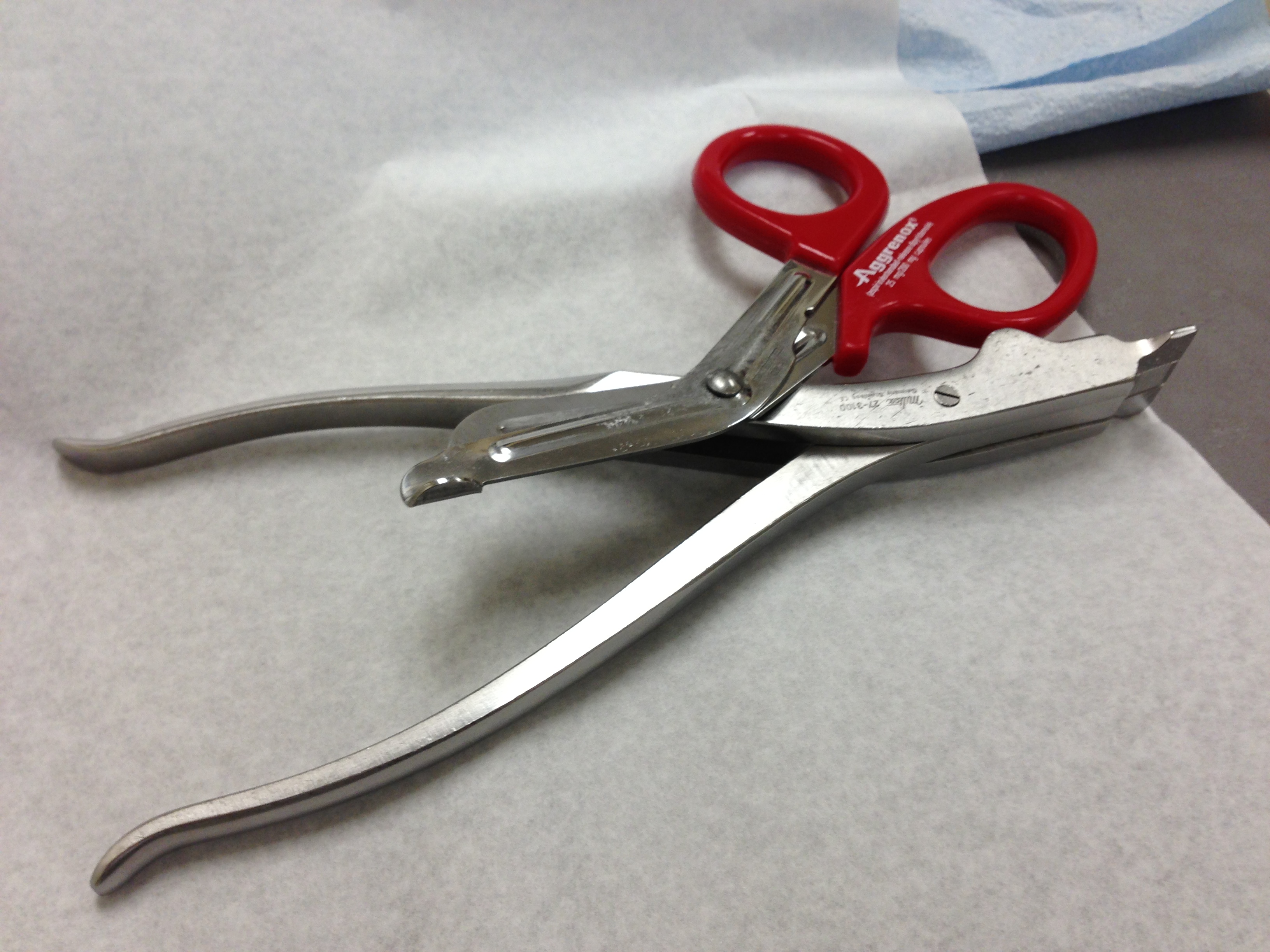
The tool Dr. Voellmicke used to cut my cast neatly in two resembled a delicate jig saw, and I hoped it wouldn’t nick my leg as it buzzed. He clipped off the gauze.

My foot and ankle were tender and swollen. There was still purple marker from the surgical incisions. I didn’t recognize the outline of this precious, vulnerable appendage. It was like being born again.

But before my foot and I could really get reacquainted the doctor brought out the Moon Boot, the constant companion that would replace my cast. Now I bounce and rock when I walk. And I would need a cane, the doctor said, at least for now.

Moon Boot

Can I get a pedicure? I asked the doctor. Not a massage, he said patiently, but a dunk in the water would be okay.

A dunk in the water, and then a rocking stroll across the vast reaches of the nail salon.

I bet I’m not the first person to ask you that, I said.

No, the doctor smiled.

3 Comments

Filed under Art, Culture, Home, Jean Zimmerman, Nature