The Burger of My Dreams

I am finally enough recovered from roiling bloat to write about the hamburger I consumed the other night.

DB Bistro Moderne stands on 44th Street in Times Square, on a block that is distinguished by the Harvard Club, the New York Yacht Club and the swanky hostelry attached to the restaurant called the City Club Hotel. The Algonquin, with its always-crowded, ever-literary lobby and comfy cocktail chairs, one of my very favorite places in New York, is right next door.
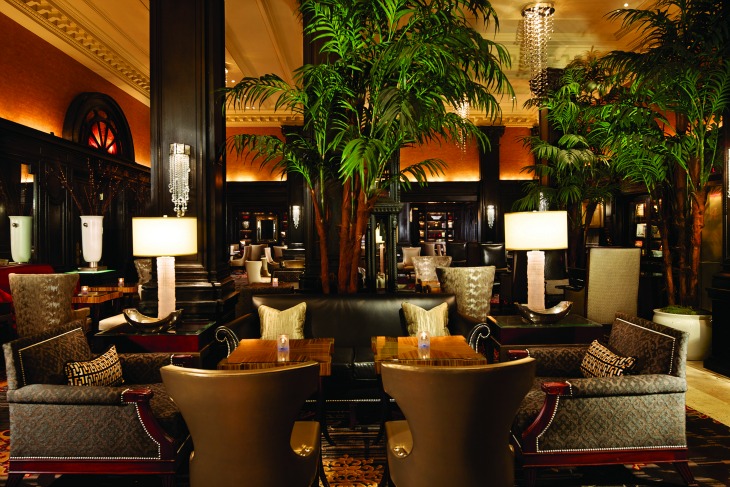
The-Algonquin-Hotel-NYC-3

We were celebrating Valentine’s Day early, knowing we were up for a snow pounding that might keep us in the day itself.

For years, we’d heard about a burger. A mythic burger, a burger for those of hearty appetites and gourmet tastebuds. In 2001 Daniel Boulud introduced the thing for an unseemly 27 dollars, but that only made people want it more.

Daniel-Boulud.jpg?q=100

Now the price has risen to $32, roughly twice what we pay for dinner at our favorite ramen joint.

hot and delish

What the hey, it was faux Valentine’s Day. We arrived, we settled in among the blonde New York princesses with gaudy Chanel necklaces and thousand-dollar leather jackets, we ordered a non-alcoholic beer. The bread, studded with olives, went down fine. An arugula and frisee salad with a lemony dressing and lots of almonds tasted better than it sounded.

But what about the burger?

retro_vintage_kitsch_kids_eating_hamburgers_burger_sticker-r5733afe1d44b4938bfeb118e16c8bbd6_v9waf_8byvr_512How would that be? This burger, you see, is no ordinary burger, but a giant softball of ground sirloin embedded with strips of brisket, a chunk of foie gras and a soupcon of black truffle.

DB-Burger-Vancouver-by-E-Kheraj

It’s a long way way from the simple but tasty culinary icon that Wimpy loved.

wimpy

How did we get from there to here?

I have learned that the Mongol Army under Genghis Kahn would stuff filets of meat (sometimes beef, sometimes lamb) under their saddles as they rode so that it would crumble and cook in time for lunch.

genghis-khan-soldiers-images

America’s own Hannah Glasse gave a recipe in her 1770 Art of Cookery that paired minced meat (cooked) and toast. Other cultures have long dined on meatballs, kissing cousins in a smaller ball of beef.

So the claim of the United States to inventing the burger has only a partial foundation in truth. Emigrants from Hamburg brought versions of minced steak to New York in the late nineteenth century, where they were served raw or lightly cooked in exclusive restaurants such as Delmonico’s, sometimes accompanied by a raw egg, and sometimes for breakfast.

delmonico's kitchen

The mechanical meat grinder, invented in the mid-1800s – mincing had earlier been done with a chisel – made mass production of ground beef possible. It’s thought that the hamburger in its present form originated as cheap eats at a county fair in Wisconsin, or Ohio – somewhere in the land where people needed sustenance to traverse the games, exhibits and rides. A slick of Heinz ketchup, patented in 1888, soon tagged along.

burger sign

On this night, our DB burgers landed in front of us with a thud, encased in a polished Parmesan bun, stuck through with wooden sticks and cut neatly in half. On full display were the slices of short rib and diseased goose liver, in lush cross section. A bite through the red of the beef released the flavors of fresh red onion, tomato jam and mustard. No Heinz 44 for this baby.

We could have eaten half but managed the whole. It was juicy, meaty, greasy, messy as a burger should be. But was it the best? Was it $32 worth of hamburger? When the bill arrived we told them that we’d gladly pay them Tuesday for a hamburger today.
8 Comments

Filed under Cooking, Culture, Fashion, History, Home, Jean Zimmerman, Publishing, Writers, Writing

Rapture in Blue

Guest post from Gil Reavill:

In the space of a week (writes Gil) New York City offered Jean and me two superb opportunities for time travel, sucking us back four centuries in one case and then nine decades in another.

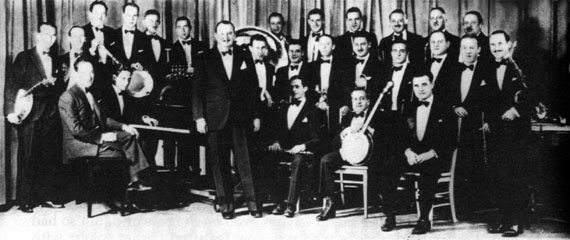
On February 12, 1924, at the Aeolian Hall on 43rd Street, Paul Whiteman and his jazz orchestra premiered a new work, Rhapsody in Blue, with composer George Gershwin himself at the piano.

paul whithead orchestra

Ninety years later to the day, Maurice Peress and Vince Giordano mounted a tribute concert at Town Hall, a block away from where Gershwin’s masterwork first saw the light of day.

Peress is a musician, teacher and orchestra conductor who served for years at the Philharmonic under Leonard Bernstein. Eighty-four years old now, he has the kind of beaming, expansive, jolly personality of someone who has spent a life in music. On the podium at Town Hall, he performed antic dances while conducting, winking and giving wry body-language commentary on the proceedings, as well as delivering effusive stage patter between numbers.

Vince Giordano is the leader of the venerable Nighthawks, and both his band and his whole life have been devoted to playing, preserving and promoting the music of the early jazz era.

giordano

The two men produced the concert themselves, laying out their own money to rent the hall, taking a flier in the hopes enough ticket buyers would come out to fill the seats on a chill February night.

They did. Town Hall was totally sold out. You could feel the bon homie among the audience audience members. The musicians were primed.

Nighthawks

I couldn’t help but feel we were in for a treat. Giordano and Peress are both avid musicologists. They tracked down original scores, unearthed sheet music with holograph notations, replicated the arrangements and instrumentation from the original concert from the slide whistle down to the heckelphone.

That original concert was held on a winter afternoon in the stuffy concert hall of the Aeolian piano company.

AeolianHall1212

It was jazz genius Paul Whiteman’s baby all the way. He conducted his Palais Royal Orchestra in a program called An Experiment in Modern Music, designed to close the gap between jazz and classical audiences. In attendance that afternoon were heavyweights such as Sergei Rachmaninoff, Jascha Heifetz and John Phillip Sousa.

whiteman program

Gershwin himself almost didn’t make it. Whiteman and he had discussions about commissioning a piece, which the composer forgot about until brother Ira read a piece in theTribune five weeks before the concert. “George Gershwin is at work on a jazz concerto” read a blurb in the article’s final paragraph.

The composer had only a month to create what is one of the greatest pieces of American music ever written. On a trip to Boston, the click-clack rhythm of the train inspired him. He scribbled the main themes then and there. At first the piece was called American Rhapsody, but Ira suggested the title under which it is now known after attending a show of James McNeill Whistler paintings that had names such as Nocturne in Black and Gold.

Gershwin-01

The famous clarinet glissando with which Rhapsody kicks off is a last-minute development also, with the Whiteman orchestra’s virtuoso jazz clarinetist, Ross Gorman, ginning it up almost as a joke.

Whiteman didn’t think the name of the largely unknown 26-year-old Gershwin could carry a concert, so he brought in a popular pianist of the day, Zez Confrey, had top billing over the composer. The concert featured such popular numbers as Confrey’s “Kitten on the Keys” and Irving Berlin’s “Alexander Ragtime Band.”

kittenonthekeys

When it came to Rhapsody, though, Gershwin played it himself, with a piano score that was not yet written down.

Sitting in Town Hall in 2014, Jean and I heard a program performed note for note as close as possible to what audience members heard ninety years ago and a block away, with the superb Ted Rosenthal sitting in for George Gershwin. The Aeolian Hall is long gone, now the quarters of the CUNY Optometry School. Peress told us he performed a pilgrimage, though, and through a gap in the dropped ceiling saw a section of the gilded proscenium from the original theater. These fragments we shore against our ruin.

Earlier in the week Jean and I journeyed to the Brooklyn Academy of Music’s Harvey Theater for another kind of time travel, this one a performance of the Chichester Festival Theatre Company’s King Lear, with Frank Langella in the title role. The production was played very straight. It was not set in Weimar Germany, say, or contemporary Uganda, as other directors are wont to dish up their Shakespeare, but in the Celtic landscape of the original text. The blocking was stylized and almost static. Langella delivered a phenomenal performance.

KINGLEAR-master675

No one knows what the play might have sounded like during its only verified performance in Shakespeare’s time, on December 26, 1606 in the court of King James I at London’s Whitehall. Scholars suggest that Elizabethan English sounded similar to the accents of the American South. Lear’s trio of daughters would have been played by males. (In 1660, decades later, Samuel Pepys wrote in his diary, “Saw ‘The Scornfull Lady,’ now done by a woman, which makes the play appear much better than ever it did to me.”) But again, as with the Giordano-Peress concert, I was able to pretend that I was somehow witnessing a shard of the past, broken off and magically turning up in the present.

The BAM audience laughed often at Shakespeare’s acerbic wit, four-hundred year old jokes still getting a enthusiastic response today. The tragic flavor of doom came across, too. “Never, never, never, never, never,” Lear repeats, his last words. Yes, we can never truly beat the tyranny of time. But sometimes it’s pretty to try.

1 Comment

Filed under Culture, History, Jean Zimmerman, Music

Booklist Reviews Savage Girl

Booklist (March 1, 2014)

Savage Girl.

Mar 2014. 402 p. Viking, hardcover, $27.95. (9780670014859).

Debutante or demon? The title character of Zimmerman’s gripping historical novel seems to be a little bit of both. Discovered in a Nevada mining town by a wealthy couple determined to overcome the “savage” girl’s apparent feral upbringing, Bronwyn is introduced by them to Gilded Age Manhattan’s high society. But as the couple’s son, the novel’s narrator, can attest, she is perhaps not as innocent as she seems. All revolves around the central question of whether Bronwyn or the captivated narrator is responsible for the trail of bloody crimes left in their wake. Suffused with a gothic aura of dark suspense, this is a finely wrought psychological work from the author of The Orphanmaster (2012), rich with historical detail. The mystery stretches from society’s heights to its absolute depths and touches everything between, always increasing in dramatic tension. Zimmerman’s settings spring off the page, from the stinging dust of the American desert to the dank despair of the Tombs prison in New York. Immensely readable, Savage Girl takes the reader by the throat and doesn’t let go.

— Bridget Thoreson

3 Comments

Filed under Culture, Fiction, Jean Zimmerman, Publishing, Savage Girl, Writers, Writing

Pot Lucky

Just a neighborly event. The lightest of snows twinkled outside the windows. Someone said, You may not see each other for six months but you’re still glad they’re there. There was a list, a neighborhood email listserve, and these 60-odd people were on it.

The pot-luck took place in the carriage house of the local nature preserve, Teatown.

scenery_teatown1

Such communal feedbags have a history, dating back to the sixteenth century, when pot-luck meant “food provided for an unexpected or uninvited guest, the luck of the pot.”

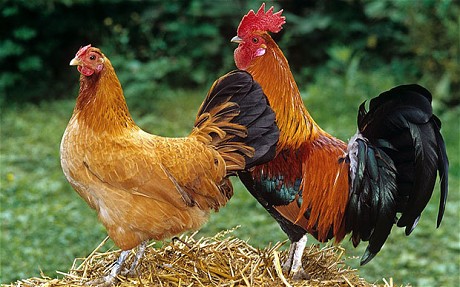
In this bowling-alone world, community often strikes me as a missing element. Or perhaps that’s just because mine is a solitary profession, handcuffed to my computer keyboard, staring out the window at the winter. I was happy now to talk to people I barely knew about books we’d read, about composing music, about keeping chickens.

chickens_1844738c

Above all, we spoke about the deep drifts and ice outside that affect everybody.

As Bilbo Baggins once said, “I don’t know half of you half as well as I should like, and I like less than half of you half as well as you deserve.”

Someone brought a soup enriched almost to a stew with wild rice. Someone else baked a crusty bread. When the desserts came out there was a deep-burnished chocolate bundt cake studded with cherries that had folks lining up. We all shared food, shared companionship. A hat was passed to send kids to the local summer camp.

No one spoke about plumber referrals, or the other information that flies across the internet on the listserve. No one talked about rowdy teens on the roads, or co-mingled recyclables.

separate-recyclables

Above all, no one became embroiled in the deer situation, the bane of the neighborhood, the divisive question of whether to leave the overpopulation alone or somehow control it, and if so, how to do so. It would be a fraught conversation. We let it go. (Though some wry soul offered venison sausage on the buffet table.)

We were gracious, putting faces to names. We shook hands, kissed cheeks. We were neighborly.

Outside, it continued to snow.

5 Comments

Filed under Cooking, Culture, Fiction, History, Home, Jean Zimmerman, Music, Nature

The Voice on the Page

I’ve been thinking about voice. Not the voice of Miley Cyrus, or Roseanne Cash, or even the Russian-born soprano, Anna Netrebko, who belted out the Olympic anthem at Sochi last night. She really shook the rafters.

No, I am trying to get a handle on voice in fiction. Writing a new novel about a girl who lives in New York City during the Revolutionary War, I want to make sure I get her right. And it forces me to deal with some difficult issues.

Can I show her best in the first person or the third? That’s probably the biggest question going in, because while writing “as” my protagonist gives me access to all kinds of emotional complexity, it is also limiting. It’s writing in handcuffs. You the reader can only see what my character sees, and by its nature that is not everything. I can see a very interesting house but I can’t necessarily go into that house. If I bring my character into the house it rejiggers the plot in all kinds of ways.

I’ve determined to go down the first-person path if it kills me.

Probably the most famous use of the first-person protagonist is in Dickens’ David Copperfield, with its wonderful first line:

Whether I shall turn out to be the hero of my own life, or whether that station will be held by anybody else, these pages must show.

The myriad of other first-person first lines include Call me Ishmael in Moby Dick.

There is Notes From Underground: I am a sick man . . . I am a spiteful man.

For a long time, I went to bed early, in Proust’s Swann’s Way.

It was a queer, sultry summer, the summer they electrocuted the Rosenbergs, and I didn’t know what I was doing in New York. From Plath’s The Bell Jar.

Considering the first lines of books turns out to be incredibly interesting.

Other issues you have to address as the plot unfolds: how much does my protagonist know about the world, how sophisticated is she? My character is a teenager, but is mature beyond her years, as kids of that era were. What kind of language would she use? Should I eradicate all adverbs from the narrative? How smart-alecky is she, how wise, how snarky?

How much historically appropriate language can you get away with using without a page sinking under the weight of Ye Olde? On the other hand, is a word you’re using wrong because it was invented yesterday, and she can’t possibly have known it? I looked up “goofy” today and found that “giddy” would suit the 1776 world of my character’s speech much better.

Is she addressing someone? Hugo in Savage Girl addresses his story to his lawyers. Is my character relaying the history of her life to someone, say a great granddaughter? Is it an epistolary novel, like The Sun Also Rises? Or is the text simply in her head? Is she “talking to the air,” as Gil and I put it when we discuss these questions.

All these and more are the thorns you must cross through in order to reach the fruit when you are writing a novel. Sometimes it helps to have an image as you work, a picture that reminds you of your heroine. I have adopted this 1750 painting by Pietro Rotari, Girl with a Book, which inspires me to find my character’s voice and do it justice. What draws me is not the cap nor the jewels, charming as they may be, but the wry, lovely expresssion in her eyes.

1750 pietro-antonio-rotari-girl-with-a-book-1337982962_b

5 Comments

Filed under Art, Culture, Fiction, History, Jean Zimmerman, Writers, Writing

Good Housekeeping Seal of Approval

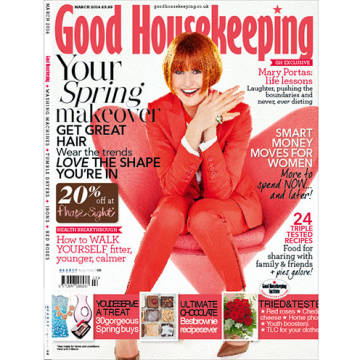
I’m so pleased to see Savage Girl among Good Housekeeping‘s recommended books for March.

March-cover-230114-de-lg

Here is the magazine’s thumbnail review, which manages to distill the essence of the story quite well, I think.

Good Housekeeping, March 2014

New Book Picks: No matter what mood you’re in, we have a page-turner to tempt you

FOR INTRIGUE

Savage Girl

A wealthy couple touring the American West in 1875 “rescue” a young woman who’s said to have been raised by wolves, then attempt to introduce her into society back East. Bronwyn cleans up nicely, but her suitors keep ending up dead. A wild ride.


5 Comments

Filed under Culture, Fiction, Home, Jean Zimmerman, Publishing, Savage Girl, Writers, Writing

A Crinoline Cage

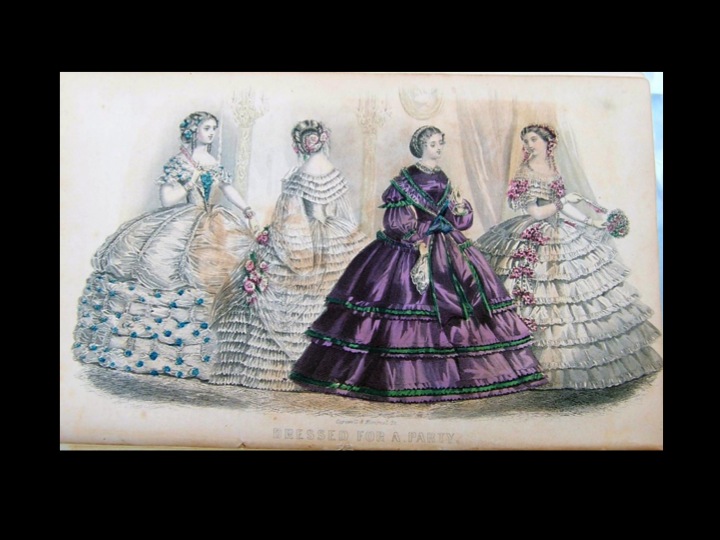
I found a wonderful lecture transcript and powerpoint on line for a talk titled “The Crinoline Cage.” The speaker, Lynda Nead, is an art history professor at the University of London. I’ve always wanted to find a piece that really goes into the history of crinolines and hoop skirts, and this is it. The accompanying images from the nineteenth century include cartoons from Punch, extracts from Dickens, letters from Victorian women and paintings by artists such as Franz Winterhalter, the painter of the Royal and Imperial Courts of Europe. They’re all wonderful, so check this out.

Slide06

In the introduction to her remarks, Nead says this:

The middle of the nineteenth century was the great age of the crinoline. Dresses became bigger and more ornate; skirts grew wider and wider, devouring metres of fabric and decorated with flounces, fringes and ribbons. The style was facilitated by the development of the sewing machine and technological developments in textile production that introduced new machine-made light, gauzy fabrics, which supplemented the more established and expensive silks and taffetas and were suited to the purses of the middling classes. The key to this fashion, the frame for this confection of fabrics and ornament, was the hooped cage crinoline. Historians have been divided on whether the crinoline turned women into ‘exquisite slaves’ or was a sign of female assertiveness and subversion.

Slide05

Leave a comment

Filed under Culture, Fashion, History, Home

Big Ol’ Brick of Books

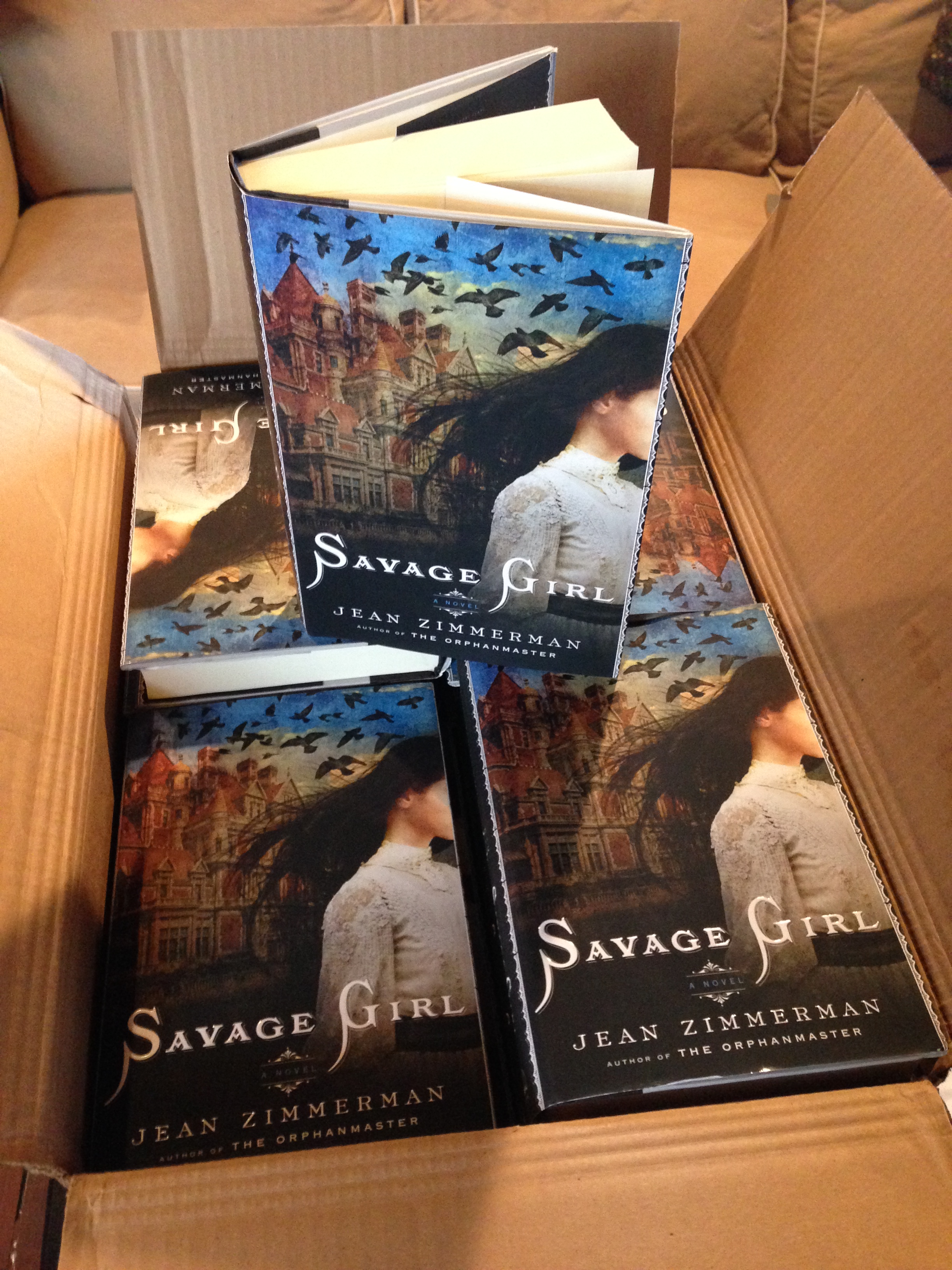
A brick of books. Author copies. Twenty-eight, to be exact, sitting where UPS dumped the box, in the fresh, deep pile of snow at the head of the driveway. The cardboard was soaked around the edges.

But the books were dry, miraculously. That novel is watertight.

open

2 Comments

Filed under Art, Culture, Fiction, Home, Jean Zimmerman, Nature, Publishing, Savage Girl, Writers, Writing

Kirkus Reviews Savage Girl

Kirkus Reviews Savage Girl (pub. Feb. 15, 2014):

A formal, measured tempo only heightens the tension in Zimmerman’s second historical fiction–cum-thriller (The Orphanmaster, 2012), this one set in the 1870s and concerning a serial killer whose rampage ranges from a rough mining community in Nevada to upper-class Manhattan.

The novel opens in 1876 with narrator Hugo Delegate, Harvard-educated scion of one of New York’s wealthiest and most socially connected families, locked up for the gruesome murder of another New York dandy. He willingly claims his guilt—though that guilt is far from certain—but his expensive lawyers demand he tell them the true story from the beginning. Hugo starts with his family’s visit to Virginia City, Nev., home of his father Freddy’s silver mine. Soon, Hugo’s parents, eccentric liberals interested in the nurture/nature debate raised by Darwin, are eager to adopt a young girl they have discovered in a Virginia City freak show, the owner of which claims she was raised by wolves. Of unknown origins, she speaks Comanche as well as a smattering of English, and her performance involves a set of mechanical claws and a swimming tank. The girl, whose name turns out to be Bronwyn, travels on the Delegates’ private train to New York, where the Delegates plan to put one over on their friends My Fair Lady–style by having her debut as a fashionable young lady. But one grisly murder after another seems to follow in Bronwyn’s wake, the victim always a man who has shown his attraction to Bronwyn’s considerable charms. Is Bronwyn, with her animallike instincts, the killer? Or is it Hugo, with his past mental problems, his capacity to black out and his love for Bronwyn that borders on jealous insanity? Neither Hugo nor the reader is sure right up to the satisfying if melodramatic end.

Zimmerman’s dark comedy of manners is an obvious homage to Edith Wharton, a rip-roaring murder mystery more Robert Louis Stevenson than Conan Doyle and a wonderfully detailed portrait of the political, economic and philosophical issues driving post–Civil War America.

4 Comments

Filed under Culture, Fiction, History, Jean Zimmerman, Publishing, Savage Girl, The Orphanmaster, Writers, Writing

An Elegant Silhouette

I saw something intriguing at the Winter Antiques Show.

silhouette

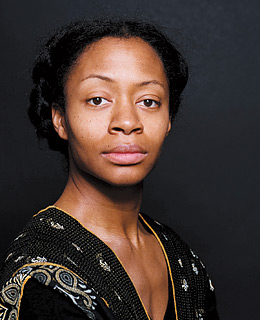
A silhouette, definitely old, refined looking as all such silhouettes are, but somehow mysterious in the way the cut-out man held an unidentifiable object up against his body. It reminded me of the 21st century art of silhouette-artist Kara Walker.

kara_walker

Walker has exploded the conventions of the silhouette. She has created numerous black and white scenarios that suggest the depravities of race relations in a mythical Old South. Disturbingly beautiful, beautifully disturbing.

kara-walker-renaissance-society installationinstallation-1997-cut-paper-and-adhesive

I learned from the gentleman offering the Antiques Show silhouette for sale that it was in fact the work of a well-known French artist of the nineteenth century. Auguste Amant Constant Fidele Edouart was his elegant name. Born just before the Revolution, he became proficient in his craft at a time well before photography, when this simple depiction of an individual was a cherished “snapshot” as much as a work of art. The portrait before me had been identified as the British Field Marshal Colin Campbell, 1st Baron Clyde, who lived from 1792 to 1863 and had a distinguished career, assuming the role of Commander-in-Chief of India in 1856. That odd object in his silhouette: his military hat.

colin campbell

Edouart began his career in London, cutting out full-length likenesses in black paper, before moving on to Edinburgh and finally the U.S. He travelled the country creating hundreds of portraits as he went.

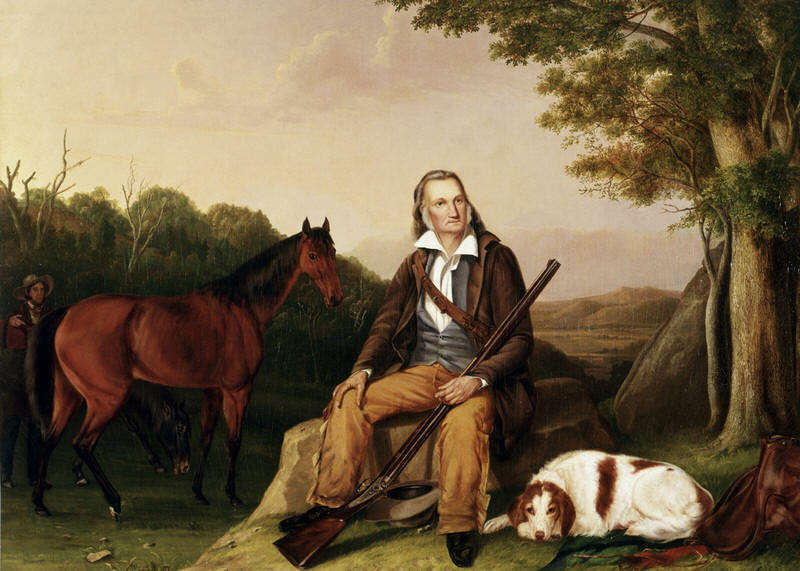
Something about the itinerant portrait maker touched my imagination. I’ve been reading a biography of John James Audubon. I always imagined the great man making his way stealthily through the woods, sneaking up and capturing the birds he would bring home to paint in such vibrant pictures.

John James Audubon

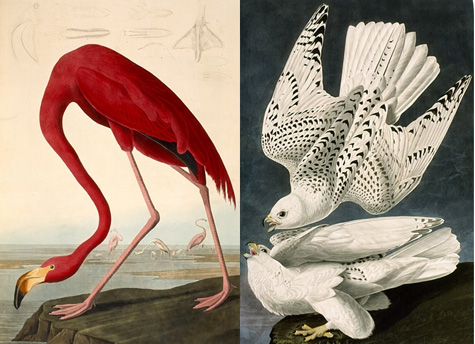
It turned out I was wrong on many scores. Isn’t it wonderful when you are wrong and reality is so much more interesting than your naïve imaginings? Audubon did go into the woods, many woods, all around the country, but he rarely caught anything per se. Instead he shot birds, sometimes dozens at a time. Ironic, perhaps, that the person for whom the Audubon Society was named was so avid a hunter. He would keep a few of his prey for dinner (he went hungry a lot at during some lean years of his life) and posed others with a rig he invented. It was a board with pins and string that held the bird in a position that mimicked life.

Audubon-birds

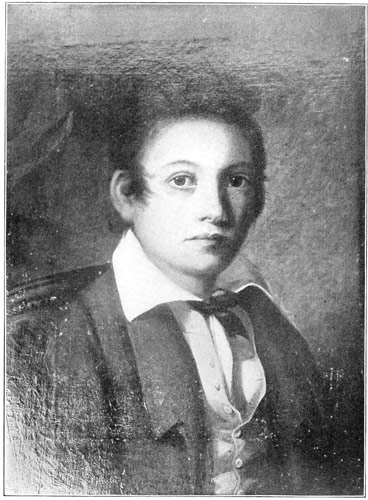
What interested me as much as his technique was that The Birds of America, the mammoth series of ornithological color plates we recognize him for now, was for many years a sideline, a labor of love. He couldn’t make money at it. So he traveled around to cities and backwaters on the frontier, in Missouri, Kentucky, Pittsburgh, New Orleans, getting a few dollars to draw peoples’ likenesses and so put food on the table. I would love to see some of these portraits, but the only sketches of Audubon’s I’ve been able to find are depictions of his family. Here is his son Victor Gifford Audubon.

victor gifford audubon

And here is a self portrait.

audubon by audubon

In the days before photos, people craved having an image of a loved one and a good-sized town would likely have a half dozen artists who were able to provide the service. Audubon was never totally satisfied with his ability to capture the human animal in pencil. I wonder if he ever considered cutting silhouettes.

3 Comments

Filed under Art, Culture, History, Jean Zimmerman, Nature, Photography

In the Sky With Diamonds

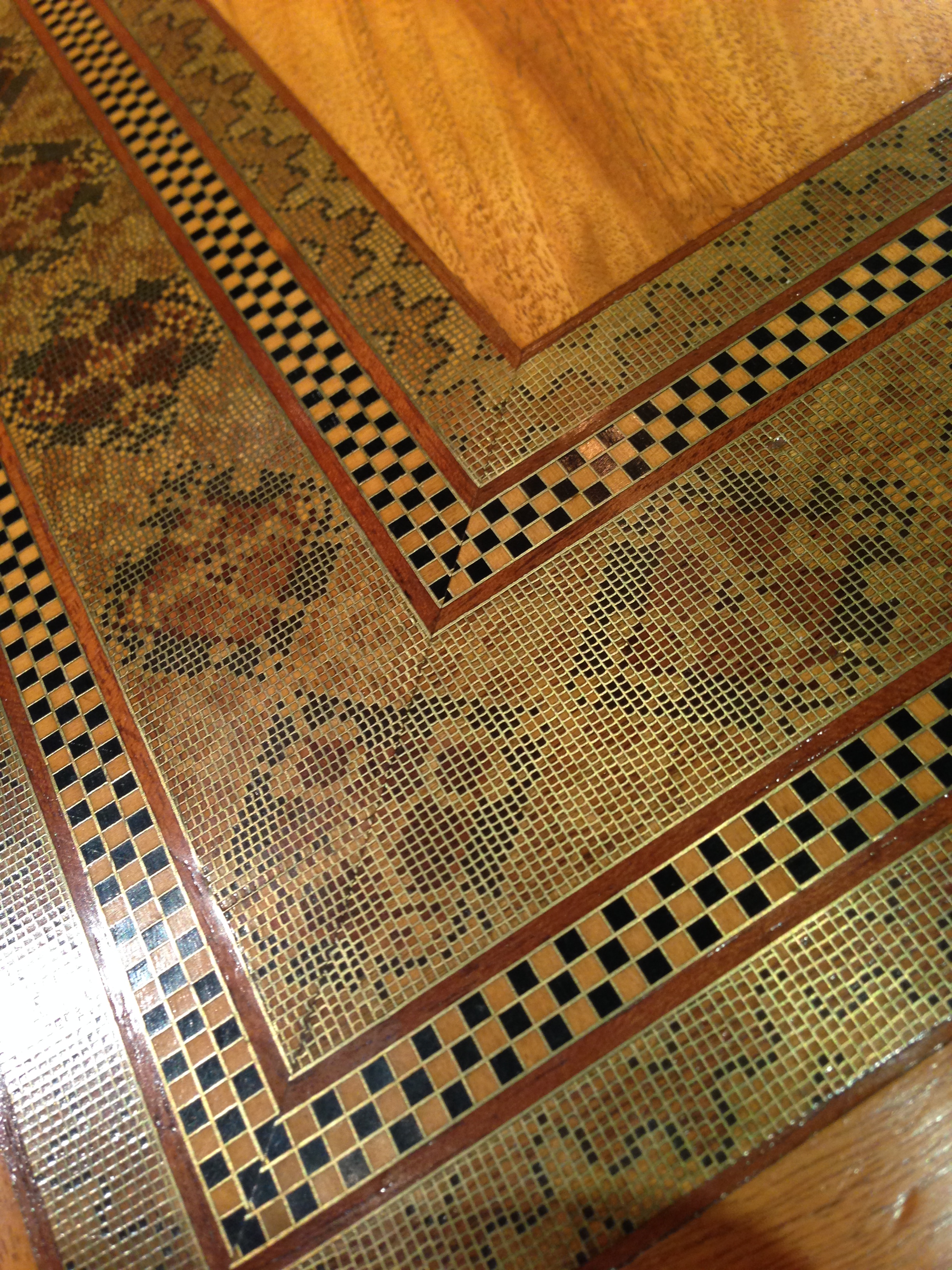
The 60th anniversary of the Winter Antiques Show at New York’s Park Avenue Armory: the Diamond Jubilee. So it features special showings of diamonds, of course. And a lot of people are dripping with their own, too. One pouf-haired dowager in black stretch pants nearly blinds us with her sizable diamond pendant while scoping out the Tiffany Studio micromosaic table at the Associated Artists stall. In 1891, Tiffany designed things besides jewelry and lamps.

micromosaic

There are thousands upon thousands of match-head sized wood chips embedded in this decorative band that resembles cross-stitch, or snakeskin. Imagine the work that went into its intricacy. The table is the only one of its kind ever made, and with two matching chairs is priced today at 1.4 million dollars.

Going, going, gone, to the lady in the diamond dazzler.

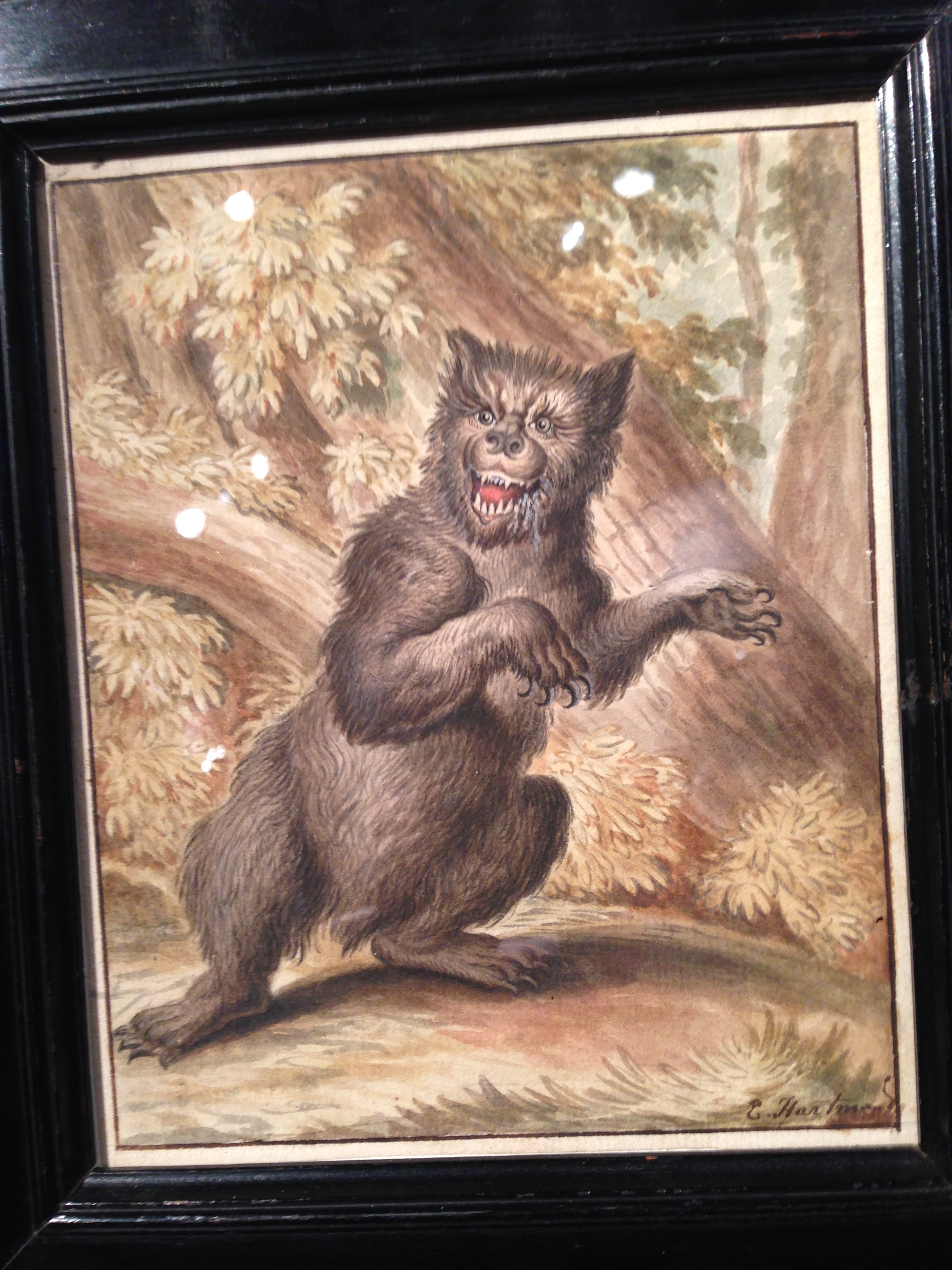
There are a lot of things I love at the show. A small but powerful watercolor of a snarling but somehow jolly wolf circa 1800 gives me a welcome jolt of Savage Girl.

snarling wolf

There are girls here too, including one hand-sewn, winsome doll with brown velvet hair.

doll

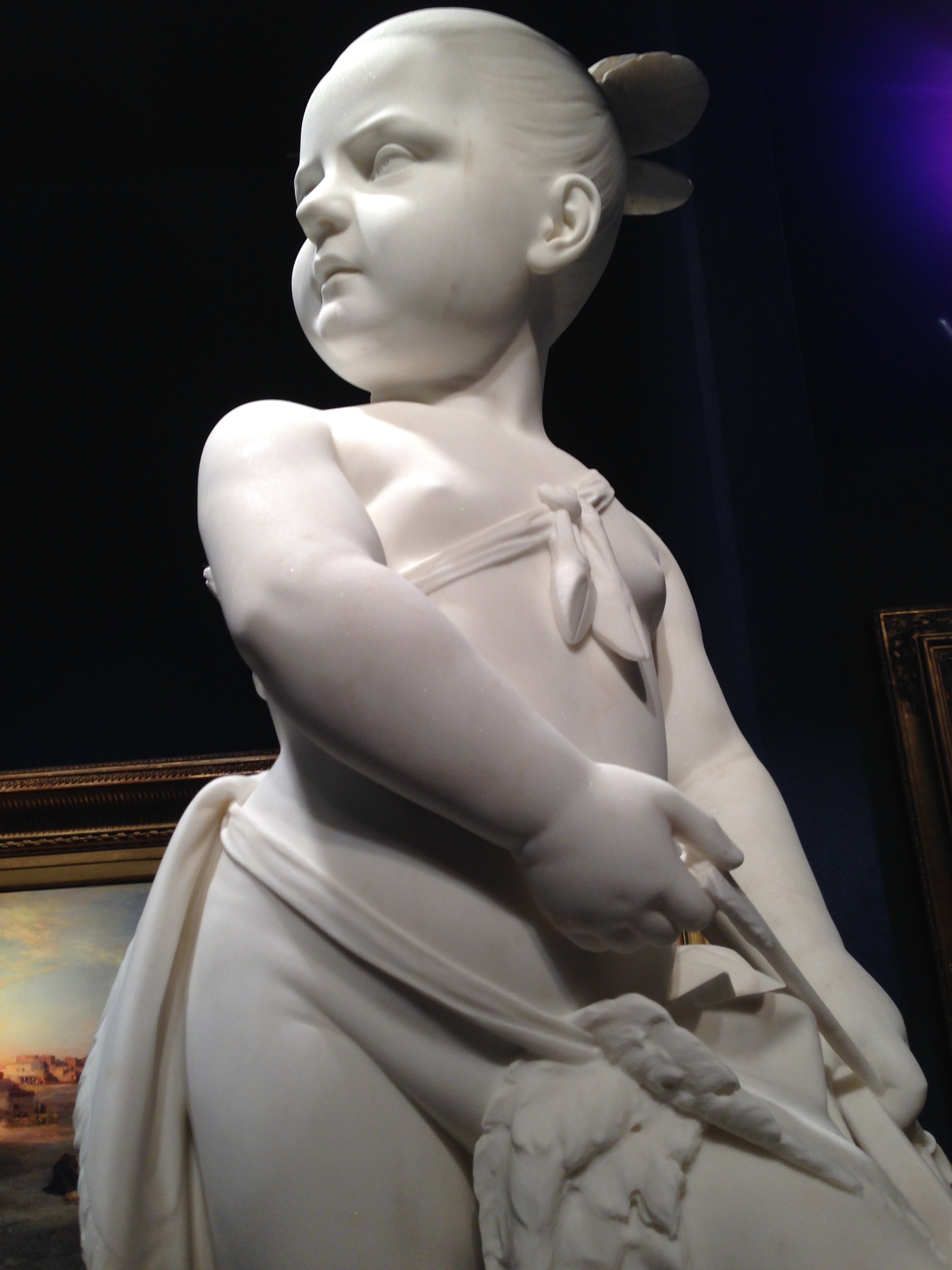
One baby Amazon in glossy marble.

baby amazon

I see a trio of ventriloquist dummies dating back to 1875. Oscar and Louise Shaffer, along with their musical troupe, toured the east coast throughout post-Civil War America. Oscar was the ventrioloquist. His three “friends” were Jerry Doyle, D Day and Sassafras Jones.

dummies

Louise Shaffer was billed as “the most versatile lady artist in America.” She was renowned for her cornet solos and banjo stylings.

Louise probably could have managed this enormous blue guitar, hand-crafted and reminiscent of Picasso’s famous Blue Period painting, The Old Guitarist..

blue guitar

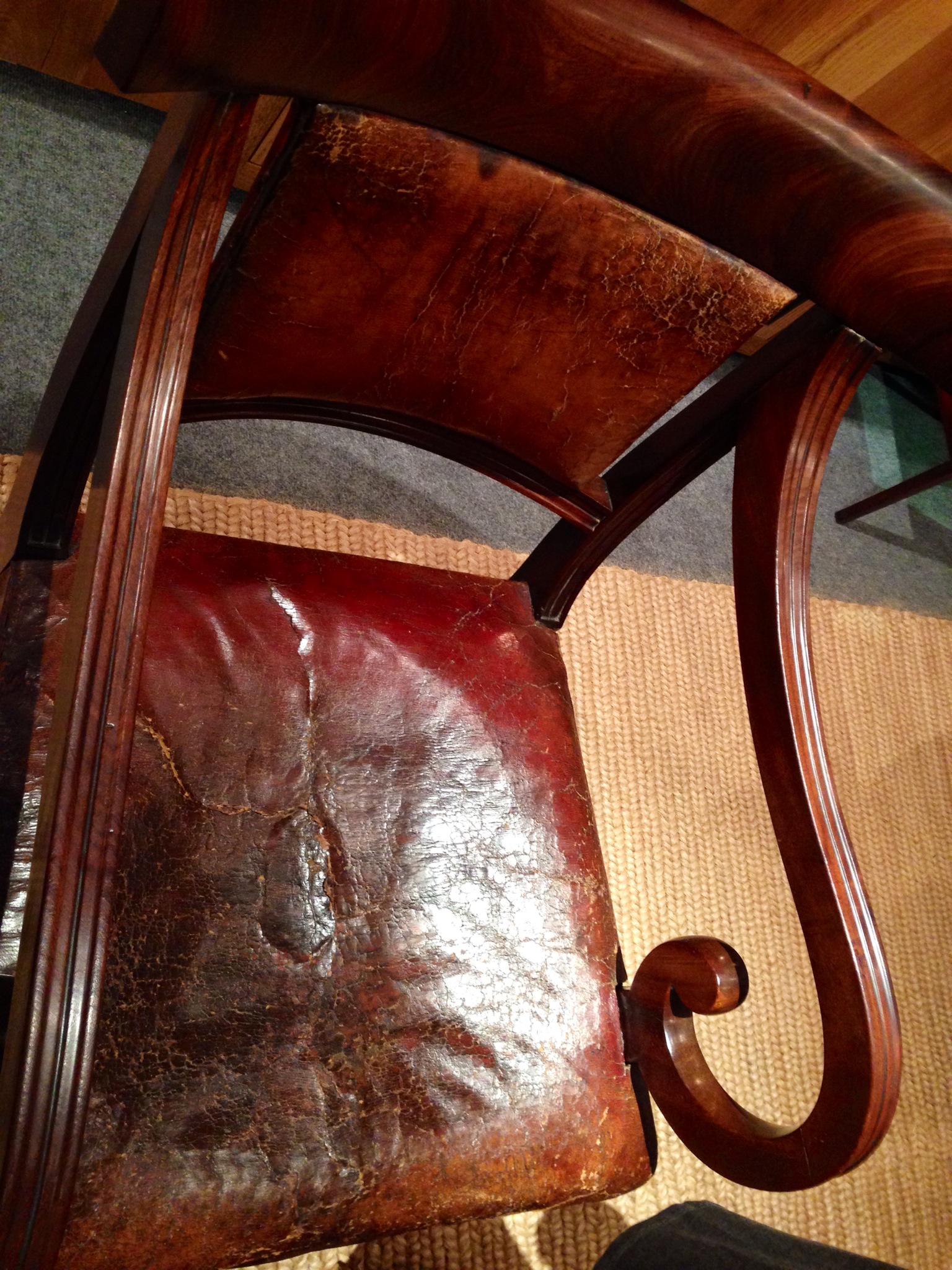
I really like this chair, too. One of my favorites in the show.

worn chair

Now that’s what you call antique. The leather has received its share of buffing and burnishing by uncountable weary behinds.

At the Winter Antiques Show you can buy a quartet of really important geodes, if you have a couple large in your pocket.

geodes

We stand at a counter admiring diamond rings set with emeralds and rubies, next to a gentleman in tweeds examining a set of cufflinks displaying horses, a bargain at $1,400. I don’t ask the price of the rings. I have just been chastised by a guard for attempting to snap a picture of Queen Victoria’s tiara from 1840, ablaze with sapphires along with diamonds and prominently on display. There’s a shot on the show’s website, however.

Queen Victoria's tiara

Tiaras have always intrigued me. We think of them as belonging exclusively to princesses. There was a time, however, in the late nineteenth century, when the only thing that kept a woman from wearing one is if she couldn’t afford it. You didn’t have to be royal. According to one expert, “By 1894 nearly 100 tiaras could be counted among the possessions of New York’s social leaders.” That’s a lot of tiaras. If you were really well off you might have two or three to choose from when you went out to the ball. Tiffany could barely keep enough in the pipeline, churning out beauties like this 1894 piece assembled of gold, platinum and diamonds.

tiara

If you wore one, like Consuela Vanderbilt in 1902, you could imagine yourself to be royalty. She had an Alice in Wonderland neck and a trompe l’oeil waist.

woman

Maybe that’s how that multi-faceted woman in the pouf-hair and leggings sees herself.

4 Comments

Filed under Art, Culture, Fashion, Fiction, History, Home, Jean Zimmerman, Savage Girl

Feet Ball

Me and my two feet, my new feet, in sneakers, no boot, no cast and no crutches.

kicks

On the train to Grand Central Station, New York City. We don’t care about the grey slubs and slabs of ice rimming the river.

hudson ice

We don’t care about the Super Bowl madness engorging midtown, a crowd where the words stadium and lap dance are enunciated loudly along with impressive beer burps.

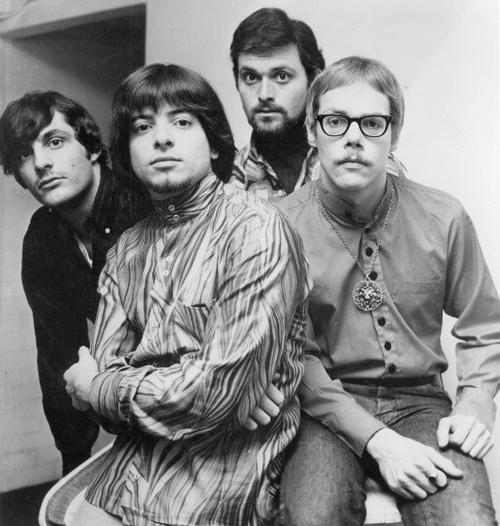
We’re going to make a night of it, in a club where the hair of the patrons is greyer than the ice on the Hudson, all convened to hear the oldie but extremely goodie Vanilla Fudge, aka “the Fudge.”

Vanilla+Fudge

They don’t look like they used to, but neither do we. Psychedelia crossed with blue-eyed soul, and on foot! Happy day.

3 Comments

Filed under Culture, History, Jean Zimmerman, Music

Sweetly Wild

Animal Planet produced a popular program Raised Wild that profiles people who have been nurtured by monkeys, by a pack of dogs, by a flock of chickens. In researching Savage Girl I came across parental bears and goats and even a girl raised by rats. The mythology goes back to Romulus and Remus, boys suckled by the same she-wolf. The two man-cubs eventually went on to rule Rome. Nothing that takes place in my novel should shock anybody who has viewed Raised Wild. But it might surprise the Savage Girl herself to come across a box of Valentine’s-packaged Wild Child candy hearts.

wild child hearts

3 Comments

Filed under Art, Cooking, Culture, Fiction, History, Jean Zimmerman, Nature, Publishing, Savage Girl, Writing

A Fresh and Juicy Book

The dog woke up. It was mid-afternoon.

sleepy oliver

He barked. I looked out the window. A UPS truck. More important, snow.

snow cabin

I didn’t want to go outside to get a package. I wasn’t expecting anything. I’d stay in my socks.

Do the trees feel cold? On this day they would have.

trees

The UPS guy whistled a tune as he headed from the Cabin back to the truck, winding his way through the snow banks.

Have you ever handled The First Book, fresh from the package? No?

When Gil came home he told me something had come for me, out on the porch. He slit open the plastic.

A hardcover of Savage Girl fell out, fresh and juicy as a ripe apple and cold as though it had been plucked from a tree in fall. The jacket, of course, was no surprise, as my publisher had involved me in the design process. But so many little details seemed different, the exact shade of blue on the back cover, the smidgen of lace along the edge. The spine, with my book’s title and my name and “A NOVEL” all perfectly proportioned.

jean book

There are a number of peak moments when you write books. The day you jot down a note and think about all it might be. The first page you write. Getting halfway done. Turning it in. Turning it in again after you revise it. Seeing the typeface. Paging through a galley.
No matter how many milestones you’ve passed, nothing can prepare you for the heft of the hardcover, holding this object in your hand, the ephemeral idea you had so long ago transformed into a tactile reality.

2 Comments

Filed under Art, Fiction, Jean Zimmerman, Nature, Publishing, Savage Girl, Writers, Writing

Stop by My Author Page and Say Hi

My Facebook author page has a brand new cover – it quotes Library Journal saying that Savage Girl is “A fanciful and occasionally surreal take on Gilded Age New York.”

And hey, I just reached 100 likes, a figure I’m a little proud of. But I’d like more likes, more! And more visitors. Come see reviews and interviews as they come in, as well as offers for galley giveaways. Savage Girl doesn’t hit stores until March 6 but there’s a lot going on before then.

I’m always trying to put up something fresh, not only about my books (Savage Girl, The Orphanmaster, Love Fiercely and others) but about writing, reading, and living in such a way as to make those things possible. How do you water an idea to make a book come up? Always trying to figure that out.

watering-can

Something else: please post on my page! I would love to hear what you’re thinking about.

2 Comments

Filed under Culture, Fiction, Jean Zimmerman, Love, Fiercely, Poetry, Publishing, Savage Girl, The Orphanmaster, Writers, Writing