Category Archives: Nature

The Incomplete Fetch

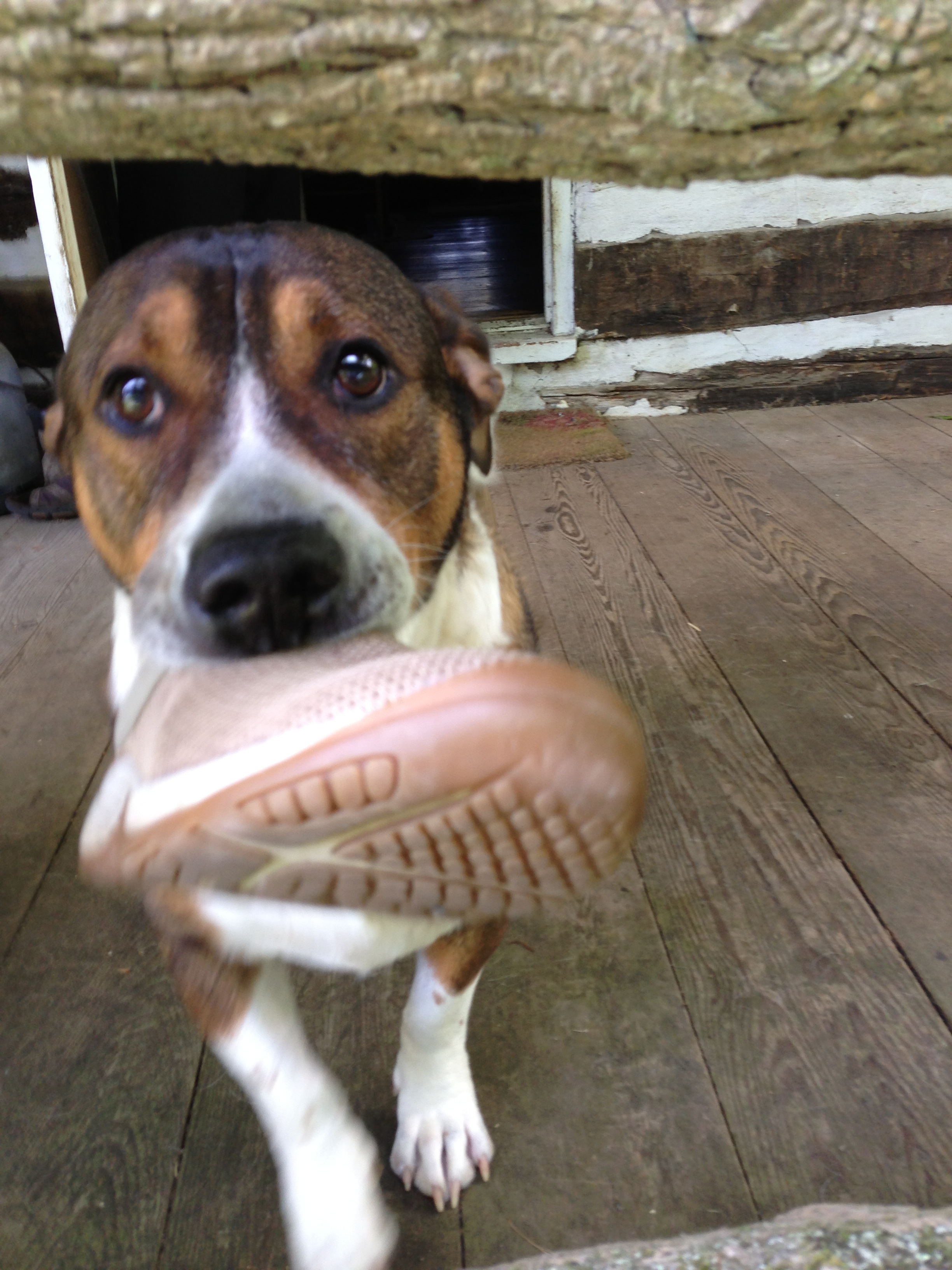
Gil and I have a conversation about Oliver, who has the entrenched habit of greeting whomever arrives at our front door with a shoe in his mouth.

Oliver fetching


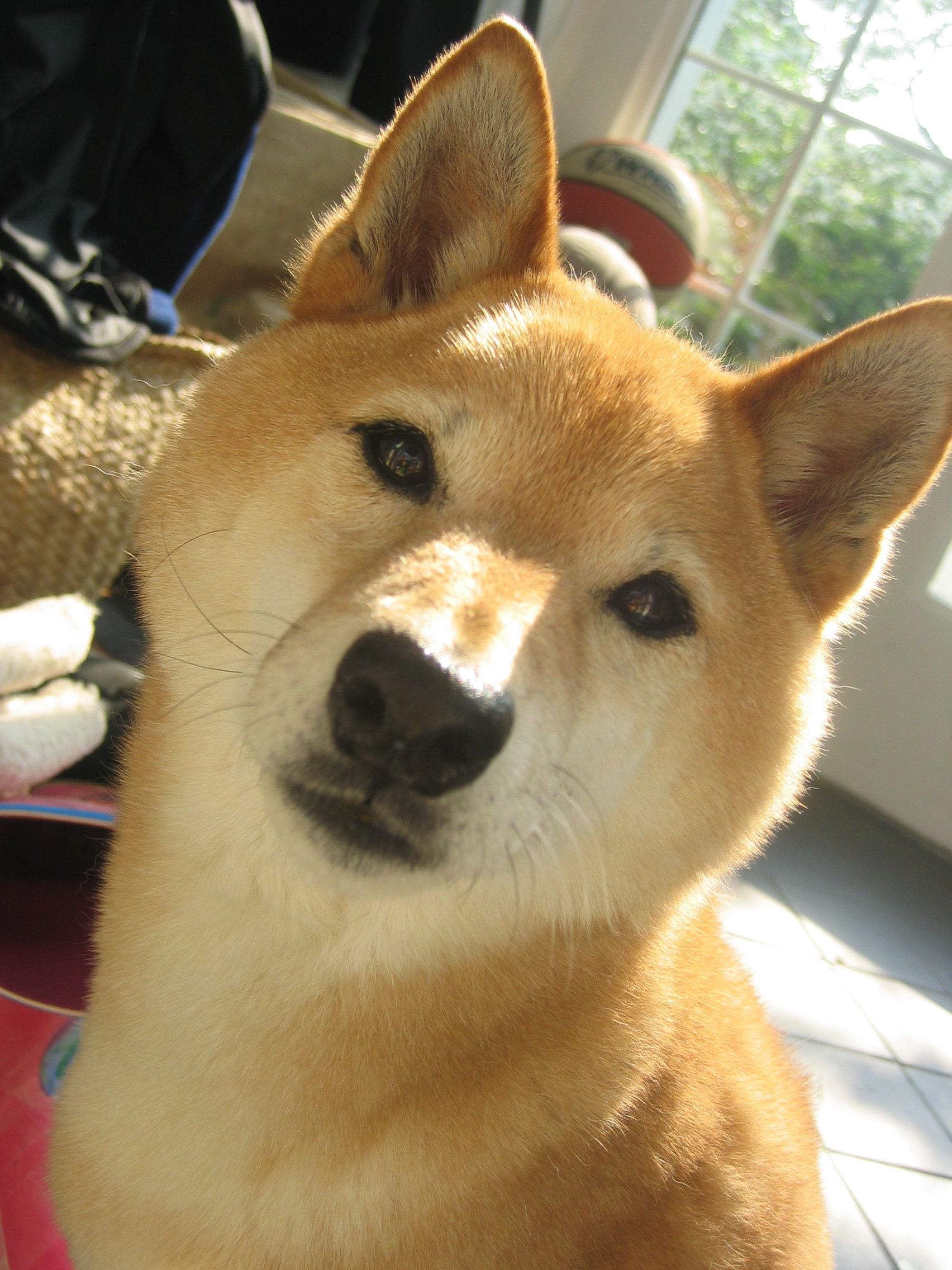
Gil: We used to have a purebred dog who looked like a movie star. Whenever we took her out, her adoring public would gather around to ooh and ahhh. This was before a lot of people had shiba inus.

Daisy


Me: She was beautiful, but she never brought us any shoes. In fact, everything had to be brought to her.

Gil: Our present beast, in contrast, has issues. Oliver is a mutt, an unlikely combination of a basset hound and a pit bull.

Maud:Ollie


Me: He was a rescue puppy, which excuses some of his defects. Clown-face is the best name we ever had for him.

Gil: He looks stumpy and low to the ground. He has a slight harelip. His breath is atrocious. If his adoring public ever gathered around him, he’d growl and bark at them. Oliver is an example of a creature that is difficult to love.

oliver about to copy

But love him we do, with a passion. I sometimes think this is a gift he gives us, challenging us to love when loving is sometimes not that easy.

Me: The more I see of men, the more I like my dog. So said Pascal. I think that Oliver’s incomplete fetch at the door — incomplete both because you don’t start the action by throwing to him, and because he won’t drop the shoe at your feet — is perfection itself.

ollie shoe out the door


Gil: We have taken to wagering what kind of footwear he will greet us with: a sandal, a boot, a clog. His present-giving never fails to cheer us.

Me: You have to admire the spirit of a dog, no matter show stupid it may see sometimes. Oliver performs the same act over and over again just as eagerly.  Sometimes with a sock, if a shoe’s inconvenient.

Ollie nose sockIf we leave the house for half an hour he brings a shoe. If we then go out for fifteen minutes, when we return he will offer the same prize, dipping his head and smiling through the gift. Devoted, submissive, jiving and shucking.

ollie shoeWhat a good boy am I. An open heart. It’s as if he’s saying, Whatever else I am, I am this flawlessly faithful dog too.

Gil: Is loving more rewarding when it’s difficult? It puts me in mind of a line from a sad poem by John Engels. Precisely to the degree that you have loved something: a house, a woman, a bird, this tree, anything at all, you are punished by time.

Me: We humans should all bring the shoe to the door with the same fervor Oliver does. With the same open heart. What do we get in return? If we’re lucky, the privilege of rolling on our backs in the dewy grass, scratching that perpetual itch.

Oliver rolling


6 Comments

Filed under Culture, Dogs, Home, Jean Zimmerman, Nature, Poetry, Writers

For Art’s Sake

The art of the perfect egg cream.

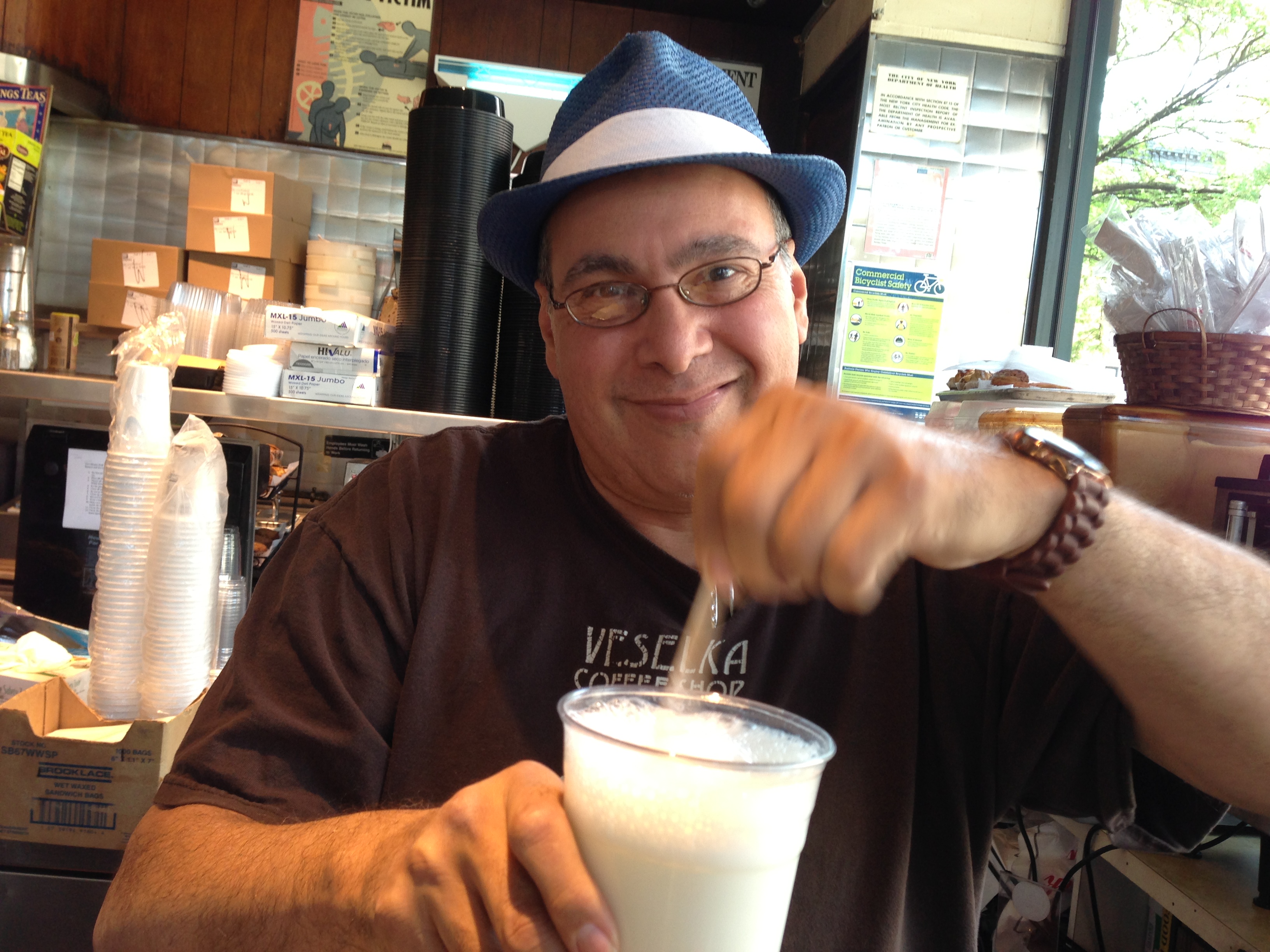
At Veselka Coffee Shop in New York City’s East Village, Eddie explained that we came in at just the right time, because his is the real deal. None better.

How long did it take you to reach perfection, I asked, watching him furiously stir the seltzer, vanilla and milk into a froth. A few years, he said, ha ha. Everybody loves Eddie, said the waitress. Eddie, said the counterman, your wife is calling on line one.

Eddie

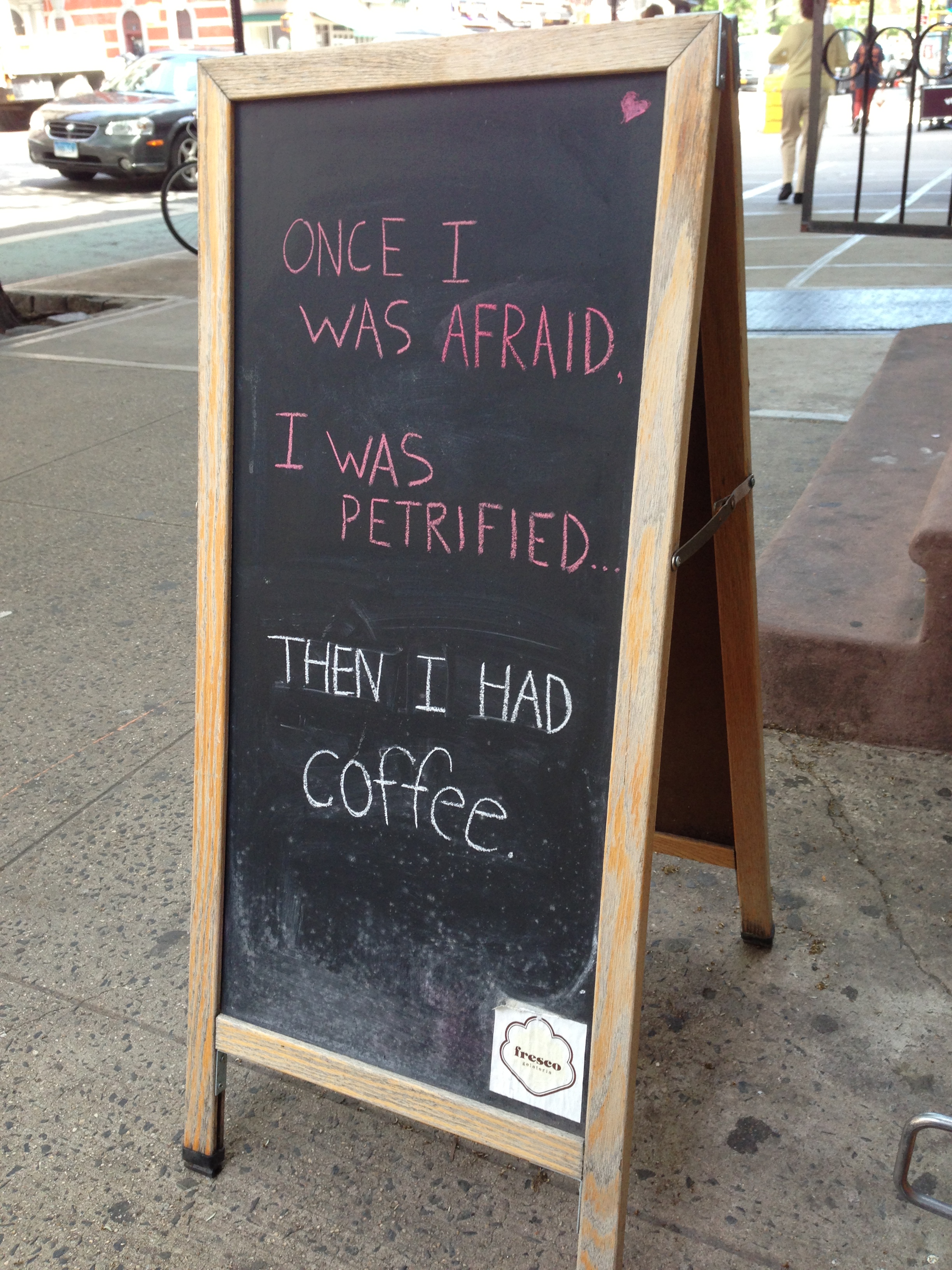
The art of coffee in a takeout cup.

coffee

There are those people who truly grok a to-go cup, light, no sugar, and others who will never understand. Those who get it will survive.

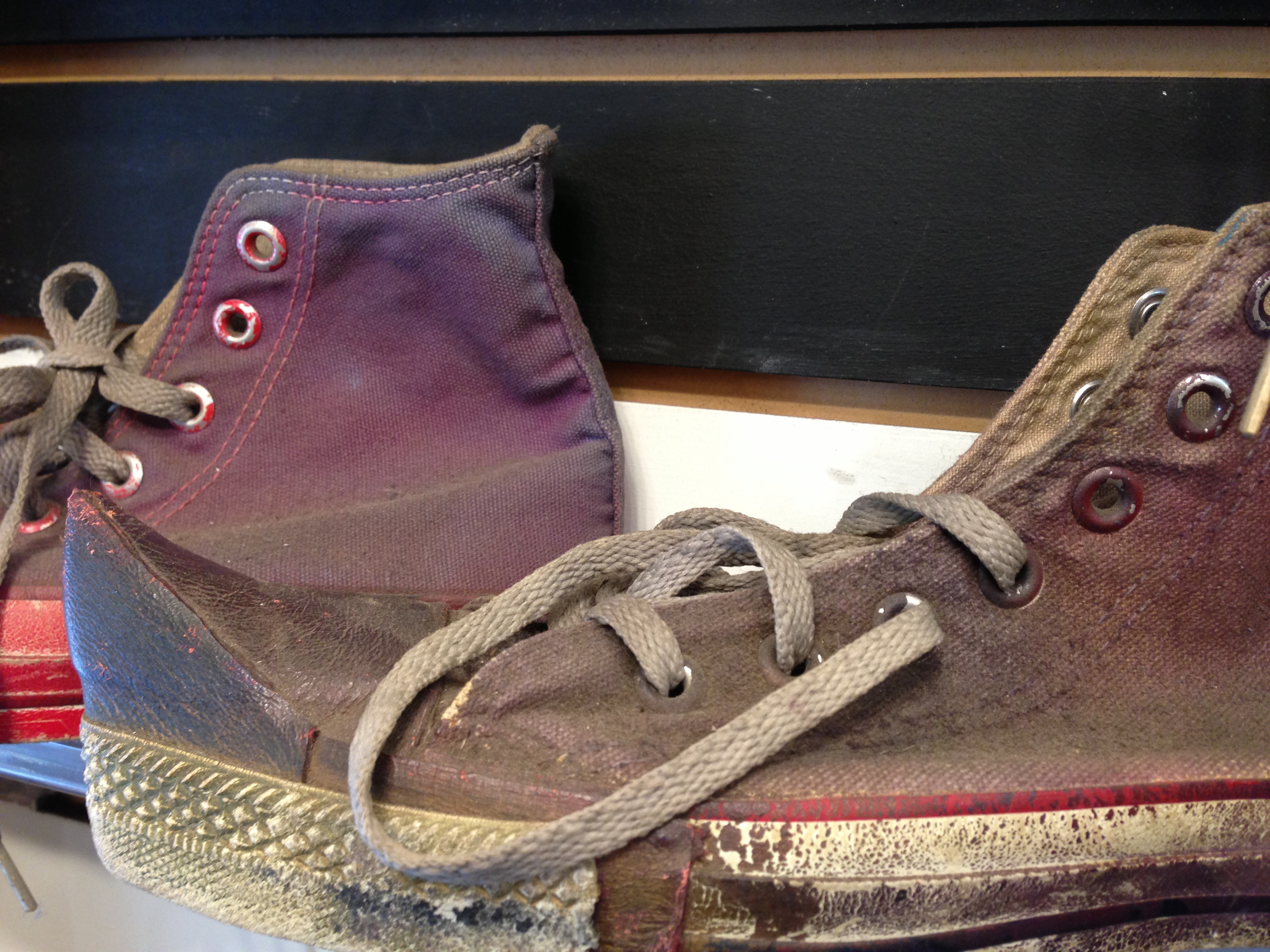
The art of the handcrafted athletic shoe. Boris works out of shoebox of a shop on St. Mark’s Place, customizing Converse sneakers. This must be one of his masterpieces.

converse

The art of the display window.

doll window

Maud and I made our way all around the East Village today but couldn’t convince ourselves to venture inside this storefront. I do, however, believe in the cause of Free Pussy Riot, the truncated message displayed on the sign – two of the three rockers are still in jail in Russia on some trumped up charge of fomenting unrest and making people think. Free Pussy Riot!

The art of the subway mosaic.

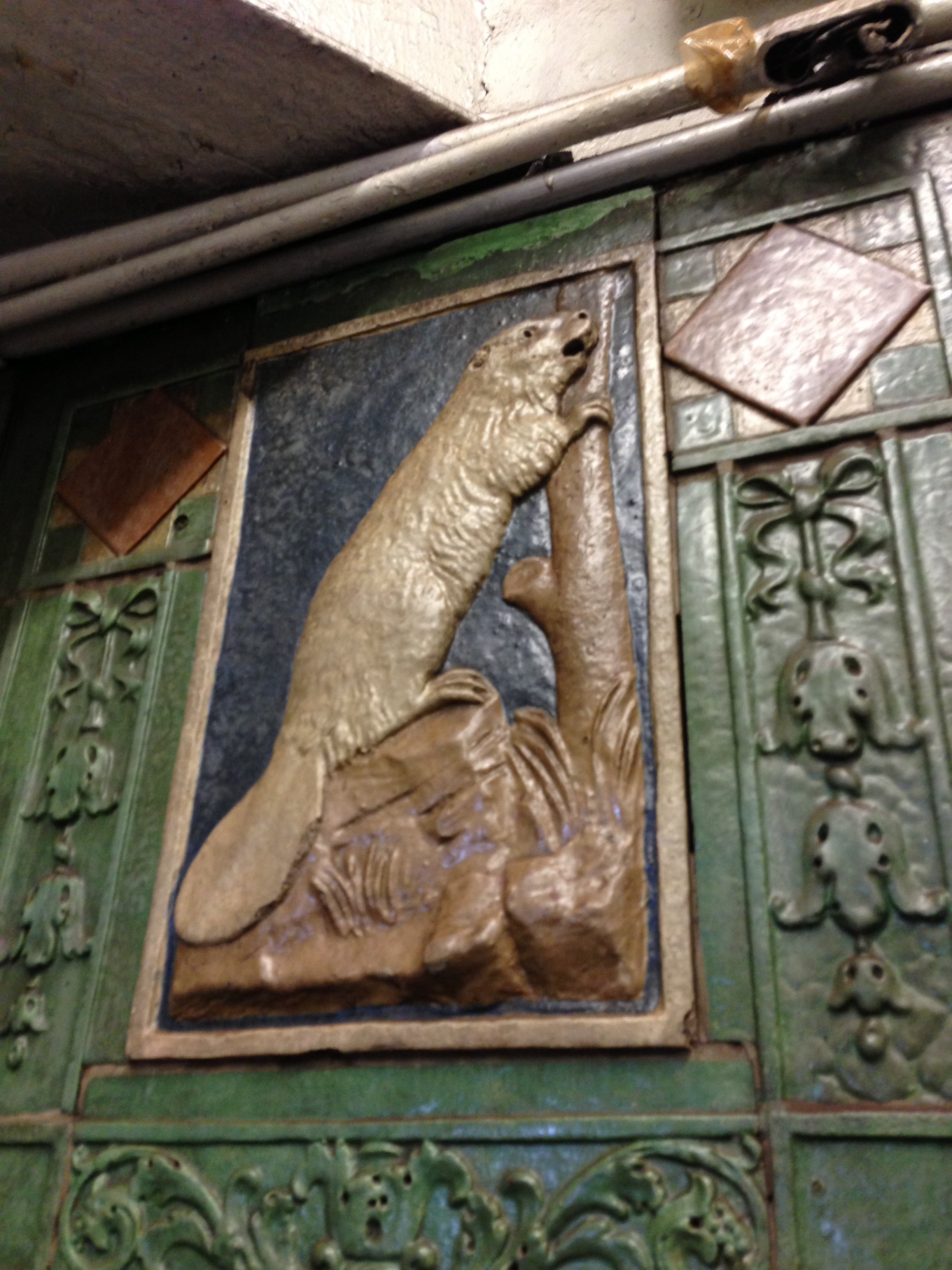
astor place beaver

New York’s subways house some splendid creative works, usually related to the locale of the stop. The Astor Place subway walls display ceramic plaques of beavers — made by the Grueby Faience Company in 1904 — because fur baron John Jacob Astor’s mansion stood nearby, and his fortune derived from the beaver-pelt trade.

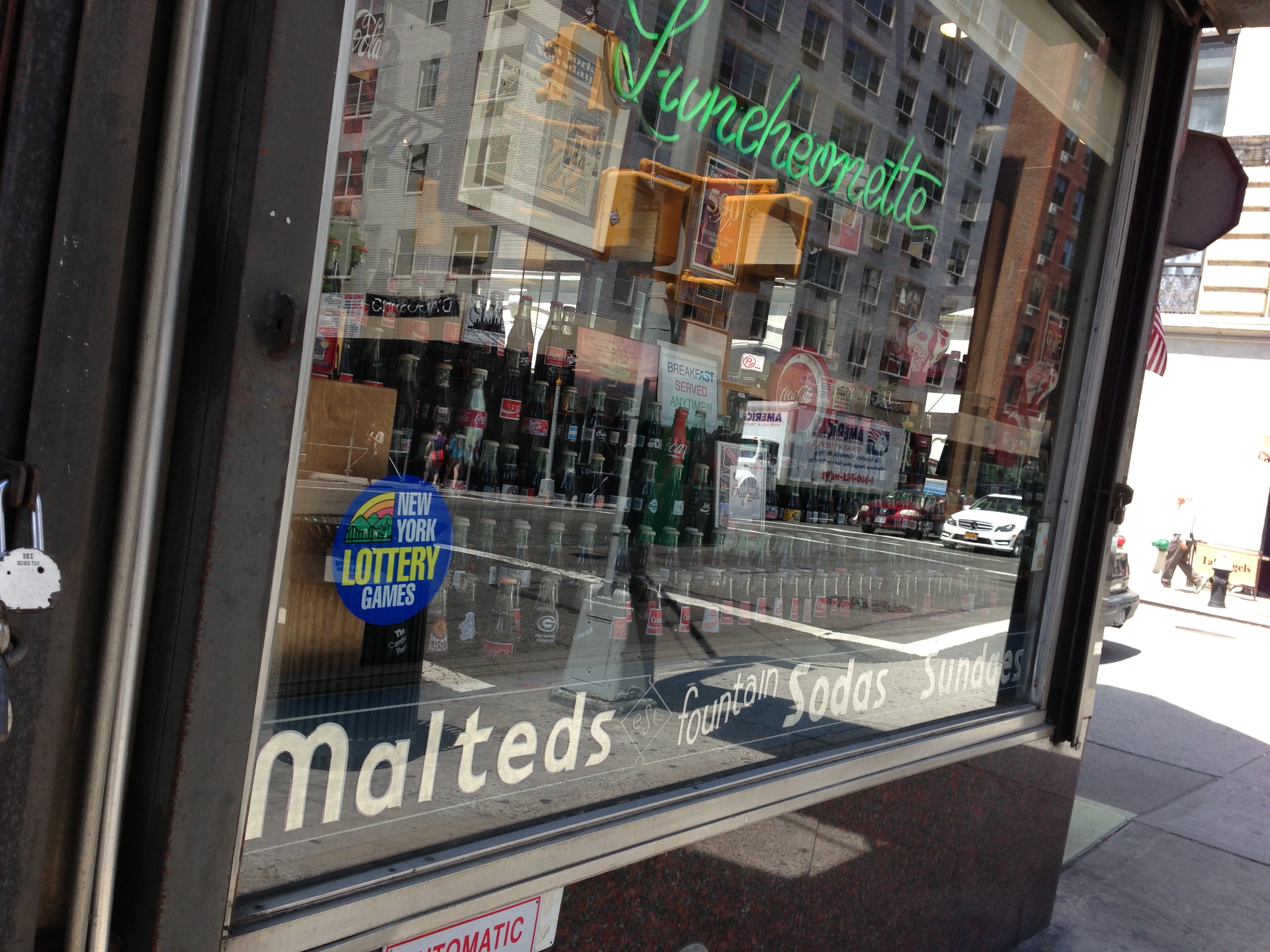
The art of the old-time luncheonette.

It sometimes seems as though everything old, dear, and genuine in Manhattan has been driven out, but once in a while a gem like the Lexington Candy Shop Luncheonette survives. It has been serving up milk shakes and lemonade since 1925.

lexington luncheonette

The art of the tooth-hurting truffle.

We grazed the cherry caramel samples at the counter of Vosges Haut-Chocolat, which sounds French but is actually out of Chicago.

caramels

Admired the pure silk hankies they use to wrap up the really important custom gifts.

silk

Then we each had a truffle of our own. Maud’s was the Rooster, with taleggio cheese, Tahitian vanilla and organic walnuts. Mine was a Woolloomooloo, featuring coconut and macadamia nuts. Gil’s getting a bacon/chocolate confection for Father’s Day.

The art of instilling disquiet.

rooftop people

The rooftop garden at the Metropolitan Museum currently features one of the most wonderful, most disturbing installations I’ve seen. The Pakistani artist Imran Qureshi was inspired by escalating bombings in Lahore when he spilled and splattered blood-red acrylic paint across the nearly 8,000-square-foot open space of the Metropolitan’s deck. Elegantly dressed European tourists traipsed across the blossoms of blood as if they were nothing.

rooftop paint 2

To me they called up the times I’ve come upon a recent deer/car collision on the highway, with the pavement still a wash of gore. Or the searing images from Gil’s book Aftermath, Inc., in which he describes the stains that occurred following trauma events, such as murder or suicide. The artist Qureshi has said, “Yes, these forms stem from the effects of violence. They are mingled with the color of blood, but at the same time this is where a dialogue with life, with new beginnings and fresh hope start.”

The art of water vapor.

cloud

Far above the paint, the New York clamor, the scene, serene, inviolable, sublime. Art for art’s sake.

8 Comments

Filed under Art, Culture, Fashion, History, Jean Zimmerman, Nature, Photography, Writing

Wildflowers and a Verse

A mile-long park runs along the Hudson River bank at Croton-on-Hudson, New York, where you can walk the path as dusk descends and see the sun set hazily, just for you.

sunset hudson

The town took an underused industrial area and rehabbed it about ten years ago with the help of the Open Space Institute so that everyone who wants to came come down and praise the beauty of the wide, placid Hudson. Well, not always placid. It seems every small dog in Westchester County is being trotted along at that hour, yapping and sniffing.

The smell of flowers pervades the air.

wild white roses

Along the railroad tracks you’ll find the multiflora rose, which came to the U.S. in the late 19th century as rootstock for ornamental varieties and was then pressed into use as a “living fence” to corral livestock. Its lovely petals float on the air for just about two weeks every June, then it reverts to its less-beautiful identity as a sticker-bush. Other wild roses bloom here too, some with better manners.

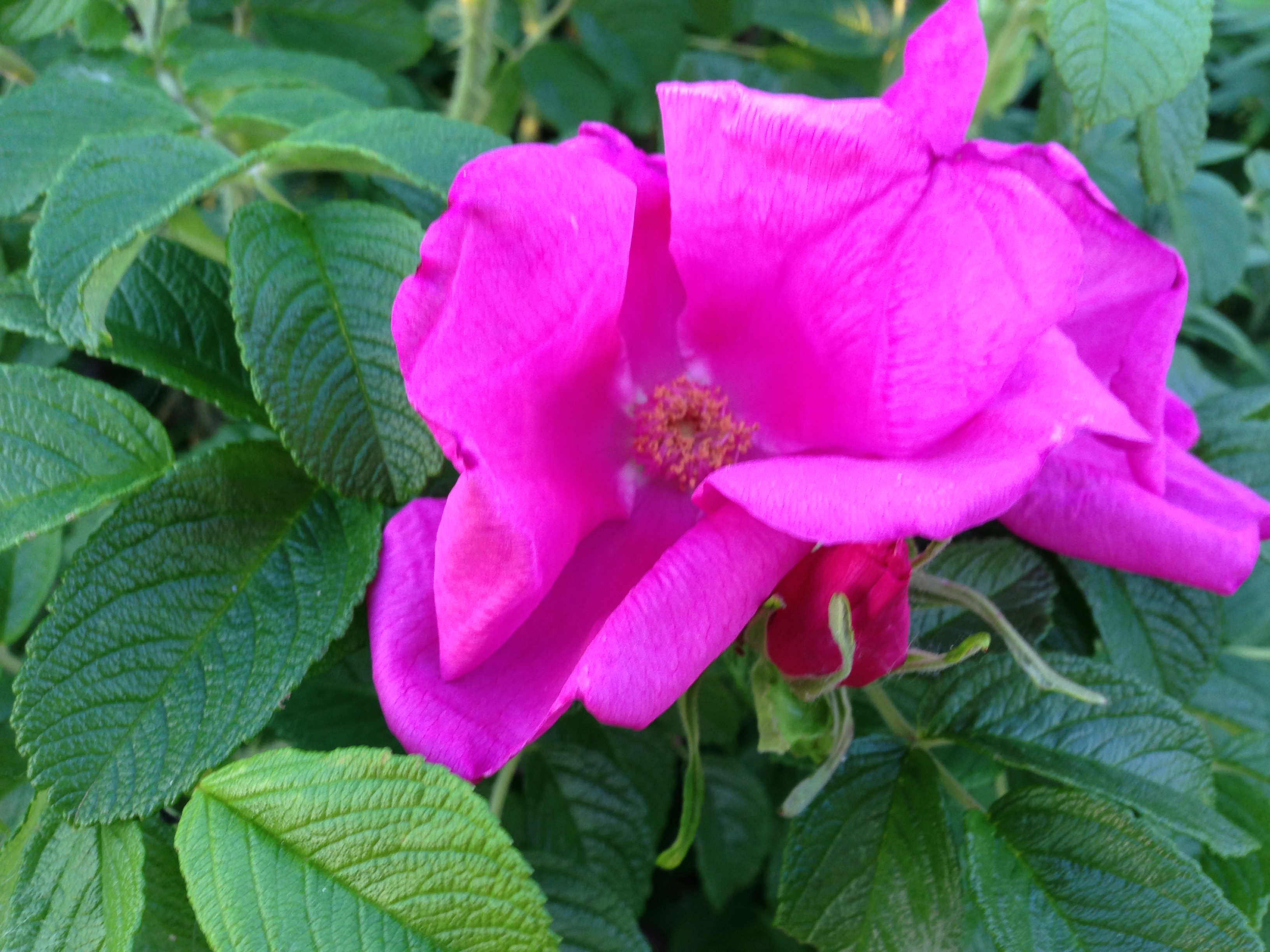
wild pink rose

Almost as fragrant as the white ones when you stick your nose into a bloom. And honeysuckle – when was the last time you sucked the fragrant dew from one of its blossoms? Put it on your to-do list for today.

honeysuckle 2

Vivid spires come up, having materialized after our rains came, finally, and jump started all the plants.

purple spires

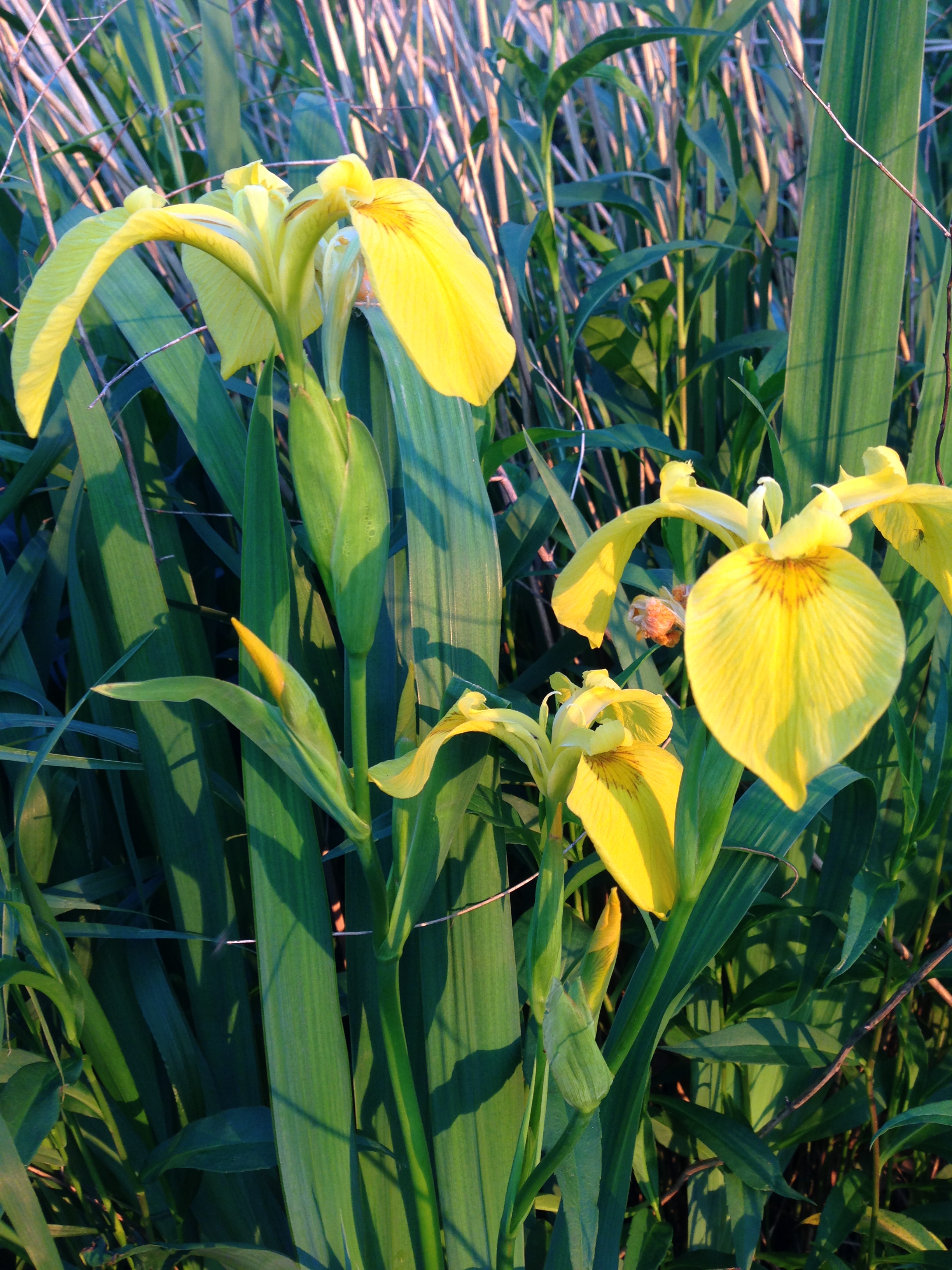
And the wild iris, down by the shore, its proud head, its feet in the mud.

iris

The great poet Louise Gluck writes in a poem named for a flower, “Snowdrops,” in her Pulitzer-winning collection The Wild Iris:

I did not expect to survive,

earth suppressing me. I didn’t expect

to waken again, to feel

in damp earth my body

able to respond again, remembering

after so long how to open again

in the cold light

of earliest spring—


afraid, yes, but among you again

crying yes risk joy


in the raw wind of the new world.

2 Comments

Filed under Home, Nature, Photography, Poetry, Writers, Writing

Red Is the Color

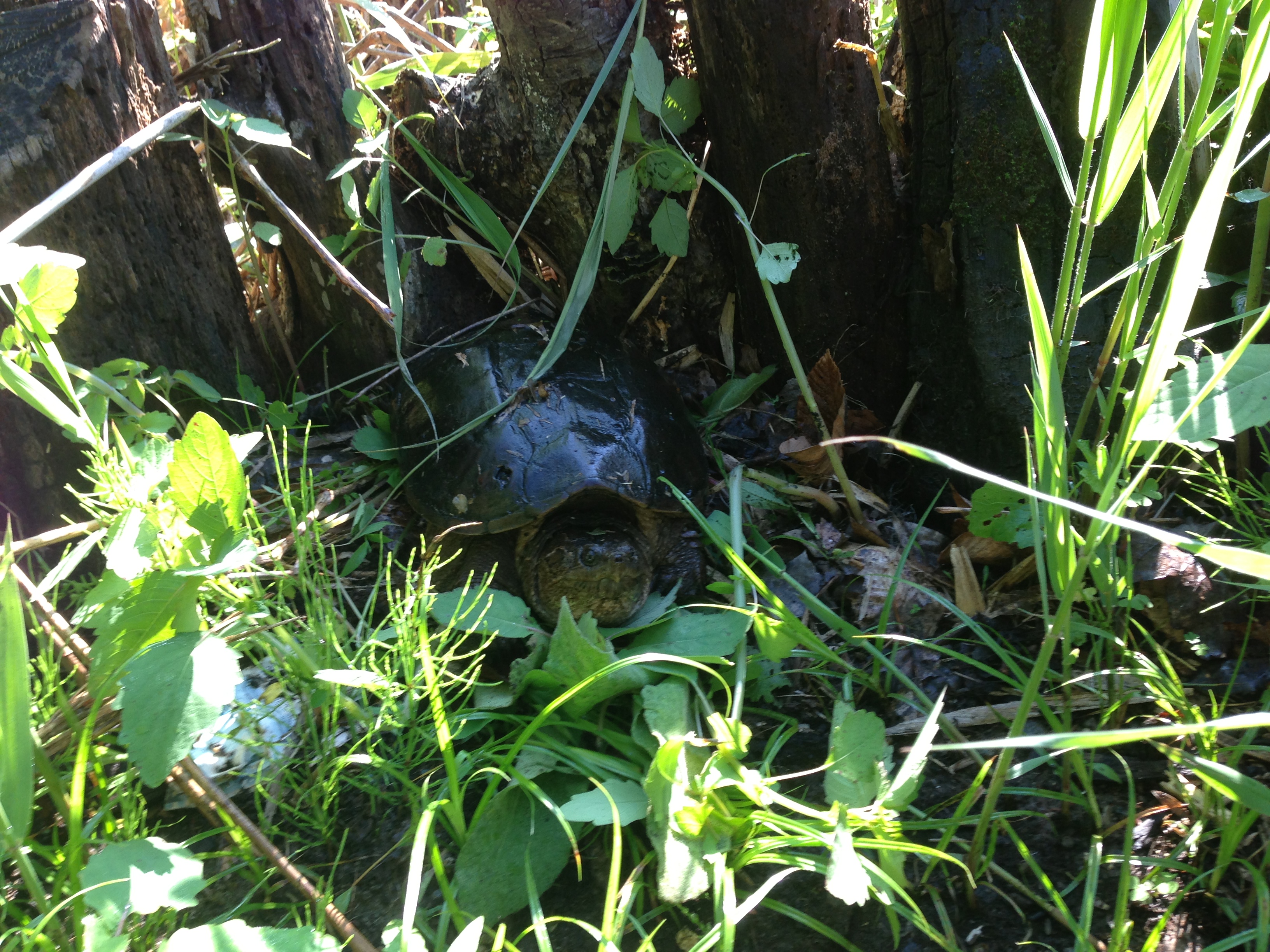
We were ushered off to our strawberry jaunt by a visitor from prehistory.

snapping turtle

A snapping turtle backed herself into a corner of the the vegetable garden when I startled her. She scowled, bit the air and elongated her snake-like neck when her ejection was proposed with a shovel. Snappers evolved over 40 million years ago, so she deserves our careful respect.

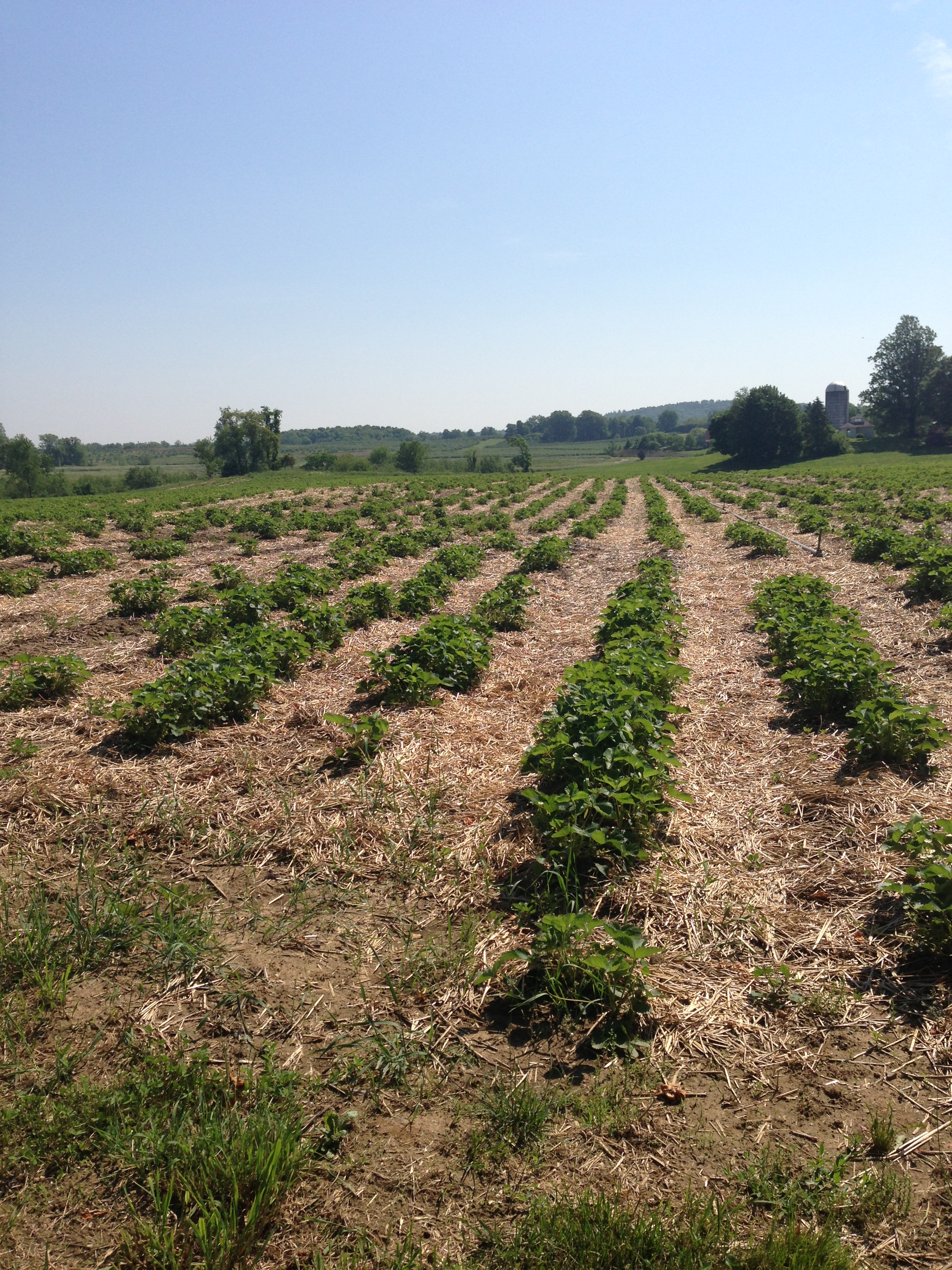
It’s strawberry season. But it’s early.

strawberry field

Still, we wanted to pick.

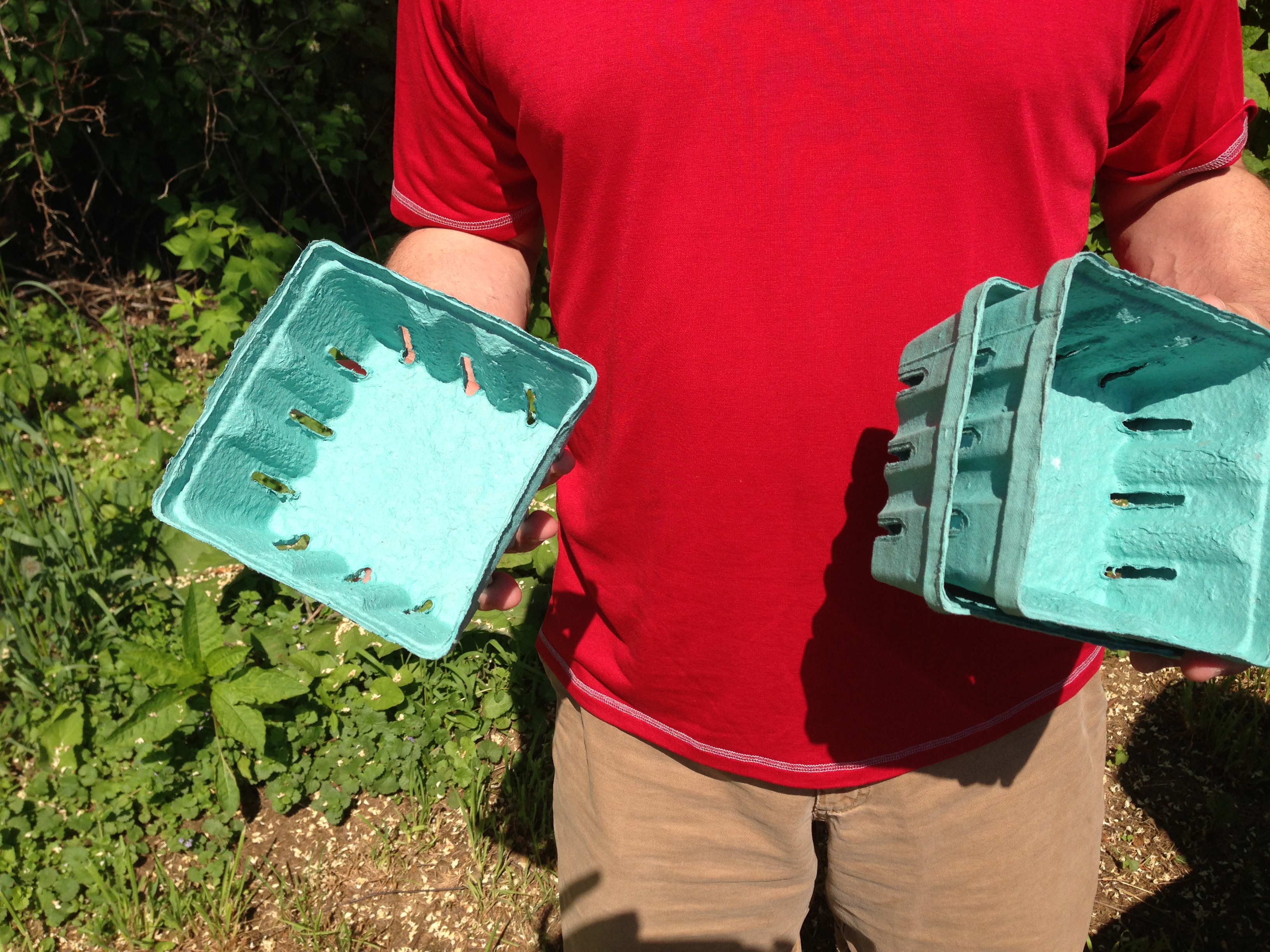
Gil boxes empty

One of my mother’s fondest memories of strawberry picking as a kid is the bluebird she saw on a post, her first bluebird, as she rode into the field in the back of a pickup truck with her sister Sandra and her brother Jere.

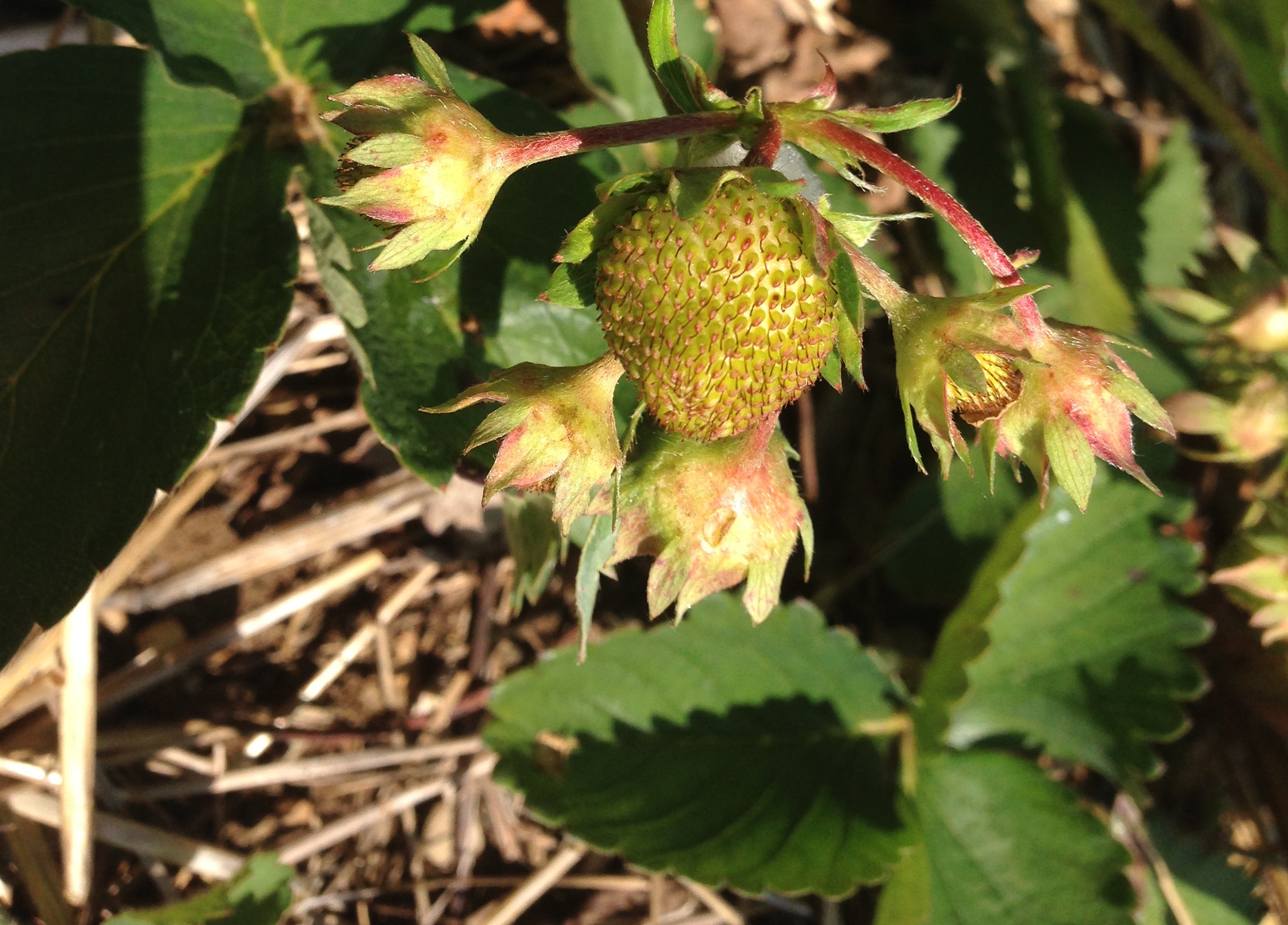
No bluebirds for us, or birds of any kind. The berries, clustered under their tents of leaves were largely unripe.

unripe strawberry

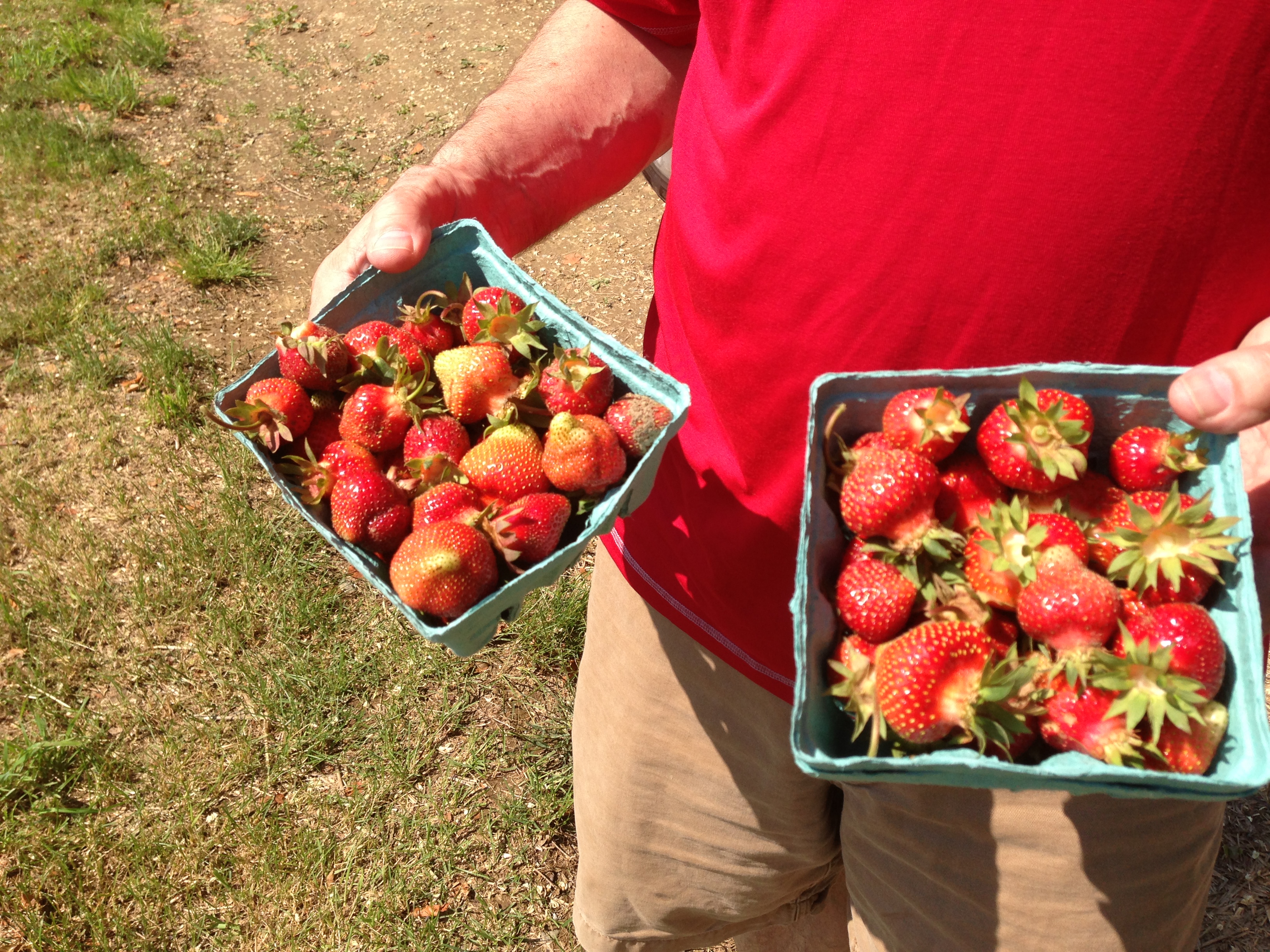
At Grieg Farm, in Red Hook, New York, we had a summer sky, hot blue with hazy clouds. And strawberries, it turned out when we looked, plenty enough for the two of us.

I remember eating strawberries when Gil proposed to me decades upon decades ago. He went into the restaurant’s men’s room and looked into the mirror, then came back to the table and dove in.

Gil boxes full

Ryan took our six bucks and explained that while the berries weren’t the prettiest, they were just as sweet as if they were perfectly red.

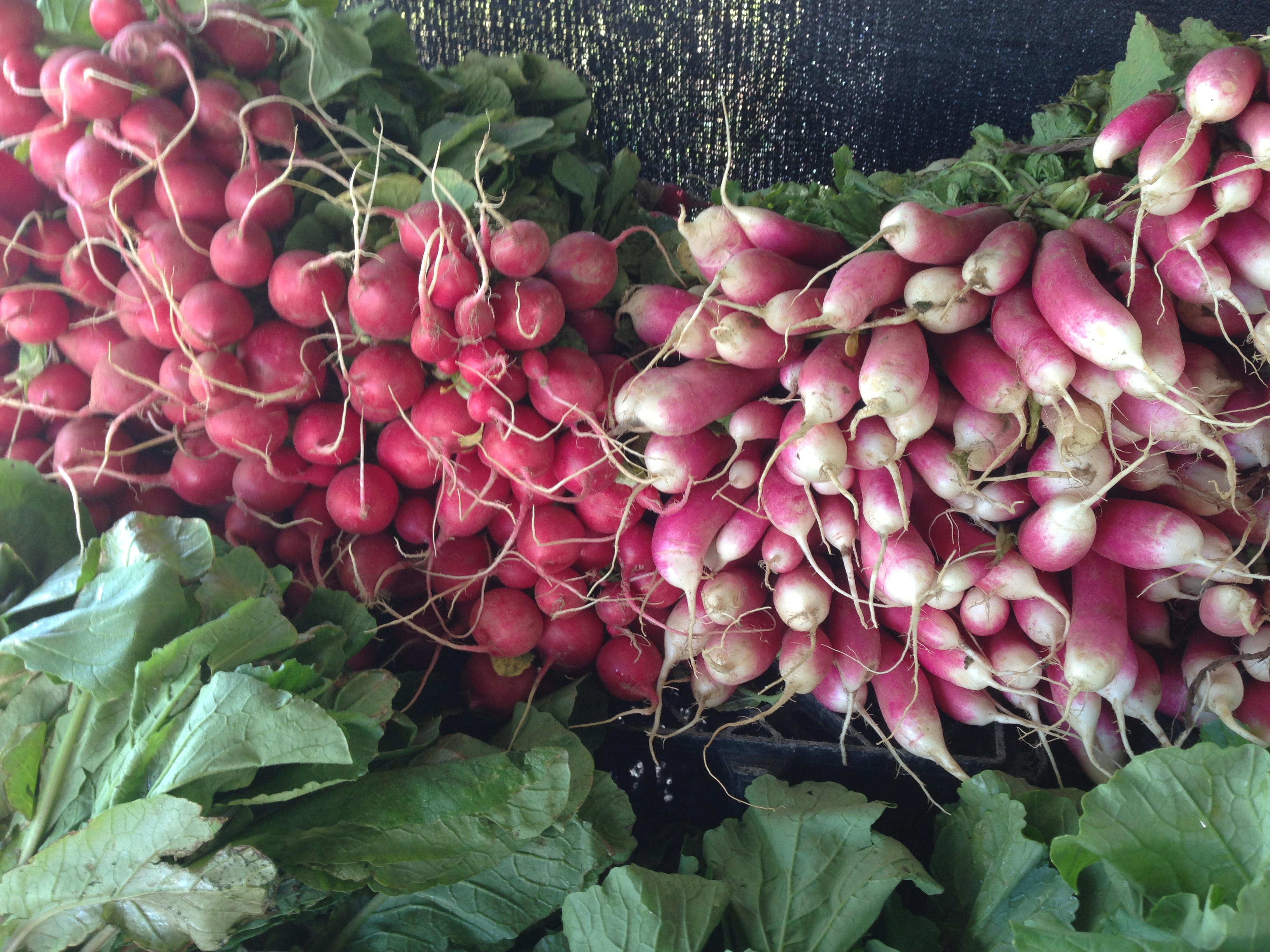
Redder (and pink) were the radishes at the farm stand.

radishes

One nurseryman told me that if you harvest the baby radishes with their leaves and saute them together, it results in a dish that is delicious. I have plenty of baby radishes in my garden – until the snapping turtle comes for them – and I’m going to try it.

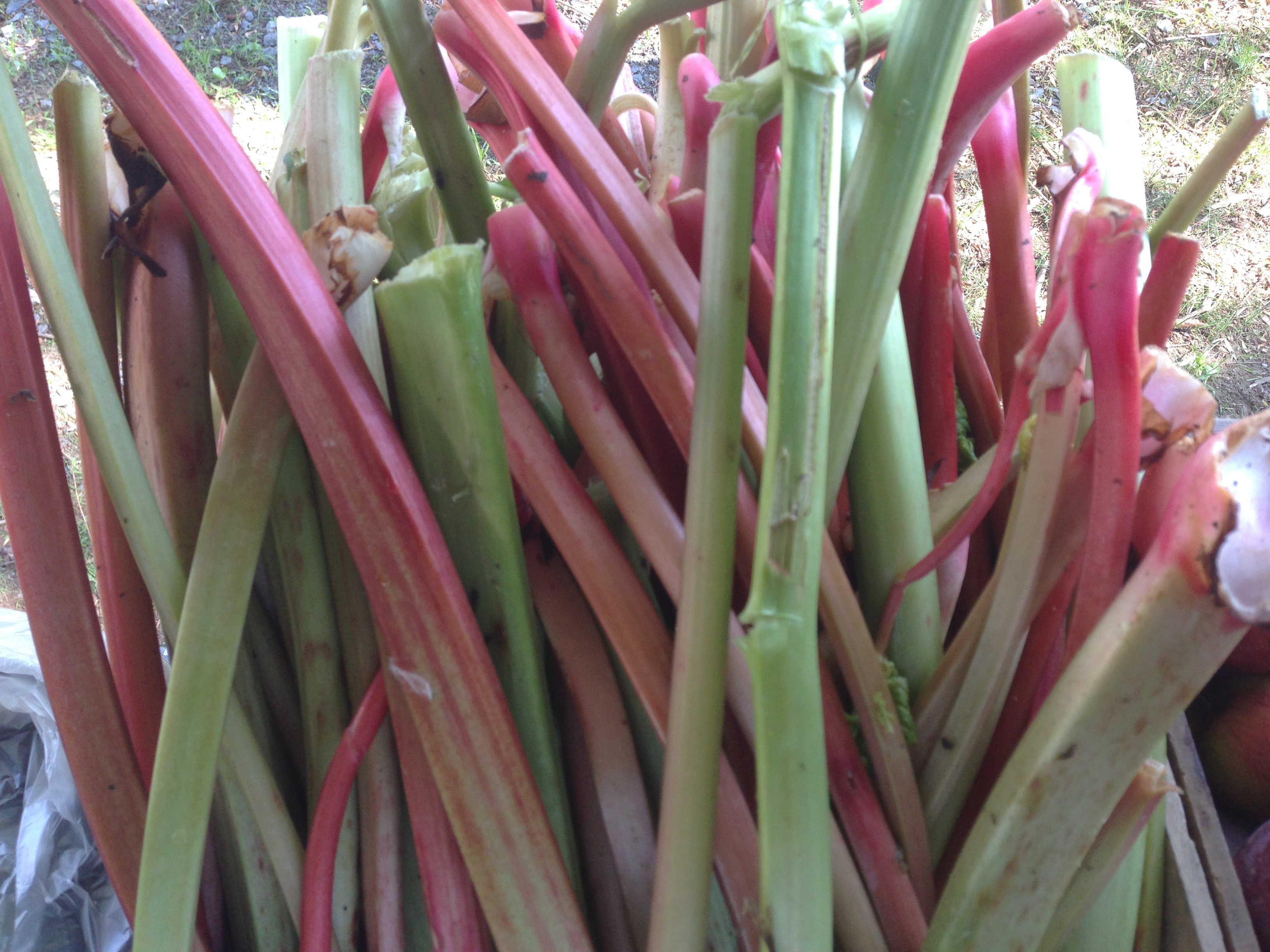
Red-green rhubarb, to go with my peppermint-striped strawberries.

rhubarb

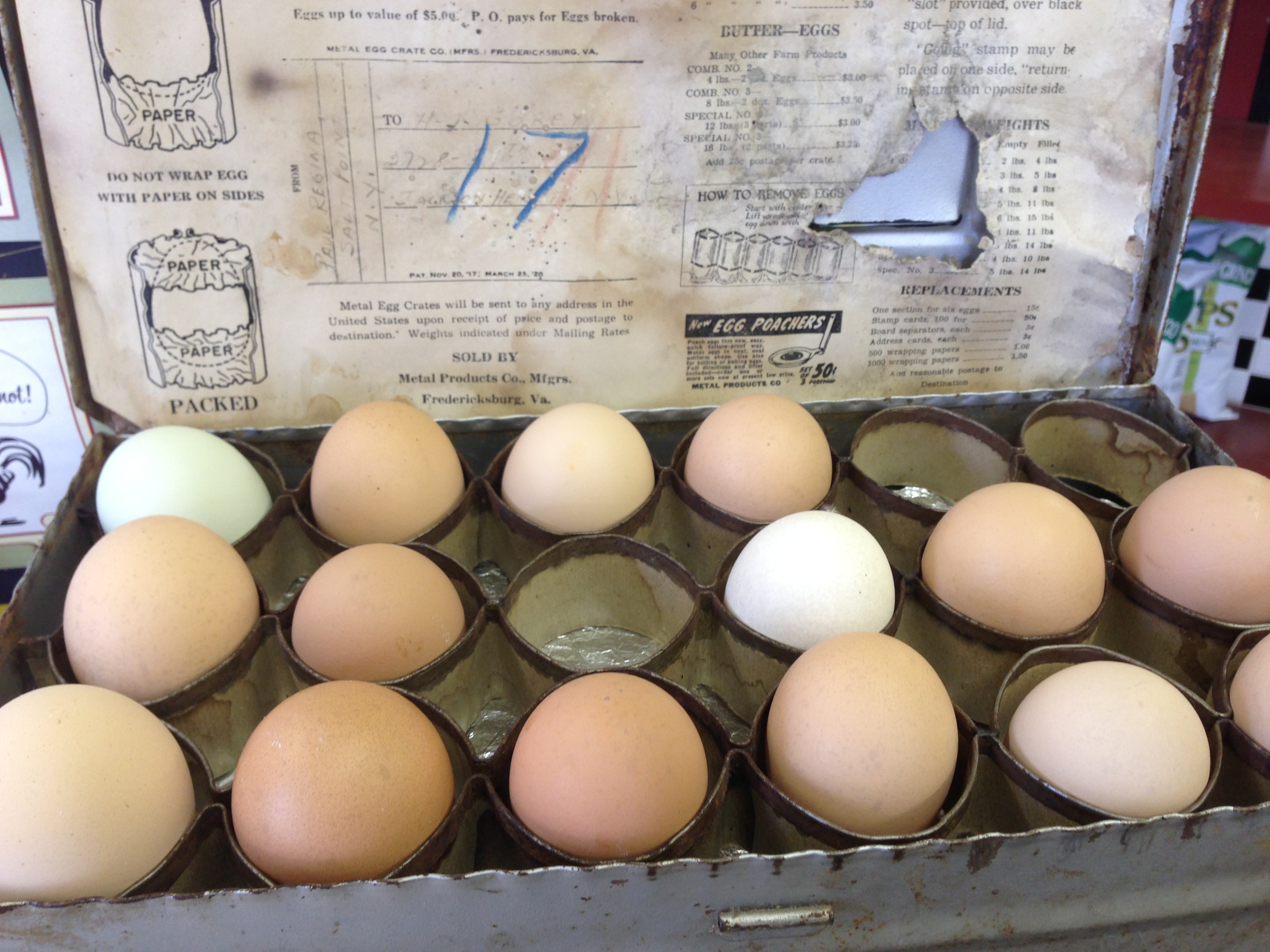
Maybe preceded by a meal of eggs so fresh their yolks puff up like small islands of saffron?

brown eggs

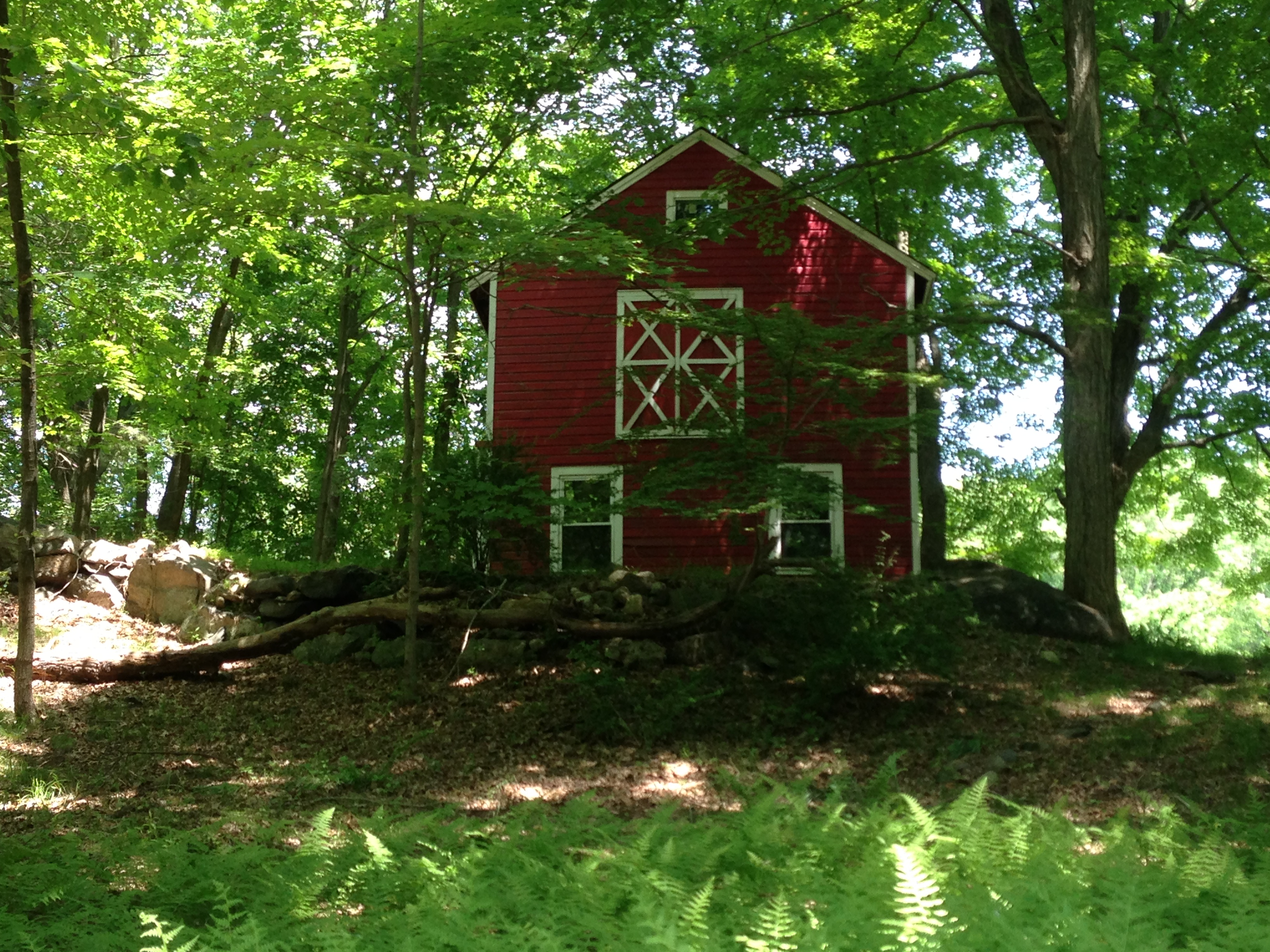
So the strawberries weren’t red. So what? The barns were.

red barn

In the car, driving home with alacrity before my coleus plants wilted, Gil said, Do you know why so many barns are red?

coleus

I never thought about it.

Because of the chemical properties of dying stars, he said. One byproduct when stars decay is ferrous ochre. Ferrous ochre is plentiful on earth. And ferrous ochre is what makes paint red. So it’s the cheapest kind of paint.

Okay, I say.

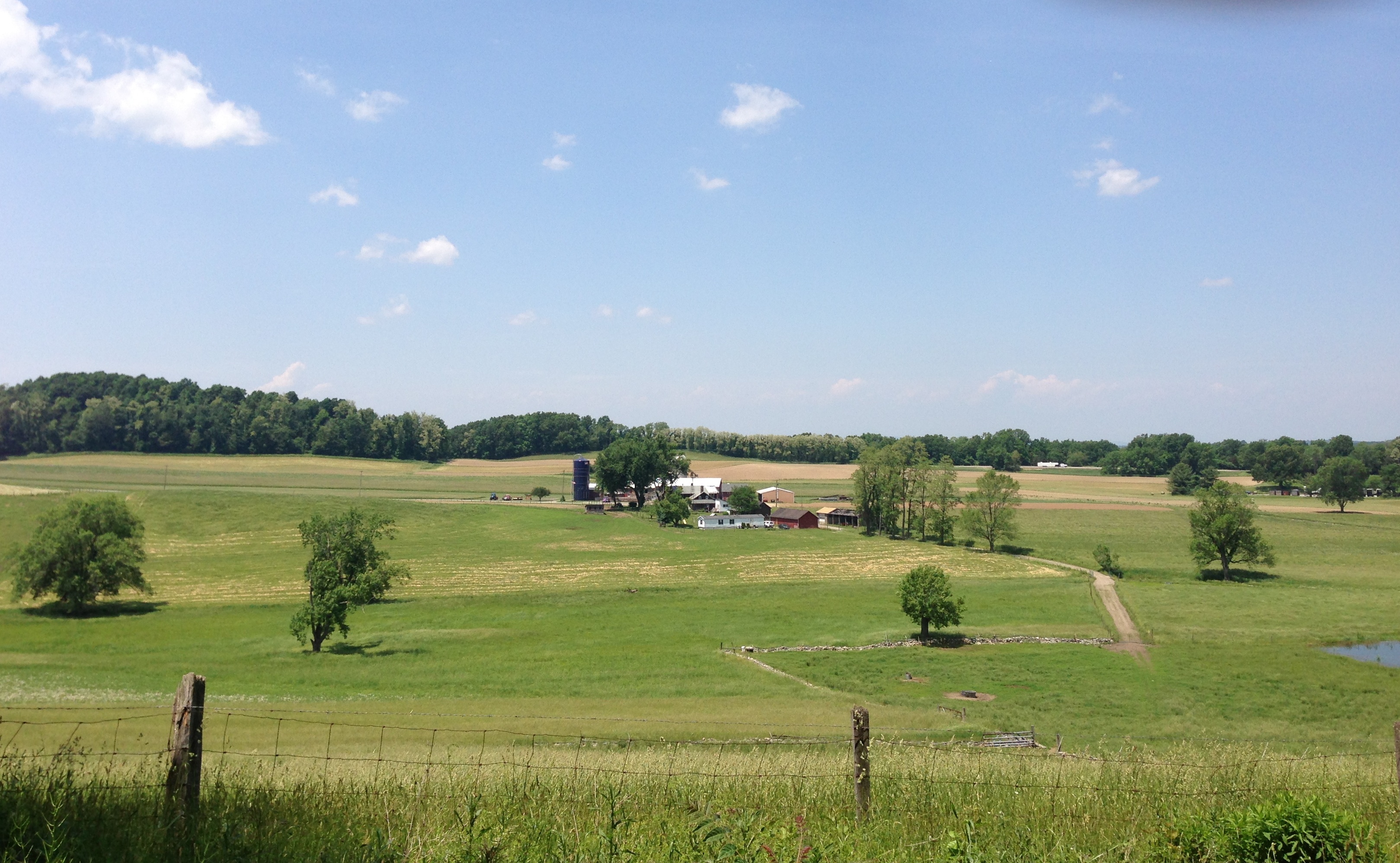
Barns are big, he says. Farmers are cheap.

farmland

We have red barns because of the chemical properties of dying stars.

Strawberries are a different story.

Macerated Strawberries with Basil

[Macerate= to soften or decompose (food) by the action of a solvent.]

2 lb. fresh strawberries, rinsed, hulled, and sliced 1/8 to 1/4 inch thick (about 4 cups)

1 Tbs. granulated sugar

2 tsp. balsamic vinegar (alternate: 2 tsp. vanilla)

8 to 10 medium fresh basil leaves

In a large bowl, gently toss the strawberries with the sugar and vinegar. Let sit at room temperature until the strawberries have released their juices but are not yet mushy, about 30 minutes. (Don’t let the berries sit for more than 90 minutes, or they’ll start to collapse.)

Just before serving, stack the basil leaves on a cutting board and roll them vertically into a loose cigar shape. Using a sharp knife, very thinly slice across the roll to make a fine chiffonade of basil. Scatter with the basil to garnish.

2 Comments

Filed under Cooking, History, Home, Jean Zimmerman, Nature, Writers, Writing

Emily in the Garden

The heat feels good. All ninety-nine degrees of it.

The pole beans twist themselves around the bamboo supports, under the arcing sun.

pole beans

The pansies on the front porch of the Cabin salute.

pansies

Even Oliver likes to move his luxuriating form outdoors, having decided that sun-warmed gravel is a choice nap mat. Along the lines of ancient cultures whose people slept comfortably with their heads on carved blocks of wood or stone.

Oliver gravel prone

All the quiet and heat and a sense of the plants feverishly growing brings to mind the work and life of Emily Dickinson, she who was, according to one scholar, “known more widely as a gardener, perhaps, than as a poet” during her time. Dickinson conscientiously tended the flower garden at the Homestead in Amherst, Massachusettes, where she spent her whole life, assembling. a collection of pressed plants in a sixty-six page leather-bound book which contained 424 pressed flower specimens organized according to the Linnaean system.

Dickinson is usually thought of the way she appears in the iconic photo taken when she was about eighteen.

Emily_Dickinson_daguerreotype-e1346874482904

Recently another portrait materialized in an archive, with the poet on the left and her friend Kate Scott Turner on the right.

Emily Dickinson

She would have been well into her genius years, both in terms of writing and gardening.

The Homestead garden was famous in its time, at least among the neighbors. Dickinson’s niece, Martha Dickinson Bianchi, remembered “carpets of lily-of-the-valley and pansies, platoons of sweetpeas, hyacinths, enough in May to give all the bees of summer dyspepsia. There were ribbons of peony hedges and drifts of daffodils in season, marigolds to distraction—-a butterfly utopia.” Dickinson loved scented exotic flowers, writing that she “could inhabit the Spice Isles merely by crossing the dining room to the conservatory, where the plants hang in baskets.” She liked to send friends bunches of blooms with verses attached, but complained mildly that “they valued the posy more than the poetry.”

Dickinson went everywhere, apparently, with her brown Newfoundland Carlo, a gift from her father in the fall of 1849. “My shaggy ally” she called him in a letter.

A lovely animation gives the perfect flavor of the poem “I started early—took my dog.”

Emily was so mysterious, endlessly elliptical.

Presentiment is that long shadow on the lawn

Indicative that suns go down;

The notice to the startled grass

That darkness is about to pass.

Less than a dozen of Dickinson’s 1,800 poems were published in her lifetime. Among the rest were 40 pieced-together and hand-sewn books she had assembled in the years before her death.

Wild Nights

That’s the fascicle-bound manuscript page for the passionate, rhapsodic poem Wild Nights!:

Wild nights! Wild nights! 
Were I with thee, 
Wild nights should be 
Our luxury!

Futile the winds 
To a heart in port, 
Done with the compass, 
Done with the chart.

Rowing in Eden! 
Ah! the sea! 
Might I but moor 
To-night in thee!

In her final years Dickinson also wrote on scraps of paper, chocolate wrappers, the margins of books, and even envelopes she received in the mail. A book documenting these envelope poems is due out this coming October, to be titled Gorgeous Nothings. A related appreciation and performance can be enjoyed even before the book is published.

Emily

2 Comments

Filed under Dogs, Home, Jean Zimmerman, Nature, Poetry, Publishing, Writers, Writing

Tender Buttons

I’m sometimes scared of mushrooms. Portobellos I like. Cremini, good for risotto. Even the common white button mushrooms. Throw them into a stir fry, they cook up fine. But wild mushrooms, the kind people hunt for in the woods? What if I get poisoned? In my mind I always saw the flaming red with white dots, the poisonous amanita muscaria. There are old mushroom hunters, and bold mushroom hunters, but no old, bold mushroom hunters. As the saying goes.
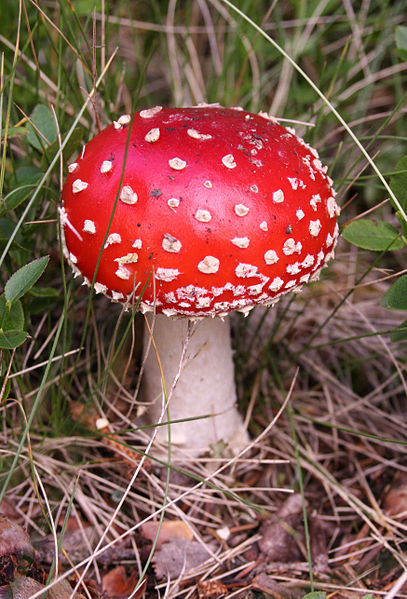
407px-Amanita_muscaria_(fly_agaric)

I thought I’d face my fears in a mushroom walk at Cranberry Lake Preserve  cosponsored by a group called COMA, the Connecticut-Westchester Mycological Association, founded in 1975 by a group of amateur naturalists and mushroom enthusiasts. COMA promotes a sense of stewardship of the natural world through the study and appreciation of the world of fungi. It even sponsors a mushroom university.

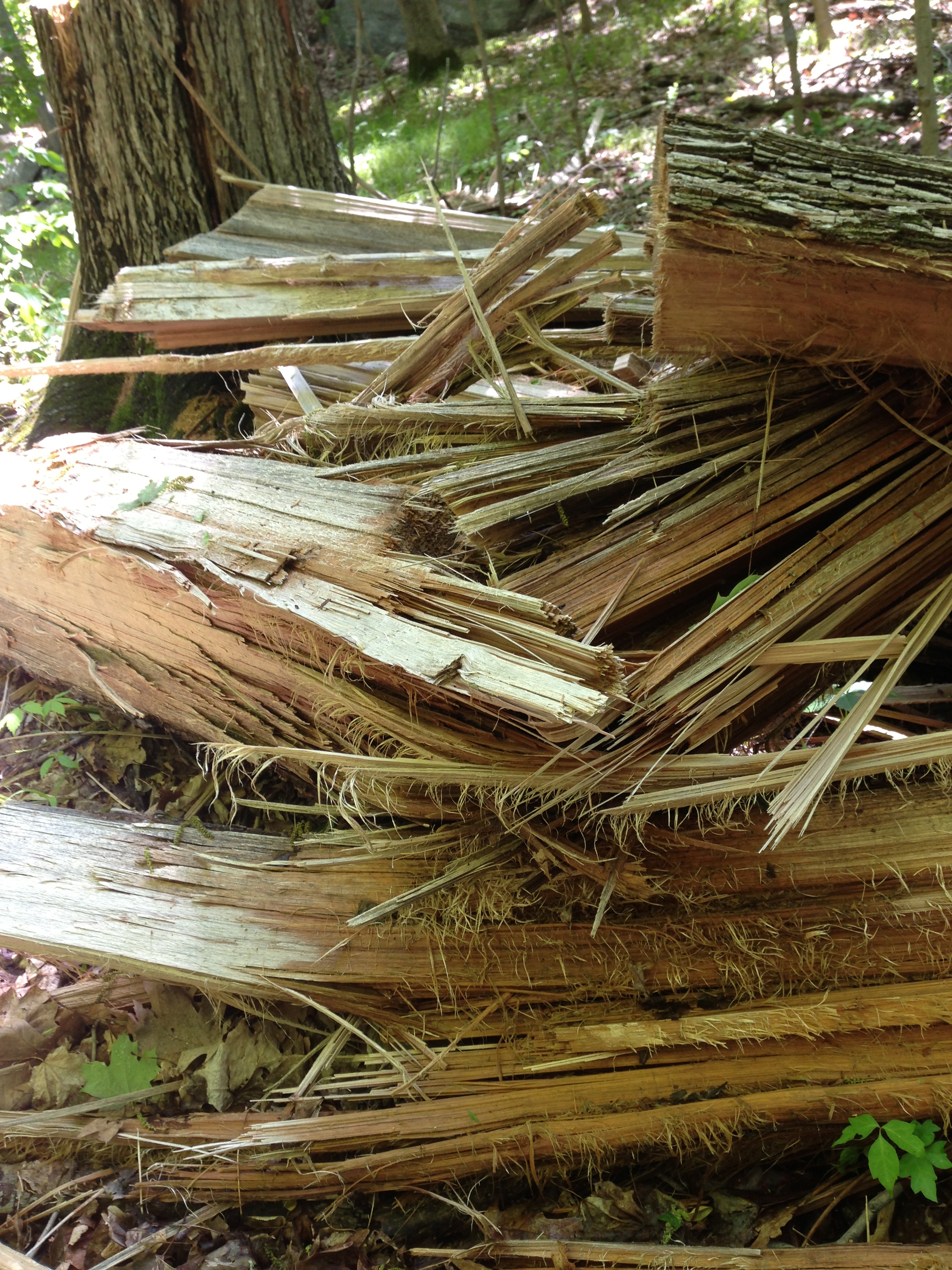
I got to the meeting place before anyone else. It was just me and the bears and the elves. The sun had broken out and the wind was blowing wildly. So many trees have fallen in recent storms, some shattered to pieces, it seemed amazing there were any left standing.
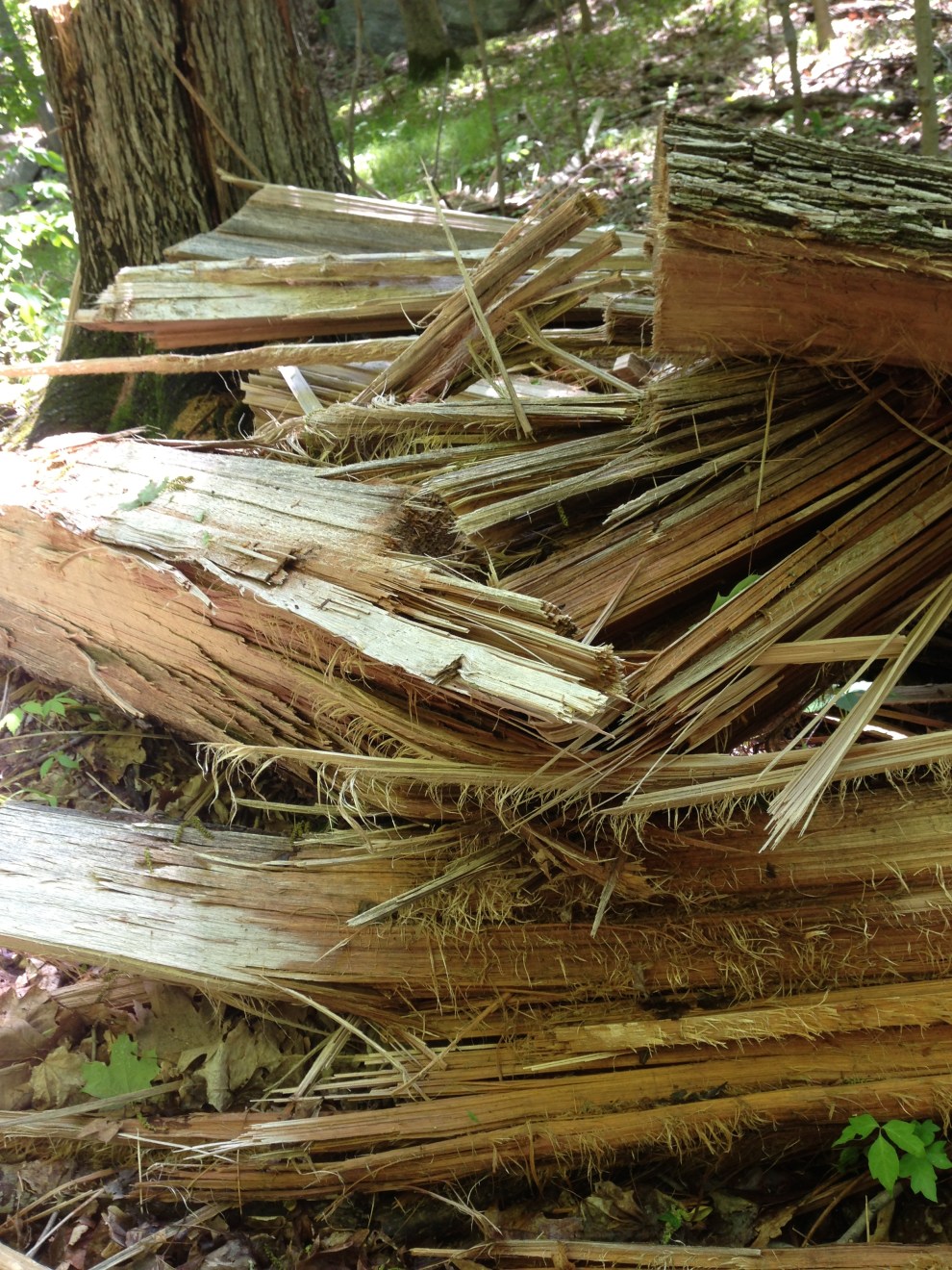
exploded tree

“Nature alone is antique,” wrote Thomas Carlyle, “and the oldest art a mushroom.” Mycologists approach the forest with a combination of hard-headed method, Zen mysticism and dumb luck. My fellow foragers began to arrive with wicker baskets over their arms and expressions of patient, optimistic calm. Zach, our guide, explained some mushroom physiology, the gills underneath the cap, the veil that falls back as the spores mature.

zach

I met Vrena, a retiree and avid traveler from Switzerland, who described the wild food she had gathered from the forest this spring: garlic mustard, dandelion, dock, bamboo and ramps. Young wild grape leaves, she said, are utterly different, when used to stuff cinnamon-flavored rice mixed with lamb than the chewy, flavorless kind you get from a can. “The leaf is not offensive, because it is tender,” she explained.

It seemed an awful lot like an African photo safari but instead of wildebeests there were wild mushrooms.

photo op

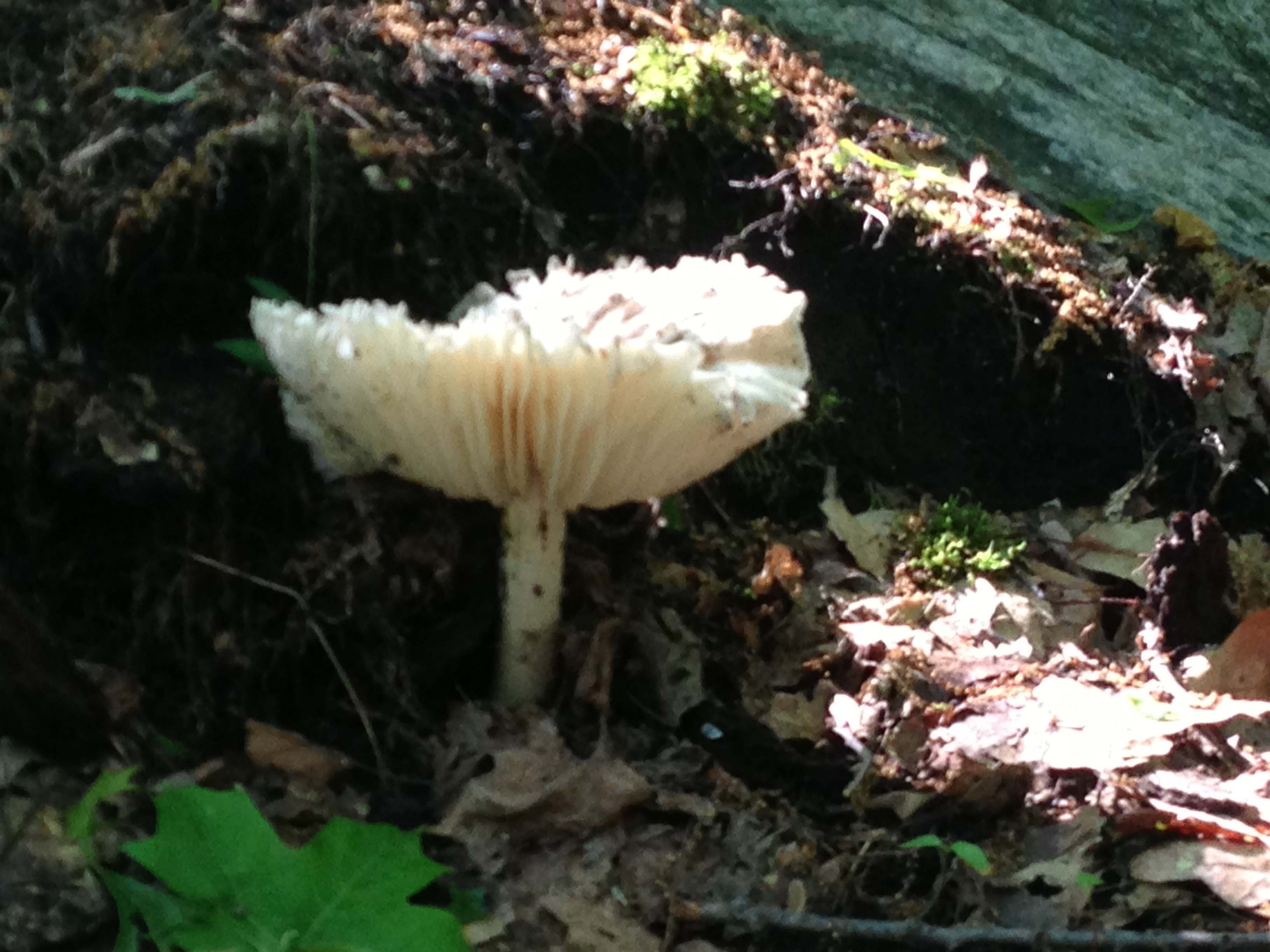
Two dozen people moved quietly among the newly leafed out trees, lifting up hunks of fallen bark and other decaying matter to find treasures.

ear funghi

The real gold isn’t the mushroom itself but the vast network of mycelium it grows out of, spreading vastly under the ground. The mushroom is simply the fruiting body of the plant. “Ninety percent of what you’re standing on is mushroom mycellium,” a well-informed mushroomer named Rena asserted. Manufacturers, she said, are starting to use the soft, threadlike stuff as packing material, rather than plastic.
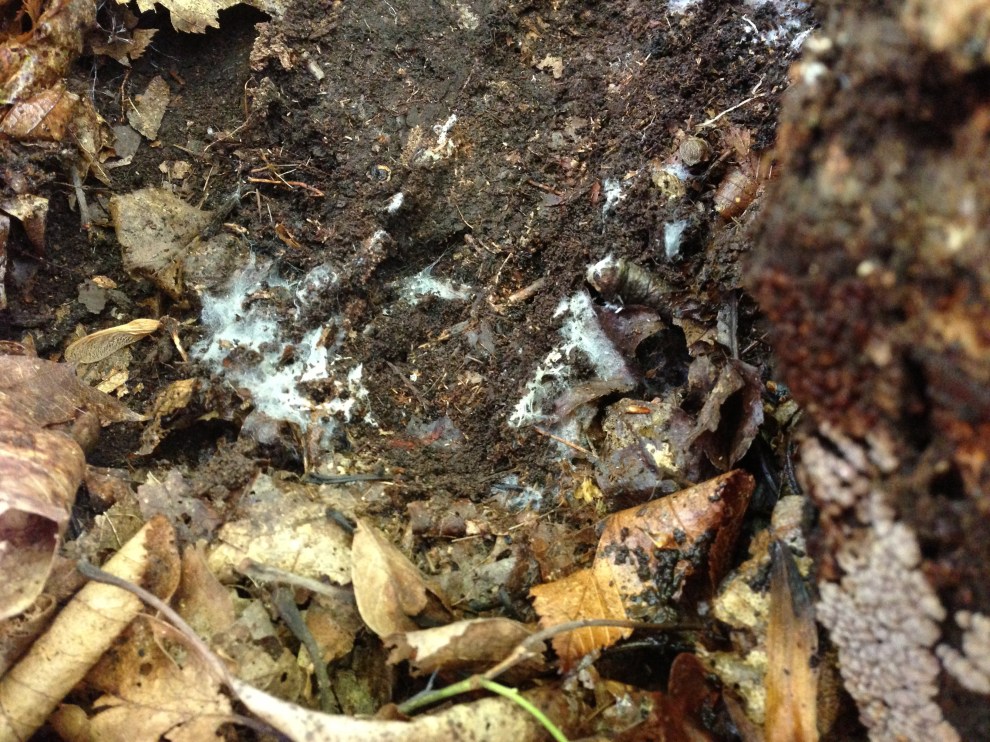
underground

The most common specimen around these woods went by the simple acronym LBM: little brown mushroom.

lbm

Just because it was little didn’t make it boring.

There was the crust fungus.
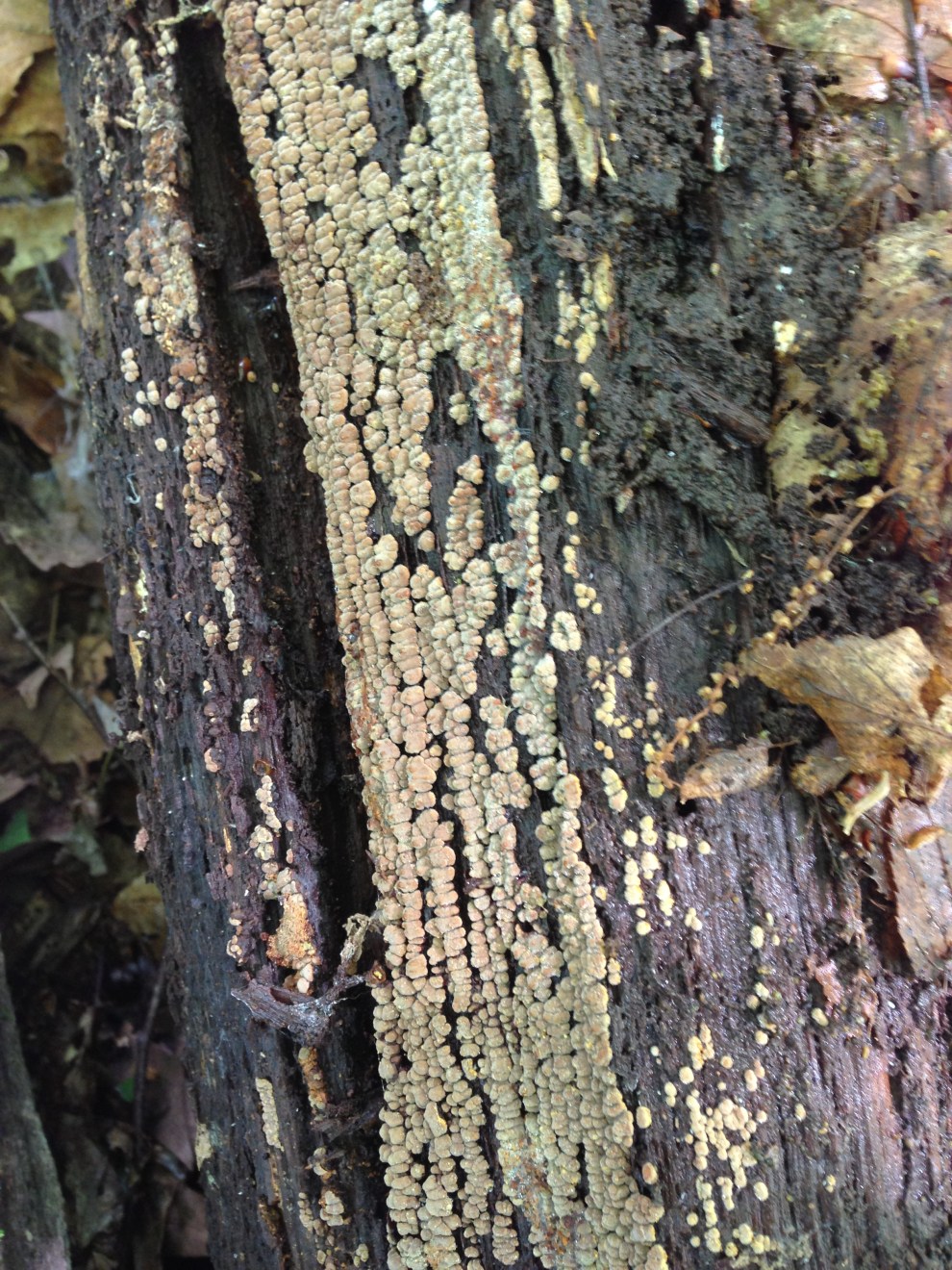
tree funghi

We saw mushrooms growing on top of other mushrooms – called fairy pins, like little black matchsticks, so small as to be invisible without a loup. A carniverous mushroom, devouring the back leg of a certain beetle and now exploding fruitily through it. All sorts of jellies.

jelly flower

We made our way in slow motion. There was time to thrill to the trill of a tree frog. To hold a serious discussion about solomon’s seal. In the middle ages, noted one herb enthusiast, the wild plant was “the herb for women who happened to fall upon the fist of their husband.” In other words a poultice, a balm that fell short of a divorce but was better than nothing.

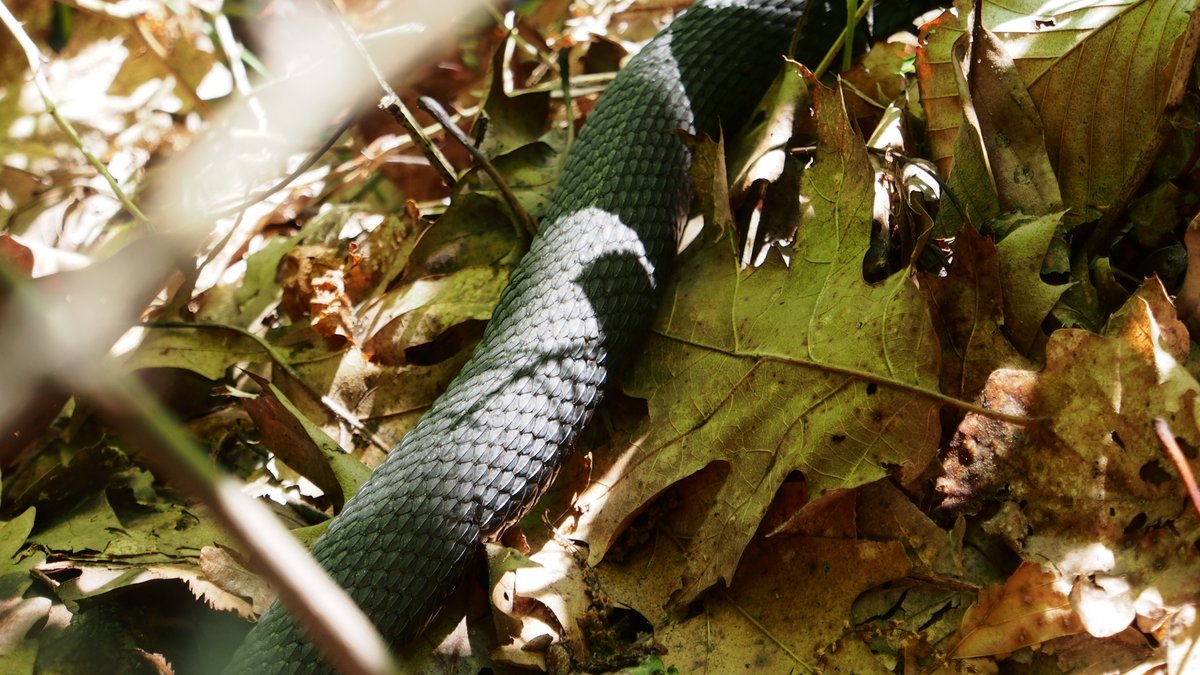
A baltimore oriole. A water snake sunning itself on the lake shore.
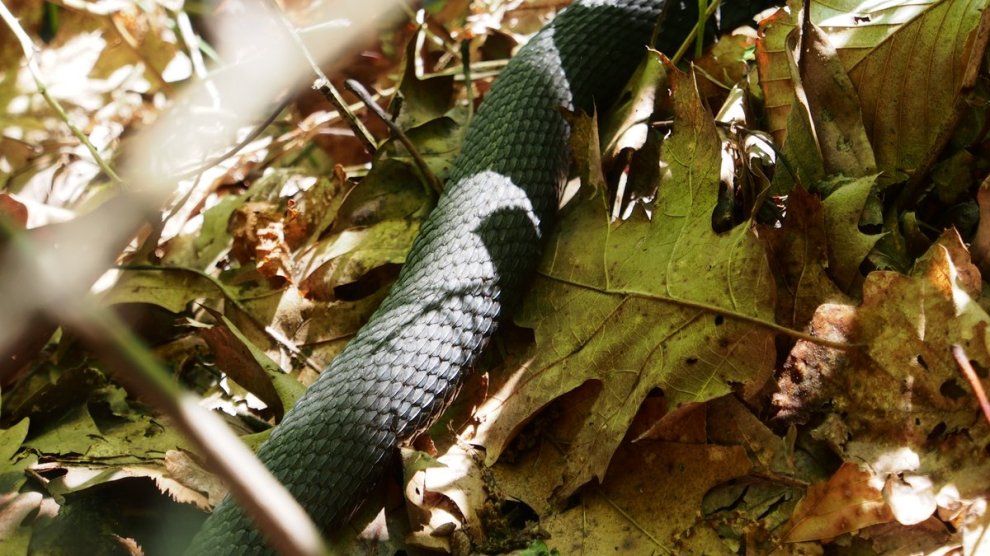
OLYMPUS DIGITAL CAMERA

There was so much to learn. Rena: “Every log could be a year’s course of study.” I love that idea.

Zach knew all the proper Latin names for every mushroom. They went in one ear and floated out the other like a puff of mushroom spore. I’d call this one the upside-down-ballerina-fairy-with-her-head-in-the-dirt, if I didn’t learn today that it’s very problematic for people to originate their own names for mushrooms.

ballerina

Just this year a French scientist and an American scientist separately came up with new names for the morel, and it resulted, according to Zach in problems, “leading to hurt feelings.”

Boris from Bulgaria interested himself in botany as well as mycology.

Boris

Plants, he told me, sense a danger from certain aphids, then send a signal to other plants via fungus underneath the ground to warn them about it. Everything is symbiotic, he said. He told me he likes to hike Breakneck Ridge, a practically verticle hiking trail that opens up high above the Hudson River.

“Smell that!” said the expert in medieval balms. She scratched back the bark of a slender branch. The aroma of wintergreen bloomed under my nostrils. “Black birch.” I chewed it as a child, I said. Everyone nodded. So did we all.

This was pretty serious business.

jasper w:mushrooms

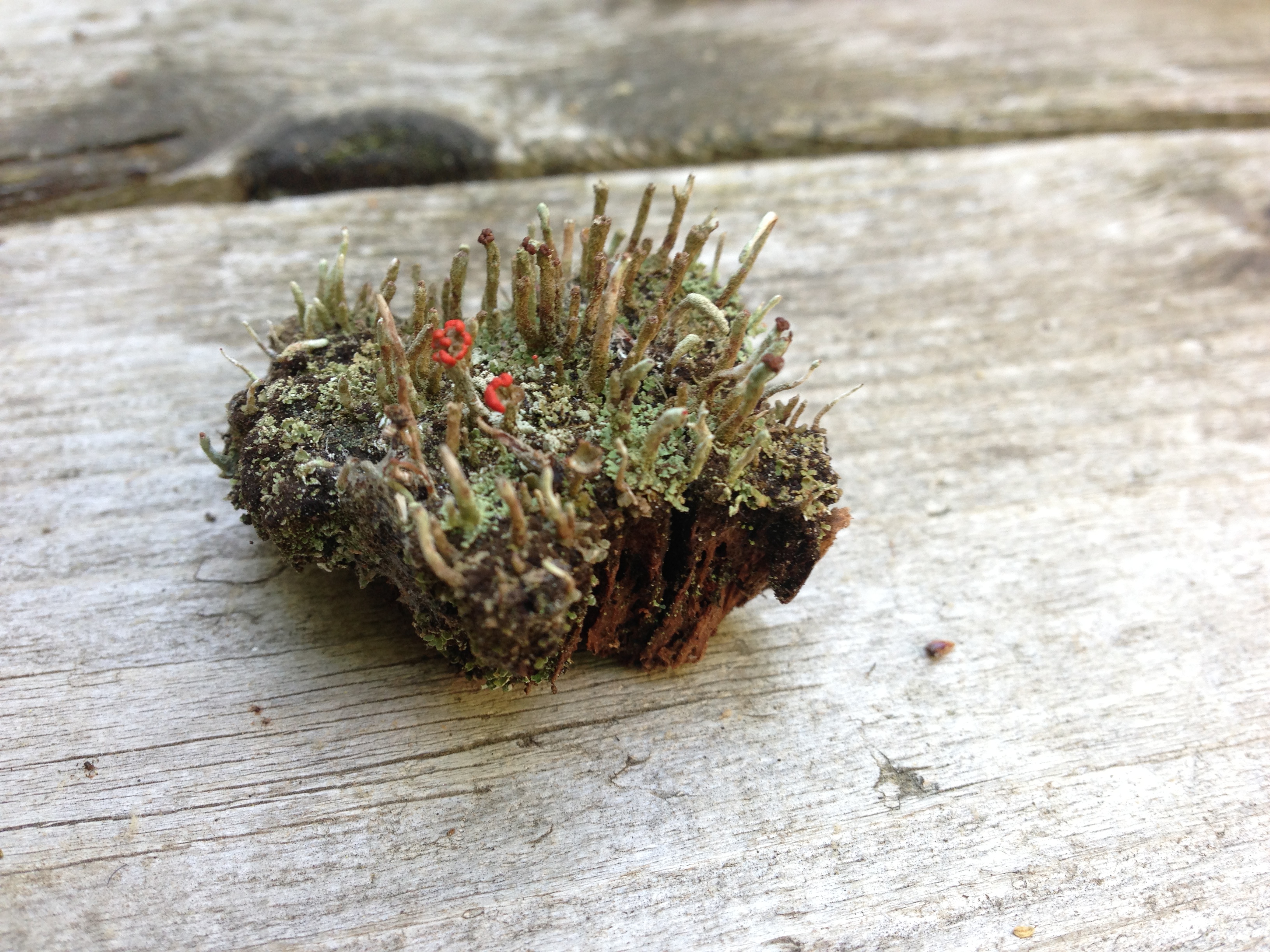
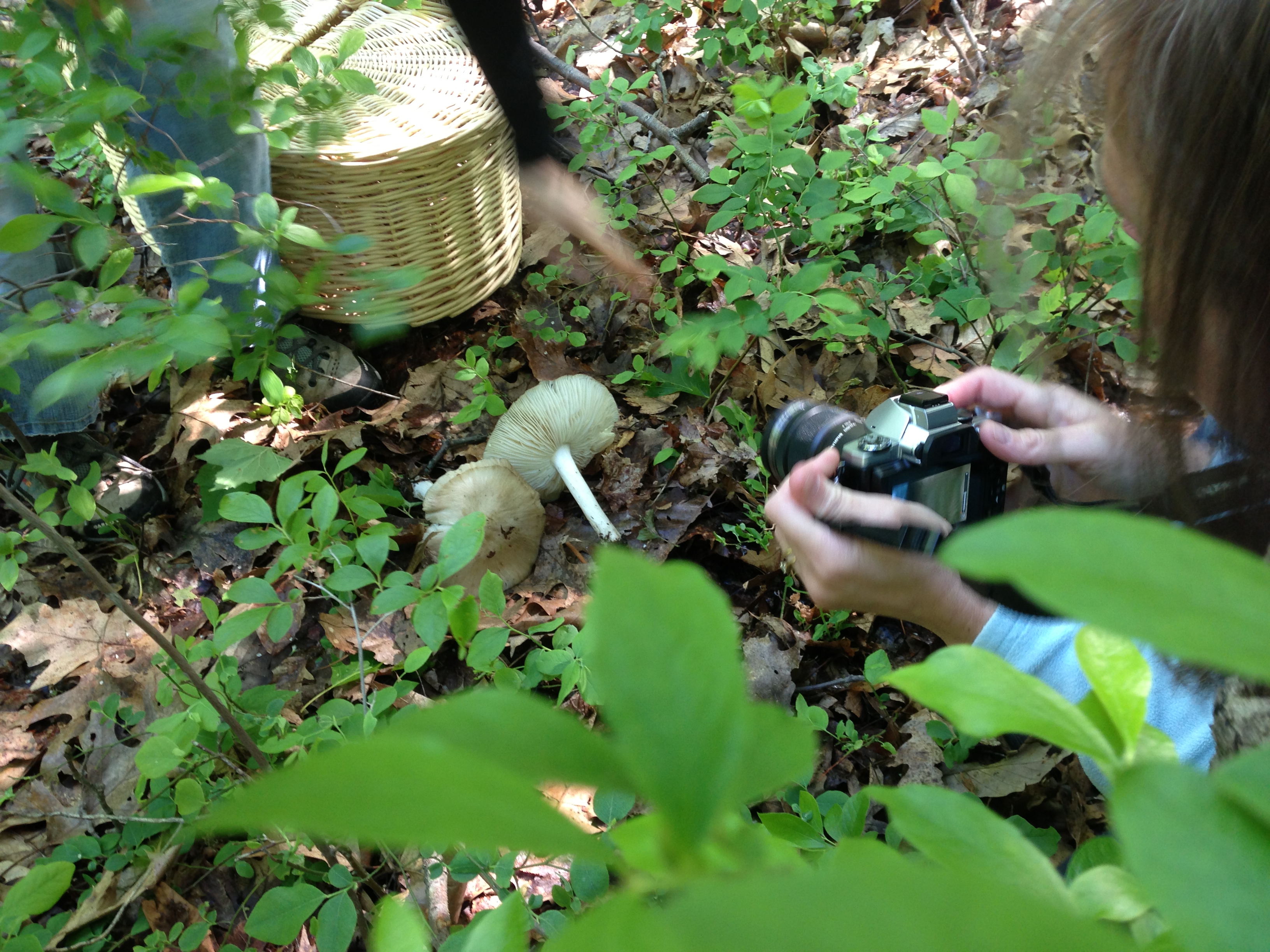
I thought we wouldn’t have collected more than ten specimens, but back at the picnic table people shared dozens. There was cladonia, called British soldiers. “That’s a no-no,” said Zach, referring to the beauteous lichen with bright red spores.

soldeirs

You shouldn’t pick it, apparently, it takes too long too grow.

There were plenty of others.

Some mushrooms looked like babies’ ears, and now babies’ ears resembled mushrooms.
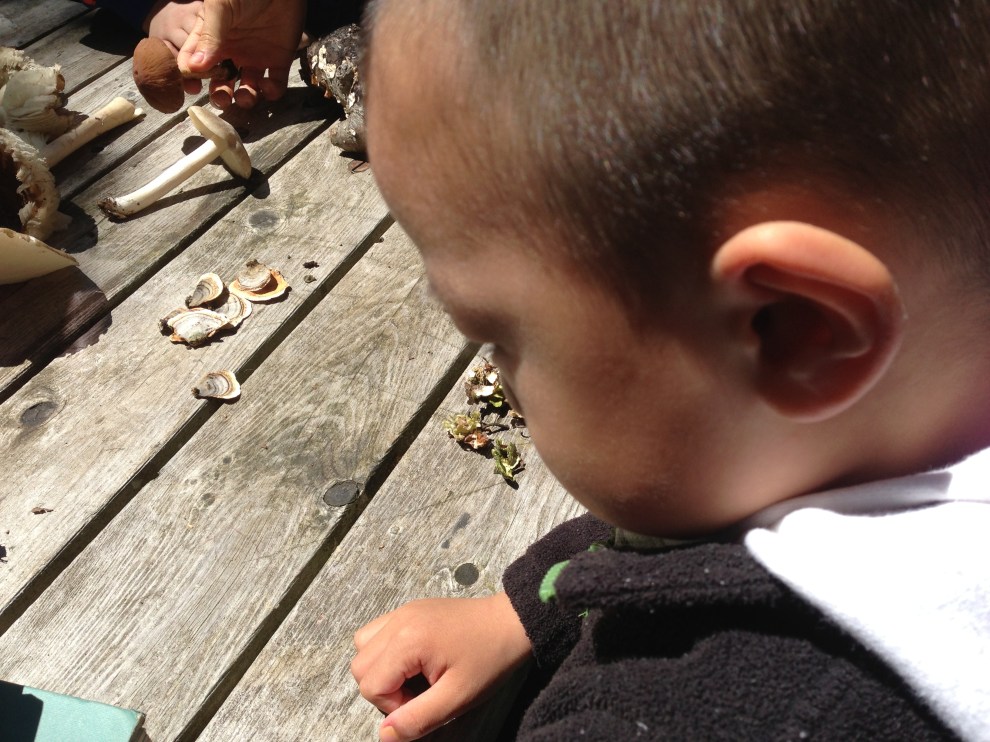
baby ear

There was a small, complicated gorgon of growths.
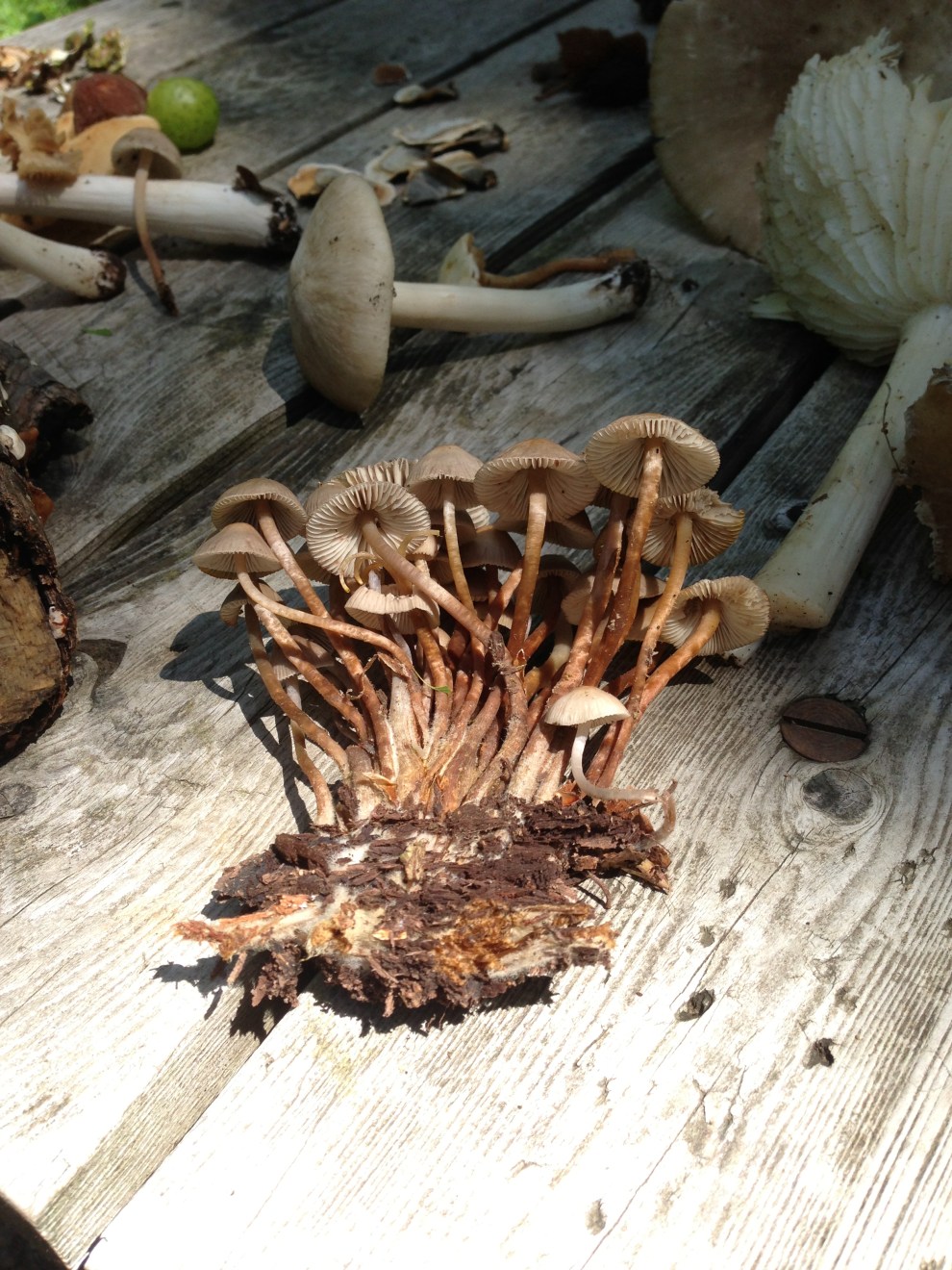
gorgon

So many different textures and shapes.

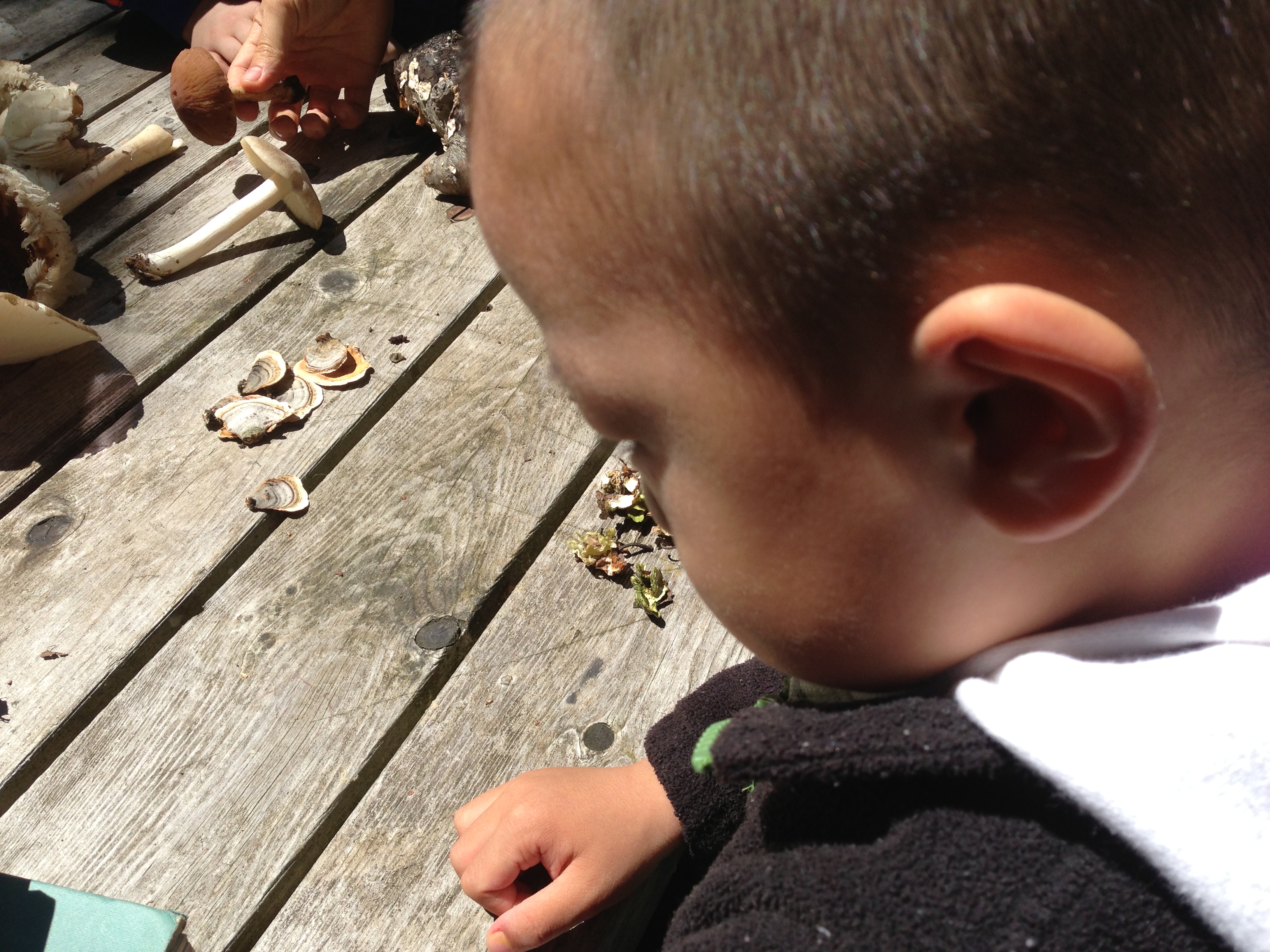
table full

And finally, for the weary mushroom hunters, some snacks, including the edible variety: a dish of sesame pasta and chicken mushrooms, orange and chewy. And a plastic container of stuffed grape leaves, donated by Vrena. Not offensive, in the least, and tender.


6 Comments

Filed under Cooking, History, Jean Zimmerman, Nature, Photography

Simple Stock With a Side of Butter

We in the northeastern U.S. have been deluged with a cool spring rain for several days now. Not good weather for adventuring, though I managed to get out and about yesterday and sample some history and some garlicky pork chops.

weeds

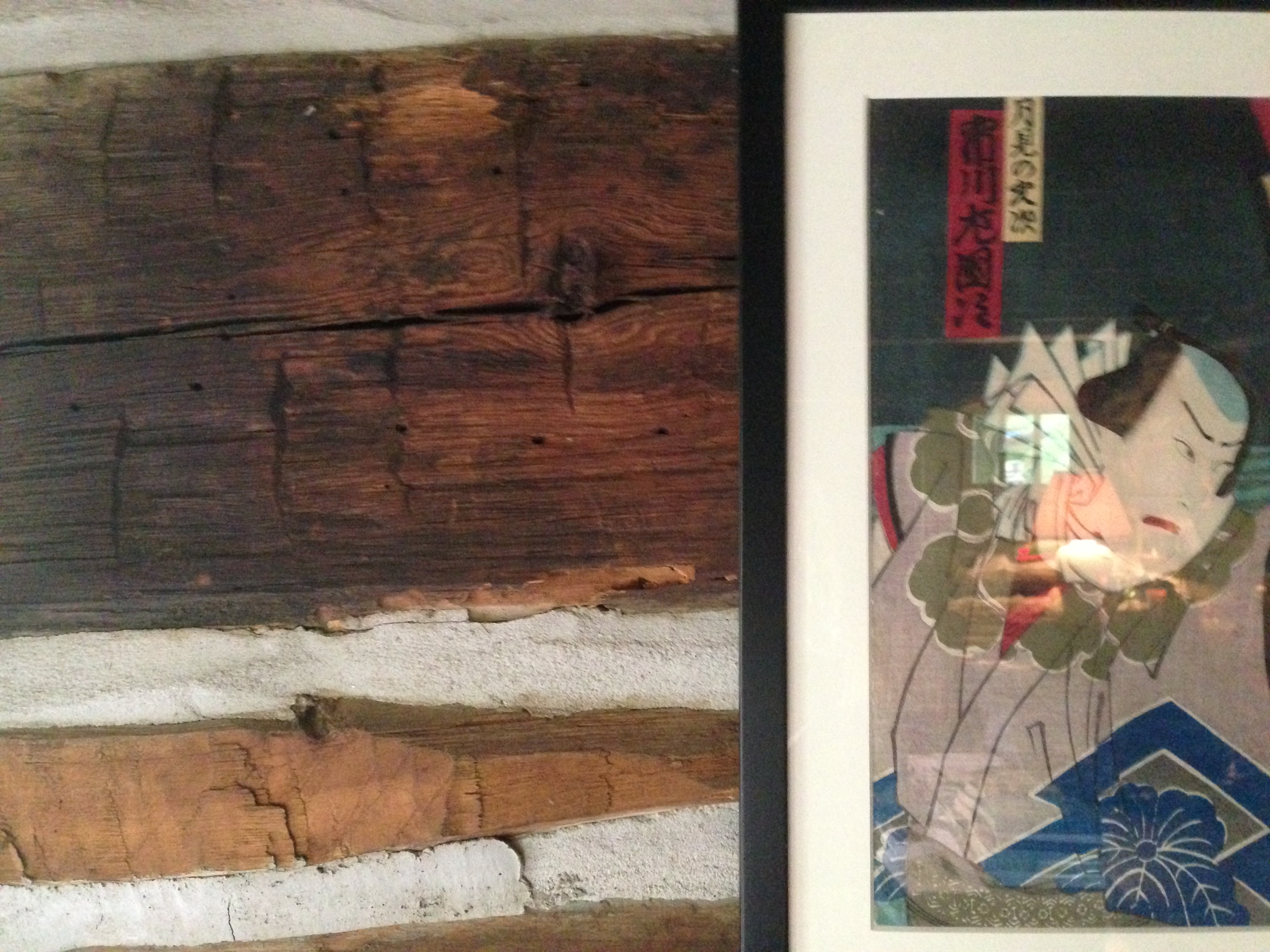
The weeds are thriving. Our sump pump is heaving, with the Cabin set as it is down into an overflowing marsh. And the room around me is dim and shadowy, a womb of dark lumber. The pictures stare out of the murk.

picture

Chestnut, a building expert recently assured me. The Cabin is built of chestnut logs. How do you know? I asked. I just know, he said. You can see it in the fireplace mantle.

mantle

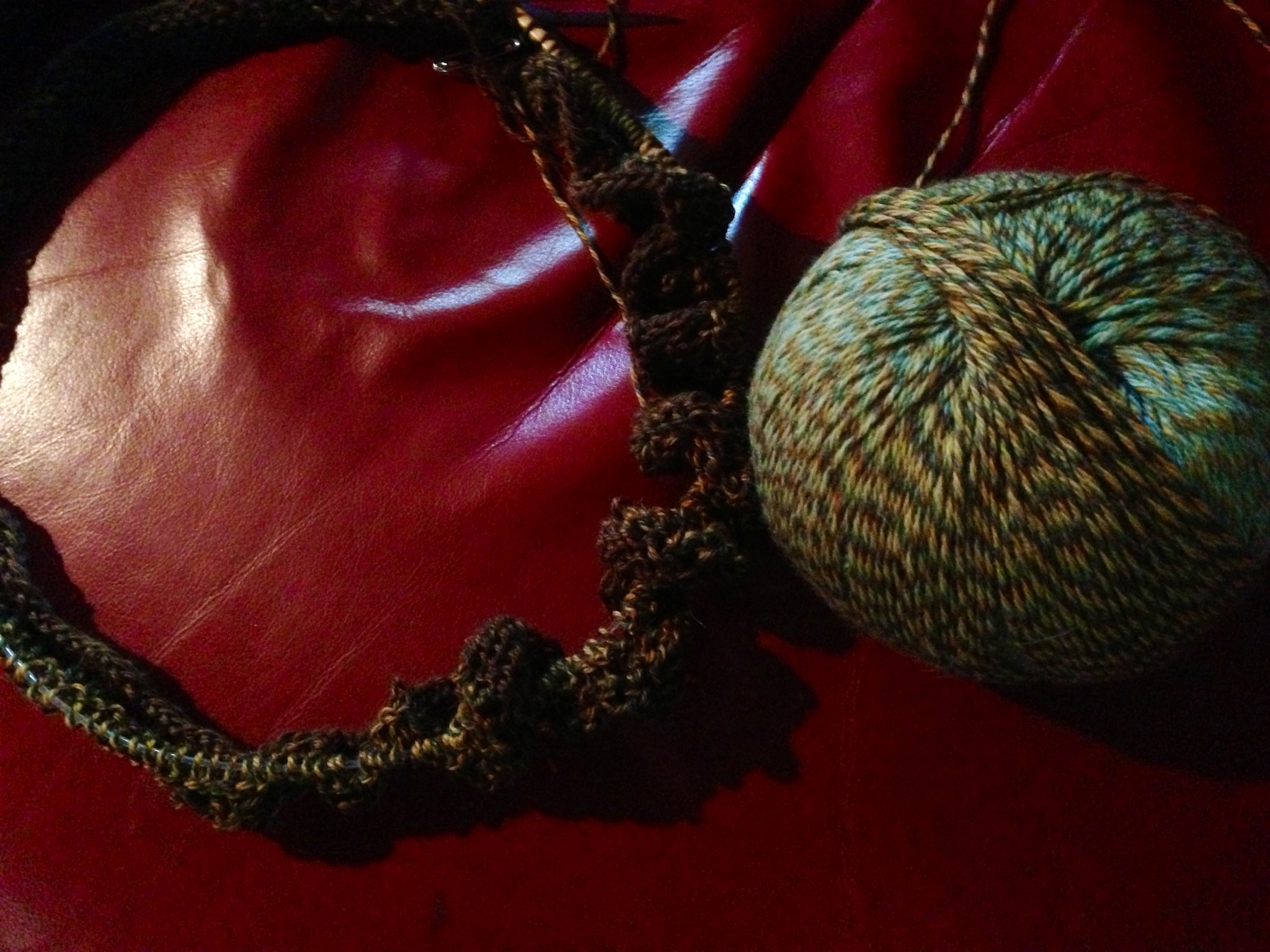
Today is fit for a few errands – dry cleaning, library, Good Will. Then as many rounds of a knitted cowl as I have patience for. Beautifully soft merino wool in a heathery blue-brown. The proprietor of my local knit shop, Flying Fingers, after salvaging yet another botched project of mine, confided that business falls off after the winter, that people seem not to think of knitting as a year-round activity. I immediately bought some new yarn.

heather

I think I’ll take another listen to Barry White’s Ecstasy, which I heard in the car for the first time in a long time. At least 20 years, in fact. Is it still brilliant or is it just me?

barry

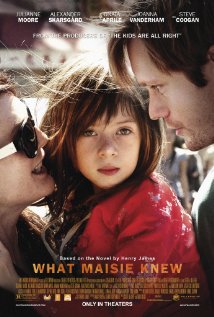
Perhaps a chapter of What Maisie Knew, the original by Henry James, which I’m newly interested in after the disturbing contemporary movie version I took in earlier in the week. Perhaps a start on The Flamethrowers by Rachel Kushner, which just appeared in April and takes place in 1975 in New York City, where a young woman named Reno is intent on conquering the SoHo art world.

flame

I know I’ll make a big pot of chicken soup, and dive into another pot: links I’ve been saving to mull over on a day just like today.

Here are some you can sink your teeth into.

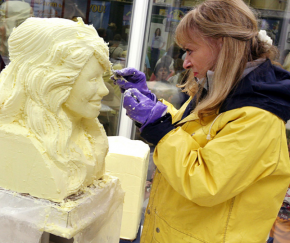
Have you ever wondered about butter sculpting?

butter sculpting

Linda Christensen, a master at the craft, typically spends a week and a half in a booth chilled to near freezing at the Minnesota State Fair in order to render likenesses out of 90-pound blocks. An artist friend of mine once imagined making sculptures out of breast milk butter, but it never came to pass.

How about houses so small they can be mounted on grocery carts?

Early water pipes under New York City carved from whole trees.

wood pipes

Archaeologists are finding them now.

Italian prison inmates who make award-winning chocolate truffles.

The question of whether Michael Pollan is a sexist pig – an excerpt from Homeward Bound: Why Women Are Embracing the New Domesticity, a new book by Emily Matchar that sounds an awful lot like my decade-old Made From Scratch: Reclaiming the Pleasures of the American Hearth.

Is it time to order a new supply of Goatboy Soaps, handmade from goat’s milk and shea butter on a farm in New Milford, Connecticut?

1009wc07.jpg

The one called Heavenly does indeed have a celestial aroma, I can vouch for it,but you can also choose from among Blackberry Sage, Cherry Almond, Clean Greens, Lavender Oatmeal, Serious Citrus and others, including Red Clover Tea, the company’s bestseller. No breast milk in evidence.

Research showing why the act of pointing makes babies human. It turns out, according to Slate, that “Babies point to refer to events in the past and the future. They point to refer to things that are no longer there. They can figure out, when an adult points across the room toward a group of objects, what exactly the adult is gesturing toward (the toy they’ve previously played with, say). They can deduce that, by pointing, an adult is trying to communicate something specific (find that toy hidden in that bucket). And not least of all, babies point because they want to share their experience of the world—that puppy—with someone else.”

The fascinating blog of an Irishman elucidating a video of Dublin phrases.  You’re in for a treat if you make posts from Sentence first a regular part of your day.

A recipe for how to make Mango Sticky Rice, at a site called The High Heel Gourmet, brought to you by Miranti, a young chef who seems to know exactly what she’s doing.

high heeled gourmet

And, finally, a piece so lively it will drive all the rain away (by tomorrow, I hope, when I plan to go mushrooming in the Westchester woods), a photo doc on skateboarding in 1965, courtesy of Life magazine.

girl skateboarding

I am sure that some of the individuals pictured have traded skateboards for walkers, but then everything was a breeze.

If you wind up wanting to make home-made soup, a chicken elixir, here’s how.

A Recipe for Simple Stock

1 soup fowl/heavy fowl/soup hen

A bunch of chicken feet if you can get them

2 big fat carrots

2 sticks celery

1 large onion

1 large purple-shouldered turnip

1 large parsnip

a bunch of dill if you have it

salt and pepper to taste

Bring chicken to boil in a pot large enough to accommodate all ingredients.

Skim off scum and reduce to a simmer.

Add all other ingredients.

Simmer 3 hours or until chicken starts to fall off the bone.

Strain stock.

Add noodles or matzoh balls, use as a base for leek-and-potato soup, make gravy for chicken pot pie or stir up some risotto. Perfect for anything that ails you. And if you dribble a little over the kibble, your dog will love you for it.

1 Comment

Filed under Cooking, Fiction, Film, History, Home, Jean Zimmerman, Knitting, Nature, Publishing, Writers, Writing

Meatpacking Amble

We started and ended our Manhattan amble in the Meatpacking District, that venerable neighborhood from around 14th  down to Gansevoort Street that has been totally gentrified in recent years. This is a place that in 1900 had 250 slaughterhouses and packing plants lining its streets. The paving stones under the butchers’ awnings used to actually lie slick with lard and blood when I first came to New York in the late ’70s. Now Diane von Furstenberg has a building of refurbished brick with lavender windows and a penthouse that looks like a geodesic glass bubble on top, and there are eateries like Bubby’s opening that pride themselves on their farm-to-table cuisine.

Bubby's

The sign announcing the imminent arrival of the joint puts across it’s down home, wry message: Defending the American Table (also, we steal recipes from grandmas.)

With illustrations around the side that already seem faded as a pair of farmer’s Levi’s.

Bubby's 2

It reminded me of a sign we saw up in also gentrifying Morningside Heights recently, on Broadway near 125th Street.

Barbershop sign

There was a man on scaffolding outside and we weren’t sure whether he was taking down an old sign or putting up a new one with an exquisitely vintage look. The sign down below left us equally confused.

Prices 2

Maybe you can figure it out.

Anyway, on from the Meatpacking District to see a movie on Houston Street, at the northern lip of Soho. “What Maisie Knew” is based on a novella  written by Henry James in 1897 about a classic dysfunctional family. Sad, sad, film.

maisie

It features Julianne Moore as a self-absorbed rock vocalist married to a self-absorbed art dealer played by Steve Koogan. At the heart of the story is their seven-year-old daughter, Maisie, who is being torn apart by the breakup of her parents’ marriage. The two adults literally abandon her places – the story takes place in contemporary Manhattan — when they tire of her. I wondered what James would have made of the profane adaptation.

portrait

The novelist was a theater aficionado and aspiring playwright. Couldn’t he be satisfied with being the most brilliant prose stylist of his day? He never got the reception on the boards that he so very much wanted. Movies might really have rocked his world. We think of him as fusty now, but Edith Wharton writes in her memoir A Backward Glance about how much James loved to “motor.” Yes, driving in the new, perpetually breaking-down automobiles, feeling the wind in his pate, was just about his favorite thing.

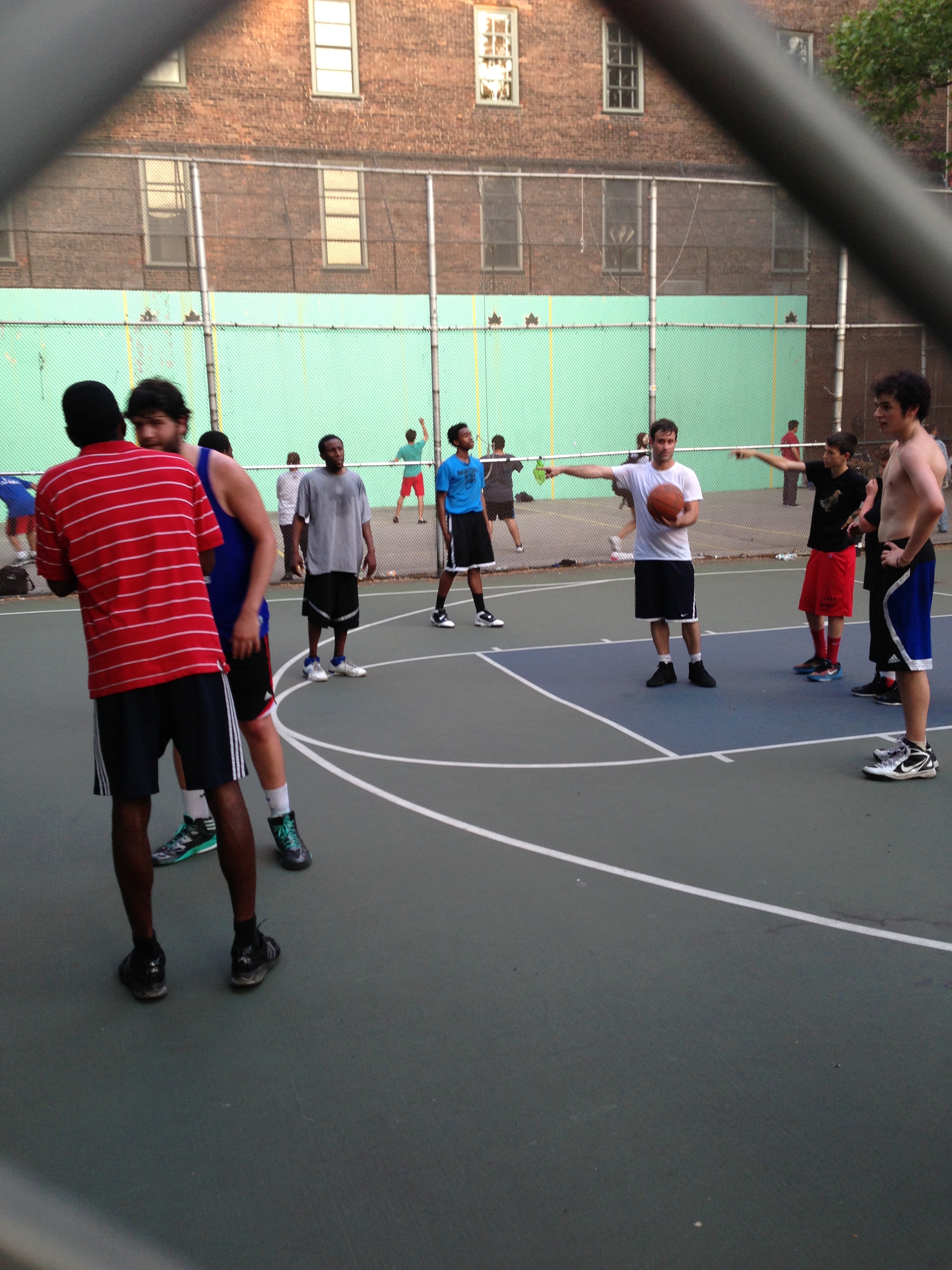
Making our way north, we grabbed a schnitzel and a wurst at a little German joint. En route, we passed the phenomenon that has been around longer than anything else I know in New York: the basketball game at West 4th Street and Sixth Avenue, also known as the Cage.

basketball

Anybody can play and there are fierce tournaments. The supports for the baskets are actually padded with duct tape to mitigate injury to players who stuff.

Under the High Line, where we had earlier found parking (who said it’s tough to get along in New York? Come with me, I have the best parking karma in the city) night had fallen.

high line

A park so beautiful that even Manhattanites are impressed, the High Line was once quite different. An old elevated freight line for meat packers, built under the aegis of Robert Moses, it ran through the buildings of the district, raised up above the streets underneath. The rail bed had long since fallen on hard times when I first saw it decades ago. It was basically a long, winding, dispiriting field of syringes, condoms and weeds. Some brilliant dreamers fought to bring it back to life as a park planted throughout with native plants, meticulously cared for, ingeniously designed. The first section of the park opened in 2009. Now people throng to it day and night, both to walk and to lounge on the massive wooden chaise lounges found along its length.

Gil climbed the stairs and waved down from the dark trees above. I was content looking up past the old, weathered, still-extant butcher’s awning at the winking moon.

moon over meatmarket

4 Comments

Filed under Cooking, Fashion, Fiction, Film, History, Jean Zimmerman, Nature, Writers

Maud to Malawi

Lovely 21-year-old Maud has come home from school, needing a few trillion hours sleep and all her sheets cleaned but no worse for the wear after her third year of college.

Maud in sunlight

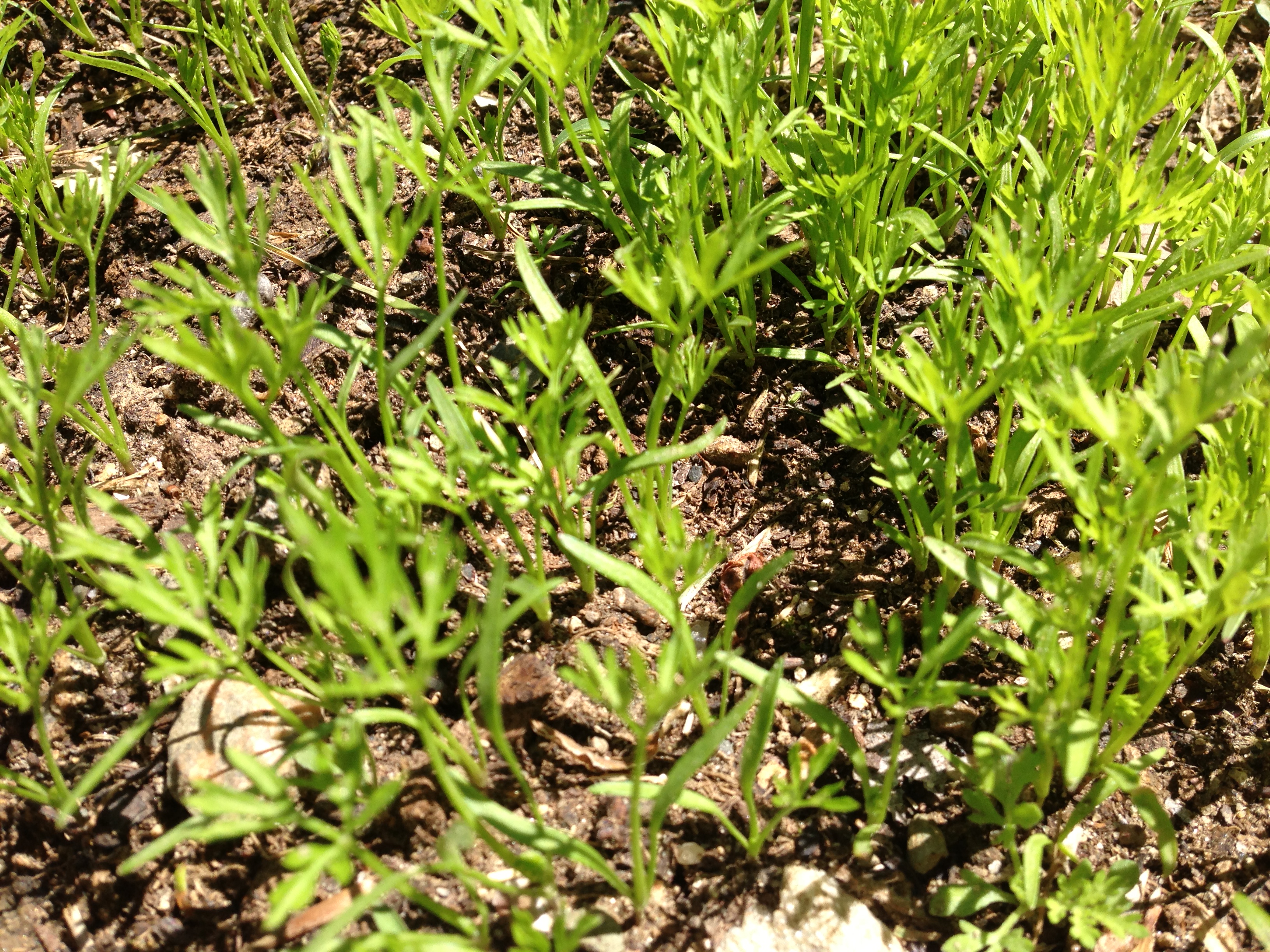
Right away, she has to go to a barbecue with her boyfriend. She has to go to a friend’s 21st birthday party at a club in New York. She has to entertain a college friend, and have dinner with a high school friend. She has to help her mother weed the garden. The baby carrots need thinning.

baby carrots

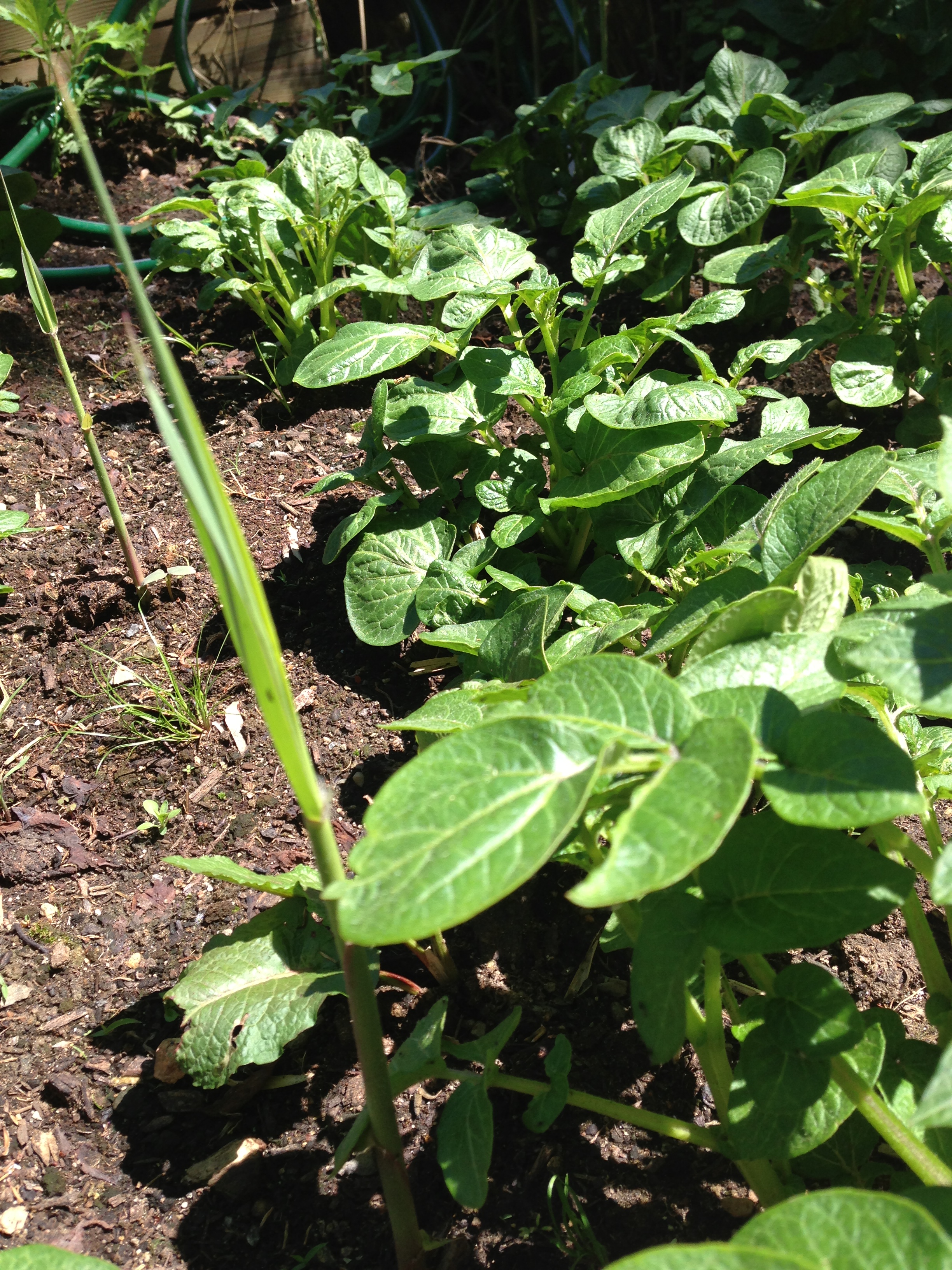
The potatoes need de-Phragmite-ing. The reeds rear up through the loamy soil no matter how we pull them or attack them with shears. They don’t get it. Go back to your marsh! We don’t want you among the tomatoes!

potatoes:weeds

So Maud is going to help me eradicate them. Then off she has to go again…

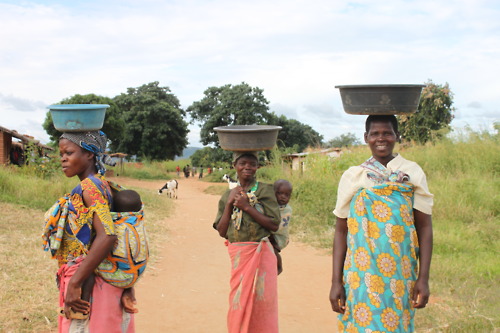
To Malawi. In just a few days she will go to help build a school in a little town neither you nor I has ever heard of.

mmalawi

I’m trying to remember what I was doing the summer I was 21. Sleeping on someone’s floor on 112th Street. Reading Anais Nin. Putting poetic scrawls in a notebook. A stupid job in a busy bakery (Zaro’s, in Grand Central Station, still exists), barely going to bed before I had to get up in the dark to go to work. Juggling boyfriends. Nothing really of note.

Maud’s going to Malawi with an organization she runs at Columbia called buildOn, whose mission is to build schools all over the world in underresourced communities. Eight other students will go too. Girls, she says, especially benefit from the work they’ll accomplish, because one mandate of buildOn is that female students must have equal access to the educational resources it makes available.

tumblr_m3q6k3FyXz1qbm5u1o1_500

That’s really unusual in a traditional culture like that of Malawi. (Funds are still being raised for the trip.)

Last year, when Maud came back from a similar school-building trip to La Cruz, Nicaragua, she had dirt under her nails and mud ingrained in her clothes from pouring a concrete foundation. She loved the beans and rice for every meal and the friends she made in the village, especially this little sprite.

sprite

When Maud’s my age, she’ll remember more about her 21-year-old summer than serving up bagels.

5 Comments

Filed under History, Home, Jean Zimmerman, Nature

Eagles Nesting 24/7

You may have a lot you think you have to do. Laundry. Work after hours. Dinner dishes. Pushing a cart down the fluorescent aisles of Shop Rite.

And there are a lot of crucial things to think about these days, from Benghazi to preventive breast removal. You have money concerns, I have money concerns. Someone is in the hospital. Someone else is terribly sad.

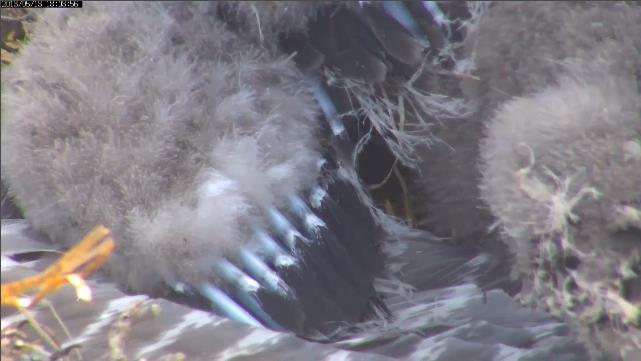
There is only one thing for it. Tune in to nesting bald eagles, a majestic pair with their big, wobbly grey babies, eaglets to be precise. Their names: Peace and Harmony. The webcam captures the birds in gorgeous detail.

mom eagle

This family has made its perch 75 feet in the air in a cottonwood tree in central Minnesota, at the edge of a river, and is available for viewing 24/7, any time you’d like to leave your real life behind.

One parent carries a turkey wing back to the mattress-sized nest. The other picks it apart, shoves bits into the chicks’ eager beaks. The mature birds are dashing to look at, as clean as if they bathed with soap and water every day of the week. You know that when they leave they’ll be riding the thermals, jumping on one for altitude then surfing to another, searching ceaselessly for choice prey to bring back to the nest.

The Minnesota chicks are almost a month old now, their primary feathers coming in.

Peace's primaries

You never know what you’ll get. Sometimes those babies just sleep the sleep of the dead, a couple of heavy-breathing feather balls, and you wonder why you’re paying attention. Then, suddenly, one raises its head, holding itself upright, improbably, the way a bean seedling seems to stretch three inches taller after a rain.

And after watching for minutes… hours… days… you suddenly feel better.


4 Comments

Filed under Jean Zimmerman, Nature, Photography

Suzanne Takes You Down to Her Place by the River

Allow me to introduce a photographer whose work needs to be better known.

Susie's sky

Suzanne Levine. For decades she has gone nowhere without a camera in her hand.

Suzanne

She happens to be family to me, my sister-in-law, and lives with her husband and son in Hastings-on-Hudson, New York, where I grew up and lived for years.

People in-the-know know that she is one of the most talented photographers around.

cactus at night

Thank goodness, the explosion of social media means for one thing that fantastic photographers don’t have to labor in obscurity. Much less likely, the possibility of overlooking a Vivien Maier, the recently discovered shutterbug who worked for years in the 1950s as a nanny while walking the streets with her Rollieflex, photographing everyone from  well-dressed shoppers to street bums, producing gorgeous images that no body ever saw.

Vivien Maier

Street photography isn’t Suzanne Levine’s chosen discipline – though she is great with the human form.

5-7-13

More her bent is landscape, and particularly, I think, articulating a vision of the Hudson River.

red Palisades

Her living room window overlooks the tracks headed south along the shore and the Palisades beyond, so it’s got to be a lot on her mind.

rains

Her usual interpretations of the Palisades are fluid and soulful, soft yet strong.

blue Palisades

Rothko-esque.

Suzanne is sensitive to the venerable Palisades-depicting tradition in Hastings, beginning with Jasper Cropsey, who painted this canvas in 1887.

CropseyPalisades

“It’s hard to do it in a meaningful way,” she says. “Particularly with photography, a landscape may be technically skillful, but empty.  The detail and the majesty can be overbearing; too much of a hard sell.  When I see an image like that I think, that’s not how you make a picture of the Palisades.”

green Palisades

You can see a series of Suzanne’s Palisades images here.

She is also an intuitive mom-photographer, with a knack for “getting” what’s going on with her son. Jasper’s now six, a  gabby, literate, lego obsessed energy bundle, and she captures the bright light of his personality.

now we are six

One recent body of work Suzanne called postcards.

Suzanne's postcard 1

Works that threw two images together, shook em up, poured em out as the perfect visual cocktail. She started to make them as portraits of Facebook friends, both those she knew personally and those she had met on line. “Are you a psychic?” asked a friend she hadn’t seen since high school.

Suzanne's postcard 2

She must have done a hundred of these.

Suzanne's postcard 3

Each one more interesting than the next.

Suzanne's postcard 4

Suzanne has recently begun using an Olympus OM-D E-M5, a Micro Four Thirds interchangable lens camera, a step-up from the compact digital cameras she’d been using the past few years.  Once in a while she still employs a one-megapixel camera, when she wants to go lo-fi.  She still keeps a 35mm Nikon F and a Rolleiflex TLR, as well as a collection of vintage cameras. Her favorite: a Newman & Guardia view camera, which was the camera of choice for polar explorers because of its innovative spring-powered pneumatic shutter.

You can see more of these photos. You can share work with Suzanne or to talk about getting a print made. Leave a comment for me here and I’ll make sure she gets your information.

Just don’t distract her too much from the sweet, moody, serene, soulful river that runs through her world.

16 Comments

Filed under Art, Home, Jean Zimmerman, Nature, Photography

About To

Cloudy and damp, good planting weather. And just the right climate for the annual plant sale at Teatown, the nature preserve down the road from the Cabin.

flowers

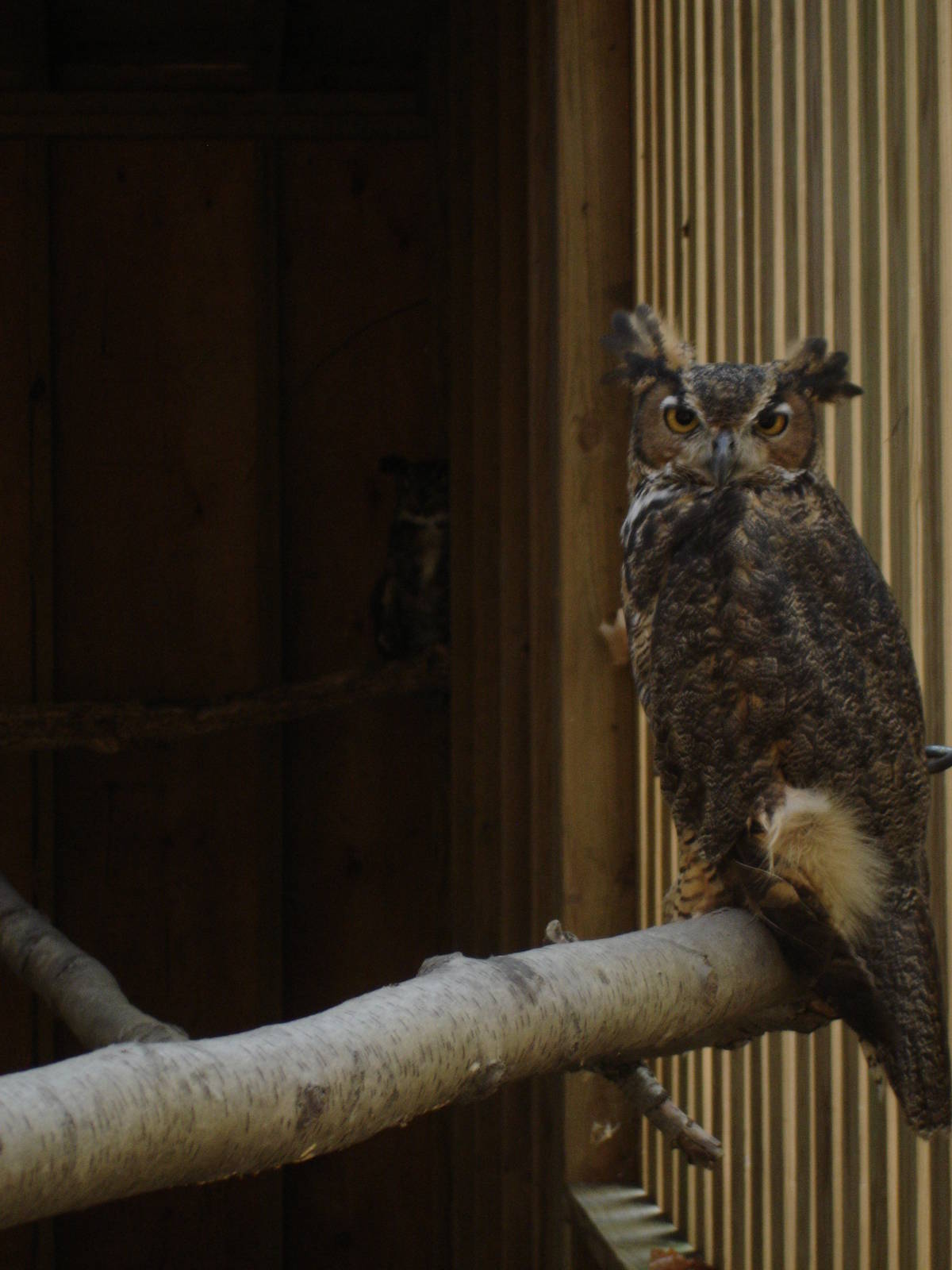
Teatown has 875 miles of trails, a large lake, hemlock forests and laurel groves, a wildflower island and, dear to my heart, a collection of wounded raptors, lost souls that have here been given a safe haven and a purpose: educating visitors about how wonderful they are.

I like the owls, some of them one blinded in one eye, most paired in their environments in a perfect, companionable matched set.

owl

I collected my little starts at the herb table, dill and chamomile. Thought I’d try some eucalyptus. Wished I had to space for the native plants for sale all around.

Then I noticed a stalky bearded iris obviously about to burst.

iris

I realize that they more I go along, the more I like things that are about to

Like the iris. You can just see a fringe of furled purple petal above the green.

Like a novel about to be published.

Rolls about to come out of the oven.

A cardinal about to skitter up into the air.

Oliver about to enter his snoring slumberland.

oliver about to

Water about to boil – test it for salt with one hardy finger.

About to speak at an engagement, that shivery feeling in your stomach.

About to buy something exquisite, but expensive. Then deciding not to.

About to start to knit, a chunky skein and needles in hand.

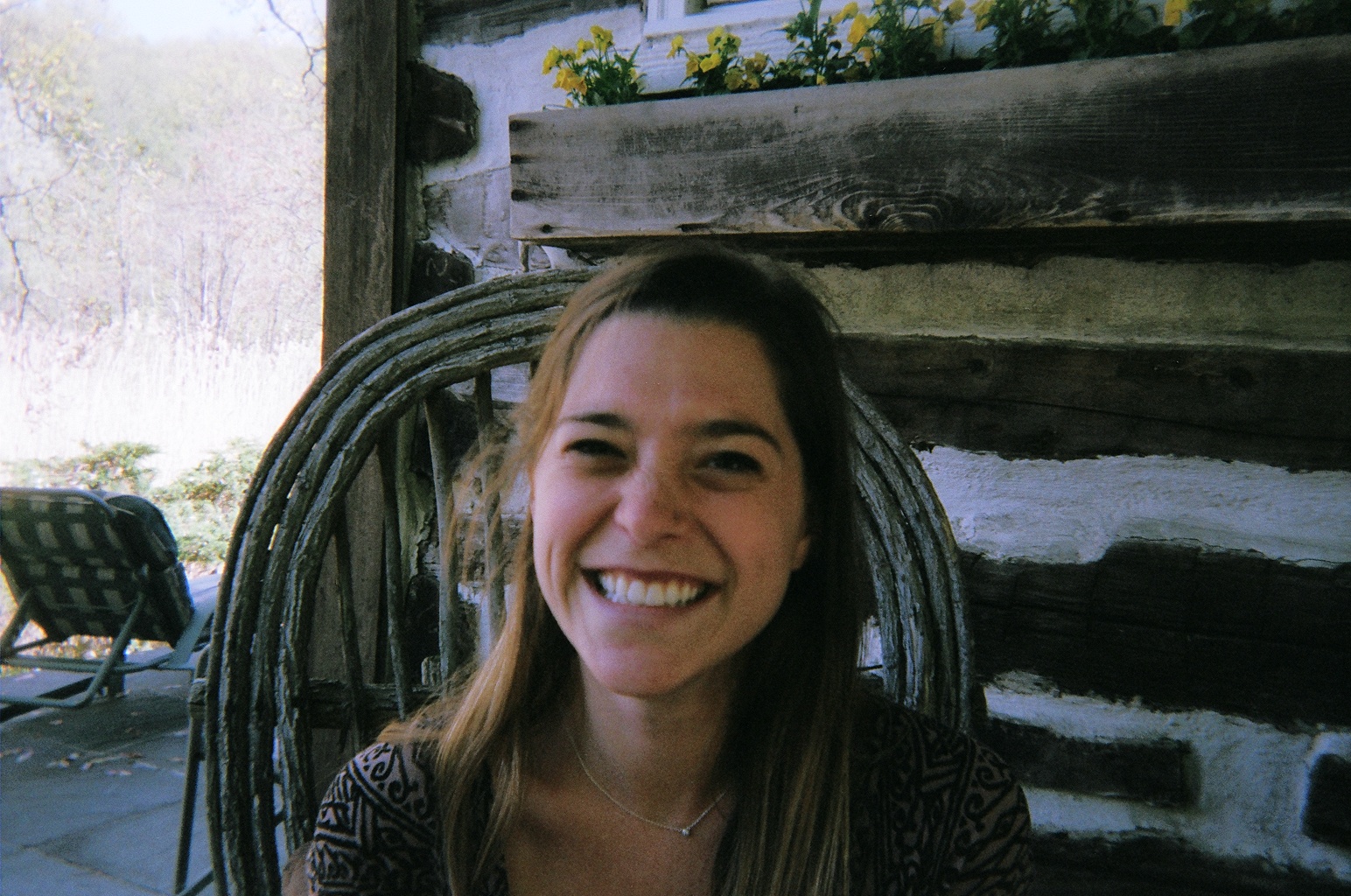
My 21-year-old Maud about to have the most glorious adventure, working in a school for Teach For America, living in New York City, the whole shebang laid out ahead of her.

maud smiling

Rolls about to come out of the oven.

Water about to boil.

The iris about to pop.

2 Comments

Filed under Dogs, Home, Jean Zimmerman, Knitting, Nature, Writing

A Washington Irving Award, Thank You

Back to Cabinworld after an afternoon at the Washington Irving Awards, presented at a local Hilton.

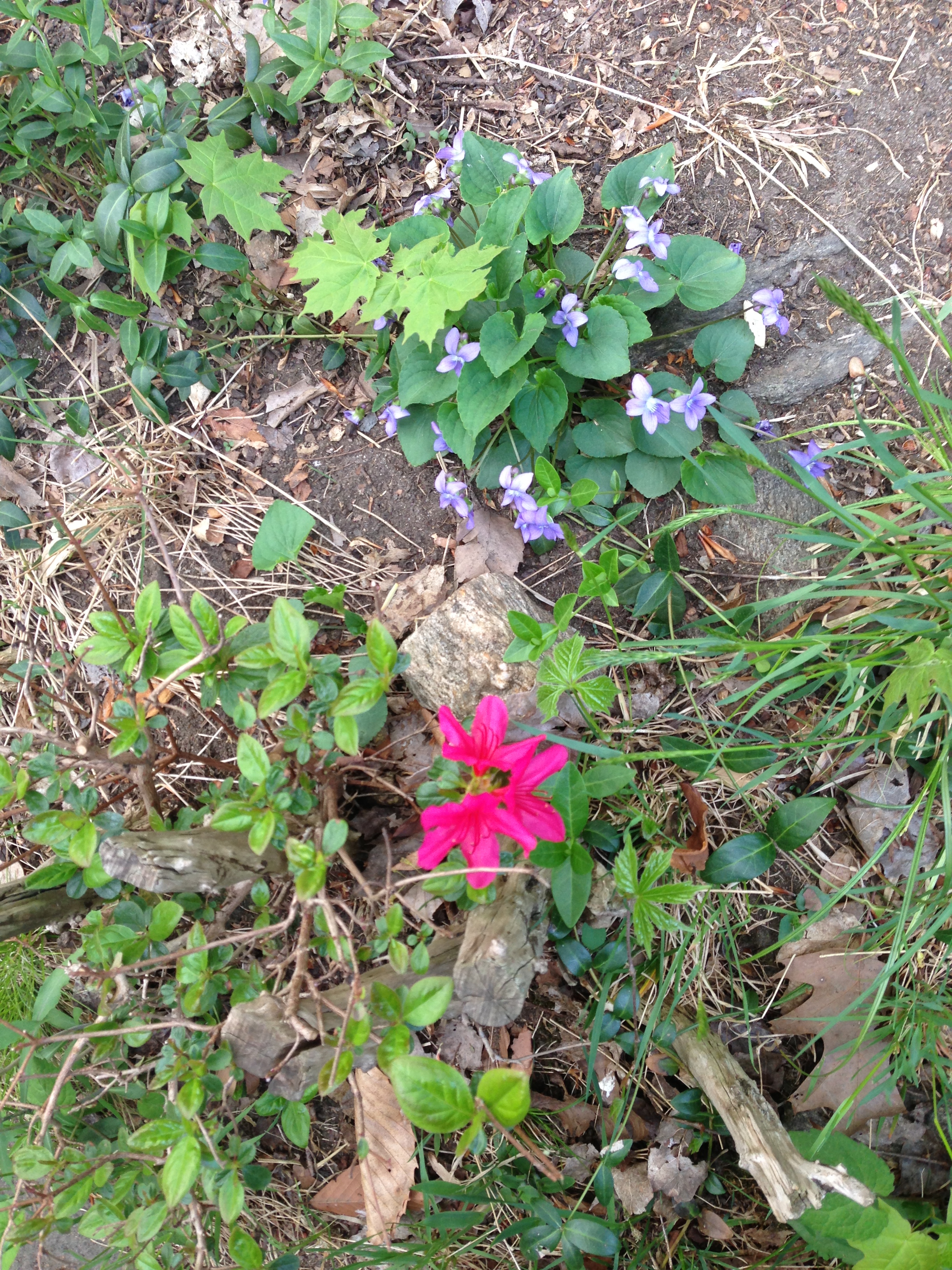
Compared with hotel air, the azaleas, violets and weeds seem to bloom a bit more riotously.

azalea

The smell of rain in the air. The first angry-sounding, toothpick-billed hummingbird of the year dive-bombed me near the feeder with its red sugar-water.

My weathered old three-legged stool (note pegs that join the top, no nails) is ready for duty as a summer-porch-time computer stand.

stool

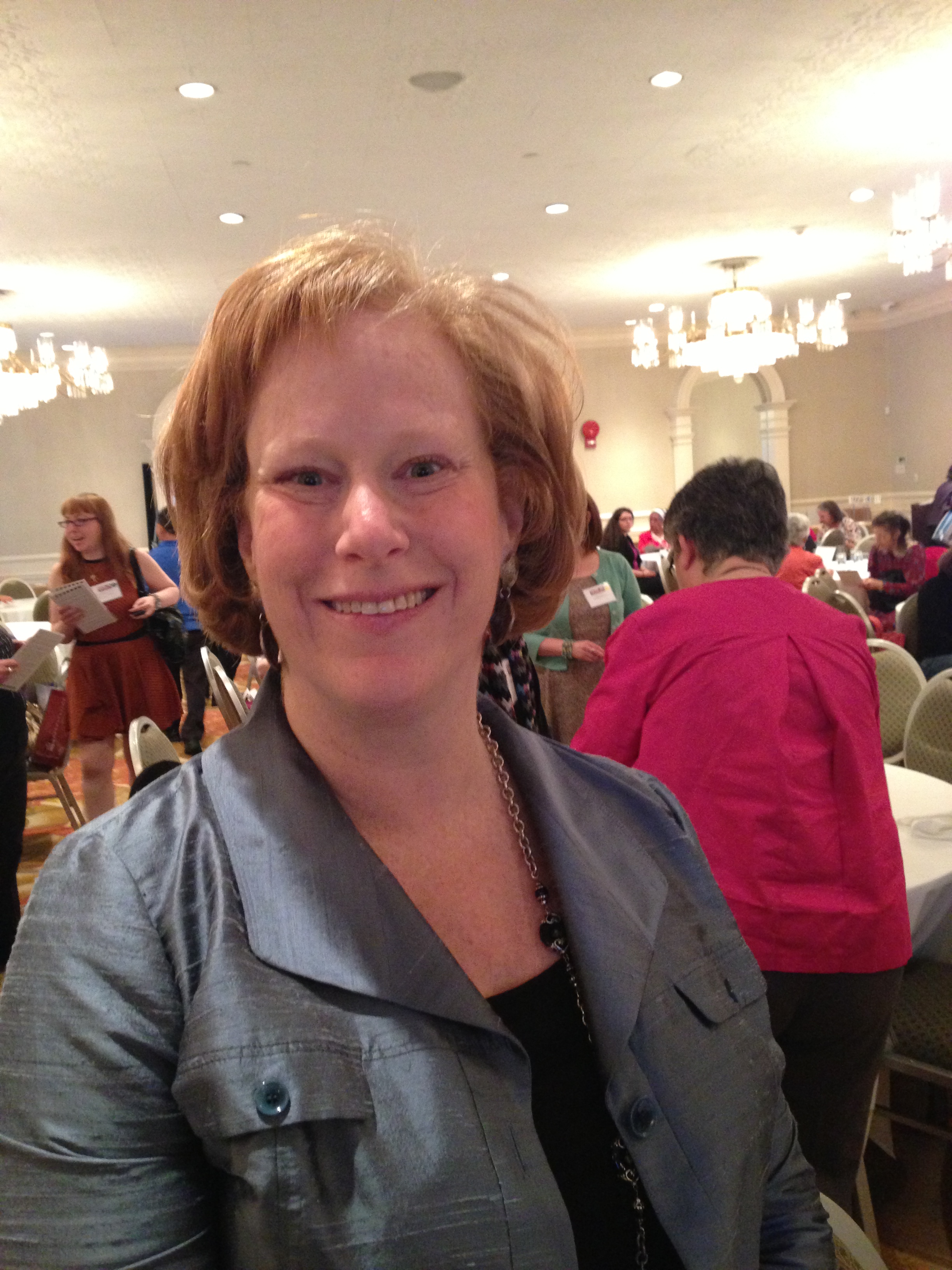
At the conference to get one of the awards, I spent time with librarians (hundreds, representing the Westchester Library Association) and authors (20 or so, all Westchester residents). Funny, sometimes, inspiring, always. I saw some friends, nonfiction, fiction and librarian. I always feel a little sleepy after a rubber-chicken luncheon, but I pepped up for the remarks of keynote speaker Barbara Stripling, current head of the American Library Association.

stripling

Barbara’s remarks, passed along with both bubbly mannerisms and erudition, talked among other things about finding a “gorgeous balance” between digital and paper resources. She spoke about libraries changing lives. But first she told a story about when she was in college, craving an A on a paper and seeing only a lot of plus signs in the margins. She stuck up her hand and demanded to know the meaning of the notations. Those were actually t’s, she was told – they stood for trite.

Ouch.

Does the use of primary sources encourage empathy? That’s the question she asked in her Ph.d. studies, going into high school classrooms that were studying slave narratives. It’s a fascinating line of inquiry.

SlaveNarratives1

It’s hard for people to use primaries, she found, without some sort of context. I get that, I suppose. Although as a historian I generally find the original sources when they are embedded in some author’s history to be the most exciting part of the work. They themselves give the context. That’s where you find the BITADs, the bite in the ass details that really give the flavor of a time or place or person.

I liked another story Barbara told, too, about a knitting club that refused to be shut into one of the back rooms at a public library for  their weekly stitch n’ bitch, but instead colonized a  table in the center of the building. Well, a technology club soon discovered the knitters and found what they were doing interesting, and the two groups ended up knit-bombing the library – the mouse, the circulation desk, etc.

knit tech

Everything covered in knit and purl by tech geeks and old ladies.

A library “provides the thinking spaces for civilization,” said Jaron Lanier – he’s the computer geek who popularized the term virtual reality.

lanier

He has a new book just out, Who Owns the Future? Certainly worth a look.

The feeling that you are just another mouth in a chorus of songsters is a welcome one when you spend a lot of your time on your own at your desk. That is what I brought home from talking to my fellow writers and hearing them deliver brief remarks at the podium. Being one of the crowd, one of a club.

Allison Gilbert won a Washington Irving Award for her book Parentless Parents: How the Loss of Our Mothers and Fathers Impacts the Way We Raise Our Children. Allison lost her own parents at a tender age, but the book is much more than a memoir or advice manual.

Allison

It’s not her first book on the subject, and support groups of parentless parents have sprung up around the country to deal with the difficult subject. Allison announced some news, that some these groups have banded together to make a trip to Peru to help orphans there.

It gave me goosebumps to hear about another project she’s got lined up, because the excitement in her demeanor was just so visceral. There’s a real life journalist she wants to write about who went from panning for gold in the early 1900s to penning regular columns for Hearst in one dramatic lifetime. Apparently this person was a rabblerouser, a women’s rights advocate and is now – but perhaps not forever – all but forgotten. What a great topic, a great kernel of history to unearth.

Writers were honored today from all over the literary map.

My colleague Karen Engelmann was there for her novel The Stockholm Octavo, a magical work set in 18th century Sweden. Delicious, witty and swooping are some of the buzzwords used around her book.

jean and karen

Doesn’t everyone look happy today? If a bit blurry? Karen’s next novel is well underway, and she promises to jump forward a few centuries and incorporate greeting cards rather than fortune-telling into the mix.

I stood up to say a few words about The Orphanmaster. How The Orphanmaster is a love story wrapped around a murder mystery that takes place in a tiny settlement in the middle of a vast wilderness. And about libraries. That over the years I’ve not only dug into books and mususcripts, taken thousands of pages of notes and written many chapters in libraries, but eaten and drank within their hallowed halls. My hometown library growing up, in Hastings-on-Hudson, where I read Tristram Shandy for the first time:

hastings library

I’ve also taken some great naps, with fantastic dreams.

Some of what I was saying felt as if it were in the rearview – I’m working on the Savage Girl copyedit, and just took a first peek at the proposed cover for the novel. The art is beautiful and chilling and only needs a little fine tuning to make it perfect. I am obsessed with Savage Girl at the moment, though I have to wait until January 2014 for the book to be published.

Still, The Orphanmaster has just come out in paperback, well in time for another season of beach reading. And to be given an award for The Orphanmaster by librarians, for librarians to appreciate it, was a very special thrill.

Without librarians, said Maggie Barbieri, one of the fiction writers getting an award, we’re “a bunch of noisy trees echoing in an empty forest.”

2 Comments

Filed under Fiction, History, Jean Zimmerman, Knitting, Nature, Publishing, Savage Girl, The Orphanmaster, Writers, Writing

Wizard Sticks and Tree Guards

Some magic has come into my life. I am not a person who favors yard ornaments in the vein of gnomes, glass spheres or plywood ladies with polkadotted underpants. And I’ve never even read The Hobbit.

But I have fallen in love with a Wizard Stick.

garden wiz cu cu

It owes part of its charm to the fact that it was a gift from old friends. Part, also, to the chunky blue-green “crystal” grasped in its iron claw. The Wizard Stick will bring the rains to my vegetable garden, I am sure, when planted facing in the proper direction and with the ceremony that behooves its installation. Gil’s going to jump around minus his undershorts while I chant for precipitation.

But there is something else. The company that created the Wizard Stick, Tringalli Iron Works, fabricates the totems only as a sidelight to its regular business. A business to which street tree guards are central, and have been since Liborio Tringalli started the enterprise in Tribeca in the 1920s.

Libero-Tringali,-Founder-(Bud's-Grand-Father)

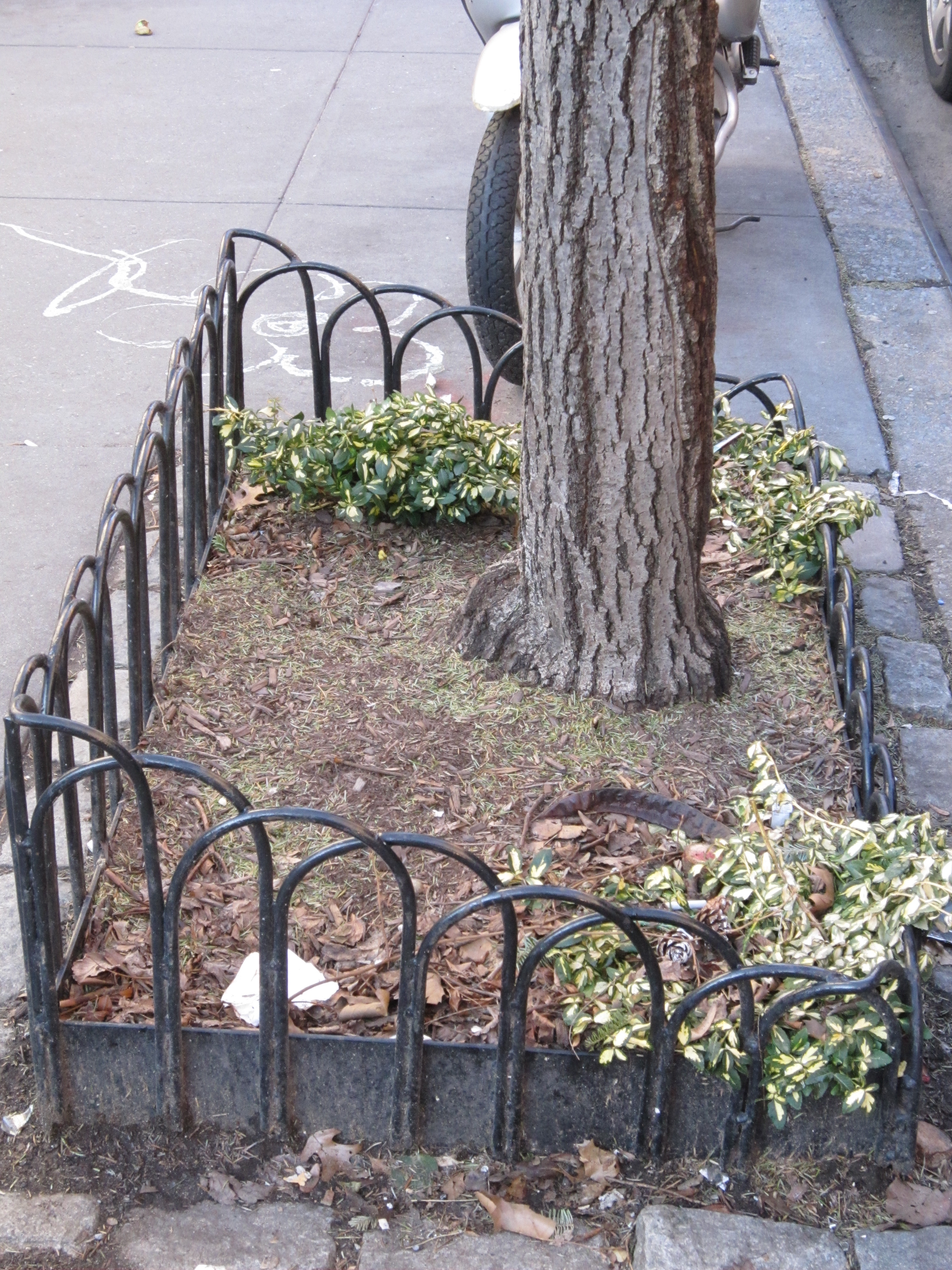
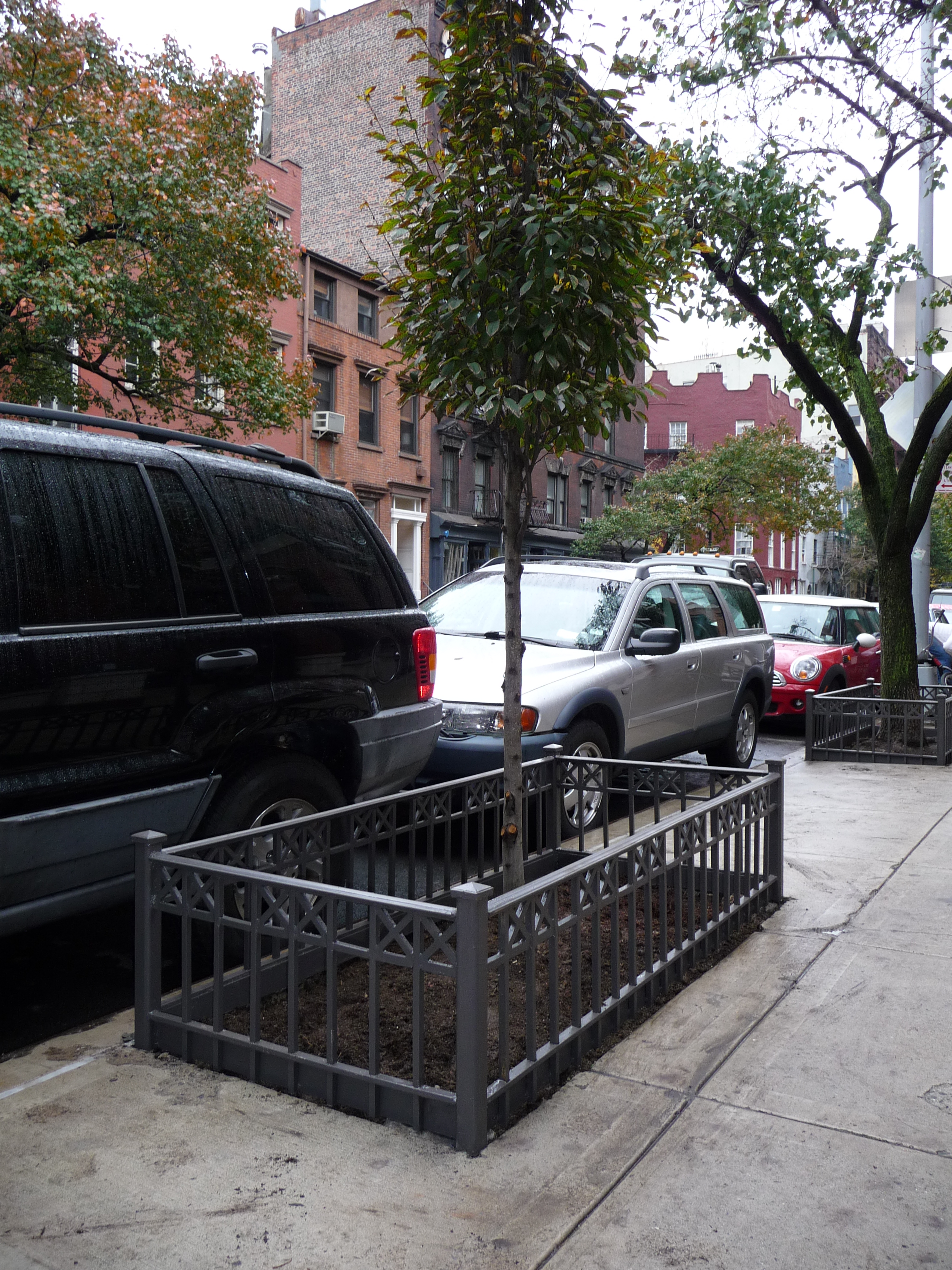
Yes, tree guards do matter. Here is one you probably have overlooked every time you ambled down a New York City sidewalk. Eighteen-inch iron hoops all around. Shielding a little root-friendly plot that is blessedly feces-free.

street guard 1

Edith Wharton showed Lily Bart roaming around near Grand Central Station in the humid heat of a Manhattan summer afternoon, desperate to find some cool relief.

“‘Oh dear, I’m so hot and thirsty—and what a hideous place New York is!’ She looked despairingly up and down the dreary thoroughfare. ‘Other cities put on their best clothes in summer, but New York seems to sit in its shirtsleeves.’ Her eyes wandered down one of the side-streets. ‘Some one has had the humanity to plant a few trees over there. Let us go into the shade.’

“’I am glad my street meets with your approval,’ said Selden as they turned the corner.”

In 1905, when House of Mirth was published, a battle was underway over New York’s street trees.  The island was still nostalgically remembered as a haven, a bower of oak, chestnut, pine and cedar, but now the trees had been almost all torn down for new construction. They were inconvenient to development.

Madison and 55th Street in 1870.

mad

I wrote about the transformation in my book Love, Fiercely, that took place during that period.  I.N. Phelps Stokes despaired over the change:

Old, bucolic Manhattan was vanishing, buried in the smooth cement of the new. By the turn of the century, the leafy streets of lower New York had lost their shade.

In an incisive history called The Creative Destruction of Manhattan 1900-1940 author Max Page charts the demise of the New York street tree. At a certain point the trees could be counted on one hand. I love this 1913 photo of a woman he included in his book, walking by the sole remaining tree at Fifth Avenue and 37th Strteet.

street

And the pear tree planted by Peter Stuyvesant at 1oth Street and Third Avenue. The city mourned when it was killed after being mowed into by a dray in 1867; it had stood for 200 years.

stuyvesant-tree-01

Yes, there was a love of trees, and 317,166 were planted in New York State on Arbor Day between 1889 and 1909. But in 1909 only one in five of those trees still stood. A Tree Planting Association sprang up to organize around replenishing the city’s streets, with a classic Progressive fervor, augmenting the efforts of New York’s Parks Department. The fact that we have any street trees at all today is probably due to their efforts.

And to those tree guards. Tringalli has made 125,000 of them since 1923.

Tringal 2

Today, the city’s plan is to plant more than 200,000 new street trees over a decade (street trees area  subset of city trees in general, which include parks, yards, etc). There are upwards of half a million street trees now. MillionTreesNYC is playing an important part. Saplings come from three different nurseries in Maryland, Buffalo and long Island. These are Maples.

maples

People who care about trees can even become Citizen Pruners, taking a five-session course and getting a license that lasts for five years. A friend of mine has become an arborist, a new profession, who advises construction companies on the health of trees.

The New York Parks Department keeps count of species, and has identified 168, with the top specimens the London Plane Tree, the Littleleaf Linden, the Norway maple, the Green Ash and the Callery Pear. And there is always the ubiquitous, sometimes stinky ginkgo biloba, with its pretty fan-shaped leaves. Long thought to be extinct, the ginkgo was rediscovered during Victorian times in hidden groves in China.

All of them need a tree guard.

treeguard3

A Wizard Stick might be nice, too. Some magic, to keep a tree alive when the chips are down.
wiz:sky

I’m not parting with mine.

3 Comments

Filed under History, Home, Jean Zimmerman, Love, Fiercely, Nature, Photography

Lavender and Mud

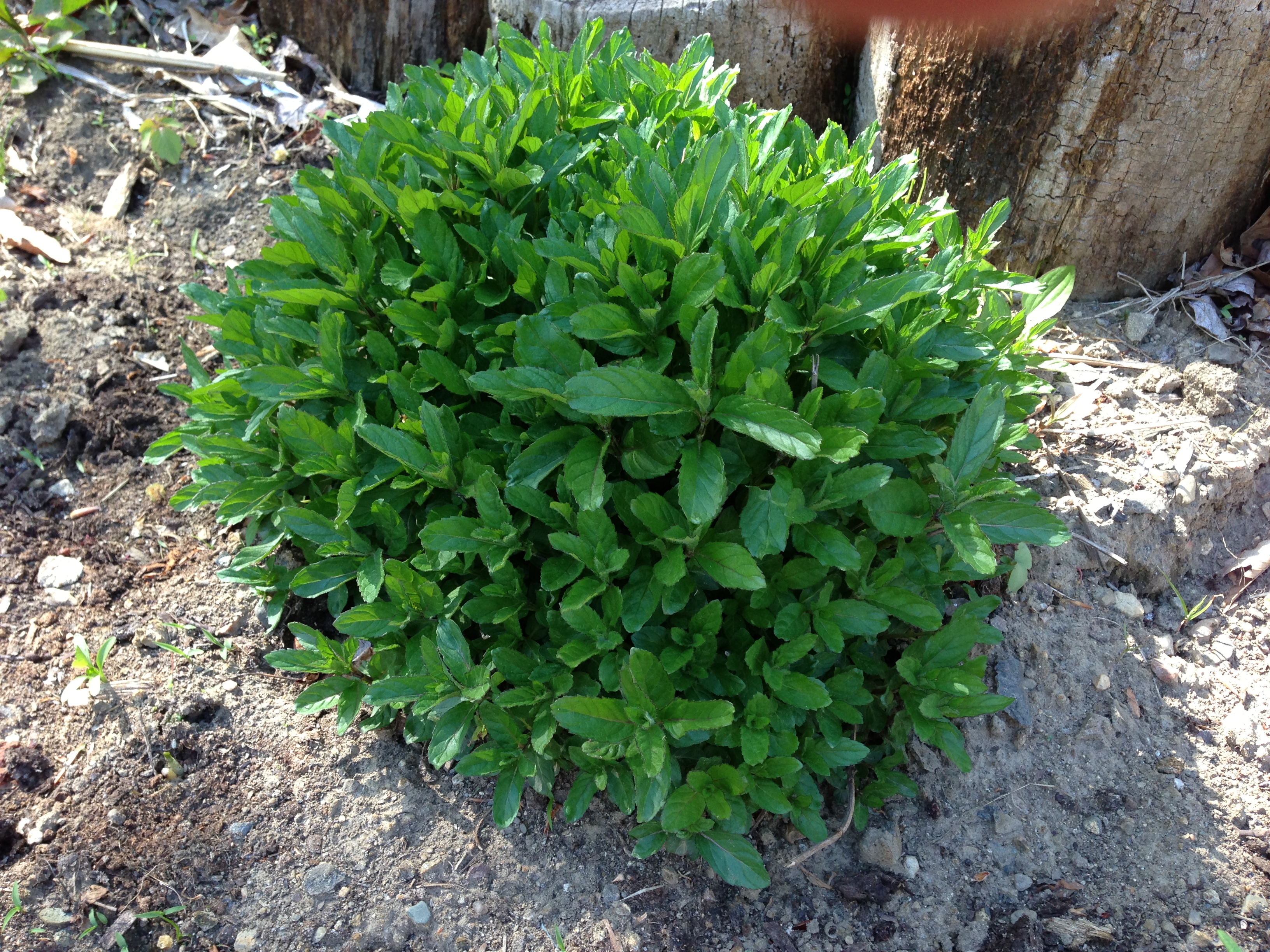
My mint weathered the winter. In fact, it’s so impossibly bushy already I plan to give it regular haircuts throughout the warm weather and make many pitchers of iced tea. Sit in my favorite dilapidated garden chair and watch it grow some more.

mint

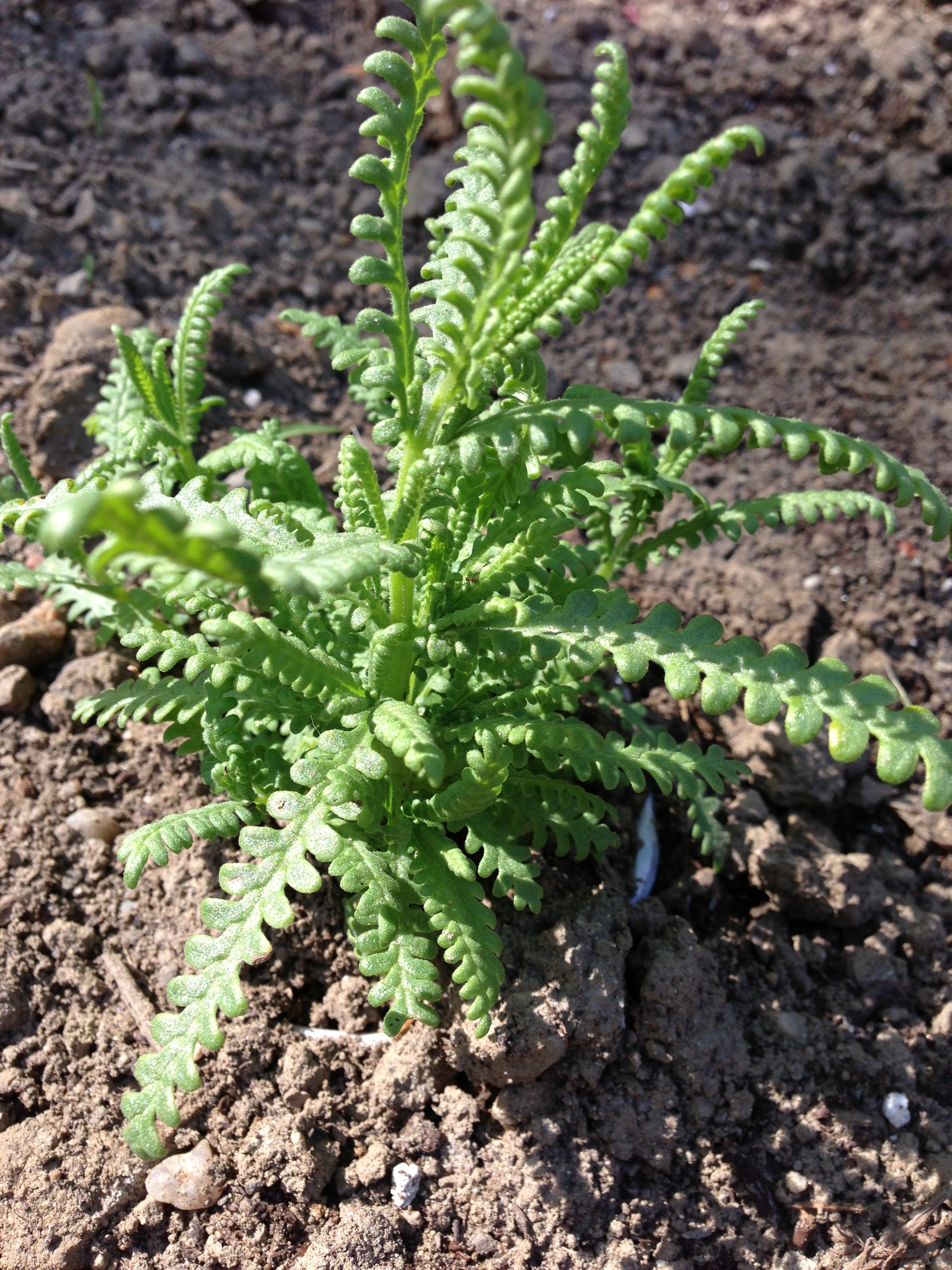
Rosemary, sage and the rest are all tucked in place. I put in fringed lavender as well as the commonplace kind. Fringed lavender, also known as French lavender, is the kind you want for butterflies. Also potpourri. And I do want potpourri.

fringed lavendar

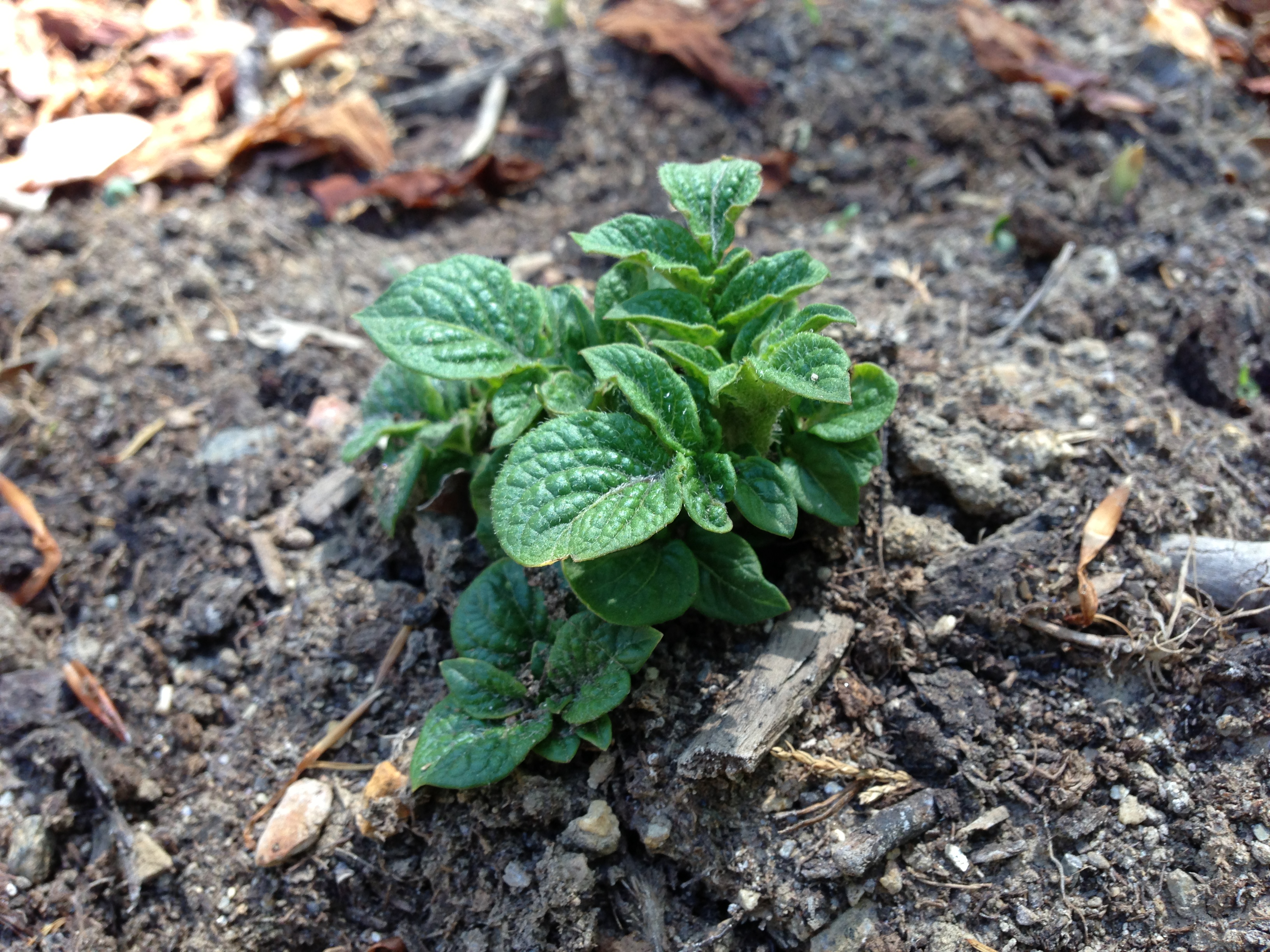
And now my mizuna, radishes, carrots and potatos have sprouted. The potatoes are mucho macha.

potato

And onions. The green of spring onions.

Puts me in mind of Booker T. & the M.G.’s, their Green Onions released on Stax Records in October of 1962. It reached number 33 on the Pop Albums chart in the month of its release but of course is a perennial.

The only sound I can hear now, sitting on my funky old chair next to the potatoes and the onions, is the tiny, crinkling noise of the reeds growing in the marsh. It’s a constant, but you can only hear it if you stay very, very quiet. That and the chip-chip of the cardinals having one of their cardinal parties.

Now if only it would rain. We haven’t had water from the sky in weeks and no one’s sure when it’ll come. A sprinkler’s never the same.

Puts me in mind of these people at The Year of Mud, who make building cob, straw bale and timber frame houses look impossibly glamorous. I might actually like to build a cob oven, like they are giving courses on this coming summer. Gil’s been wanting to bake pizza outdoors. Biscuits from the cob? Sounds impressive. A little smoky, though? With Ziggy as a guide, they’d probably be perfect.

Ziggy (his real name is Brian Liloia, but that’s what he’s called) documented his time building a cob house called ‘Gobcobatron’ at a place named Dancing Rabbit Ecovillage, in Rutland, Missouri.

Exif_JPEG_PICTURE

He says, “I think I have it figured out. I’ve boiled life down to the most elemental action. As I see it now, life is basically an on-going series of moving objects around.” He’s talking about moving clay and sand and straw onto a foundation, moving wood into the shape of a roof, moving soil and compost to make a garden bed, etc.

gobcob

His place sounds and looks amazing, outside and in.

Exif_JPEG_PICTURE

There might have been mud in the making of it, but now this wonderful dwelling is pristine.

3 Comments

Filed under Cooking, Home, Jean Zimmerman, Nature