Category Archives: Home

Plant Based Pesto

I’ve been hearing the expression plant based ringing in my ears a lot lately.

beets

My doc saw my “bad” cholesterol ticking up (Bad, cholesterol! Bad!) and we decided it was time for a change. Get used to quinoa, she said. I had never tried it. Cut out the red meat you love, or at least cut it down to one or two times a month. Chicken or fish, okay, once in a while. But mainly, think plant based. Salads. Beans. Rice. Greens.

Plant based.

collards

I love vegetables. (So does the yellowjacket I caught on those collard greens.) I’m so excited that my cukes are almost ready to be harvested.
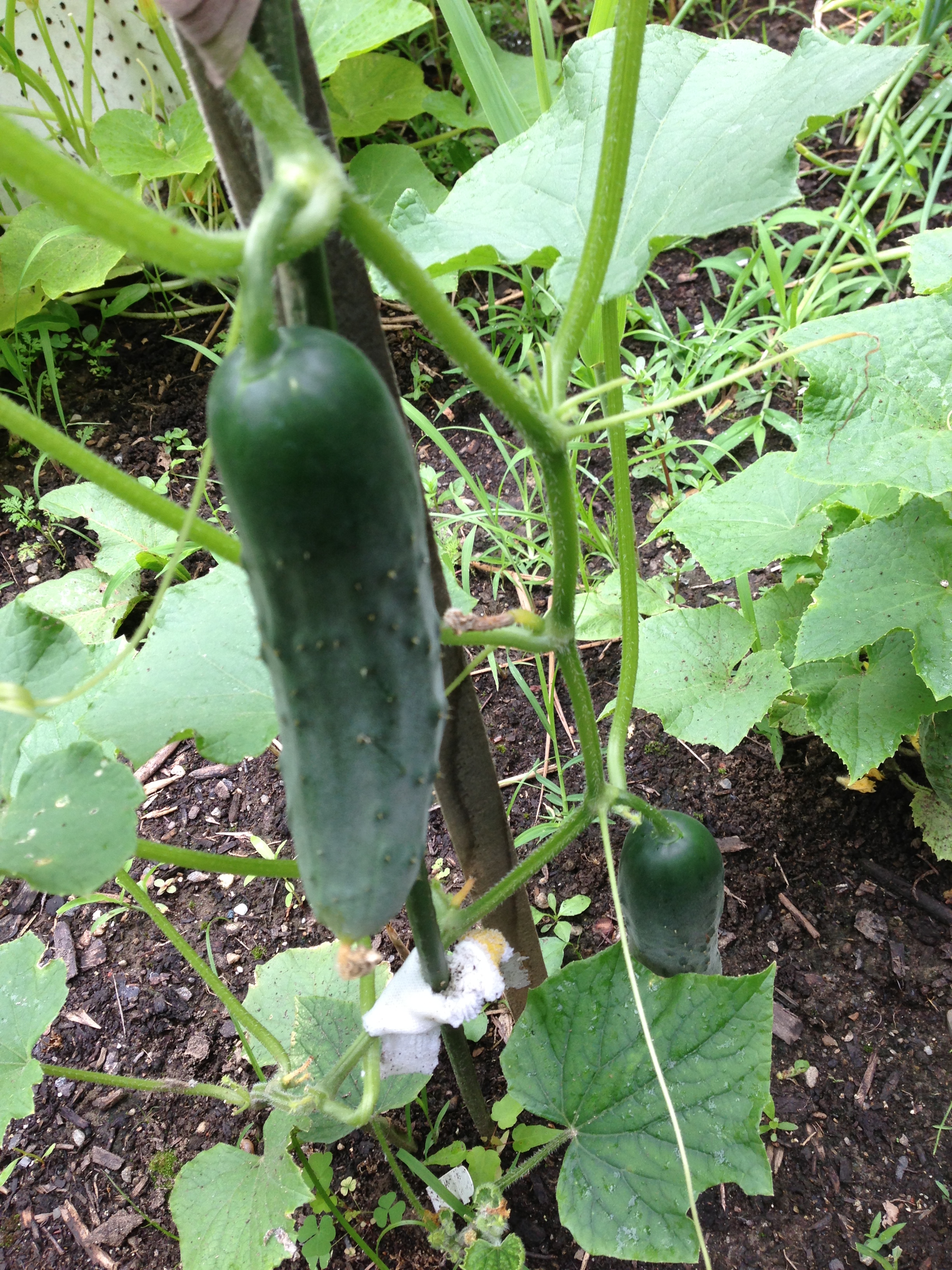
cuke

My new potatoes are such babes they cry when you pull them out of the ground.
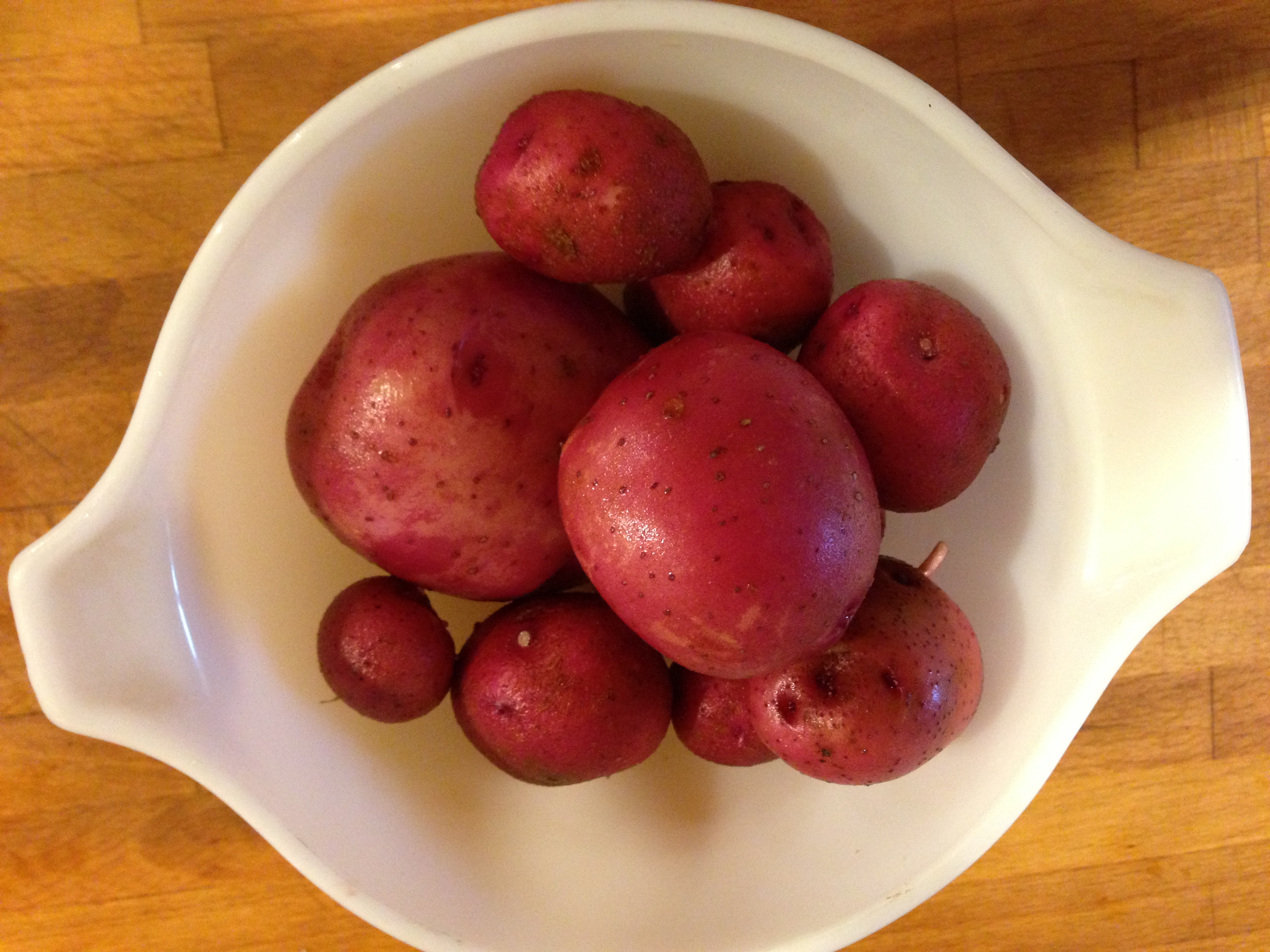
potatoes

I couldn’t be a prouder mama.

But changing my diet, all but eliminating pork ribs, beef brisket, skirt steak, this is a big change. I know it’s for the best, but I have to find savory ways to make myself eat the right way happily. (Not to mention a somewhat recalcitrant husband.)

I have always loved pesto. The recipe originated in Liguria, the region of Italy that borders France. Its mineral-rich seaside soil and climate produce exceptionally sweet, sweet basil. The name comes from the mortar and pestle that are used to delicately squeeze the tender leaves rather than coarsely crush them. A similar sauce called battuto d’aglio (beaten garlic) appeared in the 1600s in the city archives of Genoa, the region’s capital city.

I’ve never been to Liguria, and I use a blender to make my sauce (yes, crushing it coarsely), but I think my pesto is mouth-watering. Anyway, we gobble it up. And it’s plant based.

It has a plant, the basil.

basil

Olive oil, derived from a tree.

Nuts, also harvested from trees.

A teensy bit of cheese, parmigiano reggiano, nice and salty, which I think my doctor would forgive if she knew I was foregoing the Italian sausage I used to add to this dish.

cheese

And we all know how beneficial garlic is. Lazy me, I often use chopped garlic from a jar. It only slightly diminishes the flavor. But my favorite garlic is from my sister-in-law Noreen’s farm. She gives us a string that lasts all year.

Marcella Hazan, the doyenne of Italian cooking, has the classic recipe.

cookbook

It takes 15 minutes from start to finish, during which time you can get the water boiling.

What do I do with this fresh-out-of-the-garden pesto? Throw it together with some pasta (imported, preferably).

Then use your imagination. Tonight I’m  spicing up our pasta al pesto with cut-up chicken breast, new potatoes and sweet-hot peppers from the garden. If only I had some really delicious plant-based sausage.

Plant Based Pesto

Place 2 well packed cups rinsed basil leaves, ½ cup extra-virgin olive oil, 3 T pine nuts (or walnuts or almonds), 1 T chopped garlic (more if you are a garlic fiend like me) and a pinch of salt and a grind of pepper in the blender. Blend ’til just smooth and then add a healthy ½ cup grated parmesan and blend again briefly.
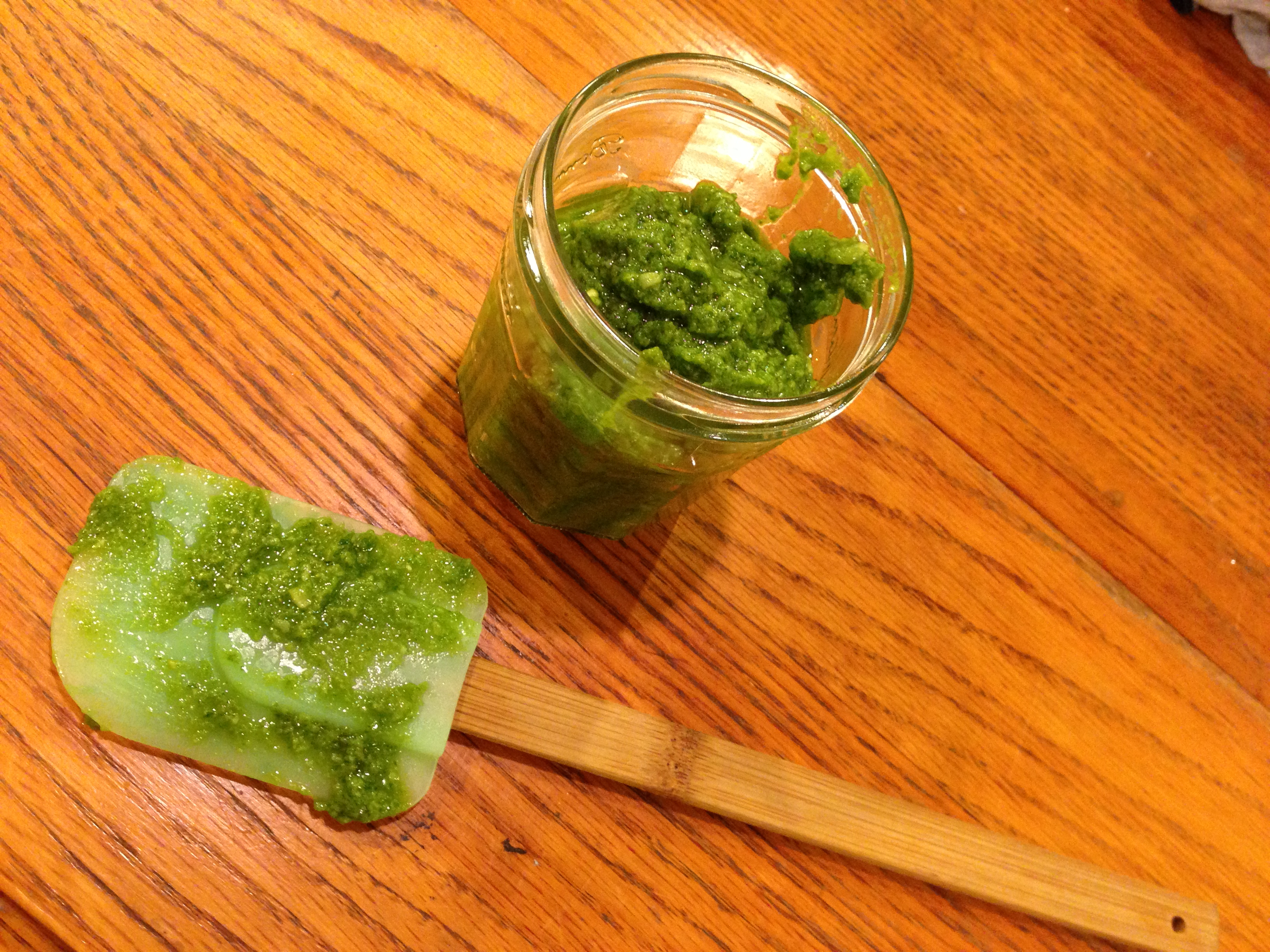
pesto


4 Comments

Filed under Cooking, Culture, History, Home, Jean Zimmerman

At the End of Their Bloom

The end of the rose season and the end of the day. Glinting sweeps of sun, still, but deep shadows starting to fall across the lawn.

You take what you can get.

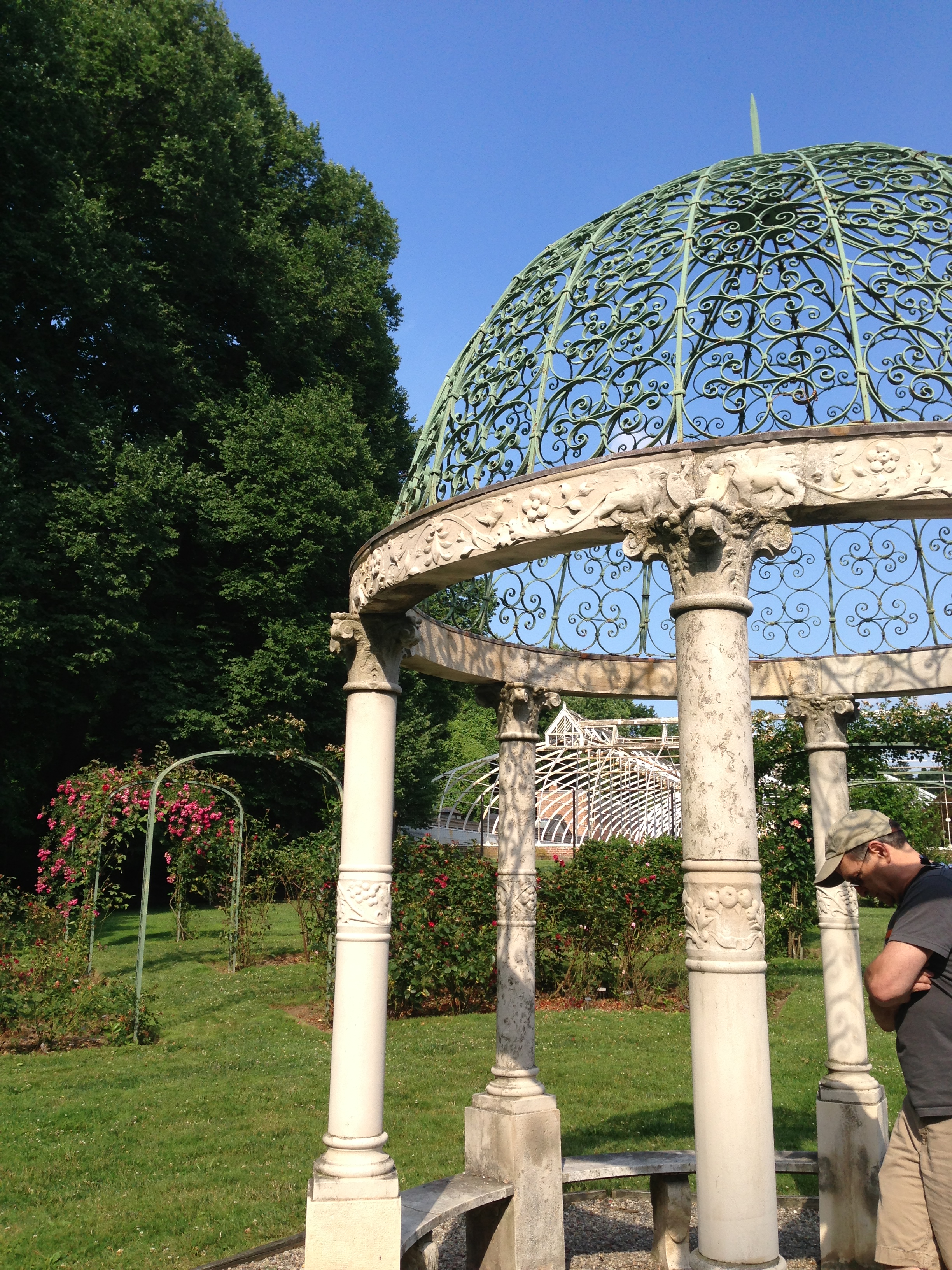
Q yellowThe roses that remain are as lovely as the roses that came before them. At Lyndhurst, the historic property in Tarrytown that used to be the domain of robber-baron Jay Gould, that’s a lot of roses. There are 400 varieties arranged in 24 crescent shaped beds in three circles, a color wheel that moves around a central gazebo from white to yellow to red to pink and back to white.

gazebo


The colors are spectacular at the flowers’ height. Not so much now, late in the season, when you see more bare stalks than blooms. But there is something about loving the last rose. Mr. Lincoln, say, bred by Swim & Weeks in the United States in 1964. The fragrance is massive. I want to wear it on my 60th birthday — five years away, but good to plan.

mr. lincoln

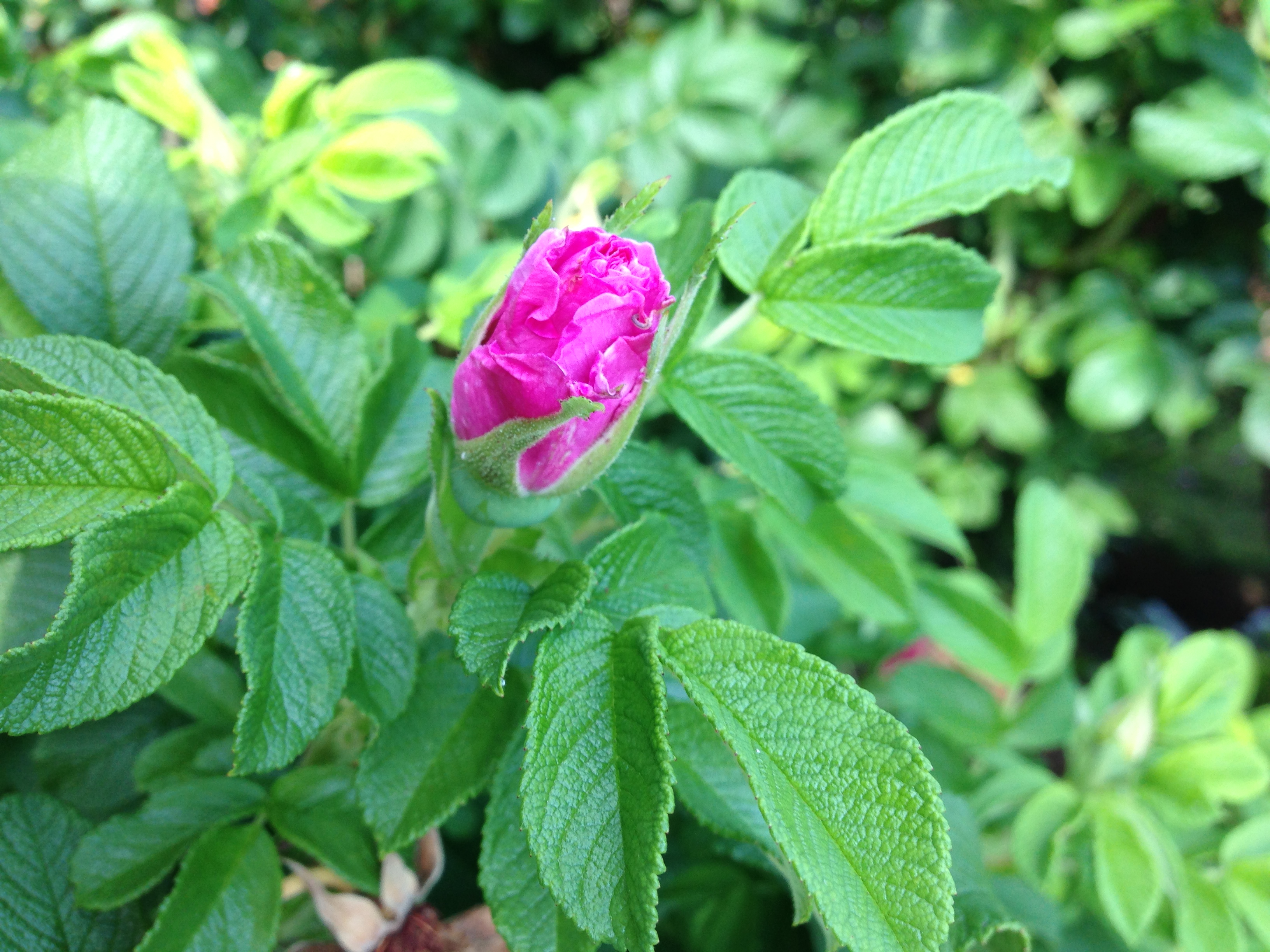
There are only a few buds left on Belle Poitevine, but I love knowing that this hybrid rugosa originated with Francois-Georges-Leon Bruant in 1894. The Swedish Rose Society recommends the plant for northern Sweden.

belle poitevine


Gene Boener, ragged as it is so late in June, reminds me of a rose that had escaped someone’s garden and found its way to my house when I lived in an apple orchard years ago, with the sweetest, spiciest perfume imaginable.

gene boenerThis profusion of flowers is perched on a hill that slopes down to the Hudson River. Jay Gould’s Shangri-La. “I do not believe that since man was in the habit of living on this planet anyone who has ever lived possessed of the impudence of Jay Gould,” said nineteenth-century radical Robert Ingersoll.

lynhurst view


Even Gould, who bragged that “I can hire one half of the working class to kill the other half,” couldn’t keep roses alive beyond their season. His daughter founded this garden, putting in old garden roses like Red Dorothy Perkins, bred in 1908, to climb one of the 24 trellises.

dorothy perkins trellisDorothy unfortunately has no scent. And what is a rose without her scent? A later rose is John S. Armstrong, a grandiflora bred by Herbert C. Swim in 1961.

john S. Armstrong

By the time John S. Armstrong got a place in the loam, the rose garden’s upkeep had been passed to Anna Gould, Duchess de Talleyrand-Perigord, in 1938, and then to the Garden Club of Irvington.

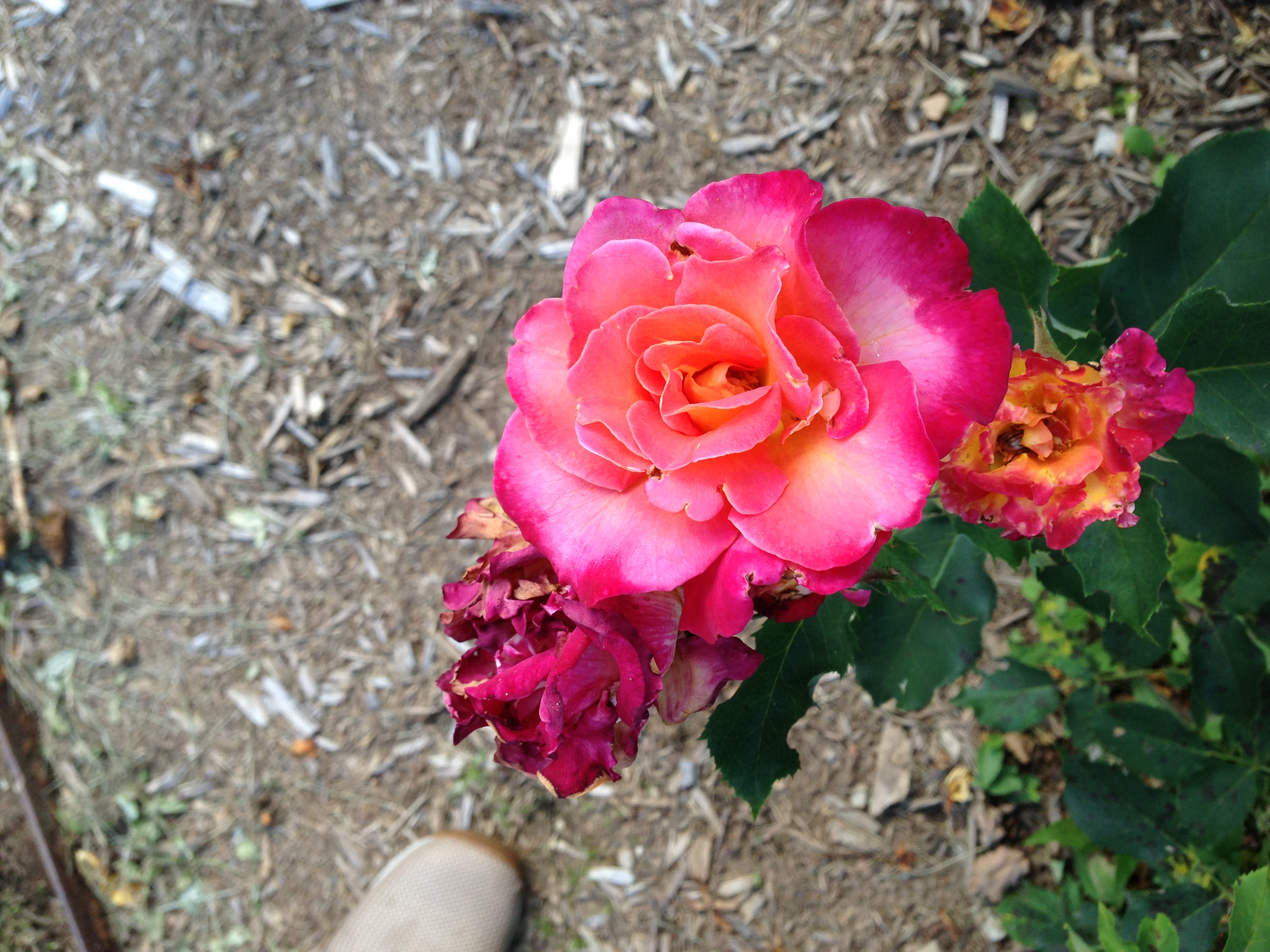
A robin hops briskly through the clover and shade moves over half the beds. One fuchsia bloom called Chrysler Imperial, a hybrid tea, has the vague aroma of leather. When you put your face down to smell, watch out that a beetle doesn’t mistake your nose for a flower.

newdawn


The roses are flaming out.

granadaIt’s time to go home. Duck under the trellis covered with  Kathleen Hybrid Musk, bred in the U.K. in 1922 by Rev. Joseph Hardwick Pemberton. A cross between Daphne, 1912, and Perle des Jardins. Gil’s Lao Tzu tee shirt was a gift from me.

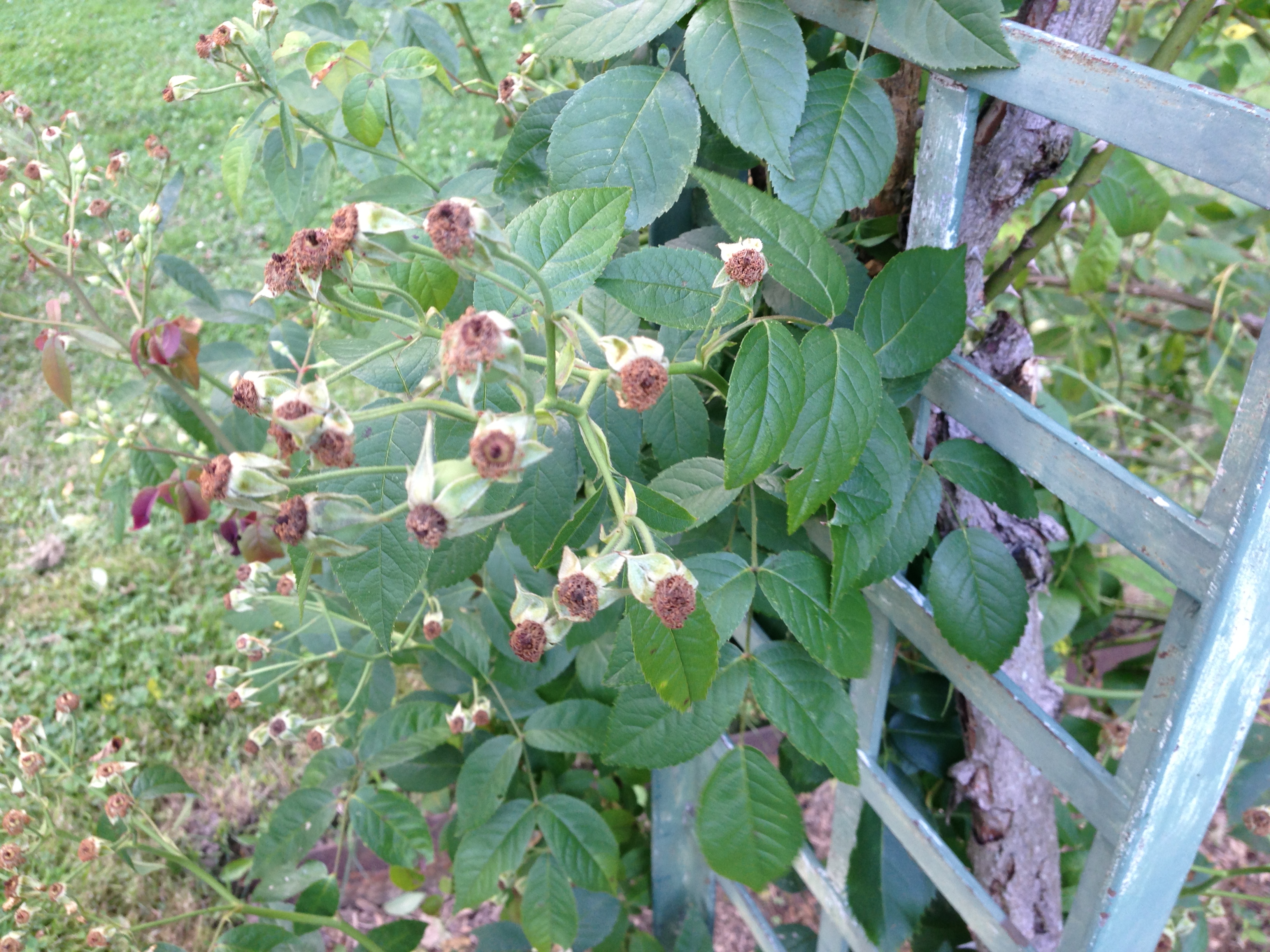
Kathleen hybrid muskNot much left on those stalks climbing the old wooden trellis. But if you love roses, you’ve got to love them when they’re naked aside from their sepals.

kathleenOne of Lao Tzu’s greatest hits, from the Tao Te Ching:

Let there be a small country with few people,

Who, even having much machinery, don’t use it.

Who take death seriously and don’t wander far away.

Even though they have boats and carriages, they never ride in them.

Having armor and weapons, they never go to war.

Let them return to measurement by tying knots in rope.

Sweeten their food, give them nice clothes, a peaceful abode and a relaxed life.

Even though the next country can be seen and its dogs and chickens can be heard,

The people will grow old and die without visiting each others land.


1 Comment

Filed under Culture, History, Home, Jean Zimmerman, Nature

The Handsomest Dog in the World

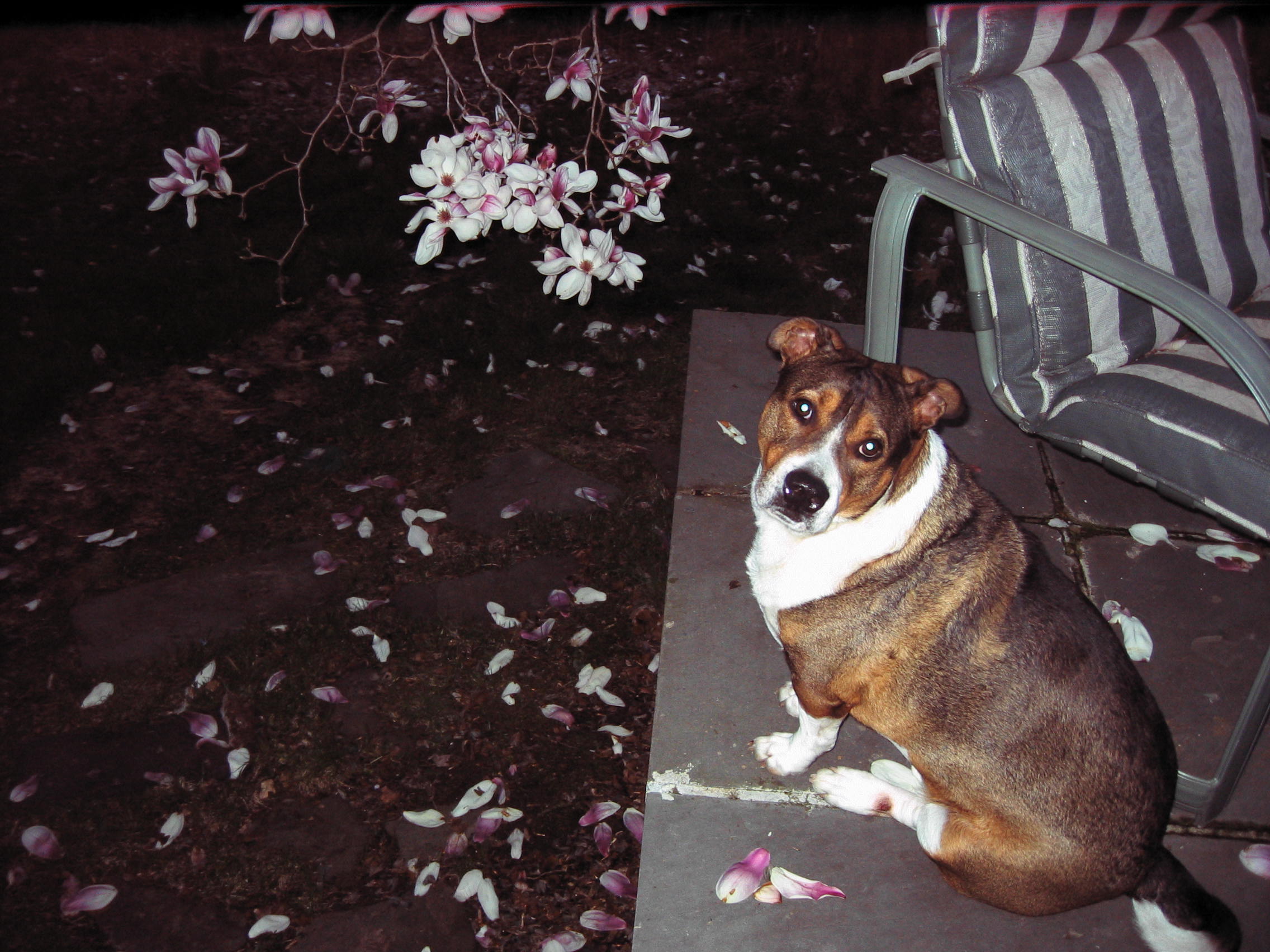
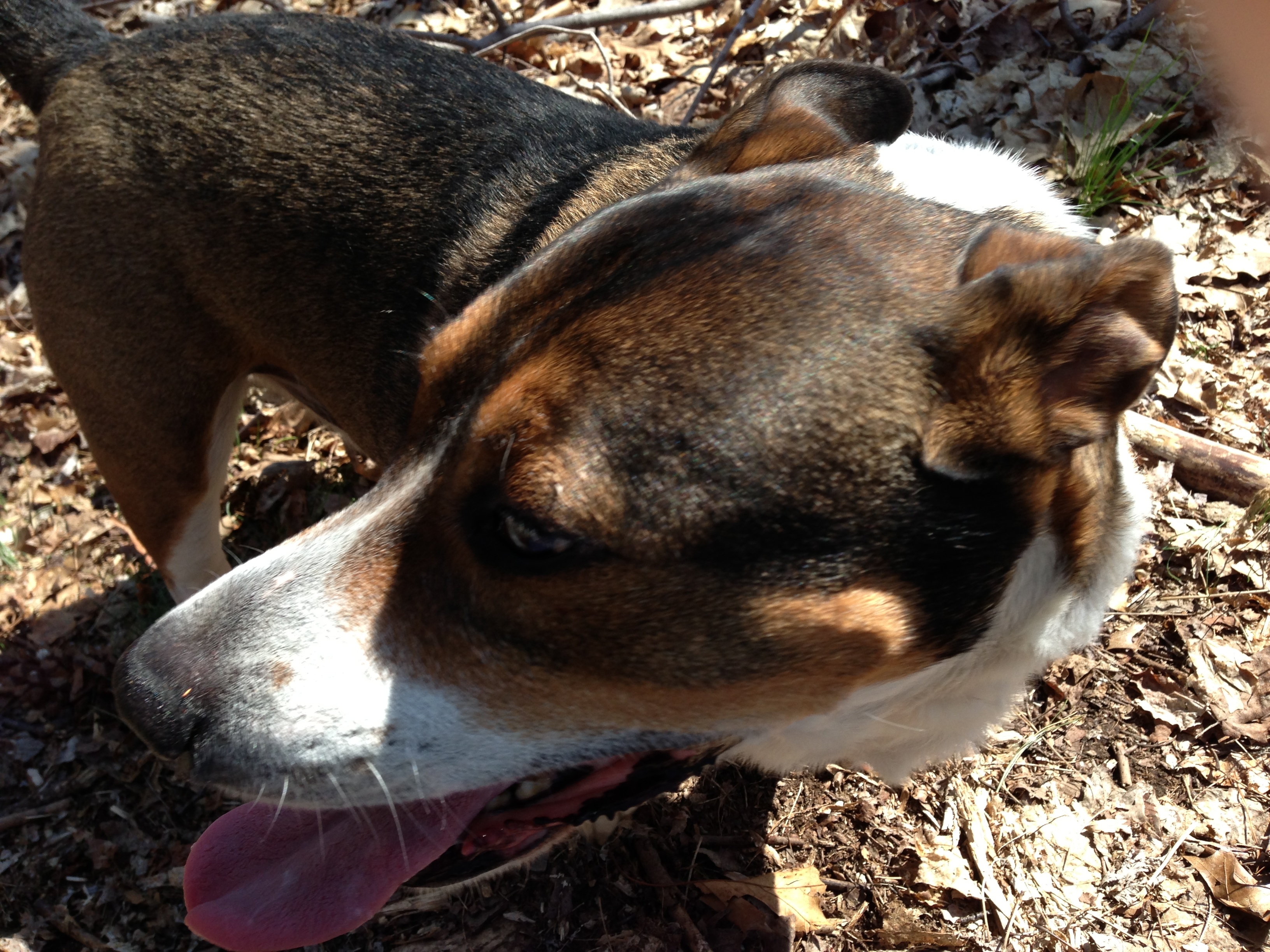
I write frequently about my dog Oliver.

Image

He is loyal. Intelligent. A good eater (lately into ripe strawberries from my garden). Brave. Well, loud and aggressive, anyway, and I think  he’s secretly a bit of a chicken.

We got Oliver as a baby from a dog rescue family that was fostering his ma, a seemingly unadoptable, classic yellow cur. Father: unknown. In a White Plains kitchen squirmed eight chubby balls of fur, attached to eight wagging stumps of tails. It was January. We had run out of time to find adolescent Maud a puppy birthday present. Ollie was it. He might be a beagle, from his coloring. Who knew?

Image

We found everything he did delicious even though he smelled bad and was so snaggletoothed he needed a lot of dental work. His lip was partly cleft. He waddled. Most of all he didn’t play well with others. All he did in obedience class was bark at his classmates. He once found a warren of rabbits and killed them all. His genetic origins, it seemed clear, spanned the basset hound and the pit bull.

Image

Still. Ferocious as he is, he can be the picture of docility. Smiles over the shoes he brings when we come in the door, earning his nickname the Jolly Rancher. He can be mellow, even soulful.

Image

Loving.

Image

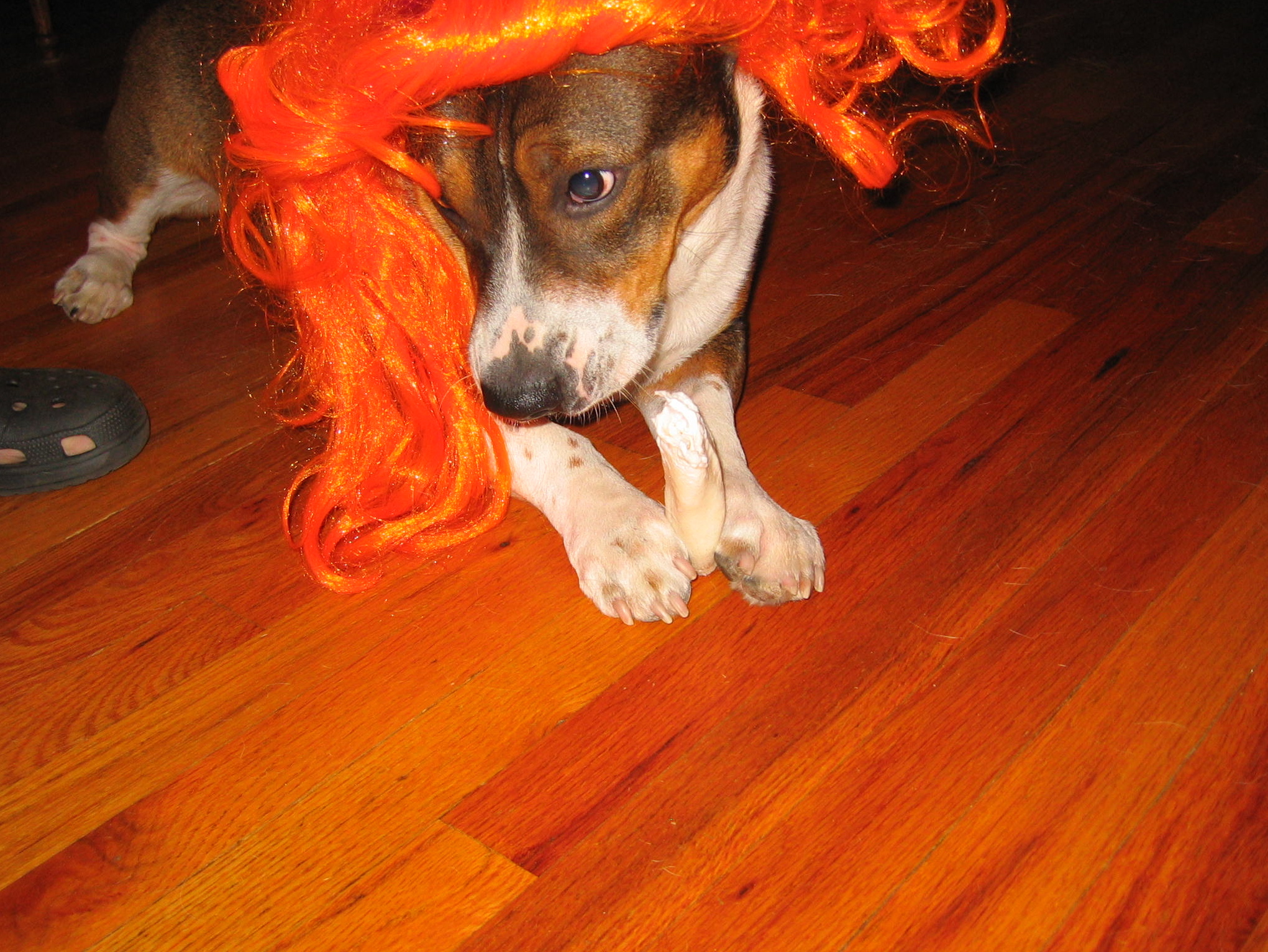
He’s was a flaming redhead for Halloween when he was about a year old.

Image

Clownface, I call him.

Image

Whatever else he is, he’s unique.

And so it is that I became shocked and miffed to see this year’s Ugliest Dog in the World paraded across a stage in California and then making the talk show circuit in New York. The contest has taken place for 25 years, and the Chinese Crested breed, which is hairless, usually triumphs. Not this time.

Image

Walle came from Chico, and they were calling him a cross between a basset hound and a boxer. One judge said that Walle looked like “he’s been Photoshopped with pieces from various dogs and maybe a few other animals.”

Image

Walle didn’t look like any other dog, everyone said, with his pudgy gait, chunky paws, large head, lowrise posture, oversize nose.

Image

Well, you tell me. Is Walle unique? Or did we finally locate one of Oliver’s vanished siblings? More to the point, is the dog who won the laurels ugly?

Because Oliver is beautiful.

Image

10 Comments

Filed under Culture, Dogs, Home, Jean Zimmerman, Nature

A Crash, Then Silence

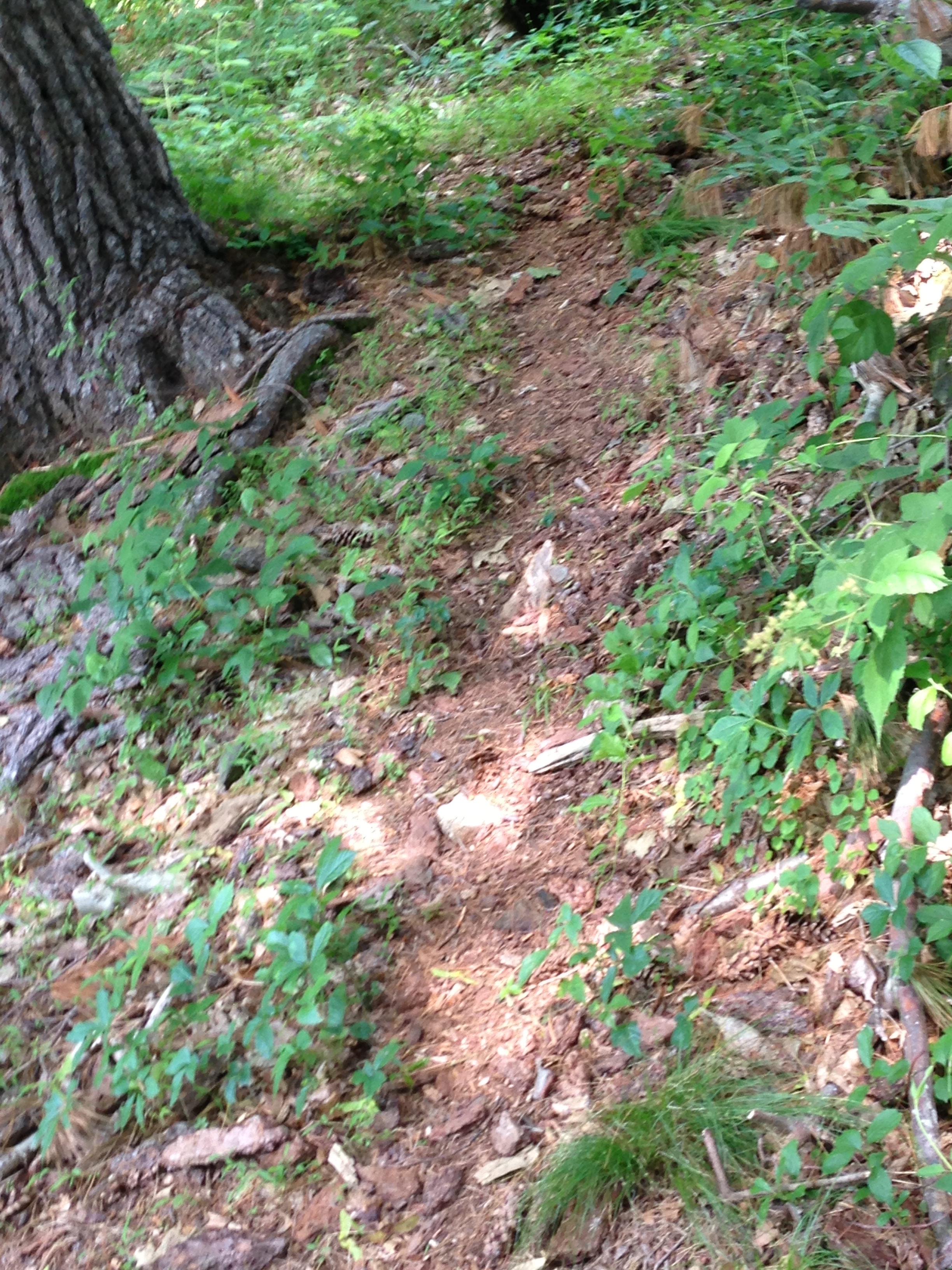
Last fall I created a trail.

path 1

It started at the curve of the Cabin’s driveway and led uphill to a ridge, winding and turning past trees along the way.

path 2

A beautiful mat of bark I’d step across on my way up suggested the drama of a tree’s life cycle. It was as if the bare, dead red pine had shaken the pieces off all at once in a kind of frenzy.

fallen bark

When I brought Oliver for walks in the clearing beyond the ridge, it always stuck me as a threshold to a fairytale world, parklike, denuded of underbrush, just a beautiful blanket of brown leaves amid tall old trees, with some tenacious raspberry canes. Oliver gives chase to deer here, animals invisible to our eyes.

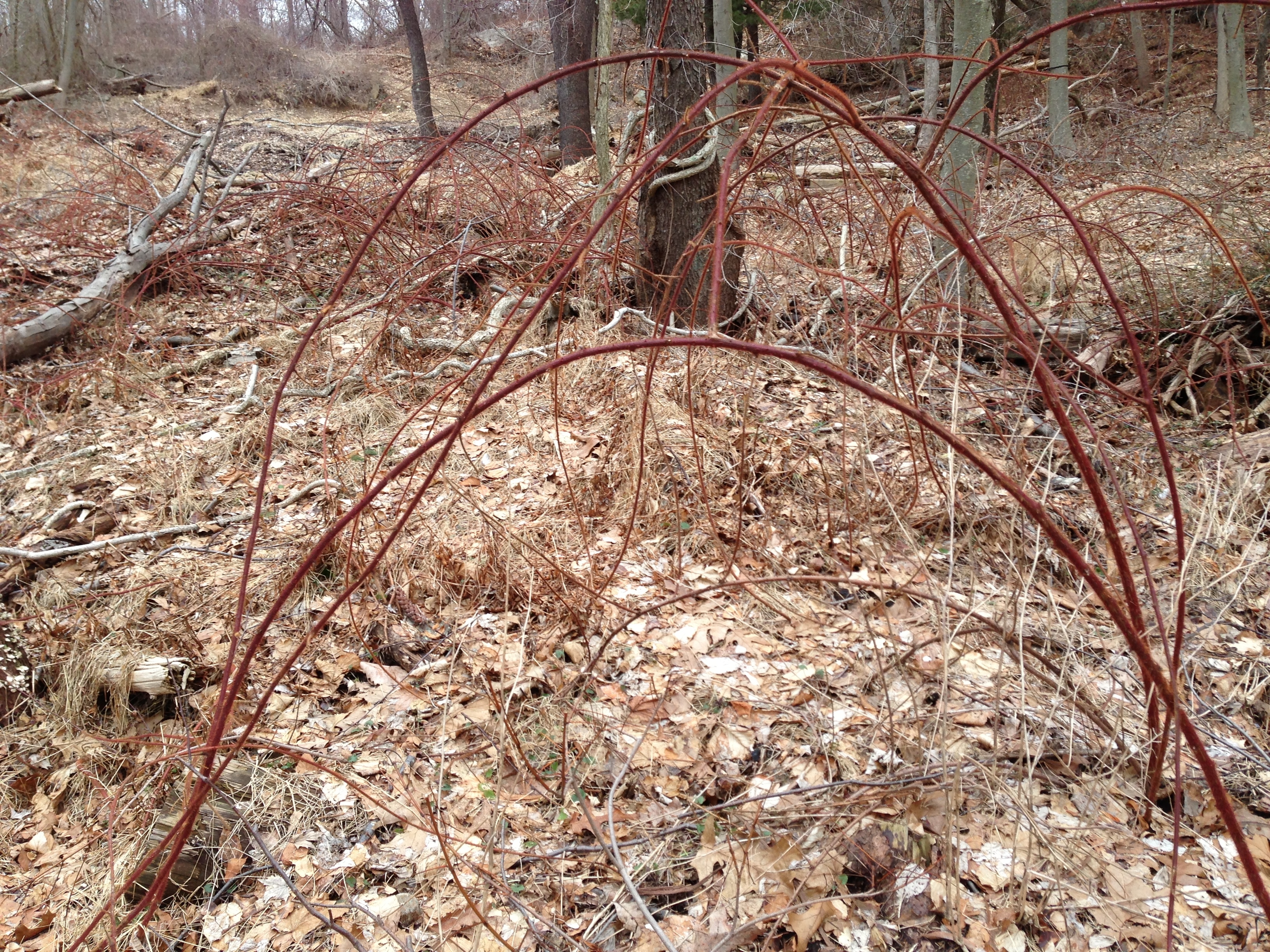
red canes in clearing

Today my access to that fairytale world was denied.

Gil told me that while I was out this morning and he was sitting at his desk, he heard a crash “that went on for five minutes.” It was sequential, he said, an explosion, then a crack, then another explosion.

A tree fell in the forest, and he heard it.

gil uphill

When we went up to investigate – amid swarms of excited mosquitos – we found half a dozen downed trees, all in a tangle.

crashed trees

And all across my path.

Gil’s theory: “the cherry fell on top of the maple. Now the maple’s all bent over, strung like a bow.” I could see the fresh split in its bark.

cracked tree

Oliver was exuberant, racing around, using the fallen limbs as a steeplechase. “The poetical character…lives in gusto,” said Keats. The dog just wouldn’t stand still.

deer chaser

And then, coming home, at the bottom of the hill I find a phenomenon that is the opposite of loud and crashing. A painted turtle had come to lay her eggs, stretching out her strong hind legs and silently clawing up the mud beneath our grass. We saw her as we left for the trail.

All she left was a hole the size of a silver dollar. No white, jellybean eggs.

turtle hole

I wonder if she heard the trees?

5 Comments

Filed under Dogs, Home, Jean Zimmerman, Nature, Poetry, Writers

A Farm Grows in Brooklyn

Or sometimes Queens.

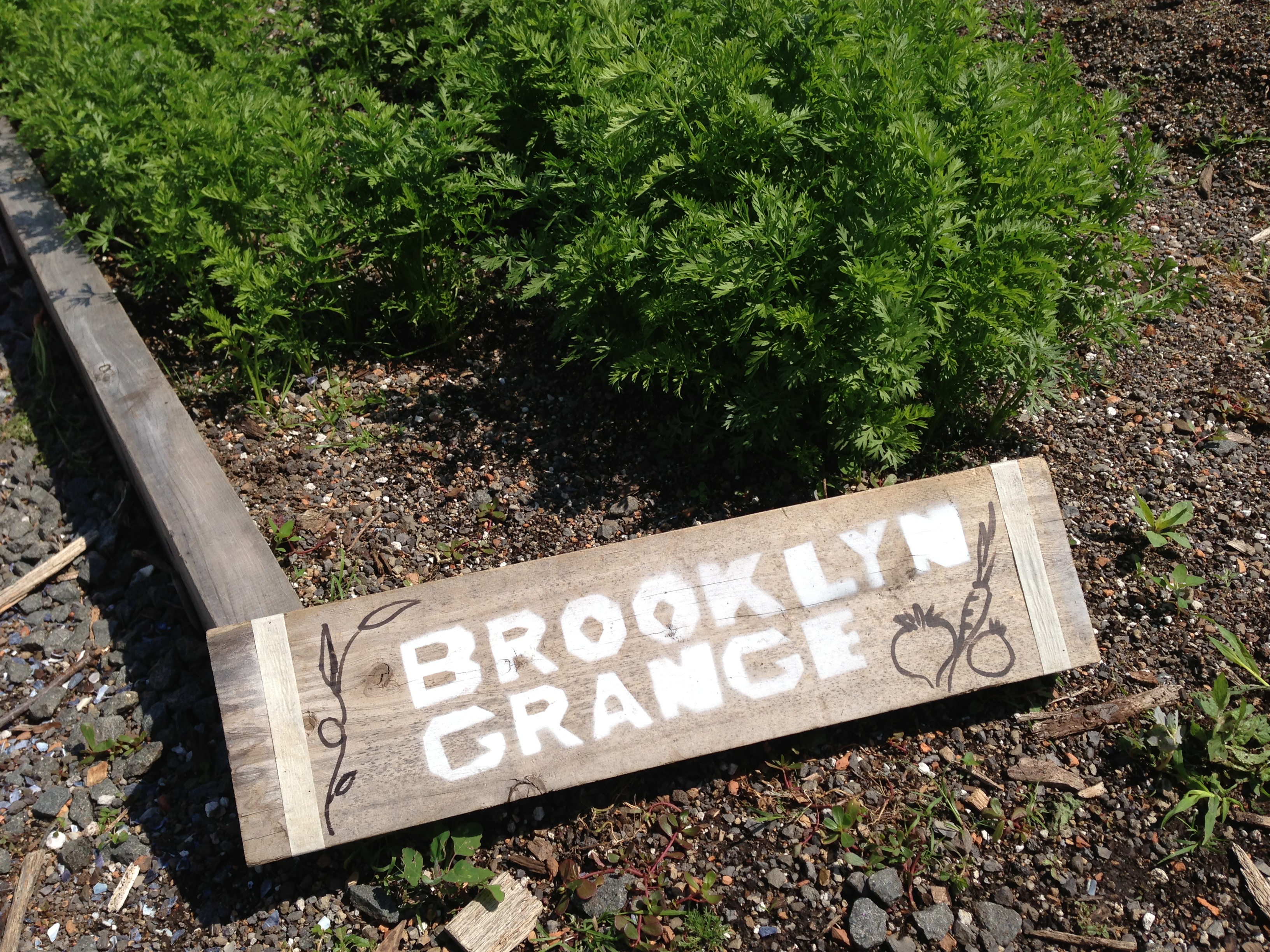
brooklyn grange sign

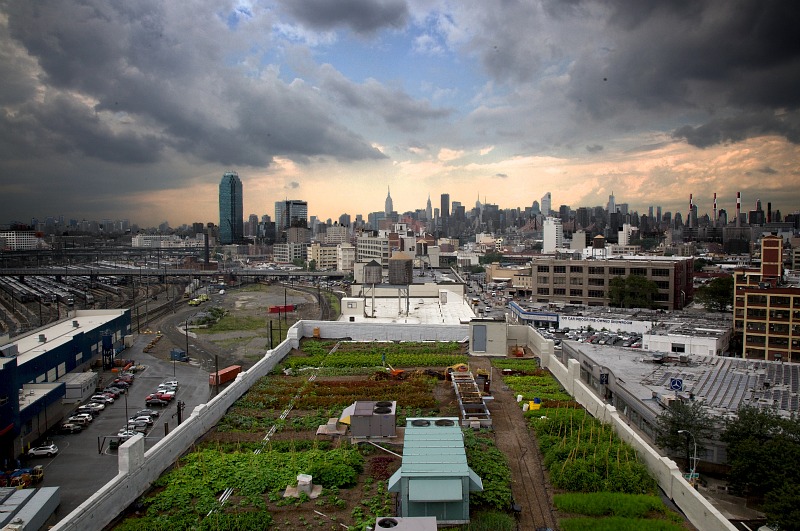
We had to find our way through a coffeehouse and the winding corridor of a building before getting to the unmarked elevator that led to the roof. Then we knew we had hit pay dirt, so to speak.

farm sign aslant

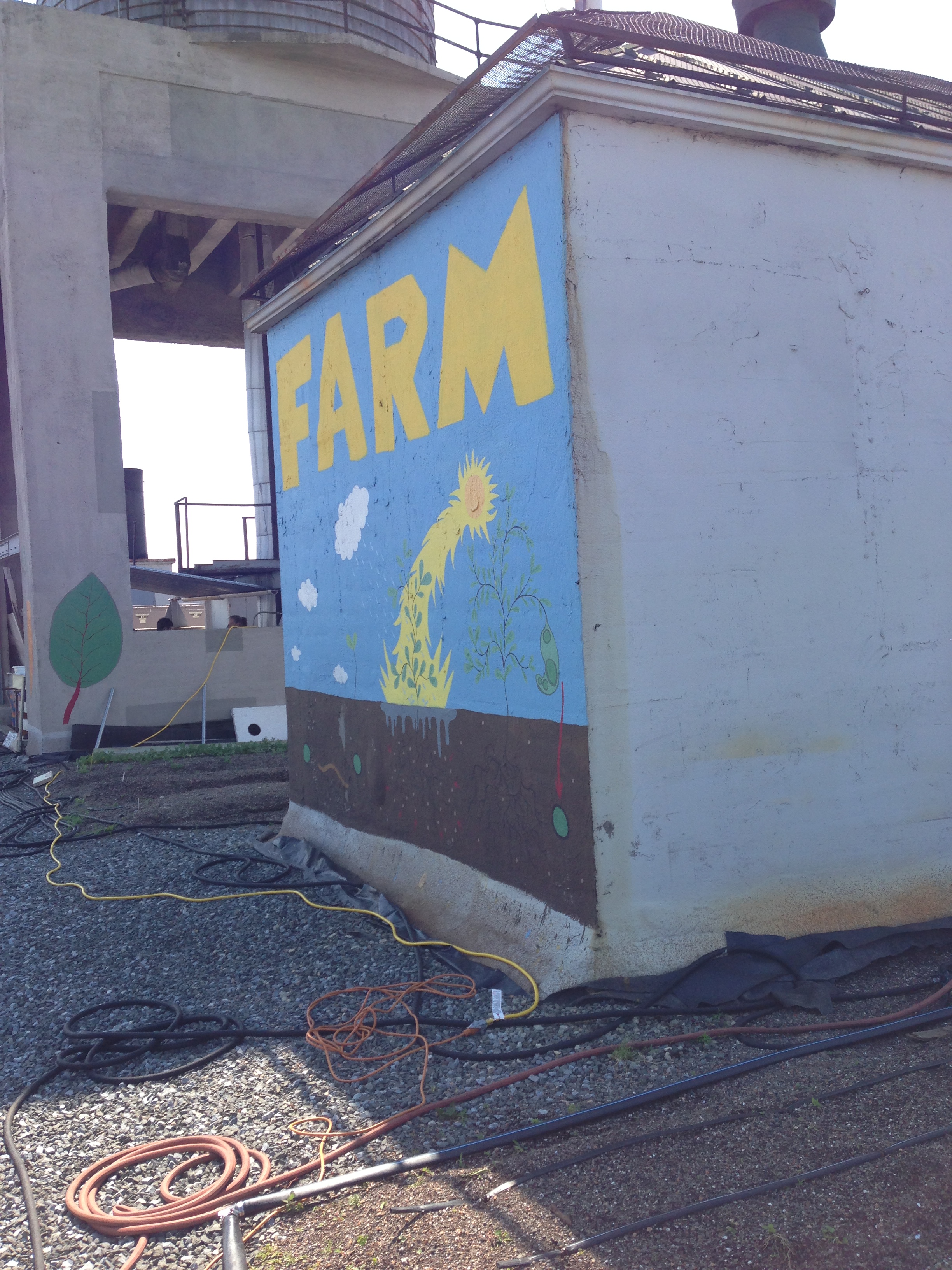
Brooklyn Grange is the largest rooftop farm in the country and perhaps the world. Sited atop a building that originated as a furniture factory, it has the space to produce at least three dozen different vegetables and herbs in the course of a season. You would never know it’s there, looking up from Northern Boulevard, a car-choked  thoroughfare that muscles its way through Queens, New York.

farm bldg

We were a little early. The volunteers were still bagging up the greens for the CSA as Gwen, a busy farm worker, applied sunscreen to her arms. This is great weather for kale, said Gwen. All the rain makes it really spring up. The farm stand also displayed beautifully fresh carrots, mesclun, scallions.

greens in rows

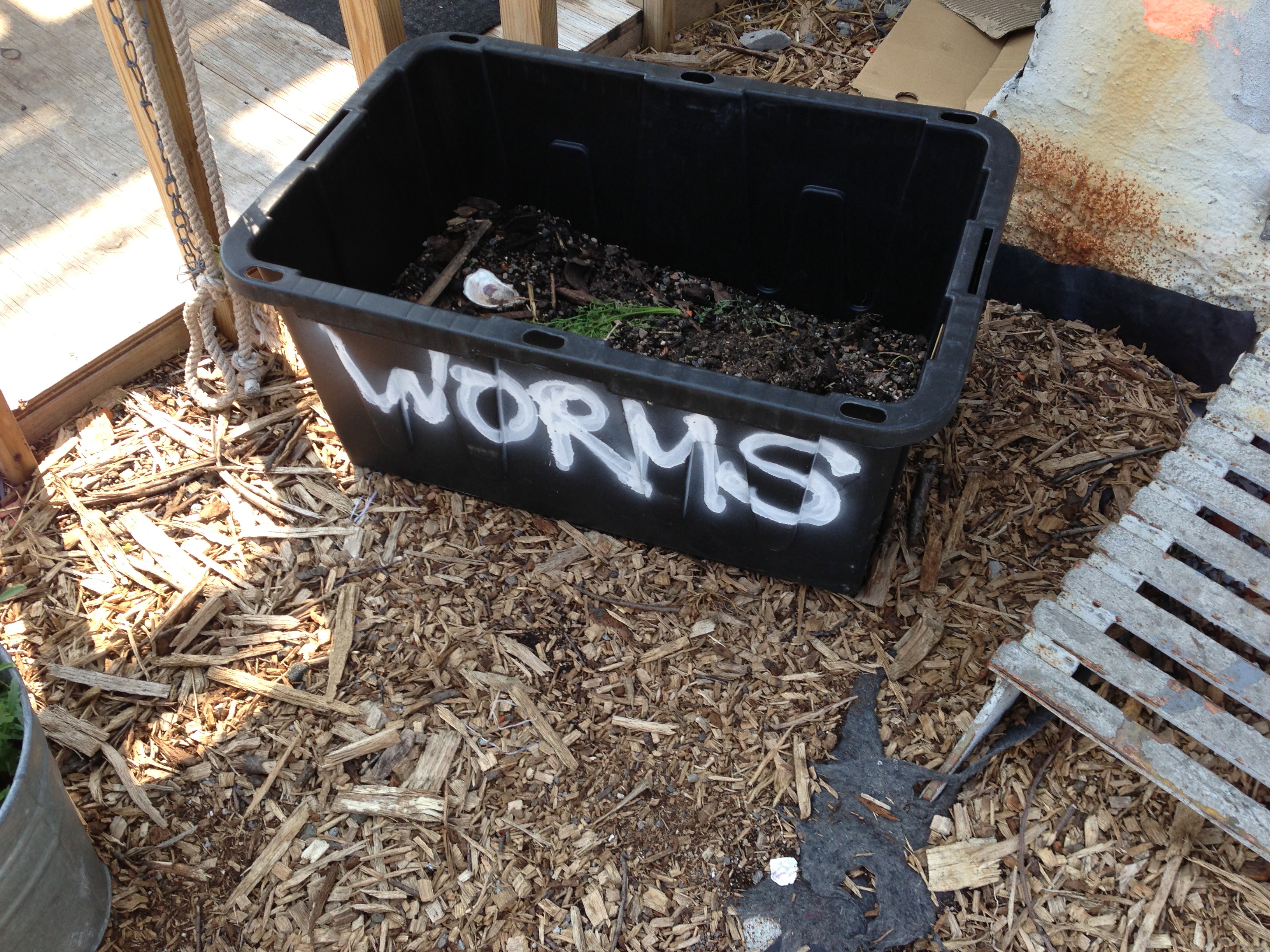
A farm on a roof has to have all the things a farm has on the ground. Worms.

worms

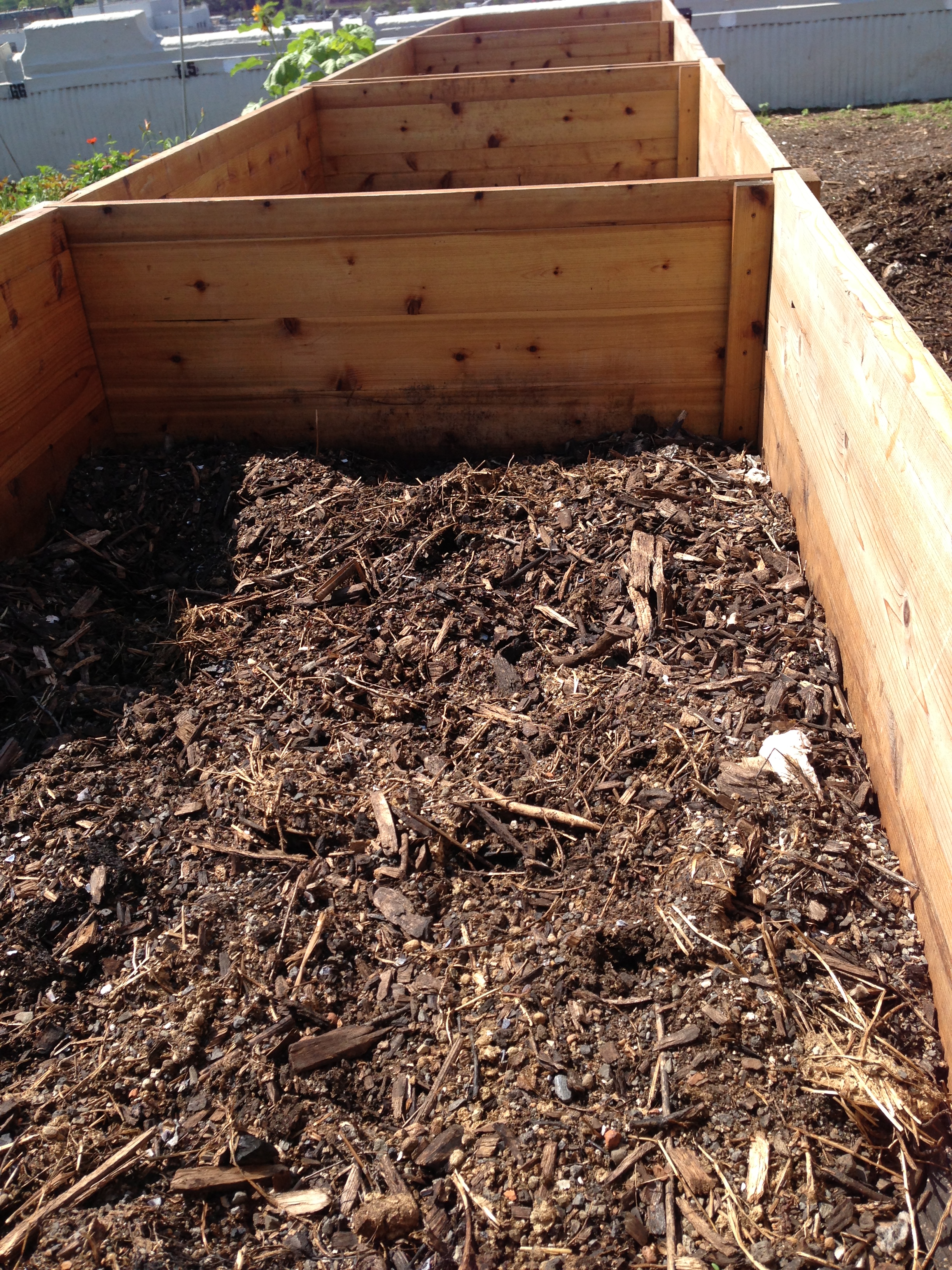
Compost.

compost bins

The farm manager, Bradley, wearing a bright green tee shirt whose back was emblazoned with the words, “This is what a feminist looks like,” told me a little about the chickens.

chickens

The dramatic white one, he said, was a Japanese silky. I asked him about the manure, so great for vegetables. They have about a dozen birds. They give what they can, said Bradley. He directed the volunteers out among the rows to harvest thyme and flowers. Tourists and photographers were beginning to show up, most with the kind of equipment that views like the Farm’s deserve. This one, taken on another day, is by a photographer named Cyrus Dowlatshahi.
Brooklyn-Grange-by-Cyrus-Dowlatshahi2

You feel you could leap the distance from the pepper plants to the Empire State Building in one stride – or at least that Philip Petit could make a project of the crossing.

Photographer Rob Stephenson has made some striking pictures of New York’s farms and gardens.

Hells Kitchen

Not just rooftops but the kind of small, intimate plots that can in found in Harlem and the Bronx, and nurture peoples’ souls as well as their stomachs.

community garden

Close up at Brooklyn Grange you can see the serious thought behind the endeavor.

lettuce w sign

The rows of stakes waiting for the tomato’s slow and steady climb.

tomato stakes

There are roughly 1.2 million pounds of soil in this one-acre plot.  Could the concrete slab roof  give way? Absolutely not. All these details and more are readily available on line.

You can book an event at the rooftop, even a wedding. Perhaps guests could weed between glasses of champagne.

Brooklyn Grange is joined by other urban farms in New York: Added Value, Tenth Acre Farms, Battery Urban Farm, Gotham Greens and and Eagle Farm are just a few of these enterprises. One researcher was quoted in The New York Times last year: “In terms of rooftop commercial agriculture, New York is definitely a leader at this moment.”

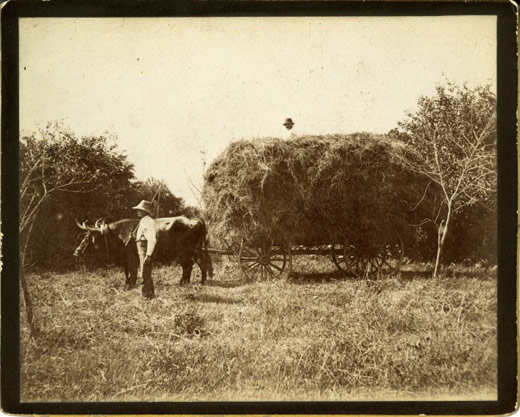
There is a long history of agriculture in the boroughs of Brooklyn and Queens.

Farming-Scene

According toRobin Shulman in her lively and informative book Eat the City: A Tale of the Fishers, Foragers, Butchers, Farmers, Poultry Minders, Sugar Refiners, Cane Cutters, Beekeepers, Winemakers, and Brewers Who Built New York, “As late as 1880, Brooklyn and Queens were the two biggest vegetable-producing counties in the entire country.” She cites one observer as saying, “The finest farmlands in America, in full view of the Atlantic Ocean.” Farmers in the boroughs used the manure of city horses to fertilize their crops, which they brought to the Manhattan market by boat.

I’m thinking about farming as I coax my tiny vegetable plot to maturity. My new strawberries have come in.

new strawberries

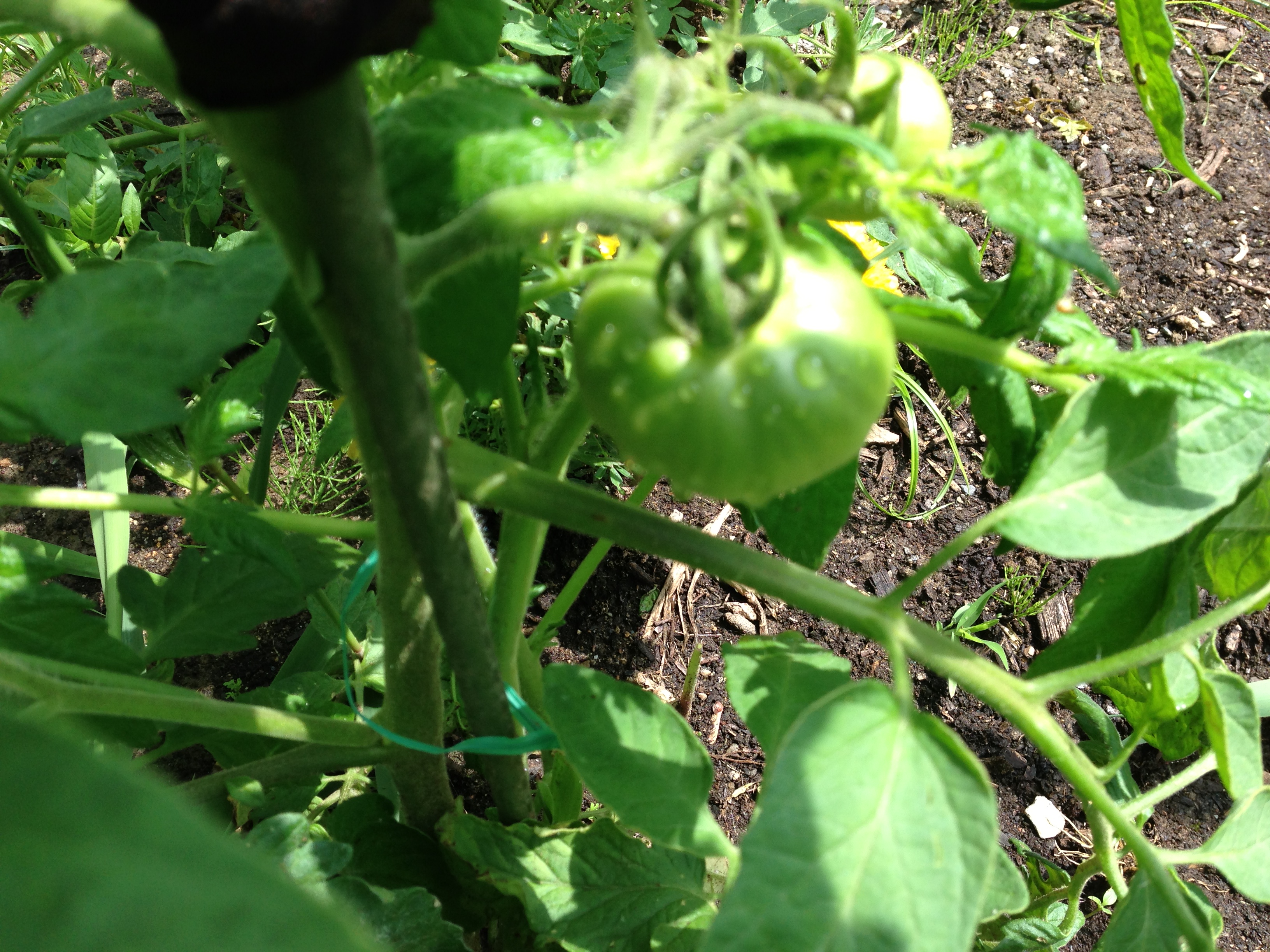
And some tomatos, the size and texture of an Atomic Fireball – remember those? – though not the color, yet.

fourth of july

But I’m tired of all this just looking at good stuff growing. Where’s the table in the fashionable farm-to-table equation?

One was set for us at The Farm on Adderley, in the neighborhood of Ditmas Park, Brooklyn. There is nothing like a restaurant with a mission statement: it “has evolved to pursue the principles of supporting local farmers, artisans, entrepreneurs as much as possible, making delicious food from that, and serving it in a completely honest way.”

pastured poultry

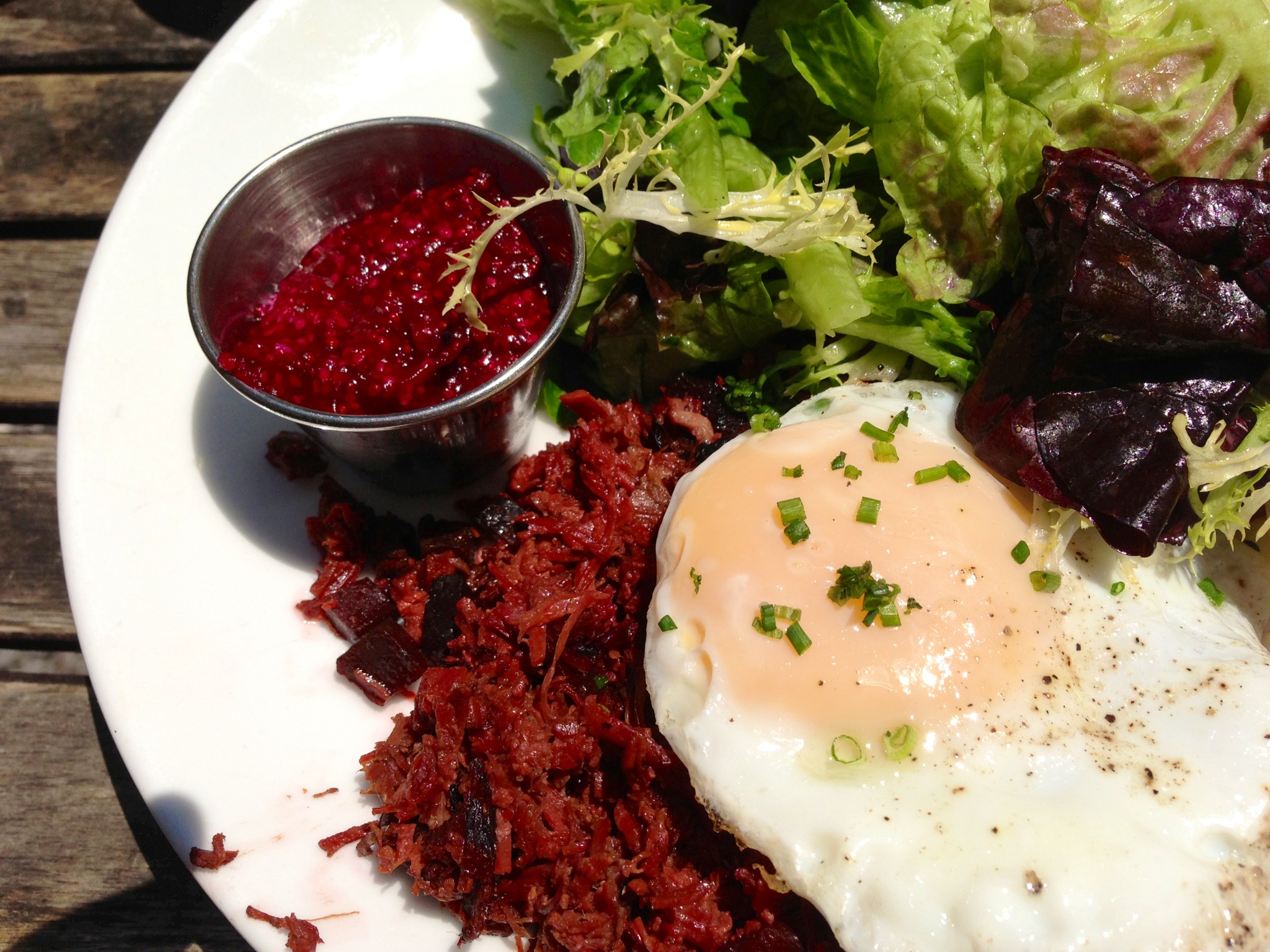
You can get a list of the local farmers who provide the kitchen’s ingredients. But that doesn’t mean anything to me unless I get a plate of food that’s good – as was my red flannel hash, its corned beef colored deeply with beets, and an even deeper burgundy horseradish served alongside. Did it taste better because the beef that was corned had roamed freely? Yes, I believe it did.

hash

The hostess brought to mind a farm girl in her friendliness, and she seated us in the garden, between a towering fir tree and a luxuriant grape vine, next to a wooden crate planted with chard and mint. The sun shone down, and we could have been out in the country. The place hosts events, like a New Amsterdam dinner “curated” by food historian Sarah Lohman, who is an educator at the Lower East Side Tenement Museum and author of a blog called Four Pounds Flour, devoted to “historic gastronomy,”

We were lost in the perfectly crisp, chewy, salty french fries, served with a sultry curry dip.

french fries

Couldn’t help, though, but overhear the young couple next to us planning their nuptials. Should we let them know about Brooklyn Grange? There could be worse places to grow your relationship.

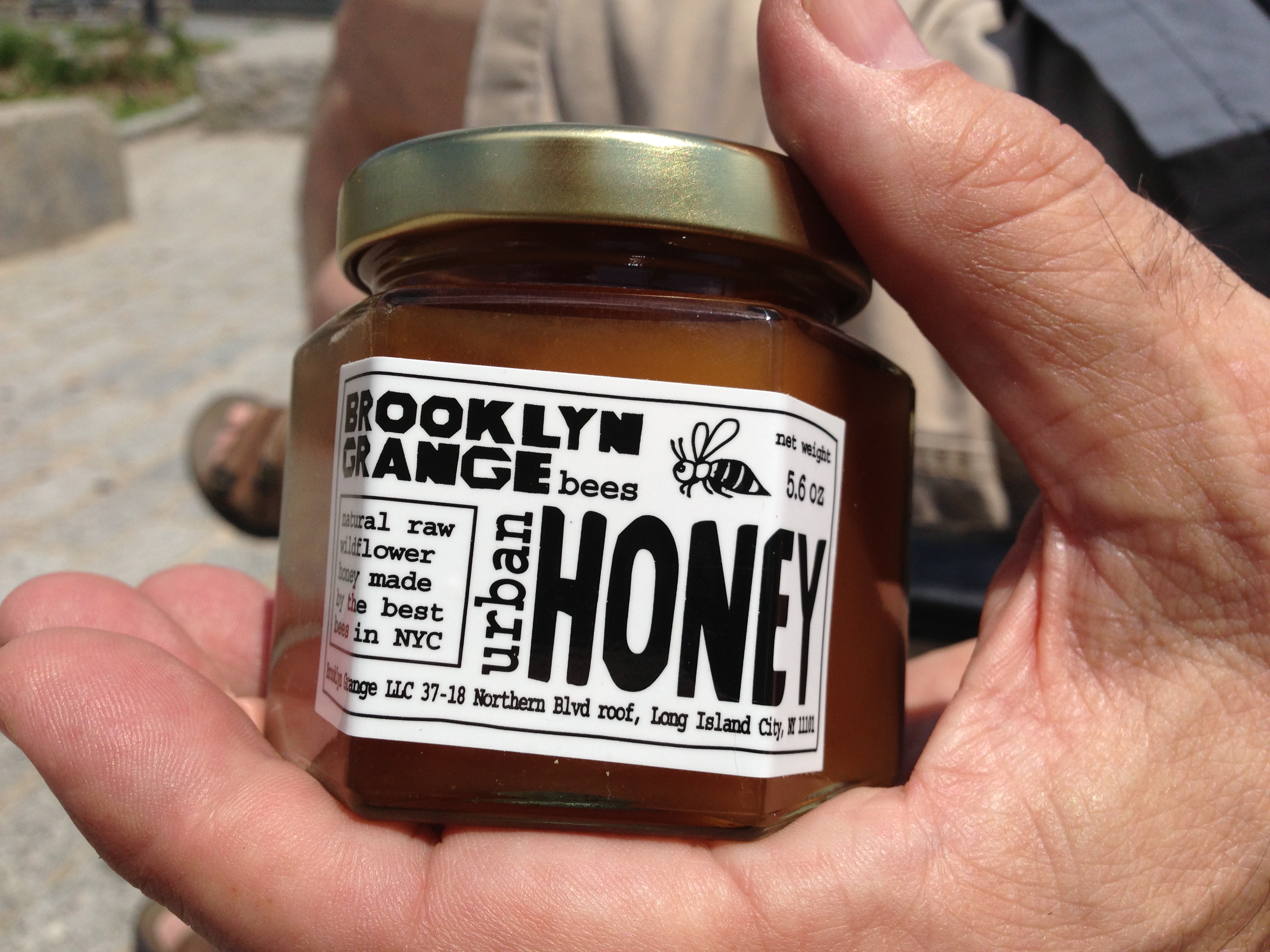
honey


4 Comments

Filed under Cooking, Culture, History, Home, Jean Zimmerman, Nature

Serene and Green

I wondered how it would work, so I went to find out. A literary event in a clothing store in Yonkers, New York. A literary event that had nothing to do with fashion, actually: Reeve Lindbergh, the author of family memoirs, essays and children’s books, would be reading excerpts from the latest volume of her mother Anne Morrow Lindbergh’s writings, Against Wind and Tide:Letters and Journals 1947-1986.

against

The store was Green Eileen, an offshoot of Eileen Fisher where I often go to replenish my wardrobe.

colorful clothes

The clothes Eileen Fisher designs are elegant and serene, with unstructured lines and natural fabrics. If you like linen and silk, this is the place for you. It’s definitely the place for me, but by the same token I often wonder if I can live up to my clothes.

Maybe I like this place so much because the company’s ads showcase graceful  silver foxes alongside the usual younger models. Grey is the new brunette, or didn’t you know?

jean grey

There was an elegant buffet and wine. Reeve began. She read from the book, but even more interesting was the patter that pulled those passages together.

reeve

She told us about her mother’s ever-present blue notepads, containing carbon paper to make three copies, one for the letter recipient, one for her personal archives and one for the master archive at Yale (open to all as of April, as it happens). Anne Morrow Lindbergh often wrote three to four long letters in a day, yet despaired of getting enough writing done. Reeve remembers banging on the door of her mother’s “writing house” and how mad her father got – that’s the only time she had to write, he reminded his daughter.

The title of this volume is a quote from Harriet Beecher Stowe, who claimed that writing, for a wife and mother, is “rowing against wind and tide.” When Reeve herself became a writer, at one point she tragically lost a child and was afraid she would never put pen to paper again. Her mother’s reassurances “probably saved my life,” she told us. “Mom said stop reading the things you think you should be reading and instead write on little scraps of paper the things going on around you.” Reeve still makes this a practice, she said.

lindberghs

Anne Morrow married Charles Lindbergh, then the most famous man in the world, in 1927, and got her own pilot’s license the following year. They flew the world over while she continued to produce nonfiction, fiction, articles and poetry, with the 1955 Gift From the Sea a seminal work of feminism and environmentalism, never having gone out of print.  A book mothers give to their daughters, who give it to their daughters in turn.

Gift from the Sea

Reeve spoke about her father’s comings and goings, even his infidelities, about the “strong and interdependent relationship” the Lindberghs had nonetheless over 40 some odd years. Charles Lindbergh “showed us a world – his world – that he wanted us to see,” said Reeve of the family, but he could definitely be difficult. Reeve’s mother, she said, always felt her husband’s controversial opinions about Hitler and the Second World War had been misconstrued.

In this volume, Anne Morrow Lindberg talks about her pregnancies, about considering an abortion, about a miscarriage. She rewrites her wedding vows: “Since I know you are not perfect I will not worship you,” is one. “Marriage is not a solution to but a mirror of problems,” another. She wrote a lot about the need for aloneness –how important it is.

“I see life as a journey toward insight,” said Anne Morrow Lindbergh in a speech at the Cosmopolitan Club when she was 75.

Reeve’s editor on the new volume sat in a front row and nodded as she detailed how together they had combed through the archives at Yale to fill the book. All the material was handwritten and had to be typed before the painstaking selection.

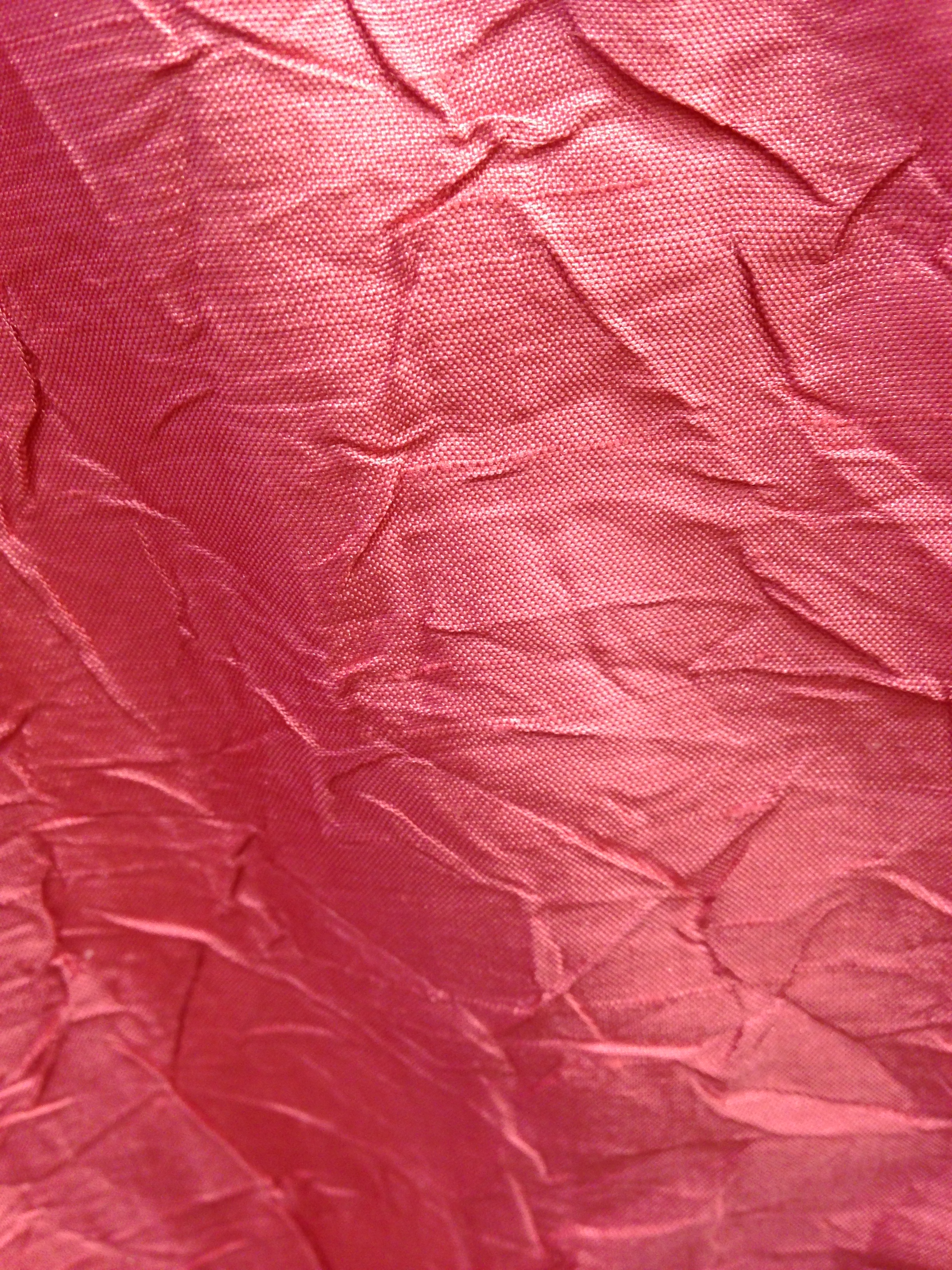
The presentation concluded, and I wandered among the garments that lined the store like bright, clean flags. I’d love to be a person to wear textured pink silk.

pink shirt

Two books were being sold: Against Wind and Tide and a children’s book by Reeve Lindbergh called Homer, the Library CatTen bucks from the sale of each book would go to the Eileen Fisher Foundation.

Jen Beato, the Store Leader, told me why a presentation of the work of Anne Morrow Lindbergh fits the setting of Green Eileen. Every book wouldn’t make sense, she said, but this one shows “how challenges she faced are similar to today’s challenges.”

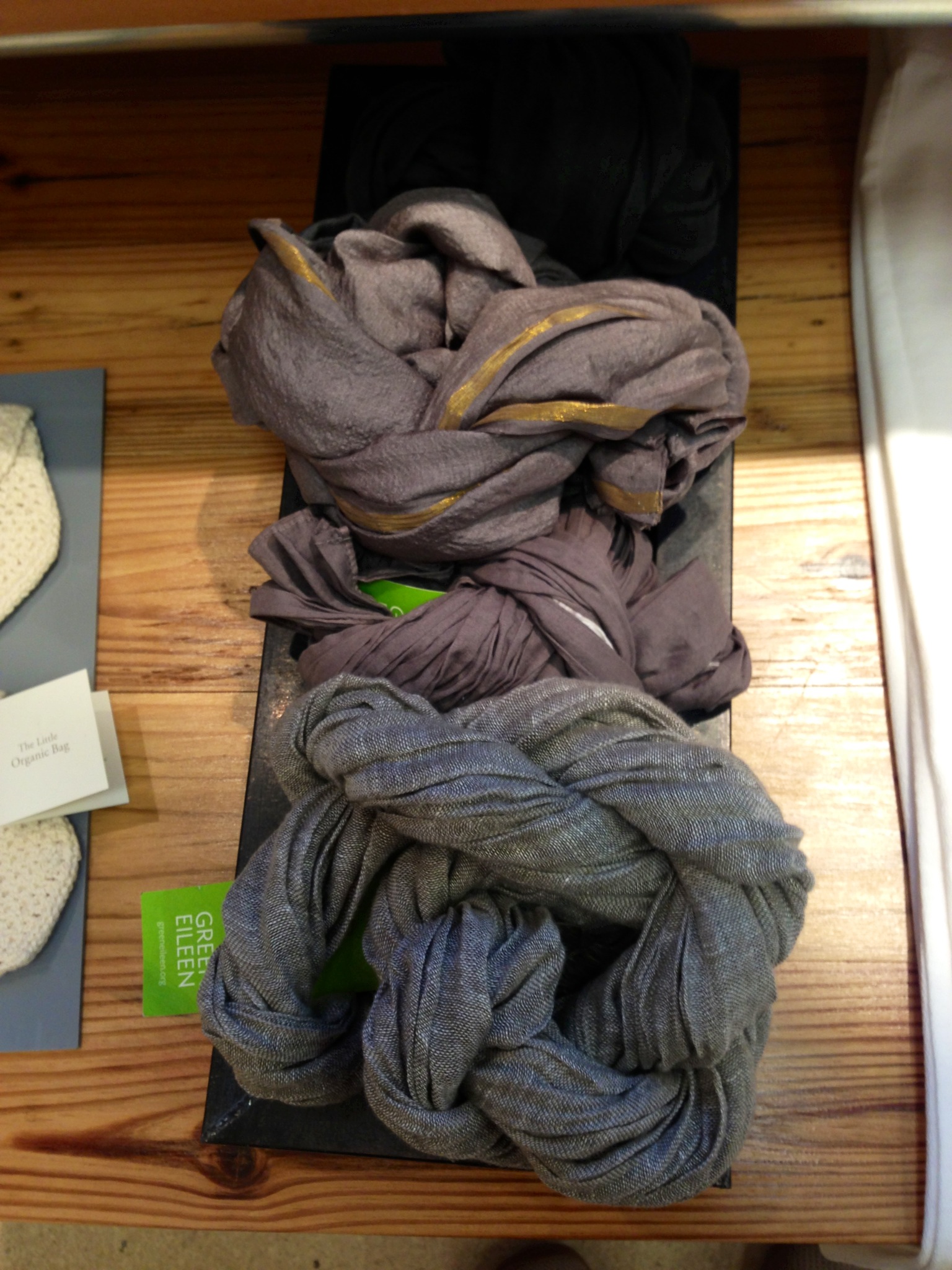
knots

Green Eileen accepts contributions of gently used Eileen Fisher clothing – say you lose some weight, or gain some weight, and you can no longer fit into that perfect pair of pajama-y palazzo pants — which it recycles and sells at an affordable price, with the proceeds going to causes for women and girls locally, nationally and around the world. The National Women’s History Museum,  the New York Women’s Foundation and Planned Parenthood, among many others.

The company makes good points, so I feel virtuous running my fingers over that sleek textured silk.

pink

The average American throws away 68 pounds of clothes per year. Over 4% of global landfills are filled with clothing and textiles. Almost 100% of used clothing is in fact recyclable.

Green Eileen has a pretty cool blog. The store is always sponsoring workshops about crazy things like recycling your wool, cashmere and silk into fabric jewelry. Maybe I’ll go to one sometime.

As night fell, inspired and on my way to insight, I wandered past the rack of beautiful castoffs, now reclaimed.

white clothing

In a simple white bag, I toted my virtuous purchase. Not the pink silk, but  a knee-skimming shift of white linen that will look serene and elegant on my daughter. Then I’ll take something out of my closet to give back to the store.

7 Comments

Filed under Culture, Fashion, History, Home, Jean Zimmerman, Publishing, Writers, Writing

The Incomplete Fetch

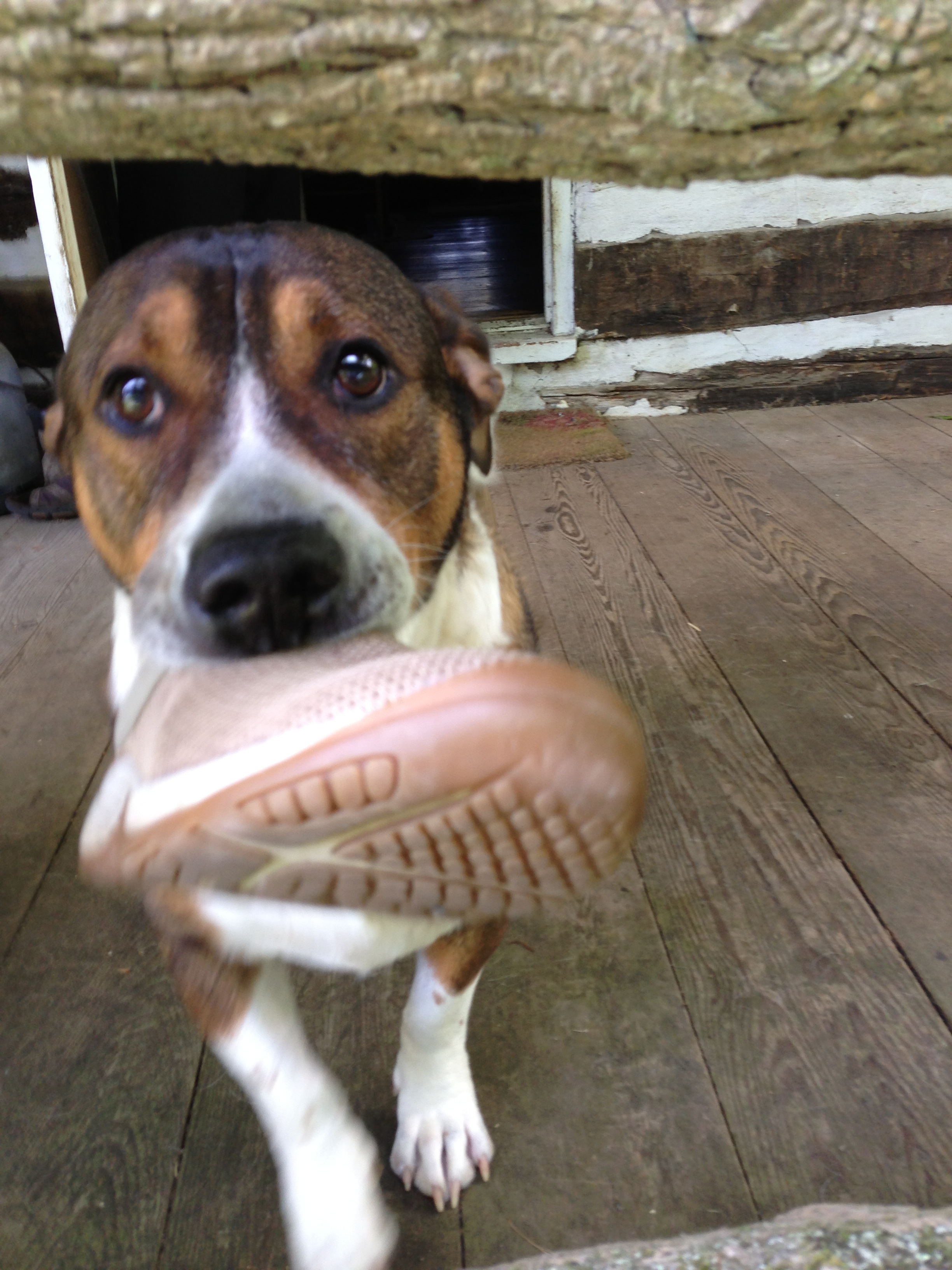
Gil and I have a conversation about Oliver, who has the entrenched habit of greeting whomever arrives at our front door with a shoe in his mouth.

Oliver fetching


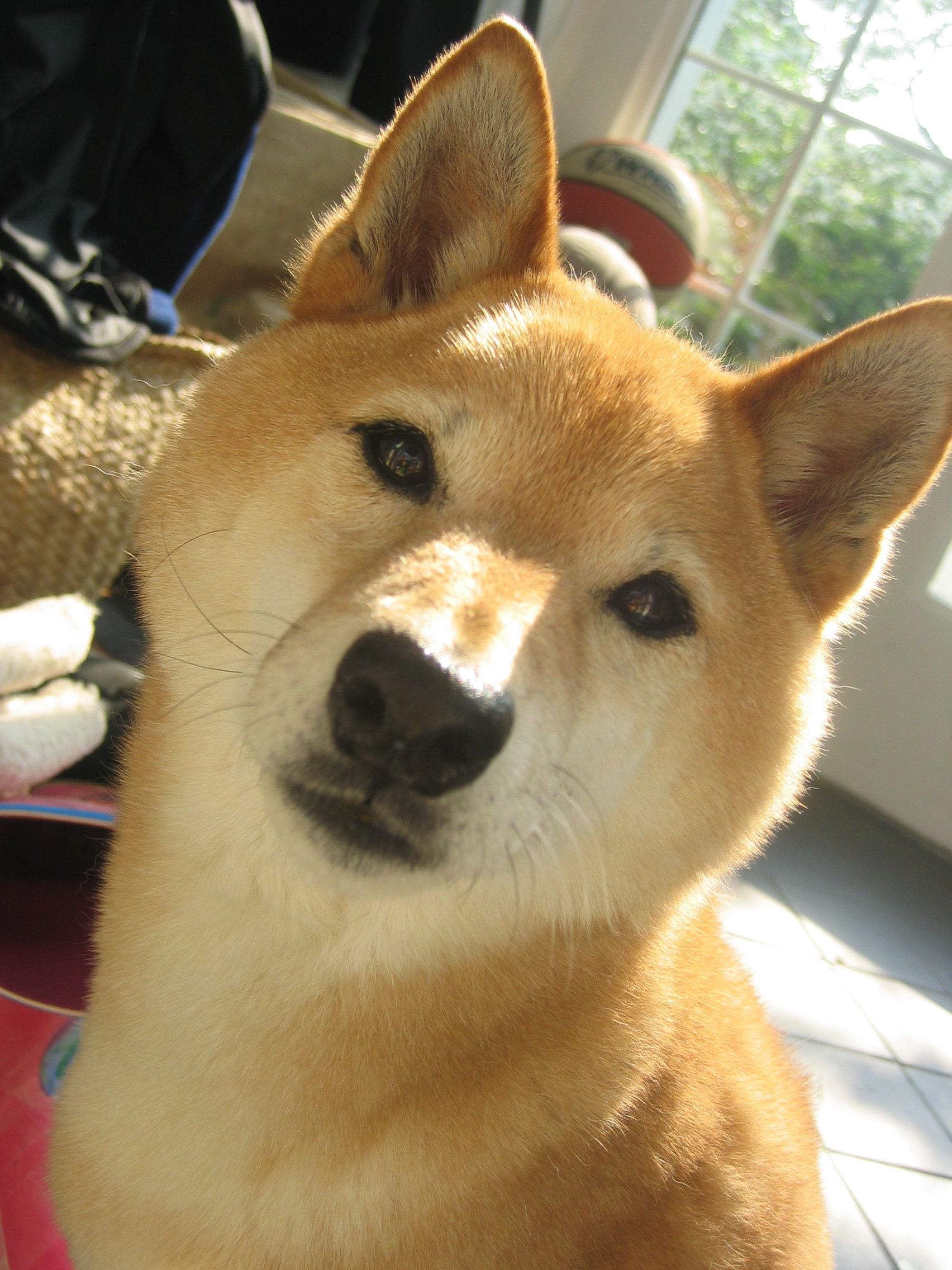
Gil: We used to have a purebred dog who looked like a movie star. Whenever we took her out, her adoring public would gather around to ooh and ahhh. This was before a lot of people had shiba inus.

Daisy


Me: She was beautiful, but she never brought us any shoes. In fact, everything had to be brought to her.

Gil: Our present beast, in contrast, has issues. Oliver is a mutt, an unlikely combination of a basset hound and a pit bull.

Maud:Ollie


Me: He was a rescue puppy, which excuses some of his defects. Clown-face is the best name we ever had for him.

Gil: He looks stumpy and low to the ground. He has a slight harelip. His breath is atrocious. If his adoring public ever gathered around him, he’d growl and bark at them. Oliver is an example of a creature that is difficult to love.

oliver about to copy

But love him we do, with a passion. I sometimes think this is a gift he gives us, challenging us to love when loving is sometimes not that easy.

Me: The more I see of men, the more I like my dog. So said Pascal. I think that Oliver’s incomplete fetch at the door — incomplete both because you don’t start the action by throwing to him, and because he won’t drop the shoe at your feet — is perfection itself.

ollie shoe out the door


Gil: We have taken to wagering what kind of footwear he will greet us with: a sandal, a boot, a clog. His present-giving never fails to cheer us.

Me: You have to admire the spirit of a dog, no matter show stupid it may see sometimes. Oliver performs the same act over and over again just as eagerly.  Sometimes with a sock, if a shoe’s inconvenient.

Ollie nose sockIf we leave the house for half an hour he brings a shoe. If we then go out for fifteen minutes, when we return he will offer the same prize, dipping his head and smiling through the gift. Devoted, submissive, jiving and shucking.

ollie shoeWhat a good boy am I. An open heart. It’s as if he’s saying, Whatever else I am, I am this flawlessly faithful dog too.

Gil: Is loving more rewarding when it’s difficult? It puts me in mind of a line from a sad poem by John Engels. Precisely to the degree that you have loved something: a house, a woman, a bird, this tree, anything at all, you are punished by time.

Me: We humans should all bring the shoe to the door with the same fervor Oliver does. With the same open heart. What do we get in return? If we’re lucky, the privilege of rolling on our backs in the dewy grass, scratching that perpetual itch.

Oliver rolling


6 Comments

Filed under Culture, Dogs, Home, Jean Zimmerman, Nature, Poetry, Writers

Links in the Chain

A handful of links for a rainy day.

A beautiful look at hand paintings by Moscow-based artist and poet Svetlana Kolosova.

surrealfairytalepalmpaintingsbysvetlanakolosova6

Info about the Biblewalk and Living Bible Museum in Mansfield, Ohio.

OHMANbible12_jobJob appears real!

Amazing self-portraits by writers. Henry Miller drew his in 1946.

4b-millerselfportrait


The story of how the Kindle came to be, from an insider’s point of view.

An article on a blog about the history of makeup that discusses whether cosmetics of the past poisoned the women who wore them with ingredients like lead and mercury.

Bildnis-von-Elizabeth-Gunning-Herzogin-von-Argyll-von-Allan-Ramsay-31966


Ten ultra-secluded underground locations, for those times when you’ve disclosed government secrets and need a private place to crash.

And finally, three Japanese hotels that have been in business for a thousand years.

tl-inset_webThis one, Nisiyama Onsen Keiunkan, was built around a hot spring that supposedly has curing powers. Maybe it cured women with makeup-induced illnesses.


3 Comments

Filed under Art, Culture, Fashion, History, Home, Jean Zimmerman, Writers, Writing

The Highest Bidder

“There have been horror films set in storage facilities,” says Gil.

“I can only imagine,” says Maud.

Gil likes to run the cart through to our storage locker, especially if he’s got Maud for a passenger.

gil running

We’ve kept about half our belongings in the deep freeze since moving to the Cabin.

gil:maud

Too. Much. Stuff.

“Every increased possession loads us with new weariness,” said John Ruskin. What did John Ruskin know about it? Between the English countryside and Mayfair, he had plenty of space to stash his private editions and his watercolors.

gil:stuff

Will we ever find Maud’s backpack and sleeping pad so she’ll be equipped for her next adventure? She’s going to New Mexico to conduct research for her senior thesis, on descansos, the elaborate roadside shrines that mark auto fatalities. In New Mexico they’re very grand and very sad.

In A&E’s “Storage Wars,” people bid on the contents of repossessed storage lockers after looking for ten minutes at just the front of the container. Bidders get excited and spend a lot on what turns out to be junk. Our locker wouldn’t inspire much action.

Television also brings us a scene in “Breaking Bad” where Walter White opens a typically bland looking locker to find his wife has used it to hide an enormous brick of cash, probably 4′ by 10′ by 10′. Only thing about it is they can’t spend this treasure or he’ll go to jail. For a long time. Walt asks how much is there and Skyler says, I have no idea.

You could say that about the number of books stored in our cage.

“Is there anything we put away in storage that you miss having?” I ask Maud.

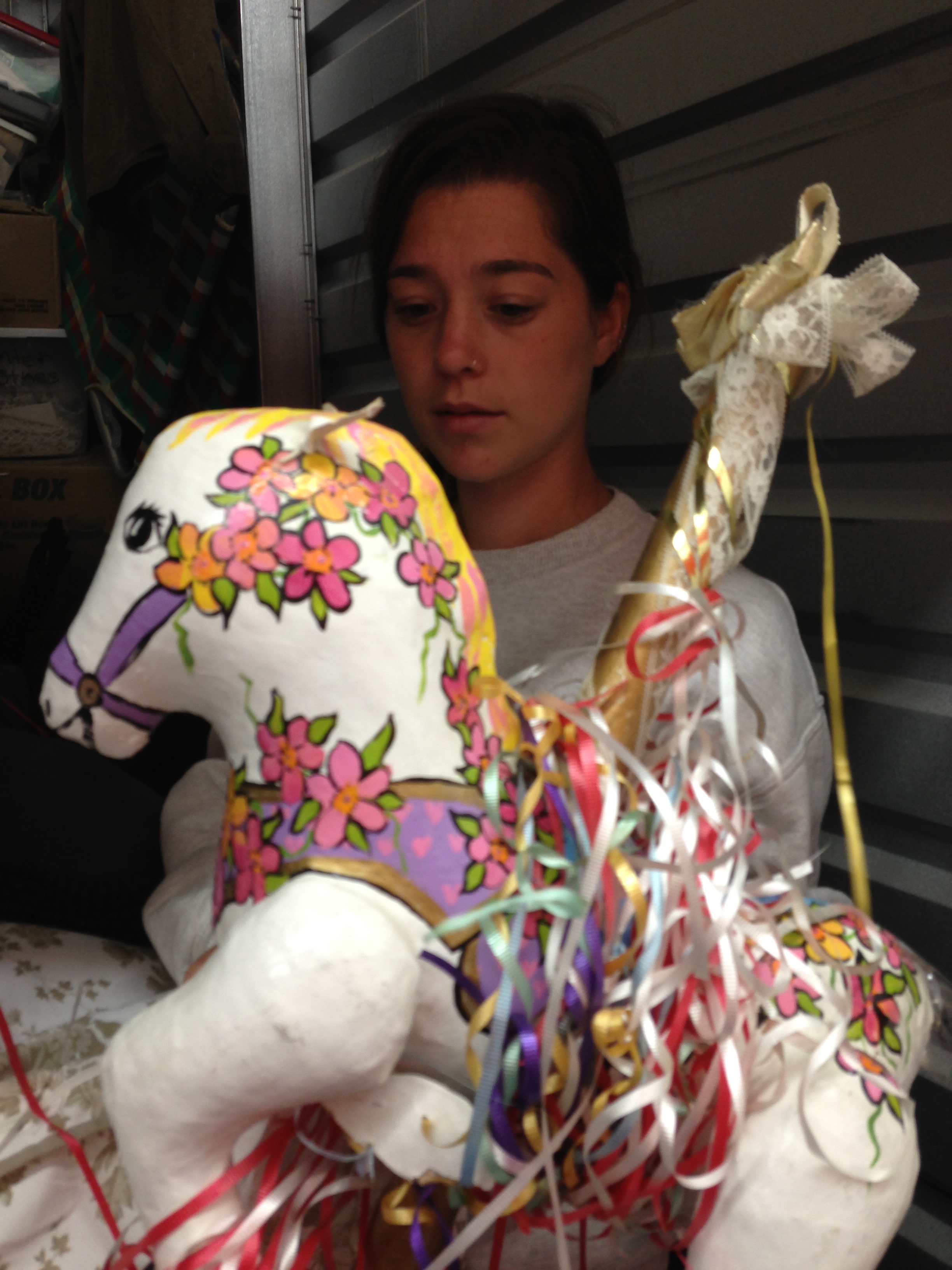
“My birthday piñata,” she says. We had a “nonviolent” piñata commissioned for Maud’s 5th birthday, its papier mache in the shape of a carousel horse. There were ribbons for the little tykes to pull to release the candy rather than bashing it with sticks. The horse had a breastplate with Maud’s name on it. We knew it was in storage someplace with its tail broken off, the tail floating  someplace in storage too.

“Is there anything you would want out of here?” I ask Gil.

“One thing I desperately want to have right now,” he said, “but won’t be able to find, is the picture of my mother and my father in their 20’s. I want to display it at my mom’s memorial service. But it’s lost in there.” That picture proved to 14-year-old Gil that his parents were young once, his dad holding a pipe and his mom looking devilish.

“Maud, what do you think is in all those boxes?”

maud's back

“Books, clothing, photos. Dead bodies.”

Sure, there have been evil deeds in storage lockers. We saw a thriller once in which a serial killer kept the clothing trophies of his victims in a locker. And in Silence of the Lambs Jodie Foster enters one to find a head in a jar.

But we find good things. Better than good. Softball gear, from Maud’s high school varsity team. Tents. We went to North-South Lake, remember that, our fragrant late night campfires? A wedding dress, still lovely in its ever-browning box. Copies of books we wrote, with passion. Gently used snorkeling gear. Let’s go, let’s go away somewhere warm and sandy sometime!

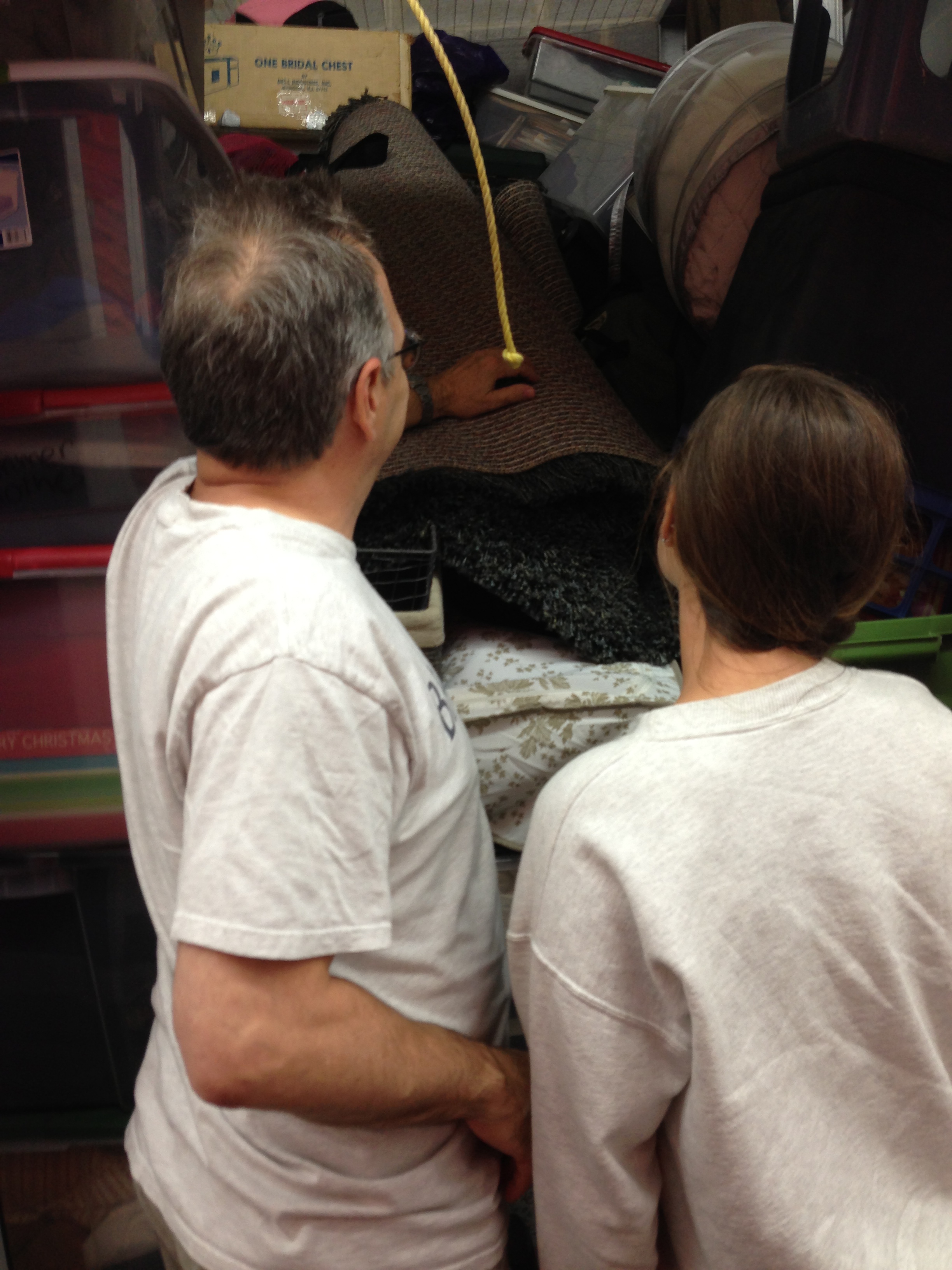
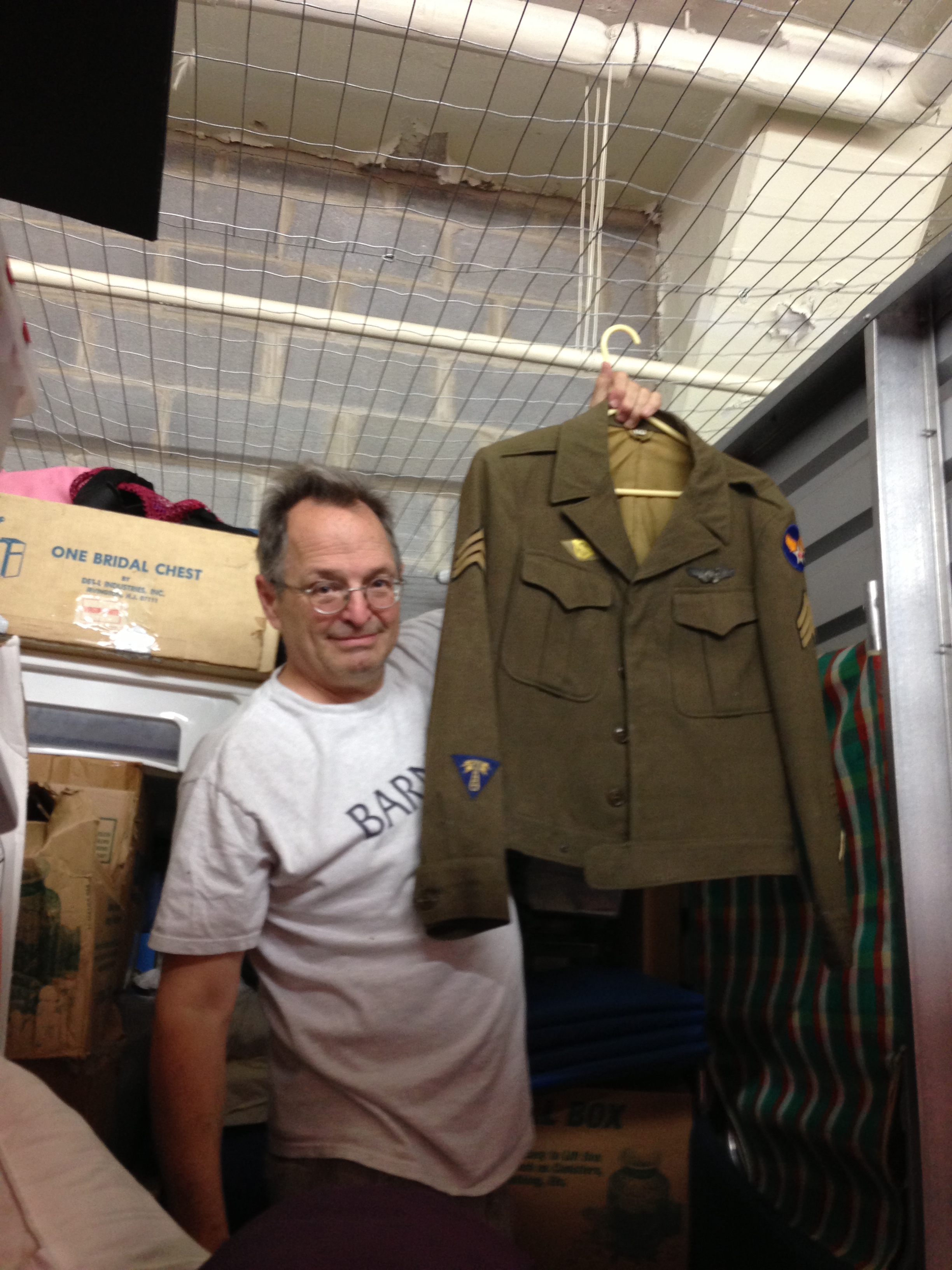
Gil finds the army jacket of Acton, his father.

acton's jacket

Maud finds her carousel horse.

maud:horse

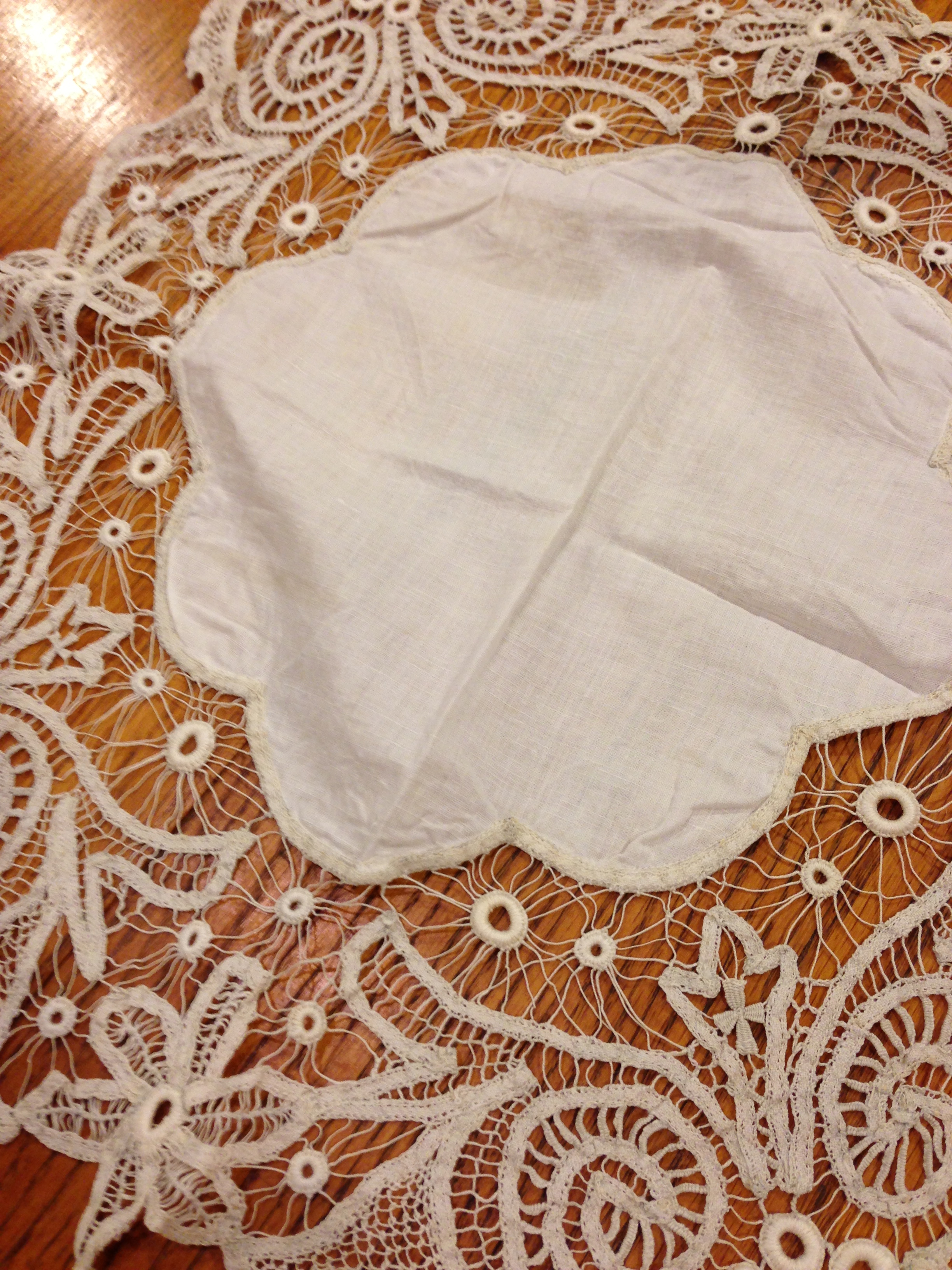
I lift down something precious, the lacework made by my Tennessee matriarchs. “Really?” says Gil. Our house is so small. For some reason I need this work by me, from the deep freeze to my warm house.

lace from storage

We have a conversation. “How much of this stuff would you remember if it all disappeared one day?” said Gil. “How much of it would you really miss.”

red

“All of it,” I say. “I’d remember it all.”

elevator

6 Comments

Filed under Art, Culture, Fashion, Film, Home, Jean Zimmerman, Publishing

Prayers and Limits

Rainy day rush hour on 9A, the four-lane that runs through Manhattan and north past the Cabin. Traffic has us crawling. But the radio is loud, with Phosphorescent singing Ride On/Right On.

phosphorescent

E-Z lyrics:

Let’s go for a ride, hey you turn me right on


Let’s get on the bike, hey you turn me right on


Ain’t nothing to hide and hey you turn me right on


The city at night, hey she turn me right on

Phosphorescent’s the moniker for an Alabama-to-Brooklyn boy named Matthew Houck (he previously went by the nom de guerre Fillup Shack) and he has out a new album, perfect for rainy day traffic jam listening.

I’m approaching that long, weedy section of highway, bordered by a sluggish streambed, where ordinarily the cars sail along briskly. There’s a sign along here someplace, planted out here near the road by someone who remains invisible. It’s plain plywood, painted white with black Gothic lettering and a simple legend: GOD ANSWERS PRAYERS. I’ve passed it hundreds of times, but I’ve never been able to get a picture of it because traffic moves so fast and there’s no shoulder to stop on. The sign just blinks by.

Now, God and I are not ordinarily on the most intimate terms. But I love this sign that has greeted me on every drive home and in many frames of mind, including the most dispirited. GOD ANSWERS PRAYERS. Okay, whatever you say. And I start to wonder about other manifestations of the same phrase.

gap rock

They abound, on hats as well as rocks.

gap hat

In rhinestones.

gap rhinestones

Is that what GAP means, as in The Gap? Those nice pants I bought last Fall? Never knew.

Zowie. Turn the radio up. Mr. David Bowie has come out with a new body of work, including the exciting song The Next Daythe video for which has been condemned by the Catholic Church as indecent. Well, it does show Bowie attired as Christ alongside Gary Oldman as a debauched priest (I thought Oldman was already a debauched priest) and Marion Cotillard as a beautiful prostitute with stigmata wounds.

david.bowie_

Bowie hadn’t put out a record in a decade, I guess he felt pent up.

my-prayers-have-been-answered

Ho hum, the traffic does crawl. Gil was in a jam yesterday and God answered his prayers with the Dan Hicks song on his shuffle, Traffic Jam.

Dan Hicks

Prayers, they don’t always work so good. I favor the sentiment of Oliver Wendell Holmes: We have learned that whether we accept from Fortune a spade, and look downward and dig, or from Aspiration an axe and rope to scale the ice, the one and only success which is ours to command is to bring to our work a mighty heart.

As true today as it was when he said it in 1884. It doesn’t fit on a plywood sign, unfortunately.

You can get a daily “meditation” like the Holmes quote in your inbox from All Souls, a church that is almost not a church it is so open-minded – “deeds, not creeds” is its motto. To get you questioning things like prayer.

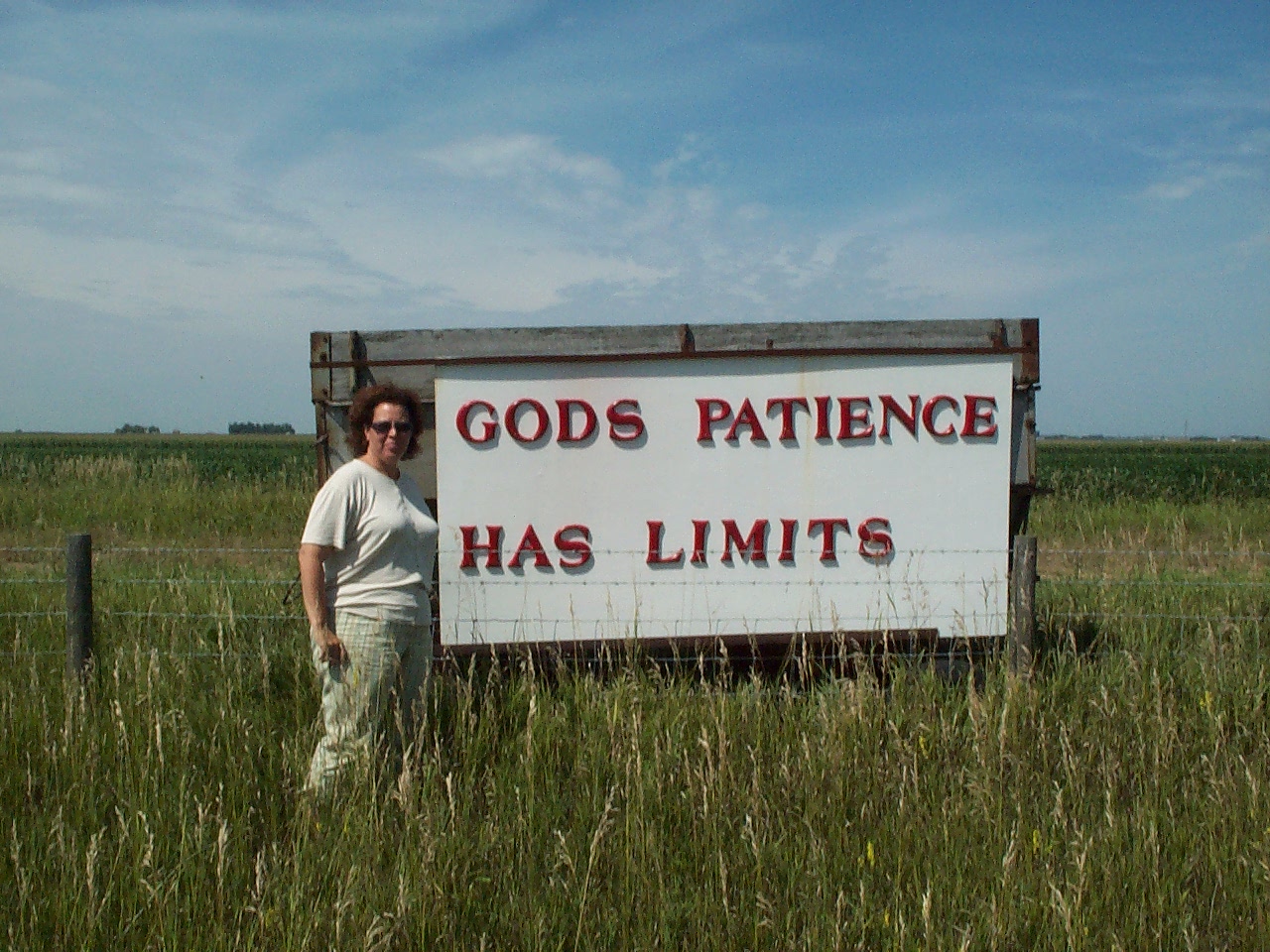
That sign on 9A, I like it almost as much as the one I saw by the side of a Nebraska highway about ten years ago. We wanted to bring it home with us but couldn’t figure out a way to tie it on top of the car.

god's patience has limits

A God with limits? Isn’t that heretical? For some reason I like the in-your-face Nebraska farm wife who stuck it along the interstate. She was probably shaking her fist at us as we drove away.

Whooosh—there goes GOD ANSWERS PRAYERS. Funny, I was just praying I would see that sign come around.

3 Comments

Filed under Culture, History, Home, Jean Zimmerman, Music, Photography, Writers, Writing

Out of Africa

Maud is back from Malawi.

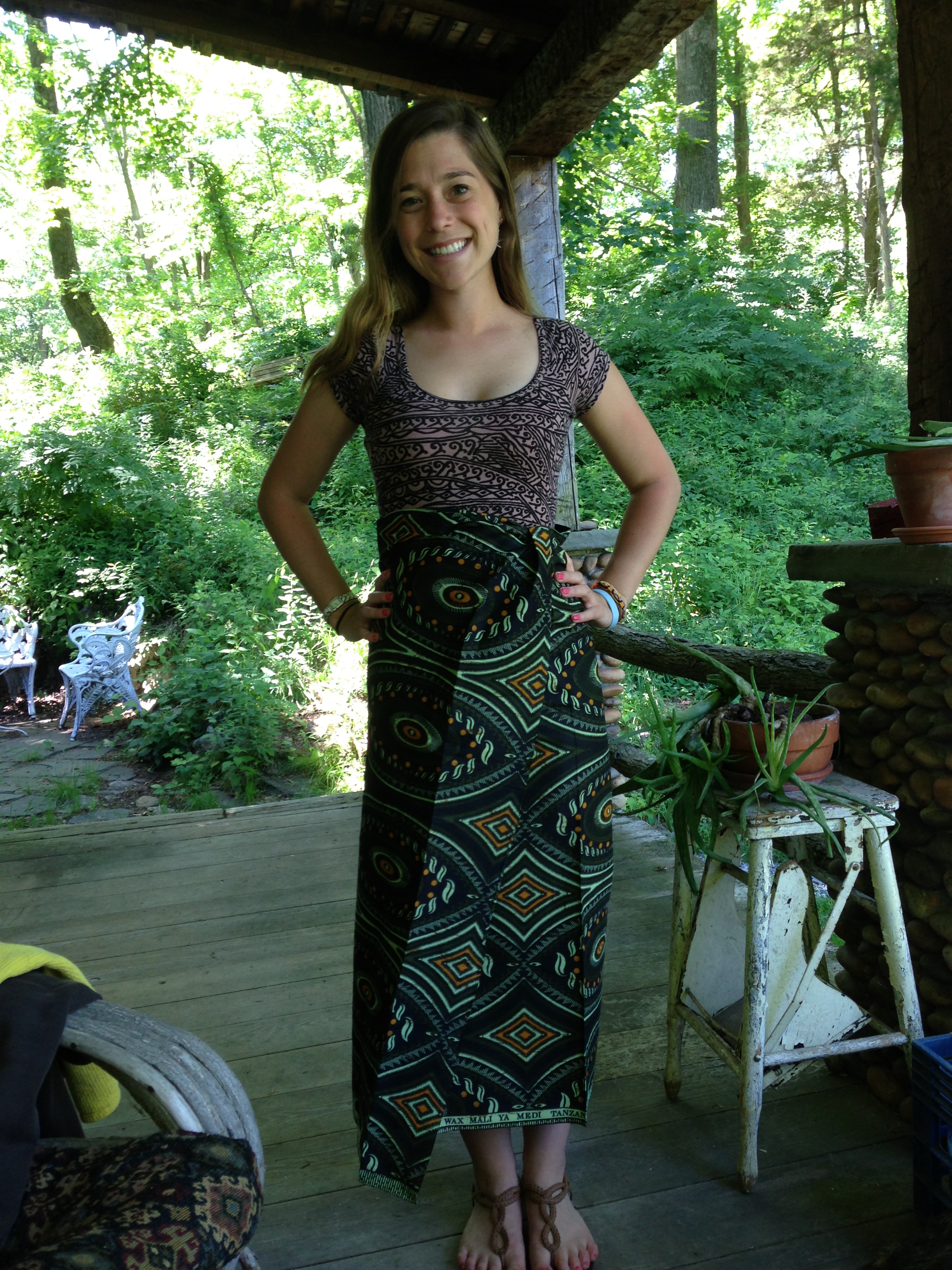
back from malawi

Wearing a chichinge, a wrap skirt of block-printed African cloth. Her resilient muscles are only a little sore, and she seems impervious to jet lag after 20  hours in the air.

Maud and her group from buildOn, working with hundreds of village men, laid a foundation and raised a quarter of the walls for a new school block that will allow the town of Mpandakila to educate its 5th and 6th graders. So that after 4th grade the kids will not drop out rather than hike the six kilometers to the nearest school.

Maud ate nsima — corn porridge — pumpkin greens and soupy beans for 12 days, sleeping on a bamboo mat in a very special homestead. Her hosts were one of the chiefs of the community and his wife and their five precocious daughters. Also grandma, the babies of the two eldest daughters, and a two-day-old goat that cried for its mom all night. 

A hen slept in the room with Maud and her friend Claire, laying its eggs while they were sleeping.  The chief offered the young women a chicken as they left, which they took and sold to the bus driver who took them six hours back to Lilongue. They fed it ground nuts (peanuts), which they picked fresh from the vine every morning.

Dancing was a big thing in the village, to the pounding of drums and the ululations of the older women. The whole village loved learning the Macarena.

What Maud loved learning about the most was how to carry water atop her head — and dirt, and bricks. A woven circle of straw helped her balance. 

water carrier

It felt so far away, but at the same time there was a human familiarity about it all — a smile as you walked by someone, the  bossiness of the sisters. Maud didn’t come away with any answers about the best way to go about helping other countries, without imposing your will or encouraging dependency. What matters is asking the questions, and coming away with more.

Zikomo kwambiri means thank you very much in Chichewa.

6 Comments

Filed under Cooking, Culture, Fashion, History, Home, Jean Zimmerman, Music

Wildflowers and a Verse

A mile-long park runs along the Hudson River bank at Croton-on-Hudson, New York, where you can walk the path as dusk descends and see the sun set hazily, just for you.

sunset hudson

The town took an underused industrial area and rehabbed it about ten years ago with the help of the Open Space Institute so that everyone who wants to came come down and praise the beauty of the wide, placid Hudson. Well, not always placid. It seems every small dog in Westchester County is being trotted along at that hour, yapping and sniffing.

The smell of flowers pervades the air.

wild white roses

Along the railroad tracks you’ll find the multiflora rose, which came to the U.S. in the late 19th century as rootstock for ornamental varieties and was then pressed into use as a “living fence” to corral livestock. Its lovely petals float on the air for just about two weeks every June, then it reverts to its less-beautiful identity as a sticker-bush. Other wild roses bloom here too, some with better manners.

wild pink rose

Almost as fragrant as the white ones when you stick your nose into a bloom. And honeysuckle – when was the last time you sucked the fragrant dew from one of its blossoms? Put it on your to-do list for today.

honeysuckle 2

Vivid spires come up, having materialized after our rains came, finally, and jump started all the plants.

purple spires

And the wild iris, down by the shore, its proud head, its feet in the mud.

iris

The great poet Louise Gluck writes in a poem named for a flower, “Snowdrops,” in her Pulitzer-winning collection The Wild Iris:

I did not expect to survive,

earth suppressing me. I didn’t expect

to waken again, to feel

in damp earth my body

able to respond again, remembering

after so long how to open again

in the cold light

of earliest spring—


afraid, yes, but among you again

crying yes risk joy


in the raw wind of the new world.

2 Comments

Filed under Home, Nature, Photography, Poetry, Writers, Writing

Red Is the Color

We were ushered off to our strawberry jaunt by a visitor from prehistory.

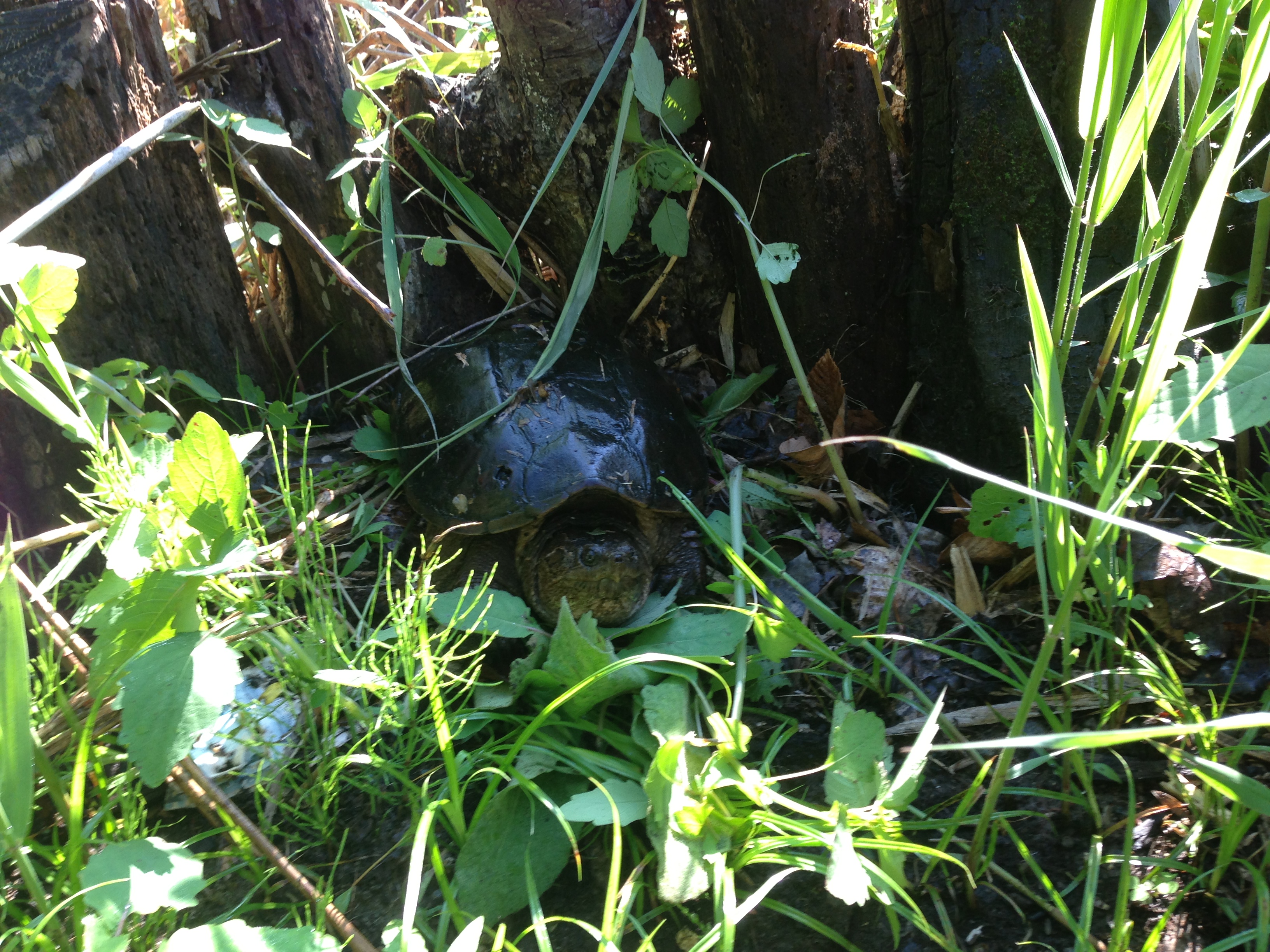
snapping turtle

A snapping turtle backed herself into a corner of the the vegetable garden when I startled her. She scowled, bit the air and elongated her snake-like neck when her ejection was proposed with a shovel. Snappers evolved over 40 million years ago, so she deserves our careful respect.

It’s strawberry season. But it’s early.

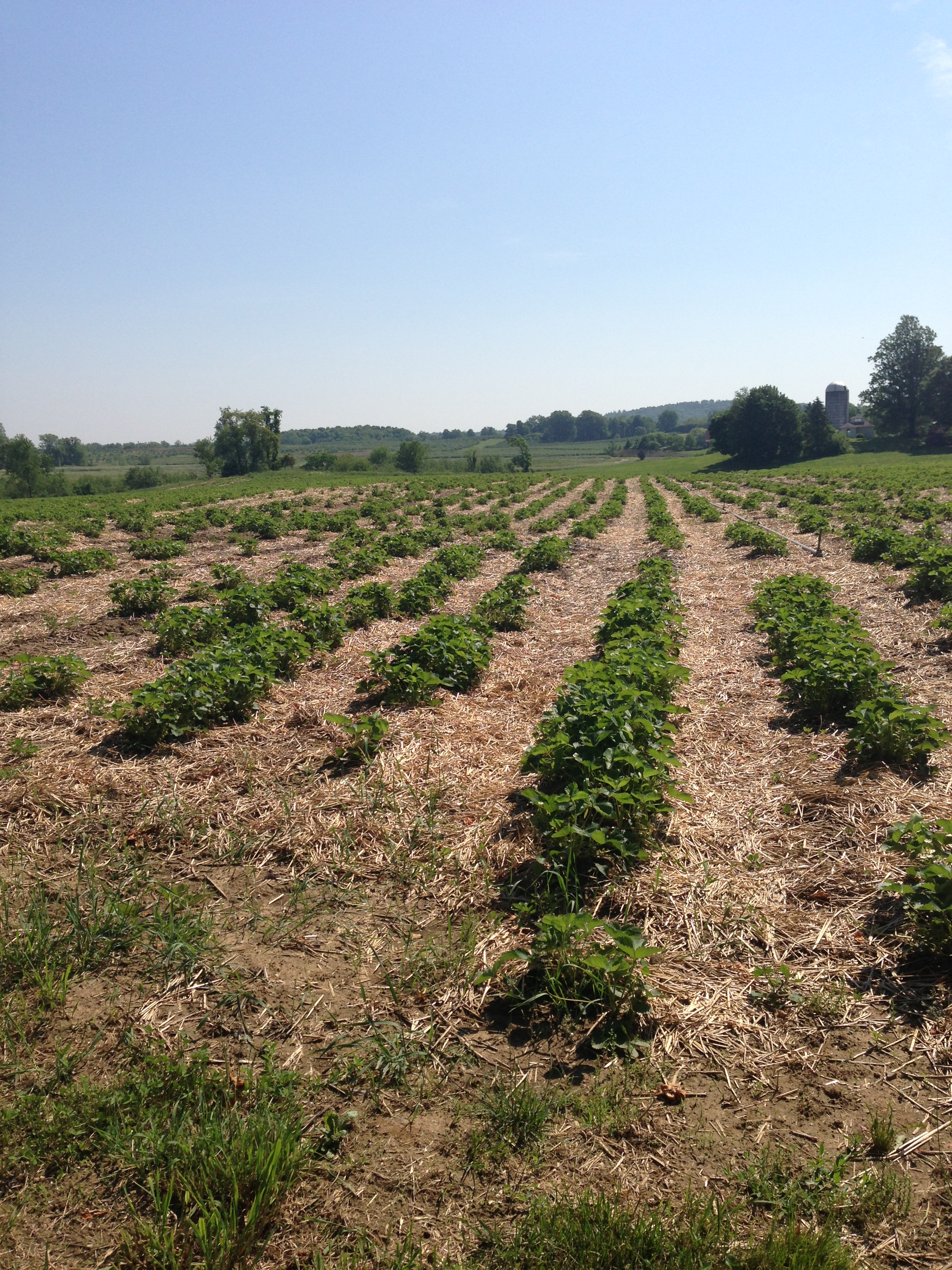
strawberry field

Still, we wanted to pick.

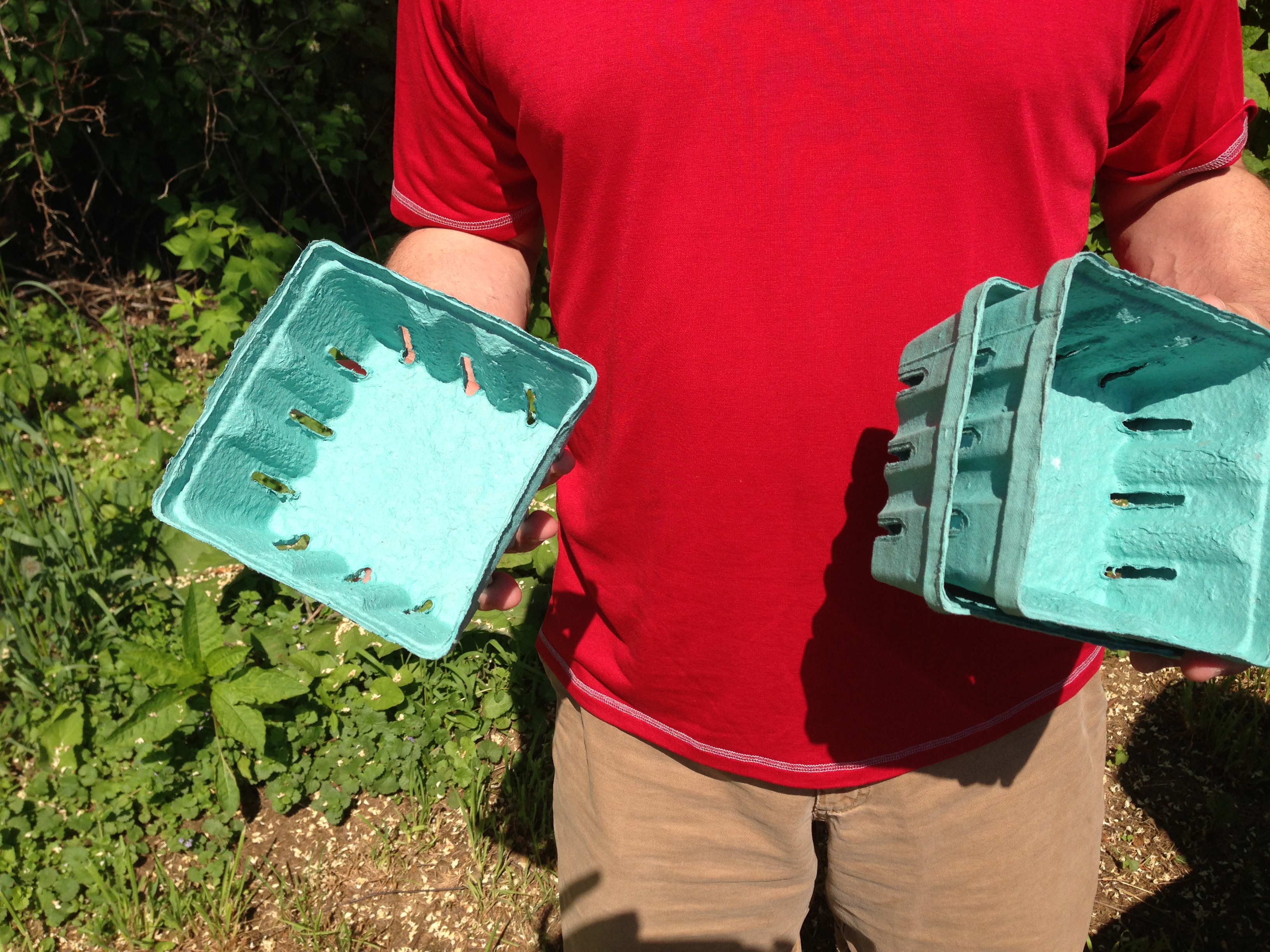
Gil boxes empty

One of my mother’s fondest memories of strawberry picking as a kid is the bluebird she saw on a post, her first bluebird, as she rode into the field in the back of a pickup truck with her sister Sandra and her brother Jere.

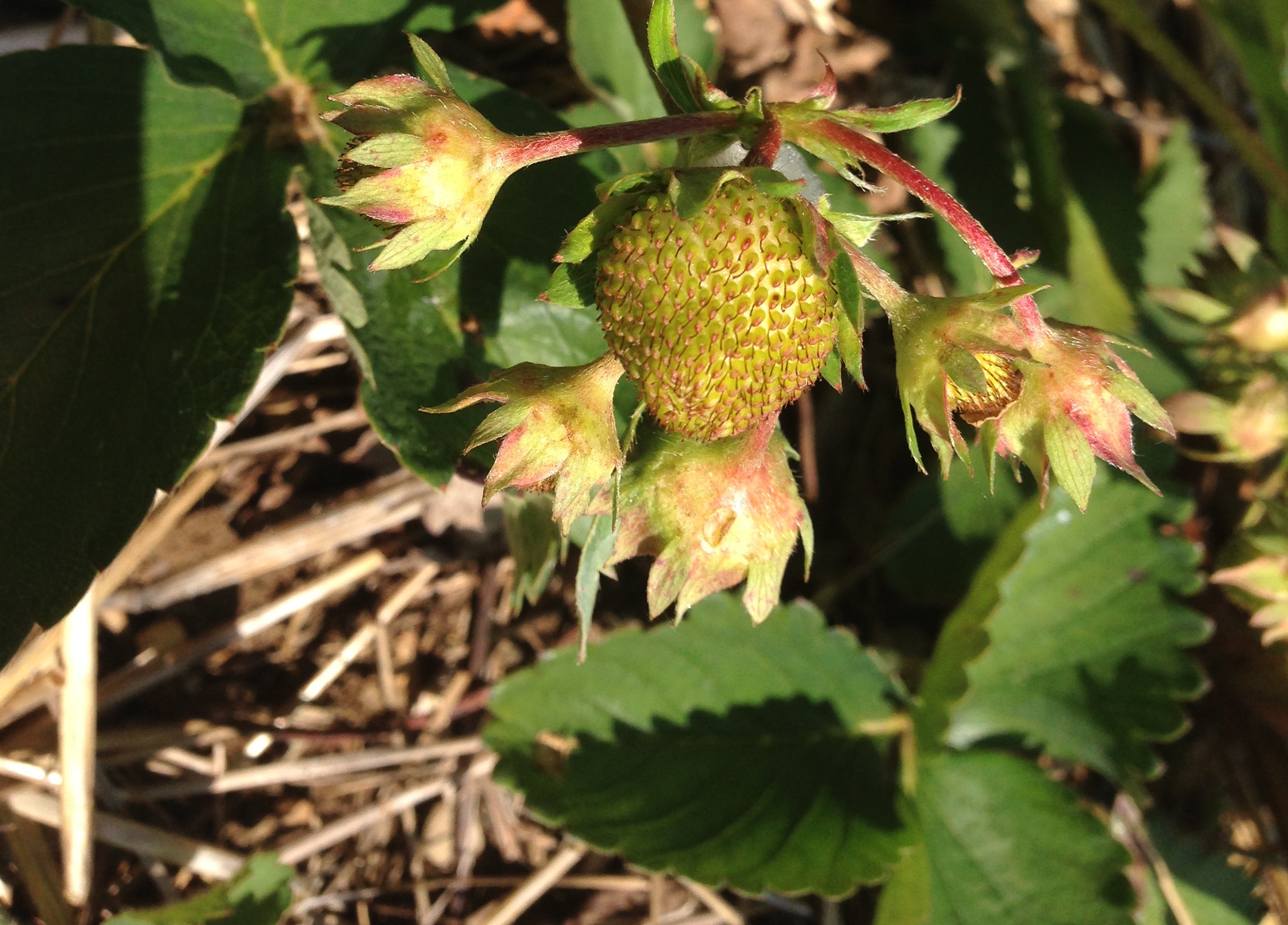
No bluebirds for us, or birds of any kind. The berries, clustered under their tents of leaves were largely unripe.

unripe strawberry

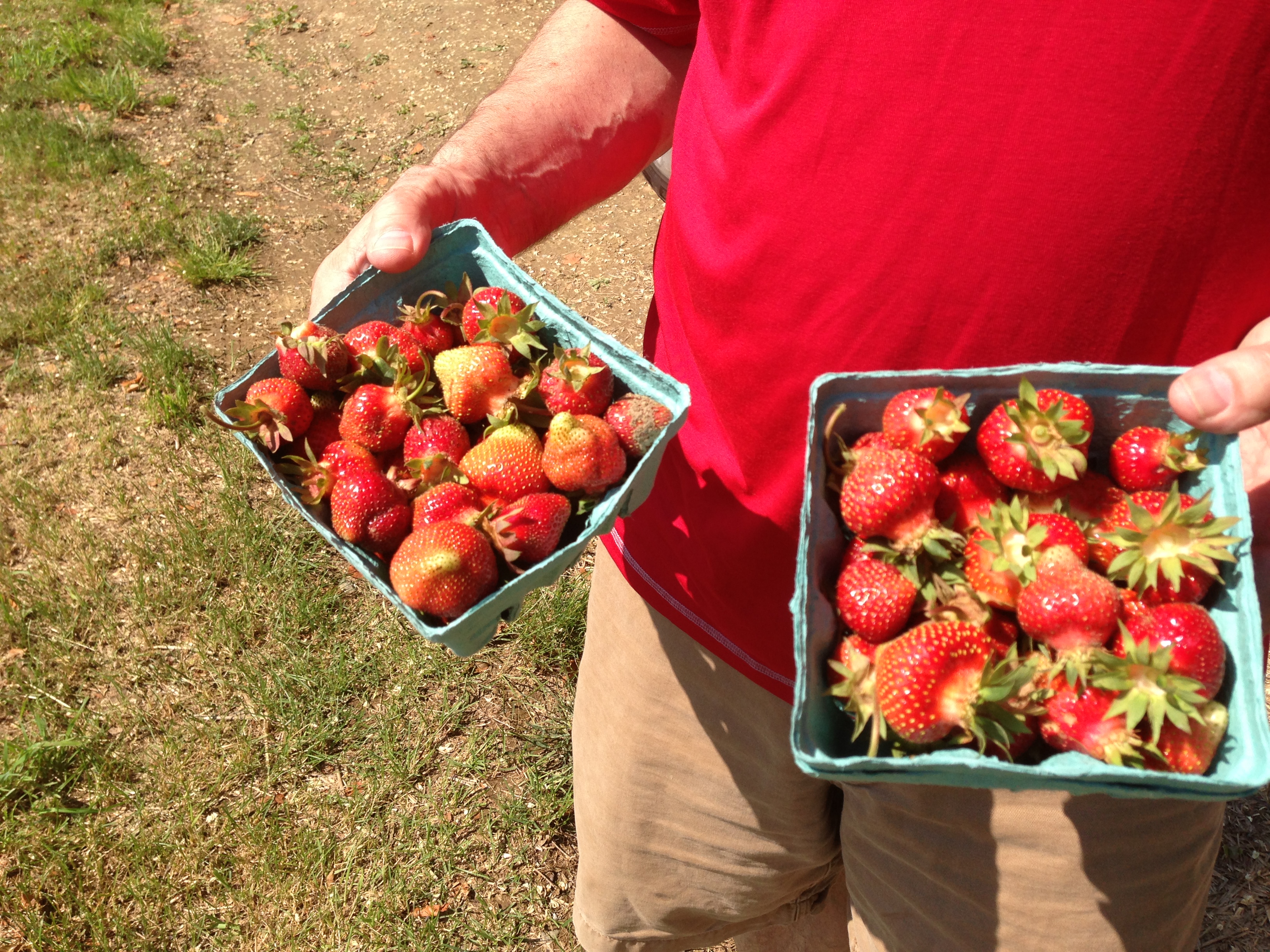
At Grieg Farm, in Red Hook, New York, we had a summer sky, hot blue with hazy clouds. And strawberries, it turned out when we looked, plenty enough for the two of us.

I remember eating strawberries when Gil proposed to me decades upon decades ago. He went into the restaurant’s men’s room and looked into the mirror, then came back to the table and dove in.

Gil boxes full

Ryan took our six bucks and explained that while the berries weren’t the prettiest, they were just as sweet as if they were perfectly red.

Redder (and pink) were the radishes at the farm stand.

radishes

One nurseryman told me that if you harvest the baby radishes with their leaves and saute them together, it results in a dish that is delicious. I have plenty of baby radishes in my garden – until the snapping turtle comes for them – and I’m going to try it.

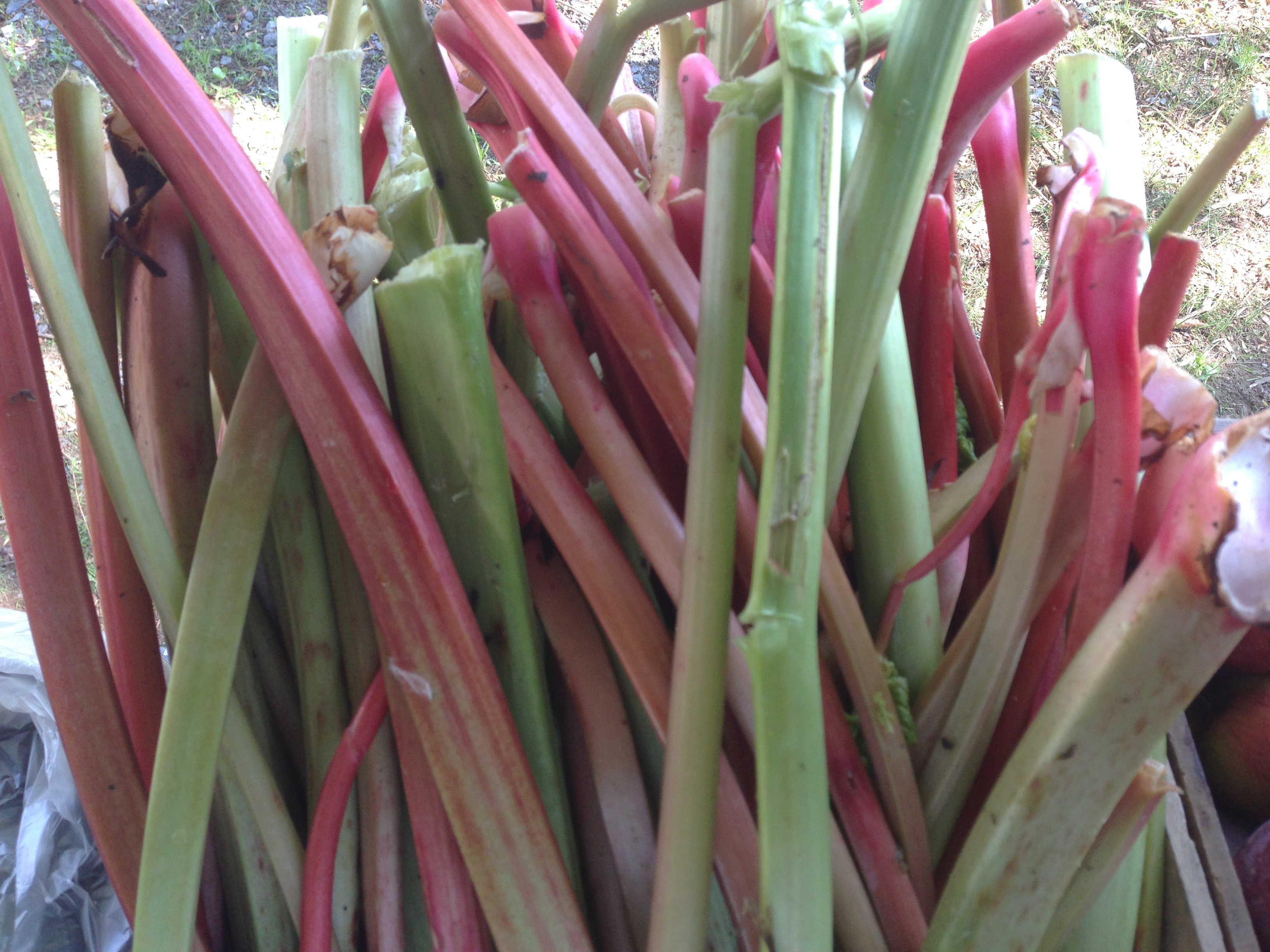
Red-green rhubarb, to go with my peppermint-striped strawberries.

rhubarb

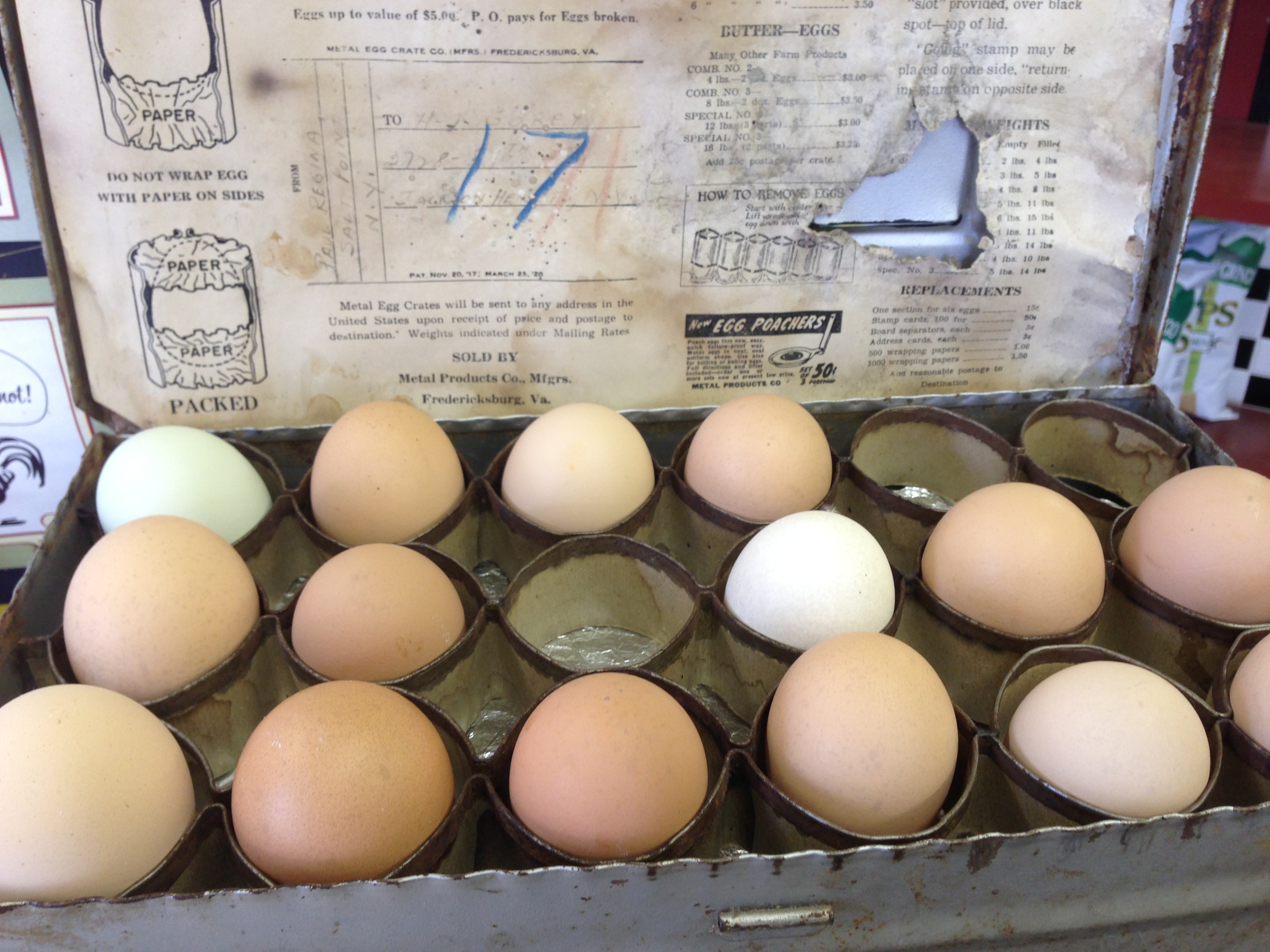
Maybe preceded by a meal of eggs so fresh their yolks puff up like small islands of saffron?

brown eggs

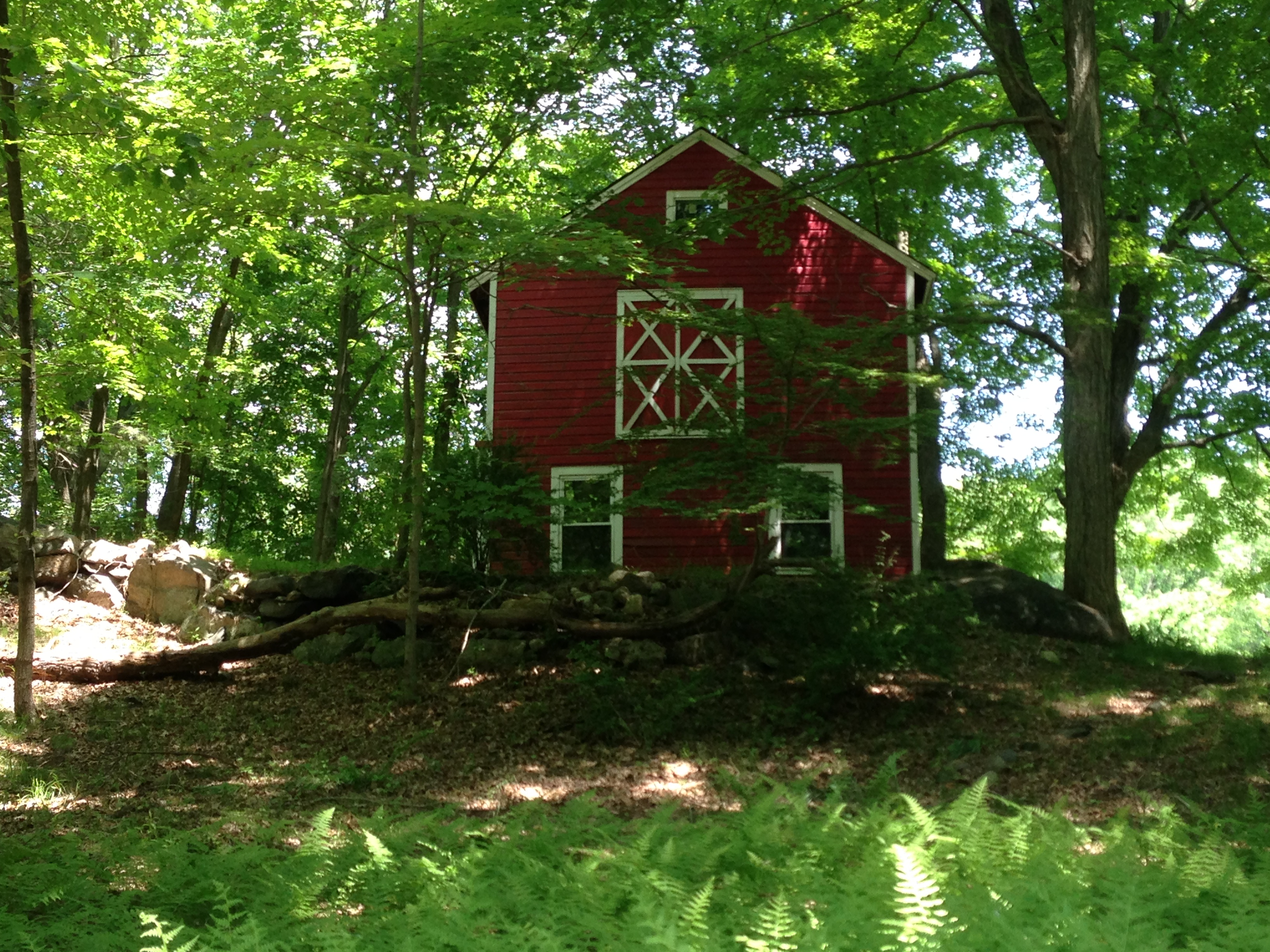
So the strawberries weren’t red. So what? The barns were.

red barn

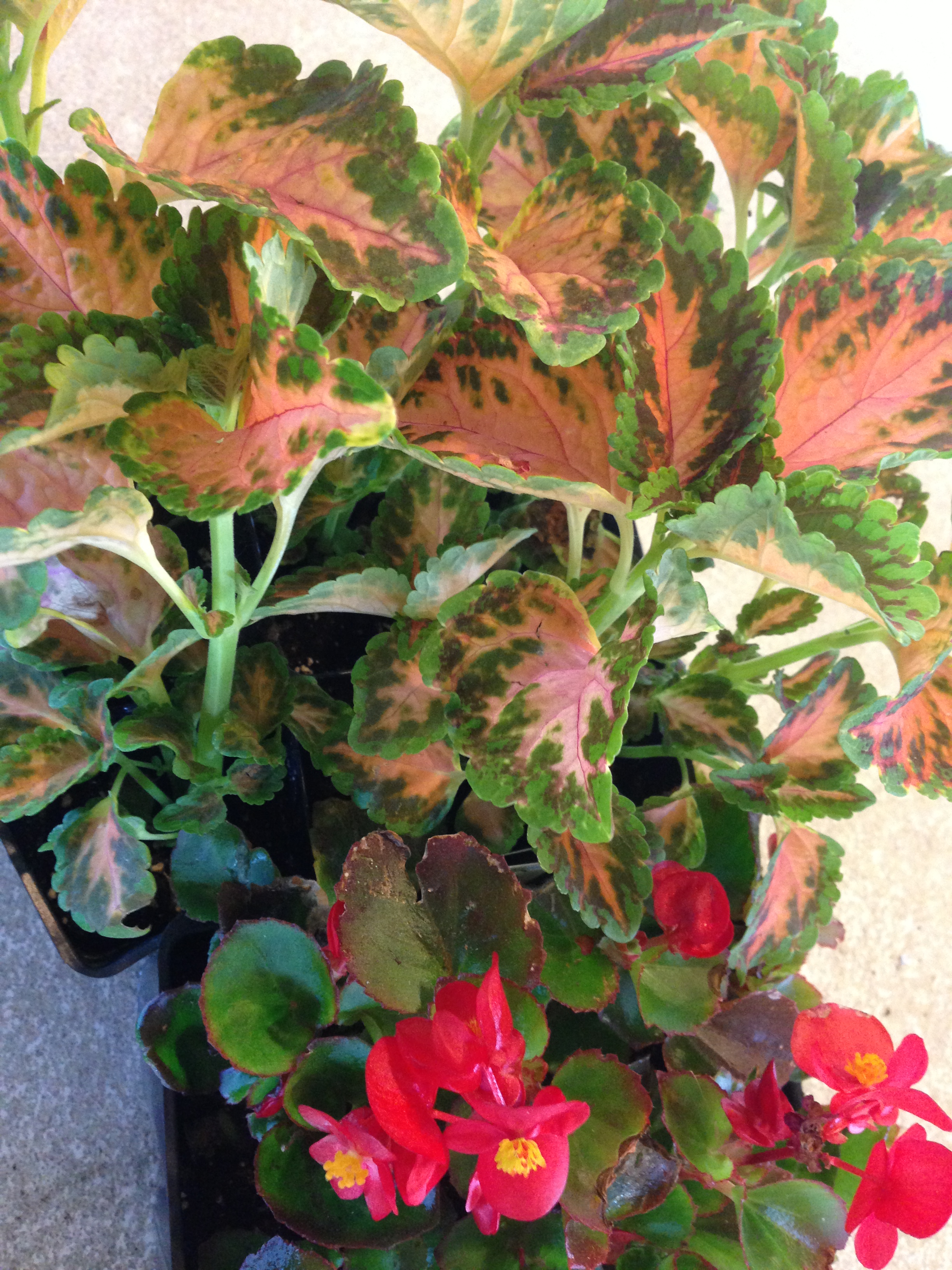
In the car, driving home with alacrity before my coleus plants wilted, Gil said, Do you know why so many barns are red?

coleus

I never thought about it.

Because of the chemical properties of dying stars, he said. One byproduct when stars decay is ferrous ochre. Ferrous ochre is plentiful on earth. And ferrous ochre is what makes paint red. So it’s the cheapest kind of paint.

Okay, I say.

Barns are big, he says. Farmers are cheap.

farmland

We have red barns because of the chemical properties of dying stars.

Strawberries are a different story.

Macerated Strawberries with Basil

[Macerate= to soften or decompose (food) by the action of a solvent.]

2 lb. fresh strawberries, rinsed, hulled, and sliced 1/8 to 1/4 inch thick (about 4 cups)

1 Tbs. granulated sugar

2 tsp. balsamic vinegar (alternate: 2 tsp. vanilla)

8 to 10 medium fresh basil leaves

In a large bowl, gently toss the strawberries with the sugar and vinegar. Let sit at room temperature until the strawberries have released their juices but are not yet mushy, about 30 minutes. (Don’t let the berries sit for more than 90 minutes, or they’ll start to collapse.)

Just before serving, stack the basil leaves on a cutting board and roll them vertically into a loose cigar shape. Using a sharp knife, very thinly slice across the roll to make a fine chiffonade of basil. Scatter with the basil to garnish.

2 Comments

Filed under Cooking, History, Home, Jean Zimmerman, Nature, Writers, Writing

Emily in the Garden

The heat feels good. All ninety-nine degrees of it.

The pole beans twist themselves around the bamboo supports, under the arcing sun.

pole beans

The pansies on the front porch of the Cabin salute.

pansies

Even Oliver likes to move his luxuriating form outdoors, having decided that sun-warmed gravel is a choice nap mat. Along the lines of ancient cultures whose people slept comfortably with their heads on carved blocks of wood or stone.

Oliver gravel prone

All the quiet and heat and a sense of the plants feverishly growing brings to mind the work and life of Emily Dickinson, she who was, according to one scholar, “known more widely as a gardener, perhaps, than as a poet” during her time. Dickinson conscientiously tended the flower garden at the Homestead in Amherst, Massachusettes, where she spent her whole life, assembling. a collection of pressed plants in a sixty-six page leather-bound book which contained 424 pressed flower specimens organized according to the Linnaean system.

Dickinson is usually thought of the way she appears in the iconic photo taken when she was about eighteen.

Emily_Dickinson_daguerreotype-e1346874482904

Recently another portrait materialized in an archive, with the poet on the left and her friend Kate Scott Turner on the right.

Emily Dickinson

She would have been well into her genius years, both in terms of writing and gardening.

The Homestead garden was famous in its time, at least among the neighbors. Dickinson’s niece, Martha Dickinson Bianchi, remembered “carpets of lily-of-the-valley and pansies, platoons of sweetpeas, hyacinths, enough in May to give all the bees of summer dyspepsia. There were ribbons of peony hedges and drifts of daffodils in season, marigolds to distraction—-a butterfly utopia.” Dickinson loved scented exotic flowers, writing that she “could inhabit the Spice Isles merely by crossing the dining room to the conservatory, where the plants hang in baskets.” She liked to send friends bunches of blooms with verses attached, but complained mildly that “they valued the posy more than the poetry.”

Dickinson went everywhere, apparently, with her brown Newfoundland Carlo, a gift from her father in the fall of 1849. “My shaggy ally” she called him in a letter.

A lovely animation gives the perfect flavor of the poem “I started early—took my dog.”

Emily was so mysterious, endlessly elliptical.

Presentiment is that long shadow on the lawn

Indicative that suns go down;

The notice to the startled grass

That darkness is about to pass.

Less than a dozen of Dickinson’s 1,800 poems were published in her lifetime. Among the rest were 40 pieced-together and hand-sewn books she had assembled in the years before her death.

Wild Nights

That’s the fascicle-bound manuscript page for the passionate, rhapsodic poem Wild Nights!:

Wild nights! Wild nights! 
Were I with thee, 
Wild nights should be 
Our luxury!

Futile the winds 
To a heart in port, 
Done with the compass, 
Done with the chart.

Rowing in Eden! 
Ah! the sea! 
Might I but moor 
To-night in thee!

In her final years Dickinson also wrote on scraps of paper, chocolate wrappers, the margins of books, and even envelopes she received in the mail. A book documenting these envelope poems is due out this coming October, to be titled Gorgeous Nothings. A related appreciation and performance can be enjoyed even before the book is published.

Emily

2 Comments

Filed under Dogs, Home, Jean Zimmerman, Nature, Poetry, Publishing, Writers, Writing

A Tale of Two Uncles

Most families have a service member in their past who died in an American war. Gil and I realized that we each had an uncle, one a brother to my mother, one a brother to his mother, who had earned a reputation among his descendants for valor. These, in a highly abbreviated form, are their stories.

Jere Brown Coats

Jere

As a rebellious young man in tiny, rural Greenfield, Tennessee, Jere always threatened to run off and join the Navy. He was smart, handsome and charismatic, the only son alongside three daughters, and his parents had other ideas for him. So he left Georgia Tech without notifying the folks, bound for Pensacola Naval Air Station, where he trained to fly off aircraft carriers. He dreamed of one day joining the Blue Angels.

In his last letter to his sister Betty, my mother, he apologized for not keeping in touch. He wrote that he was with “the first all missile squadron carrying Sparrow ‘3’s” and Sidewinders, flying the supersonic F3H ‘Demon.’” Stationed at NAS Oceana at Virginia Beach, he died in a flameout on takeoff in May 1957, with not enough altitude for a safe ejection. He was 23 years old.


Gilbert Calef “Sonny” Procter, Jr.

Gilbert Calef Sonny Procter

The eldest of three siblings, Sonny had the reputation in the family of being somewhat stern, with a mean golf swing. He introduced his younger brother to a lifelong passion for golf. We don’t know much more than that he died on the operating table in an Army hospital in Italy during the Second World War. The procedure was supposed to be routine, the death was unexpected and it serves to highlight the fact that not all war casualties come in combat.

7 Comments

Filed under History, Home, Jean Zimmerman