Tag Archives: Trees

The grand dame

that is the Grand Concourse in the Bronx has certainly seen better days.
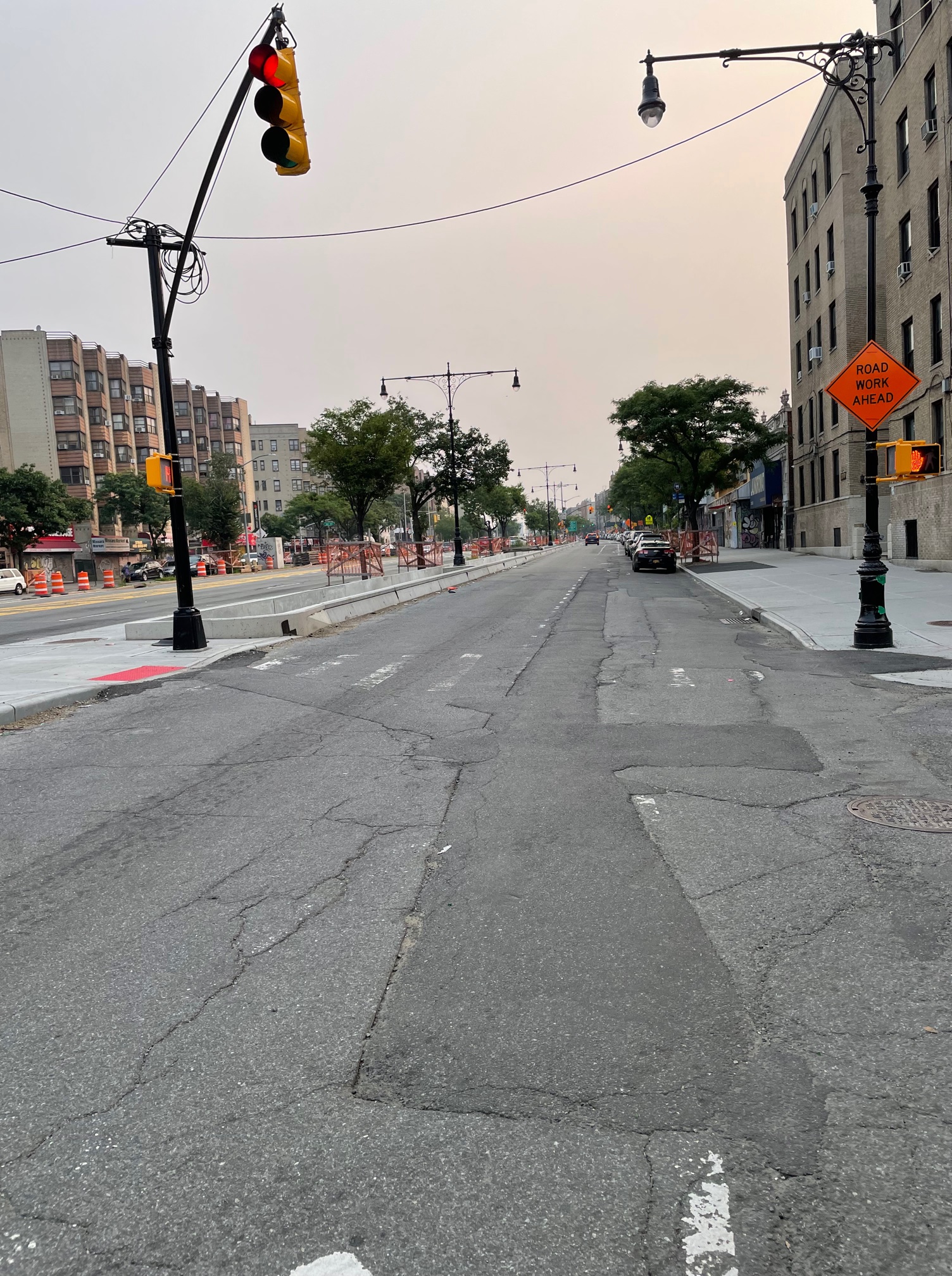
But there is still an awful lot of life there. Crews are installing new sidewalks and new medians separating the wide boulevards (2 lanes and a service road in each direction). They need a tree inspector to make sure no harm comes to the gingkos and zelkovas lining the avenue.

You’ve got wonder about people in the city, the way they love to lean things up against trees. Why? They can be told again and again not to and still you find a clutter of debris around the base of a tree. In this case it’s actually condoned. Huh?

But if you’re in the neighborhood, why not enjoy the local scenery?

I like hand lettered wall art.

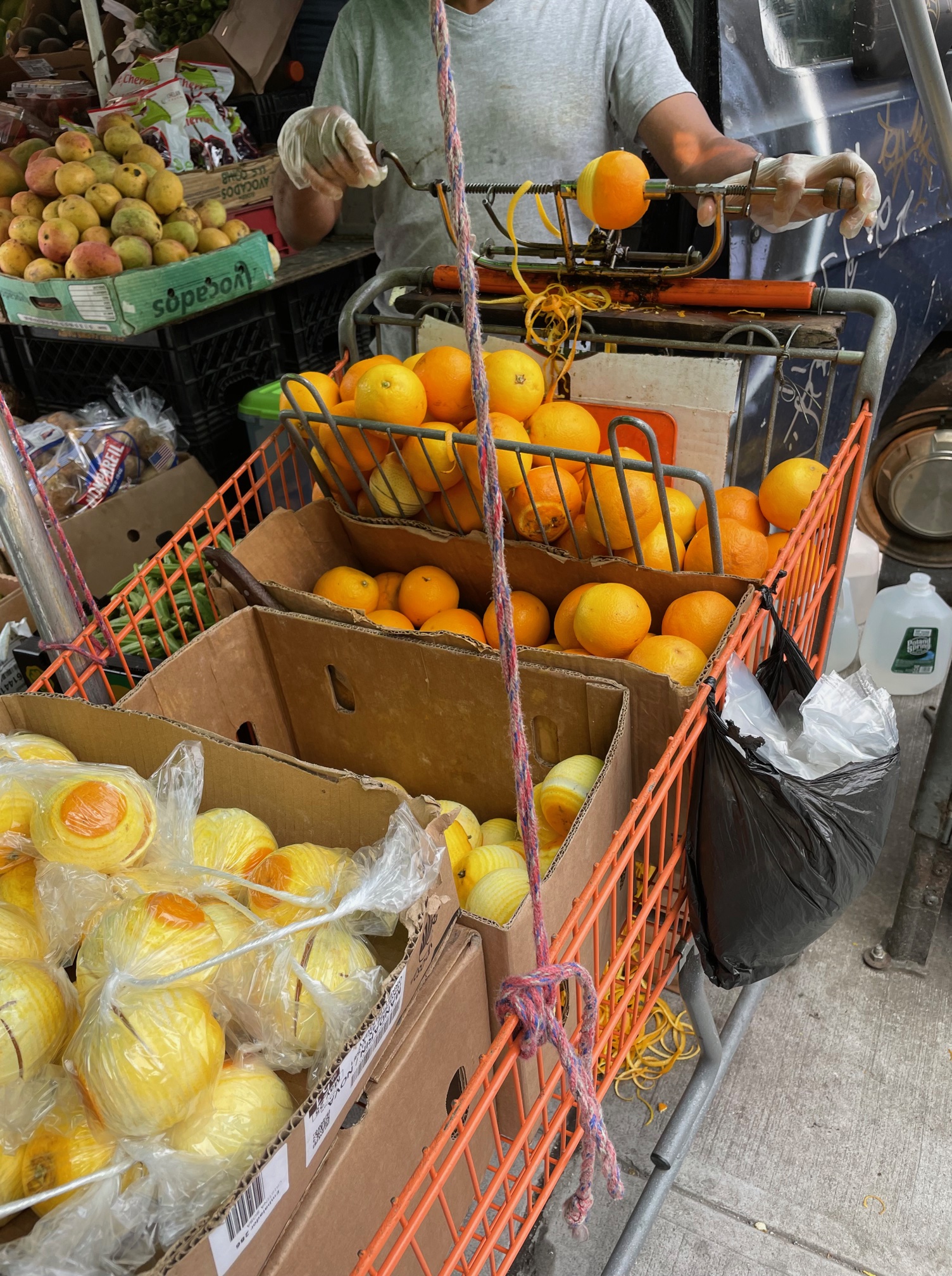
Bronx residents love fruit, judging by the number of produce stands, including this one that has the owner peeling your orange for you.
There is still some of the past. The Grand Concourse was built in the late 1800s to rival the great boulevards of Europe, and it soon became a middle class haven, before the advent of white flight and the deterioration of the Bronx in general. Once in a while you meet someone who tells you their old Jewish granny used to live on the Concourse.

Glimmers of the past exist.

And most amazing, a  hulking, barely visible grand building.

Behind the scaffolding stand, the Paradise Theater, built in 1929 and used for various types of entertainment since, even since it fell on terrible times – supposedly a church holds forth there now, though that’s hard to believe.
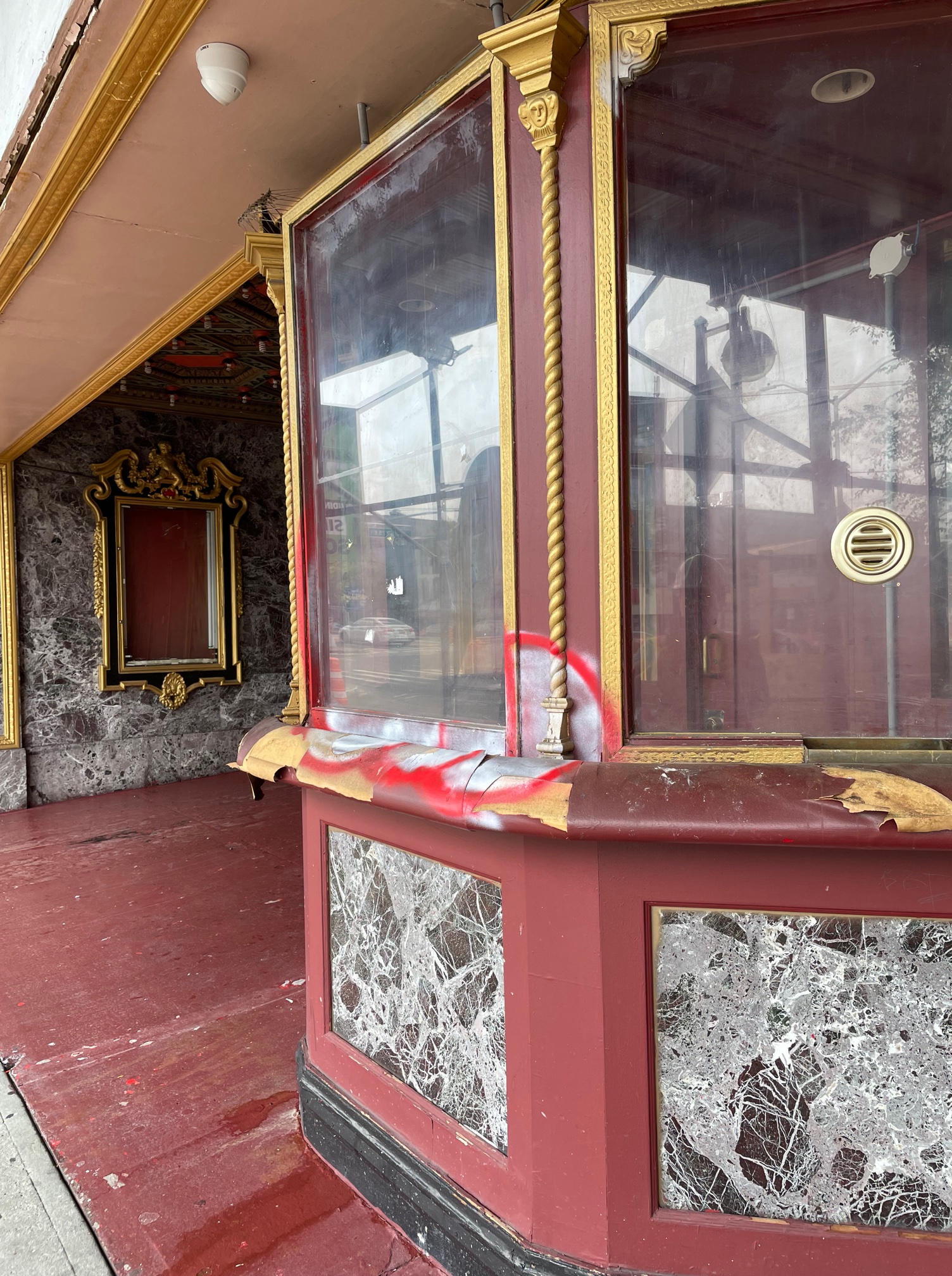
The ticket book evokes times gone by, as does the ceiling above it.

But really, the Concourse is contemporary.
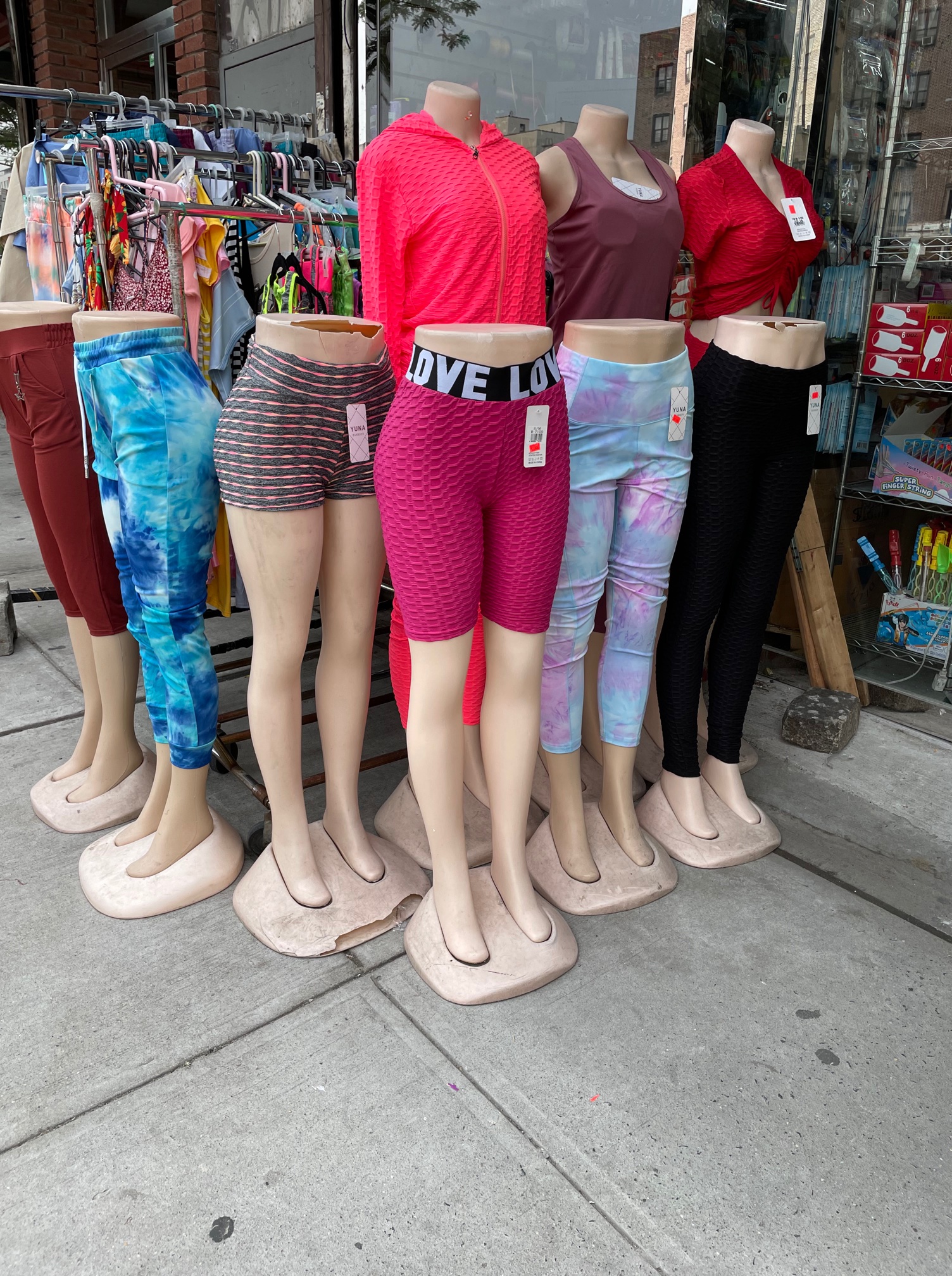
Concerned with the important things.

Fresh.

And the home of thousands of grand pit bulls. This one snarls, then comes in for a pet.

I’m not sure about his manners, but he’s a handsome devil.

I wonder if pit bulls were the breed of choice at the turn of the century? Helen Keller had a pit bull named Sir Thomas. She was born in that era, so maybe the Grand Concourse was teeming with them.
Leave a comment

Filed under Jean Zimmerman

What on earth?

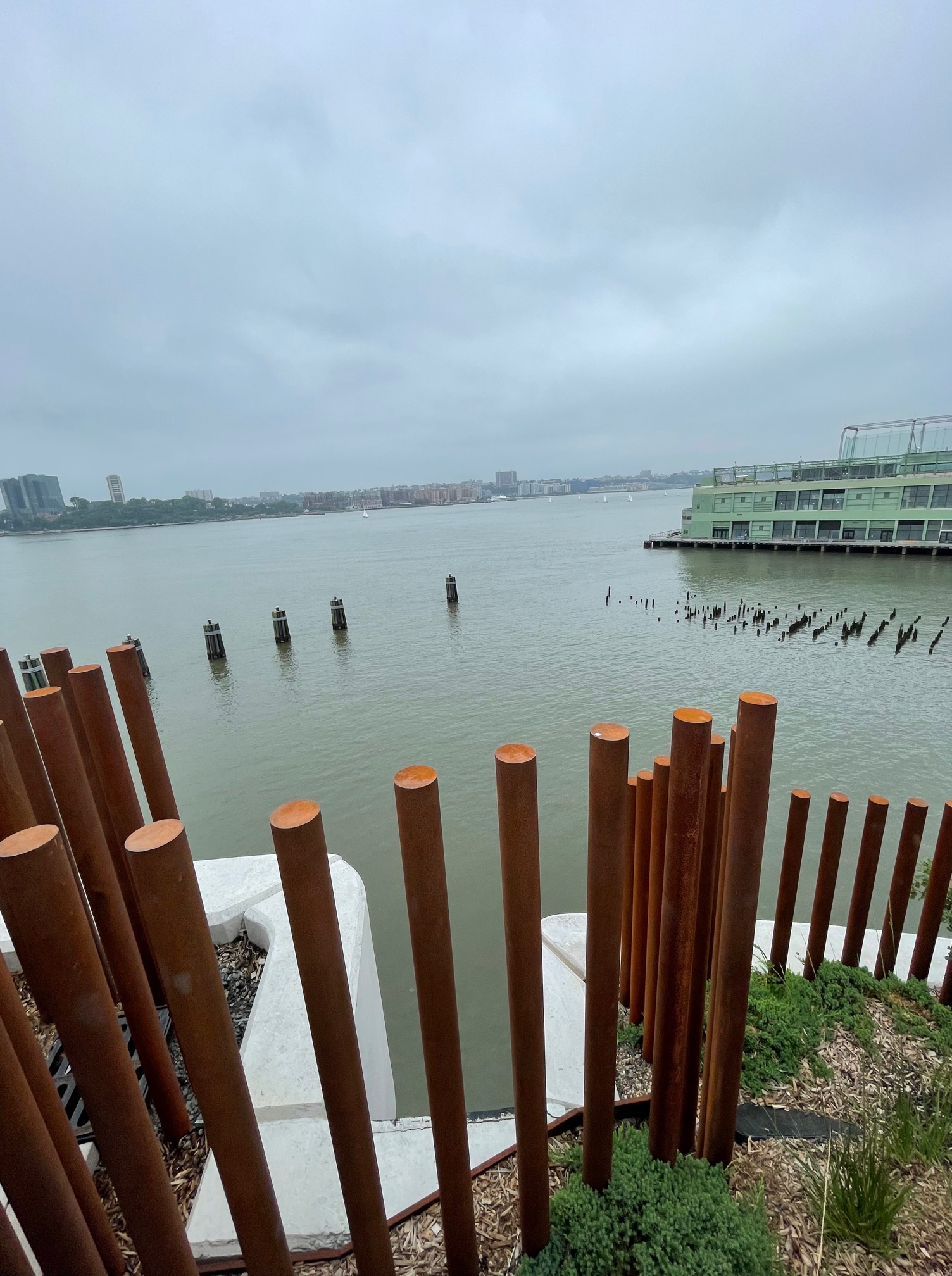
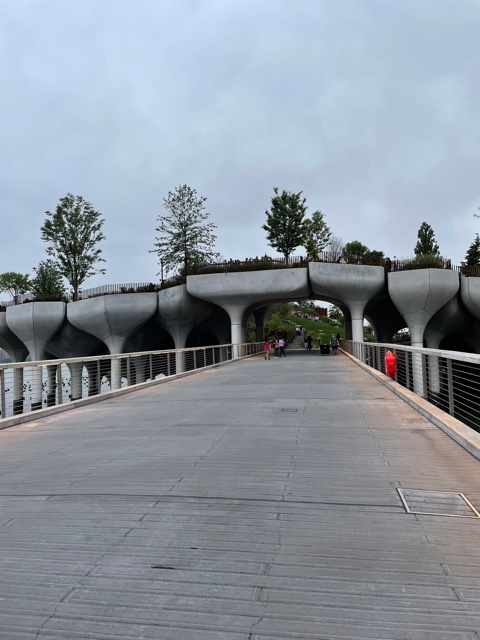
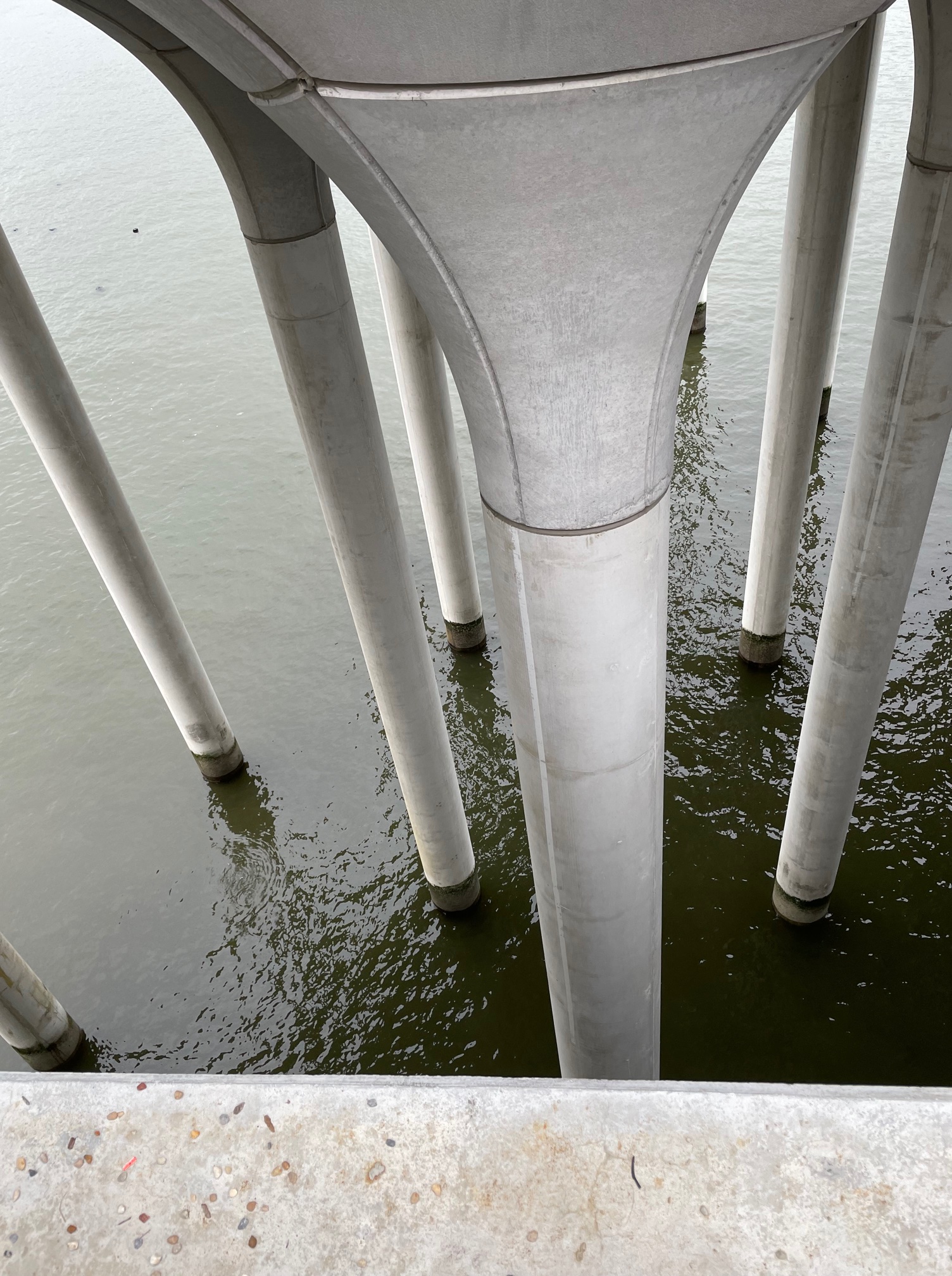
Actually, not earth at all, but the Hudson River at Pier 55, now a surreal topography of walkways, views, plantings and trees.

After Superstorm Sandy, Barry Diller decided he might as well plunk some of his millions into creating this new park, named Little Island. Two hundred sixty million dollars. Would it be boon or a billionaire’s boondoggle, we often wondered as we drove past the construction site just off the West Side Highway. It took four years to plan and three to build this 2.4 acre park with its 132 tulip-pot modules, each one of them unique in form. The park itself is a perfect square. It has just opened to the public, right as the population is exploding with post-Covid energy, vitality, euphoria.

As any place in New York, the people are the real attraction.

But I marveled at the landscape, created by Signe Nielsen at MNCA. I saw an interview with her in which she discussed the five different soil types that were used, and how the engineers had to face off against the gardeners to make sure that none of the tulips would drop into the drink.

Soil is heavy. Plantings carry weight too

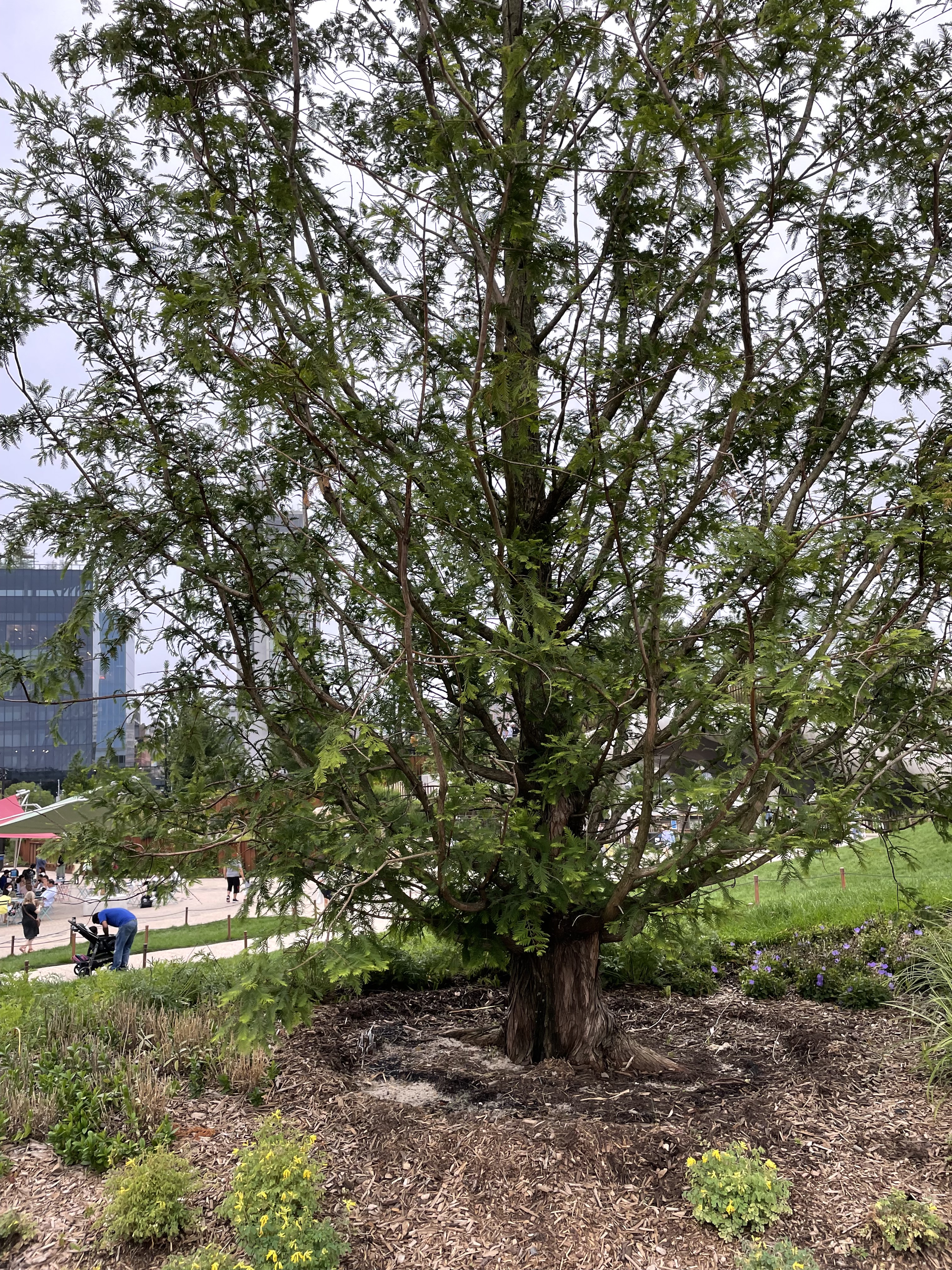
Heavier still: trees. And this is the most remarkable thing about Little Island, the sheer number of mature trees planted by crane all over the park. This dawn redwood would be at home in an arboretum.

The root balls were huge. The trees are anchored by 4-10 steel straps, guy wires, atop the root balls, where they can’t be seen by passersby. It all looks impossibly natural and easy but is terrifically engineered. There are 114 trees, 35 species, from kousa dogwood to cedars of Lebanon, including 19 of what the planners are calling “hero trees”—the mammoth specimens. All of them ranged from 10-12 DBH at planting and were in the neighborhood of 30-40 years old. Diller has said something to the effect of he hopes Little Island will last forever, and with the sprinkler systems and hand watering going on behind the scenes, the landscaping just might survive through the next hurricane, as they hope.

The trees were glossy, healthy.

It looked like they’d always been there. It reminded me of Central Park, totally contrived in the nineteenth century to look totally natural. Little Island reminds us that at times contrivance can be fun.

But back to the people. As Gil’s mother would marvel when she visited the City, “The people! The people!”

There were guides on call in case you had a question. Meet Saul and Turow.

Polka dots.

Puppies.

Music.

I don’t know if anybody really noticed the girth of the trees around them, they were so engrossed in the views – all the way down to Lady Liberty. Or New Jersey, in this slightly more mundane view.

Welcome.

And if you need a breather and a snack, there are those too. I’ll try one next time I go.

2 Comments

Filed under Jean Zimmerman

You couldn’t tell if it was little-leaf

or not, the canopy was so far overhead. Tilia Americana or Tilia cordata? I stood in the Bronx next to a playground on on Gouveneur Avenue, marveling at the height of these monster lindens. The smallest of them had a DBH of 7 inches while the largest ran to 40 DBH. (DBH equals Diameter at Breast Height, the standard way of measuring trees’ height.) How tall were they? I could make out the heart-shaped leaves, all slightly asymmetrical, and the bracts that always remind me of pieces of cream-colored silk woven in someone’s hair. They carry the linden’s fruit so it will reproduce. But they must have been 40 feet tall. I am notoriously bad at heights, heights of trees, and just multiply my own height (generally) with how far up the tallest branches seem to be. I know there is a trigonometric formula I can invoke, but as I said I am bad at heights. (h=TanA x d)

People don’t normally think of New York when they think of shade. But it’s all around, chilling out people and homes and schools, in a fortunate neighborhood. Two men came by and spoke to be as I was juggling paper, pen and DBH tape for a survey of the linden trees on this block. A milling machine was going to come through soon, before the street was repaved, and the contractor wanted to prune any trees whose branches would get in the way of his 14 foot unit. I was to identify those trees in need of pruning. The two guys lived there, in an apartment underneath the mesh of branches and leaves far above. One said the tree we stood beside had “been there since before I was born”. He was about 60. The other said, “These trees shade everything, they make it all so cool, it’s so nice.” He was nice, too.

I had seen lindens pruned to within an inch of their lives and they could look beautiful like that.

Two allees of little-leaf lindens stand in front of the Metropolitan Museum of Art.

There has been a lot of study recently about the importance of shade in cities. Health suffers without trees there. The difference between shaded and nonshaded areas is something like ten degrees, enough to kill someone in southern climes without air conditioning, which not everyone can afford. This falls under the general rubric of environmental justice.

The canopies of these giant lindens on Gouveneur Avenue offered a generous helping of something little else could provide – coolness on a hot day. With the health changes come changes in mood, also. Maybe that’s why these guys were smiling so much. It’s a womb of cool. Shade that helps you live. I always thought that lindens were beautiful. On Gouveneur Avenue I realized they were life-giving as well.

Leave a comment

Filed under Jean Zimmerman

This is how you do it

when you plant a memorial tree. The Awards Committee of the New York State Urban Forestry Council sought applications last fall to reward communities that had been a Tree City USA for at least the past five years. I went to Glen Island Park in New Rochelle to celebrate one of the winning entries. Competitors had to describe why they deserved what we were calling a “big tree”: “a large specimen tree in a prominent site within the community, accessible to the public.” This effort was made in conjunction with New Rochelle’s 28th year as a Tree City USA.

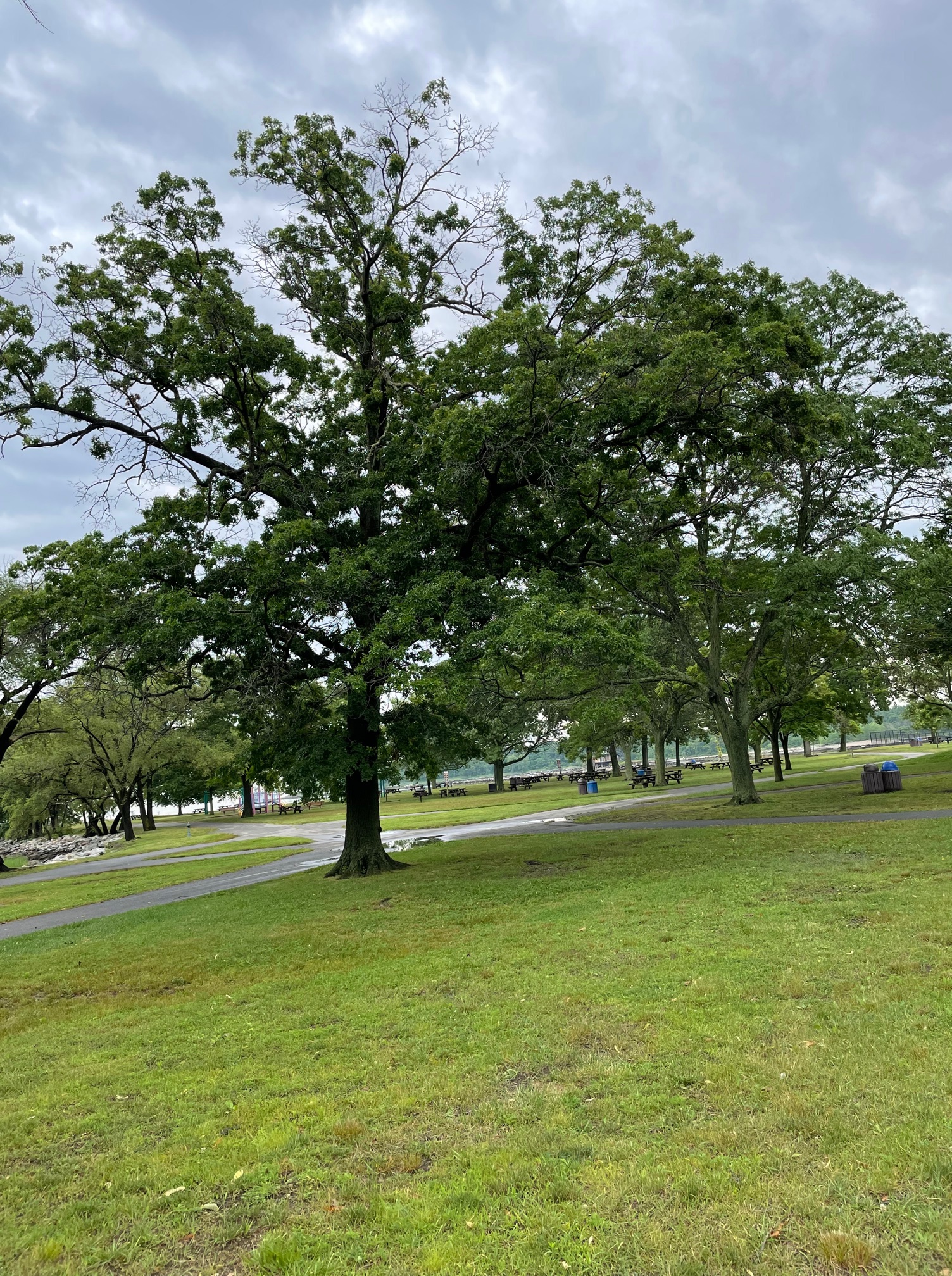
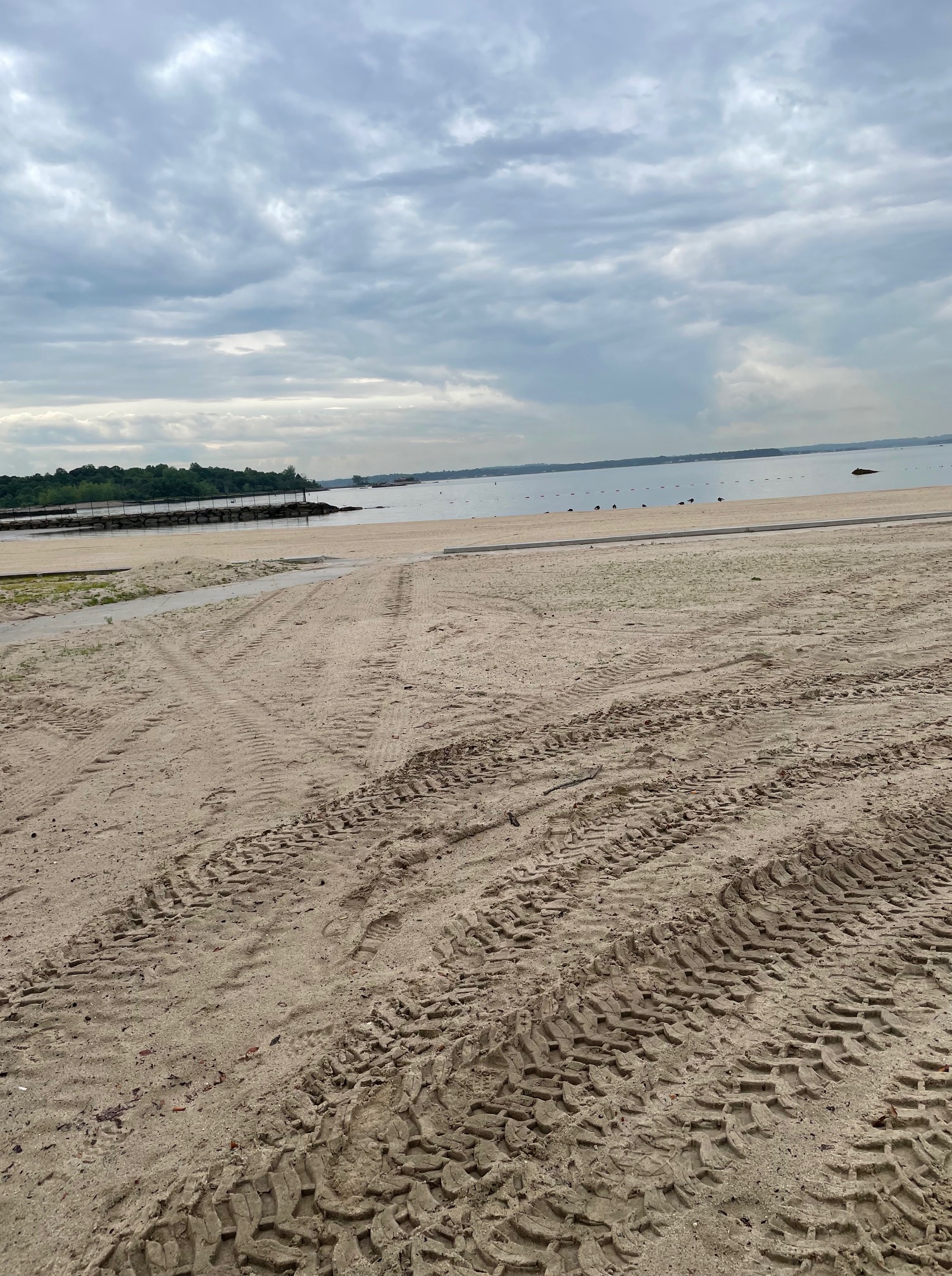
There is a beautiful beach on the Long Island Sound that opens officially for the season tomorrow.

The application from the Westchester Parks Foundation had really pulled at my heartstrings. Submitted by Erin Cordiner, it talked about the time of Covid, how it had affected New Rochelle in so many ways. Erin has just been promoted from volunteer organizer to director of philanthropy, and I’m sure she’ll do a bang up job. The first Covid sufferer in New York state, a lawyer, lived in New Rochelle . After being put in a medically induced coma, Patient Zero survived. After that a perimeter was set all around the area of the city deemed at that early moment the most contagious place in America. New Rochelle took a punch to the gut.

Westchester County has 50 parks. In her application, Erin talked about how important the county’s 18,000-acre park system was during the pandemic, when people desperately needed the wellness benefits of being outside because they couldn’t go to ballfields, restaurants, concerts, you name it.

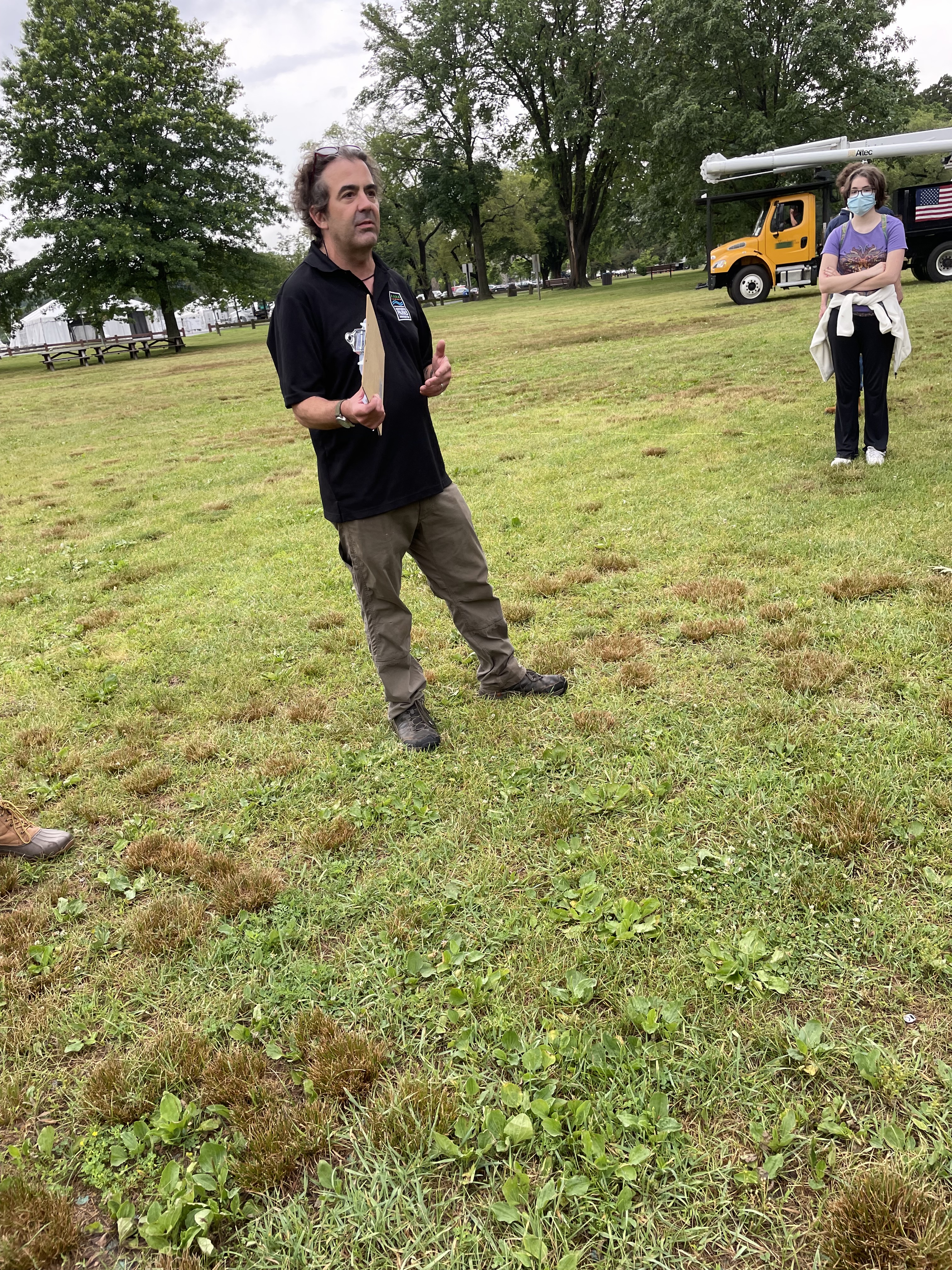
The Park was being spiffed up for its opening.

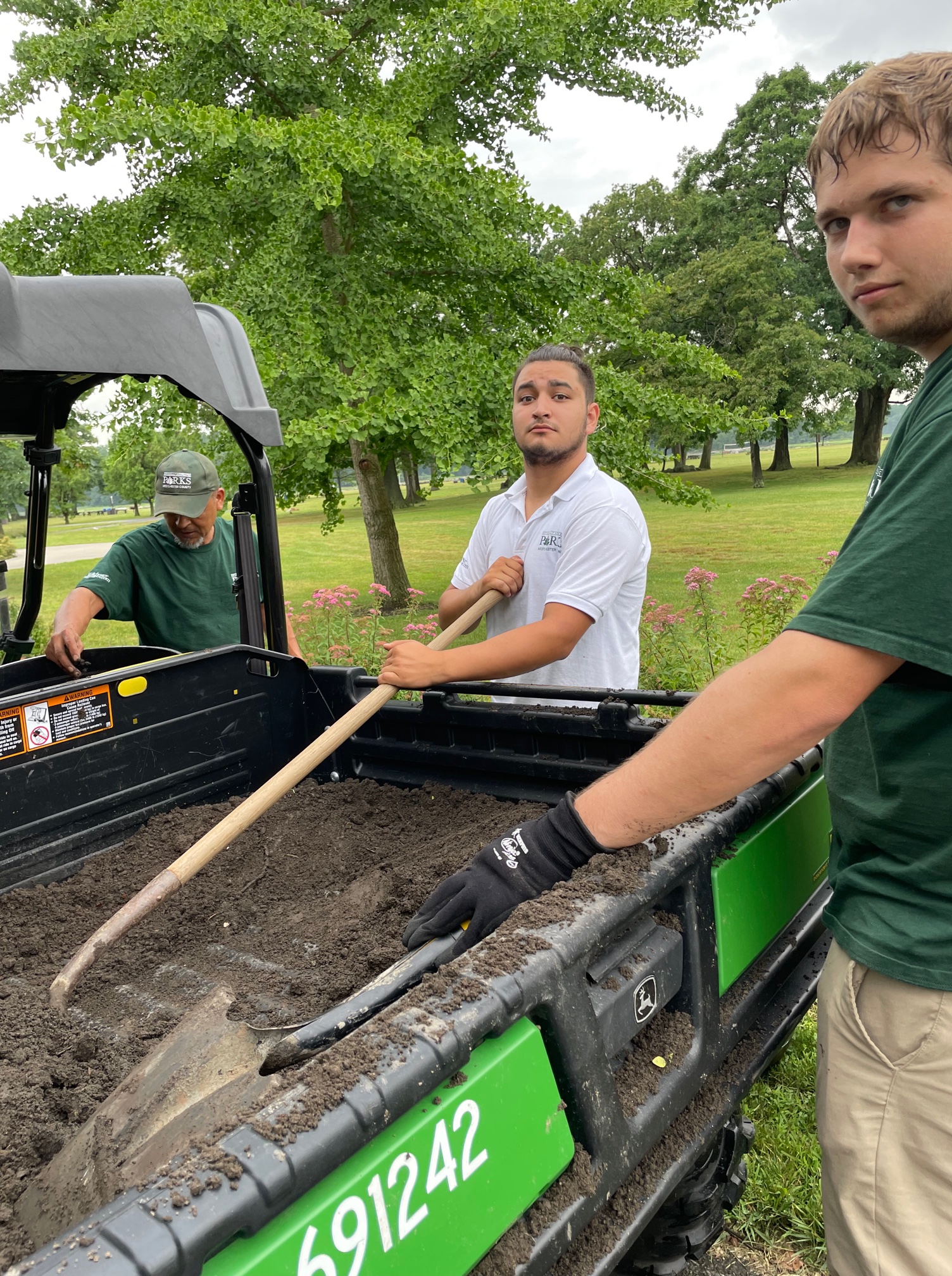
A throng of volunteers arrived and were instructed by volunteer coordinator Adam Lippman.

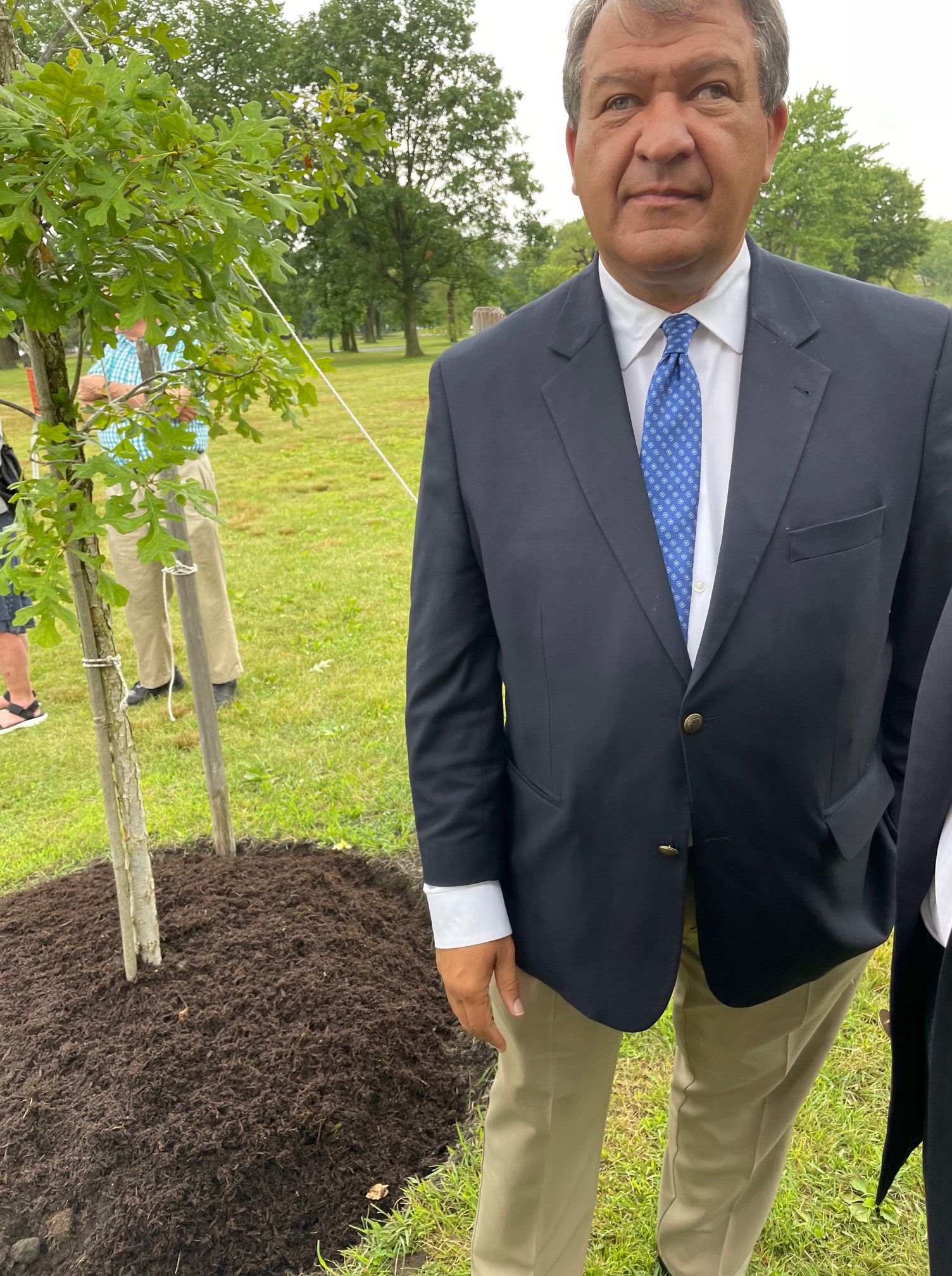
Dignitaries arrived – from County Executive George Latimer to the Parks Commissioner and the chair of the Westchester Parks Foundation’s board.

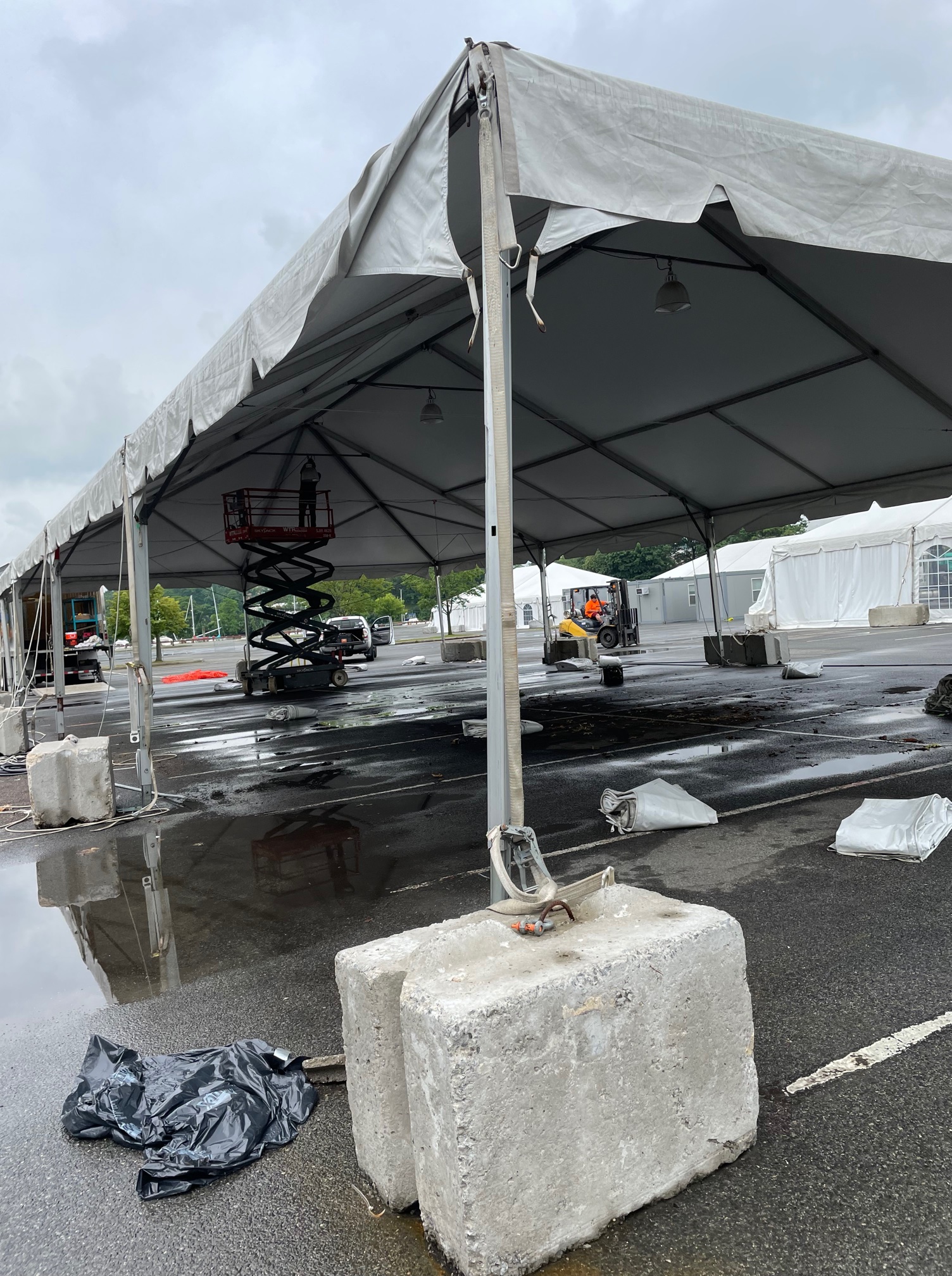
The Foundation used its grant money to select a three-inch caliper ball-and-burlap tree. It would stand across from New York’s first COVID testing site, an imposing series of white tents. Today it was being dismantled. Hope!

I shook as many hands as I could, still relishing being able to reach out and touch someone after our long journey.

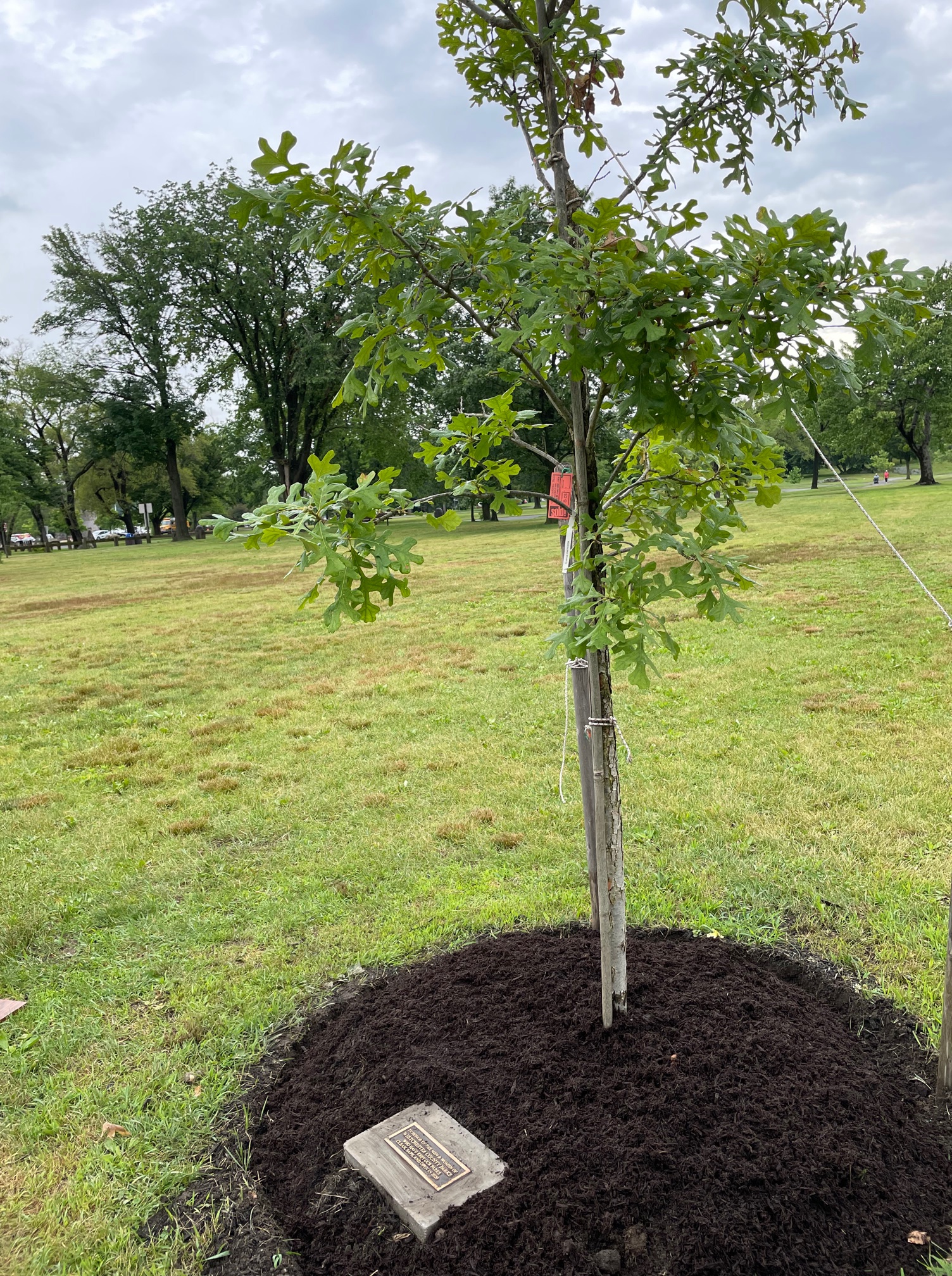
The tupelo is healthy and beautiful.

The tree and the memorial will last years into the future, when we are telling our grandkids about the nightmare of the pandemic.

I am going to quote from Erin’s eloquent application

“Let us stand together now, through this memorial and remember that parks have been here for us when we needed them most and reminid decision makers of the critical role that parks continue to play in our lives. Let this memorial serve as a reminder, when this crisis passes, that parks played a role in our healing, and the importance of parks related to the well-being of our community. Parks have the power to transform lives, to save lives, and to heal lives. Let us never forget this.”

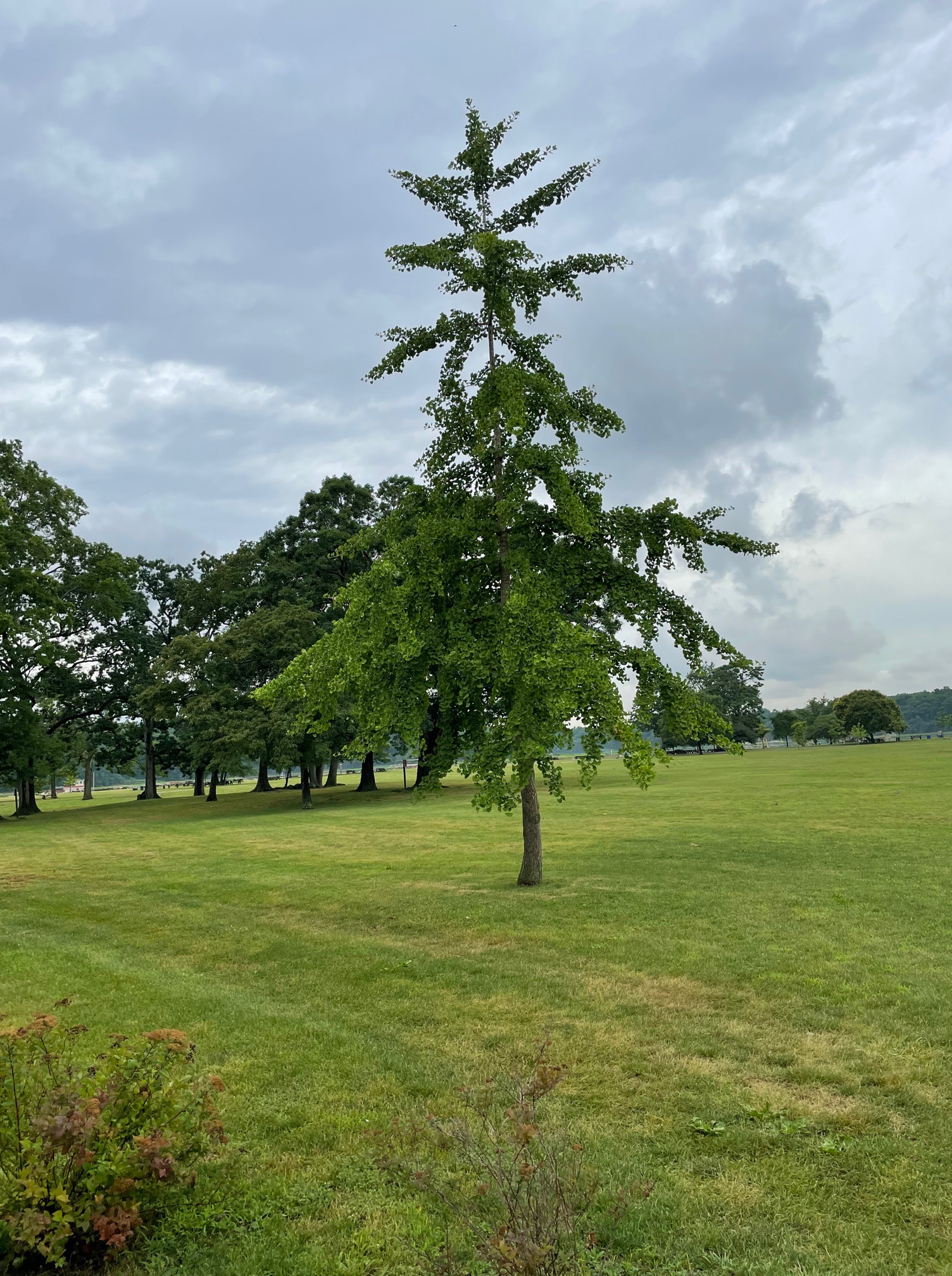
She could have been talking about trees. Like this ever-hopeful gingko at Glen Island Park.

Application are just going out for the next round of “big tree” grants. If your community might be interested, contact me here.

Leave a comment

Filed under Jean Zimmerman

“Everyone is an artist.”

So quoth Joseph Beuys, one of the most influential artists of the last century and German Green Party founder, and certainly the one who most used trees on such a grand scale in his work.

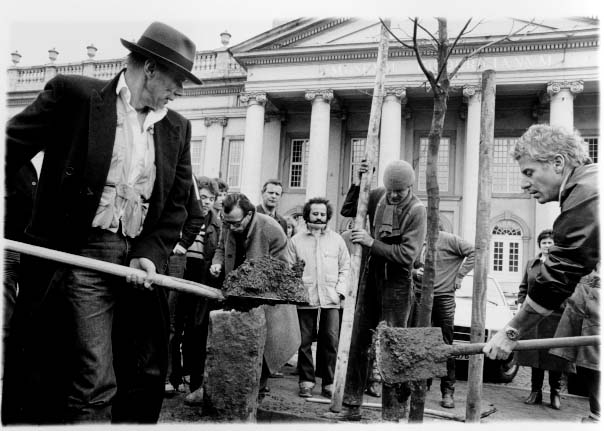
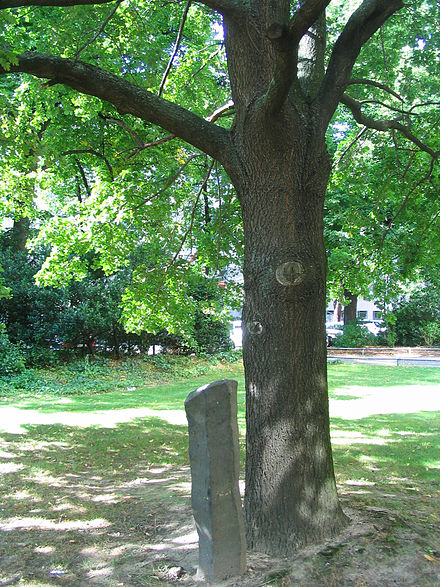
One of his best known pieces grows in Kassel, Germany. With the help of volunteers, he planted 7,000 oak trees over several years, beginning in 1982, pairing each with a basalt stone.

The effort provoked controversy at the beginning. People didn’t like the dark stones. A motorcyclist actually bashed into one and died. Kassel’s citizenry had been traumatized by its heavy bombing in World War Two, and this didn’t stauch the pain. He dumped the volcanic stones in front of the city’s public museum, and people didn’t like that. What a mess.

7,000 Oaks – City Forestation Instead of City Administration has grown over time into something else. Citizens chose where to plant the saplings and developed a sense of ownership and pride about the trees. It was a proactive way of getting nature into our lives.

Here is Beuys: “I think the tree is an element of regeneration which in itself is a concept of time. The oak is especially so because it is a slowly growing tree with a kind of really solid heart wood. It has always been a form of sculpture, a symbol for this planet ever since the Druids, who are called after the oak. Druid means oak. They used their oaks to define their holy places. I can see such a use for the future …. The tree planting enterprise provides a very simple but radical possibility for this when we start with the seven thousand oaks.” 

1 Comment

Filed under Jean Zimmerman

No humans, no dogs, one swan

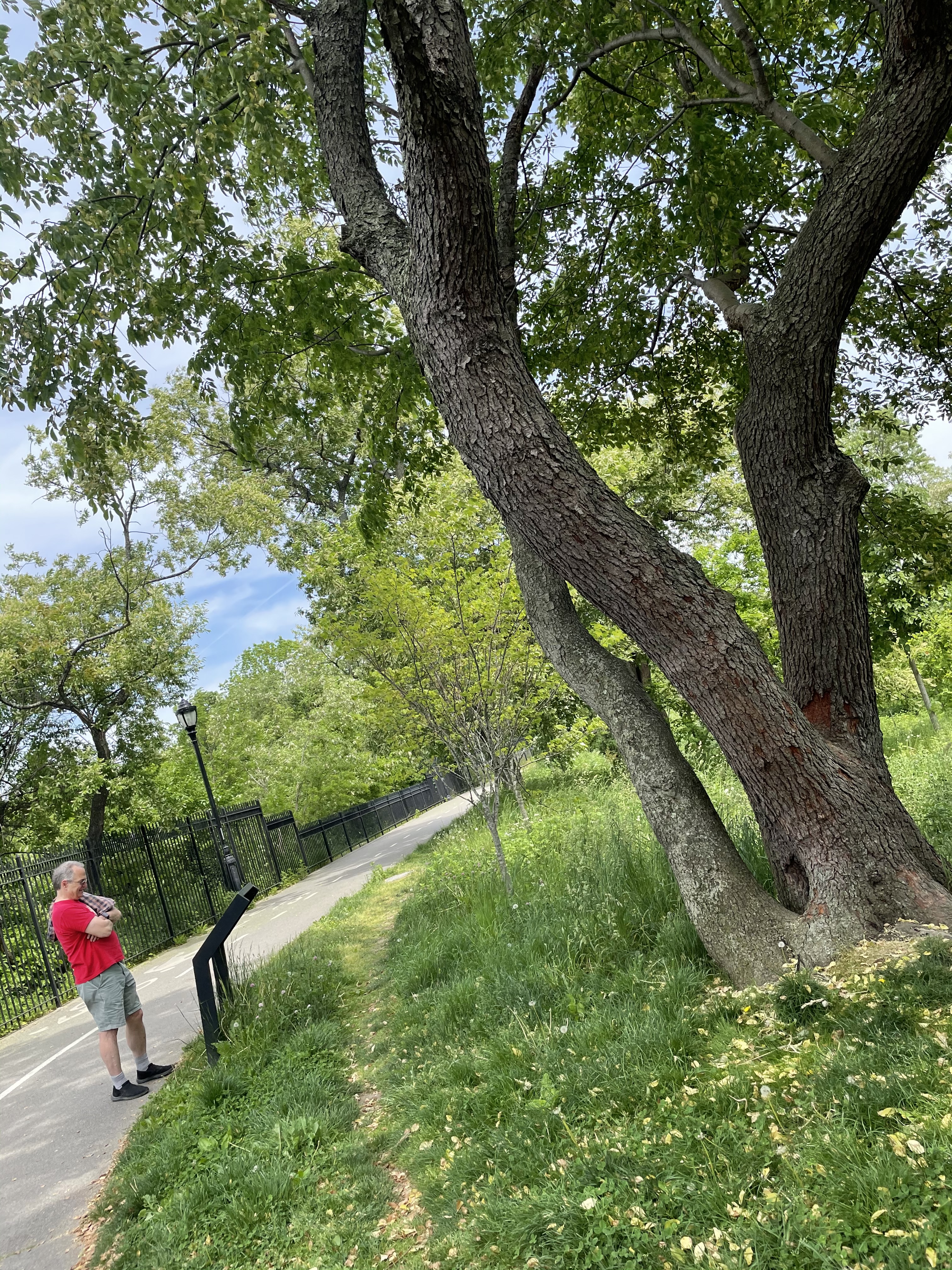
populated the Ridgewood Reservoir when we saw it.  Ridgewood sits in the middle of Highland Park in Brooklyn, bordering Queens, and it is the closest thing to wilderness you will find in all of New York City. Those haunting pictures of life coming back to Chernobyl when it was absolutely impossible for life to come back – Ridgewood is like that, minus the nuclear blast.

In 1858, the city fathers (note: no mothers among them) realized that clean water was a vital necessity, and they bought Snedicker’s corn farm to become the reservoir.

Over the years the borough’s thirst only intensified and The People in Charge bought acres and acres around the original site to use as a buffer against “pollutants generated by cemeteries and garbage plants.” The boroughs of New York were still independent cities until 1898. By bringing water to Brooklyn, the reservoir allowed Brooklyn to become America’s third-largest city, as well as the country’s largest beer producer. (That honor now belongs either to Chicago or to Portland, OR.)

The reservoir was decommissioned and drained by 1990, and the land basically left to its own devices. 

During our visit we made our way all along the perimeter (1.18 miles) and met no one but a lone birder, who told us the bird song quieted at the hotter hours of the day. (I knew that.) I wanted to go because I heard there was a birch forest growing in Brooklyn, but in fact I saw nary a birch. Black locust, yes, very fragrant.

And lots of black cherry.

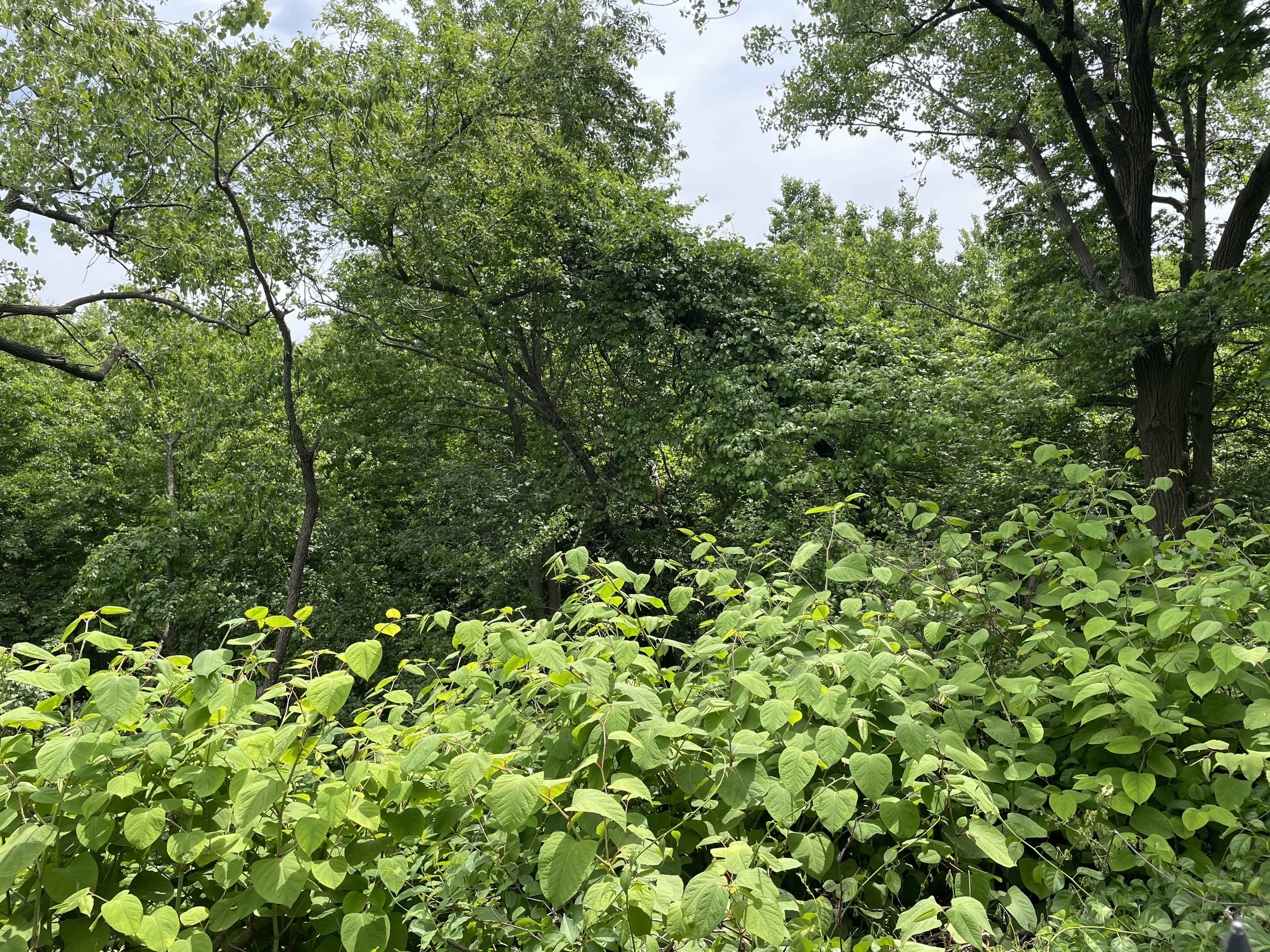
Sassafras. Imagine fifty-plus acres of sassafras. There’s also red maple and sweet gum. There are thick carpets of moss and the bogs we couldn’t get at.

I wonder what old Frederick Olmsted, master landscaper who designed Central Park, would have thought of the pristine pool becoming a jungle.

Highland Park sits atop  a ridge formed by the Wisconsin ice sheet’s terminal moraine. Olmstead loved blasting the hell out of ancient boulders to make Central Park.

In 1894, Brooklyn hired Olmsted’s firm to design the main drive and concourse for the reservoir’s southern portion, lined still today with towering, bulbous London plane trees.

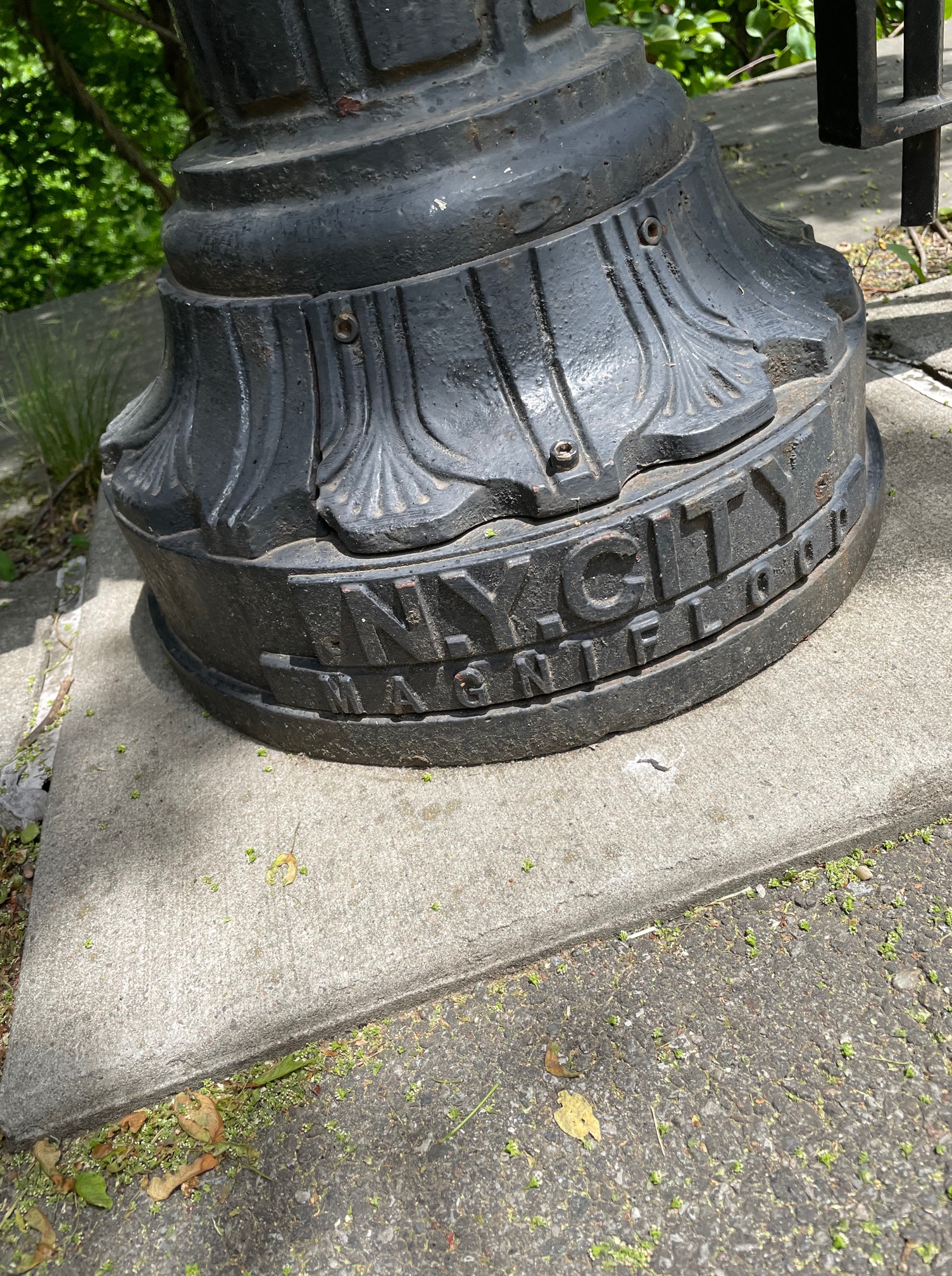
The Olmsted company erected an iron fence and electric lights, which were barely heard of in those days. The fence went up because of repeated drownings, suicidal and otherwise.

You can still read on the base of each light fixture: MAGNIFLOOD.

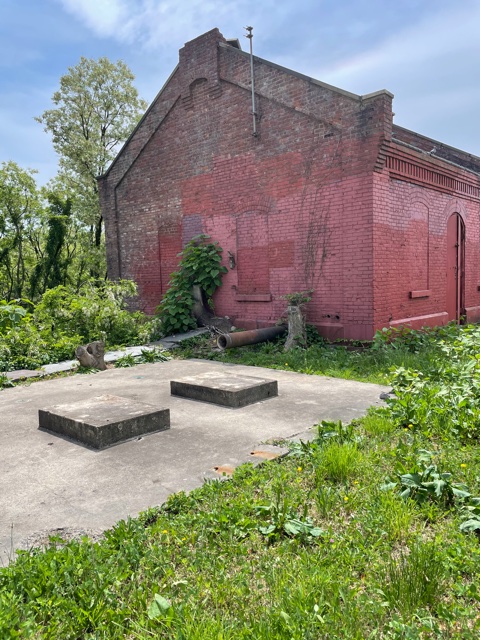
Old pumphouses still stand.

Nine cemeteries ring the park, including this one, the B’nal Jeshaurm and Shearith Isreal cemetery. There is one just for nuns, too, and one for the World War I dead. I think I have family in one of them.

Actually, the original tract featured three reservoirs, and two were drained in the 1980s while water remained in one. That body is now ringed by phragmites, which is the insidious non-cattail taking over deteriorated landscapes everywhere. At the Cabin we had a swamp filled with phragmites; a botanist friend visited and told me, “Oh, those are an invasive species.” Which I felt kind of insulted by at the time, but she was correct.

The swan on the beach is cleaning itself. The person who uses the flat-bottomed boat is used by ecologists, and maybe Huckleberry Finn.

Ridgewood is now a wildlife refuge, with forests, fields and wetlands.  Preservationists have rallied against any threat to its development. We tried to imagine the wildlife that would get over the fences, down the steep slopes and survive there: possum, raccoon, squirrels, voles, snapping turtles (the New York State reptile), garter snakes and frogs. And probably coyotes. In the heart of Brooklyn! We saw only a red winged blackbird but could hear birdsong. A total of 127 bird species have been counted there.

“It’s like a postage-stamp size id in the middle of the raging ego of New York City,” says Gil.

I just say it’s a cool place.

2 Comments

Filed under Jean Zimmerman

Bringing a forest to NYC

can be a lot of work, even for Maya Lin. Yes, that Maya Lin, the one who designed the Vietnam Memorial in Washington, DC (opened in 1982, when Lin was 23), winning a lot of criticism at first and then nothing but accolades.

The same Maya Lin designed a factory in Yonkers, the city next to where I Iive, that makes scrumptious brownies, which find their way into Ben and Jerry’s chocolate fudge brownie ice cream. The factory employs people who might otherwise be unemployable with open hiring policies—not requiring resumes, for example. It’s called the Greyston Bakery, and its motto is: “We don’t hire people to make brownies, we make brownies in order to hire people.” 

Every once in a while Greyston makes its brownies available to the public, and they are irresistible (coming from someone who makes a mean brownie herself).

Lin applied her touch to other Yonkers venues, including a shuttered city jail and an environmental installation at the Hudson River Museum. And she created wonderful waves of landscape art at upstate New York’s Storm King sculpture park. Worth a viisit if you are in the area.

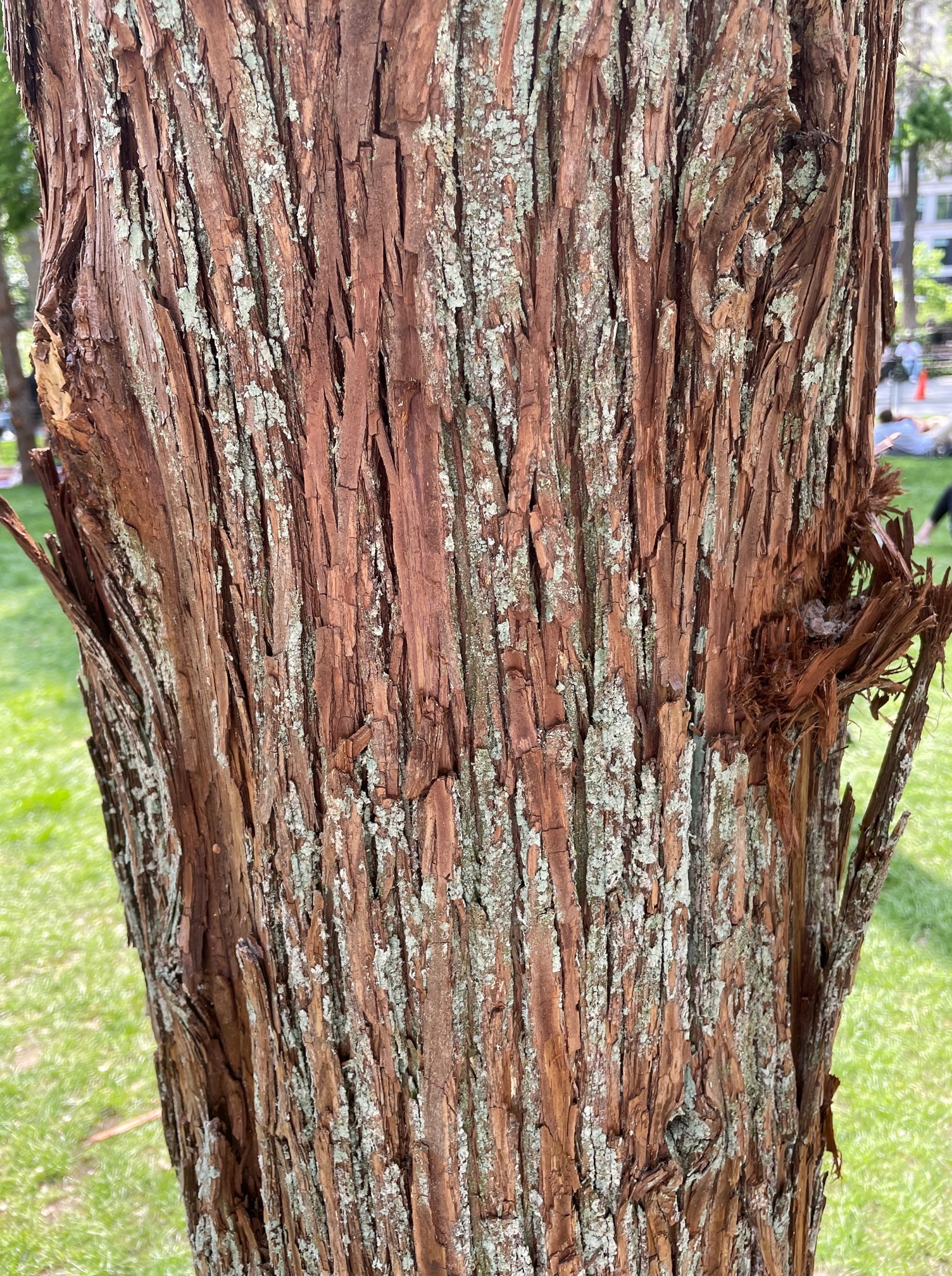
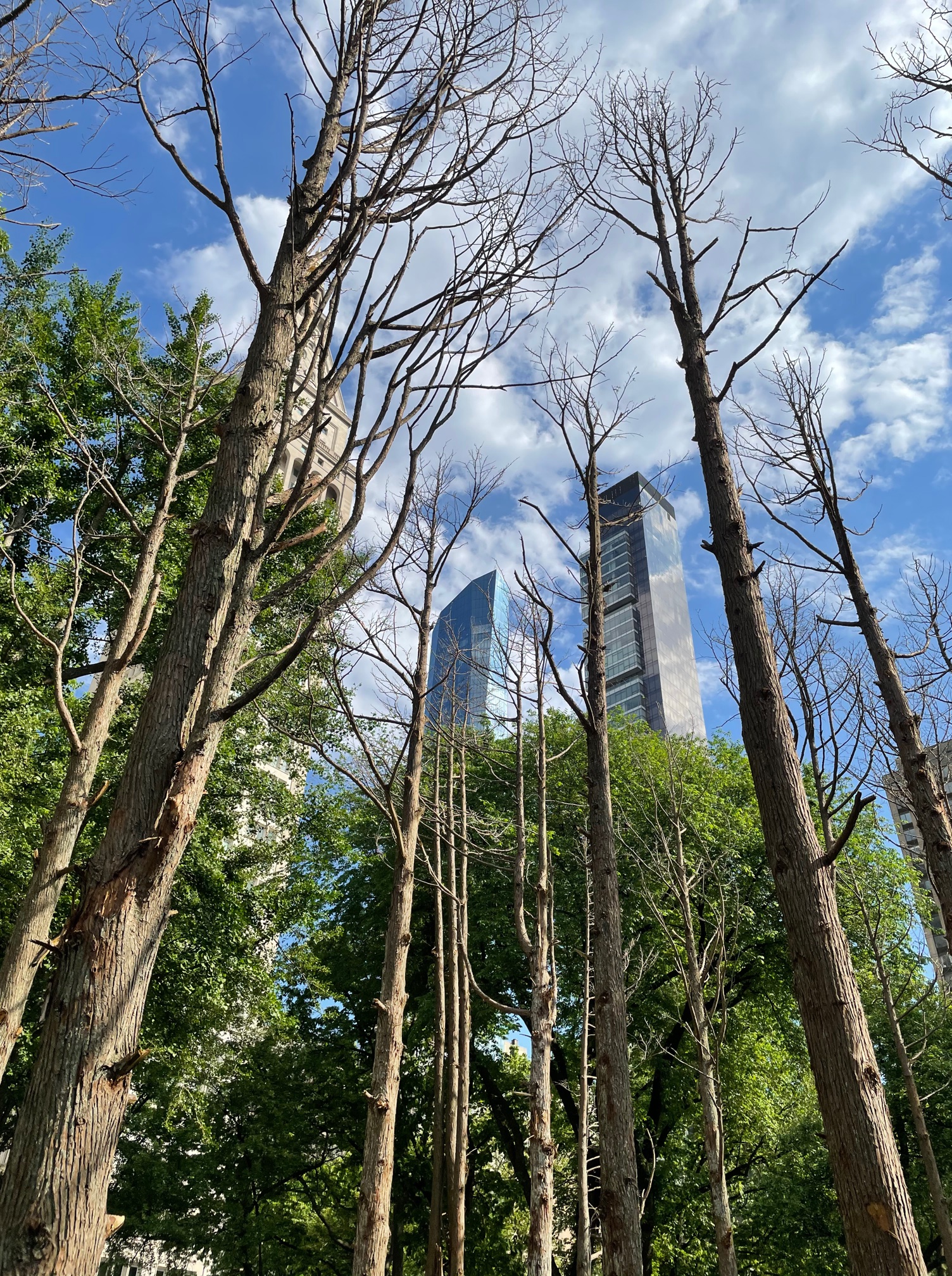
Now, in a Manhattan park, she has planted a grove of forty-nine Atlantic white cedars, with the odd factor that the trees were dead before she harvested them  from the New Jersey pine barrens.

The piece is called Ghost Forest. It’s a harsh comment on climate change. Before the 1700s, Atlantic white cedars provided at least 500,000 acres of habitat for unique plants and animals. Today there are just 50,000 acres of the species. Ghost forests are a widespread phenomenon in coastal areas, a matter of concern among ecologists.

In fact, believe it or not “ghost tree farts” are a recognized by-product of such tracts. Standing dead trees, also called snags, have been killed by saltwater. They no longer have a leaf canopy to photosynthesize and consume carbon dioxide. So they can potentially increase the ecosystem’s carbon dioxide emissions by up to 25 percent.

Snags don’t move water and nutrients around for growth. The gases they emit probably come from decaying wood or emissions oozing up from the soil. Scientists are alarmed by the world-wide profusion of dead forests, as the ocean rises and saltwater intrudes on heretofore healthy wetlands. Some ecologists have made it a focal point of their study, such as Emily Ury, here measuring soil salinity.

The trees Lin brought to New York came from  a stand that had been infiltrated by salt water and were being cleared as part of a regeneration effort. When I think of the pine barrens it brings a spooky scene to mind: we canoed down a river in November and as night came on passed close enough to a dead deer lying underneath the water to prod it with a paddle. A perfect crescent slice had been taken out of its flank, cattle mutilation style.

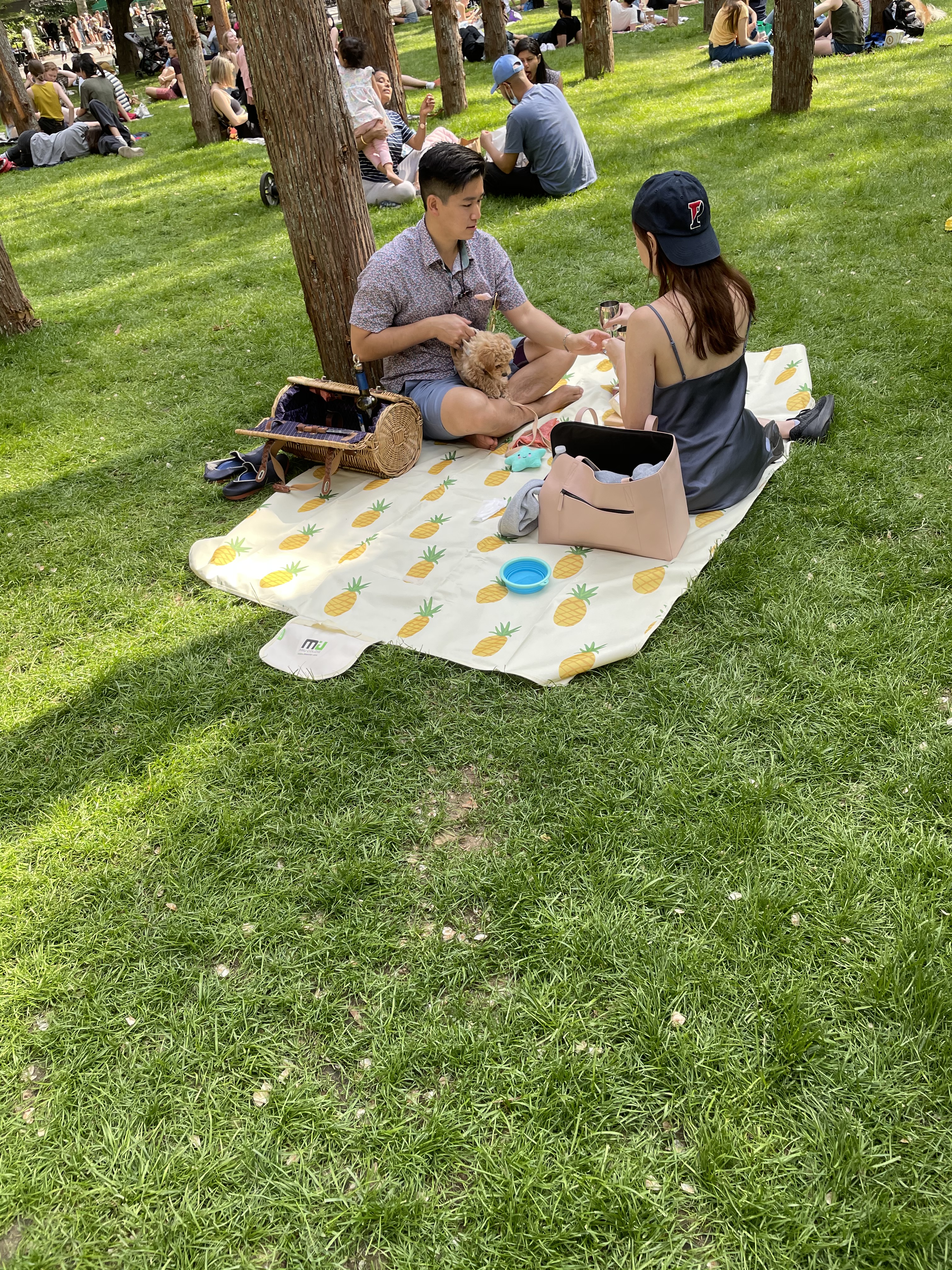
The deterioration of our forests unlikely to be an issue on the mind of any of the hundreds of picnickers among the Ghost Forest installation. It’s the most beautiful spring day of all time, at the final gasp of a horrific pandemic, after all. The last thing anyone wants to think about is the end of a livable earth as we know it.

But some visitors may tune in to another element of the installation, a soundscape accessible via smart phone, that renders what you might have heard at what is now 26th Street and Broadway five hundred years ago. The audio track has English names, Latin names and linguistic translations from the Lenape Center in New York City. How cool is that? Madison Square Park sits on the traditional homeland of the Lenape-Delaware people. Using West Virginia species that are living today, the acoustic exhibit takes you into the forest: grey fox howling, cougar meowing, American black bear vocalizing with a sort of urgent whine, a beaver splashing its tail in water. 

To me, the haunting “sounds of the silenced” was worth the price of admission.

Leave a comment

Filed under Jean Zimmerman

With hope and the best of intentions

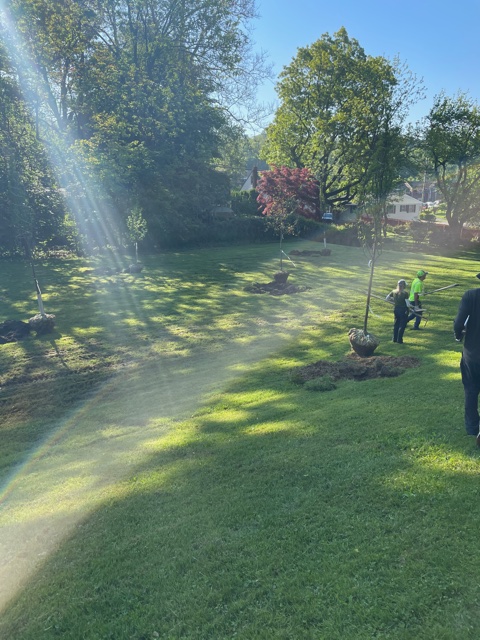
the Village of Ossining is throwing itself a tree-planting party. The new forest of 80 – yes, 80 – native specimens will be the gift that keeps on giving, especially to those members of the community who live in apartments and for whom the parks with the new trees will create a beautiful back yard. New York City’s Central Park was designed by the landscape authority Frederick Olmsted in the nineteenth century to be “the lungs of the city.” That is no less true today in the little Village of Ossining. Trees breathe and help us breathe. It’s especially important for folks who don’t necessarily have those lush, lavish estates that are fairly common in Westchester.

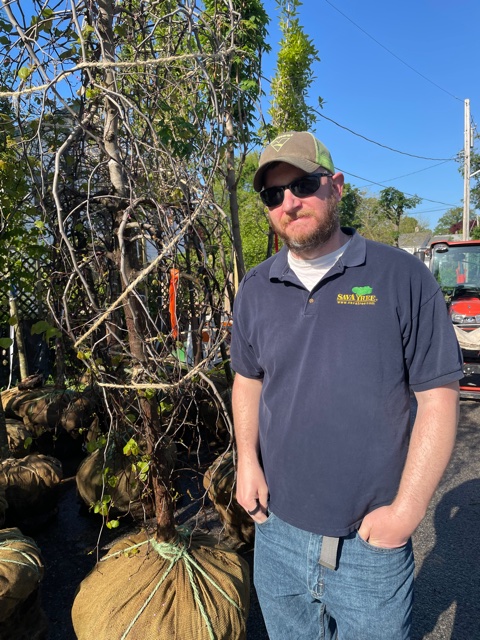
At SavATree, we helped them get the trees into the ground. Matt, the arborist ninja, is capable of walking many miles a day to conduct a tree inventory, taking note of the attributes of every tree along the way, from its DBH (diameter at breast height) to the condition of its crown.

Clients couldn’t be happier; he’s the best. For this project he took three adjoining parks and designed a forest to fit them.

He did this at the behest of Maddi, the Assistant Village Manager of Ossining, ever beaming and optimistic. She organized the effort with some help, both monetary and advisory, from the New York State Department of Conservation.

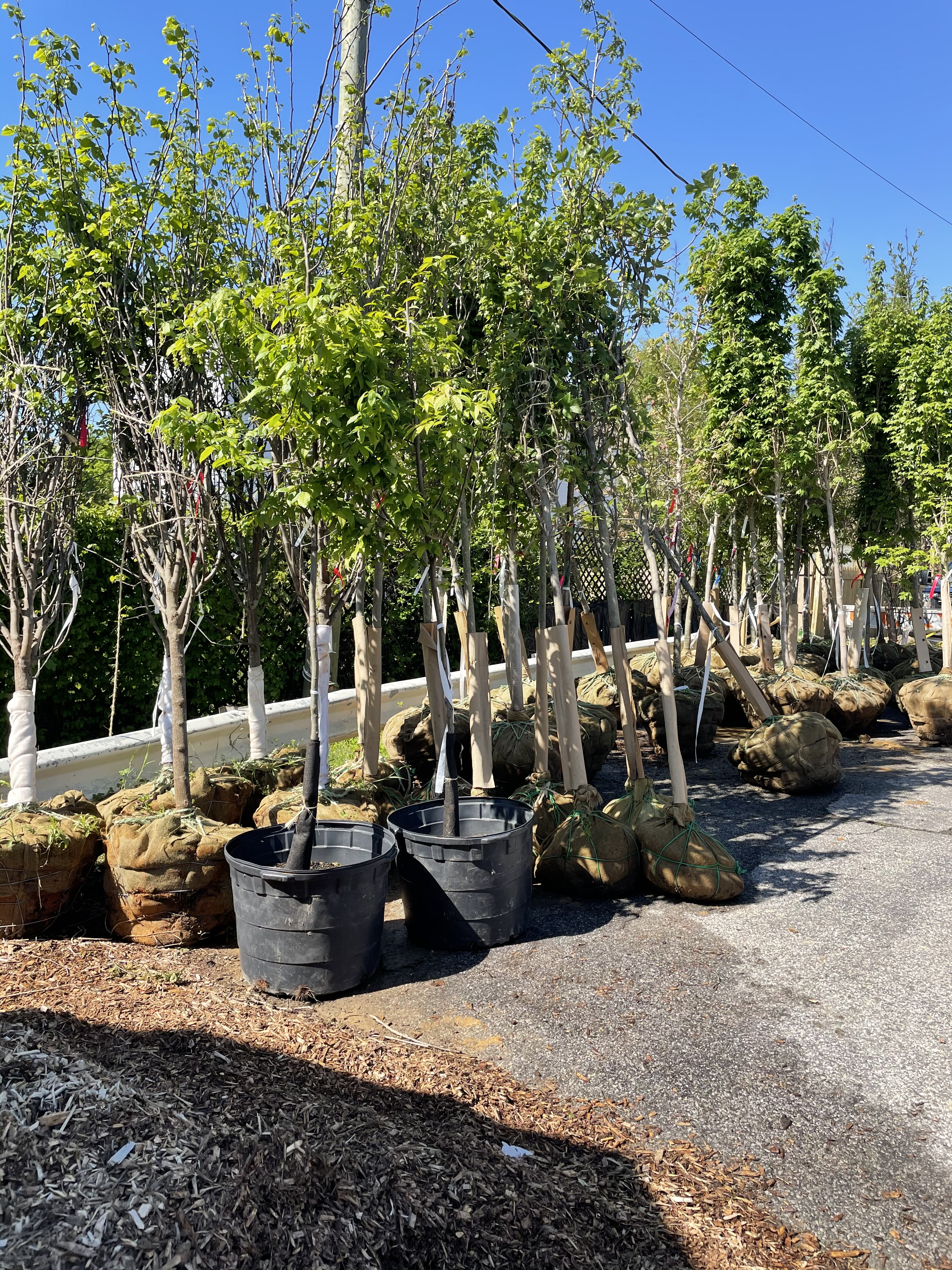
Did you notice I said 80 trees? Yes, that is ambitious. Matt ventured to Roth Nursery in Armonk to select each one individually (in one trip , of course).

At the start of planting day, there is by necessity some education given about planting ball-and-burlap stock. My colleague George, a forester from DEC, steps up to explain the proper depth of the hole, how high in it the base of the trunk should rest, and the nightmare of girdling roots. We must attack the wires that bind the burlap, he counsels, snipping them apart so the roots will be able to flourish.

George also walks a lot, counseling towns and villages about how to better manage their urban forests. He is able to convince municipal planners who never gave leaves and branches a second thought that a row of strong, healthy trees is exactly what the populace needs.

People show up, including the Village Manager and this woman, who knew an awful lot about how things grow.

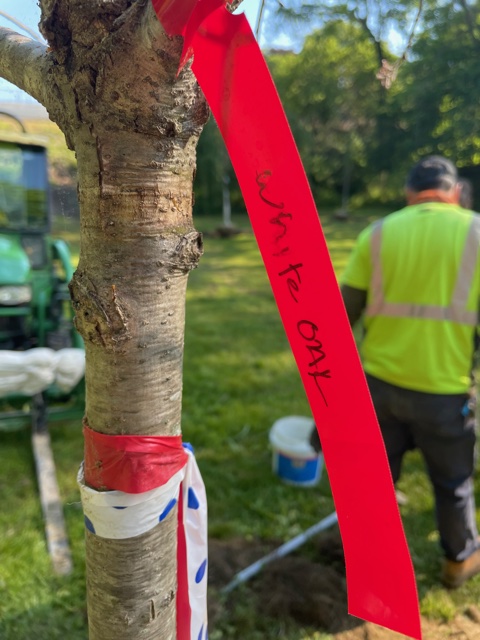
The first tree in the ground is a white oak.Then a swamp white oak. Then a honey locust.

Only 77 left to go. The sky gleams blue and at 9am it is a perfect 60 degrees and nothing else matters as we create our own rays of sunshine.

Leave a comment

Filed under Jean Zimmerman

Truly a trib

Trib, aka tributary.

It was a sunny Saturday, and we were taking Farragut Parkway out of Hastings to the Saw Mill River Parkway, eventually cruising down to Queens, where I had to mark some diseased ash trees that would necessarily be taken down. A surprise came, to the north, just before the Parkway, with dozens of people hauling around sticks and plastic, on the edge of a muddy little stream I had never fully explored.

Were these people planting trees? If so, they were assembling a veritable forest.

Came back today to get a closer look.

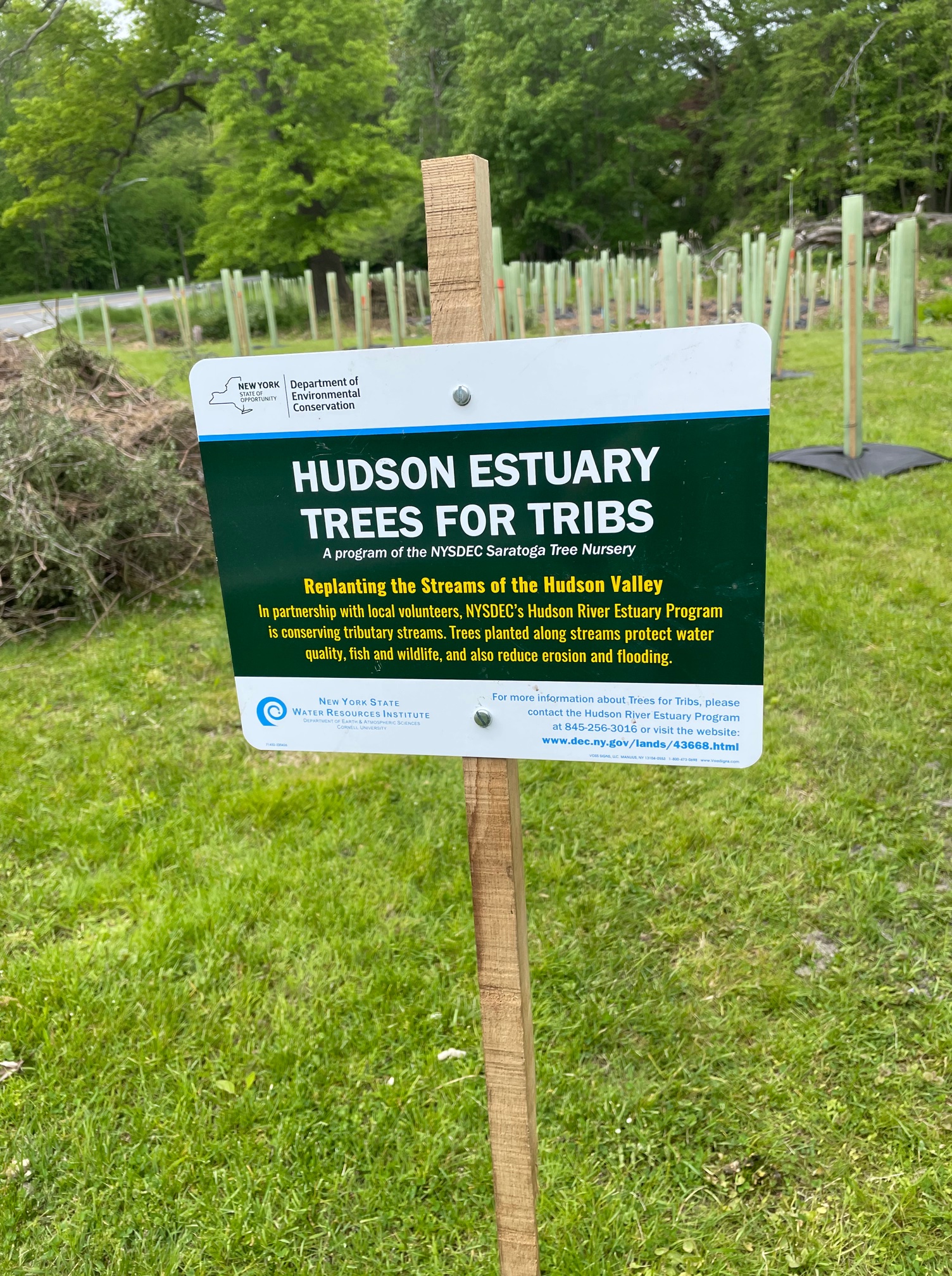
The Conservation Commission in Hastings-on-Hudson won a grant from the New York State DEC, through its Trees for Tribs program, to pay for 350 trees and shrubs to plant along Bouttilier’s Brook, which flows into the Saw Mill River at the Farragut Parkway exit.

Trees for Tribs protects and restores streamside buffers, reducing erosion, water pollution and creating a better habitat for fish and other wildlife, like the goslings you just now see toddling along the streamside behind their mothers. Just this spring Trees for Tribs sponsored at least half a dozen such projects.

Our Conservation Commission is truly amazing. They martialed dozens of volunteers to put their shoulders to the wheel of conservation, to clear or cut invasive plants out of the site, and then return a week later to plant the whips.

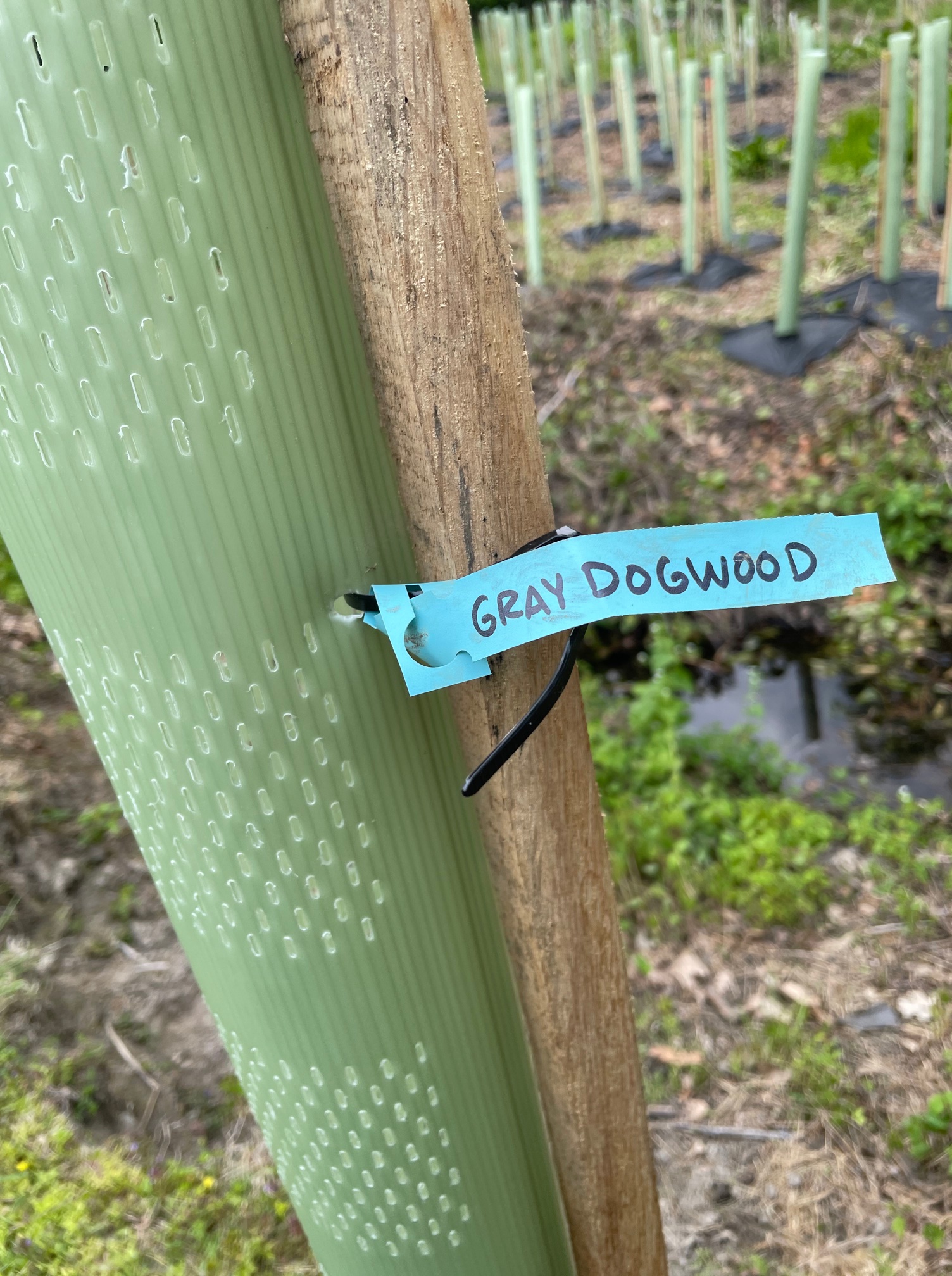
There were 65 juvenile trees, and 285 shrubs planted along the 160 ft section of the stream.

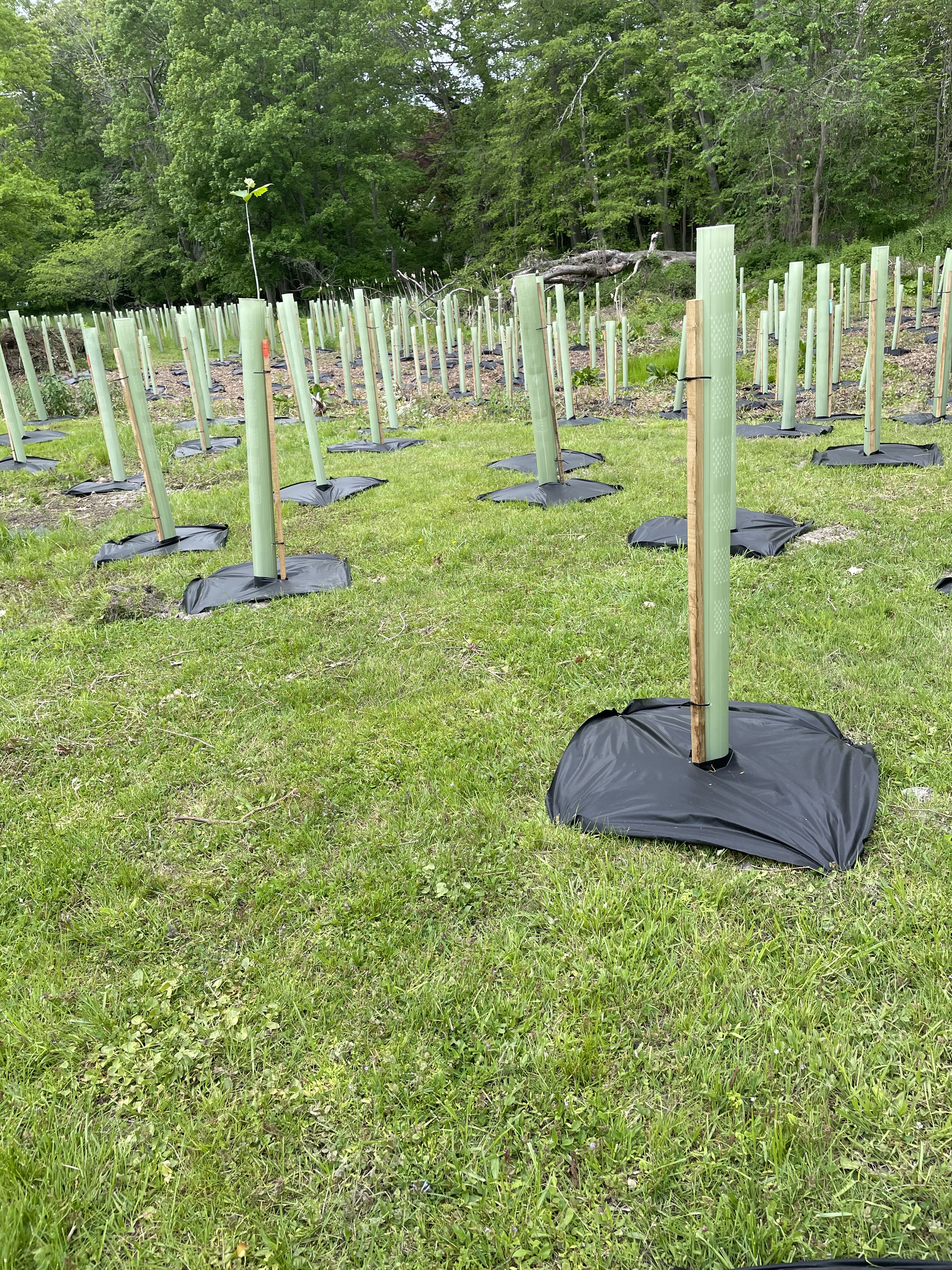
You wouldn’t know it to see the plastic tubes protecting them now, but the trees included beauties such as silver maple, river birch, black walnut, swamp white oak and others – all native species.

And the shrubs were equally diverse. It will be interesting to see what happens when these tiny creatures begin to spread their wings and fly.

2 Comments

Filed under Jean Zimmerman

They can afford to buy the wood

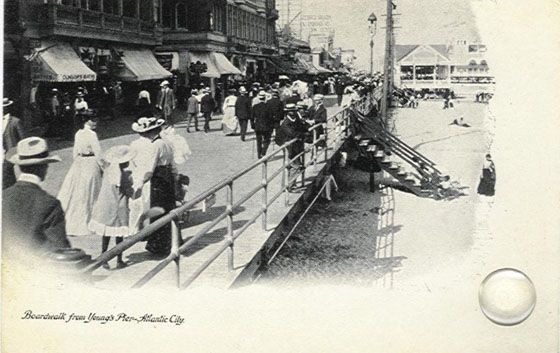
but the problem is getting ahold of the lumber. There just isn’t enough to go around in these Covid times, what with home improvement projects, the need to provide enough rooms for adults and kids stuck at home, etc. So it seemed the Atlantic City boardwalk would have to wait some more for its much needed regular makeover. Each year thirty million people flock to the 4.2 mile deck, for amusement parks, wicker chair rides, casinos, confections and ritzy hotels.

When it first opened in 1870, the boardwalk was constructed of old-growth pine, and it was actually taken up in the winter so as to preserve it for future years. What a project!

Now fir is out of the question, because the lumber that comes down from Canada has been attacked in a one-two punch – by barkeating beetles and epic wildfires. Many lumber companies simply shut down. The price of wood skyrocketed as it grew scarcer. The wood for an average American house now costs 24,000 than it did before. The preferred “species” of wood for building, called Canadian spruce-pine-fir lumber–the name for conifers grown north of the border–is now recognized as the precious resource it always was.

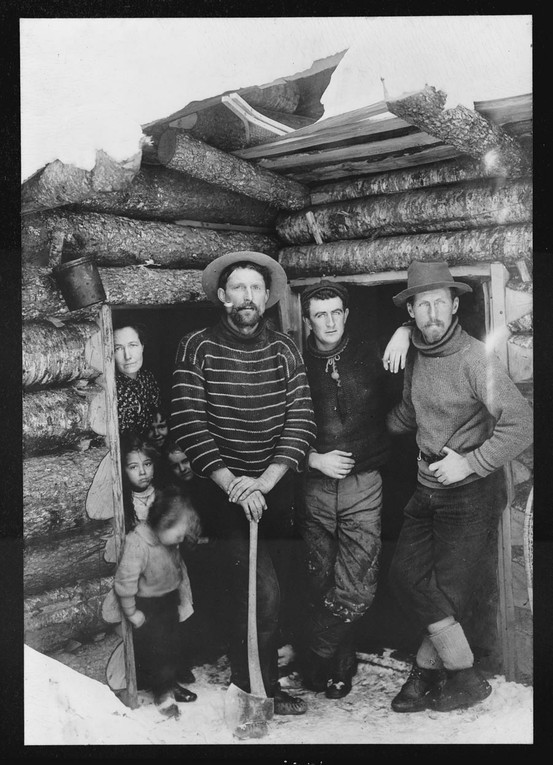
Why is all that lumber coming from Canada, anyway? Let us think back to earlier times, when the boardwalk was first built, of pine. Lumberjacks, also called shanty boys, woodsmen, pinery workers, were a brawling, crapulous, foul-smelling, obstinate bunch, pursuing one of the most dangerous and arduous professions on earth.

In 1880, the development of the two-man cross-cut saw, with alternate raker teeth to remove sawdust quickly, hurried the white pine apocalypse far from New Jersey, in the great midwest. Before that, the big trees were felled by ax.

Because the massive, eighteen-ton white pines had to be transported by waterway through the roadless American wilderness, the relentless harvest proceeded across the country river by river, watershed by watershed, from the Saginaw to the Wisconsin to the Chippewa and the St. Croix.

In the spring, the elite of the lumber world, the best men of every crew, guided the huge log rafts downriver to mills. They called themselves “river pigs,” and they engaged in what might have been the most lethal commercial occupation in American history.

Balancing on rolling logs in freezing, spring-swollen waters, breaking up snags and jams with sharpened canthooks called peaveys, the river pig was part acrobat, part wrestler, part matador. Every season, along with the logs, the corpses of drowned or crushed river pigs would float into the booms where the mills collected their raw timber. But the danger only increased the prestige of the profession.

New Yorker

Then it was over. In less than two hundred years, the logging companies and timber barons clear-cut huge swathes of the American landscape, Maine to Minnesota, before decamping to the do the same to South and the Northwest. It was not until 1979 that the last timber river run in North America occurred, on the Salmon in Maine, but that was a throwback, and the frenzy had ended long before.

Atlantic City has found a solution to the shortage of conifer timber. A few years back it went over to untreated exotics, such as cumaru, a rich and naturally durable Brazilian wood, which is unlikely to burn and also, happily for barefoot boardwalk trippers, unlikely to splinter. Some specimens are 1,200 years old, and they have a fruit, called a tonka bean, whose use rather than cutting down the trees themselves could make the growth of the cumaru tree sustainable.

Would you rather have an intact boardwalk or an intact rainforest?

Leave a comment

Filed under Jean Zimmerman

Venus in Ash

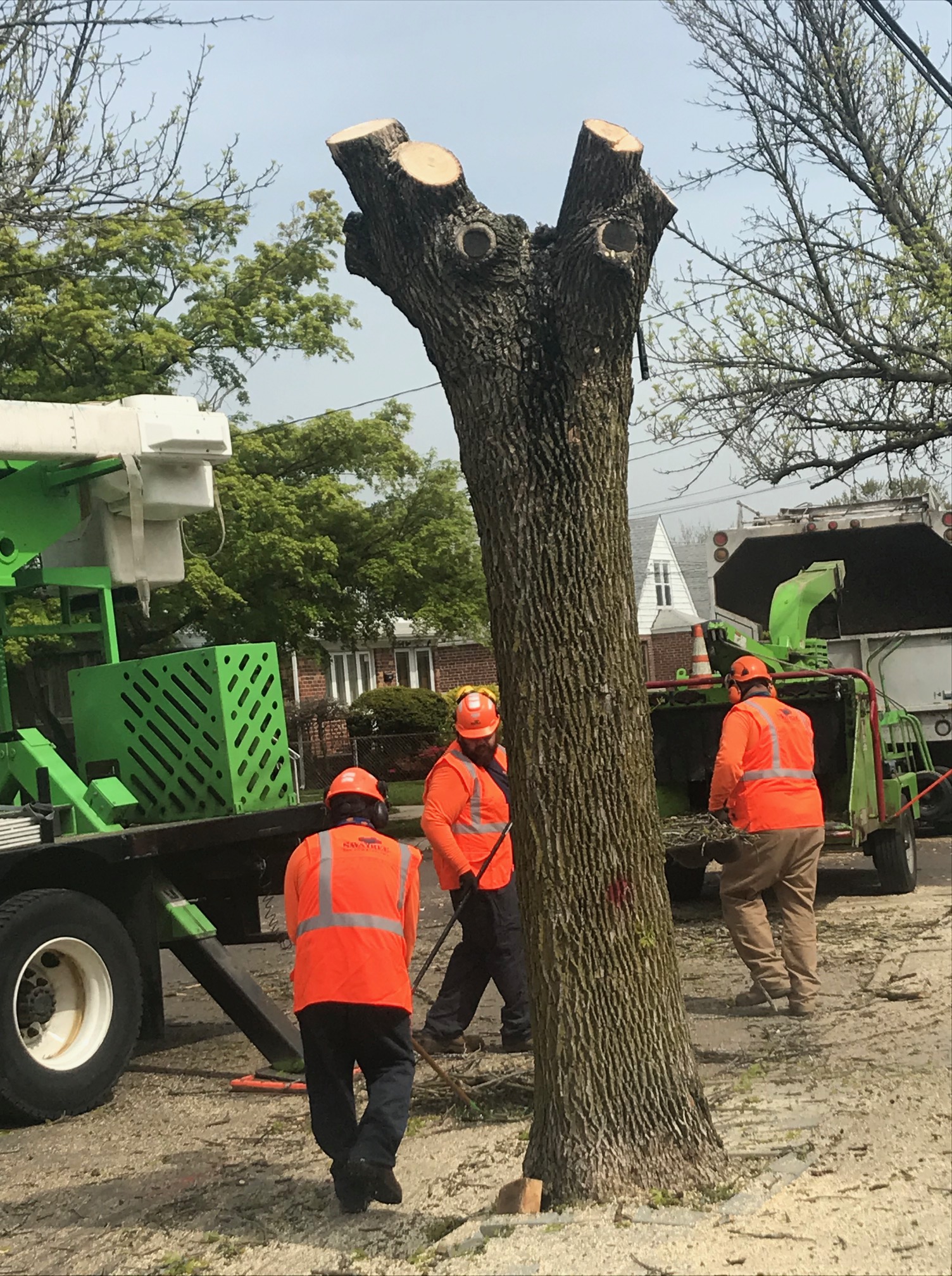
When the crew cuts down a tree, they lop off the upper branches first. The pruner in the bucket lowers the limbs carefully to the ground where, shaggy and brittle, they are fed into the monster of a chipper. Then the pruner glides through the air as the bucket returns to the truck.

What has captured my imagination watching tree after tree fall is what’s left standing, a chain-saw sculpted Venus to Milo. The Roman goddess of beauty, desire and ferility all covered in bark.

The Venus de Milo is widely agreed to be the work of Alexandros of Antioch. The statue is believed to depict Aphrodite, the Greek goddess of love and beauty, and it bears the name of Venus the Roman counterpart of Aphrodite. By the time it got to the Louvre it had been reassembled but the arms were never found.

The beautifully smooth Cycladic figurines, which are fairly numerous, came from Greece around the middle of the third millennium Bc. How often do you hold your arms crossed every day? Something so small generates so much power.

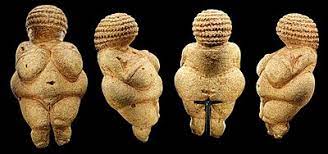
I love the even earlier Venus figures, one of which is the Venus of Willendorf.

She emerged from with all her limestone bumps and curves, evidence, say the archaeologists, of early female deity worship, dating to between 33,000 and 20,000 years ago. Austrian. Some knowledgeable people think they were self portraits. As ample as they are, they are missing one feature: feet.

They are imperfect Venuses. Aren’t we all?

1 Comment

Filed under Jean Zimmerman

Requiring no soap,

forest bathing, or shinrin roku, was officially invented by the Japanese in the 1980s to help people  dealing with burnout in the big city. Doctors still prescribe it. I don’t think it involves lying prone as in a bathtub though I suppose it could.

Trees release antibacterial and antifungal phytoncides into the air, possibly boosting the immune system.

I also am not aware of whether it is necessary to do your forest bathing in an old growth forest, say Washington’s Hoh Rainforest in Olympic National Park, or Rockport, with its hundred year old trees, or Alaska’s Tongass, the largest national forest in the U.S., impressive as they are, or whether spending some time in Hillside Woods in my hometown would do the trick. I think the latter.

Old growth was newly coined by ecologists in the 1970s, and it meant woodlands that had been undisturbed for more than a century. Around where I live, on the East Coast, we don’t have many of those, though the NYBG boasts about its teeny patch of virgin land, Thain Forest, at 50 acres. They say beaver live there. In the Bronx. Here, forests have been cut down to one percent of their original volume since European colonization.

It’s a far cry from Poland and Belarus’s 548 square mile Bialowieza where the world’s largest population of European bison lives.

I would much rather be bathing in one of these forests right now rather than writing this post, so I think I will climb into the bathtub and dream of lofty ancient trees hung with moss.

Leave a comment

Filed under Jean Zimmerman

Flaggers are gods

or goddesses, in my opinion, and I am neither, so what am I doing flagging? Any port in the storm, I guess, and we were a worker short today on 114th Street in Queens, where the job was grinding stumps of the ash trees that we had removed last week. I am usually the arborist supervising the job, and my flag was rather pathetic.

I used to know a flagger on another job. Her name was Pauline but for some reason the crew insisted on calling her Paulina. She was Jamaican, and when she spoke to someone from her homeland I found her patois impossible to understand, though of course she spoke perfect English. She managed the eight lanes of traffic at 167th and Webster Avenue in the Bronx like she was coaxing a gaggle of hornet-tempered ballerinas into performing a beautiful Swan Lake, making sure each vehicle knew its proper place and nobody died.

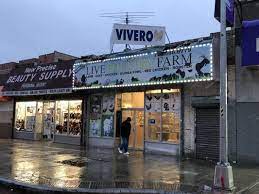
When the traffic fumes choked me, I took refuge in the live poultry place, a misnomer because it also had rabbits, chickens and goats for sale, and, during Eid, fine young cows.

I socialized especially with the goats, and made plans to adopt one and give it to one of those farms that takes in orphaned creatures, until I called around and found that no one would take an animal from a live market on the theory that it would only encourage the practice.

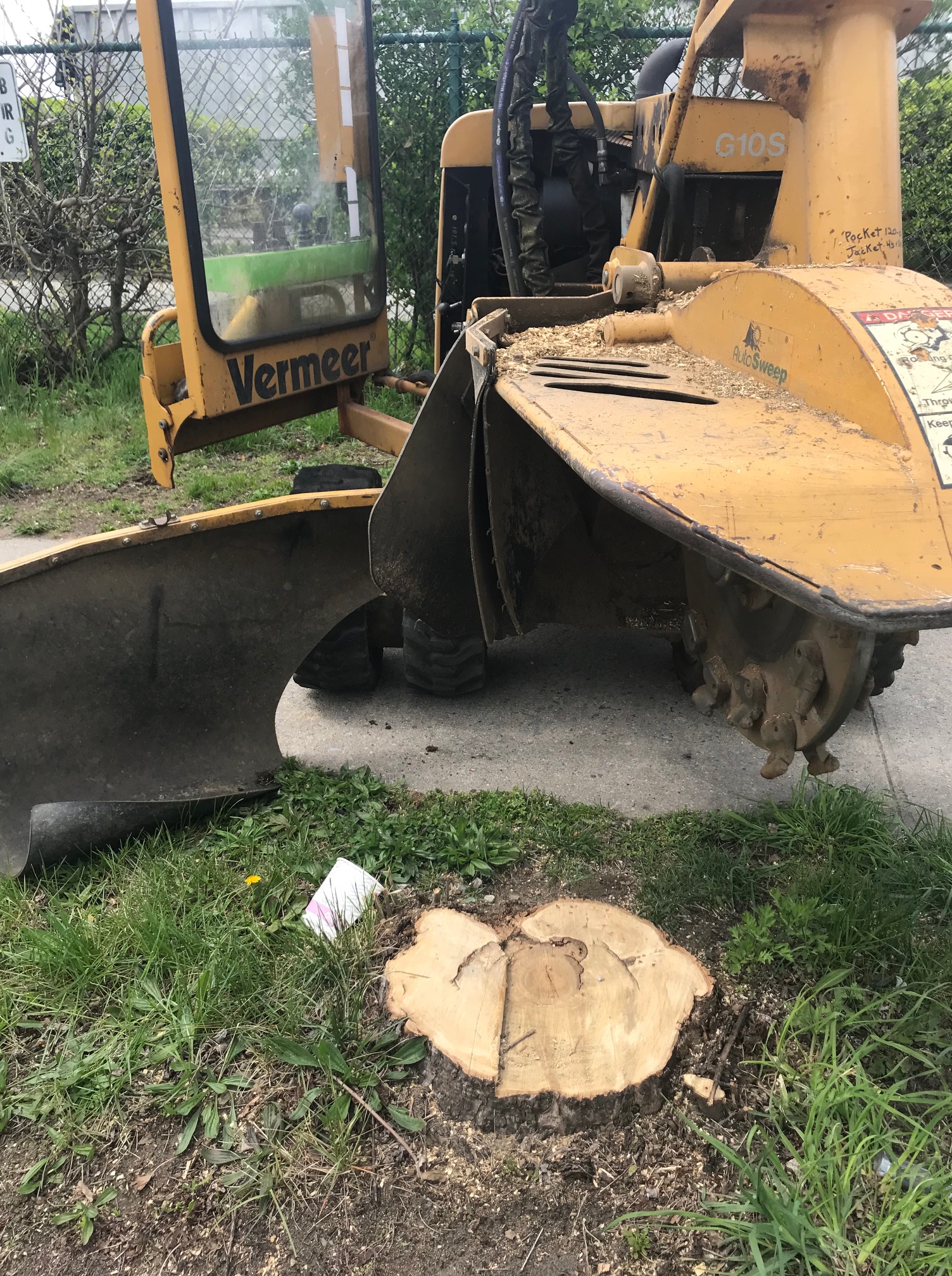
In Queens, they use a Vermeer to grind the stumps. 

When I first saw a Vermeer on a job, a bigger one, I thought it was so odd to name machinery after a fantastic Dutch painter.

But each has its own beauty, I guess. The stump grinder performs its function beautifully.

Standing on the sidewalk with my flag, I see that Queens is not without flamboyant flowering fruit trees.

A couple who had bought their home 50 years ago, they said, lamented the destruction of the ash trees across the street. They were sick, I tell them, they were dying. And I thought to myself, Look up and savor the gigantic Ginkgo bilobas with their tiny emerging fan leaves that grow on your side of the street.

Ancient Ginkgo trees aren’t getting sick anytime soon.

2 Comments

Filed under Jean Zimmerman

Yes, yes,

I know. I already saw more cherry trees in bloom this year than anyone would probably want to see.

But here I was, going back to the New York Botanical Garden in quest of the Higan cherry, which has stupendous flowers not only in spring, but reflowers in fall. What magic. Prunus subhirtella, apparently a wild cherry from Japan, was introduced in this country around 1862, and the weeping version, pendular, is especially popular.

We heard that we would find one in the rock garden, and followed some paths to find it. Saw the less genteel back side, literally, of NYBG when we took a picture of a gardener hard at work. He shouted at us to stay on the path.

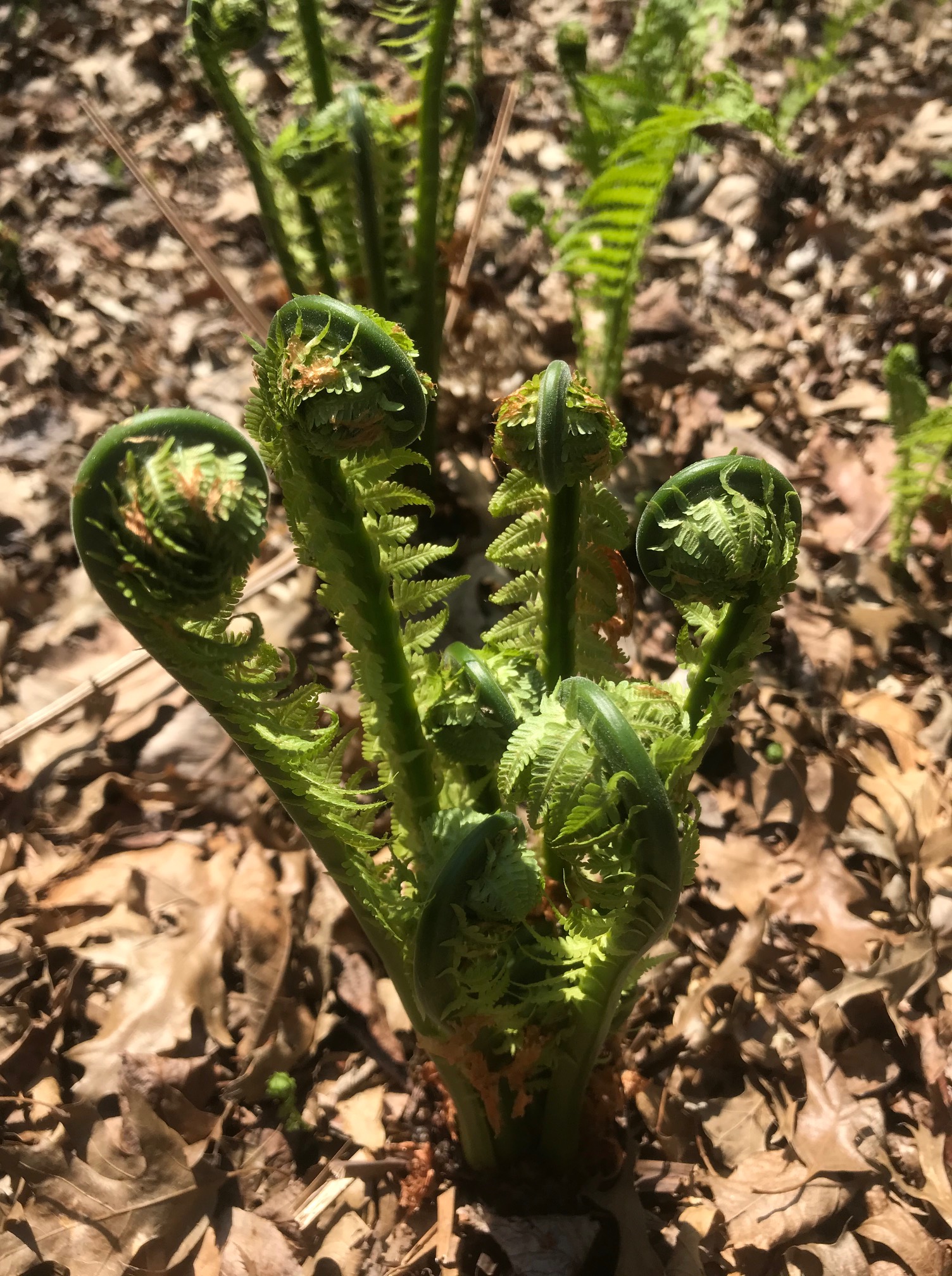
Admired some fiddlehead ferns, as the straw-bonneted garden docent leading a tour kvetched about the excessive foraging that has made this delicacy hard to find..

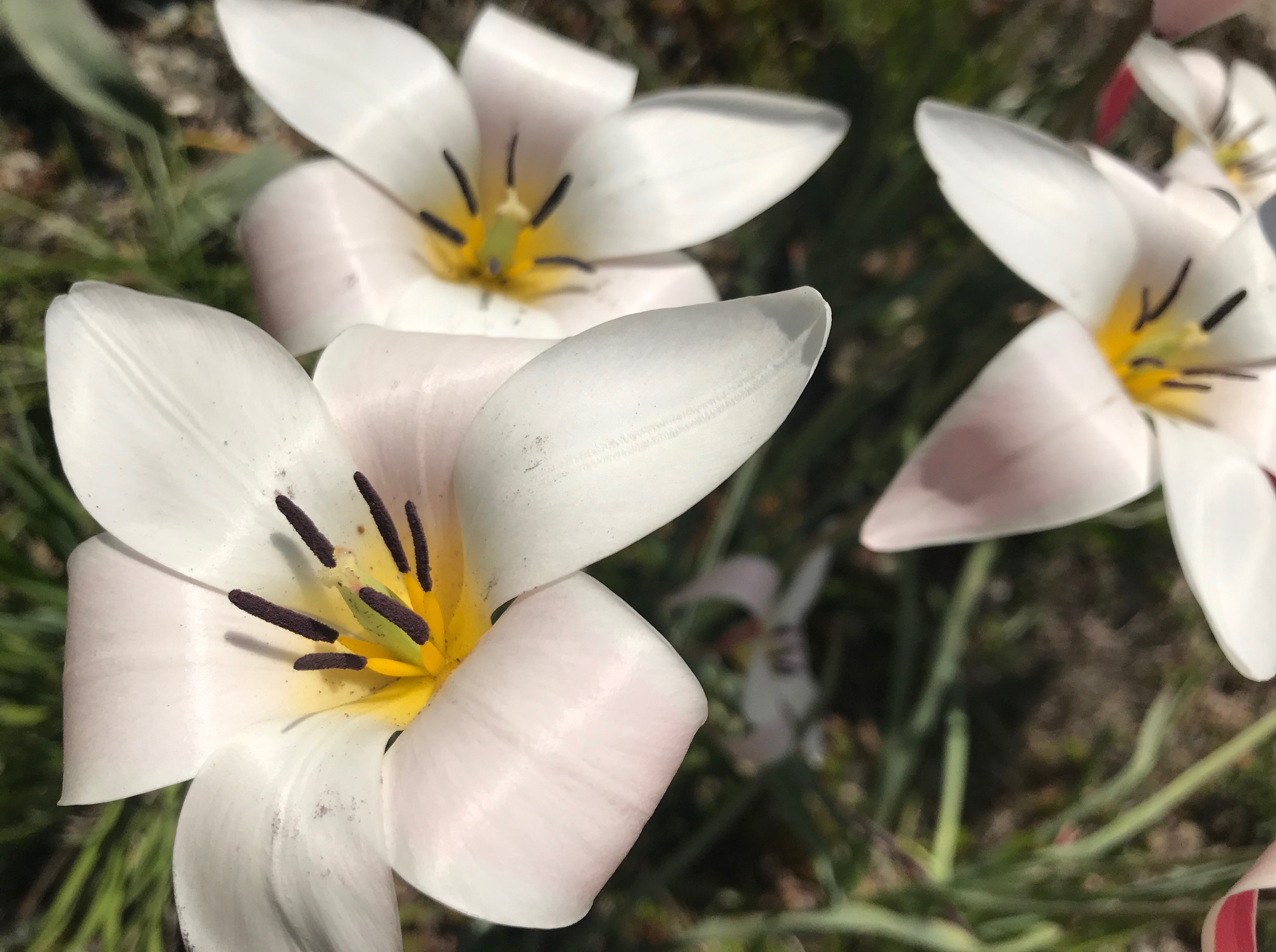
The rock garden was profusely in bloom.

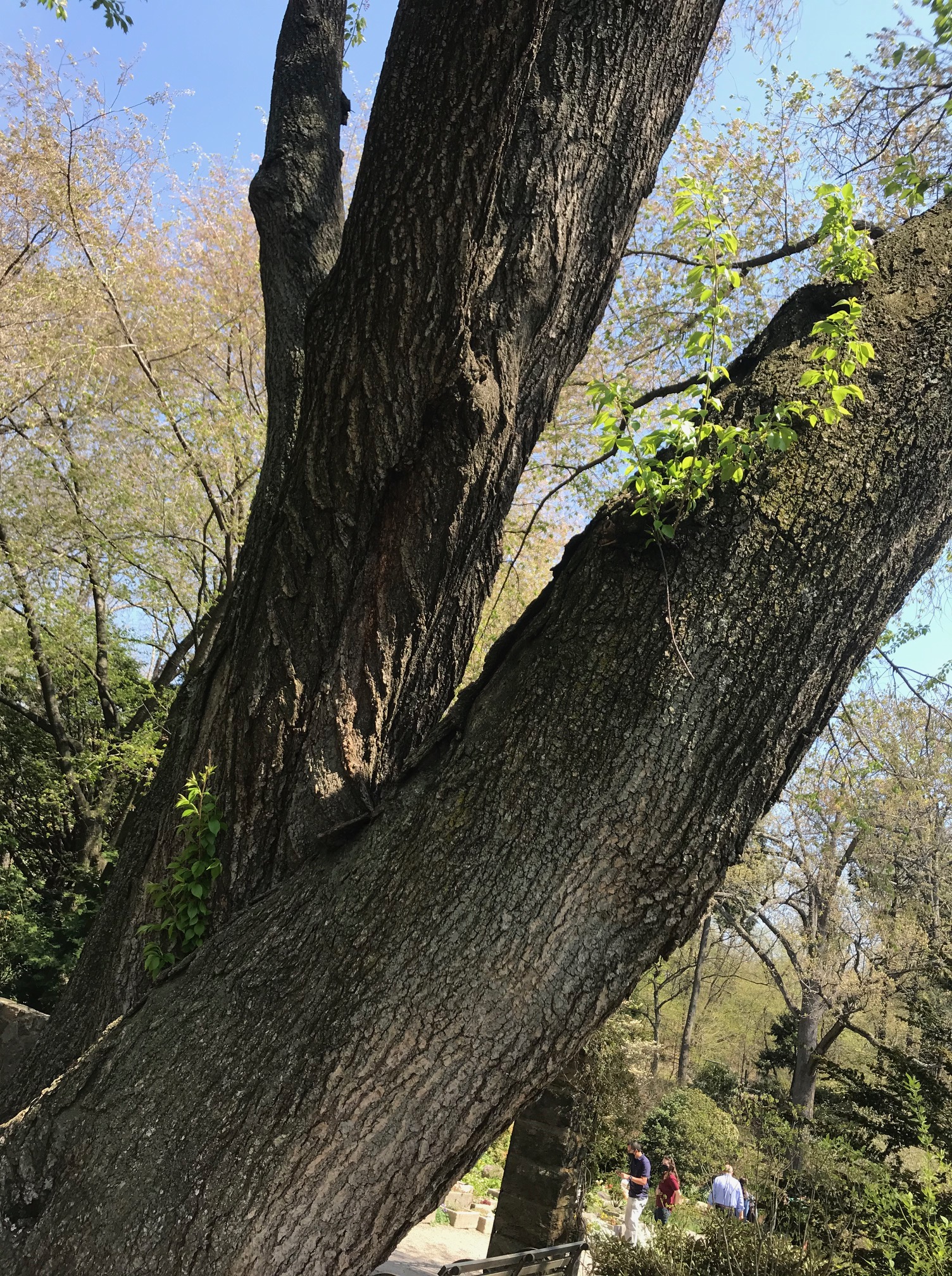
We passed a huge, bulbous tree as we entered. But no cherry. We asked another straw bonnet if she knew where it was. Ask him, he’s the boss, she said.
I can look up any plant in the garden with this, he said, balancing his tablet. A tech head with dirty hands.

Well, it looks like you’re a couple of weeks late for the Higan cherry to bloom, he said. But as soon as you exit the rock garden you’ll see it.

We’d already seen it! But I had never seen a cherry like it. When I think of cherries, I think of lenticels, which allow a gas exchange between the atmosphere and the tree’s internal tissues. I just think they look cool.

They help the tree breathe.

The NYBG’s Higan cherry had nary a lenticel. It had grown past the need for lenticels, it would seem. It was an elephant among cherries, a behemoth. A cherry tree in the same sense that King Kong was an ape.

When you stood away a ways it took up the sky. The boss had said to look for the white petals scattered beneath the tree. Even a straw bonnet would be hard pressed to find one.

You don’t have to consult a tablet to know they’ll be back in fall.

1 Comment

Filed under Jean Zimmerman

Ashes of Queens

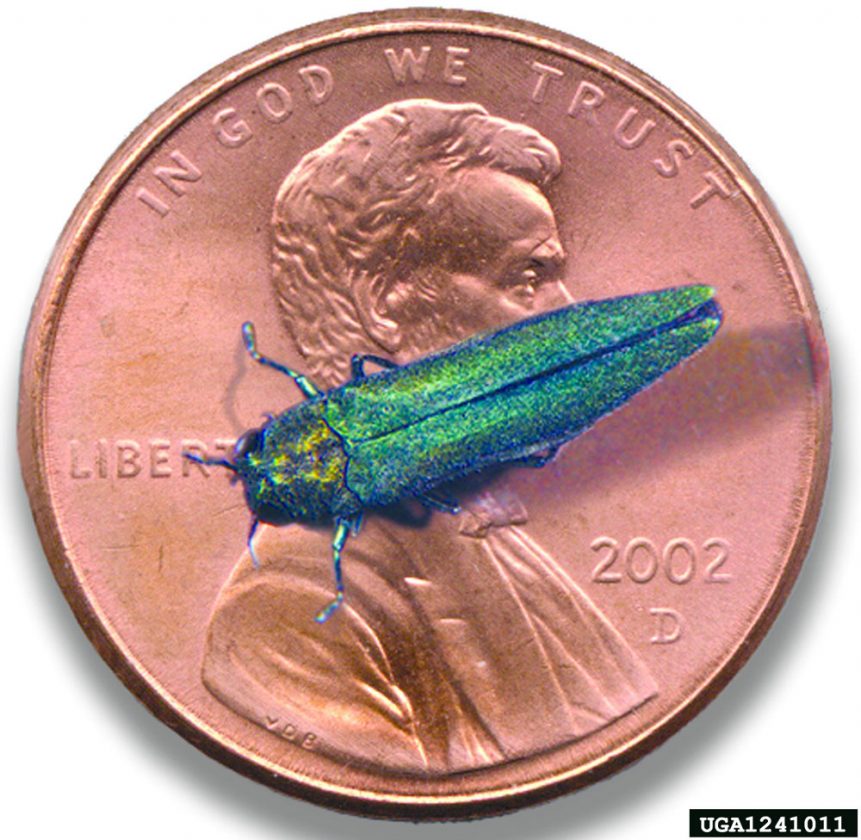
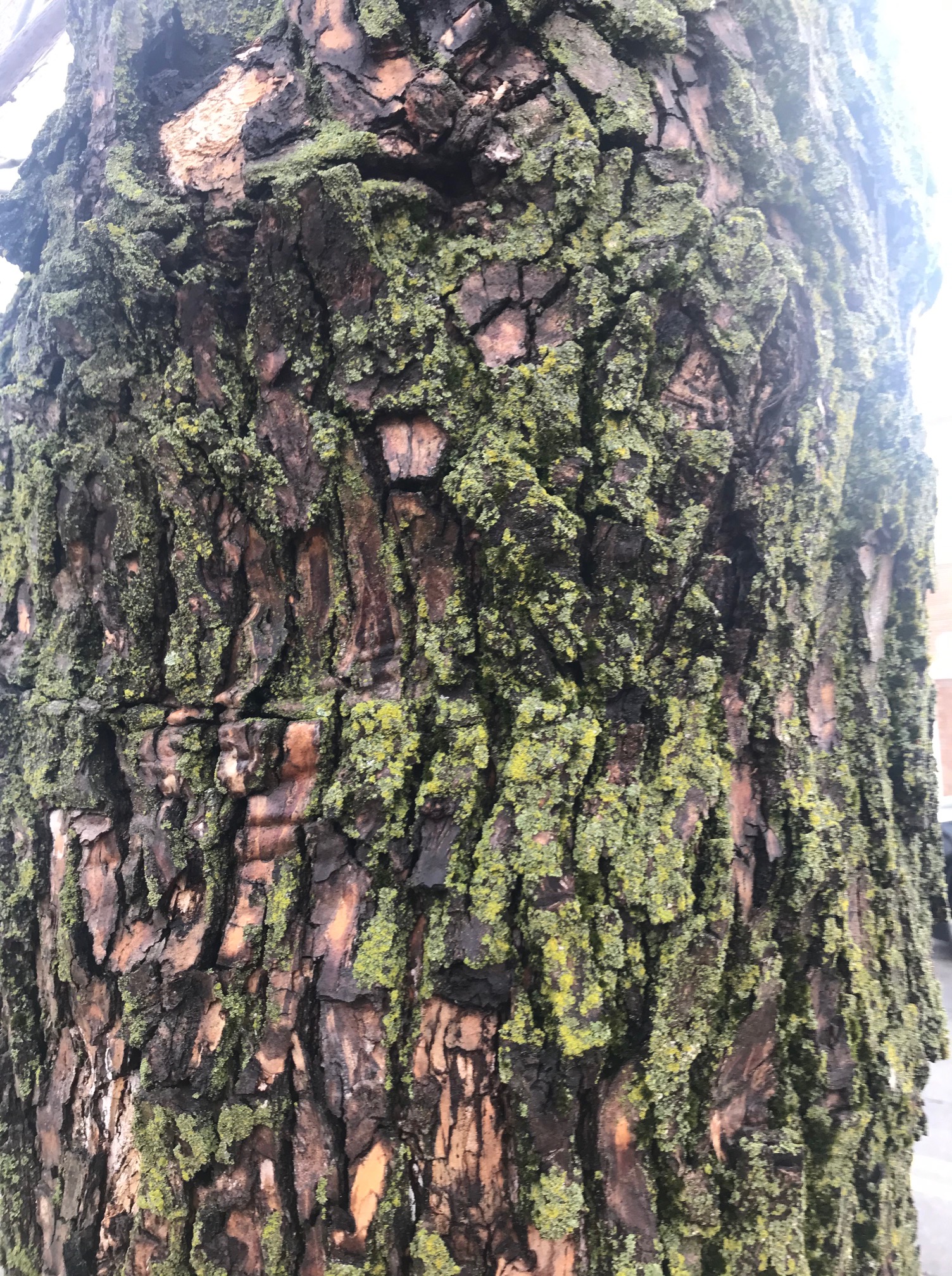
It was the first day of my company’s contract with the New York City Parks Department to remove all the borough’s “EAB host” ash trees. Arthritic, messy, rough scaled, the trees on the streets of Queens had suffered the depredations of the Emerald Ash Borer and barely survived.

These insects enter a tree and do their damage from the top down. Eggs laid on the tree hatch, enter the bark and feed on the phloem and cambium, interfering with the tree’s ability to transport nutrients and water, overwintering in the outer sapwood or outer bark.

They make these crazy chutes and ladders as they make their way inside the tree, which you can see if you pull away the trunk.

The fear of the City was that a bruising storm might cause the trees to shatter, bringing down heavy limbs on the nearest baby carriage going by. Weakened, rotten at the core, they might fall over on you or me.

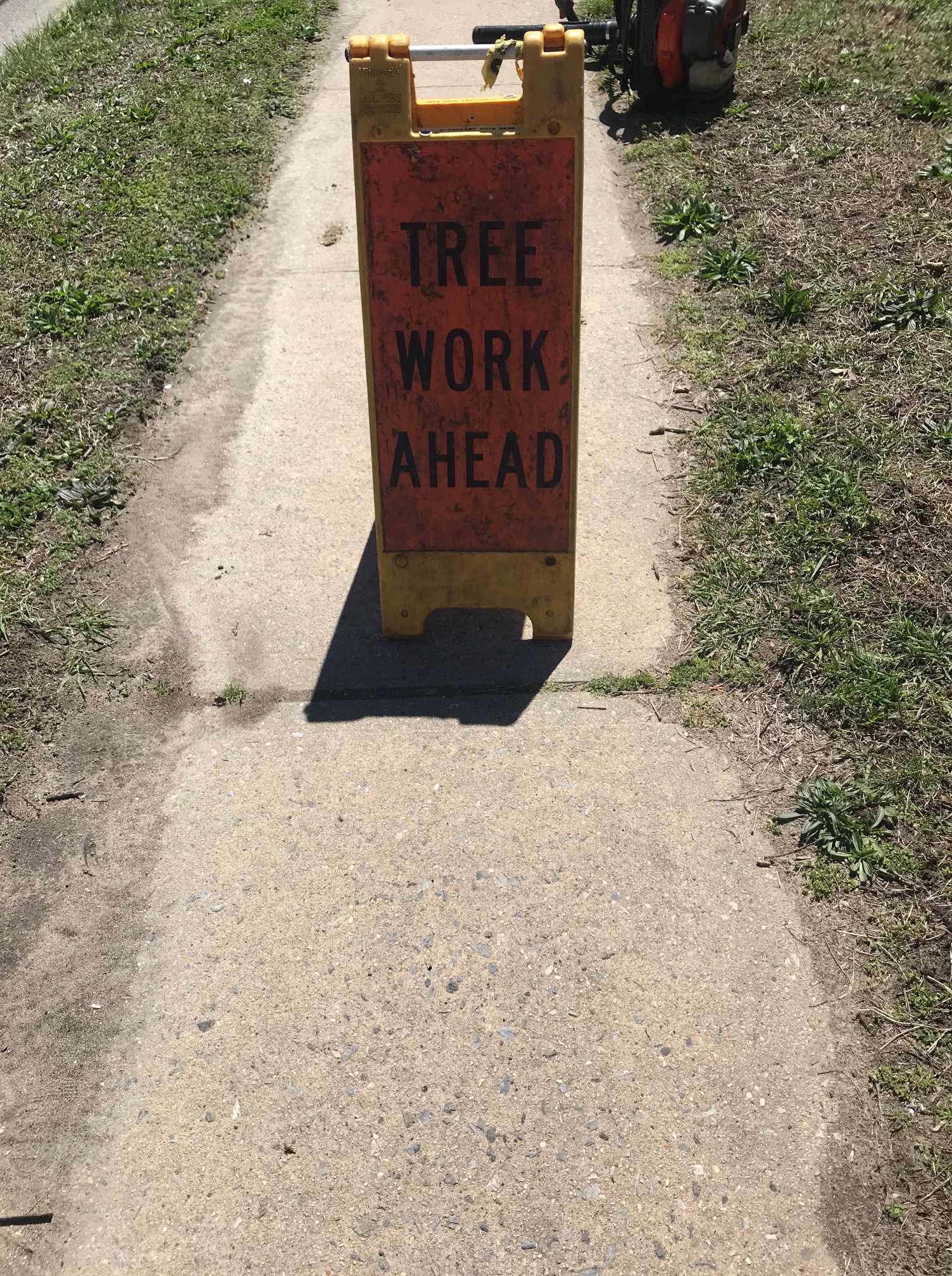
We will cut down over a thousand. This is a big deal project, over two years. My job on the site as a certified arborist is only to keep an eye and make sure things go right, although the crew is so great they don’t need any watching over.

There are other observers too, among them the R.E., Sam, from Arcadis, who spends his working hours inspecting planting and other sites city wide. He had some experience previously with ash as lumber, at a company in western New York that harvests trees 30-40 inches in diameter.

There are still ash trees unaffected by the EAB, outside of NYC, but the number is dwindling, and baseball players can no longer count on a pale, long-grained, nearly shatterproof bat.

Adam, my colleague, and I marked the trees slated for removal with red paint.

When the branches and trunks were being fed into the chipper, I took a walk down the block and saw a few of the things that make Queens so delightful.

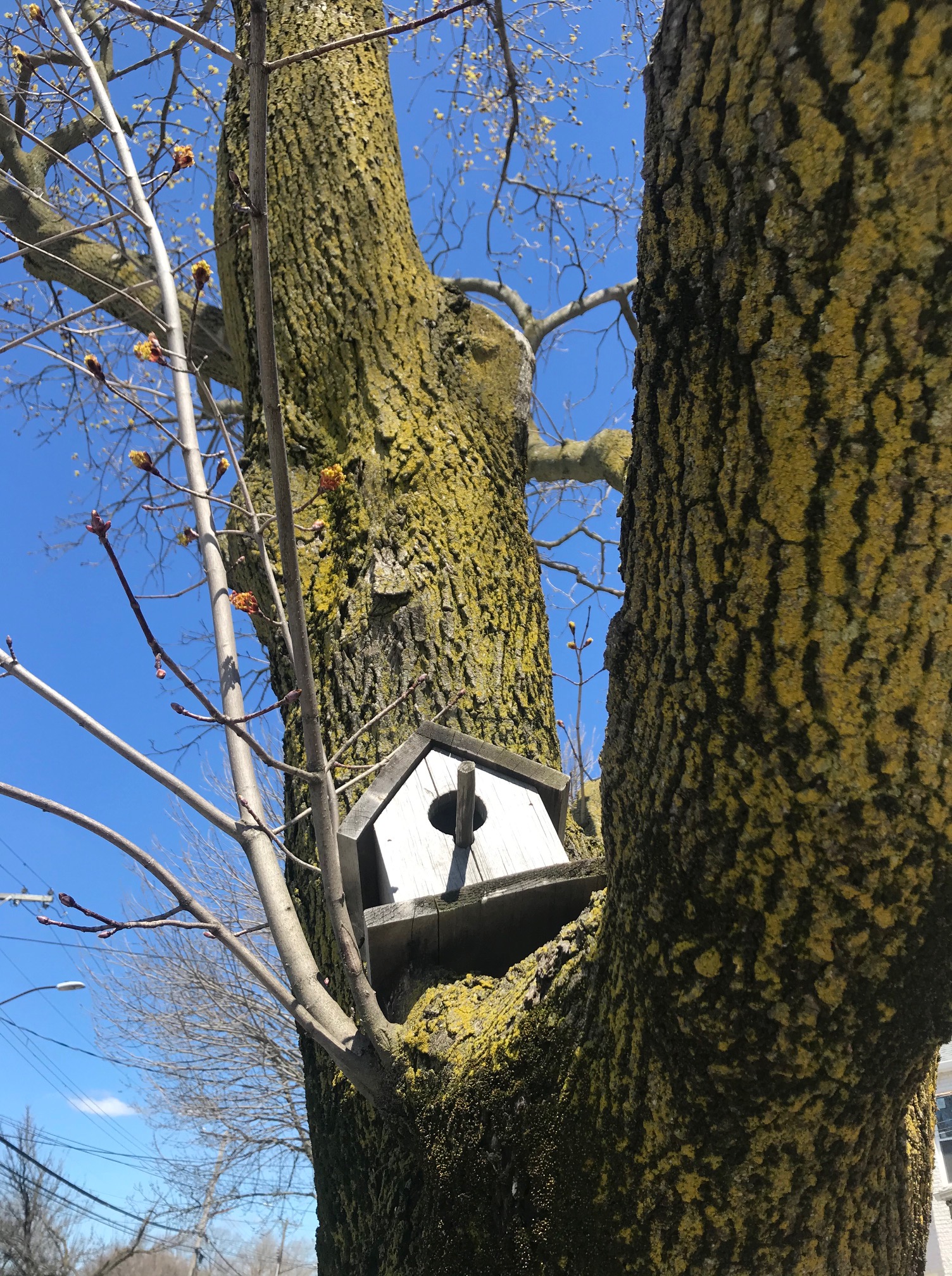
A bird house.

A ghost bike, put there as a memorial for a cyclist who was killed on the spot. This is a very small bike. I hope the rider was not that small.

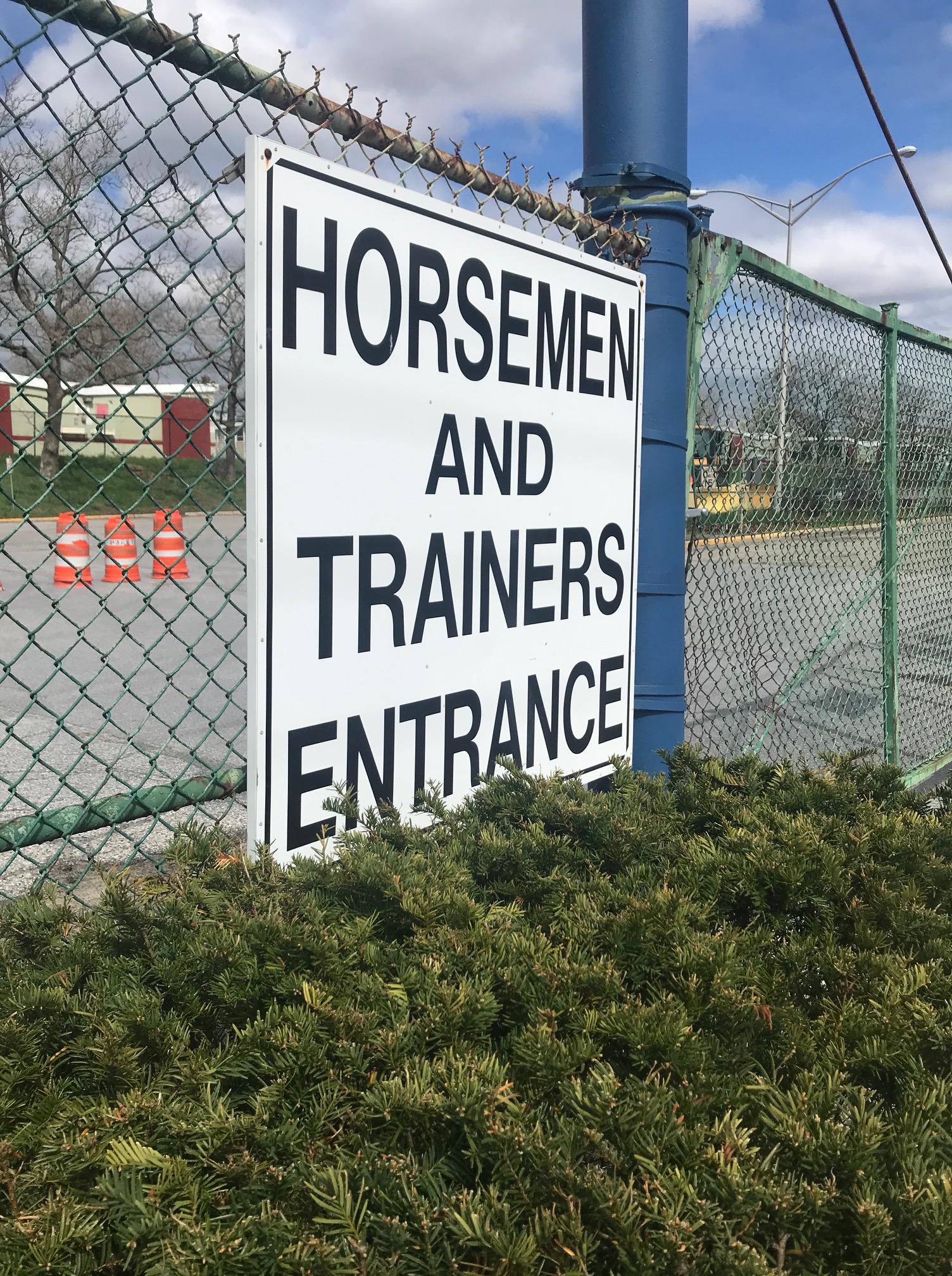
The back side of Aqueduct Race Track.

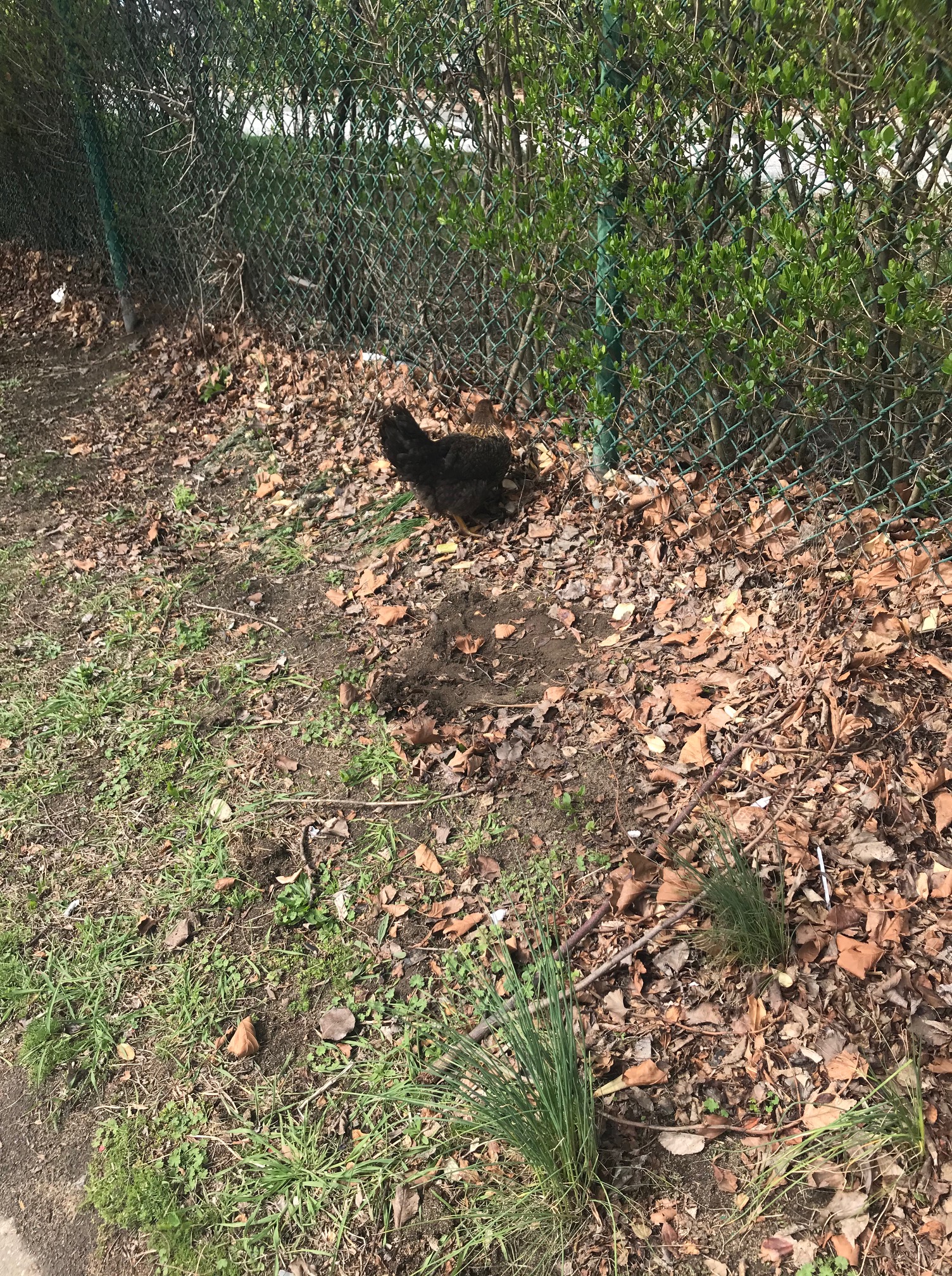
A live chicken, at first blending in with the leaves but with all her bustling about, trying for some reason to get through a chain link fence. Chicks inside?

 I checked back later, thinking I should have lofted the hen over to where she wanted to go, and she had vanished. Such are the mysteries of Queens.

Will there be new trees planted to replace the ones removed? People always want to know. Perhaps a pretty, manageable cherry tree. We always have to tell people, That is for the City to decide. We are just doing This.

Leave a comment

Filed under Jean Zimmerman