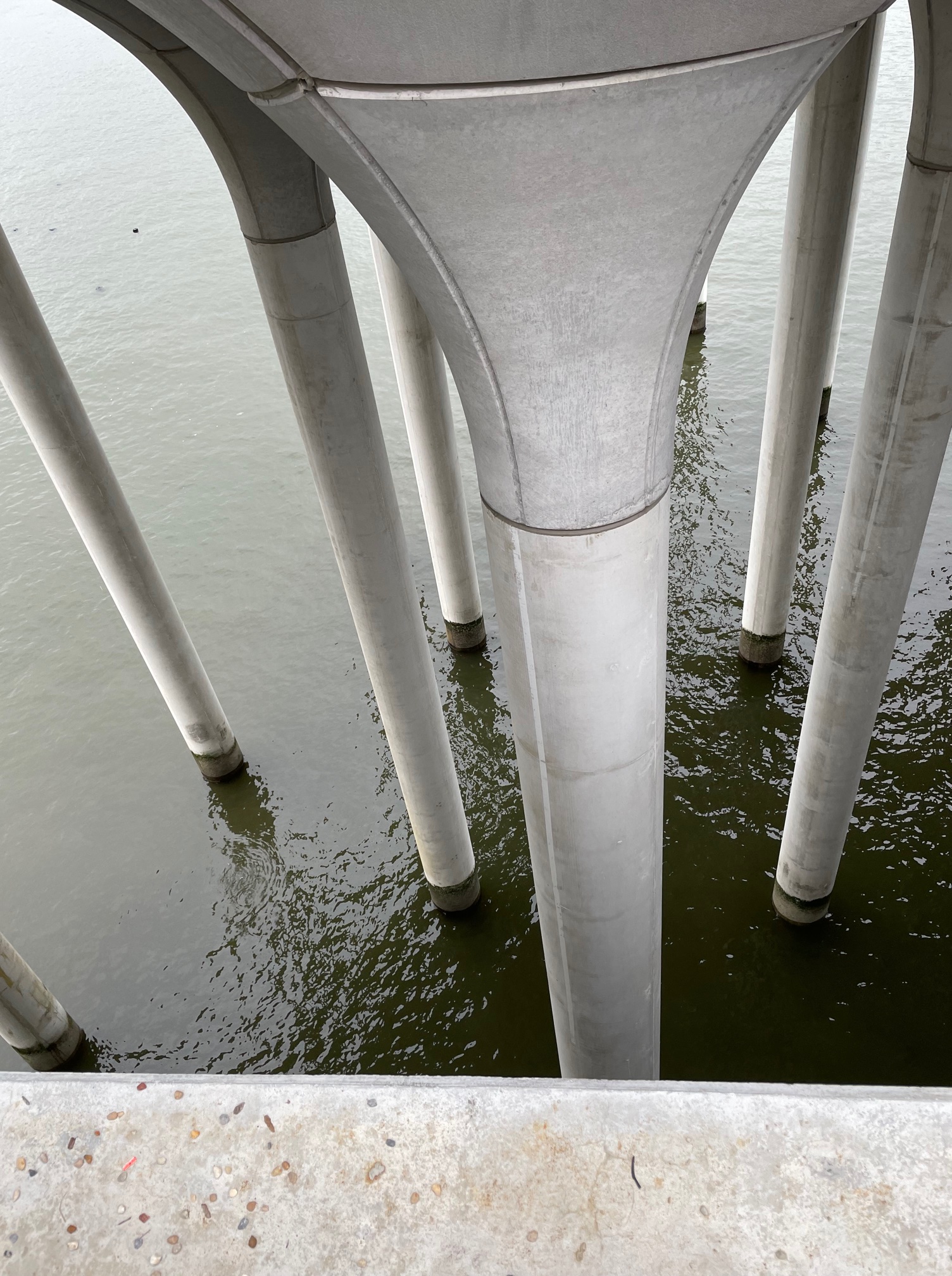
What on earth?

Actually, not earth at all, but the Hudson River at Pier 55, now a surreal topography of walkways, views, plantings and trees.

After Superstorm Sandy, Barry Diller decided he might as well plunk some of his millions into creating this new park, named Little Island. Two hundred sixty million dollars. Would it be boon or a billionaire’s boondoggle, we often wondered as we drove past the construction site just off the West Side Highway. It took four years to plan and three to build this 2.4 acre park with its 132 tulip-pot modules, each one of them unique in form. The park itself is a perfect square. It has just opened to the public, right as the population is exploding with post-Covid energy, vitality, euphoria.

As any place in New York, the people are the real attraction.

But I marveled at the landscape, created by Signe Nielsen at MNCA. I saw an interview with her in which she discussed the five different soil types that were used, and how the engineers had to face off against the gardeners to make sure that none of the tulips would drop into the drink.
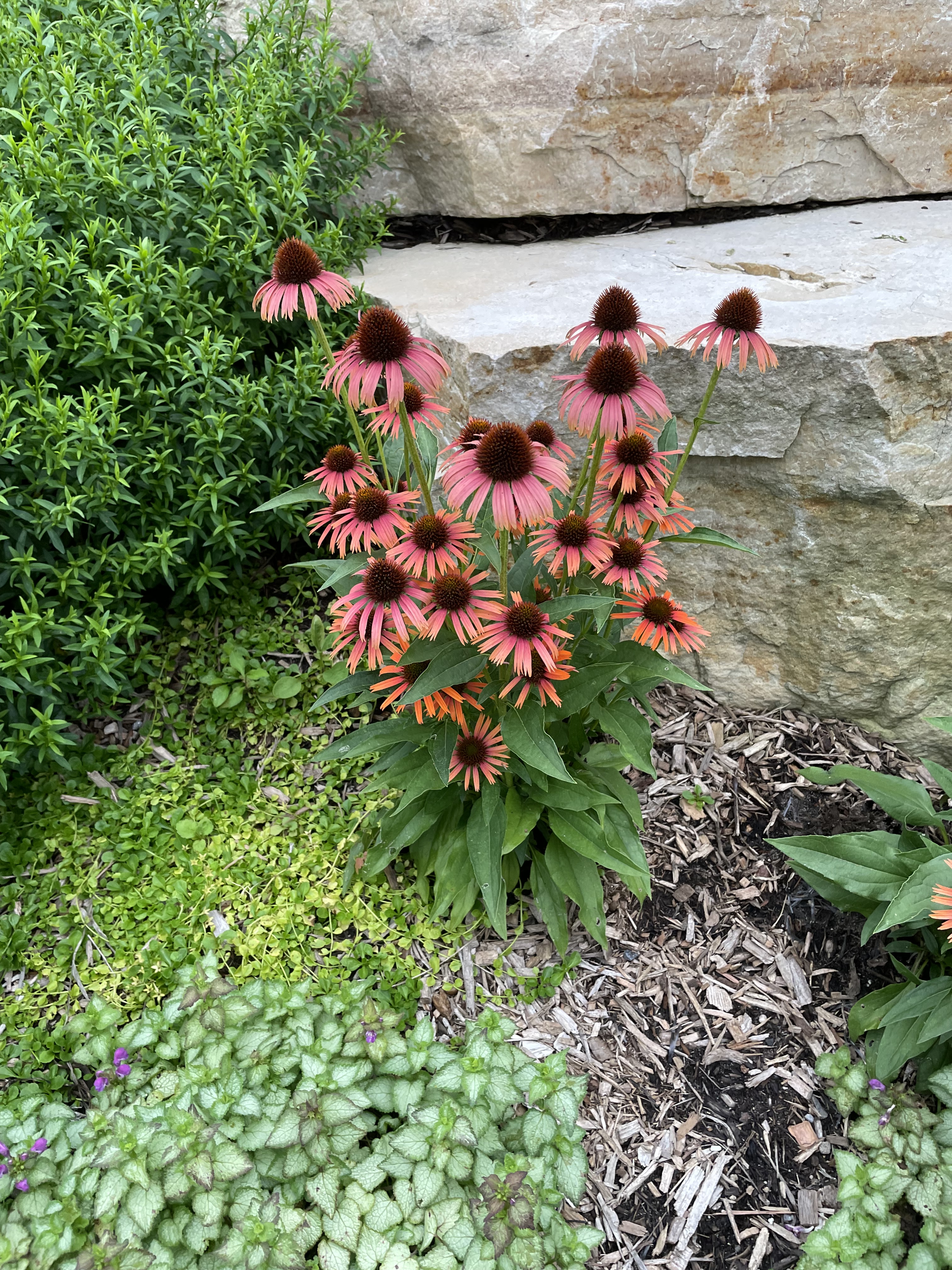
Soil is heavy. Plantings carry weight too
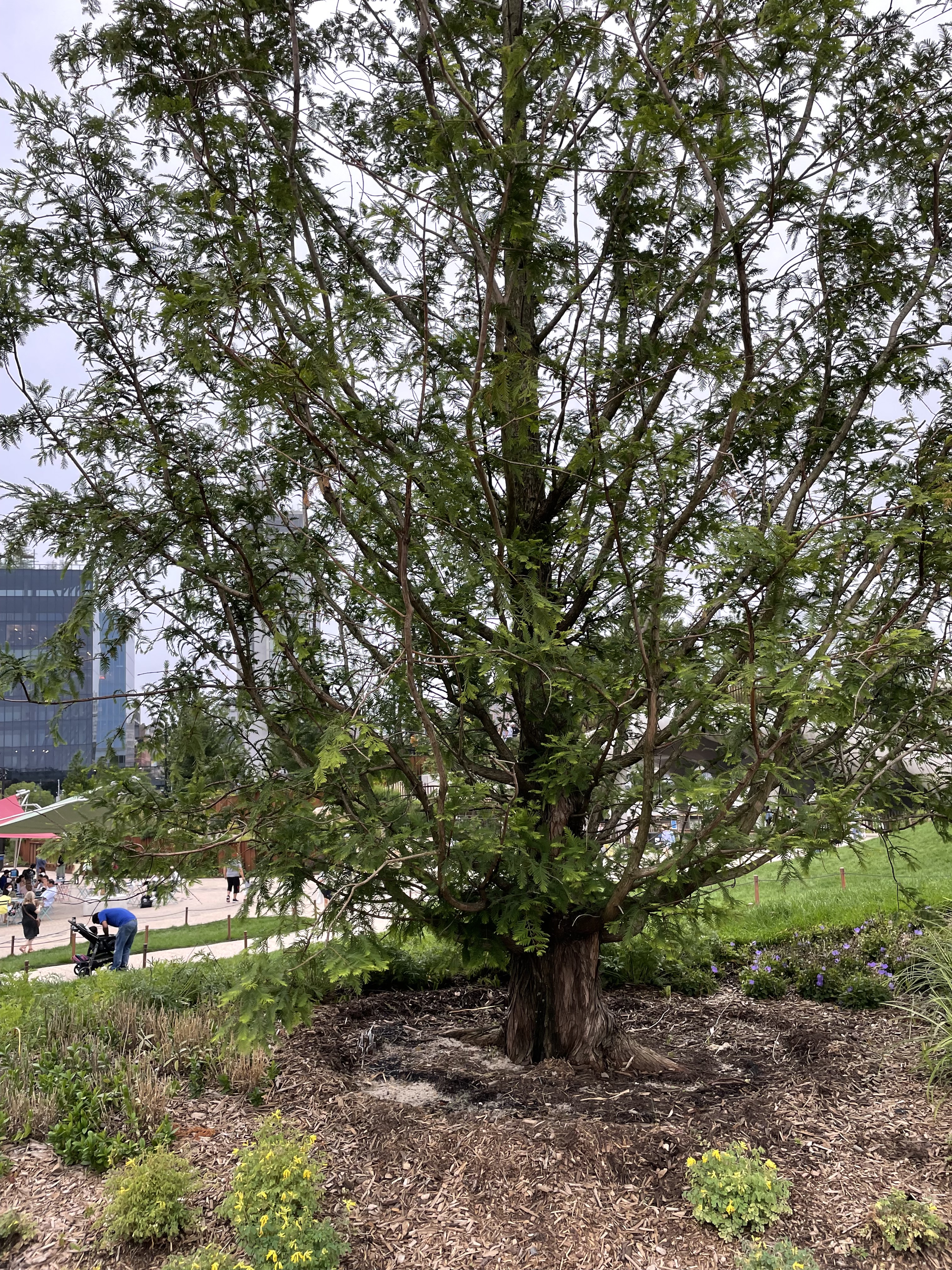
Heavier still: trees. And this is the most remarkable thing about Little Island, the sheer number of mature trees planted by crane all over the park. This dawn redwood would be at home in an arboretum.

The root balls were huge. The trees are anchored by 4-10 steel straps, guy wires, atop the root balls, where they can’t be seen by passersby. It all looks impossibly natural and easy but is terrifically engineered. There are 114 trees, 35 species, from kousa dogwood to cedars of Lebanon, including 19 of what the planners are calling “hero trees”—the mammoth specimens. All of them ranged from 10-12 DBH at planting and were in the neighborhood of 30-40 years old. Diller has said something to the effect of he hopes Little Island will last forever, and with the sprinkler systems and hand watering going on behind the scenes, the landscaping just might survive through the next hurricane, as they hope.

The trees were glossy, healthy.
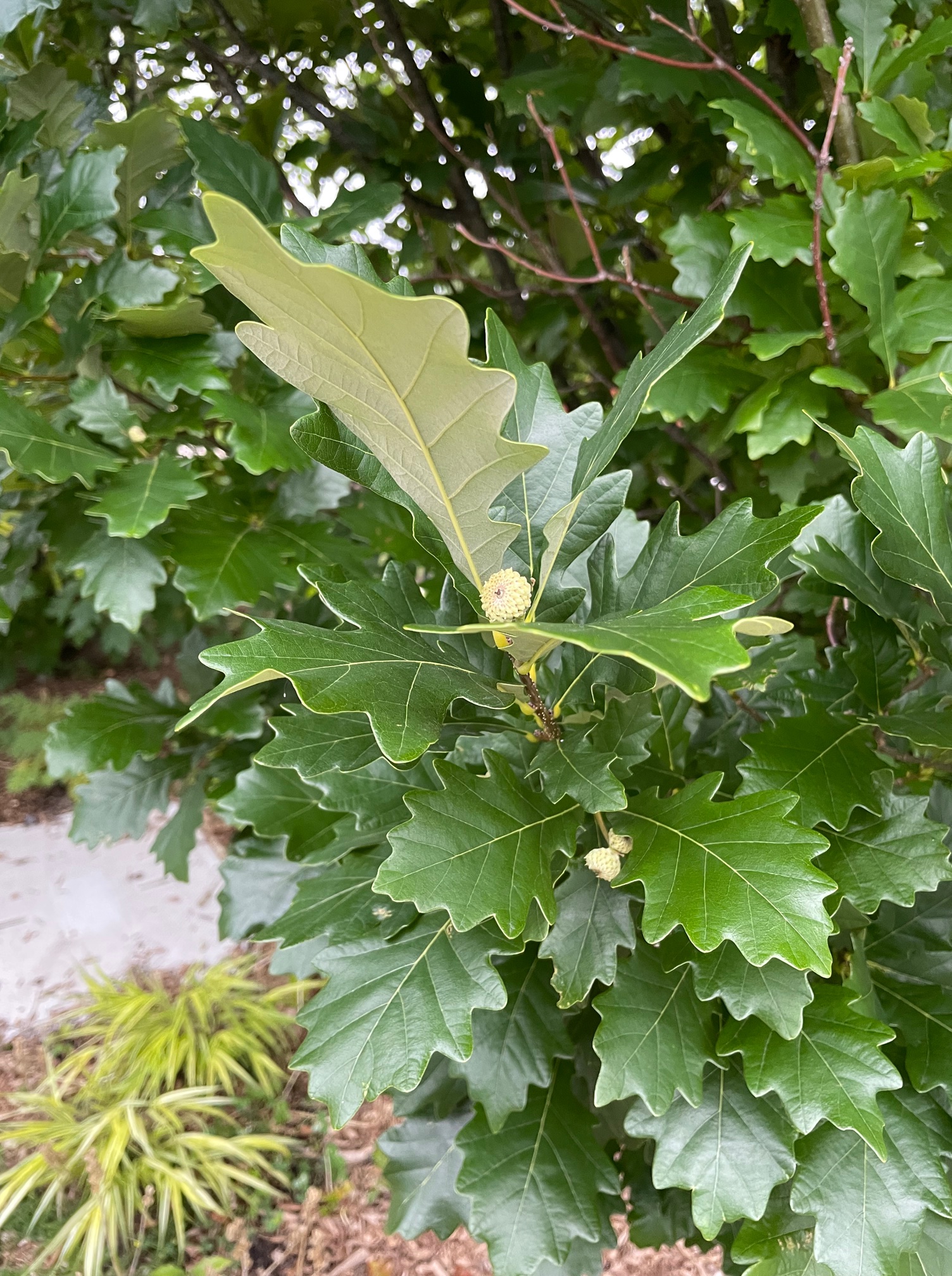
It looked like they’d always been there. It reminded me of Central Park, totally contrived in the nineteenth century to look totally natural. Little Island reminds us that at times contrivance can be fun.

But back to the people. As Gil’s mother would marvel when she visited the City, “The people! The people!”

There were guides on call in case you had a question. Meet Saul and Turow.

Polka dots.

Puppies.

Music.

I don’t know if anybody really noticed the girth of the trees around them, they were so engrossed in the views – all the way down to Lady Liberty. Or New Jersey, in this slightly more mundane view.
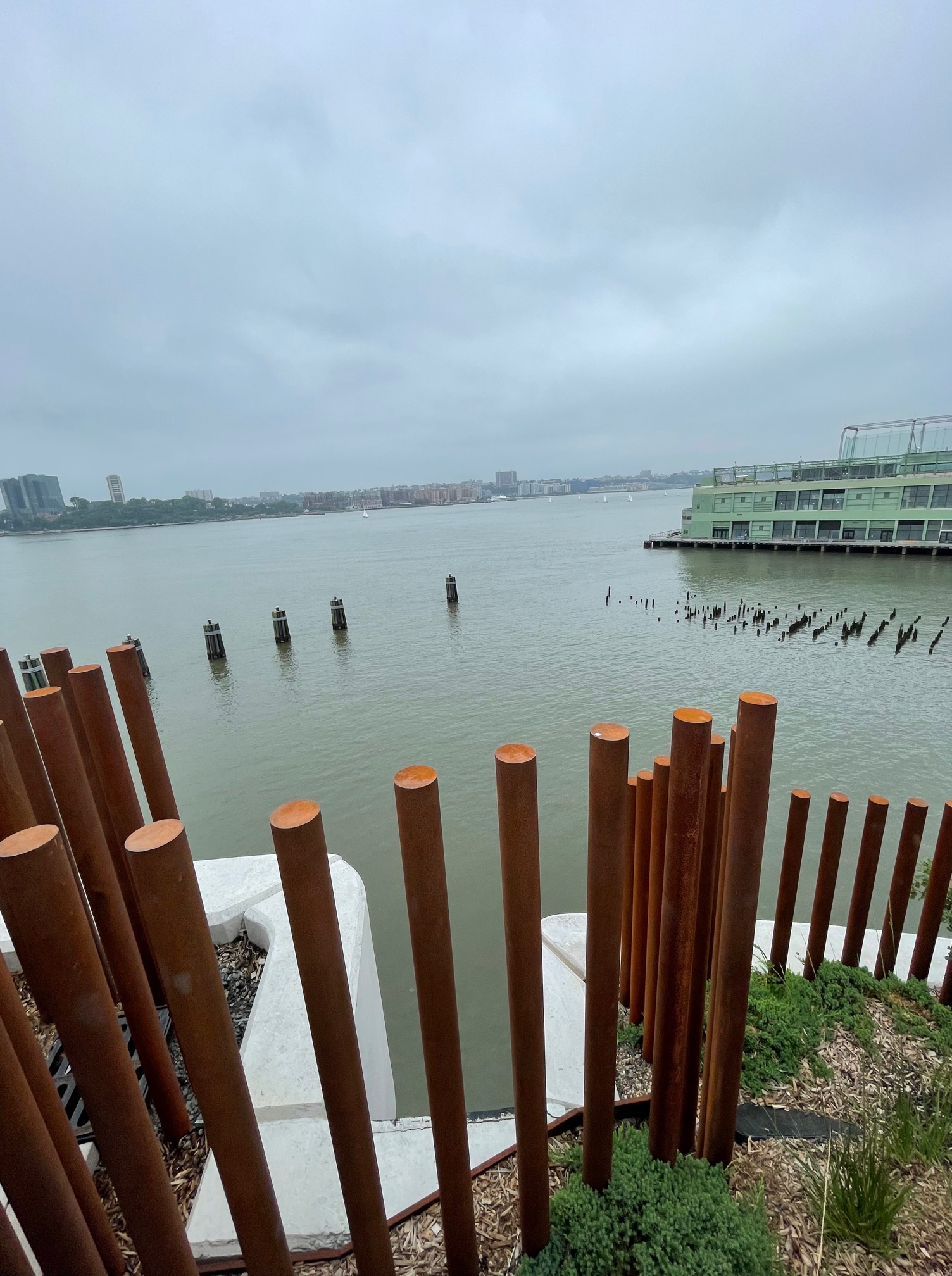
Welcome.
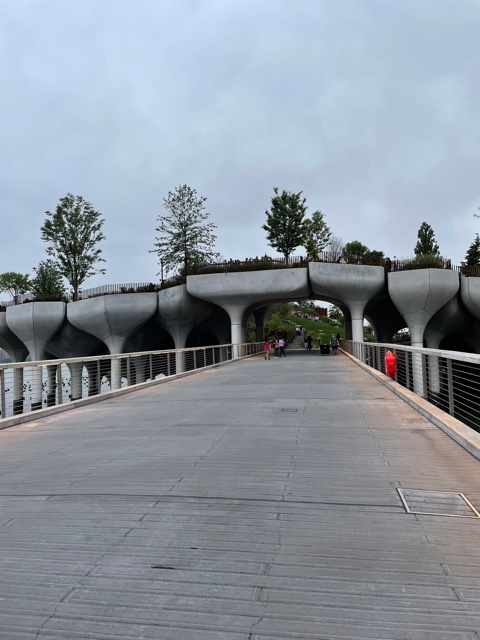
And if you need a breather and a snack, there are those too. I’ll try one next time I go.

2 Comments

Filed under Jean Zimmerman

You couldn’t tell if it was little-leaf

or not, the canopy was so far overhead. Tilia Americana or Tilia cordata? I stood in the Bronx next to a playground on on Gouveneur Avenue, marveling at the height of these monster lindens. The smallest of them had a DBH of 7 inches while the largest ran to 40 DBH. (DBH equals Diameter at Breast Height, the standard way of measuring trees’ height.) How tall were they? I could make out the heart-shaped leaves, all slightly asymmetrical, and the bracts that always remind me of pieces of cream-colored silk woven in someone’s hair. They carry the linden’s fruit so it will reproduce. But they must have been 40 feet tall. I am notoriously bad at heights, heights of trees, and just multiply my own height (generally) with how far up the tallest branches seem to be. I know there is a trigonometric formula I can invoke, but as I said I am bad at heights. (h=TanA x d)

People don’t normally think of New York when they think of shade. But it’s all around, chilling out people and homes and schools, in a fortunate neighborhood. Two men came by and spoke to be as I was juggling paper, pen and DBH tape for a survey of the linden trees on this block. A milling machine was going to come through soon, before the street was repaved, and the contractor wanted to prune any trees whose branches would get in the way of his 14 foot unit. I was to identify those trees in need of pruning. The two guys lived there, in an apartment underneath the mesh of branches and leaves far above. One said the tree we stood beside had “been there since before I was born”. He was about 60. The other said, “These trees shade everything, they make it all so cool, it’s so nice.” He was nice, too.

I had seen lindens pruned to within an inch of their lives and they could look beautiful like that.

Two allees of little-leaf lindens stand in front of the Metropolitan Museum of Art.

There has been a lot of study recently about the importance of shade in cities. Health suffers without trees there. The difference between shaded and nonshaded areas is something like ten degrees, enough to kill someone in southern climes without air conditioning, which not everyone can afford. This falls under the general rubric of environmental justice.

The canopies of these giant lindens on Gouveneur Avenue offered a generous helping of something little else could provide – coolness on a hot day. With the health changes come changes in mood, also. Maybe that’s why these guys were smiling so much. It’s a womb of cool. Shade that helps you live. I always thought that lindens were beautiful. On Gouveneur Avenue I realized they were life-giving as well.

Leave a comment

Filed under Jean Zimmerman

This is how you do it

when you plant a memorial tree. The Awards Committee of the New York State Urban Forestry Council sought applications last fall to reward communities that had been a Tree City USA for at least the past five years. I went to Glen Island Park in New Rochelle to celebrate one of the winning entries. Competitors had to describe why they deserved what we were calling a “big tree”: “a large specimen tree in a prominent site within the community, accessible to the public.” This effort was made in conjunction with New Rochelle’s 28th year as a Tree City USA.

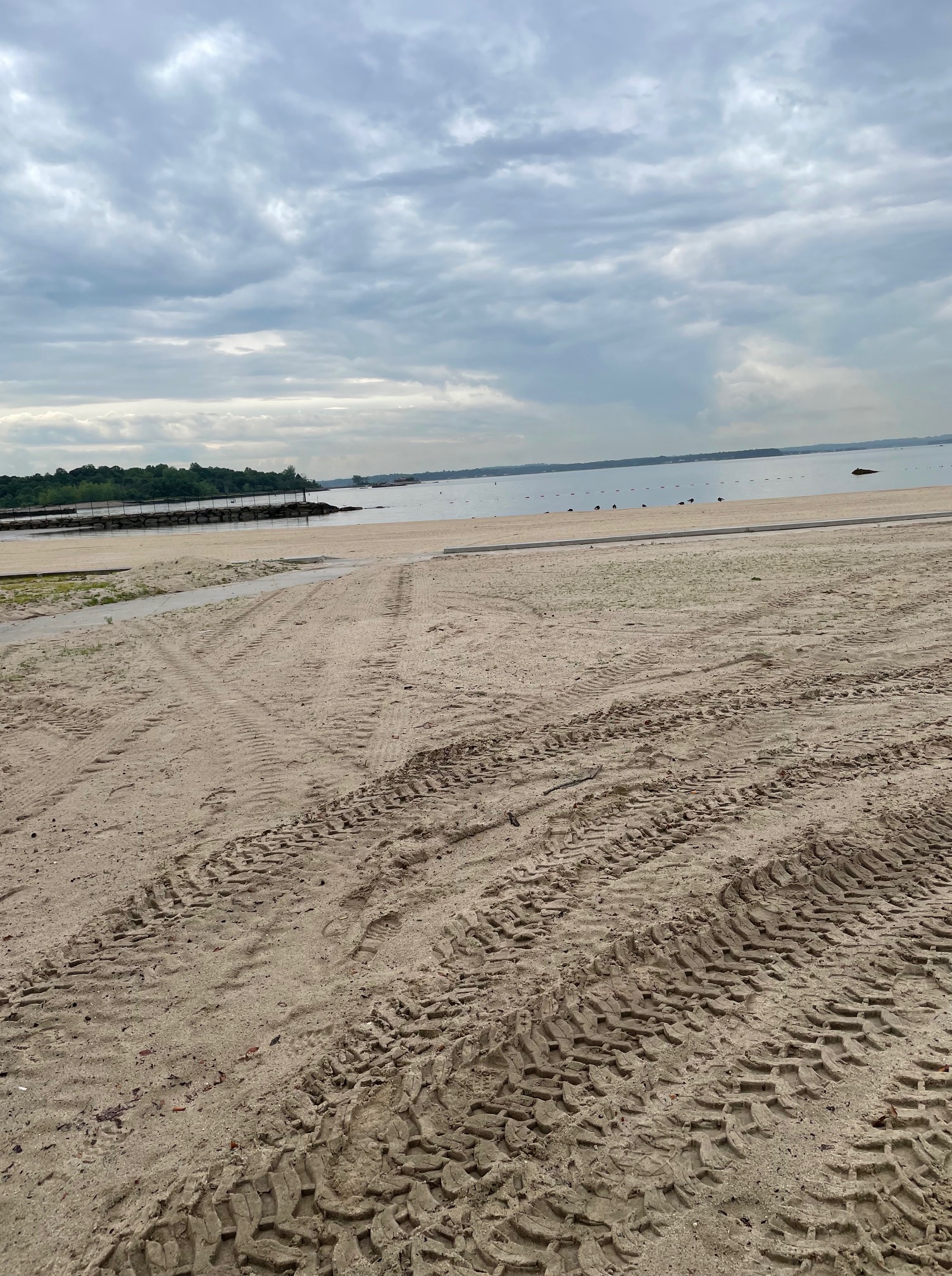
There is a beautiful beach on the Long Island Sound that opens officially for the season tomorrow.

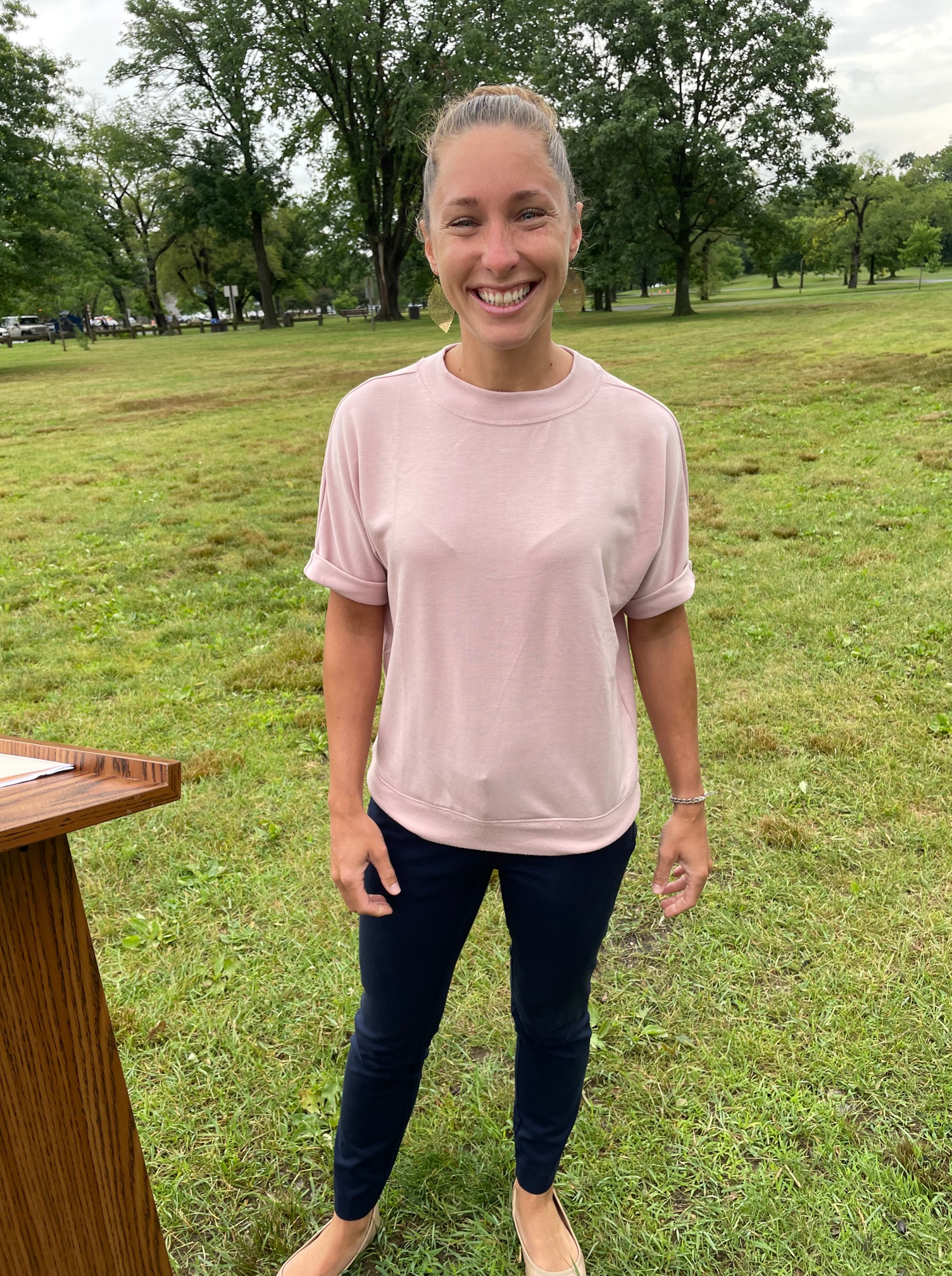
The application from the Westchester Parks Foundation had really pulled at my heartstrings. Submitted by Erin Cordiner, it talked about the time of Covid, how it had affected New Rochelle in so many ways. Erin has just been promoted from volunteer organizer to director of philanthropy, and I’m sure she’ll do a bang up job. The first Covid sufferer in New York state, a lawyer, lived in New Rochelle . After being put in a medically induced coma, Patient Zero survived. After that a perimeter was set all around the area of the city deemed at that early moment the most contagious place in America. New Rochelle took a punch to the gut.

Westchester County has 50 parks. In her application, Erin talked about how important the county’s 18,000-acre park system was during the pandemic, when people desperately needed the wellness benefits of being outside because they couldn’t go to ballfields, restaurants, concerts, you name it.

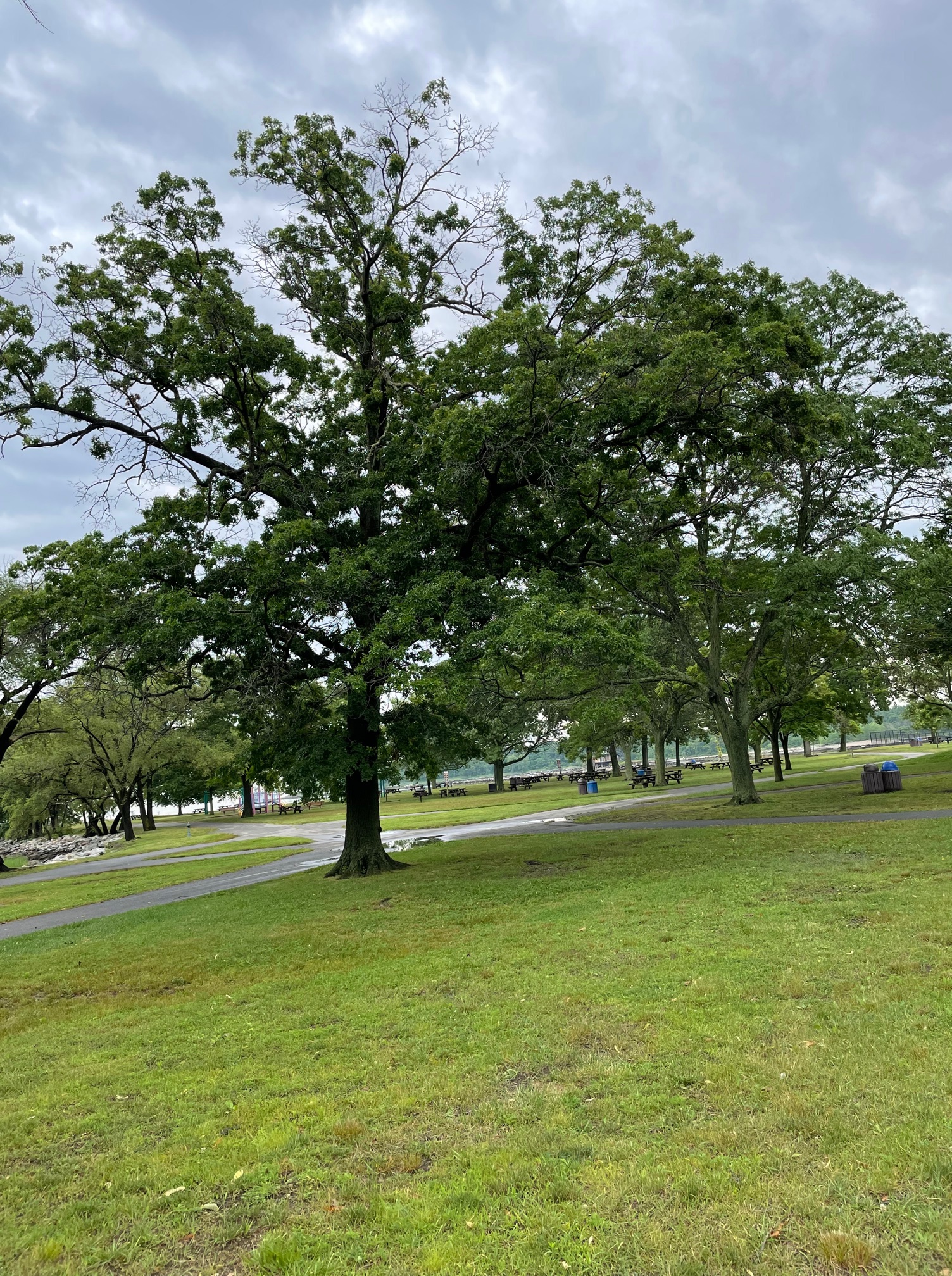
The Park was being spiffed up for its opening.

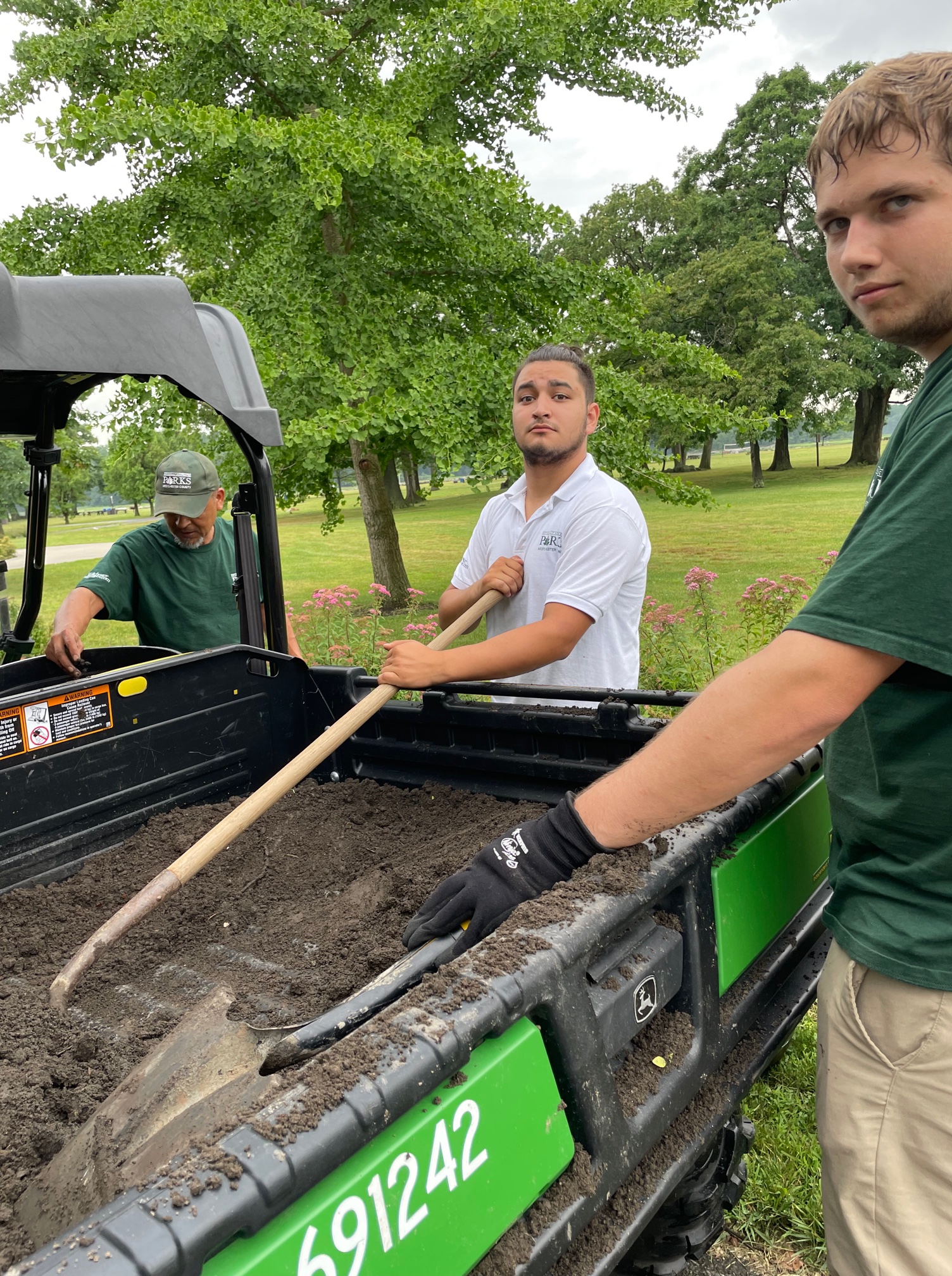
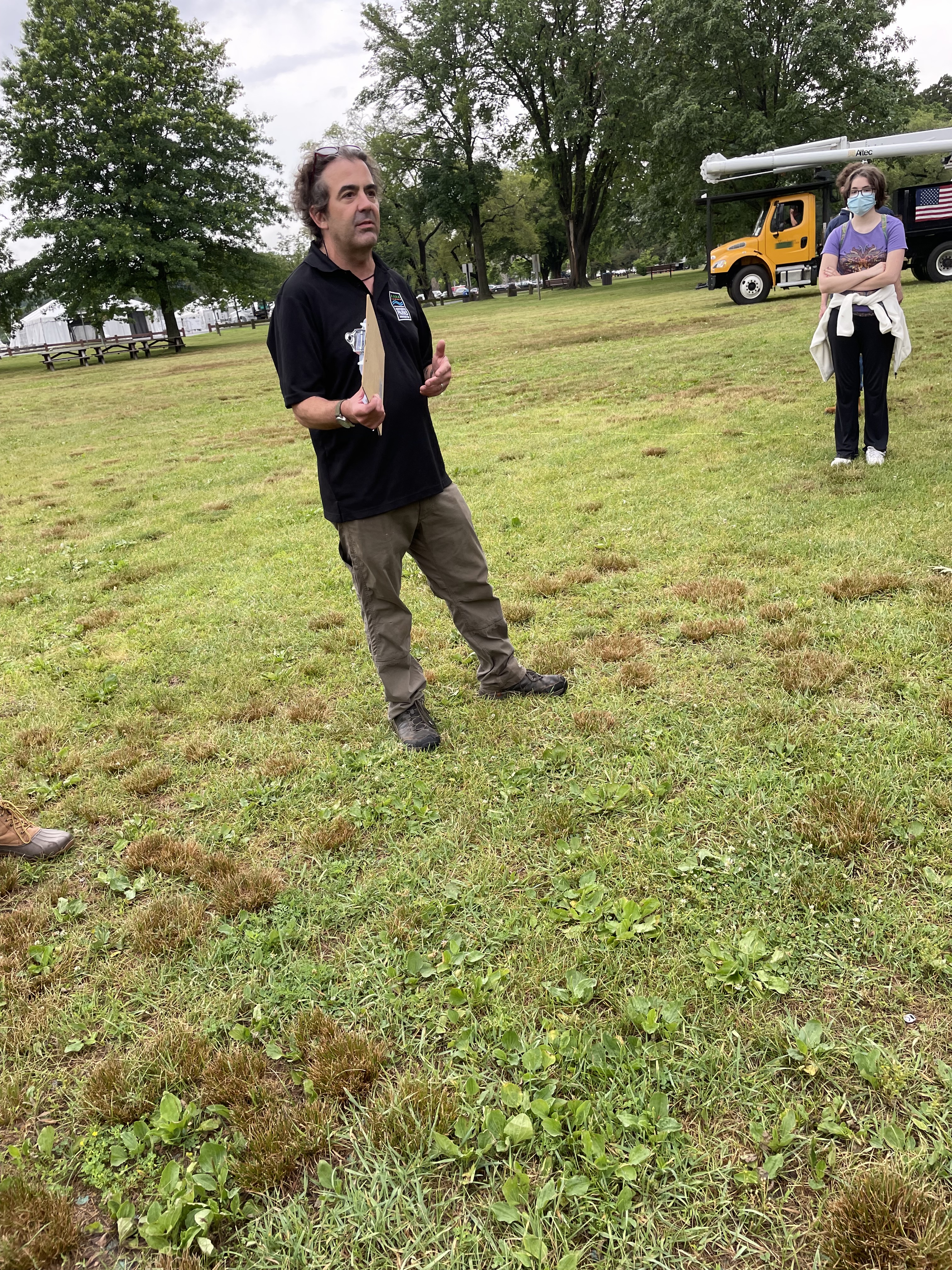
A throng of volunteers arrived and were instructed by volunteer coordinator Adam Lippman.

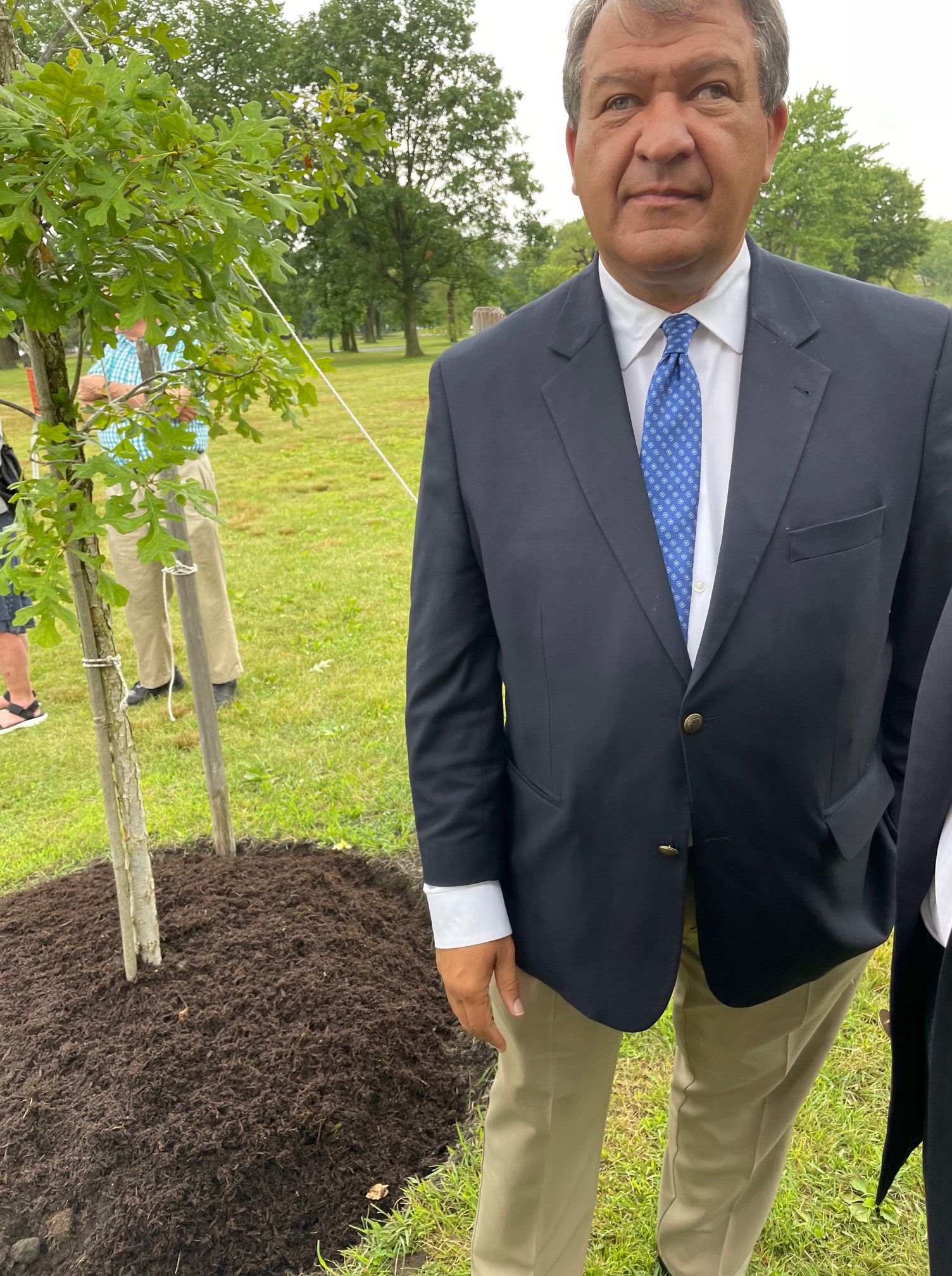
Dignitaries arrived – from County Executive George Latimer to the Parks Commissioner and the chair of the Westchester Parks Foundation’s board.

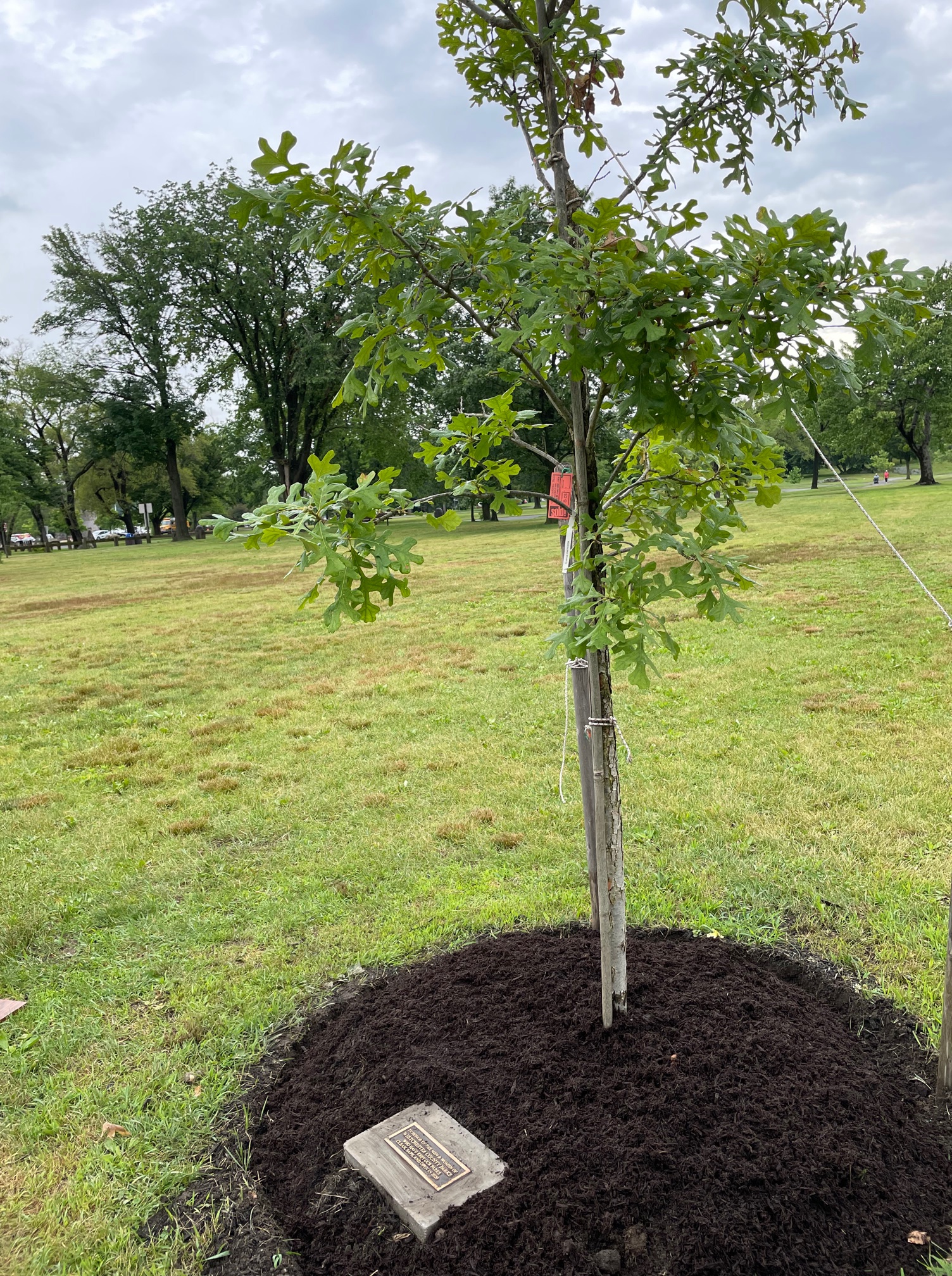
The Foundation used its grant money to select a three-inch caliper ball-and-burlap tree. It would stand across from New York’s first COVID testing site, an imposing series of white tents. Today it was being dismantled. Hope!

I shook as many hands as I could, still relishing being able to reach out and touch someone after our long journey.

The tupelo is healthy and beautiful.

The tree and the memorial will last years into the future, when we are telling our grandkids about the nightmare of the pandemic.

I am going to quote from Erin’s eloquent application

“Let us stand together now, through this memorial and remember that parks have been here for us when we needed them most and reminid decision makers of the critical role that parks continue to play in our lives. Let this memorial serve as a reminder, when this crisis passes, that parks played a role in our healing, and the importance of parks related to the well-being of our community. Parks have the power to transform lives, to save lives, and to heal lives. Let us never forget this.”

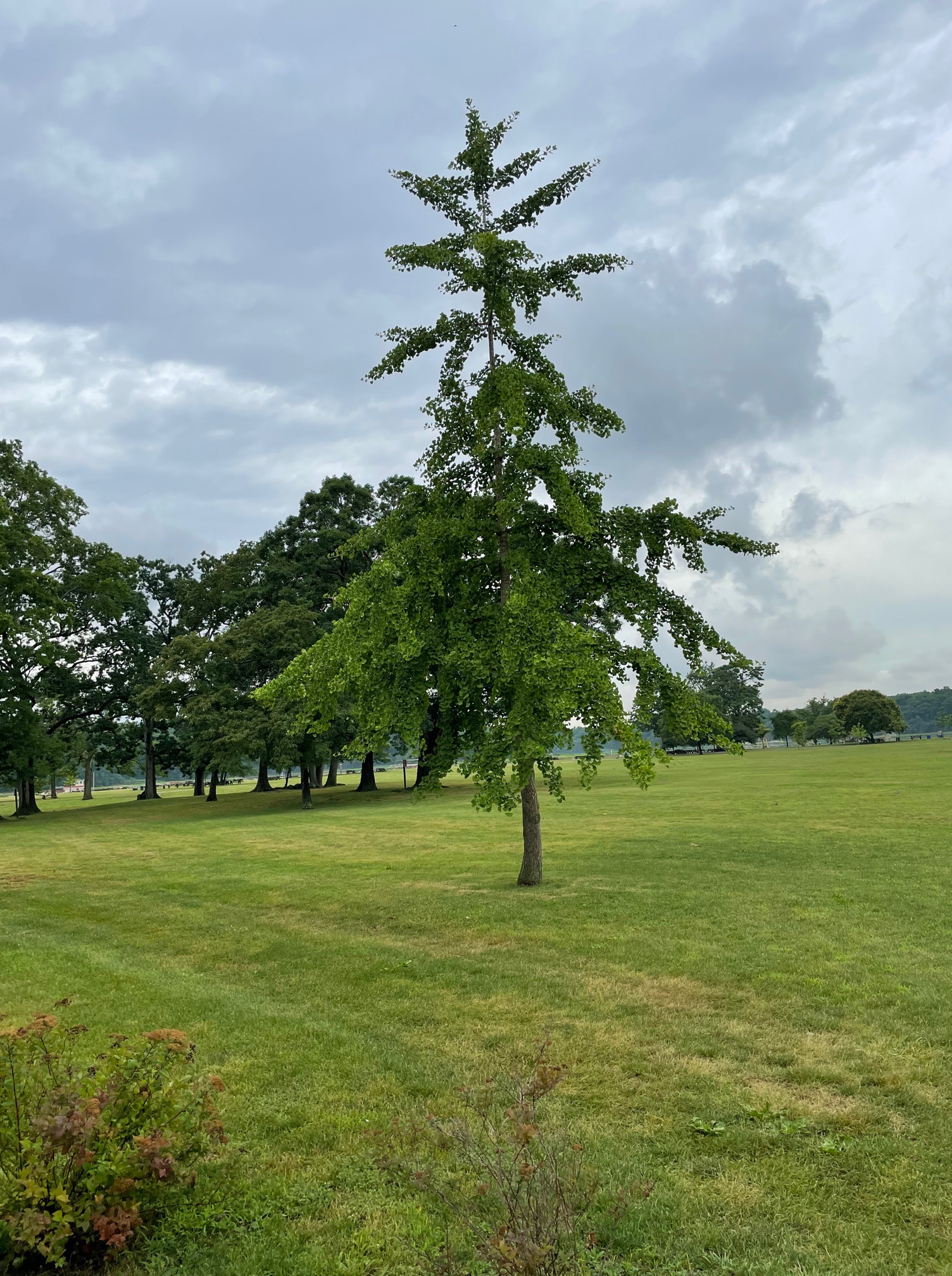
She could have been talking about trees. Like this ever-hopeful gingko at Glen Island Park.

Application are just going out for the next round of “big tree” grants. If your community might be interested, contact me here.

Leave a comment

Filed under Jean Zimmerman

The spiritual nature of Queens

becomes apparent when you step along any residential street in South Ozone Park.

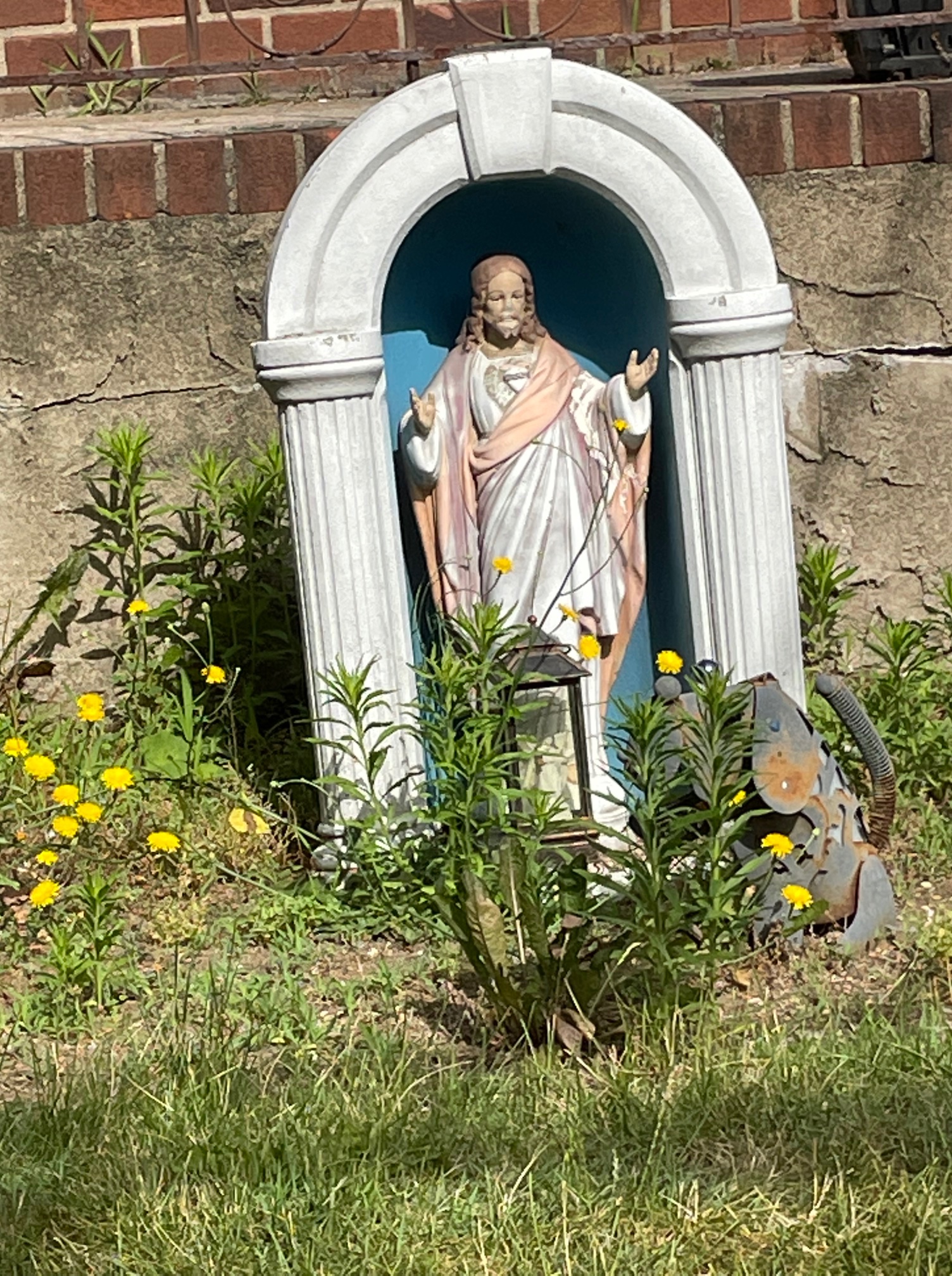
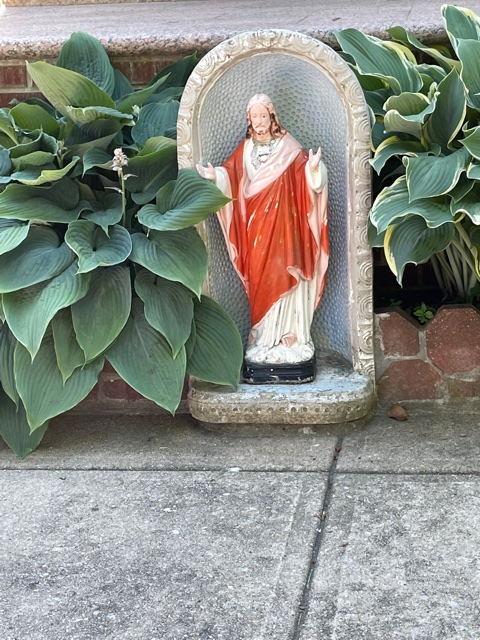
Shrines in front yards rule.

The air is heavy with mysticism, and the population’s diversity puts it ahead of the other boroughs, with large Italian, Hispanic and Guyanese populations, among others. You have to think there are some druids among them worshipping trees.

Yet some people hunger to have their ash trees taken down. Grandchildren gamboling, twigs falling on their heads. We oblige.

Their tree is on a list we get from the New York City Parks Department.

Others want their tree, but please prune it. Could you?

Others are dying to keep their trees, for the shade, for the beauty, the familiarity. They grew up with it! They don’t understand.

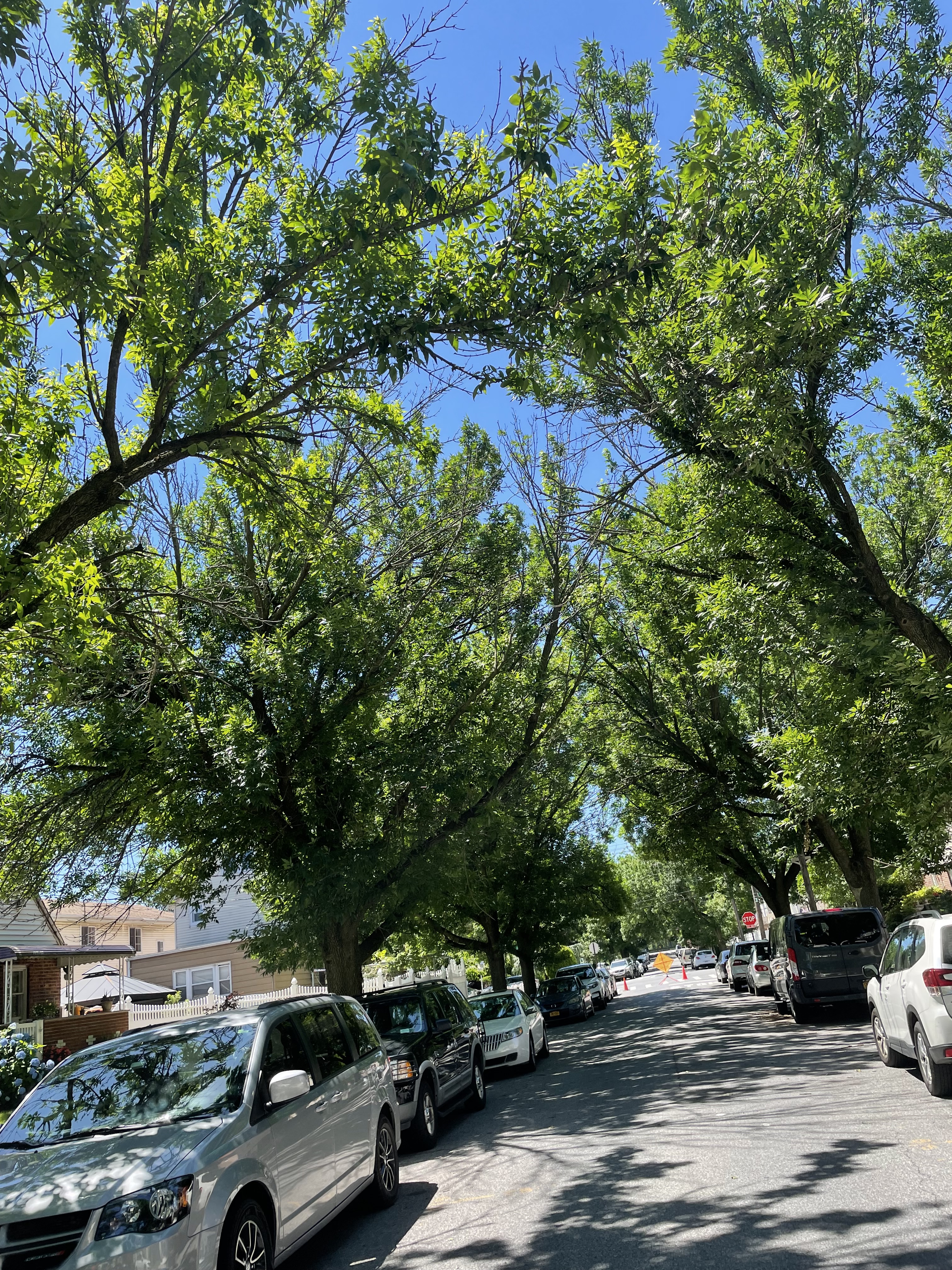
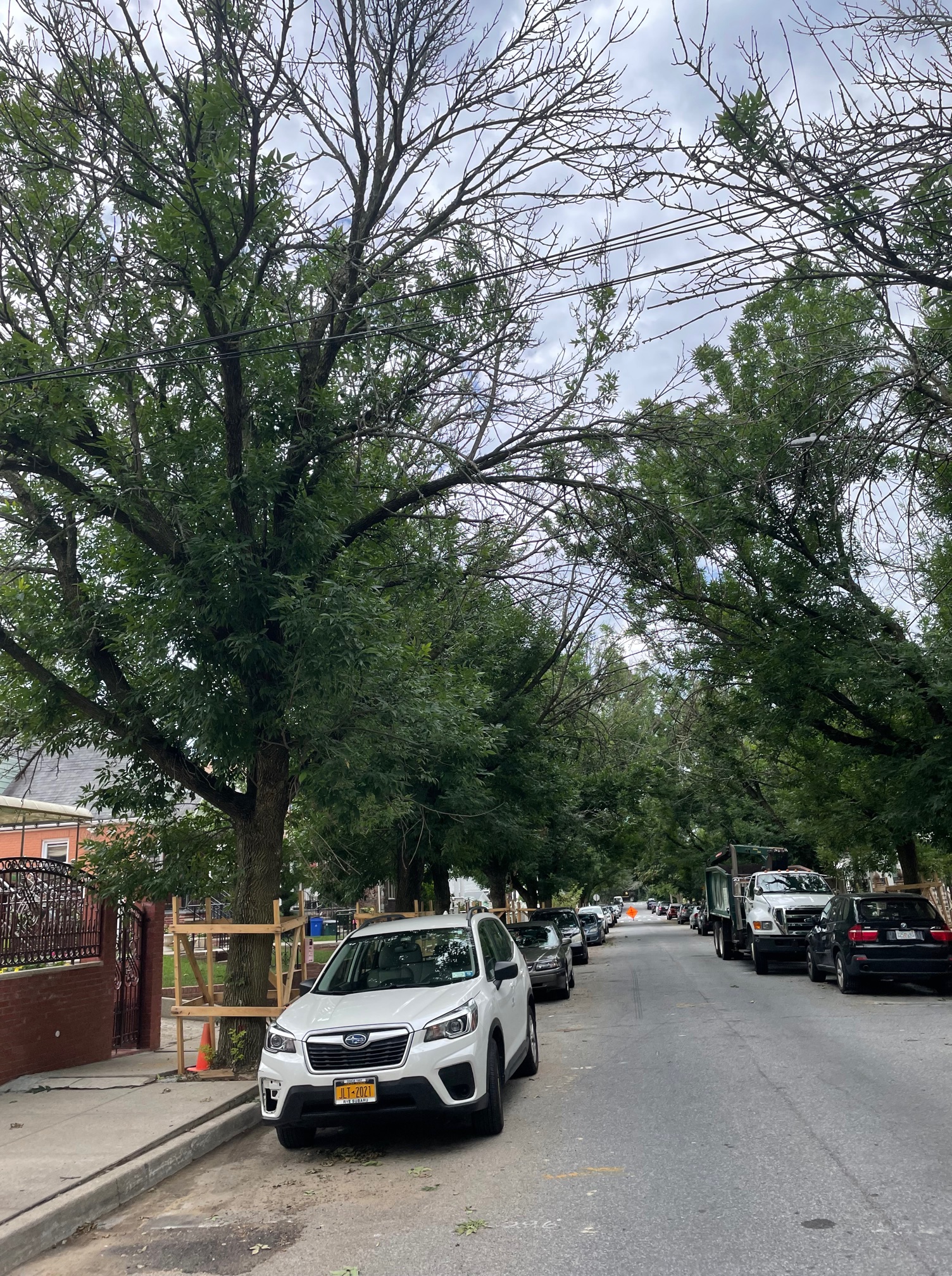
How did this come to be? Why is this block, 117th Street between 49th and 50th Avenues, lined with a bower of only mature ash trees that we are now systematically dismantling?

Piecing together the story while observing the bucket truck and chipper at work, I find out from residents that these trees were planted 30 or so years ago. 1990? They seem older. I heard that developers bought up whole blocks of these neat brick homes, intending to flip them, and the city required them to plant a tree in front of every home. Dutch elm disease had long before decimated the city trees of the past, and the green ash seemed to be a great, fast-growing substitute.

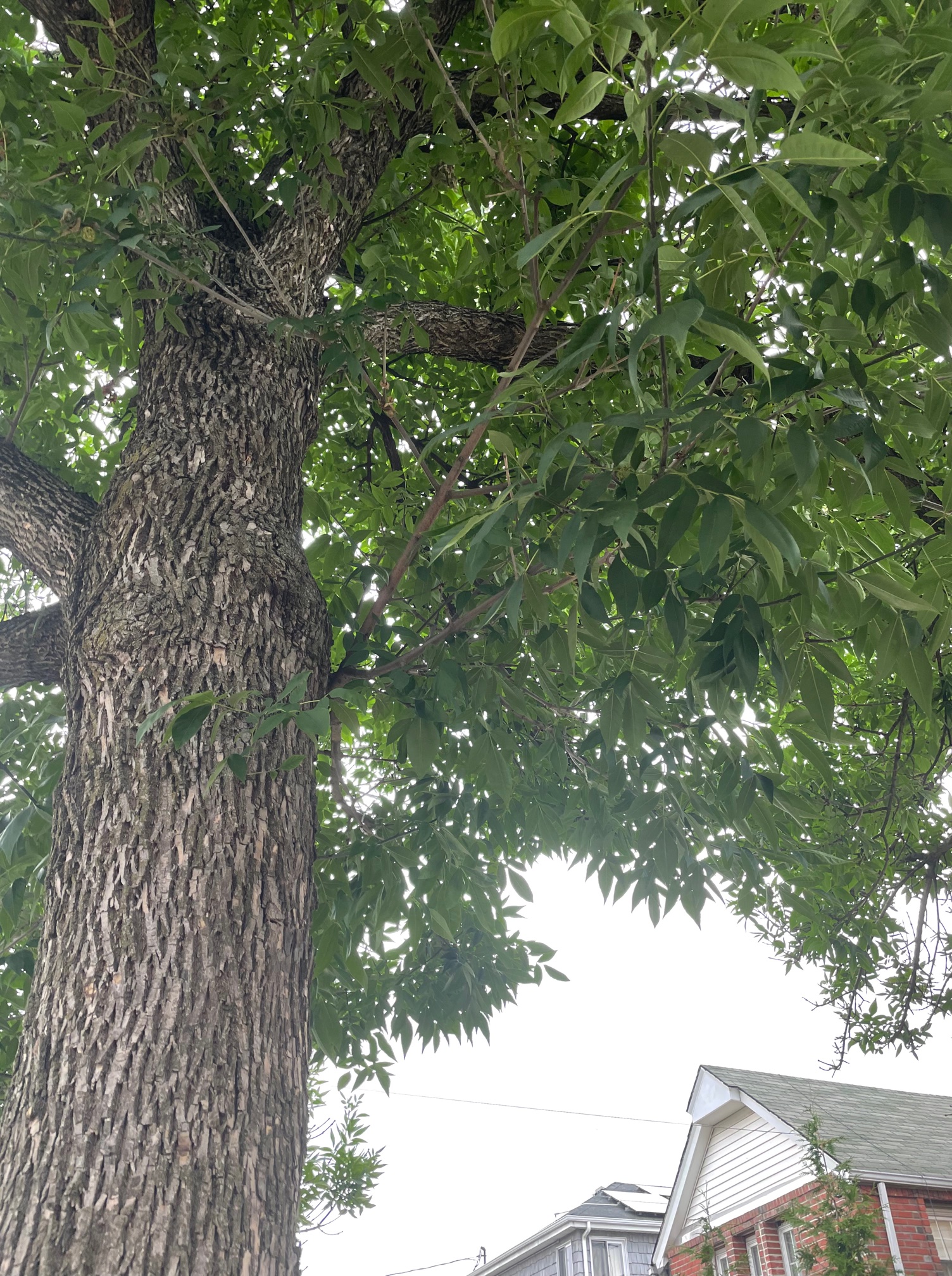
The ash had a graceful canopy and seemed immune to urban stressors. It didn’t die.

Until it did. Waiting in the wings was an invasive assassin. Foresters, scientists, arborists first noted the dieback two decades ago, and discovered that the beetle we know as the Emerald Ash Borer was to blame. It came from China on a cargo ship, went the theory. In the past two decades it has killed hundreds of millions of ash trees across half the continent

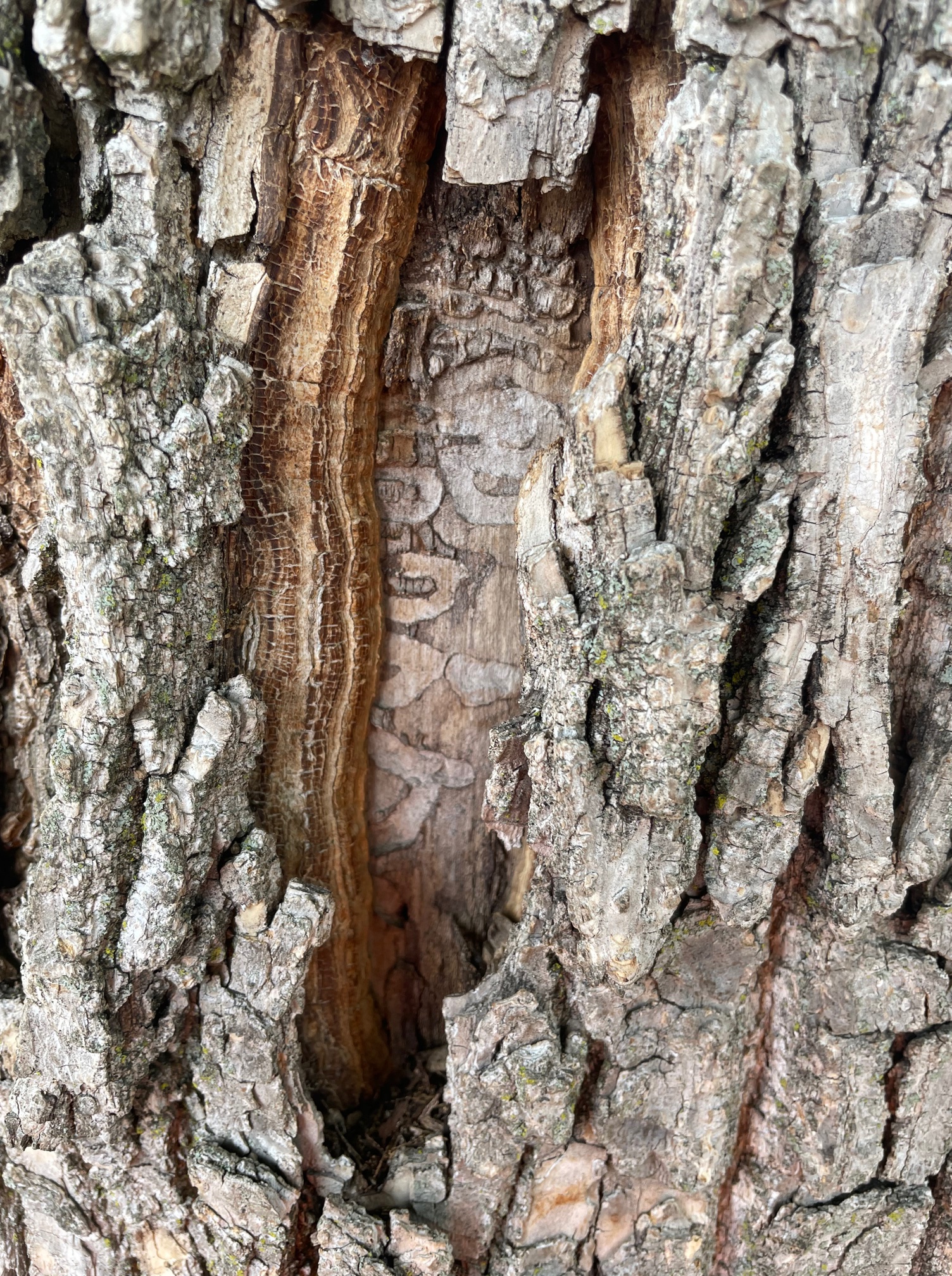
It starts at the tips of the branches. The beetle lays its eggs in the fissures of the bark, then the inch-long larvae crawl inside the tree, allowing pathogens to follow after them, and make their way down the cambium, eating as they go, basically destroying the tree’s digestive system. Their movements create an unmistakable hieroglyphic if you see the infested wood with the bark pulled away, what those in the scientific world know as “galleries.”

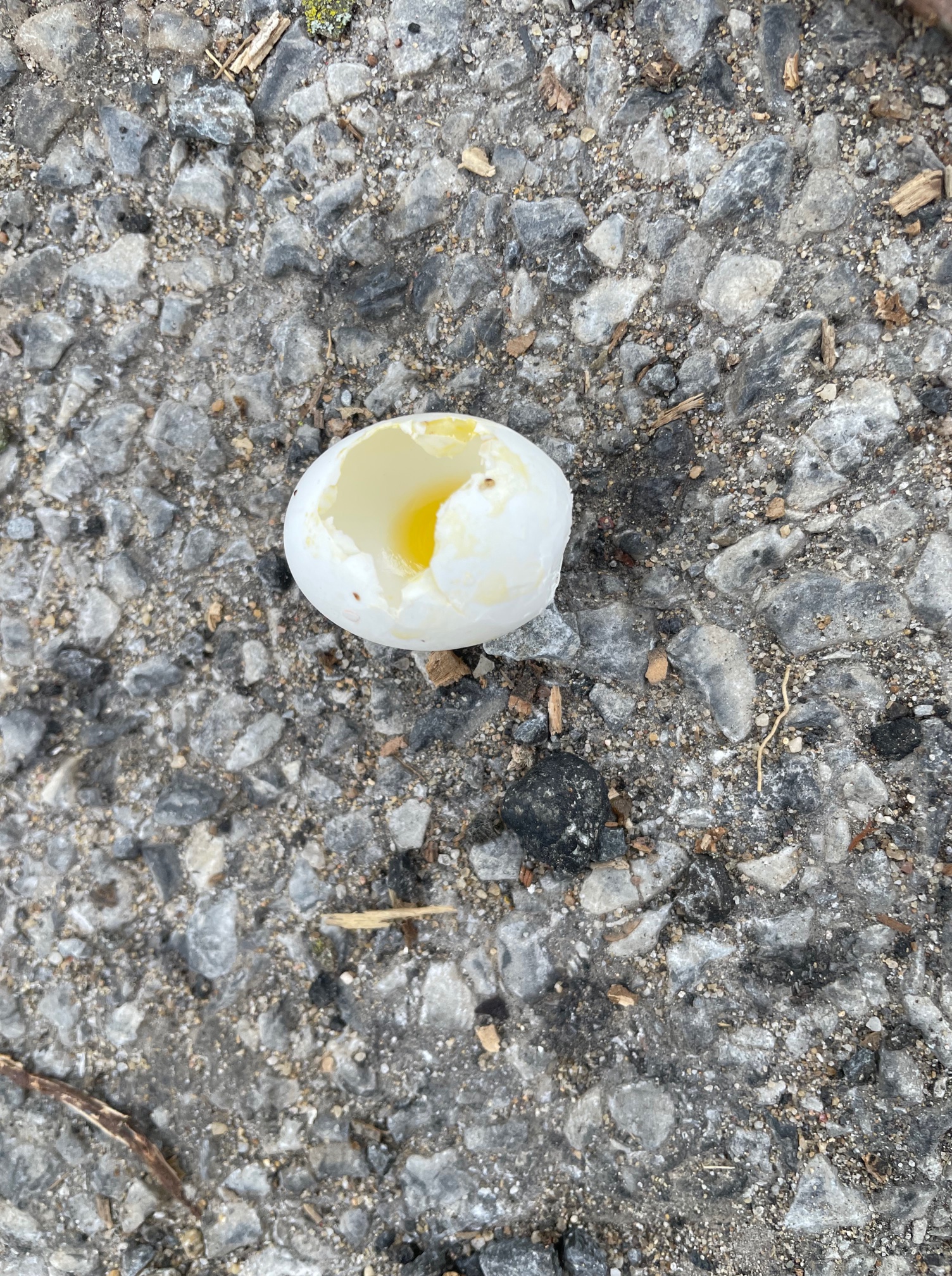
The damage done (and it is always fatal eventually), the new generation matures, exits the tree and flies off to the next victim. On a street like 117th, planted monoculturally, that is, only with ash trees, they’re all going to get it. Ash trees can subsist for two to four years in this weakened state. They still provide shade, some compromised beauty, and a habitat for birds. I found this egg today which had fallen from a nest above.

There is an effort afoot to treat them with chemicals or larvae-killing wasps. Here, though, they were the perfect tree for this street for thirty years. Go give one a hug before it hits the chipper. You won’t see them any more.

Leave a comment

Filed under Jean Zimmerman

Nooks and crannies

pretty much define what’s so great about the Metropolitan Museum. Everyone who has gone there a lot has favorites.

It’s hard not to love the Atrium outside the American Wing. You can drink ridiculously overpriced coffee and gaze out the bank of windows at Central Park in its summer glory.

But your personal favorite might be the Rodin hallway, or the gallery with Vermeer’s Young Woman With a Water Pitcher.

Mine include the Astor Court, a Chinese garden inspired by one in China nearly four hundred years ago. Craftsmen travelled from China to NY to build it and did not use a single nail in its construction(gallery 217), a contemplative gem which you might be lucky enough to have all to yourself.

Or  the whole Luce collection. The Henry R.Luce Center for the Study of American Art occupies the mezzanine of the American Wing, and is sort of like the Met’s attic, there for scholars but for other culture grazers interested in not just the highest of high art. In perfect Lucite-boxed rows, dozens of versions of the same object are arranged. There may be 40 19th century green pressed-glass plates, for example. Or rare-vintage silver demitasse spoons. Or wackadoodle porcelain figurines like this deranged fawn.

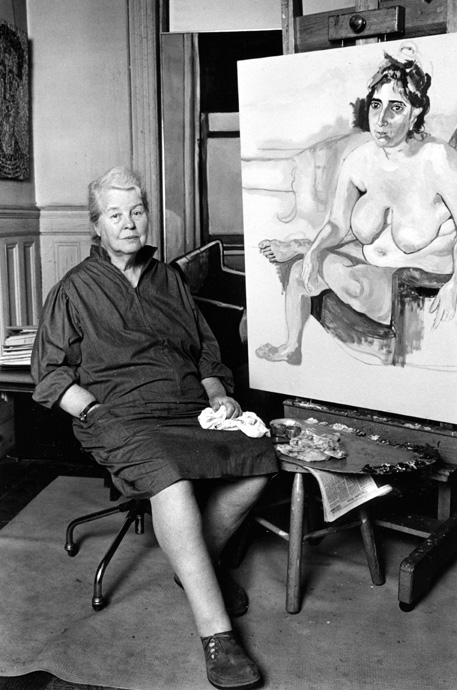
When there is a major show, like the one that’s up now with Alice Neel portraits, you go.
It’s an amazing exhibit; visit if you’re in New York.

But there are still the nooks and crannies.

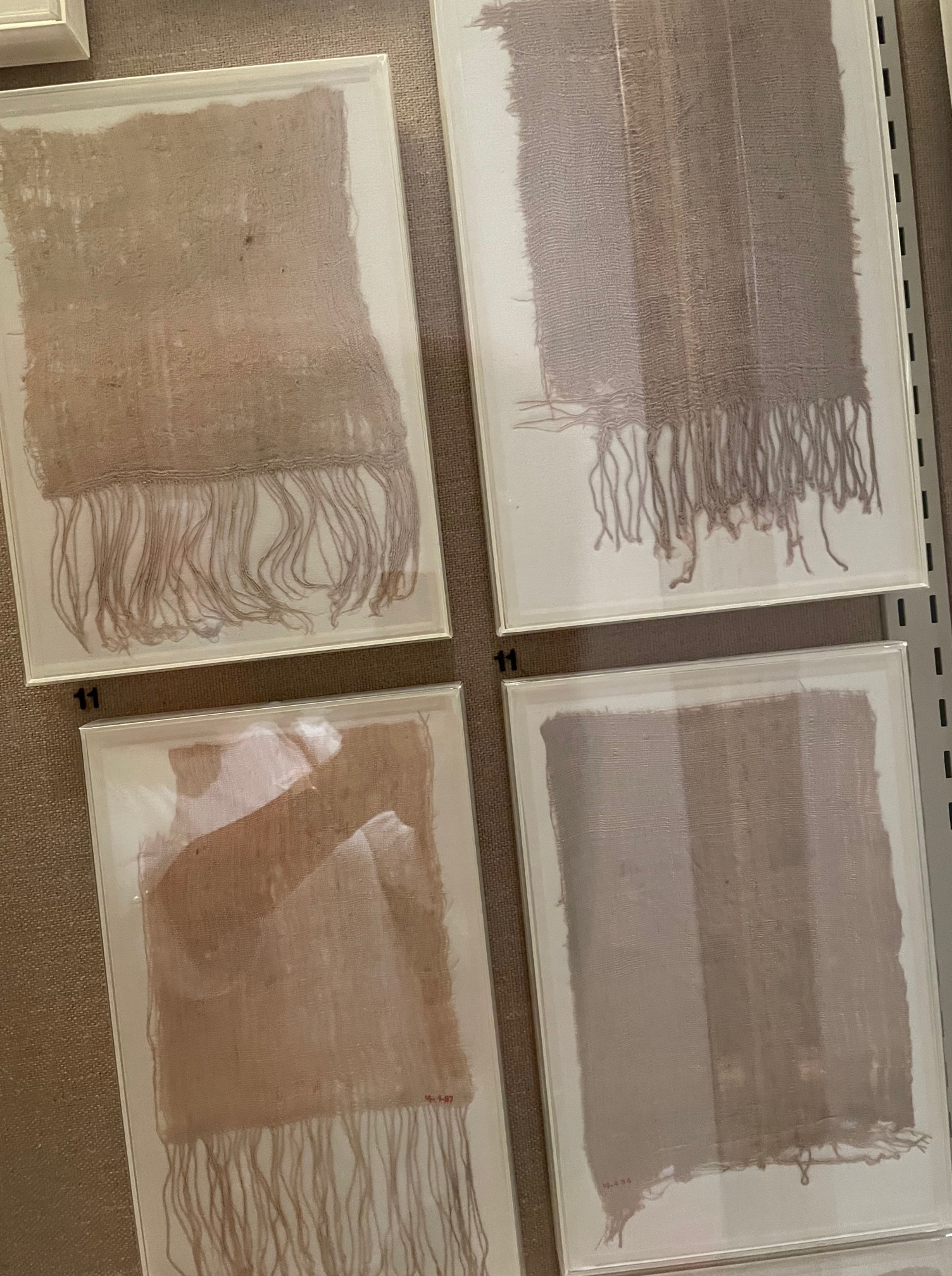
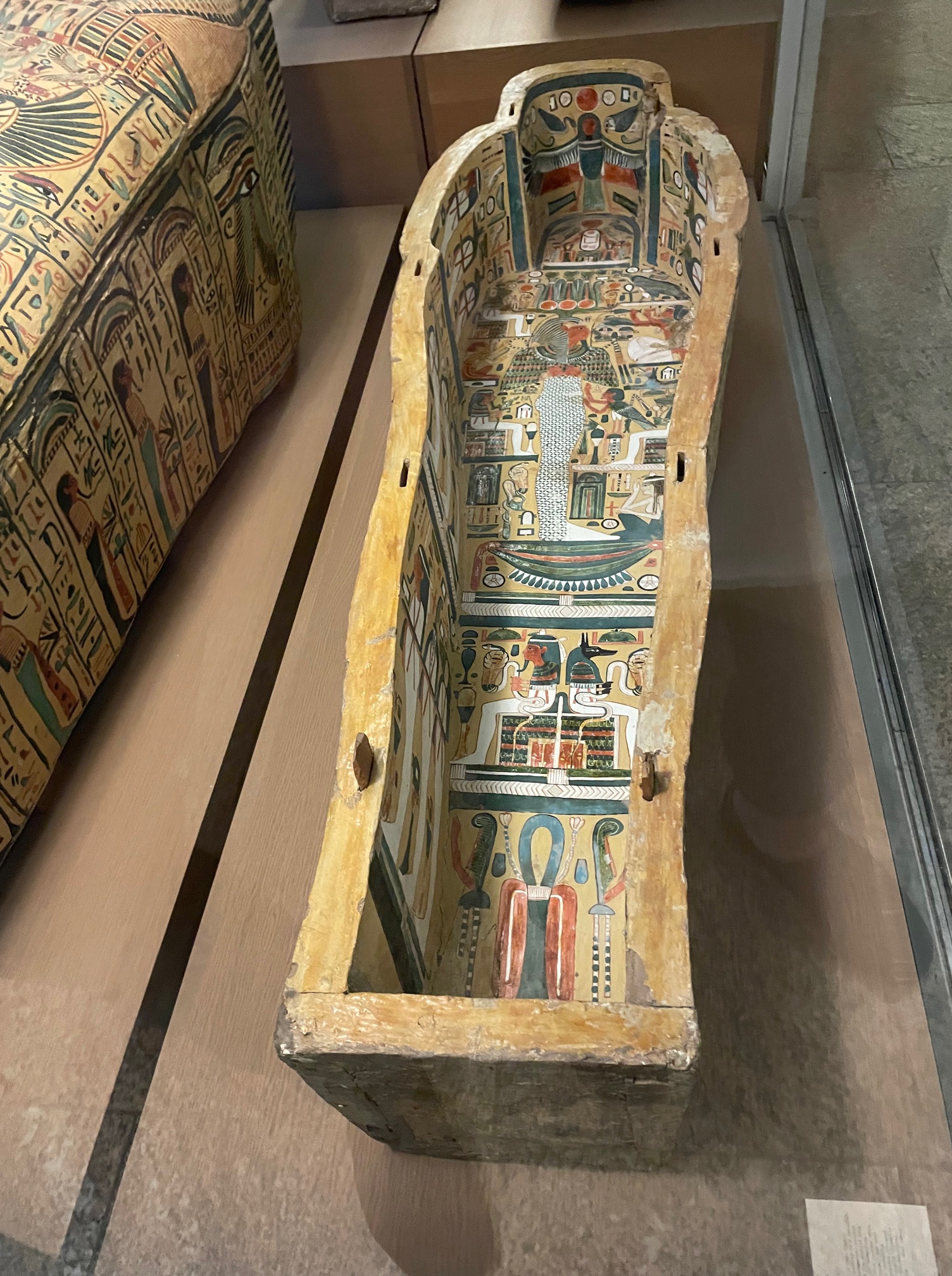
When I’m at the Museum I find that I must make a stop at the ancient linens. Hang a quick right coming out of the Temple of Dendur and you’ll find bolts and lengths of intact textiles from ancient times.

What really touched King Tutenkamen, and everyone else, was linen. People who lived in ancient Egypt believed that the Gods were clothed in linen before they came to earth. It was sacred and yet mundane. I always love historic textiles because they occupy a place so close to the human body. If you think about it, what other role do textiles play besides clothing and bedding and diapers (the old Dutch term for a type of linen, not just baby items)? Flags, maybe? This wool bunting is from an 1816 American flag.

Linen has been found in graves dating back to the Neolithic Period. And we all know that mummies are wrapped in linen. Actually, a mummy’s bindings are torn up linen bedsheets. Sericulture, the raising of silkworms, had not yet come to Egypt.

The Egyptians wore white linen because it was difficult to make a strong lasting dye, but they still loved color. They applied rouge to their cheeks, red ointment to their lips, and henna to their nails and feet. Ladies traced the veins on their temples and breasts with blue paint. They tipped their nipples with gold. A green eye shadow made from powdered malachite was paired with kohl. Worn above a sweep of white linen, what could be more godlike?

Leave a comment

Filed under Jean Zimmerman

“Everyone is an artist.”

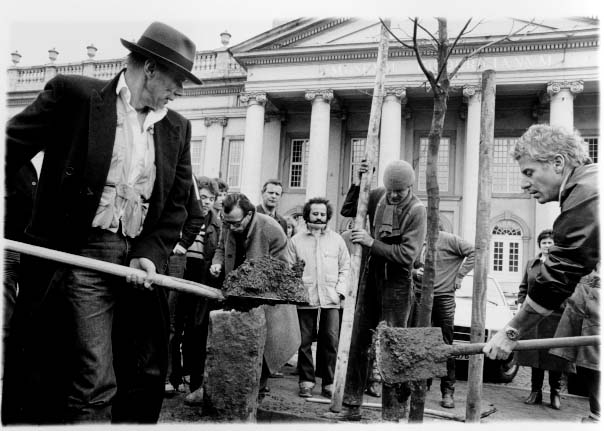
So quoth Joseph Beuys, one of the most influential artists of the last century and German Green Party founder, and certainly the one who most used trees on such a grand scale in his work.

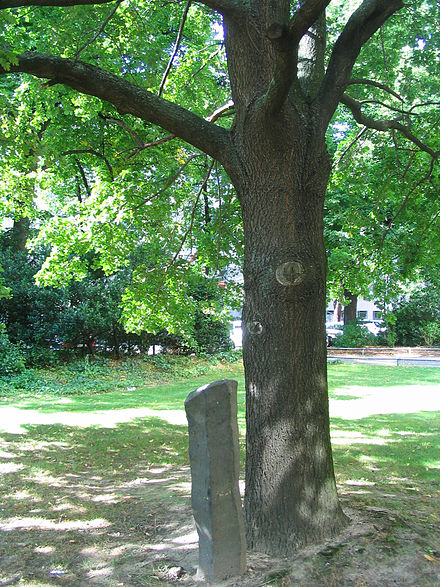
One of his best known pieces grows in Kassel, Germany. With the help of volunteers, he planted 7,000 oak trees over several years, beginning in 1982, pairing each with a basalt stone.

The effort provoked controversy at the beginning. People didn’t like the dark stones. A motorcyclist actually bashed into one and died. Kassel’s citizenry had been traumatized by its heavy bombing in World War Two, and this didn’t stauch the pain. He dumped the volcanic stones in front of the city’s public museum, and people didn’t like that. What a mess.

7,000 Oaks – City Forestation Instead of City Administration has grown over time into something else. Citizens chose where to plant the saplings and developed a sense of ownership and pride about the trees. It was a proactive way of getting nature into our lives.

Here is Beuys: “I think the tree is an element of regeneration which in itself is a concept of time. The oak is especially so because it is a slowly growing tree with a kind of really solid heart wood. It has always been a form of sculpture, a symbol for this planet ever since the Druids, who are called after the oak. Druid means oak. They used their oaks to define their holy places. I can see such a use for the future …. The tree planting enterprise provides a very simple but radical possibility for this when we start with the seven thousand oaks.” 

1 Comment

Filed under Jean Zimmerman

Kissing and strolling

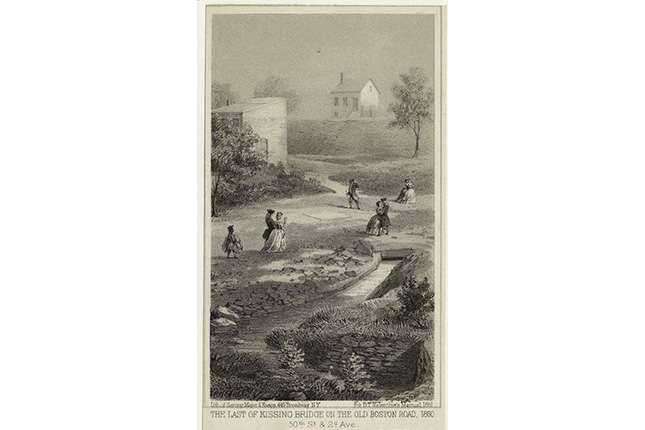
once went hand in hand on Manhattan, especially on bridges. For a long time iIt was even considered especially good manners for a gentleman to kiss a lady while on a bridge. (“What happened on the bridge stays on the bridge”)

Reverend Mr. Burnaby, quoted in New York’s Morning Chronicle on April 19, 1803, said, “it is the etiquette for every gentleman in company with a lady to salute his fair companion when upon it.”

There were multiple Kissing Bridges because there were dozens of springs and brooks all over Manhattan that people and coaches and horses and carts had to cross.

At one point in our city’s history, ladies could expect to fetch up a kiss at the bridge at 32nd Street just west of Fifth Avenue,at 33rd Street and Lexington Avenue over Kip’s Run, 54th Street and First Avenue, and 50th Street and Second Avenue.

The custom stretched back before the American Revolution judging by an advertisement in the Weekly Museum in 1797, looking for a tenant for the season of a 10-acre lot “through which the Kissing bridge brook runs.”

The well-researched Hidden Waters of New York City, by Sergei Kadinsky, tells us that in an earlier century, even, kissing bridges were common, over bodies of water that had names like Old Wreck Book, Sunfish Pond and De Voor’s Mill Stream.

Does anyone else have a “comfort century” the way people now keep “comfort animals”? Mine would be the seventeen century.

I think you can tell how verdant and stream-flushed Manhattan might have been in those days if you look at what’s called The Castello Plan, a famous copy of the first street map of the island, drawn in 1660. As the city grew more developed, it seemed, kissing on bridges grew less important. Perhaps with more buildings, people found more private places to smooch.

Let’s think. What bridges are there now in and around Manhattan? You can visit the many bow bridges of Central Park, over one hundred, every one of which was designed by Calvert Vaux. Walkers throng the Brooklyn Bridge, which the last time I was there seemed weighed down by the padlocks that were hung as amorous tributes, with the key thrown into the drink a gesture toward the infinity of the couple’s love, but since cut off by the City). There’s Brooklyn, George Washington, and more, and a little farther up out of town, where I live, the Tap. Each of these could be repurposed as a kissing bridge, if we only had the romantic will.

Let’s try.

Leave a comment

Filed under Jean Zimmerman

The Queens of kitsch

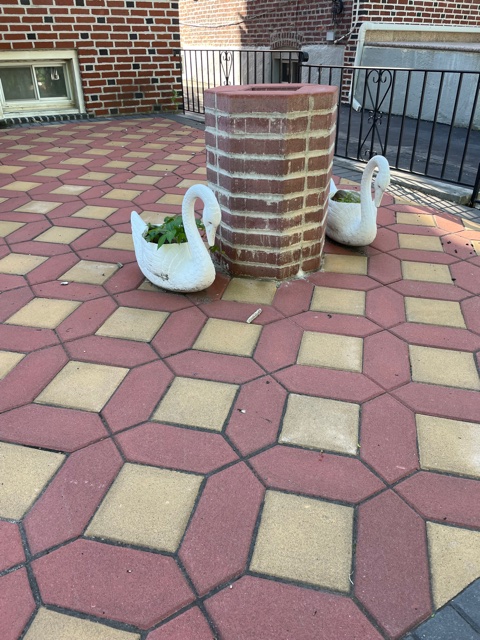
is known to all. In the sprawling borough where I spend time, people are houseproud.

They take their front yards seriously.

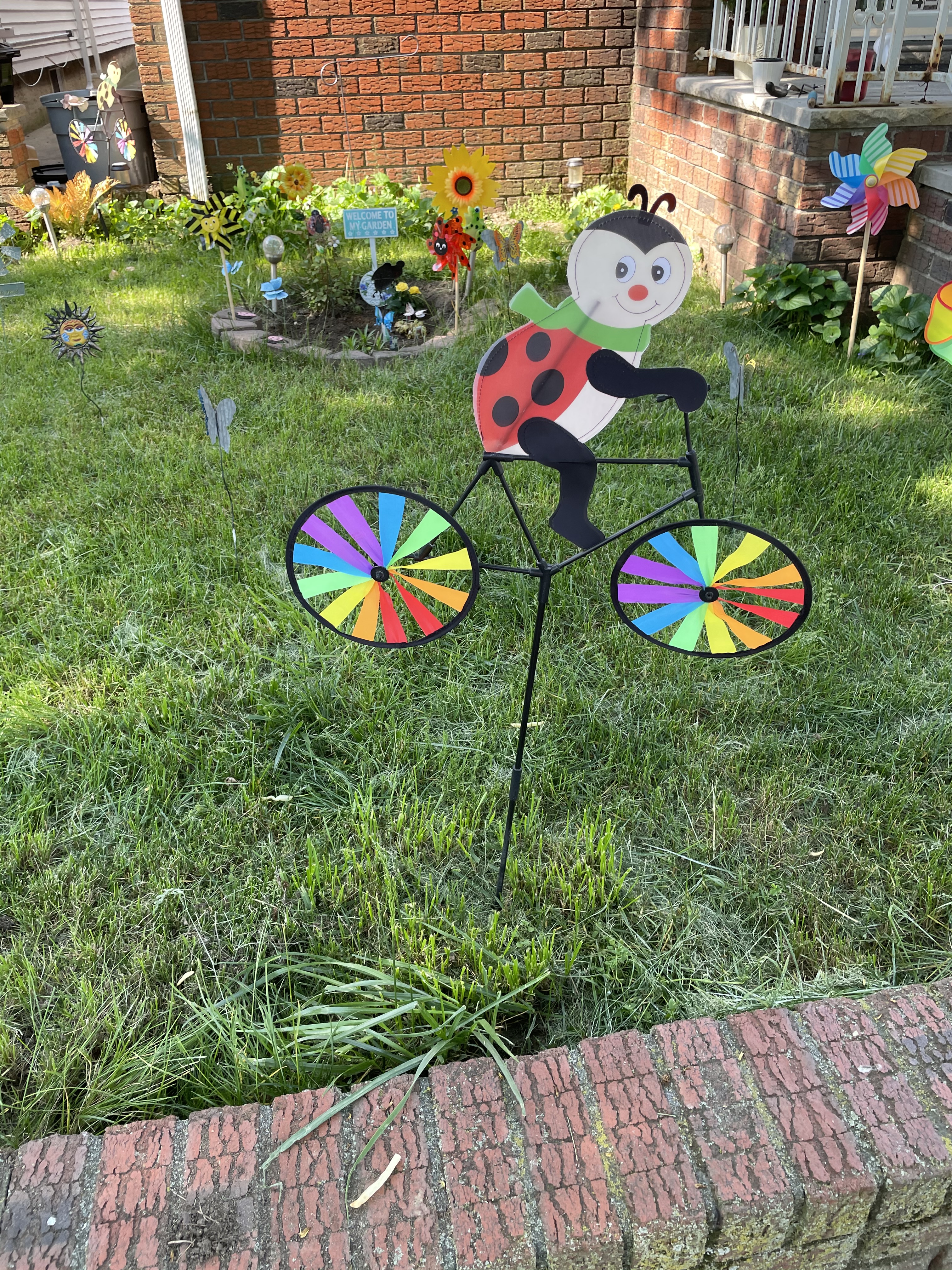
Though whimsy is welcome.

All kinds of wildlife reside in Queens. That’s a crab between turtle and owl.

Usually there is some kind of spiritual sentiment.

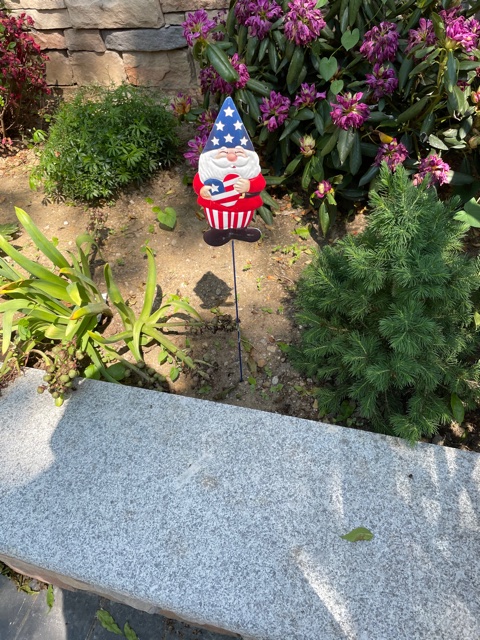
The holidays linger on.

For months.But give credit. Green thumbs thrive.

Leave a comment

Filed under Jean Zimmerman

Finally.

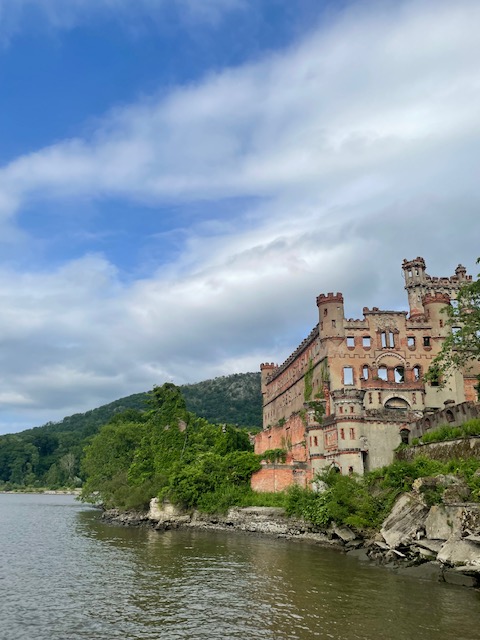
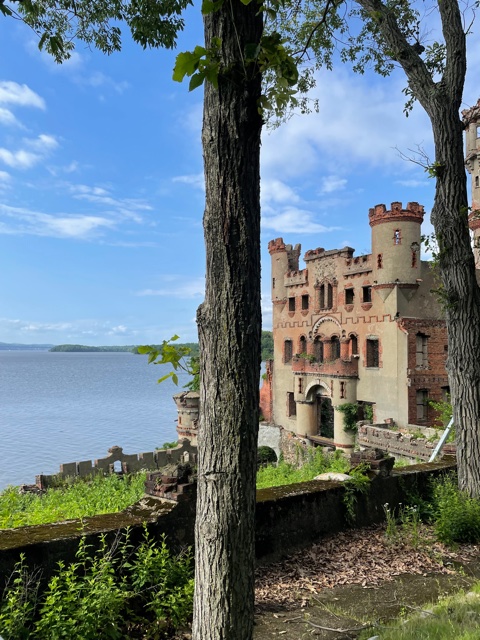
After riding the Amtrak rails up and down the east side of the Hudson for decades, wondering about the wreck of a place on its own little island midstream, I got to see it close up. I fortified myself with the best croissant I’ve ever had, from Beacon Bread Company – I think it contained a full pound of butter that now I contain – I set off to see Bannerman’s Castle.

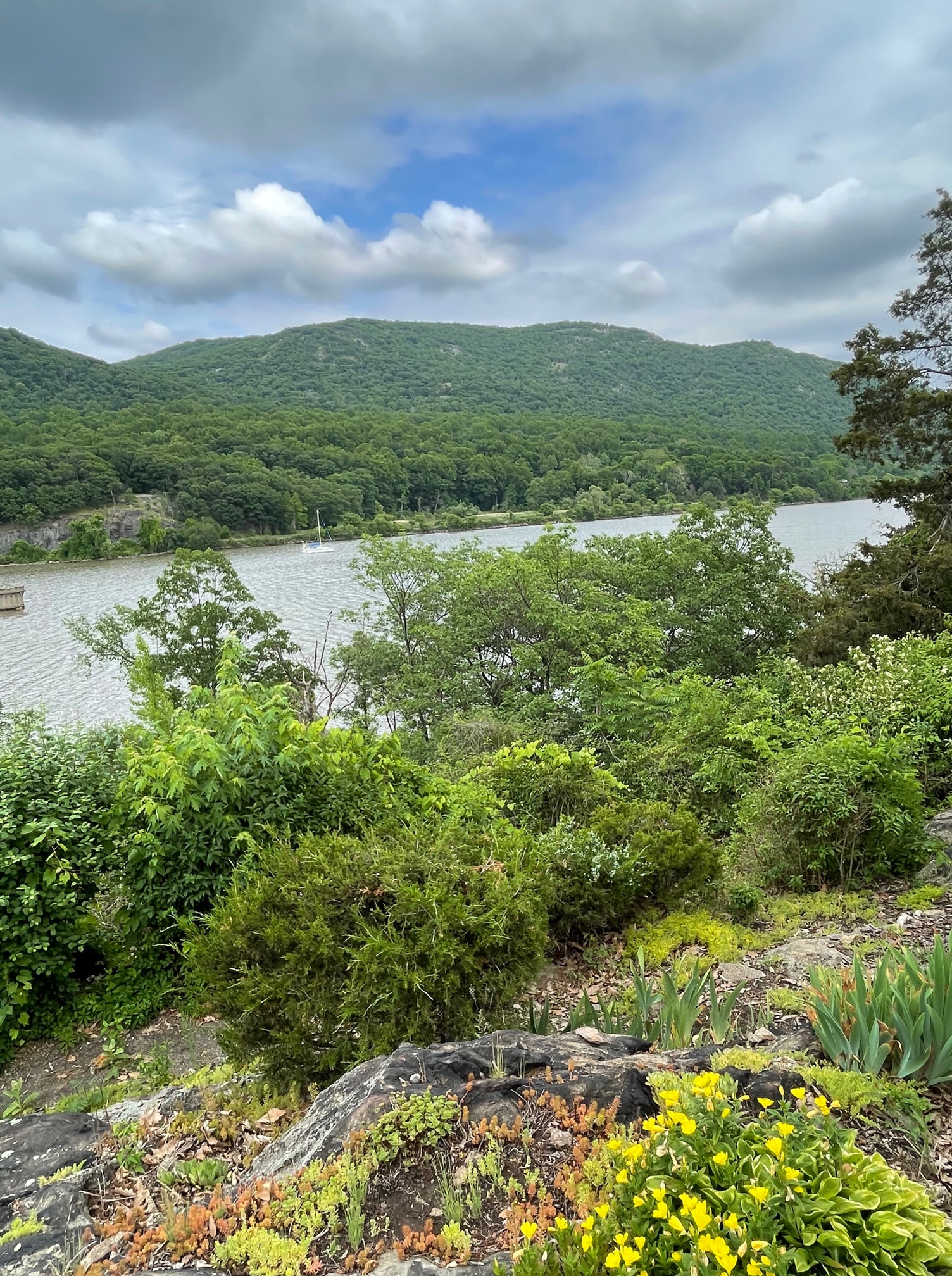
The island floats like a mirage in the middle of the Hudson Highlands, with Storm King on the west side and Breakneck Ridge on the east.

Do not attempt to climb Breakneck Ridge unless you are part mountain goat, it ascends nearly vertically to a summit that is very, very far up in the clouds.

I never thought you could actually go to the island, that I was not permitted, and I was not enough of a bandit to take a canoe out there under the cover of night. But I thought it was the real thing, after reading about the island in Rob Yasinsac’s Hudson Valley Ruins: Forgotten Landmarks of an American Landscape (2006). I knew Rob from when I was researching the Philipse family for The Women of the House, and he was working as an intrepeter at Philipseburg Manor – he had the perfect long ponytail to go with his Colonial attire. If he said it was a worthwhile “ruin,” surely it was.

So now our little tourist trip was crossing the water and the ruin came into view.

Right on time – the skipper bragged he had been “accused of being a Swiss clock.” The steward, Moose, told tales about a 14-foot-long sturgeon that had recently been detected with sonar in the river, and recalled the bad old days when the water was contaminated by PCBs and all the fish “tasted of oil.” The river was glass only an hour ago, he said, and now it was choppy.

So, it’s actually called Polipel Island, we learn from Rowan, our docent, a casual young woman with Billie Eillish-tinted locks. Dutch sailors, afraid of the Storm King if they passed the area without an offering, threw rookie sailors over board and picked them up on the way back, as if with a pot ladle. Polipel is pot ladle in Dutch.

This is only Rowan’s fourth tour, and she’s doing pretty well. The State owns the island now, and the head of the Bannerman Castle Trust trusted that Rowan was up to the task. The island is swarming with sightseers and when I hear the booming tones of a more seasoned guide, mansplaining all the way, I think we lucked out with Rowan.

We listened and learned. There were a lot of people in the Bannerman line. After the family bought the island, for $1,600, Bannerman the younger hauled things out of the drink – scrap metal from the Revolution, and cotton rope, which could be refashioned as paper. His father, inspired, decided to go into the military surplus business, and in 1900 they set up shop at 501 Broadway in lower Manhattan. It was such a success that the store was bursting at the seams, and they were encouraged to move their dangerous products elsewhere. Luckily they had an island on which to build a munitions depot, and the son was an aspiring architect who wanted to connect with his Scottish roots.  Hence the faux Gaelic style. They could easily put on The Scottish Play here.

Are we bored yet? For many people, the real draw of Bannerman’s Castle is that all that munitions shit occasionally blew sky high. I just learned that loud noises connect with the pleasure centers in the brain.

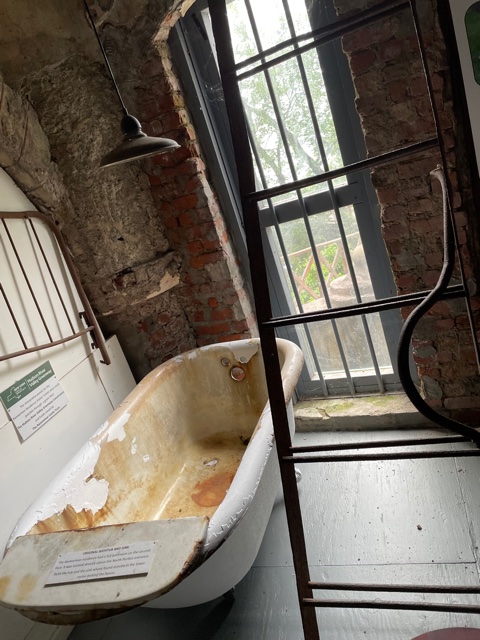
Some of the walls were apparently reinforced by surplus bayonets from the Civil War. I just wanted to wander around but we were cautioned not to stray from the trails. There was in fact an element of ruin in one building we could go in.

It reminded me of a really fantastic ruin, the abandoned hospital at Ellis Island, which actually  still has all kinds of untouched haunted things, such as operating theaters and cadaver drawers. Here there was plenty of camera clicking.

There did exist some objects that bore the patina of memory.

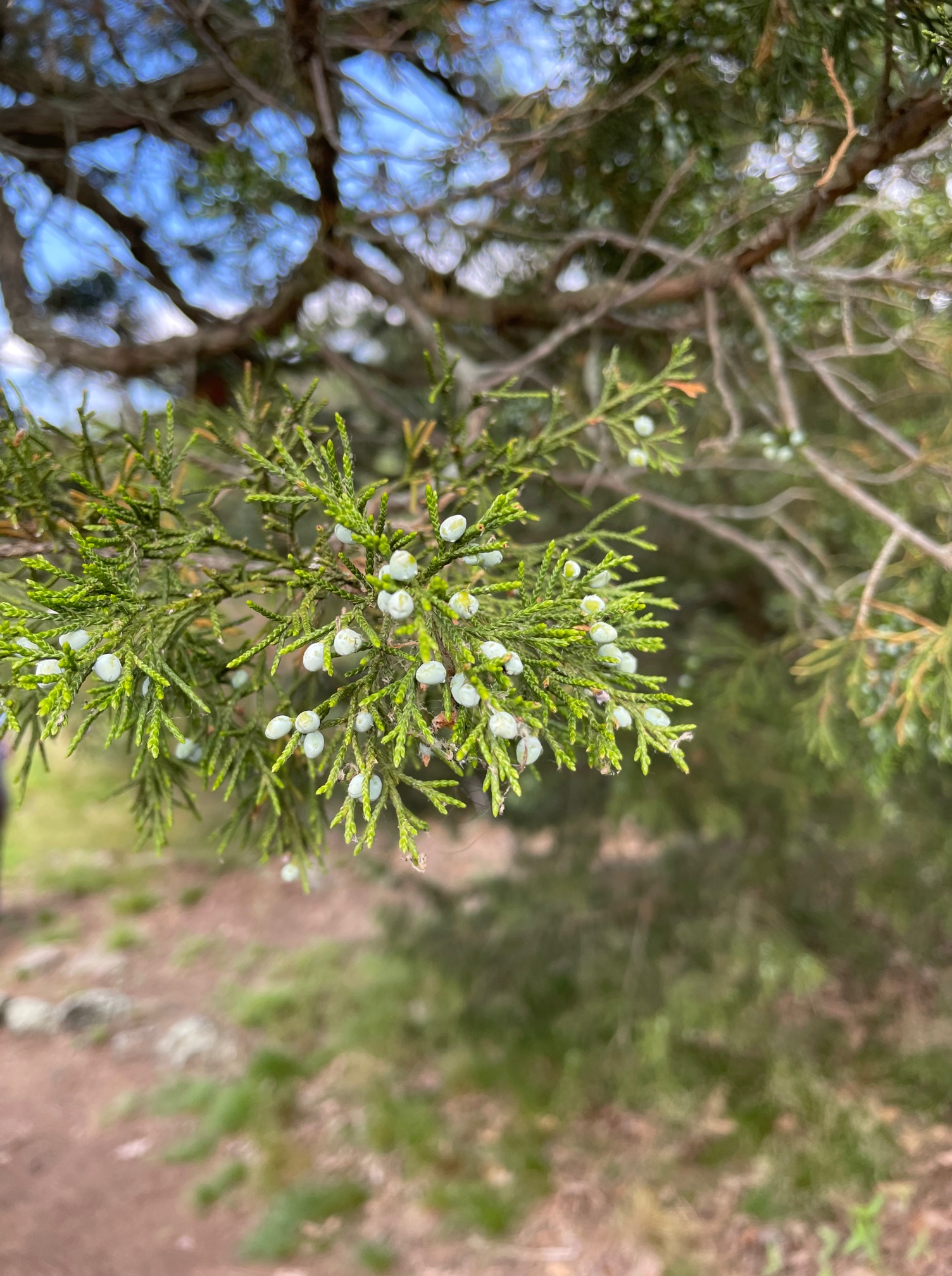
The paths we followed had honeysuckle, rock harlequin and bayberry, the latter of which requires salinity to survive. Since the Hudson is actually an estuary with both salt and fresh water, this makes sense.

Try to imagine a time when the Bannermans and their servants crossed the frozen Hudson to get provisions in Beacon, a time when the bricks used in constructing the castle were made in the brick factories lining the shores, when shad fishing universally meant springtime. In those days the train ran north and south the same as it does today, and squarely across the façade of Bannerman’s munitions castle was a colossal advertisements with letters four and a half feet tall, an ad about as big as any billboard today.

Bannermans’ Island Arsenal. Note the proper placement of the apostrophe.

Hudson Valley Ruins features the perfect line about immersing yourself in days gone by: Linger here amid the beautiful foolishness of things. That’s an inscription from the ruin of a house in the Catskill Mountains. Beautiful foolishness just about captures the hobby horse of Bannerman’s Island, what we who relish ruins seek. Once upon a time, affluent people, connoisseurs, constructed their own Roman ruins to wander through in the moonlight. At Bannerman’s I kind of wished I had braved the tide and gone there before it was open to all.

Leave a comment

Filed under Jean Zimmerman

The trees have bloomed

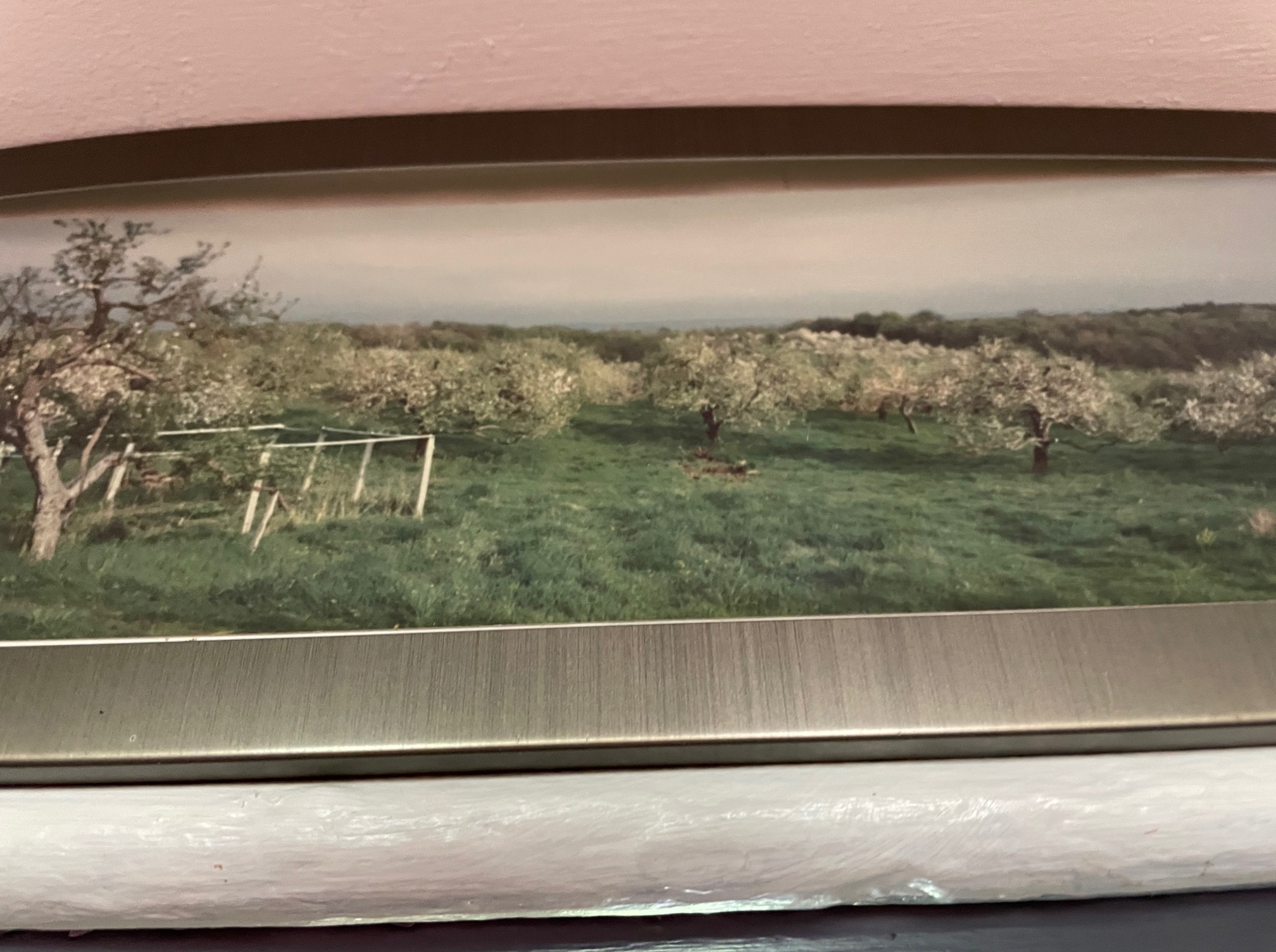
and the little green apples are starting to grow. When we lived in a house in the middle of an apple orchard apple blossom time was magical, with white flowers drifting on every breeze like wishes.

We had no worries. An orchard is eternally optimistic. It goes through its cycle of bloom, bud, ripen, drop, predictably every year as long as it is minimally tended. Fall was applesauce time, a little hard work, but we’d had time to rest under the trees all summer and tend the vegetable garden, rich with chicken manure.

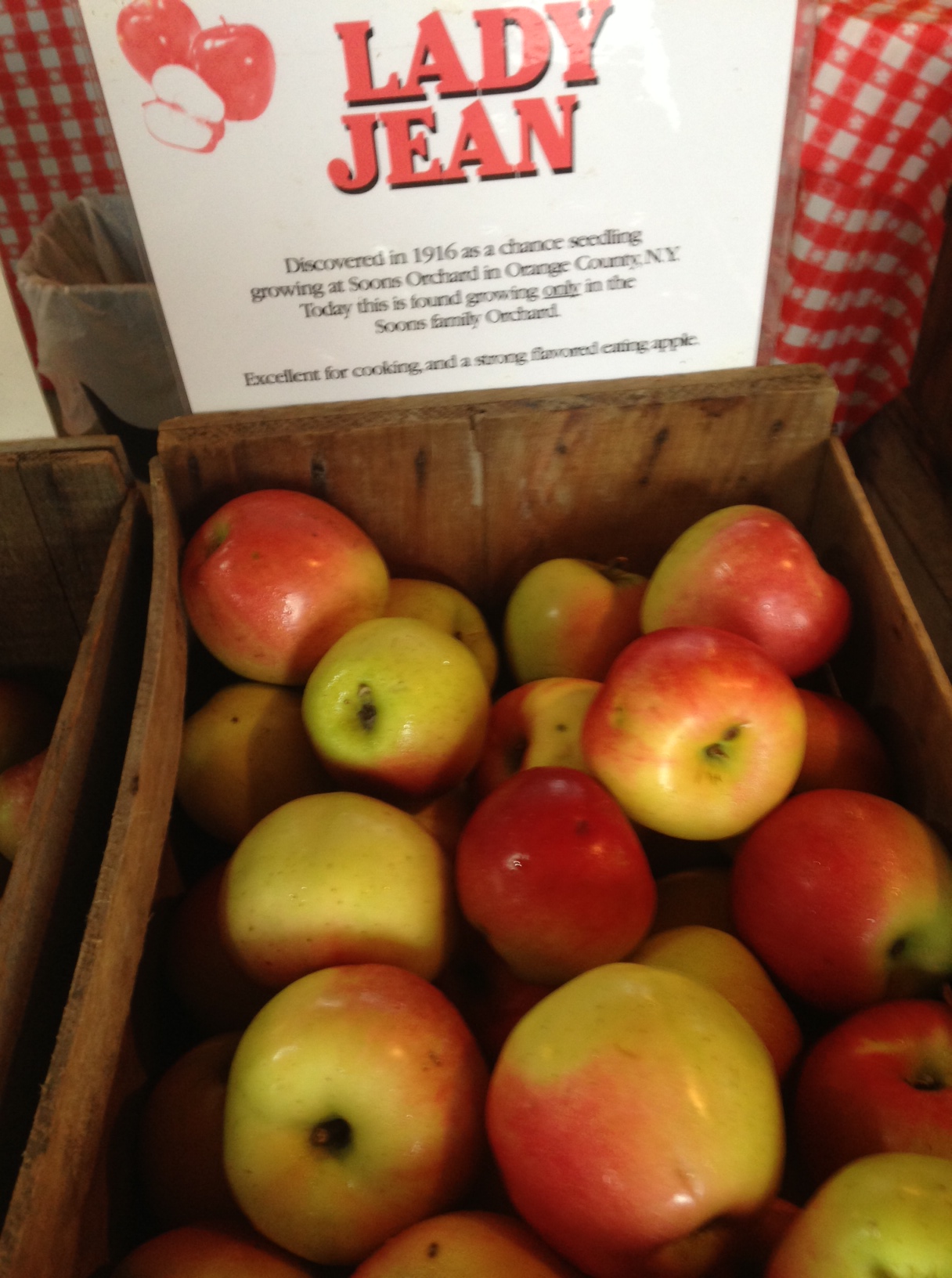
Much later, when we lived in the cabin, we found an apple press run by a former ad man who made it a point to sell heritage apples, offering them in crates with signs indicating their provenance. “Black Twig, originated in 1825 in Pennsylvania” – that’s just one example. You could pick a dozen or two varied apples from these crates or drink Geoff’s cider. Each batch was different, and he posted the types of apples that he pulped on a chalkboard. Most delicious cider ever.

We found in an obscure library with a  perennial hole in the roof – in Mount Vernon, NY – a book called The Apples of New York, from 1905, authored by S.A. Beach, a “Report of the New York Agricultural Experiment Station for the year 1903.”

Its two volumes annotated the thousands of species of apples that could be found in the state at that time, with full color plates. Everyone knows that apples and cider are part of American history – people drank cider when they feared the water supply was tainted – but who knew there were so many different kinds? It’s a gorgeous book. If you want it for your home library you’ll have to pay around 500 bucks for it.

A man named Tom Brown has made it his life’s mission to collect heirloom apples, making sure no more get lost. The retired chemical engineer llives in North Carolina, but travels throughout Appalachia going door-to-door hounding octogenarians for their memories of trees they knew when they were young, hunting for old orchards, or sometimes the remains of old orchards nearly forgotten in someone’s back forty. He has so far reclaimed 1,200 varieties, and keeps 700 of the rarest in his own Heritage Apples orchard.

Names of some of the old order include Etter’s Gold, Arkansas Black, White Winter Jon, Royal Lemon, Candy Stripe. The flesh and skin are a wild array of colors and textures and flavors. One researcher found that commercial growers in the U.S. had around 14,000 unique apple varities in the 19thcentury.

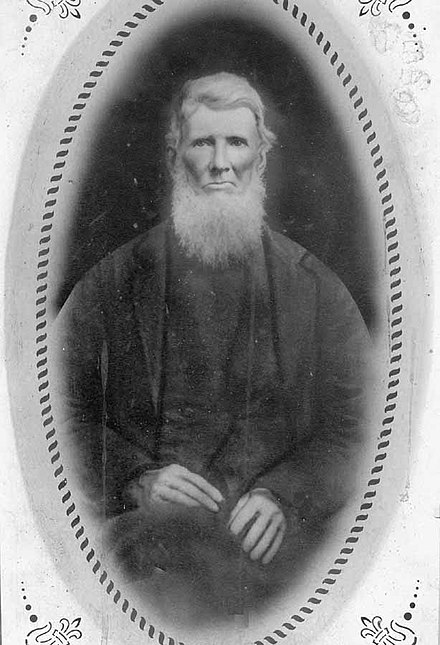
I’ve always wondered what the truth was about Johnny Appleseed, aka John Chapman, whom I always imagined wildly scattering handfuls of apple seeds as he traipsed across the country. There is some reality there. He was a pioneer nurseryman who traveled to parts of Pennsylvania, Ohio, Indiana, Illinois and West Virginia. He was a legend in his own time.

There is a story I like of John picking seeds from the pomace of Potamac cider mills in the 1790s. His first nursery was on the bank of the Brokenstraw Creek in Pennsylvania, and then he planted nurseries wherever he traveled. He also preached the gospel as he went. Some say he had a pet wolf that followed him constantly. Sure. And he wore a tin pot on his head. What? What is probably true, on the other hand, is that he was against the practice of grafting, and so the apples his trees produced were wild and usable only for cider.

Americans were mostly drunks then, including children.

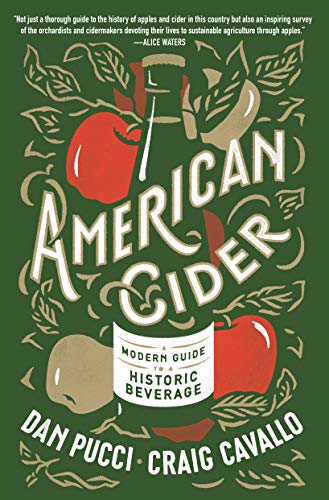
Dan Pucci and Craig Cavallo just came out with a book about cider that Alice Waters really likes.

Now we have Honeycrisp, developed in a laboratory, and Gala, whose flavor is mainly sugar. Eleven boring varieties account for 90 percent of  grocery sales. If you have a wizened old apple tree on your property, consider yourself blessed. Don’t worry about the spots. The spots give them gravitas.

1 Comment

Filed under Jean Zimmerman

Queens, too, has trees.

Of course it has trees! Its streets are lined with them. What I mean is trees behind an iron fence in a botanical garden, trees that are mature and majestic, seemingly waiting patiently to be admired by garden goers.

Situated in Flushing, the Chinese epicenter of the borough, the Queens Botanical Garden has 39 acres of marvels. It was founded  nearby as part of the 1939 New York World’s Fair and moved to its current location, then an ash landfill, in preparation for the 1964 New York World’s Fair. I ate one of the delicacies of my life, Belgian Waffles, at that Fair.

The Queens Botanical Garden differs quite a bit from its counterpart in the Bronx, named the New York Botanical Garden. It is, and I love this about it, a bit shaggier than the pristine, well trod, picture-perfect New York Botanical Garden. You find wonderful trees, but other unexpected things.

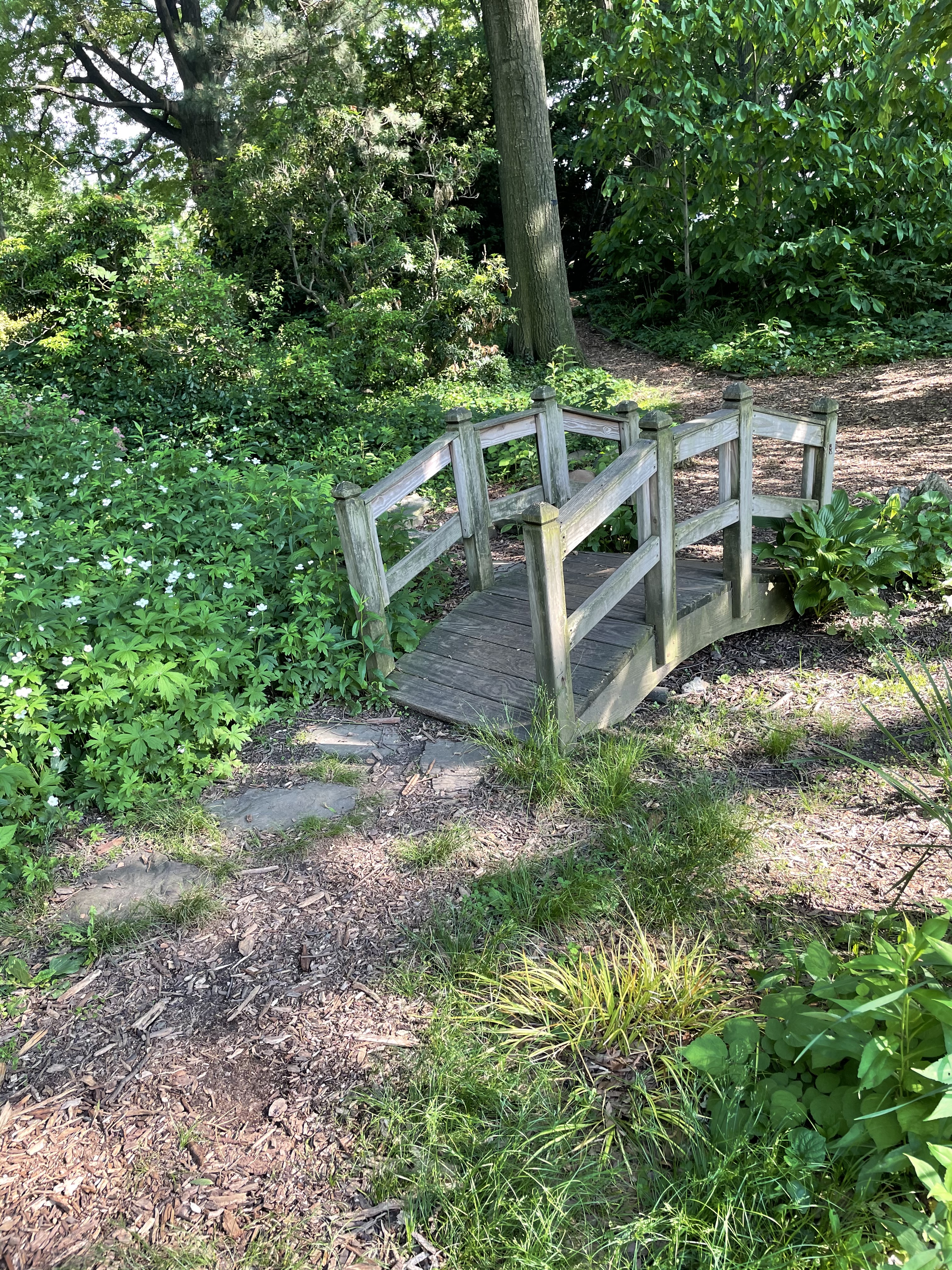
Or a little hobbit-bridge in the middle of nowhere.

Walking around, I felt the crabapple orchard was out of a storybook, put there for my pleasure.

People were doing tai chi on the paths, including one man wearing plastic gloves and a mask. The Garden has some impressive oaks. One swallowed its previous tag and had to be given a new one.

Equally impressive, this medium size, delicate persimmon tree. It seemed appropriate in this very Asian neighborhood.

At the New York Botanical Garden, I have never seen a little half-dressed imp go unsupervised.

Perhaps he was looking for this fort.

A couple of years ago I participated in a planting program for kids at the Queens Botanical Garden called Green Horizons. I was paired up with a really smart DEC forester named Greg Owens. Before the kids got there, when we were preparing, he told me he had brought a lot of cookies. I thought, how nice of you to bring cookies, I hope they’re chocolate chip. When it came time to break them out, it transpired that his cookies were wood, slices of trees, a way of learning something about the age of trees. Made good coasters, too.

If you get tired of tree worship, stop and smell the roses. They’ve been a bit battered by our recent heat and storms, but are still incredible.

The thing about Queens, though, you are not only caught up by persimmons and roses but by the sky. It’s under the flight paths to JFK and LaGuardia airports, and planes are constantly booming overhead. It’s enough to make you want to take off for someplace exotic.

But if you’re grounded in Flushing, you can do what I did – go sit in an outdoor restaurant bubble of clear plastic and eat spicy dan dan noodles. A good finale to an arboricultural feast.

1 Comment

Filed under Jean Zimmerman

What would happen if we left the woods alone?

We would have a forest that was beautifully complex and simple all at once. Mindaugas Survila’s masterpiece The Ancient Woods documents one of Lithuania’s old-growth forests. He took ten years to make the film, and the lyrical effect shows off the director’s degrees in Natural Sciences from Vilnius University.

This is what he and his apparently huge and patient film crew did: they left time-capture cameras at exactly the right locations throughout the land, supplemented by a bit of hand-held tracking, and caught it all. All the animals, birds, reptiles and insects you have probably never seen before, that being Lithuania and this the U.S., with an incredible degree of intimacy. A black stork? Who knew?

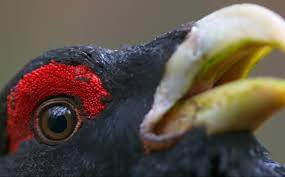
It’s magical. There are some crazy looking birds going at it with each other, clack-clacking their beaks together, chasing each other. Is it war or mating? There is no intrusive voiceover a la Mutual of Omaha’s Wild Kingdom to interrupt your own interpretation of events, just the haunting sounds of wind and birdsong as a backdrop. This is a Zen, meditative, poetic piece.

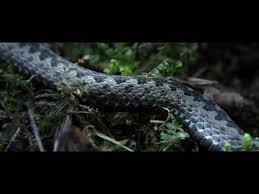
A silver-black snake charges a hapless mouse several times and misses, and we see the denouement as the snake drags the mouse carcass away. Only to be glimpsed in a later scene having undergone the same brutal fate, its limp scaly body being drained by wasps.

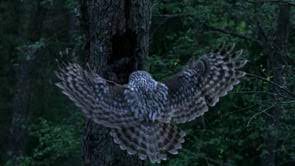
Baby owls peep plaintively from their tree hollow, and we wait restlessly with them until we finally see the magnificent mother swoop up to her family, this in slow motion, wings like brown waving flags.

And the stag king of the forest passes by in shadow, his antlers wreathed with vines, bellowing. Now that’s a movie I’d like to see again. In fact, I did.

1 Comment

Filed under Jean Zimmerman

It’s Kousa time

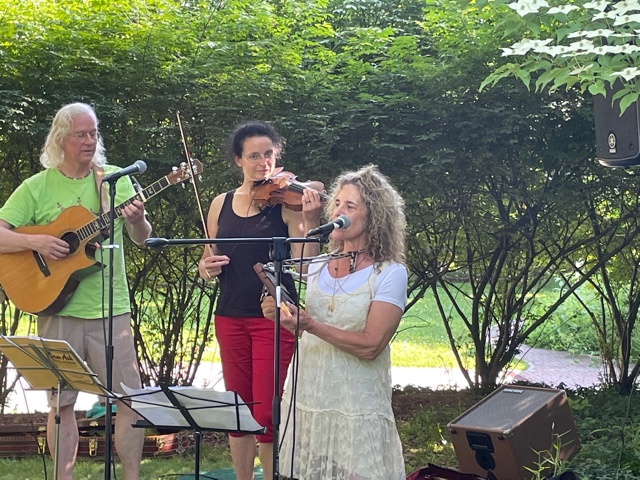
in the suburban environs where I live. When there’s an all-day music festival featuring performers from all four of what we fondly call the Rivertowns, you go. If only to snoop in the luxe back yards where the performances take place. Musicians play an hour each. The first hour is Schumann, Piano Quartet in E-Flat major, Op. 44. I am in the shade but staring deep into an overgrown trellis, through which the music floats as if on wings. The koi pond on the way out is almost too full of blaze-red fish.

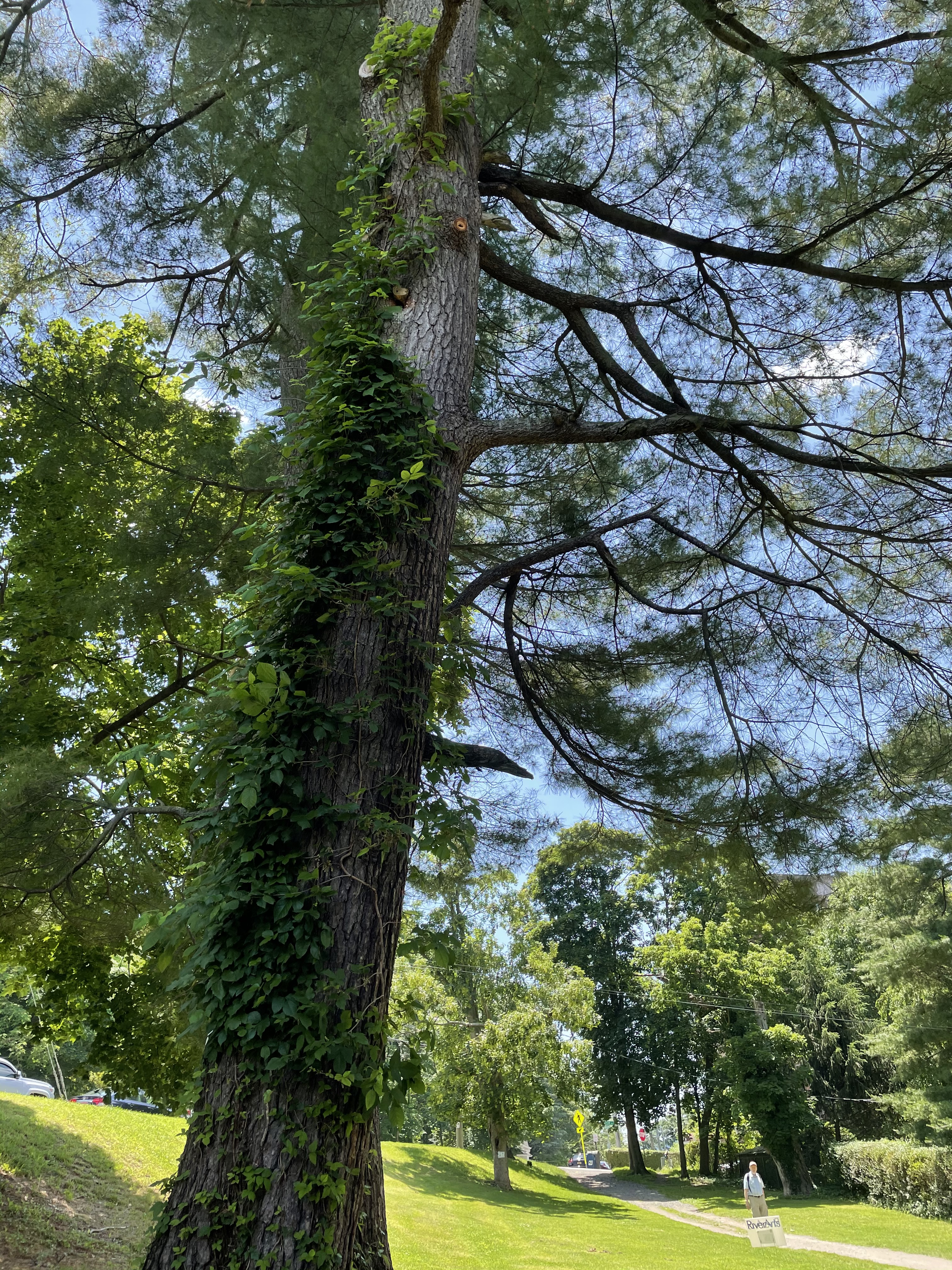
A folk singer at the Keeper’s House on the Aqueduct jokes about the poison ivy that is his backdrop, draping the Eastern pine.

We hop over to another back yard to see a garage band of our peers, the audience all men with carefully crafted five o-clock shadows and women whose hair is desperately trying to look natural. When we were teenagers, we thought our parents were all grizzled. Now I see it was no exaggeration, they are grizzled, and we are them. Everybody I’ve ever known from whenever I lived in this town is everywhere around us, my childhood friends all grown up, the parents of my kid’s friends…

And the plague is over. At least here, just outside New York, everyone’s vaccinated and hugging, sweating and hugging in the sun. We’ve come out of the cave.

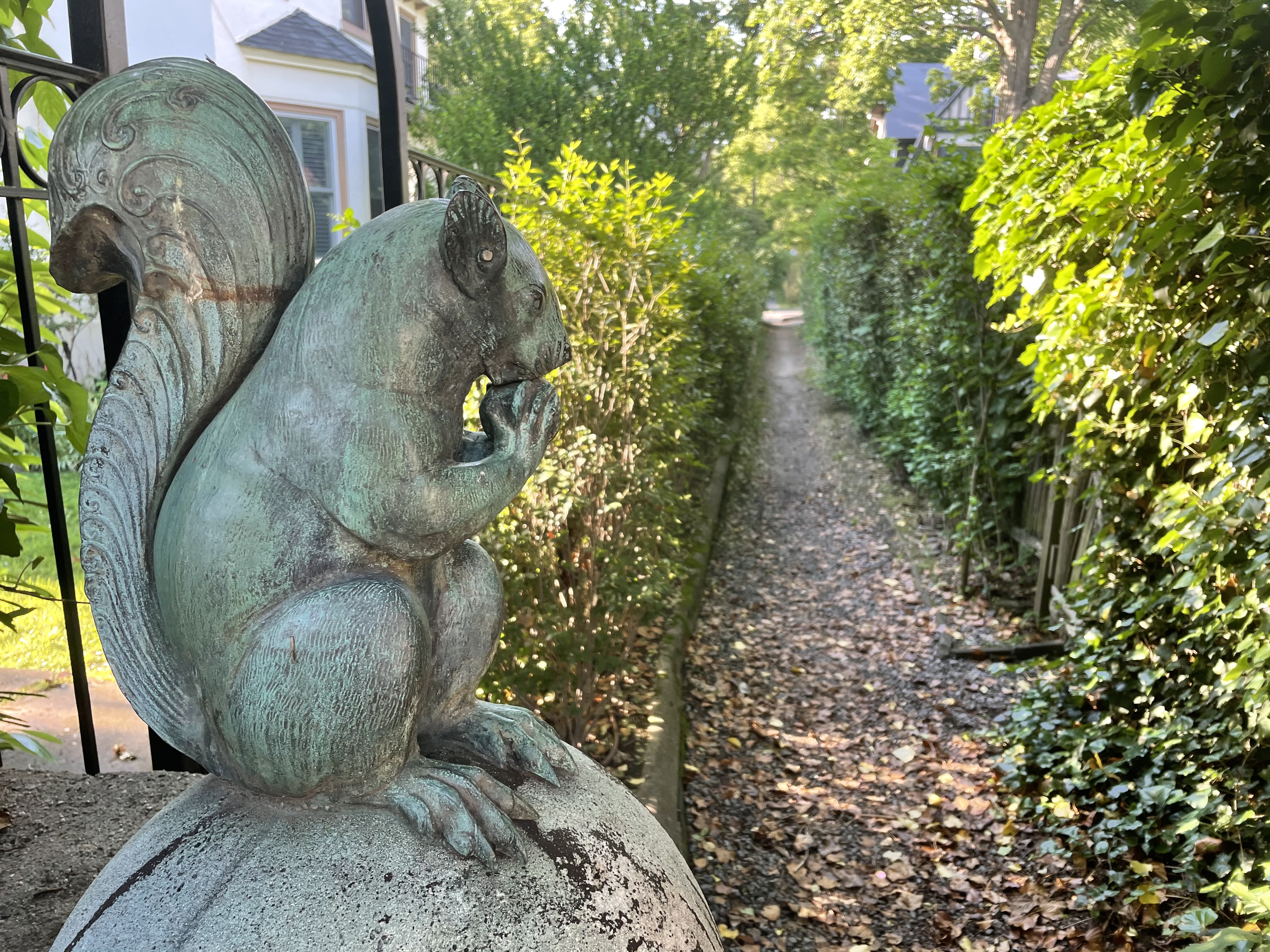
The next stop is a scoot down Squirrel Alley,  a village landmark that is somewhat secret outside our neighborhood.

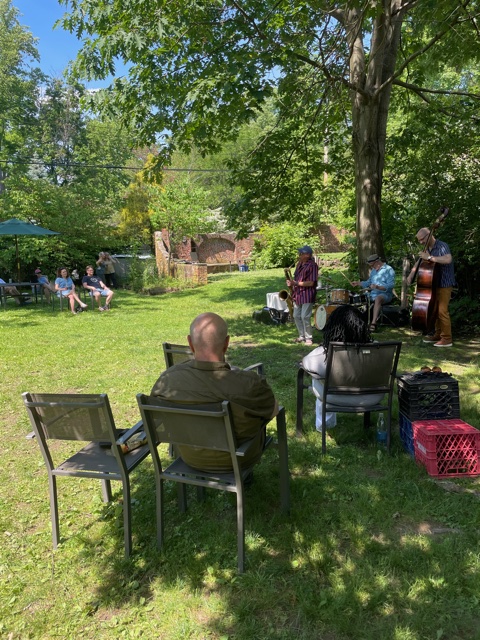
We go to see a world-class baritone sax player, Gary Smulyan, and his trio, underneath a white oak and a northern red oak, with a Tuscan soft red wall in the background and rising above it a cloud of Kousa dogwood.

In the shifting audience, there’s a guy we once had a fight with but now is a good neighbor, another guy who helped run a campaign for local office I lost, his wife, who comforted me, the saxophonist’s wife, who was Maud’s piano teacher, a bit beleaguered by Maud’s unwillingness to practice, and their daughter, an unusual and precocious personality who remembers the names of every person she ever met. The horn swoops and blows and the drummer whoops and laughs. Across the lawn I see Josefa reclining in her camp chair without a care in the world.

More Kousa Dogwood overhead, a canopy with a bronze Japanese maple and a sugar maple with its delicate noses scattered over the fine grass.

I know the musicians, a band called Timbila, who play electrified music from Zimbabwe that is trance-inspiring.

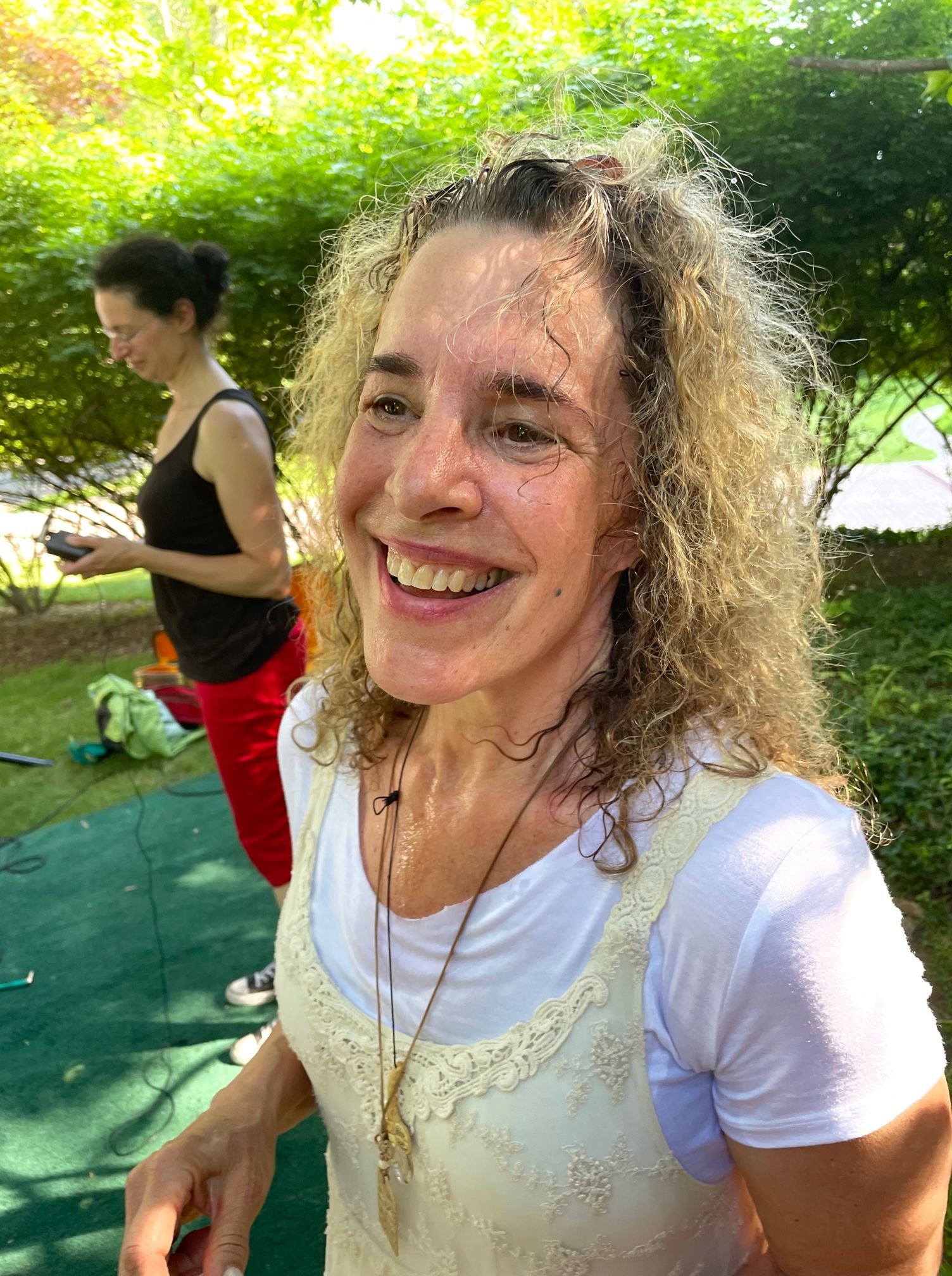
Nora plays the Mbira, the thumb piano, for the band.

When she smiles on you the sun shines.

It is a well known fact that my nephew Jasper is the number one jazz pianist of his generation, at the age of 14. Before heading home to my cool apartment I stop at the basketball court for the teen segment of the festival, where Jasper backs up a seventeen-year-old girl interpreting standards.

She is amazing, but I have to say after seeing her belt out “I’m feeling good” that there ought to be some kind of mandate against people under the age of 18  rendering Nina Simone. Still, she’s trying. We’re all trying, on this day of almost too much music, overdue hugs and just enough Kousa dogwood.

2 Comments

Filed under Jean Zimmerman

Loving Walt Whitman

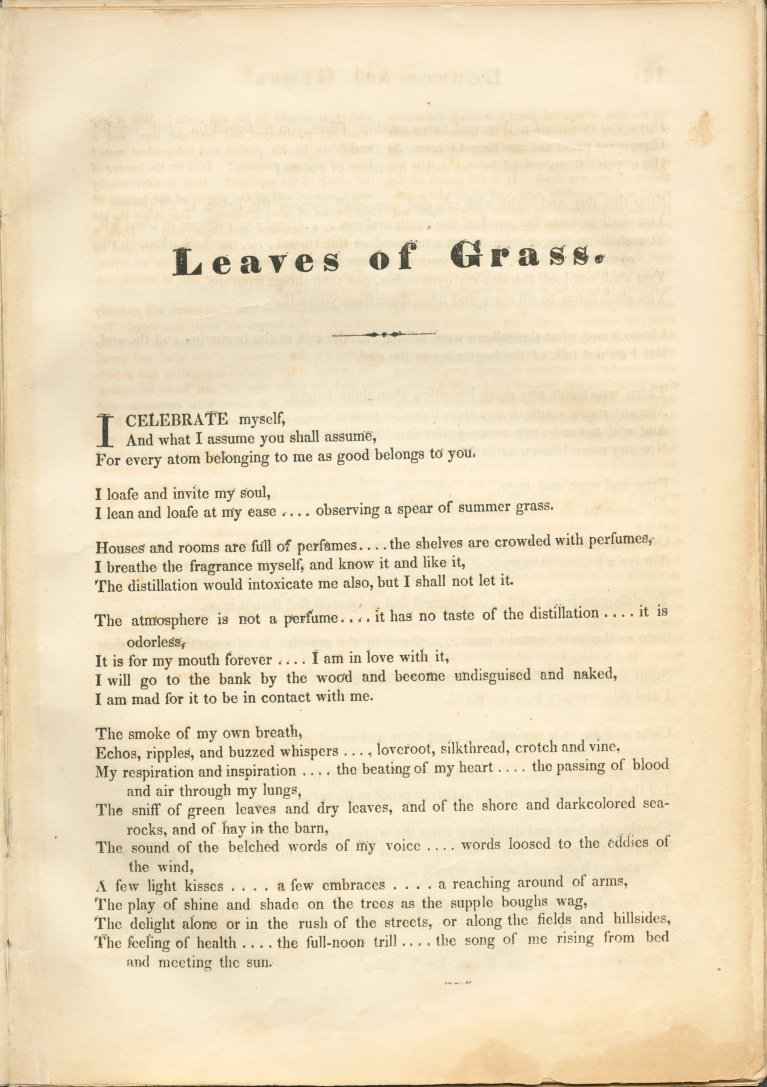
is loving yourself, or so I think when I remember lying on my bed poring over Leaves of Grass as a teenager after school instead of going out and playing field hockey. How could my parents not know it would stoke the flames of adolescent rebellion to allow me that book?

I’m marking his birthday here but off  by a few days. I’m sure he wouldn’t mind!

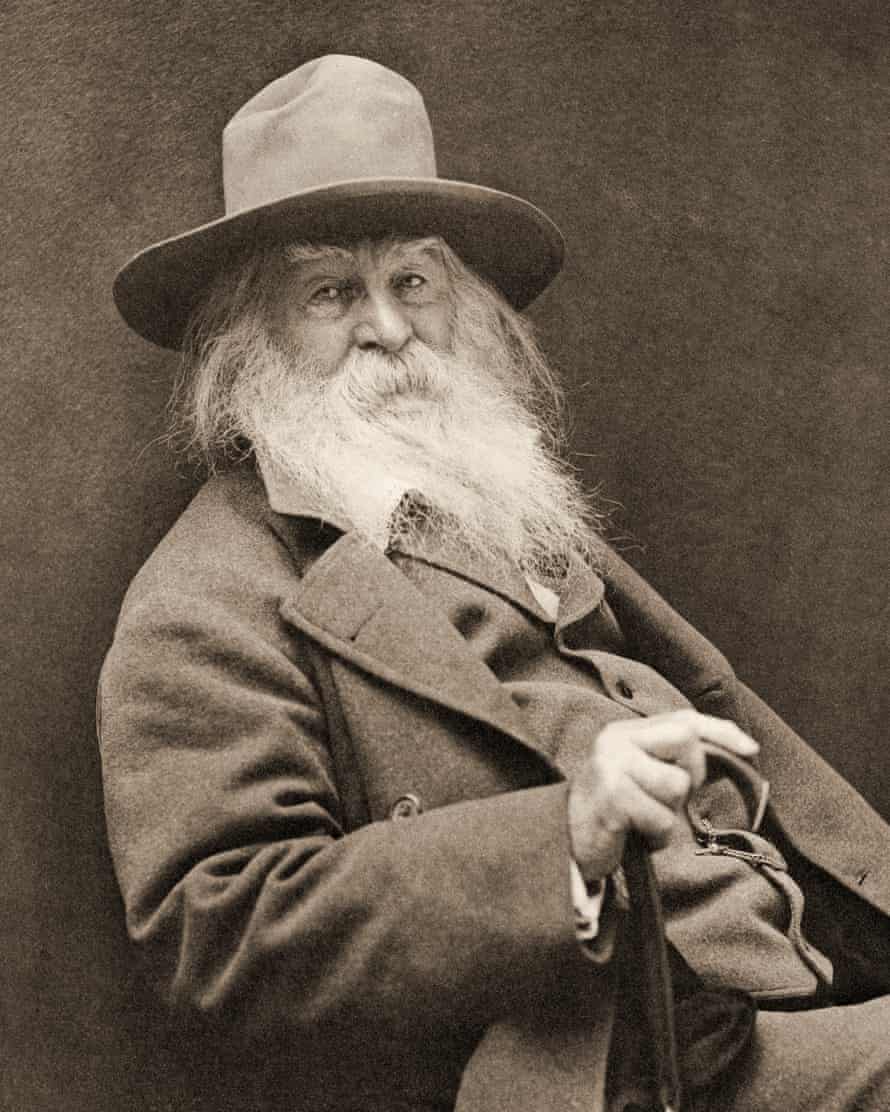
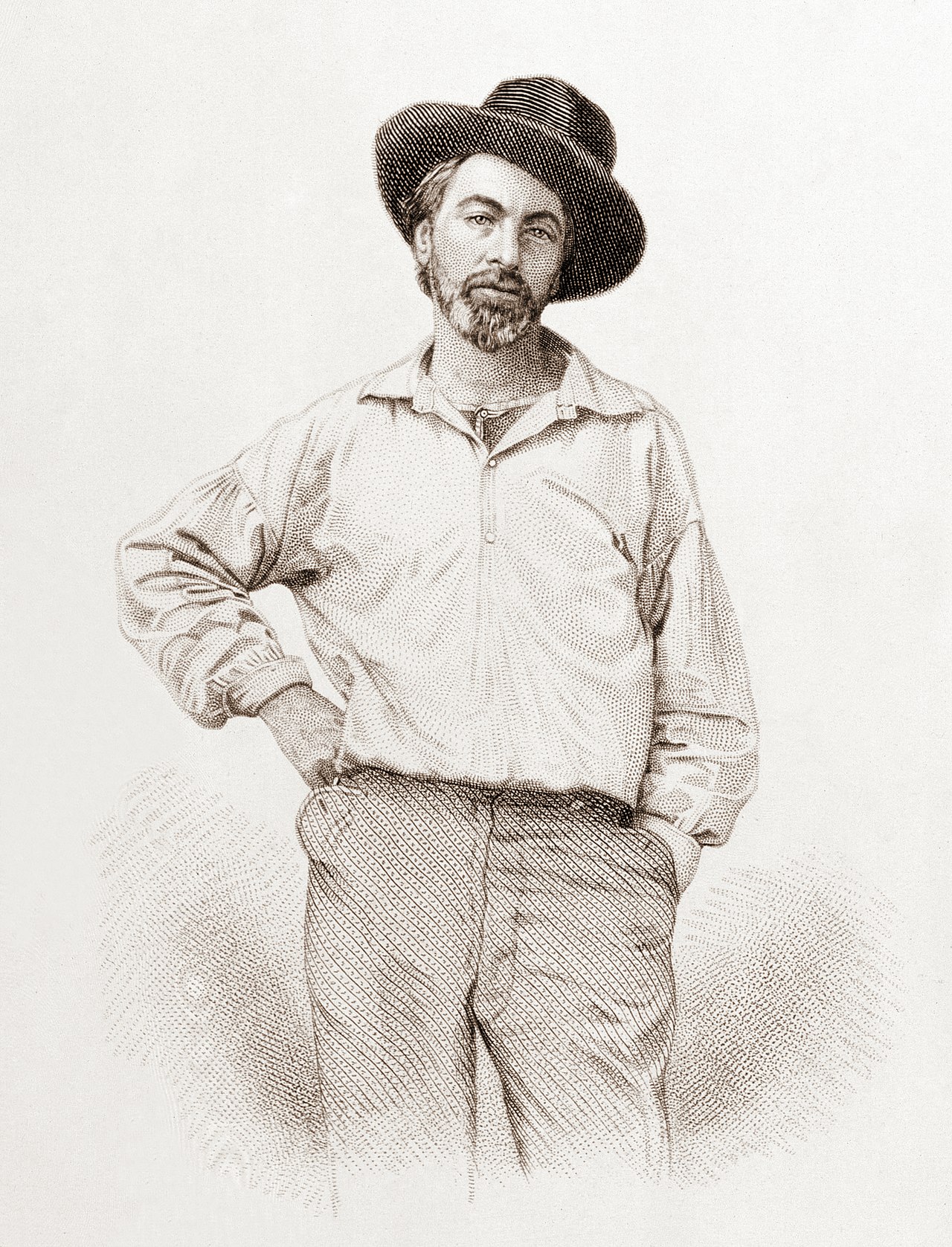
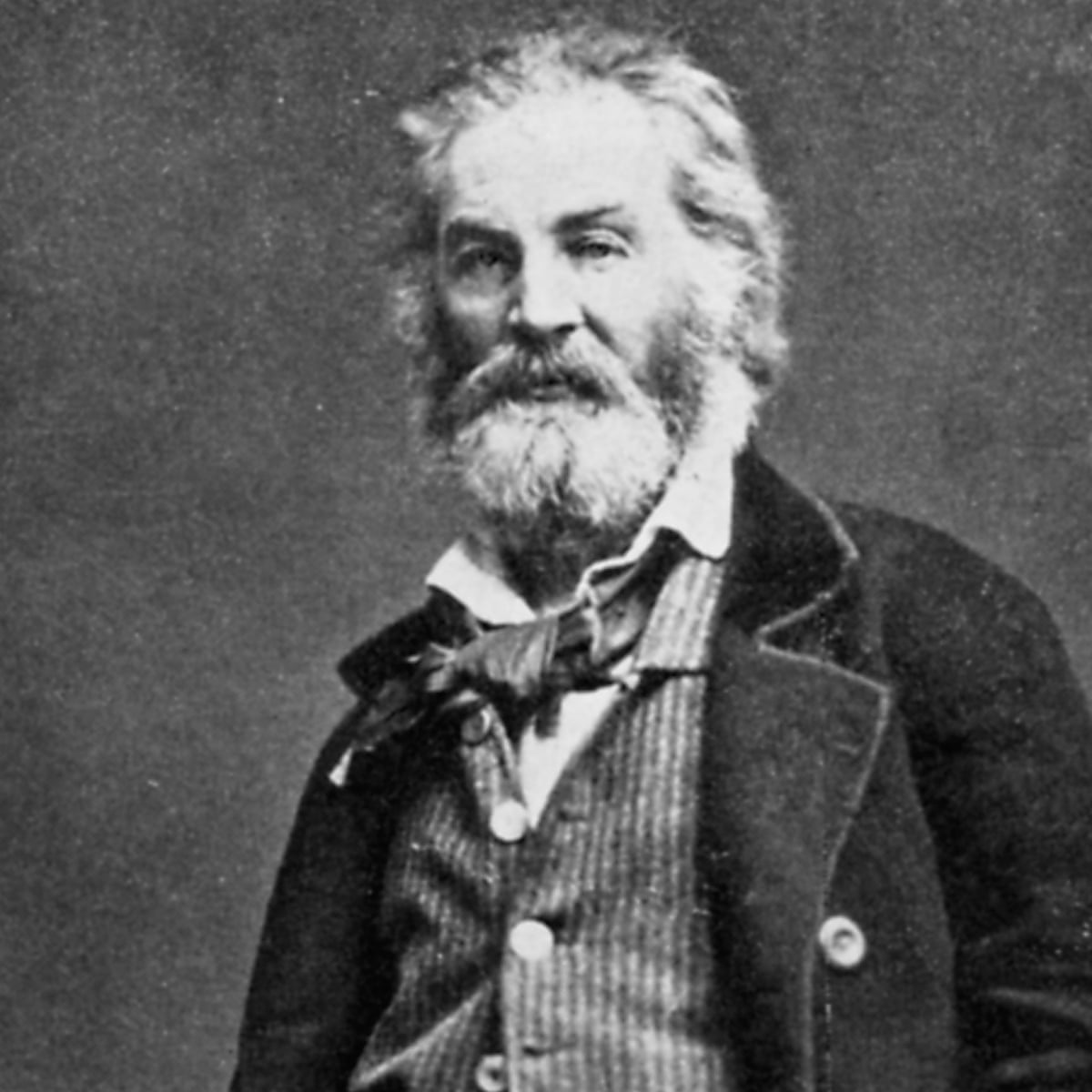
We think of him now as a full-bearded bard – apparently he loved to have his picture taken, and this was when photography was novel. But our greatest American poet was just 37 when he published Leaves of Grass.

There was no author credited, and he posed for the engraving on its cover as a rakish working man. None of the poems had titles and there was no table of contents.

He was born on Long Island (a local mall, the Walt Whitman Shops, in South Huntington, New York, stands near his birthplace). He moved with his family to Brooklyn when he was five.

At various times in his life, he worked as a printer and editorial writer, a schoolteacher and a journalist, and as a volunteer nurse during the Civil War. The love of his life was great love was a streetcar conductor.

Once he published Leaves of Grass, on July 4, 1855, revision became a fixation, and he wrote and rewrote and added poems during the course of his life. Ever the newsman, he did the typesetting for the first edition himself. That first book had 12 poems, the final compilation over 400. It was always about the body, about the material world, and singing the praises of it all. In his time, of course, frank talk about sexuality was considered questionable, and so Song of Myself, probably the best American poem, was heartily debated.

He got fired from his job at the Department of the Interior. One reviewer suggested that Whitman throw the poems into the fire, another that he commit suicide. An early critic called the work “a mass of stupid filth.”

You have to love it, don’t you? Even much later, the revered literary figure Malcolm Cowley called Leaves of grass “An extraordinary mixture of greatness, false greatness and mediocrity.” That quote comes from the introduction to The Works of Walt Whitman, published in our time, and it’s kind of unfair – couldn’t they have come up with a more partial introducer?

He appreciated trees. From Song of the Open Road“Why are there trees I never walk under but large and melodious thoughts descend upon me?”

I have tried to find a line, a stanza, any one thing to put in here from Song of Myself, but I can’t choose.

So why don’t we start at the beginning:

I celebrate myself, and sing myself,

And what I assume you shall assume,

For every atom belonging to me as good belongs to you.

I loaf and invite my soul,

I lean and loaf at my ease observing a spear of summer grass.

My tongue, every atom of my blood, form’d from this soil, this air,

Born here of parents born here from parents the same, and their parents the same,

I, now thirty-seven years old in perfect health begin,

Hoping to cease not till death.

Whitman always intended that the book be small enough to fit in a pocket. “That would tend to induce people to take me along with them and read me in the open air,” he once said.

I loaf and invite my soul. A sentiment teenagers of all ages can embrace.

1 Comment

Filed under Jean Zimmerman

Rivers are sad

To see the passing of advocate Christopher Stone, who fought tirelessly for their rights. Yes, that’s right, he fought for the right of rivers to have what is known as standing in court. In the ’70s,  the idea seemed eccentric, though the environmental tide was beginning to turn with the passage of the Clean Water Act of 1972. 

It might seem a stretch to attribute personhood to rivers but what was obvious was the degradation of the environment. All thoughtful people were talking about it – with 1970 came the advent of Earth Day, then there were back to the landers, people were still debating Rachel Carson’s Silent Spring, etc. – but nobody knew what to do about it.

What about trees? Stone—the son of muckraking journalist I.F. Stone–raised a question. Everything can flow from a question, if you’re smart enough or brave enough to raise it. What if endangered non-human beings could see their day in court? Should trees have standing? Towards legal rights for natural objects was the law review article he published in 1972 asserting that since entities with standing, or locus standi, have the right to bring action or appear in court, and environmental entities cannot themselves bring action or appear in court, this standing can be achieved on behalf of the entity by a representing legal guardian. 

Representation could increase protection of culturally significant aspects of the natural environment, or areas vulnerable to exploitation and pollution.

I know that I have rather snarkily suggested in a post here that trees, environmental entities if they are anything, are not in fact people. But that does not mean they shouldn’t share the rights of people.

There is an energetic movement of people arguing for the rights of apes. Their credo: The great ape personhood movement aims to extend legal personhood to apes, a distinction that recognizes these non-human animals as beings with the capacity to hold both rights and duties.

Since the early 1990s countries have taken steps to protect great apes and other animals. Switzerland amended its constitution in 1992 to recognize animals as beings and not things. In 1999, New Zealand granted protections to great apes, and as a result their use is today forbidden in research, testing or teaching. Some European countries, including Austria, the Netherlands and Sweden, have completely banned the use of great apes in animal testing.

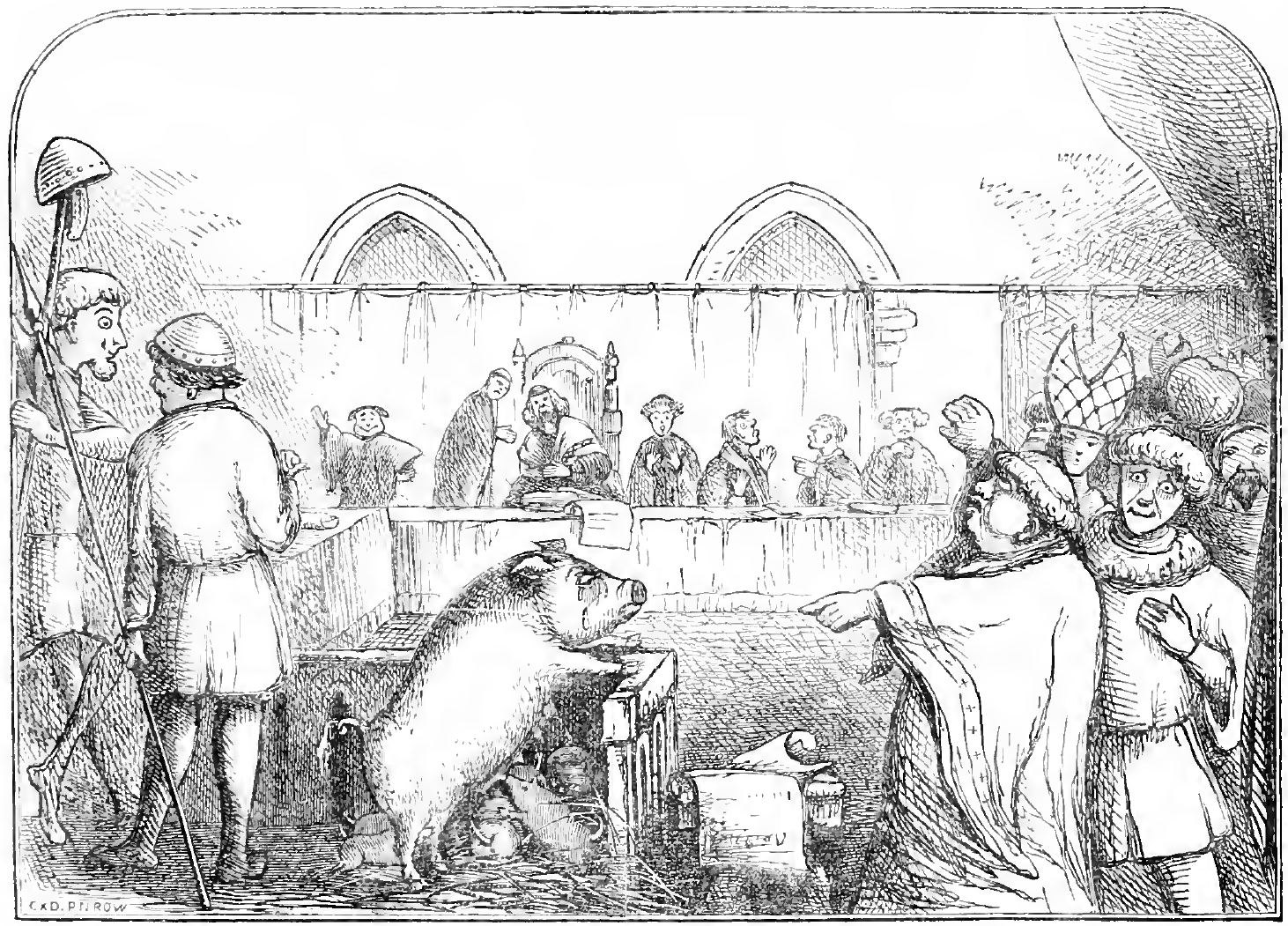
In the past, it’s gone the other way too, with animals having standing in courts and thereby being sentenced to death. The earliest documented execution of an animal comes from 1266, when the trial of an infanticidal pig took place in Fontenay-aux-Roses, France. In the Middle Ages, dogs, pigs, cows, horses and bulls and even rats routinely faced judges and, if found guilty of capital crimes, went to the stake or gallows.

So much has changed over the centuries. In 2015 in India, a decision came down from the Delhi High Court that birds have the fundamental legal right to fly,

But we stray from the rights of rivers. Stone’s article and the book that followed had a real impact on the lives of some riverine entities.

In New Zealand, the Whanganui River was declared to be a legal person in 2017.   This new legal entity was renamed Te Awa Tupua and is now recognized as “an indivisible and living whole from the mountains to the sea, incorporating the Whanganui River and all of its physical and metaphysical elements.”

The lead negotiator for the Whanganui iwi, Gerrard Albert, said “we consider the river an ancestor and always have…treating the river as a living entity is the correct way to approach it, as an indivisible whole, instead of the traditional model for the last 100 years of treating it from a perspective of ownership and management.”

The Ganges is now considered a legal person, an action taken in order to combat the 1.5 billion liters of untreated sewage that flood into it daily.

Back at home, Ohio passed the Lake Erie Bill of Rights in 2019, making the point that the lake has the right to “flourish.” The Bill was struck down a year later.

What about trees? Do they have rights in court?

This ash tree died today in Ozone Park, Queens and was fed into a chipper. The worker with the saw sang as he cut off the branches, high up in the air.

Are we violating those rights when New York City Parks asks that certain trees be taken down? Will they have their day in court when the wooden gavel falls in their favor? So far I only have questions.

Leave a comment

Filed under Jean Zimmerman