The Tree Conference rocked

or, should I say, treed.

For some reason I made up mind to teach a bit about writing to some really smart, environmentally knowledgeable folks who had probably excelled in forestry school and never gave much thought to putting pen to paper. They had most likely never studied with Elizabeth Hardwick or William Matthews or Denis Johnson, as I had (look them up). They might not feel the joy in writing (or having written) that I did. Or they might. We would see.

My workshop at the Society of Munipal Arborists ( a name change will likely come soon as the existing one is a bit stodgy for today’s world). I had 13 students. A nice tight group.

This is a tremendously exciting time for people passionate about all things green, as the government stands on the brink of allocating around 3 billion dollars for “tree equity” as part of the current $3.5 trillion spending bill. You could feel the crackle in the (rather stifling) air of the Galt House convention center in Louisville. As the legendary organization American Forests says, “Healthy forests are our pathway to slowing climate change and advancing social equity.” Arborists’ eyes are popping as they contemplate the possibilities for canopy expansion across the country. This is something that thrills us.

I wasn’t sure when I broached the idea of “Writing for the Trees” that anyone’s eyes would pop in my class. I gave everyone a yellow lined pad and a pen—more than any teacher has ever given me, I might add! We talked about the tools of the trade, even in the tree business, texting, email and longer form work, like proposals and reports.

We talked about grammar, which I don’t feel is the most important tool. Anyone can fix their grammar, but not everyone shares the same inspiration, the same heart as you. We talked about BITADs, the acronym around my house for bite-in-the-ass-details,  crucial to any great writing.

We talked about writer’s block.

I shared a quote from William Goldman: “A clear sentence is no accident. Very few sentences come out right the first time, or even the third time. Remember this in moments of despair If you find that writing is hard, it’s because it is hard.”

And I had them write, with a series of prompts. I was pleasantly surprised that the moment I gave a suggestion for a writing exercise, pens hit paper and no one stopped scribbling until I gave the word 10 minutes later.

I asked the arborists to describe the first tree they remembered seeing, or a tree they currently have a strong connection to. On another note, they were asked to take a recent text on their phone and enlarge it into a story. We wrote about goals, what they were reaching for.

But I think my favorite exercise was the one in which they looked back to the first time they held someone’s hand. When I told my mother I was going to ask this of my class she said it was silly, “The first time anyone holds someone’s hand is when they’re a baby, and no one can remember that,” she opined. So they would have to be creative. I told them that I remembered being in summer camp when I was twelve and the bashful thrill of holding on to the hand of a golden-haired boy I liked there. The exercise got peoples’ juices flowing. When hands went up and students presented their work, two of them actually became choked up as they read. I got a bit verklempt as well. Something about Jamie sharing the story of his hand dangling from his father’s fingers as they walked when he was little was heart rending.

We talked about inspiration, where it comes from.

We talked about getting work about arboriculture out into the world, about how some contemporary authors (Richard Powers, Suzanne Simard, and others) have drawn wide popular audiences, and how that is an aspiration open to all, should they choose it.

What I didn’t mention, though I did tell about the nonfiction and fiction books I’ve already written – I have a proposal in the works, about halfway done, for a book currently called Heartwood: The Epic Battle Over America’s Forests.

You never know if a piece of writing will meet your expectations. All you can do is plow forward with the best intentions, put your whole self into it, choose some cool words and cross your fingers and toes. I hope that my arborist-students came away with a sense of that process and a desire to continue.

1 Comment

Filed under Jean Zimmerman

Women marry incarcerated men

for a variety of reasons, say experts. It might be a power trip. She has all the freedom in the world, while he has none – sometimes forever. Some women swear that there is real romance in getting engaged and tying the knot in prison, even if the wedding cake is a Twinkie, which has happened at least once.

The condition of being attracted to someone behind bars actually has a name, hybristophilia. That’s been defined by psychologists as sexual arousal and pleasure from having a partner who is known to have committed an outrage or crime, such as rape, murder, or armed robbery.

Sheila Isenberg interviewed female hybristophiliacs for her book, Women Who Love Men Who Kill. “If you are in a relationship with a man behind bars for life or a man on death row, then you have a lot of control over the relationship,” she wrote. “You can decide when to make the visit, when to accept the phone call, or if you will accept the call, and you are that man’s primary link with the outside world. So as you can clearly see it’s a very powerful position to be in.”

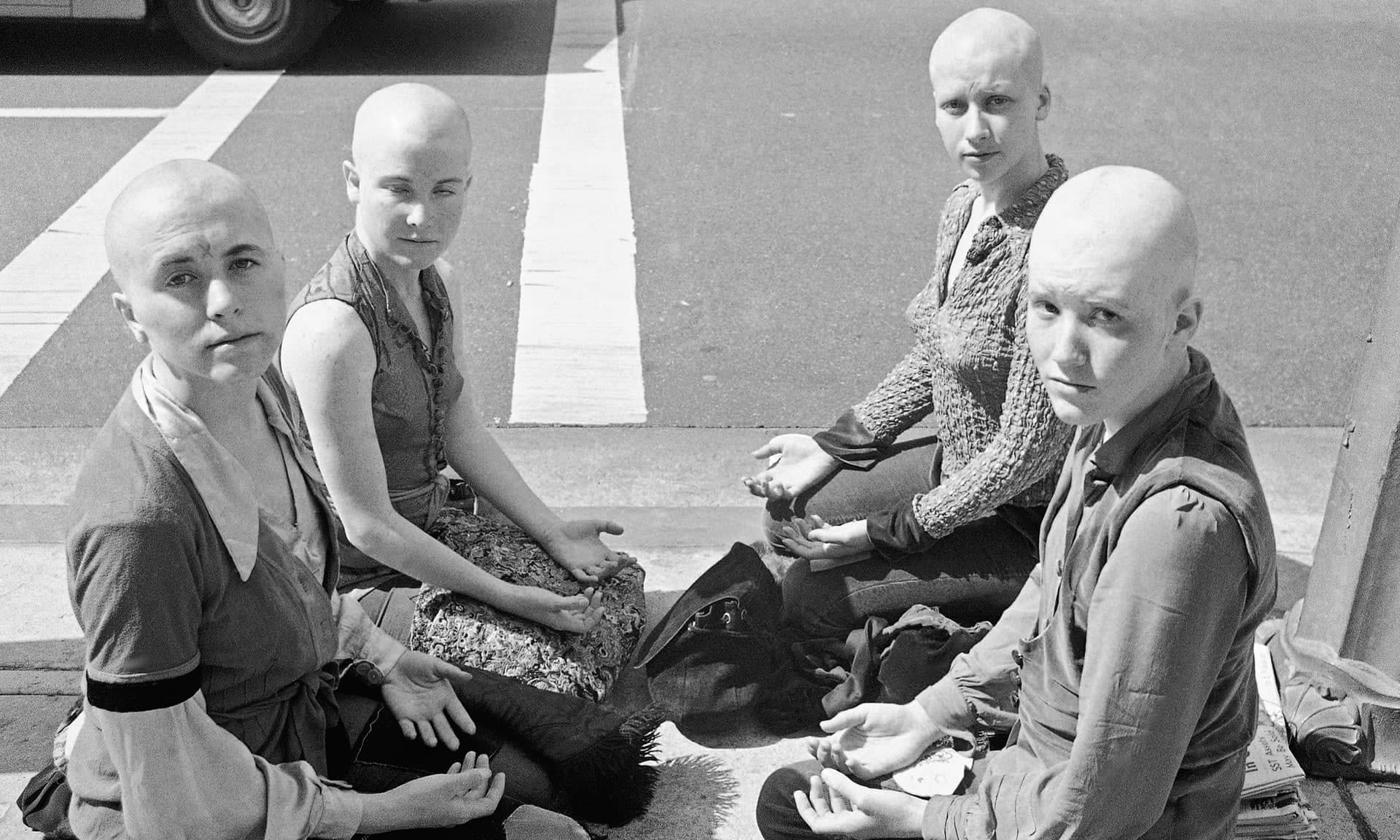
The most incorrigible of prisoners have been sought after. Charles Manson presided over a passel of shaved-head groupies, got 4 fan letters a day and sought a marriage license in 2014 to wed Afton Elaine Burton, a 26-year-old admirer who had visiting him for nine years.

Connubial bliss never arrived for Manson, who died in 2017 at the age of 83.

Ted Bundy wound up married and becoming a father after committing at least 30 murders, despite being locked up for three decades. The fact that conjugal visits were prohibited did not somehow stop the course of true love.

Marriage proposals, love letters and nude pictures appeared regularly in his mail. Both of the Menendez brothers got married while imprisoned for the murder of their parents. Richard Ramirez, “the Night Stalker,” tied the knot with a reporter who saw his mug shot on tv. The New York Times reported that she purchased her new husband a platinum wedding band because he told her, “Satanists don’t wear gold.”

Et cetera.

Of more interest to me are the women who research and document death row inmates’ last meal requests. I have come across two who obsess over how people have chosen to dine when they finally get a choice about the matter.

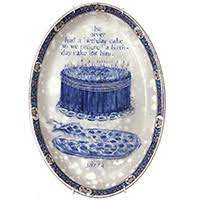
An artist named Julie Green, who died at the age of 60 last week, made a career out of it after her interest was piqued by newspaper announcements concerning the request of a recently executed man: Six tacos, six glazed doughnuts and a Cherry Coke.

She called her decades-long art project “The Last Supper,” for which she painted china plates with cobalt blue to render prisoners’ requests. It might be only two peanut butter cups and a Dr. Pepper, but it was going up on the wall. The plan was to document the meals until capital punishment was abolished, or until she had made 1,000 plates, whichever came first. She painted her1,000th plate, an oval platter with a single familiar image, this September: the bottle of Coca-Cola requested by a Texas man in 1997. Capital punishment looks to be around for the indefinite future.

So per Green we have renderings of fried chicken, birthday cake, pizza. An exhbit of her work tours the country. Perhaps you could call it an effort to salvage the humanity of society’s castoffs

Another creative type exercised her right to make something out of a dismal subject by publishing a book of recipes that duplicate last meals. Yes, she did. So one death row inmate, before dying of lethal injection in 2020, requested a dinner of sweet potatoes, spinach, a chicken patty and leg quarter, cooked apples, french fries, two oranges and an orange-flavored drink. He only got to eat one bite of this feast before being escorted to the execution chamber, but his menu lives on in “The Serial Killer Cookbook” by Ashley Lecker.

Fried chicken and chicken fried steak were common, she found, along with ice cream, which was chosen by about 80% of inmates Lecker researched. One Robert Buell, convicted for the murder of an 11-year-old girl, requested a single black, unpitted olive. What’s a cookbook writer to do? She translated the request into a single-olive tapenade recipe. Rickey Ray Rector, executed for the 1981 murder of a police officer, shot himself in the head and caused a lobotomy. He managed to summon up a request for pecan pie–but then said he’d ‘eat it later.’ Aileen Wuornos declined her last meal, saying she was too nervous to eat it.

I wonder if Lecker and Green shared notes from their research. Or if either of them had any contact with a death row individual before the inevitable end. I know that neither woman had a romantic relationship with an inmate. Food and food choices are personal enough. Me, I would order up a feast prepared by the world’s finest chefs. But I wouldn’t necessarily want the world to be privy to the one last choice I had.

1 Comment

Filed under Jean Zimmerman

Lest you think I do nothing but prattle on

about history, trees, the weather, or whatever else captures my fancy, on some occasions I find myself dumbstruck.

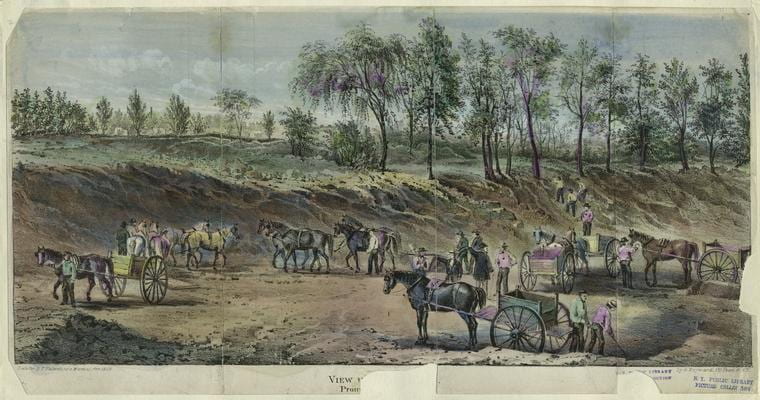
I have written before about Seneca Village, the community of African-Americans that flourished between the 1820’s and the 1850s in Central Park before it was Central Park. New York’s great green gem of a park came about through the brilliance of landscape designers Olmsted and Vaux. The Park that we see as natural was in fact anything but, brought about by huge amounts of dynamite and landfill and the labor of who knows how many men. Workers moved nearly 5 million cubic yards of stone, earth, and topsoil, built 36 bridges and arches, and constructed 11 overpasses over the transverse roads. They also planted 500,000 trees, shrubs, and vines. Those gracious hills and dales were all built by hand.

Slight problem: those pesky families who already occupied a chunk of the property designated for the Park. They had around 50 homes, 3 churches, cemeteries and a school, and people determined to make their living often times in the precincts of Manhattan itself. Real people, real lives. Rather than the make-believe greensward then rising up in the middle of the city. The citizens who had pushed for the Park, the uppertens who had voyaged to Europe and enviously gazed upon the grand parks in London and the other major cities there, would certainly not be thwarted by the likes of Seneca Village. They had only to breathe in the right direction, and eminent domain dissolved the community, whose residents were absorbed into the rest of the city. What was lost: a strong black presence in New York (also, it must be said, some Germans as well), long before there was a Harlem or any other neighborhood-of-color.

Of course, Central Park is great. It is truly amazing to go up to the Metropolitan Museum’s rooftop and look upon the swathe of emerald that rolls out ahead of you.

Which brings me to the subject of this post. Fairly easy to get to (it’s just off the armor display) at the Metropolitan is a new production that is an homage to Seneca Village. I have wondered why no one seemed to be giving any props to that history, even though some ambitious narrative signs appeared a few years back in the Park offering information. Of course park-goers just walked right on past on their way to the Sheep Meadow or other sun-bathing spots.

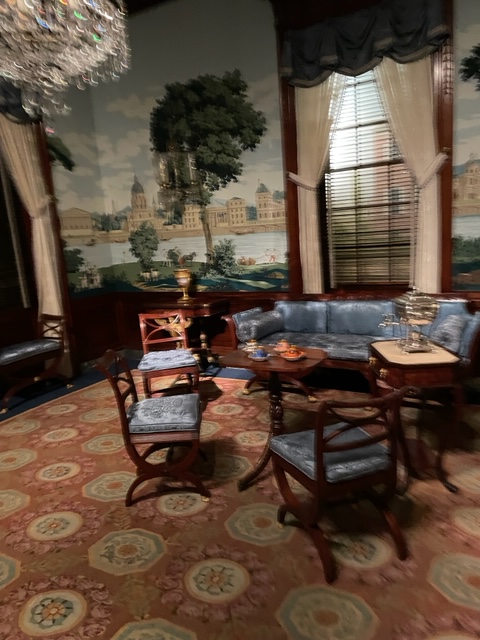
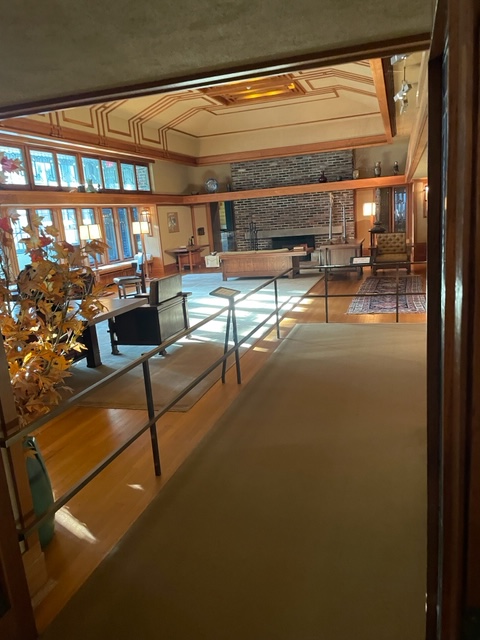
You will not walk past this display. The Met’s creative curators built a period room inspired by Seneca Village. It does not resembled the museum’s other period rooms, which I love despite (or maybe because of) their fustiness.

Even the Frank Lloyd Wright modernistic period room has a caught-in-amber flavor.

The Met’s take on Seneca Village is quite different. A long-term installation, Before Yesterday We Could Fly: An Afrofuturist Period Room “will unsettle the very idea of a period room,” according to the museum’s information. And here I admit that upon first viewing, I might have preferred a room furnished with the few Seneca Village artifacts archaeologists dug up in Central Park.

They do exist, or at least early New York artifacts can be seen here. A comb, complete with a chain design said to represent slavery.

A pottery urn emblazoned with “Corlears Hook,” a prominent waterfront neighborhood in the old days, manufactured by a black New York artisan.

But this display incorporates not only the past but the present and future as well (as my artist friend Josefa gently reminded me when I grumbled about the look of the place.) Lead Curator and Designer Hannah Beachler says, “This project is important to me because it is a necessary conversation with time, loss, community, and hope.” In African tradition, all times are coterminous.

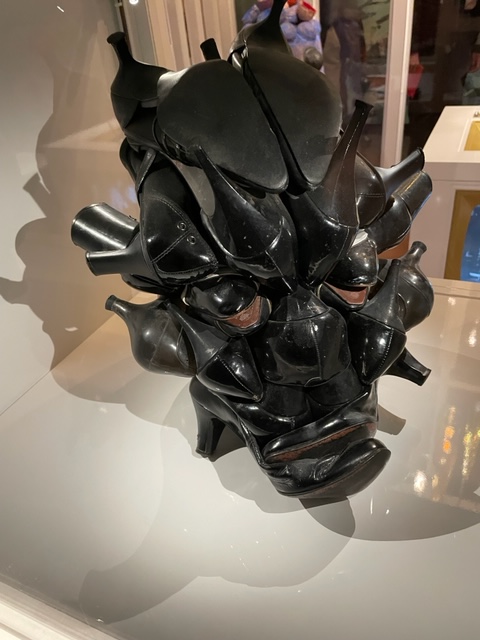
So there is a head by an African sculptor made of black leather high heels and supposed to represent the “sole/soul,” inspired by masks from Cameroon.

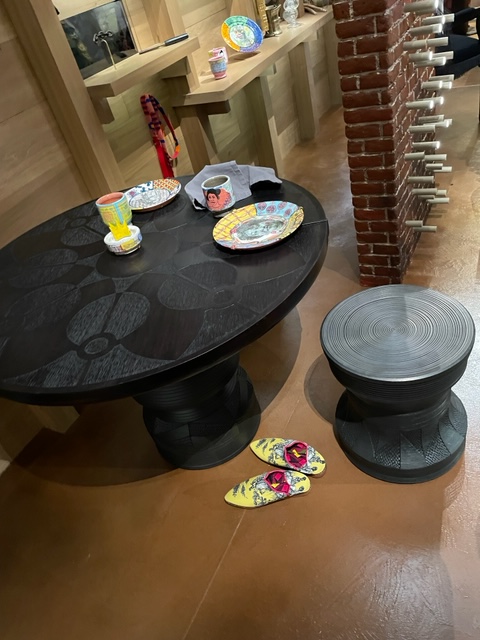
The room itself is a kitchen. You know, table, chairs, etc.

Your typical futuristic 5-screen tv.

This kitchen is presided over by a kind of ornate goddess homemaker. Looks like me on one of my good days.

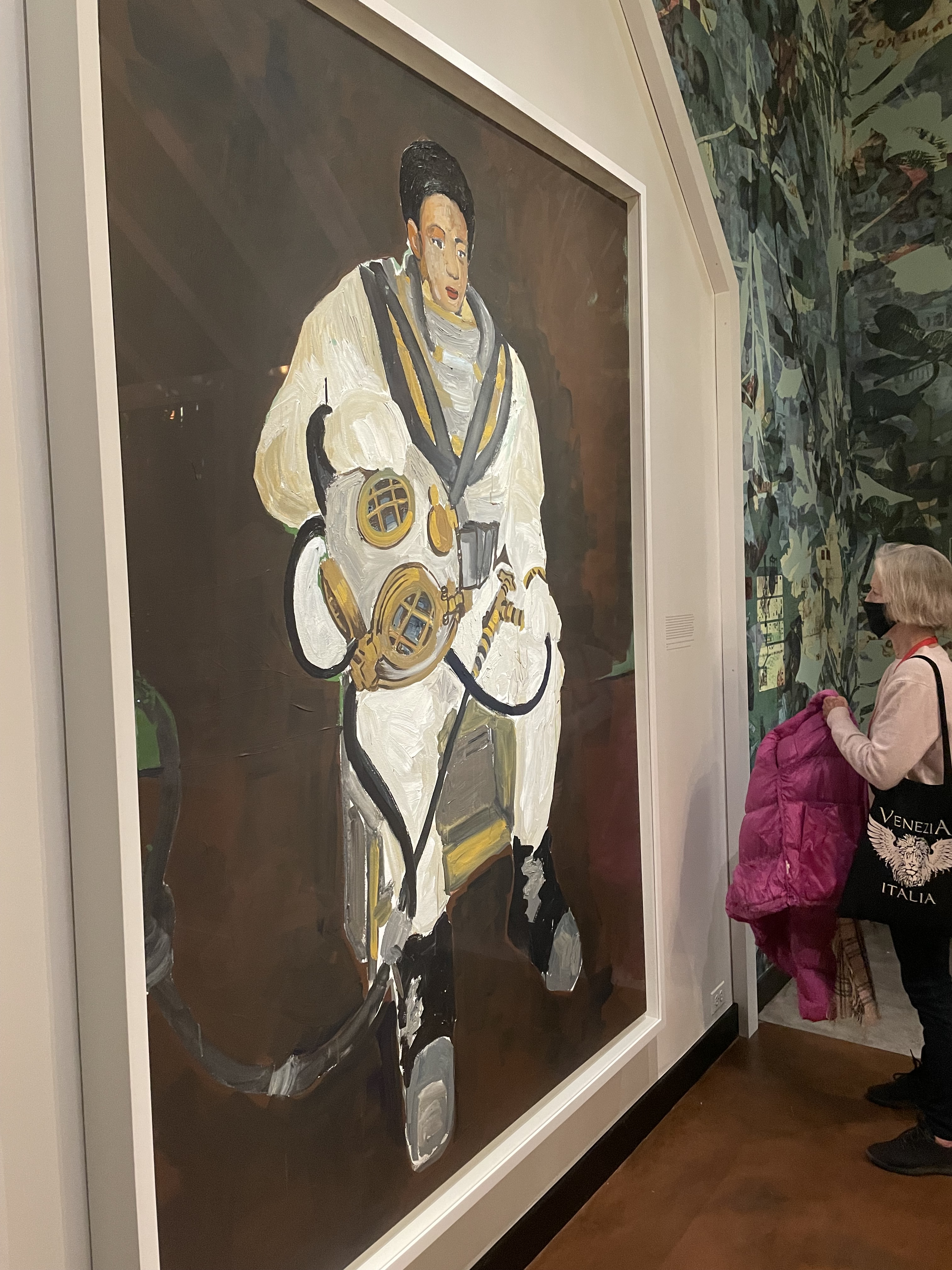
To the side hang paintings. “Andrea Motley,” based on a photo, depicts the first woman and first black woman to serve as a deep sea diver for the Army.

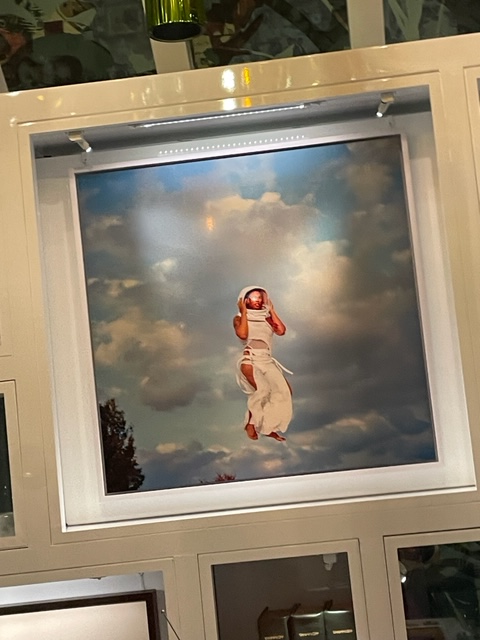
Another work by activist, filmmaker and writer Tourmaline involved research into the history of underrepresented queer and trans figures of color in 19th and 20th century New York.

So the installation becomes a mash up of the past, the present and the future. Much of which was lost to us when the real Seneca Village was rolled over to give us the park — occupied by the Met, which gives us Rembrandt and Pollock and Picasso (my favorite, his portrait of Gertrude Stein).

Okay, a hifalutin’ quote from someone a lot more knowledgeable than me: another curator, Dr. Commander says,

“The untold story of Seneca Village underscores that we walk on hallowed ground right here in New York City. Aspects of our history often fall out of conversation because of the passage of time. In other cases, they have been effectively buried or intentionally silenced. When these significant histories resurface, we ought to show reverence for those who came before whose lives and sacrifices paved the way for our very being. In this period room, archival and archaeological truths meet a range of art from across several centuries, cultures, and geographies. With the guidance of informed speculation, we imagine what was, what might have been, and what is yet to be.”

Leaving the Museum, I realized that besides my beloved fusty period rooms we were now lucky enough to have a curious new addition. “Every period room is predicated on the fiction of authenticity,” says Co-curator Sarah Lawrence, describing the exhibit’s purpose. “Using this fiction as our starting point, how could we imagine the domestic spaces of individuals previously omitted from our period rooms?”

Leave a comment

Filed under Jean Zimmerman

Pretty things

don’t dominate the Grand Concourse. But you do see them if you keep your eyes open while rolling around the site for six miles a day, as I do.

Here are a few.

Lacebark Chinese elm almost bursting the bounds of its tree guard.

Flying cupcake, created by some wildly cheerful person.

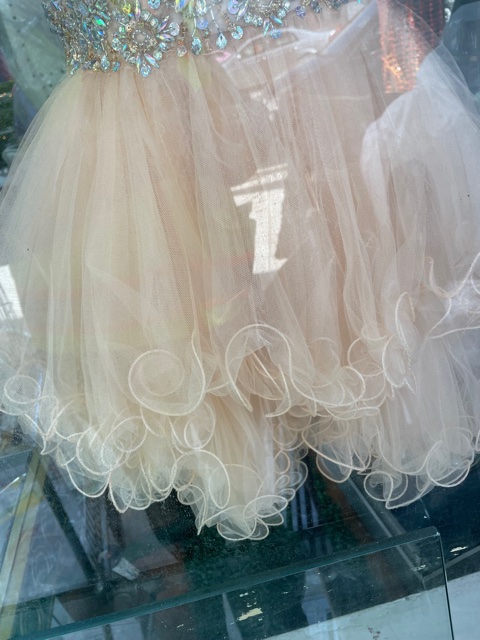
Flouncy sweet-sixteen dress to delight a neighborhood teenager.

The seller peels his oranges on a small spit every day, and the scent wafts on the air as you go by. Useful, too, as you don’t have to muck up your nails peeling one.

Speaking of nails, this photo advertises some kind of luscious pedicure.

Christmas cactus all budded up and ready to go. I might go back and get that plant.

Silver Shar Pei puppy, new in the pet store window. I know, puppy-mill puppies, terrible! This little girl (another admirer guessed her gender, and I’m going with it) is too beautiful to not find a wonderful forever home soon. Someone on the Grand Concourse is anxiously awaiting her arrival.

Leave a comment

Filed under Jean Zimmerman

Grass is okay.

Where would Andrew Wyeth be without grass?

If you didn’t know, the Christina of Christina’s World had to stay low to the grass – she had polio and preferred crawling to a wheelchair. True.

Is grass only for the country, as Wyeth depicted it? Increasingly, no, since landscapers are wild for it. This isn’t exactly the country, where I’m working, although there are animals like the fat one I nearly tripped over this morning.

Or the flock of seagulls that descended where we were planting, much like the many we saw in the wild at Jones Beach summer. One took a bite out of some thing lying in the middle of Grand Concourse and flew off vigorously. Proudly.

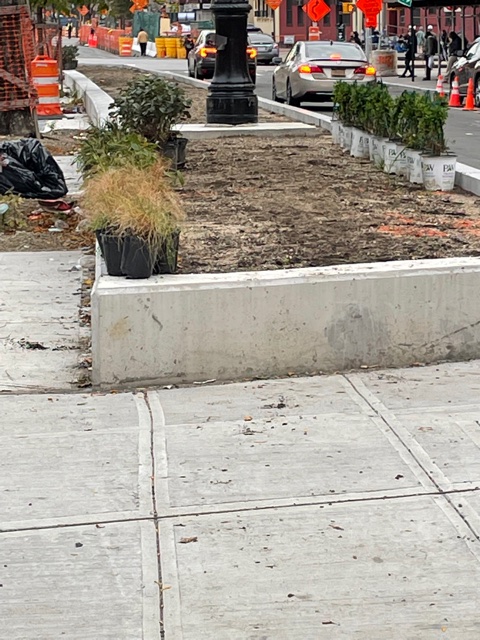
A lot of plants have been organized for the northbound median.

Including grasses. Know what this is? Don’t peek.

Sporobolus heterolepis. Prairie dropseed, for those not schooled in Latin.

I remember a few years ago I had to attend an arborist sales conference where we learned about grasses from a Colonel Sanders-type guy who knew everything on the subject. His specialty was Lawn, and he was famous in the company for his great knowledge. Around 30 of us sat in horseshoe formation for his class, and he passed around pieces of different grasses. Little nuggets of grass, really, bits of soil attached to a few spears each. We were asked to write down the name of each grass bit that came our way. Everyone was examining and pulling apart the pieces they were handed, sniffing them and crumbling the soil they were stuck in or that they grew in, and writing down their names on exam paper. Colonel Sanders then revealed the answers, and asked how many got 100%, how many got 50%, and so on. A pleasant smirk came over his face when I raised my hand, still stained with dirt – I was the only one he had ever seen get a zero in grass class, apparently. Later in an elevator we had a laugh over my failure. But I don’t think Andrew Wyeth knew the names of the grasses in Christina’s World! I was an arborist, a tree person, not a Lawn expert. I continue to believe that everybody should leave their yards splendidly weedy.

Prairie dropseed on the Concourse finds itself interspersed with shrubs.

Of the plants selected for the medians, I prefer the honeysuckle. When I was a teen, essence of honeysuckle was the first perfume I got for myself, so I’m a sucker for it.

A young man from the New York Department of Transportation, the entity in charge here, tells me when I ask what part beautification places in a road project that it’s been proven plants by the edges slow traffic. “Traffic calming” is a thing.

Researchers found that  “simply viewing nature in urban settings has a strong restorative and calming effect. These findings also have applications on the road, in particular for preventing emotionally charged confrontations known as road rage. A healthy roadside tree canopy can help offset angry and aggressive reactions by keeping drivers calm and reducing stressful responses. A 2010 report revealed that drivers who view nature as opposed to heavily built-up surroundings ‘reported feelings of relaxation.’”

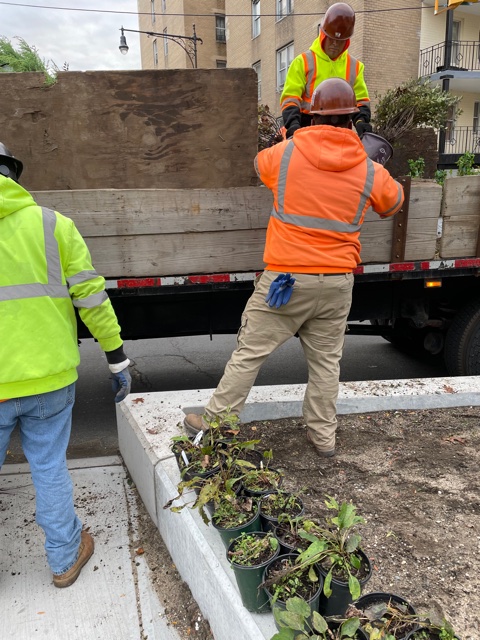
There is a lot of planting to be done, but I don’t dig the holes and pop in the roots, only take note of the truckloads as they arrive, count what comes, and ponder things like the place of grasses in the design.

That wheelbarrow full of greenery might seem somewhat inconsequential. However, one of the finest poems of the modern age, by William Carlos Williams, tells us:

so much depends

upon

a red wheel

barrow

glazed with rain

water

beside the white

chickens

No rain today, and no chickens – only seagulls.

And grass.

Leave a comment

Filed under Jean Zimmerman

Dioses de la muerte makes sense

when you’re in this sometimes spooky part of the Bronx.

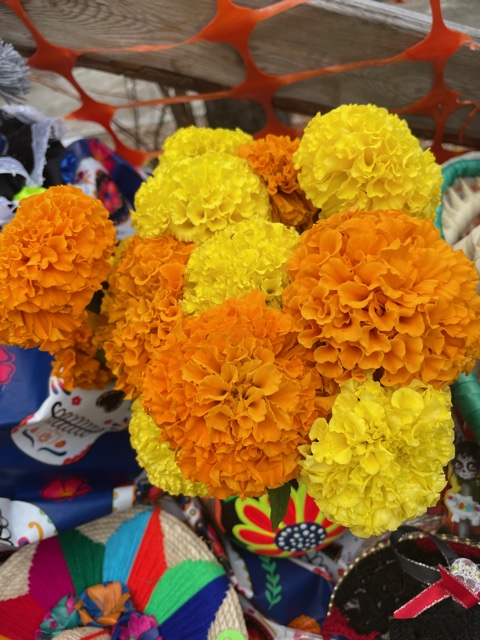
Why, I had been asking myself, did the ladies selling plants on the sidewalk offer pots of marigolds to willing buyers.

Why was I feeling so unsettled?

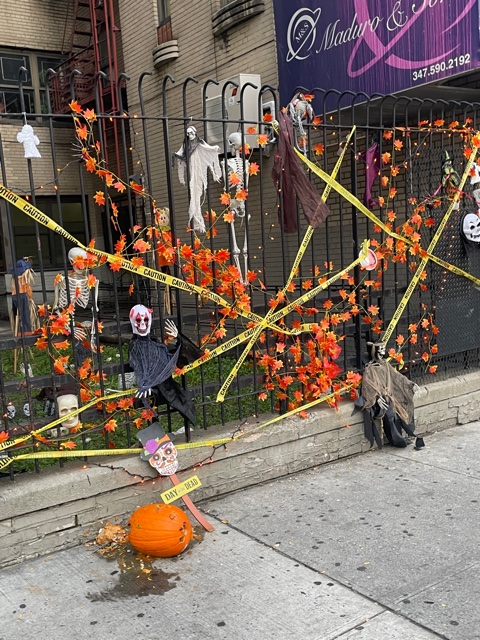
Why did the ghosties look so dangerous, hanging against a dead tree?

Of course it’s all in fun.

Isn’t it?

Leave a comment

Filed under Jean Zimmerman

Fall nostalgia

hits everyone. At least it does me.

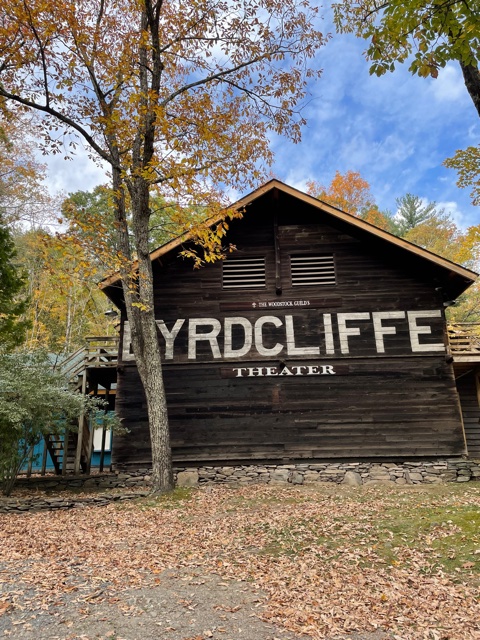
So back we go  through the just-reddening woods to the happy place of 35 years ago: a cabin in an artist colony. The place was founded in 1902 beneath Overlook Mountain, in Woodstock, by wealthy Brit Ralph Whitehead and his wife Jane Byrd McCall of the Philadelphia McCalls.

Whitehead designed the 40 or so buildings on 1,200 acres of oak, white pine and hemlock as an arts and crafts utopia. Every building has a hue of Pantone-Byrdcliffe-Brown, and to some degree replicates a  mix of the two design styles Western Stick and Alpine chalet. Some of the structures were roomy.

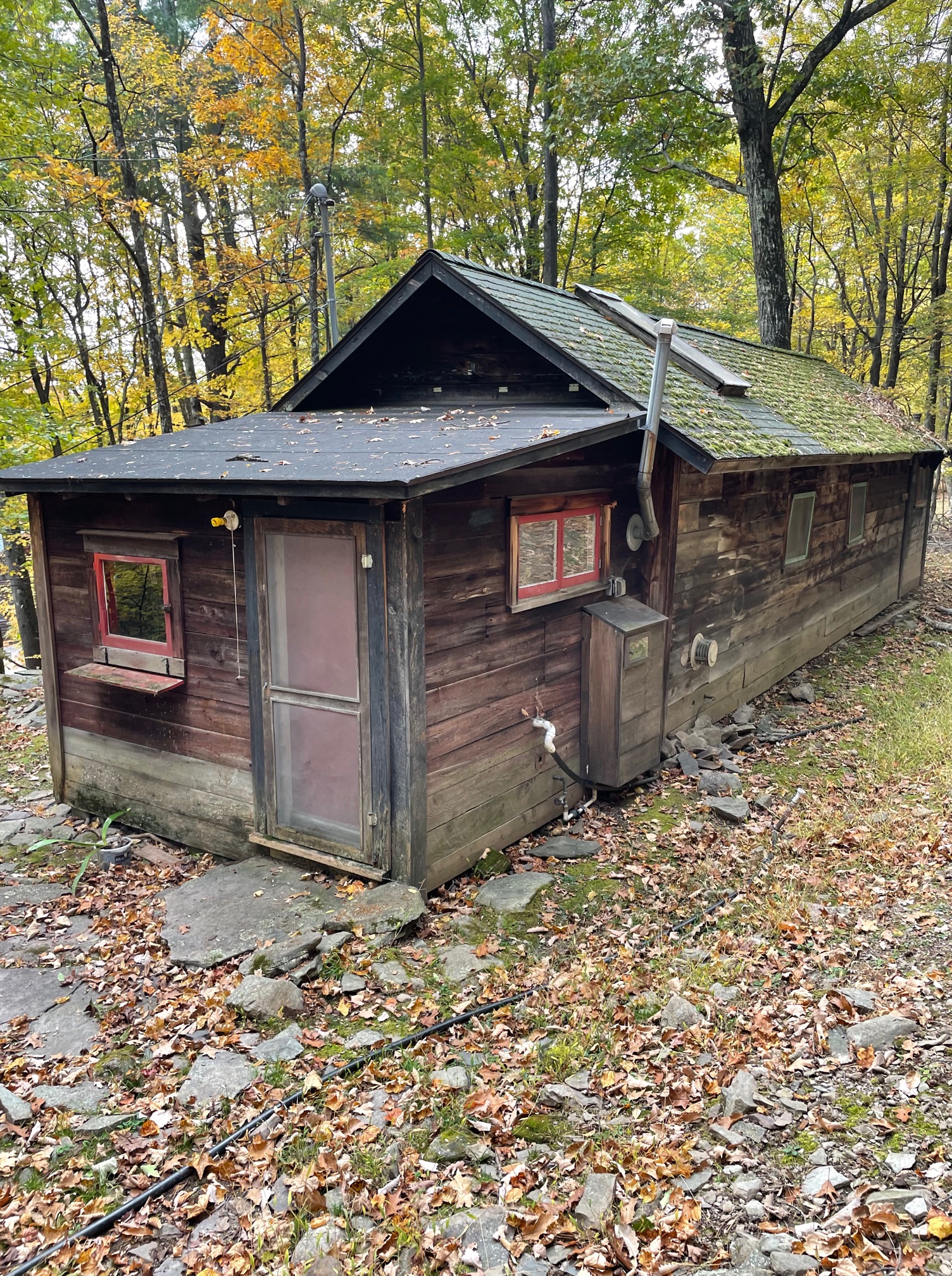
Ours was tiny.

It was the summer after we were married. We were Writers; this was our retreat from the real world of New York City.

I pulled a table and straightback chair onto the screened-in porch to make a summer study. Fooling around with his new gold ring, Gil dropped it through a crack in the uneven floor boards and had to crawl under to get it. This must be good luck!

The tub was fully seven feet long, taking up most of the space in the bathroom. All the cabins had them. Whitehead installed modern plumbing, opining that there was much value in “the use of the tub.” Baths all around! But Whitehead was a stuffy old coot who believed in the very important aesthetics of pottery and furniture. To tweak him, artists not at Byrdcliffe began to shave shapes on their scalps, smear paint on their clothing and refer to the famous artist colony as Bored-Stiff.

Artists that we were, we spent out time chucking champagne corks over the roof, roasting a whole pig for Bastille Day and impaling its head as a garden ornament a la Lord of the Flies.

In my summer study I wrote poems combining my aging (turning 30) with the call of the mockingbird. Trying hard to be grown up. The lilacs formed a magical mound along the road.

One night the Fugs performed a reunion concert in the barn. (“Do you like boobs a lot?” delivered with gusto.)

Even the water was perfect. It came out icy cold from a hose fed by a spring house above.

A chestnut oak guards the remains.

Thinking about the past, we headed up the road to the property Dylan occupied at Byrdcliffe.

Was he home back then when we would sneak in to go night swimming in the grotto below his house?

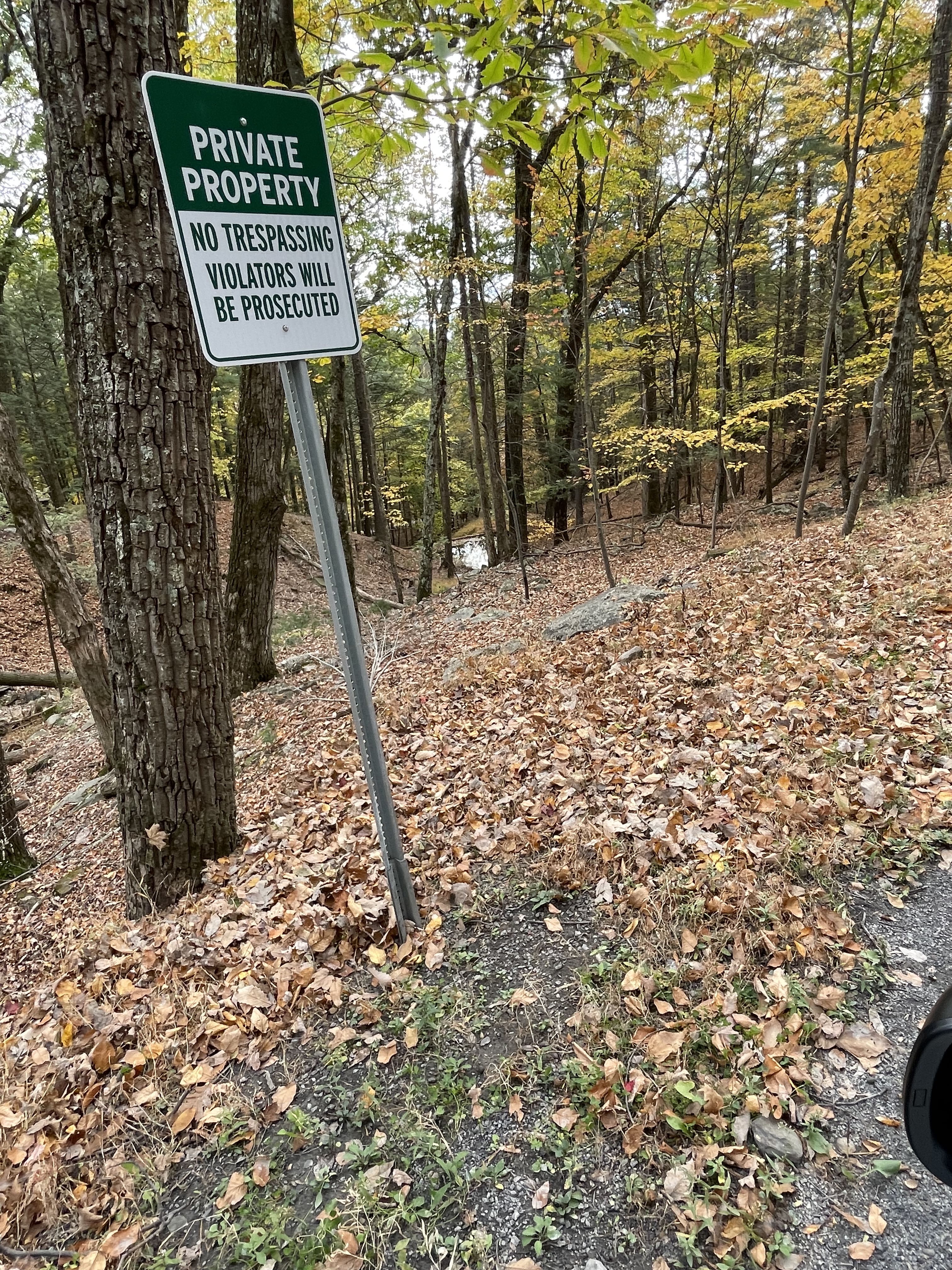
The water still shines, and a worker was manicuring the grounds with a leaf blower. (Woody Guthrie: As I went walking I saw a sign there and the sign it said No Trespassing/But on the other side it didn’t say nothing. That side was made for you and me.)

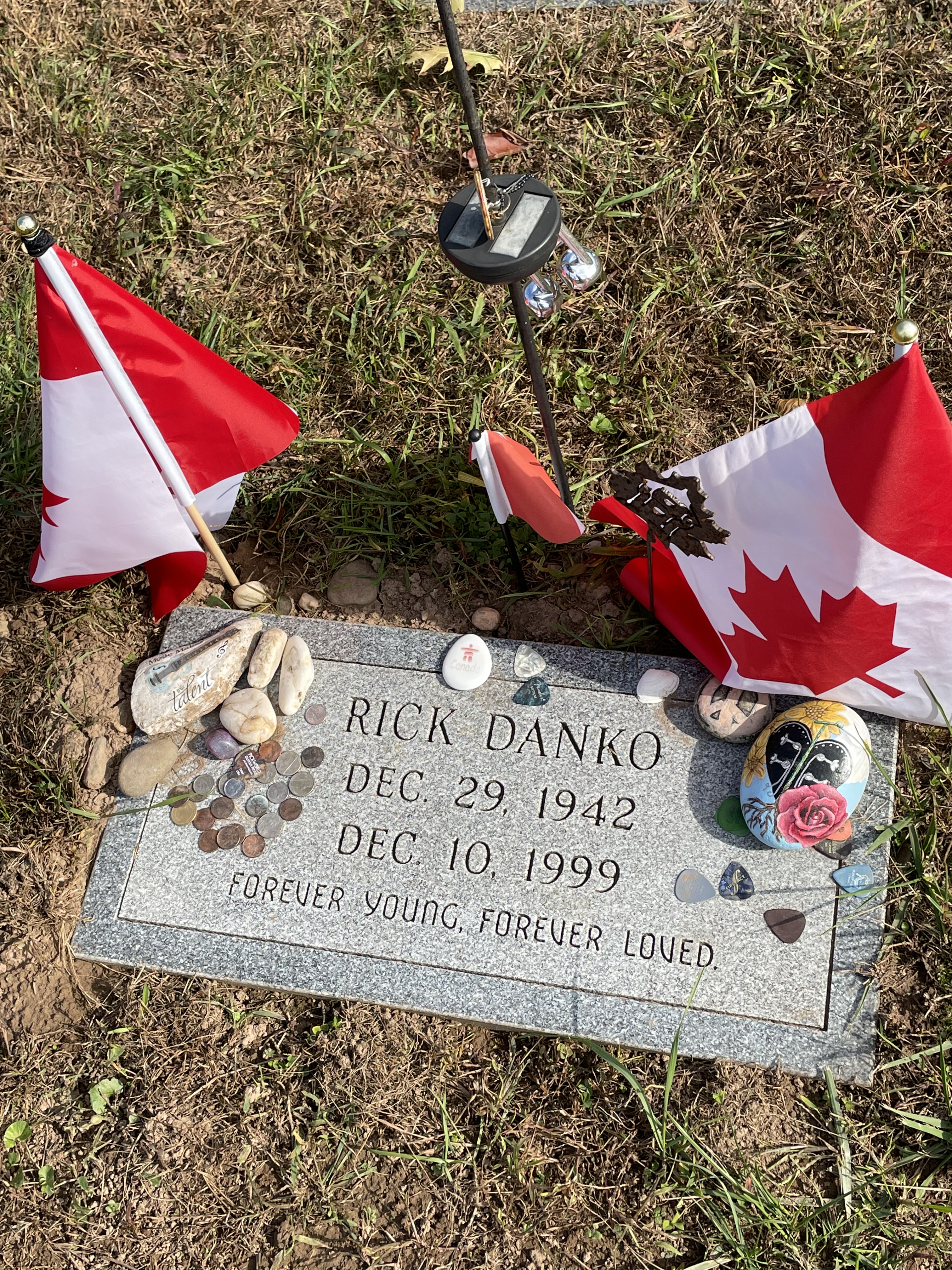
Making our way through Woodstock, we stopped at the town cemetery.

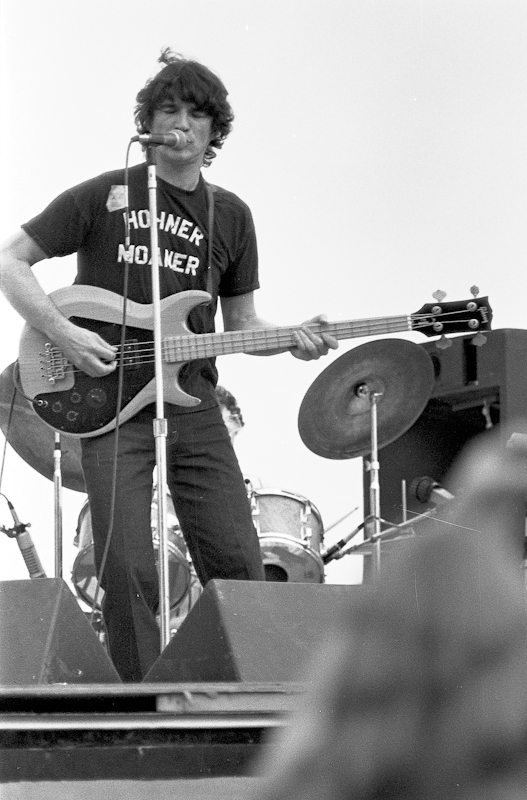
Was Rick Danko your favorite member of The Band, too?

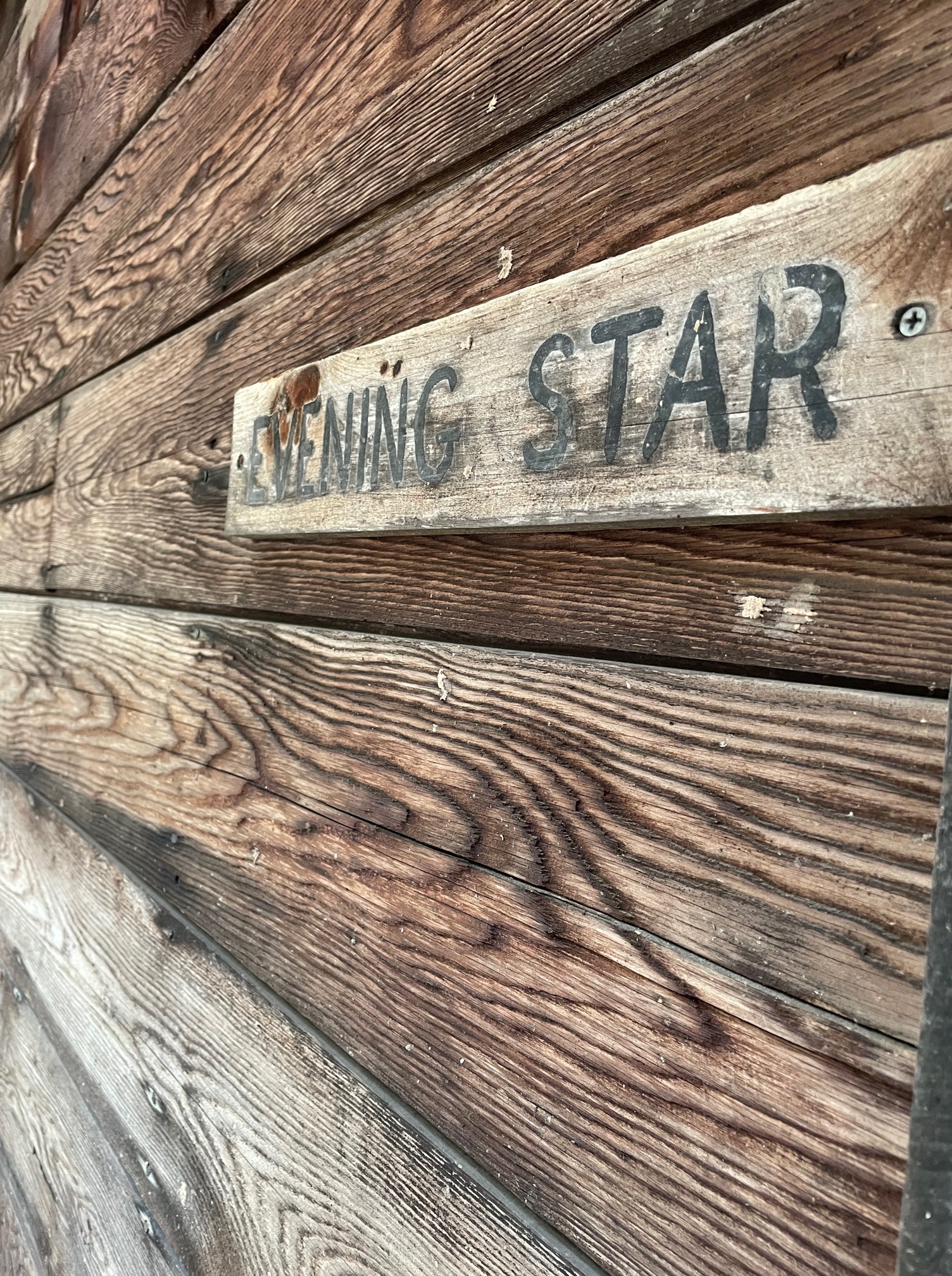
I wonder where he was when we were playing house at Evening Star, a time long ago that has a sparkling immediacy.

Leave a comment

Filed under Jean Zimmerman

When I was a teenager

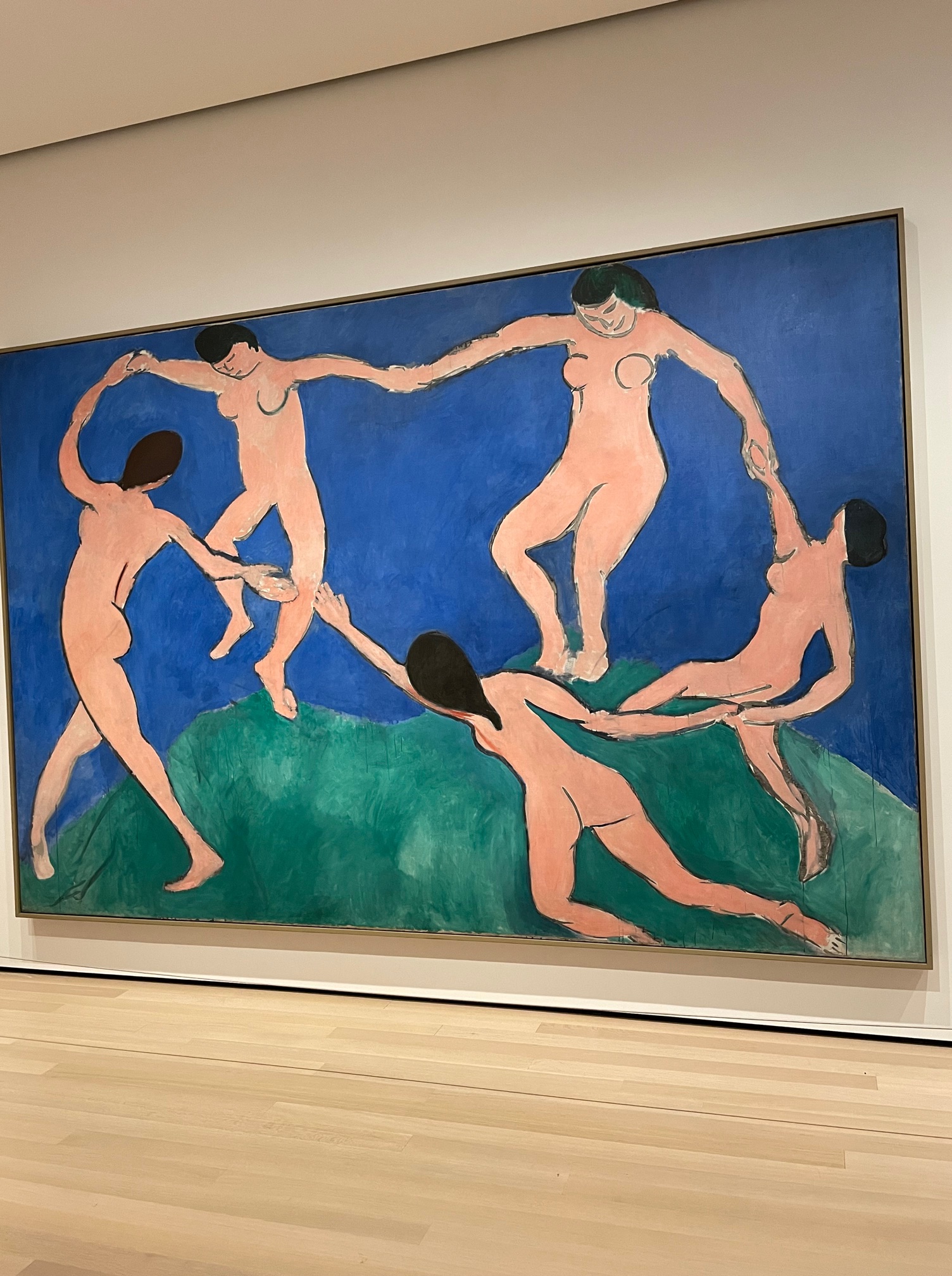
I was agog at Henri Matisse’s painting La Danse. The Museum of Modern Art has changed since then, upwards and outwards. When you go out on the sixth floor terrace you do feel lofted by glass and steel.

Everything has been re-curated, the contents of the collections shifted around so you get a new view of this Dali (The Persistence of Memory), or that Van Gogh (Starry Night). But walking amid the great painters I’m always drawn back to Matisse’s masterpiece.

The canvas was commissioned in 1909 by a Russian businessman, who wanted two decorative panels for his mansion, Dance and Music. What hangs on MOMA’s wall is actually a rough draft for the final image. While critics attacked its simplification of the human body and radical elimination of perspective as inept or willfully crude, Matisse stood up for his vision, saying that it evoked “life and rhythm.” It was this approach that earned him and other painters of the era the dismissive term “Les Fauves,” the wild beasts.

Perhaps it was this very bestial nature that drew a girl of sixteen to La Danse. Unclothed bodies in wild activity – so unlike our relatively sober jeans and t-shirt attire – were more than acceptable, they were exciting beyond words. I think for a while my attention was drawn away from words (I already considered myself a poet) to art, to creating brilliantly vivid figures on a luminous background. Bare butts, too–frisson! Totally freeing. I tacked a reproduction postcard onto my bulletin board and dreamed.

Matisse wrote in Notes of a Painter that he dreamed of “an art of balance, or purity and serenity, devoid of troubling or depressing subject matter.”

Matisse and La Danse were about joy, which we all crave, don’t we?

2 Comments

Filed under Jean Zimmerman

In this patch of paradise

known as the Grand Course, we have our distinctive urban forest.

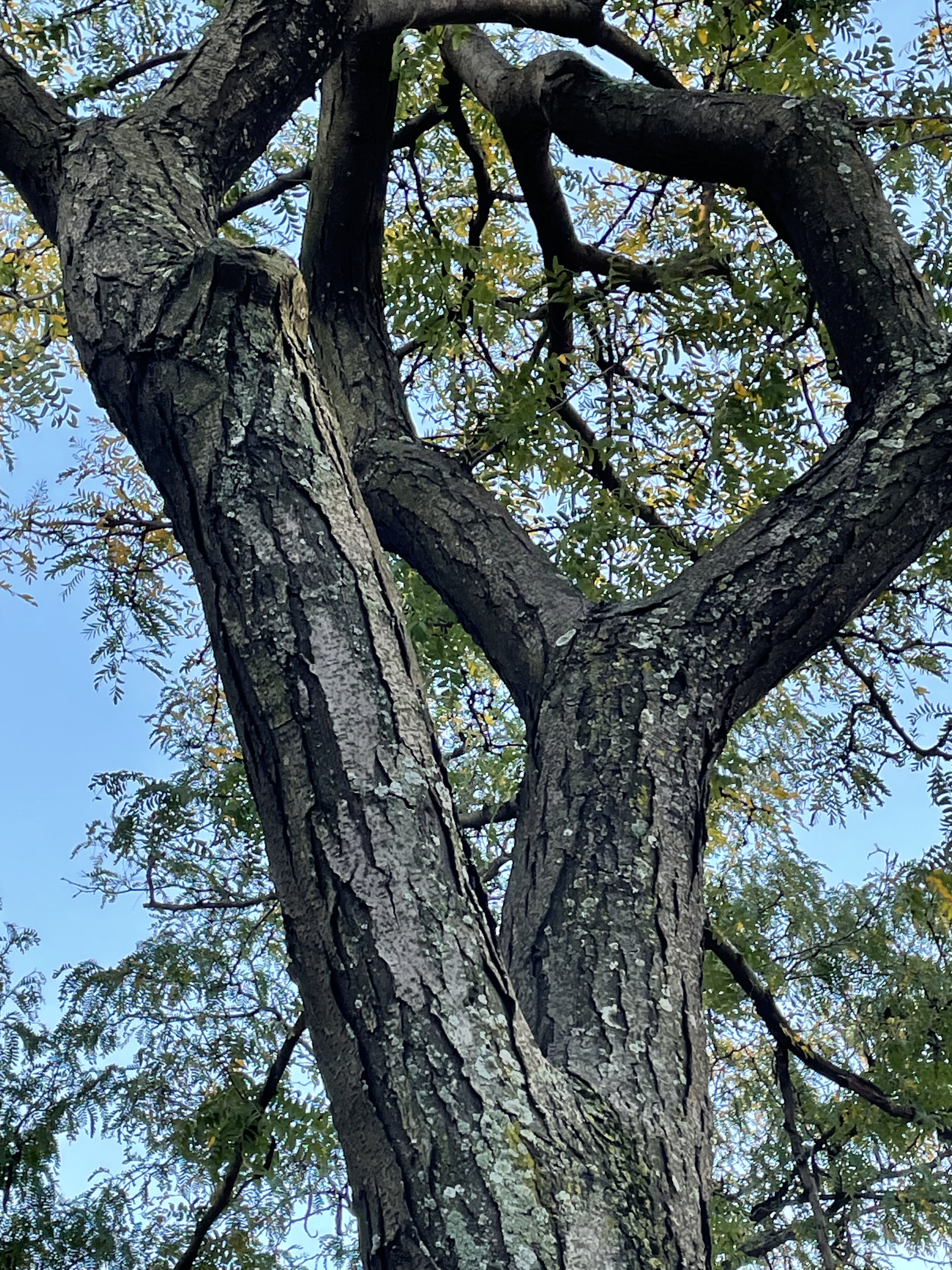
Just as the southwest has the ubiquitous saguaro, these precincts have the ubiquitous honey locust.

Yes, there are some oaks in the tree pits along the avenue. You can recognize red oaks among others by the sharp points at the tips of their leaves. Also there is the occasional pin oak, with deeply carved nodes on their leaves. Pin oaks rock, if you ask me.
A Chinese elm with its crazed, beautiful bark.

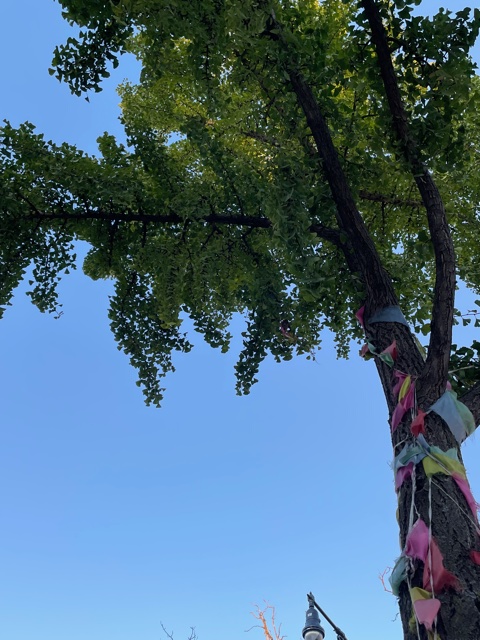
A gingko with fan leaves a-flutter. Somehow, dating back eons, it just looks just right with prayer flags adorning it.

Elm, whose leaves in this case reveal that some nibbling has taken place.
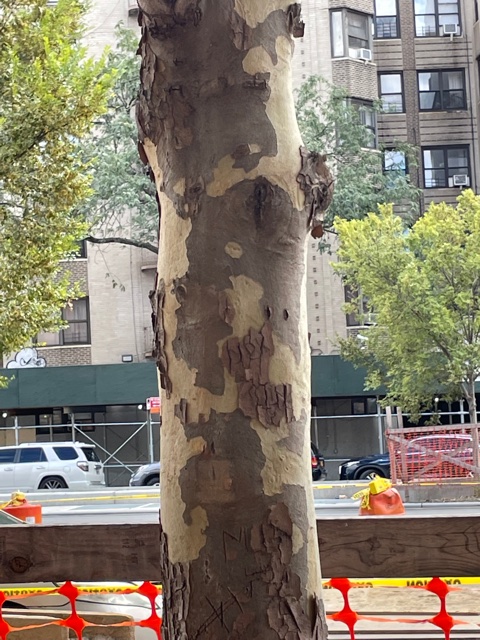
A few London planes, with their distinctive camouflage bark. You can call the London plane an l.p if you want to seem in the know at an arborist get-together. If you do attend such a gathering, prepare to quaff a lot of beer.
Even an amur maple, with its sinuous silver trunk.

But the honey locust dominates the landscape in this part of the Bronx.

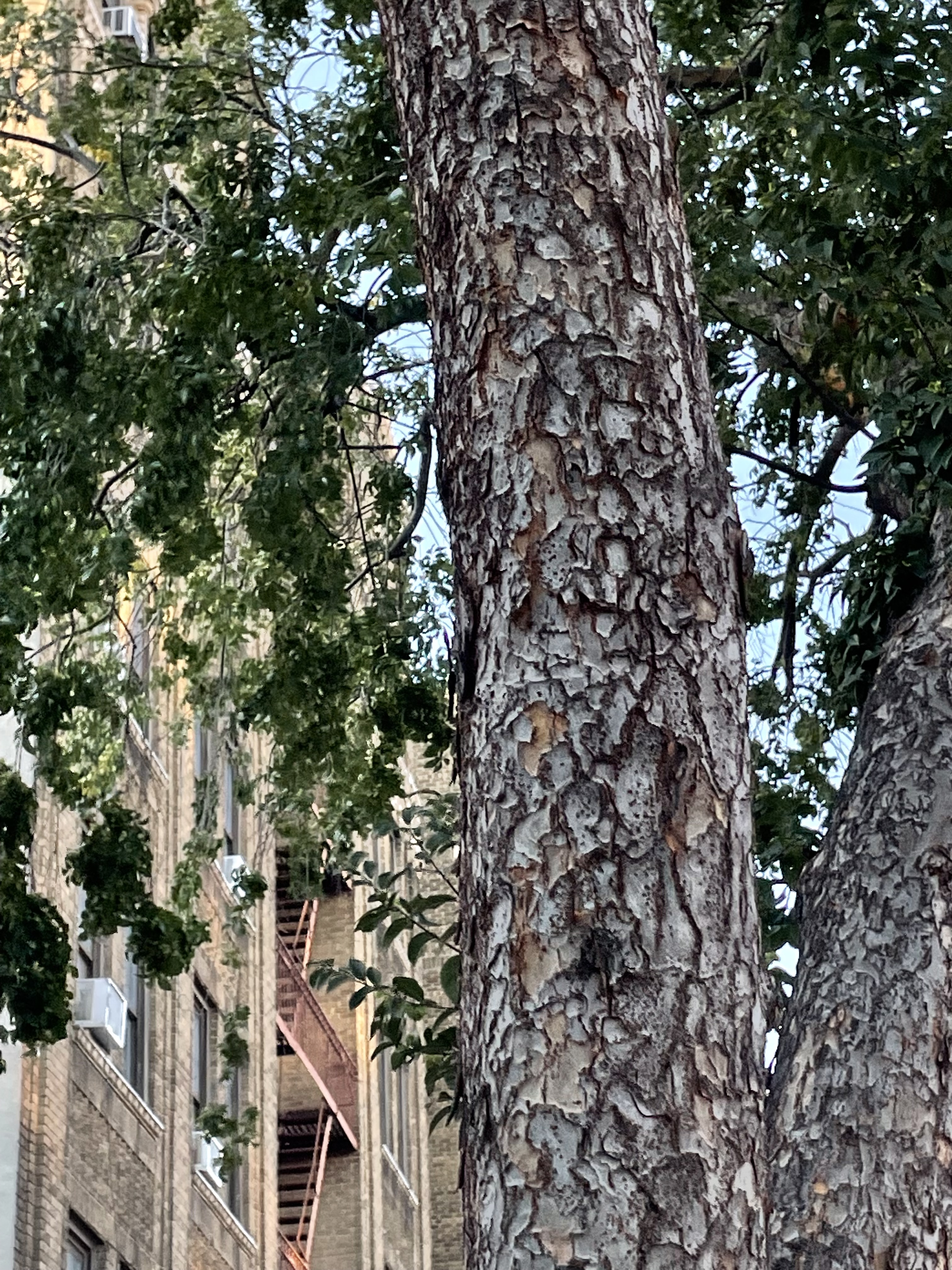
It’s an creature with an unusual pedigree, the honey locust. Gleditsia triancanthos comes to us from Central North America, where its feet like the damp soil of river banks. The flat plates of its trunk are instantly recognizable.

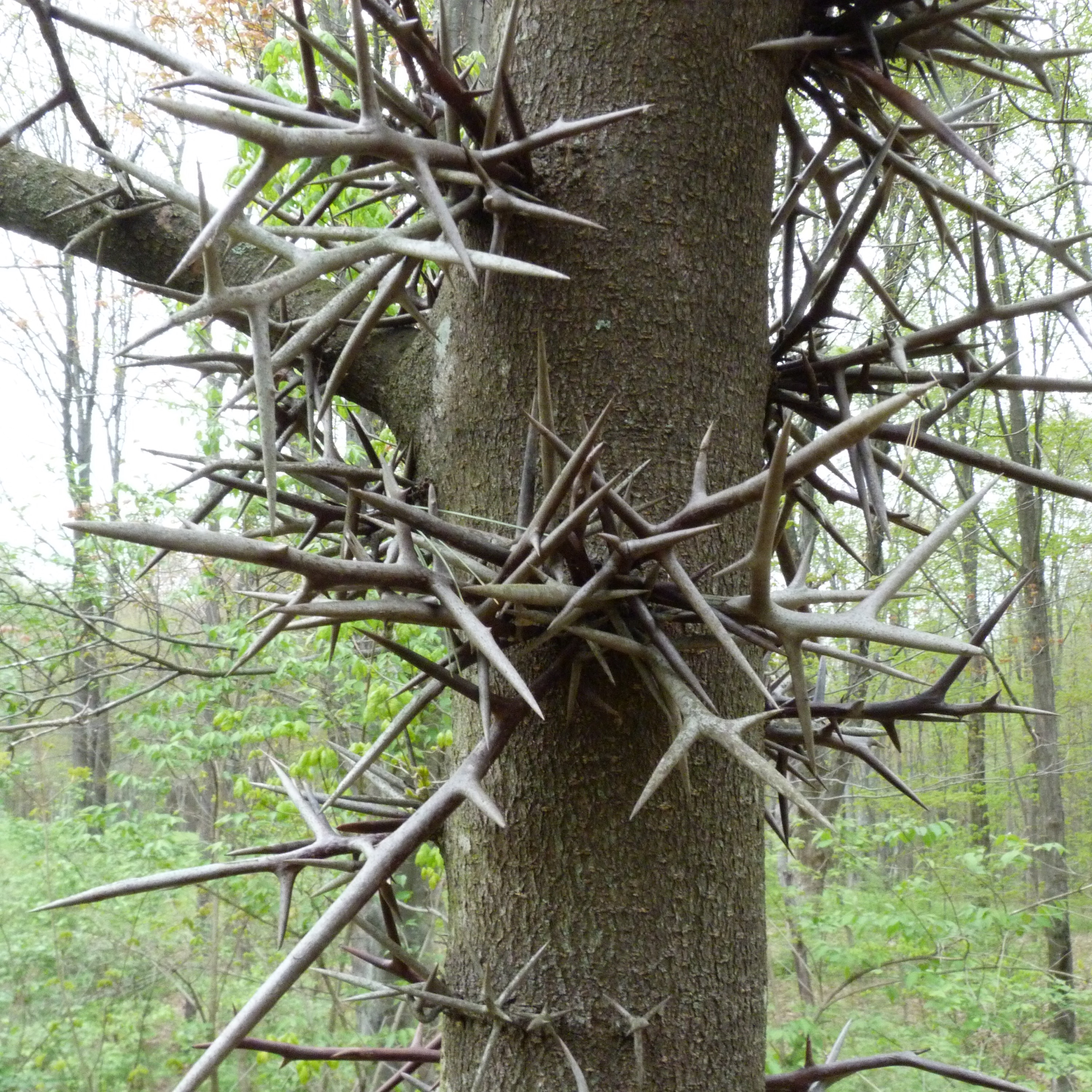
Sometimes it’s called thorny locust or thorny honeylocust. The reason is obvious.

The trunk and branches protect themselves from eager eaters with noxious prickers, probably evolving from long-ago protection from hungry Pleistocene megafauna. The tree is invasive in Australia, where great tangles of tree thorns prohibit cattle grazing. On a side note, it is said that American Confederate soldiers used the thorns to fasten their uniforms together. Just saying. Few knew how to sew, I guess.

Well, to make use of its advantages – honey locust is fast growing, hardy, able to withstand bad soils, drought-resistant, possessed of a delicate canopy, perfect urban tree in so many ways – those thorns would have to go. Come the botanists, those magician scientists who cross this with that plant and come up with a (usually) improved variety. We now have Gleditsia triacanthos var inermis, which lacks those pesky thornsYou won’t see a Gleditsia with thorns in New York City.

Though I happen to agree with poet Marianne Moore in Roses Only, “Your thorns are the best of you.” Perhaps that is why I like the thorny version so much.

It may not be widely known in our parts that the fruits of this tree are long pods containing seeds surrounded by a bright green legume pulp which is edible and sweet and has historically been used by Native American people for food, medicine and tea.

Not at the moment considered a gourmet delicacy here on the Grand Concourse, where chicharrones reign supreme. Perhaps worth some experimentation, though, for a high school science project or some such.

Leave a comment

Filed under Jean Zimmerman

Malcolm walks for inspiration

along the Dobbs Ferry beach on the west side of the train tracks.

The beach is wide at low tide, plenty of driftwood.

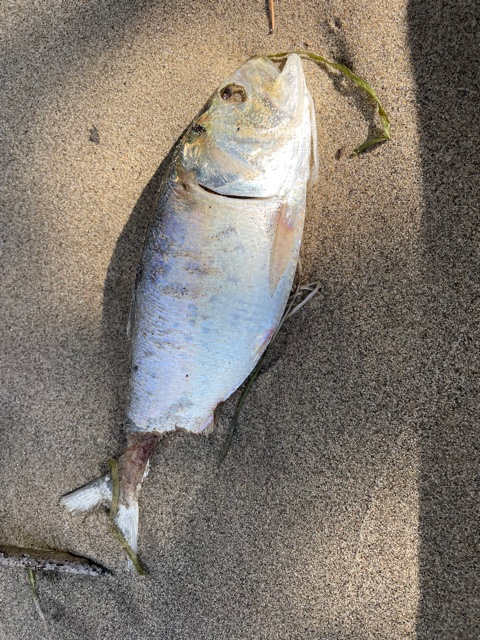
Dead fish.

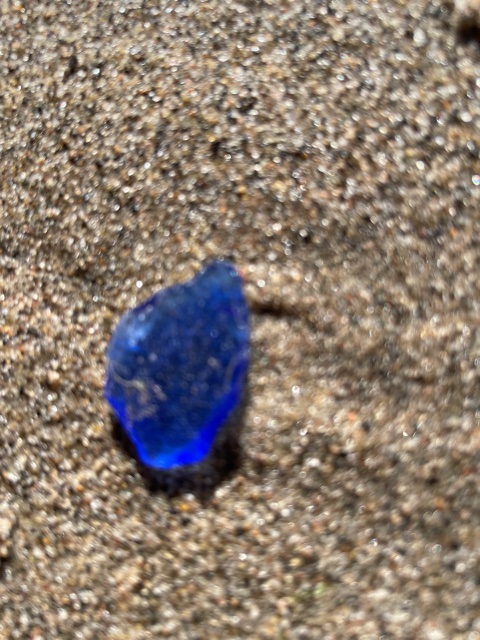
Beach glass.

 Rocks that have spent time in the water.

We used to take the dogs here to swim. A tributary debouches into the Hudson and it’s said a Lenape midden can be found a little ways up the stream. Ancient oyster midden, spanking new Tappan Zee Bridge — or Mario Cuomo bridge, or just the Tap, to old timers.

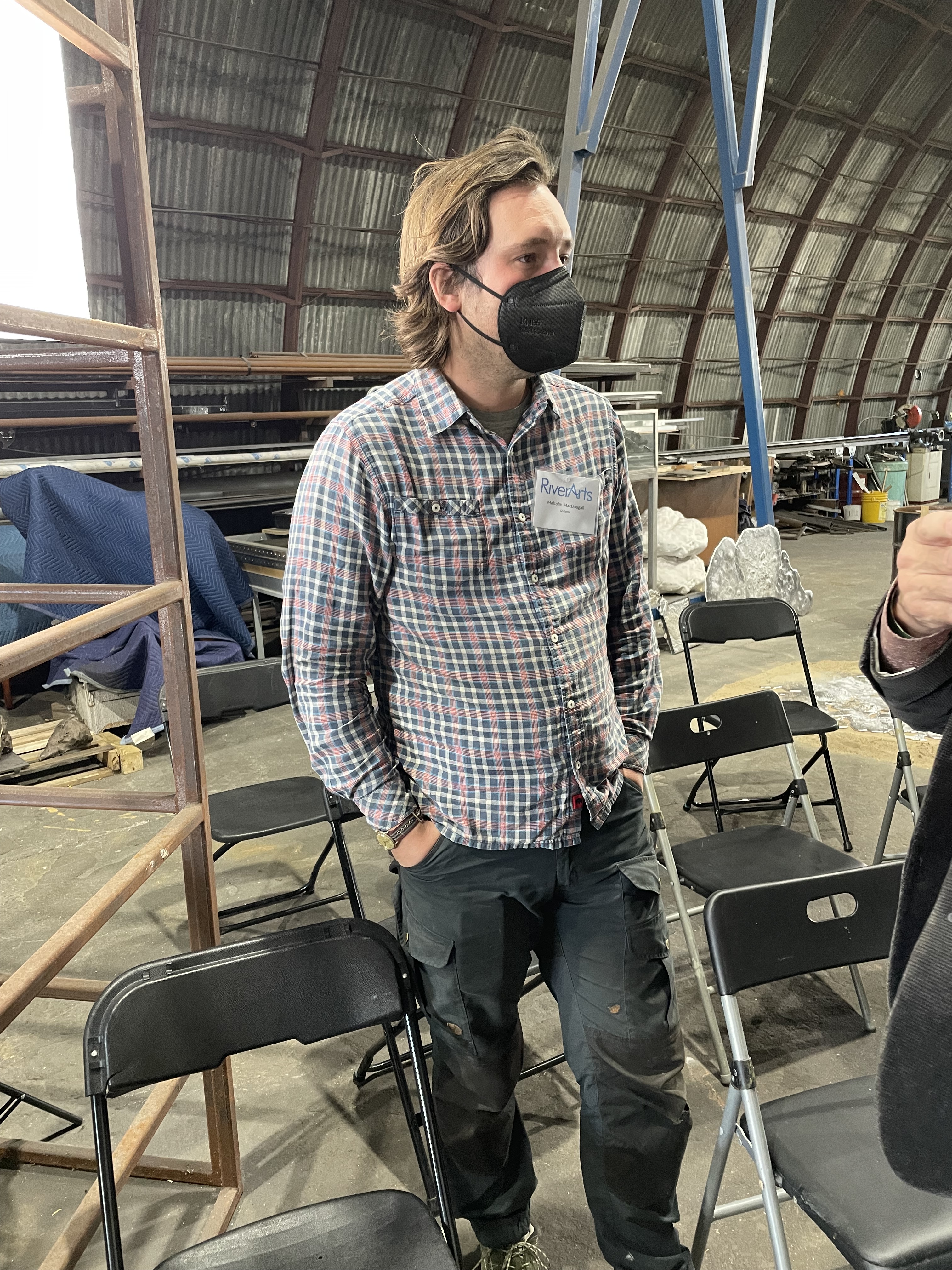
Malcolm MacDougall III dreams along the Hudson for inspiration.

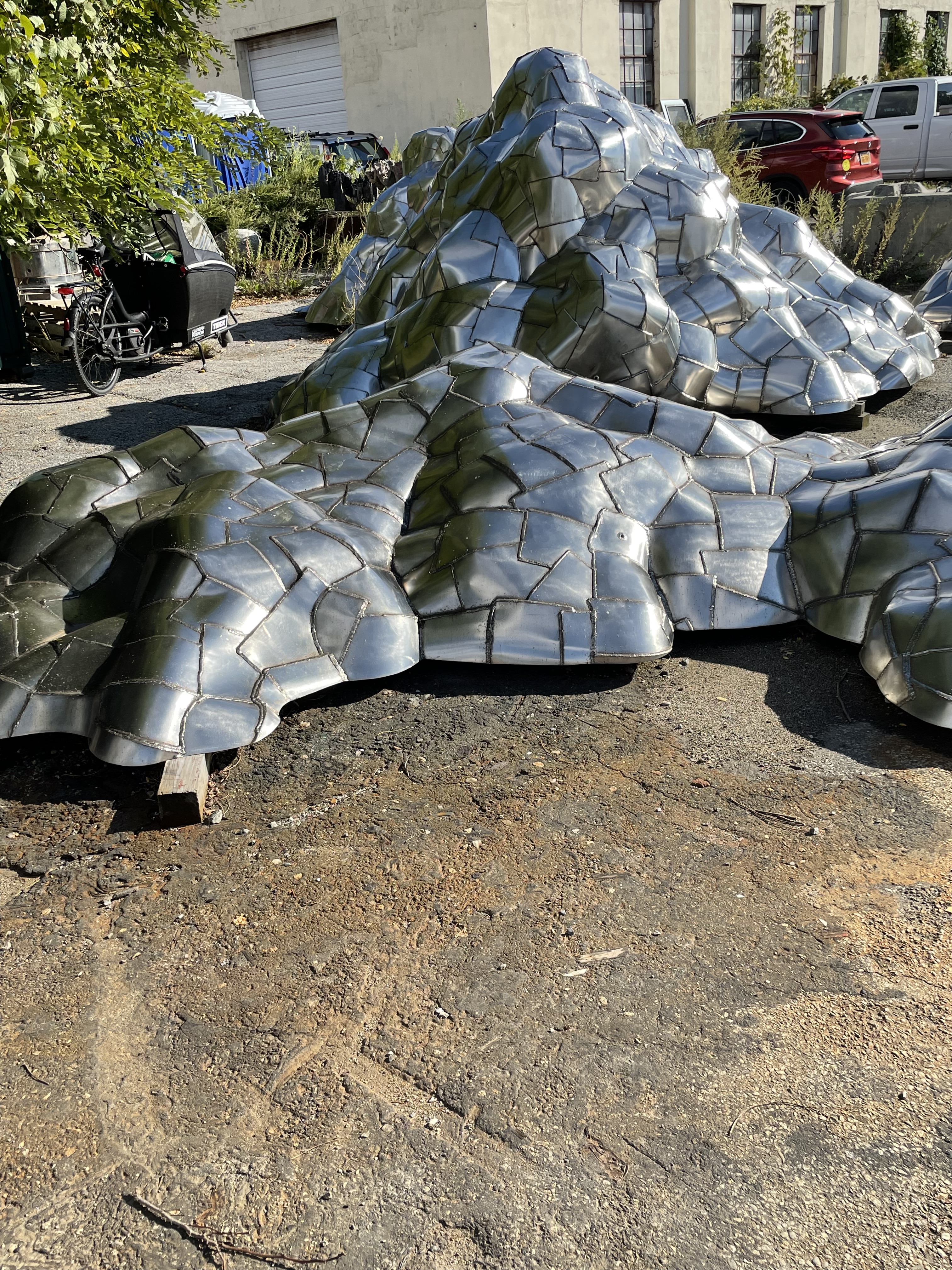
He’s a sculptor specializing in metal, and today he’s opening the doors of his studio to view his work and hear him talk.

There are actually no doors to throw open, because he works in a huge, corrugated-tin-ceilinged Navy-built Quonset Hut that goes clean through to the outside.

Some of his pieces are large and perch on the sandy stretch in front. Stainless steel is a favorite material.

Prospect Park wanted to buy one of them but they were afraid kids would use them to play on and there might be some kind of injury. It would be a cool place to climb. That fell through. He welds a lot of smaller pieces, too.

In his talk, he remembers going to the beach with his dad and being inspired. In art school he discovered metal, which he likes because “it seems permanent but you can change it.” He casts other peoples’ work to make his living, like the group of pine figures that he will cast in bronze.

He’s pretty busy, with the welding and the casting and a three year old son and a wife, Tory, who is nine months pregnant.

Things become animated in his mind’s eye. “It’s like you’re waiting around for something to happen,” he says self-deprecatingly of his work process.

“I like objects that feel like a foggy day – like it’s almost that,” he says.

His raw materials are pretty basic but beautiful.

A lot of the machinery in the shop seems macho to me, like something only men would use.

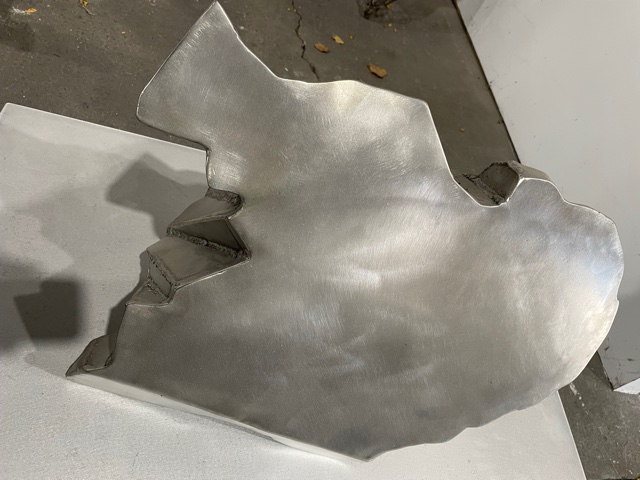
Malcolm describes the work he does differently. Welding a piece “is delicate, more like sewing, or stitching,” he says. For further inspiration, he can go to the corner of his studio.

Or wend his way down to the craggy old tree where teenagers gather to smoke weed.

Whatever you imagine, you can bring into being. That was my takeaway from Malcom MacDougall III. If his pieces remind you of something you might find along the strand, there’s a reason for that.

Leave a comment

Filed under Jean Zimmerman

“The Bad Tree.”

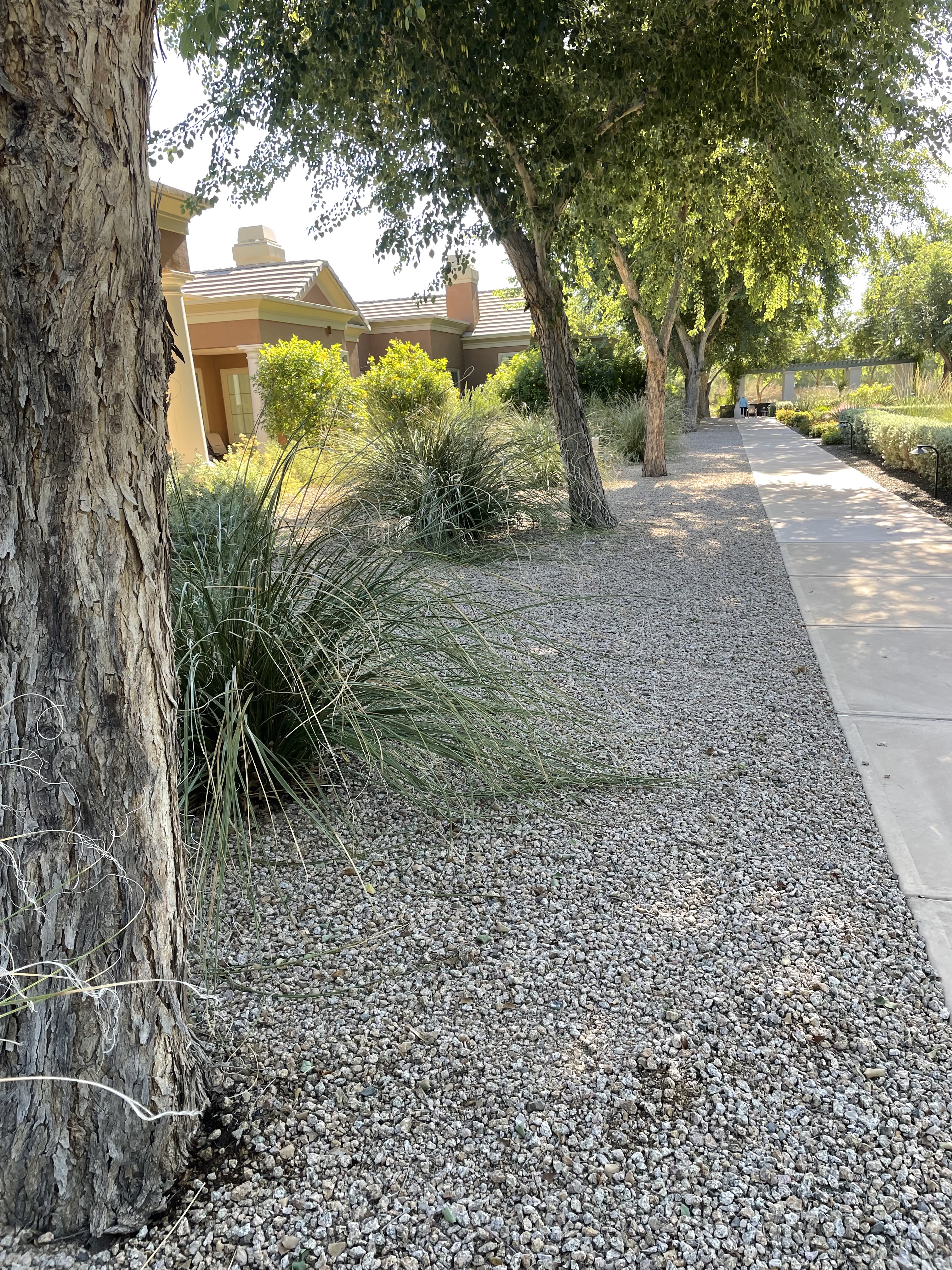
So my mother calls the sissoo tree that grows outside her balcony.

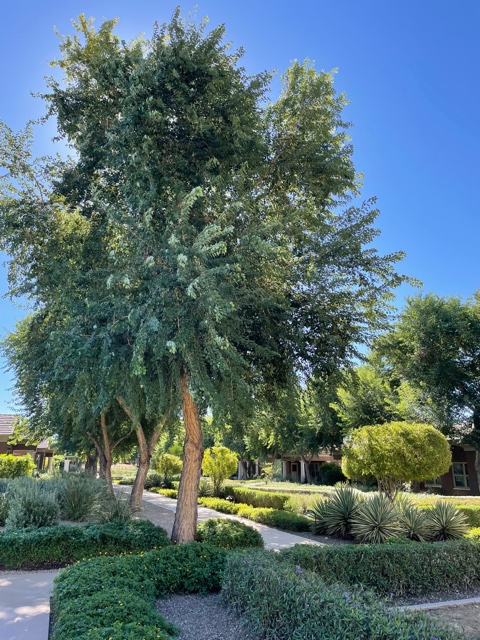
It also grows in front of all the other balconies and throughout the landscape of the retirement community where my parents make their home.

“The roots are lateral and they uproot sidewalks and crawl into pipes underground. They drink up a lot of water. They were planted a little over ten years ago. They’re the cheapest tree that you can get.” So she says. She knows her stuff. She was the head of the Building and Grounds Committee for a while. She encouraged planting native plants but it didn’t go through.

However, they’re not all bad.

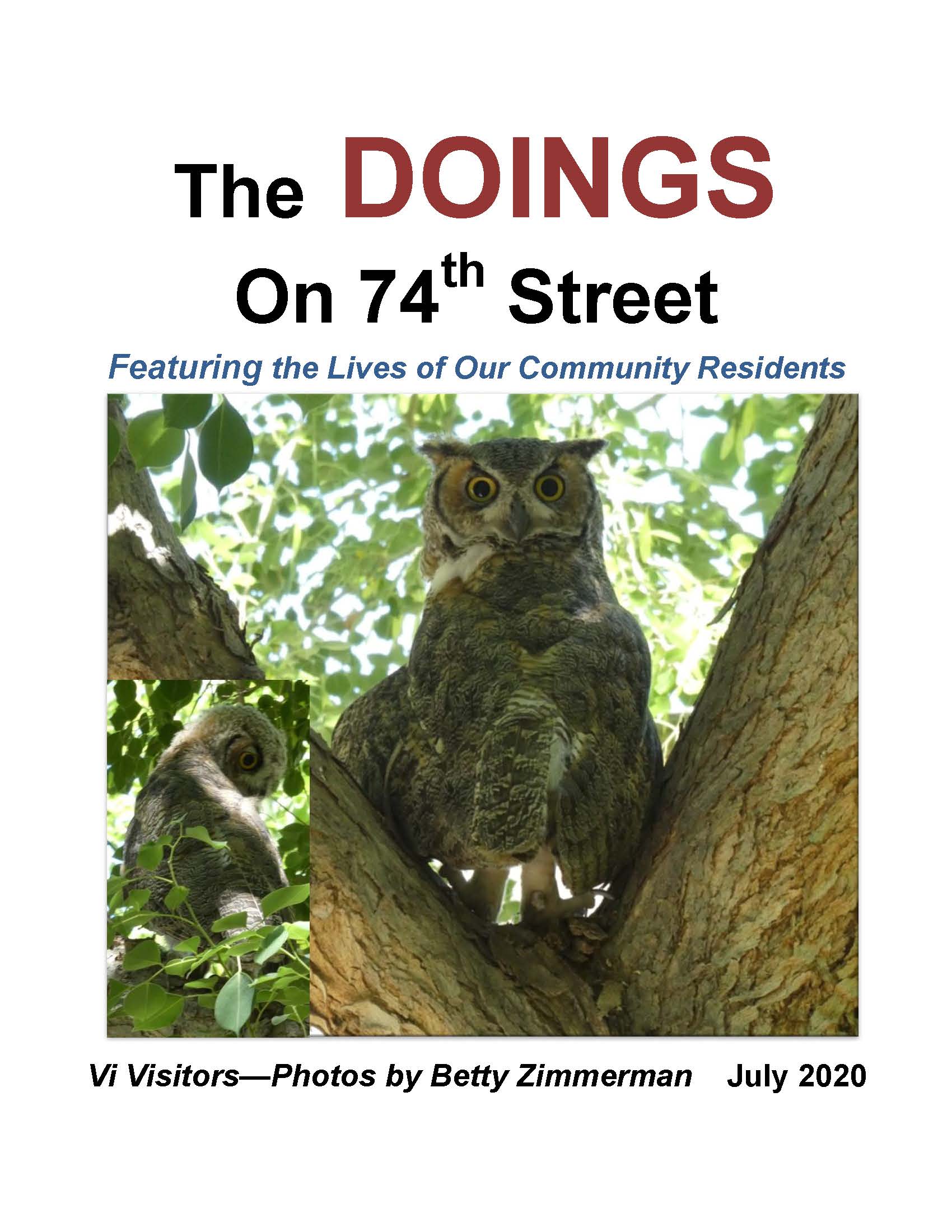
They provide beautiful shade in Scottsdale’s scorching months. And an owl has taken to roosting on a limb outside the apartment.

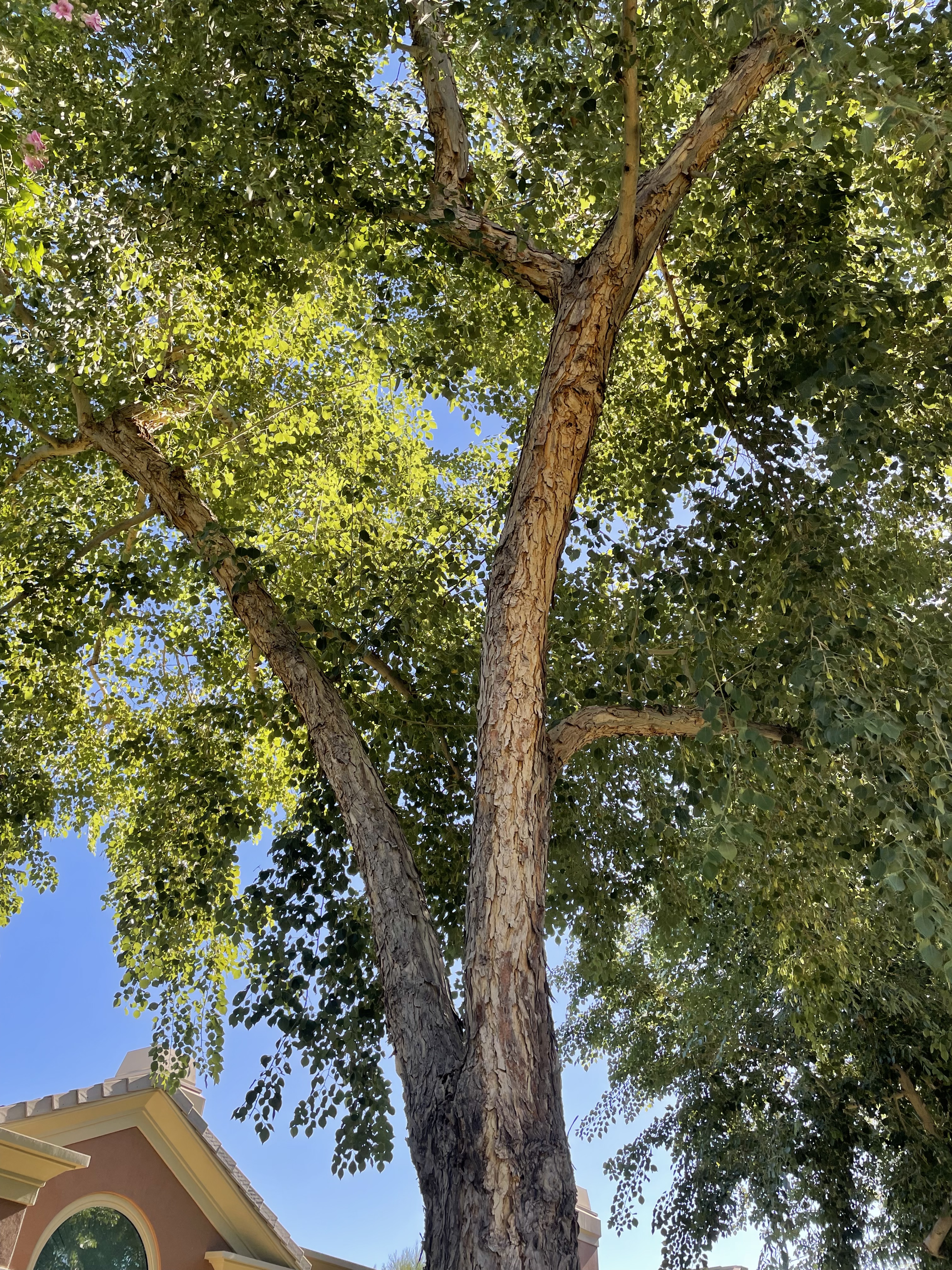
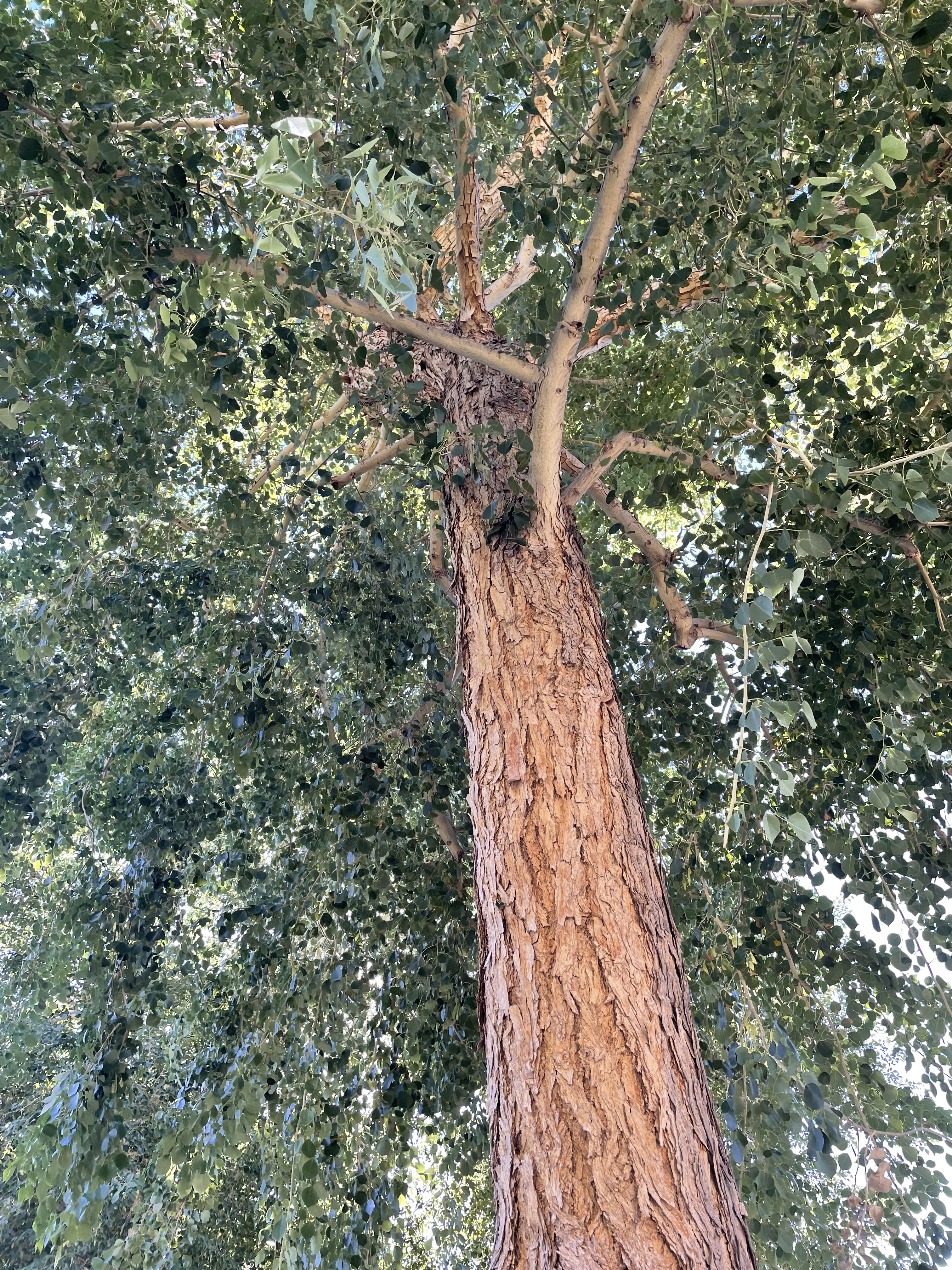
The Dalbergia sissoo, or North Indian rosewood, is not a native to the Sonoran Desert. But it loves poor desert soils and direct sunlight, and is drought-tolerant. It grows fast. A ten year old tree can be 20 feet tall.

With llght brown shaggy bark, it has fluttering leaves about the size of a half-dollar. My mother is right about the roots — the root system can run 40 feet or more from the base of the tree. Finding water is this tree’s jam – it came from the riverbanks of India, after all.

Here’s the thing: when you have an allee of trees like the sissoo, it’s not always so good.

A monoculture of trees can fail. Who can forget Dutch Elm disease, emerald ash borer, Oak Wilt – all problems stemming in large part from a lack of arboricultural diversity. It remains to be seen if the sissoo will die in droves. Until that time, developers have been removing them at about the same rate they’re being planted, they’re such a “nuisance.” As my mother would say.

Leave a comment

Filed under Jean Zimmerman

Death and life

curl around each other in the desert. The Bajada at the foot of the McDowell mountains in Scottsdale – the word means the slope of alluvial material that has washed down from the heights above – has the kind of brawny cacti that you want to find “out west”.

That saguaro has lived many lives. Judging from the number of arms, it can brag of hundreds of years. There are others, like the barrel cactus, that look juicy enough to take a bite of, even should injury result.

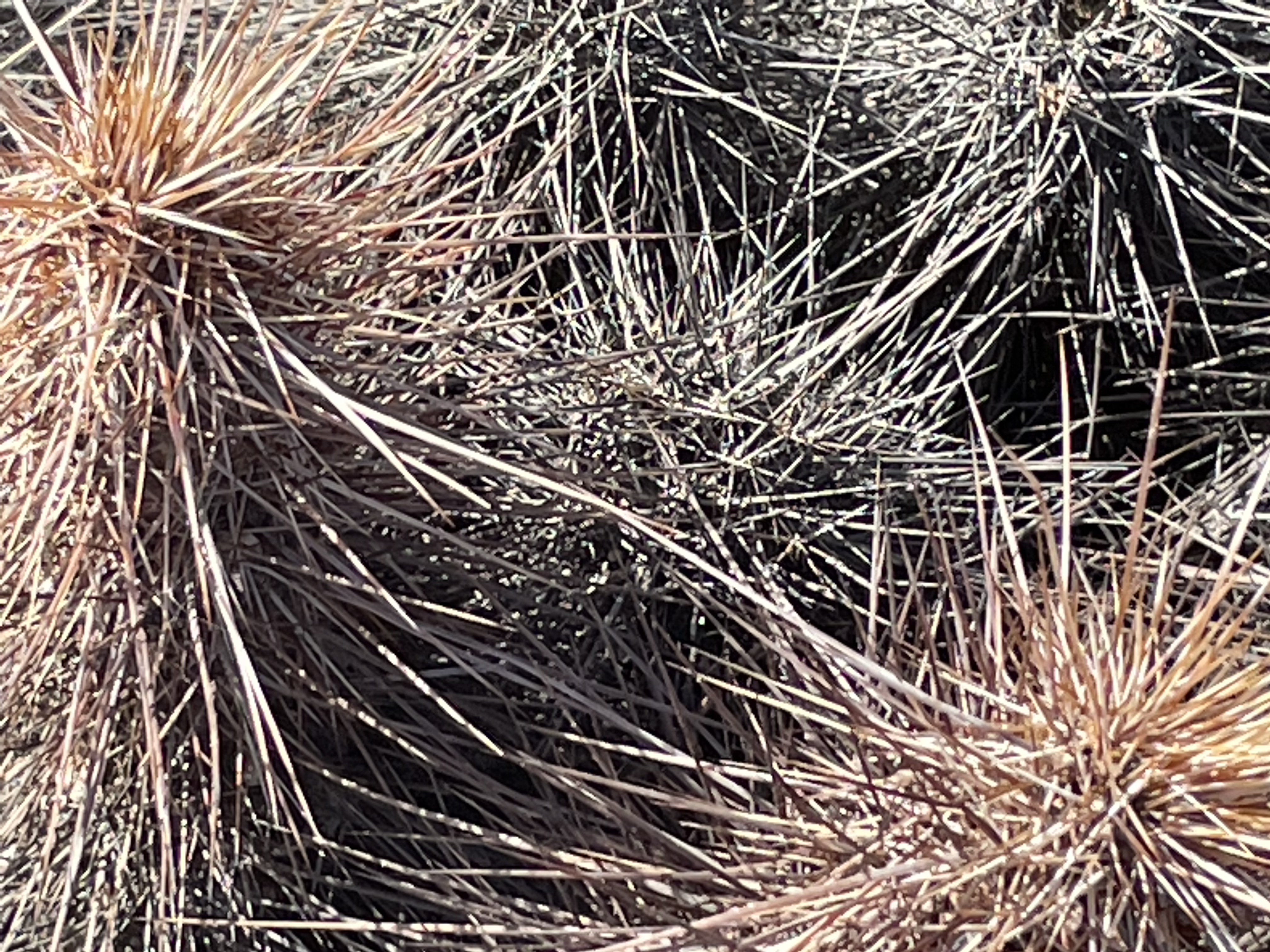
Spiky thorns are beautiful.

Spring and summer have passed and flowers still bloom.

Limbs weave a lace against the sky.

Plants look soft, but aren’t.

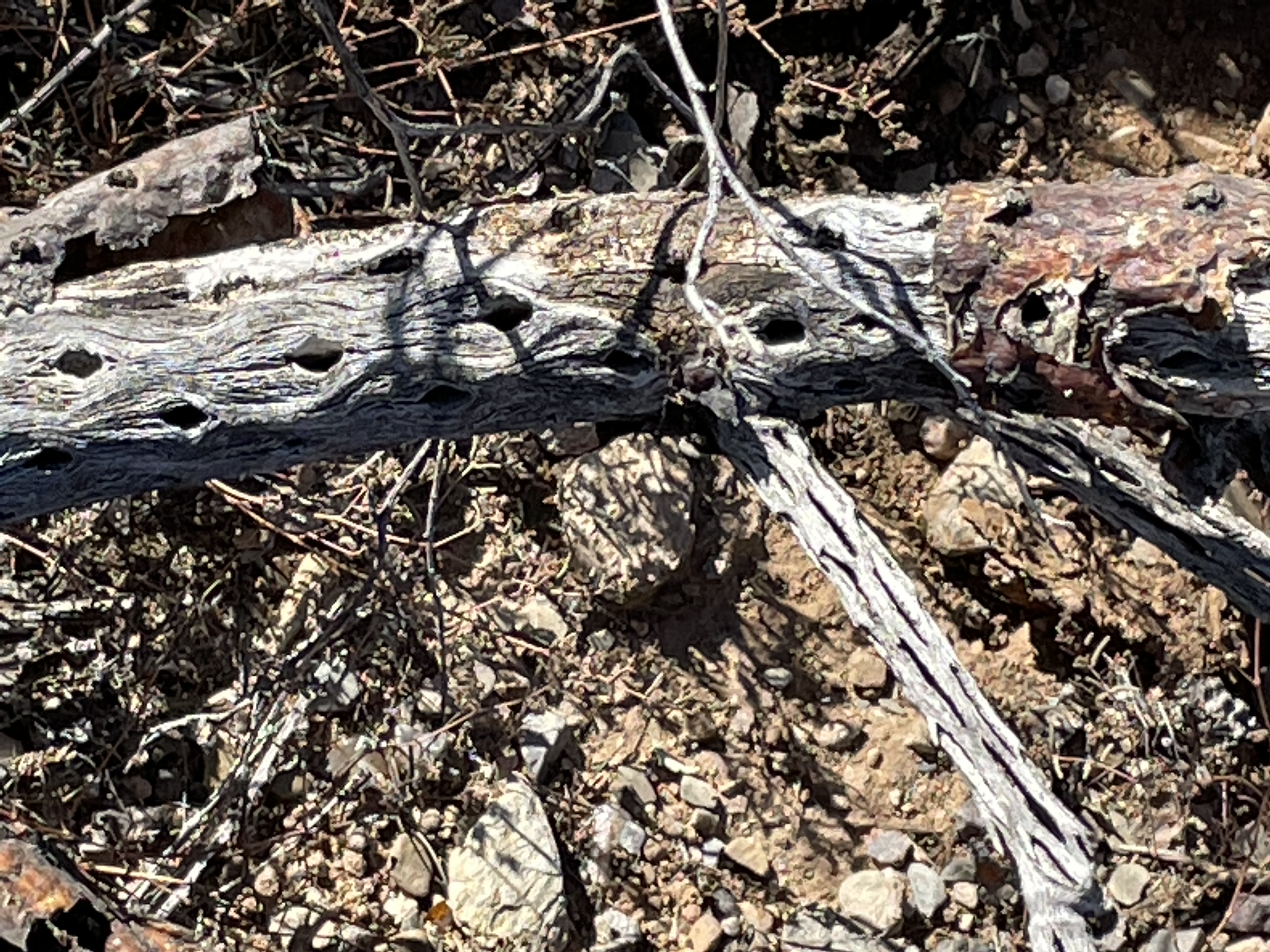
So much is dead or dying, and I like those pieces of the scenery as much as the healthy specimens.

Skeletons abound.

Creepy Halloween-y distorted forms.

The mounded den of a pack rat has a cover of debris to keep the animals safe, but every once in a while a snake finds the track to the opening and slips inside.

Chollas exist half dead and half alive.

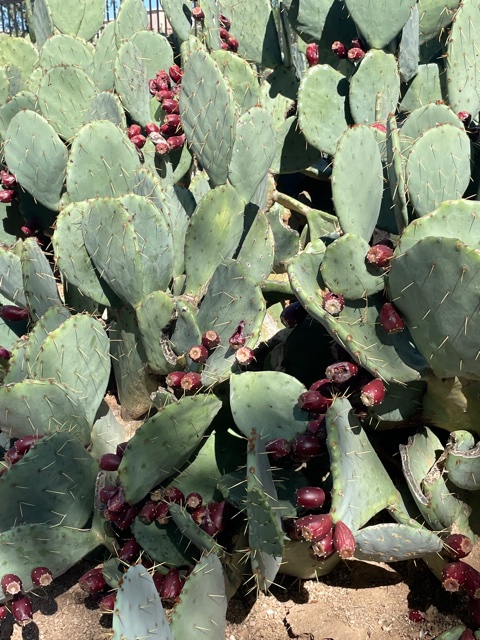
Prickly pears give up the ghost.

Some look brash, proud of their skin like cinders.

The ironwood tree lords over it all. It can live 500 years. Some branches die, others grow.

It’s a way to subsist, living and living with death.

1 Comment

Filed under Jean Zimmerman

In the crook of an old tree

you see its age.

My mother calls this elderly specimen The Twisted Tree, and you can see the character built into the mesquite’s gangly branches over the years. It sheltered a family of owls for years.

Its bark is venerable.

There is something for all who need it. Birds descend upon the prickly pear and devour its fruit.

Scottsdale, where it grows, was settled in 1894 and the tree could already have been established at that time.

There are young, fresh things growing here too.

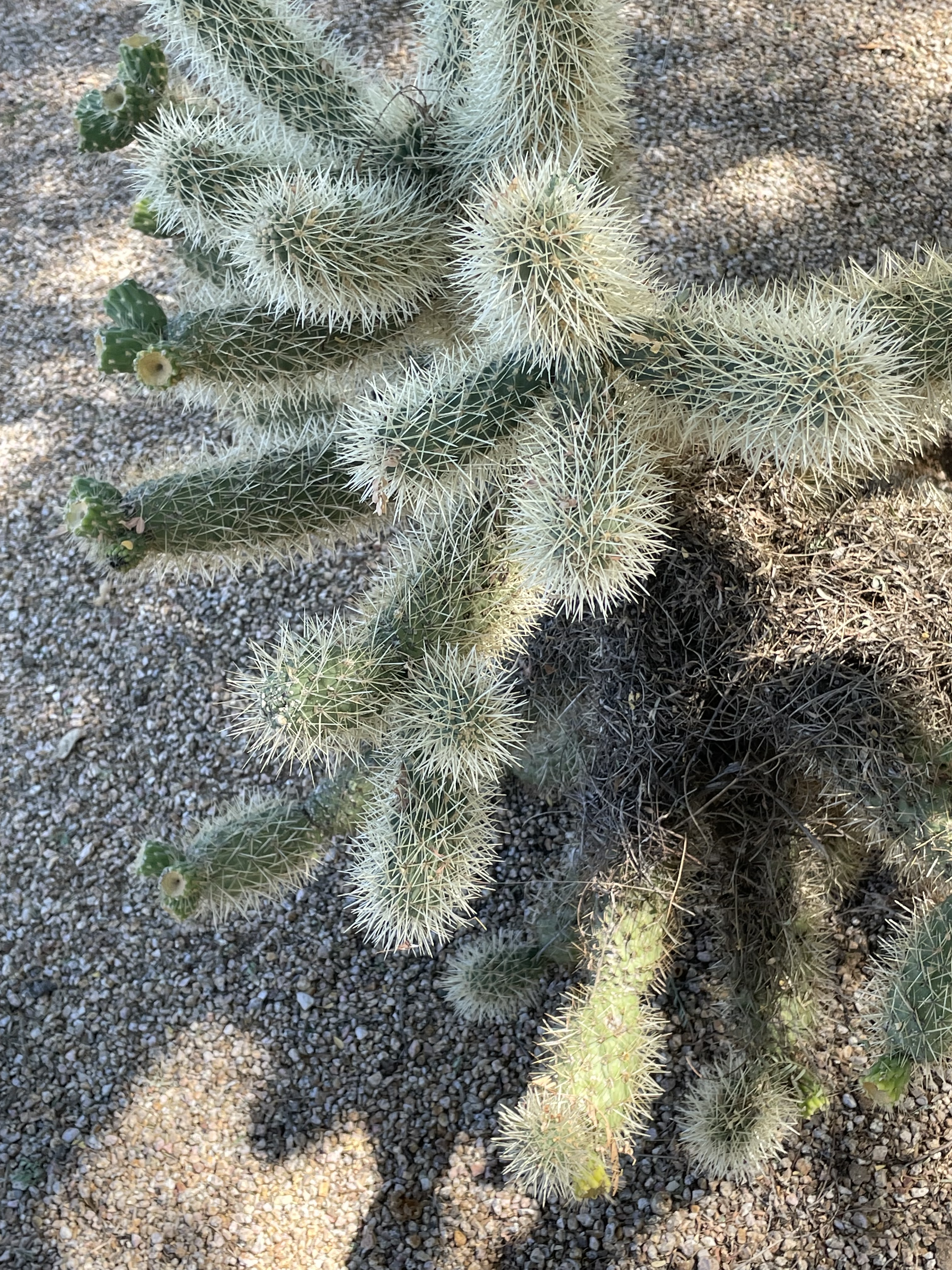
Bristling, the teddy bear cholla.

Saguaros take many decades to get big. They are 50 before they grow an arm.

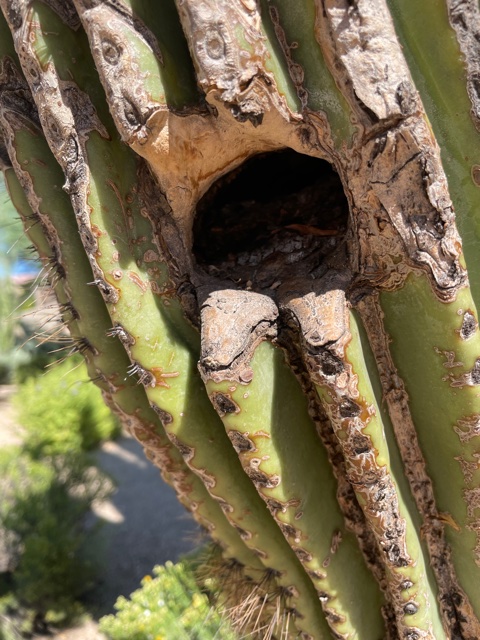
This one has a hanging arm and is riddled with woodpecker-pecked holes, but still reaches upward.

No one home today.

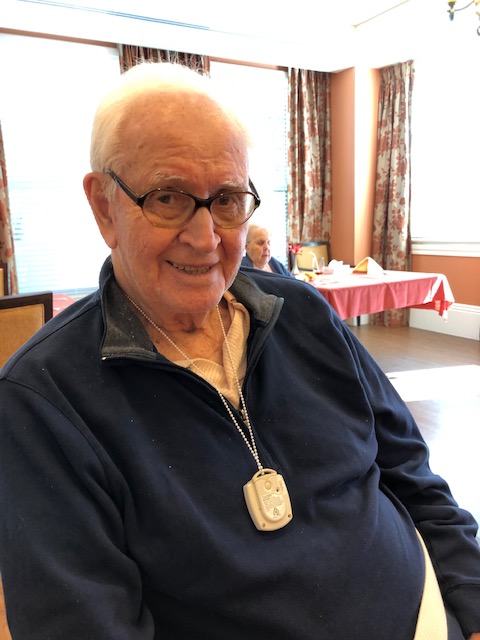
In the crooked grin of a man you see his age.

He’s been a bit banged up but his life stretches forward like the limbs of the mesquite outside his door.

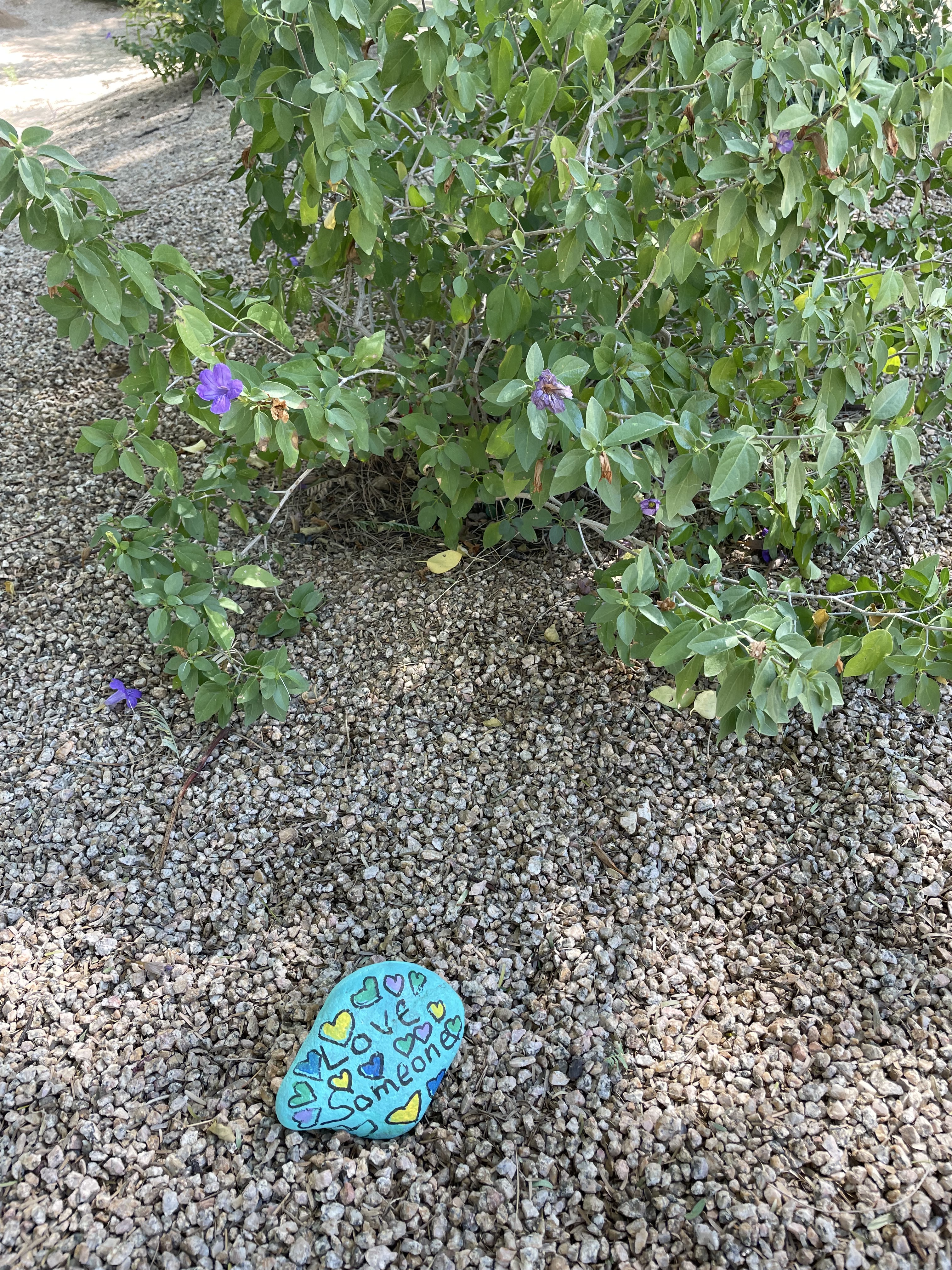
Someone has thought to leave slogan-painted stones among the desert plants. A little corny, but somehow fitting.

Leave a comment

Filed under Jean Zimmerman

Perfection old and new

is what you get when you combine a funkily sublime old vaudeville theater and a performance by a Japanese avant-garde jazz pianist and composer at the height of her career.

Sony Hall had opened in Times Square in 1938 as the Diamond Horseshoe, and became one of the iconic venues of the vaudeville circuit. Later it hosted a long-running avant-garde show called Queen of the Night. When Sony acquired it, the theater had somehow retained its original furnishings, like the decorative disk that graces the ceiling over the audience, and the buyers were smart enough to retain the fixtures, and décor and the painting.

The food was good; the potatoes purple.

By the time Hiromi came on stage, the audience was primed. Japanese families filled the front rows.

The rest were serious fans already, including our neighbor Andrew, a Polish IT guy who it seems follows her from show to show. She inspires super-fandom.

Hiromi appeared.

She gracefully introduced the quartet accompanying her. They were “new,” she said, and from all over.

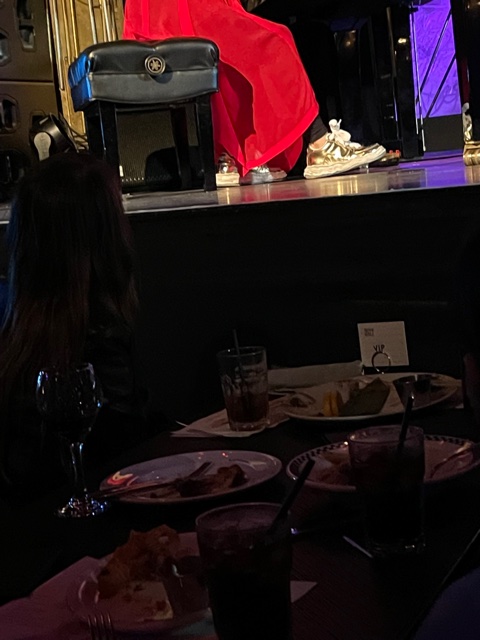
How would you describe Hiromi’s composing, and her playing? A tickle and a romp, with stride jazz flourishes and soulful  trills reminiscent of the old country. She stamped her gold sneakers, stood up, sat down, grimaced and grinned at the audience as though we were all in on her marvelous joke. She was funny. She had fun! She was explosive, with her lightning fast fingers.

Hiromi has said, “I don’t want to put a name on my music. Other people can put a name on what I do. It’s just the union of what I’ve been listening to and what I’ve been learning. It was some elements of classical music, it has some rock, it has some jazz, but I don’t need to give it a name.” Born in Japan ini 1979, she started lessons at six, and her teacher had her use color to develop her chops, saying Play red if it was something passionate or Play blue if it should be a mellow sound. She is well known for the album she recorded with Chick Corea, whom she met when she was seventeen.

The accompanists were tight, totally matched to her at times wild and galloping melodies. The Live-Shrieber-resembling first violinist should probably have his own show, he was that good.

The piece she performed, titled Silver Lining Suite, told a personal story of the pandemic in musical harmonies. There will be a lot of compositions on this theme, in all the arts, I am sure. But her interpretation was spectacular. She brought the past and present together with soul and charm.

Leave a comment

Filed under Jean Zimmerman

An iffy economy

shows its face in the Concourse’s commerce as it does every place these days.

Some stores don’t make it. This one’s especially sad, I think, because of the personal tag under the professionally printed sign.

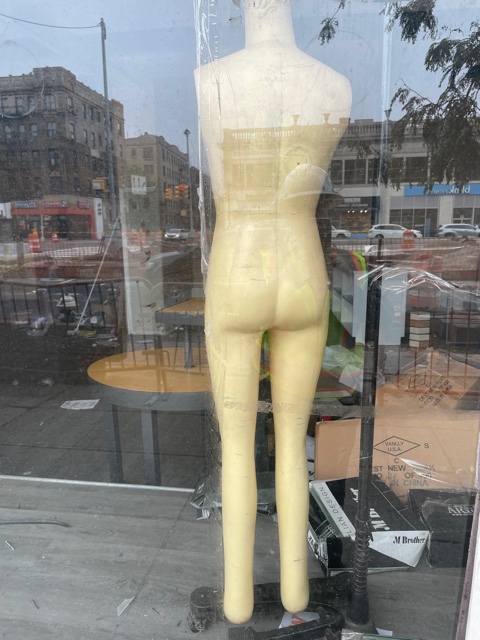
In the dusty adjoining window, a mannequin moons passersby.

Then there is the epitome of fabulousness as well as success, the furniture store that is jammed with merchandise inside and out, where you can get yourself a new black lacquer dresser for $200. Lights glitter, mirrors decorate every surface. Most of all, catching the eyes of neighborhood walkers, is the bedroom set that I myself might fancy, if I didn’t sleep in a Murphy bed.

Soft fuzzy throws, a platform bed, sparkly lettering on overdrive, and a superconfident sequined jaguar. You can get it all on layaway. Maybe I could trade in the Murphy bed.

Leave a comment

Filed under Jean Zimmerman