Category Archives: Writers

Awaiting Snow and Book

Firewood, check. Water, check. Milk, check. Generator, check. Gas in car, gas for generator. Candles. Chicken for pot pie.

The storm advances, and all that’s left to do is put out a pot to catch snow for snow cream (snow plus sugar plus milk plus vanilla; stir).

Small flakes fall, but the big snow isn’t supposed to strike until tonight.

Waiting. Hunkered in a cozy house with a pile of books (The Snowman by Jo Nesbo on the top of the pile, The Unexpected Houseplant, the next one down.)

Plenty of books, and one of my own on its way this spring. The Orphanmaster comes out in softcover on April 30th.

Orphanmaster Paper Official Cover

What a cover. It sets even me atremble.

4 Comments

Filed under Cooking, Jean Zimmerman, Nature, The Orphanmaster, Writers

All This and Guacamole Too

I attended my first meeting of our neighborhood book club tonight. I have always had a slight hesitation about attending a reading group because I thought I would shoot my mouth off – though politely, of course – and somehow embarrass myself. But recently, having visited with some groups to talk with them about The Orphanmaster, I saw how much fun people were having talking about books, the very thing that I love. In a group. Rather than just Gil and I sitting around talking about books. Which is fun, too. Still.

So I went. The book for this month, as it happens, depicts North Korea in all its repression and suffering, but manages to pull it off as a relative page turner. Nothing to Envy: Ordinary Lives in North Korea had journalist Barbara Demick interviewing scores of North Koreans who had escaped to South Korea in the past 10 years or so. It’s gripping from the first page, when she describes how the country goes black at night; there is literally no electrical grid.

dark north korea

Her ability to capture the perfect detail in describing everything from spare, crumbling apartments to bodies decaying in the street to the typical day’s menu is spectacular. Especially the day’s menu – much of the book is about food, getting it, processing it, starving when it’s not available. The people Demick profiles literally eat grass and tree bark to (just barely) survive. But their spiritual starvation is perhaps more profound, as the state exerts its totalitarian stranglehold on personal liberty.

north-korea-is-best-korea-0b88c

My fellow readers tonight parsed all this carefully, thoughtfully and with a sense of humor – especially when we were temporarily diverted by the subject of Beyonce’s halftime gyrations – and I came away better informed than when I got there. It was a little weird to sit around munching on cashews and guacamole as we talked about scavenging for twigs. Yet I felt a strange sense of wellbeing,  too, that this particular author, Barbara Demick, had cut through whatever concertina-wire of red tape she found in order to document this sordid, complicated chapter of life on our planet and had done it admirably. It didn’t cancel out the deprivations/nuclear threat of North Korea, but the fact that she did it offered a different, counter story, that someone was willing and able to research and create such a book. It is a tribute to the human imagination and the powers of empathy.

Nothing_to_Envy

2 Comments

Filed under History, Jean Zimmerman, The Orphanmaster, Writers

Happy Birthday, Edith

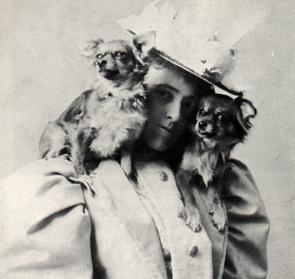
Edith Wharton (1862-1937) at the age of 27, posing with her beloved long-hair chihuahuas, Mimi and Miza.

edith-wharton-and-dogs

Her eye was keen, her sense of the tragic rich. I think she knew fully she was capturing her age and class in a way no one else could.

At the start of A Backward Glance, her memoir, she describes herself:

“It was on a bright day of midwinter, in New York. The little girl who eventually became me, but as yet was neither me nor anybody else in particular, but merely a soft anonymous morsel of humanity — this little girl, who bore my name, was going for a walk with her father. The episode is literally the first thing I can remember about her, and therefore I date the birth of her identity from that day.”

She goes on to describe almost every article of clothing she had on, she with her perfect ability to capture physical details: her bonnet of gathered white satin, “patterned with a pink and green plaid in raised velvet.” It had “thick ruffles of silky blonde lace under the brim in front” and a “gossamer veil of the finest white Shetland wool.” She wore white woolen mittens.

This was the child who would at least skim every volume in her father’s library before she reached the age of seventeen. Poetry drew her:  “Ah, the long music-drunken hours on that library floor, with Isaiah and the Song of Solomon and the Book of Esther, and ‘Modern Painters’, and Augustin Thierry’s Merovingians, and Knight’s ‘Half Hours’, and that rich mine of music, Dana’s ‘Household Book of Poetry.’ Faust, Keats and Shelley guided her to her ambition to be a writer.” Then the gates of the realms of gold swung wide, and from that day to this I don’t believe I was ever again, in my inmost self, wholly lonely or unhappy.

Not that she didn’t have some personal challenges. While she was born into a family of Jones and Rhinelanders and Rensselaers in lap-of-luxury New York (it is her father’s family that is referred to when people say “keeping up with the Joneses”) she suffered over a marriage to mentally unstable Teddy Wharton, whom she eventually divorced. She did not publish her great best-selling novel of manners, The House of Mirth, until 1905 — she was 43. The title came from Ecclesiastes: The heart of the wise is in the house of mourning; but the heart of fools is in the house of mirth. Every word of that book is brilliant sadness.

Wharton describes the impetus for The House of Mirth in A Backward Glance, saying the question was how to make a meaningful story out of fashionable New York. The answer: “a frivolous society can acquire dramatic significance only through what its frivolity destroys. Its tragic implication lies in its power of debasing people and ideas. The answer, in short, was my heroine, Lily Bart.”

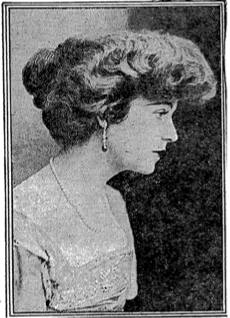
A 1918 film of The House of Mirth starred debutante/silent actress Katherine Harris Barrymore (married to John Barrymore). In other words, a high-society young woman who could have been portrayed in the book starred in the movie. How strange and delicious, a dramatic detail worthy of Wharton.

Screen shot 2012-01-20 at 8.59.38 AM

Leave a comment

Filed under Dogs, Fiction, History, Jean Zimmerman, Photography, Writers

Happy Anniversary, Jane

“I am half agony, half hope.” Jane Austen, Persuasion

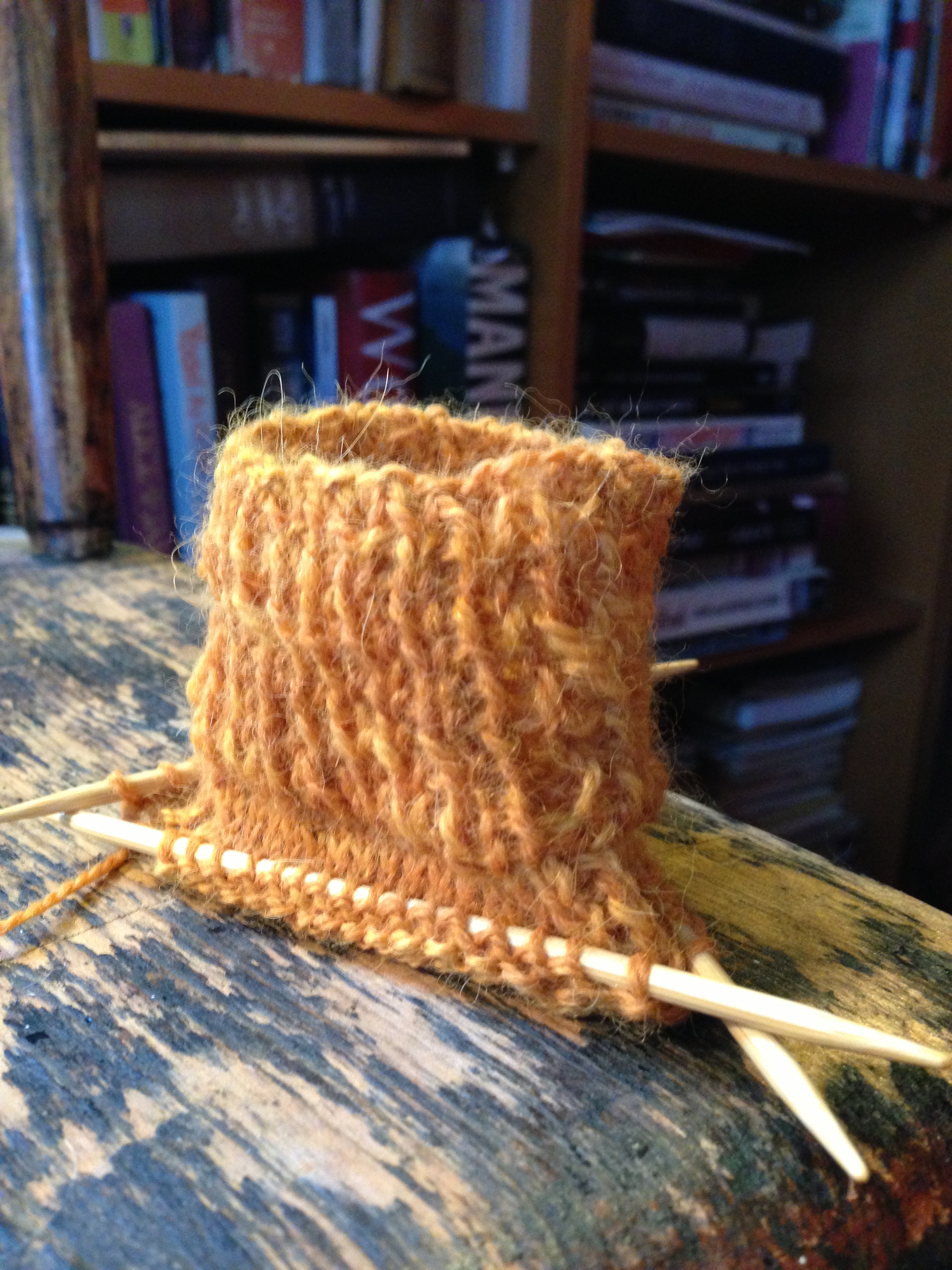
sock 3

I’m knitting my sock around stitch by stitch, knot by knot, minute knucklebone by knucklebone, and I’m thinking of Jane Austen. She plied her careful ironies one by one, a moral, steady, intelligent chronicling of the minutiae of Regency life. She, or course, would herself have been intimately involved with needlework.

jane-austen

Austen kept no diary. There are letters, though. A vicar’s daughter, raised with her brothers and sisters in rural Hampshire in the late 1700s (sister Cassandra destroyed many of Jane’s letters when she died), unmarried though the quintessential writer of “marriage novels.” She manages to remain a cipher to us now, though her books ring with the clearest truth.

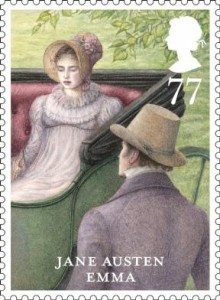
The Royal Mail is coming out with stamps for each one of the novels.

Austen stamp

It’s a good time to reread Pride and Prejudice, the book that broke Austen out of obscurity, January being the novel’s 200th anniversary. And perhaps to rediscover its lesser sung gem, Lydia, silly and brash.

Lydia Bennet had more fun

Still fresh enough for a bumpersticker.

1 Comment

Filed under Fiction, Jean Zimmerman, Knitting, Writers

Knit, Eat, Publish

Feeling pleasantly festive,

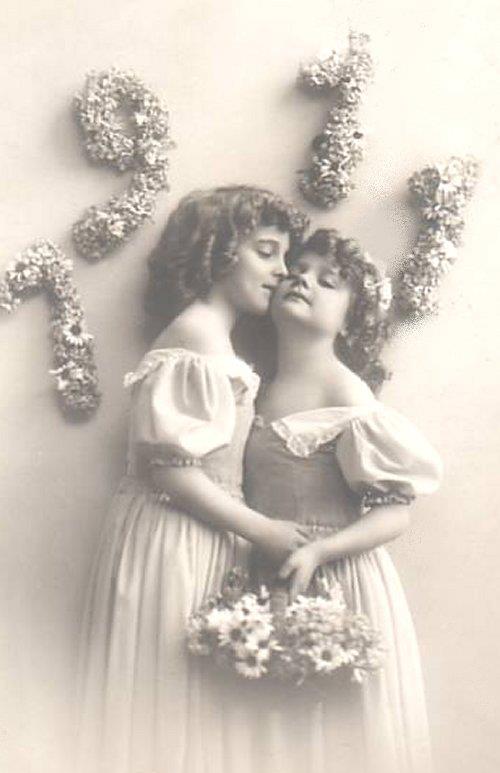
1911 celebration

not in 1911 but 2013, we made our way to Tarrytown around noontime. First, an errand.

At the yarn shop, I attempted to yank out a hank of ribbon yarn from a bulging cubby of gorgeous candy-colored floss.

“Don’t worry… pull!,” said the proprietor. “The worst that can happen is a yarnalanche.”

ribbon yarn

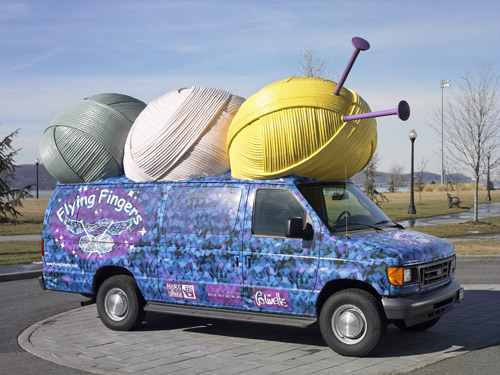
Elise Goldschlag, the owner of Flying Fingers, is joined in the enterprise by her genius knitter son Dillon. They’re known for their Yarn Bus, which according to Goldschlag “has now logged 100,000 yards of yarn.” The store serves Westchester but also brings customers from stops across Manhattan– Bloomingdale’s, Chelsea, Penn Station, the Upper West Side – delivering them to Tarrytown (killer lattes right next door) for a few hours of chat and shop, then back home again.

yarnbuspark_500x375

Elise can knit anything, even a slipcover. Dillon’s getting close. He graduated from the Rhode Island School of Design before giving up the starving artist thing to work with his mother. Men were actually the first to knit for an occupation, and it’s still not uncommon the world over. To wit, these young men plying their needles in a Chinese dorm.

men dorm knitting

Clutching a new pair of size 13 sticks, I accompanied my husband to a new restaurant down the street. Did they know that Gil had just received his first copy of Mafia Summit: J. Edgar Hoover, the Kennedy Brothers, and the Meeting That Unmasked the Mob (Thomas Dunne Books/St. Martins Press)?

eyes on glass

The waiters kept arriving at the table unsummoned, bringing little complimentary plates of odd but tasty cheeses, cured meats, and a salad of wild rice and cranberries seasoned perfectly with sesame oil. We read the newspapers. Everything was easy.

There are few days that compare in the life of a book author with getting that first copy in the mail. You worked so hard on the earliest draft, sweated over revisions, slaved to get photos for the picture insert, and now the day is here and all of that is far in the rear view. It’s almost as if the book were produced by someone else – someone smarter than you! And yet it has your name on it (in large type, hopefully).

Gil’s book is terrific.

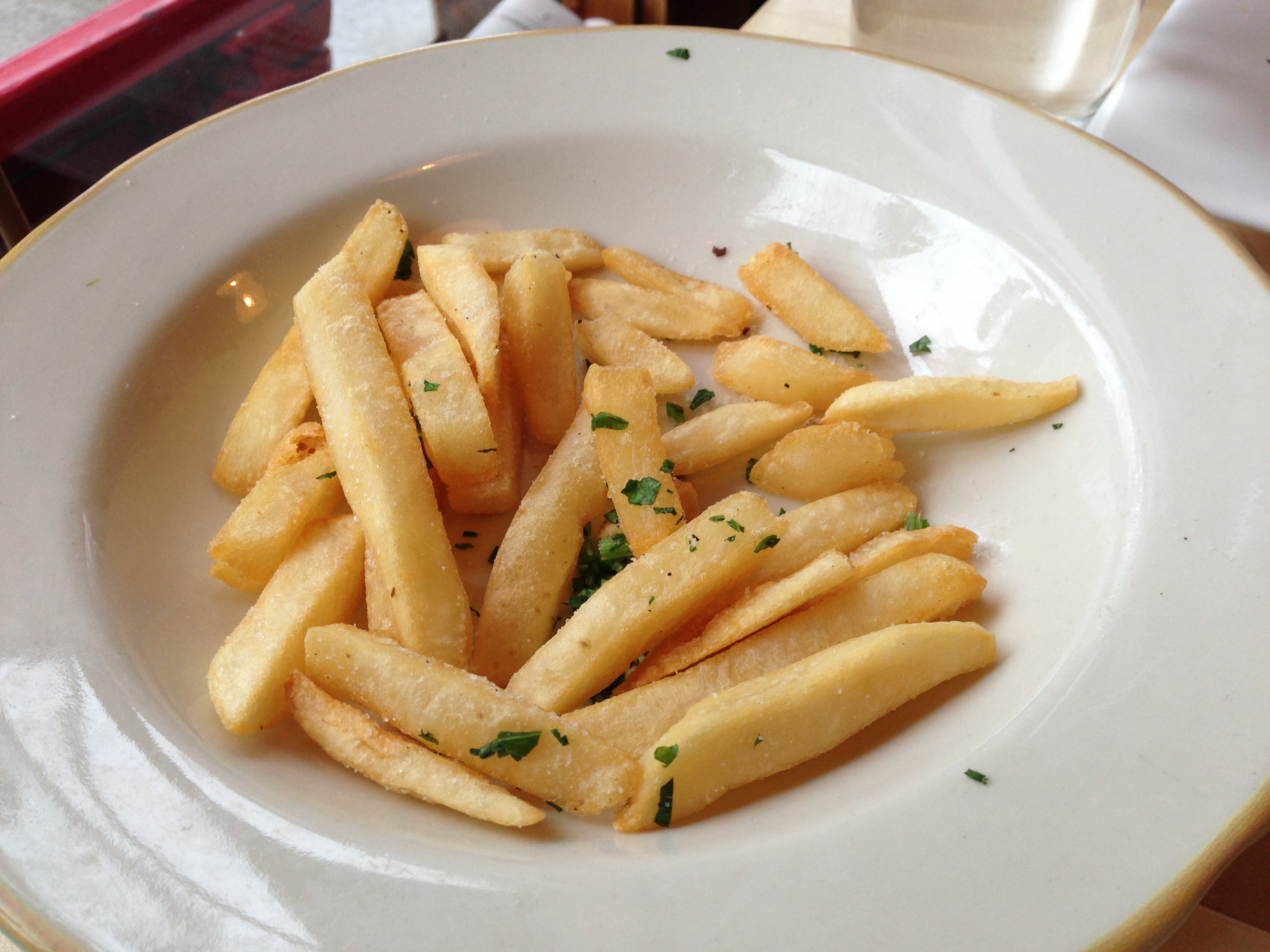
After we scarfed down as much of our paninis as we could manage, a different waiter appeared at our table to set forth a plate of french fries, gratis. “These have truffle salt,” he said before skipping away.

french fries

The most scrumptious french fries ever. Congratulations, Gil, the book is great.

1 Comment

Filed under Cooking, Jean Zimmerman, Knitting, Writers

Birthday Wishes, Simone

Today, light a birthday candle for Simone de Beauvoir, who made so many beautifully coherent declarations, including, “Each of us is responsible for everything and to every human being.”

Though Beauvoir came to lasting fame for her revolutionary treatiseThe Second Sex, I have always loved  her Memoirs of a Dutiful Daughter, in which she wrote about coming to womanhood in the restrictive french society of her day.

SIMONE-DE-BEAUVOIR-001 Born in 1908, Beauvoir had a sense of her uniqueness from when she was around ten years old.

“I became in my own eyes a character out of a novel… One afternoon I was playing croquet with Poupette, Jeanne, and Madeleine. We were wearing beige pinafores with red scallops and embroidered cherries. The clumps of laurel were shining in the sun, and the earth smelled good. Suddenly I was struck motionless: I was living through the first chapter of a novel in which I was the heroine… I decided that my sister and my cousins, who were prettier, more graceful, and altogether nicer than myself would be more popular than I; they would find husbands, but not I. I should feel no bitterness about it; people would be right to prefer them to me: but something would happen which would exalt me beyond all personal preference; I did not know under what form, or by whom I should be recognized for what I was. I imagined that already there was someone watching the croquet lawn and the four little girls in their beige pinafores: the eyes rested on me and a voice murmured: “She is not like other girls.”

Yet Simone was hardly a rebel compared with her best friend Zaza. The two girls were called the “inseparables.” Zaza and Simone shared a common interest in ideas and in books. “ZaZa was a cynic,” Beauvoir later said when asked what attracted her to her friend. “ I had never heard anyone speak with such openness and force. There was no such thing as propriety, and no subject was sacred. Even at such a young age, I had learned to guard my remarks, but not she. She would say anything.” She relays a story in the book about Zaza delivering a perfect solo at a packed piano recital, then sticking out her tongue to taunt her instructor – innocent enough sounding, but typical of her antisocial shenanigans.

In 1929, Zaza died of meningitis. The way Beauvoir portrays it in Memoirs, Zaza’s struggle to resist an arranged marriage was the real cause of her death. Zaza’s friendship and her untimely demise haunt Memoirs of a Dutiful Daughter, and fueled the great feminist’s later critiques of society’s constraints on women.

Beauvoir would later write: “I tore myself away from the safe comfort of certainties through my love for truth – and truth rewarded me.”

Reading about Zaza and Simone was formative for me when I was an adolescent, trying to figure out my role as the heroine of my own life. I remember gazing out the kitchen window at a spreading tree in the center of our yard and having a thought cross my mind, very clearly and consciously: I am myself. My self.

Simone de Beauvoir went from that beige pinafore on to greatness, her ideas reaching millions, startling people with her unorthodox relationships with Sartre and other men, such as, famously, the American writer Nelson Algren. Her social theory, her political activism, her fiction, her feminist theory have inspired legions. There was even a posthumous kerfuffle over a nude photo Art Shay took that surfaced on the cover of the French journal Nouvel Observateur in 2008. She shocked the world all over again.

de Beauvoir naked

It’s a beautiful photo. I think Zaza would have approved.

1 Comment

Filed under Jean Zimmerman, Writers, Writing

So Unconscious Desire

Poets on walls. So nice to have them come out of the pages and present themselves as larger than life. Even as graffiti.

Neruda. “It  happens that I am tired of being a man.” The first line of “Walking Around,” one of my favorite poems. “Just the same it would be delicious/to scare a notary with a cut lily/or knock a nun stone dead with one blow of an ear./It would be beautiful/to go through the streets with a green knife/shouting until I died of cold.” Here Pablo sports a flower at his ear.

neruda

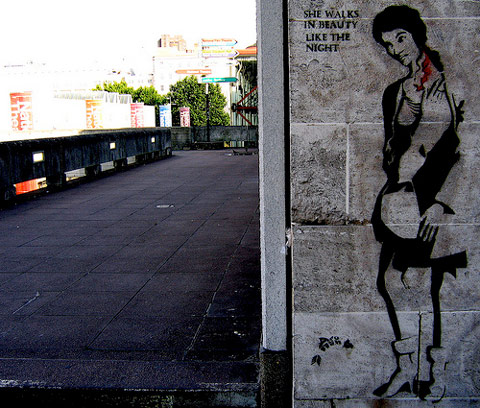
Byron.

byron

“She walks in beauty, like the night /Of cloudless climes and starry skies; 
/And all that’s best of dark and bright 
/Meet in her aspect and her eyes…” Byron wrote these lines in 1814, stunned by the sight of his ravishing cousin, the Lady Wilmot Horton, at a party in mourning dress.

And Maya Angelou.

angelou

Life doesn’t frighten me at all.

Not at all.

Not at all.

And I would like to add my humble contribution. Back in 1985 when I got my MFA at Columbia, the poetry collection I wrote as a thesis had the title “So Unconscious Desire.” Inspired by a perfect graffito that I saw sprayed in orange and green on a boarded up storefront on 19th Street between 2nd and 3rd, long erased except in my mind’s eye. I think I’d like to go paint that again on a rock somewhere.

6 Comments

Filed under Jean Zimmerman, Poetry, Writers

Frank O’Hara’s Today

I’ve been thinking a lot about the great New York poet Frank O’Hara – he strolled the Manhattan streets in the 1950s and ’60s writing brilliant, hilarious autobiographical poems about everyday life, kind of like the first blogger.

FRANK

I cannot find any of my O’Hara volumes at the moment, but here at least is a wonderful poem that is available among others on line.

Today

Oh! kangaroos, sequins, chocolate sodas!

You really are beautiful! Pearls,

harmonicas, jujubes, aspirins! all

the stuff they’ve always talked about

still makes a poem a surprise!

These things are with us every day

even on beachheads and biers. They

do have meaning. They’re strong as rocks.

Leave a comment

Filed under Jean Zimmerman, Poetry, Writers

Between the Shelves

Les Liaisons Dangereuses.  The Chicago World’s Fair of 1893: A Photographic Record (a Dover original). Just Kids, by Patti Smith, with its winsome pair on the cover. The lilting new version of Fairy Tales of the Brothers Grimm.

My stacks. A cross-section.

goode vrouw

I always get kind of alarmed when I hear about people who organize their bookshelves perfectly by color. Or by the height of the spine. Or even by subject. I guess I feel kind of abashed because my shelves look like someone just threw a bunch of volumes into them and the way they landed is the way they stuck.

I expect the stately, big public libraries I visit to be properly arranged. At the New York Public Library on 42nd Street, I insist that the chit I hand in for a research item lead unfailingly  to a number on the overhead board, a 155, say, that corresponds to the book I will then pick up at the wood-framed window. I don’t like to wait, even in the lovely caramel-smelling ambience of the Rose Reading Room, where I can spend my time gazing up at the fluffy clouds floating in azure. And, though I love wandering the mysterious stacks at Columbia University’s Butler Library, I expect to set my hands on the thing cited in the catalogue where  and when I want it. As with the following super-polished domestic book sanctuaries, everything is organized.

one library

three library

Not so at my home.

My own library, as I said, is a shambles. Gardens of the Gilded Age is wedged next to A Confederacy of Dunces, which is neighbor to The Goode Vrouw of Mana-ha-ta, by Mrs. John King Van Rensselaer (Scribner’s, 1898, signed by the author). The Goode Vrouw was a priceless source to me for everything I’ve written about Dutch colonial women. Some of my favorite books, like the latter, are end of the line library volumes, dumped when the branch needed room for contemporary titles. Some are by friends: Yodel-Ay-Ee-Oooo: The Secret History of Yodeling Around the World, by foremost authority Bart Plantenga. On my shelf, it sits somewhat awkwardly next to Roderick Nash’s Wilderness and the American Mind.

Living in the Cabin, where every inch of space is precious, meant giving up dozens of cartons of books.  Some to the library, some to the Strand (for precious little resale value), some for pennies at the yard sale. Painful as it was to do it — and with boxes still in storage — we survived,  managing to to keep, say, one in twenty. There is a bookcase about the size of a coffin along the wall of the living room. That is all. Are those, the books favored enough to keep, the ones that I read? Do I turn and re-turn the pages, hold them, go back to them?

Infrequently.

Library hardbacks in their glossy sheaths, the dozens of e-books that hide themselves in my Kindle, the occasional irresistible find on the table at a great independent book store. Those go by my bedside, not my winnowed, cherished chums on the bookshelves. Occasionally I’ll return to Tristram Shandy (the first novel I really fell for with, in high school), or one of the two brilliant Alices, Gertrude Stein’s Autobiography of Alice B. Toklas or The Diary of Alice James. I might dive down into the disordered waves and come up with a gem. But otherwise the books on the cabin’s shelves — in chaos — are only to keep, to have, to save, to nurse a taste for, the way you might keep a bar of divinely dense chocolate in the refrigerator for the day you need to take a bite.

It needn’t be perfect to be delicious.

two library

Leave a comment

Filed under Home, Jean Zimmerman, Writers, Writing

Put Your Name on the Line

The Women’s Club of Larchmont held a large and friendly luncheon at Orienta Beach Club in Mamaroneck, where we put away butternut squash soup and baked chicken before the show began… the show being myself, Dan Zevin (Dan Gets a Minivan) and Richard Zacks (Island of Vice: Theodore Roosevelt’s Doomed Quest to Clean Up Sin-Loving New York). A different kettle of fish in each case, as you can imagine (united by Z’s). Yet these literature-loving, Christmas outfit-wearing ladies came to all our tables afterward, often to pick up the entire trio of books, the whole hat trick, imagining they’d find some grateful recipient for one or another over the holidays.

When you’re autographing books, people sometimes seem apologetic if they only want a signature, not an inscription. “Oh, I’ll be passing it along (to my daughter, or my mother, or my son-in-law) so just sign,” they say. But I love the idea of someone liking my book enough that they want to pass it along. I’m fine with just signing my name.

A fellow writer talked to me today about signing, how with her own first novel she didn’t “know how” to sign and she had to buttonhole the person in charge of the event, anxiously, to find out. And it’s true that there can be a technique to signing. It’s good to practice, and it’s possible to be rusty. What face is your signature going to wear? And where are you going to post it? The title page, or the blank page inside the front cover? Where, exactly, on the title page? Sharpie, gel pen, ballpoint? Black or blue? If it should ever happen that you sign a lot of copies at once – this year I signed dozens on occasion, and that’s nothing compared with many writers – you want to have a system.

And what else will you employ besides your signature? I’m always impressed when authors manage to squeeze out a couple of sentences – difficult, with a clumsy Sharpie, if you’re lucky enough to have a line of people waiting. If you have one of my books you know that I often write, “Enjoy!” While that is indeed my hope, the exhortation strikes me sometimes as a ridiculously insipid.

I’ve come across wonderful twists on the conventional author’s signature as I’ve travelled around the country and met a lot of authors with just-published books.

Da Chen (My Last Empress) with his dramatic calligraphy and red seal.
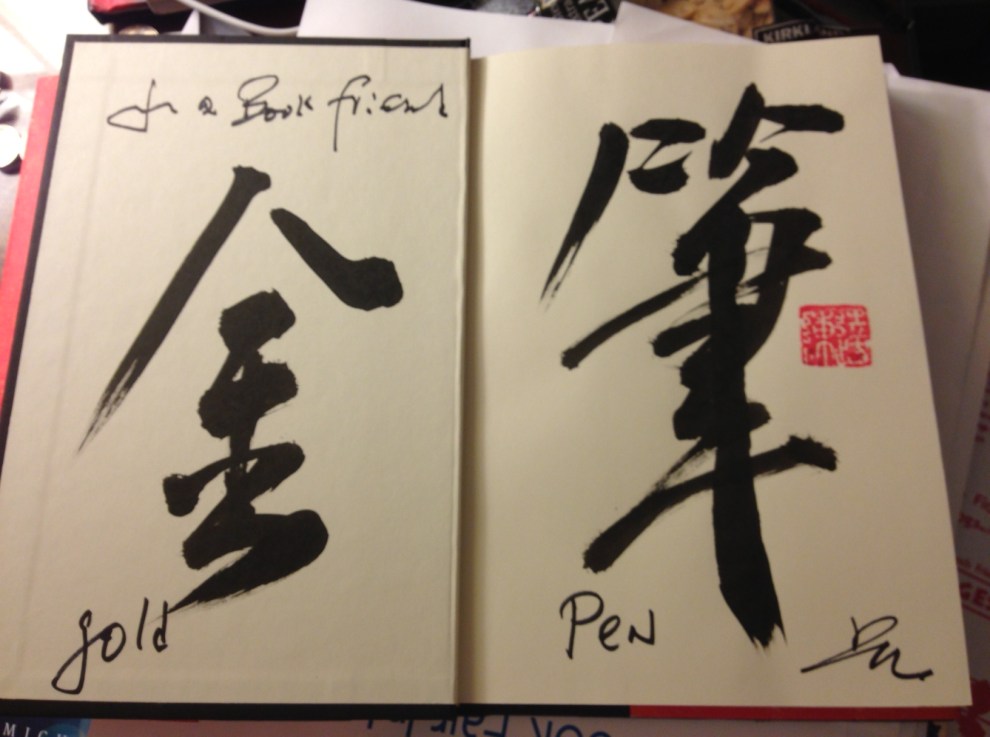
Chen's signature

Richard Zacks (Island of Vice) includes a quote from early Chief of Police Big Bill Devery: “Hear, see, say nuthin! Eat, drink, pay nuthin!”
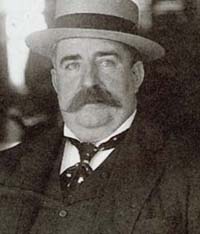
Devery1

The cartoonist Derf Backderf (My Friend Dahmer) draws a self portrait.
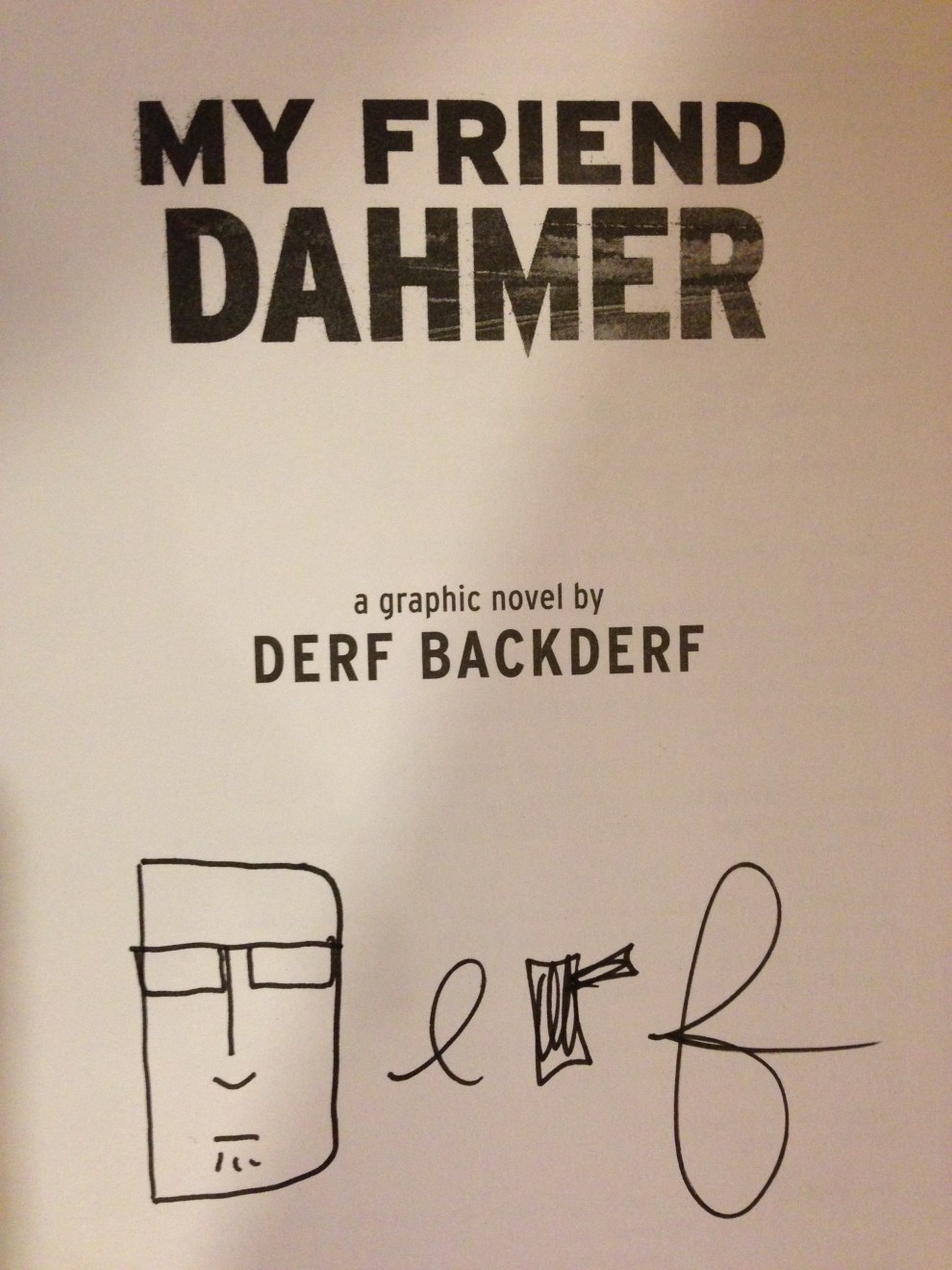
Backderf

Axel Vervoordit (Wabi Inspirations), the eccentric Belgian interior designer, autographs his illustrated books by actually jabbing his thumb through the first page. It’s somehow just right for his bare but expressive sensibility.

Axel-Vervoordt-02

Makes me want to come up with something more personal than this, my own mark.
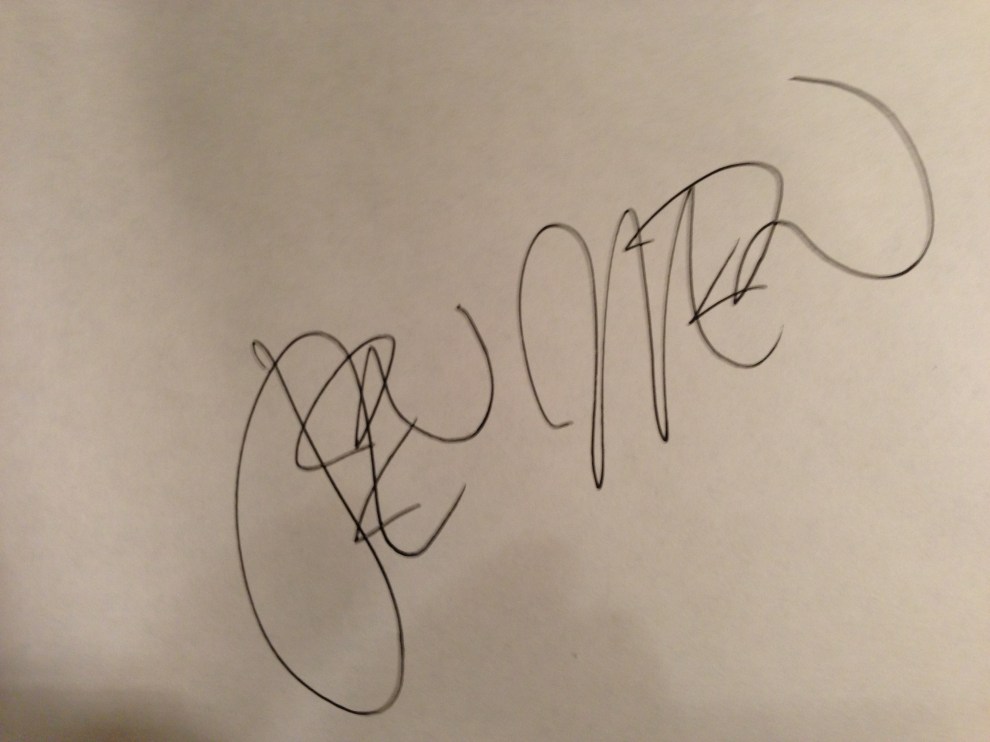
jz sig

A bit minimal, a bit manic. Maybe that makes perfect sense.

Just one thing. Never call it a John Hancock.
3 Comments

Filed under Jean Zimmerman, Writers, Writing

Grandly Whispering

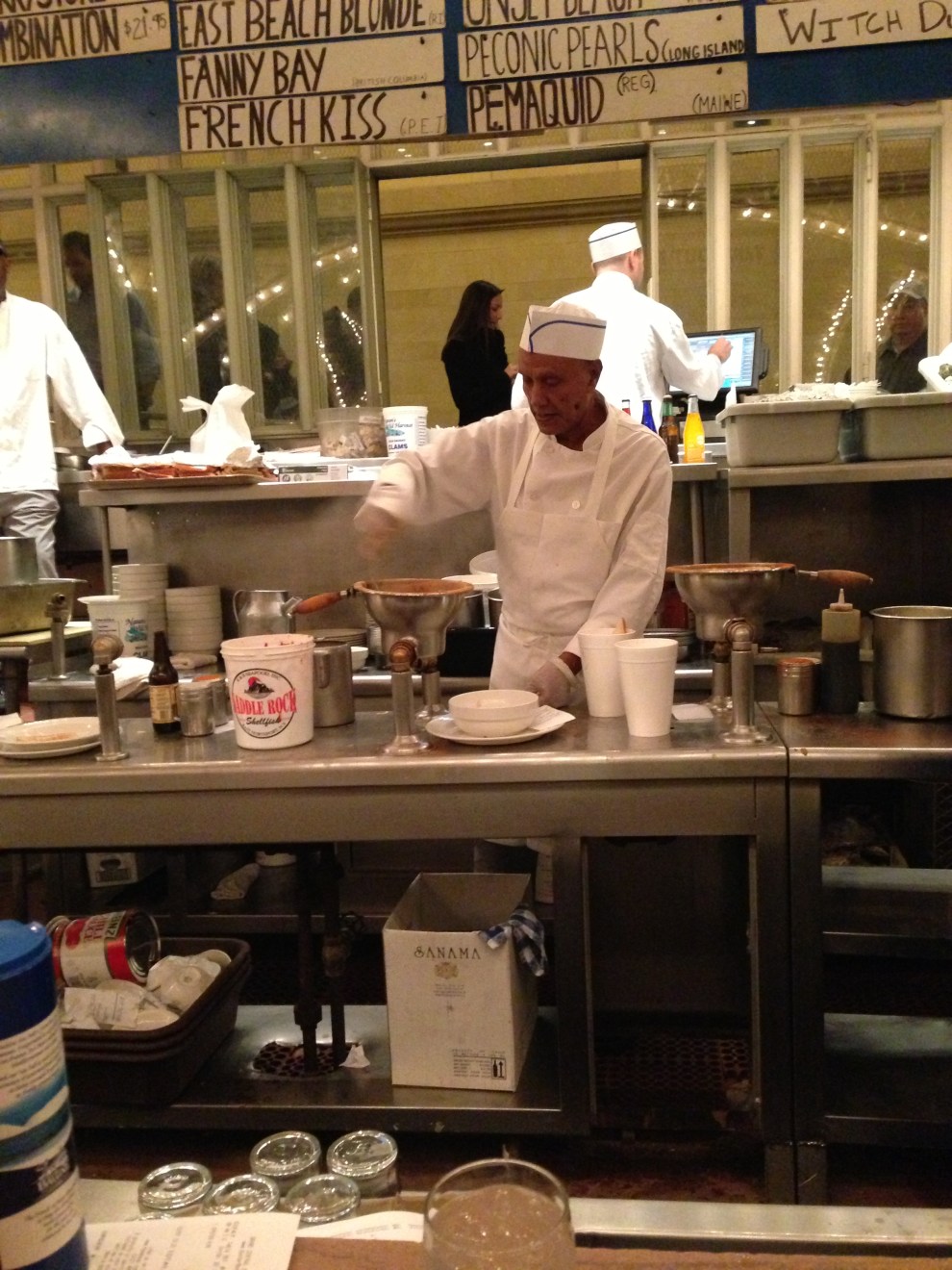
A wash of holiday feeling has come over Grand Central Station and over me as well. After a meeting for business (the business of possibly writing a new book) I went home via the train station, stopping en route at I think my favorite place in all of New York, the Oyster Bar, where the same chef has been working his station at the counter for as many years as I’ve been coming.

Oyster Bar

I did not slurp down the Fanny Bay or French Kiss shellfish or the Peconic Pearls, but I did have the oyster pan roast, a slight digression from my usual oyster stew and deliciously tomatoey.

Oyster Pan Roast

Even the dregs are delicious.

The other night at the Union League I met one of the authors of a current book about the restoration of Grand Central and the architect in charge of that effort, Grand Central: Gateway to a Million Lives. During the holiday season the place is at its most bustling, with suburbanites coming in to see The Tree — the ones in my car yesterday stoking themselves with booze on ice before strolling Fifth Avenue, and everyone very cheery about it — and Vanderbilt Hall given over to an overpriced bazaar of gift items.

Tucked in a corner by Track 42, an element of the station overlooked by all the tourists: a vintage board detailing the comings and goings of trains, in a giant vitrine high on the wall. My picture doesn’t due it justice, with its gold paint and dusty old chalk.

old grand central board

That’s one vision of Grand Central. Another is on display in the Ticketed Passenger Waiting Room.

all natural grand central

This is the all-natural Grand Central Station, made exclusively with organic materials, bark, twigs, stems, fruits, seeds, and other fibers, on loan from the New York Botanical Garden in the Bronx, which does a Holiday Train Show every year featuring iconic New York landmarks, such as the original Penn Station, Radio City Music Hall, St. Patrick’s Cathedral, The New York Public Library on 42nd Street, and the Brooklyn Bridge. If you go there you can find out how artists manage to make magnolia leaf roof shingles. This appeals to that part of me that was obsessed with the children’s book The Borrowers. I spent hours crafting furniture out of acorns and pebbles to stash Hobbit-like between the roots of trees. I love the grand houses I have been writing about but the small, slight, mysteriously miniscule appeals to me just as much.

Grand Central is, of course, grand in every way, but retains pockets of intimacy, like the 2,000-square-foot whispering gallery just outside the Oyster Bar, where I saw passersby keenly huddling to hear each other speak from one arch end to another under Guastavino’s ingeniously constructed tile vaulting. A whisper is a powerful thing on a merry afternoon in old Grand Central.

Leave a comment

Filed under Cooking, History, Jean Zimmerman, Writers, Writing

Lip Flap

There wasn’t any book flapping at the Union League Club’s Annual Book Fair — even the big-name authors performed their autographing tasks all on their own — but there was plenty of lip flapping. There was something so mystically gratifying about seeing those mega-selling doyennes Mary Higgins Clark and Linda Fairstein gabbing with each other beside their tables, and something so mystifying about the 10-deep crowd that constantly enveloped wraith-like Ann Coulter at hers. Dava Sobel was there, and Jennifer Egan, and a couple dozen other literary luminaries, in this incredibly luxurious setting, a very far cry from the corner Barnes & Noble.

Glass cases line some of the walls, containing all manner of ancient tin soldiers.

toy soldiers

About those soldiers. The club dates back to 1863, when it was formed to support the Union, hence the name, and its first president was the grandfather of Edith Minturn, my subject in Love, Fiercely. A person who probably shouldn’t have done so told me I could find Robert Minturn’s portrait up on the 4th floor, in the President’s Room. So up I went, after dinner, brownie-to-go wrapped sloppily in a paper napkin, and followed the winding old narrow hallways to a room with a brass plaque on the door and smoke wisking out the door jamb. Hello? I asked, entering gingerly. I could barely see the people there, the cigar smoke was so thick. They seemed shocked to see me, but not unpleasantly so, and directed me to the portrait in its gilt frame on the near wall. Liberal, altruistic, sensitive eyes — the man that fathered the man that fathered the woman I wrote about. He was known for caring about the disenfranchised.

The man I shared my book-selling table with had a following among the club’s more neanderthal members, who kept on bellyaching about how now with the election past they were ready to move to New Zealand. Neither Robert Minturn nor myself had much patience for this sort of talk. Turns out the author, Herb London, has a daughter who was profiled in The New York Times today — Stacey London of What Not to Wear. Did you ever imagine she’d end up being a style guru? I asked him. He shook his head. She was a philosophy major, he said, baffled.

Leave a comment

Filed under Jean Zimmerman, Love, Fiercely, Writers, Writing

The Library

Libraries form the centerpiece of the world for most writers and for everyone who loves to read and dream.

I was talking with the director of the White Plains Library when I spoke there the other day about how jampacked the place was during Sandy as everyone came in to charge their electronics, but also how being there then represented much more than that. Community. The library scheduled movies so people would have a warm, comforting place to hang out during the storm. There was actually a fancy benefit planned at the library and it was not cancelled, even though people had to get swelled up at home in the candlelight and dark beforehand — it was a grand success.

The White Plains Library is a handsome, modern structure on a downtown street, where anyone would want to come to a movie. How about a place like this, the Vilnius University Library in Lithuania? Does it make you want to snuggle into your sleeping bag with a box of popcorn for a showing of Ghostbusters?

800px-VU_bibliotekos_J.Lelevelio_salė

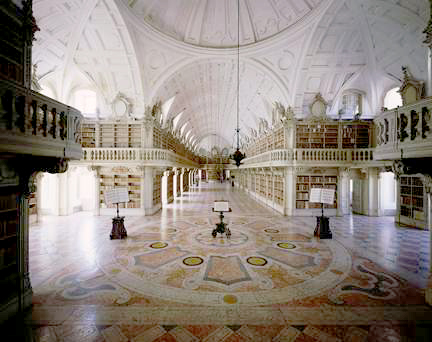
Or the crisp, pristine Biblioteca do Palacio e Convento de Mafra I in Portugal.

Mafra1-IPPAR

These libraries and more beauties can be found at this terrific site for bibliofanatics.

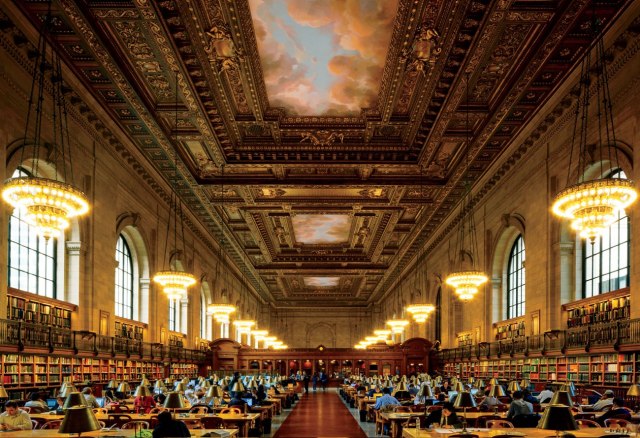
I personally hold with the marble-sculpted halls of the New York Public Library at 42nd Street, but that’s probably because I’ve spent inestimable hours there over the years. If you put me in the Rose Reading Room with a scarf tied around my eyes I would recognize it by the aroma.

cn_image.size.new-york-public-library

I. N. Phelps Stokes managed to get his own private study on the second floor — this was just after the place opened in 1911. You can still find the room, which is now littered with someone else’s stuff but is otherwise unchanged. Stokes wanted to be in the NYPL because he’d be that much closer to the invaluable sources he was drawing upon for The Iconography of Manhattan Island. Maps, antiquarian narratives, they were all there. For the touching.

Which is what we all love about the library. We can lay our fingers on the texts, especially the ones slightly yellowed with age, and touch the history of literature.

Leave a comment

Filed under Jean Zimmerman, Love, Fiercely, Writers, Writing

The Orphanmaster Tour

I was a little embarrassed when an author who was about to embark on a book tour asked me what stop I’d liked best, and I didn’t have a ready answer. It’s partly because I visited so many places – it will be 32 by Christmas, with more to come in the New Year – and also probably because of my intense self-scrutiny when going “on stage” – e.g., Do I have salad dressing on my top?, Will I mangle the names of the central characters in The Orphanmaster? But some of the stores and other places I spoke at are honestly a little blurry.

So many books...

So many books…

Not so, these:

R.J.Julia Booksellers, Madison, CT, where the sparkplug owner of the shop had me upstairs behind the scenes to chat until just time to start

Book Passage, Corte Madeira, CA, which presented me with initial-engraved stationery as a keepsake as I went out the door

Bryant Park Reading Room, NYC, in the immense shadow of the New York Public Library I love so much

The Hudson Library, Hudson OH, a new, immaculate cathedral of a place that drew hordes of readers to my talk

The University Settlement Society,, where I spoke about Love, Fiercely, and met an outspoken descendant of my subject, I.N. Phelps Stokes

A stint at the continuing care facility where my folks live, with beaming, encouraging faces all through the audience

And finally the Miami Book Fair, a swirling, euphoric chaos of books and authors, where volunteers held the doors open for me when I entered the author hospitality suite and made me feel like a queen.

These are just a few highlights of the tour for which I am so thankful, which made me appreciate anew the affection people have for reading and for books, and even sometimes for authors.

Leave a comment

Filed under Jean Zimmerman, Love, Fiercely, Publishing, The Orphanmaster, Writers

Wm & H’ry

If you are as fascinated by the Family James — Henry and William and Alice, but also their father Henry Sr., mother Mary, and the two younger brothers Wilkie and Bob — as I am, then you may applaud a website devoted to correspondence between the two eldest brothers. (William as a young Harvard instructor plays an important role in Savage Girl.)A scholar named J.C. Hallman is putting together a book of letters for eventual publication by the University of Iowa Press. Every day he offers raw quotes from the letters. For instance, today he shares a letter from Henry that reports on his activities with William’s wife and daughter, whom he is hosting while William is at a sanatarium being treated for a heart ailment:

“No news to add to-day but the perpetuity of our peace & harmony — a monotony of happy quiet, of walks over acres of grass & miles of meadow, with tea at Boon’s Hill, mainly as a break — to which exquisite windless weather, the last heavy stillness of ripe summer, much contributes.  Beautiful sunsets, neat, frugal dinners, evenings as peaceful as the afternoons, complete the charm.”

Check out Wm & H’ry and then I strongly recommend you go back to reread Turn of the Screw and Daisy Miller, two of my faves.

1 Comment

Filed under History, Jean Zimmerman, Savage Girl, Writers