Category Archives: Photography

Best Returns, Etta

Every day some woman that has inspired me has herself a birthday. Today, Etta (1938-2012).

Etta

I saw Etta James perform a few years ago, on her last tour. She played a relatively intimate club, B.B.King’s, on 42nd Street, so we were all somewhat in her lap when she had herself wheeled out after the long, horn-heavy, glitzy introduction to her set. She reclined in a chair, by then too weak to spend much time on her feet, and intermittantly growled woman-of-the-world intros, delivered suggestive hand movements, and sent her voice soaring on songs that were more, or less, familiar. At Last, of course, now in a  lower register, but Sugar on the Floor? The latter was fantastic.

Husky, sweet, sexy, with only a hard liver’s appreciation of the depths. (She demonstrated among other things that a heroin habit is not incompatible with longevity.) She came from grit — born Jamesetta Hawkins in Los Angeles, California, on 25th January 1938, to an unmarried fourteen-year-old mother, Dorothy Hawkins – and it stayed with her even when she got famous. Everyone thinks of her as a chanteuse but she was also a rocker. I love her spirited take on Born to Be Wild. Not what you would expect of a lady of her vintage.

Etta James has always reminded me in spirit of another of my favorites, Sophie Tucker (1886–1966), known to a generation as the Last of the Red Hot Mamas. She earned her popularity in the ‘20s and ‘30s.

sophie-tucker-portrait-2-mt-g1-e27

Sophie Tucker came from a somewhat less hard knocks school than Etta but still, her Jewish family emigrated from the Ukraine and opened a little restaurant, where she waited tables until she married at only 17. She built her career in burlesque and vaudeville, at first in blackface. And she hired black singers to teach her technique and write songs for her act. She had an incredibly strong musical persona.

Her hits included songs like Some of These Days and my personal favorite, Life Begins at Forty.

I’ve often heard it said and sung

That life is sweetest when you’re young

And kids, sixteen to twenty-one

Think they’re having all the fun

I disagree, I say it isn’t so

And I’m one gal who ought to know

I started young and I’m still going strong

But I’ve learned as I’ve gone along…….


That life begins at forty

That’s when love and living start to become a gentle art

A woman who’s been careful finds that’s when she’s in her prime

And a good man when he’s forty knows just how to take his time

Watch it!

Best returns of the day, Etta, and I hope that someplace, somewhere, you’re sharing the bill with Sophie.

young Etta

2 Comments

Filed under Jean Zimmerman, Music, Photography

Happy Birthday, Edith

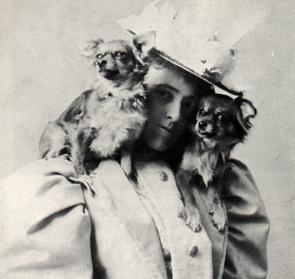
Edith Wharton (1862-1937) at the age of 27, posing with her beloved long-hair chihuahuas, Mimi and Miza.

edith-wharton-and-dogs

Her eye was keen, her sense of the tragic rich. I think she knew fully she was capturing her age and class in a way no one else could.

At the start of A Backward Glance, her memoir, she describes herself:

“It was on a bright day of midwinter, in New York. The little girl who eventually became me, but as yet was neither me nor anybody else in particular, but merely a soft anonymous morsel of humanity — this little girl, who bore my name, was going for a walk with her father. The episode is literally the first thing I can remember about her, and therefore I date the birth of her identity from that day.”

She goes on to describe almost every article of clothing she had on, she with her perfect ability to capture physical details: her bonnet of gathered white satin, “patterned with a pink and green plaid in raised velvet.” It had “thick ruffles of silky blonde lace under the brim in front” and a “gossamer veil of the finest white Shetland wool.” She wore white woolen mittens.

This was the child who would at least skim every volume in her father’s library before she reached the age of seventeen. Poetry drew her:  “Ah, the long music-drunken hours on that library floor, with Isaiah and the Song of Solomon and the Book of Esther, and ‘Modern Painters’, and Augustin Thierry’s Merovingians, and Knight’s ‘Half Hours’, and that rich mine of music, Dana’s ‘Household Book of Poetry.’ Faust, Keats and Shelley guided her to her ambition to be a writer.” Then the gates of the realms of gold swung wide, and from that day to this I don’t believe I was ever again, in my inmost self, wholly lonely or unhappy.

Not that she didn’t have some personal challenges. While she was born into a family of Jones and Rhinelanders and Rensselaers in lap-of-luxury New York (it is her father’s family that is referred to when people say “keeping up with the Joneses”) she suffered over a marriage to mentally unstable Teddy Wharton, whom she eventually divorced. She did not publish her great best-selling novel of manners, The House of Mirth, until 1905 — she was 43. The title came from Ecclesiastes: The heart of the wise is in the house of mourning; but the heart of fools is in the house of mirth. Every word of that book is brilliant sadness.

Wharton describes the impetus for The House of Mirth in A Backward Glance, saying the question was how to make a meaningful story out of fashionable New York. The answer: “a frivolous society can acquire dramatic significance only through what its frivolity destroys. Its tragic implication lies in its power of debasing people and ideas. The answer, in short, was my heroine, Lily Bart.”

A 1918 film of The House of Mirth starred debutante/silent actress Katherine Harris Barrymore (married to John Barrymore). In other words, a high-society young woman who could have been portrayed in the book starred in the movie. How strange and delicious, a dramatic detail worthy of Wharton.

Screen shot 2012-01-20 at 8.59.38 AM

Leave a comment

Filed under Dogs, Fiction, History, Jean Zimmerman, Photography, Writers

Bird Nurturing and Glued-on Mussels

MOMA was almost shockingly quiet this Saturday morning when we visited, a good atmosphere for taking in an exhibit curated by artist Trisha Donnelly that encompassed an eclectic group of works.

moma pic

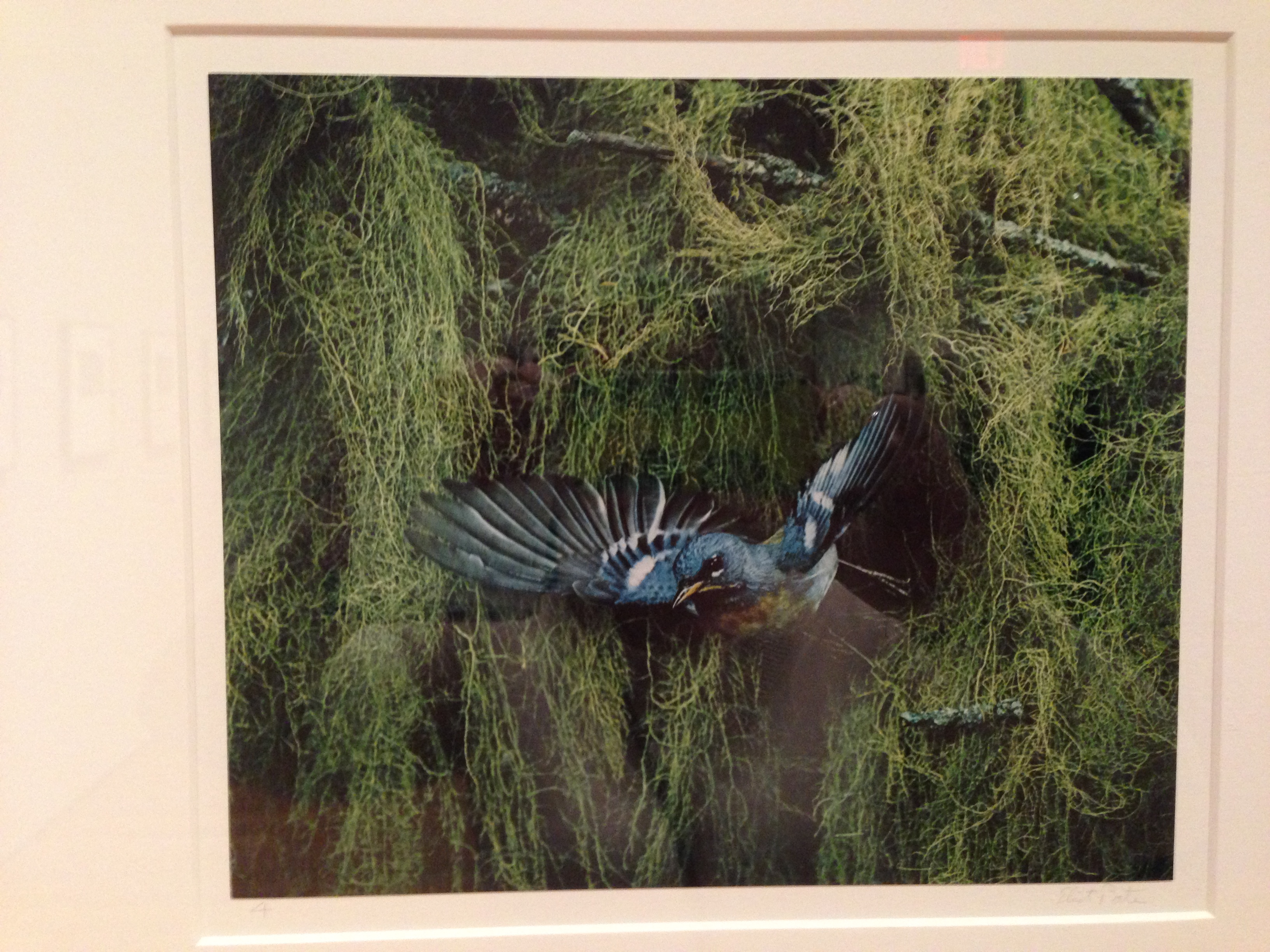
One room was filled with the brilliant photos of Eliot Porter, who shot them mainly in the ‘50s – all mother and baby birds in their nests, the young birds’ yawning, demanding mouths impossibly close up and crystalline. My photos of photos follow.

green bird

red bird

We came out of the exhibit only to stumble upon a special showing of Munch’s The Scream, so mobbed by that time with photo-clicking tourists you could barely get a glimpse of the painting’s surprisingly light pastel tones – you imagine it as so gloomy and dark and it’s not at all in the flesh.

the scream

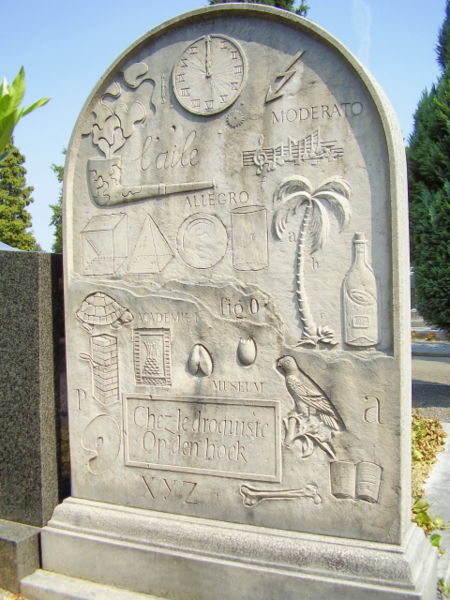
Then, perhaps best of all, we found ourselves in a room dominated by an artist I wasn’t aware of before, Marcel Broodthaers, a Belgian who did his surrealist, literary thing in the ‘60s and ‘70s before his untimely death due to liver disease on his 52nd birthday. He designed his tombstone.

OLYMPUS DIGITAL CAMERA

You could go into the Museum of Modern Art a hundred times and discover something new.

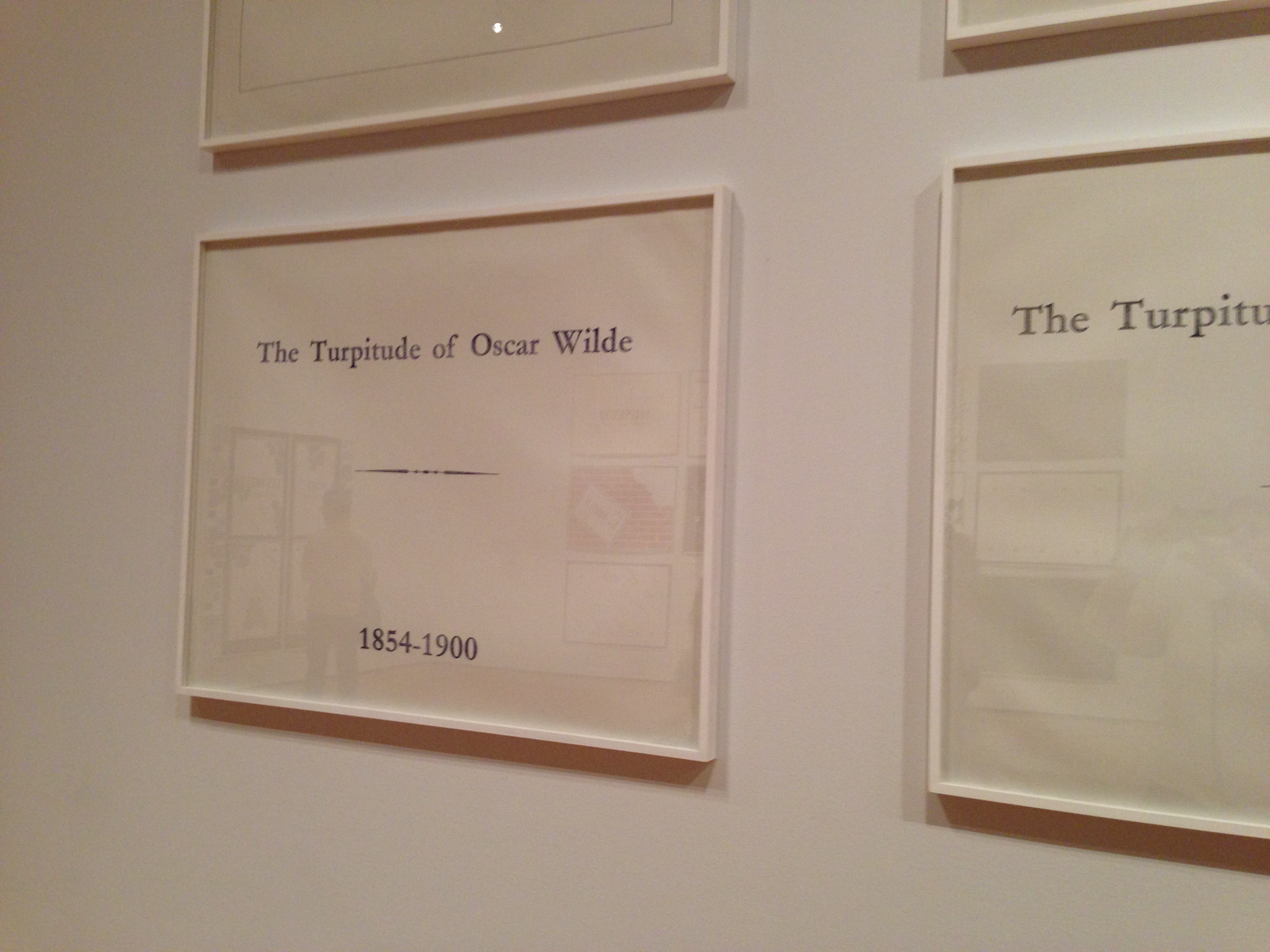
First Broodthaers worked as a poet, then as a filmmaker, before turning to found objects and text as his means of expression. He had a few obsessions, mussel shells and museum exhibits among them – he glued the shells to boards and other surfaces, and created his own imaginary art exhibits. He fell under the spell of René Magritte, especially his movement-fomenting “La Trahison des Images (Ceci n’est pas une pipe)”, and created a wealth of pipe images (you can see one on Broodthaer’s tomb) in homage to the great surrealist. At MOMA there is a wall of metal plates like large license plates inscribed with pipes.

I love art based on text, so it’s no surprise I like this work so much.

turpitude

Turpitude=immorality/depravity.

In the catalogue for his first exhibit in Brussels  in 1964, Broodthaers wrote: “I, too, wondered whether I could not sell something and find some success in life. For some time I had been no good at anything. I am 40 years old…Finally the idea of inventing something insincere crossed my mind, and I set to work straightaway.”

Somehow that idea of inventing something insincere strikes me as just about perfect as an artist’s goal. Washed down by hot coffee and flaky chocolate croissants, it was a day of heady inspiration.

2 Comments

Filed under Art, Jean Zimmerman, Photography

The Yule

NYC packed itself with hobbits the day before Christmas, most of them assembling beneath the 80-foot Norway Spruce at Rockefeller Center, a specimen which came from Sandy-damaged New Jersey. We took a breather outside the crowd, admiring the interaction of fairytale wildlife with Manhattan.

reindeer nyc

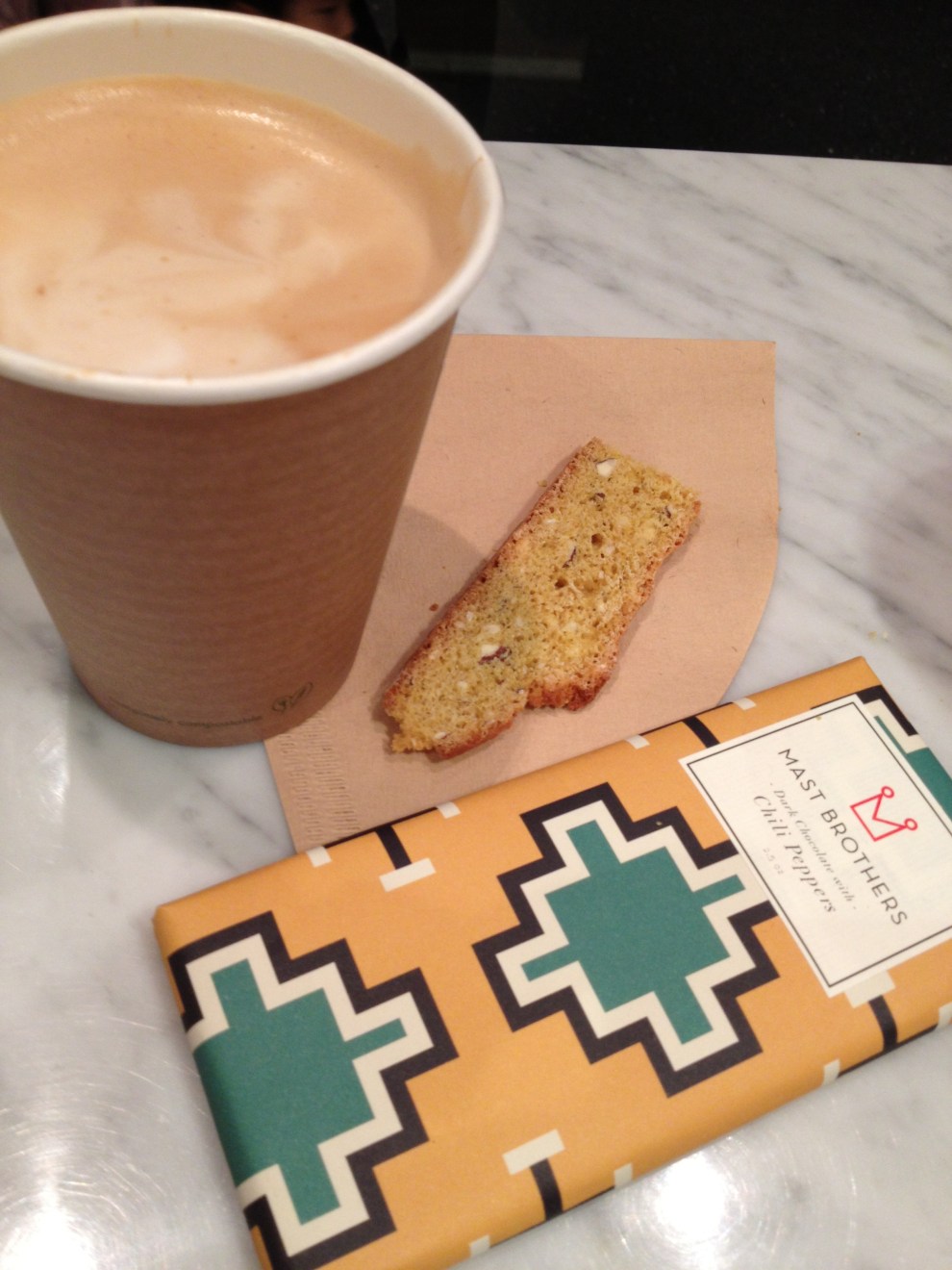
We got snug in a cafe called the Blue Bottle deep within the complex’s core.

cafe signage

The place was not getting enough patronage, if you ask me, for a store that specializes in Yirgachette, and encased its scrumptious rosemary-flecked shortbread in biodegradable coffee filters.

latte

Throughout about a three-hour period we consumed soup and pastrami, salad and coffee, shortbread and biscotti and chestnuts. And we wound up at the New York Public Library, especially majestic at Christmastime. Inside, an exhibit called Lunch Hour NYC, which taught us all about oyster pushcarts, Kerouac’s favorite diner Hector’s, the history of bagels, how food cost pennies way back when, and displayed an actual bank of automat slots. We took home a recipe from Horn & Hardart (actually dog-eared, in other words slightly gnawed upon by Oliver).

photo

A very merry Christmas, from our howl to yours.

1 Comment

Filed under Cooking, Jean Zimmerman, Photography

Cheever and Evans et. al.

When John Cheever died, the flags in Ossining flew at half mast. He lived in Ossining from 1961 until his death in 1982 — just down Cedar Lane from the Cabin, as it happens. A vitrine dedicated to the writer occupies a wall of the Ossining Public Library, built in 2007, and many locals have a Cheever story to tell. Like the one a neighbor shared about the time John stripped naked to swim at a cocktail function and it cleared the party. Whatever his behavior, his skill and imagination had me stoked when I took a fiction writing class in college where the only  text was the writer’s Collected Stories.

Cheever wasn’t the only great artist to live in Ossining — Walker Evans resided on his sister’s farm here in 1928 (where he grew hybrid gladiolas) and intermittently in the years afterward, and he produced dozens of photographs here, including this one, in the collection of the Met.

We drive by the bank standing at this fork every time we go to the library.

Evans called himself “tourmente, serre par la sante perverse d’Amerique” — “tormented, constrained by the perverse well-being of America.”

When they first met Cheever worked as a darkroom assistant to Evans. Later Evans captured a young, penniless Cheever’s boarding house room on Hudson Street. In all the photos Walker Evans took in Ossining, he never depicted Sing Sing, the looming prison for which the town was named. And he never shot the expansive Hudson.

However, Ossining is known historically as much as a fisherman’s spot as an artist’s haven. Witness this giant sturgeon caught off the Ossining waterfront, one of nature’s monstrous creatures.

I will have the pleasure of presenting at the Ossining Public Library on Saturday at 1:30 pm, with pictures, as I customarily do. Signing copies of The Orphanmaster afterward. Come one, come all.

3 Comments

Filed under Art, Fiction, History, Jean Zimmerman, Photography, Writers

A Baaaaad Day

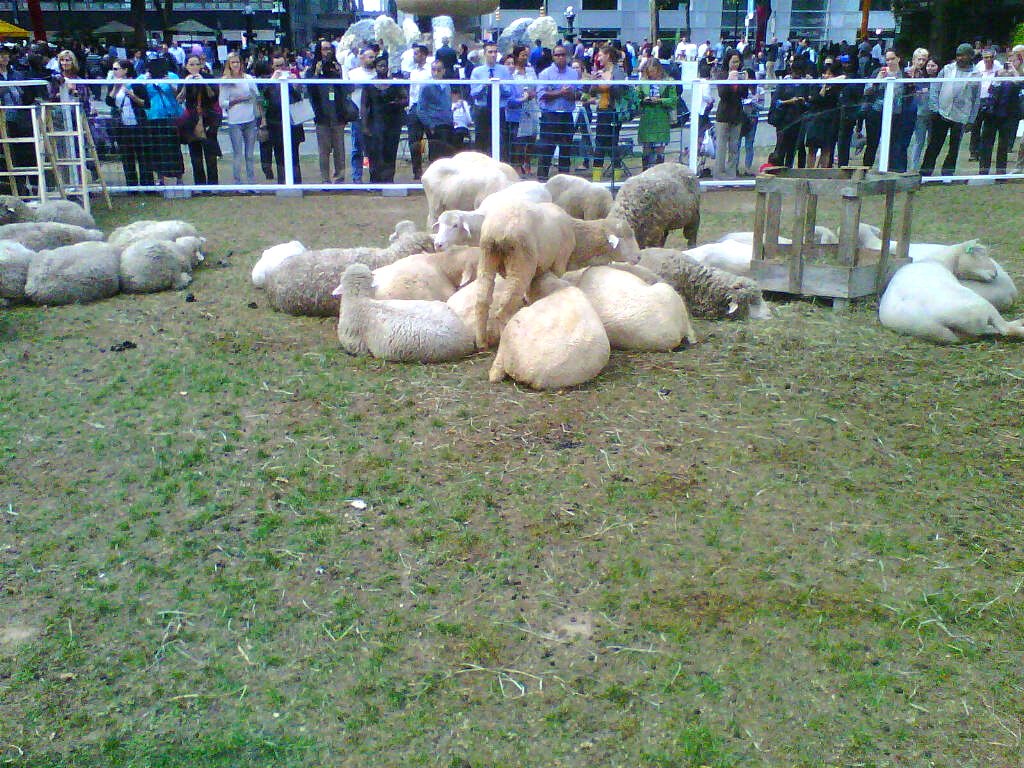
Before we left for Italy we swung through Manhattan to see something surprising: a flock of sheep grazing within a fence in Bryant Park, on Avenue of the Americas behind the New York Public Library. It was an art installation of sorts, sponsored by British royalty, which also included a wool-wrapped marble fountain and tea-cozyish squares enveloping the back of the rickety park chairs. New Yorkers, not dumbstruck by any phenomenon, shook their heads and went back to their bag lunches. I was happy to see sheep in midtown, leaning against each other and walking aimlessly around, as they would have 300 or so years ago.

It also reminded me of the time I was researching the colonial at the Historic Hudson Valley library in Sleepy Hollow, New York, which happened to abut the restored Philipse house/farm complex. Emerging from the dusty archives on an early spring day I would look out the kitchen window and see the new lambs kicking up their heels, bleating, their still-long tails dangling. It was another conjoining of books and sheep (like the sheep out back of the NYPL) – perhaps a pairing preordained somehow by nature?

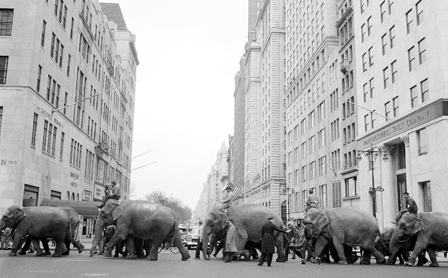
The question naturally arises of how the flock got to midtown. Were they English sheep? Had they crossed the Atlantic? Or had they made their way in to Manhattan by way of the Midtown Tunnel like the circus animals traditionally do on their way to Madison Square Garden?

The question we had looking at the scene in Bryant Park was, who were the real sheep on the scene?

Leave a comment

Filed under History, Jean Zimmerman, Photography

A River Flows Through It

Philipse Manor Hall still sits on its bluff in the city of Yonkers, where it was constructed in 1682 by Margaret Hardenbroeck and her husband Frederick Philipse, at the junction of the Hudson River and a rushing stream local Indians called the Nepperhan. The couple was already extraordinarily wealthy from trading furs, and would eventually own 57,000 acres of land stretching from Spuyten Duyvil up to the Croton River. Successive generations of Philipses lived in the house, enlarged it, decorated it, planted rose gardens outside its front door and tended a deer park out back. When the American Revolution concluded, the family’s members, staunch Loyalists all, were “attaindered for treason,” booted out of the new country in 1783 with little more than the clothes on their backs. Most fled to England, leaving Philipse Manor Hall to the state of New York, which cleaved the huge property into 287 parcels and sold them to the tenant farmers who had always worked the land.

The Manor Hall and its environs looked almost paradisiacal then, with the Nepperhan River rushing down to the Hudson.

Philipse Manor Hall, 1784

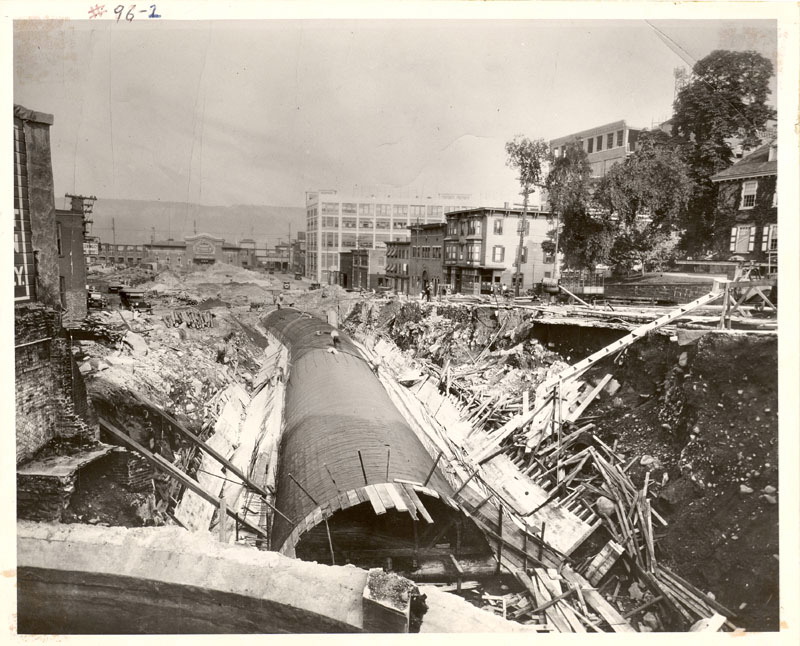
Flash forward one hundred years. The handsome house still stands, but Yonkers has been bit by the bug of industry, in a big way. Everything from pencils to hats to elevators are making residents rich, with factories that employ the Nepperhan’s surging water power. The river grows polluted by factory waste. People who live and work on its banks get sick. The city fathers won’t have it. By 1868, Philipse Manor Hall has been transferred from private hands and is now Village Hall. What shall we do about the river?

The Nepperhan, 1920s

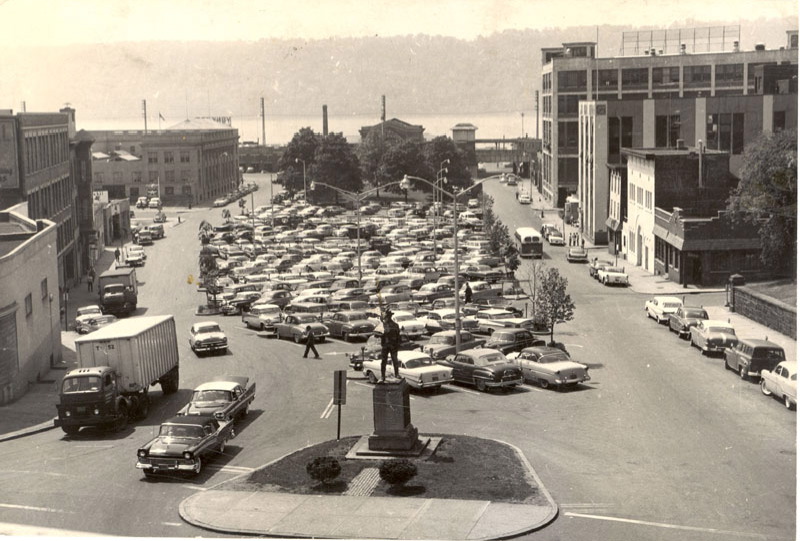
Bury it. That solves two problems at once, giving us an hygienic environment and more parking.

Yonkers Downtown Parking with Hudson View

From the 1920s until today, the Nepperhan ran under the city of Yonkers in its flume, secret and silent, largely forgotten.

But something remarkable happened. People decided they wanted the river back. The Nepperhan has been “daylighted,” the term that means opening up the long-disappeared river to run aboveground once more, a feat of mental magic and engineering acumen.

Philipse Manor Hall, 2012

Many people made it happen, including Groundwork Hudson Valley. The plants along the river’s banks are still immature. And this new incarnation lacks the strenuous rapids and waterfalls of the old river. But the Nepperhan has reclaimed its place in front of Philipse Manor Hall, a reunion to warm the hearts of anyone who has a sense of historical justice.

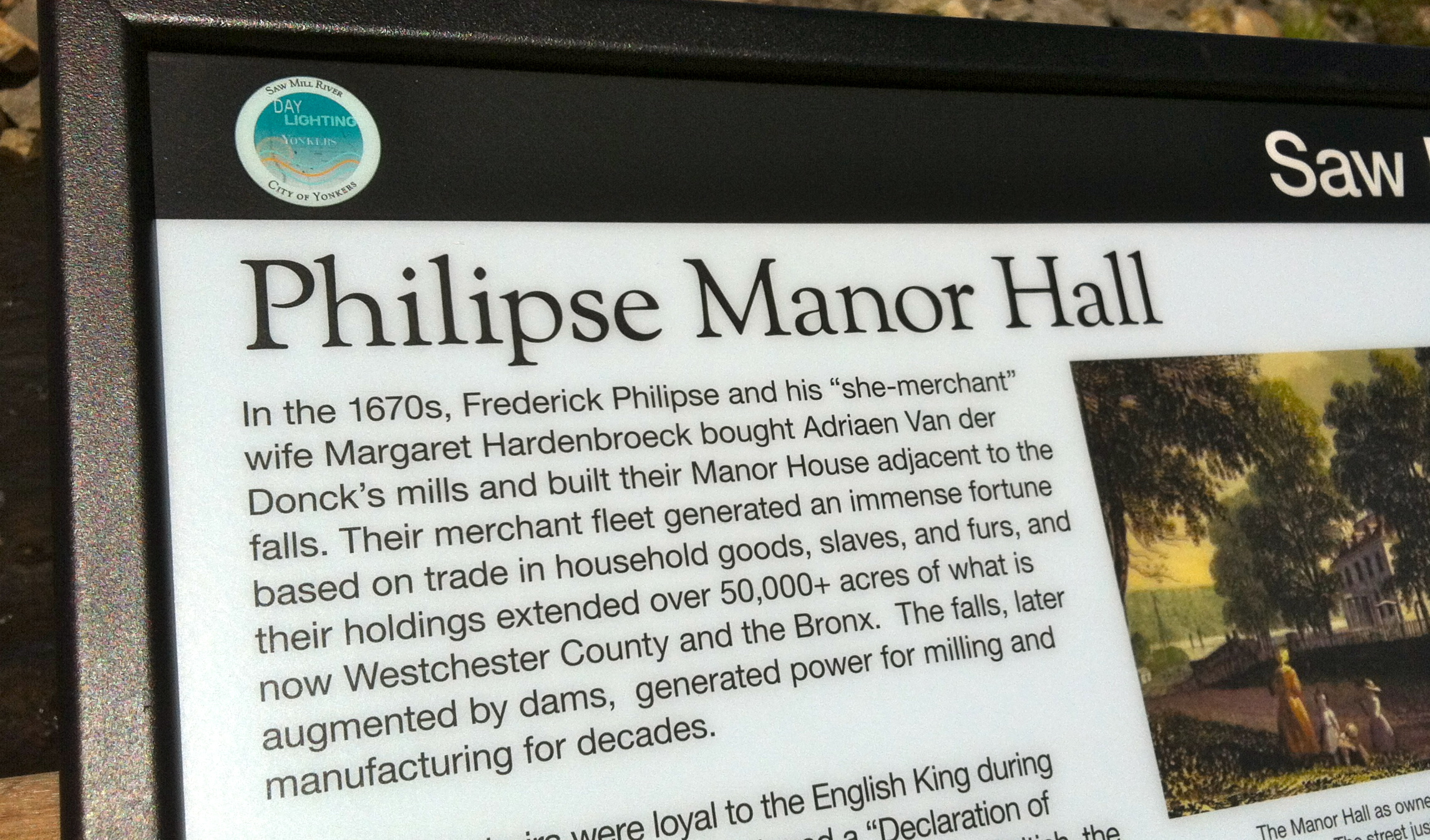
And something to warm my heart in particular: an explanatory sign that cites Margaret Hardenbroeck as a she-merchant. I like to think that I had some small hand in bringing Hardenbroeck out of obscurity with my book The Women of the House.

1 Comment

Filed under History, Jean Zimmerman, Photography

Wilde Child

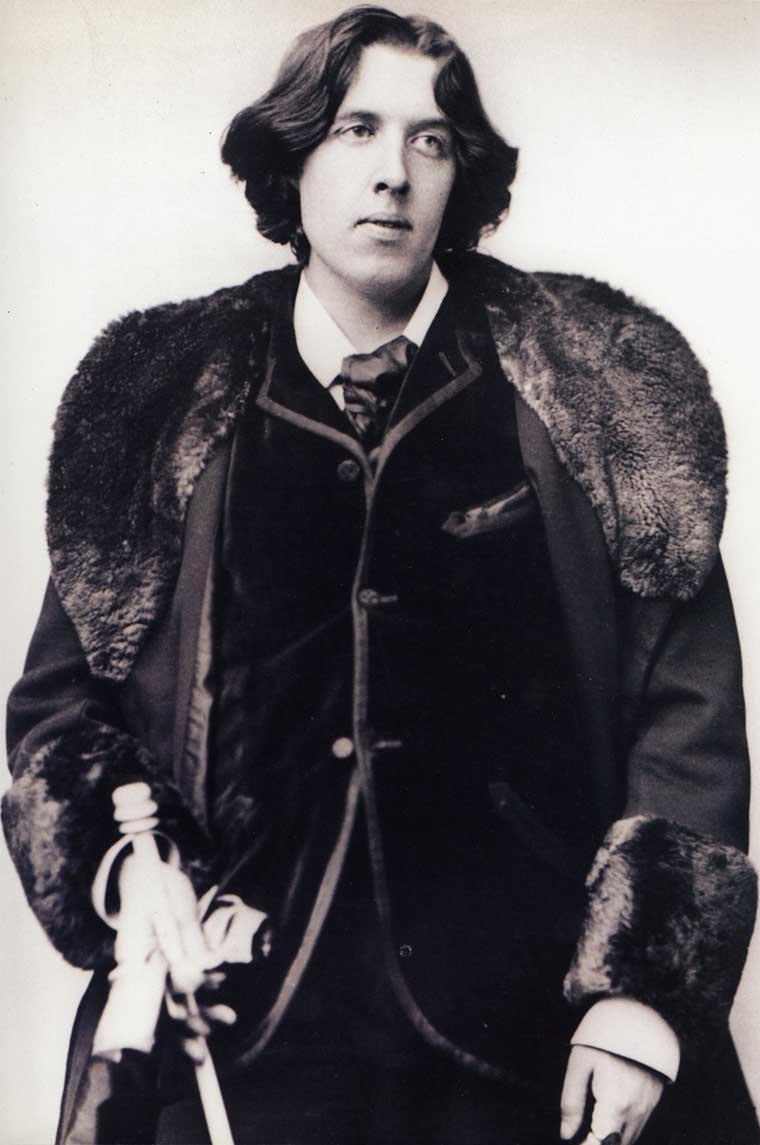
Late summer: sunflowers hanging their tiger cub heads, cicadas in full throat, ripe tomatoes slumping to the ground. And I just finished the article I’ve been working on for the Times, so I’m happy. It’s about a brownstone on the upper east side whose owners worked for seven years to restore it to its high Aesthetic era appearance — that’s the 1880s to those of you who are not Oscar Wilde devotees. Wilde himself toured the U.S. in 1882 promoting the Aesthetic Movement and shocked people with his sunflower-boutonniere. The interior of the house I wrote about is actually pretty shocking as well, so stuffed with an elegant chaos of wallpapers and gothic furniture, portieres and floor urns that it is hard for the eye to even take in. I’ve never seen a house like it. But wonderful in its own way. I’ll give a link when the article runs.

“We are all in the gutter, but some of us are looking at the stars.”  Wilde

Oscar Wilde

Leave a comment

Filed under Art, Fashion, History, Home, Jean Zimmerman, Photography, Writing

Another Day

Waiting, waiting…

sad cat

1 Comment

Filed under Jean Zimmerman, Photography

A Solitary Egg

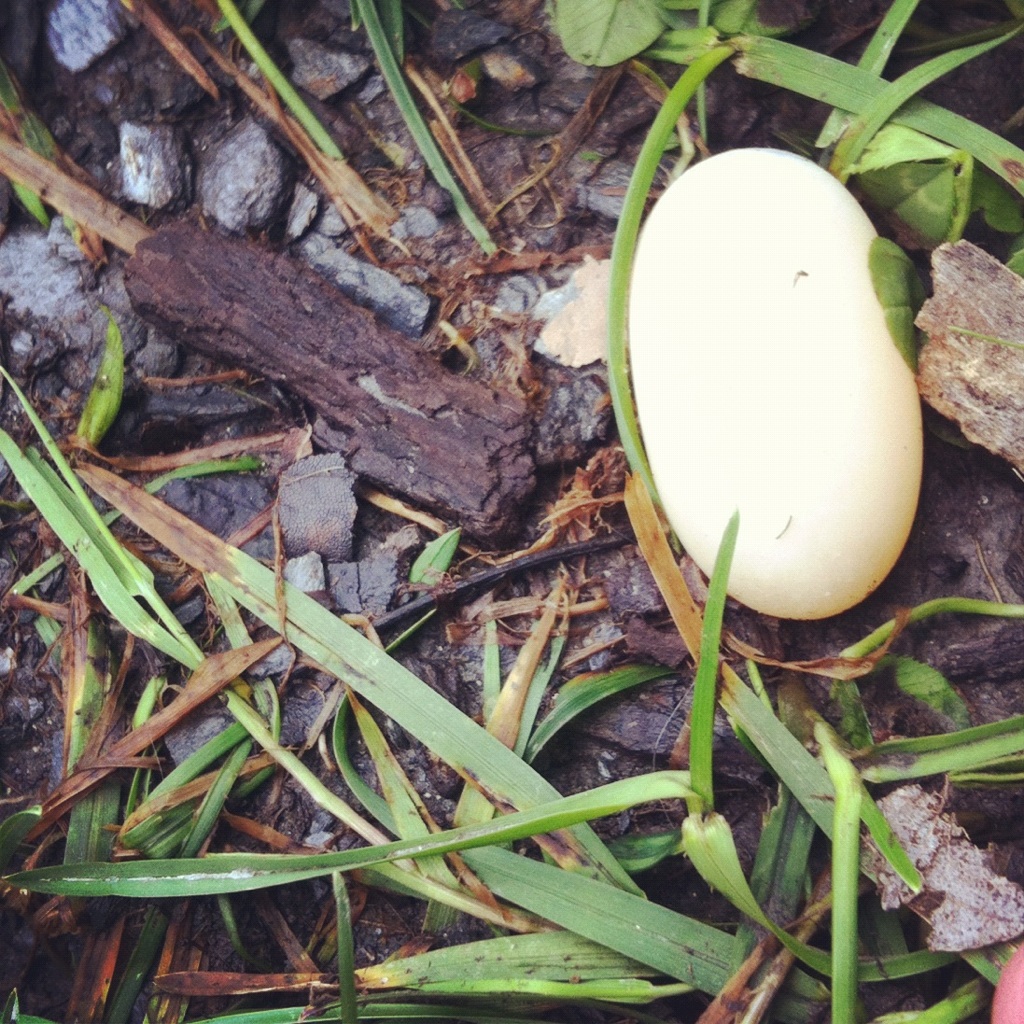
We watched a turtle dig her nest in the muddy soil. She disappeared. We found an egg on top of the buried nest later. She forgot it? Discarded? It lies there, luminous.

Leave a comment

Filed under Home, Jean Zimmerman, Nature, Photography

The Hawk Is Out

The hawks that soar over the cabin must experience flight as a long swooping amusement park ride. We see them perched in the trees around the house, too. It seems as though the number of hawks locally is increasing, but maybe I’m just noticing them more.
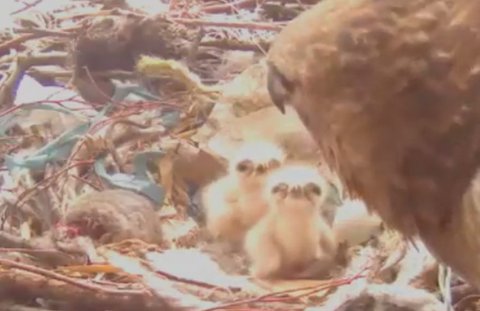
A pair of red-tailed hawks — the most common type in New York State — have taken up residence on a ledge outside the 12nd floor office of the president of NYU, of all places,  overlooking Washington Square Arch. Two babies, called eyases, hatched this week, in a nest of sticks, plastic and pizza plates. White fuzzballs with jet black eyes and beaks. You can watch the development of the infants — obsessively, if you are like many New Yorkers — by checking in with the Hawk Cam set up by the New York Times. And it’s up close and personal, all the rat and pigeon tidbits the mother, Rosie, feeds the babies, usually dropped off at the nest by Bobbie, the father, and all the spewed baby hawk poop that often lands upon the lens of the camera.

The Hawk Nursery

You get fantastically close to these amazing creatures. I became totally engrossed a season ago when an eyas named Pip  grew up and fledged. So check it out.

Leave a comment

Filed under Jean Zimmerman, Nature, Photography

Beauteous Libraries

An amazing collection of pictures: for twenty of the world’s most beautiful libraries, click on http://www.oddee.com/item_96527.aspx

Leave a comment

Filed under Jean Zimmerman, Photography

Phew, whew, ahhh…

Home for a day and a night between midwestern booksellers and west coast booksellers, all of whom have so far been extremely nice and encouraging about The Orphanmaster.

Still it’s nice to be home to husband, dog, my comfy bed and all of spring exploding. Took a short hike today at the Teatown Reservation nearby. My friend Gary documented the season.

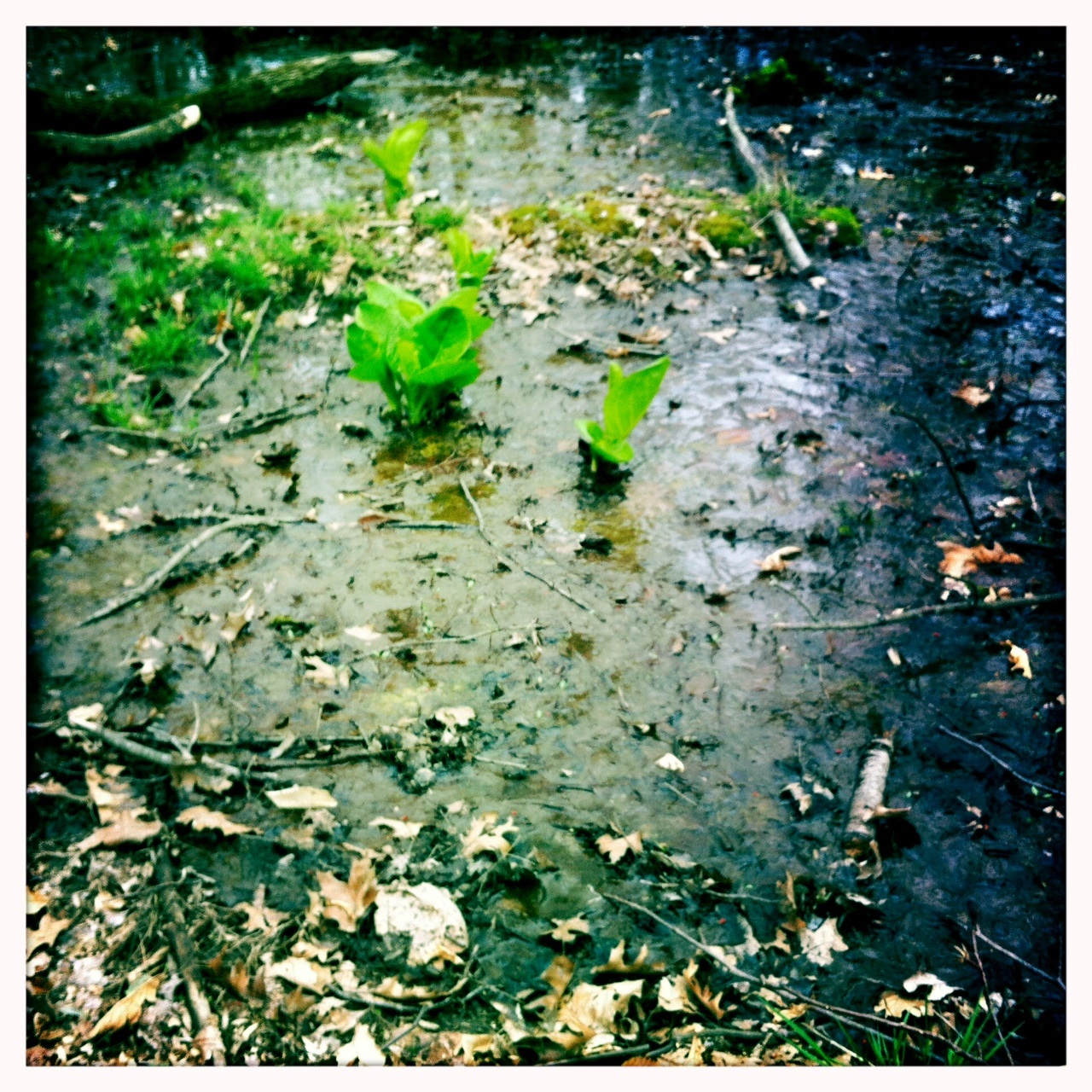
Skunk cabbage popping up.

Woods along the beaten path, waiting to burst forth.

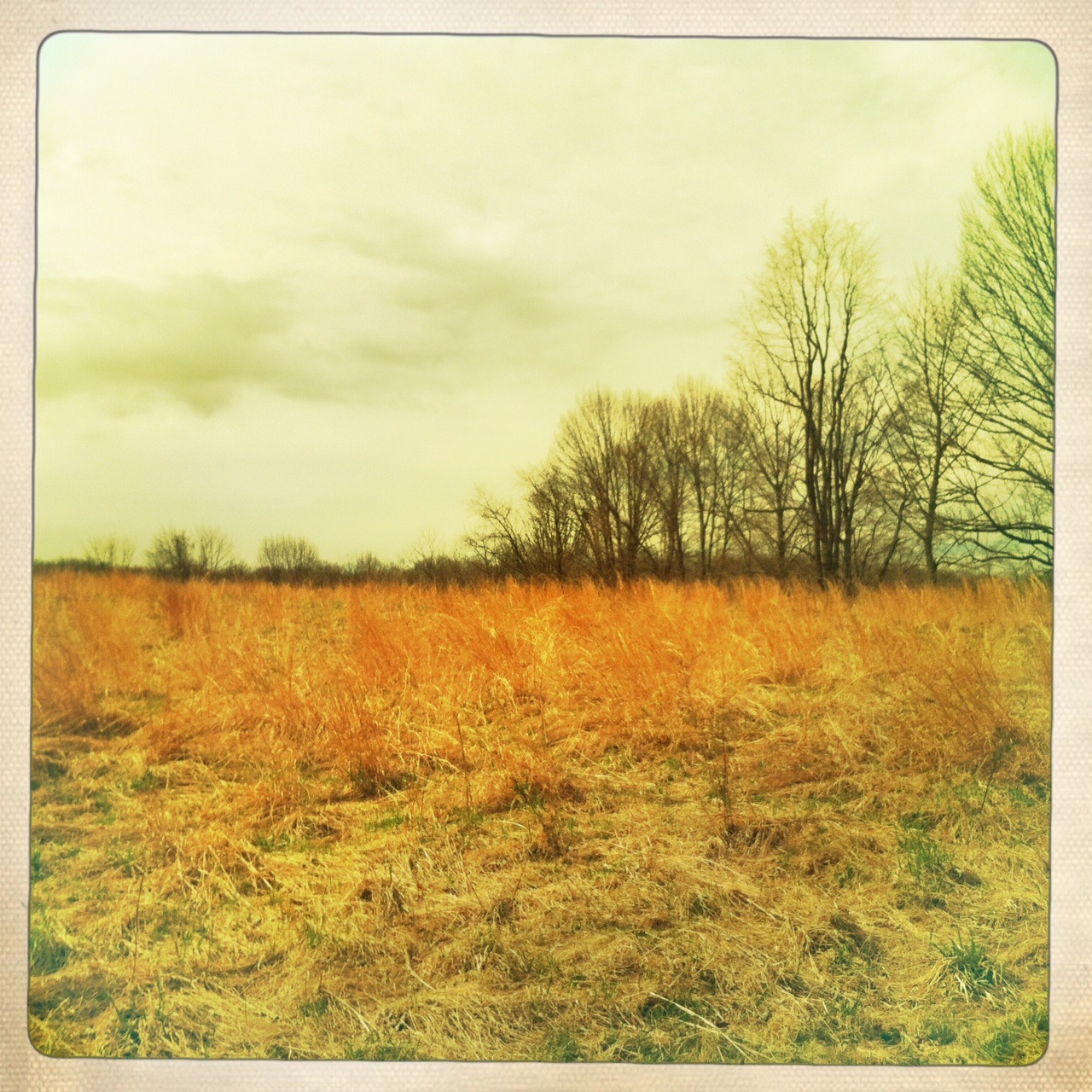
Field, not quite yet awakened.

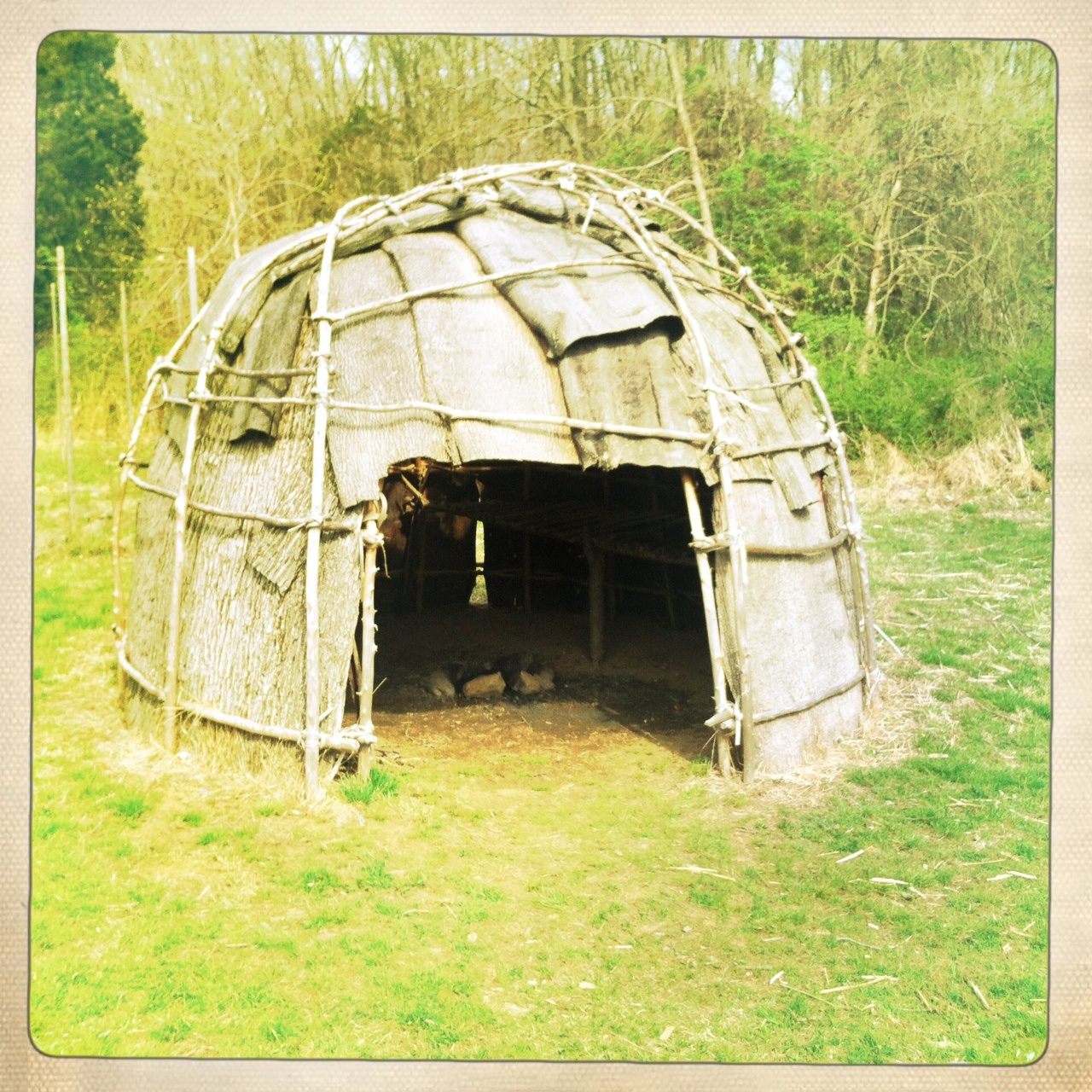
And, finally, two Indian lodges, one complete with a hearth and cots made of branches, the other collapsed and deteriorated. There is a scene in The Orphanmaster that features both of these!

Ripe magnolia blossoms on my deckside tree, wait until after I come back to bruise and brown! I’ll be home soon.

Leave a comment

Filed under Jean Zimmerman, Nature, Photography

Grandeur in Chicago

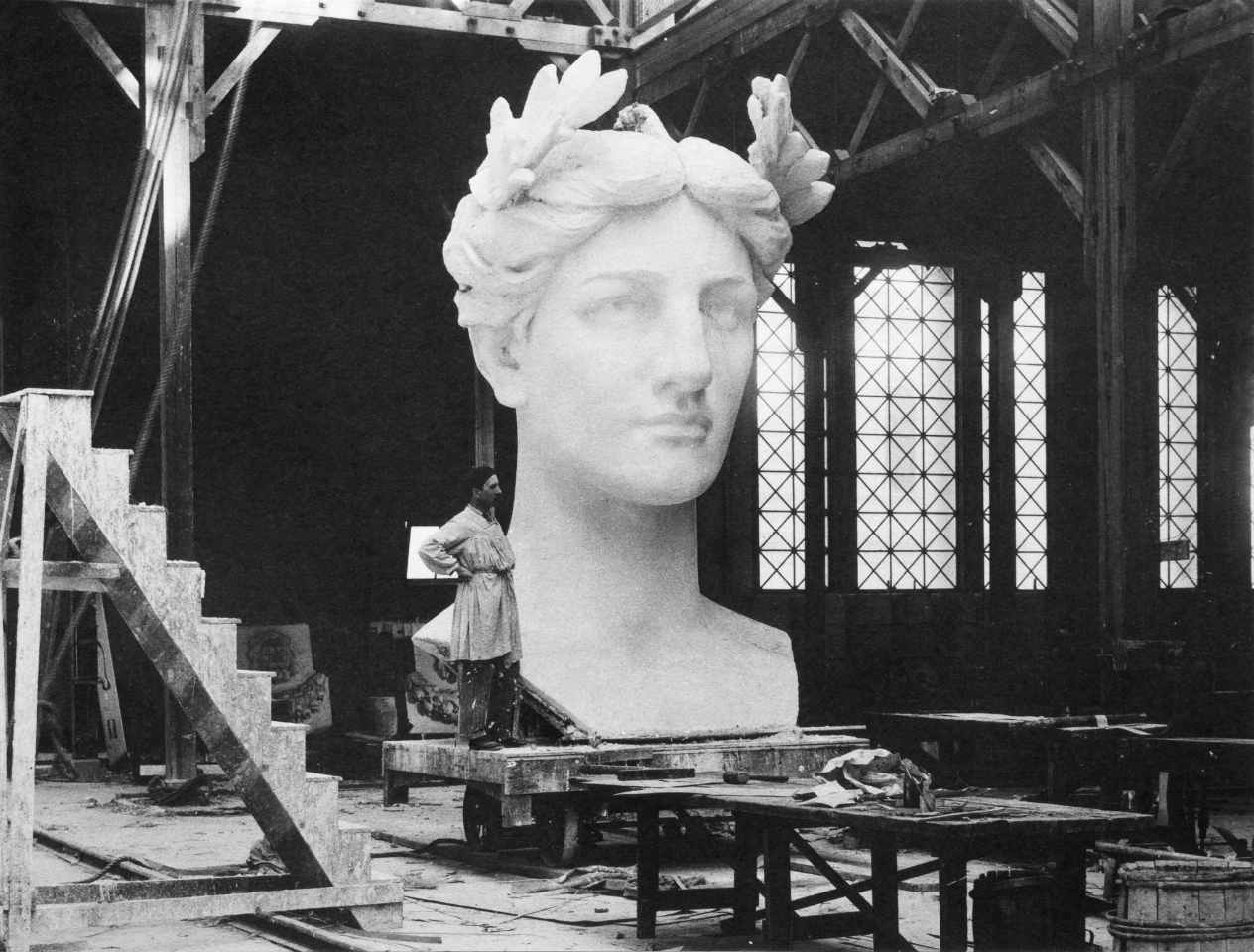
I am still haunted by the image of the colossal sculpted head of Edith Minturn’s visage, erected in the freezing cold warehouse where Daniel Chester French was assembling the grand Statue of the Republic for the 1893 world’s fair in Chicago. French’s wife said the pieces of the sculpture resembled “mushroom growths all about the floor of the Forestry Building” Ambulances were constantly coming to get the men injured while putting up the gigantic statue. It was almost as tall as the Statue of Liberty.

Leave a comment

Filed under Jean Zimmerman, Photography