Category Archives: Jean Zimmerman

James and James, Inc.

In the Scarsdale library today while I was browsing in the fiction aisles my glance fell on H. James – as it always seems to, no matter the thousands of authors there. I connected with my favorites, The American, The Europeans, as well as the ones everyone else loves best, The Wings of a Dove, The Golden Bowl, then noticed that nudged up next to the first of Henry’s volumes there on the shelf, Washington Square, stood 50 Shades Darker, by E.L. James. Then a line of 50 Shades volumes. Side by side, the two authors with their two big sellers, on the left a thoroughly contemporary exploration of happily abused womanhood, and then the equally popular vision from 1880 of  a young woman suffering psychological abuse at the hands of her favorite suitor, a bounder. Washington Square, of course, is perennially refreshed as The Heiress, now on Broadway with Jessica Chastain as Catherine Sloper.

Jessica_Chastain

Women are always getting their virtue endangered, and that predicament is always finding its way into literature. Who will save her? The question fascinates us.

Before James and James there were young ladies with better things to do than dally with bad men.

I speak of needlework.

embroidery

Visiting the Winter Antiques Show gave me a new appreciation of the subtleties within the craft, and of just how driven were its practitioners. My photo of a corner of just one piece suggests the three-dimensional artistry that a young girl could bring to her work at the beginning of the nineteenth century. This was the Austen era – when female industry with a needle was almost worshipped.

What I never knew before was how many different types of work there were. At the Show, Stephen and Carol Huber of Old Saybrook, Connecticut displayed a range far beyond your typical cross-stitched sampler, achieved by young students in schools on a linen background. No wonder they bill themselves as “America’s Preeminent Source for Girlhood Embroideries.”

silk embroidered picture

Some pictures display silk or chenille thread on a silk background that was painted with watercolors rather than worked with a needle, and depicted stories out of the bible or mythology. Some were memorials, the ones you see with a tomb or a weeping willow, sad subjects that were the expected mental domain of young cultured girls between 1780 and 1840.
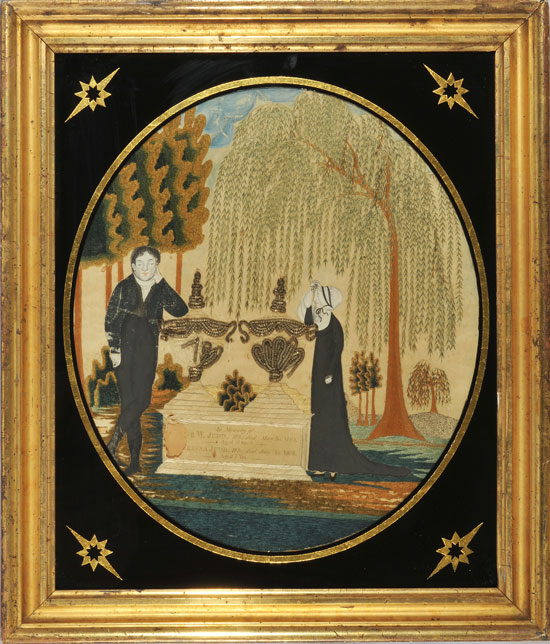
Judd-memorial

Then there were canvaswork pictures. Huge and now highly collectible tableaux, often of hunt scenes but always with a pastoral background.

canvaswork

Even stumpwork: if you didn’t know, that means  a type of needlework from the mid seventeenth century. Some pieces have lasted and lasted as if it wrought in metal. They were made with heart.

stumpwork

When girls, young ladies, saved their own selves by the work of their hands, long before James and James.

1 Comment

Filed under Art, Fiction, History, Home, Jean Zimmerman

A Walking Antique

There was scrimshaw, of course. In all its various guises, carved on the plank-like jaw of a whale or sculpted into curio-style walking stick tops.

scrimshaw

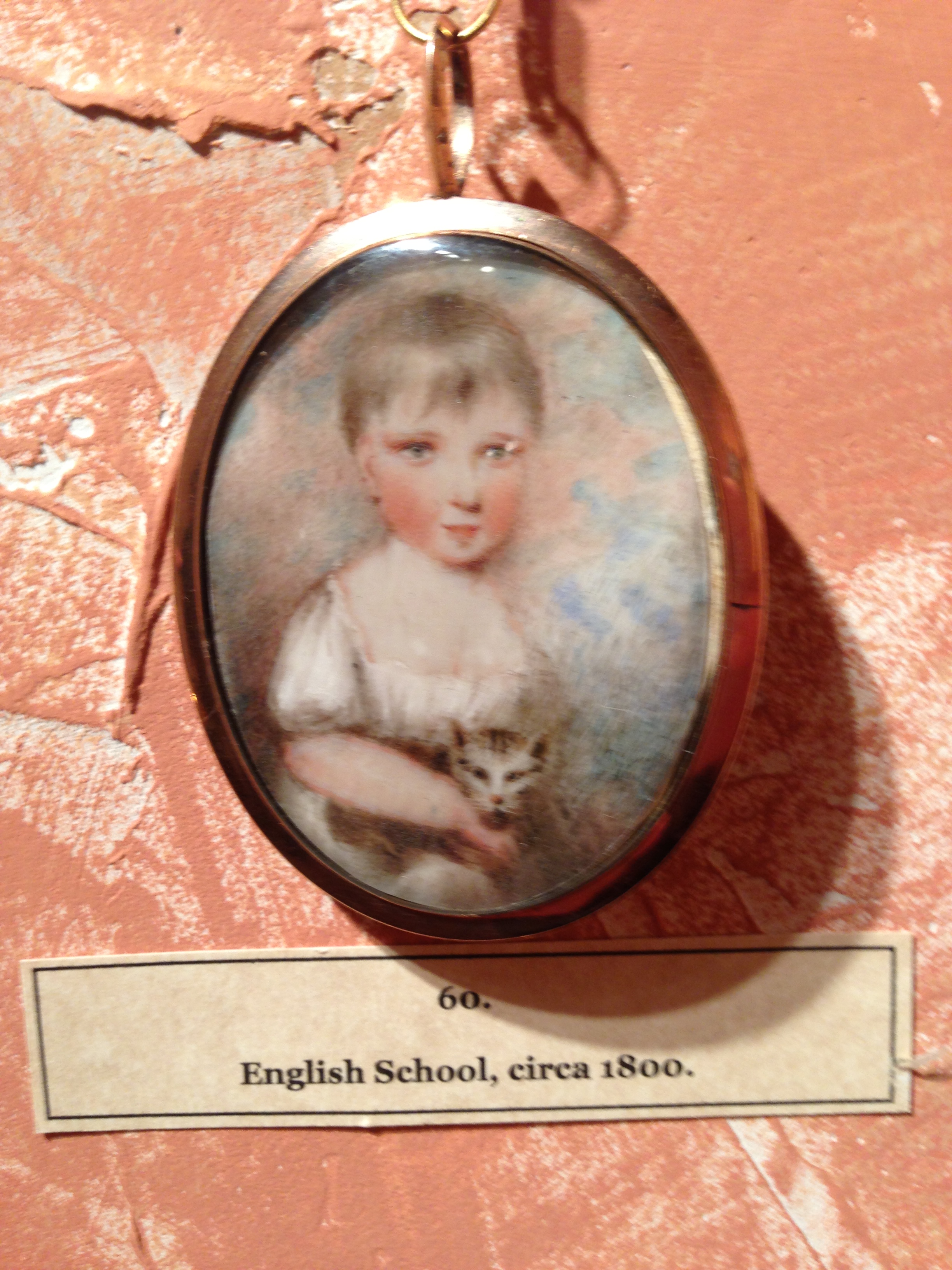
The 59th Annual Winter Antiques show had art from around the world and of every vintage, from the ancients to the ‘60s.  My friend Suzanne and I inspected miniature portraits, some with locks of hair tucked into secret locket pockets.

miniature girl

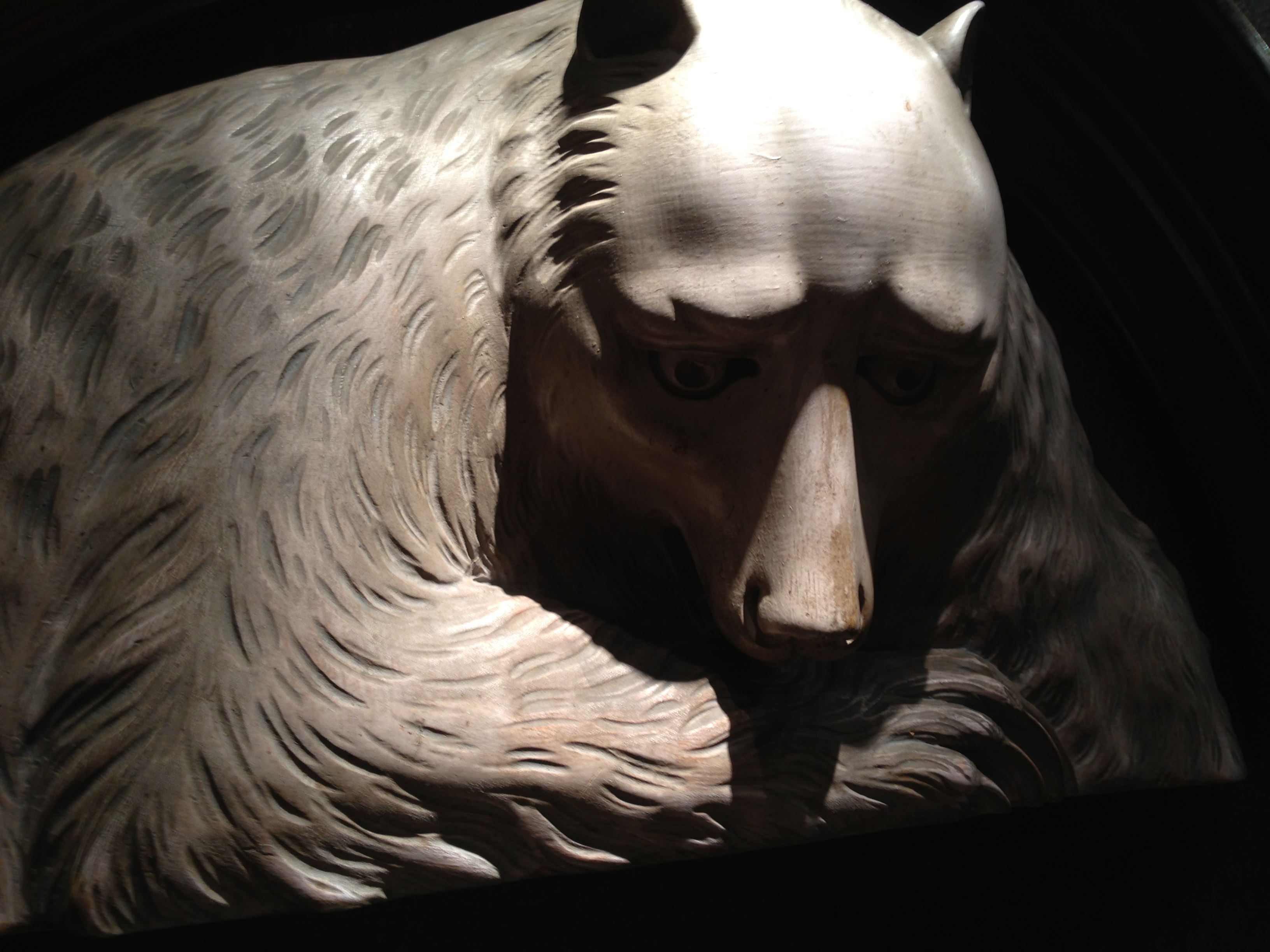
It was the story that drew us again and again, not the craft of the piece, which could be exquisite but nonetheless leave you unmoved. I loved the moth bitten tale about the grizzly bear of carved wood that once graced the top of a doorway in northern California, the entry to a masonic lodge. Made in the mid-1800s, it was a highly unusual find (and was looking for a highly unusual collector to take it home).

wood bear

Serious shoppers in spectacles and tweed prowled the Armory building on Manhattan’s upper east side, peering at objets. Discreetly tucked to one side, a café where you could get strong coffee, fresh grapefruit juice or the perfect crème brulee. “She’s a hypnotist collector,” sings Dylan, “You are a walking antique.”

We came upon a colonial-era painting that showed two ladies seemingly snuggling – “The Lovers.” was written in script across the bottom. A similar trope was visible in a tiny twin cameo on a gold ring, with the two female faces etched in milky glass. It dated from Rome in the time of the Caesars. Who were the women, mother and sister? Two darling daughters? “The Lovers”? You write the story.

true love

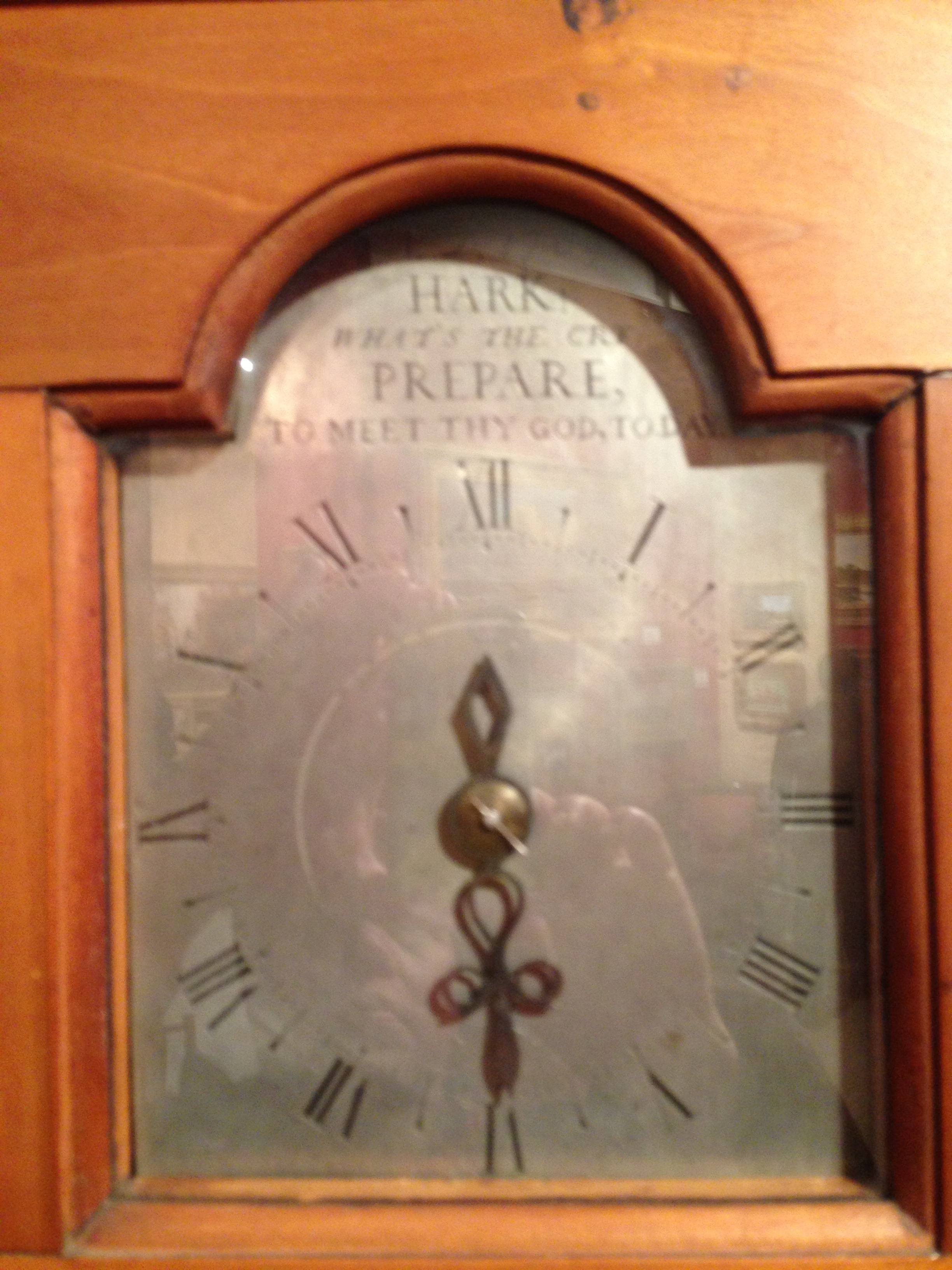
A tall, plain clock made in a family woodworking shop in East Hampton, practically unvarnished, admonishing admirers with its stern legend, was displayed in a stall run by a family business called Delaney Antique Clocks. Two centuries ago the clock was created for by a sea captain who had lost five children under the age of five. Hark, What’s the Cry: Prepare to Meet They God, Today.

clock

Then there was the cat-head doll. We used to tell terrifying stories about such creatures when I was a child. Was this a voodoo doll of sorts?

cat doll

Also a bit fierce, a set of Salvadore Dali-designed silverware, with forks like retractable claws.

dali silver

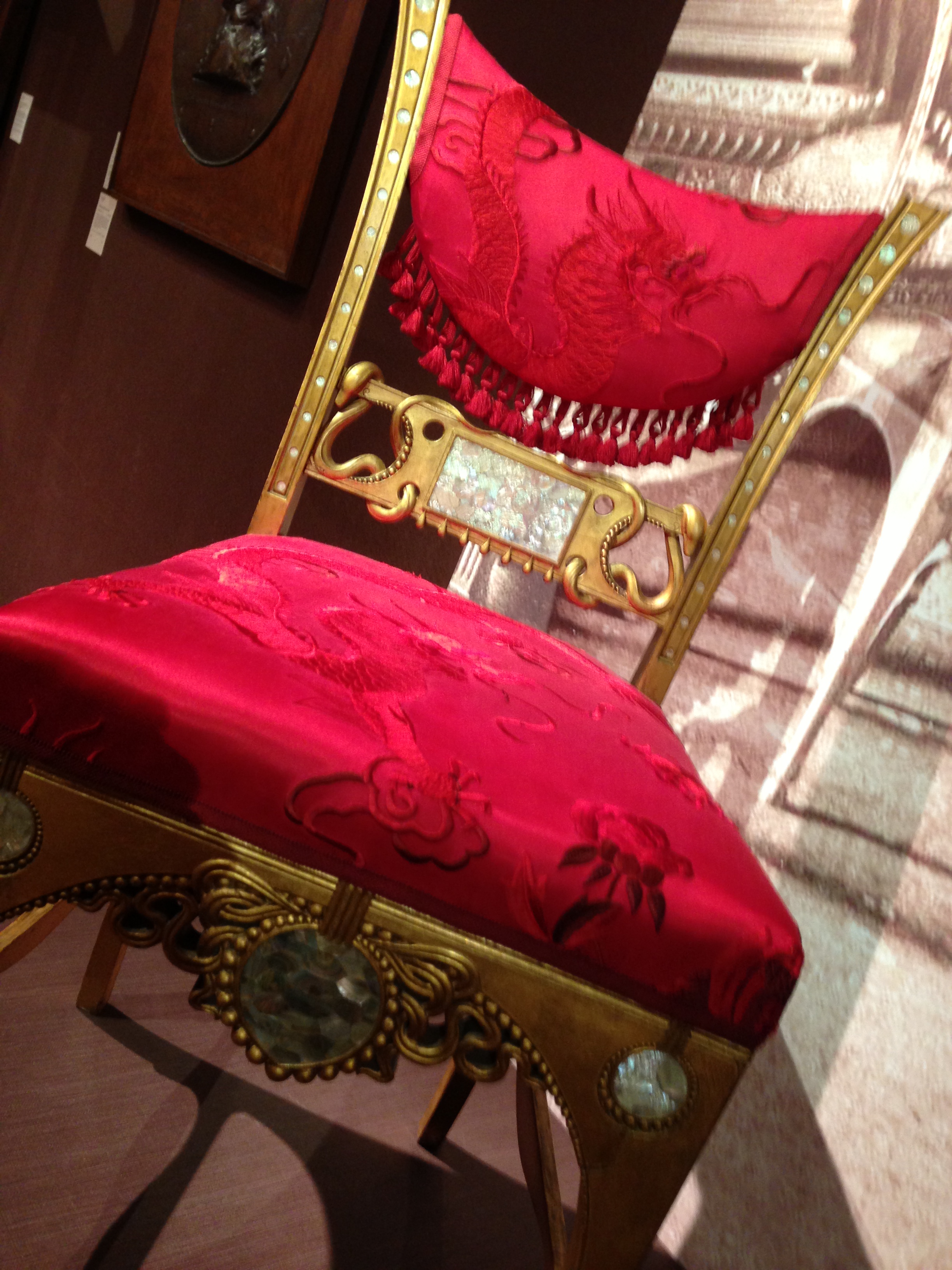
At the booth run by the expert David Parker, for the enterprise called Associated Artists, we saw a striking, red satin chair atop a platform. Here was a story.

vanderbilt chair

Crafted of gilded maple, the cloven-footed, serpent-entwined chair was a jewel in the living space of the tycoon William H. Vanderbilt, whose residence on Fifth Avenue at Fifty-first Street was the most magnificent home in America during the Gilded Age. The house was also the crowning achievement of Herter Brothers, the most important furniture makers/interior designers of the era. The Herter chair appeared in the self-published Mr. Vanderbilt’s House and Collection, which documented the great man’s stuff for all the many people who might not ever get inside the house to take a look for themselves. Circular mother-of-pearl accents on the chair reflected the just-come-in electric lights that only the very wealthy could afford.

Vanderbilt book

The chair also found a place in another book about the houses of the rich and famous, Artistic Houses, of which only 500 were published in the early 1880s.  Andy Warhol owned a copy.

Also on display at Associated Artists, a vase designed by Christopher Dresser that in its particular angularity suggests Dresser’s preoccupations as a botanist … he was famous in the latter part of the nineteenth century, a polymath and household name among the intelligentsia, though only the favored few remember his story now.

dresser vase

We knew it was time to leave the land of William Morris carpets and genteel pillboxes and good, old stories when it suddenly turned six and all the many collectible clocks in the place chimed… not in synchronicity, mind you, but all just slightly off, one minute at a time.

3 Comments

Filed under Art, History, Home, Jean Zimmerman

Klonopin and Knitting

Which better soothes the savage beast, a trusted benzodiazepine or wool work? I choose both, one for night and one by day. I get a good eight hours. And as my pumpkin stocking comes along, so do I.

pumpkin sock 3

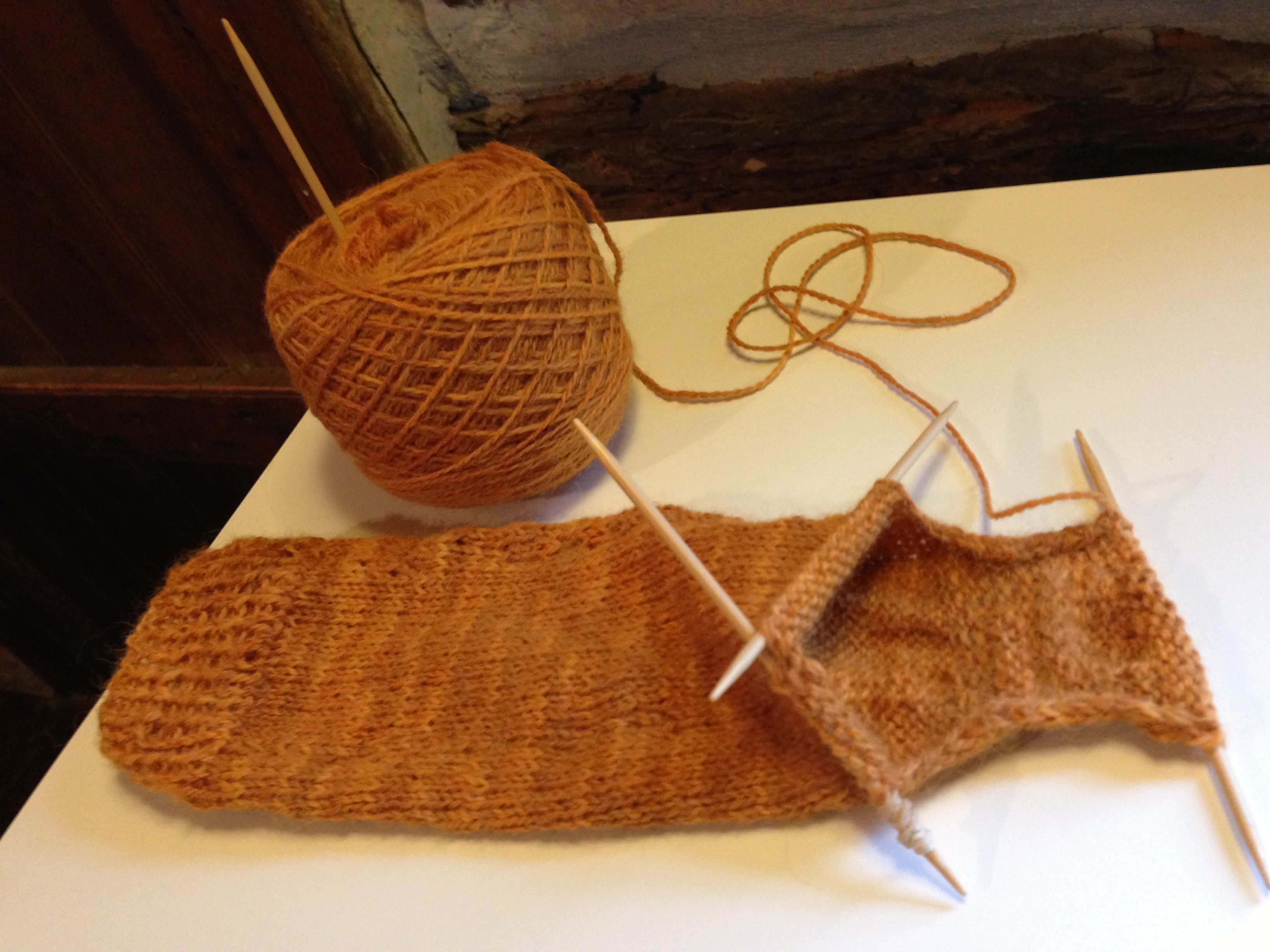
But I can’t limit myself to a sock, so I’m starting on a scarf of fine merino – its color defies description — that will be worked in a sprigged geometric I haven’t attempted before.

new wool

Different. And more difficult. One thing about knitting is that it’s humbling; it’s actually the hardest thing I’ve ever done, aside from writing, and I’m barely getting closer to the cable stitch that was my new year’s resolution for 2013. To cable, to make those gorgeous chunky fisherman twists, you need to use a special needle. Although I’ve heard a chopstick will do. But you really need, also, a brain that can move through the pattern’s complexities.

I wonder if my brain, trained up for the first time as a novice in this demanding, ancient craft, is approaching the actual work of my life differently. I’m currently ping ponging between two projects, neither of which I can divulge in detail at the risk of angering the novel gods.

But doing historical research, if you write about history, is another kind of soothing, even a self massage of a sort. It’s that good. You take your era, dive in and float with its current, sending your mind wandering to either shore and how your characters might relate to that time. The grittier, the more textured, the more exciting it is to submerge yourself through books and documents that will help you tell your story.

I will say this, that one book idea has to do with the American Revolutionary War – not in Boston, not in Philadelphia, but in New York City, which the Brits held for seven years while skirmishing on the outskirts of town with the Patriots. The high drama of the episode informs the book I am planning.

hat

“Sleep knits up the ravelled sleeve of care,” says Lady Macbeth. And so does research.

1 Comment

Filed under History, Jean Zimmerman, Knitting, Writing

An Egg Is an Egg Is an Egg

Maybe it is because I just dined in a Manhattan restaurant in a historic building with a soaring ceiling and fresh yellow and white décor. It reminded me of a famous Parisian eating place, the Angelina Tearoom on the Rue de Rivoli, that is of a different vintage but also boasts a high ceiling, yellow and white décor and kitchy chandeliers – as well as the best hot chocolate in the world and its famous Mont Blanc pastry, made with cords of chestnut cream. Or maybe it’s because on Sunday we sat in the kitchen and ate perfect soft boiled eggs in egg cups with buttered toast. In any case, I’ve been reading Alice B. Toklas’ Aromas and Flavors of Past and Present, and her recipes, especially those for eggs, speak to me.

I like Aromas and Flavors, published in 1958, as much as The Alice B. Toklas Cookbook (1954), which was her culinary triumph as well as a memoir of her life with Stein and Picasso and Matisse and all the others at the Rue de Fleurus in the first third of the Twentieth Century. The Alice B. Toklas Cookbook has the seminal sociological goods, but Aromas simply and directly delivers the recipes. It cuts to the chase, an exquisite approach to cuisine that seems awfully foreign today.

“I refuse to believe that trading recipes is silly,” wrote Barbara Grizzuti Harriso. “Tunafish casserole is at least as real as corporate stock.”

Not that she, whose culinary prowess sustained Gertrude Stein’s mind and girth, would ever make tuna casserole. But what Toklas left us is certainly real.

On to eggs. Perhaps because she lived through food shortages during both wars, the simplest preparations predominate, and servings are diminutive. Toklas’ editor, Poppy Cannon, marginally comments that Alice would serve the following dish, “Eggs Prepared in the Creuse,” “as a first course, in which case only 1 eggg is allowed for each person.”

Eggs/Salt/Pepper/Cream/Swiss Cheese

Beat the whites of 8 eggs until very stiff, seasoning them with ½ tsp salt and ¼ tsp pepper. Place them in the bottom of a well-buttered fireproof dish, flattening the surface with a moist spatula. Make 8 hollows in which you place the yolks of the eggs. Cover each yolk with 1 tablespoon cream. Sprinkle the whites of the eggs with ¾ cup of grated Swiss cheese. Place in 450 degree oven for 8 minutes and serve piping hot.

Of course Alice didn’t only prepare eggs. In The Alice B. Toklas Cookbook she writes about the proper way to kill pigeons for cooking. After the First World War, she says, the concierge at Rue de Fleurus brought her a gift sent by a friend in the country: “Six white pigeons to be smothered, to be plucked, to be cleaned and all this to be accomplished before Gertrude Stein returned for she didn’t like to see work being done. If only I had the courage the two hours before her return would easily suffice. A large cup of strong black coffee would help.”

alicebstein-1

She continues, “It was a most unpleasant experience, though as I laid out one by one the sweet young corpses there was no denying one could become accustomed to murdering.” The result, her recipe for Braised Pigeons on Croutons, follows, consisting of stewing morsels of the poultry with salt pork and mushrooms in butter and Madeira.

I imagine it satisfied Gertrude, who was known for not being able to boil an egg.

The marijuana brownies Toklas became famous for were actually from the recipe provided by a friend, Brion Gysin. Toklas writes, “anyone could whip up [Haschich Fudge] on a rainy day,” and continues

“This is the food of paradise – of Baudelaire’s Artificial Paradises: it might provide an entertaining refreshment for a Ladies’ Bridge Club or a chapter meeting of the DAR. In Morocco it is thought to be good for warding off the common cold in damp winter weather and is, indeed, more effective if taken with large quantities of hot mint tea. Euphoria and brilliant storms of laughter; ecstatic reveries and extensions of one’s personality on several simultaneous planes are to be complacently expected. Almost anything Saint Theresa did, you can do better if you can bear to the ravished by “un évanouissement reveillé”.

“Take 1 teaspoon black peppercorns
1 whole nutmeg
4 average sticks of cinnamon
1 teaspoon coriander
These should all be pulverized in a mortar.

“About a handful each of stoned dates, dried figs, shelled almonds and peanuts: chop these and mix them together.

“A bunch of Cannabis sativa can be pulverized. This along with the spices should be dusted over the mixed fruit and nuts, kneaded together.

“About a cup of sugar dissolved in a big pat of butter. Rolled into a cake and cut into pieces or made into balls about the size of a walnut, it should be eaten with care. Two pieces are quite sufficient.

“Obtaining the Cannabis may present certain difficulties, but the variety known as Cannabis sativa grows as a common weed, often unrecognized, everywhere in Europe, Asia and part of Africa; besides being cultivated as a crop for the manufacture of rope.

“In the Americas, while often discouraged, its cousin, called Cannabis indica, has been observed even in city window boxes. It should be picked and dried as soon as it has gone to seed and while the plant is still green.”

1 Comment

Filed under Cooking, History, Jean Zimmerman, Writing

Happy Happy!

That my beautiful daughter turned 21 years old yesterday somehow makes me feel 21 years younger!

We had brunch at a restaurant with over-the-top chandeliers.

restaurant chandeliersThe spiciest bloody maries.

bloody mary

Birthday cake, red velvet with cream cheese icing, and grand candles.

Maud's birthday cake

Maud glowed.

just Maud 21:2

She even cried when she read our card detailing all we love about her, tears of blushing joy.

It all couldn’t have been nicer.

2 Comments

Filed under Home, Jean Zimmerman

Best Returns, Etta

Every day some woman that has inspired me has herself a birthday. Today, Etta (1938-2012).

Etta

I saw Etta James perform a few years ago, on her last tour. She played a relatively intimate club, B.B.King’s, on 42nd Street, so we were all somewhat in her lap when she had herself wheeled out after the long, horn-heavy, glitzy introduction to her set. She reclined in a chair, by then too weak to spend much time on her feet, and intermittantly growled woman-of-the-world intros, delivered suggestive hand movements, and sent her voice soaring on songs that were more, or less, familiar. At Last, of course, now in a  lower register, but Sugar on the Floor? The latter was fantastic.

Husky, sweet, sexy, with only a hard liver’s appreciation of the depths. (She demonstrated among other things that a heroin habit is not incompatible with longevity.) She came from grit — born Jamesetta Hawkins in Los Angeles, California, on 25th January 1938, to an unmarried fourteen-year-old mother, Dorothy Hawkins – and it stayed with her even when she got famous. Everyone thinks of her as a chanteuse but she was also a rocker. I love her spirited take on Born to Be Wild. Not what you would expect of a lady of her vintage.

Etta James has always reminded me in spirit of another of my favorites, Sophie Tucker (1886–1966), known to a generation as the Last of the Red Hot Mamas. She earned her popularity in the ‘20s and ‘30s.

sophie-tucker-portrait-2-mt-g1-e27

Sophie Tucker came from a somewhat less hard knocks school than Etta but still, her Jewish family emigrated from the Ukraine and opened a little restaurant, where she waited tables until she married at only 17. She built her career in burlesque and vaudeville, at first in blackface. And she hired black singers to teach her technique and write songs for her act. She had an incredibly strong musical persona.

Her hits included songs like Some of These Days and my personal favorite, Life Begins at Forty.

I’ve often heard it said and sung

That life is sweetest when you’re young

And kids, sixteen to twenty-one

Think they’re having all the fun

I disagree, I say it isn’t so

And I’m one gal who ought to know

I started young and I’m still going strong

But I’ve learned as I’ve gone along…….


That life begins at forty

That’s when love and living start to become a gentle art

A woman who’s been careful finds that’s when she’s in her prime

And a good man when he’s forty knows just how to take his time

Watch it!

Best returns of the day, Etta, and I hope that someplace, somewhere, you’re sharing the bill with Sophie.

young Etta

2 Comments

Filed under Jean Zimmerman, Music, Photography

Happy Birthday, Edith

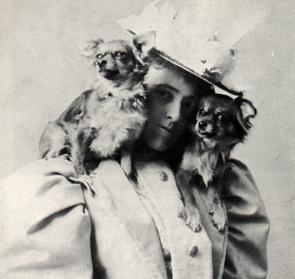
Edith Wharton (1862-1937) at the age of 27, posing with her beloved long-hair chihuahuas, Mimi and Miza.

edith-wharton-and-dogs

Her eye was keen, her sense of the tragic rich. I think she knew fully she was capturing her age and class in a way no one else could.

At the start of A Backward Glance, her memoir, she describes herself:

“It was on a bright day of midwinter, in New York. The little girl who eventually became me, but as yet was neither me nor anybody else in particular, but merely a soft anonymous morsel of humanity — this little girl, who bore my name, was going for a walk with her father. The episode is literally the first thing I can remember about her, and therefore I date the birth of her identity from that day.”

She goes on to describe almost every article of clothing she had on, she with her perfect ability to capture physical details: her bonnet of gathered white satin, “patterned with a pink and green plaid in raised velvet.” It had “thick ruffles of silky blonde lace under the brim in front” and a “gossamer veil of the finest white Shetland wool.” She wore white woolen mittens.

This was the child who would at least skim every volume in her father’s library before she reached the age of seventeen. Poetry drew her:  “Ah, the long music-drunken hours on that library floor, with Isaiah and the Song of Solomon and the Book of Esther, and ‘Modern Painters’, and Augustin Thierry’s Merovingians, and Knight’s ‘Half Hours’, and that rich mine of music, Dana’s ‘Household Book of Poetry.’ Faust, Keats and Shelley guided her to her ambition to be a writer.” Then the gates of the realms of gold swung wide, and from that day to this I don’t believe I was ever again, in my inmost self, wholly lonely or unhappy.

Not that she didn’t have some personal challenges. While she was born into a family of Jones and Rhinelanders and Rensselaers in lap-of-luxury New York (it is her father’s family that is referred to when people say “keeping up with the Joneses”) she suffered over a marriage to mentally unstable Teddy Wharton, whom she eventually divorced. She did not publish her great best-selling novel of manners, The House of Mirth, until 1905 — she was 43. The title came from Ecclesiastes: The heart of the wise is in the house of mourning; but the heart of fools is in the house of mirth. Every word of that book is brilliant sadness.

Wharton describes the impetus for The House of Mirth in A Backward Glance, saying the question was how to make a meaningful story out of fashionable New York. The answer: “a frivolous society can acquire dramatic significance only through what its frivolity destroys. Its tragic implication lies in its power of debasing people and ideas. The answer, in short, was my heroine, Lily Bart.”

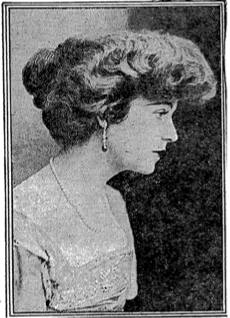
A 1918 film of The House of Mirth starred debutante/silent actress Katherine Harris Barrymore (married to John Barrymore). In other words, a high-society young woman who could have been portrayed in the book starred in the movie. How strange and delicious, a dramatic detail worthy of Wharton.

Screen shot 2012-01-20 at 8.59.38 AM

Leave a comment

Filed under Dogs, Fiction, History, Jean Zimmerman, Photography, Writers

Dress Yourself in Dresses

“Elegance does not consist in putting on a new dress,”  said Coco Chanel, somewhat surprisingly.

laura schiff bean dress

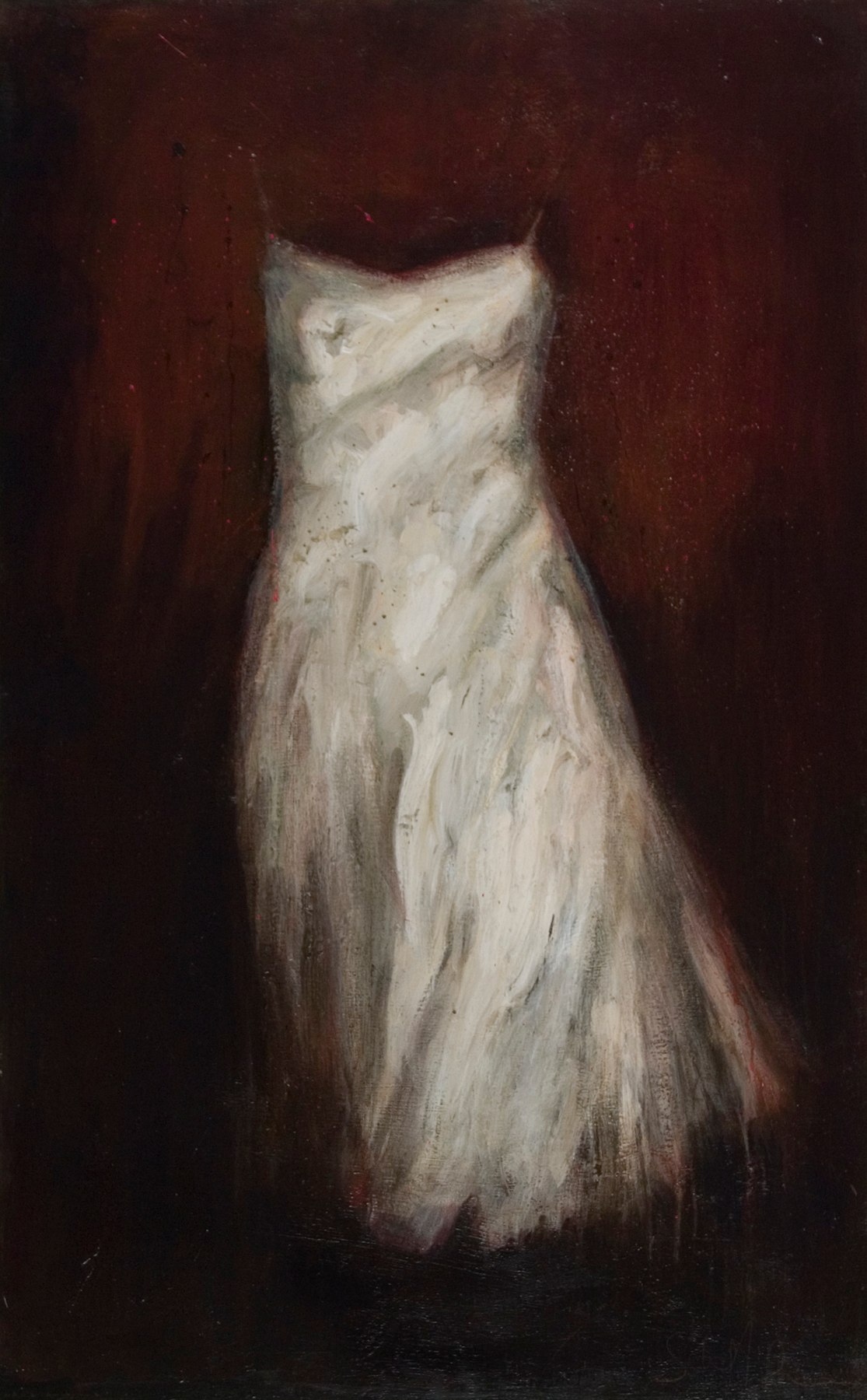
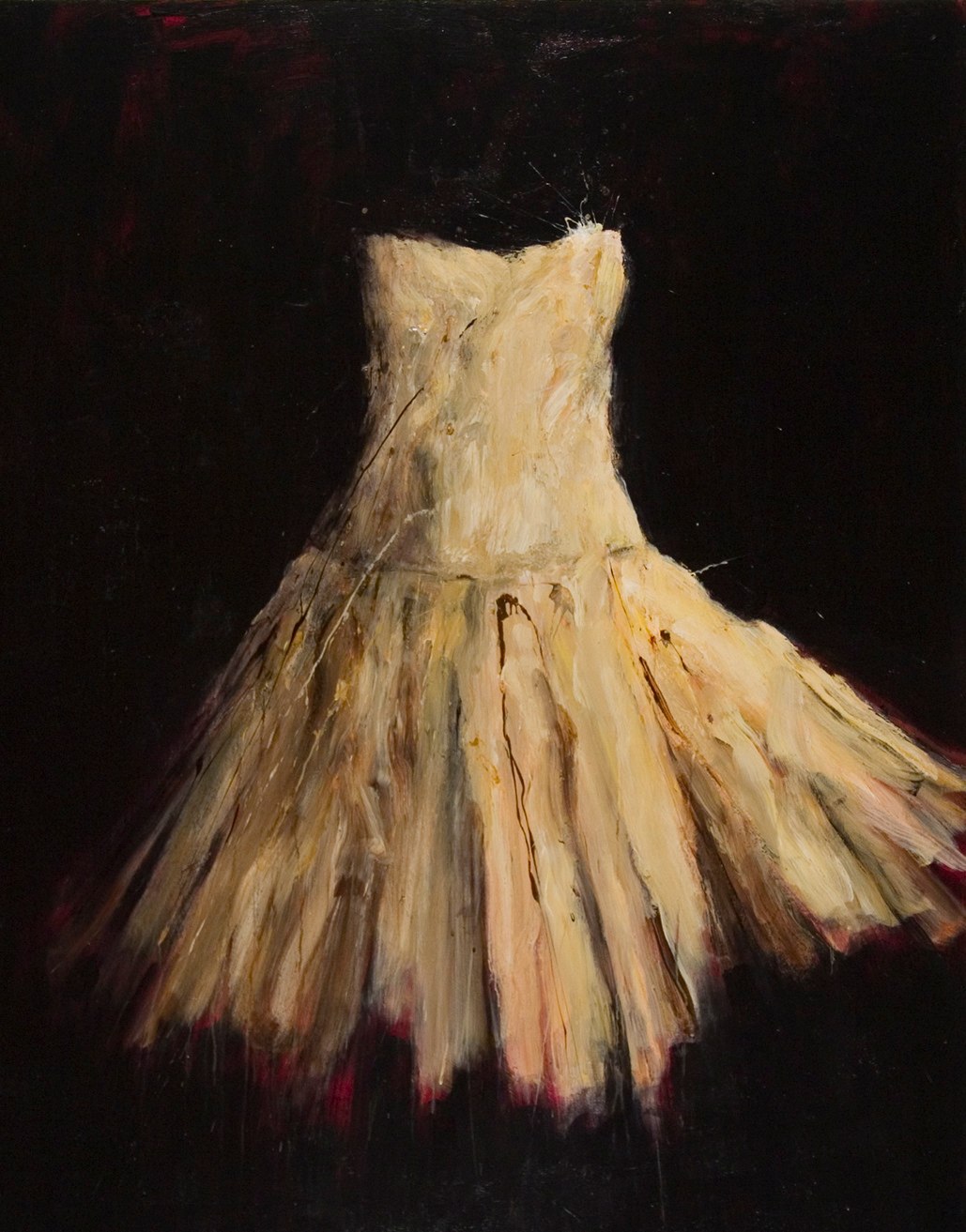
She might approve of the artist Laura Schiff Bean, who renders nearly the same dress over and over again from canvas to canvas with exquisite results. I picked up a flier for her work when I visited rural Connecticut recently and find myself drawn to the images in her work.

Something about her paintings of glowing, disembodied gowns draws me. What do they speak of?

The mysteries of the wedding dress. I bucked fashion when I married and wore an ankle-length, ballerina-hem dress.  I’ve kept the gown a quarter of a century, entombed in a long yellowed cardboard box, for what I don’t know, since it would never appeal to my daughter. But I can’t toss it out. I totally understand the wedding gown obsession of reality TV, I am chagrined to say.

Bean blue background

Or the ball gown, calling me to the ball I’ve never been to, aside from in my imagination. Henry James described the life of New York’s fashionables in the gilded age:  “The rooms were filling up and the spectacle had become brilliant. [The ball] borrowed its splendor chiefly from the shining shoulders and profuse jewels of the women, and from the voluminous elegance of their dresses.”

Bean slim dress

In Savage Girl, the new novel of mine that Viking will publish in a year or so, which takes place in 1875 Manhattan, you can trace the trajectory of the central figure’s development by her clothing, from rags and bare feet to a demure, plaid day dresse to trailing gowns in luscious tones of cherry red and tangerine, to a cream-colored, low-cut diamond-encrusted gown for her society debut. With a stubborn foray into thoroughly modern bloomers. She has to give society a little kick in the pants.

When I was little, I was required by my grandmother to take a nap in my petticoat on her bed on the afternoons I spent at her apartment. Floaty white underclothes, the archetype of innocence.

Bean Ballerina

Coco Chanel again, cryptically: “Look for the woman in the dress. If there is no woman, there is no dress.” Probably because I am almost exclusively a woman of trousers, I don’t think this quite makes sense. What rings more true to me is Thoreau’s admonition in Walden to beware of all enterprises that require new clothes. I wear shirts twenty years.

But I do keep dresses, new dresses, in my closet. I’m a closet dress wearer. A lavender cocktail dress. A summery long red linen, in particular, which has never found exactly the proper occasion for its display. I need an urgent opportunity, like Anna Karenina.

Laura Schiff Bean red dress

Something else Laura Schiff Bean occasionally integrates into her work. Butterflies.

bean butterfly

A tad sentimental, no doubt, considering most contemporary art, but I am perhaps no less sentimental, reaching an age when I know I will never again wear a flouncy, delicate white gown, and dreaming about them in stories and in art.

Longfellow:

“For age is opportunity no less

Than youth itself, though in another dress,

And as the evening twilight fades away

The sky is filled with stars, invisible by day.”

2 Comments

Filed under Art, Fashion, Jean Zimmerman

Liberty Cracks

The greatest Leonard Cohen lines:

“Ring the bells that still can ring
Forget your perfect offering
There is a crack, a crack in everything
That’s how the light gets in.”

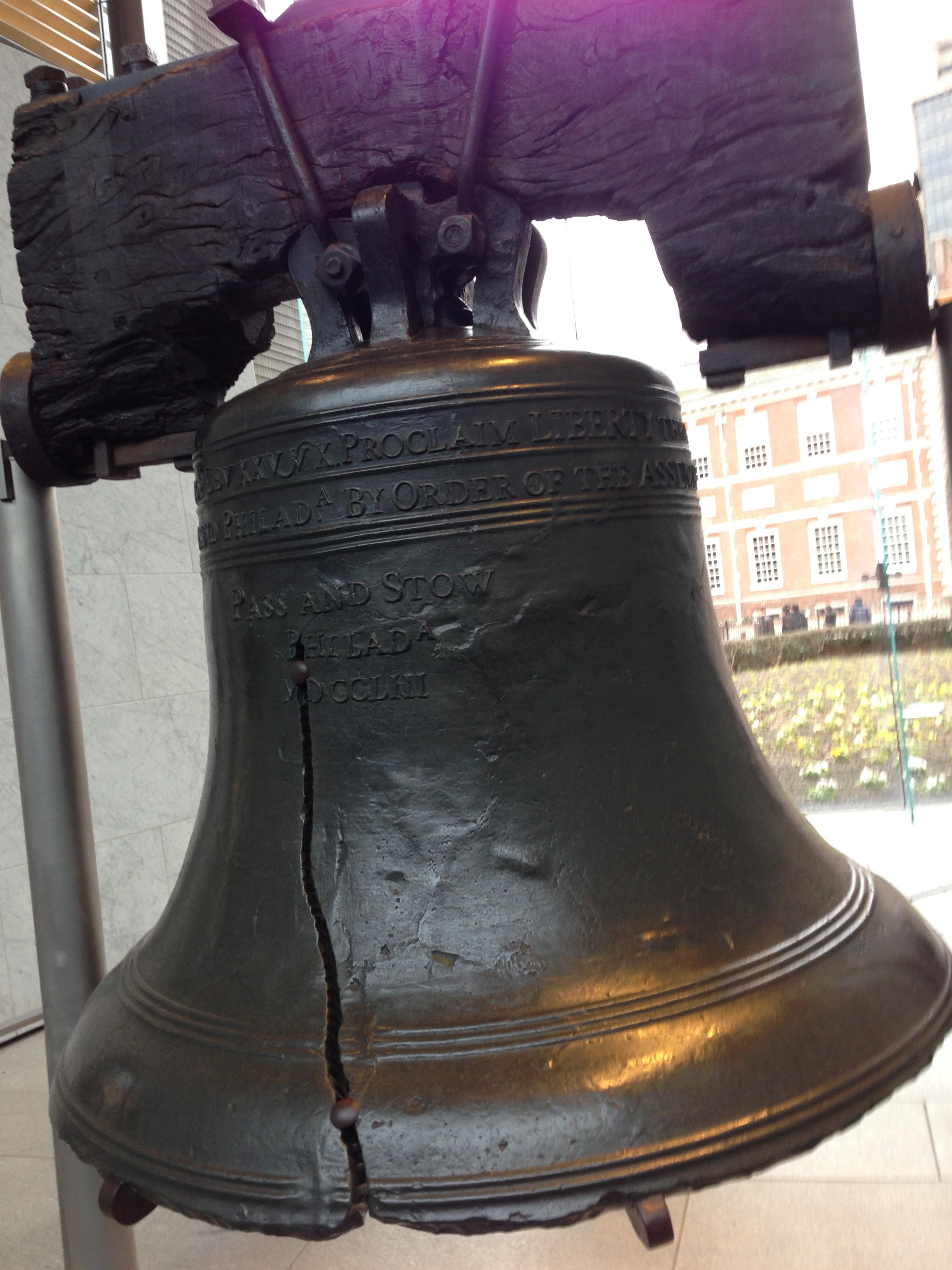
Saw the actual, original, iconic cracked bell in Philadelphia today. The Liberty Bell. “Proclaim Liberty throughout all the land unto all the inhabitants thereof.”

lib bell

Funny thing about it. The bell got little hairline cracks in it since its creation in  1751. Just small seams, which were “bored out” and superficially repaired. But the repairs themselves damaged the metal so that when they attempted to ring it in 1846 for George Washington’s birthday it went totally silent, absolutely broken and never to be fixed again. According to the Philadelphia Public Ledger, “It gave out clear notes and loud, and appeared to be in excellent condition until noon, when it received a sort of compound fracture in a zig-zag direction through one of its sides which put it completely out of tune and left it a mere wreck of what it was.”

Isn’t all liberty personal, first and foremost? Across the street from the Liberty Bell we saw a raised planter with a private shrine that had been maintained for years, as fastidiously as its more famous iconic neighbor. Someone was free to mourn, free to celebrate this Woody as they chose.

Woody

Personal liberty. After Gil gave his book interview at the local NPR station, we took the turnpike north. We listened to our new poet laureate, Richard Blanco, read from his lofty yet intimate inaugural poem, “One Today.” I’m excited that I heard Blanco read from his work only a few months ago at the Miami Book Fair, where he sat in a small room on a panel with some other terrific poets. He was unassuming and personable. He delivered a wonderful poem about what it was like to grow up gay in a Latin household under the eagle eye of his grandmother. I can’t get a link to those lines at the moment, but here is another poem he read that day, “The Gulf Motel,” a beautiful paean to a place he spent time at with his family. For the president to select a young man (only 44) who is openly gay and who delves into his rich ethnic background for his work — this is liberating for us all.

Philadelphia was quiet and cold. All of its energy seemed to be sucked away to Washington, D.C. But there were still philly cheesesteaks at jam-packed Reading Terminal Market — I wolfed mine down so fast I didn’t have time to take a picture. There was time to buy ox-tails, smoked pork backs and blood-red chicken meat for dogs, something I had a hankering to do since admiring Oliver’s likeness in stone on the way to the Market.

oliver in stone

Oliver represents perfect liberty, the freedom to eat bloody chicken, roll on his back in the icy snow, chew things up, growl, yelp, yap at will. Don’t fence him in.

Blanco:

“…Hear: the doors we open
for each other all day, saying: hello, shalom,
buon giorno, howdy, namaste, or buenos días
in the language my mother taught me—in every language
spoken into one wind carrying our lives
without prejudice, as these words break from my lips.”

I guess I could wish for a little more dog in that sentiment. Otherwise it’s just about perfect.

1 Comment

Filed under History, Jean Zimmerman, Music, Poetry, Publishing

Sticks on Fire

Killer plant on the loose.

This was a typical quiet Sunday morning, one spent calming myself through yoga at the gym (though my mind always spins too fast for the relaxation exercise), reading the papers (happily, Gil’s book is excerpted and reviewed in two), spoiling the dog and drinking too much coffee.

I had a plant I couldn’t identify that I had picked up last month when the nursery near the Cabin went out of business. A weird-looking creature, all green sticks, which sprawled so far around itself that it always threatened to tip over its ceramic pot. It started to sprout little leaf-like appendages that I thought might be flowers. Sweet.

my euphorbia

When I asked my brother, an expert with house plants, what it might be, he said immediately, Euphorbia. That was a pretty name, and I was glad I had this distinctive specimen.

Euphorbia_tirucalli_Blanco1_210b-original

This morning, to get a little more information on Euphorbia’ growing needs, I checked on line.

Turns out it’s a monster. Masquerading under many names: African milkbush, Fingertree, Indian Tree Spurge, Milkbush, Milkhedge, Penchtree, Petroleum-plant, Rubber Euphorbia, Firestick Plant, Naked Lady, Pencil Tree, Stick on Fire. Native to Madagascar and Africa, it squirts out its sap, a kind of white poison pus, when cut. The stuff can cause severe burning if it comes in contact with your skin, send you to the emergency room. A drop in your eye can blind. No wonder they use it as fencing in countries where there’s no Home Depot.

Euphorbia

One neuroradiologist advises washing thoroughly and instantly with soap and water. However, “Don’t wash over dirty dishes in the sink-you don’t want to ingest even a tiny amount of residue from this powerful toxin.” Yet they’re widely sold as nice little house plants — toxic time bombs — with no warning label attached.

Out for a hike this afternoon to the perimeter of our land we found ourselves caught in angry nets of pricker bushes so thick and extensive it took will to shove through to a clearing. I got my hands (held up in a defensive posture) raked by the curving red stalks, and had thorns in my shoe by the time we reached home.

Raspberry-canes

Here was a plant to rival Euphorbia in noxious temperament.

The difference being that the raspberry canes will give us beautiful juicy berries in July.

Euphorbia lies in the trash, long live Euphorbia.

1 Comment

Filed under Jean Zimmerman, Nature

Happy Anniversary, Jane

“I am half agony, half hope.” Jane Austen, Persuasion

sock 3

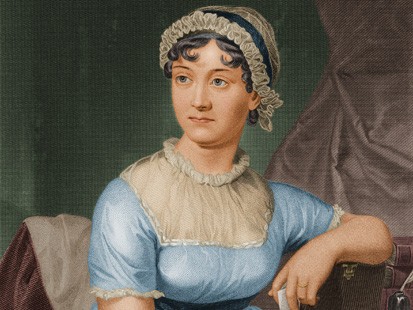
I’m knitting my sock around stitch by stitch, knot by knot, minute knucklebone by knucklebone, and I’m thinking of Jane Austen. She plied her careful ironies one by one, a moral, steady, intelligent chronicling of the minutiae of Regency life. She, or course, would herself have been intimately involved with needlework.

jane-austen

Austen kept no diary. There are letters, though. A vicar’s daughter, raised with her brothers and sisters in rural Hampshire in the late 1700s (sister Cassandra destroyed many of Jane’s letters when she died), unmarried though the quintessential writer of “marriage novels.” She manages to remain a cipher to us now, though her books ring with the clearest truth.

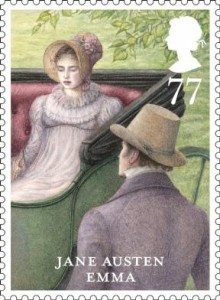
The Royal Mail is coming out with stamps for each one of the novels.

Austen stamp

It’s a good time to reread Pride and Prejudice, the book that broke Austen out of obscurity, January being the novel’s 200th anniversary. And perhaps to rediscover its lesser sung gem, Lydia, silly and brash.

Lydia Bennet had more fun

Still fresh enough for a bumpersticker.

1 Comment

Filed under Fiction, Jean Zimmerman, Knitting, Writers

Sock and Story

To some, knitting a sock might seem boring. All the world is talking today about Armstrong’s drug confession, about Teo, about the Americans abducted in Algeria. The exciting narratives of the world.

To me, it is high drama.

continued sock

The piling on of tiny knotted nuggets of sock yarn. The beginning a story of whether I can do this thing at all, this task I’ve set my mind to. I feel mildly victorious, not for finishing a chapter or a book or even a haiku, this time, but for finishing a row without dropping a stitch. And then, more amazing, dropping a stitch and managing to fix it with a needle and a tiny crochet hook. I’ve also added extra stitches and successfully taken them away, and mistakenly dropped loops off the needle and fetched them up before they were lost forever. Now that’s progress, and all in seven rows. Making mistakes, fixing them.

Story hung heavy in the air  last night when I returned to the Union League clubhouse after visiting for their December Book Fair, this time to give a talk for members about I.N. Phelps Stokes and Edith Minturn.

This is why you go to the Union League if you’re lucky enough to be invited: besides the fine wines, passed hot hors d’oeuvres and rare roast beef, besides the vitrines of toy soldiers (a long-term loan from one collector, who personally dusts all 15,000 of the figures when he visits once a year), besides the animated, literate audience, they give you a thank you gift.

A bust of Abraham Lincoln engraved with your name.

Lincoln bust

Throughout the evening, everyone liked to tell the tale of the Union League’s involvement in the Civil War, how it was formed to support Lincoln, how it sponsored two Negro battalions, how it opened its commodious pockets to fund the good guys. Hence the name.

The story I told over dessert intertwined with theirs. I wrote about Edith Minturn, whose grandfather, Robert Bowne Minturn, was the first president of the club.

Robert Bowne Minturn

Minturn came from an illustrious shipping family, grew up in Manhattan, received some education in England, and was as well known for his charitable works as he was for his business acumen. He was one of the people behind the establishment of Central Park – then called The Central Park — along with his firebrand wife, Anna Mary Wendell. He created an association for bettering the lot of the poor of New York. He was passionately opposed to slavery. A story has him buying a number of slaves in order to set them free.

The Union League would appear to be a rather reactionary place now, but it took a progressive stance back in the 19th century, when the Draft Riots tore apart New York City and you literally took your life in your hands to back President Lincoln. The club did important things, has a good story to tell even now.

On my way back home, Pershing Place, the street near Grand Central Station, was blocked, oddly, by a series of horse trailers, with three sleek mares chomping out of gunny sacks hung from the side of one vehicle. For a moment I felt transported to the time of the Union League’s founding, when these horses would have made for an ordinary sight on a snowy January night. Now a crowd was clicking away with camera-phones, wanting a story, an illustrated tale to send a friend, to tell about our night in New York.

More story, in the train station, with Klieg lights and corridors blocked off under the western staircase. Blocked off, you say? New Yorkers will not be denied.

film shoot

The hordes needed a good sighting of the hats, and it was all the production guys could do to wrap them them back around to the waiting room. It was late, 10pm, after a long day that started with slush on the ground, but we all wanted to know: What’s the story here? Is it a video, a movie, a commercial? What?

Back, back, called the exasperated production guy. We’re gonna do this shot a million more times.

That’s alright, I’m done with that business. I’m going back to my own small but crucial narrative, the story of a sock.

1 Comment

Filed under History, Jean Zimmerman, Knitting, Love, Fiercely, Writing

Get Your Socks On

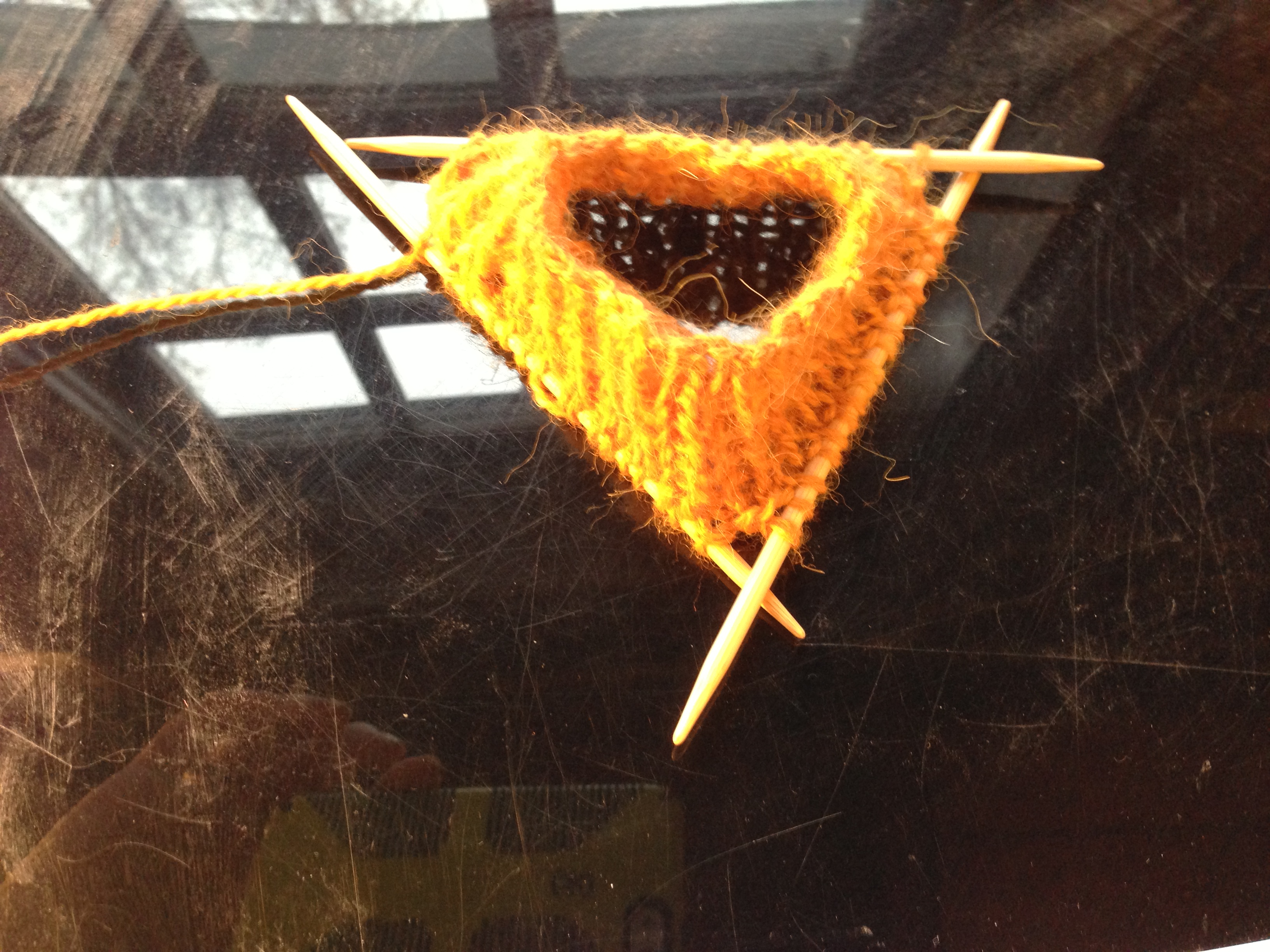
This be a sock.

new sock

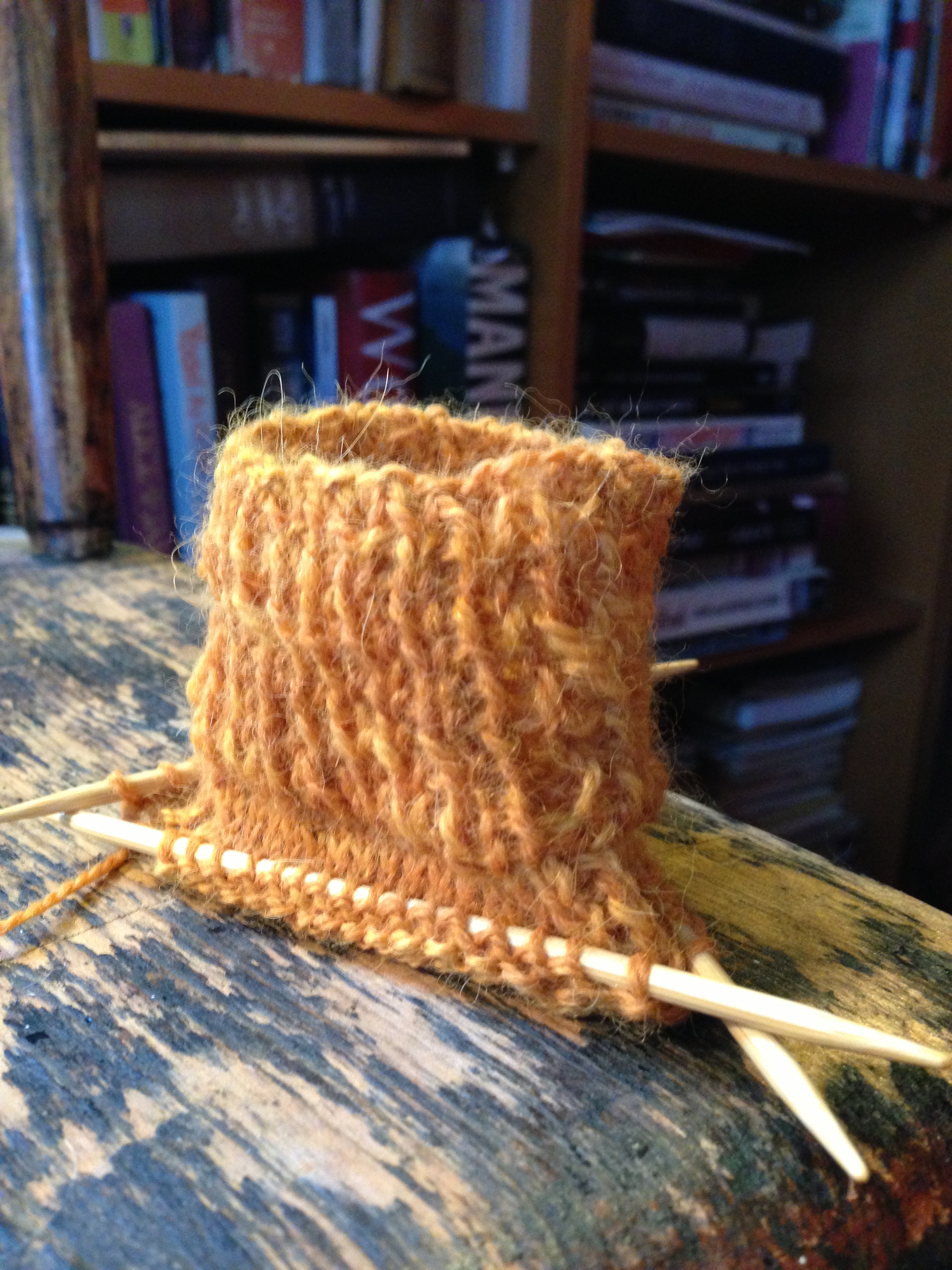
I started it today, and it is one of those tasks that is absolutely simple and terrifyingly complex at the same time. The cozy pumpkin color belies the difficulty – you have to juggle these four two-pointed toothpicks and tiny-gauge sock yarn and somehow get it to all hang together. First, the ribbed top, then the body, then the heel and the gusset and a toe. I’m not even sure yet what a gusset does.
The whole time I’m beginning to learn the technique – from a master knitter – I’m distracted by the thing’s similarity to the Ojo de Dios, the God’s Eye, which originated with the Huichol Indians of Jalisco, Mexico. Also called a Sikuli, which means “the power to see and understand things unknown.” When a child is born, the central eye is woven by the father on perpendicular sticks.
gods-eye-003

Then an eye, or strand of color, is added for every year of the child’s life until the child reaches the age of five. The eye is the source of visions, power and enlightenment. The colors have different meanings: red equals life itself; yellow equals the sun, moon and stars; blue is the sky and water; brown the soil; green represents plants; black, death.
My new sock is my Sikuli. Albeit a single-tone Sikuli, a pumpkin Sikuli. Let’s say pumpkin means… calm, mellow, the value of the non-frenetic. A sacred meaning for today.

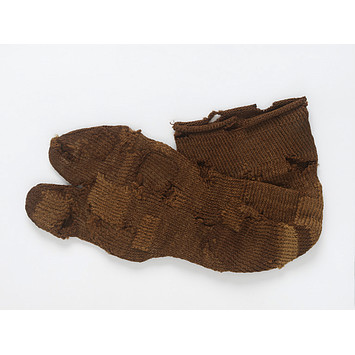
Socks have always been sacred. Historians say that the earliest evidence of knitted clothing found were fragments of socks that were made in Egypt.

brown 2 toed socksThis two-toed number (sandal-ready) came off of a single needle but is remarkably like the knitting we see today. It was recovered in the Christian burial ground of the late Roman period in the present day city of Bahnasa in Egypt, made between 410-540 ad.

Islamic socks had dazzling designs.

historyIslamicSock

What was life like before it was possible to keep your toes warm? Try to imagine a Viking going to sea with cold-numb feet. Ancient shoes have been dug up that were stuffed with tufts of grass for warmth.

By the time the rich could afford it, in the late middle ages, stylish stockings had been devised.

historyhose1640

It was men who laboriously crafted these luxury items from 1640, with their tiny thread count and delicate designs. The first, all-male trade union devoted to knitting professionals was founded in 1527 in Paris. The business moved to England. By the late 1600s, millions of stockings were exported from Britain to various parts of Europe.

Women took it up.

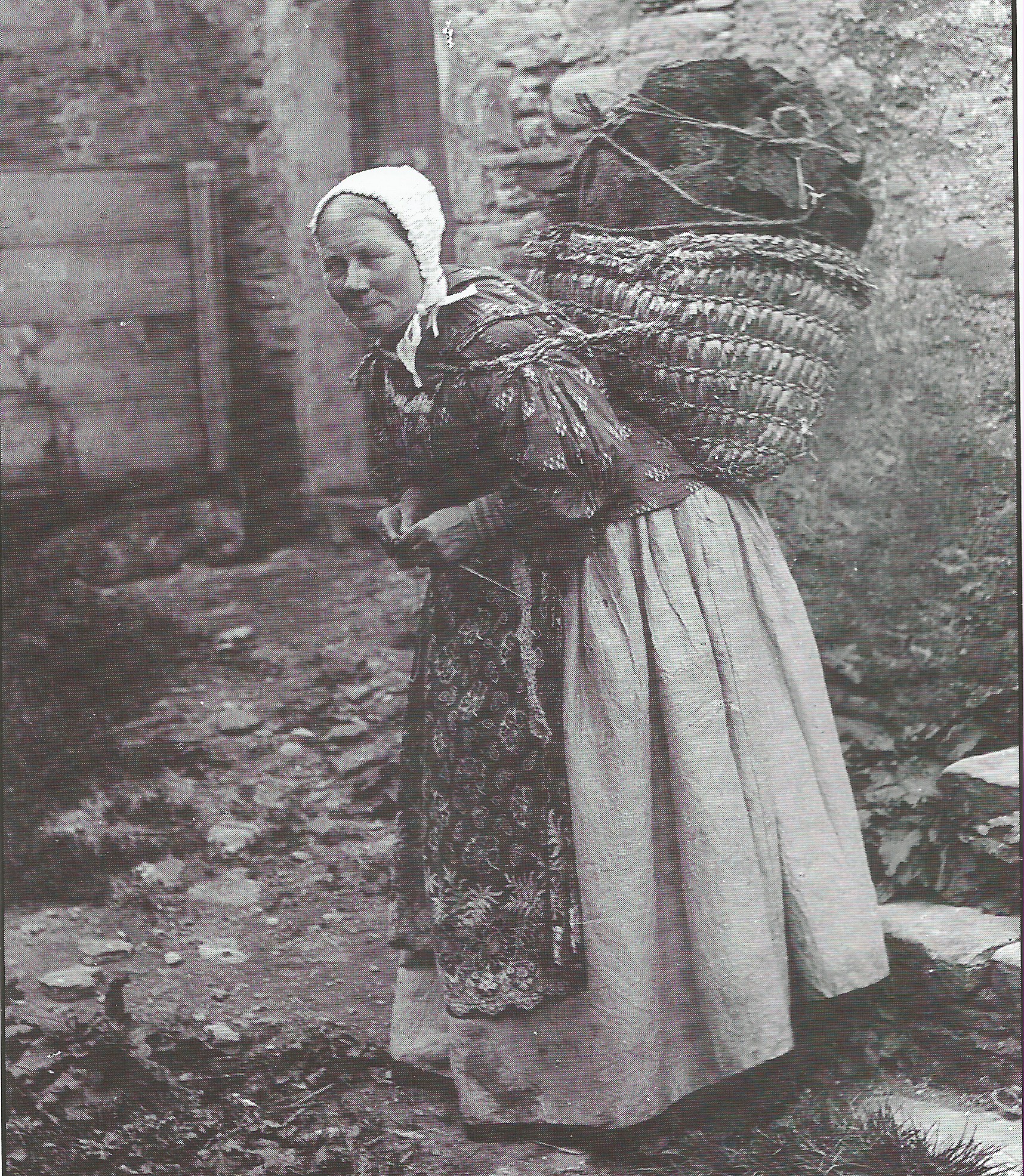
Knitter

(Shetland knitter from Nancy Bush’s formidable Folk Socks.)

Somehow we managed to walk and knit, rock a baby and knit, stir a soup and knit. Things could go wrong in a household, in a life, but everybody needed socks.

Machine knitting relieved a carpal tunnel epidemic.

14socks

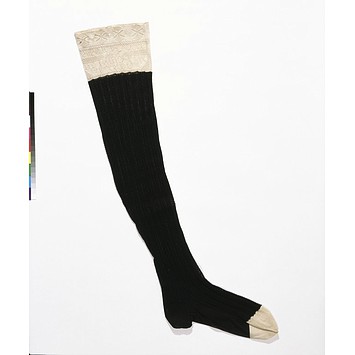
By now stocks had sexy garters and such. I think I’d like to have lived in 1851 just to slip this one on.

machine knitted stocking 1851

But there was still something about the hand-knit stocking, as witness this 1942 British poster. In a trench, would you rather have yer ma’s woolly sock or the cheap department store model?

1942 British poster

My favorites originated with the heritage sheep at Stone Barns, the farm near my house.

maw

So warm and natural, wearing them is almost like wrapping my feet in sun-toasted grass. They fuel my work, my play, and even my ability to knit things I’ve never knitted before.

Please knit now.

1 Comment

Filed under History, Jean Zimmerman, Knitting

The Thaw

Birds on promenade in this wet warm weather: a downy woodpecker and a cardinal side by side on the magnolia this morning, each with their bright red, and a humbler chickadee foraging on the ground.

Yesterday a ring-necked pheasant fluttered across the road in front of the car, its bottle-green collar glowing in the dusk.

Oliver tracks furiously through the woods, camouflaged perfectly against the leaves, bark and black earth.

woods

The deer better take cover.

Oliver in leaves

Leave a comment

Filed under Dogs, Jean Zimmerman, Nature

Road Songs

A long drive through the fog this morning to Connecticut to visit a possible summering place, listening to road music on the way, the other cars ghosts on the pavement. We took a curvy highway through the country, passing gems like this weathered, crumbling wooden barn at a gas station.

quonset

Road Runner, the best of all the road songs. Joan Jett does it justice, substituting New York City for Massachusetts and FM for AM but growling the melody with the passion it deserves. Then back to the bible, Jonathan Richman, his ecstatic warble about driving past the Stop and Shop…

In Gil’s long history with cars, two were formative, his grandmother’s two-tone Studebaker Hawk, which he was allowed to sit in but never drove, and the 1949 Dodge pickup he painted red and black with a broom in front of his honeymoon apartment on Washington Street. He built a poptop out of wood with a canvas flap and slapped a yin yang symbol on it and drove out to Boulder to follow his dreams.

dodges

Neil Young’s Long May You Run, the finest love song to a machine. Your chrome heart shining in the sun.  It was a hearse.

I never had a car growing up. The three of us ran my mothers Impala into the ground instead. I always liked gazing out the window, and falling asleep with my head lolling on my chest. But I lived in Manhattan long enough that my license expired, and it took me years to love to drive. Anyway I never had a favorite vehicle – I’ve always thought we should go back to horses for daily transportation.

Cars and music are naturally enmeshed — when I listen to Springsteen’s Racing in the Street, now that I am old and soggy rather than young and snappy, the image of young people like I was once cruising in the dusk pierces me. Or when Tom Waits sings Diamonds on my Windshield, which he compares to tears from heaven. Or L.A.Freeway, delivered by Bill Hearne, with its chorus of escape and flight: If I could just get off of that L.A. Freeway, without getting killed or caught.

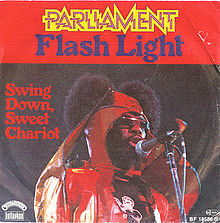
One of the finest musical moments in a car comes in the screen adaptation of Stephen King’s Misery when writer James Caan has just put the finishing touches on his latest novel, sipped champagne, toked on a ceremonial cigarette, and started down a blizzarding mountain road to deliver his opus. On the radio, perfectly timed to his mood: Shotgun by Junior Walker and the All Stars (misremembered by me today as Flash Light by Parliament, an oddly similar song that would be equally suited to manuscript completion: Everyone’s got a little light under the sun.).

220px-Flashlight45

And skidding into the ravine, as we witness it in the movie, the writer goes to break both his legs, he was feeling just too good about his book.

What’s your favorite road song?

2 Comments

Filed under Jean Zimmerman, Music