Category Archives: History

Iconography/Orphanmaster

Watchung Booksellers in Montclair last night was cool, with a crack of thunder and streaks of lightning out the window just as I was reading a scary passage from the book.

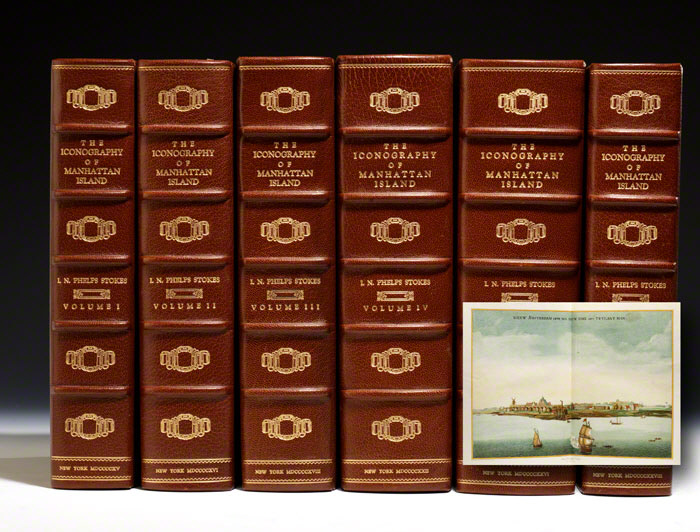
A lot of people wanted to know where I did the research for The Orphanmaster. The easy answer is: The Iconography of Manhattan Island, the brilliant compendium of all maps, views and information about New York from long before it was called New York. Published in 1926 and still available in research libraries (and my home library, I’m happy to say), it is a Manhattan history lover’s dream. And did I mention that the huge tome’s creator was I.N. Phelps Stokes, subject along with his beautiful wife Edith Minturn of my recent book Love, Fiercely: A Gilded Age Romance. Theirs was a charmed, fabulously wealthy life that had impossible highs and ultimately spiraled down into difficulty and poverty, largely because of Stokes’ obsessive love affair with The Iconography. The fact remains that without The Iconography there would be no Orphanmaster. I obtained so much period detail from this masterful, 30-pound set of volumes.

An Original Set, circa 1926

Leave a comment

Filed under Fiction, History, Jean Zimmerman, Love, Fiercely, Publishing, The Orphanmaster, Writing

The Orphanmaster Origins

A little bit about how The Orphanmaster came to be: For years I have written nonfiction. Never a novel. If I ever thought about writing fiction, I pushed it out of my head, saying, That’s not me, that’s not something I could ever do.

I began to think of myself as a writer when I was small, and experimented with different forms, getting a Masters of Fine Arts in Poetry before turning to the world of facts, of reality, of history and biography, of nonfiction. Which I love.

A few years ago I wrote a book like that, a work of colonial history that featured a strong, determined woman in 1660s New Amsterdam. Margaret Hardenbroeck worked brilliantly in the fur trade, She was so driven that by the time she died she was the richest woman in New York.

I enjoyed writing about that era, when fur was king, and when Manhattan featured a fluid, uneasy mix of peoples—eighteen languages spoken on the street! A threshold time, just before the British invasion, brutal and exciting at once. But I was frustrated by the paltry amount of personal information I could get about Margaret. I wanted to go deeper.

The Orphanmaster’s central character, Blandine van Couvering, came out of that desire. Creating the fictional persona of Blandine, I could write around the gaps of history, fill in the psychological spaces of my character. I could deepen and enlarge upon the strength and intelligence of this real woman, plumb her soul, discover her sense of humor. And give her the wardrobe she deserved.

At the same time, something else about the period haunted me—the idea of the orphanmaster, which I’d come across in writing about New Amsterdam, a real government post that to me sounded spooky and vaguely nefarious. An orphanmaster is actually someone charged with protecting the many children on Manhattan who have lost their parents. But I always felt there was a mystery here, a story that was not all sweetness and light.

Still I hesitated. I was sitting on all my notebooks filled with rich details about New York before it was called New York, I had a heroine, a theme, even the beginnings of a plot. Why don’t you use all that stuff? my encouraging husband kept asking. Could I possibly write fiction? Just write me a murder, he said.

That was the beginning. Many chapters and plot twists later, I am here to tell you that writing The Orphanmaster was as challenging as I’d imagined it would be, but far more rewarding. There is nothing like seeing your characters spring up out of the ground as you go along, to feel every morning as you sit down at your computer that, Today, anything can happen!

October 8, 1663, the island of Manhattan. An early blizzard….
Leave a comment

Filed under Fiction, History, Jean Zimmerman, The Orphanmaster, Writing

An Orphanmaster Holiday

Everyone have a glorious Fourth.

In 1663, at the time of The Orphanmaster, not only was there no Fourth on Manhattan, there were no pyrotechnics, no sparklers, no cherry bombs. Of course festivities existed, such as Kermis, with entertainments like pulling the goose, when organizers hung a goose by its feet and celebrants charged under it with the intent of pulling down the bird. Feathers flew, squawking, likely some bloodshed. And there was always strong drink.

Some things don’t change.

2 Comments

Filed under History, Jean Zimmerman, The Orphanmaster

The Orphanmaster Trades Beads

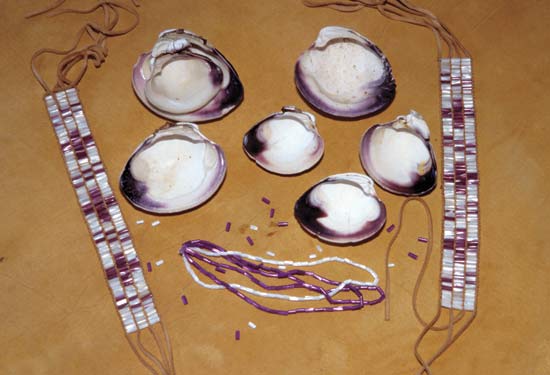
Book Passage in Marin County offers a wonderful environment to present about a book. I got a bunch of good questions after my slide show, including one about seewan, or wampum. What is it, actually?

Wampum beads were carved from the shell of the quahog clam. In colonial New Amsterdam, they were made into ropes, then used as currency and, for Native Americans, had a ceremonial function. The purple shell was more valuable than the white. Both are beautiful, even if their value is long gone.

Leave a comment

Filed under History, Jean Zimmerman, Publishing, The Orphanmaster

USA Today Reviews the Orphanmaster

USA Today review of The Orphanmaster!

“As in the best historical fiction, she has created a kind of truce between the authority of the past and the accessibility of the present, revealing to us what it once meant to be alive, and what that history means to us now.”

Leave a comment

Filed under History, Jean Zimmerman, Publishing, The Orphanmaster

Give a Hollar

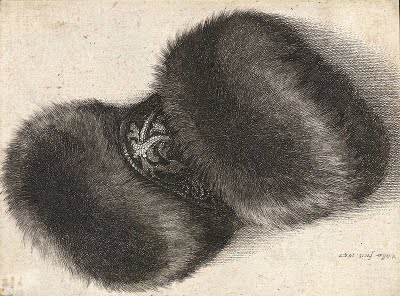
Hollar Hand Muff

Wenceslas Hollar has been called the finest engraver of the seventeenth century. He was certainly an amazing depicter of fur hand muffs.

A Cap and a Muff

These are his images. Hollar came to London early in his career and basically never left, intent as he was upon documenting all he saw around him, including the Great Fire of London.

A muff could not have been essential in those days — people did wear gloves, after all, fine hand-stitched leather gloves — but they seemed to be necessary as a fashion statement. I don’t know if you ever had one, but I fondly remember the white rabbit fur muff I was given as a child. The seventeenth century became the heyday of fur, much of which came from America (with pelts traded avidly  by Blandine van Couvering of The Orphanmaster), and a hand muff could be mink or bear or even muskrat, but the softer and smoother  the better.

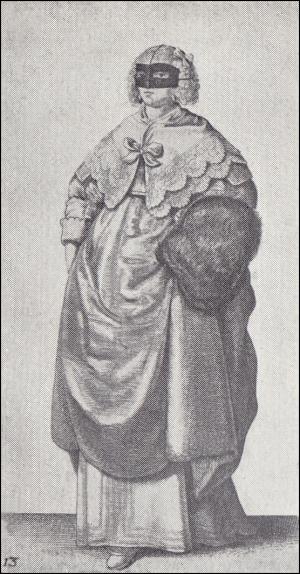
Mask and Muff

It’s not trick or treat. This finely attired woman wears a face mask, what was in the mid-1700s called a sun-expelling mask, in order to protect her delicate complexion. The muff looks almost too heavy to carry.

Another thing: men of the period wore hand muffs also. Only theirs were bigger. At one point in The Orphanmaster, when Blandine and Drummond are beginning to dig into the mystery of the orphan disappearances, they meet on the New Bridge that arches over the Canal, overlooking the hills of Brooklyn. It’s a cold Winter morning, and both of them carry handsome fur muffs (Blandine’s is silver fox). Fashion forward, and ready to track down a murderer.

Leave a comment

Filed under Fashion, History, Jean Zimmerman, The Orphanmaster

Evoking a Quieter Past

Dutch Windmill 1

The sounds of a Dutch windmill, its creak and whoosh. Think of it next time you make your way down Broadway south of Wall Street.

Leave a comment

Filed under History, Jean Zimmerman

The Oval Table

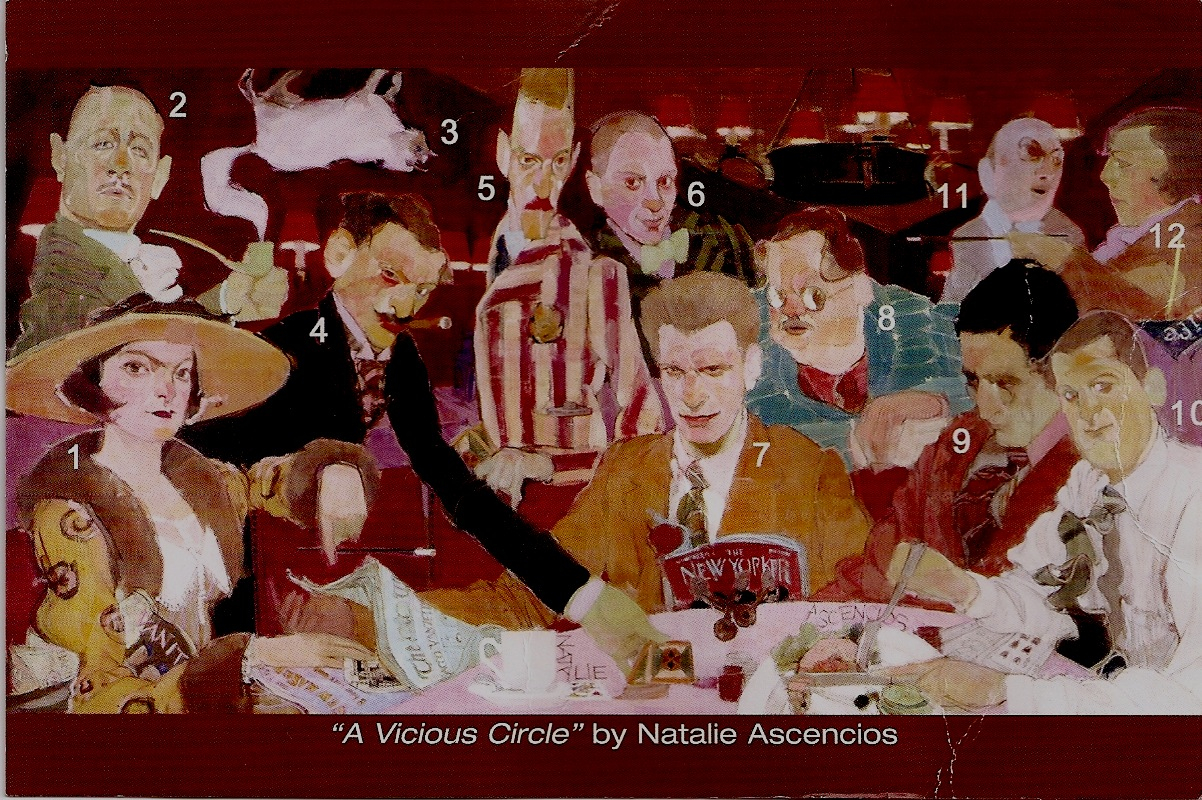
Last night I participated in an event at the Algonquin on 44th Street cohosted by the hotel and Penguin.

We seated ourselves around the round (actually, now oval) table. We have an oval table at our house but what happens around it is not so witty.

Another Parker-ism: You can lead a whore to culture but you can’t make her drink. (She was challenged to use “horticulture” in a sentence.)

I settled myself in the spot of Dorothy Parker (1). The seat was still warm. My fellow author David R. Gilham took his place beside me and we talked, answered questions and read a bit for a good-humored audience.

Can you take a guess at some of the other faces above?

2. Robert Benchley

6. Harpo Marx

9. George S. Kaufman

12. Edna Ferber

3. Matilda, the hotel mascot (now replaced by another Matilda)

By a few sentences in, my butterflies had flown, and I was ready to spill the tale of a beautiful, brave New Amsterdam woman who investigates a series of grisly killings alongside a sensitive stud soldier. The victims are orphans, and the killer may be a supernatural Indian spirit.

What would Dorothy Parker make of that?

Leave a comment

Filed under Fiction, History, Jean Zimmerman, Publishing, The Orphanmaster, Writing

Live at the Algonquin

Next week I’ll be serving on a panel of writers in an event at the Algonquin Hotel, 59 West 44th Street  (between 5th & 6th Aves). The event is a collaboration of the Hotel, newly spruced up, and my publisher, Penguin, as part of BEA (BookExpo America) week activities. The idea in particular is to celebrate the history and spirit of the Roundtable, in the back of the hotel when you walk in — best known for the lethal witticisms of Dorothy Parker, Robert Benchley, Bennet Cerf, et al. — which the Algonquin wants to re-imagine for the 21st century.

Dorothy Parker: “What fresh hell is this?”

I’ll be talking about the fresh hell of The Orphanmaster, and how it came to be. If you feel like coming, the evening’s open to the public as well as hotel patrons. It’s 5:30 to 6:30 on Wednesday, June 6th. I doubt dry martinis will be gratis, but they’re pretty good here anyway.

More Parker:

“I like to have a martini,
Two at the very most.
After three I’m under the table,
after four I’m under my host.”

Parker

Leave a comment

Filed under Fiction, History, Jean Zimmerman, Publishing, The Orphanmaster, Writers

University Settlement

The staircase of Kingston bluestone showed most of its steps worn to a gentle concavity by the tens of thousands of people who have come through the building’s portals in the 125 years since it went up. University Settlement House represented  I.N. Phelps Stokes’ debut architectural effort. Carefully renovated and restored over the years to be useful in the present and yet respectful of the past, the structure still hums with activity. When I toured the place, preschoolers were eating a hot lunch, passing chili and rice around their knee-high table with utmost mannerliness.

University Settlement began in 1886 with six boys gathering two times a week in a Forsyth Street basement. At the time, more than 3,000 people lived in the typical Lower East Side block.  Immigrants poured into the neighborhood, most desperately in need of basic services. About ten years later a competition determined who would design an urgently needed new structure. Reformers like Stokes and some of his peers took a serious interest in changing conditions, their interest piqued by the galvanizing photography of Jacob Riis. In the new building, limestone and brick and five stories tall, a local could get a bath, take an English lesson, enroll in a kindergarten class (then a radical notion, when it was considered normal for children  to work in sweat shops). There was also the adventure of the Metropolitan Museum of Art sponsoring an exhibit of some of its finest works at the Settlement and, moved by the widespread interest evinced by locals in art, to finally open the its doors on Sunday to accommodate people who labored six days a week.

Jacob Riis Documented Tenement Dwellers

If you ever happen to enter the building (at Rivington and Eldridge Streets), you see the tall ceilings, the gracious dimensions, the intricate stone mosaic work underfoot. Huge sash windows admit copious amounts of light, something we take for granted but that for Lower East residents of the turn of the last century would be a blessing after the cramped, sunless tenements in which they resided.  I’m planning to come to the Settlement House some time in the Fall to give a talk about I.N. Phelps Stokes and Edith Minturn Stokes, their commitment to philanthropy, and what led a white shoe guy like Stokes to throw himself into designing the Settlement House. I hope people will come, if only to see those bluestone steps, worn by the tread of all those the Settlement has served over the years.

Leave a comment

Filed under History, Jean Zimmerman, Love, Fiercely

For Mothers

Mother’s Day is sometimes sneered at as a Hallmark Holiday, but that’s not how it began. Julia Ward Howe called for its institution in 1870 as a war protest that would instead uphold peace and motherhood around the world. The holiday wasn’t made official in the U.S. when it was proposed in 1908, but by 1909 forty-six states were holding Mother’s Day services. In 1914 Woodrow Wilson signed the holiday into law as the 2nd Sunday in May. In those days white carnations marked the occasion. Today my daughter gave me red tulips, chocolate covered strawberries and a day in a sculpture park.

Leave a comment

Filed under History, Home, Jean Zimmerman

Hudson Walk

We walked north along Haverstraw Bay on this blustery day, the Hudson choppy and the wind socking us in the face as we went. Croton redesigned its waterfront a few years back, eliminating native scrub and little overflow tidal pools from the river, replacing what was there with a concrete walkway and barren expanses of grass. A few tall trees remain, survivors, looking awkward. I couldn’t help but think of the past. This land west of the railroad could never be called pristine, it was all landfill, but still there was the illusion of this being a wild bank of the Hudson. And before the railroad came through in the 1830’s, you could actually walk down to the river’s edge, mosey around, fish, launch your skiff, whatever. Washington Irving, living on the Hudson a short distance downstream in Irvington, agonized when the railroad came through his back yard. Our experience of this fantastic waterway is so truncated now, and yet people swarm the concrete-grass park, yearning for a taste of the river.

Leave a comment

Filed under History, Jean Zimmerman, Nature

Victor of Aveyron

Back on line.

Did some research about feral children today. The question among those who philosophize about such creatures can be boiled down to this: Does a wild child possess a soul?

Victor, the wild boy of Aveyron, captured in 1800 and made famous by a book written by his tutor, Jean Marc Gaspard Itard, captivated Europe. He could run like the wind but was more likely to sit and rock silently — he only learned to pronounce two spoken words, “eau” and “oh Dieu”. But he responded like crazy to the weather outside the window, laughing at sunshine or gnashing his teeth, communing with the moon, racing outside to roll around in the snow. He could grow melancholy looking into a pool of water. One intellectual marveled at “the intensity of the boy’s sad pleasure in the natural world.”

I like that: sad pleasure.

Leave a comment

Filed under History, Jean Zimmerman

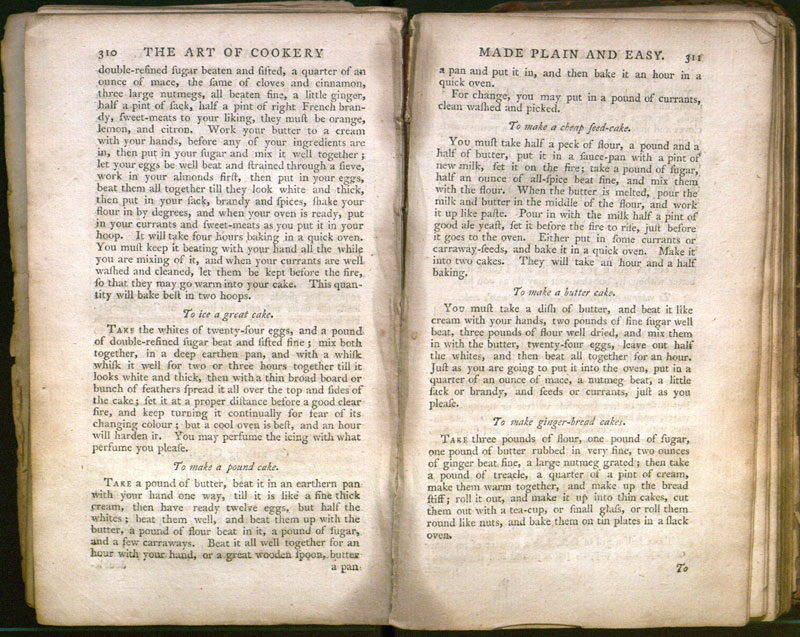
A Glasse Half Full

All she did was write the most popular British cookbook of the 18th century, and it led her into poverty, debtor’s prison, bankruptcy, and the selling off of her most valuable possession, the copyright for The Art of Cookery Made Plain and Easy, first published in 1747, with 20 editions to come. She rebounded with books on household management and The Compleat Confectionar. But no one would know Hannah Glasse’s true name until 1938, after a historian’s careful sleuthing, nearly 200 years after Glasse first created her receipts, as they were known then. Her simple pseudonym: A Lady.

What will you discover if you delve into Glasse’s masterwork now? You can, because facsimile’s have been printed by various publishers. You will find, in addition to wonderful recipes:

A certain cure for the bite of a mad dog.

LET the patient be blooded at the arm nine or ten ounces. Take the of the herb, called in Latin, lichen cinereus tareſtis ; in English, aſh coloued ground liver-wort, cleaned, dried, and powdered, half an ounce. Of black pepper powdered, two drams. Mix theſe well together, and divide the powder into four doſes, one of which muſt be taken every morning faſting, and four mornings ſuxxeſſively, in half a pint of cow’s milk warm. After theſe four doſes are taken, the patient muſt go into the cold bath, or a cold ſpring or river every morning faſting for a month. He muſt be dipt all over, but not to ſtay in (with his head above water) longer than half a minutee, if the water be very cold. After this he muſt go in three times a week for a fortnight longer.

The Art of Cookery

Read more of Glasse’s work at Celtnet: http://www.celtnet.org.uk/recipes/glasse-medicines-repellents-22.php#dogs

Leave a comment

Filed under Cooking, History, Home, Jean Zimmerman

Dutch Women

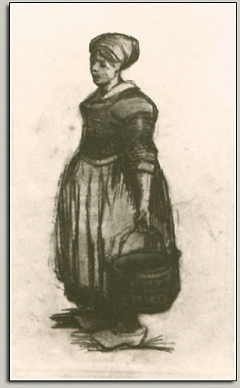
Dutch women of the 17th century were extraordinary. Free to marry whomever they chose, to get a basic education, to inherit equally with men, to represent themselves in court and to engage in commerce as they wished, they were powerhouses. Visitors to the Netherlands marveled at their moxie.

Van Gogh, Peasant Woman With a Bucket

I have posted an excerpt from The Women of the House that lays all this out in some detail, for those who want to know whether Blandine the she-merchant is exceptional in her independence. Well, Blandine is exceptional, of course, but she takes her place among a century of independent women.

Leave a comment

Filed under History, Jean Zimmerman