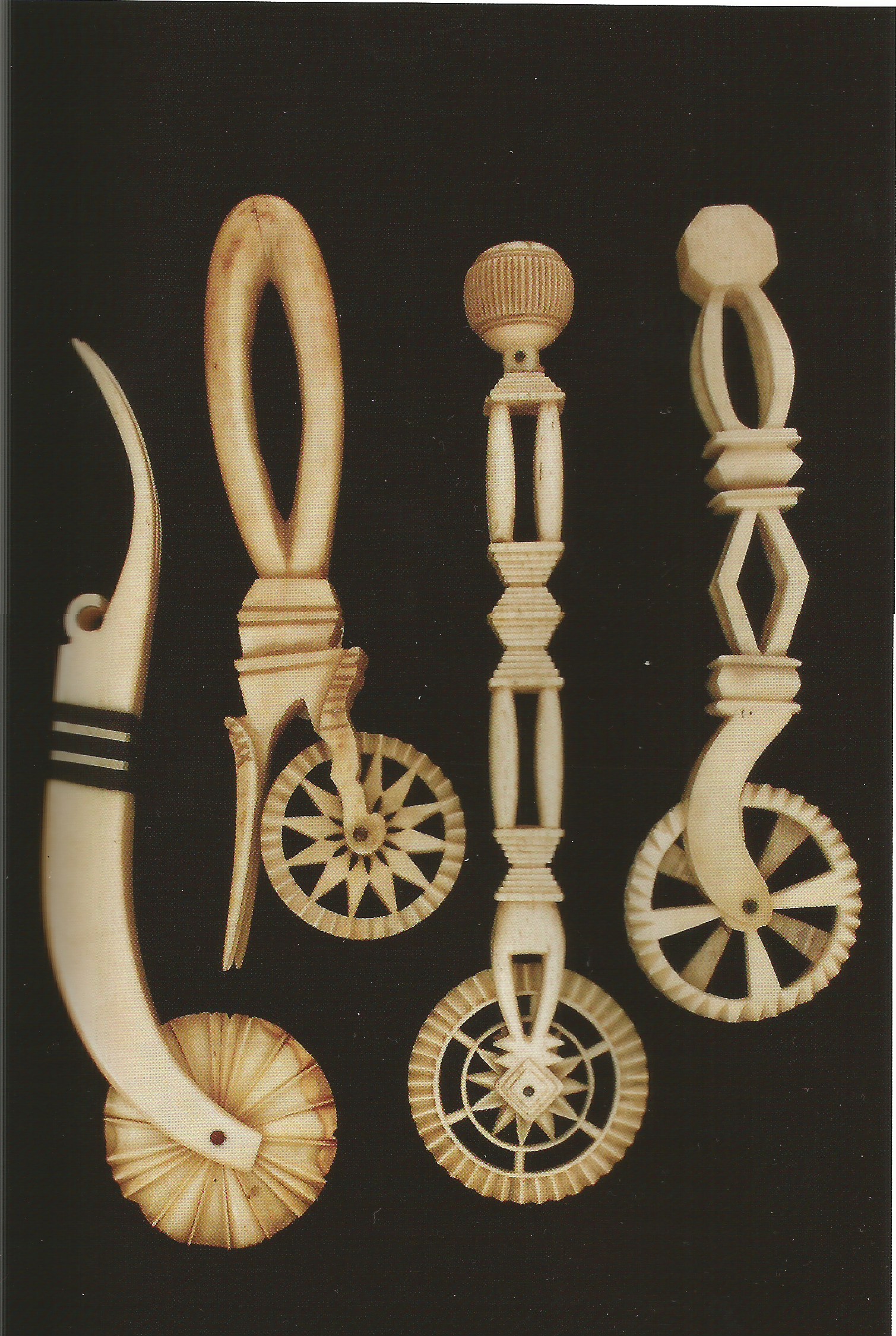
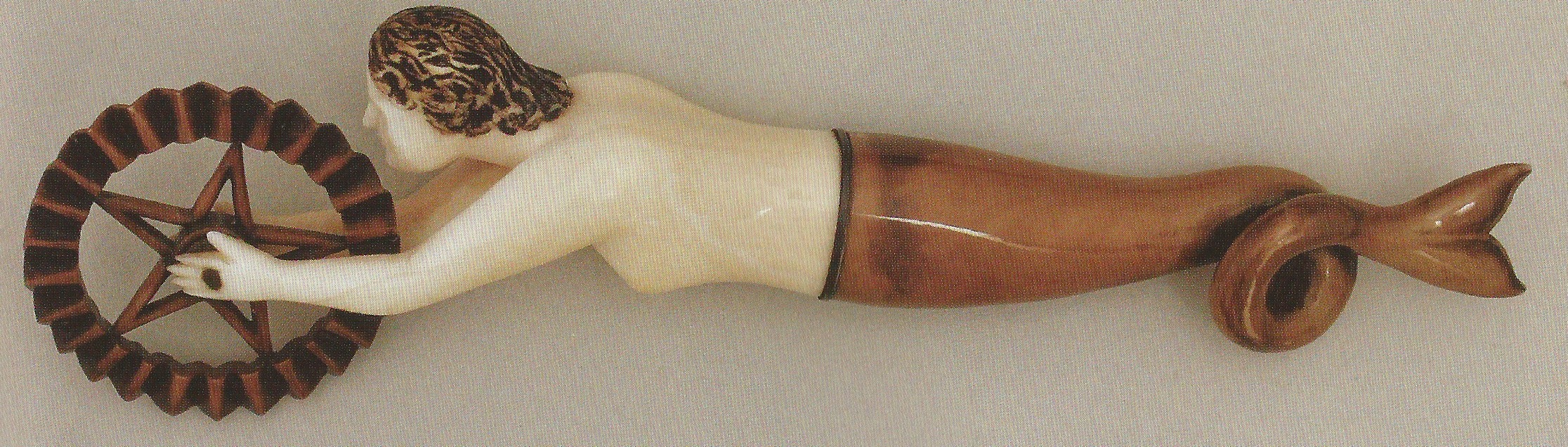
If I had the wherewithal to collect anything seriously, it would be scrimshaw. Not just any scrimshaw, but scrimshaw pie crimpers.
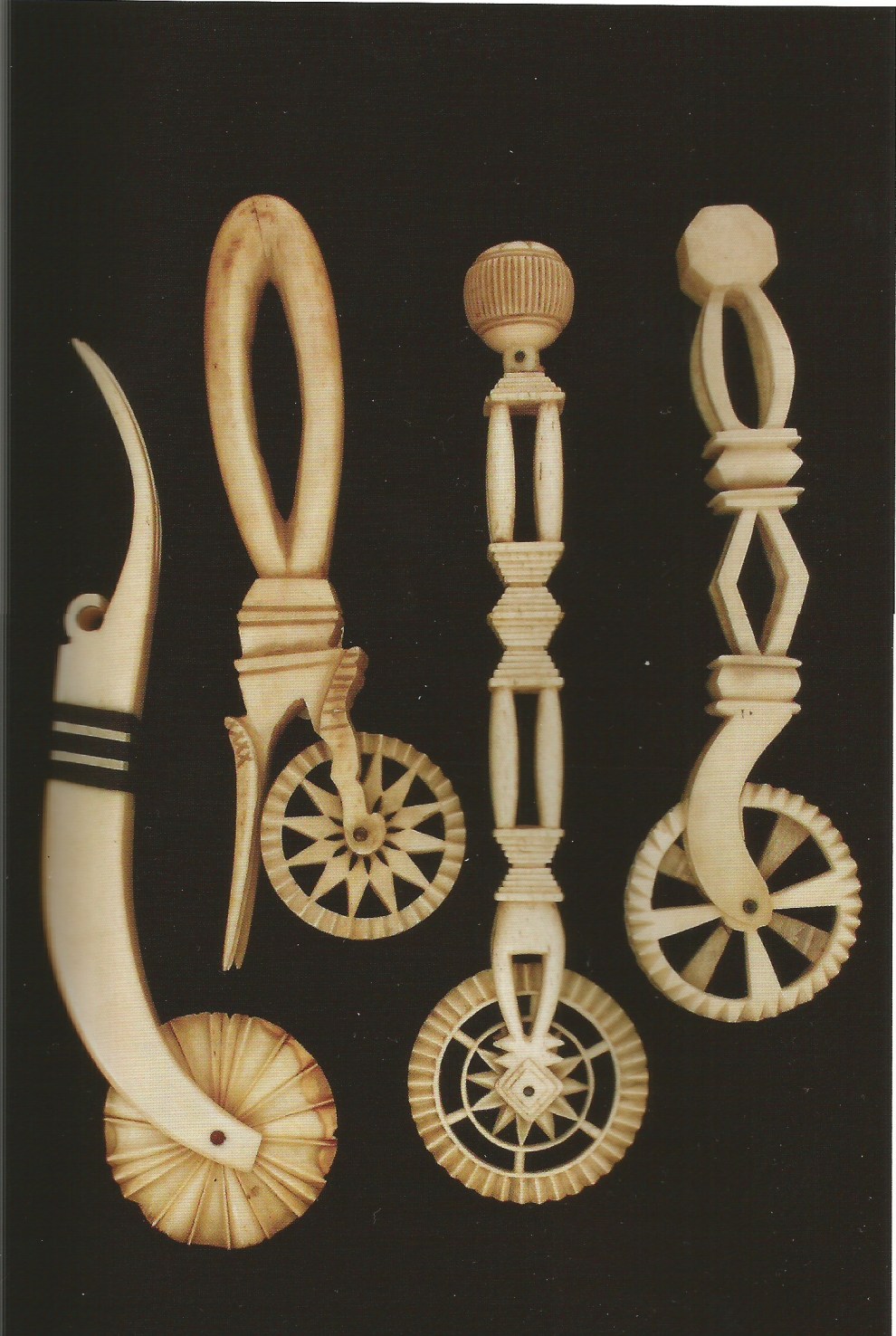
Sailors on whaling ships in the 19th century crafted crimpers by the thousand as presents for the wives, mothers, aunts, sisters-in-law they missed while at sea. Museum conservators who inherit these artifacts report flour residue clinging to the delicate yet utilitarian objects, evidence that they made a most practical kind of souvenir.
My favorite presents are they kind you wind up using every day. Humble beauty is the finest.
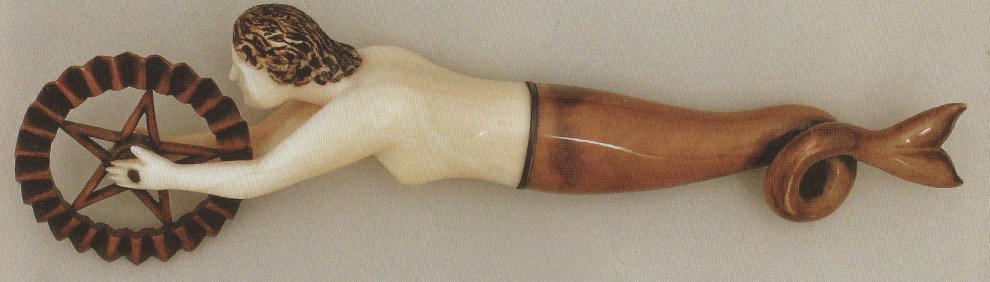
Crimpers could be made from whale teeth, walrus ivory, whalebone or wood. We don’t know who fabricated most of the ones that have been salvaged and catalogued, but we can imagine the artists liked their pie. If you go to Ingenious Contrivances, Curiously Carved: Scrimshaw in the New Bedford Whaling Museum, a book recently out that inspires with its photographs of beautiful, one-of-a-kind artifacts, you will find a startling number of these mellowed-by-time curiosities.
Pie. Inspired by pie. These guys, out at sea for weeks or months at a time, eating insect-drilled hardtack, were driven by visions of the pie at home to make their superlative crimpers. Pie can do that to people.

Any ingredient can be folded into a savory pie– steak or lobster, kidneys, parsnip and oysters. Whatever good stuff you have on hand. The Williamsburg Art of Cookery, or Accomplish’d Gentlewoman’s Companion was first printed in the year 1742. The author, William Parks, gives us a squab or robin pie, advocating braising the birds first, putting in the cavity of each a hard-boiled egg (chopped in the case of the tiny robin) adding butter, cream and bread crumbs and covering with a “rich Crust” before baking.
People of the Middle Ages loved their poultry pie, then called a coffin, and sometimes actually filled with the 4 and 20 birds of nursery rhyme fame. You’d bake the pie first, insert the birds, cut open the top in company and let them fly out to everyone’s awe. But so you wouldn’t be “altogether mocked,” according to a cookbook of the time, you’d best quick get out and serve an actual pie as well.

That pies in America were long stored in chests called “safes” attests to their near-mystical importance to our cuisine. As the country grew, a slice nearly always made itself available for a quick snack, eaten just as avidly for breakfast as dessert and often consumed at every meal.
But baking a pie intimidates home cooks today, hence the tasteless premade shells in supermarket dairy cases. “Be Swift and Deft” in handling pie dough, advised The American Woman’s Cookbook of 1945, and slash your top crust well. These are skills many of us lack, despite all the baking competitions on TV.

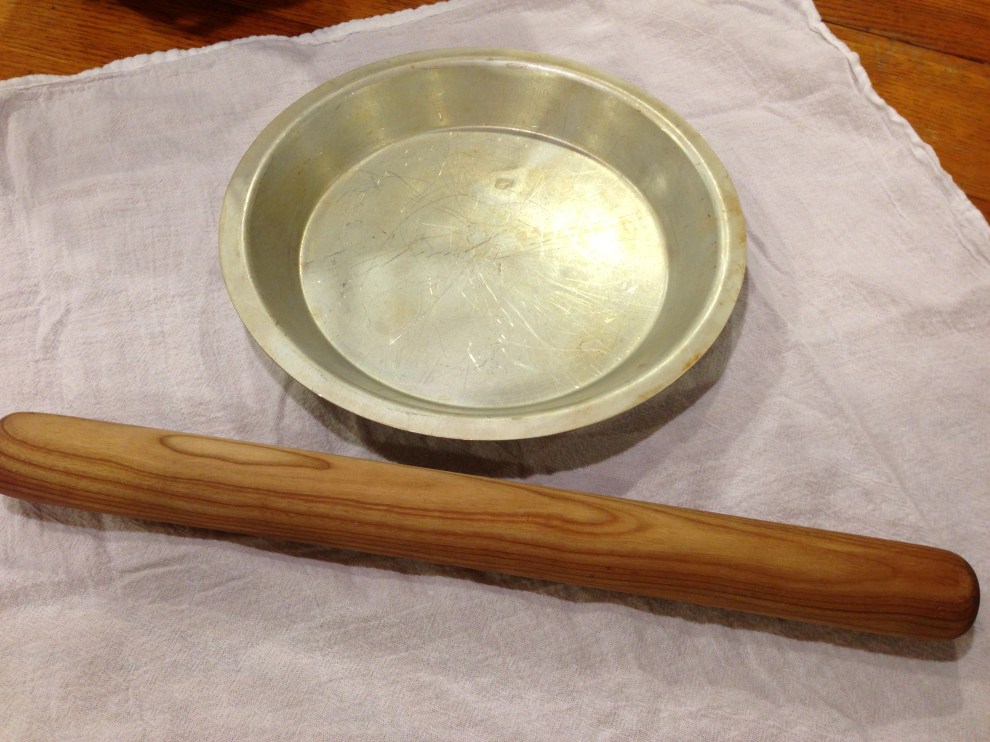
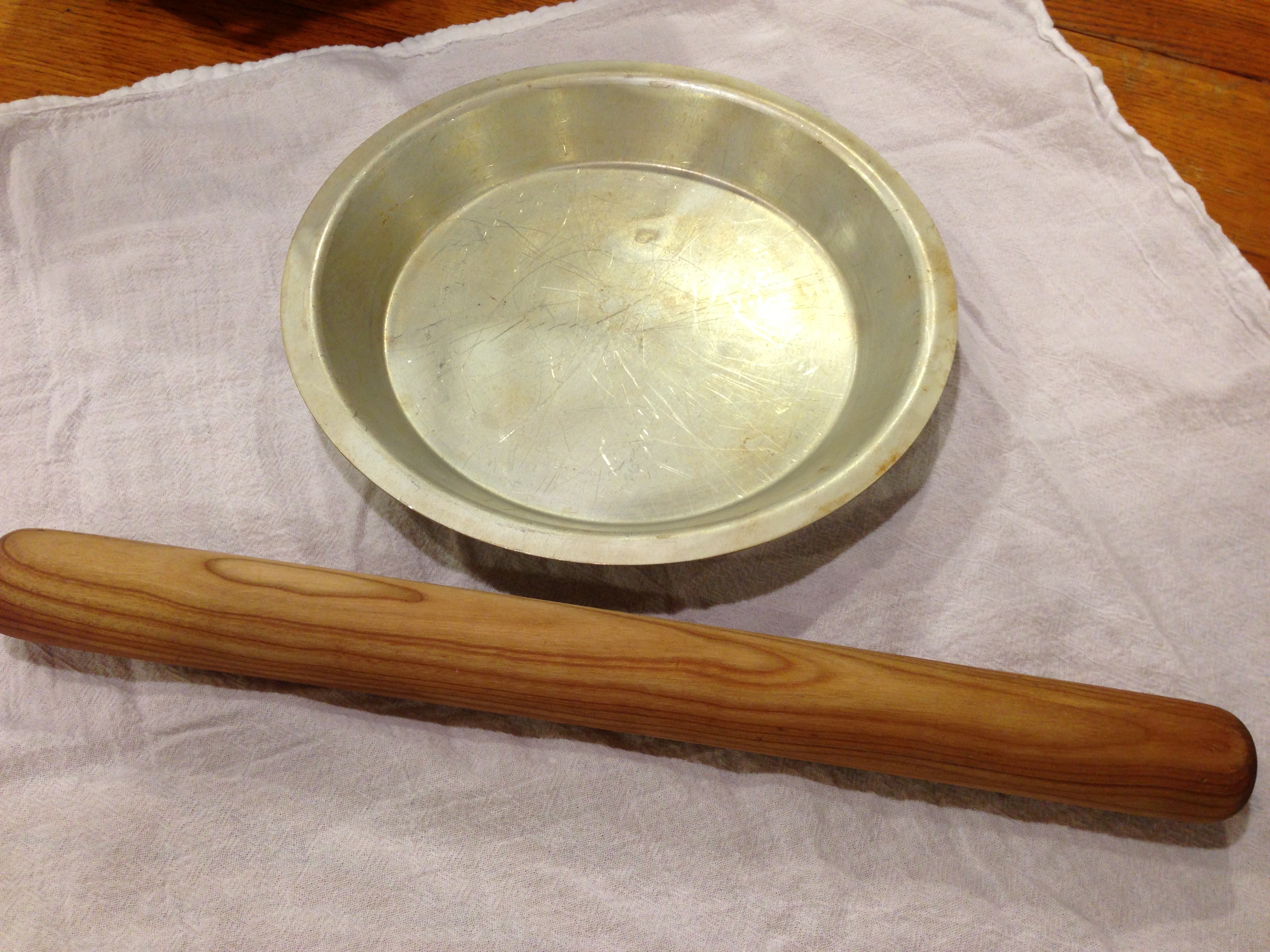
For those new to this blog, it’s unlikely you‘ll find me writing about climbing Kilimanjaro here; I don’t have the equipment or expertise. I can, however, scale a pie, in the privacy of my kitchen. Or your kitchen, for that matter, but I’d like to bring my hand-turned rolling pin with me, the finest in the land. (Also this basic aluminum pan, courtesy of Norske Nook in Osseo, Wisconsin, where they offer two dozen pies daily to stay or to go.)
A hint: leaf lard is the name for the fat taken from around the pigs kidneys and while it’s not a necessary ingredient in pie crust, using a bit gives the finished pastry a succulent snap. You won’t find leaf lard in the local Stop and Shop, only on the web or, if you’re as lucky as me, a local farmer’s market. Otherwise Crisco will have to do.
Simple Chicken Pot Pie
My family is pretty happy when this aroma wafts through the house.
For the crust, cut one stick sweet butter and a third cup leaf lard or shortening into three cups King Arthur flour and a couple pinches salt with a pastry cutter until it has the texture of coarse cornmeal. Add one cup (more or less) cold water (you can cool it with an ice cube) mixing with a fork until it the dough comes together. Form a ball and chill while you make the filling.
In a big skillet, saute two medium onions, chopped coarsely, in 2 T butter and 2 T oil. When the onions are lightly brown stir in a scant handful flour. Gradually add 3 to 4 cups broth (homemade if you have it, Swanson’s if not). Cook down until creamy. Season with generous salt and pepper.
Chop a couple of carrots and a couple of sticks of celery to taste, and about two cups of potatoes. Blanch them til barely tender, just a few minutes, in salted water. Drain.
Cut up about three cups of cooked chicken. You can now combine chicken and vegetables in the gravy. Throw in some frozen peas to taste.
Roll out the dough for the bottom crust and, picking it up on the edge of your rolling pin, fit it in the pie pan. Lay in the filling. Top it off with the second crust. Crimp the edges and poke some decorative holes in the top so the steam can escape.
Bake at 375 for an hour or until brown.
Tuck into a slice heartily, as if you’re a Nantucket sailor who just earned his sweetheart’s love with a whale tooth pie crimping wheel.


































 Jean Zimmerman