Category Archives: Art

James and James, Inc.

In the Scarsdale library today while I was browsing in the fiction aisles my glance fell on H. James – as it always seems to, no matter the thousands of authors there. I connected with my favorites, The American, The Europeans, as well as the ones everyone else loves best, The Wings of a Dove, The Golden Bowl, then noticed that nudged up next to the first of Henry’s volumes there on the shelf, Washington Square, stood 50 Shades Darker, by E.L. James. Then a line of 50 Shades volumes. Side by side, the two authors with their two big sellers, on the left a thoroughly contemporary exploration of happily abused womanhood, and then the equally popular vision from 1880 of  a young woman suffering psychological abuse at the hands of her favorite suitor, a bounder. Washington Square, of course, is perennially refreshed as The Heiress, now on Broadway with Jessica Chastain as Catherine Sloper.

Jessica_Chastain

Women are always getting their virtue endangered, and that predicament is always finding its way into literature. Who will save her? The question fascinates us.

Before James and James there were young ladies with better things to do than dally with bad men.

I speak of needlework.

embroidery

Visiting the Winter Antiques Show gave me a new appreciation of the subtleties within the craft, and of just how driven were its practitioners. My photo of a corner of just one piece suggests the three-dimensional artistry that a young girl could bring to her work at the beginning of the nineteenth century. This was the Austen era – when female industry with a needle was almost worshipped.

What I never knew before was how many different types of work there were. At the Show, Stephen and Carol Huber of Old Saybrook, Connecticut displayed a range far beyond your typical cross-stitched sampler, achieved by young students in schools on a linen background. No wonder they bill themselves as “America’s Preeminent Source for Girlhood Embroideries.”

silk embroidered picture

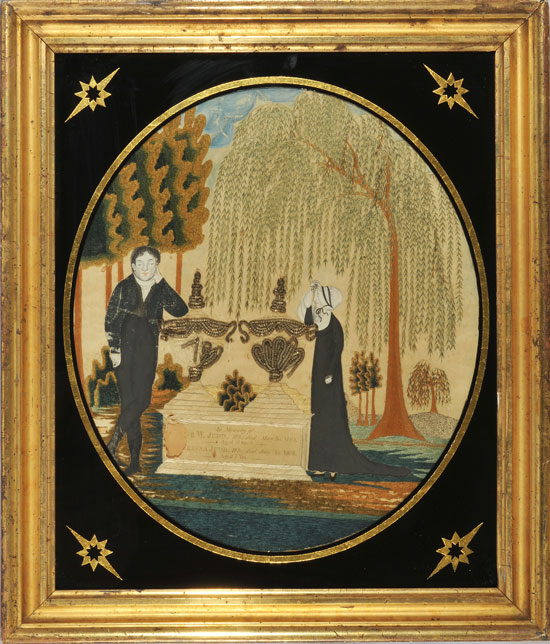
Some pictures display silk or chenille thread on a silk background that was painted with watercolors rather than worked with a needle, and depicted stories out of the bible or mythology. Some were memorials, the ones you see with a tomb or a weeping willow, sad subjects that were the expected mental domain of young cultured girls between 1780 and 1840.
Judd-memorial

Then there were canvaswork pictures. Huge and now highly collectible tableaux, often of hunt scenes but always with a pastoral background.

canvaswork

Even stumpwork: if you didn’t know, that means  a type of needlework from the mid seventeenth century. Some pieces have lasted and lasted as if it wrought in metal. They were made with heart.

stumpwork

When girls, young ladies, saved their own selves by the work of their hands, long before James and James.

1 Comment

Filed under Art, Fiction, History, Home, Jean Zimmerman

A Walking Antique

There was scrimshaw, of course. In all its various guises, carved on the plank-like jaw of a whale or sculpted into curio-style walking stick tops.

scrimshaw

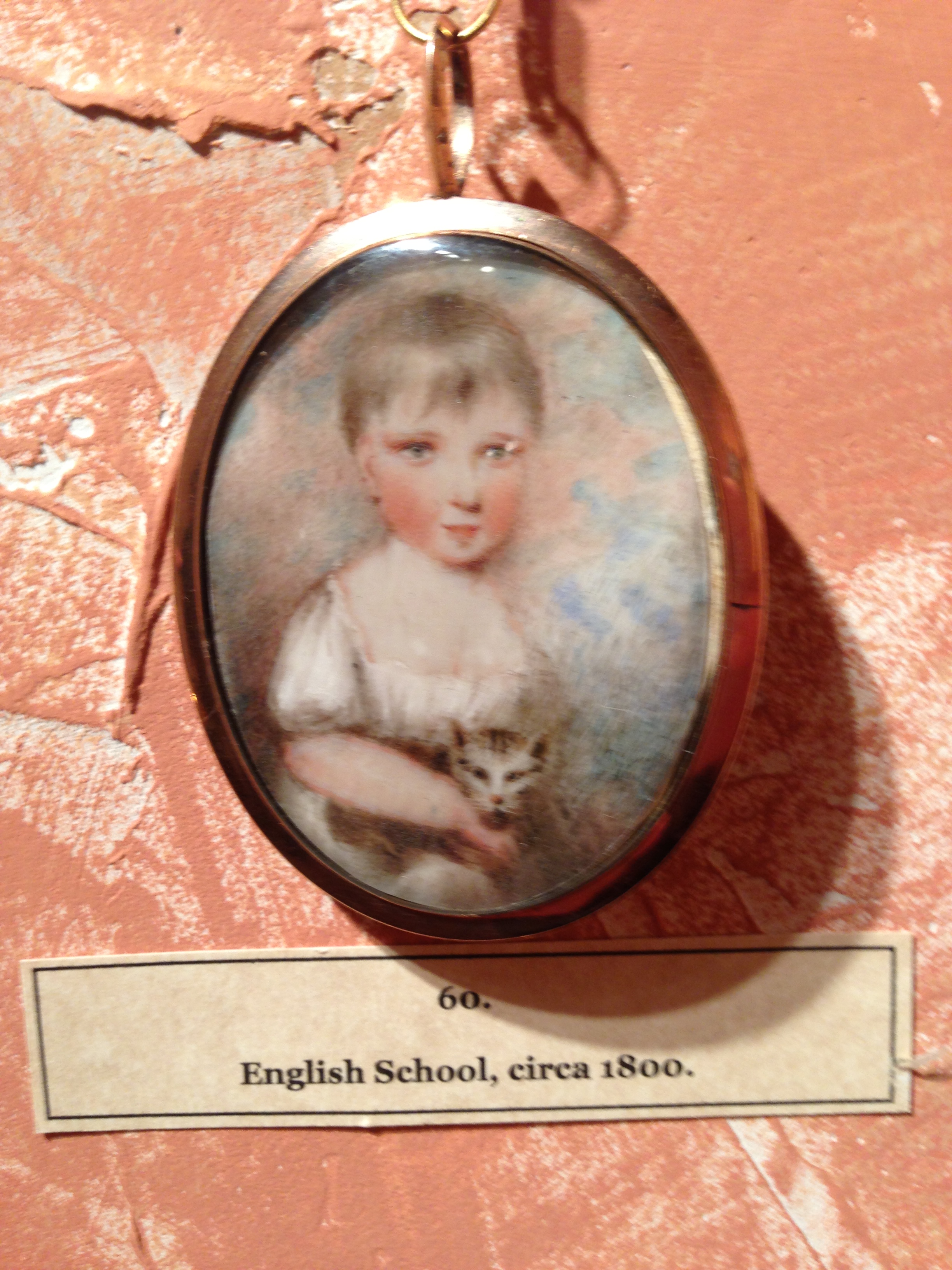
The 59th Annual Winter Antiques show had art from around the world and of every vintage, from the ancients to the ‘60s.  My friend Suzanne and I inspected miniature portraits, some with locks of hair tucked into secret locket pockets.

miniature girl

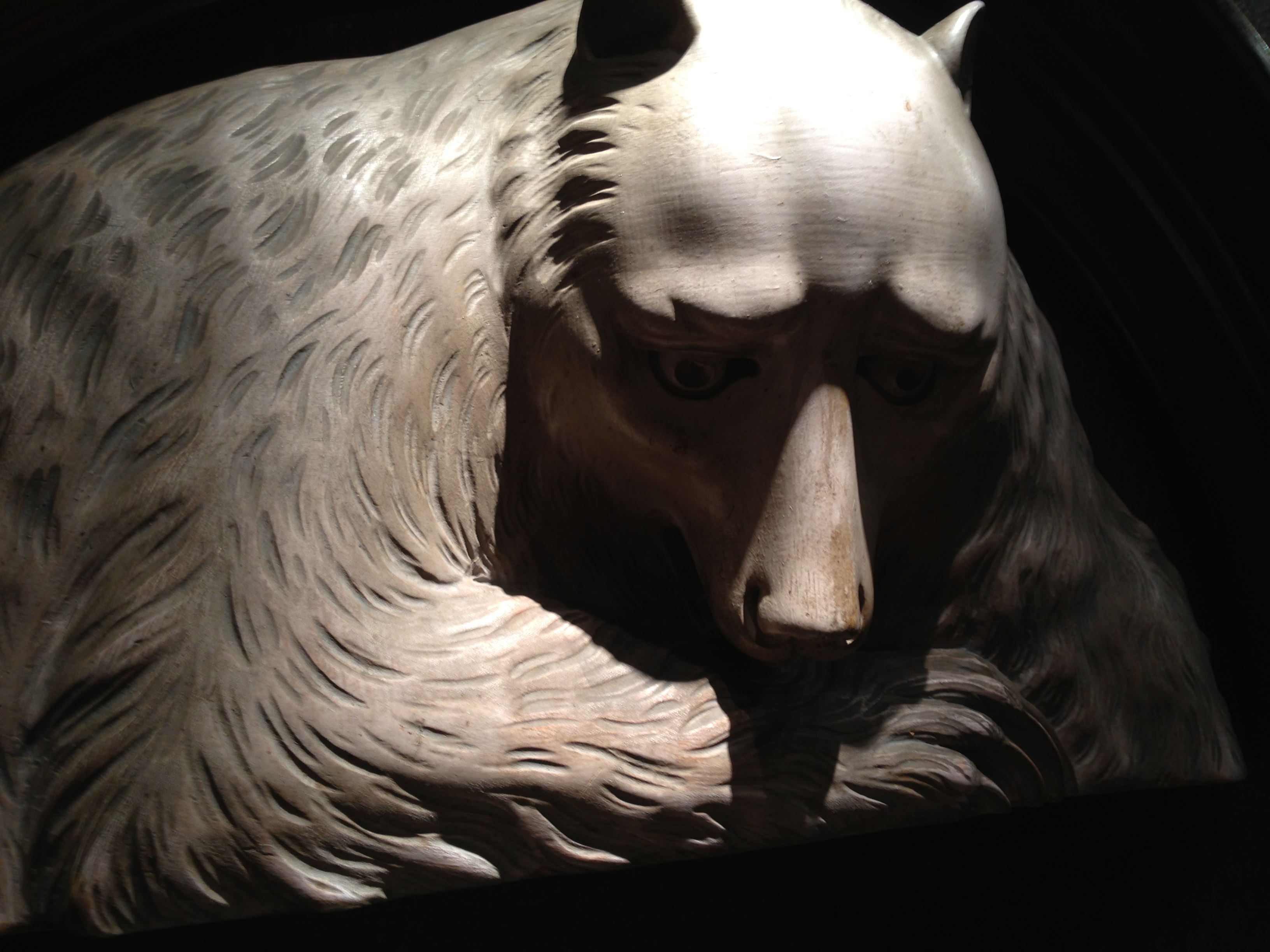
It was the story that drew us again and again, not the craft of the piece, which could be exquisite but nonetheless leave you unmoved. I loved the moth bitten tale about the grizzly bear of carved wood that once graced the top of a doorway in northern California, the entry to a masonic lodge. Made in the mid-1800s, it was a highly unusual find (and was looking for a highly unusual collector to take it home).

wood bear

Serious shoppers in spectacles and tweed prowled the Armory building on Manhattan’s upper east side, peering at objets. Discreetly tucked to one side, a café where you could get strong coffee, fresh grapefruit juice or the perfect crème brulee. “She’s a hypnotist collector,” sings Dylan, “You are a walking antique.”

We came upon a colonial-era painting that showed two ladies seemingly snuggling – “The Lovers.” was written in script across the bottom. A similar trope was visible in a tiny twin cameo on a gold ring, with the two female faces etched in milky glass. It dated from Rome in the time of the Caesars. Who were the women, mother and sister? Two darling daughters? “The Lovers”? You write the story.

true love

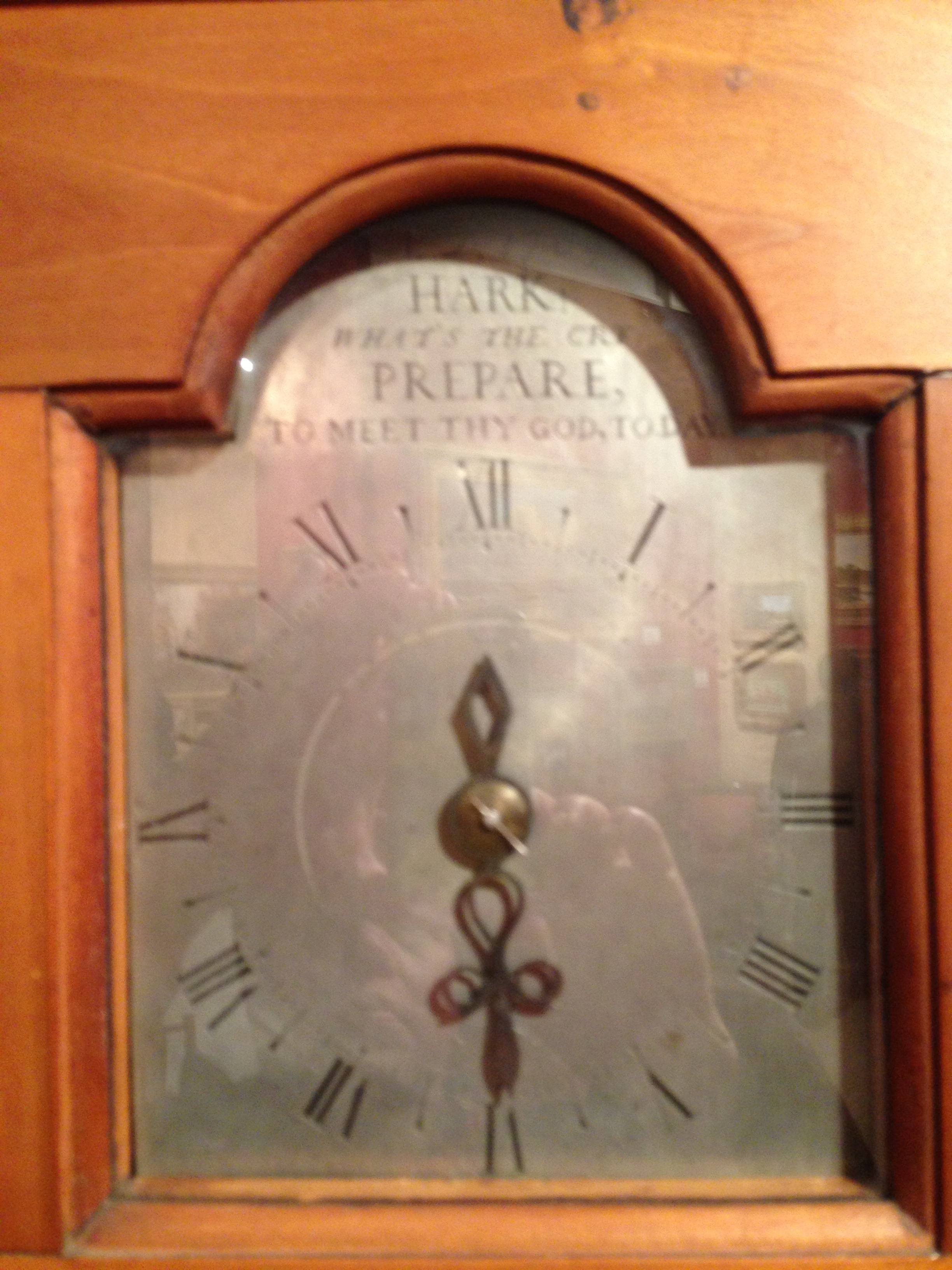
A tall, plain clock made in a family woodworking shop in East Hampton, practically unvarnished, admonishing admirers with its stern legend, was displayed in a stall run by a family business called Delaney Antique Clocks. Two centuries ago the clock was created for by a sea captain who had lost five children under the age of five. Hark, What’s the Cry: Prepare to Meet They God, Today.

clock

Then there was the cat-head doll. We used to tell terrifying stories about such creatures when I was a child. Was this a voodoo doll of sorts?

cat doll

Also a bit fierce, a set of Salvadore Dali-designed silverware, with forks like retractable claws.

dali silver

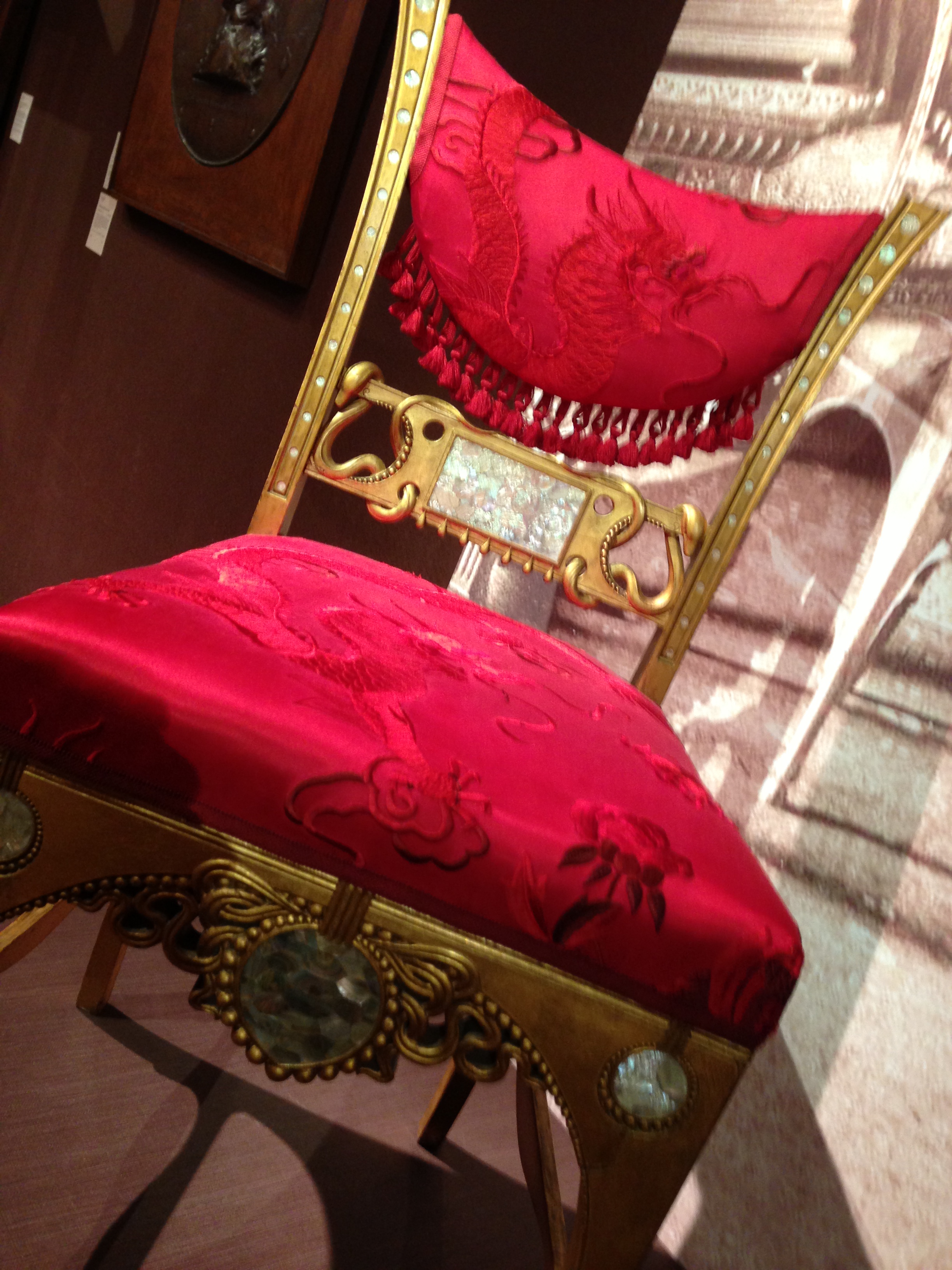
At the booth run by the expert David Parker, for the enterprise called Associated Artists, we saw a striking, red satin chair atop a platform. Here was a story.

vanderbilt chair

Crafted of gilded maple, the cloven-footed, serpent-entwined chair was a jewel in the living space of the tycoon William H. Vanderbilt, whose residence on Fifth Avenue at Fifty-first Street was the most magnificent home in America during the Gilded Age. The house was also the crowning achievement of Herter Brothers, the most important furniture makers/interior designers of the era. The Herter chair appeared in the self-published Mr. Vanderbilt’s House and Collection, which documented the great man’s stuff for all the many people who might not ever get inside the house to take a look for themselves. Circular mother-of-pearl accents on the chair reflected the just-come-in electric lights that only the very wealthy could afford.

Vanderbilt book

The chair also found a place in another book about the houses of the rich and famous, Artistic Houses, of which only 500 were published in the early 1880s.  Andy Warhol owned a copy.

Also on display at Associated Artists, a vase designed by Christopher Dresser that in its particular angularity suggests Dresser’s preoccupations as a botanist … he was famous in the latter part of the nineteenth century, a polymath and household name among the intelligentsia, though only the favored few remember his story now.

dresser vase

We knew it was time to leave the land of William Morris carpets and genteel pillboxes and good, old stories when it suddenly turned six and all the many collectible clocks in the place chimed… not in synchronicity, mind you, but all just slightly off, one minute at a time.

3 Comments

Filed under Art, History, Home, Jean Zimmerman

Dress Yourself in Dresses

“Elegance does not consist in putting on a new dress,”  said Coco Chanel, somewhat surprisingly.

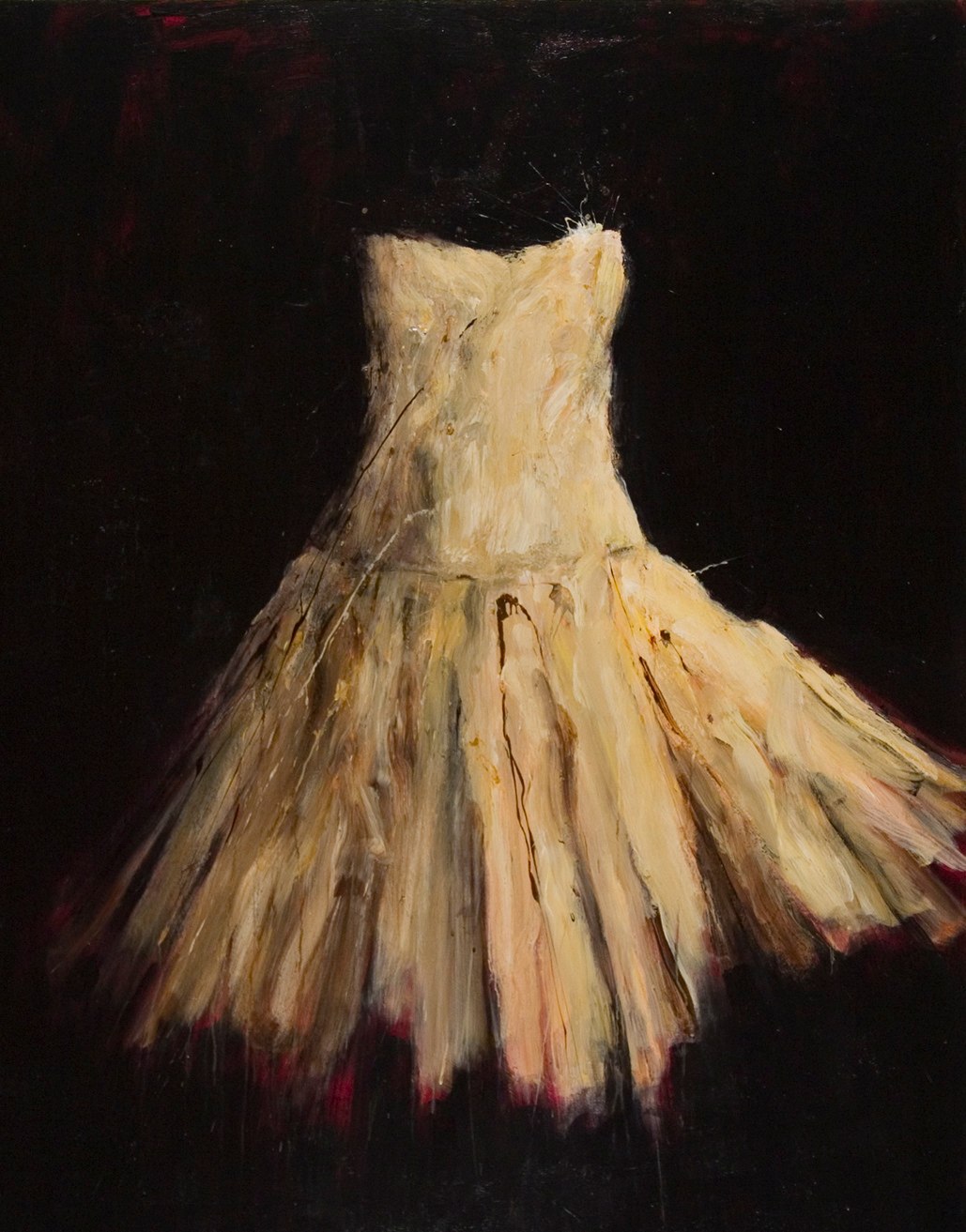
laura schiff bean dress

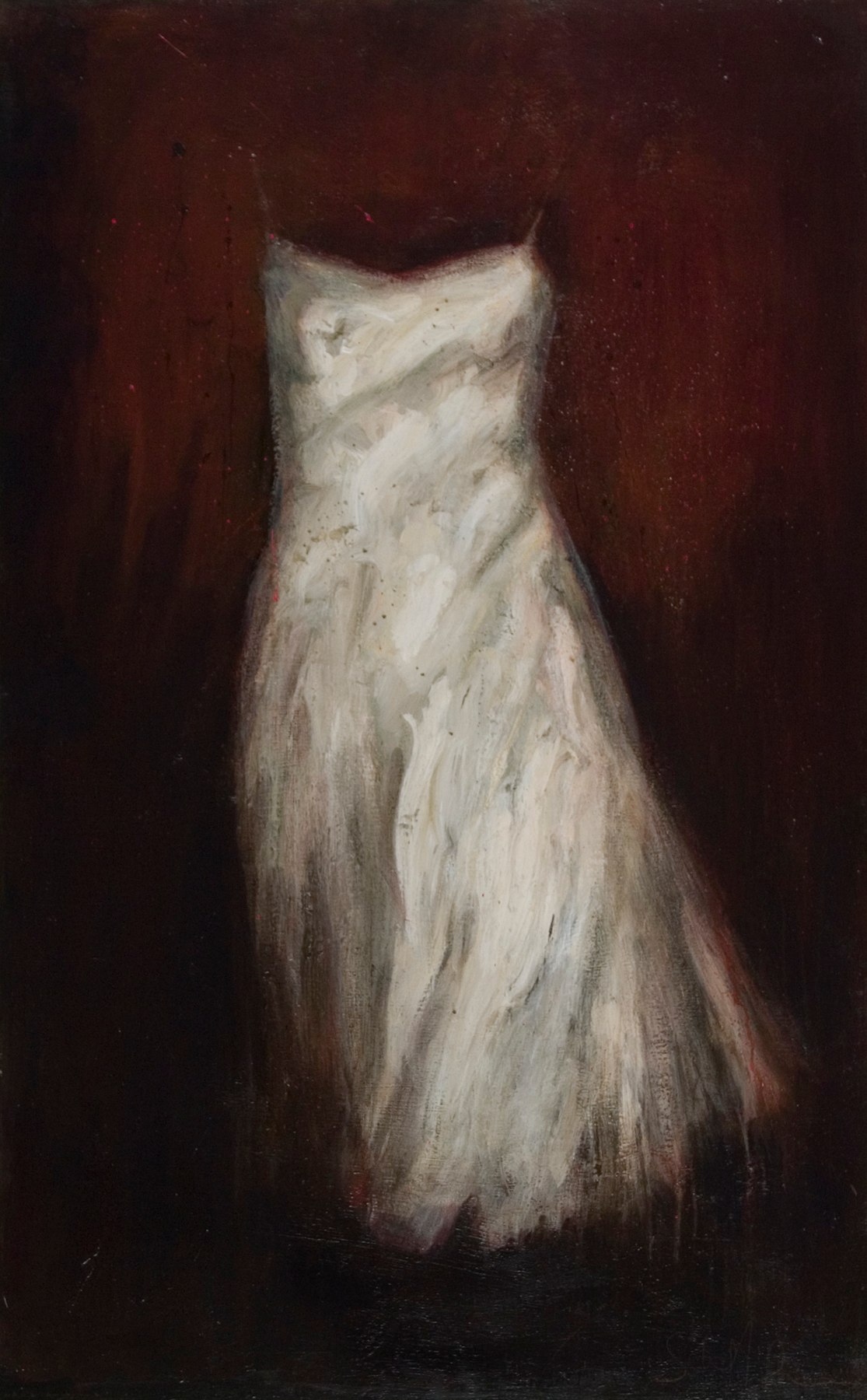
She might approve of the artist Laura Schiff Bean, who renders nearly the same dress over and over again from canvas to canvas with exquisite results. I picked up a flier for her work when I visited rural Connecticut recently and find myself drawn to the images in her work.

Something about her paintings of glowing, disembodied gowns draws me. What do they speak of?

The mysteries of the wedding dress. I bucked fashion when I married and wore an ankle-length, ballerina-hem dress.  I’ve kept the gown a quarter of a century, entombed in a long yellowed cardboard box, for what I don’t know, since it would never appeal to my daughter. But I can’t toss it out. I totally understand the wedding gown obsession of reality TV, I am chagrined to say.

Bean blue background

Or the ball gown, calling me to the ball I’ve never been to, aside from in my imagination. Henry James described the life of New York’s fashionables in the gilded age:  “The rooms were filling up and the spectacle had become brilliant. [The ball] borrowed its splendor chiefly from the shining shoulders and profuse jewels of the women, and from the voluminous elegance of their dresses.”

Bean slim dress

In Savage Girl, the new novel of mine that Viking will publish in a year or so, which takes place in 1875 Manhattan, you can trace the trajectory of the central figure’s development by her clothing, from rags and bare feet to a demure, plaid day dresse to trailing gowns in luscious tones of cherry red and tangerine, to a cream-colored, low-cut diamond-encrusted gown for her society debut. With a stubborn foray into thoroughly modern bloomers. She has to give society a little kick in the pants.

When I was little, I was required by my grandmother to take a nap in my petticoat on her bed on the afternoons I spent at her apartment. Floaty white underclothes, the archetype of innocence.

Bean Ballerina

Coco Chanel again, cryptically: “Look for the woman in the dress. If there is no woman, there is no dress.” Probably because I am almost exclusively a woman of trousers, I don’t think this quite makes sense. What rings more true to me is Thoreau’s admonition in Walden to beware of all enterprises that require new clothes. I wear shirts twenty years.

But I do keep dresses, new dresses, in my closet. I’m a closet dress wearer. A lavender cocktail dress. A summery long red linen, in particular, which has never found exactly the proper occasion for its display. I need an urgent opportunity, like Anna Karenina.

Laura Schiff Bean red dress

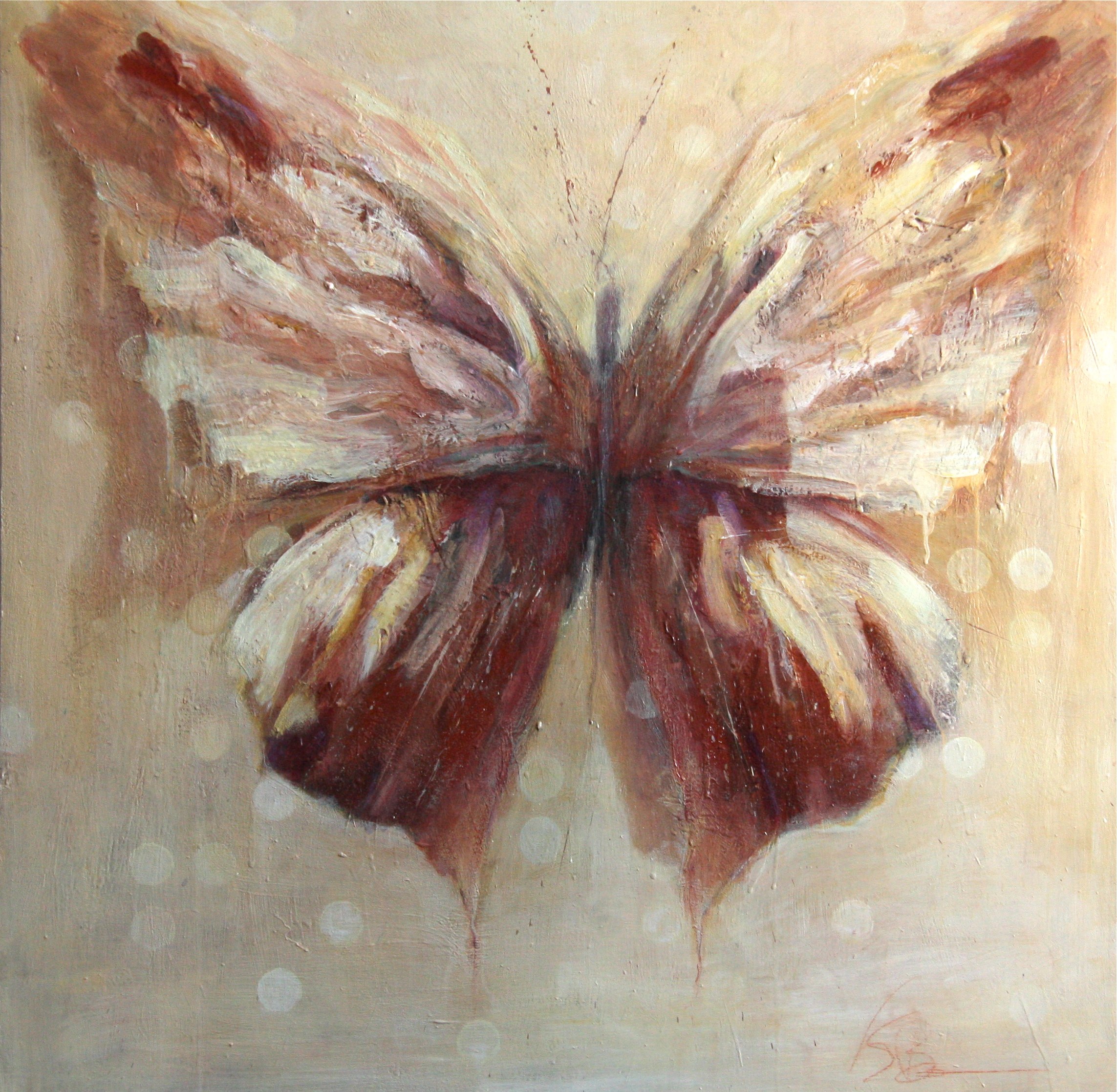
Something else Laura Schiff Bean occasionally integrates into her work. Butterflies.

bean butterfly

A tad sentimental, no doubt, considering most contemporary art, but I am perhaps no less sentimental, reaching an age when I know I will never again wear a flouncy, delicate white gown, and dreaming about them in stories and in art.

Longfellow:

“For age is opportunity no less

Than youth itself, though in another dress,

And as the evening twilight fades away

The sky is filled with stars, invisible by day.”

2 Comments

Filed under Art, Fashion, Jean Zimmerman

Bird Nurturing and Glued-on Mussels

MOMA was almost shockingly quiet this Saturday morning when we visited, a good atmosphere for taking in an exhibit curated by artist Trisha Donnelly that encompassed an eclectic group of works.

moma pic

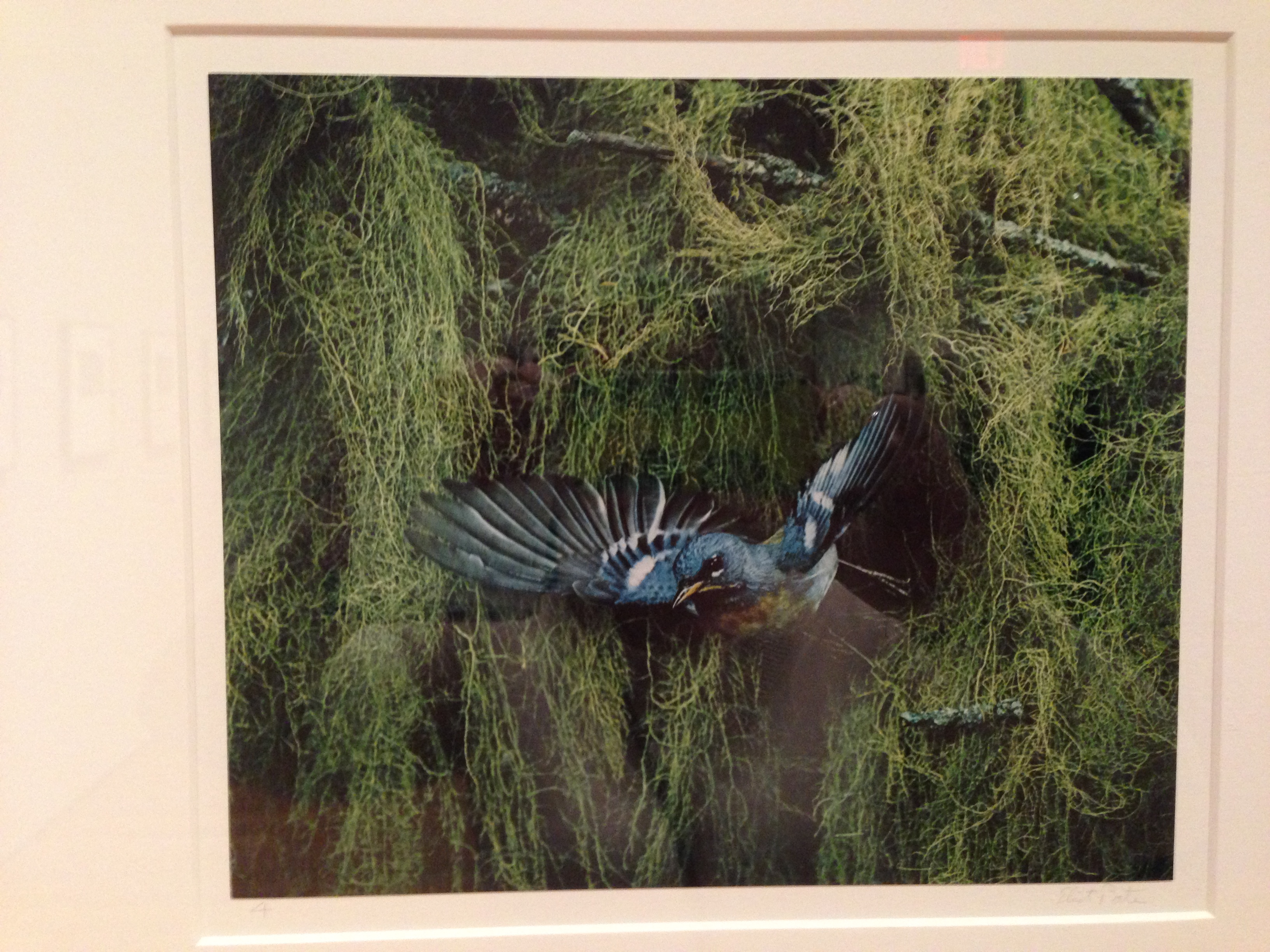
One room was filled with the brilliant photos of Eliot Porter, who shot them mainly in the ‘50s – all mother and baby birds in their nests, the young birds’ yawning, demanding mouths impossibly close up and crystalline. My photos of photos follow.

green bird

red bird

We came out of the exhibit only to stumble upon a special showing of Munch’s The Scream, so mobbed by that time with photo-clicking tourists you could barely get a glimpse of the painting’s surprisingly light pastel tones – you imagine it as so gloomy and dark and it’s not at all in the flesh.

the scream

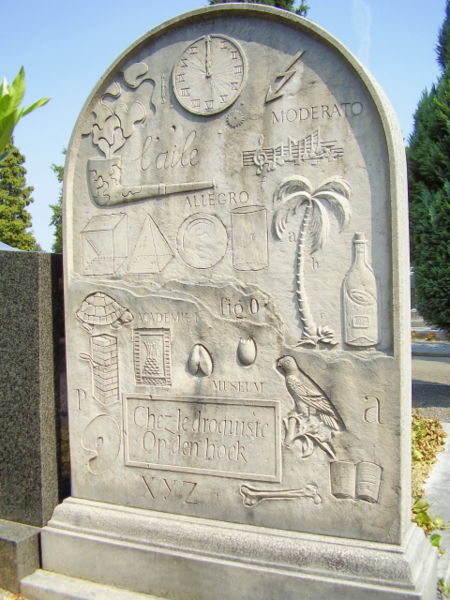
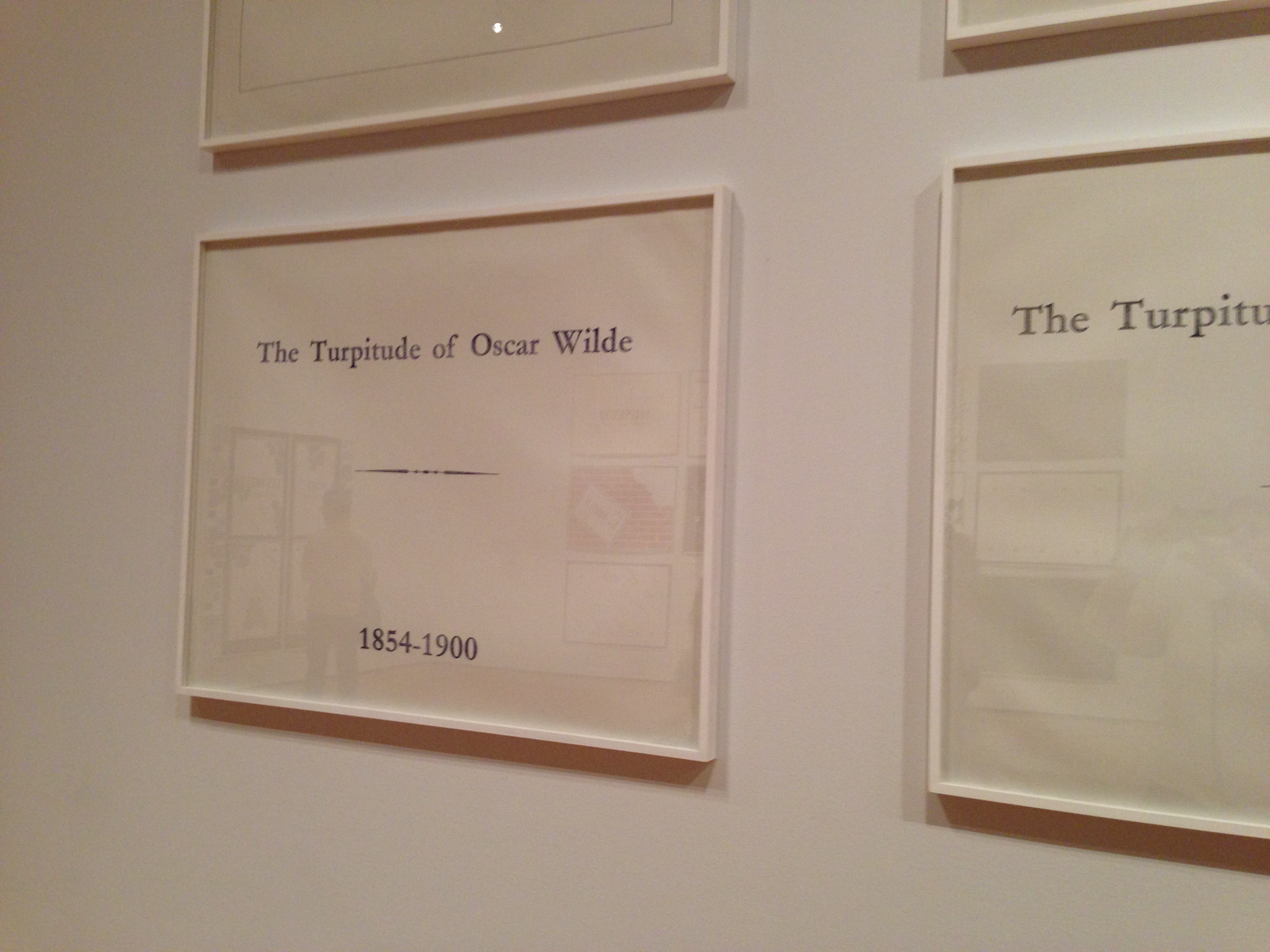
Then, perhaps best of all, we found ourselves in a room dominated by an artist I wasn’t aware of before, Marcel Broodthaers, a Belgian who did his surrealist, literary thing in the ‘60s and ‘70s before his untimely death due to liver disease on his 52nd birthday. He designed his tombstone.

OLYMPUS DIGITAL CAMERA

You could go into the Museum of Modern Art a hundred times and discover something new.

First Broodthaers worked as a poet, then as a filmmaker, before turning to found objects and text as his means of expression. He had a few obsessions, mussel shells and museum exhibits among them – he glued the shells to boards and other surfaces, and created his own imaginary art exhibits. He fell under the spell of René Magritte, especially his movement-fomenting “La Trahison des Images (Ceci n’est pas une pipe)”, and created a wealth of pipe images (you can see one on Broodthaer’s tomb) in homage to the great surrealist. At MOMA there is a wall of metal plates like large license plates inscribed with pipes.

I love art based on text, so it’s no surprise I like this work so much.

turpitude

Turpitude=immorality/depravity.

In the catalogue for his first exhibit in Brussels  in 1964, Broodthaers wrote: “I, too, wondered whether I could not sell something and find some success in life. For some time I had been no good at anything. I am 40 years old…Finally the idea of inventing something insincere crossed my mind, and I set to work straightaway.”

Somehow that idea of inventing something insincere strikes me as just about perfect as an artist’s goal. Washed down by hot coffee and flaky chocolate croissants, it was a day of heady inspiration.

2 Comments

Filed under Art, Jean Zimmerman, Photography

Plants and Prints

The prize find of the day.

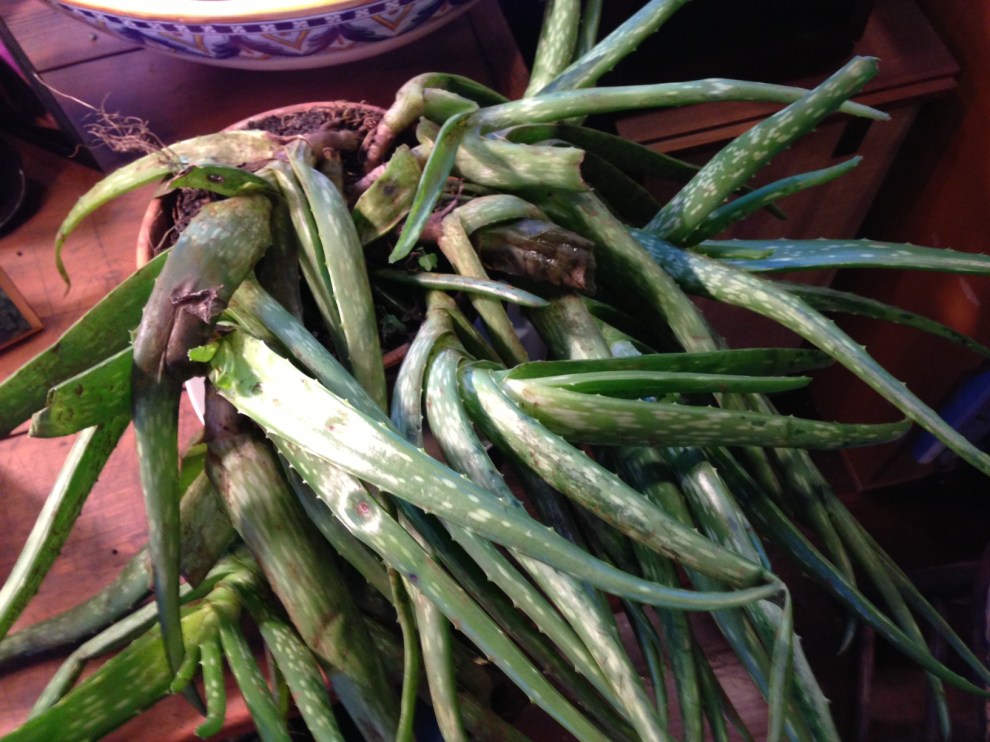
Aloe

This old grandmother of an aloe must be 25, that’s about as old as they get, and she’s so heavy and covered with pups — what you call the fledgling aloe sprouts — that she’s weighed down to sprawling. When I got her, for free, at the plant nursery that was going out of business, she was covered with mud splatters. Seen better times. Kind of like the nursery itself, which just could not make a go of it any more. Supposedly getting replaced by condos. A beautiful place, even with now-bare shelves.

nursery empty shelves

I was touring the sad, magical stops of lower Westchester with my photographer friend Josefa (she made the above image) and this was the last place we went, with its half-off fertilizer and unwanted boxes of pine cones, its frowzy ferns and cold-shocked begonias. The heat had been off for a week. It’s amazing my aloe survived.
Earlier in the morning we visited an estate sale in a condo with wide open views of the Hudson. An artist had lived there, an aged woman who’d died a year ago according to her nephew. He was warily standing guard over a studio cluttered with evidence of her inspired relationship with the world.

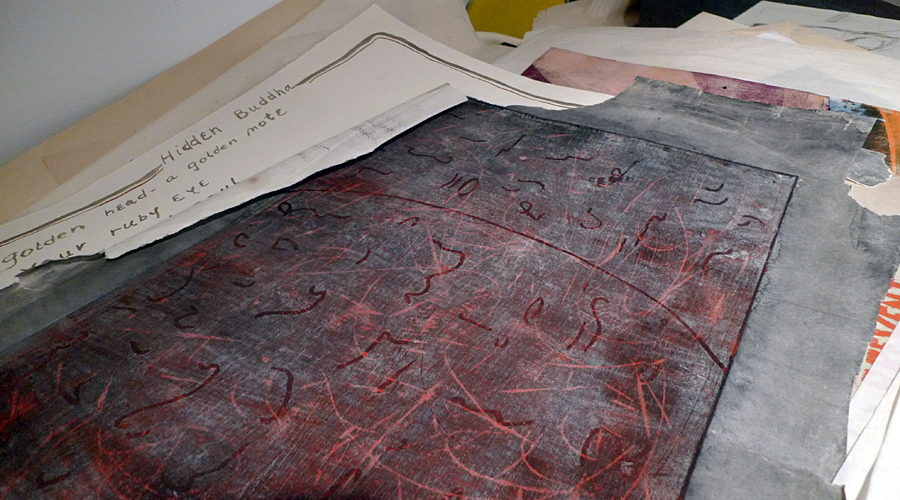
my print

There were hundreds of wood block prints and all the intricate tools she’d used to create their templates.

nude

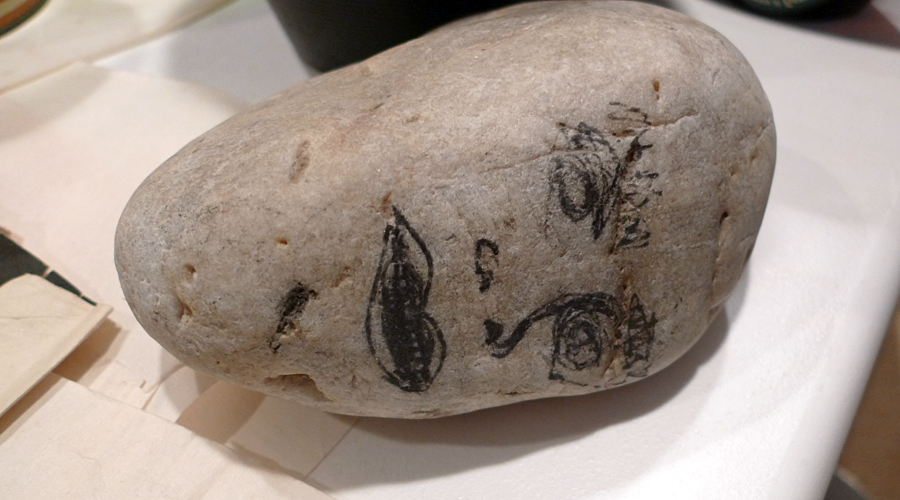
Nudes. Expressive rocks.

rock face

The things that got her going, baskets of bones and patina’d photos.

bones

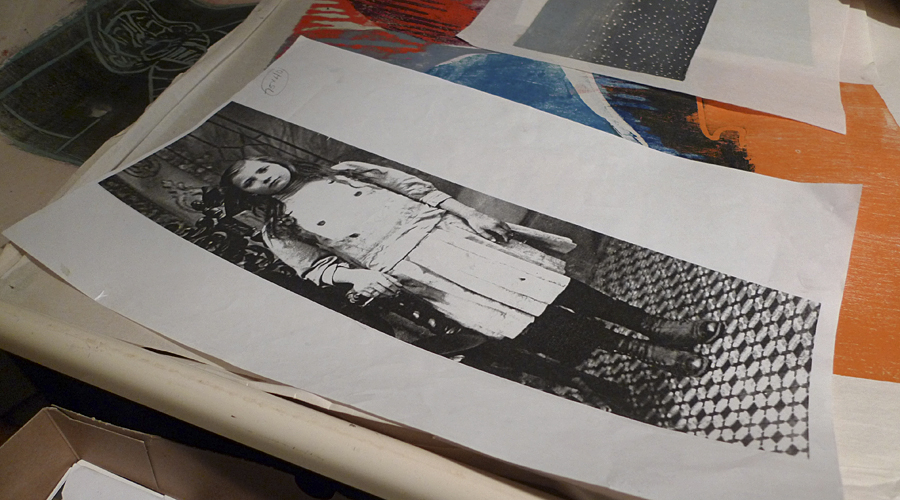
girl

A single bed with a rumpled afghan was pulled into the corner, giving a sense of a person who lived, literally, with her work, in that cluttered cloister overlooking the river. An easel, a paint-spattered stepstool. The things that were hers. Her name: Murray.

paint stool

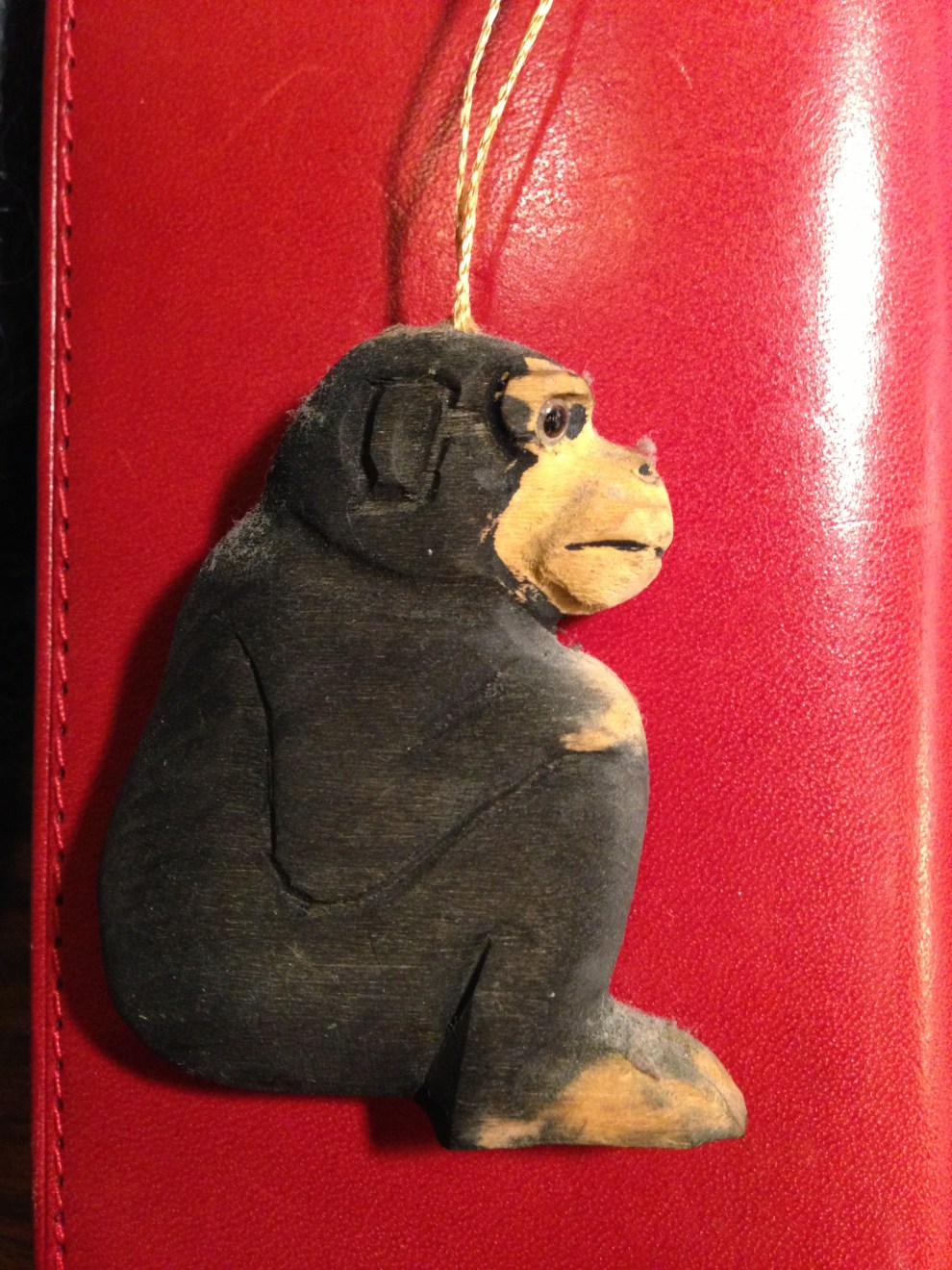
Upstairs, the more conventional life. Tables and chairs, pots and pans. I bought a trinket, an ornament, her tree to mine.

ape

Merry Christmas, Murray. I hope they have carving tools, wherever you find yourself now.

2 Comments

Filed under Art, Home, Jean Zimmerman, Nature

Layin’ on the Bacon

Still feeling stuffed from your Thanksgiving meal? Still eating that same Thanksgiving meal, from stuffing to nuts? You bet. And yet, somehow, something was lacking at Thanksgiving.

Bacon.

You can now wrap yourself in bacon.

A German artist named Nathalie Luder makes undeniably authentic scarves of finest crepe de chine to wrap around your throat when the wind is chill, or just when you’re feeling stylin’. Check out her site, here.

Leave a comment

Filed under Art, Jean Zimmerman

Cheever and Evans et. al.

When John Cheever died, the flags in Ossining flew at half mast. He lived in Ossining from 1961 until his death in 1982 — just down Cedar Lane from the Cabin, as it happens. A vitrine dedicated to the writer occupies a wall of the Ossining Public Library, built in 2007, and many locals have a Cheever story to tell. Like the one a neighbor shared about the time John stripped naked to swim at a cocktail function and it cleared the party. Whatever his behavior, his skill and imagination had me stoked when I took a fiction writing class in college where the only  text was the writer’s Collected Stories.

Cheever wasn’t the only great artist to live in Ossining — Walker Evans resided on his sister’s farm here in 1928 (where he grew hybrid gladiolas) and intermittently in the years afterward, and he produced dozens of photographs here, including this one, in the collection of the Met.

We drive by the bank standing at this fork every time we go to the library.

Evans called himself “tourmente, serre par la sante perverse d’Amerique” — “tormented, constrained by the perverse well-being of America.”

When they first met Cheever worked as a darkroom assistant to Evans. Later Evans captured a young, penniless Cheever’s boarding house room on Hudson Street. In all the photos Walker Evans took in Ossining, he never depicted Sing Sing, the looming prison for which the town was named. And he never shot the expansive Hudson.

However, Ossining is known historically as much as a fisherman’s spot as an artist’s haven. Witness this giant sturgeon caught off the Ossining waterfront, one of nature’s monstrous creatures.

I will have the pleasure of presenting at the Ossining Public Library on Saturday at 1:30 pm, with pictures, as I customarily do. Signing copies of The Orphanmaster afterward. Come one, come all.

3 Comments

Filed under Art, Fiction, History, Jean Zimmerman, Photography, Writers

A Blast From the Past-New York Times Story

I woke up this morning and saw two things:

1. My breath in the air when I drank my coffee.

2. The article I wrote for the Times T magazine about the magical townhouse on East 72 Street in Manhattan, the one dating to the 1880s whose owners had restored it to an — imagined — former appearance, down to the velvet portierres, intricate wallpaper, sconces, mammoth china urns and brass tacks holding the leather coverings to the wall of the dining room. And the gaslamps out front, flanking the stained-glass inset front door. The 17-room brownstone is a curiosity not only for its allegiance to these details but because its owners, the Loebs, actually live a full life there, amid the antiques and fine woods, a couple and adolescent triplets! It’s a period room at the Metropolitan Museum with no velvet ropes. You can see the digital version of the article here, and don’t miss the slide show.

The disaster that has befallen New York with Sandy is not without precedent. In the first decade of the Loeb house’s existence, when cows still grazed nearby and there were basically no buildings anywhere around, a winter storm wreaked havoc here.

1888 Blizzard

The Great Blizzard of 1888 ranks as one of the most serious natural disasters ever to hit our region. The snow hit when the March weather was unseasonably mild. More than fifty inches fell, with sustained winds of more than 40 miles per hour and gusts up to 80. Drifts more than 30 feet high buried homes and shops. Afterward, everything had to be dug out by hand, with temperatures in the single digits and below. Fire departments were paralyzed so fires burned uncontrolled. Around 400 people died – plus 100 sailors whose ships were wrecked. Pictures of the traumatized city  are amazing.

Imagine the Loeb townhouse in its row of nine at the 72nd Street outpost, snows heaped to the first floor windows and no way to clear the stuff. The city used to send horse drawn carts to collect the mounds and dump them in the East River, but you can imagine the labor and time involved.

We are due for a Nor’easter on Wednesday, the weather people say. Let’s hope the snow doesn’t sock in the Cabin’s windows.

1 Comment

Filed under Art, History, Home, Jean Zimmerman, Writing

A Discovery

A person contacted me, curious to see whether I had come across anything about her grandfather in my research on I.N. Phelps Stokes. Said they were friends, that she had pictures of them together at a Paris fancy-dress ball in the 1890s. Fancy dress equalled cross dressing in the terminology of the time; the two men were got up as Greek peasant women — wish I had a copy of that one. Who was your grandfather, I asked. Howard Cushing. I couldn’t recall any specific reference, though the name sounded familiar. Was he a banker, I said. Errr, no, she said. He was an artist.

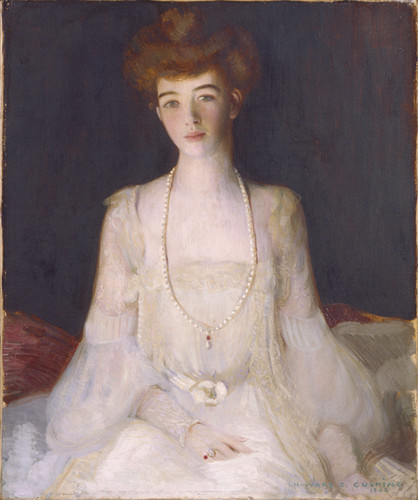
Afterwards I did a little digging and found the man’s diaphanous work, which hangs among other places at the Met and the Whitney. There would have been more had he lived longer, but he died suddenly at 47. These two canvases depict his wife, Ethel Cochrane, whom he is said to have sketched or painted over fifty times.

Quite beautiful. I would have liked to see his rendering of Edith Minturn.

Leave a comment

Filed under Art, History, Jean Zimmerman

Secret Receipts

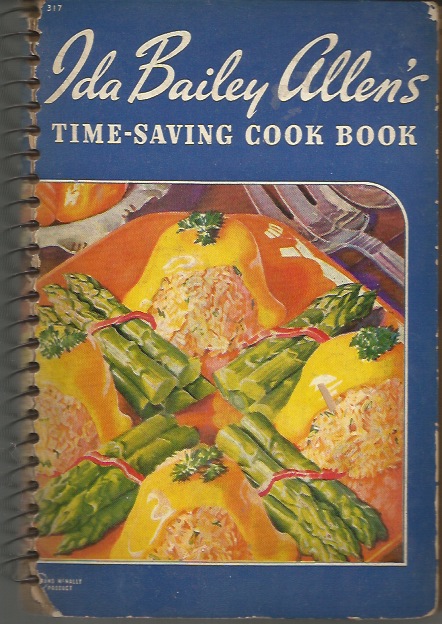
There is something I’ve always loved about collecting vintage softbound cookbooks — whether put out by community organizations or companies to hawk a product — in addition to their lavish artwork and insane notions of food. That is the always hoped-for moment when an old fashioned, hand scribbled “receipt” (as they used to say) flutters out of the pages onto the kitchen countertop. Whether describing the method for putting up  green tomato pickles or for baking a strawberry-Jello cake, these faded, spidery notations have always seemed to me a lifeline to the past, a past that is hurtling away from us so quickly that soon we’ll only read about the matriarchs who personalized their recipes in books. It’s hard to say which is sweeter, the notes of my own forbears, my grandmother or great aunt or mother-in-law, or the cooking wisdom of a homemaker I’ll never identify. In any case, I tuck each artifact back into its place between the pages, so I don’t have one to show off here at the moment. I can display some of the cookbooks, though…

Check out this nice piece by Michael Popek on this subject in the Huffington Post, illustrating his attempt to “keep the cycle alive.” He even had the sense to document the recipes before sticking them back in their time capsules.

Leave a comment

Filed under Art, Cooking, Home, Jean Zimmerman

The Harvest

Back to the States, to a head cold, to the chill of fall.

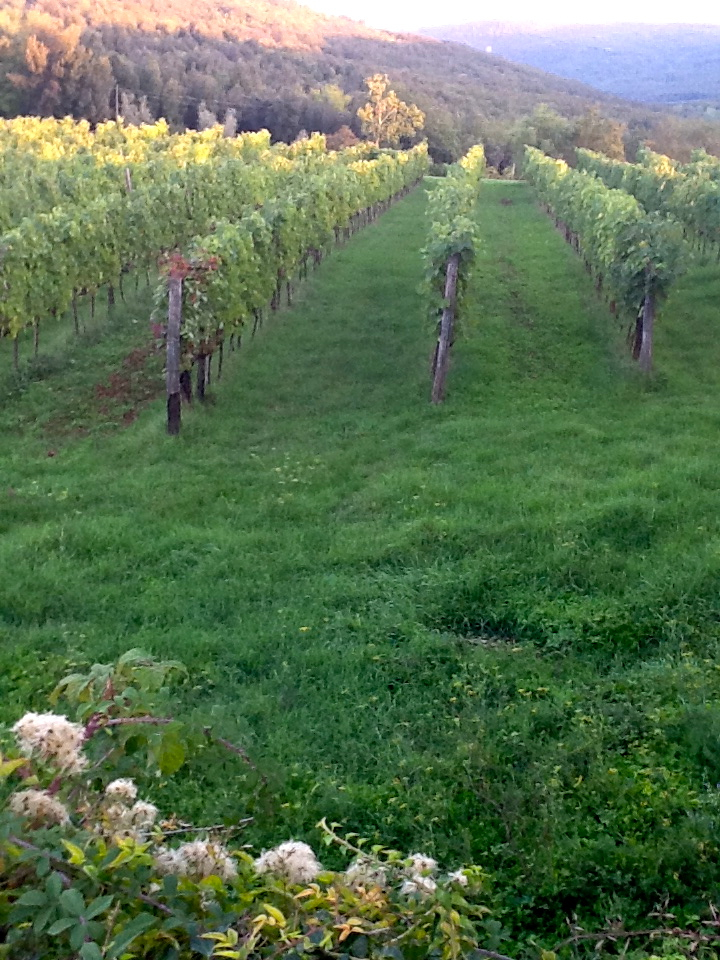
Tuscany beautiful in a rough-hewn, ancient, wine-ripe sort of way. We had a silver full moon for three nights casting a piercing light over the grape vines below our farmhouse. Cows lowed in the distance. Mornings, the grass between the lines of bulging purple grapes was wet.

Harvest Time in Tuscany

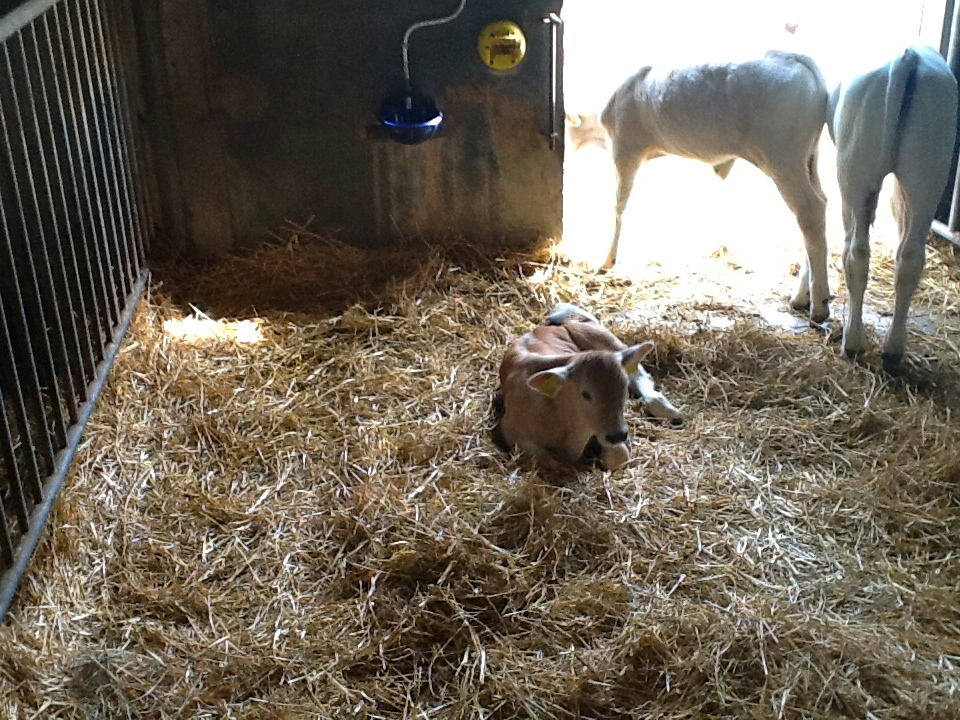
At a winery that hosted us for lunch we gazed across at the lofty skyline of San Gimignano and visited with a two-week-old calf from ancient, white-coated, thick-horned forbears.

Etruscan Calf

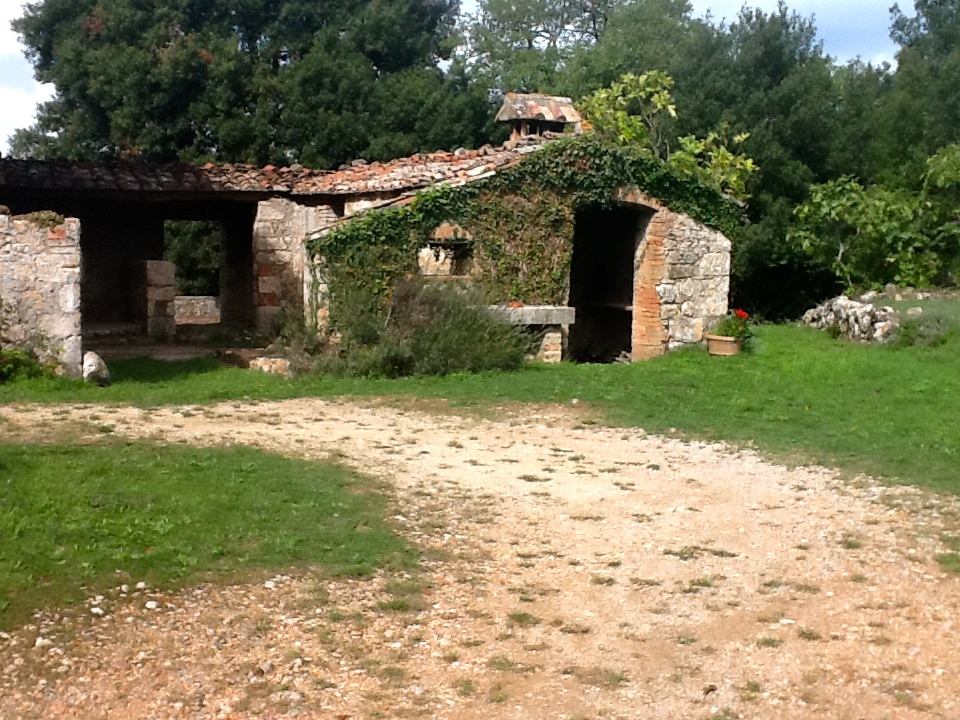
We ate wild boar sausage, red and raw-tasting. Made pizza in an old wood-burning oven outside that had seen lots of dough in its day.

Oven Shelter

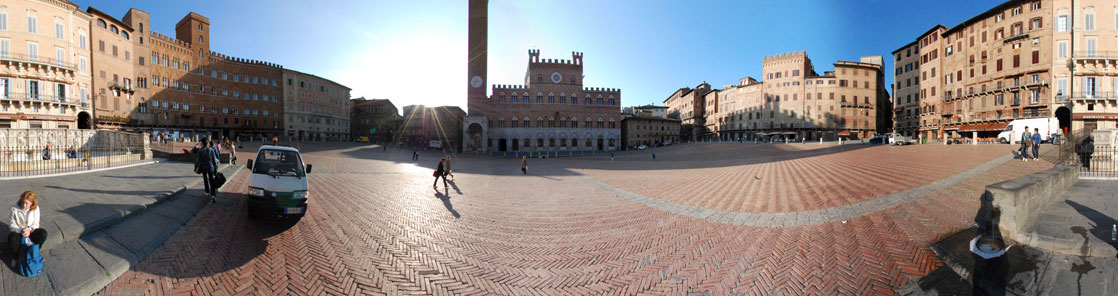
Traipsed through an abandoned castle in the woods. Drank cappuccinos at the edge of Siena’s red slanted Campo, its central square.

Il Campo, Siena

Also caught this guy on a wall in Siena:

Siena Head Banger

Etruscan ruins nestled in the southern walled hill towns, and we climbed ramparts manned by soldiers 800 years ago, the scent of wine and mint and rosemary in the air…

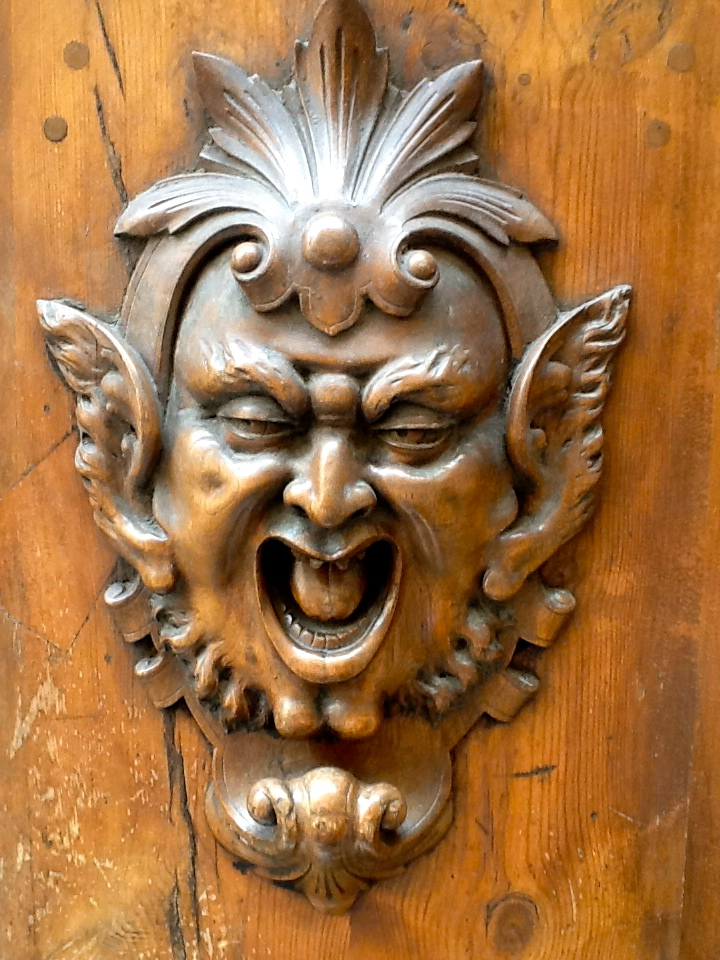
In Florence, a fearful message from a medieval past.

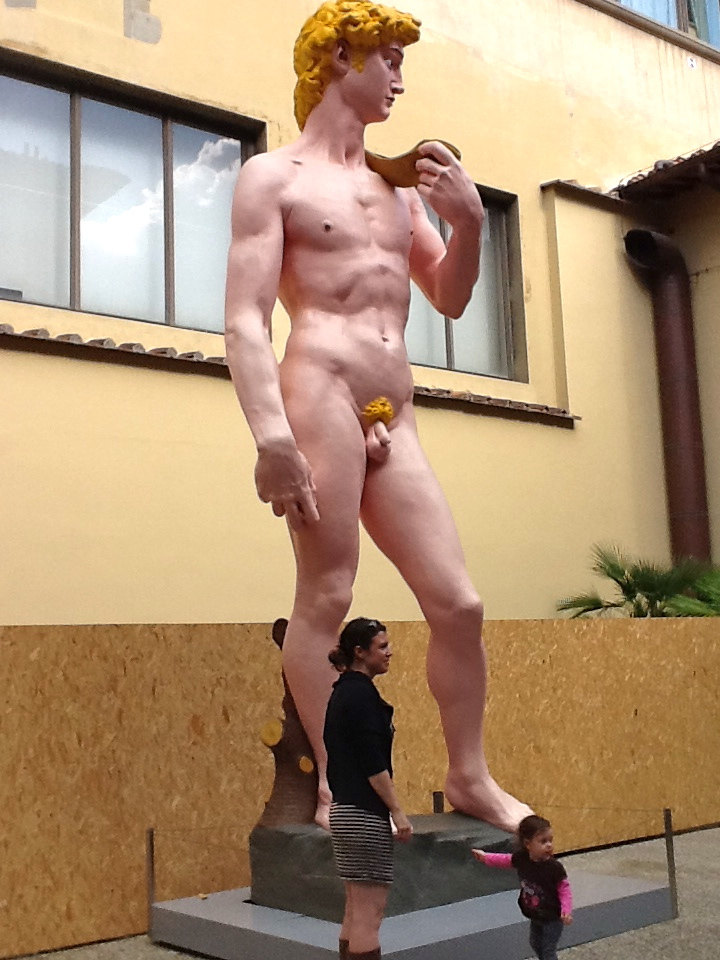
While a modern David stood tall and unperturbable in the Accademia.

David

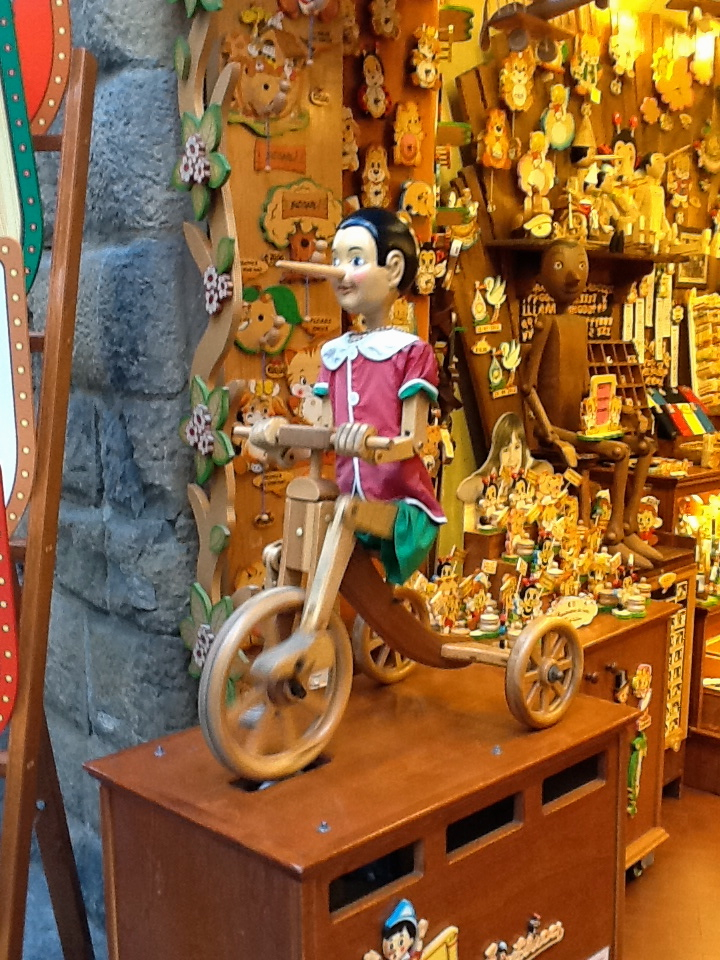
 As Pinocchio, the patron saint of these parts, pedaled on his way.

Toy Story

But Florence had a piquant salutation for us as soon as we crossed the Arno, in a delicate bit of graffiti.

1 Comment

Filed under Art, History, Jean Zimmerman

At Sea

Some interesting things at the South Street Seaport Museum today in an exhibit they have going with the Folk Art Museum. Including a history of the Titanic sinking written out entirely on patched together paper napkins. And plenty of scrimshaw, my favorite. A room is also devoted to an exhibit based on the book Mannahatta and showing New York as it would have looked in 1609, in gigantic, beautiful green “photos.” What I liked best though was the part of the museum that preserved the timbers of the old nineteenth century rooming house that used to be housed there, so you could imagine the cramped existence of the seagoing men. Three patterns of tattered wallpaper fell off the plaster walls in strips. There were drunken ghosts there, I swear it.

Leave a comment

Filed under Art, History, Jean Zimmerman

Wilde Child

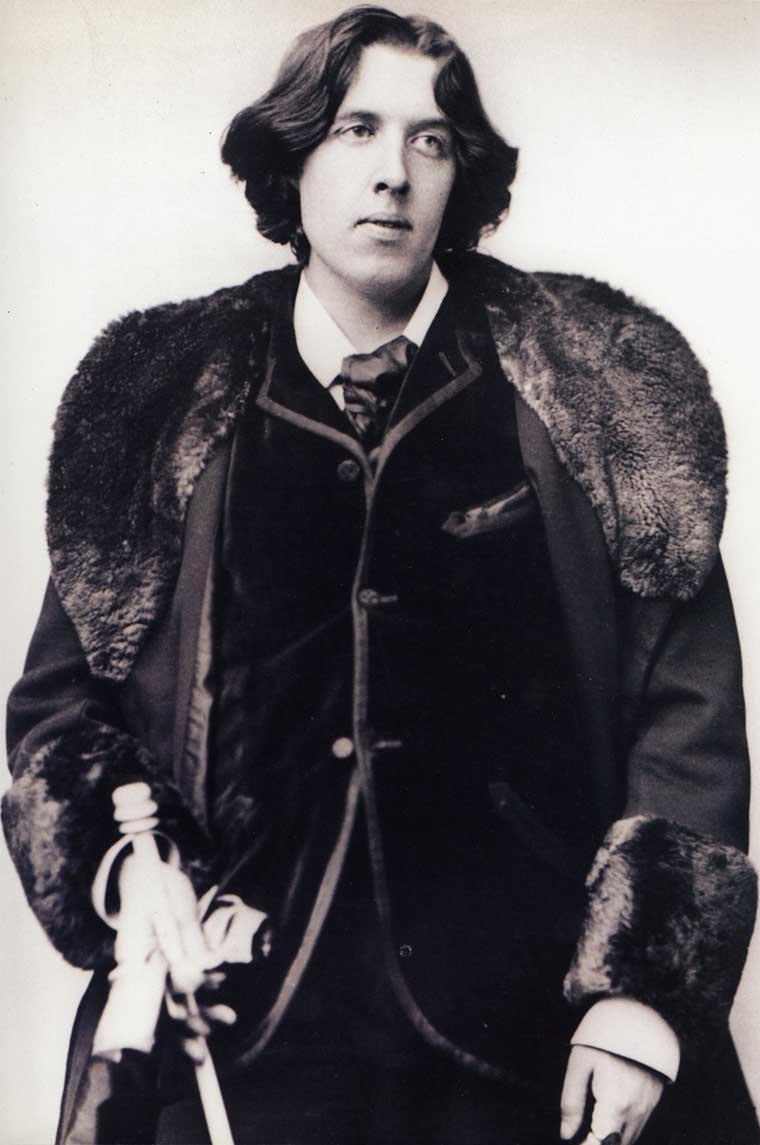
Late summer: sunflowers hanging their tiger cub heads, cicadas in full throat, ripe tomatoes slumping to the ground. And I just finished the article I’ve been working on for the Times, so I’m happy. It’s about a brownstone on the upper east side whose owners worked for seven years to restore it to its high Aesthetic era appearance — that’s the 1880s to those of you who are not Oscar Wilde devotees. Wilde himself toured the U.S. in 1882 promoting the Aesthetic Movement and shocked people with his sunflower-boutonniere. The interior of the house I wrote about is actually pretty shocking as well, so stuffed with an elegant chaos of wallpapers and gothic furniture, portieres and floor urns that it is hard for the eye to even take in. I’ve never seen a house like it. But wonderful in its own way. I’ll give a link when the article runs.

“We are all in the gutter, but some of us are looking at the stars.”  Wilde

Oscar Wilde

Leave a comment

Filed under Art, Fashion, History, Home, Jean Zimmerman, Photography, Writing

At the Met

Visited the new American Wing at the Metropolitan today to pay homage to Edith and Newton in all their glory. They looked great. Mr. and Mrs. I.N. Phelps Stokes was not exactly causing a stir but I did notice some wise people going up and admiring it.

Newton and Edith

Two elderly women stand behind me. One murmurs, “An American girl.”

She gets it.

On the other hand, the painting suffers by proximity to Sargent’s so-popular Madame X. Two young men pull up behind me as I admire her lavender shoulders. “This is IT,” says one.

I’d like to hear that said of Edith, with her preternatural glow and straight-shooting gaze.

Maybe when people read Love, Fiercely (out six weeks from now) someone will say that.

In any case, dwarfing both canvases and hung between them is Sargent’s gargantuan doily of a painting that depicts the three Wyndam sisters.

Ladies in White

It gives an idea of how female perfection was conceived at the end of the 19th century, white and light and delicate. Take another look at Edith to see how vastly different she is. Instead of chiffon, cotton pique. No lavish peonies. A boater! A bow tie. Revolution comes to Gilded Age America.

1 Comment

Filed under Art, Jean Zimmerman, Love, Fiercely